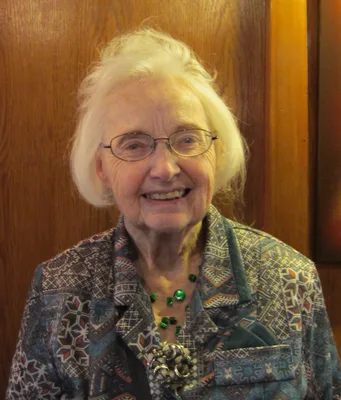
Barbara Smoker was a convent child who wanted to be a Carmelite, and saw no halfway house between the Church and atheism. The war in Ceylon, a confessor's charge of intellectual pride and a reading programme meant to save her faith wore it down, until on 5 November 1949, at a library's philosophy shelves, she found she was no longer a theist of any kind. She never doubted again. She spent the rest of her life on the unbelief in public, at the head of the National Secular Society, at thousands of secular funerals and beside the 1989 march against Rushdie, insisting that atheists had not lost their faith but outgrown it.
The belief timeline
- Faith (c. 1927 to 1945) — Convent child "hooked on the supernatural"; wants to be a Carmelite at fourteen; secures Mass for Catholic recruits at nineteen [4][6][11]
- Doubt (1945–49) — Ceylon among other faiths; return home; "intellectual pride" in the confessional; reading to prop up faith has the opposite effect [12][14][15][16]
- Renunciation (private) (1949-11-05) — "I am no longer a Catholic" at the library shelves; no doubt afterwards [17][18][21]
- Declaration (public) (1950s (Wikipedia: 1950); presidency 1972) — Joins the Ethical Union and South Place; (inferred as the first public step) elected NSS president at the 1972 AGM [24][28]
- Restatement (1985; 2012) — BBC World Service "Why I Am an Atheist"; "'Lost' my faith? Not me!" [35][47]
Notes to the timeline (14)
- [4] She had a convent education from about the age of four ("by the time the good nuns got hold of me, at the age of four, I was hooked on the supernatural"); classmates called her "the saint"; as a child she meant to be a nun or a devotional author — WhyAtheist paras 3 and 11; Guardian para 3; Nicholls para 2.
- [6] By fourteen she wanted only to be an enclosed Carmelite nun, saved half her pocket money for the dowry, and would have entered at fifteen; her mother made her wait until nineteen — WhyAtheist para 12; Nicholls para 2.
- [11] At nineteen, at her naval training camp, finding no provision for Catholics to hear Mass on 1 and 6 January, she successfully requested special 6 a.m. "liberty boats" — WhyAtheist para 16.
- [12] A year later she was in Ceylon, where she "served king and country for the next eighteen months", as a wireless telegraphist; she mixed with non-Catholic Christians, discussed moral theology with some, and visited Hindu temples and Buddhist shrines, which "widened my perspective on religion" — WhyAtheist para 17; HUKObit "Early life and the war" (wireless telegraphist, Ceylon); Indep94 (wireless telegraphist in Ceylon, night watches); SiteBio para 1; Nicholls para 4.
- [14] On returning home she was "no longer sure I wanted to be a nun, though I was still a staunch believer"; her "theological doubts now began to build up, and became more and more insistent" — WhyAtheist para 17; Nicholls para 5 (exposure to other world views abroad weakened her conviction).
- [15] In confession she was told she suffered from "intellectual pride"; she saw the force of this because Catholic writers she admired, such as G. K. Chesterton, found doctrines easy that seemed irrational to her; later she turned the charge round: atheists claim no certainty, "it's the believers who know it all" — WhyAtheist paras 18–19.
- [16] In the late 1940s, remembering that Aquinas held faith could come by reason, she tried to "give my faith a boost through reason" by reading Catholic apologists and moral philosophers, including non-believers; "the more I read, the less I could believe" — WhyAtheist para 25; SiteBio para 3 (thought and read a lot; "the less she found it possible to believe").
- [17] One Saturday morning in November 1949, by the philosophy shelves of her local public library, she said to herself "I am no longer a Catholic", which for her meant she was no longer a Christian or a theist of any kind — WhyAtheist para 26.
- [18] The date is 5 November 1949, at midday (5 November 1949 was a Saturday) — NSSObit "After the war"; Indep94 (her own words, "on 5 November 1949 at midday").
- [21] She never doubted the decision again ("I have never found any reason to suppose that my decision that morning so long ago was a mistake"), though she has "sometimes hankered after my old childhood beliefs" — WhyAtheist paras 27–28; Indep94 ("I have never had a second of doubt since").
- [24] In the late 1940s and 1950s she travelled to hear Harold Blackham lecture, first at the Ethical Church in west London, then at Conway Hall; "those venues became my university"; Wikipedia says she joined the South Place Ethical Society and West London Ethical Society in 1950 — ParisSpeech para 3; HUKObit "Decades of humanist activism"; Guardian para 5; WP-Smoker. The year 1950 is wikipedia is the only source for this, as for the other details in this chapter cited to that source alone.
- [28] She was elected NSS president at the 1972 AGM, succeeding Ethel Venton (president June 1971–72), who had succeeded David Tribe; her own site gives 1971–1996, and the 2019 NSS review follows it — NSSObit "NSS presidency"; Guardian para 7; WP-NSS; WP-Venton; SiteBio para 5; Nicholls para 6. Accounts differ; see the disputed points.
- [35] She recorded "Why I Am an Atheist" for the BBC World Service in 1985 (first recorded June 1985 per her site) — SiteBio para 9; Articles (list); HUKObit.
- [47] In October 2012 the *Ethical Record* printed her reply to a contributor who complained of being described as having "lost" his faith: atheists have not lost it but "outgrown" it, with a long list of other verbs — Articles ("'Lost' my faith? Not me!"). Seen in the biographer's reprint, not the original letter.
Outgrown, Not Lost
On 27 May 1989 a large march of Muslims went through London to protest against Salman Rushdie's novel The Satanic Verses and to demand his death. Beside the route stood a woman of sixty-five holding a homemade banner that read "Free Speech." The crowd surged at her; she survived, she wrote, a physical assault.1 She was Barbara Smoker, president of the National Secular Society, a former Catholic who as a girl had saved her pocket money to become an enclosed nun.
This chapter asks how a convent child who wanted nothing but the cloister came to stand alone with that banner, and what she did with her unbelief in the forty years between.
The convent child
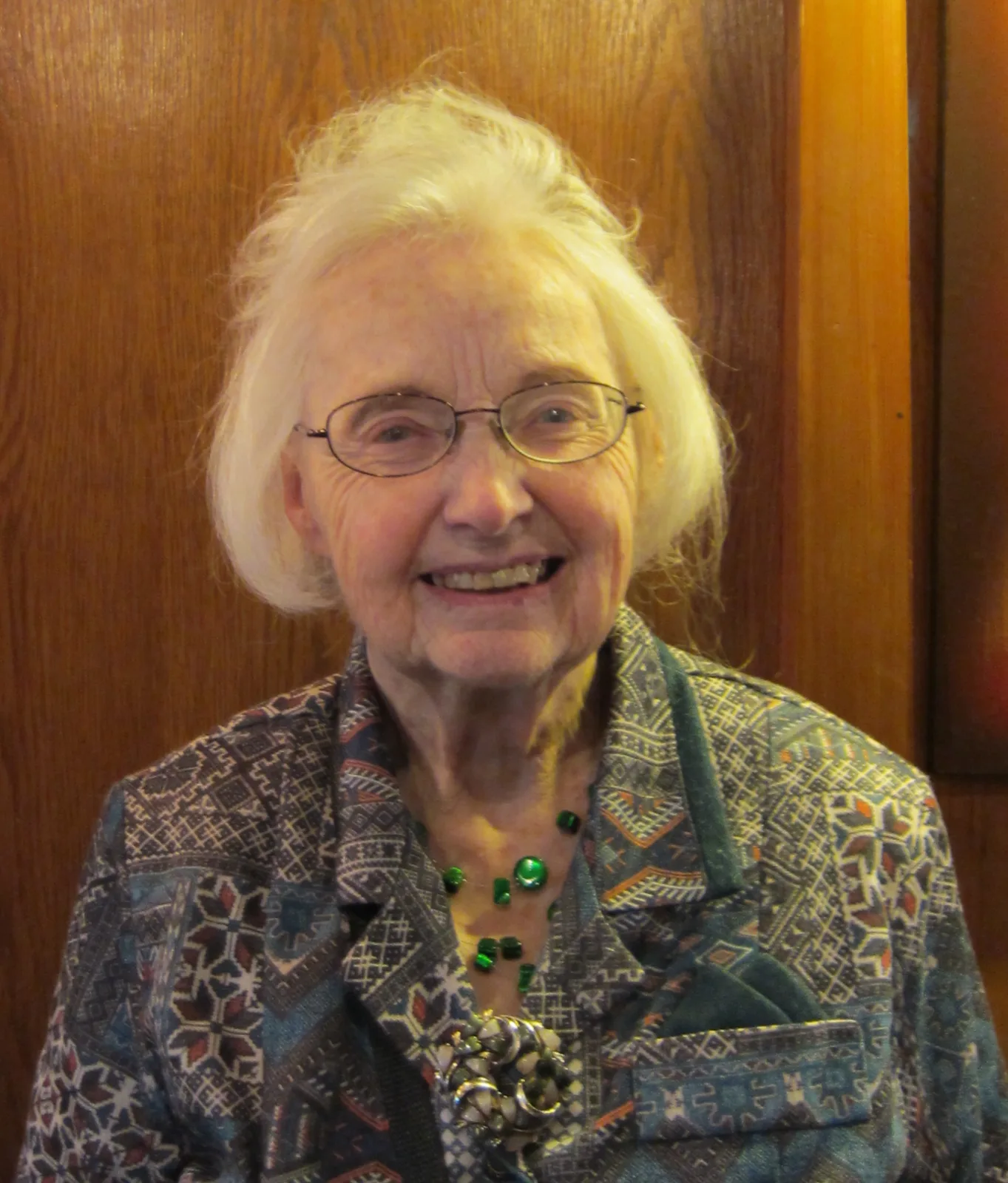
She was born in Catford, in south London, on 2 June 1923, the second of six children of devout Roman Catholic parents; one of her sisters became a nun.234 The nuns had her from the age of four, and by then, she wrote, she was already hooked on the supernatural; nobody needed to drum religion into her, because she lapped it up. Her classmates called her "the saint," and she meant to be a nun or a writer of devotional books.56 By fourteen she wanted only to be an enclosed Carmelite, and saved half her pocket money for the dowry; her mother made her wait until she was nineteen.7 For her, she wrote, there was never any possibility of a halfway house between the Catholic Church and atheism.8
There was an early crack. At about ten she learned that Santa Claus was not real, reproached her mother, and told the neighbourhood children. Looking back in 1985, she saw it as the beginning both of her loss of faith and of her missionary zeal, though it was many years before Jesus went the way of Santa Claus.910 In her last year at school she won the religious knowledge medal, because she alone could answer the inspector's request for a proof of Christ's divinity; she did not notice, she said, that the proof assumed the Gospels were true.11 She was already afraid, she wrote, of losing her faith, and prayed every day that it would never happen; it took ten more years.1213 On the belief timeline, all of this is her faith, with the childhood crack inside it.
Ceylon
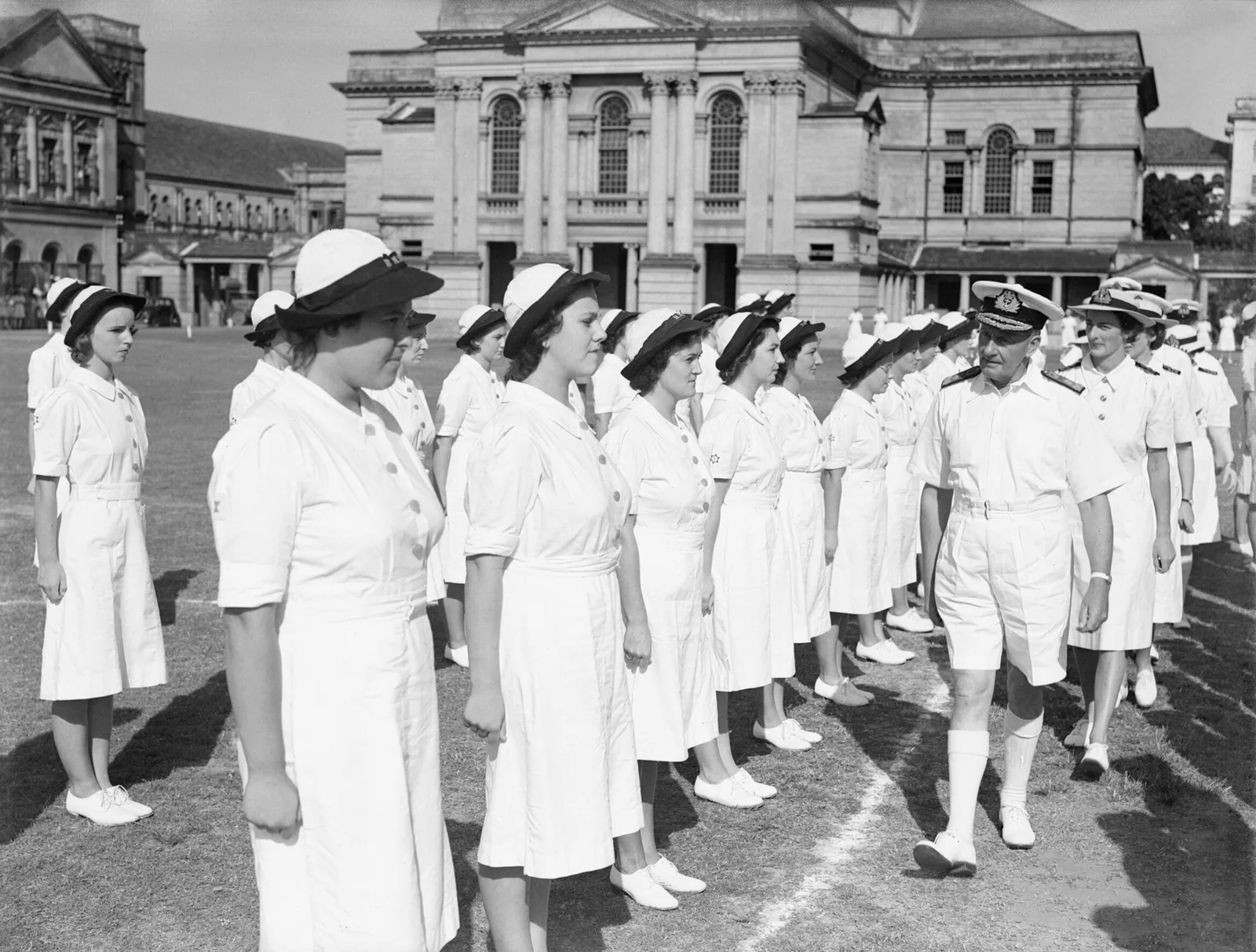
When the war came she left school at sixteen, worked, and then joined the Women's Royal Naval Service, in which she served in south-east Asia from 1942 to 1945.1415 At her training camp, finding no arrangements for Catholics to hear Mass on the holy days of January, she asked for, and got, special boats at six in the morning to take them.16 A year later she was in Ceylon, a wireless telegraphist for eighteen months. There she mixed with Christians of other churches, argued moral theology with some of them, and visited Hindu temples and Buddhist shrines, and her view of religion widened.17 On 15 August 1945 she sent out the signal to ships at sea that the war with Japan was over.18
The doubts
She came home no longer sure she wanted to be a nun, but still a staunch believer; then, she wrote, her theological doubts began to build up and grew more and more insistent.19 In the confessional she was told she was suffering from intellectual pride. She saw the force of it, because Catholic writers she admired, Chesterton among them, found easy the doctrines that seemed irrational to her. Decades later she turned the charge round: atheists claim no certainty, she said; it is the believers who know it all.20212223 Remembering that Aquinas held that faith could be reached by reason, she set out to shore up her faith by reading Catholic apologists and moral philosophers, believers and unbelievers alike. The more she read, the less she could believe.2425 The timeline places her doubt in these years, from 1945 to 1949.
The library shelves
One Saturday in November 1949, at midday on the fifth by her later account, she was standing by the philosophy shelves of her local public library when she said to herself, with a flood of relief, that she was no longer a Catholic; and that, for her, meant she was no longer a Christian or a theist of any kind.262728 The National Secular Society later wrote that the tipping point had been her conclusion that papal infallibility was impossible; Humanists UK and Wikipedia credit the writings of the humanist Hector Hawton; her own account names neither, and accounts differ.2930 She never found any reason, she wrote, to think the decision of that morning a mistake, though she sometimes hankered after the beliefs of her childhood.3132 On her timeline, this is the private renunciation.
Humanist and secularist
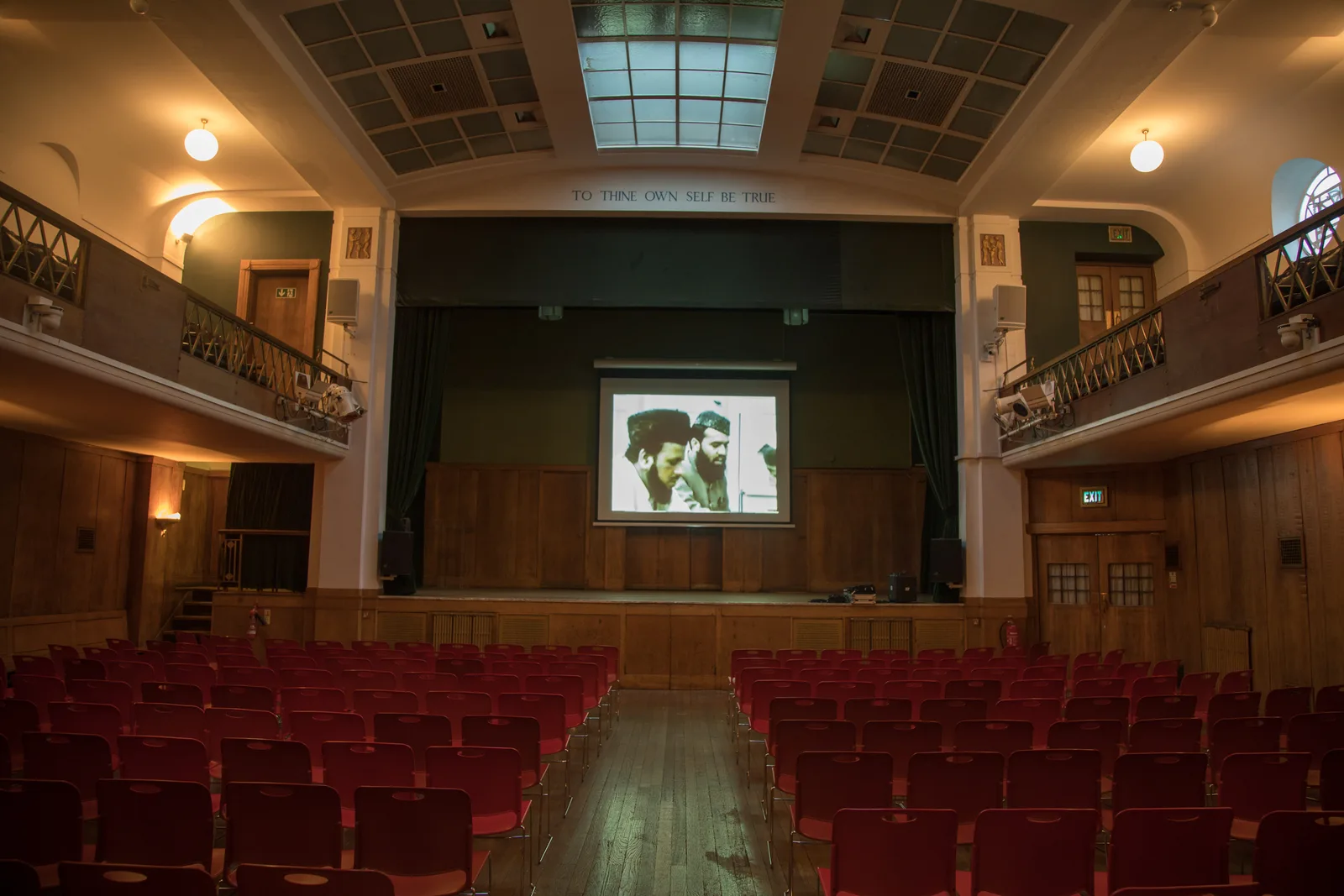
In the late 1940s and the 1950s she travelled to hear the humanist Harold Blackham lecture, first at the Ethical Church in west London and then at Conway Hall; those places, she said, became her university.33 She supported Bertrand Russell's Committee of 100 and the campaign for nuclear disarmament, and later learned that the security services had watched her.34 She lived on temporary secretarial work, magazine competitions and betting on horses, and transcribed George Bernard Shaw's shorthand for scholars.35 These years carry her public declaration on the timeline.
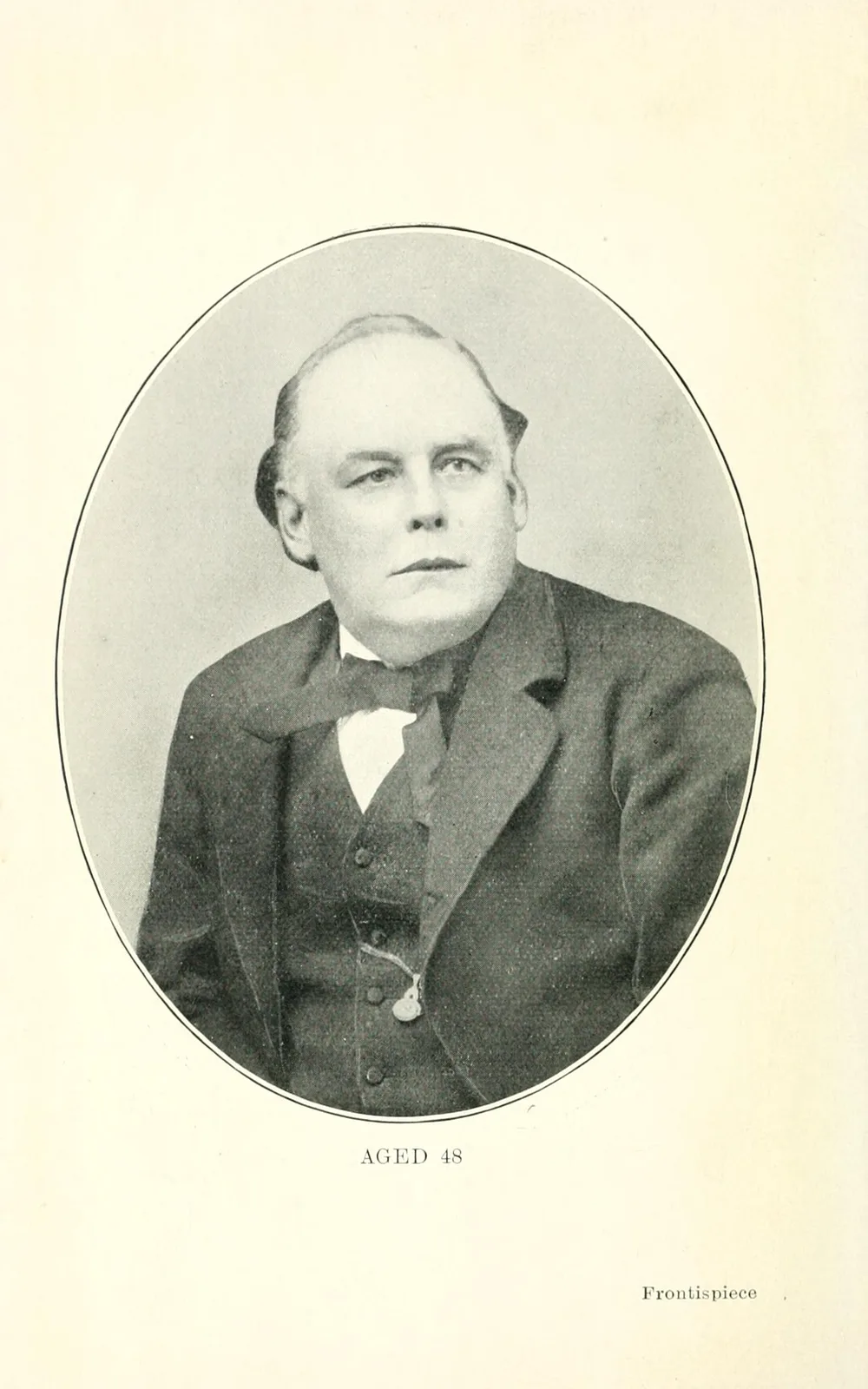
In 1972, by most accounts, she was elected president of the National Secular Society, the organisation Charles Bradlaugh had founded; her own website gives 1971.36 She held the office for nearly a quarter of a century, longer than anyone except Chapman Cohen.37 Her book Humanism, written for school religious-education courses, came out in 1973 and went into a seventh edition.38 She chaired the Voluntary Euthanasia Society from 1981 to 1985, and in 1985 sent every member of parliament her pamphlet Eggs Are Not People, against a proposed ban on embryo research.3940 She claimed to have conducted some two thousand secular funerals, as well as weddings and namings, and to have ended the funerals with the Epicurean epitaph: I was not, I have been, I am no more.4142 In 1985 she recorded "Why I Am an Atheist" for the BBC World Service.43 The timeline marks all of this as her restatement.
The blasphemy law
Britain's law against blasphemy still stood. On 6 March 1989, as the protests against The Satanic Verses spread, a Home Office minister told the House of Commons:
We have noted the views of the group set up by the Archbishop of Canterbury to consider the Law Commission's recommendations for reform of the law of blasphemy, but we have no plans for any such reform.4445
The same day Max Madden, the member for Bradford West, asked for an emergency debate, saying:
More than 50 Members of Parliament, of all political parties, have signed early-day motions noting the offence caused to many Moslems by the publication of "The Satanic Verses".4645
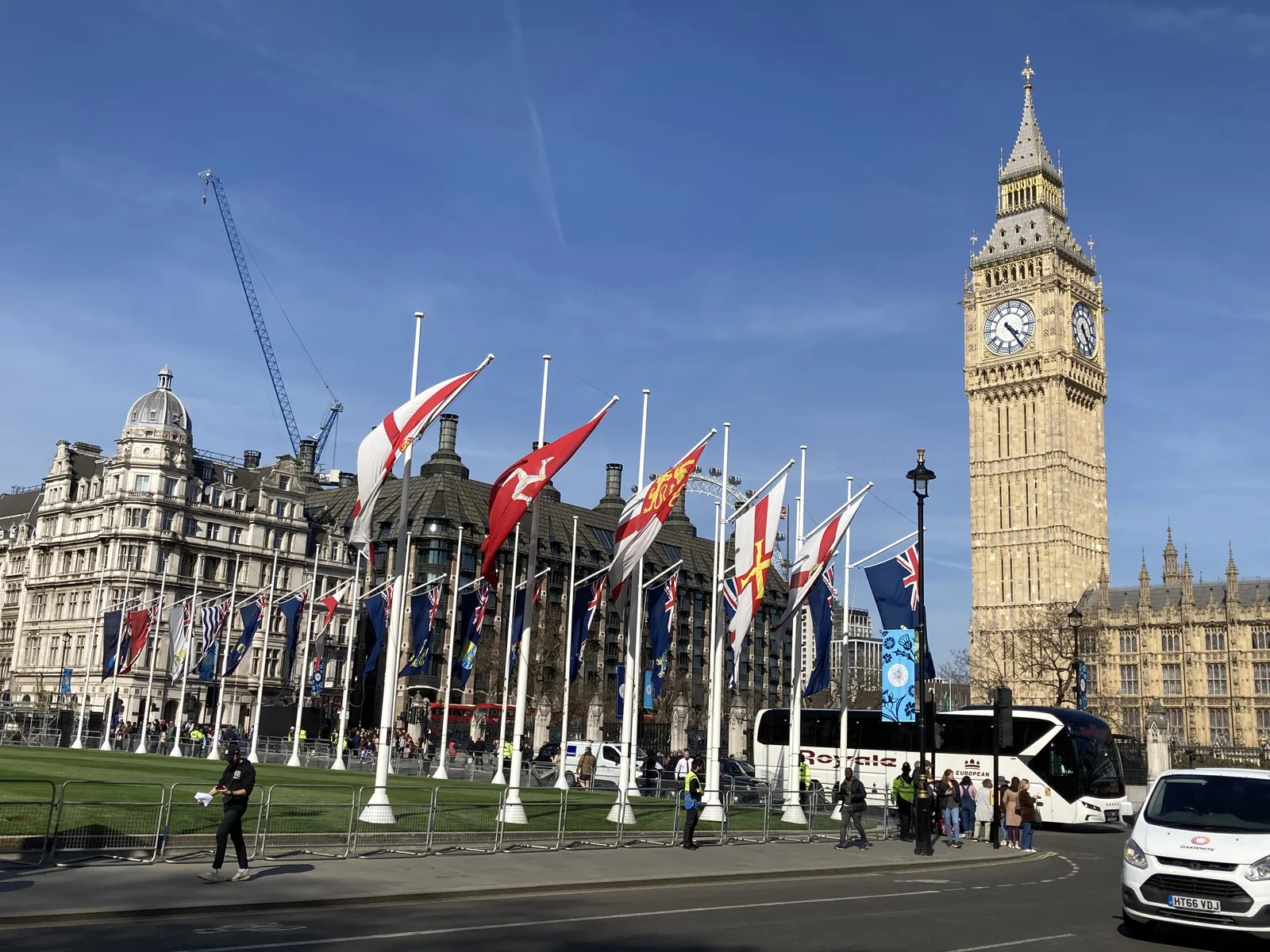
The Speaker refused him.45 Smoker had long wanted the law abolished; in 1977, by Humanists UK's account, she joined the defence of Gay News when it was prosecuted for blasphemy.47 On 27 May she went to stand by the march.1 By the account in her memoir, as one reviewer reports it, the marchers shouted "Kill, kill, kill!" and she escaped injury only because of a man she believed was a plain-clothes policeman.48 The often-repeated story that she was at the Bradford book-burning is a confusion; that was in January, and no source puts her there.49 In 2006, at eighty-two, she spoke at the Oxford Union against the motion that free speech should be moderated by respect for religion, and her side won; the blasphemy law, she said, was practically a dead letter and should be abolished.50
Outgrown
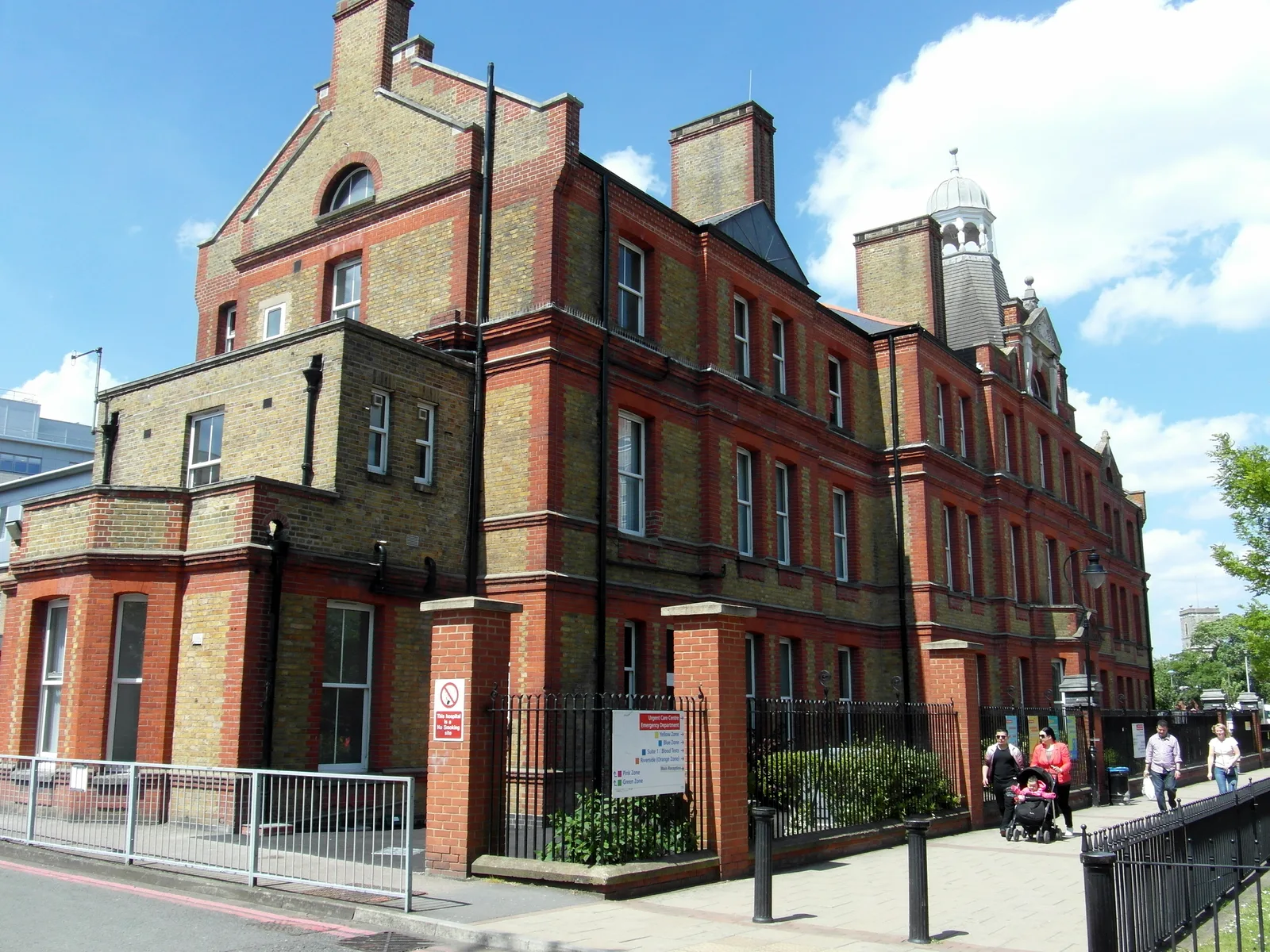
She retired as president in 1996, and in her last annual report she said that a newspaper's description of her as "the militant martinet of the National Secular Society" would do as her epitaph.51 In 2005 the International Humanist and Ethical Union gave her its award for distinguished service, and in her speech she thanked the good nuns, who had indoctrinated her with such nonsense that once she realised she had been conned, she felt bound to spend the rest of her life warning others against it.525354 In 2012 a contributor to the Ethical Record objected to being described as having lost his faith, and she agreed: atheists had not lost their beliefs, she wrote; they had outgrown them, confronted them, retracted them, spurned them.5556 Her memoir, My Godforsaken Life, appeared in 2018.57 Fear of death, she said late in life, was the main reason people became religious; it did not worry her.5859 She died at Lewisham Hospital on 7 April 2020, aged ninety-six, after a long illness.60
Did her unbelief change shape?
For Smoker there was no halfway house. Her faith was total, and it went, slowly, through the war, the confessional and a reading programme meant to save it, until a single Saturday in a public library. After that she never doubted again. What changed was only how she spent her unbelief: in the ethical societies of the 1950s, at the head of Bradlaugh's society for nearly twenty-five years, at the graveside of thousands of strangers, and beside a hostile march with a banner. Her own word for the change was not "lost" but "outgrown."
Charles Bradlaugh, who founded the National Secular Society in 1866, has his own chapter in this book.
Footnotes
-
SiteBio para 9 (her own wording); Nicholls para 1; HUKObit; Guardian para 2. ↩ ↩2
-
NSSObit, "Childhood and military service" (date, south London); Guardian para 3 (Catford); WP-Smoker. ↩
-
Guardian para 3. ↩
-
NSSObit, "Childhood and military service"; WhyAtheist para 12 (a sister nine years younger became a nun for life). ↩
-
Barbara Smoker: WhyAtheist para 3. ↩
-
WhyAtheist paras 3 and 11; Guardian para 3; Nicholls para 2. ↩
-
WhyAtheist para 12; Nicholls para 2. ↩
-
Barbara Smoker: WhyAtheist para 14. ↩
-
Barbara Smoker: WhyAtheist para 10. ↩
-
WhyAtheist paras 8–10. ↩
-
WhyAtheist para 13. ↩
-
Barbara Smoker: WhyAtheist para 15. ↩
-
WhyAtheist para 15. ↩
-
WhyAtheist para 12. ↩
-
Guardian para 4; HUKObit "Early life and the war"; WP-Smoker. Accounts differ; see the disputed points. ↩
-
WhyAtheist para 16. ↩
-
WhyAtheist para 17; HUKObit "Early life and the war" (wireless telegraphist, Ceylon); Indep94 (wireless telegraphist in Ceylon, night watches); SiteBio para 1; Nicholls para 4. ↩
-
SiteBio para 2; HUKObit "Early life and the war"; Nicholls para 4. The dispute with the commanding officer is humanists uk is the only source for this, as for the other details in this chapter cited to that source alone. ↩
-
WhyAtheist para 17; Nicholls para 5 (exposure to other world views abroad weakened her conviction). ↩
-
Barbara Smoker (reporting a priest): WhyAtheist para 18. ↩
-
An unnamed priest, her confessor, c. 1945–49 (as reported by Smoker). Effect on her, in her words: "I saw the force of this argument - especially as there were important Catholic writers I admired, such as G K Chesterton" [15]. She turned it round only decades later (Q6). In copyright.: WhyAtheist paras 18–19. ↩
-
Barbara Smoker: WhyAtheist para 19. ↩
-
WhyAtheist paras 18–19. ↩
-
Barbara Smoker: WhyAtheist para 25. ↩
-
WhyAtheist para 25; SiteBio para 3 (thought and read a lot; "the less she found it possible to believe"). ↩
-
Barbara Smoker: WhyAtheist para 26. ↩
-
WhyAtheist para 26. ↩
-
NSSObit "After the war"; Indep94 (her own words, "on 5 November 1949 at midday"). ↩
-
NSSObit "After the war". Reported at second hand; the original has not been seen. ↩
-
HUKObit "Early life and the war"; WP-Smoker. ↩
-
Barbara Smoker: WhyAtheist para 27. ↩
-
WhyAtheist paras 27–28; Indep94 ("I have never had a second of doubt since"). ↩
-
ParisSpeech para 3; HUKObit "Decades of humanist activism"; Guardian para 5; WP-Smoker. The year 1950 is wikipedia is the only source for this, as for the other details in this chapter cited to that source alone. ↩
-
HUKObit; Nicholls para 4. ↩
-
Guardian para 6; HUKObit; OpenLibrary. ↩
-
NSSObit "NSS presidency"; Guardian para 7; WP-NSS; WP-Venton; SiteBio para 5; Nicholls para 6. ↩
-
NSSObit "NSS presidency"; Guardian para 1. ↩
-
Guardian para 7; SiteBio para 7; NSSObit; OpenLibrary. ↩
-
Guardian para 8; HUKObit; WP-Smoker; SiteBio para 5. ↩
-
SiteBio para 8; NSSObit; Nicholls para 6; HUKObit calls the subject "stem cell research". ↩
-
Barbara Smoker: Indep94. ↩
-
NSSObit "NSS presidency"; SiteBio para 5; Indep94. ↩
-
SiteBio para 9; Articles (list); HUKObit. ↩
-
John Patten, Home Office minister, written answer, 6 March 1989: the Government's position on the blasphemy law she wanted abolished. Open Parliament Licence.: Hansard HC Deb 6 March 1989 vol 148 c386W. ↩
-
Hansard HC Deb 6 Mar 1989 c386W (Patten), c618 (Madden, Speaker); HC Deb 17 Jan 1989 c137W. ↩ ↩2 ↩3
-
Max Madden, Labour MP for Bradford West, asking leave to move the adjournment, 6 March 1989. He does not mention Smoker; the passage is the grievance of the Muslims whose march she met on 27 May 1989. The Speaker refused the application. Open Parliament Licence.: Hansard HC Deb 6 March 1989 vol 148 c618. ↩
-
HUKObit "Decades of humanist activism"; NSSObit (the Gay News trial among issues she wrote on). ↩
-
Nicholls para 1. ↩
-
WP-Rushdie (timeline); Nicholls para 1; SiteBio para 9. ↩
-
OxfordUnion paras 1–2 and later. ↩
-
NSSObit "NSS presidency". ↩
-
Barbara Smoker: ParisSpeech para 2 (acceptance speech, 7 July 2005). ↩
-
SiteBio para 9; ParisSpeech para 1; HUKObit "A legacy". ↩
-
ParisSpeech para 2. ↩
-
Barbara Smoker: Articles, "'Lost' my faith? Not me!" (Ethical Record, October 2012). ↩
-
Articles ("'Lost' my faith? Not me!"). Seen in the biographer's reprint, not the original letter. ↩
-
Guardian para 9; NSSObit "Later life"; Nicholls. ↩
-
Barbara Smoker (interview quoted by Humanists UK): HUKObit "A legacy". ↩
-
HUKObit "Decades of humanist activism" and "A legacy"; Indep94. ↩
-
NSSObit; HUKObit "A legacy"; WP-Smoker. ↩
In their own words
No one needed to drum religion into me: I lapped it up like a thirsty puppy.
I now see this as the beginning of both my loss of faith and of my persistent missionary zeal in proclaiming scientific truth - but it was many years before Jesus was to go the way of Santa Claus.
For me, there was never any possibility of a halfway house between the Catholic Church and atheism.
At the same time, I must already have begun to fear a loss of faith, for I remember praying daily that this would never happen to me. It took ten more years to complete the process.
In confession, I was told that I was suffering from intellectual pride.
Atheists don't claim to know anything with certainty - it's the believers who know it all.
And the more I read, the less I could believe.
Finally, one Saturday morning in November 1949, actually standing by the philosophy shelves of my local public library, I suddenly said to myself, with a tremendous flood of relief, "I am no longer a Catholic". And that, for me, meant I was no longer a Christian or a theist of any kind.
I have never found any reason to suppose that my decision that morning so long ago was a mistake.
my first acknowledgment must be to the good nuns who indoctrinated me with such poppycock that, once I realised I had been conned, I felt impelled to spend the rest of my life decrying it and warning others against it.
Far from our agreeing to moderate free speech in favour of respect for religion, we should moderate respect for religion in favour of free speech.
Faith, which means firm belief in the absence of evidence, betrays human intelligence, undermines science-based knowledge, and compromises ordinary morality.
it is now practically a dead letter, and the best solution would clearly be to abolish it altogether, as in fact the Law Commission has recommended several times to succeeding governments.
We atheists have definitely not 'lost' our immature beliefs: we have outgrown them, confronted them, retracted them, spurned them
The Northern Echo once described me as 'the militant martinet of the National Secular Society'! That will do as my epitaph.
In my twenties I started reading, discovering other ways of thinking, and on 5 November 1949 at midday, I suddenly realised I no longer believed.
I have never had a second of doubt since.
standing with a homemade banner proclaiming "Free Speech" beside the route of the big Muslim march that demanded the death of author Salman Rushdie, she survived a physical assault by a surge of demonstrators.
I always concentrate on their positive attributes and end with the Epicurean epitaph, 'I was not, I have been, I am no more.'
I'm not afraid of death but I fear a long illness.
It's fear of death which is the main reason for becoming religious. They want an afterlife!
The other side
In confession, I was told that I was suffering from intellectual pride.
More than 50 Members of Parliament, of all political parties, have signed early-day motions noting the offence caused to many Moslems by the publication of "The Satanic Verses".
We have noted the views of the group set up by the Archbishop of Canterbury to consider the Law Commission's recommendations for reform of the law of blasphemy, but we have no plans for any such reform.
Where accounts differ
| Point | One account | Another | How the page handles it |
|---|---|---|---|
| Start of her NSS presidency | Elected at the 1972 AGM (NSSObit; Guardian para 7; WP-NSS lists 1972–1996; WP-Venton: Ethel Venton June 1971–72) | 1971 to 1996 (her own site, SiteBio para 5; Nicholls para 6); in 2005 she said "some 35 years ago" (ParisSpeech), which would be 1970 | Say 1972, her election at the AGM, and that her own site gives 1971; or say "the early 1970s". |
| What tipped her over in 1949 | Her own account: a long reading programme of Catholic apologists and moral philosophers, then a moment at the library shelves (WhyAtheist paras 25–26) | The NSS: the conclusion that papal infallibility was impossible (NSSObit); Humanists UK and Wikipedia: Hector Hawton's writings (HUKObit; WP-Smoker); Guardian: a visit to the philosophy section | Use her own account as the spine; say the NSS gives infallibility as the key doubt; do not name Hawton as the cause until the memoir or another source supports it. |
| Time of the moment | "One Saturday morning in November 1949" (WhyAtheist) | "Precisely midday on 5 November 1949" (NSSObit; Indep94 in her own words) | Use "a Saturday in November 1949" or "5 November 1949"; both Saturday and the date agree. |
| Where the placard was | Beside the route of the 27 May 1989 London march (SiteBio; Nicholls; HUKObit; Guardian) | Roster line: "Bradford book-burning". The Bradford burning was 14 January 1989 (WP-Rushdie) and no source puts her there | Say London, 27 May 1989; do not link her to Bradford. |
| Her age at enlistment | 18 in 1942 (Guardian para 4) | 19 (NSSObit; WhyAtheist para 16 puts "nineteen" at the training camp; she turned 19 on 2 June 1942) | Say "in 1942, at eighteen or nineteen" or simply "in 1942". |
| Which World Humanist Congress she organised | The second, in London in 1957 (HUKObit) | Wikipedia (WP-Smoker) calls it the first, in 1952, "to follow the conference in Amsterdam"; Smoker herself says the IHEU was co-founded in 1952 (ParisSpeech) | Use Humanists UK's "second, 1957", and treat the Wikipedia line as an error until a Humanists International source confirms. |
| Subject of *Eggs Are Not People* | Embryo research (SiteBio; Nicholls para 6; the Powell Bill) | "Stem cell research" (HUKObit; anachronistic for 1985) | Say embryo research. |
| Date of the euthanasia anthology | 1985 (SiteBio para 7, "Peter Owen, 1985") | 1986 (OpenLibrary first publication year) | Avoid the year, or say 1986 with the catalogue. |
| Cause of death | Cancer (HUKObit "A legacy"; WP-Smoker) | Wikipedia's list of COVID-19 deaths includes her (search snippet of "List of deaths due to the COVID-19 pandemic"); NSS says "after a long illness" | Say "after a long illness" unless the memoir or a death certificate source settles it. |
| Years of presidency | About 24 (NSSObit) | A quarter of a century (Guardian); 25 years (Humanists UK) | "Nearly a quarter of a century". |
| Her mother's reaction | Humanists UK: turned out of the house when the Mass-going stopped | Not in her own accounts (WhyAtheist; Indep94; SiteBio) or the Guardian or NSS | Leave out unless the memoir confirms it. |
List of illustrations
This page uses only public-domain and Creative Commons images; each is credited with its source and licence.
- Barbara Smoker — Uploader credited by Commons as own work (en.wikipedia upload by Andrew Davidson, 16 January 2017); no author named on the file page, c. 2017 (upload date; Commons category 'Irreligion in 2017') · Wikimedia Commons, CC BY-SA 4.0 (web only; share-alike) · CC BY-SA 4.0 (Wikimedia Commons: {{self|cc-by-sa-4.0}}, https://creativecommons.org/licenses/by-sa/4.0)
- Catford Broadway, Catford (photograph of 2013) — Reading Tom from Reading, UK, 2013-05-27 · Reading Tom (Flickr), via Wikimedia Commons, CC BY 2.0 · CC BY 2.0 (Wikimedia Commons)
- G. K. Chesterton (sketch, Contemporary Portraits) — Unknown author (from Frank Harris, Contemporary Portraits, third series), no later than 1920 · Frank Harris, Contemporary Portraits (Internet Archive contemporaryport03harr), via Wikimedia Commons, public domain · Public domain (Wikimedia Commons: Public domain; published before 1931)
- Admiral Sir James Somerville inspecting Wrens in Colombo, Ceylon, 17 July 1944 (IWM A 24959) — Royal Navy official photographer, Lt C. Trusler, 1944-07-17 · Imperial War Museums (A 24959), Admiralty Official Collection, Crown copyright expired, via Wikimedia Commons · Public domain (Wikimedia Commons {{PD-UKGov}}; Commons permission text: 'released by the Imperial War Museum on the IWM Non Commercial Licence ... Crown Copyright ... considered expired 50 years after their creation'). Settled: UK Crown copyright in a photograph taken in 1944 expired in 1994, before the US restoration date of 1996, so it is public domain in the UK and the US.
- Conway Hall, Red Lion Square, London (interior) — Jwslubbock, 2019-02-14 · Jwslubbock, via Wikimedia Commons, CC BY-SA 4.0 (web only) · CC BY-SA 4.0 (Wikimedia Commons)
- Charles Bradlaugh, oval photograph (frontispiece, J. M. Robertson, Charles Bradlaugh, 1920) — Unknown photographer; Watts & Co., 1881-82 (plate caption 'aged 48'); published 1920 · Internet Archive (charlesbradlaugh00robe), public domain · Public domain (published before 1931; Internet Archive scan)
- Parliament Square with Commonwealth flags (photograph of 2023) — Matt Brown from London, England, 2023-05-03 · Matt Brown (Flickr), via Wikimedia Commons, CC BY 2.0 · CC BY 2.0 (Wikimedia Commons)
- Lewisham University Hospital, Lewisham High Street (photograph of 2013) — Reading Tom from Reading, UK, 2013-05-27 · Reading Tom (Flickr), via Wikimedia Commons, CC BY 2.0 · CC BY 2.0 (Wikimedia Commons)
Sources
Tier 1 — the subject's own words (writings, letters, diaries, trial records)
- WhyAtheist Barbara Smoker, "Why Am I an Atheist?" (talk first recorded for the BBC World Service in June 1985), as published on her own site, www.barbara.smoker.freeuk.com/Why_I_Am_An_Atheist.htm; Wayback capture of 2013-05-03. File
smoker-why-atheist.txt. Locator: paragraph number, 1–28. Her fullest account of how she lost her faith. - SiteBio Barbara Smoker, "Barbara Smoker" biography page (self-written, third person), same site, Biography.htm; Wayback capture of 2013-04-12. File
smoker-site-bio.txt. - ParisSpeech Barbara Smoker, acceptance speech for the IHEU "Distinguished Services to Humanism" award, Sorbonne, 7 July 2005, same site, Honoured.htm; capture 2013-05-03. File
smoker-paris-award.txt. - OxfordUnion Barbara Smoker, "Should we respect religion?", written 25 May 2006 after the Oxford Union debate, same site, Free_Speech_and_Respect_for_Religion.htm; capture 2013-05-03. File
smoker-oxford-union.txt. - Articles Index page of the same site's "Talks, Articles", which carries "'Lost' my faith? Not me!" (from the Ethical Record, October 2012). Capture of 2013-05-02. File
smoker-site-articles-index.txt. - Indep94 Barbara Smoker, "In bed with Susan De Muth: Barbara Smoker / Stranglers in the night", The Independent, 14 September 1994 (page metadata: published 1994-09-13T23:02Z), https://www.independent.co.uk/life-style/in-bed-with-susan-de-muth-barbara-smoker--stranglers-in-the-night-1448717.html. File
independent-1994-in-bed-with.txt. First-person column, written when she was 71. - (Consulted, not cited: "The Sin of Obedience", same site,
smoker-sin-obedience.txt.)
Tier 2 — scholarly biographies and encyclopedias
- None found. There is no scholarly biography, no ODNB entry that could be reached through the research tools, and no academic study. Open question for David: whether an ODNB entry exists (died 2020; the 2024 batch may include her) and whether it is reachable.
Tier 3 — popular biographies and journalism
- Guardian Andrew Copson, "Barbara Smoker obituary", The Guardian, 1 May 2020 ("Other lives"), https://www.theguardian.com/society/2020/may/01/barbara-smoker-obituary. Locator: paragraph (1–9). File
guardian-obit-2020.txt. Written by the chief executive of Humanists UK, a colleague; a movement obituary. - NSSObit "Former NSS president Barbara Smoker dies at 96", National Secular Society, 8 April 2020, https://www.secularism.org.uk/news/2020/04/former-nss-president-barbara-smoker-dies-at-96. Locator: section heading. File
nss-obit-2020.txt. Institutional, partisan; the only source for the 5 November 1949 midday date apart from her own 1994 column and for the papal-infallibility trigger. - HUKObit "Humanists UK mourns Barbara Smoker (1923-2020)...", Humanists UK, 8 April 2020, https://humanists.uk/2020/04/08/humanists-uk-mourns-barbara-smoker-1923-2020-prolific-activist-for-humanism-secularism-abortion-rights-peace-and-the-right-to-die/. Locator: section heading. File
humanists-uk-obit-2020.txt. Institutional; the only source for Hawton, her mother turning her out, and the Gay News campaign. - Nicholls Helen Nicholls, "Barbara Smoker's remarkable life should inspire us all" (review of My Godforsaken Life), National Secular Society, 17 January 2019, https://www.secularism.org.uk/opinion/2019/01/barbara-smokers-remarkable-life-should-inspire-us-all. Locator: paragraph (1–9). File
nss-nicholls-review-2019.txt. Secondhand reports of the memoir's content. - CNJ "Birthday salute to veteran secular campaigner Barbara Smoker", Camden New Journal, 6 June 2013 (Wayback capture of 2016-11-19). File
camden-new-journal-2013.txt. Short item. - OpenLibrary Open Library catalogue search for Barbara Smoker's works (queried 2026-10-14): Humanism first published 1973 (Ward Lock; NSS; South Place Ethical Society); Freethoughts 2002 (G. W. Foote); Shaw and the alphabet and £ s d of G. B. S. 1957; Voluntary Euthanasia 1986 (Peter Owen). Catalogue only.
Tier 4 — Wikipedia and similar reference sites (citable; give the article and revision date; prefer a higher tier where one exists)
- WP-Smoker "Barbara Smoker", Wikipedia, revision 1379805071 of 2026-10-12. File
wikipedia-barbara-smoker-rev1379805071.txt. Its biography rests on an old Rationalist International entry. Map only. - WP-NSS "National Secular Society", Wikipedia, revision 1367817378 of 2026-08-05 (list of presidents).
- WP-Venton "Ethel Venton", Wikipedia, revision 1347223391 of 2026-04-05.
- WP-Rushdie "Satanic Verses controversy", Wikipedia, revision 1379260255 of 2026-10-08 (Bradford book-burning 14 January 1989; London march 27 May 1989).
- WP-Walter "Nicolas Walter", Wikipedia, revision 1346166398 of 2026-03-30.
- Hansard (Open Parliament Licence, quotable): HC Deb 6 March 1989 vol 148 c618 (Max Madden's application, Speaker's reply), file
hansard-1989-03-06-satanic-verses-c618.txt; HC Deb 6 March 1989 vol 148 c386W (John Patten, written answer on blasphemy law reform), filehansard-1989-03-06-blasphemy-c386W.txt; HC Deb 17 January 1989 vol 145 c137W (Patten referring to the Law Commission's blasphemy report), filehansard-1989-01-17-blasphemy-c137W.txt. Smoker is not named in any of them; Hansard has no full-text search through the tools available (see Open questions).
Opposition sources — contemporary critics and religious responses
- Madden Max Madden MP (Bradford West), HC Deb 6 March 1989 c618 (above): the grievance of many Muslims over the book, put in Parliament during the same weeks as the march she met.
- Patten John Patten, Home Office minister, HC Deb 6 March 1989 c386W (above): the Government in March 1989 had "no plans" to reform blasphemy law, the opposite of her position.
- Confessor The priest of her confessional, as reported by her in WhyAtheist para 18–19 (unnamed; no direct words beyond the charge of "intellectual pride").
- Livingstone Ken Livingstone's reported accusation, via Nicholls para 7, from the memoir (no wording available).
Related lives
Charles Bradlaugh (episode 02), who founded the National Secular Society in 1866; the NSS's 2020 obituary notes that only Chapman Cohen served longer as president than Smoker, with Bradlaugh and Foote the only others of comparable length. (Close wording only: "has their own episode in this series"; no "Next:" pointer.)
Kurt Vonnegut
Kurt Vonnegut inherited his unbelief from a line of German-American freethinkers, beginning with a great-grandfather who asked for no prayers at his coffin. He never had a faith to lose, and found his unbelief confirmed by war and anthropology. In later life he turned not toward God but toward the ethics of the Sermon on the Mount. He called himself a Christ-loving atheist, and a humanist in honour of his parents.
José Saramago
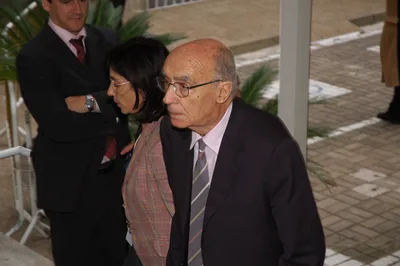
José Saramago never had a faith to lose, so his unbelief is the story of where he aimed it. He aimed it at a Church allied with the landlords (1980), and at the God of the Gospels after what he called "the lesson of doubt" (1991). When the Portuguese government kept his Gospel from a European prize in 1992, it became a public quarrel, and he left for Lanzarote. In 2001 he signed his own word, "atheism". In 2009, while attacking the God of the Bible in Caim, he admitted that "atheist" was only a word, that he was steeped in Christian values, and that there are no absolute atheists.
Isaac Asimov
Isaac Asimov was raised in Brooklyn by Orthodox parents who, by his memoirs' account, did not press their religion on him. He was an atheist for years before he would use the word, holding to "humanist" and "agnostic" as the honest labels. In 1982 he declared himself an atheist outright. In his last essay, with death close, he thanked atheism for taking away his fear of it.
Madalyn Murray O'Hair
Madalyn Murray O'Hair was baptised a Presbyterian. In her own later telling she dated her unbelief to a weekend reading of the Bible in grade school. She declared it in 1960 by petitioning Baltimore's schools with her son, and won the 1963 Supreme Court case against required Bible reading. She spent the rest of her life in confrontation as "the Atheist", never revising her unbelief but paying for it with flight, an estranged son and, in the end, a murder that had nothing to do with it.