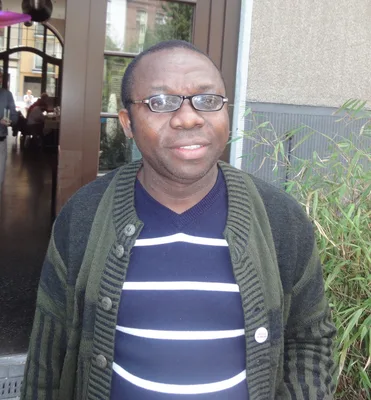
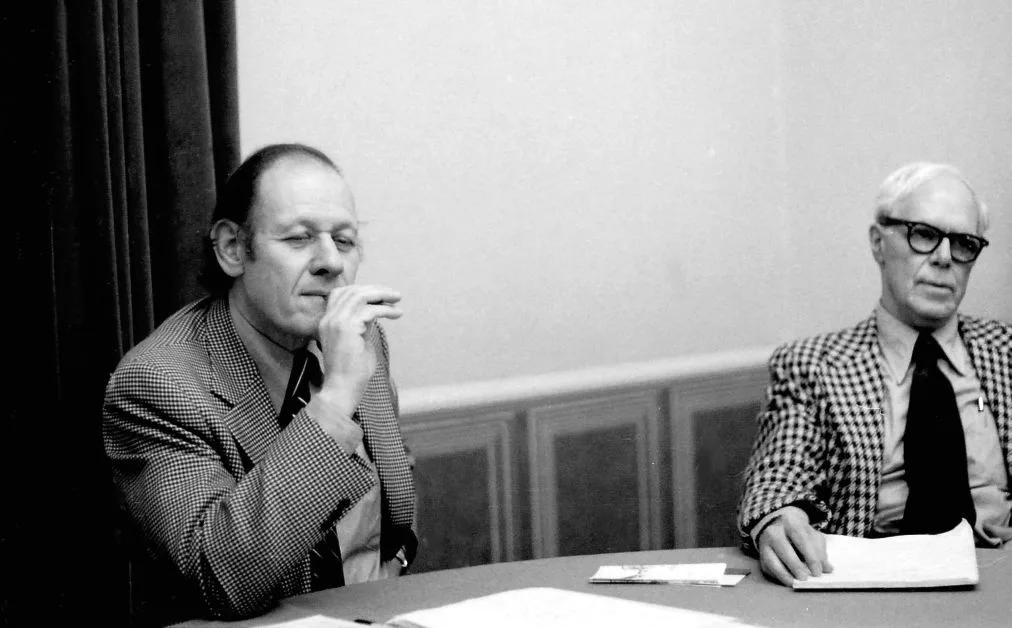
Leo Igwe was an altar boy and a seminarian from twelve. He lost his faith slowly in the seminary, through a grieving woman's question at a funeral he led at nineteen, and through the philosophers' arguments for God, which came to seem absurd. He waited years before leaving in 1994, and founded Nigeria's humanist movement in 1996. He turned his unbelief from an argument with the church into a dangerous campaign against witchcraft accusations. His 2017 thesis reframed that campaign around the accused's own agency, widening its aim without changing its substance.
The belief timeline
- Faith (c. 1970 to c. 1989) — Born into a Catholic household, altar boy, seminarian from twelve (c. 1982–83); "I was not born a humanist. In fact, I trained to become a priest" [5][7][9][49]
- Doubt (c. 1989–92 (inferred)) — The funeral at nineteen ("a crisis of faith"), Free Inquiry, and the philosophy course in which the arguments for God "seemed very childish and absurd" [11][12][14]
- Exit (1994-01) — Gives notice to the bishop; leaves his prayer books and goes to Ibadan; "I waited until the time that I could cope with the negative reactions" [17][18][19]
- Declaration (1996) — Founds the Nigerian Humanist Movement; first print statement for a general audience follows in 2018 ("why I do not believe in God") [22][53]
- Revision (2017–2022 (inferred; a shift of emphasis, not of belief)) — From religion as the target to the accused witch's own agency (thesis, 2017); "not talking down to religious people" (2017, a reporter's report); support for ex-clergy (2022); asks of the charge that he went "from one extreme to another extreme": "Did I?" [47][63][73]
Notes to the timeline (15)
- [5] His parents were born into traditional religion and became Catholics for education (his father said it was the only way to get formal schooling); they brought him up Catholic with prayers morning and night and before and after meals — Leo Igwe, "My Improbable Journey from Religion to Humanism," The Humanist (American Humanist Association), 5 December 2025, (para. 1); Leo Igwe, "Why Am I Not Religious?", Free Inquiry vol. 38 no. 2 (February/March 2018), (para. 3); Scott Douglas Jacobsen, "An Interview with Dr. Leo Igwe," Canadian Atheist, 19 March 2018 (In-Sight Publishing, posted 10 April 2022), (Q1 answer).
- [7] He was an altar boy in primary school, assisting priests at Mass, baptisms, weddings and funerals — Igwe, "My Improbable Journey from Religion to Humanism,"; Igwe, "Why Am I Not Religious?"; Jacobsen, "An Interview with Dr. Leo Igwe,".
- [9] At twelve his mother enrolled him in a Catholic seminary after an entrance examination, which he passed; he says he never signed a contract to be a priest. Year c. 1982–83 is inferred from his birth year — Igwe, "My Improbable Journey from Religion to Humanism,"; Leo Igwe, "Ex-cellence Project and Psycho-social Support for Non-Religious Ex-clergies in Africa," 27 September 2022 (also Guardian Nigeria, 9 October 2022); Wikipedia, "Leo Igwe," revision 1372399293 of 2026-08-31 (CC BY-SA 4.0), (age twelve).
- [49] TEDGlobal, August 2017: "Something happened while I was studying in the seminary and training to be a priest"; he credits his parents' work as his best lesson in humanism; "I've made it part of my life's mission to end witchcraft accusation and witch persecution in Africa" — Leo Igwe, "Why I choose humanism over faith," TEDGlobal 2017 (August 2017).
- [11] In the philosophy course he studied arguments for and against God by Augustine, Anselm, Aquinas and Bertrand Russell; the case for seemed "very childish and absurd" and the case against "sound and persuasive" — Igwe, "My Improbable Journey from Religion to Humanism,", (paragraph beginning 'The priest obliged').
- [12] At nineteen he conducted the funeral of a young man killed in a road accident, told the family "that is how god willed it", and a woman answered "how could this be the will of god?"; he writes that "experiences like this occasioned a crisis of faith". The year (c. 1989–90) is inferred from his stated age — Igwe, "My Improbable Journey from Religion to Humanism,", (paragraphs beginning 'On one occasion, a priest was busy' to 'I could feel her pain').
- [14] He met humanism through Free Inquiry: "when I was a seminarian in the 1990s" a colleague received the magazine and Kurtz's writing seemed "fascinating"; he also says he came into contact with humanism in the seminary and in the philosophy programme — Leo Igwe, "Paul Kurtz: A Tribute from Africa," Butterflies and Wheels, 12 November 2012 (first on Sahara Reporters, 5 November 2012 per a search listing); Jacobsen, "An Interview with Dr. Leo Igwe,"; Igwe, "Why I choose humanism over faith,"; Igwe, "My Improbable Journey from Religion to Humanism,".
- [17] He took some years to decide to leave because he wanted to be sure and to be ready for local reaction; it was a voluntary exit and "not an easy decision" — Igwe, "Ex-cellence Project and Psycho-social Support for…".
- [18] In January 1994 he told his bishop, Rev. Chikwe, that he wanted to withdraw from the programme; the secretary's reaction ("Ihitteafoukwu again") shows his community produced many ex-seminarians; the bishop let him go to "think about the priestly job" — Igwe, "Ex-cellence Project and Psycho-social Support for…".
- [19] His godfather, a priest who had backed his training, was unhappy and told him to pray; he left his prayer books at the village house and moved to Ibadan, where he has lived since; his former philosophy teacher said it was "a huge loss" — Igwe, "Ex-cellence Project and Psycho-social Support for…". Own account is the only source for this, as for the other details in this chapter cited to that source alone.
- [22] He founded the Nigerian Humanist Movement in 1996 (now the Humanist Association of Nigeria), to give fellowship "to all who yearn to be good without god, dogma or superstition"; early members corresponded by post and met in person in Ibadan; Kurtz's publications "inspired" it — Igwe, "My Improbable Journey from Religion to Humanism,"; Igwe, "Why Am I Not Religious?"; Leo Igwe, acceptance speech for the Distinguished Services to Humanism Award, IHEU General Assembly 2017, printed with the commendation by Andrew Copson; Igwe, "Paul Kurtz: A Tribute from Africa,"; Jacobsen, "An Interview with Dr. Leo Igwe,".
- [53] In Free Inquiry, February/March 2018, he wrote that he would give "the reasons why I do not believe in God", which he ties to Nigeria's religious diversity, spending on houses of God amid poverty, speaking in tongues and violence over desecration — Igwe, "Why Am I Not Religious?".
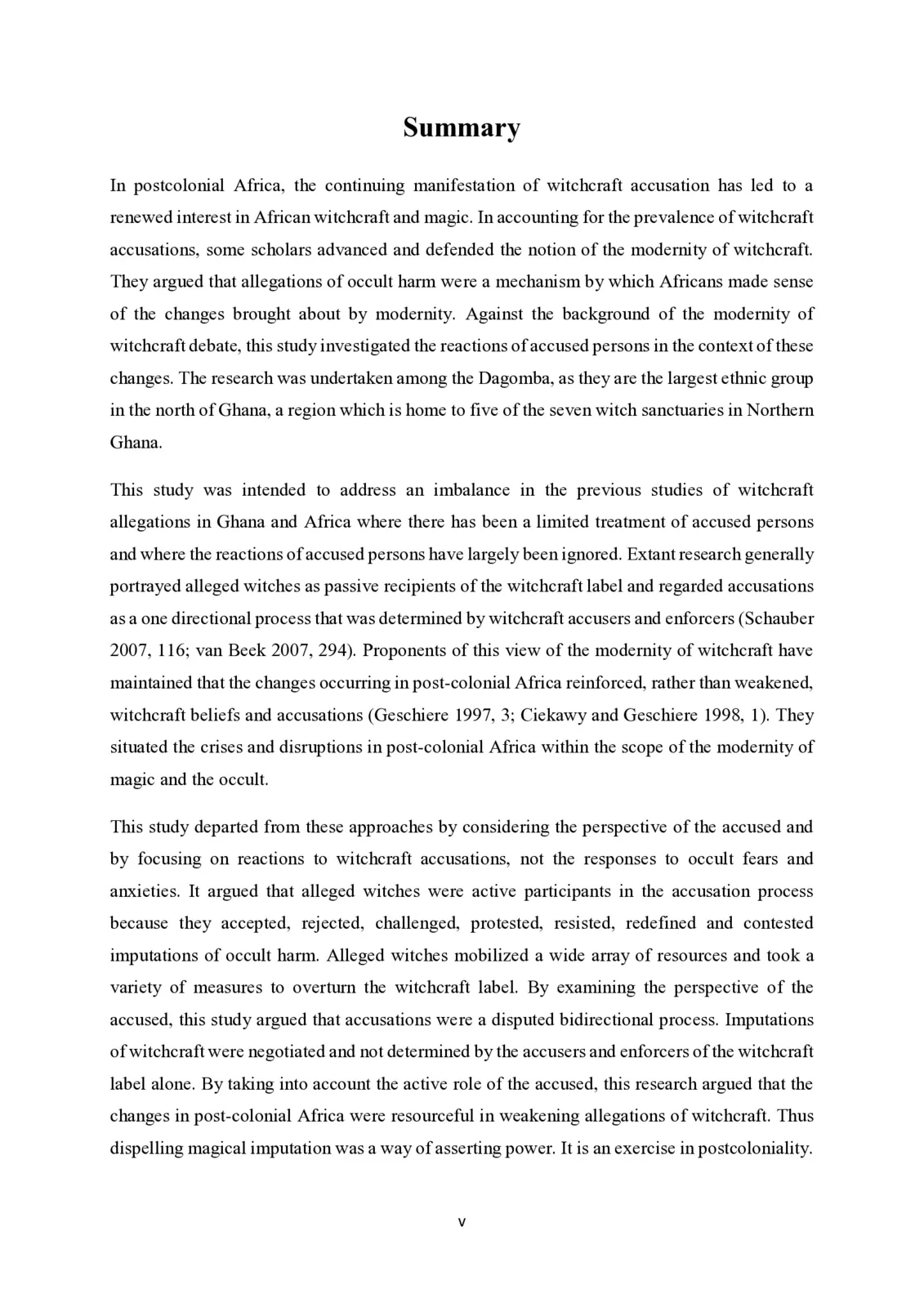
- [47] The thesis argues that alleged witches were "active participants in the accusation process" who "accepted, rejected, challenged, protested, resisted, redefined and contested" the charge; "dispelling magical imputation was a way of asserting power" — Leo Igwe, The Witch is not a Witch: The Dynamics and Contestations of Witchcraft Accusations in Northern Ghana (PhD dissertation, University of Bayreuth, BIGSAS, 2017; XIII, 245 pp.), Abstract, p. v.
- [63] In 2022 he launched the Ex-cellence Project to give psycho-social support to non-religious former clergy; he writes that his own exit "has been a challenging experience" and that he "felt lonely and alone" for many years — Igwe, "Ex-cellence Project and Psycho-social Support for…".
- [73] At the European Skeptics Congress 2017 a reporter describes him as "sternly polite with his comments about not talking down to religious people and embracing science" — "Skeptical Adventures in Europe, Part 2" (report on the European Skeptics Congress 2017), Skeptical Inquirer.
The Seminarian Who Left
In January 1994 a young Nigerian seminarian went to see his bishop and told him that he wanted to leave the training for the priesthood. When the bishop's secretary heard the name of his home community, he remembered, the reaction was "again": it had already given the church many men who left. The bishop let him go, to "think about the priestly job."1 The young man was Leo Igwe. Two years later he founded the Nigerian Humanist Movement, and in the decades since he has been arrested, beaten and sued for his campaign against the accusation and persecution of people, many of them children, as witches.23
This chapter asks what made an altar boy and seminarian stop believing, why he waited years to say so, and how his unbelief turned from an argument with the church into a defence of the people his neighbours called witches.
A Catholic childhood in Mbaise
He was born in Nigeria in 1970, shortly after the civil war, into a poor family in Mbaise, in the south-east; Wikipedia gives the date as 26 July.456 His father trained as a teacher and became headmaster of a local primary school; his mother left school early and farmed, traded and raised the children.6 Both parents had been born into the traditional religion and became Catholics so that they could be educated, and they brought him up with prayers morning and night and before and after meals.7 His mother was, and is, devout; his father, he says, never took religion seriously, and he now calls him an agnostic.8 He served as an altar boy at Masses, baptisms, weddings and funerals.9
What puzzled him as a boy was the mixture around him: people who were Christians by day practised the traditional religion at night, and at one funeral he served, he saw a politician stop the priest, who quietly left. He could not tell, he wrote, which faith was true and which false.10 It was a puzzle about which religion was right, not yet a doubt about God, and so it is not where the timeline places his doubt.
The seminary
At twelve his mother enrolled him in a Catholic seminary after he passed its entrance examination; he never signed anything promising to become a priest, he says.11 He went on to study philosophy there, and his record gives a Bachelor of Philosophy from Seat of Wisdom Seminary, Ulakwo, in 1992.12 The timeline marks these years as his faith.
At nineteen, by his own account, he was sent to conduct the funeral of a young man killed in a road accident. He told the family that this was how God had willed it, and a woman asked him how this could be God's will; he could feel her pain. Experiences like this, he wrote, brought on a crisis of faith.13 In the philosophy course he studied the arguments for and against God in Augustine, Anselm, Aquinas and Bertrand Russell, and the case for God came to seem to him childish and absurd, the case against it sound and persuasive.14 A fellow seminarian received the American magazine Free Inquiry, and through it he found the writing of the humanist philosopher Paul Kurtz.15 He also noticed, he said later, that religion encouraged people to claim to see what they did not see, and he found the humanist outlook more realistic.16 He gives two grounds for his unbelief: religions' claims about heaven and hell, the communion wafer, the resurrection and speaking in tongues contradict each other and are false; and religion threatens people, through sacrifice, violence and laws against blasphemy and apostasy.17 The timeline places his doubt here, dated only by the ages he gives, about 1989 to 1992.
Leaving
He did not leave at once. He taught for two years in a minor seminary, worked at converting people from the traditional religion to Catholicism, and began theology before he resigned.18 It took him some years to decide, he wrote, because he wanted to be sure, and to be ready for what people at home would say.19 After the bishop let him go, his godfather, a priest who had supported his training, told him to pray. He left his prayer books at the family house in the village and moved to Ibadan, where he has lived ever since. His philosophy teacher called it a huge loss.2021 His parents supported him; other relatives did not, and one told him he would burn in the hottest part of hell.22 A woman on a bus to Mbaise, learning that he had left, said she wished two others would be taken to fill the gap he had made; he did not tell her, he wrote, that he was an atheist.2324 He felt lonely, he later wrote, for many years.25 The timeline marks this as his exit.
Applying for a teaching job in Ibadan in 1994, he was asked by the headmaster whether the age on his papers was his real age. It started a habit, he says, of asking whether every date, name and certificate was real: questions provoke questions, and doubts trigger doubt.26
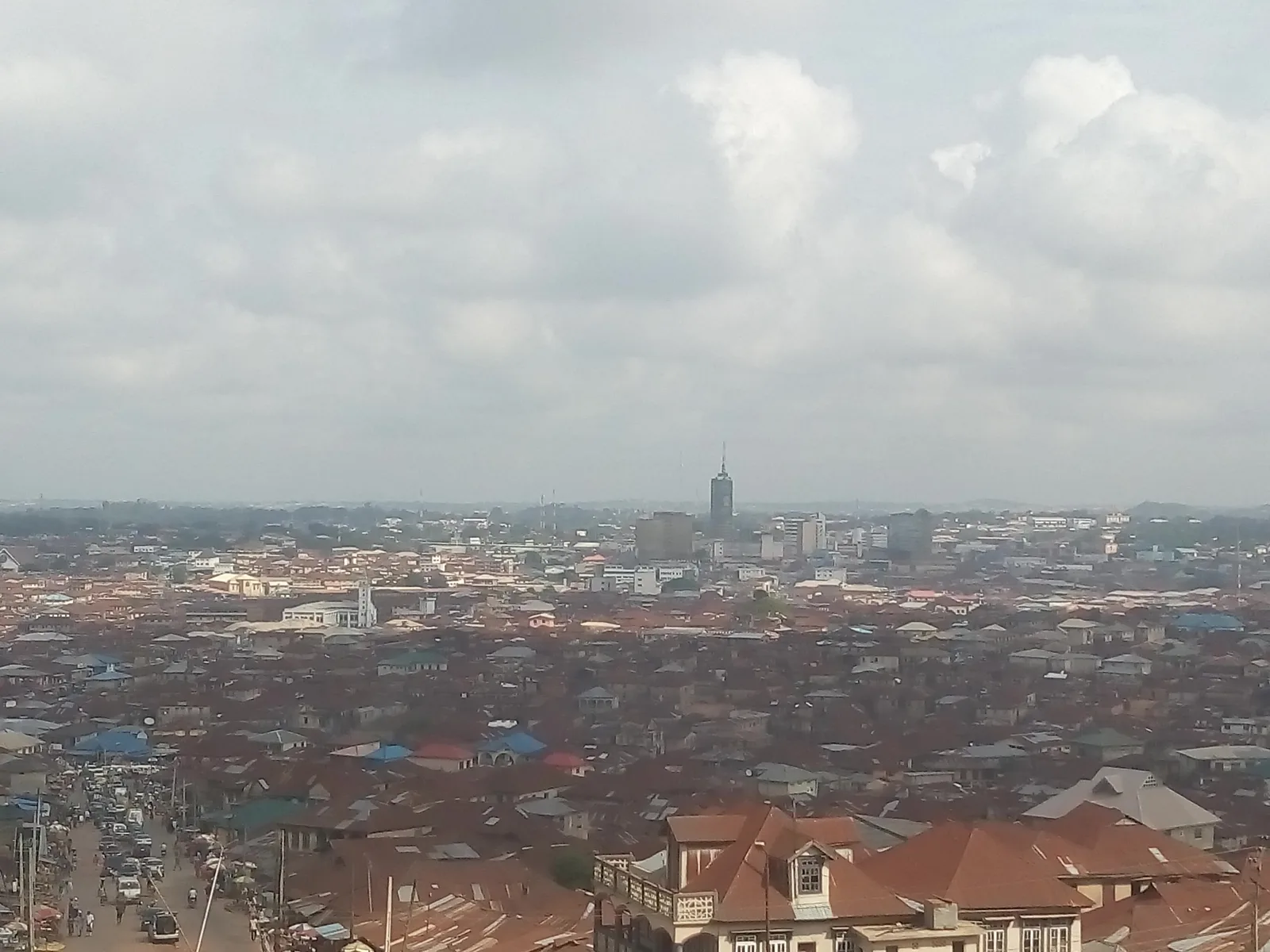
A humanist movement
In 1996 he founded the Nigerian Humanist Movement, now the Humanist Association of Nigeria, to give fellowship to all who wanted to be good without god, dogma or superstition. Its first members wrote to each other by post and met in Ibadan, and Kurtz's publications inspired it.2 In an interview, of which only a fragment was seen, he said that 1996 was when he went open and public as a humanist, in the years of the struggle against military rule.2728 He met Kurtz at the World Humanist Congress in Mumbai in 1999, directed the Center for Inquiry in Nigeria, and from 2007 to 2011 represented the International Humanist and Ethical Union in West Africa.293031 The association could not get itself legally registered until December 2017, after nearly two decades of trying.32 On the timeline, this is his declaration.
He spoke for unbelievers before African human-rights bodies. In 2010 he told the African Commission on Human and Peoples' Rights that freedom of conscience includes the freedom to criticise any religion and to profess none, and in 2011 that blasphemy laws target religious minorities, including atheists, agnostics and freethinkers.3334
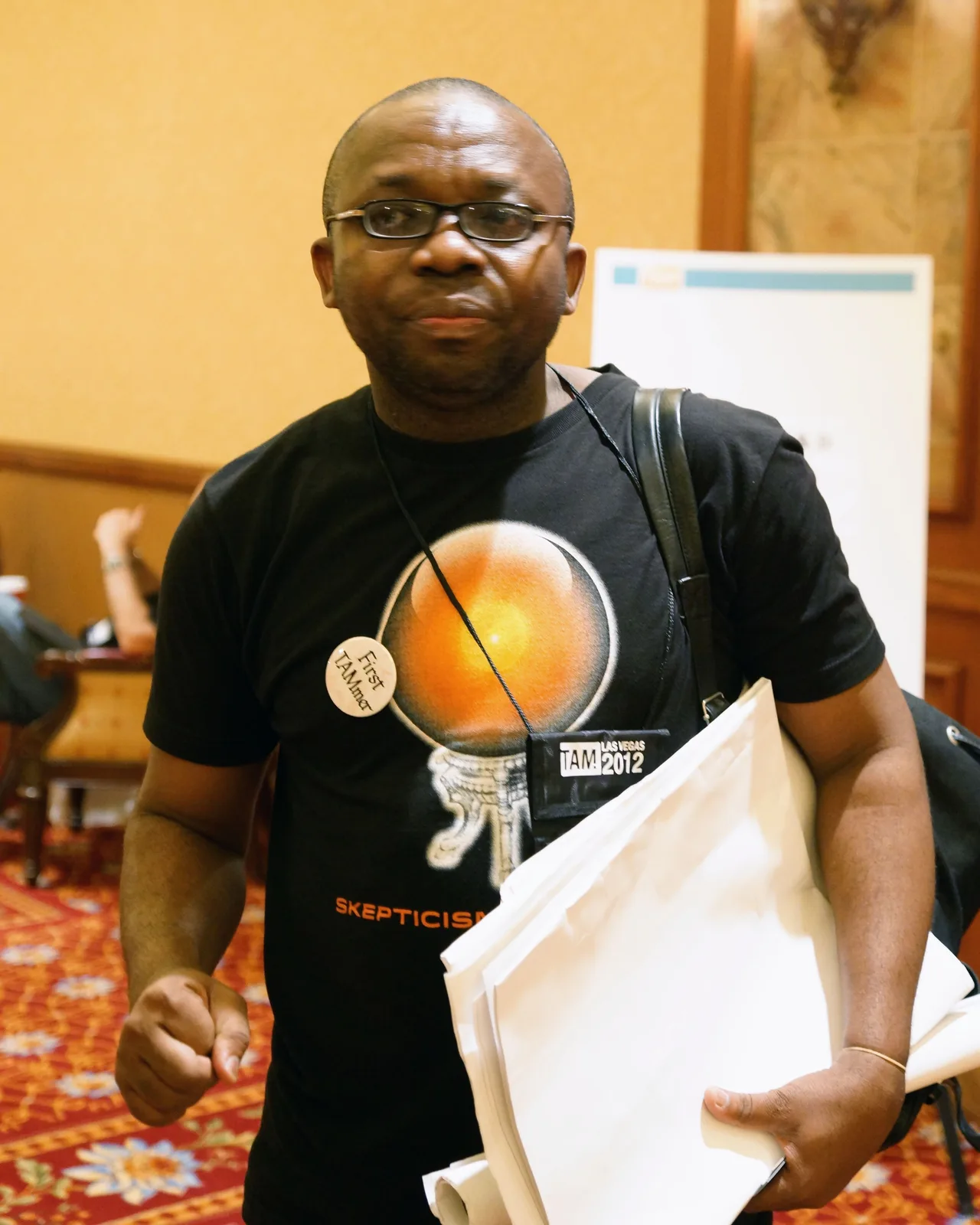
The witch-hunters
His unbelief found its cause in the accusation of witchcraft. In July 2009 members of the Liberty Gospel Church, the ministry of the preacher Helen Ukpabio, stormed a workshop he was running in Calabar on witchcraft and children's rights; his glasses were broken and his bag, camera and phone taken, and the police intervened.35 Ukpabio's books, as the Houston Chronicle quoted them, taught that a child under two who screams at night and is always feverish is a servant of Satan; she has defended her films as fiction.36 Her church's website called humanists organisations "that don't believe in the existence of God," and said that, unlike others, it showed mercy to witches.3738 She and her church sued him; the case was dismissed in Calabar in December 2010.39 The United States State Department's report for 2010 recorded children accused of witchcraft and killed in Akwa Ibom State, and the state governor's warrants against the heads of two organisations that had drawn press attention to it.40
In January 2011 he was arrested in Uyo while trying to rescue two children accused of witchcraft, beaten with a baton, held for about two nights, and released without charge; he said he was undeterred.41 Members of his family were arrested and his elderly father was attacked and lost an eye, in a separate campaign for justice the family had pursued; Amnesty International called it harassment.4243 He has listed the costs himself: arrest, detention and beatings, a mob of believers in witches, threats to his family, blackmail, lawsuits and character assassination.3
The witch is not a witch
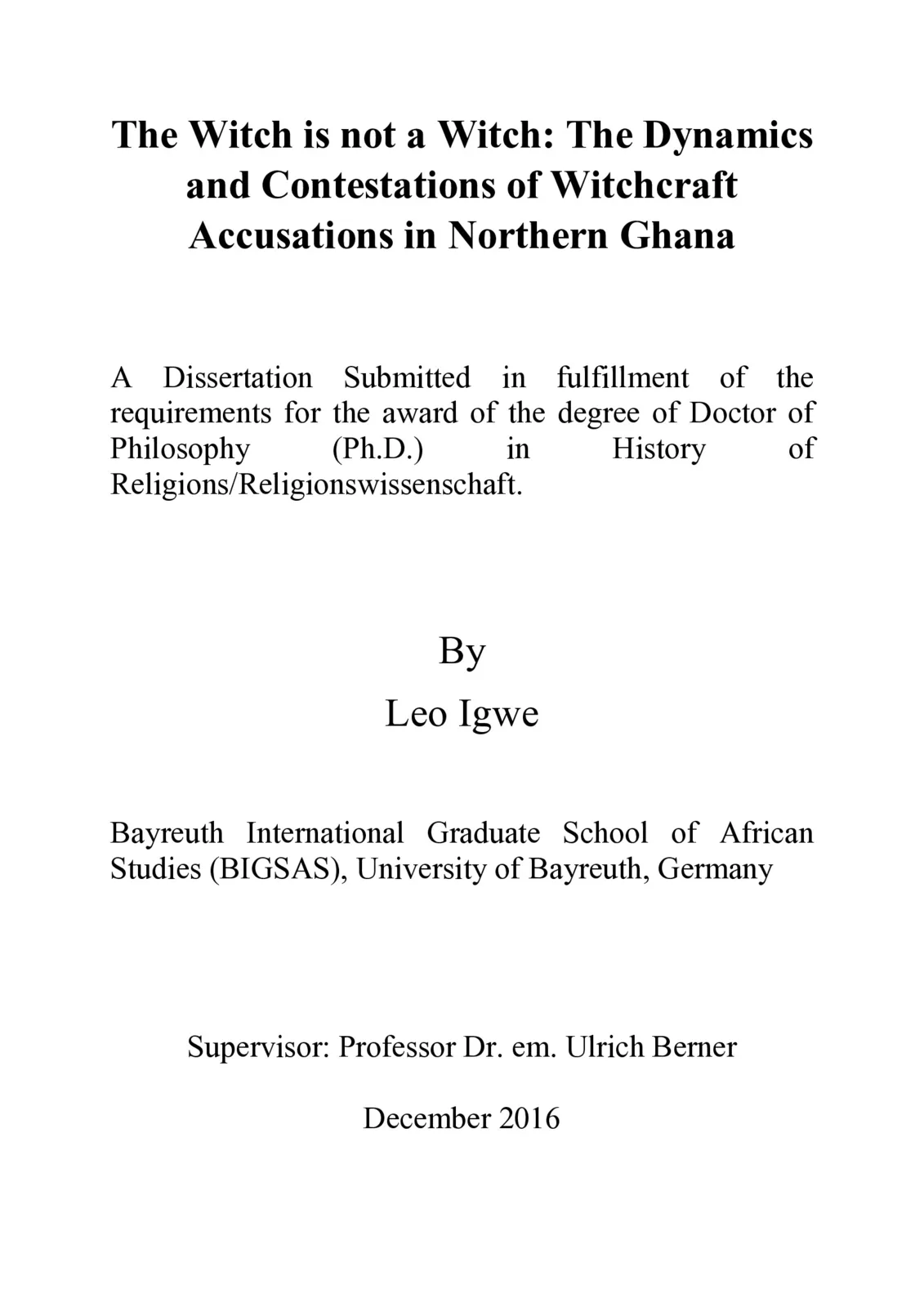
In 2011 he left his post with the humanist union to study witchcraft accusations at the University of Bayreuth in Germany, with fieldwork among the Dagomba of northern Ghana.4445 His doctoral thesis, The Witch is not a Witch (2017), changed the angle of his work. The accused, it argued, were not only victims:
It argued that alleged witches were active participants in the accusation process because they accepted, rejected, challenged, protested, resisted, redefined and contested imputations of occult harm.4647
Dispelling a magical imputation, the thesis concluded, was itself a way of asserting power.47 The same year he told a TED audience that he had made it his life's mission to end witchcraft accusations and witch persecution in Africa, and he set out a programme he called "iDoubt" for teaching critical thinking.4849 He received the humanist union's award for distinguished service in 2017.43 A reader of his iDoubt article wrote to say that it baffled him seriously that anyone could conclude that there is no God, and that he needed answers.50
Why I do not believe
In 2018, in Free Inquiry, the magazine through which he had first met humanism, he set out in print the reasons why he did not believe in God, tied to Nigeria's crowded religious life: the money spent on houses of God amid poverty, the speaking in tongues, the violence over desecrations.51 A reporter at a skeptics' congress in 2017 described him as "sternly polite" about not talking down to religious people.52 In 2014 Nigerian humanists campaigned for the release of Mubarak Bala, committed to a psychiatric hospital by his family after renouncing Islam, and after Bala's arrest for blasphemy in 2020 Igwe led the campaign for him.5354 In 2019 or 2020, accounts differ, he founded Advocacy for Alleged Witches, which aims to end witch hunts in Africa by 2030.55 In 2022 he began the Ex-cellence Project, to support former clergy who have left religion, as he had.25 In August 2026 he was elected Vice President of Humanists International, the first Nigerian to hold the post.56
He has been asked whether he went from one extreme to the other. His answer, in his own telling, was a question: did he?57 His revision on the timeline is not a change of belief but a widening of its aim, from religion's claims to the accused witch's own agency, and from his own exit to other people's.25
Did his unbelief change shape?
His unbelief came slowly, in a seminary, from a grieving woman's question and from the arguments of the philosophers, and he waited years before he left. Once he had left, it took the shape of a movement and a campaign. It changed its target more than its substance: first religion's truth claims, then the preachers who named children as witches, then, after his thesis, the beliefs about witchcraft that the accused themselves bargained with and resisted. He has kept the word "humanist" for himself since 1996, and he has paid for it.
Narendra Dabholkar, the Indian campaigner against superstition who was honoured alongside Igwe at the humanist union's assembly in 2017, has his own chapter in this book.
Footnotes
-
Leo Igwe, "Ex-cellence Project and Psycho-social Support for Non-Religious Ex-clergies in Africa," 27 September 2022 (also Guardian Nigeria, 9 October 2022). ↩
-
Leo Igwe, "My Improbable Journey from Religion to Humanism," The Humanist (American Humanist Association), 5 December 2025; Leo Igwe, "Why Am I Not Religious?", Free Inquiry vol. 38 no. 2 (February/March 2018); Leo Igwe, acceptance speech for the Distinguished Services to Humanism Award, IHEU General Assembly 2017, printed with the commendation by Andrew Copson; Leo Igwe, "Paul Kurtz: A Tribute from Africa," Butterflies and Wheels, 12 November 2012 (first on Sahara Reporters, 5 November 2012 per a search listing); Scott Douglas Jacobsen, "An Interview with Dr. Leo Igwe," Canadian Atheist, 19 March 2018 (In-Sight Publishing, posted 10 April 2022). ↩ ↩2
-
Humanists International, "Cases of concern: Leo Igwe," last updated 6 December 2024; Leo Igwe, "Why I choose humanism over faith," TEDGlobal 2017 (August 2017), ("By the time I was born -- that was shortly after the Nigerian civil war"). ↩
-
Wikipedia, "Leo Igwe," revision 1372399293 of 2026-08-31 (CC BY-SA 4.0), (rev. 1372399293), lead sentence. Not verified. ↩
-
Igwe, "Why I choose humanism over faith,", transcript, opening section. ↩ ↩2
-
Igwe, "My Improbable Journey from Religion to Humanism,", (para. 1); Igwe, "Why Am I Not Religious?", (para. 3); Jacobsen, "An Interview with Dr. Leo Igwe,", (Q1 answer). ↩
-
Jacobsen, "An Interview with Dr. Leo Igwe,", (Q1 answer). ↩
-
Igwe, "My Improbable Journey from Religion to Humanism,"; Igwe, "Why Am I Not Religious?"; Jacobsen, "An Interview with Dr. Leo Igwe,". ↩
-
Igwe, "My Improbable Journey from Religion to Humanism,", (paras. 2–3). ↩
-
Igwe, "My Improbable Journey from Religion to Humanism,"; Igwe, "Ex-cellence Project and Psycho-social Support for…"; Wikipedia, "Leo Igwe,", (age twelve). ↩
-
Igwe, "My Improbable Journey from Religion to Humanism,"; Igwe, "Ex-cellence Project and Psycho-social Support for…"; Leo Chikezie Igwe, curriculum vitae (undated; lists a 2023 course, so 2023 or later), (Education). ↩
-
Igwe, "My Improbable Journey from Religion to Humanism,", (paragraphs beginning 'On one occasion, a priest was busy' to 'I could feel her pain'). ↩
-
Igwe, "My Improbable Journey from Religion to Humanism,", (paragraph beginning 'The priest obliged'). ↩
-
Igwe, "Paul Kurtz: A Tribute from Africa,"; Jacobsen, "An Interview with Dr. Leo Igwe,"; Igwe, "Why I choose humanism over faith,"; Igwe, "My Improbable Journey from Religion to Humanism,". ↩
-
Jacobsen, "An Interview with Dr. Leo Igwe,", (Q1 answer). ↩
-
Igwe, "My Improbable Journey from Religion to Humanism,", (paragraphs beginning 'At the cognitive level' and 'At the existential level'). ↩
-
Igwe, "My Improbable Journey from Religion to Humanism,"; Igwe, "Ex-cellence Project and Psycho-social Support for…"; Igwe, "Why Am I Not Religious?". ↩
-
Igwe, "Ex-cellence Project and Psycho-social Support for…". ↩
-
His former philosophy teacher at the seminary, on hearing he was leaving, as Igwe reports: Igwe, "Ex-cellence Project and Psycho-social Support for…". ↩
-
Igwe, "Ex-cellence Project and Psycho-social Support for…". Own account is the only source for this, as for the other details in this chapter cited to that source alone. ↩
-
Igwe, "Ex-cellence Project and Psycho-social Support for…". ↩
-
A woman on a bus to Mbaise, who learned he had left priestly training, as Igwe reports: Igwe, "Ex-cellence Project and Psycho-social Support for…". ↩
-
Igwe, "Why Am I Not Religious?"; Igwe, "Ex-cellence Project and Psycho-social Support for…". ↩
-
Igwe, "Ex-cellence Project and Psycho-social Support for…". ↩ ↩2 ↩3
-
Leo Igwe, "iDoubt: Critical Thinking and Skepticism in Africa in an Internet Age," Skeptical Inquirer / CSI, 28 July 2017, (Inspire Doubt section). ↩
-
"Leo Igwe: Interview with a Nigerian Humanist," Free Inquiry (volume and year not confirmed), JSTOR stable 4007139, (search snippet only). Reported at second hand; the original has not been seen. ↩
-
"Leo Igwe: Interview with a Nigerian Humanist,", (snippet). ↩
-
Igwe, "Paul Kurtz: A Tribute from Africa,"; Award17; IHEU, "IHEU Representative Leo Igwe leaving Africa," 11 October 2011 (Matt Cherry). ↩
-
Igwe, "Paul Kurtz: A Tribute from Africa,"; Center for Inquiry press release, "CFI Representative Assaulted by Christians at Children's Rights Conference," August 2009. ↩
-
IHEU, "IHEU Representative Leo Igwe leaving Africa,"; Leo Igwe, "IHEU represented at African Commission on Human and People's Rights," 30 July 2007; CV. ↩
-
Humanists International, "Humanist Association of Nigeria achieves formal recognition after 17-year campaign," 11 December 2017. ↩
-
Leo Igwe for IHEU, "Freedom of Conscience and religious persecution in Africa," statement to the 47th session of the African Commission, Banjul, 13 May 2010. ↩
-
IHEU statement by Leo Igwe to the 49th session, Banjul, 30 April 2011 (page of 4 May 2011). ↩
-
IHEU, "IHEU representative attacked," 30 July 2009; release, "CFI Representative Assaulted by Christians at…"; Martin Robbins, "Christian and Islamist extremists in Nigeria are exporting dangerous ideas," The Guardian, 7 August 2009; Leo Igwe, report "Court rules against Helen Ukpabio and the Liberty Gospel Church," Butterflies and Wheels, December 2010. Accounts differ; see the disputed points. ↩
-
Helen Ukpabio, in her books, as quoted by the Chronicle; the teaching Igwe contests. The Chronicle adds that she has defended her films as fiction: Lomi Kriel, "'Lady Apostle' or exploiter of children?", Houston Chronicle, 10 March 2012. ↩
-
Liberty Foundation Gospel Ministries (Helen Ukpabio's church, Calabar), from its website: Martin Robbins, "The dangerous fight for the child witches of Nigeria," The Guardian (Lay Scientist blog), 14 January 2011, (quoting the website, Jan 2011). ↩
-
Liberty Foundation website notice, on Stepping Stones Nigeria and humanist groups: Robbins, "The dangerous fight for the child…", (quoting the website). ↩
-
IHEU, "Nigerian Court rejects case against Humanist campaigners," 4 February 2010; Igwe, "Court rules against Helen Ukpabio and…"; Humanists International, "Nigerian humanist, Leo Igwe, facing the threat of spurious charges," 14 July 2020. ↩
-
US Department of State, 2010 Country Reports on Human Rights Practices: Nigeria (April 2011), (section 6). ↩
-
Leo Igwe, report on his arrest in Uyo, printed in "IHEU representative Leo Igwe jailed and beaten for human rights work," 18 January 2011; Robbins, "The dangerous fight for the child…". ↩
-
Amnesty International, Urgent Action UA 178/10 (AFR 44/014/2010), "Father of human rights defender attacked," 13 August 2010. ↩
-
Award17; Humanists International, "Tears and joy at IHEU General Assembly 2017," 10 August 2017. ↩ ↩2
-
IHEU, "IHEU Representative Leo Igwe leaving Africa,". ↩
-
Leo Igwe, The Witch is not a Witch: The Dynamics and Contestations of Witchcraft Accusations in Northern Ghana (PhD dissertation, University of Bayreuth, BIGSAS, 2017; XIII, 245 pp.), p. x–xi (Acknowledgement). ↩
-
Leo Igwe: Thesis17, Abstract, p. v. ↩
-
Igwe, "Why I choose humanism over faith,". ↩
-
Igwe, "iDoubt: Critical Thinking and Skepticism in…". ↩
-
An unnamed Nigerian reader, in a comment printed in Igwe's iDoubt article: Igwe, "iDoubt: Critical Thinking and Skepticism in…". ↩
-
Igwe, "Why Am I Not Religious?". ↩
-
"Skeptical Adventures in Europe, Part 2" (report on the European Skeptics Congress 2017), Skeptical Inquirer. ↩
-
Igwe, "Why Am I Not Religious?"; Award17. ↩
-
Humanists International, "Nigerian humanists targeted by anti-atheism campaign," 18 May 2020; Humanists International, "A message from Leo Igwe, ten weeks after Mubarak Bala's arrest," 8 July 2020; "Leo Igwe Wins 2020-21 Heart Of Humanism Award," New Times (Nigeria), 27 July 2021, reporting the Foundation Beyond Belief announcement; US Department of State, 2021 Report on International Religious Freedom: Nigeria. ↩
-
International, "A message from Leo Igwe, ten…"; International, "Cases of concern: Leo Igwe,", (2019); Humanists International, "Alleged witches are still killed today, in 2020, says humanist anti-witchcraft activist Leo Igwe," 24 April 2020, (a "project launched" in April 2020); Igwe, "My Improbable Journey from Religion to Humanism,"; Leo Igwe, "FoRB, Humanism and Witch Persecution in Nigeria," statement delivered at The Hague to the Dutch Special Envoy for Freedom of Religion or Belief, published by The Trent and New Times (Nigeria), 13 October 2026, ("In 2020, the Advocacy for Alleged Witches announced a decade of activism"). ↩
-
"Nigerian Humanist Leo Igwe Elected Vice President of Humanists International," The Trent, 1 September 2026. ↩
-
Leo Igwe, reporting former students: Igwe, "Ex-cellence Project and Psycho-social Support for…", (paragraph beginning 'Meanwhile, I never signed any contract'). ↩
In their own words
As a child, this melange of faith confused me. It was difficult for me to know which faith was true and which one was false.
At the age of 12, my mother enrolled me in a Catholic seminary where I trained to be a priest.
We studied arguments for and against the existence of god by Augustine, Anselm, Thomas Aquinas, and Bertrand Russell. The argument for the existence of god seemed very childish and absurd. Arguments against the existence of god were sound and persuasive.
Brother, how could this be the will of god? Is it that god does not know that my brother is the only son?
I came to know him when I was a seminarian in the 1990s. A colleague of mine used to receive copies of his magazine, Free Inquiry, and other publications.
It was while in the seminary that I came into contact with the idea of humanism. I found the humanist outlook to be more realistic than religion.
It gradually dawned on me that all religions were forms of make-believe, different versions and replicas of the same superstition.
I had issues with religion at two levels. At the cognitive and practical/existential levels.
Instead of spending my life hankering after imaginary gods, the supernatural and other metaphysical woo-woos that I could not fathom, I thought it was better that I served humanity and nature that I could easily relate to.
I also noticed that religion encouraged people to be dishonest, to claim to be seeing what they are not seeing or to be in communication with somebody when they are in communication with nobody.
I waited until the time that I could cope with the negative reactions and pressures from the local catholic and religious public.
Leaving the priestly training was not an easy decision. It took me some years to finally make up my mind because I wanted to be sure that I was making the right decision.
the day that I went to notify my bishop, Rev Chikwe, about my decision to discontinue the training, which was in January 1994
I did not pray over anything. I left the prayer books in my house at the village and left for Ibadan where I have been living since then.
Incidentally, my parents were supportive and did not oppose my decision to leave the priestly training.
One of them told me that for saying that there was no god and going about saying so, I would burn in the hottest part of Hell.
Look, I never told her I was an atheist and did not believe in God.
Some have said to me on many occasions that I moved from one extreme to another extreme. Did I?
I left the priestly training in 1994 and founded the Nigerian Humanist Movement, now known as the Humanist Association of Nigeria, in 1996.
All this is why, in 1996, I started the Nigerian Humanist Movement to highlight these dark and destructive roles of religion and superstition.
I was not born a humanist. In fact, I trained to become a priest, not a humanist leader. I had no experience in organized humanism.
I am going to share with you the reasons why I do not believe in God and why I have devoted the past twenty years to campaigning against the harmful effects of religion and superstition.
Something happened while I was studying in the seminary and training to be a priest. I came in contact with a different idea of life.
The best humanist lesson I learned was from the life of my own parents.
And I've made it part of my life's mission to end witchcraft accusation and witch persecution in Africa.
in 1994 I applied to teach in a school in Ibadan that is in South West Nigeria.
As you can see, questions provoke questions. Doubts trigger doubt.
Freedom of conscience entails freedom to profess a religion or belief, freedom to change one's religion or belief and also freedom to criticize any religion or belief and freedom to profess no religion or belief.
Blasphemy laws are weapons of religious oppression, persecution and discrimination.
But I am undeterred by the arrest, torture and detention—whether it was politically motivated or not. I will continue to work and campaign against witchcraft accusations and related abuses in Akwa Ibom state and beyond.
I have been arrested, detained, and beaten up by those who opposed my work. I have been attacked and robbed by a mob of witch-believers.
But my "spirit" is unbroken. My head is unbowed.
It argued that alleged witches were active participants in the accusation process because they accepted, rejected, challenged, protested, resisted, redefined and contested imputations of occult harm.
I think it has become clear to the Nigerian authorities that the humanist movement is not one that they can easily push aside or ignore.
Instead of demanding compensation and apology from me, Ukpabio should rather compensate, make restitution and apologize for her infamous, despicable witchcraft exorcizing activities.
To end witch hunts, humanists in Africa use an "informactional" approach—that is, a way of tackling the phenomenon that combines rational and scientific information with action.
As the Vice President I will relentlessly work to ensure that Humanists International effectively addresses the threat of religious nationalism and extremism and provides a robust alternative to dogmatic religions and supernatural faiths to all who subscribe to humanist values, ethics and cosmology around the globe.
Is there an ongoing Christian genocide in Nigeria? Of course the answer is an emphatic yes.
But Madam, Christian genocide is not the whole story. It is also a genocide of unbelievers.
The other side
Unlike other ministries where witches and wizards are beaten or stoned to death, Liberty is the only Ministry that shows mercy to witches.
Be informed that some organizations that don't believe in the existence of God called "HUMANIST" have formed organisations in the name of helping the Helpless Child of Africa from being molested.
It is an attack against the work of Jesus Christ
Our ministry is just like any other
If a child under the age of two screams in the night, cries, and is always feverish with deteriorating health, he or she is a servant of Satan.
Asked how she could be so sure, she said, 'because I am an African!'
Ok, Leo, but that is a huge loss
My son, I wish they would take two other persons to fill that gap that you created by leaving the program
I want to understand why anyone would come to the conclusion that there is no God. It baffles me seriously. I need answers.
Where accounts differ
| Point | One account | Another | How the page handles it |
|---|---|---|---|
| Year the Nigerian Humanist Movement began | 1996 (Igwe: Humanist25, FI18, Award17, Kurtz12, InSight18) | 1990 (HI24-Case: "formed the Humanist Association of Nigeria in 1990"); "in the 1990s" (HI11-Leaving) | Use 1996, his own date; the 1990 page looks like a typing error but was not corrected by anyone |
| His age when he left the seminary | "At the age of 24" (Wiki-Igwe) | January 1994 (Excell22), which is 23 if he was born 26 July 1970 | Give the date, January 1994, not the age; the birth day is one source only |
| Size of the mob on 29 July 2009 | "more than 150" (CFI09); "over 150 thugs" (Igwe's report, BW10) | "about two hundred" (HI09-Attack; HI10-Court "About 200"); "around 200" (Guardian09) | "Between 150 and 200, depending on the account" |
| Size of Ukpabio's claim against Igwe and others (2009 suit) | 2 billion naira, "about US$13 million" (Wiki-Igwe) | 200 billion naira, stated as "1.3 billion US dollars" (HI10-Court) and as "$.1.3 million" (BW10; HI20-Ukp) | Say "an enormous sum in naira"; give no dollar figure; the two dollar figures cannot both be right |
| When the suit ended | Struck out 4 Feb 2010 for her side's non-appearance (HI10-Court) | Dismissed in December 2010 by Justice Nneke, with costs of 20,000 naira (BW10; HI20-Ukp) | Both happened: struck out, re-listed, then dismissed |
| What Ukpabio's suit claimed | Infringement of her "right to spread the gospel" (HI10-Court) | A "fundamental right to believe in witchcraft" (HI20-Ukp); action to enforce rights against the state and police because the workshop was "critical of their activities" (BW10) | Say she sued claiming her rights had been violated; quote neither paraphrase as hers. Her own filing was not seen |
| Founding year of Advocacy for Alleged Witches | 2019 (HI20-Msg; HI24-Case) | 2020: Humanists International announces it as a launched project in April 2020 (HI20-AfAW); Igwe: "In 2020, the Advocacy for Alleged Witches announced a decade of activism" (Trent-FoRB26); roster 2020 | "In 2019 or 2020, accounts differ" |
| Year of the Distinguished Services to Humanism Award | 2017 (HI17 pages with his speech; FI author page; Wiki-Igwe) | 2014 and 2017, "two-time recipient" (HI24-Case); "in 2014" (HI20-Msg). Wikipedia: he became an International Academy of Humanism laureate in Feb 2014 (secondhand) | Use 2017 for this award; do not claim 2014 |
| First international humanist conference in Sub-Saharan Africa | 2001, sponsored by Kurtz's Council for Secular Humanism (Kurtz12) | 2007 (Wiki-Igwe) | Use 2001 as "he says"; Wikipedia's 2007 is unsourced here |
| How long he was held in Uyo in January 2011 | "a day and night in jail" (HI Jan 2011 summary: Report11 page) | Arrested Tuesday 11 Jan about 5 pm, released Thursday 13 Jan: two nights (Igwe's own account on the same page; Guardian11: "from Tuesday night to this morning") | "About two days" |
| Whether his family was Catholic or traditional | "Born into a religious Catholic family" (FI18); "strictly Catholic" household (Wiki-Igwe quoting Gold Coast Bulletin) | Parents were born traditional religionists who became Catholics for schooling, and many neighbours kept both faiths (FI18, Humanist25, InSight18) | Both: Catholic converts living in a community that mixed faiths |
| Name of the organisation | Nigerian Humanist Movement (Igwe, HI) | "Nigerian Humanist Society" (Amnesty10) | Use Movement; it is now the Humanist Association of Nigeria |
List of illustrations
This page uses only public-domain and Creative Commons images; each is credited with its source and licence.
- Leo Igwe, human rights activist and humanist (2012) — Vera de Kok, 2012-05-27 · Vera de Kok, via Wikimedia Commons, CC BY-SA 3.0 · CC BY-SA 3.0 (as stated on the Wikimedia Commons file page)
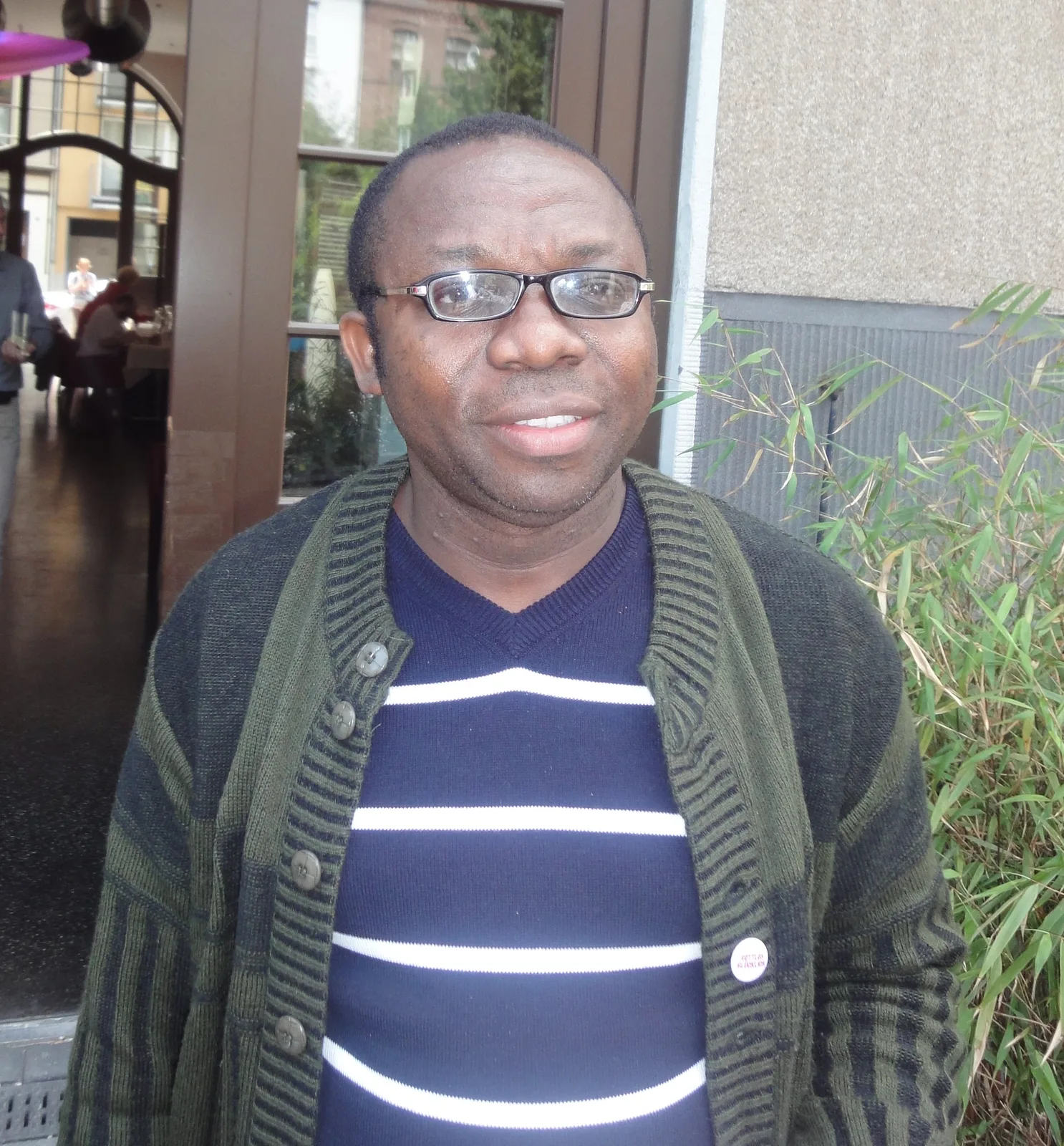
- St. Michael Catholic Church, Ogwuama, Ahiazu Mbaise, Imo State — Favy15, 2020-12-31 · Favy15, via Wikimedia Commons, CC BY-SA 4.0 · CC BY-SA 4.0 (as stated on the Wikimedia Commons file page)
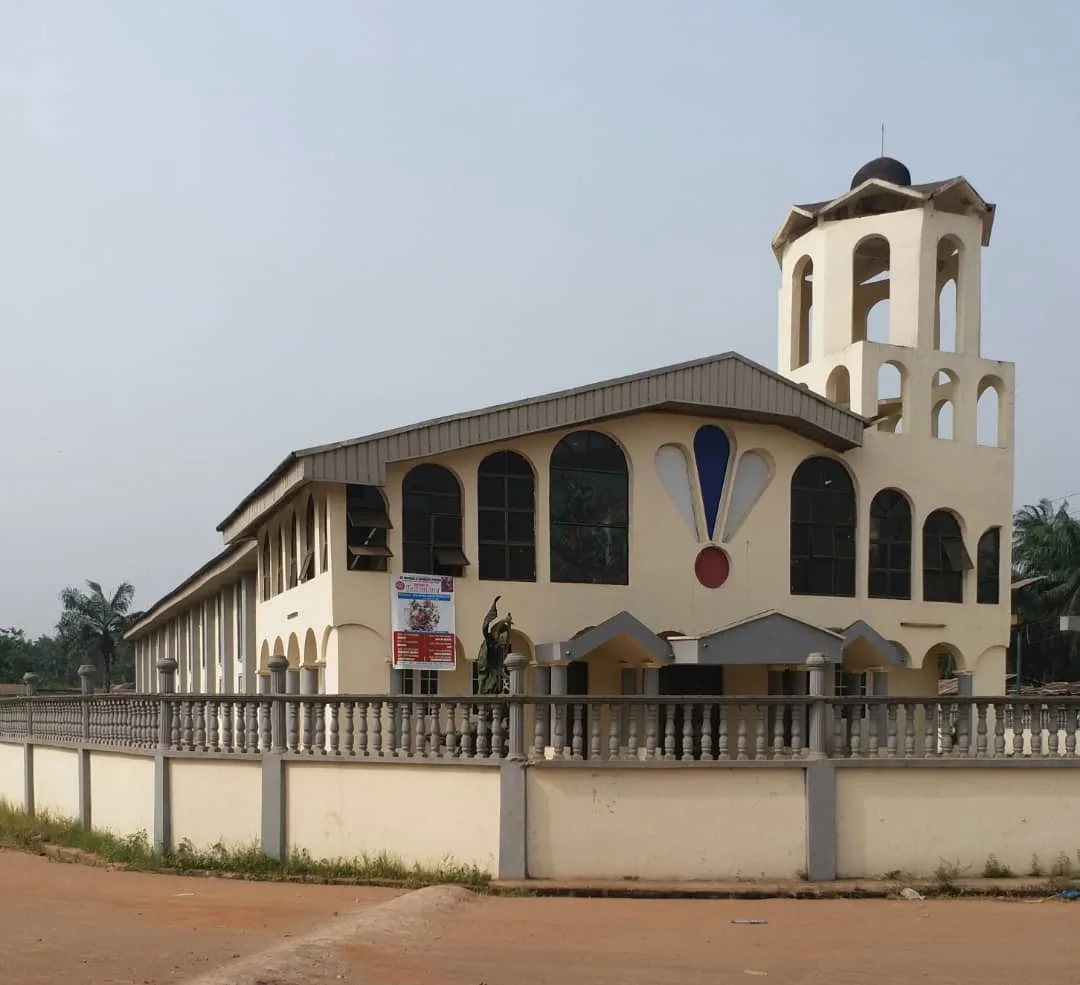
- Paul Kurtz (left) and Martin Gardner at a CSICOP executive council meeting, 1979 — RobertoTenore, 1979 · RobertoTenore, via Wikimedia Commons, CC BY-SA 3.0 · CC BY-SA 3.0 (as stated on the Wikimedia Commons file page)
- Aerial view of Ibadan from the top of Mapo Hall — Lafemo 123, 2017-07-10 · Lafemo 123, via Wikimedia Commons, CC BY-SA 4.0 · CC BY-SA 4.0 (as stated on the Wikimedia Commons file page)
- Leo Igwe on the panel 'From Witch-burning to God-men: Supporting Skepticism Around the World', The Amaz!ng Meeting, Las Vegas — BDEngler, 2012-07-12 · BDEngler, via Wikimedia Commons, CC BY-SA 3.0 · CC BY-SA 3.0 (as stated on the Wikimedia Commons file page)
- Marina Resort, Calabar, Cross River State — Teemages, 2017-07-03 · Teemages, via Wikimedia Commons, CC BY-SA 4.0 · CC BY-SA 4.0 (as stated on the Wikimedia Commons file page)
- Unity Park, Uyo, Akwa Ibom State — Mosesumoh, 2024-07-27 · Mosesumoh, via Wikimedia Commons, CC BY-SA 4.0 · CC BY-SA 4.0 (as stated on the Wikimedia Commons file page)
- Title page of Leo Igwe's PhD dissertation 'The Witch is not a Witch', University of Bayreuth (BIGSAS), December 2016 — Leo Igwe, 2016-12 · Leo Igwe, The Witch is not a Witch (PhD thesis, University of Bayreuth, 2017), via EPub Bayreuth, CC BY 4.0 · CC BY 4.0 (stated on the University of Bayreuth repository record as 'Creative Commons BY 4.0: Namensnennung')
- Summary (printed p. v) of Leo Igwe's PhD dissertation 'The Witch is not a Witch' — Leo Igwe, 2016-12 · Leo Igwe, The Witch is not a Witch (PhD thesis, University of Bayreuth, 2017), via EPub Bayreuth, CC BY 4.0 · CC BY 4.0 (stated on the University of Bayreuth repository record as 'Creative Commons BY 4.0: Namensnennung')
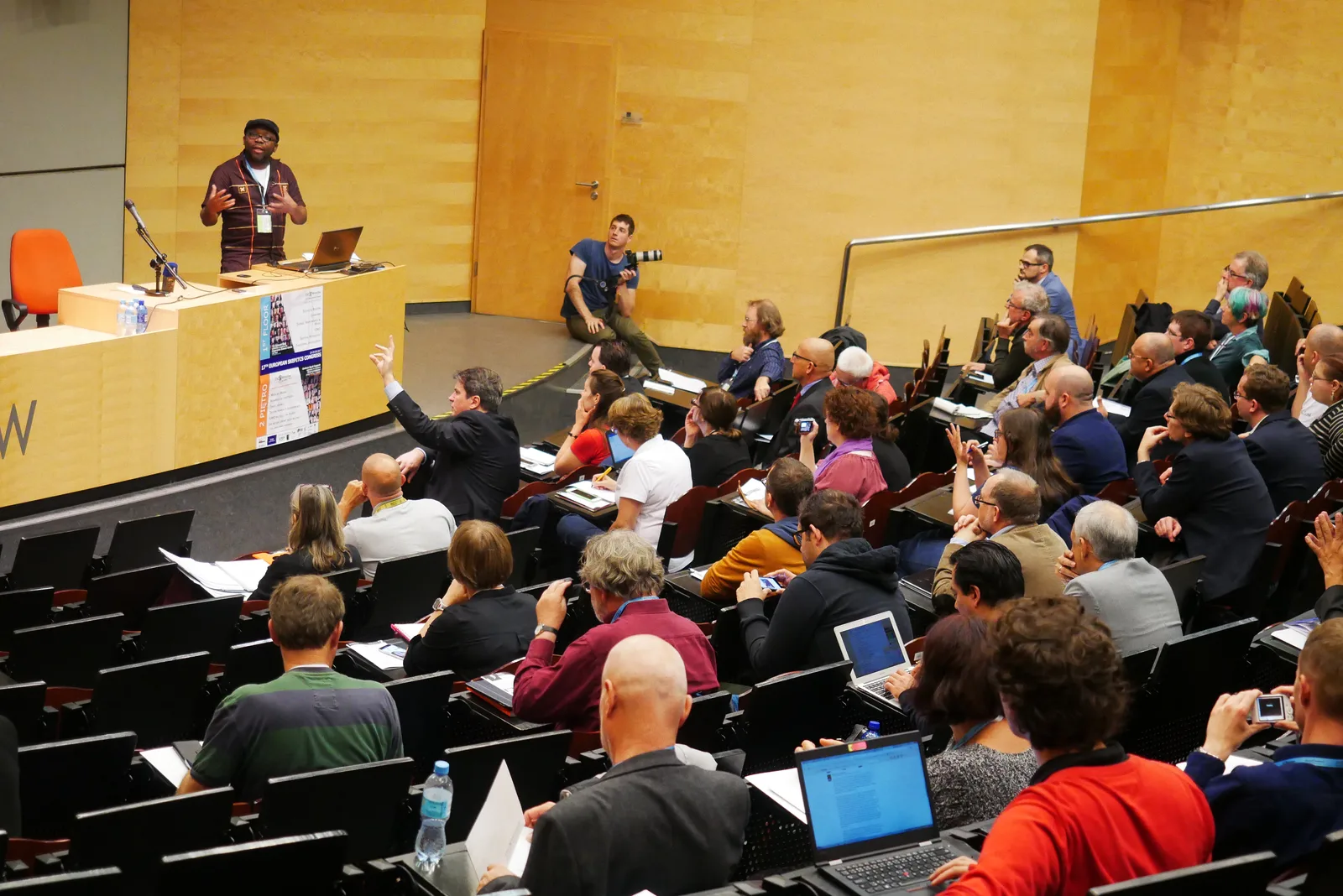
- Leo Igwe lecturing at the European Council of Skeptical Organisations congress, 2017 — Sgerbic, 2017-09-22 · Sgerbic, via Wikimedia Commons, CC BY-SA 4.0 · CC BY-SA 4.0 (as stated on the Wikimedia Commons file page)
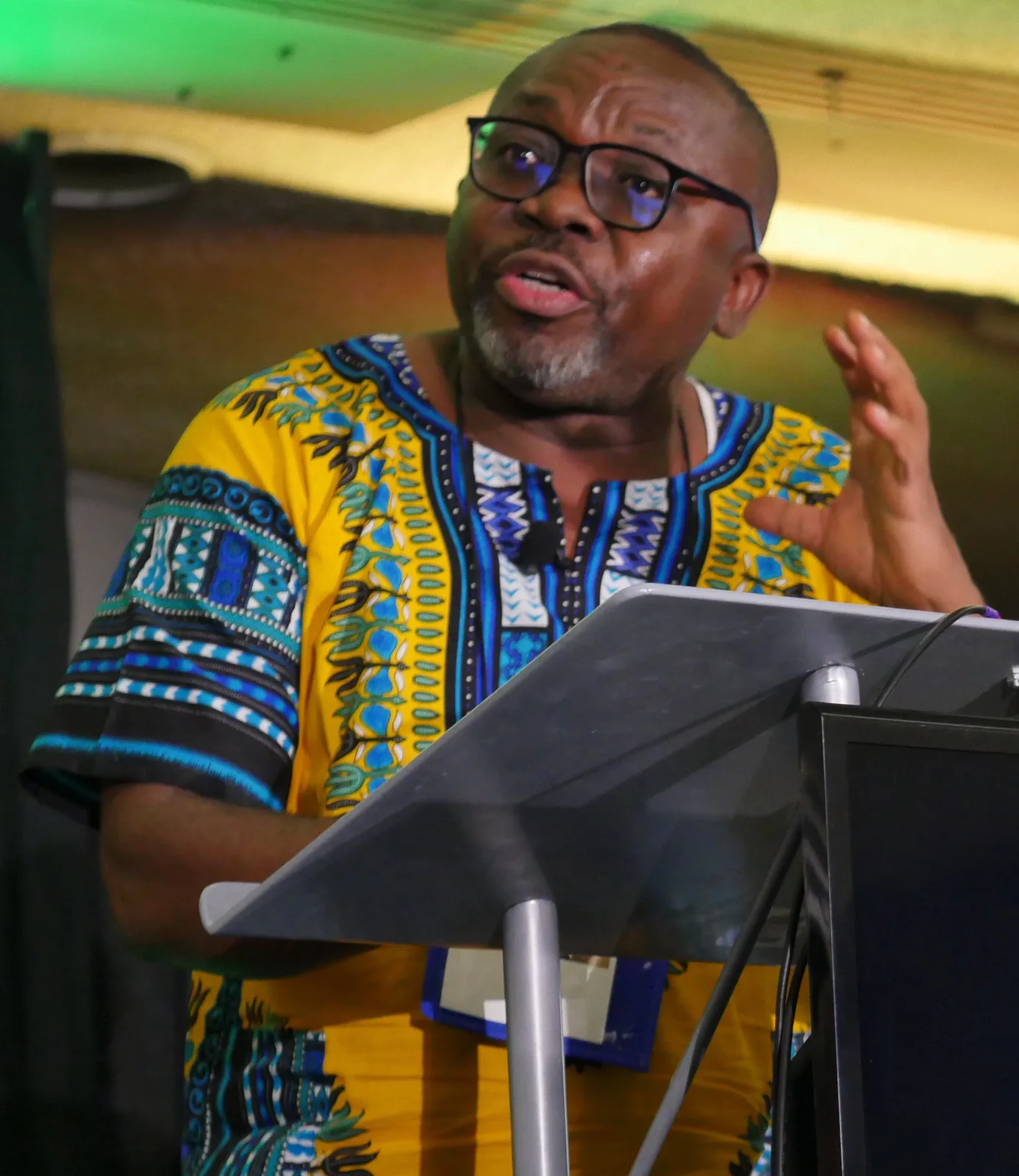
- Leo Igwe at CSICon 2026 — Karl Withakay, 2026-06-13 · Karl Withakay, via Wikimedia Commons, CC BY-SA 4.0 · CC BY-SA 4.0 (as stated on the Wikimedia Commons file page)
Sources
Tier 1 — the subject's own words (writings, speeches, interviews, thesis)
- [Humanist25] Leo Igwe, "My Improbable Journey from Religion to Humanism," The Humanist (American Humanist Association), 5 December 2025. https://thehumanist.com/commentary/my-improbable-journey-from-religion-to-humanism . Read in full; copyright AHA, short quotation only; excerpts in texts/ex-humanist2025.txt.
- [FI18] Leo Igwe, "Why Am I Not Religious?", Free Inquiry vol. 38 no. 2 (February/March 2018). https://secularhumanism.org/2018/02/cont-why-am-i-not-religious/ . Copyright Center for Inquiry (free to read); short quotation only; texts/ex-fi2018.txt.
- [Excell22] Leo Igwe, "Ex-cellence Project and Psycho-social Support for Non-Religious Ex-clergies in Africa," 27 September 2022 (also Guardian Nigeria, 9 October 2022). https://www.africaglobalvillage.com/ex-cellence-project-and-psycho-social-support-for-non-religious-ex-clergies-in-africa/ . His most detailed account of leaving; copyright, short quotation only; texts/ex-excellence2022.txt.
- [Kurtz12] Leo Igwe, "Paul Kurtz: A Tribute from Africa," Butterflies and Wheels, 12 November 2012 (first on Sahara Reporters, 5 November 2012 per a search listing). https://www.butterfliesandwheels.org/2012/paul-kurtz-a-tribute-from-africa/ . Copyright; texts/ex-kurtz-tribute2012.txt.
- [TED17] Leo Igwe, "Why I choose humanism over faith," TEDGlobal 2017 (August 2017). https://www.ted.com/talks/leo_igwe_why_i_choose_humanism_over_faith/transcript . Transcript read from the ted.com page data. TED talks are CC BY-NC-ND 4.0 (TED usage policy): NC bars use on a monetised channel without permission; paraphrase or ask TED. texts/ex-ted2017.txt.
- [Award17] Leo Igwe, acceptance speech for the Distinguished Services to Humanism Award, IHEU General Assembly 2017, printed with the commendation by Andrew Copson. https://humanists.international/2017/08/distinguished-services-awards-recipients-2017/ . Humanists International page, no licence stated; texts/ex-hi2017-award-speech.txt.
- [iDoubt17] Leo Igwe, "iDoubt: Critical Thinking and Skepticism in Africa in an Internet Age," Skeptical Inquirer / CSI, 28 July 2017. http://www.csicop.org/specialarticles/show/idoubt_critical_thinking_and_skepticism_in_africa_in_an_internet_age . Copyright CSI; texts/ex-si2017-idoubt.txt.
- [FI26] Leo Igwe, "Can Humanism Help End Witch Hunts in Africa?", Free Inquiry vol. 46 no. 4 (June/July 2026), online 20 May 2026. https://secularhumanism.org/2026/05/can-humanism-help-end-witch-hunts-in-africa/ . Copyright CFI; texts/ex-fi2026.txt.
- [Trent-FoRB26] Leo Igwe, "FoRB, Humanism and Witch Persecution in Nigeria," statement delivered at The Hague to the Dutch Special Envoy for Freedom of Religion or Belief, published by The Trent and New Times (Nigeria), 13 October 2026. https://www.thetrentonline.com/freedom-religion-belief-nigeria-humanists-witch-persecution/ . Copyright; texts/ex-trent-forb2026.txt. Date of delivery not stated.
- [Thesis17] Leo Igwe, The Witch is not a Witch: The Dynamics and Contestations of Witchcraft Accusations in Northern Ghana (PhD dissertation, University of Bayreuth, BIGSAS, 2017; XIII, 245 pp.). https://epub.uni-bayreuth.de/id/eprint/3377/1/THESISfinaldraft.pdf ; record https://epub.uni-bayreuth.de/3377/ . Licence CC BY 4.0 (stated on the repository record): quotable and reusable with credit. Full text in texts/igwe-thesis.txt (pdftotext; roman page numbers v and x cited).
- [CV] Leo Chikezie Igwe, curriculum vitae (undated; lists a 2023 course, so 2023 or later). https://hiphi.ubbcluj.ro/CFA/CV-s/Leo-Igwe.pdf . Copyright author; facts only.
- [InSight18] Scott Douglas Jacobsen, "An Interview with Dr. Leo Igwe," Canadian Atheist, 19 March 2018 (In-Sight Publishing, posted 10 April 2022). https://in-sightpublishing.com/2022/04/10/an-interview-with-dr-leo-igwe-founder-nigerian-humanist-movement/ . CC BY-NC-ND 4.0 (stated on the page); NC/ND limit use; facts only; texts/ex-insight2018.txt.
- [Report11] Leo Igwe, report on his arrest in Uyo, printed in "IHEU representative Leo Igwe jailed and beaten for human rights work," 18 January 2011. https://humanists.international/2011/01/iheu-representative-leo-igwe-jailed-and-beaten-human-rights-work/ . No licence stated; texts/ex-hi2011-jailed.txt.
- [Stmt10] Leo Igwe, "My arrest: a rough road to justice for a girl child, family and community members in Nigeria," 7 January 2010, printed in IHEU, "Nigeria must end harassment of IHEU Representative Leo Igwe," 9 January 2010. https://humanists.international/2010/01/nigeria-must-end-harassment-iheu-representative-leo-igwe/ . No licence stated. Read for facts only; the child and the accused are not named here.
- [ACHPR10] Leo Igwe for IHEU, "Freedom of Conscience and religious persecution in Africa," statement to the 47th session of the African Commission, Banjul, 13 May 2010. https://humanists.international/2010/05/freedom-conscience-and-religious-persecution-africa/ . No licence stated; texts/ex-hi2010-achpr.txt.
- [ACHPR11] IHEU statement by Leo Igwe to the 49th session, Banjul, 30 April 2011 (page of 4 May 2011). https://humanists.international/2011/05/iheu-calls-abolition-africas-blasphemy-laws/ . No licence stated; texts/ex-hi2011-blasphemy.txt.
- [ACHPR07] Leo Igwe, "IHEU represented at African Commission on Human and People's Rights," 30 July 2007. https://humanists.international/2007/07/iheu-represented-african-commission-human-and-peoples-rights/ . Accra, 41st Ordinary Session, May 2007.
- [BW10] Leo Igwe, report "Court rules against Helen Ukpabio and the Liberty Gospel Church," Butterflies and Wheels, December 2010. http://www.butterfliesandwheels.org/2010/court-rules-against-helen-ukpabio-and-the-liberty-gospel-church/ . texts/ex-bw2010-judgment.txt.
Tier 2 — official records and scholarship (no scholarly biography of Igwe exists in a freely readable form; see Open questions)
- [State10] US Department of State, 2010 Country Reports on Human Rights Practices: Nigeria (April 2011). https://2009-2017.state.gov/j/drl/rls/hrrpt/2010/af/154363.htm . US federal government work: public domain, quotable. Does not name Igwe; documents the abuse of children accused of witchcraft in Akwa Ibom and the governor's warrants against NGO leaders. texts/ex-state2010-nigeria-hrr.txt.
- [State21] US Department of State, 2021 Report on International Religious Freedom: Nigeria. https://www.state.gov/reports/2021-report-on-international-religious-freedom/nigeria/ . Public domain. Describes the charges against Mubarak Bala as president of the Humanist Association of Nigeria; does not name Igwe. texts/ex-state2021-nigeria-irf.txt.
- [Amnesty10] Amnesty International, Urgent Action UA 178/10 (AFR 44/014/2010), "Father of human rights defender attacked," 13 August 2010. https://www.amnesty.org/ar/wp-content/uploads/2021/07/afr440142010en.pdf . Copyright Amnesty; short quotation only; texts/ex-amnesty2010.txt. Calls him "President of the Nigerian Humanist Society" (see Disputed points).
Tier 3 — organisational record and journalism (partisan sources flagged)
- [HI11-Leaving] IHEU, "IHEU Representative Leo Igwe leaving Africa," 11 October 2011 (Matt Cherry). https://humanists.international/2011/10/iheu-representative-leo-igwe-leaving-africa/ . Partisan employer's record; texts/ex-hi2011-leaving.txt.
- [HI09-Attack] IHEU, "IHEU representative attacked," 30 July 2009. https://humanists.international/2009/07/iheu-representative-attacked/ . Partisan.
- [HI09-Award] IHEU, "Award for Leo Igwe, IHEU representative for West Africa," 9 March 2009 (from The Pink Triangle Trust). https://humanists.international/2009/03/award-leo-igwe-iheu-representative-west-africa/ .
- [HI10-Court] IHEU, "Nigerian Court rejects case against Humanist campaigners," 4 February 2010. https://humanists.international/2010/02/nigerian-court-rejects-case-against-humanist-campaigners/ . texts/ex-hi2010-courtcase.txt.
- [HI17-HAN] Humanists International, "Humanist Association of Nigeria achieves formal recognition after 17-year campaign," 11 December 2017. https://humanists.international/2017/12/humanist-association-nigeria-achieves-formal-recognition-17-year-campaign/ . texts/ex-hi2017-han.txt.
- [HI17-UN] Humanists International, "Ground-breaking workshop on Witchcraft and human rights takes place at UN," 27 September 2017. https://humanists.international/2017/09/ground-breaking-workshop-witchcraft-human-rights-takes-place-un/ .
- [HI17-GA] Humanists International, "Tears and joy at IHEU General Assembly 2017," 10 August 2017. https://humanists.international/2017/08/tears-joy-iheu-general-assembly-2017/ .
- [HI20-AfAW] Humanists International, "Alleged witches are still killed today, in 2020, says humanist anti-witchcraft activist Leo Igwe," 24 April 2020. https://humanists.international/2020/04/alleged-witches-are-still-killed-today-in-2020-says-humanist-anti-witchcraft-activist-leo-igwe/ . texts/ex-hi2020-afaw.txt.
- [HI20-Msg] Humanists International, "A message from Leo Igwe, ten weeks after Mubarak Bala's arrest," 8 July 2020. https://humanists.international/2020/07/a-message-from-leo-igwe-ten-weeks-after-mubarak-balas-arrest/ . texts/ex-hi2020-message.txt.
- [HI20-Ukp] Humanists International, "Nigerian humanist, Leo Igwe, facing the threat of spurious charges," 14 July 2020. https://humanists.international/2020/07/nigerian-humanist-leo-igwe-facing-the-threat-of-spurious-charges/ . Partisan; Ukpabio's side not found; texts/ex-hi2020-ukpabio.txt.
- [HI20-Anti] Humanists International, "Nigerian humanists targeted by anti-atheism campaign," 18 May 2020. https://humanists.international/2020/05/nigerian-humanists-targeted-by-anti-atheism-campaign/ .
- [HI20-Board] Humanists International, "New Board members elected, and awards presented, at first ever online General Assembly," October 2020. https://humanists.international/2020/10/new-board-members-elected-and-awards-presented-at-first-ever-online-general-assembly/ . texts/ex-hi2020-board.txt.
- [HI21-UN] Humanists International, "UN adopts landmark resolution condemning witchcraft accusations," 5 August 2021. https://humanists.international/2021/08/un-adopts-landmark-resolution-condemning-witchcraft-accusations/ .
- [HI24-Case] Humanists International, "Cases of concern: Leo Igwe," last updated 6 December 2024. https://humanists.international/case-of-concern/leo-igwe/ . Contains two errors against Igwe's own account (1990; 2014 award); texts/ex-hi-case-of-concern.txt.
- [HI25-Bala] Humanists International, "Nigeria: humanist leader freed at last," page dated 7 January 2025. https://humanists.international/2025/01/nigeria-humanist-leader-freed-at-last/ .
- [Guardian09] Martin Robbins, "Christian and Islamist extremists in Nigeria are exporting dangerous ideas," The Guardian, 7 August 2009. https://www.theguardian.com/commentisfree/belief/2009/aug/08/nigeria-witch-children-polio . Opinion column; texts/ex-guardian2009.txt.
- [Guardian11] Martin Robbins, "The dangerous fight for the child witches of Nigeria," The Guardian (Lay Scientist blog), 14 January 2011. https://www.theguardian.com/science/the-lay-scientist/2011/jan/14/1 . Sympathetic blog; quotes Igwe to Sahara Reporters and the Liberty Foundation's website; texts/ex-guardian2011.txt.
- [CFI09] Center for Inquiry press release, "CFI Representative Assaulted by Christians at Children's Rights Conference," August 2009. http://www.centerforinquiry.net/newsroom/cfi_representative_assaulted_by_christians_at_childrens_rights_conference/ . Partisan; texts/ex-cfi2009.txt.
- [BBC09] BBC World Service, Africa, "Do traditional beliefs in witchcraft ...", Weekend Network, 14 June 2009 (archived page). http://www.bbc.co.uk/worldservice/africa/2009/06/090614_humanist-view.shtml . Introduces Igwe as someone "who describes himself as a humanist".
- [Chron12] Lomi Kriel, "'Lady Apostle' or exploiter of children?", Houston Chronicle, 10 March 2012. https://www.chron.com/news/houston-texas/article/Lady-Apostle-or-exploiter-of-children-3395755.php . Fair-minded; gives Ukpabio's supporters their say; texts/ex-chron2012.txt.
- [NewTimes21] "Leo Igwe Wins 2020-21 Heart Of Humanism Award," New Times (Nigeria), 27 July 2021, reporting the Foundation Beyond Belief announcement. https://www.newtimes.com.ng/9606leo-igwe-wins-2020-21-heart-of-humanism-award/ .
- [CSI-ESC17] "Skeptical Adventures in Europe, Part 2" (report on the European Skeptics Congress 2017), Skeptical Inquirer. https://www.csicop.org/specialarticles/show/skeptical_adventures_in_europe_part_2 .
- [Trent-VP26] "Nigerian Humanist Leo Igwe Elected Vice President of Humanists International," The Trent, 1 September 2026. https://www.thetrentonline.com/nigerian-humanist-leo-igwe-elected-vice-president-of-humanists-international/ . texts/ex-trent-vp2026.txt.
- [FI-author] Free Inquiry author page for Leo Igwe (index of his articles, 2000 to 2026). https://secularhumanism.org/authors/leo-igwe/ . Lists "When Sharia Becomes the Law of the Land," Free Inquiry vol. 20 no. 4, Fall 2000.
- [JSTOR-FI] "Leo Igwe: Interview with a Nigerian Humanist," Free Inquiry (volume and year not confirmed), JSTOR stable 4007139. https://www.jstor.org/stable/4007139 . Seen only as search-result snippets; the page itself was blocked. Quoted snippets: "In 1994, I left the seminary. And in 1996, I went open and public with my humanist standpoint." and "The Nigerian Humanist Movement was founded in 1996 in Ibadan in South West Nigeria. This was a period of pro-democracy struggles against military rule when there was a clampdown on human rights". Secondhand until the article is read.
Tier 4 — Wikipedia and similar reference sites (citable; map only)
- [Wiki-Igwe] Wikipedia, "Leo Igwe," revision 1372399293 of 2026-08-31 (CC BY-SA 4.0). https://en.wikipedia.org/w/index.php?title=Leo_Igwe&oldid=1372399293 . Used as a map. Cites an interview in The Gold Coast Bulletin (Anne-Louise Brown, "Fighting the Darkness," 8 October 2011, p. 9) and the European Skeptics Podcast episode 85 (October 2017, audio); neither was reached. texts/ex-wikipedia-leo-igwe-rev1372399293.txt.
Opposition sources — contemporary critics and religious responses
- [Liberty-site] The Liberty Foundation Gospel Ministries website statement on "HUMANIST" organisations and its "mercy to witches" boast, as quoted in [Guardian11]. The original page was not reached.
- [Chron12] Pastors Jonathan David and Godwin Umotong, Houston, defending Helen Ukpabio (above).
- [NYT-Ukpabio] Mark Oppenheimer, New York Times, 22 May 2010 (https://www.nytimes.com/2010/05/22/us/22beliefs.html), on Ukpabio's answers; page blocked (403); reached only through [Wiki-Igwe].
- [Excell22] Believers' reactions to his leaving, as he reports them (seminary teacher, bus passenger, relative).
- [iDoubt17] A reader's comment printed under his article.
- Not reached: any Catholic hierarchy's statement on Igwe or on the Ex-cellence Project (a Premium Times report, "Group backs Nigerian Catholic priests who quit priesthood," exists and was not read).
Related lives
Mubarak Bala (b. 1984) — the Nigerian humanist whose 2014 committal to a psychiatric ward and 2020 blasphemy arrest Igwe campaigned against; or Narendra Dabholkar, honoured alongside Igwe at the 2017 IHEU Assembly. (No "Next:" line in script or video; see lessons.)
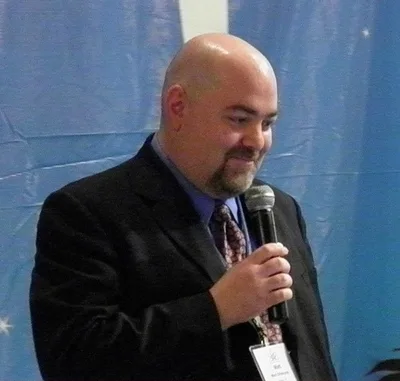
Matt Dillahunty
Matt Dillahunty was a Southern Baptist who had meant to become a minister. He lost his job in 2001 and set out to rebuild his faith by study, and the study destroyed it in stages, beginning with a Bible story he found immoral. By 2006 he was hosting a weekly television argument with believers. His unbelief has widened since into a self-described skepticism, but has not reversed.
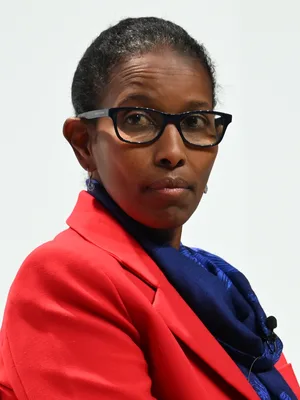
Ayaan Hirsi Ali
Ayaan Hirsi Ali's childhood Islam was built on fear of Hell, and then on Brotherhood zeal in Nairobi. She kept her doubts behind a "shutter" through her Leiden years, let it fall after 11 September 2001, and said "I don't believe in God" on Corfu in May 2002. She paid for her public unbelief with a murdered collaborator, armed protection and a lost parliamentary seat. In 2023, after a decade of despair, and with civilisational as well as personal reasons, she called herself a lapsed atheist and a Christian.
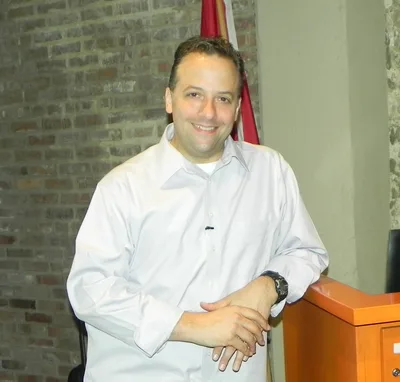
Seth Andrews
Seth Andrews was a Tulsa boy raised on a literal Bible, and became a Christian radio host. He put the doubts raised by Rich Mullins's death and 9/11 into storage for years. In his late thirties, after a Hitchens video and an unfiltered reading of the Bible, he let them out, and in 2008 he told his parents he was an atheist. Since then he has widened his unbelief into politics, while looking back more gently on the believer he was.
Avijit Roy
Avijit Roy had no faith to lose. He was a Hindu by label, and his physics-professor father planted, he said, "the first seed of free thought and doubt". His disbelief in a creator came in his student years. From 2001 he gave it a home online for Bengali freethinkers in Mukto-Mona, and in books (2011, 2014) arguing that atheism was freedom from belief and that faith could spread like a virus. After 2013, as bloggers were jailed and killed, he campaigned for them and warned his own side that atheism did not free anyone from hatred. He was murdered in Dhaka in 2015 by men a court found had branded him an atheist.