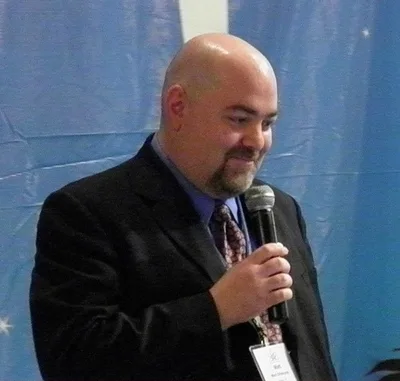
Matt Dillahunty was a Southern Baptist who had meant to become a minister. He lost his job in 2001 and set out to rebuild his faith by study, and the study destroyed it in stages, beginning with a Bible story he found immoral. By 2006 he was hosting a weekly television argument with believers. His unbelief has widened since into a self-described skepticism, but has not reversed.
The belief timeline
- Faith (childhood; revival at age 5 (c. 1974, inferred); again as a teenager) — Raised Southern Baptist; believed the Bible could save people; felt the Holy Spirit in the goose bumps in church; at 18 not sure of a call to ministry; faith kept "compartmentalised" from skepticism for most of his life (his words, paraphrase) [2][9][24][25]
- Doubt (2001 (the study begins); the break comes in stages, year not given) — Job lost in 2001; he studies to restore faith, not to leave it; the bears passage and similar stories break it; "after the first couple of years" he says faith was "utterly destroyed" [5][6][26][27]
- Declaration (2005 (guest spot; first co-hosting March 2005 per WP) / 2006 (host January, ACA president May; parents told in 2006)) — Public unbelief as a broadcaster; the private disclosure to parents came after, in 2006 [10][29][30]
- Revision (none documented) — His position has not been revised on the record; the label has widened ("skeptic, humanist and atheist", 2019) and he left the ACA show on 2022-10-02. Treat as "three marks for a subject whose views did not reverse", or omit [18][35]
Notes to the timeline (13)
- [2] He was raised in a loving Southern Baptist home and was a fundamentalist Christian "for over 20 years" (his own 2012 account). — Matt Dillahunty, "Matt Dillahunty, Host," Atheist Experience site (atheist-experience.com), Wayback capture 2012-06-18:.
- [9] He says he had spent most of his life compartmentalising his religious beliefs to keep them safe from skepticism, and that leaving the critical part of his mind "on" thrilled him. — Dillahunty, "Matt Dillahunty, Host,".
- [24] He "accepted Jesus" twice: once at age 5 at a revival in Kansas City, and again as a teenager, worried that the first did not count. He believed the Bible could save people. — Eileen E. Flynn, "Preaching his own gospel of atheism" (subhead: "On a quest to save believers, former Christian seeks out debate on TV, radio shows"), Austin American-Statesman, Sunday 18 March 2007, Metro & State section. Read in full: Wayback capture 2017-09-26 of, passage after the studio scene, before "Losing his faith".
- [25] For most of his life faith "came naturally": he felt goose bumps in church and took them for the Holy Spirit, and prayed and listened for God to guide him. At 18 he was not sure God was calling him to the ministry. — Flynn, Austin American-Statesman, "Losing his faith".
- [5] After the Navy and "several years in the hi-tech game" he set out to re-affirm his faith, intending seminary and a life in the ministry. — Dillahunty, "Matt Dillahunty, Host,"; Flynn, Austin American-Statesman, (the 2001 return to faith, claim 26).
- [6] The effort to bolster his faith became a continuing investigation; after "the first couple of years" he says reason made him acknowledge his faith had not been weakened but "utterly destroyed." — Dillahunty, "Matt Dillahunty, Host,".
- [26] In the 1990s after the Navy he still considered himself a believer but had drifted from church life. In 2001, after the tech bubble burst and he lost his job, he worried that God was punishing him for not entering the ministry; with a sizeable severance package he put the job search on hold and threw himself into reconnecting with his faith: reread the Bible, read volumes on religion and philosophy, debated atheists on the internet, and began thinking about seminary. — Flynn, Austin American-Statesman, "Losing his faith".
- [27] "Then it all fell apart. Not in one fell swoop, but in stages." One stage he remembers: an online forum argument over the Bible passage in which God sends two bears to kill 42 children taunting a prophet. He thought it immoral and wondered why he had never noticed; at first he was angry with himself for having believed unjustified things so long. — Flynn, Austin American-Statesman, "Losing his faith".
- [10] He first co-hosted *The Atheist Experience* in March 2005 and became a regular host. (Statesman: began a guest spot in 2005; see 29.) — Wikipedia, "Matt Dillahunty" (raw wikitext read 2026-10-14, revision timestamp 2026-10-06). CC BY-SA text; used as a map only, (footnote: his own 2013-08-11 ACA video, not seen); Flynn, Austin American-Statesman. Not verified.
- [29] In January 2006 he took over as host; by May 2006 members had elected him president of the group of about 100. Long-time member Keith Berka praised his leadership. — Flynn, Austin American-Statesman, "Losing his faith".
- [30] In 2006 (the article says "last year") a relative found his work on the web and confronted him, and he realised he would have to tell his parents. His father was stunned and sent an apologetic letter saying he had failed as a father and spiritual leader and regretted that his son would never be able to love anyone because atheism is a selfish belief. His mother gave him books on Christianity and vowed to keep trying to return him. He does not expect to convince them; he is frustrated at the labels (selfish, immoral, lost). Private family matter reported by the subject himself in a public profile; keep brief. — Flynn, Austin American-Statesman, "Finding his calling".
- [18] On 2 October 2022 (episode 26.40) he announced it was his last as host after seventeen years, and moved to The Line, a YouTube channel on religious debate. — Wikipedia, "Matt Dillahunty", (footnotes: ACA news item, ACA episode page, his own video). Reported at second hand; the original has not been seen.
- [35] The American Atheists speaker bio (2019 capture) says he was a Southern Baptist for more than 25 years, sought to become a minister until investigating his religious views led him to reject supernatural claims, and "now identifies as a skeptic, humanist and atheist". — American Atheists speaker page, "Matt Dillahunty" (2017 convention speakers), Wayback capture 2019-08-22:.
The Study That Went the Other Way
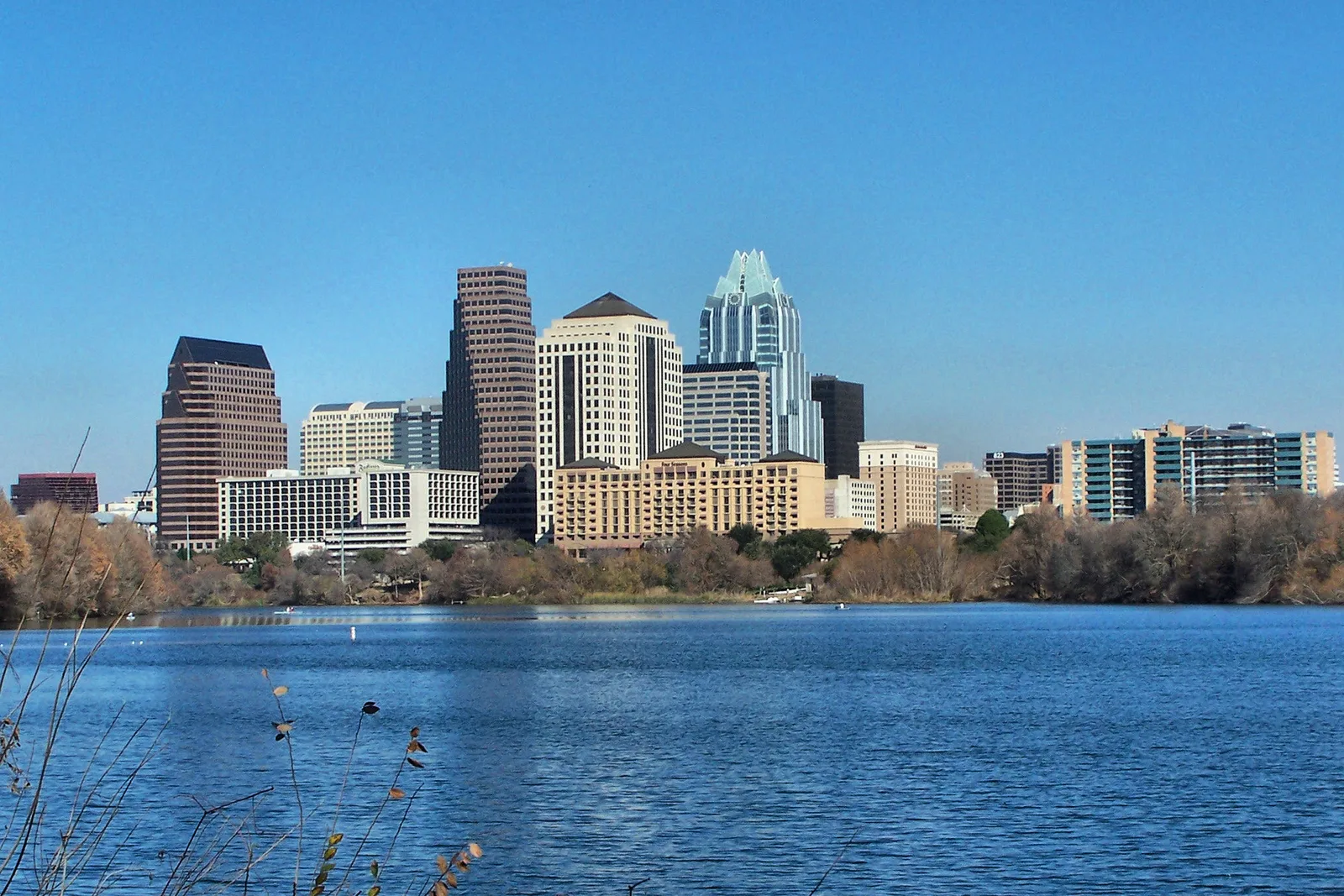
In 2001 a software worker in Austin, Texas, lost his job when the technology boom collapsed. He was in his early thirties, had served eight years in the United States Navy, and had grown up expecting to become a Baptist minister. He had drifted from church, and now he wondered whether God was punishing him for not answering that call. He had a generous severance payment, so he put off looking for work and set out to rebuild his faith: he reread the Bible, read widely in religion and philosophy, argued with atheists on the internet, and thought about going to seminary.1
The study went the other way. Within a few years Matt Dillahunty no longer believed, and by 2006 he was the host of a cable-access television programme called The Atheist Experience, taking calls from believers every week.23 This chapter asks how a man who set out to defend his faith studied his way out of it, and why he then made arguing about it his public life.
A boy who accepted Jesus twice
He was born in 1969 and grew up in a devout and, by his own description, loving Southern Baptist home.45 At five, at a revival meeting in Kansas City, he "accepted Jesus"; as a teenager, afraid the first time had not counted, he did it again.6 Faith came naturally to him. He felt the goose bumps in church and took them for the Holy Spirit, prayed, and listened for God's guidance, and he believed the Bible could save people.7 His parents expected him to become a minister, and he thought of it himself.8 Looking back, he said he had spent most of his life keeping his beliefs in a separate compartment, safe from the skepticism he used on everything else.9 On his timeline, this is where his faith stands.
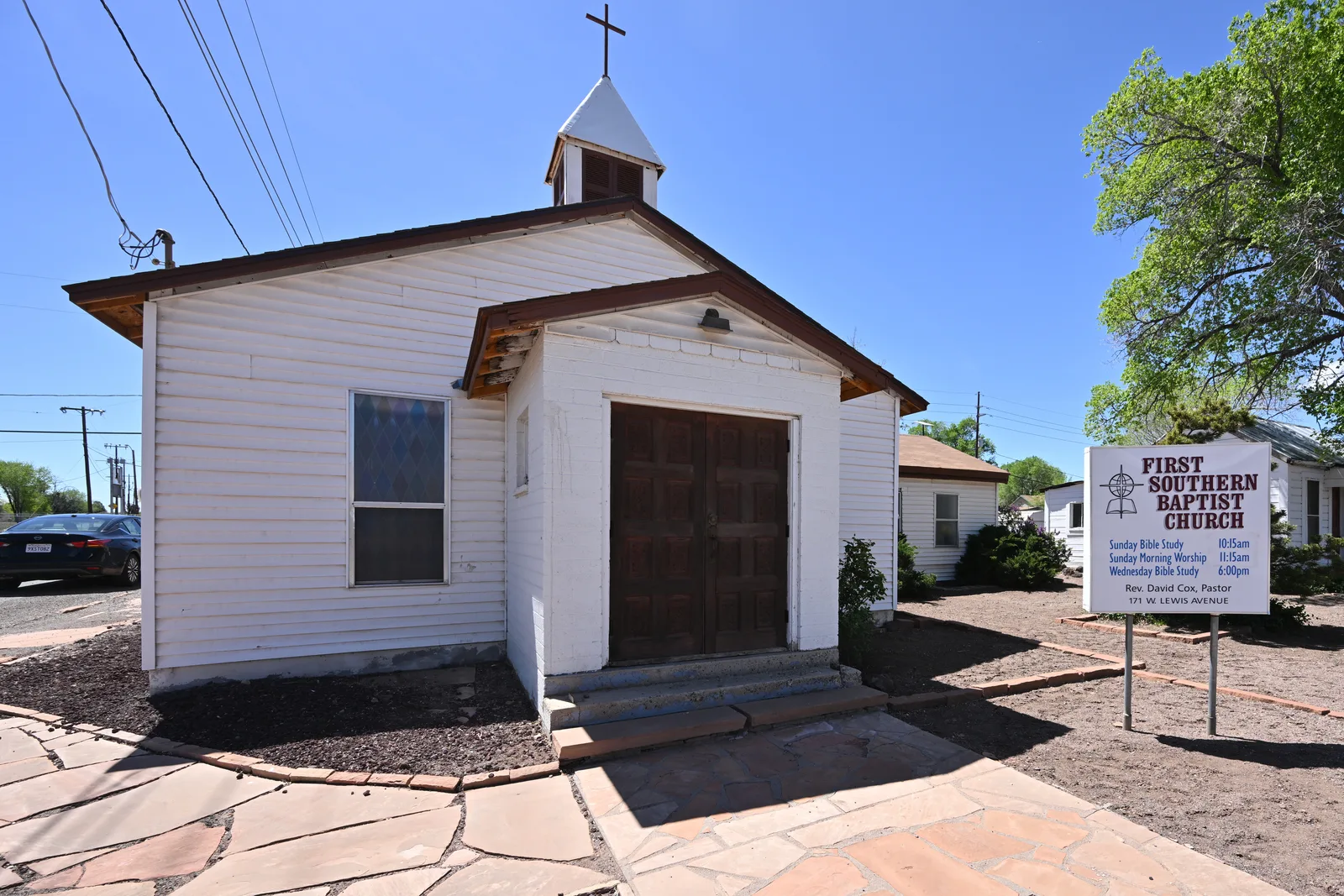
At eighteen, unsure whether God was really calling him to the ministry, he joined the Navy instead, in 1987, and served eight years. Afterwards he moved to Austin to work in software. He still considered himself a believer, but he had drifted away from church life.101
The study
The turn began with the lost job in 2001.1 He studied in order to reaffirm his faith, with seminary in mind, and the study became, in his words as he later summed it up, a continuing investigation. After the first couple of years of it, he wrote, reason forced him to admit that his faith had not been strengthened but destroyed.1112
It did not happen all at once. He told a reporter in 2007 that it fell apart in stages. One stage he remembered clearly: an argument on an internet forum about the story in the Book of Kings in which God sends two bears to kill forty-two children who had mocked a prophet. He thought it immoral, and wondered why he had never noticed before. His first anger, he said, was at himself, for having believed for so long things he had no good reason to believe.13 In his own later summary he said he left religion without a moment of despair, and that he found it thrilling to leave the critical part of his mind switched on.149 The two accounts are not the same feeling, and both are his: the remembered moment, and the retrospective summary.
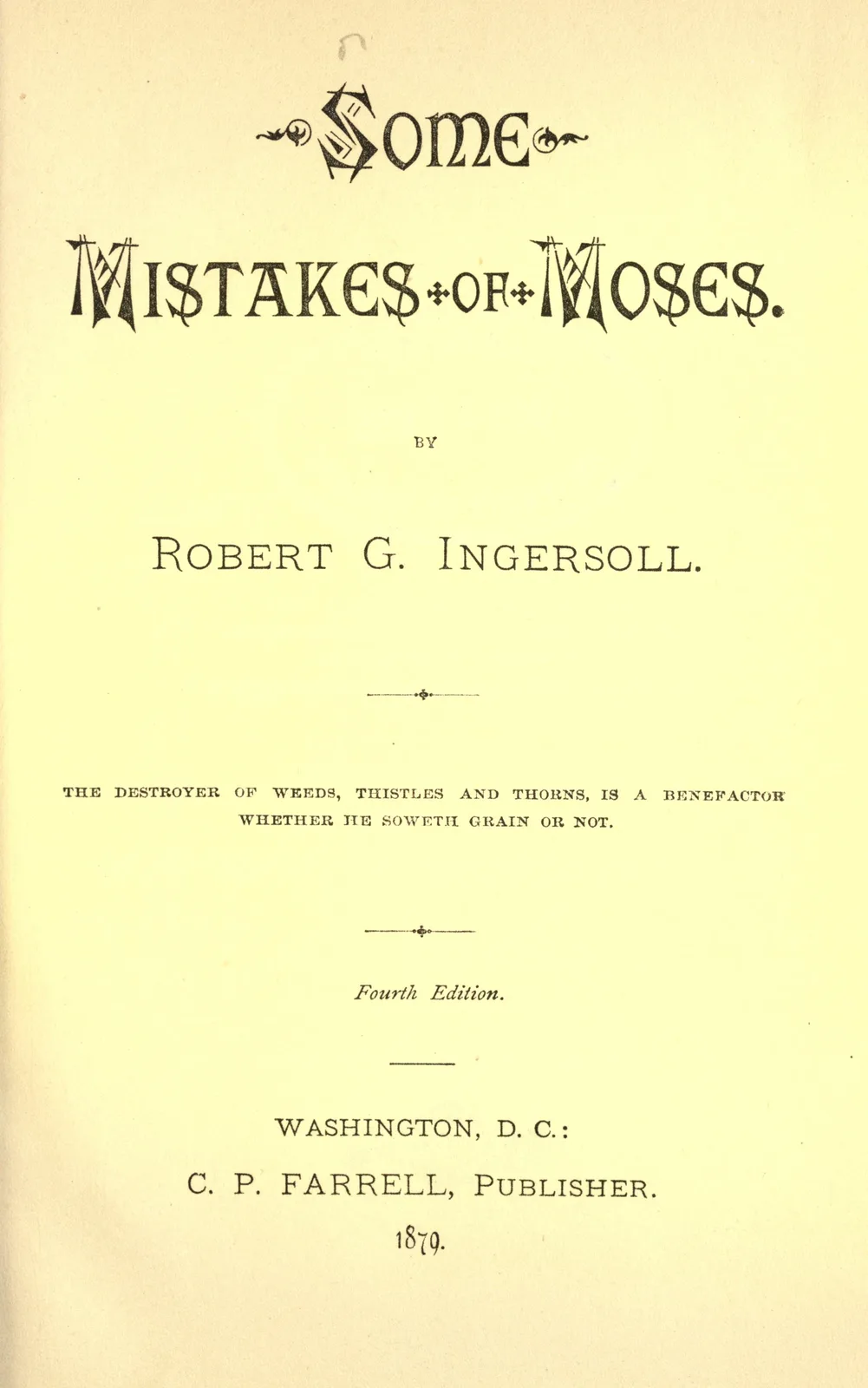
He named the writers who helped him: Robert Ingersoll, Voltaire, the former evangelical minister Dan Barker, Richard Dawkins and the Bible critic Farrell Till.15
The Atheist Experience
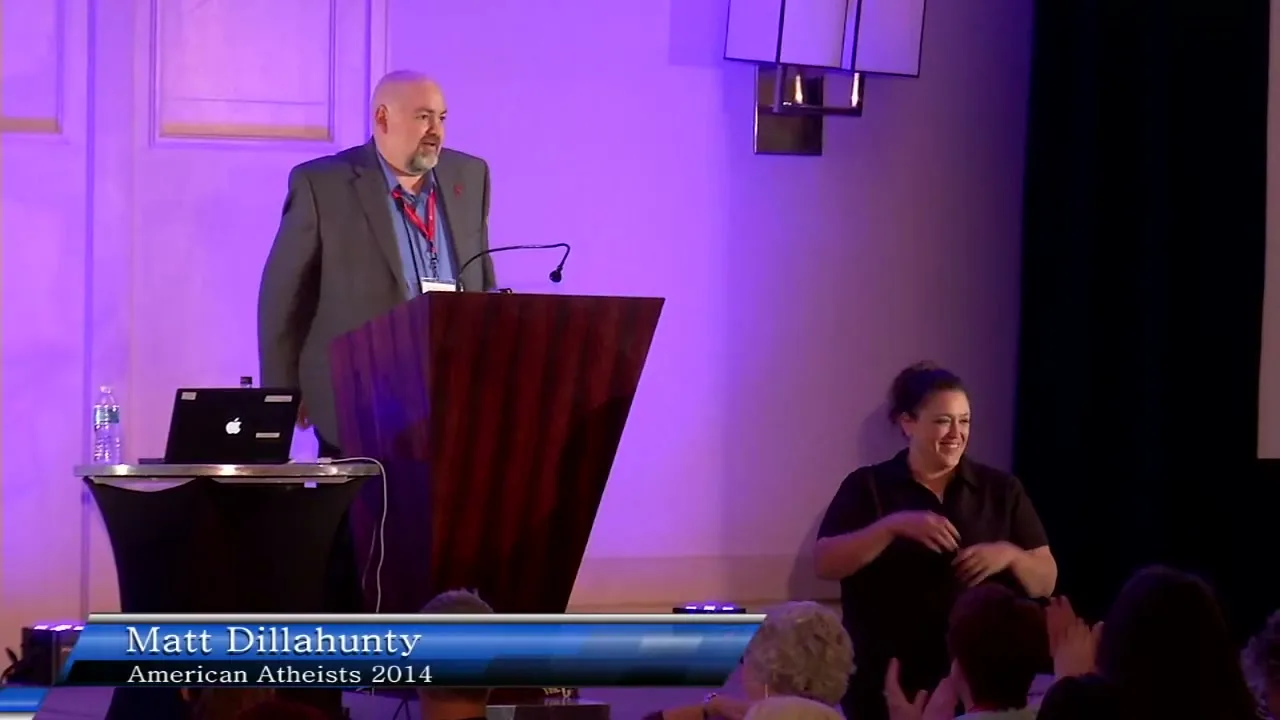
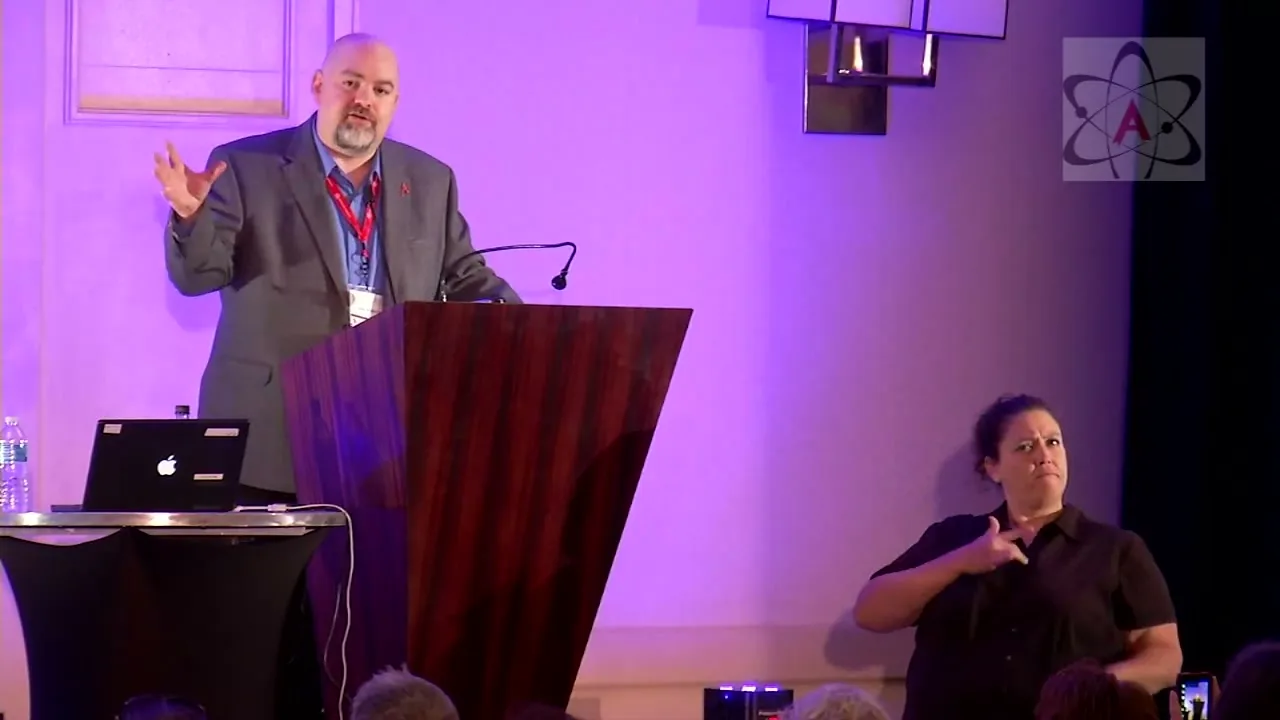
After watching The Atheist Experience, a programme on Austin's public-access cable channel, he began talking with members of the Atheist Community of Austin. In 2005 he started appearing on the show as a guest, in January 2006 he took over as host, and that May the group, about a hundred members strong, elected him its president.2316 With a co-host, Russell Glasser, he also started the Iron Chariots wiki, a reference for answering the arguments of Christian apologists.17 On the timeline, his declaration stands at 2005 and 2006.
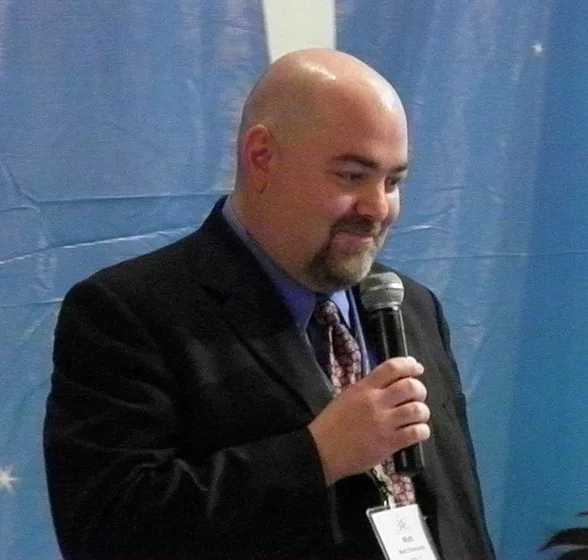
He used the show as a method. In one call a reporter watched in 2007, a believer told him faith was comforting and that he could not offer evidence for it; Dillahunty asked for evidence rather than anecdote or feeling.18 His own ethics he summed up as doing the most good and the least harm, a moral code built from a few reasoned principles rather than from scripture.19 When he met an argument he could not answer, he said in 2014, his answer was "I don't know," a stance many found frightening; asked by a pastor whether he would be content to go to his grave saying so, he said he would not, and that this was why he kept exploring.20
His parents
The cost was private. In 2006 a relative found his work on the internet and confronted him, and he realised he would have to tell his parents. His father, a devout Baptist, wrote him an apologetic letter saying he had failed as a father and as a spiritual leader, and that atheism was a selfish belief. His mother sent him books on Christianity and said she would keep trying to bring him back. He told the reporter he did not expect to change their minds, and that what frustrated him were the labels: selfish, immoral, lost.21
Later years
He went on to debate Christian apologists on radio and in public, among them the evangelist Ray Comfort, the apologist Matt Slick and the Scottish minister David Robertson.22 He was president of the Atheist Community of Austin until 2013.16 In 2022, after seventeen years, he announced his last episode as host of The Atheist Experience and moved to a YouTube channel devoted to debates about religion.23 By 2019 he described himself as "a skeptic, humanist and atheist," and he has called skepticism, of which he counts atheism a part, the most important thing about him.2425
His view has not reversed. What changed was its scale: a private study meant to save his faith became a weekly public argument with people in the position he had once been in. His timeline has no revision, because the record shows none.
Robert G. Ingersoll, the first writer he named among those who freed his mind, has his own chapter in this book.
Footnotes
-
Eileen E. Flynn, "Preaching his own gospel of atheism" (subhead: "On a quest to save believers, former Christian seeks out debate on TV, radio shows"), Austin American-Statesman, Sunday 18 March 2007, Metro & State section. Read in full: Wayback capture 2017-09-26 of, "Losing his faith". ↩ ↩2 ↩3
-
Flynn, Austin American-Statesman, "Losing his faith". ↩ ↩2 ↩3
-
Wikipedia, "Matt Dillahunty" (raw wikitext read 2026-10-14, revision timestamp 2026-10-06). CC BY-SA text; used as a map only, infobox (footnote: sydneyatheists.org taxonomy page, not read); Flynn, Austin American-Statesman, (age). Not verified. ↩
-
Matt Dillahunty, "Matt Dillahunty, Host," Atheist Experience site (atheist-experience.com), Wayback capture 2012-06-18:. ↩
-
Flynn, Austin American-Statesman, passage after the studio scene, before "Losing his faith". ↩
-
Flynn, Austin American-Statesman, "Losing his faith". ↩
-
Dillahunty, "Matt Dillahunty, Host,"; Flynn, Austin American-Statesman, (parents "had once expected him to enter ministry"). ↩
-
Flynn, Austin American-Statesman, "Losing his faith"; Dillahunty, "Matt Dillahunty, Host,", ("8 years in the Navy"). ↩
-
Dillahunty, "Matt Dillahunty, Host,"; Flynn, Austin American-Statesman, (the 2001 return to faith, claim 26). ↩
-
Flynn, Austin American-Statesman, "Losing his faith". ↩
-
Dillahunty, "Matt Dillahunty, Host,". ↩
-
Dillahunty, "Matt Dillahunty, Host,". ↩
-
Wikipedia, "Matt Dillahunty"; Flynn, Austin American-Statesman, "Losing his faith". Reported at second hand; the original has not been seen. ↩ ↩2
-
Dillahunty, "Matt Dillahunty, Host,". ↩
-
Flynn, Austin American-Statesman, opening scene. ↩
-
Flynn, Austin American-Statesman, "Finding his calling". ↩
-
Heather Adams, "MU skeptics group brings big-name atheists to campus" (headline on the page now "Dillahunty: It's OK to say 'I don't know'"), KBIA/Columbia Faith & Values, 2014-03-17:. ↩
-
Flynn, Austin American-Statesman, "Finding his calling". ↩
-
Wikipedia, "Matt Dillahunty"; IA metadata for MattDillahuntyOthersVs.MattSlick. ↩
-
Wikipedia, "Matt Dillahunty", (footnotes: ACA news item, ACA episode page, his own video). ↩
-
American Atheists speaker page, "Matt Dillahunty" (2017 convention speakers), Wayback capture 2019-08-22:. ↩
-
Wikipedia, "Matt Dillahunty", (same video). ↩
In their own words
(none lawfully available)
"to believe as many true things and as few false things as possible"
The other side
(none quotable; paraphrase only, see claim 30)
(none quotable; paraphrase only, see claim 30)
(none quotable; paraphrase only, see claim 34)
(none available; paraphrase only)
(none available; paraphrase only)
(none available; paraphrase only)
Where accounts differ
| Point | One account | Another | How the page handles it |
|---|---|---|---|
| Year he lost his faith | Study began in 2001 (Statesman-2007, claim 26); break "in stages" (claim 27); "after the first couple of years" of study his faith was destroyed (ACA-bio) | No source gives a year of the break. Arithmetic puts it c. 2003-2004, before the 2005 guest spot | Say "in the years after 2001" or "by 2005". Do not name a year for the final loss. |
| How long a Southern Baptist | "over 20 years" fundamentalist (ACA-bio, 2012) | "for more than 25 years" (AA-bio 2019; KBIA 2014 says 25) | Different counts of the same life (from childhood, or to c. 1995, or to 2001-04); say "most of his life". The Statesman's age-5 revival is the stated starting point. |
| Navy service years | 1987 start, eight years (Statesman-2007, now verified) | 1987–1995 (WP infobox); "8 years" (ACA-bio) | Consistent. End year 1995 is arithmetic; the Statesman does not print it. |
| Start of hosting | Guest spot in 2005, host from January 2006 (Statesman-2007) | "first co-hosted in March 2005 and became a regular host" (WP, citing his own 2013 video) | Say "he began appearing on the show in 2005 and became its host in 2006". |
| Why the faith ended | "reason forced me" and no despair (ACA-bio) | Anger at himself, "that's just immoral", the bears (Statesman-2007) | Both are his; one is the retrospective summary, the other the remembered moment. Tell them in that order. |
| Birth place and date | Kansas City, Missouri, 31 March 1969 (WP; footnote to an Australian atheist society page) | The Statesman confirms Kansas City as the place of the age-5 revival and age 37 in March 2007 | Birth year safe; leave the exact birthplace out of the narration unless confirmed. |
| Beginning of Iron Chariots | before 2012 (ACA-bio says he and Glasser "started the wiki") | no date | Do not date it. |
List of illustrations
This page uses only public-domain and Creative Commons images; each is credited with its source and licence.
- Matt Dillahunty speaking at the 2014 American Atheists National Convention (video frame), with the video's own name caption — American Atheists (video); frame extracted for this series, 2014 (convention, Salt Lake City); file dated 2015-07-01 · American Atheists, "Matt Dillahunty – Rethinking Debates (2014 National Convention)", via Wikimedia Commons, CC BY 3.0 (https://creativecommons.org/licenses/by/3.0). Still frame. · CC BY 3.0
- First Southern Baptist Church, Ash Fork, Arizona — G. Edward Johnson, 2026-04-07 · G. Edward Johnson, via Wikimedia Commons, CC BY 4.0 (https://creativecommons.org/licenses/by/4.0) · CC BY 4.0
- Downtown Austin, Texas, from Town Lake (now Lady Bird Lake) — Larry D. Moore, 2006-01-02 · Larry D. Moore, via Wikimedia Commons, CC BY 4.0 (https://creativecommons.org/licenses/by/4.0) · CC BY 4.0
- Title page, Some Mistakes of Moses, by Robert G. Ingersoll (4th ed.) — Robert G. Ingersoll; C. P. Farrell, publisher, 1879 · Robert G. Ingersoll, Some Mistakes of Moses (Washington: C. P. Farrell, 1879), Internet Archive scan from the University of Toronto, item somemistakesmose00ingeuoft · Public domain (published 1879)
- Matt Dillahunty, president of the Atheist Community of Austin — Mike Sheridan, 2011-04-24 · Mike Sheridan, via Wikimedia Commons (originally Flickr), CC BY 2.0 (https://creativecommons.org/licenses/by/2.0) · CC BY 2.0
- Matt Dillahunty speaking at the 2014 American Atheists National Convention (video frame), gesturing — American Atheists (video); frame extracted for this series, 2014 (convention, Salt Lake City); file dated 2015-07-01 · American Atheists, "Matt Dillahunty – Rethinking Debates (2014 National Convention)", via Wikimedia Commons, CC BY 3.0 (https://creativecommons.org/licenses/by/3.0). Still frame. · CC BY 3.0
Sources
Tier 1 — the subject's own words (writings, letters, diaries, trial records)
- [ACA-bio] Matt Dillahunty, "Matt Dillahunty, Host," Atheist Experience site (atheist-experience.com), Wayback capture 2012-06-18: https://web.archive.org/web/20120618194026/http://www.atheist-experience.com/people/matt_dillahunty/ . Saved as
research/texts/aca-bio-2012.html. Footer: "Copyright (c) Atheist Community of Austin 2003-2012. All rights reserved." Status: copyrighted, read and paraphrased. No year of deconversion in it. (Wikipedia's access date is 2008-04-30, so the text predates 2012.) - [AA-2014] Matt Dillahunty, "Rethinking Debates," talk at the 2014 American Atheists National Convention, Salt Lake City. YouTube id tnEOmlyVNUM; Commons mirror File:Matt Dillahunty – Rethinking Debates (2014 National Convention).webm; licence CC BY 3.0 (Commons {{YouTube CC-BY}}, reviewed 2019-12-05). Credit American Atheists. Not transcribed.
- [MDD-2023] Modern-Day Debate videos on Commons (CC BY 3.0 per Commons): "Matt Dillahunty Vs Stuart on Resurrections" (2023-05-13), "Dr. Josh & Matt Dillahunty vs Cliffe & Stuart on Slavery in the Bible" (2023-11-29), "Matt Dillahunty Vs Catholic Philosopher on Christian Aliens" (2024-09-05). Not transcribed; debates, not his deconversion account.
- [AA-bio] American Atheists speaker page, "Matt Dillahunty" (2017 convention speakers), Wayback capture 2019-08-22: https://web.archive.org/web/20190822131207/https://www.atheists.org/people/matt-dillahunty/ . A promotional biography, probably supplied by him or his office (not stated). Copyrighted, paraphrased.
Tier 2 — scholarly biographies and encyclopedias
- None exists. No scholarly biography or reference-work entry on a living activist of this kind was found.
Tier 3 — popular biographies and journalism
- [Statesman-2007] Eileen E. Flynn, "Preaching his own gospel of atheism" (subhead: "On a quest to save believers, former Christian seeks out debate on TV, radio shows"), Austin American-Statesman, Sunday 18 March 2007, Metro & State section. Read in full: Wayback capture 2017-09-26 of https://www.pressreader.com/usa/austin-american-statesman-sunday/20070318/281874408951717 , saved as
research/texts/statesman-2007.html. The PressReader text carries no page number, so claims cite "Statesman-2007" with the section heading under which the passage sits ("Losing his faith"; "Finding his calling"). Copyrighted; read and paraphrased only. Journalist's account of what Dillahunty told her; she does not say which statements are his words. - [KBIA-2014] Heather Adams, "MU skeptics group brings big-name atheists to campus" (headline on the page now "Dillahunty: It's OK to say 'I don't know'"), KBIA/Columbia Faith & Values, 2014-03-17: https://www.kbia.org/faith-religion/2014-03-17/mu-skeptics-group-brings-big-name-atheists-to-campus . Saved as
research/texts/kbia-2014.txt. Copyrighted; paraphrased. - Not reached: Trouw 2014-06-03 (Dutch, fetch failed); Fritanke 2014-10-09 (Wayback capture did not contain the text); Eternity News 2015-03-22 (403); Time Warner Cable News 2015-05-18 (not retried).
Tier 4 — maps to other sources only (Wikipedia and similar). Never cited in the script.
- [WP] Wikipedia, "Matt Dillahunty" (raw wikitext read 2026-10-14, revision timestamp 2026-10-06). CC BY-SA text; used as a map only.
- [Wikiquote] Wikiquote "Matt Dillahunty" (raw read 2026-10-14; CC BY-SA): lines from Atheist Experience episodes 578 (2008-11-09), 692 (2011-01-16), 696 (2011-02-13), 697, 753, 771 and a Memphis debate (2014-05-31). Third-party transcriptions of copyrighted speech, unchecked. Do not quote.
- [Commons] Commons category Matt Dillahunty: stills (below) and the videos above.
Opposition sources — contemporary critics and religious responses
- The only believers' reactions to his unbelief found in a lawful text are in the Statesman: his father's letter and his mother's response [30], and a caller (first name Cory, no surname) who told him faith is comforting and that he cannot give evidence [34]. All are reported, not quoted.
- No free text of any opponent's argument against him was found. Debates with Ray Comfort, Matt Slick, David Robertson (Unbelievable, Feb. 2014; RadioPublic links in WP), Kristine Kruszelnicki (2012-10-22), Clinton Wilcox (2014-03), Jordan Peterson (2018-05-04) are on YouTube or podcast services, copyrighted or CC BY-NC. Paraphrase only, after someone listens.
- Image licences for the picture plan (not an opposition source): Matt Dillahunty2.jpg CC BY 2.0 (Mike Sheridan, 2011-04-24, 588x560, small); Matt Dillahunty SashaCon.jpg CC BY-SA 3.0 (Mark Schierbecker, 2014-03-19, 1819x2144, web only, no BY-SA in the book); QED_20150425_0488/0398/0423.jpg CC BY-SA 4.0 (AlasdhairJohnston); QEDCon Day One-32..39, 50..52 CC BY-SA 2.0 (zooterkin, 2015-04-25, 4592x3448).
Related lives
Robert G. Ingersoll (ep. 01). Dillahunty names Ingersoll first among the writers who helped free his mind; the close says Ingersoll "has their own episode in this series", no "Next:" pointer.
Ayaan Hirsi Ali
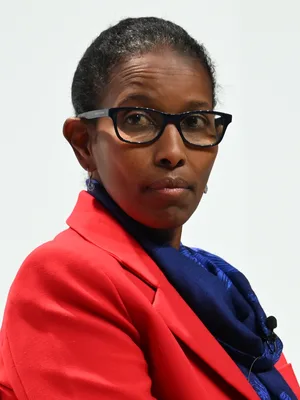
Ayaan Hirsi Ali's childhood Islam was built on fear of Hell, and then on Brotherhood zeal in Nairobi. She kept her doubts behind a "shutter" through her Leiden years, let it fall after 11 September 2001, and said "I don't believe in God" on Corfu in May 2002. She paid for her public unbelief with a murdered collaborator, armed protection and a lost parliamentary seat. In 2023, after a decade of despair, and with civilisational as well as personal reasons, she called herself a lapsed atheist and a Christian.
Seth Andrews
Seth Andrews was a Tulsa boy raised on a literal Bible, and became a Christian radio host. He put the doubts raised by Rich Mullins's death and 9/11 into storage for years. In his late thirties, after a Hitchens video and an unfiltered reading of the Bible, he let them out, and in 2008 he told his parents he was an atheist. Since then he has widened his unbelief into politics, while looking back more gently on the believer he was.
Leo Igwe
Leo Igwe was an altar boy and a seminarian from twelve. He lost his faith slowly in the seminary, through a grieving woman's question at a funeral he led at nineteen, and through the philosophers' arguments for God, which came to seem absurd. He waited years before leaving in 1994, and founded Nigeria's humanist movement in 1996. He turned his unbelief from an argument with the church into a dangerous campaign against witchcraft accusations. His 2017 thesis reframed that campaign around the accused's own agency, widening its aim without changing its substance.
Sam Harris
Sam Harris was raised with no religion to rebel against. At thirteen, after a friend's death, he went looking for what religion said about death, and then for spiritual experience, through drugs and years of meditation in India and Nepal. The attacks of 11 September 2001 turned that private seeking into a public argument against religious certainty, in The End of Faith (2004). Waking Up (2014) brought the contemplative interest, which had come first, back to the centre: a change of emphasis rather than a reversal.