Recent
This part is about the public atheists of the last thirty years, and some who turned back. They include a biologist, a philosopher, a journalist facing death in public, a neuroscientist who kept the contemplative life, a former Baptist who made deconversion a method, and a woman who left Islam for atheism and then atheism for Christianity.
The lives
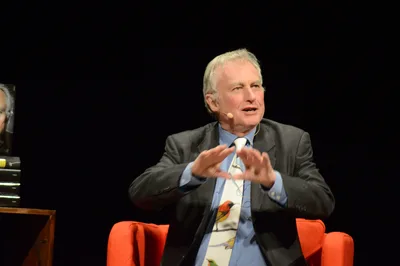
Richard Dawkins
Richard Dawkins was a devout Anglican schoolboy, confirmed at thirteen. He first doubted at nine, on hearing that religions contradict one another. He gave up the Church at fourteen or fifteen, and at about sixteen gave up the creator he had kept for the design of living things, when a friend showed him the full force of Darwin's idea. The God Delusion (2006) made that biology-based unbelief public. His later talk of being a "cultural Anglican" renamed a loyalty to the Church's music and language that was already in print in 2006.
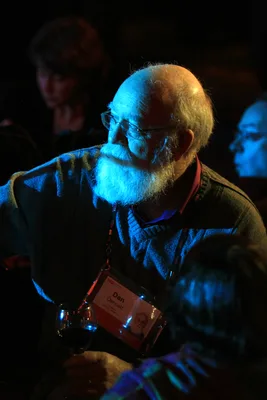
Daniel Dennett
Daniel Dennett was raised in a mild New England Christianity and stopped believing as a teenager, without any crisis. Only in 2003, alarmed by theocratic talk after 11 September, did he declare himself a "bright" in public. He then turned from arguing against God to studying religion, and the unbelieving clergy who serve it, as natural phenomena. He met his own brush with death in 2006 by thanking goodness, not God.
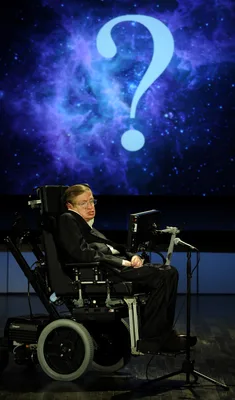
Stephen Hawking
Stephen Hawking was never a believer. He watched his schoolfriends' Christian enthusiasm with amused detachment, and asked from boyhood whether the universe needed a God to start it. For decades he kept "God" as a figure of speech for the laws of physics, the "mind of God" of 1988. From 2010 to 2011 he said plainly that God was unnecessary and heaven a fairy story, and in 2014 he called himself an atheist. In his posthumous book he still kept the word "God" as an impersonal name for the laws of nature.

Narendra Dabholkar
Narendra Dabholkar was a Satara doctor who had long since stopped believing in God. In 1982 he gave up medicine to fight superstition, and built a movement that, against his first wish, stayed neutral on God and attacked only fraud and exploitation. He defended that compromise as right for the cause. He was shot dead in Pune in 2013, and the law he fought for, which protects worship and never mentions God, was issued within days of his death.
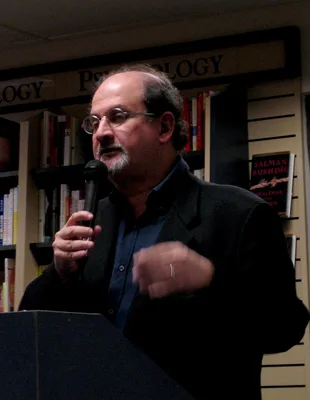
Salman Rushdie
Salman Rushdie was raised in a secular Muslim family with an atheist father. He left no record of a crisis of faith, only an undated drift from childhood belief in the stories. He made his unbelief public through The Satanic Verses (1988), a novel about revelation "from the point of view of an unbeliever", which brought the 1989 fatwa. Under that threat he signed the Muslim creed in December 1990 and disowned it by 1992. After that his unbelief hardened, through "hard-line atheist" in 2006 to a stabbing in 2022 that brought, he said, no revelation.
Christopher Hitchens
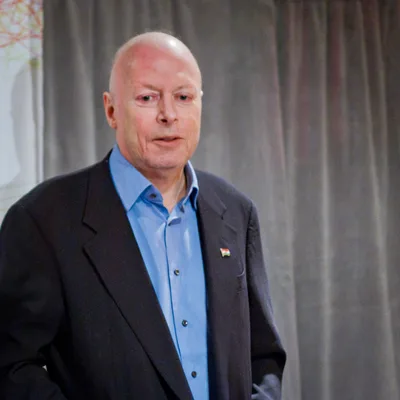
Christopher Hitchens was brought up in a Church of England that his household did not press. He dated his unbelief to a teacher's lesson about green grass at nine and a headmaster's talk of comfort at thirteen, and assumed it through twenty years of Marxist politics. After the Rushdie fatwa and 11 September he turned it into a campaign, with god is not Great in 2007. He spent his last eighteen months defending it in advance against the deathbed conversion that, as he predicted, was claimed for him after his death.
Douglas Adams
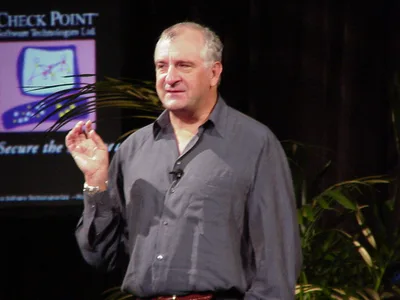
Douglas Adams was a committed schoolboy Christian who lost his faith in two steps fifteen years apart. At about eighteen a street evangelist showed him that the standards of proof he had learned at school did not apply to religion, and he became an agnostic without an alternative explanation of life. In his thirties Dawkins's books gave him one, and he became, in his own careful words, convinced that there is no god. He held that position to the end, while his tone moved from comedy to the puddle and the "artificial god", keeping the carols and the Bach.
Annie Laurie Gaylor
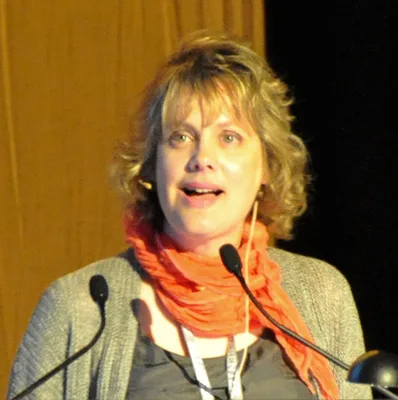
Annie Laurie Gaylor is a third-generation freethinker raised without religion, with no faith to lose. She met religion first as "under God" in a fifth-grade pledge, and then as the force her mother blamed for women's oppression. From 1976, when at twenty she co-founded the Freedom From Religion Foundation, she expressed her unbelief as a single demand: keep religion out of government. She pressed it through pickets, books and lawsuits the courts mostly turned away on standing, and after 2004, as co-president, through billboards and bus signs. The method changed; the conviction, as far as the record shows, did not.
Penn Jillette
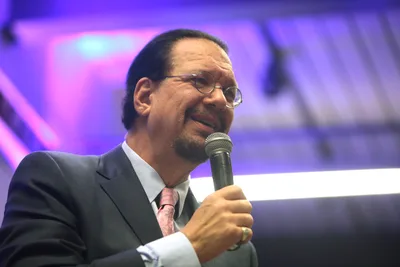
Penn Jillette came from a churchgoing family in Greenfield. At about sixteen he became an atheist by reading the Bible through, and told his pastor so. He kept the unbelief unchanged for fifty years while its voice grew from a private remark into a radio credo (2005), books and a skeptic's stage persona. He restated its label ("beyond atheism", then agnostic on knowledge and atheist on belief), and untied it from the libertarian politics he had once said came from the same "I don't know".
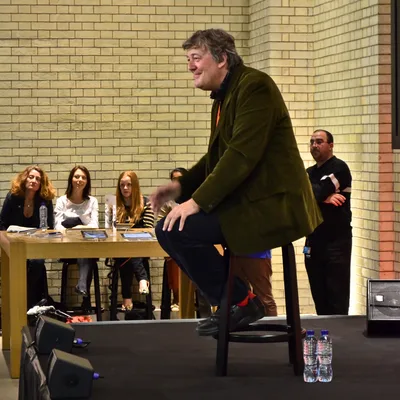
Stephen Fry
Stephen Fry was brought up "in no faith at all". He went through an adolescent love of the Anglican church before deciding, in a phrase he called grand, that he was too "Hellenic" to believe. His unbelief never changed after that, but its forms did: "reason is my religion" (2005), a campaign against the Catholic Church (2009), and an angry hypothetical answer about God on Irish television (2015) that was reported under a blasphemy law he had once half-defended, a law Ireland then voted away (2018). Finally came his retellings of the Greek myths.
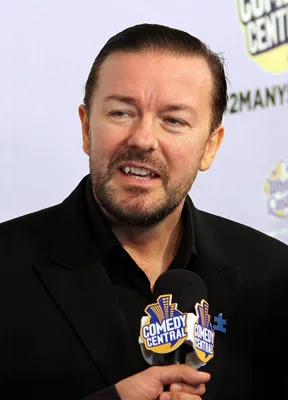
Ricky Gervais
Ricky Gervais dates his unbelief, by his own later telling, to a moment at about eight, when his brother asked why he believed in God and his mother's "Bob!" told him something was being hidden. The unbelief has not moved since, but its voice has. It went from a film about a world without lies (2009) and an essay complaining that the honest answer sounds rude (2010), to a plea to "just be kind" (2013), and to the label "agnostic atheist", with the argument of "one less god", put to a Catholic talk-show host (2017).
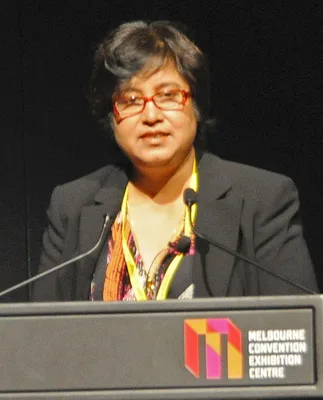
Taslima Nasrin
Taslima Nasrin was born into a Muslim family in Mymensingh. As a child she decided that her mother's preacher's God was cruel, and she became an atheist, she said, through scientific training. Her unbelief came out in her columns on what clerics did to women, and in a 1994 letter calling every scripture "out of place and out of time", and it cost her Bangladesh. In exile she wanted all religion banned (1995). Over thirty years she softened the demand without giving up the conviction, ending in 2025 with criticism "proportionate to the harm" and a right to believe or not.
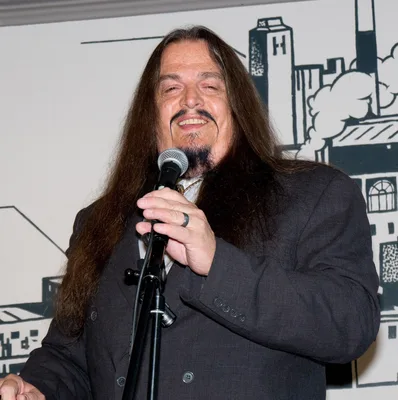
Aron Ra
Aron Ra was a boy who believed in God but never in the Bible. He lost the Bible at twelve, God at nineteen, when a friend told him to keep telling himself it was Jesus until he believed it, and the paranormal in his twenties. He learned the word "atheist" only years later. He has spent his public life defending the teaching of evolution to other people's children rather than arguing about God, a stance he kept through the atheist movement, a Senate run and The Satanic Temple.
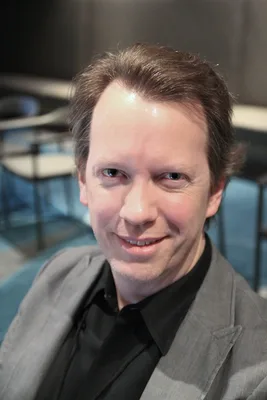
Sean Carroll
Sean Carroll was raised Episcopalian near Philadelphia, and the family's church-going ended when his grandmother died, when he was about ten. He drifted from belief gradually, with no crisis, and first called himself an atheist aloud at Villanova, a Catholic university, after hearing a rock song that treated unbelief as something to be happy about. His first public argument was a 2003 Notre Dame paper, published in 2005, that treated God as a hypothesis to be rejected on scientific grounds; his blog, his refusal of Templeton money (2013) and his 2014 debate with William Lane Craig followed. From about 2009 he changed his method rather than his conclusion: he gave up arguing that God does not exist in favour of "poetic naturalism" (2016), saying he had no interest in attacking religion and preferred the constructive work of following naturalism through.
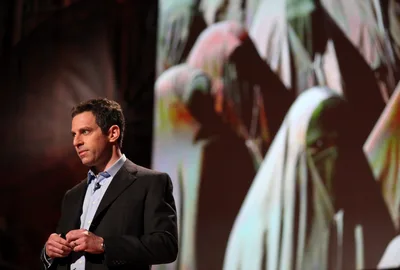
Sam Harris
Sam Harris was raised with no religion to rebel against. At thirteen, after a friend's death, he went looking for what religion said about death, and then for spiritual experience, through drugs and years of meditation in India and Nepal. The attacks of 11 September 2001 turned that private seeking into a public argument against religious certainty, in The End of Faith (2004). Waking Up (2014) brought the contemplative interest, which had come first, back to the centre: a change of emphasis rather than a reversal.
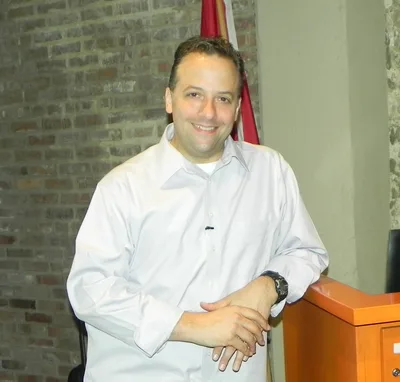
Seth Andrews
Seth Andrews was a Tulsa boy raised on a literal Bible, and became a Christian radio host. He put the doubts raised by Rich Mullins's death and 9/11 into storage for years. In his late thirties, after a Hitchens video and an unfiltered reading of the Bible, he let them out, and in 2008 he told his parents he was an atheist. Since then he has widened his unbelief into politics, while looking back more gently on the believer he was.
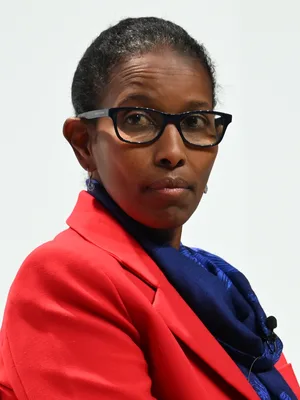
Ayaan Hirsi Ali
Ayaan Hirsi Ali's childhood Islam was built on fear of Hell, and then on Brotherhood zeal in Nairobi. She kept her doubts behind a "shutter" through her Leiden years, let it fall after 11 September 2001, and said "I don't believe in God" on Corfu in May 2002. She paid for her public unbelief with a murdered collaborator, armed protection and a lost parliamentary seat. In 2023, after a decade of despair, and with civilisational as well as personal reasons, she called herself a lapsed atheist and a Christian.
Matt Dillahunty
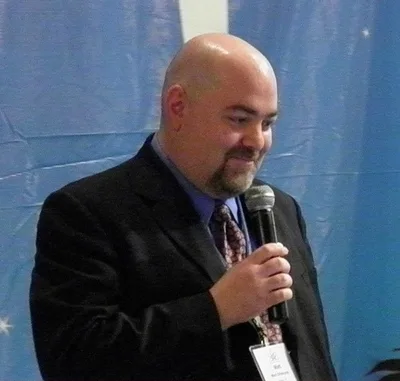
Matt Dillahunty was a Southern Baptist who had meant to become a minister. He lost his job in 2001 and set out to rebuild his faith by study, and the study destroyed it in stages, beginning with a Bible story he found immoral. By 2006 he was hosting a weekly television argument with believers. His unbelief has widened since into a self-described skepticism, but has not reversed.
Leo Igwe
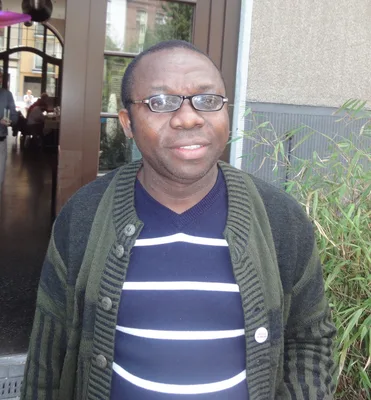
Leo Igwe was an altar boy and a seminarian from twelve. He lost his faith slowly in the seminary, through a grieving woman's question at a funeral he led at nineteen, and through the philosophers' arguments for God, which came to seem absurd. He waited years before leaving in 1994, and founded Nigeria's humanist movement in 1996. He turned his unbelief from an argument with the church into a dangerous campaign against witchcraft accusations. His 2017 thesis reframed that campaign around the accused's own agency, widening its aim without changing its substance.
Avijit Roy
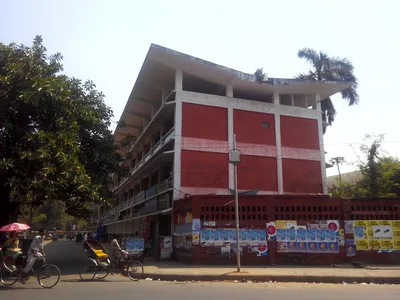
Avijit Roy had no faith to lose. He was a Hindu by label, and his physics-professor father planted, he said, "the first seed of free thought and doubt". His disbelief in a creator came in his student years. From 2001 he gave it a home online for Bengali freethinkers in Mukto-Mona, and in books (2011, 2014) arguing that atheism was freedom from belief and that faith could spread like a virus. After 2013, as bloggers were jailed and killed, he campaigned for them and warned his own side that atheism did not free anyone from hatred. He was murdered in Dhaka in 2015 by men a court found had branded him an atheist.
Hemant Mehta
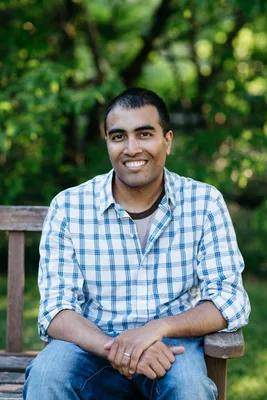
Hemant Mehta was raised in Jainism, a faith with karma, rebirth, heaven and hell but no creator God. He stopped believing at about fourteen. In 2006 he made his unbelief an open invitation to be proved wrong, by auctioning church visits on eBay. The "Friendly Atheist" manner that grew from it has been tested from both sides, bluntest in 2014 and chastened the same year, while the unbelief itself has not moved.
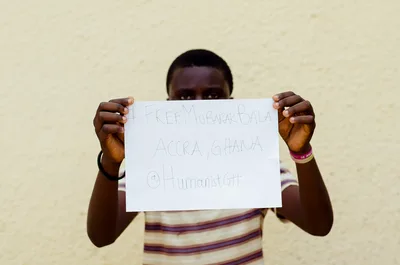
Mubarak Bala
Mubarak Bala was raised in Kano's strict Islamic schools, and answered a child's doubts with more devotion. He lost his faith slowly and privately between 2003 and 2009, and was afraid of the word "atheist" until about 2012. Boko Haram's violence drove him to say it openly in 2013. The cost was eighteen days in a psychiatric ward in 2014 and, after Facebook posts in 2020, a twenty-four-year sentence for insulting religion that a UN body called detention for his atheism. He came out of prison in 2025 reaffirming his unbelief.