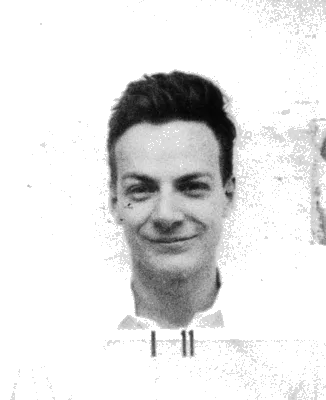
Richard Feynman was raised in a Reform Jewish community by an unbelieving father who taught him that names and uniforms are not knowledge. He left Sunday school at almost thirteen because its history mixed fiction with fact, and refused his father's Kaddish in 1946. In 1956 he argued that science turns "Is there a God?" into "How sure is it?", and in 1967 he refused to be counted among Jewish Nobel winners. Late in life he called himself as strong an atheist as anyone was likely to find, at ease with doubt and not knowing.
The belief timeline
- Faith (1920s to c. 1931) — Reform temple, Sunday school and youth group; but an unbelieving father who taught him to mistrust uniforms and name-learning, and a home where God "had never held much sway". Inherited religion, not fervent faith. [4][5][6]
- Doubt (c. spring 1931 (age "almost thirteen")) — Leaves Sunday school before confirmation: the holiday stories "mixed fiction with fact", and he sees that the picture of "a marvelous and talented people surrounded by dull and evil strangers" is false; stops believing in "the chosen people". The adult, reasoned doubt comes later (MIT 1935–39 on Descartes; the 1956 talk), so the script must say why the mark sits at 1931: a boy's objection to the history and to being told stories as fact, learned beside a father's lesson that names are not knowledge. [10][11][20]
- Declaration (1946-10-08 (private, at the grave) and 1956-05-02 (public, Caltech YMCA talk); 1959-05 is the first broadcast attempt) — Refusing the Kaddish is his first act; the 1956 talk is the first public, reasoned statement ("How sure is it that there is a God?"); the 1959 KNXT interview says it plainly on television and is held back. Choose one for the mark. [29][33][34][37]
- Revision (1965–1982) — Not a reversal. He restates and fences it: morals stand outside science (Cranberg, 1965); he refuses an ethnic label (Levitan, 1967–68); calls himself "as strong an atheist" (1982) while living "with doubt and uncertainty" (1981). No late conversion or softening found. [36][12][15][45][46]
Notes to the timeline (15)
- [4] Far Rockaway's Judaism was mostly Reform and broad enough to include atheists like Melville Feynman; the Feynmans belonged to the neighbourhood temple; Richard went to Sunday school "for a while" and belonged to a Shaaray Tefila youth group. — James Gleick, Genius: The Life and Science of Richard Feynman (Pantheon, 1992), pp. 22–23.
- [5] Gleick describes the Feynman household as "rational and humanistic", in which God "had never held much sway"; he calls Melville and Lucille atheists who, in 1946, began attending Temple Israel "from time to time". Gleick's characterisation; no statement of Melville's own about God was found. — Gleick, Genius, pp. 31, 219.
- [6] Melville taught Richard to mistrust jargon and uniforms (as a uniform salesman he saw "the uniforms empty"; "the pope himself was just a man in a uniform"), and to look at what a bird is doing, not what it is called; Feynman told the bird story and the Pope-picture story himself. Gleick adds that Feynman later recognized his father "must have invented sometimes". — Gleick, Genius, pp. 27–28; "The Pleasure of Finding Things Out," BBC Television Horizon (1981), as broadcast in the USA on PBS NOVA (series 10, episode 2; WGBH Boston/Time-Life Video, 1983). Internet Archive ThePleasureOfFindingThingsOut_201809; auto-generated captions in research/texts/pleasure-film.txt (timestamps are for this copy). Copyright BBC; footage not usable; check wording against the audio, 0:07:00–0:07:48 (birds), 0:14:38–0:15:42 (the Pope and the uniform).
- [10] In a letter of 7 February 1967 Feynman writes that "at almost thirteen" he dropped out of Sunday school just before confirmation "because of differences in religious views but mainly because I suddenly saw that the picture of Jewish history that we were learning, of a marvelous and talented people surrounded by dull and evil strangers was far from the truth." Gleick separately says he quit Sunday school "shocked at the discovery that those stories... mixed fiction with fact". Date of c. spring 1931 is my inference from "almost thirteen" and his May birthday. — Michelle Feynman, ed., Perfectly Reasonable Deviations from the Beaten Track: The Letters of Richard P. Feynman (Basic Books, 2005), p. 235 (letter); Gleick, Genius, p. 65.
- [11] In the same letter he adds that at thirteen he "stopped believing that the Jewish people are in any way 'the chosen people'." — Feynman, Perfectly Reasonable Deviations from the…, p. 236.
- [20] At MIT, Arline was reading Descartes; Feynman judged the proof of God's perfection from the idea of perfection to be a fallacy ("People like Descartes were stupid, Richard told Arline"), enjoyed Descartes's method of total doubt as "the first great suspension of belief", read J. S. Mill's On Liberty and T. H. Huxley's "On a Piece of Chalk", and wrote his own imitation, "On a Piece of Dust". Gleick's notes cite Feynman's Weiner interviews (F-W, pp. 165–73). — Gleick, Genius, pp. 66–67.
- [29] Melville Feynman collapsed with a stroke on 7 October 1946 and died the next day. At the burial in Bayside Cemetery, Rabbi Judah Cahn asked Richard, as eldest son, to say the Kaddish; Richard said he did not understand the Hebrew, Cahn switched to English, and Richard refused to repeat the words. Gleick: "He did not believe in God; he knew that his father had not believed in God; and the hypocrisy seemed unbearable." Gleick's source is Joan Feynman's interview; Feynman himself is not quoted. — Gleick, Genius, pp. 220–221 (note on p. 221); Wikipedia, "Richard Feynman," page last edited 2026-10-11 23:34 UTC (read 2026-10-14; featured article). Used as a map; its "Religion" section rests on Haynie 2007 (family at synagogue every Friday), Feynman 1988 p. 25 ("avowed atheist"), Brian 2001 p. 49, PRD and the Telegraph review, (Oct 8 date).
- [33] On 2 May 1956 Feynman gave a talk at the Caltech YMCA Lunch Forum, printed as "The Relation of Science and Religion" in Engineering and Science, June 1956, pp. 19–23. He opens by posing to an imagined panel the case of a young man, brought up in a religious family, who studies science and comes to doubt and perhaps disbelieve his father's God, and says he believes more than half of scientists "really disbelieve in their father's God" (he has no statistics). CORRECTION to the brief: this talk is not printed in The Meaning of It All (those are the 1963 Danz Lectures). — Richard P. Feynman, "The Relation of Science and Religion," Engineering and Science 19:9 (June 1956), pp. 19–23 (transcript of the Caltech YMCA Lunch Forum talk of 2 May 1956), pp. 19–23; Wikipedia, "The Meaning of It All," read 2026-10-14.
- [34] The argument of the 1956 talk (paraphrase): science cannot disprove God, and belief in science and in an ordinary God is consistent but hard, for two reasons. First, science requires doubt: statements are "known to different degrees of certainty", so the question shifts from "Is there a God?" to "How sure is it that there is a God?", a change he calls "a parting of the ways" and from which "a real scientist can never believe in the same way again". Second, what science teaches (the size of the universe, man's kinship with animals, the atoms) makes the God "to whom you pray" seem inadequate, and prayer meaningless. Morals survive the change; science cannot touch ethics, which he explains as "if I do this, what will happen?" versus "do I want that to happen?". His unsolved problem is religion's inspiration without metaphysical certainty. He ends by naming two "great heritages" of the West, the scientific spirit and Christian ethics, and asking how both can stand "mutually unafraid". — Feynman, Engineering and Science (1956), pp. 19–23 (the doubt passage is on pp. 20–21; OCR column order makes finer pinning uncertain).
- [37] The KNXT "Viewpoint" interview with Bill Stout was recorded on 1 May 1959 for broadcast on 10 May. The station did not run it as planned and asked him to re-record; its reasons were said to be that his views might antagonize people, or that Stout had agreed too openly. On 14 May 1959 Feynman wrote to Bill Whitley that he saw "no reason to make a new recording" and called the refusal "a direct censorship of the expression of my views". PRD's headnote: "the station ran the program" but earlier in the day than advertised; Gleick says KNXT "felt obliged to suppress" it. — Feynman, Perfectly Reasonable Deviations from the…, pp. 100–102 (letter and headnote); Gleick, Genius, pp. 433–434. Accounts differ; see the disputed points.
- [36] On 6 January 1965 Lawrence Cranberg, a physicist at the University of Virginia, wrote that he had "just come across" the talk and challenged the claim that "moral questions are outside of the scientific realm" (pointing to Darwin's Descent of Man on the social origin of ethics). Feynman replied on 3 March 1965 that he had not meant to say ethics and science are separate but that "the fundamental basis of ethics must be chosen in some non-scientific way", after which science can say what would happen if we act. — Feynman, Perfectly Reasonable Deviations from the…, pp. 147–150.
- [12] On 18 January 1967 he told Tina Levitan it would not be appropriate to include him in her book "Jewish Winners of the Nobel Prize" for several reasons, one being that "at the age of thirteen I was converted to non-Jewish religious views" (on 7 Feb he words it "converted to other religious views"). He names no other faith. — Feynman, Perfectly Reasonable Deviations from the…, p. 234 (letter and headnote: her book was "in progress", titled The Laureates: Jewish Winners of the Nobel Prize).
- [15] Levitan agreed on 16 February 1967 to respect his wishes; a year later she approached him for an article on "The Scientist and Religion"; on 16 February 1968 he referred her to his letter of 7 Feb 1967 and called it her "new adventure in prejudice". The Telegraph review quotes the same phrase. CORRECTION to the brief: the correspondence is 1967 to 1968, not the 1970s. Whether he appears in the published book is not checked. — Feynman, Perfectly Reasonable Deviations from the…, p. 236 (headnote and letter); M. John Harrison, "Physics, bongos and the art of the nude," The Daily Telegraph, review of Don't You Have Time to Think? (the UK edition of PRD). Read through a Wayback Machine capture of 28 Dec 2013 of.
- [45] In the film (paraphrase): his interest in science is simply to find out about the world, not to answer deep philosophical questions; he "can't believe" the "special stories" about our relation to the universe because they "seem to be too simple... too local, too provincial"; religions disagree with one another, so doubt follows ("everything is possibly wrong"); and "I can live with doubt and uncertainty and not knowing... I don't feel frightened by not knowing things, by being lost in a mysterious universe without having any purpose... It doesn't frighten me." The words differ slightly in Gleick (p. 438) and Wikiquote (published book version). — Horizon, 0:50:48–0:54:33; Gleick, Genius, p. 438.
- [46] In a letter of 12 September 1982 about a trip, he reports telling a wealthy man who had prayed during a kidnapping that "I was as strong an atheist as he was likely to find", but that he "could conceive of myself praying in such a situation" (as "the cry of anguish of an utterly helpless man"). Names in the letter were changed by the editor. — Feynman, Perfectly Reasonable Deviations from the…, pp. 349–351.
How Sure Is It That There Is a God?
On 8 October 1946 Richard Feynman, a twenty-eight-year-old physicist just back from the atomic-bomb laboratory at Los Alamos, stood at his father's grave in Bayside Cemetery, Queens. The rabbi asked him, as the eldest son, to say the Kaddish, the prayer for the dead. Feynman said he did not understand the Hebrew; the rabbi offered it in English; Feynman refused to repeat the words. His biographer James Gleick, telling the story from his sister Joan's memory, explains that he did not believe in God, knew that his father had not believed either, and found the hypocrisy unbearable.1
There was no argument at the graveside and no speech. This chapter asks how Feynman came to that refusal, and how a man who disliked labels came, late in life, to call himself an atheist without hedging.
A father's lessons
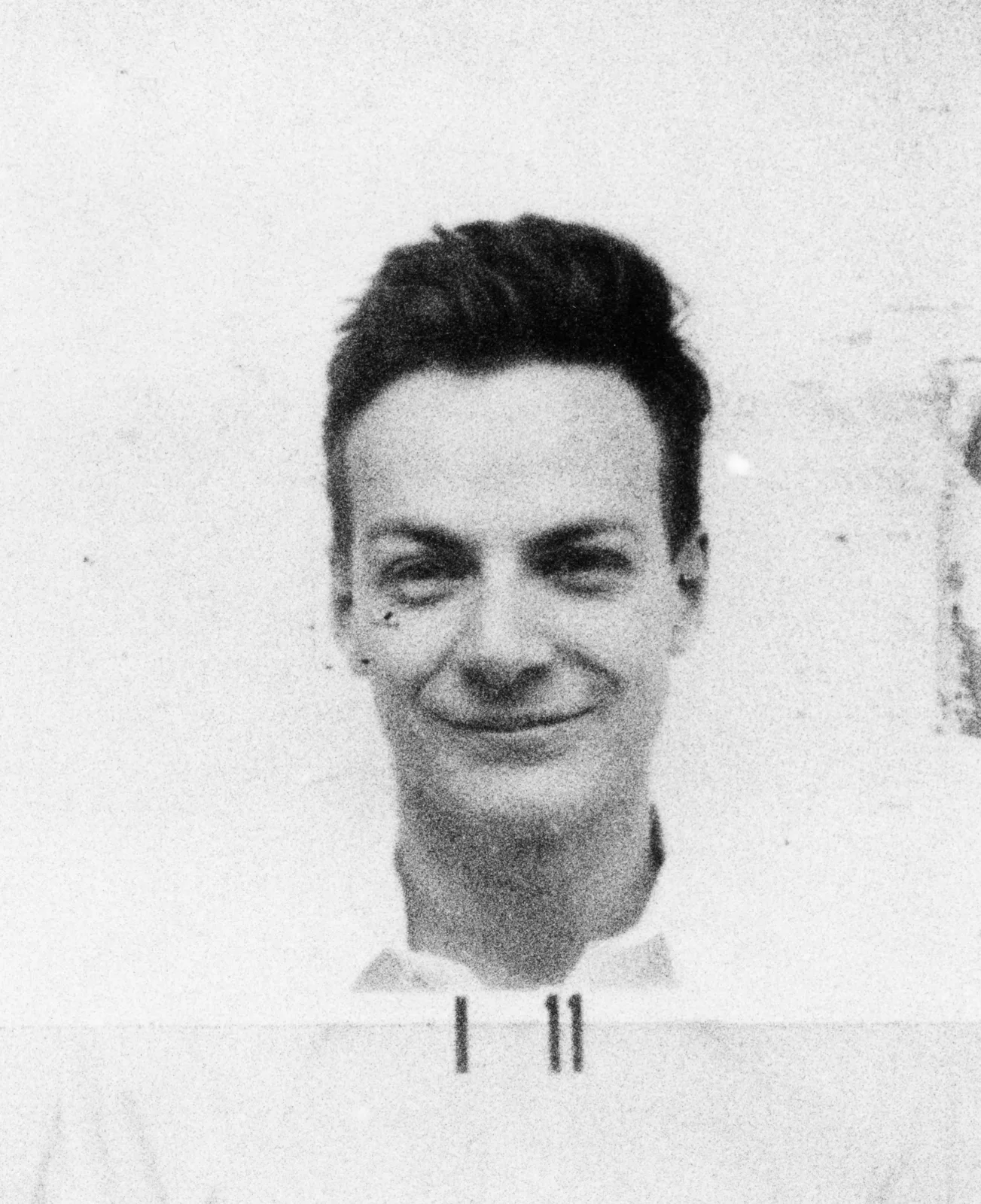
He was born in New York on 11 May 1918, the first child of Melville Feynman, a uniform salesman who had come from Minsk as a small boy, and Lucille Phillips, who had been to the Ethical Culture School.23 The family settled in Far Rockaway, on the edge of Queens.4 Its Judaism was mostly Reform, broad enough, Gleick writes, to include an atheist like Melville; the Feynmans belonged to the local temple, and Richard went to Sunday school for a while and to a temple youth group.5 Gleick describes the household as rational and humanistic, a place where God had never held much sway, though Feynman himself said in 1959 that he had been brought up religiously.67 Accounts of how religious his childhood was differ; what is certain is the temple, the Sunday school, and an unbelieving father.
His father's lessons were the real education. Melville, who sold uniforms, taught his son that a uniform is empty, that even the Pope was just a man in a uniform, and, on walks in the Catskills, that knowing the name of a bird in every language tells you nothing about the bird; you have to watch what it does.8 In 1981 Feynman traced his own habit of doubt to his father's insistence on looking to see what is true and what may not be, and called doubt a fundamental part of his soul.9 On the belief timeline, that temple childhood, with its doubting father, is where his faith sits, though "inheritance" might be the better word.
Almost thirteen
At almost thirteen, in about the spring of 1931, just before he would have been confirmed, he dropped out of Sunday school. He gave his reasons in a letter written thirty-six years later: there were differences in religious views, but mainly he had suddenly seen that the picture of Jewish history he was being taught, of a marvellous and talented people surrounded by dull and evil strangers, was far from the truth. At thirteen, he wrote, he stopped believing that the Jews were in any way a chosen people.1011 Gleick says he was shocked to find that the stories mixed fiction with fact.10 On the timeline, this is where his doubt begins. It sits at thirteen, rather than at a later and more reasoned point, because it is the first moment he himself dated: a boy's objection to being taught stories as history, learned beside a father who taught him that names are not knowledge. The adult reasoning came after.
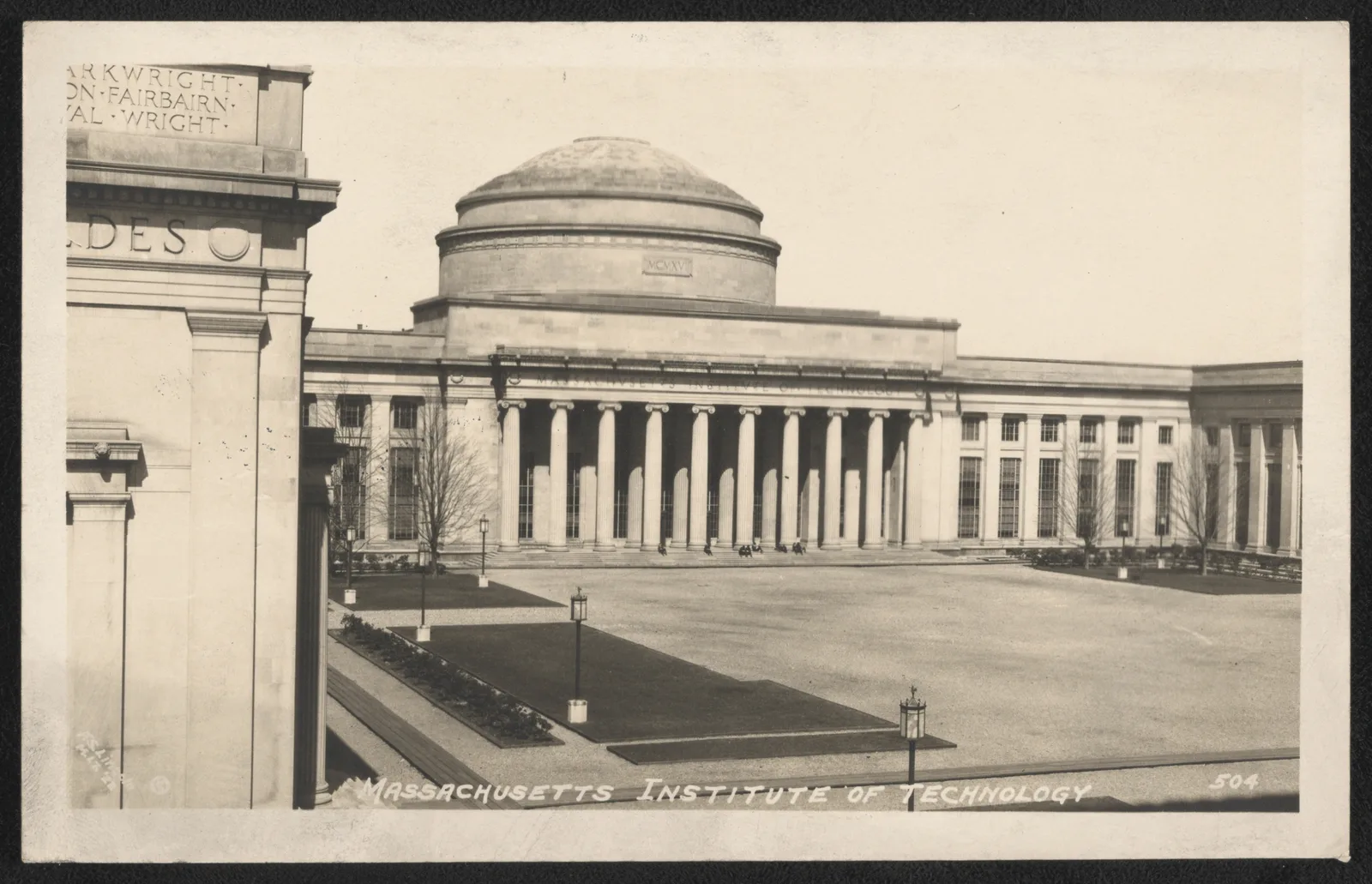
At MIT, from 1935, he joined a Jewish fraternity because the fraternities were segregated by religion, but, as he put it later, he did not believe any of that and was not in any way religious.1213 Even his parents' gentle Reform Judaism, Gleick writes, left him cold.14 His girlfriend Arline Greenbaum was reading Descartes, and Feynman decided that the proof of God's perfection from the idea of perfection was a fallacy, while he admired Descartes's method of doubting everything. He read Mill's On Liberty and T. H. Huxley's essay "On a Piece of Chalk," and wrote an imitation of his own, "On a Piece of Dust."15
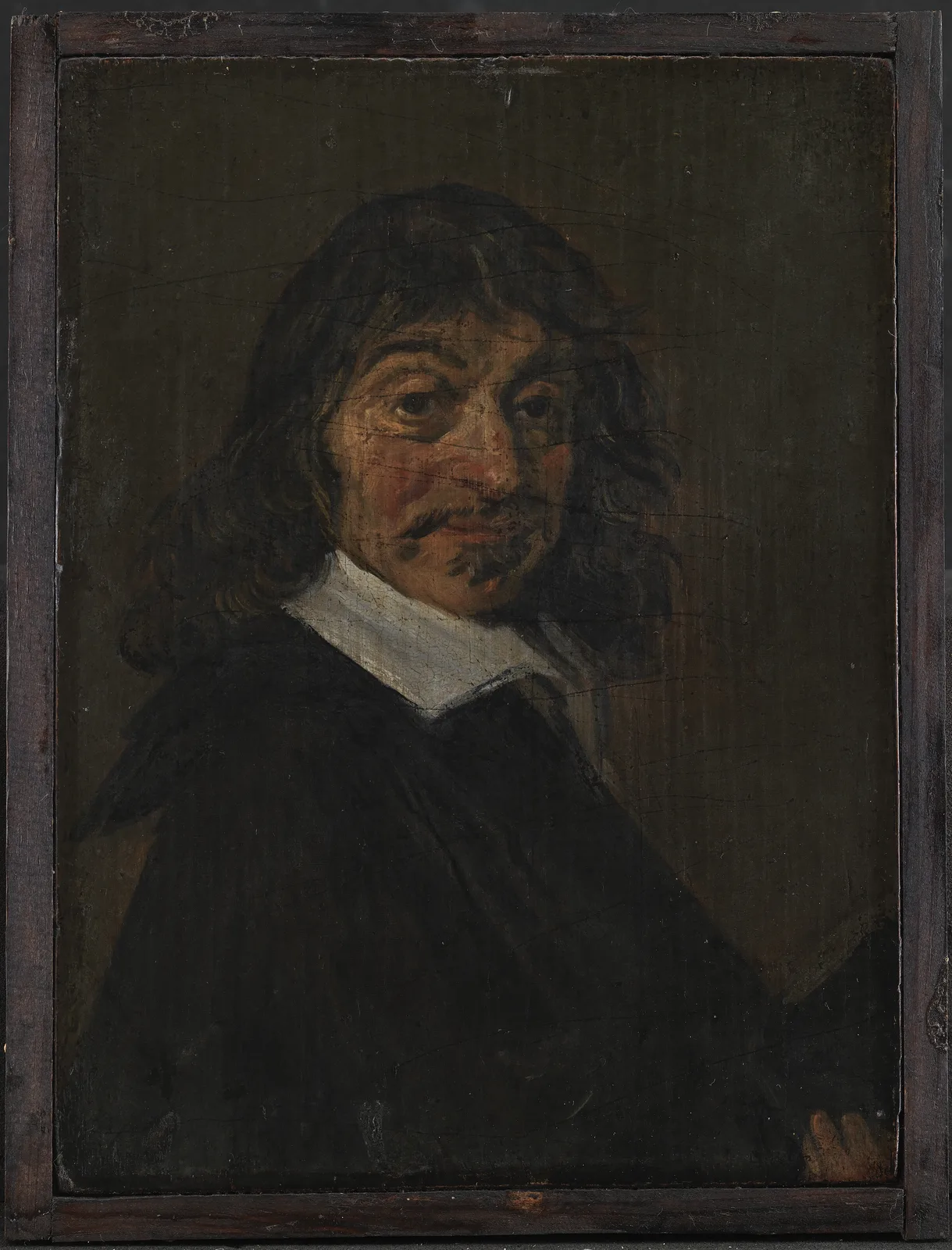
Arline
In 1939, when Princeton considered him for graduate school, its physics chairman asked MIT whether Feynman was Jewish, since the department had no rule against Jews but kept their proportion small; MIT's John Slater answered in a postscript that of course he was.16 In June 1942 he married Arline, who had tuberculosis, in a city office on Staten Island. When he went to Los Alamos in March 1943 she was moved to a sanatorium in Albuquerque, and in the spring of 1945 he wrote to her that nothing was certain and that they led a charmed life.171819 She died there on 16 June 1945. He noticed that the clock in her room had stopped at the moment of her death, recognised it as just the kind of mystical sign that appeals to unscientific people, and worked out that the nurse must have stopped it when she picked it up.2021 Sixteen months later he wrote her a letter he never sent, saying he found it hard to understand what it meant to love her after she was dead.22 No source read for this chapter ties her death, or any other loss, to his unbelief, and this chapter suggests no link.
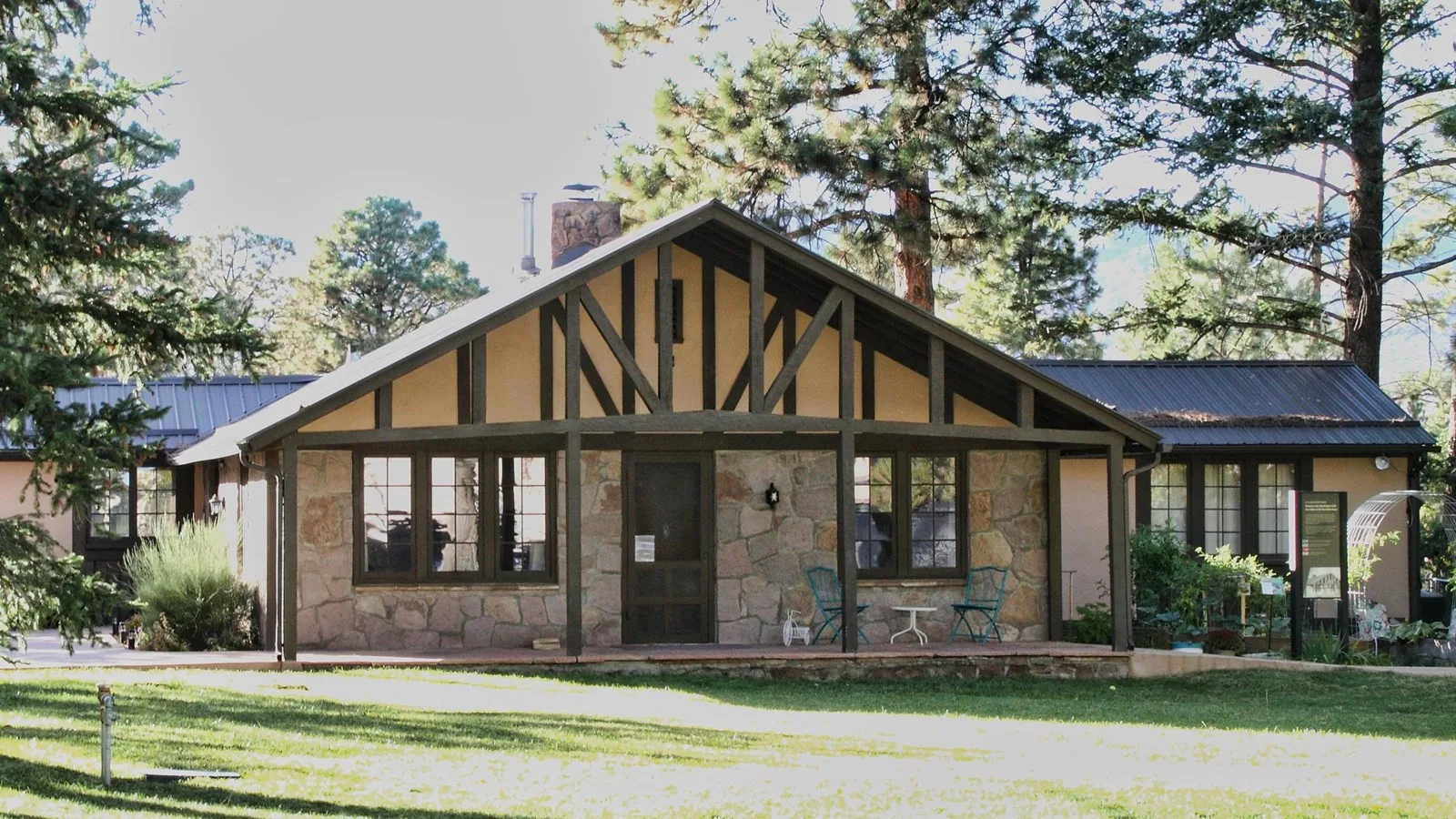
How sure is it?
The refusal of the Kaddish in October 1946 was his first act of unbelief in front of others.1 His first public argument came ten years later, at Caltech, where he had moved in 1950. On 2 May 1956 he spoke at a lunch forum of the campus YMCA on "The Relation of Science and Religion."2324 He imagined a young man from a religious family who studies science and comes to doubt his father's God, and guessed that more than half of all scientists really disbelieve in their fathers' God. Science, he argued, cannot disprove God. But it changes the question. Because scientific knowledge comes in degrees of certainty, the question becomes not "Is there a God?" but "How sure is it that there is a God?" That change, he said, is a parting of the ways, and a real scientist can never believe in the same way again. And what science teaches about the size and age of the universe makes the God to whom one prays seem too small. Morals, he thought, survive the change; he ended by naming two great heritages of the West, the scientific spirit and Christian ethics, and asking how both could stand without fear of each other.25 He added that he hoped his atheistic colleagues carried themselves well in society, and that communism, which gives answers without doubt, was the opposite of science.26
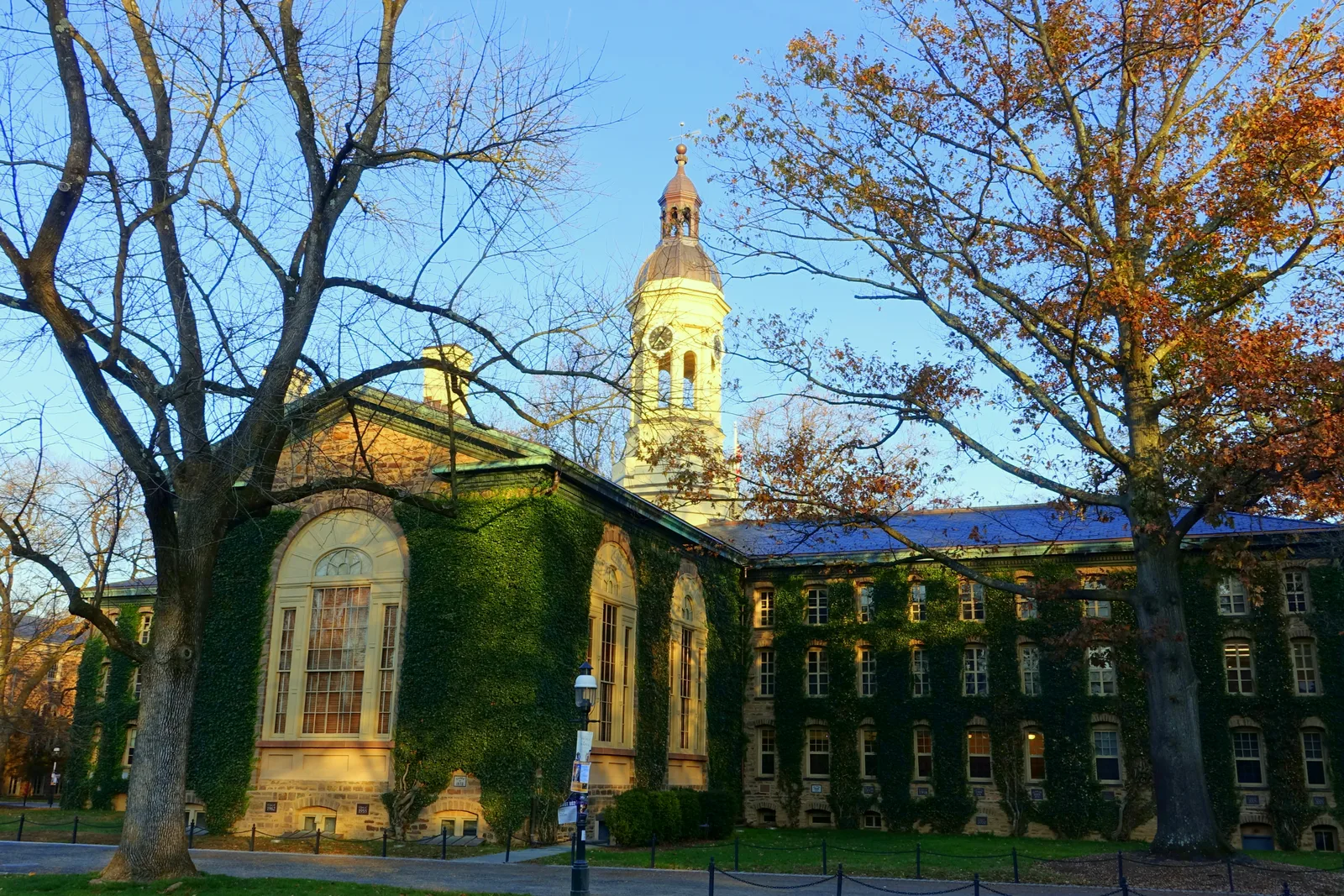
In 1959 he said much the same in a Los Angeles television interview: that he personally could not fit conventional religion with what science had taught him, that the universe was too big and too old to be merely a stage on which God watches humans struggle with good and evil, and that he had changed his mind at fifteen or sixteen, not in an emotional crisis. The station would not run the programme in its advertised slot, and Feynman called this direct censorship of his views; accounts differ on whether it ever aired.277 The talk of 1956 and the interview of 1959 are where the timeline places his declaration, with the graveside refusal as its private beginning.
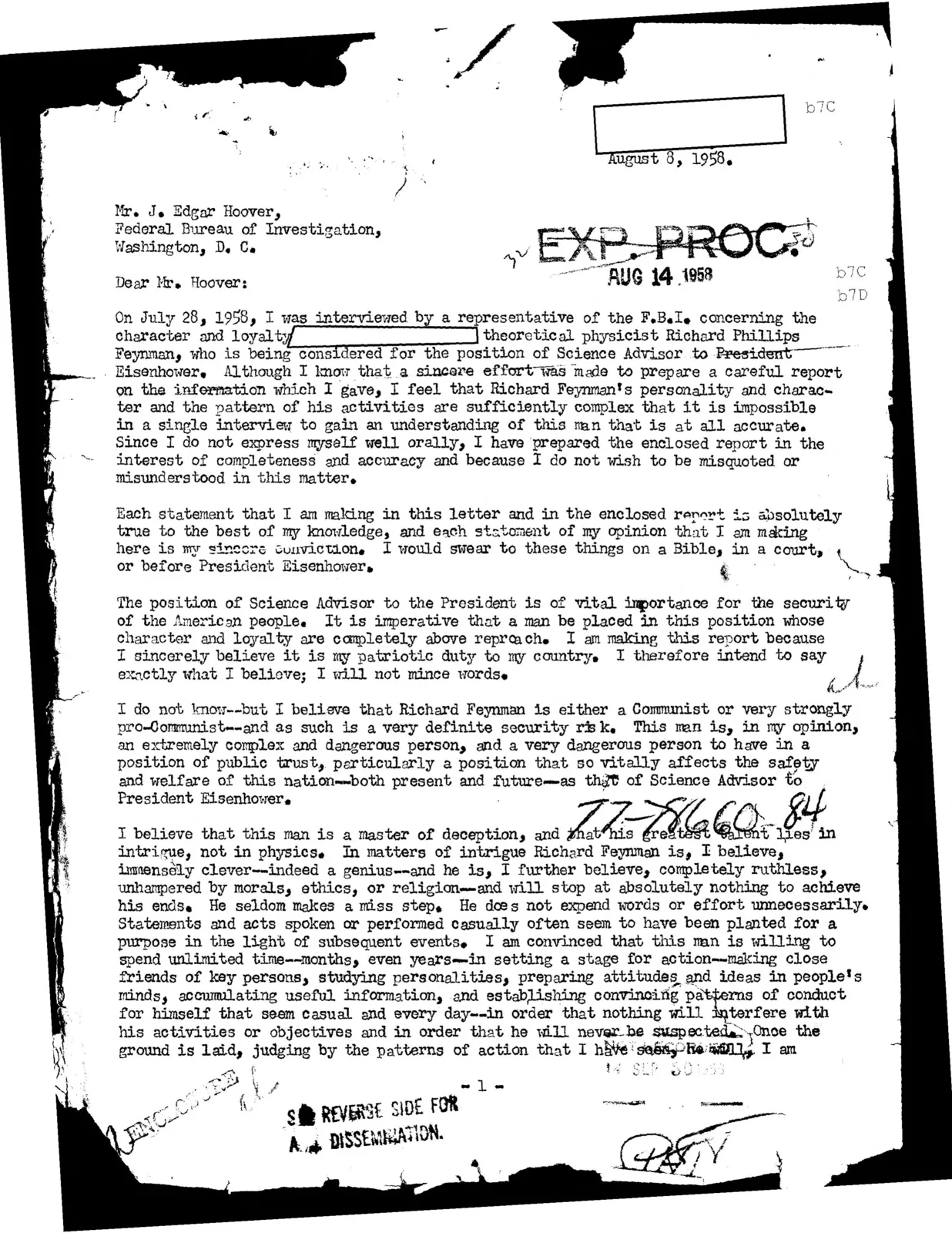
Two years after the Caltech talk, an informant whose name the FBI blacked out wrote to J. Edgar Hoover that Feynman was "completely ruthless, unhampered by morals, ethics, or religion." The charge ran atheism and immorality together, just as Feynman's talk had separated them.2829
No chosen people
He shared the Nobel Prize in Physics in 1965.30 A physicist who had read the 1956 talk objected that ethics did have a scientific basis, in Darwin's account of social instincts; Feynman answered that the basis of ethics had to be chosen in some non-scientific way, after which science could say what would happen if one acted on it.31 In 1967 a writer asked to include him in a book on Jewish winners of the Nobel Prize. He refused: at thirteen, he said, he had turned to other religious views, and he rejected the idea of a Jewish race with inherited talents as evil and dangerous, the kind of theory Hitler had used. A year later, when she asked him to write on the scientist and religion, he called the request her "new adventure in prejudice."32333435 He never denied his background; he simply refused to let it be counted as a creed or a race.36
Doubt without fear
In a BBC film of 1981, The Pleasure of Finding Things Out, he said he could not believe the special stories religions tell about our place in the universe, which seemed too simple and too local, and that he could live with doubt and uncertainty and not knowing; being lost in a mysterious universe without purpose did not frighten him.3738 In a letter of September 1982 he described telling a wealthy man who had prayed during a kidnapping that he was as strong an atheist as the man was likely to meet, though he could imagine himself praying in such a situation, as the cry of an utterly helpless man.39 An interviewer later reported him saying that to call himself an agnostic would be trying to weasel out.40 On the timeline, these late statements are his revision, but they revise only the tone: careful in 1956, plain in 1982, never a return.
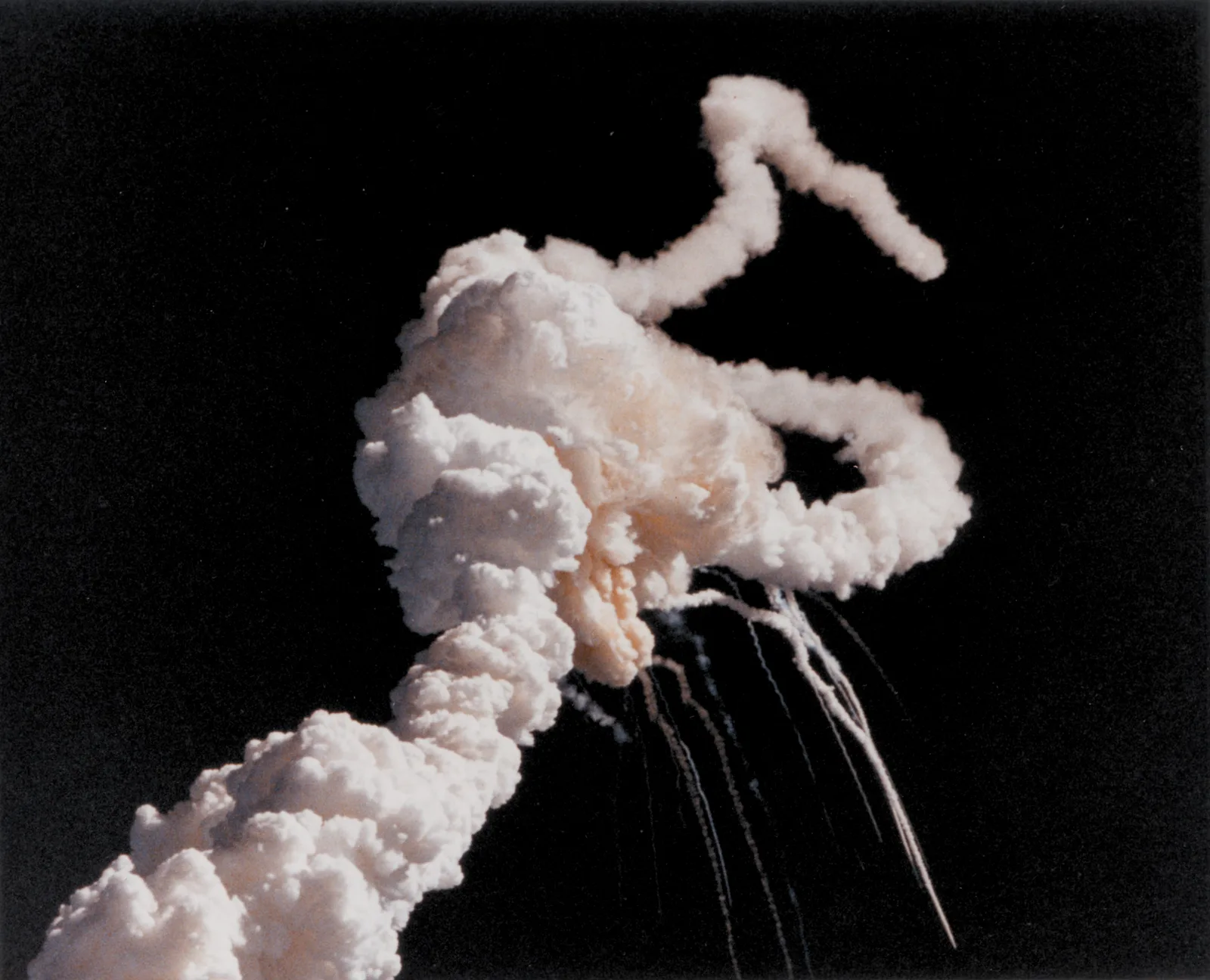
In 1986 he served on the presidential commission that investigated the loss of the space shuttle Challenger. His own appendix to its report asked what caused NASA management's "fantastic faith in the machinery," found that the agency exaggerated the reliability of its product "to the point of fantasy," and ended: "For a successful technology, reality must take precedence over public relations, for nature cannot be fooled."41424344 It is not about religion, but it is the same method of doubt, turned on an institution.
He died in Los Angeles shortly before midnight on 15 February 1988. His last reported words, to his wife Gweneth, were that he would hate to die twice, because it was so boring.45
Thomas Henry Huxley, the biologist who coined the word "agnostic" and whose essay Feynman imitated as a student, has his own chapter in this book.
Footnotes
-
James Gleick, Genius: The Life and Science of Richard Feynman (Pantheon, 1992), pp. 220–221 (note on p. 221); Wikipedia, "Richard Feynman," page last edited 2026-10-11 23:34 UTC (read 2026-10-14; featured article). Used as a map; its "Religion" section rests on Haynie 2007 (family at synagogue every Friday), Feynman 1988 p. 25 ("avowed atheist"), Brian 2001 p. 49, PRD and the Telegraph review, (Oct 8 date). ↩ ↩2
-
"Richard P. Feynman: Biographical," Nobel Lectures, Physics 1963–1970 (Elsevier, 1972), (date, death); Gleick, Genius, pp. 24–25. ↩
-
Gleick, Genius, pp. 24–25. ↩
-
Gleick, Genius, p. 26. ↩
-
Gleick, Genius, pp. 22–23. ↩
-
Gleick, Genius, pp. 31, 219. ↩
-
Michelle Feynman, ed., Perfectly Reasonable Deviations from the Beaten Track: The Letters of Richard P. Feynman (Basic Books, 2005), pp. 426–430 (Appendix I); Gleick, Genius, pp. 433–434. ↩ ↩2
-
Gleick, Genius, pp. 27–28; "The Pleasure of Finding Things Out," BBC Television Horizon (1981), as broadcast in the USA on PBS NOVA (series 10, episode 2; WGBH Boston/Time-Life Video, 1983). Internet Archive ThePleasureOfFindingThingsOut_201809; auto-generated captions in research/texts/pleasure-film.txt (timestamps are for this copy). Copyright BBC; footage not usable; check wording against the audio, 0:07:00–0:07:48 (birds), 0:14:38–0:15:42 (the Pope and the uniform). ↩
-
Horizon, 0:53:23–0:53:39 (auto-captions). ↩
-
Feynman, Perfectly Reasonable Deviations from the…, p. 235 (letter); Gleick, Genius, p. 65. ↩ ↩2
-
Feynman, Perfectly Reasonable Deviations from the…, p. 236. ↩
-
Gleick, Genius, pp. 36–37. ↩
-
Richard P. Feynman, as told to Ralph Leighton, "Surely You're Joking, Mr. Feynman!" (Unwin Paperbacks/Counterpoint, London 1986; first published by W. W. Norton 1985), p. 30; Gleick, Genius, pp. 61–63. ↩
-
Gleick, Genius, p. 65. ↩
-
Gleick, Genius, pp. 66–67. ↩
-
Gleick, Genius, pp. 84–85 (Wiki Feynman cites p. 84). Reported at second hand; the original has not been seen. ↩
-
Gleick, Genius, pp. 150–151; Wikipedia, "Richard Feynman,". ↩
-
Gleick, Genius, pp. 157–160; Wikipedia, "Richard Feynman,". ↩
-
Gleick, Genius, prologue and chapter "False Hopes" (c. pp. 198-199; page not fixed by the notes). ↩
-
Gleick, Genius, pp. 200–202 (death certificate cited in note p. 202); Wikipedia, "Richard Feynman,". ↩
-
Gleick, Genius, p. 201. ↩
-
Feynman, Perfectly Reasonable Deviations from the…, pp. 68–69. ↩
-
"Richard P. Feynman: Biographical,". ↩
-
Richard P. Feynman, "The Relation of Science and Religion," Engineering and Science 19:9 (June 1956), pp. 19–23 (transcript of the Caltech YMCA Lunch Forum talk of 2 May 1956), pp. 19–23; Wikipedia, "The Meaning of It All," read 2026-10-14. ↩
-
Feynman, Engineering and Science (1956), pp. 19–23 (the doubt passage is on pp. 20–21; OCR column order makes finer pinning uncertain). ↩
-
Feynman, Engineering and Science (1956), pp. 21–22. ↩
-
Feynman, Perfectly Reasonable Deviations from the…, pp. 100–102 (letter and headnote); Gleick, Genius, pp. 433–434. Accounts differ; see the disputed points. ↩
-
FBI file on Richard Feynman, Internet Archive RichardFeynmanFBI (released 2012 under FOIA, via MuckRock), file; Alex Wellerstein, "Who smeared Richard Feynman?", Restricted Data (blog), 11 July 2014; Wikipedia, "Richard Feynman,". Not verified. ↩
-
An unnamed informant (name redacted; Wellerstein conjectures his ex-wife Mary Louise Bell) writing to FBI Director J. Edgar Hoover on 8 August 1958, when Feynman was being considered for a science-advisory post. A security smear, not a theological critic: it shows how atheism and morals were run together in the Cold War, two years after Feynman's talk had separated them. Quote it as an accusation and name its context.: FBI, file (IA RichardFeynmanFBI), letter of 8 Aug 1958; also quoted in Wellerstein 2014 and Wikipedia. ↩
-
"Richard P. Feynman: Biographical,". ↩
-
Feynman, Perfectly Reasonable Deviations from the…, pp. 147–150. ↩
-
Feynman, Perfectly Reasonable Deviations from the…, p. 234 (letter and headnote: her book was "in progress", titled The Laureates: Jewish Winners of the Nobel Prize). ↩
-
Feynman, Perfectly Reasonable Deviations from the…, p. 234. ↩
-
Feynman, Perfectly Reasonable Deviations from the…, pp. 235–236. ↩
-
Feynman, Perfectly Reasonable Deviations from the…, p. 236 (headnote and letter); M. John Harrison, "Physics, bongos and the art of the nude," The Daily Telegraph, review of Don't You Have Time to Think? (the UK edition of PRD). Read through a Wayback Machine capture of 28 Dec 2013 of. ↩
-
Feynman, "Surely You're Joking, p. 169; Feynman, "Surely You're Joking, pp. 284–286; Gleick, Genius, p. 85. ↩
-
Gleick, Genius, p. 438 note; Horizon, (IA item); Wikiquote, "Richard Feynman," read 2026-10-14; used only to locate sources. ↩
-
Horizon, 0:50:48–0:54:33; Gleick, Genius, p. 438. ↩
-
Feynman, Perfectly Reasonable Deviations from the…, pp. 349–351. ↩
-
Wikipedia, "Richard Feynman,", (Brian 2001 p. 49); Wikiquote, "Richard Feynman,", (Brian 1995 p. 49). ↩
-
R. P. Feynman, "Personal Observations on the Reliability of the Shuttle," Appendix F, Report of the Presidential Commission on the Space Shuttle Challenger Accident, vol. 2 (Washington, June 1986). ↩
-
Richard P. Feynman: Rogers Commission Report vol. 2, Appendix F, closing paragraph; https://history.nasa.gov/rogersrep/v2appf.htm. Often quoted as "Nature cannot be fooled" alone. About nuclear shuttle reliability, not religion; belongs in the late act as the same method of doubt applied to an institution. ↩
-
Richard P. Feynman: Rogers Commission Report vol. 2, Appendix F, introduction [F1. ↩
-
Richard P. Feynman: Rogers Commission Report vol. 2, Appendix F, introduction (the paragraph after "[F1]"). ↩
-
Gleick, Genius, p. 438; "Richard P. Feynman: Biographical,", (date); Wikipedia, "Richard Feynman,", (place). ↩
In their own words
For a successful technology, reality must take precedence over public relations, for nature cannot be fooled.
What is the cause of management's fantastic faith in the machinery?
the management of NASA exaggerates the reliability of its product, to the point of fantasy
The other side
completely ruthless, unhampered by morals, ethics, or religion
Where accounts differ
| Point | One account | Another | How the page handles it |
|---|---|---|---|
| When the Levitan correspondence took place | The brief: 1970s | Letters dated 18 Jan, 30 Jan, 7 Feb 1967 and 16 Feb 1968 (PRD pp. 234–236; index "Levitan, Tina, letters (1967, Jan./Feb.)") | Use 1967 and 1968. |
| Where "The Relation of Science and Religion" was printed | The brief: The Meaning of It All | Engineering and Science, June 1956, pp. 19–23 (Caltech); The Meaning of It All is the 1963 Danz Lectures (Wiki MIA) | Cite the Caltech magazine; mention the 1963 lectures separately. |
| What happened to the KNXT interview in 1959 | Gleick pp. 433–434: the station "felt obliged to suppress" it | PRD headnote p. 102: "the station ran the program" but earlier than advertised, "thus guaranteeing a much smaller audience"; Feynman's own letter (14 May) calls the first refusal "censorship" | Say it was held back from its slot and later shown at a worse time; accounts differ on whether it ever aired. |
| How religious his childhood was | Gleick: a "rational and humanistic" household where God "had never held much sway"; parents atheists (pp. 31, 219) | Feynman (1959): "I was brought up religiously" (PRD p. 426); Wikipedia: the family "went to the synagogue every Friday" (citing Haynie 2007, a weak source) | Describe temple, Sunday school and youth group (sure), and say his father was not a believer; do not state how often they attended. |
| Date of the Temple Israel talk | Gleick p. 219: "just before the fall semester began in 1946" | Gleick, same sentence: "the day after Yom Kippur". By my calendar reckoning (unchecked in any source) Yom Kippur 1946 fell on 5 October, three days before his father's death and well after term began. | Say "autumn 1946" and do not date it to a day. |
| Fraternity | Surely p. 30; Gleick pp. 61–63: Phi Beta Delta | Wikipedia (citing Gribbin and Gribbin 1997, pp. 45–46): Pi Lambda Phi | Use Phi Beta Delta (Feynman's own account). |
| What "converted to other religious views" means | His 1967 wording, "converted to non-Jewish religious views" (PRD p. 234) | His own gloss on 7 Feb 1967: "differences in religious views" and ceasing to believe in "the chosen people" (PRD pp. 235–236); Gleick: he quit because the stories mixed fiction with fact (p. 65) | Do not say he converted to another religion; say he left, in 1967 words, "converted to other religious views", and read it as leaving. |
List of illustrations
This page uses only public-domain and Creative Commons images; each is credited with its source and licence.
- Richard Feynman's badge photo from Los Alamos National Laboratory — Los Alamos National Laboratory (scanned at AIP Emilio Segrè Visual Archives), c. 1943-1946 · Los Alamos National Laboratory, courtesy AIP Emilio Segrè Visual Archives, CC0, via Wikimedia Commons · CC0 (Commons file page: licence CC0 1.0, creativecommons.org/publicdomain/zero/1.0/)
- Jarvis Lane, Far Rockaway, L.I. — Detroit Publishing Co., 1903 · Library of Congress, Prints & Photographs Division, Detroit Publishing Company Collection · Public domain (LoC: Detroit Publishing Company collection, 'many of the papers ... are in the public domain or have no known copyright restrictions'; photograph published 1903, before 1931)
- Massachusetts Institute of Technology (postcard) — F. S. Lincoln (copyright claimant), 1921 · Library of Congress, Prints & Photographs Division, postcard collection · Public domain (US work published 1921; LoC lists copyright by F.S. Lincoln, J 245820, rights field blank)
- Portrait of René Descartes (after Frans Hals) — Frans Hals (attributed), 1649 · Statens Museum for Kunst, Copenhagen (SMK Open, DEP7), via Wikimedia Commons · Public domain (Commons file page; Statens Museum for Kunst open data, entry DEP7)
- Hans Bethe House (Bathtub Row), Los Alamos — NPS / Glowinski, 2022 · National Park Service (Manhattan Project National Historical Park), photo Glowinski, public domain, via Wikimedia Commons · Public domain (Commons file page: National Park Service work; credit page nps.gov/places/000/hans-bethe-house.htm)
- Nassau Hall, Princeton University, Princeton NJ — Daderot, 2019-11-11 · Daderot, CC0, via Wikimedia Commons · CC0 (Commons file page: CC0 1.0)
- FBI file on Richard Feynman: informant's letter to J. Edgar Hoover, 8 August 1958, page 1 (leaf 109) — Informant (name redacted); Federal Bureau of Investigation file, 1958-08-08 · Federal Bureau of Investigation file on Richard Feynman, released under FOIA, via Internet Archive (RichardFeynmanFBI) · Public Domain Mark 1.0 (Internet Archive item rights field: http://creativecommons.org/publicdomain/mark/1.0/); US federal government record
- Space Shuttle Challenger explodes shortly after take-off — Kennedy Space Center / NASA, 1986-01-28 · NASA Kennedy Space Center, public domain, via Wikimedia Commons · Public domain (Commons file page; NASA / US federal government work)
- Report to the President by the Presidential Commission on the Space Shuttle Challenger Accident, Volume 1, title page — Presidential Commission on the Space Shuttle Challenger Accident (US government); DTIC copy, 1986-06-06 · Presidential Commission on the Space Shuttle Challenger Accident, Report to the President, vol. 1 (DTIC ADA171402), via Internet Archive · Public domain (US federal government work; the Internet Archive item states no rights field)
Sources
Tier 1 — the subject's own words (writings, letters, diaries, trial records)
- [Feynman 1956] Richard P. Feynman, "The Relation of Science and Religion," Engineering and Science 19:9 (June 1956), pp. 19–23 (transcript of the Caltech YMCA Lunch Forum talk of 2 May 1956). http://calteches.library.caltech.edu/49/2/Religion.htm (issue: https://calteches.library.caltech.edu/49/). Text in research/texts/religion-1956.txt. Caltech's usage policy allows individual, educational, research and non-commercial use only, so quotation is held back (see Open questions).
- [PRD] Michelle Feynman, ed., Perfectly Reasonable Deviations from the Beaten Track: The Letters of Richard P. Feynman (Basic Books, 2005). IA identifier perfectly-reasonable-deviations-from-the-beaten-track-feynman (user upload; free download). Text in research/texts/prd.txt; page numbers are the running heads. In copyright: paraphrase only. Includes Appendix I, the KNXT "Viewpoint" transcript, pp. 419–430.
- [Surely] Richard P. Feynman, as told to Ralph Leighton, "Surely You're Joking, Mr. Feynman!" (Unwin Paperbacks/Counterpoint, London 1986; first published by W. W. Norton 1985). IA identifier surely-you-re-joking-mister-feynman-richard-feynman. Text in research/texts/surely.txt; pages from running heads (agree with the 1985 pagination Wikipedia cites for the Talmud passage, pp. 284–287). In copyright.
- [Horizon] "The Pleasure of Finding Things Out," BBC Television Horizon (1981), as broadcast in the USA on PBS NOVA (series 10, episode 2; WGBH Boston/Time-Life Video, 1983). Internet Archive ThePleasureOfFindingThingsOut_201809; auto-generated captions in research/texts/pleasure-film.txt (timestamps are for this copy). Copyright BBC; footage not usable; check wording against the audio.
- [App. F] R. P. Feynman, "Personal Observations on the Reliability of the Shuttle," Appendix F, Report of the Presidential Commission on the Space Shuttle Challenger Accident, vol. 2 (Washington, June 1986). https://history.nasa.gov/rogersrep/v2appf.htm. Text in research/texts/appendix-f.txt. A US government report on NASA's history site: treated as public domain (see Open questions).
- [FBI] FBI file on Richard Feynman, Internet Archive RichardFeynmanFBI (released 2012 under FOIA, via MuckRock). Text in research/texts/fbi-file.txt (OCR is rough). US government record, public domain.
Tier 2 — scholarly biographies and encyclopedias
- [Gleick] James Gleick, Genius: The Life and Science of Richard Feynman (Pantheon, 1992). IA identifier genius-the-life-and-science-of-richard-feynman-james-gleick (an unlicensed upload; reading permitted under the 2026-10-14 rule). Text in research/texts/gleick.txt. The scan has no page breaks, so page numbers in the claims are taken from the book's own index and its notes list (marked "p." only where one of those fixes the page). Notes cite Feynman's own interviews (Weiner interviews of 1966 and 1973 as "F-W", Kriegsman 1975, Sykes film "F-Sy") and Joan Feynman's interview.
- [Nobel bio] "Richard P. Feynman: Biographical," Nobel Lectures, Physics 1963–1970 (Elsevier, 1972). https://www.nobelprize.org/prizes/physics/1965/feynman/biographical/ . Text in research/texts/nobel-bio.txt.
Tier 3 — popular biographies and journalism
- [Wellerstein] Alex Wellerstein, "Who smeared Richard Feynman?", Restricted Data (blog), 11 July 2014. https://blog.nuclearsecrecy.com/2014/07/11/smeared-richard-feynman/ (read through the Wayback Machine). Text in research/texts/wellerstein.txt. A historian's reading of the FBI file.
- [Harrison] M. John Harrison, "Physics, bongos and the art of the nude," The Daily Telegraph, review of Don't You Have Time to Think? (the UK edition of PRD). Read through a Wayback Machine capture of 28 Dec 2013 of https://www.telegraph.co.uk/culture/books/3643596/Physics-bongos-and-the-art-of-the-nude.html. Confirms the Levitan refusal and the phrase "adventure in prejudice".
Tier 4 — Wikipedia and similar reference sites (citable; give the article and revision date; prefer a higher tier where one exists)
- [Wiki Feynman] Wikipedia, "Richard Feynman," page last edited 2026-10-11 23:34 UTC (read 2026-10-14; featured article). Used as a map; its "Religion" section rests on Haynie 2007 (family at synagogue every Friday), Feynman 1988 p. 25 ("avowed atheist"), Brian 2001 p. 49, PRD and the Telegraph review.
- [Wiki MIA] Wikipedia, "The Meaning of It All," read 2026-10-14.
- [Wikiquote] Wikiquote, "Richard Feynman," read 2026-10-14; used only to locate sources.
Opposition sources — contemporary critics and religious responses
- [Levitan 1967] Tina Levitan to Feynman, 30 January 1967, PRD p. 234 (and Levitan's request, headnote p. 234).
- [Cranberg 1965] Lawrence Cranberg to Feynman, 6 January 1965, PRD pp. 147–148; Feynman's reply 3 March 1965, pp. 149–150.
- [Howard 1965] Revd John and Marjorie Howard, Ripponden, Yorkshire, to Feynman, c. November 1965, PRD p. 183; Feynman's reply 6 December 1965, p. 184.
- [Cahn 1983] Dr Judah Cahn to Feynman, 26 January 1983, PRD pp. 360–361; Feynman's reply 15 March 1983, p. 362.
- [FBI informant 1958] Letter to J. Edgar Hoover, 8 August 1958, in the FBI file (writer's name redacted; Wellerstein argues it is a woman, probably Mary Louise Bell).
- [Moloney 1998] Daniel P. Moloney, "Question Everything?", First Things, November 1998 (a religious reviewer of The Meaning of It All; listed by Wikipedia, not read). [Dyson 1998] Freeman Dyson, "Is God in the Lab?", New York Review of Books, 28 May 1998 (same; not read).
Related lives
Thomas Henry Huxley (the man who coined "agnostic"; Feynman read Huxley's essay "On a Piece of Chalk" as an MIT student,) or Carl Sagan (the other scientist whose unbelief was wonder plus doubt). Production numbers and "Next:" pointers stay out of the script; this line is for the expensive model only.
Madalyn Murray O'Hair
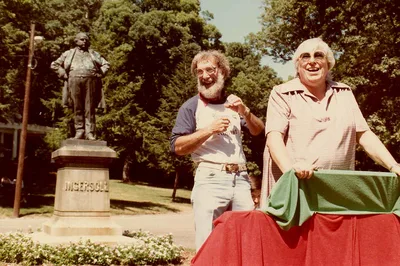
Madalyn Murray O'Hair was baptised a Presbyterian. In her own later telling she dated her unbelief to a weekend reading of the Bible in grade school. She declared it in 1960 by petitioning Baltimore's schools with her son, and won the 1963 Supreme Court case against required Bible reading. She spent the rest of her life in confrontation as "the Atheist", never revising her unbelief but paying for it with flight, an estranged son and, in the end, a murder that had nothing to do with it.
Isaac Asimov
Isaac Asimov was raised in Brooklyn by Orthodox parents who, by his memoirs' account, did not press their religion on him. He was an atheist for years before he would use the word, holding to "humanist" and "agnostic" as the honest labels. In 1982 he declared himself an atheist outright. In his last essay, with death close, he thanked atheism for taking away his fear of it.
Kurt Vonnegut
Kurt Vonnegut inherited his unbelief from a line of German-American freethinkers, beginning with a great-grandfather who asked for no prayers at his coffin. He never had a faith to lose, and found his unbelief confirmed by war and anthropology. In later life he turned not toward God but toward the ethics of the Sermon on the Mount. He called himself a Christ-loving atheist, and a humanist in honour of his parents.
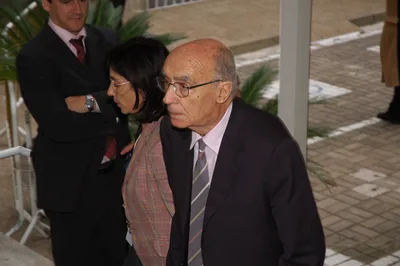
José Saramago
José Saramago never had a faith to lose, so his unbelief is the story of where he aimed it. He aimed it at a Church allied with the landlords (1980), and at the God of the Gospels after what he called "the lesson of doubt" (1991). When the Portuguese government kept his Gospel from a European prize in 1992, it became a public quarrel, and he left for Lanzarote. In 2001 he signed his own word, "atheism". In 2009, while attacking the God of the Bible in Caim, he admitted that "atheist" was only a word, that he was steeped in Christian values, and that there are no absolute atheists.