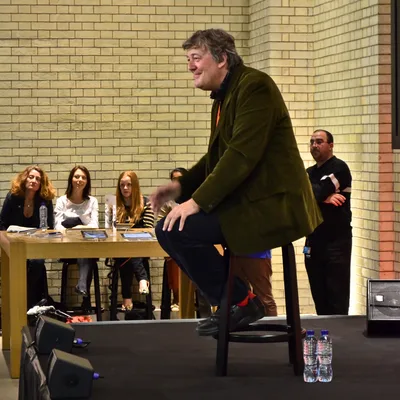
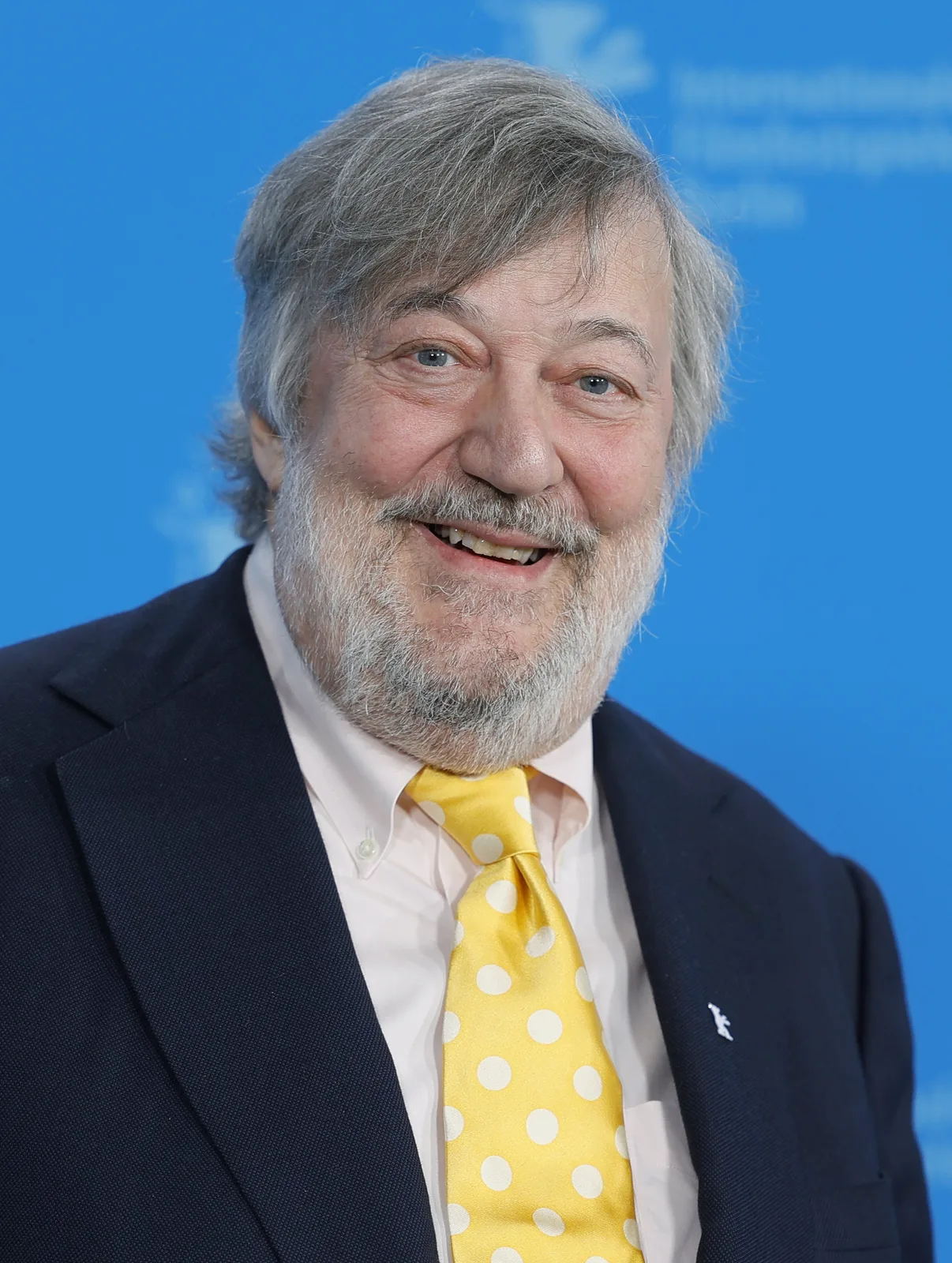
Stephen Fry was brought up "in no faith at all". He went through an adolescent love of the Anglican church before deciding, in a phrase he called grand, that he was too "Hellenic" to believe. His unbelief never changed after that, but its forms did: "reason is my religion" (2005), a campaign against the Catholic Church (2009), and an angry hypothetical answer about God on Irish television (2015) that was reported under a blasphemy law he had once half-defended, a law Ireland then voted away (2018). Finally came his retellings of the Greek myths.
The belief timeline
- No faith (childhood) (to c. 1970) — "Brought up in no faith at all"; physicist father "not an angrily atheistical one"; Jewish mother [2][3]
- Faith (adolescent) (c. 1970 (inferred from age 13)) — "Enraptured by the Anglican church"; thinks of ordination; bishop says wait [6][7]
- Doubt (undated) (adolescence, inferred) — "I knew I couldn't believe in God because I was fundamentally Hellenic in my outlook" (memoir, 1997; snippet only) [8]
- Declaration (1997 (memoir; first dated public account in sources read); 2005 (Hay)) — Tells the story in print; at Hay: "Reason is my religion" [9][13]
- Revision (2005) — After the Slovak graveyard, "made me question whether I really was quite so sure that blasphemy was an old-time law" [14]
- Test (public consequence) (2015–2018) — Byrne answer, Ennis complaint, Garda handling, referendum [22][27][28][34]
- New form (2017 onward) — Mythos and later Greek-myth books; stage show 2018 [36][37]
Notes to the timeline (14)
- [2] His mother was Jewish (with Jewish parents and grandparents as far as he could tell) and his father was a physicist, "not an angrily atheistical one" — David Smith, "I saw hate in a graveyard - Stephen Fry", Guardian/Observer, 4–5 June 2005, (Fry speaking at Hay); Wikipedia, "Stephen Fry", revision 1376823197 of 2026-09-26 (read 2026-10-14). Used to find sources; facts are cited to the sources it points to wherever those could be read, for names Marianne Neumann, Alan Fry.
- [3] He says he "wasn't brought up in the Jewish faith. I was brought up in no faith at all." — Smith, "I saw hate in a graveyard…".
- [6] At about 13 he "became enraptured by the Anglican church" ("the Anglican communion, as we used to call it") "and also by the English mystics"; he cannot explain it ("a child of fads") and was at the same time immersed in Wagner, Wodehouse and Sherlock Holmes — Smith, "I saw hate in a graveyard…".
- [7] As a teenager he sought a bishop's view on ordination; the Bishop of Lynn, Aubrey Aitken, "had given it as his booming opinion that I should wait awhile until God's Grace became clearer to me"; the Bishop was the Norfolk representative of the church's vocational testing body — Stephen Fry, Moab Is My Washpot (Hutchinson, London, 1997; Arrow paperback 2004, cited by Wikipedia at p. 342, p. 382 and p. 386; Soho Press e-book 2014). In copyright. Full text not available: Internet Archive copy
moabismywashpot0000frys_u0u3is lending-restricted (401). Only Google Books search snippets seen, kept inresearch/texts/moab-snippets.txt. Page numbers below come from Wikipedia's citations and are unchecked, snippets, research/texts/moab-snippets.txt; Wikipedia, "Stephen Fry", Views on religion (he "once considered ordination to the Anglican priesthood"). - [8] He writes that he "couldn't believe in God because I was fundamentally Hellenic in my outlook. That is the grand way of putting it, I was also absolutely..." (sentence continues; the "soggy, incoherent priest" in the preceding sentence is not identified in the snippet) — Fry, Moab Is My Washpot, (1999 printing, snippet); Arrow 2004 p. 382 per WP-Fry (not checked). Reported at second hand; the original has not been seen.
- [9] The memoir Moab Is My Washpot was published in 1997 (Hutchinson) and covers his first twenty years — Smith, "I saw hate in a graveyard…", ("his 1997 autobiography"); Stephen Fry, "Dearest absurd child" (letter to his younger self), Guardian, 29 April 2009 (URL date 30 April), ("your 1997 autobiography Moab Is My Washpot"); Wikipedia, "Moab Is My Washpot" (current revision read 2026-10-14). [WP-Mythos] Wikipedia, "Mythos (book)" (read 2026-10-14). [WP-Hitchens] Wikipedia, "Christopher Hitchens" (debate date). [Wikiquote] Wikiquote, "Stephen Fry" (leads only; every quotation there is unverified), for "first 20 years".
- [13] In late May 2005 he debated with Christopher Hitchens at the Guardian Hay Festival ("last week" relative to a report of 4–5 June 2005) and described his own religious history there, ending "In a sense, tolerance is my religion. Reason is my religion." — Smith, "I saw hate in a graveyard…".
- [14] He had been filming for a BBC series "a couple of weeks" before Hay, found his great-grandfather's grave in a village south of Bratislava broken open for greed and anti-semitism, called it "a desecration" and "a kind of blasphemy against something more than the Jewish faith", and said it "made me question whether I really was quite so sure that blasphemy was an old-time law for an old-time statute book" — Smith, "I saw hate in a graveyard…".
- [22] His answer: "How dare you create a world in which there is such misery that is not our fault. It's not right. It's utterly, utterly evil. Why should I respect a capricious, mean-minded, stupid God who creates a world which is so full of injustice and pain?" and, when pressed on being shut out, "Bone cancer in children? What's that about?" and "the God who created this universe, if it was created by God, is quite clearly a maniac, utter maniac. Totally selfish." — RTÉ Archives, "Stephen Fry The Meaning Of Life" (RTÉ's transcription of the answer; broadcast date 1 February 2015); "Stephen Fry calls God an 'evil, capricious, monstrous maniac'", Guardian, 1 February 2015; Vivienne Clarke, "Blasphemy law is 'silly' and 'a little embarrassing' says Harris", Irish Times, 8 May 2017. Accounts differ; see the disputed points.
- [27] A man complained at Ennis Garda station, more than two years before May 2017, that Fry's comments breached the Defamation Act 2009; Gardaí in Dublin acted on it in the weeks before 8 May 2017 after the man wrote to the Commissioner; the Irish Independent (6 May 2017, via Wikipedia) said he was not personally offended — Clarke, "Blasphemy law is 'silly' and 'a…"; Wikipedia, "Blasphemy law in the Republic of Ireland" (current revision read 2026-10-14).
- [28] RTÉ reported on 8–9 May 2017 that Gardaí were not investigating: "A complaint was made to gardaí following the broadcast and a statement was taken", then a decision "not to proceed with an investigation. No injured parties came forward." The Irish Independent headline (8 May, via Wikipedia) said Gardaí could not find a "substantial number of outraged people" — "No investigation into alleged blasphemy by Stephen Fry", RTÉ News, 8–9 May 2017; Wikipedia, "Blasphemy law in the Republic of Ireland".
- [34] The referendum was held on 26 October 2018; 64.85% Yes (951,650) to 35.15% No (515,808), turnout 43.79%; the word "blasphemous" came out of Article 40.6.1°.i, which now reads "The publication or utterance of seditious or indecent matter is an offence which shall be punishable in accordance with law" (the amendment as proposed; the signed date 27 Nov 2018 is from Wikipedia citing president.ie, not checked) — "Ireland votes to remove blasphemy from Constitution by 64.85% to 35.15%", RTÉ News, 27–28 October 2018; Houses of the Oireachtas, Dáil Éireann debate 18 September 2018 and Seanad Éireann debate 20 September 2018 on the Thirty-seventh Amendment of the Constitution (Repeal of offence of publication or utterance of blasphemous matter) Bill 2018, (Flanagan).
- [36] Mythos, Fry's retelling of Greek myths, was published in 2017 by Michael Joseph; Heroes followed in 2018, Troy in 2020 and Odyssey in 2024 — Edith Hall, "Mythos review", Guardian, 22 November 2017, (Mythos, Michael Joseph, 2017); WP-Mythos for the later titles.
- [37] Hall's review says Fry "insists eloquently in his foreword that the dazzling Greek myths are for everyone" and "reveals that he was introduced to them as a child"; she faults the selection but calls his use of his fame "constructive" — Hall, "Mythos review".
The Question at the Pearly Gates
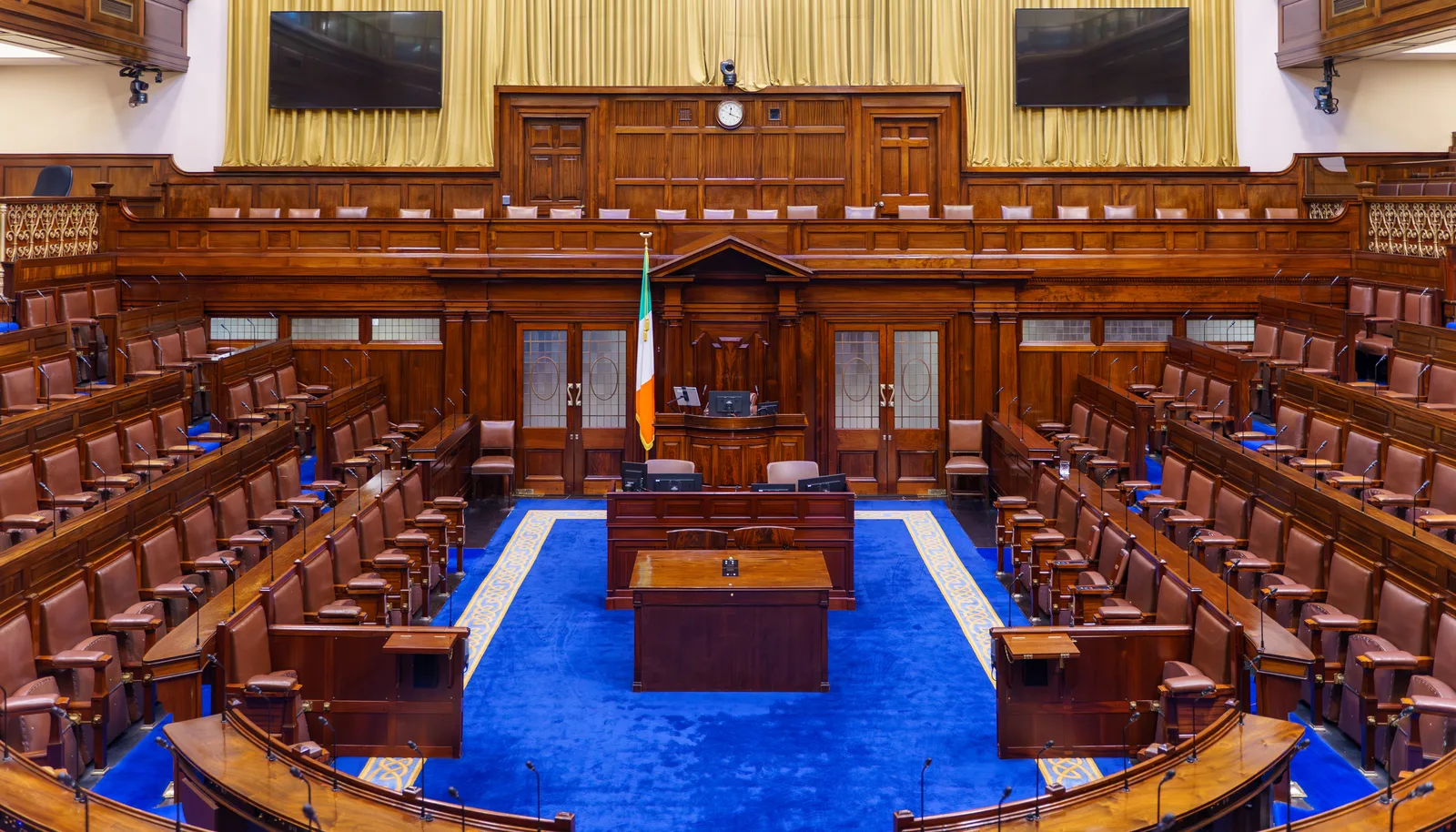
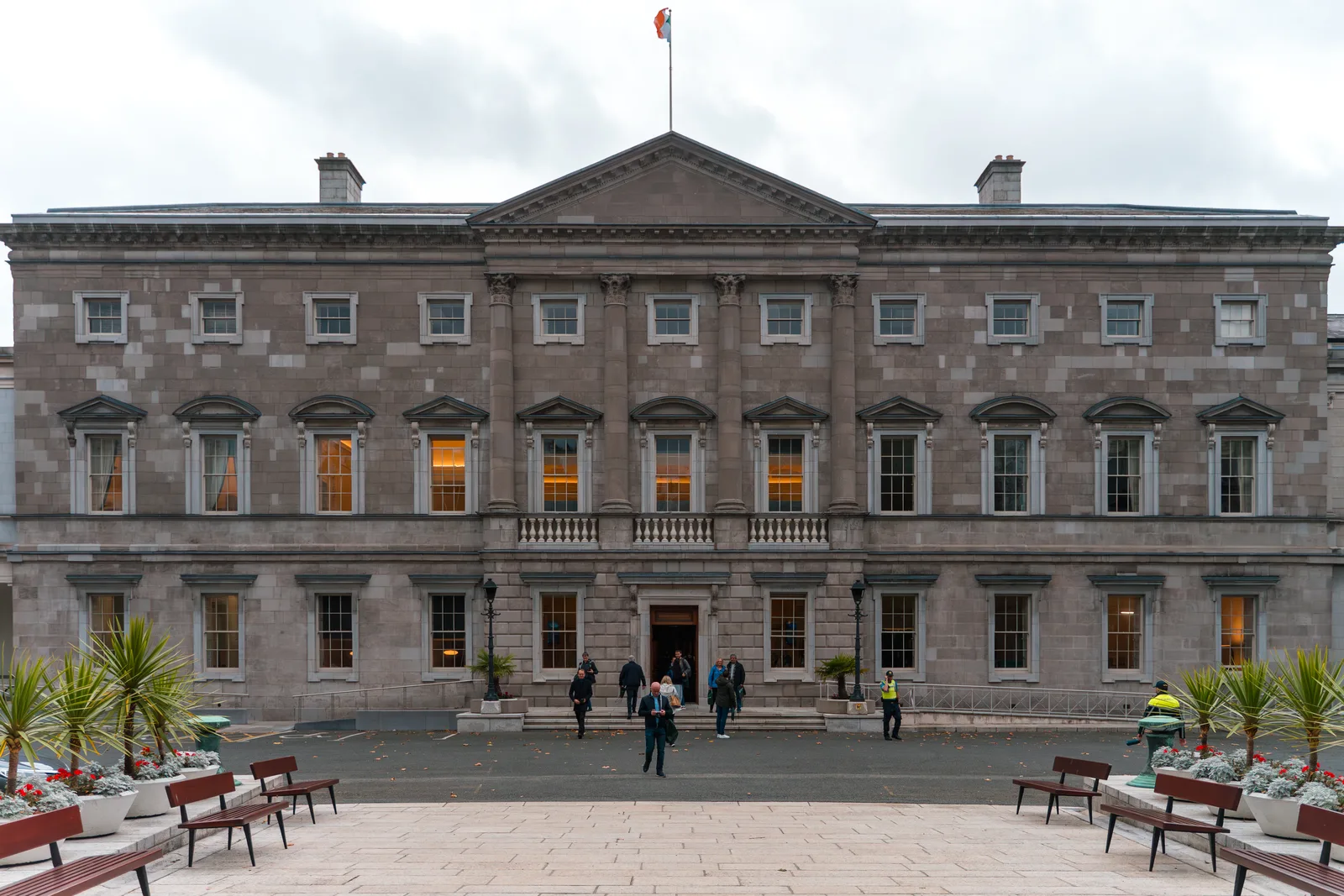
On 18 September 2018 the Irish Minister for Justice, Charles Flanagan, rose in the Dáil to propose that the word "blasphemous" be taken out of the Irish constitution. The offence of blasphemy, he admitted, was hard to prove, and no one had been prosecuted for it. But members would remember, he said, a case in the newspapers:
a member of the public had made a complaint to An Garda Síochána about comments made by Stephen Fry in an interview with Gay Byrne on his television programme "The Meaning of Life" in 2015.12
The English writer and broadcaster had been asked a hypothetical question on Irish television, what he would say to God at the pearly gates, and his answer had been reported to the police. This chapter asks how a man brought up without religion, who as a boy thought of becoming a priest, came to give that answer, and what happened to his unbelief when a country's law was tested on it.
No faith at all
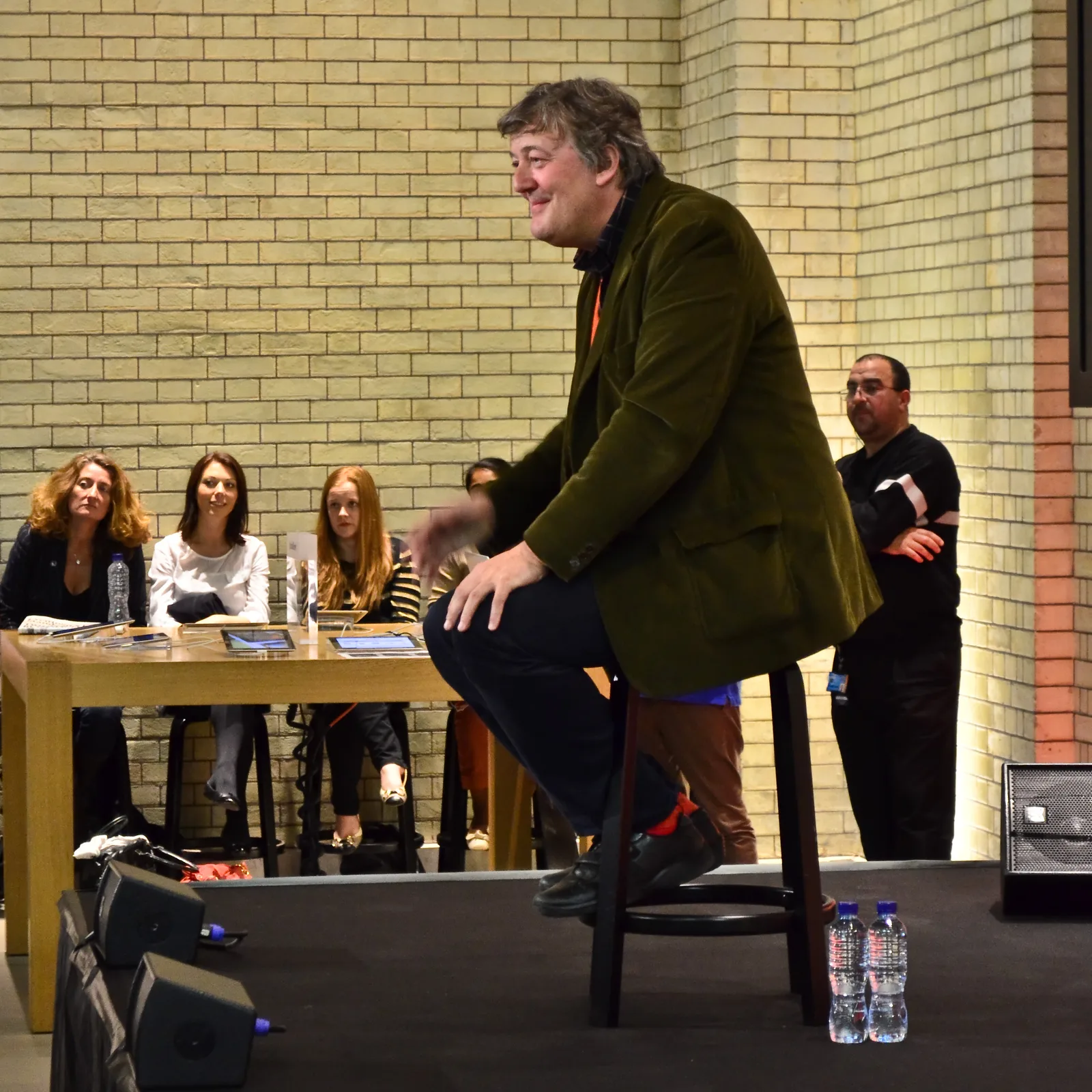
According to Wikipedia, citing Who's Who, he was born in Hampstead, London, on 24 August 1957; Humanists UK gives only August 1957.3 His mother was Jewish, and his father, a physicist, was, he told an audience in 2005, "not an angrily atheistical one." He was not brought up in the Jewish faith, he said; he was brought up in no faith at all.456 The family lived in a new house at Booton, in Norfolk, and he went to the Church of England primary school in the next village, Cawston.7 He was later expelled from two schools, and Wikipedia says the second was Uppingham.8 The first mark on his timeline is a childhood without faith.
The Anglican boy
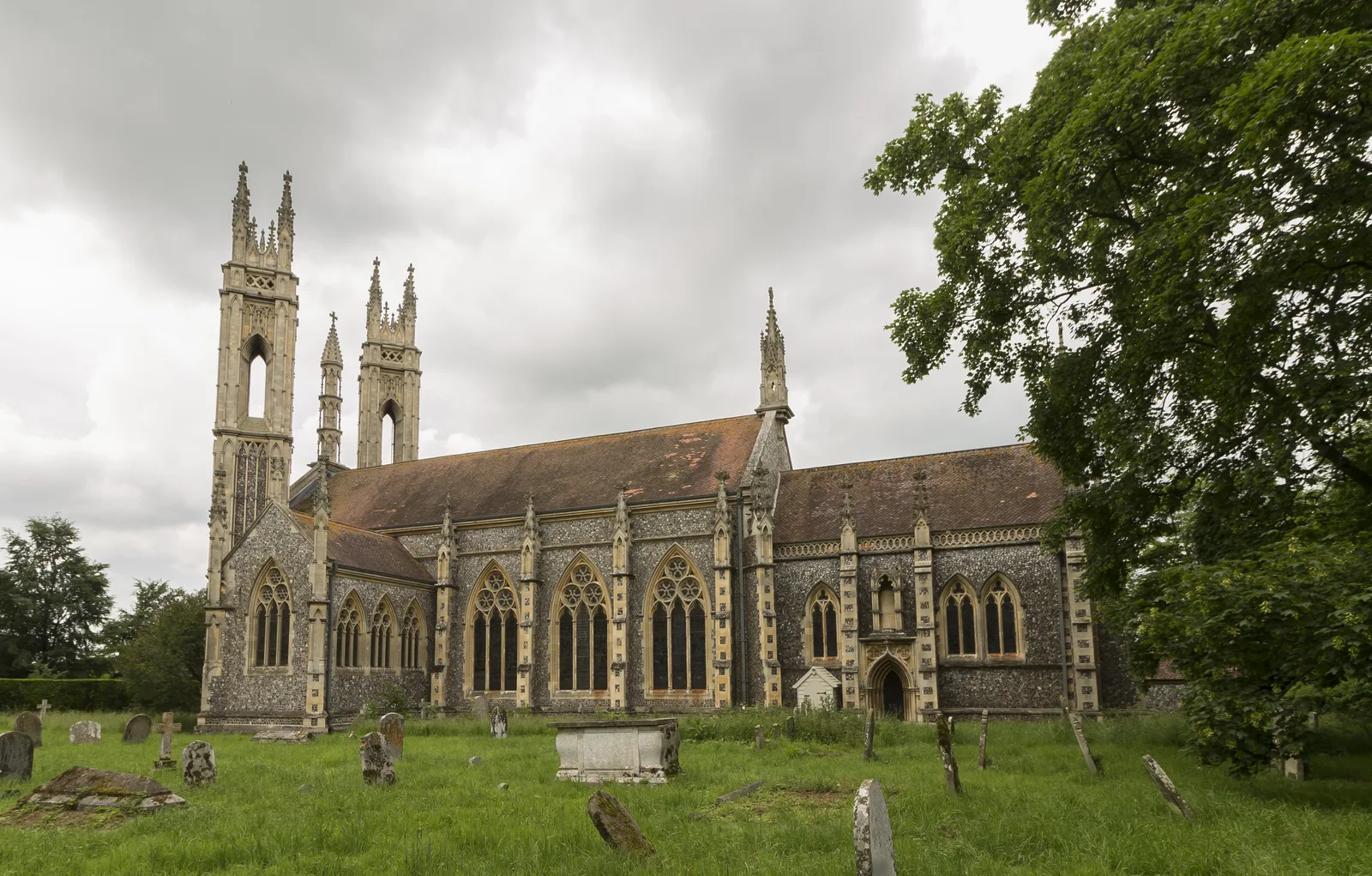
At about thirteen, by his own account in 2005, he became enraptured by the Anglican church and by the English mystics. He could not explain it; he was, he said, a child of fads, at the same time immersed in Wagner, P. G. Wodehouse and Sherlock Holmes.910 As a teenager he asked a bishop for his view on ordination; the Bishop of Lynn, Aubrey Aitken, told him in a booming voice, as Fry tells it, to wait until God's grace became clearer to him.11 On the belief timeline, this is where his faith is placed, and it is an adolescent's faith in a church, not a childhood creed.
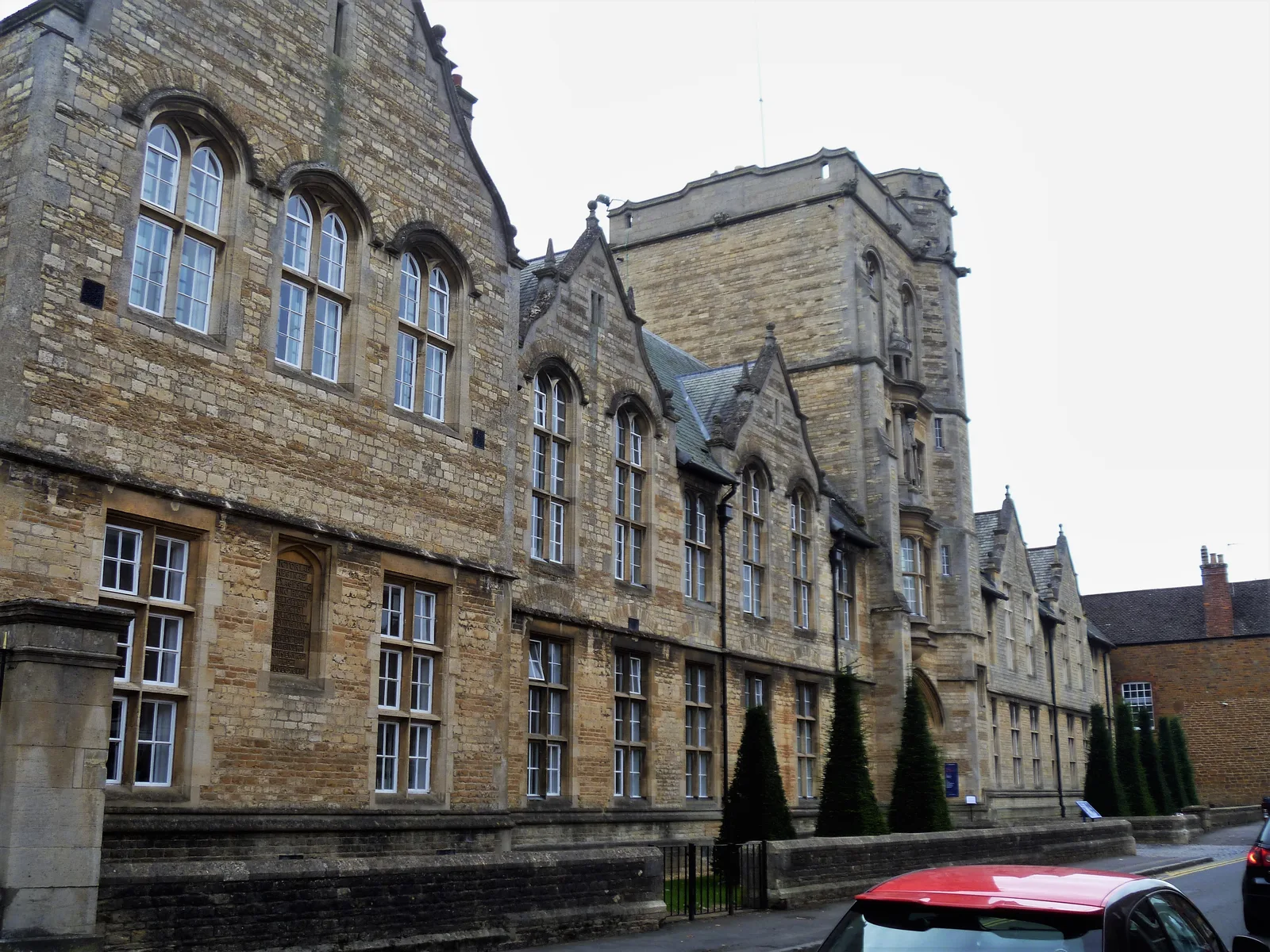
It did not last. In his memoir Moab Is My Washpot (1997), which covers his first twenty years, he wrote that he knew he could not believe in God because he was fundamentally Hellenic in outlook, and he called that, himself, the grand way of putting it.121314 What he meant by it, and when it happened, the passage read for this chapter does not say; the memoir was not available in full. His doubt cannot be dated on the timeline, and it rests on this one sentence. The book's title, from the Psalms, is never explained in it.15
He won a scholarship to Queens' College, Cambridge, read English, and joined the Footlights.16
"Reason is my religion"
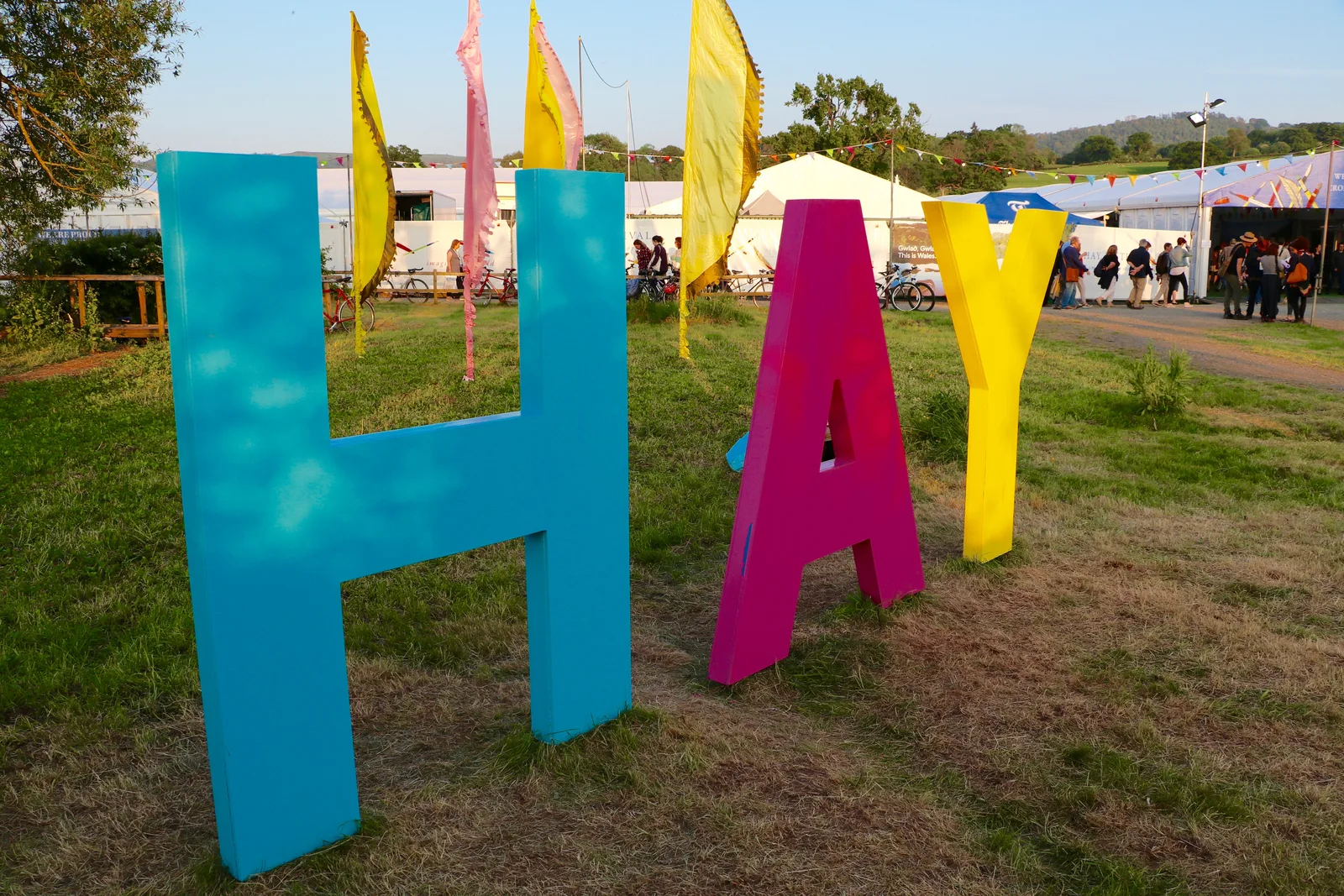
The first dated public account of his unbelief in the sources read is the 1997 memoir; the first public statement of what he believed instead came at the Hay Festival in May 2005, where he debated with Christopher Hitchens.17 Authority, he told the audience, could only be the authority of one's own heart, brain, reading and trust, never that of someone who claimed to speak for God because something was written in a book. In a sense, he said, tolerance was his religion; reason was his religion.181917 The timeline puts his declaration here.
At the same festival he said something more surprising. He had always thought a law against blasphemy obvious nonsense, and could never obey a law that let comedians or writers be prosecuted for causing offence.20 But a few weeks earlier, filming for the BBC, he had found his great-grandfather's grave in a village south of Bratislava broken open out of greed and antisemitism. It was a desecration, he said, a kind of blasphemy against something more than the Jewish faith, and it had made him question whether he was really so sure that blasphemy was an old-time law for an old-time statute book.2122 The timeline places his revision here, though it was a revision not of his unbelief but of his view of the law that would one day be used against him.
Against the Church of Rome
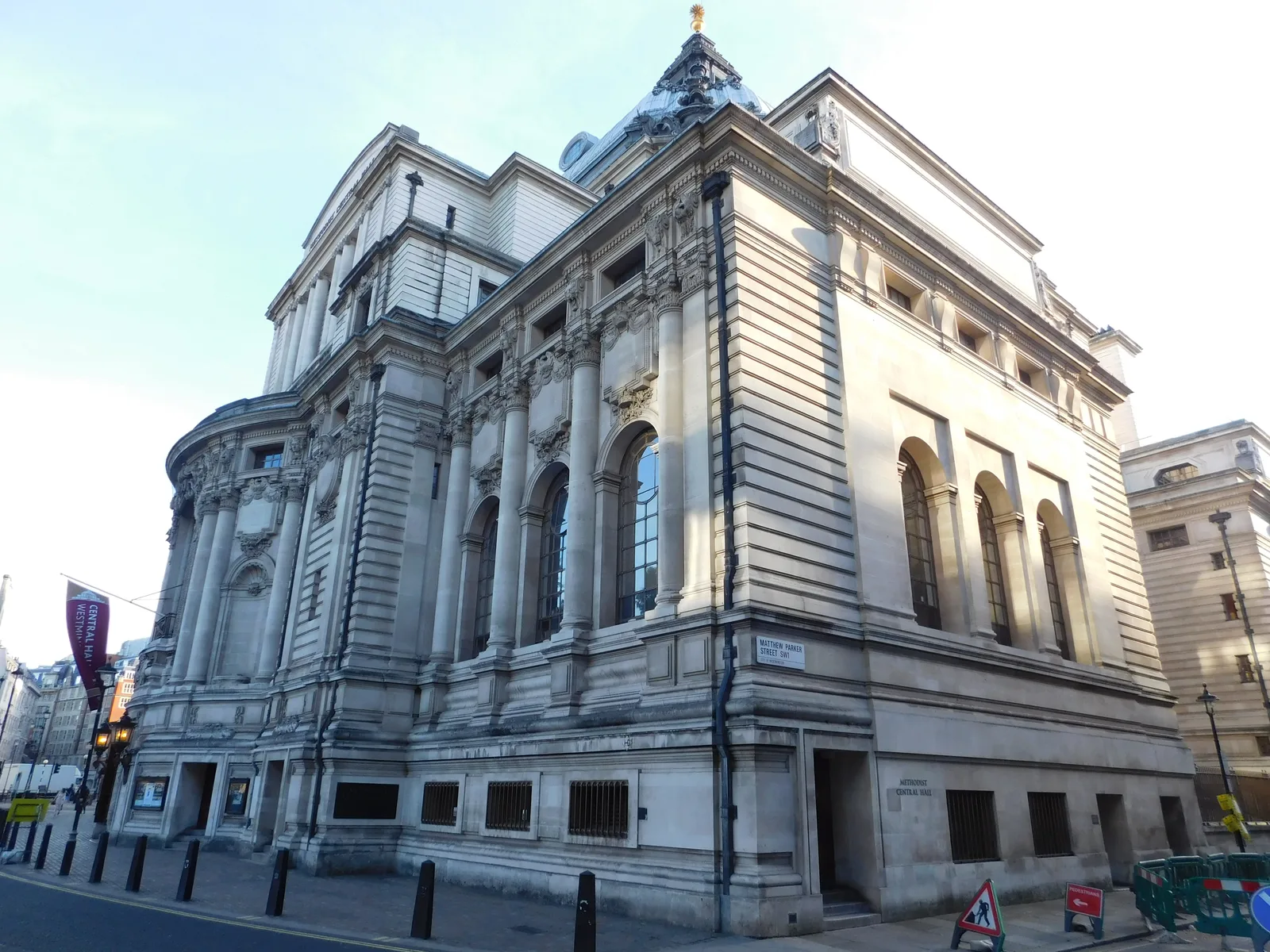
In April 2009, in a letter to his sixteen-year-old self printed in the Guardian, he warned that the achievement of the Enlightenment was under threat, and that the cruel, hypocritical and loveless hand of religion and absolutism had fallen on the world once more.2324 In October that year he and Hitchens opposed Archbishop John Onaiyekan and Ann Widdecombe at Central Hall Westminster on the motion "The Catholic Church is a Force for Good in the World." Before the debate 678 people voted for the motion and 1,102 against; afterwards 268 voted for it and 1,876 against.25 Accounts differ on the date.25 Wikipedia, citing the Catholic Herald, says he attacked the church's teaching on sexuality and its wealth; the text of his speech was not read for this chapter.26 In September 2010 his name headed the list of signatories to a letter saying that Pope Benedict XVI should not be given the honour of a state visit to Britain.27
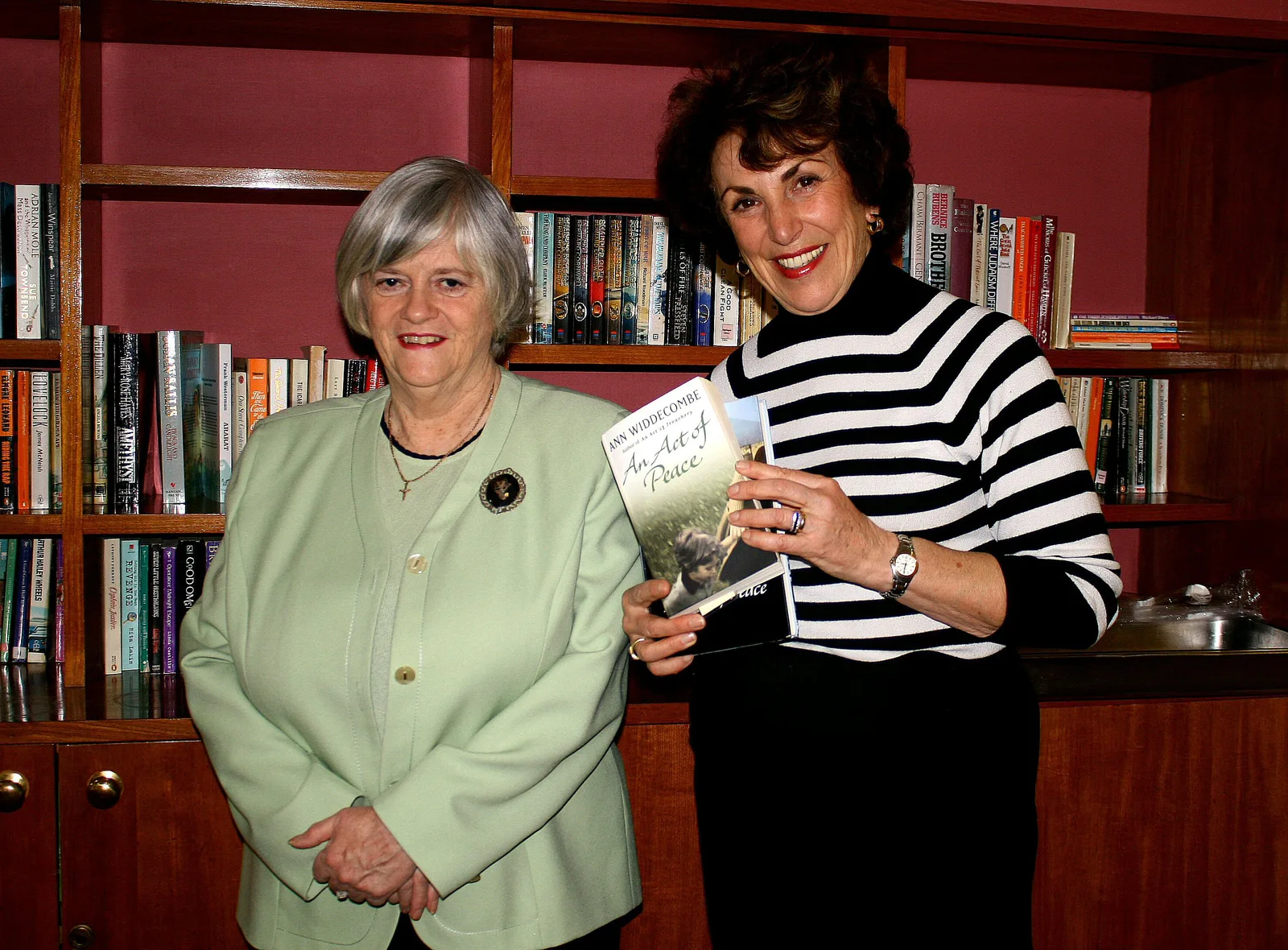
Humanists UK made him a patron. In his statement for them he called himself a humanist, said that humanism was not a turning away from mystery, and repudiated the authority of churches, revealed texts and unsubstantiated assertions.2829
At the pearly gates
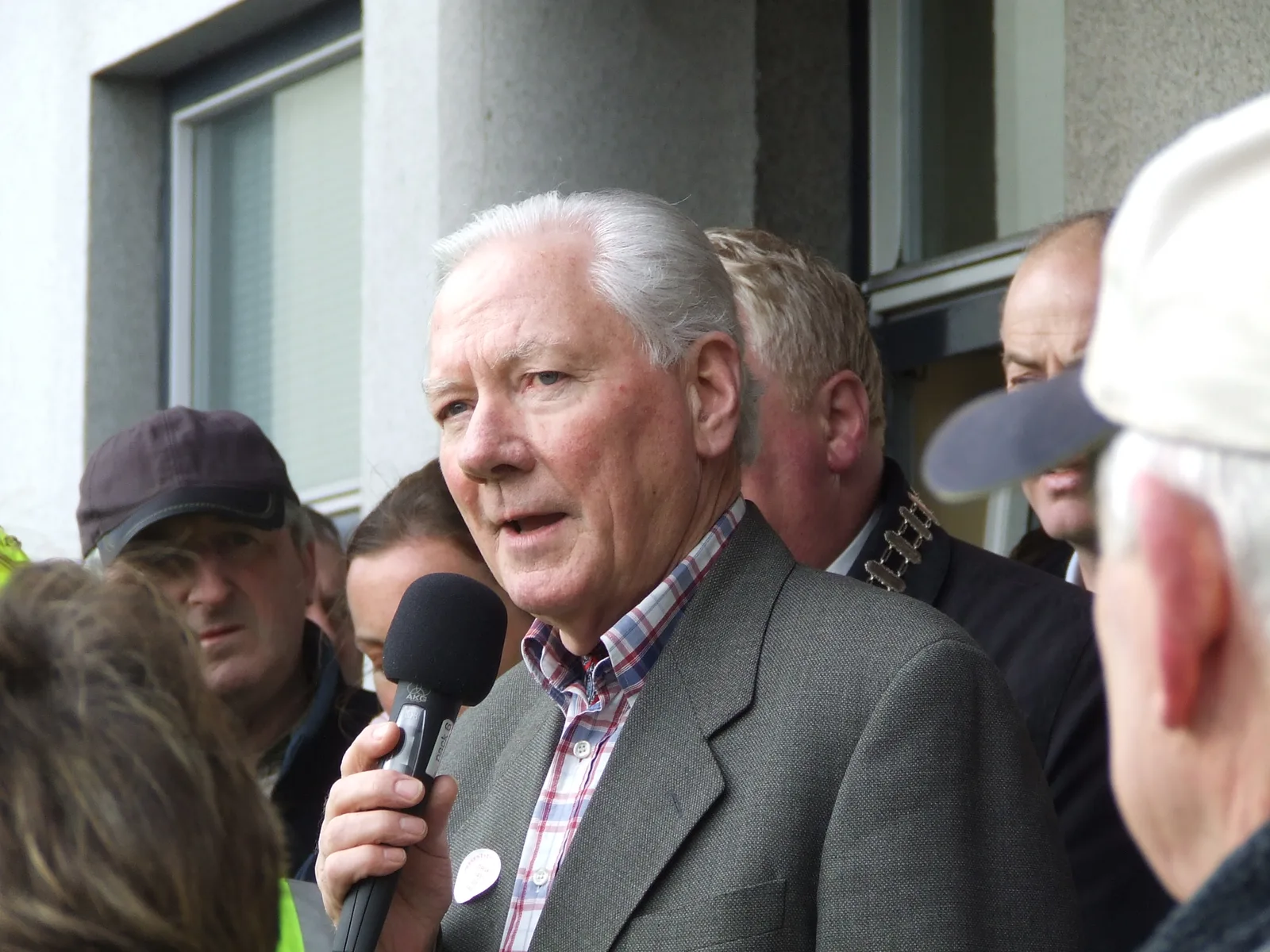
The Irish broadcaster Gay Byrne asked every guest on his programme The Meaning of Life what they would say if they met God at the pearly gates. Fry's interview was recorded in Oscar Wilde's former home in Dublin and broadcast on RTÉ One on 1 February 2015.30 His answer was an indictment. He would ask God how he dared create a world with so much misery that was not our fault, and why anyone should respect a capricious, mean-minded, stupid God who made a world so full of injustice and pain. Pressed, he asked about bone cancer in children, and said that a God who had created this universe, if God had created it, was quite clearly a maniac.313233 Before it was broadcast the clip had two million views on YouTube; by May 2017 it had almost nine million.34
He said afterwards on BBC radio that he was astonished by the explosion, that he had only said what many finer heads than his had said since the Greeks, and that he had never wished to offend anyone individually devout or pious; many Christians, he said, had written to say they were glad the question was being talked about.353637 Byrne said that of course Fry had not wished to cause offence, but that controversy was what the internet was for.3839
The day after the broadcast the Guardian columnist Giles Fraser, writing as a Christian, called Fry's answer admirable, a speaking of truth to power that put him on the side of the angels even though he did not believe in them. But it rested, Fraser wrote, on a very large mistaken assumption: there was no such thing as the God Fry imagined, and the Christian story imagines God and power as separated.40414243
The complaint at Ennis
Ireland's Defamation Act of 2009 had made it an offence, with a fine of up to €25,000, to publish or utter blasphemous matter, which it defined this way:
a person publishes or utters blasphemous matter if-- (a) he or she publishes or utters matter that is grossly abusive or insulting in relation to matters held sacred by any religion, thereby causing outrage among a substantial number of the adherents of that religion, and (b) he or she intends, by the publication or utterance of the matter concerned, to cause such outrage.4445
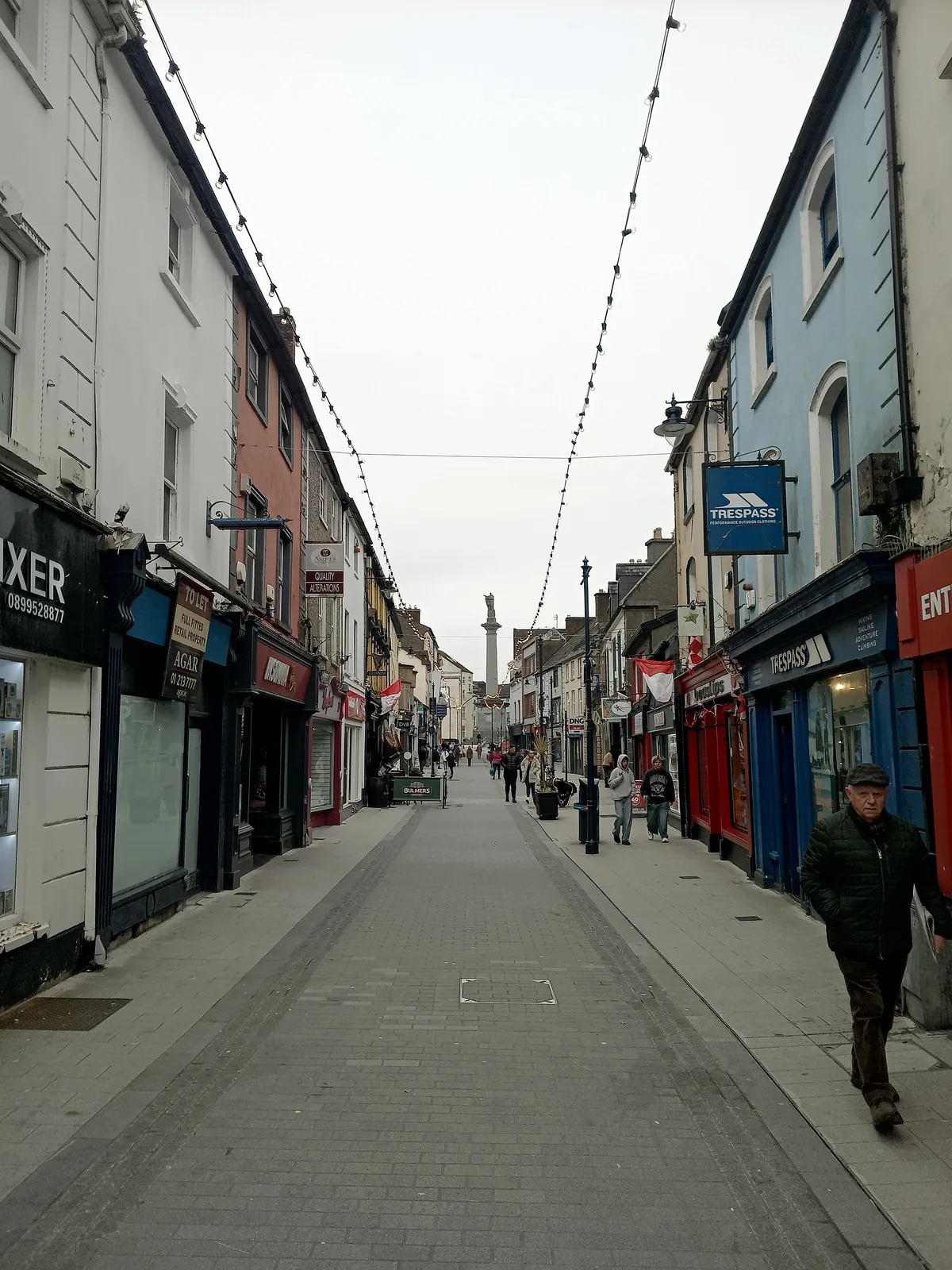
In 2015 a man made a complaint at the Garda station in Ennis, County Clare, that Fry's words broke the law. Nothing happened until, more than two years later, the man wrote to the Garda Commissioner and officers in Dublin took up the complaint; the news broke in May 2017.46 Within days RTÉ reported that the Gardaí had taken a statement but decided not to proceed, because no injured parties had come forward. Accounts differ on whether it ever counted as an investigation.4748 The minister who had introduced the law, Dermot Ahern, said he had deliberately put so many hurdles in its way that it could hardly be used, and Fry later called that a wonderfully Irish solution: a law made unworkable on purpose because a referendum would have been needed to remove it.49505152 It had been a hypothetical question, he said, and he had not been flippant.5352 On his timeline, this is where his unbelief was tested.
The referendum
In the Dáil in September 2018 the deputy Ruth Coppinger said:
The case of Stephen Fry is pertinent; it is both well known and recent. Nothing he said could have been considered to be offensive. They were his honestly held views, but the Garda still spent time investigating him to state the 2009 Act had been contravened.542
Two days later Senator Ivana Bacik called it "an embarrassing moment" that had "highlighted the need to delete this outdated and obsolete section of the Constitution."552 On 26 October 2018 the Irish people voted, by 64.85 per cent to 35.15, to remove the word "blasphemous" from the constitution.56
The Greek gods
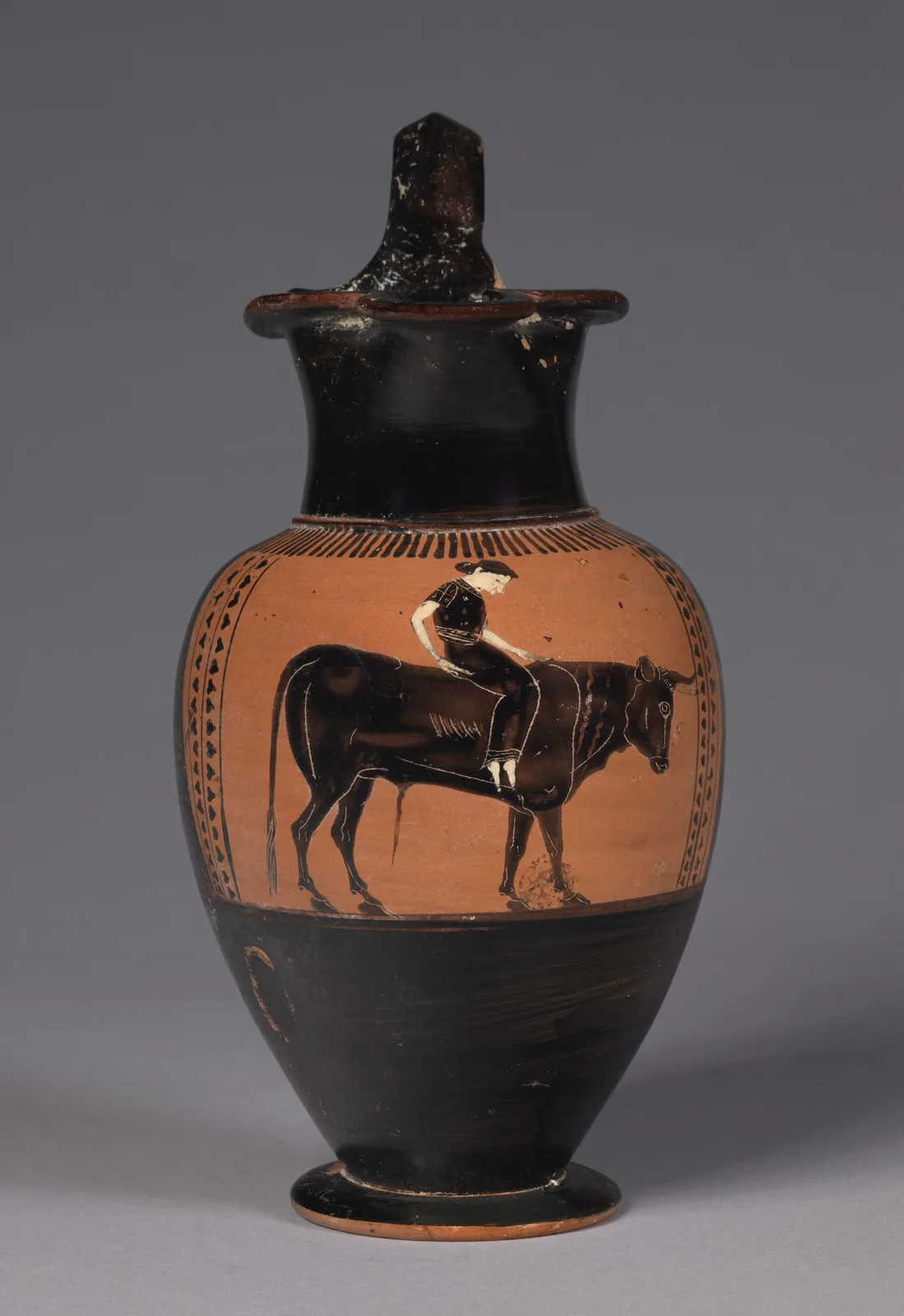
His unbelief took a new form after that, or an old one. In 2017 he published Mythos, a retelling of the Greek myths; Edith Hall, reviewing it, noted that he had been introduced to the myths as a child and that he insisted they were for everyone.5758 Heroes followed in 2018, and later Troy and Odyssey, and a stage version.5759 The boy who could not believe in God because he was "Hellenic" in outlook wrote, as a man of sixty, books about the Greek gods.
Did his unbelief change shape?
The sources show no change in his unbelief itself. A childhood without faith gave way to an adolescent love of the Anglican church, which gave way, in a sentence he called grand, to a Hellenic outlook. After that his unbelief changed only its forms: reason and tolerance as a religion in 2005, a campaign against the Catholic Church in 2009, an angry answer to a hypothetical question in 2015, and then retellings of the myths of gods no one worships. The one revision on record was of his view of a law, made after he saw his great-grandfather's grave desecrated, ten years before that same law was turned on him and a country voted it away.
Christopher Hitchens, his partner in argument at Hay in 2005 and in London in 2009, has his own chapter in this book.
Footnotes
-
Charles Flanagan, Minister for Justice and Equality, in the Dáil, 18 Sept 2018 (public record): Houses of the Oireachtas, Dáil Éireann debate 18 September 2018 and Seanad Éireann debate 20 September 2018 on the Thirty-seventh Amendment of the Constitution (Repeal of offence of publication or utterance of blasphemous matter) Bill 2018. ↩
-
Humanists UK, "Humanists UK Patron: Sir Stephen Fry", containing Fry's statement of why he is a humanist (undated), ("Born in August 1957"); Wikipedia, "Stephen Fry", revision 1376823197 of 2026-09-26 (read 2026-10-14). Used to find sources; facts are cited to the sources it points to wherever those could be read, rev. 1376823197, Early life. Reported at second hand; the original has not been seen. ↩
-
Stephen Fry (Hay 2005): David Smith, "I saw hate in a graveyard - Stephen Fry", Guardian/Observer, 4–5 June 2005. ↩
-
Smith, "I saw hate in a graveyard…", (Fry speaking at Hay); Wikipedia, "Stephen Fry", for names Marianne Neumann, Alan Fry. ↩
-
Smith, "I saw hate in a graveyard…". ↩
-
Stephen Fry, Moab Is My Washpot (Hutchinson, London, 1997; Arrow paperback 2004, cited by Wikipedia at p. 342, p. 382 and p. 386; Soho Press e-book 2014). In copyright. Full text not available: Internet Archive copy
moabismywashpot0000frys_u0u3is lending-restricted (401). Only Google Books search snippets seen, kept inresearch/texts/moab-snippets.txt. Page numbers below come from Wikipedia's citations and are unchecked, snippet ("Church of England primary school in the village of Cawston, a mile from our new house in Booton"), research/texts/moab-snippets.txt. ↩ -
UK, "Humanists UK Patron: Sir Stephen Fry"; Wikipedia, "Stephen Fry", Early life; Wikipedia, "Moab Is My Washpot" (current revision read 2026-10-14). [WP-Mythos] Wikipedia, "Mythos (book)" (read 2026-10-14). [WP-Hitchens] Wikipedia, "Christopher Hitchens" (debate date). [Wikiquote] Wikiquote, "Stephen Fry" (leads only; every quotation there is unverified). ↩
-
Stephen Fry (spoken, Hay Festival, May 2005): Smith, "I saw hate in a graveyard…". ↩
-
Smith, "I saw hate in a graveyard…". ↩
-
Fry, Moab Is My Washpot, snippets, research/texts/moab-snippets.txt; Wikipedia, "Stephen Fry", Views on religion (he "once considered ordination to the Anglican priesthood"). ↩
-
Stephen Fry, Moab Is My Washpot (1997): Fry, Moab Is My Washpot, (1999 printing snippet; Arrow 2004 p. 382 per WP-Fry). Not checked against the original (partly (Google Books snippet only, sentence is complete; page unchecked)). ↩
-
Fry, Moab Is My Washpot, (1999 printing, snippet); Arrow 2004 p. 382 per WP-Fry (not checked). ↩
-
Smith, "I saw hate in a graveyard…", ("his 1997 autobiography"); Stephen Fry, "Dearest absurd child" (letter to his younger self), Guardian, 29 April 2009 (URL date 30 April), ("your 1997 autobiography Moab Is My Washpot"); Wikipedia, [WP-Mythos], for "first 20 years". ↩
-
Fry, Moab Is My Washpot, snippet from the 1866 Book of Common Prayer (Psalter text); Wikipedia, [WP-Mythos]. ↩
-
UK, "Humanists UK Patron: Sir Stephen Fry"; Wikipedia, "Stephen Fry". ↩
-
Stephen Fry (Hay 2005): Smith, "I saw hate in a graveyard…". ↩
-
Stephen Fry (Hay 2005): Smith, "I saw hate in a graveyard…". ↩
-
Smith, "I saw hate in a graveyard…". ↩
-
Stephen Fry (Hay 2005): Smith, "I saw hate in a graveyard…". ↩
-
Smith, "I saw hate in a graveyard…". ↩
-
Stephen Fry, letter to his younger self, 2009: Fry, "Dearest absurd child". ↩
-
Fry, "Dearest absurd child"; also quoted by HumUK. ↩
-
Intelligence Squared, upload of "The Catholic Church is a force for good" (2009 debate), description with date and votes, mirrored at, (description); WP-Hitchens (19 Oct 2009, citing the New Humanist blog of 20 Oct 2009). Accounts differ; see the disputed points. ↩ ↩2
-
Wikipedia, "Stephen Fry", Views on religion; Wikiquote. ↩
-
"Harsh judgments on the pope and religion", Guardian letters, 14 September 2010 (URL date 15 September). ↩
-
Stephen Fry, statement for Humanists UK: UK, "Humanists UK Patron: Sir Stephen Fry". ↩
-
UK, "Humanists UK Patron: Sir Stephen Fry". ↩
-
RTÉ Archives, "Stephen Fry The Meaning Of Life" (RTÉ's transcription of the answer; broadcast date 1 February 2015); RTÉ Entertainment, "Watch! Stephen Fry on The Meaning of Life", 29–30 January 2015; "Stephen Fry calls God an 'evil, capricious, monstrous maniac'", Guardian, 1 February 2015. ↩
-
Stephen Fry to Gay Byrne, The Meaning of Life, RTÉ One, 1 Feb 2015: Archives, "Stephen Fry The Meaning Of Life", (transcription); "Stephen Fry calls God an 'evil,…". ↩
-
Stephen Fry to Byrne (2015): "Stephen Fry calls God an 'evil,…". ↩
-
Archives, "Stephen Fry The Meaning Of Life"; "Stephen Fry calls God an 'evil,…"; Vivienne Clarke, "Blasphemy law is 'silly' and 'a little embarrassing' says Harris", Irish Times, 8 May 2017. ↩
-
"Stephen Fry calls God an 'evil,…"; Roisin Agnew, "Stephen Fry responds to The Meaning Of Life controversy", Irish Times, 6 February 2015; Clarke, "Blasphemy law is 'silly' and 'a…". ↩
-
Stephen Fry, BBC Radio 4 Today, reported 6 Feb 2015: Agnew, "Stephen Fry responds to The Meaning…". ↩
-
Stephen Fry, Today, reported 6 Feb 2015: Agnew, "Stephen Fry responds to The Meaning…". ↩
-
Agnew, "Stephen Fry responds to The Meaning…". ↩
-
Gay Byrne, the interviewer, to the Irish Times: Agnew, "Stephen Fry responds to The Meaning…". ↩
-
Agnew, "Stephen Fry responds to The Meaning…". ↩
-
Giles Fraser, Guardian columnist, writing as a Christian; his standing as an Anglican priest is not stated on the page read: Giles Fraser, "I don't believe in the God that Stephen Fry doesn't believe in either", Guardian, 2 February 2015. ↩
-
Giles Fraser: Fraser, "I don't believe in the God…". ↩
-
Giles Fraser: Fraser, "I don't believe in the God…". ↩
-
Fraser, "I don't believe in the God…". ↩
-
Defamation Act 2009, s. 36(2) (public record): Defamation Act 2009 (No. 31 of 2009), section 36, enacted text. ↩
-
Act2009, s. 36. ↩
-
Clarke, "Blasphemy law is 'silly' and 'a…"; Wikipedia, "Blasphemy law in the Republic of Ireland" (current revision read 2026-10-14). ↩
-
"No investigation into alleged blasphemy by Stephen Fry", RTÉ News, 8–9 May 2017; Wikipedia, "Blasphemy law in the Republic of Ireland". ↩
-
"Ireland votes to remove blasphemy from Constitution by 64.85% to 35.15%", RTÉ News, 27–28 October 2018. ↩
-
Dermot Ahern, former Minister for Justice, who introduced the 2009 section: Clarke, "Blasphemy law is 'silly' and 'a…". ↩
-
Clarke, "Blasphemy law is 'silly' and 'a…". ↩
-
Stephen Fry, Nov 2017: "Stephen Fry says he was 'enchanted' to be caught up in blasphemy row", TheJournal.ie, 4 November 2017. ↩
-
Stephen Fry, Nov 2017: "Stephen Fry says he was 'enchanted'…". ↩
-
Ruth Coppinger, Dáil deputy, 18 Sept 2018 (public record): Oireachtas. ↩
-
Ivana Bacik, Senator, Seanad, 20 Sept 2018 (public record): Oireachtas. ↩
-
"Ireland votes to remove blasphemy from…"; Oireachtas, (Flanagan). ↩
-
Edith Hall, "Mythos review", Guardian, 22 November 2017, (Mythos, Michael Joseph, 2017); WP-Mythos for the later titles. ↩ ↩2
-
Hall, "Mythos review". ↩
-
Wikipedia, "Stephen Fry", Career. ↩
moabismywashpot0000frys_u0u3 is lending-restricted (401). Only Google Books search snippets seen, kept in research/texts/moab-snippets.txt. Page numbers below come from Wikipedia's citations and are unchecked.; Wikipedia, "Moab Is My Washpot" (current revision read 2026-10-14). [WP-Mythos] Wikipedia, "Mythos (book)" (read 2026-10-14). [WP-Hitchens] Wikipedia, "Christopher Hitchens" (debate date). [Wikiquote] Wikiquote, "Stephen Fry" (leads only; every quotation there is unverified).; Stephen Fry, "Dearest absurd child" (letter to his younger self), Guardian, 29 April 2009 (URL date 30 April).; Intelligence Squared, upload of "The Catholic Church is a force for good" (2009 debate), description with date and votes, mirrored at.; "Harsh judgments on the pope and religion", Guardian letters, 14 September 2010 (URL date 15 September).; RTÉ Archives, "Stephen Fry The Meaning Of Life" (RTÉ's transcription of the answer; broadcast date 1 February 2015).; RTÉ Entertainment, "Watch! Stephen Fry on The Meaning of Life", 29–30 January 2015.; "Stephen Fry calls God an 'evil, capricious, monstrous maniac'", Guardian, 1 February 2015.; Vivienne Clarke, "Blasphemy law is 'silly' and 'a little embarrassing' says Harris", Irish Times, 8 May 2017.; Roisin Agnew, "Stephen Fry responds to The Meaning Of Life controversy", Irish Times, 6 February 2015.; Giles Fraser, "I don't believe in the God that Stephen Fry doesn't believe in either", Guardian, 2 February 2015.; Defamation Act 2009 (No. 31 of 2009), section 36, enacted text.; Wikipedia, "Blasphemy law in the Republic of Ireland" (current revision read 2026-10-14).; "No investigation into alleged blasphemy by Stephen Fry", RTÉ News, 8–9 May 2017.; "Ireland votes to remove blasphemy from Constitution by 64.85% to 35.15%", RTÉ News, 27–28 October 2018.; "Stephen Fry says he was 'enchanted' to be caught up in blasphemy row", TheJournal.ie, 4 November 2017.; Edith Hall, "Mythos review", Guardian, 22 November 2017.In their own words
When I was about 13 I became enraptured by the Anglican church.
I wasn't brought up in the Jewish faith. I was brought up in no faith at all. My father's a physicist, but not an angrily atheistical one.
In a sense, tolerance is my religion. Reason is my religion.
I've always believed that everything that is said from authority is either the authority of one's own heart, one's own brain, one's own reading, one's own trust, but not the authority of someone who claims it because they're speaking for God and they know the truth because it's written in a book.
I knew I couldn't believe in God because I was fundamentally Hellenic in my outlook.
It made me question whether I really was quite so sure that blasphemy was an old-time law for an old-time statute book.
The cruel, hypocritical and loveless hand of religion and absolutism has fallen on the world once more.
I repudiate the authority of churches, revealed texts and vain unsubstantiated assertions and embrace the shared glories of humanity's intellectual and spiritual struggle to understand the universe into which we are born with honesty, openness and faith in our own natures.
How dare you create a world in which there is such misery that is not our fault. It's not right. It's utterly, utterly evil. Why should I respect a capricious, mean-minded, stupid God who creates a world which is so full of injustice and pain?
Because the God who created this universe, if it was created by God, is quite clearly a maniac, utter maniac. Totally selfish. We have to spend our life on our knees thanking him?! What kind of god would do that?
I was merely saying things that many finer heads than mine have said for hundreds of years, as far back as the Greeks.
I never wished to offend anybody who is individually devout or pious, and indeed many Christians have been in touch with me to say that they are very glad that things should be talked about.
I sort of let fly with my complaints against [God] and this was apparently considered blasphemous even though it was a hypothetical.
That's a wonderfully Irish solution to the fact that there was a pre-existing blasphemy law and they thought that was absurd. It would have taken a referendum to get rid of it so the easiest thing was to just engineer it a little so that it became preposterous
there is absolutely nothing academic or intellectual about Greek mythology; it is addictive, entertaining, approachable and astonishingly human
Sometimes belief means credulity, sometimes an expression of faith and hope which even the most sceptical atheist such as myself cannot but find inspiring.
The other side
And though I think there is a whopper of a mistaken assumption at the heart of his answer, I nonetheless think it was an admirable one.
By saying that he will stare ultimate power in the face and, without fear, call it by its real name, Fry has indicated he is on the side of the angels (even though he does not believe in them).
Simply put: there is no such thing as the God he imagines.
Of course he hadn't wished to cause offence. But that's what the internet is for, controversy, debate and people's opinions.
A complaint that Mr Fry's comments were in breach of the Defamation Act was made by a man in Ennis Garda station more than two years ago.
We put in so many hurdles for it to go forward to prosecution. We couldn't do nothing. I made a judgment.
It is fair to say the offence created under the Act is quite difficult to prove. I am not aware that any prosecution under it has taken place. However, Members will probably have read in the newspapers, as I did at the time, that a member of the public had made a complaint to An Garda Síochána about comments made by Stephen Fry in an interview with Gay Byrne on his television programme "The Meaning of Life" in 2015.
The case of Stephen Fry is pertinent; it is both well known and recent. Nothing he said could have been considered to be offensive. They were his honestly held views, but the Garda still spent time investigating him to state the 2009 Act had been contravened.
It was an embarrassing moment and it highlighted the need to delete this outdated and obsolete section of the Constitution.
a person publishes or utters blasphemous matter if-- (a) he or she publishes or utters matter that is grossly abusive or insulting in relation to matters held sacred by any religion, thereby causing outrage among a substantial number of the adherents of that religion, and (b) he or she intends, by the publication or utterance of the matter concerned, to cause such outrage.
Where accounts differ
| Point | One account | Another | How the page handles it |
|---|---|---|---|
| Date of the Intelligence Squared debate | 19 October 2009 (WP-Hitchens, citing a New Humanist blog post dated 20 Oct 2009) | "Filmed at Central Hall Westminster in London on October 21st 2009" (IQ2yt, Intelligence Squared's own upload description); Catholic Herald print date 23 Oct 2009 (via Wikipedia); Wikiquote dates an "abridged" speech 7 Nov 2009 | Say "October 2009" until the date is settled; a post dated 20 Oct is hard to square with a 21 Oct debate (Open questions). |
| Wording of the answer to Byrne | RTÉ Archives: "a world in which there is such misery that is not our fault. It's not right, it's utterly, utterly evil" (RTEArch); Guardian same with question mark (GFry2015) | Wikipedia (citing HuffPost): "a world where there is such misery that's not our fault"; Irish Times 6 Feb 2015: "a world in which there is such misery? It's not our fault? It's not right" | Use RTÉ's transcription; check against the video before it goes on a card. |
| Did the Gardaí investigate? | RTÉ 2017: "Gardaí are not investigating"; a statement was taken and "a decision was taken not to proceed" (RTE2017) | RTÉ 2018: a viewer "complained to the gardaí, who launched an investigation" (RTE2018); Irish Times 2017: Dublin gardaí "acted on the complaint"; Coppinger 2018: the Garda "spent time investigating him"; Wikipedia: "under criminal investigation" (citing Irish Independent 6 May 2017) | Say "a complaint was made, Gardaí took a statement, and within days the matter was dropped; accounts differ on whether it counted as an investigation." |
| When the complaint was made | 2015, at Ennis (IT2017: "more than two years ago"; Bacik 2018: "back in 2015") | First reported as news on 6 May 2017 (WP-Blasphemy citing the Irish Independent); IT2017: Dublin gardaí acted "in recent weeks" after the man wrote to the Commissioner | Two dates: the complaint (2015) and the Garda action and the news (April to May 2017). |
| What he said about "the Greeks" | "many finer heads than mine have said for hundreds of years, as far back as the Greeks" (IT2015, on Today, reported 6 Feb 2015) | "things that Bertrand Russell and many finer heads of the mind have said for many thousands of years, going all the way back to the Greeks" (WP-Fry, citing the Independent 6 Feb 2015, paywalled) | Quote only the Irish Times wording, or find the audio. |
| Whether he calls himself an atheist | Wikipedia: "identified himself as an atheist and humanist"; RTÉ Archives: "A convinced atheist" (RTÉ's description) | In the dated Fry sentences read: "no faith at all" (as a child), "tolerance is my religion. Reason is my religion" (2005), "humanist" (HumUK, undated), "a maniac ... if it was created by God" (2015). The one "atheist" self-description is secondhand (Spectator 2009). | Label him as the sources support: "humanist" in his own patron statement; "atheist" with a source for each use. |
| The 2009 Guardian letter date | Guardian page header "Wed 29 Apr 2009"; Wikipedia says 30 April | URL date 2009/apr/30 | Use 29 April (print edition) or "April 2009". |
List of illustrations
This page uses only public-domain and Creative Commons images; each is credited with its source and licence.
- Stephen Fry at the Apple Store London 2011 — Garry Knight from London, England, 2011-10-10 · Wikimedia Commons: Garry Knight from London, England via Wikimedia Commons, CC BY 2.0 · CC BY 2.0
- Booton, St Michael & All Angels' church (28965491841) — Jules & Jenny from Lincoln, UK, 2016-06-14 · Wikimedia Commons: Jules & Jenny from Lincoln, UK via Wikimedia Commons, CC BY 2.0 · CC BY 2.0
- Uppingham School (1) (geograph 7145599) — Michael Dibb, 2021-09-28 · Wikimedia Commons: Michael Dibb via Wikimedia Commons, CC BY-SA 2.0 · CC BY-SA 2.0
- Queens' College, Cambridge (South Face - 02) — Ethan Doyle White, 2022-03-03 · Wikimedia Commons: Ethan Doyle White via Wikimedia Commons, CC BY-SA 4.0 · CC BY-SA 4.0
- Hayfestival-2016-haysign-day — Andrew Lih (User:Fuzheado), 29 May 201 · Wikimedia Commons: Andrew Lih (User:Fuzheado) via Wikimedia Commons, CC BY-SA 3.0 · CC BY-SA 3.0
- Methodist Central Hall, Westminster — Paul the Archivist, 2017-05-21 · Wikimedia Commons: Paul the Archivist via Wikimedia Commons, CC BY-SA 4.0 · CC BY-SA 4.0
- Tony Blair and Christopher Hitchens — Andrew Rusk from Toronto, Canada, 2010-11-26 · Wikimedia Commons: Andrew Rusk from Toronto, Canada via Wikimedia Commons, CC BY 2.0 · CC BY 2.0
- Widdebookclub — Brian Minkoff-London Pixels · Wikimedia Commons: Brian Minkoff-London Pixels via Wikimedia Commons, CC BY 3.0 · CC BY 3.0
- Gay Byrne — Jonathan Ryan, 2007-02-10 · Wikimedia Commons: Jonathan Ryan via Wikimedia Commons, CC BY 3.0 · CC BY 3.0
- Ennis O'Connell Street 2026 — Jamo62, 2026-02-17 · Wikimedia Commons: Jamo62 via Wikimedia Commons, CC BY-SA 4.0 · CC BY-SA 4.0
- Inside the Dáil - The Irish Parliament Chamber — David Kernan, 2025-10-18 · Wikimedia Commons: David Kernan via Wikimedia Commons, CC BY 4.0 · CC BY 4.0
- Leinster House in Dublin, seat of the Oireachtas — David Kernan, 2025-10-18 · Wikimedia Commons: David Kernan via Wikimedia Commons, CC BY 4.0 · CC BY 4.0
- Black-Figure Trefoil Oinochoe (Wine Jug): Europa on Bull — Class of Vatican 440 (Greek, Attic), c. 530 BCE · The Cleveland Museum of Art, Purchase from the J. H. Wade Fund, 1929.978. Open Access, CC0 · CC0
- Stephen Fry at Berlinale 2024 Ausschnitt — Elena Ternovaja, 2024-02-17 · Wikimedia Commons: Elena Ternovaja via Wikimedia Commons, CC BY-SA 3.0 · CC BY-SA 3.0
Sources
Tier 1 — the subject's own words (writings, letters, broadcasts, public records)
- [Moab] Stephen Fry, Moab Is My Washpot (Hutchinson, London, 1997; Arrow paperback 2004, cited by Wikipedia at p. 342, p. 382 and p. 386; Soho Press e-book 2014). In copyright. Full text not available: Internet Archive copy
moabismywashpot0000frys_u0u3is lending-restricted (401). Only Google Books search snippets seen, kept inresearch/texts/moab-snippets.txt. Page numbers below come from Wikipedia's citations and are unchecked. - [GLetter2009] Stephen Fry, "Dearest absurd child" (letter to his younger self), Guardian, 29 April 2009 (URL date 30 April). https://www.theguardian.com/media/2009/apr/30/stephen-fry-letter-gay-rights . In copyright; excerpt in
research/texts/news-excerpts.txt. - [HumUK] Humanists UK, "Humanists UK Patron: Sir Stephen Fry", containing Fry's statement of why he is a humanist (undated). https://humanists.uk/about/our-people/patrons/stephen-fry/ . In copyright.
- [RTEArch] RTÉ Archives, "Stephen Fry The Meaning Of Life" (RTÉ's transcription of the answer; broadcast date 1 February 2015). https://www.rte.ie/archives/2020/0124/1110624-stephen-fry-the-meaning-of-life/ . In copyright (RTÉ).
- [Oireachtas] Houses of the Oireachtas, Dáil Éireann debate 18 September 2018 and Seanad Éireann debate 20 September 2018 on the Thirty-seventh Amendment of the Constitution (Repeal of offence of publication or utterance of blasphemous matter) Bill 2018. https://data.oireachtas.ie/akn/ie/debateRecord/dail/2018-09-18/debate/mul@/main.xml and https://data.oireachtas.ie/akn/ie/debateRecord/seanad/2018-09-20/debate/mul@/main.xml . Public record under the Oireachtas open-data licence; quotable. Excerpts in
research/texts/oireachtas-2018-excerpts.txt. - [Act2009] Defamation Act 2009 (No. 31 of 2009), section 36, enacted text. https://www.irishstatutebook.ie/eli/2009/act/31/section/36/enacted/en/html . Irish Statute Book; public record. Text in
research/texts/defamation-act-2009-s36.txt. - [IQ2yt] Intelligence Squared, upload of "The Catholic Church is a force for good" (2009 debate), description with date and votes, mirrored at https://archive.org/details/youtube-kwP4C5hjo4Y (description file). Organiser's own record. The video itself and a longer 2015 upload (
youtube-JZRcYaAYWg4) have no usable captions; no transcript was read.
Tier 2 — scholarly biographies and encyclopedias
- None found. No scholarly biography of a living subject was located; Who's Who (cited by Wikipedia for his birth) is paywalled and not read. Jem Roberts, Soupy Twists! (Unbound, 2018) is a popular history of Fry and Laurie, cited by Wikipedia; not read.
Tier 3 — popular biographies and journalism (read for facts; short excerpts only in `research/texts/news-excerpts.txt`)
- [G2005] David Smith, "I saw hate in a graveyard - Stephen Fry", Guardian/Observer, 4–5 June 2005. https://www.theguardian.com/uk/2005/jun/05/religion.hayfestival2005 . Reports Fry's spoken words at Hay.
- [GPope2010] "Harsh judgments on the pope and religion", Guardian letters, 14 September 2010 (URL date 15 September). https://www.theguardian.com/world/2010/sep/15/harsh-judgments-on-pope-religion
- [GFry2015] "Stephen Fry calls God an 'evil, capricious, monstrous maniac'", Guardian, 1 February 2015. https://www.theguardian.com/culture/2015/feb/01/stephen-fry-god-evil-maniac-irish-tv
- [RTE2015] RTÉ Entertainment, "Watch! Stephen Fry on The Meaning of Life", 29–30 January 2015. https://www.rte.ie/entertainment/2015/0129/676394-watch-stephen-fry-on-the-meaning-of-life/
- [IT2015] Roisin Agnew, "Stephen Fry responds to The Meaning Of Life controversy", Irish Times, 6 February 2015. https://www.irishtimes.com/news/social-affairs/stephen-fry-responds-to-the-meaning-of-life-controversy-1.2093869
- [IT2017] Vivienne Clarke, "Blasphemy law is 'silly' and 'a little embarrassing' says Harris", Irish Times, 8 May 2017. https://www.irishtimes.com/news/crime-and-law/blasphemy-law-is-silly-and-a-little-embarrassing-says-harris-1.3075299
- [RTE2017] "No investigation into alleged blasphemy by Stephen Fry", RTÉ News, 8–9 May 2017. https://www.rte.ie/news/2017/0508/873562-stephen-fry-blasphemy/
- [Journal2017] "Stephen Fry says he was 'enchanted' to be caught up in blasphemy row", TheJournal.ie, 4 November 2017. https://www.thejournal.ie/stephen-fry-blasphemy-2-3680301-Nov2017/
- [RTE2018] "Ireland votes to remove blasphemy from Constitution by 64.85% to 35.15%", RTÉ News, 27–28 October 2018. https://www.rte.ie/news/2018/1027/1007130-blasphemy-referendum/
- [Hall2017] Edith Hall, "Mythos review", Guardian, 22 November 2017. https://www.theguardian.com/books/2017/nov/22/mythos-a-retelling-of-the-myths-of-ancient-greece-by-stephen-fry-review
- Not reachable (blocked, 403/404/429): Irish Independent articles of 6, 7 and 8 May 2017 (cited by Wikipedia), Catholic Herald 23 Oct 2009 ("Atheist duo convince crowd that the Church is not a force for good"), New Humanist blog 20 Oct 2009, Independent 6 Feb 2015 and 10 May 2017, Wall Street Journal 11 Dec 2009, BBC pages, the Intelligence Squared event page.
Tier 4 — Wikipedia and similar reference sites (map only)
- [WP-Fry] Wikipedia, "Stephen Fry", revision 1376823197 of 2026-09-26 (read 2026-10-14). Used to find sources; facts are cited to the sources it points to wherever those could be read.
- [WP-Blasphemy] Wikipedia, "Blasphemy law in the Republic of Ireland" (current revision read 2026-10-14).
- [WP-Moab] Wikipedia, "Moab Is My Washpot" (current revision read 2026-10-14). [WP-Mythos] Wikipedia, "Mythos (book)" (read 2026-10-14). [WP-Hitchens] Wikipedia, "Christopher Hitchens" (debate date). [Wikiquote] Wikiquote, "Stephen Fry" (leads only; every quotation there is unverified).
Opposition sources — contemporary critics and religious responses
- [Fraser2015] Giles Fraser, "I don't believe in the God that Stephen Fry doesn't believe in either", Guardian, 2 February 2015. https://www.theguardian.com/commentisfree/2015/feb/02/stephen-fry-god-christianity-evil-maniac
- [Oireachtas] above (Flanagan, Coppinger, Bacik on the law); [IT2017] (Ahern, Harris).
- Onaiyekan and Widdecombe in the 2009 debate: no transcript or text found; see Open questions.
Related lives
Christopher Hitchens (episode 82; paraphrase-only profile exists) — Fry's debating partner at Hay in 2005 and in the 2009 Intelligence Squared debate.
Annie Laurie Gaylor
Annie Laurie Gaylor is a third-generation freethinker raised without religion, with no faith to lose. She met religion first as "under God" in a fifth-grade pledge, and then as the force her mother blamed for women's oppression. From 1976, when at twenty she co-founded the Freedom From Religion Foundation, she expressed her unbelief as a single demand: keep religion out of government. She pressed it through pickets, books and lawsuits the courts mostly turned away on standing, and after 2004, as co-president, through billboards and bus signs. The method changed; the conviction, as far as the record shows, did not.
Penn Jillette
Penn Jillette came from a churchgoing family in Greenfield. At about sixteen he became an atheist by reading the Bible through, and told his pastor so. He kept the unbelief unchanged for fifty years while its voice grew from a private remark into a radio credo (2005), books and a skeptic's stage persona. He restated its label ("beyond atheism", then agnostic on knowledge and atheist on belief), and untied it from the libertarian politics he had once said came from the same "I don't know".
Ricky Gervais
Ricky Gervais dates his unbelief, by his own later telling, to a moment at about eight, when his brother asked why he believed in God and his mother's "Bob!" told him something was being hidden. The unbelief has not moved since, but its voice has. It went from a film about a world without lies (2009) and an essay complaining that the honest answer sounds rude (2010), to a plea to "just be kind" (2013), and to the label "agnostic atheist", with the argument of "one less god", put to a Catholic talk-show host (2017).
Douglas Adams
Douglas Adams was a committed schoolboy Christian who lost his faith in two steps fifteen years apart. At about eighteen a street evangelist showed him that the standards of proof he had learned at school did not apply to religion, and he became an agnostic without an alternative explanation of life. In his thirties Dawkins's books gave him one, and he became, in his own careful words, convinced that there is no god. He held that position to the end, while his tone moved from comedy to the puddle and the "artificial god", keeping the carols and the Bach.