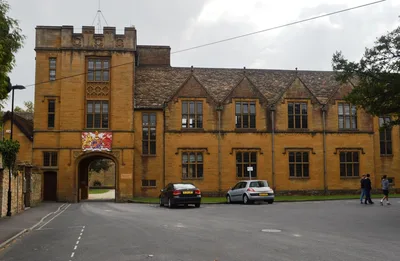
Alan Turing was a confirmed Anglican schoolboy at Sherborne. He met the death of his friend Christopher Morcom in 1930 not with lost faith but with a deeper hope that the spirit survives, and worked that hope out through Eddington's physics in "Nature of Spirit" (1932). At some undated point before the end of the war he gave it up for what his biographer calls a determinist and atheistic view. In 1950 he answered the soul argument against thinking machines with a theologian's joke. In nothing read did he give his unbelief a name.
The belief timeline
- Faith (1927-11-07) — Baptised infant, chorister, confirmed in the Sherborne chapel (a duty "everyone had to volunteer" for) [2][6][7]
- Loss and hope (1930-02-13) — Morcom's death; "I feel sure that I shall meet Morcom again somewhere" [14][16]
- Doubt / revision of the hope (c. 1932-04) — "Nature of Spirit": "I did believe it possible... but I now consider..."; a spirit tied to matter, finding "a new body" [22][23]
- Disbelief (by c. 1945 (dating open)) — Hodges: later thought "strongly determinist and atheistic"; youthful expectation of free spirits through quantum mechanics abandoned [31][32]
- Expression (1950-10) — Mind: "I am unable to accept any part of this" (the immortal-soul argument) [37]
- Late echo (1954-03) — "Messages from the Unseen World": a hymn parody, perhaps "a serious return" (Hodges) [43]
Notes to the timeline (11)
- [2] Baptised fifteen days after birth, on 7 July 1912 — OS-Confirm.
- [6] In 1926 and 1927 he was a treble in the chapel choir and Musical Society (first three terms per OS-Sherborne) — OS-Confirm; OS-Sherborne.
- [7] Confirmed in the chapel on Monday 7 Nov 1927 at 2.30 pm by the Bishop of Salisbury; 57 boys, including Morcom, Bennett and Hogg. His name had been put down on 26 Nov 1926 and crossed out. Hodges: confirmation was "one of those duties for which everyone had to volunteer" — OS-Confirm; WP-Morcom; Hodges 1983 quoted in OS-Confirm. Reported at second hand; the original has not been seen.
- [14] Morcom fell ill on the night of 6 Feb 1930 after a concert; two operations in London for an intestinal obstruction (tuberculous peritonitis); died at noon on 13 Feb at 19 Manchester Street; buried at dawn on 15 Feb at Catshill — OS-Morcom.
- [16] About 16 Feb 1930 (the day of the school service, per OS-Morcom; "a few days after" per OS-Formula) Turing wrote to his mother: Q1 — OS-Morcom; OS-Formula; OS-Confirm.
- [22] "Nature of Spirit" was written at the Clock House, Bromsgrove, undated, c. April 1932; 6 sheets; the Archive holds a Xerox supplied by Hodges in 1999, the original being with the Morcom family — Archive AMT/C/29; OS-Spirit.
- [23] Content (Q2–Q5): the new physics breaks the predestination of astronomy; "we have a will" acting on atoms in a small portion of the brain; "As McTaggart shews matter is meaningless in the absence of spirit"; spirit eternally connected with matter but not always by the same kind of body; he "did believe" in a separate universe for the spirit at death but no longer; the body holds a spirit while alive, and at death "the spirit finds a new body sooner or later perhaps immediately"; bodies exist because they give the spirit something to do — NatSpirit.
- [31] Hodges: it was "probably in 1941" that Turing decided intuition and originality must also be computable; "By 1945" he had concluded the uncomputable was not needed to account for them — HodgesCam, "Private plans and publication".
- [32] Hodges: Turing "had long abandoned his youthful expectations of finding free will or free spirits through quantum mechanics. His later thought was strongly determinist and atheistic in character" (placed in the account of the war years, 1944–45; no date given for the loss of belief) — HodgesBio §5.
- [37] Mind, Oct 1950: objection (1), "The Theological Objection": "Thinking is a function of man's immortal soul..."; Turing: "I am unable to accept any part of this, but will attempt to reply in theological terms"; the argument restricts God's omnipotence (He could give an elephant a soul); machines would be built as "instruments of His will providing mansions for the souls that He creates"; "I am not very impressed with theological arguments"; the Galileo parallel; a footnote on Aquinas. Page numbers: 443–444 — Mind pp. 443–444.
- [43] In March 1954 he sent Robin Gandy four "Messages from the Unseen World" on postcards, a "shared joke" about Eddington's *Science and the Unseen World* (1929); the third (Q10) Hodges calls a parody of the Sherborne chapel hymns, "the sort of mocking-religion joke he would share with Robin and Nick. Yet it was perhaps also a serious return to his first wonderings about mind and matter" — HodgesScrap-Wondrous.
The Nature of Spirit
In October 1950 the philosophy journal Mind published a paper by Alan Turing, a mathematician at Manchester, that asked whether machines can think. Among the objections he set out to answer was one he called "The Theological Objection": that thinking is a function of the immortal soul, which God gives to every man and woman but not to animals or machines. Turing wrote that he could not accept any part of it, though he would try to answer it on its own terms. Then he did so, with some mischief. Would it not limit God's power, he asked, to say God could not give a soul to an elephant, or to a machine? Building thinking machines need be no more irreverent than having children. He added that he was not much impressed by theological arguments, whatever they were used to support.1
Twenty years earlier the same man had written to his mother that he was sure he would meet his dead friend again. This chapter asks how the schoolboy who believed in the survival of the spirit became the scientist who answered the soul argument with a joke, and what can and cannot be known about that change.
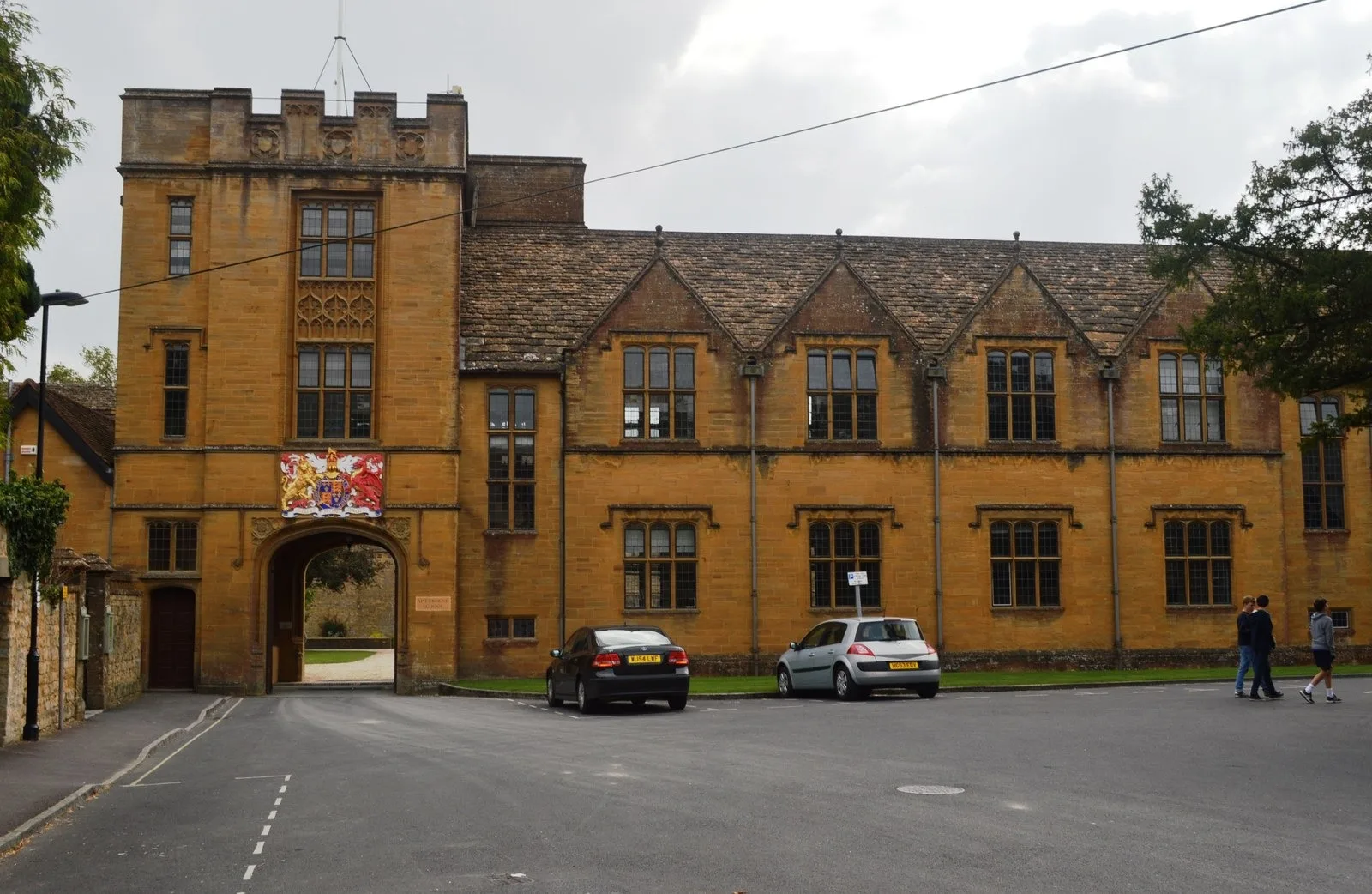
Chapel at Sherborne
He was born in London on 23 June 1912, the second son of Julius Turing of the Indian Civil Service and Ethel Sara Stoney, and was baptised fifteen days later.23 While his parents were in India, he and his brother were fostered with a family at St Leonards-on-Sea.4 In May 1926 he arrived at Sherborne School, which offered a liberal education "in accordance with the principles of the Church of England"; chapel was compulsory, with daily prayers and two services on Sundays.56 For his first terms he sang treble in the chapel choir, and on 7 November 1927 he was confirmed in the chapel by the Bishop of Salisbury, with fifty-six other boys.78 His biographer Andrew Hodges calls confirmation one of those duties for which everyone had to volunteer.8 On the belief timeline, that ordinary Anglican schooling is where his faith sits.
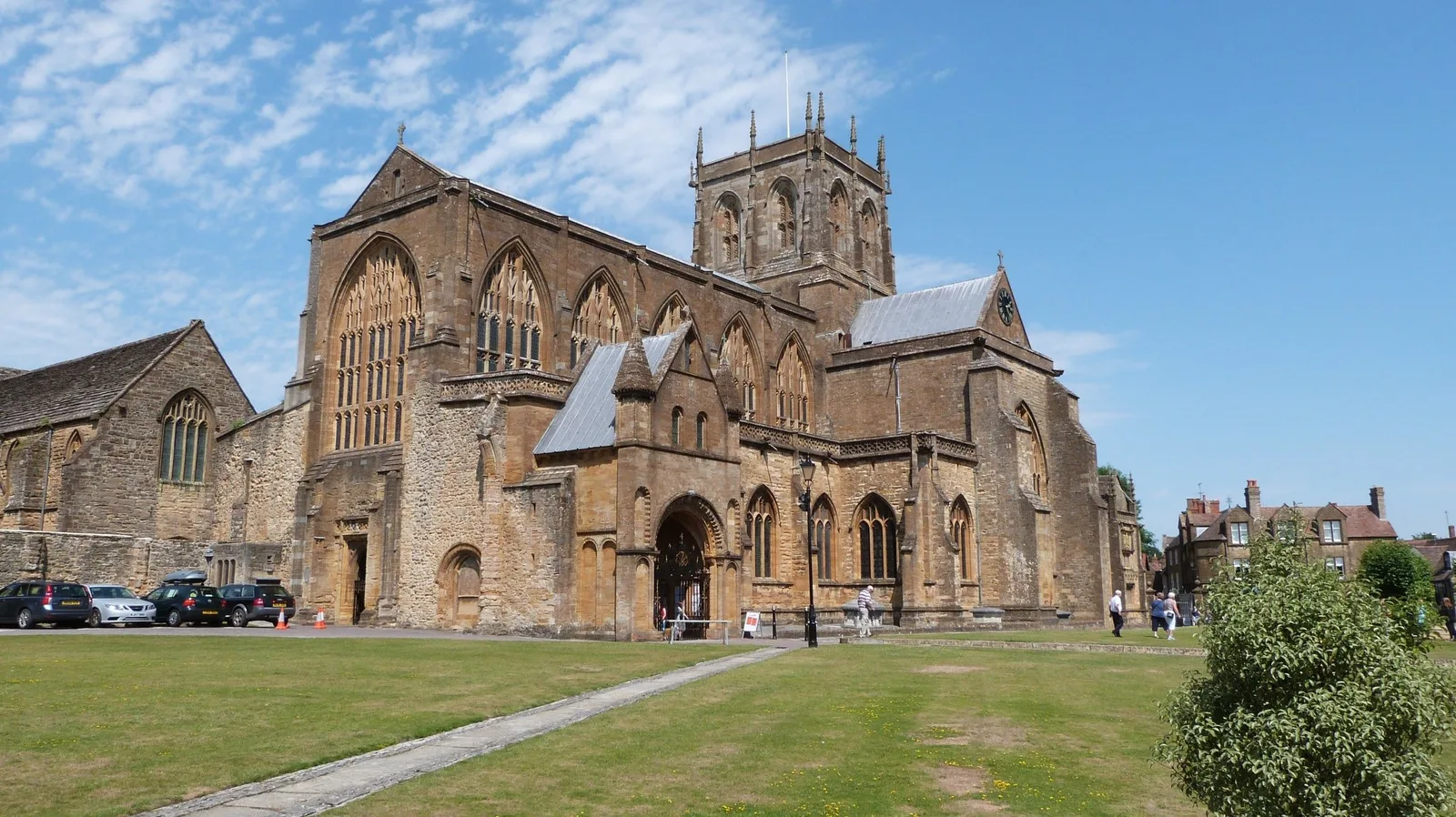
His masters found him difficult. His housemaster wrote that he was not a normal boy, and the headmaster that he was bound to be a problem in any community.9 One master complained of his attitude to discussion of the New Testament, though accounts differ on which report it came from and what prompted it.10
Christopher
In the sixth form, in 1928, he became friends with Christopher Morcom, a boy a year ahead who shared his passion for science and astronomy. In December 1929 both sat for scholarships at Trinity College, Cambridge; Morcom won one and Turing did not.111213 Two months later, on 13 February 1930, Morcom died in London of an illness brought on by tuberculosis, aged eighteen. He was buried at dawn two days later at Catshill in Worcestershire.14 That night Morcom's housemaster told the boys that no one could tell why he should have died like this, but that there was a reason, perhaps to help some of them, since a friend could sometimes influence others more by his death than by his life.1516
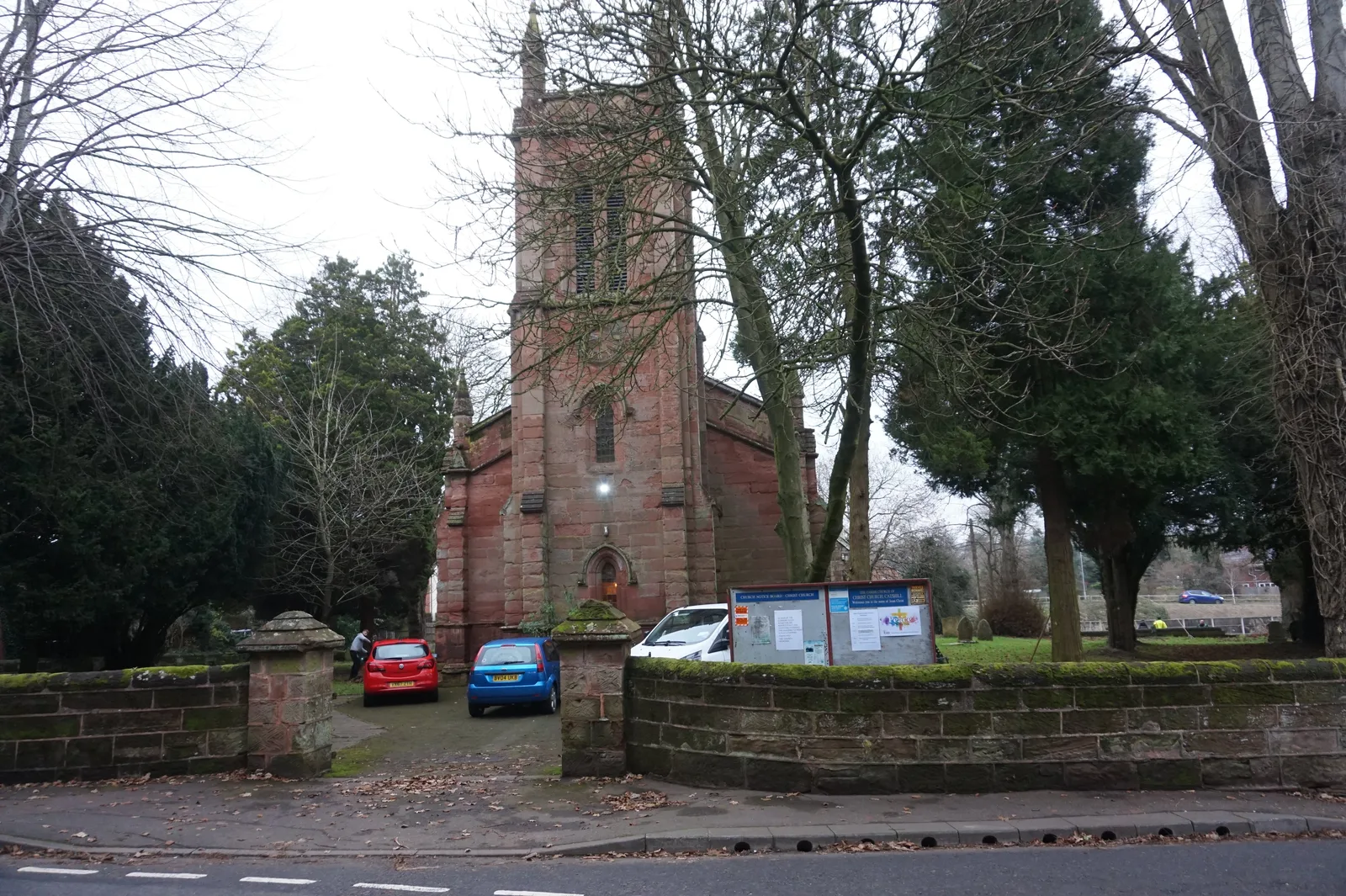
Within days Turing wrote to his mother that he felt sure he would meet Morcom again somewhere, and that there would be work for them to do together; now that he was left to do it alone, he must not let his friend down.17 He told Morcom's mother that he would put as much energy into his work as if Christopher were alive, because that was what he would want.18 The death did not, on this evidence, end his belief. It deepened his hope that the spirit survives. For at least three years, Hodges writes, drawing on his letters to Mrs Morcom, Turing's thoughts turned on how the mind, and Christopher's in particular, was embodied in matter, and whether death could release it.19 On his timeline, the loss and the hope belong together as one mark.
He had chosen, as the prize awarded to Morcom after his death, the astronomer Arthur Eddington's The Nature of the Physical World (1928).20 Eddington, a Quaker, argued that the new quantum physics freed science from its old determinism: "science thereby withdraws its moral opposition to freewill."21 In his Swarthmore Lecture of 1929 Eddington wrote that "rejection of creed is not inconsistent with being possessed by a living belief," and that "we have no creed in science, but we are not lukewarm in our beliefs."2223
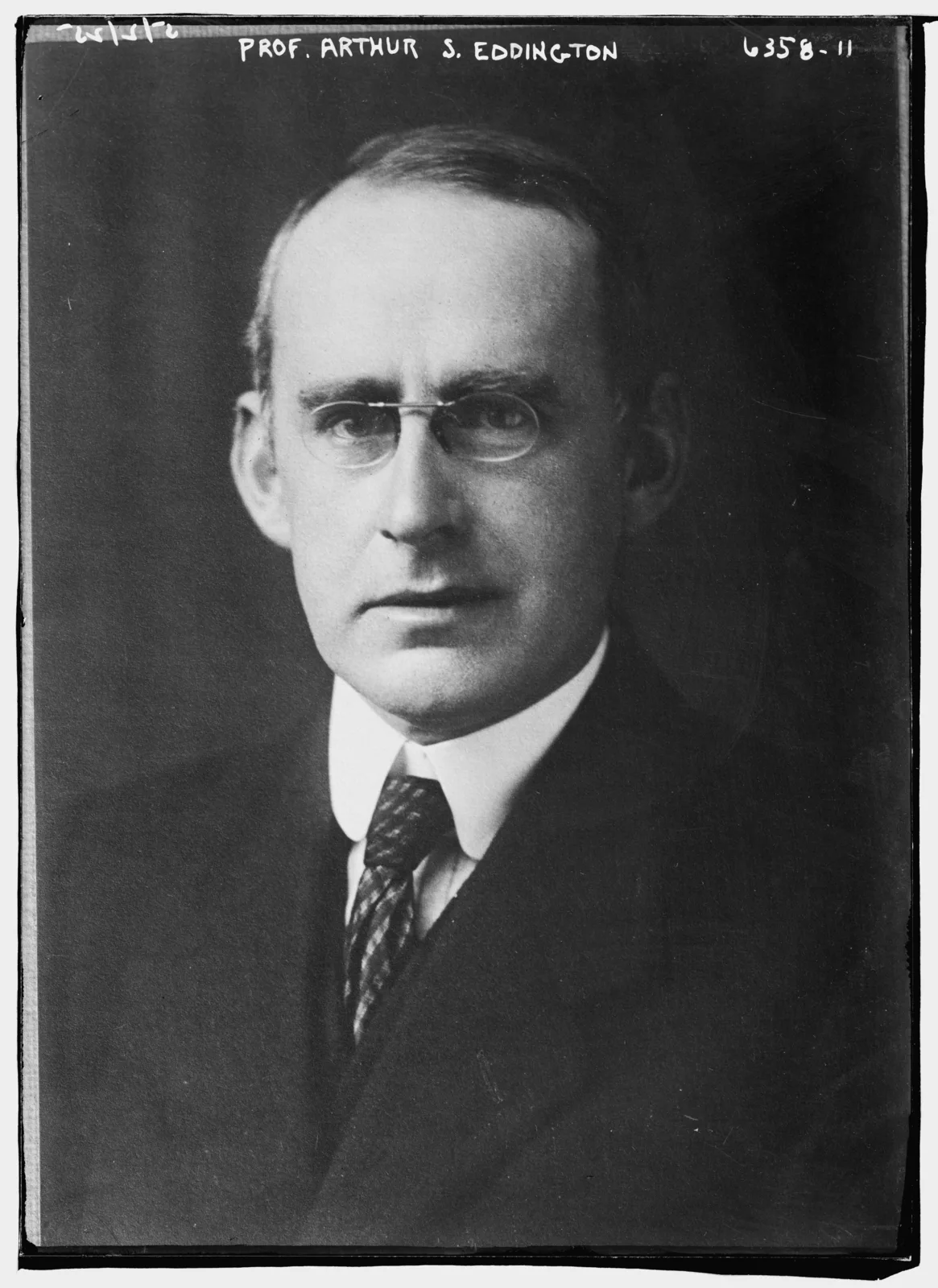
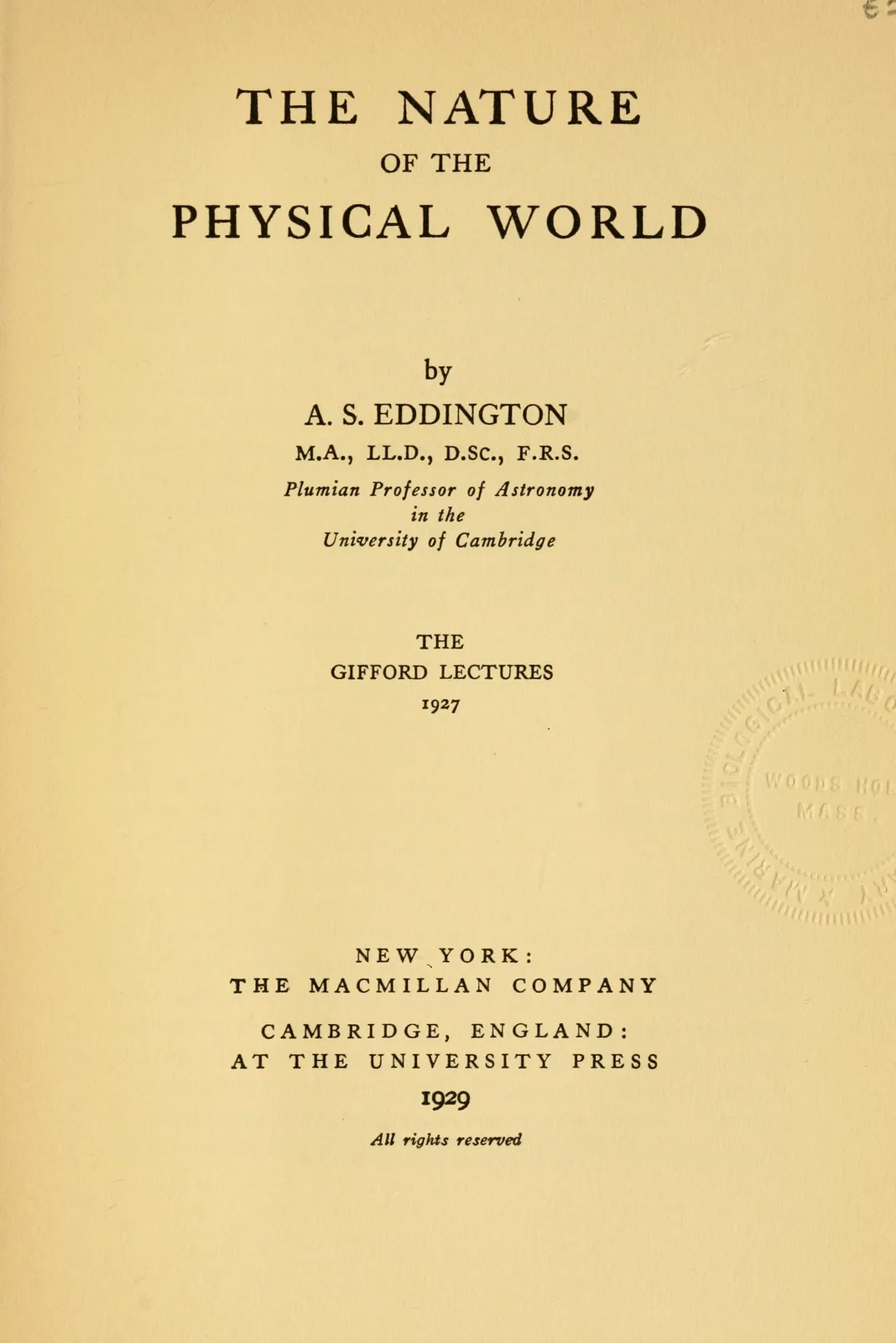
"Nature of Spirit"
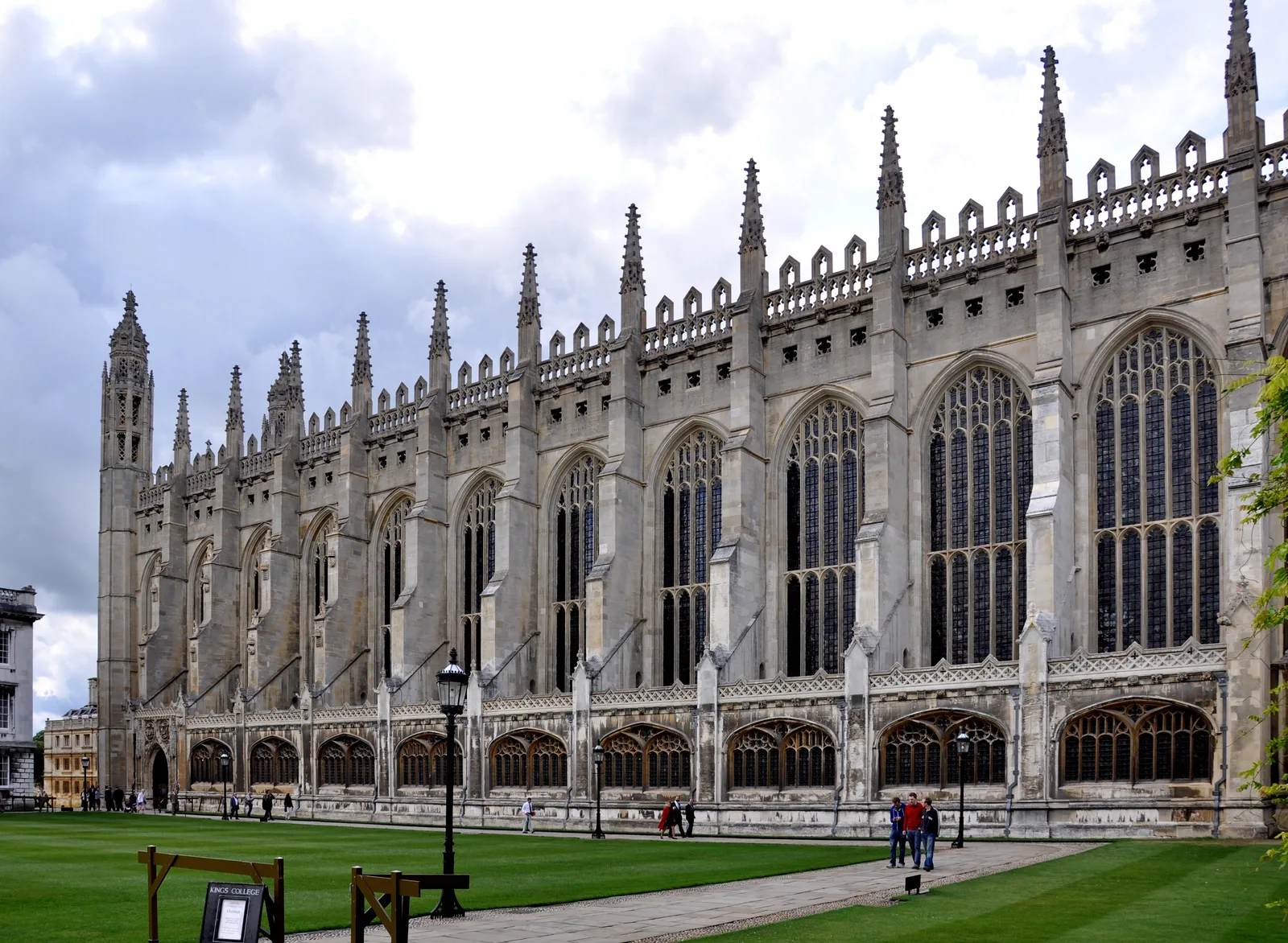
Around April 1932, as a Cambridge undergraduate staying with the Morcoms at their house near Bromsgrove, he wrote a short essay for Christopher's mother called "Nature of Spirit."24 Following Eddington, he argued that the new physics had broken the predestination of the old astronomy, and that we have a will able to act on the atoms of the brain. He cited the Cambridge philosopher McTaggart for the view that matter is meaningless without spirit. He had once believed, he wrote, that at death a spirit might go to a universe entirely separate from ours, but he now thought matter and spirit so connected that this was a contradiction; the spirit was eternally bound to matter, though not always to the same body, and when the body died the spirit found a new one, sooner or later, perhaps at once.2526 Hodges calls it a statement of belief in the survival of the spirit after death.26
On the timeline, the essay is where his doubt begins, but it is a doubt of an unusual kind. It is the first place where he revises his belief in his own words: not giving up the spirit, but giving up a heaven apart from the physical world.
A later determinism
The documents then fall silent on belief for more than a decade. In 1932 and 1933 he read von Neumann's mathematics of quantum mechanics and Russell and Whitehead's Principia Mathematica, which, Hodges writes, helped turn an emotional enquiry into a rigorous one.27 In 1936 he published the paper on computable numbers that described what is now called the Turing machine; Hodges suggests, marking it as his own reading, that it answered the fascination with the problem of mind that Morcom had sparked.28 He took his doctorate at Princeton.29
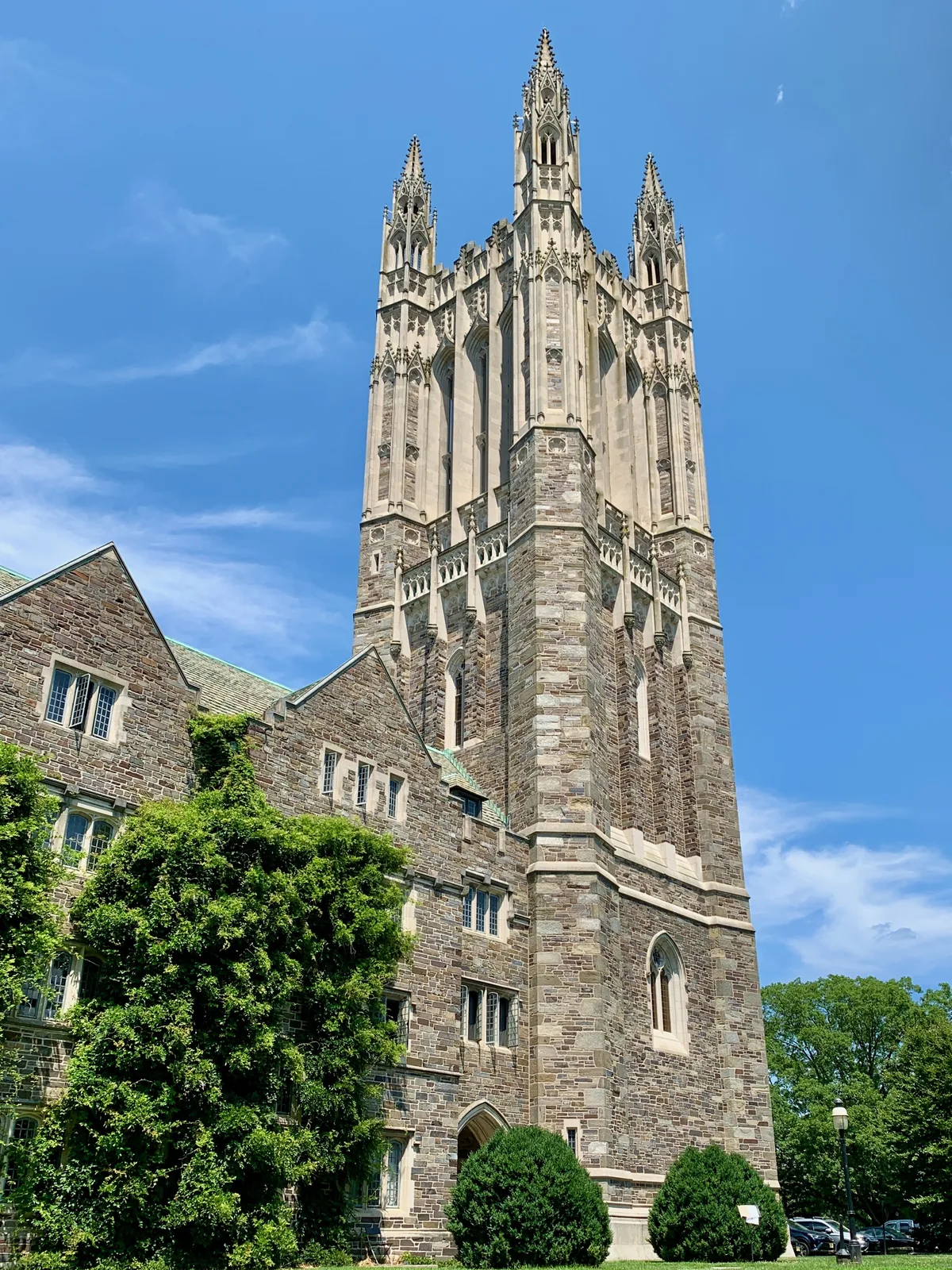
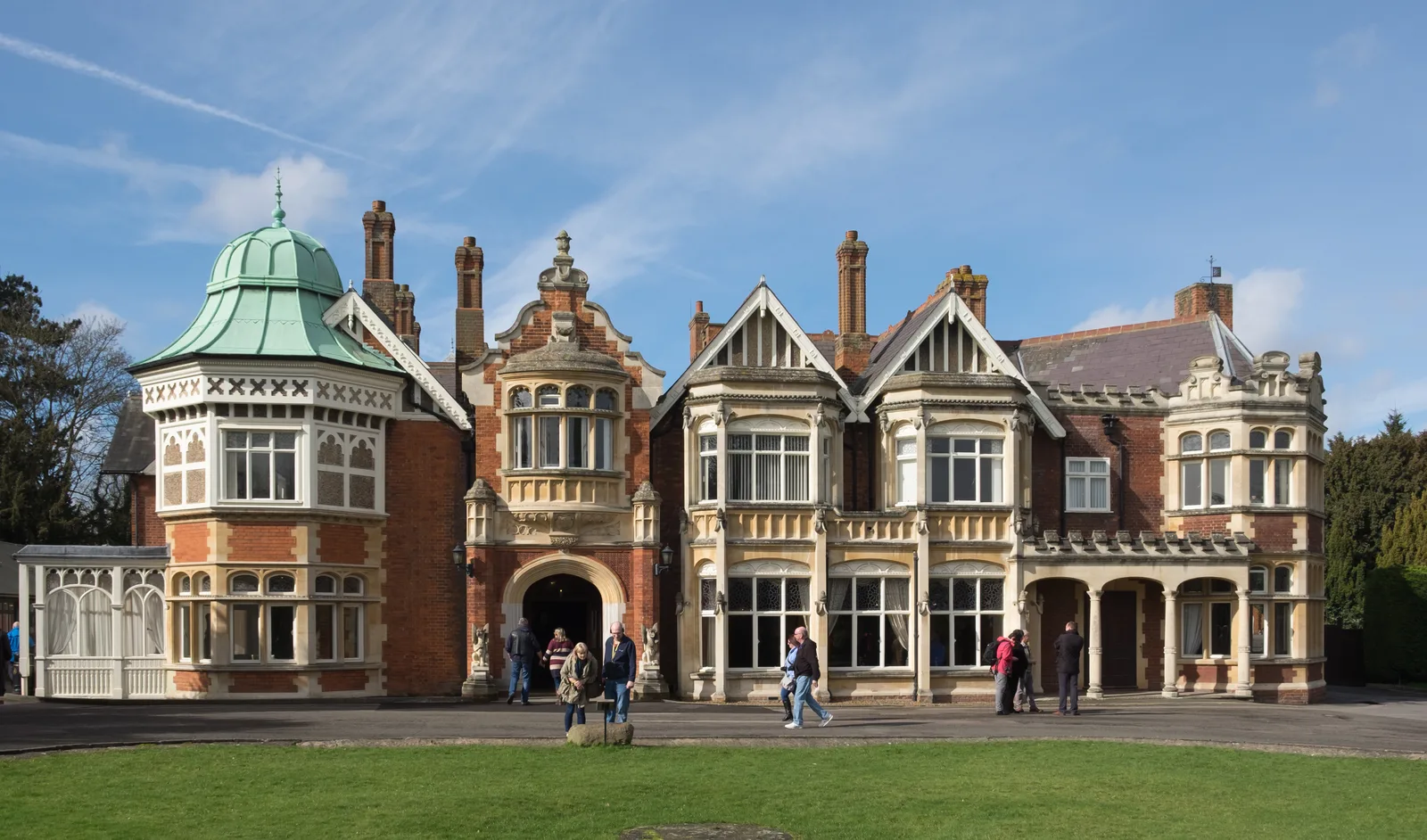
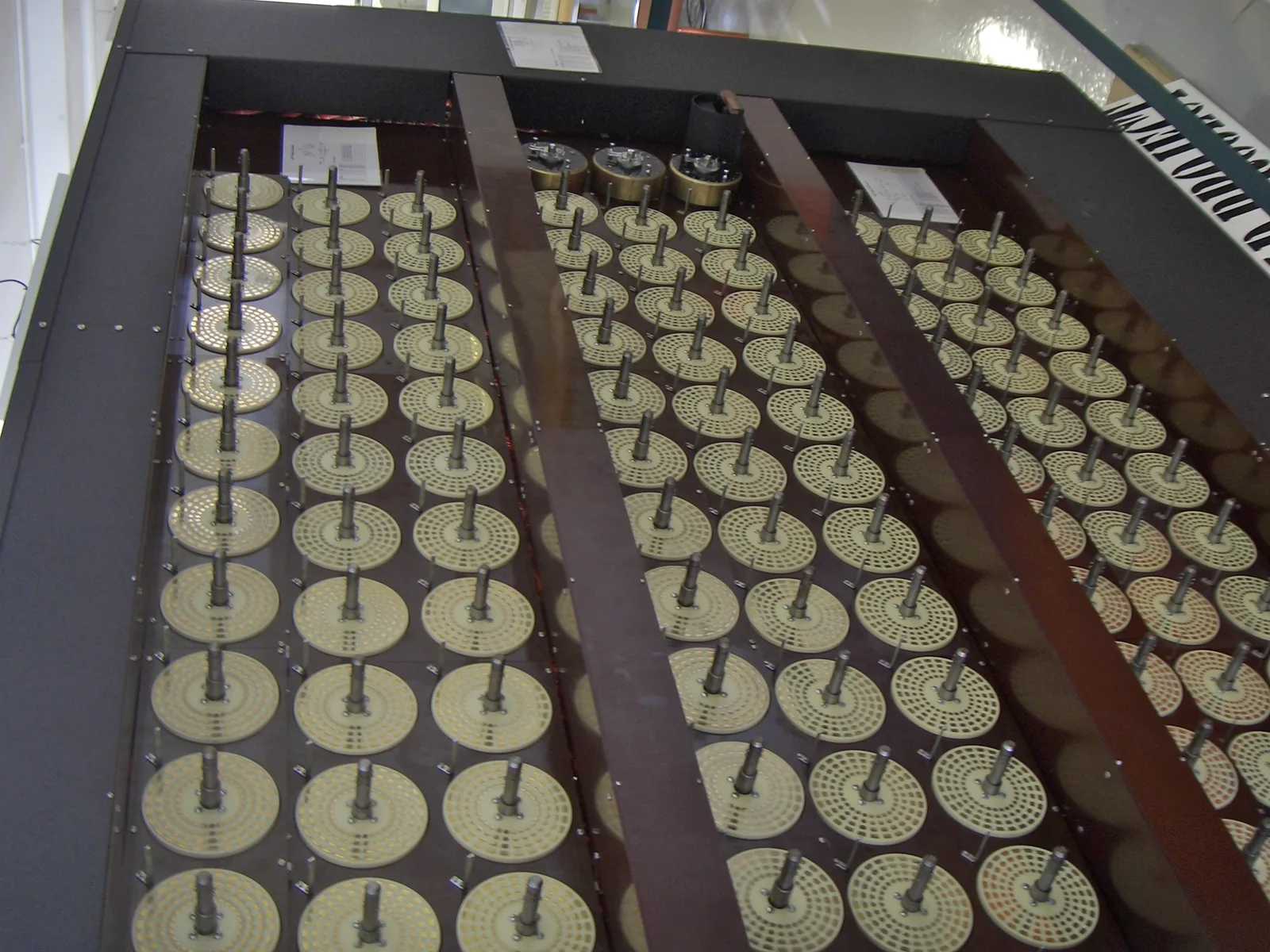
In the war he worked on breaking German codes at Bletchley Park, and named the first of his code-breaking machines "Agnus," which Hodges reads as a joke an atheist might make.30 It was probably in 1941, Hodges writes, that he decided that intuition and originality must also be computable, and by 1945 he no longer thought anything uncomputable was needed to explain the mind.31 By then he had, in Hodges's words, long abandoned his youthful hope of finding free will or free spirits through quantum mechanics; his later thought was strongly determinist and atheistic.32 On the timeline, this is where his disbelief appears, and it is the weakest mark: Hodges gives no date and no document for the change, and the sources read for this chapter have none either. A popular account says that Morcom's death shattered his faith and led him into atheism. His own letters and essay of 1930 to 1933 show the opposite at first. Accounts differ.33
The theological objection
The 1950 paper is the only public expression, and the timeline marks it as his expression. Besides the theological objection, Turing answered the neurosurgeon Sir Geoffrey Jefferson, who had argued in 1949 that no machine could equal a brain until it could write a sonnet because of thoughts and feelings felt, and know that it had written it. It was the secular cousin of the soul argument, and Turing took it more seriously.3435 He also poked fun at religion in passing, asking how Christians regarded the Muslim view, as he put it, that women had no souls; Hodges calls the fun somewhat superficial, and notes that Bertrand Russell wrote to say he had enjoyed the paper very much.36 Yet in the same paper Turing wrote that the statistical evidence for telepathy was, unfortunately, overwhelming.37 He was not a tidy materialist.
Messages from the unseen world
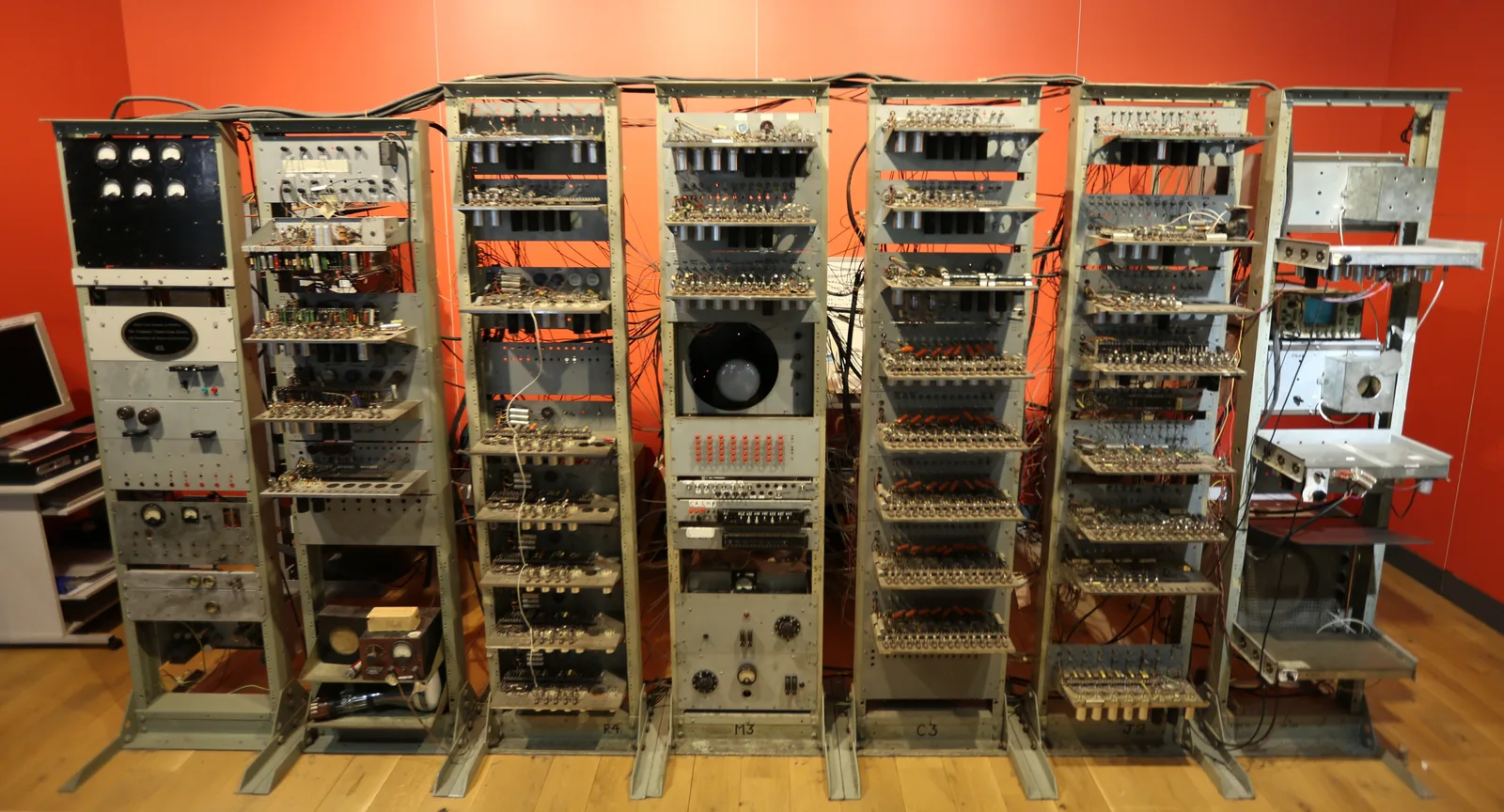
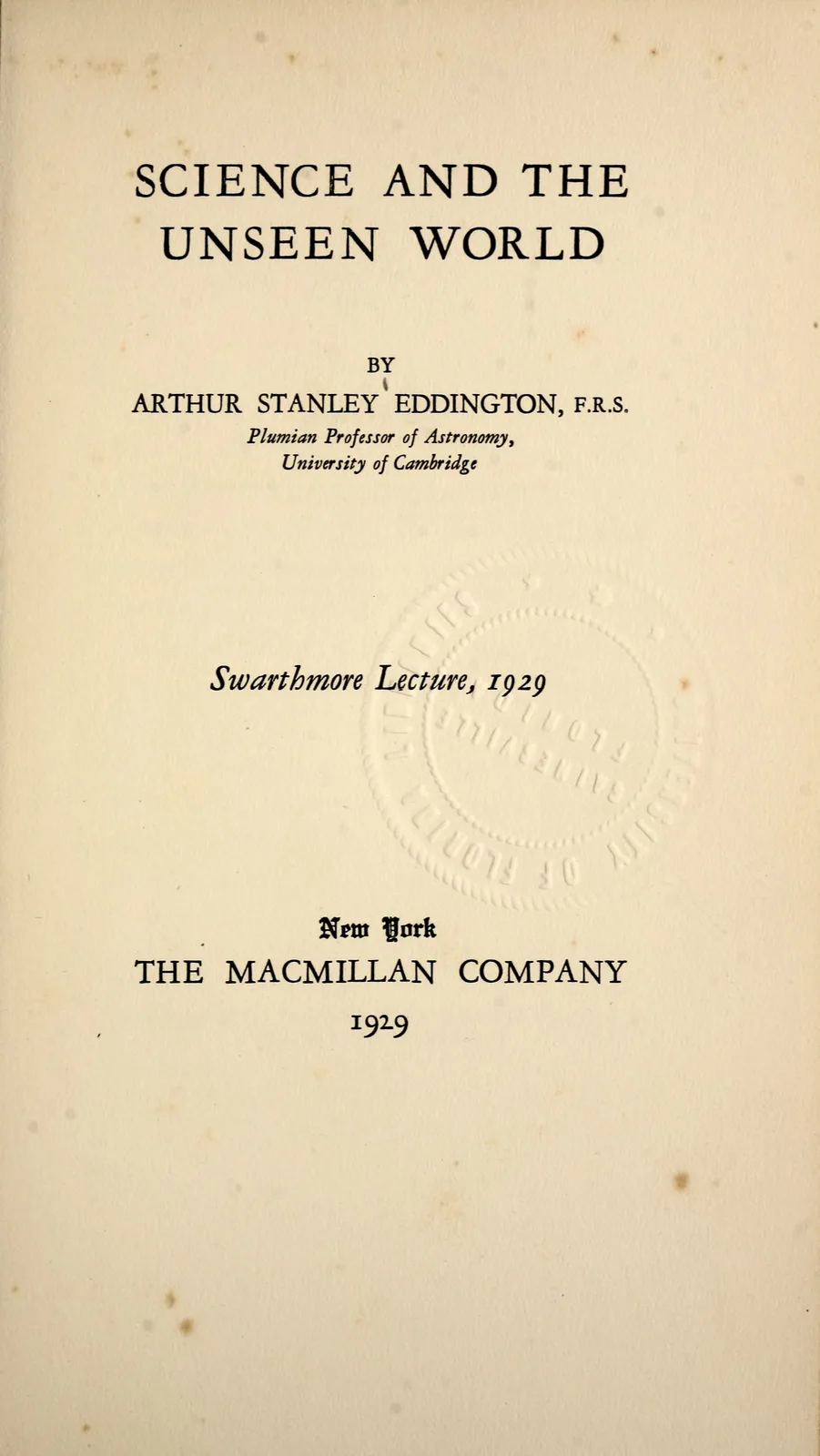
In March 1954 he sent his friend Robin Gandy four postcards headed "Messages from the Unseen World," a joke on the title of Eddington's 1929 lecture. One is a verse in the style of the school hymns of his childhood, about waves of wondrous light playing out God's holy pantomime. Hodges calls it the sort of mocking religious joke Turing shared with his friends, and yet perhaps also a serious return to his first wonderings about mind and matter.38 It is the last mark on his timeline, an echo rather than a revision.
He died at his home in Wilmslow, Cheshire, on 7 June 1954, at forty-one.39 No text read for this chapter shows him calling himself an atheist, an agnostic or a materialist; those are other people's words for him.40 What the documents show is a boy who lost his closest friend and believed, for a time, that the friend's spirit lived on; a young man who tried to make that belief consistent with physics; and a scientist who, some time later, gave it up, and kept a joke about it to the end. Hodges wrote that the nature of spirit, as Turing had described it to Mrs Morcom, always remained for him a natural wonder.41
Bertrand Russell, who enjoyed Turing's paper on thinking machines and whose materialist philosophy Hodges sets beside it, has his own chapter in this book.
Footnotes
-
Mind pp. 443–444. ↩
-
OS-Sherborne; HodgesBio §1; HodgesScrap-Early. ↩
-
OS-Confirm. ↩
-
HodgesBio §1; HodgesScrap-Early. ↩
-
OS-Sherborne; HodgesScrap-Early. ↩
-
OS-Confirm. ↩
-
OS-Confirm; OS-Sherborne. ↩
-
OS-Confirm; WP-Morcom; Hodges 1983 quoted in OS-Confirm. Reported at second hand; the original has not been seen. ↩ ↩2
-
OS-Reports, Lent 1927 2nd half; Michaelmas 1927. ↩
-
OS-Confirm; HodgesScrap-Early; OS-Reports; Hodges Enigma update (p. 30, "Mr Ross's report"). Accounts differ; see the disputed points. ↩
-
OS-Morcom; HodgesScrap-Spirit; WP-Morcom. ↩
-
OS-Morcom. ↩
-
OS-Morcom. ↩
-
OS-Morcom. ↩
-
OS-Formula. ↩
-
A. H. Trelawny-Ross, Morcom's housemaster, to the boys on the night of 13 Feb 1930 (Christian consolation as the school offered it): OS-Formula (Hassall 2019), original not seen. ↩
-
OS-Morcom; OS-Formula; OS-Confirm. ↩
-
WP-Turing and WP-Morcom citing Hodges 1983/2012 p. 61. ↩
-
HodgesBio §2. ↩
-
OS-Morcom; OS-Reading. ↩
-
Eddington-NPW p. 295. ↩
-
Eddington-Unseen pp. 89-90. ↩
-
Sir Arthur Eddington, Quaker astronomer; the believing scientist whose book Turing gave as Morcom's prize. The sentence before it, "Rejection of creed is not inconsistent with being possessed by a living belief", crosses the page break pp. 89-90: Eddington-Unseen p. 90. ↩
-
Archive AMT/C/29; OS-Spirit. ↩
-
NatSpirit. ↩
-
HodgesBio §2; HodgesScrap-Spirit. ↩
-
HodgesBio §3. ↩
-
HodgesBio §3. ↩
-
HodgesCam. ↩
-
HodgesCam, "Private plans and publication". ↩
-
HodgesBio §5. ↩
-
Time (Gray, 29 Mar 1999) p. 2. ↩
-
Mind pp. 445–446. ↩
-
Sir Geoffrey Jefferson, neurosurgeon, Lister Oration 1949, as quoted by Turing. He argues from consciousness, not scripture; Turing treats it as the secular cousin of the Theological Objection: Mind pp. 445–446. ↩
-
HodgesScrap-Test. ↩
-
Mind p. 453. ↩
-
HodgesScrap-Wondrous. ↩
-
HodgesBio §8; OS-Confirm. ↩
-
all. ↩
-
HodgesOration. ↩
In their own words
I feel sure that I shall meet Morcom again somewhere & that there will be some work for us to do together, as I believed there was for us to do here. Now that I am left to do it alone I must not let him down but put as much energy into it, if not as much interest, as if he were still here.
I did believe it possible for a spirit at death to go to a universe entirely separate from our own, but I now consider that matter & spirit are so connected that this would be a contradiction in terms.
Personally, I think that spirit is really eternally connected with matter but certainly not always by the same kind of body.
We have a will which is able to determine the action of the atoms probably in a small portion of the brain, or possibly all over it.
when the body dies the “mechanism” of the body, holding the spirit is gone & the spirit finds a new body sooner or later perhaps immediately.
I am unable to accept any part of this, but will attempt to reply in theological terms.
The arbitrary character of the orthodox view becomes clearer if we consider how it might appear to a member of some other religious community. How do Christians regard the Moslem view that women have no souls?
In attempting to construct such machines we should not be irreverently usurping His power of creating souls, any more than we are in the procreation of children: rather we are, in either case, instruments of His will providing mansions for the souls that He creates.
I am not very impressed with theological arguments whatever they may be used to support.
Hyperboloids of wondrous Light Rolling for aye through Space and Time Harbour there Waves which somehow Might Play out God's holy pantomime.
Unfortunately the statistical evidence, at least for telepathy, is overwhelming.
We can only see a short distance ahead, but we can see plenty there that needs to be done.
The other side
Not until a machine can write a sonnet or compose a concerto because of thoughts and emotions felt, and not by the chance fall of symbols, could we agree that machine equals brain — that is, not only write it but know that it had written it.
We cannot tell why Chris Morcom should have suffered a death like this, but there is a reason. Maybe it was to save him from a life of pain or illness; maybe to help some of you in some way, for a friend like that can often by his death do more to influence others even than by his life.
Thinking is a function of man's immortal soul. God has given an immortal soul to every man and woman, but not to any other animal or to machines. Hence no animal or machine can think
We have no creed in science, but we are not lukewarm in our beliefs.
IN THE HOPE THAT HIS BRIGHT SPIRIT LIVES IN THE LIGHT ETERNAL
I cannot forgive the stupidity of his attitude towards sane discussion on the New Testament
Where accounts differ
| Point | One account | Another | How the page handles it |
|---|---|---|---|
| D1. Did Morcom's death make him an unbeliever? | Time (1999): the loss "shattered Turing's religious faith and led him into atheism" [46]; the roster line says he "lost his faith after his friend Christopher Morcom died" | Turing's own letters and essay (1930–33) show a stronger hope of survival, "I feel sure that I shall meet Morcom again" [16], and a worked-out theory of re-embodied spirit [23]; Hodges dates the atheistic outlook as "later" [32] | Say the death first deepened his belief in survival; the turn away came later and is undated in the sources; "accounts differ" |
| D2. The New Testament sentence | OS-Confirm: form master Trelawny-Ross, end of Michaelmas 1927, about algebra in a divinity lesson [9] | Hodges scrapbook: "the English report", with a longer sentence; Hodges update names "Mr Ross's report" on handwriting (p. 30); not in the Sherborne transcript PDF | Use only if the original report is seen; otherwise paraphrase ("a master complained of his attitude to the New Testament lessons") |
| D3. When he met Morcom | OS-Morcom and Hodges web: September 1928 (Lower Sixth) [10] | WP-Morcom: 1927, a year younger, same form in 1929 | Say "in the sixth form, in 1928" (two Tier 2 sources) |
| D4. Start at Cambridge | Hodges: October 1931 [21]; OS-Sherborne: left July 1931 | WP-Turing: February 1931 to November 1934; John Turing (1980): left Sherborne December 1930 | Say "in 1931" |
| D5. When the letter of Feb 1930 was written | OS-Morcom: the day of the school service (16 Feb) | OS-Formula: "a few days after"; OS-Confirm: "wrote from Sherborne" | Say "within days of the funeral" |
| D6. Where the housemaster's words were heard | OS-Formula: on the night of the death his housemaster spoke to the boys | OS-Morcom: after the death the housemaster "spoke to Alan Turing about his friendship" and Turing wrote an account (Turing was in another house) | Present as what the school said to the boys, not as what Turing heard |
List of illustrations
This page uses only public-domain and Creative Commons images; each is credited with its source and licence.
- Sherborne School, Dorset — John M, 2014-09-14 · John M, Wikimedia Commons, CC BY-SA 2.0 · CC BY-SA 2.0
- Sherborne Abbey — Peter Broster, 2013-08-01 · Peter Broster, Wikimedia Commons, CC BY 2.0 · CC BY 2.0
- Christ Church, Catshill, Worcestershire — Ian S, 2021-12-18 · Ian S, Wikimedia Commons, CC BY-SA 2.0 · CC BY-SA 2.0
- Prof. Arthur S. Eddington — Bain News Service, between 1900 and 1920 (LoC date 1900-01-01, unverified) · Library of Congress, Prints & Photographs Division, George Grantham Bain Collection, LCCN 2014718210 · Public domain (Bain News Service photograph, published before 1931; LoC: The Library of Congress does not own rights to material in its collections; see George Grantham Bain Collection - Rights and Restrictions Information)
- A. S. Eddington, The Nature of the Physical World, title page — Arthur Stanley Eddington, 1928 (this printing 1929) · Internet Archive, Marine Biological Laboratory Library copy (Macmillan, New York / Cambridge University Press) · Public domain (published 1928, before 1931; IA item states no rights)
- King's College Chapel, Cambridge — Andreas Praefcke, 2011-06-18 · Andreas Praefcke, Wikimedia Commons, CC BY 3.0 · CC BY 3.0
- Cleveland Tower, Princeton University Graduate College — Zeete, 2019-08-04 · Zeete, Wikimedia Commons, CC BY-SA 4.0 · CC BY-SA 4.0
- Bletchley Park Mansion — DeFacto, 2017-03-04 · DeFacto, Wikimedia Commons, CC BY-SA 4.0 · CC BY-SA 4.0
- Rebuilt Turing-Welchman Bombe, Bletchley Park — Mike Peel (www.mikepeel.net), 2006-09-09 · Mike Peel (www.mikepeel.net), Wikimedia Commons, CC BY-SA 4.0 · CC BY-SA 4.0
- Replica of the Manchester Baby (SSEM) — Geni, 2013-04 · Geni, Wikimedia Commons, CC BY-SA 4.0 · CC BY-SA 4.0
- A. S. Eddington, Science and the Unseen World (Swarthmore Lecture 1929), title page — Arthur Stanley Eddington, 1929 · Internet Archive, University of Florida Libraries copy (Macmillan, New York) · Public domain (published 1929, before 1931; IA item states no rights)
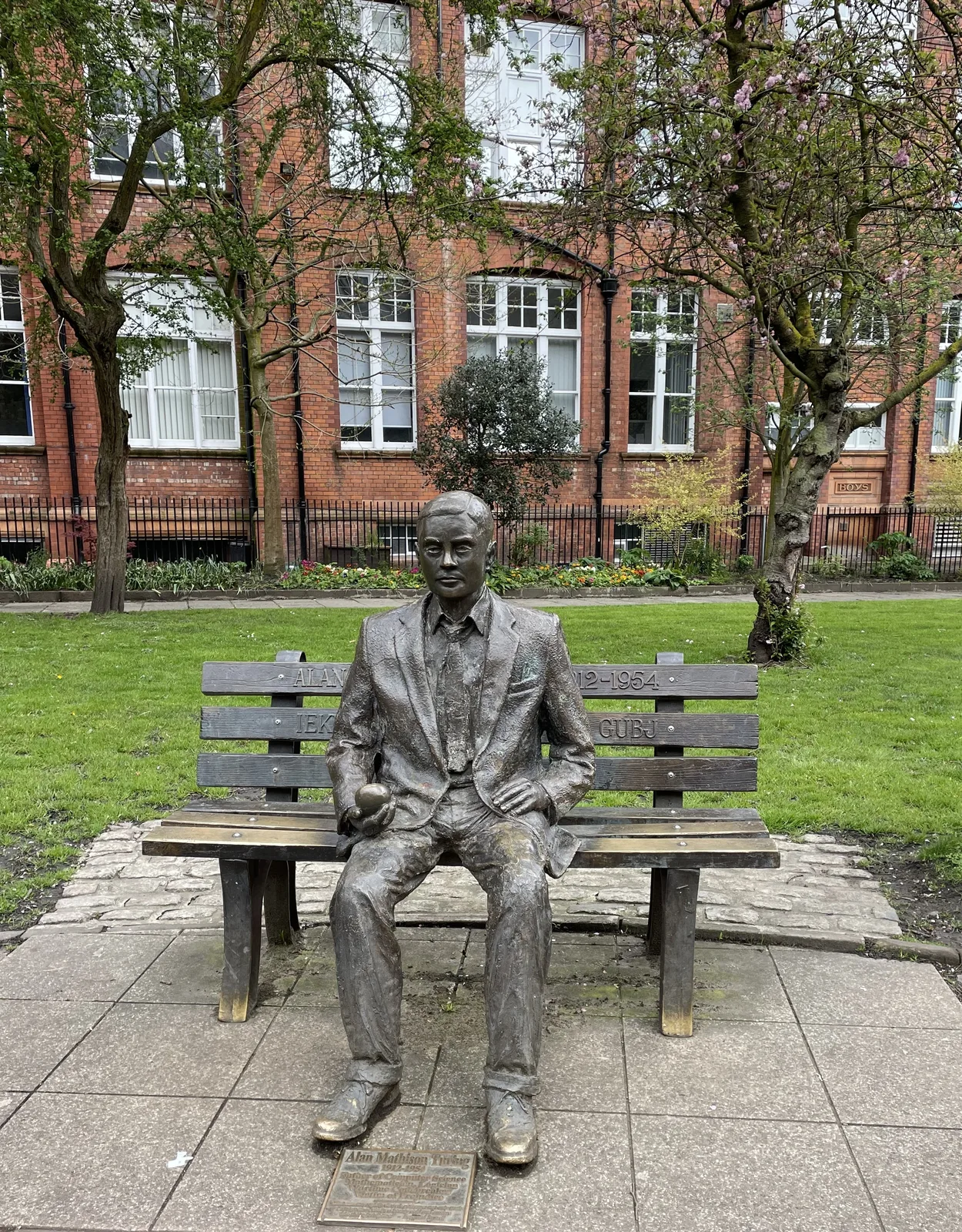
- Statue of Alan Turing, Sackville Gardens, Manchester — Eirian Evans, 2024-04-14 · Eirian Evans, Wikimedia Commons, CC BY-SA 2.0 · CC BY-SA 2.0
Sources
Tier 1 — the subject's own words (writings, letters, diaries, trial records)
- Mind A. M. Turing, "Computing Machinery and Intelligence", Mind 59, no. 236 (October 1950), pp. 433–460. Internet Archive item
MIND--COMPUTING-MACHINERY-AND-INTELLIGENCE(OCR text saved astexts/cmi-mind.txt; page numbers read from the running heads in the OCR). Copyright: Turing died 1954, so UK copyright expired 31 Dec 2024; the US status of a 1950 published article (renewal) is not checked: flag for David. - NatSpirit A. M. Turing, "Nature of Spirit" (undated, c. April 1932), as transcribed by Sherborne School Archives, "Alan Turing and the 'Nature of Spirit'" (Old Shirburnian Society, posted 15 Aug 2020, updated;
texts/hodges-web-os-spirit.txt). Original: King's College Cambridge, Turing Digital Archive AMT/C/29 (Xerox from Hodges; original with the Morcom family). Handwriting image not read (see Archive terms [53]). Unpublished text of an author dead since 1954: public domain in the UK; in the US, unpublished works of authors dead over 70 years are out of copyright (our reading; flag). - Letter1930 Turing to his mother, Feb 1930, as quoted in OS-Morcom and OS-Confirm; original not seen.
- Letters-Morcom Turing to Mrs Morcom, 1930 and 1933, as quoted in WP-Turing citing Hodges; originals not seen.
- Postcards "Messages from the Unseen World", March 1954, as quoted in HodgesScrap-Wondrous; originals (Turing Digital Archive, AMT/D/4 is the Gandy file) not seen.
Tier 1 — texts that shaped him (for the influence claims)
- Eddington-NPW A. S. Eddington, The Nature of the Physical World (Cambridge University Press, 1928). IA
natureofphysical00eddi(texts/eddington-npw1928.txt). Public domain (1928). - Eddington-Unseen A. S. Eddington, Science and the Unseen World (New York: Macmillan, 1929; the 1929 Swarthmore Lecture). IA
scienceunseenwor00eddi(texts/eddington-unseen1929.txt). Public domain (1929). Printed page numbers read from garbled OCR running heads. - McTaggart J. M. E. McTaggart, Human Immortality and Pre-existence (London: Edward Arnold, 1916, second impression). IA
humanimmortality00mctauoft(texts/mctaggart-immortality1916.txt).
Tier 2 — scholarly biographies and encyclopedias
- OS-Morcom Rachel Hassall (Archivist, Sherborne School), "Christopher Morcom (1911–1930)", Old Shirburnian Society, updated 27 July 2026 (
texts/hodges-web-os-morcom.txt). https://oldshirburnian.org.uk/christopher-morcom-1911-1930/ - OS-Confirm Rachel Hassall, "Alan Turing's confirmation in 1927", Old Shirburnian Society (
texts/hodges-web-os-confirm.txt). https://oldshirburnian.org.uk/alan-turings-confirmation/ - OS-Sherborne Sherborne School Archives, "Alan Turing OBE, PhD, FRS (1912–1954)" (
texts/hodges-web-os-sherborne.txt). https://oldshirburnian.org.uk/alan-turing/ - OS-Formula Rachel Hassall, "The Sherborne Formula: the Making of Alan Turing" (2019) (
texts/hodges-web-os-formula.txt). - OS-Reading Sherborne School Archives, "Alan Turing's sixth form reading list, 1928–1931" (
texts/hodges-web-os-reading.txt). - OS-Reports "Transcripts of Turing's School Reports 1926–1931" (PDF, 16 pp.,
texts/sherborne-school-reports-1926-31.pdf; read as images; not text-searchable). - JohnTuring John Turing, "Alan Turing", The Shirburnian, March 1980 (
texts/john-turing-1980.pdf; two pages read; nothing on religion). - HodgesBio Andrew Hodges, "Alan Turing — a short biography" (extended from his 1995 entry for the Oxford Dictionary of Scientific Biography; Turing Home Page), https://www.turing.org.uk/publications/dnb.html (
texts/hodges-web-dnb.txt). - HodgesScrap-Early / -Spirit / -Test / -Wondrous / -Manmach Hodges, Alan Turing Internet Scrapbook pages: "Empire of the Mind, 1912–1928", "The Inspiration of Life and Death, 1928–1932", "The Turing Test", "Unseen worlds: Defiant until Death, 1952–1954" (
texts/hodges-web-early.txt,-spirit,-test,-wondrous,-manmach). https://www.turing.org.uk/scrapbook/ - HodgesCam Hodges, "Alan Turing — a Cambridge Scientific Mind", in Cambridge Scientific Minds (CUP, 2002), as posted on turing.org.uk (
texts/hodges-web-cambridge1.txt). - HodgesOration Hodges, oration at Turing's birthplace, 23 June 1998 (
texts/hodges-web-oration.txt). - HodgesEnigma Hodges, Alan Turing: The Enigma (Burnett/Hutchinson 1983; Vintage 2012; Princeton 2014). The book could not be read (Internet Archive lending copies return 401; Google Books down). Page numbers below are taken from the footnotes of Wikipedia articles and marked secondhand.
- Archive Turing Digital Archive, King's College Cambridge: catalogue entry AMT/C/29 and Terms of Use (
texts/hodges-web-amtc29.txt; https://turingarchive.kings.cam.ac.uk/copyright-and-terms-use).
Tier 3 — popular biographies and journalism
- Time Paul Gray, "Alan Turing", Time, 29 March 1999 (web.archive.org copy of 10 Aug 2010;
texts/hodges-web-time1999.txt).
Tier 4 — Wikipedia and similar reference sites
- WP-Turing "Alan Turing", revision 1379820045 of 2026-10-12 (
texts/wp-turing.wiki). Used as a map to Hodges 1983/2012 page numbers. - WP-Morcom "Christopher Morcom", revision 1380241217 of 2026-10-14 (
texts/wp-morcom.wiki).
Opposition sources — contemporary critics and religious responses
- Jefferson Sir Geoffrey Jefferson, Lister Oration 1949, as quoted in Mind pp. 445–446 (original not seen; Jefferson d. 1961, in copyright; short quotation as quoted by Turing).
- Trelawny-Ross the housemaster's address to the boys, as quoted in OS-Formula (2019).
- Morcom-grave the inscription on the Morcom grave kerb, Catshill, as transcribed in OS-Morcom.
- Eddington as above.
Related lives
Bertrand Russell — Turing's 1950 paper was read by Russell, who "enjoyed it very much"; Russell is the materialist and atheist voice Hodges places beside him. (Alternative: Freud or Darwin, for the question of mind and matter.)
Ismail Adham
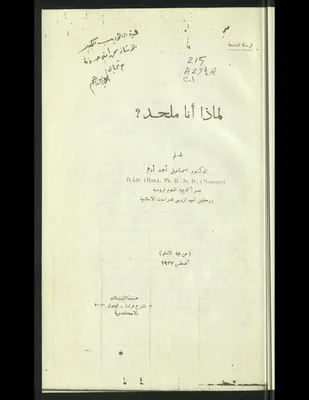
Ismail Adham was raised, by his own account, between a father who forced Islam on him and sisters who mocked miracles, and told his father at thirteen that he was a Darwinian. In 1937 he published in Arabic, under his own name, an essay defining atheism as the positive belief that nothing lies beyond the universe, and arguing it from a mathematics of chance. He was answered courteously by al-Azhar's editor and harshly by others. He died at twenty-nine without retracting it, leaving a life story that rested largely on his own word and an essay that does not depend on it.
Albert Camus
Albert Camus was raised in a household that was Catholic only by custom, and never lost a faith he never held. The absence of God became his starting point in the essays of 1936 and The Myth of Sisyphus in 1942. From 1944 he turned that unbelief from opposition into alliance. He told the Dominicans in 1948 that he could not accept their truth but would not call it an illusion, and asked Christians to remain Christians and speak out against evil.
Simone de Beauvoir
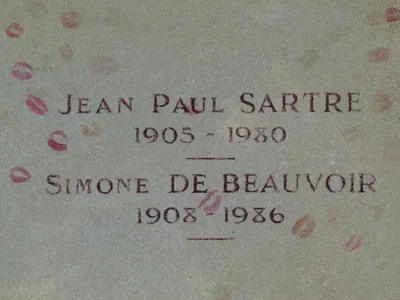
Simone de Beauvoir was raised by a devout mother and an unbelieving father as an exalted Catholic girl who thought of becoming a nun. She lost her faith gradually at about fourteen, and at eighteen felt its meaning as the word "alone". She did not campaign against belief but built an ethics on its absence (1944–47), arguing that without God we are wholly responsible, and wrote The Second Sex (1949), which the Vatican banned. She held to the position through the death of her believing mother (1963) and what she saw as Sartre's last turn toward religious language (1980).
Bhagat Singh
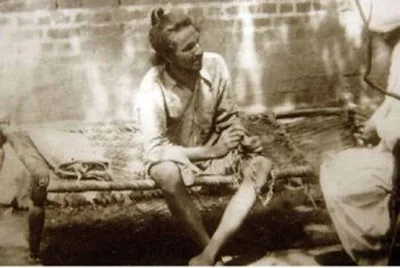
Bhagat Singh was an Arya Samaj schoolboy who prayed for hours. He read his way out of belief in God during a crisis in his revolutionary party in 1925–26, and in 1927 refused prayer when the police offered it as a way out. In the condemned cell in 1930 he answered the charge that his atheism was vanity. What he revised in his last months was the bomb, not the unbelief.