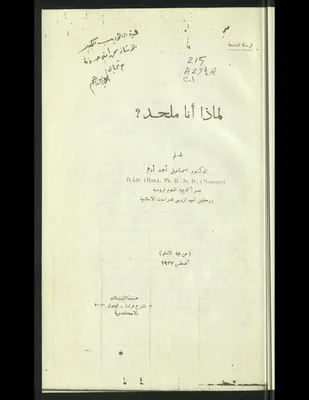
Ismail Adham was raised, by his own account, between a father who forced Islam on him and sisters who mocked miracles, and told his father at thirteen that he was a Darwinian. In 1937 he published in Arabic, under his own name, an essay defining atheism as the positive belief that nothing lies beyond the universe, and arguing it from a mathematics of chance. He was answered courteously by al-Azhar's editor and harshly by others. He died at twenty-nine without retracting it, leaving a life story that rested largely on his own word and an essay that does not depend on it.
The belief timeline
- Faith (c. 1913–1921) — Taught two religions at once, Islam by force and Christianity by his sisters, both in a house of books; he memorises the Quran by ten and resents it [3][5][6]
- Doubt (c. 1919–1925) — Reads Darwin and the freethinkers in Istanbul before thirteen, drops free will and immortality, and in Alexandria refuses to pray: "I am a Darwinian" [8][9][10]
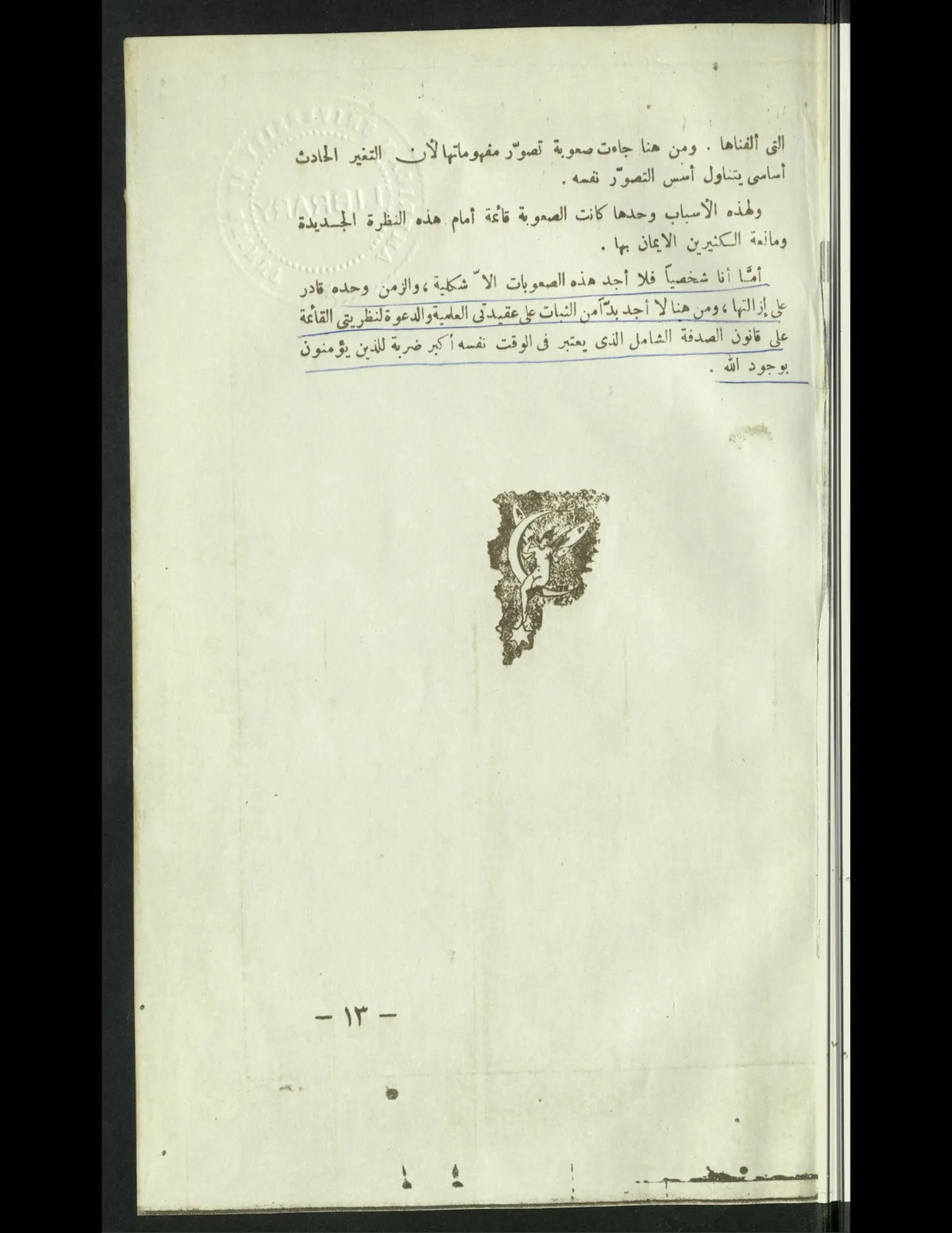
- Declaration (1937-08) — Publishes "Why I Am an Atheist?" in al-Imam, then as a 13-page pamphlet (Alexandria), defining atheism as a positive belief and ending: "the greatest blow to those who believe in the existence of God" [19][20][21][33][39]
- Revision (none recorded) — No retraction found. Zayyat's obituary says he never hid his creed; the only shift visible is from the youthful "Darwinian" to an atheism built on his law of chance. Last beat: illness, lost income and the sea at Alexandria, 1940 [22][27][41][43][44]
Notes to the timeline (16)
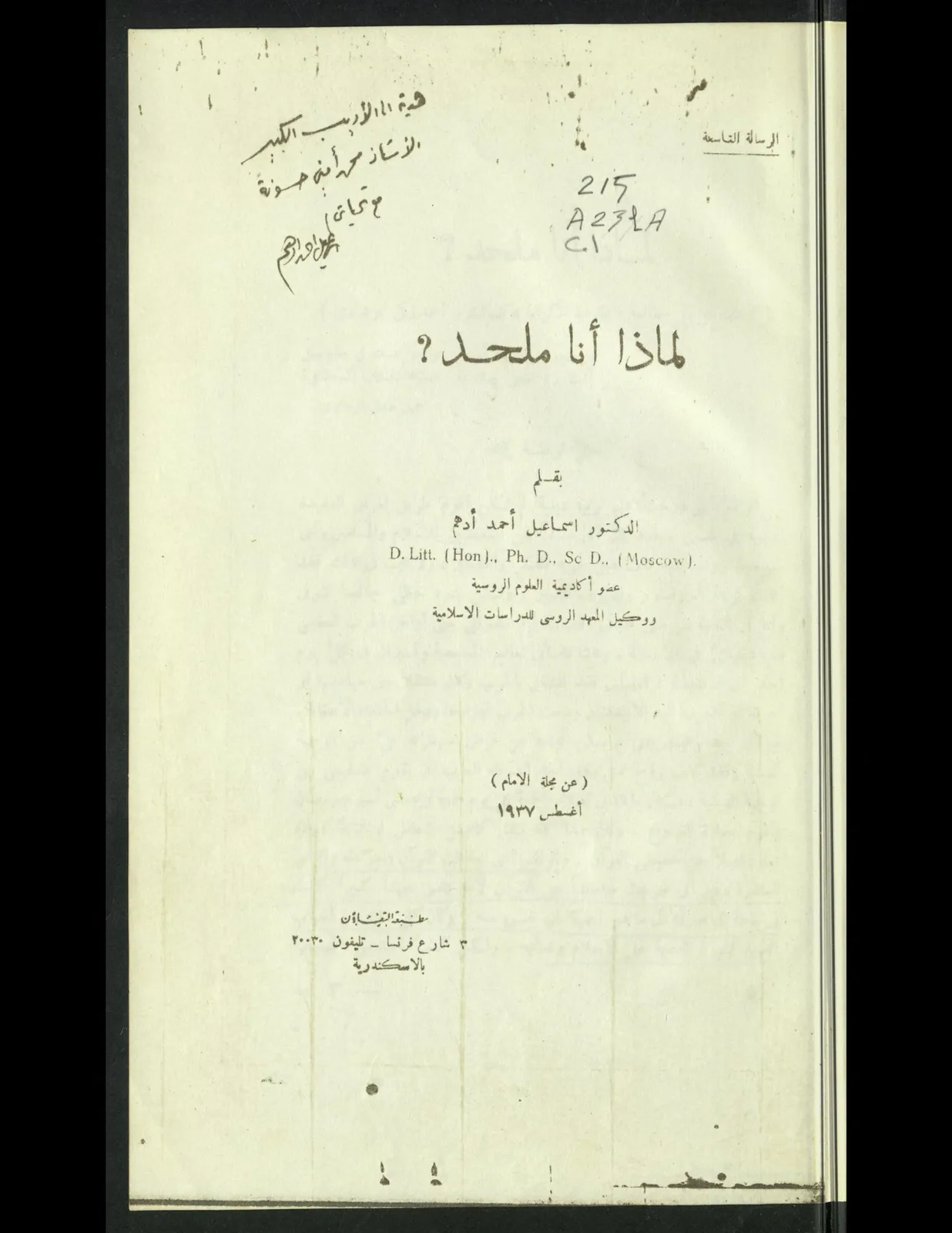
- [3] His mother died when he was two; until the end of the Great War he lived with two sisters in Istanbul, who taught him Christianity and took him to church each Sunday; his father, at the war, he did not know until after the Allies entered Istanbul — Ismail Ahmad Adham, "Limadha ana mulhid?", the ninth tract (al-Risala al-tasi'a), "from al-Imam magazine, August 1937", Alexandria (printer's name not certain from the scan), 3 rue de France; the Internet Archive copy is a scan of the American University of Beirut library copy, inscribed by the author as a gift, p. 3.
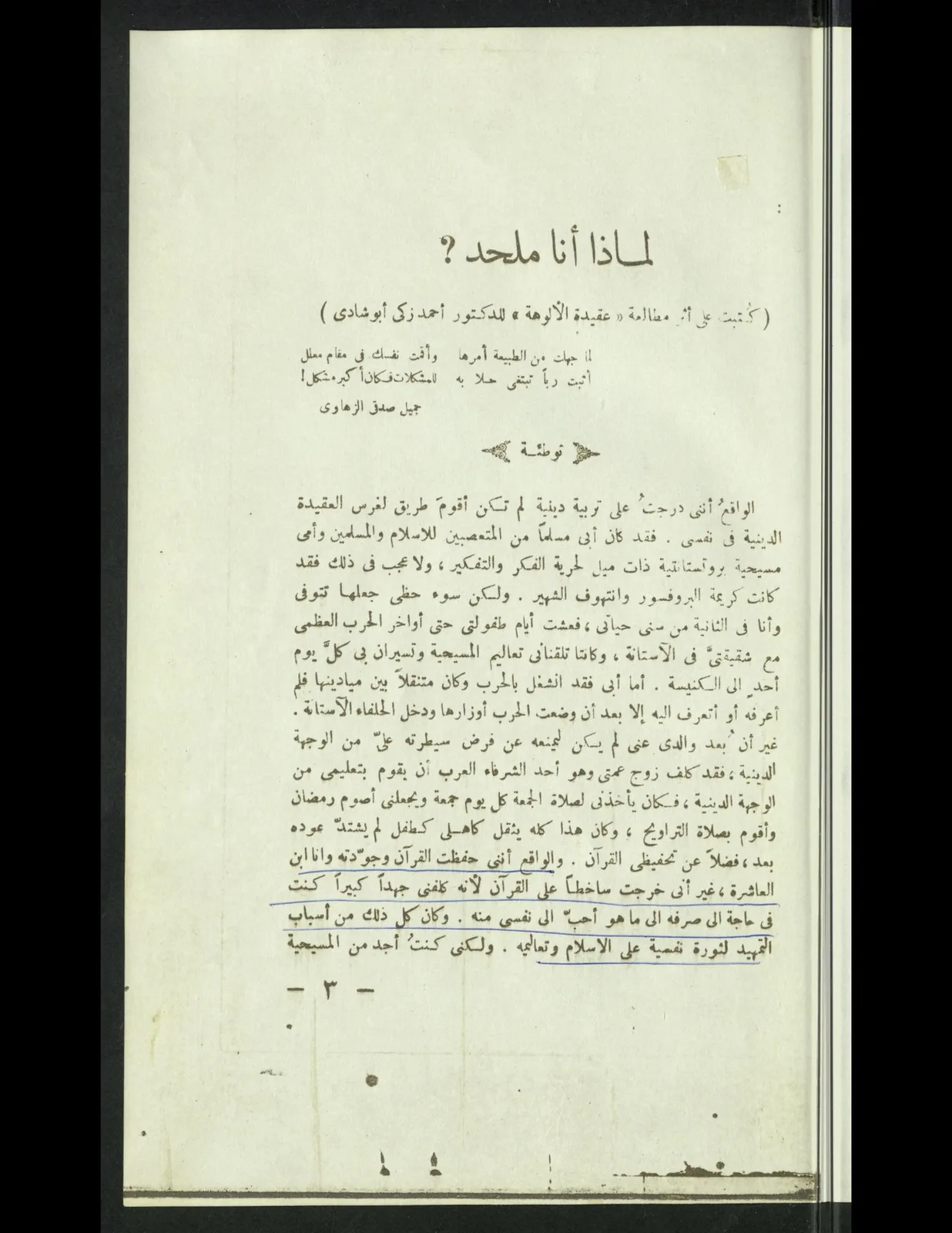
- [5] The tutor took him to Friday prayer, made him fast Ramadan and pray tarawih, and had him memorise the Quran, which he knew well at ten — Adham, "Limadha ana mulhid?", p. 3.
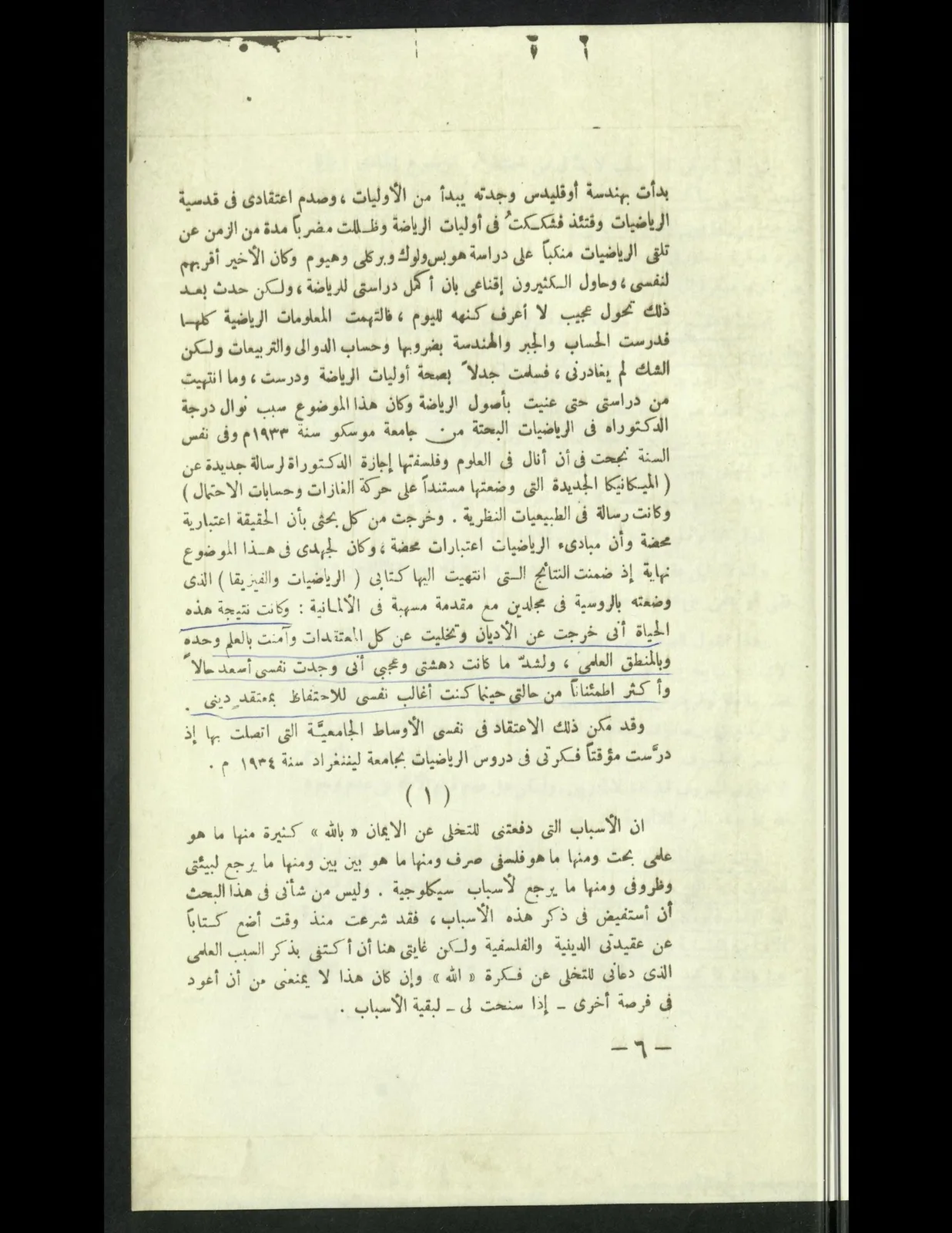
- [6] He left the Quran lessons resentful, because they cost him effort he wanted to spend on what he preferred, and says this "prepared the way for a psychological revolt against Islam and its teachings" — Adham, "Limadha ana mulhid?", p. 3 (Q3).
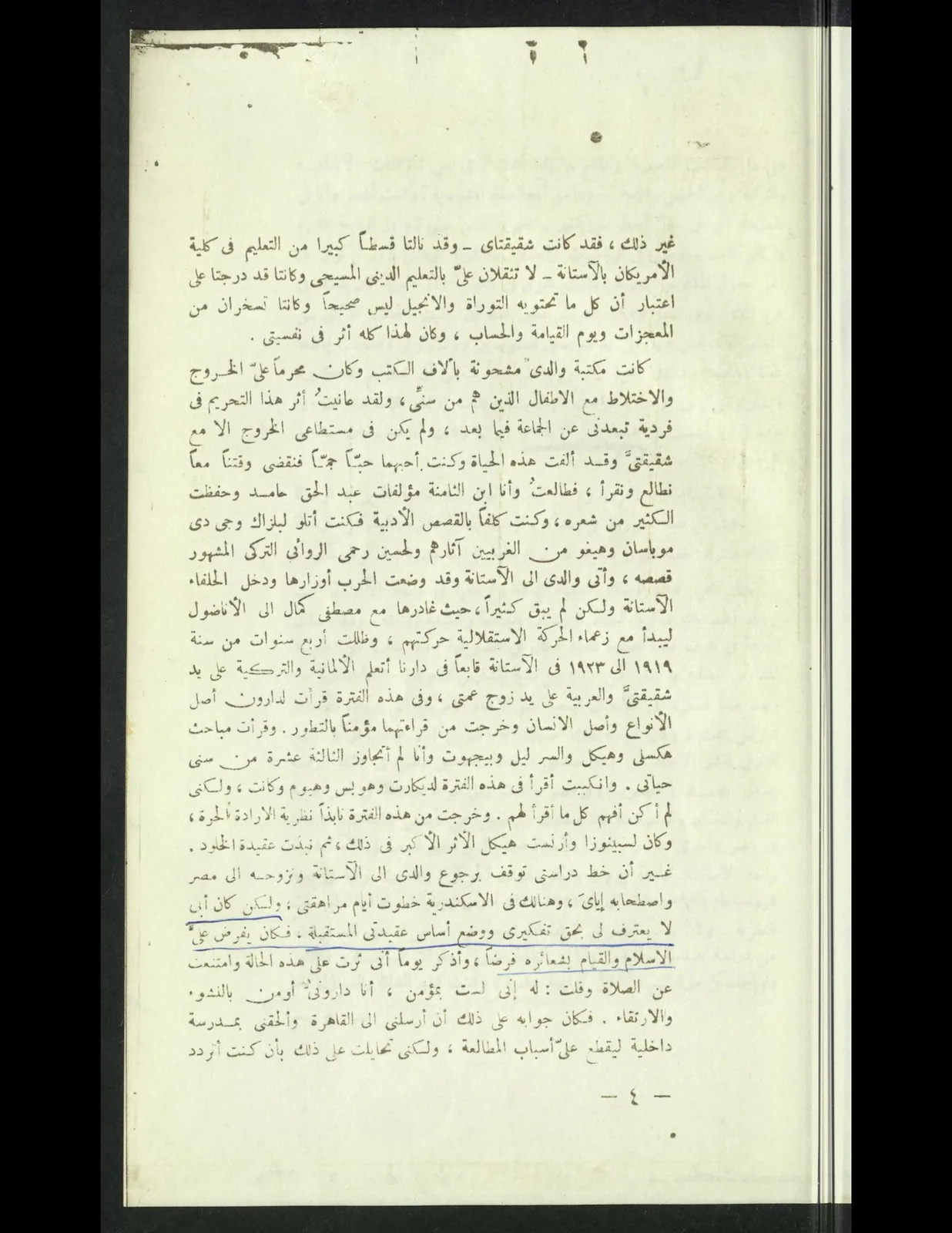
- [8] His father's library held thousands of books; he was kept from other children; at eight he read Abd al-Haqq Hamid, then Balzac, Maupassant, Hugo and Husayn Rahmi — Adham, "Limadha ana mulhid?", p. 4.
- [9] From 1919 to 1923, at home in Istanbul, he learned German and Turkish from his sisters and Arabic from his aunt's husband; read Darwin's Origin and Descent and "came out a believer in evolution"; read Huxley, Haeckel, Lyell and Bagehot before thirteen; then Descartes, Hobbes, Hume and Kant (not understanding all); gave up free will, with Spinoza and Haeckel the greatest influence, then immortality — Adham, "Limadha ana mulhid?", p. 4.
- [10] His father took him to Alexandria, where he forced Islam and its rites on him; the boy once refused to pray and said "I am not a believer, I am a Darwinian, I believe in evolution", whereupon his father sent him to a boarding school in Cairo to cut off his reading; he got round this by reading German and Turkish books at the Egyptian National Library on Thursdays and Fridays; he was not yet fourteen — Adham, "Limadha ana mulhid?", pp. 4–5 (Q5, Q5b).
- [19] The essay was "written after reading 'Aqidat al-Uluha' by Dr Ahmad Zaki Abu Shadi", with an epigraph from al-Zahawi, and appeared in al-Imam, August 1937, then as a separate pamphlet "to spread the call" — Adham, "Limadha ana mulhid?", title page and p. 3; Ismail Adham, "Qadaya wa munaqashat" (Complete Works, section 1 "Fi qadaya al-fikr"; section 4 critical reviews and critics' follow-ups), ed. Ahmad Ibrahim al-Hawari (Cairo, c. 1986–87; IA metadata says 1986), (essay footnote; Muhammad Farid Wajdi, "Limadha huwa mulhid?", Majallat al-Azhar vol. 8, part 7, Rajab 1356 AH (1937) (page number damaged in the OCR), reprinted in [Qadaya] (the pages directly after the essay). In US copyright until the end of 2032 (Decisions): paraphrase only, 's introduction).
- [20] The title page styles him "Dr Ismail Ahmad Adham, D.Litt. (Hon.), Ph.D., Sc.D. (Moscow), member of the Russian Academy of Sciences, deputy of the Russian Institute for Islamic Studies" — Adham, "Limadha ana mulhid?", title page (leaf 4). Accounts differ; see the disputed points.
- [21] He declares himself an atheist whose mind is "at rest in this atheism"; says it began as an idea and became a creed; says the many reasons are scientific, philosophical, "in between", environmental, and psychological, and that he will give only the scientific one; defines atheism positively (Q1) — Adham, "Limadha ana mulhid?", pp. 6–7 (Q1, Q2).
- [33] The pamphlet is 13 printed pages of text (pp. 3–13) under a title page naming the printer as Matba'at al-Ta'awun, 3 rue de France, Alexandria, dated only "August 1937" and "from al-Imam"; no colophon, price or later date; a list of the author's nine works faces the back — Adham, "Limadha ana mulhid?", title page (leaf 4), p. 13 (leaf 26), leaf 28.
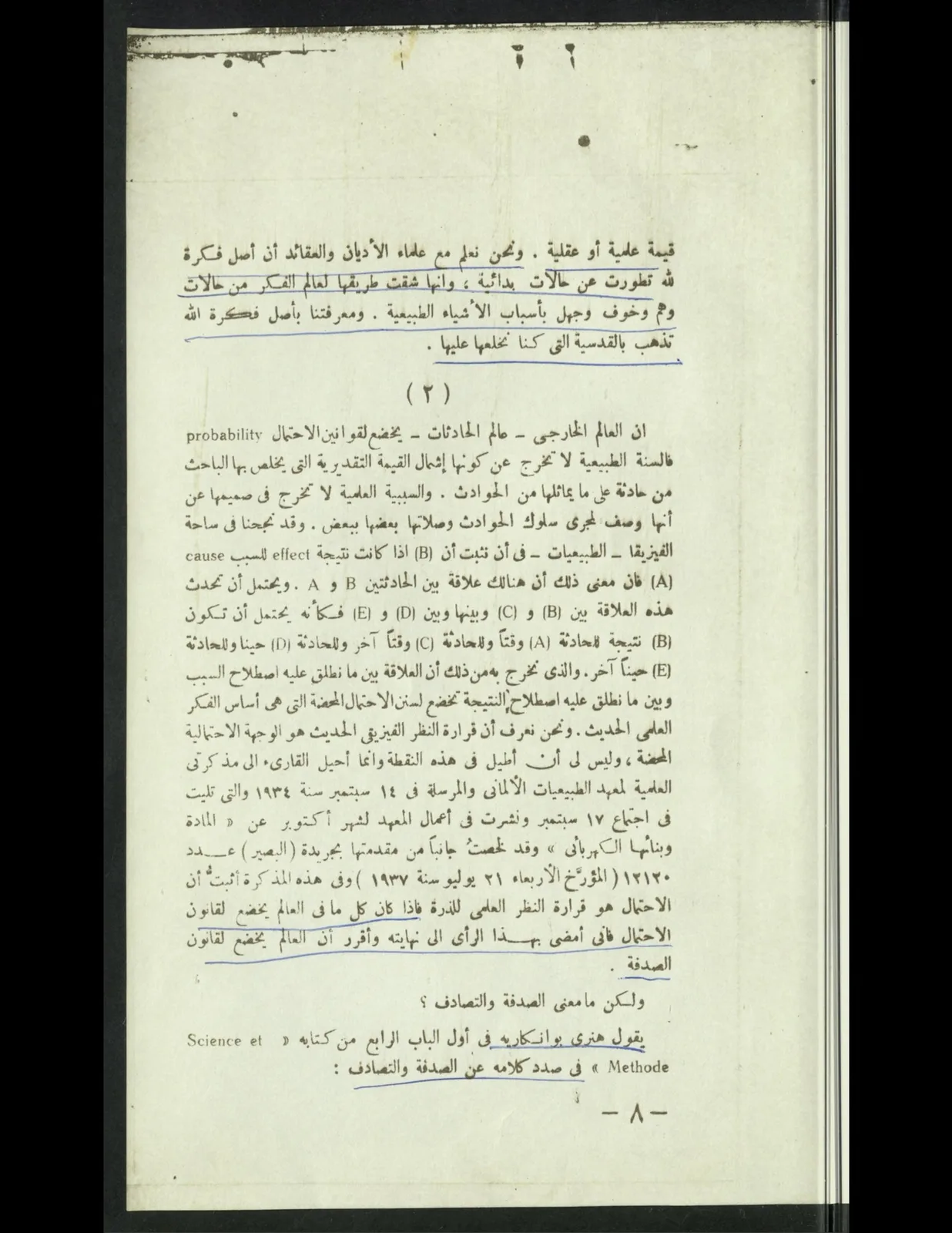
- [39] The last sentence of the essay says he must hold to his scientific creed and call for his theory, "the greatest blow to those who believe in the existence of God" (Q7) — Adham, "Limadha ana mulhid?", p. 13 (leaf 26).
- [22] His argument: the physical world obeys laws of probability; a "law of comprehensive chance" replaces cause and effect; a printing works with millions of type pieces would in an infinite time produce this article, or the Quran; Einstein's "mind of the author" and Jeans's "mathematical mind" are cases of habitual cause-and-effect thinking; he calls this "the greatest blow to those who believe in God" — Adham, "Limadha ana mulhid?", pp. 8–13 (leaves 16–26, page images); Adham, "Qadaya wa munaqashat"; Wajdi, "Limadha huwa mulhid?", 's summary.
- [27] On the evening of 23 July 1940 his body was found floating off the Alexandria shore; a letter to the chief prosecutor in his coat said he killed himself from asceticism and hatred of life, and asked not to be buried in a Muslim cemetery but burned and his skull crushed — "Ismail Adham", English Wikipedia, revision 1379358669 of 2026-10-09 13:44 UTC; wikitext in texts/wikipedia-en-ismail-adham.wikitext.txt. Tier 4, (from Khurashi, Alkhair 1993); Khayr al-Din al-Zirikli, al-A'lam, vol. 1 (Shamela edition p. 310), entry "Isma'il Adham" (1329–1359 AH = 1911–1940), says only that he drowned himself in Alexandria. Reported at second hand; the original has not been seen.
- [41] Al-Risala, 5 Aug 1940: at 7 pm on Tuesday 23 July the sea cast up on the Glim shore at Alexandria the body of a man in his prime; the coastguard first took it for a war casualty, but his clothes showed he had fallen or been thrown into the sea — Risala 370 p. 1245.
- [43] Zayyat says his parents differed (a Turkish father, a Russian mother), the father later married an Egyptian woman and Adham learned Arabic in her house in Alexandria; the father left him a small house, he lived on its rent with his sister, caught tuberculosis (sought drier air at Abu Qir), earned by writing, lecturing and debating for al-Risala, al-Muqtataf and the Alexandria cultural society, was kept at a distance by readers and writers because of his irreligious upbringing and scientific bent, and lost his rent when Italian air raids emptied the neighbourhood — Risala 370 pp. 1245–46.
- [44] Zayyat calls him very intelligent, of sound mind, mathematical in thought, widely read, "believing only in science and logic"; says that had he hidden his creed as some cautious writers do he would have found peace on earth, but "he was like the martyrs of unbelief who find pleasure in pain"; ends by saying godless literature can live in the West, where darkness helps darkness, but not in the East, where light dissolves it — Risala 370 p. 1246.
Why I Am an Atheist
In August 1937 a young mathematician in Alexandria published an essay in a Cairo monthly, and then as a thirteen-page pamphlet, under a plain title: Limadha ana mulhid?, "Why am I an atheist?"12 "I am an atheist," Ismail Adham wrote, "and my soul is calm and at ease in this atheism. In this respect I do not differ from the mystic believer in his faith."3 Within months the editor of al-Azhar's own journal had answered him.4 Three years later he was dead, at twenty-nine.
This chapter tells his story as he told it, because for most of it his account is the only one, and says plainly where others doubted him. The essay's thought stands whatever the truth of the titles on its cover.
Two religions in one house
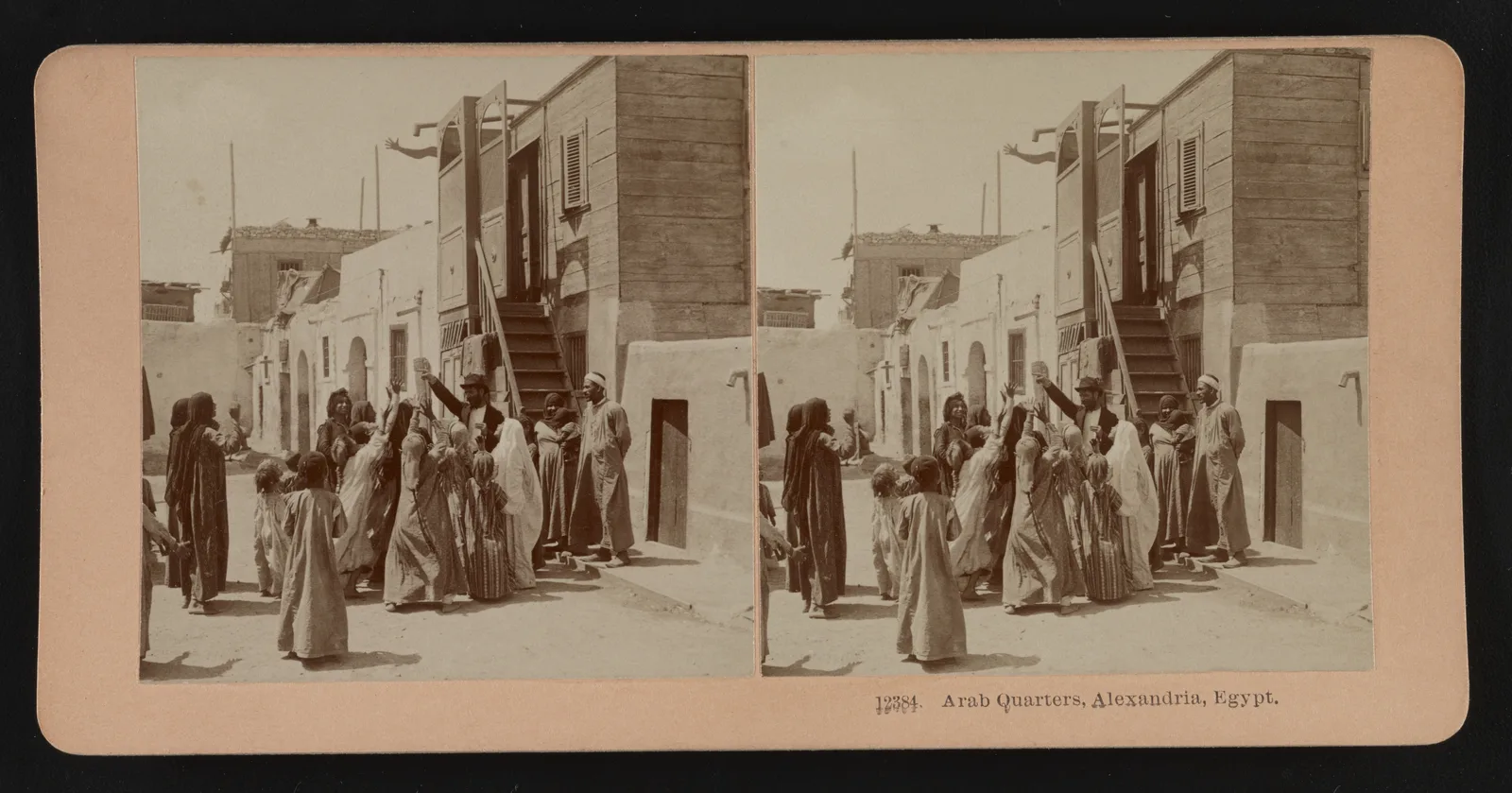
He was born in Alexandria in 1911.5 In his own account, his father, Ahmad Adham, was a Turkish army officer, and his mother, who died when he was two, was a Protestant "of a liberal mind".67 Who she was became a question even in the month he died: his friend the poet Ahmad Zaki Abu Shadi said she was German, the editor of the magazine al-Risala said Russian, and his brother corrected one account without saying which was true.89
He was raised, he says, in Istanbul by two older sisters, who took him to church on Sundays while his father was at the war. His father arranged his Islamic education through an aunt's husband, who took him to Friday prayer, made him fast at Ramadan, and had him learn the Quran by heart, which he knew well at ten.71011 "But I came out of it angry at the Quran," he wrote, "because it cost me great effort that I needed to spend on what I preferred. All of that was among the causes that prepared a psychological revolt against Islam and its teachings."12 His sisters, he says, mocked "miracles, the Day of Resurrection and the reckoning, and all of this had an effect on my mind."13 On the belief timeline, his faith is these two religions taught at once, one of them by force.
"I am a Darwinian"
His father's house was full of books, he says. Before he was thirteen he had read Darwin's Origin of Species and Descent of Man and "came out a believer in evolution"; then Huxley, Haeckel and Lyell; then Descartes, Hobbes, Hume and Kant. Under Spinoza and Haeckel he gave up free will, and then immortality.14 His father brought him to Alexandria and imposed Islam and its rites on him.1516 One day the boy refused to pray. "I am not a believer," he told his father; "I am a Darwinian, I believe in evolution."17 His father sent him to a boarding school in Cairo to cut him off from his reading; he spent his free days, he says, reading German and Turkish books at the national library.15 On the timeline, this is where his doubt begins, and he was not yet fourteen.
The life he described
From here his account becomes hard to check. In 1927, he says, he went to Turkey and studied mathematics at Istanbul for three years, where he founded a society to spread atheism, with student tracts and some thousand members, and linked it to an American atheist association.181920 He says he went to Russia in 1931, took two doctorates at Moscow in 1933 and taught briefly at Leningrad.2122 The title page of his pamphlet calls him a doctor three times over and a member of the Russian Academy of Sciences.23 The editor of al-Risala, writing his obituary, put those titles carefully: "as he used to say of himself".24 In 1972 the scholar G. H. A. Juynboll argued that he never took any doctorate and was never a member of the Academy; that argument is known here only at second hand.25 What is certain is that by the mid-1930s he was writing in the Cairo and Alexandria press on relativity and literature, and living, his brother said, on the rent of a small house in Alexandria.26927
The essay
He wrote it, the pamphlet says, after reading Abu Shadi's book on belief in God.1 He gave his own definition: "Atheism is the belief that the cause of the universe is contained in the universe itself, and that there is nothing beyond this world."28 It was a belief, he insisted, not just an absence of one, and it had begun as an idea and become a creed.29 "The result of this life," he wrote, "was that I left the religions, gave up all beliefs, and believed in science alone and in scientific logic; and how astonished I was to find myself happier and more at peace than when I was struggling to keep a religious belief."30
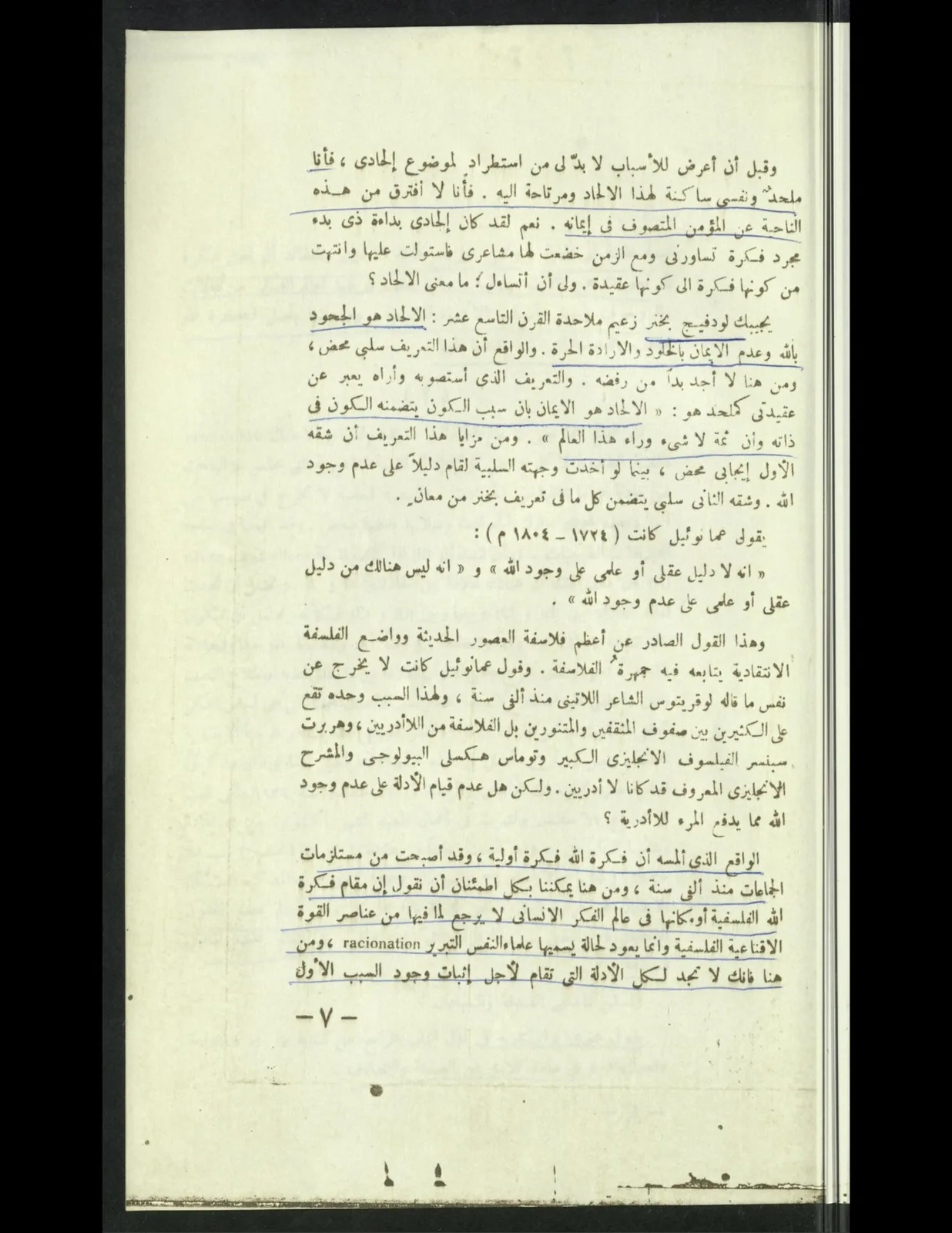
Of the many reasons for his atheism he gave only the scientific one.29 The idea of God, he wrote, "developed out of primitive states, and made its way into the world of thought from states of illusion, fear and ignorance of the causes of natural things; and our knowing the origin of the idea of God takes away the sanctity with which we used to clothe it."31 His argument from mathematics was that the world obeys laws of probability, and that a "law of comprehensive chance" can replace cause and effect: a printing house with millions of pieces of type would, in an infinite time, print his article, or the Quran. When Einstein spoke of a mind behind the book of nature, and the astronomer James Jeans of a mathematical mind, they were, he said, following the habit of thinking in causes.3233 He ended: "So I have no choice but to hold to my scientific creed and to call for my theory, based on the law of comprehensive chance, which at the same time is the greatest blow to those who believe in the existence of God."34 The timeline places his declaration here.
The replies
The answers came that autumn, and the most widely read was courteous. Muhammad Farid Wajdi, editor of Majallat al-Azhar, began by welcoming free debate as an Islamic tradition. Science, he argued, cannot prove that the world has no maker; philosophers are as often believers as unbelievers; and the real causes of Adham's unbelief lay not in science but in his childhood, a Muslim father, Christian sisters who mocked miracles, and prayer forced on him by a relative.435 Abu Shadi answered in a pamphlet of his own, Why Am I a Believer?3637 A member of the senior ulema, Shaykh Yusuf al-Dijwi, was harsher, comparing anyone who denies cause and effect to a donkey; the magazine that had printed Adham's essay called that abuse, not argument.3839 These replies are in copyright, and are given here in summary.
The end
He fell ill with tuberculosis, and, the editor of al-Risala wrote, lost the rent he lived on when Italian air raids emptied his quarter of Alexandria.940 On the evening of 23 July 1940 his body was found on the shore at Alexandria; a letter in his coat said he had taken his own life in despair of the world.4142 Accounts of his reasons differ, and Juynboll's suggestion, that he feared exposure, is a later scholar's theory.25
The editor of al-Risala, Ahmad Hasan al-Zayyat, a devout Muslim, wrote of him with sorrow and respect: very intelligent, mathematical in thought, widely read, a man who believed only in science and logic, and who would have found peace had he hidden his creed as cautious writers do; he was, Zayyat said, like the martyrs of unbelief who find pleasure in pain.4344 No retraction of his atheism is recorded.
Did his unbelief change shape?
On the record, his unbelief grew rather than changed: from a boy's "I am a Darwinian" to a man's definition of atheism as a positive belief, argued from mathematics and printed under his own name. What changed, after his death, was his reputation, as readers learned how much of his life story rested on his word alone. The essay does not depend on it.
Ibn al-Rawandi, the earlier Arabic-language unbeliever known largely through the replies of his opponents, has his own chapter in this book.
Footnotes
-
Ismail Ahmad Adham, "Limadha ana mulhid?", the ninth tract (al-Risala al-tasi'a), "from al-Imam magazine, August 1937", Alexandria (printer's name not certain from the scan), 3 rue de France; the Internet Archive copy is a scan of the American University of Beirut library copy, inscribed by the author as a gift, title page and p. 3; Ismail Adham, "Qadaya wa munaqashat" (Complete Works, section 1 "Fi qadaya al-fikr"; section 4 critical reviews and critics' follow-ups), ed. Ahmad Ibrahim al-Hawari (Cairo, c. 1986–87; IA metadata says 1986), (essay footnote; Muhammad Farid Wajdi, "Limadha huwa mulhid?", Majallat al-Azhar vol. 8, part 7, Rajab 1356 AH (1937) (page number damaged in the OCR), reprinted in [Qadaya] (the pages directly after the essay). In US copyright until the end of 2032 (Decisions): paraphrase only, 's introduction). ↩ ↩2
-
Adham, "Limadha ana mulhid?", title page (leaf 4), p. 13 (leaf 26), leaf 28. ↩
-
Adham, "Limadha ana mulhid?", p. 7 (leaf 14); Adham, "Qadaya wa munaqashat", (94%). ↩
-
Adham, "Qadaya wa munaqashat", (Wajdi); paraphrase only. ↩ ↩2
-
Khayr al-Din al-Zirikli, al-A'lam, vol. 1 (Shamela edition p. 310), entry "Isma'il Adham" (1329–1359 AH = 1911–1940), vol. 1 p. 310 (year, place); Risala 373 p. 1369 (day, via Abu Shadi); "Ismail Adham", English Wikipedia, revision 1379358669 of 2026-10-09 13:44 UTC; wikitext in texts/wikipedia-en-ismail-adham.wikitext.txt. Tier 4. ↩
-
Adham, "Limadha ana mulhid?", p. 3; A'lam. ↩
-
Risala 373 p. 1369. Accounts differ; see the disputed points. ↩
-
Adham, "Limadha ana mulhid?", p. 3. ↩
-
Adham, "Limadha ana mulhid?", p. 3. ↩
-
Adham, "Limadha ana mulhid?", p. 3 (leaf 6); Adham, "Qadaya wa munaqashat", (100%). ↩
-
Adham, "Limadha ana mulhid?", p. 4 (leaf 8, top); Adham, "Qadaya wa munaqashat", (100%). ↩
-
Adham, "Limadha ana mulhid?", p. 4. ↩
-
Adham, "Limadha ana mulhid?", p. 4 (leaf 8); Adham, "Qadaya wa munaqashat", (100%). ↩
-
Adham, "Limadha ana mulhid?", p. 4 (leaf 8); Adham, "Qadaya wa munaqashat", (88%, OCR damage). ↩
-
Adham, "Limadha ana mulhid?", p. 5. ↩
-
Adham, "Limadha ana mulhid?", p. 5. Not verified. ↩
-
Adham, "Limadha ana mulhid?", p. 5. ↩
-
Adham, "Limadha ana mulhid?", pp. 5–6. ↩
-
Adham, "Limadha ana mulhid?", p. 6. ↩
-
Adham, "Limadha ana mulhid?", title page (leaf 4). ↩
-
Risala 370 pp. 1245–46. ↩
-
"Ismail Adham", quoting Juynboll 1972. Reported at second hand; the original has not been seen. ↩ ↩2
-
Risala 372 pp. 1335–36. ↩
-
A'lam, vol. 1 p. 310; "Ismail Adham". ↩
-
Adham, "Limadha ana mulhid?", p. 7 (leaf 14); Adham, "Qadaya wa munaqashat", (100% match). ↩
-
Adham, "Limadha ana mulhid?", p. 6 (leaf 12); Adham, "Qadaya wa munaqashat", (97%). ↩
-
Adham, "Limadha ana mulhid?", p. 8 (leaf 16); also quoted by critics in Qadaya (OCR). ↩
-
Adham, "Limadha ana mulhid?", pp. 8–13 (leaves 16–26, page images); Adham, "Qadaya wa munaqashat"; Wajdi, "Limadha huwa mulhid?", 's summary. ↩
-
Adham, "Limadha ana mulhid?", pp. 10–12 (leaves 20–24). ↩
-
Adham, "Limadha ana mulhid?", p. 13 (leaf 26, last paragraph); Adham, "Qadaya wa munaqashat", (93%). ↩
-
Muhammad Farid Wajdi (d. 1954), editor of Majallat al-Azhar, widely read Islamic apologist; the al-Imam editors call him courteous and tolerant: Majallat al-Azhar vol. 8 pt. 7, Rajab 1356 AH; reprinted in Qadaya. ↩
-
Adham, "Qadaya wa munaqashat", al-Imam notes (Sept, Nov, Dec 1937). ↩
-
Ahmad Zaki Abu Shadi (1892–1955), poet, physician and publisher, author of "Aqidat al-Uluha": pamphlet itself not found; known from the al-Imam notice and from Adham's own review of "Aqidat al-Uluha" in Qadaya. Not checked against the original (no (secondhand)). ↩
-
Adham, "Qadaya wa munaqashat", al-Imam note (Nov 1937); paraphrase only. ↩
-
Shaykh Yusuf al-Dijwi, member of the senior ulema: al-Imam note, Nov 1937, in Qadaya; original not found. ↩
-
A'lam, vol. 1 p. 310. ↩
-
Risala 370 p. 1245. ↩
-
Risala 370 p. 1245. ↩
-
Risala 370 p. 1246. ↩
-
Ahmad Hasan al-Zayyat, owner and editor of al-Risala, devout Muslim man of letters: al-Risala no. 370, 5 Aug 1940, pp. 1245–46. ↩
In their own words
«الالحاد هو الايمان بان سبب الكون يتضمنه الكون في ذاته وان ثمة لا شيء وراء هذا العالم»
«فأنا ملحد ونفسي ساكنة لهذا الالحاد ومرتاحة اليه. فأنا لا أفترق من هذه الناحية عن المؤمن المتصوف في ايمانه»
«غير أني خرجت ساخطا على القرآن لأنه كلفني جهدا كبيرا كنت في حاجة الى صرفه الى ما هو أحب الى نفسي منه. وكان كل ذلك من أسباب التمهيد لثورة نفسية على الاسلام وتعاليمه»
«وكانتا تسخران من المعجزات ويوم القيامة والحساب، وكان لهذا كله أثر في نفسيتي»
«فكان يفرض علي الاسلام والقيام بشعائره فرضا»
«اني لست بمؤمن، أنا دارويني أؤمن بالنشوء والارتقاء»
«وكانت نتيجة هذه الحياة أني خرجت عن الأديان وتخليت عن كل المعتقدات وآمنت بالعلم وحده وبالمنطق العلمي، ولشد ما كانت دهشتي وعجبي أني وجدت نفسي أسعد حالا وأكثر اطمئنانا من حالتي حينما كنت أغالب نفسي للاحتفاظ بمعتقد ديني»
«ومن هنا لا أجد بدا من الثبات على عقيدتي العلمية والدعوة لنظريتي القائمة على قانون الصدفة الشامل الذي يعتبر في الوقت نفسه أكبر ضربة للذين يؤمنون بوجود الله»
«ونحن نعلم مع علماء الأديان والعقائد أن أصل فكرة الله تطورت عن حالات بدائية، وانها شقت طريقها لعالم الفكر من حالات وهم وخوف وجهل بأسباب الأشياء الطبيعية. ومعرفتنا بأصل فكرة الله تذهب بالقدسية التي كنا نخلعها عليها»
«أما أنا شخصيا فلا أجد هذه الصعوبات الا شكلية، والزمن وحده قادر على ازالتها»
The other side
See above: paraphrase only. Wajdi opens by saying free debate is an Islamic tradition and that the believer has nothing to fear from it; says science cannot prove that the world has no maker; says philosophers are as often believers as unbelievers; and finds the real causes of Adham's unbelief in his childhood tensions and psychology rather than in science.
See above: paraphrase only. Shaykh al-Dijwi treated the cause-and-effect argument as so obvious that a person who denies it is "more ignorant than a donkey"; al-Imam called this abuse and not argument.
See above: paraphrase only. Abu Shadi, a modernist Muslim and a doctor, answered that science is Islam's right hand, that the Quran can be read figuratively where it meets science, and that the spiritual view of the world is richer than Adham's; he wrote a separate reply pamphlet.
See above: paraphrase only. Zayyat, mourning him, calls him honest and gifted, says that if he had hidden his creed as cautious writers do he would have found peace, thinks he trusted numbers and logic to measure everything and made himself a stranger to "God and people", and ends that only God's mercy, which "embraces everything", can reach one who slid from the rock of deprivation into the pit of nothing.
See above: paraphrase only. The al-Imam editors disagree with Adham, say they believe in the spiritual view, and add that Egypt's poverty is the more urgent question.
Where accounts differ
| Point | One account | Another | How the page handles it |
|---|---|---|---|
| Birth date | 17 Feb 1911, Alexandria (Wikipedia en; year 1911 also in A'lam) | 13 Jan 1901 (Arabic Wikipedia, beside "1329 AH" which is 1911) | Say 1911; the 1901 is a typo; do not give a day. |
| Place of childhood | Born in Alexandria (A'lam, Wikipedia) | Lived in Istanbul from infancy (his own account) | Say born in Alexandria and "by his own account" raised in Istanbul. |
| Return to Egypt | 1935 (Wikipedia en) | 1936 (A'lam) | "In the mid-1930s." |
| Moscow doctorate | 1931 (A'lam, Wikipedia) | 1933 (his own pamphlet, p. 6) | Say he claimed it; give no year unless naming both. |
| Whether any of it is true | Doctorates, Russian career, Academy membership (his claims; repeated by Zirikli) | "Never got any doctorate", never in Russia perhaps (Juynboll 1972; Whitaker; both secondhand here) | "Accounts differ" plainly: narrate the claims as claims, say a later scholar found no trace, and keep the thought, which stands without the titles. |
| Mother | Daughter of the famous Professor "Wantuf" (his claim; read as van 't Hoff) | Unlikely, he mistook him for a German (Wikipedia, from Juynboll) | Attribute to him, do not endorse. |
| Cause of death | Tuberculosis (A'lam) | Despair and fear of exposure (Juynboll, via Wikipedia); air-raid evacuation fear (Wikipedia); asceticism and hatred of life (the note) | Say the note, say accounts differ; handle with care (Open questions). |
| Mother | Protestant, daughter of "Wantuf" (his own pamphlet p. 3) | German, "Ilin Fanthoff", daughter of the chemist van 't Hoff (Abu Shadi, Adabi, quoted Risala 373); Russian (Zayyat, Risala 370); the brother "corrected" the German claim without saying what was true (Risala 373); improbable (Juynboll via Wikipedia) | Say he claimed it; add that friends and family gave three answers within a month of his death. |
| What the death note said | Burn the body and dissect the head, in despair of the world (Risala 370 p. 1245, page image) | Do not bury in a Muslim cemetery and burn the body (Khurashi, citing al-Risala year 8 p. 1241, wording differs and the page number does not match; Arabic Wikipedia); skull crushed (English Wikipedia) | Use the al-Risala wording, if at all; do not repeat "skull crushed" or the cemetery clause unless a second source shows them. |
| Cause of death (additional) | Tuberculosis, poverty from lost rent when air raids emptied the quarter, and despair (Zayyat) | Fear of exposure (Juynboll); brother says the house was not emptied (Risala 372) | Name the proximate causes as Zayyat gave them; say a later scholar offered another. |
| Whether the 1937 tract was confiscated | Nassar: confiscated after it circulated (Risala 370 p. 1274) | A'lam and Wikipedia: only Min masadir (1936) was | Say Min masadir was confiscated; add the tract only as Nassar's report. |
| Return to Egypt (additional) | Brother: a part of his relativity book was in al-Risala from late 1935 | A'lam: 1936; Juynboll doubts he left Egypt at all | Say he was writing in Egypt by the end of 1935 (published pieces need not mean presence). |
| Order of the replies | Abu Shadi's pamphlet announced Sept 1937 as his answer to Adham's critique of "Aqidat al-Uluha" (al-Imam Sept 1937) | The Dec 1937 al-Imam note says Abu Shadi answered the "Why I Am an Atheist" article | Say "that autumn, Abu Shadi answered in a pamphlet"; do not date it closer. |
List of illustrations
This page uses only public-domain and Creative Commons images; each is credited with its source and licence.
- Limadha ana mulhid? (Why am I an atheist?), title page (leaf 4) — Ismail Ahmad Adham, 1937-08 · Ismail Adham, Limadha ana mulhid? (Alexandria, August 1937); American University of Beirut library copy, scanned by the Internet Archive (item 20220527_20220527_0033) · Public domain in the United States (our reading, flagged in fact-sheet Decisions: author died 23 July 1940; Egyptian life-plus-50 term expired before 1 Jan 1996, so not restored under 17 U.S.C. 104A; Egypt had no US copyright relation in 1937). The Internet Archive item states no rights.
- Limadha ana mulhid? (Why am I an atheist?), p. 3 (leaf 6) — Ismail Ahmad Adham, 1937-08 · Ismail Adham, Limadha ana mulhid? (Alexandria, August 1937); American University of Beirut library copy, scanned by the Internet Archive (item 20220527_20220527_0033) · Public domain in the United States (our reading, flagged in fact-sheet Decisions: author died 23 July 1940; Egyptian life-plus-50 term expired before 1 Jan 1996, so not restored under 17 U.S.C. 104A; Egypt had no US copyright relation in 1937). The Internet Archive item states no rights.
- Limadha ana mulhid? (Why am I an atheist?), p. 4 (leaf 8) — Ismail Ahmad Adham, 1937-08 · Ismail Adham, Limadha ana mulhid? (Alexandria, August 1937); American University of Beirut library copy, scanned by the Internet Archive (item 20220527_20220527_0033) · Public domain in the United States (our reading, flagged in fact-sheet Decisions: author died 23 July 1940; Egyptian life-plus-50 term expired before 1 Jan 1996, so not restored under 17 U.S.C. 104A; Egypt had no US copyright relation in 1937). The Internet Archive item states no rights.
- Arab Quarters, Alexandria, Egypt (stereograph No. 12384) — Unknown publisher (stereograph; LoC lists no creator), 1898 · Library of Congress, Prints and Photographs Division, Stereograph Cards collection · Public domain (published before 1931; U.S. Copyright Office-registered stereograph). LoC states it does not own rights and gives no further statement.
- Limadha ana mulhid? (Why am I an atheist?), p. 6 (leaf 12) — Ismail Ahmad Adham, 1937-08 · Ismail Adham, Limadha ana mulhid? (Alexandria, August 1937); American University of Beirut library copy, scanned by the Internet Archive (item 20220527_20220527_0033) · Public domain in the United States (our reading, flagged in fact-sheet Decisions: author died 23 July 1940; Egyptian life-plus-50 term expired before 1 Jan 1996, so not restored under 17 U.S.C. 104A; Egypt had no US copyright relation in 1937). The Internet Archive item states no rights.
- Limadha ana mulhid? (Why am I an atheist?), p. 7 (leaf 14) — Ismail Ahmad Adham, 1937-08 · Ismail Adham, Limadha ana mulhid? (Alexandria, August 1937); American University of Beirut library copy, scanned by the Internet Archive (item 20220527_20220527_0033) · Public domain in the United States (our reading, flagged in fact-sheet Decisions: author died 23 July 1940; Egyptian life-plus-50 term expired before 1 Jan 1996, so not restored under 17 U.S.C. 104A; Egypt had no US copyright relation in 1937). The Internet Archive item states no rights.
- Limadha ana mulhid? (Why am I an atheist?), p. 8 (leaf 16) — Ismail Ahmad Adham, 1937-08 · Ismail Adham, Limadha ana mulhid? (Alexandria, August 1937); American University of Beirut library copy, scanned by the Internet Archive (item 20220527_20220527_0033) · Public domain in the United States (our reading, flagged in fact-sheet Decisions: author died 23 July 1940; Egyptian life-plus-50 term expired before 1 Jan 1996, so not restored under 17 U.S.C. 104A; Egypt had no US copyright relation in 1937). The Internet Archive item states no rights.
- Limadha ana mulhid? (Why am I an atheist?), p. 13 (leaf 26) — Ismail Ahmad Adham, 1937-08 · Ismail Adham, Limadha ana mulhid? (Alexandria, August 1937); American University of Beirut library copy, scanned by the Internet Archive (item 20220527_20220527_0033) · Public domain in the United States (our reading, flagged in fact-sheet Decisions: author died 23 July 1940; Egyptian life-plus-50 term expired before 1 Jan 1996, so not restored under 17 U.S.C. 104A; Egypt had no US copyright relation in 1937). The Internet Archive item states no rights.
Sources
Tier 1 — the subject's own words (writings, letters, diaries, trial records)
- [Pamphlet] Ismail Ahmad Adham, "Limadha ana mulhid?", the ninth tract (al-Risala al-tasi'a), "from al-Imam magazine, August 1937", Alexandria (printer's name not certain from the scan), 3 rue de France; the Internet Archive copy is a scan of the American University of Beirut library copy, inscribed by the author as a gift. Scan: https://archive.org/details/20220527_20220527_0033 (IA lists it as "ed. 1938"; the title page gives only August 1937). The OCR (texts/lima-1938.txt) is unusable; the whole essay was read by eye from the page images (pp. 3–7 first pass, pp. 8–13 second pass, leaves 16–26). Printer (title page): Matba'at al-Ta'awun, 3 rue de France, Alexandria (reading of the name slightly uncertain from the scan; a Google Books snippet of Cinema and Secularism, 2023, cites "Alexandria: Ta'awon Press, 1937"). The essay ends on p. 13 with a printer's ornament; there is no colophon, date or price. Leaf 28 is a list of the author's nine works with "soon: The Messenger Muhammad, his origin and lineage". The "1938" in the IA title is the cataloguer's; nothing on the pages supports it, so cite August 1937.
- [Qadaya] Ismail Adham, "Qadaya wa munaqashat" (Complete Works, section 1 "Fi qadaya al-fikr"; section 4 critical reviews and critics' follow-ups), ed. Ahmad Ibrahim al-Hawari (Cairo, c. 1986–87; IA metadata says 1986). Scan: https://archive.org/details/elshandawily699. OCR in texts/qadaya.txt (noisy; Arabic-Indic digits are unreliable). Reprints the essay (from al-Imam, Aug 1937, with a footnote giving that source), Wajdi's reply, and the al-Imam editorial notes on Abu Shadi, Wajdi and al-Dijwi. Editorial matter of this 1980s edition is in copyright; Adham's own text is cited from it only for checking.
Tier 2 — scholarly biographies and encyclopedias
- [A'lam] Khayr al-Din al-Zirikli, al-A'lam, vol. 1 (Shamela edition p. 310), entry "Isma'il Adham" (1329–1359 AH = 1911–1940). https://shamela.ws/book/12286/857. Zirikli died 1976: facts only, no quotation. It repeats Adham's own claims as fact (Moscow doctorate 1931, foreign membership of the Soviet Academy, a post at "Saint Petersburg"), cites al-Hadith (Aleppo), Oct 1940, for the death, and the Iraqi authors' dictionary (Mu'jam al-mu'allifin al-'Iraqiyyin 1:113).
- [Juynboll] G. H. A. Juynboll, "Isma'il Ahmad Adham (1911–1940), the Atheist", Journal of Arabic Literature 3:1 (1972), pp. 54–71, doi:10.1163/157006472X00026 (JSTOR 4182890). Still NOT READ in full (Brill/JSTOR paywalled; Brill page and Crossref give no abstract): what we have is the English Wikipedia's block quotation, one Google Books snippet of Coury's introduction (Juynboll accuses him of fraudulent scholarship and falsifying his biography and, "hostile to the end", attributes the suicide to fear of exposure), and a snippet of Juynboll's 1969 book saying Min masadir is plagiarised from W. H. T. Gairdner's article "Mohammedan tradition and Gospel record". In copyright; paraphrase only.
- [Risala 370 / 372 / 373] Al-Risala (Cairo weekly, ed. Ahmad Hasan al-Zayyat), year 8, no. 370 (Mon 5 Aug 1940, pp. 1245–46 and 1273–74), no. 372 (19 Aug 1940, pp. 1335–36), no. 373 (26 Aug 1940, p. 1369). Contemporary periodical (Tier 2 for the death and the 1940 view of him; his brother's letter is a Tier 1 family statement). IA item arrissalah1940 (files "Arrissalah,0370,Aug,5,1940,Egypt(ar)"). OCR saved as texts/risala-0369 to 0373 (369 and 371 hold nothing on him); page images read from the PDFs. In US copyright (restored, to 2035): paraphrase only; keep untracked.
- [Wikipedia en] "Ismail Adham", English Wikipedia, revision 1379358669 of 2026-10-09 13:44 UTC; wikitext in texts/wikipedia-en-ismail-adham.wikitext.txt. Tier 4.
- [Wikipedia ar] "إسماعيل أدهم", Arabic Wikipedia, revision 76040818 of 2026-07-29 22:47 UTC (texts/wikipedia-ar-ismail-adham.wikitext.txt); "لماذا أنا ملحد (كتاب)", revision 72004748 of 2025-09-12 21:43 UTC (texts/wikipedia-ar-limadha-ana-mulhid-book.wikitext.txt). Tier 4.
- [Khurashi text] Sulayman al-Khurashi, "Intihar mulhid", Islamway, 4 Jan 2003 (Wayback copy of 31 May 2018 saved as texts/khurashi-intihar-mulhid.txt); a polemical article that quotes the death note and cites al-Risala and Zaki Mujahid's al-A'lam al-Sharqiyya (1963) pp. 858–60.
- [Snippets] Google Books feed snippets (not full text): Coury, Sceptics of Islam (2018) intro to Adham; Juynboll, The Authenticity of the Tradition Literature: Discussions in Modern Egypt (Brill, 1969); Eller and Khazaal (2024). See notes/second-pass-notes.md.
Tier 3 — popular biographies and journalism
- [Khurashi] Sulayman al-Khurashi, "Intihar Isma'il Adham" (collection of obituaries and replies) and the Islamway article "Intihar mulhid" (4 Jan 2003). Named in Wikipedia; not read.
- [Whitaker] Brian Whitaker, "Arabs Without God", chapter 2 (Medium, 2017). Not read; named in Wikipedia for the suggestion that he never left Egypt.
- [Coury] Ralph M. Coury (ed.), Sceptics of Islam (I. B. Tauris, 2019), pp. 79–91, an English translation of the essay; and the German translation in "Konzepte von Toleranz und Intoleranz in der arabischen Moderne" (De Gruyter, 2024). Both in copyright; not used. Any English in this project is our own translation.
Tier 4 — maps to other sources only (Wikipedia and similar). Never cited in the script.
- English Wikipedia "Ismail Adham" (raw text read 2026-10-14); Arabic Wikipedia "Isma'il Adham" (gives a birth date of 13 January 1901 beside "1329 AH", which cannot agree; treat as a typo); Commons "Copyright rules by territory/Egypt" (read for the Egyptian law citations in the Decisions section, the primary texts on WIPO Lex were not reachable).
Opposition sources — contemporary critics and religious responses
- [Wajdi] Muhammad Farid Wajdi, "Limadha huwa mulhid?", Majallat al-Azhar vol. 8, part 7, Rajab 1356 AH (1937) (page number damaged in the OCR), reprinted in [Qadaya] (the pages directly after the essay). In US copyright until the end of 2032 (Decisions): paraphrase only.
- [Dijwi] Shaykh Yusuf al-Dijwi, a reply published in 1937 and known here only through [Imam notes] and [Qadaya]; original not found. In US copyright until the end of 2032 on our reading: paraphrase only.
- [AbuShadi] Ahmad Zaki Abu Shadi, "Limadha ana mu'min?" (separate pamphlet, 1937). NOT FOUND in any free scan; known only from [Imam notes]. Paraphrase only.
- [Imam notes] al-Imam editorial notices (Sept 1937 p. 271; Nov and Dec 1937), as printed in [Qadaya]; the editor is not identified in the OCR.
Related lives
Ibn al-Rawandi (the earlier Arabic-language unbeliever known largely through his opponents' replies) — the pairing is a suggestion only; never named as "next" in a script (lessons.md).

Alan Turing
Alan Turing was a confirmed Anglican schoolboy at Sherborne. He met the death of his friend Christopher Morcom in 1930 not with lost faith but with a deeper hope that the spirit survives, and worked that hope out through Eddington's physics in "Nature of Spirit" (1932). At some undated point before the end of the war he gave it up for what his biographer calls a determinist and atheistic view. In 1950 he answered the soul argument against thinking machines with a theologian's joke. In nothing read did he give his unbelief a name.
Albert Camus
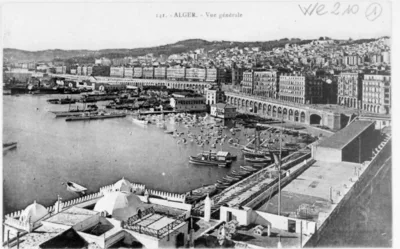
Albert Camus was raised in a household that was Catholic only by custom, and never lost a faith he never held. The absence of God became his starting point in the essays of 1936 and The Myth of Sisyphus in 1942. From 1944 he turned that unbelief from opposition into alliance. He told the Dominicans in 1948 that he could not accept their truth but would not call it an illusion, and asked Christians to remain Christians and speak out against evil.
Simone de Beauvoir
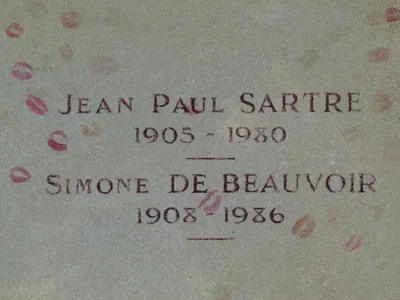
Simone de Beauvoir was raised by a devout mother and an unbelieving father as an exalted Catholic girl who thought of becoming a nun. She lost her faith gradually at about fourteen, and at eighteen felt its meaning as the word "alone". She did not campaign against belief but built an ethics on its absence (1944–47), arguing that without God we are wholly responsible, and wrote The Second Sex (1949), which the Vatican banned. She held to the position through the death of her believing mother (1963) and what she saw as Sartre's last turn toward religious language (1980).
Bhagat Singh
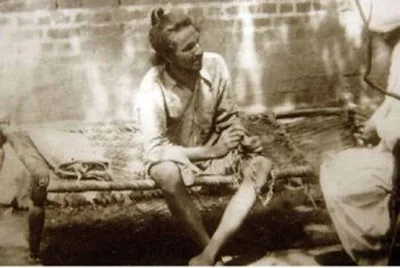
Bhagat Singh was an Arya Samaj schoolboy who prayed for hours. He read his way out of belief in God during a crisis in his revolutionary party in 1925–26, and in 1927 refused prayer when the police offered it as a way out. In the condemned cell in 1930 he answered the charge that his atheism was vanity. What he revised in his last months was the bomb, not the unbelief.