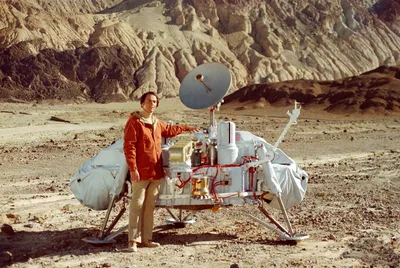
Carl Sagan was raised in a Jewish household in Brooklyn and told no story of lost faith, though as a teenager he filled a notebook with arguments about God. From 1979 he stated in print a position that refused both the certainty of belief and the certainty of atheism. He argued all his life that religious claims should be tested like any others, and found his awe in nature. He faced his death in 1996 calling himself an agnostic and expressly not an atheist, with no revision and no deathbed conversion.
The belief timeline
- Faith (c. 1934–c. 1947 (observance, not testimony; belief itself UNVERIFIED)) — Jewish household in Brooklyn; as a child he recited the V'ahavta prayer at temple services (Druyan); the wonder of the 1939 World's Fair was a child's first large experience of awe, in his own telling; no source in his own words says he believed [77][82][9]
- Doubt (c. 1951–1954 (undated notebook; see Disputed points)) — Chicago undergraduate notebook: pages on God's qualities and contradictions, a weltanschauung built on "gene multiplication and survival", and "Is there not a spiritual? I do not know -- yet!" [14][15][16][83]
- Declaration (1979 (*Broca's Brain*, ch. 25); 1981 (Wakin interview); 1985 (Gifford Lectures); label "agnostic" 1996) — The position stated in print: certainty either way is unwarranted, "God" must be defined before the question can be answered; the 1989 Senate testimony is on science and religion, not belief [84][86][93][91][43]
- Revision (steadiness under test) (1994–1996) — Facing myelodysplasia and death he restates the position ("I would love to believe... wishful thinking"), says he had no religious conversion, and Druyan reports none at the deathbed; the change over time is in tone and in the label, not in the position [100][99][104][91]
Notes to the timeline (15)
- [77] Ann Druyan (2006): "As a child in Brooklyn, he had recited the Hebrew V'Ahavta prayer from Deuteronomy at temple services." This is the only statement in the texts read that places him in religious observance as a child; it is Druyan's, not his own. — Carl Sagan, The Varieties of Scientific Experience: A Personal View of the Search for God, ed. Ann Druyan (Penguin Press, 2006), from the 1985 Gifford Lectures; read in the OCR of the open IA item
the-carl-sagan-book-collection(research/texts/varieties-collection.txt). In copyright: read for checking and paraphrase. No printed page numbers in the scan; cited by section (Editor's Introduction by Ann Druyan, dated Ithaca 21 Mar 2006; Author's Introduction, Glasgow 14 Oct 1985; ch. 6 "The God Hypothesis"), Editor's Introduction. - [82] Sagan, ch. 16 of *Billions and Billions* ("The Rules of the Game"): the 1939 World's Fair was "a day that powerfully influenced my thinking"; as the family left he cried when his father gave his apple to a hungry pencil-seller ("We have enough. We can give him an apple.") and fell asleep in his father's arms; he introduces the chapter on moral rules with the memory. (Reading for the script, not Sagan's claim: the moral lesson he chose to open a chapter on ethics came from a parent, in a story with no creed in it.) — Carl Sagan, Billions and Billions: Thoughts on Life and Death at the Brink of the Millennium (Random House, 1997), read in the OCR of the open IA item
the-carl-sagan-book-collection(research/texts/billions-collection.txt,billions-pages.txt). In copyright: read for checking and paraphrase only. The scan has no printed page numbers, so cited by chapter (ch. 13, 16, 19) and "Epilogue" (by Ann Druyan, dated Ithaca, 14 Feb 1997), ch. 16. - [9] Captivated by the visions of the future at the 1939 New York World's Fair, Sagan developed a lifelong passion for space and the technology that might reach it. — Sahar Kazmi, "Carl Sagan: Childhood Dreams of Space Flight," Timeless (Library of Congress blog), 7 Dec 2023,.
- [14] The Library of Congress holds Sagan's University of Chicago freshman notebook, written at 16 in the early 1950s. — Trevor Owens (interviewer) and David Grinspoon, "Carl Sagan, Imagination, Science, and Mentorship," Inside Adams (Library of Congress blog), 5 Mar 2014,.
- [15] Grinspoon: the notebook has "pages and pages about God," with "elaborate discussions of God's possible qualities and inherent contradictions and how this or that consideration may or may not disprove the existence of God." — (interviewer), Inside Adams.
- [16] Notebook p. 54, headed "A Darkling Plain," as transcribed by Grinspoon, ends: "Does there not exist another element though? What is the world? What is this 'I'? The desire for liberty, can it be wholly because selected for? Is there not a spiritual? I do not know -- yet!" Grinspoon notes the last paragraph is "in an increasingly excited and less disciplined script." — (interviewer), Inside Adams.
- [83] The notebook is captioned "University of Chicago undergrad notebook", "freshman year... He was 16... early 1950s" by the interviewer and Grinspoon, yet p. 54 refers to "my honors paper" (his honors BA is 1954; he entered in fall 1951 aged 16, turning 17 on 9 Nov 1951). The date and his age at p. 54 are therefore uncertain. — (interviewer), Inside Adams; Tom Head (ed.), Conversations with Carl Sagan (University Press of Mississippi, 2006): Introduction, Chronology and sixteen reprinted interviews, 1973–1996, pp. 29, xxi. Accounts differ; see the disputed points.
- [84] *Broca's Brain* (1979), ch. 25: he writes that those who question the God and soul hypotheses "are by no means all atheists"; an atheist is someone certain that God does not exist; he knows of no compelling evidence for that; certainty either way is "the confident extremes"; "a questing, courageous and open mind" is the tool. — Carl Sagan, Broca's Brain: Reflections on the Romance of Science (Random House, 1979), ch. 25 "The Amniotic Universe" and the dedication; same IA item (
research/texts/brocas-collection.txt). In copyright; page numbers not in the scan, ch. 25. - [86] Wakin, *U.S. Catholic*, May 1981 (pp. 19–24): asked "Where does God fit into this view?", Sagan replies by asking what the questioner means by "God", names Spinoza's and Einstein's God as the sum of the physical laws, and says he knows of no compelling evidence for "the old man in the sky"; the universe "does not exclude a traditional Western or Eastern god, but... does not require one either". — Head, Conversations with Carl Sagan, pp. 69–70.
- [93] Varieties ch. 6 "The God Hypothesis" (1985): the word "God" covers incompatible ideas; if God means the laws of nature "no one can possibly be an atheist"; the old man in the sky is "much more dubious"; believing in a god "because that's what I was told when I was young" cannot count as natural theology because other people are told different things ("They can't all be right. And in fact they all may be wrong."). — Sagan, Varieties of Scientific Experience, ch. 6.
- [91] Head's Introduction: Sagan "did not belong to any organized religious tradition"; asked in a 1996 interview what his religious beliefs were, he answered "I'm agnostic" (Head's note 11 cites Jim Dawson, Minneapolis *Star Tribune*, 2 Mar 1996; the Dawson article itself not read); he felt theist, agnostic and atheist labels told one nothing without saying which God is meant (Head's note 12 cites Terry Gross, NPR *Fresh Air*, 29 May 1996; not read). — Head, Conversations with Carl Sagan, p. xiv. Reported at second hand; the original has not been seen.
- [43] In 1989 Sagan said: "There is no serious religion, as far as I know, that has objections to quadratic equations... But the trouble is when you get to other areas," naming the 4.5-billion-year-old Earth versus a 6,000-year-old Earth, and evolution "considered anathema by a number of religions." — Crisis in Science and Math Education, hearing before the Committee on Governmental Affairs, U.S. Senate, 101st Cong., 1st sess., 9 Nov 1989 (S. Hrg. 101-551). Federal publication; ERIC ED326440 OCR on the Internet Archive (
research/texts/senate-1989-science-education.txt). Sagan's testimony. Page numbers in the OCR are unreliable; cited by hearing and approximate page, approx. p. 24. - [100] *Billions and Billions* ch. 19 (written 1996): "I would love to believe that when I die I will live again... I know of nothing to suggest that it is more than wishful thinking"; there is "no reason to deceive ourselves with pretty stories for which there's little good evidence"; better "to look Death in the eye and to be grateful every day". — Sagan, Billions and Billions, ch. 19.
- [99] Rose 1996: "I didn't have any near-death experiences; I didn't have a religious conversion"; he does not think there is anything one thinks about after death: "a long, dreamless sleep. I'd love to believe the opposite, but I don't know of any evidence"; the illness enhanced "my sense of appreciation for the beauty of life". — Head, Conversations with Carl Sagan, pp. 149–150.
- [104] Druyan's Epilogue (14 Feb 1997): in the last days he said "This is a deathwatch... I'm going to die"; to her "You're going to beat this" he answered "Well, we'll see who's right about this one"; "no deathbed conversion" (see); a shared conviction "that our wondrous life together was ending forever"; after his death she can "feel, without resorting to the supernatural, that Carl lives" in the people he inspired. Head's Introduction (p. xviii) repeats the exchange. — Sagan, Billions and Billions, Epilogue; Head, Conversations with Carl Sagan, p. xviii.
An Atheist Has to Know a Lot More Than I Know
In the spring of 1996, eighteen months into a fatal illness, Carl Sagan told a reporter from the Washington Post that he was not an atheist. An atheist, he said, had to know a lot more than he knew: an atheist was someone who knew there was no God. People had been writing to tell him that he would soon meet God, and Sagan said his answer would be to ask God what had taken so long.1
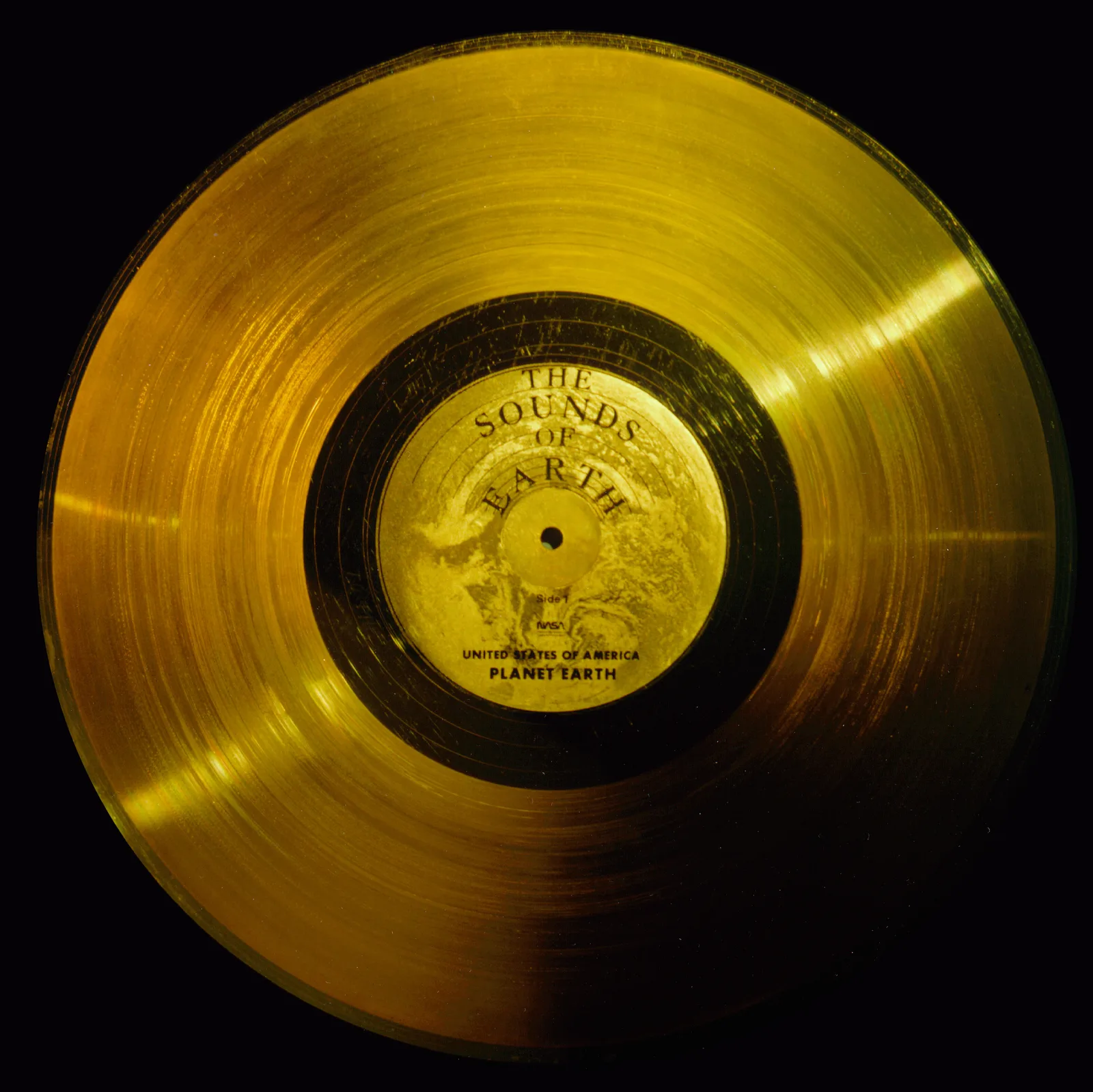
He was one of the best-known scientists in America, the presenter of Cosmos and the man who had put a gold record on the Voyager spacecraft. He spent much of his life arguing that religious claims should be tested like any others, and he never claimed a faith. Yet he refused, to the end, the one label most of his admirers would have given him. This chapter asks why.
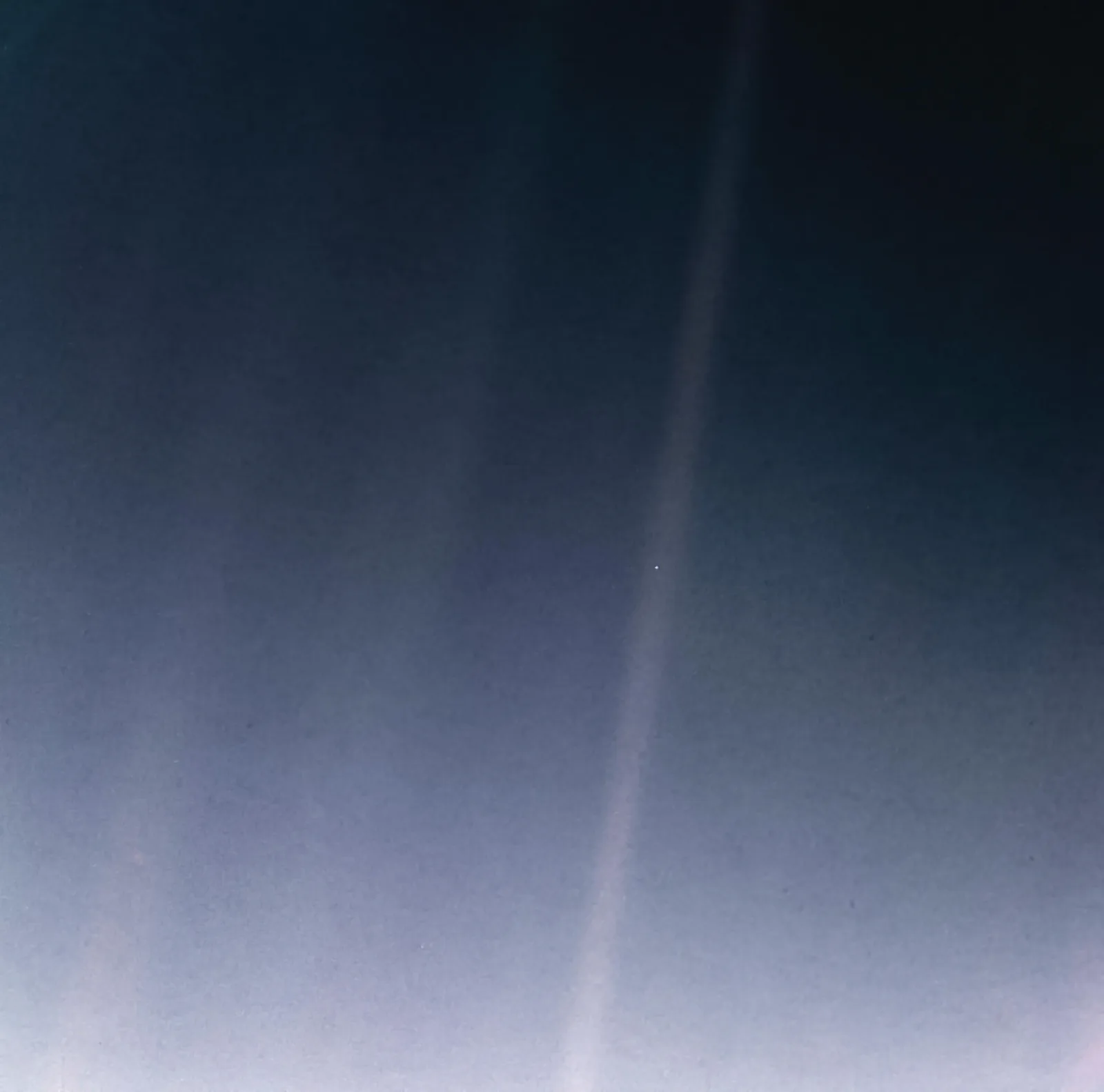
Brooklyn and the World's Fair
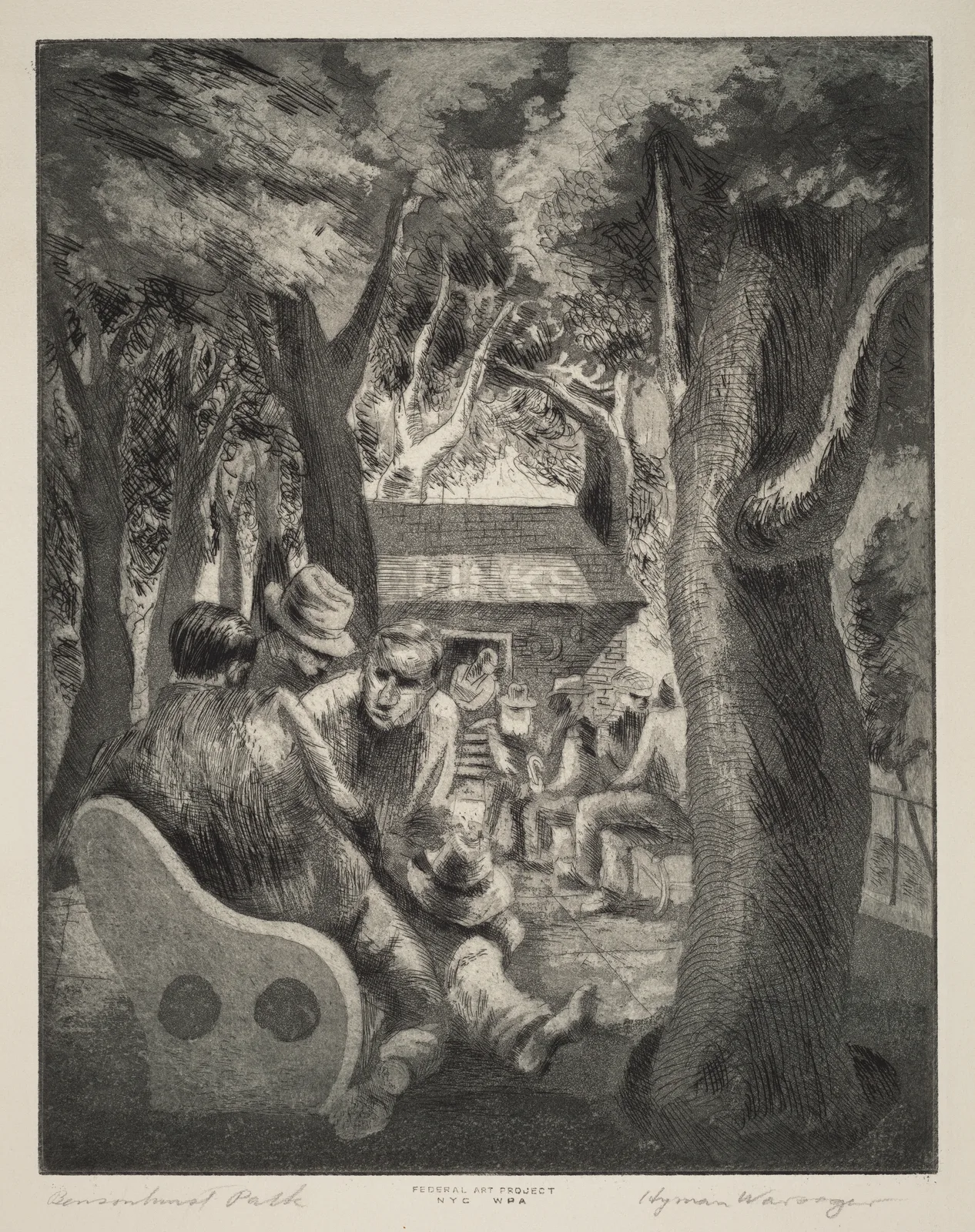
He was born on 9 November 1934 in Bensonhurst, Brooklyn, the son of Samuel Sagan, a cutter in a clothing factory, and Rachel Gruber Sagan. It was the Depression, he said later, and they were rather poor.2345 His mother's father had come to America from a town in the Austro-Hungarian Empire in 1904.6 The household was Jewish. His widow, Ann Druyan, wrote that as a child in Brooklyn he recited the V'ahavta prayer from Deuteronomy at temple services.78 That is the only evidence found for this chapter of religious observance in his childhood, and it is hers, not his; nothing he wrote describes a belief he later lost.9 On his timeline, the first mark is therefore observance rather than faith.
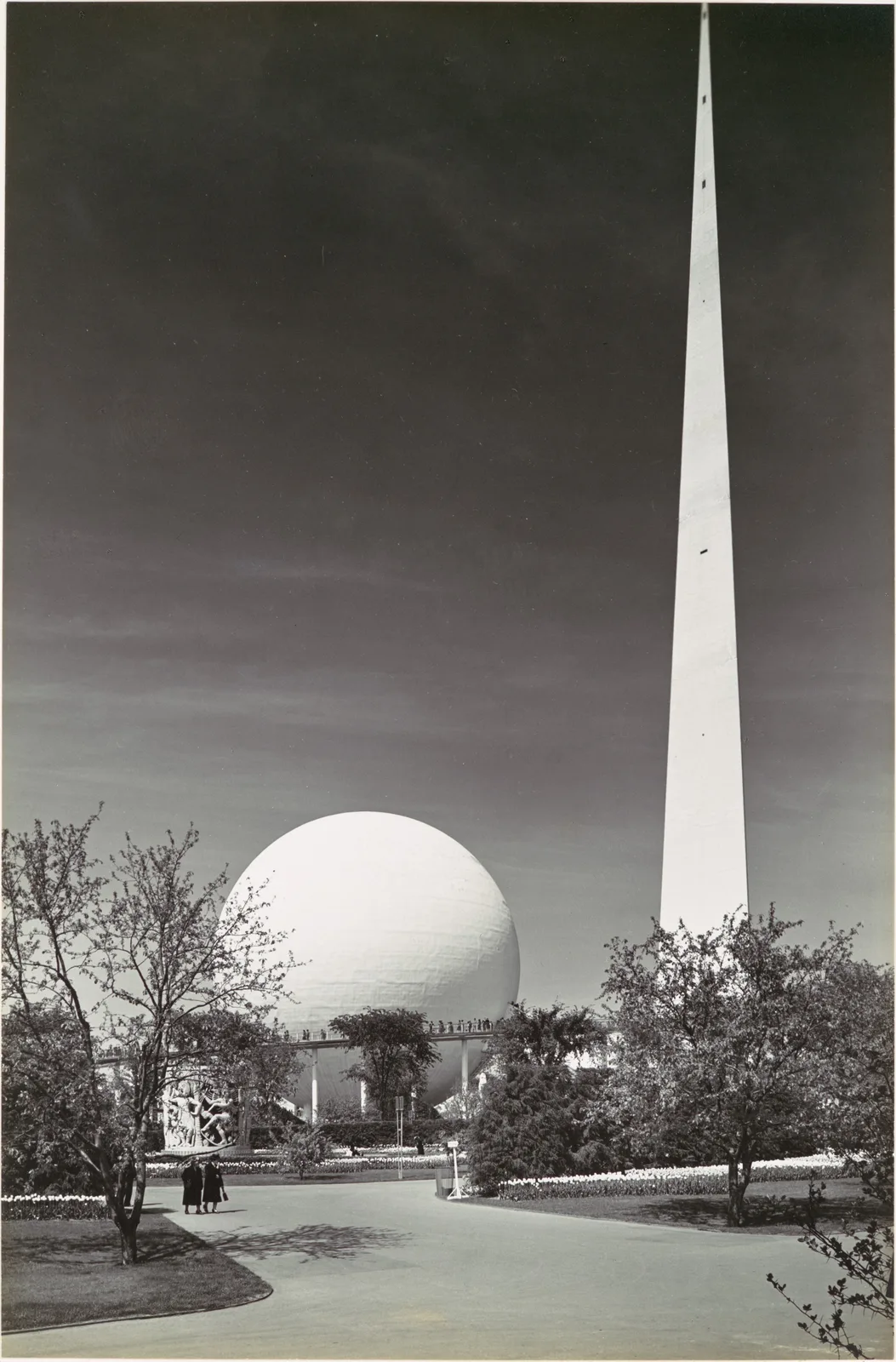
When he told his own childhood, it was a story about wonder, not about God. The 1939 World's Fair in Queens, with its visions of the future, fixed his lifelong interest in space. As the family left that day, his father gave his apple to a hungry man selling pencils, telling the boy that they had enough; Sagan chose that memory, with no creed in it, to open a chapter on moral rules decades later.1011 At the branch library on 86th Street a book taught him that the stars are suns. His parents, he said, knew nothing about science but backed him all the way.1213
A teenager's notebook
The family moved to Rahway, New Jersey, and in the autumn of 1951, at sixteen, he went to the University of Chicago.1415 The next summer he worked for the Nobel geneticist H. J. Muller at Indiana University, looking for mutations in fruit flies; Muller was interested in the origin of life and did not think the idea of life elsewhere silly.1617
His undergraduate notebook, now in the Library of Congress, has pages and pages about God: his possible qualities, his contradictions, and whether this or that argument might disprove his existence.1819 One page, headed "A Darkling Plain," begins from the claim that all life is structured for gene multiplication and survival, and ends, in increasingly excited handwriting: "Is there not a spiritual? I do not know -- yet!"202122 The page is undated, and the Library's description of it as written at sixteen is hard to square with its reference to his honours paper, so accounts of exactly when he wrote it differ.23 On the belief timeline, that notebook is where his doubt falls: not a loss of faith, but a young scientist trying to decide whether anything lay beyond what he was learning.
A position, not a creed
He took his doctorate at Chicago in 1960, held a fellowship at Berkeley, taught at Harvard, and from 1968 directed the Laboratory for Planetary Studies at Cornell.242526 He studied the dust storms of Mars with Mariner 9 in 1971, helped choose the messages carried by the Pioneer and Voyager probes, and won a Pulitzer Prize in 1978 for The Dragons of Eden.272829
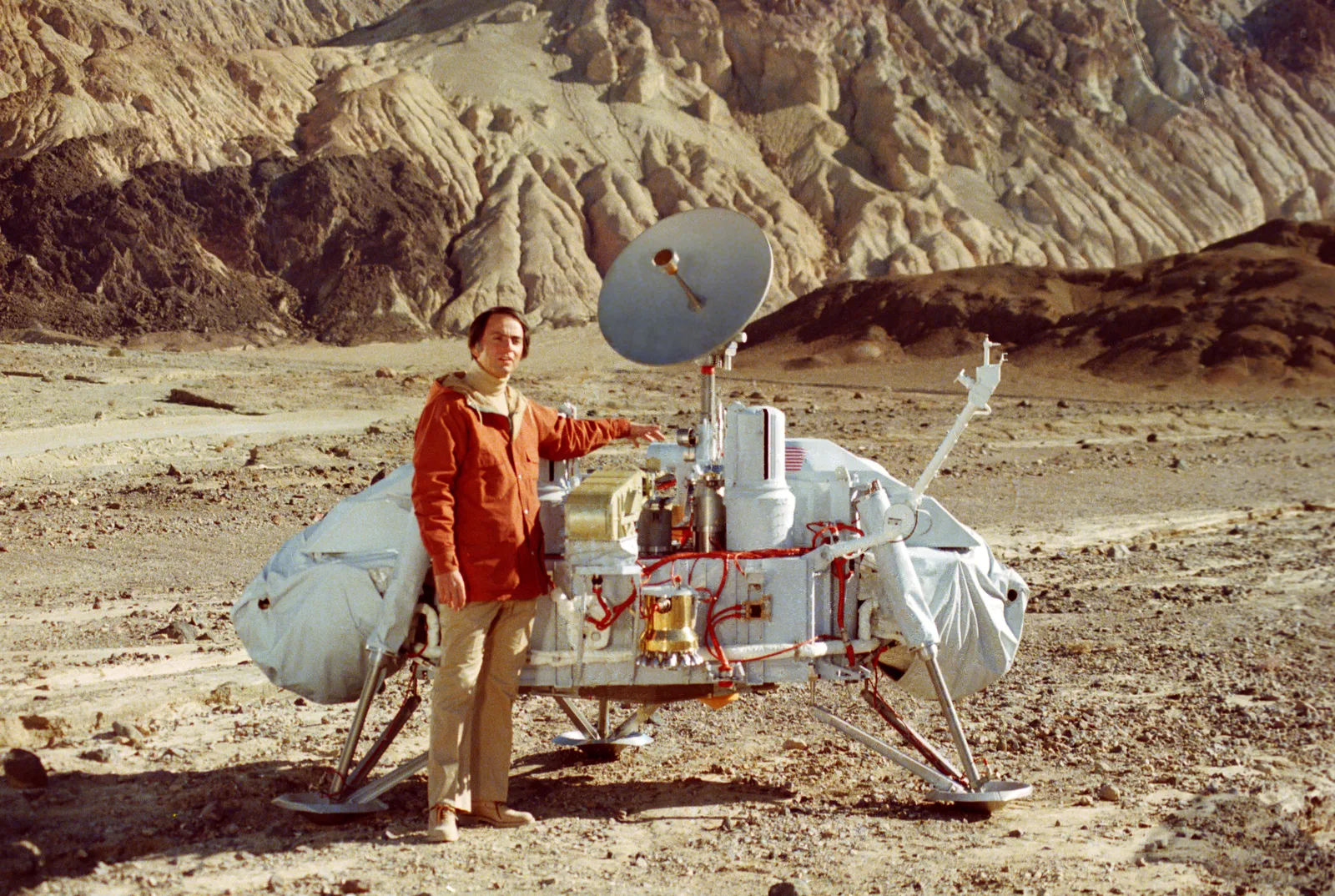
His position on God first appears in print in Broca's Brain (1979). Those who question the existence of God and of the soul, he wrote, are not all atheists. An atheist is someone certain that God does not exist, and he knew of no compelling evidence for that certainty; to be sure either way seemed to him the two confident extremes of a question so full of doubt that it deserved very little confidence.3031 Religion, he added, should not be exempt from questioning, and he noted that "question" and "quest" come from the same root.32 He said the same to Edward Wakin of the Catholic magazine U.S. Catholic in 1981: he was uncomfortable with dogmatic atheists and with dogmatic believers alike, and would be delighted if there were a life after death, especially one that let him go on learning.3334
That interview also shows the other side of him. He told Wakin that there is no deeper religious feeling than the feeling for the natural world, and that the beauty science reveals is more powerful than anything any bureaucratic religion offers; he warned that the authoritarian side of religion was a real danger to human survival. Wakin pushed back: Sagan's universe, he said, left out the deep human need for transcendence. Sagan answered that myths are made deeper, not shallower, when they are based on truth.353637
In his Gifford Lectures at Glasgow in 1985 he argued that the word "God" covers ideas that cannot all be true together. If God means the laws of nature, he said, then no one could be an atheist; the old man in the sky was much more doubtful, and believing something because one had been told it as a child could not count as evidence, since other children are told other things.3839 These statements of 1979 to 1985 make up his declaration on the timeline, though it is a declaration of a position, not of disbelief.
Science and religion in Congress
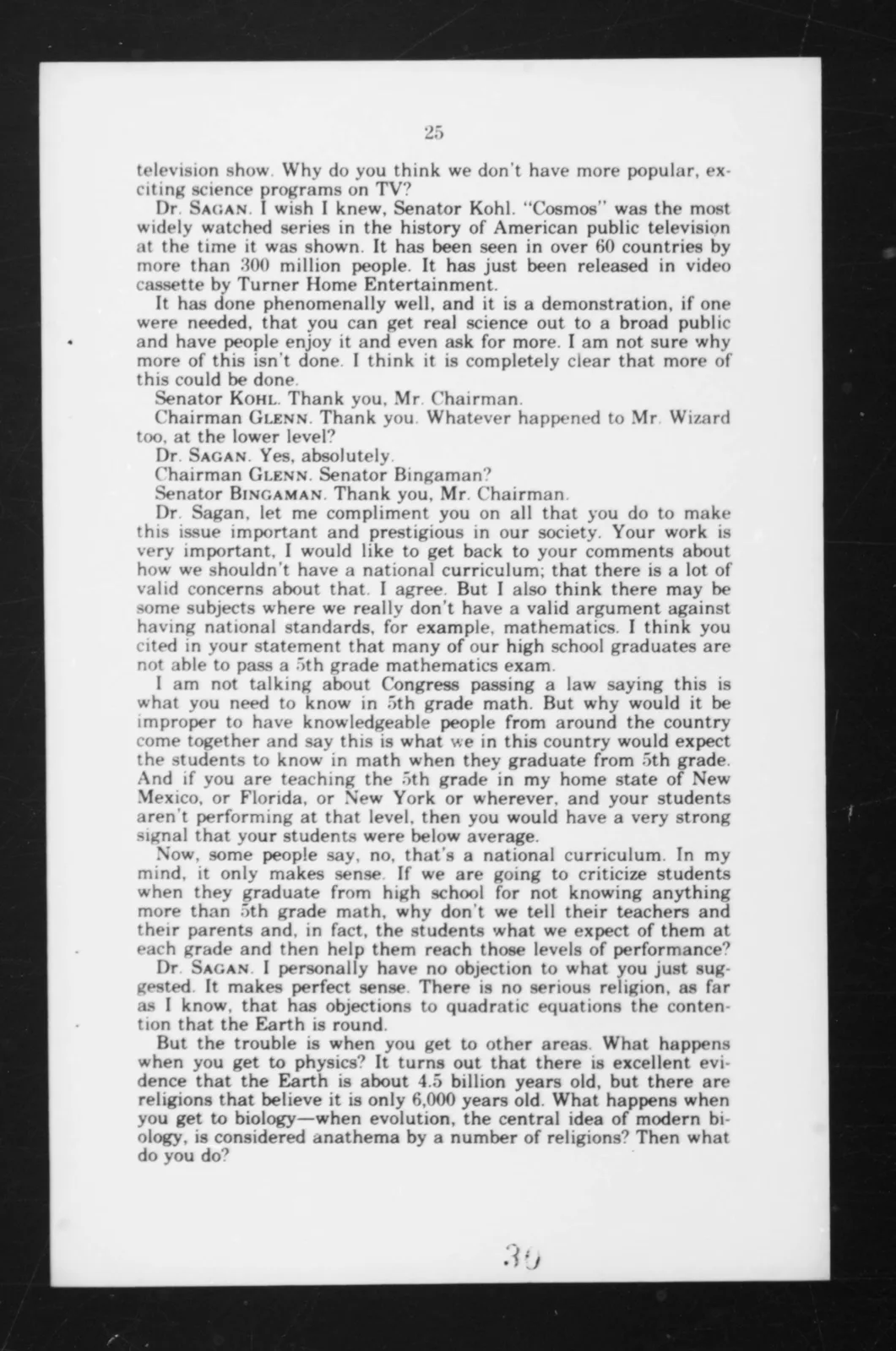
He argued the same case in public life. Testifying to the Senate on science education on his fifty-fifth birthday, 9 November 1989, he said that no serious religion he knew of objected to quadratic equations or to the roundness of the Earth. "But the trouble is when you get to other areas." The trouble came, he said, with the age of the Earth and with evolution, "considered anathema by a number of religions."404142 Astrology, he told the senators, "is bunk. It is a fraud."4344
His most bruising public fights were not about God but about nuclear winter, the theory he and four colleagues published in 1983 that a nuclear war could darken and freeze the Earth. Critics in Congress and science answered him hard: the MIT arms-control scientist George Rathjens said the public had been misled by "careless and hyperbolic statements" from the scientific community, and the physicist Freeman Dyson was quoted as calling the physics atrocious.4546474849 Sagan replied that scientists are human beings, with political prejudices like everybody else.5051 In the late 1980s he also worked with religious leaders, co-chairing with the Very Reverend James Parks Morton a joint appeal of scientists and religious leaders to protect the environment.52
Steady at the end
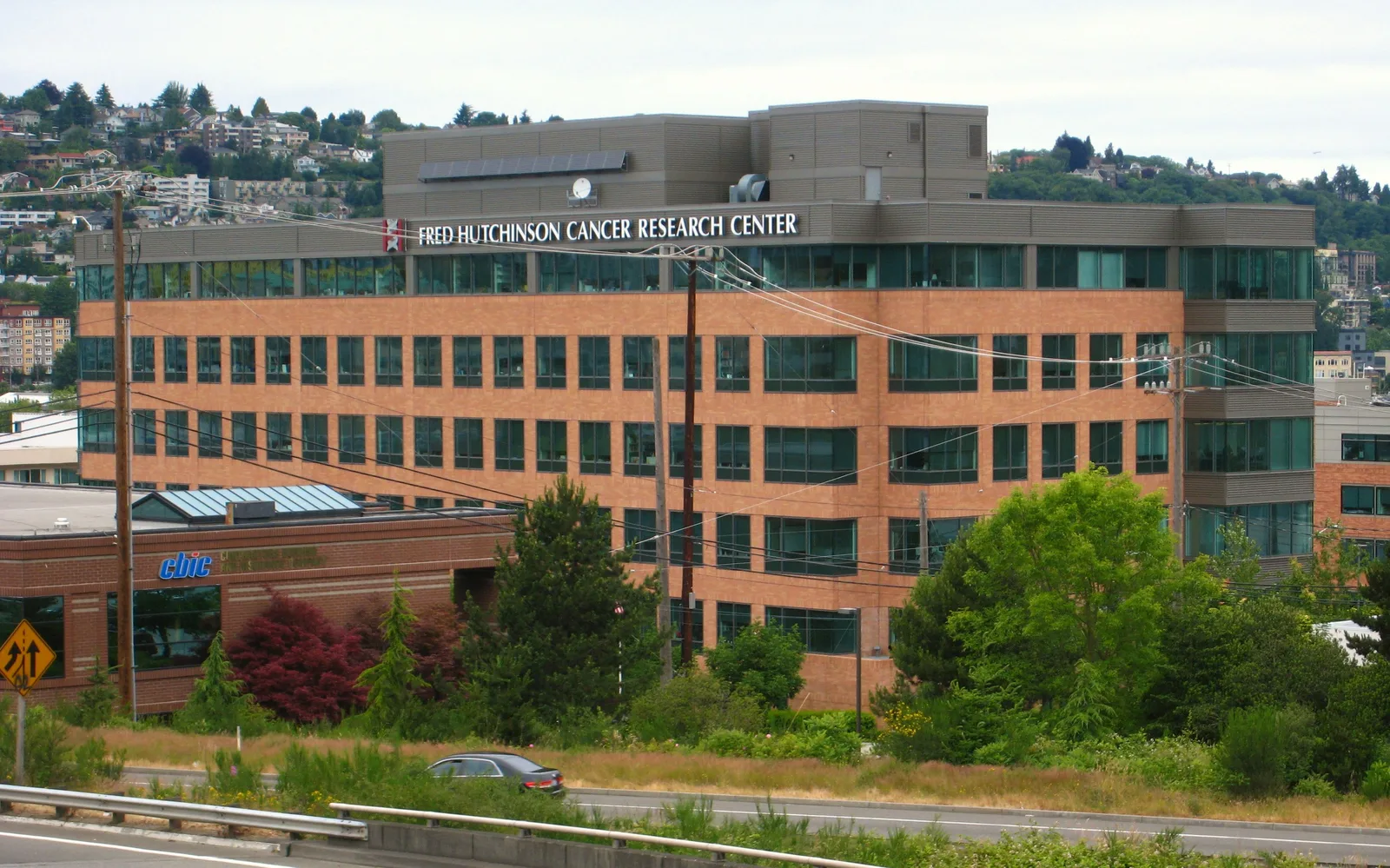
Late in 1994 he noticed a bruise that would not fade. The diagnosis was myelodysplasia, a disease of the bone marrow. His younger sister, Cari, was a perfect match as a donor, and he had bone-marrow transplants at the Fred Hutchinson Cancer Research Center in Seattle.5354 Thousands of people prayed for him, at the Cathedral of St John the Divine in New York, on the Ganges and elsewhere. He wrote that he did not think prayer would change any divine plan for him, but that he was more grateful than he could say.55
In a chapter of his last book he wrote that he would love to believe he would live again after death, but knew of nothing to suggest it was more than wishful thinking, and that it was better to look death in the eye and be grateful for each day.56 He told Charlie Rose in May 1996 that he had had no near-death experience and no religious conversion; he expected death to be a long, dreamless sleep. He had lost both parents years before and sometimes heard their voices, and he took the voices for vivid memory, not visitation.5758 Asked that year about his religious beliefs, he answered, as his biographer reports, that he was agnostic, and he said that the labels theist, agnostic and atheist meant little unless one said which God was meant.59

He died near midnight on 20 December 1996, of pneumonia brought on by his illness, at sixty-two.60 Ann Druyan wrote afterwards that, contrary to what fundamentalists imagined, there had been no deathbed conversion, and no last-minute refuge in a comforting vision of heaven; what had mattered to him was what was true, not what would make them feel better.6162 The last mark on his timeline is not a revision but steadiness: the position he had stated in 1979, restated in the face of his own death, with only the label added.
Bertrand Russell, who also refused to commit himself to dogmatic denials any more than to dogmatic affirmations, has his own chapter in this book.
Footnotes
-
Tom Head (ed.), Conversations with Carl Sagan (University Press of Mississippi, 2006): Introduction, Chronology and sixteen reprinted interviews, 1973–1996, pp. 159–160. ↩
-
"Carl Sagan," The Gifford Lectures,. ↩
-
Head, Conversations with Carl Sagan, p. xxi; Carl Sagan, Broca's Brain: Reflections on the Romance of Science (Random House, 1979), ch. 25 "The Amniotic Universe" and the dedication; same IA item (
research/texts/brocas-collection.txt). In copyright; page numbers not in the scan, (dedication "To Rachel and Samuel Sagan, my parents"). ↩ -
Head, Conversations with Carl Sagan, p. 26 (Cooper 1976). ↩
-
Head, Conversations with Carl Sagan, p. 26. ↩
-
Carl Sagan, Pale Blue Dot (Random House, 1994), IA
pale-blue-dot-carl-sagan(research/texts/paleblue.txt); the "Wanderers" section on his Gruber grandparents and the passage "Look again at that dot". In copyright; no page numbers in the scan, "Wanderers" section. ↩ -
Head, Conversations with Carl Sagan, p. 26; Carl Sagan, The Varieties of Scientific Experience: A Personal View of the Search for God, ed. Ann Druyan (Penguin Press, 2006), from the 1985 Gifford Lectures; read in the OCR of the open IA item
the-carl-sagan-book-collection(research/texts/varieties-collection.txt). In copyright: read for checking and paraphrase. No printed page numbers in the scan; cited by section (Editor's Introduction by Ann Druyan, dated Ithaca 21 Mar 2006; Author's Introduction, Glasgow 14 Oct 1985; ch. 6 "The God Hypothesis"), Editor's Introduction. Not verified. ↩ -
Sagan, Varieties of Scientific Experience, Editor's Introduction. ↩
-
Keay Davidson, Carl Sagan: A Life (Wiley, 1999): STILL NOT READ, / Poundstone (pages not seen). ↩
-
Sahar Kazmi, "Carl Sagan: Childhood Dreams of Space Flight," Timeless (Library of Congress blog), 7 Dec 2023,. ↩
-
Carl Sagan, Billions and Billions: Thoughts on Life and Death at the Brink of the Millennium (Random House, 1997), read in the OCR of the open IA item
the-carl-sagan-book-collection(research/texts/billions-collection.txt,billions-pages.txt). In copyright: read for checking and paraphrase only. The scan has no printed page numbers, so cited by chapter (ch. 13, 16, 19) and "Epilogue" (by Ann Druyan, dated Ithaca, 14 Feb 1997), ch. 16. ↩ -
Head, Conversations with Carl Sagan, pp. 26–28 (Cooper). ↩
-
Head, Conversations with Carl Sagan, pp. 119–120 (Psychology Today, Jan/Feb 1996). ↩
-
Head, Conversations with Carl Sagan, p. 28. ↩
-
Head, Conversations with Carl Sagan, p. 29. ↩
-
Head, Conversations with Carl Sagan, pp. 29–30 (Cooper). ↩
-
Head, Conversations with Carl Sagan, pp. 29–30. ↩
-
Trevor Owens (interviewer) and David Grinspoon, "Carl Sagan, Imagination, Science, and Mentorship," Inside Adams (Library of Congress blog), 5 Mar 2014,. ↩
-
(interviewer), Inside Adams. ↩
-
(interviewer), Inside Adams. ↩
-
(interviewer), Inside Adams. ↩
-
Carl Sagan, aged 16: Carl Sagan, University of Chicago freshman notebook, early 1950s, p. 54 ("A Darkling Plain"), Seth MacFarlane Collection of the Carl Sagan and Ann Druyan Archive, Library of Congress; read here only through David Grinspoon's transcription in the LOC blog post below, p. 54 ("A Darkling Plain"), via David Grinspoon's transcription in LOC Grinspoon (2014). ↩
-
(interviewer), Inside Adams; Head, Conversations with Carl Sagan, pp. 29, xxi. Accounts differ; see the disputed points. ↩
-
Head, Conversations with Carl Sagan, p. xi, p. xxi. ↩
-
Head, Conversations with Carl Sagan, p. xxi. ↩
-
"Carl Sagan,"; Crisis in Science and Math Education, hearing before the Committee on Governmental Affairs, U.S. Senate, 101st Cong., 1st sess., 9 Nov 1989 (S. Hrg. 101-551). Federal publication; ERIC ED326440 OCR on the Internet Archive (
research/texts/senate-1989-science-education.txt). Sagan's testimony. Page numbers in the OCR are unreliable; cited by hearing and approximate page, (witness heading). ↩ -
"Carl Sagan,". ↩
-
"Carl Sagan,". ↩
-
Nuclear Winter and Its Implications, hearings before the Committee on Armed Services, U.S. Senate, 99th Cong., 1st sess., 2–3 Oct 1985 (S. Hrg. 99-478, GPO 1986), pp. 128–129. ↩
-
Sagan, Broca's Brain, ch. 25; Head, Conversations with Carl Sagan, p. 70. ↩
-
Sagan, Broca's Brain, ch. 25. ↩
-
Sagan, Broca's Brain, ch. 25. ↩
-
Head, Conversations with Carl Sagan, pp. 69–70. ↩
-
Head, Conversations with Carl Sagan, p. 71. ↩
-
Head, Conversations with Carl Sagan, pp. 70–71, 74, 75. ↩
-
Head, Conversations with Carl Sagan, pp. 72, 74. ↩
-
Head, Conversations with Carl Sagan, pp. 72–73. ↩
-
"Carl Sagan,". ↩
-
Sagan, Varieties of Scientific Experience, ch. 6. ↩
-
Crisis in Science and Math Education (1989), p. 16 (approx.). ↩
-
Crisis in Science and Math Education (1989), approx. p. 24. ↩
-
Carl Sagan: Crisis in Science and Math Education (1989), (S. Hrg. 101-551), 9 Nov 1989, approx. p. 24. ↩
-
Crisis in Science and Math Education (1989), approx. pp. 21–22. ↩
-
Carl Sagan: Crisis in Science and Math Education (1989), approx. p. 21–22. ↩
-
Nuclear Winter and Its Implications (1985), approx. p. 68–69 (Goure statement names "TTAPS") and Sagan's testimony (the 1983 date is from the "since 1983" exchange, approx. p. 138). ↩
-
Nuclear Winter and Its Implications (1985), p. 99–100. ↩
-
Nuclear Winter, joint hearing of House Science and Technology (No. 37) and Interior and Insular Affairs (No. 99-6) subcommittees, 99th Cong., 1st sess., 14 Mar 1985 (GPO 1985), pp. 81–82. ↩
-
George Rathjens, MIT arms-control scientist, to the House, 14 Mar 1985. He does not name Sagan in this passage.: Nuclear Winter (1985), pp. 81–82. ↩
-
Sen. Pete Wilson relaying Freeman Dyson (Princeton physicist) and an MIT professor ("Wysok" in the OCR; surname to be checked), Senate Armed Services Committee, 2 Oct 1985: Nuclear Winter and Its Implications (1985), pp. 99–100. ↩
-
Nuclear Winter and Its Implications (1985), p. 141. ↩
-
Carl Sagan: Nuclear Winter and Its Implications (1985), p. 141. ↩
-
Sagan, Billions and Billions, ch. 13. ↩
-
Head, Conversations with Carl Sagan, p. xxv; Sagan, Billions and Billions, ch. 19. ↩
-
Sagan, Billions and Billions, ch. 19 and Postscript. ↩
-
Sagan, Billions and Billions, ch. 19. ↩
-
Sagan, Billions and Billions, ch. 19. ↩
-
Head, Conversations with Carl Sagan, p. 147. ↩
-
Head, Conversations with Carl Sagan, pp. 149–150. ↩
-
Head, Conversations with Carl Sagan, p. xiv. Reported at second hand; the original has not been seen. ↩
-
Head, Conversations with Carl Sagan, p. xviii, p. xxv; Sagan, Varieties of Scientific Experience, Editor's Introduction. ↩
-
Sagan, Billions and Billions, Epilogue. ↩
-
Sagan, Billions and Billions, Epilogue; Head, Conversations with Carl Sagan, p. xviii. ↩
research/texts/brocas-collection.txt). In copyright; page numbers not in the scan.; Carl Sagan, Pale Blue Dot (Random House, 1994), IA pale-blue-dot-carl-sagan (research/texts/paleblue.txt); the "Wanderers" section on his Gruber grandparents and the passage "Look again at that dot". In copyright; no page numbers in the scan.; Carl Sagan, The Varieties of Scientific Experience: A Personal View of the Search for God, ed. Ann Druyan (Penguin Press, 2006), from the 1985 Gifford Lectures; read in the OCR of the open IA item the-carl-sagan-book-collection (research/texts/varieties-collection.txt). In copyright: read for checking and paraphrase. No printed page numbers in the scan; cited by section (Editor's Introduction by Ann Druyan, dated Ithaca 21 Mar 2006; Author's Introduction, Glasgow 14 Oct 1985; ch. 6 "The God Hypothesis").; Keay Davidson, Carl Sagan: A Life (Wiley, 1999): STILL NOT READ.; Sahar Kazmi, "Carl Sagan: Childhood Dreams of Space Flight," Timeless (Library of Congress blog), 7 Dec 2023,.; Carl Sagan, Billions and Billions: Thoughts on Life and Death at the Brink of the Millennium (Random House, 1997), read in the OCR of the open IA item the-carl-sagan-book-collection (research/texts/billions-collection.txt, billions-pages.txt). In copyright: read for checking and paraphrase only. The scan has no printed page numbers, so cited by chapter (ch. 13, 16, 19) and "Epilogue" (by Ann Druyan, dated Ithaca, 14 Feb 1997).; Trevor Owens (interviewer) and David Grinspoon, "Carl Sagan, Imagination, Science, and Mentorship," Inside Adams (Library of Congress blog), 5 Mar 2014,.; Carl Sagan, University of Chicago freshman notebook, early 1950s, p. 54 ("A Darkling Plain"), Seth MacFarlane Collection of the Carl Sagan and Ann Druyan Archive, Library of Congress; read here only through David Grinspoon's transcription in the LOC blog post below.; Crisis in Science and Math Education, hearing before the Committee on Governmental Affairs, U.S. Senate, 101st Cong., 1st sess., 9 Nov 1989 (S. Hrg. 101-551). Federal publication; ERIC ED326440 OCR on the Internet Archive (research/texts/senate-1989-science-education.txt). Sagan's testimony. Page numbers in the OCR are unreliable; cited by hearing and approximate page.; Nuclear Winter and Its Implications, hearings before the Committee on Armed Services, U.S. Senate, 99th Cong., 1st sess., 2–3 Oct 1985 (S. Hrg. 99-478, GPO 1986); Nuclear Winter, joint hearing of House Science and Technology (No. 37) and Interior and Insular Affairs (No. 99-6) subcommittees, 99th Cong., 1st sess., 14 Mar 1985 (GPO 1985)In their own words
Does there not exist another element though? What is the world? What is this "I"? The desire for liberty, can it be wholly because selected for? Is there not a spiritual? I do not know -- yet!
Since, as my honors paper shows, all life is structured only for gene multiplication and survival, it should be possible to construct a weltanschaung upon this.
There is no serious religion, as far as I know, that has objections to quadratic equations the contention that the Earth is round. But the trouble is when you get to other areas. What happens when you get to physics? It turns out that there is excellent evidence that the Earth is about 4.5 billion years old, but there are religions that believe it is only 6,000 years old. What happens when you get to biology, when evolution, the central idea of modern biology, is considered anathema by a number of religions? Then what do you do?
Astrology, as I know I don't have to say here, is bunk. It is a fraud. It doesn't do what it portends.
We are eating the seed corn, and it is well known what happens if you do that.
This for me came out of something as far removed from nuclear war as imaginable, namely, studies of dust storms on the planet Mars from the U.S. spacecraft Mariner 9 in 1971.
Look, if you think that the mere prospect of the end of the world is enough to change thinking in Washington and Moscow, you clearly have not spent much time in those places.
Scientists are human beings like everybody else. Scientists have political prejudices just like everybody else.
being a novitiate in this strange subject, I felt the need to talk to more experienced people
This is a present from a small distant world, a token of our sounds, our science, our images, our music, our thoughts, and our feelings. We are attempting to survive our time so we may live into yours.
Look again at that dot. That's here. That's home. That's us.
maybe the black rock of mecca is a spaceship?
Soviet and American Governments Agree on Mutual Cooperation in Preparation for First Moon Ship
in the vigorous and sceptical and creative investigation of a wide variety of alternatives
Everybody is highly moral. Nobody intends to kill people, it just turns out that strategic targets kill people.
The other side
I think the public has been misled, partly by the press, but aided and abetted by the scientific community, I believe, where there have been careless and hyperbolic statements, even irresponsible ones, and I think that needs some correction.
Derisively dismissing the development of strategic defenses, I think that looney tunes is Dr. Sagan's clinical scientific judgment about its feasibility, when faced with the awesome consequences of unintercepted weapons landing on the Earth's surface strikes me as wee bit glib.
I think a quote from Dyson is that the physics was atrocious and Wysok said the psychology might be useful; for science, it is terrible.
It's a little amusing now to see him becoming a sort of secular saint.
Where accounts differ
| Point | One account | Another | How the page handles it |
|---|---|---|---|
| Date of Carter's Voyager statement | Recalled as mid-June 1977 | American Presidency Project: 29 July 1977, launch "scheduled August 20" | Use the Presidency Project date; verify launch date (Voyager 2 launched 20 Aug 1977) in a NASA source. |
| Gifford-site publication years | Site lists *Demon-Haunted World* (1997) and *Pale Blue Dot* (1997) | Internet Archive catalogues: *Pale Blue Dot* 1994, *Demon-Haunted World* 1995 | Do not cite the Gifford site for publication years. |
| Harvard years | Gifford site: Assistant Professor at Harvard and Smithsonian employee "until 1986" | Cornell appointment 1968 (same site) | Treat "1986" as an error; confirm from Davidson or Poundstone. |
| Sagan's label | "Agnostic" (Wikiquote lead, Head p. 70) | "Scepticism about conventional religion ... scientifically based belief system" (Gifford site) | Quote Sagan's own words only; do not use the site's gloss. |
| Druyan's epilogue wording and page | Wikiquote prints pp. 225, 228 and 271 and the words "a comforting vision of heaven" | The scan reads "a comforting vision of a heaven or an afterlife"; the scan has no printed page numbers (cite "Epilogue") | Quote from the book only after a paper-copy check; cite as "Epilogue". |
| Age and date of the notebook | LOC interview: Chicago "freshman year", "16", "early 1950s" | p. 54 cites "my honors paper"; Sagan entered Chicago in fall 1951 (age 16 until 9 Nov 1951); honors BA 1954 (Head) | Say "a teenager's notebook from his Chicago years" unless the Library can date p. 54. |
| Cornell rank and dates | Gifford site: Director of the Laboratory for Planetary Studies 1968, Professor of Astronomy 1971 | Head: associate professor 1968, full professor 1970 | Avoid the years in narration; the dispute does not bear on his views. |
| Planetary Society | Gifford site: cofounded 1980 | Head: president 1979–96 | Do not give a founding year unless checked in a Planetary Society source. |
| Origin of the "agnostic" quotation | Head p. xiv: "I'm agnostic", a 1996 interview (note 11: Dawson, *Star Tribune*, 2 Mar 1996) | Dawson article not read; Wikiquote leads cite Head p. 70 for a different passage (the "atheist" definition, which is Broca's Brain 1979 and Wakin 1981) | Cite "as Head reports" until the Dawson article is read. |
List of illustrations
This page uses only public-domain and Creative Commons images; each is credited with its source and licence.
- Pale Blue Dot Revisited — NASA/JPL-Caltech, 2020-02-12 · NASA/JPL-Caltech, NASA Image and Video Library (PIA23645) · Public domain (work of the U.S. federal government; NASA media usage guidelines: not copyrighted, credit NASA/JPL-Caltech or as given)
- Bensonhurst Park, c. 1935-1943, etching — Hyman J. Warsager, between 1935 and 1943date QS:P,+1950-00-00T00:00:00Z/7,P1319,+1935-00-00T00:00:00Z/9,P1326,+1943-00-00T00:00:00Z/9 · Hyman J. Warsager, Hyman J. Warsager, Federal Art Project/NYC WPA; National Gallery of Art 2008.115.4958, via Wikimedia Commons · Public domain
- Photograph; Photographs — Creator:Samuel H. Gottscho, circa 1939date QS:P571,+1939-00-00T00:00:00Z/9,P1480,Q5727902 · Creator:Samuel H. Gottscho, Samuel H. Gottscho, The Metropolitan Museum of Art, Open Access (CC0), via Wikimedia Commons · CC0
- COBB GATE, HULL COURT — Thomas Wakefield Goodspeed, 1916 · Thomas Wakefield Goodspeed, Thomas Wakefield Goodspeed (1916), via Wikimedia Commons · Public domain
- Carl Sagan with a Viking lander — NASA/JPL, 1980 · NASA/JPL, NASA/JPL via Wikimedia Commons (Commons credit points to a Smithsonian NASM page) · Public domain
- Flying aboard Voyagers 1 and 2 are identical "golden" records, carrying the story of Earth far into deep space. The 12 inch gold-plated copp — NASA, 1977-09-05 · NASA, NASA via Wikimedia Commons · Public domain
- Gothic tower on Gilmorehill — James Allan, 2010-04-22 · James Allan, James Allan / geograph.org.uk, CC BY-SA 2.0, via Wikimedia Commons · CC BY-SA 2.0
- Crisis in Science and Math Education, hearing before the Committee on Governmental Affairs, U.S. Senate, 9 November 1989 (Senate 1989), leaf 31 — U.S. Congress, Senate Committee on Governmental Affairs, 1989-11-09 · U.S. Congress, Senate Committee on Governmental Affairs, U.S. Government Printing Office; scan via Internet Archive (micro_IA41152928_0106) · Public domain (U.S. federal government publication, U.S. Government Printing Office; Internet Archive lists no rights restriction)
- The Fred Hutchinson Cancer Research Center (locally known as "The Hutch") photographed from Eastlake Avenue, Seattle WA, USA. The logo is at — Ciar · Ciar, Ciar (released to the public domain), via Wikimedia Commons · Public domain
- Ann Druyan (born June 13, 1949) is an American author and media producer known for her involvement in many projects aiming to popularize and — Bob Lee, 2008-08-10 03:28 · Bob Lee, Bob Lee, CC BY 2.0, via Wikimedia Commons · CC BY 2.0
- Solar System Portrait - Earth as Pale Blue Dot — NASA/JPL, 1996-09-12 · NASA/JPL, NASA Image and Video Library (PIA00452) · Public domain (work of the U.S. federal government; NASA media usage guidelines: not copyrighted, credit NASA/JPL-Caltech or as given)
Sources
Tier 1 — the subject's own words (writings, letters, diaries, trial records)
- [Notebook] Carl Sagan, University of Chicago freshman notebook, early 1950s, p. 54 ("A Darkling Plain"), Seth MacFarlane Collection of the Carl Sagan and Ann Druyan Archive, Library of Congress; read here only through David Grinspoon's transcription in the LOC blog post below. Scan not read.
- [Senate 1989] Crisis in Science and Math Education, hearing before the Committee on Governmental Affairs, U.S. Senate, 101st Cong., 1st sess., 9 Nov 1989 (S. Hrg. 101-551). Federal publication; ERIC ED326440 OCR on the Internet Archive (
research/texts/senate-1989-science-education.txt). Sagan's testimony. Page numbers in the OCR are unreliable; cited by hearing and approximate page. - [House 1985] Nuclear Winter, joint hearing of House Science and Technology (No. 37) and Interior and Insular Affairs (No. 99-6) subcommittees, 99th Cong., 1st sess., 14 Mar 1985 (GPO 1985). IA micro_IA41152623_0163 (
research/texts/house-1985-nuclear-winter.txt). Sagan's statement and questions. - [Senate 1985] Nuclear Winter and Its Implications, hearings before the Committee on Armed Services, U.S. Senate, 99th Cong., 1st sess., 2–3 Oct 1985 (S. Hrg. 99-478, GPO 1986). IA micro_IA41152815_0020 (
research/texts/senate-1985-nuclear-winter.txt). Sagan testified 3 Oct. - [Carter 1977] Jimmy Carter, "Voyager Spacecraft Statement by the President," 29 July 1977, American Presidency Project, https://www.presidency.ucsb.edu/node/243563 (
research/texts/carter-voyager-1977.txt). Federal work. Not Sagan's words, but the message on the record he assembled. - [NASA PBD] "The Pale Blue Dot," NASA Science, https://science.nasa.gov/resource/voyager-1s-pale-blue-dot/ (
research/texts/nasa-pale-blue-dot.txt). Federal work; quotes Sagan's Pale Blue Dot (1994) without a page. - [Billions] Carl Sagan, Billions and Billions: Thoughts on Life and Death at the Brink of the Millennium (Random House, 1997), read in the OCR of the open IA item
the-carl-sagan-book-collection(research/texts/billions-collection.txt,billions-pages.txt). In copyright: read for checking and paraphrase only. The scan has no printed page numbers, so cited by chapter (ch. 13, 16, 19) and "Epilogue" (by Ann Druyan, dated Ithaca, 14 Feb 1997). - [Varieties] Carl Sagan, The Varieties of Scientific Experience: A Personal View of the Search for God, ed. Ann Druyan (Penguin Press, 2006), from the 1985 Gifford Lectures; read in the OCR of the open IA item
the-carl-sagan-book-collection(research/texts/varieties-collection.txt). In copyright: read for checking and paraphrase. No printed page numbers in the scan; cited by section (Editor's Introduction by Ann Druyan, dated Ithaca 21 Mar 2006; Author's Introduction, Glasgow 14 Oct 1985; ch. 6 "The God Hypothesis"). - [Head] Tom Head (ed.), Conversations with Carl Sagan (University Press of Mississippi, 2006): Introduction, Chronology and sixteen reprinted interviews, 1973–1996. IA open item
the-carl-sagan-book-collection(research/texts/conversations-collection.txt,conversations-pages.txt). In copyright: read for checking and paraphrase. Page numbers are the printed running heads (the scan's own page marker is one too high). Interviews used: Cooper (1976, pp. 19–35; from The Search for Life on Mars, 1979), Wakin (U.S. Catholic, May 1981, pp. 68–75), Flatow (NPR, 3 May 1996, pp. 125–140), Rose (Charlie Rose Show, 27 May 1996, transcript #1647, pp. 141–150), Achenbach (Washington Post, 30 May 1996, pp. 151–162), Psychology Today (Jan/Feb 1996, pp. 113–124). - [Broca's Brain] Carl Sagan, Broca's Brain: Reflections on the Romance of Science (Random House, 1979), ch. 25 "The Amniotic Universe" and the dedication; same IA item (
research/texts/brocas-collection.txt). In copyright; page numbers not in the scan. - [PBD book] Carl Sagan, Pale Blue Dot (Random House, 1994), IA
pale-blue-dot-carl-sagan(research/texts/paleblue.txt); the "Wanderers" section on his Gruber grandparents and the passage "Look again at that dot". In copyright; no page numbers in the scan. - [Cosmic Connection] Carl Sagan, The Cosmic Connection (Doubleday, 1973), Preface (grandfather and the translator); IA collection item (
research/texts/cosmicconn-collection.txt). - [Demon-Haunted World], [Cosmos book], [Contact]: downloaded or available (
demonhaunted.txt,cosmos1980-collection.txt) but not needed for this episode's questions beyond a search for any autobiographical account of religion (none found); Contact not read.
Tier 2 — scholarly biographies and encyclopedias
- [LOC Timeless] Sahar Kazmi, "Carl Sagan: Childhood Dreams of Space Flight," Timeless (Library of Congress blog), 7 Dec 2023, https://blogs.loc.gov/loc/2023/12/carl-sagan/ (
research/texts/loc-childhood.txt). Federal institution's publication. - [LOC Grinspoon] Trevor Owens (interviewer) and David Grinspoon, "Carl Sagan, Imagination, Science, and Mentorship," Inside Adams (Library of Congress blog), 5 Mar 2014, https://blogs.loc.gov/inside_adams/2014/03/carl-sagan-imagination-science-and-mentorship-an-interview-with-david-grinspoon/ (
research/texts/loc-grinspoon-2014.txt). Federal institution's publication. The interviewer's name is given as "Trevor" in the text; confirm. - [Gifford site] "Carl Sagan," The Gifford Lectures, https://www.giffordlectures.org/lecturers/carl-sagan (
research/texts/gifford-site-sagan.txt). A reference page with errors (see Disputed points). - [Davidson] Keay Davidson, Carl Sagan: A Life (Wiley, 1999): STILL NOT READ. IA
carlsaganlife00davi(403) andcarlsaganlife0000davi(401) are lending-only; no open copy found (retried 2026-10-14). - [Poundstone] William Poundstone, Carl Sagan: A Life in the Cosmos (Henry Holt, 1999): STILL NOT READ. IA
carlsaganlifeinc00pounreturns 403; Spangenburg and Moeser's Carl Sagan: A Biography (carlsaganbiograp0000span) returns 401. Head quotes Poundstone on Rolling Stone (p. xii) but no page on religion. - NAS Biographical Memoir: not located; nasonline.org returns 403 to the tool.
Tier 3 — popular biographies and journalism
- [SI 2003] Ann Druyan, "Ann Druyan Talks About Science, Religion, Wonder, Awe ... and Carl Sagan," Skeptical Inquirer 27:6 (Nov/Dec 2003): the web page (
research/texts/si-druyan-2003.txt, refetched 2026-10-14 assi-druyan-2003-full.txt) still shows only the author's note and no article text. Not read. - NYT obituary (21 Dec 1996): 403 to the tool; not read.
Tier 4 — maps to other sources only (Wikipedia and similar). Never cited in the script.
- Wikiquote, "Carl Sagan" (raw wikitext saved in the scratchpad, not in
texts/): gives the quotation leads in Open questions with the page numbers it prints. Wikipedia was not used.
Opposition sources — contemporary critics and religious responses
- [House 1985], [Senate 1985]: George Rathjens (MIT), Richard Perle (DoD), and Senator Pete Wilson relaying Freeman Dyson, on nuclear winter.
- A religious critic of Cosmos or of Sagan's scientism: not yet found in a readable source. See Open questions.
Related lives
Bertrand Russell (also preferred "agnostic" as the philosopher's label, a scientist-philosopher voice on belief) or Christopher Hitchens (the "atheist" label Sagan avoided). Do not name either as "next" in a video (series rule); decide for the profile only.
Gloria Steinem
Gloria Steinem had no faith to lose, only an inheritance of Theosophist grandmothers, a Jewish father, a Protestant mother and a childhood baptism. Feminism, from 1969, made her see religion as power. She said so in 1970 (the church as a support of myth), in 2001 ("politics made sacred") and in 2014 ("politics in the sky"). In 2012 she named herself a humanist, and a spiritual one, refusing "atheist" as a definition by absence.
Steven Weinberg
Steven Weinberg was born to Jewish parents, with no faith on record to lose. From cosmology he drew the conclusion that the universe has no purpose built into it. He said so first as physics softened by "the grace of tragedy" (1977), then as a moral charge against religion grounded in his own family's deaths (1999). In "Without God" (2008) he gave an honest account of what living without God costs and how it can be done with good humour. In print he never called himself an atheist.
John Lennon
John Lennon was brought up lightly Anglican by his Aunt Mimi at St Peter's, Woolton, and drifted from belief with fame. In 1966 he stumbled into an accidental declaration that he had to apologise for. He looked for a teacher in the Maharishi and came away disappointed. He chose his declaration in the song "God" (1970), renouncing every authority from Jesus to the Beatles. In 1980 he revised the tone, calling himself neither anti-Christ nor antireligious, but a man who refused every package, Christian, Buddhist or Marxist.
Barbara Smoker
Barbara Smoker was a convent child who wanted to be a Carmelite, and saw no halfway house between the Church and atheism. The war in Ceylon, a confessor's charge of intellectual pride and a reading programme meant to save her faith wore it down, until on 5 November 1949, at a library's philosophy shelves, she found she was no longer a theist of any kind. She never doubted again. She spent the rest of her life on the unbelief in public, at the head of the National Secular Society, at thousands of secular funerals and beside the 1989 march against Rushdie, insisting that atheists had not lost their faith but outgrown it.