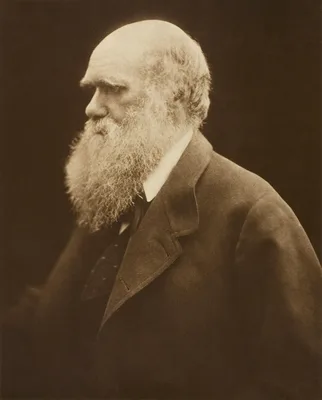
Charles Darwin was a would-be country clergyman who believed every word of the Bible. Between 1836 and 1839 he gave up Christianity as a revelation "at a very slow rate" and without distress, by reasoning about miracles, the Gospels and other religions. He kept a designing God until his own theory left design little to do, and ended "content to remain an Agnostic". He kept the whole road private, for his family's sake and from his own judgement that attacks on religion did no good.
The belief timeline
- Faith (1828–1831) — Reading for orders at Cambridge; "I did not then in the least doubt the strict and literal truth of every word in the Bible"; Paley's Evidences learned "in a thorough manner". Childhood note for the Doubt-mark explanation: the Unitarian mother's death (1817) and the 1828 "scruples about declaring my belief in all the dogmas" and the 1829 "Neither can I" are objections to a form of subscription, not to the Bible itself; he "soon persuaded" himself the Creed must be accepted. [7][10][12]
- Doubt (1836–1839) — After the voyage, in London, he reasons that the Old Testament is no more to be trusted than the Hindoo books and that miracles and the Gospels will not bear the evidence; "disbelief crept over me at a very slow rate, but was at last complete". [21][22][24]
- Reticence (1859–1863) — The Origin is silent on religion; "by the Creator" enters the second edition (January 1860); in 1863 he writes that he has "long regretted that I truckled to public opinion". Emma's fears, the clergy among his critics, his refusal in 1871 and 1880 to write against religion. [42][43][56][67]
- Revision (1876–1881) — By the Autobiography he calls himself a Theist at the time of the Origin whose conviction "has very gradually, with many fluctuations, become weaker", ends "content to remain an Agnostic" (1876); the letter to Fordyce (7 May 1879) names the word; in 1881 the "horrid doubt" about whether the mind can be trusted with such questions. [60][61][70]
- Disclosure (1887 and 1958) — Francis Darwin prints the Autobiography with passages cut (1887); Nora Barlow's edition restores them (1958); the Lady Hope deathbed legend (1915) is denied by the family (1917, 1922). [59][64][66][74][75]
Notes to the timeline (18)
- [7] After two sessions his father proposed the Church. Darwin asked for time because "I had scruples about declaring my belief in all the dogmas of the Church of England"; he read Pearson on the Creeds and, since he "did not then in the least doubt the strict and literal truth of every word in the Bible", soon persuaded himself that the Creed must be fully accepted. — Francis Darwin, ed., The Life and Letters of Charles Darwin, including an autobiographical chapter, vol. I (London: John Murray, 1887). Internet Archive identifier lifelettersofcha01darwuoft, p. 45.
- [10] For the B.A. he had to learn Paley's Evidences of Christianity and Moral Philosophy; he knew the Evidences so well he could have written it out, found Paley's logic as delightful as Euclid, "did not at that time trouble myself about Paley's premises", and was "charmed and convinced". — Darwin, Life and Letters of Charles Darwin, p. 47.
- [12] In 1829 (the date is Francis Darwin's inference) he and J. M. Herbert discussed taking orders; asked whether he could answer yes to "Do you trust that you are inwardly moved by the Holy Spirit", Herbert said no and Darwin replied "Neither can I, and therefore I cannot take orders." Francis adds that the doubts "must have been quieted", since in May 1830 he speaks of reading divinity with Henslow. — Darwin, Life and Letters of Charles Darwin, p. 171.
- [21] The "Religion" extract begins "During these two years I was led to think much about religion"; Francis Darwin's note gives the two years as October 1836 to January 1839. — Darwin, Life and Letters of Charles Darwin, p. 307 and n..
- [22] His reasons, in his own account: the Old Testament "no more to be trusted than the sacred books of the Hindoos"; the credibility of a revelation to the Hindoos connected with Vishnu; the clearest evidence needed for miracles, which grow less credible as the fixed laws of nature are known; the Gospels not proved contemporary and differing in important details; false religions spreading "like wild-fire". — Darwin, Life and Letters of Charles Darwin, p. 308.
- [24] "Thus disbelief crept over me at a very slow rate, but was at last complete. The rate was so slow that I felt no distress." — Darwin, Life and Letters of Charles Darwin, p. 309.
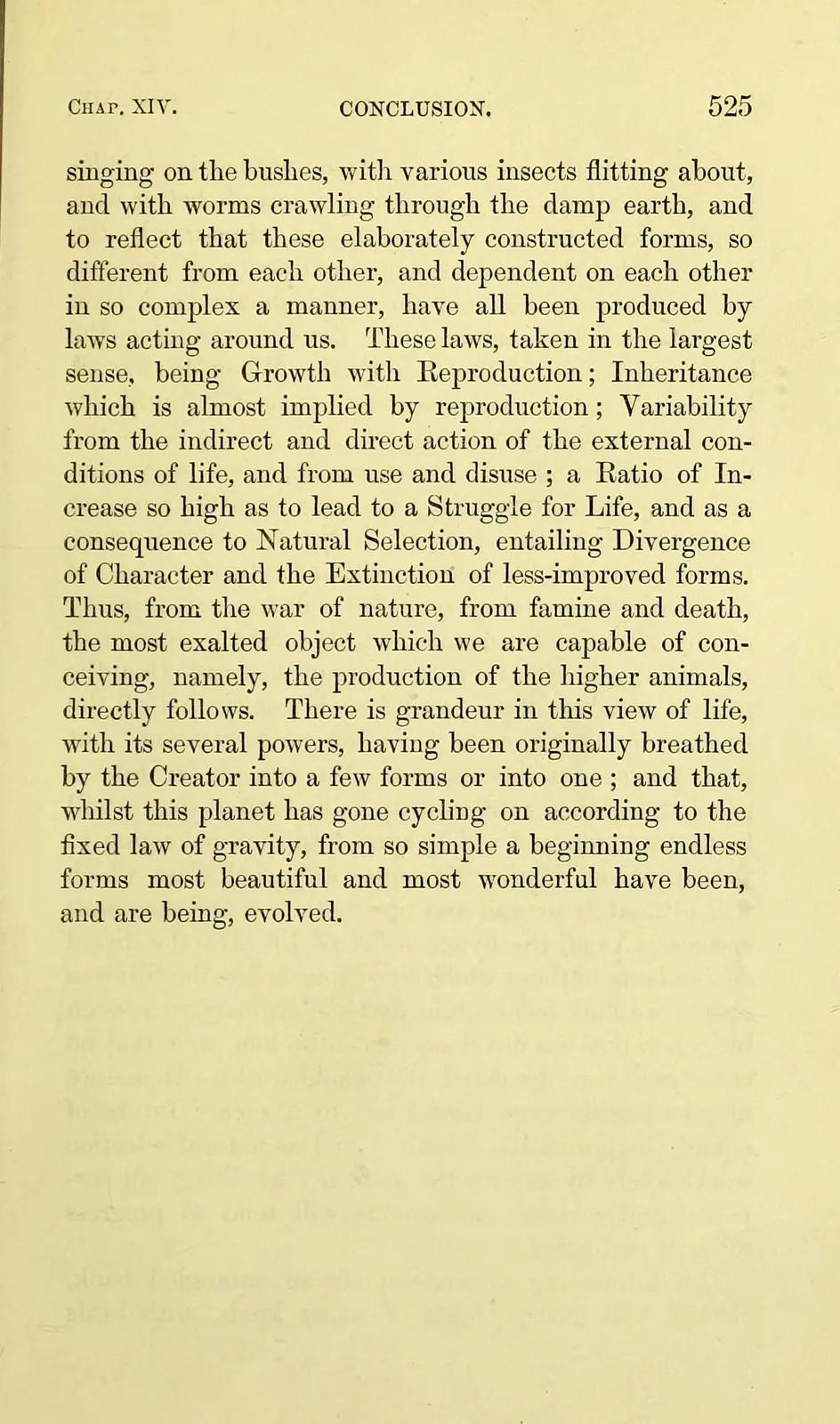
- [42] The third edition (March 1861) reads "originally breathed by the Creator into a few forms or into one" (p. 525), as does the sixth edition. The standard account is that the phrase was added in the second edition of January 1860; not confirmed in a scan of the second edition, hence secondhand. — Same, third edition (London: John Murray, March 1861). Identifier b28075134 (Wellcome copy), p. 525; Same, New York: Hurst and Co., undated reprint of the sixth edition (1872). Identifier originofspeciesb00darw, (closing paragraph). Reported at second hand; the original has not been seen.
- [43] To Hooker, 29 March 1863: "I have long regretted that I truckled to public opinion, and used the Pentateuchal term of creation, by which I really meant 'appeared' by some wholly unknown process." — Same, vol. III (1887). Identifier lifelettersofcha03darwuoft, p. 18.
- [56] To F. E. Abbot, 16 November 1871, he declines to write for the Index: he had "never systematically thought much on religion in relation to science"; on 6 September 1871: "I feel in some degree unwilling to express myself publicly on religious subjects, as I do not feel that I have thought deeply enough to justify any publicity." — Darwin, Life and Letters of Charles Darwin, pp. 305–306.
- [67] To E. B. Aveling, 13 October 1880: he prefers the volume not be dedicated to him; "though I am a strong advocate for free thought on all subjects, yet it appears to me (whether rightly or wrongly) that direct arguments against christianity and theism produce hardly any effect on the public; and freedom of thought is best promoted by the gradual illumination of men's minds, which follows from the advance of science. It has, therefore, been always my object to avoid writing on religion"; "I may, however, have been unduly biassed by the pain which it would give some members of my family". — Darwin to E. B. Aveling, 13 October 1880, Darwin Correspondence Project letter DCP-LETT-12757 (MS: International Institute of Social History, Amsterdam). Verification excerpt in research/texts/DCP-12757-Aveling.txt. Licence: the transcription is (c) University of Cambridge 2022 and not freely licensed; the letter itself is Darwin's and in the public domain. Cite as a pointer; confirm against the printed Correspondence of Charles Darwin vol. 28 or the manuscript before it is quoted on screen.
- [60] In the printed text he says natural selection overturns Paley's design argument; suffering is "a strong" argument against a First Cause; the colour-blind comparison; he feels "compelled to look to a First Cause having an intelligent mind... and I deserve to be called a Theist", a conclusion "strong in my mind about the time... when I wrote the Origin of Species" that has since "very gradually, with many fluctuations, become weaker"; and he ends "content to remain an Agnostic". — Darwin, Life and Letters of Charles Darwin, pp. 309–313.
- [61] Letter to John Fordyce, 7 May 1879, marked "Private": "In my most extreme fluctuations I have never been an atheist in the sense of denying the existence of a God. I think that generally (and more and more so as I grow older) but not always, that an agnostic would be the most correct description of my state of mind." LL1 p. 304 prints "the more correct description"; DCP's transcription of the manuscript reads "most". Fordyce published it in Aspects of Scepticism (1883). — Darwin, Life and Letters of Charles Darwin, p. 304 and n.; Darwin to John Fordyce, 7 May 1879, DCP-LETT-12041 (MS: Linnean Society, Quentin Keynes Collection). Excerpt in research/texts/DCP-12041-Fordyce.txt. Same licence note. The printed 1887 text is in LL1 p. 304.
- [70] To W. Graham, 3 July 1881: "you have expressed my inward conviction... that the Universe is not the result of chance. But then with me the horrid doubt always arises whether the convictions of man's mind, which has been developed from the mind of the lower animals, are of any value or at all trustworthy." — Darwin, Life and Letters of Charles Darwin, pp. 315–316.
- [59] The Recollections were begun about 28 May 1876 at Hopedene and ended 3 August 1876, for his children, without thought of publication; Francis Darwin states that passages "must here be omitted" and that "I have not thought it necessary to indicate where such omissions are made". The "Religion" extract is introduced as "somewhat abbreviated". — Darwin, Life and Letters of Charles Darwin, p. 26; Darwin, Life and Letters of Charles Darwin, p. 307.
- [64] Passages in the manuscript's "Religious Belief" that the 1887 text omits (each confirmed absent from LL1 pp. 307–313 by search; wording seen on Darwin Online): (a) the Old Testament's "manifestly false history of the world, with the Tower of Babel, the rainbow as a sign" and its attributing "to God the feelings of a revengeful tyrant"; (b) the perfection of the New Testament's morality depending "in part on the interpretation which we now put on metaphors and allegories"; (c) "and have never since doubted even for a single second that my conclusion was correct"; (d) "I can indeed hardly see how anyone ought to wish Christianity to be true... will be everlastingly punished. And this is a damnable doctrine", naming his father, brother and almost all his best friends; (e) "Everything in nature is the result of fixed laws"; (f) the sentence that suffering "revolts our understanding" given a benevolent omnipotent God; (g) the paragraph that Hindoos, Muslims and others could argue the same from inward conviction and that belief in spirits can be explained as Tylor and Spencer showed; (h) "May not these be the result of the connection between cause and effect... inherited experience" and the comparison of a child's inherited belief in God with a monkey's fear of a snake; (i) the addendum on conscience and the rule of life ("A man who has no assured and ever present belief in the existence of a personal God..."); and the later paragraph on the spread of scepticism. — Darwin, Life and Letters of Charles Darwin, pp. 307–313 (absences); Darwin Online (John van Wyhe, ed.), transcription of the Autobiography manuscript (CUL-DAR26.1-121), "a fresh transcription ... includes the editorial notes from Nora Barlow's edition". Pages read only for comparison with LL1 (not saved in the project). Licence: the page says only "Reproduced with permission of the Syndics of Cambridge University Library and William Huxley Darwin"; no open licence was found, so treat its wording as a pointer, quote at most a few words, and take any passage the script uses from Barlow (1958) or the CUL manuscript after clearing it. The manuscript itself (1876–81) is public domain, MS pp. 61–74.
- [66] Nora Barlow's edition of 1958 first printed the restored text; Darwin Online's transcription reproduces her editorial notes. Barlow is copyrighted and was not consulted. — Nora Barlow, ed., The Autobiography of Charles Darwin 1809–1882, with original omissions restored (London: Collins, 1958). Copyrighted; NOT consulted. Lead only; see claims [64]–[66], (not seen); DO-Aut. Not verified.
- [74] Lady Hope's story first appeared in the Boston Watchman-Examiner in August 1915 (accounts give 15 or 19 August; the primary was not reached) after a Northfield Bible conference; she described "one of those glorious autumn afternoons" and Darwin "almost bedridden for some months before he died" reading the Epistle to the Hebrews, and reported him as saying "How I wish I had not expressed my theory of evolution as I have done." Darwin died in April. — Hope-secondhand (Clark 1985 p. 199; Wikipedia).
- [75] Francis Darwin in 1917: "Lady Hope's account of my father's views on religion is quite untrue... My father's agnostic point of view is given in my Life and Letters of Charles Darwin, Vol. I., pp. 304–317." Henrietta Litchfield in The Christian, 23 February 1922, p. 12: "I was present at his deathbed. Lady Hope was not present during his last illness, or any illness... He never recanted any of his scientific views, either then or earlier." Leonard Darwin called the story a "hallucination" (1930), "purely fictitious" (1934). — Hope-secondhand (Clark 1985; Wikipedia).
At a Very Slow Rate
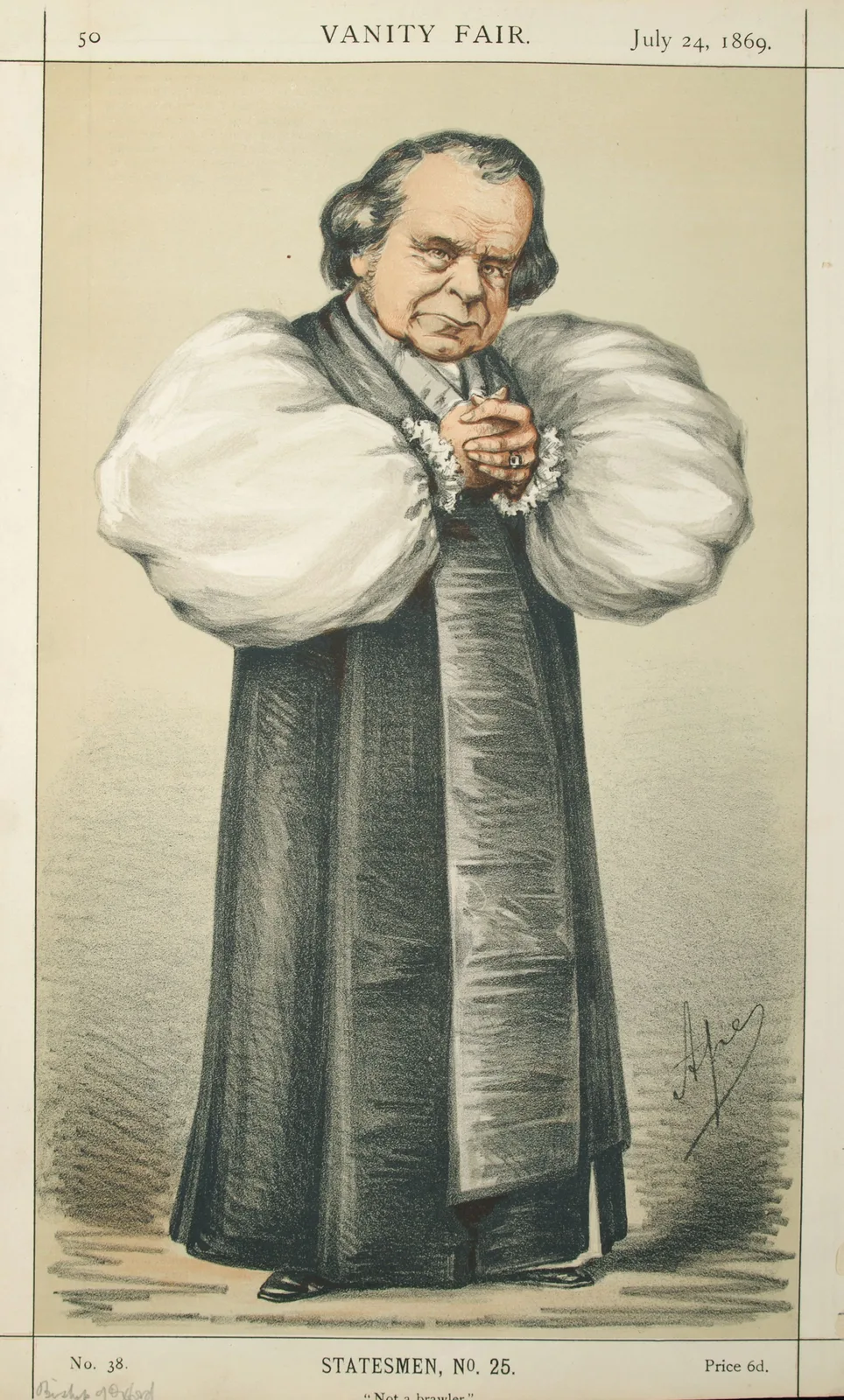
On 30 June 1860, at the meeting of the British Association in Oxford, the Bishop of Oxford, Samuel Wilberforce, rose to answer a book that had been published seven months earlier. Thomas Henry Huxley replied for the book, and the botanist Joseph Hooker spoke after him; accounts of exactly what the bishop asked and Huxley answered differ to this day.12 The author of the book was not there. Charles Darwin was miles away, taking a water cure.1
He was absent from most of the arguments about religion that On the Origin of Species set off, and he meant to be. He told one freethinker in 1880 that he had always tried to avoid writing on religion and to keep to science.3 Yet he had stopped believing in Christianity twenty years before the book appeared, and he left behind, for his children, the clearest account any Victorian scientist gave of how a believer becomes an unbeliever. This chapter follows that account, and asks why the man whose theory shook the Victorian faith said so little about his own.
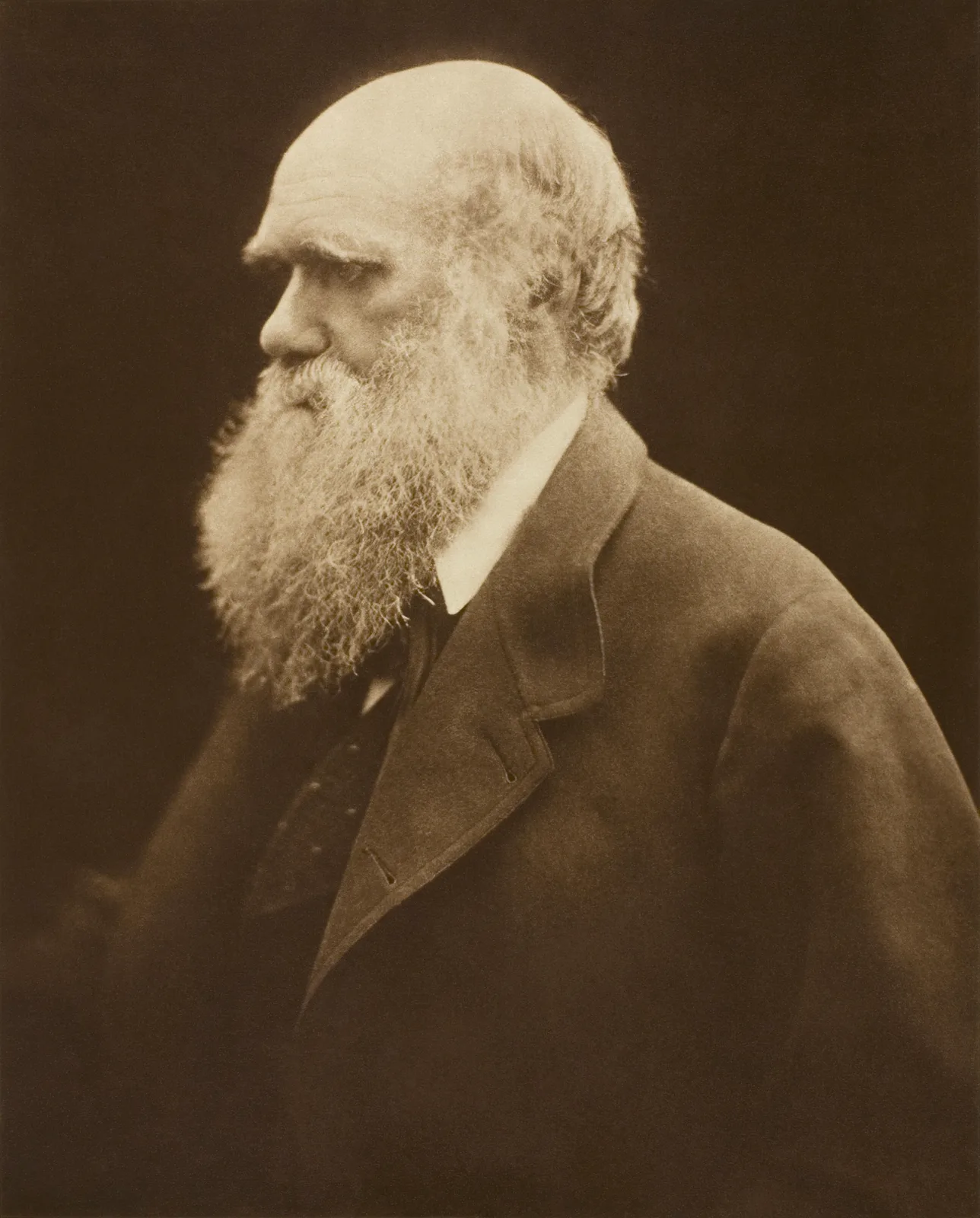
A clergyman in the making
He was born at The Mount in Shrewsbury on 12 February 1809, the son of a doctor, Robert Darwin, and of Susannah Wedgwood.4 His mother was a Unitarian, who took her small children to the Unitarian chapel; but the boys were christened in the Church of England, and Charles's first school was kept by the Unitarian minister.56 His mother died when he was eight. He remembered almost nothing of her but her deathbed, her black velvet gown and her work-table.7
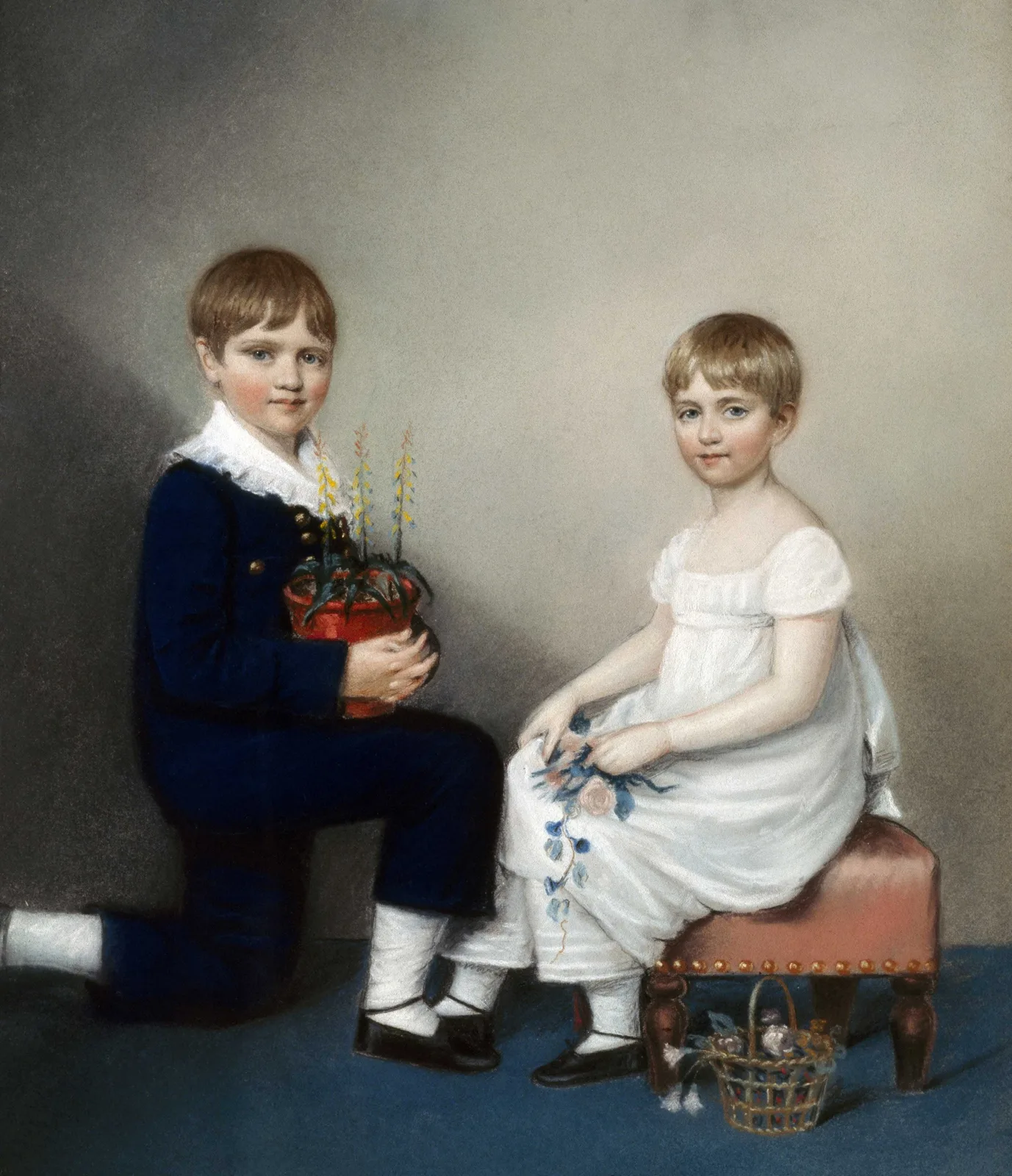
He was sent to Edinburgh at sixteen to study medicine and found the lectures "intolerably dull."8 So his father proposed the Church. "I had scruples about declaring my belief in all the dogmas of the Church of England," Darwin wrote half a century later, "though otherwise I liked the thought of being a country clergyman. Accordingly I read with care 'Pearson on the Creeds,' and a few other books on divinity; and as I did not then in the least doubt the strict and literal truth of every word in the Bible, I soon persuaded myself that our Creed must be fully accepted."910 He went up to Christ's College, Cambridge, early in 1828 to read for a clergyman's degree.11
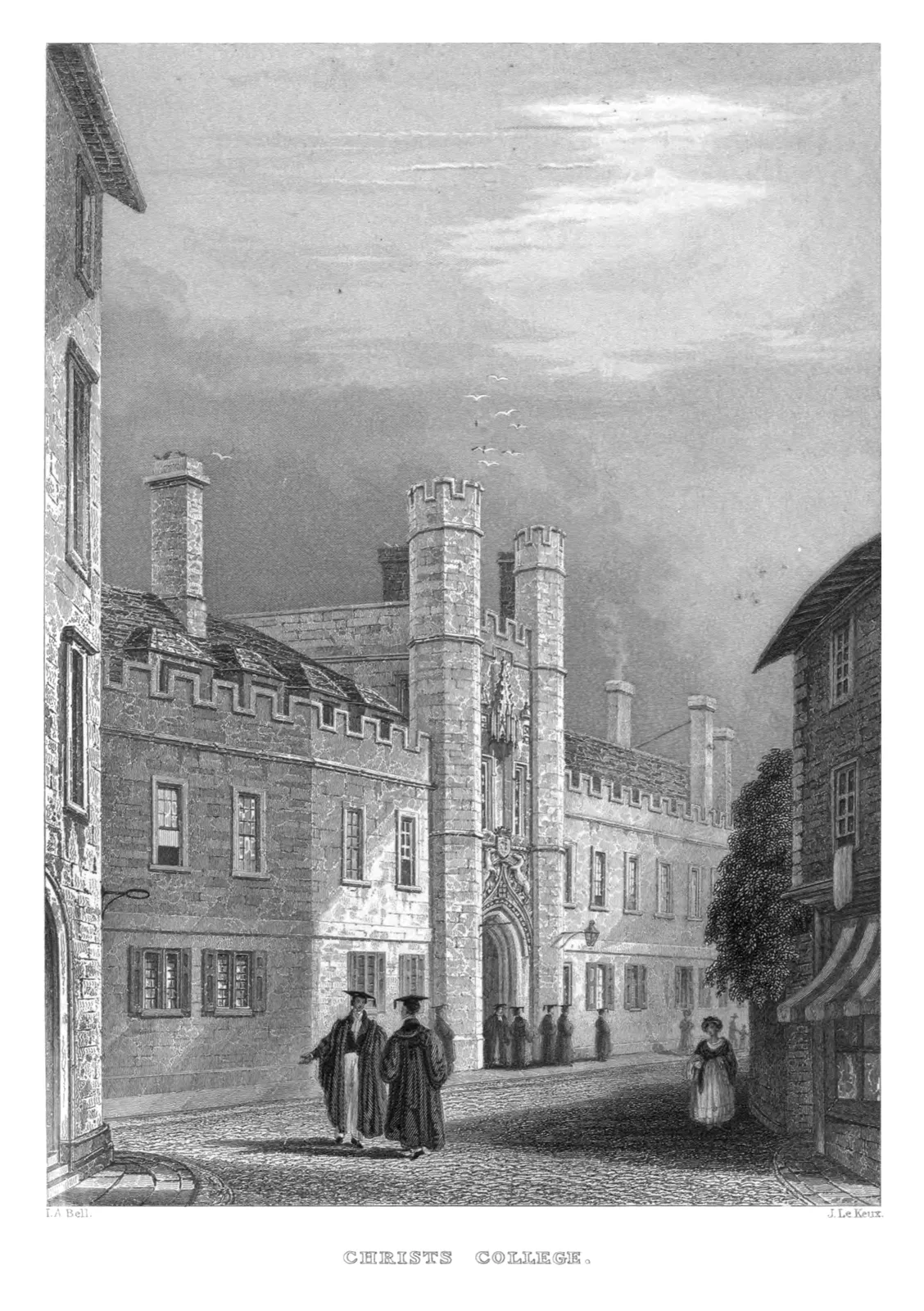
At Cambridge he learned William Paley's Evidences of Christianity so thoroughly that he could have written it out from memory, and its logic gave him "as much delight as did Euclid."1213 A friend later remembered a conversation of 1829: asked whether he could truthfully tell a bishop that he was "inwardly moved by the Holy Spirit," Darwin said, "Neither can I, and therefore I cannot take orders." But the doubt, his son wrote, "must have been quieted," and the scruple was about a form of words, not the Bible.1415 The belief timeline calls this the early crack, but it was not yet doubt.
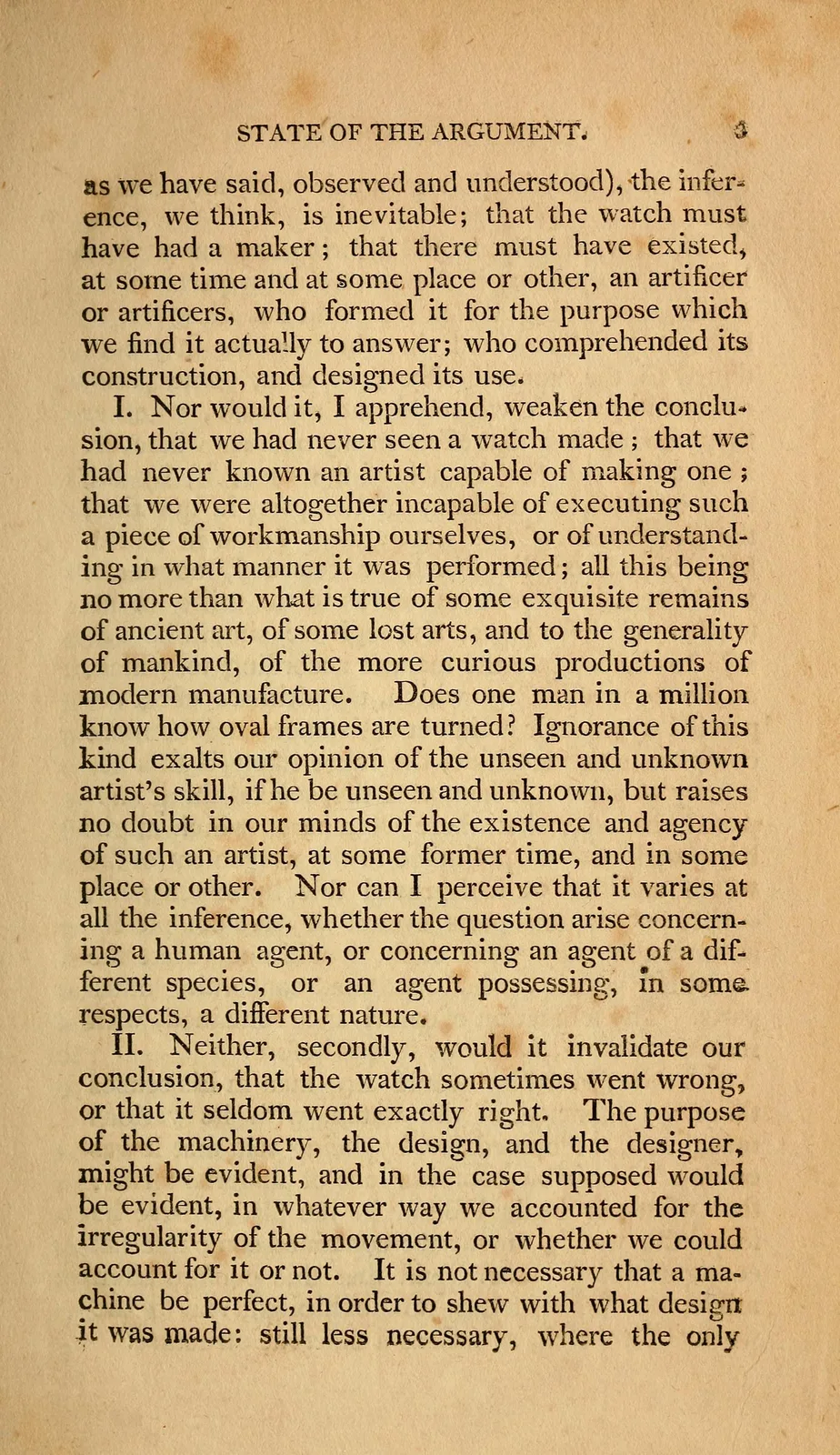
The voyage
In August 1831 his Cambridge teacher, the botanist and clergyman John Stevens Henslow, sent word that Captain Robert FitzRoy of HMS Beagle wanted a naturalist for a surveying voyage. His father objected, and the first item on his list of objections was that it would be "Disreputable to my character as a Clergyman hereafter." His uncle Josiah Wedgwood answered that, on the contrary, it would be "very suitable to a clergyman," and the father gave way.16 The Beagle sailed on 27 December 1831 and came home on 2 October 1836. "The voyage of the Beagle," he wrote, "has been by far the most important event in my life."1718
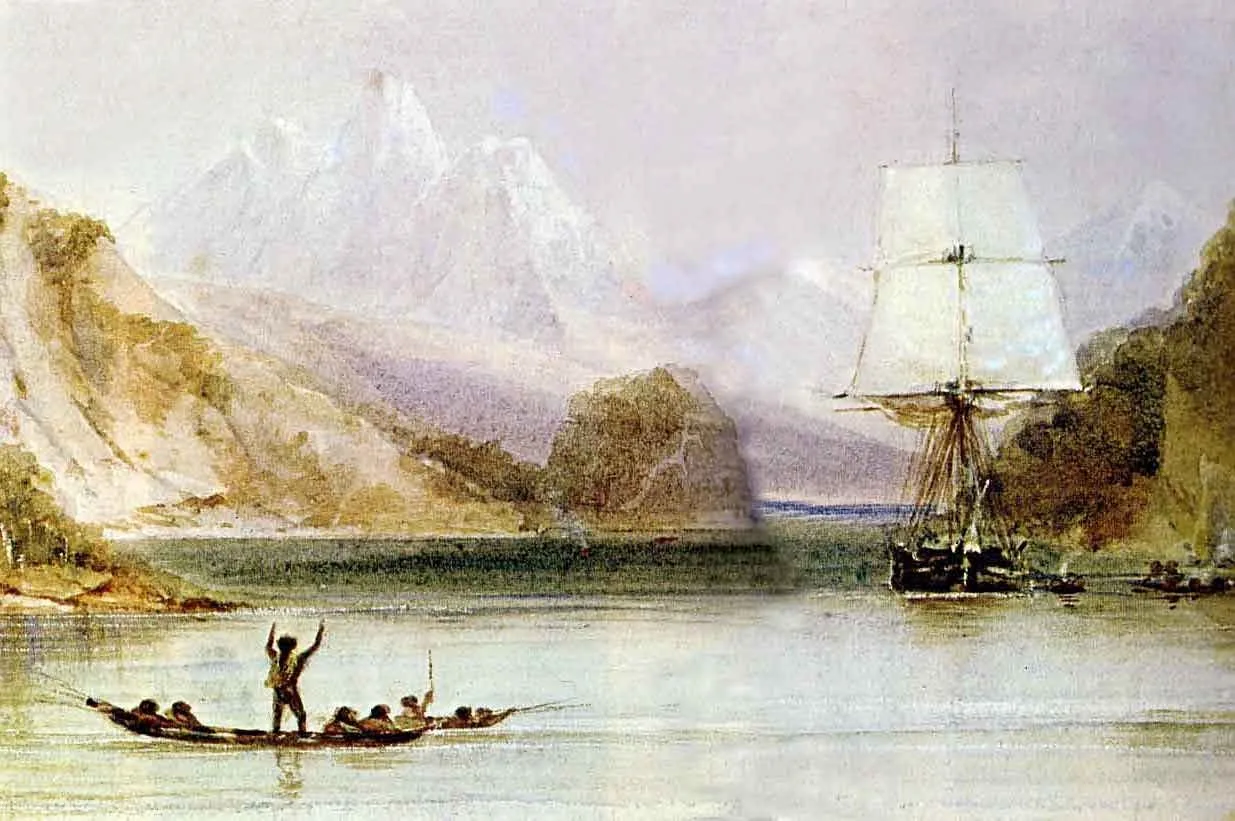
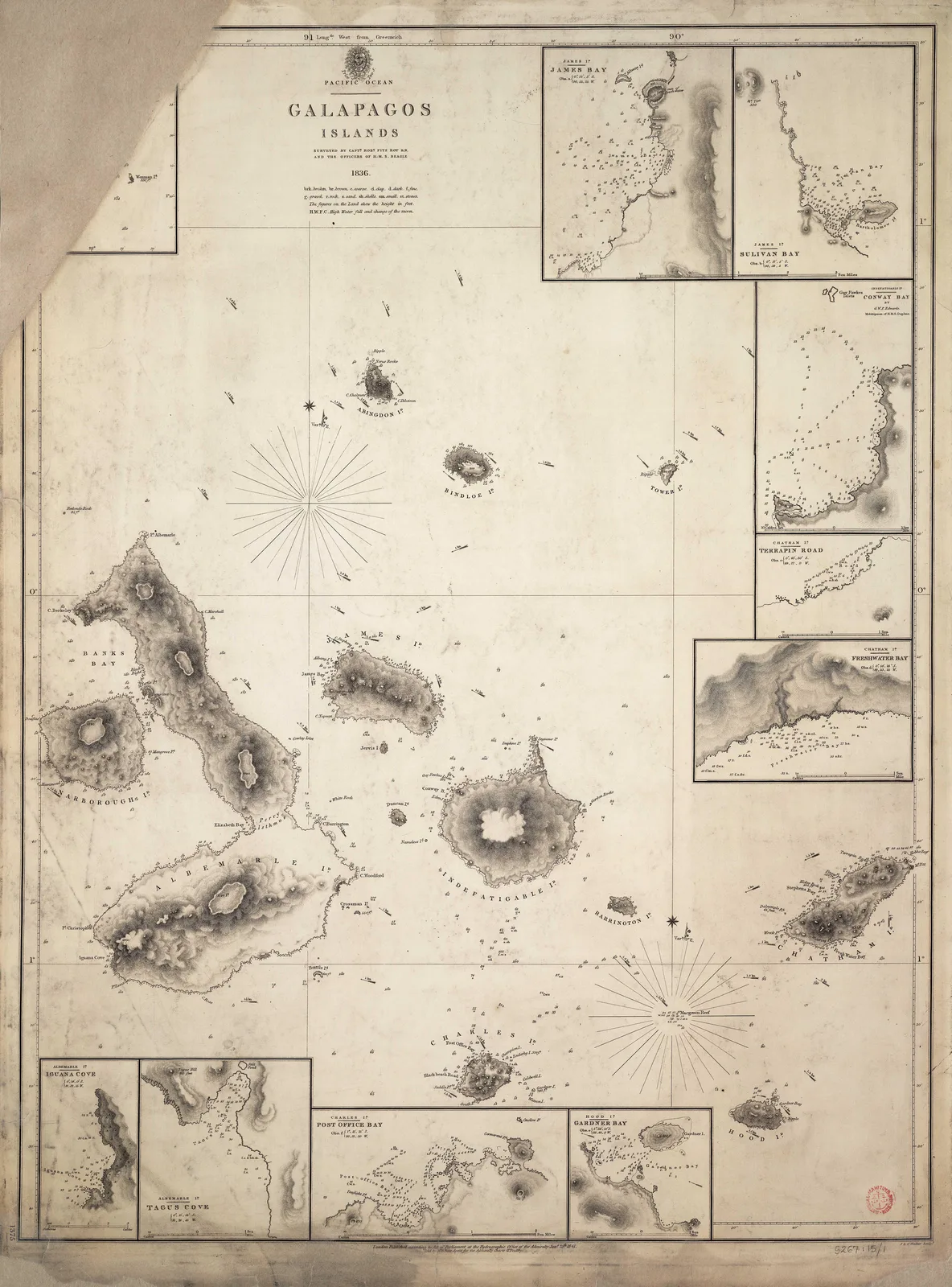
He was still a believer. "Whilst on board the Beagle I was quite orthodox, and I remember being heartily laughed at by several of the officers (though themselves orthodox) for quoting the Bible as an unanswerable authority on some point of morality."1920 In a Brazilian forest in 1832 he wrote of "the higher feelings of wonder, astonishment, and devotion, which fill and elevate the mind."2122 But he was also collecting the facts that would undo him: fossil animals in South America, and the creatures of the Galápagos, which "could only be explained on the supposition that species gradually become modified." The subject "haunted" him.23
Disbelief crept over me
Back in England, in the two years from October 1836 to January 1839, he was "led to think much about religion."24 He came to see "that the Old Testament was no more to be trusted than the sacred books of the Hindoos." He reasoned that "the more we know of the fixed laws of nature the more incredible do miracles become," that the Gospels "cannot be proved to have been written simultaneously with the events," and that "they differ in many important details."252627 He did not want to give it up. "I was very unwilling to give up my belief; I feel sure of this, for I can well remember often and often inventing day-dreams of old letters between distinguished Romans, and manuscripts being discovered at Pompeii or elsewhere, which confirmed in the most striking manner all that was written in the Gospels."2829 And then: "Thus disbelief crept over me at a very slow rate, but was at last complete. The rate was so slow that I felt no distress."3031
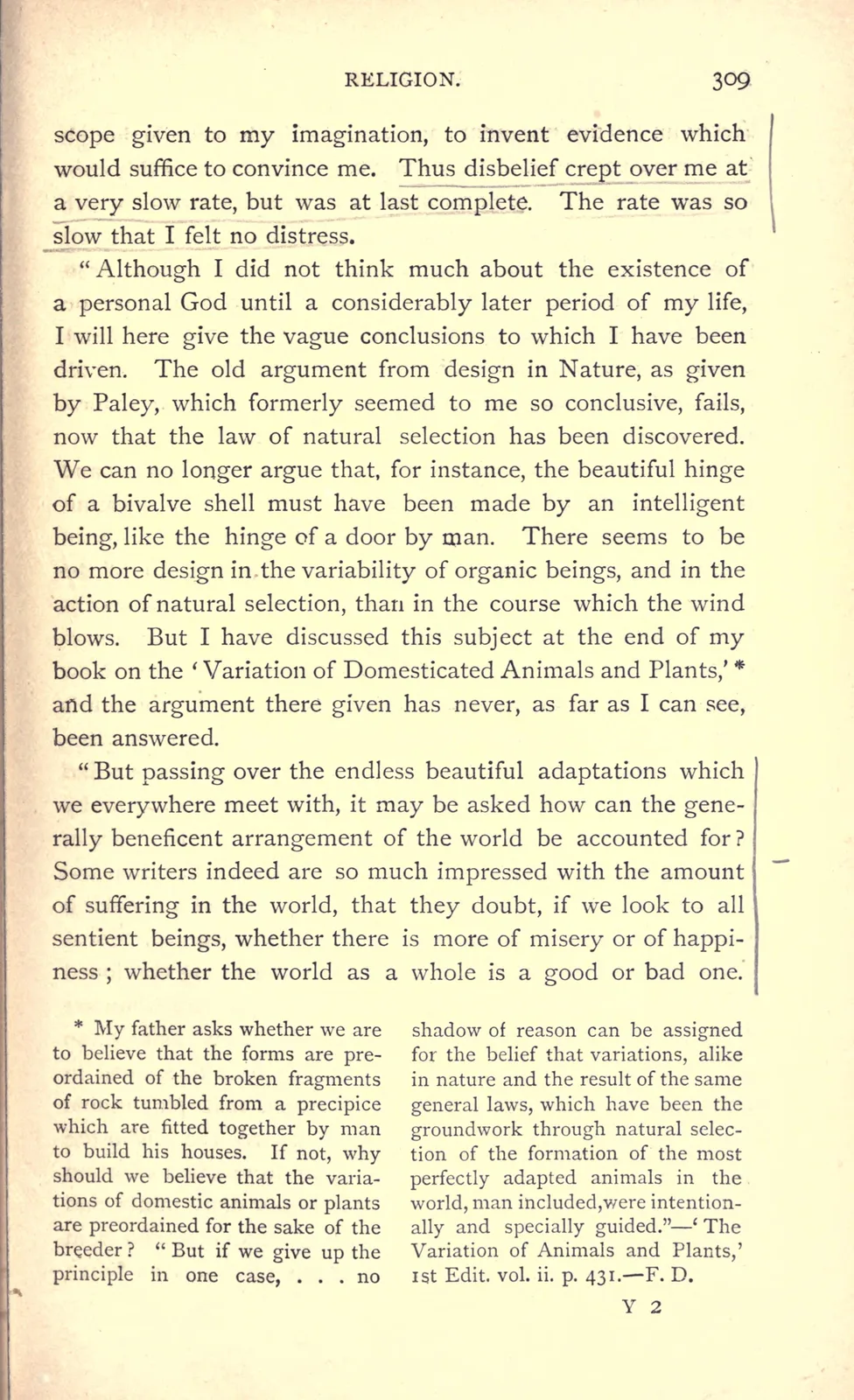
The belief timeline puts his doubt in those years, 1836 to 1839, and not at Cambridge, because by his own account that is when his belief went. In the same months he opened his first notebook on the transmutation of species, and in October 1838, reading Malthus, he saw how natural selection could work: "Here then I had at last got a theory by which to work."32 What he gave up in those years was Christianity as a revelation. He did not give up God.
Emma
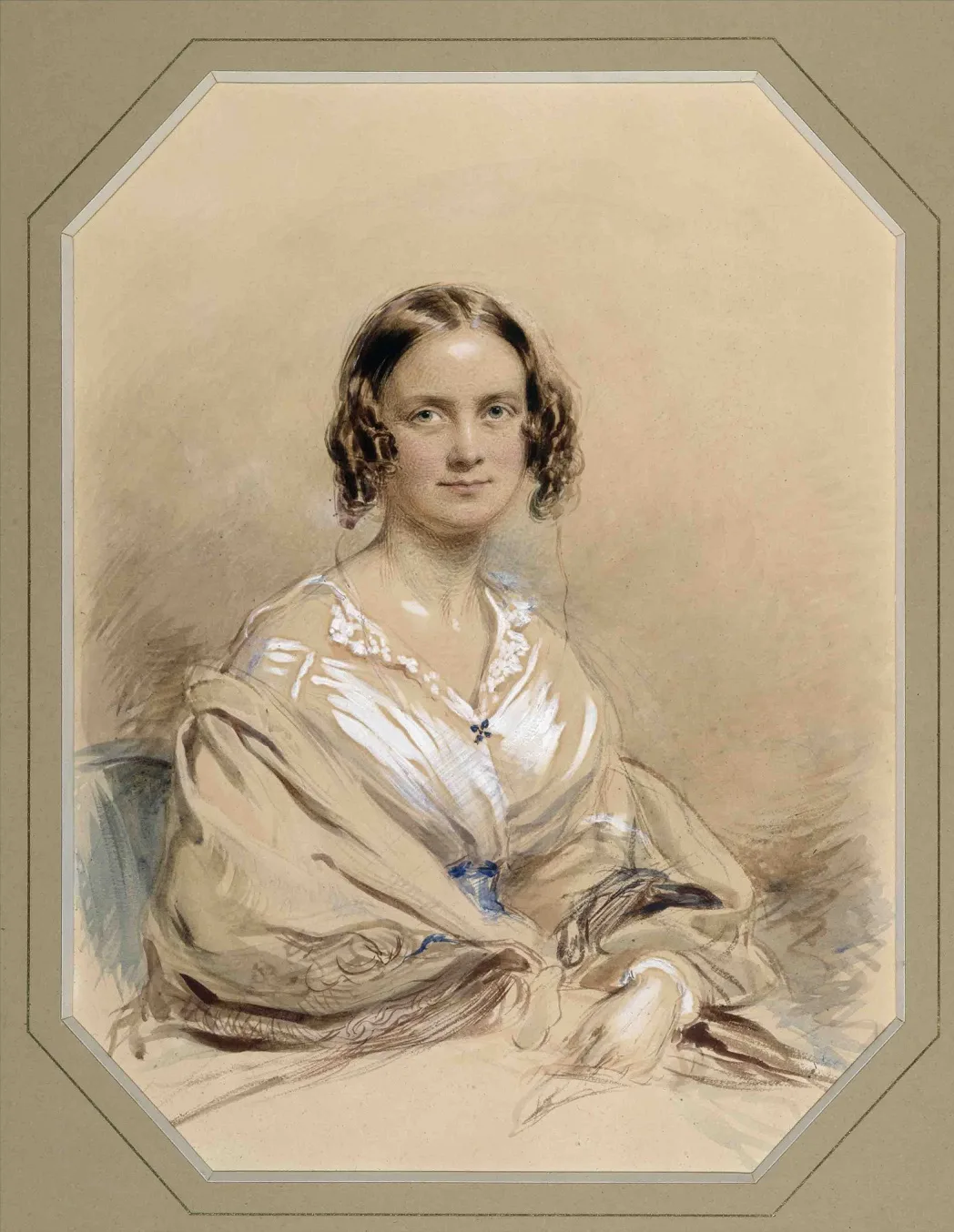
In November 1838 he became engaged to his cousin Emma Wedgwood, a devout believer, and they were married at Maer church in January 1839.3334 Soon afterwards she wrote him a letter, which he kept. "The state of mind that I wish to preserve with respect to you, is to feel that while you are acting conscientiously and sincerely wishing and trying to learn the truth, you cannot be wrong; but there are some reasons that force themselves upon me and prevent my being always able to give myself this comfort." His brother Erasmus, she wrote, "having gone before you" in doubt, might have taken off "some of that dread and fear which the feeling of doubting first gives."353637 Years later she wrote again: "It is feeling and not reasoning that drives one to prayer."38 Their daughter said that her mother, as the years went on, "kept a sorrowful wish to believe more."39
Annie
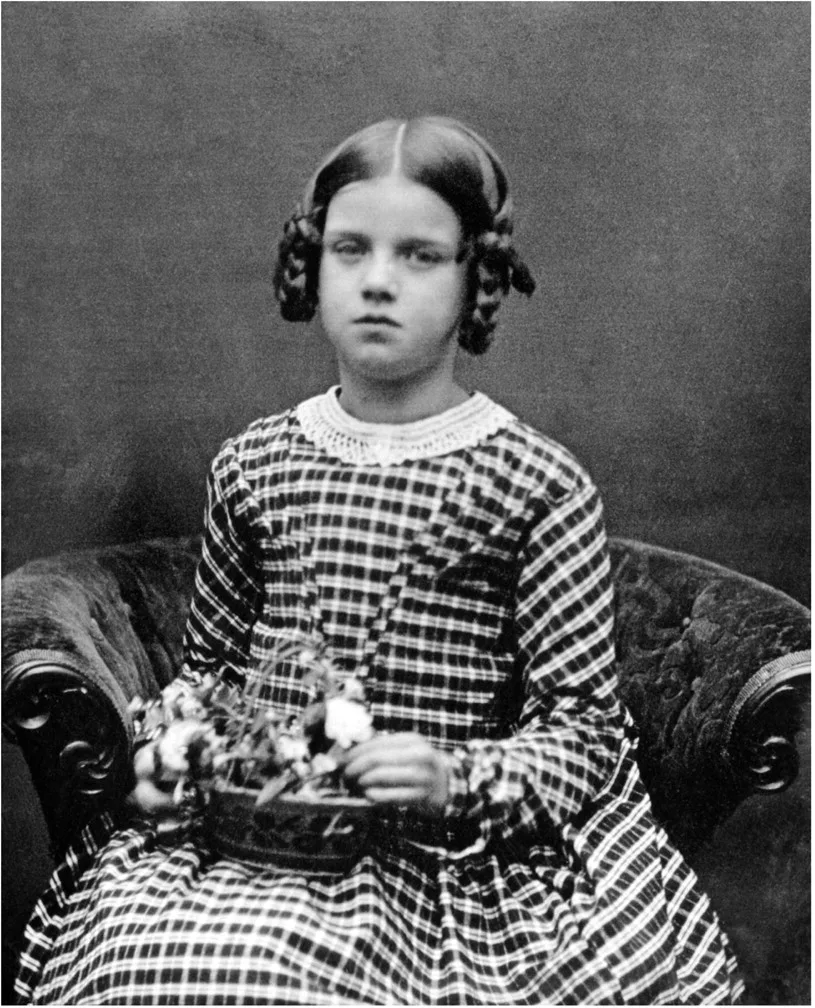
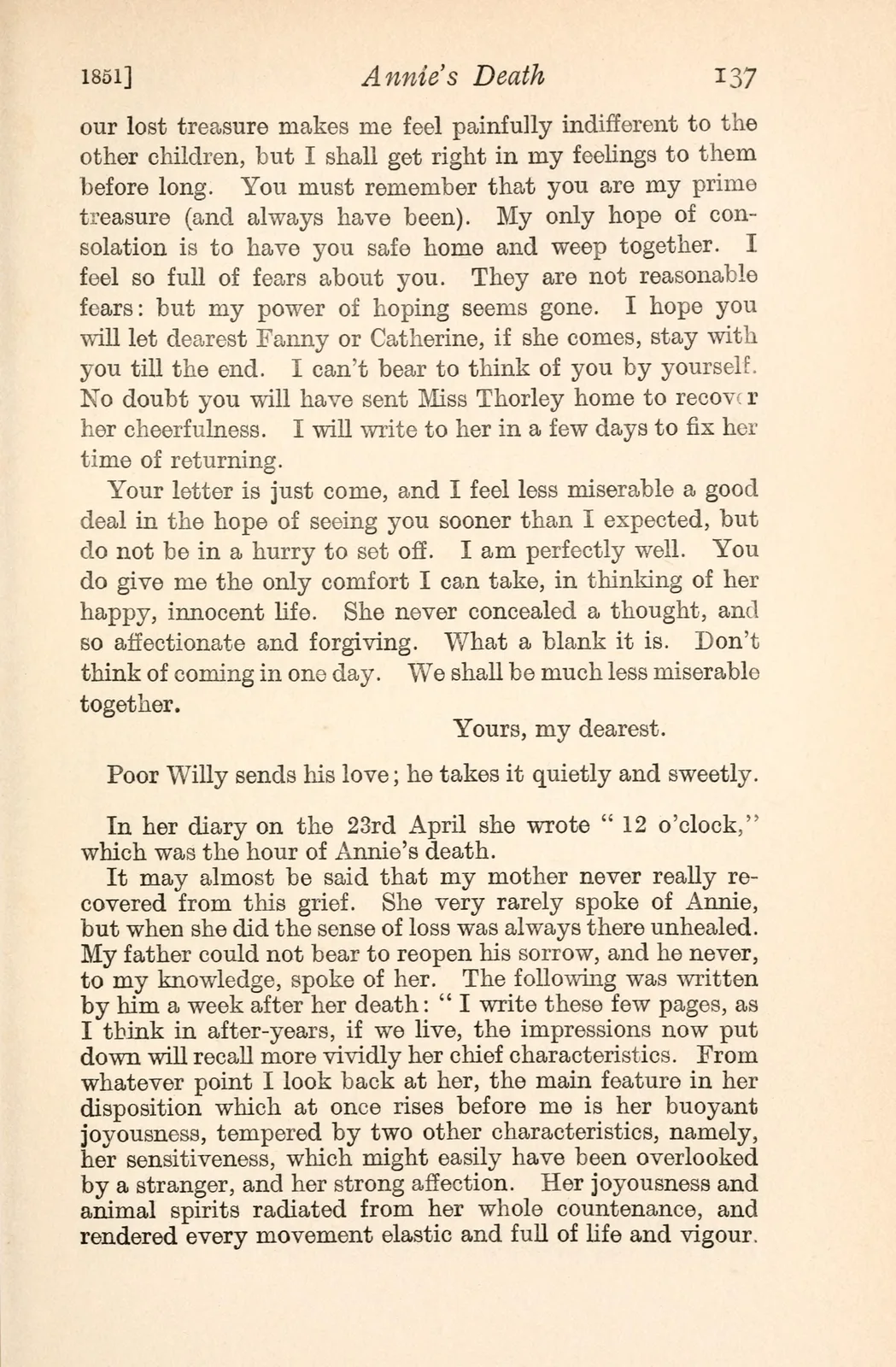
Their eldest daughter, Annie, was born in 1841.40 In the spring of 1851 she fell ill and was taken to Malvern for the water cure, and Darwin went to her; she died there on 23 April, aged ten.4041 A week later he wrote a memorial of her: "We have lost the joy of the household, and the solace of our old age. She must have known how we loved her."4243 To a cousin he wrote, "She was my favourite child."4445 He never, his daughter Henrietta said, spoke of her again.46 Modern biographers have tied Annie's death to the end of what Christian feeling he had left. Darwin himself never said so; by his own account his belief had gone, without distress, twelve years before.47
The Origin and its silence
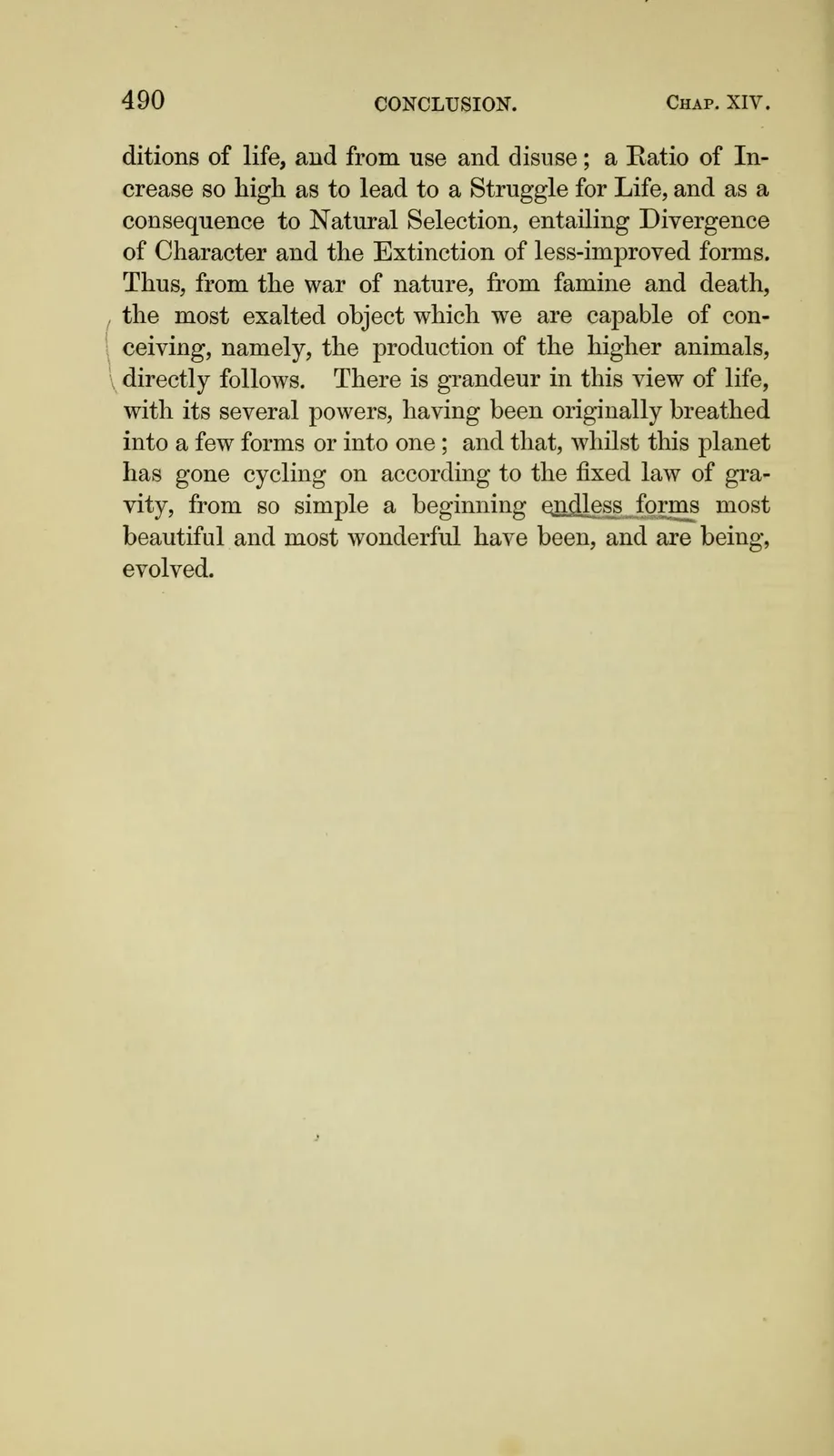
On the Origin of Species appeared on 24 November 1859.48 It said almost nothing about religion. It spoke of "the laws impressed on matter by the Creator," and its last paragraph, in the first edition, ended: "There is grandeur in this view of life, with its several powers, having been originally breathed into a few forms or into one."495051 Later editions read "breathed by the Creator into a few forms," and in 1863 he wrote to Hooker: "I have long regretted that I truckled to public opinion, and used the Pentateuchal term of creation, by which I really meant 'appeared' by some wholly unknown process."52535455 At the time of the book, he wrote later, he still felt "compelled to look to a First Cause having an intelligent mind ... and I deserve to be called a Theist."5657
The critics
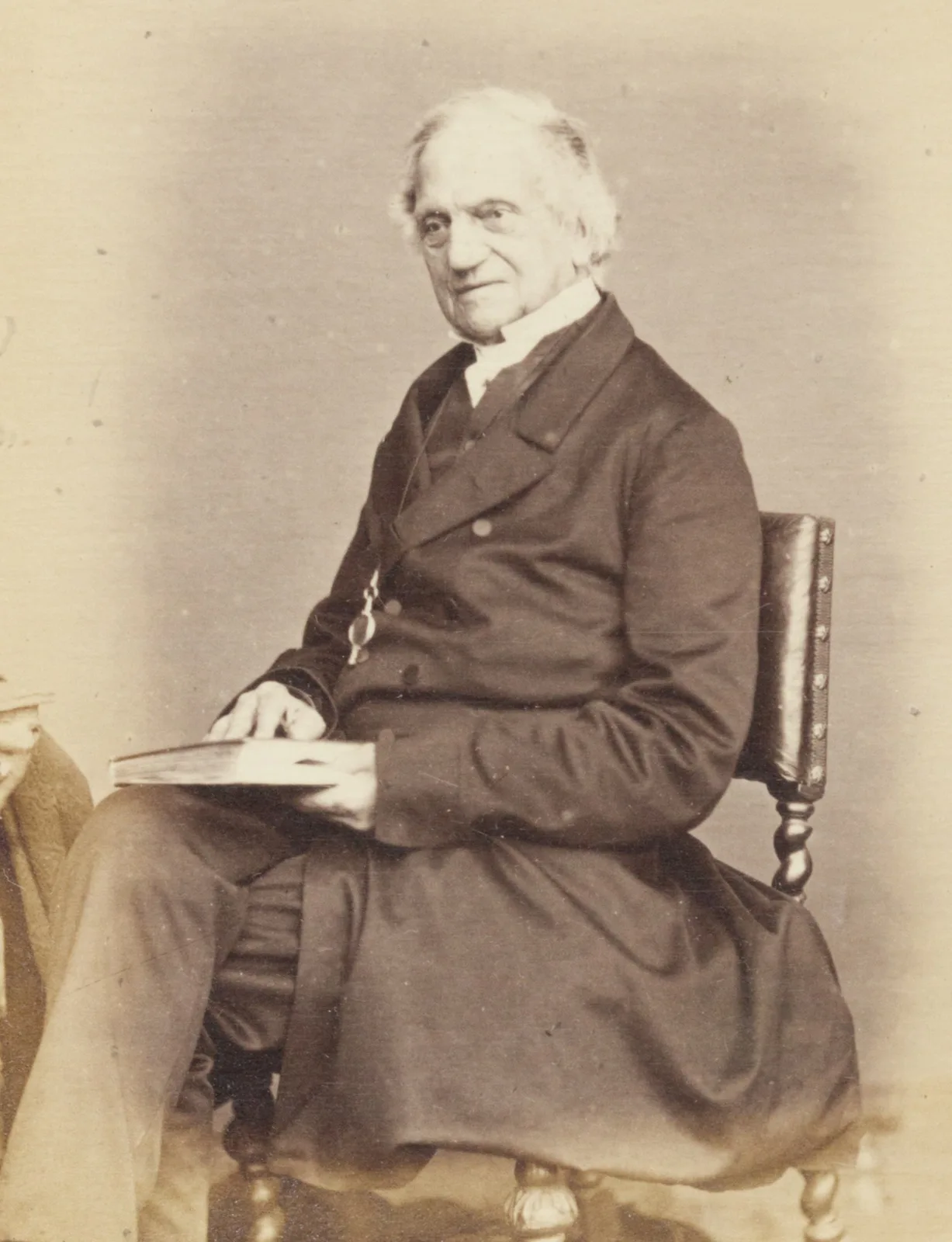
His old Cambridge teacher, the geologist and clergyman Adam Sedgwick, wrote on Christmas Eve 1859: "I have read your book with more pain than pleasure. Parts of it I admired greatly, parts I laughed at till my sides were almost sore; other parts I read with absolute sorrow, because I think them utterly false and grievously mischievous." To break the link between the material and the moral, he feared, would "brutalize" humanity.585960 Wilberforce, writing anonymously in the Quarterly Review, was courteous about the man: "Mr. Darwin writes as a Christian, and we doubt not that he is one." But he held that applying natural selection to man was "absolutely incompatible ... with the whole representation of that moral and spiritual condition of man" in Scripture.616263 Darwin thought the review "uncommonly clever," and the bishop, told of Darwin's good-humoured reply, said "he is such a capital fellow."64
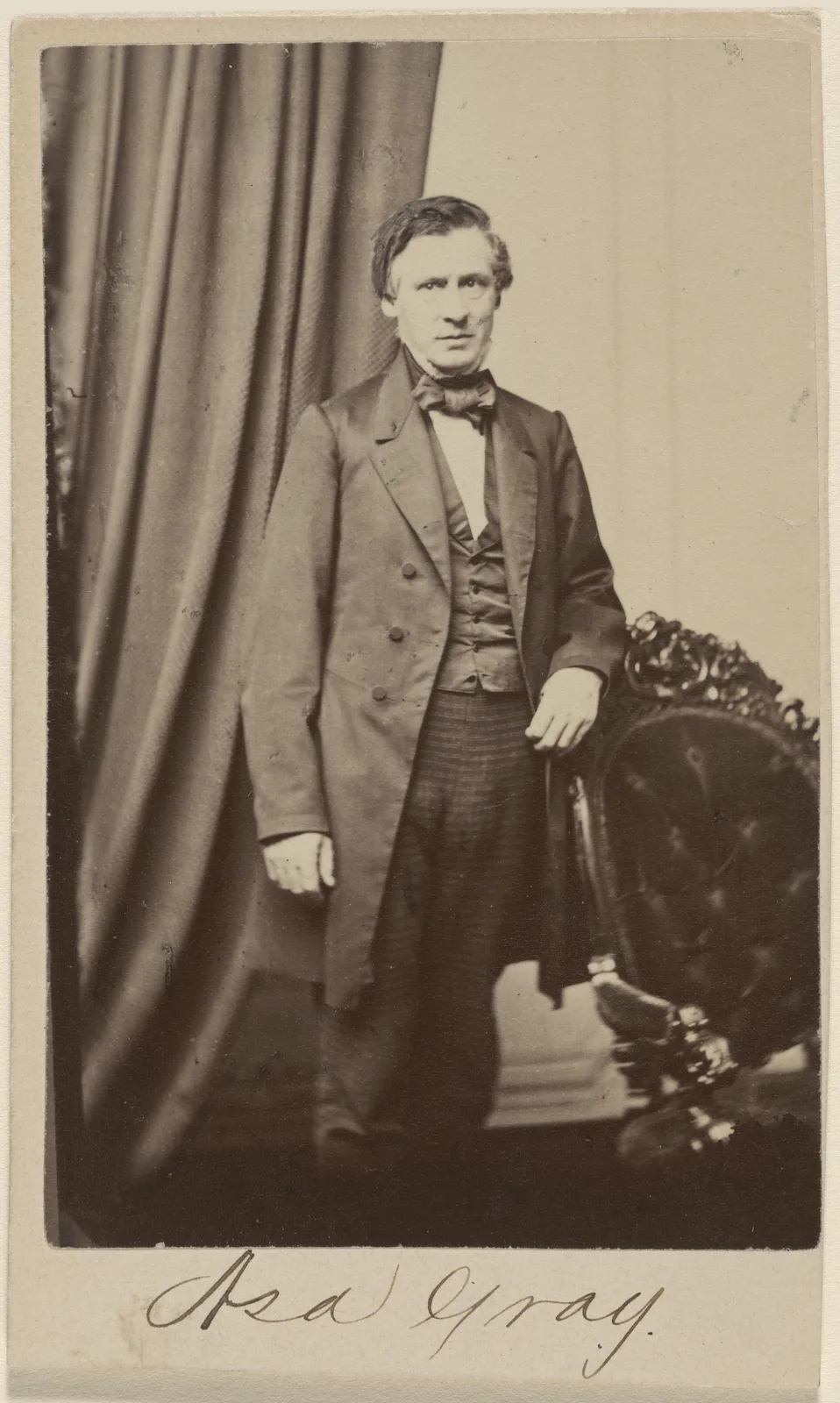
His best friend among the believers was the American botanist Asa Gray, who argued that "the argument for design ... is just as good now, if we accept Darwin's theory, as it was before."6566 Darwin could not follow him. "I had no intention to write atheistically," he wrote to Gray in May 1860. "But I own that I cannot see as plainly as others do, and as I should wish to do, evidence of design and beneficence on all sides of us. There seems to me too much misery in the world. I cannot persuade myself that a beneficent and omnipotent God would have designedly created the Ichneumonidae with the express intention of their feeding within the living bodies of Caterpillars, or that a cat should play with mice."676869
A simple muddle
The God he kept grew fainter. "My theology is a simple muddle," he told Hooker in 1870; "I cannot look at the universe as the result of blind chance, yet I can see no evidence of beneficent design, or indeed of design of any kind, in the details."7071 The chief argument for God, he wrote in 1873, was that the universe could hardly have arisen by chance, "but whether this is an argument of real value, I have never been able to decide."7273 He would not write about it in public; he had not, he said, "thought deeply enough to justify any publicity."74
In 1876 he wrote a memoir for his children, and in it he set out the whole road. Paley's argument from design "fails, now that the law of natural selection has been discovered." Suffering was "a strong" argument against an intelligent First Cause. He was like a man gone colour-blind, for whom other people's belief in red proves nothing. His belief in a First Cause, strong when he wrote the Origin, had "very gradually, with many fluctuations, become weaker." And he ended: "The mystery of the beginning of all things is insoluble by us; and I for one must be content to remain an Agnostic."5675767778 In a private letter of 1879 he put it most carefully: "In my most extreme fluctuations I have never been an Atheist in the sense of denying the existence of a God. I think that generally (and more and more as I grow older), but not always, that an Agnostic would be the more correct description of my state of mind."7980 Two years later he added a doubt about doubt itself: "the horrid doubt always arises whether the convictions of man's mind, which has been developed from the mind of the lower animals, are of any value or at all trustworthy."8182 That is where the timeline places his revision.
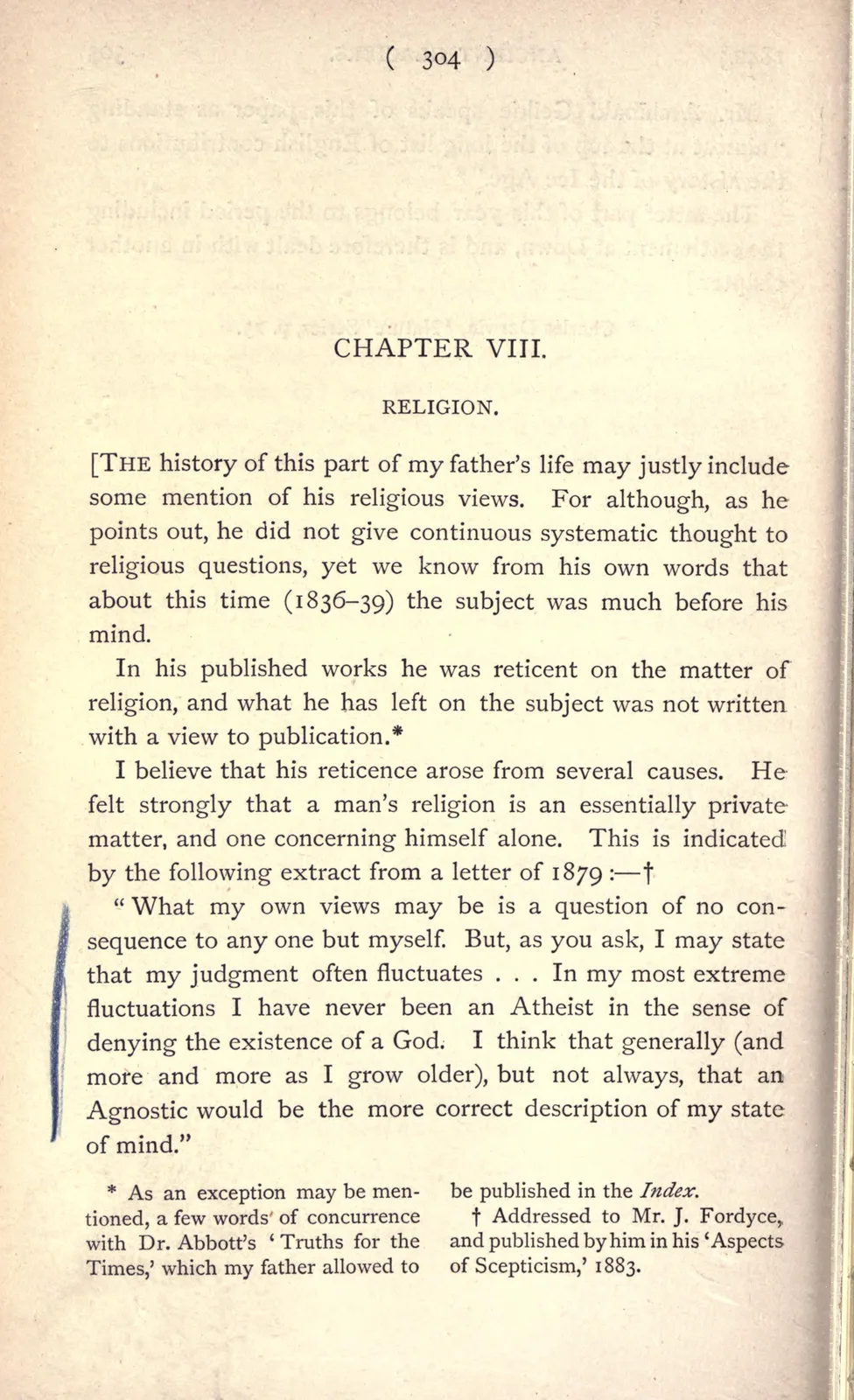
The freethinkers
The atheists wanted him. In October 1880 Edward Aveling, a colleague of Annie Besant and Charles Bradlaugh, asked to dedicate a book to him. Darwin declined. Though he was a strong advocate of free thought on all subjects, he wrote, he thought direct arguments against Christianity and theism did little good, and that freedom of thought was best advanced by the gradual spread of science; and he admitted that he might have been swayed by the pain such attacks would give some of his family.3 A book by Aveling, The Student's Darwin, appeared the next year, printed by Besant and Bradlaugh.83 In 1881 Aveling and the German materialist Ludwig Büchner visited him at Down House, and Aveling tried to persuade him that "Agnostic" and "Atheist" meant the same thing; Darwin's replies, his son wrote, showed "his preference for the unaggressive attitude of an Agnostic."84
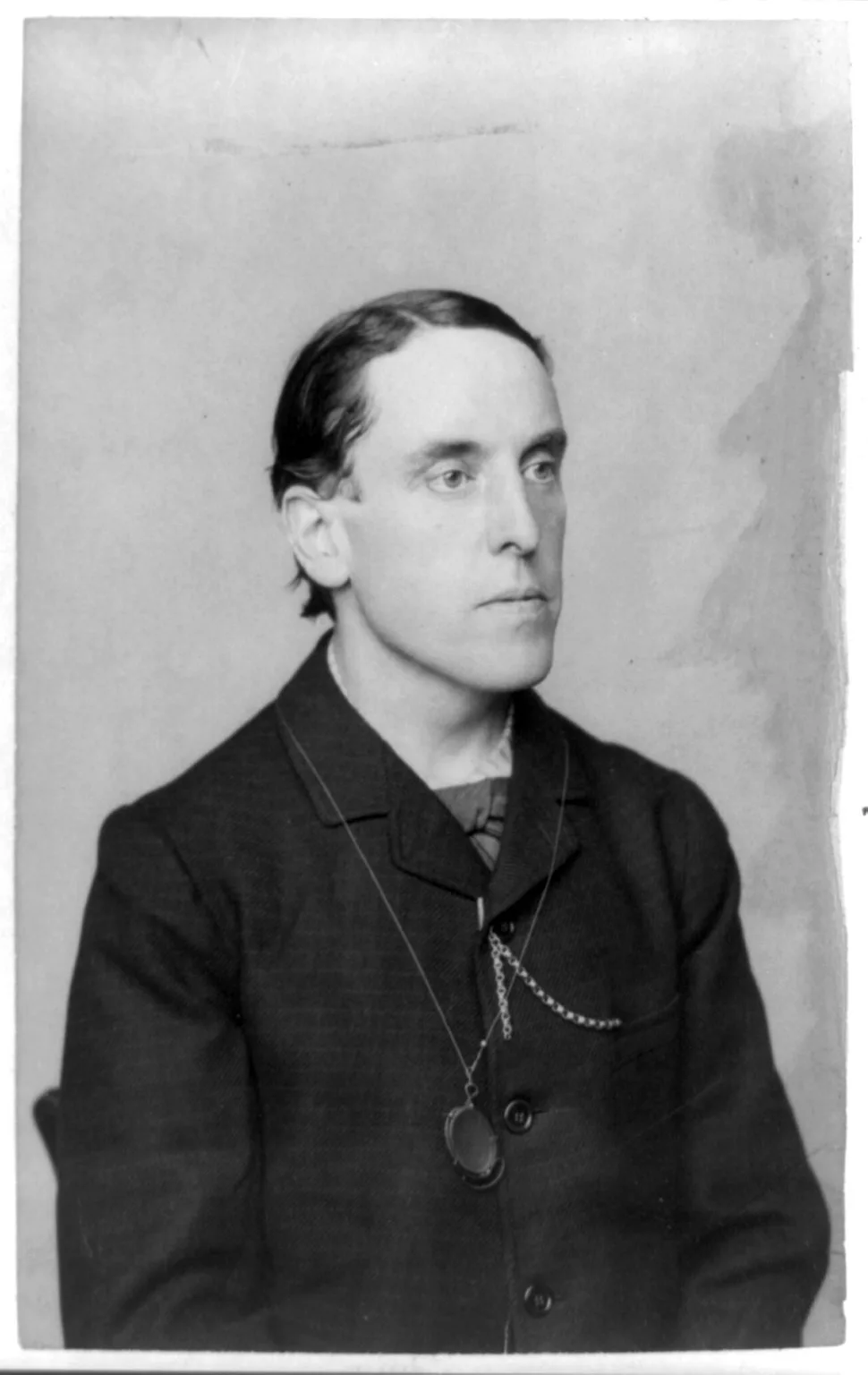
The last days
He died at Down House on 19 April 1882. Emma wrote down his words in the early morning: "I am not the least afraid of death."8586 Twenty members of Parliament asked that he be buried in Westminster Abbey, and he was, a few feet from Newton.87 His son Francis published the memoir in 1887 with passages cut, including some of its harshest words about Christianity; they were restored only in 1958.8889 In 1915 an evangelist, Lady Hope, published a story that Darwin had sat with a Bible in his last months regretting his theory; his family denied it. "Lady Hope was not present during his last illness, or any illness," his daughter Henrietta wrote. "He never recanted any of his scientific views, either then or earlier."909192
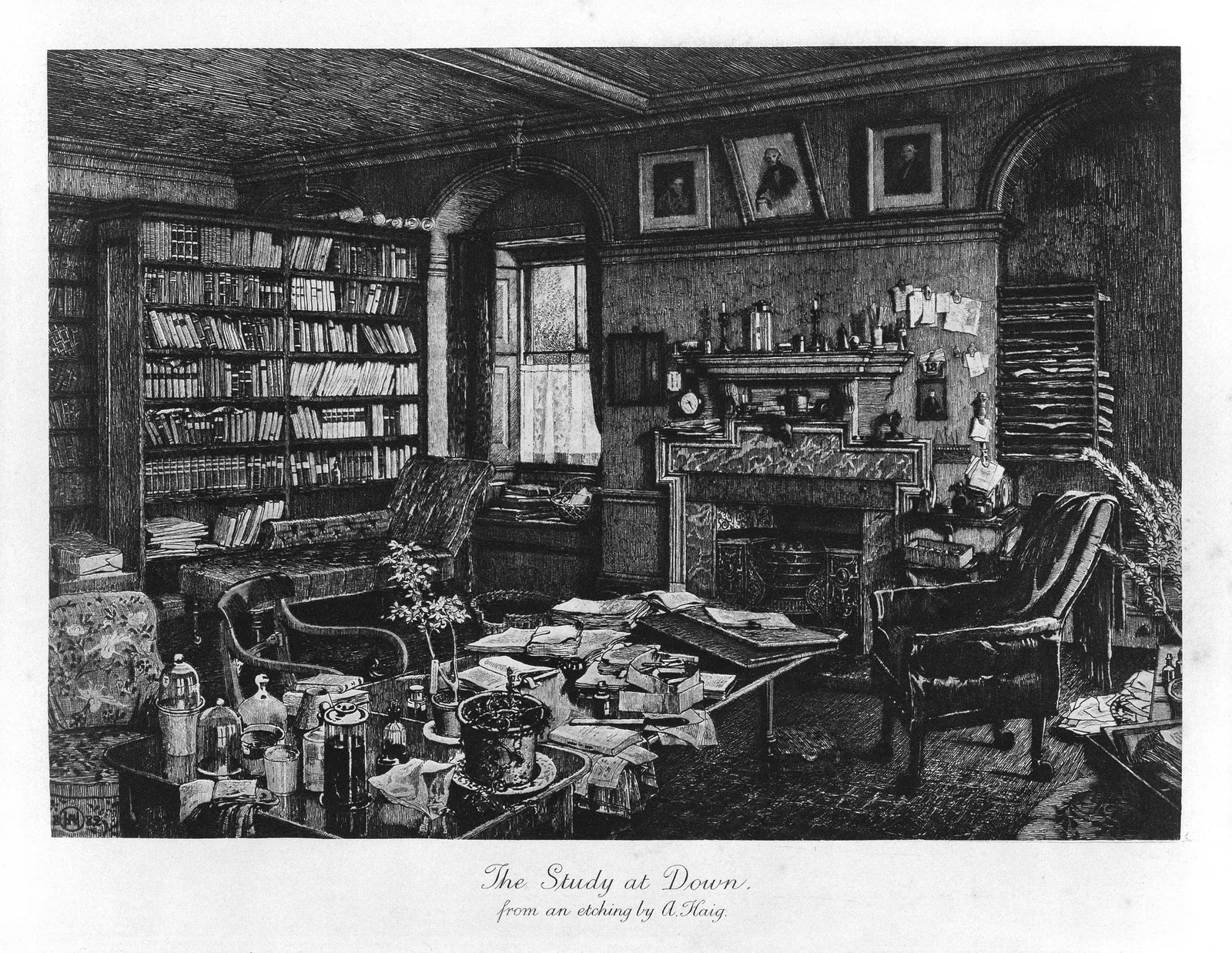
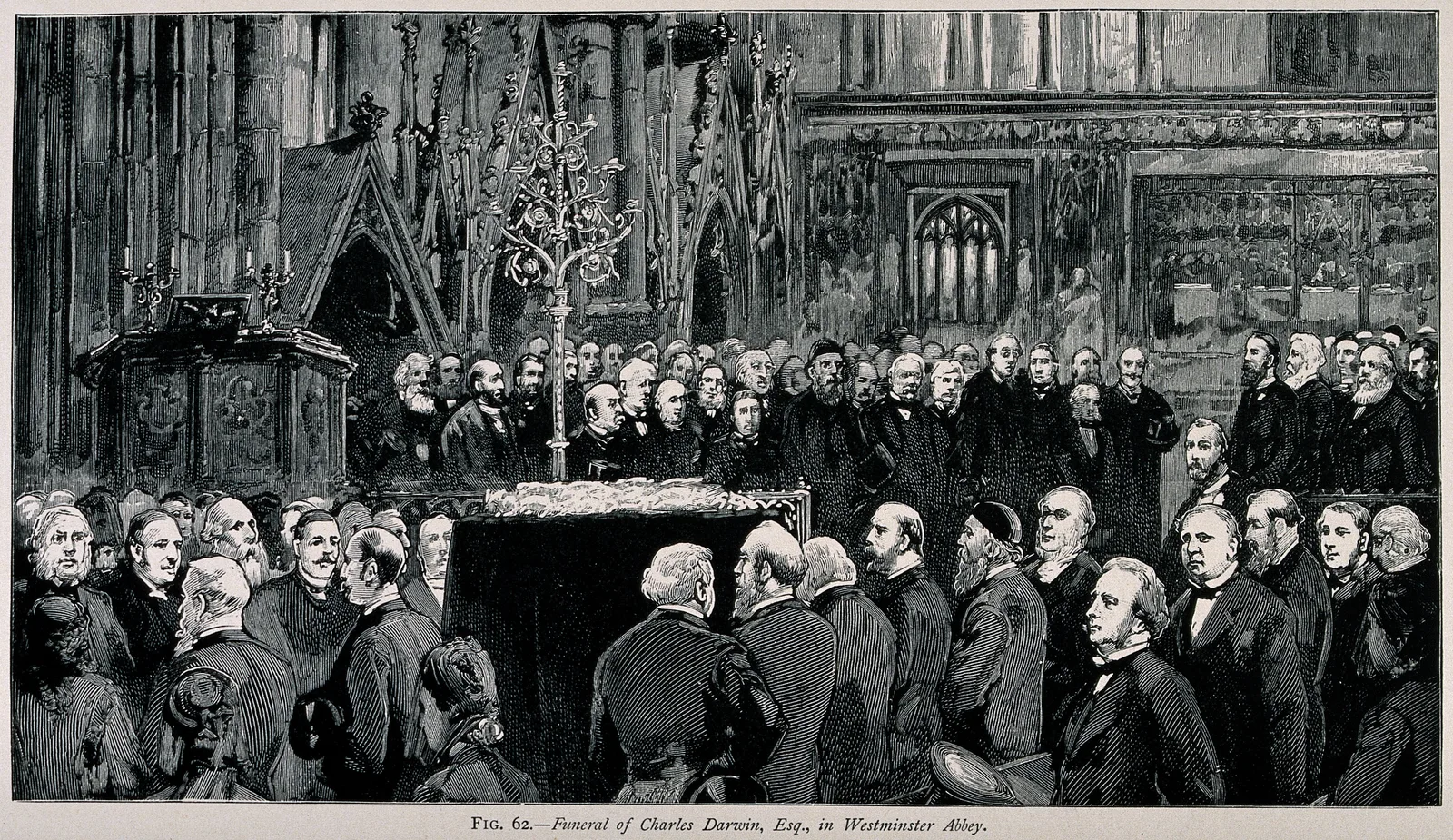
Did his unbelief change shape?
It changed more slowly than almost anyone's in this book, and in one direction. A young man who believed every word of the Bible gave up revelation in the years after the voyage, by reasoning about miracles, the Gospels and the other religions of the world, and felt no distress. He kept a God, a First Cause with a mind, for another twenty years, and then watched that God fade, with "many fluctuations," as his own theory left less for design to do. He ended with a word Huxley had invented.93 He never called himself an atheist, and he would not argue against belief in print, partly because he thought it useless and partly, he admitted, for the sake of his family. His unbelief was real, and it was private: written for his children, cut by his family, and restored long after his death.
Annie Besant, whose press printed the freethinkers' Student's Darwin while he politely kept his distance, has her own chapter in this book.
Footnotes
-
Same, vol. II (1887). Identifier lifelettersofcha02darw, pp. 320–323; p. 323. ↩ ↩2
-
LL2, p. 322 and nn.. Accounts differ; see the disputed points. ↩
-
Darwin to E. B. Aveling, 13 October 1880, Darwin Correspondence Project letter DCP-LETT-12757 (MS: International Institute of Social History, Amsterdam). Verification excerpt in research/texts/DCP-12757-Aveling.txt. Licence: the transcription is (c) University of Cambridge 2022 and not freely licensed; the letter itself is Darwin's and in the public domain. Cite as a pointer; confirm against the printed Correspondence of Charles Darwin vol. 28 or the manuscript before it is quoted on screen. ↩ ↩2
-
Francis Darwin, ed., The Life and Letters of Charles Darwin, including an autobiographical chapter, vol. I (London: John Murray, 1887). Internet Archive identifier lifelettersofcha01darwuoft, p. 27. ↩
-
Darwin, Life and Letters of Charles Darwin, p. 27 n.. ↩
-
Darwin, Life and Letters of Charles Darwin, p. 27 and note. ↩
-
Darwin, Life and Letters of Charles Darwin, p. 27. ↩
-
Darwin, Life and Letters of Charles Darwin, p. 36. ↩
-
Darwin, Life and Letters of Charles Darwin, p. 45. ↩
-
Charles Darwin, Autobiography (1876): Darwin, Life and Letters of Charles Darwin, p. 45. ↩
-
Darwin, Life and Letters of Charles Darwin, p. 46; Darwin, Life and Letters of Charles Darwin, pp. 163–164. ↩
-
Darwin, Life and Letters of Charles Darwin, p. 47. ↩
-
Charles Darwin, Autobiography: Darwin, Life and Letters of Charles Darwin, p. 47. ↩
-
Darwin, Life and Letters of Charles Darwin, p. 171. ↩
-
Charles Darwin, as recalled by J. M. Herbert (1829): Darwin, Life and Letters of Charles Darwin, p. 171. ↩
-
Darwin, Life and Letters of Charles Darwin, pp. 58–59; Darwin, Life and Letters of Charles Darwin, pp. 197–198. ↩
-
Darwin, Life and Letters of Charles Darwin, p. 58 (heading); Darwin, Life and Letters of Charles Darwin, p. 64. ↩
-
Darwin, Life and Letters of Charles Darwin, p. 61. ↩
-
Darwin, Life and Letters of Charles Darwin, pp. 307–308. ↩
-
Charles Darwin, Autobiography: Darwin, Life and Letters of Charles Darwin, pp. 307–308. ↩
-
Charles Darwin, Journal of Researches ... during the Voyage of H.M.S. Beagle, second edition (London: John Murray, 1845). Identifier journalofresearc00darw, p. 26; Darwin, Life and Letters of Charles Darwin, p. 311. ↩
-
Charles Darwin, Journal of Researches, 2nd ed. (1845), Rio de Janeiro chapter: Darwin, Journal of Researches ... during…, p. 26. ↩
-
Darwin, Life and Letters of Charles Darwin, p. 82. ↩
-
Darwin, Life and Letters of Charles Darwin, p. 307 and n.. ↩
-
Darwin, Life and Letters of Charles Darwin, p. 308. ↩
-
Charles Darwin, Autobiography: Darwin, Life and Letters of Charles Darwin, p. 308. ↩
-
Charles Darwin, Autobiography: Darwin, Life and Letters of Charles Darwin, p. 308. ↩
-
Darwin, Life and Letters of Charles Darwin, p. 308. ↩
-
Charles Darwin, Autobiography: Darwin, Life and Letters of Charles Darwin, p. 308. ↩
-
Darwin, Life and Letters of Charles Darwin, p. 309. ↩
-
Charles Darwin, Autobiography: Darwin, Life and Letters of Charles Darwin, p. 309. ↩
-
Darwin, Life and Letters of Charles Darwin, p. 83. ↩
-
Henrietta Litchfield, ed., Emma Darwin: A Century of Family Letters, 1792–1896, vol. II (London: John Murray, 1915; the public edition; the 1904 private edition printed two items that this edition omits). Identifier emmadarwincentur02litc, p. 1. ↩
-
Litchfield, Emma Darwin, p. 26; Darwin, Life and Letters of Charles Darwin, p. 299 (cited in ML1 p. 30 n.); Darwin, Life and Letters of Charles Darwin, p. 318. ↩
-
Litchfield, Emma Darwin, pp. 172–175. ↩
-
Litchfield, Emma Darwin, pp. 173–174. ↩
-
Emma Darwin to her husband, early 1839 (Darwin: "shortly after our marriage"); his wife, a believer: Litchfield, Emma Darwin, p. 173. ↩
-
Litchfield, Emma Darwin, pp. 174–175. ↩
-
Litchfield, Emma Darwin, pp. 173, 175. ↩
-
Darwin, Life and Letters of Charles Darwin, p. 132; Litchfield, Emma Darwin, pp. 132, 137, 139. ↩ ↩2
-
Litchfield, Emma Darwin, p. 132. ↩
-
Litchfield, Emma Darwin, pp. 137–139; Darwin, Life and Letters of Charles Darwin, pp. 132–134. ↩
-
Charles Darwin, memorial of Annie, 30 April 1851: Litchfield, Emma Darwin, p. 139. ↩
-
Darwin, Life and Letters of Charles Darwin, p. 380. ↩
-
Charles Darwin to W. D. Fox, about 29 April 1851: Darwin, Life and Letters of Charles Darwin, p. 380. ↩
-
Litchfield, Emma Darwin, p. 137. ↩
-
Darwin, Life and Letters of Charles Darwin, pp. 307–309; Browne, Keynes (not consulted). ↩
-
LL2, p. 205. ↩
-
Charles Darwin, On the Origin of Species (London: John Murray, 1859), first edition. Identifier onoriginofspec00darw, p. 490; p. 488; p. 189. ↩
-
Charles Darwin, On the Origin of Species, 1st ed.: Darwin, On the Origin of Species, p. 488. ↩
-
Charles Darwin, On the Origin of Species, 1st ed. (24 Nov 1859), last paragraph: Darwin, On the Origin of Species, p. 490. ↩
-
Same, third edition (London: John Murray, March 1861). Identifier b28075134 (Wellcome copy), p. 525; Same, New York: Hurst and Co., undated reprint of the sixth edition (1872). Identifier originofspeciesb00darw, (closing paragraph). Reported at second hand; the original has not been seen. ↩
-
Same, vol. III (1887). Identifier lifelettersofcha03darwuoft, p. 18. ↩
-
Charles Darwin, On the Origin of Species, 3rd ed. (March 1861), last paragraph: Origin1861, p. 525. ↩
-
Charles Darwin to J. D. Hooker, 29 March 1863: LL3, p. 18. Often quoted without the context: he is answering a reviewer who had called "creation" a "Pentateuchal" term. ↩
-
Darwin, Life and Letters of Charles Darwin, pp. 309–313. ↩ ↩2
-
Charles Darwin, Autobiography: Darwin, Life and Letters of Charles Darwin, pp. 312–313. ↩
-
LL2, pp. 247–250. ↩
-
Adam Sedgwick, Woodwardian Professor of Geology at Cambridge and a clergyman, Darwin's old teacher, to Darwin, 24 December 1859: LL2, p. 248. ↩
-
Adam Sedgwick, same letter, on the link between the material and the moral: LL2, p. 249. ↩
-
LL2, p. 324 n.; Samuel Wilberforce, "Darwin's Origin of Species", Quarterly Review, July 1860 (anonymous; authorship acknowledged later), reprinted in Essays Contributed to the "Quarterly Review", vol. I (London: John Murray, 1874), pp. 52–103. Identifier essayscontribut02wilbgoog, pp. 52–103. ↩
-
Wilberforce, Essays Contributed to the "Quarterly Review", vol. I pp. 93–94. ↩
-
Samuel Wilberforce, Bishop of Oxford, Quarterly Review, July 1860 (anonymous); ellipsis joins pp. 93–94; "such a notion" is Darwin's application of natural selection to Man: Wilberforce, Essays Contributed to the "Quarterly Review", vol. I pp. 93–94. ↩
-
LL2, pp. 324–325. ↩
-
Asa Gray, Darwiniana: Essays and Reviews Pertaining to Darwinism (New York: Appleton, 1876), "Natural Selection not inconsistent with Natural Theology" etc.; the "Discussion between two Readers" first printed in the American Journal of Science, vol. 30, 1860. Identifier darwinianagray00grayiala, pp. 85–86; Darwin, Life and Letters of Charles Darwin, p. 314. ↩
-
Asa Gray, Harvard botanist, Darwin's Christian ally, 1860: Gray, Darwiniana, pp. 85–86. ↩
-
LL2, pp. 311–312. ↩
-
Charles Darwin to Asa Gray, 22 May 1860: LL2, pp. 311–312. ↩
-
Charles Darwin to Asa Gray, 22 May 1860: LL2, p. 312. ↩
-
Francis Darwin and A. C. Seward, eds., More Letters of Charles Darwin, vol. I (London: John Murray, 1903). Identifier morelettersofcha01darw, p. 321. ↩
-
Charles Darwin to J. D. Hooker, 12 July 1870: Darwin, More Letters of Charles Darwin, p. 321. ↩
-
Darwin, Life and Letters of Charles Darwin, pp. 306–307. ↩
-
Charles Darwin to a Dutch student, 2 April 1873: Darwin, Life and Letters of Charles Darwin, p. 306. ↩
-
Darwin, Life and Letters of Charles Darwin, pp. 305–306. ↩
-
Charles Darwin, Autobiography: Darwin, Life and Letters of Charles Darwin, p. 309. ↩
-
Charles Darwin, Autobiography: Darwin, Life and Letters of Charles Darwin, p. 311. ↩
-
Charles Darwin, Autobiography: Darwin, Life and Letters of Charles Darwin, pp. 311–312. ↩
-
Charles Darwin, Autobiography: Darwin, Life and Letters of Charles Darwin, p. 313. ↩
-
Darwin, Life and Letters of Charles Darwin, p. 304 and n.; Darwin to John Fordyce, 7 May 1879, DCP-LETT-12041 (MS: Linnean Society, Quentin Keynes Collection). Excerpt in research/texts/DCP-12041-Fordyce.txt. Same licence note. The printed 1887 text is in LL1 p. 304. ↩
-
Charles Darwin to John Fordyce, 7 May 1879: Darwin, Life and Letters of Charles Darwin, p. 304 (letter date from DCP-LETT-12041). ↩
-
Darwin, Life and Letters of Charles Darwin, pp. 315–316. ↩
-
Charles Darwin to W. Graham, 3 July 1881: Darwin, Life and Letters of Charles Darwin, p. 316. ↩
-
Edward B. Aveling, The Student's Darwin (London: Freethought Publishing Company, 1881), printed by Annie Besant and Charles Bradlaugh, 28 Stonecutter Street. Identifier studentsdarwin00avel, title page and advertisement. ↩
-
Darwin, Life and Letters of Charles Darwin, p. 317 n.. Not verified. ↩
-
LL3, p. 362; Litchfield, Emma Darwin, p. 253. ↩
-
Charles Darwin, 19 April 1882, as written down by Emma Darwin: Litchfield, Emma Darwin, p. 253. ↩
-
LL3, pp. 360–362. ↩
-
Darwin, Life and Letters of Charles Darwin, p. 26; Darwin, Life and Letters of Charles Darwin, p. 307. ↩
-
Darwin, Life and Letters of Charles Darwin, pp. 307–313 (absences); Darwin Online (John van Wyhe, ed.), transcription of the Autobiography manuscript (CUL-DAR26.1-121), "a fresh transcription ... includes the editorial notes from Nora Barlow's edition". Pages read only for comparison with LL1 (not saved in the project). Licence: the page says only "Reproduced with permission of the Syndics of Cambridge University Library and William Huxley Darwin"; no open licence was found, so treat its wording as a pointer, quote at most a few words, and take any passage the script uses from Barlow (1958) or the CUL manuscript after clearing it. The manuscript itself (1876–81) is public domain, MS pp. 61–74. ↩
-
Hope-secondhand (Clark 1985 p. 199; Wikipedia). ↩
-
Hope-secondhand (Clark 1985; Wikipedia). ↩
-
Henrietta Litchfield, Darwin's daughter, The Christian, 23 February 1922: Hope-secondhand (Clark 1985 p. 199). ↩
-
DCP-12041, note 4. ↩
In their own words
I had scruples about declaring my belief in all the dogmas of the Church of England; though otherwise I liked the thought of being a country clergyman. Accordingly I read with care 'Pearson on the Creeds,' and a few other books on divinity; and as I did not then in the least doubt the strict and literal truth of every word in the Bible, I soon persuaded myself that our Creed must be fully accepted.
Considering how fiercely I have been attacked by the orthodox, it seems ludicrous that I once intended to be a clergyman.
I am convinced that I could have written out the whole of the 'Evidences' with perfect correctness, but not of course in the clear language of Paley. The logic of this book and, as I may add, of his 'Natural Theology,' gave me as much delight as did Euclid.
Neither can I, and therefore I cannot take orders.
Whilst on board the Beagle I was quite orthodox, and I remember being heartily laughed at by several of the officers (though themselves orthodox) for quoting the Bible as an unanswerable authority on some point of morality.
But I had gradually come by this time, i.e. 1836 to 1839, to see that the Old Testament was no more to be trusted than the sacred books of the Hindoos.
the more we know of the fixed laws of nature the more incredible do miracles become, ... the Gospels cannot be proved to have been written simultaneously with the events, ... they differ in many important details, far too important, as it seemed to me, to be admitted as the usual inaccuracies of eye-witnesses
But I was very unwilling to give up my belief; I feel sure of this, for I can well remember often and often inventing day-dreams of old letters between distinguished Romans, and manuscripts being discovered at Pompeii or elsewhere, which confirmed in the most striking manner all that was written in the Gospels.
Thus disbelief crept over me at a very slow rate, but was at last complete. The rate was so slow that I felt no distress.
The old argument from design in Nature, as given by Paley, which formerly seemed to me so conclusive, fails, now that the law of natural selection has been discovered.
This very old argument from the existence of suffering against the existence of an intelligent First Cause seems to me a strong one
It may be truly said that I am like a man who has become colour-blind, and the universal belief by men of the existence of redness makes my present loss of perception of not the least value as evidence.
When thus reflecting I feel compelled to look to a First Cause having an intelligent mind in some degree analogous to that of man; and I deserve to be called a Theist. This conclusion was strong in my mind about the time, as far as I can remember, when I wrote the 'Origin of Species;' and it is since that time that it has very gradually, with many fluctuations, become weaker.
I cannot pretend to throw the least light on such abstruse problems. The mystery of the beginning of all things is insoluble by us; and I for one must be content to remain an Agnostic.
It is easy to specify the individual objects of admiration in these grand scenes; but it is not possible to give an adequate idea of the higher feelings of wonder, astonishment, and devotion, which fill and elevate the mind.
What my own views may be is a question of no consequence to any one but myself. But, as you ask, I may state that my judgment often fluctuates ... In my most extreme fluctuations I have never been an Atheist in the sense of denying the existence of a God. I think that generally (and more and more as I grow older), but not always, that an Agnostic would be the more correct description of my state of mind.
Though I am a strong advocate for free thought on all subjects, yet it appears to me (whether rightly or wrongly) that direct arguments against christianity & theism produce hardly any effect on the public; & freedom of thought is best promoted by the gradual illumination of men's minds, which follows from the advance of science. It has, therefore, been always my object to avoid writing on religion, & I have confined myself to science. I may, however, have been unduly biassed by the pain which it would give some members of my family, if I aided in any way direct attacks on religion.
I cannot persuade myself that a beneficent and omnipotent God would have designedly created the Ichneumonidae with the express intention of their feeding within the living bodies of Caterpillars, or that a cat should play with mice.
I had no intention to write atheistically. But I own that I cannot see as plainly as others do, and as I should wish to do, evidence of design and beneficence on all sides of us. There seems to me too much misery in the world.
My theology is a simple muddle; I cannot look at the universe as the result of blind chance, yet I can see no evidence of beneficent design, or indeed of design of any kind, in the details.
But I have long regretted that I truckled to public opinion, and used the Pentateuchal term of creation, by which I really meant "appeared" by some wholly unknown process.
There is grandeur in this view of life, with its several powers, having been originally breathed into a few forms or into one
There is grandeur in this view of life, with its several powers, having been originally breathed by the Creator into a few forms or into one
To my mind it accords better with what we know of the laws impressed on matter by the Creator, that the production and extinction of the past and present inhabitants of the world should have been due to secondary causes, like those determining the birth and death of the individual.
We have lost the joy of the household, and the solace of our old age. She must have known how we loved her.
She was my favourite child; her cordiality, openness, buoyant joyousness and strong affections made her most loveable.
Tears still sometimes come into my eyes when I think of her sweet ways.
The mind refuses to look at this universe, being what it is, without having been designed; yet, where one would most expect design, viz. in the structure of a sentient being, the more I think on the subject, the less I can see proof of design.
I do not believe that there ever has been any revelation. As for a future life, every man must judge for himself between conflicting vague probabilities.
the impossibility of conceiving that this grand and wondrous universe, with our conscious selves, arose through chance, seems to me the chief argument for the existence of God; but whether this is an argument of real value, I have never been able to decide.
But then with me the horrid doubt always arises whether the convictions of man's mind, which has been developed from the mind of the lower animals, are of any value or at all trustworthy.
I am not the least afraid of death.
The other side
I have read your book with more pain than pleasure. Parts of it I admired greatly, parts I laughed at till my sides were almost sore; other parts I read with absolute sorrow, because I think them utterly false and grievously mischievous.
Were it possible (which, thank God, it is not) to break it, humanity, in my mind, would suffer a damage that might brutalize it, and sink the human race into a lower grade of degradation than any into which it has fallen since its written records tell us of its history.
Mr. Darwin writes as a Christian, and we doubt not that he is one. ... such a notion is absolutely incompatible not only with single expressions in the word of God on that subject of natural science with which it is not immediately concerned, but, which in our judgment is of far more importance, with the whole representation of that moral and spiritual condition of man which is its proper subject-matter.
The state of mind that I wish to preserve with respect to you, is to feel that while you are acting conscientiously and sincerely wishing and trying to learn the truth, you cannot be wrong; but there are some reasons that force themselves upon me and prevent my being always able to give myself this comfort.
Wherefore, we may insist that, for all that yet appears, the argument for design, as presented by the natural theologians, is just as good now, if we accept Darwin's theory, as it was before that theory was promulgated
I was a young man with unformed ideas. I threw out queries, suggestions, wondering all the time over everything, and to my astonishment, the ideas took like wildfire. People made a religion of them.
I was present at his deathbed ... Lady Hope was not present during his last illness, or any illness. I believe he never even saw her, but in any case she had no influence over him in any department of thought or belief. He never recanted any of his scientific views, either then or earlier.
Where accounts differ
| Point | One account | Another | How the page handles it |
|---|---|---|---|
| Date of Annie's death | 23 April 1851: Darwin's own memorial header, Emma's diary ("12 o'clock"), the tombstone, Henrietta Litchfield (Emma2 pp. 132, 137, 139; LL1 p. 132) | 24 April 1851: Darwin's own manuscript of the Autobiography (per Darwin Online) and Francis Darwin's heading in LL1 p. 380 ("took place at Malvern on April 24") | Use 23 April (contemporary memorial and gravestone); no need to mention the discrepancy on screen |
| Whether Annie's death changed his belief | Darwin dates the complete loss of Christian belief to 1836–39 and says it cost "no distress" (LL1 p. 309); his writing on Annie is grief only (Q25, Q26) | Modern biographers (Browne; Keynes) tie Annie's death to the end of his lingering Christian feeling and to his not attending church (not consulted) | Do not say Annie caused the loss. If the episode keeps the roster's "death of Annie" turn, frame it as the cost he and Emma bore and the point after which he stopped speaking of the subject, sourced to Emma2 p. 137; check Browne/Keynes first |
| "Agnostic" in the Fordyce letter | "the more correct description" (LL1 p. 304, family's 1887 print) | "the most correct description" (manuscript, DCP-12041) | Say "the most accurate word" without the comparative, or quote the manuscript after confirming; note the 1887 print's small change |
| Journal and Autobiography on the Brazilian forest | Journal 1845: "wonder, astonishment, and devotion" (p. 26) | Autobiography quotes himself: "wonder, admiration, and devotion" (LL1 p. 311) | Quote the Journal for the scene; say "as he later remembered it" if using the Autobiography |
| When "by the Creator" entered the Origin | Added in the second edition, January 1860 (standard account; DCP; secondhand) | Absent from the Appleton reprint of January 1860 (Origin1860A) and from the first edition; present in the third (1861, p. 525) | Say "added after the first edition" unless the second edition is scanned; show 1859 and 1861 wording side by side |
| The Bishop's question at Oxford, 30 June 1860 | Lyell's version: related to an ape "by his grandfather's or grandmother's side" (LL2 p. 322) | Victor Carus, present: Lyell's version is "slightly incorrect" (LL2 p. 322 n.); Huxley's reply survives in several versions (Green's letter, LL2 p. 322) | "Accounts differ"; paraphrase; do not put an exact line in anyone's mouth on screen |
| The family's cuts to the Autobiography | The 1887 text is "somewhat abbreviated", with no indication where (LL1 pp. 26, 307) | Manuscript passages absent from it, including the "damnable doctrine" paragraph, Emma's objections (1882, 1885), and the father's advice to conceal doubts [63]–[65] | Say the family cut it and that it was restored in 1958; quote the restored passages only after clearing Barlow or the CUL manuscript |
| Emma's first letter on his doubts: date and Darwin's note | Darwin: "shortly after our marriage" (Emma2 p. 173); Litchfield files it under 1853–59 | A note on it, "When I am dead, know that many times, I have kissed this & cryed over this" (Barlow; DCP; not in Emma2) | Say "early in their marriage"; do not use the note until seen |
| Lady Hope's story | Hope (1915): an autumn afternoon, Darwin bedridden with a Bible, regretting evolution | Darwin died in April; Francis (1917) "quite untrue"; Henrietta (1922) "no foundation whatever"; Leonard "hallucination", "purely fictitious" (secondhand); Moore (1994): a real call in autumn 1881 embroidered later | Tell it as a legend with the family's denials; Henrietta's statement is the strongest, but the primary text should be located first |
| Date of the Watchman-Examiner article | 15 August 1915 (Wikipedia) | 19 August 1915 (commonly cited; not verified here) | Say "in August 1915" |
List of illustrations
This page uses only public-domain and Creative Commons images; each is credited with its source and licence.
- Charles Darwin by Julia Margaret Cameron, c. 1868 — Julia Margaret Cameron / Adam Cuerden, circa 1868date QS:P,+1868-00-00T00:00:00Z/9,P1480,Q5727902, printed 1875 · Julia Margaret Cameron / Adam Cuerden, via Wikimedia Commons, Public domain · Public domain
- Charles and Catherine Darwin, 1816, by Sharples — Ellen Sharples, 1816 · Ellen Sharples, via Wikimedia Commons, Public domain · Public domain
- LeKeux - Cambridge, c1840 - Christ's 01 - memorialsofcambr01wriguoft 0142 — John Le Keux / Jonathan Anderson Bell, circa 1840date QS:P571,+1840-00-00T00:00:00Z/9,P1480,Q5727902 · John Le Keux / Jonathan Anderson Bell, via Wikimedia Commons, Public domain · Public domain
- Natural theology : or, Evidences of the existence and attributes of the Deity, collected from the appearances of nature. (p. 3, the watch passage) — Paley, William, 1743-1805,Holley, Horace, 1781-1827. fmo, 1802 · Natural theology : or, Evidences of the existence and attributes of the Deity, collected f, Internet Archive, scan page 17, public domain · Public domain (published 1802)
- HMS Beagle by Conrad Martens — Conrad Martens (1801 - 21 August 1878), between 1832 and 1836date QS:P,+1832-00-00T00:00:00Z/8,P1319,+1832-00-00T00:00:00Z/9,P1326,+1836-00-00T00:00:00Z/9 · Conrad Martens (1801 - 21 August 1878), via Wikimedia Commons, Public domain · Public domain
- Admiralty Chart No 1375 Galapagos Islands, Published 1841 — United Kingdom Hydrographic Office, 1841-01-25 · United Kingdom Hydrographic Office, via Wikimedia Commons, Public domain · Public domain
- The life and letters of Charles Darwin, including an anutobiographical chapter (vol. I, p. 309, 'disbelief crept over me at a very slow rate') — Darwin, Charles, 1809-1882,Darwin, Francis, Sir, 1848-1925, 1887 · The life and letters of Charles Darwin, including an anutobiographical chapter, Internet Archive, scan page 331, public domain · Public domain (published 1887)
- George Richmond - Emma Darwin - 1840 — George Richmond, 1840date QS:P571,+1840-00-00T00:00:00Z/9 · George Richmond, via Wikimedia Commons, Public domain · Public domain
- Annie Darwin — Unknown photographer, uploaded by en:User:Duncharris, 1849 · Unknown photographer, uploaded by en:User:Duncharris, via Wikimedia Commons, Public domain · Public domain
- Emma Darwin, a century of family letters, 1792-1896 (vol. II, p. 137, Annie's death; Emma's grief and Charles's memorial begins) — Litchfield, Henrietta Emma Darwin, 1843-, 1915 · Emma Darwin, a century of family letters, 1792-1896, Internet Archive, scan page 183, public domain · Public domain (published 1915)
- On the origin of species by means of natural selection, or, The preservation of favoured races in the struggle for life (first edition, p. 490, closing paragraph) — Darwin, Charles, 1809-1882, 1859 · On the origin of species by means of natural selection, or, The preservation of favoured r, Internet Archive, scan page 514, public domain · Public domain (published 1859)
- On the origin of species by means of natural selection, or, The preservation of favoured races in the struggle for life (third edition, p. 525, closing paragraph) — Darwin, Charles, 1809-1882, 1861 · On the origin of species by means of natural selection, or, The preservation of favoured r, Internet Archive, scan page 553, public domain · Public domain (published 1861)
- Adam Sedgwick EE 1863 SLNSW FL13248540 — Ernest Edwards, circa 1863date QS:P,+1863-00-00T00:00:00Z/9,P1480,Q5727902 · Ernest Edwards, via Wikimedia Commons, Public domain · Public domain
- Samuel Wilberforce, Vanity Fair 24 July 1869 ('Not a Brawler'?) — Carlo Pellegrini, 1869-07-24 · Carlo Pellegrini, via Wikimedia Commons, Public domain · Public domain
- Asa Gray by John Adams Whipple, 1861, albumen silver print, from the National Portrait Gallery - NPG-7700336C 1 — John Adams Whipple, 1861 · John Adams Whipple, via Wikimedia Commons, CC0 · CC0
- The life and letters of Charles Darwin, including an anutobiographical chapter (vol. I, p. 304, chapter VIII 'Religion' opening) — Darwin, Charles, 1809-1882,Darwin, Francis, Sir, 1848-1925, 1887 · The life and letters of Charles Darwin, including an anutobiographical chapter, Internet Archive, scan page 326, public domain · Public domain (published 1887)
- Dr. Ed. Aveling LCCN96511090 — Holler, Joseph, 1854-, photographer, 1886 · Holler, Joseph, 1854-, photographer, via Wikimedia Commons, Public domain · Public domain (Wikimedia Commons)
- The Study at Down (Axel Haig) — Unknown, c. 1882 · Wellcome Collection via Wikimedia Commons, CC BY 4.0 · CC BY 4.0
- The funeral ceremony of Charles Darwin at Westminster Abbey, 26 April 1882 — Unknown · Wellcome Collection via Wikimedia Commons, CC BY 4.0 · CC BY 4.0
Sources
Tier 1 — the subject's own words (writings, letters, diaries, trial records)
- [LL1] Francis Darwin, ed., The Life and Letters of Charles Darwin, including an autobiographical chapter, vol. I (London: John Murray, 1887). Internet Archive identifier lifelettersofcha01darwuoft. Text in research/texts/LL1.txt. Contains the Autobiography as cut by the family (ch. II, pp. 26–108), "Religion" (ch. VIII, pp. 304–317) and the letters. Page numbers are the printed pages as read from the running heads in the OCR.
- [LL2] Same, vol. II (1887). Identifier lifelettersofcha02darw. Text in research/texts/LL2.txt. Origin letters 1859–1860 (Sedgwick, Gray, Wilberforce, Oxford).
- [LL3] Same, vol. III (1887). Identifier lifelettersofcha03darwuoft. Text in research/texts/LL3.txt. Letters 1863 onward; Appendix I, the funeral.
- [ML1] Francis Darwin and A. C. Seward, eds., More Letters of Charles Darwin, vol. I (London: John Murray, 1903). Identifier morelettersofcha01darw. Text in research/texts/ML1.txt.
- [ML2] Same, vol. II (1903). Identifier morelettersofcha02darw. Text in research/texts/ML2.txt. (Searched; no passage cited yet.)
- [Emma2] Henrietta Litchfield, ed., Emma Darwin: A Century of Family Letters, 1792–1896, vol. II (London: John Murray, 1915; the public edition; the 1904 private edition printed two items that this edition omits). Identifier emmadarwincentur02litc. Text in research/texts/Emma2.txt. Emma's letters on religion (pp. 173–175), the death of Annie (pp. 132–140), Emma's notes after the death (p. 253). Written by Darwin's daughter; Tier 1 for the letters, Tier 2 for her narrative.
- [Origin1859] Charles Darwin, On the Origin of Species (London: John Murray, 1859), first edition. Identifier onoriginofspec00darw. Text in research/texts/Origin1859.txt.
- [Origin1860A] Same, Appleton (New York) reprint of January 1860 ("a new edition, revised and augmented by the author", with a Supplement of additions). Identifier onoriginofspecie00indarw. Text in research/texts/Origin1860.txt. Used only to show what the American Jan. 1860 text lacks.
- [Origin1861] Same, third edition (London: John Murray, March 1861). Identifier b28075134 (Wellcome copy). Text in research/texts/Origin1861.txt.
- [Origin1872] Same, New York: Hurst and Co., undated reprint of the sixth edition (1872). Identifier originofspeciesb00darw. Text in research/texts/Origin1872.txt. (Not cited by page; confirms "by the Creator" survives.)
- [Journal1845] Charles Darwin, Journal of Researches ... during the Voyage of H.M.S. Beagle, second edition (London: John Murray, 1845). Identifier journalofresearc00darw. Text in research/texts/Journal1845.txt. (The first edition, vol. III of FitzRoy's Narrative, 1839, was not read.)
- [DCP-12757] Darwin to E. B. Aveling, 13 October 1880, Darwin Correspondence Project letter DCP-LETT-12757 (MS: International Institute of Social History, Amsterdam). Verification excerpt in research/texts/DCP-12757-Aveling.txt. Licence: the transcription is (c) University of Cambridge 2022 and not freely licensed; the letter itself is Darwin's and in the public domain. Cite as a pointer; confirm against the printed Correspondence of Charles Darwin vol. 28 or the manuscript before it is quoted on screen.
- [DCP-12041] Darwin to John Fordyce, 7 May 1879, DCP-LETT-12041 (MS: Linnean Society, Quentin Keynes Collection). Excerpt in research/texts/DCP-12041-Fordyce.txt. Same licence note. The printed 1887 text is in LL1 p. 304.
- [DO-Aut] Darwin Online (John van Wyhe, ed.), transcription of the Autobiography manuscript (CUL-DAR26.1-121), "a fresh transcription ... includes the editorial notes from Nora Barlow's edition". Pages read only for comparison with LL1 (not saved in the project). Licence: the page says only "Reproduced with permission of the Syndics of Cambridge University Library and William Huxley Darwin"; no open licence was found, so treat its wording as a pointer, quote at most a few words, and take any passage the script uses from Barlow (1958) or the CUL manuscript after clearing it. The manuscript itself (1876–81) is public domain.
Tier 2 — scholarly biographies and encyclopedias
- [Huxley1900] Leonard Huxley, Life and Letters of Thomas Henry Huxley, vol. I (London: Macmillan, 1900). Identifier lifelettersoftho00huxl. Text in research/texts/HuxleyLife1.txt. (Searched for the coinage of "agnostic"; not found there; claim [62] rests on the DCP editors' footnote.)
- [Barlow1958] Nora Barlow, ed., The Autobiography of Charles Darwin 1809–1882, with original omissions restored (London: Collins, 1958). Copyrighted; NOT consulted. Lead only; see claims [64]–[66].
- [Clark1985] Ronald W. Clark, The Survival of Charles Darwin (London: Weidenfeld and Nicolson, 1985), p. 199, as reproduced at talkorigins.org/faqs/hope.html. Copyrighted; secondhand through that page. Excerpt in research/texts/Hope-secondhand.txt.
- [Moore1994] James Moore, The Darwin Legend (Baker Books, 1994). Copyrighted; NOT consulted (Internet Archive lending copy darwinlegend0000moor exists). Cited only as reported on Wikipedia.
Tier 3 — popular biographies and journalism
- None consulted. Janet Browne, Charles Darwin (2 vols, 1995, 2002) and Randal Keynes, Annie's Box (2001) are the standard modern accounts of Annie's death and Darwin's loss of faith; both copyrighted, not read. See [38].
Tier 4 — maps to other sources only (Wikipedia and similar). Never cited in the script.
- Wikipedia, "Elizabeth, Lady Hope" (map to Watchman-Examiner, Clark, Moore, the 1917 and 1922 denials).
- Wikipedia coordinates API (locating aid for the Places table).
- talkorigins.org, "The Lady Hope Story" (Yates 1994/2003): pointer to Clark 1985 and The Christian, 23 February 1922.
Opposition sources — contemporary critics and religious responses
- [Wilb] Samuel Wilberforce, "Darwin's Origin of Species", Quarterly Review, July 1860 (anonymous; authorship acknowledged later), reprinted in Essays Contributed to the "Quarterly Review", vol. I (London: John Murray, 1874), pp. 52–103. Identifier essayscontribut02wilbgoog. Text in research/texts/Wilb2.txt.
- [Sedgwick] Adam Sedgwick to Darwin, 24 December 1859, printed in LL2 pp. 247–250.
- [GrayD] Asa Gray, Darwiniana: Essays and Reviews Pertaining to Darwinism (New York: Appleton, 1876), "Natural Selection not inconsistent with Natural Theology" etc.; the "Discussion between two Readers" first printed in the American Journal of Science, vol. 30, 1860. Identifier darwinianagray00grayiala. Text in research/texts/GrayDarwiniana.txt.
- [AvelingS] Edward B. Aveling, The Student's Darwin (London: Freethought Publishing Company, 1881), printed by Annie Besant and Charles Bradlaugh, 28 Stonecutter Street. Identifier studentsdarwin00avel. Text in research/texts/AvelingStudents.txt. Aveling's later pamphlet The Religious Views of Charles Darwin (Freethought Publishing Company, 1883) was NOT found on the Internet Archive or reached; Google Books was down.
Related lives
Annie Besant (episode 03). Edward Aveling, who took the 1880 refusal and the 1881 visit to Down House, was her colleague, and The Student's Darwin (1881) was printed by Annie Besant and Charles Bradlaugh. Alternative: Thomas Henry Huxley (roster, not yet built), who named "agnostic" and fought Wilberforce at Oxford in 1860. The script must not say "next" (lessons.md).
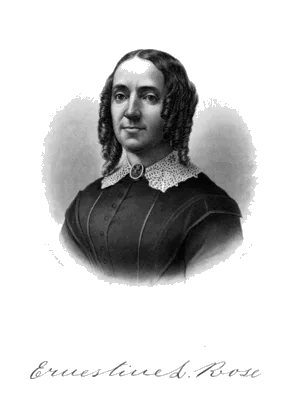
Ernestine Rose
Ernestine Rose was a rabbi's daughter who could not love a God who wanted suffering, and she gave up her father's faith at fourteen. She spent thirty years in America fighting for women's property and rights, while keeping her religious arguments off the movement's platform. In 1861 she called herself, in print and without retreat, an atheist who believed in man.
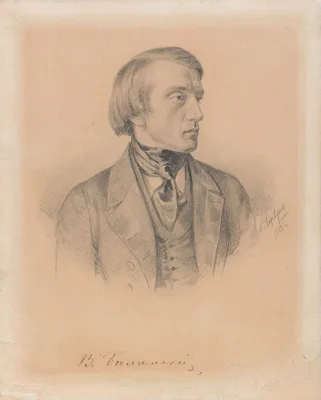
Vissarion Belinsky
Vissarion Belinsky was a village priest's grandson, and his own young faith was the idealism of the Moscow circle ("the presence of God", 1837). He lost it to grief at Stankevich's death in 1840 and to his break with Hegel, and wrote privately in 1841 that "negation is my God". He said it in public only once, from abroad, in the 1847 Letter to Gogol: the Church was the prop of the knout, and Christ the teacher of freedom it had betrayed. The letter was banned in Russia, copied by hand, and read aloud by Dostoevsky at the price of a death sentence.
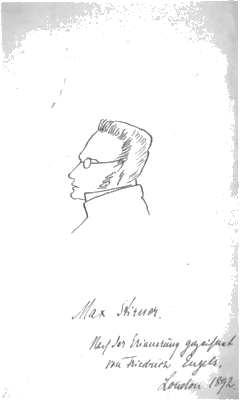
Max Stirner
Max Stirner was a Bayreuth Lutheran with a theology student's training and no recorded crisis of faith. He moved among Bauer's Berlin radicals until, in The Ego and Its Own (1844), he rejected not only God but the "Man" that Feuerbach and the humanist atheists had put in God's place. He refused the name atheist, because he counted those atheists among the pious. He restated the position once against his critics in 1845, and then fell silent into translation, debt and an early death.
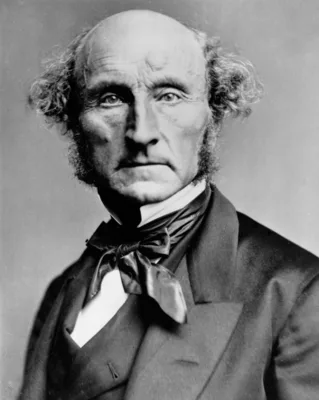
John Stuart Mill
John Stuart Mill was raised by his father without any religion, and "never had" a faith to lose. His crisis of 1826 was one of feeling, not belief, but it opened him to religion's emotional side. In 1834 he told Carlyle privately that he had only "a merely probable God". He kept public silence on religion by his father's rule, even as an MP, then defended the atheist Bradlaugh and lost his seat for it. In his last essay he stated the same probable God as a hope he called "legitimate and philosophically defensible", but never belief.