The nineteenth century
This was the century in which unbelief went public. Its people include a publisher jailed for printing what he thought, a poet expelled from Oxford for a pamphlet, a lecturer who filled the largest halls in America, a member of Parliament kept from his seat for six years over an oath, a rabbi's daughter who lectured in defence of atheism, and a campaigner who left atheism for Theosophy.
The eighteenth century had written unbelief down, hidden it, and finally printed it. The nineteenth took it out into public view. The people in this part were born between 1790 and 1850, into a world in which the French Revolution had already shown what a nation without an established church might look like, and in which the evangelical revival, on both sides of the Atlantic, had also shown what a nation on fire with faith looked like. They grew up in the second of these worlds and spent their lives arguing with it.
Three things made their century different from the one before. The first was the platform. Lecturing, debating and cheap printing turned unbelief from a private opinion held by gentlemen into a public performance attended by clerks and shoemakers. The men and women in this part were performers: a poet expelled from Oxford for a pamphlet, a lecturer who filled the largest halls in America, a member of Parliament kept out of his seat for six years over an oath, two women who turned the argument on the churches' treatment of women. The second was the law. For most of the century an unbeliever in England could not give evidence, could not sit in Parliament without an oath, and could be prosecuted for blasphemy. In the United States the old colonial blasphemy statutes were still on the books, and the fights to change those laws are part of these lives. The third was science. Geology stretched the age of the earth, and after 1859 Darwin's book gave the century a new argument that both sides claimed, and the believers' replies, from Gladstone down, were serious ones.
What the century did not settle was the word. The people here called themselves infidels, freethinkers, secularists, agnostics and atheists, often several of these in turn, and two of them changed their minds entirely. The chapters that follow begin with the two men born in 1833 who made the same argument in the two rooms the century had opened, the lecture hall and the House of Commons.
The lives
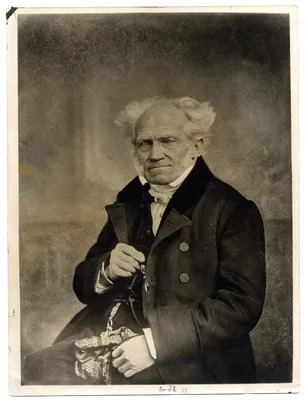
Arthur Schopenhauer
Arthur Schopenhauer was baptised and confirmed in a Danzig church by a family for whom religion was a formality. At fifteen he wrote against English bigotry, and at twenty-three that no one who really philosophizes is religious. From Kant and the Upanishads he built a philosophy with no creator in it (1818). He refused the name "atheist" as absurd and malicious, and proposed "Non-Judaism" in its place. In old age he made a truce with religion as a necessary evil, pleased that his irreligious teaching served some readers as a religion.
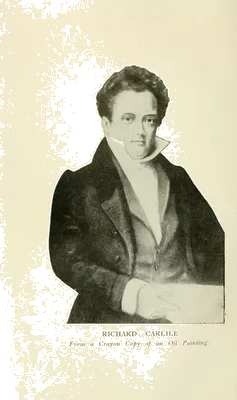
Richard Carlile
Richard Carlile was a Devon tinman who burned Paine in effigy as a boy. He turned to radical publishing in the hunger of 1816–17. The prosecutions he courted, and six years of study in Dorchester gaol, made him a Deist and then an atheist. After 1833 he recast his unbelief as an allegorical Christianity, while insisting he had not recanted a sentence.
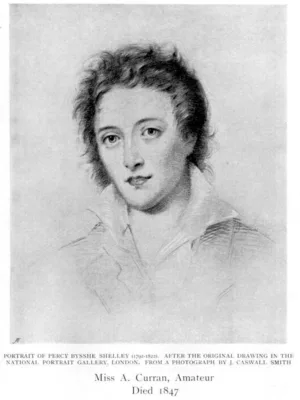
Percy Bysshe Shelley
Shelley hated the cruelty of believers before he doubted their God. He reasoned his way from Hume and Locke to The Necessity of Atheism at eighteen, was expelled from Oxford for it, and later lost his children partly on the same ground. In his last years he turned the word atheist from a creed into a gauntlet thrown down against superstition and oppression.
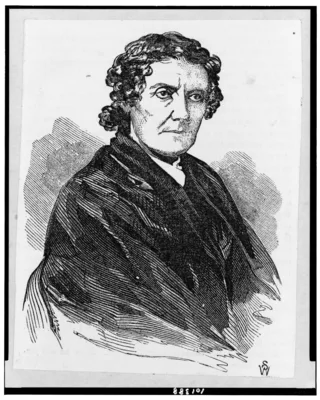
Frances Wright
Frances Wright was an orphan who lost a devout childhood faith to the libraries around her and to Epicurus. She kept her unbelief private for fifteen years while she worked for liberty and against slavery. She went public in 1828 because she believed the American churches were reaching for political power through women's minds. In middle age she took back the word "religion" for a human bond of union, while still declining to speak of God.
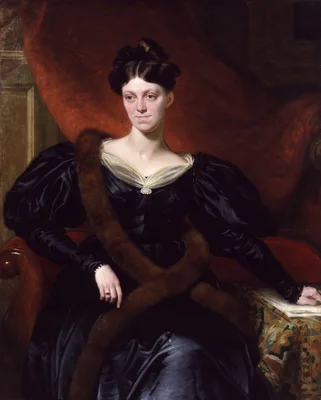
Harriet Martineau
Harriet Martineau was a devout Unitarian child. At twenty she took the doctrine of Necessity from her brother James, and watched it wear her faith away over many years. She let go of the last of it in five years of illness and bereavement at Tynemouth, and on her Eastern journey of 1846–47 she saw every religion as human history. In 1851 she said in print that she knew nothing whatever about God, an atheist only "in the vulgar sense", at the cost of her brother's lasting enmity and with no dread of the annihilation she expected.
Ludwig Feuerbach
Ludwig Feuerbach left theology for Hegel's philosophy at twenty, and lost his academic career to an anonymous book against immortality. In The Essence of Christianity he argued that God is humanity's own nature, projected and worshipped. He meant that unbelief as a translation of religion into plain speech. Love of man later pushed it toward materialism.
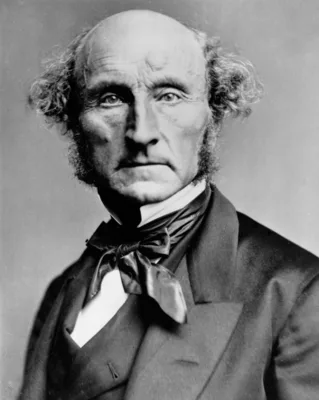
John Stuart Mill
John Stuart Mill was raised by his father without any religion, and "never had" a faith to lose. His crisis of 1826 was one of feeling, not belief, but it opened him to religion's emotional side. In 1834 he told Carlyle privately that he had only "a merely probable God". He kept public silence on religion by his father's rule, even as an MP, then defended the atheist Bradlaugh and lost his seat for it. In his last essay he stated the same probable God as a hope he called "legitimate and philosophically defensible", but never belief.
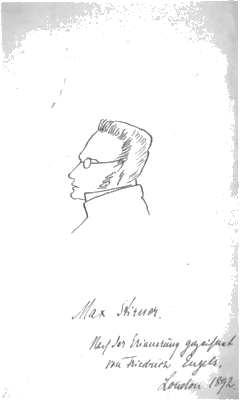
Max Stirner
Max Stirner was a Bayreuth Lutheran with a theology student's training and no recorded crisis of faith. He moved among Bauer's Berlin radicals until, in The Ego and Its Own (1844), he rejected not only God but the "Man" that Feuerbach and the humanist atheists had put in God's place. He refused the name atheist, because he counted those atheists among the pious. He restated the position once against his critics in 1845, and then fell silent into translation, debt and an early death.
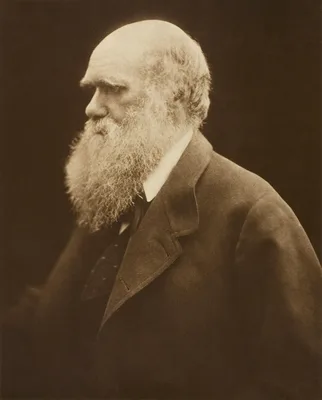
Charles Darwin
Charles Darwin was a would-be country clergyman who believed every word of the Bible. Between 1836 and 1839 he gave up Christianity as a revelation "at a very slow rate" and without distress, by reasoning about miracles, the Gospels and other religions. He kept a designing God until his own theory left design little to do, and ended "content to remain an Agnostic". He kept the whole road private, for his family's sake and from his own judgement that attacks on religion did no good.
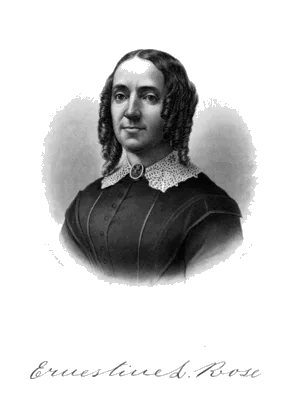
Ernestine Rose
Ernestine Rose was a rabbi's daughter who could not love a God who wanted suffering, and she gave up her father's faith at fourteen. She spent thirty years in America fighting for women's property and rights, while keeping her religious arguments off the movement's platform. In 1861 she called herself, in print and without retreat, an atheist who believed in man.
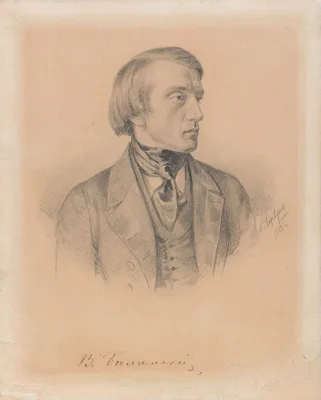
Vissarion Belinsky
Vissarion Belinsky was a village priest's grandson, and his own young faith was the idealism of the Moscow circle ("the presence of God", 1837). He lost it to grief at Stankevich's death in 1840 and to his break with Hegel, and wrote privately in 1841 that "negation is my God". He said it in public only once, from abroad, in the 1847 Letter to Gogol: the Church was the prop of the knout, and Christ the teacher of freedom it had betrayed. The letter was banned in Russia, copied by hand, and read aloud by Dostoevsky at the price of a death sentence.
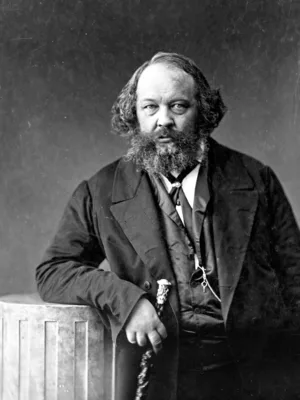
Mikhail Bakunin
Mikhail Bakunin's Orthodox boyhood cooled at cadet school, and his early philosophy was a religion he used to defend the state. He became a revolutionary in Dresden in 1842 while still speaking of "a new religion", and believed in a personal God into his late forties. He turned to open atheism only in the 1860s, in his fight with Mazzini's religious republicanism. After that, God, the state and every master stood or fell together for him.
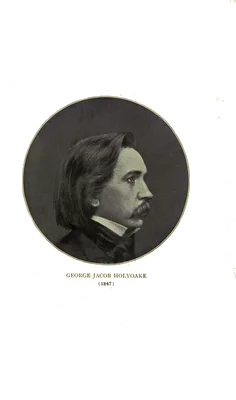
George Holyoake
George Jacob Holyoake was a devout Birmingham Sunday-school teacher whose sister died over a church-rate. He lost his belief in God when his friend Southwell was jailed for blasphemy in 1842, and went to prison himself that year professing "disbelief" rather than denial. He then spent sixty years renaming the absence, from atheism to Secularism in 1851 to agnosticism, so that unbelief would be judged by the good it did rather than by the quarrel over God.
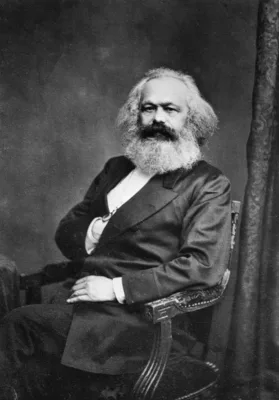
Karl Marx
Karl Marx, the grandson of rabbis, was baptised a Lutheran at six into his father's Enlightenment deism. He lost his idealist "gods" at nineteen and took Prometheus for his motto at twenty-three. By twenty-five, after Feuerbach, he held the criticism of religion finished: religion was the sigh of the oppressed and the heart of a heartless world, a symptom that would fade only when the world stopped needing it. So he spent his life on economics, and had little time for atheist campaigners.
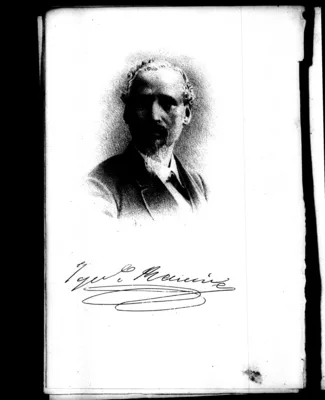
Ignacio Ramírez
Ignacio Ramírez was the son of a liberal family driven out by a clerical government. He read his way through the friars' and the cathedral's forbidden books, and at eighteen read a paper headed "No hay Dios" to the Academia de Letrán. He never retreated from it, but turned it from provocation into law: he fought "divine right" in the 1856 Congress and closed the convents as Juárez's minister. He held that a government should be neither Catholic nor atheist, and belief left to each conscience.
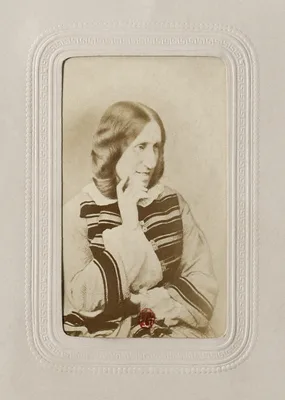
George Eliot
George Eliot was an ultra-Evangelical girl who lost the creed in 1841, reading Hennell among the Brays. She quarrelled with her father over church and regretted it all her life. In 1843 she gave up proselytising as "the quackery of infidelity", and she put her name only to Feuerbach's argument that God is human nature. She ended reverent toward the great religions, holding the idea of God to be "the ideal of a goodness entirely human" and unbelief to be the discipline of doing without opium.
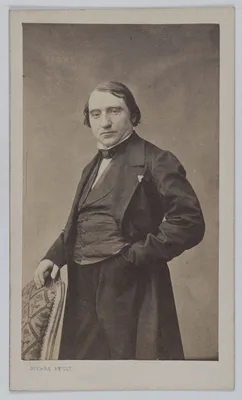
Ernest Renan
Ernest Renan was a Breton boy who never doubted his priests. He lost his faith not to a woman or to politics but to Hebrew philology at Saint-Sulpice, and walked out of the seminary in 1845 because he could not become a priest without hypocrisy. He told the life of Jesus as the life of an incomparable man (1863), and lost his chair for it. He ended neither believer nor atheist, writing that atheism is logical in this universe but that we may be atheists for not seeing far enough, and addressing "a hidden God".
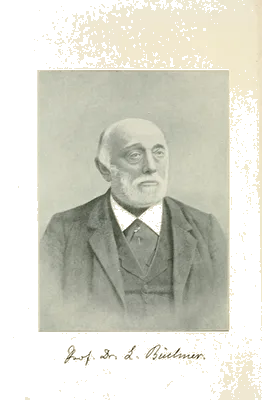
Ludwig Büchner
Ludwig Büchner was marked young by his brother Georg's death in exile, and set on his course by the 1848 thesis that the soul is unthinkable without matter. The Darmstadt physician wrote Force and Matter (1855) in a few weeks after the failed revolution, and lost his Tübingen post for it. He spent forty years defending and renaming his unbelief, from "atheistic" (1869) to "monism" (1891), founding a freethinkers' league and arguing atheism against Darwin's agnosticism. His brother saw a private pessimist who said he had missed his vocation.
Thomas Henry Huxley
Thomas Henry Huxley was a self-taught boy who learned from Hamilton that some questions have no answers. He never had a creed to lose, but at his son's grave in 1860 he refused to pretend to one. In 1869 he named that refusal "agnostic", and defended the word against the bishops as a method rather than a sect. He ended by holding that morality runs against nature, and never once called himself an atheist.
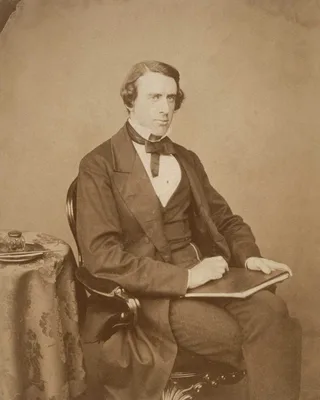
Leslie Stephen
Leslie Stephen was an evangelical's grandson who took holy orders for a Cambridge tutorship rather than from conviction. He read his way out of the creed through Comte, Kant and Mill, gave up his teaching in 1862 rather than read services he did not believe, and renounced his orders as soon as the law allowed. In 1876 he gave English unbelief its modest public name, agnostic. He always insisted that he had not lost a faith but discovered he had never had one.
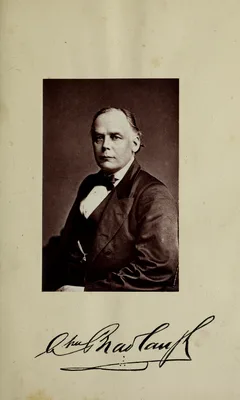
Charles Bradlaugh
A Sunday-school teacher's honest question got Charles Bradlaugh called an atheist before he was one. Driven from home at sixteen for refusing to pretend, he thought his way from deism to a defined atheism alone in a barrack-room. He then spent forty years turning his unbelief into law: the right to testify, to publish, and to sit in Parliament without swearing to a God he found meaningless.
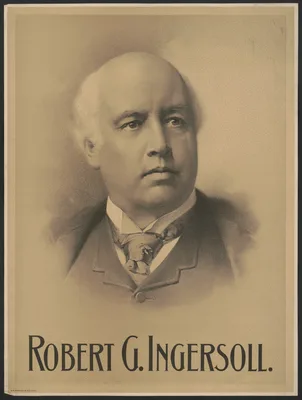
Robert G. Ingersoll
Robert Ingersoll was a preacher's son who kept the preacher's voice but not the creed. He turned unbelief into the most popular lecture ticket in America. In the end he let his agnosticism soften from attack into hope.
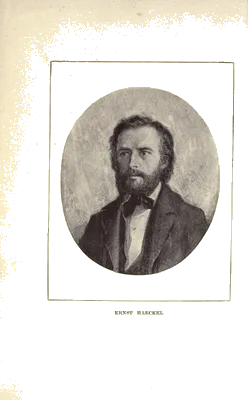
Ernst Haeckel
Ernst Haeckel's liberal Protestant faith, still defended in his letters at twenty-one, wore away between 1855 and 1857, under medicine, his teachers and what he saw of Catholic practice. Darwin (1860) and the death of his wife Anna (1864) drove him to build a "monistic" system in its place. He declared it as a pantheist's confession (1892) and as a "new monistic religion" that accepted atheism as its negative side (1899), organised it in the Monist League (1906), and made it outward only in 1910, when he left the church for political reasons. The creed did not change after that, and it carried his ranking of the races with it.
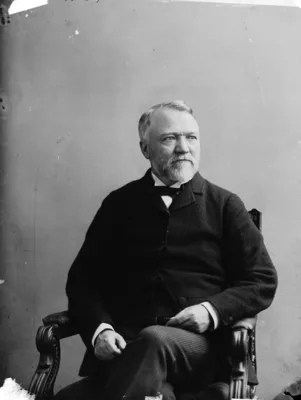
Andrew Carnegie
Andrew Carnegie was raised among Dunfermline radicals who had walked out of Calvinism over the damnation of infants. He kept a mild Swedenborgian faith into his teens, and lost it with a circle of Pittsburgh friends who "voted down" the dogmas in the 1850s. By the 1880s he had found "a philosophy at last" in Spencer and Darwin. In public he preached a gospel of wealth in Christ's name and gave organs to churches for the music. He said plainly that he "had got rid of theology and the supernatural" only in an autobiography published after his death, and hedged even there with a "hope of immortality".
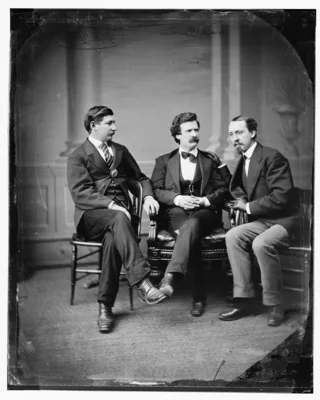
Mark Twain
Mark Twain grew from a Hannibal boy terrified of hell into a man who could not sit through his wife's Bible readings without feeling a hypocrite. In private he denied every Christian doctrine while keeping a distant God. Out of love for his family and caution with his public, he put his sharpest writing on religion away for after his death.
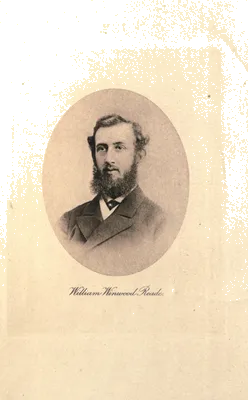
Winwood Reade
Winwood Reade was a failed Oxford novelist who wrote as a loyal Anglican in 1861. He went twice to West Africa and read Darwin and Spencer. In The Martyrdom of Man (1872), against his publisher's advice, he declared supernatural Christianity false and God-worship idolatry, while affirming a Supreme Power "higher than a Mind" and a religion of humanity. Reviewers called him an honest unbeliever. In the novel he wrote while dying, his narrator kept an incomprehensible God and allowed, of the afterlife, "I may be mistaken".
Thomas Hardy
Thomas Hardy was a church-musician's son who dreamed of the pulpit. In his twenties he lost his faith to the new biblical criticism, to Darwin, and to Newman's Apologia, whose chain of reasoning, he wrote in his notebook, had "no first link". He kept the loss private for thirty years, and said it in public only after Jude the Obscure drove him from the novel to verse. He spoke it as grief rather than triumph, refused the word atheist, and never ceased to love the church he could not believe in.
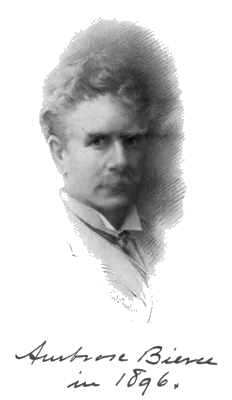
Ambrose Bierce
Ambrose Bierce was raised in a revivalist settlement whose religion he and his brother resented. He was wounded at Kennesaw, and his San Francisco colleagues remembered him as an author of atheistic tracts. He turned his unbelief into satire in The Devil's Dictionary (1881–1906), called himself an "infidel" who wished he were not one, and defended Ingersoll. In his last years, "not a Christian" but admiring Jesus next to Buddha, he asked a believing friend to pray for him before he vanished in Mexico at the end of 1913.
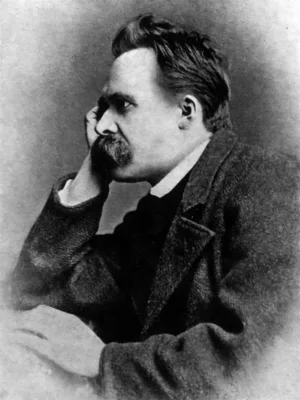
Friedrich Nietzsche
Nietzsche was a pastor's son who chose truth over peace at twenty. In 1882 he announced the death of God as a catastrophe Europe had not yet understood. He came to see his own unbelief not as the opposite of the faith he was raised in but as its last consequence: a Christian love of truth turned on Christianity itself.
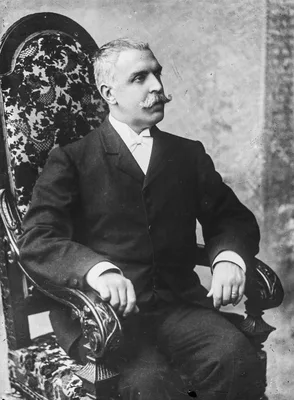
Manuel González Prada
Manuel González Prada was the son of a noble and conservative Lima family, and his early beliefs are disputed: deist verses in 1871, a "resolute atheist" by his own late account. The lost War of the Pacific made him a public unbeliever, and he attacked the Church as a pillar of the order that had ruined Peru. He then told freethinkers that hating priests was not a philosophy, and moved on to anarchism. At the end he admitted doubts about his own disbelief, without returning to faith.
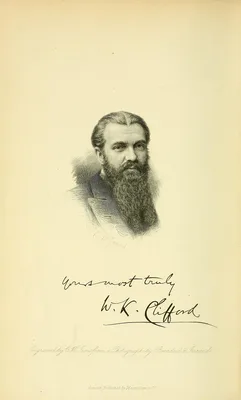
W. K. Clifford
W. K. Clifford was an ardent High Churchman at Trinity who tried to defend dogma with science. He gave up that faith in the late 1860s, under Darwin and Spencer, after a struggle his friend Pollock could not date. In "The Ethics of Belief" (1876–77) he turned his loss into a rule: it is wrong for anyone to believe on insufficient evidence. He never called himself an atheist in print, grieved openly for "the Great Companion", revered the believers he knew, and died at thirty-three without fear or retraction.
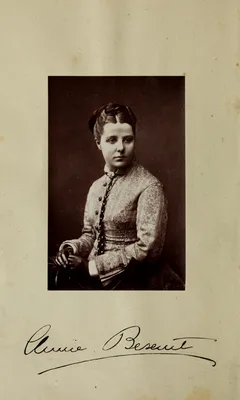
Annie Besant
Annie Besant left Christianity because she could not call good a God who let her baby suffer. She paid for her atheism with her marriage and her daughter. In 1889 she left atheism for Theosophy, because atheism gave her no motive strong enough to make people serve one another. She never unsaid her case against the supernatural.
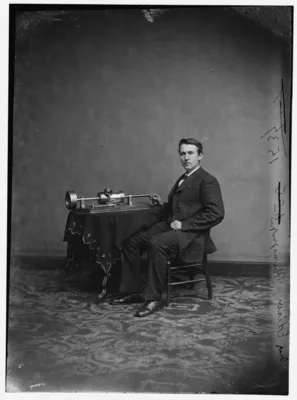
Thomas Edison
Thomas Edison was raised by a Baptist minister's daughter and set loose at thirteen on his father's shelf of Paine. He never lost a faith he is known to have held. In 1910 he told the New York Times that there were no gods of the religions, no soul and no use for a future life, while speaking in the same year of an Intelligence behind nature. In 1920 he revised the denial into a laboratory theory of indestructible "life entities" and an apparatus to test survival. He ended as Paine's defender and, like Paine, no atheist by his own word.
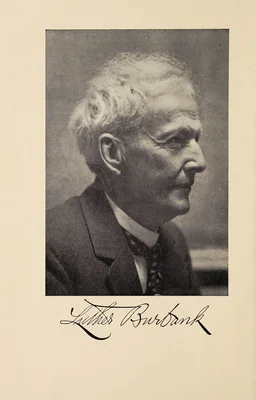
Luther Burbank
Luther Burbank was raised in a stern New England Baptist church. In his youth, as a friend told it, he lost its God of hell and judgement, and found in Darwin a new world. He spoke against "misleading theology" for forty years while keeping a reverence for nature he called God. In January 1926 he declared himself "an infidel" in the dictionary's sense, "a doubter, a questioner, a skeptic" who still recognised "a great universal power", and restated it from a pulpit. He died eleven weeks later without recanting.