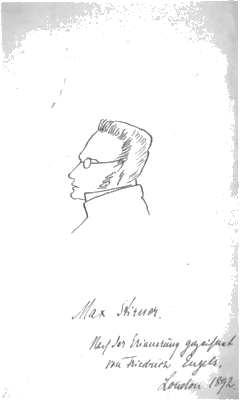
Max Stirner was a Bayreuth Lutheran with a theology student's training and no recorded crisis of faith. He moved among Bauer's Berlin radicals until, in The Ego and Its Own (1844), he rejected not only God but the "Man" that Feuerbach and the humanist atheists had put in God's place. He refused the name atheist, because he counted those atheists among the pious. He restated the position once against his critics in 1845, and then fell silent into translation, debt and an early death.
The belief timeline
- Faith (1806-11-06 (baptism); schooling to 1826) — Formal Lutheran upbringing. No statement of his own boyhood belief or doubt survives; the "first crack" cannot be dated and must not be invented. [2][7][8]
- Doubt (1826–28, then 1841–42 (inferred)) — Hears Hegel's philosophy of religion, Schleiermacher and the theologians (1826–28), then is thrown into Bruno Bauer's circle (from c. 1841), where the Bible and Hegel were being attacked. The first dated sign of distance from religion is "Kunst und Religion", 14 June 1842. No source says when he stopped believing. [9][17][18][20][21]
- Declaration (1844-11 (dated 1845)) — The Ego and Its Own: God and mankind "have concerned themselves for nothing but themselves"; humanist "atheists" are "pious people". Leaves his school post first. [26][27][1][6]
- Revision (1845 (restatement, no retraction)) — Answers Feuerbach, Hess and Szeliga; insists that "Man" is no escape from the supreme being. After that, no recorded change of view: translations, a history of reaction, debt, silence. Mackay says he is "silent" after 1846 and we hear his voice only indistinctly. [34][39][42]
Notes to the timeline (15)
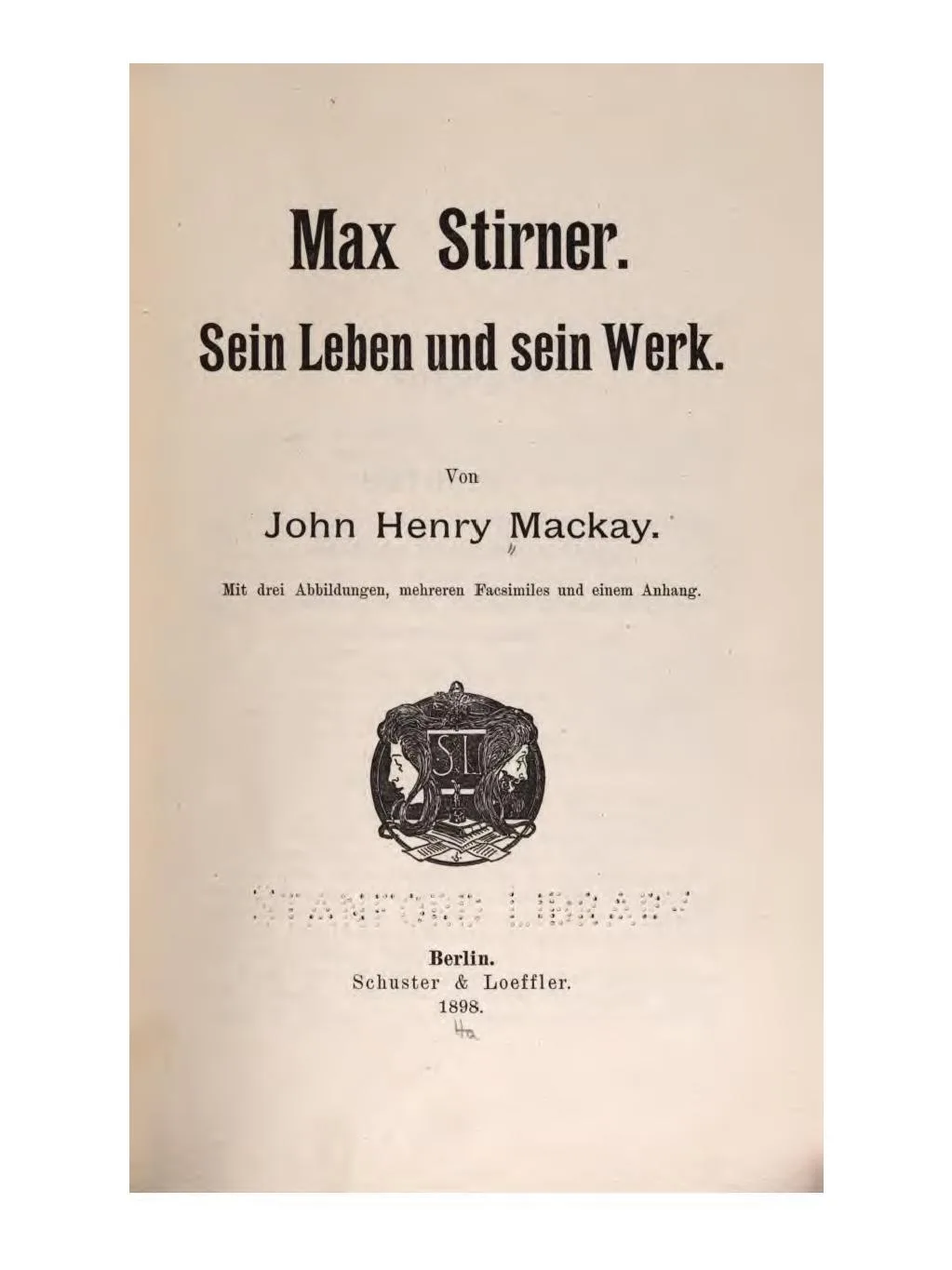
- [2] He was baptised on 6 November by the Lutheran rite, by the subdeacon Bumann, and named Johann Caspar for his godfather. — John Henry Mackay, Max Stirner. Sein Leben und sein Werk (Berlin: published by the author, 1898), IA
maxstirnerseinl00mackgoog; saved asmackay1898.txt. Page numbers are taken from the running heads inside the OCR. Mackay is the only source for almost every fact of Stirner's life, and he is a partisan (he calls Stirner a "giant" and sneers at Nietzsche's admirers, pp. 21–22). The file also contains an unrelated German economics book after p. 256, p. 34. - [7] He did well at the Bayreuth Gymnasium; leaving certificate of 8 September 1826 gave grade I, "very worthy", third of 25; it was signed by the director Georg Andreas Gabler, a Hegelian who had never taught his class. — Mackay, Max Stirner. Sein Leben und… (1898), pp. 36–37. Mackay is the only source for this, as for the other details in this chapter cited to that source alone.
- [8] Mackay says that about the boy's inner life nothing is known: all the dates are "dead numbers" and "dark and hidden lies the inner life behind them". Nothing in the sources reached records a childhood religious crisis. — Mackay, Max Stirner. Sein Leben und… (1898), p. 39; see also pp. 62 and 101–03.
- [9] He matriculated at Berlin on 18 October 1826 and during his four Berlin semesters heard Schleiermacher on ethics, Hegel on the philosophy of religion, on the history of philosophy and on psychology, Marheineke on dogmatics and church symbolism, and Neander on church history. — Mackay, Max Stirner. Sein Leben und… (1898), pp. 45–46; David Leopold, "Max Stirner", Stanford Encyclopedia of Philosophy (first published 27 June 2002; substantive revision 29 October 2023),, "Life and Work" (three Hegel courses).
- [17] He joined Die Freien, the radical circle at Hippel's wine room in Friedrichstrasse 94, c. mid or late 1841 (Mackay's estimate; he did not know Marx, who had left in early 1841); SEP says "from 1841 onwards". — Mackay, Max Stirner. Sein Leben und… (1898), pp. 67, 104–05; Leopold, Stanford Encyclopedia of Philosophy.
- [18] Bruno Bauer, dismissed from his Bonn teaching post, was the centre of the circle; his anonymous *Posaune des jüngsten Gerichts über Hegel, den Atheisten* ("Trumpet of the Last Judgment over Hegel, the Atheist") belonged to this period. — Mackay, Max Stirner. Sein Leben und… (1898), pp. 70–71; Leopold, Stanford Encyclopedia of Philosophy.
- [20] His first printed pieces were in the Rheinische Zeitung in 1842: "Das unwahre Princip unserer Erziehung" (10–19 April) and "Kunst und Religion" (14 June, supplement to no. 165). — Mackay, Max Stirner. Sein Leben und… (1898), pp. 111, 113; Leopold, Stanford Encyclopedia of Philosophy.
- [21] In "Kunst und Religion" he argued, against the background of Hegel, that religion is a matter of the understanding (Verstand): art creates the ideal object, religion then divides man from his own creation, and only philosophy lays "the crushing hand" on both and "breathes freedom". — Stirner, Kleinere Schriften und seine Entgegnungen, ed. J. H. Mackay (Berlin 1898), IA
maxstirnersklei00mackgoog; saved askleinere.txt. Page numbers appear in the OCR as "— 38 —". Contains "Kunst und Religion" (1842) and "Recensenten Stirner's" (1845), pp. 37–40 (OCR page marks 37 and 40; passage on 38 or 39); Mackay, Max Stirner. Sein Leben und… (1898), pp. 113–15. - [26] He gave notice at the girls' school for 1 October 1844, before the book appeared, because publication would have brought "inextricable conflicts" with the post; he was not dismissed because of it. Mackay calls the dismissal story "utter nonsense". — Mackay, Max Stirner. Sein Leben und… (1898), pp. 61, 199–200; Leopold, Stanford Encyclopedia of Philosophy, ("left his teaching post shortly before").
- [27] *Der Einzige und sein Eigenthum* appeared in the first days of November 1844 from Otto Wigand, Leipzig, dated 1845, about 500 pages at 2½ thaler, in an edition of about 1,000, dedicated "Meinem Liebchen Marie Dähnhardt". — Mackay, Max Stirner. Sein Leben und… (1898), pp. 135–36, 141; Leopold, Stanford Encyclopedia of Philosophy.
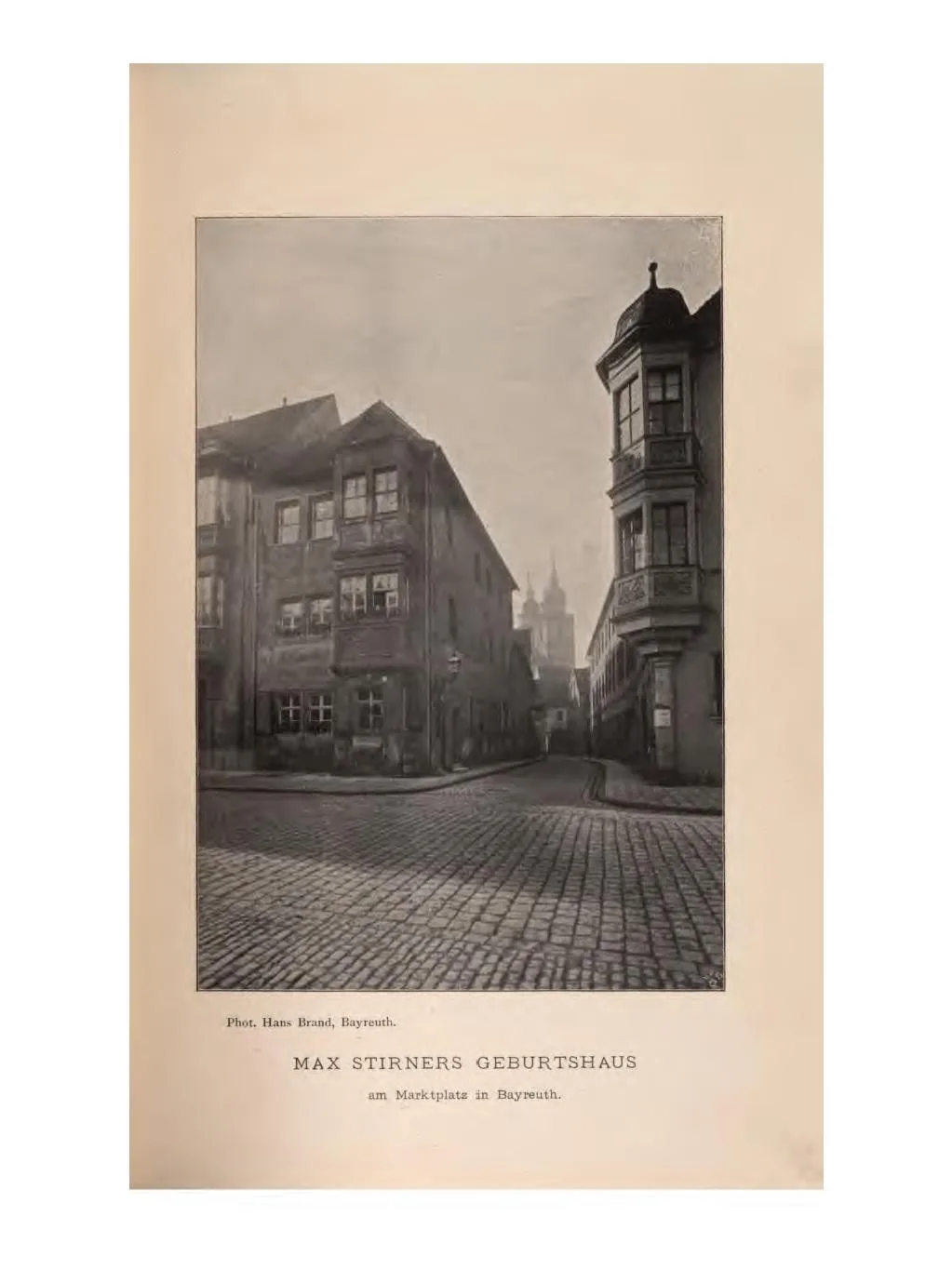
- [1] Johann Caspar Schmidt was born at 6 a.m. on 25 October 1806 in Bayreuth, in a house on the market street. — Mackay, Max Stirner. Sein Leben und… (1898), p. 34; Leopold, Stanford Encyclopedia of Philosophy, "Life and Work".
- [6] In 1818, aged twelve, he returned to Bayreuth to the house of his godfather Sticht (a stocking-weaver) and his father's sister, and stayed eight years, until university. — Mackay, Max Stirner. Sein Leben und… (1898), p. 35; Leopold, Stanford Encyclopedia of Philosophy, (aunt, Gymnasium).
- [34] Stirner answered Hess, Szeliga and Feuerbach together in "Recensenten Stirners" (initials M. St.), vol. 3 of Wigand's Vierteljahrsschrift, 1845; SEP calls it "Stirner's Critics" and says he replied to "some" of the rejoinders. He told Feuerbach that he had not touched the main point (that the essence of man is not any man's essence). — Mackay, Max Stirner. Sein Leben und… (1898), pp. 176–77, 181–83; Stirner, Stirner's Critics, trans. Wolfi Landstreicher (Oakland: CAL Press, 2012), IA
StirnerStirnersCritics; saved ascritics.txt. The title page says "This book may be freely pirated and quoted." It renders Stirner's 1845 reply and quotes Feuerbach's and Hess's articles (in this translator's English); Leopold, Stanford Encyclopedia of Philosophy. - [39] He translated J.-B. Say (1845–46) and Adam Smith (1846–47) for Wigand, adding no notes of his own; a dairy-supply scheme (probably 1845, details conflicting) failed and consumed Marie's remaining money; in summer 1846 he advertised in the Vossische Zeitung for a loan of 600 thaler. — Mackay, Max Stirner. Sein Leben und… (1898), pp. 200–04; Leopold, Stanford Encyclopedia of Philosophy.
- [42] From 1847 he moved from address to address; took no part in 1848; in 1852 published *Geschichte der Reaction*, mostly excerpts (his last work); in 1853–54 he was twice in debtors' arrest (8–26 March 1853; 31 December 1853 to 4 February 1854); he lived from 7 September 1853 at Philippstrasse 19. A planned scholars' dictionary found no publisher. — Mackay, Max Stirner. Sein Leben und… (1898), pp. 210–18; Leopold, Stanford Encyclopedia of Philosophy.
The Atheists Are Pious People
On 28 June 1856 a coffin was carried to the Sophien parish cemetery in Berlin's Bergstrasse and lowered into a grave of the eleventh class. Two old companions, Bruno Bauer and Ludwig Buhl, walked behind it.1 The dead man, Johann Caspar Schmidt, had been a teacher at a girls' school, a failed dairy merchant, a translator of Adam Smith, and twice a prisoner for debt.23 Two years before, the Brockhaus encyclopaedia could say only that the author of a notorious book "was apparently called Max Schmidt".4
The book was Der Einzige und sein Eigentum, which appeared in English in 1907 as The Ego and His Own. It had gone further than any book of the German radicals: it threw out God, and then it threw out the new god that the atheists had put in his place, which was Man. "Our atheists are pious people," it said.56 This chapter asks what brought a quiet Berlin schoolteacher to that position, why he would not call himself an atheist, and why, after one loud year, he fell silent.
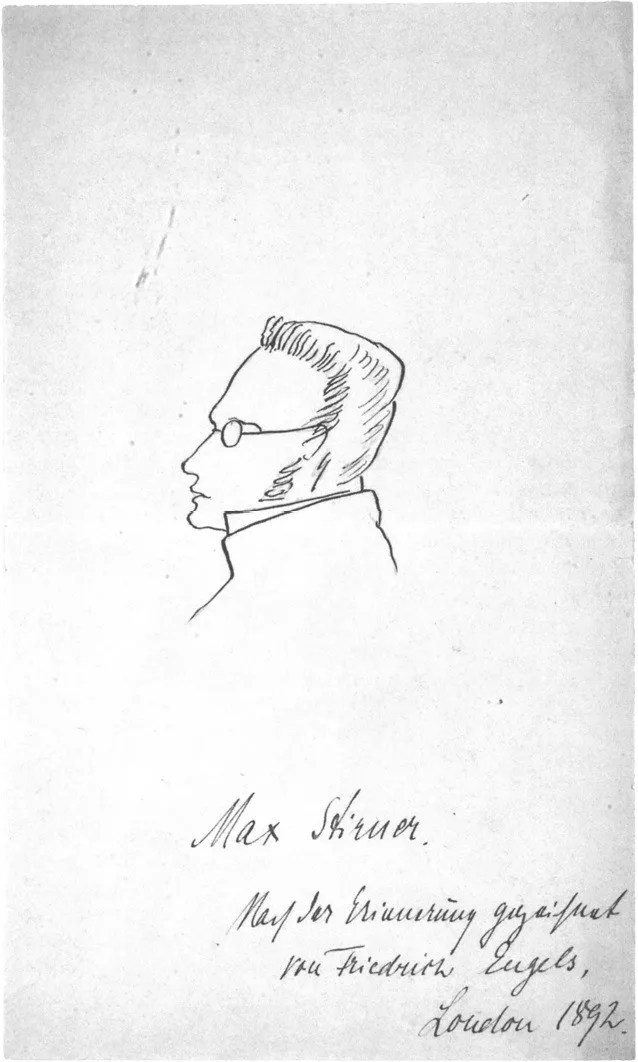
A silent childhood
He was born in Bayreuth at six in the morning on 25 October 1806 and baptised by the Lutheran rite twelve days later.78 His father, a maker of flutes, died of consumption six months after the birth.9 His mother married a pharmacist in 1809 and took the boy to Kulm on the Vistula, in West Prussia; at twelve he came back alone to Bayreuth, to his godfather's house, and stayed there through the grammar school.101112 He left it in 1826 with the highest grade, on a certificate signed by the director, a follower of Hegel.13
What he believed as a boy is not known. His only full biographer, John Henry Mackay, who began collecting the facts forty years after his death, admitted that all his dates were "dead numbers" and that the inner life behind them lay dark and hidden.14 No source records a childhood faith or a childhood crisis, and this chapter does not invent one. On the belief timeline, his faith is marked simply by the Lutheran baptism and schooling.
Hegel and the theologians
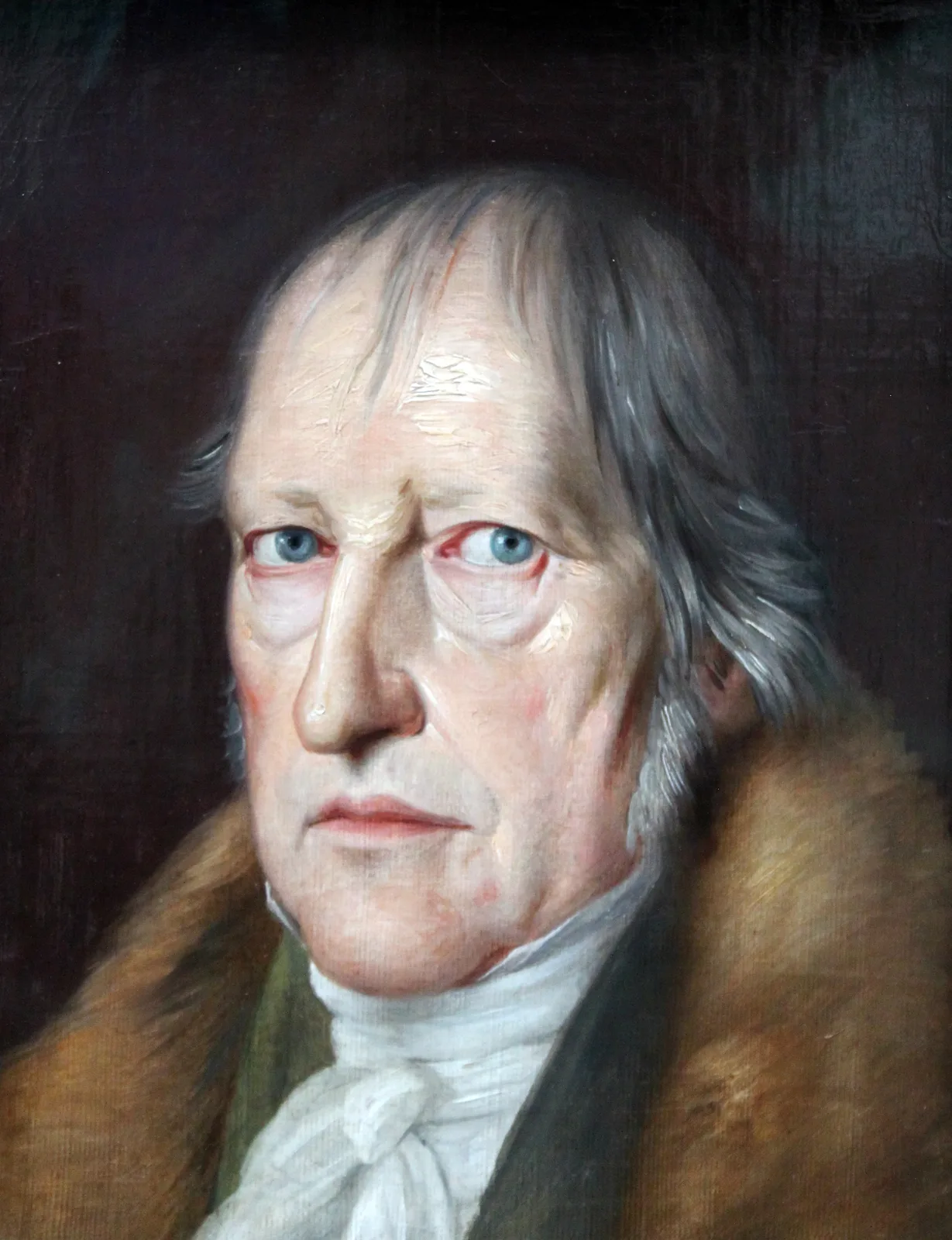
In October 1826 he enrolled at the University of Berlin. Over four semesters he heard Hegel lecture on the philosophy of religion and the history of philosophy, Schleiermacher on ethics, Marheineke on dogmatics and Neander on church history.15 That is a theology student's course, taught by the men who were arguing over what Christianity meant after Kant. Then his studies broke up: a winter at Erlangen, a journey, an enrolment at Königsberg without lectures, family trouble at Kulm. His mother arrived in Berlin in 1834, and he described her as insane; her care took all his time.1617
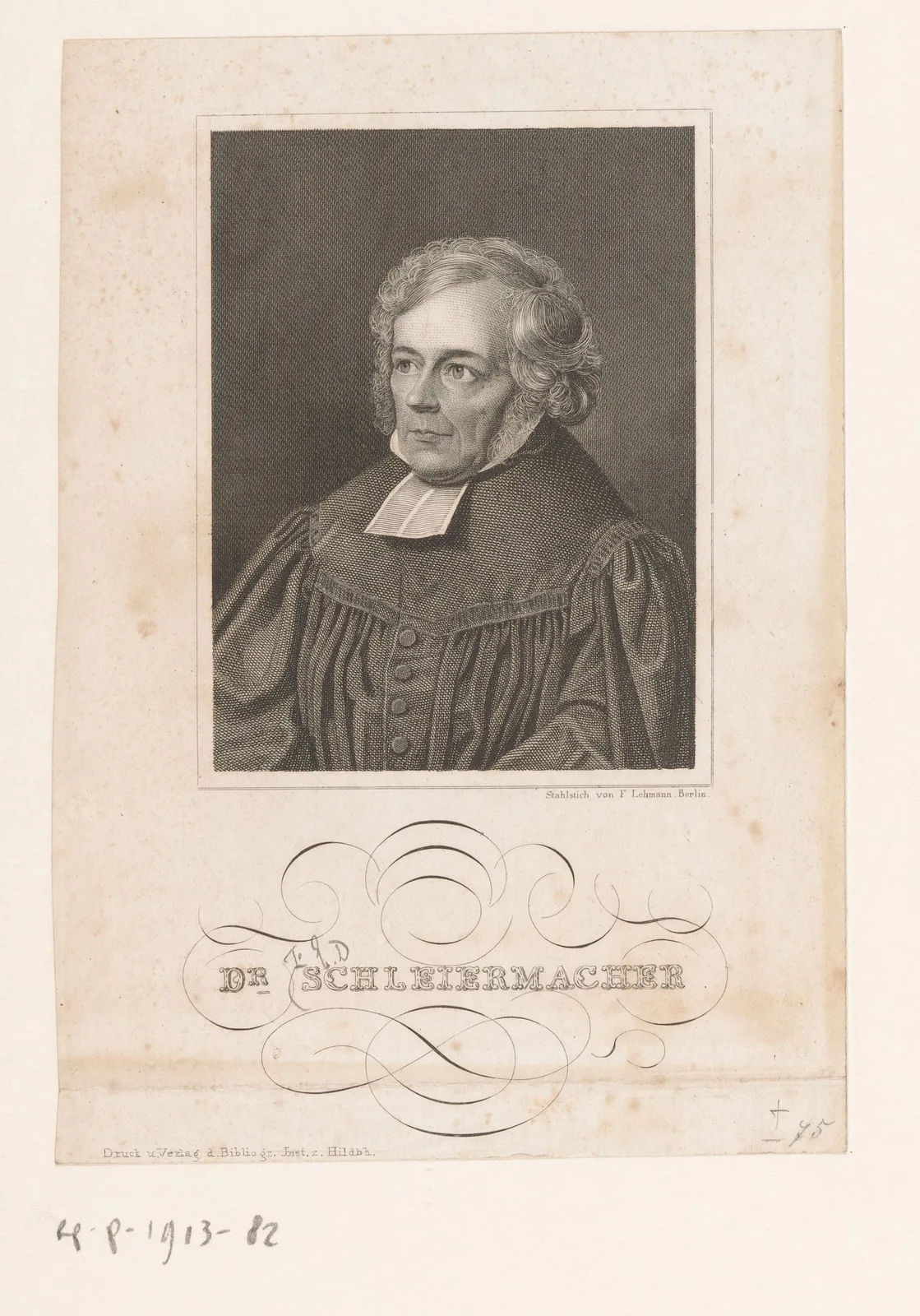
When he sat the teacher's examination in 1835, the examiner in religion found his knowledge of the Bible sound, his Hebrew weak, and noted that he could not develop one of the doctrinal articles set for him.18 He never became a grammar-school teacher, and he never took a doctorate, whatever the reference books later said.19 He married Agnes Burtz in December 1837; she died in childbirth the next August.20 From 1839 he taught German and history at Madame Gropius's school for girls.21 His fellow students had called him "Stirner", for his high forehead, and he kept the name.22
The Free Ones
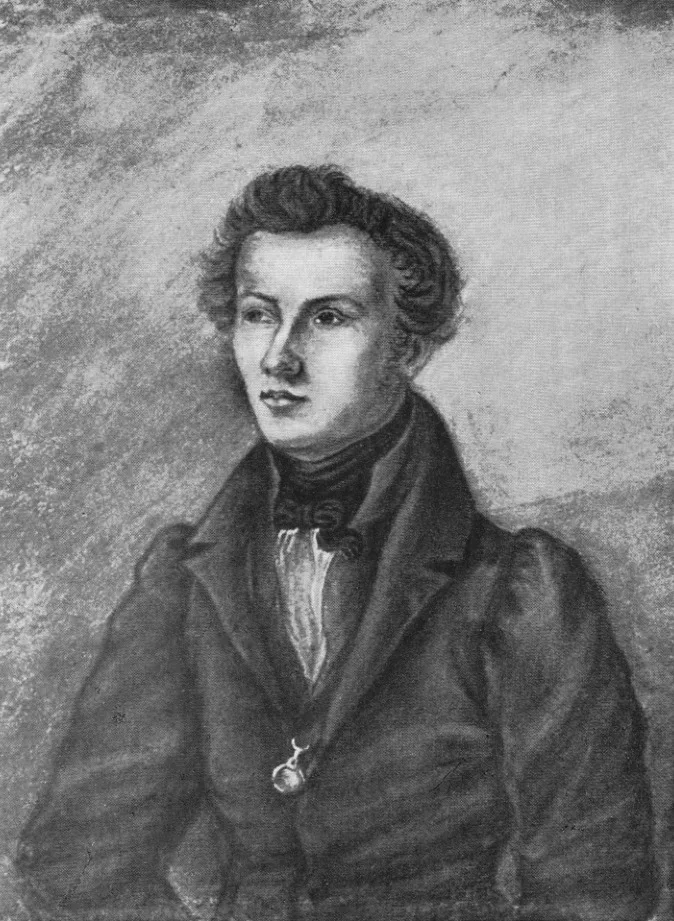
From about 1841 he spent his evenings at Hippel's wine room in the Friedrichstrasse, among the radical young Hegelians who called themselves Die Freien, the Free Ones.23 At their centre was Bruno Bauer, dismissed from his teaching post at Bonn for his criticism of the Gospels, whose anonymous Trumpet of the Last Judgment over Hegel, the Atheist belonged to these years.24 The young Friedrich Engels was among his friends there; Karl Marx had left Berlin before Stirner arrived, and the two never knew each other.25 In that company, the Stanford Encyclopedia says, Stirner gained a reputation for hostility to religion, but Mackay remembered a quiet man who smoked cigars all day and "looked like a teacher of girls".2627
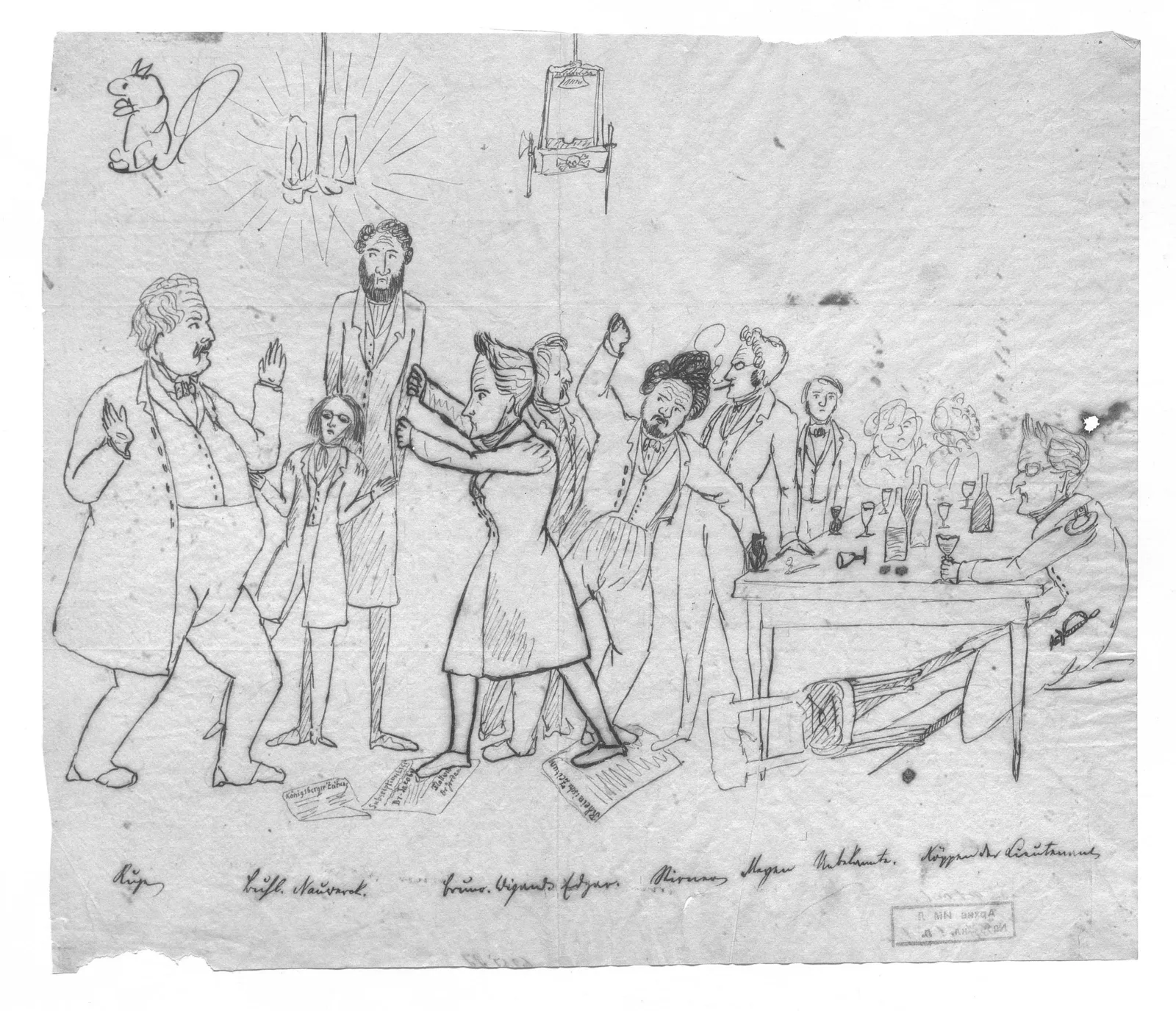
His first pieces appeared in the Rheinische Zeitung in 1842. In "Art and Religion", printed on 14 June, he argued that religion belongs to the understanding: art makes an ideal, religion sets that ideal over against the man who made it, and only philosophy lays its hand on both and "breathes freedom". "Die Religion ist eine Verstandes-Sache!" he wrote: religion is a matter of the understanding.282930 In a review of the Hegelian Karl Rosenkranz he told the older man that he no longer stood among the leaders of the age; Rosenkranz called him in his diary "the phrase-maker emancipated from God".3132 No source says when he stopped believing. The timeline puts his doubt here, in 1841 and 1842, because this is the first dated sign of distance from religion; that is an inference, and the record before it is silent.
In October 1843 he married Marie Dähnhardt in his rooms. There was no Bible to hand and no rings, and Bauer, one of the witnesses, produced two brass rings from his purse. The story grew in the telling into a demonstration against the church; Mackay thought the couple were simply indifferent to a formality.3334
The book
He worked on the book through 1843 and into 1844, and he gave notice at the girls' school for 1 October 1844, before it appeared, because publication would have brought conflicts he could not escape. He was not dismissed.3536 Otto Wigand published it at Leipzig in the first days of November 1844, dated 1845, dedicated "to my sweetheart Marie Dähnhardt".37 The Leipzig authorities seized copies; the Saxon ministry released them days later because the book was too absurd to be dangerous.38
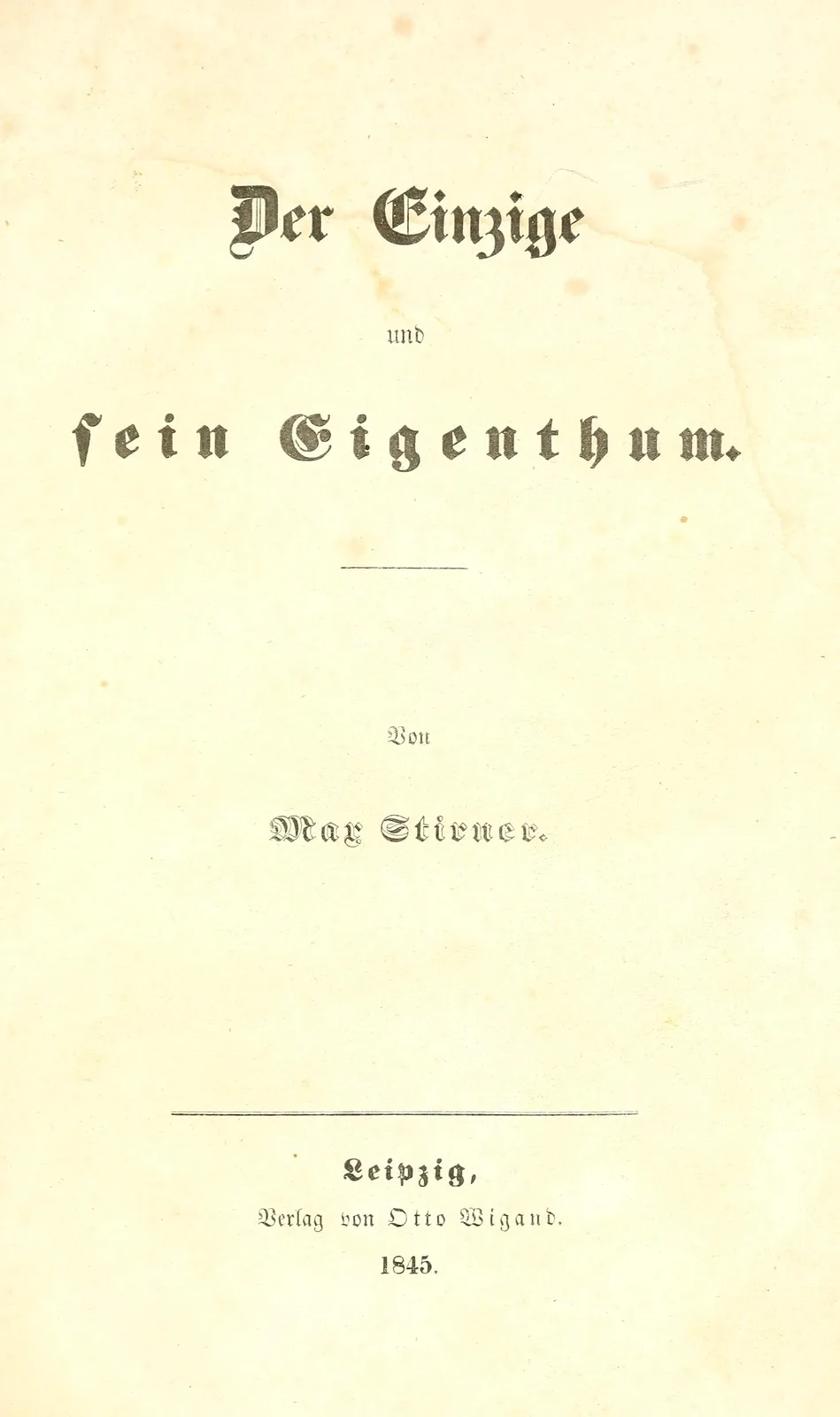
The book opens with a line of Goethe's, "I have set my cause on nothing", and an argument about whose cause anyone serves. "God and mankind have concerned themselves for nothing, for nothing but themselves. Let me then likewise concern myself for myself, who am equally with God the nothing of all others, who am my all, who am the only one."539 The preface ends: "Nothing is more to me than myself!"40
From there the argument runs in three steps.5 God is a "spook", an essence lifted out of the world and set above the person who imagines it: "Man, your head is haunted; you have wheels in your head!"41 But Ludwig Feuerbach, the hero of the young Hegelians, had only moved the spook. Feuerbach had said that the supreme being is really man's own essence, and that henceforth man is to appear to man as God.42 Stirner answered that this was "nothing more or less than a new—religion".43 "I am neither God nor Man," he wrote, "neither the supreme essence nor my essence."44 And so the liberals and humanists, who thought they had finished with God, were serving a highest essence like everyone before them: "The HUMAN religion is only the last metamorphosis of the Christian religion."45
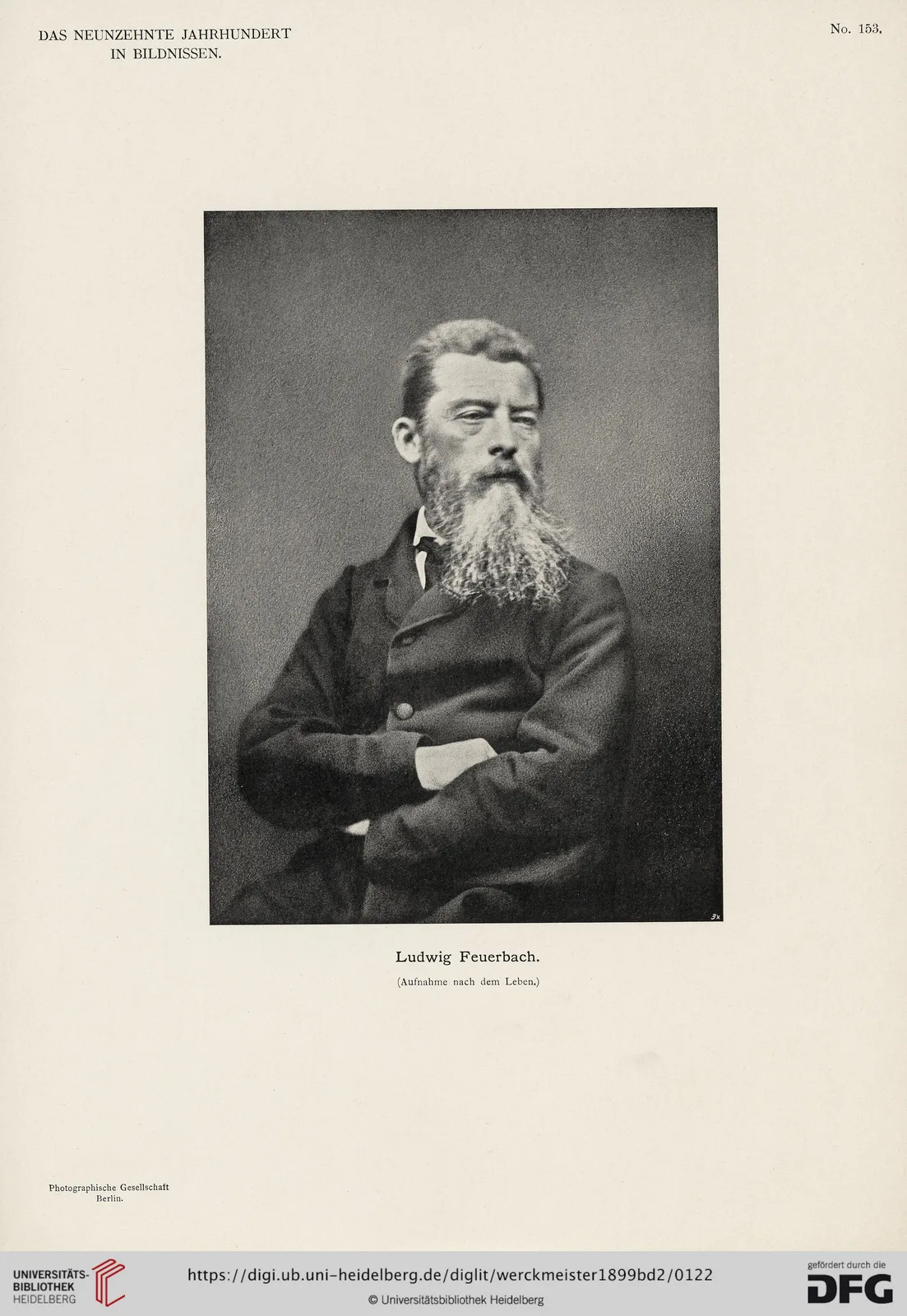
This is why he would not take the name his readers gave him. "Whether then the one God or the three in one, whether the Lutheran God or the être suprême or not God at all, but 'Man,' may represent the highest essence, that makes no difference at all for him who denies the highest essence itself, for in his eyes those servants of a highest essence are one and all—pious people, the most raging atheist not less than the most faith-filled Christian."46 Others "brand" him an atheist, he says, but the word is theirs.4748 What he calls himself is the egoist, the owner, and the Unique One.47 On the timeline, the book is his declaration, and it says not "there is no God" but a refusal of every god, Man included.
The replies
The large newspapers kept silent. Bauer felt privately that Stirner had gone beyond him, and never named him in print.49 Feuerbach wrote to his brother that it was "a highly ingenious and brilliant work" with "the truth of egoism" on its side, but "eccentric, one-sided, untrue"; Stirner, he added, was the most brilliant and freest writer he had met.5051 He also consoled himself that Stirner was right in everything except one thing: in essence he did not hit Feuerbach at all.50 In 1845 Feuerbach replied in print, unsigned; the socialist Moses Hess and a Bauerite officer writing as Szeliga replied too, Szeliga calling the Unique One "the ghost of all ghosts".5253 The French critic Saint-René Taillandier saw the point clearly: "Atheism is suspect to him as too religious."54
Stirner answered all three together in 1845, telling Feuerbach that he had missed the main point, that the essence of man is not any man's essence.55 That reply is the last restatement of his position, and it is a restatement, not a retreat.
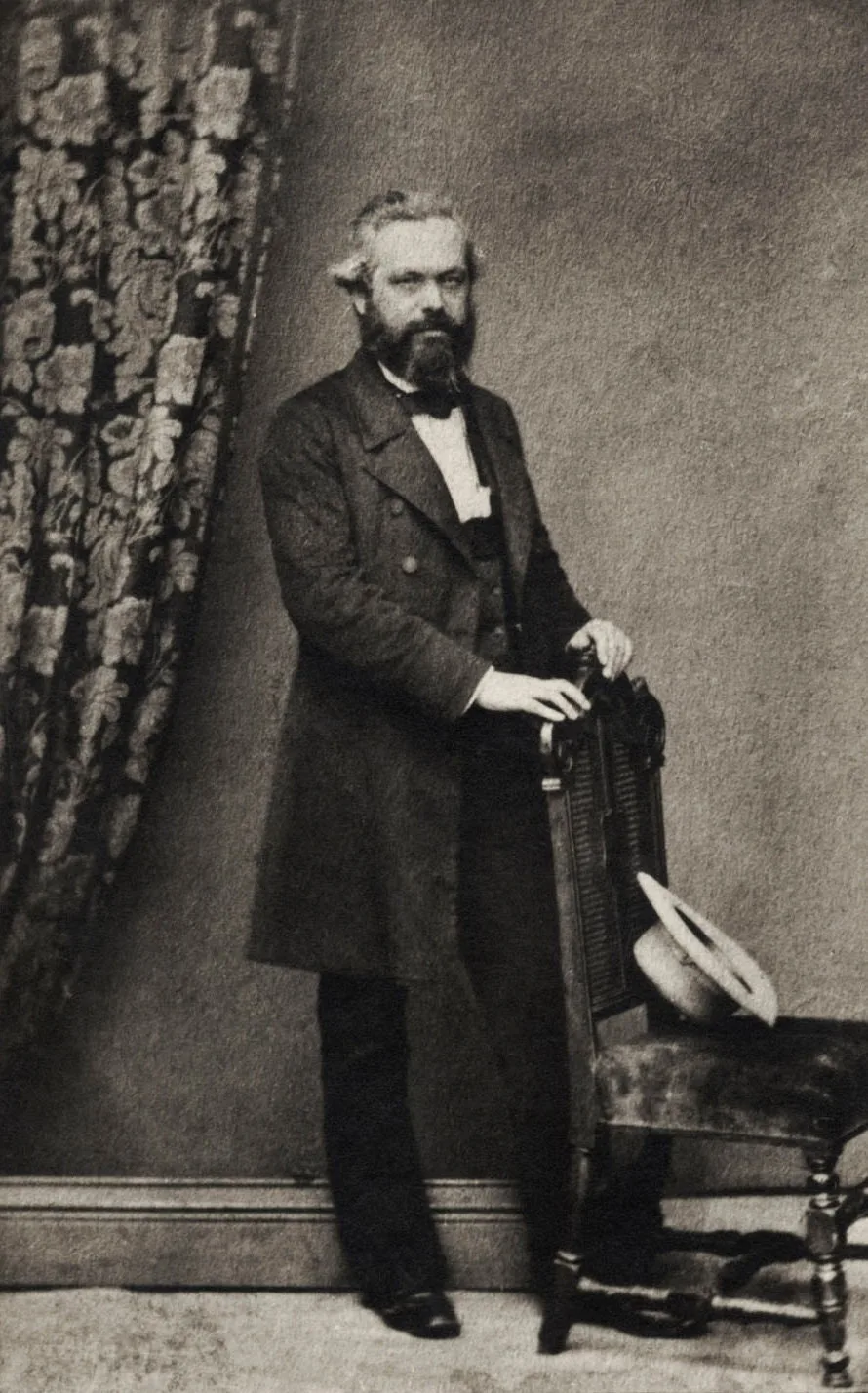
The longest answer was never sent. In 1845 and 1846 Marx and Engels wrote a book-length attack on "Saint Max", mocking his account of youth as the story of "the young Stirner, the Berlin student who studies Hegelian logic".565758 They left it unpublished; it was first printed in part in 1903 and in full in the early 1930s, and the sources differ on the first date.56 The Stanford Encyclopedia judges that the book was decisive in Marx's break with Feuerbach, a reading that is argued over.59
Silence
After 1845 there is no revision on the record, only a long decline. He translated J.-B. Say and Adam Smith for Wigand without adding a word of his own; a scheme to supply Berlin with milk failed and took the rest of Marie's money; in the summer of 1846 he advertised in the Vossische Zeitung for a loan of 600 thaler on his personal credit.260 Marie left for London at the end of 1846 or early in 1847, and they were divorced about 1850.61 He took no part in the revolution of 1848. His last book, a History of Reaction (1852), was mostly excerpts, and in 1853 and 1854 he was twice arrested for debt.3 Mackay wrote that after this "we no longer see into his thoughts".3
He died on the evening of 25 June 1856, of a fever after an insect sting in the neck, aged forty-nine.1 Mackay found his name in Lange's History of Materialism, advertised for anyone who remembered him, and published his biography in 1898; he also helped put a stone on the grave.62 Mackay was a partisan who wrote, he said, from love of the cause, and he is the only source for most of this life.63
The revision, in this life, happened to the people around him. Marie went from a Berlin freethinker's bride to a devout Catholic convert, first in Australia and then in London.61 When Mackay wrote to her in 1897 she said she had never loved or esteemed the man, called him "very sly", and closed the correspondence: "She is ill and preparing for death."6465 Mackay, for his part, thought she had sunk back into the night of religion.64
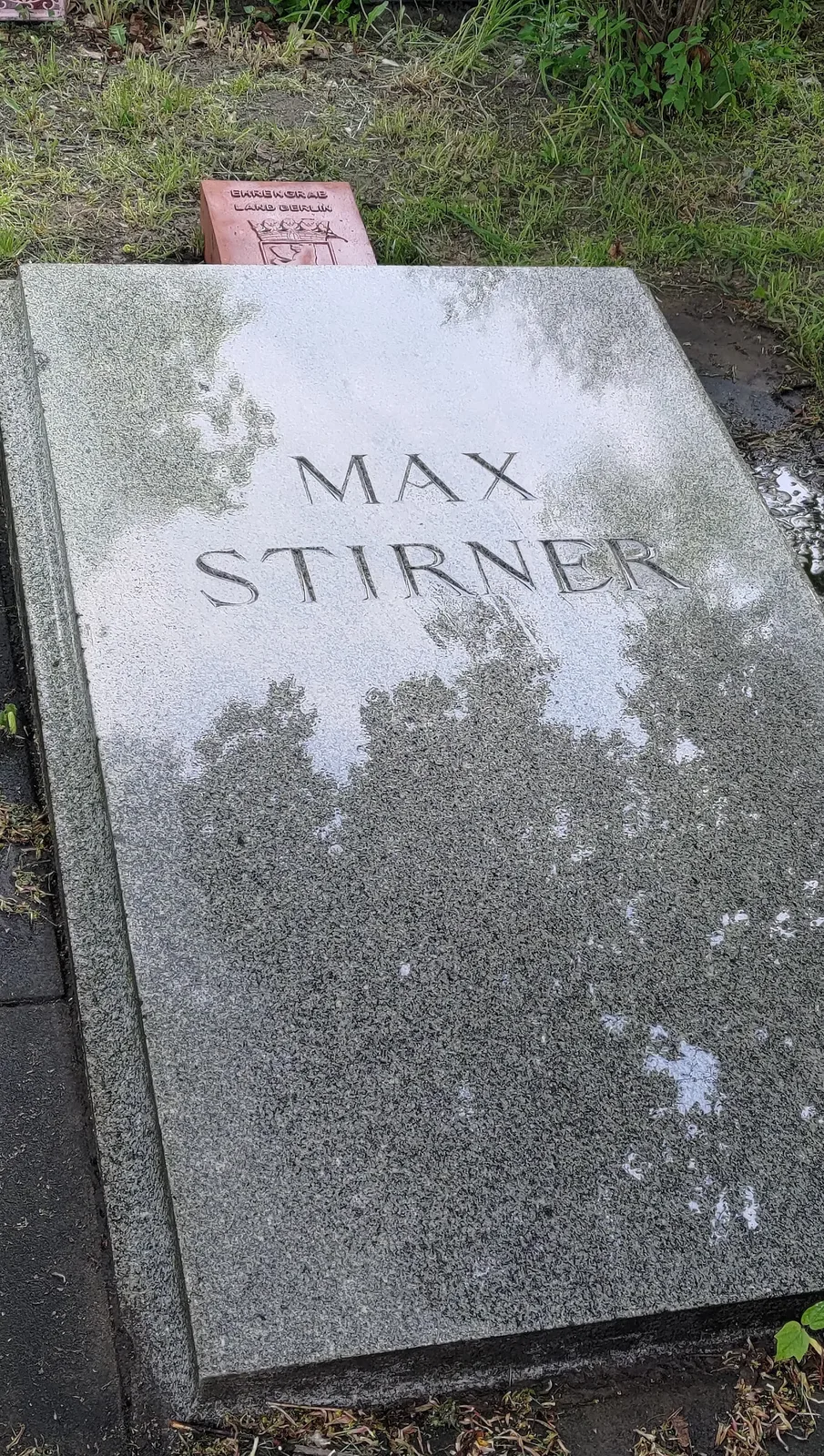
Stirner had reached the far edge of nineteenth-century unbelief and found that most unbelievers were still standing on the near side of it, serving Humanity, Reason or the State as their parents had served God. He did not call that position atheism, and he did not live to see anyone take it up. The man whose God he moved, Ludwig Feuerbach, has his own chapter in this book.
Footnotes
-
John Henry Mackay, Max Stirner. Sein Leben und sein Werk (Berlin: published by the author, 1898), IA
maxstirnerseinl00mackgoog; saved asmackay1898.txt. Page numbers are taken from the running heads inside the OCR. Mackay is the only source for almost every fact of Stirner's life, and he is a partisan (he calls Stirner a "giant" and sneers at Nietzsche's admirers, pp. 21–22). The file also contains an unrelated German economics book after p. 256, pp. 218–19; David Leopold, "Max Stirner", Stanford Encyclopedia of Philosophy (first published 27 June 2002; substantive revision 29 October 2023),, (25 June, insect sting, nervous fever). ↩ ↩2 -
Mackay, Max Stirner. Sein Leben und… (1898), pp. 200–04; Leopold, Stanford Encyclopedia of Philosophy. ↩ ↩2
-
Mackay, Max Stirner. Sein Leben und… (1898), pp. 210–18; Leopold, Stanford Encyclopedia of Philosophy. ↩ ↩2 ↩3
-
Mackay, Max Stirner. Sein Leben und… (1898), p. 216. Mackay is the only source for this, as for the other details in this chapter cited to that source alone. ↩
-
Stirner, The Ego and His Own, trans. Steven T. Byington (New York: Benj. R. Tucker, 1907). Project Gutenberg #34580, saved as
byington.txt. The Gutenberg text carries no page numbers, so quotations are cited by Part, section and the printed page range from the 1907 contents list (Part First pp. 7–200; "All Things are Nothing to Me" pp. 3–6; I.II.2 §1 The Spirit pp. 34–42; §2 The Possessed pp. 42–85; III.3 Humane Liberalism pp. 163–200; Part Second, II The Owner pp. 225–42; II.3 My Self-Enjoyment pp. 425–83). Public domain in the US. Footnote numbers (e.g. [15]) are omitted from the quotations below, Preface (pp. 3–6); Part First II.2 §1–2 (pp. 34–85); III.3 (pp. 163–200); Part Two II (pp. 225–42). ↩ ↩2 ↩3 -
Stirner, Ego and His Own, Part Two, "The Owner", pp. 225–42. Five words, often quoted alone; the paragraph before says "Man" is the God of today. ↩
-
Mackay, Max Stirner. Sein Leben und… (1898), p. 34; Leopold, Stanford Encyclopedia of Philosophy, "Life and Work". ↩
-
Mackay, Max Stirner. Sein Leben und… (1898), p. 34. ↩
-
Mackay, Max Stirner. Sein Leben und… (1898), p. 34; Leopold, Stanford Encyclopedia of Philosophy. ↩
-
Mackay, Max Stirner. Sein Leben und… (1898), pp. 34–35. ↩
-
Mackay, Max Stirner. Sein Leben und… (1898), p. 35. ↩
-
Mackay, Max Stirner. Sein Leben und… (1898), p. 35; Leopold, Stanford Encyclopedia of Philosophy, (aunt, Gymnasium). ↩
-
Mackay, Max Stirner. Sein Leben und… (1898), pp. 36–37. ↩
-
Mackay, Max Stirner. Sein Leben und… (1898), p. 39; see also pp. 62 and 101–03. ↩
-
Mackay, Max Stirner. Sein Leben und… (1898), pp. 45–46; Leopold, Stanford Encyclopedia of Philosophy, "Life and Work" (three Hegel courses). ↩
-
Mackay, Max Stirner. Sein Leben und… (1898), pp. 46–48, 17. ↩
-
Mackay, Max Stirner. Sein Leben und… (1898), p. 49. ↩
-
Mackay, Max Stirner. Sein Leben und… (1898), pp. 51–53, 55. ↩
-
Mackay, Max Stirner. Sein Leben und… (1898), pp. 56–58. ↩
-
Mackay, Max Stirner. Sein Leben und… (1898), pp. 58–59; Leopold, Stanford Encyclopedia of Philosophy. ↩
-
Mackay, Max Stirner. Sein Leben und… (1898), pp. 60–61. ↩
-
Mackay, Max Stirner. Sein Leben und… (1898), p. 99; Leopold, Stanford Encyclopedia of Philosophy. ↩
-
Mackay, Max Stirner. Sein Leben und… (1898), pp. 67, 104–05; Leopold, Stanford Encyclopedia of Philosophy. ↩
-
Mackay, Max Stirner. Sein Leben und… (1898), pp. 70–71; Leopold, Stanford Encyclopedia of Philosophy. ↩
-
Mackay, Max Stirner. Sein Leben und… (1898), pp. 104–05. ↩
-
Mackay, Max Stirner. Sein Leben und… (1898), pp. 99–106. Reported at second hand; the original has not been seen. ↩
-
Leopold, Stanford Encyclopedia of Philosophy, "Life and Work". ↩
-
Mackay, Max Stirner. Sein Leben und… (1898), pp. 111, 113; Leopold, Stanford Encyclopedia of Philosophy. ↩
-
Stirner, Kleinere Schriften und seine Entgegnungen, ed. J. H. Mackay (Berlin 1898), IA
maxstirnersklei00mackgoog; saved askleinere.txt. Page numbers appear in the OCR as "— 38 —". Contains "Kunst und Religion" (1842) and "Recensenten Stirner's" (1845), pp. 37–40 (OCR page marks 37 and 40; passage on 38 or 39); Mackay, Max Stirner. Sein Leben und… (1898), pp. 113–15. ↩ -
Stirner, Kleinere Schriften und seine Entgegnungen, (Mackay 1898), "Kunst und Religion", p. 38 or 39 (OCR marks 37 and 40 only); first printed Rheinische Zeitung, 14 June 1842. ↩
-
Mackay, Max Stirner. Sein Leben und… (1898), p. 116. ↩
-
Karl Rosenkranz, in his diary; Hegelian philosopher at Königsberg whose Königsberger Skizzen Stirner had reviewed (Our translation: "the phrase-maker emancipated from God"; Mackay says he used the word "atheism" and judged that Stirner had to learn that his atheism "was nothing less than philosophy".): Mackay, Max Stirner. Sein Leben und… (1898), p. 116. ↩
-
Mackay, Max Stirner. Sein Leben und… (1898), pp. 122–25. Accounts differ; see the disputed points. ↩
-
Mackay, Max Stirner. Sein Leben und… (1898), p. 125. ↩
-
Leopold, Stanford Encyclopedia of Philosophy, "Life and Work". ↩
-
Mackay, Max Stirner. Sein Leben und… (1898), pp. 61, 199–200; Leopold, Stanford Encyclopedia of Philosophy, ("left his teaching post shortly before"). ↩
-
Mackay, Max Stirner. Sein Leben und… (1898), pp. 135–36, 141; Leopold, Stanford Encyclopedia of Philosophy. ↩
-
Mackay, Max Stirner. Sein Leben und… (1898), p. 137. ↩
-
Stirner, Ego and His Own, "All Things are Nothing to Me", pp. 3–6. ↩
-
Stirner, Ego and His Own, end of the Preface, pp. 3–6. Final line before Part First. Often quoted without the exclamation mark. ↩
-
Stirner, Ego and His Own, Part First II.2 §2 "The Possessed", "Wheels in the Head", pp. 42–85. ↩
-
Feuerbach, as quoted by Stirner: Stirner, Ego and His Own, Part First II.2 §1 "The Spirit", pp. 34–42. ↩
-
Stirner, Ego and His Own, Part First II.2 §2 "The Possessed", pp. 42–85. ↩
-
Stirner, Ego and His Own, Part First II.2 §1 "The Spirit", pp. 34–42. ↩
-
Stirner, Ego and His Own, Part Two, "The Owner", pp. 225–42. ↩
-
Stirner, Ego and His Own, Part First II.2 §2 "The Possessed", pp. 42–85. ↩
-
Stirner, Ego and His Own, Part Two, "My Self-Enjoyment", pp. 425–83. ↩
-
Mackay, Max Stirner. Sein Leben und… (1898), pp. 138–40, 172, 175. ↩
-
Mackay, Max Stirner. Sein Leben und… (1898), pp. 180–81 (quoting Bolin's Feuerbach biography). ↩ ↩2
-
Ludwig Feuerbach, in a private letter to his brother, late 1844; the philosopher Stirner attacked (Our translation: "It is a highly ingenious and brilliant work and has the truth of egoism on its side, but fixed in an eccentric, one-sided, untrue way."). Mackay adds from the same letter: "Er ist gleichwohl der genialste und freieste Schriftsteller, den ich kennen gelernt." (The most brilliant and freest writer I have met.): Mackay, Max Stirner. Sein Leben und… (1898), p. 180, quoting Bolin. ↩
-
Mackay, Max Stirner. Sein Leben und… (1898), pp. 179, 181. ↩
-
Mackay, Max Stirner. Sein Leben und… (1898), pp. 177–79; Moses Hess, Die letzten Philosophen (Darmstadt 1845), IA
ldpd_6413197_000, saved ashess1845.txt, (opening, garbled OCR). ↩ -
Saint-René Taillandier, Revue des deux Mondes (1847), in Jellinek's German as given by Mackay; French critic who began warmly then turned against "this foolish mania for stripping oneself of self" (Our translation: "Atheism is suspect to him as too religious; to complete atheism with egoism, that task he solves, and with what ease, with what calm of soul he solves it!"): Mackay, Max Stirner. Sein Leben und… (1898), p. 174. ↩
-
Mackay, Max Stirner. Sein Leben und… (1898), pp. 176–77, 181–83; Stirner, Stirner's Critics, trans. Wolfi Landstreicher (Oakland: CAL Press, 2012), IA
StirnerStirnersCritics; saved ascritics.txt. The title page says "This book may be freely pirated and quoted." It renders Stirner's 1845 reply and quotes Feuerbach's and Hess's articles (in this translator's English); Leopold, Stanford Encyclopedia of Philosophy. ↩ -
Marx and Engels, Die deutsche Ideologie, I. Band, III. "Sankt Max", German text from Zeno.org after Marx-Engels-Werke, vol. 3 (Berlin: Dietz, 1958), Zeno licence "Gemeinfrei". Only the first leaf ("1. Genesis, d.i. Ein Menschenleben", MEW 3 pp. 104–109) is saved, as
marx-engels-sankt-max-genesis.txt; Zeno's page markers appear as "[104]", footer note; Leopold, Stanford Encyclopedia of Philosophy, "Influence". ↩ ↩2 -
MEW 3 p. 104 (Zeno [104]). ↩
-
Karl Marx and Friedrich Engels, Die deutsche Ideologie, "Sankt Max" (written 1845–46); secular materialist critics, former acquaintances (Our translation: "Saint Max pretends here to be writing the biography of his mortal enemy, 'Man', not that of a 'Unique One' or 'real individual'. This entangles him in delightful contradictions."): MEW 3 p. 104 (Zeno [104]). ↩
-
Leopold, Stanford Encyclopedia of Philosophy, "Influence". ↩
-
Mackay, Max Stirner. Sein Leben und… (1898), p. 204, quoting the advertisement in the Vossische Zeitung. ↩
-
Mackay, Max Stirner. Sein Leben und… (1898), pp. 205–09; Leopold, Stanford Encyclopedia of Philosophy, (she left "towards the end of the same year"). ↩ ↩2
-
Benj. R. Tucker, "Publisher's Preface" to the 1907 Ego (pp. vii–xi in the Gutenberg text of
byington.txt): how Mackay found Stirner in Lange's History of Materialism, (Ego, pp. vii–xi); Mackay, Max Stirner. Sein Leben und… (1898), Introduction. ↩ -
Mackay, Max Stirner. Sein Leben und… (1898), pp. 16, 21–22; Tucker, History of Materialism. ↩
-
Mackay, Max Stirner. Sein Leben und… (1898), pp. 13–15, 254; Leopold, Stanford Encyclopedia of Philosophy. ↩ ↩2
-
Marie Dähnhardt (Mrs. Schmidt, "Mary Smith"), 1897, Stirner's widowed second wife and by then a devout Catholic; in Mackay's German translation of her English note (Our translation: "Mary Smith solemnly declares that she will enter into no further correspondence on this subject. She is ill and preparing for death."): Mackay, Max Stirner. Sein Leben und… (1898), p. 254 (Appendix G); her remark that she had "never loved or esteemed" him is at pp. 13–14. ↩
maxstirnerseinl00mackgoog; saved as mackay1898.txt. Page numbers are taken from the running heads inside the OCR. Mackay is the only source for almost every fact of Stirner's life, and he is a partisan (he calls Stirner a "giant" and sneers at Nietzsche's admirers, pp. 21–22). The file also contains an unrelated German economics book after p. 256.; David Leopold, "Max Stirner", Stanford Encyclopedia of Philosophy (first published 27 June 2002; substantive revision 29 October 2023),.; Stirner, The Ego and His Own, trans. Steven T. Byington (New York: Benj. R. Tucker, 1907). Project Gutenberg #34580, saved as byington.txt. The Gutenberg text carries no page numbers, so quotations are cited by Part, section and the printed page range from the 1907 contents list (Part First pp. 7–200; "All Things are Nothing to Me" pp. 3–6; I.II.2 §1 The Spirit pp. 34–42; §2 The Possessed pp. 42–85; III.3 Humane Liberalism pp. 163–200; Part Second, II The Owner pp. 225–42; II.3 My Self-Enjoyment pp. 425–83). Public domain in the US. Footnote numbers (e.g. [15]) are omitted from the quotations below.; Stirner, Kleinere Schriften und seine Entgegnungen, ed. J. H. Mackay (Berlin 1898), IA maxstirnersklei00mackgoog; saved as kleinere.txt. Page numbers appear in the OCR as "— 38 —". Contains "Kunst und Religion" (1842) and "Recensenten Stirner's" (1845).; Moses Hess, Die letzten Philosophen (Darmstadt 1845), IA ldpd_6413197_000, saved as hess1845.txt.; Stirner, Stirner's Critics, trans. Wolfi Landstreicher (Oakland: CAL Press, 2012), IA StirnerStirnersCritics; saved as critics.txt. The title page says "This book may be freely pirated and quoted." It renders Stirner's 1845 reply and quotes Feuerbach's and Hess's articles (in this translator's English).; Marx and Engels, Die deutsche Ideologie, I. Band, III. "Sankt Max", German text from Zeno.org after Marx-Engels-Werke, vol. 3 (Berlin: Dietz, 1958), Zeno licence "Gemeinfrei". Only the first leaf ("1. Genesis, d.i. Ein Menschenleben", MEW 3 pp. 104–109) is saved, as marx-engels-sankt-max-genesis.txt; Zeno's page markers appear as "[104]".; Benj. R. Tucker, "Publisher's Preface" to the 1907 Ego (pp. vii–xi in the Gutenberg text of byington.txt): how Mackay found Stirner in Lange's History of Materialism.In their own words
God and mankind have concerned themselves for nothing, for nothing but themselves. Let me then likewise concern myself for myself, who am equally with God the nothing of all others, who am my all, who am the only one.
Nothing is more to me than myself!
Man, your head is haunted; you have wheels in your head!
Whether then the one God or the three in one, whether the Lutheran God or the être suprême or not God at all, but "Man," may represent the highest essence, that makes no difference at all for him who denies the highest essence itself, for in his eyes those servants of a highest essence are one and all--pious people, the most raging atheist not less than the most faith-filled Christian.
The HUMAN religion is only the last metamorphosis of the Christian religion.
Our atheists are pious people.
Humane liberalism makes people godless, atheistic.
Why do people brand me if I am an "atheist"? Because they put the creature above the creator
The essence of man is man's supreme being; now by religion, to be sure, the supreme being is called God and regarded as an objective essence, but in truth it is only man's own essence; and therefore the turning point of the world's history is that henceforth no longer God, but man, is to appear to man as God.
I am neither God nor Man, neither the supreme essence nor my essence, and therefore it is all one in the main whether I think of the essence as in me or outside me.
It is nothing more or less than a new--religion.
Die Religion ist eine Verstandes-Sache!
Mag ein Volk der Pressfreiheit entbehren, Ich suche Mir eine List oder Gewalt aus, um zu drucken — die Druckerlaubniss hole Ich Mir nur von — Mir und meiner Kraft.
Ich sehe mich in die Nothwendigkeit versetzt, ein Darlehen von 600 Th. aufnehmen zu müssen, und bitte desshalb Einen oder Mehrere, wenn sie zusammenschiessen wollen, mir dasselbe auf 5 Jahre in dem Falle zu gewähren, dass sie mir persönlichen Credit zu geben geneigt sind.
The other side
Es ist ein höchst geistreiches und geniales Werk und hat die Wahrheit des Egoismus — aber excentrisch, einseitig, unwahr fixirt — für sich.
man meinen könnte, die in jüngster Zeit von den deutschen Philosophen veröffentlichten Schriften seien auf Anstiften der Reaction herausgegeben
Der Atheismus ist ihm verdächtig als zu religiös; den Atheismus durch den Egoismus ergänzen, diese Aufgabe löst er, und mit welcher Leichtigkeit, mit welcher Seelenruhe löst er sie!
von Gott emancipierte Phraseur
Wer garantirt mir denn, dass dieses Ich nicht sein Kurzweil mit mir treibt und eine höhnische Lache über den Narren auf schlägt, welcher das Hergebrachte für baaren Ernst des Wahrheitssinnes nimmt!
Sankt Max schützt hier vor, die Biographie seines Todfeindes, »des Menschen«, zu schreiben, nicht die eines »Einzigen« oder »wirklichen Individuums«. Dies verwickelt ihn in ergötzliche Widersprüche.
Mary Smith erklärt feierlich, dass sie in keinen weiteren Briefwechsel über diesen Gegenstand eingehen wird und bevollmächtigt Herrn Buchhändler — alle diesbezüglichen Schreiben an ihre Eigenthümer zurückzusenden. Sie ist krank und bereitet sich auf den Tod vor.
Where accounts differ
| Point | One account | Another | How the page handles it |
|---|---|---|---|
| 1. When the stepfather Ballerstedt died | 19 July 1837, aged 76 (Mackay 1898 p. 58) | 1835, when "she lost her second husband at Kulm" (Mackay 1898 p. 220) | Mackay contradicts himself within one book; say "in the mid-1830s" or leave out. |
| 2. When Stirner's mother died | Outlived Stirner, per an official notice (Mackay 1898 p. 220) | Already dead by 1843 when he remarried, per another notice (same page) | Say that her fate is unknown. |
| 3. Date of death | 25 June 1856 (Mackay 1898 p. 218; SEP) | 26 June, "as is generally assumed" (Mackay 1898 p. 218) | Use 25 June; the narration need not mention the discrepancy. |
| 4. When Sankt Max appeared in print | Never published in the authors' lifetime; "to this day unprinted" (Mackay 1898 p. 175) | First printed in 1903 (Mackay 1914); fully printed in 1932 (SEP "Influence"); first complete edition in MEGA I/5, 1933 (Zeno note to MEW 3) | Say it was left unpublished in their lifetimes and first printed in part in 1903 and fully in the early 1930s; flag that sources differ on the first date. |
| 5. How the wedding rings were supplied | Bauer took two brass rings from his purse (most accounts, Mackay 1898 p. 125) | Wilhelm Jordan recalled it was Stirner himself (same page); others spoke of curtain rings | Say "brass rings" and that the story grew in the telling; do not say curtain rings. |
| 6. What caused his death | A carbuncle (claimed at the time) | "General swelling" after a poisoned insect sting, per Mackay 1898 p. 218; SEP says nervous fever after an insect sting in the neck | Say a fever after an insect sting. |
| 7. Why and how Marie left | She told him she had found a post in England and would remain his wife (a romantic version, which Mackay rejects as untrue to character; Mackay 1898 pp. 205–06) | An abrupt, probably cold, announcement; Mackay infers the rest | Say she went to London in late 1846 or early 1847; say Mackay doubts the friendly version. |
| 8. Name of the first wife | Burtz (Mackay 1898 p. 59) | Butz (SEP) | Say "Agnes" only. |
| 9. Marie's own verdict on the marriage | "never loved or esteemed" him; "very sly" (Mackay 1898 pp. 13–15; SEP says she called it more cohabitation than marriage) | Mackay argues she never understood him and had "sunk back into the night" of religion | Present as her view in old age, as a devout convert, reported by a partisan biographer. |
List of illustrations
This page uses only public-domain and Creative Commons images; each is credited with its source and licence.
- Friedrich Engels - Max Stirner (1892) V02-1.2 raw.jpg — Friedrich Engels, 1892 · Friedrich Engels, Max Stirner sketch (1892), RGASPI F.1 Op.1 D.5220, published in MEGA I/32 (2010) p. 194, via Wikimedia Commons · Public domain (Wikimedia Commons licence box)
- Max Stirners Geburtshaus am Marktplatz zu Bayreuth (plate in Mackay, Max Stirner: Sein Leben und sein Werk, 1898) — Hans Brand, Bayreuth (printed credit on the plate; plate in John Henry Mackay (Berlin: Schuster & Loeffler, 1898), 1898 · Internet Archive, item maxstirnerseinl00mackgoog · Public domain (published 1898; Google Books scan hosted on the Internet Archive; the item page states no rights field)
- 1831 Schlesinger Philosoph Georg Friedrich Wilhelm Hegel anagoria.JPG — Jakob Schlesinger, 1831 · Jakob Schlesinger, Hegel (1831), photograph by anagoria, via Wikimedia Commons · Public domain (Wikimedia Commons licence box)
- Portret van Friedrich Ernst Daniel Schleiermacher, RP-P-1913-82.jpg — Friedrich Leonhard Lehmann (print maker); Bibliographisches Institut (publisher), 1797-1886 (Rijksmuseum range) · Rijksmuseum, Amsterdam, RP-P-1913-82 (CC0), via Wikimedia Commons · CC0 (Wikimedia Commons licence box; Rijksmuseum)
- Friedrich Engels - Die Freien (1842)-1.1 V01-1.2 raw RGASPI.jpg — Friedrich Engels, 1842 · Friedrich Engels, drawing of 'Die Freien' (1842), RGASPI F.1 Op.1 D.5537, published in MEGA I/4 (2022) p. 733, via Wikimedia Commons · Public domain (Wikimedia Commons licence box)
- Bruno Bauer.jpg — unknown, must be dead for more than 70 years, before 1882 · Unknown photographer, via Wikimedia Commons (from Barnikol, Bruno Bauer: Studien und Materialien, 1972, p. 192) · Public domain (Wikimedia Commons licence box: 'unknown, must be dead for more than 70 years')
- Der Einzige und sein Eigenthum, title page (Leipzig: Otto Wigand, 1845) — Max Stirner (Leipzig: Otto Wigand), 1845 · Internet Archive, item dereinzigeundsei00stir · Public domain (published 1845; Boston Library Consortium scan hosted on the Internet Archive; the item page states no rights field)
- Ludwig Feuerbach-1.2 V01-1.2 raw — Unknown author, Unknown date · Unknown author, - "Ludwig Feuerbach.". Jodl, Friedrich. [due to typesetting photograph is in this article: "Franz Liszt." Schmidt, Leopold.] in: "Das Neunzehnte Jahrhundert in Bildnissen" (Bde.: 2. Lieferung: XXI.). Werckmeister, Karl [Hrsg.]. Verlag der Photographischen Gesellschaft. 1st Ed., 1899. Page: ... [1st unnumbered page between the pages 208-209]. (Heidelberg University, only image), via Wikimedia Commons · Public domain (Wikimedia Commons licence box)
- Moses Hess, Stadtmuseum Köln.jpg — Gustav A. Köttgen, 1846 · Gustav Adolf Koettgen, Moses Hess (1846), Kolnisches Stadtmuseum (on loan from Stadtmuseum Dusseldorf), via Wikimedia Commons · Public domain (Wikimedia Commons licence box)
- Friedrich Engels 1840-1.1 V01-1.1A raw — George Wilhelm Feistkorn, circa 1840 · George Wilhelm Feistkorn, FRIEDRICH-ENGELS-JUBILÄUM: Der Mann von der Wupper (gallery, only image), via Wikimedia Commons · Public domain (Wikimedia Commons licence box)
- Karl Marx, May 1861 — Richard Beard, 1861 · Richard Beard; Public domain; via Wikimedia Commons · Public domain
- Max Stirner. Sein Leben und sein Werk, title page (Berlin: Schuster & Loeffler, 1898) — John Henry Mackay, 1898 · Internet Archive, item maxstirnerseinl00mackgoog · Public domain (published 1898; Google Books scan hosted on the Internet Archive; the item page states no rights field)
- Grab Max Stirner nach Regenguß.jpg — Hansschierling, 2023-05-15 · Hansschierling, own work, CC BY-SA 4.0, via Wikimedia Commons · CC BY-SA 4.0 (Wikimedia Commons licence box)
Sources
Tier 1 — the subject's own words (writings, letters, diaries, trial records)
- [Ego] Stirner, The Ego and His Own, trans. Steven T. Byington (New York: Benj. R. Tucker, 1907). Project Gutenberg #34580, saved as
byington.txt. The Gutenberg text carries no page numbers, so quotations are cited by Part, section and the printed page range from the 1907 contents list (Part First pp. 7–200; "All Things are Nothing to Me" pp. 3–6; I.II.2 §1 The Spirit pp. 34–42; §2 The Possessed pp. 42–85; III.3 Humane Liberalism pp. 163–200; Part Second, II The Owner pp. 225–42; II.3 My Self-Enjoyment pp. 425–83). Public domain in the US. Footnote numbers (e.g. [15]) are omitted from the quotations below. - [Einzige 1845] Stirner, Der Einzige und sein Eigenthum (Leipzig: Otto Wigand, 1845), IA
ldpd_6412083_000(Columbia copy; a second scan,dereinzigeundsei00stir, 506 images, failed to download). Saved aseinzige1845.txt. The OCR reads the Fraktur as Latin letters and is useless for quotation; the German must be taken from the page images before any German line from the book goes on screen. - [Einzige 1892] Stirner, Der Einzige und sein Eigentum (Leipzig: Reclam, 1892), IA
11843999bsb; saved aseinzige-reclam1892.txt. Modernised spelling, long-s OCR, no page numbers retained; used only to confirm the opening sentence and the closing line. - [Kleinere] Stirner, Kleinere Schriften und seine Entgegnungen, ed. J. H. Mackay (Berlin 1898), IA
maxstirnersklei00mackgoog; saved askleinere.txt. Page numbers appear in the OCR as "— 38 —". Contains "Kunst und Religion" (1842) and "Recensenten Stirner's" (1845). - [Critics] Stirner, Stirner's Critics, trans. Wolfi Landstreicher (Oakland: CAL Press, 2012), IA
StirnerStirnersCritics; saved ascritics.txt. The title page says "This book may be freely pirated and quoted." It renders Stirner's 1845 reply and quotes Feuerbach's and Hess's articles (in this translator's English). - [MEW 3 (Zeno)] Marx and Engels, Die deutsche Ideologie, I. Band, III. "Sankt Max", German text from Zeno.org after Marx-Engels-Werke, vol. 3 (Berlin: Dietz, 1958), Zeno licence "Gemeinfrei". Only the first leaf ("1. Genesis, d.i. Ein Menschenleben", MEW 3 pp. 104–109) is saved, as
marx-engels-sankt-max-genesis.txt; Zeno's page markers appear as "[104]". - [Hess 1845] Moses Hess, Die letzten Philosophen (Darmstadt 1845), IA
ldpd_6413197_000, saved ashess1845.txt. OCR is garbled Fraktur; not quotable. Hess is quoted through Mackay only.
Tier 2 — scholarly biographies and encyclopedias
- [Mackay 1898] John Henry Mackay, Max Stirner. Sein Leben und sein Werk (Berlin: published by the author, 1898), IA
maxstirnerseinl00mackgoog; saved asmackay1898.txt. Page numbers are taken from the running heads inside the OCR. Mackay is the only source for almost every fact of Stirner's life, and he is a partisan (he calls Stirner a "giant" and sneers at Nietzsche's admirers, pp. 21–22). The file also contains an unrelated German economics book after p. 256. - [Mackay 1914] Mackay, Max Stirner. Sein Leben und sein Werk (Berlin 1914, second/third edition), IA
maxstirnerseinl01mackgoog; saved asmackay1914.txt. Used for the added note on Marx and Engels; page numbers not recoverable at that passage. - [SEP] David Leopold, "Max Stirner", Stanford Encyclopedia of Philosophy (first published 27 June 2002; substantive revision 29 October 2023), https://plato.stanford.edu/entries/max-stirner/, saved as
sep-stirner.html. Secondary summary that follows Mackay; cited by section ("Life and Work", "Influence"). - [Publisher's Preface] Benj. R. Tucker, "Publisher's Preface" to the 1907 Ego (pp. vii–xi in the Gutenberg text of
byington.txt): how Mackay found Stirner in Lange's History of Materialism.
Tier 3 — popular biographies and journalism
- None consulted.
Tier 4 — Wikipedia and similar reference sites (citable; give the article and revision date; prefer a higher tier where one exists)
- Not consulted. (Nothing in this sheet rests on it.)
Opposition sources — contemporary critics and religious responses
- [Mackay 1898] reports, with quotation, the 1845–47 reactions of Feuerbach (private letters and article), Hess, Szeliga, the Grenzboten, Taillandier (Revue des deux Mondes, 1847, in Jellinek's German) and Rosenkranz's diary. None of those originals was reachable; each quotation below is therefore "as quoted by Mackay".
- [MEW 3 (Zeno)] Marx and Engels, in the original German.
- Not reached: Hengstenberg's Evangelische Kirchenzeitung (late 1846), the orthodox Lutheran response (Mackay 1898 p. 173 says it treated Stirner as finished and only touched the book).
Related lives
Ludwig Feuerbach — the target of Stirner's attack and the man who replied to him (alternative: Nietzsche, whose supposed debt to Stirner is argued over; see Open questions).
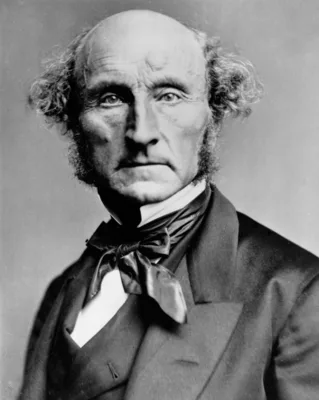
John Stuart Mill
John Stuart Mill was raised by his father without any religion, and "never had" a faith to lose. His crisis of 1826 was one of feeling, not belief, but it opened him to religion's emotional side. In 1834 he told Carlyle privately that he had only "a merely probable God". He kept public silence on religion by his father's rule, even as an MP, then defended the atheist Bradlaugh and lost his seat for it. In his last essay he stated the same probable God as a hope he called "legitimate and philosophically defensible", but never belief.
Ludwig Feuerbach
Ludwig Feuerbach left theology for Hegel's philosophy at twenty, and lost his academic career to an anonymous book against immortality. In The Essence of Christianity he argued that God is humanity's own nature, projected and worshipped. He meant that unbelief as a translation of religion into plain speech. Love of man later pushed it toward materialism.
Charles Darwin
Charles Darwin was a would-be country clergyman who believed every word of the Bible. Between 1836 and 1839 he gave up Christianity as a revelation "at a very slow rate" and without distress, by reasoning about miracles, the Gospels and other religions. He kept a designing God until his own theory left design little to do, and ended "content to remain an Agnostic". He kept the whole road private, for his family's sake and from his own judgement that attacks on religion did no good.
Harriet Martineau
Harriet Martineau was a devout Unitarian child. At twenty she took the doctrine of Necessity from her brother James, and watched it wear her faith away over many years. She let go of the last of it in five years of illness and bereavement at Tynemouth, and on her Eastern journey of 1846–47 she saw every religion as human history. In 1851 she said in print that she knew nothing whatever about God, an atheist only "in the vulgar sense", at the cost of her brother's lasting enmity and with no dread of the annihilation she expected.