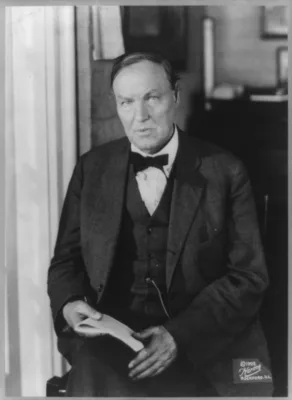
Clarence Darrow was raised by a doubting father in a churchgoing village. He came to unbelief through a philosophy of pity, the view that every person is made by heredity and circumstance, and he gave up the hope of immortality reluctantly. At Dayton in 1925 he accepted the word agnostic as a compliment, while cross-examining the Bible's most famous defender.
The belief timeline
- Inheritance (1860s) — Born into a freethinking father's house in a Methodist and Presbyterian country neighbourhood; sent to church by his parents anyway [2][3][4][5]
- Doubt (undated) (before 1929) — He "long approached" the subject of immortality "with my firm determination not to give up my hope"; the point at which the hope went is not dated in any open source [58]
- Application (1924-08) — Determinism argued in court: no one is "captain of his soul"; Leopold and Loeb are the "product of the endless heredity back of him and the infinite environment around him" [21][23][25]
- Declaration (1925-07-15) — In open court, to a hostile prosecutor: "I am an agnostic... that is all agnosticism means" [31][32]
- Statement (1929-03-12) — "Why I Am an Agnostic": the fullest case, before a bishop, a judge and a rabbi [53][55][56]
Notes to the timeline (13)
- [2] His father Amirus was a freethinker known locally as "the village infidel" and an abolitionist — Wikipedia (map only). Reported at second hand; the original has not been seen.
- [3] In Farmington the narrator's father "passed so rapidly through all the phases of religious faith, from Methodism through Congregationalism and Universalism to Unitarianism and beyond" that he never got ordained — Clarence Darrow, Farmington (Chicago: A. C. McClurg, 1904), p. 99.
- [4] In Farmington the parents "were not members of the church" and "had little belief in some of its chief articles of faith," yet sent the children to church; the narrator says "we were obliged to go" and calls Sunday "a sore cross to our young lives" — Darrow, Farmington, pp. 99–102.
- [5] In Farmington the neighbours "had no doubt that they were different from the horses and cattle, and would live in some future world"; the narrator felt "the horses and cattle had the best of the scheme of the universe" — Darrow, Farmington, p. 2.
- [58] In The Myth of the Soul he writes that "I know the reluctance with which I long approached the subject and my firm determination not to give up my hope" — Clarence Darrow, The Myth of the Soul: Is the Belief in Immortality Necessary or Even Desirable? (Girard, Kansas: Haldeman-Julius Publications, Little Blue Book no. 1404, 1929), p. 5.
- [21] In it he says "No man is captain of his soul" and defines religion by kindness rather than creed — Remarks of Clarence Darrow at Memorial Services to George Burman Foster and at the Funeral of John P. Altgeld (Chicago: John F. Higgins, printer, 1919).
- [23] In the plea: "every human being is the product of the endless heredity back of him and the infinite environment around him" — The Plea of Clarence Darrow, August 22nd, 23rd & 25th, MCMXXIII [sic], in defense of Richard Loeb and Nathan Leopold, Jr. (Chicago: Ralph Fletcher Seymour, 1924), p. 56.
- [25] In the plea he says the crime was "inherent in his organism, and came from some ancestor, or... through his education and his training" — Plea of Clarence Darrow, p. 73.
- [31] On the fourth day (15 July) Darrow answered that Stewart was "perfectly justified in saying that I am an agnostic" and that he did not take it as an insult — The World's Most Famous Court Trial, Tennessee Evolution Case: a complete stenographic report ... at Dayton, July 10 to 21, 1925 (Cincinnati: National Book Company, 1925), Day 4, p. 99.
- [32] In the same answer Darrow says "infidel" "has no meaning whatever" because "everybody is an infidel that does not believe in the prevailing religion" — World's Most Famous Court Trial, Day 4, p. 99.
- [53] The 1928 Little Blue Book "Are We Machines?" reprints the same Durant debate — Are We Machines? Is Life Mechanical or Is It "Something Else"? (Girard, Kansas: Haldeman-Julius, Little Blue Book, 1928).
- [55] He defines an agnostic as "a doubter" and says "I am an Agnostic as to the question of God" — Clarence Darrow, "Why I Am an Agnostic," in Why I Am an Agnostic, including expressions of faith from a Protestant, a Catholic, and a Jew (Girard, Kansas: Haldeman-Julius Publications, Little Blue Book, 1929), pp. 27–28.
- [56] He answers Paley's watch argument and asks "Who made God?"; he calls the Bible "a human document" and the soul unprovable — Darrow, Why I Am an Agnostic, pp. 29–33.
I Do Not Pretend to Know
On the afternoon of Monday 20 July 1925, in the small town of Dayton, Tennessee, the most famous trial lawyer in America called a witness for the defence who was also a lawyer for the prosecution. The witness was William Jennings Bryan, three times the Democratic candidate for President and the best-known Christian layman in the country. He agreed to testify, and he was not sworn. "No," the defence lawyer said, "I take it you will tell the truth."1 Bryan said he had studied the Bible for about fifty years, and that everything in it should be accepted as it was given.2 For two hours the lawyer took him through it: Jonah and the whale, Joshua and the sun standing still, the date of the flood, the tower of Babel, where Cain got his wife. "One miracle is just as easy to believe as another," Bryan said.3 Near the end he lost his temper. "I am simply trying to protect the word of God against the greatest atheist or agnostic in the United States."4
The lawyer was Clarence Darrow. He was sixty-eight, and he had spent his life defending people whom everyone else had given up on: strikers, murderers, anarchists, and now a high-school teacher charged with teaching evolution. This chapter is about the unbelief he brought to that courtroom: where it came from, what he thought it meant, and why, when he was called an agnostic in front of a hostile crowd, he took it as a compliment.
A freethinker's house
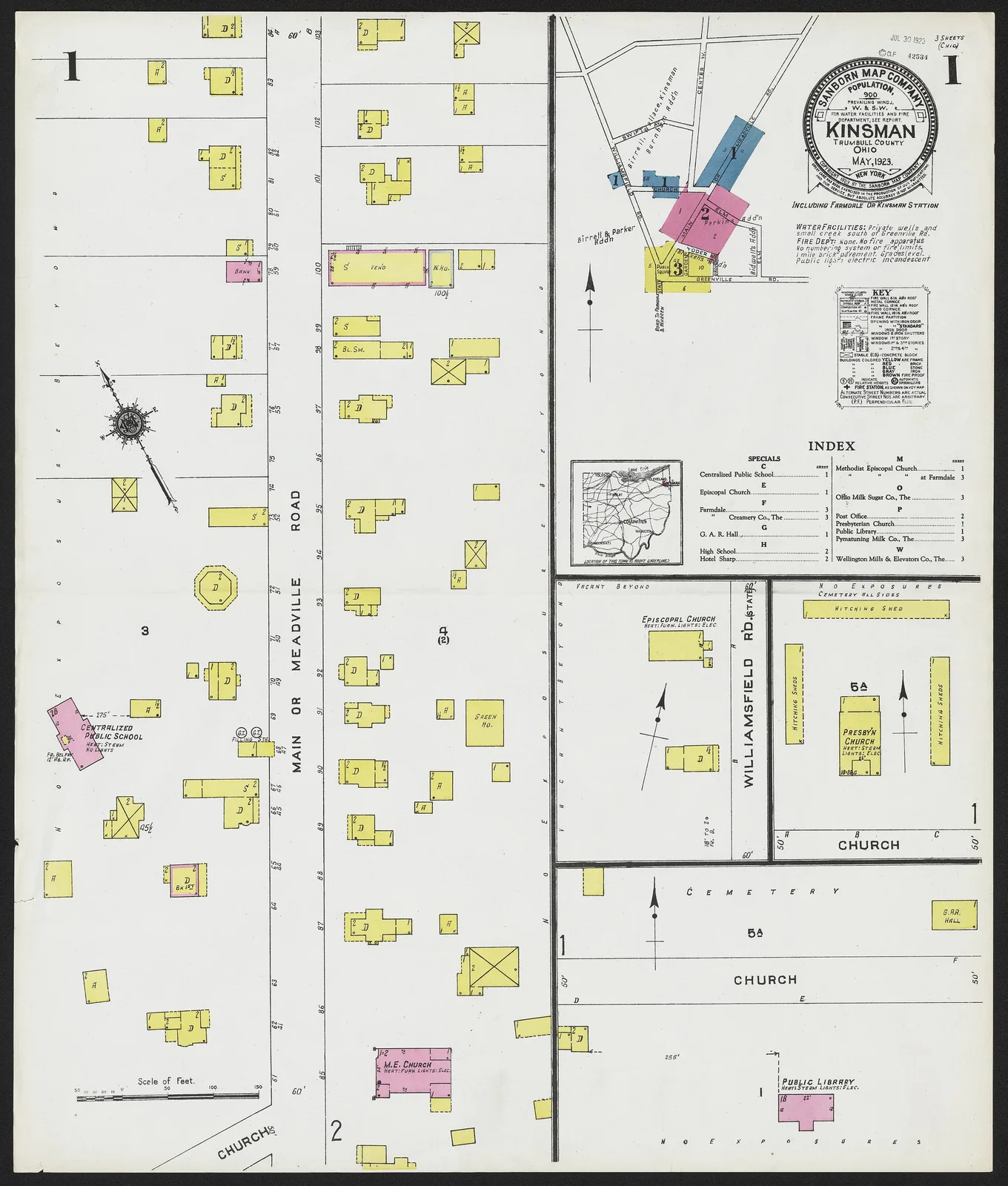
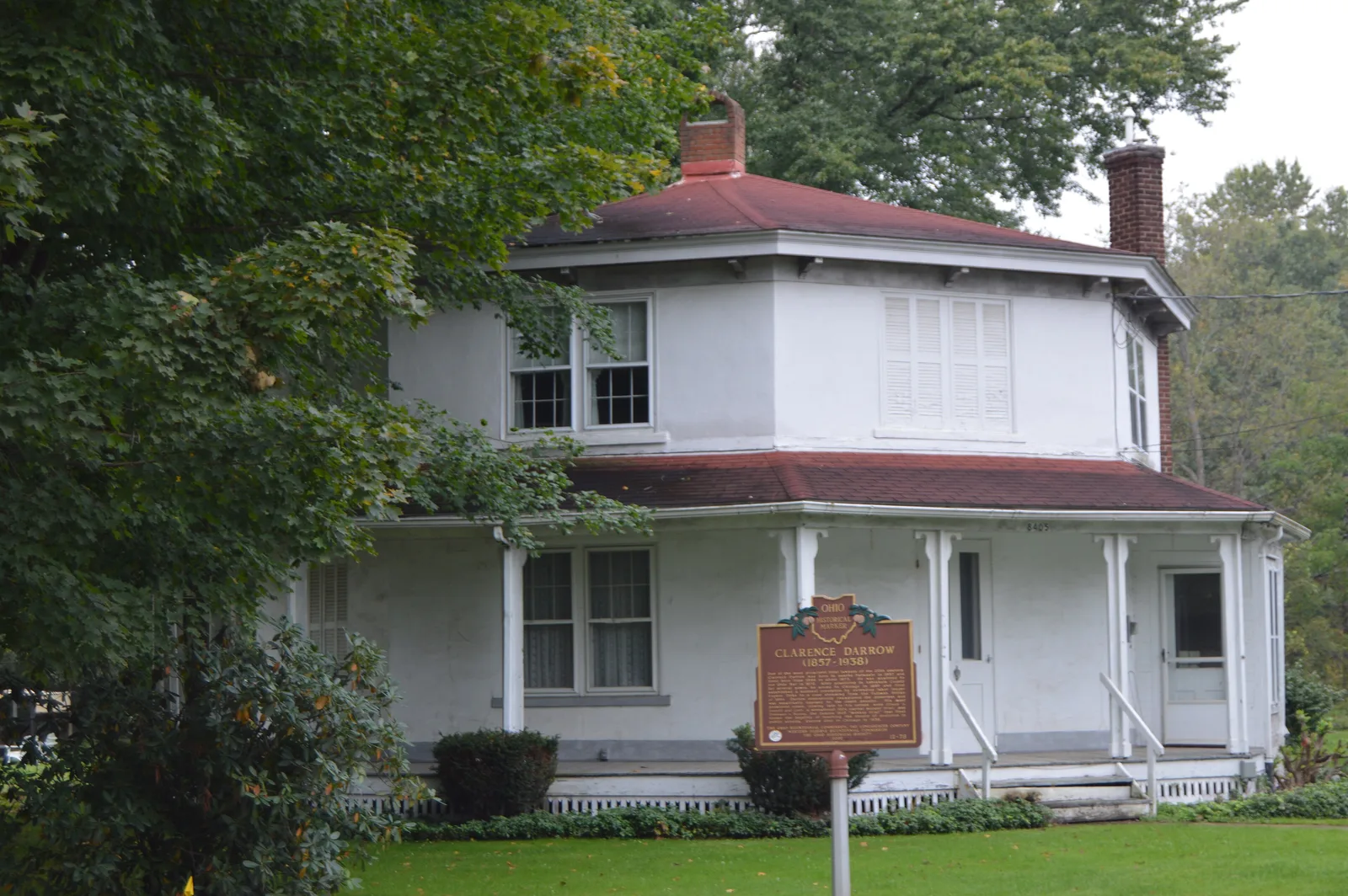
Darrow was born in Ohio in 1857 and grew up in the village of Kinsman. He did not have a faith to lose in the way most people in this book did. The best account of his childhood is a novel he published in 1904, Farmington, which draws on his boyhood but is set in Pennsylvania and given to an invented narrator, so it cannot be used to date anything.5 Its picture is still worth reading, because it is the one he chose to paint.
The narrator's father "passed so rapidly through all the phases of religious faith, from Methodism through Congregationalism and Universalism to Unitarianism and beyond, that he never had time to stop long enough at any one resting spot to get ordained to preach."6 On Sundays he shut himself in his room with his books.7 "My parents were not members of the church," the narrator says; "in fact, they had little belief in some of its chief articles of faith." But the children went anyway, "obliged to go," and "Sunday was a sore cross to our young lives."89 The neighbours "had no doubt that they were different from the horses and cattle, and would live in some future world that these other animals would never reach"; the boy privately thought the horses and cattle had the better of the arrangement.1011 And the grown narrator draws the moral that ran through Darrow's whole life: "our opinions on religion and politics and life are only such as have come down to us from ignorant and remote ancestors, influenced we know not how."12 In 1929, in his fullest statement on religion, he wrote of one thing he remembered: "When I was a boy the theologians used to assert that the proof of the Divine inspiration of the Bible rested on miracles and prophecies."13
So the first mark on his timeline stands for an inheritance rather than a faith: a boy raised among believers by a father who doubted.
The hope he did not want to give up
There is one sentence in his writings about his own doubt, and it is unexpected. In a pamphlet of 1929 on immortality, he wrote: "I know the reluctance with which I long approached the subject and my firm determination not to give up my hope."14 The man who mocked Bryan's literalism had once wanted very much to believe that the dead live on, and had held to that hope for a long time. When he gave it up he does not say, and no open source dates it. His timeline marks the doubt but leaves it undated, because the honest record gives no date.
Destiny
In Chicago Darrow became a lawyer for causes. In 1894 he resigned his post as a railroad's attorney to defend Eugene Debs, the leader of the Pullman strike; the Supreme Court decided against Debs the next year.1516 At the funeral of his friend John Peter Altgeld, the governor of Illinois who had pardoned the surviving Haymarket anarchists, he said that the hatred that pursued Altgeld "had but one cause, the fact that he really loved his fellow man," and he gave Altgeld the name his enemies had used as an insult: "John Pardon Altgeld, who opened the prison doors and set the captive free."1718
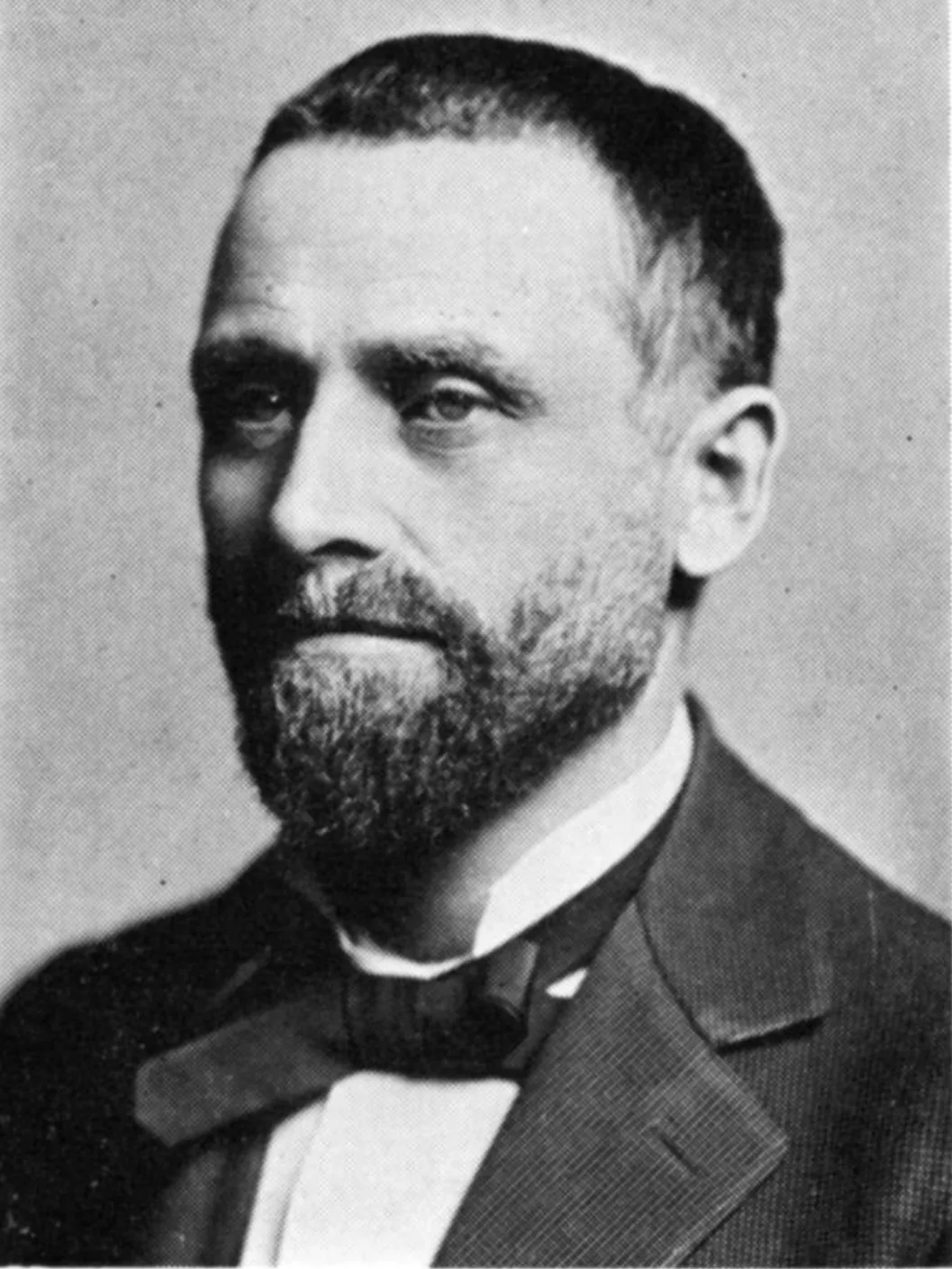
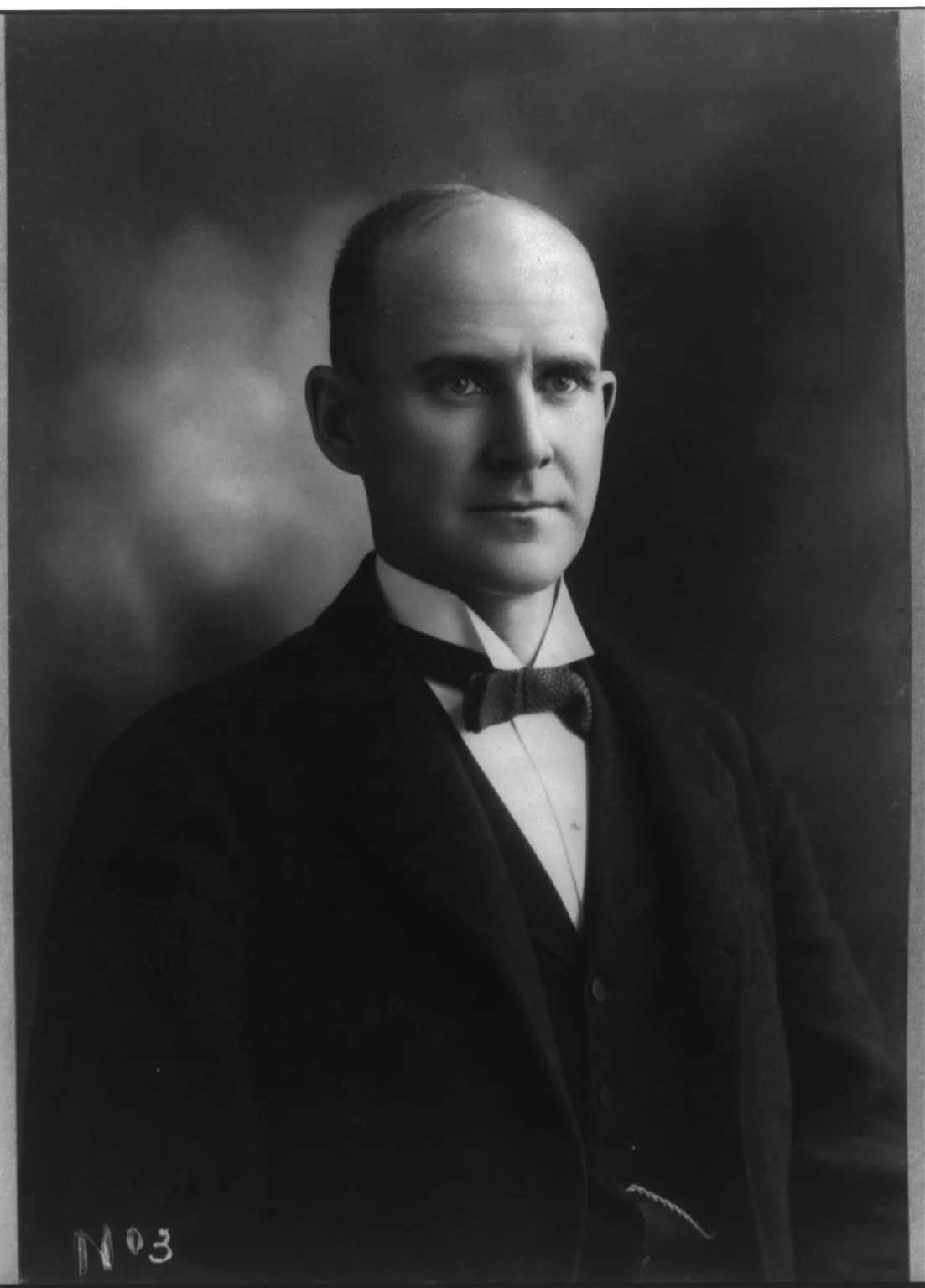
The idea that held all his causes together was not about God. It was about blame. In 1903 he published Resist Not Evil, arguing that punishment breeds the evil it answers.19 Tried for bribery in Los Angeles in 1912, he told the jury, "I believe we are all in the hands of destiny," and "we are no more responsible for the shape of our brains than we are for the shape of our faces."2021 If people are made by heredity and circumstance, then the language of sin and judgment, human or divine, is cruel and mistaken. This is where his unbelief came from, as much as from any argument about Genesis.
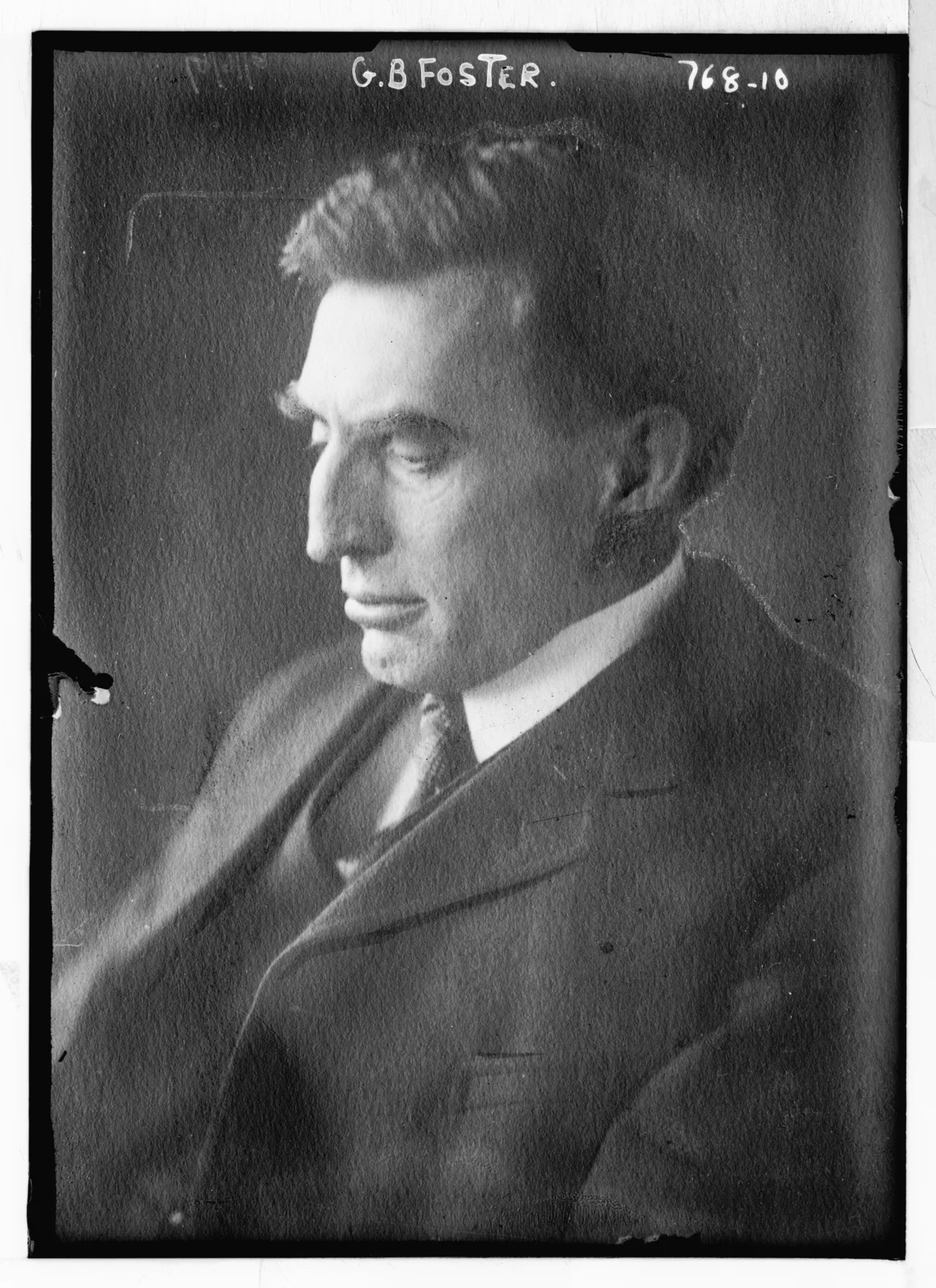
He respected the believers who lived kindly. When his friend and frequent debating opponent, the liberal theologian George Burman Foster, died in 1919, Darrow spoke at the memorial in a Chicago theatre. "If religion means creeds and dogmas, he was not a religious man. If it means specific belief in a supreme being, he was not. If it means a firm conviction of immortal life, he still was not; but if it means infinite love, gentleness, charity and kindness to all living things, George Burman Foster was the most religious man I ever knew!"22 And he explained why he could not share Foster's hope: "If faith could be bought like a suit of clothes, we might choose our faith. But it comes from some conviction; and to me, at least, it cannot be an act of will."23 Answering the line of poetry Foster loved, "I am the captain of my soul," he said: "No man is captain of his soul; he is not even a deck hand on a rudderless ship; he is a bubble cast up for an instant on an angry sea, then lost in the air and waves, to be seen no more."24
Leopold and Loeb
In August 1924 Darrow spent three days before a Chicago judge pleading for the lives of two young men, Nathan Leopold and Richard Loeb, who had confessed to a murder. His argument was his philosophy applied. "Every human being is the product of the endless heredity back of him and the infinite environment around him."25 The crime, he said, must have been "inherent in his organism, and came from some ancestor, or ... came through his education and his training after he was born."26 "Nature is strong and she is pitiless. She works in her own mysterious way, and we are her victims."27 He told the judge that Leopold had read Nietzsche at sixteen and taken him seriously. "Your Honor, I have read almost everything that Nietzsche ever wrote."2829
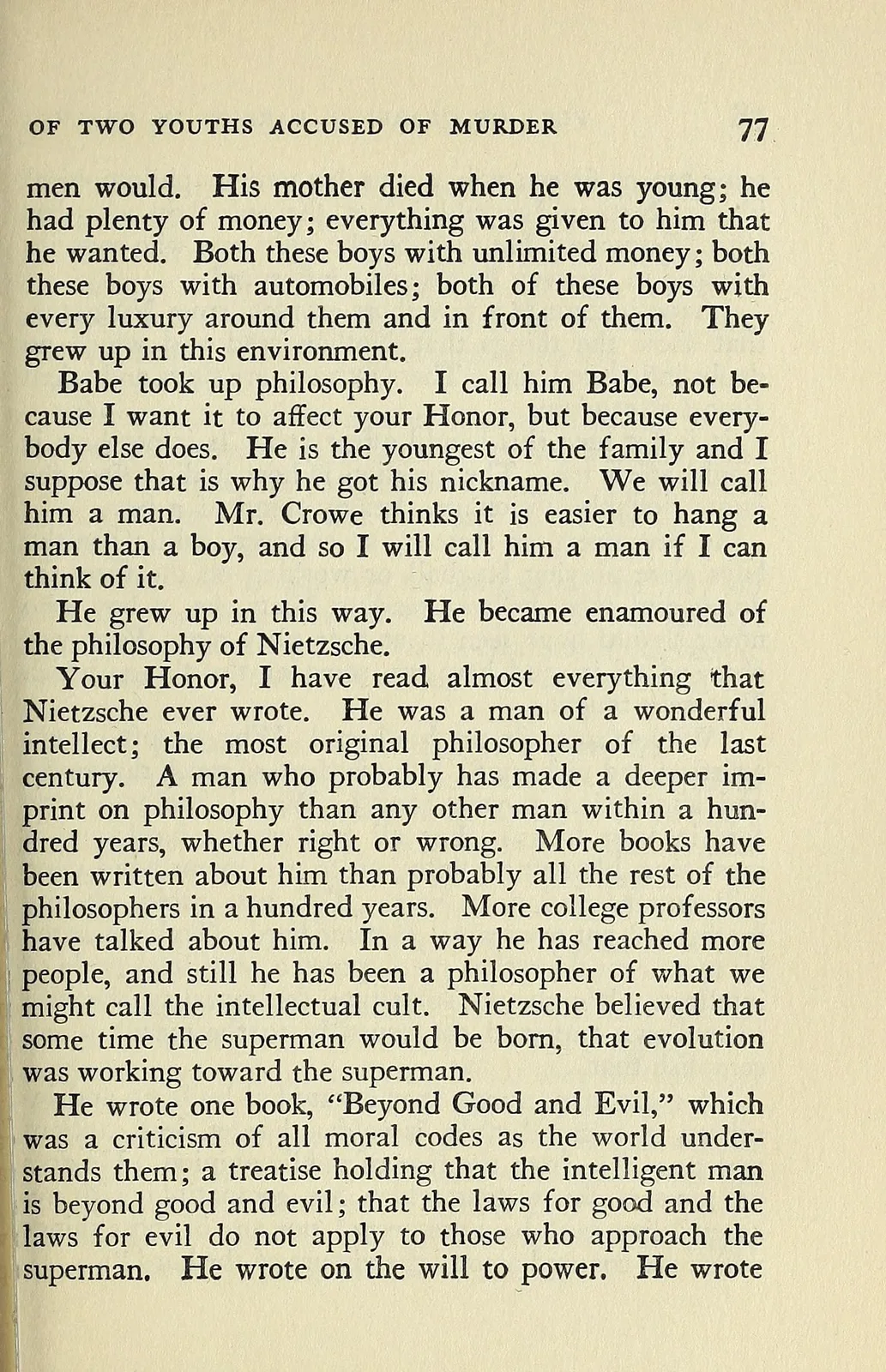
The third mark on his timeline falls here. Before 1924 his determinism was an opinion; in that courtroom it became a defence of two lives. It also gave his most powerful opponent a weapon he would use a year later.
Dayton
In 1925 Tennessee made it a crime to teach in its public schools that man had descended from a lower order of animals. That summer a young teacher, John Scopes, agreed to be tried under the law, and the trial opened at Dayton on 10 July 1925.30 Bryan joined the prosecution; Darrow joined the defence. On the second day Darrow told the court why he had come: "the fundamentalists are after everybody that thinks. I know why he is here. I know he is here because ignorance and bigotry are rampant, and it is a mighty strong combination."31 It was, he said, "as brazen and as bold an attempt to destroy learning as was ever made in the middle ages, and the only difference is we have not provided that they shall be burned at the stake, but there is time for that, Your Honor, we have to approach these things gradually."32
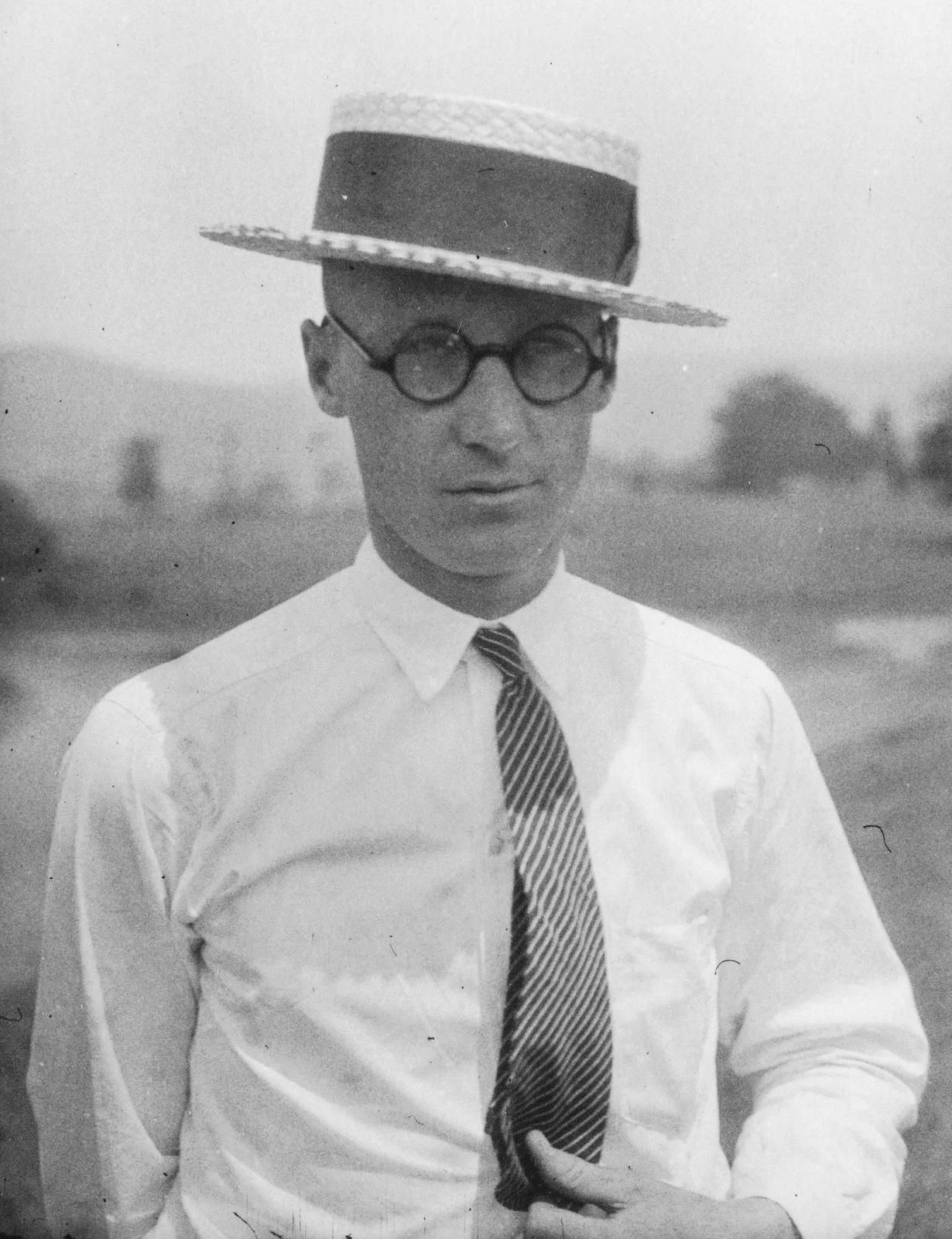
The next day the court began with a prayer, and the defence objected that daily prayers in the courtroom might prejudice the jury. The Attorney-General of Tennessee, A. T. Stewart, answered that the objection came from "the agnostic counsel for the defense" and was "foreign to the thoughts and ideas of the people who do not know anything about infidelity and care less."33 On 15 July Darrow rose to reply. Stewart, he said, "is perfectly justified in saying that I am an agnostic, for I am, and I do not consider it an insult, but rather a compliment to be called an agnostic. I do not pretend to know where many ignorant men are sure; that is all agnosticism means."34 The word "infidel," he added, "has no meaning whatever," because "everybody is an infidel that does not believe in the prevailing religion."35 And he asked only that his own views not be held against his client.36
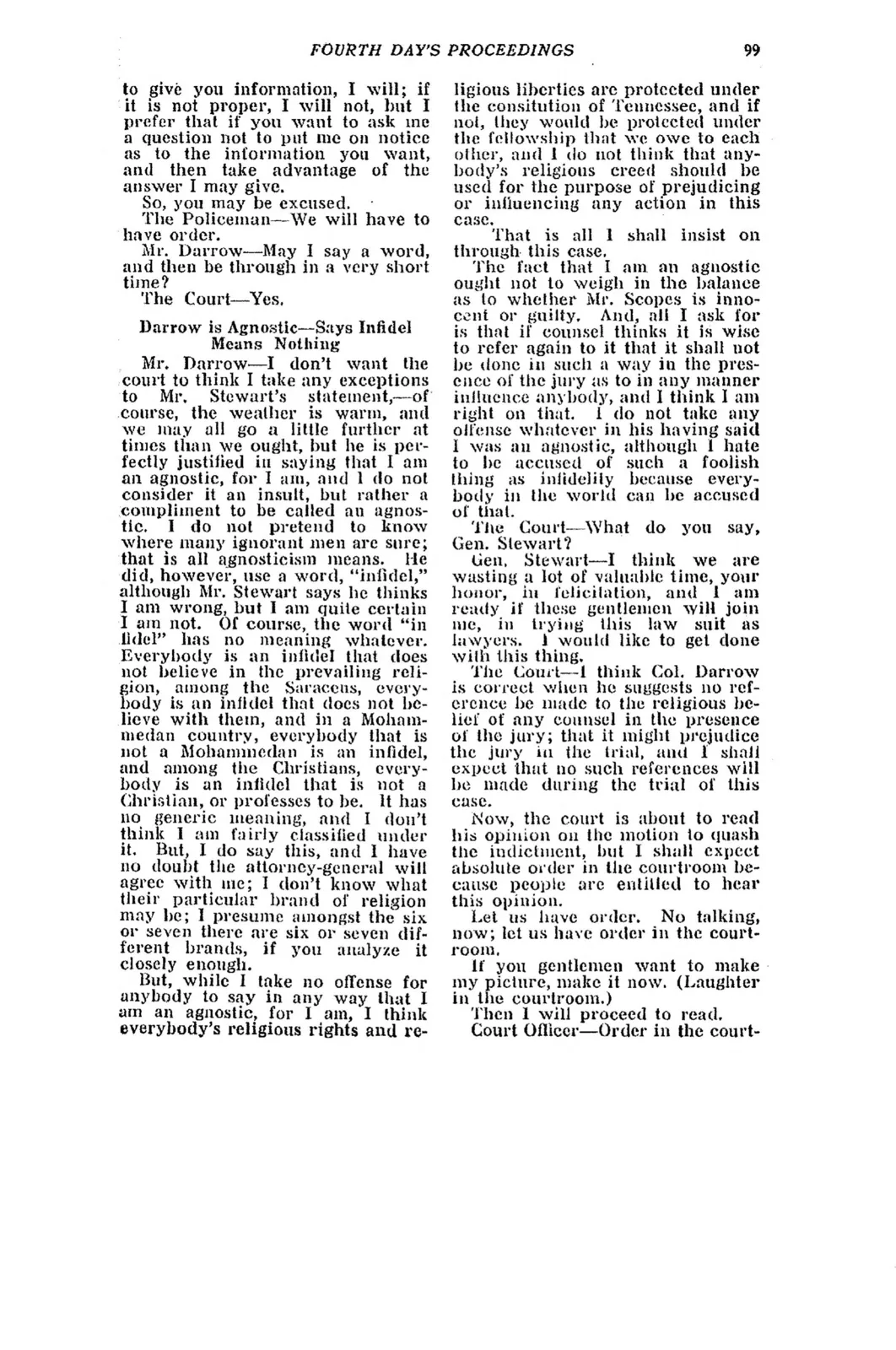
His timeline places his declaration here, and it is typical of him that it came as a reply rather than a manifesto. Two days later, when the judge asked whether evolution had anything to say about immortality, he said again, "as for me I am an agnostic on that. I don't claim to know. I have been looking for evidence all my life and never found it."37 Stewart, for his part, paid him a compliment of his own. "Mr. Darrow says he is an agnostic. He is the greatest criminal lawyer in America today. His courtesy is noticeable, his ability is known, and it is a shame, in my mind, in the sight of a great God, that a mentality like his has strayed so far from the natural goal."38
Bryan made the believers' case to the court with real feeling. "The parents have a right to say that no teacher paid by their money shall rob their children of faith in God and send them back to their homes, skeptical, infidels, or agnostics, or atheists."39 Many in Dayton agreed with him, and it is fair to say that he was defending what he believed was the most precious thing his neighbours possessed.
The cross-examination
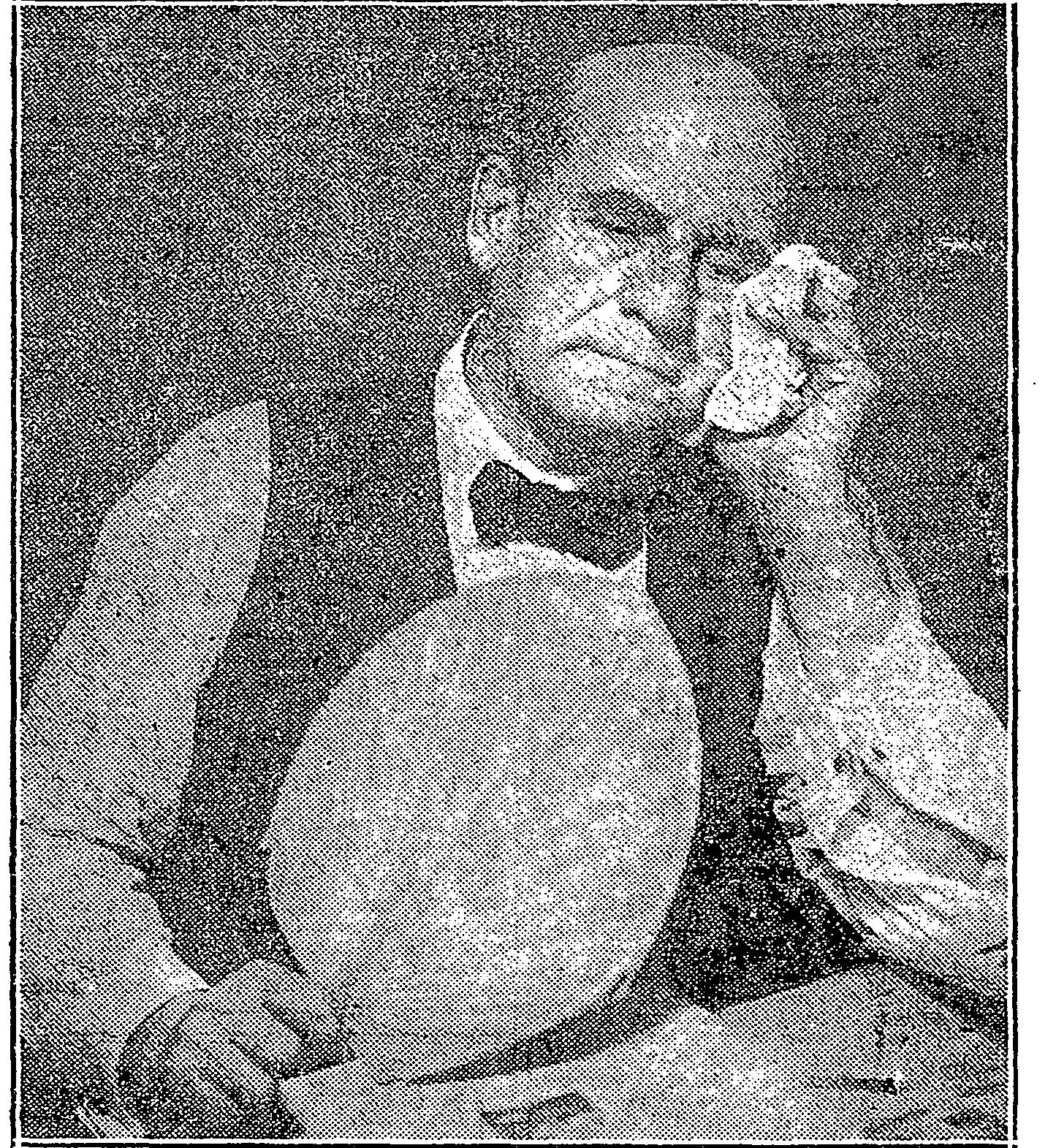
The examination of 20 July turned on Bryan's literalism, and it showed its limits. Asked about Joshua commanding the sun to stand still, Bryan said he believed the Bible, and also that "the earth goes around the sun," and that the Almighty "may have used language that could be understood at that time."40 Asked about the date of the flood and other ancient civilisations, he said, "I do not think about things I don't think about," and admitted he had never studied other religions or primitive man: "I have all the information I want to live by and to die by."4142 He agreed that the days of creation were "not six days of twenty-four hours."43 When the crowd laughed, the two men lost patience with each other. "You insult every man of science and learning in the world because he does not believe in your fool religion," Darrow said.44 Bryan said the purpose of the questions was "to cast ridicule on everybody who believes in the Bible." Darrow answered: "We have the purpose of preventing bigots and ignoramuses from controlling the education of the United States and you know it, and that is all."4546 The day ended with a last exchange: "I am examining you on your fool ideas that no intelligent Christian on earth believes."47
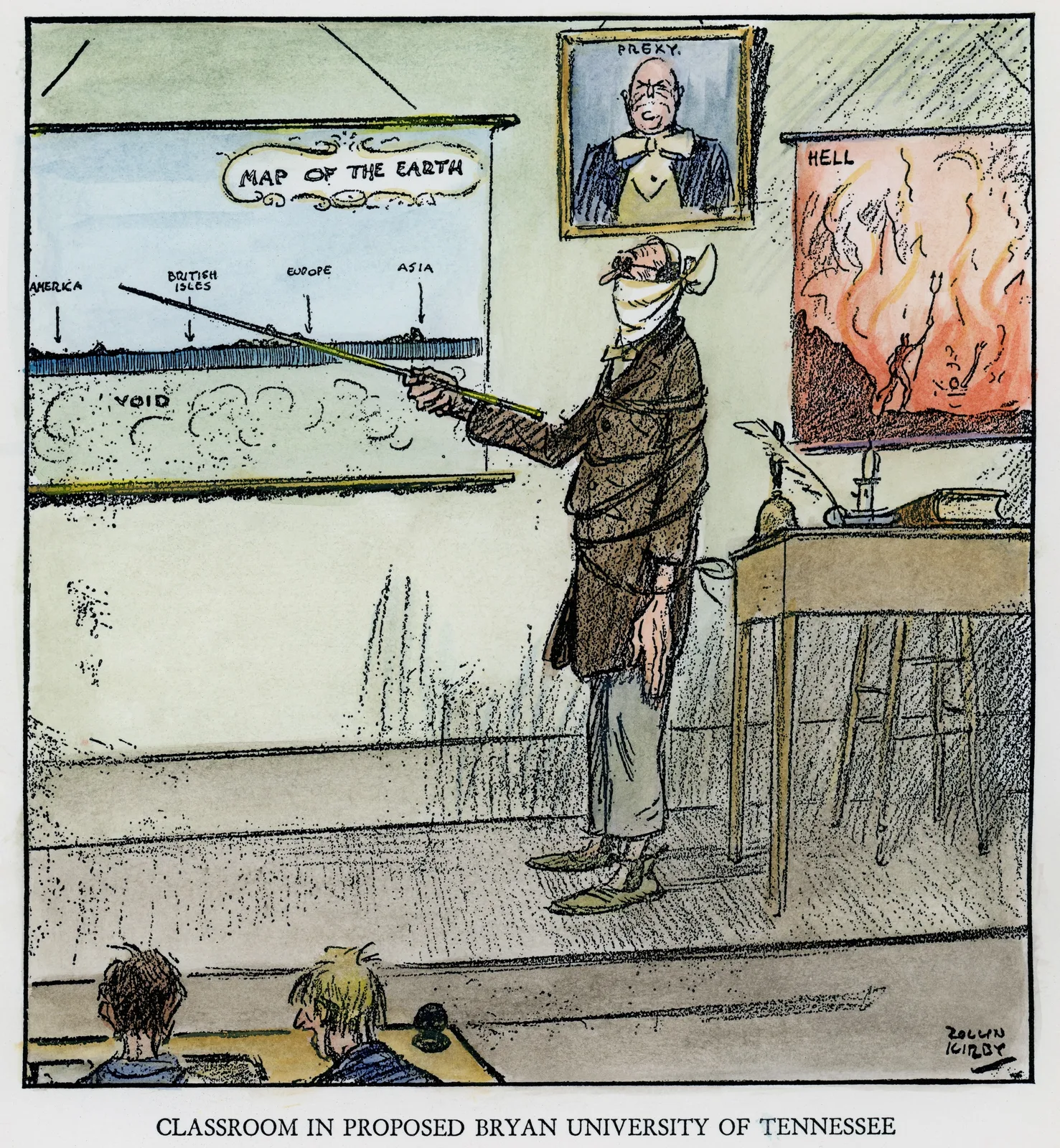
The next morning the judge struck Bryan's testimony from the record. Darrow then asked the court to instruct the jury to find his client guilty, so that the case could go to a higher court; Scopes was fined a hundred dollars.4849 Bryan never gave his closing speech. He dictated it and it was published after his death, which came the following Sunday. In it he quoted Darrow's Nietzsche passage from the Leopold plea and called it "a damnable philosophy, and yet it is the flower that blooms on the stalk of evolution."5051 In his last conversation, a journalist reported, Bryan said, "My fight is not with the agnostics or the atheists, I am not engaged in a controversy with them."52 His quarrel, he meant, was with Christians who had made room for evolution.
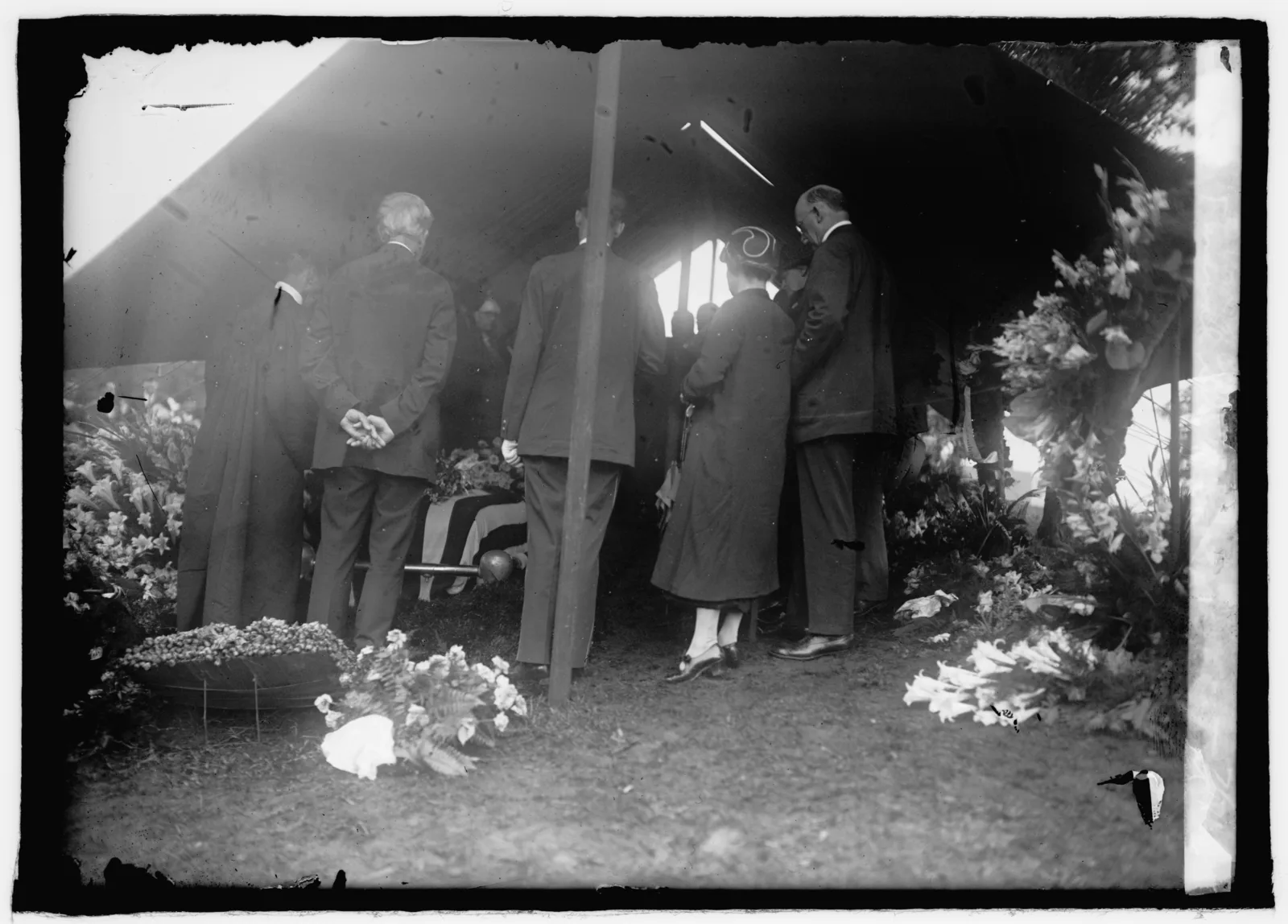
Why I Am an Agnostic
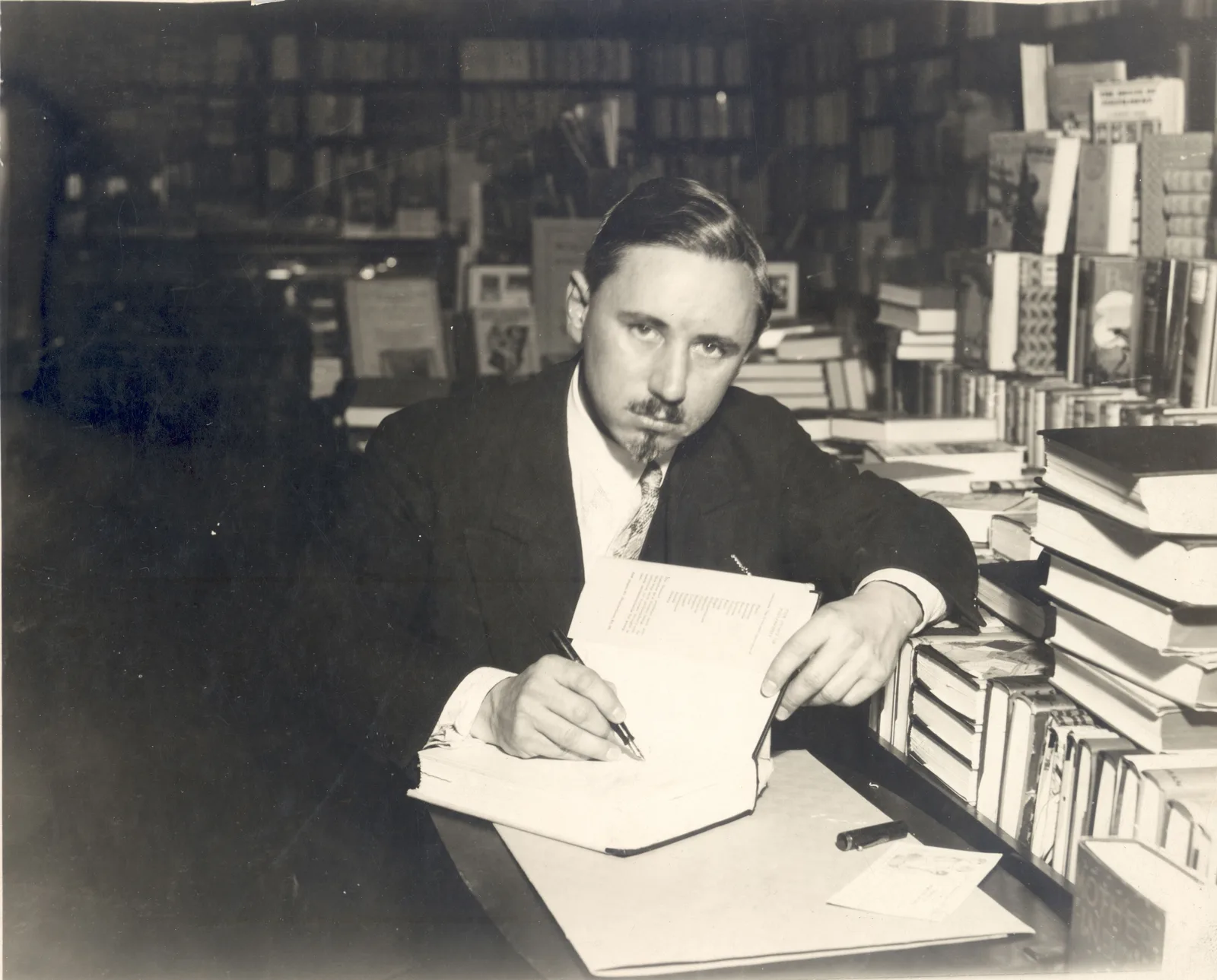
After Dayton he debated religion often. In 1927 he argued against the historian Will Durant that man is a machine; "I cannot prove to you that man is a machine," he admitted, but "if anybody complains it ought to be the machine!"5354 In 1925 he lectured on Voltaire, and told how Voltaire had tried to save a young man executed for singing irreligious songs and damaging a crucifix.55
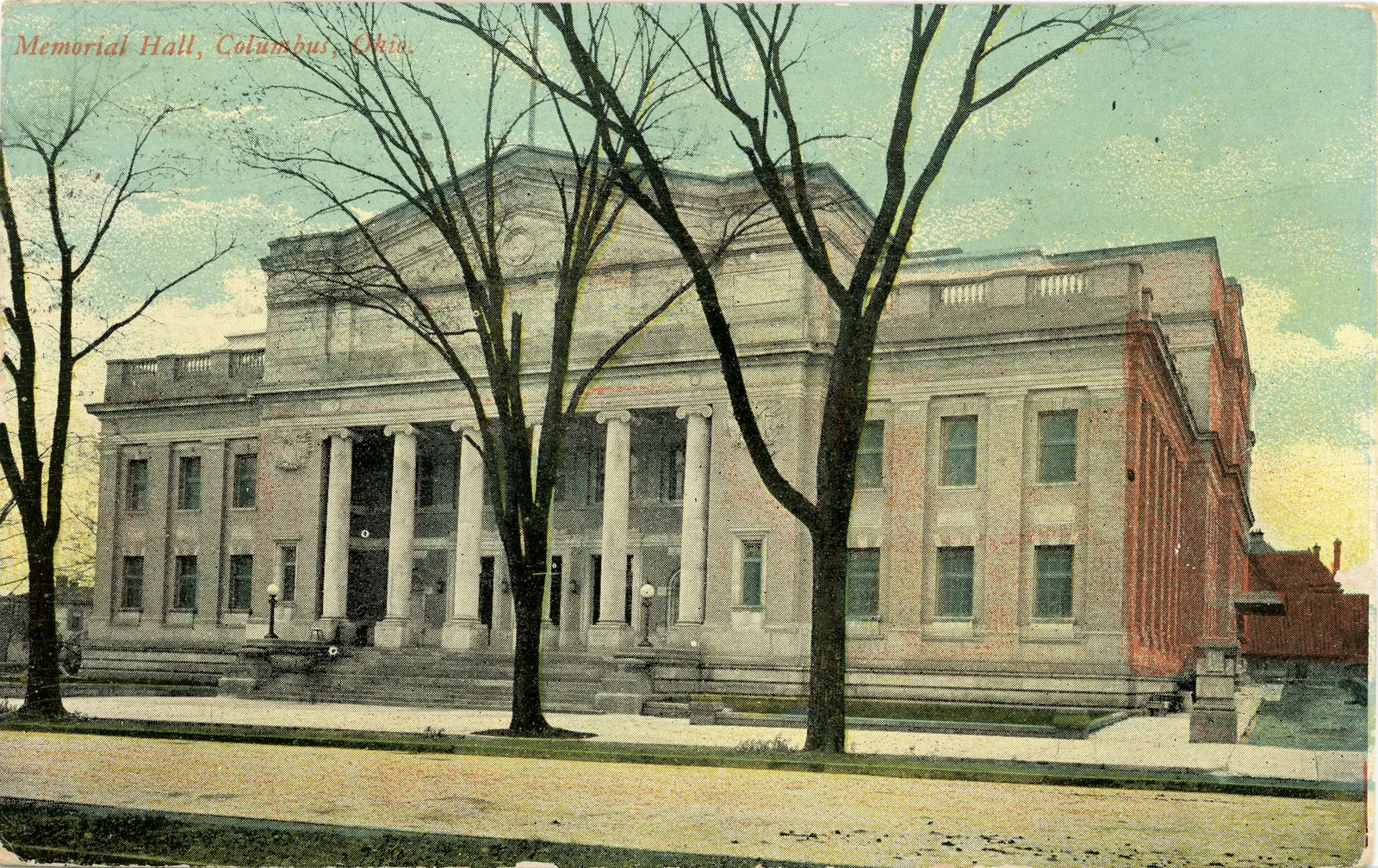
On 12 March 1929, back in his native Ohio, he spoke in Memorial Hall in Columbus at a forum where a Methodist bishop, a Catholic judge and a rabbi each explained their faith; more than four thousand people crowded into a hall built for three and a half thousand.56 His talk, printed that year as "Why I Am an Agnostic," is his fullest statement. "An Agnostic is a doubter," it begins. "I am an Agnostic as to the question of God."5758 To say that God made the universe, he argued, explains nothing, because "the question immediately arises: Who made God?"59 He answered Paley's argument from design, called the Bible "a human document," and found no evidence for a soul.60 And he closed with two sentences that sum up his life's argument. "The fear of God is not the beginning of wisdom. The fear of God is the death of wisdom. Skepticism and doubt lead to study and investigation, and investigation is the beginning of wisdom." "The modern world is the child of doubt and inquiry, as the ancient world was the child of fear and faith."6162
The bishop who spoke before him, Edwin Holt Hughes, made the believers' practical case, and it deserves its place beside Darrow's: "Atheism, materialism, agnosticism are not great builders of Old People's Homes, or Orphanages, or Hospitals."63 In the same year Darrow published The Myth of the Soul, in which "agnostic" seems almost too mild a word: "There is, perhaps, no more striking example of the credulity of man than the wide-spread belief in immortality."64 This was the man who had once been determined not to give up that hope.
He died in Chicago in 1938. His autobiography, published in 1932, is still in copyright and is not quoted in this chapter.65
Did his unbelief change shape?
It hardened, but it never changed its centre. Darrow began with an inheritance, a doubting father in a churchgoing village, and he never had a faith to break with. What he gave up, slowly and reluctantly, was the hope of a life after death. What he built in its place was a philosophy of causes: that every person is the product of heredity and circumstance, and that a world which understood this would punish less and pity more. His unbelief was the other face of that pity. He took the name agnostic gladly, as "a compliment," and meant by it only that he did not pretend to know what ignorant men were sure of; by the end of his life, on the question of immortality, he was sure enough himself.
Friedrich Nietzsche, the philosopher whose writings Darrow read in his plea for Leopold and whom Bryan called damnable, has his own chapter in this book.
Footnotes
-
The World's Most Famous Court Trial, Tennessee Evolution Case: a complete stenographic report ... at Dayton, July 10 to 21, 1925 (Cincinnati: National Book Company, 1925), Day 7, p. 284. ↩
-
World's Most Famous Court Trial, Day 7, p. 284. ↩
-
William Jennings Bryan, 20 July 1925: World's Most Famous Court Trial, Day 7, p. 285. ↩
-
William Jennings Bryan, 20 July 1925: World's Most Famous Court Trial, Day 7, p. 298. ↩
-
IA metadata. ↩
-
Clarence Darrow, Farmington (Chicago: A. C. McClurg, 1904), p. 99. ↩
-
Darrow, Farmington, p. 99. ↩
-
Darrow, Farmington, pp. 99–100. ↩
-
Darrow, Farmington, p. 102. ↩
-
Darrow, Farmington, p. 2. ↩
-
Darrow, Farmington, p. 2. ↩
-
Darrow, Farmington, p. 265. ↩
-
Clarence Darrow, "Why I Am an Agnostic," in Why I Am an Agnostic, including expressions of faith from a Protestant, a Catholic, and a Jew (Girard, Kansas: Haldeman-Julius Publications, Little Blue Book, 1929), p. 31. ↩
-
Clarence Darrow, The Myth of the Soul: Is the Belief in Immortality Necessary or Even Desirable? (Girard, Kansas: Haldeman-Julius Publications, Little Blue Book no. 1404, 1929), p. 5. ↩
-
Library of Congress, "Clarence Darrow: Topics in Chronicling America" (research guide, updated 2025-09-23), Introduction and Timeline. ↩
-
Congress, "Clarence Darrow: Topics in Chronicling America", Timeline. ↩
-
Clarence S. Darrow, In Memory of John P. Altgeld: Address at the Funeral (Chicago: Charles H. Kerr, 1902), (unpaginated). ↩
-
Darrow, In Memory of John P. Altgeld, (unpaginated). ↩
-
Clarence Darrow, Resist Not Evil (Chicago: Charles H. Kerr, 1903), (publisher and date from IA); text near end. ↩
-
Plea of Clarence Darrow in his own Defense to the Jury that exonerated him of the charge of bribery at Los Angeles, August 1912 (Los Angeles and San Francisco: Golden Press, 1912), (page not captured). ↩
-
Plea of Clarence Darrow in…, (page not captured). ↩
-
Remarks of Clarence Darrow at Memorial Services to George Burman Foster and at the Funeral of John P. Altgeld (Chicago: John F. Higgins, printer, 1919), memorial address. ↩
-
Remarks of Clarence Darrow at…, memorial address. ↩
-
Remarks of Clarence Darrow at…, memorial address (unpaginated). ↩
-
The Plea of Clarence Darrow, August 22nd, 23rd & 25th, MCMXXIII [sic], in defense of Richard Loeb and Nathan Leopold, Jr. (Chicago: Ralph Fletcher Seymour, 1924), p. 56. ↩
-
Plea of Clarence Darrow, p. 73. ↩
-
Plea of Clarence Darrow, pp. 70–71. ↩
-
Plea of Clarence Darrow, p. 77. ↩
-
Plea of Clarence Darrow, pp. 77–79. ↩
-
World's Most Famous Court Trial, (title; indictment signature "A. T. STEWART, Attorney-General"). ↩
-
World's Most Famous Court Trial, Day 2, p. 79. ↩
-
World's Most Famous Court Trial, Day 2 (page not captured in OCR). ↩
-
A. T. Stewart, Attorney-General of Tennessee, 14 July 1925: World's Most Famous Court Trial, Day 3, p. 90. ↩
-
World's Most Famous Court Trial, Day 4, p. 99. ↩
-
World's Most Famous Court Trial, Day 4, p. 99. ↩
-
World's Most Famous Court Trial, Day 4, p. 99. ↩
-
World's Most Famous Court Trial, Day 6, p. 189. ↩
-
A. T. Stewart, 17 July 1925: World's Most Famous Court Trial, Day 6, pp. 197–98. ↩
-
William Jennings Bryan, three-time presidential candidate, 16 July 1925: World's Most Famous Court Trial, Day 5, p. 174. ↩
-
World's Most Famous Court Trial, Day 7, pp. 286–87. ↩
-
World's Most Famous Court Trial, Day 7, pp. 287–90. ↩
-
William Jennings Bryan, 20 July 1925: World's Most Famous Court Trial, Day 7, p. 294. ↩
-
World's Most Famous Court Trial, Day 7, pp. 298, 302. ↩
-
World's Most Famous Court Trial, Day 7, pp. 286–87. ↩
-
William Jennings Bryan, on the stand, 20 July 1925: World's Most Famous Court Trial, Day 7, p. 298. ↩
-
World's Most Famous Court Trial, Day 7, p. 298. ↩
-
World's Most Famous Court Trial, Day 7, pp. 304–05. ↩
-
World's Most Famous Court Trial, Day 8, pp. 305–06, 343. ↩
-
World's Most Famous Court Trial, Day 8, p. 306. ↩
-
William Jennings Bryan, undelivered closing, July 1925: William Jennings Bryan, The Last Message of William Jennings Bryan (New York: Fleming H. Revell, 1925; IA date 1925-07-25; Public Domain Mark), pp. 47–48. ↩
-
Bryan, Last Message of William Jennings Bryan, pp. 7–11, 44–48. ↩
-
William Jennings Bryan to George R. Milton, his last conversation, Sunday 26 July 1925: Bryan, Last Message of William Jennings Bryan, pp. 9–10. ↩
-
Debate: Is Man a Machine? Clarence Darrow, affirmative; Dr. Will Durant, negative (New York: League for Public Discussion, 1927), p. 29. ↩
-
Debate, p. 80. ↩
-
Clarence S. Darrow, Voltaire: A Lecture (Girard, Kansas: Haldeman-Julius, Little Blue Book 829, 1925), pp. 42–43. ↩
-
Darrow, Why I Am an Agnostic, pp. 5–6. ↩
-
Darrow, Why I Am an Agnostic, p. 27. ↩
-
Darrow, Why I Am an Agnostic, p. 28. ↩
-
Darrow, Why I Am an Agnostic, p. 29. ↩
-
Darrow, Why I Am an Agnostic, pp. 29–33. ↩
-
Darrow, Why I Am an Agnostic, p. 40. Often quoted without the second and third sentences. ↩
-
Darrow, Why I Am an Agnostic, p. 40. ↩
-
Bishop Edwin Holt Hughes, Methodist Episcopal Church, Columbus, 12 March 1929: Darrow, Why I Am an Agnostic, p. 18. ↩
-
Darrow, Myth of the Soul, p. 5. ↩
-
IA metadata (borrow-only). Not verified. ↩
In their own words
An Agnostic is a doubter.
I am an Agnostic as to the question of God.
To say that God made the universe gives us no explanation of the beginning of things. If we are told that God made the universe, the question immediately arises: Who made God?
When I was a boy the theologians used to assert that the proof of the Divine inspiration of the Bible rested on miracles and prophecies.
The fear of God is not the beginning of wisdom. The fear of God is the death of wisdom. Skepticism and doubt lead to study and investigation, and investigation is the beginning of wisdom.
The modern world is the child of doubt and inquiry, as the ancient world was the child of fear and faith.
he is perfectly justified in saying that I am an agnostic, for I am, and I do not consider it an insult, but rather a compliment to be called an agnostic. I do not pretend to know where many ignorant men are sure; that is all agnosticism means.
As to where the idea of immortality came from and as for me I am an agnostic on that. I don't claim to know. I have been looking for evidence all my life and never found it.
Yes, I know what he is here for, because the fundamentalists are after everybody that thinks. I know why he is here. I know he is here because ignorance and bigotry are rampant, and it is a mighty strong combination, your Honor
Here, we find today as brazen and as bold an attempt to destroy learning as was ever made in the middle ages, and the only difference is we have not provided that they shall be burned at the stake, but there is time for that, Your Honor, we have to approach these things gradually.
You insult every man of science and learning in the world because he does not believe in your fool religion.
We have the purpose of preventing bigots and ignoramuses from controlling the education of the United States and you know it, and that is all.
I am examining you on your fool ideas that no intelligent Christian on earth believes.
I think to save time we will ask the court to bring in the jury and instruct the jury to find the defendant guilty.
I know that one of two things happened to Richard Loeb; that this terrible crime was inherent in his organism, and came from some ancestor, or that it came through his education and his training after he was born.
Nature is strong and she is pitiless. She works in her own mysterious way, and we are her victims. We have not much to do with it ourselves.
every human being is the product of the endless heredity back of him and the infinite environment around him.
Your Honor, I have read almost everything that Nietzsche ever wrote.
No man is captain of his soul; he is not even a deck hand on a rudderless ship; he is a bubble cast up for an instant on an angry sea, then lost in the air and waves, to be seen no more.
If religion means creeds and dogmas, he was not a religious man. If it means specific belief in a supreme being, he was not. If it means a firm conviction of immortal life, he still was not; but if it means infinite love, gentleness, charity and kindness to all living things, George Burman Foster was the most religious man I ever knew!
If faith could be bought like a suit of clothes, we might choose our faith. But it comes from some conviction; and to me, at least, it cannot be an act of will.
the fierce bitterness and hatred that sought to destroy this great, grand soul had but one cause — the fact that he really loved his fellow man.
John Pardon Altgeld, who opened the prison doors and set the captive free.
My parents were not members of the church; in fact, they had little belief in some of its chief articles of faith.
he passed so rapidly through all the phases of religious faith, from Methodism through Congregationalism and Universalism to Unitarianism and beyond, that he never had time to stop long enough at any one resting spot to get ordained to preach.
So little do we have the habit of thought, that our opinions on religion and politics and life are only such as have come down to us from ignorant and remote ancestors, influenced we know not how.
who had no doubt that they were different from the horses and cattle, and would live in some future world that these other animals would never reach.
Sunday was a sore cross to our young lives.
I know the reluctance with which I long approached the subject and my firm determination not to give up my hope.
There is, perhaps, no more striking example of the credulity of man than the wide-spread belief in immortality.
I cannot prove to you that man is a machine.
I do not think that I am degrading him when I place him in the category of machines. If anybody complains it ought to be the machine!
You may not agree with all my views of philosophy. I believe we are all in the hands of destiny
The temptation to take property by force does not appeal to one who can get it by inheritance or gift or fraud.
The other side
such an idea extended by the agnostic counsel for the defense is foreign to the thoughts and ideas of the people who do not know anything about infidelity and care less.
And the parents have a right to say that no teacher paid by their money shall rob their children of faith in God and send them back to their homes, skeptical, infidels, or agnostics, or atheists.
Mr. Darrow says he is an agnostic. He is the greatest criminal lawyer in America today. His courtesy is noticeable—his ability is known—and it is a shame, in my mind, in the sight of a great God, that a mentality like his has strayed so far from the natural goal
The purpose is to cast ridicule on everybody who believes in the Bible, and I am perfectly willing that the world shall know that these gentlemen have no other purpose than ridiculing every Christian who believes in the Bible.
I am simply trying to protect the word of God against the greatest atheist or agnostic in the United States.
I have all the information I want to live by and to die by.
One miracle is just as easy to believe as another.
This is a damnable philosophy, and yet it is the flower that blooms on the stalk of evolution.
My fight is not with the agnostics or the atheists, I am not engaged in a controversy with them.
Atheism, materialism, agnosticism are not great builders of Old People's Homes, or Orphanages, or Hospitals.
Where accounts differ
| Point | One account | Another | How the page handles it |
|---|---|---|---|
| Whether the Farmington boyhood is Darrow's own | A semi-autobiographical novel; the father who passes through the denominations and the neighbours' church match what Wikipedia says of Amirus Darrow (Farm; Wikipedia, map only) | The village is in Pennsylvania, the narrator is "John Smith's" boy, and it is called fiction (Farm pp. 2, 14) | Say "in his novel Farmington, which draws on his boyhood" and never date anything from it |
| "Tom Stewart" and "A. T. Stewart" | The scan names one prosecutor, "Attorney-General A. T. Stewart," called "Gen. Stewart" throughout (Scopes) | The assignment lists "Tom Stewart and A. T. Stewart" as two men | One man. A. Thomas ("Tom") Stewart is the standard form; the scan prints only "A. T." |
| Where "Why I Am an Agnostic" first appeared | Delivered 12 March 1929 at Columbus, printed the same year as a Haldeman-Julius Little Blue Book (Agnostic pp. 5–6) | The assignment suggested The Story of My Life (1932) | First printed in 1929; the 1932 book came later |
| Plea date | Pamphlet title: "August 22nd, 23rd & 25th, MCMXXIII" (Plea; a second printing on IA reads "MCMXXIIII") | The trial was 1924 | 1924; the Roman-numeral date is a printer's slip |
| Page numbers of the Scopes passages | Running heads place some Day 6 text under "FIFTH DAY'S PROCEEDINGS" (Scopes pp. 195–98) | Chapter heads: Sixth Day, 17 July | Cite the chapter-head date; confirm a page in the scan before it goes on screen |
| Whether Darrow was involved in the 1912 jury bribery | Early biographers argued he was innocent (Wikipedia, map only: Stone, Weinbergs); he was acquitted on one count and the second jury hung | Later biographers conclude involvement (Wikipedia, map only: Cowan, Farrell) | Not needed for the unbelief arc; omit |
List of illustrations
This page uses only public-domain and Creative Commons images; each is credited with its source and licence.
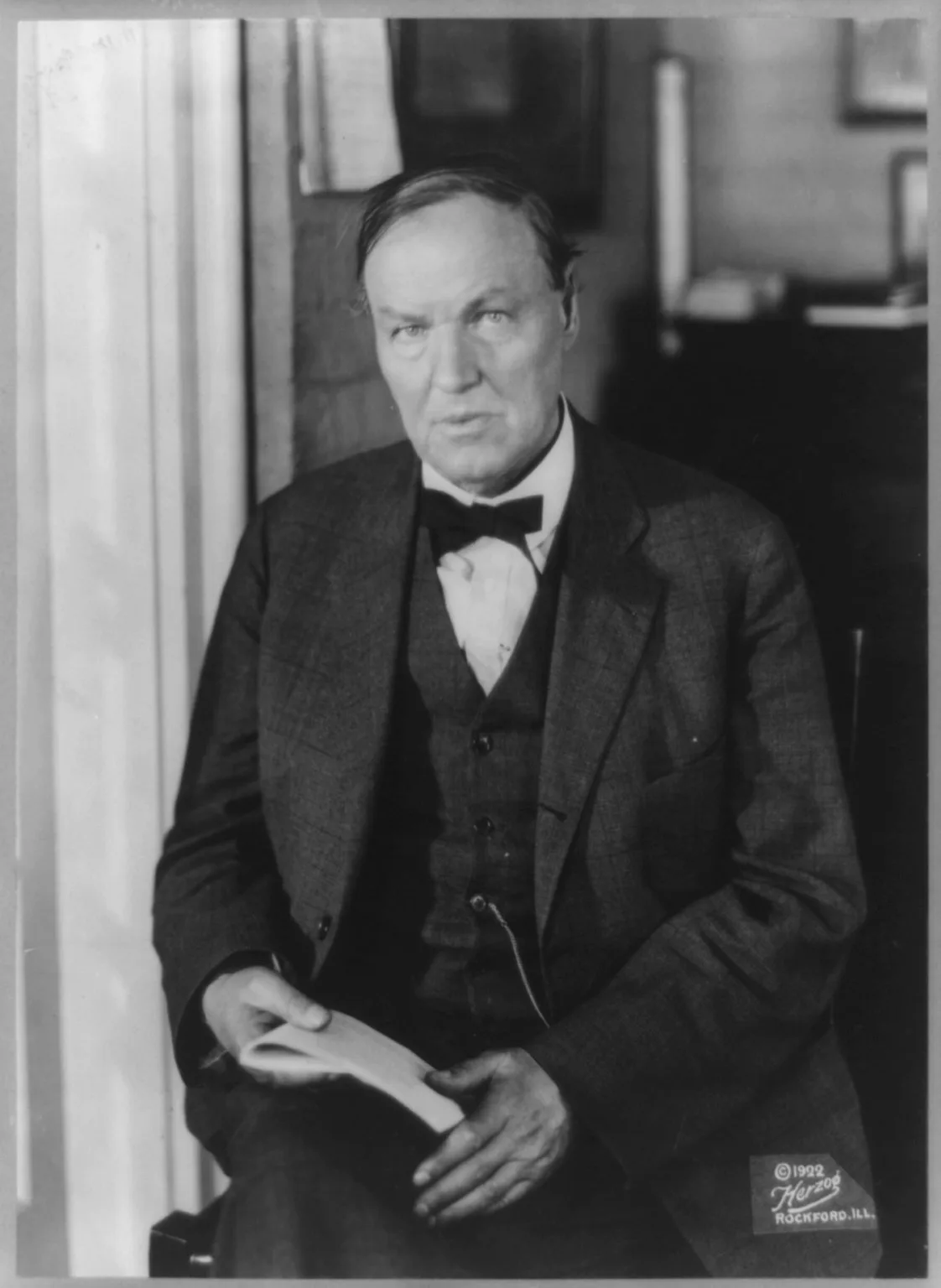
- Clarence Darrow, 1857-1938 (Library of Congress, 1922) — Miscellaneous Items in High Demand, PPOC, Library of Congress, 1922 · Miscellaneous Items in High Demand, PPOC, Library of Congress, Library of Congress (LCCN 2004671917), via Wikimedia Commons · Public domain (Wikimedia Commons licence label; LoC rights page unreachable, loc.gov down)
- Kinsman, Trumbull County, Ohio, 1923 (map) — Unknown, 1923 · Unknown, via Wikimedia Commons · Public domain (Wikimedia Commons licence label)
- The Darrow Octagon House, Kinsman, Ohio (photograph of 2014 by Nyttend) — Nyttend, 2014-10-01 · Nyttend, via Wikimedia Commons · Public domain (Wikimedia Commons licence label)
- John P. Altgeld (1896) — Unknown authorUnknown author, 1896 · Unknown author, via Wikimedia Commons · Public domain (Wikimedia Commons licence label)
- Eugene V. Debs (1897) — Miscellaneous Items in High Demand, PPOC, Library of Congress, 1897 · Miscellaneous Items in High Demand, PPOC, Library of Congress, Library of Congress (LCCN 2004671916), via Wikimedia Commons · Public domain (Wikimedia Commons licence label; LoC rights page unreachable, loc.gov down)
- George Burman Foster (Bain News Service) — Bain News Service, publisher, c1910 · Bain News Service, publisher, Library of Congress (LCCN 2014683690), via Wikimedia Commons · Public domain (Wikimedia Commons licence label; LoC rights page unreachable, loc.gov down)
- The Plea of Clarence Darrow, 1924 (leaf 85: Nietzsche) — Clarence Darrow (R. F. Seymour, Chicago, copyright 1924), 1924 · The Plea of Clarence Darrow (Chicago: R. F. Seymour, 1924), Duke University Libraries copy via Internet Archive (pleaofclarenceda1928darr) · Published 1924, public domain in the United States (pre-1931 publication); Internet Archive item states no rights
- John T. Scopes (June 1925) — Smithsonian Institution Photographed by Watson Davis, 1925-06 · Smithsonian Institution Photographed by Watson Davis, via Wikimedia Commons · Public domain (Wikimedia Commons licence label)
- Scopes trial transcript, p. 99 — National Book Company (publisher); transcript of the Scopes trial proceedings, 1925 · The World's Most Famous Court Trial, National Book Company, Cincinnati, 1925, via Internet Archive (scopes-transcript) · Public Domain Mark 1.0 (Internet Archive item rights statement; published 1925)
- W. J. Bryan at the Scopes trial (United News Pictures, July 1925) — United News Pictures, 1925-07 · United News Pictures, via Wikimedia Commons · Public domain (Wikimedia Commons licence label)
- Rollin Kirby cartoon on the Scopes trial (1925) — Rollin Kirby, 1925 · Rollin Kirby, via Wikimedia Commons · Public domain (Wikimedia Commons licence label)
- Funeral services at Arlington of Wm. J. Bryan, 31 July 1925 (National Photo Company) — National Photo Company Collection, 1925-07-31 · National Photo Company Collection, Library of Congress (LCCN 2016850553), via Wikimedia Commons · Public domain (Wikimedia Commons licence label; LoC rights page unreachable, loc.gov down)
- Will Durant signing books in Michigan (1929) — Murch S. Morris, 1929 · Murch S. Morris, via Wikimedia Commons · Public domain (Wikimedia Commons licence label)
- Memorial Hall, Columbus, Ohio (postcard, 1916) — Unknown, 1916 · Unknown, via Wikimedia Commons · Public domain (Wikimedia Commons licence label)
Sources
Tier 1 — the subject's own words (writings, letters, diaries, trial records)
- [Scopes] The World's Most Famous Court Trial, Tennessee Evolution Case: a complete stenographic report ... at Dayton, July 10 to 21, 1925 (Cincinnati: National Book Company, 1925). https://archive.org/details/scopes-transcript (IA rights field: Public Domain Mark). Text in research/texts/scopes-trial.txt. Pages cited are the printed numbers visible in the OCR; where the OCR keeps no number the row says so. The running heads sometimes disagree with the chapter heads (Sixth Day text runs under a "FIFTH DAY'S" head); dates follow the chapter heads.
- [Plea] The Plea of Clarence Darrow, August 22nd, 23rd & 25th, MCMXXIII [sic], in defense of Richard Loeb and Nathan Leopold, Jr. (Chicago: Ralph Fletcher Seymour, 1924). https://archive.org/details/pleaofclarenceda00darr . Text in research/texts/plea-1924.txt.
- [Agnostic] Clarence Darrow, "Why I Am an Agnostic," in Why I Am an Agnostic, including expressions of faith from a Protestant, a Catholic, and a Jew (Girard, Kansas: Haldeman-Julius Publications, Little Blue Book, 1929). https://archive.org/details/whyiamagnosticin1500darr . Text in research/texts/why-agnostic-1929.txt. Darrow's essay is pp. 27–40; the Columbus forum was 12 March 1929 (introduction pp. 5–6). It was first printed here, not in The Story of My Life (1932).
- [Soul] Clarence Darrow, The Myth of the Soul: Is the Belief in Immortality Necessary or Even Desirable? (Girard, Kansas: Haldeman-Julius Publications, Little Blue Book no. 1404, 1929). https://archive.org/details/mythofsoul1404darr . Text in research/texts/myth-of-soul-1929.txt.
- [Machine] Debate: Is Man a Machine? Clarence Darrow, affirmative; Dr. Will Durant, negative (New York: League for Public Discussion, 1927). https://archive.org/details/debateismanmachi00darr . Bracketed page numbers [29], [80] are from the OCR. Text in research/texts/man-machine-1927.txt. Date and hall of the debate are not stated in the OCR.
- [Machines28] Are We Machines? Is Life Mechanical or Is It "Something Else"? (Girard, Kansas: Haldeman-Julius, Little Blue Book, 1928). https://archive.org/details/arewemachinesisl509darr . Text in research/texts/are-we-machines-1928.txt.
- [Voltaire] Clarence S. Darrow, Voltaire: A Lecture (Girard, Kansas: Haldeman-Julius, Little Blue Book 829, 1925). https://archive.org/details/voltairelecture829darr . Text in research/texts/voltaire-lecture-1925.txt.
- [Foster] Remarks of Clarence Darrow at Memorial Services to George Burman Foster and at the Funeral of John P. Altgeld (Chicago: John F. Higgins, printer, 1919). https://archive.org/details/remarksofclarenc00darr . Foster address given at the Garrick Theater, Sunday 12 January 1919. Pamphlet carries no usable page numbers in the OCR. Text in research/texts/foster-altgeld-remarks-1919.txt.
- [Altgeld] Clarence S. Darrow, In Memory of John P. Altgeld: Address at the Funeral (Chicago: Charles H. Kerr, 1902). https://archive.org/details/inmemoryofjohnpa00darr . Text in research/texts/altgeld-funeral-1902.txt.
- [Farm] Clarence Darrow, Farmington (Chicago: A. C. McClurg, 1904). https://archive.org/details/farmington00darrrich . Page numbers are the bracketed numbers in the OCR. A semi-autobiographical novel; the village is in Pennsylvania, not Ohio. Treat as evidence of how Darrow chose to describe a freethinking father and a church boyhood, not as dated biography. Text in research/texts/farmington-1904.txt.
- [Resist] Clarence Darrow, Resist Not Evil (Chicago: Charles H. Kerr, 1903). https://archive.org/details/resistnotevil00darr . Text in research/texts/resist-not-evil-1903.txt.
- [Own] Plea of Clarence Darrow in his own Defense to the Jury that exonerated him of the charge of bribery at Los Angeles, August 1912 (Los Angeles and San Francisco: Golden Press, 1912). https://archive.org/details/2917193.0001.001.umich.edu . Text in research/texts/own-defense-1912.txt. Page numbers not captured for the quotations used.
- [Lewis] Darrow-Lewis Debate on the Theory of Non-Resistance (Chicago: Worker's University Society, 1910). https://archive.org/details/2917194.0001.001.umich.edu . Text in research/texts/darrow-lewis-nonresistance-1910.txt (used for existence only).
- [Story] Clarence Darrow, The Story of My Life (New York: Scribner, 1932). Copyrighted; the Internet Archive copy (storyofmylife00darr) is borrow-only (HTTP 401 on the text). Not quoted. Orientation only.
Tier 2 — scholarly biographies and encyclopedias
- [LoC guide] Library of Congress, "Clarence Darrow: Topics in Chronicling America" (research guide, updated 2025-09-23). https://guides.loc.gov/chronicling-america-clarence-darrow . Saved at research/notes/loc-guide-chronicling-darrow.txt. Gives the 1894 and 1895 Debs dates.
- [Stone] Irving Stone, Clarence Darrow for the Defense (1941). Copyrighted; not scanned openly (IA copy lending-restricted). Not used.
Tier 3 — popular biographies and journalism
- None found open. The Famous Trials site (famous-trials.com, Douglas Linder) has a Scopes section and film-footage page; the OCR pages did not extract usefully. Retry for the gatherer.
Tier 4 — maps to other sources only (Wikipedia and similar). Never cited in the script.
- Wikipedia, "Clarence Darrow" (fetched 2026-10-13). Used as a map for dates marked "secondhand": birth, parents, schooling, Ohio bar, marriages, the Chicago years, Altgeld's 1902 death, Butler Act date, Chesterton debate, death.
Opposition sources — contemporary critics and religious responses
- [Scopes] (above): the prosecution's speeches and Bryan's testimony.
- [Last] William Jennings Bryan, The Last Message of William Jennings Bryan (New York: Fleming H. Revell, 1925; IA date 1925-07-25; Public Domain Mark). https://archive.org/details/TheLastMessage_201903 . Text in research/texts/bryan-last-message-1925.txt. Page numbers are the printed numbers visible in the OCR; the editor's note by George R. Milton (Chattanooga News) is pp. 7–11.
- [Hughes] Bishop Edwin Holt Hughes (Methodist), "Why I Am a Protestant," pp. 10–26 of the 1929 pamphlet.
Related lives
Friedrich Nietzsche (ep. 12) is the strongest textual link in the open sources (Darrow's plea for Leopold turns on Nietzsche, and Bryan attacks him for it,); Robert G. Ingersoll (ep. 01) is the roster's link but no open source found confirms Darrow heard or admired him (, unverified).
Sigmund Freud
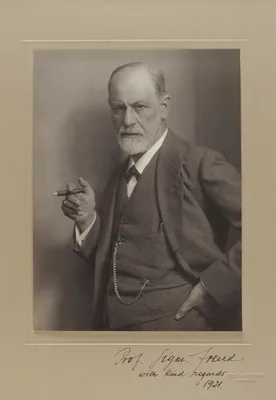
Sigmund Freud was a Jewish boy in Catholic Vienna, turned to science by Goethe and trained in Brücke's laboratory. He left no public-domain account of losing a faith. From 1907 he made unbelief clinical, treating religion as a wish-fulfilment rooted in the child's longing for a father: an "illusion" in 1927 that was not necessarily an error, and a "mass-delusion" by 1930. He kept a pastor as a friend, and granted religion's history respect.
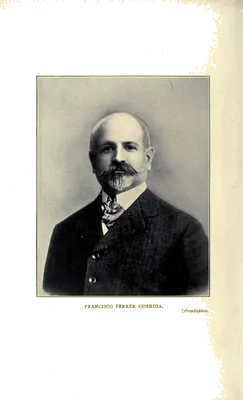
Francisco Ferrer
Francisco Ferrer was raised by devout Catholic farmers at Alella, and broke with their faith and politics as a young Republican. In his Paris years he called himself "a convinced atheist". He spent a Catholic pupil's legacy on a Barcelona school meant to banish religion from children's minds. He was acquitted once, and then shot at Montjuïc in 1909 as "author and chief" of a rising no single act of his was shown to have caused. He refused the priests to the last, and forbade any cult, even of himself.
Shibli Shumayyil
Shibli Shumayyil was a Catholic boy from Mount Lebanon who lost his religion training as a doctor in France, and then lost his last "cause of causes" to the question "what is the cause of your cause?" In 1884 he carried Büchner's Darwin into Arabic, with a preface tracing the gods to fear and ignorance. He spent thirty years in Cairo denying a hidden power that watches and judges human deeds, while defending the faith of others. He renamed his unbelief "natural monism" and "the religion of humanity", and never called it atheism.
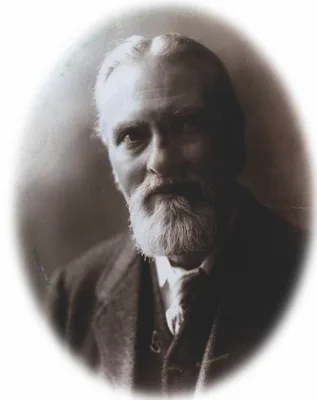
G. W. Foote
G. W. Foote was a Plymouth boy raised Anglican and Unitarian, who read himself into scepticism and reached London in 1868 "with very little religion". He became Bradlaugh's disciple, then a moderate Secularist. After Parliament's treatment of Bradlaugh he turned to ridicule, founding The Freethinker (1881) on the principle that superstition hates laughter. He served twelve months for blasphemy in 1883 with "Religion none" on his cell card, and succeeded Bradlaugh in 1890 as "an Atheist, and a teacher of Atheism".