Shibli Shumayyil was a Catholic boy from Mount Lebanon who lost his religion training as a doctor in France, and then lost his last "cause of causes" to the question "what is the cause of your cause?" In 1884 he carried Büchner's Darwin into Arabic, with a preface tracing the gods to fear and ignorance. He spent thirty years in Cairo denying a hidden power that watches and judges human deeds, while defending the faith of others. He renamed his unbelief "natural monism" and "the religion of humanity", and never called it atheism.
The belief timeline
- Faith (undated, before c. 1871) — Greek Catholic upbringing and Catholic schooling; looking back in 1909 he tells the reader "I was like you, and more" about clinging to what one was raised in [13][37][38]
- Doubt (undated, "early in life"; Elshakry: materialism met in France uprooted his childhood beliefs (secondhand)) — He passes in the religions "from certainty to doubt to denial" yet holds on to "the cause of causes"; the question "what is the cause of your cause?" removes the last hold and leads to matter-and-force monism; the 1871 hearing of Darwin (disgust) comes earlier and is not the crack [41][42][43]
- Declaration (1884 (book printed 1884 per Elshakry's notes; first preface signed in 1884–85)) — Sharh Bukhnir with a natural history of religion; the Haqiqa of 1885 answers critics; he calls his stance reconciliation in public while his preface says what religion is [6][12][50][51][54]
- Revision (1909–1910; wartime) — Second-edition preface: "natural monism", the "true religion of humanity", the Messina essay; defence of Islam against Cromer (1908) and refusal of Sarruf's 1916 war argument [11][34][55][56][62][69]
Notes to the timeline (17)
- [13] He opens the 2nd-ed. preface to a reader: "How tightly you cling to what you were raised in! I was like you, and more", adding that the hadith "every child is born on the fitra; his parents make him a Jew, Christian or Magian" is the proof of education's power — Shibli Shumayyil, Majmu'at al-Duktur Shibli Shumayyil, parts 1 and 2 (Cairo: Matba'at al-Muqtataf, 1910; part 2 is Kitab Falsafat al-Nushu' wa-l-Irtiqa', containing the prefaces, Sharh Bukhnir and Kitab al-Haqiqa), part 2, 2nd-ed. preface p.1 (leaf 734).
- [37] Born to a Greek Catholic family (WikiEN, citing Reid 1974); Elshakry says "Roman Catholic by birth"; the obituary says the funeral prayer was said in the Greek Catholic ("Rum Catholic") church — "Shibli Shumayyil", English Wikipedia, revision 1368546130 of 2026-08-09T18:28:25Z; saved research/texts/wikipedia-en-shumayyil.txt. Cites Reid 1974 and Gerges 2018 p.44; says Greek Catholic family, Tanta for a decade then Cairo, al-Shifa' in 1886 (failed after five years), died January 1917 (the page's category says 1916); Marwa Elshakry, Reading Darwin in Arabic, 1860–1950 (Chicago: University of Chicago Press, 2013; the IA scan says 2014), chapter 3 "Materialism and Its Critics", pp. 102–129, and endnotes pp. 349–353, p.103; Ya'qub Sarruf, obituary "al-Duktur Shibli Shumayyil", al-Muqtataf yr 50 (February 1917, part 2) and the report "Takhlid dhikra al-Duktur Shumayyil" (March 1917, part 3), with Mutran's elegy; research/texts/muqtataf-1917.txt; OCR only (poor), page images not viewed (the item has no per-leaf image route); Elshakry's note cites yr 50 (1917): 108. A contemporary, friendly and critical voice; reference notes in research/notes/muq1917-*.txt, (OCR). Reported at second hand; the original has not been seen.
- [38] Before the College he attended the Lazarist Collège Saint-Joseph at Antoura and the Greek Catholic Patriarchal College in Beirut — Elshakry, Reading Darwin in Arabic, p.103.
- [41] His own account of first hearing of Darwin: in 1871, studying medicine, he heard, without remembering how, that a man claimed man's origin was the ape; he did not look into it, showed disgust, then saw the claim was a caricature meant to belittle the doctrine; months passed and he forgot it; later he found that his graduation address had unknowingly supplied evidence for it, "like one who speaks prose without knowing it"; what he had not intended became "the subject of my talk and my aim in all my writings" after he left the College and travelled to Europe and read the doctrine's authors; he found no difficulty applying it to the utmost because his training had not been bound by school habits and ill health in boyhood had kept him from school except for medicine — Shumayyil, Majmu'at al-Duktur Shibli Shumayyil, part 2, 2nd-ed. preface pp.26–27 (leaves 709–708).
- [42] His own account of the loss of religion (undated, "at the start of my life"): he "tossed about in the turns of hesitation in the religions, from certainty to doubt to denial", but "remained clinging to the cause of causes"; one day, explaining and giving causes, a voice like a whisper in the ear asked "what is the cause of your cause, and where is it?"; it must be a force, but "do you know a force without matter?", and if outside matter how can it act in it, and if joined to it how can it be other than it; then the voice fell silent; his face went red then yellow; it was the first time he knew himself "among the sophist philosophers or the theologian-scholars"; the saying took hold "like a germ of choice" and shaped his reading and writing — Shumayyil, Majmu'at al-Duktur Shibli Shumayyil, part 2, 2nd-ed. preface pp.28–29 (leaves 707–706).
- [43] After the College he went to Paris and Lyons for further medical training; in France he first met references to Darwin in an anatomy course and learned of popular materialism, which, as he recalled, made an enormous impression and uprooted his childhood religious beliefs; Arabic Wikipedia has Paris for medicine and Zirikli a stay in Europe — Elshakry, Reading Darwin in Arabic, pp.103–104; "شبلي شميل", Arabic Wikipedia, revision 76162100 of 2026-08-09T20:12:55Z; saved research/texts/wikipedia-ar-shumayyil.txt. Gives 1276–1335 AH / 1850–1917, Paris for medicine, residence Alexandria, Tanta, Cairo, al-Shifa' 1886, the weekly al-Mustaqbal (1914) with Salama Musa, "ascribed to atheism" yet praising the Quran and Muhammad (cites al-Hadiqa p.802 and Laylat al-Qadr p.104, not checked). The portrait comes from Zirikli's al-A'lam vol. 3, p. 230 (a later edition), on Commons as "Shibli Shumayyil - Al-Alam, V3, P 230.jpg" (licence for the gatherer to check); Khayr al-Din al-Zirikli, al-A'lam, first edition (Cairo: al-Matba'a al-'Arabiyya, 1927–28), vol. 2, entry "Shibli ibn Ibrahim Shumayyil"; IA 2-1927-28, research/texts/zirikli-a2.txt. The OCR gives no dates for him; the entry is brief (place of birth, schooling, Egypt, works, death in Cairo). Page number not pinned. Zirikli died in 1976, so the text is a reference entry read for facts, not quoted, (OCR).
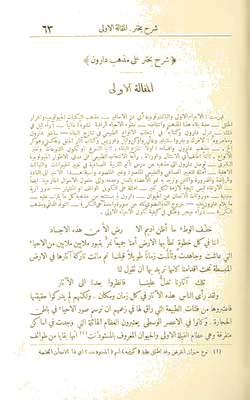
- [6] He calls Büchner's book "our Arabized version" under the title Sharh Bukhnir; part 2 of the Majmua prints it under the running head "Sharh Bukhnir" in six Maqalat — Shumayyil, Majmu'at al-Duktur Shibli Shumayyil, part 1 (OCR); part 2 pp.69–71 (leaves 666–664) seen; page headers "Sharh Bukhnir, al-Maqala al-sadisa" pp.222–224 (leaves 507–505); close "here ends Sharh Bukhnir, followed by Kitab al-Haqiqa" p.224 (leaf 505).
- [12] The first-edition preface traces religion to the ignorance and fear of early man (force, then spirit, then god; sacrifice), with a footnote on Spencer's theory of dream-spirits; the Haqiqa was first printed in 1885 (preface signed "Misr 1885", footnote "first printed at the Muqtataf press in 1885") and collects his replies to critics — Shumayyil, Majmu'at al-Duktur Shibli Shumayyil, part 2, 1st-ed. preface pp.45–46 (leaves 690–689); Haqiqa preface p.226 and footnote (leaf 503).
- [50] The 1884 book was Ta'rib li-sharh Bukhnir 'ala madhhab Darwin fi intiqal al-anwa'... (Cairo: Matba'at Jaridat al-Mahrusa, 1884); al-Muqtataf reviewed it in yr 8 (1884): 638, praising the translator but declining to endorse the science and complaining that he presented his views on religion as scientific truths; OCR of the 1884 volume gave no hit — Elshakry, Reading Darwin in Arabic, endnotes, pp.111–116; research/texts/muqtataf-1884.txt (OCR search negative).
- [51] First-edition preface p.43: "In truth the spiritualists have no support to lean on and no refuge to flee to but revelation (al-wahy), and soon they will have nothing else"; religions, languages, customs and laws are all treated by Darwin's doctrine; religions, like species, arise from one root and rest on the love of leadership among their leaders and the love of survival among the led — Shumayyil, Majmu'at al-Duktur Shibli Shumayyil, part 2, 1st-ed. preface p.43 (leaf 692).
- [54] First-edition preface p.48: early man, ignorant and afraid, sees in everything a mighty god or magic spirit, calls on the spirits of trees, mountain forces and stars, and imagines things "that bring no good and ward off no harm"; "this is the root of all worship and of all religion"; the religions are alike in resting on revelation; footnote 2 applies natural selection to the religions (religions arise from one root, change and compete; the one best fitted to the time wins) — Shumayyil, Majmu'at al-Duktur Shibli Shumayyil, part 2, 1st-ed. preface p.48 and footnote 2 (leaf 687).
- [11] He prefers "natural monism" (al-tawhid al-tabi'i) to every dualist doctrine that separates matter from directing forces; "the monist in nature concedes nothing foreign to it acting in it or acted from it" — Shumayyil, Majmu'at al-Duktur Shibli Shumayyil, part 2, 2nd-ed. preface p.31 (leaf 704).
- [34] He wants "the practical materialist philosophy" built on real science to replace speculative theology, and calls his whole doctrine "the philosophy of evolution and progress" — Shumayyil, Majmu'at al-Duktur Shibli Shumayyil, part 2, 2nd-ed. preface p.3 (leaf 732) and p.37 (leaf 698).
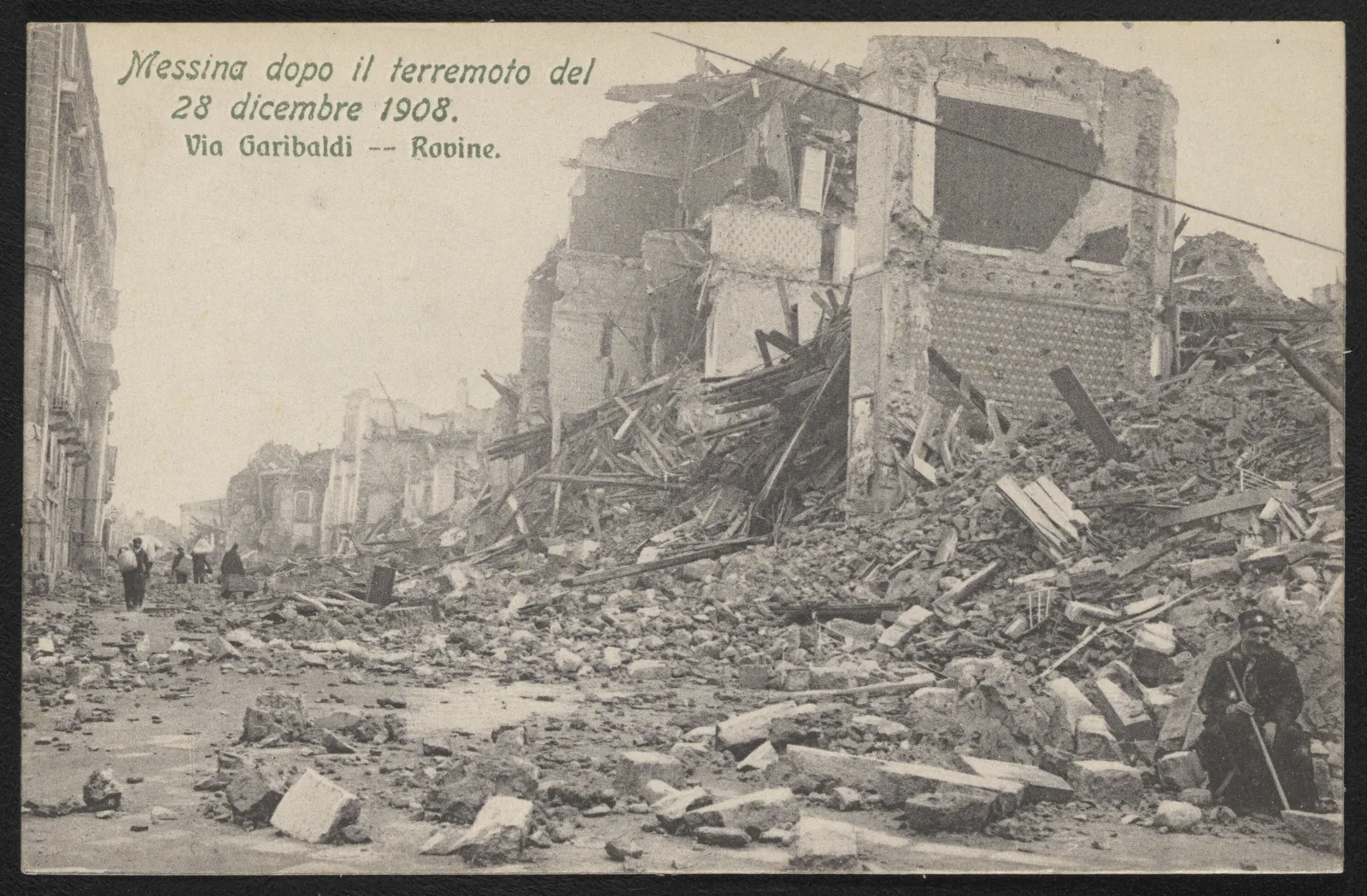
- [55] Essay "al-Zalazil: ghadab al-alihah?" (Earthquakes: the wrath of the gods?), essay 33 of part 1, published in al-Basir in 1909 "after the Sicily earthquake, in reply to those who claimed it was a punishment from God"; he argues that if man is greedy and unworthy of mercy, as the claimants say, the creator should have made him gentle, and asks what the sin was of "these poor people whom blind nature struck down, the earth splitting under them and swallowing them" — Shumayyil, Majmu'at al-Duktur Shibli Shumayyil, part 1, p.205 and footnote (leaf 152); contents list p.205 (leaf 15).
- [56] In 1909 he writes that the "great aim awaited from this science", which "is the true religion of humanity (din al-bashariyya al-haqq)", is tolerance and cooperation, built on knowledge of the truth and duty rather than on kindness and charity; science "found" what "all the claims of miracles of all the religions" cannot do — Shumayyil, Majmu'at al-Duktur Shibli Shumayyil, part 2, 2nd-ed. preface p.30 (leaf 705).
- [62] In 1908 he defended the faith of Islam when Lord Cromer blamed it for the ills of the Arab world, arguing for its rationalism and civilizational contribution against Christianity, which enraged his own church; he also wrote of the Quran's usefulness for civilisation ("Al-'Umran wa-l-Qur'an", al-Mu'ayyad) — Elshakry, Reading Darwin in Arabic, p.128; Shumayyil, Majmu'at al-Duktur Shibli Shumayyil, part 1 contents (essay "al-Qur'an wa-l-'umran", p.57, leaf 15).
- [69] Al-Muqtataf's 1884 review warned that "those who fear science" would take his views on religion as confirming their suspicions; in 1916 Sarruf wrote to him that the war was the product of materialism and asked what would stop a man from killing whoever hinders his interests, and Shumayyil "was not persuaded" — Elshakry, Reading Darwin in Arabic, pp.115–116, 129 (and p.~233 for the 1916 letter).
The Cause of Your Cause
At some point early in his life, Shibli Shumayyil wrote, he had passed in the matter of religion "from certainty to doubt to denial", but he had kept hold of one thing: "the cause of causes", the first cause behind the world. Then one day, as he was explaining something, "a voice like a whisper in the ear put this question to me: What is the cause of your cause, and where is it? There is no doubt it is a force. But do you know a force without matter?"12 A force outside matter could not act in it; a force inside matter could not be other than matter. When he looked in matter for a place for God, he wrote, he found none, "unless it be as in the words of Muhyi al-Din Ibn al-'Arabi", the Sufi's verse about seeing God in a tree, in a stone, in everything.34
That story, which he told at fifty-nine, is the hinge of this chapter. Shumayyil was a doctor from Mount Lebanon who practised in Egypt, and in 1884 he published in Arabic a version of the German materialist Ludwig Büchner's lectures on Darwin, with a preface explaining where religion comes from.56 He spent the next thirty years arguing for Darwin in the Arabic press and answering the people who called him an atheist, a word he never used of himself.
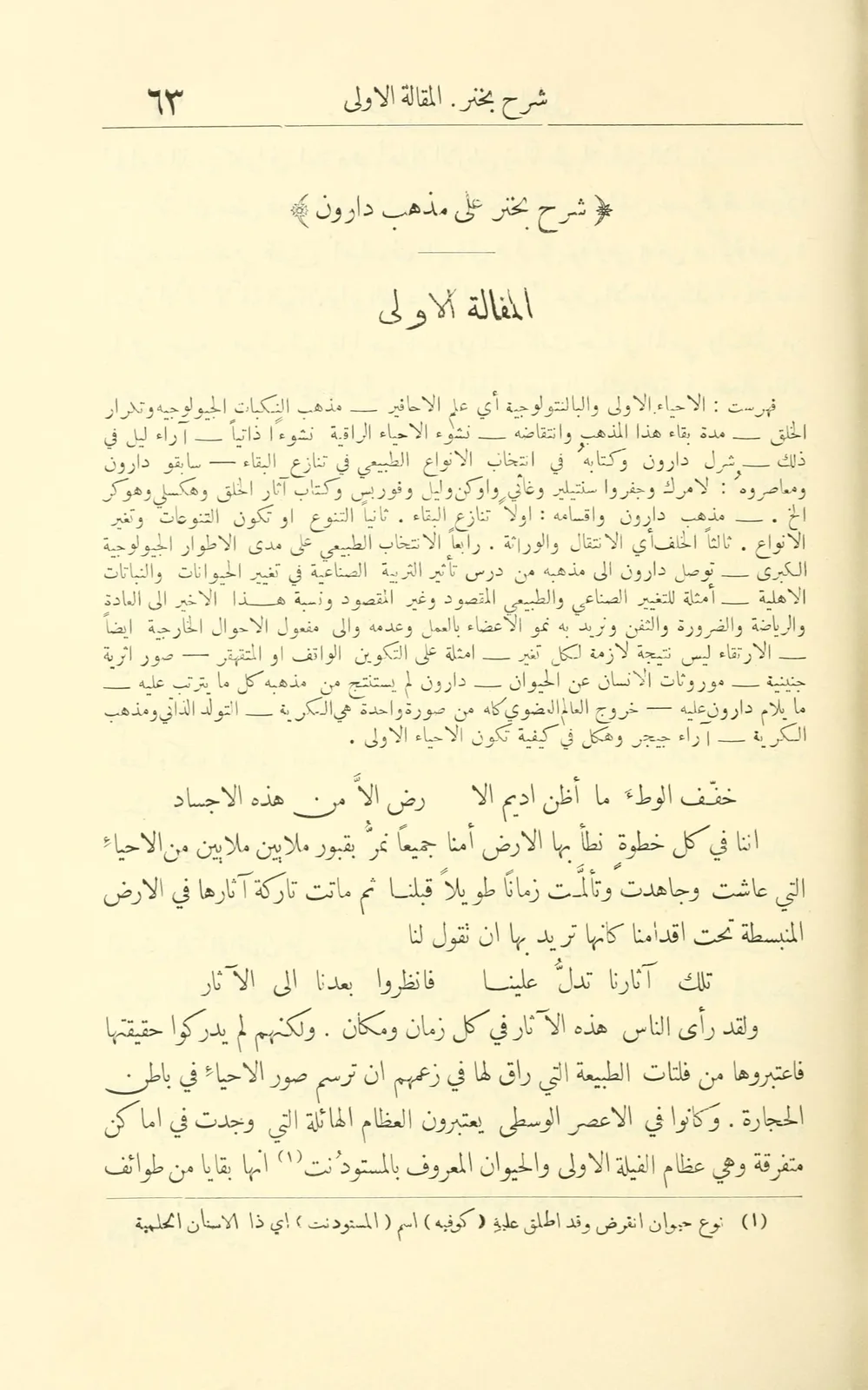
Mount Lebanon and Beirut
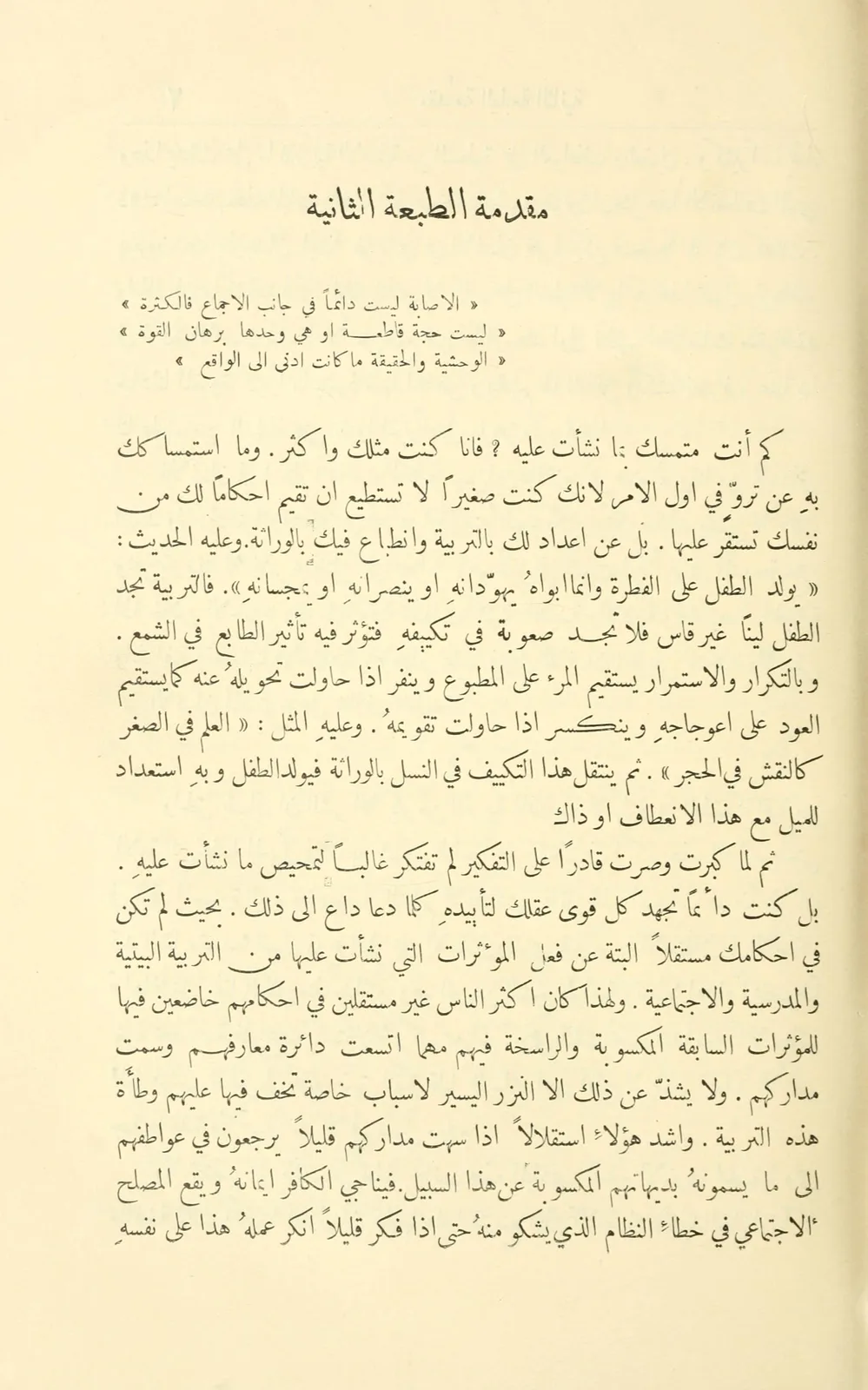
He was born in 1850 at Kafr Shima, in Mount Lebanon, into a Catholic family, and was schooled, by the historian Marwa Elshakry's account, by Catholic teachers.789 Looking back, he told a reader who clung to the faith he had been raised in: "I was like you, and more."10 On the belief timeline, this is his faith; the religion is not named on the page.
In 1867, at about seventeen, he entered the medical course of the new Syrian Protestant College in Beirut, sharing a desk with Ya'qub Sarruf, who would become his editor, his friend and his critic for fifty years.1112 In 1871, he recalled, he heard that a man was claiming that human beings descended from the ape. He did not look into it, and showed his disgust; months later he forgot it.1314 His own graduation address that year, on how climate, food and upbringing make the difference between animals and man, argued the case without his knowing it, "like one who speaks prose without knowing it."1415
France, and the doubt
After Beirut he trained further in Paris and Lyons. There, Elshakry writes, citing his own recollection, the popular materialism then in vogue made an enormous impression on him and uprooted his childhood religious beliefs.16 In 1876 he was in Istanbul, writing in French against spiritism.1718 The undated passage from certainty to doubt to denial belongs somewhere in these years, "at the start of my life", as he put it; on the timeline this is where his doubt lies, and the whisper about the cause of causes is its last step.19
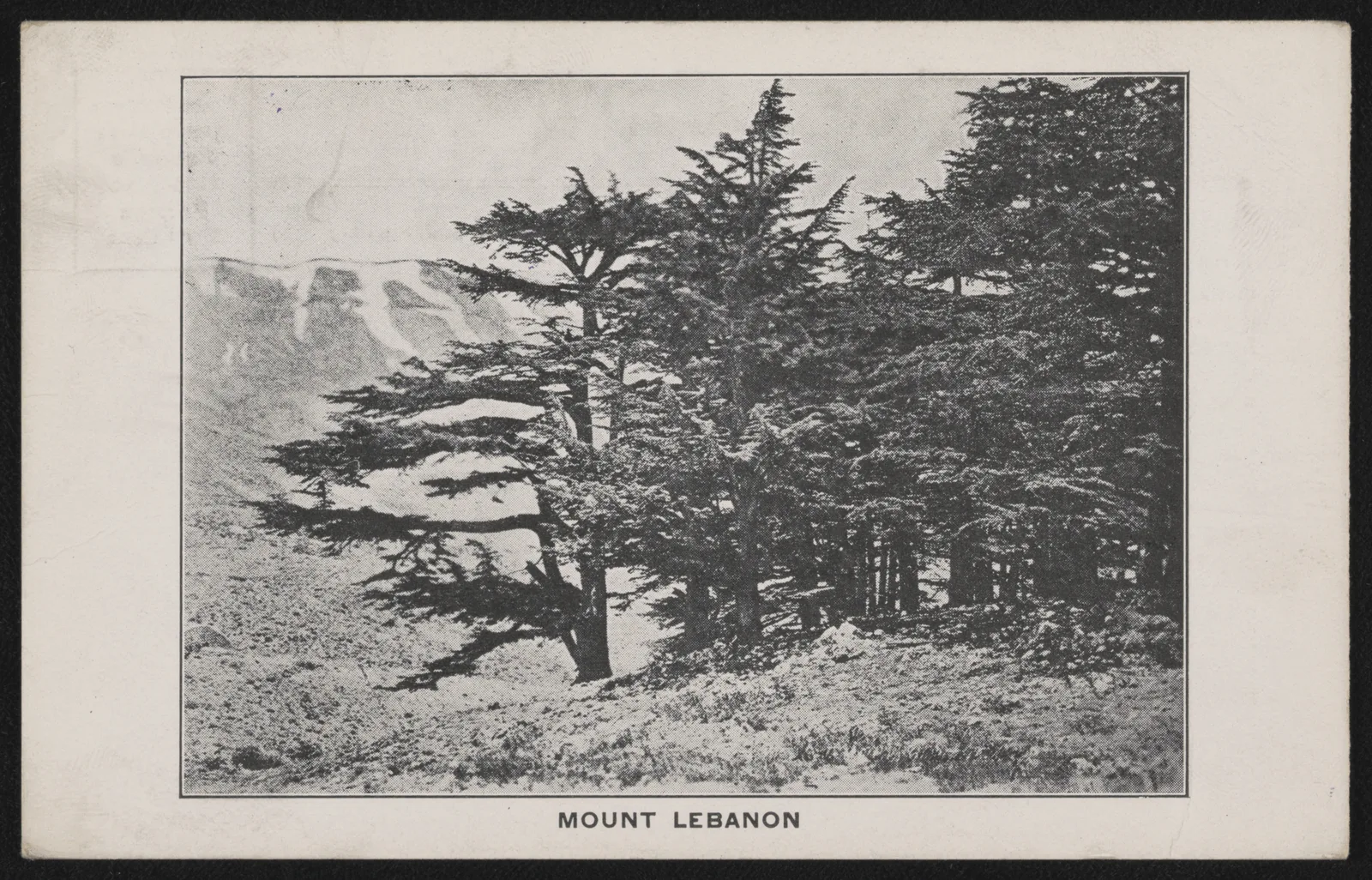
He settled in Egypt, at Tanta and Alexandria and then Cairo.20 In 1878, writing from Tanta, he still said, as Elshakry reports, that the scientific questions he was arguing about were a long way from religion and need not touch belief in God.21
The Darwin affair
In the summer of 1882 a professor at his old college, Dr Lewis, told the graduating class that science has limits it does not pass, and that true wisdom comes down "from above, from the Father of Lights"; he mentioned Darwin in passing, and a reader of Sarruf's journal al-Muqtataf complained that he had spoken of Darwin as one who deserved no regard.22232425 Lewis answered fairly: Darwin was among the highest rank of scientists, and the worth of his doctrine had not yet been sufficiently examined.2627 Shumayyil later wrote that the dispute ended with the dismissal of some of the college's professors, and that he had sent the journal an essay meant to reconcile Darwin with religion.28
The book, 1884
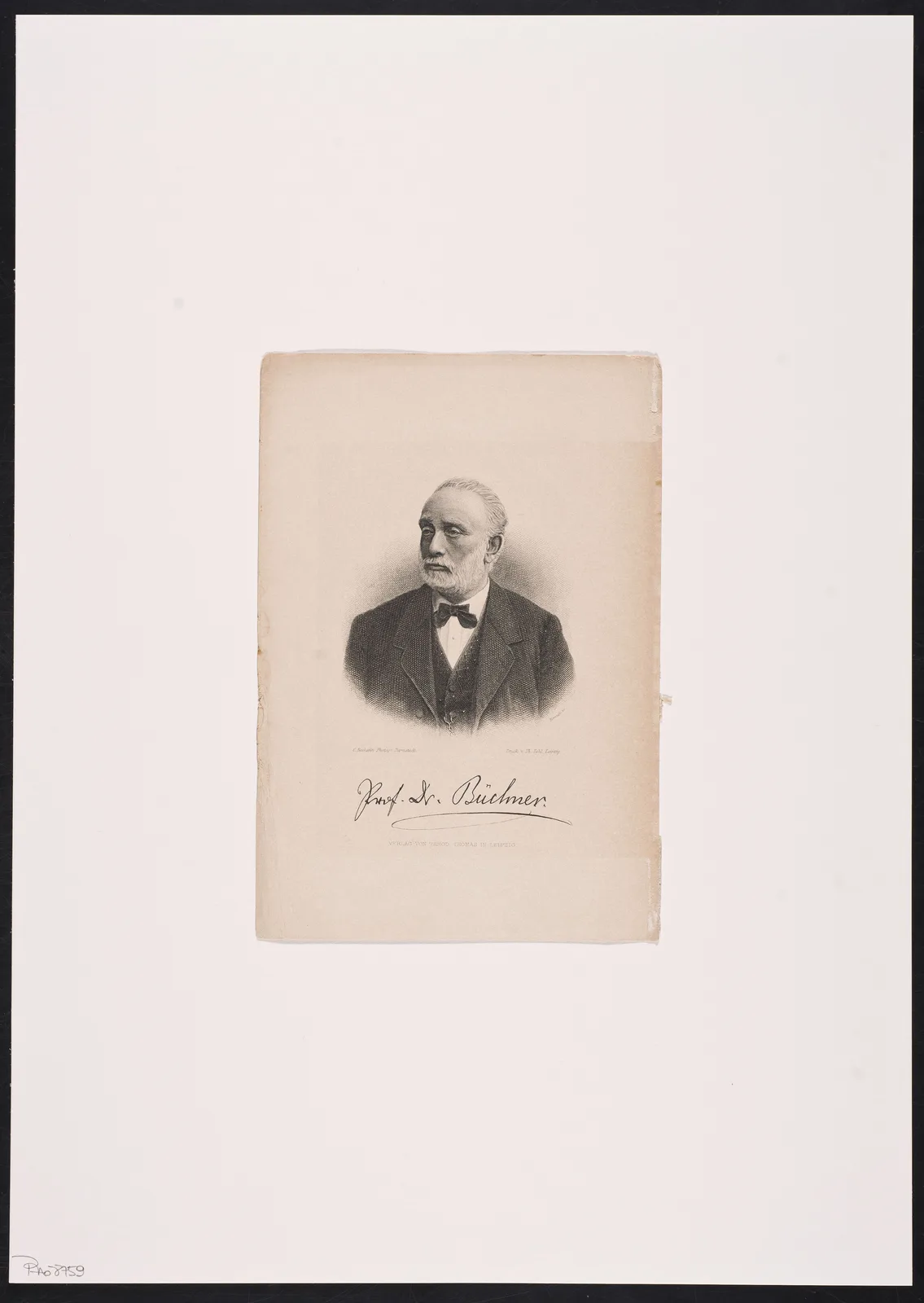
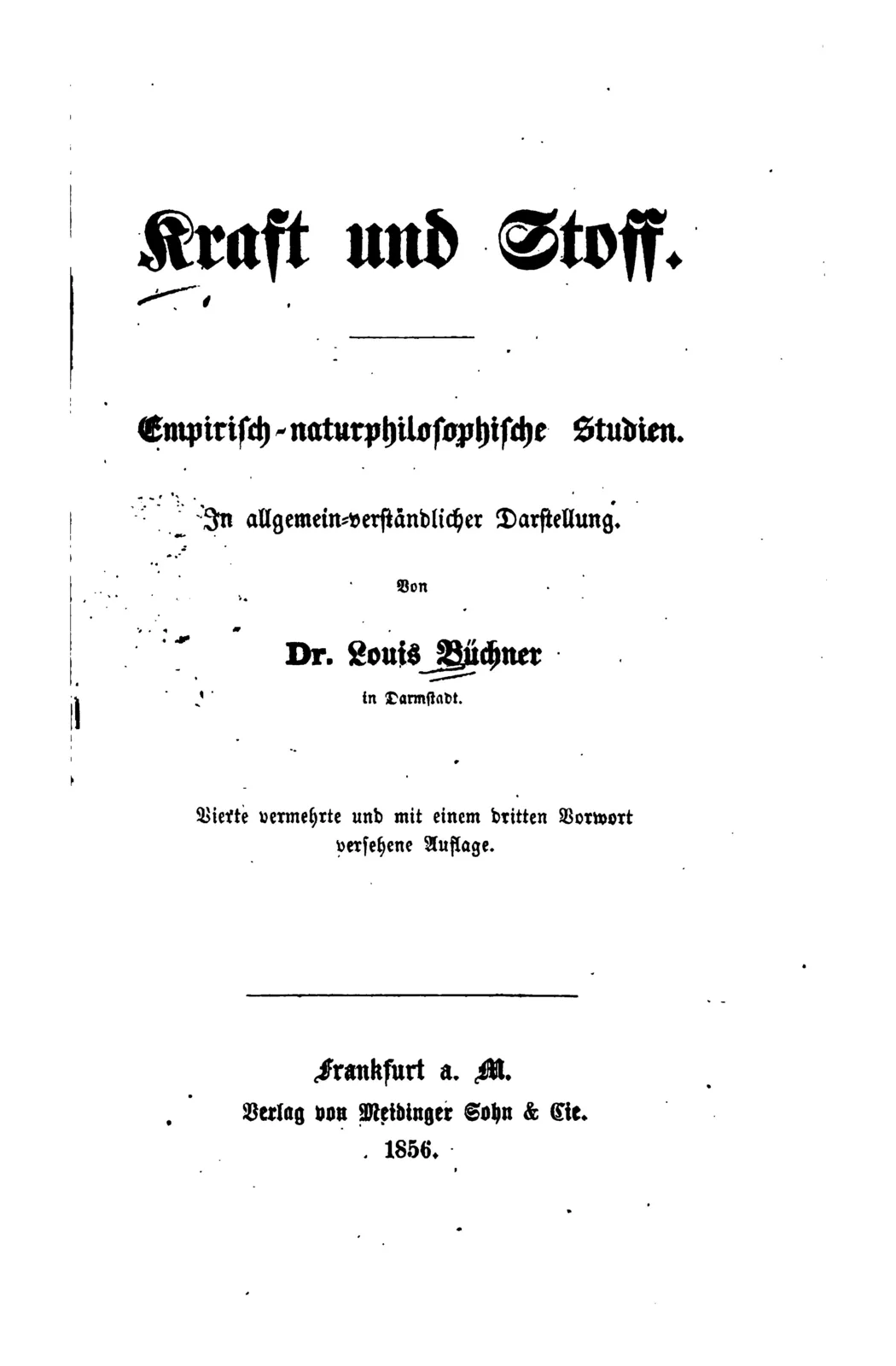
His Büchner appeared in Cairo in 1884.6 Ludwig Büchner was the German doctor whose Force and Matter had become a materialist best-seller; Shumayyil put his six lectures on Darwin into Arabic with his own commentary.5 The preface was the scandal. Early man, ignorant and afraid, he wrote, made the forces around him into a spirit, "then the spirit a god, then imagined his god like himself, angry at what angers him and pleased with what pleases him, and sacrificed gifts to him and offered offerings."2930 The belief that one will not die came, he wrote, from a whisper that self-love makes to a mind that cannot bear the thought of death: "you shall never die, so follow me."3132 The religions, he said, had no support left but revelation.33 And worse than the misfortunes men cause each other was the belief that they were "a just retribution" coming "from a hidden power watching man's deeds."3435 The timeline treats this as his declaration.
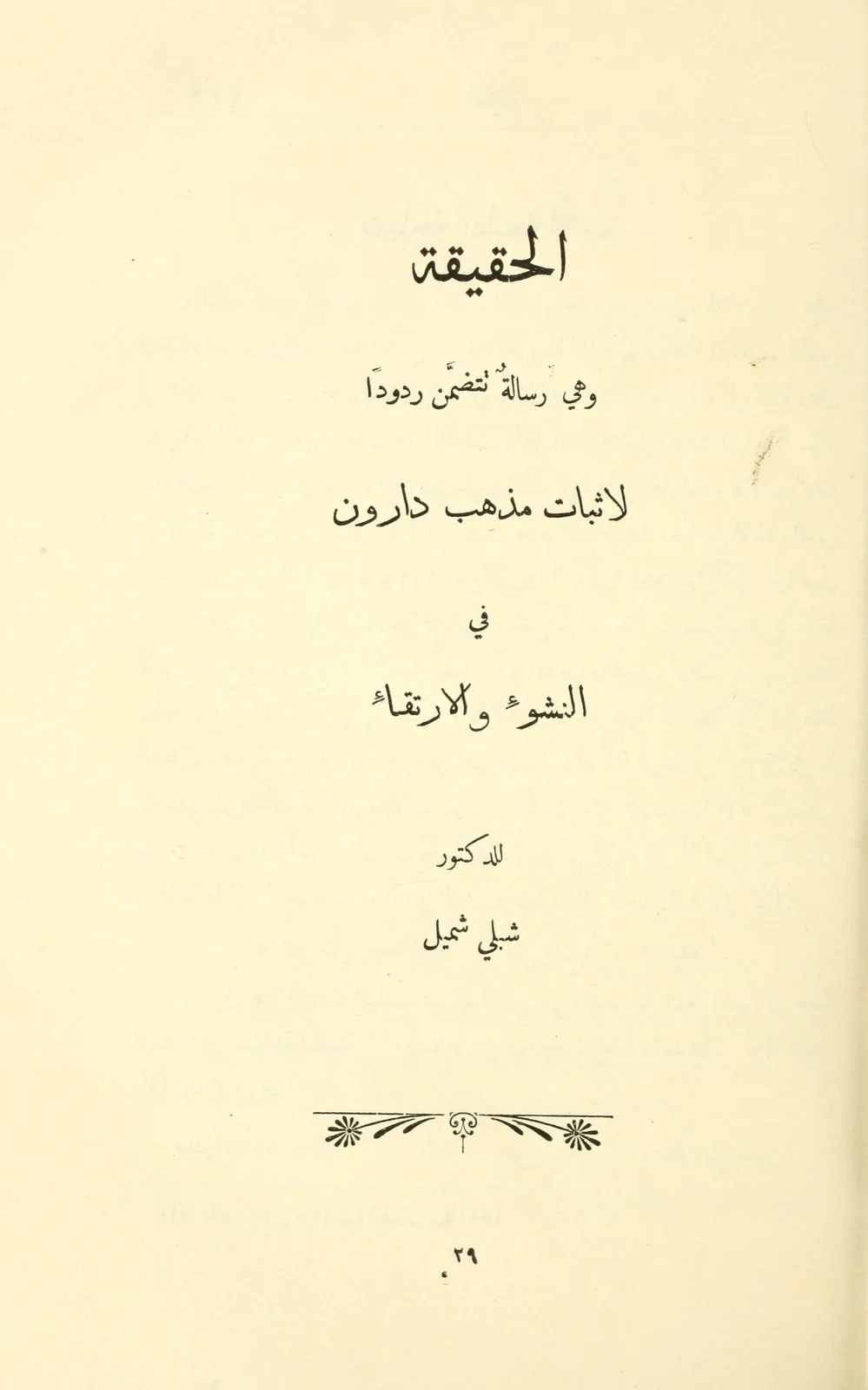
The answers came from every side. Al-Muqtataf, his friends' journal, praised the translation but complained, Elshakry reports, that he put his views on religion forward as scientific truths.6 The Christian cleric Ibrahim al-Hurani wrote two books against it and treated its materialism as atheism, setting the author against Darwin himself, who, Hurani said, held that the world has a Lord.36 The Muslim reformer Jamal al-Din al-Afghani had already mocked the whole materialist school, though without naming Shumayyil: on Darwin's claim, he wrote, "a flea could become an elephant over the passing of centuries, and the elephant a flea."3738 Shumayyil collected his replies in The Truth in 1885.39
A doctor in Cairo
He kept practising medicine. In 1886 he founded al-Shifa', a monthly medical journal, which he called the first in Egypt, and in 1890–91 he travelled to Vienna, Berlin and Paris to learn Koch's treatment for tuberculosis.4041 In 1908 he wrote for socialism, and answered a critic who treated the word as a stain.4243 The same year, when Lord Cromer blamed Islam for the backwardness of the Arab world, Shumayyil, a Christian by birth, defended it, which enraged his own church.44 He thought the state schools of his day existed "mostly to darken minds", and printed his collected works in 1910 to light them, giving three hundred copies of each volume away.4546
Messina, and the religion of humanity
In 1908 an earthquake destroyed Messina in Sicily. When preachers said it was God's punishment, Shumayyil answered in the Cairo paper al-Basir: if man was greedy and unworthy of mercy, as they said, why had the creator not made him gentle? "What was the sin of these poor people whom blind nature struck down, the earth splitting under them and swallowing them?"4748
His preface of 1909 gave his doctrine its names: "the philosophy of evolution and progress", "the practical materialist philosophy", and "natural monism". "The monist in nature," he wrote, "concedes nothing foreign to it, acting in it or acted from it", turning the Arabic word for belief in one God, tawhid, against its usual meaning.495051 The aim of social science, he wrote, was "the true religion of humanity", tolerance and cooperation built on knowledge.5253 On the timeline, this is his revision, not a retreat but a new vocabulary for the same unbelief.
The friend's verdict
He died in Cairo in the first weeks of 1917; the funeral prayer was said in the Greek Catholic church, and the poet Khalil Mutran read an elegy.5455 In al-Muqtataf his old desk-mate Sarruf wrote that people thought him a materialist among the extreme materialists, but that he was "in truth among the extreme spiritualists": he almost believed in luck and omens.5657 Elshakry reads the obituary as an insistence that he was a believer.58 Shumayyil's own words point the other way. A hidden power watching human deeds was, to him, a corrupt idea; the earth that swallowed Messina was blind; and the God he could not find in matter survived only as a mystic's way of seeing everything.
Did his unbelief change shape?
It changed its words more than its substance. A Catholic boy lost his religion in France, kept a first cause until a question took it away, and then spent his life in Cairo finding Arabic names for what was left: evolution, matter and force, natural monism, the religion of humanity. He was careful never to call it atheism, and his oldest friend was careful never to call him an unbeliever.
Ludwig Büchner, whose lectures on Darwin Shumayyil put into Arabic, has his own chapter in this book.
Footnotes
-
Shibli Shumayyil, Majmu'at al-Duktur Shibli Shumayyil, parts 1 and 2 (Cairo: Matba'at al-Muqtataf, 1910; part 2 is Kitab Falsafat al-Nushu' wa-l-Irtiqa', containing the prefaces, Sharh Bukhnir and Kitab al-Haqiqa), part 2, 2nd-ed. preface p.28 (leaf 707). ↩
-
Shumayyil, Majmu'at al-Duktur Shibli Shumayyil, part 2, 2nd-ed. preface pp.28–29 (leaves 707–706). ↩
-
Shumayyil, Majmu'at al-Duktur Shibli Shumayyil, part 2, 2nd-ed. preface p.29 (leaf 706). ↩
-
Shumayyil, Majmu'at al-Duktur Shibli Shumayyil, part 2, 2nd-ed. preface pp.29–30 (leaves 706–705). ↩
-
Shumayyil, Majmu'at al-Duktur Shibli Shumayyil, part 1 (OCR); part 2 pp.69–71 (leaves 666–664) seen; page headers "Sharh Bukhnir, al-Maqala al-sadisa" pp.222–224 (leaves 507–505); close "here ends Sharh Bukhnir, followed by Kitab al-Haqiqa" p.224 (leaf 505). ↩ ↩2
-
Marwa Elshakry, Reading Darwin in Arabic, 1860–1950 (Chicago: University of Chicago Press, 2013; the IA scan says 2014), chapter 3 "Materialism and Its Critics", pp. 102–129, and endnotes pp. 349–353, endnotes, pp.111–116; research/texts/muqtataf-1884.txt (OCR search negative). Reported at second hand; the original has not been seen. ↩ ↩2 ↩3
-
Khayr al-Din al-Zirikli, al-A'lam, first edition (Cairo: al-Matba'a al-'Arabiyya, 1927–28), vol. 2, entry "Shibli ibn Ibrahim Shumayyil"; IA 2-1927-28, research/texts/zirikli-a2.txt. The OCR gives no dates for him; the entry is brief (place of birth, schooling, Egypt, works, death in Cairo). Page number not pinned. Zirikli died in 1976, so the text is a reference entry read for facts, not quoted, vol. 2 entry (OCR); "Shibli Shumayyil", English Wikipedia, revision 1368546130 of 2026-08-09T18:28:25Z; saved research/texts/wikipedia-en-shumayyil.txt. Cites Reid 1974 and Gerges 2018 p.44; says Greek Catholic family, Tanta for a decade then Cairo, al-Shifa' in 1886 (failed after five years), died January 1917 (the page's category says 1916); "شبلي شميل", Arabic Wikipedia, revision 76162100 of 2026-08-09T20:12:55Z; saved research/texts/wikipedia-ar-shumayyil.txt. Gives 1276–1335 AH / 1850–1917, Paris for medicine, residence Alexandria, Tanta, Cairo, al-Shifa' 1886, the weekly al-Mustaqbal (1914) with Salama Musa, "ascribed to atheism" yet praising the Quran and Muhammad (cites al-Hadiqa p.802 and Laylat al-Qadr p.104, not checked). The portrait comes from Zirikli's al-A'lam vol. 3, p. 230 (a later edition), on Commons as "Shibli Shumayyil - Al-Alam, V3, P 230.jpg" (licence for the gatherer to check); Ya'qub Sarruf, obituary "al-Duktur Shibli Shumayyil", al-Muqtataf yr 50 (February 1917, part 2) and the report "Takhlid dhikra al-Duktur Shumayyil" (March 1917, part 3), with Mutran's elegy; research/texts/muqtataf-1917.txt; OCR only (poor), page images not viewed (the item has no per-leaf image route); Elshakry's note cites yr 50 (1917): 108. A contemporary, friendly and critical voice; reference notes in research/notes/muq1917-*.txt, obituary (OCR). ↩
-
"Shibli Shumayyil"; Elshakry, Reading Darwin in Arabic, p.103; Sarruf, al-Muqtataf (1917), (OCR). ↩
-
Elshakry, Reading Darwin in Arabic, p.103. ↩
-
Shumayyil, Majmu'at al-Duktur Shibli Shumayyil, part 2, 2nd-ed. preface p.1 (leaf 734). ↩
-
Elshakry, Reading Darwin in Arabic, p.103; Sarruf, al-Muqtataf (1917), obituary (OCR: "summer 1871"); Shumayyil, Majmu'at al-Duktur Shibli Shumayyil, part 2, 2nd-ed. preface p.26 (leaf 709: "in 1871, while I was studying medicine at the Syrian College"). ↩
-
Elshakry, Reading Darwin in Arabic, p.103; Sarruf, al-Muqtataf (1917), obituary (OCR). ↩
-
Shumayyil, Majmu'at al-Duktur Shibli Shumayyil, part 2, 2nd-ed. preface p.26 (leaf 709). ↩
-
Shumayyil, Majmu'at al-Duktur Shibli Shumayyil, part 2, 2nd-ed. preface pp.26–27 (leaves 709–708). ↩ ↩2
-
Shumayyil, Majmu'at al-Duktur Shibli Shumayyil, part 2, 2nd-ed. preface p.26 (leaf 709); Elshakry, Reading Darwin in Arabic, p.103; Sarruf, al-Muqtataf (1917), (OCR). ↩
-
Elshakry, Reading Darwin in Arabic, pp.103–104; "شبلي شميل"; al-Zirikli, al-A'lam, (OCR). ↩
-
Shumayyil, Majmu'at al-Duktur Shibli Shumayyil, part 2, 2nd-ed. preface p.32 and footnote (leaf 703). ↩
-
Shumayyil, Majmu'at al-Duktur Shibli Shumayyil, part 2, 2nd-ed. preface p.32 (leaf 703); footnote: Courrier d'Orient, Istanbul, 25 Oct 1876. ↩
-
Shumayyil, Majmu'at al-Duktur Shibli Shumayyil, part 2, 2nd-ed. preface pp.28–29 (leaves 707–706). ↩
-
Elshakry, Reading Darwin in Arabic, p.104; "Shibli Shumayyil"; "شبلي شميل"; al-Zirikli, al-A'lam, (OCR). Accounts differ; see the disputed points. ↩
-
Elshakry, Reading Darwin in Arabic, pp.102–108, endnote citing al-Muqtataf 3 (1878): 174–76; OCR of the 1878 volume gave no hit. ↩
-
al-Muqtataf, yr 7 (1882–83), Internet Archive item al-muqtataf-magazine, year file "1882" (PDF; page numbers below are the journal's printed pages, with the PDF page in brackets in the claim), Lewis letter p.295 (PDF p.441) and p.297 (PDF p.443). ↩
-
al-Muqtataf, Lewis letter pp.295, 297. ↩
-
al-Muqtataf, p.222 (PDF p.378). ↩
-
Edwin Lewis, professor at the Syrian Protestant College, to the graduating class, July 1882, quoted in his own reply: al-Muqtataf, yr 7, p.297 (PDF p.443). ↩
-
al-Muqtataf, pp.296–297 (PDF pp.442–443). ↩
-
Edwin Lewis, replying to the reader's letter on his Darwin remark: al-Muqtataf, yr 7, p.296 (PDF p.442). ↩
-
Shumayyil, Majmu'at al-Duktur Shibli Shumayyil, part 2, end of Sharh Bukhnir (OCR; page not located; month and year digits unreadable). Ocr is the only source for this, as for the other details in this chapter cited to that source alone. ↩
-
Shumayyil, Majmu'at al-Duktur Shibli Shumayyil, part 2, 1st-ed. preface p.45 (leaf 690). ↩
-
Shumayyil, Majmu'at al-Duktur Shibli Shumayyil, part 2, 1st-ed. preface p.48 and footnote 2 (leaf 687). ↩
-
Shumayyil, Majmu'at al-Duktur Shibli Shumayyil, part 2, 1st-ed. preface p.44 (leaf 691). ↩
-
Shumayyil, Majmu'at al-Duktur Shibli Shumayyil, part 2, 1st-ed. preface p.44 and footnote (leaf 691). Not verified. ↩
-
Shumayyil, Majmu'at al-Duktur Shibli Shumayyil, part 2, 1st-ed. preface p.43 (leaf 692). ↩
-
Shumayyil, Majmu'at al-Duktur Shibli Shumayyil, part 2, 1st-ed. preface p.47 (leaf 688). ↩
-
Shumayyil, Majmu'at al-Duktur Shibli Shumayyil, part 2, 1st-ed. preface pp.46–47 (leaves 689–688). ↩
-
Elshakry, Reading Darwin in Arabic, endnotes to ch.3 and pp.~119–125; Shumayyil, Majmu'at al-Duktur Shibli Shumayyil, part 2, Haqiqa preface p.226 (leaf 503: the replies appeared in al-Mahrusa nos. 1175, 1177 and 1179). ↩
-
Jamal al-Din al-Afghani, Muslim reformer writing in India against "the materialists" (naturists), c. 1879–82; text in Abduh's Arabic version. Our translation: "On this claim of Darwin's a flea could become an elephant over the passing of centuries, and the elephant a flea." Afghani does not name Shumayyil.: Jamal al-Din al-Afghani, al-Radd 'ala al-dahriyyin (Refutation of the Materialists), written at Hyderabad, Deccan, after he left Egypt in 1879 (from the editor's biography quoted in the text); Arabic version by Muhammad Abduh; text used from the modern edition (Beirut: Dar al-Ma'arif al-Hikmiyya, ed. Ahmad Majid), IA Alradalaldahriyeen, research/texts/afghani-radd-dahriyyin.txt. Only Afghani's own words are quoted; the editor's introduction is copyrighted and only used for dates. Re-check against the 1886 Cairo print before any on-screen use. The text never names Shumayyil (searched), Radd, chapter 1 (modern edition, OCR, page not recorded). ↩
-
al-Afghani, al-Radd 'ala al-dahriyyin, edition's biography; text searched for his name; Elshakry, Reading Darwin in Arabic, ch.3 (pp. ~122–125). ↩
-
Shumayyil, Majmu'at al-Duktur Shibli Shumayyil, part 2, 1st-ed. preface pp.45–46 (leaves 690–689); Haqiqa preface p.226 and footnote (leaf 503). ↩
-
al-Muqtataf, 1886 yr 10 (OCR advertisement, research/notes/muq1886-sh.txt); Elshakry, Reading Darwin in Arabic, endnotes; "Shibli Shumayyil"; "شبلي شميل"; Asaad Rizzuq (ed.), Hawadith wa-khawatir: mudhakkirat al-Duktur Shibli Shumayyil (Beirut, 1991), IA 20191107_20191107_0822, research/texts/rizzuq-memoirs-1991.txt. Same status. His memoir was never printed whole; this is the editor's reconstruction, (paraphrase). ↩
-
Rizzuq, Hawadith wa-khawatir, introduction (editor's account; copyright, paraphrase). ↩
-
Shumayyil, Majmu'at al-Duktur Shibli Shumayyil, part 1, p.152 and footnote (leaf 205); p.183 and footnote (leaf 174). ↩
-
Shumayyil, Majmu'at al-Duktur Shibli Shumayyil, part 1, p.152 (leaf 205); footnote: published in al-Mu'ayyad, 1908, answering Salim Sarkis. ↩
-
Elshakry, Reading Darwin in Arabic, p.128; Shumayyil, Majmu'at al-Duktur Shibli Shumayyil, part 1 contents (essay "al-Qur'an wa-l-'umran", p.57, leaf 15). ↩
-
Shumayyil, Majmu'at al-Duktur Shibli Shumayyil, part 1, preface, leaf 6 (page "ط"). ↩
-
Shumayyil, Majmu'at al-Duktur Shibli Shumayyil, part 1, preface pp. "ط" and "ح" (leaves 6–7). ↩
-
Shumayyil, Majmu'at al-Duktur Shibli Shumayyil, part 1, p.205 and footnote (leaf 152); contents list p.205 (leaf 15). ↩
-
Shumayyil, Majmu'at al-Duktur Shibli Shumayyil, part 1, p.205 (leaf 152), essay 33 "al-Zalazil ghadab al-alihah?"; footnote: published in al-Basir, 1909, after the Sicily earthquake. ↩
-
Shumayyil, Majmu'at al-Duktur Shibli Shumayyil, part 2, 2nd-ed. preface p.3 (leaf 732) and p.37 (leaf 698). ↩
-
Shumayyil, Majmu'at al-Duktur Shibli Shumayyil, part 2, 2nd-ed. preface p.31 (leaf 704). ↩
-
Shumayyil, Majmu'at al-Duktur Shibli Shumayyil, part 2, 2nd-ed. preface p.31 (leaf 704). ↩
-
Shumayyil, Majmu'at al-Duktur Shibli Shumayyil, part 2, 2nd-ed. preface p.30 (leaf 705). ↩
-
Shumayyil, Majmu'at al-Duktur Shibli Shumayyil, part 2, 2nd-ed. preface p.30 (leaf 705). ↩
-
"Shibli Shumayyil"; "شبلي شميل"; Sarruf, al-Muqtataf (1917); Asaad Rizzuq (ed.), Al-Duktur Shibli Shumayyil: kitabat siyasiyya wa-islahiyya (Beirut, 1991), IA 20191107_20191107_1337, research/texts/rizzuq-political-writings-1991.txt. In copyright; an unauthorised upload, read to check facts and paraphrase only; not to be quoted or committed. Reprints Shumayyil's newspaper pieces; the editor's apparatus gives dates. ↩
-
Sarruf, al-Muqtataf (1917), yr 50 Feb and Mar numbers (OCR; names read from poor OCR). ↩
-
Sarruf, al-Muqtataf (1917), obituary (OCR; reading of "spiritualists" and "omens" from OCR, not yet checked on the page image). ↩
-
Ya'qub Sarruf, schoolmate, co-editor of al-Muqtataf and lifelong friend and critic, in the February 1917 obituary; our translation: "He is in truth among the extreme spiritualists." A friend's attempt to say he was not what the public thought, and the evidence for how his circle read him.: Sarruf, al-Muqtataf (1917), yr 50, obituary (OCR). Not checked against the original (OCR only, see Q23). ↩
-
Elshakry, Reading Darwin in Arabic, p.113 (citing Muq 50 (1917): 108; Musa, Education, p.164); not reached in the originals. ↩
In their own words
كم أنت متمسك بما نشأت عليه؟ فأنا كنت مثلك وأكثر.
فأبقراط أول واضع حجراً على وجه علمي في أساس مذهب النشوء قبل لامرك وجفروا سنتيلار ودارون بزمان طويل
ولو بُني دين الإنسان على علاقته الحقيقية بالطبيعة وأقيمت آدابه على نواميس الاجتماع الطبيعي لكان في كل أعماله متناسباً مع نفسه متوافقاً مع تعاليمه غير مضطر أن يقاوم تعاليمه في كل خطوة يخطوها كعقبات أقامها هو نفسه في سبيله
فالموحِّد في الطبيعة لا يُسلِّم بشيء غريب عنها فاعل فيها أو مفعول عنها
لا مادة بلا قوة ولا قوة بلا مادة
ثم تطرق إلى أن جعل هذه القوة روحاً ثم الروح إلهاً ثم تصور إلهه كنفسه يغضب لما يغضبه ويرضى لما يرضيه فنحر له الهدايا وقرّب القرابين
الاشتراكية نتيجة لازمة لمقدمات ثابتة لا بد من الوصول إليها ولو بعد تذبذب طويل
كأن الاشتراكية وصمة وأنا قد تلوثت بحمأتها
المدارس العمومية في كل الدنيا وُجدت لتطمس على الأذهان غالباً وكتابي وُضع لكي ينيرها
وما مثال انقلاب الأمة العثمانية في ثورتها السلمية العجيبة ببعيد
وبذلك يبيّن لك مزية فلسفة مذهب النشوء والارتقاء التي هي غرض هذا الكتاب على سائر المذاهب التي تقدمته
وكنت يومئذ في الاستانة وكان كتابي باللغة الفرنساوية
الإصابة ليست دائماً في جانب الإجماع فالكثرة ليست حجة قاطعة أو هي وحدها برهان القوة
وكنت قد تقلبت على مقالب التردد في الأديان من اليقين إلى الشك فالنفي. ولكنني بقيت متمسكاً بعلة العلل
واذا بصوت كالهمس في الاذن صوّب الي هذا السؤال قائلاً: ما هي علة علتك وأين هي؟ ولا شك أنها قوة. ولكن هل تعرف قوة بلا مادة؟
ثم نظرت إليه من جهة مكانه في العلم فلم أجد له في المادة محلاً خالياً اللهم إلا أن يكون كما في قول محيي الدين العربي
بل تجلت لي تلك الغاية الكبرى المنتظرة من هذا العلم الذي هو دين البشرية الحق
ففي سنة ١٨٧١ — وكنت أدرس الطب في المدرسة الكلية السورية سمعت — ولا أذكر كيف سمعت — أنه قام رجل يدعي أن أصل الإنسان من القرد
وأغرب منه أن المصائب التي تحل بأولئك الأفراد الذين ساء بختهم لوجودهم قبل أوانهم والتي مصدرها البشر تعتبر قصاصاً عادلاً عند من يعتقد أن الجزاء يكون على قدر الاستحقاق صادراً عن قوة سرية تراقب أعمال الإنسان فيقول هذا جزاء الضالين
بل ما ذنب هؤلاء المساكين الذين فتكت بهم الطبيعة العمياء فانشقت الأرض بهم وابتلعتهم
فسمع همساً يقول له «لن تموت فاتبعني»
وبالحقيقة ليس لأصحاب الروحانيات سند يعتمدون عليه وملجأ يلجأون إليه إلا الوحي
وهو في الحقيقة من غلاة الروحيين
The other side
وعلى زعم داروين هذا يمكن أن يصير البرغوث فيلاً بمرور القرون وكرّ الدهور، وأن ينقلب الفيل برغوثاً كذلك
ولكن لا يرقّيه شيء إلى ما تشتاق إليه نفسه حينئذ (أي حين إذ يبلغ أعالي العلم) إلا تلك الحكمة التي تنزل عليه من فوق من عند أبي الأنوار
ولا يمكن لنا أن نحكم حكماً ثابتاً صادقاً على قيمة هذا المذهب إذ لم يمحَّص التمحيص الكافي
فانذهل البعض من ذلك كل الانذهال وأنا نفسي سمعت كثيرين من أفضل العلماء والنبهاء السوريين والأجانب يستغربونه ويأسفون على صدوره من ذلك الأستاذ في ذلك المقام
وهو في الحقيقة من غلاة الروحيين
Where accounts differ
| Point | One account | Another | How the page handles it |
|---|---|---|---|
| Darwin's birth year | Shumayyil's text: born 1808 (Majmua part 2 p.69) | 1809 (standard; Afghani's modern editor gives 1809 in a footnote, OCR) | Say nothing, or say "born in 1809" without attributing it; the slip is a note for the fact sheet only. |
| Date of Lewis's address | Lewis: "last July" (Muq p.295) | the lead literature (Elshakry 2013) gives June 1882 | Use "the summer of 1882" until the lead is checked. |
| Büchner translation or commentary | Shumayyil: "our Arabized version" (Majmua part 1, OCR) | The book runs as Sharh (commentary) in six Maqalat with his own objections section; Elshakry's note gives the title "Ta'rib li-sharh Bukhnir" | Say "his Arabic version and commentary" and do not call it a literal translation until the German is compared. |
| Whom Afghani's Refutation answered | The brief lists it as an opponent of Shumayyil | The edition's own history: written in India after 1879 against Sayyid Ahmad Khan's naturists; no mention of Shumayyil in the text (Elshakry: a later note by Afghani does name him) | Present it as the Muslim reformist critique of the whole materialist current, never as a reply to Shumayyil. |
| Founding of al-Shifa' | Elshakry's notes, WikiEN, WikiAR and the Muqtataf advertisement all give 1886 | the memoir editor's OCR digit reads "1881" ("in the first year of 18..", digit unclear) | Use 1886; the advertisement in al-Muqtataf yr 10 settles it. |
| His denomination | WikiEN: Greek Catholic family (Reid 1974); the funeral was in the Greek Catholic church (Muq 1917, OCR) | Elshakry: "A Roman Catholic by birth" | Say "born into a Catholic family" and name the Greek Catholic church at the funeral; do not say Protestant (the College was Protestant, he was not). |
| Where he first met Darwin | His own 1909 preface: heard of the ape claim in 1871 at the College, with disgust (Majmua part 2 p.26) | Elshakry p.104: first met references to Darwin in a course on anatomy in France | Not a true conflict: his preface adds that he learned the doctrine properly after leaving the College and travelling in Europe (p.27). Tell it as two steps: disgust in 1871, understanding in Europe. |
| Order of his Egyptian practice | Elshakry: Tanta first, Alexandria later (and the 1878 letter was written from Tanta) | Zirikli (1927) and WikiAR: Alexandria, then Tanta, then Cairo; WikiEN: Tanta for ten years, then Cairo | Say "practised in Tanta and Alexandria before settling in Cairo". |
| 1870 or 1871 for the electricity piece | His own preface: speech on electricity in 1870 (Majmua p.35) | Elshakry: articles on electricity in al-Jinan in 1871 | Two different pieces; use his own date for the speech and drop the other. |
| Believer or materialist at the end | Sarruf's obituary, as Elshakry glosses it: "insisted that he was a believer" | Our reading of the OCR: Sarruf says he is "in truth among the extreme spiritualists" and half-believed in luck and omens, which is not the same as believing in God; Shumayyil's own text of 1909 treats God as nature's unity and rejects a God who judges | The script quotes Sarruf's actual words once the page image is read; do not say "Sarruf said he believed". |
| Date of death | WikiEN: January 1917 (unsourced; same page's category 1916) | WikiAR: 1917 (categories 1916 and 1917); obituary in the February 1917 number | Say "in the first weeks of 1917" until the day is found. |
| Year of "Hawadith wa-afkar" essay | Elshakry's note and Rizzuq's editor: Misr al-Fatat, 1879 | the scan's footnote digit (Majmua part 2 p.44) is hard to read | Leave the year out of the script. |
List of illustrations
This page uses only public-domain and Creative Commons images; each is credited with its source and licence.
- Sharh Bukhnir 'ala madhhab Darwin, opening page of the first treatise (p.63), signed Tanta 1884, reprinted in the Majmu'a — Shibli Shumayyil, 1884 (work); 1910 (volume) · Internet Archive, Majmu'at al-Duktur Shibli Shumayyil (Cairo, 1910; University of Toronto copy), majmataldaktrshi00shumuoft, leaf 672 · Public domain (published 1910; author died 1917; Internet Archive item states no rights, 'not stated; check date')
- Mount Lebanon (postcard, copyright no. K 13607) — unidentified publisher, 1910 · Library of Congress, Prints & Photographs Division, Postcard collection, LC-DIG-pcrd (1b10770) · Public domain (published before 1931). LoC record states no rights statement
- Tanta [?], a village between the arms of the Nile near Alexandria, Egypt (stereograph No. 5091) — William H. Rau, 1903 · Library of Congress, Prints & Photographs Division, Stereograph Cards, LC-DIG-stereo (1s20810); copyrighted 1903 by William H. Rau · Public domain (published before 1931). LoC: 'The Library of Congress does not own rights to material in its collections. Therefore, it does not license or charge permission fees for use of such material and cannot grant or deny permission to publish or otherwise distribute the material.' (Stereographs - Rights and Restrictions Information page linked)
- [Portrait of Charles Darwin] — Julia Margaret Cameron, 1870 (signed on mount: 'From life, registered photograph copyright Julia Margaret Cameron, Freshwater, Isle of Wight') · Library of Congress, Prints & Photographs Division, LC-DIG-ds (16381) · Public domain (published before 1931). LoC: 'The Library of Congress does not own rights to material in its collections. Therefore, it does not license or charge permission fees for use of such material and cannot grant or deny permission to publish or otherwise distribute the material.'
- Dr. Buchner (steel engraving, with printed name) — C. Bachofen (artist); printed by Thomas Zehl; Borman, between 1860 and 1900 · KU Leuven Libraries (Special Collections, PA08759), via Wikimedia Commons · Public domain (Commons licence field: 'Public domain'; collection record KU Leuven Libraries, PA08759)
- Kraft und Stoff. Empirisch-naturphilosophische Studien, title page (fourth edition, Frankfurt a. M., 1856) — Ludwig Buchner, 1856 · Internet Archive, Google-digitised copy from Andover-Harvard Theological Library, kraftundstoffem01bcgoog, leaf 12 · Public domain (published 1856; Internet Archive item states no rights, 'not stated; check date'; Google Books scan)
- Al-Haqiqa: a treatise containing his reply, to establish Darwin's doctrine of evolution (title leaf), reprinted in the Majmu'a — Shibli Shumayyil, 1885 (work); 1910 (volume) · Internet Archive, Majmu'at al-Duktur Shibli Shumayyil (Cairo, 1910; University of Toronto copy), majmataldaktrshi00shumuoft, leaf 504 · Public domain (published 1910; author died 1917; Internet Archive item states no rights, 'not stated; check date')
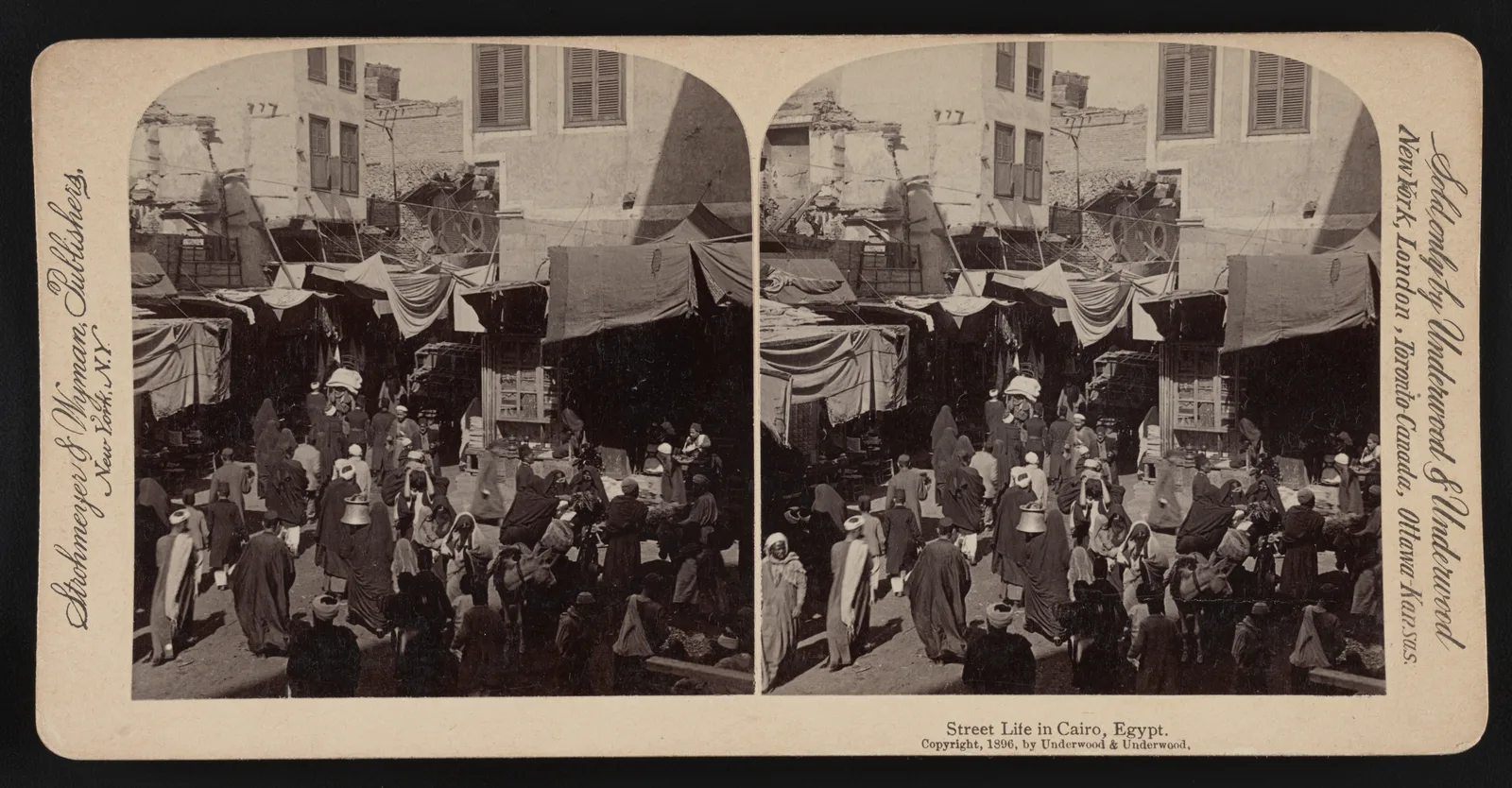
- Street life in Cairo, Egypt (stereograph) — unidentified publisher (stereograph card), 1903 · Library of Congress, Prints & Photographs Division, Stereograph Cards, LC-DIG-stereo (1s21116) · Public domain (published before 1931). LoC: 'The Library of Congress does not own rights to material in its collections. Therefore, it does not license or charge permission fees for use of such material and cannot grant or deny permission to publish or otherwise distribute the material.' (Stereographs - Rights and Restrictions Information page linked)
- Messina dopo il terremoto del 28 dicembre 1908. Via Garibaldi - Ravine (card no. 648) — Stab. Fotocollografico Italiano, Milan, 1908 · Library of Congress, Prints & Photographs Division, Postcard collection, LC-DIG-pcrd (1b08243); Stab. Fotocollografico Italiano, Milan · Public domain (published before 1931). LoC record states no rights statement
- Second-edition preface (Muqaddimat al-tab'a al-thaniya), p.1, with the passage 'how firmly do you hold to what you were raised in? I was like you, and more' — Shibli Shumayyil, 1910 · Internet Archive, Majmu'at al-Duktur Shibli Shumayyil (Cairo, 1910; University of Toronto copy), majmataldaktrshi00shumuoft, leaf 734 · Public domain (published 1910; author died 1917; Internet Archive item states no rights, 'not stated; check date')
Sources
Tier 1 — the subject's own words (writings, letters, diaries, trial records)
- [Majmua] Shibli Shumayyil, Majmu'at al-Duktur Shibli Shumayyil, parts 1 and 2 (Cairo: Matba'at al-Muqtataf, 1910; part 2 is Kitab Falsafat al-Nushu' wa-l-Irtiqa', containing the prefaces, Sharh Bukhnir and Kitab al-Haqiqa). https://archive.org/details/majmataldaktrshi00shumuoft . OCR in research/texts/majmua-1910.txt (unreliable for Arabic). US public domain (published 1910, author d. 1917). Quotations are in Arabic with our own English translation.
- [Muq] al-Muqtataf, yr 7 (1882–83), Internet Archive item al-muqtataf-magazine, year file "1882" (PDF; page numbers below are the journal's printed pages, with the PDF page in brackets in the claim). https://archive.org/details/al-muqtataf-magazine . OCR in research/texts/muqtataf-1882.txt (poor); quotations read from the page images. Not by Shumayyil: the Darwin article, Lewis's address and letters, and the reader's letter are the journal's and its correspondents'. Other year files of the same item, downloaded this pass for OCR search only: muqtataf-1878.txt, muqtataf-1884.txt, muqtataf-1886.txt (yr 10, advertisement of al-Shifa'), muqtataf-1917.txt (yr 50, obituary and memorial). The 1917 year file exists (the first draft said the files stop at 1899).
- [Hipp] Kitab al-Ahwiya wa-l-miyah wa-l-buldan, extracted into Arabic by Shibli Shumayyil (Cairo: Matba'at al-Muqtataf, 1885 by IA metadata). https://archive.org/details/KitabAlAhwyia . The scan's upload licence (CC BY-NC-ND) concerns the upload only; the work is public domain; used for the title page only, OCR garbled.
- [Sharh 1884] First edition of Sharh Bukhnir (Cairo: Matba'at Jaridat al-Mahrusa, 1884, per Elshakry's notes): not found separately; its first-edition preface and text are reprinted in [Majmua] part 2.
- [Rizzuq-Pol] Asaad Rizzuq (ed.), Al-Duktur Shibli Shumayyil: kitabat siyasiyya wa-islahiyya (Beirut, 1991), IA 20191107_20191107_1337, research/texts/rizzuq-political-writings-1991.txt. In copyright; an unauthorised upload, read to check facts and paraphrase only; not to be quoted or committed. Reprints Shumayyil's newspaper pieces; the editor's apparatus gives dates.
- [Rizzuq-Mem] Asaad Rizzuq (ed.), Hawadith wa-khawatir: mudhakkirat al-Duktur Shibli Shumayyil (Beirut, 1991), IA 20191107_20191107_0822, research/texts/rizzuq-memoirs-1991.txt. Same status. His memoir was never printed whole; this is the editor's reconstruction.
Tier 2 — scholarly biographies and encyclopedias
- [Elshakry] Marwa Elshakry, Reading Darwin in Arabic, 1860–1950 (Chicago: University of Chicago Press, 2013; the IA scan says 2014), chapter 3 "Materialism and Its Critics", pp. 102–129, and endnotes pp. 349–353. IA marwa-elshakry-reading-darwin-in-arabic-1860-1950-2014-university-of-chicago-press-libgen.li, research/texts/elshakry-2013.txt. In copyright; an unauthorised upload, read to check facts only (David's rule of 2026-10-14); paraphrase, no quotation; not to be committed.
- [Zirikli] Khayr al-Din al-Zirikli, al-A'lam, first edition (Cairo: al-Matba'a al-'Arabiyya, 1927–28), vol. 2, entry "Shibli ibn Ibrahim Shumayyil"; IA 2-1927-28, research/texts/zirikli-a2.txt. The OCR gives no dates for him; the entry is brief (place of birth, schooling, Egypt, works, death in Cairo). Page number not pinned. Zirikli died in 1976, so the text is a reference entry read for facts, not quoted.
- Leads not reached: Adel Ziadat, Western Science in the Arab World (1986); Georges Haroun, Shibli Shumayyil, une pensée évolutionniste arabe (Beirut, 1985); Susan Ziadeh, "A Radical in His Time" (Michigan dissertation, 1991); Donald Reid, "The Syrian Christians and Early Socialism in the Arab World," IJMES 5:2 (1974), cited by Wikipedia; Eliezer Tauber, Middle Eastern Studies 61:6 (2025); Louis Cheikho, al-Adab al-'Arabiyya fi al-qarn al-tasi' 'ashar (1924).
Tier 3 — popular biographies and journalism
- [Muq 1917] Ya'qub Sarruf, obituary "al-Duktur Shibli Shumayyil", al-Muqtataf yr 50 (February 1917, part 2) and the report "Takhlid dhikra al-Duktur Shumayyil" (March 1917, part 3), with Mutran's elegy; research/texts/muqtataf-1917.txt; OCR only (poor), page images not viewed (the item has no per-leaf image route); Elshakry's note cites yr 50 (1917): 108. A contemporary, friendly and critical voice; reference notes in research/notes/muq1917-*.txt.
Tier 4 — maps to other sources only (Wikipedia and similar). Citable as a reference, never the only source.
- [WikiEN] "Shibli Shumayyil", English Wikipedia, revision 1368546130 of 2026-08-09T18:28:25Z; saved research/texts/wikipedia-en-shumayyil.txt. Cites Reid 1974 and Gerges 2018 p.44; says Greek Catholic family, Tanta for a decade then Cairo, al-Shifa' in 1886 (failed after five years), died January 1917 (the page's category says 1916).
- [WikiAR] "شبلي شميل", Arabic Wikipedia, revision 76162100 of 2026-08-09T20:12:55Z; saved research/texts/wikipedia-ar-shumayyil.txt. Gives 1276–1335 AH / 1850–1917, Paris for medicine, residence Alexandria, Tanta, Cairo, al-Shifa' 1886, the weekly al-Mustaqbal (1914) with Salama Musa, "ascribed to atheism" yet praising the Quran and Muhammad (cites al-Hadiqa p.802 and Laylat al-Qadr p.104, not checked). The portrait comes from Zirikli's al-A'lam vol. 3, p. 230 (a later edition), on Commons as "Shibli Shumayyil - Al-Alam, V3, P 230.jpg" (licence for the gatherer to check).
Opposition sources — contemporary critics and religious responses
- [Afghani] Jamal al-Din al-Afghani, al-Radd 'ala al-dahriyyin (Refutation of the Materialists), written at Hyderabad, Deccan, after he left Egypt in 1879 (from the editor's biography quoted in the text); Arabic version by Muhammad Abduh; text used from the modern edition (Beirut: Dar al-Ma'arif al-Hikmiyya, ed. Ahmad Majid), IA Alradalaldahriyeen, research/texts/afghani-radd-dahriyyin.txt. Only Afghani's own words are quoted; the editor's introduction is copyrighted and only used for dates. Re-check against the 1886 Cairo print before any on-screen use. The text never names Shumayyil (searched).
- [Lewis] Edwin Lewis (named in the journal as "Dr Lewis"), letter "al-Madhhab al-Darwani" in [Muq] yr 7, pp.295–298, and his address of July 1882 printed ibid. (p.166; OCR only).
- [Reader 1882] An anonymous reader's letter "al-Madhhab al-Darwani" in [Muq] yr 7, p.222 (the signature, if any, is on the next page, not yet read).
- [Hurani] Ibrahim al-Hurani, Manahij al-hukama' fi nafy al-nushu' wa-l-irtiqa' (Beirut, 1884) and al-Haqq al-yaqin fi al-radd 'ala butl Darwin (Beirut, 1886); known through [Elshakry] (endnotes to ch.3) only; the Arabic originals were not found.
- Checked, nothing relevant: H. H. Jessup, Fifty-Three Years in Syria (1910, vols. 1–2); The Reminiscences of Daniel Bliss (1920).
Related lives
Ludwig Feuerbach (11) or Friedrich Nietzsche (12) for the German materialist and Darwinian background he translated from; for the Arabic side, Jamil Sidqi al-Zahawi (64) or Ibn al-Rawandi (62). Decide when the roster order is fixed. Production numbers never appear in public titles.
G. W. Foote
G. W. Foote was a Plymouth boy raised Anglican and Unitarian, who read himself into scepticism and reached London in 1868 "with very little religion". He became Bradlaugh's disciple, then a moderate Secularist. After Parliament's treatment of Bradlaugh he turned to ridicule, founding The Freethinker (1881) on the principle that superstition hates laughter. He served twelve months for blasphemy in 1883 with "Religion none" on his cell card, and succeeded Bradlaugh in 1890 as "an Atheist, and a teacher of Atheism".
Sigmund Freud
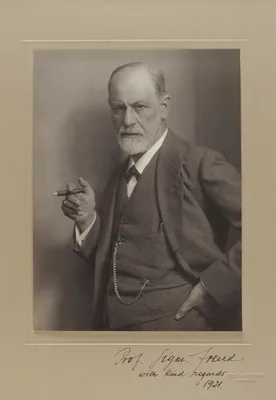
Sigmund Freud was a Jewish boy in Catholic Vienna, turned to science by Goethe and trained in Brücke's laboratory. He left no public-domain account of losing a faith. From 1907 he made unbelief clinical, treating religion as a wish-fulfilment rooted in the child's longing for a father: an "illusion" in 1927 that was not necessarily an error, and a "mass-delusion" by 1930. He kept a pastor as a friend, and granted religion's history respect.
Clarence Darrow
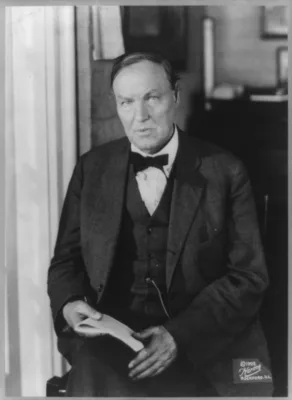
Clarence Darrow was raised by a doubting father in a churchgoing village. He came to unbelief through a philosophy of pity, the view that every person is made by heredity and circumstance, and he gave up the hope of immortality reluctantly. At Dayton in 1925 he accepted the word agnostic as a compliment, while cross-examining the Bible's most famous defender.
Francisco Ferrer
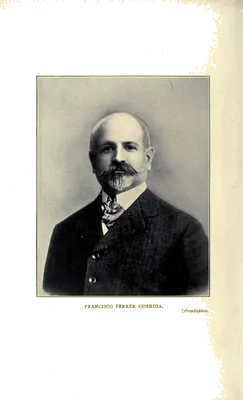
Francisco Ferrer was raised by devout Catholic farmers at Alella, and broke with their faith and politics as a young Republican. In his Paris years he called himself "a convinced atheist". He spent a Catholic pupil's legacy on a Barcelona school meant to banish religion from children's minds. He was acquitted once, and then shot at Montjuïc in 1909 as "author and chief" of a rising no single act of his was shown to have caused. He refused the priests to the last, and forbade any cult, even of himself.