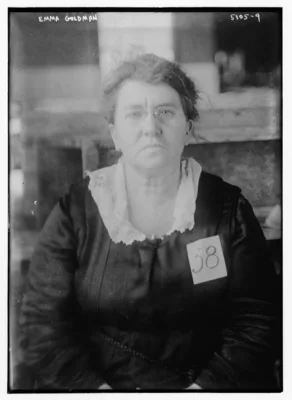
Emma Goldman had no faith to lose, only a religion she met as discipline in a Jewish childhood. Her atheism grew out of her pity for the hanged and out of her anarchism, and by 1893 it was a flat public statement. In 1913 and 1916 it became an argument for the earth over heaven. In Soviet Russia it turned on the revolution's own church.
The belief timeline
- Faith (c. 1869–1882) — Jewish household that kept the rites but "rarely spoke to us about religion"; her ideas of God and the devil come from a German nurse and peasant servants; religion is met as a teacher's ruler and a rabbi's reports [4][8][9]
- Doubt (1881–1885) — The hanged Nihilists, the Russian students, Chernyshevsky: the break comes through compassion and politics, not theology [12][14][15]
- Declaration (1887-11 / 1893) — Haymarket (11 November 1887) makes her an anarchist; in 1893 she tells the Blackwell's Island matron "None, I am an atheist"; in 1913 and 1916 she writes it out [21][23][33][42][43]
- Revision (1920–1923 and 1936) — Russia: the Bolsheviks as "Jesuits of the Socialist Church"; Spain: she defends burnt churches by the church's political record [57][60][62]
Notes to the timeline (14)
- [4] Her parents kept Jewish rites and went to synagogue on Saturdays and holidays but "rarely spoke to us about religion"; her ideas of God, devil, sin and punishment came from a German nurse and Russian peasant servants — Emma Goldman, Living My Life (New York: Knopf, 1931). Text used: OCR of "The Anarchist Library: Emma Goldman, Living My Life" (IA
al_Emma_Goldman_Living_My_Life_a4), saved asliving-anarchistlib.txt; locators are chapter numbers read from that text and must be checked against a first-edition scan. COPYRIGHT: published 1931, so it enters the US public domain on 1 January 2027 at the latest (renewal status not checked); until then use for research and paraphrase, and clear every quotation before the script is final. The 1931 scan IAlivingmylife0000unseis lending-only (401), ch. 1. - [8] At Königsberg the family, ruined at Popelan, could not afford schooling; the city's rabbi, a distant relative, arranged it but insisted on monthly reports of her behaviour and progress, which she hated as a humiliation — Goldman, Living My Life, ch. 5.
- [9] At the Königsberg school her instructor in religion, a German Jew, beat the girls' palms with a ruler; she organised pranks against him (pins in his chair, snails in his pockets) and he beat her the more — Goldman, Living My Life, ch. 11.
- [12] Her mother called the Nihilists beasts and spoke of extermination; when news came to Königsberg of the hanging of the men who killed the Tsar (1881), "something mysterious had awakened compassion for them in me" — Goldman, Living My Life, ch. 3.
- [14] A young teacher of Russian told her the story of Vera Zasulich and Trepov; she read Turgenev's *Fathers and Sons* and Chernyshevsky's *What's to Be Done?*, and understood "my instinctive sympathy with the executed men" — Goldman, Living My Life, ch. 3.
- [15] Havel: Nekrasov and Chernyshevsky took the place of the German romances she had liked; her parents fought her ideas; only her elder sister Helene understood — Hippolyte Havel, "Biographic Sketch" in Anarchism and Other Essays (1910; signed New York, December 1910), pp. 7–40ish of the 1910 edition. A friend and comrade's account, written with Goldman's cooperation; Tier 2 for the outline of the life, secondhand for anything it says about her inner life, p. 12. Reported at second hand; the original has not been seen.
- [21] The Chicago anarchists were hanged on 11 November 1887; Goldman was "crushed" and in "a stupor"; she attacked a woman who said "It is well they were hanged" — Havel, Anarchism and Other Essays, p. 17; Goldman, Living My Life, ch. 1.
- [23] Havel: the Haymarket executions converted both Goldman and Voltairine de Cleyre; "the reading of the Freiheit made her a conscious Anarchist"; Goldman "vowed to herself a solemn vow" to join the revolutionary proletariat — Havel, Anarchism and Other Essays, pp. 16–18.
- [33] On entering Blackwell's Island the head matron asked "What religion?" and she answered "None, I am an atheist"; told she must go to church, she refused as "not being a hypocrite"; as the only Jewish woman prisoner she was not allowed to attend synagogue services held for men — Goldman, Living My Life, ch. 12.
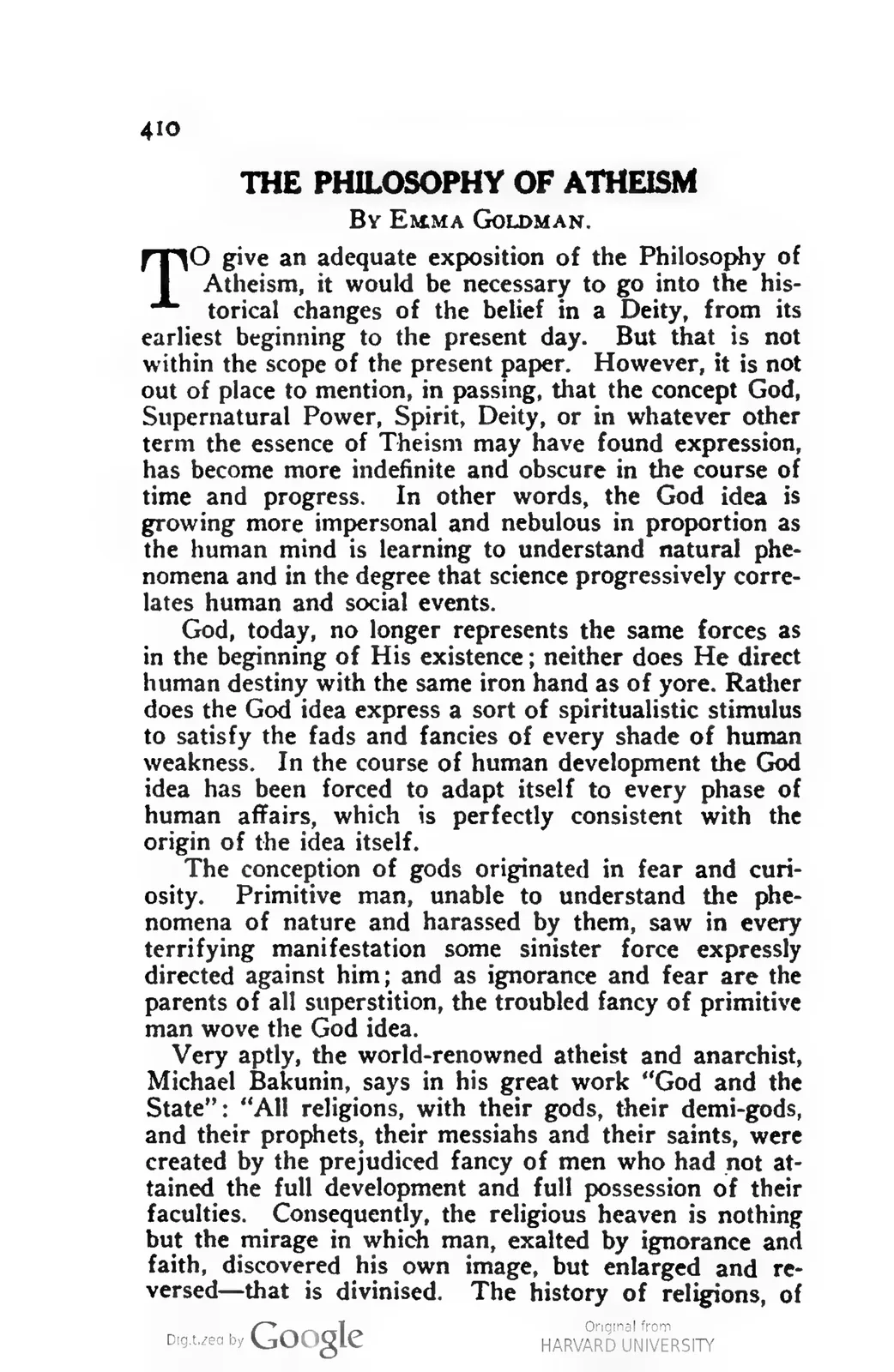
- [42] "The Philosophy of Atheism" ran in *Mother Earth* of February 1916 (pp. 410–416); the same issue advertises "A new anti-religious pamphlet. The Philosophy of Atheism and the Failure of Christianity by Emma Goldman. Price 10c." — Mother Earth, vol. X no. 12 (February 1916), "The Philosophy of Atheism" by Emma Goldman, pp. 410–416, pp. 410–416 and advertisement on the contents page.
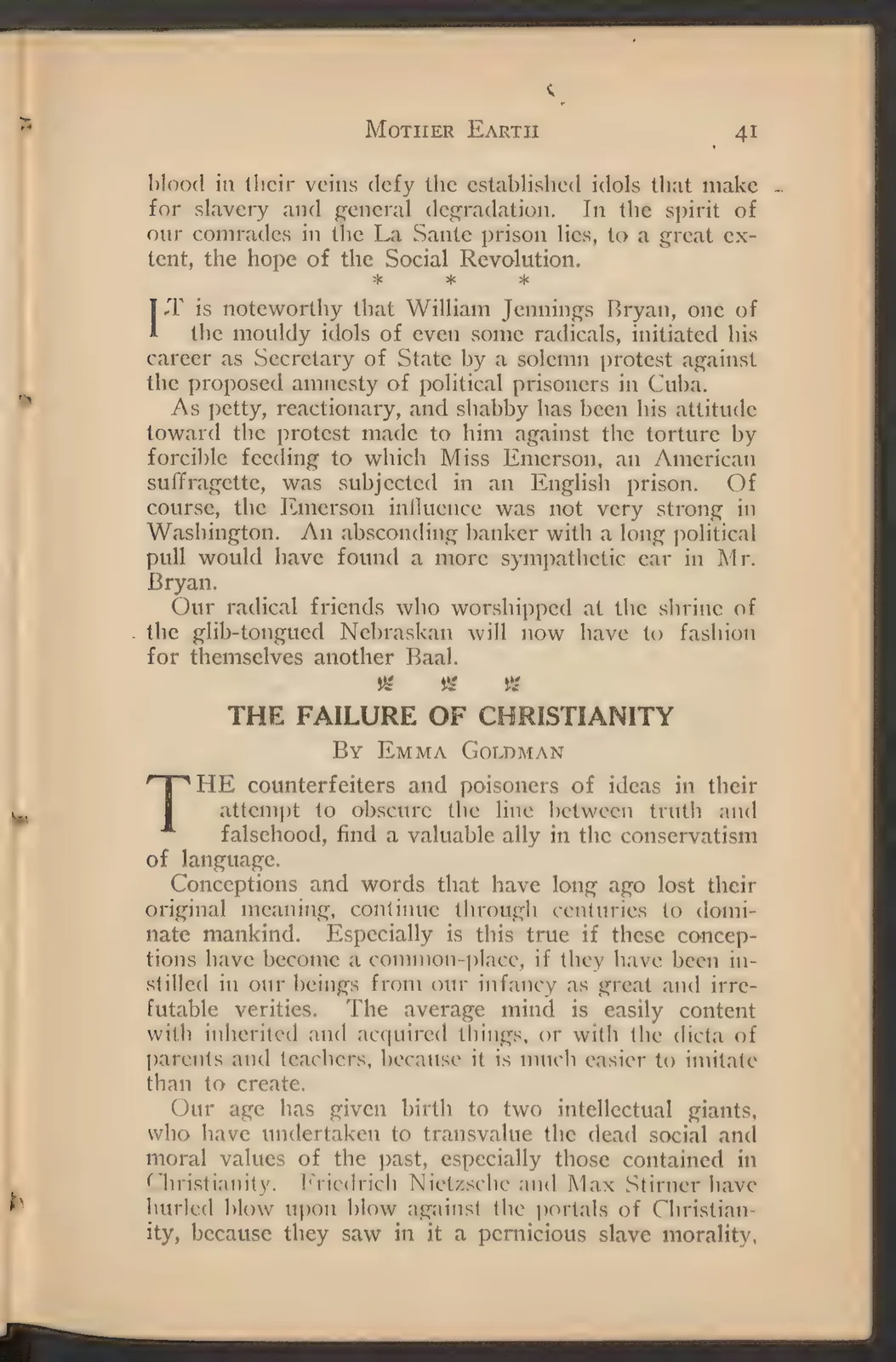
- [43] "The Failure of Christianity" ran in *Mother Earth*, April 1913 (pp. 41–48), a lecture-length argument against "every religion" and above all Christianity — Mother Earth, vol. VIII no. 2 (April 1913), "The Failure of Christianity" by Emma Goldman, pp. 41–48, pp. 41–48.
- [57] The *Buford* sailed before dawn on 21 December 1919 from Ellis Island with 249 deportees; papers called it the "ark of the soviet" — The Emma Goldman Papers microfilm edition (Chadwyck-Healey), "Introduction to Reels 63 and 64, Government Documents Series (August 1, 1919 to December 22, 1919)", pp. xxvi–xxxi, printed in the front of IA
governmentdocum9101emma_7(gov-1919b.txt). An editors' summary of the deportation file (Immigration Bureau, Justice Department, National Archives RG 60 and others). Tier 2, p. xxix; The Ogden Standard (Ogden City, Utah), 22 December 1919, p. 2, "Aliens Leave U.S. Jeering" (loc.govsn85058396/1919-12-22/ed-1/?sp=2), saved asca-ogden.txt(OCR rough), 22 Dec 1919 p. 2. - [60] In Disill she records Kropotkin calling the Bolsheviks "the Jesuits of the Socialist Church", and describes Communist official Lisa Zorin as reasoning "like a nun dedicated to the service of the Church" — Emma Goldman, My Disillusionment in Russia (Garden City NY: Doubleday, Page, 1923), pp. 156, 89.
- [62] In 1936 she wrote in defence of the Spanish CNT-FAI that burning churches was explained by "the sinister influence of the church on the Spanish masses" and its alliance with "the monarchist and military as well as the capitalist interests"; she added that workers burned churches "only after they had been attacked by priests" and that "very few churches of historic or artistic importance have been touched" — Emma Goldman Papers microfilm, "Goldman Writings" reel (IA
goldmanwritings9101emma_5), saved aswritings-1935.txt; contains her 1936–37 Spanish writings in typescript, two copies of the passage on the burnt churches, (two typescripts).
The Earth, Not Heaven
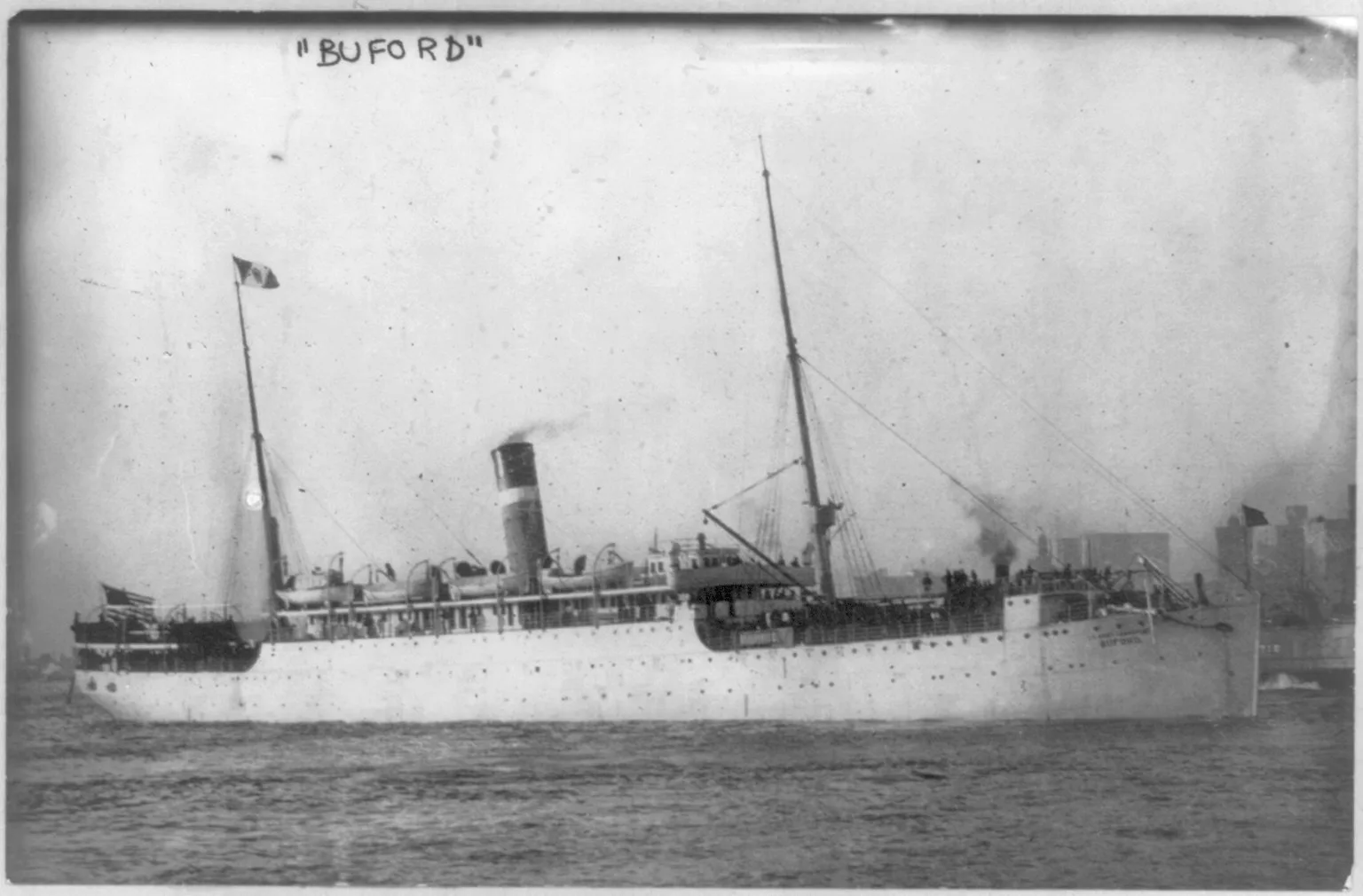
Before dawn on 21 December 1919 an old army transport, the Buford, slipped away from Ellis Island in New York harbour with 249 people aboard whom the United States government had decided to deport to Russia. The newspapers called it the "ark of the soviet."1 The best known of the passengers was a woman of fifty who had lived in America for thirty-four years and had been in its prisons more than once. "This government has signed its death warrant in these deportations," she told a reporter, and promised not to stop her work as long as she lived.23 A congressman who rode down the bay with the deportees remarked, "I might say they are traveling de luxe."4 A New Jersey paper headed its editorial "Good Riddance," and added, "It is too bad to inflict the Goldmans and Berkmans on poor Russia."5
Emma Goldman was deported for her politics, not her religion. But her unbelief and her politics grew from the same root, and in her own mind they were one thing. This chapter follows that root from a Jewish household in the Russian empire to a prison on an island in the East River, and on to a revolution she found she could not believe in either.
A ruler and a strap
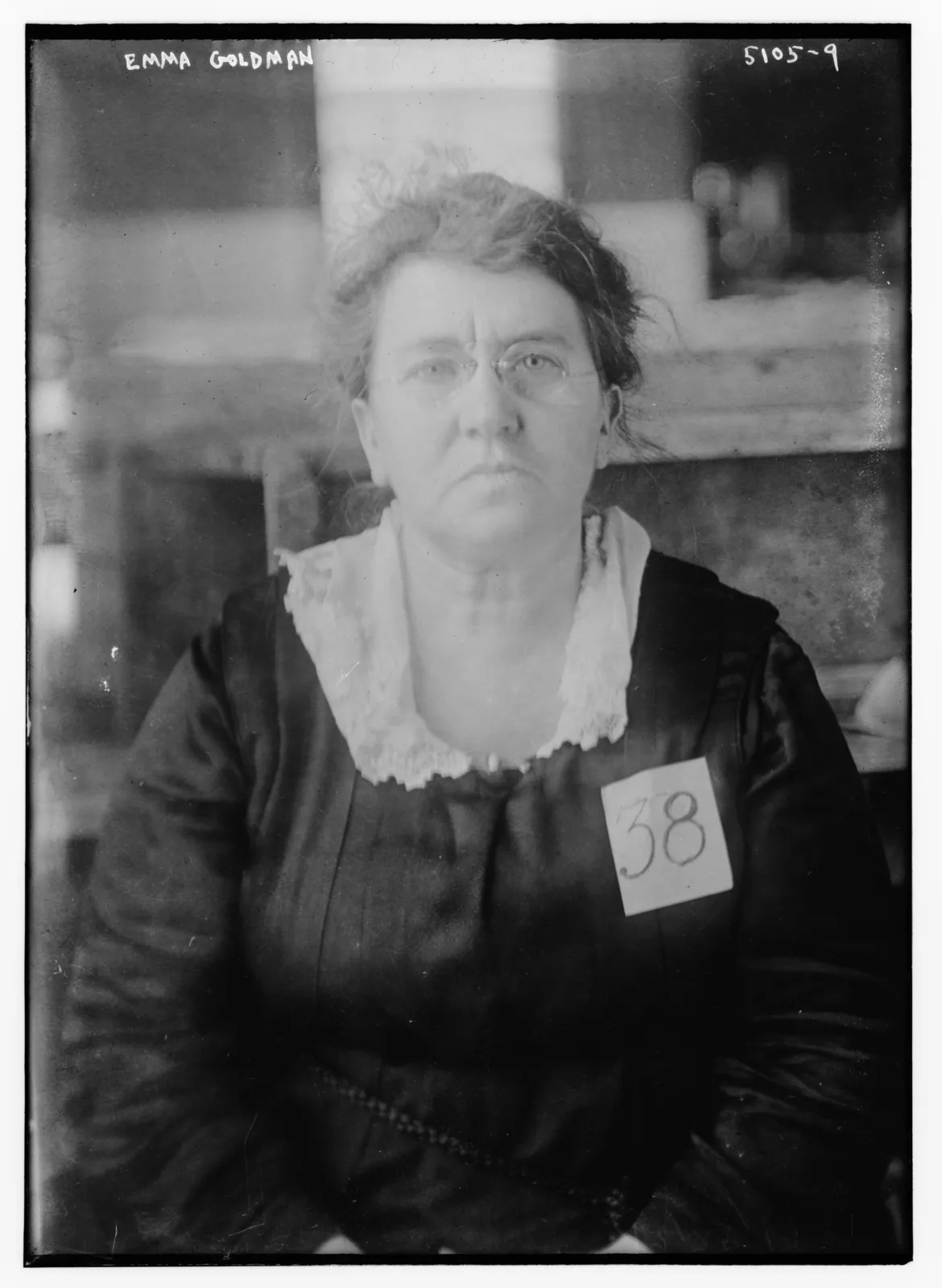
She was born on 27 June 1869 in Kovno, in the Russian empire, to Jewish parents.6 She grew up in a small Baltic town where her father kept an inn.7 Her family, she wrote in her memoirs many years later, kept the Jewish rites and went to synagogue on the sabbath and holidays, but rarely spoke to the children about religion; her ideas of God and the devil, sin and punishment, came from a German nurse and the Russian peasant servants.8 There was no crisis of faith in her life, because there was never much faith to lose. What she met instead was religion as discipline.
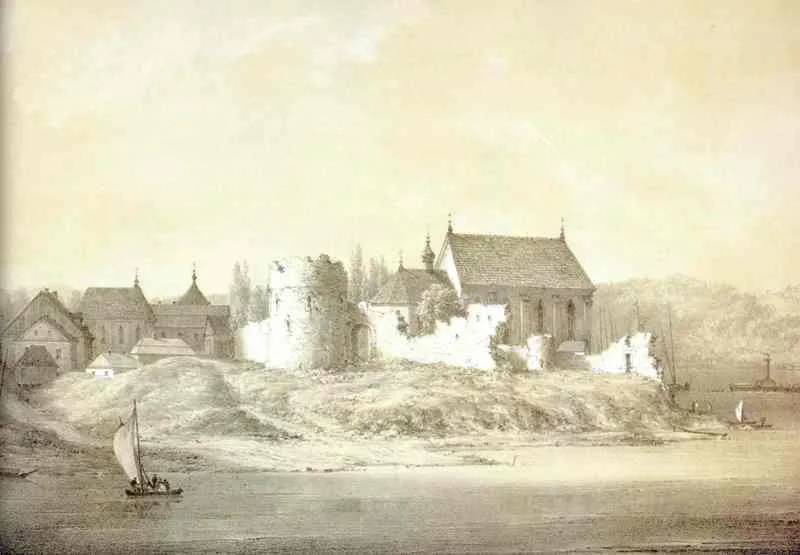
As a small child she was sent to school at Königsberg, where her grandmother lived.9 The city's rabbi, a distant relative, arranged her schooling and demanded monthly reports on her behaviour, which she hated as a humiliation.10 The school's teacher of religion, she remembered, beat the girls' hands with a ruler, and she paid him back with pins in his chair; when she needed a certificate of good character from him to enter the higher school, he told the whole class that she would end on the gallows as a public menace.1112 At home her father beat her too.13 These are her memories, written down in her sixties, and they are the only account we have. But they explain the shape of her later argument: that the God of her childhood, the father with the strap and the teacher with the ruler were the same authority in three forms.
The hanged Nihilists
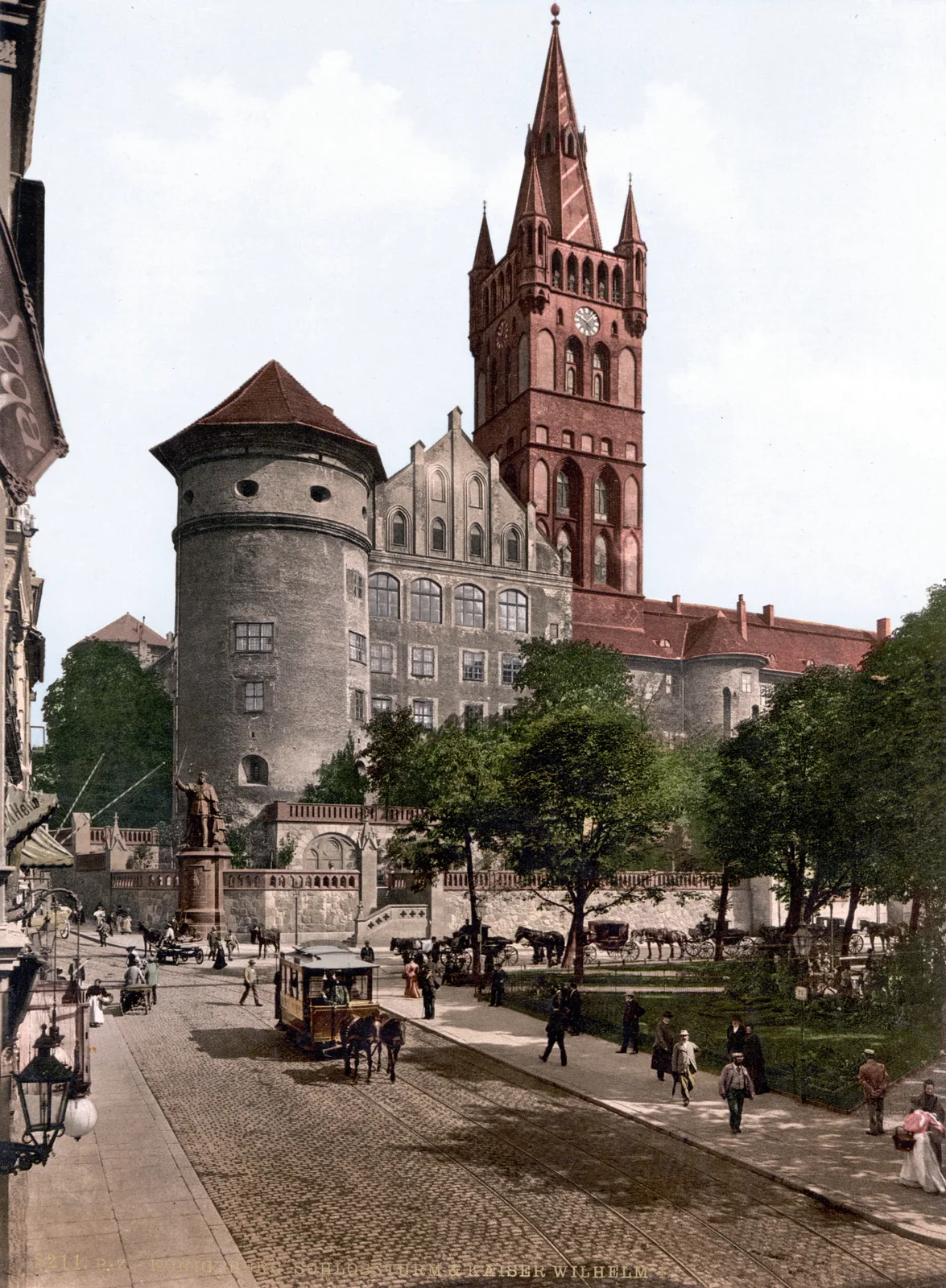
In 1881 the revolutionaries who had killed Tsar Alexander II were hanged. Her mother said such people should be exterminated; the girl of eleven, she remembered, felt instead a mysterious compassion for them and wept over their fate.14 The family moved to St Petersburg in 1882, where she worked in a corset factory and a glove factory.1516 A young teacher told her the story of Vera Zasulich, who had shot the governor of the city, and she read Turgenev and Chernyshevsky's forbidden novel What Is to Be Done?, and understood, she said, her "instinctive sympathy" with the executed men.17 Her friend and biographer Hippolyte Havel wrote that Russian radical literature took the place of the German romances she had loved, and that only her elder sister understood her.18
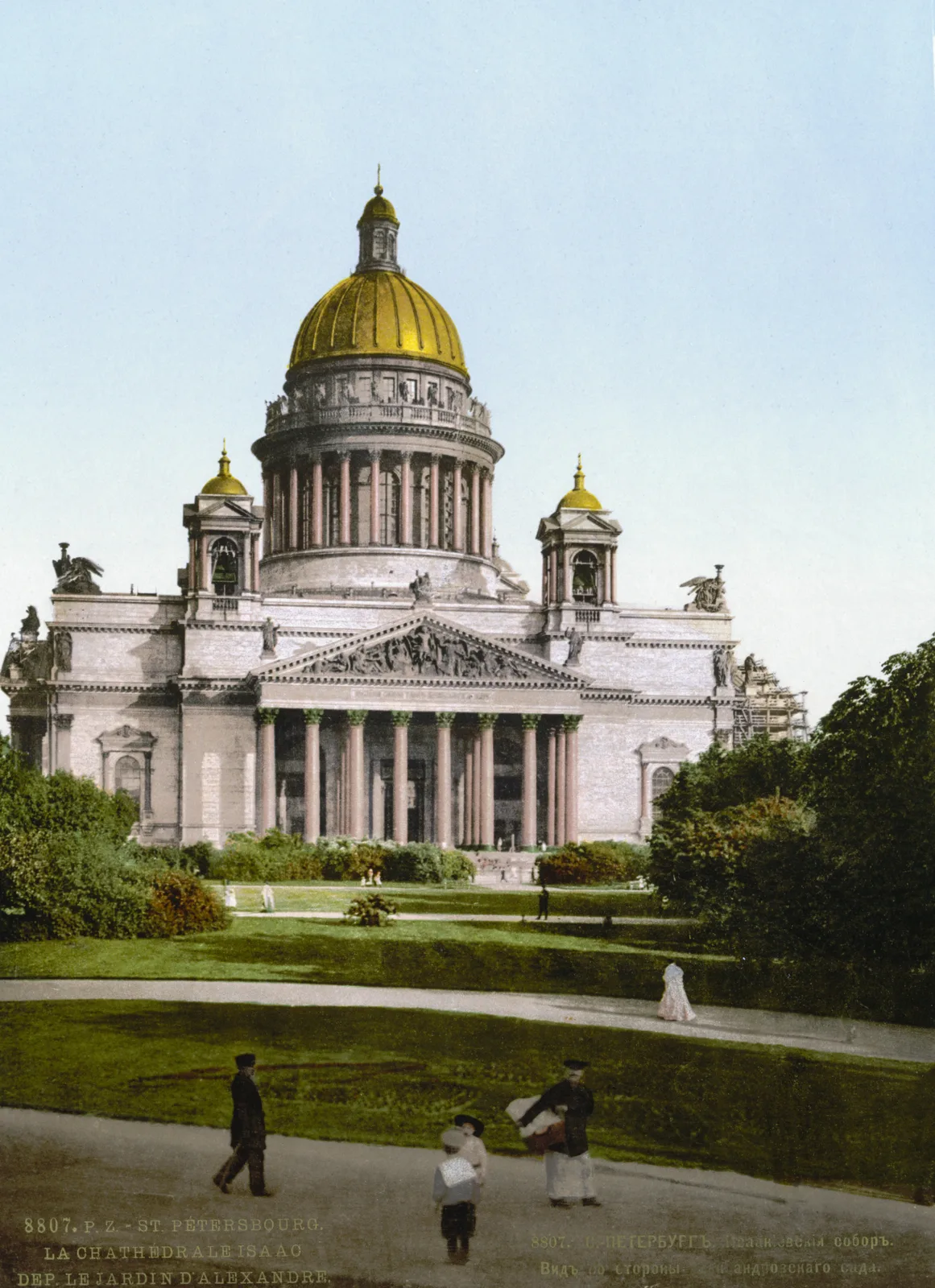
Here, if anywhere, is her doubt: not an argument about God, but a turn of sympathy away from the authorities and toward the people they hanged. It came through politics and pity, and the unbelief followed.
Haymarket
At the end of 1885, after a quarrel with her father, she and her sister left for America.19 In Rochester, New York, she sewed coats for two and a half dollars a week.20 In February 1887 she married a fellow worker, Jacob Kershner, "by a rabbi, according to Jewish rites"; the marriage failed, and the same rabbi gave the divorce.21
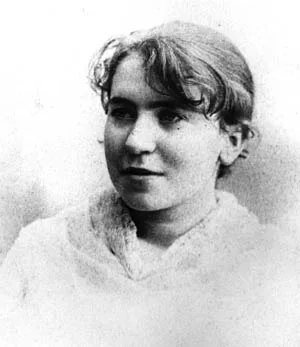
That year she followed the case of the Chicago anarchists accused of a bomb thrown at police in the Haymarket in May 1886. She went to German socialist meetings and read the anarchist paper Die Freiheit, and the Rochester press's violence against the accused turned her sympathy toward them.2223 On 11 November 1887 the Chicago anarchists were hanged. She was crushed.24 Havel wrote that the Haymarket tragedy "developed her inherent Anarchist tendencies: the reading of the Freiheit made her a conscious Anarchist," and that she vowed then to join the revolutionary working class.2526 In August 1889 she moved to New York, met the anarchist orator Johann Most and a young Russian named Alexander Berkman, who had been expelled from his school in Russia for an essay against religion.2728
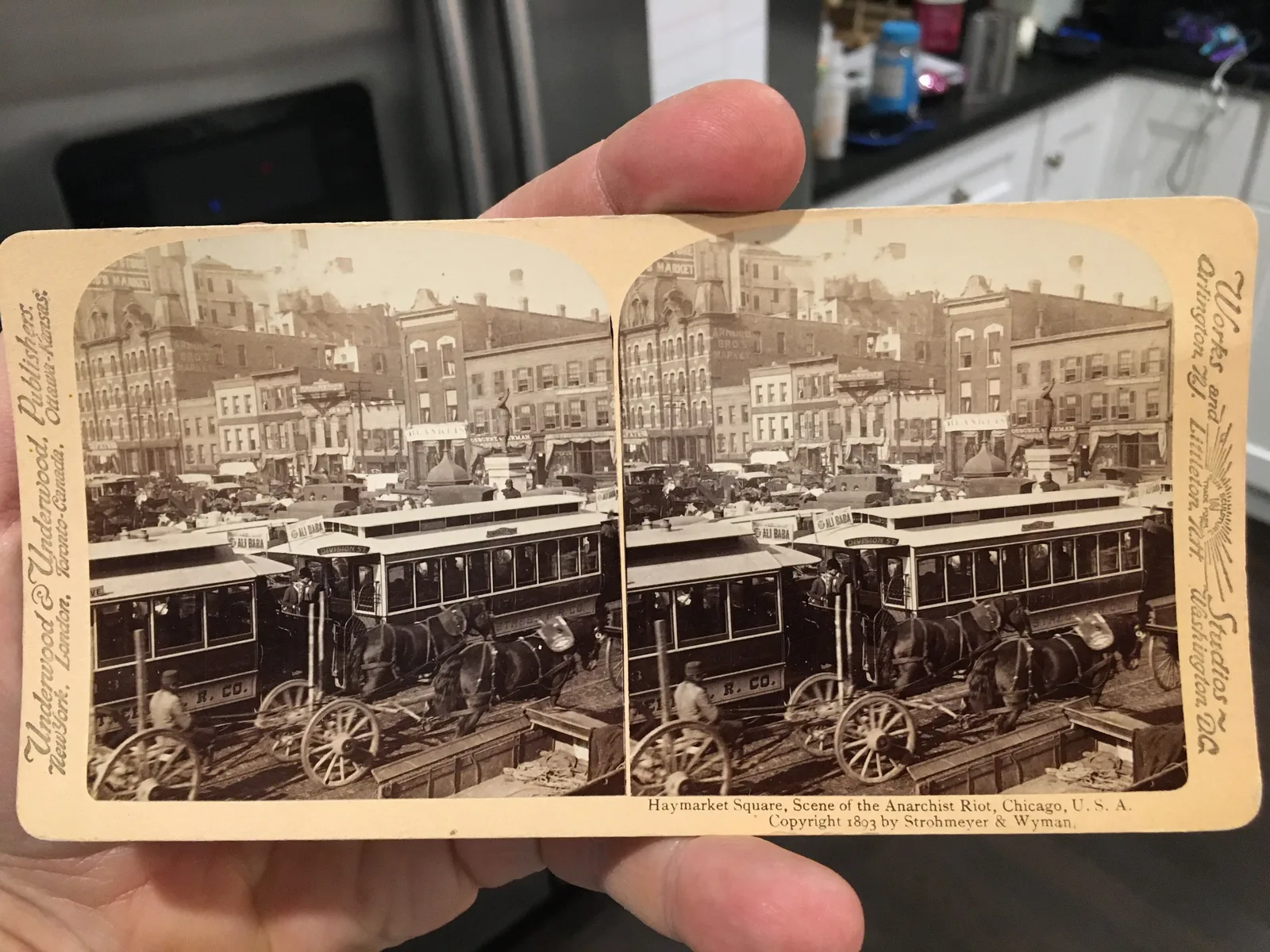
In those early New York years the young radicals held a ball on Yom Kippur, the holiest day of the Jewish year, as a protest against orthodoxy, with speeches on free thought and dancing in place of fasting and prayer; religious Jews attacked it, and Berkman led the defence.29
"Atheist"
In 1893, during a depression, she told a crowd of unemployed in Union Square to ask for work, then to ask for bread, and if they were given neither, to take bread. She was arrested, tried for incitement to riot, and sentenced to a year on Blackwell's Island.30 At the trial, she remembered, the district attorney questioned her about religion, free love and morality, and she tried to expose the Church as an instrument of enslavement.31 When she entered the prison, the head matron asked her religion. By her own account she answered that she had none and was an atheist; told that she would have to go to church, she refused, saying she would not be a hypocrite. When a matron later brought her a Bible instead of the book she had asked for, she threw it at the woman's feet; the matron told her she had desecrated God's word and would burn in hell.323334 Her own words for this scene are in her memoirs of 1931, which this book will quote when they enter the public domain in 2027.35 The fact itself is clear: by 1893 at the latest she called herself an atheist, plainly and in public.
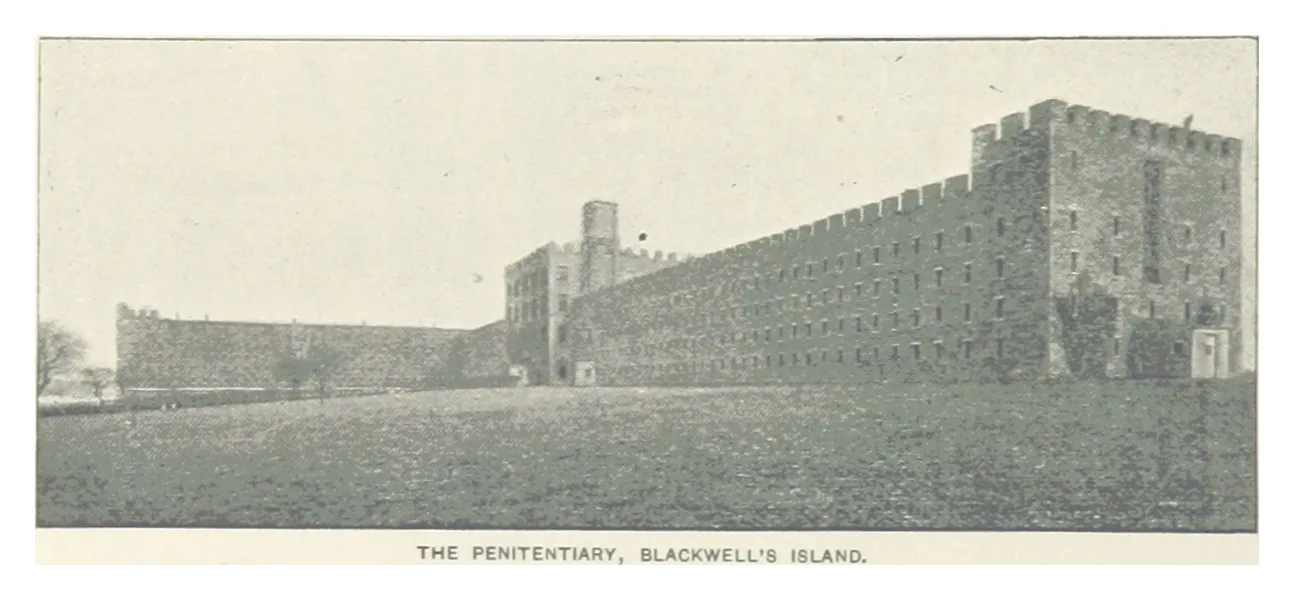
She came out in August 1894 having read Mark Twain, Whitman, Thoreau and Emerson in prison.36 In Vienna she trained as a nurse and midwife and read Nietzsche and Ibsen.37 In 1906 she founded her own monthly, Mother Earth.38
Religion, property and the State
In her book of 1910, Anarchism and Other Essays, she put religion in its place in her system. "Just as religion has fettered the human mind, and as property, or the monopoly of things, has subdued and stifled man's needs, so has the State enslaved his spirit, dictating every phase of conduct."39 The three were one tyranny in three forms, just as they had been in her childhood.
In April 1913 she published "The Failure of Christianity" in Mother Earth. She said plainly whose argument she was following: Nietzsche and Stirner, who had attacked Christianity as a morality for slaves. "I believe, with them, that Christianity is most admirably adapted to the training of slaves, to the perpetuation of a slave society; in short, to the very conditions confronting us to-day."40 She was not interested, she said, in "the theological Christ," the Christ the scholars had already taken apart, but in the Christ of ethics and society.41 "Whoever sincerely aims at a radical change in society, whoever strives to free humanity from the scourge of dependence and misery, must turn his back on Christianity."42 "Much as I am opposed to every religion," she wrote, "I yet feel that no other religion had done so much harm or has helped so much in the enslavement of man as the religion of Christ."43
The Philosophy of Atheism
Her fullest statement came in February 1916, in the middle of the First World War, under the title "The Philosophy of Atheism."44 "The conception of gods originated in fear and curiosity," it began.45 Religion, she argued, was a business: "the trade-marks of the largest, the most corrupt and pernicious, the most powerful and lucrative industry in the world, not excepting the industry of manufacturing guns and munitions."46 The war was its refutation: "Jahve continues deaf to the bitter cry of Israel; while Jesus refuses to rise from the dead against his Christians who are butchering each other."47 To the charge that there could be no morality without God she answered that the brave defenders of truth, justice and fidelity had nearly always been "the godless ones: the Atheists; they lived, fought, and died for them."48
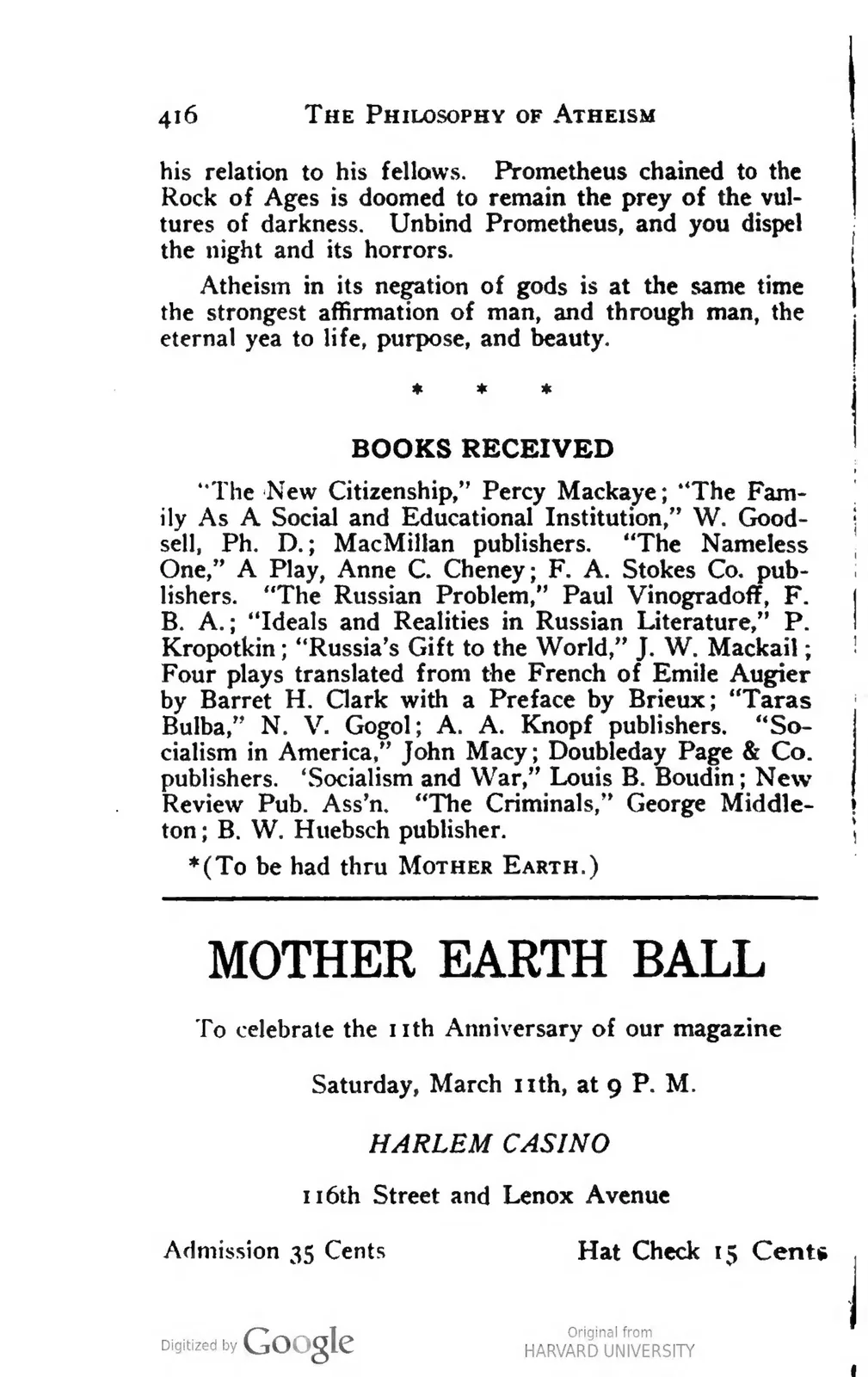
But the essay's centre was not a denial. "Already there are indications that theism, which is the theory of speculation, is being replaced by Atheism, the science of demonstration; the one hangs in the metaphysical clouds of the Beyond, while the other has its roots firmly in the soil. It is the earth, not heaven, which man must rescue if he is truly to be saved."49 And it ended with an affirmation: "Atheism in its negation of gods is at the same time the strongest affirmation of man, and through man, the eternal yea to life, purpose, and beauty."50
That same month she was arrested for giving information about birth control in her lectures; a writer in Mother Earth ranked her with Bradlaugh and Besant in England as people who braved the law for it.51
Conviction and deportation
In June 1917, two months after the United States entered the war, she and Berkman spoke against the new draft law, and they were arrested for conspiring against military registration.5253 They conducted their own defence. "I have publicly held my ideas for 27 years," she told the jury. "Nothing on earth would ever make me change my ideas except one thing; and that is, if you will prove to me that our position is wrong."54 The jury deliberated thirty-nine minutes.55 Judge Julius Mayer sentenced each of them to two years and a ten-thousand-dollar fine, and gave them a judge's backhanded tribute: they had "shown remarkable ability, an ability which might have been utilized for the great benefit of this country had they seen fit to employ themselves in behalf of this country rather than against it." "For such people as these, who would destroy our Government and nullify its laws, we have no place in our country."5657 The federal marshal who arrested them said, "This marks the beginning of the end of Anarchism in New York."58
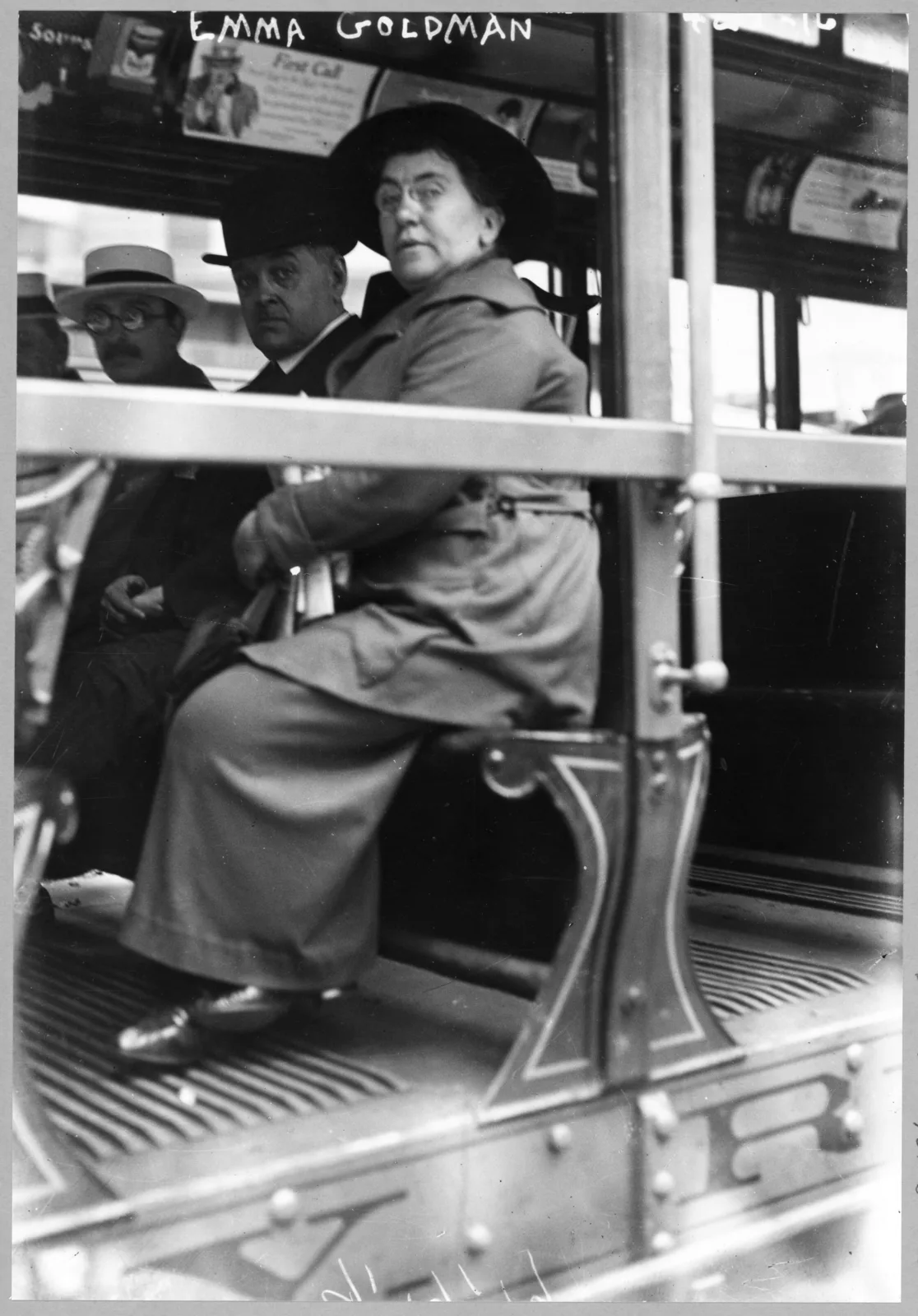
She served her sentence in the state penitentiary at Jefferson City, Missouri, and was released in September 1919, to be deported.59 A law of 1918 allowed the government to deport any alien anarchist, and it argued that she had lost her citizenship with her former husband's.60 At her hearing on Ellis Island she read a statement and refused to answer questions about her opinions; a young official of the Justice Department named J. Edgar Hoover wrote the government's brief and was present at both hearings and at the sailing.61 The Buford left in December.1
The revolution's church
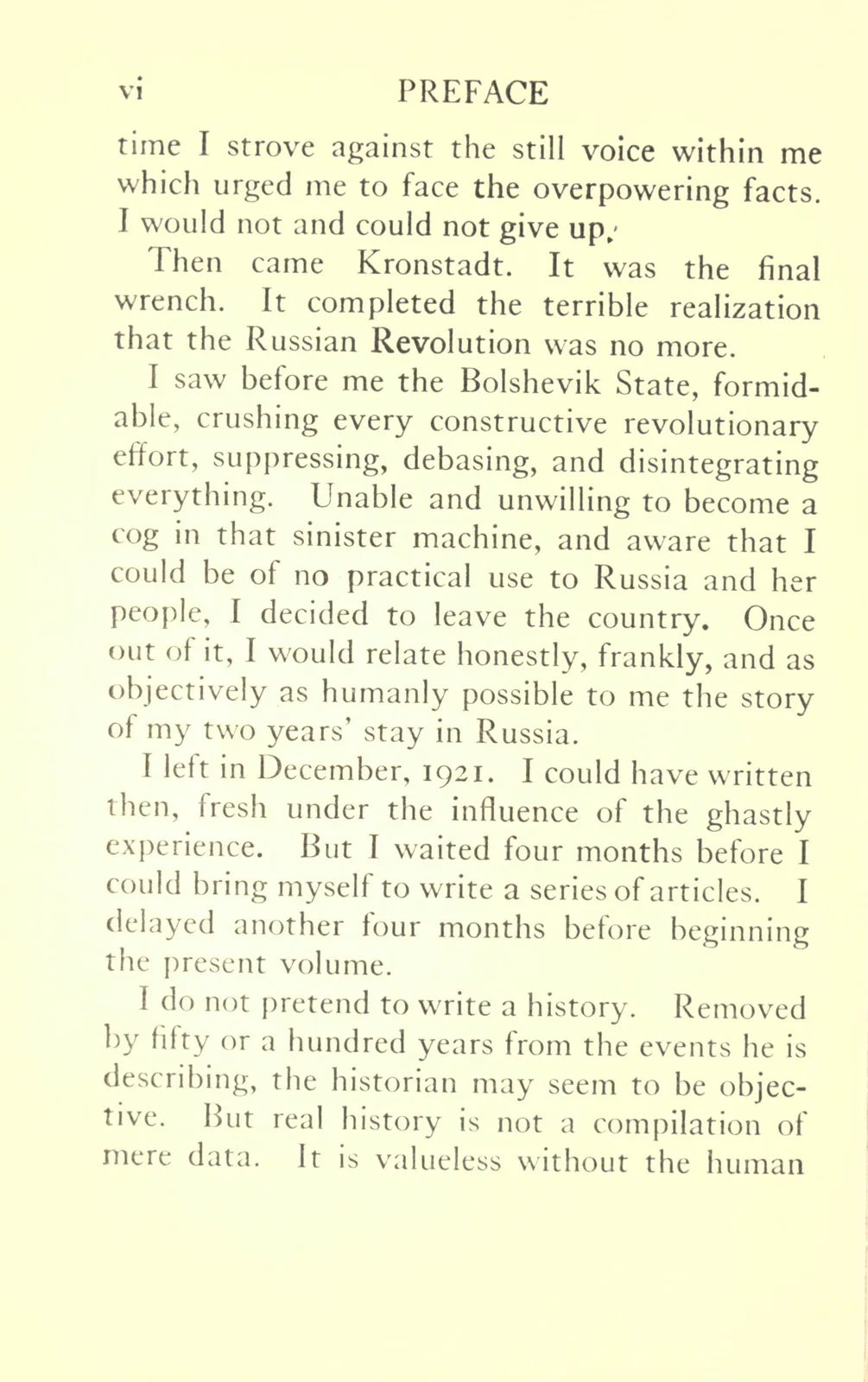
She went to Soviet Russia full of hope. "I found reality in Russia grotesque, totally unlike the great ideal that had borne me upon the crest of high hope to the land of promise," she wrote in 1923.62 It took her "fifteen long months" to get her bearings. "Then came Kronstadt. It was the final wrench. It completed the terrible realization that the Russian Revolution was no more."63 When she described what she had seen, she reached for the language of religion. She recorded the old anarchist Peter Kropotkin's verdict that "the Bolsheviki were the Jesuits of the Socialist Church: they believed in the Jesuitic motto that the end justifies the means," and described a Communist official who "reasoned like a nun dedicated to the service of the Church."6465
On her timeline, this is where her revision falls, and it is not a softening. She did not go back to any faith. She discovered that the habits she had fought in religion, obedience, dogma, the end justifying the means, could live in a revolution that had abolished God. In 1936, in Spain, she defended the anarchist unions when churches were burned, blaming "the sinister influence of the church on the Spanish masses, the superstitions fostered, the toll exacted and the alliance of the church with the monarchist and military as well as the capitalist interests."66 That defence, and her claim that the burnings followed attacks by priests, are her own and are contested.67 She died in Toronto in 1940.68
Did her unbelief change shape?
It never had to be won, and it never wavered. Emma Goldman did not lose a faith; she grew up with religion as a ruler on the palm and a rabbi's monthly report, and she left it behind as she left behind every authority she met. Her atheism arrived as part of her anarchism, was a flat statement by the time she was twenty-four, and became an argument in the essays of 1913 and 1916, where it is less a denial of God than an insistence on the earth: "It is the earth, not heaven, which man must rescue." What changed was her sense of where religion's habits could hide. In Russia she found them in a revolution, and she said so as bluntly as she had said everything else.
Ernestine Rose, the Jewish-born orator who had made the case for atheism on American platforms half a century before her, has her own chapter in this book, and so do Charles Bradlaugh and Annie Besant, whose fight over birth control she continued.
Footnotes
-
The Emma Goldman Papers microfilm edition (Chadwyck-Healey), "Introduction to Reels 63 and 64, Government Documents Series (August 1, 1919 to December 22, 1919)", pp. xxvi–xxxi, printed in the front of IA
governmentdocum9101emma_7(gov-1919b.txt). An editors' summary of the deportation file (Immigration Bureau, Justice Department, National Archives RG 60 and others). Tier 2, p. xxix; The Ogden Standard (Ogden City, Utah), 22 December 1919, p. 2, "Aliens Leave U.S. Jeering" (loc.govsn85058396/1919-12-22/ed-1/?sp=2), saved asca-ogden.txt(OCR rough), 22 Dec 1919 p. 2. ↩ ↩2 -
Ogden Standard, Standard, 22 Dec 1919, p. 2. ↩
-
Ogden Standard, 22 Dec 1919 p. 2. ↩
-
Representative Siegel, House Committee on Immigration, who accompanied the deportees down the bay: Ogden Standard, Standard, 22 Dec 1919, p. 2. ↩
-
Editorial "Good Riddance", Hudson Dispatch (New Jersey), 23 December 1919: Hudson Dispatch (Union City NJ), 23 December 1919, editorial "Good Riddance", reproduced in the Emma Goldman Papers, Government Documents reel (IA
governmentdocum9101emma_8,gov-1919a.txt; National Archives RG 60), (EGP Government Documents reel). ↩ -
Hippolyte Havel, "Biographic Sketch" in Anarchism and Other Essays (1910; signed New York, December 1910), pp. 7–40ish of the 1910 edition. A friend and comrade's account, written with Goldman's cooperation; Tier 2 for the outline of the life, secondhand for anything it says about her inner life, p. 8 (1910 ed.); Mother Earth, vol. XII no. 5 (July 1917), "The Trial and Conviction of Emma Goldman and Alexander Berkman", with Goldman's speech to the jury and the sentence, pp. 129–167 or so. Saved as
me-1917-07.txt. This is a partisan record by Goldman's own magazine; no independent court transcript was found. (Further issues saved but not mined:me-1916-03,me-1917-06,me-1917-08,me-1915-12,me-1906-03.), p. 161. ↩ -
Emma Goldman, Living My Life (New York: Knopf, 1931). Text used: OCR of "The Anarchist Library: Emma Goldman, Living My Life" (IA
al_Emma_Goldman_Living_My_Life_a4), saved asliving-anarchistlib.txt; locators are chapter numbers read from that text and must be checked against a first-edition scan. COPYRIGHT: published 1931, so it enters the US public domain on 1 January 2027 at the latest (renewal status not checked); until then use for research and paraphrase, and clear every quotation before the script is final. The 1931 scan IAlivingmylife0000unseis lending-only (401), ch. 1, ch. 2; Havel, Anarchism and Other Essays, p. 9. Accounts differ; see the disputed points. ↩ -
Goldman, Living My Life, ch. 1. ↩
-
Havel, Anarchism and Other Essays, p. 10; Goldman, Living My Life, ch. 11. ↩
-
Goldman, Living My Life, ch. 5. ↩
-
Goldman, Living My Life, ch. 11. ↩
-
Goldman, Living My Life, ch. 11. ↩
-
Goldman, Living My Life, ch. 5. ↩
-
Goldman, Living My Life, ch. 3. ↩
-
Havel, Anarchism and Other Essays, p. 11; Goldman, Living My Life, ch. 11. ↩
-
Havel, Anarchism and Other Essays, p. 13. Reported at second hand; the original has not been seen. ↩
-
Goldman, Living My Life, ch. 3. ↩
-
Havel, Anarchism and Other Essays, p. 12. ↩
-
Goldman, Living My Life, ch. 1; Havel, Anarchism and Other Essays, p. 13. ↩
-
Havel, Anarchism and Other Essays, p. 14. ↩
-
Goldman, Living My Life, ch. 1, ch. 2. ↩
-
Goldman, Living My Life, ch. 1. ↩
-
Goldman, Living My Life, ch. 1. ↩
-
Havel, Anarchism and Other Essays, p. 17; Goldman, Living My Life, ch. 1. ↩
-
Hippolyte Havel: Emma Goldman, Anarchism and Other Essays (New York: Mother Earth Publishing Association, 1917 ed.; first ed. 1910), with Hippolyte Havel's "Biographic Sketch". Texts: IA
anarchismandothe00golduoft(1917,anarchism1917.txt) and IAanarchismandoth00havegoog(1910,anarchism1910.txt). Page numbers below are from the printed headers; the 1910 and 1917 pagination differs, (1910 ed.), "Biographic Sketch", p. 18. ↩ -
Havel, Anarchism and Other Essays, pp. 16–18. ↩
-
Havel, Anarchism and Other Essays, pp. 18–19; Goldman, Anarchism and Other Essays, (1917) Preface p. 47. ↩
-
Goldman, Living My Life, ch. 3. ↩
-
Goldman, Living My Life, ch. 46. Not verified. ↩
-
Havel, Anarchism and Other Essays, pp. 25–26. ↩
-
Goldman, Living My Life, ch. 11. ↩
-
Goldman, Living My Life, ch. 12. ↩
-
Goldman, Living My Life, ch. 12. ↩
-
The matron of Blackwell's Island, as reported by Goldman (a religious believer's reaction to the thrown Bible): Goldman, Living My Life, ch. 12. Not checked against the original (no (OCR of reprint only; reported speech)). ↩
-
plan.md; US term rules. ↩
-
Havel, Anarchism and Other Essays, p. 27. ↩
-
Havel, Anarchism and Other Essays, p. 29. ↩
-
Mother Earth, vol. VIII no. 2 (April 1913), "The Failure of Christianity" by Emma Goldman, pp. 41–48, contents; Mother Earth, vol. X no. 12 (February 1916), "The Philosophy of Atheism" by Emma Goldman, pp. 410–416, masthead; IA
mother-earth. ↩ -
Goldman, Anarchism and Other Essays, (1917), "Anarchism: What It Really Stands For", p. 62. ↩
-
Mother Earth, p. 42. ↩
-
Mother Earth, "The Failure of Christianity", p. 43. ↩
-
Mother Earth, p. 43. ↩
-
Mother Earth, p. 47. ↩
-
Mother Earth, pp. 410–416 and advertisement on the contents page. ↩
-
Mother Earth, "The Philosophy of Atheism", p. 410. ↩
-
Mother Earth, p. 412. ↩
-
Mother Earth, p. 413. ↩
-
Mother Earth, p. 415. ↩
-
Mother Earth, p. 411. ↩
-
Mother Earth, p. 416. ↩
-
Mother Earth, vol. XI no. 2 (April 1916), "Birth Control Number", with Abbott, "The Historical Side of the Birth Control Movement" and Goldman's trial notice. Saved as
me-1916-04.txt, pp. 451–452, 467. ↩ -
The Sun (New York), 15 June 1917, p. 4, "30,000 Look On at Roundup of 'Reds'" (loc.gov
sn83030431/1917-06-15/ed-1/?sp=4), saved asca-sun-1917.txt(OCR rough), 15 June 1917 p. 4. ↩ -
Mother Earth, pp. 130–132. ↩
-
Mother Earth, speech to the jury, c. p. 160. ↩
-
Mother Earth, p. 161. ↩
-
Judge Julius M. Mayer, US District Court, sentencing 9 July 1917: Mother Earth, p. 162. ↩
-
Judge Julius M. Mayer, same occasion: Mother Earth, p. 162. ↩
-
Thomas D. McCarthy, United States Marshal for the Southern District of New York: Mother Earth, p. 130. ↩
-
Goldman and Berkman, A Fragment of the Prison Experiences of Emma Goldman and Alexander Berkman (1920), IA
fragmentofprison00gold;fragment-prison.txt, not yet mined. [Deport] Berkman and Goldman, Deportation: Its Meaning and Menace (1919), IAdeportationitsme00berkuoft;deportation.txt, not yet mined, title page; Emma Goldman Papers, p. xxviii. ↩ -
Emma Goldman Papers, p. xxvii. ↩
-
Emma Goldman Papers, pp. xxviii, xxxi. ↩
-
Emma Goldman, My Disillusionment in Russia (Garden City NY: Doubleday, Page, 1923), Preface, p. v. ↩
-
Goldman, My Disillusionment in Russia, Preface, p. vi. ↩
-
Kropotkin, as reported by Goldman: Goldman, My Disillusionment in Russia, p. 156. ↩
-
Goldman, My Disillusionment in Russia, p. 89. ↩
-
Emma Goldman Papers microfilm, "Goldman Writings" reel (IA
goldmanwritings9101emma_5), saved aswritings-1935.txt; contains her 1936–37 Spanish writings in typescript, two copies of the passage on the burnt churches, Goldman Writings reel (IAgoldmanwritings9101emma_5), typescript, 1936. Not checked against the original (no (typescript OCR; read the scan)). ↩ -
microfilm, "Goldman Writings", (two typescripts). ↩
-
Roster line only. ↩
governmentdocum9101emma_7 (gov-1919b.txt). An editors' summary of the deportation file (Immigration Bureau, Justice Department, National Archives RG 60 and others). Tier 2.; The Ogden Standard (Ogden City, Utah), 22 December 1919, p. 2, "Aliens Leave U.S. Jeering" (loc.gov sn85058396/1919-12-22/ed-1/?sp=2), saved as ca-ogden.txt (OCR rough).; Hudson Dispatch (Union City NJ), 23 December 1919, editorial "Good Riddance", reproduced in the Emma Goldman Papers, Government Documents reel (IA governmentdocum9101emma_8, gov-1919a.txt; National Archives RG 60).; Hippolyte Havel, "Biographic Sketch" in Anarchism and Other Essays (1910; signed New York, December 1910), pp. 7–40ish of the 1910 edition. A friend and comrade's account, written with Goldman's cooperation; Tier 2 for the outline of the life, secondhand for anything it says about her inner life.; Mother Earth, vol. XII no. 5 (July 1917), "The Trial and Conviction of Emma Goldman and Alexander Berkman", with Goldman's speech to the jury and the sentence, pp. 129–167 or so. Saved as me-1917-07.txt. This is a partisan record by Goldman's own magazine; no independent court transcript was found. (Further issues saved but not mined: me-1916-03, me-1917-06, me-1917-08, me-1915-12, me-1906-03.); Emma Goldman, Living My Life (New York: Knopf, 1931). Text used: OCR of "The Anarchist Library: Emma Goldman, Living My Life" (IA al_Emma_Goldman_Living_My_Life_a4), saved as living-anarchistlib.txt; locators are chapter numbers read from that text and must be checked against a first-edition scan. COPYRIGHT: published 1931, so it enters the US public domain on 1 January 2027 at the latest (renewal status not checked); until then use for research and paraphrase, and clear every quotation before the script is final. The 1931 scan IA livingmylife0000unse is lending-only (401).; Emma Goldman, Anarchism and Other Essays (New York: Mother Earth Publishing Association, 1917 ed.; first ed. 1910), with Hippolyte Havel's "Biographic Sketch". Texts: IA anarchismandothe00golduoft (1917, anarchism1917.txt) and IA anarchismandoth00havegoog (1910, anarchism1910.txt). Page numbers below are from the printed headers; the 1910 and 1917 pagination differs.; Mother Earth, vol. VIII no. 2 (April 1913), "The Failure of Christianity" by Emma Goldman, pp. 41–48.; Mother Earth, vol. X no. 12 (February 1916), "The Philosophy of Atheism" by Emma Goldman, pp. 410–416.; Mother Earth, vol. XI no. 2 (April 1916), "Birth Control Number", with Abbott, "The Historical Side of the Birth Control Movement" and Goldman's trial notice. Saved as me-1916-04.txt.; The Sun (New York), 15 June 1917, p. 4, "30,000 Look On at Roundup of 'Reds'" (loc.gov sn83030431/1917-06-15/ed-1/?sp=4), saved as ca-sun-1917.txt (OCR rough).; Goldman and Berkman, A Fragment of the Prison Experiences of Emma Goldman and Alexander Berkman (1920), IA fragmentofprison00gold; fragment-prison.txt, not yet mined. [Deport] Berkman and Goldman, Deportation: Its Meaning and Menace (1919), IA deportationitsme00berkuoft; deportation.txt, not yet mined.; Emma Goldman, My Disillusionment in Russia (Garden City NY: Doubleday, Page, 1923); Emma Goldman Papers microfilm, "Goldman Writings" reel (IA goldmanwritings9101emma_5), saved as writings-1935.txt; contains her 1936–37 Spanish writings in typescript, two copies of the passage on the burnt churches.In their own words
My people, while keeping Jewish rites and going to the synagogue on Saturdays and holidays, rarely spoke to us about religion. I got my idea of God and devil, sin and punishment, from my nurse and our Russian peasant servants.
The great joy of our religious instructor used to be to beat the palms of our hands with a ruler.
In front of the whole class he announced that he would never give me "a good character." I had none, he declared; I was a terrible child and would grow into a worse woman. I had no respect for my elders or for authority, and I would surely end on the gallows as a public menace.
Something mysterious had awakened compassion for them in me. I wept bitterly over their fate.
And when I read What's to be Done? I understood my instinctive sympathy with the executed men. I felt that they could not witness without protest the suffering of the people and that they had sacrificed their lives for them.
I read about their heroic stand while on trial and their marvellous defence. I saw a new world opening before me.
The Haymarket tragedy developed her inherent Anarchist tendencies: the reading of the Freiheit made her a conscious Anarchist.
It was a Yom Kippur celebration held as a protest against Jewish orthodoxy. Speeches on free thought, dances, and plenty of eats took the place of the traditional fast and prayers.
He had been expelled from the Gymnasium for an anti-religious essay he had composed, and that he had left home for good.
I attempted to unmask the hypocrisy of morality, the Church as an instrument for enslavement, the impossibility of love that is forced and not free.
None, I am an atheist. . . . Atheism is prohibited here. You will have to go to church.
I had no need of religious lies; I wanted some human book, I told her.
The conception of gods originated in fear and curiosity.
Already there are indications that theism, which is the theory of speculation, is being replaced by Atheism, the science of demonstration; the one hangs in the metaphysical clouds of the Beyond, while the other has its roots firmly in the soil. It is the earth, not heaven, which man must rescue if he is truly to be saved.
religion, "Divine Truth," rewards and punishments are the trade-marks of the largest, the most corrupt and pernicious, the most powerful and lucrative industry in the world, not excepting the industry of manufacturing guns and munitions.
Jahve continues deaf to the bitter cry of Israel; while Jesus refuses to rise from the dead against his Christians who are butchering each other.
Based upon fear and hope, such morality has always been a vile product, imbued partly with self-righteousness, partly with hypocrisy. As to truth, justice, and fidelity, who have been their brave exponents and daring proclaimers? Nearly always the godless ones: the Atheists; they lived, fought, and died for them.
Prometheus chained to the Rock of Ages is doomed to remain the prey of the vultures of darkness. Unbind Prometheus, and you dispel the night and its horrors.
Atheism in its negation of gods is at the same time the strongest affirmation of man, and through man, the eternal yea to life, purpose, and beauty.
I am not interested in the theological Christ.
I believe, with them, that Christianity is most admirably adapted to the training of slaves, to the perpetuation of a slave society; in short, to the very conditions confronting us to-day.
Whoever sincerely aims at a radical change in society, whoever strives to free humanity from the scourge of dependence and misery, must turn his back on Christianity, on the old as well as the present form of the same.
Much as I am opposed to every religion, much as I think them an imposition upon, and crime against, reason and progress, I yet feel that no other religion had done so much harm or has helped so much in the enslavement of man as the religion of Christ.
Christianity is the conspiracy of ignorance against reason, of darkness against light, of submission and slavery against independence and freedom
Just as religion has fettered the human mind, and as property, or the monopoly of things, has subdued and stifled man's needs, so has the State enslaved his spirit, dictating every phase of conduct.
I have held ideas all my life. I have publicly held my ideas for 27 years. Nothing on earth would ever make me change my ideas except one thing; and that is, if you will prove to me that our position is wrong, untenable, or lacking in historic fact.
This government has signed its death warrant in these deportations
I found reality in Russia grotesque, totally unlike the great ideal that had borne me upon the crest of high hope to the land of promise.
Then came Kronstadt. It was the final wrench. It completed the terrible realization that the Russian Revolution was no more.
The Bolsheviki were the Jesuits of the Socialist Church: they believed in the Jesuitic motto that the end justifies the means.
Lisa Zorin had remained very much the proletarian, but she reasoned like a nun dedicated to the service of the Church.
True a number of churches were burnt. But those who know the sinister influence of the church on the Spanish masses, the superstitions fostered, the toll exacted and the alliance of the church with the monarchist and military as well as the capitalist interests will not blame the masses for having vent their wrath on these structures.
The other side
the defendants have shown remarkable ability, an ability which might have been utilized for the great benefit of this country had they seen fit to employ themselves in behalf of this country rather than against it.
For such people as these, who would destroy our Government and nullify its laws, we have no place in our country.
This marks the beginning of the end of Anarchism in New York.
That woman ought to be arrested, but if we arrested her here she would make herself a martyr again.
It is too bad to inflict the Goldmans and Berkmans on poor Russia
I might say they are traveling de luxe
I had desecrated God's word; I would be put in the dungeon; later on I would burn in hell.
Where accounts differ
| Point | One account | Another | How the page handles it |
|---|---|---|---|
| Father's work at Popelan | Kept an inn "constantly filled with peasants drunk and quarreling, and government officials" (LML ch. 2) | "had charge of the government stage" (Havel p. 9) | Say he ran an inn (her own words); mention only if it matters |
| Year of departure for America | "late in December 1885" left St Petersburg (LML ch. 1) | "in the year 1886" they travelled to Rochester (Havel p. 13); LML elsewhere speaks of "Castle Garden days of 1886" | Say "at sixteen, at the end of 1885" and note that arrival fell in 1886 |
| Age at going to Königsberg | Seven (Havel p. 10) | Eight (LML ch. 11) | Avoid an age; say "as a small child" |
| Where her childhood town lay | Popelan "in the Baltic Province of Kurland" (LML ch. 1); Havel: "Kurland" | Born in "the Russian province of Kovno" (Havel p. 8); modern Papilė lies in Lithuania | Say she was born in Kovno and raised in a small town on the Baltic side of the Pale |
| Whether she "lost" a faith | LML: parents rarely spoke of religion; no crisis recorded | Roster line and plan.md treat her as the Orthodox-childhood case | Resolve in the thesis; use her words about the household; do not invent a conversion scene |
| The Yom Kippur ball | Held in "those days" of the early 1890s (LML ch. 46) | No date given; other accounts say 1890 or 1891 (not verified) | Say "in the early years in New York" without a year unless dated |
List of illustrations
This page uses only public-domain and Creative Commons images; each is credited with its source and licence.
- Emma Goldman LCCN2014710080 — Bain News Service, publisher, 1919 · Library of Congress, Prints & Photographs Division (George Grantham Bain Collection), via Wikimedia Commons · Public domain (Wikimedia Commons file page; LoC rights statement could not be fetched because loc.gov blocked automated requests, Commons records it as public domain)
- Kaunas Castle, 19th c. — Napoleon Orda, 19th-c · Napoleon Orda, Wikimedia Commons · Public domain (Wikimedia Commons file page)
- Königsberg Castle — Unknown author, 1894-1900 · Library of Congress, Prints & Photographs Division, via Wikimedia Commons · Public domain (Wikimedia Commons file page; LoC rights statement could not be fetched because loc.gov blocked automated requests, Commons records it as public domain)
- SPB St Isaac Cathedral from Alexander garden 1890-1900 — Unknown author, 1890-1900 · Library of Congress, Prints & Photographs Division, via Wikimedia Commons · Public domain (Wikimedia Commons file page; LoC rights statement could not be fetched because loc.gov blocked automated requests, Commons records it as public domain)
- Emma goldman 1886 — Emma Goldman Papers, UC Berkeley, 1886 · Emma Goldman Papers, UC Berkeley, Wikimedia Commons · Public domain (Wikimedia Commons file page)
- Haymarket square 1880s — Strohmeyer & Wyman, 1880s · Strohmeyer & Wyman, Wikimedia Commons · Public domain (Wikimedia Commons file page)
- (King1893NYC) pg502 THE PENITENTIARY, BLACKWELL'S ISLAND — 1893 · Unknown, Wikimedia Commons · Public domain (Wikimedia Commons file page)
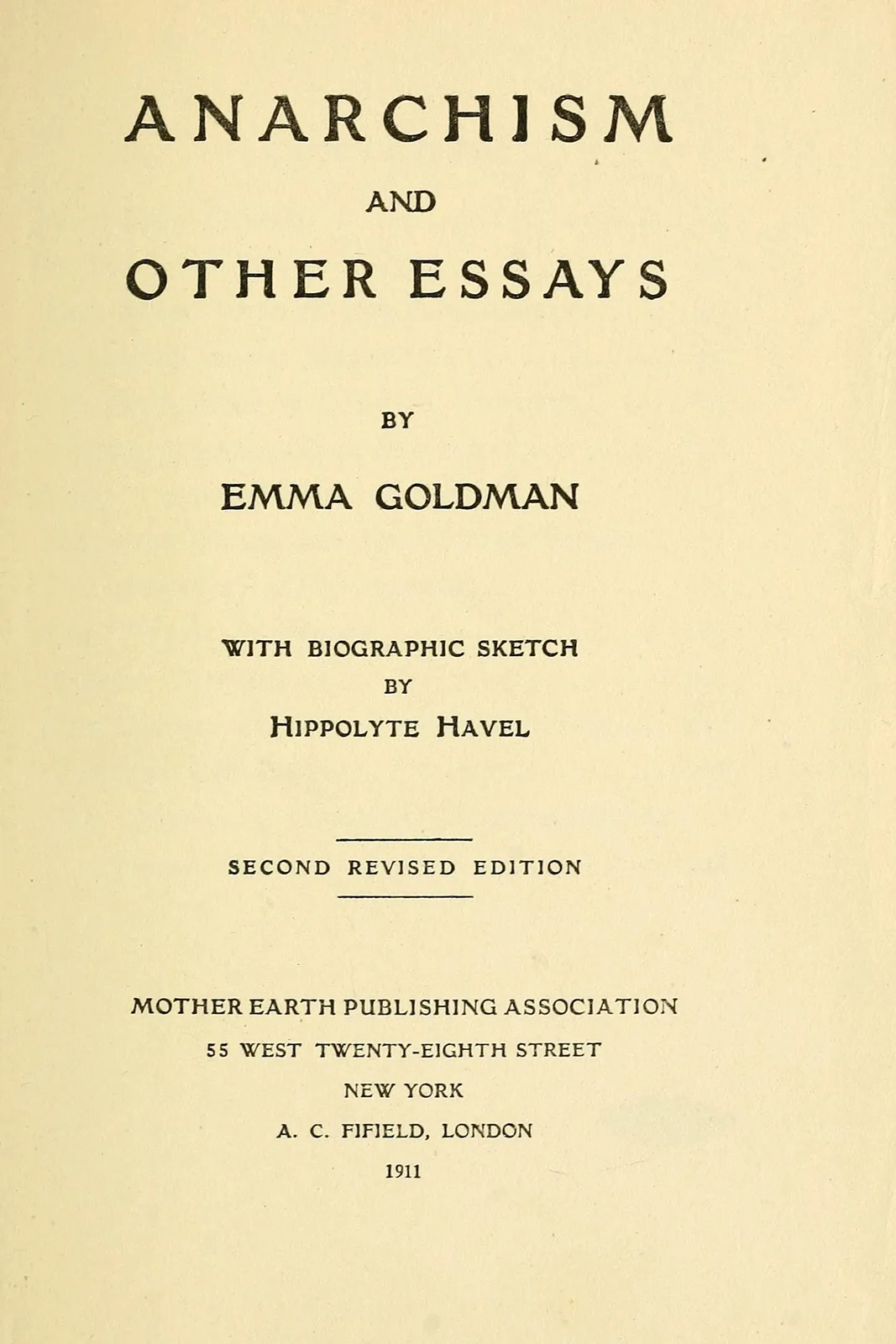
- Anarchism and Other Essays, title page (2nd revised edition) — Emma Goldman; Hippolyte Havel, 1911 · Anarchism and Other Essays (New York: Mother Earth Publishing Association, 1911), Internet Archive (Lyrasis/Sloan scan) · Public domain (published in the United States before 1931; Internet Archive item states no rights)
- Mother Earth, vol. VIII no. 2 (April 1913), page 41 — Emma Goldman, ed. (Mother Earth Publishing Association, New York), 1913-04 · Mother Earth vol. VIII no. 2 (April 1913), Harvard scan, Internet Archive item 'mother-earth' (Mother Earth 1906-1917); file 'v08n02' PDF page 11 · Public Domain Mark 1.0 (Internet Archive item rights field: http://creativecommons.org/publicdomain/mark/1.0/; published in the US 1906-1917, pre-1931)
- Mother Earth, vol. X no. 12 (February 1916), page 410 — Emma Goldman, ed. (Mother Earth Publishing Association, New York), 1916-02 · Mother Earth vol. X no. 12 (February 1916), Harvard scan, Internet Archive item 'mother-earth' (Mother Earth 1906-1917); file 'v10n12' PDF page 28 · Public Domain Mark 1.0 (Internet Archive item rights field: http://creativecommons.org/publicdomain/mark/1.0/; published in the US 1906-1917, pre-1931)
- Mother Earth, vol. X no. 12 (February 1916), page 416 — Emma Goldman, ed. (Mother Earth Publishing Association, New York), 1916-02 · Mother Earth vol. X no. 12 (February 1916), Harvard scan, Internet Archive item 'mother-earth' (Mother Earth 1906-1917); file 'v10n12' PDF page 34 · Public Domain Mark 1.0 (Internet Archive item rights field: http://creativecommons.org/publicdomain/mark/1.0/; published in the US 1906-1917, pre-1931)
- Emma Goldman on a street car LCCN2017648268 — George Grantham Bain Collection, 1917 · Library of Congress, Prints & Photographs Division (George Grantham Bain Collection), via Wikimedia Commons · Public domain (Wikimedia Commons file page; LoC rights statement could not be fetched because loc.gov blocked automated requests, Commons records it as public domain)
- U.S. Army transport BUFORD, the "Soviet Ark," used to deport aliens to Russia, Dec. 21, 1919 - broadside view LCCN2001704475 — George Grantham Bain Collection, 1919-12 · Library of Congress, Prints & Photographs Division (George Grantham Bain Collection), via Wikimedia Commons · Public domain (Wikimedia Commons file page; LoC rights statement could not be fetched because loc.gov blocked automated requests, Commons records it as public domain)
- My Disillusionment in Russia, Preface p. vi (Kronstadt, 'the final wrench') — Emma Goldman, 1923 · My Disillusionment in Russia (1923), Internet Archive · Public domain (published in the United States before 1931; Internet Archive item states no rights)
- Emma Goldman LCCN2014700947 — Bain News Service, publisher, 1915 · Library of Congress, Prints & Photographs Division (George Grantham Bain Collection), via Wikimedia Commons · Public domain (Wikimedia Commons file page; LoC rights statement could not be fetched because loc.gov blocked automated requests, Commons records it as public domain)
Sources
Tier 1 — the subject's own words (writings, letters, diaries, trial records)
- [LML] Emma Goldman, Living My Life (New York: Knopf, 1931). Text used: OCR of "The Anarchist Library: Emma Goldman, Living My Life" (IA
al_Emma_Goldman_Living_My_Life_a4), saved asliving-anarchistlib.txt; locators are chapter numbers read from that text and must be checked against a first-edition scan. COPYRIGHT: published 1931, so it enters the US public domain on 1 January 2027 at the latest (renewal status not checked); until then use for research and paraphrase, and clear every quotation before the script is final. The 1931 scan IAlivingmylife0000unseis lending-only (401). - [AOE] Emma Goldman, Anarchism and Other Essays (New York: Mother Earth Publishing Association, 1917 ed.; first ed. 1910), with Hippolyte Havel's "Biographic Sketch". Texts: IA
anarchismandothe00golduoft(1917,anarchism1917.txt) and IAanarchismandoth00havegoog(1910,anarchism1910.txt). Page numbers below are from the printed headers; the 1910 and 1917 pagination differs. - [ME-1913-04] Mother Earth, vol. VIII no. 2 (April 1913), "The Failure of Christianity" by Emma Goldman, pp. 41–48. IA
mother-earth, file "Mother Earth v08n02 (1913-04)"; saved asme-1913-04.txt. - [ME-1916-02] Mother Earth, vol. X no. 12 (February 1916), "The Philosophy of Atheism" by Emma Goldman, pp. 410–416. IA
mother-earth, "Mother Earth v10n12 (1916-02)"; saved asme-1916-02.txt. - [ME-1916-04] Mother Earth, vol. XI no. 2 (April 1916), "Birth Control Number", with Abbott, "The Historical Side of the Birth Control Movement" and Goldman's trial notice. Saved as
me-1916-04.txt. - [ME-1917-07] Mother Earth, vol. XII no. 5 (July 1917), "The Trial and Conviction of Emma Goldman and Alexander Berkman", with Goldman's speech to the jury and the sentence, pp. 129–167 or so. Saved as
me-1917-07.txt. This is a partisan record by Goldman's own magazine; no independent court transcript was found. (Further issues saved but not mined:me-1916-03,me-1917-06,me-1917-08,me-1915-12,me-1906-03.) - [Disill] Emma Goldman, My Disillusionment in Russia (Garden City NY: Doubleday, Page, 1923). IA
goldman-emma.-my-disillusionment-in-russia; saved asdisillusionment.txt. Page numbers from printed running heads (approximate where noted). - [EGP-Spain] Emma Goldman Papers microfilm, "Goldman Writings" reel (IA
goldmanwritings9101emma_5), saved aswritings-1935.txt; contains her 1936–37 Spanish writings in typescript, two copies of the passage on the burnt churches. OCR is rough. - [Berkman-Prison] Alexander Berkman, Prison Memoirs of an Anarchist (1912/1920), IA
prisonmemoirsofa00berkuoft; downloaded asberkman-prison.txt, not yet mined. - [Fragment] Goldman and Berkman, A Fragment of the Prison Experiences of Emma Goldman and Alexander Berkman (1920), IA
fragmentofprison00gold;fragment-prison.txt, not yet mined. [Deport] Berkman and Goldman, Deportation: Its Meaning and Menace (1919), IAdeportationitsme00berkuoft;deportation.txt, not yet mined.
Tier 2 — scholarly biographies and encyclopedias
- [Havel] Hippolyte Havel, "Biographic Sketch" in Anarchism and Other Essays (1910; signed New York, December 1910), pp. 7–40ish of the 1910 edition. A friend and comrade's account, written with Goldman's cooperation; Tier 2 for the outline of the life, secondhand for anything it says about her inner life.
- [EGP-Intro] The Emma Goldman Papers microfilm edition (Chadwyck-Healey), "Introduction to Reels 63 and 64, Government Documents Series (August 1, 1919 to December 22, 1919)", pp. xxvi–xxxi, printed in the front of IA
governmentdocum9101emma_7(gov-1919b.txt). An editors' summary of the deportation file (Immigration Bureau, Justice Department, National Archives RG 60 and others). Tier 2. - [Ganz] Marie Ganz, Rebels: Into Anarchy and Out Again (1920), IA
rebelsintoanarch00ganzrich; downloaded (ganz-rebels.txt), not yet mined.
Tier 3 — popular biographies and journalism
- [Sun] The Sun (New York), 15 June 1917, p. 4, "30,000 Look On at Roundup of 'Reds'" (loc.gov
sn83030431/1917-06-15/ed-1/?sp=4), saved asca-sun-1917.txt(OCR rough). - [Ogden] The Ogden Standard (Ogden City, Utah), 22 December 1919, p. 2, "Aliens Leave U.S. Jeering" (loc.gov
sn85058396/1919-12-22/ed-1/?sp=2), saved asca-ogden.txt(OCR rough). - [Ogden] is also the source for the Rep. Siegel quotation. Other pages saved but not mined:
ca-eveworld-1917.txt,ca-kennebec-1919.txt,ca-birmingham-1919.txt,ca-laramie-1919.txt,ca-wilmington-1919.txt.
Tier 4 — maps to other sources only (Wikipedia and similar). Never cited in the script.
- Wikipedia "Emma Goldman" was used only as a map for the later-life dates (marriage to James Colton 1925, Living My Life composed at Saint-Tropez, return visits, death 14 May 1940); none of those dates is cited here except as "unverified".
Opposition sources — contemporary critics and religious responses
- [Mayer] Judge Julius M. Mayer's sentencing remarks, 9 July 1917, as printed in [ME-1917-07] p. 162.
- [McCarthy] United States Marshal Thomas D. McCarthy, quoted in [ME-1917-07] (p. 130) and in [Sun].
- [Hudson] Hudson Dispatch (Union City NJ), 23 December 1919, editorial "Good Riddance", reproduced in the Emma Goldman Papers, Government Documents reel (IA
governmentdocum9101emma_8,gov-1919a.txt; National Archives RG 60). - [Siegel] Representative Siegel, House Immigration Committee, quoted in [Ogden].
- [Matron] The head matron of Blackwell's Island, as reported in [LML].
Related lives
Ernestine Rose (episode 07) — Jewish-born woman orator who broke with the faith at sixteen; or Bradlaugh and Besant (episodes 02 and 03) — Leonard Abbott's article in *Mother Earth*, April 1916, ranks "Bradlaugh and Besant in England... and now Emma Goldman in the United States" as birth-control pioneers who "brave the law". (No "Next:" wording in script or video; the close says the person has their own episode.)
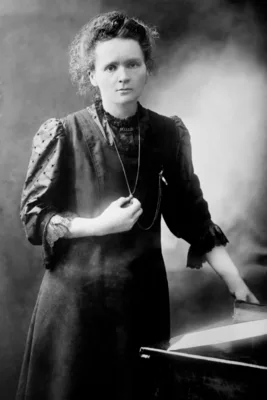
Marie Curie
Marie Curie was a devout Catholic girl in Russian-ruled Warsaw who lost her eldest sister and then her mother. By her daughter's account she felt revolt against the God she had prayed to. She let her faith lapse among the Warsaw positivists while keeping up appearances. From 1895 she declared her unbelief by acts rather than words: a civil marriage, unbaptised daughters and funerals without ceremony. She left only one published sentence of her own: "I myself did not practice any."
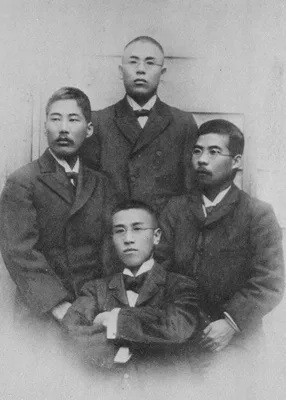
Kōtoku Shūsui
Kōtoku Shūsui was schooled in the Confucian classics and formed as the pupil of Nakae Chōmin, whose last book denied God and the soul. In 1901 he refused his Christian friend Uchimura's God, for a morality without fear or future judgment. In politics he moved from socialism to anarchism. He spent his last months in Tokyo Prison writing a book to obliterate Christ from history, and went to the gallows in 1911 having, as his last poem says, prayed to no god.
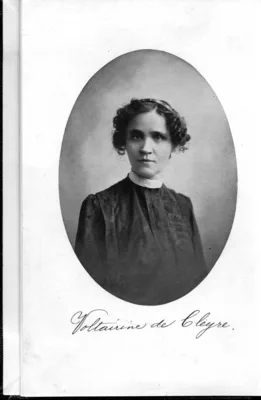
Voltairine de Cleyre
Voltairine de Cleyre was named for Voltaire by a freethinking father who then returned to the church and put her in a convent. She came out "a freethinker" after refusing to say what she did not feel. She lectured a nature-theist freethought until the Chicago hangings of 1887 turned it against the state. In her last years she held that belief in God had little to do with freedom, while her own view stayed "no God in the soul or out of it". The refusal to lie held the whole life together.
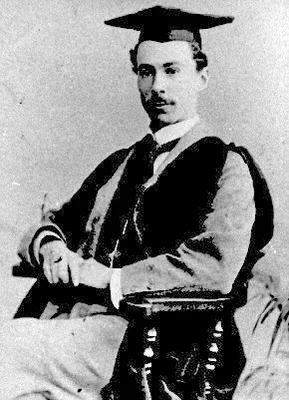
Bertrand Russell
Bertrand Russell was raised in his grandmother's devout Unitarian household after his freethinking parents died. At eighteen he gave up the First Cause over a sentence of Mill's. He tried for twenty years to keep a religion without God, then declared himself a dissenter from all religions, and paid for it in 1940. He never claimed more than that there was no evidence for God.