Kōtoku Shūsui was schooled in the Confucian classics and formed as the pupil of Nakae Chōmin, whose last book denied God and the soul. In 1901 he refused his Christian friend Uchimura's God, for a morality without fear or future judgment. In politics he moved from socialism to anarchism. He spent his last months in Tokyo Prison writing a book to obliterate Christ from history, and went to the gallows in 1911 having, as his last poem says, prayed to no god.
The belief timeline
- Faith (none documented; 1879–87 Confucian schooling; undated "once wished to believe" the Christian story) — Confucian classics at Shūmeisha and Kido's school; Buddhist scriptures read in 1888; in 1910 he says he "once wished to believe" what he read and heard as a child about Jesus, without dating it [47][51][79]
- Doubt (1888–1901; first dated rejection 8 Nov 1901) — Years in Chōmin's household (author of "No God, No Soul"); 1898 Socialism Study Society with liberal Christians; 8 Nov 1901 refuses Uchimura's theism [52][53][54][57]
- Declaration (20 Nov 1910 (preface); published Feb 1911) — Writes and signs 基督抹殺論, "my last writing"; the closing declaration [79][82][37]
- Revision (none found) — Jan 1911: no change of belief; refuses the chaplain (reported), "return to the elements", "have not prayed to a god"; the 1905 Bible reading ("hunt for holes") and Kinoshita's 1910 invitation to "hunt for treasure" did not move him [60][69][85][86][87]
Notes to the timeline (14)
- [47] At seven or eight (Meiji 12) he learned to recite the Classic of Filial Piety at a school called Shūmeisha; jaWP says from age 9 he studied the Four Books and Five Classics there under the Confucian scholar Kido Akira — Yamakawa p. 85; jaWP. Reported at second hand; the original has not been seen.
- [51] July–Oct 1888 at Uwajima he lodged in a room of the temple Hōgokuji and "accumulated Buddhist scriptures" (佛典を積む) — Yamakawa p. 87.
- [79] Kōtoku's own preface fixes the sequence: begun in the Yugawara mountains in April–May, interrupted by arrest on 1 June, draft held five months, resumed after the hearing of 9 Nov, signed 20 Nov 1910 (jaWP: finished 21 Nov) — Kirisuto pp. i–iii.
- [52] Nov 1888 he becomes Chōmin's live-in pupil in Osaka; Kōtoku's 1902 book: "I was eighteen when I first took the pupil's gift to the Master's gate" — Yamakawa p. 87; ChominBook leaf 5 (OCR); jaWP.
- [53] Chōmin returned to Tokyo on 10 Sept 1901 and "within ten days" the manuscript of "No God, No Soul" (続一年有半) was done; he died 13 Dec 1901 aged 55; "following the Master's last instruction no religious rite of any kind" at the funeral (p. 100); Shaku Unshō burst into the sickroom to press prayer in late November (p. 99). A publisher's advertisement in the same book calls 続一年有半 "一名無神無靈魂" — ChominBook pp. 91, 98–100 (images); ad in leaf 55 OCR.
- [54] In Oct 1898 the Socialism Study Society began among liberal Christians (Murai Tomoyoshi, Abe Isoo, Kishimoto Nobuta, Katayama Sen and others) at the Unitarian Association's library in Mita; Okino says Kōtoku joined as an outlier, "a materialist of Chōmin's school" (Kinoshita remembers the study group as Unitarian and himself refusing to join) — Okino p. 53; Kinoshita §二.
- [57] On 8 Nov 1901 Kōtoku writes that Uchimura "constantly counsels me in the doctrine that God exists" and that on this one point he cannot yield to him and grieves — Yūshin p. 181 (image) (Q24).
- [82] The final declaration (pp. 146–147): Christians who treat Christ as a historical person and his life as history are wrong and false; "I declare I obliterate him from world history" — Kirisuto pp. 146–147 (Q28-Q30).
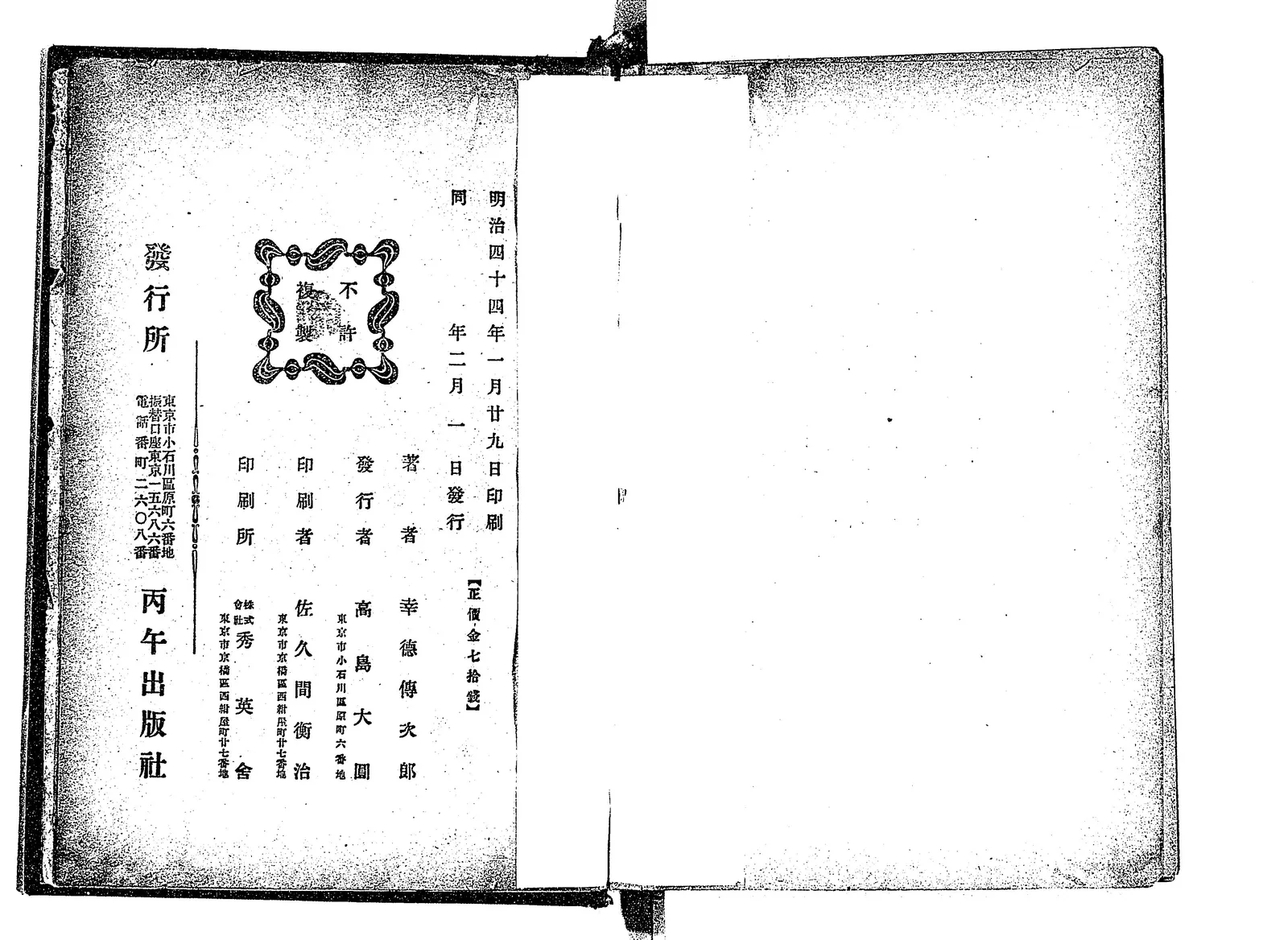
- [37] 基督抹殺論 was printed 29 Jan 1911 by 丙午出版社 (70 sen), the afterword dated 27 Jan 1911 by Takashima Beihō says the planned prefaces (Miyake Setsurei) and appendices (Sakai, Taoka, Kinoshita, Kōtoku's prison letters) were left out "for circumstances"; Okino gives issue date 5 Feb 1911 — Kirisuto colophon and afterword (leaves 79–80); Okino p. 76.
- [60] In early 1905 Kinoshita saw him packing books for prison with an Old and New Testament; "I'm going to hunt for the holes in the Jesus faith in jail" (ヤソの穴探し); he came back in the heat of summer an anarchist who called Kropotkin "sensei" — Kinoshita §六 (Q36).
- [69] Taoka Reiun (arrived 26 May 1910) lodged next door to Kōtoku at the Amanoya inn: "Kōtoku was bent on hurrying the draft of the Massatsuron, ever at his brush"; the arrest he dates "certainly 3 June" (cf. 1 June); he says his own and Miyake's prefaces were "buried in darkness" — Taoka pp. 290–291; preface leaf 12 (Q47).
- [85] Tokyo Asahi, 28 Jan 1911: the condemned divide into "no God, no soul" (Kōtoku, Kanno, Morichika, Uchiyama, Niimura, Miyashita, Furukawa) and believers (Matsuo, Niimi, Okumiya, Ōishi, Naruishi); "as befits Chōmin's pupil Kōtoku held the no-God, no-soul view to the last moment", and to a chaplain who came alone into his cell: "Death is the necessary result of natural law; I cannot believe there is pain or pleasure in a life after death" ("とか聞く", hearsay); the paper calls them "all poisoned by materialism" — Miyatake pp. 126–127 (image) (Q42).
- [86] Letter to Sakai, the day after the sentence (the paper's note says "the 19th", the signature "20 January"): "For some days or weeks I shall read what I can and write what I can and then return to the elements"; it also asks that 基督抹殺論, when out, be sent first to named friends and lawyers — Miyatake pp. 135–136 (image) (Q40).
- [87] Sakai's note of Kōtoku's last poem includes "才拙惟任命、途窮未禱神" (poor in talent I leave it to fate; at the road's end I have not prayed to a god) and "死生長夜夢、榮辱太虛塵" (life and death a long night's dream, honour and shame dust of the void) — Miyatake p. 138 (image) (Q41).
The Last Writing
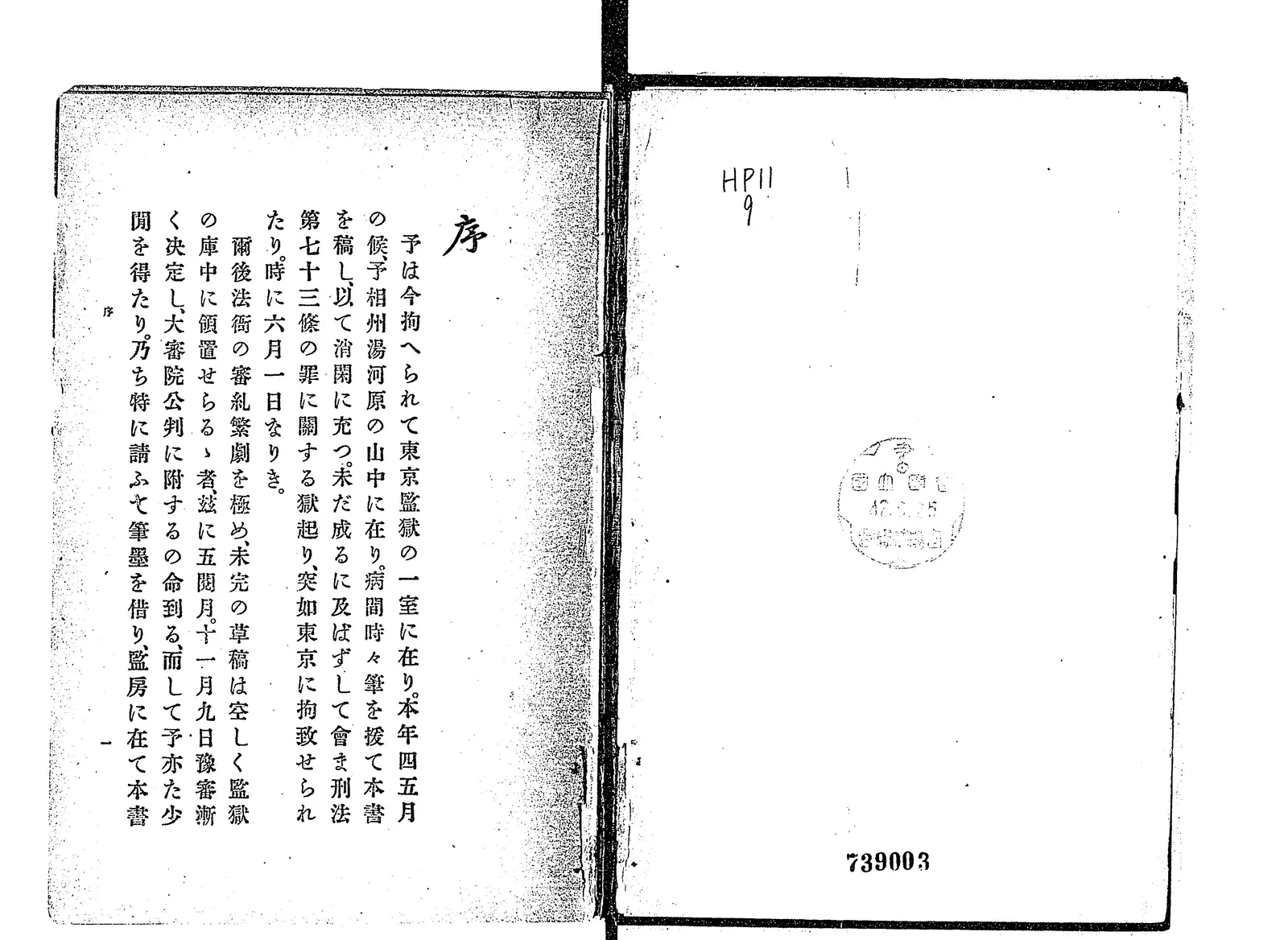
On 20 November 1910, in a cell of Tokyo Prison, a journalist awaiting trial for plotting against the emperor signed the preface to a book about Jesus. It was, he wrote, "the last writing of my ten years of authorship, and must be a posthumous manuscript."1 The book, Kirisuto massatsuron, "The Obliteration of Christ", ended: "I therefore strip off his mask, wipe off his powder, lay bare his true form, and declare that I obliterate him from world history."2 Two months later Kōtoku Shūsui was hanged. The book was published a week after his death.3
This chapter asks how a boy schooled in the Confucian classics in a small town on the island of Shikoku came to write it, and what he believed when he died.
Tosa and the classics
He was born on 5 November 1871 at Nakamura in the province of Tosa, now part of Kōchi. His father died soon after his birth, and his mother raised him.456 From the age of seven or eight he learned the Confucian classics at a local school, and later boarded with the Confucian scholar Kido Akira.78 At sixteen, staying in a temple room at Uwajima, he read Buddhist scriptures.9 No source records a religious faith of his own. In his prison preface he wrote only that as a child he had often read and heard the story of Jesus, born of a virgin, crucified for sin and risen, "and once wished to believe it."10 On his timeline, that undated wish is his faith, and it is a slight one.
Chōmin's pupil
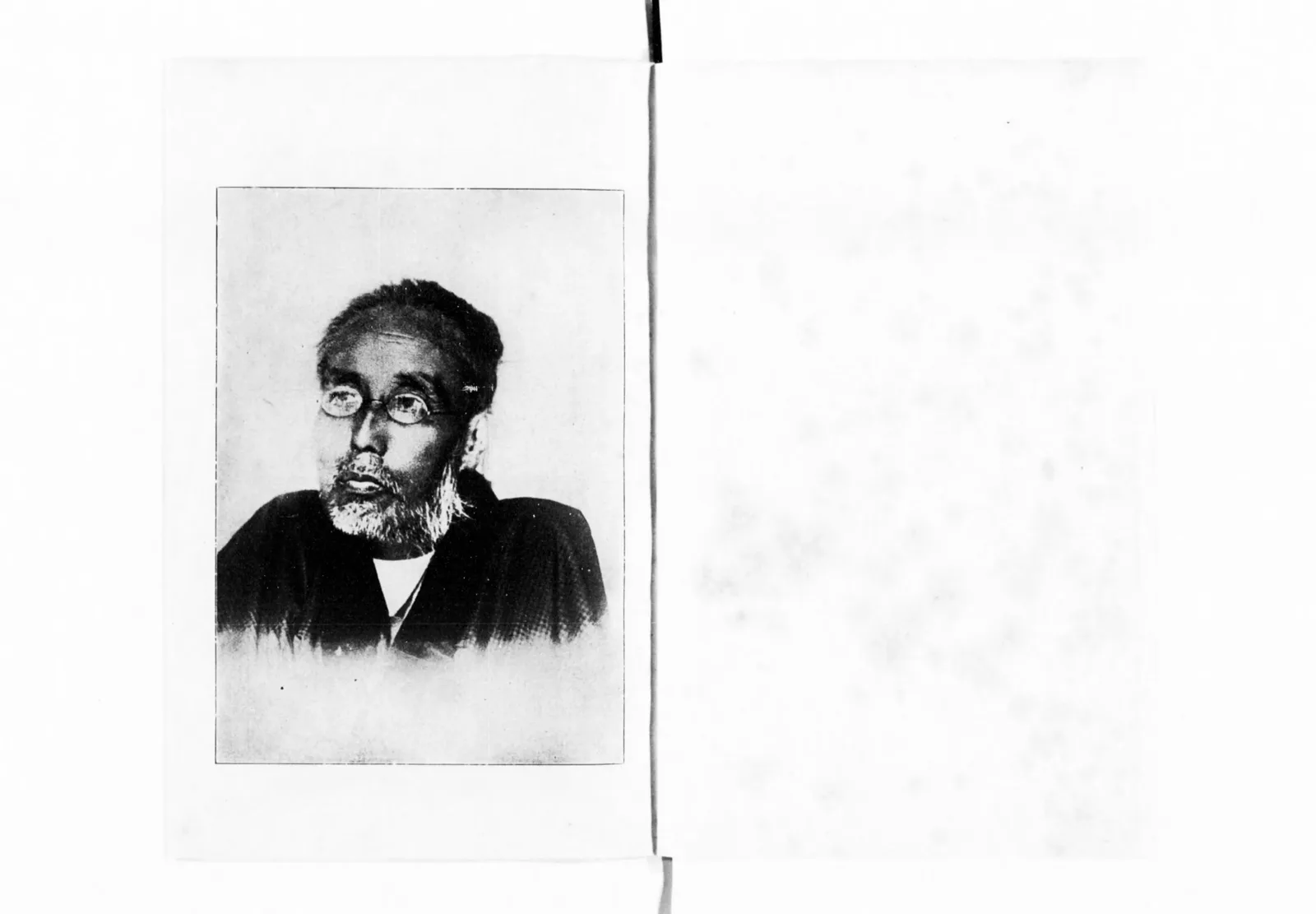
In November 1888, at seventeen, he became a live-in pupil of the political thinker Nakae Chōmin, who gave him the name Shūsui.11 Chōmin's last book, finished within ten days in September 1901, three months before his death, was called, in a publisher's phrase, "No God, No Soul"; he died that December and, Kōtoku wrote, "following the Master's last instruction, again no religious rite of any kind was used" at his funeral.1213 Kōtoku wrote Chōmin's life the next year.14 A Christian pastor, recalling the late 1890s, called him "a materialist of Nakae Chōmin's line."1516
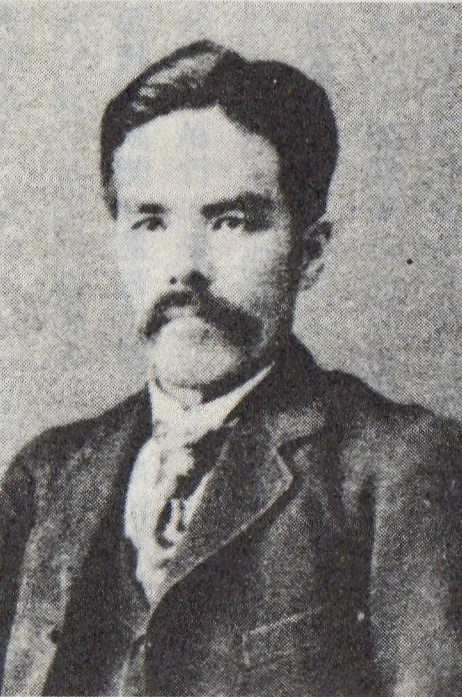
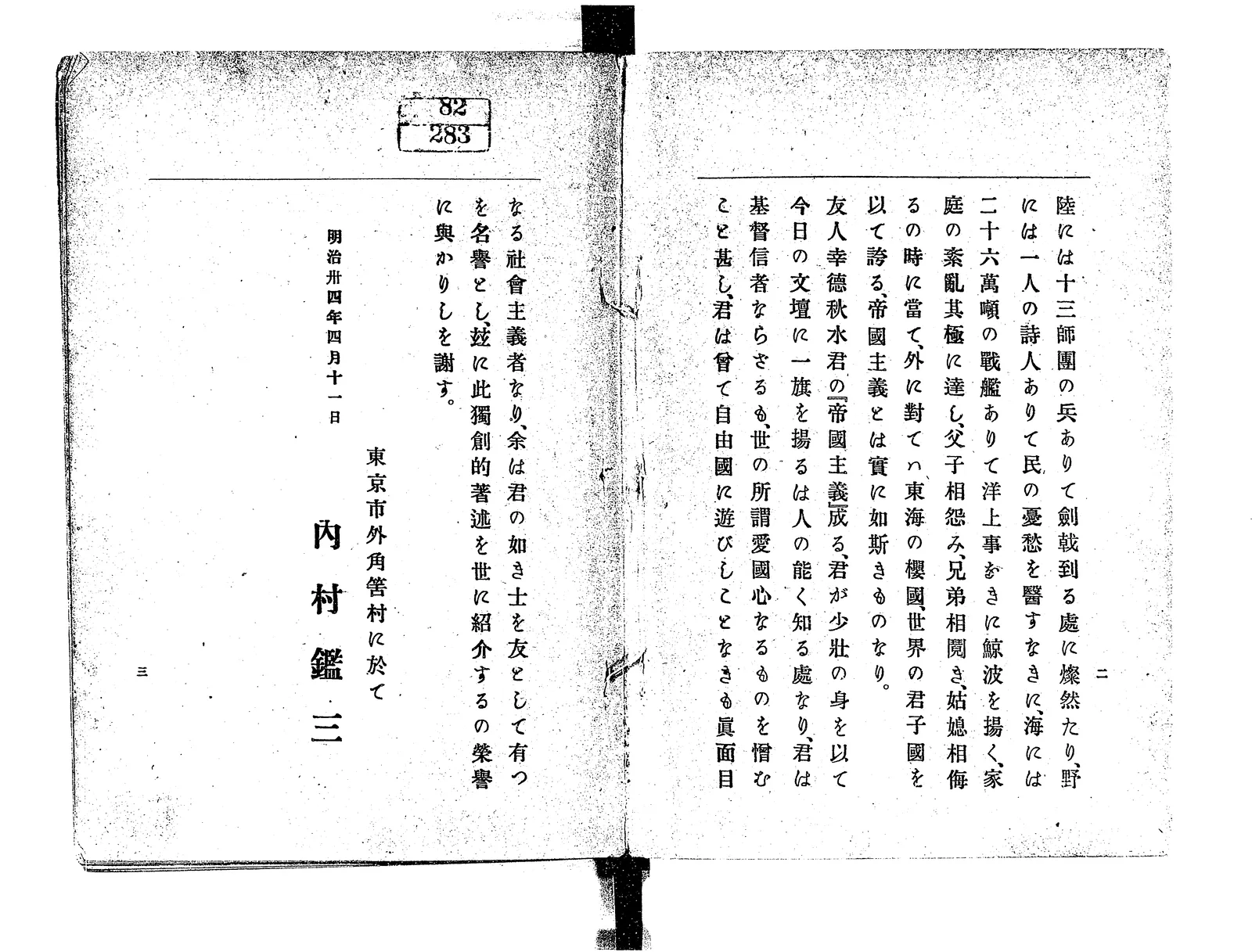
By then he was a leading writer on the Tokyo daily Yorozu Chōhō, where his colleague was the Christian writer Uchimura Kanzō.17 In 1901 Uchimura wrote a preface for Kōtoku's book Imperialism: "You are not a Christian, yet you hate so-called patriotism intensely ... I count it an honour to have such a man as friend."18 Kōtoku answered in an essay of 8 November 1901. He honoured Uchimura's learning and virtue, he wrote, "yet though he constantly urges on me the doctrine that God exists, on this one point I grieve that I cannot yield to him."1920 The Easterner who does not believe in God, he argued, runs to save a child about to fall into a well; Abraham, told by God to kill his son, raised the knife. One was "a morality that fears God", the other "one that loves man"; one "a servant's morality", the other "a free person's." "Why act for God, or for heaven? We need only cultivate ourselves, reflect, improve, advance. Why rely on a future judgment?"2122 His timeline places his doubt here, and this is the first dated statement of his unbelief.
Socialism, prison, anarchism
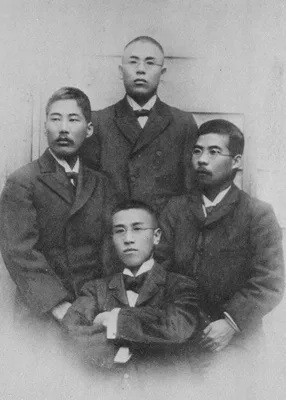
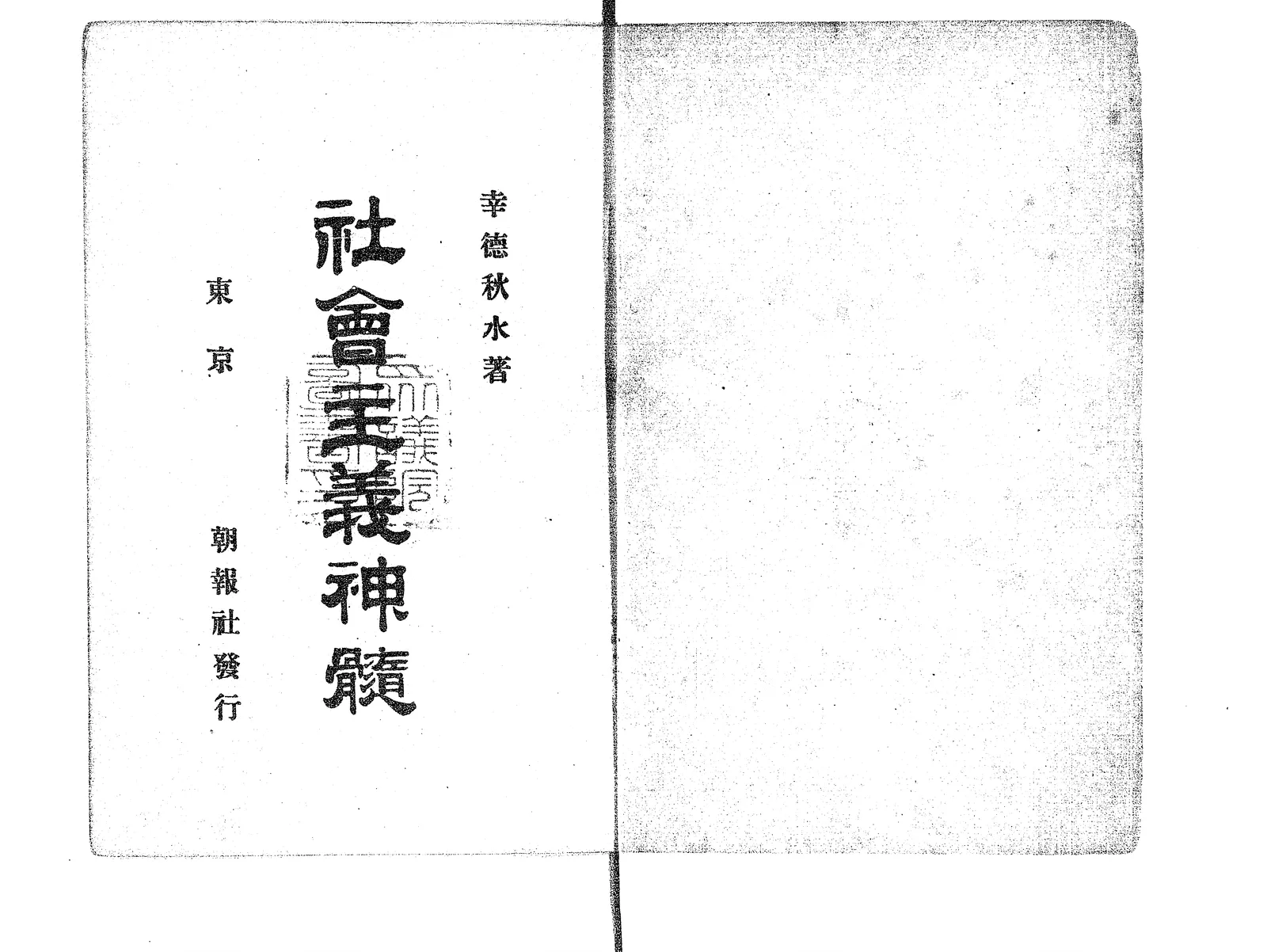
In 1903 he and Uchimura both left the Yorozu Chōhō when it turned toward war with Russia.23 The same year, in The Quintessence of Socialism, he wrote that religion "lets us imagine a paradise to come; it has not removed our present pain."24 With Sakai Toshihiko and others he ran the weekly Heimin Shimbun, the Commoners' News, against the war.2526 "We loathe making war a tool for making money," the paper said.27
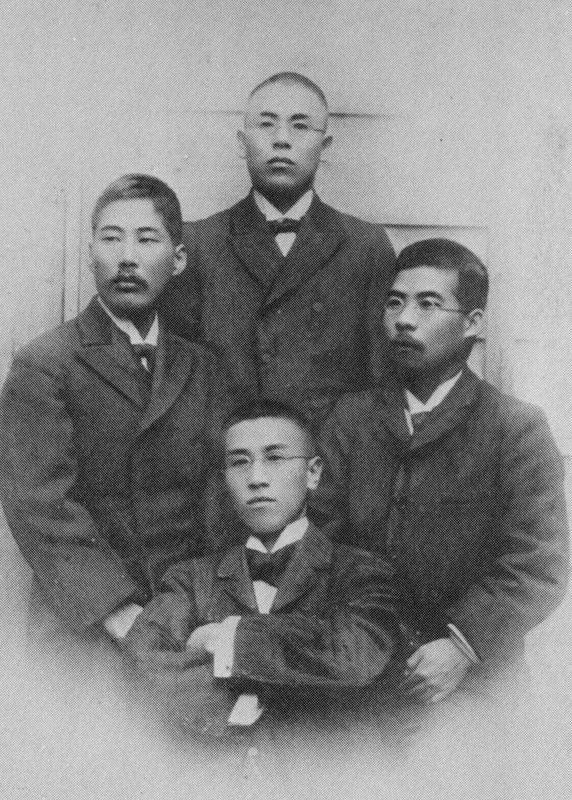
In 1905 he went to prison for five months. His friend the Christian socialist Kinoshita Naoe remembered him laughing as he packed a Bible among his books, saying he would spend his sentence hunting for the holes in the Jesus faith; he came out, Kinoshita wrote, an anarchist who called Kropotkin his teacher.2829 After a journey to California he wrote, in 1907, that he had given up on parliaments for "direct action": "What the working class wants is not the seizure of power but the 'seizure of bread'."3031
Yugawara and the cell
In the spring of 1910, at an inn in the hot-spring town of Yugawara, he began the book on Jesus. Kinoshita had posted him a New Testament and a Zen classic with a note: you hunted for holes in Jesus in jail; this time hunt for the treasure. Kōtoku thanked him only for the Zen book.323334 The critic Taoka Reiun, staying next door, saw him "bent on pressing the draft and kept at his brush."35 On 1 June 1910 he was arrested, accused with others of a plot to kill the emperor. His draft was held for five months; after the preliminary hearing in November he was given brush and ink and finished it in his cell.3637
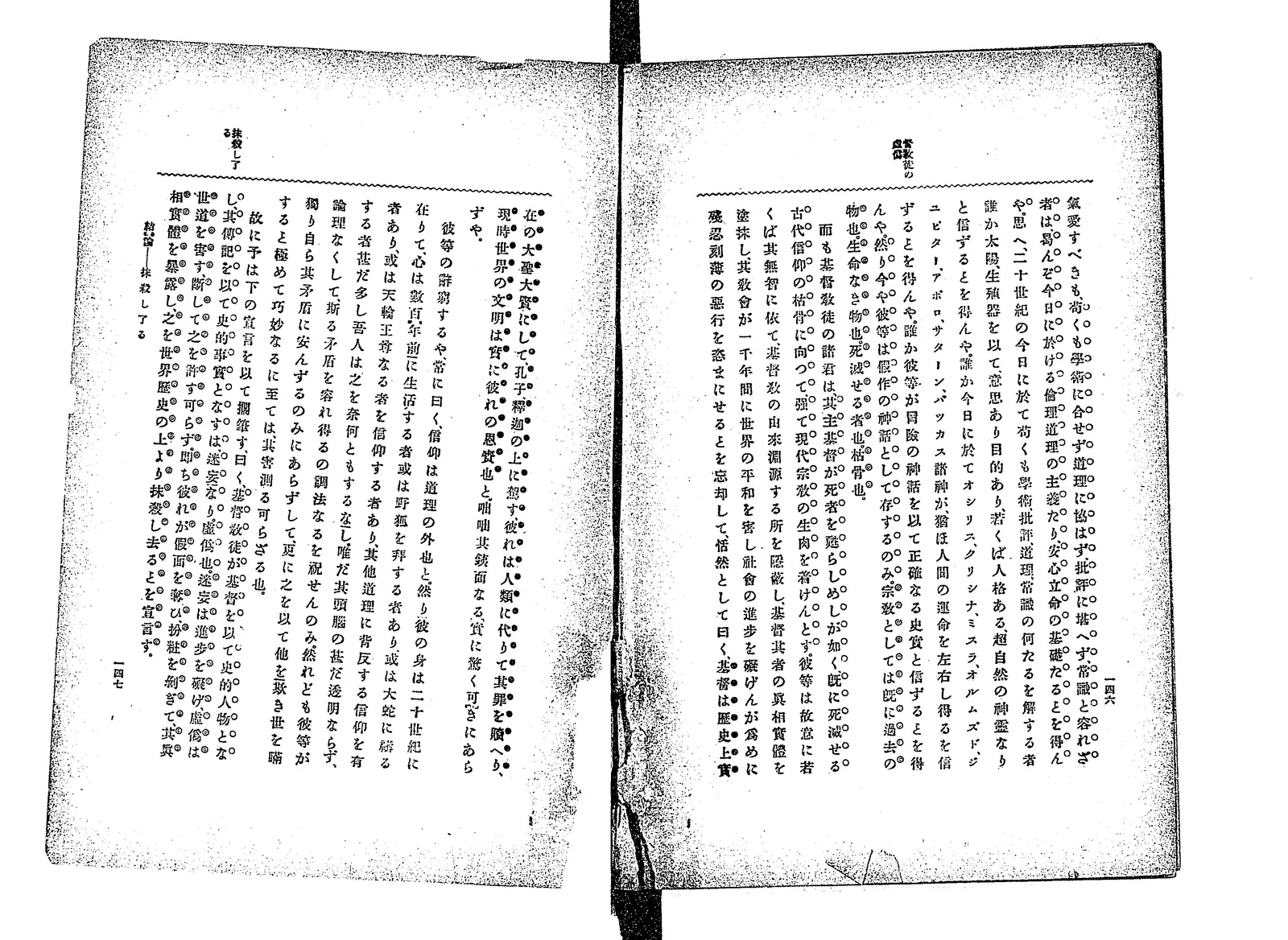
The book argued that the Gospels contradict each other, that no Roman, Jewish or Greek writer of the first century noticed Jesus, and that the Christian story was assembled from sun cults, Plato, Philo, Mithras and the Essenes; if a Christ had existed, he wrote, he was only an Essene teacher.3839 He drew openly on Western freethinkers, among them Annie Besant, whose Christianity of 1881 supplied several of his passages.40 Of the old gods he wrote: "Who can believe, in the twentieth century, that the sun or the sex organ is a supernatural spirit with will, purpose or personality? Who today can believe that Osiris, Krishna, Mithra, Ormuzd, Jupiter, Apollo, Saturn, Bacchus still govern human fate?"41 The believers' last answer, he said, was always that "faith lies outside reason."42 His timeline places his declaration here.
The trial
The trial, held in secret, opened in December 1910. "Now that even the public hearing has been closed," he wrote in prison.4344 In New York, Emma Goldman led protest meetings.45 On 18 January 1911 the Supreme Court sentenced twenty-four to death; twelve sentences were commuted the next day.4647 In his last letter to Sakai he wrote: "For the next few days or weeks, I'll read what I can, write what I can, and then return to the elements."4849 In the essay he wrote in his cell on life and death, he said that for the dead person, whose sensation and memory vanish at once, "there can be no pain and no grief", and that some fear death only "from superstition about the next world."5051 "When the time to die comes, I want to meet it with complete peace of mind and satisfaction."52
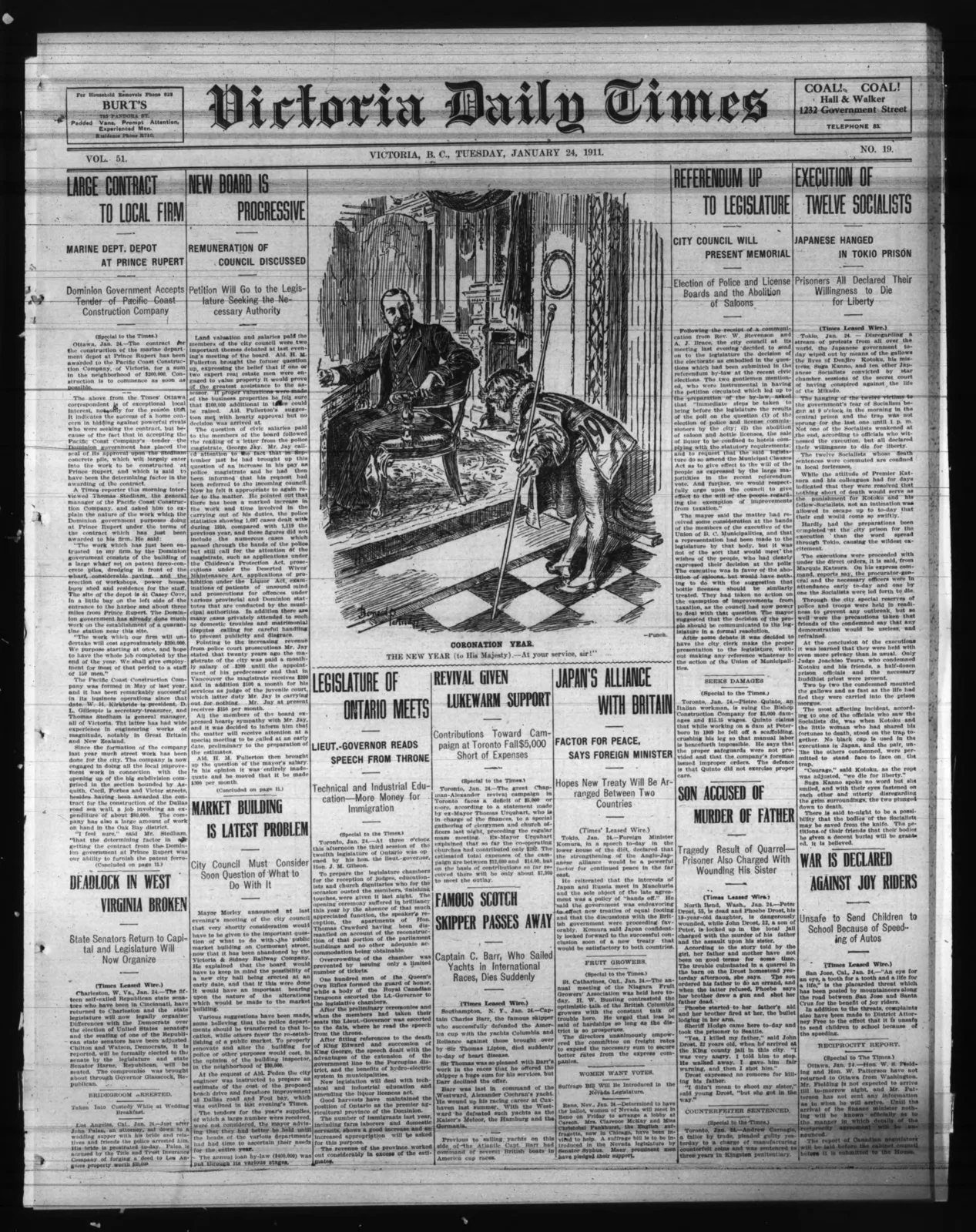
He was hanged on 24 January 1911 with ten others; Kanno Suga, his companion, was hanged the next day.5354 A last poem, recorded by Sakai, says: "at the road's end I have not prayed to a god."5556 The Tokyo Asahi reported that he held to the "no God, no soul" view to the end, and that he told a prison chaplain that death was the necessary result of natural law; that is hearsay, and the paper said so.5758
The other side
The Christians who knew him answered him with grief rather than anger. Uchimura had urged God on him for years and called him a friend.1819 Kinoshita gave lectures on the book and wrote a rebuttal; the Christian reformer Kagawa Toyohiko, praising that rebuttal in 1913, said the book had been written from an anarchist's hatred of Christianity, and that even Kōtoku could not quite obliterate Jesus.5960 Kagawa summed up the case in a sentence: "He tried to kill the emperor. But before that he tried to kill the 'King of Kings'."61 A Nichiren priest, Honda Nisshō, called his thought "an exceedingly extreme materialism", and yet it was Honda who offered to bury two of the executed men.6263 A Christian pastor, Okino Iwasaburō, recorded what the case cost believers: none of the accused was a church member, but hostile voices said that Christians were anarchists.64
Did his unbelief change shape?
Not in substance. A boy schooled in Confucius and a youth who read the Buddhist scriptures became the pupil of a man who died saying there was no God and no soul. He refused his Christian friend's God in 1901 for the sake of a morality without fear, and in 1910 spent his last months proving, to his own satisfaction, that Jesus had never lived. What changed was his politics, from socialist to anarchist. His unbelief went with him to the gallows unaltered: he would return to the elements, and he had not prayed to a god.
Emma Goldman, who led the New York protests against his trial, has her own chapter in this book.
Footnotes
-
Kōtoku Shūsui: Kirisuto, preface p. ii (leaf 2); NDL 994563. ↩
-
Kōtoku Shūsui: Kirisuto p. 147 (last lines). ↩
-
Okino Iwasaburō: Okino p. 76. ↩
-
AozoraAuthor; JaWS; Tonopah; Salem; Kanpō p. 493 (24th for the eleven). Reported at second hand; the original has not been seen. ↩
-
Yamakawa p. 85; jaWP; Fleischmann ¶1 (Tosa only). ↩
-
Kinoshita §六; enWP. ↩
-
Yamakawa p. 85; jaWP. ↩
-
Yamakawa p. 86. ↩
-
Yamakawa p. 87. ↩
-
Kōtoku Shūsui: Kirisuto pp. 1–2 (image). ↩
-
Yamakawa p. 87; ChominBook leaf 5 (OCR); jaWP. ↩
-
ChominBook pp. 91, 98–100 (images); ad in leaf 55 OCR. ↩
-
Kōtoku Shūsui: ChominBook p. 100 (image). ↩
-
ChominBook p. 101; Chomin §一 (Q16). ↩
-
Okino Iwasaburō: Okino p. 53 (image). ↩
-
Okino pp. 53–54 (Q48). ↩
-
Kinoshita §二 (Q15). ↩
-
Kōtoku Shūsui: Yūshin, 秋水文集 上, p. 181 (end dated 8 Nov 1901). ↩ ↩2
-
Yūshin p. 181 (image) (Q24). ↩
-
Kōtoku Shūsui: Yūshin p. 180. ↩
-
Kōtoku Shūsui: Yūshin pp. 180–181. ↩
-
jaWP. ↩
-
Kōtoku Shūsui: Shinzui (1903) p. 11. ↩
-
Fude footer. ↩
-
Fude §二 (Q12, Q13). ↩
-
same: Fude §二. ↩
-
Kinoshita §六 (Q36). ↩
-
Kōtoku, as recalled by Kinoshita: Kinoshita §六 (1933). ↩
-
Henka header, 序に代ふ. ↩
-
Kōtoku Shūsui: Henka (五). ↩
-
Kinoshita §八 (Q38). ↩
-
Kinoshita, quoting his own note to Kōtoku: Kinoshita §八. ↩
-
Kinoshita Naoe: Kinoshita §八. ↩
-
Taoka Reiun: Taoka p. 291. ↩
-
Kirisuto p. i (Q31); Kinoshita §八; Taoka p. 291; Fleischmann ¶9. Accounts differ; see the disputed points. ↩
-
Kirisuto pp. i–iii (Q31). ↩
-
Kirisuto index; text leaves 8–76. ↩
-
Kōtoku Shūsui: Kirisuto leaf 60 (OCR). ↩
-
Kirisuto leaves 14, 28, 40–52; Komori pp. 43–49. Not verified. ↩
-
Kōtoku Shūsui: Kirisuto p. 146. ↩
-
Kōtoku Shūsui, reporting what believers say: Kirisuto p. 146–147. ↩
-
Shisei §一 (Q8); jaWP-Jiken (1st hearing 10 Dec 1910, closed). ↩
-
Kōtoku Shūsui: Shisei §一. ↩
-
jaWP-Jiken (timeline). ↩
-
Tonopah (Q22); jaWP-Jiken. ↩
-
Salem; jaWP-Jiken. ↩
-
Kōtoku Shūsui: Letter to Sakai, Jan 1911; Miyatake p. 135–136 (Tokyo Asahi, 26 Jan 1911). ↩
-
Miyatake pp. 135–136 (image) (Q40). ↩
-
Kōtoku Shūsui: Shisei §二. ↩
-
Kōtoku Shūsui: Shisei §二. ↩
-
Kōtoku Shūsui: Shisei §五. ↩
-
Kanpō p. 493 (crop read); jaWP-Jiken; Salem. ↩
-
Kanpō p. 493 (crop read). ↩
-
Kōtoku Shūsui, as recorded by Sakai: Miyatake p. 138. ↩
-
Miyatake p. 138 (image) (Q41). ↩
-
Miyatake pp. 126–127 (image) (Q42). ↩
-
Tokyo Asahi Shimbun, 28 Jan 1911 (no. 8789), reporting on Kōtoku: Miyatake pp. 126–127. ↩
-
Kinoshita §八; Kagawa p. 330 (Q45). ↩
-
Kirisuto leaf 60 (Q29); Kagawa p. 329. ↩
-
Kagawa Toyohiko: Kagawa p. 331. ↩
-
Honda Nisshō: Honda p. 94 (leaf 62 OCR). ↩
-
Miyatake p. 142; Honda p. 93–94 (OCR). ↩
-
Okino Iwasaburō, Christian pastor, 1920: a motive guess (to teach the Japanese to tell socialism from Christianity) and the effect on believers: none of the 26 accused was a registered church member (three were Buddhist priests), yet hostile voices said Christians equal anarchists, and Shingū churches were watched for eight years: Okino pp. 73–75. ↩
In their own words
私は死刑に処せらるべく、今東京監獄の一室に拘禁せられて居る。
死刑! 私には洵とに自然の成行きである。これで可いのである
百年の後ち、誰か或は私に代って言うかも知れぬ
三魂、六魂一空に帰し、感覚も記憶も直ちに消滅し去るべき死者其人に取っては、何の悼みも悲みもあるべき筈はないのである
来世の迷信から其妻子・眷属に別れて独り死出の山、三途の川を漂泊い行く心細さを恐るるのもある
死の事大ちょうことは、太古より知恵ある人が建てた一種の案山子である、地獄・極楽の簑笠つけて、愛着・妄執の弓矢放さぬ姿は甚だ物々しげである
死すべきの時一たび来らば、十分の安心と満足とを以て之に就きたいと思う
其公判すら傍聴を禁止せられた今日に在っては
労働階級の欲するところは、政権の略取でなくて「パンの略取」である
投票や議員はけっして頼みになるものではない
余は正直に告白する
平民新聞は唯だ多数同志の確かなる信念と固き覚悟に依て援助され維持されつゝあり
吾人は戦争を金儲けの具に供するを悪めり
枯川は二ヶ月の禁錮の為めに其説を改むべきか、其筆を折り、其舌を噤むべきか
これが幸徳であった。彼は文章と識見とで、当時既に「万朝報」紙上の名華であった
唯り文士としての兆民先生其人に至っては、実に明治当代の最も偉大なるものと言わねばならぬ
先生の文は殆ど神品であった
一昨年の夏、露国より帰航の途中で物故した長谷川二葉亭
死処を得ざりしが為めに、今の私は「偉いもんだ」にならないで「馬鹿な奴だ」「悪い奴だ」になって生き恥じを晒して居る
No Divinity, said he, would look on and allow a state of things in which the children he created in his own image may starve or be sold into yoshiwaras
"Courage," said Kotoku, as his rope was adjusted, "we die for liberty."
Twenty-four, including Denjiro Kotoku, who formerly lived at San Francisco, and his wife, were condemned to death.
然らば則ち本書は實に十年論著を以て世に立てるの予最後の文章にして而して生前の遺稿たるべき者
内村先生の學の深きと識の高きと德の大とは、余の平生深く畏敬する所也、而して先生が常に余に諭すに有神の說を以てせらるゝに拘らず、余は唯だ此一事に於て、遂に先生の說に服する能はざるを悲しむ
神を信ぜざるの東洋人は、孩兒の井に墜ちんとするを見ば、何人も走つて之を救はんとす、前者は神を怖るゝの道德也、後者は人を愛するの道德也、前者は奴僕の道德也、後者は自主の道德也
何ぞ神の爲めにし、天國の爲めにせん、唯だ自ら修養し省悟し改善し進步せんのみ、何ぞ未來の裁判に依賴せん
夫れ宗教や以て未來の樂園を想像せしむ、未だ吾人の爲に現在の苦痛を除き去らざる也
基督教徒が基督を以て史的人物となし、其傳記を以て史的事實となすは、迷妄なり、虛僞なり。迷妄は進歩を礙げ、虛僞は世道を害す、斷じて之を許す可らず
即ち彼が假面を奪ひ、粉粧を剝ぎて、其眞相實體を暴露し、之を世界歷史の上より抹殺し去ることを宣言す
誰か太陽、生殖器を以て意思あり目的あり、若くば人格ある、超自然の神靈なりと信ずることを得んや。誰か今日に於てオシリス、クリシナ、ミスラ、オルムズド、ジユピター、アポロ、サターン、バツカス諸神が、猶ほ人間の運命を左右し得るを信ずることを得んや
予も亦た幼より屢ば如此く記せるを讀み、如此く語れるを聽きて、一たび之を信ぜんと欲したりき
予淺識寡聞、宗教の學に於て全く門外漢たり
彼等の辭窮するや、常に曰く、信仰は道理の外也と
若し基督なる者果して之れ有りしとせば、彼れや唯だエツセン派の一教師として其教義を傳道せしに過ぎざらんのみ
先生の遺教に從ふて、又一切宗教上の儀式を用ゐず
牢屋で一つ、ヤソの穴探しをするんだ
幸徳は無政府主義の理論で説く。僕は神の愛でいふ
牢屋で耶蘇の穴探しをしたから、今度は耶蘇の宝探しをして呉れ
碧巌の礼だけいうて来た。後で思ふと、あの時幸徳は既に「基督抹殺論」を書き始めて居たのだ
是から數日間か數週間か知らぬが、讀める丈讀み書けるだけ書いてそして元素に復歸する事にしよう
昨非皆在我、何怨楚囚身、才拙惟任命、途窮未禱神、死生長夜夢、榮辱太虛塵、一笑幽窓底、乾坤入眼新
幸德の如きは中江兆民の弟子丈けあつて、最後の瞬間まで無神無靈魂の說を曲げなかつたとか、…「死は自然法の必然の結果である、自分は死後の生活に就て苦樂のあると云ふことを信ずる能はず」と答へたとか聞く
君は基督信者ならざるも、世の所謂愛國心なるものを憎むこと甚し、君は曾て自由國に遊びしことなきも眞面目なる社會主義者なり、余は君の如き士を友として有つを名譽とし
幸德は只管抹殺論の稿を急いで頻りに筆硯に親しんで居た
彼は帝王を殺さんとした。然しその前に「帝王の帝王」を殺さんとしたのだ
此書は彼等が斷頭臺の露と消えた後一週間、四十四年二月五日を以て丙午出版社から發行せられた
獄中で基督抹殺論を書いた時、特に嶺雲君に序文を求めた
中江兆民系の唯物論者秋水幸德傳次郎
基督抹殺論なども此の考から來て居るので、道德、習慣其の他色々の風俗を破壞すべく、總て此の科學を應用せねばならぬと云つて居ります
どうも非常に極端な唯物論であります
The other side
切りに幸徳を攻撃して聞かす。彼が千代子夫人を離別して、新しい婦人と同棲して居るといふのだ。それで僕に忠告の役を勤めよといふのだ
Twenty-five men and one woman charged with conspiracy against the throne and plotting to assassinate the crown prince and officials of the empire, were publicly sentenced by the Supreme Court today.
= Q43 (君は基督信者ならざるも … 余は君の如き士を友として有つを名譽とし)
= Q24 (先生が常に余に諭すに有神の說を以てせらるゝに拘らず)
彼は帝王を殺さんとした。然しその前に「帝王の帝王」を殺さんとしたのだ (= Q45). Also Kagawa p. 329: 彼も全然抹殺し得なかつたらしい ("It seems even he could not obliterate [Jesus] altogether"), and p. 330 on Kinoshita's rebuttal: 傳次郞の心理を解剖し彼の著が全く、基督教に對する無政府主義的憎惡から書かれた、半分は製造せられたる眞理であることをよく我々に納得させる
幸德が此著述に從事した動機は歐米諸國に於ける如く日本人が社會主義と基督教との相違區別を辨別する知識なきを憤慨し、其の蒙を啓かんが爲であつたらう … 基督教徒は即ち無政府主義なりと云つて得たり賢しと基督教攻擊の聲を逞うした
基督抹殺論なども此の考から來て居るので、道德、習慣其の他色々の風俗を破壞すべく … (= Q49); どうも非常に極端な唯物論であります (= Q50)
信仰は道理の外也 (as Kōtoku reports the believers' last answer, Q33)
Where accounts differ
| Point | One account | Another | How the page handles it |
|---|---|---|---|
| Date and place of arrest | 1 June 1910, Yugawara (Kōtoku's own preface; Kinoshita; jaWP) | "Certainly 3 June" (Taoka p. 291); early August on a ship (Fleischmann ¶9) | Use 1 June; settled by his own preface. Taoka was an eyewitness but wrote two years later. |
| Date Kanno was hanged | 25 Jan (Kanpō no. 8277, 26 Jan 1911, p. 493; jaWP-Jiken) | Same day as Kōtoku, 24 Jan (Salem wire; Fleischmann) | Use 24 Jan for Kōtoku and 25 Jan for Kanno. |
| Number executed and condemned | 24 condemned, 12 commuted on 19 Jan, 12 executed (Tonopah; Salem; jaWP-Jiken) | "Twelve Anarchists" and "Kōtoku, his wife and 24 others" (Fleischmann; Leaflet) | Use 24 condemned, 12 hanged. |
| His post at the Yorozu Chōhō | "Editor-in-chief" (Fleischmann ¶3) | Columnist from 1898 (jaWP) | Say "writer". |
| Year Chōmin died | 13 Dec 1901 (ChominBook pp. 98–99; AozoraChomin) | "Meiji 35 / 1902" in the essay Chomin §一 | Use 13 Dec 1901. The essay line is wrong or garbled. |
| Birth date | "4 November or 23 September 1871" (IABio) | 5 Nov 1871 = Meiji 4.9.23; Yamakawa p. 85: night of the 22nd at "yatsu-han" (about 3 a.m. of the 23rd) | Use 5 Nov 1871. |
| Kanno: wife or mistress | "his wife" (Fleischmann; Tonopah) | "his mistress" (Salem) | Say "his companion". |
| When and where 基督抹殺論 was written | In prison (roster line; Okino; Taoka's preface line; jaWP-note) | Begun at Yugawara in April–May 1910, finished in the cell, preface 20 Nov 1910 (Kōtoku's own preface; Taoka pp. 290–291; Kinoshita) | Say: begun in the mountains at Yugawara, finished in his cell. |
| Date he finished | 20 Nov 1910 (preface signed; Okino p. 76) | 21 Nov 1910 (jaWP) | Say "on 20 November" or "that month". |
| Public or secret trial | Closed (Shisei; Fleischmann; jaWP-Jiken) | "publicly sentenced" (Tonopah) | "Tried behind closed doors, sentenced in open court." |
| School | Never attended middle school (Fleischmann) | Nakamura Middle School 1881–85 (Yamakawa; jinmei jisho; jaWP) | Use Nakamura Middle School. |
| Family status | Wealthy merchant house (jaWP) | Rural samurai house (jinmei jisho 1926 via Miyatake) | Say "a well-off family of the town". |
| Prison of 1905 | Sugamo (Tier 4) | Ichigaya (Kinoshita 1933) | Say "prison". |
| Date of last letter to Sakai | "19th" (newspaper's note) | "20 January" (signature) | Say "the day after the sentence". |
| Status of the book at publication | Government allowed it as anti-Christian (jaWP) | First edition listed among banned books (Kinshi 1932, p. 25); Kinoshita's rebuttal also listed banned | Say only that the first edition is on a 1932 list of banned books; note the legend of marks unread. |
| What "Christ" stands for | A metaphor for the emperor (Izawa, via jaWP) | A plain attack on Christianity's historical claims (Komori: one reading only; Okino: motive to separate socialism from Christianity) | Say "readers disagree"; the text of the book is about Jesus. |
| Prison Bible reading | Kinoshita: early spring 1905, took Bible to hunt for holes | Kōtoku's own preface: wished to believe as a child; no mention of 1905 | Use Kinoshita's report with the label "he recalled in 1933". |
List of illustrations
This page uses only public-domain and Creative Commons images; each is credited with its source and licence.
- Kirisuto massatsuron (基督抹殺論), 1911: opening of the preface (p. 1 of the preface) beside the end board — Kotoku Shusui (printed as 幸德傳次郞); Heiwu Shuppansha, Tokyo, 1911 · National Diet Library, Japan, NDL Digital Collections, pid 994563 (DOI 10.11501/994563) · PDM (NDL Digital Collections IIIF manifest, Access Restrictions: PDM)
- Nakae Chomin: photographic frontispiece in Kotoku's Chomin sensei (1902) — Photographer not named; book by Kotoku Shusui, Hakubunkan, 1902-05 · National Diet Library, Japan, NDL Digital Collections, pid 781802 · PDM (NDL Digital Collections IIIF manifest, Access Restrictions: PDM)
- Uchimura Kanzo as English-section editor of the Yorozu Choho, 1897 — Yorozu Choho (published); Commons artist field: 萬朝報, 1897-02-14 · Yorozu Choho, 1897, via Wikimedia Commons (credit given there: Suzuki Norihisa, Uchimura Kanzo, Iwanami, p. 77) · Public domain (Wikimedia Commons file page states: Public domain; Japanese photograph published before 1931); first published 1897 per Commons
- Teikokushugi: Uchimura Kanzo's preface, dated 11 April 1901 — Uchimura Kanzo (preface); Kotoku Shusui (book), 1901-04-11 · National Diet Library, Japan, NDL Digital Collections, pid 783518 · PDM (NDL Digital Collections IIIF manifest, Access Restrictions: PDM)
- Heimin-sha editors: Ishikawa Sanshiro (bottom), Kotoku Shusui (left), Nishikawa Kojiro (right), Sakai Toshihiko (top) — Unknown photographer; first published in Heimin-sha, 13 November 1904, 1904-11-13 · Heimin-sha, 1904, via Wikimedia Commons · Public domain (Wikimedia Commons file page states: Public domain; Japanese photograph published before 1931); first published 13 Nov 1904 per Commons description
- Shakaishugi shinzui: title page — Kotoku Shusui; Chohosha, Tokyo, 1903-09 · National Diet Library, Japan, NDL Digital Collections, pid 798535 · PDM (NDL Digital Collections IIIF manifest, Access Restrictions: PDM)
- Kirisuto massatsuron, 1911: pp. 146-147, the closing declaration of the book — Kotoku Shusui; Heiwu Shuppansha, Tokyo, 1911 (written 1910) · National Diet Library, Japan, NDL Digital Collections, pid 994563 (DOI 10.11501/994563) · PDM (NDL Digital Collections IIIF manifest, Access Restrictions: PDM)
- Victoria Daily Times, 24 January 1911, p. 1: 'Execution of Twelve Socialists / Japanese hanged in Tokio prison' — Victoria Daily Times (Victoria, B.C.), 1911-01-24 · Internet Archive, Victoria Daily Times digitised newspaper (victoriadailytimes19110124) · Public domain (US newspaper-era item published 1911, before 1931; the Internet Archive item states no rights)
- Kirisuto massatsuron: colophon (奥付), printed 29 January 1911, issued 1 February 1911, price 70 sen — Heiwu Shuppansha, Tokyo, 1911-02-01 · National Diet Library, Japan, NDL Digital Collections, pid 994563 (DOI 10.11501/994563) · PDM (NDL Digital Collections IIIF manifest, Access Restrictions: PDM)
Sources
Tier 1 — the subject's own words (writings, letters, diaries, trial records)
- Shisei Kōtoku Shūsui, 死生 (= chapter 1 of 死刑の前). Aozora Bunko card 1453. Local
aozora-shisei.txt. Cited by section 一–五 [27][33]. - Henka 余が思想の変化 (daily 平民新聞, 5 Feb 1907). IA
20240418_20240418(PDM),yo-ga-shiso-no-henka.txt. Cited by section. - Fude 筆のしづく, Heimin Shimbun nos. 25–29, May 1904. Aozora card 2410.
aozora-fude-no-shizuku.txt. - Chomin 文士としての兆民先生. Aozora card 2947.
aozora-bunshi-choumin.txt. - Dreyfus ドレフュー大疑獄とエミール・ゾーラ. Aozora card 2946.
aozora-dreyfus-zola.txt. - ShikeiMae 死刑の前, Aozora card 4324,
aozora-shi-kei-no-mae.txt. Cross-check only. - Kirisuto Kōtoku Shūsui (author printed as 幸德傳次郞), 基督抹殺論, Tokyo: 丙午出版社, 148 pp., printed 29 Jan 1911, 70 sen. NDL Digital Collections pid 994563 (DOI 10.11501/994563, rights "PDM" in the IIIF manifest). OCR from the NDL Lab full-text archive (
lab.ndl.go.jp/dl/api/book/fulltext/994563),kirisuto-massatsuron-1911-ndl-ocr.txt; page images read atdl.ndl.go.jp/api/iiif/994563/R00000NN. OCR is rough (教 often "〓"). Cited by printed page; the preface is pp. i–iii, text begins p. 1, final declaration pp. 146–147. Chapter list (index): 1 緒論 p. 1; 2–4 聖書信ずべき乎 pp. 5, 14, 22; 5–6 聖書以外の証跡 pp. 38, 54; 7–9 基督教の起源 pp. 70, 86, 99; 10 初期基督教の道徳 p. 112; 11 基督の実体 p. 128; 12 結論 p. 143. - Yūshin Kōtoku, 有神有魂說と道德 (Yorozu Chōhō, dated Meiji 34.11.8 = 8 Nov 1901 at its foot; the date reads "三四、一一、八" on the page image although the OCR drops one 一), in 秋水文集 上 (龍吟社, 1947) pp. 179–181.
shusui-bunshu-1947-ndl-ocr.txt(NDL pid 1709973). The 1947 volume is a compilation; the newspaper first printing was not seen. - Shinzui Kōtoku, 社会主義神髄 (朝報社, 1903), NDL
798535,shakaishugi-shinzui-1903-ndl-ocr.txt. pp. 10–11 read on the image. - ChominBook Kōtoku, 兆民先生 (博文館, 1902; preface/postscript dated end Apr 1902), NDL
781802,chomin-sensei-1902-ndl-ocr.txt. pp. 91, 98–101 read on the image. - Teikoku Kōtoku, 帝国主義 (警醒社, 1901), NDL
783518,teikokushugi-1901-ndl-ocr.txt; the preface is by Uchimura Kanzō, dated 11 Apr 1901 (Meiji 34). - NOT REACHED: 社会民主党建設者ラサール (1904, NDL 782477; Uchimura wrote a preface), 陳弁書 (1910), the prison letters collected by Sakai.
Tier 2 — scholarly biographies and encyclopedias
- Komori 小森健太郎, 幸徳秋水『基督抹殺論』とアニー・ベサントの〈世界教師〉論, 文学・芸術・文化 (近畿大学文芸学部論集) 27(1), Sept 2015, pp. 43–49 (open PDF, kindai.repo.nii.ac.jp/records/8009).
komori2015-besant.txt. Research note; traces passages of the book to Besant, Christianity: its evidences, its origin, its morality, its history (London: Freethought Publishing Co., 1881). - Notehelfer 1971 and Elison 1967 (Monumenta Nipponica 22) are in copyright and were not reached; the IA copy of Kosaka's Japanese Thought in the Meiji Era is lending-only (403).
Tier 3 — popular biographies, memoirs, contemporary press, reference works
- Kinoshita Kinoshita Naoe, 幸徳秋水と僕 ――反逆児の悩みを語る――, 朝日新聞 15–20 Apr 1933, in 近代日本思想大系10 (筑摩書房 1975); Aozora card 43238 (text now complete in
aozora-kinoshita-shusui-to-boku-full.txt; the olderkinoshita-shusui-to-boku.txtis a fragment). Unpaged; cited by section 一–八. Memoir written 22 years later; Kinoshita was a Christian socialist. - Taoka Taoka Reiun, 数奇伝 (玄黄社, 1912), NDL
781602,taoka-sukiden-1912-ndl-ocr.txt; pp. 289–291 read on the image. Eyewitness at Yugawara. - Miyatake 宮武外骨 (ed.), 幸徳一派大逆事件顛末 (龍吟社, 1946), NDL
1450455,miyatake-taigyaku-tenmatsu-1946-ndl-ocr.txt. Reprints 1911 newspaper items (Tokyo Asahi, Mainichi Dempō, Chūgai Shōgyō, Jiji Shinpō, Niroku Shinpō), Kōtoku's letter to Sakai and Sakai's note of his last poem. 1946 compilation in possible copyright; used for reading and short quotation of the 1911 items only. Pages read on the images: pp. 126–127, 135–138. - Okino 沖野岩三郎 (Christian pastor), 日本基督新教縦断面 : 一名・明治思想小史 (警醒社書店, 1920), NDL
963190,okino-shinkyo-jandanmen-1920-ndl-ocr.txt; pp. 53, 73–77 read on the image. - Kagawa 賀川豊彦 (ed.), 基督伝論争史 (福音館書店, 1913), NDL
943458,kagawa-kirisutoden-ronsoshi-1913-ndl-ocr.txt; pp. 329–331 read on the image (the passage is Kagawa's own survey). - Honda 本多日生, 修養と日蓮主義 (博文館, 1917), NDL
956335,honda-shuyo-to-nichiren-1917-ndl-ocr.txt; pp. 92–93 read on the image; the lecture "危険なる社会主義" is undated in the book. - Kinshi 図書週報編輯部 (ed.), 明治大正発売禁止書目 (古典社, 1932), NDL
1126267; p. 25 read on the image. - Yamakawa 社会主義神髄 (山川書店, 1948), NDL
1459627,shakaishugi-shinzui-1948-yamakawa-ndl-ocr.txt; "著者略譜" pp. 85–87 (chronology "based mainly on the author's diary"; editor not identified in the OCR). In possible copyright; facts only. - Kanpō 官報 no. 8277, 26 Jan 1911, p. 493 (NDL pid 2951631, image read; crop shows the entry "死刑執行" with the names, "四日" and "スガハ昨二十五日…執行セラレタリ").
- Fleischmann "Kotoku's Life and Work" in The Japanese Martyrs (Freedom Press, 1911; IA
the-japanese-martyrs). Unpaged; secondhand, with errors. - Leaflet Freedom Press, "Urgent Appeal" (IA
freedom-japanese-anarchists-leaflet). - Tonopah Tonopah Daily Bonanza, 18 Jan 1911, p. 1 (LoC sn86076142). Salem Daily Capital Journal, 24 Jan 1911, p. 1 (LoC sn99063957). SunNY The Sun, 21 Jan 1911, p. 4 (pointer only).
Tier 4 — maps to other sources only (Wikipedia and similar). Citable as a reference; not used alone for a script fact.
- jaWP ja.wikipedia 幸徳秋水, revision 108243394 (2026-02-02); wikitext in
jawiki-kotoku.wikitext. - jaWP-Jiken ja.wikipedia 幸徳事件, revision 111354970 (2026-10-11);
jawiki-kotoku-jiken.wikitext. - enWP en.wikipedia Kōtoku Shūsui, revision 1379414203 (2026-10-09);
enwiki-kotoku.wikitext. (There is no ja or en article titled 基督抹殺論.) - AozoraAuthor Aozora author page no. 261 (works list). AozoraChomin Aozora author page no. 1212 (Chōmin 1847-12-08 – 1901-12-13). JaWS ja.wikisource 作者:幸徳秋水. IABio IA
shusuikotoko18711911unknown.
Opposition sources — contemporary critics and religious responses
- Uchimura (preface to Teikoku, 1901), Kinoshita (1933), Kagawa (1913), Okino (1920), Honda (1917), the Tokyo Asahi of 28 Jan 1911 in Miyatake; Tonopah and Salem for the state's case.
- NOT FOUND: Kinoshita's 1911 lecture/essay 基督抹殺論を読む itself (野人語 第一編, 金尾文淵堂, 1911) and Uchimura's own words about the book.
Related lives
Emma Goldman. She led the New York protest meeting of 22 Nov 1910 and a protest letter of 12 Nov 1910 over the case. Also direct sources of his book's argument are Annie Besant (episode 03) and Robert Taylor (episode 05). Alternative: Bhagat Singh.
Bertrand Russell
Bertrand Russell was raised in his grandmother's devout Unitarian household after his freethinking parents died. At eighteen he gave up the First Cause over a sentence of Mill's. He tried for twenty years to keep a religion without God, then declared himself a dissenter from all religions, and paid for it in 1940. He never claimed more than that there was no evidence for God.
Emma Goldman
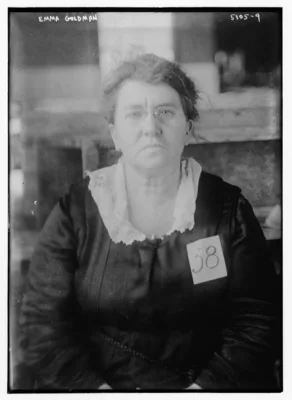
Emma Goldman had no faith to lose, only a religion she met as discipline in a Jewish childhood. Her atheism grew out of her pity for the hanged and out of her anarchism, and by 1893 it was a flat public statement. In 1913 and 1916 it became an argument for the earth over heaven. In Soviet Russia it turned on the revolution's own church.
Marie Curie
Marie Curie was a devout Catholic girl in Russian-ruled Warsaw who lost her eldest sister and then her mother. By her daughter's account she felt revolt against the God she had prayed to. She let her faith lapse among the Warsaw positivists while keeping up appearances. From 1895 she declared her unbelief by acts rather than words: a civil marriage, unbaptised daughters and funerals without ceremony. She left only one published sentence of her own: "I myself did not practice any."
Voltairine de Cleyre
Voltairine de Cleyre was named for Voltaire by a freethinking father who then returned to the church and put her in a convent. She came out "a freethinker" after refusing to say what she did not feel. She lectured a nature-theist freethought until the Chicago hangings of 1887 turned it against the state. In her last years she held that belief in God had little to do with freedom, while her own view stayed "no God in the soul or out of it". The refusal to lie held the whole life together.