Gora was a Brahmin boy who lost faith in a packet of holy ash. He read his way to the conclusion that people had made God, and lost two teaching posts for saying so. He kept the word atheism against Gandhi's advice, and made it into a programme of eating, marrying and living across caste. It never softened into belief.
The belief timeline
- Faith (to c. 1925) — Orthodox Hindu boyhood: aunt's trances, sacred ash packet in his pocket for exams, a father devoted to Siva [6][7]
- Crack (c. 1925) — Loses faith in the ash packet at Seshayya's house; "the beginning of atheism"; Wallace's offer shows him he is still "a Hindu" [7][9]
- Doubt (c. 1926–31) — Five or six years of reading; concludes man made god from psychological need; 1928 discards the thread and is outcast [10][11][15]
- Declaration (1932–33 (public); 1940–41 (as a way of life)) — "An atheist by conviction" to the college, dismissed 1933; resigns 1940 and publishes *Nastikatvamu* 1941 [19][24][29]
- Revision (1942–72) — No change of belief; atheism widened into political and economic action (Quit India, partyless democracy), and the "positive atheism" label defended against Gandhi [47][52][58][63]
Notes to the timeline (13)
- [6] In boyhood he was "conventionally orthodox and superstitious": believed his aunt's trances, took her sacred ash, and kept a packet in his pocket believing it helped him pass exams — Gora, We Become Atheists (Vijayawada: Atheist Centre, first print 15 Nov 1975; introduction by Lavanam), pp. 1–2.
- [7] He still had the packet at the M.A. at 22; staying at Prof. Seshayya's house, unpaid, "I lost faith in the packet of ash"; "obviously that was the beginning of atheism in me"; he recalls "no special event" — Gora, We Become Atheists, pp. 1–2.
- [9] Principal Rev. Wallace offered Yale and the science headship if he became Christian; "At once I felt a Hindu"; he declined, felt unsafe, and moved to the Research Institute, Coimbatore, in May 1926 — Gora, We Become Atheists, pp. 6–7; G. S. Rao, Gora: An Atheist (Atheist Centre, Vijayawada, undated; IA
goraanatheist035514mbp, a DLI scan). Internal evidence: written between the 1970 Atheists' Meet and the 1972 World Meet; includes Bjorn Merker's 1965 Peace News article, "Atheist in the Making". - [10] The offer started questions; he read English and Telugu Bibles, Vedas, Upanishads, Max Muller's Sacred Books of the East, and three months of daily Britannica entries on god, soul, salvation, rebirth; study "spread over five or six years" — Gora, We Become Atheists, pp. 8–9.
- [11] His conclusion: "it was man that made god out of psychological necessity in primitive times"; religious psychology gave "the clue" — Gora, We Become Atheists, pp. 9–10.
- [15] On the August 1928 full-moon day he refused his father's order to wear the sacred thread ("I have no respect for caste"); his father: "Get out of my house. You are a sinner"; he was outcaste and moved out within a week — Gora, We Become Atheists, pp. 19–20.
- [19] He wrote "The Concept of God" for a student manuscript magazine (god useful as answer, moral sanction and art theme, but "a falsehood"); the Brahmo-minded college asked for an explanation; he said he was "an atheist by conviction"; services ended on three months' notice; he left in 1933 after five years — Gora, We Become Atheists, pp. 27–28; Dr G. Vijayam (Gora's son, Atheist Centre director), "Constructive and Positive Approaches of Gandhi and Gora" (essay, after 2009), IA
CONSTRUCTIVEANDPOSITIVEAPPROACHOFGORAANDGANDHI; cited by its "Page N", p. 6; "Goparaju Ramachandra Rao", English Wikipedia, revision 1376429819 (24 Sep 2026). [Wiki-en-SG] "Saraswathi Gora", rev. 1376913040 (26 Sep 2026). [Wiki-en-AC] "Atheist Centre", rev. 1376735176 (25 Sep 2026). [Wiki-te] Telugu Wikipedia "గోరా", rev. 4830125 (18 May 2026). All saved as wikitext inresearch/texts/. - [24] In 1939 Hindu College dismissed him (management blamed his propaganda for student strikes); students had it revoked; the principal then banned him from speaking or writing on atheism inside or outside the college; he agreed to stay a year and resigned in 1940 — Gora, We Become Atheists, pp. 39–41; Vijayam, p. 6.
- [29] In 1941 an atheist conference met at Kanumur (about 300 delegates); his Telugu book *Nastikatvamu* was printed by Movva Sivarao of Mudunur, using the neuter for god, and was reprinted three times — Gora, We Become Atheists, pp. 49–50; [Wiki-en-SG]; Rao, Gora, p. 16.
- [47] Congress organiser at Allahabad then Delhi ("end of 1946" in AwG, "next year" in WBA); Gandhi told him "You have tried atheism sufficiently long. Now, you give up the term atheism"; Gora replied he took the word deliberately — Gora, An Atheist with Gandhi (Ahmedabad: Navajivan, first ed. April 1951; reprints 1958, 1971, 1986; manuscript dated 25 Nov 1950). Two copies read: the mkgandhi.org PDF text, IA
ANATHIESTWITHGANDHI(cited by that PDF's own "Page N", printed at the foot of each page) and the Positive Atheism HTML mirror (web.archive.org, 13 May 2008). The conversations are reproduced "from memory" (AwG p. 17); only the letters are texts, pp. 42–44; Gora, We Become Atheists, pp. 74–75. Accounts differ; see the disputed points. - [52] Stood for Parliament in 1952 and the State Assembly in 1967 as a partyless candidate and lost — Gora, We Become Atheists, p. 100; Rao, Gora, p. 19.
- [58] The first World Atheist Meet (1972, Patamata): O'Hair could not come (visa); R. Kasturi released *Positive Atheism* — Gora, We Become Atheists, p. 117; [Wiki-en-SG].
- [63] Definition: "Godlessness is negative...Atheism is positive"; atheism "means self-confidence and free will"; theism is "the manifestation of the feeling of slavishness" — Gora, Atheist with Gandhi, ch. IV p. 24; Humanists UK, "'Gora'", humanism.org.uk (quotes AwG and AQA).
The Word He Kept
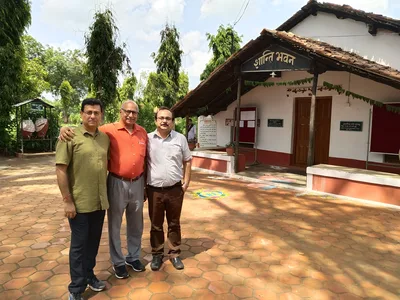
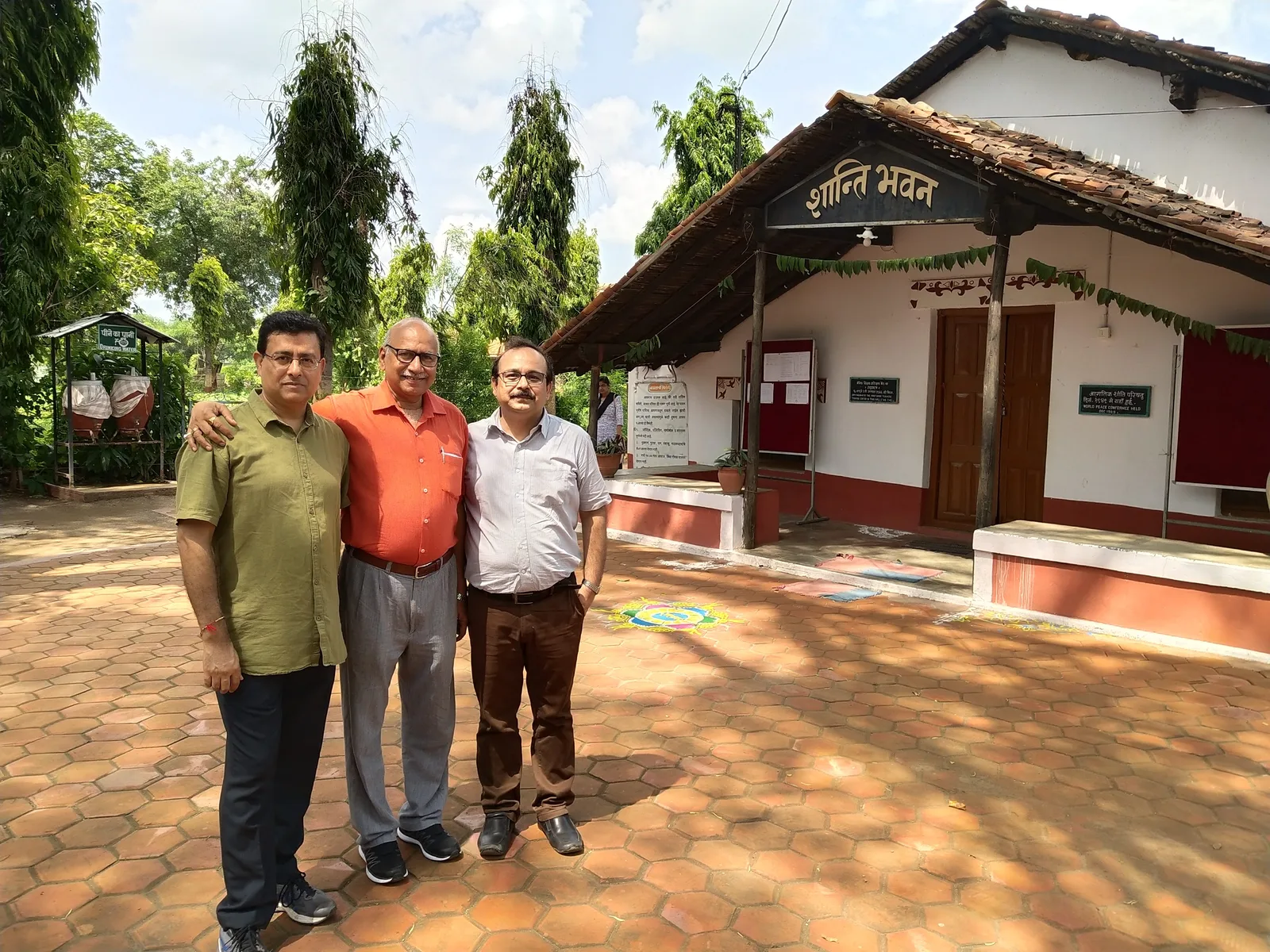
Early one morning in March 1945, in Gandhi's ashram at Sevagram, Gandhi asked a guest from Andhra why he wanted atheism at all. For about seventy minutes the guest answered. He spoke of the Bengal famine, where, he said, people had died quietly because they believed in fate and in God, and he told Gandhi that God was a falsehood made by human beings: useful once, perhaps, but in the long run a poison to life.123 By Gora's own account, Gandhi said he could not claim that his own theism was right and Gora's atheism wrong.4 Gandhi left for Bombay the next day.1
The guest was Goparaju Ramachandra Rao, known as Gora, a botany teacher who had been dismissed by one college for calling himself an atheist and forced out of another, and who had then gone with his wife and six children to live in two huts in a Telugu village. This chapter asks how a Brahmin boy with a packet of holy ash in his pocket came to that conversation, and why he would not give up the word.
The packet of ash
He was born on 15 November 1902 at Chatrapur, in Ganjam district of the old Madras Presidency, now in Odisha, into an orthodox Telugu Brahmin family. His father was a government clerk so devoted to Siva that he was known by one of the god's names.56 By his own account Gora was, as a boy, conventionally orthodox and superstitious. He believed in his aunt's trances, took her sacred ash, and kept a small packet of it in his pocket because he thought it helped him pass his examinations.789 In 1922, by custom, he was married to Saraswathi, who was ten.10 On the belief timeline, this is where his faith sits.
He still had the packet when he took his master's degree in botany at Madras, about 1925, last of five candidates.1112 Then, staying as an unpaid helper in the house of his professor at Tirupati, he lost faith in it and found, he wrote, the will to succeed without it. He recalled no single event that made him an atheist; but looking back from 1975 he called the lost packet the beginning of atheism in him.12131415 On the timeline, this is the crack.
The offer from Yale
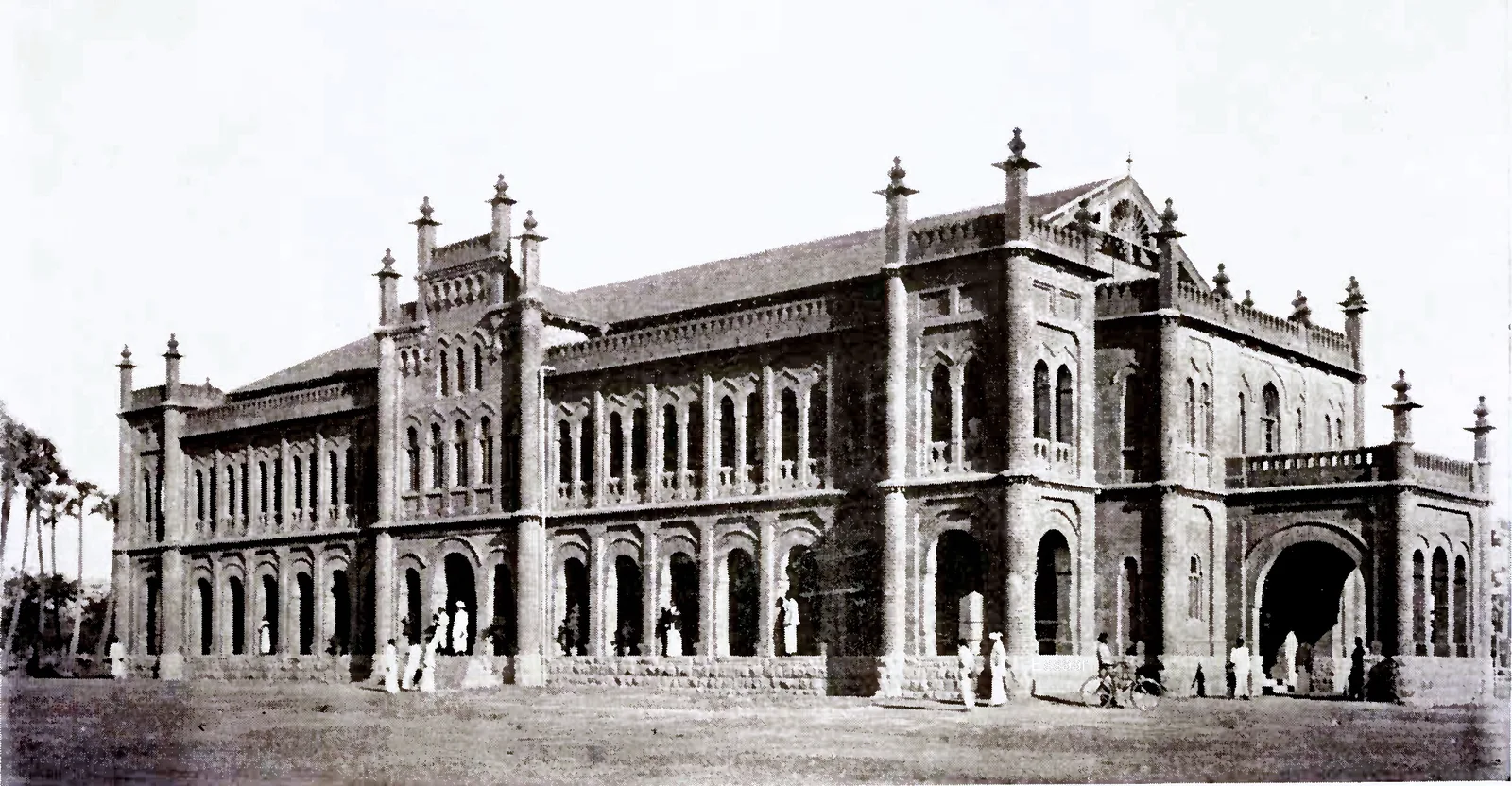
His first post was as a lecturer at the American Mission College in Madurai. He rented a house said to be haunted and lived in it, and he passed all his students against the custom of the place.16 Then the principal, the Reverend W. W. Wallace, offered him a place at Yale and the headship of the science department if he became a Christian. At once, Gora wrote, he felt himself a Hindu. He declined, felt unsafe, and in May 1926 moved to a research post at Coimbatore.1718
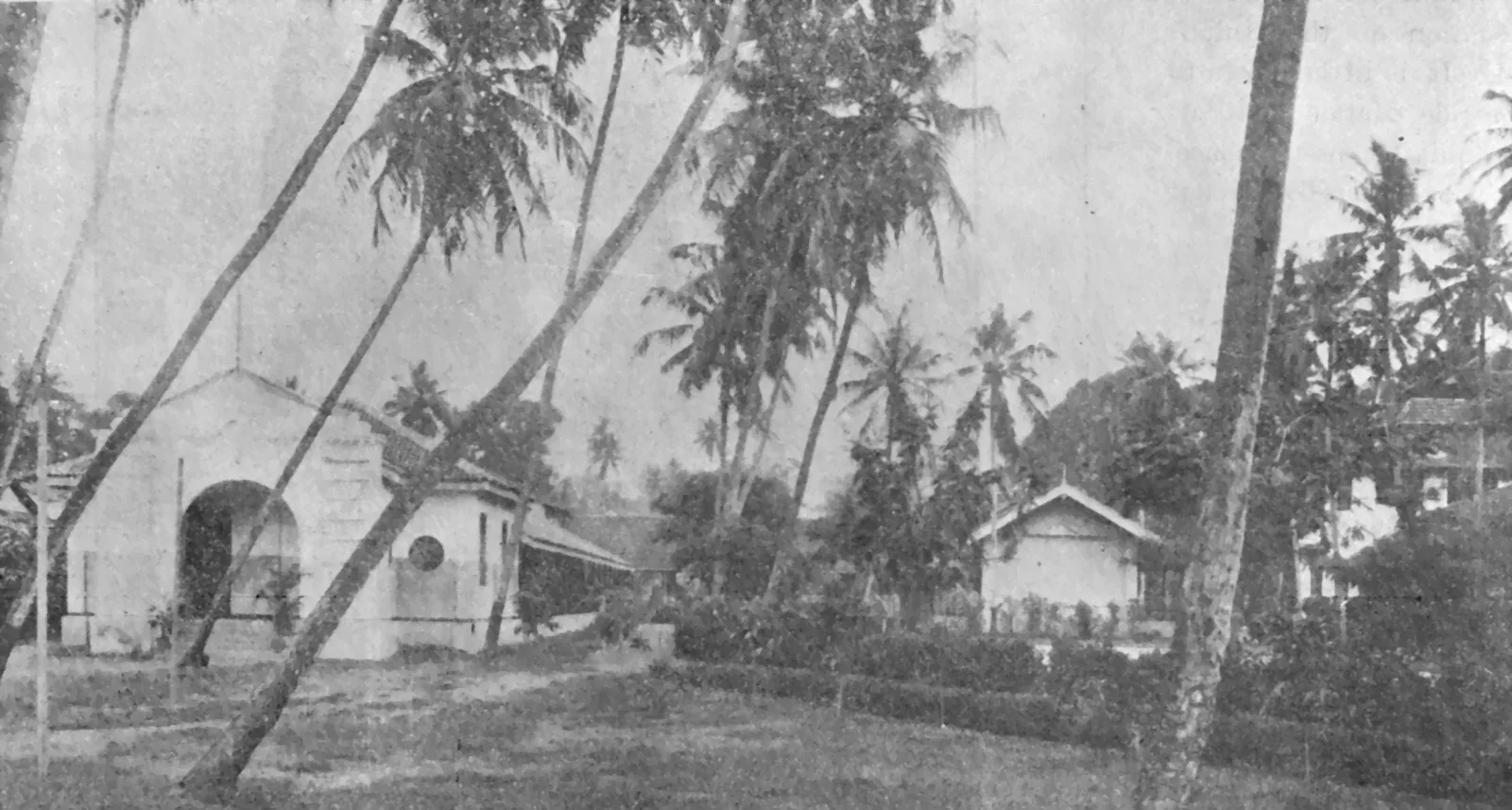
The offer set him asking what the religions actually claimed. Over five or six years he read the Bible in English and Telugu, the Vedas and Upanishads, Max Müller's Sacred Books of the East, and, for three months, the Encyclopaedia Britannica's entries on God, the soul, salvation and rebirth. He concluded that human beings had made God, in primitive times, out of psychological need.192021 In 1927 he went to teach botany at Ananda College in Colombo, a Buddhist school, where the priests forbade him to dissect a frog although they ate meat bought in the market; there Saraswathi, pregnant, broke the taboos of an eclipse.2223
The sacred thread
In 1928 he came home to Kakinada to teach at P. R. College. In his parents' house he broke into the prayer room with a stick to stop his aunt's trance, and his father called it sacrilege.24 On a full-moon day that August his father ordered him to wear the sacred thread. Gora said he respected his father but had no respect for caste. His father turned him out of the house as a sinner, and he left within the week, an outcaste; his mother wept.25262728 The break lasted about two and a half years. Then his father invited the couple to dinner, the relatives excommunicated the parents in their turn, and the parents came to live with their son.29 On the timeline, his doubt belongs to these years of reading, which ended in a public refusal of caste.
His first work was against superstition, with demonstrations of the turmeric-and-lime trick and lessons on eclipses, and a night school for adults in an untouchable quarter of Kakinada. That school, he said, taught him that atheism would have to solve India's economic problem too.30 In 1930 he wrote Gandhi two sentences asking what he meant by the word God, and whether that meaning fitted the way life was lived; Gandhi replied that God was beyond human understanding, and the Salt March ended the exchange.3132 He named his son, born that year, Lavanam, salt.33
Two dismissals
About 1932 or 1933 he wrote an essay, "The Concept of God", for a students' magazine. God, he argued, had been useful as an answer, as a sanction for morals and as a subject for art, but was a falsehood. The college asked him to explain himself, and he answered that he was an atheist by conviction. He was given three months' notice and left in 1933.3435 For a year he ran a tutorial college with fourteen colleagues on equal pay, and then the Vice-Chancellor of Andhra University, Sarvepalli Radhakrishnan, who was not an atheist, backed him for a post at the Hindu College in Masulipatam.3637
At weekends he lectured on atheism in the villages, two hours of talk and two of questions; the longest meeting, at Duggirala in 1937, ran for seven hours.38 He refused a gift of sixty thousand rupees for a new college because the donor's condition was that he wear the sacred thread.39 In 1939 the Hindu College dismissed him too, blaming his propaganda for a students' strike. The students had the dismissal revoked, but the principal then forbade him to speak or write on atheism inside the college or out, and Gora agreed to stay one more year and resign in 1940.40 The two dismissals, he wrote, put the choice plainly between atheism and a job, and he and Saraswathi chose atheism.4142 To shift the responsibility for one's choices onto something else was, as he put it, the theist's way of life; to own them was the atheist's.43
The Atheist Centre
In August 1940 they went to Mudunur, a village of about three thousand people in Krishna district, at a local landowner's invitation. They lived in two thatched huts outside the village, which were called the Atheist Centre, for seven years, on gifts in kind and rarely handling money.4445 They held teas that moved from Brahmin houses to untouchable quarters, and in February 1941 a meal for about 260 guests in an untouchable quarter; four young Brahmins who came were locked out by their parents for a week.46 That year an atheist conference met at Kanumur, and his Telugu book Nastikatvamu (Atheism) was printed in the village.47 In the census of 1941, 142 people of Mudunur recorded themselves as atheists; Gora noted later that the religious ceremonies came back after he left.48 The timeline places his declaration here, not as a single statement but as a way of life chosen after two dismissals.
Gandhi, who as a student in London had gone to Bradlaugh's funeral in 1891, wrote of those years: "Every Indian knew Bradlaugh's name and his so-called atheism."4950 Gora would cite Bradlaugh as a predecessor; what he claimed as his own was using the word openly and giving it positive content.51
Gandhi
In September 1941 Gora wrote to Gandhi about his village work. Gandhi answered that atheism was a denial of the self, that no one had succeeded in spreading it, and that he could not invite him. Gora wrote back that atheism was the fullest assertion of the self.525354 In the Quit India movement of 1942 Gora's group from Krishna district was jailed, and Saraswathi, their daughter Manorama and his sister were among the women arrested.55
In August 1944 a young co-worker from Mudunur talked with Gandhi at Sevagram. Gandhi told him he might call himself an atheist, but so long as he felt akin to mankind he accepted God in practice, and then asked to meet Gora.5657 Gora came in the last week of November 1944. At their first meeting Gandhi joked that he did not know what to say to a godless man; Gora answered that he was not godless but an atheist. Godlessness, he explained, only denied God, while atheism was positive: self-confidence and free will, as theism was the expression of a slave's feeling.5859606162 In January 1945 he came back to live in the ashram for three months, cleaning latrines, cutting vegetables, teaching science to the nurses and, with Gandhi's permission, dissecting a frog; he did not attend prayers.63 The long interview of March 1945 came at the end of that stay.1
The letters went on. In January 1946 Gandhi was glad to hear that Gora's eldest daughter would marry a man of an untouchable caste, and offered Sevagram for the wedding; but, he wrote, Gora's inference in favour of atheism was wrong, and his nastikta, his atheism, was only a form of astikta, of belief. Gora's own English version of the letter says that his atheism took the shape of theism; both versions exist.6465 Gora replied that he and his co-workers had lived and eaten with untouchables for five or six years, and that atheism was the most suitable outlook for building one humanity.66 Gandhi wrote back in April that Gora's practice was far superior to his own, but that there was a fundamental difference between them: Gora consciously ignored God, while Gandhi consciously relied on Him.6768 Late in 1946 or in 1947, when Gora was working for the Congress in Delhi, Gandhi told him he had tried atheism long enough and should give up the word. Gora answered that he had taken it up deliberately, because no other word gave a person full self-confidence and a complete social outlook.697071
Gandhi was killed on 30 January 1948. On 13 March 1948 Manorama married Arjuna Rao at Sevagram, by a form from which every mention of God had been removed, and Gora left the Congress.72 Gora believed that Gandhi's view of atheism had softened between 1941 and 1948; Gandhi himself never recorded a change of belief.7367
The other side
The believers who answered Gora mostly did so as friends. Gandhi admired his work and fed him in his ashram while telling him that his difference was fundamental.67 K. G. Mashruwala, editor of Gandhi's paper Harijan, wrote in the introduction to Gora's book about Gandhi that Gora was at heart a religious man and a man of God, who had simply chosen to call his creed atheism and his God Not-God.74 Gora rejected that reading. His atheism, he wrote, was not a denial of the self, and he did not believe in a soul or in rebirth, which he called as false a hypothesis as God.547576
Vijayawada
In 1947 or 1948 the Atheist Centre moved to Patamata, on the edge of Vijayawada.77 From 1949 it published a Telugu weekly, Sangham, and in April 1951 his book on Gandhi, An Atheist with Gandhi, appeared.78 He stood for Parliament in 1952 and for the state assembly in 1967 as a candidate of no party, and lost both times.79 In 1961–62 he led a march of ninety-nine days and eleven hundred miles from Sevagram to Delhi against party politics and display.80 He refused to join the Communist Party, because, he said, its materialism denied free will.81

In January 1969 he began an English monthly, The Atheist.82 In its columns he rejected even the impersonal substitutes for God: a power within us, a basic spirit or a basic matter to which human life must be subordinate were all, he wrote, fictions, and nothing survived death.8384 Morality, he argued, came not from belief in God but from disbelief.85 In 1970 he toured Europe and America and met Madalyn Murray O'Hair at Austin.86 On 15 August 1972 the Centre held a public meal of beef and pork, to break the taboos of Hindus and Muslims together; the Shankaracharya of Puri protested, the police were called, and about 136 people took part. Gora answered the protest by saying that he was not a Hindu but a human being. A meal of the same kind at Coimbatore was attended by Periyar.8788 The same year the Centre held the first World Atheist Meet, where his book Positive Atheism was released.89
On the evening of 26 July 1975 he died of a cerebral haemorrhage while speaking at a meeting on social change in rural India in Vijayawada.90 He had finished the draft of his memoir, We Become Atheists, four days earlier; it was printed on his birthday that November.91 India Post issued a stamp for the centenary of his birth in 2002.92
Did his unbelief change shape?
The belief did not change; its reach did. A boy who trusted a packet of ash lost it at twenty-two, reasoned his way through the scriptures to the conclusion that people had made God, and lost two posts for saying so. After that, atheism for Gora was less an argument than a programme: eating across caste, marrying across caste, refusing the thread, walking to Delhi. Gandhi, who admired the programme, asked him to drop the word, and Gandhi's editor called him a man of God. Gora kept the word to the end, because to him it meant owning one's own choices.
E. V. Ramasamy, Periyar, who came to Gora's Coimbatore meal and led the other great atheist movement of South India, has his own chapter in this book.
Footnotes
-
Gora, An Atheist with Gandhi (Ahmedabad: Navajivan, first ed. April 1951; reprints 1958, 1971, 1986; manuscript dated 25 Nov 1950). Two copies read: the mkgandhi.org PDF text, IA
ANATHIESTWITHGANDHI(cited by that PDF's own "Page N", printed at the foot of each page) and the Positive Atheism HTML mirror (web.archive.org, 13 May 2008). The conversations are reproduced "from memory" (AwG p. 17); only the letters are texts, ch. VII pp. 32–35. ↩ ↩2 ↩3 -
Gora, Atheist with Gandhi, ch. VII pp. 32–34. ↩
-
Gora to Gandhi, 30 Mar 1945: Gora, Atheist with Gandhi, p. 34. ↩
-
Gandhi, 30 Mar 1945, as Gora remembered it: Gora, Atheist with Gandhi, p. 34. ↩
-
Gora, We Become Atheists (Vijayawada: Atheist Centre, first print 15 Nov 1975; introduction by Lavanam), p. 16 (day, month, place; the year is garbled in the OCR); G. S. Rao, Gora: An Atheist (Atheist Centre, Vijayawada, undated; IA
goraanatheist035514mbp, a DLI scan). Internal evidence: written between the 1970 Atheists' Meet and the 1972 World Meet; includes Bjorn Merker's 1965 Peace News article, "Birth and Childhood"; Dr G. Vijayam (Gora's son, Atheist Centre director), "Constructive and Positive Approaches of Gandhi and Gora" (essay, after 2009), IACONSTRUCTIVEANDPOSITIVEAPPROACHOFGORAANDGANDHI; cited by its "Page N", p. 6; "Goparaju Ramachandra Rao", English Wikipedia, revision 1376429819 (24 Sep 2026). [Wiki-en-SG] "Saraswathi Gora", rev. 1376913040 (26 Sep 2026). [Wiki-en-AC] "Atheist Centre", rev. 1376735176 (25 Sep 2026). [Wiki-te] Telugu Wikipedia "గోరా", rev. 4830125 (18 May 2026). All saved as wikitext inresearch/texts/; Wiki-te. ↩ -
Gora, We Become Atheists, p. 16. ↩
-
Gora, We Become Atheists, pp. 1–2. ↩
-
Gora: Gora, We Become Atheists, p. 1. ↩
-
Gora: Gora, We Become Atheists, p. 1. ↩
-
Gora, We Become Atheists, p. 13; [Wiki-en-SG], -SG; Humanists UK, "'Gora'", humanism.org.uk (quotes AwG and AQA). ↩
-
Gora, We Become Atheists, pp. 2, 16; Rao, Gora, "Birth and Childhood"; Wiki-te. ↩
-
Gora: Gora, We Become Atheists, p. 1. ↩
-
Gora: Gora, We Become Atheists, p. 2. ↩
-
Gora: Gora, We Become Atheists, p. 2. ↩
-
Gora, We Become Atheists, pp. 3–5; Wiki-te; Venu Lanka, "Goparaju Ramachandra Rao, the atheist who worked to spread Gandhian ideology across Andhra region", Times of India, 14 Aug 2022 (web.archive.org copy). Contains errors (see Disputed points). ↩
-
Gora, We Become Atheists, pp. 6–7; Rao, Gora, "Atheist in the Making". ↩
-
Gora: Gora, We Become Atheists, p. 6. ↩
-
Gora, We Become Atheists, pp. 8–9. ↩
-
Gora, We Become Atheists, pp. 9–10. ↩
-
Gora: Gora, We Become Atheists, p. 10. ↩
-
Gora, We Become Atheists, pp. 10, 64–65; Gora, Atheist with Gandhi, ch. X; Rao, Gora, "War on Superstitions"; Wiki-te (1927). ↩
-
Gora, We Become Atheists, pp. 13–15. ↩
-
Gora, We Become Atheists, pp. 17–19. ↩
-
Gora, We Become Atheists, pp. 19–20. ↩
-
Gora, to his father, Aug 1928: Gora, We Become Atheists, p. 19. ↩
-
Gora: Gora, We Become Atheists, p. 20. ↩
-
Gora's father, Aug 1928, as Gora reports: Gora, We Become Atheists, p. 20. ↩
-
Gora, We Become Atheists, pp. 21–22. ↩
-
Gora, We Become Atheists, pp. 23–25. ↩
-
Gora, Atheist with Gandhi, ch. II p. 18; Gora, Atheist with Gandhi, p. 5; Gora, We Become Atheists, p. 63. ↩
-
Gora, letter to Gandhi, early 1930: Gora, Atheist with Gandhi, ch. II p. 18. ↩
-
Gora, We Become Atheists, p. 57. ↩
-
Gora, We Become Atheists, pp. 27–28; Vijayam, p. 6; [Wiki-en-SG]. ↩
-
Gora, to the P. R. College management: Gora, We Become Atheists, p. 28. ↩
-
Gora, We Become Atheists, pp. 29–33. ↩
-
Gora, We Become Atheists, pp. 33–35; Rao, Gora, p. 11. ↩
-
Gora, We Become Atheists, pp. 11–12, 35–37. ↩
-
Gora, We Become Atheists, pp. 38–39; Rao, Gora, p. 11. ↩
-
Gora, We Become Atheists, pp. 39–41; Vijayam, p. 6. ↩
-
Gora, We Become Atheists, pp. 40, 43. ↩
-
Gora: Gora, We Become Atheists, p. 40. ↩
-
Gora: Gora, We Become Atheists, p. 43. ↩
-
Gora, We Become Atheists, pp. 42–44. ↩
-
Gora, We Become Atheists, pp. 45–46. ↩
-
Gora, We Become Atheists, pp. 46–48. ↩
-
Gora, We Become Atheists, pp. 49–50; [Wiki-en-SG]; Rao, Gora, p. 16. ↩
-
Gora, We Become Atheists, pp. 50–53, 70. ↩
-
Gandhi, recalling 1888–91: M. K. Gandhi, Story of My Experiments with Truth, vol. 1 (Navajivan, 1927), IA
gandhisautobiogr01gand. Public domain in the US, vol. 1 p. 169. ↩ -
Gandhi, Story of My Experiments with Truth, vol. 1 pp. 169–70. ↩
-
Gora, We Become Atheists, p. 112. ↩
-
The Collected Works of Mahatma Gandhi (Publications Division, India). Volumes now held in
research/texts/: 74 (Gora letter of 11 Sept 1941, p. 311), 75, 76, 78 to 91. Licence unchanged: paraphrase unless David decides otherwise (see Open questions 1), vol. 74 p. 311; Gora, Atheist with Gandhi, ch. II pp. 18–19. ↩ -
Gandhi, 11 Sept 1941, to Gora: Collected Works of Mahatma Gandhi, vol. 74 p. 311; Gora, Atheist with Gandhi, p. 19. ↩
-
Gora, answering Gandhi's 1941 letter: Gora, Atheist with Gandhi, p. 19. ↩ ↩2
-
Gora, We Become Atheists, p. 55. ↩
-
Collected Works of Mahatma Gandhi, vol. 78 pp. 6–8; Gora, Atheist with Gandhi, ch. III pp. 20–23. ↩
-
Gandhi to D. Ramaswamy, Aug 1944: Collected Works of Mahatma Gandhi, vol. 78 p. 8; Gora, Atheist with Gandhi, p. 22. ↩
-
Gora, Atheist with Gandhi, pp. 6, 23–28. ↩
-
Gora, Atheist with Gandhi, ch. IV p. 24; UK, "'Gora'". ↩
-
Gora to Gandhi, Nov 1944: Gora, Atheist with Gandhi, p. 24. ↩
-
Gora: Gora, Atheist with Gandhi, p. 24. ↩
-
Gora: Gora, Atheist with Gandhi, p. 24. ↩
-
Gora, Atheist with Gandhi, ch. VI pp. 30–31; Gora, We Become Atheists, pp. 64–65. ↩
-
Collected Works of Mahatma Gandhi, vol. 82 pp. 432–33; Gora, Atheist with Gandhi, ch. VIII p. 36. ↩
-
Gandhi, 16 Jan 1946: Collected Works of Mahatma Gandhi, vol. 82 p. 432. ↩
-
Collected Works of Mahatma Gandhi, vol. 83 App. XVII pp. 440–41; Gora, Atheist with Gandhi, pp. 40–41. ↩
-
Collected Works of Mahatma Gandhi, vol. 83 p. 390; Gora, Atheist with Gandhi, p. 41. ↩ ↩2 ↩3
-
Gandhi, 9 Apr 1946: Collected Works of Mahatma Gandhi, vol. 83 p. 390. ↩
-
Gora, Atheist with Gandhi, pp. 42–44; Gora, We Become Atheists, pp. 74–75. Accounts differ; see the disputed points. ↩
-
Gora, Atheist with Gandhi, p. 44; Gora, We Become Atheists, pp. 12, 68, 115. ↩
-
Gora to Gandhi, 1946–47: Gora, Atheist with Gandhi, p. 44. ↩
-
Gora, Atheist with Gandhi, p. 38; Gora, We Become Atheists, pp. 80, 89; BBC News Telugu, "Mahatma Gandhito Bezawada Nastika Kendraniki unna bandham enti?", 2 Oct 2020 (updated 2022); includes son Niyanta's recollection of the 1948 wedding. ↩
-
Gora, Atheist with Gandhi, ch. X p. 47. ↩
-
K. G. Mashruwala, editor of Harijan, in the AwG introduction: Gora, Atheist with Gandhi, p. 16. ↩
-
Gora, Atheist with Gandhi, p. 13 note; Gora, Atheism: Questions and Answers (Atheist Centre, 2nd ed. 15 Nov 1992; answers dated 1969–74 from The Atheist), positiveatheism.org mirror marked "Posted with permission; all rights reserved". Dated answers are quoted by their dates, 16 Jul 1969; Mark Lindley, The Life and Times of Gora (Popular Prakashan, 2009), IA
lifetimesofgora0000lind: lending copy, text download refused (401). Two excerpts via the Bund fur Geistesfreiheit Munchen page (web.archive.org, 26 Mar 2012) read; secondhand only, excerpt. ↩ -
Gora, answering Mashruwala: Gora, Atheist with Gandhi, p. 13 note. ↩
-
Gora, We Become Atheists, pp. 45, 81; Rao, Gora, p. 18; [Wiki-en-SG], -AC; Wiki-te (April 1947); Lanka, Times of India, (7 May 1948). ↩
-
Gora, We Become Atheists, p. 112; Gora, Atheism, preface; Gora, Atheist with Gandhi, p. 4; Navajivan imprint. ↩
-
Gora, We Become Atheists, p. 100; Rao, Gora, p. 19. ↩
-
Gora, We Become Atheists, pp. 95–96; Rao, Gora, pp. 27–29. ↩
-
Gora, We Become Atheists, p. 79. ↩
-
Gora, Atheism, preface; Rao, Gora, p. 20; [Wiki-en-SG], -AC; Gora, We Become Atheists, p. 117. ↩
-
Gora, Atheism, 4 Sep 1969, 14 Jan 1971, 24 Aug 1973. ↩
-
Gora, The Atheist, 14 Jan 1971: Gora, Atheism, "Creation". ↩
-
Gora, The Atheist, 27 Apr 1972: Gora, Atheism, "God and Morality". ↩
-
Gora, We Become Atheists, p. 116; [Wiki-en-SG]. ↩
-
Gora, We Become Atheists, pp. 109–111; [Wiki-en-SG]. ↩
-
Gora, on the Sankaracharya's protest, 1972: Gora, We Become Atheists, p. 110. ↩
-
Gora, We Become Atheists, p. 117; [Wiki-en-SG]. ↩
-
Gora, We Become Atheists, p. 128; [Wiki-en-SG]; Wiki-te; Lanka, Times of India. ↩
-
Gora, We Become Atheists, pp. ii, title page. ↩
-
Vijayam, pp. 18–19; [Wiki-en-SG]; [Wiki-en-SG], -AC. ↩
ANATHIESTWITHGANDHI (cited by that PDF's own "Page N", printed at the foot of each page) and the Positive Atheism HTML mirror (web.archive.org, 13 May 2008). The conversations are reproduced "from memory" (AwG p. 17); only the letters are texts.; Gora, We Become Atheists (Vijayawada: Atheist Centre, first print 15 Nov 1975; introduction by Lavanam); G. S. Rao, Gora: An Atheist (Atheist Centre, Vijayawada, undated; IA goraanatheist035514mbp, a DLI scan). Internal evidence: written between the 1970 Atheists' Meet and the 1972 World Meet; includes Bjorn Merker's 1965 Peace News article.; Dr G. Vijayam (Gora's son, Atheist Centre director), "Constructive and Positive Approaches of Gandhi and Gora" (essay, after 2009), IA CONSTRUCTIVEANDPOSITIVEAPPROACHOFGORAANDGANDHI; cited by its "Page N".; "Goparaju Ramachandra Rao", English Wikipedia, revision 1376429819 (24 Sep 2026). [Wiki-en-SG] "Saraswathi Gora", rev. 1376913040 (26 Sep 2026). [Wiki-en-AC] "Atheist Centre", rev. 1376735176 (25 Sep 2026). [Wiki-te] Telugu Wikipedia "గోరా", rev. 4830125 (18 May 2026). All saved as wikitext in research/texts/.; Humanists UK, "'Gora'", humanism.org.uk (quotes AwG and AQA).; Venu Lanka, "Goparaju Ramachandra Rao, the atheist who worked to spread Gandhian ideology across Andhra region", Times of India, 14 Aug 2022 (web.archive.org copy). Contains errors (see Disputed points).; M. K. Gandhi, Story of My Experiments with Truth, vol. 1 (Navajivan, 1927), IA gandhisautobiogr01gand. Public domain in the US.; The Collected Works of Mahatma Gandhi (Publications Division, India). Volumes now held in research/texts/: 74 (Gora letter of 11 Sept 1941, p. 311), 75, 76, 78 to 91. Licence unchanged: paraphrase unless David decides otherwise (see Open questions 1).; BBC News Telugu, "Mahatma Gandhito Bezawada Nastika Kendraniki unna bandham enti?", 2 Oct 2020 (updated 2022); includes son Niyanta's recollection of the 1948 wedding.; Gora, Atheism: Questions and Answers (Atheist Centre, 2nd ed. 15 Nov 1992; answers dated 1969–74 from The Atheist), positiveatheism.org mirror marked "Posted with permission; all rights reserved". Dated answers are quoted by their dates.; Mark Lindley, The Life and Times of Gora (Popular Prakashan, 2009), IA lifetimesofgora0000lind: lending copy, text download refused (401). Two excerpts via the Bund fur Geistesfreiheit Munchen page (web.archive.org, 26 Mar 2012) read; secondhand only.In their own words
As I look back, I recall no special event that turned me an atheist. But I can trace the growth of atheist thought and practice in me.
Born and bred up in a high caste Hindu family in India, I was conventionally orthodox and superstitious in the days of my boyhood.
I constantly kept a small packet of the ash in my pocket and thought that the presence of the ash enabled me to pass examinations at the school.
I lost faith in the packet of ash and developed the will to succeed.
Though I had no idea of atheism at that time, obviously that was the beginning of atheism in me.
Though I was leaning atheistically, I had not got over the influence of early nurture.
Further, I came to the conclusion that it was man that made god out of psychological necessity in primitive times.
But I have no respect for caste.
I was outcaste. My mother shed tears.
I replied that I was an atheist by conviction and those were my views.
plainly placed the choice before me between atheism and job. Saraswati and I chose atheism.
I recognised that the tendency to shift the responsibility of choice is the theist way of life and the opposite, namely, the boldness and frankness to own responsibility of choice is the atheist way of life.
I replied that I was not a Hindu but a human
You use the word god. May I know its meaning and how far the meaning is consistent with the practice of life?
To us atheism is not a denial of the self; on the other hand, it is the fullest assertion of the self.
Bapuji, I am not a godless man, I am an atheist.
Godlessness is negative. It merely denies the existence of god. Atheism is positive. It asserts the condition that results from the denial of god.
In general, theism is the manifestation of the feeling of slavishness in man. Conversely, atheism is the manifestation of the feeling of freedom in man.
God is a falsehood conceived by man. Like many falsehoods, it was, in the past, useful to some extent. But like all falsehoods, it polluted life in the long run.
I do not accept re-birth. Soul, which is a presupposition of the theory of re-birth is as much a false hypothesis as god is.
The essence of theistic explanation of is that human life is subordinate to something superior to it, whether it is god, basic spirit or basic matter.
Not belief in god, but the disbelief makes man moral.
Yet I have taken it up deliberately, because it is the only work that inspires full self-confidence and complete social outlook in man.
The other side
Atheism is a denial of self. No one has succeeded in its propagation.
But your inference in favour of atheism is not correct; or as I believe, your nastikta is only a form of astikta.
For you consciously ignore God. Equally consciously, probably more progressively, I rely upon God.
I can neither say that my theism is right nor your atheism is wrong.
Unless you have a living faith in God to sustain you, when failure stares you in the face there is disappointment for you.
Every Indian knew Bradlaugh's name and his so-called atheism.
He is essentially a man of religion, and a man of God. But he chooses the name atheism for his creed, and calls his God, Atheos - Not-God.
Get out of my house. You are a sinner.
You may call yourself an atheist, but so long as you feel akin with mankind you accept God in practice.
Where accounts differ
| Point | One account | Another | How the page handles it |
|---|---|---|---|
| Dismissals | Kakinada 1933, Hindu College 1939, resigned 1940 (WBA pp. 28, 40; Vijayam p. 6; Wiki-en) | The roster says a Colombo dismissal; none found: he left Colombo in 1928 (WBA p. 10; GSR). HUK says forced out in 1940 | Use Gora's account: two dismissals, the second revoked, then a ban and resignation in 1940 |
| Date of the "Concept of God" article | 1932 (GSR p. 10) | 1933 (Vijayam p. 6); WBA gives no year, dismissal 1933 | Say "about 1932 or 1933" |
| Founding and move of the Atheist Centre | 1940 at Mudunur (WBA p. 44; HUK; Wiki-en-AC); 10 Aug 1940 (Wiki-te, BBC-te) | Moved 1947 (WBA p. 45; Wiki-en; Wiki-te April 1947); present site "since 1948" (WBA p. 81); 7 May 1948 (TOI-2022) | "August 1940"; the move "in 1947 or 1948" |
| First meeting with Gandhi | Last week of Nov 1944 (AwG pp. 6, 23) | Aug 1944 (an earlier error: that was Ramaswamy); 26 Jan 1943 (TOI-2022); "1944, two weeks" (Wiki-en-SG); 1944–45 (Hindu-2009) | Nov 1944; three-month stay Jan–Mar 1945 (AwG; CWMG note of 9 Mar) |
| Wait for the meeting | "After 14 years" from 1930 (Mashruwala, AwG p. 6) | "For two years" from Sept 1941 (GSR p. 18; really three) | Say he first wrote in 1930 and met Gandhi in 1944 |
| Gandhi's 16 Jan 1946 wording | "nastikta is only a form of astikta" (CWMG vol. 82 p. 432) | "your atheism takes the shape of theism" (Gora's translation, AwG p. 36) | Give the CWMG wording and say both versions exist |
| Manorama's wedding | 13 March 1948, after Gandhi's death (AwG p. 38; BBC-te: Niyanta says March 1948) | 1949 (Wiki-en); planned for April 1948 (AwG p. 38) | 13 March 1948 |
| Child jailed in 1942 | Niyanta, born 1940, about two and a half (Wiki-en-SG; BBC-te; TOI-2022 "two-year-old") | An 18-month son (Wiki-en); eldest son Lavanam (12) arrested (Wiki-en; TOI-2022); WBA p. 55 names daughter Manorama and sister | Say Saraswathi took a toddler; leave out who else |
| Year of *We Become Atheists* | First print 15 Nov 1975 (WBA title page; Vijayam) | 1976 (Wiki-en text, Wiki-te) | 1975 |
| Beef-and-pork count | 136 (WBA p. 110) | 138 (Wiki-en) | "about 136" |
| Start of *The Atheist* | Jan 1969 (AQA preface; GSR p. 20; Wiki-en-AC) | Jan 1968 (Wiki-te) | 1969 |
| When Gora became an unbeliever | "No special event"; ash packet lost c. 1925, atheist by conviction by 1933 (WBA pp. 1, 28) | "A believer until about 25" (Wiki-te) | Follow his own account |
| Congress organiser years | "End of 1946" (AwG p. 42) | "Next year", i.e. 1947 (WBA p. 74); 1944 (Wiki-te) | "1946 or 1947" |
| Was Gandhi changed? | Visible change 1941–48 (AwG p. 47, Gora's reading) | "Fundamental difference" (CWMG vol. 83 p. 390, 9 Apr 1946) | Report both; Gandhi never recorded a change of belief |
List of illustrations
This page uses only public-domain and Creative Commons images; each is credited with its source and licence.
- Sewagram Ashram 01 — Hbdoctor, 2019-08-16 · Hbdoctor, via Wikimedia Commons, CC0 · CC0 (Wikimedia Commons)
- Main Hall of The American College, Madurai, around 1905 — எஸ்ஸார் (Wikimedia Commons user), c. 1905 · எஸ்ஸார், via Wikimedia Commons, CC BY-SA 3.0 · CC BY-SA 3.0 (Wikimedia Commons)
- Ananda College, Colombo — Buddhist Annual of Ceylon, c. 1920 · Buddhist Annual of Ceylon (1920), via Wikimedia Commons, public domain · Public domain (Wikimedia Commons: published 1920, Buddhist Annual of Ceylon, Vol I (1920), 1, p. 40)
- Koneru Center at Machilipatnam — Ganeshk, 2009-11-15 · Ganeshk, via Wikimedia Commons, CC BY-SA 3.0 · CC BY-SA 3.0 (Wikimedia Commons)
- Sewagram Ashram 02 — Hbdoctor, 2019-08-16 · Hbdoctor, via Wikimedia Commons, CC0 · CC0 (Wikimedia Commons)
- Prakasam Barrage, Vijayawada — Hari K Patibanda, 2016-12-25 · Hari K Patibanda, via Wikimedia Commons, CC BY 2.0 · CC BY 2.0 (Wikimedia Commons)
Sources
Tier 1 — the subject's own words (writings, letters, diaries, trial records)
- [WBA] Gora, We Become Atheists (Vijayawada: Atheist Centre, first print 15 Nov 1975; introduction by Lavanam). IA
WeBecomeAtheists(uploaded by a private individual; read for facts only). Pages as printed; the OCR puts each page number at the head of its page. In copyright (Indian term to 2035): paraphrase only. Written in the last month of his life, "in outline" (Lavanam, p. ii), so a retrospective account. - [AwG] Gora, An Atheist with Gandhi (Ahmedabad: Navajivan, first ed. April 1951; reprints 1958, 1971, 1986; manuscript dated 25 Nov 1950). Two copies read: the mkgandhi.org PDF text, IA
ANATHIESTWITHGANDHI(cited by that PDF's own "Page N", printed at the foot of each page) and the Positive Atheism HTML mirror (web.archive.org, 13 May 2008). The conversations are reproduced "from memory" (AwG p. 17); only the letters are texts. - [AQA] Gora, Atheism: Questions and Answers (Atheist Centre, 2nd ed. 15 Nov 1992; answers dated 1969–74 from The Atheist), positiveatheism.org mirror marked "Posted with permission; all rights reserved". Dated answers are quoted by their dates.
- [CWMG] The Collected Works of Mahatma Gandhi (Publications Division, India). Volumes now held in
research/texts/: 74 (Gora letter of 11 Sept 1941, p. 311), 75, 76, 78 to 91. Licence unchanged: paraphrase unless David decides otherwise (see Open questions 1). - [MEXP] M. K. Gandhi, Story of My Experiments with Truth, vol. 1 (Navajivan, 1927), IA
gandhisautobiogr01gand. Public domain in the US.
Tier 2 — scholarly biographies and encyclopedias
- [Lindley] Mark Lindley, The Life and Times of Gora (Popular Prakashan, 2009), IA
lifetimesofgora0000lind: lending copy, text download refused (401). Two excerpts via the Bund fur Geistesfreiheit Munchen page (web.archive.org, 26 Mar 2012) read; secondhand only. - [Shet] Sunanda Shet, Gora: His Life and Work (2000). Not reached.
Tier 3 — popular biographies and journalism
- [GSR] G. S. Rao, Gora: An Atheist (Atheist Centre, Vijayawada, undated; IA
goraanatheist035514mbp, a DLI scan). Internal evidence: written between the 1970 Atheists' Meet and the 1972 World Meet; includes Bjorn Merker's 1965 Peace News article. - [Vijayam] Dr G. Vijayam (Gora's son, Atheist Centre director), "Constructive and Positive Approaches of Gandhi and Gora" (essay, after 2009), IA
CONSTRUCTIVEANDPOSITIVEAPPROACHOFGORAANDGANDHI; cited by its "Page N". - [Hindu-2009] "'Life and Times of Gora': exploring Gandhi's atheist associate", The Hindu, New Delhi, 13 Dec 2009 (first paragraphs of IA
LIFEANDTIMEOFGORA; the rest of that file is unrelated web pages). - [TOI-2022] Venu Lanka, "Goparaju Ramachandra Rao, the atheist who worked to spread Gandhian ideology across Andhra region", Times of India, 14 Aug 2022 (web.archive.org copy). Contains errors (see Disputed points).
- [BBC-te] BBC News Telugu, "Mahatma Gandhito Bezawada Nastika Kendraniki unna bandham enti?", 2 Oct 2020 (updated 2022); includes son Niyanta's recollection of the 1948 wedding.
- [HUK] Humanists UK, "'Gora'", humanism.org.uk (quotes AwG and AQA).
Tier 4 — Wikipedia and similar reference sites (citable; give the article and revision date)
- [Wiki-en] "Goparaju Ramachandra Rao", English Wikipedia, revision 1376429819 (24 Sep 2026). [Wiki-en-SG] "Saraswathi Gora", rev. 1376913040 (26 Sep 2026). [Wiki-en-AC] "Atheist Centre", rev. 1376735176 (25 Sep 2026). [Wiki-te] Telugu Wikipedia "గోరా", rev. 4830125 (18 May 2026). All saved as wikitext in
research/texts/.
Opposition sources — contemporary critics and religious responses
- Gandhi (CWMG, AwG), Mashruwala (AwG introduction), Gora's father and the Masulipatam scholar (as Gora reports them, WBA). Puri Sankaracharya: opposition to the 1972 function known only through Gora (WBA p. 110) and Wiki-en; no text of his own reached.
Related lives
E. V. Ramasamy (Periyar), the other great Indian social-reform atheist of the same decades, who joined Gora at the Coimbatore beef-and-pork lunch of 1972; alternative: Charles Bradlaugh, whom Gandhi cited to Gora and whom Gora names in 1975.
Margaret Knight
Margaret Knight had a nominally Christian education and a quiet loss of belief at Cambridge in the mid-1920s. In January 1955 she said on the BBC Home Service, carefully and for doubting parents, that children need not be taught a God any more than Santa Claus, and that Scientific Humanism could ground morals. The national uproar sent her, at her critics' urging, to the Bible and church history. In 1975 she judged Christianity far more harshly than she had on the radio.
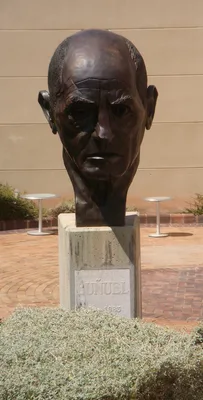
Luis Buñuel
Luis Buñuel's "really blind" faith of medieval Calanda went in three stages: a Jesuit schoolboy's doubt about Hell at fourteen, the loss completed by Darwin at seventeen, and a declaration made not in words but in L'Âge d'or (1930), which right-wing leagues attacked and the police banned. The unbelief was blasphemy in his thirties. In his sixties it calmed into "still an atheist, thank God" (1959), and in his 1982 memoir into a meditation on chance in which believing and not believing came to the same thing.
Ayn Rand
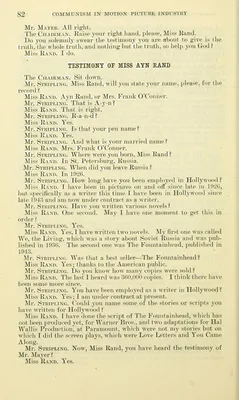
Ayn Rand was born Alisa Rosenbaum in St Petersburg, and left no account of a childhood faith or its loss. From her first philosophic journal in 1934 she made the rejection of faith the foundation of a philosophy of reason, and said so plainly from the 1940s to the 1960s. Late in life she changed only the label ("Objectivist") and the tone ("intransigent, though not militant"), never the position.
Jean-Paul Sartre
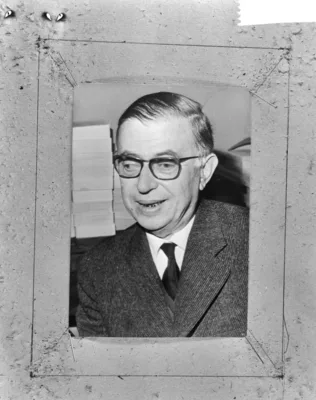
Jean-Paul Sartre was baptised into a family whose faith was more form than conviction. By his own account the belief never took root: it went first through his grandparents' indifference, and then, one morning at La Rochelle in 1917, in a single thought that God did not exist. He made that absence the premise of a philosophy of freedom, and spent years expelling the substitute faith of writing as salvation. In old age he admitted that traces of the idea of God remained in him.