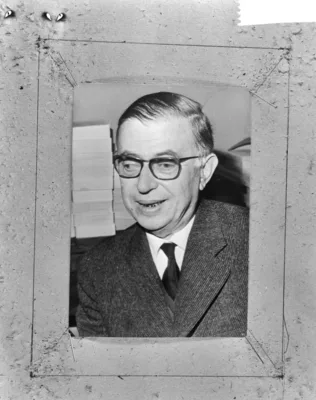
Jean-Paul Sartre was baptised into a family whose faith was more form than conviction. By his own account the belief never took root: it went first through his grandparents' indifference, and then, one morning at La Rochelle in 1917, in a single thought that God did not exist. He made that absence the premise of a philosophy of freedom, and spent years expelling the substitute faith of writing as salvation. In old age he admitted that traces of the idea of God remained in him.
The belief timeline
- Faith (1905–c. 1912) — Baptised Catholic "pour préserver mon indépendance"; family "croyait par discrétion"; prayed daily; at Mass for the music; Sartre says the faith was a "nom d'apparat" and that he was "catholique et protestant" [6][29][31]
- The crack (childhood) (c. 1912–1914) — The grandparents' indifference, not a conflict of dogmas, led him to unbelief; the silver medal "m'enfonça dans l'impiété"; stopped the instruction; the match and the rug (God's gaze, and his blasphemy); "il a végété... puis il est mort" [31][32][33][34]
- Doubt (the adult, philosophical stage) (1920s) — At ENS and in the khâgne he is "absolument assuré" God does not exist and wants a philosophy of the world without God; talks with Nizan turn "idealist" into "materialist" atheism [40][41]
- Declaration (1917 (private), 1943–1945 (public)) — The morning at La Rochelle ("il n'existe pas"); then atheism as the premise of *Being and Nothingness* (1943) and of the 1945 lecture [36][45][46]
- Revision (c. 1953–54; 1974; 1980) — He says (c. 1963) the second, "Holy Spirit" faith (writing as salvation) has been expelled; in 1974 he admits that traces of the idea of God remain in him; the 1980 Hope Now interviews are disputed and read by Beauvoir as a yielding, by others as a development of ethics, not a return [43][50][21][51]
Notes to the timeline (15)
- [6] He was baptised Catholic, in a family where faith was a "nom d'apparat" for French liberty; the baptism was meant to leave him free; his mother and grandmother were raised or raised the children Catholic, the grandfather was Protestant — Sartre, Les Mots (Paris: Gallimard, 1964). Internet Archive
les-mots-19("Les Mots 19"; the Gallimard 1964 setting, pages 1–213; savedresearch/texts/lesmots-19.txt). Page numbers are the running heads of the scan. Lending copieslesmots00sart,lesmots0000jean_k1s7,words00jean(Frechtman translation) returned 401/403 and were not obtained; the French reading is enough, pp. 6, 80. - [29] Before the loss of faith he prayed daily on his knees, but thought of "le bon Dieu" less and less; as a small boy he saw God in the grandfather (long beard, the Marne communiqué at Arcachon in September 1914); at about fifteen the thought of earthly immortality replaced the eternal; he describes religion as the model for his later cult of literature — Sartre, Les Mots, pp. 14, 82, 207–208; Simone de Beauvoir, La cérémonie des adieux, suivi d'Entretiens avec Jean-Paul Sartre (août–septembre 1974) (Paris: Gallimard, 1981). Internet Archive
simone-de-beauvoir-la-ceremonie-des-adieux-suivi-de-entretiens-avec-jean-paul-sa(research/texts/adieux-fr.txt). An unauthorised upload of an in-copyright book, used only to read and paraphrase. The book is Tier 1 for Sartre's 1974 words (the interview transcript, pp. 545–559, p. 480, p. 324) and Tier 2 for Beauvoir's narrative (pp. 39, 150–159), p. 39. - [31] He says he was led to unbelief not by a conflict of dogmas but by his grandparents' indifference; the grandfather mocked Catholicism at table (Lourdes, saints), which put the boy off sainthood for good; the grandmother's sceptical smile completed it; in the house everyone believed "par discrétion" — Sartre, Les Mots, pp. 79–82.
- [32] The Thursday religious instruction at the Institution of the abbé Dibildos lasted no more than six months; his essay on the Passion, which his mother had copied out, won only the silver medal; the disappointment "sank him into impiety"; after an illness and the holidays he refused to go back — Sartre, Les Mots, pp. 82–83.
- [33] The one time he felt that God existed: he had played with matches and burnt a small rug, and while hiding it "God saw him"; his indignation saved him; he blasphemed in his grandfather's words and God never looked at him again — Sartre, Les Mots, p. 83; Beauvoir, La cérémonie des adieux, p. 545 (1974 retelling).
- [34] For several years more he kept up "public relations" with the Almighty and in private ceased to see him; he tells it as "the story of a failed vocation": he needed God, was given him, but God never took root and "died"; today, he says, if people speak of God to him, he treats it like an old flame: "il n'y eut rien" — Sartre, Les Mots, p. 83.
- [40] In 1974 he said that at the time he could recall no preceding reflection, that it had no great consequence (he did not go to church before or after), that he thought it a joke people had been told, and that he "ignored atheists, since the family was honestly, honourably believing"; later, through talks with Nizan, his "idealist" atheism (the absence of an idea) became "materialist" (the world seen without God) — Beauvoir, La cérémonie des adieux, pp. 546–547, 550.
- [41] At the École Normale he was "nettement antichrétien" and, when he decided on philosophy in the khâgne, "absolument assuré" that God does not exist; he thought that a truly atheist great philosophy was missing, and wanted to write one — Beauvoir, La cérémonie des adieux, pp. 480, 548.
- [36] One morning in 1917 at La Rochelle, while waiting for schoolmates to go with him to the lycée and bored, he decided to think of the Almighty; God "tumbled down the sky and vanished"; he said to himself "he does not exist" with "politeness" and thought the matter settled; he never had the slightest temptation to revive him; but "the Other", the Holy Spirit who guaranteed his mandate as a writer, stayed in him — Sartre, Les Mots, p. 209.
- [45] In *Being and Nothingness* the human being is "the being whose project is to be God"; God is the impossible ideal of a being that is its own foundation (in-itself-for-itself); the idea of God is contradictory and "man is a useless passion" — Sartre, Being and Nothingness, tr. Hazel E. Barnes (London: Methuen, 1957; French, Gallimard, 1943). Internet Archive
beingn-and-nothingness(research/texts/bn.txt), pages as printed in the scan, pp. 566, 615. - [46] In the 1945 lecture he distinguishes Christian existentialists (Jaspers, Gabriel Marcel, "both professed Catholics") from "existential atheists" (Heidegger, the French existentialists "and myself"), and says "atheistic existentialism, of which I am a representative" draws the consequence that existence precedes essence — Sartre, Existentialism and Humanism, tr. Philip Mairet (London: Methuen, 1948; French original L'existentialisme est un humanisme, Nagel, 1946). Internet Archive
in.ernet.dli.2015.506244(Delhi University Library copy;research/texts/eh-dli.txt). The OCR misprints some folios (e.g. "37" for 27); pages in the claims are the corrected ones. A second item,ExistentialismAndHumanismBySartre1948EngTranslationPhilipMairet(eh-mairet2.txt), downloaded but its OCR is unusable (Devanagari noise); not used, pp. 26–27. - [43] In 1963–64 he describes the atheist's work as long and cruel, and says he has been "an awakening man" for roughly ten years: the "second faith" (writing as salvation) is what had to be removed after the first was gone — Sartre, Les Mots, pp. 207–211.
- [50] Late revision I: in 1974 he admitted that "elements of the idea of God" remain in him: he feels "an expected, provoked, prefigured being", an idea of a creating hand; he keeps good and evil as absolutes; he says the idea is vague and contradicted by many of his others — Beauvoir, La cérémonie des adieux, p. 551.
- [21] In 1980 he gave interviews to Benny Lévy ("Hope Now"); authenticity contested by Beauvoir; the IA catalogue description says that shortly before his death Sartre confirmed the interviews' authenticity; audio not publicly available — Beauvoir, La cérémonie des adieux, pp. 150–152; "L'espoir maintenant" with Benny Lévy, Le Nouvel Observateur nos. 800, 801, 802 (March 1980); Hope Now: The 1980 Interviews, tr. Adrian van den Hoven, intro. Ronald Aronson (Chicago, 1996). Internet Archive
hopenow1980inter0000sartis an access-restricted lending copy (401); only the catalogue description and table of contents in the item metadata were read. The interview text itself is NOT read, (catalogue description only); Stanford Encyclopedia of Philosophy, "Jean-Paul Sartre" (research/texts/sep-sartre.txt). Paraphrase only. Contains an error ("brought up by his grandmother"); French Wikipedia, "Jean-Paul Sartre" (research/texts/wikipedia-fr-map.txt); its section "Le scandale de l'Espoir maintenant" names Jean Guitton, Olivier Todd, Gisèle Halimi, Jean Daniel, Vincent de Coorebyter. Accounts differ; see the disputed points. - [51] Late revision II: in the 1980 interviews Beauvoir (Adieux pp. 150–152) says Lévy had turned to the God of Israel, that Sartre had told her Lévy wanted the whole origin of morality to lie in the Torah and that he thought no such thing, that she was dismayed and the friends of Les Temps modernes shared her dismay; that Sartre insisted on publishing, and (her explanation) a blind old man needed a successor and let Lévy talk him round — Beauvoir, La cérémonie des adieux, pp. 150–152.
A Morning at La Rochelle
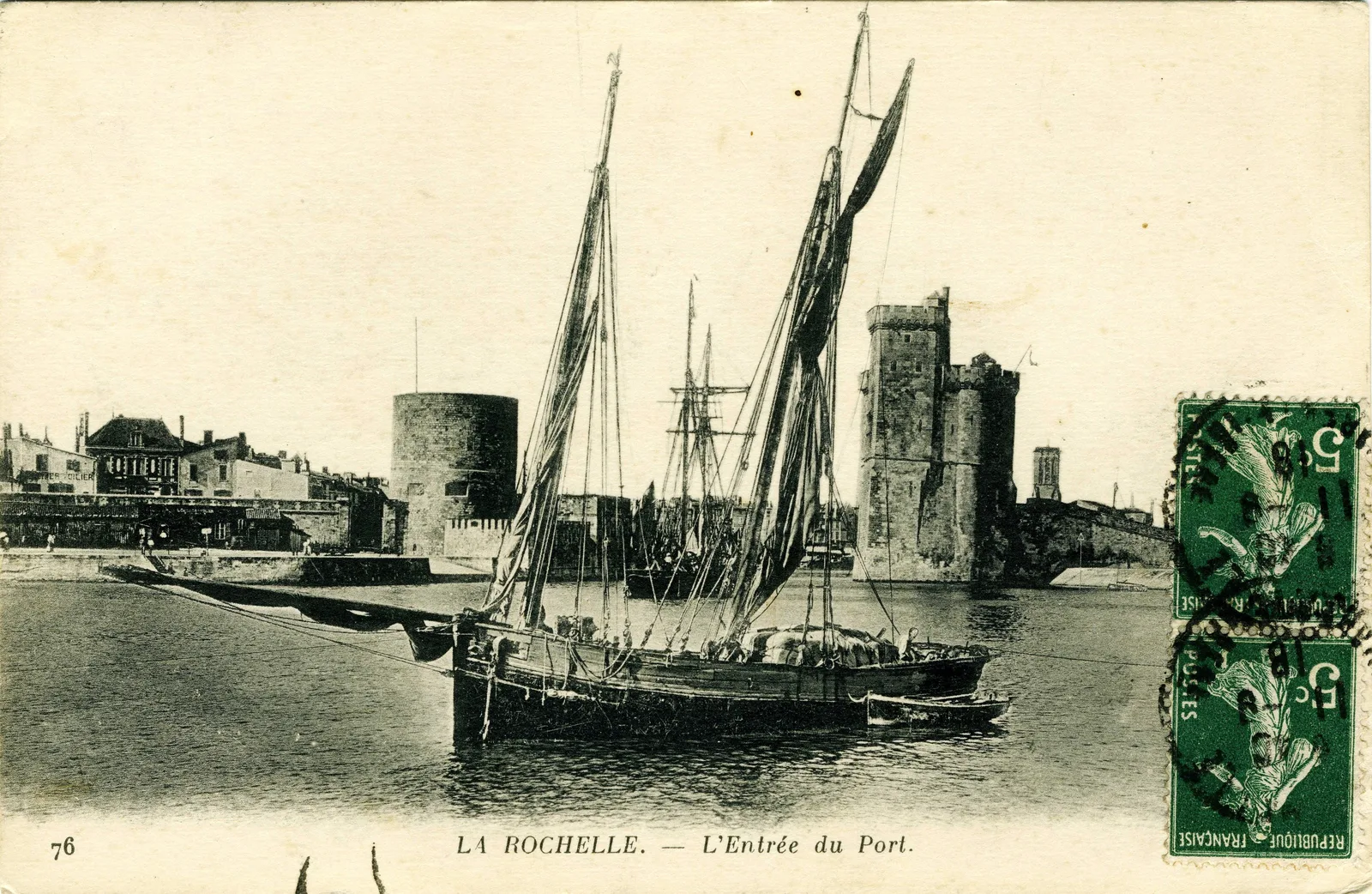
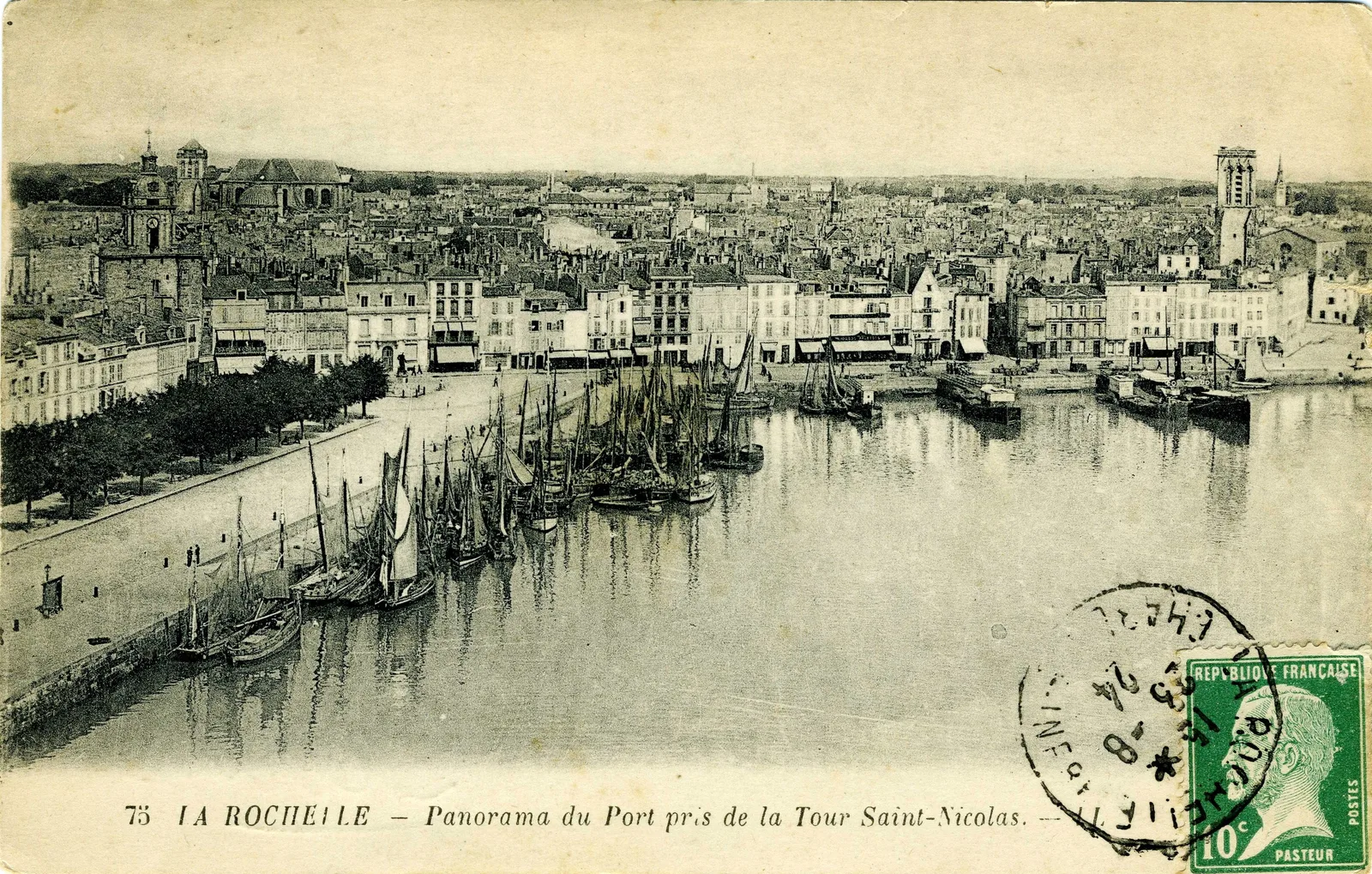
One morning in 1917, in La Rochelle on the Atlantic coast of France, a boy of eleven or twelve was waiting to walk to the tram with three Brazilian girls who went to school with him. He was early and bored, so he decided to think about God. The thought came to him that God did not exist. He took the conclusion politely, as he later put it, and thought the matter settled; in sixty years, he said, he never once reconsidered it.12
The boy was Jean-Paul Sartre, who would make the absence of God the starting point of a philosophy of freedom. This chapter asks how a child brought up in a nominally religious family lost a faith that, by his own account, had never quite taken root, and why he later said that atheism was not a single decision but a long and cruel undertaking.
Catholic and Protestant
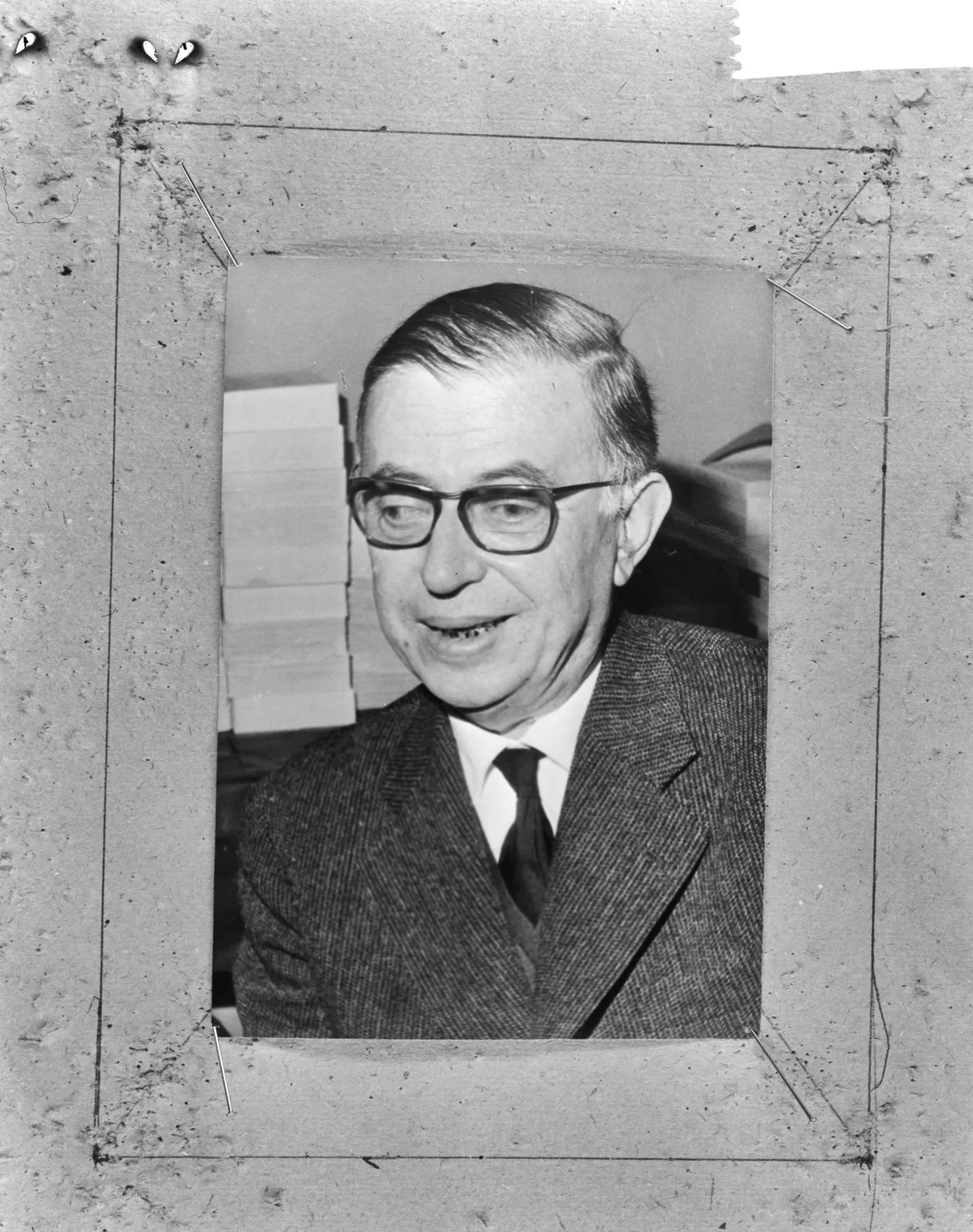
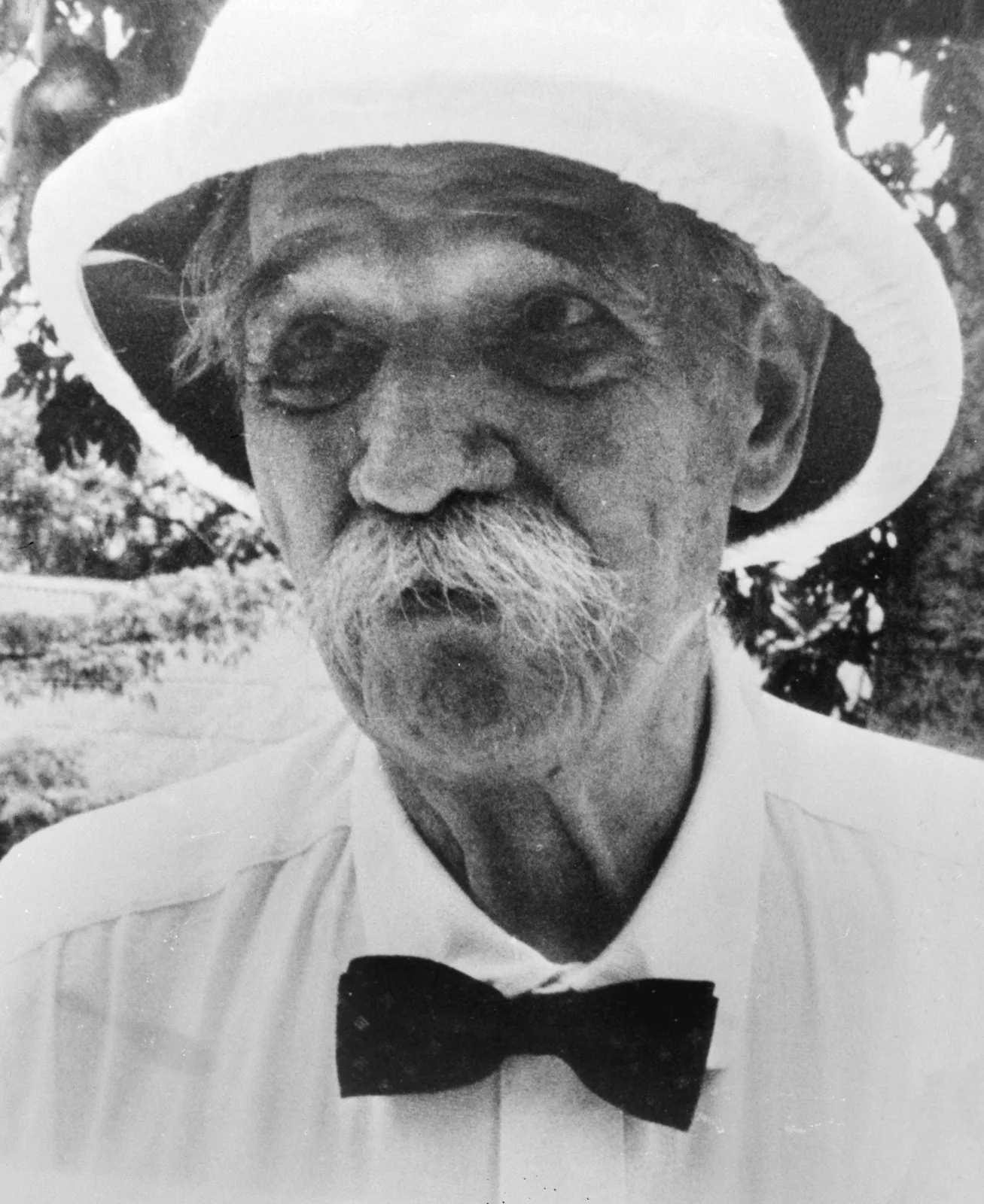
He was born in Paris on 21 June 1905, the only child of a naval officer who died of a fever when the boy was an infant.345 His mother took him back to her parents, first at Meudon and then in Paris, and he grew up in his grandfather's house and library.67 The family's religion was mixed and mild. His grandfather, Charles Schweitzer, was an Alsatian Protestant and a teacher of German, an uncle of the theologian Albert Schweitzer. His grandmother had been born a Catholic but believed in nothing, and only her scepticism kept her from being an atheist. She had the children, his mother among them, raised Catholic out of dislike of Protestantism. His mother kept a private God of her own, who asked only to console her in secret.489 Both women went to Mass for the music.9
The boy was baptised a Catholic, he wrote, so that he would be left free, in a household where faith was more ornament than conviction and everyone believed out of tact. He called himself both Catholic and Protestant. He prayed every day on his knees, but thought of God less and less.81011
The crack
In his memoir Les Mots (The Words, 1964) he said that what led him to unbelief was not a conflict between doctrines but his grandparents' indifference. His grandfather made jokes at the dinner table about Lourdes and the saints, which put the boy off sainthood for good, and his grandmother's sceptical smile finished the work.11 When he was about seven or eight he was sent for religious instruction on Thursdays with a priest, the abbé Dibildos. It lasted less than six months. His composition on the Passion, which his mother had copied out for him, won only the silver medal, and the disappointment, he wrote, sank him into impiety; after an illness and the holidays he refused to go back.12
Only once, he said, did he feel that God existed. He had been playing with matches and burned a small rug, and as he tried to hide the damage he felt God looking at him. He was indignant, swore at God in his grandfather's words, and God never looked at him again.13 For a few years he kept up what he called public relations with the Almighty while privately ceasing to see him. He told it as the story of a failed vocation: he had needed God, had been given him, and God had never taken root and so withered and died.14 On the belief timeline, that is the crack, in about 1912 to 1914; the faith before it was, by his own account, only ever nominal.
La Rochelle, 1917
In the spring of 1917 his mother married again, and the family moved to La Rochelle, where his stepfather was posted.15
A philosophy without God
At the École Normale Supérieure in the 1920s he was openly anti-Christian and, by the time he chose philosophy, completely certain that God did not exist. He thought what was missing was a great philosophy that was truly atheist, and he wanted to write it.1819 Conversations with his friend Paul Nizan, he said, turned the boy's atheism, which had been only the absence of an idea, into a materialist one: a way of seeing the whole world without God.17 On the timeline, his doubt sits in these adult years.
In Being and Nothingness (1943) he argued that every human being longs to be God, a being that would be its own foundation, but that the idea is contradictory, so that man is a useless passion.2021 Thirty years later he admitted that the arguments in that book were not his real reasons for rejecting God; the real reasons were much more direct and childish, because he had been twelve.22
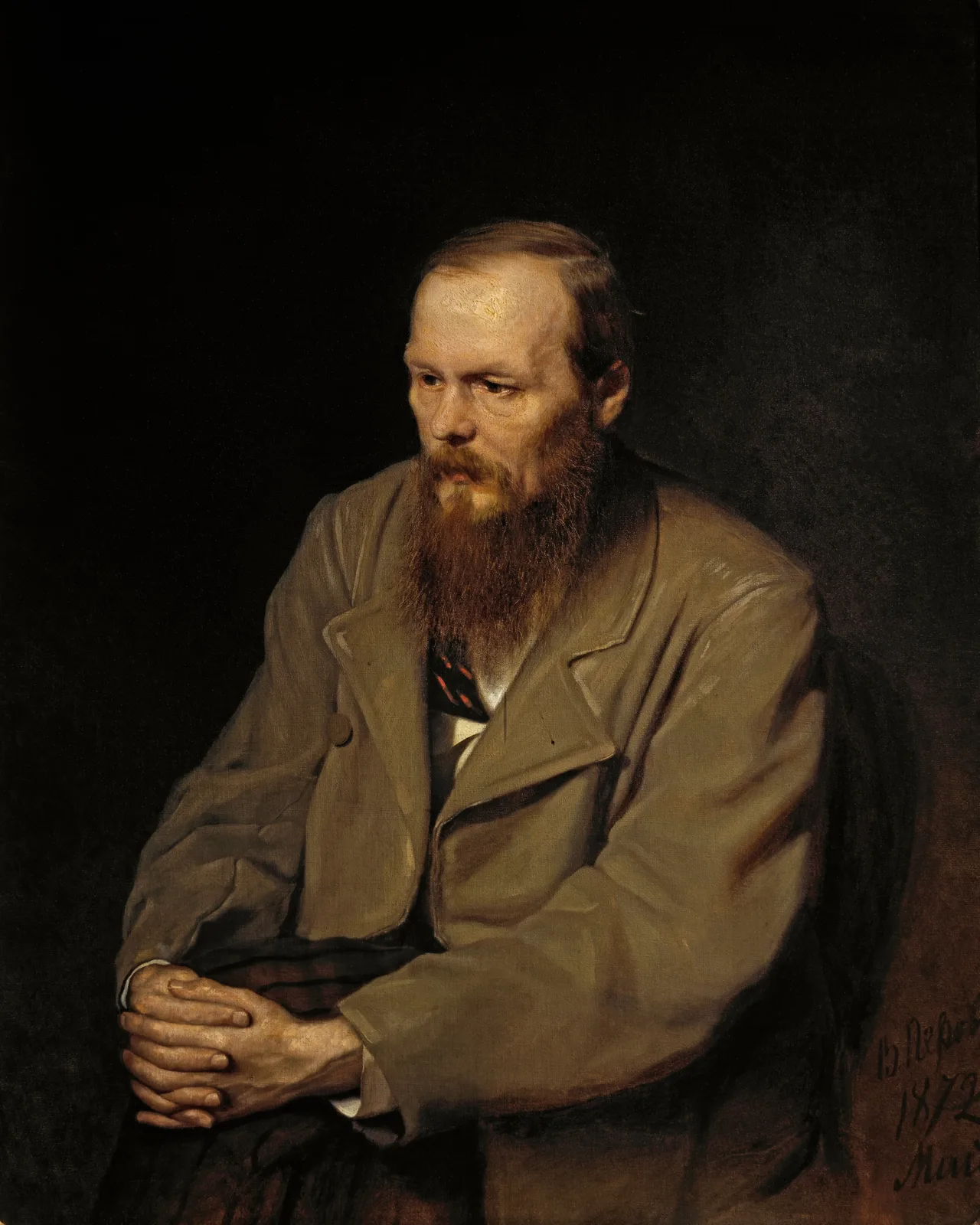
In 1945, in a lecture in Paris later published as Existentialism Is a Humanism, he divided the existentialists into Christians, such as Karl Jaspers and Gabriel Marcel, and atheists, among whom he counted Heidegger and himself.2324 Because there is no God to have a plan for human beings, he argued, there is no fixed human nature; existence comes before essence, and people must make themselves.25 He took up Dostoevsky's saying that if God did not exist everything would be permitted, and agreed that everything was permitted; the result was not licence but a crushing responsibility, since man is condemned to be free.26
The second faith
In Les Mots he described a slower and harder loss. When God died, he had put something in his place: writing, and the hope of being saved through it. That second faith, he wrote, was the one he had spent years expelling, and he had been waking from it for about ten years. Atheism, he said, was a long and cruel undertaking, and he believed he had carried it through to the end. He still wrote; he no longer believed.3233 He was offered the Nobel Prize in Literature in 1964 and refused it.34
Traces
In 1974, nearly blind after two strokes, he talked with Beauvoir about his atheism. He said that God had come to seem to him a survival from the seventeenth century, and that unbelief had secured his freedom and left him no need of God in order to love his neighbour.3536 But he also admitted something unexpected: elements of the idea of God remained in him. He felt himself to be a being expected and prepared for, as if by a creating hand, and he held good and evil to be absolutes. He said the idea was vague and contradicted by most of his other ideas.37 On the timeline, his revision stands here.
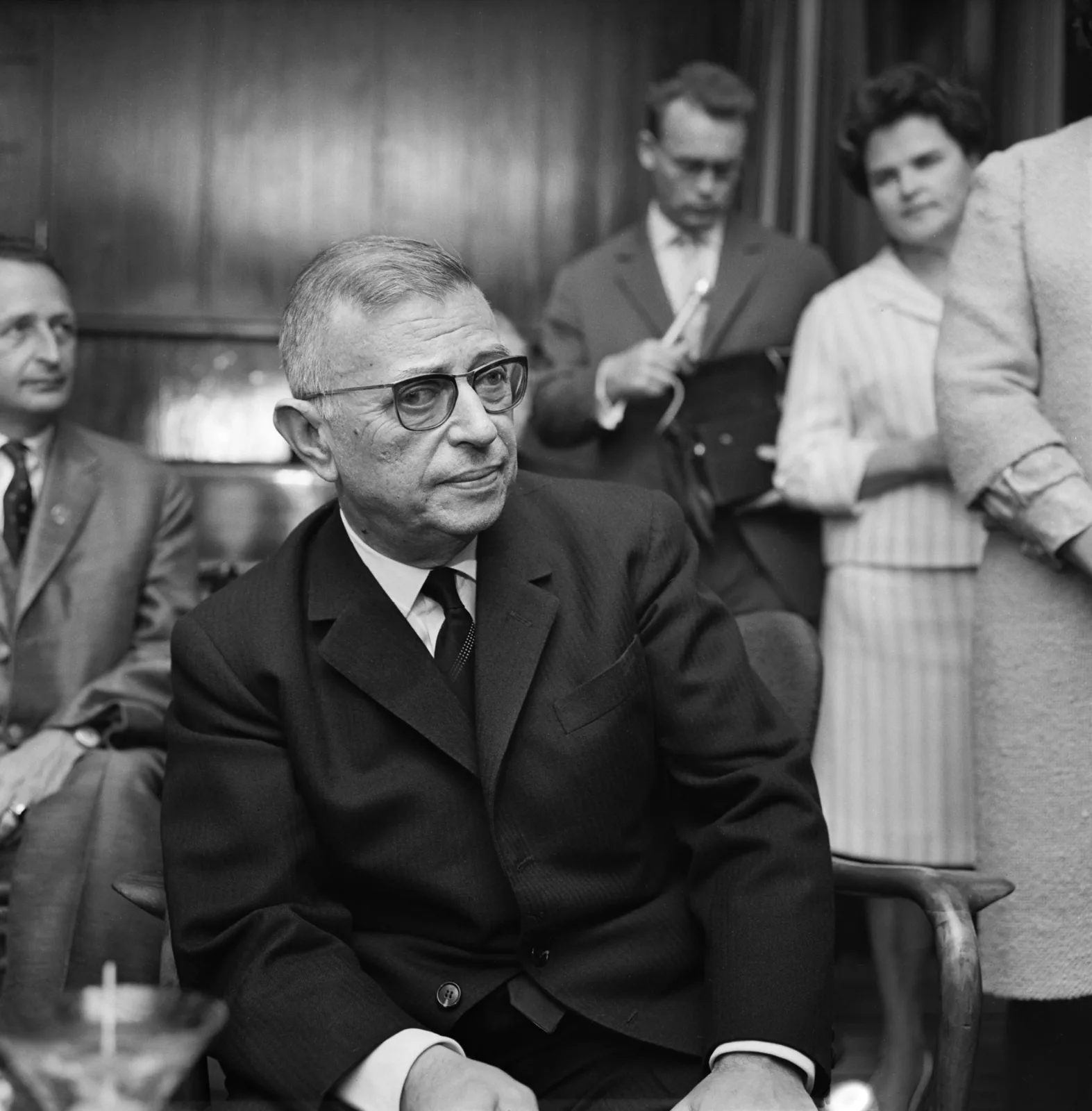
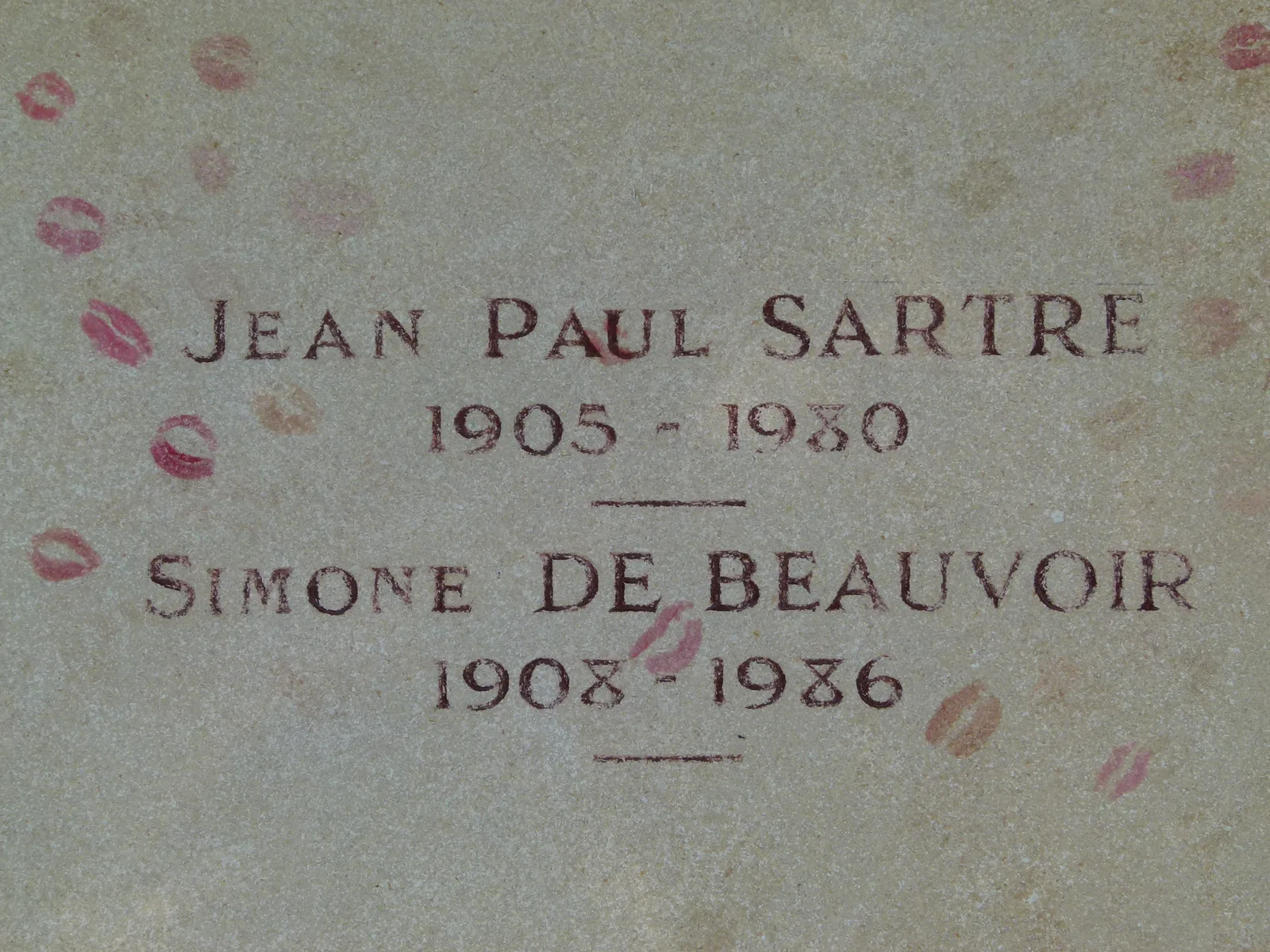
In March 1980 he published a series of interviews with his young secretary Benny Lévy, who had turned towards the God of Israel. Beauvoir thought they were not the real Sartre, and that a blind old man had let himself be talked round; others, including the editor who published them, said Sartre knew what he was printing and insisted on it. Accounts differ, and the interviews do not record a return to faith.3839 He was taken ill on 20 March and died on 15 April 1980. About fifty thousand people followed his coffin through Paris; he was cremated, and no priest appears in Beauvoir's account.4041
Albert Camus, his friend and then his public opponent, who also wrote as an unbeliever, has his own chapter in this book.
Footnotes
-
Sartre, Les Mots (Paris: Gallimard, 1964). Internet Archive
les-mots-19("Les Mots 19"; the Gallimard 1964 setting, pages 1–213; savedresearch/texts/lesmots-19.txt). Page numbers are the running heads of the scan. Lending copieslesmots00sart,lesmots0000jean_k1s7,words00jean(Frechtman translation) returned 401/403 and were not obtained; the French reading is enough, p. 209. ↩ -
Simone de Beauvoir, La cérémonie des adieux, suivi d'Entretiens avec Jean-Paul Sartre (août–septembre 1974) (Paris: Gallimard, 1981). Internet Archive
simone-de-beauvoir-la-ceremonie-des-adieux-suivi-de-entretiens-avec-jean-paul-sa(research/texts/adieux-fr.txt). An unauthorised upload of an in-copyright book, used only to read and paraphrase. The book is Tier 1 for Sartre's 1974 words (the interview transcript, pp. 545–559, p. 480, p. 324) and Tier 2 for Beauvoir's narrative (pp. 39, 150–159), pp. 545–546. ↩ ↩2 -
English Wikipedia, "Jean-Paul Sartre" (
research/texts/wikipedia-map.txt), pulled 2026-10-14; French Wikipedia, "Jean-Paul Sartre" (research/texts/wikipedia-fr-map.txt); its section "Le scandale de l'Espoir maintenant" names Jean Guitton, Olivier Todd, Gisèle Halimi, Jean Daniel, Vincent de Coorebyter; "Jean-Paul Sartre – Biographical", NobelPrize.org (research/texts/nobel-bio.txt), paraphrase only, (year); Beauvoir, La cérémonie des adieux, p. 156 (death on Tuesday 15 April, the year from the 1980 context). Reported at second hand; the original has not been seen. ↩ -
Sartre, Les Mots, pp. 1, 6, 8; Wikipedia, "Jean-Paul Sartre", for "only child". ↩ ↩2
-
Sartre, Les Mots, pp. 8, 11; Wikipedia, "Jean-Paul Sartre", (date). Not verified. ↩
-
Sartre, Les Mots, pp. 9–10, 27. ↩
-
Sartre, Les Mots, pp. 1, 4, 32, 37; "Jean-Paul Sartre – Biographical". ↩
-
Sartre, Les Mots, pp. 14, 82, 207–208; Beauvoir, La cérémonie des adieux, p. 39. ↩
-
Sartre, Les Mots, pp. 82–83. ↩
-
Sartre, Les Mots, p. 83; Beauvoir, La cérémonie des adieux, p. 545 (1974 retelling). ↩
-
Sartre, Les Mots, p. 83. ↩
-
Beauvoir, Adieux p. 39; Wikipedia, "Jean-Paul Sartre", (date, "alors âgé de 12 ans", a miscount, since his birthday is 21 June). ↩
-
Beauvoir, La cérémonie des adieux, p. 39. ↩
-
Beauvoir, La cérémonie des adieux, pp. 480, 548. ↩
-
"Jean-Paul Sartre – Biographical". ↩
-
Sartre, Being and Nothingness, tr. Hazel E. Barnes (London: Methuen, 1957; French, Gallimard, 1943). Internet Archive
beingn-and-nothingness(research/texts/bn.txt), pages as printed in the scan, pp. 566, 615. ↩ -
"Jean-Paul Sartre – Biographical"; Stanford Encyclopedia of Philosophy, "Jean-Paul Sartre" (
research/texts/sep-sartre.txt). Paraphrase only. Contains an error ("brought up by his grandmother"); Sartre, Being and Nothingness, title page. ↩ -
Beauvoir, La cérémonie des adieux, p. 550. ↩
-
Sartre, Existentialism and Humanism, tr. Philip Mairet (London: Methuen, 1948; French original L'existentialisme est un humanisme, Nagel, 1946). Internet Archive
in.ernet.dli.2015.506244(Delhi University Library copy;research/texts/eh-dli.txt). The OCR misprints some folios (e.g. "37" for 27); pages in the claims are the corrected ones. A second item,ExistentialismAndHumanismBySartre1948EngTranslationPhilipMairet(eh-mairet2.txt), downloaded but its OCR is unusable (Devanagari noise); not used, pp. 26–27. ↩ -
Sartre, Existentialism and Humanism, title verso and note p. 3. ↩
-
Sartre, Existentialism and Humanism, p. 28. ↩
-
Sartre, Existentialism and Humanism, pp. 33–34. ↩
-
Sartre, Existentialism and Humanism, p. 33. ↩
-
Sartre, Existentialism and Humanism, pp. 23–24. ↩
-
Mlle Mercier, Catholic critic, as cited by Sartre in 1945: "we forget how an infant smiles" (Sartre's wording of her complaint, paraphrased; not her words): Sartre, Existentialism and Humanism, p. 23. Not checked against the original (paraphrase only). ↩
-
"The Christian side", as summarised by Sartre in the same lecture: by ignoring God's commandments existentialism leaves nothing but what is voluntary, and cannot condemn anyone's action: Sartre, Existentialism and Humanism, pp. 23–24. Not checked against the original (paraphrase only). ↩
-
Wikipedia, "Jean-Paul Sartre". ↩
-
Sartre, Les Mots, pp. 210–212. ↩
-
Sartre, Les Mots, pp. 207–211. ↩
-
Wikipedia, "Jean-Paul Sartre"; Beauvoir, La cérémonie des adieux, p. 324. ↩
-
Beauvoir, La cérémonie des adieux, pp. 550, 556–559. ↩
-
Wikipedia, "Jean-Paul Sartre". ↩
-
Beauvoir, La cérémonie des adieux, p. 551. ↩
-
Beauvoir, La cérémonie des adieux, pp. 150–152; "L'espoir maintenant" with Benny Lévy, Le Nouvel Observateur nos. 800, 801, 802 (March 1980); Hope Now: The 1980 Interviews, tr. Adrian van den Hoven, intro. Ronald Aronson (Chicago, 1996). Internet Archive
hopenow1980inter0000sartis an access-restricted lending copy (401); only the catalogue description and table of contents in the item metadata were read. The interview text itself is NOT read, (catalogue description only); Philosophy, "Jean-Paul Sartre"; Wikipedia, "Jean-Paul Sartre". Accounts differ; see the disputed points. ↩ -
Beauvoir, La cérémonie des adieux, pp. 150–152. ↩
-
Beauvoir, La cérémonie des adieux, pp. 156–159; Philosophy, "Jean-Paul Sartre". ↩
-
Beauvoir, La cérémonie des adieux, pp. 152–159. ↩
les-mots-19 ("Les Mots 19"; the Gallimard 1964 setting, pages 1–213; saved research/texts/lesmots-19.txt). Page numbers are the running heads of the scan. Lending copies lesmots00sart, lesmots0000jean_k1s7, words00jean (Frechtman translation) returned 401/403 and were not obtained; the French reading is enough.; Simone de Beauvoir, La cérémonie des adieux, suivi d'Entretiens avec Jean-Paul Sartre (août–septembre 1974) (Paris: Gallimard, 1981). Internet Archive simone-de-beauvoir-la-ceremonie-des-adieux-suivi-de-entretiens-avec-jean-paul-sa (research/texts/adieux-fr.txt). An unauthorised upload of an in-copyright book, used only to read and paraphrase. The book is Tier 1 for Sartre's 1974 words (the interview transcript, pp. 545–559, p. 480, p. 324) and Tier 2 for Beauvoir's narrative (pp. 39, 150–159).; English Wikipedia, "Jean-Paul Sartre" (research/texts/wikipedia-map.txt), pulled 2026-10-14.; French Wikipedia, "Jean-Paul Sartre" (research/texts/wikipedia-fr-map.txt); its section "Le scandale de l'Espoir maintenant" names Jean Guitton, Olivier Todd, Gisèle Halimi, Jean Daniel, Vincent de Coorebyter.; "Jean-Paul Sartre – Biographical", NobelPrize.org (research/texts/nobel-bio.txt), paraphrase only.; Sartre, Being and Nothingness, tr. Hazel E. Barnes (London: Methuen, 1957; French, Gallimard, 1943). Internet Archive beingn-and-nothingness (research/texts/bn.txt), pages as printed in the scan.; Stanford Encyclopedia of Philosophy, "Jean-Paul Sartre" (research/texts/sep-sartre.txt). Paraphrase only. Contains an error ("brought up by his grandmother").; Sartre, Existentialism and Humanism, tr. Philip Mairet (London: Methuen, 1948; French original L'existentialisme est un humanisme, Nagel, 1946). Internet Archive in.ernet.dli.2015.506244 (Delhi University Library copy; research/texts/eh-dli.txt). The OCR misprints some folios (e.g. "37" for 27); pages in the claims are the corrected ones. A second item, ExistentialismAndHumanismBySartre1948EngTranslationPhilipMairet (eh-mairet2.txt), downloaded but its OCR is unusable (Devanagari noise); not used.; "L'espoir maintenant" with Benny Lévy, Le Nouvel Observateur nos. 800, 801, 802 (March 1980); Hope Now: The 1980 Interviews, tr. Adrian van den Hoven, intro. Ronald Aronson (Chicago, 1996). Internet Archive hopenow1980inter0000sart is an access-restricted lending copy (401); only the catalogue description and table of contents in the item metadata were read. The interview text itself is NOT read.In their own words
(none)
The other side
(none quoted)
(none quoted)
(none quoted)
(none quoted)
(none quoted)
Where accounts differ
| Point | One account | Another | How the page handles it |
|---|---|---|---|
| Age at the loss of faith | "A onze ans" (the 1972 film, as Beauvoir summarises it, Adieux p. 39); he turned twelve on 21 June 1917 and the move to La Rochelle was after 26 April 1917 | "Vers l'âge de douze ans" (1974 interview, Adieux p. 545); "puisque j'avais douze ans" (p. 550); "j'ai décidé à douze ans" (p. 480); Les Mots dates it only to "un matin, en 1917" (p. 209) | Say "in 1917, at eleven or twelve"; name La Rochelle; both of Sartre's own accounts agree on place and year |
| What was lost, and when | A single moment at La Rochelle in 1917 (Mots p. 209; Adieux p. 545) | A slower waning in the Paris years: the grandparents' indifference, the Dibildos failure and the God-who-saw-me scene, years before 1917 (Mots pp. 81–83) | Tell both: the crack at about 1912–14 (undated by Sartre) and the declaration of 1917; say he himself says "he withered, then died" |
| Whose house, and where | Grandparents' house at Meudon after the father's death, until 1911 (Mots pp. 9, 27; WP-en) | Rue Mignard, Paris 16e (WP-fr) for the birth; "de 1907 à 1917" with grandparents (WP-fr) | Meudon, then 1 rue Le Goff, from Les Mots |
| Who brought him up | Mother and grandfather (WP-en, WP-fr) | "his grandmother" (SEP, evidently a slip) | Follow the two; ignore the SEP phrase |
| Religion of the mother | Raised Catholic (Mots p. 6: the grandmother had the children raised Catholic); "son Dieu à elle" (p. 81) | Roster line says "Catholic mother" without nuance | Say her family was raised Catholic and that her own faith was private |
| Age at the remarriage | Eleven (born 21 June 1905, remarriage 26 April 1917) | "Twelve" (WP-fr, WP-en) | Say "in the spring of 1917", not an age |
| Date of the Berlin stay | 1932 (Nobel) | 1933–34 (WP-en) | Say "in the early 1930s" until a biography is read |
| Authenticity and meaning of the 1980 Hope Now interviews | Beauvoir: not "the real Sartre"; Todd: a hijacking of an old man; Guitton: a repudiation of atheism; Gerassi: manipulation (Adieux pp. 150–152; WP-fr; SEP) | Jean Daniel: Sartre knew what he was publishing and demanded it (WP-fr); de Coorebyter: deployment, not conversion; Bernard-Henri Lévy: not a religious conversion (WP-fr); the IA catalogue says Sartre confirmed the interviews shortly before death | "Accounts differ": say the interviews are disputed; do not present a return to faith; the 1974 admission of traces of the idea of God is the better-sourced revision |
List of illustrations
This page uses only public-domain and Creative Commons images; each is credited with its source and licence.
- Jean Paul Sartre (kop), Bestanddeelnr 917-9600 — Anefo (Nationaal Archief), 1965-07-12 · Nationaal Archief, Fotocollectie Anefo (via Wikimedia Commons) · CC0
- Albert Schweitzer 1965 (Bestanddeelnr 918-1292) — Unknown photographer, Anefo, 1965-09-01 · Nationaal Archief (Dutch National Archives), Fotocollectie Anefo, 918-1292 (via Wikimedia Commons) · CC0
- La Rochelle - L'entree du port — Neurdien et Cie, before 1918 (postmark) · Postcard, Wikimedia Commons (scanned 2009) · Public domain
- La Rochelle - Panorama du port et de la ville (from the Tour Saint-Nicolas) — Levy Fils et Cie, Paris, late 1910s or early 1920s · Postcard, Wikimedia Commons (scanned 2009) · Public domain
- Portrait of Fyodor Dostoevsky — Vasily Perov, 1872 · Vasily Perov, Tretyakov Gallery, via Google Art Project and Wikimedia Commons · Public domain
- The French Philosopher Jean-Paul Sartre 1965 (JOKAHBL3E F08-3), Helsinki, July 1965 — Photographer not named; Finnish Heritage Agency (Museovirasto), 1965-07-16 · Finnish Heritage Agency (Museovirasto), via Finna and Wikimedia Commons; CC BY 4.0; source TIFF 4629x4708 converted to JPEG and reduced · CC BY 4.0
- Tombe de Sartre et Beauvoir au cimetiere du Montparnasse — Dinkum, 2011-10-01 · Dinkum, Wikimedia Commons, own work · CC0
Sources
Tier 1 — the subject's own words (all in copyright: read and paraphrased only; none quoted)
- [Mots] Sartre, Les Mots (Paris: Gallimard, 1964). Internet Archive
les-mots-19("Les Mots 19"; the Gallimard 1964 setting, pages 1–213; savedresearch/texts/lesmots-19.txt). Page numbers are the running heads of the scan. Lending copieslesmots00sart,lesmots0000jean_k1s7,words00jean(Frechtman translation) returned 401/403 and were not obtained; the French reading is enough. - [EH] Sartre, Existentialism and Humanism, tr. Philip Mairet (London: Methuen, 1948; French original L'existentialisme est un humanisme, Nagel, 1946). Internet Archive
in.ernet.dli.2015.506244(Delhi University Library copy;research/texts/eh-dli.txt). The OCR misprints some folios (e.g. "37" for 27); pages in the claims are the corrected ones. A second item,ExistentialismAndHumanismBySartre1948EngTranslationPhilipMairet(eh-mairet2.txt), downloaded but its OCR is unusable (Devanagari noise); not used. - [BN] Sartre, Being and Nothingness, tr. Hazel E. Barnes (London: Methuen, 1957; French, Gallimard, 1943). Internet Archive
beingn-and-nothingness(research/texts/bn.txt), pages as printed in the scan. - [Adieux] Simone de Beauvoir, La cérémonie des adieux, suivi d'Entretiens avec Jean-Paul Sartre (août–septembre 1974) (Paris: Gallimard, 1981). Internet Archive
simone-de-beauvoir-la-ceremonie-des-adieux-suivi-de-entretiens-avec-jean-paul-sa(research/texts/adieux-fr.txt). An unauthorised upload of an in-copyright book, used only to read and paraphrase. The book is Tier 1 for Sartre's 1974 words (the interview transcript, pp. 545–559, p. 480, p. 324) and Tier 2 for Beauvoir's narrative (pp. 39, 150–159). - [Hope] "L'espoir maintenant" with Benny Lévy, Le Nouvel Observateur nos. 800, 801, 802 (March 1980); Hope Now: The 1980 Interviews, tr. Adrian van den Hoven, intro. Ronald Aronson (Chicago, 1996). Internet Archive
hopenow1980inter0000sartis an access-restricted lending copy (401); only the catalogue description and table of contents in the item metadata were read. The interview text itself is NOT read. - [Figaro] Sartre's statement refusing the Nobel Prize, Le Figaro, 23 October 1964 (WP-en, claim 19); not read.
Tier 2 — scholarly biographies and encyclopedias
- [SEP] Stanford Encyclopedia of Philosophy, "Jean-Paul Sartre" (
research/texts/sep-sartre.txt). Paraphrase only. Contains an error ("brought up by his grandmother"). - [Nobel] "Jean-Paul Sartre – Biographical", NobelPrize.org (
research/texts/nobel-bio.txt), paraphrase only. - [CC] The Cambridge Companion to Sartre, ed. Christina Howells (Cambridge UP, 1992); IA
christina-howells-the-cambridge-companion-to-sartre(research/texts/camb-companion.txt). Downloaded; searched for religion, atheism and Hope Now: no relevant biographical passage found. Not used. - Not obtainable (access-restricted lending copies, 401/403): Cohen-Solal, Sartre: A Life (
sartrelife00coheand three other items); Hayman, Writing Against and Sartre: A Biography; Gerassi, Hated Conscience of His Century (jeanpaulsartreha00gera); Beauvoir, Adieux: A Farewell to Sartre (English,adieuxfarewellto00beaurich); Between Existentialism and Marxism (betweenexistenti00sart). Not circumvented. - Still to borrow: Cohen-Solal, Gerassi vol. 1, Hayman; the Astruc–Contat film script (Sartre par lui-même, 1977) for the 1972 account.
Tier 3 — popular biographies and journalism
- None used.
Tier 4 — maps to other sources only. Never cited in the script.
- [WP-en] English Wikipedia, "Jean-Paul Sartre" (
research/texts/wikipedia-map.txt), pulled 2026-10-14. - [WP-fr] French Wikipedia, "Jean-Paul Sartre" (
research/texts/wikipedia-fr-map.txt); its section "Le scandale de l'Espoir maintenant" names Jean Guitton, Olivier Todd, Gisèle Halimi, Jean Daniel, Vincent de Coorebyter.
Opposition sources
- Sartre's own 1945 summary of the objections: Mlle Mercier (Catholic critic), the Communists, and "the Christian side" (EH, pp. 23–24), paraphrased; not a direct quotation of the critics themselves.
- Catholic Church, Index of Prohibited Books, 1948 (WP-en; Vatican record unchecked).
- Jean Guitton on L'espoir maintenant (WP-fr: he took it as a repudiation of Sartre's atheism); Beauvoir, La cérémonie des adieux (pp. 150–152).
- No contemporary religious critic is quotable from a lawful free text. Candidates to read: Gabriel Marcel, Jacques Maritain, Emmanuel Mounier, and Mauriac (Sartre attacked his novels in 1939; Adieux mentions the exchange, page not traced).
Related lives
Albert Camus — the public argument with Sartre over *The Rebel* in 1951–52 (SEP, claim 24); unbelief without contempt. (suggestion only; never baked into the script as "Next")
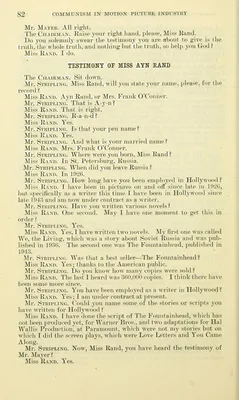
Ayn Rand
Ayn Rand was born Alisa Rosenbaum in St Petersburg, and left no account of a childhood faith or its loss. From her first philosophic journal in 1934 she made the rejection of faith the foundation of a philosophy of reason, and said so plainly from the 1940s to the 1960s. Late in life she changed only the label ("Objectivist") and the tone ("intransigent, though not militant"), never the position.
Margaret Knight
Margaret Knight had a nominally Christian education and a quiet loss of belief at Cambridge in the mid-1920s. In January 1955 she said on the BBC Home Service, carefully and for doubting parents, that children need not be taught a God any more than Santa Claus, and that Scientific Humanism could ground morals. The national uproar sent her, at her critics' urging, to the Bible and church history. In 1975 she judged Christianity far more harshly than she had on the radio.
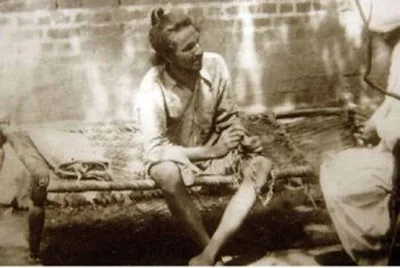
Bhagat Singh
Bhagat Singh was an Arya Samaj schoolboy who prayed for hours. He read his way out of belief in God during a crisis in his revolutionary party in 1925–26, and in 1927 refused prayer when the police offered it as a way out. In the condemned cell in 1930 he answered the charge that his atheism was vanity. What he revised in his last months was the bomb, not the unbelief.
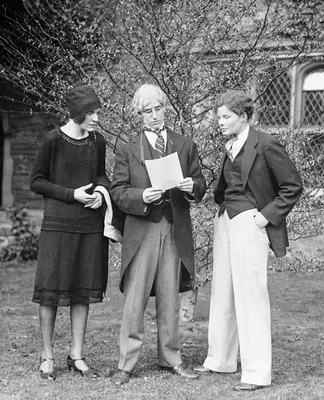
Katharine Hepburn
Katharine Hepburn did not lose a faith but inherited an unbelief, from Ingersoll-going grandparents and a father who called Christianity bunk. She held it through her brother's death when she was thirteen. She stated it plainly only once, at eighty-four, in 1991. In her last talks she softened the word to a "higher power", while keeping the same creed of kindness without heaven or hell.