Margaret Knight had a nominally Christian education and a quiet loss of belief at Cambridge in the mid-1920s. In January 1955 she said on the BBC Home Service, carefully and for doubting parents, that children need not be taught a God any more than Santa Claus, and that Scientific Humanism could ground morals. The national uproar sent her, at her critics' urging, to the Bible and church history. In 1975 she judged Christianity far more harshly than she had on the radio.
The belief timeline
- Faith (before 1925 (inferred; undated)) — A "nominally Christian education" and a long unease with the beliefs, not a devout faith; no source gives a childhood crack with a date. The mark is weak and the script should say so [4][5]
- Doubt (c. 1925-26 (inferred)) — Third year at Cambridge: she abandons the beliefs privately, "with a profound sense of relief"; the later date is the real turning point because the unease was long-standing and this is when she let go (secondhand via Wikipedia; the preface could not be seen) [5][6]
- Declaration (1955-01-05) — The first Home Service talk: orthodox Christianity "no longer intellectually tenable", Scientific Humanism the answer, humanist parents may tell children there is no more a God than a Santa Claus [15][20][22][23][24]
- Revision (1975 (study c. 1970-75)) — After critics told her she did not know Christianity, she studies the Bible and church history; abandons her 1955 assumptions that Jesus was a great moral teacher and Christianity a force for good in its day; calls the conversion of Europe "one of the greatest disasters of history" [12][39][40][41]
Notes to the timeline (12)
- [4] She describes her own early education as "nominally Christian" and herself, before 1955, as interested in "philosophical theism" rather than historical Christianity — NSS-Debit p. 3.
- [5] In her third year at Cambridge she found the "moral courage" to abandon religious beliefs she had long been uneasy with, "with a profound sense of relief"; Wikipedia gives this as from the preface to Morals without Religion (1955) — Wiki-Knight (cites the NSS pamphlet, in which it does not appear). Reported at second hand; the original has not been seen.
- [6] Girton College, Cambridge; graduated 1926; master's degree 1948 — Wiki-Knight.
- [15] First talk broadcast on 5 January 1955 — Wiki-Knight (no source given for the day).
- [20] She defines religion by the Oxford Dictionary and fixes a "bare minimum" of Christian belief: an omnipotent, wholly good power; Christ divine; the resurrection; survival of bodily death — HUK-Talks, talk 1 para 4.
- [22] Her intellectual case in the first talk is the problem of evil (leprosy, cancer, animal suffering; the dilemma "that so troubled St Augustine"), with witches as a parallel case of a belief not disproved but no longer tenable — HUK-Talks, talk 1 paras 6-9.
- [23] She sets "Scientific Humanism" against Christianity and communism as "the two great rival dogmatic systems" and says the way to resist communism is not to revive Christianity — HUK-Talks, talk 1 para 15.
- [24] Second talk: humanist parents may tell small children that some people do not think there is a God, "any more than there is really a Santa Claus"; children should still hear the New Testament, treated frankly as legends like Greek myths; Christ remembered as a real man and, "later", a great moral teacher; she would no more pull down Chartres than the Parthenon — HUK-Talks, talk 2 paras 2-5.
- [12] In 1955 she shared two assumptions "common among the more highbrow type of sceptic": that Jesus, though deluded about being the Messiah, was a great moral teacher of outstanding excellence, and that Christianity was a great force for good in its day — NSS-Debit p. 3.
- [39] After the broadcasts "many Christians protested... that it was a pity I did not know more about the religion I had so irresponsibly attacked"; she then "studied the Bible diligently" and read "many books about the origins and history of the Church" "in the last few years"; "This reading has altered my view profoundly" — NSS-Debit p. 3.
- [40] Result: both of her 1955 assumptions (Jesus a great moral teacher; Christianity a force for good in its day) "now seem to me to be false"; she "now incline[s] to the view that the conversion of Europe to Christianity was one of the greatest disasters of history" — NSS-Debit p. 3.
- [41] The 1975 pamphlet's indictment: Jesus as a "fanatic" who taught eternal torment; and, in the Church's record, hell, intolerance and persecution, anti-intellectualism, asceticism and otherworldliness, slavery; ends with Scientific Humanism as the remedy — NSS-Debit pp. 3-6.
Morals Without Religion
In January 1955 the BBC Home Service broadcast two talks by a lecturer in psychology at the University of Aberdeen. They were addressed, she said, to the ordinary man and woman who do not quite know what they believe. She told them that their doubts were justified, that Christianity was not the only alternative to communism nor the only basis for training a child's character, and how unbelieving parents might bring up their children.12 For three weeks afterwards, a historian of the episode writes, she was hounded and pilloried in the press; nearly three thousand letters reached the BBC and her.3 One headline called her "The Unholy Mrs Knight."4
The lecturer was Margaret Knight. This chapter asks how a woman with a nominally Christian education came to say on the national radio what few had said there before, and why, twenty years later, she judged Christianity more harshly than she had in the talks that caused the uproar.
A nominal Christian
She was born Margaret Horsey in Hertfordshire in 1903; Wikipedia gives the date as 23 November.567 Of her childhood religion she said only, looking back in 1975, that she had had a nominally Christian education, and that before her broadcasts she had been interested in philosophical theism rather than in the history of Christianity, about which she knew no more than any layman.8 The often-repeated statement that she had an Anglican upbringing is not supported by any source read for this chapter.9 On the belief timeline, her faith is only a weak mark, and an inferred one.
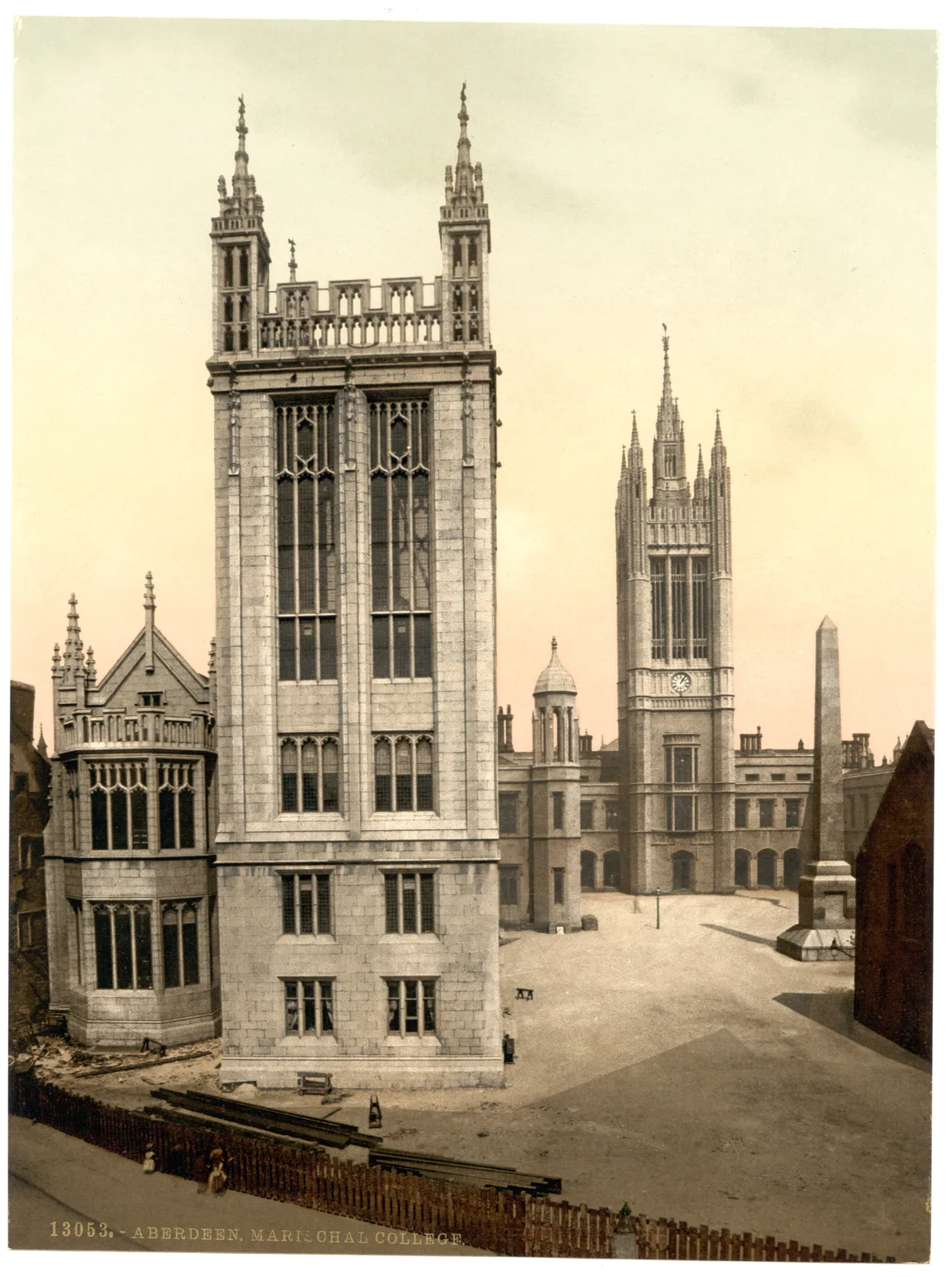
She went to Girton College, Cambridge, and graduated in 1926.10 There, according to Wikipedia, which says it is quoting the preface of her 1955 book, she found in her third year the courage to give up religious beliefs that had long made her uneasy, and let them go with a profound sense of relief. The preface could not be read for this chapter, and no source names what she read or what moved her.1112 On the timeline, this is where her doubt begins, about 1925 or 1926.
Psychologist
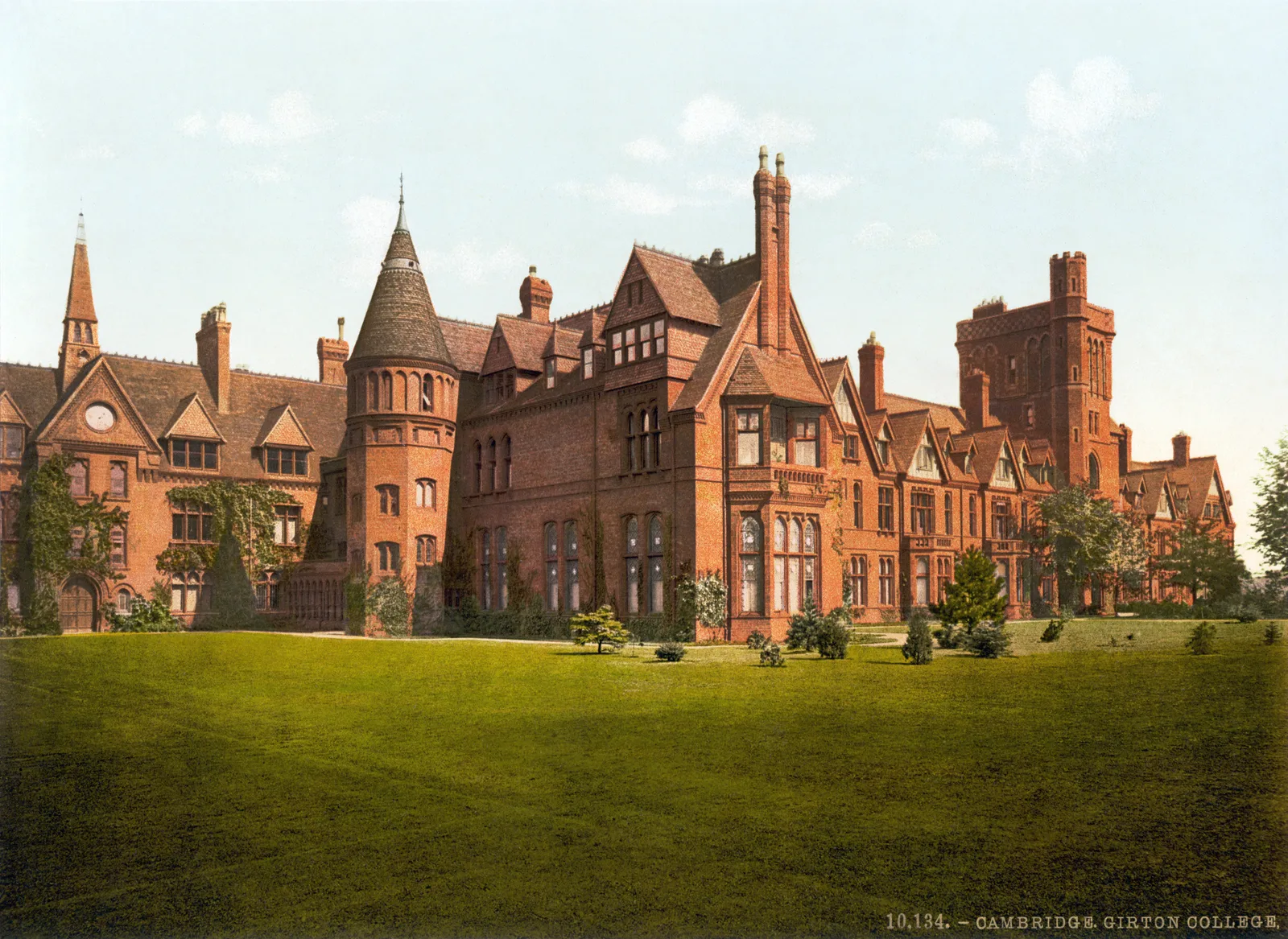
For ten years she worked as a librarian and editor at the National Institute of Industrial Psychology.13 In 1936 she married the psychologist Rex Knight, who in 1947 became the first professor of psychology at Aberdeen; she lectured there from 1938, and with him wrote an introduction to psychology that went through many editions.14151617
The broadcasts
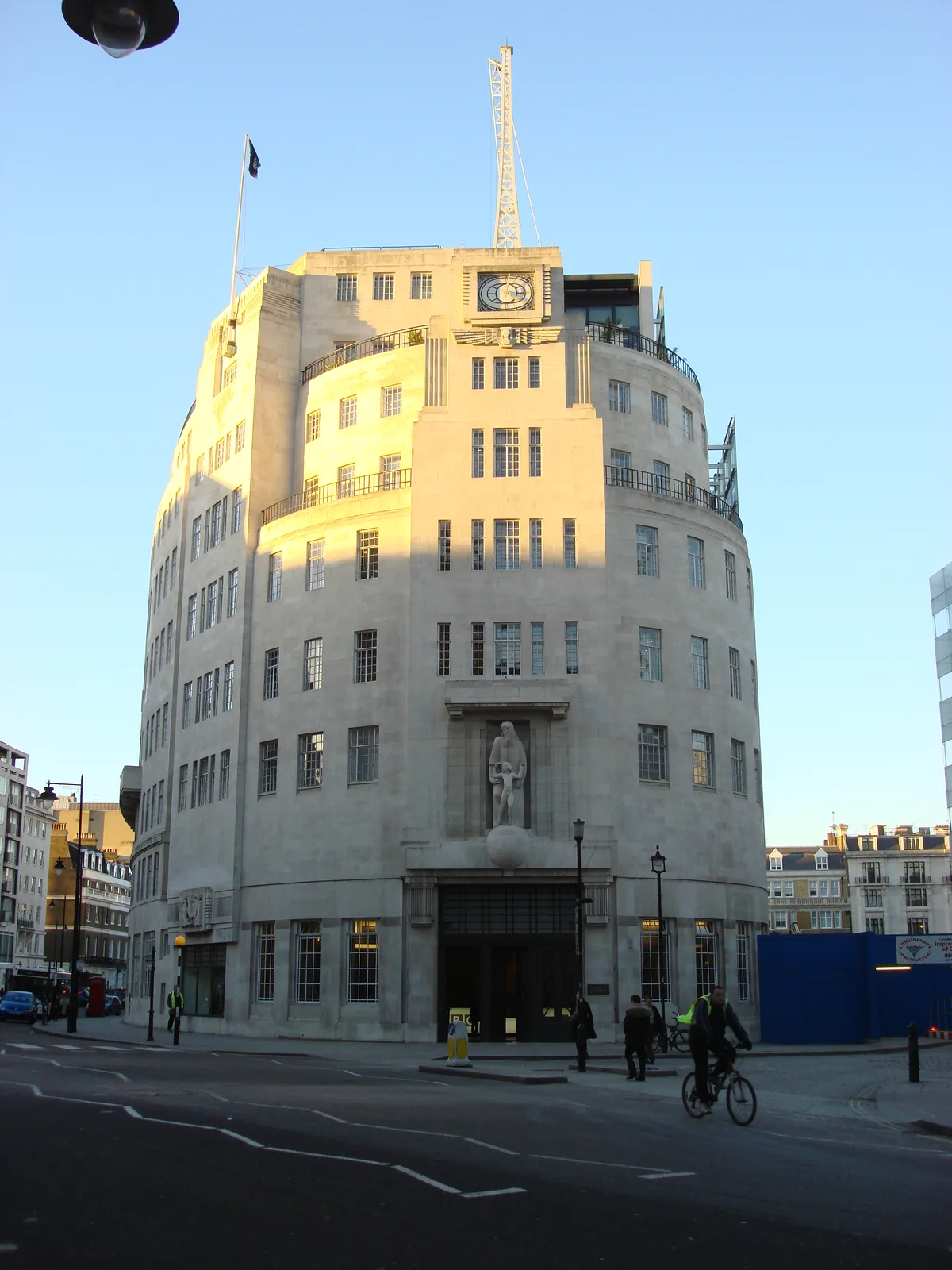
Eight years earlier, the historian Callum Brown writes, Bertrand Russell had made the first full broadcast by an atheist on the same station.18 Knight's talks, Brown writes, had to overcome considerable resistance from Christian managers at the BBC who thought the Corporation had a leading part in evangelising Britain; by one account it took three attempts to get them on the air.1920 The first was broadcast early in January 1955; Wikipedia gives 5 January.21
She was careful with her audience. She was not out, she said, to destroy the convictions of people in whom they were deeply rooted and to whom they meant a great deal; what she argued was that it was a mistake to impose those beliefs on children and to make them the basis of moral training.222324 She set out the minimum a Christian must believe, an all-powerful and wholly good God, the divinity of Christ, the resurrection, survival after death. Her case against it was the problem of evil: leprosy, cancer, the suffering of animals, and the old dilemma that either God cannot prevent evil or will not.252627 Against both Christianity and communism, the two great rival dogmatic systems, she offered what she called Scientific Humanism.2829
The second talk was practical, and it was the one that drew the heaviest fire. Humanist parents, she said, could tell small children that some people do not think there really is a God, any more than there is really a Santa Claus, though we often talk as though there were. Children should still hear the New Testament, told frankly as legend, like the Greek myths, and remember Christ as a real man and a great moral teacher; one could feel awe at Chartres, she said, without believing in the God of Israel, as one could at the Parthenon without believing in Athene. Children should be taught to consider others because we are social beings; to say "because it is God's will" only invites the same question again.30313233 In the talks she called herself and her listeners humanists; she did not call herself an atheist.34 The timeline places her declaration here.
The uproar
The newspapers called the talks untrue and vicious propaganda; one called her a menace; another headline read "Godless Radio Repeat Shocks Nation."354 By one account the Daily Telegraph led the attack.36 The historian Arthur Bryant, in the Illustrated London News, argued that the BBC's monopoly of the air gave it a duty not to undermine public morality or the nation's faith in itself, that morality could not stand without religion, and that needlessly undermining the faith of others was both perilous and unkind.373839 But letters came from supporters too, teachers and parents who said that at last someone was saying what they had long felt; one called it like opening a dungeon door.40
On 26 January 1955, three weeks after the first talk, a member of parliament, John Hall, asked the Assistant Postmaster-General in the House of Commons about BBC programmes, saying that
there has been general public concern about the suitability of some of the radio and television programmes which have been broadcast recently4142
He did not name Knight, and whether he meant her talks is not known. The minister's answer was that the government would not interfere:
It has been the practice of successive Governments to give the B.B.C. full autonomy with regard to programmes, and I think that it would be contrary to the general view of the House that we should interfere.4342
The talks were published that year with other essays, and a chapter on the reaction to them, as Morals without Religion.44 In 1961 she edited a Humanist Anthology, from Confucius to Bertrand Russell.45
The debit account
Many Christians, she wrote in 1975, had protested after the broadcasts that it was a pity she did not know more about the religion she had so irresponsibly attacked. She took them at their word. In the years that followed she studied the Bible diligently and read many books on the origins and history of the Church, and the reading, she said, altered her view profoundly.46 In 1955 she had shared what she called the assumptions of the more highbrow type of sceptic: that Jesus, though mistaken about being the Messiah, was a great moral teacher, and that Christianity had been a great force for good in its day.47 Now both assumptions seemed to her false. She was inclined to think that the conversion of Europe to Christianity had been one of the greatest disasters of history.48 Her pamphlet Christianity: the Debit Account (1975) made the case, from hell and persecution to the Church's record on slavery, and ended, as the talks had, with Scientific Humanism.4950 On the timeline, this is her revision, which was not a softening but a hardening, brought about by the critics who told her to read more.
She retired from Aberdeen in 1970, and died in 1983; Wikipedia gives 10 May.1651
Did her unbelief change shape?
Her unbelief began quietly, as a relief at Cambridge from beliefs she had never held firmly. It became public at fifty-one, in two talks that were careful to the point of gentleness, addressed to doubting parents rather than to believers. The storm that followed did not make her retreat. It sent her to the Bible and the history of the Church, and twenty years later she judged that she had been too kind: Jesus was not the moral teacher she had granted, and Christianity had not been a force for good. The label never changed. It was always Scientific Humanism.
Bertrand Russell, who made the first full broadcast by an atheist on the same station eight years before her talks, has his own chapter in this book.
Footnotes
-
Brown-EHR abstract; HUK-Talks intro ("two talks on the BBC's Home Service"). ↩
-
HUK-Talks, talk 1 paras 1-3. ↩
-
Brown-EHR abstract. ↩
-
ODNB title (Crossref record); Wiki-Knight. ↩
-
Wiki-Knight. Reported at second hand; the original has not been seen. ↩
-
Wiki-Knight (citing FFRF page, which returned 403). ↩
-
NSS-Debit p. 3. ↩
-
NSS-Debit p. 3. Not verified. ↩
-
Wiki-Knight. ↩
-
Wiki-Knight (cites the NSS pamphlet, in which it does not appear). ↩
-
none found. ↩
-
Wiki-Knight. ↩
-
Wiki-Knight; Wiki-Rex. ↩
-
Abdn-Hist (1947, died in office of a heart attack); Wiki-Rex (12 March 1963). ↩
-
Wiki-Knight; Wiki-Rex. ↩
-
Brown-EHR abstract. Abstract is the only source for this, as for the other details in this chapter cited to that source alone. ↩
-
Brown-EHR abstract. ↩
-
Mason-Think para 2. ↩
-
Wiki-Knight (no source given for the day). ↩
-
Margaret Knight, 1955: HUK-Talks, talk 1 para 5. ↩
-
Margaret Knight, 1955: HUK-Talks, talk 1 para 5. ↩
-
HUK-Talks, talk 1 para 5. ↩
-
Margaret Knight, 1955: HUK-Talks, talk 1 para 8. ↩
-
HUK-Talks, talk 1 para 4. ↩
-
HUK-Talks, talk 1 paras 6-9. ↩
-
Margaret Knight, 1955: HUK-Talks, talk 1 para 15. ↩
-
HUK-Talks, talk 1 para 15. ↩
-
Margaret Knight, 1955: HUK-Talks, talk 2 para 2. ↩
-
Margaret Knight, 1955: HUK-Talks, talk 2 para 4. ↩
-
HUK-Talks, talk 2 paras 2-5. ↩
-
HUK-Talks, talk 2 paras 6-end. ↩
-
HUK-Talks; NSS-Debit; NSS-MwR (text search). ↩
-
Unnamed newspaper, 1955, as quoted by Marilyn Mason (Wikipedia gives this to the Sunday Graphic; not confirmed). The words are Mason's quotation; the paper is not identified in the source read: Mason-Think para 2 (HUK page). ↩
-
Mason-Think para 3. ↩
-
Arthur Bryant, historian and Illustrated London News columnist, 29 January 1955. His fairest point is institutional: the BBC holds a monopoly of the air and so owes the public a duty not to attack the national faith. He does not name Knight ("the lady"). IN COPYRIGHT: paraphrase: ILN p. 168. ↩
-
Arthur Bryant, ILN, 29 January 1955 (same column; he also concedes "I have little faith, indeed, in the power of my intelligence to find truth"). IN COPYRIGHT: ILN p. 168. ↩
-
ILN p. 168. ↩
-
Mason-Think para 2; HUK-Talks intro. ↩
-
John Hall MP, House of Commons, 26 January 1955. Does not name Knight; the link is inferred, so present only as "the week after", not as a reference to her. Open Parliament Licence: Hansard HC Deb 26 January 1955 vol 536 c139. ↩
-
Mr Gammans, Assistant Postmaster-General, 26 January 1955, refusing to take powers over BBC programmes. Open Parliament Licence: Hansard HC Deb 26 January 1955 vol 536 c139. ↩
-
HUK-Talks intro; Wiki-Knight (London: Dobson). ↩
-
Wiki-Knight; Internet Archive catalogue record humananthology0000unse (1961, "Knight, Margaret, 1903- editor"). ↩
-
NSS-Debit p. 3. ↩
-
NSS-Debit p. 3. ↩
-
NSS-Debit p. 3. ↩
-
NSS-Debit p. 2. ↩
-
NSS-Debit pp. 3-6. ↩
-
Wiki-Knight; year confirmed by ODNB title. ↩
In their own words
I am not out to destroy the Christian convictions of people in whom they are deeply implanted and to whom they mean a great deal.
it is a mistake to try to impose them on children, and to make them the basis of moral training.
Either God cannot prevent evil, or he will not.
And we can tell them that some people now do not think there is really a God, any more than there is really a Santa Claus-though we often talk as though there were.
One can feel awe, and wonder, and reverence before the Parthenon without believing in the Greek goddess Athene to whose worship it was dedicated; and one can have similar emotions at Chartres without believing in the God of Israel.
Scientific Humanism – that is the constructive answer.
Up to the time of the broadcasts, I had been interested in philosophical theism rather than in historical Christianity, about which I knew no more than the average layman who has had a nominally Christian education.
In the light of wider knowledge, both assumptions now seem to me to be false. I now incline to the view that the conversion of Europe to Christianity was one of the greatest disasters of history.
This reading has altered my view profoundly.
The broadcasts caused some excitement: and many Christians protested, with varying degrees of vehemence, that it was a pity I did not know more about the religion I had so irresponsibly attacked.
a fresh, cleansing wind swept through the stuffy room that contained the relics of my religious beliefs. I let them go with a profound sense of relief, and ever since I have lived happily without them.
In brief, Christian morality is largely authoritarian, while Humanist morality is social.
These talks are addressed to the ordinary man and woman, whose attitude towards religion is that they do not quite know what they believe.
The other side
It is a sign, I believe, of a profound intellectual weakness to believe that morality can stand without religion; all history testifies that it does not and cannot.
To do or say needlessly anything that undermines the faith of others seems both a very perilous and a very unkind thing to do.
there has been general public concern about the suitability of some of the radio and television programmes which have been broadcast recently
It has been the practice of successive Governments to give the B.B.C. full autonomy with regard to programmes, and I think that it would be contrary to the general view of the House that we should interfere.
Mrs Margaret Knight is a menace
Where accounts differ
| Point | One account | Another | How the page handles it |
|---|---|---|---|
| Where the "cleansing wind" passage comes from | Wikipedia: from the preface to Morals without Religion (1955), cited to the NSS pamphlet | The NSS pamphlet text and the "Debit Account" contain no such passage (searched both) | Do not quote it; say her own account of leaving her beliefs is known only through a preface this research could not read |
| Date of the first talk | 5 January 1955 (Wiki-Knight) | "January 1955" only (Brown abstract, HUK) | Say "early in January 1955" unless the Radio Times or Genome listing is checked |
| Which paper said "menace" | Sunday Graphic (Wiki-Knight) | Mason gives "Mrs Margaret Knight is a menace" without naming a paper | Attribute to "one national paper" unless the Sunday Graphic page is seen |
| Title of the talks | "Morals without Religion" (HUK, Mason, her book) | "Morality without Religion" (Brown abstract) | Use "Morals without Religion", as her book does |
| Number of broadcasts | Two talks (HUK, Wikipedia, Mason) | Two talks plus a third discussion programme (Brown) | Say two talks and a studio discussion; the discussion's date and speakers are not known |
| 1974 publisher of Honest to Man | London: Elek/Pemberton (Wiki-Knight) | Buffalo, N.Y.: Prometheus Books (Internet Archive catalogue) | Probably UK and US editions; do not name a publisher in the script |
| Her upbringing | Roster: "Anglican upbringing" | Her words: "nominally Christian education" (NSS-Debit p. 3) | Use her words |
| Hall's Commons question | Could be a response to the Knight broadcasts three weeks earlier | Hansard does not name them; Hall speaks of "recent" programmes in general and of sound and television | Context only; do not link them in the script |
List of illustrations
This page uses only public-domain and Creative Commons images; each is credited with its source and licence.
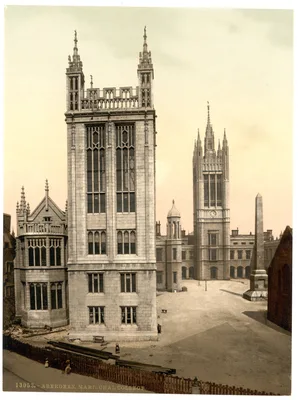
- Marischal College, Aberdeen, Scotland (photochrom) — Detroit Publishing Co. (Photochrom Print Collection), between 1890 and 1900 (catalogue 1905) · Library of Congress, Prints and Photographs Division, Photochrom Print Collection (via Wikimedia Commons) · Public domain (Commons: Public domain; Library of Congress LCCN 2001703571, Photochrom Print Collection; published before 1931)
- Girton College, Cambridge, England, 1890s (photochrom) — Detroit Publishing Co., under license from Photoglob Zürich, between 1890 and 1900 · Library of Congress, Prints and Photographs Division, Photochrom Print Collection (via Wikimedia Commons) · Public domain (Commons: Public domain; Library of Congress Prints and Photographs Division, Photochrom Print Collection, ppmsc.08082; published before 1931)
- King's College Chapel, University of Aberdeen — Devinberg, 2020-02-19 · Devinberg, CC BY 4.0, via Wikimedia Commons · CC BY 4.0
- BBC Broadcasting House, Portland Place, London — Oxyman, 2007-10-30 · Oxyman, CC BY 2.5, via Wikimedia Commons · CC BY 2.5
Sources
Tier 1 — the subject's own words (writings, letters, diaries, trial records)
- HUK-Talks Margaret Knight, "Morals without Religion 1" and "Morals without Religion 2", the two BBC Home Service talks of January 1955, as reproduced at https://humanists.uk/humanism/humanism-today/humanists-thinking/margaret-knight-morals-without-religion/ (text taken from her book Morals without Religion and other essays, Dennis Dobson, 1955). Cited by talk and paragraph (paragraphs counted from the top of each talk). IN COPYRIGHT: Humanists UK says it could not trace the publisher. Read for facts; paraphrase only for publication. It is a printed script, not a recording; whether she departed from it on air is unknown.
- NSS-Debit Margaret Knight, Christianity: the Debit Account (National Secular Society, London; first published 1975, reprinted 1992), PDF via the Wayback Machine, https://web.archive.org/web/20101231052848/http://www.secularism.org.uk/uploads/christianitythedebitaccount.pdf. Page numbers are the printed ones (pp. 1-6). IN COPYRIGHT.
- NSS-MwR Margaret Knight, Morals without Religion (National Secular Society pamphlet, "Reprinted from The Freethinker", undated), PDF via Wayback, https://web.archive.org/web/20090106193459/http://www.secularism.org.uk/uploads/moralswithoutreligion.pdf. Four unnumbered pages; cited as "pdf p. N". A different text from the broadcast talks (it defines "religion" by Chambers's Dictionary, which the talks do not). Date of the essay unknown. IN COPYRIGHT. Note that this pamphlet does NOT contain the "cleansing wind" passage that Wikipedia attributes to it.
- Not reached: the book Morals without Religion and other essays (1955; not on Internet Archive; its preface is where Wikipedia says the Cambridge passage appears); Honest to Man (1974, Internet Archive item honesttomanchris0000knig is controlled-lending, text refused with 401; not circumvented); Humanist Anthology (1961, humananthology0000unse, same 401).
Tier 2 — scholarly biographies and encyclopedias
- Brown-EHR Callum G. Brown, "'The Unholy Mrs Knight' and the BBC: Secular Humanism and the Threat to the 'Christian Nation', c.1945-60", English Historical Review 127 (525), April 2012, pp. 345-76, doi:10.1093/ehr/ces001. Only the abstract was reachable (Glasgow Enlighten record 78191, http://eprints.gla.ac.uk/78191/; also OpenAlex W1987358799); the full text returned 403. Cited "abstract". IN COPYRIGHT.
- ODNB Callum G. Brown, "Knight [née Horsey], Margaret Kennedy (1903-1983), humanist writer and psychologist", Oxford Dictionary of National Biography, doi:10.1093/ref:odnb/104779. Only the title and author were read (Crossref record); the entry text is behind a cookie wall and was not read. The ODNB entry should settle birthplace, schooling, her subject at Girton, and the BHA question.
- Abdn-Hist Derek Boyle, history of Psychology at Aberdeen, University of Aberdeen website (Wayback copy of 26 Feb 2005), https://web.archive.org/web/20050226053949/http://www.abdn.ac.uk/psychology/about/history.shtml. About Rex Knight only; names no Margaret.
Tier 3 — popular biographies and journalism
- Mason-Think Marilyn Mason, "The Unholy Mrs Knight", Think (Royal Institute of Philosophy), Spring 2004, reproduced on the HUK page above. Cited "Mason-Think, para. N" counting from "The following article...". Mason does not say which newspapers printed which words.
- ILN Arthur Bryant, column in The Illustrated London News, 29 January 1955, p. 168 (Internet Archive item illustrated-london-news-1950-1959, issue #6041, vol. 226, BNA scan; printed page 168 per the OCR). He does not name Mrs Knight ("the lady"). IN COPYRIGHT.
Tier 4 — Wikipedia and similar reference sites (citable; give the article and revision date; prefer a higher tier where one exists)
- Wiki-Knight "Margaret K. Knight", English Wikipedia, revision 1379602556 of 2026-10-10 22:47 UTC. Map only. Its Cambridge quotation is cited to the NSS pamphlet but is not in it.
- Wiki-Rex "Arthur Rex Knight", English Wikipedia, retrieved 2026-10-14 (revision id not recorded).
- Wiki-Betjeman "John Betjeman", English Wikipedia, retrieved 2026-10-14 (revision id not recorded).
Opposition sources — contemporary critics and religious responses
- ILN (above): Bryant, 29 Jan 1955.
- Hansard Historic Hansard, HC Deb 26 January 1955 vol 536 c139, "B.B.C. Programmes (Parliamentary Questions)", https://api.parliament.uk/historic-hansard/commons/1955/jan/26/bbc-programmes-parliamentary-questions . Open Parliament Licence: quotable. Does not name Knight.
- Mason-Think headlines (Daily Telegraph and other papers, unattributed).
- Not reached: the Sunday Graphic itself; the Daily Telegraph; The Listener 1955 (not on Internet Archive in a form found); BBC Genome (genome.ch.bbc.co.uk returns 405 to scripts; Wayback copy rate-limited), so the broadcast dates rest on Wikipedia and an inference.
Related lives
Bertrand Russell (1872-1970): per Brown, he made "the first full broadcast by an atheist" on the same Home Service station eight years before her talks, which frames her talks as the second step on the same microphone.

Goparaju Ramachandra Rao (Gora)
Gora was a Brahmin boy who lost faith in a packet of holy ash. He read his way to the conclusion that people had made God, and lost two teaching posts for saying so. He kept the word atheism against Gandhi's advice, and made it into a programme of eating, marrying and living across caste. It never softened into belief.
Ayn Rand
Ayn Rand was born Alisa Rosenbaum in St Petersburg, and left no account of a childhood faith or its loss. From her first philosophic journal in 1934 she made the rejection of faith the foundation of a philosophy of reason, and said so plainly from the 1940s to the 1960s. Late in life she changed only the label ("Objectivist") and the tone ("intransigent, though not militant"), never the position.
Jean-Paul Sartre
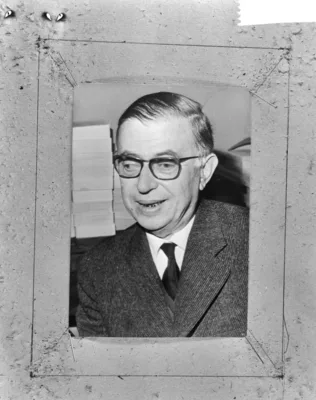
Jean-Paul Sartre was baptised into a family whose faith was more form than conviction. By his own account the belief never took root: it went first through his grandparents' indifference, and then, one morning at La Rochelle in 1917, in a single thought that God did not exist. He made that absence the premise of a philosophy of freedom, and spent years expelling the substitute faith of writing as salvation. In old age he admitted that traces of the idea of God remained in him.
Luis Buñuel
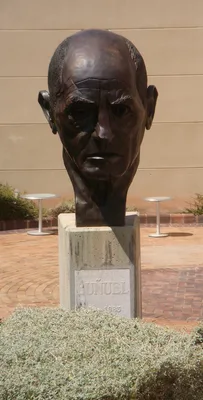
Luis Buñuel's "really blind" faith of medieval Calanda went in three stages: a Jesuit schoolboy's doubt about Hell at fourteen, the loss completed by Darwin at seventeen, and a declaration made not in words but in L'Âge d'or (1930), which right-wing leagues attacked and the police banned. The unbelief was blasphemy in his thirties. In his sixties it calmed into "still an atheist, thank God" (1959), and in his 1982 memoir into a meditation on chance in which believing and not believing came to the same thing.