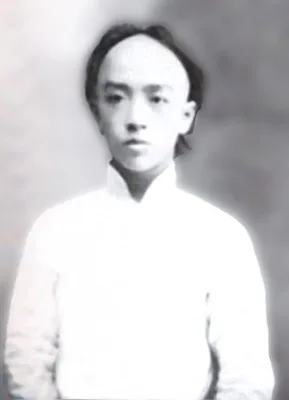
Hu Shih was raised among his mother's Buddhist devotions. At about eleven he lost his fear of hell from two old sentences by Sima Guang and Fan Zhen. He kept his unbelief from his mother, and declared it in print only after her death, in the 1919 essay that offered "social immortality" as his religion. In 1923 he called himself an atheist on the evidence, ready to change if the evidence changed. In old age he held the same view, with a new insistence on tolerance for believers.
The belief timeline
- Faith (c. 1895-c. 1902) — Child of a household where the women were devout Buddhists: hell-stories, a Guanyin vow, a pilgrimage, a toy Confucian shrine made with his mother's blessing (1933 account) [8]
- Doubt (c. 1902-03) — Reads Sima Guang's sentence on hell in Zhu Xi's Xiaoxue and Fan Zhen's sentence in the Tongjian; "became an atheist" at eleven or twelve; hides it from his mother [9][10][13]
- Declaration (Feb 1919) — "Bu xiu" in *Xin qingnian*: names the boy that was himself, argues the soul question changes nothing in conduct, and offers social immortality as "my religion" [10][20][21]
- Revision (1923 and 1959) — 1923: says honest people on the science side may as well call themselves atheists; 1959: still an atheist, but now insists on tolerance of believers and counts his own 1908 call to "kill" misleaders of the people as the lesson [33][34][45]
Notes to the timeline (9)
- [8] Hu's account of his childhood faith (paraphrase): his father had written a poem against the superstition that river-gods appear as snakes; the father's household doors had "no tie with monks and Daoists" slips, but after his death the women, led by an aunt who became a vegetarian devotee, took up Buddhism and called in monks; he read hell tales (*Yuli chaochuan*, *Mulian*) and saw them staged; his mother vowed him to Guanyin as a disciple and walked up a mountain to fulfil a vow for his illness; to please her he also built a toy Confucian shrine — SSZS ch. 2, sections 1.
- [9] Hu says that at eleven or twelve he had "become an atheist"; he read in Zhu Xi's *Xiaoxue* Sima Guang's sentence that once the body has rotted the spirit scatters, so the pounding and grinding of hell have nothing to act on, and felt the pictures of hell stop frightening him; then, reading the *Zizhi tongjian* vol. 136 (his older brother had urged the *Tongjian* over a digest), he met Fan Zhen's knife-and-edge sentence and the flower-petal anecdote; the first taught him not to fear hell, the second not to fear rebirth; "they taught me not to be afraid" is why he liked them; he says he did not then know Fan's essay was in the *Liang shu* or the replies in the *Hongming ji* — SSZS ch. 2, sections 2.
- [10] In the 1919 essay Hu says that "an eleven-year-old child, that is me" read Fan Zhen's sentences in the *Tongjian*, was greatly moved, and that this "went on to influence half his thinking and conduct"; Fan had been dead fifteen hundred years — BX19 (and BX21).
- [13] Hu's account of the idol episode (paraphrase): at thirteen (sui), in the first month, he suggested to his nephew at a roadside pavilion that they throw the clay gods into the privy; a hired man told his mother he had offended the gods; when he was feverish with spirits he pretended to be possessed; his mother prayed and had him thank the gods a month later; he told her the truth only when he came home at twenty-seven (sui) — SSZS ch. 2, section 3.
- [20] In "Bu xiu" Hu sets out three views: (1) the immortality of the soul, to which he gives Fan Zhen's argument and Sima Guang's, Shen Yue's rebuttal, and the materialists' brain-function argument, but then judges the question practically inconsequential; (2) the Zuozhuan's three immortalities (virtue, deeds, words), better but "oligarchic", one-sided and vague; (3) his "social immortality": the small self dies, the great self (the stream of all individuals) does not, and every act, good or bad, stays in it; he calls this "my religion" and says it replaces the Confucian ancestor-spirits and "heaven and hell" as a check on conduct — BX19.
- [21] Hu's creed in the essay: the small self must answer for its responsibility to the great self's endless past and future — BX19.
- [33] Hu's preface (29 Nov 1923) calls the debate an unprecedented battle; says Liang's *Ouyou xinying lu* (1920) gave Chinese conservatives the cry that European "science is bankrupt" while Liang's own note denied it; and says China is far from having science's problems: "Our view of life is the view of seeking office and wealth, of living at the mercy of heaven, of consulting gods and diviners" — KXXU23 §1.
- [34] In the preface Hu says the science-side fighters have failed to say what a "scientific view of life" is, except Wu Zhihui; he quotes Chen Duxiu's criticism that Ding's "doubting idealism" gives the ground to metaphysicians; he argues the nineteenth-century English "agnostic" label was needed under church power but in China "we may as well honestly call ourselves atheists", provided the belief rests on evidence and would change with evidence — KXXU23 §2-3.
- [45] In the 12 March 1959 essay Hu says he is still an atheist, does not believe in a god with a will or in the soul's immortality, but distinguishes his atheism from the Communists', who would abolish religion: society has tolerated his atheism for forty years; he repays that by tolerating believers; in 1908 he had been an intolerant moralist (the "kill" quotation); the rule of tolerance as the root of freedom he credits to a Cornell teacher, George Lincoln Burr, and to Mill; and he recounts Servetus burned at Calvin's order — RR59.
The Knife and the Boy of Eleven
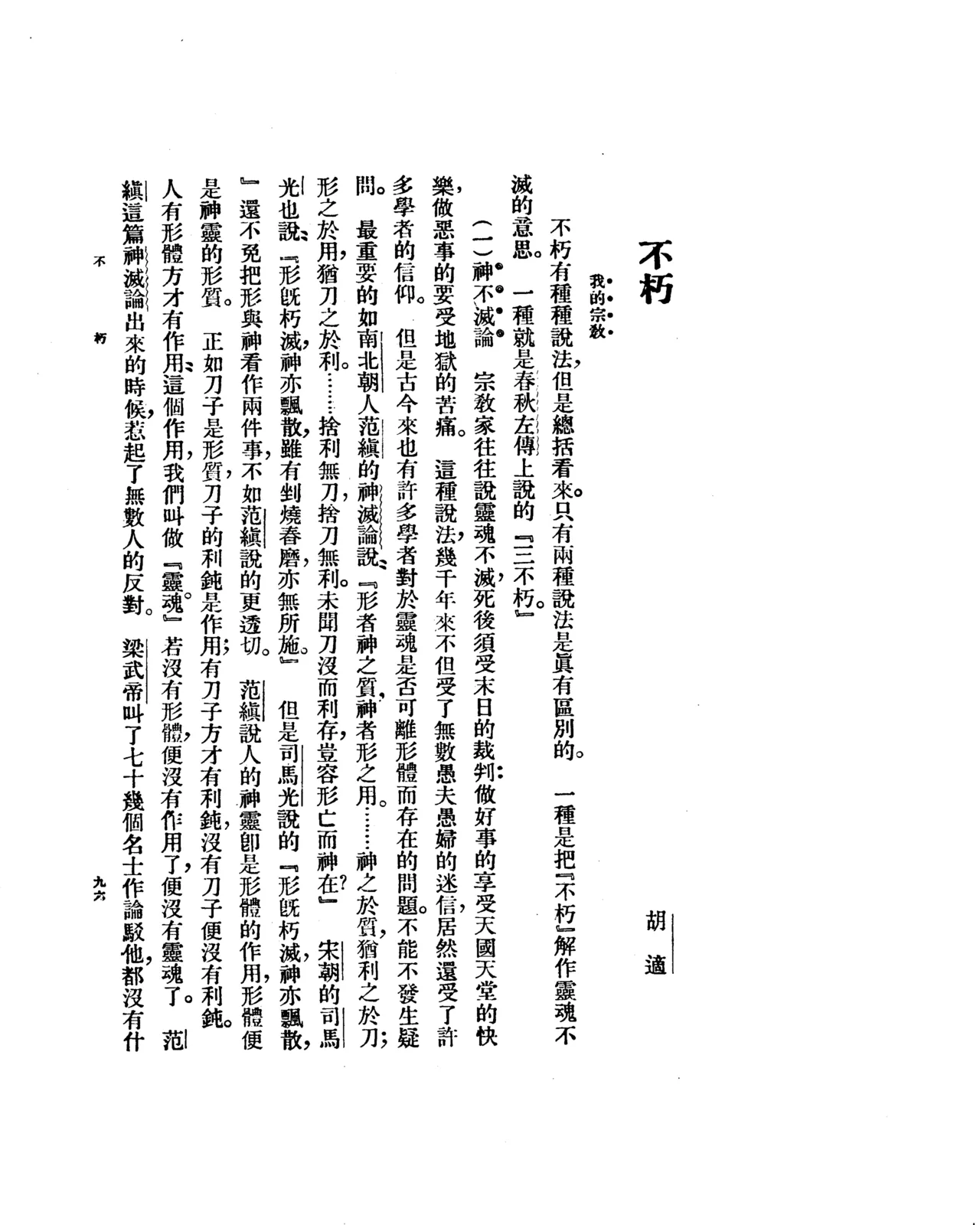
In February 1919 a young professor of philosophy at Peking University published an essay called "Immortality: My Religion" in Xin qingnian, New Youth, the magazine of the movement that was trying to remake Chinese thought. Near its end he told a story about himself:
There was a boy of eleven, and that boy was I, who read these lines in the Tongjian and was deeply moved, and it went on to influence half of his thinking and conduct. Yet the man who said them, Fan Zhen, had been dead fifteen hundred years.12
The professor was Hu Shih, then twenty-seven. The lines were a sentence about a knife. This chapter asks how a boy raised among Buddhist devotions in a mountain village lost his fear of hell from two old sentences, why it took him seventeen years to say so in print, and how his unbelief changed as he grew old.
A household of devotions
He was born in Shanghai on 17 December 1891.3 His father was an official who served in Jiangsu and then in Taiwan; in the war year of 1894 he sent his wife and small son home to the family village in Jixi, in the southern mountains of Anhui, and in 1895, after Taiwan was ceded to Japan, he died at Xiamen. Hu's mother, born into the Feng family of a nearby village, was a widow at twenty-three, and Hu was her only child.456 His father's last wish was that the boy be educated. Every day before dawn, Hu wrote, his mother woke him to tell him what his father had been like; it went on for nine years.7 He studied at home and then in a school kept by his uncle, and his learning until he was twelve was "entirely Chinese."8
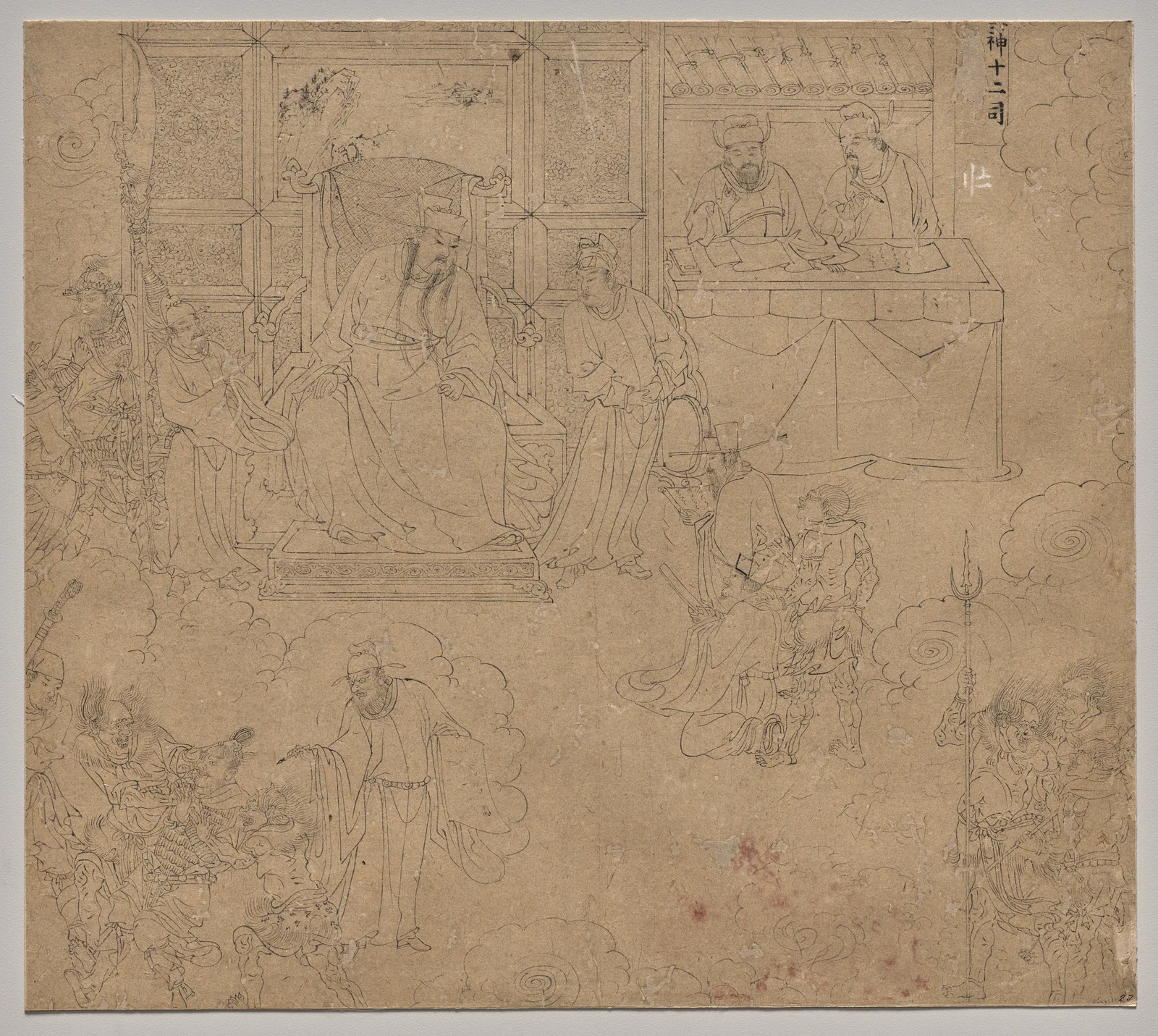
The house he grew up in was devout. In his memoir of 1933 he recalled that his father had written a poem against the belief that river-gods show themselves as snakes, and had kept the monks and Daoist priests away. After his death the women of the household, led by an aunt who became a vegetarian devotee, took up Buddhism and called the monks in. The boy read the tales of hell and saw them acted on the stage. His mother vowed him to Guanyin, the goddess of mercy, and once walked up a mountain to keep a vow she had made when he was ill. To please her he built a little shrine to Confucius.9 She believed in old remedies too. In 1909, when her brother was ill, she shut the door, burned incense, and cut flesh from her own arm to put in his medicine.10 On the belief timeline, these years stand for his faith.
Two sentences
The crack came from books. In his uncle's school he read Zhu Xi's primer, the Xiaoxue, and in it a sentence of the Song historian Sima Guang: once the body has rotted the spirit has scattered, so that the pounding and grinding of hell have nothing left to act on.11 Then his elder brother urged him to read Sima Guang's great history, the Zizhi tongjian, and in its 136th chapter he met Fan Zhen, the Liang-dynasty scholar who had argued that the spirit dies with the body.1213 Hu printed Fan's sentence in his essay of 1919: "Spirit is to form as sharpness is to the knife; never has one heard of the knife being gone and the sharpness remaining; how could the form perish and the spirit stay?"14
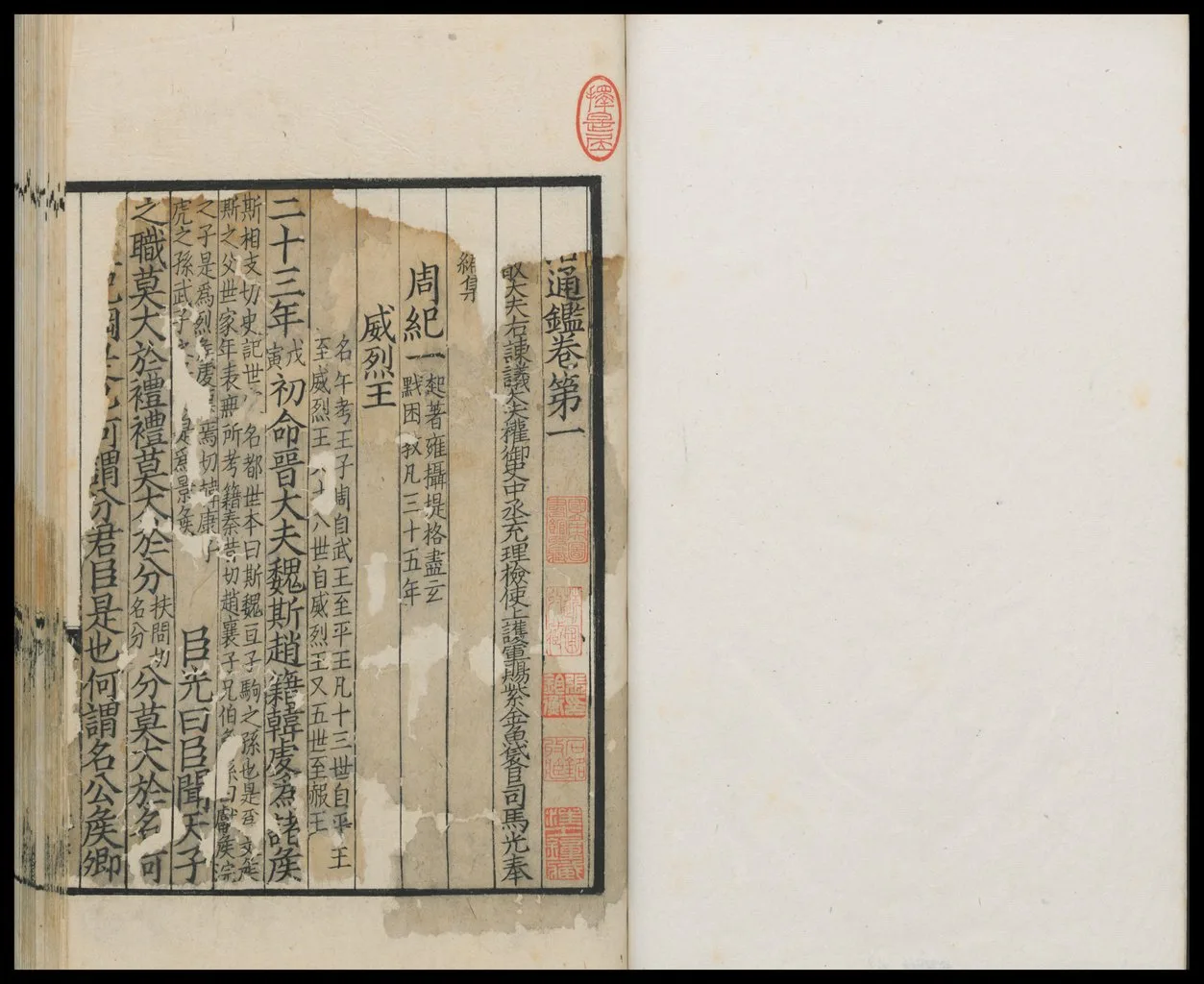
He was eleven, he said in 1919; eleven or twelve, he said in 1933, by the Chinese count of age, which would make him ten or eleven by ours.122 In the later account he explained what the two sentences did. The first taught him not to fear hell, the second not to fear rebirth, and he liked them because "they taught me not to be afraid." By then, he said, he had become an atheist. He did not know then that Fan's essay stood in the official history of the Liang, or that the replies to it had been collected in a Buddhist anthology.12 On the timeline, his doubt sits here, in a child's reading.
He soon tested it. At thirteen by the Chinese count, he recalled, he proposed to a nephew that they throw the clay gods of a roadside pavilion into the privy. A labourer told his mother the gods were angry, and when the boy later fell into a fever he pretended to be possessed; his mother prayed for him and had him thank the gods. He kept his unbelief from her until he came home at twenty-seven, again by the Chinese count.15
Shanghai and America
In 1904 he went to Shanghai with his third brother, who died there that year, and passed through three schools without finishing any.16 At sixteen, by his own later account, he published short pieces against ghosts in a Shanghai magazine. One attacked the novels Journey to the West and The Investiture of the Gods, and quoted with approval an ancient law from the Book of Rites: "Whoever uses ghosts and spirits, days and times, and divination, to confuse the people: kill."1718 Half a century later he would quote those words against himself.
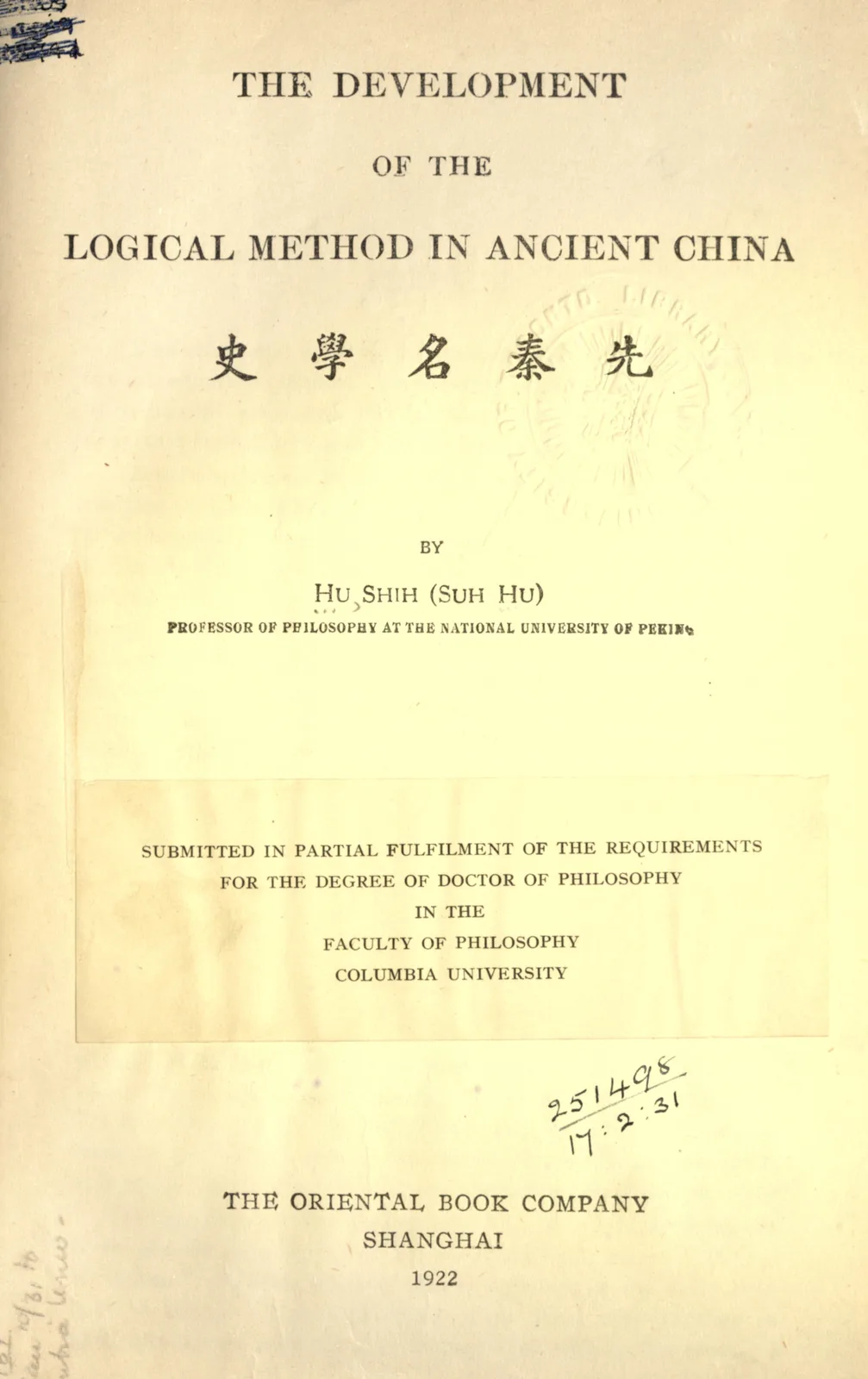
In 1910 he passed the examination for the American scholarships and sailed for Cornell, before he could go home to say goodbye to his mother.19 He took his degree in 1914 and went on to Columbia, where from 1915 to 1917 he wrote a dissertation on the logical method of ancient China.2021 In it he treated the philosopher Mozi as the one Chinese thinker who "can truly be said to have founded a religion," and asked how Mozi's "religious temperament" had led him to defend belief in ghosts by its usefulness.222324 He read the American pragmatists closely; the dissertation cites John Dewey, who taught at Columbia, though no source in hand says Dewey supervised him.21
From New York, in January 1917, he sent New Youth a short programme for reforming Chinese literature: write in the language people speak, because "each age has its own literature."2526 That summer he came home to a chair of philosophy at Peking University.2027
My religion
His mother died in November 1918. He was in Beijing and reached the village five days after the coffin had been sealed. In her obituary he wrote that her sincerity deserved to be remembered "without decay," bu xiu; and he said later that the idea of his essay came to him at her funeral.28
The essay was "Bu xiu," "Immortality," and on the timeline it is his declaration. It set out three kinds of immortality. The first was the soul's. Hu gave Fan Zhen's argument and Sima Guang's against it, and then set the question aside: "Whether the soul perishes or not truly has no important effect on how people live. Having no practical effect, it can almost be said to be no problem at all."2930 People who did right only from fear of hell, he added, were merely selfish.30 The second was the old Confucian immortality of virtue, deeds and words, which he found better but open only to the few.31 The third was his own, "social immortality": "The 'small self' perishes; the 'great self' never perishes."32 Every act, good or bad, lived on in the endless stream of humanity, and so he wrote: "To my own mind, this notion of social immortality can well serve as my religion."33 Its creed was responsibility: "This small self of mine now bears a heavy responsibility toward the great, undying self's endless past, and a heavy responsibility too toward its endless future."3435
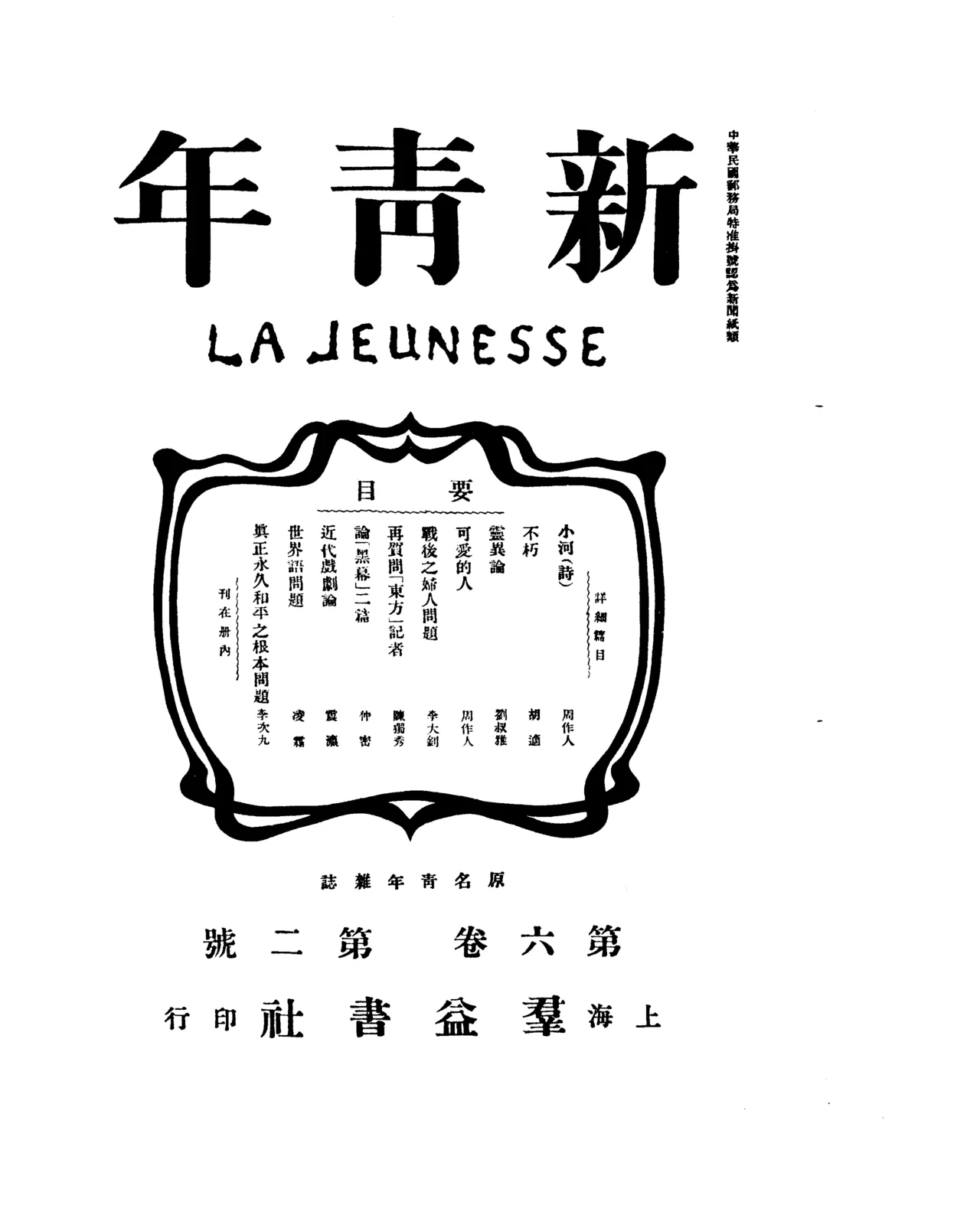
The editors noted that the essay agreed with the views of life of Chen Duxiu and Li Dazhao, and called the four essays nearly the whole outlook of the magazine.36 It was in the same essay that he told the story of the boy of eleven. Why it took seventeen years to reach print he did not say. The sources show only that he had hidden his unbelief from his mother into his twenties, and that the essay was conceived at her funeral.1528
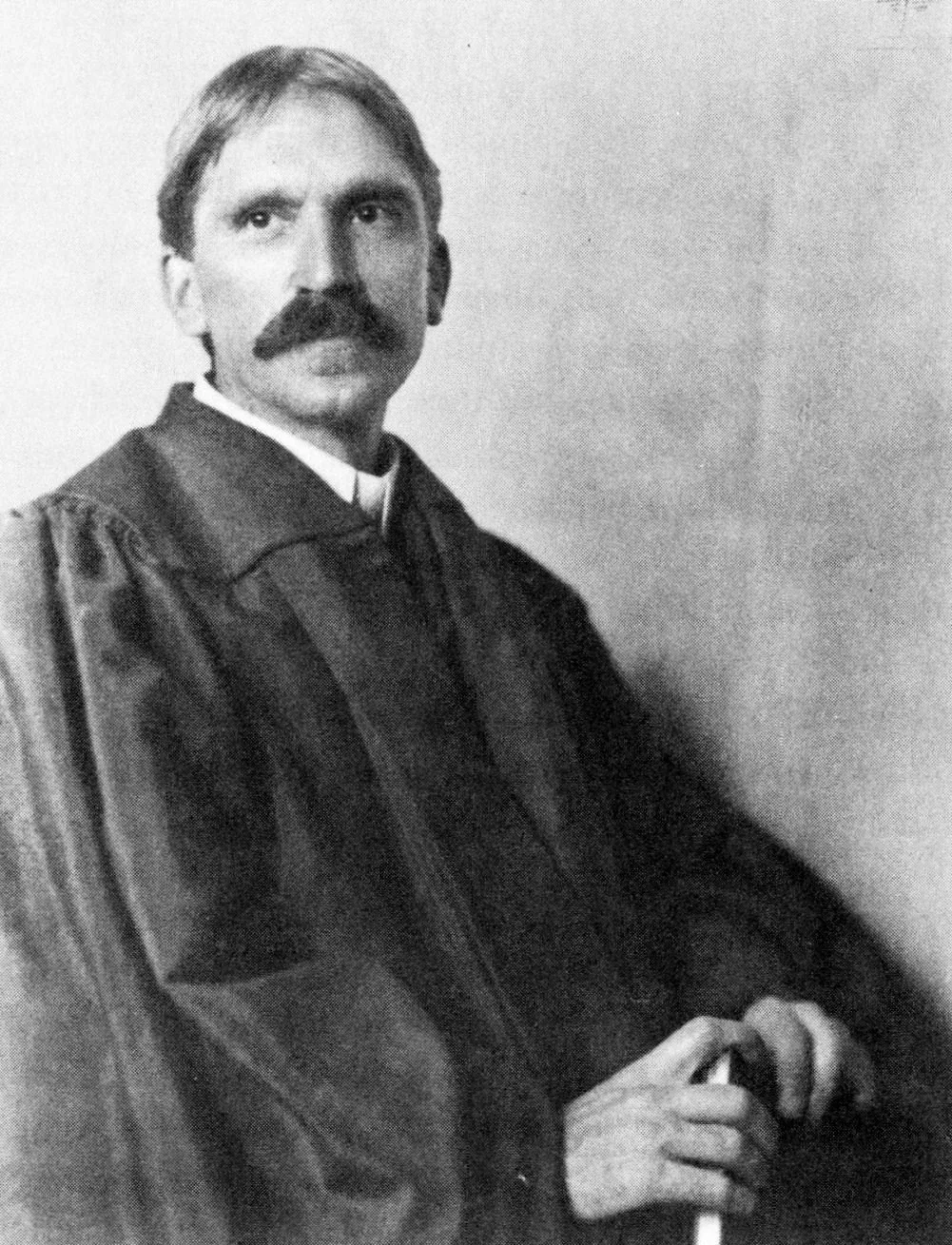
That spring Dewey landed at Shanghai, three days before the student demonstrations of 4 May 1919, and lectured in China for two years.37 Hu had already written that the pragmatist William James, a clergyman's son, could not judge religion without prejudice, and that James's "will to believe" was a harmful way to argue for God.38 What Dewey gave China, Hu said when he left, was not a creed but a method: "He gave us only one philosophical method, so that we could use it to solve our own particular problems."3940
Science and the view of life
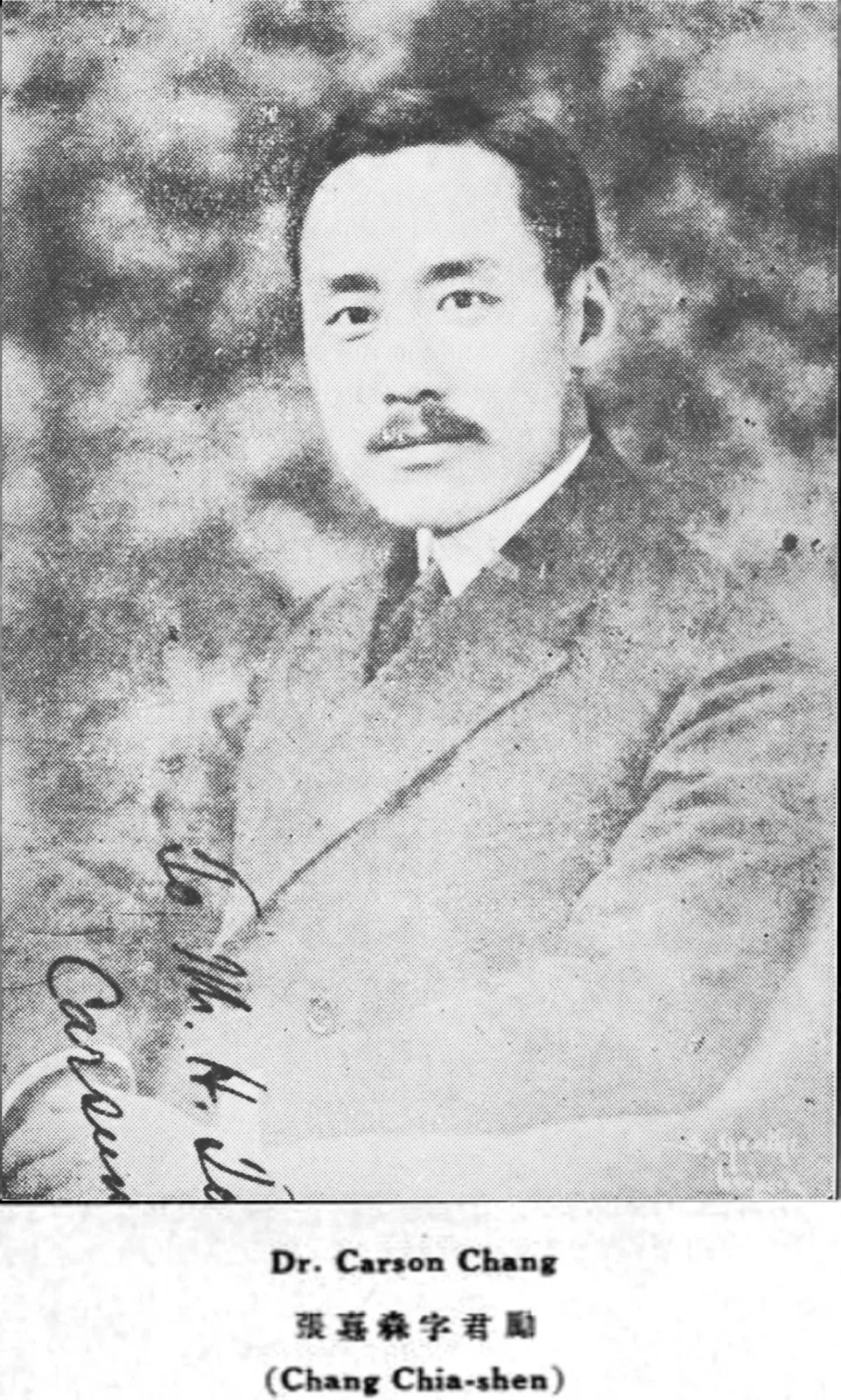
In February 1923 the philosopher Zhang Junmai gave a lecture at Tsinghua that started the most famous debate of the decade. A view of life, he said, is "subjective, intuitive, synthetic, free-willed, and unique," and so "no matter how far science advances," the question "is beyond what science can do."4142 Among the questions science could not settle he listed whether a creator stands behind the world.43 He feared a life of laboratories and factories, "life like a machine," in which "where the spirit finds comfort, no one can know."44 The public intellectual Liang Qichao took a middle way: matters of the intellect belonged to science, but love and beauty were "absolutely beyond science." "If two young people agreed to a 'scientific love affair'," he asked, "would one not burst out laughing?"454647
Hu, ill for much of the year, answered at the end with a long preface to the collected debate. China, he said, was in no danger of too much science: "We have only the view of life of getting office and wealth, only the view of life of living on heaven's mercy, only the view of life of consulting gods and diviners."4849 The English word "agnostic," he argued, had been a shield that men like Huxley needed against a powerful Church, and China did not need it: "If we are convinced that the scientific evidence we have can only lead us to deny the existence of God and the immortality of the soul, then we may as well honestly call ourselves 'atheists'." He added at once: "When the evidence for theism is sufficient, it will not be too late for us to change and believe in theism."505152 He set out a "naturalistic view of life" in ten points, ending with the small self that dies and the great self that does not, and called religions that sought an individual heaven or Pure Land "selfish."5354 The way forward was persuasion, not force: "our true enemy is not the other side; our true enemy is prejudice, is not thinking."5556 In a letter of 1928 he put the matter shortly: "Life has no meaning of its own; whatever meaning you can give it, it has."5758
Tolerance
The free record of his later life is thin. He left Shanghai for the United States in April 1949.59 In Taipei in March 1959 he wrote an essay on tolerance and freedom. He was still an atheist, he said: he did not believe in a god with a will or in the immortality of the soul. But his atheism was not the Communists', who would abolish religion. Society had tolerated his unbelief for forty years, and he owed believers the same. He quoted his sixteen-year-old self and the ancient law "kill," and called that boy an intolerant moralist. He credited the lesson to a Cornell teacher, the historian George Lincoln Burr, who had told him that with age tolerance came to seem more important than freedom.6061 The revision on his timeline stands for these two moments, 1923 and 1959: he reached the same conclusion each time, but held it with less certainty that others must share it.
In 1919 he wrote that Fan Zhen had been dead fifteen hundred years when his sentence reached a boy in Anhui. Hu's own idea of immortality, that every act goes on into the lives that follow, describes what happened to that sentence.
Fan Zhen, whose sentence about the knife the boy read, has his own chapter in this book.
Footnotes
-
Hu Shih: BX19 (Xin qingnian 6:2, 1919), end of the "social immortality" section; BX21 has the same sentence with simplified characters. ↩
-
LM22, Biographical Note (after p. 187); XML18 (born in the year xinmao at Shanghai). ↩
-
XML18. ↩
-
XML18. ↩
-
LM22, Biographical Note. ↩
-
XML18. ↩
-
LM22, Biographical Note. ↩
-
SSZS ch. 2, sections 1. ↩
-
XML18. ↩
-
XX juan 5. ↩
-
TJ136. ↩
-
Hu quoting Fan Zhen: BX19, in the passage that opens with "一千五六百年前有一個人叫做范縝說了幾句話". ↩
-
XML18; LM22, Biographical Note. ↩
-
WG08 (as re-quoted in RR59). Reported at second hand; the original has not been seen. ↩
-
Hu Shih at sixteen or seventeen, quoting the Wangzhi chapter of the Liji: WG08 (as re-quoted in RR59, simplified characters in the source). ↩
-
LM22, Biographical Note; XML18. ↩
-
Hu Shih on Mozi: LM22 p. 57. ↩
-
Hu Shih: LM22 p. 75. ↩
-
LM22 p. 57; p. 75. ↩
-
WGGL. ↩
-
Hu Shih: WGGL (Xin qingnian, Jan 1917), second point. ↩
-
XML18. ↩
-
Hu Shih: BX19, end of section (一). ↩
-
BX19. ↩
-
Hu Shih: BX19, section (三). ↩
-
Hu Shih: BX19, section (三), before the creed. ↩
-
Hu Shih: BX19, the creed that closes the essay. ↩
-
BX19. ↩
-
BX19, appended note. ↩
-
DWZG. ↩
-
SYZY19. ↩
-
Hu Shih on Dewey: DWZG. ↩
-
DWZG. ↩
-
ZJM23. ↩
-
Zhang Junmai (Carsun Chang), philosopher, Tsinghua lecture of 14 Feb 1923. Tr.: "The marks of a view of life are these: subjective, intuitive, synthetic, free-willed, and unique. Because it has these five marks, no matter how far science advances, the solving of the question of a view of life is beyond what science can do, and depends on human beings themselves.": ZJM23. ↩
-
Zhang Junmai, the ninth item of his list. Tr.: "On belief about whether a creator stands behind the world: theism or atheism; one god or many; individual gods or pantheism." (He then says all nine have "no fixed solution" across East and West, ancient and modern.): ZJM23. ↩
-
Zhang Junmai. Tr.: "The use of science is to look wholly outward, and the result is laboratories and factories all over the country. Work in the morning, rest at night, life like a machine: where the spirit finds comfort, no one can know." Zhang's fair worry about science alone.: ZJM23. ↩
-
LQC23. ↩
-
Liang Qichao, public intellectual, a wavering ally of Zhang, 23 May 1923. Tr.: "Matters of life that touch the intellect must absolutely be settled by scientific method; matters that touch the feelings are absolutely beyond science.": LQC23. ↩
-
Liang Qichao. Tr.: "If two young people agreed to a 'scientific love affair', would one not burst out laughing?" The warmest line of the best-natured critic.: LQC23. ↩
-
Hu Shih: KXXU23 §1. ↩
-
KXXU23 §1. ↩
-
Hu Shih: KXXU23 §2 (Shanghai, 29 Nov 1923). ↩
-
Hu Shih: KXXU23 §2. ↩
-
KXXU23 §2-3. ↩
-
Hu Shih: KXXU23 §5, point (10). ↩
-
KXXU23 §5. ↩
-
Hu Shih: KXXU23 §4. ↩
-
KXXU23 §4. ↩
-
Hu Shih: YSYY28. ↩
-
YSYY28. ↩
-
RR59b. ↩
-
RR59. ↩
-
RR59b. ↩
In their own words
有一個十一歲的小孩子——就是我——看到《通鑒》里這幾句話,心裡受了一大感動,後來便影響了他半生的思想行事。然而那說話的范縝早已死了一千五百年了!
神之於形,猶利之於刀;未聞刀沒而利存,豈容形亡而神在?
靈魂滅不滅的問題,於人生行為上實在沒有什麼重大影響。既沒有實際的影響,簡直可說是不成問題了。
「小我」是會消滅的,「大我」是永遠不滅的。
以我個人看來,這種「社會的不朽」觀念很可以做我的宗教了。
我這個現在的「小我」,對於那永遠不朽的「大我」的無窮過去,須負重大的責任,對於那永遠不朽的「大我」的無窮未來,也須負重大的責任。
我們如果深信現有的科學證據只能叫我們否認上帝的存在和靈魂的不滅,那麼,我們正不妨老實自居為「無神論者」。
等到有神論的證據充足時,我們再改信有神論,也還不遲。
根據於生物學及社會學的知識,叫人知道個人——「小我」——是要死滅的,而人類——「大我」——是不死的,不朽的;叫人知道「為全種萬世而生活」就是宗教,就是最高的宗教;而那些替個人謀死後的「天堂」「淨土」的宗教,乃是自私自利的宗教。
我們只有做官發財的人生觀,只有靠天吃飯的人生觀,只有求神問卜的人生觀
我們要認清:我們的真正敵人不是對方;我們的真正敵人是「成見」,是「不思想」。
生命本沒有意義,你要能給他什麼意義,他就有什麼意義。
一時代有一時代之文學。
今日之中國,當造今日之文學。不必摹倣唐宋,亦不必摹倣周秦也。
《王制》有之:“假于鬼神时日卜筮以疑众,杀。”
My object in reproducing them here is to show how the religious temperament of a thinker could influence him to employ his pragmatic method for the justification of such a theory as that of ghosts.
He was the founder of a religion. Indeed he was the only Chinese who can truly be said to have founded a religion.
Hu Shih (Suh Hu in an earlier and less standardized form of transcription) was born in Shanghai, China, on December 17, 1891.
他只给了我们一个哲学方法,使我们用这个方法去解决我们自己的特别问题。
孙行者自以为走的很远了,不知道他总不曾跳出如来的手掌。
The other side
人生觀之特點所在,曰主觀的,曰直覺的,曰綜合的,曰自由意誌的,曰單一性的。惟其有此五點,故科學無論如何發達,而人生觀問題之解決,決非科學所能爲力,惟賴諸人類之自身而已。
就我對於世界背後有無造物主主義之信仰:有神論,無神論;一神論,多神論;個神論,泛神論。
科學之爲用,專註於向外,其結果則實驗室與工廠遍國中也。朝作夕輟,人生如機械然,精神上之慰安所在,則不可得而知也。
人生關涉理智方面的事項,絕對要用科學方法來解決;關涉情感方面的事項,絕對的超科學。
人生觀的統一,非惟不可能,而且不必要;非惟不必要,而且有害。要把人生觀統一,結果豈不是「別黑白而定一尊」,不許异己者跳梁反側?
假令有兩位青年男女相約為「科學的戀愛」,豈不令人噴飯?
讀者切勿誤會,因此菲薄科學,我絕不承認科學破產,不過也不承認科學萬能罷了。
你既承認宇宙間有不可知的部分而存疑,科學家站開,且讓玄學家來解疑。
Where accounts differ
| Point | One account | Another | How the page handles it |
|---|---|---|---|
| When Hu read Fan Zhen | "a boy of eleven" (BX19, 1919) | "eleven or twelve; I cannot remember the year, probably eleven" (SSZS, 1933, paraphrase) | Say "when he was eleven, or perhaps twelve, by his own two accounts"; Hu's own count is Chinese (sui), so he was ten or eleven by Western count, c. 1902 |
| The year of "Bu xiu" | Issue dated 15 Feb 1919 (zh.wikisource footer on BX21) | Draft dated 19 Feb 1919 (BX19 and BX21 postscript) | "In February 1919"; the issue date and the draft date cannot both be right, so say the month only |
| Which text of "Bu xiu" | The 1919 *Xin qingnian* original (BX19) | The 1921 revised Chinese text in Hu's *Wencun* (BX21, simplified), with the organism paragraph rewritten (BX21 postscript) | Quote the 1919 original; both versions share the Fan Zhen and "eleven" passages; the on-screen card should say "Xin qingnian, 1919" only after the Commons scan is re-read |
| Sima Guang's sentence | Hu writes 亦無所施 (BX19; BX21) | The Siku edition of the Xiaoxue commentary has 且無所施 (XX) | Don't quote it from Hu; use Fan Zhen's sentence on screen; or quote the Xiaoxue text with edition |
| Fan Zhen's sentence | Hu in the 1919 essay twice, once with 神之於質 (long form) and once with 神之於形 | The Tongjian prints 神之於形 (TJ136) | Quote the Tongjian form; say Hu quotes it twice |
| Whether Hu was first an atheist or a sceptic | Hu in 1933 says he became an atheist (無神論者) at eleven or twelve (SSZS) | In 1919 he treats the question as no problem (BX19) and in 1923 he argues that "agnostic" was a label for those who needed protection (KXXU23) | Present the arc as the boy's atheism, the young man's pragmatic indifference, then the 1923 atheism of "we may as well say so"; the dates are the narration's job |
| Hu's birth year | 17 Dec 1891 (LM22) | By Chinese count he is five at his father's death in 1895 (XML18: 適剛五歲) | No dispute; use the Western count; note his own writings count in sui |
List of illustrations
This page uses only public-domain and Creative Commons images; each is credited with its source and licence.
- 'Bu xiu' (Immortality), Hu Shih, Xin qingnian 6:2, first page — Chen Duxiu, ed.; Hu Shih (for 'Bu xiu'); Qunyi shushe, Shanghai, 1919 · Xin qingnian (La Jeunesse), Shanghai, scan via Wikimedia Commons (file 新青年 第6卷第2號.djvu, page 11), public domain · Public domain (Wikimedia Commons: category 'PD US expired'; journal published in Shanghai 1915-1919, before 1931)
- Album of Daoist and Buddhist Themes: Kings of Hells, Leaf 27 — Unknown Chinese painter (Southern Song dynasty, 1127-1279), 1200s · The Cleveland Museum of Art, Open Access (CC0), 2004.1.27 · CC0
- Zizhi tongjian (Comprehensive Mirror to Aid in Government), Song-dynasty edition page — Sima Guang (1019-1086), Song printed edition, 1127-1279 · World Digital Library (Library of Congress/National Library of China) via Wikimedia Commons, public domain · Public domain
- Title page, Hu Shih, The Development of the Logical Method in Ancient China (Shanghai, 1922) — Hu Shih (Suh Hu); Oriental Book Company, Shanghai, 1922 · Hu Shih, The Development of the Logical Method in Ancient China (Shanghai: Oriental Book Co., 1922), University of Toronto copy, Internet Archive (methodinchina00huuoft), leaf 7, public domain · Public domain (published in Shanghai, 1922, before 1931; Commons tags this book {{PD-US-expired}})
- Xin qingnian (La Jeunesse), vol. 6 no. 2, cover, 15 February 1919 — Chen Duxiu, ed.; Hu Shih (for 'Bu xiu'); Qunyi shushe, Shanghai, 1919 · Xin qingnian (La Jeunesse), Shanghai, scan via Wikimedia Commons (file 新青年 第6卷第2號.djvu, page 1), public domain · Public domain (Wikimedia Commons: category 'PD US expired'; journal published in Shanghai 1915-1919, before 1931)
- John Dewey at the University of Chicago, 1902 — Eva Watson-Schütze, 1902 · Eva Watson-Schütze, via Wikimedia Commons, public domain · Public domain (Wikimedia Commons template {{PD-old}}; dated 1902, before 1931)
- Zhang Junmai (Chang Chun-mai, Carsun Chang), Who's Who in China, 1925 — Unknown photographer, 1925 · Unknown photographer, Who's Who in China 3rd ed, The China Weekly Review (Shanghai), 1925, p.13, via Wikimedia Commons, public domain · Public domain (Wikimedia Commons template {{PD-China-expired}}; dated 1925, before 1931)
Sources
Tier 1: the subject's own words (pre-1931, free in the US)
- BX19 Hu Shih, 不朽(我的宗教)"Bu xiu (Wo de zongjiao)", Xin qingnian (La Jeunesse) vol. 6 no. 2 (issue dated 15 Feb 1919). Text: unproofread transcription of the whole issue on zh.wikisource.org,
Page:新青年 第6卷第2號.djvu/5(traditional characters), extract intexts/bu-xiu-xqn-1919-original.txt. The Commons scan of the issue should be checked before any quotation goes on screen (the transcription is level-1 "not proofread"; it has OCR slips such as "(-)" for "(一)"). Draft dated 19 Feb 1919 (民國八年二月十九日稿). - BX21 The same essay as revised by Hu in 1921 (postscript dated May 1921): zh.wikisource.org 不朽(我的宗教), in
texts/bu-xiu-1919.txt(simplified characters). The organism paragraph is rewritten; the Fan Zhen and "eleven" passages are the same. - WGGL Hu Shih, 文學改良芻議 "Wenxue gailiang chuyi", Xin qingnian (Jan 1917), zh.wikisource.org,
texts/wenxue-gailiang-1917.txt. - XML18 Hu Shih, 先母行述(1873-1918)"Xianmu xingshu", the obituary notice for his mother, classical Chinese, written 1918 for printing in the village; zh.wikisource.org,
texts/xianmu-xingshu-1918.txt. - SYZY19 Hu Shih, 實驗主義 "Shiyan zhuyi", Xin qingnian 6:4 (15 Apr 1919); zh.wikisource.org text (the 1921 collected-edition version, simplified),
texts/shiyan-zhuyi-1919.txt. - DWZG Hu Shih, 杜威先生與中國 "Dewey xiansheng yu Zhongguo" (July 1921, from the text),
texts/dewey-xiansheng-yu-zhongguo-1921.txt. - LM22 Hu Shih, The Development of the Logical Method in Ancient China (Shanghai: Oriental Book Co., 1922), Internet Archive
methodinchina00huuoft(University of Toronto copy),texts/logical-method-1922.txt. Contains the "A Note" (dissertation history) and the unnumbered "Biographical Note" after the last page (p. 187). - SXZ23 Hu Shih, 孫行者與張君勱, Nuli zhoubao no. 53 (12 May 1923); zh.wikisource.org,
texts/sunxingzhe-1923.txt. - KXXU23 Hu Shih, 《科學與人生觀》序, dated Shanghai 29 Nov 1923 (十二,十一,廿九), preface to Kexue yu renshengguan (Shanghai: Yadong tushuguan, Dec 1923); zh.wikisource.org,
texts/kexue-yu-renshengguan-xu-1923.txt. - YSYY28 Hu Shih, 人生有何意義, letter dated 27 Jan 1928, printed in Shenghuo 3:38 (5 Aug 1928); zh.wikisource.org,
texts/renshengyouheyiyi-1922.txt(the file name carries a wrong year; the date is 1928). - WG08 Hu Shih, 無鬼叢話, Jingye xunbao (1908), as re-quoted in 1959 (RR59): only the re-quoted passage,
texts/wugui-conghua-1908-as-requoted.txt. The 1908 issue itself was not found.
Tier 1, post-1930: paraphrase and cite only (US copyright runs until about 2029 for Chinese works of this date; never quoted)
- SSZS Hu Shih, 四十自述 Sishi zishu (Shanghai: Yadong tushuguan, 1933), ch. 2 ("Jiu nian de jiaxiang jiaoyu"): read from zh.wikisource.org 四十自述/二 (Wikisource hosts it on the Chinese/Taiwan public-domain basis); copy kept only in the scratchpad, not in
research/texts/. See Open questions on whether David accepts reading it. - RR59 Hu Shih, 容忍與自由 "Rongren yu ziyou", Ziyou Zhongguo 20:6 (16 Mar 1959), dated 12 Mar 1959; zh.wikisource.org 容忍與自由(1959年3月16日); scratchpad copy only.
- RR59b Hu Shih, speech of 20 Nov 1959 at the tenth anniversary of Ziyou Zhongguo, printed 1 Dec 1959 (21:11); zh.wikisource.org 容忍與自由; scratchpad copy only.
Tier 2: scholarly biographies and encyclopedias
- None in hand. The free options were exhausted: Grieder (1970), Chou Min-chih (1984) and Hu's 1958 oral autobiography are in copyright. The biographical facts above rest on Hu's own pre-1931 notes (LM22, XML18). See Open questions.
Tier 3: popular biographies and journalism
- None used.
Tier 4: maps to other sources only (Wikipedia and similar). Never cited in the script.
- zh.wikisource.org author page for Hu Shih (used as an index of his texts).
Opposition sources: contemporary critics and religious responses
- ZJM23 Zhang Junmai (Carsun Chang), 人生觀 "Renshengguan", lecture of 14 Feb 1923 at Tsinghua, printed in Qinghua zhoukan no. 272 (the Wikisource footer: 轉錄北京《清華園週刊》二七二期); zh.wikisource.org 人生觀,
texts/zhang-renshengguan-1923.txt. - LQC23 Liang Qichao, 人生觀與科學, dated 23 May 1923 at the Xishan "Mimi" rock, Beijing; zh.wikisource.org,
texts/hu-renshengguan-yu-kexue-1923.txt(the file name is wrong: the author is Liang, not Hu; Hu's own preface names it as Liang Renkong's). - Also quoted at second hand through Hu's 1923 preface (KXXU23): Liang Qichao, Ouyou xinying lu (1920), and Chen Duxiu's preface to the same volume.
Fan Zhen and Sima Guang texts
- TJ136 Sima Guang, Zizhi tongjian juan 136, Qi Yongming 7 (copied from
47-fan/research/texts/tongjian136.txt). - XX Yuding Xiaoxue jizhu (Siku quanshu edition), juan 5, zh.wikisource.org,
texts/xiaoxue-jizhu-juan5.txt: the Sima Guang passage "形既朽滅,神亦飄散" (the Wikisource text has 且無所施).
Related lives
Fan Zhen (episode 47): Hu names Fan Zhen in the 1919 essay as the writer whose sentence "influenced half of his thinking and conduct"; the two episodes connect directly. (Close wording per lessons: "has their own episode in this series", no "Next:" pointer.)
Zora Neale Hurston
Zora Neale Hurston was a Baptist preacher's daughter in Eatonville who said she loved God because it was the expected answer. Her childhood questions slept until college, where history and philosophy woke them. As Boas's anthropologist she learned belief from the inside, even taking hoodoo initiation, without sharing it. In Dust Tracks (1942) she refused prayer and organized creeds for herself while leaving others their consolation, called herself one with the infinite, and never took the label atheist.
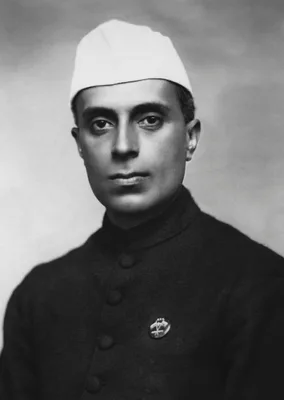
Jawaharlal Nehru
Jawaharlal Nehru was raised by a father who treated religion as a woman's affair, and was initiated into Theosophy by Annie Besant at thirteen. At Harrow and Cambridge it faded into a scientific humanism without "the religious temper", and Gandhi's fasts sharpened him against religion in politics. In his prison Autobiography (1934–35) he declared that organised religion filled him with horror and that he preferred the open sea. In 1944 he softened to "I do not know". As Prime Minister he kept his agnosticism apart from a state that guaranteed every faith and named no God.
M. N. Roy
M. N. Roy was a priest's son who began among the Bengal revolutionaries "fanatically believing in the spiritual mission of their Motherland". He left that spiritual nationalism for Marx in New York and Mexico (1916–19), and declared in 1922 that liberation could not be fought with religious ideology. In jail in the 1930s he rebuilt his materialism on natural science, against Marxism's certainties. At the end he judged Marxism itself a faith, and offered a humanism that would claim "neither finality nor infallibility". In no text found did he call himself an atheist.

Diego Rivera
Diego Rivera was the son of a Freemason father and a devout mother, and said he had been an atheist since he was five or six, with no faith to lose. His unbelief was a painter's weapon against priests who blessed the powerful. In 1947 he put it into three words borrowed from Ignacio Ramírez, "Dios no existe", and in June 1948 defended them against an archbishop, the press and a student mob. In April 1956, ill with cancer, he painted them out, and by one report called himself a Catholic. His own explanation spoke of peace, national symbols and historical truth, so whether it was conversion, reconciliation or self-censorship the sources do not settle.