Zora Neale Hurston was a Baptist preacher's daughter in Eatonville who said she loved God because it was the expected answer. Her childhood questions slept until college, where history and philosophy woke them. As Boas's anthropologist she learned belief from the inside, even taking hoodoo initiation, without sharing it. In Dust Tracks (1942) she refused prayer and organized creeds for herself while leaving others their consolation, called herself one with the infinite, and never took the label atheist.
The belief timeline
- Faith (c. 1894–1904) — A girl in a Baptist parsonage in Eatonville: father pastor and mayor, mother Sunday School superintendent; she took part in every ceremony [5][7][10][64]
- The crack (childhood) (c. 1897–1904, narrated 1942) — Asked if she loved God she said yes because it was the expected answer, "a guilty secret"; she could not understand loving an unseen spirit who found fault with everybody; she was mystified that people still sinned and died if already "saved"; then the questions went to sleep [62][63][64][65]
- Doubt (c. 1918–1928 (college)) — Courses in history and philosophy make "the struggle begin again"; studying the great religions she concludes that man carries himself, his worship of strength, into his god; motive named by her: study, not loss [66][67]
- Immersion (1925–1931) — Under Boas she treats belief as culture; in 1928 she takes hoodoo initiation in New Orleans to learn it from inside; 30 April 1929 she tells Hughes that Christianity as practised is nature worship [22][27][33][34][35][74]
- Declaration (1942) — Dust Tracks chapter XV "Religion": prayer is a cry of weakness, organized creeds are collections of words around a wish ("I feel no need for such"), the accusing God beyond the stars is not for her, yet others may keep their consolation; she is one with the infinite [49][68][69][70][71][72]
- Revision (1945–1955 (open)) — No reconversion found. She writes Herod the Great and The Golden Bench of God; one letter calls God "Old Maker" and jokes about unpaid church dues; Schweizer reads the late manuscripts as a continuing obsession with God [50][51][52][78][79]
Notes to the timeline (26)
- [5] Macedonia Baptist Church on Eaton Street was founded in 1889 (UCF lists John Hurston as its second pastor); UCF also says he became its pastor in 1902 — "Chronology of Hurston's Life," Zora Neale Hurston Digital Archive, University of Central Florida Center for Humanities and Digital Research,, 1889 and 1902. Accounts differ; see the disputed points.
- [7] John Hurston was elected mayor of Eatonville in 1897 and again in 1912 for two terms — "Chronology of Hurston's Life,", 1897 and 1912–16. Reported at second hand; the original has not been seen.
- [10] Eatonville's church people did not approve of her high spirits: "The colored people gave no dimes. They deplored any joyful tendencies in me" — Zora Neale Hurston, "How It Feels to Be Colored Me," The World Tomorrow vol. 11, no. 5 (May 1928), pp. 215–216. Internet Archive item coloredmehurston3 (rights marker: Public Domain Mark; the scan includes the issue's contents page), p. 215.
- [64] Her father was a preacher and her mother superintendent of the Sunday School, so she was always involved in religious ceremonies; asked if she loved God she always said yes because it was the answer expected, and she calls this "a guilty secret" for a long time; she did not dare ask even her chums whether they meant it when they said they loved God. She says she could not understand passionate declarations of love for an unseen being who found fault with everybody all the time (loving family, puppy and calf was different) — DT 1984/1991, p. 268; DT 2019; LoA 1995, p. 217 (via Walker 2011); Freedom From Religion Foundation, "Zora Neale Hurston," Freethought Today day item, archived 12 June 2021,; Bernard Schweizer, Hating God: The Untold Story of Misotheism (Oxford University Press, 2010), ch. on Hurston, pp. 103-26. Snippets (zFFpAgAAQBAJ, sKPXZFfL0Q8C); Pinn, By These Hands, 2001.
- [62] The chapter opens by saying that a person born "with God in the house" would not be expected to have questions about religion, yet from her earliest memory she was "questing and seeking" — DT 2019, ch. XV, opening; DT 1984, p. 267 (chapter header); Qiana J. Whitted, "A God of Justice?" (University of Virginia Press, 2009). Snippets (idcLAQAAMAAJ); Deborah G. Plant, Zora Neale Hurston: A Biography of the Spirit (Praeger, 2007). Google Books snippets (id QbPOEAAAQBAJ).
- [63] She says her childhood church life left "a lack" in her mind: she heard the songs, sermons and the congregation's acceptance of all that was said, and the whole thing mystified her — DT 1984, p. 267 (header "RELIGION 267"; passage as quoted by Plant, Every Tub, 1995, and Davies 1991).
- [65] She recalls puzzling over Sunday-school and church doctrine: how people could still sin, or die, if they had already been "saved"; she told her father (and, in the full text, others) that somebody had been fooled; Whitted (2009) reads the passage as questions silenced by three clergymen and moral pressure from peers; Walker (2011) says the chapter also mocks the "lyin" side of conversions — DT 1991 and DT 2019 snippets (the "saved from it" passage, p. 268 region); Whitted, "A God of Justice?" (2009), citing p. 217 (LoA); Walker 2011.
- [66] The questions "went to sleep" as she grew; she said the words and made the motions; the matter "slept on" in her "until my college years without any real decision," and she "made the necessary motions and forgot to think." She dates the return of the struggle to college, when she studied history and philosophy — DT 2019 snippets; Plant, Zora Neale Hurston (2007); Cronin 1998; Pinn 2001.
- [67] Her argument after studying the great religions: in religion man carried himself along, his worship of strength included, and God was made to look that way too; she instances Constantine, who converted millions by the sword yet refused the consolation of Christ until his last hour, and she says the Old Testament Hebrews cast their enemies as wholly evil, with King David "quite serviceable in helping God get rid of no-count rascals" — DT 1991 and DT 2019 snippets; DT 1984, p. 276 (via Grant 1991 and Holland 1992); the David wording appears in a 2025 compilation snippet (Classic Collection, id 1PlgEQAAQBAJ, edition behind the text not stated).
- [22] In September 1925 she enrolled at Barnard with help from Annie Nathan Meyer and Dean Virginia Gildersleeve, and studied anthropology with Franz Boas — "Chronology of Hurston's Life,", Sept 1925.
- [27] In March 1928 Boas encouraged her to gather folk material from her native African-American culture; she went to Polk County, Florida — "Chronology of Hurston's Life,", 1928.
- [33] In the same article she records the Eternal Life Spiritualist Church, founded in 1918 by Mother Leafy Anderson, whose members were not allowed to call the name of Jesus — Zora Hurston, "Hoodoo in America," Journal of American Folklore 44:174 (Oct.–Dec. 1931), pp. 317–417, p. 319.
- [34] Father George Simms, called "the Frizzly Rooster," a Protestant hoodoo preacher, took her on as a pupil and initiated her with the Pea Vine Candle Drill — Hurston, Journal of American Folklore, p. 381.
- [35] Her initiation bath with Albert, a New Orleans hoodoo teacher, was sealed with a blood bond and followed by reading the third chapter of Job night and morning for nine days — Hurston, Journal of American Folklore, p. 362.
- [74] In a letter to Langston Hughes of 30 April 1929 (nine days after a letter to Boas, per Bloom 2008) she writes that she is convinced Christianity as practised is an attenuated form of nature worship, citing the Trinity, baptism (water worship) and sacrament — Hurston to Langston Hughes, 30 April 1929, quoted in Hemenway's introduction to Mules and Men and in Kaplan, ed., Zora Neale Hurston: A Life in Letters (Doubleday, 2002; Anchor 2003); seen only as quoted by Plant, Bloom, Mullen, Kirby and the Encyclopedia of Religion (2005), via Hemenway intro to Mules and Men; Kaplan 2002; Plant, Zora Neale Hurston (2007); Bloom 2008; Mullen 2008; Encyclopedia of Religion 2005; Kirby 2009 (date).
- [49] Dust Tracks on a Road was published in 1942, with a chapter headed "XV. Religion" (heading seen in DT 2019 snippet; XV also given by Jones 2009 and Comprone 2006; Samuels says chapters 14 and 15 treat love and religion); the chapter runs to p. 279 in the 1984/1991 pagination — "Chronology of Hurston's Life,", 1942; DT 2019 (chapter heading); DT 1984, p. 267 and 279.
- [68] Prayer: she says prayer is for those who need it; to her it is a cry of weakness and an attempt to avoid, by trickery, the rules of the game as laid down; she will not admit weakness, accepts the challenge of responsibility, and says life as it is does not frighten her because she has made her peace with the universe and bows to its laws — DT 1984, pp. 277-78 (Powers 2026 and Meisenhelder 2001 give 277-78 and 278); DT 1991 snippet; DT 2019 snippet; Foundation, "Zora Neale Hurston,", archived 2021; LoA 1995, p. 226 (Walker).
- [69] Creeds: she says organized creeds are "collections of words around a wish" and that she feels no need for such, but she would not by word or deed deprive another of the consolation it affords; "it is simply not for me" and somebody else may have her "rapturous glance at the archangels"; the yellow line of morning springing from the misty deep of dawn is glory enough for her — DT 1984, pp. 278-79 (African American Review 1995: 278-79; Franklin 1996: 201-2 in another edition); LoA 1995, p. 226; DT 2019 and DT 1984 snippets.
- [70] Her positive stance in the same pages: it is futile for her to seek the face of, and fear, an accusing God withdrawn somewhere beyond the stars; she lives on a star and is satisfied with the millions of assurances of deity about her — DT 1984 snippet (WCruAAAAMAAJ), pp. 277-78; Schweizer, Hating God (2010).
- [71] The chapter ends: nothing is destructible, things merely change form; when the consciousness we know as life ceases she will still be part and parcel of the world; she was a part before the sun rolled into shape and she is "one with the infinite and need no other assurance" — DT 1984, p. 279 (Lowe 1997; Susan E. Meisenhelder, Hitting a Straight Lick with a Crooked Stick (University of Alabama Press, 2001). Snippets (4tRoAwAAQBAJ); Andrews 1993); DT 1991 snippet.
- [72] She adds that she has achieved a certain peace within herself but perhaps the seeking after the inner heart of truth will never cease in her — Lionnet 1991/2018, LaCapra 2018, Plant 2010 (Inside Light); page not fixed (Eze cites 1996 edition p. 223).
- [50] She began work on Herod the Great in September 1945 — "Chronology of Hurston's Life,", 1945.
- [51] Scribner's rejected The Golden Bench of God in 1951 and Herod the Great in 1955 — "Chronology of Hurston's Life,", 1951, 1955.
- [52] She won the Anisfield-Wolf award for Dust Tracks (February 1943) and appeared on the cover of the Saturday Evening Post (20 February 1943) — "Chronology of Hurston's Life,", 1943.
- [78] In an undated letter (printed in Kaplan, A Life in Letters, 2002, pp. 647-48 per Li 2020; also in Boyd 2003) she jokes that, since she has not paid church dues in some time, "Old Maker" is under no obligation to her whatsoever, while agreeing to go on with a novel — Stephanie Li, Zora Neale Hurston (2020), citing Kaplan 2003, pp. 647-648. Snippet (RQXHEAAAQBAJ); same letter in Boyd 2003 and Kaplan 2007 snippets, citing Kaplan 2003, 647-648; Valerie Boyd, Wrapped in Rainbows (Scribner, 2003). In copyright; not borrowable here; snippets only, 2003; Kaplan 2007 snippet.
- [79] Late manuscripts: Plant says Hurston formally studied world religions but drew her negative picture of Herod from her youth's Sunday-school lessons and pulpit sermons; Schweizer says The Golden Bench of God shows a continuing obsession with the deity as she approached death; no source seen says she returned to the church — Plant, Zora Neale Hurston (2007); Schweizer, Hating God (2010); Cronin 1998.
One with the Infinite
In 1942 Zora Neale Hurston, the novelist of Their Eyes Were Watching God, published her autobiography, Dust Tracks on a Road. Its fifteenth chapter is called "Religion." In it the daughter of a Baptist preacher wrote that prayer was, for her, a cry of weakness, an attempt to dodge the rules of the game by trickery, and that she did not choose to admit weakness. Organized creeds, she wrote, were collections of words around a wish, and she felt no need of them, though she would never by word or deed take their consolation from anyone else; it was simply not for her. She ended by saying that she was one with the infinite and needed no other assurance.1234
It is one of the plainest statements of unbelief by an American writer of her generation, and it came from a woman who had spent fifteen years collecting the sermons, prayers, songs and conjure rites of the Black South with evident love. This chapter asks how she came to it.

A preacher's daughter in Eatonville
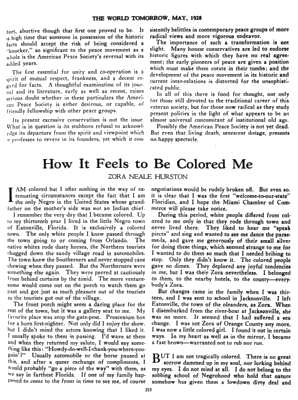
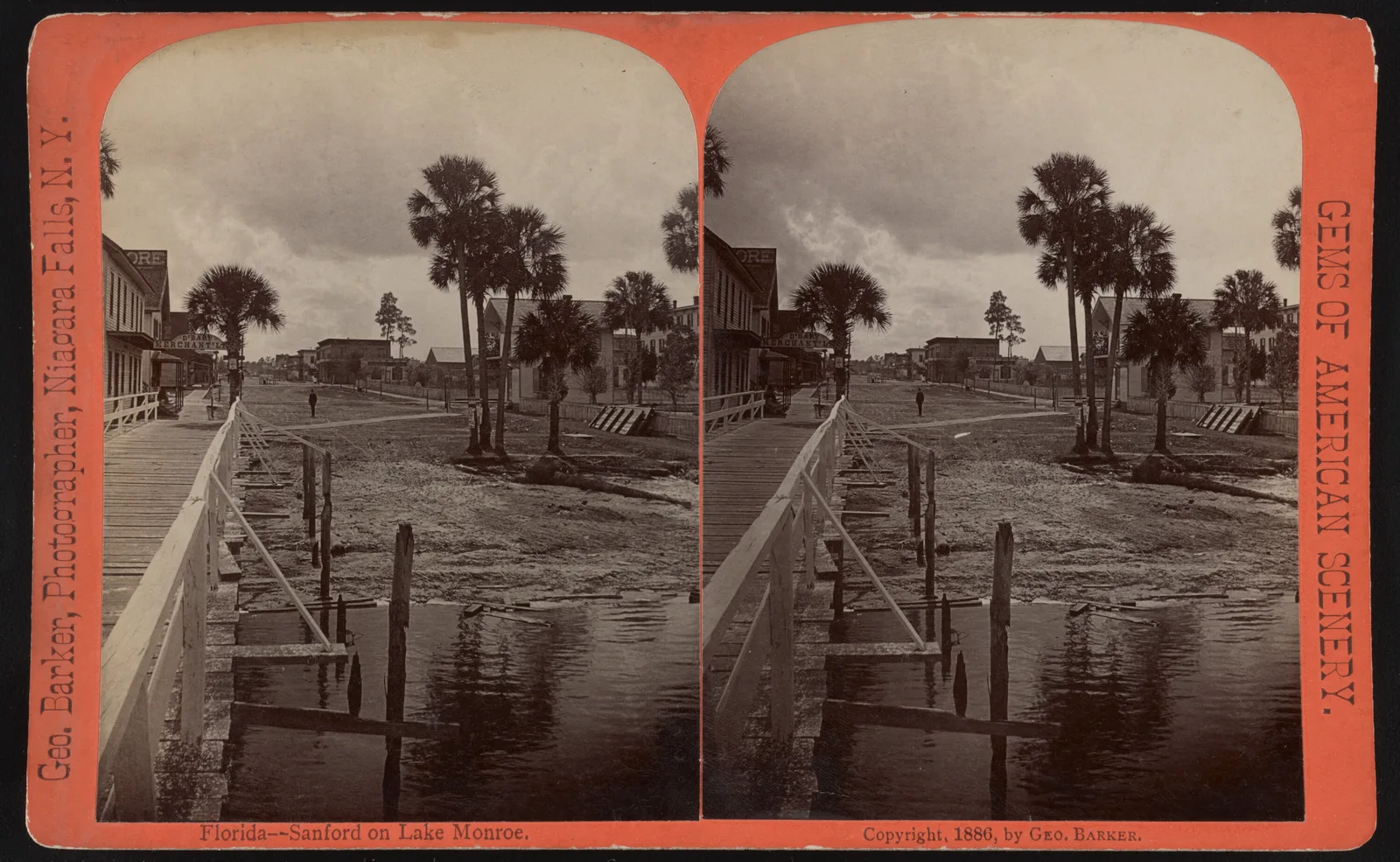
She was born in Notasulga, Alabama, in January 1891; accounts differ on the day, and she later moved the year forward by a decade.567 Her parents, John Hurston and Lucy Potts, had married in a Baptist church there. In the early 1890s her father went to Florida, became a Baptist minister, and brought the family to Eatonville, a town incorporated by Black men in 1887, where he was elected mayor in 1897.891011 By 1902 he was pastor of Macedonia Baptist Church, and her mother was superintendent of the Sunday School.1213 She lived in Eatonville until she was thirteen and remembered that its church people "deplored any joyful tendencies in me, but I was their Zora nevertheless."141516 That childhood in a Baptist parsonage, taking part in every ceremony, is where the timeline places her faith.
A guilty secret
In Dust Tracks she tells the crack herself. A child born, as she put it, with God in the house would not be expected to have questions about religion, yet from her earliest memory she was questing and seeking. Asked whether she loved God, she always said yes, because that was the expected answer; privately she could not understand passionate love for an unseen being who found fault with everybody all the time. It was a guilty secret, and she did not dare ask even her friends whether they meant it when they said the same. She was puzzled, too, that people who had been "saved" could still sin, and still die.17181319 On her timeline, that puzzlement is the first crack. Then, she wrote, the questions went to sleep; she said the words and made the motions.20
Her mother died on 18 September 1904, when she was thirteen, and she was sent away to school in Jacksonville. Her father remarried, and for years she moved from one relative to another.2122 She remembered the move as the day she "became colored."2324 No passage read for this chapter ties her mother's death to her loss of belief; she tells it as the end of her childhood home, not of her faith.25

College, and the questions again
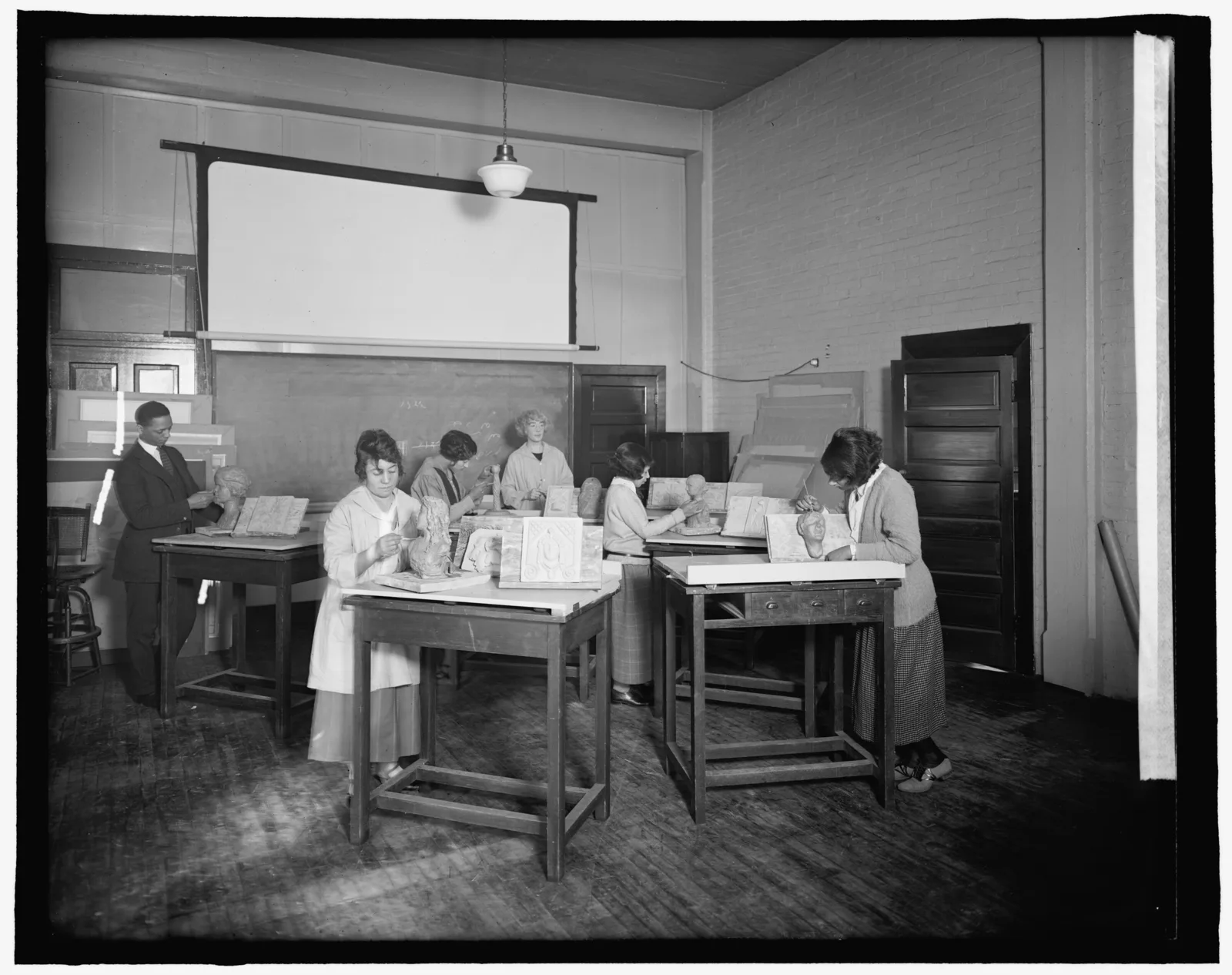
She went back to school late. In 1917, at twenty-six, she enrolled in the night school of Morgan Academy in Baltimore; her father was killed by a train the next August, and that autumn she entered Howard University in Washington.626 In Dust Tracks she says it was there, studying history and philosophy, that the struggle began again. Reading about the great religions, she concluded that people carried themselves into their gods, their love of strength included, and that God was made to look the same way.2027 The motive she names is study, not grief or anger. The timeline places her doubt in her college years, roughly 1918 to 1928.
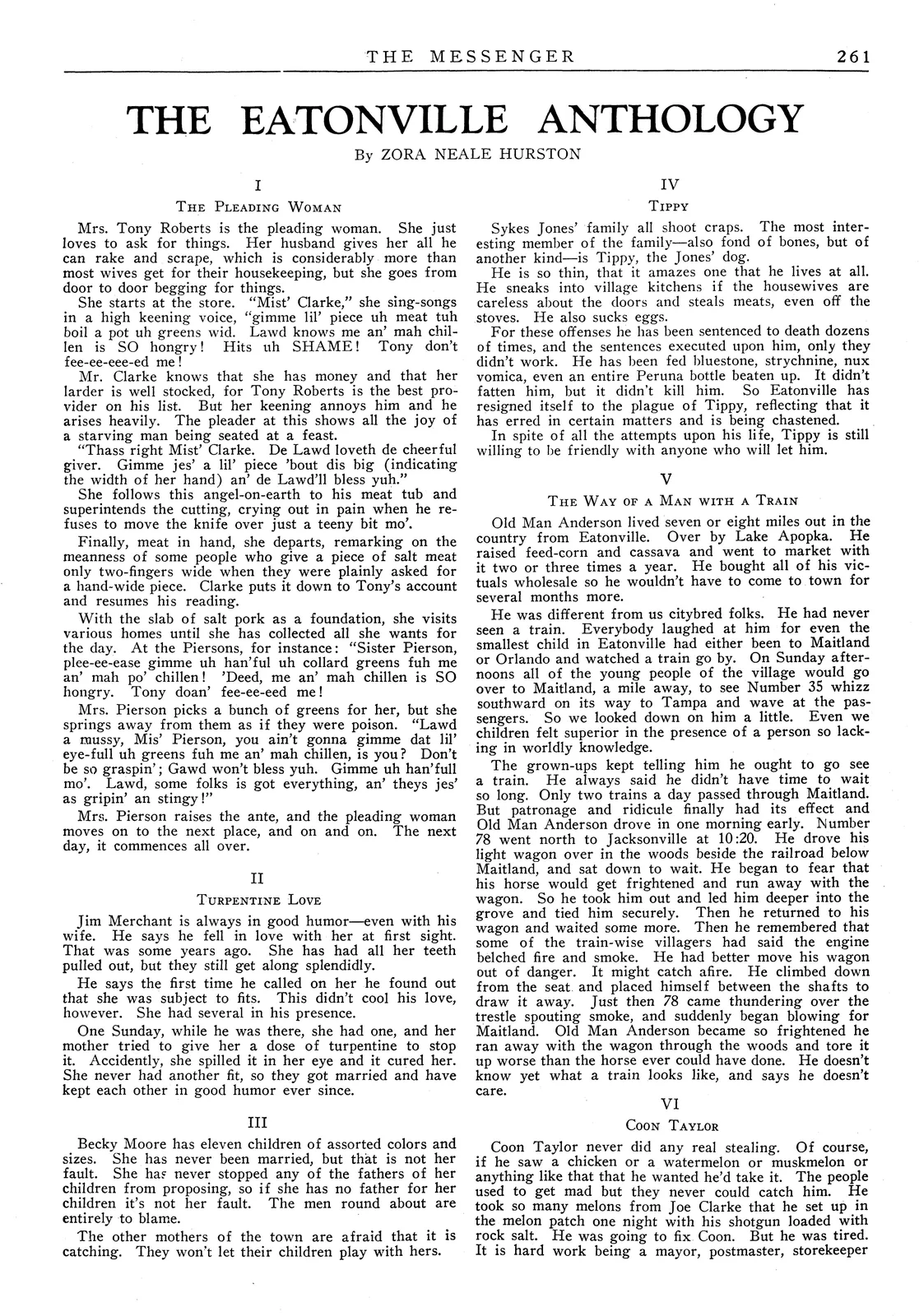
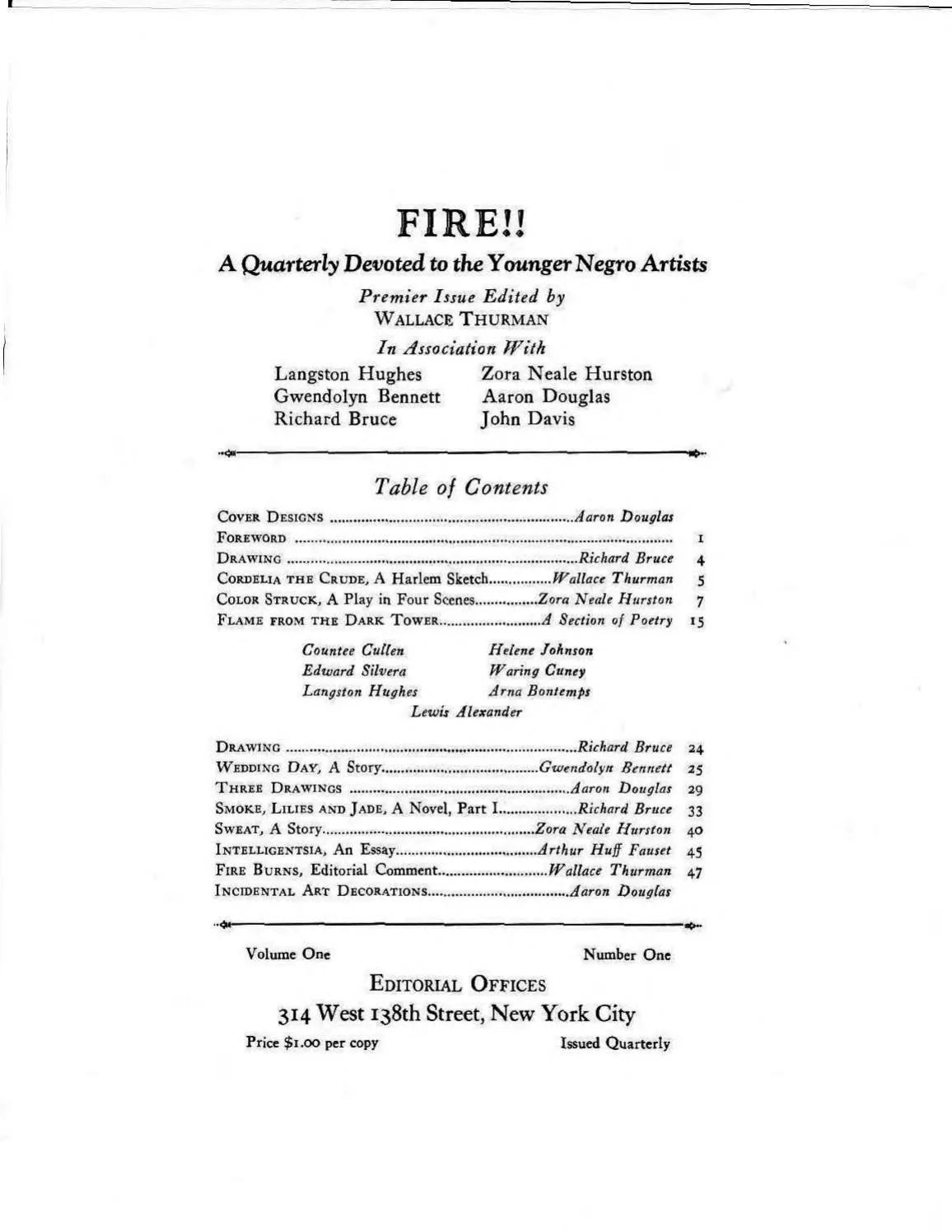
Her first stories already looked at Eatonville's piety with a dry eye. In "Drenched in Light" (1924) a grandmother calls the dancing child "dat limb of Satan." In "The Eatonville Anthology" (1926) a villager is bald but does not mind, "because he wants as little as possible between him and God," and by rural rules "one is not held to have danced until the feet have been crossed."282930313233 In "Sweat," in the magazine Fire!! that November, a husband mocks his churchgoing wife as one of the "amen-corner Christians."3435
Belief as culture
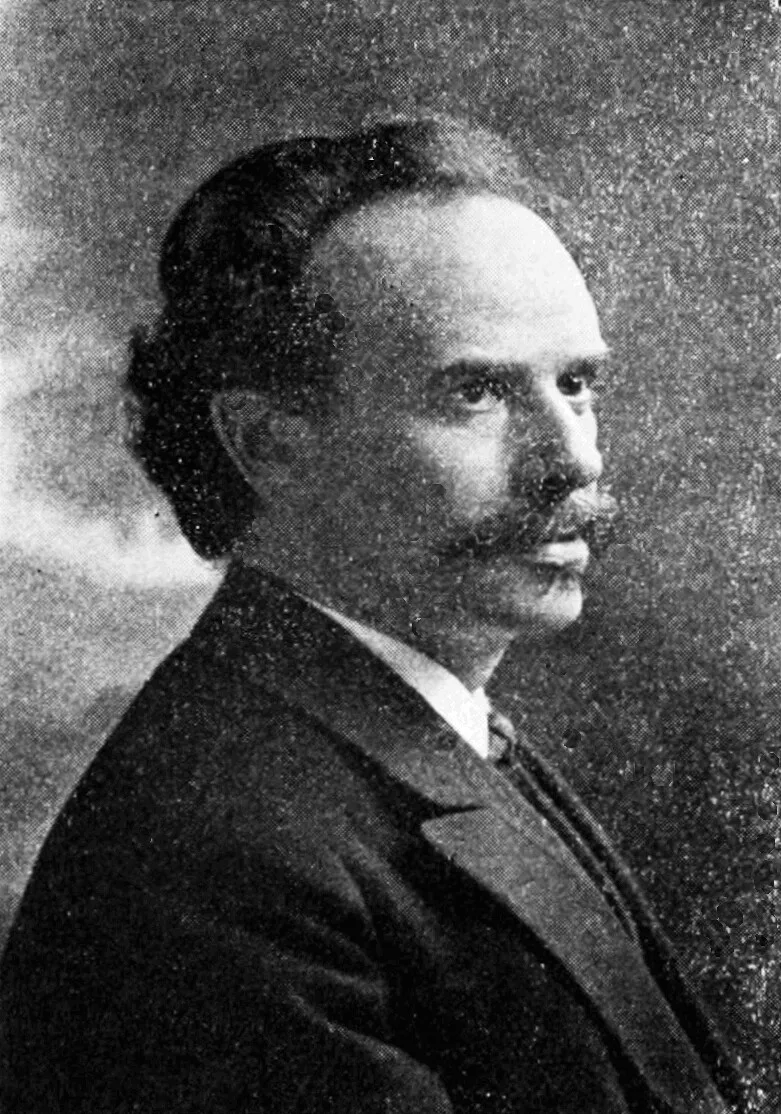
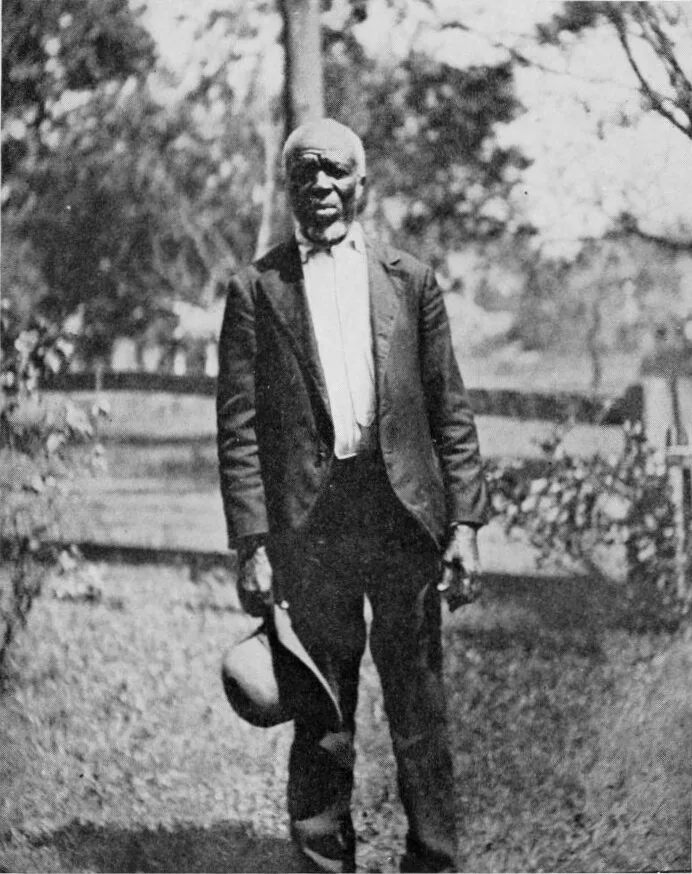
In September 1925 she went to Barnard College in New York and studied anthropology with Franz Boas, who taught her to treat belief as part of a culture, and who in 1928 urged her to collect the folklore of her own people.363738 In 1927 she wrote of Cudjo Lewis, one of the last people brought from Africa as slaves, that he was "now an ardent Christian and is, I believe, hiding or suppressing what he knows about African religion for fear of being thought a heathen."3940
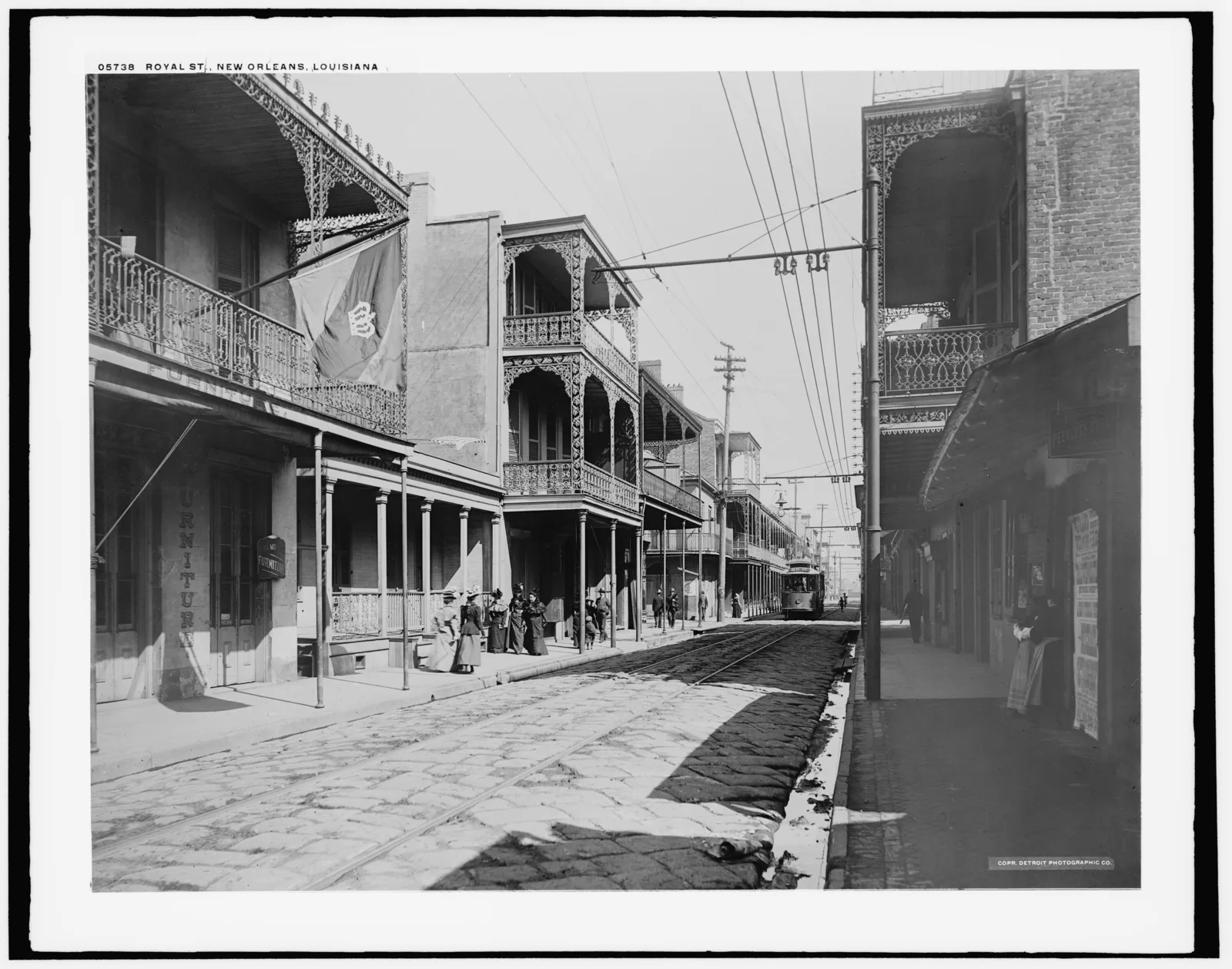
In the essay "How It Feels to Be Colored Me" (1928) she called herself "merely a fragment of the Great Soul," and wondered whether "the Great Stuffer of Bags" had filled the bags of the races in the first place: "who knows?"414243 That summer she went to New Orleans to study hoodoo, the conjure tradition of the Black South, and took initiation from its practitioners in order to learn it from inside; she published the results in 1931.44454647 To Langston Hughes she wrote privately in April 1929 that she was convinced Christianity as practised was a thinned-out form of nature worship, pointing to the Trinity, baptism and the sacrament.48 These years of immersion, 1925 to 1931, form a mark of their own on her timeline, when an unbeliever learned belief from the inside without sharing it.
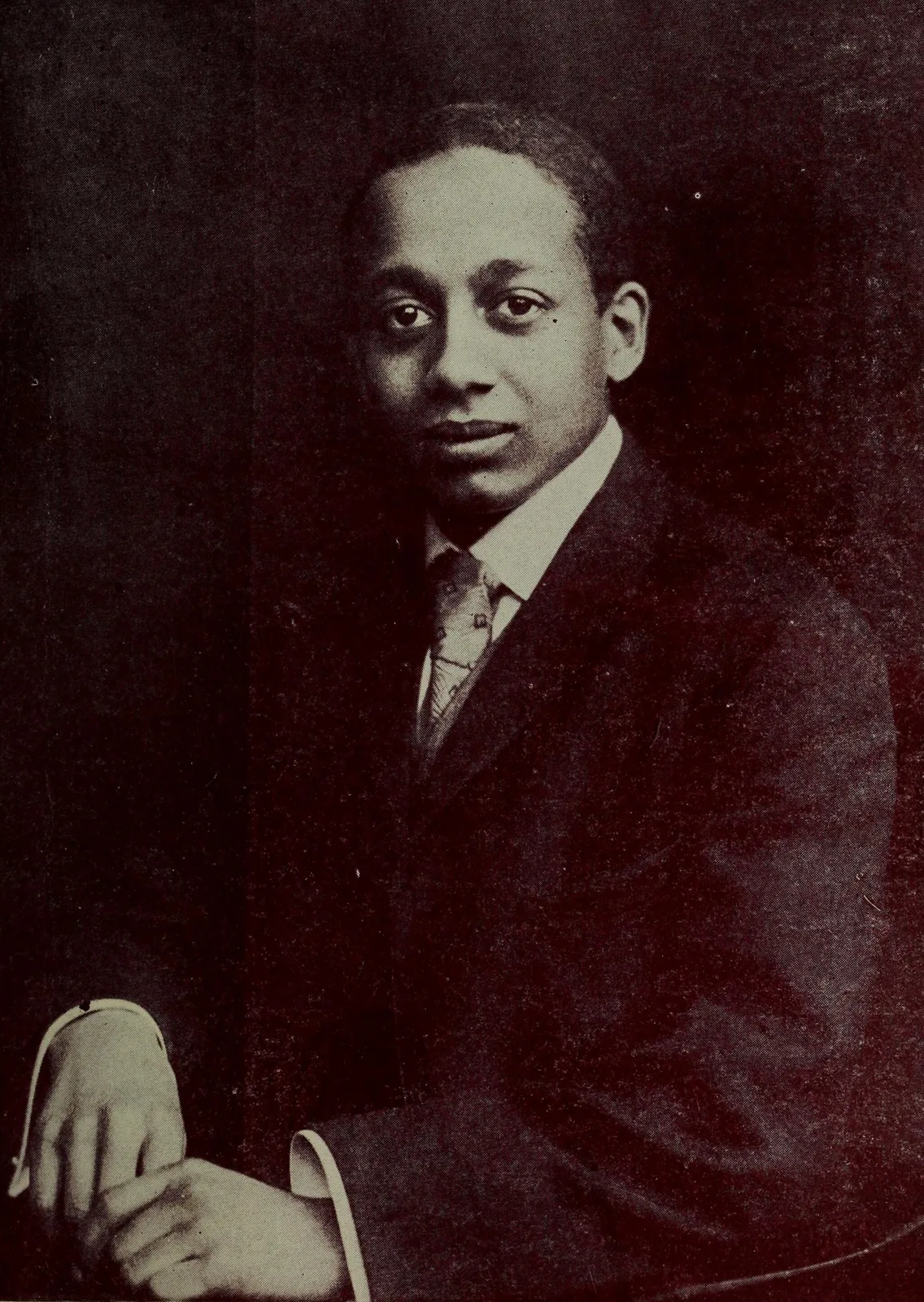
Her critics did not object to her unbelief, which few of them knew about, but to her folklore. A reviewer in the Journal of Negro History wrote in 1936 that her account of voodoo, "if she has not convinced all readers of the powers of Voodooism, has offered new evidence of widespread ignorance and superstition." The white left-wing folklorist Harold Preece wrote in The Crisis that while "Angelo Herndon was condemned to break rocks in Georgia," Hurston "was devoting her literary abilities to recording the legendary amours of terrapins." Her old mentor Alain Locke said in 1938 that her gifts kept her "flashing on the surface of her community."495051525354
The declaration
In the 1930s she collected sermons and church music for the Library of Congress, wrote her novels, and studied Vodou in Haiti and the "sanctified" church in South Carolina.55565758 Then, in 1942, came Dust Tracks and its chapter on religion. Besides refusing prayer and creeds, she wrote that it was pointless for her to seek the face of an accusing God withdrawn somewhere beyond the stars, and that she, who lived on a star, was satisfied with the millions of signs of deity around her. Nothing was destructible, she wrote; things merely changed form, and when the consciousness we call life ceased, she would still be part of the world.2594 She added, in scholars' quotation of the passage, that she had found a certain peace, but that her search for the heart of truth might never end.60
The timeline places her declaration in that chapter. It is a declaration against prayer and creeds, not against every idea of the divine, and scholars have filed it under deism and agnosticism, pantheism, humanism, and even quarrel with God. A reviewer in 1943 called its last paragraphs agnosticism, positivism and pantheism, hardly a religion at all. She gave it no name herself.6162
Old Maker
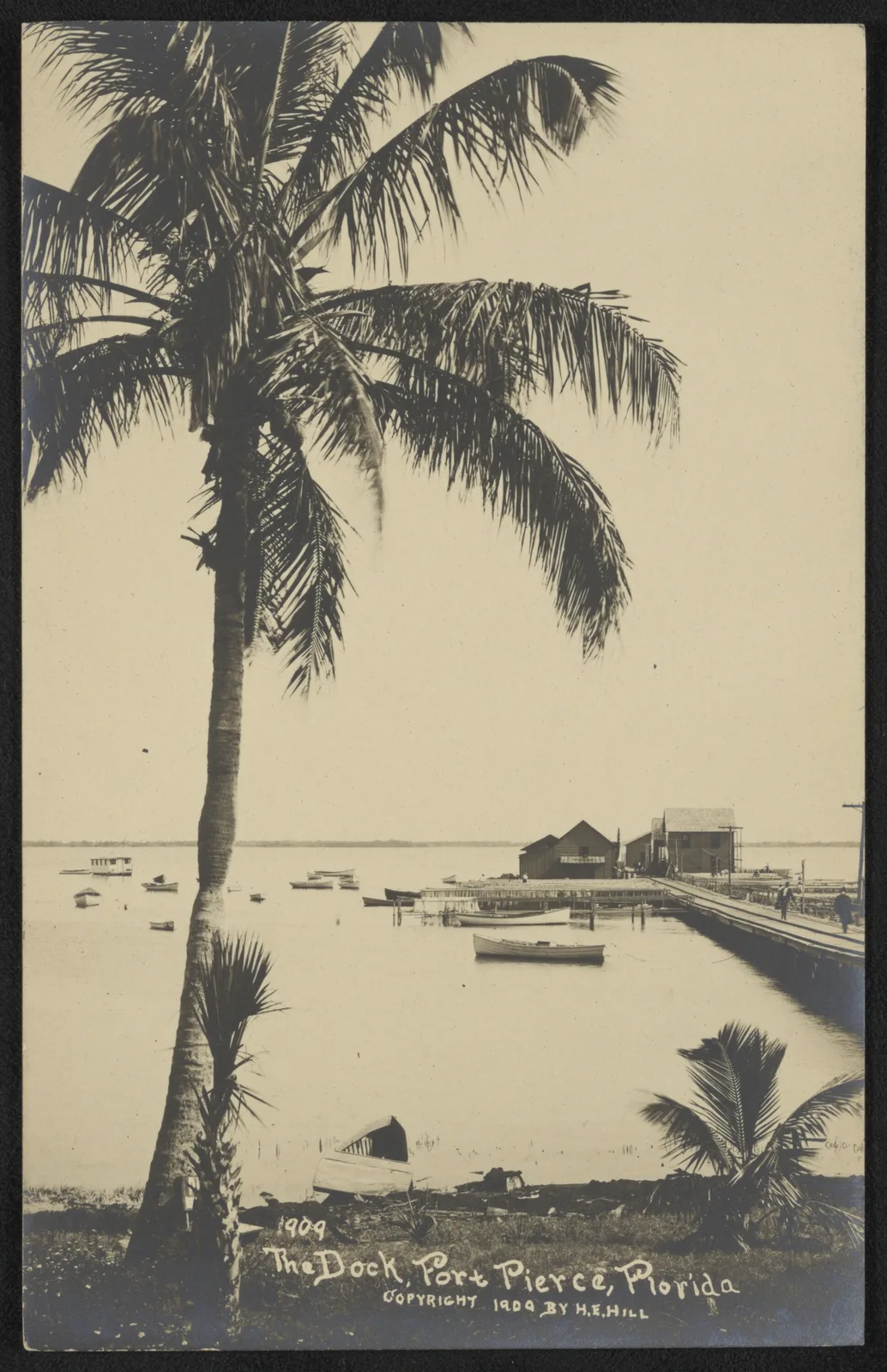
No source read for this chapter shows her going back to church. In a letter of her later years she joked that, since she had not paid her church dues in some time, "Old Maker" owed her nothing, and she spent much of the 1940s and 1950s on a novel about Herod the Great, drawing on the Sunday-school lessons and sermons of her childhood.63646566 Her late years were poor. After strokes she entered the county welfare home in Fort Pierce, Florida, in October 1959, and died there on 28 January 1960. Friends paid for her funeral, and she was buried in an unmarked grave.6768
Her unbelief was never a quarrel with the people who believed. She left the Baptist parsonage and kept its music, and she wrote down the faith of others so that it would not be lost, while saying plainly that it was not hers.
Mark Twain, another child of a small Southern town's church life whose scorn for organized religion never touched his love for the believers' own voices, has his own chapter in this book.
Footnotes
-
"Chronology of Hurston's Life," Zora Neale Hurston Digital Archive, University of Central Florida Center for Humanities and Digital Research,, 1942; DT 2019 (chapter heading); DT 1984, p. 267 and 279. ↩
-
DT 1984, pp. 277-78 (Powers 2026 and Meisenhelder 2001 give 277-78 and 278); DT 1991 snippet; DT 2019 snippet; Freedom From Religion Foundation, "Zora Neale Hurston," Freethought Today day item, archived 12 June 2021,, archived 2021; LoA 1995, p. 226 (Walker). ↩ ↩2
-
DT 1984, pp. 278-79 (African American Review 1995: 278-79; Franklin 1996: 201-2 in another edition); LoA 1995, p. 226; DT 2019 and DT 1984 snippets. ↩
-
DT 1984, p. 279 (Lowe 1997; Susan E. Meisenhelder, Hitting a Straight Lick with a Crooked Stick (University of Alabama Press, 2001). Snippets (4tRoAwAAQBAJ); Andrews 1993); DT 1991 snippet. ↩ ↩2
-
"Chronology of Hurston's Life,", 1891; Wikipedia (Tier 4 map). Accounts differ; see the disputed points. ↩
-
"Chronology of Hurston's Life,", 1917; Wikipedia. Reported at second hand; the original has not been seen. ↩ ↩2
-
Hans Ostrom, African American Literature (2019), snippet (PuDEEAAAQBAJ): 7 January 1891 and 18 September 1904, (snippet); "Chronology of Hurston's Life,". ↩
-
"Chronology of Hurston's Life,", 1882. ↩
-
"Chronology of Hurston's Life,", 1887. ↩
-
"Chronology of Hurston's Life,", 1892. ↩
-
"Chronology of Hurston's Life,", 1897 and 1912–16. ↩
-
"Chronology of Hurston's Life,", 1889 and 1902. ↩
-
DT 1984/1991, p. 268; DT 2019; LoA 1995, p. 217 (via Walker 2011); Foundation, "Zora Neale Hurston,"; Bernard Schweizer, Hating God: The Untold Story of Misotheism (Oxford University Press, 2010), ch. on Hurston, pp. 103-26. Snippets (zFFpAgAAQBAJ, sKPXZFfL0Q8C); Pinn, By These Hands, 2001. ↩ ↩2
-
Zora Neale Hurston, "How It Feels to Be Colored Me," The World Tomorrow vol. 11, no. 5 (May 1928), pp. 215–216. Internet Archive item coloredmehurston3 (rights marker: Public Domain Mark; the scan includes the issue's contents page), p. 215. ↩
-
Hurston, World Tomorrow, p. 215. ↩
-
Hurston, World Tomorrow, p. 215. ↩
-
DT 2019, ch. XV, opening; DT 1984, p. 267 (chapter header); Qiana J. Whitted, "A God of Justice?" (University of Virginia Press, 2009). Snippets (idcLAQAAMAAJ); Deborah G. Plant, Zora Neale Hurston: A Biography of the Spirit (Praeger, 2007). Google Books snippets (id QbPOEAAAQBAJ). ↩
-
DT 1984, p. 267 (header "RELIGION 267"; passage as quoted by Plant, Every Tub, 1995, and Davies 1991). ↩
-
DT 1991 and DT 2019 snippets (the "saved from it" passage, p. 268 region); Whitted, "A God of Justice?" (2009), citing p. 217 (LoA); Walker 2011. ↩
-
DT 2019 snippets; Plant, Zora Neale Hurston (2007); Cronin 1998; Pinn 2001. ↩ ↩2
-
"Chronology of Hurston's Life,", 1904. ↩
-
"Chronology of Hurston's Life,", 1905, 1905–12. ↩
-
Hurston, World Tomorrow, p. 215. ↩
-
Hurston, World Tomorrow, The World Tomorrow 11:5 (May 1928), p. 215. ↩
-
DT 2019 (chapter VI heading and opening line); Plant, Zora Neale Hurston (2007); Prenshaw 2011; Holte 1988; Sigerman, Showalter. ↩
-
"Chronology of Hurston's Life,", 1918. ↩
-
DT 1991 and DT 2019 snippets; DT 1984, p. 276 (via Grant 1991 and Holland 1992); the David wording appears in a 2025 compilation snippet (Classic Collection, id 1PlgEQAAQBAJ, edition behind the text not stated). ↩
-
Zora Neale Hurston, "Drenched in Light," Opportunity vol. 2, no. 24 (December 1924), p. 371ff, p. 371; "Chronology of Hurston's Life,", 1924. ↩
-
Hurston, Opportunity, p. 371. ↩
-
Zora Neale Hurston, "The Eatonville Anthology," The Messenger vol. 8, no. 9 (Sept. 1926), pp. 261–262, continued Oct. and Nov. 1926, Messenger 8:9 (Sept. 1926); "Chronology of Hurston's Life,", 1926. ↩
-
Grandma Potts (fictional character): Hurston, Opportunity, in Light, Opportunity 2:24 (Dec. 1924), p. 371. ↩
-
Hurston, Messenger, Messenger 8:9 (Sept. 1926), sketch XI "Double-Shuffle". ↩
-
Hurston, Messenger, sketch VIII. ↩
-
Zora Neale Hurston, "Sweat," Fire!! (Nov. 1926), p. 40 on the page headers, p. 40. ↩
-
Sykes Jones (fictional): Hurston, Fire!!, !!, "Sweat," p. 40. ↩
-
"Chronology of Hurston's Life,", Sept 1925. ↩
-
Mortarboard (Barnard College yearbook) 1928, IA item mortarboard3519barn, 1928, p. 200 and class directory. ↩
-
"Chronology of Hurston's Life,", 1928. ↩
-
Zora Neale Hurston, "Cudjo's Own Story of the Last African Slaver," Journal of Negro History 12:4 (Oct. 1927), pp. 648–663, JNH 12:4 (Oct. 1927), pp. 648–663. ↩
-
Hurston, Journal of Negro History, JNH 12:4 (Oct. 1927), pp. 648–663. ↩
-
Hurston, World Tomorrow, p. 216. ↩
-
Hurston, World Tomorrow, p. 216. ↩
-
Hurston, World Tomorrow, p. 216. ↩
-
"Chronology of Hurston's Life,", 1928. ↩
-
Zora Hurston, "Hoodoo in America," Journal of American Folklore 44:174 (Oct.–Dec. 1931), pp. 317–417, pp. 357–358. ↩
-
Hurston, Journal of American Folklore, p. 381. ↩
-
Hurston, Journal of American Folklore, p. 362. ↩
-
Hurston to Langston Hughes, 30 April 1929, quoted in Hemenway's introduction to Mules and Men and in Kaplan, ed., Zora Neale Hurston: A Life in Letters (Doubleday, 2002; Anchor 2003); seen only as quoted by Plant, Bloom, Mullen, Kirby and the Encyclopedia of Religion (2005), via Hemenway intro to Mules and Men; Kaplan 2002; Plant, Zora Neale Hurston (2007); Bloom 2008; Mullen 2008; Encyclopedia of Religion 2005; Kirby 2009 (date). ↩
-
Alain Locke, "Jingo, Counter-Jingo and Us," Opportunity vol. 16, no. 1 (January 1938), p. 10, p. 10. ↩
-
Harold Preece, "The Negro Folk Cult," The Crisis vol. 43, no. 12 (December 1936), pp. 364–365 and continuation, Crisis 43:12 (Dec. 1936), pp. 364–365 and cont.. ↩
-
B. C. McNeill, review of Mules and Men, Journal of Negro History 21:2 (April 1936), pp. 223–225, pp. 224–225. ↩
-
Alain Locke, Howard philosopher and editor of The New Negro, who had been her mentor; writing about Their Eyes Were Watching God: Locke, Opportunity (1938), Opportunity 16:1 (Jan. 1938), p. 10. ↩
-
Harold Preece, same article: Preece, Crisis, The Crisis, p. 364. ↩
-
B. C. McNeill, reviewer in the Journal of Negro History, founded by Carter Woodson: McNeill, Mules and Men, JNH 21:2 (April 1936), p. 225. ↩
-
Laura K. Crawley and Joseph C. Hickerson, "Zora Neale Hurston: Recordings, Manuscripts, Photographs, and Ephemera in the Archive of Folk Culture and Other Divisions of the Library of Congress" (American Folklife Center, rev. Feb. 2014), archived copy at; "Chronology of Hurston's Life,", June 1935. ↩
-
"Chronology of Hurston's Life,", 1936–37; LoC Guide, (AFC 1937/010). ↩
-
"Chronology of Hurston's Life,", 1938. ↩
-
"Chronology of Hurston's Life,", 1940; LoC Guide. ↩
-
DT 1984 snippet (WCruAAAAMAAJ), pp. 277-78; Schweizer, Hating God (2010). ↩
-
Lionnet 1991/2018, LaCapra 2018, Plant 2010 (Inside Light); page not fixed (Eze cites 1996 edition p. 223). ↩
-
Michael Ruse, ed., The Cambridge History of Atheism (Cambridge University Press, 2021). Snippet (se9DEAAAQBAJ); Schweizer, Hating God (2010); Christopher Cameron, Black Freethinkers: A History of African American Secularism (Northwestern University Press, 2019). Snippet (4fuwDwAAQBAJ), note 25 (DT p. 754 in the LoA volume); Huff 2021; Review of Dust Tracks, Journal of Negro History 28:3 (July 1943), pp. 352-355 (page range from the 1943 volume index, IA sim_journal-of-african-american-history_1943_28_index, saved as research/texts/jnh-1943-index.txt); the issue scan is restricted (401); seen only as a Google Books snippet (cDADAAAAMAAJ). Reviewer's name not seen. ↩
-
Woodson (1943), (Google Books snippet cDADAAAAMAAJ; issue scan restricted). ↩
-
"Chronology of Hurston's Life,", 1945. ↩
-
"Chronology of Hurston's Life,", 1951, 1955. ↩
-
Stephanie Li, Zora Neale Hurston (2020), citing Kaplan 2003, pp. 647-648. Snippet (RQXHEAAAQBAJ); same letter in Boyd 2003 and Kaplan 2007 snippets, citing Kaplan 2003, 647-648; Valerie Boyd, Wrapped in Rainbows (Scribner, 2003). In copyright; not borrowable here; snippets only, 2003; Kaplan 2007 snippet. ↩
-
Plant, Zora Neale Hurston (2007); Schweizer, Hating God (2010); Cronin 1998. ↩
-
"Chronology of Hurston's Life,", 1959. ↩
-
"Chronology of Hurston's Life,", 1960. ↩
In their own words
I remember the very day that I became colored.
The colored people gave no dimes. They deplored any joyful tendencies in me, but I was their Zora nevertheless.
I am merely a fragment of the Great Soul that surges within the boundaries.
Perhaps that is how the Great Stuffer of Bags filled them in the first place—who knows?
Ah'll show dat limb of Satan she kain't shake huhseff at me.
By rural canons dancing is wicked, but one is not held to have danced until the feet have been crossed.
She shouts in Church every Sunday and shakes the hand of fellowship with everybody in the Church with her eyes closed, but somehow always misses her husband.
He is baldheaded; but he says he doesn't mind that, because he wants as little as possible between him and God.
Sweat, sweat, sweat! Work and sweat, cry and sweat, pray and sweat!
One of them amen-corner Christians—sing, whoop, and shout, then come home and wash white folks clothes on the Sabbath.
Cudjo is now an ardent Christian and is, I believe, hiding or suppressing what he knows about African religion for fear of being thought a heathen.
His own name for his practices is hoodoo, both terms being related to the West African term juju.
The dead, and communication with the dead, play traditionally a large part in Negro religions.
The reason given is that Jesus as a man was not important — he was merely the earthly body of a nameless "Spirit" by which name the deity is always addressed.
Things for which I can find no words, since I had experienced nothing before that would furnish a simile.
I was told to be seated before the altar and offer myself with absolute sincerity to the Great One.
Now you are of my flesh and of the spirit, and neither one of us will ever deny you.
All hold that the Bible is the greatest conjure book in the world. Moses is honored as the greatest conjurer.
It is to be noted that hoodoo is influenced by the religious background, and in Florida it lacks the Catholic elements that are present in New Orleans.
He is glad that he was brought to America, since here he found the true God.
The other side
Her gift for poetic phrase, for rare dialect and folk humor keep her flashing on the surface of her community and her characters and from diving down deep either to the inner psychology of characterization or to sharp analysis of the social background.
For when a Negro author describes her race with such a servile term as "Mules and Men," critical members of the race must necessarily evaluate the author as a literary climber.
Angelo Herndon was condemned to break rocks in Georgia; but a member of his own race, Miss Zora Neale Hurston, was devoting her literary abilities to recording the legendary amours of terrapins.
Certainly the writer, if she has not convinced all readers of the powers of Voodooism, has offered new evidence of widespread ignorance and superstition.
Where accounts differ
| Point | One account | Another | How the page handles it |
|---|---|---|---|
| Birth date | 15 January 1891 (UCF Chron) | 7 January 1891 (Boyd via Wikipedia; Ostrom 2019 also gives 7 January [80]); Hurston herself later gave 1901 (Wikipedia, secondhand) | Say "January 1891" and add "she later moved the date forward ten years". |
| When John Hurston became pastor of Macedonia Baptist | Second pastor of a church founded 1889 (UCF, 1889 entry) | Called to be pastor in 1902 (UCF 1902 entry; Wikipedia) | Say "by 1902 he was pastor of Macedonia"; avoid "second". |
| When the family moved to Eatonville | 1892: father goes first, family joins later (UCF) | c. 1894 (Wikipedia, citing Boyd) | Say "in the early 1890s". |
| Cudjo article's originality | A real first-hand interview with Lewis (Hurston, 1927) | Hemenway: about a quarter original, the rest drawn from Roche (Wikipedia, secondhand) | Use only her inference about his hidden African faith, flagged as hers; or skip. |
| Dust Tracks chapter | Chapter "Religion," ch. XV (Wikipedia; heading seen in DT 2019 snippet; Jones 2009, Comprone 2006) | None | SETTLED: chapter XV, "Religion". |
| Dust Tracks page numbers | 1984 Illinois / 1991 Perennial pagination: ch. XV pp. 267-79 | LoA 1995 pagination: 217 and 226 for the same passages; 1942 Lippincott pagination not seen; other scholars cite 193-202 (another edition) | Cite chapter XV, and give a page only with its edition. |
| Whether the Dust Tracks text on God is the 1942 text or the restored one | 1942 Lippincott text: cut by the publisher (UCF and Wikipedia say the 2010 LoA edition restored cut passages) | 1995 LoA "first complete and unexpurgated edition" (publisher blurb, Google Books ToPYAAAAMAAJ) | Snippets cannot say which edition carries the King David note; check before quoting. |
| Mother's death and belief | Earlier sheet: loss of mother (1904) as the Doubt marker | Her own chapter: questions slept until college, no link to the death seen | Use her account: Doubt in the college years; the death stays a life event (claim 73). |
| Name of the 1931 journal | Journal of American Folklore (the scan) | "Journal of American Anthropology" (UCF Chron, error) | Use the scan. |
| Date of Preece's article | December 1936 (the scan) | 1943 (Wikipedia, wrong) | Use the scan. |
| Hurston and atheism | Wikipedia lists her under American atheists; Barker, Allen, Pinn, Cameron treat her as humanist or freethinker | Chapter XV rejects prayer and creeds but speaks of "deity" in the world, the infinite and a seeking that "will never cease"; Ruse: deism and agnosticism; the 1943 reviewer: agnosticism, positivism, pantheism; participant in hoodoo initiation and collector of sermons | Do not say "atheist" as her word; say she refused prayer and creeds, and give scholars' labels as theirs. |
List of illustrations
This page uses only public-domain and Creative Commons images; each is credited with its source and licence.
- 'How It Feels to Be Colored Me' by Zora Neale Hurston, The World Tomorrow, May 1928, p. 215 — Zora Neale Hurston, 1928-05 · The World Tomorrow, May 1928, p. 215, via Internet Archive · Public Domain Mark 1.0 (item's stated rights); published 1928
- Florida--Sanford on Lake Monroe (stereograph) — George Barker, 1886 · George Barker, 'Gems of American Scenery', Sanford on Lake Monroe, 1886, Library of Congress, Prints & Photographs Division, Stereograph Cards · Public domain (published 1886, before 1931); the Library of Congress states it does not own rights and gives no licence statement
- Jacksonville, Florida, 1909 (waterfront panorama) — Haines Photo Co., 1909 · Haines Photo Co., Jacksonville, Florida, 1909, Library of Congress, Prints & Photographs Division, Panoramic Photographs · Public domain (published 1909, before 1931); the Library of Congress states it does not own rights and gives no licence statement (US copyright deposit, 12 Mar. 1909)
- Howard University, [Washington, D.C.] — National Photo Company, c. 1910 · National Photo Company, Howard University, c. 1910, Library of Congress, Prints & Photographs Division, National Photo Company Collection · Public domain (published c. 1910, before 1931); the Library of Congress states it does not own rights and gives no licence statement; title from unverified National Photo Company data
- The Messenger, September 1926, p. 261: 'The Eatonville Anthology' begins ('The Pleading Woman') — Zora Neale Hurston; The Messenger, 1926-09 · The Messenger, Sept. 1926, p. 261, via Internet Archive · Public Domain Mark 1.0; published 1926
- FIRE!! A Quarterly Devoted to the Younger Negro Artists, premier issue, November 1926, title page — Wallace Thurman (ed.); FIRE!! Press, 1926-11 · FIRE!!, Nov. 1926, via Internet Archive (item fire-devoted-to-younger-negro-artists-1926, facsimile leaf 8) · Public domain (published 1926). Internet Archive item is a later facsimile reprint; only the facsimile leaves of the 1926 issue are used, not the reprint's introductions
- Franz Boas (Popular Science Monthly, vol. 72) — unknown (Popular Science Monthly), 1908 · Franz Boas, Popular Science Monthly vol. 72, 1908, via Wikimedia Commons · Public domain (published 1908; Wikimedia Commons states Public domain)
- Cudjo Lewis (Kossola), photograph by Emma Langdon Roche — Emma Langdon Roche, 1914 · Emma Langdon Roche, Historic Sketches of the South (Knickerbocker Press, New York, 1914), via Wikimedia Commons · Public domain (published 1914 in Historic Sketches of the South; Wikimedia Commons states Public domain)
- Royal St., New Orleans, Louisiana — Detroit Publishing Co., c. 1890-1900 · Detroit Publishing Co., Royal Street, New Orleans, Library of Congress, Prints & Photographs Division · Library of Congress: Detroit Publishing Company collection, public domain or no known copyright restrictions (photo published more than 95 years ago)
- Portrait of Alain LeRoy Locke — unknown (published in A.M.E. Church Review), 1907 · Alain LeRoy Locke, A.M.E. Church Review vol. 24 no. 1, July 1907, via Wikimedia Commons · Public domain (published 1907 in The A.M.E. Church Review; Wikimedia Commons states Public domain)
- The dock, Fort Pierce, Florida — H. E. Hill, 1909 · H. E. Hill, The dock, Fort Pierce, 1909, Library of Congress, Prints & Photographs Division · Public domain (published 1909, before 1931); the Library of Congress states it does not own rights and gives no licence statement (copyright no. J 135045)
Sources
Tier 1 — the subject's own words (writings, letters, diaries, trial records)
- [Colored Me] Zora Neale Hurston, "How It Feels to Be Colored Me," The World Tomorrow vol. 11, no. 5 (May 1928), pp. 215–216. Internet Archive item coloredmehurston3 (rights marker: Public Domain Mark; the scan includes the issue's contents page). Text in research/texts/colored-me-1928.txt. Published 1928: public domain in the US.
- [Drenched] Zora Neale Hurston, "Drenched in Light," Opportunity vol. 2, no. 24 (December 1924), p. 371ff. IA item sim_opportunity-a-journal-of-negro-life_1924-12_2_24. Text in research/texts/opportunity-1924-12.txt. Published 1924: public domain in the US.
- [Opp 1925] Opportunity vol. 3, no. 30 (June 1925), prize-winners pages (pp. 185–186). IA item sim_opportunity-a-journal-of-negro-life_1925-06_3_30. Text in research/texts/opportunity-1925-06.txt.
- [Anthology] Zora Neale Hurston, "The Eatonville Anthology," The Messenger vol. 8, no. 9 (Sept. 1926), pp. 261–262, continued Oct. and Nov. 1926. IA item hurstoneatonville (rights marker: Public Domain Mark). Text in research/texts/eatonville-anthology-1926.txt. The OCR repeats the first installment; page numbers inside the installment are to be confirmed on the scan. One song verse in sketch XI contains a racial slur; do not put it on screen.
- [Fire] Zora Neale Hurston, "Sweat," Fire!! (Nov. 1926), p. 40 on the page headers. IA item fire-devoted-to-younger-negro-artists-1926. Text in research/texts/fire-1926.txt. The story's dialogue uses a racial slur; do not put it on screen.
- [Cudjo] Zora Neale Hurston, "Cudjo's Own Story of the Last African Slaver," Journal of Negro History 12:4 (Oct. 1927), pp. 648–663. IA item hurstoncudjo (rights marker: Public Domain Mark). Text in research/texts/cudjo-1927.txt. Hemenway (secondhand via Wikipedia) found much of the article borrowed from Roche; see Disputed points.
- [Hoodoo] Zora Hurston, "Hoodoo in America," Journal of American Folklore 44:174 (Oct.–Dec. 1931), pp. 317–417. IA item sim_journal-of-american-folklore_october-december-1931_44_174. Text in research/texts/jaf-1931-q4.txt. RIGHTS: published 1931, so it enters the US public domain on 1 January 2027; fine for a video published after that date, not before. Page numbers below are from the running heads of the scan.
- [JAF 1930] Zora Neale Hurston, "Dance Songs and Tales from the Bahamas," Journal of American Folklore 43:169 (July–Sept. 1930). IA item sim_journal-of-american-folklore_july-september-1930_43_169. Text in research/texts/jaf-1930-q3.txt. Not yet read for religion.
- [Dust Tracks] Hurston, Dust Tracks on a Road (Lippincott, 1942; renewed R491995, in copyright to 2038). SECOND PASS: the full text could not be downloaded (every IA copy is lending-only and returns 401 or 403 without a borrowing login: dusttracksonroad00hurs 1969 Arno reprint, _0 1996, _3 1986, dusttracksonr2nd00hurs 1984, dusttracksonroad2010hurs LoA restored text). It was read as Google Books snippets of the book itself (Google Books feed search, saved as research/notes/gb-snippets.txt), in these editions: [DT 1984] 2nd ed., University of Illinois Press, 1984 (Google Books id WCruAAAAMAAJ; page header seen: "RELIGION 267"); [DT 1991] HarperPerennial 1991 (id svBaAAAAMAAJ); [DT 2019] McClelland & Stewart 2019 (id kNmFDwAAQBAJ; heading "XV. Religion" seen; chapter VI "Wandering" seen). Page numbers below are the 1984/1991 pagination as cited by scholars (pp. 267-79 for the chapter; 1995 Library of America pagination gives 217 for the "misty fumes" passage and 226 for the creeds passage, per Walker 2011). Snippet reading is partial: no whole page was seen.
- [Hughes letter] Hurston to Langston Hughes, 30 April 1929, quoted in Hemenway's introduction to Mules and Men and in Kaplan, ed., Zora Neale Hurston: A Life in Letters (Doubleday, 2002; Anchor 2003); seen only as quoted by Plant, Bloom, Mullen, Kirby and the Encyclopedia of Religion (2005).
- [Books 1934–39] Jonah's Gourd Vine (1934, renewed), Mules and Men (1935, renewed R321025), Their Eyes Were Watching God (1937, renewed R357931), Tell My Horse (1938, renewed R379484), Moses, Man of the Mountain (1939, renewed R409859). All in copyright. LEAD ONLY.
Tier 2 — scholarly biographies and encyclopedias
- [UCF Chron] "Chronology of Hurston's Life," Zora Neale Hurston Digital Archive, University of Central Florida Center for Humanities and Digital Research, https://chdr.cah.ucf.edu/hurstonarchive/?p=chronology. Cites Hemenway (1977), Kaplan, A Life in Letters (2002), Otey, Eatonville (1989). Text in research/notes/ucf-chronology.txt.
- [LoC Guide] Laura K. Crawley and Joseph C. Hickerson, "Zora Neale Hurston: Recordings, Manuscripts, Photographs, and Ephemera in the Archive of Folk Culture and Other Divisions of the Library of Congress" (American Folklife Center, rev. Feb. 2014), archived copy at https://web.archive.org/web/20170121215426/https://www.loc.gov/folklife/guides/Hurston.html. Federal finding aid. Text in research/notes/loc-guide.txt. loc.gov itself was unreachable in this session.
- [Mortarboard] Mortarboard (Barnard College yearbook) 1928, IA item mortarboard3519barn. Text in research/texts/mortarboard-1928.txt.
- [Hemenway] Robert E. Hemenway, Zora Neale Hurston: A Literary Biography (University of Illinois Press, 1977). In copyright; borrow. Cited secondhand through Wikipedia's notes only.
- [Boyd] Valerie Boyd, Wrapped in Rainbows (Scribner, 2003). In copyright; not borrowable here; snippets only.
- [Plant 2007] Deborah G. Plant, Zora Neale Hurston: A Biography of the Spirit (Praeger, 2007). Google Books snippets (id QbPOEAAAQBAJ).
- [Meisenhelder 2001] Susan E. Meisenhelder, Hitting a Straight Lick with a Crooked Stick (University of Alabama Press, 2001). Snippets (4tRoAwAAQBAJ).
- [Schweizer 2010] Bernard Schweizer, Hating God: The Untold Story of Misotheism (Oxford University Press, 2010), ch. on Hurston, pp. 103-26. Snippets (zFFpAgAAQBAJ, sKPXZFfL0Q8C).
- [Cameron 2019] Christopher Cameron, Black Freethinkers: A History of African American Secularism (Northwestern University Press, 2019). Snippet (4fuwDwAAQBAJ).
- [Ruse 2021] Michael Ruse, ed., The Cambridge History of Atheism (Cambridge University Press, 2021). Snippet (se9DEAAAQBAJ).
- [Whitted 2009] Qiana J. Whitted, "A God of Justice?" (University of Virginia Press, 2009). Snippets (idcLAQAAMAAJ).
- [Woodson 1943] Review of Dust Tracks, Journal of Negro History 28:3 (July 1943), pp. 352-355 (page range from the 1943 volume index, IA sim_journal-of-african-american-history_1943_28_index, saved as research/texts/jnh-1943-index.txt); the issue scan is restricted (401); seen only as a Google Books snippet (cDADAAAAMAAJ). Reviewer's name not seen.
- [Li 2020] Stephanie Li, Zora Neale Hurston (2020), citing Kaplan 2003, pp. 647-648. Snippet (RQXHEAAAQBAJ); same letter in Boyd 2003 and Kaplan 2007 snippets.
- [Ostrom 2019] Hans Ostrom, African American Literature (2019), snippet (PuDEEAAAQBAJ): 7 January 1891 and 18 September 1904.
- [FFRF] Freedom From Religion Foundation, "Zora Neale Hurston," Freethought Today day item, archived 12 June 2021, https://web.archive.org/web/20210612114348/https://ffrf.org/news/day/dayitems/item/14128-zora-neale-hurston : prints the prayer paragraph and the "misty fumes of doubt" paragraph as quotations from Dust Tracks.
Tier 3 — popular biographies and journalism
- [Roche] Emma Langdon Roche, Historic Sketches of the Old South (1914), IA item historicsketches00roch. Text in research/texts/roche-1914.txt. Used only to test the plagiarism charge.
Tier 4 — maps to other sources only (Wikipedia and similar). Never cited in the script.
- Wikipedia, "Zora Neale Hurston" (raw wikitext in research/notes/wikipedia-raw.txt): birth 7 January 1891, father's Macedonia pastorate 1902, Dust Tracks "Religion" chapter and the prayer sentence (via Freedom From Religion Foundation), critics, Alice Walker 1975. Everything taken from it is marked secondhand or lead only.
- Wikisource, "Author:Zora Neale Hurston", which lists the renewal numbers for the six 1934–42 books and the Commons transcriptions of her plays (saved at research/notes/wikisource-author.txt).
- Wikimedia Commons file pages for the photographs (licence flags only).
Opposition sources — contemporary critics and religious responses
- [Locke 1938] Alain Locke, "Jingo, Counter-Jingo and Us," Opportunity vol. 16, no. 1 (January 1938), p. 10. IA item sim_opportunity-a-journal-of-negro-life_1938-01_16_1. Text in research/texts/opportunity-1938-01.txt. Openly hosted on IA; copyright status of a 1938 periodical not confirmed; short attributed quotation only.
- [Preece] Harold Preece, "The Negro Folk Cult," The Crisis vol. 43, no. 12 (December 1936), pp. 364–365 and continuation. IA item sim_crisis_1936-12_43_12. Text in research/texts/crisis-1936-12.txt. Wikipedia's date of 1943 for this article is wrong; the scan says December 1936. Rights as for Locke.
- [McNeill] B. C. McNeill, review of Mules and Men, Journal of Negro History 21:2 (April 1936), pp. 223–225. IA item sim_journal-of-african-american-history_1936-04_21_2. Text in research/texts/jnh-1936-04.txt. Rights as for Locke.
- [Wright 1937] Richard Wright, "Between Laughter and Tears," New Masses, 5 Oct. 1937. LEAD ONLY, copyrighted; not found on IA in this pass.
Related lives
Mark Twain (1835–1910) — a boyhood in a small Southern town's church life, a humorist whose scorn for organized religion was real but whose love of the folk voice never left him; same shape of unbelief alongside love of believers' speech.
Hu Shih
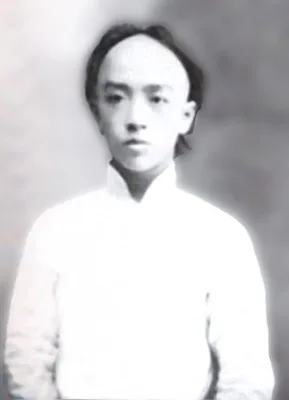
Hu Shih was raised among his mother's Buddhist devotions. At about eleven he lost his fear of hell from two old sentences by Sima Guang and Fan Zhen. He kept his unbelief from his mother, and declared it in print only after her death, in the 1919 essay that offered "social immortality" as his religion. In 1923 he called himself an atheist on the evidence, ready to change if the evidence changed. In old age he held the same view, with a new insistence on tolerance for believers.
Jawaharlal Nehru
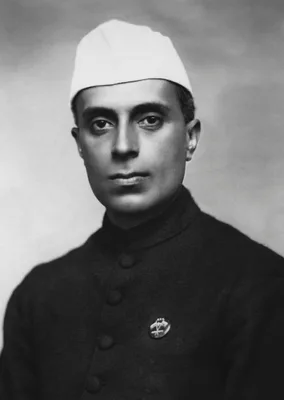
Jawaharlal Nehru was raised by a father who treated religion as a woman's affair, and was initiated into Theosophy by Annie Besant at thirteen. At Harrow and Cambridge it faded into a scientific humanism without "the religious temper", and Gandhi's fasts sharpened him against religion in politics. In his prison Autobiography (1934–35) he declared that organised religion filled him with horror and that he preferred the open sea. In 1944 he softened to "I do not know". As Prime Minister he kept his agnosticism apart from a state that guaranteed every faith and named no God.
M. N. Roy
M. N. Roy was a priest's son who began among the Bengal revolutionaries "fanatically believing in the spiritual mission of their Motherland". He left that spiritual nationalism for Marx in New York and Mexico (1916–19), and declared in 1922 that liberation could not be fought with religious ideology. In jail in the 1930s he rebuilt his materialism on natural science, against Marxism's certainties. At the end he judged Marxism itself a faith, and offered a humanism that would claim "neither finality nor infallibility". In no text found did he call himself an atheist.
Diego Rivera
Diego Rivera was the son of a Freemason father and a devout mother, and said he had been an atheist since he was five or six, with no faith to lose. His unbelief was a painter's weapon against priests who blessed the powerful. In 1947 he put it into three words borrowed from Ignacio Ramírez, "Dios no existe", and in June 1948 defended them against an archbishop, the press and a student mob. In April 1956, ill with cancer, he painted them out, and by one report called himself a Catholic. His own explanation spoke of peace, national symbols and historical truth, so whether it was conversion, reconciliation or self-censorship the sources do not settle.