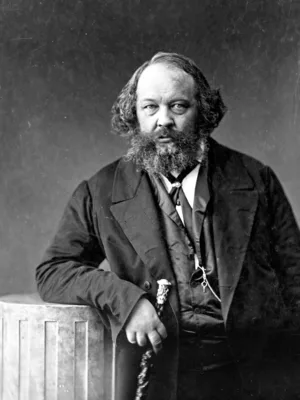
Mikhail Bakunin's Orthodox boyhood cooled at cadet school, and his early philosophy was a religion he used to defend the state. He became a revolutionary in Dresden in 1842 while still speaking of "a new religion", and believed in a personal God into his late forties. He turned to open atheism only in the 1860s, in his fight with Mazzini's religious republicanism. After that, God, the state and every master stood or fell together for him.
The belief timeline
- Faith (1829 (boyhood; again 1836–40 as philosophy)) — Orthodox boyhood at Premukhino, remembered in his own words as "so holy, so divine"; the faith cools at the Artillery School, then returns as a Fichtean and Hegelian philosophy of religion, which in 1838 he calls the substance of the state [3][4][6][11][14][15][17][18]
- Doubt (1842) — In Dresden, among Ruge's circle and with Feuerbach, Strauss and Stein, religion turns into a "new religion" of democracy and the Hegelian reconciliation with reality is thrown over; note the childhood chill of 1829–33 (explain why 1842 is the real turning point: a boy's loss of devotion against a man's case against the whole system) [6][22][23][24][25][26][14][16]
- Declaration (1867-09 to 1868-09) — Geneva toast "federalism, socialism, antitheologism"; Bern speech against religion; the Alliance adopts atheism [47][48][49]
- Revision (1871) — Reverses his 1838 position in print: "God and the State" and the Réponse to Mazzini make God the political enemy; no later change of mind about God found yet [14][15][53][55][57][58]
Notes to the timeline (21)
- [3] Nettlau, summarising Bakunin's fragmentary autobiography "Histoire de ma vie", says religious instruction was given "in the most indifferent way, quite formally and without any effect" — Max Nettlau, Michael Bakunin: Eine biographische Skizze (Berlin: Paul Pawlowitsch, 1901), abridged from his privately printed three-volume Michael Bakunin, eine Biographie (London 1896–1900), p. 4. Reported at second hand; the original has not been seen.
- [4] Bakunin himself, aged 23, wrote to his father that Lent, confession, Communion and Holy Week were among the happiest memories of the family's childhood: "so holy, so divine" — Yu. M. Steklov, Михаил Александрович Бакунин. Его жизнь и деятельность, vol. 1, 1814–1861 (Moscow, 1926), ch. 1, quoting the letter (Q17); letter not seen.
- [6] At the school the unbelieving or flippant attitude of the comrades cooled his religious feeling; his uncle P. A. Nilov, who made him read the lives of the saints aloud and accept all of it unquestioningly, "quite unintentionally" undermined his traditional belief — Steklov, Михаил Александрович Бакунин. Его жизнь…, ch. 2 (no source given for the claim).
- [11] He also studied Fichte's Anweisung zum seligen Leben (The Way to the Blessed Life), a philosophy of religion; Steklov says his thought now took on "a religious tinge", and Kornilov (pp. ~144–48) sets out the Fichtean religion as matching his own views. He did not translate it (the roster brief says he did; Disputed 9) — Steklov, Михаил Александрович Бакунин. Его жизнь…, ch. 3; A. A. Kornilov, Молодые годы Михаила Бакунина: из истории русского романтизма (Moscow, 1915), pp. ~144–48.
- [14] His preface to Hegel's Gymnasium Speeches (Moskovsky Nablyudatel, March–April 1838) was his first complete work — Nettlau, Michael Bakunin, p. 5.
- [15] In that preface he attacked French materialism for undermining religious feeling and wrote that "where there is no religion there can be no state", religion being "the substance of the life of every state"; Steklov observes that Bakunin later reversed this ("God and the State" the most hated words of the anarchist) — Steklov, Михаил Александрович Бакунин. Его жизнь…, ch. 9, quoting the preface (reprinted in Vengerov's Belinsky, vol. 4, pp. 484–92, not seen) (Q18).
- [17] In autumn 1839 he met Herzen's circle (freethinkers, republicans, sympathisers with French socialism) and clashed with them, the conservative Moscow Hegelians holding that all that exists is reasonable — Nettlau, Michael Bakunin, p. 5; James Guillaume, "Notice biographique", in [Oeuvres II], pp. v–xxx. Guillaume was Bakunin's executor and friend, p. vii.
- [18] In 1840 he went to Berlin (about July–August) to study German philosophy, perhaps hoping for a Moscow chair — Nettlau, Michael Bakunin, p. 5; Guillaume, [Oeuvres II], p. vii.
- [22] In Berlin he found Professor Werder shallow and watched Schelling's 1841–42 lectures fail; in the Confession he says he cured himself of German metaphysics, having sought life in it and found "death and boredom" — Nettlau, Michael Bakunin, p. 5–6; Бакунин, Исповедь (the Confession to Nicholas I, Alexeyevsky Ravelin, 1851), printed on pp. 100–248 of [Materialy1]: Материалы для биографии М. Бакунина, vol. 1, ed. V. P. Polonsky (Moscow–Petrograd: Gosizdat, 1923), IA
materialy_dlia_biografii_m_bakunina_vol_1, OCR materialy1-1923.txt (old orthography). Russian only. First printed in 1921 per the brief (the 1921 separate edition was not found on the Internet Archive; the 1923 volume prints the full text). No English translation before 1931 found; the 1977 English translation (Orton) is under copyright and is not used. All English renderings of the Confession here are ours, p. 103 (Q15). - [23] In Dresden in 1842, after reading Stein's book on French socialists (and, before it, Strauss's Life of Jesus), he felt he heard "the announcement of a new grace, the revelation of a new religion of exaltation, dignity, happiness, the liberation of the whole human race", and read the French democrats and socialists; he met Ruge and Herwegh — Исповедь, p. 106 (Q16); Nettlau, Michael Bakunin, p. 6–7.
- [24] Nettlau attributes the 1842 anonymous pamphlet "Schelling und die Offenbarung" to Bakunin (on a letter of Ruge's) and sees in its closing pages the first appearance of the revolutionary Bakunin, "enthusiastic for Feuerbach" — Nettlau, Michael Bakunin, p. 5–6.
- [25] "Die Reaktion in Deutschland. Ein Fragment von einem Franzosen" appeared under the name Jules Elysard in Ruge's Deutsche Jahrbücher, 17–21 October 1842; his authorship was no secret and it closed the chance of a Russian chair — Nettlau, Michael Bakunin, p. 6; Guillaume, [Oeuvres II], p. viii. Accounts differ; see the disputed points.
- [26] The article ends: "Die Lust der Zerstörung ist zugleich eine schaffende Lust!" Guillaume notes that "Lust" means both desire and pleasure. Herzen, thinking it French, wrote in his diary that it was a mighty appeal of the democratic party — Nettlau, Michael Bakunin, p. 6 (Q14); Guillaume, [Oeuvres II], p. viii.
- [16] Nettlau calls Bakunin's articles of 1838–40 "entirely reactionary" in spirit — Nettlau, Michael Bakunin, p. 5.
- [47] At the Geneva Peace Congress (9–12 Sept 1867) his toast summed up his principles as "federalisme-socialisme-antitheologisme"; he joined the League's permanent committee and drafted "Federalisme, socialisme et antitheologisme" (1867–68), left unfinished, first printed 1895 — Nettlau, Michael Bakunin, p. 21; Oeuvres I p. xxix, text pp. 1ff..
- [48] In that text he wrote that the existence of God implies the abdication of human reason and justice (Q10), and argued: "God is, therefore there are no natural laws... the world is not a chaos... therefore God does not exist" — Oeuvres I pp. 64, 81.
- [49] At the Bern congress of the League (Sept 1868) he spoke against religion on 24 September; his motion was beaten and he and 17 others left and founded the Alliance internationale de la démocratie socialiste — Nettlau, Michael Bakunin, pp. 22–23.
- [53] In winter 1870–71 he wrote the manuscript of "L'Empire knouto-germanique et la Révolution sociale"; the 1882 pamphlet "Dieu et l'État" is folios 149–247 (minus lost folios 211–213) of the manuscript of its second instalment, the title being the invention of Cafiero and Reclus; he told Ogarev the work was "his testament" — Oeuvres II, Avant-propos pp. ~203–4; Nettlau, Michael Bakunin, p. 38.
- [55] Three wordings of the sentence that reverses Voltaire exist: Tucker's English from the 1882 French, "if God existed, it would be necessary to abolish him"; the 1910 Freedom Press edition revised from the manuscript, "if God really existed, it would be necessary to abolish him"; and the French manuscript text of 1908, "si Dieu existait réellement, il faudrait le faire disparaître" — Michael Bakounine, God and the State, with a preface by Carlo Cafiero and Elisée Reclus, translated from the French by Benj. R. Tucker (New York: Benj. R. Tucker, 8th ed. 1895), p. 17 (Q1); Michael Bakunin, God and the State, "a new edition revised from the original manuscript" (London: Freedom Press, 1910), with an introductory remark by Max Nettlau, p. 16 (Q2); Oeuvres III p. 48 (Q3).
- [57] Mazzini attacked the Commune and the International in La Roma del Popolo, especially on 13 July 1871; Bakunin, reading it on 24 July, wrote the Réponse d'un international à Mazzini on 25–28 July; it appeared in Italian in the Gazzettino Rosa (14 Aug) and in French in the Brussels Liberté (18–19 Aug); Mazzini did not reply, Saffi answered in September — Oeuvres VI Avant-propos pp. 103–5.
- [58] In the Réponse he sets materialists and atheists (the Commune) against idealists and believers (the Versailles Assembly), and calls himself and his side "we materialists and atheists" — Oeuvres VI pp. 120, 122 (Q11, Q12).
If God Really Existed
In the winter and spring of 1871, at Locarno in Switzerland, a Russian exile of fifty-six filled hundreds of manuscript pages for a book he never finished. Eleven years later two friends cut a section out of the manuscript, gave it a title of their own, and published it in Geneva as God and the State.1 Its most famous sentence turned Voltaire upside down. Voltaire had said that if God did not exist it would be necessary to invent him; the exile wrote: "A jealous lover of human liberty, and deeming it the absolute condition of all that we admire and respect in humanity, I reverse the phrase of Voltaire, and say that, if God really existed, it would be necessary to abolish him."23
Mikhail Bakunin had been sentenced to death in two countries and had escaped from Siberia. He was also, for most of his life, not an atheist at all. This chapter follows him from an Orthodox estate in Russia through German philosophy, prison and exile, and asks why a man who once called religion the foundation of the state came, in his fifties, to see God as the first of tyrants.
Premukhino
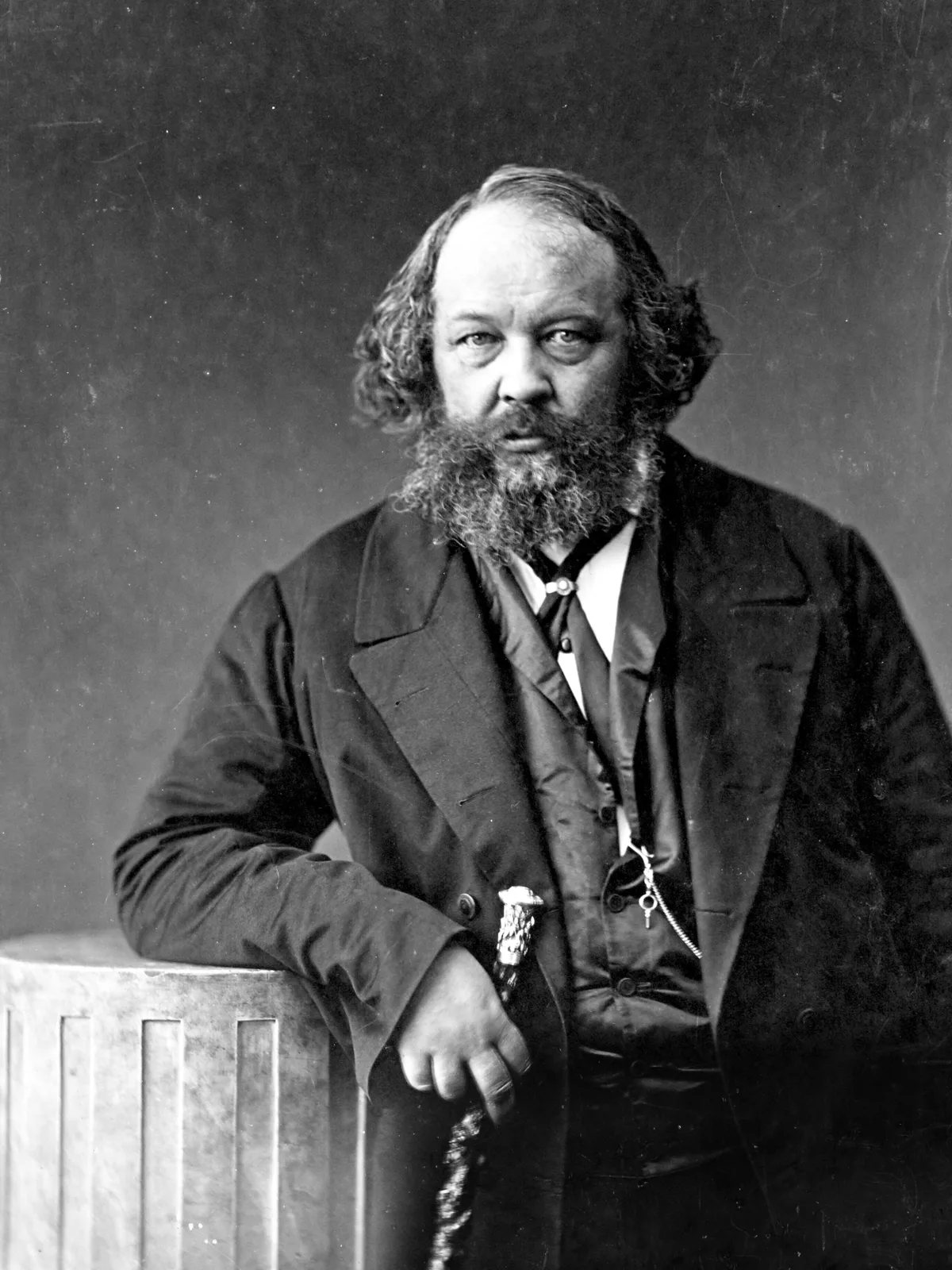
He was born in May 1814 at Premukhino, his family's estate in the Tver province of Russia, the eldest of eleven children.4 His father, Alexander Bakunin, had been a diplomat in Italy and was a moderate liberal and something of a sceptic.5 Accounts differ on the boy's religion. His biographer Max Nettlau, summarising Bakunin's own fragment of autobiography, said religious teaching was given "in the most indifferent way, quite formally and without any effect."6 But at twenty-three Bakunin wrote to his father that Lent, confession, Communion and Holy Week had been among the happiest times of the family's childhood: "We did not understand then, but we felt that something great was happening ... These events seem trifling, but they went deep into the soul, they left in us indelible memories."78

At fifteen he went to the Artillery School in St Petersburg. There, according to the Soviet biographer Yuri Steklov, the flippancy of his comrades chilled his religious feeling, and an uncle who made him read the lives of the saints aloud and accept every word "quite unintentionally" undermined what was left of it.910 It was a boy's loss of devotion, not yet a man's argument. He resigned his commission in 1834.11
A religion of philosophy
In Moscow he fell in with Nikolai Stankevich's circle of young philosophers, who led him to Kant and Fichte.1213 His first printed work, in 1836, was a translation of Fichte's lectures on the vocation of the scholar, and he was captivated by Fichte's Way to the Blessed Life, a philosophy of religion; Steklov says his thought now took on "a religious tinge."1415 He even planned a religious brotherhood with his sisters and their friends.16
Then came Hegel, and the formula "everything real is rational."17 In 1838 Bakunin wrote a preface to Hegel's school speeches that attacked French materialism and defended faith: "where there is no religion there can be no state ... religion is the substance, the essence of the life of every state."181920 Years later this would be exactly the position he spent his life attacking.
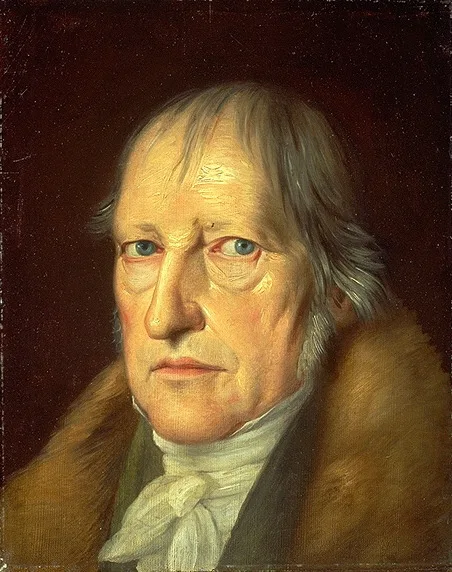
He went to Berlin in 1840 to study philosophy at its source. When his friend Stankevich died that year he still held, according to his later editor James Guillaume, that the immortality of the soul was "a necessary doctrine."2122 He told his sisters that his studies were "a religious and most sincere striving of my whole being toward truth."2324
Dresden, 1842
Berlin disappointed him. Years later, writing to the Tsar from prison, he said of German metaphysics: "I sought life in it and found death and boredom; I sought action and found absolute idleness."2526 In Dresden in 1842 he joined the circle of the radical editor Arnold Ruge, read Strauss's Life of Jesus, the French socialists, and Ludwig Feuerbach, and felt, as he put it, that he "heard the proclamation of a new grace, the revelation of a new religion of exaltation, dignity, happiness, liberation of the whole human race."272829 Politics, he had written a little earlier, had become religion: "now the time has come when politics is religion and religion is politics."3031
That October Ruge's journal printed an article, "The Reaction in Germany," signed with a French pseudonym. It ended with a line that has followed Bakunin ever since: "Let us therefore trust the eternal Spirit which destroys and annihilates only because it is the unfathomable and eternally creative source of all life. The desire of destruction is at the same time a creative desire!"323334 It closed the door on any career in Russia.32
Revolution, prison, Siberia
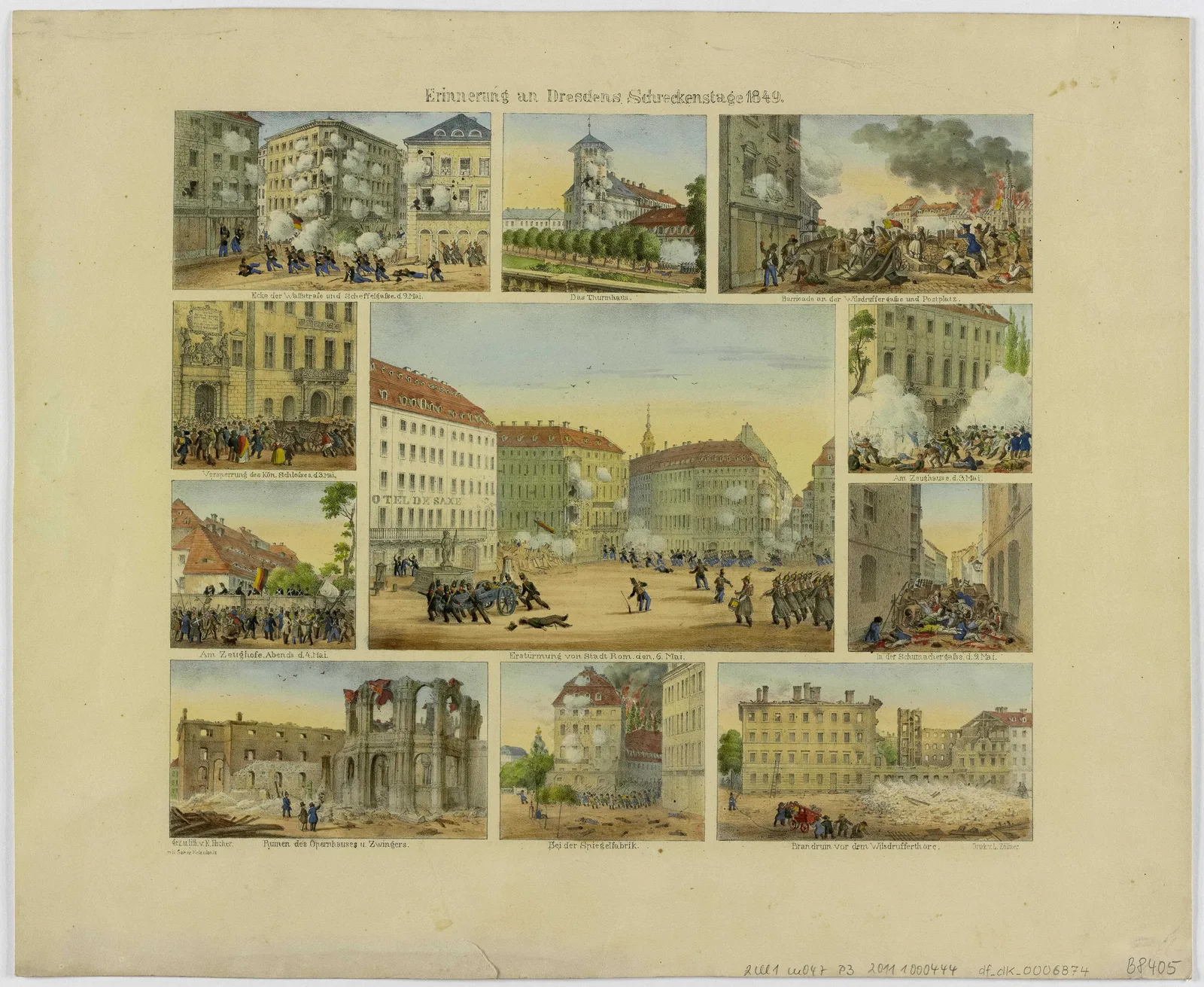
Dresden in 1842 was the turning point in politics, but not yet in religion. He refused the Russian ambassador's order to come home and was sentenced in his absence to lose his rank and property and to exile in Siberia.35 In Paris he argued through the night with Proudhon about Hegel.36 He fought in the revolutions of 1848 and in the Dresden rising of May 1849, and was captured.3738 Saxony and then Austria condemned him to death, and both commuted the sentence. Before the Austrian court his religion was recorded, "by his own statement," as "Christian, of the Greek Church."3940
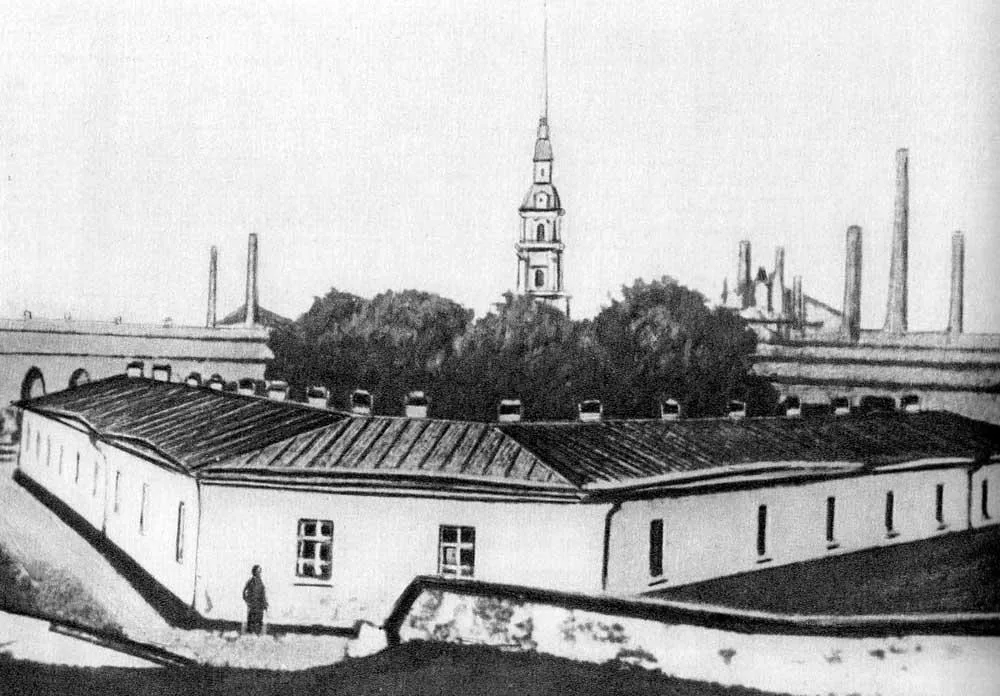
In 1851 Austria handed him to Russia. Held without trial in the Peter and Paul Fortress, he wrote a long Confession to Tsar Nicholas I, which says nothing against religion.4142 The Tsar called it "well worth your reading, very curious and instructive."4344 In 1855 his mother told the head of the political police that she had found him "Christianly resigned to his fate."4546 He spent years in the fortress of Shlisselburg, lost his teeth to scurvy, and in 1857 was sent to Siberia.4748
In June 1861 he escaped. He went down the Amur, crossed to Japan and the United States, and reached London on 27 December 1861.49 There, according to Ivan Turgenev, he still believed in God: "The last time I met him in London, he still believed in a personal God, and in a conversation we had, in the old romantic manner, strolling through the streets by moonlight, he even blamed your atheism," Turgenev wrote to Alexander Herzen.5051
Mazzini
The decisive opponent was not a priest but a fellow revolutionary. In London Bakunin met Giuseppe Mazzini, the Italian republican, and found himself in "the sharpest opposition in all political, socialist and religious questions."52 Mazzini's republicanism was religious. "There are, I hope, no atheists among you," he told Italian workers in The Duties of Man; the first atheist, he thought, was surely a man who had hidden a crime and denied God to escape "the sole witness from whom concealment was impossible."53
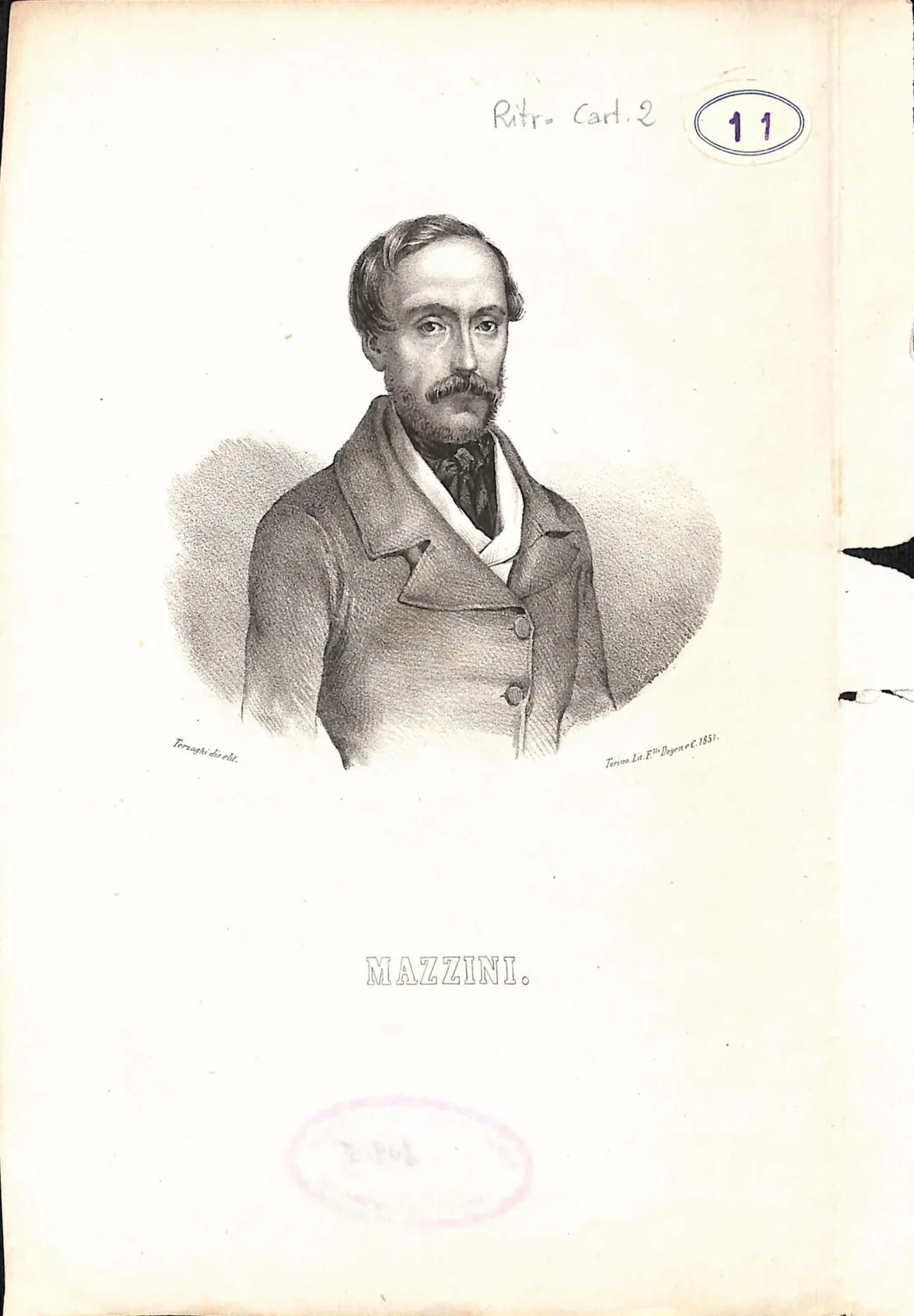
In Florence and Naples from 1864 Bakunin built secret circles whose programme, as Nettlau describes it, set "atheistic internationalism" against "Mazzini's religious patriotism."5455 Bakunin himself said later that his international Alliance was founded "to defend socialism against the religious and political dogmatism of Mazzini" and so "adopted atheism in its programme."5657 His Russian editor Mikhail Dragomanov put it plainly: the reaction against Mazzini's "God and the People" drove Bakunin "to the most pronounced atheism."56
So the open declaration came late. At the Peace Congress in Geneva in September 1867 he summed up his principles as "federalism, socialism, antitheologism," and in an unfinished text of that year he wrote that "the existence of God implies the abdication of human reason and justice; it is the negation of human liberty and leads necessarily to a slavery not only theoretical but practical."585960 A year later, at Bern, he spoke against religion and walked out with his followers to found the Alliance.61
God and the State
The manuscript of 1871 is his fullest statement. Religion, he argued, served the powerful: everyone who profits from obedience will "repeat in unison these words of Voltaire: If God did not exist, it would be necessary to invent him. For, you understand, 'the people must have a religion.' That is the safety-valve."6263 His logic was brief: "If God is, man is a slave; now, man can and must be free; then, God does not exist."64 Christianity was "the religion par excellence" because it showed most fully what every religion was, "the impoverishment, enslavement, and annihilation of humanity for the benefit of divinity."65 Even the old story of Eden turned round in his hands: "here steps in Satan, the eternal rebel, the first freethinker, and the emancipator of worlds."66 Freedom meant obeying natural laws because "he has himself recognized them as such, and not because they have been externally imposed upon him by any extrinsic will whatever, divine or human."67
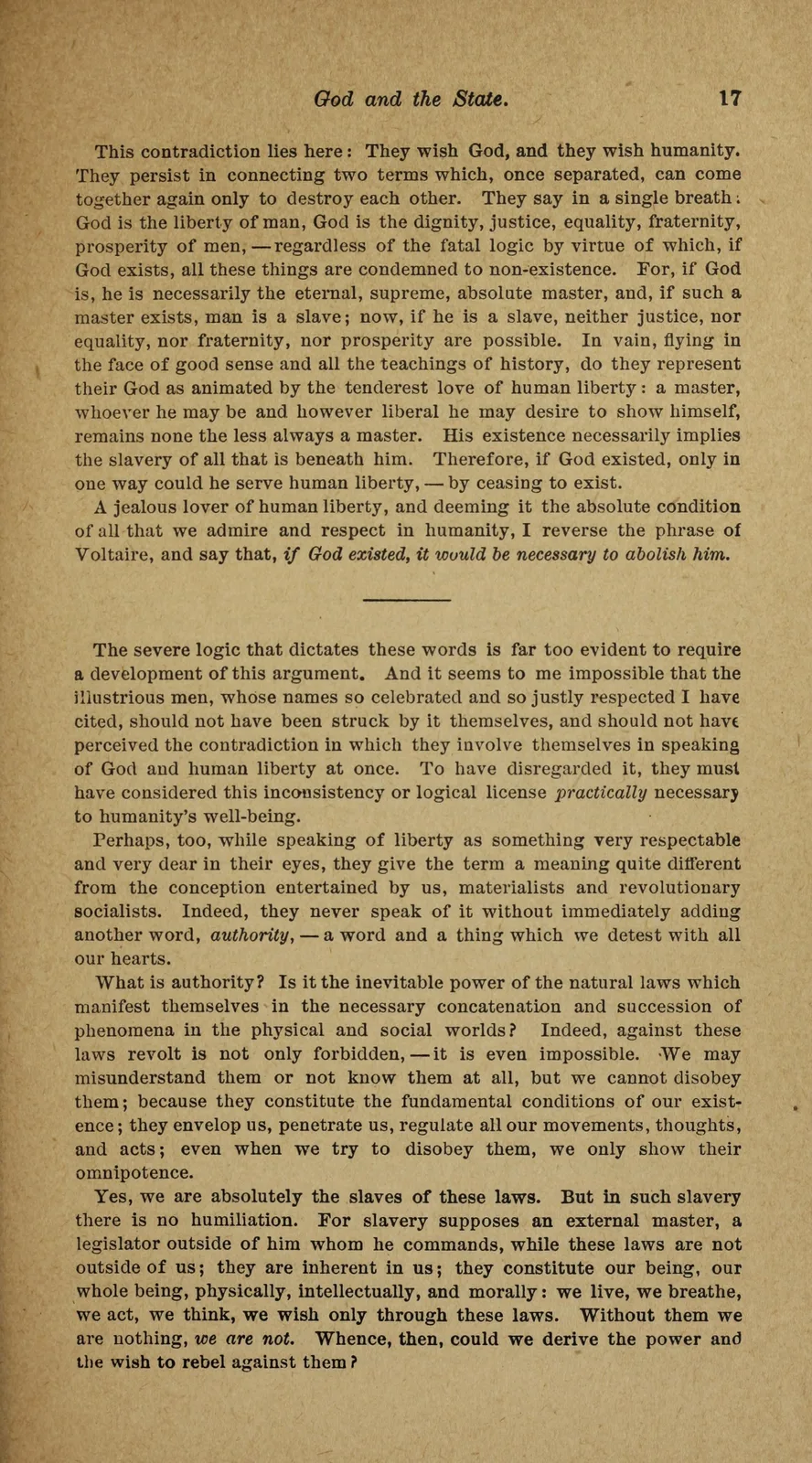
The famous sentence exists in three forms. Benjamin Tucker's American translation, made from the 1882 Geneva pamphlet, reads "if God existed, it would be necessary to abolish him"; the 1910 London edition, revised from the manuscript, adds "really"; and Bakunin's own French says "il faudrait le faire disparaître," it would be necessary to make him disappear.26869 The editors of 1882 had smoothed his French in places.2
That summer Mazzini attacked the Paris Commune and the International. "The denial of God," he told Italian workers, was the denial of "the one solid, eternal, unshakable base of your duties and your rights."7071 Bakunin answered in four days. "Yesterday, before our eyes, where were the materialists, the atheists? In the Paris Commune. And the idealists, the believers in God? In the National Assembly at Versailles."707273 And he claimed the moral law for his own side, "the moral law, whose existence we materialists and atheists recognise more truly than idealists of any school can."74
The end
In 1872 the congress of the International at The Hague, which he did not attend, voted to expel him in his long quarrel with Karl Marx.75 He reached Bern ill in June 1876 and died there at noon on 1 July.76 God and the State appeared six years later, and was soon translated into English.77 His old friend Herzen had described him as a man "who had within him the latent power of a colossal activity for which there was no demand."7879
What he left
Bakunin's unbelief was the last thing about him to become radical. The Orthodox ritual of his boyhood cooled at cadet school; his early philosophy was a religion, which he used to defend the state; Dresden turned him into a revolutionary who still spoke of "a new religion"; and he believed in a personal God in London in his late forties. It was the fight with Mazzini, who joined God and nation, that made him unite atheism and revolution, and after 1867 he treated the two as one: God, the state and every master stood or fell together. The anarchist who carried that joined creed into the next century, Emma Goldman, has her own chapter in this book.
Footnotes
-
Oeuvres II, Avant-propos pp. ~203–4; Max Nettlau, Michael Bakunin: Eine biographische Skizze (Berlin: Paul Pawlowitsch, 1901), abridged from his privately printed three-volume Michael Bakunin, eine Biographie (London 1896–1900), p. 38. ↩
-
Michael Bakounine, God and the State, with a preface by Carlo Cafiero and Elisée Reclus, translated from the French by Benj. R. Tucker (New York: Benj. R. Tucker, 8th ed. 1895), p. 17 (Q1); Michael Bakunin, God and the State, "a new edition revised from the original manuscript" (London: Freedom Press, 1910), with an introductory remark by Max Nettlau, p. 16 (Q2); Oeuvres III p. 48 (Q3). Accounts differ; see the disputed points. ↩ ↩2 ↩3
-
Bakunin, God and the State, 1910 p. 16. ↩
-
Nettlau, Michael Bakunin, p. 4; James Guillaume, "Notice biographique", in [Oeuvres II], pp. v–xxx. Guillaume was Bakunin's executor and friend, p. v; Yu. M. Steklov, Михаил Александрович Бакунин. Его жизнь и деятельность, vol. 1, 1814–1861 (Moscow, 1926), ch. 1. ↩
-
Nettlau, Michael Bakunin, p. 4. ↩
-
Nettlau, Michael Bakunin, p. 4. Reported at second hand; the original has not been seen. ↩
-
Steklov, Михаил Александрович Бакунин. Его жизнь…, ch. 1, quoting the letter (Q17); letter not seen. ↩
-
Steklov, Михаил Александрович Бакунин. Его жизнь…, ch. 1, quoting; letter not seen. Not checked against the original (no (secondhand)). ↩
-
Steklov, Михаил Александрович Бакунин. Его жизнь…, ch. 2; Nettlau, Michael Bakunin, p. 5 ("ca. 1829 to 1832"). ↩
-
Steklov, Михаил Александрович Бакунин. Его жизнь…, ch. 2 (no source given for the claim). ↩
-
Nettlau, Michael Bakunin, p. 5; Guillaume, [Oeuvres II], p. vi; Steklov, Михаил Александрович Бакунин. Его жизнь…, ch. 2. ↩
-
Nettlau, Michael Bakunin, p. 5. ↩
-
Nettlau, Michael Bakunin, p. 5; Guillaume, [Oeuvres II], p. vi. ↩
-
Nettlau, Michael Bakunin, p. 5; Guillaume, [Oeuvres II], p. vi; A. A. Kornilov, Молодые годы Михаила Бакунина: из истории русского романтизма (Moscow, 1915), note 36. ↩
-
Steklov, Михаил Александрович Бакунин. Его жизнь…, ch. 3; Kornilov, Молодые годы Михаила Бакунина, pp. ~144–48. ↩
-
Steklov, Михаил Александрович Бакунин. Его жизнь…, ch. 4. ↩
-
Steklov, Михаил Александрович Бакунин. Его жизнь…, ch. 8; Nettlau, Michael Bakunin, p. 5. ↩
-
Nettlau, Michael Bakunin, p. 5. ↩
-
Steklov, Михаил Александрович Бакунин. Его жизнь…, ch. 9, quoting the preface (reprinted in Vengerov's Belinsky, vol. 4, pp. 484–92, not seen) (Q18). ↩
-
Steklov, Михаил Александрович Бакунин. Его жизнь…, ch. 9, quoting (preface reprinted in Vengerov's Belinsky vol. 4 pp. 484–92, not seen). Not checked against the original (no (secondhand)). ↩
-
Nettlau, Michael Bakunin, p. 5; Guillaume, [Oeuvres II], p. vii. ↩
-
Guillaume, [Oeuvres II], p. vii. ↩
-
Steklov, Михаил Александрович Бакунин. Его жизнь…, ch. 9 (Q19). ↩
-
Steklov, Михаил Александрович Бакунин. Его жизнь…, ch. 9, quoting; letter not seen. Not checked against the original (no (secondhand)). ↩
-
Nettlau, Michael Bakunin, p. 5–6; Бакунин, Исповедь (the Confession to Nicholas I, Alexeyevsky Ravelin, 1851), printed on pp. 100–248 of [Materialy1]: Материалы для биографии М. Бакунина, vol. 1, ed. V. P. Polonsky (Moscow–Petrograd: Gosizdat, 1923), IA
materialy_dlia_biografii_m_bakunina_vol_1, OCR materialy1-1923.txt (old orthography). Russian only. First printed in 1921 per the brief (the 1921 separate edition was not found on the Internet Archive; the 1923 volume prints the full text). No English translation before 1931 found; the 1977 English translation (Orton) is under copyright and is not used. All English renderings of the Confession here are ours, p. 103 (Q15). ↩ -
Исповедь, Materialy1 p. 103. ↩
-
Исповедь, p. 106 (Q16); Nettlau, Michael Bakunin, p. 6–7. ↩
-
Nettlau, Michael Bakunin, p. 5–6. ↩
-
Исповедь, Materialy1 p. 106. ↩
-
Steklov, Михаил Александрович Бакунин. Его жизнь…, ch. 9 (Q20). ↩
-
Steklov, Михаил Александрович Бакунин. Его жизнь…, ch. 9, quoting; letter not seen. Not checked against the original (no (secondhand)). ↩
-
Nettlau, Michael Bakunin, p. 6; Guillaume, [Oeuvres II], p. viii. ↩ ↩2
-
Nettlau, Michael Bakunin, p. 6 (Q14); Guillaume, [Oeuvres II], p. viii. ↩
-
Nettlau, Michael Bakunin, p. 6; also Guillaume p. viii. ↩
-
Nettlau, Michael Bakunin, p. 7–8; "Bakunin, Mikhail", Encyclopaedia Britannica, 11th ed., vol. 3, p. 248. Wikisource page
Page:EB1911 - Volume 03.djvu/248; britannica1911.txt. Short and contains errors (Disputed points 4, 7). ↩ -
Nettlau, Michael Bakunin, p. 8–9; Alexander Herzen, My Past and Thoughts, tr. Constance Garnett, vol. III (London: Chatto and Windus, 1924), p. 219–20. ↩
-
Nettlau, Michael Bakunin, pp. 10–11. ↩
-
Nettlau, Michael Bakunin, p. 12. ↩
-
Nettlau, Michael Bakunin, pp. 12–13; Materialy1 p. 58. ↩
-
Materialy1 p. 58 (doc. 27). ↩
-
Nettlau, Michael Bakunin, p. 13; Materialy1 pp. 100–248. ↩
-
Исповедь, pp. 103–6 and closing paragraph (page of closing not pinned). ↩
-
Materialy1 p. 98 (editor's note). ↩
-
Nicholas I, Tsar, resolution on the Confession, addressed to the heir (later Alexander II): Materialy1 p. 98 (editor's note); our translation: "well worth your reading, very curious and instructive.". ↩
-
Steklov, Михаил Александрович Бакунин. Его жизнь…, ch. 2; Materialy1 p. 277 (OQ6). ↩
-
Varvara Bakunina, his mother, to Dubelt, head of the gendarmes' office, 1855: Materialy1 p. 277 (doc. 39); our translation: "I found him Christianly resigned to his fate and bearing so patiently the punishment he deserves.". ↩
-
Nettlau, Michael Bakunin, p. 13. ↩
-
Nettlau, Michael Bakunin, pp. 13–14. ↩
-
Nettlau, Michael Bakunin, pp. 13–14. ↩
-
Correspondance de Michel Bakounine. Lettres à Herzen et à Ogareff (1860–1874), ed. M. Dragomanov, French tr. (Paris: Perrin, 1896), preface p. 72 n. 4, quoting Turgenev (Q22); letter not seen; Dragomanov dates it to the 1869 (really 1868) Bern congress. ↩
-
Ivan Turgenev to Herzen, on Bakunin: Correspondance de Michel Bakounine. Lettres…, preface p. 72 n. 4 (Dragomanov, French translation of a Russian letter). ↩
-
Nettlau, Michael Bakunin, pp. 15, ~38. ↩
-
Giuseppe Mazzini, The Duties of Man, ch. II "God", tr. E. A. Venturi (1862); Mazzini's foundational text for Italian workers, written 1844–60: Giuseppe Mazzini, The Duties of Man, tr. Emilie Ashurst Venturi (London: Chapman and Hall, 1862; also in Essays), 1862 p. 31. ↩
-
Nettlau, Michael Bakunin, pp. 17, 20; Correspondance de Michel Bakounine. Lettres…, preface pp. 72–73. ↩
-
Nettlau, Michael Bakunin, pp. 17–18. ↩
-
Correspondance de Michel Bakounine. Lettres…, preface pp. 71–72 and n. 4 (Q13); the Alliance text, cited there as "Le développement historique de l'Internationale" p. 301, not seen. ↩ ↩2
-
Correspondance de Michel Bakounine. Lettres…, preface p. 71 (citing "Le développement historique de l'Internationale" p. 301). ↩
-
Nettlau, Michael Bakunin, p. 21; Oeuvres I p. xxix, text pp. 1ff.. ↩
-
Oeuvres I pp. 64, 81. ↩
-
Oeuvres I p. 64. ↩
-
Nettlau, Michael Bakunin, pp. 22–23. ↩
-
Bakounine, God and the State, p. 10 (Q4); Oeuvres III p. ~32 (OCR reads "52"). ↩
-
Bakounine, God and the State, p. 10. ↩
-
Bakounine, God and the State, p. 15. ↩
-
Bakounine, God and the State, p. 15. ↩
-
Bakounine, God and the State, p. 7. ↩
-
Bakounine, God and the State, p. 17. ↩
-
Bakounine, God and the State, 1895 p. 17 (Boston 1890 ed. same). Tucker's translation of the 1882 French. No "really". The version most often quoted today has "really" (Q2). ↩
-
Oeuvres III (1908) p. 48. ↩
-
Giuseppe Mazzini, as quoted in French by Saverio Friscia ("dit-il aux ouvriers italiens"): Oeuvres VI, Appendice (Friscia), c. pp. 140–46 (page not pinned); our translation: "The denial of God, that is, of the one solid, eternal, unshakable base of your duties and your rights, of the duties of others toward your class, of the certainty that you are called to conquer and will conquer.". ↩
-
Oeuvres VI pp. 120, 122 (Q11, Q12). ↩
-
Oeuvres VI p. 120. ↩
-
Oeuvres VI p. 122. ↩
-
Nettlau, Michael Bakunin, p. ~42; Encyclopaedia Britannica. ↩
-
Nettlau, Michael Bakunin, p. 52. ↩
-
Encyclopaedia Britannica; Bakunin, God and the State, Introductory Remark; Oeuvres II. ↩
-
Herzen, My Past and Thoughts, vol. III, p. 255 (Q21). ↩
-
Alexander Herzen on Bakunin: Herzen, My Past and Thoughts, vol. III, p. 255. ↩
materialy_dlia_biografii_m_bakunina_vol_1, OCR materialy1-1923.txt (old orthography). Russian only. First printed in 1921 per the brief (the 1921 separate edition was not found on the Internet Archive; the 1923 volume prints the full text). No English translation before 1931 found; the 1977 English translation (Orton) is under copyright and is not used. All English renderings of the Confession here are ours.; "Bakunin, Mikhail", Encyclopaedia Britannica, 11th ed., vol. 3, p. 248. Wikisource page Page:EB1911 - Volume 03.djvu/248; britannica1911.txt. Short and contains errors (Disputed points 4, 7).; Alexander Herzen, My Past and Thoughts, tr. Constance Garnett, vol. III (London: Chatto and Windus, 1924); Correspondance de Michel Bakounine. Lettres à Herzen et à Ogareff (1860–1874), ed. M. Dragomanov, French tr. (Paris: Perrin, 1896); Giuseppe Mazzini, The Duties of Man, tr. Emilie Ashurst Venturi (London: Chapman and Hall, 1862; also in Essays)In their own words
A jealous lover of human liberty, and deeming it the absolute condition of all that we admire and respect in humanity, I reverse the phrase of Voltaire, and say that, if God existed, it would be necessary to abolish him.
A jealous lover of human liberty, and deeming it the absolute condition of all that we admire and respect in humanity, I reverse the phrase of Voltaire, and say that, if God really existed, it would be necessary to abolish him.
Amoureux et jaloux de la liberté humaine, et la considérant comme la condition absolue de tout ce que nous adorons et respectons dans l'humanité, je retourne la phrase de Voltaire, et je dis que, si Dieu existait réellement, il faudrait le faire disparaître.
all will repeat in unison these words of Voltaire: If God did not exist, it would be necessary to invent him. For, you understand, "the people must have a religion." That is the safety-valve.
If God is, man is a slave; now, man can and must be free; then, God does not exist.
The idea of God implies the abdication of human reason and justice; it is the most decisive negation of human liberty, and necessarily ends in the enslavement of mankind, both in theory and practice.
But here steps in Satan, the eternal rebel, the first freethinker, and the emancipator of worlds.
Christianity is precisely the religion par excellence, because it exhibits and manifests, to the fullest extent, the very nature and essence of every religious system, which is the impoverishment, enslavement, and annihilation of humanity for the benefit of divinity.
The liberty of man consists solely in this: that he obeys natural laws because he has himself recognized them as such, and not because they have been externally imposed upon him by any extrinsic will whatever, divine or human, collective or individual.
L'existence de Dieu implique l'abdication de la raison et de la justice humaines, elle est la négation de l'humaine liberté et aboutit nécessairement à un esclavage non seulement théorique mais pratique.
Hier, sous nos yeux, où se sont trouvés les matérialistes, les athées ? Dans la Commune de Paris. Et les idéalistes, les croyeurs en Dieu ? Dans l'Assemblée nationale de Versailles.
la loi morale dont nous autres, matérialistes et athées, reconnaissons l'existence plus réellement que ne peuvent le faire les idéalistes de quelque école que ce soit, mazziniens et non-mazziniens
Étant fondée dans le but de défendre le socialisme contre le dogmatisme religieux et politique de Mazzini, l'Alliance a adopté dans son programme l'athéisme, la négation de toute autorité et de tout pouvoir, la suppression du droit juridique, l'abolition de l'esprit bourgeois qui, dans l'État, tient la place de la liberté humaine
Lasst uns also dem ewigen Geiste vertrauen, der nur deshalb zerstört und vernichtet, weil er der unergründliche und ewig schaffende Quell alles Lebens ist. Die Lust der Zerstörung ist zugleich eine schaffende Lust!
я искалъ въ ней жизни а въ ней смерть и скука, искалъ дѣла а въ ней абсолютное бездѣлье
Мнѣ казалось что я слышу возвѣщенье новой благодати, откровенье новой религіи возвышенья, достоинства, счастья, освобожденья всего человѣческаго рода
Мы не понимали тогда; но чувствовали, что совершается что-то великое... Эти происшествия кажутся ничтожными, но они глубоко вошли в душу, они оставили в нас неизгладимые воспоминания
где нет религии, там не может быть государства ... религия есть субстанция, сущность жизни всякого государства
Мои занятия не есть педантическое собирание полезных, но мертвых знаний, а религиозное и искреннейшее стремление всего моего существа к истине
теперь настало время, когда политика есть религия и религия — политика
That man had within him the latent power of a colossal activity for which there was no demand.
La dernière fois que je l'ai rencontré à Londres, il croyait encore à un Dieu personnel et dans une conversation que nous eûmes, à la vieille manière romanesque, en nous promenant dans les rues au clair de la lune, il blâma même ton athéisme.
во имя освобождения мысли он вел свою войну с религией и со всеми авторитетами
Музыка была и есть мое любимое искусство. Она пробуждала во мне всегда религиозное чувство, веру в жизнь и охоту к жизни.
The other side
В общем, Бакунин лишний раз доказывает, до чего доводят людей заблуждение и забвение долга, когда отсутствие религиозных принципов одерживает верх.
стоит тебе прочесть, весьма любопытно и поучительно
Negazione della Patria, della Nazione! La Patria vi fu data da Dio, perché in un gruppo di venticinque millioni di Fratelli affini più strettamente a voi per nome, lingua, fede, aspirazioni comuni, e lungo glorioso sviluppo di tradizioni e culto di sepolture di cari spariti e ricordi solenni di martiri caduti per affermare la Nazione, trovaste più facile e valido aiuto al compimento d'una missione, alla parte di lavoro che la posizione geografica e le attitudini speciali vi assegnano.
La négation de Dieu, c'est-à-dire de l'unique base solide, éternelle, inébranlable de vos devoirs et de vos droits, des devoirs d'autrui envers votre classe, de la certitude que vous êtes appelés à vaincre et que vous vaincrez.
There are, I hope, no atheists among you. Were there any, they would deserve pity rather than malediction. ... The first atheist was surely one who had concealed some crime from his fellow-men, and who sought by denying God to free himself from the sole witness from whom concealment was impossible, and thus stifle the remorse by which he was tormented.
я нашла его христиански преданным судьбе своей и так терпеливо несущим заслуженное наказание
Where accounts differ
| Point | One account | Another | How the page handles it |
|---|---|---|---|
| 1. Birthday | 8 May Old Style = 20 May New Style (Nettlau p. 4; Guillaume p. v; Steklov ch. 1) | 18 May "without calendar" (Gorev 1919); modern reference works give 30 May New Style (= 18 May Old Style) | Say "in May 1814" |
| 2. Religious upbringing | Teaching "indifferent, purely formal, without effect" (Nettlau p. 4, from Bakunin's fragmentary autobiography) | Holy Week, confession and Communion kept with his father as the family's happiest memories (Bakunin's own letter at 23, via Steklov) | Give both: formal teaching, warm ritual |
| 3. The Voltaire reversal | "if God existed, it would be necessary to abolish him" (Tucker 1883–95, from the 1882 French editors) | "if God really existed, it would be necessary to abolish him" (Freedom Press 1910); French manuscript "si Dieu existait réellement, il faudrait le faire disparaître" (Oeuvres III p. 48) | Quote the manuscript-based wording and say that the first English edition left out "really" |
| 4. Death date | 1 July 1876, at noon (Nettlau p. 52) | 13 June 1876 (Britannica 1911), the day he reached Bern | Use 1 July |
| 5. Title of the 1842 article | "Die Reaktion in Deutschland. Ein Fragment von einem Franzosen" (Nettlau p. 6; Guillaume p. viii) | "Die Parteien in Deutschland" (Bakunin in the Confession, p. 106) | Use the printed title; the Confession's title is probably a slip or the title of its first section (unchecked) |
| 6. When he stopped believing | Religious feeling cooled at cadet school, 1829–33 (Steklov); in Moscow "waged war on religion" (Herzen via Steklov) | Defended religion as the substance of the state in 1838 (Steklov); still held immortality in Oct 1840 (Guillaume); a believer in a personal God in London, c. 1862–64 (Turgenev via Dragomanov); atheism "most pronounced" after Mazzini (Dragomanov), and the Alliance atheist "to defend socialism against Mazzini" (Bakunin, Q13); open declarations 1867–68 (Nettlau) | Say "accounts differ"; tell the childhood chill and the adult turns separately; let the Mazzini dispute explain the open atheism; Doubt mark 1842 with the reason |
| 7. When he went to Siberia | Sent "to eastern Siberia in 1855" (Britannica 1911) | Shlisselburg 1854–57, then West Siberia (Tomsk) in April 1857, Irkutsk March 1859 (Nettlau pp. 13–14) | Use Nettlau |
| 8. Editors' alterations | Editors of 1882 "often altered the text slightly to make Bakunin's French look more smooth", and the copyist misread the handwriting (Nettlau, GS-Freedom Introductory Remark) | Tucker's English and every later reprint rest on the 1882 text | Quote Q2/Q3 or say which edition |
| 9. Fichte translation | He translated Fichte's Way to the Blessed Life (roster brief) | He translated four lectures of the Vocation of the Scholar (1836); he studied the Way to the Blessed Life (Nettlau p. 5; Guillaume p. vi; Kornilov note 36; Steklov ch. 3) | Say he translated the Vocation of the Scholar and was captivated by the Way to the Blessed Life |
List of illustrations
This page uses only public-domain and Creative Commons images; each is credited with its source and licence.
- Mikhail Bakunin 1862 - Nadar — Nadar, 1862 · Wikimedia Commons (This image has an extracted file: Mikhail Bakunin 1862-1.1 V01-1.2 raw BNF (btv1); Nadar; Public domain · Public domain
- 6 июня 2008 Прямухино В парке усадьбы 037 — Just, 2008-06-06 · Wikimedia Commons (Own work); Just; Public domain · Public domain
- Hegel portrait by Schlesinger 1831 — Jakob Schlesinger (1792-1855), 1831 · Wikimedia Commons (Unknown sourceUnknown source); Jakob Schlesinger (1792-1855); Public domain · Public domain
- Dresdens Schreckenstage 1849 — E. Fischer, after 1849 · Wikimedia Commons (http://www.deutschefotothek.de/obj90015530.html); E. Fischer; Public domain · Public domain
- Alexeyevsky ravelin — Unknown authorUnknown author, 1870s · Wikimedia Commons (http://proznanie.ru/photo/image1297776429.jpg); Unknown author; Public domain · Public domain
- Mazzini — Luigi Terzaghi, 1851 · Wikimedia Commons (Library of History and Culture "G. Grosso"); Luigi Terzaghi; Public domain · Public domain
- God and the State, p. 17 (Tucker 1895) — Mikhail Bakunin; tr. Benj. R. Tucker, 1895 · Internet Archive, godstate00baku_0; Mikhail Bakunin; tr. Benj. R. Tucker · Public domain (published before 1931)
- God and the State, title page (Tucker, 8th ed., New York 1895) — Mikhail Bakunin; tr. Benj. R. Tucker; preface Cafiero and Reclus, 1895 · Internet Archive, godstate00baku_0; Mikhail Bakunin; tr. Benj. R. Tucker; preface Cafiero and Reclus · Public domain (published before 1931)
Sources
Tier 1 — the subject's own words (writings, letters, diaries, trial records)
- [GS-Tucker] Michael Bakounine, God and the State, with a preface by Carlo Cafiero and Elisée Reclus, translated from the French by Benj. R. Tucker (New York: Benj. R. Tucker, 8th ed. 1895). IA
godstate00baku_0. OCR in research/texts/godstate-tucker1895.txt. The Boston 1890 edition (IA2916982.0001.001.umich.edu, godstate-tucker1890.txt) has the same text. Translated from the 1882 French pamphlet; page numbers are the 1895 printing's. First printing date of Tucker's translation (given as 1883 in the roster brief) not seen. - [GS-Freedom] Michael Bakunin, God and the State, "a new edition revised from the original manuscript" (London: Freedom Press, 1910), with an introductory remark by Max Nettlau. IA
2916985.0001.001.umich.edu. OCR in godstate-1910.txt. - [Oeuvres I–VI] Michel Bakounine, Oeuvres, ed. James Guillaume (Paris: P.-V. Stock). Vol. I (5th ed.; Fédéralisme, socialisme et antithéologisme; Lettres sur le patriotisme; Dieu et l'État [the 1895 Nettlau text]) IA
oeuvresbs01bakuuoft; vol. II (1907; Notice biographique; L'Empire knouto-germanique)oeuvresbs02bakuuoft; vol. III (1908; the manuscript text of the 1871 work, including what became "God and the State")oeuvresbs03bakuuoft; vol. IV (1910)oeuvresbs04bakuuoft; vol. V (1911)oeuvresbs05bakuuoft; vol. VI (1913; the Réponse d'un international à Mazzini, the Circulaire à mes amis d'Italie)oeuvresbs06bakuuoft. OCR files oeuvres1.txt to oeuvres6.txt. French; quotations given in the original French, translations are ours. - [Confession] Бакунин, Исповедь (the Confession to Nicholas I, Alexeyevsky Ravelin, 1851), printed on pp. 100–248 of [Materialy1]: Материалы для биографии М. Бакунина, vol. 1, ed. V. P. Polonsky (Moscow–Petrograd: Gosizdat, 1923), IA
materialy_dlia_biografii_m_bakunina_vol_1, OCR materialy1-1923.txt (old orthography). Russian only. First printed in 1921 per the brief (the 1921 separate edition was not found on the Internet Archive; the 1923 volume prints the full text). No English translation before 1931 found; the 1977 English translation (Orton) is under copyright and is not used. All English renderings of the Confession here are ours. - [Materialy1-docs] The same volume: the Austrian military court report of 15 May 1851 (doc. 27, pp. 59–86), Nicholas I's resolution (preface to doc. 32, p. 98), the mother's petitions of 1855 (docs. 38–39, p. 277).
- [Corr-Herzen] Correspondance de Michel Bakounine. Lettres à Herzen et à Ogareff (1860–1874), ed. M. Dragomanov, French tr. (Paris: Perrin, 1896). IA
correspondancede00bakuuoft; OCR corr-herzen.txt. Used for Dragomanov's preface and notes (the Turgenev letter, the Alliance quotation).
Tier 2 — scholarly biographies and encyclopedias
- [Nettlau1901] Max Nettlau, Michael Bakunin: Eine biographische Skizze (Berlin: Paul Pawlowitsch, 1901), abridged from his privately printed three-volume Michael Bakunin, eine Biographie (London 1896–1900). IA
2917029.0001.001.umich.edu; OCR nettlau1901.txt. German; page numbers are the printed "— n —" numbers where they survive in the OCR; pp. after 31 are estimated and marked "~". Nettlau was an anarchist partisan (see his language about Marx on pp. 23–30); attribute his judgements. - [Guillaume] James Guillaume, "Notice biographique", in [Oeuvres II], pp. v–xxx. Guillaume was Bakunin's executor and friend.
- [Steklov] Yu. M. Steklov, Михаил Александрович Бакунин. Его жизнь и деятельность, vol. 1, 1814–1861 (Moscow, 1926). IA
mihailaleksandrovichbakunint1181418672; OCR steklov1-1926.txt. Soviet-era biography, strong on letters quoted from the archives; page numbers are not recoverable from the OCR, so cited by chapter ("ch.") number and title. Steklov gives the letters' dates only sometimes; every letter quoted through Steklov is secondhand until checked against Kornilov or the Materialy. - [Kornilov] A. A. Kornilov, Молодые годы Михаила Бакунина: из истории русского романтизма (Moscow, 1915). IA
molodye_gody_mikhaila_bakunina; OCR kornilov-molodye-gody1915.txt (poor OCR, pre-1918 orthography). The standard scholarly account of the 1830s; pp. cited from the OCR's "— n —" markers (approximate). - [Gorev1919] B. I. Gorev, М. А. Бакунин. Его жизнь, деятельность и учение (1919). IA
B-001-018-017; used only for the birth date. - [Britannica1911] "Bakunin, Mikhail", Encyclopaedia Britannica, 11th ed., vol. 3, p. 248. Wikisource page
Page:EB1911 - Volume 03.djvu/248; britannica1911.txt. Short and contains errors (Disputed points 4, 7). - [Herzen III] Alexander Herzen, My Past and Thoughts, tr. Constance Garnett, vol. III (London: Chatto and Windus, 1924). IA
mypastthoughtsme0003cons; OCR herzen-garnett.txt. Eyewitness memoir, written decades later. Vol. II (the Moscow Hegel years) has not been downloaded.
Tier 3 — popular biographies and journalism
- None used. E. H. Carr, Michael Bakunin (1937), is under copyright: lead only, not read. The Orton 1977 English Confession is likewise a lead only.
Tier 4 — maps to other sources only (Wikipedia and similar). Never cited in the script.
- Wikipedia "Pryamukhino" and the other place pages, read through the API for decimal coordinates only. The Wikipedia article on Bakunin was not read; it gives 30 May (new style) for the birth, which matches Gorev (18 May Old Style).
Opposition sources — contemporary critics and religious responses
- [Mazzini-Duties] Giuseppe Mazzini, The Duties of Man, tr. Emilie Ashurst Venturi (London: Chapman and Hall, 1862; also in Essays). IA
dutiesofman00mazzuoft; OCR mazzini-duties1862.txt. The 1915 Everyman text (IAdutiesofmanother00mazz, mazzini-faith-future.txt) renders the same passage differently ("There are no atheists among you"). - [Mazzini-via-Bakunin] Mazzini's own Italian of 13 July 1871 (Roma del Popolo), quoted by Bakunin in a footnote of his Circulaire à mes amis d'Italie (Oct 1871), [Oeuvres VI] p. 372. The original newspaper article was not seen.
- [Friscia] Saverio Friscia, "L'Internationale et Mazzini" (from L'Eguaglianza of Girgenti), French translation in [Oeuvres VI] Appendix, quoting Mazzini's July 1871 article in French.
- [Schröder] Russian diplomat Schröder's dispatch of 8/20 Sept 1849 on Bakunin's Dresden papers, in Russian translation in [Materialy1] (editor's preface to the Austrian trial documents, c. pp. 55–58).
- [Nicholas I] The Tsar's resolution on the Confession, [Materialy1] p. 98.
- [V. Bakunina] The mother's petitions and letter to Dubelt, 1855, [Materialy1] p. 277.
- Orthodox churchmen: none found yet (open question).
Related lives
(to be chosen by the expensive model) — candidate: Emma Goldman, anarchist with a book on atheism and a deportation; the close must say only that the subject "has their own episode in this series".
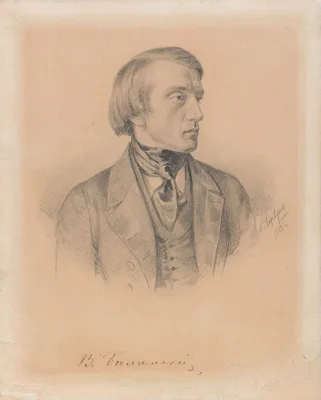
Vissarion Belinsky
Vissarion Belinsky was a village priest's grandson, and his own young faith was the idealism of the Moscow circle ("the presence of God", 1837). He lost it to grief at Stankevich's death in 1840 and to his break with Hegel, and wrote privately in 1841 that "negation is my God". He said it in public only once, from abroad, in the 1847 Letter to Gogol: the Church was the prop of the knout, and Christ the teacher of freedom it had betrayed. The letter was banned in Russia, copied by hand, and read aloud by Dostoevsky at the price of a death sentence.
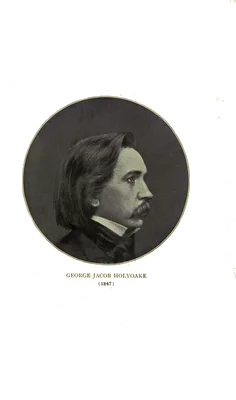
George Holyoake
George Jacob Holyoake was a devout Birmingham Sunday-school teacher whose sister died over a church-rate. He lost his belief in God when his friend Southwell was jailed for blasphemy in 1842, and went to prison himself that year professing "disbelief" rather than denial. He then spent sixty years renaming the absence, from atheism to Secularism in 1851 to agnosticism, so that unbelief would be judged by the good it did rather than by the quarrel over God.
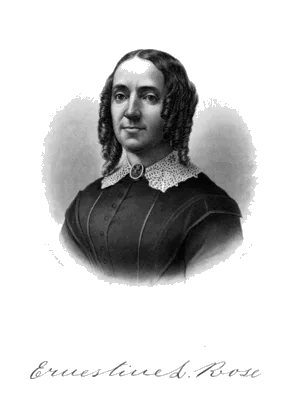
Ernestine Rose
Ernestine Rose was a rabbi's daughter who could not love a God who wanted suffering, and she gave up her father's faith at fourteen. She spent thirty years in America fighting for women's property and rights, while keeping her religious arguments off the movement's platform. In 1861 she called herself, in print and without retreat, an atheist who believed in man.
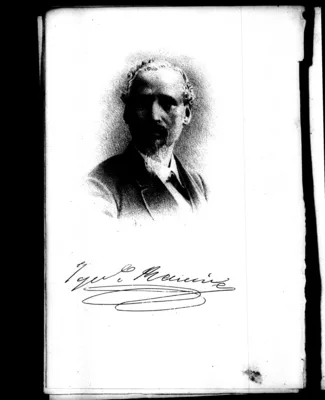
Ignacio Ramírez
Ignacio Ramírez was the son of a liberal family driven out by a clerical government. He read his way through the friars' and the cathedral's forbidden books, and at eighteen read a paper headed "No hay Dios" to the Academia de Letrán. He never retreated from it, but turned it from provocation into law: he fought "divine right" in the 1856 Congress and closed the convents as Juárez's minister. He held that a government should be neither Catholic nor atheist, and belief left to each conscience.