From Liang China to Amsterdam
In the centuries when every state had an official faith, unbelief survived only in the margins. It shows in the lives of a Chinese scholar who would not recant before his emperor, a Baghdad theologian known only from the books written against him, an English playwright accused of atheism days before he was killed, and a Portuguese exile flogged in an Amsterdam synagogue.
The lives
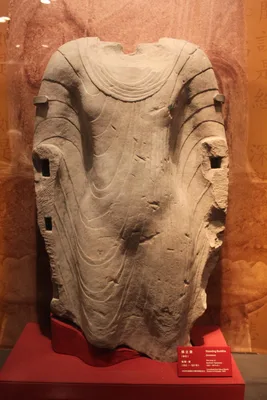
Fan Zhen
Fan Zhen was a poor Confucian scholar among carriage-riding classmates. He answered a Buddhist prince's karma with a fallen flower, and wrote that the spirit is the body's working as sharpness is the knife's, because he saw a court draining its wealth, and its pity for the poor, into monasteries. He was pressed by a prince, a bribe, an emperor and sixty-two courtiers. He was never punished for the argument, was exiled for something else, and is not recorded as giving it up.

Jayarāśi Bhaṭṭa
Jayarāśi is known only from one book that survived in one manuscript. He began as an heir of the materialist Bṛhaspati, who denied the other world and the soul that would go to it. He then turned the materialists' own weapons on every school's means of knowledge, perception included, leaving no ground for a God who watches and judges, and promising only that life is delightful once nothing has to be proved. His readers have been relabelling his unbelief ever since.
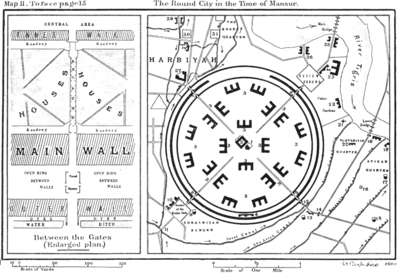
Ibn al-Rawandi
Ibn al-Rawandi was a gifted Mu'tazili theologian of ninth-century Baghdad. He broke with his school, by his enemies' account out of wounded pride and ambition, and went on to argue that prophecy and revelation were unnecessary. His books perished. His unbelief, like the story that he repented, survives only in the words of the men who refuted him.
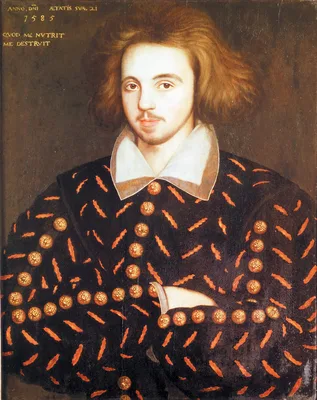
Christopher Marlowe
Christopher Marlowe was sent to Cambridge on a scholarship meant for future clergy. He took his degrees and never took orders, and wrote stage heroes who dared God and mocked hell. In May 1593 he was named an atheist by a tortured fellow playwright and an unsworn informer, days before he was killed at Deptford. He left no word of his own on what he believed, so his unbelief survives only as an accusation that his enemies, after his death, turned into a sermon.
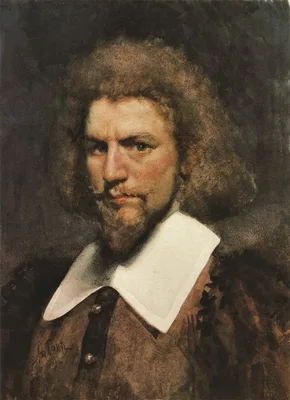
Uriel da Costa
Uriel da Costa was a Portuguese New Christian who despaired of salvation by the Church's rules. He crossed Europe to live by the one revelation Jews and Christians shared, and found, on reading it strictly, that it promised nothing after death. He was banned, jailed and scourged for saying so. He ended by holding every revealed law a human invention and calling himself only a man: a search for certainty that left him outside every community, and that his editor saw as the place where Spinoza began.