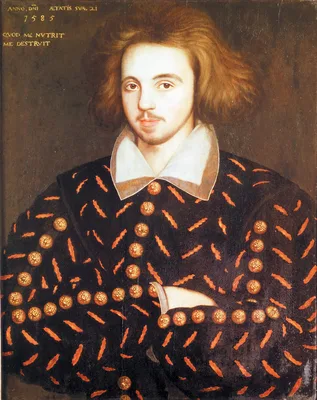
Christopher Marlowe was sent to Cambridge on a scholarship meant for future clergy. He took his degrees and never took orders, and wrote stage heroes who dared God and mocked hell. In May 1593 he was named an atheist by a tortured fellow playwright and an unsworn informer, days before he was killed at Deptford. He left no word of his own on what he believed, so his unbelief survives only as an accusation that his enemies, after his death, turned into a sermon.
The belief timeline
- Faith (1581 (March–May)) — Enters Cambridge on a scholarship founded for boys likely to enter the Church; Brooke reads his upbringing as conventionally pious. This is his circumstances, not a statement of belief. [3][5][6]
- Doubt (c. 1587 (inferred)) — He took his degrees on the divinity scholarship and was never ordained. Brooke infers "obstinate questionings" from this point; no document dates a doubt, and the first printed accusation is Greene's of 1588. [8][13][23]
- Declaration (accusation, not declaration) (12–29 May 1593) — No public declaration exists. Kyd names him under arrest (12 May), the Council summons him (18–20 May), Baines lays his Note. All three are others' reports. [21][24][25]
- Revision (none) — No recantation, retraction or later statement survives; he was dead on 30 May. After death his enemies wrote the revision for him (Beard, Vaughan). [36][43][44]
Notes to the timeline (12)
- [3] Brooke reads the household as one of "conventional piety and domestic tranquillity" and says Marlowe was destined for the clergy until about 22 — C. F. Tucker Brooke, The Life of Marlowe and The Tragedy of Dido Queen of Carthage (Methuen, 1930), p. 15.
- [5] He matriculated at Corpus Christi College, Cambridge, on 17 March 1581 — Brooke, Life of Marlowe and The…, p. 21; A. H. Bullen, ed., The Works of Christopher Marlowe, vol. I (1885), p. xi.
- [6] He held one of Archbishop Parker's scholarships, tenable six years if the holder was disposed to enter holy orders and otherwise three — Brooke, Life of Marlowe and The…, pp. 22–26. Accounts differ; see the disputed points.
- [8] He kept the scholarship the full six years and was never ordained; Brooke calls this "the only blemish" on his Cambridge life and "his failure to become a clergyman, as required by the conditions of the scholarship" — Brooke, Life of Marlowe and The…, pp. 31–32, 37.
- [13] In the preface to Perimedes (1588) Greene sneers at "daring God out of heaven with that atheist Tamburlan"; the play was entered at Stationers' Hall on 14 August 1590 — Bullen, Works of Christopher Marlowe, p. xvii; Brooke, Life of Marlowe and The…, p. 44.
- [23] An addition to the endorsement says Kyd "affirmethe that he had ffrom Marlowe" the papers; Kyd's letter says they were shuffled among his, "affirmd by Marlowe to be his". Brooke concludes the papers belonged to Marlowe and that the doubts about Christ's divinity were ones he "also entertained"; Boas thought the opinions "heterodox" but "not of the blasphemous and revolting nature afterwards laid to his charge" — Brooke, Life of Marlowe and The…, pp. 56–57; Frederick S. Boas, ed., The Works of Thomas Kyd (Oxford, Clarendon Press, 1901), pp. cx, lxx–lxxi.
- [21] Kyd was arrested on 12 May 1593; three pages found among his papers were endorsed "vile hereticall Conceiptes denyinge the deity of Jhesus Christ" — Boas, Works of Thomas Kyd, pp. lxvii, cx–cxi; Brooke, Life of Marlowe and The…, pp. 55–56.
- [24] A warrant of 18 May 1593 sent the messenger Henry Maunder to Walsingham's house to bring Marlowe in; on 20 May he appeared and was commanded to give daily attendance until licensed to depart — Brooke, Life of Marlowe and The…, p. 58; Boas, Works of Thomas Kyd, pp. lxxi–lxxii; J. Leslie Hotson, The Death of Christopher Marlowe (Nonesuch Press and Harvard University Press, 1925), p. 49.
- [25] Richard Baines's Note (Harley MS 6848 ff. 185–6) lists sayings attributed to Marlowe and ends that Baines will "justify and approue" them by his oath — Brooke, Life of Marlowe and The…, pp. 98–100; Boas, Works of Thomas Kyd, pp. cxiii–cxvi.
- [36] Marlowe died on Wednesday 30 May 1593 at Eleanor Bull's house in Deptford Strand, after dining and supping from about ten in the morning with Ingram Frizer, Nicholas Skeres and Robert Poley — Hotson, Death of Christopher Marlowe, pp. 31–33, 38; Brooke, Life of Marlowe and The…, pp. 72–75.
- [43] Beard (1597) says Marlowe denied God and Christ, wrote books against the Trinity ("as it is credibly reported"), and died cursing after stabbing his own dagger into his own head "in London streets"; the inquest shows he died at once, in Deptford — Thomas Beard, The Theatre of Gods Judgements (1597), chapter 25, printed pp. 147–148 (checked on IA page images, bim_early-english-books-1475-1640_the-theatre-of-gods-judg_beard-thos_1597, leaves 152–153); transcribed in Hotson pp. 11–12 and Brooke pp. 112–113, pp. 147–148 (page images); Hotson, Death of Christopher Marlowe, pp. 11–12, 66.
- [44] Vaughan (1600) says about seven years before he wrote a book against the Trinity and was stabbed in the eye at Deptford by "one named Ingram"; the 1608 edition changes "7" to "14" — Brooke, Life of Marlowe and The…, pp. 78–79, 114; Hotson, Death of Christopher Marlowe, pp. 14–15.
Unbelief as Accusation
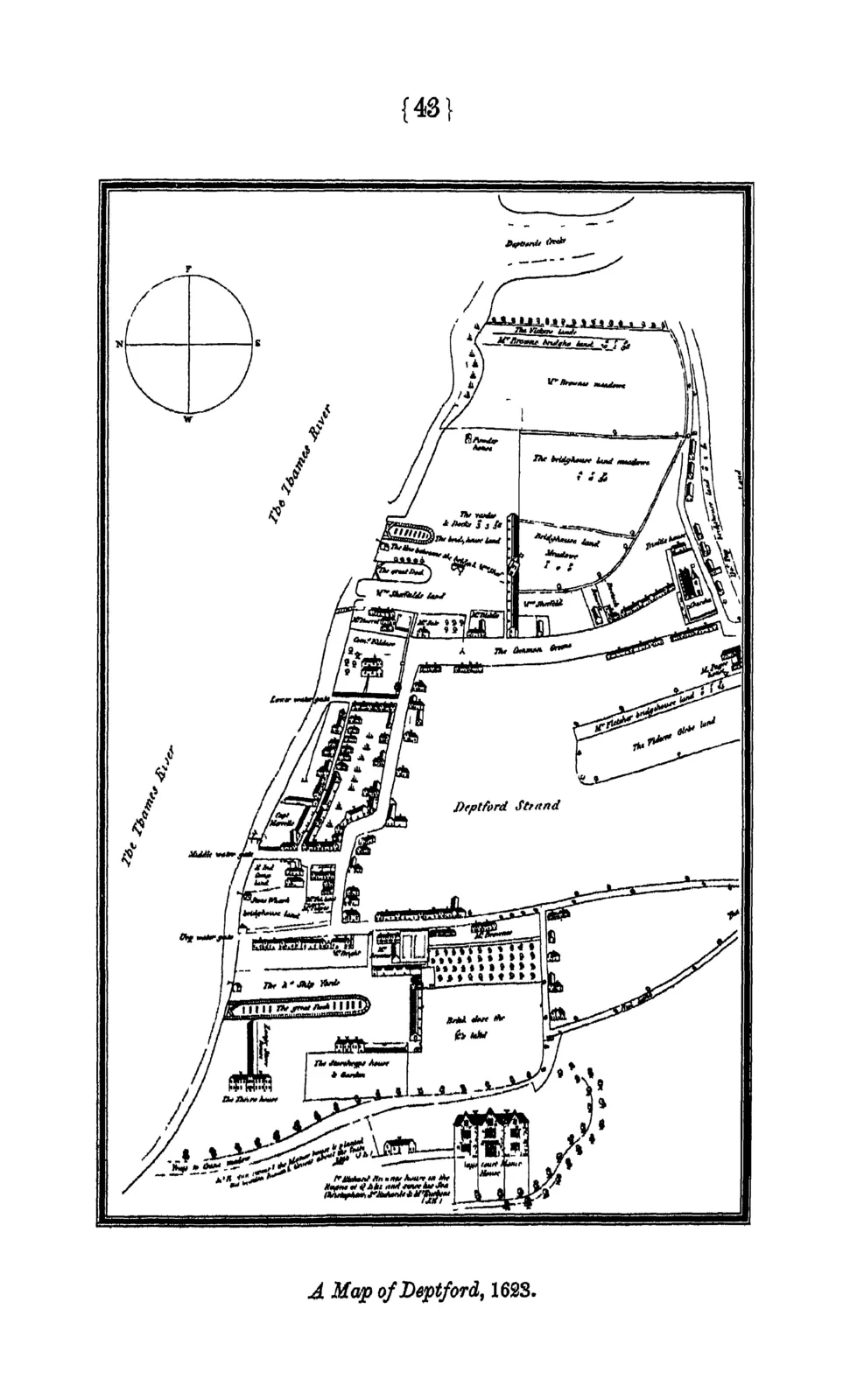
On Wednesday 30 May 1593 four men spent the day in a house at Deptford Strand, on the Thames below London. They were there from about ten in the morning, and dined and supped together. According to the coroner's jury, after supper they quarrelled over the bill. One of them, lying on a bed, snatched another's dagger and struck him twice on the head; the other, hemmed in, turned the dagger and gave him "a mortal wound over his right eye of the depth of two inches", of which he "then & there instantly died".123 The dead man was Christopher Marlowe, aged twenty-nine, the author of Tamburlaine and Doctor Faustus.
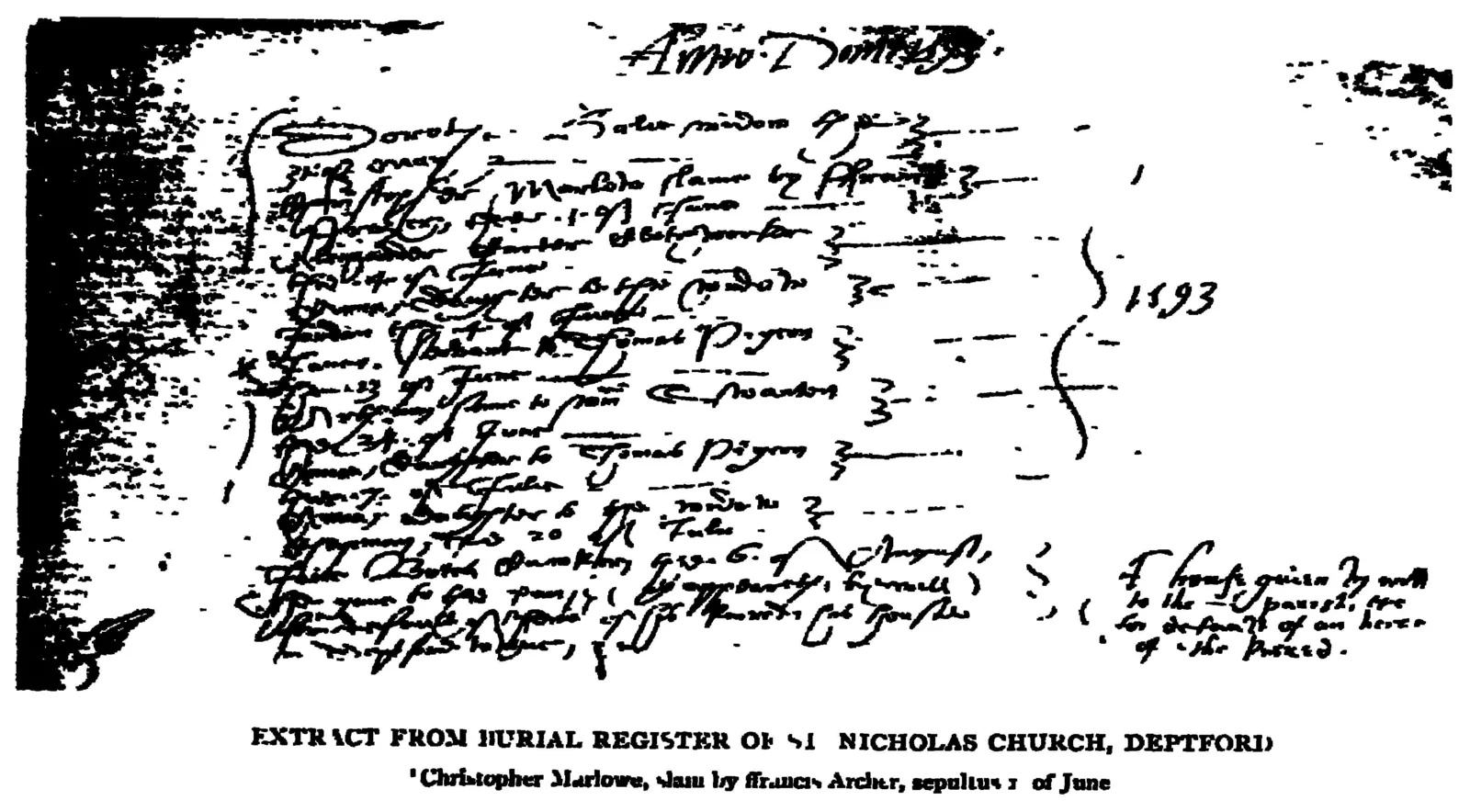
Ten days before, he had been summoned to the Privy Council and ordered to report to it daily. In the weeks around his death, men under arrest or looking for favour told the authorities that he was an atheist who talked others into atheism.45 He left no letter, diary or sworn statement about what he believed. Every view put in his mouth comes from an informer, a frightened prisoner, an enemy, or a character in one of his plays.6 This chapter cannot say why Marlowe stopped believing, because no one can show that he did. It can show how a reputation for unbelief was made, and what it cost.
A scholarship for a clergyman
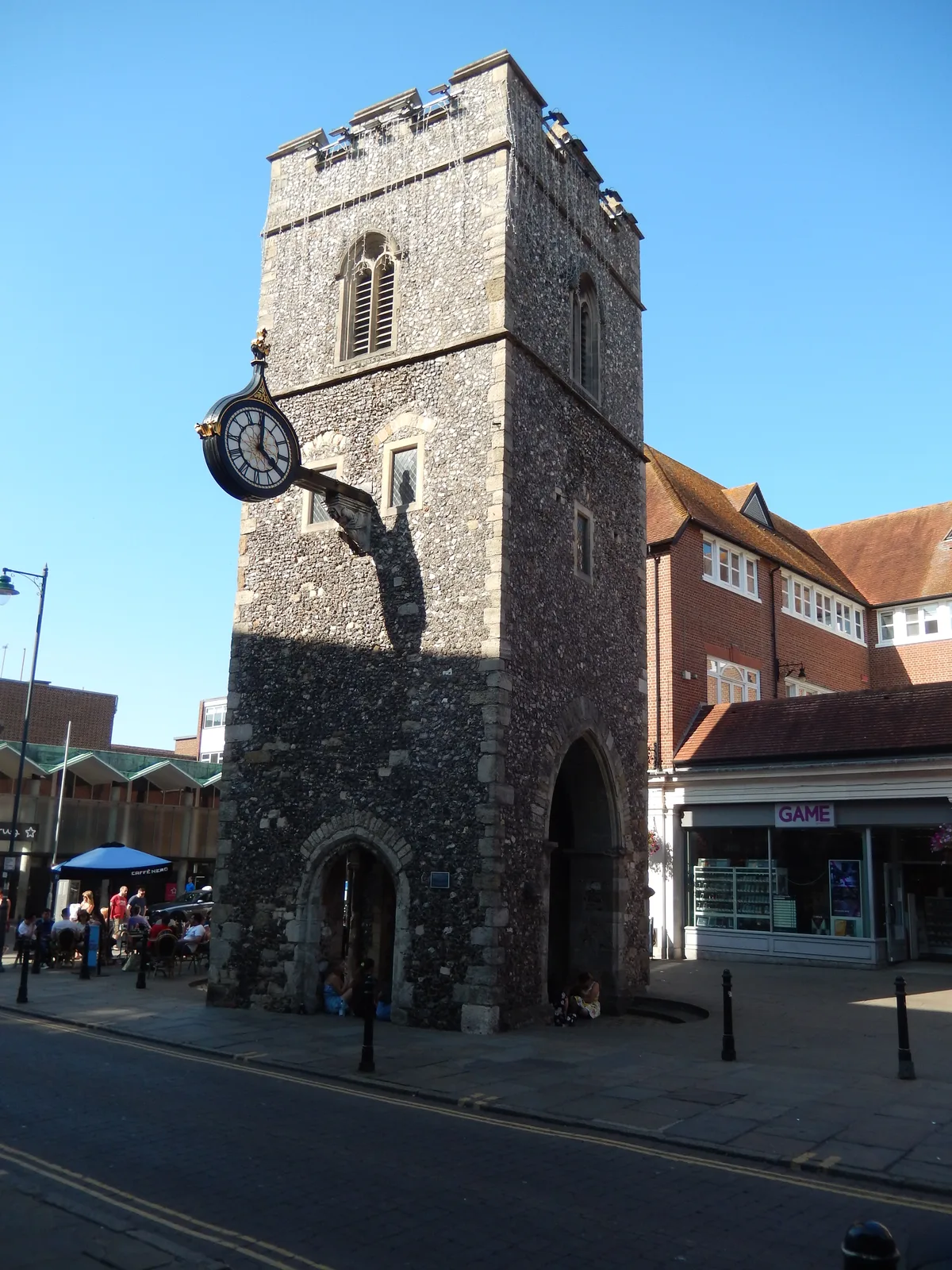
He was baptised at St George's church in Canterbury on 26 February 1564, the son of John Marlowe, a shoemaker who later became a parish clerk, and Catherine Arthur.78 His biographer C. F. Tucker Brooke read the household as one of "conventional piety and domestic tranquillity".9 He was a scholar of the King's School in Canterbury, and in March 1581 he went up to Corpus Christi College, Cambridge, on one of Archbishop Parker's scholarships. It could be held for six years by a student who meant to take holy orders, and for three by one who did not.101112
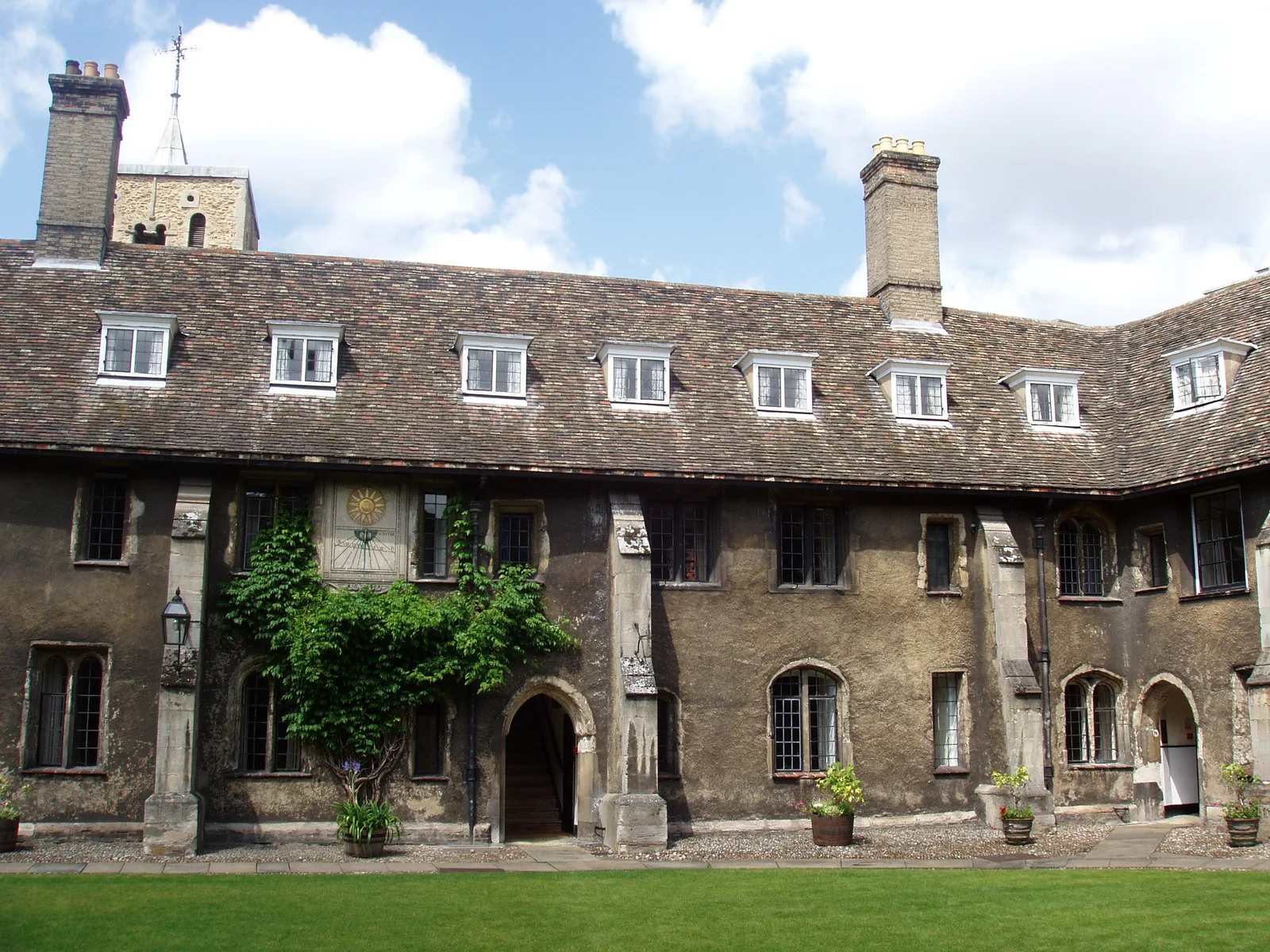
He kept it for the full six years and was never ordained. Brooke called that his "failure to become a clergyman, as required by the conditions of the scholarship".1314 When the university hesitated over his master's degree in 1587, the Privy Council wrote that he had been employed "in matters touching the benefit of his country" and should not be defamed by those ignorant of the business; the rumour that he meant to go to the Catholic seminary at Rheims was untrue.151617 What that service was the Council did not say; spying is a guess, and scholars disagree.18 On the belief timeline, his faith is marked by the scholarship itself, which says what was expected of him, not what he believed. His doubt is placed here only by inference, from the degrees taken and the orders refused. No document dates a doubt.
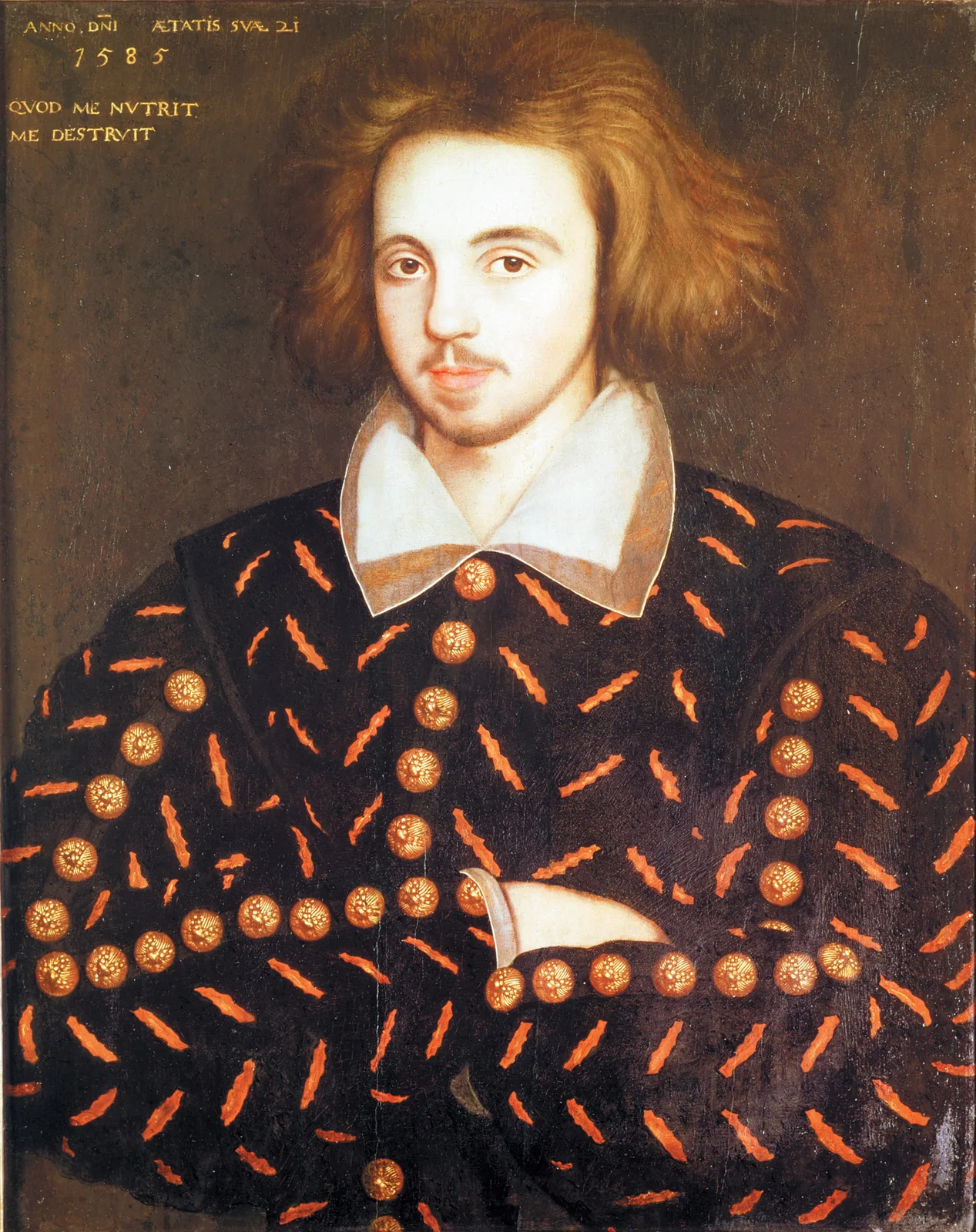
That atheist Tamburlaine
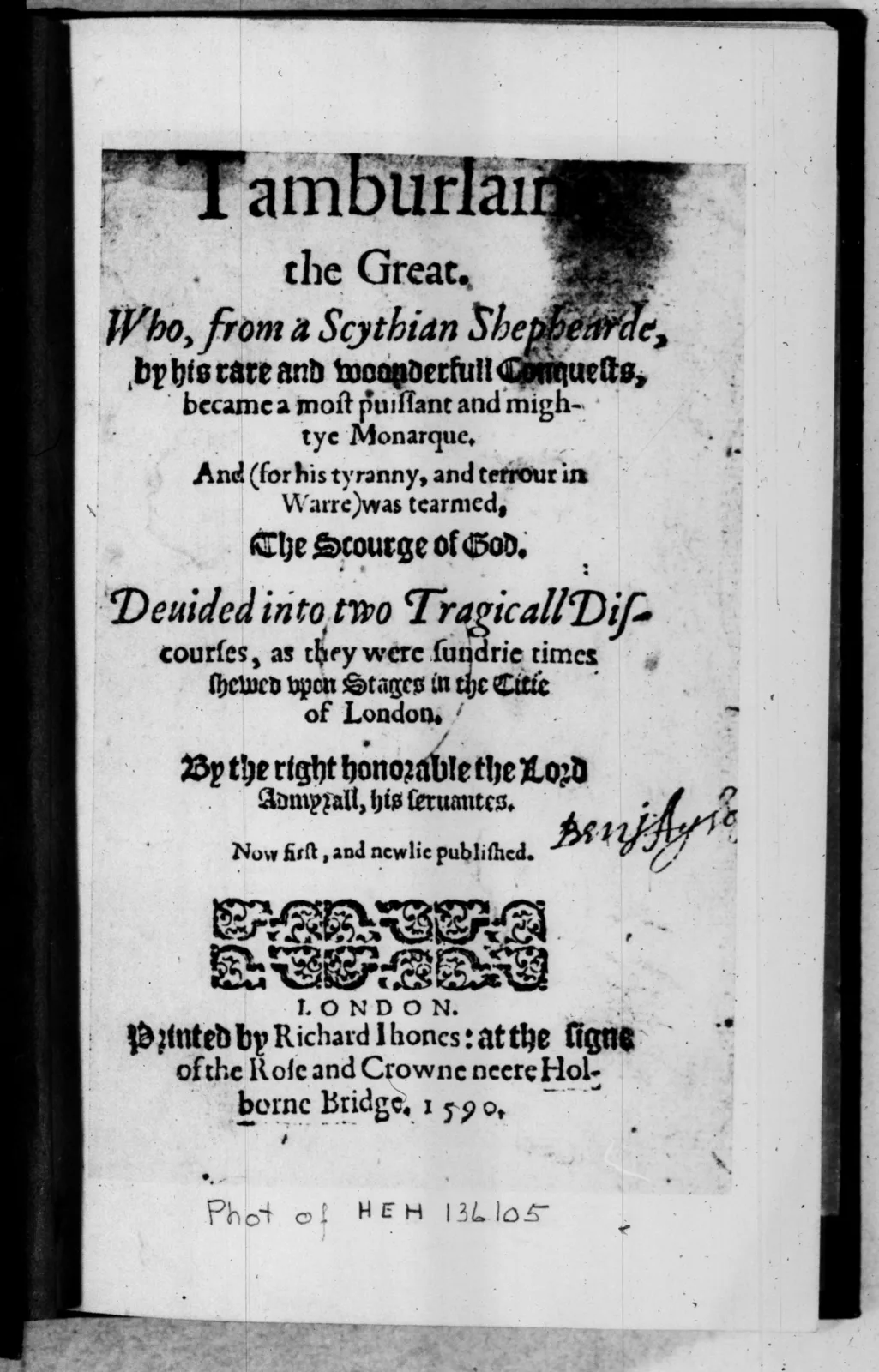
In London his plays made him famous fast. Tamburlaine gave the stage a conqueror who mocked kings and gods, and in 1588 the rival playwright Robert Greene sneered at poets "daring God out of heaven with that atheist Tamburlan".1920 It is the first time the word was fixed to his name, and it was attached to a character. Tamburlaine burns the Koran and dares Mahomet: "Now, Mahomet, if thou have any power, Come down thyself and work a miracle." Then he turns to "The God that sits in heaven, if any god, For he is God alone, and none but he."212223 Readers have found blasphemy in that scene, and Brooke found the opposite.21
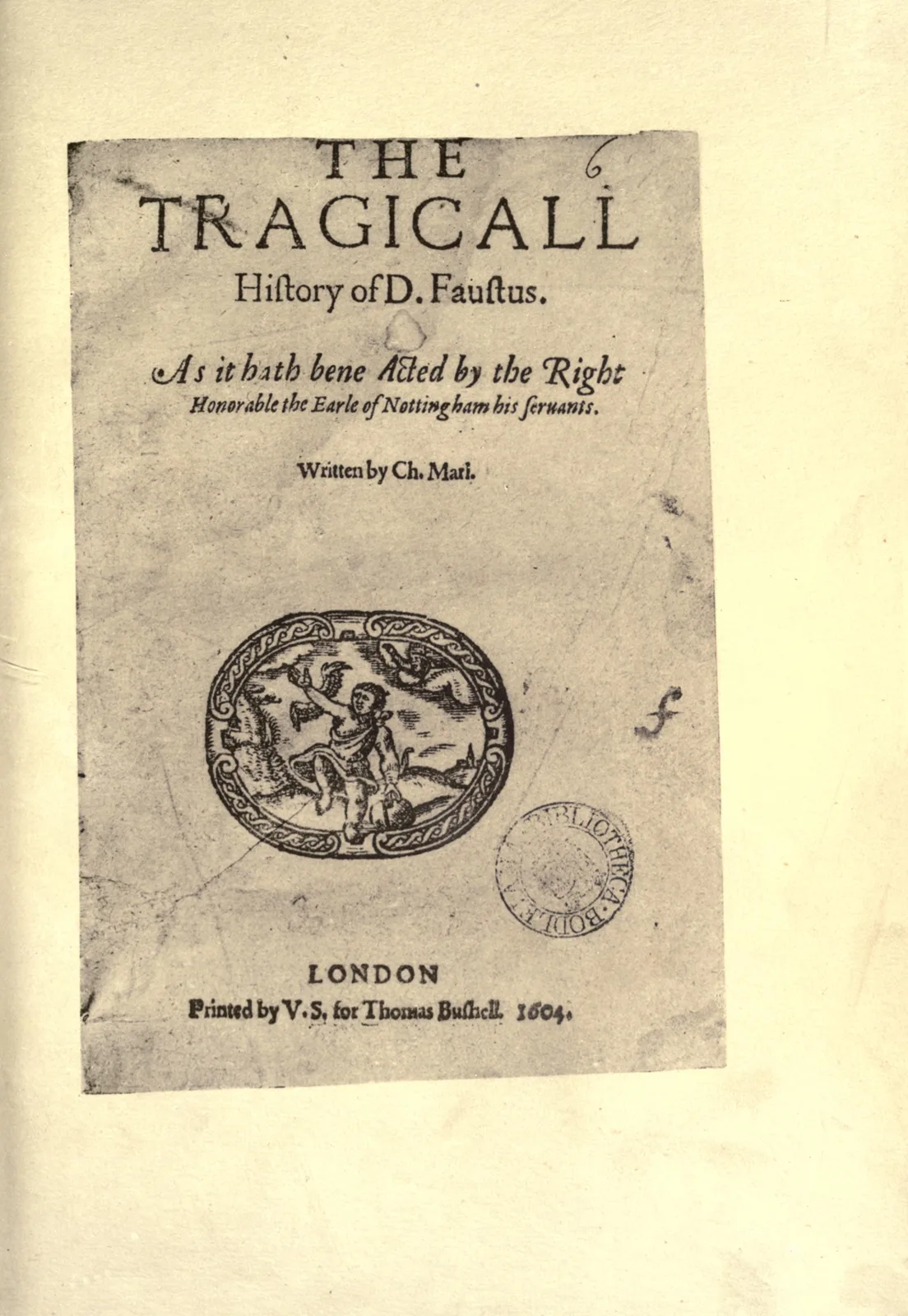
Doctor Faustus gave the charge more to work with. Its scholar turns from divinity in the first scene ("What doctrine call you this, Che sera, sera, What will be, shall be? Divinity, adieu!") and tells the devil, "Come, I think hell's a fable."242526 Brooke thought the opening soliloquy sounded autobiographical, "the ardent scholar's slow disillusionment".24 But the play ends with Faustus begging the spheres of heaven to stand still "That time may cease, and midnight never come", and the devil's line "Why, this is hell, nor am I out of it" is a devil's line.2728
In 1592 Greene addressed a warning to a "famous gracer of Tragedians" who, like Greene himself, had said "There is no God": "Why should thy excellent wit, his gift, bee so blinded, that thou shouldst giue no glorie to the giuer?" Brooke takes it as written to Marlowe; the pamphlet does not name him.2930
May 1593
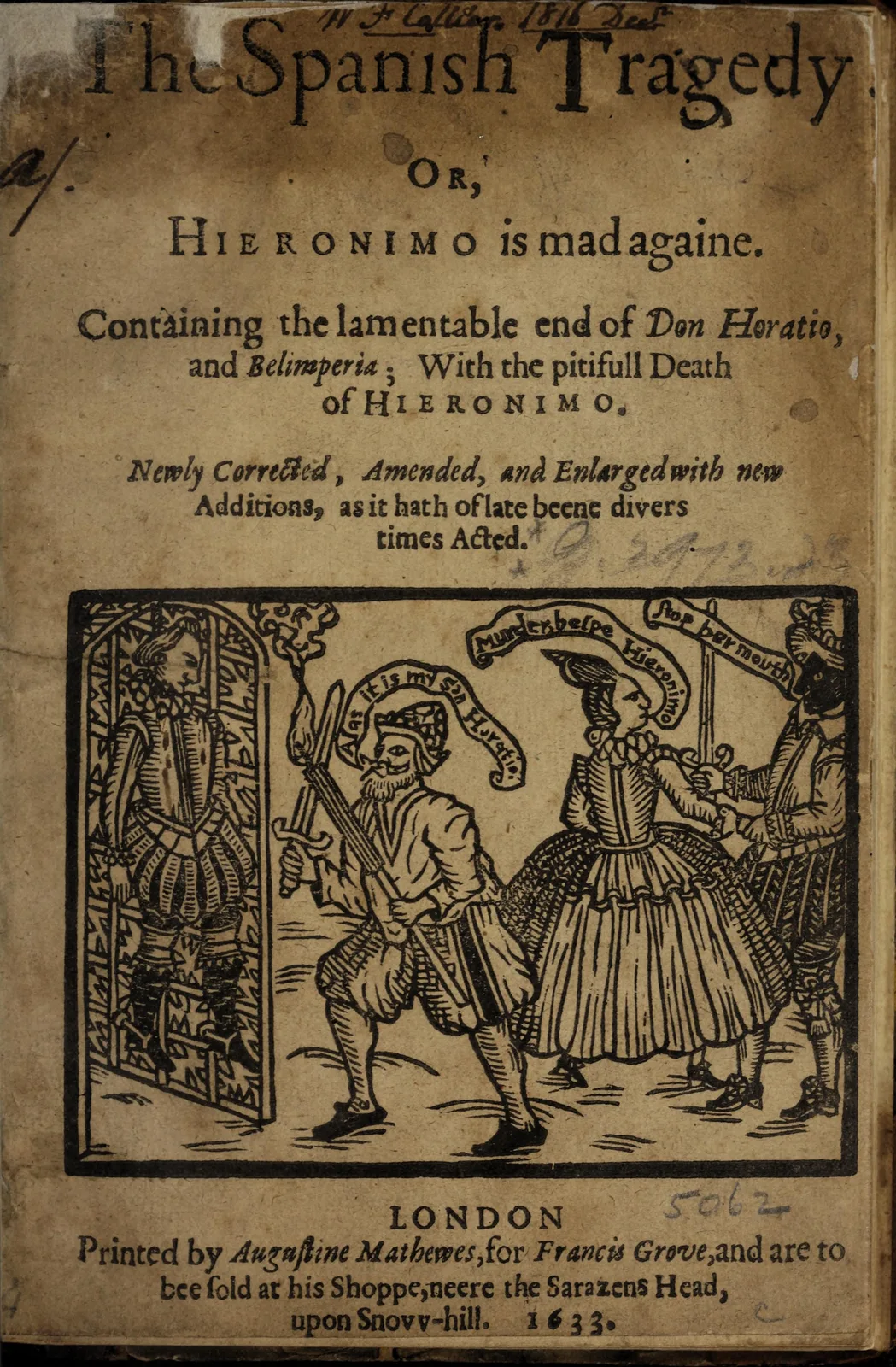
In May 1593 London was frightened. Plague had closed the theatres, and libels against foreigners had appeared on walls; on 11 May the Privy Council ordered the authors found and allowed torture.3132 The next day officers arrested the playwright Thomas Kyd, who had shared a room with Marlowe about two years before. Among his papers they found three pages endorsed "vile hereticall Conceiptes denyinge the deity of Jhesus Christ". Kyd said they were Marlowe's and had been shuffled in among his own.33346 They were in fact copied from a printed book of 1549, John Proctor's The Fal of the late Arrian. They argue against the divinity of Christ, not the existence of God.35
Marlowe was staying with his patron Thomas Walsingham at Scadbury in Kent. A warrant of 18 May brought him to the Council, and on the 20th the register recorded that he had appeared and was "commanded to give his daily attendance on their Lordships, until he shall be licensed to the contrary". It is the last official word about him alive.36437
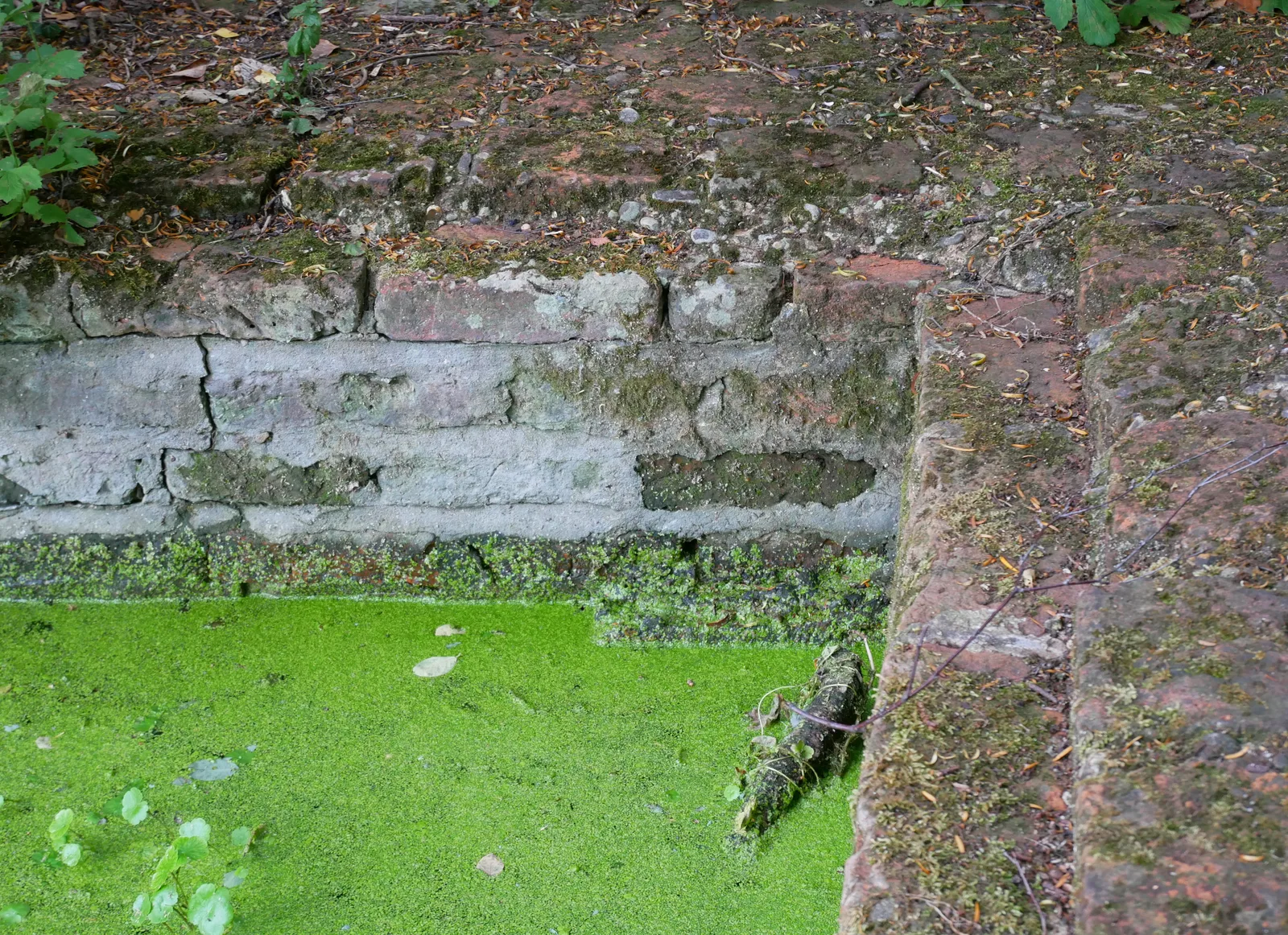
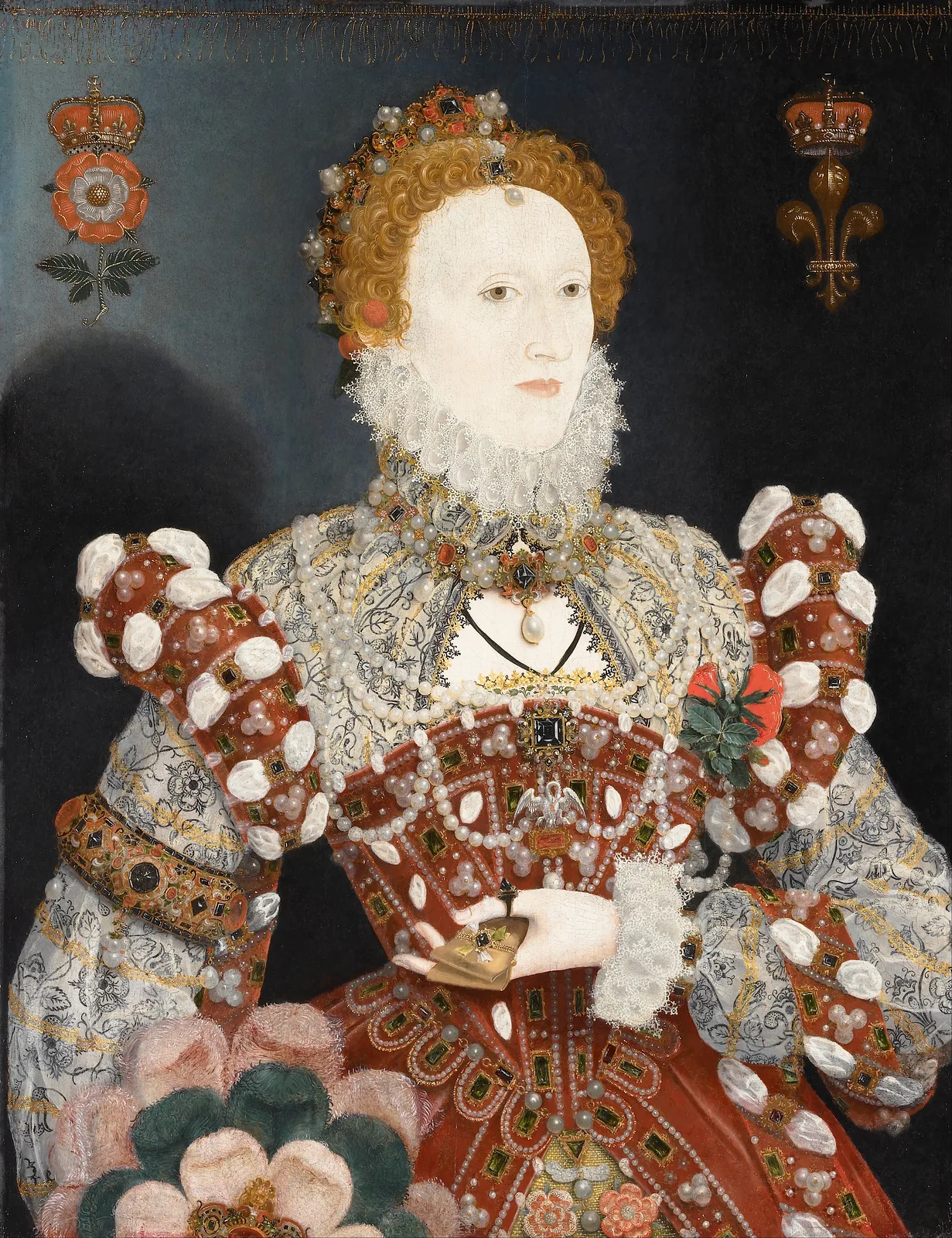
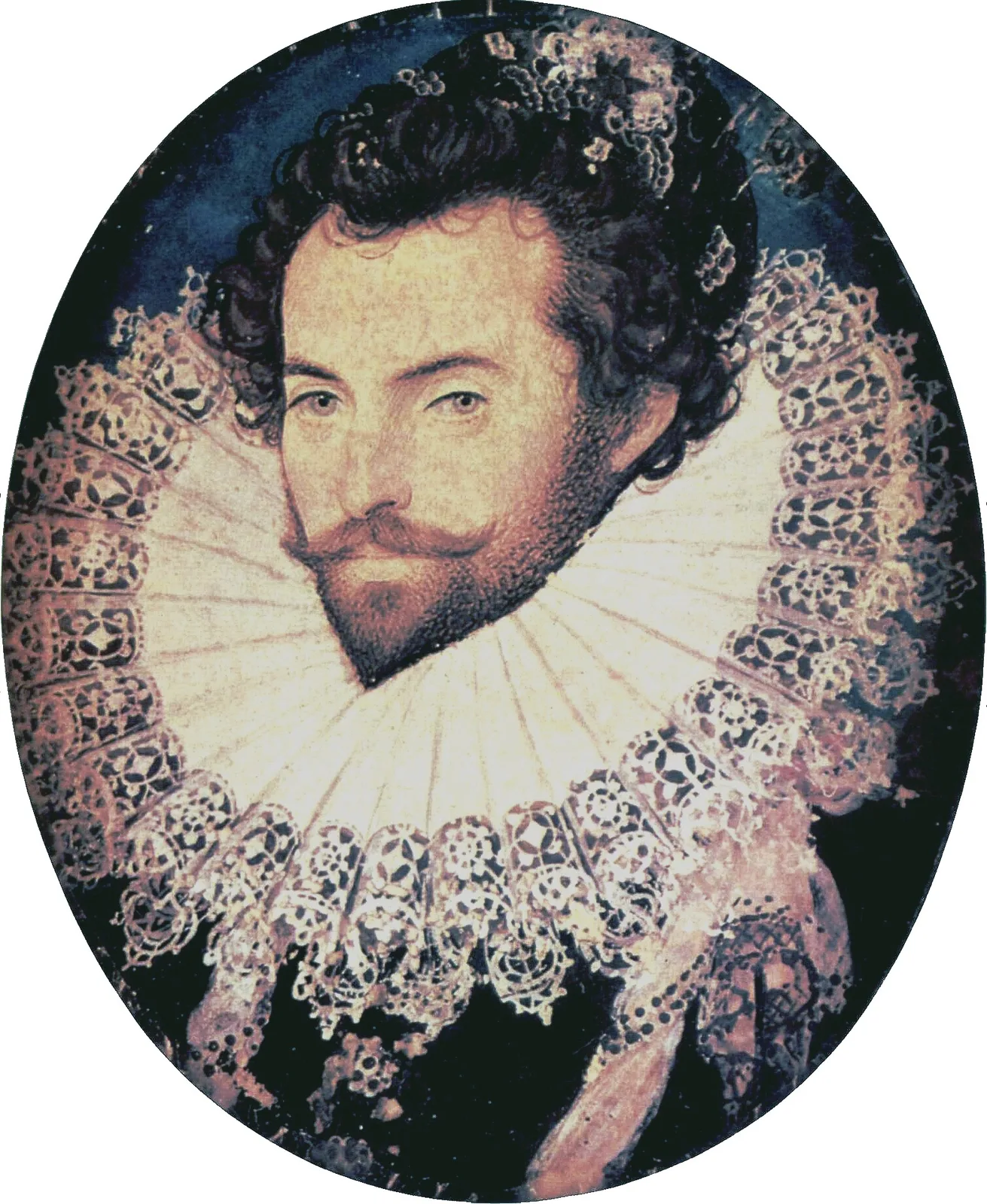
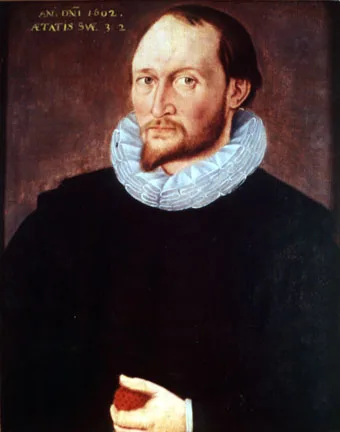
At some point that spring an informer, Richard Baines, delivered a note of Marlowe's sayings. "That the first beginning of Religioun was only to keep men in awe." That Moses was "but a Jugler", and that "one Heriots being Szr W Raleighs man Can do more then he". That "if there be any god or any good Religion, then it is in the papistes".5383940 Into almost every company he came, Baines wrote, "he perswades men to Atheism willing them not to be afeard of bugbeares and hobgoblins", and Baines would prove it on his oath.41 Some of the sayings are coarse, some are about coining and tobacco, and some sound, as Brooke put it, like a rebellious spirit's "casual deviltries".42 The note was not sworn and would have had no standing in court.43 Its official copy was later given a new heading saying it was delivered "on Whitsun eve" by a man who "within iii dayes after came to a soden and fearfull end"; Whitsun Eve that year fell after he was dead, so the heading was written later, and accounts differ on when the note was given.4445 Who Baines was is uncertain.46
Other papers said the same. An informer against one Richard Cholmeley reported him saying that "one Marlowe is able to show more sound reasons for atheism than any divine in England is able to give to prove divinity".4748 Kyd, who wrote of "paines and vndeserued tortures", sent the Lord Keeper two papers. One said that Marlowe would "iest at the devine scriptures gybe at praiers", and that he held "That things esteemed to be donn by devine power might haue aswell been don by observation of men". The other, written after Marlowe's death to win back his patron, called him "intemperate & of a cruel hart", and said Kyd wrote "to cleere my self of being thought an Atheist, which some will sweare he was".49505152535455 On the timeline, this is where his declaration goes, and it is an accusation, not a declaration: every voice in it is someone else's.
The death and the sermon
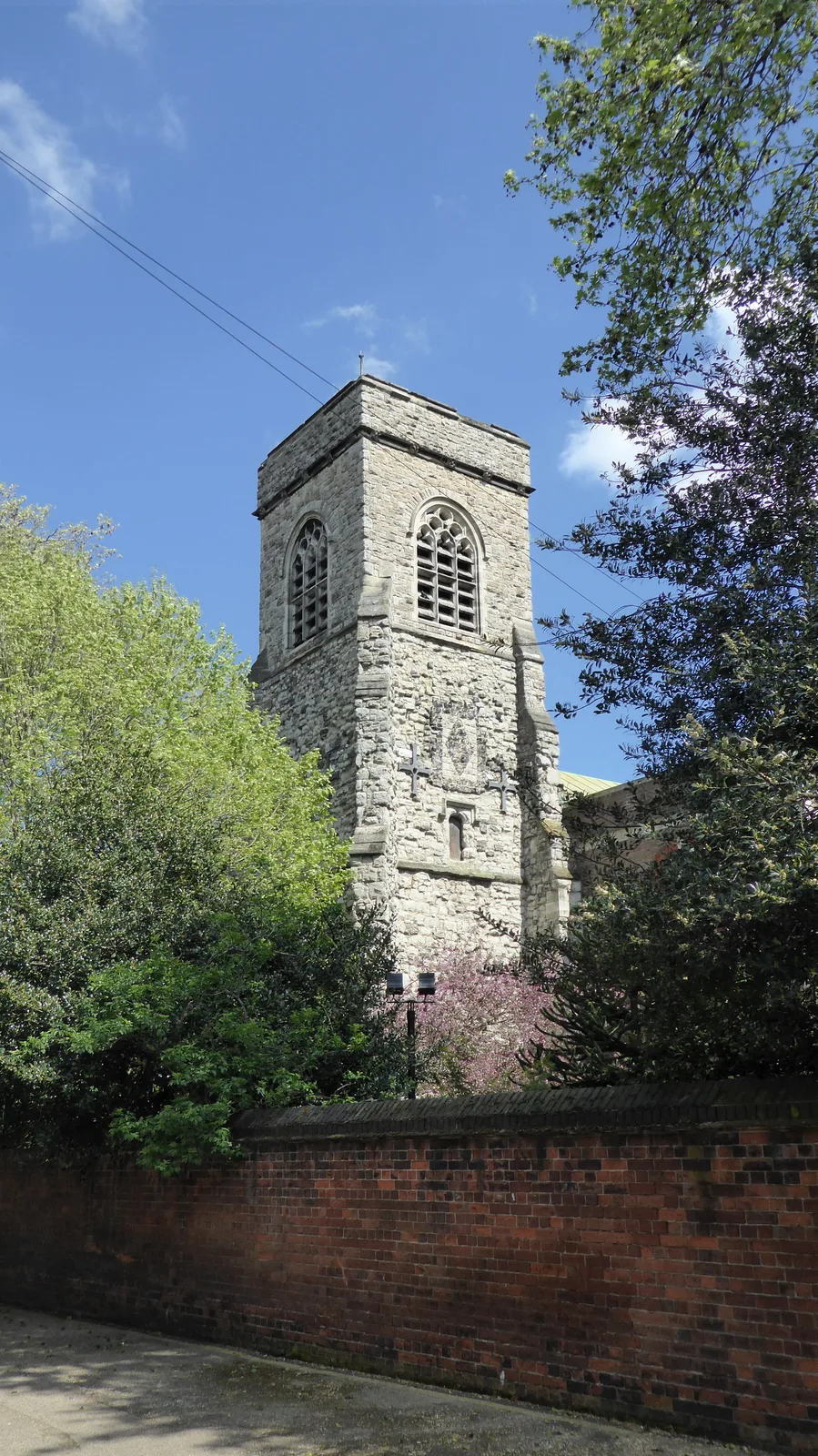
Ten days after his appearance before the Council he was dead at Deptford. The three men with him were all tied to the Walsinghams: Ingram Frizer, who killed him, was Thomas Walsingham's man; Robert Poley had served as a spy in the Babington plot.56 A jury found self-defence on 1 June, he was buried at St Nicholas, Deptford, the same day, and the Queen pardoned Frizer on 28 June.575859 Whether the jury heard the truth is still argued. Hotson, who found the inquest in 1925, thought a made-up story possible but "rather unlikely"; others have argued for murder.60
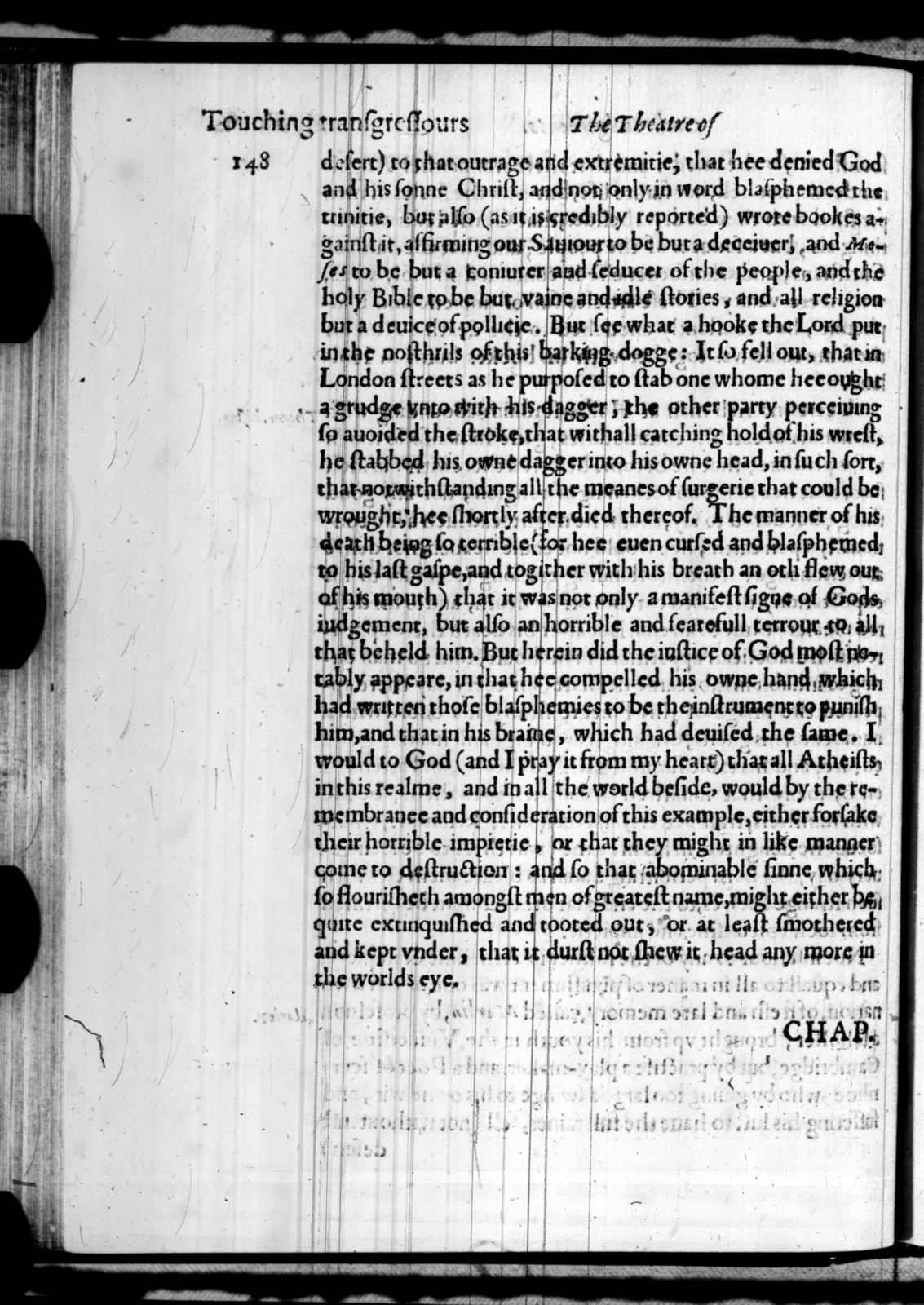
There was no revision, because there was no time for one. His enemies wrote it for him. In 1597 the Puritan clergyman Thomas Beard put him in The Theatre of Gods Judgements: Marlowe "denied God and his sonne Christ", wrote books against the Trinity "as it is credibly reported", called the Bible "vaine and idle stories, and all religion but a deuice of pollicie", and died cursing in a London street after stabbing himself with his own dagger. "I would to God," Beard prayed, that all atheists would learn from this example "or that they might in like manner come to destruction."616263 The coroner's record shows he died at once, in a room at Deptford.61 William Vaughan wrote in 1600 that God, "the true executioner of divine justice", had worked "the end of impious atheists", and Francis Meres had him killed by "a bawdy seruing man, a riuall of his in his lewde loue", a story Brooke judged invented.64656667
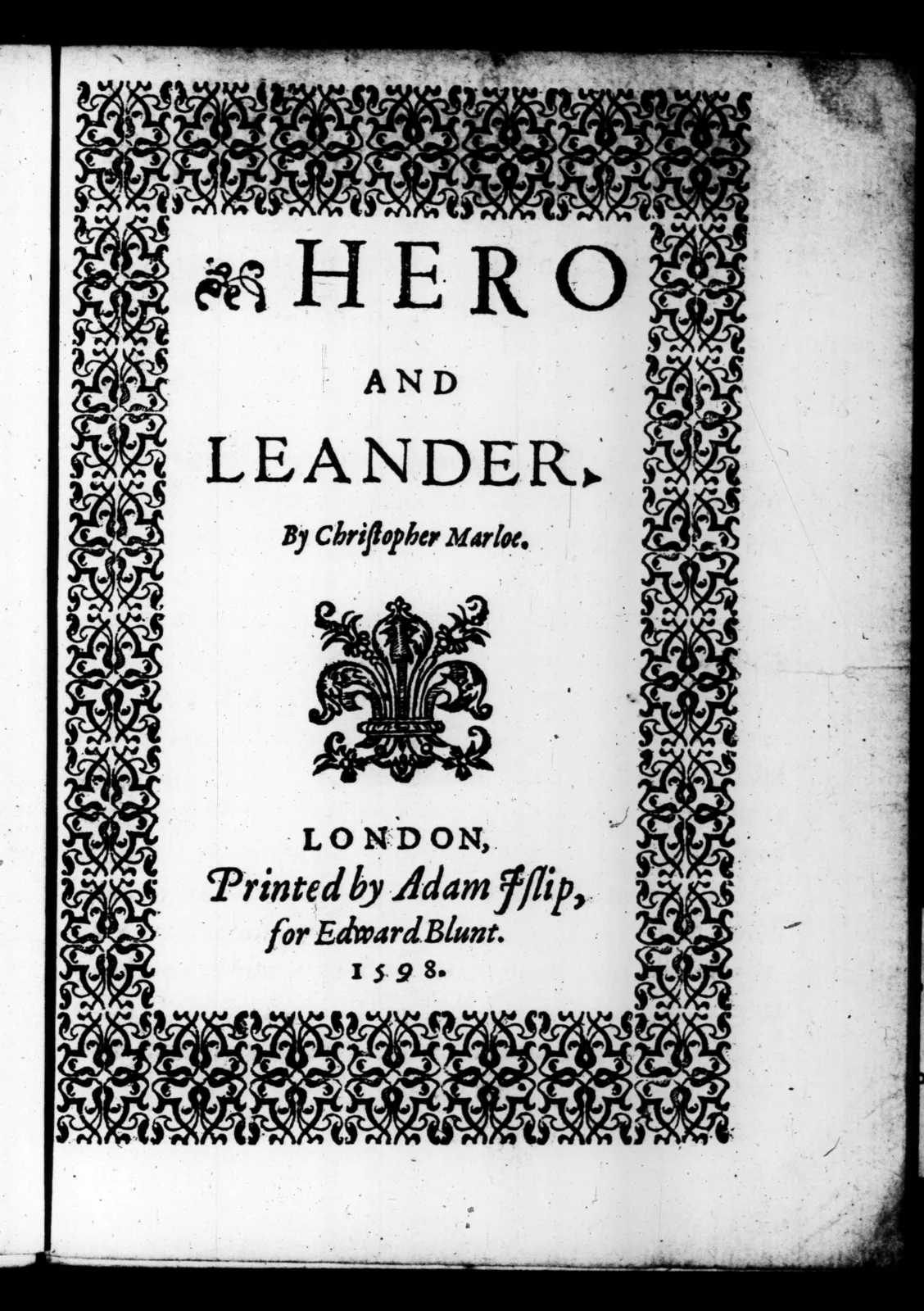
His friends wrote differently. Peele, Drayton and Nashe wrote of him warmly, one as "Marley, the Muses' darling", and in 1598 the publisher Edward Blount, dedicating his last poem to Thomas Walsingham, called the dead man "our friend".6869
What Marlowe believed may never be known. The papers show a man who loved to provoke, who probably doubted the Trinity, and who was accused of atheism by people who had reasons of their own to accuse him. Leslie Hotson put the problem in one sentence: to praise a man as a faithful secret agent "is to throw little more light on his moral nature than to damn him for a freethinker".7071 A century later another man was killed on a charge of atheism: Kazimierz Łyszczyński, beheaded in Warsaw in 1689, who has his own chapter in this book.
Footnotes
-
J. Leslie Hotson, The Death of Christopher Marlowe (Nonesuch Press and Harvard University Press, 1925), pp. 31–33, 38; C. F. Tucker Brooke, The Life of Marlowe and The Tragedy of Dido Queen of Carthage (Methuen, 1930), pp. 72–75. ↩
-
Hotson, Death of Christopher Marlowe, pp. 32–33. ↩
-
Coroner's inquisition, 1 June 1593 (Hotson's translation): Hotson, Death of Christopher Marlowe, p. 33. ↩
-
Brooke, Life of Marlowe and The…, p. 58; Frederick S. Boas, ed., The Works of Thomas Kyd (Oxford, Clarendon Press, 1901), pp. lxxi–lxxii; Hotson, Death of Christopher Marlowe, p. 49. ↩ ↩2
-
Brooke, Life of Marlowe and The…, pp. 98–100; Boas, Works of Thomas Kyd, pp. cxiii–cxvi. ↩ ↩2
-
Brooke, Life of Marlowe and The…, pp. 56–57; Boas, Works of Thomas Kyd, pp. cx, lxx–lxxi. ↩ ↩2
-
Brooke, Life of Marlowe and The…, p. 7; A. H. Bullen, ed., The Works of Christopher Marlowe, vol. I (1885), p. x. ↩
-
Brooke, Life of Marlowe and The…, pp. 6–10. ↩
-
Brooke, Life of Marlowe and The…, p. 15. ↩
-
Brooke, Life of Marlowe and The…, pp. 16–21; Bullen, Works of Christopher Marlowe, pp. x–xi. ↩
-
Brooke, Life of Marlowe and The…, p. 21; Bullen, Works of Christopher Marlowe, p. xi. ↩
-
Brooke, Life of Marlowe and The…, pp. 22–26. Accounts differ; see the disputed points. ↩
-
Brooke, Life of Marlowe and The…, pp. 28–30; Hotson, Death of Christopher Marlowe, p. 10. ↩
-
Brooke, Life of Marlowe and The…, pp. 31–32, 37. ↩
-
Brooke, Life of Marlowe and The…, pp. 30–32; Hotson, Death of Christopher Marlowe, p. 10. ↩
-
Hotson, Death of Christopher Marlowe, pp. 58–62; Brooke, Life of Marlowe and The…, pp. 32–33. ↩
-
Privy Council register, 29 June 1587 (Brooke's modernised text): Brooke, Life of Marlowe and The…, p. 33 (original spelling in Hotson p. 59). ↩
-
Hotson, Death of Christopher Marlowe, p. 64; Brooke, Life of Marlowe and The…, pp. 34–36. ↩
-
Bullen, Works of Christopher Marlowe, p. xvii; Brooke, Life of Marlowe and The…, p. 44. ↩
-
Greene, preface to Perimedes, 1588 (Bullen's modernised spelling): Bullen, Works of Christopher Marlowe, p. xvii. ↩
-
Marlowe, Tamburlaine the Great, Part 2, Project Gutenberg #1589, research/texts/tamburlaine2.txt. Same caution, (near the end); Brooke, Life of Marlowe and The…, p. 57. ↩ ↩2
-
Tamburlaine (character): Marlowe, Tamburlaine the Great, Gutenberg #1589 (burning of the Alcoran; V.i in standard division). ↩
-
Tamburlaine (character): Marlowe, Tamburlaine the Great, Gutenberg #1589 (same scene). ↩
-
Christopher Marlowe, The Tragical History of Doctor Faustus (quarto of 1604 text), Project Gutenberg #779, research/texts/faustus1604.txt. Gutenberg text has no scene numbers. Characters' speeches, not Marlowe's own statements; Brooke, Life of Marlowe and The…, pp. 32, 57. ↩ ↩2
-
Faustus (character): Marlowe, Tragical History of Doctor Faustus, Gutenberg #779 (opening soliloquy). ↩
-
Faustus (character): Marlowe, Tragical History of Doctor Faustus, Gutenberg #779 (scene of the first talk with Mephistophilis; unnumbered). ↩
-
Faustus (character): Marlowe, Tragical History of Doctor Faustus, Gutenberg #779 (last soliloquy). ↩
-
Mephistophilis (character): Marlowe, Tragical History of Doctor Faustus, Gutenberg #779 (same scene). Often quoted as Marlowe's theology of hell; it is the devil's reply to a question. ↩
-
Brooke, Life of Marlowe and The…, pp. 97–98. ↩
-
Greene, dramatist, 1592, addressing a "famous gracer of Tragedians": Brooke, Life of Marlowe and The…, p. 97. ↩
-
Brooke, Life of Marlowe and The…, pp. 49, 52. ↩
-
Boas, Works of Thomas Kyd, pp. lxvii–lxix; Brooke, Life of Marlowe and The…, pp. 54–55. ↩
-
Boas, Works of Thomas Kyd, p. lxvi; Brooke, Life of Marlowe and The…, pp. 45–46, 104. ↩
-
Boas, Works of Thomas Kyd, pp. lxvii, cx–cxi; Brooke, Life of Marlowe and The…, pp. 55–56. ↩
-
Brooke, Life of Marlowe and The…, p. 56 n. 4; Boas, Works of Thomas Kyd, p. lxx. ↩
-
Brooke, Life of Marlowe and The…, pp. 49–50, 57; Hotson, Death of Christopher Marlowe, p. 49. ↩
-
Privy Council register, 20 May 1593: Brooke, Life of Marlowe and The…, p. 58 (also Boas p. lxxii). ↩
-
Baines, informer, reporting Marlowe: Brooke, Life of Marlowe and The…, p. 98 (Boas p. cxiv). ↩
-
Baines: Brooke, Life of Marlowe and The…, p. 98. ↩
-
Baines: Brooke, Life of Marlowe and The…, p. 99. ↩
-
Baines, in earnest on his own account: Brooke, Life of Marlowe and The…, p. 99. ↩
-
Brooke, Life of Marlowe and The…, pp. 40, 98–100. ↩
-
Brooke, Life of Marlowe and The…, p. 64. ↩
-
Boas, Works of Thomas Kyd, p. cxiv; Brooke, Life of Marlowe and The…, p. 64; John H. Ingram, Christopher Marlowe and his Associates (1904), p. 259. ↩
-
Brooke, Life of Marlowe and The…, pp. 64, 67–68 and n. 4; own check: Julian Easter 15 April 1593. ↩
-
Brooke, Life of Marlowe and The…, pp. 66–67, 100–103. ↩
-
Brooke, Life of Marlowe and The…, p. 65. ↩
-
Informer's "Remembrances" against Richard Cholmeley: Brooke, Life of Marlowe and The…, p. 65. ↩
-
Brooke, Life of Marlowe and The…, pp. 70–71, 107–108. ↩
-
Brooke, Life of Marlowe and The…, pp. 46, 103–106; Boas, Works of Thomas Kyd, pp. cviii–cx. ↩
-
Brooke, Life of Marlowe and The…, p. 105; Boas, Works of Thomas Kyd, p. lxviii. ↩
-
Kyd, unsigned note to Puckering: Brooke, Life of Marlowe and The…, p. 107. ↩
-
Kyd, reporting Marlowe: Brooke, Life of Marlowe and The…, p. 107. ↩
-
Kyd, in a letter written to win back his patron after Marlowe's death: Brooke, Life of Marlowe and The…, p. 104 (Boas p. cix). ↩
-
Kyd: Brooke, Life of Marlowe and The…, p. 104 (Boas p. cix). ↩
-
Hotson, Death of Christopher Marlowe, pp. 42–52; Brooke, Life of Marlowe and The…, pp. 73–74. ↩
-
Hotson, Death of Christopher Marlowe, pp. 31–33, 38. ↩
-
Brooke, Life of Marlowe and The…, p. 77; Hotson, Death of Christopher Marlowe, pp. 16–21. ↩
-
Hotson, Death of Christopher Marlowe, pp. 26–27, 36–38. ↩
-
Hotson, Death of Christopher Marlowe, pp. 39–40; Brooke, Life of Marlowe and The…, p. 76. ↩
-
Thomas Beard, The Theatre of Gods Judgements (1597), chapter 25, printed pp. 147–148 (checked on IA page images, bim_early-english-books-1475-1640_the-theatre-of-gods-judg_beard-thos_1597, leaves 152–153); transcribed in Hotson pp. 11–12 and Brooke pp. 112–113, pp. 147–148 (page images); Hotson, Death of Christopher Marlowe, pp. 11–12, 66. ↩ ↩2
-
Thomas Beard, clergyman, 1597: Beard, Theatre of Gods Judgements, pp. 147–148 (page images); Brooke, Life of Marlowe and The…, p. 113; Hotson, Death of Christopher Marlowe, pp. 11–12. ↩
-
Beard: Brooke, Life of Marlowe and The…, p. 113; Beard, Theatre of Gods Judgements, p. 148. ↩
-
Brooke, Life of Marlowe and The…, pp. 78–79, 114; Hotson, Death of Christopher Marlowe, pp. 14–15. ↩
-
Hotson, Death of Christopher Marlowe, pp. 13–14; Brooke, Life of Marlowe and The…, p. 114. ↩
-
William Vaughan, 1600: Brooke, Life of Marlowe and The…, pp. 78–79; Hotson, Death of Christopher Marlowe, p. 15. ↩
-
Francis Meres, 1598: Brooke, Life of Marlowe and The…, p. 114; Hotson, Death of Christopher Marlowe, pp. 13–14. ↩
-
Brooke, Life of Marlowe and The…, pp. 79–80. ↩
-
Brooke, Life of Marlowe and The…, pp. 49–50. ↩
-
Hotson, Death of Christopher Marlowe, p. 67. ↩
-
J. Leslie Hotson, 1925: Hotson, Death of Christopher Marlowe, p. 67. ↩
In their own words
Come, I think hell's a fable.
Why, this is hell, nor am I out of it
Why, then, belike we must sin, and so consequently die: Ay, we must die an everlasting death. What doctrine call you this, Che sera, sera, What will be, shall be? Divinity, adieu!
Stand still, you ever-moving spheres of heaven, That time may cease, and midnight never come
Now, Mahomet, if thou have any power, Come down thyself and work a miracle
The God that sits in heaven, if any god, For he is God alone, and none but he.
it was not her Majesty's pleasure that any one employed as he had been in matters touching the benefit of his country should be defamed by those who are ignorant in th' affairs he went about
This day Christofer Marley of London, gentleman, being sent for by warrant from their Lordships, hath entered his appearance accordingly for his indemnity therein; and is commanded to give his daily attendance on their Lordships, until he shall be licensed to the contrary.
gave the said Christopher then & there a mortal wound over his right eye of the depth of two inches & of the width of one inch; of which mortal wound the aforesaid Christopher Morley then & there instantly died
To praise a man as a faithful and effective secret agent is to throw little more light on his moral nature than to damn him for a freethinker.
The other side
That the first beginning of Religioun was only to keep men in awe.
He affirmeth that Moyses was but a Jugler & that one Heriots being Szr W Raleighs man Can do more then he.
That if there be any god or any good Religion, then it is in the papistes because the service of god is performed with more Ceri- monies
almost into every Company he Cometh he perswades men to Atheism willing them not to be afeard of bugbeares and hobgoblins, and vtterly scorning both god and his ministers as J Richard Baines will Justify & approue both by mine oth
all men in Cristianity ought to indevor that the mouth of so dangerous a member may be stopped
That Christ was a bastard and his mother dishonest.
besides he was intemperate & of a cruel hart
to cleere my self of being thought an Atheist, which some will sweare he was
first it was his custom when J knewe him first & as J heare saie he contynewd it in table talk or otherwise to iest at the devine scriptures gybe at praiers, & stryve in argument to frustrate & confute what hath byn spoke or wrytt by prophets & such holie men.
That things esteemed to be donn by devine power might haue aswell been don by observation of men
Why should thy excellent wit, his gift, bee so blinded, that thou shouldst giue no glorie to the giuer?
daring God out of heaven with that atheist Tamburlan
hee denied God and his sonne Christ, and not only in word blasphemed the trinitie, but also (as it is credibly reported) wrote bookes against it, affirming our Sauiour to be but a deceiuer, and Moses to be but a coniurer and seducer of the people, and the holy Bible to be but vaine and idle stories, and all religion but a deuice of pollicie
I would to God (and I pray it from my heart) that all Atheists in this realme, and in all the world beside, would by the remembrance and consideration of this example, either forsake their horrible impietie, or that they might in like manner come to destruction
Thus did God, the true executioner of divine justice, work the end of impious atheists.
Christopher Marlow was stabd to death by a bawdy seruing man, a riuall of his in his lewde loue.
Plinyes, and Lucians religion may ruffle, and scoffe awhile: but extreme Vanitie is the best beginning of that brauery, and extreme Miserie the best end of that felicity.
That he saith and verily believeth that one Marlowe is able to show more sound reasons for atheism than any divine in England is able to give to prove divinity
Where accounts differ
| Point | One account | Another | How the page handles it |
|---|---|---|---|
| Date of the Baines Note | Delivered on Whitsun Eve, 29 May (Boas p. lxxii) | Whitsun Eve was 2 June, after he was dead; the "Whitsun" wording was added later and the Note is undated (Brooke pp. 64, 67–68) | Say the Note is undated and the copy's heading was altered after his death; avoid a date |
| Did he hold a Parker scholarship | Doubted: his name is entered without a Christian name (Bullen pp. xi–xii) | Held the Canterbury-linked Parker scholarship for six years (Brooke pp. 22–26, from Moore Smith 1910) | Use Brooke; scholarship implied a future in the Church |
| Kyd's length of service to his lord | "iij. yeres" (Boas p. cix) | "vj yeres" (Brooke p. 105, from the same letter) | Do not state the number |
| Birth date | "on or about February 6, 1564" (Hotson p. 10) | Baptised 26 February 1563/4; birth a few days earlier (Brooke p. 7; WP) | Say baptised 26 February 1564 |
| Authenticity of the Baines Note and Kyd letters | Forgeries by the collector Baker (Ingram, 1904, pp. 257–263) | Genuine: Hotson p. 62 uses them; Brooke pp. 56, 64 accepts them; the "disputation" text was traced to a printed 1549 book (Brooke p. 56 n. 4) | Treat as genuine documents; say what they are (informers' papers) |
| Who wrote the heretical "disputation" and whose view it was | Probably a heretical clergyman, perhaps Francis Kett; Marlowe interested and "to some extent" shared the views (Boas pp. lxx–lxxi) | The papers belonged to Marlowe and the doubts were his too (Brooke pp. 56–57) | Say it was a copied anti-Trinitarian text found in Kyd's papers; Kyd said it was Marlowe's; scholars differ on how far it was his |
| What the 1587 "service" was | Possibly secret service connected with Walsingham (Hotson pp. 64, 67; WP) | Probably more respectable and duller; not a regular spy (Brooke pp. 34–37) | Say "service the Council would not name" |
| Truth of the inquest | Possible fabrication judged "rather unlikely" (Hotson pp. 39–40); accepted by Brooke p. 76 | Assassination (Tannenbaum 1928, cited Brooke p. 76; WP lists other theories) | State the coroner's account, then say the three witnesses were all connected to the Walsinghams and some historians doubt it |
| Beard's and Vaughan's accounts of the death | He stabbed at a man in London streets, died cursing (Beard 1597 pp. 147–148); stabbed by "one named Ingram" in the eye (Vaughan, Brooke p. 114) | He died instantly in a Deptford room, in a quarrel over a bill (Hotson pp. 33, 66) | Present Beard's story as a sermon built on a rumour, not as a source for the death |
| Identity of Richard Baines | Son of a wealthy merchant, in trouble with the Council in 1588–89; possibly hanged at Tyburn 1594 (Brooke pp. 66–67, 100–103) | A Cambridge man of the same name (Brooke p. 103) | Say the informer's identity is uncertain |
| Kyd's lord | Lord Strange (Brooke pp. 46–48) | Pembroke or Sussex (Boas p. lxiv, discussed by Brooke) | Do not name |
List of illustrations
This page uses only public-domain and Creative Commons images; each is credited with its source and licence.
- Entry of Marlowe's burial in the register of St Nicholas, Deptford: 'Christopher Marlowe, slaine by ffrancis Archer, sepultus 1 of June' (1593) — J. Leslie Hotson, The Death of Christopher Marlowe (Nonesuch Press, 1925), plate facing p. 21, 1593 entry; plate published 1925 · Internet Archive (Million Books scan of the Nonesuch Press edition) · Public domain (published 1925; the Internet Archive item states no rights)
- Tower of the demolished church of St George the Martyr, Canterbury (where Marlowe was baptised, 26 February 1564) — BabelStone, 2019-08-26 · BabelStone, Wikimedia Commons, CC BY-SA 3.0 · CC BY-SA 3.0
- The Old Court, Corpus Christi College, Cambridge — Jerzy Kociatkiewicz, 2005-07-06 · Jerzy Kociatkiewicz, Wikimedia Commons, CC BY-SA 2.0 · CC BY-SA 2.0
- Portrait at Corpus Christi College, Cambridge, dated 1585, with motto 'Quod me nutrit me destruit' (identification as Marlowe is disputed) — Anonymous, 1585 · Wikimedia Commons, Christopher Marlowe.jpg (portrait at Corpus Christi College, Cambridge) · Public domain (Wikimedia Commons file page: 'Public domain'; painting of 1585, reproduction of a two-dimensional work)
- Tamburlaine the Great, title page (1590 octavo, Richard Jones) — Christopher Marlowe; printed by Richard Jones, 1590 · Early English Books (British Library microfilm scan), via the Internet Archive · Public domain (published 1590; the Internet Archive item states no rights)
- The Tragicall History of D. Faustus, 1604 quarto title page, in the 1914 Tudor Facsimile Texts reproduction — Christopher Marlowe; facsimile ed. John S. Farmer (Tudor Facsimile Texts), 1604 (reproduced 1914) · Tudor Facsimile Texts (1914), from the Bodleian copy, via the Internet Archive · Public domain (original 1604; facsimile published 1914; the Internet Archive item states no rights)
- The Spanish Tragedy, or Hieronimo is mad againe, title page with woodcut (1633) — Thomas Kyd; printed by Augustine Mathewes for Francis Grove, 1633 · Boston Public Library, Barton Collection, via the Internet Archive · Public domain (published 1633; the Internet Archive item states no rights)
- North-east corner of the moat at Scadbury Manor, Chislehurst (the Walsingham family's house) — Ethan Doyle White, 2020-07-01 · Ethan Doyle White, Wikimedia Commons, CC BY-SA 4.0 · CC BY-SA 4.0
- Elizabeth I, the 'Pelican Portrait' — Attributed to Nicholas Hilliard, c. 1575 · Wikimedia Commons (Pelican Portrait) · Public domain (Wikimedia Commons file page: 'Public domain')
- Sir Walter Ralegh, oval miniature — Nicholas Hilliard, 1585 · Wikimedia Commons (Yorck Project scan of Nicholas Hilliard's miniature) · Public domain (Wikimedia Commons file page: 'Public domain')
- Portrait believed to be Thomas Harriot — Unidentified painter, 1602 · Wikimedia Commons (ThomasHarriot.jpg) · Public domain (Wikimedia Commons file page: 'Public domain')
- A Map of Deptford, 1623, from John Evelyn's pen-and-ink sketch (plate in Hotson) — John Evelyn (sketch); reproduced in J. Leslie Hotson, The Death of Christopher Marlowe (Nonesuch Press, 1925), plate at p. 43, 1623 (plate published 1925) · Internet Archive (Million Books scan of the Nonesuch Press edition) · Public domain (published 1925; the Internet Archive item states no rights)
- Church of St Nicholas and St Luke, Deptford (Marlowe was buried in its churchyard, 1 June 1593) — Ethan Doyle White, 2018-05-01 · Ethan Doyle White, Wikimedia Commons, CC BY-SA 4.0 · CC BY-SA 4.0
- Beard, The Theatre of Gods Judgements (1597), p. 148: the dagger 'in his owne head' and 'a deuice of pollicie' — Thomas Beard, 1597 · Early English Books (British Library microfilm scan), via the Internet Archive · Public domain (published 1597; the Internet Archive item states no rights)
- Hero and Leander, title page (1598, Adam Islip for Edward Blunt) — Christopher Marlowe; printed by Adam Islip, 1598 · Early English Books (British Library microfilm scan), via the Internet Archive · Public domain (published 1598; the Internet Archive item states no rights)
Sources
Tier 1 — the subject's own words (writings, letters, diaries, trial records)
- [Faustus] Christopher Marlowe, The Tragical History of Doctor Faustus (quarto of 1604 text), Project Gutenberg #779, research/texts/faustus1604.txt. Gutenberg text has no scene numbers. Characters' speeches, not Marlowe's own statements.
- [Tamb2] Marlowe, Tamburlaine the Great, Part 2, Project Gutenberg #1589, research/texts/tamburlaine2.txt. Same caution.
- [Council] Privy Council register entries (29 June 1587; 18 and 20 May 1593), quoted by Hotson pp. 58–59 and Brooke pp. 32–33, 58. Records about him, not by him.
- [Inquest] Coroner's inquisition (1 June 1593), writ (15 June) and pardon (28 June), printed with translation in Hotson pp. 26–37.
- No letter, diary or sworn statement by Marlowe on religion has been found; to our knowledge none survives.
Tier 2 — scholarly biographies and encyclopedias
- [Hotson] J. Leslie Hotson, The Death of Christopher Marlowe (Nonesuch Press and Harvard University Press, 1925). IA deathofchristoph008072mbp. research/texts/hotson.txt. Page numbers are the {N} marks in the OCR.
- [Brooke] C. F. Tucker Brooke, The Life of Marlowe and The Tragedy of Dido Queen of Carthage (Methuen, 1930). IA lifeofmarlowetra0000cftu. research/texts/brooke1930.txt. Printed 1930, so US public domain from 1 January 2026 (confirm). Prints the Baines Note, Kyd's letters, Greene, Beard and Vaughan in Appendixes VIII–XVI (pp. 97–114).
- [Boas] Frederick S. Boas, ed., The Works of Thomas Kyd (Oxford, Clarendon Press, 1901). IA cu31924013131614. research/texts/boas-kyd1901.txt. Introduction pp. lxv–lxxiv and documents pp. cviii–cxvi (the Baines Note there is incomplete: the editor left out the coarsest items).
- [Ingram] John H. Ingram, Christopher Marlowe and his Associates (1904). IA christophermarlo00ingriala. research/texts/ingram1904.txt. Dated; Appendix B argues the documents are forgeries (superseded).
- [Bullen] A. H. Bullen, ed., The Works of Christopher Marlowe, vol. I (1885). IA worksofmarlowe01bulluoft. research/texts/bullen1885v1.txt. Dated on the scholarship (superseded by Brooke).
- Not reached (copyrighted): Kocher 1946, Nicholl The Reckoning (1992), Boas 1940. No claim rests on them.
Tier 3 — popular biographies and journalism
- None used.
Tier 4 — Wikipedia and similar reference sites (citable; give the article and revision date; prefer a higher tier where one exists)
- [WP] Wikipedia, "Christopher Marlowe", revision 1379717986 (11 Oct 2026). research/notes/wikipedia-marlowe.txt. Used only for the Flushing episode and the "Tamburlaine" signature on the Dutch church libel, which none of the scans give.
Opposition sources — contemporary critics and religious responses
- [Baines] Richard Baines, Note (British Library Harley MS 6848 ff. 185–6), printed in Brooke pp. 98–100 and Boas pp. cxiii–cxvi.
- [KydL] Thomas Kyd, letter to Sir John Puckering (Harley MS 6849 f. 218), Brooke pp. 103–106, Boas pp. cviii–cx; and unsigned note (Harley 6848 f. 154), Brooke pp. 107–108.
- [Greene] Robert Greene, Groatsworth of Wit (1592), Brooke pp. 97–98; Perimedes (1588), preface, quoted Bullen p. xvii.
- [Beard1597] Thomas Beard, The Theatre of Gods Judgements (1597), chapter 25, printed pp. 147–148 (checked on IA page images, bim_early-english-books-1475-1640_the-theatre-of-gods-judg_beard-thos_1597, leaves 152–153); transcribed in Hotson pp. 11–12 and Brooke pp. 112–113. OCR text file beard1597.txt is too corrupt to search; beard1631-wellcome.txt (1631 edition) is a better OCR but a later edition.
- [Vaughan] William Vaughan, The Golden Grove (1600), Brooke p. 114 and Hotson pp. 14–15.
- [Meres] Francis Meres, Palladis Tamia (1598), Brooke p. 114.
- [Harvey] Gabriel Harvey, A New Letter of Notable Contents (1593), Brooke p. 112.
Related lives
Giulio Cesare Vanini (roster 1585–1619) — also killed on a charge of atheism that he denied. (Series rule: not named as "next" in any script.)
Uriel da Costa
Uriel da Costa was a Portuguese New Christian who despaired of salvation by the Church's rules. He crossed Europe to live by the one revelation Jews and Christians shared, and found, on reading it strictly, that it promised nothing after death. He was banned, jailed and scourged for saying so. He ended by holding every revealed law a human invention and calling himself only a man: a search for certainty that left him outside every community, and that his editor saw as the place where Spinoza began.
Ibn al-Rawandi
Ibn al-Rawandi was a gifted Mu'tazili theologian of ninth-century Baghdad. He broke with his school, by his enemies' account out of wounded pride and ambition, and went on to argue that prophecy and revelation were unnecessary. His books perished. His unbelief, like the story that he repented, survives only in the words of the men who refuted him.

Jayarāśi Bhaṭṭa
Jayarāśi is known only from one book that survived in one manuscript. He began as an heir of the materialist Bṛhaspati, who denied the other world and the soul that would go to it. He then turned the materialists' own weapons on every school's means of knowledge, perception included, leaving no ground for a God who watches and judges, and promising only that life is delightful once nothing has to be proved. His readers have been relabelling his unbelief ever since.
Fan Zhen
Fan Zhen was a poor Confucian scholar among carriage-riding classmates. He answered a Buddhist prince's karma with a fallen flower, and wrote that the spirit is the body's working as sharpness is the knife's, because he saw a court draining its wealth, and its pity for the poor, into monasteries. He was pressed by a prince, a bribe, an emperor and sixty-two courtiers. He was never punished for the argument, was exiled for something else, and is not recorded as giving it up.