
Jayarāśi is known only from one book that survived in one manuscript. He began as an heir of the materialist Bṛhaspati, who denied the other world and the soul that would go to it. He then turned the materialists' own weapons on every school's means of knowledge, perception included, leaving no ground for a God who watches and judges, and promising only that life is delightful once nothing has to be proved. His readers have been relabelling his unbelief ever since.
The belief timeline
- Inheritance (before c. 800 (undatable; inferred)) — He presents himself as the pupil and heir of Bṛhaspati, the legendary teacher of the materialist Lokāyata, and the book still quotes Bṛhaspati's sūtras on the body and on the absence of another world; scholars infer he was trained in that tradition [26][27][28]
- Turn (undatable (a position in the text, not a date)) — The book abandons the materialists' own base, that perception alone is a valid means of knowledge, and asks for a definition of every means of knowledge first. Franco's suggested reason: perception-only materialism could not justify itself once every school had to; he guesses Jayarāśi's way out and flags it as a guess. Balcerowicz (SEP s. 2.2, citing his 2019 article) reads it differently: not a turn from materialism but a logician who accepts formal inference and attacks only the Indian schools' definitions of knowledge from experience [32][33][34][56]
- Declaration (c. 800 (770–830 or 800–840)) — He writes the Tattvopaplavasiṃha, which tests every school's definition of perception and inference and ends with everyday life as the only path, "delightful" once the principles are gone; the colophon boasts of arguments Bṛhaspati never thought of [12][20][21][24][25]
- Afterlife (1292 (copy); 1926 (find); 1940 (edition); 1958–1990 (relabelling)) — The book is read and answered by Jains and Nyāya authors, survives in one Jain manuscript, resurfaces in 1926, and is first called Lokāyata, then agnostic, then sceptic. The unbeliever's own revision is replaced by the scholars' [6][5][7][48]
Notes to the timeline (16)
- [26] Franco: in the concluding verses Jayarāśi "clearly considered himself as superior to Brhaspati" as a critical analyst, yet "puts himself in the position of a more or less faithful follower"; he shows each Bṛhaspati quotation after the refutation is done, to say that Bṛhaspati meant the same — Franco pp. 5–7.
- [27] Jayarāśi quotes only Bṛhaspati, and once calls him "bhagavān bṛhaspatiḥ" (TUS p. 45); he introduces quotations with "idam eva cetasi samāropyāha". SEP: this is "rather unique", for he otherwise names no authority in a favourable light — Sanghavi p. xii; Franco p. 4; SEP §1.4; Wikipedia.
- [28] Two Bṛhaspati sūtras Jayarāśi quotes "wholeheartedly": "śarīrād eva" (consciousness arises from the body alone) and "paralokino 'bhāvāt paralokābhāvaḥ" (there is no other world, because there is no soul that goes to it). Franco: their purpose is to remove the metaphysical basis of ethics that says deeds bear results after death — Franco pp. 46–47.
- [32] Franco: Bṛhaspati's perception-only epistemology had "a pragmatic purpose: to exclude any divine or supernatural factor from the foundation of social and ethical theories", which meant "fierce opposition to the religious Weltanschauung which had sacrifices at its center" — Franco p. 8.
- [33] Franco's explanation of the turn: the difficulties of "perception only" were not apparent before Dignāga, when every school had to justify its means of knowledge; the Lokāyatika then faced petitio principii, and had two ways out: grant inference limited validity (as Purandara did) or give up perception and inference together; "Jayarasi chose the second" — Franco p. 8.
- [34] Franco's guess at motive: sceptics often report a "curious inversion", failing to find certainty and then finding the lack of certainty to be the source of the happy life they sought; "I would like to assume a similar process for Jayarasi as well... Perhaps he started as a traditional Lokayatika" — Franco p. 45.
- [56] Balcerowicz (SEP s. 2.2, citing his 2019 article) argues that Jayarāśi applies formal logic throughout (non-contradiction, excluded middle, identity, De Morgan, Leibniz's law, once the tetralemma) and takes its conclusions as valid; so he accepts "inference" in the wide sense, while rejecting anumāna, the Indian empirical-inference model, whose definitions are faulty and whose validity rests on observation. On this reading "Jayarāśi's case does not present that of a genuine sceptic": his approach "is not scepticism", because it relies on principles it does not question. This is the entry's own qualified view, set against its abstract and Franco's "radical sceptic" — SEP s. 2.2. Accounts differ; see the disputed points.
- [12] Franco 1987: "I do not think that Jayarasi could have lived before 700"; at most one could move him "to the beginning of the 9th century"; Sanghavi in 1941 suggested 725–825. Franco 1994 preface: 770–830 (on a Dharmottara reference). Balcerowicz: 800–840, after Akalaṅka (c. 720–780) and before Vidyānanda (c. 850) — Franco p. 12; SEP §1.1; Wikipedia (lede). Reported at second hand; the original has not been seen.
- [20] The book opens by saying that establishing the means of knowledge depends on definitions, and establishing their objects depends on the means; without proper definitions neither can be treated as real (TUS p. 1). Franco's analysis: "0.3 The principles are not established, because there are no correct definitions of valid means of knowledge" — SEP §2.2; Franco p. 56.
- [21] Franco's summary of the thesis: "All principles are annihilated; actions bear no result such as heaven etc.; the wordly path should be followed" (Franco's spelling) — Franco p. 55.
- [24] The book ends: when the principles are completely annihilated, all everyday practice (or all thinking, speaking and acting) can be delightful, "in as much as it [no longer has to be] deliberated" (tad evam upaplutesv eva tattvesv avicāritaramaṇīyāḥ sarve vyavahārā ghaṭanta iti; TUS p. 125.11–12). Franco takes this as the book's only positive promise; SEP gives alternate readings (carpe diem, or "here and now" keeps its validity) — Franco p. 44 (and n. 23 on p. 48); SEP §2.3.
- [25] The closing verses boast that even the vikalpas which escaped the guru of the gods are found in this treatise "which breaks the pride of the impostors" and that "the lion which annihilates [all] principles" will "attain supreme fame" — Franco p. 7; SEP §1.4.
- [6] The manuscript, 176 leaves, was copied in Saṃvat 1349, Mārgaśīrṣa vadi 11, Saturday, "6th December 1292 A.D.", at Dholka by Maham Narapāla, in the reign of Sārangadeva (1274–95) of the Vāghelas (the OCR garbles the king's name as "Siraig:deva"; Sārangadeva restored from the dates). Franco: "dates from the end of the 13th century" — Sanghavi p. i; Franco p. 3. The exact day in sanghavi is the only source for this, as for the other details in this chapter cited to that source alone.
- [5] The single palm-leaf manuscript was found in 1926 in the Sanghavina Padano Bhandar, a manuscript library at Patan, by Pandit Sukhlalji Sanghavi and Pandit Bechardas Doshi (Dosi), while they were searching for manuscripts of a different work (the Sanmatitarka commentary). It sat unpublished until 1940 — Sanghavi Preface; Franco p. 3; SEP §1.3.
- [7] The first edition appeared in 1940 as Gaekwad's Oriental Series 87, edited by Sanghavi and Parikh, printed at the Government Press, Baroda — Sanghavi title page; Franco p. 3.
- [48] Affiliation is disputed. For Lokāyata: Sanghavi and Parikh ("a particular division of that school"), Franco ("a radical sceptic", yet "a true heir to Bṛhaspati"), Balcerowicz ("a genuine representative of an offshoot"). For sceptic or agnostic, not materialist: Ruben (1958), Matilal, Chattopadhyaya, Werner, Solomon, Mills. For other readings: Jayatilleke ("a pragmatic materialist"), Dixit ("a worshipper of illogic"), Bhattacharya (a solipsist). The 1990 anthology: the text defends neither materialism nor perception as the only source of knowledge — Sanghavi pp. xi–xii; Franco pp. 3–8, 47; SEP §1.4; Anthology Part III intro; Wikipedia "Association with Cārvāka".
The Lion that Upsets All Principles
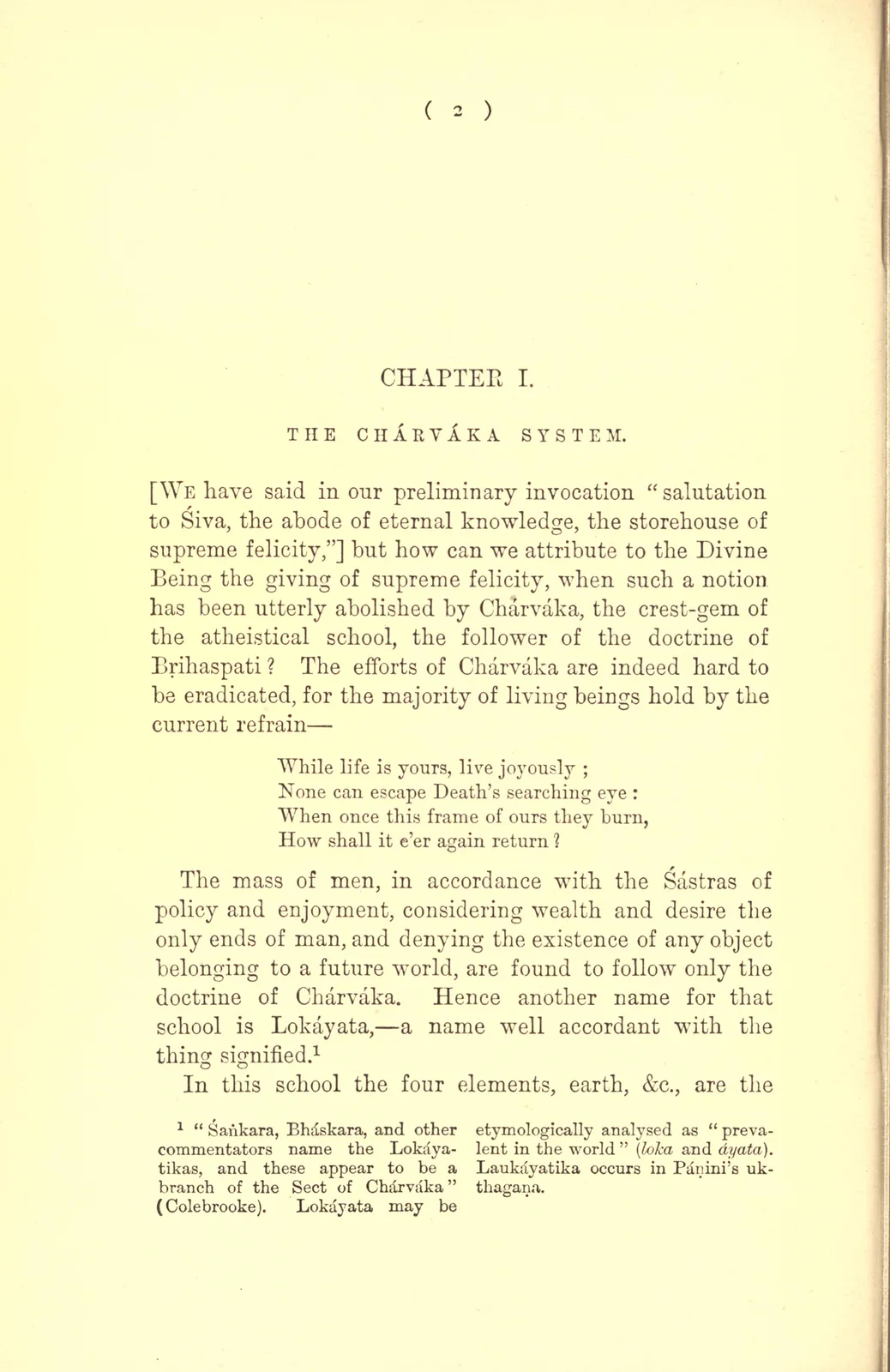
Nothing is known of Jayarāśi's life. No inscription names him, no chronicle records his birth or death, and the only personal name in his book, apart from his own, is that of a legendary teacher.1 What survives is one book, the Tattvopaplavasiṃha, "the lion that upsets all principles", in one palm-leaf manuscript copied at Dholka in Gujarat in December 1292 and found by chance in a Jain library at Patan in 1926.234 It is the only surviving work of India's materialist tradition, the Cārvāka or Lokāyata, which before 1940 was known only from the books written to refute it.56
This chapter cannot follow a life. It follows a book: what it denied, where its author seems to have started from, and how its readers, for twelve hundred years, have argued about what kind of unbeliever he was.

The heir of Bṛhaspati
He wrote around the year 800, give or take half a century. The book quotes the Buddhist logician Dharmakīrti and the Mīmāṃsā philosopher Kumārila, which sets a floor, and Jain philosophers were answering it within a century or two, which sets a ceiling.78 He signs himself "Bhaṭṭa Śrī Jayarāśi", a title that may mean he was a Brahmin, though Jain teachers carried it too; where he lived is a guess.91011
He names only one authority with respect: Bṛhaspati, the legendary founder of the materialist school, whom he once calls "the venerable Bṛhaspati".12 From Bṛhaspati he quotes, with approval, two short sayings: that consciousness arises from the body alone, and that "there is no other world, because there is no [soul] which [transmigrates] to the other world."1314 The scholar Eli Franco reads their purpose as removing the ground of every ethics that promises rewards and punishments after death.15 The materialists' rule that only perception counts as knowledge had, in Franco's words, a practical aim: "to exclude any divine or supernatural factor from the foundation of social and ethical theories."16 On the belief timeline, this inheritance is his first mark, and it is an inference from the book, not an event anyone recorded.
The turn
Then the book does something no materialist was expected to do. It abandons the materialists' own foundation. Before anything can be called real, it argues, the means of knowing it must be properly defined; and none of them can be.17 Chapter by chapter it takes the definitions of perception and inference offered by the Nyāya, the Buddhists, the Mīmāṃsakas, the Sāṃkhya and the Jains, lists every way each could be understood, and shows each one failing.1819 He never names an opponent, only "the Naiyāyika beast" and "the fanatics of the revelation".20
Why a materialist would turn on perception itself, nobody recorded. Franco suggests that once every school had to justify its means of knowledge, a perception-only materialist could not do so without arguing in a circle, and that Jayarāśi chose to give up perception and inference together; he offers it as a hypothesis.21 He adds a guess about motive, which he flags as a guess: that like other sceptics, Jayarāśi may have looked for certainty, failed to find it, and then found in its absence the peace he had been seeking.22 Piotr Balcerowicz, author of the standard encyclopedia entry, reads the book differently: as the work of a logician who accepts formal logic throughout and attacks only the Indian schools' definitions of knowledge from experience, which makes him, on that reading, not a genuine sceptic at all.23 The timeline marks this turn, and the readers do not agree on what it was.
What the book denies
What survives the demolition is a set of denials. According to the encyclopedia's reconstruction, the book rejects karmic retribution, rebirth, heaven and hell and liberation, a soul independent of the body, omniscient beings, revelation, ritual and religious authority.2425 Its own summary, as Franco translates it, is that all principles are annihilated, that actions bear no result such as heaven, and that the worldly path should be followed.26 It opens with a saying it treats as authoritative: that the worldly path should be followed, and that "the fool and the wise are similar" in everyday life.2728 And it ends with a promise: once the principles are gone, everyday thinking, speaking and acting can be delightful, because nothing has to be deliberated any more.2930
God appears once in the sources quoted from it, in a list. Arguing against the Buddhists, he says that an effect produced by something like "a demon, the atom, or God" is never seen as an effect in this world.31 God stands beside demons and atoms as an example of an invisible cause. He does not write, in any passage the scholars quote, the sentence "there is no God", and the encyclopedia's author says he is "cautious not to affirmatively state anything".32 But a God who watches and judges human deeds has no place in a book that removes the other world, the soul that would travel to it, and the moral order that would send it there.15 On the timeline, his declaration is the book itself.
The closing verses are a boast. Even the arguments that "escaped the attention of the preceptor of gods", Bṛhaspati, "find their way into this lucid [treatise] that crushes the conceit of charlatans."3334 Franco reads the colophon as the work of a man who thought himself the better analyst than his master yet presented himself as a faithful follower.35
The readers who answered
The first known critic, the Jain logician Vidyānanda, gave him about five pages, and put the strongest objection plainly: a man who wants to prove that all principles are annihilated must admit some proof, and that proof is a means of knowledge; without one, anyone could prove anything he liked.363738 The Nyāya philosopher Bhāsarvajña accused him of attributing to his opponents theories they did not hold, and summed up his position as pointing out only doubt.3940
Others used him. In Gujarat in the eleventh century, a story says, a poet named Dharma took arguments from the book into a public debate against the Jain teacher Śānti Sūri.41 In 1292 the Jain writer Mallisena told readers who wanted a detailed refutation of the means of knowledge to look it up in the Tattvopaplavasiṃha.4243 Franco thinks the Jains kept the book because its attack on the other schools served their own doctrine that every view is partial.44 The same year, a scribe named Maham Narapāla copied it at Dholka, and that copy is the only one that survived.3
The label that keeps changing
In 1926 two scholars searching a Patan library for a different book found the manuscript, and in 1940 they published it as the work of "a particular division" of the materialist school.44546 Since then he has been called a materialist, an agnostic, a radical sceptic, a pragmatic materialist, a solipsist, a positivist, and a worshipper of illogic.47 Wikipedia files him among Indian atheists and says he argued for the reasonability of atheism, a sentence that cites no source.48 This is the last mark on the timeline, and the revision it records is not his but his readers'.
Did his unbelief change shape?
Within the book it did, if Franco is right: from a materialism that trusted the senses and denied the other world, to a scepticism that trusted nothing but kept the denial. What did not change, on any reading, is the consequence for religion. No other world, no soul to go there, no reward for deeds after death, and no knowledge that could establish a God who cares; only the worldly path, and the promise that life is delightful once nothing has to be proved.
Ajita Kesakambali, the earlier Indian materialist whose teaching also survives only through those who argued against it, has his own chapter in this book.
Footnotes
-
Franco p. 9; SEP §1.2; Sanghavi p. xi ("We have no means of ascertaining the birth place"). ↩
-
Franco p. 7; SEP abstract and §1.3; Wikipedia; Sanghavi p. i. Accounts differ; see the disputed points. ↩
-
Sanghavi p. i; Franco p. 3. The exact day in sanghavi is the only source for this, as for the other details in this chapter cited to that source alone. ↩ ↩2
-
Franco p. 3. ↩
-
Sanghavi pp. i–iii; Dasgupta III pp. 139–40. ↩
-
Franco p. 12; SEP §1.1; Wikipedia (lede). Reported at second hand; the original has not been seen. ↩
-
Franco pp. 9, 11–12; Sanghavi p. ix. ↩
-
Franco p. 7 (TUS p. 125.13–18); SEP §1.4. ↩
-
Sanghavi p. xi; SEP §1.2 ("all being rather weak"). ↩
-
Sanghavi p. xi; SEP §1.2. ↩
-
Sanghavi p. xii; Franco p. 4; SEP §1.4; Wikipedia. ↩
-
Franco pp. 46–47. ↩
-
Bṛhaspati-sūtra, quoted by Jayarāśi (TUS p. 45): Franco p. 46 (translation in brackets is Franco's). ↩
-
Franco p. 8. ↩
-
SEP §2.2; Franco p. 56. ↩
-
Sanghavi Contents and pp. xiii–xiv; Franco p. 55. ↩
-
SEP §2.1; Franco p. 14. ↩
-
Franco p. 9. ↩
-
Franco p. 8. ↩
-
Franco p. 45. ↩
-
SEP s. 2.2. ↩
-
SEP s. 2.3. ↩
-
SEP §2.3; Franco p. 55. ↩
-
Franco p. 55. ↩
-
Franco pp. 43, 68–69; SEP §1.4; Wikipedia. ↩
-
Jayarāśi quoting an unnamed verse (TUS p. 1.9–10): Wikipedia rev. 1320633635 ("Association with Cārvāka"); SEP §1.4; Franco p. 43. ↩
-
Franco p. 44 (and n. 23 on p. 48); SEP §2.3. ↩
-
Jayarāśi (TUS p. 125.11–12): Franco p. 44 and p. 49 n. (transliteration). ↩
-
Franco, translation near marginal no. 221-222 (OCR places the number 222 just before the sentence); Sanskrit in the edition at p. 196 of the OCR sequence. Page numbering of this part of the OCR is uncertain (translation numbers and Sanskrit page numbers interleave), so locate by the Sanskrit phrase; see notes/grep-hits.md. ↩
-
SEP s. 2.3. ↩
-
Jayarāśi (colophon, TUS p. 125.13–18): Wikipedia rev. 1320633635 ("Association with Cārvāka"), translation by Balcerowicz, also SEP §1.4. Franco p. 7 has a different rendering. ↩
-
Franco p. 7; SEP §1.4. ↩
-
Franco pp. 5–7. ↩
-
Sanghavi pp. vi–vii; Franco p. 6; SEP §1.4. ↩
-
Vidyānanda, Digambara Jain logician (c. 800–850), the first known critic; in the Pramāṇaparīkṣā (and Aṣṭasahasrī): Franco p. 33 (Franco's translation; Sanskrit in n. 47, p. 51). ↩
-
Vidyānanda (same passage): Franco p. 33. ↩
-
Franco pp. 13–14, 51–52 (nn. 42, 56); SEP §1.3. ↩
-
Bhāsarvajña, Nyāya philosopher (Nyāyabhūṣaṇa p. 34), giving his understanding of what the TUS does (Franco: "This is how Bhasarvajna must have understood the TUS"): Franco p. 52, n. 56. ↩
-
Sanghavi pp. iv–v; Franco p. 49 (the note on Mallisena). ↩
-
Sanghavi p. iv; Franco p. 15; SEP §1.3. ↩
-
Mallisena, Jain author (Syādvādamañjarī, 1292), an opponent who recommends the book: Franco p. 15 (Franco's translation); SEP §1.3 gives a close variant ("A refutation of all cognitive criteria in details should be consulted from the Tattvôpaplava-siṁha"). ↩
-
Franco p. 15. ↩
-
Sanghavi title page; Franco p. 3. ↩
-
Sanghavi pp. xi–xii; Franco pp. 3–8, 47; SEP §1.4; Anthology Part III intro; Wikipedia "Association with Cārvāka". ↩
-
SEP s. 1.4. ↩
-
Wikipedia, section "Tattvopaplavasimha", rev. 1320633635 (2025-11-05). ↩
In their own words
Even [all] such unshakeable reductio arguments (vikalpa) that escaped the attention of the preceptor of gods (i.e. Bṛhaspati) find their way into this lucid [treatise] that crushes the conceit of charlatans.
The worldly path (laukiko mārgaḥ) should be followed… / With respect to everyday practice of the world (loka-vyavahāra), the fool and the wise are similar
Thus, when the principles are completely annihilated, all everyday practice (or: all thinking, speaking and acting) can be delightful in as much as it no [longer has to be] deliberated
tad evam upaplutesv eva tattvesv avicāritaramaṇīyāḥ sarve vyavahārā ghaṭanta iti
tattvopaplavasiṃha eṣa iti yaḥ khyātiṃ paraṃ yāsyati
sarvatra parāparyanuyogaparāṇy eva bṛhaspateḥ sūtrāṇi
paralokino 'bhāvāt paralokābhāvaḥ ("There is no other world, because there is no [soul] which [transmigrates] to the other world")
While life is yours, live joyously; None can escape Death's searching eye: When once this frame of ours they burn, How shall it e'er again return?
The Agnihotra, the three Vedas, the ascetic's three staves, and smearing oneself with ashes, Brihaspati says, these are but means of livelihood for those who have no manliness nor sense.
There is no heaven, no final liberation, nor any soul in another world, Nor do the actions of the four castes, orders, &c., produce any real effect.
While life remains let a man live happily, let him feed on ghee even though he runs in debt; When once the body becomes ashes, how can it ever return again?
Therefore, he argued for the reasonability of atheism, and that happiness in one's life is the most reasonable goal.
The other side
They want to prove only the annihilation of principles; consequently, [they] have to admit a proof. And this [proof] is nothing but a means of knowledge.
If the desired [annihilation] is established even without a means of knowledge, everything would be established for everybody according to one's wish.
I do not pronounce [any] means of valid cognition anywhere, because everywhere [I] point out only doubt.
As a result of the absence of cognitive criteria (pramāṇa) [the materialist] cannot ascertain that perception, and nothing else, is the only one [cognitive criterion], or [ascertain] the essence of cognoscible objects.
A refutation of the means of valid cognition in detail should be looked up from the Tattvopaplavasimha.
Charvaka, the crest-gem of the atheistical school, the follower of the doctrine of Brihaspati
All this, however, is only the inflation of the world of fancy.
inferences that seek to prove a self, God, an omniscient being, the after-world, and so on, are not considered valid by those who know the real nature of things ... However, those who contend in the above manner succeed only in making a show of their extreme aversion against orthodoxy, or utter foolishness, but not in establishing the invalidity of inference
Where accounts differ
| Point | One account | Another | How the page handles it |
|---|---|---|---|
| Date of composition | 8th c., or even first half of 7th (Sanghavi and Parikh 1940, pp. vi–x); 650–700 (Mahendrakumar Jain, via Franco pp. 9–11); 725–825 (Sanghavi 1941, Franco p. 12) | 770–830 (Franco 1994 via SEP); 800–840 (Balcerowicz, SEP §1.1); "fl. c. 800" (Wikipedia) | "Around the year 800, give or take half a century". Say the range is wide because the author names nobody and quotes only Dharmakīrti and Kumārila, which fixes the floor, while the Jain critics fix the ceiling |
| Whether he was a materialist (Lokāyata/Cārvāka) | Yes, of "a particular division" (Sanghavi and Parikh 1940, pp. xi–xii); a "true heir to Bṛhaspati" though a radical sceptic (Franco pp. 3–8, 47); an offshoot (Balcerowicz) | No: a sceptic or agnostic (Ruben 1958; Chattopadhyaya and Gangopadhyaya 1990; Werner 1995; Matilal; Solomon); not even a sceptic (Warder; Jayatilleke; R. Bhattacharya) | The core of the episode. Tell it as a disagreement among readers, with the book's own signals (Bṛhaspati as guru, the colophon) set against the fact that he accepts neither perception nor the four elements as proof |
| What the title means | "lion which annihilates [all] principles" (Franco p. 7) | "The Lion [Destroying] the Delusion of Categories" (SEP); "uproots all Philosophies" (Wikipedia); the roster's "Devours All Categories" appears in no source read | Use "The Lion that Upsets All Principles" or the Franco form, saying the Sanskrit compound can be read several ways; do not use "devours" unless a source is found |
| Whether Akalaṅka already knew him | Yes: Mahendrakumar Jain finds a reference in the Siddhiviniścaya (Franco p. 9, SEP says Anantavīrya projects it) | No: the forerunner arguments are "still in an undeveloped form" and Akalaṅka does not name him (SEP §1.1; Franco p. 10) | Leave out; mention only as dating dispute |
| Dates of the first critics | Vidyānanda about 800 (Vidyabhusana p. 186), 796 (Vaṃśīdhara); Anantavīrya 9th c. (Mahendrakumar), 1039 (Vidyabhusana) | Vidyānanda c. 850; Anantavīrya c. 980 (Potter; Franco p. 12), "turn of the 10th/11th c." (SEP §1.2) | Say "within about a century or two, Jain philosophers in the South answered him" and give no more precision |
| Origin of the opening verse | Taken as a quotation from a Lokāyata work (Sanghavi and Parikh; SEP "quoted from some other source, taken as authoritative") | A popular or Buddhist maxim, since Vyomaśiva puts it in a Buddhist's mouth (Franco pp. 43–44) | Say it is "a saying he quotes at the start" and that its source is unknown |
| What "reflecting" (pratibimbana) means | Brhaspati's sūtra only repeats what people believe, for Jayarāśi to question (Sanghavi and Parikh; Franco p. 6) | The sūtra mirrors matter itself, without philosophical analysis (Ruben, in Franco p. 5) | Avoid the word; say he claimed Bṛhaspati meant the same thing |
| Whether he was a Brahmin from the South | Probably, from "Bhaṭṭa" and the first readers (Sanghavi p. xi) | The title is not exclusive to Brahmins or to the South; evidence "rather weak" (SEP §1.2) | Say his origins are unknown |
| Vidyānanda's home | "of Pāṭaliputra" (Vidyabhusana 1921, p. 186) | South Indian Digambara (SEP §1.2) | Avoid placing him |
| Nature of the end of the book | A carpe diem attitude (SEP §2.3, first reading) | "The world of our actions ... retains its ultimate validity" (SEP second reading); Franco: "delightful" (the sceptic's inverted happiness) | Quote Q3 or paraphrase; give both readings |
| Sceptic or logician | Radical sceptic who refuses every means of knowledge, perception and inference included (Franco 1987 pp. 3-8; Matilal; Solomon 2010; Mills 2018) | Not a genuine sceptic: he accepts formal logic and the tetralemma and attacks only the Indian schools' empirical definitions (Balcerowicz 2019, via SEP s. 2.2) [56] | Say: the leading Western reading calls him a radical sceptic; the author of the encyclopedia entry says he is better read as a hard-edged logician with a materialist outlook. Do not settle it; use it to show why his label keeps changing |
| Is his rejection of God a thesis or a by-product | A positive view, with "god (maheśvara)" listed beside demons and atoms as non-existent and "omniscient beings and omniscience" denied (SEP s. 2.3; Balcerowicz 2020) [60] [62] | A consequence of the method: he never states "there is no God" as a thesis, he is "cautious not to affirmatively state anything" (SEP s. 2.3), and the sole God sentence found is an example inside an argument against Buddhists [58]. Wikipedia's "argued for ... atheism" is uncited [67] | Say the book removes any basis for a knowing, judging God, and say plainly that he does not write the sentence "there is no God" in any passage the sources quote |
| Whether the book has positive teaching | "All principles are annihilated; actions bear no result such as heaven etc.; the worldly path should be followed" (Franco p. 55) [21] [59]; over a dozen reconstructable positive views (Balcerowicz 2020 via SEP) [60] | Strict scepticism: nothing stated positively; the ending is a mood, not a doctrine (SEP s. 2.3, two readings) | Present the closing line with both readings (already in the table above) |
List of illustrations
This page uses only public-domain and Creative Commons images; each is credited with its source and licence.
- Monk Teaching Lay Disciple: Colophon page from a Kalpa-sutra and Story of Kalakacharya of Devachandra (palm leaf, Patan, 1279, reign of Sarangadeva) — Anonymous Jain scribe and painter, Patan (Anahillapura), 1279 · Cleveland Museum of Art, Open Access (CC0), Purchase from the J. H. Wade Fund · CC0 (Cleveland Museum of Art Open Access)
- The Sarva-Darsana-Samgraha, Chapter I, The Charvaka System, opening page (printed p. 2), E. B. Cowell and A. E. Gough translation — Madhava Acharya; translated by E. B. Cowell and A. E. Gough, 1882 · Internet Archive, The Sarva-Darsana-Samgraha (Trubner, London, 1882), leaf 38 · Public domain (published London, Trubner, 1882; Internet Archive states no rights)
- Portrait of Dharmakirti (Tibet, silver-copper alloy, c. 15th-16th century) — Anonymous Tibetan artist, c. 1400s-1500s · Cleveland Museum of Art, Open Access (CC0), Gift of Dr. Norman Zaworski · CC0 (Cleveland Museum of Art Open Access)
- Tirthankara, Akota, Gujarat, 7th century, bronze (Honolulu Academy of Arts) — Photograph by Hiart (Wikimedia Commons); object: Akota workshop, Gujarat, 7th century (photo 2011) · Hiart, CC0, via Wikimedia Commons (object in the Honolulu Museum of Art) · CC0 (Wikimedia Commons licence template, photographer Hiart)
- Ruined Hindu or Jaina temple converted into a mosque, Dholka, Gujarat — Henry Cousens (British Library Online Gallery), 1885 · Henry Cousens, 1885, British Library, via Wikimedia Commons · Public domain (Wikimedia Commons: Cousens, 1885; published before 1931)
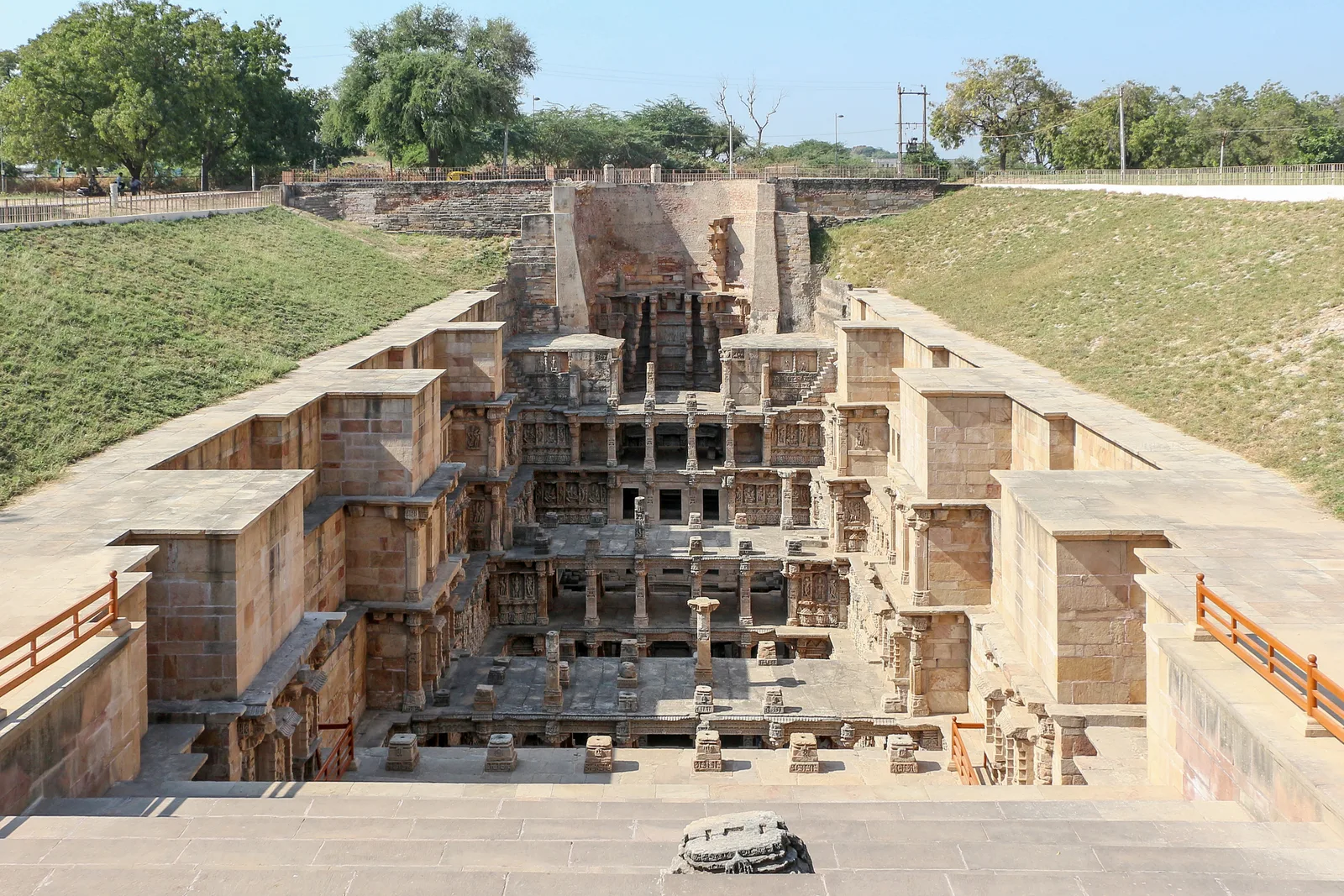
- Rani ki vav, Patan, India — Bernard Gagnon, 2013-11-29 · Bernard Gagnon, CC BY-SA 3.0, via Wikimedia Commons · CC BY-SA 3.0
Sources
Tier 1 — the subject's own words (writings, letters, diaries, trial records)
- Sanghavi Sukhlalji Sanghavi and Rasiklal C. Parikh (eds.), Tattvopaplavasimha of Jayarasi Bhatta, Gaekwad's Oriental Series 87 (Oriental Institute, Baroda, 1940). Internet Archive
in.ernet.dli.2015.277488(OCR saved asresearch/texts/tup-sanghavi.txt); other scansin.ernet.dli.2015.282925,in.ernet.dli.2015.329445. The page numbers cited are the roman numerals of the English introduction (pp. i–xiv; printed at the top of each page) and the Sanskrit page numbers 1–125. The Devanagari OCR is garbled and unusable. US copyright: first published in India in 1940; India is a Berne member and the work was in copyright there in 1996, so it is very probably restored under the URAA until the end of 2035. Read for facts only; nothing from the editors' English is quoted in the Quotations table. The ancient Sanskrit text is public domain; the edition's apparatus is not. - Franco Eli Franco, Perception, Knowledge and Disbelief: A Study of Jayarasi's Scepticism, Alt- und Neu-Indische Studien 35 (Franz Steiner, Stuttgart, 1987). Internet Archive
perceptionknowledgeanddisbelief.astudyofjayarasisscepticism.e.francoanis35stuttgart1987600dpilossy2(OCR inresearch/texts/franco.txt). Contains his edition and English translation of the opening chapters of the TUS with the Sanskrit in transliteration. In copyright; read for facts. Pages are the printed numbers (one numeral at the top of each page). The 1994 Motilal reprint, with a new preface (dating 770–830) and appendix on Bhāsarvajña, was not seen; it is known only through SEP. - (Primary text itself.) The TUS is quoted in the Quotations table only as short Sanskrit phrases in IAST, taken from Franco's transliteration (pp. 7, 44, 46, 69) and checked against Franco's OCR with a fuzzy substring script, because the Devanagari OCR of Sanghavi is unreadable and tools/verify-quotes.mjs strips non-ASCII. English renderings of the TUS in the table come from Wikipedia (CC BY-SA, translation by Balcerowicz) or are marked as Franco's copyrighted translation (read to check, not for publication).
Tier 2 — scholarly biographies and encyclopedias
- SEP Piotr Balcerowicz, "Jayarāśi", Stanford Encyclopedia of Philosophy (first published 19 Jan 2011; substantive revision 30 Sep 2020), https://plato.stanford.edu/entries/jayaraasi/ (saved as
research/texts/sep-jayarasi.txt). Cited by section number (no pages). Copyrighted; read for facts and paraphrase. - Anthology Debiprasad Chattopadhyaya and Mrinal Gangopadhyaya (eds.), Cārvāka/Lokāyata: An Anthology of Source Materials and Some Recent Studies (Indian Council of Philosophical Research, New Delhi, 1990). Internet Archive
CarvakaLokayataAnAnthologyOfSourceMaterialsAndSomeRecentStudiesDebiprasdaChattop(OCRresearch/texts/chatto-anthology1990.txt). Part III reprints the Sanghavi–Parikh introduction (Sanghavi's p. vi passages appear there at p. 497). Page numbers beyond the Part III opening could not be read from the OCR, so the Editor's Note is cited as "Editor's Note" and as "p. xiv" only through SEP. In copyright. - Dasgupta III Surendranath Dasgupta, A History of Indian Philosophy, vol. III (Cambridge University Press, 1940; reprinted 1952). Internet Archive
historyofindianp0003dasg(OCRresearch/texts/dasgupta3.txt). Appendix to vol. I, "The Lokāyata, Nāstika and Cārvāka", pp. 512–550. Printed in the year the TUS was published: does not mention Jayarāśi (grep, no hit for Jayar, upaplava or Tattvopa). Published 1940 in the UK; read for facts only. - Vidyabhusana Satis Chandra Vidyabhusana, A History of Indian Logic (Calcutta University, 1921). Internet Archive
in.ernet.dli.2015.31110(OCRresearch/texts/vidyabhusana-hil1921.txt). Public domain in the US (published 1921). Predates the 1926 discovery; used for the dates and affiliations of Vidyānanda, Akalaṅka and Abhayadeva. - Chattopadhyaya 1959 Debiprasad Chattopadhyaya, Lokāyata: A Study in Ancient Indian Materialism (People's Publishing House, New Delhi, 1959). Internet Archive
dli.ernet.53877(OCRresearch/texts/chatto-lokayata1959.txt). Poor OCR; grep for Jayar, aplava and Tattvopa found nothing, so the scan could not be used for Jayarāśi. Cited only through Franco and Wikipedia.
Tier 3 — popular biographies and journalism
- None used.
Tier 4 — Wikipedia and similar reference sites (citable; give the article and revision date; prefer a higher tier where one exists)
- Wikipedia "Jayarāśi Bhaṭṭa", English Wikipedia, revision 1320633635 of 2025-11-05T22:45:38Z (saved raw as
research/texts/wikipedia-jayarasi-rev1320633635.txt). CC BY-SA. Much of the "Association with Cārvāka" section reproduces the SEP; used as a map and, with attribution, for the English translation of the colophon and of Vidyānanda's and Akalaṅka's lines.
Opposition sources — contemporary critics and religious responses
- Madhava Mādhava (Sāyaṇa-Mādhava), Sarva-darśana-saṃgraha, chapter I "The Chārvāka System" (14th c.), trans. E. B. Cowell and A. E. Gough (London: Trübner, 1882; Popular ed., Kegan Paul, 1914). Gutenberg #34125 (unpaginated;
research/texts/madhava-gutenberg.txt) and Internet Archivesarvadarsanasamg00madhuoft(1914 ed., source of the page numbers cited;research/texts/madhava-ia1914.txt). Public domain. A Vedāntin's report of the Cārvāka, five centuries after Jayarāśi; it does not mention him. - Franco (above) for Vidyānanda, Bhāsarvajña and Mallisena in English.
- Wikipedia (above) for Akalaṅka and Anantavīrya in English.
- The Sanskrit works of Vidyānanda (Aṣṭasahasrī, Tattvārthaślokavārttika, Pramāṇaparīkṣā), Anantavīrya (Siddhiviniścayaṭīkā) and Bhāsarvajña (Nyāyabhūṣaṇa) were not found as public-domain English texts; they are cited only through Sanghavi, Franco and SEP.
Related lives
Ajita Kesakambali (60-ajita): the earlier Indian materialist, also known only through his opponents, so the two episodes bracket 1,300 years of one tradition recorded by its enemies and then, for Jayarāśi, rediscovered in its own words.
Ibn al-Rawandi
Ibn al-Rawandi was a gifted Mu'tazili theologian of ninth-century Baghdad. He broke with his school, by his enemies' account out of wounded pride and ambition, and went on to argue that prophecy and revelation were unnecessary. His books perished. His unbelief, like the story that he repented, survives only in the words of the men who refuted him.
Fan Zhen
Fan Zhen was a poor Confucian scholar among carriage-riding classmates. He answered a Buddhist prince's karma with a fallen flower, and wrote that the spirit is the body's working as sharpness is the knife's, because he saw a court draining its wealth, and its pity for the poor, into monasteries. He was pressed by a prince, a bribe, an emperor and sixty-two courtiers. He was never punished for the argument, was exiled for something else, and is not recorded as giving it up.
Christopher Marlowe
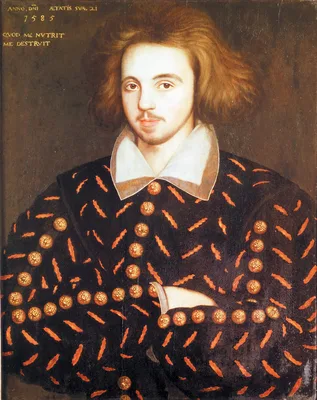
Christopher Marlowe was sent to Cambridge on a scholarship meant for future clergy. He took his degrees and never took orders, and wrote stage heroes who dared God and mocked hell. In May 1593 he was named an atheist by a tortured fellow playwright and an unsworn informer, days before he was killed at Deptford. He left no word of his own on what he believed, so his unbelief survives only as an accusation that his enemies, after his death, turned into a sermon.
Uriel da Costa
Uriel da Costa was a Portuguese New Christian who despaired of salvation by the Church's rules. He crossed Europe to live by the one revelation Jews and Christians shared, and found, on reading it strictly, that it promised nothing after death. He was banned, jailed and scourged for saying so. He ended by holding every revealed law a human invention and calling himself only a man: a search for certainty that left him outside every community, and that his editor saw as the place where Spinoza began.