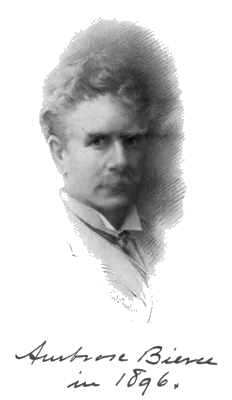
Ambrose Bierce was raised in a revivalist settlement whose religion he and his brother resented. He was wounded at Kennesaw, and his San Francisco colleagues remembered him as an author of atheistic tracts. He turned his unbelief into satire in The Devil's Dictionary (1881–1906), called himself an "infidel" who wished he were not one, and defended Ingersoll. In his last years, "not a Christian" but admiring Jesus next to Buddha, he asked a believing friend to pray for him before he vanished in Mexico at the end of 1913.
The belief timeline
- Faith (1840s–1850s) — Raised among "very religious and pious" settlers; there is no document of Bierce's own belief as a child, only the biographer's report that he and Albert resented the atmosphere. A "crack" rather than a lost faith, if we count the boyhood resentment [3][4][5]
- Doubt (c.1867–1868) — After the war, in San Francisco, he writes "atheistic tracts" and debates God by letter with Mint colleagues; McWilliams (secondhand through Long and Brooks) links the temper to Kenesaw Mountain and death [16][17]
- Declaration (1881–1892) — The Wasp attacks on clergy (1881), the Dictionary begun in 1881, and the 1892 letter "I wish I were not an infidel"; the 1899 "A Dead Lion" defence of Ingersoll is his fullest public argument [22][23][27][28]
- Revision (1909–1913) — "I am no Christian" but Jesus is the best character in literature "next to Buddha" (1909); "I loathe religions... but pray for me just the same" (1913); his last letters ask for prayer. Not a return to belief, but a softened, personal register [31][34][36]
Notes to the timeline (12)
- [3] Bierce was born in the "Horse Cave" settlement, "very religious and pious emigrants from Connecticut", "on the site of many a revivalist meeting" — McWilliams p. 21.
- [4] The family's denomination is not stated in any source read; "Congregationalist" (the brief and some modern sources) is unverified. McWilliams ties the family to Connecticut and the Western Reserve's "evangelical tone" only — McWilliams pp. 21–22. Not verified.
- [5] Ambrose and Albert Bierce "rather resented the religious atmosphere in which they were reared"; Albert's story of setting a straw-wrapped horse alight at a revival camp-ground — McWilliams p. 23. Reported at second hand; the original has not been seen.
- [16] Brooks recalled that Bierce would not tolerate piety and "denunciation of all religions" and would not let a colleague differ from him on religion — McWilliams p. 80 (printed p. 80; the OCR lacks its running head).
- [17] "His first compositions were atheistic tracts"; the Mint employees challenged him to an exchange of letters on atheism, which both institutions read aloud; McWilliams adds that he read Gibbon "with marked approval" and that Kenesaw Mountain "had left a question in his mind" — McWilliams p. 81.
- [22] The Devil's Dictionary "was begun in a weekly paper in 1881" and continued until 1906 — DD, Preface.
- [23] In the Wasp (1881) he attacked Rev. J. B. Roberts, who prosecuted Sarah Cooper for heresy, and a "procession of holy idiots" of revivalists (Moody, Sankey and others); McWilliams gives the passages without a clear source — McWilliams pp. 161–162.
- [27] 28 Aug 1892 letter to Blanche Partington: "I wish I were not an infidel" — Letters, to Blanche Partington, 28 Aug 1892.
- [28] "A Dead Lion" (1899) answers a pious editorial writer and Prof. Harry Thurston Peck after Ingersoll's death; says religions are "human institutions" with no right to immunity from criticism — CW X pp. 212–233.
- [31] In "Religion" (1909) Bierce states: "I am not a Christian", ranks Jesus with Buddha as the best character in literature, and declares "I am no Christian" and "I do not believe one word" of theology — CW XI pp. 225, 233–234.
- [34] 13 Sept 1913 letter to Mrs. Josephine Clifford McCrackin: "I loathe religions, a Christian gives me qualms and a Catholic sets my teeth on edge, but pray for me just the same"; "pass smilingly into the darkness--the good, good darkness" — Letters, "Dear Joe" letter, 13 Sept 1913.
- [36] By 16 Dec 1913 he was in Chihuahua with the Constitutionalist army; the last letters were dated 24 and 26 Dec 1913 (the first asks a friend to "pray for me — real loud") — McWilliams pp. 324, 327.
The Devil's Dictionary
FAITH, n. Belief without evidence in what is told by one who speaks without knowledge, of things without parallel.
PRAY, v. To ask that the laws of the universe be annulled in behalf of a single petitioner confessedly unworthy.
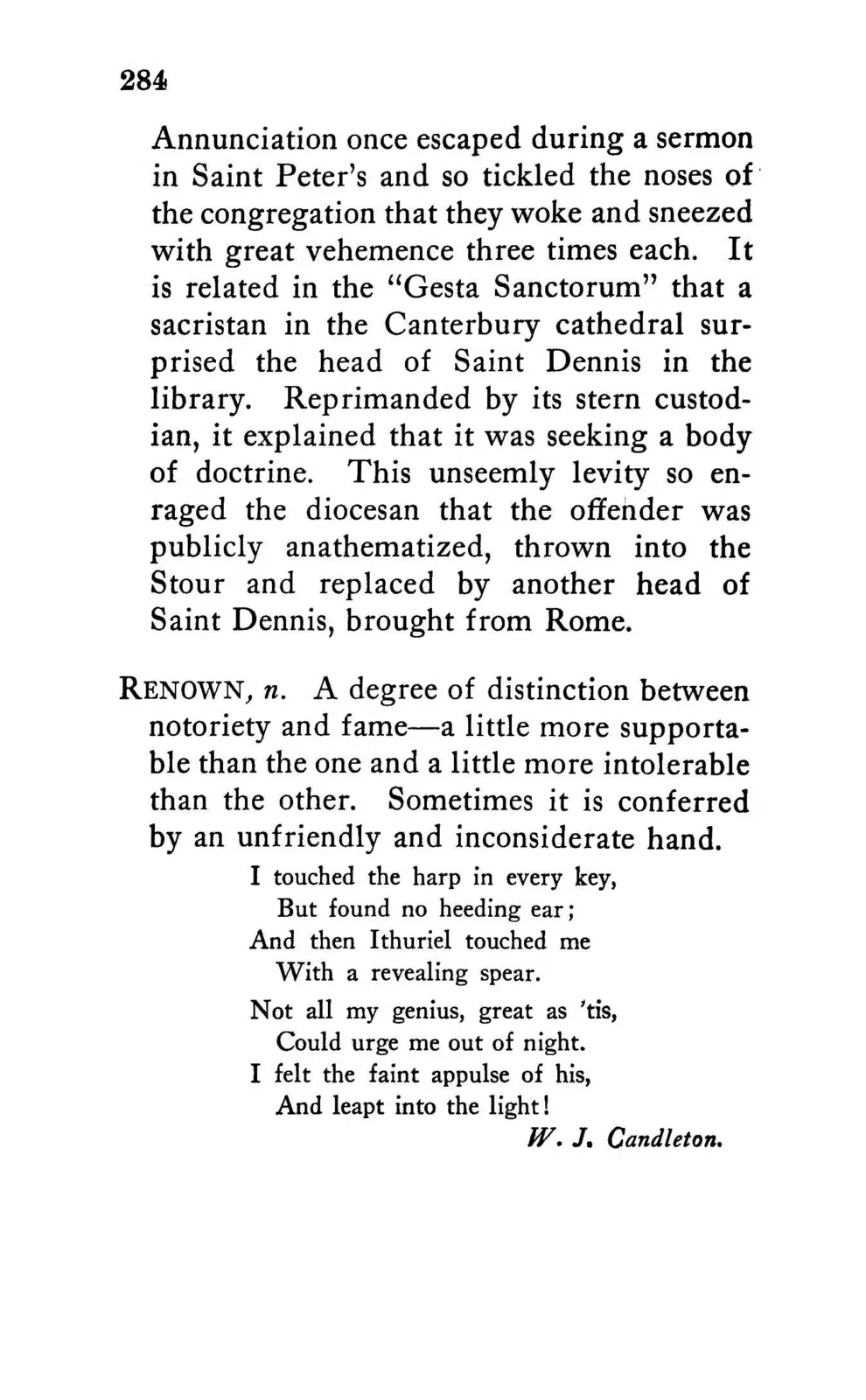
RELIGION, n. A daughter of Hope and Fear, explaining to Ignorance the nature of the Unknowable.123
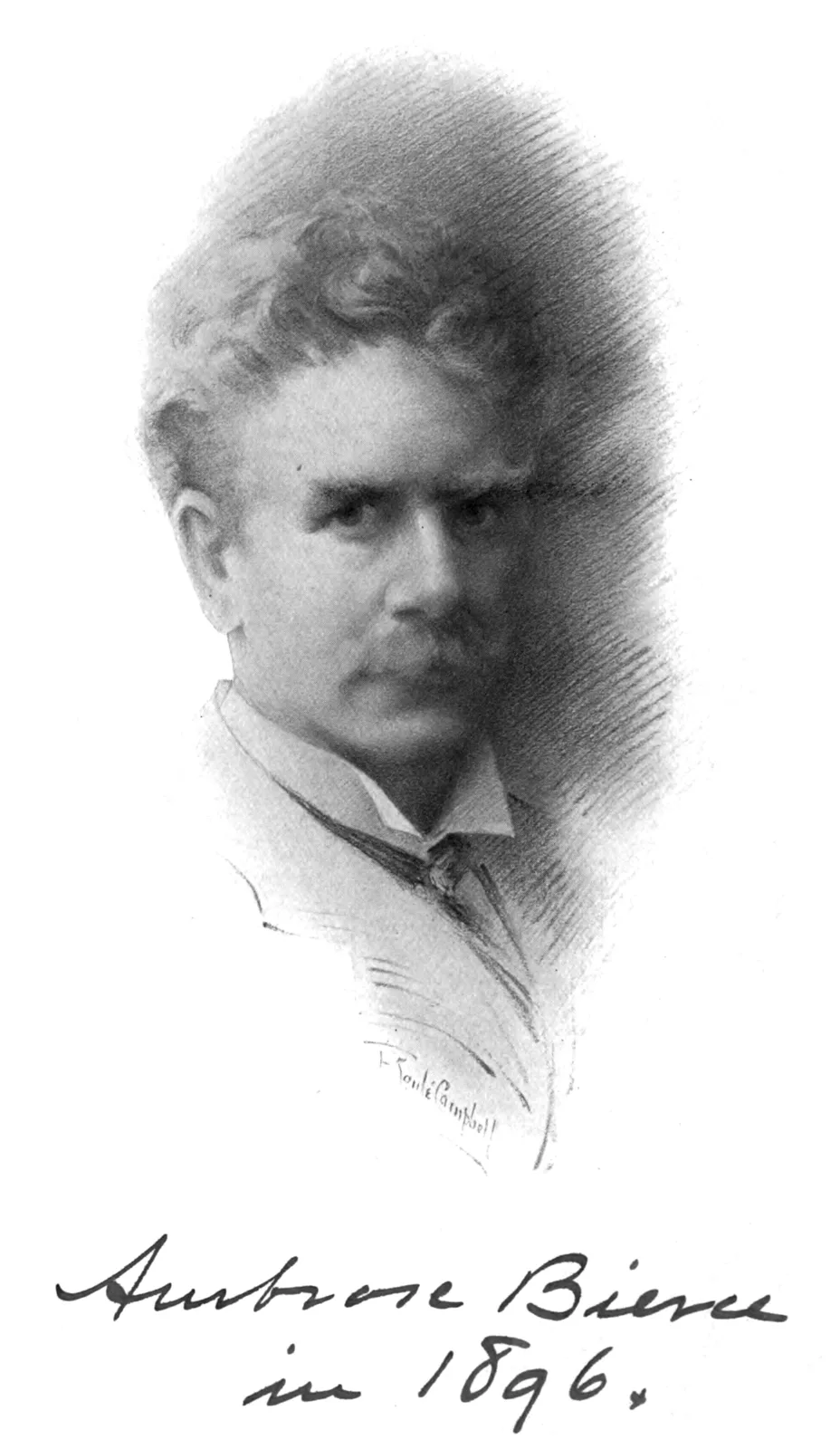
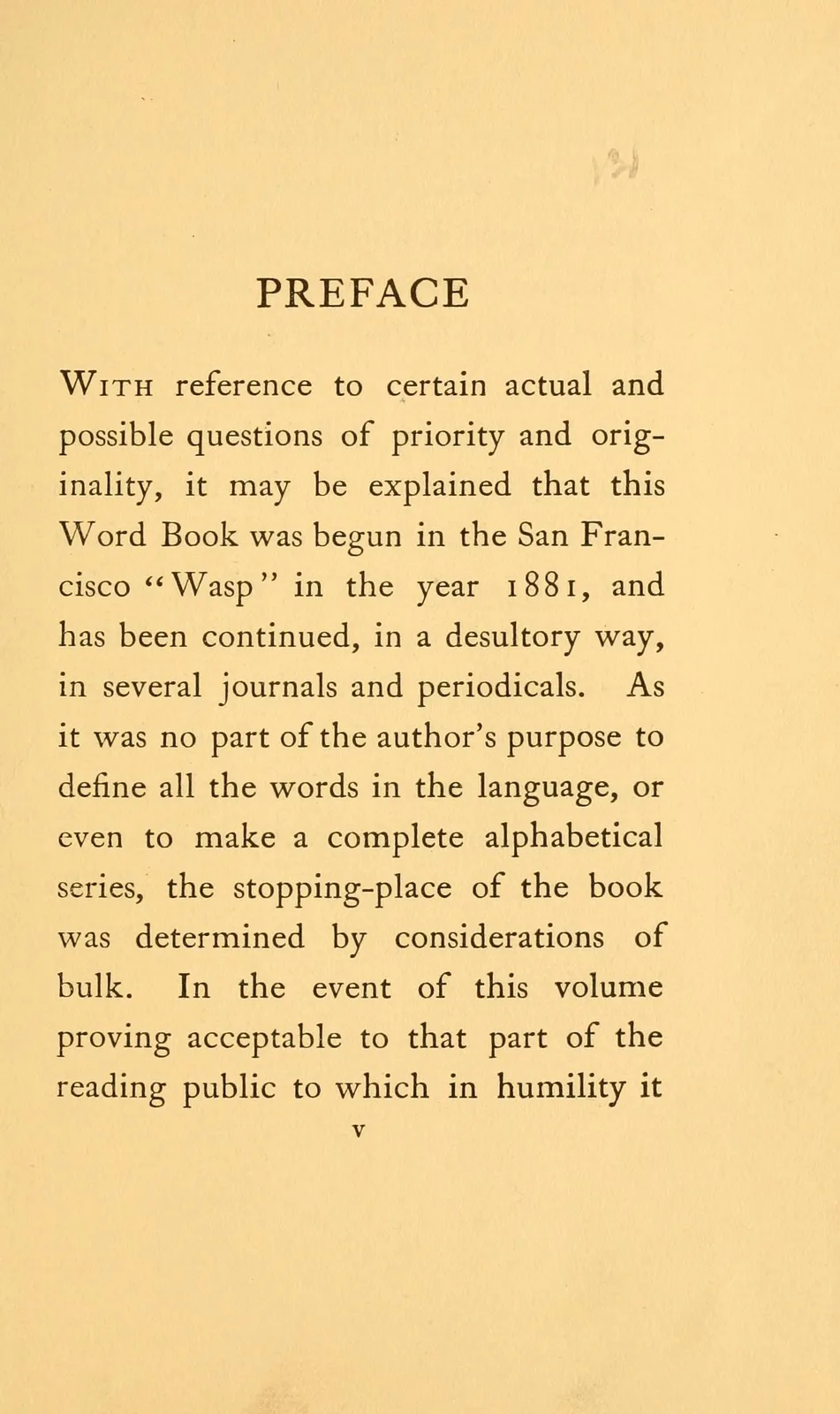
Ambrose Bierce began his dictionary in a San Francisco weekly in 1881, and went on adding to it "in a desultory way at long intervals until 1906".45 When a publisher brought it out as a book, the last newspaper's "religious scruples" had forced on it the title The Cynic's Word Book; in 1911 he restored his own: The Devil's Dictionary.6 This chapter asks how a boy from a revivalist settlement in Ohio came to write it, and how the same man could write, in a private letter, "I wish I were not an infidel".78
Horse Cave
He was born on 24 June 1842 in Meigs County, Ohio, the son of Marcus Aurelius and Laura Bierce.9 His father was a poor farmer with a good library, and Bierce later said he owed "all that I have" to those books.10 The settlement at Horse Cave was, his biographer Carey McWilliams wrote, made up of "very religious and pious emigrants from Connecticut", "on the site of many a revivalist meeting"; which church the family belonged to, no source read for this chapter says.1112 His brother Albert remembered that the two boys "rather resented the religious atmosphere in which they were reared", and told of setting a straw-wrapped horse alight at a revival camp-ground.13 There is no record of Ambrose's own childhood belief; on the belief timeline his faith is marked only by the place, and the resentment is the first crack.
Shiloh and Kennesaw
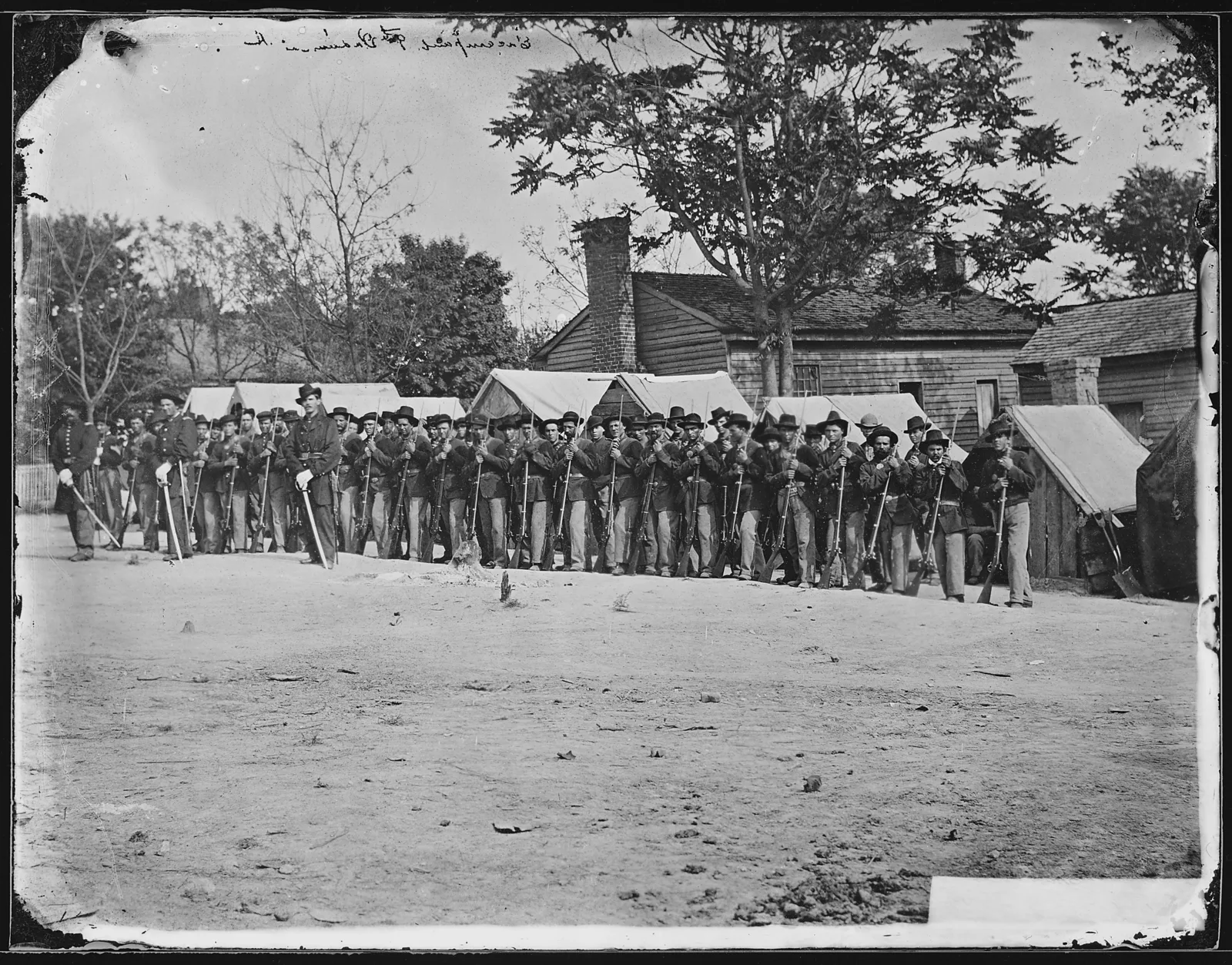
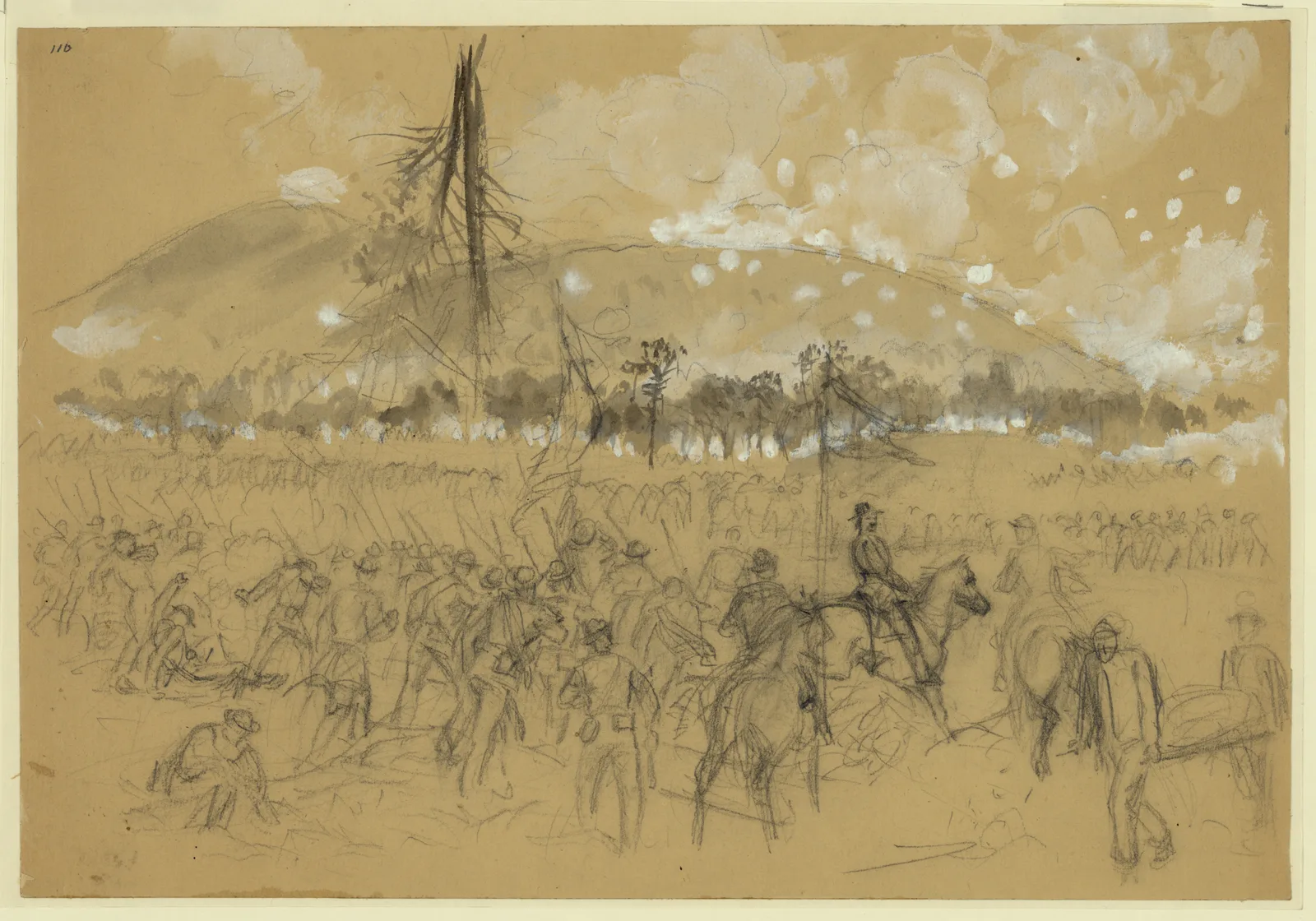
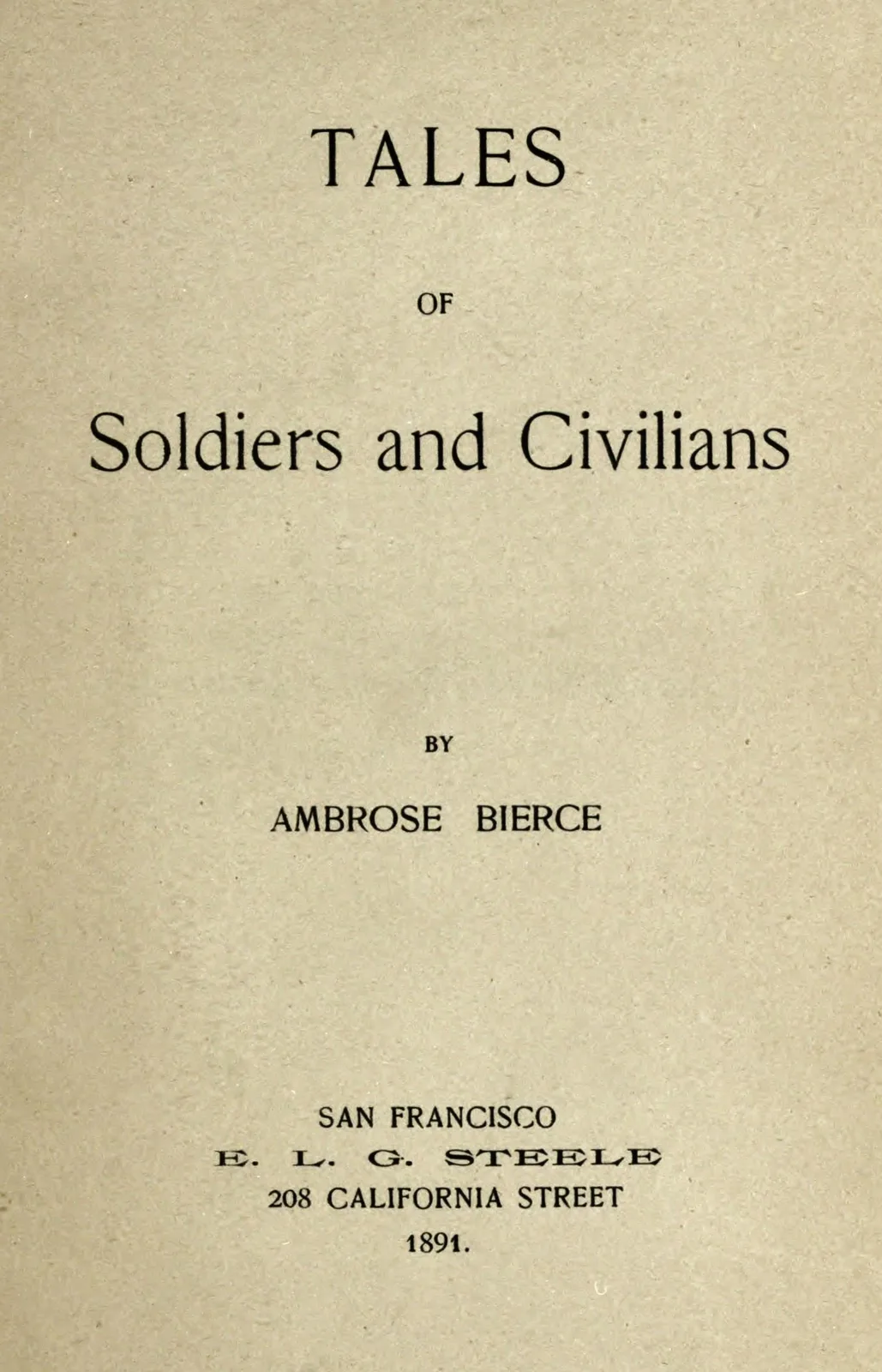
In 1861 he enlisted in the 9th Indiana Infantry, and fought at Shiloh and Kennesaw Mountain.1415 He wrote about Shiloh years later, ending the night after the battle with the arrival of the stretcher-bearers and a surgeon and the narrator's cry: "Good heavens! a chaplain!"1617 At Kennesaw Mountain in 1864 he was shot in the head.18 He came out of the war a brevet major.19
By 1867 he was in San Francisco, working at the Sub-Treasury and the Mint.2021 Two colleagues remembered him to McWilliams sixty years later. "His first compositions were atheistic tracts," McWilliams wrote; the Mint employees challenged him to a debate on atheism by letter, which both offices read aloud. He read Gibbon "with marked approval", and Kennesaw Mountain "had left a question in his mind".22 One of the clerks, Brooks, said he was "a very genial and pleasant man to associate with if you could tolerate his denunciation of all religions", but "He would never allow you to differ from him in his views of religious or sacred matters."2324 No tract survives. On the timeline, those years are where his doubt begins, and that rests on recollection, not on documents.
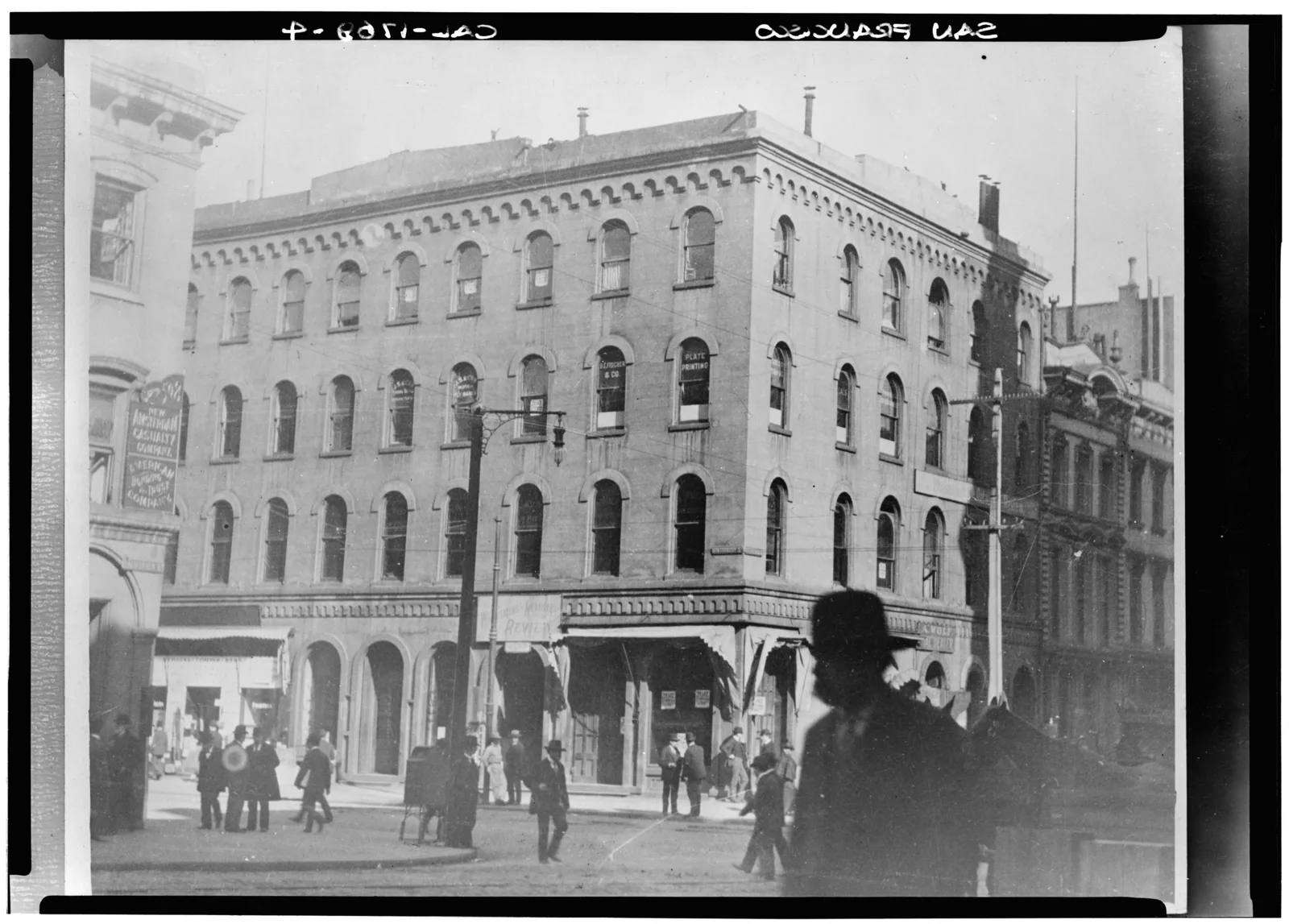
The satirist
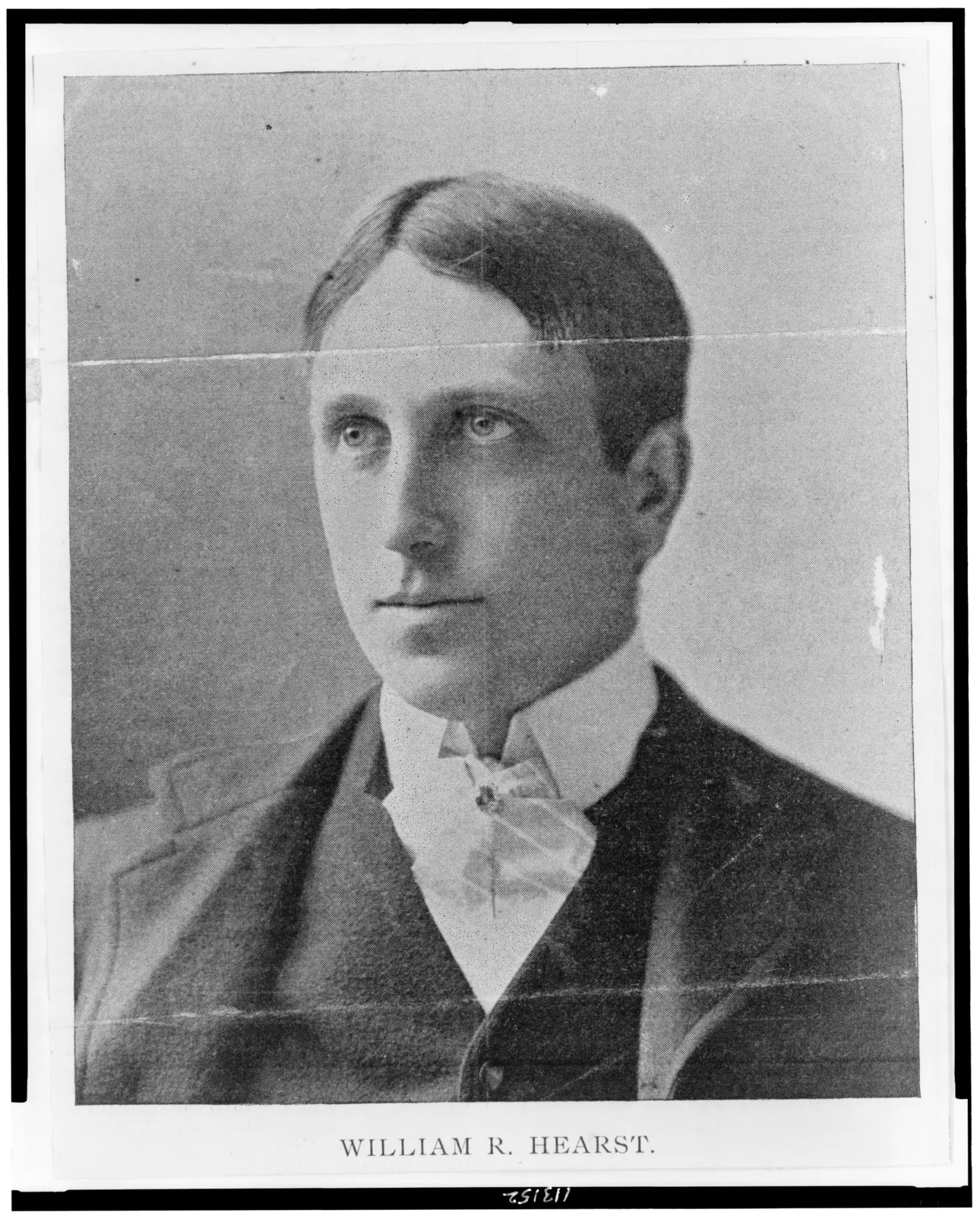
In 1868 he took over "The Town Crier" column of the San Francisco News Letter.25 When he married Mary Day on Christmas Day 1871, the minister who married them was one he had "unmercifully ragged" in print.26 He spent the early 1870s in London writing for the comic papers, came home, and in 1881, in the Wasp, attacked a minister who had prosecuted a woman for heresy and a "procession of holy idiots" of revivalists.2728 From the late 1880s his column "Prattle" ran in William Randolph Hearst's San Francisco Examiner.29 He would not let his sons go to Sunday school, McWilliams says, though he let his daughter go to church.30
The dictionary grew through those years, and its religious entries are its sharpest. A Christian is "One who believes that the New Testament is a divinely inspired book admirably suited to the spiritual needs of his neighbor." A clergyman is "A man who undertakes the management of our spiritual affairs as a method of bettering his temporal ones." A saint is "A dead sinner revised and edited." An infidel is, "In New York, one who does not believe in the Christian religion; in Constantinople, one who does."31323334 On the timeline, the dictionary is his declaration, together with a letter he wrote to a young friend in 1892: "I wish I were not an infidel—so that I could say: 'God bless you,' and mean it literally. I wish there were a God to bless you, and that He had nothing else to do."78
A dead lion
When Robert Ingersoll died in 1899, a pious editorial writer argued that a man who preached brotherhood could not really have denied God, and the Columbia professor and critic Harry Thurston Peck, granting Ingersoll's honesty, wrote that there had been nothing in his teaching "that could help to make the life of a man on earth more noble, or more spiritual, or more truly worth living".353637 Bierce answered both in "A Dead Lion". "Agnosticism may be more than a mere negation. It may be, as in Ingersoll it was, a passionate devotion to Truth." "Religions are human institutions," and so "entitled to no immunity from examination and criticism." And he dismissed "the ten-thousand-times-disproved tales of the deathbed remorse of Thomas Paine, Voltaire and all the great infidels".38394041
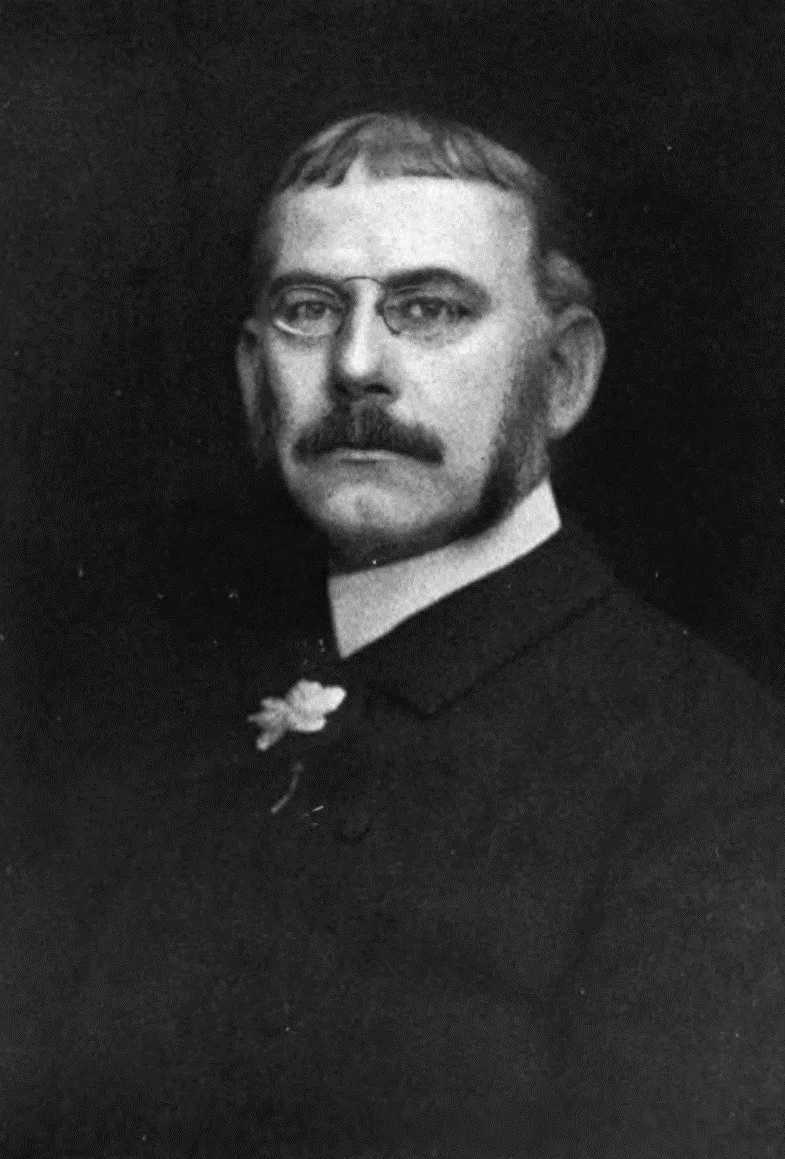
Not a Christian
In an essay of 1909 he wrote: "I am not a Christian, but so far as I know, the best and truest and sweetest character in literature, next to Buddha, is Jesus Christ." He was "indifferently versed in theology—whereof, so help me Heaven, I do not believe one word". Belief, he thought, was temperament, not argument: "Believers and unbelievers are like two boys quarreling across a wall. Each got to his place by means of a ladder. They may fight if they will, but neither can kick away the other's support."42434445 Of immortality he wrote that it was "the most momentous" question the mind could ask, and that no one could say he knew.4647 That softening is his revision on the timeline, not a return to belief but a gentler register.
Into Mexico
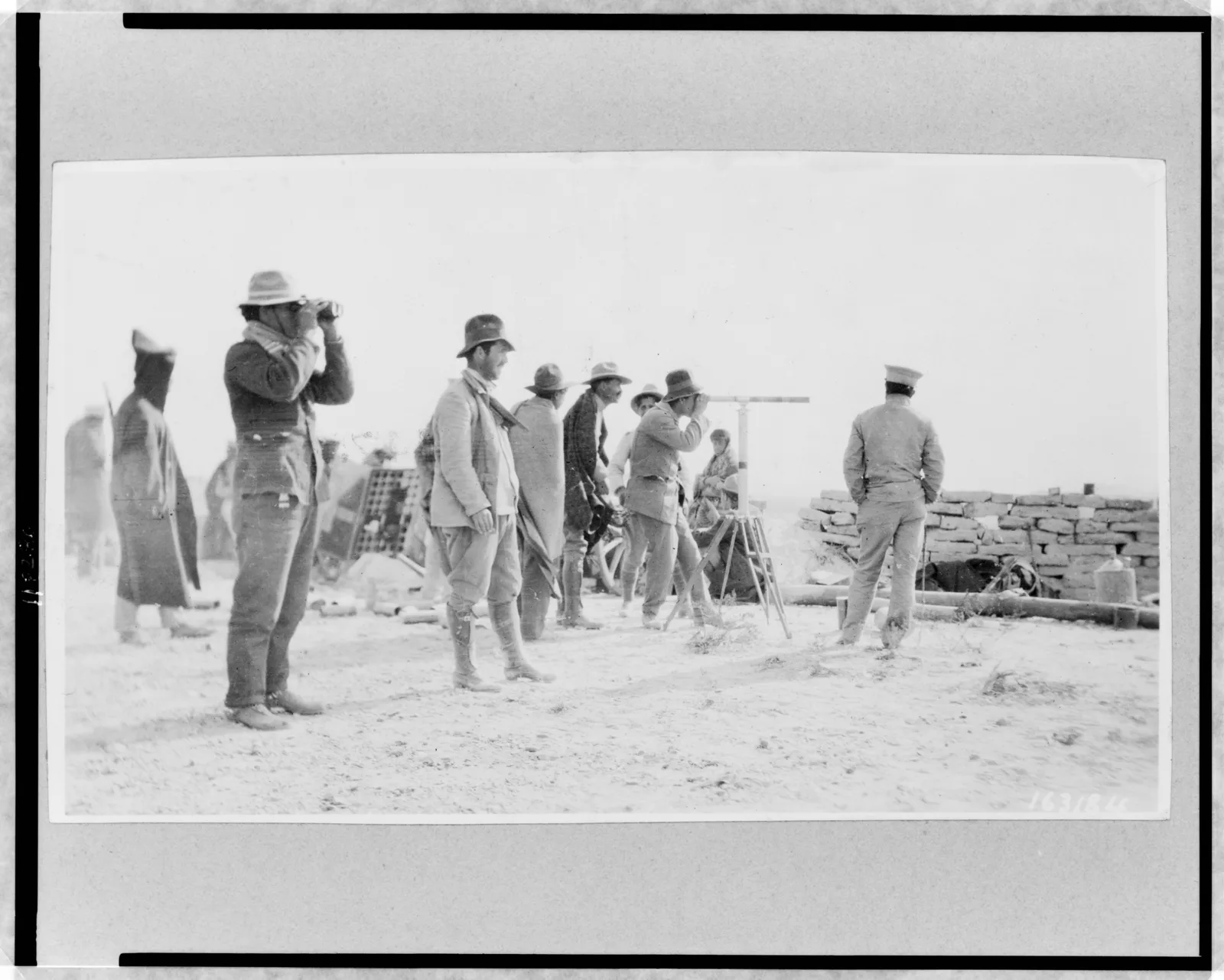
In the autumn of 1913, at seventy-one, he set out for Mexico, where the revolution was being fought. To a friend he wrote: "I loathe religions, a Christian gives me qualms and a Catholic sets my teeth on edge, but pray for me just the same", and wished her a long life and then a smiling passage "into the darkness—the good, good darkness".484950 To another: "if you hear of my being stood up against a Mexican stone wall and shot to rags please know that I think that a pretty good way to depart this life."5152 By mid-December he was in Chihuahua with the Constitutionalist army. His last letters are dated 24 and 26 December 1913. After that he was never seen again, and every account of his end is a rumour.5354
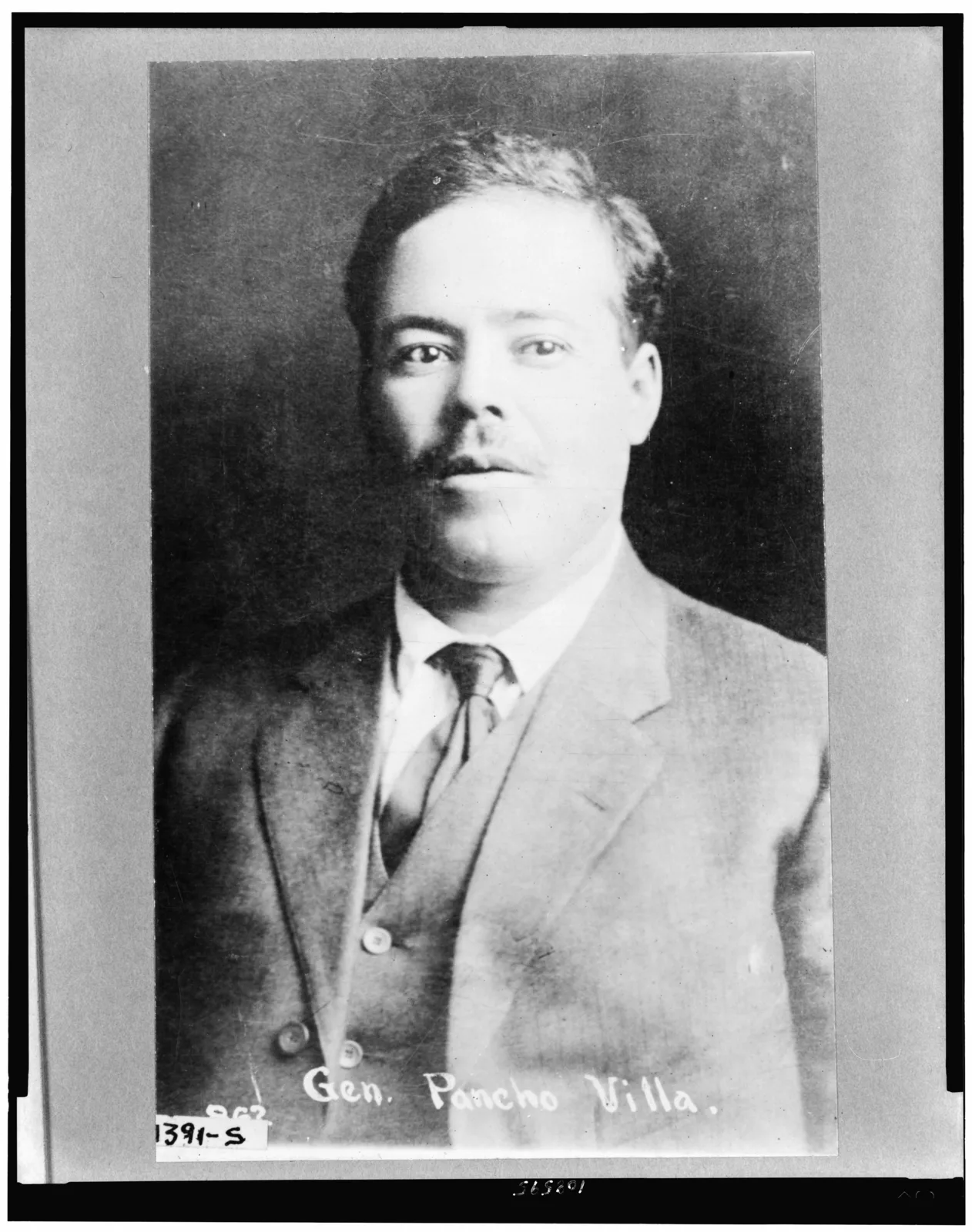
Bierce called himself an infidel, never an atheist or an agnostic; his biographers supplied those words.55 He defined faith as belief without evidence and still, at the end, asked a believer to pray for him. Mark Twain, a contemporary on the same coast and in the same trade of satire, who kept his own bitterest writing on religion out of print, has his own chapter in this book.
Footnotes
-
Ambrose Bierce: DD p. 95, entry FAITH. Often misquoted as "not wanting to know what is true", which is Nietzsche. ↩
-
Ambrose Bierce: DD p. 261, entry PRAY. ↩
-
Ambrose Bierce: DD p. 283, entry RELIGION. ↩
-
DD, Preface. ↩
-
Ambrose Bierce: DD, Preface (unnumbered). ↩
-
DD, Preface (and 1911 title page). ↩
-
Ambrose Bierce, to Blanche Partington: Letters (1922), letter of 28 Aug 1892 (St. Helena). ↩ ↩2
-
McWilliams p. 21; Letters, Sterling memoir (Roman-numbered; spells "Meiggs"). ↩
-
Letters, Sterling memoir (quoting Bierce to a friend; no page in OCR). ↩
-
McWilliams p. 21. ↩
-
McWilliams pp. 21–22. Not verified. ↩
-
McWilliams p. 23. Reported at second hand; the original has not been seen. ↩
-
CW I, "On a Mountain" (Gutenberg; no page). ↩
-
Wikipedia rev. 1371332904. ↩
-
CW I, "What I Saw of Shiloh" section XI (Gutenberg); McWilliams (date). ↩
-
Ambrose Bierce: CW I, "What I Saw of Shiloh" (end of section XI; Gutenberg, no page). ↩
-
Letters, Sterling memoir; Wikipedia. ↩
-
McWilliams (cited at the passage on his 1867 arrival; page not recorded). ↩
-
McWilliams pp. 48, 83–93 (pages approximate). Accounts differ; see the disputed points. ↩
-
McWilliams pp. 80–81. ↩
-
McWilliams p. 81. ↩
-
McWilliams p. 80 (printed p. 80; the OCR lacks its running head). ↩
-
Mr. Brooks, a government clerk who worked with Bierce in San Francisco, in a letter to McWilliams (c.1928): McWilliams (1929) p. 80. ↩
-
McWilliams p. 5. ↩
-
McWilliams p. 93. ↩
-
McWilliams pp. 5–6. ↩
-
McWilliams pp. 161–162. ↩
-
McWilliams p. 7. ↩
-
McWilliams p. 149. ↩
-
Ambrose Bierce: DD (1911) p. 49, entry CHRISTIAN. ↩
-
Ambrose Bierce: DD p. 50, entry CLERGYMAN. ↩
-
Ambrose Bierce: DD p. 306, entry SAINT. ↩
-
Ambrose Bierce: DD p. 162, entry INFIDEL. ↩
-
CW X pp. 212–233. ↩
-
Harry Thurston Peck, as quoted by Bierce, 1899: CW X, "A Dead Lion", p. 232. ↩
-
An unnamed editorial writer on Ingersoll (1899), as quoted by Bierce (who calls him "so artlessly pious"): CW X, "A Dead Lion", pp. 214–215. ↩
-
CW X p. 233. ↩
-
Ambrose Bierce: CW X, "A Dead Lion", p. 226. ↩
-
Ambrose Bierce: CW X, "A Dead Lion", p. 230. ↩
-
Ambrose Bierce: CW X, "A Dead Lion", p. 233. ↩
-
CW XI pp. 225, 233–234. ↩
-
Ambrose Bierce: CW XI, "Religion", p. 225. ↩
-
Ambrose Bierce: CW XI, "Religion", p. 233. ↩
-
Ambrose Bierce: CW XI, "Religion", p. 229. ↩
-
CW XI pp. 246–248. ↩
-
Ambrose Bierce: CW XI, "Immortality", p. 247. ↩
-
Letters, "Dear Joe" letter, 13 Sept 1913. ↩
-
Ambrose Bierce, to Mrs. J. C. McCrackin: Letters (1922), letter of 13 Sept 1913 (Washington). ↩
-
Ambrose Bierce, to Mrs. J. C. McCrackin: Letters (1922), letter of 13 Sept 1913. ↩
-
Letters, 1 Oct and 6 Nov 1913. ↩
-
Ambrose Bierce, to Lora: Letters (1922), 1 Oct 1913 (Washington). Often quoted shortened; the words "It beats old age, disease, or falling down the cellar stairs" follow. ↩
-
McWilliams pp. 324, 327. ↩
-
McWilliams pp. 326–330. ↩
-
Wikipedia; McWilliams p. 23. ↩
In their own words
One who believes that the New Testament is a divinely inspired book admirably suited to the spiritual needs of his neighbor. One who follows the teachings of Christ in so far as they are not inconsistent with a life of sin.
Belief without evidence in what is told by one who speaks without knowledge, of things without parallel.
To ask that the laws of the universe be annulled in behalf of a single petitioner confessedly unworthy.
A daughter of Hope and Fear, explaining to Ignorance the nature of the Unknowable.
A dead sinner revised and edited.
In New York, one who does not believe in the Christian religion; in Constantinople, one who does.
A benighted creature who has the folly to worship something that he can see and feel.
A man who undertakes the management of our spiritual affairs as a method of bettering his temporal ones.
Reverence for the Supreme Being, based upon His supposed resemblance to man.
An ox wearing the popular religious yoke.
An act or event out of the order of nature and unaccountable, as beating a normal hand of four kings and an ace with four aces and a king.
The Devil's Dictionary was begun in a weekly paper in 1881, and was continued in a desultory way at long intervals until 1906.
I wish I were not an infidel--so that I could say: "God bless you," and mean it literally. I wish there were a God to bless you, and that He had nothing else to do.
I loathe religions, a Christian gives me qualms and a Catholic sets my teeth on edge, but pray for me just the same
I am not a Christian, but so far as I know, the best and truest and sweetest character in literature, next to Buddha, is Jesus Christ.
I am indifferently versed in theology—whereof, so help me Heaven, I do not believe one word—but know something of religion.
Believers and unbelievers are like two boys quarreling across a wall. Each got to his place by means of a ladder. They may fight if they will, but neither can kick away the other's support.
a mind congenitally gifted with the power of logic and accessible to its light and leading does not take to religion, which is a matter, not of reason, but of feeling—not of the head, but of the heart.
The question of human immortality is the most momentous that the mind is capable of conceiving. If it is a fact that the dead live all other facts are in comparison trivial and without interest.
Agnosticism may be more than a mere negation. It may be, as in Ingersoll it was, a passionate devotion to Truth, a consecration of self to her service.
Religions are human institutions; at least those so hold who belong to none of "the two-and-seventy jarring sects." Religious faiths, like political and social, are entitled to no immunity from examination and criticism
It is in the same spirit that conceived and keeps in currency the ten-thousand-times-disproved tales of the deathbed remorse of Thomas Paine, Voltaire and all the great infidels.
Without logic and a sense of the ludicrous a man is religious as certainly as without webbed feet a bird has the land habit.
He should be neither Christian, nor Jew, nor Buddhist, nor Mahometan, nor Snake Worshiper.
Good-bye--if you hear of my being stood up against a Mexican stone wall and shot to rags please know that I think that a pretty good way to depart this life.
May you live as long as you want to, and then pass smilingly into the darkness--the good, good darkness.
Good heavens! a chaplain!
No man of sane intelligence will plead for religion on the ground that it is better than nothing. It is not better than nothing if it is not true. Truth is better than anything or all things; the next best thing to truth is absence of error.
I never was ashamed of being an infidel until Dr. Danziger assured me that he was one.
The other side
It is entitled to the same respect that we accord to the unshaken faith of other men. Indeed, for the purpose of the moment we may even go still further and assume that he was right; that Christianity is in truth a superstition and its history a fable
there can have been small consolation in the thought, that in all the utterances of his public teaching, and in all the phrases of his fervid eloquence, there was nothing that could help to make the life of a man on earth more noble, or more spiritual, or more truly worth living.
It was idle for a man to deny the existence of God who confessed and proclaimed the principle of fraternity.... The hard conception of annihilation had no place in sentences that were infused with the heat of immortality.
Bierce was a very genial and pleasant man to associate with if you could tolerate his denunciation of all religions and his habit of using the most offensive language in speaking of matters that people usually regard as sacred. He would never allow you to differ from him in his views of religious or sacred matters. Otherwise people liked him very much.
Where accounts differ
| Point | One account | Another | How the page handles it |
|---|---|---|---|
| Did Bierce call himself an agnostic or an atheist? | "Avowed agnostic" (Wikipedia, 2026 revision); "confirmed agnostics" (McWilliams p. 23); his first compositions were "atheistic tracts" (McWilliams p. 81) | His own words: "infidel" (1892), "I am not a Christian" (1909), "I loathe religions" (1913); no self-label of agnostic or atheist found | Use "infidel" and "not a Christian" as his labels; flag "agnostic" as a biographer's label |
| The family's church | "Very religious and pious" Connecticut settlers (McWilliams p. 21) | "Congregationalist" (the roster brief) not found in any source read; Neale says he does not know the faith | Say "a devout farming community"; do not name a denomination until a source is found |
| When did Bierce reach California, 1866 or 1867? | Crossed the plains with Hazen in 1866 and arrived thereafter (McWilliams p. 83; Letters memoir says he "came at once to San Francisco" after the war) | McWilliams (p. 80, 93 area) says he was in San Francisco in spring 1867 and that other dates are "obviously inaccurate" | Say "after the war, by 1867" |
| Death | c.1914 (roster, Wikipedia) | Last letters 24–26 Dec 1913; no body, no document (McWilliams pp. 326–330) | Say "last heard of in December 1913" and "accounts differ" on what followed |
| Neale's reliability | Neale (1929) is the source for Bierce's late talk about "the god of his own creation" | McWilliams (1929) names him as a source of "intimated" claims and corrects him elsewhere | Use Neale only for conversations he claims to have heard, and say so |
| The "atheistic tracts" | McWilliams: first writings were atheistic pamphlets (p. 81; also p. 130) | No such tract or letter-debate has been located in Bierce's collected texts | Treat as recollection, not as document |
List of illustrations
This page uses only public-domain and Creative Commons images; each is credited with its source and licence.
- Ambrose Bierce in 1896. — Artist F. Soulé Campbell, 1909 · Wikimedia Commons; The Collected Works of Ambrose Bierce, vol. 1 (Neale Publishing, 1909), via Wikisource · Public domain (Wikimedia Commons licence box: "Public domain")
- Company "A", 9th Indiana Infantry - NARA - 524693.jpg — Mathew Benjamin Brady, between circa 1860 and circa 1865 · Wikimedia Commons; U.S. National Archives and Records Administration, NARA 524693 (Mathew Brady) · Public domain (Wikimedia Commons licence box: "Public domain")
- [General Sherman at the Battle of Kennesaw Mountain, Ga.] — Davis, Theodore R., artist (attributed name; Waud, Alfred R. (Alfred Rudolph), 1828-1891, artist (former attribution, 1864-06-27 · Library of Congress, Prints and Photographs Division, Morgan collection of Civil War drawings · Public domain (basis: created or published 1864, before 1931; LoC makes no rights statement beyond "The Library of Congress does not own rights to material in its collections"; flagged for human check)
- Ca. 1880 - Express Building, Historic View, California and Montgomery Streets, San Francisco, San Francisco County, CA. — 1880 · Wikimedia Commons; Historic American Buildings Survey, Library of Congress (Wells Fargo Bank Historical Museum) · Public domain (Wikimedia Commons licence box: "Public domain")
- William R. Hearst — unknown, 1898-01-01 · Library of Congress, Prints and Photographs Division · Public domain (basis: created or published 1898, before 1931; LoC makes no rights statement beyond "The Library of Congress does not own rights to material in its collections"; flagged for human check)
- The Devil's Dictionary, entry RELIGION (leaf 287) — Ambrose Bierce, 1911 · Internet Archive; Cornell University Library copy; The Devil's Dictionary (World Publishing Co., 1911) · Public domain (published 1911, before 1931; Internet Archive states no rights)
- The Cynic's Word Book, Preface p. v ('begun in the San Francisco Wasp in the year 1881') — Ambrose Bierce, 1906 · Internet Archive; University of California copy; The Cynic's Word Book (Doubleday, Page & Co., 1906) · Public domain (published 1906, before 1931; Internet Archive states no rights)
- Harry Thurston Peck — Hollinger, no later than 1903 · Wikimedia Commons; The Critic (HathiTrust inu.32000007583489) · Public domain (Wikimedia Commons licence box: "Public domain")
- Tales of Soldiers and Civilians 1st ed title pg — Published by Steele, SF, USA, 1891 · Wikimedia Commons; Internet Archive talesofsoldiersc00bierrich · Public domain (Wikimedia Commons licence box: "Public domain")
- Mexico, Federalists at Ojinaga, watching advance of rebels — unknown, 1914-01-01 · Library of Congress, Prints and Photographs Division · Public domain (basis: created or published 1914, before 1931; LoC makes no rights statement beyond "The Library of Congress does not own rights to material in its collections"; flagged for human check)
- Gen. Pancho Villa — unknown, 1910-01-01 · Library of Congress, Prints and Photographs Division · Public domain (basis: created or published 1910, before 1931; LoC makes no rights statement beyond "The Library of Congress does not own rights to material in its collections"; flagged for human check)
Sources
Tier 1 — the subject's own words (writings, letters, diaries, trial records)
- DD Ambrose Bierce, The Devil's Dictionary (Collected Works vol. VII, Neale Publishing Co., New York, 1911), Internet Archive id
cu31924014323772(Cornell copy; OCR inresearch/texts/devils-dictionary-ia1911.txt; page numbers read from the running heads, number at the top of the page, checked on the scan of p. 63). Also Project Gutenberg #972 (devils-dictionary-pg.txt). Preface is unnumbered. - CW I Collected Works vol. I (1909), "Bits of Autobiography" ("On a Mountain", "What I Saw of Shiloh", "'Way Down in Alabam'"), Gutenberg #13541 (
cw01-pg.txt, no page numbers; cited by title). - CW X Collected Works vol. X, The Opinionator etc. (Neale, 1911; the title page prints "Volume X"); IA id
collectedworksof10bierrich(cw10-ia.txt, page numbers from running heads) and Gutenberg #66576 (cw10-opinionator-pg.txt). Contains "To Train a Writer" and "A Dead Lion" (1899). - CW XI Collected Works vol. XI, Antepenultimata (Neale, 1912), IA id
collectedworksof11bierrich(cw11-ia.txt) and Gutenberg #66905 (cw11-antepenultimata-pg.txt). Contains "Religion", "Immortality", "Gods in Chicago" (reprinted from The Shadow on the Dial, 1909). - Letters The Letters of Ambrose Bierce, with a memoir by George Sterling, ed. Bertha Clark Pope (Book Club of California, San Francisco, 1922); Gutenberg #36218 (
letters-pg.txt) and IA idambrosebierce00bierrich(letters-1922-ia.txt; no page numbers survive in the OCR, so letters are cited by recipient and date).
Tier 2 — scholarly biographies and encyclopedias
- McWilliams Carey McWilliams, Ambrose Bierce: A Biography (Albert & Charles Boni, New York, 1929), IA id
AmbroseBierceABiography(mcwilliams-1929.txt). A sympathetic, interpretive biography; page numbers read from running heads. Published 1929, public domain in the US.
Tier 3 — popular biographies and journalism
- Neale Walter Neale, Life of Ambrose Bierce (Neale Publishing Co., New York, 1929), IA id
lifeofambrosebie00neal(neale-1929.txt). By his publisher and friend; read for what Bierce said in conversation; unreliable on dates and on Bierce's upbringing (the author says he is "not aware of the faith in which he was reared"). - Starrett Vincent Starrett, Ambrose Bierce (Walter M. Hill, Chicago, 1920), IA id
ambrosebiercevin00starrich(starrett-1920.txt). Downloaded; nothing on religion found in it; not cited.
Tier 4 — Wikipedia and similar reference sites (citable; give the article and revision date; prefer a higher tier where one exists)
- Wikipedia "Ambrose Bierce", revision 1371332904 of 2026-08-25 (
research/notes/wikipedia-bierce.json). Used only as a map: "log cabin at Horse Cave Creek", Kentucky Military Institute, 9th Indiana, and the line "avowed agnostic and strongly rejected the divinity of Christ". The article gives no source I could check for "agnostic".
Opposition sources — contemporary critics and religious responses
- Peck Harry Thurston Peck's 1899 essay on Robert G. Ingersoll (The Bookman), known here only as quoted at length by Bierce in "A Dead Lion" (CW X pp. 212–233). The Bookman original was not located; the quoted wording below is Bierce's transcription.
- Unnamed editorialist An unnamed newspaper writer quoted and answered by Bierce in the same essay (CW X pp. 212–216).
- Brooks A San Francisco Sub-Treasury colleague, quoted by McWilliams from a letter to the biographer (McWilliams p. 80).
Related lives
Mark Twain — a contemporary, same coast, same satirical trade, unbelief held partly back (roster line); pointer wording to be settled by the expensive model.
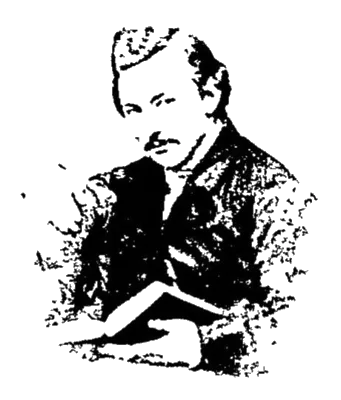
Thomas Hardy
Thomas Hardy was a church-musician's son who dreamed of the pulpit. In his twenties he lost his faith to the new biblical criticism, to Darwin, and to Newman's Apologia, whose chain of reasoning, he wrote in his notebook, had "no first link". He kept the loss private for thirty years, and said it in public only after Jude the Obscure drove him from the novel to verse. He spoke it as grief rather than triumph, refused the word atheist, and never ceased to love the church he could not believe in.
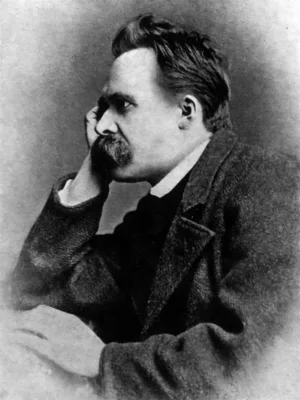
Friedrich Nietzsche
Nietzsche was a pastor's son who chose truth over peace at twenty. In 1882 he announced the death of God as a catastrophe Europe had not yet understood. He came to see his own unbelief not as the opposite of the faith he was raised in but as its last consequence: a Christian love of truth turned on Christianity itself.
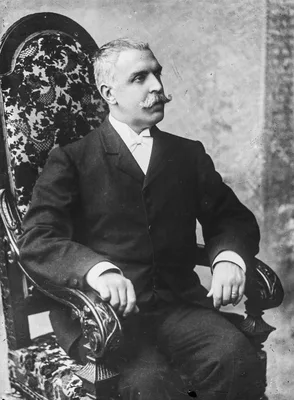
Manuel González Prada
Manuel González Prada was the son of a noble and conservative Lima family, and his early beliefs are disputed: deist verses in 1871, a "resolute atheist" by his own late account. The lost War of the Pacific made him a public unbeliever, and he attacked the Church as a pillar of the order that had ruined Peru. He then told freethinkers that hating priests was not a philosophy, and moved on to anarchism. At the end he admitted doubts about his own disbelief, without returning to faith.
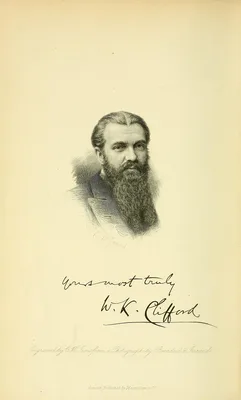
W. K. Clifford
W. K. Clifford was an ardent High Churchman at Trinity who tried to defend dogma with science. He gave up that faith in the late 1860s, under Darwin and Spencer, after a struggle his friend Pollock could not date. In "The Ethics of Belief" (1876–77) he turned his loss into a rule: it is wrong for anyone to believe on insufficient evidence. He never called himself an atheist in print, grieved openly for "the Great Companion", revered the believers he knew, and died at thirty-three without fear or retraction.