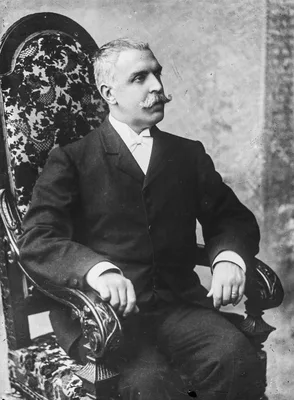
Manuel González Prada was the son of a noble and conservative Lima family, and his early beliefs are disputed: deist verses in 1871, a "resolute atheist" by his own late account. The lost War of the Pacific made him a public unbeliever, and he attacked the Church as a pillar of the order that had ruined Peru. He then told freethinkers that hating priests was not a philosophy, and moved on to anarchism. At the end he admitted doubts about his own disbelief, without returning to faith.
The belief timeline
- Faith (1850s–1871) — Devout conservative Lima household; religious schooling in Valparaíso; deist, mystical verses in 1871 [3][5][8]
- Doubt (1879–1881 (proposed)) — The war; Sánchez: "Cuando sale, ya es otro hombre"; Prada's own claim is that he was an atheist before this [9][11][12][13]
- Declaration (1888) — Burial speech for Márquez (Lucretius, "Torres de Babel") and the Politeama and Olimpo speeches [17][18][19]
- Revision (1898) — "Librepensamiento de acción": warns freethinkers against anticlerical monomania, apostasy and silence; moves to "pensamiento libre" and revolution [34][35]
- Late doubt (1917) — Tells del Valle that after Europe he began to doubt his atheism: "generalmente no creo" [9][10][44]
Notes to the timeline (14)
- [3] A family "de noble abolengo e ideas conservadoras"; the Ay chron adds "hogar cristiano, ultramontano, antiliberal... amigo del clero" quoting Sánchez — Luis Alberto Sánchez, Elogio de D. Manuel González Prada (Lima: Imprenta Torres Aguirre, 1922). Internet Archive
elogiodedmanuelg00sn; OCR inresearch/texts/sanchez1922.txt, p. 24; Prada, Páginas libres. Horas de lucha (Caracas: Biblioteca Ayacucho, 1976). Internet Archivepaginas-libres.-horas-de-lucha-manuel-gonzalez-prada.; OCR inresearch/texts/pl-hl-ayacucho.txt. Prada's texts are public domain; the prologue by Luis Alberto Sánchez, the chronology, the notes and the editor's textual changes are in copyright. Used to cross-check wording and for dates and leads only. Its texts are modern-spelling and include the author's later corrections (for example "Instrucción católica" where the 1894 index has "Instrucción laica"), chron (1844). Reported at second hand; the original has not been seen. - [5] Schooled in Valparaíso: "colegio de religiosos" / "colegio de frailes" (Sánchez) against "Colegio Inglés" where he learned German and English (Ay chron, citing Bruno Podestá) — Sánchez, Elogio de D. Manuel González Prada (1922), pp. 68, 137; Prada, Páginas libres. Horas de lucha, chron (1855). Accounts differ; see the disputed points.
- [8] In the Parnaso Peruano of J. D. Cortez (Valparaíso, 1871) his verses show him "convencido deista y hasta místico", with lines such as "En el blando reposo de la noche / Altivo a Dios el pensamiento vuela" — José de la Riva Agüero, Carácter de la literatura del Perú independiente (Lima: Librería Francesa Científica Galland, 1905). Internet Archive
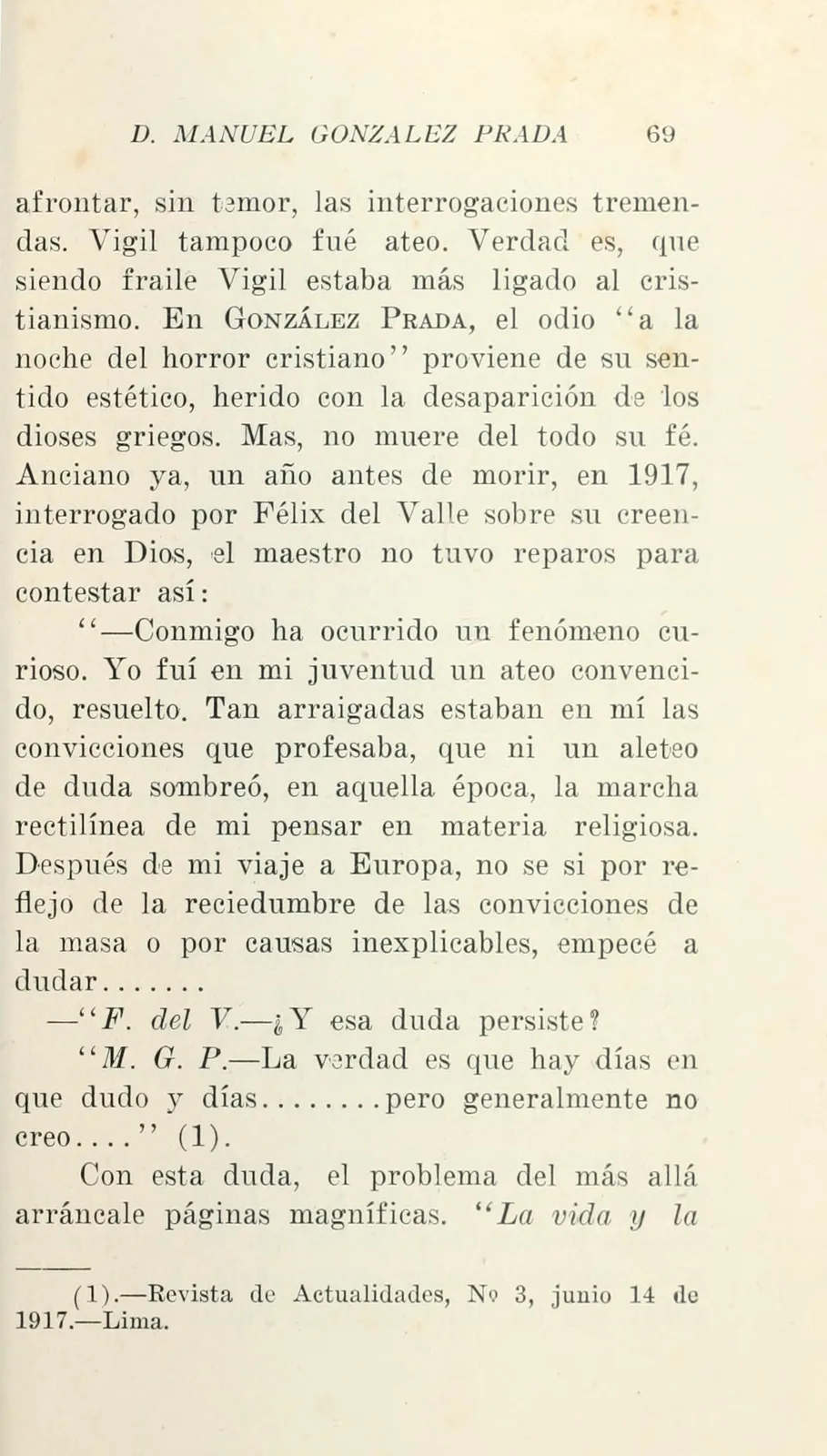
caracter-de-la-literatura-del-peru-independiente; OCR inresearch/texts/rivaaguero1905.txt. A university thesis by a young critic (a Catholic conservative by general knowledge); also the series' opposition voice. Page numbers estimated from OCR running heads, pp. 190–91; Sánchez, Elogio de D. Manuel González Prada (1922), p. 68. - [9] In 1917 he said he had been "un ateo convencido, resuelto" in his youth, with no flicker of doubt in religious matters — Sánchez, Elogio de D. Manuel González Prada (1922), p. 69 (quoting Revista de Actualidades no. 3, 14 June 1917).
- [11] Served in the defence of Lima in January 1881, as a reserve lieutenant-colonel at the El Pino redoubt (Sánchez) / second chief of the El Pino redoubt at Miraflores (Ay chron) — Sánchez, Elogio de D. Manuel González Prada (1922), p. 28; Prada, Páginas libres. Horas de lucha, chron (1881).
- [12] After the defeat he shut himself in his house so as not to see the invaders enter, and did not walk the streets until they left — Sánchez, Elogio de D. Manuel González Prada (1922), p. 28; Prada, Páginas libres. Horas de lucha, chron (1881, citing Podestá).
- [13] Sánchez's judgement: "Cuando sale, ya es otro hombre"; "Sin la guerra del 79... Prada no hubiera sido más que poeta"; Prada's anger turns on the clergy and the political class — Sánchez, Elogio de D. Manuel González Prada (1922), pp. 19–22, 28, 80.
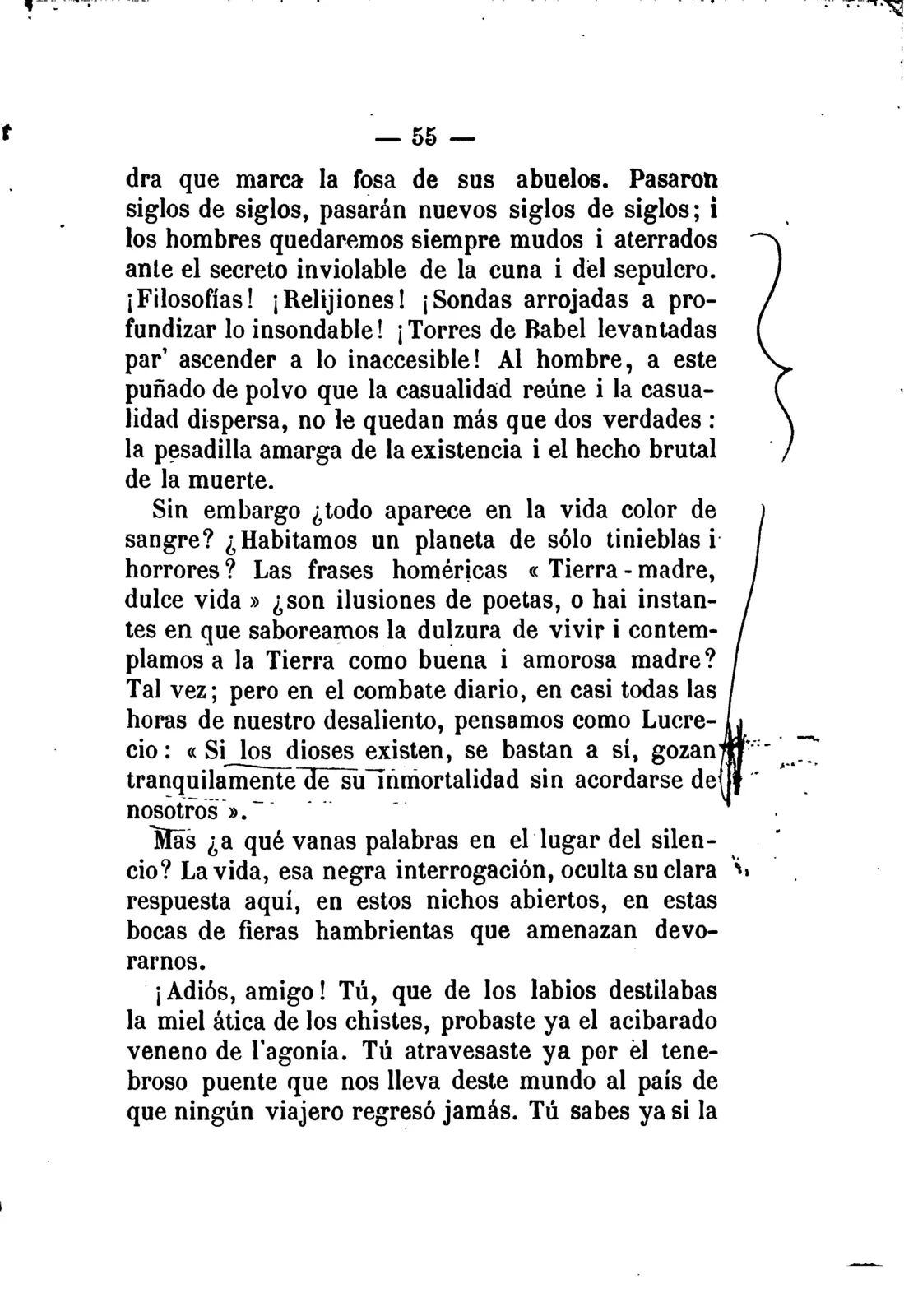
- [17] At the burial of Luis Márquez (1888) he calls "Filosofías! Relijiones!" mere "Torres de Babel" and says "pensamos como Lucrecio": the gods, if they exist, do not remember us — Manuel G. Prada, Pájinas libres (París: Tipografía de Paul Dupont, 4 rue du Bouloi, 1894). Internet Archive
pjinaslibres00pradgoog(Google scan of the Harvard copy), p. 55; Sánchez, Elogio de D. Manuel González Prada (1922), pp. 67–68. - [18] The "Discurso en el Politeama" was read on 29 July 1888 by a student (Urvina or Urbina) at a school-pupils' evening to start the national collection for Tacna and Arica; it was kept out of the press at first — Prada, Páginas libres. Horas de lucha, footnote on p. 43 of that edition; Prada, Páginas libres. Horas de lucha, chron (1888); Sánchez, Elogio de D. Manuel González Prada (1922), p. 129 calls it "el inolvidable discurso del Politeama".
- [19] In that speech he writes: "Abandonemos el romanticismo internacional i la fe en los auxilios sobrehumanos: la Tierra escarnece a los vencidos, i el Cielo no tiene rayos para el verdugo" and "¡Los viejos a la tumba, los jóvenes a la obra!" — Prada, Pájinas libres, p. 73.
- [34] "Librepensamiento de acción" was prepared for 28 August 1898 as the third conference of the Liga de Librepensadores del Perú and "la lectura no pudo efectuarse porque el Gobierno la impidió"; the organisers were mostly Masons led by Cristian Dam (Ay note) — Manuel G. Prada, Horas de lucha (Lima: Tip. "El Progreso Literario", Filipinas 114 y 116, 1908). Internet Archive
horas-de-lucha(scan uploaded 2020; the uploader's licence label covers the upload, not the 1908 text, which is public domain), p. 43 heading; Prada, Páginas libres. Horas de lucha, footnote p. 221. - [35] In it he says silent freethinkers are "linternas cerradas", that Peruvian freethinkers end as apostates ("la reculada viene en proporción del salto"), that red inquisitors are absurd ("Torquemada rojos"), and that freethought must become "pensamiento libre" and revolutionary — Prada, Horas de lucha, pp. 43–58.
- [10] In the same interview: after the journey to Europe, "no sé si por reflejo de la reciedumbre de las convicciones de la masa o por causas inexplicables, empecé a dudar"; of persisting doubt: "hay días en que dudo y días... pero generalmente no creo" — Sánchez, Elogio de D. Manuel González Prada (1922), p. 69.
- [44] Interview with Félix del Valle, Revista de Actualidades no. 3, 14 June 1917 (Sánchez), while Ay prologue says 1916 — Sánchez, Elogio de D. Manuel González Prada (1922), p. 69 n.; Prada, Páginas libres. Horas de lucha, prologue.
The Old to the Grave
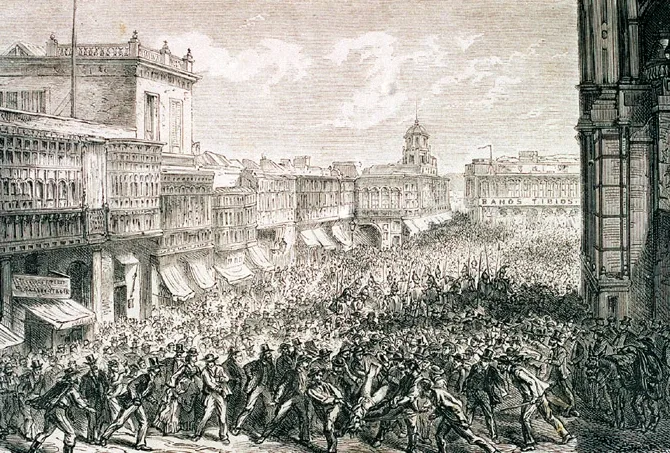
On 29 July 1888, at the Politeama theatre in Lima, a speech by Manuel González Prada was read aloud at an evening that opened a national collection for Tacna and Arica, provinces lost in the war with Chile. It was not a patriotic speech of the usual kind. Peru had been beaten, and he told his audience to stop waiting for help from above: "Let us abandon international romanticism and faith in superhuman aid: the Earth mocks the defeated, and Heaven has no thunderbolts for the executioner." And he ended with a line that became a slogan: "the old, rotten trunks have already borne their flowers of poisonous scent and their fruit of bitter taste. Let new trees come to give new flowers and new fruit! The old to the grave, the young to the work!"1234
He was the son of a noble and conservative family, and he became one of the best-known enemies of the Church in Peru. This chapter follows him from a conservative household in Lima through a lost war to the anarchist movement, and asks how much of his unbelief was about God and how much about a country he thought the clergy and the old order had ruined.
A conservative house
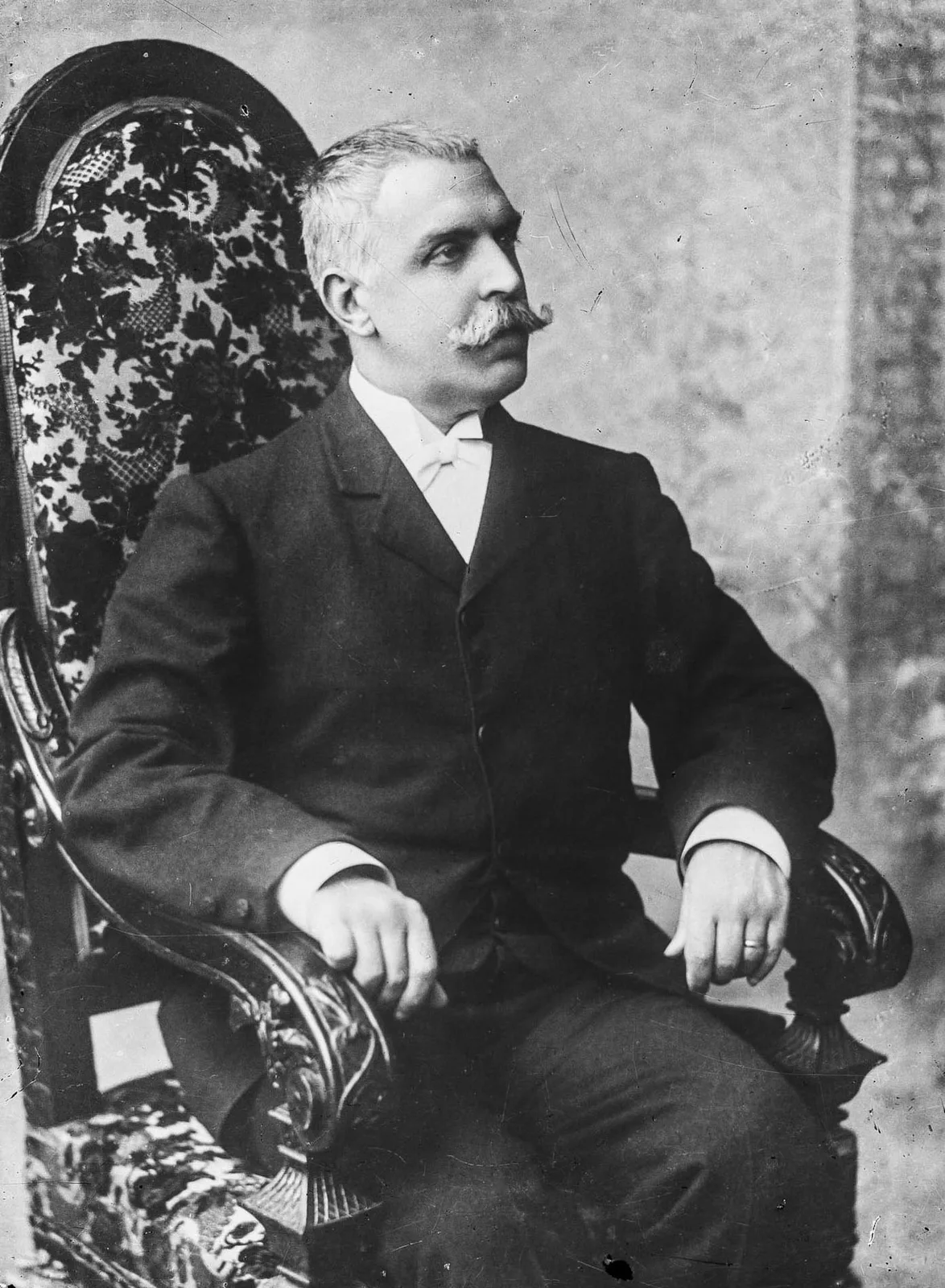
He was born in Lima, the son of Francisco González de Prada and Josefa Álvarez de Ulloa. The year is disputed: his family said 1848; a baptismal record found later gives 1844.56 The family was "of noble lineage and conservative ideas," in the words of his disciple and first biographer, Luis Alberto Sánchez.7 As a boy he went to school in Valparaíso, Chile, at a school Sánchez says was run by religious; another account says an English school.8 He studied law in Lima without taking a degree and spent some years working the land on a family estate.9
How he lost his faith is not clear, because his own account contradicts the evidence. Verses he published in 1871 read, to a later critic, as those of a "convinced deist and even a mystic," lifting his thought "proudly to God" in the quiet of the night.10 Yet in 1917, at the end of his life, he told a journalist: "A curious thing has happened to me. In my youth I was a convinced, resolute atheist."1112 Accounts differ, and this chapter leaves them side by side.
The war
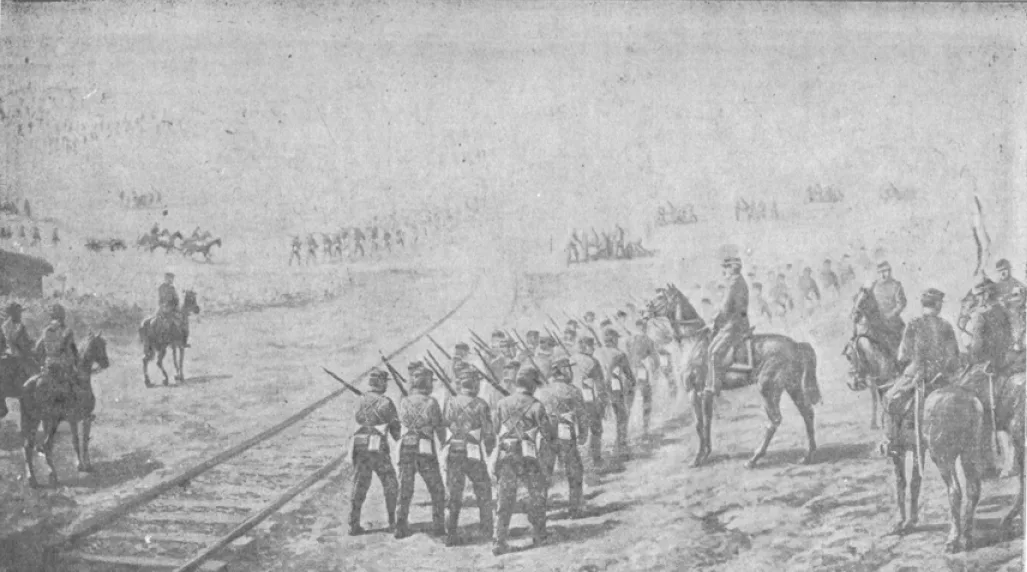
What changed his public life was a war. In the War of the Pacific, Chilean armies took Lima in January 1881. González Prada served in the city's defence as a reserve officer at the El Pino redoubt at Miraflores.13 When the city fell, he shut himself in his house so that he would not see the invaders, and did not walk the streets until they had gone.14 "When he comes out," Sánchez wrote, "he is another man." Without the war, Sánchez thought, he would have been nothing more than a poet, and his anger turned on the clergy and the political class he blamed for the defeat.15
In an essay on Victor Hugo in 1885 he gave his scale of values: "To go from monarchist to republican, from believer to freethinker, means to rise."1617
Speeches
He became the leader of a literary circle in Lima, and in 1888 he began to speak in public.18 At the burial of its president, his friend Luis Márquez, he dismissed the consolations offered at gravesides: "Philosophies! Religions! Probes sunk to sound the unfathomable! Towers of Babel raised to climb to the unreachable!" And he quoted a Roman poet: "we think like Lucretius: 'If the gods exist, they are sufficient to themselves, they enjoy their immortality in peace without remembering us.'"192021 The Politeama speech followed that July, and in October a speech at the Teatro Olimpo began his long quarrel with the writer Ricardo Palma.122
His essays went further. In one on lay education he charted Lima's convents as though they were "places invaded by an epidemic," and described the clergy in an image from astronomy: "In society the clergy are like the dark bodies in the sky: though not seen, they show their presence by the disturbances they cause in the neighbouring stars."2324 He wrote of death without comfort: "We know nothing: a hundredfold wall of granite separates life from death, and for ages upon ages men have wanted to pierce the wall with the point of a pin."2526 And he rejected the morality of heaven and hell: "Every doctrine of rewards and punishments rests on applying Book-keeping to Morals."2728 His model was Francisco de Paula González Vigil, a liberal priest and librarian whose books Rome had condemned; Sánchez called Vigil his "master."29
Paris
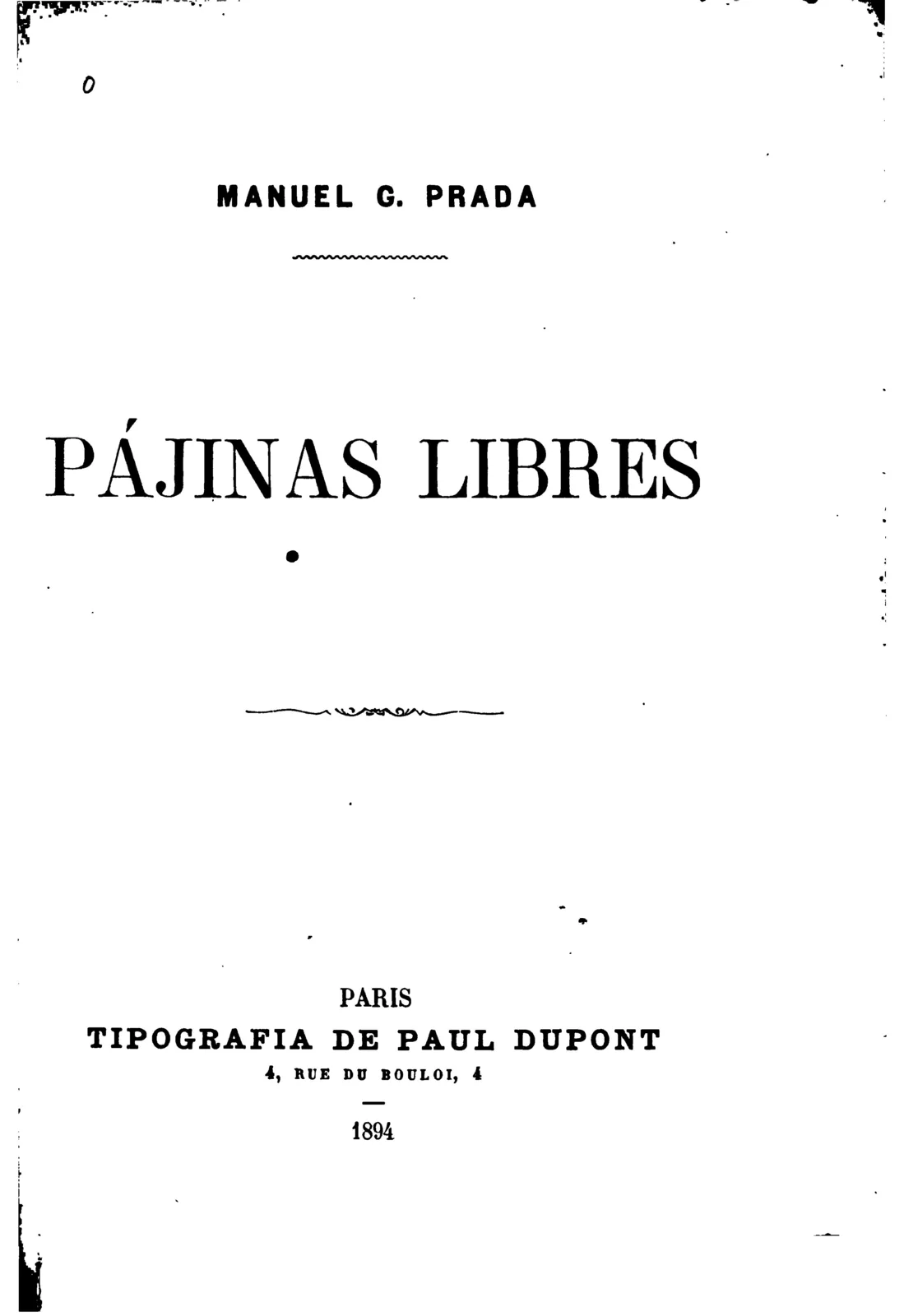
In 1891 he went to Europe and lived mainly in Paris for seven or eight years; accounts differ.30 He attended Ernest Renan's lectures at the Collège de France and those of the scholar Louis Ménard, to whom, a critic reported, he said he owed most.31 In 1894 his essays were printed in Paris as Pájinas libres, Free Pages, in his own reformed spelling.32
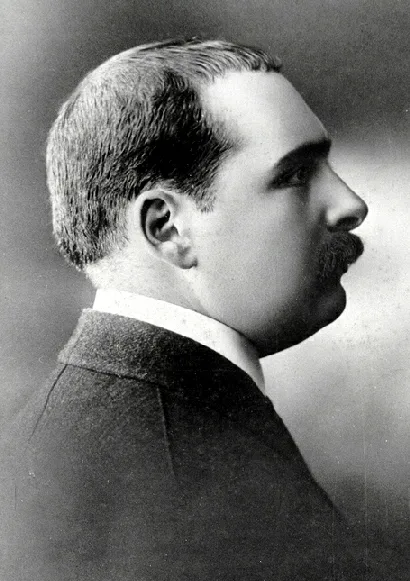
The Church answered. A Discalced friar, Padre González, replied to the book in two pamphlets called Páginas razonables, Reasonable Pages, in 1895.33 The young Lima critic José de la Riva Agüero, in a university thesis of 1905, judged him fairly but severely: "A militant heterodox, a propagandist of free thought, almost an apostle, González Prada is Vigil's continuer and heir, but is far from his serene temper." Riva Agüero objected to the cruder passages: "Is it necessary, to treat of lay instruction, to speak, as Prada does, of the clean or untidy appearance of the clergy?" But he added: "I admire González Prada as a stylist; I respect him personally because he is upright; because he acts in good faith; because he has bowed before no one."34353637 The Catholics, he noted, "have answered Prada's attacks with interest."3338
Free thought
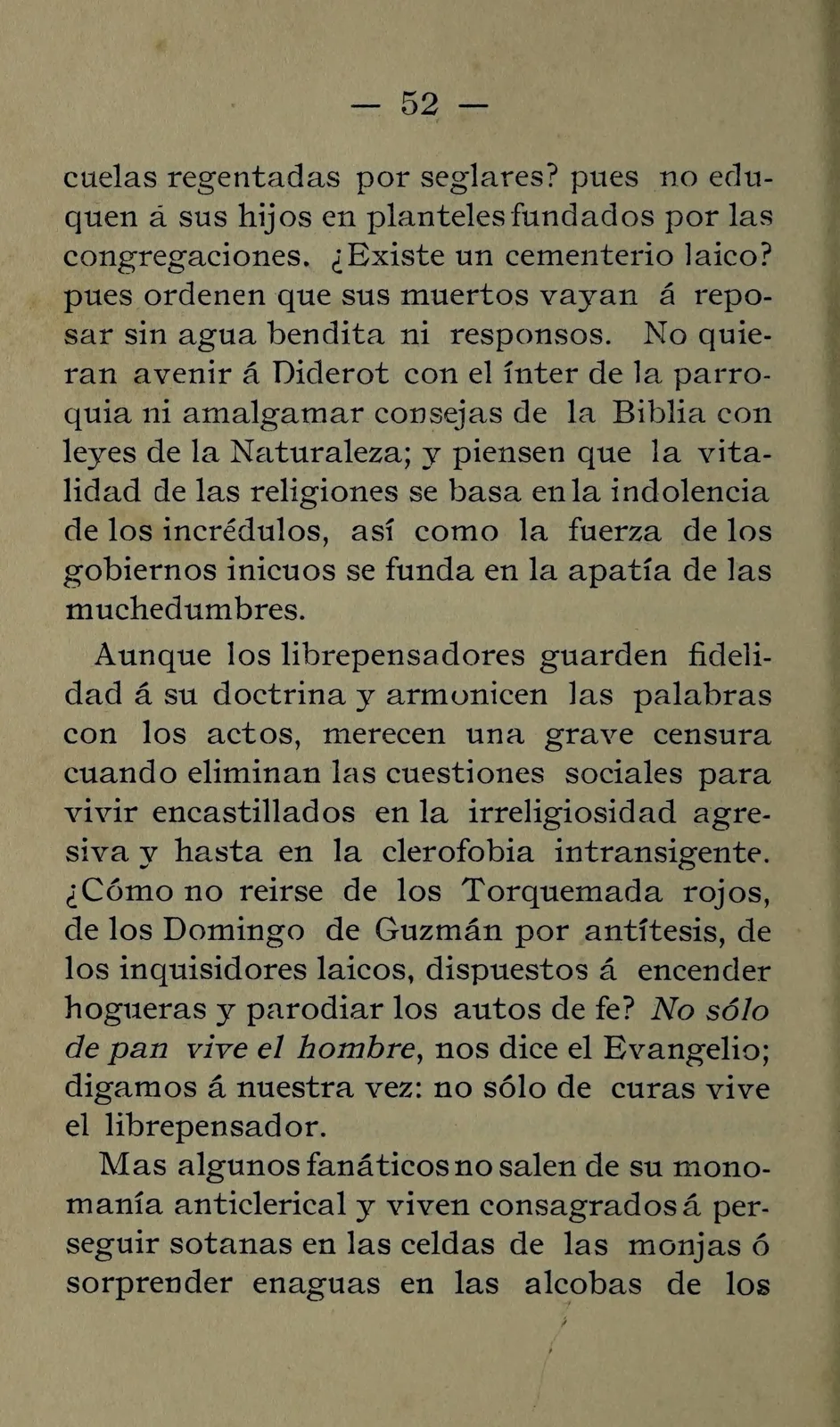
Back in Lima, in August 1898, he wrote a lecture for the League of Freethinkers of Peru, and the government stopped it from being read.39 It turned on his own side. Silent freethinkers, he said, were closed lanterns; Peruvian freethinkers had a way of ending as converts, for "the most furious end as the most seraphic; the retreat comes in proportion to the leap."4041 He mocked the anticlerical zealots too: "How can one help laughing at the red Torquemadas ... the lay inquisitors, ready to light bonfires and parody the autos-da-fé?"42 And he turned the Gospel on them: "Man does not live by bread alone, the Gospel tells us; let us say in our turn: the freethinker does not live by priests alone."43 Freethought, "which until today has meant only irreligion and anticlericalism," had to become "free thought, which involves the defence of the total emancipation of the individual," and "every freethinker, if he does not want to be illogical, has to declare himself a revolutionary."404445
He did not soften toward the Church. In an essay of 1900 he wrote that Catholicism "holds a perpetual threat to modern civilisation," and that "the intellectual and moral progress of the South American nations is measured by the dose of Catholicism they have managed to remove from their laws and customs."4647 He founded a newspaper, Germinal, against the clergy and the politician Nicolás de Piérola, lectured to workers and, though he said he was no Mason, to a Masonic lodge, and moved into the anarchist movement.484950 His essays were collected in Lima in 1908 as Horas de lucha, Hours of Struggle.51
The library
In 1912 he was made director of the National Library in Lima, succeeding Ricardo Palma, his old enemy, and the feud flared again.52 As director he let friars work in the library freely: "here I am only a public employee," he said.52 He resigned in 1914 rather than serve under a military government and returned in 1916.53
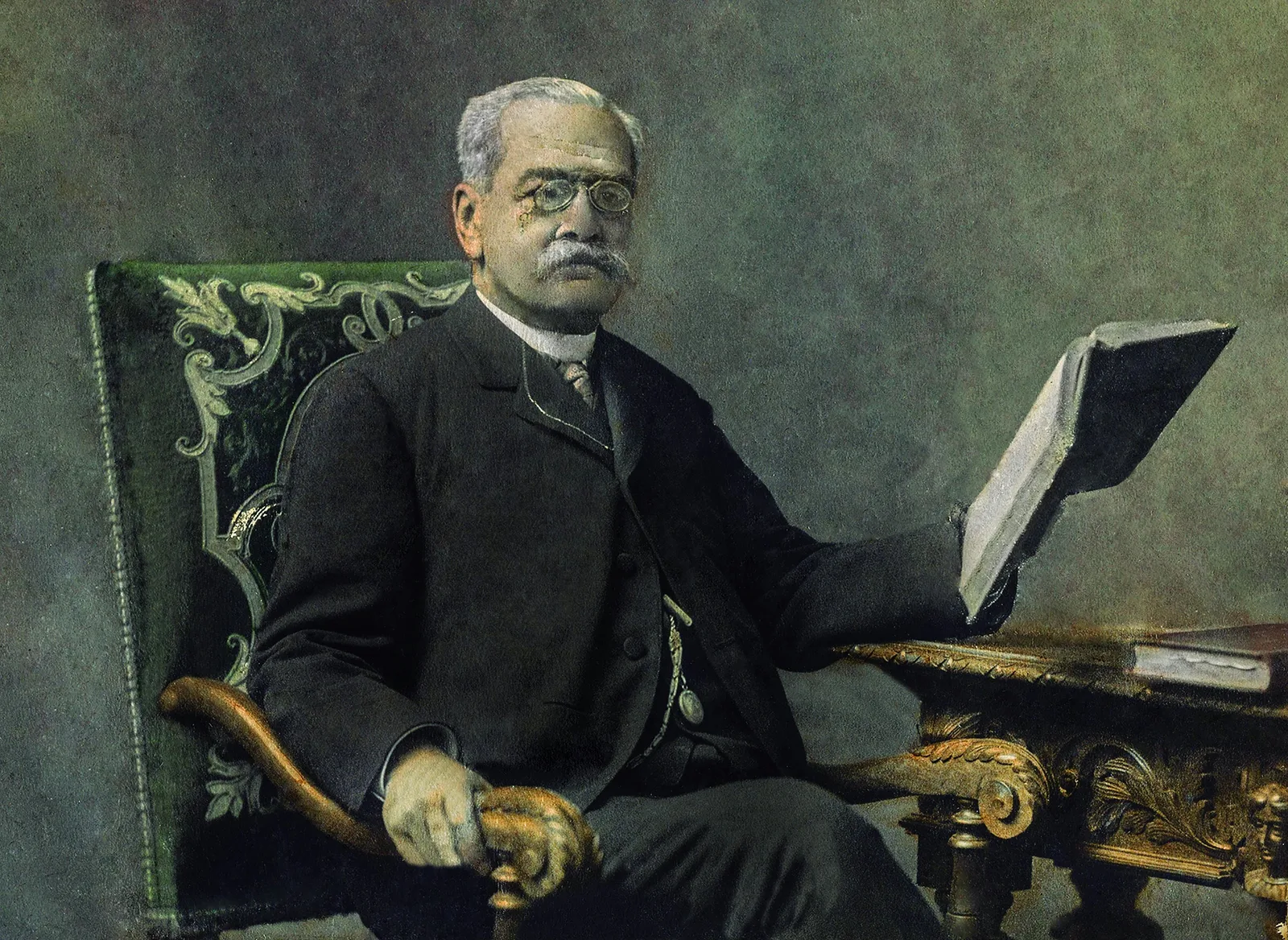
In June 1917 he gave the interview in which he looked back on his beliefs. He had been a convinced atheist in youth, he said, and then, after his journey to Europe, "I don't know whether as a reflection of the firmness of the masses' convictions or for inexplicable reasons, I began to doubt." "The truth is that there are days when I doubt and days ... but generally I do not believe."545556 His disciple Sánchez wrote that "the anticlerical was not completely an atheist, as has been said."57 He died at home in Lima on 22 July 1918, of a sudden heart attack, as he was leaving for the library.58
What he left
González Prada's unbelief was hard to separate from his anger at Peru's rulers. Whatever he believed as a young man, and the evidence pulls two ways, it was the lost war that made him speak, and he spoke against the Church as one pillar of an old order that had led the country to defeat. Then he turned on his own allies, telling freethinkers that hating priests was not a philosophy, and went on to anarchism. At the end he confessed doubts about his own disbelief without returning to faith. Ignacio Ramírez of Mexico, an earlier Latin American unbeliever who helped write his country's secular laws, has his own chapter in this book.
Footnotes
-
Prada, Páginas libres. Horas de lucha (Caracas: Biblioteca Ayacucho, 1976). Internet Archive
paginas-libres.-horas-de-lucha-manuel-gonzalez-prada.; OCR inresearch/texts/pl-hl-ayacucho.txt. Prada's texts are public domain; the prologue by Luis Alberto Sánchez, the chronology, the notes and the editor's textual changes are in copyright. Used to cross-check wording and for dates and leads only. Its texts are modern-spelling and include the author's later corrections (for example "Instrucción católica" where the 1894 index has "Instrucción laica"), footnote on p. 43 of that edition; Prada, Páginas libres. Horas de lucha, chron (1888); Luis Alberto Sánchez, Elogio de D. Manuel González Prada (Lima: Imprenta Torres Aguirre, 1922). Internet Archiveelogiodedmanuelg00sn; OCR inresearch/texts/sanchez1922.txt, p. 129 calls it "el inolvidable discurso del Politeama". Reported at second hand; the original has not been seen. ↩ ↩2 -
Manuel G. Prada, Pájinas libres (París: Tipografía de Paul Dupont, 4 rue du Bouloi, 1894). Internet Archive
pjinaslibres00pradgoog(Google scan of the Harvard copy), p. 73. ↩ -
Prada, Pájinas libres, p. 73. ↩
-
Prada, Pájinas libres, p. 73. ↩
-
Sánchez, Elogio de D. Manuel González Prada (1922), p. 137 (Nota biográfica); Prada, Páginas libres. Horas de lucha, chron under 1844. ↩
-
Sánchez, Elogio de D. Manuel González Prada (1922), p. 25 n. 1; Prada, Páginas libres. Horas de lucha, chron (citing Sánchez, Mito y realidad). Accounts differ; see the disputed points. ↩
-
Sánchez, Elogio de D. Manuel González Prada (1922), p. 24; Prada, Páginas libres. Horas de lucha, chron (1844). ↩
-
Sánchez, Elogio de D. Manuel González Prada (1922), pp. 68, 137; Prada, Páginas libres. Horas de lucha, chron (1855). ↩
-
Sánchez, Elogio de D. Manuel González Prada (1922), p. 137; Prada, Páginas libres. Horas de lucha, chron (1866–1874). ↩
-
José de la Riva Agüero, Carácter de la literatura del Perú independiente (Lima: Librería Francesa Científica Galland, 1905). Internet Archive
caracter-de-la-literatura-del-peru-independiente; OCR inresearch/texts/rivaaguero1905.txt. A university thesis by a young critic (a Catholic conservative by general knowledge); also the series' opposition voice. Page numbers estimated from OCR running heads, pp. 190–91; Sánchez, Elogio de D. Manuel González Prada (1922), p. 68. ↩ -
Sánchez, Elogio de D. Manuel González Prada (1922), p. 69 (quoting Revista de Actualidades no. 3, 14 June 1917). ↩
-
Sánchez, Elogio de D. Manuel González Prada (1922), p. 69, quoting Revista de Actualidades no. 3, 14 June 1917. Not checked against the original (no (Revista not seen)). ↩
-
Sánchez, Elogio de D. Manuel González Prada (1922), p. 28; Prada, Páginas libres. Horas de lucha, chron (1881). ↩
-
Sánchez, Elogio de D. Manuel González Prada (1922), p. 28; Prada, Páginas libres. Horas de lucha, chron (1881, citing Podestá). ↩
-
Sánchez, Elogio de D. Manuel González Prada (1922), pp. 19–22, 28, 80. ↩
-
Prada, Pájinas libres, p. 172. ↩
-
Prada, Pájinas libres, p. 172. ↩
-
Prada, Páginas libres. Horas de lucha, chron (1886, 1887); Sánchez, Elogio de D. Manuel González Prada (1922), p. 137. ↩
-
Prada, Pájinas libres, p. 55; Sánchez, Elogio de D. Manuel González Prada (1922), pp. 67–68. ↩
-
Prada, Pájinas libres, p. 55. ↩
-
Prada, Pájinas libres, p. 55. ↩
-
Sánchez, Elogio de D. Manuel González Prada (1922), pp. 128–30; Prada, Páginas libres. Horas de lucha, prologue (Oct. 1888). ↩
-
Prada, Pájinas libres, pp. 116–123. ↩
-
Prada, Pájinas libres, p. 117. ↩
-
Prada, Pájinas libres, pp. 256–66; Sánchez, Elogio de D. Manuel González Prada (1922), p. 70. ↩
-
Prada, Pájinas libres, p. 257. ↩
-
Prada, Páginas libres. Horas de lucha, text (not located in the damaged 1894 scan); Sánchez, Elogio de D. Manuel González Prada (1922), p. 70 quotes it. ↩
-
Prada, Páginas libres. Horas de lucha, text (modern spelling); Sánchez, Elogio de D. Manuel González Prada (1922), p. 70. ↩
-
Prada, Pájinas libres, pp. 105–107 (Vigil's Apuntes quoted); Sánchez, Elogio de D. Manuel González Prada (1922), pp. 66, 131. ↩
-
Prada, Páginas libres. Horas de lucha, chron (1891); Sánchez, Elogio de D. Manuel González Prada (1922), p. 137. ↩
-
Sánchez, Elogio de D. Manuel González Prada (1922), pp. 30, 137; Prada, Páginas libres. Horas de lucha, chron (1892); Agüero, Carácter de la literatura del… (1905), p. 192. ↩
-
Prada, Pájinas libres, title page and index. ↩
-
Agüero, Carácter de la literatura del… (1905), p. 197 and n. 1. ↩ ↩2
-
Agüero, Carácter de la literatura del… (1905), pp. 192, 197. ↩
-
José de la Riva Agüero, young Lima critic (Catholic and conservative by general knowledge; the thesis for the bachelor of letters, 1905). Series translation: "A militant heterodox, a propagandist of free thought, almost an apostle, González Prada is Vigil's continuer and heir, but is far from his serene temper.": Agüero, Carácter de la literatura del… (1905), p. 197 (est.). ↩
-
Riva Agüero 1905. Series translation: "Is it necessary, to treat of lay instruction, to speak, as Prada does, of the clean or untidy appearance of the clergy? To cry out against clerical invasion, must one take up malicious gossip?": Agüero, Carácter de la literatura del… (1905), p. 197 (est.). ↩
-
Riva Agüero 1905. Series translation: "I admire González Prada as a stylist; I respect him personally because he is upright; because he acts in good faith; because he has bowed before no one." Sánchez 1922 (p. 66) quotes this with "como artista" instead of "como estilista", a small misquotation: Agüero, Carácter de la literatura del… (1905), p. 202 (per Sánchez; page marker not located). ↩
-
Riva Agüero 1905 (same). Series translation: "For their part, the Catholics have not fallen short, and have answered Prada's attacks with interest." The footnote names the Discalced Padre González's "Páginas razonables" (Lima 1895) and calls Catholic apologetics in Peru "calamitoso": Agüero, Carácter de la literatura del… (1905), p. 197 (est.). ↩
-
Manuel G. Prada, Horas de lucha (Lima: Tip. "El Progreso Literario", Filipinas 114 y 116, 1908). Internet Archive
horas-de-lucha(scan uploaded 2020; the uploader's licence label covers the upload, not the 1908 text, which is public domain), p. 43 heading; Prada, Páginas libres. Horas de lucha, footnote p. 221. ↩ -
Prada, Horas de lucha, pp. 48–49 (est.). ↩
-
Prada, Horas de lucha, pp. 51–52 (est.). ↩
-
Prada, Horas de lucha, p. 52 (est.). ↩
-
Prada, Horas de lucha, p. 56 (est.). ↩
-
Prada, Horas de lucha, pp. 55–56 (est.). ↩
-
Prada, Horas de lucha, p. 299 (est.); Prada, Páginas libres. Horas de lucha, text. ↩
-
Prada, Horas de lucha, p. 299 (est.). Series translation: "Catholicism holds a perpetual threat to modern civilisation ... the intellectual and moral progress of the South American nations is measured by the dose of Catholicism they have managed to remove from their laws and customs." Ellipsis marks a cut of about a paragraph; the essay's title is not captured by the OCR. ↩
-
Prada, Páginas libres. Horas de lucha, chron (1899); Sánchez, Elogio de D. Manuel González Prada (1922), p. 139. ↩
-
Prada, Horas de lucha, pp. 71–100 and headings. ↩
-
Prada, Horas de lucha, headings (OCR gives 1903); Prada, Páginas libres. Horas de lucha, text and prologue; Sánchez, Elogio de D. Manuel González Prada (1922), p. 23. ↩
-
Prada, Horas de lucha, title page. ↩
-
Sánchez, Elogio de D. Manuel González Prada (1922), pp. 128–32. ↩ ↩2
-
Sánchez, Elogio de D. Manuel González Prada (1922), pp. 132–34; Prada, Páginas libres. Horas de lucha, chron. ↩
-
Sánchez, Elogio de D. Manuel González Prada (1922), p. 69. ↩
-
Sánchez, Elogio de D. Manuel González Prada (1922), p. 69 n.; Prada, Páginas libres. Horas de lucha, prologue. ↩
-
Sánchez, Elogio de D. Manuel González Prada (1922), p. 69. Not checked against the original (no (Revista not seen)). Series translation: "The truth is that there are days when I doubt and days ... but generally I do not believe." The ellipsis is Sánchez's own. ↩
-
Sánchez, Elogio de D. Manuel González Prada (1922), pp. 66–68. ↩
-
Sánchez, Elogio de D. Manuel González Prada (1922), p. 134. ↩
paginas-libres.-horas-de-lucha-manuel-gonzalez-prada.; OCR in research/texts/pl-hl-ayacucho.txt. Prada's texts are public domain; the prologue by Luis Alberto Sánchez, the chronology, the notes and the editor's textual changes are in copyright. Used to cross-check wording and for dates and leads only. Its texts are modern-spelling and include the author's later corrections (for example "Instrucción católica" where the 1894 index has "Instrucción laica").; Luis Alberto Sánchez, Elogio de D. Manuel González Prada (Lima: Imprenta Torres Aguirre, 1922). Internet Archive elogiodedmanuelg00sn; OCR in research/texts/sanchez1922.txt.; Manuel G. Prada, Pájinas libres (París: Tipografía de Paul Dupont, 4 rue du Bouloi, 1894). Internet Archive pjinaslibres00pradgoog (Google scan of the Harvard copy); José de la Riva Agüero, Carácter de la literatura del Perú independiente (Lima: Librería Francesa Científica Galland, 1905). Internet Archive caracter-de-la-literatura-del-peru-independiente; OCR in research/texts/rivaaguero1905.txt. A university thesis by a young critic (a Catholic conservative by general knowledge); also the series' opposition voice. Page numbers estimated from OCR running heads.; Manuel G. Prada, Horas de lucha (Lima: Tip. "El Progreso Literario", Filipinas 114 y 116, 1908). Internet Archive horas-de-lucha (scan uploaded 2020; the uploader's licence label covers the upload, not the 1908 text, which is public domain)In their own words
los troncos añosos i carcomidos produjeron ya sus flores de aroma deletéreo i sus frutas de sabor amargo. ¡Que vengan árboles nuevos a dar flores nuevas i frutas nuevas! ¡Los viejos a la tumba, los jóvenes a la obra!
Abandonemos el romanticismo internacional i la fe en los auxilios sobrehumanos: la Tierra escarnece a los vencidos, i el Cielo no tiene rayos para el verdugo.
pensamos como Lucrecio: « Si los dioses existen, se bastan a sí, gozan tranquilamente de su inmortalidad sin acordarse de nosotros »
¡Filosofías! ¡Relijiones! ¡Sondas arrojadas a profundizar lo insondable! ¡Torres de Babel levantadas par' ascender a lo inaccesible!
Nada sabemos : céntuple muralla de granito separa la vida de la muerte, i hace siglos de siglos que los hombres queremos perforar el muro con la punta de un alfiler.
Quien dijo existencia dijo dolor ; i la obra más digna de un Dios consistiría en reducir el Universo a la nada.
Pasar de monarquista a republicano, de creyente a librepensador, significa ascender.
Los clérigos en la sociedad recuerdan a los cuerpos opacos en el Firmamento : aunque no se descubren a la vista, manifiestan su presencia por las perturbaciones que causan en los astros vecinos.
¿Cómo no reirse de los Torquemada rojos, de los Domingo de Guzmán por antítesis, de los inquisidores laicos, dispuestos á encender hogueras y parodiar los autos de fe?
No sólo de pan vive el hombre, nos dice el Evangelio; digamos á nuestra vez: no sólo de curas vive el librepensador.
se sale del librepensamiento (que hasta hoy no ha significado sino irreligión y anticlericalismo) para entrar en el pensamiento libre que entraña la defensa por la total emancipación del individuo.
De ahí que todo librepensador, si no quiere mostrarse ilógico, tiene que declararse revolucionario.
los más energúmenos acaban por más seráficos; la reculada viene en proporción del salto.
El Catolicismo encierra una perenne amenaza á la civilización moderna ... el progreso intelectual y moral de las naciones sudamericanas se mide por la dosis de Catolicismo que han logrado eliminar de sus leyes y costumbres.
Conmigo ha ocurrido un fenómeno curioso. Yo fui en mi juventud un ateo convencido, resuelto.
La verdad es que hay días en que dudo y días ... pero generalmente no creo.
Toda doctrina de penas y recompensas se funda en la aplicación de la Teneduría de Libros a la Moral.
The other side
Heterodoxo militante, propagandista del pensamiento libre, casi apóstol, González Prada es el continuador y heredero de Vigil; pero está muy apartado de su serena templanza.
Por su parte, los católicos no se han quedado cortos y han respondido á los ataques de Prada con creces
Admiro á González Prada como estilista; lo respeto personalmente porque es íntegro; porque procede de buena fe; porque no se ha doblegado ante nadie
¿habrá necesidad, para tratar de la instrucción laica, de hablar, como lo hace Prada, del exterior limpio o desaseado de los clérigos? Para clamar contra la invasión clerical ¿es preciso acoger maliciosas hablillas?
Where accounts differ
| Point | One account | Another | How the page handles it |
|---|---|---|---|
| Birth year | 6 Jan. 1848 (Prada via More, brother-in-law Verneuil: Sánchez 1922 p. 25) | 5 Jan. 1844, baptismal record (Sánchez's later Mito y realidad, via Ay chron); Cortez, Riva Agüero and García Calderón also give 1844 | Say "born in Lima in the 1840s" or "accounts differ: 1844 by the baptismal record, 1848 by his own family". Check the baptismal record's publication |
| Valparaíso school | "colegio de religiosos / de frailes" (Sánchez) | "Colegio Inglés" (Ay chron, citing Podestá) | "A school in Valparaíso"; do not say "convent" or "seminary" unless a source is found |
| Seminary | Ay chron: Santo Toribio seminary 1858 | No other source; Sánchez says he went to school with religious in Valparaíso, then to San Carlos | Leave out the seminary unless confirmed by another biography |
| When he left belief | 1917 self-account: a convinced atheist from youth, no doubt until Europe | 1871 deist, mystical verses (Riva Agüero, Sánchez); Ay chron's "cumplía sus deberes religiosos... sin fe" (lead) | Report both and say accounts differ; the war (1879–81) is where all sources locate his public turn |
| Doubt after Europe | His own words, 1917 (Sánchez) | Disciples say he did not believe at all (Sánchez p. 68) | Quote him: "generalmente no creo"; do not call it a return to faith |
| Years in Europe | Seven (Ay chron) | Eight (Sánchez) | "About seven or eight years" |
| Year of the del Valle interview | 14 June 1917 (Sánchez) | 1916 (Ay prologue) | Say 1917, "shortly before his death" |
| Presbiterianas authorship | Attributed to him; never denied (Sánchez) | Published without his name | If used, say "attributed to him" |
| Who read the Politeama speech | A student (Urvina/Urbina) read it, per one modern note | Sánchez speaks as if Prada spoke it | Say "his speech, read aloud at the Politeama" unless confirmed |
List of illustrations
This page uses only public-domain and Creative Commons images; each is credited with its source and licence.
- Manuel González Prada (seated) — Archivo Courret, Biblioteca Nacional del Perú, 1902 · Archivo Courret, Biblioteca Nacional del Perú, via Wikimedia Commons; Public domain · Public domain (Wikimedia Commons file page)
- Lima-27-7-1872-2 — Trabajo propio. Reproducción de un dibujo de H. Meyer y grabado de A. Renard, año 1872., 2001 · Trabajo propio. Reproducción de un dibujo de H. Meyer y grabado de A. Renard, año 1872., via Wikimedia Commons; CC0 · CC0 (Wikimedia Commons file page)
- Batalla de Miraflores — Unknown authorUnknown author, Inicios siglo XX · Unknown author, via Wikimedia Commons; Public domain · Public domain (Wikimedia Commons file page)
- Pájinas libres (Paris: Tip. de P. Dupont, 1894), scan leaf 64 — Manuel González Prada, 1894 · Internet Archive, Harvard University copy digitised by Google (pjinaslibres00pradgoog) · Public domain (published 1894; Internet Archive states no rights restriction)
- Pájinas libres (Paris: Tip. de P. Dupont, 1894), scan leaf 8 — Manuel González Prada, 1894 · Internet Archive, Harvard University copy digitised by Google (pjinaslibres00pradgoog) · Public domain (published 1894; Internet Archive states no rights restriction)
- Jose de la Riva Aguero y Osma — Trabajo propio. Reproducción de una fotografía de 1925., 2011 · Trabajo propio. Reproducción de una fotografía de 1925., via Wikimedia Commons; CC0 · CC0 (Wikimedia Commons file page)
- Horas de lucha (Lima: Tip. El Progreso Literario, 1908), scan leaf 60 — Manuel González Prada, 1908 · Internet Archive, digitised copy (horasdelucha00gonz) · Public domain (published 1908; Internet Archive states no rights restriction)
- Ricardo Palma at the National Library of Peru — Unknown, 1907 · Unknown, via Wikimedia Commons; Public domain · Public domain (Wikimedia Commons file page)
- Elogio de D. Manuel González Prada (Lima: Imprenta Torres Aguirre, 1922), scan leaf 71 — Luis Alberto Sánchez, 1922 · Internet Archive, University of British Columbia Library copy (elogiodedmanuelg00sn) · Public domain (published 1922; Internet Archive states no rights restriction)
Sources
Tier 1 — the subject's own words
- [PL1894] Manuel G. Prada, Pájinas libres (París: Tipografía de Paul Dupont, 4 rue du Bouloi, 1894). Internet Archive
pjinaslibres00pradgoog(Google scan of the Harvard copy). OCR inresearch/texts/pl1894.txt. 1894 spelling ("i" for "y", "j" for "g"). Several pages lose the right-hand edge in the scan. Page numbers are the running heads in the OCR. - [HL1908] Manuel G. Prada, Horas de lucha (Lima: Tip. "El Progreso Literario", Filipinas 114 y 116, 1908). Internet Archive
horas-de-lucha(scan uploaded 2020; the uploader's licence label covers the upload, not the 1908 text, which is public domain). OCR inresearch/texts/hl2020.txt. Page numbers estimated from OCR running heads; confirm on the scan. - [Ay1976] Prada, Páginas libres. Horas de lucha (Caracas: Biblioteca Ayacucho, 1976). Internet Archive
paginas-libres.-horas-de-lucha-manuel-gonzalez-prada.; OCR inresearch/texts/pl-hl-ayacucho.txt. Prada's texts are public domain; the prologue by Luis Alberto Sánchez, the chronology, the notes and the editor's textual changes are in copyright. Used to cross-check wording and for dates and leads only. Its texts are modern-spelling and include the author's later corrections (for example "Instrucción católica" where the 1894 index has "Instrucción laica").
Tier 2 — scholarly or contemporary critics
- [Sánchez 1922] Luis Alberto Sánchez, Elogio de D. Manuel González Prada (Lima: Imprenta Torres Aguirre, 1922). Internet Archive
elogiodedmanuelg00sn; OCR inresearch/texts/sanchez1922.txt. Written four years after Prada's death by a disciple; an admiring biography, not a neutral one. Quotes Prada's 1917 interview (Revista de Actualidades, no. 3, 14 June 1917) second-hand. - [Riva Agüero 1905] José de la Riva Agüero, Carácter de la literatura del Perú independiente (Lima: Librería Francesa Científica Galland, 1905). Internet Archive
caracter-de-la-literatura-del-peru-independiente; OCR inresearch/texts/rivaaguero1905.txt. A university thesis by a young critic (a Catholic conservative by general knowledge); also the series' opposition voice. Page numbers estimated from OCR running heads.
Tier 3 — leads only (not used as citations in the script)
- Ay1976 chronology and prologue (see above), including Sánchez's Mito y realidad de González Prada as cited there for the 1844 baptismal record.
- Adriana de Verneuil, Mi Manuel (1947): in copyright; not consulted.
- Anarquía (1936, Santiago): not public domain in the United States; not consulted. A scan exists on the Internet Archive (
anarquia-manuel_gonzalez_prada); do not use. - Periodicals on the Internet Archive not yet read: Germinal 1904–1906 (
germinal1904-1905,germinalpe1906), La Protesta 1911–1912 (laprotestape1911-1912), El Pan del Alma / El Amigo del Clero (Catholic press named in Ay1976, not located).
Tier 4 — maps to other sources only
- Wikipedia not used.
Opposition sources — contemporary critics and religious responses
- [Riva Agüero 1905] as above.
- [P. González 1895] "Páginas razonables" (two pamphlets, Lima 1895), by the Discalced friar "González", known only through Riva Agüero's footnote. Not found online; lead.
Related lives
Ignacio Ramírez (Mexico, 1818–1879), the earlier Latin American unbeliever who helped write his country's secular laws; or Mikhail Bakunin, whose road from unbelief to anarchism Prada's follows. (The expensive model decides; per lessons.md the close says only that the other subject "has their own episode".)
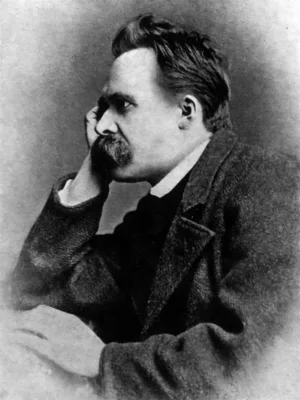
Friedrich Nietzsche
Nietzsche was a pastor's son who chose truth over peace at twenty. In 1882 he announced the death of God as a catastrophe Europe had not yet understood. He came to see his own unbelief not as the opposite of the faith he was raised in but as its last consequence: a Christian love of truth turned on Christianity itself.
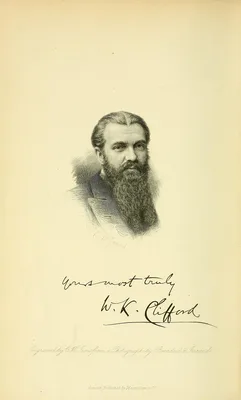
W. K. Clifford
W. K. Clifford was an ardent High Churchman at Trinity who tried to defend dogma with science. He gave up that faith in the late 1860s, under Darwin and Spencer, after a struggle his friend Pollock could not date. In "The Ethics of Belief" (1876–77) he turned his loss into a rule: it is wrong for anyone to believe on insufficient evidence. He never called himself an atheist in print, grieved openly for "the Great Companion", revered the believers he knew, and died at thirty-three without fear or retraction.
Ambrose Bierce
Ambrose Bierce was raised in a revivalist settlement whose religion he and his brother resented. He was wounded at Kennesaw, and his San Francisco colleagues remembered him as an author of atheistic tracts. He turned his unbelief into satire in The Devil's Dictionary (1881–1906), called himself an "infidel" who wished he were not one, and defended Ingersoll. In his last years, "not a Christian" but admiring Jesus next to Buddha, he asked a believing friend to pray for him before he vanished in Mexico at the end of 1913.
Annie Besant
Annie Besant left Christianity because she could not call good a God who let her baby suffer. She paid for her atheism with her marriage and her daughter. In 1889 she left atheism for Theosophy, because atheism gave her no motive strong enough to make people serve one another. She never unsaid her case against the supernatural.