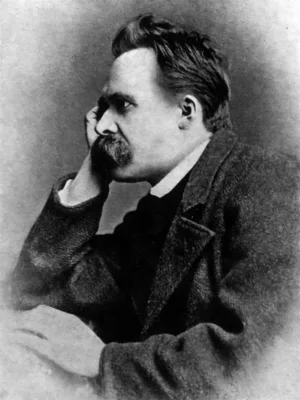
Nietzsche was a pastor's son who chose truth over peace at twenty. In 1882 he announced the death of God as a catastrophe Europe had not yet understood. He came to see his own unbelief not as the opposite of the faith he was raised in but as its last consequence: a Christian love of truth turned on Christianity itself.
The belief timeline
- Faith (1844–1861) — Pastor's son; "the little pastor"; confirmed at Pforta in 1861 [8][9][13]
- Doubt (1865) — The refusal of Communion (Easter) and the "believe or investigate" letter after a year of philological Bible criticism and Strauss. The childhood crack (historical criticism at Pforta, 1861–62, and the "Fate and History" note) comes earlier; the grown man's decision to choose inquiry over peace comes here [14][16][22][23][25]
- Declaration (1882 (first public break 1878)) — The madman of The Joyful Wisdom §125; in 1878 Human, All Too Human had already put the "metaphysical world" and Christianity into the past [41][45][46]
- Revision (1887) — The Genealogy (III §27) and Joyful Wisdom §357 recast atheism as the final product of Christian truthfulness, not the opposite of it; Beyond Good and Evil §53 [30][51]
- Collapse (1889) — Letters signed "Dionysos" and "The Crucified One"; eleven years of silence in his mother's and sister's care [55][56][58]
Notes to the timeline (16)
- [8] At school in Naumburg his classmates called him "the little pastor" (Ludovici's translation of Elisabeth: "the little Minister") and he recited Bible texts and hymns so feelingly "that he almost made one cry" — Daniel Halévy, The Life of Friedrich Nietzsche, tr. J. M. Hone (London: T. Fisher Unwin, 1911), p. 23; Elisabeth Förster-Nietzsche, The Young Nietzsche (= vol. I of her Life), tr. Anthony M. Ludovici (London: Heinemann, 1912), p. 25.
- [9] As a boy he meant to follow his father and the men of his family into the pastorate; he "could conceive no higher vocation" — Halévy, Life of Friedrich Nietzsche, p. 22.
- [13] He was confirmed at Pforta in 1861 with his friend Paul Deussen; Deussen recalls their "celestial cheerfulness" in the weeks before and after, which "withered away as quickly as it had sprung up" — Förster-Nietzsche, Young Nietzsche, pp. 88–89. Reported at second hand; the original has not been seen.
- [14] Deussen says their faith was "unconsciously stifled by the excellent methods of historical criticism" used on the ancients at Pforta and carried over to the Bible, instancing the Professor of Hebrew who read Psalm 46 as an earthly marriage song — Förster-Nietzsche, Young Nietzsche, pp. 89–90.
- [16] In a note called "Fate and History," written in spring 1862 when he was not yet eighteen, he already writes that if one could examine Christian doctrine and Church history "with a perfectly impartial eye" much would be opposed to accepted ideas, but that the weight of childhood and parents makes one regard a liberal stand "almost as a sin" — Förster-Nietzsche, Young Nietzsche, pp. 90–91.
- [22] According to Elisabeth he studied theology and philology at Bonn until Easter 1865 and then only philology; "at that time I imagined that history and its researches were able to return a direct answer to certain religious and philosophical questions"; he "ruminated" over Strauss's Life of Jesus — Förster-Nietzsche, Young Nietzsche, p. 135. Accounts differ; see the disputed points.
- [23] He declined to go with his mother and sister to Communion at the Easter festival; a stormy scene reduced his mother to tears; Aunt Rosalie advised that every great theologian had had moments of doubt and that discussion should be avoided; his mother promised not to compel him — Förster-Nietzsche, Young Nietzsche, p. 135.
- [25] The letter argues that an inner experience of faith proves nothing about objective truth (had we been raised in Muhammad's faith we would be as attached to it) and that a man must choose between spiritual peace and the truth: "believe" or "investigate" — Förster-Nietzsche, Young Nietzsche, pp. 136–137; Halévy, Life of Friedrich Nietzsche, p. 46.
- [41] Human, All Too Human was issued in 1878, two years after the Wagner essay; its Preface (added 1886) describes "the great emancipation" which "comes suddenly, like an earthquake" — Nietzsche, Human, All-Too-Human, Part I, tr. Helen Zimmern, Complete Works vol. VI (Foulis, 1909/1911), Introduction p. vii; Preface §3 p. 4.
- [45] The Joyful Wisdom (Books I–IV) was written in January 1882; Book V, the Preface and the Songs of Prince Free-as-a-Bird were added to the second edition of 1887 — Elisabeth Förster-Nietzsche, The Lonely Nietzsche, tr. Paul V. Cohn (London: Heinemann, 1915; the IA metadata says 1913), pp. 110–111; Nietzsche, The Joyful Wisdom (La Gaya Scienza), tr. Thomas Common, Complete Works vol. X, ed. Oscar Levy (Edinburgh: T. N. Foulis, 1910), Editorial Note p. viii.
- [46] §125 ("The Madman") occurs in Book III of the first edition (JW pp. 167–169); §108 earlier says "God is dead" in the sense of an unseen shadow still shown in caves — Nietzsche, Joyful Wisdom, §125, §108.
- [30] In 1887 he called Schopenhauer "the first avowed and inflexible atheist we Germans have had" and said the decay of belief in the Christian God was "a universal European event," Germans having delayed its victory; "unconditional, honest atheism" results from the Christian conscience's own veracity — Nietzsche, Joyful Wisdom, §357 (p. 307).
- [51] In Beyond Good and Evil (1886) §53 he asks "Why Atheism nowadays?" and says the "father" in God is "thoroughly refuted"; in the Genealogy (1887) he writes that the decay of belief might lead to "the complete and eventual triumph of atheism" and that honest atheism is "the awe-inspiring catastrophe of a two-thousand-year training in truth" — Nietzsche, Beyond Good and Evil, tr. Helen Zimmern (Foulis, 1907; reissued 1917), §53 (p. 59); Nietzsche, The Genealogy of Morals, tr. Horace B. Samuel, Complete Works vol. XIII (Foulis, 1913; IA copy 1918), vol. II §20 (p. 84) and III §27 (pp. 174–175).
- [55] In Turin around the New Year he wrote letters signed "Dionysos" or "The Crucified One"; Burckhardt received one and took it to Overbeck on 9 January 1889; Overbeck received another and, on the advice of the asylum director Wille, went to Turin — Halévy, Life of Friedrich Nietzsche, p. 360; Förster-Nietzsche, Lonely Nietzsche, pp. 392–393.
- [56] Elisabeth: a "paralytic stroke" struck him "during the last days of 1888"; his landlord found him fallen in the street; he lay two days on a sofa; then he talked to himself, sang and said he was composing an oratorio — Förster-Nietzsche, Lonely Nietzsche, pp. 391–392.
- [58] After about a year at Jena his mother took him to Naumburg; Elisabeth returned from Paraguay in 1890 and finally in 1893 — Förster-Nietzsche, Lonely Nietzsche, pp. 396, 404–405.
God Remains Dead
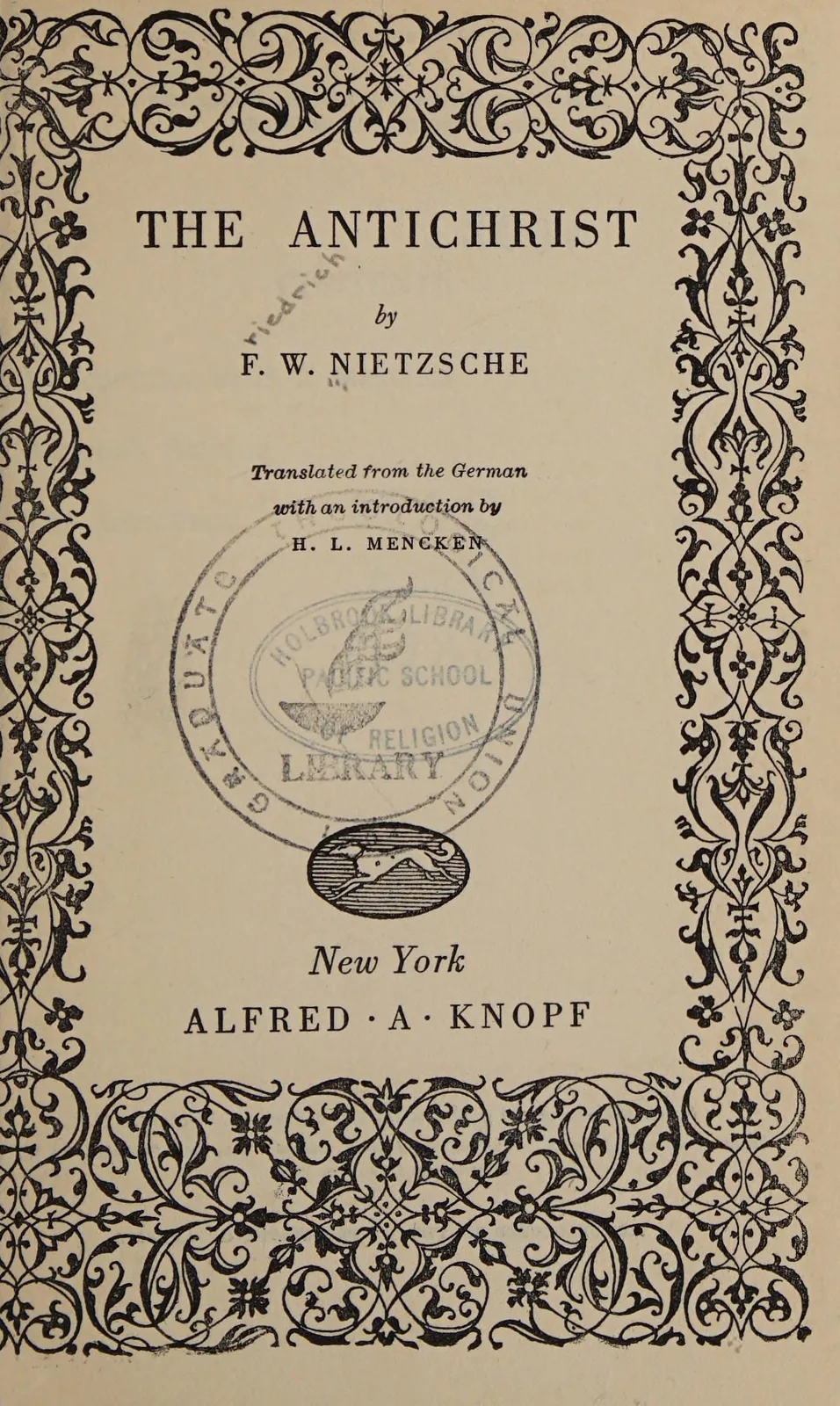
In a book published in 1882, a madman runs into a marketplace one bright morning with a lantern, crying, "I seek God! I seek God!" The people standing about, who do not believe in God, laugh at him. He turns on them. "Where is God gone? I mean to tell you! We have killed him, you and I! We are all his murderers!"1 Then he says the sentence for which the book, and its author, are remembered. "God is dead! God remains dead! And we have killed him! How shall we console ourselves, the most murderous of all murderers?"2 When no one answers, he throws his lantern on the ground. "I come too early," he says. "This prodigious event is still on its way, and is travelling; it has not yet reached men's ears."3
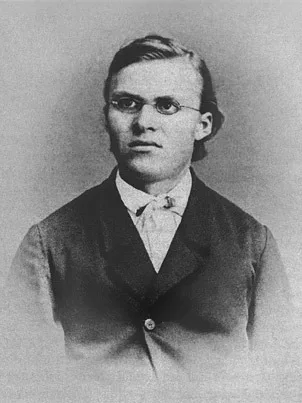
The author was Friedrich Nietzsche, the son and grandson of Lutheran pastors, who as a boy was called "the little pastor." The madman is not a triumphant atheist. He is horrified. This chapter is about how a devout boy from a Saxon parsonage came to write that scene, what he meant by it, and how it ended.
The little pastor
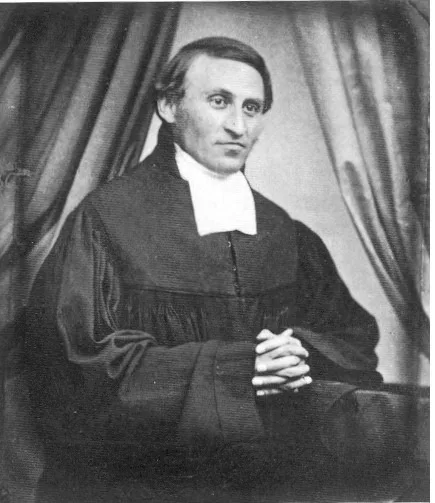
He was born at ten in the morning on 15 October 1844 in the parsonage at Röcken, a village in Prussian Saxony, on the birthday of King Friedrich Wilhelm IV, whose names he was given; the church bells were ringing for the king.4 His father, Carl Ludwig Nietzsche, was the village's Lutheran pastor, a musician who improvised on the church organ; both his grandfathers were pastors, and his mother, Franziska, was a pastor's daughter.56 He was a grave, silent child who loved to be with his father, who called him his "little friend."7
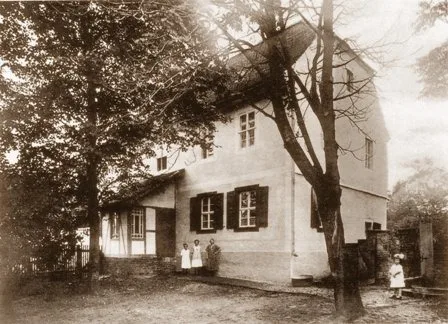
In August 1848 his father fell on the parsonage steps and began a long illness. He died on 30 July 1849, at thirty-five; Friedrich was four. Six months later his baby brother Joseph died, and in the spring the family left the parsonage for Naumburg.89 Nietzsche wrote of his father forty years later that he was "delicate, lovable, and morbid, like one who is preordained simply to pay a flying visit, a gracious reminder of life rather than life itself."10
In Naumburg, in a household of women, his mother, a grandmother, aunts and his little sister Elisabeth, the boy was devout. His school friends called him "the little pastor," and he could recite Bible texts and hymns so feelingly "that he almost made one cry."11 He meant to follow his father into the pastorate; he "could conceive no higher vocation."12 Looking back, he said that already at thirteen the problem of the origin of evil haunted him, and that in his first philosophical essay he "gave quite properly the honour to God, and made him the father of evil."13
Pforta
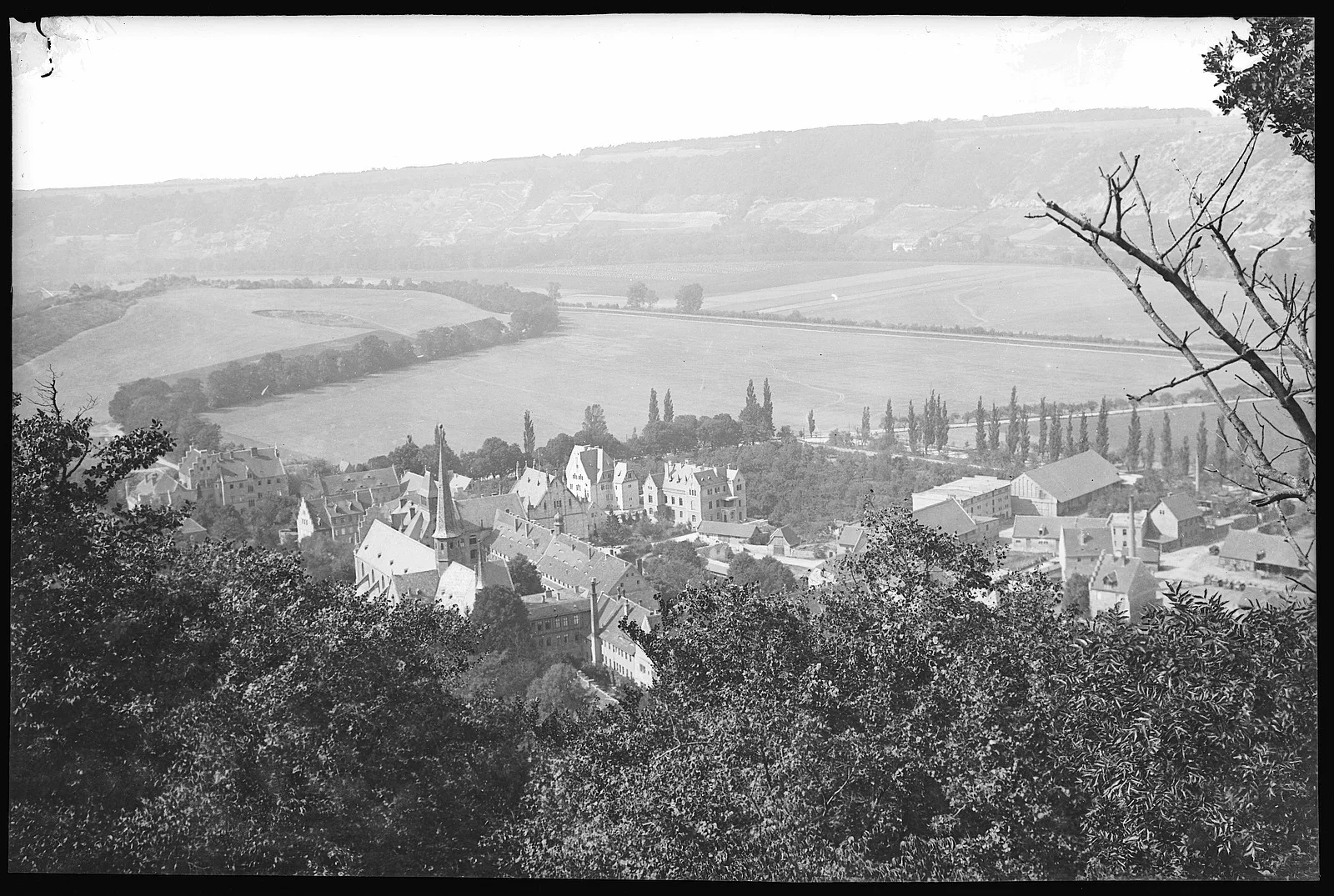
In October 1858 he went to the boarding school at Pforta.14 He was confirmed there in the spring of 1861 alongside his friend Paul Deussen. Deussen remembered their mood: "We were prepared to leave this world at once and find ourselves by the side of Christ, and all our thoughts, feelings and aspirations were bathed in a celestial cheerfulness which, like a forced plant, could not live long, and withered away as quickly as it had sprung up."15 What made it wither, Deussen thought, was the school itself. Pforta taught its boys to read Greek and Latin texts with the tools of historical criticism, and they turned the same tools on the Bible; he remembered a professor of Hebrew who read one of the Psalms as an earthly wedding song.16
At home he gave his family a fright by recommending David Friedrich Strauss's Life of Jesus, the most notorious critical book on the gospels, as a Christmas present for his sister; his mother and his aunt Rosalie were indignant.17 In the spring of 1862, not yet eighteen, he wrote a note he called "Fate and History." "If we could examine Christian doctrine and Church History with a perfectly impartial eye, we should be compelled to admit much which would be opposed to generally accepted ideas," he wrote. And he knew what held him back: "We are so influenced in our innermost being by the impressions of our childhood and the influence of our parents and education, that these deeply imbedded prejudices are not so easily uprooted by means of rational arguments or a mere effort of the will."1819 This was the first crack, and it is worth seeing exactly what it was: a schoolboy's discovery that the Bible could be read like any other ancient book, and that he was not yet free to do it.
Bonn, 1865
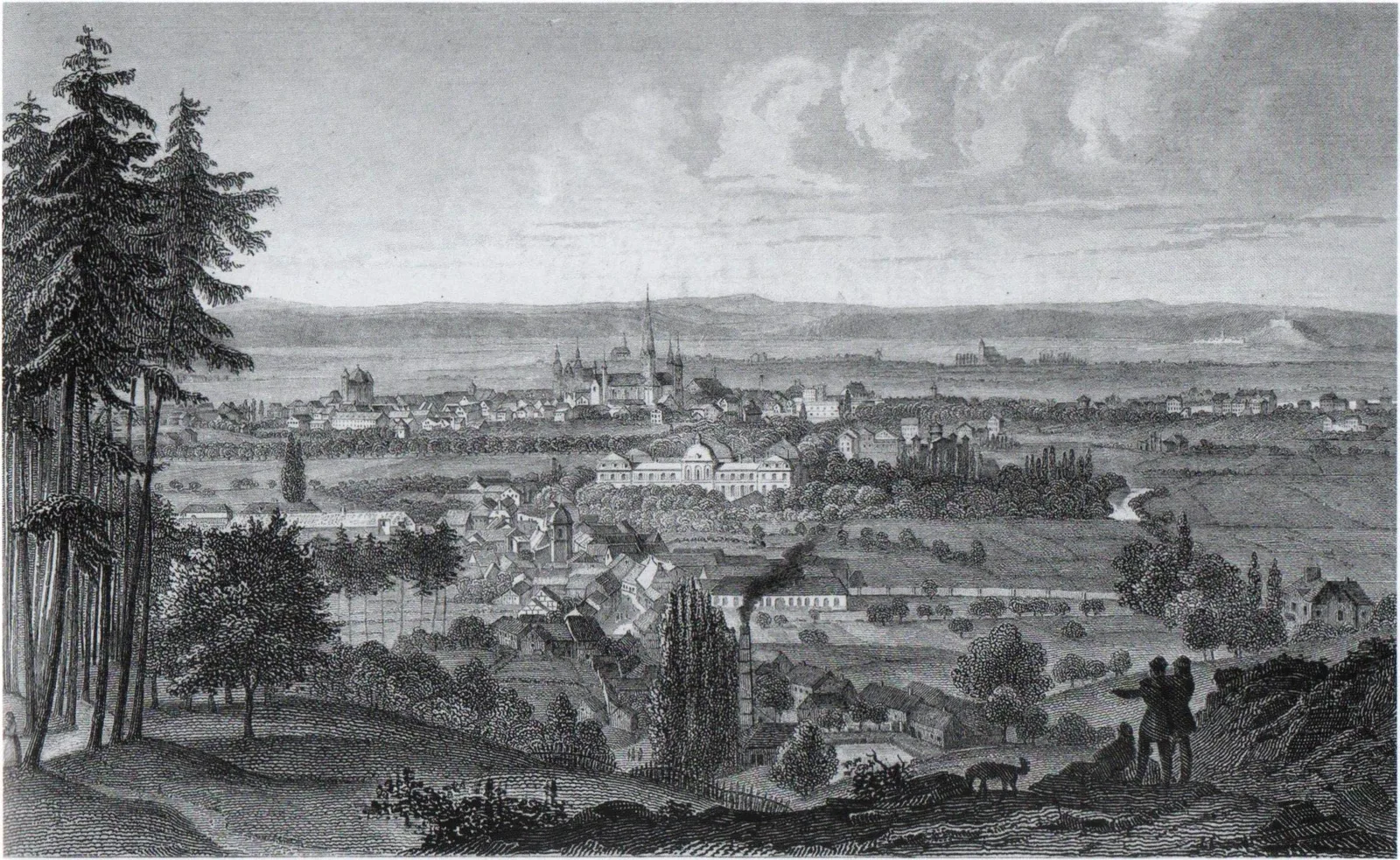
In October 1864 he went to the University of Bonn to study theology and classical philology.20 There, his sister later wrote, he had imagined that "history and its researches were able to return a direct answer to certain religious and philosophical questions," and he read Strauss again.21 The great philologist Friedrich Ritschl told him, "If you wish to become a strong man, acquire a speciality," and he gave up the idea of studying theology deeply.22
At Easter 1865, at home in Naumburg for the holidays, he refused to go to Communion with his mother and sister. There was a stormy scene, and his mother wept. His aunt Rosalie, "an authority on dogma," advised her that every great theologian had had moments of doubt, and that it was much better at such moments to avoid discussion; his mother forbade any talk of religion in the house.2324 Elisabeth, troubled, wrote to her brother, and his answer is the clearest statement he ever made of why he left. An inner experience of faith, he told her, proved nothing about the truth of what was believed; had they been brought up as Muslims they would feel the same about their own faith.25 "For the genuine investigator, is not the result of his investigation rather a matter of indifference? Is then the object of our investigation, repose, peace, happiness? No, but the truth, however frightful and ugly it might be."26 And then the choice: "Do you desire spiritual peace and happiness? Very well, then, believe! Do you wish to be a disciple of truth? So be it; investigate!"27
That is the wording in his sister's edition. Another translator gives "peace of soul" and "enquire"; the day of the letter is not given in either source, and the wording often quoted online is in neither.2829 But the meaning does not change, and this is why the doubt that matters is dated here rather than to the school. At Pforta a boy had found that the Bible could be questioned and had felt the weight of his childhood holding him back. At twenty he made the choice in his own family, at the altar rail, and put it in writing.
Schopenhauer and Wagner
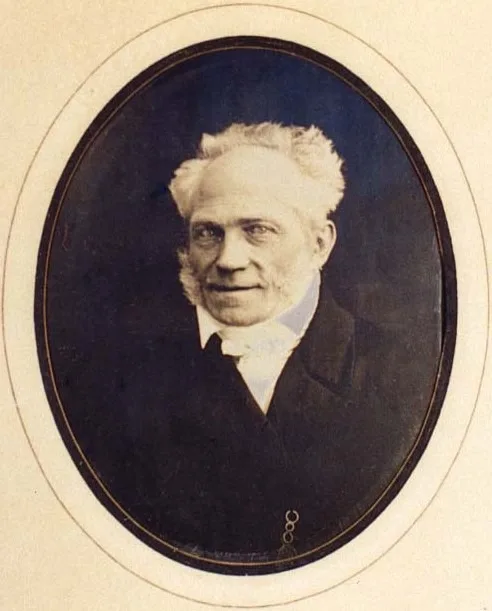
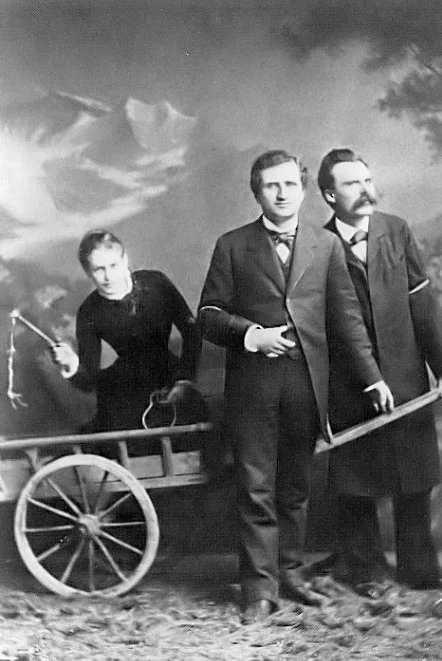
He left Bonn that autumn "like a fugitive," he wrote, feeling that his nature could find no satisfaction among his fellow students, and followed Ritschl to Leipzig.3031 In a second-hand bookshop there he found Arthur Schopenhauer's The World as Will and Representation. "I know not what demon whispered to me: 'Take this book home with thee,'" he wrote; in it he saw "a mirror in which I espied the whole world, life and my own mind."3233 Twenty years later he called Schopenhauer "the first avowed and inflexible atheist we Germans have had."34
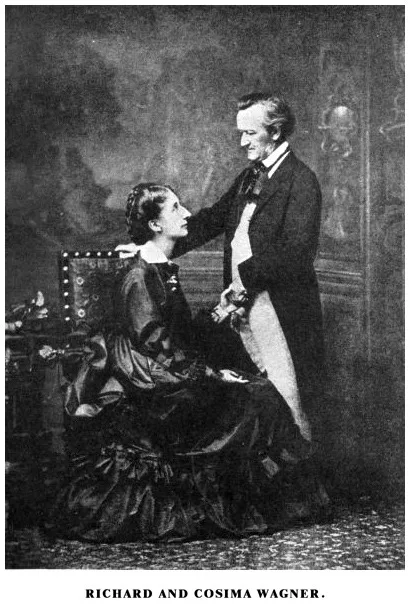
In 1869, at twenty-four and without a doctorate, he was made professor of classical philology at Basel on Ritschl's recommendation.35 That spring he first visited Richard Wagner at Tribschen, on the lake of Lucerne, and wrote to a friend that at Wagner's side "I feel in the presence of the divine."3637 It was a kind of conversion of its own. For seven years Wagner's art and Wagner's circle took the place of the faith he had left.
He watched what other people did with the loss of faith, and it worried him. In 1873 he attacked David Strauss, the man whose Life of Jesus he had read as a boy, not for giving up Christianity but for offering in its place a comfortable, self-satisfied German culture.38 A friend, Heinrich Romundt, announced that he would enter holy orders; Nietzsche wrote that he detested it, and reported Romundt's tearful departure from Basel station, where "he wept a great deal and asked our forgiveness."3940 In August 1876 he fled the first Bayreuth festival, and the friendship with Wagner began to break. When Wagner's Parsifal reached him in 1879 he read it as a return to Christianity, "a too limited Christianity," with "no flesh and far too much blood."4142
The free spirit
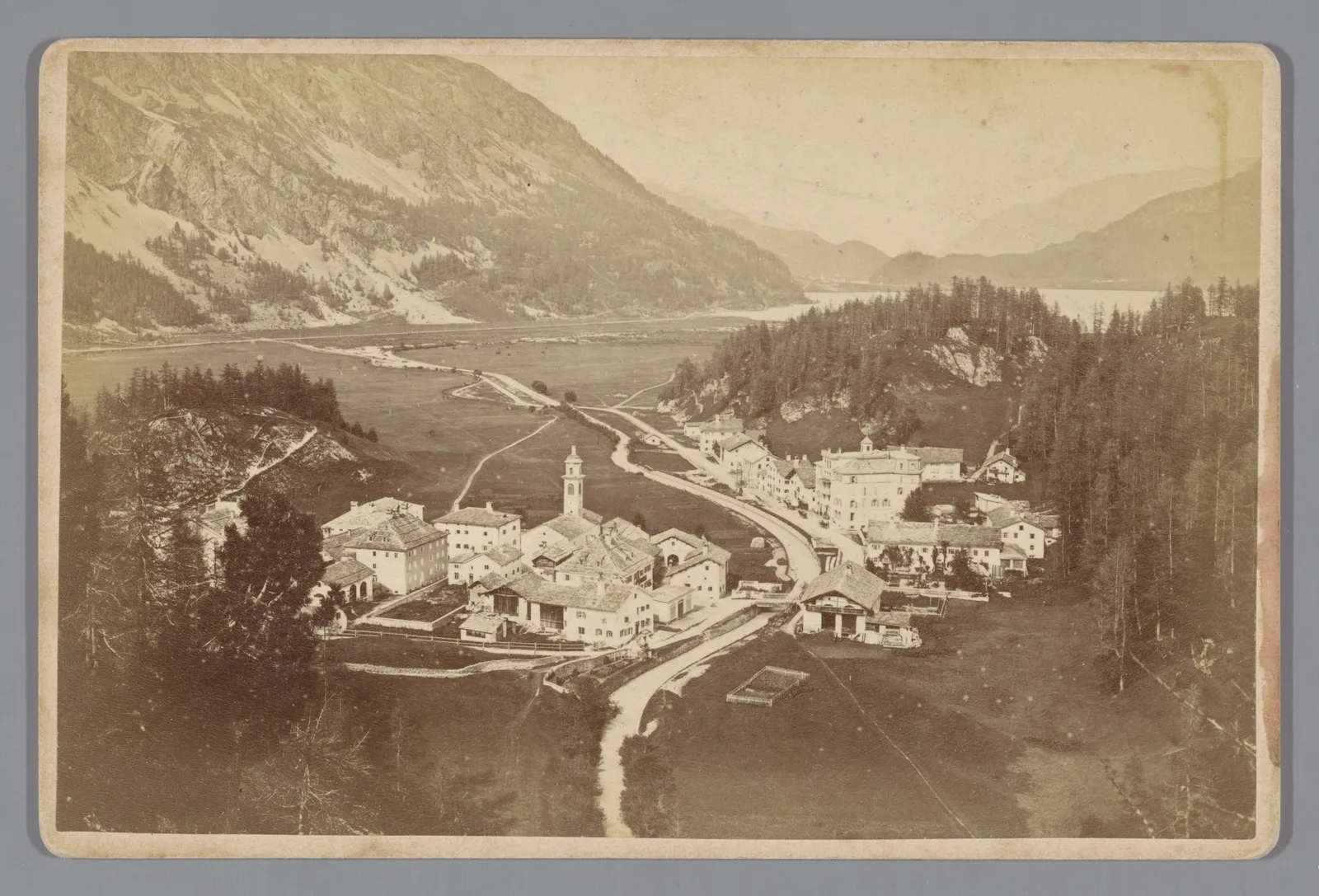
In 1878 he published Human, All Too Human, "a book for free spirits."43 It put the metaphysical world, Christianity and Wagner's circle behind him in one stroke. He described what had happened eight years later: "For those who are thus bound the great emancipation comes suddenly, like an earthquake; the young soul is all at once convulsed, unloosened and extricated, it does not itself know what is happening."44 In the book itself he imagined hearing church bells on a Sunday morning and asking, "Is it possible! This is done on account of a Jew crucified two thousand years ago who said he was the Son of God. The proof of such an assertion is wanting."45 In 1879, sick and half blind, he resigned his chair at Basel, and for the next ten years he lived in boarding houses, summers in the Swiss Alps at Sils Maria, winters in Genoa and Nice.46

God is dead
The Joyful Wisdom was written in January 1882.47 The death of God appears first not with the madman but in a short passage about the Buddha: "After Buddha was dead people showed his shadow for centuries afterwards in a cave. God is dead: but as the human race is constituted, there will perhaps be caves for millenniums yet, in which people will show his shadow. And we, we have still to overcome his shadow!"48 A few pages later comes the madman, and his last question to the crowd: "What are these churches now, if they are not the tombs and monuments of God?"49
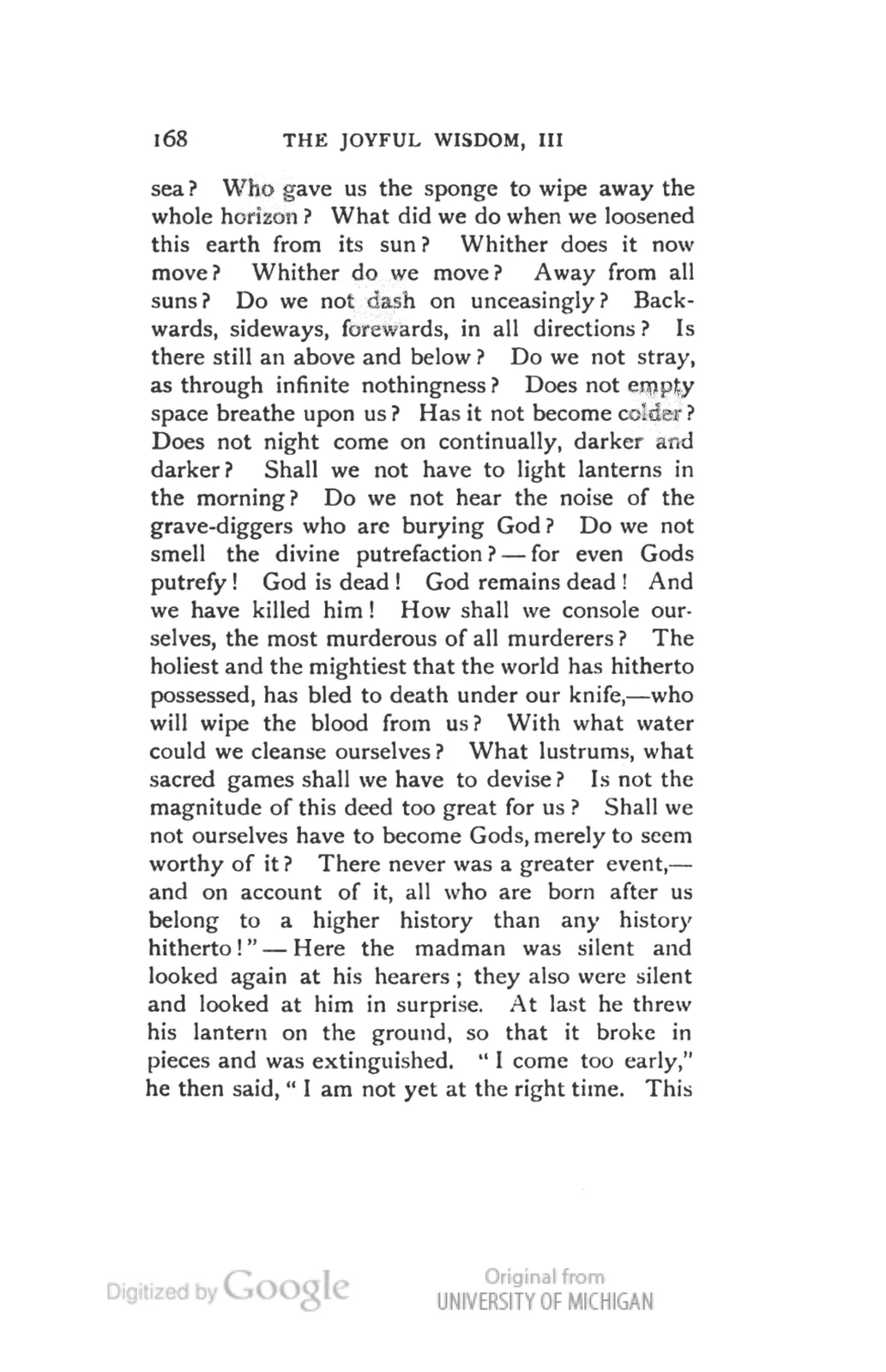
The book of 1882 is where his declaration belongs. Human, All Too Human had been his first public break, four years earlier; but in The Joyful Wisdom he said for the first time in print what he thought had happened, and he said it as an event in history, not as an argument. He was not trying to prove that God did not exist. He was saying that Europe had stopped believing, mostly without noticing, and that the consequences, for morality, for meaning, for everything built on the old faith, had not yet arrived. The madman's horror is the point. "Who will wipe the blood from us?"2
The next year, at Rapallo, he wrote the first part of Thus Spake Zarathustra in about ten days; Wagner died in Venice in the same days.50 Zarathustra comes down from his mountain, meets an old hermit in the forest who still praises God, and says to himself in wonder, "Could it be possible! This old saint in the forest hath not yet heard of it, that God is dead!"51
Christian truthfulness
In his books of 1886 and 1887 he came back to the question and gave it a twist that changes how the death of God should be read. "Why Atheism nowadays?" he asked; "'The father' in God is thoroughly refuted; equally so 'the judge,' 'the rewarder.'"52 But what had killed the Christian God? Not, he argued, the enemies of Christianity. "One sees what has really gained the victory over the Christian God: Christian morality itself, the conception of veracity, taken ever more strictly."53 Two thousand years of being taught to tell the truth had made it impossible to go on believing. "The decay of the belief in the Christian God, the victory of scientific atheism, is a universal European event."54 And honest atheism, he wrote in The Genealogy of Morals, "is not opposed to that ideal," the ideal of self-denial Christianity had preached, "to the extent that it appears to be; it is rather one of the final phases of its evolution."55
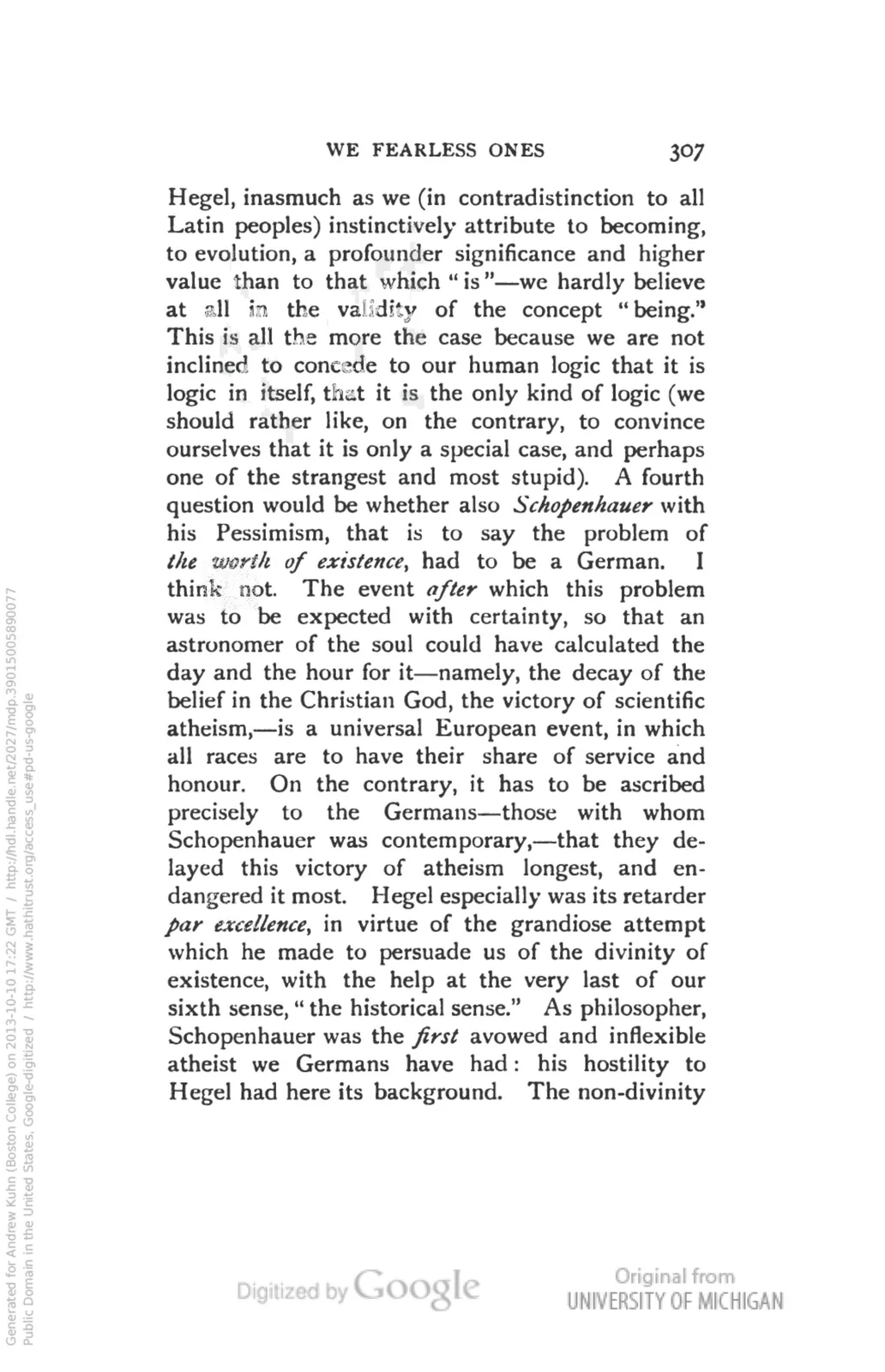
This is his revision, and it is what makes him unusual among the people in this book. Most unbelievers see their unbelief as the opposite of their childhood faith. Nietzsche saw his as its last consequence. The little pastor's love of truth, taught him in a parsonage, was what made him leave the parsonage behind.
The Antichrist
In 1888, in Turin, he wrote at a furious speed: The Case of Wagner, Twilight of the Idols, The Antichrist and Ecce Homo.56 The Antichrist was the most violent attack on Christianity he ever made, and also the most surprising. "The very word 'Christianity' is a misunderstanding," he wrote; "at bottom there was only one Christian, and he died on the cross."57 He ended by calling Christianity "the one immortal blemish upon the human race."58 In Ecce Homo, his account of himself, he did not call himself an atheist. He called himself "the first immoralist," and "dynamite," and he ended with a challenge: "Have you understood me? Dionysus versus Christ."596061
Turin
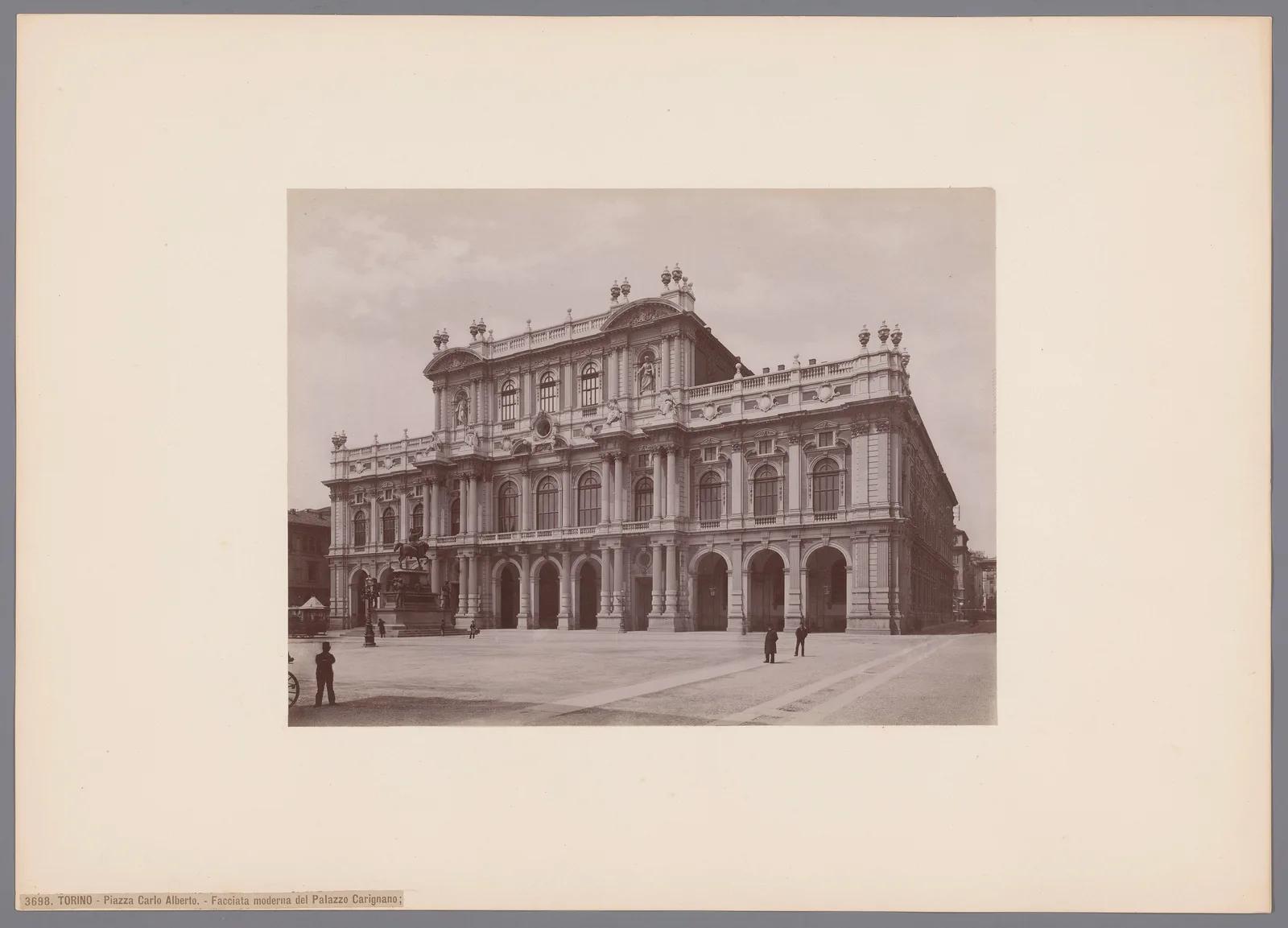
In the first days of January 1889 he collapsed in Turin. Accounts differ about how and why. His sister wrote of a "paralytic stroke" in the last days of 1888; his landlord found him fallen in the street.62 The letters he sent his friends in those days were signed "Dionysos" or "The Crucified One." To the Danish critic Georg Brandes, who had just given the first public lectures on his work, he wrote: "Friend Georges, since you have discovered me, it is not wonderful to find me: what is now difficult is to lose me. The Crucified."63 The historian Jacob Burckhardt, at Basel, took his letter to their friend Franz Overbeck, who went to Turin and brought him back to a clinic.6465 The famous story of Nietzsche embracing a beaten horse in a Turin street, and the exact day of the collapse, do not appear in any of the early sources used for this chapter.
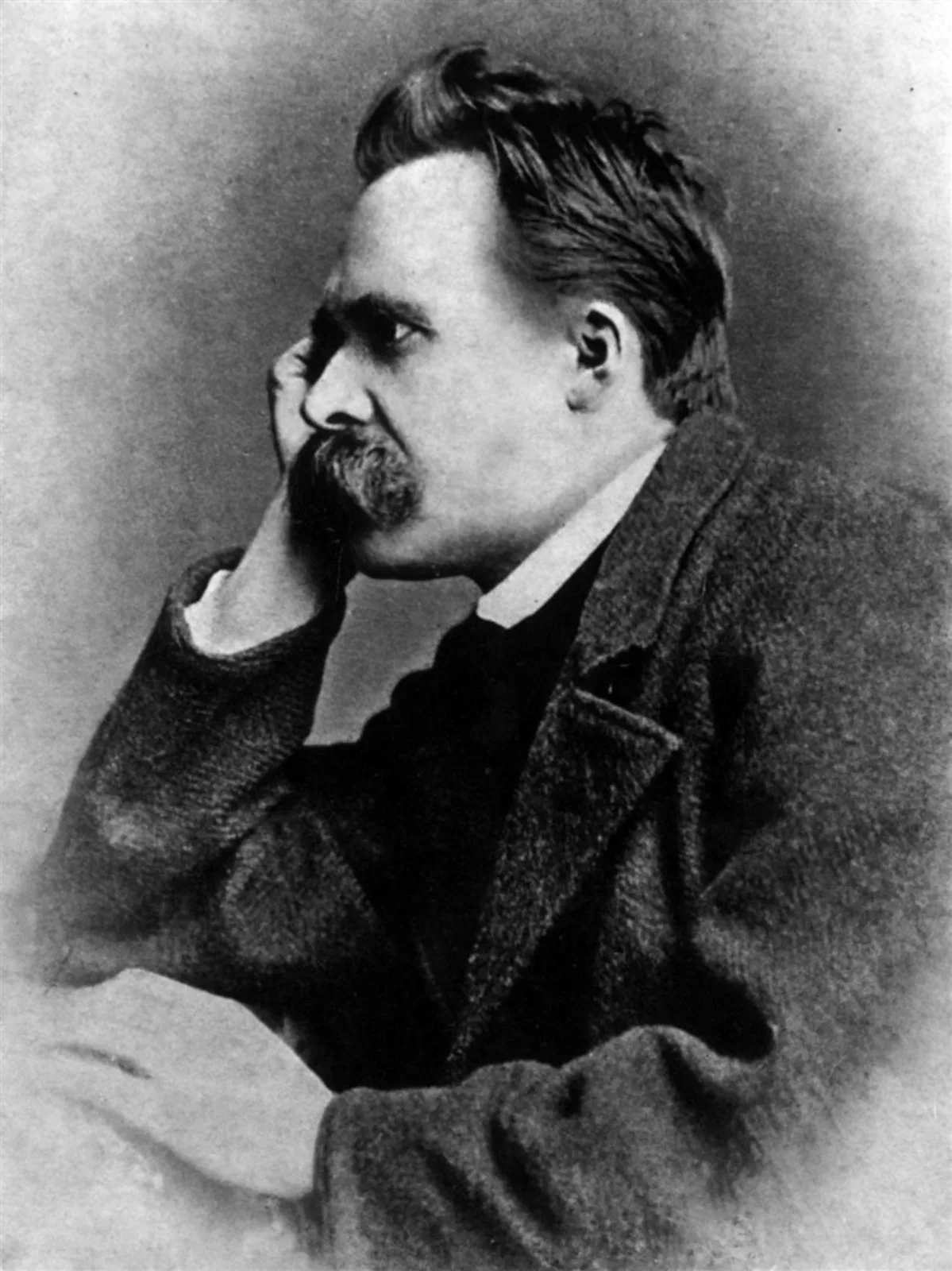
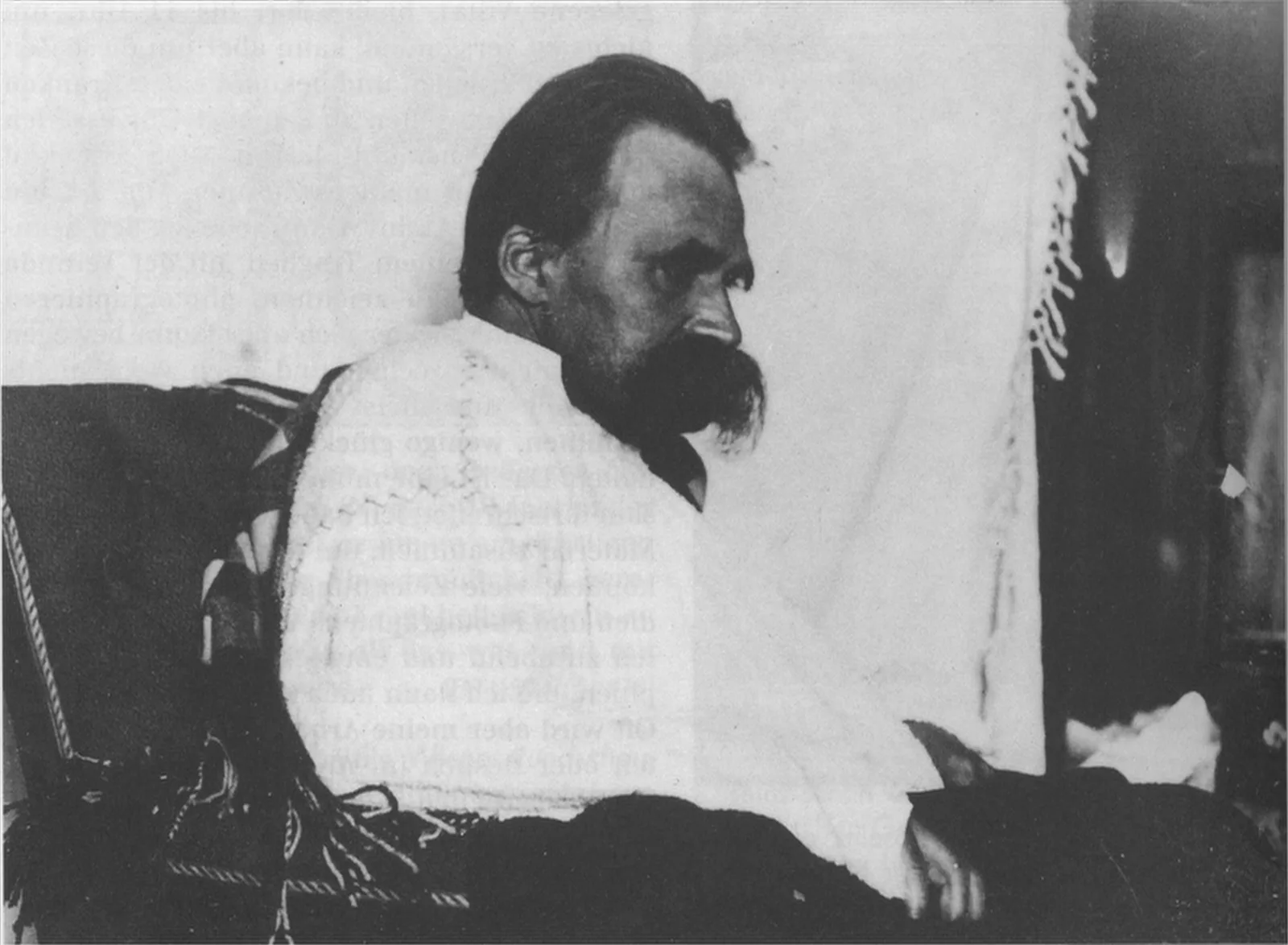
He never recovered. His mother cared for him at Naumburg; when she died in 1897, his sister moved him to a house above Weimar, where he sat on the veranda.6667 The painter Hans Olde photographed and drew him there in 1899. He died at Weimar on 25 August 1900 and was buried beside his father in the family vault at Röcken.68
The sister
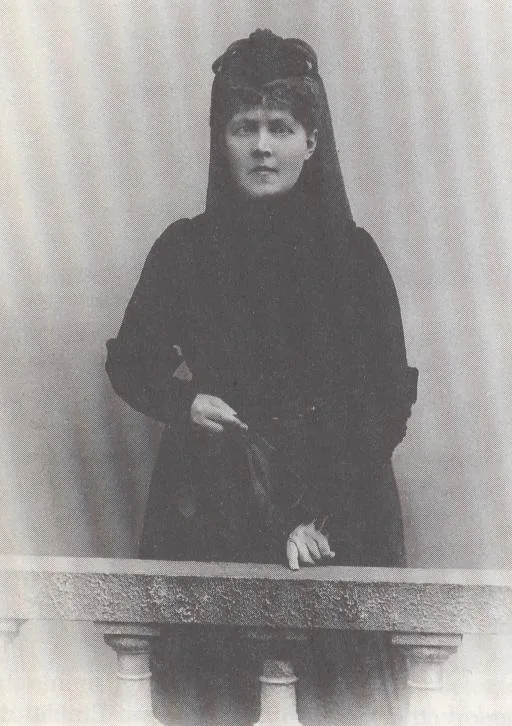
Elisabeth Förster-Nietzsche, who had married the colonist Bernhard Förster and gone with him to Paraguay, came home and took charge of her brother and his papers.6966 She founded the Nietzsche Archive and wrote his biography, and she is the only witness for much of his childhood, including the scene at Easter 1865.70 She is not a reliable witness. H. L. Mencken, translating The Antichrist in 1918, suspected that she had delayed its publication until 1895, and called her biography "a useful but not always accurate work."71 The book published after his death as The Will to Power was assembled from his notes by his sister and others; she herself later called the first editions of 1901 "scanty, superficial" and admitted that they "showed no regard for Nietzsche's express wishes."72 Mencken pointed out that in September 1888 Nietzsche had set that title aside.73 Everything in this chapter that comes from her is marked as hers in the notes.
The other side
The fairest Christian critic of Nietzsche in English was an Anglican priest and historian, John Neville Figgis, who lectured on him in Illinois in 1915. "No thinker was ever more personal than Nietzsche, not even Saint Paul," he said.74 He thought Nietzsche's attack on conventional morality was "less anti-Christian than he supposes," because Nietzsche confused Christianity with the moral systems of philosophers who were not Christian at all.75 And he made a remarkable concession: Nietzsche's ideas, he said, had "very much more affinity with the truly Christian conception of life than had the moral ideas of Strauss," the comfortable unbeliever Nietzsche had attacked in 1873.76 A Basel colleague, the theologian Julius Kaftan, who did not share his views, remembered that he spoke of them "with perfect composure, as one talking among his friends of serious matters in which he is conscious of wide differences of opinion."77
Did his unbelief change shape?
It changed shape almost every time he wrote about it, and it never became what most people mean by atheism. The boy at Pforta learned that the Bible could be read critically and felt his childhood holding him back. The student of twenty chose truth over peace and said so to his mother at the altar rail. The professor replaced faith for a while with Wagner, and then broke with Wagner when Wagner turned back toward Christianity. The free spirit of 1878 put metaphysics behind him; the author of 1882 announced the death of God as a catastrophe whose meaning had not yet reached anyone; and by 1887 he had decided that the death of God was Christianity's own doing, the last act of a faith that had taught its children never to lie. He did not call himself an atheist. He called himself a free spirit, an immoralist, and at the end Dionysus against the Crucified. And he signed his last letters, in madness, with both names.
Ludwig Feuerbach, the philosopher whose account of God as a human projection Nietzsche's generation grew up with, has his own chapter in this book.
Footnotes
-
The madman, in Nietzsche: Nietzsche, The Joyful Wisdom (La Gaya Scienza), tr. Thomas Common, Complete Works vol. X, ed. Oscar Levy (Edinburgh: T. N. Foulis, 1910), §125 (p. 167). ↩
-
The madman: Nietzsche, Joyful Wisdom, §125 (p. 168). Often misquoted without "God remains dead" and without what follows. ↩ ↩2
-
The madman: Nietzsche, Joyful Wisdom, §125 (pp. 168–169). ↩
-
Elisabeth Förster-Nietzsche, The Young Nietzsche (= vol. I of her Life), tr. Anthony M. Ludovici (London: Heinemann, 1912), p. 11; Daniel Halévy, The Life of Friedrich Nietzsche, tr. J. M. Hone (London: T. Fisher Unwin, 1911), pp. 19–20. ↩
-
Nietzsche, Ecce Homo: the Autobiography of Nietzsche, tr. Anthony M. Ludovici (Foulis, 1911), pp. 14–15; Halévy, Life of Friedrich Nietzsche, pp. 19–20. ↩
-
Förster-Nietzsche, Young Nietzsche, pp. 1–9; Nietzsche, The Antichrist, tr. H. L. Mencken (New York: Knopf, 1918), with Mencken's Introduction, Introduction (Mencken). ↩
-
Förster-Nietzsche, Young Nietzsche, p. 16; Halévy, Life of Friedrich Nietzsche, p. 20. ↩
-
Förster-Nietzsche, Young Nietzsche, pp. 16–17; Halévy, Life of Friedrich Nietzsche, p. 20; Nietzsche, Ecce Homo, p. 9 ("died in his six-and-thirtieth year"). ↩
-
Förster-Nietzsche, Young Nietzsche, pp. 17–18; Halévy, Life of Friedrich Nietzsche, p. 21. ↩
-
Nietzsche, Ecce Homo, "Why I am so Wise" §1 (p. 9). ↩
-
Halévy, Life of Friedrich Nietzsche, p. 23; Förster-Nietzsche, Young Nietzsche, p. 25. ↩
-
Halévy, Life of Friedrich Nietzsche, p. 22. ↩
-
Nietzsche, The Genealogy of Morals, tr. Horace B. Samuel, Complete Works vol. XIII (Foulis, 1913; IA copy 1918), Preface §3 (pp. iii–iv; Samuel tr.). ↩
-
Förster-Nietzsche, Young Nietzsche, p. 72. ↩
-
Paul Deussen (friend), recalling the confirmation of 1861: Förster-Nietzsche, Young Nietzsche, pp. 88–89 (Ludovici tr. 1912). ↩
-
Förster-Nietzsche, Young Nietzsche, pp. 89–90. Reported at second hand; the original has not been seen. ↩
-
Förster-Nietzsche, Young Nietzsche, p. 90. ↩
-
Förster-Nietzsche, Young Nietzsche, p. 90. ↩
-
Förster-Nietzsche, Young Nietzsche, p. 91. ↩
-
Förster-Nietzsche, Young Nietzsche, pp. 124–125. Accounts differ; see the disputed points. ↩
-
Förster-Nietzsche, Young Nietzsche, p. 135. ↩
-
Halévy, Life of Friedrich Nietzsche, pp. 43–44. ↩
-
Förster-Nietzsche, Young Nietzsche, p. 135. ↩
-
Aunt Rosalie, "an authority on dogma," as reported by Elisabeth: Förster-Nietzsche, Young Nietzsche, p. 135. ↩
-
Förster-Nietzsche, Young Nietzsche, pp. 136–137; Halévy, Life of Friedrich Nietzsche, p. 46. ↩
-
Förster-Nietzsche, Young Nietzsche, p. 136. ↩
-
Förster-Nietzsche, Young Nietzsche, p. 137 (Ludovici tr.). ↩
-
Halévy, Life of Friedrich Nietzsche, p. 46 (Hone tr. 1911). ↩
-
not in any scan I read; Förster-Nietzsche, Young Nietzsche, gives no date. Not verified. ↩
-
Halévy, Life of Friedrich Nietzsche, pp. 46–47. ↩
-
Halévy, Life of Friedrich Nietzsche, p. 47. ↩
-
Förster-Nietzsche, Young Nietzsche, p. 152. ↩
-
Förster-Nietzsche, Young Nietzsche, p. 152 (Nietzsche's Leipzig memoir). ↩
-
Nietzsche, Joyful Wisdom, §357 (p. 307). ↩
-
Halévy, Life of Friedrich Nietzsche, pp. 67–68; Georg Brandes, Friedrich Nietzsche, tr. A. G. Chater (London: Heinemann, 1914), p. 55. ↩
-
Förster-Nietzsche, Young Nietzsche, ch. XVI (p. 214ff); The Nietzsche–Wagner Correspondence, ed. Elisabeth Förster-Nietzsche, tr. Caroline V. Kerr, introduction H. L. Mencken (New York: Boni & Liveright, 1921), ch. II p. 10; Halévy, Life of Friedrich Nietzsche, p. 71. ↩
-
Förster-Nietzsche, Young Nietzsche, ch. XVI (p. 214–215). ↩
-
John Neville Figgis, The Will to Freedom, or The Gospel of Nietzsche and the Gospel of Christ (the Bross Lectures, delivered at Lake Forest College, Illinois, 1915; New York: Scribner, 1917), pp. 23–24; Förster-Nietzsche, Young Nietzsche, pp. 297–302. ↩
-
Halévy, Life of Friedrich Nietzsche, pp. 172–175. ↩
-
Heinrich Romundt, friend entering holy orders c. 1875, as reported by Nietzsche to Gersdorff: Halévy, Life of Friedrich Nietzsche, pp. 174–175. ↩
-
Nietzsche, Ecce Homo, pp. 19–21; Elisabeth Förster-Nietzsche, The Lonely Nietzsche, tr. Paul V. Cohn (London: Heinemann, 1915; the IA metadata says 1913), p. 1. ↩
-
Halévy, Life of Friedrich Nietzsche, p. 206. ↩
-
Nietzsche, Ecce Homo, p. 8; Halévy, Life of Friedrich Nietzsche, p. 205. ↩
-
Nietzsche, Human, All-Too-Human, Part I, tr. Helen Zimmern, Complete Works vol. VI (Foulis, 1909/1911), Preface §3 (p. 4; Zimmern tr.). ↩
-
Nietzsche, Human, §113 (p. 122). ↩
-
Nietzsche, Ecce Homo, p. 9; Förster-Nietzsche, Lonely Nietzsche, pp. 61–62, 69. ↩
-
Förster-Nietzsche, Lonely Nietzsche, pp. 110–111; Nietzsche, Joyful Wisdom, Editorial Note p. viii. ↩
-
Nietzsche, Joyful Wisdom, §108 (p. 149; Common tr.). ↩
-
The madman: Nietzsche, Joyful Wisdom, §125 (p. 169). ↩
-
Förster-Nietzsche, Lonely Nietzsche, pp. 152–153. ↩
-
Zarathustra, in Nietzsche: Nietzsche, Thus Spake Zarathustra, tr. Thomas Common, Complete Works vol. XI (Foulis, 1911), Prologue §2 (p. 6; Common tr.). ↩
-
Nietzsche, Beyond Good and Evil, tr. Helen Zimmern (Foulis, 1907; reissued 1917), §53 (p. 59; Zimmern tr.). ↩
-
Nietzsche, Joyful Wisdom, §357 (p. 308). ↩
-
Nietzsche, Joyful Wisdom, §357 (p. 307). ↩
-
Nietzsche, Genealogy of Morals, vol. III §27 (pp. 174–175; Samuel tr.). ↩
-
Nietzsche, Antichrist, Introduction (Mencken); Förster-Nietzsche, Lonely Nietzsche, pp. 380–381. ↩
-
Nietzsche, Antichrist, §39 (p. 111; Mencken tr.). ↩
-
Nietzsche, Antichrist, §62 (p. 181). ↩
-
Nietzsche, Ecce Homo, "Why I am a Fatality" §1 (page not confirmed from OCR; Ludovici tr.). ↩
-
Nietzsche, Ecce Homo, close of "Why I am a Fatality" (Ludovici tr.). ↩
-
Nietzsche, Human; Nietzsche, Ecce Homo; Nietzsche, Joyful Wisdom; Nietzsche, Genealogy of Morals; Nietzsche, Beyond Good and Evil. ↩
-
Förster-Nietzsche, Lonely Nietzsche, pp. 391–392. ↩
-
Halévy, Life of Friedrich Nietzsche, p. 360 (Hone tr.). ↩
-
Halévy, Life of Friedrich Nietzsche, p. 360; Förster-Nietzsche, Lonely Nietzsche, pp. 392–393. ↩
-
Halévy, Life of Friedrich Nietzsche, p. 361; Förster-Nietzsche, Lonely Nietzsche, p. 394. ↩
-
Förster-Nietzsche, Lonely Nietzsche, p. 406. ↩
-
Halévy, Life of Friedrich Nietzsche, p. 362; Förster-Nietzsche, Lonely Nietzsche, Preface p. x. ↩
-
Halévy, Life of Friedrich Nietzsche, pp. 286–287; Selected Letters of Friedrich Nietzsche, ed. Oscar Levy, tr. Anthony M. Ludovici (1921), p. 227. ↩
-
Förster-Nietzsche, Lonely Nietzsche, Preface pp. vi–viii; Förster-Nietzsche, Lonely Nietzsche, pp. 290. ↩
-
Nietzsche, Antichrist, Introduction. ↩
-
Förster-Nietzsche, Lonely Nietzsche, pp. 324–325. ↩
-
Nietzsche, Antichrist, Introduction. ↩
-
John Neville Figgis: Figgis, Will to Freedom, p. 9. ↩
-
John Neville Figgis: Figgis, Will to Freedom, p. 142. ↩
-
John Neville Figgis, Anglican priest and historian, Bross Lectures 1915 (published 1917): Figgis, Will to Freedom, p. 143. ↩
-
Julius Kaftan, Protestant theologian and Basel colleague, "From the Workshop of the Superman": Förster-Nietzsche, Lonely Nietzsche, p. 381 (quoted by Elisabeth, who says he "did not share my brother's views"). ↩
In their own words
We were prepared to leave this world at once and find ourselves by the side of Christ, and all our thoughts, feelings and aspirations were bathed in a celestial cheerfulness which, like a forced plant, could not live long, and withered away as quickly as it had sprung up, beneath the impressions of everyday life and learning.
If we could examine Christian doctrine and Church History with a perfectly impartial eye, we should be compelled to admit much which would be opposed to generally accepted ideas.
I have attempted to deny everything : Oh ! destruction is easy, but construction ! and even destruction seems a lighter task than it really is. We are so influenced in our innermost being by the impressions of our childhood and the influence of our parents and education, that these deeply imbedded prejudices are not so easily uprooted by means of rational arguments or a mere effort of the will.
It is here then that man comes to the cross-roads. Do you desire spiritual peace and happiness ? — very well, then, believe ! Do you wish to be a disciple of truth ? — so be it ; investigate ! But between the two main-roads there are a host of turnings. What counts, however, is the principal object of your desire.
For the genuine investigator, is not the result of his investigation rather a matter of indifference ? Is then the object of our investigation, repose, peace, happiness ? No, but the truth — however frightful and ugly it might be.
So are the ways of men marked out; if you desire peace of soul and happiness, believe ; if you would be a disciple of Truth, enquire ...
But my nature could find no satisfaction among them. I was still too timidly wrapt up in myself, and I had not the strength to stick to my role amid so many influences which were exercising themselves on me.
One day I came across this book at old Rohn's curiosity shop, and taking it up very gingerly I turned over its pages. I know not what demon whispered to me: 'Take this book home with thee.'
Indeed, at the boyish age of thirteen the problem of the origin of Evil already haunted me: at an age "when games and God divide one's heart," I devoted to that problem my first childish attempt at the literary game, my first philosophic essay — and as regards my infantile solution of the problem, well, I gave quite properly the honour to God, and made him the father of evil.
For those who are thus bound the great emancipation comes suddenly, like an earthquake ; the young soul is all at once convulsed, unloosened and extricated — it does not itself know what is happening.
When on a Sunday morning we hear the old bells ring out, we ask ourselves, "Is it possible ! This is done on account of a Jew crucified two thousand years ago who said he was the Son of God. The proof of such an assertion is wanting."
we are thoroughly and unalterably opposed to anything that would intercede and mingle with us ; opposed to all forms of present-day faith and Christianity ; opposed to the lukewarmness of all romanticism and fatherlandism
God is dead : but as the human race is constituted, there will perhaps be caves for millenniums yet, in which people will show his shadow. — And we — we have still to overcome his shadow !
"Where is God gone ? " he called out. " I mean to tell you ! We have killed him, — you and I ! We are all his murderers !"
God is dead ! God remains dead ! And we have killed him ! How shall we console ourselves, the most murderous of all murderers ? The holiest and the mightiest that the world has hitherto possessed, has bled to death under our knife, — who will wipe the blood from us ?
"I come too early," he then said, "I am not yet at the right time. This prodigious event is still on its way, and is travelling, — it has not yet reached men's ears."
What are these churches now, if they are not the tombs and monuments of God ?
In the main, however, one may say that the event itself is far too great, too remote, too much beyond most people's power of apprehension, for one to suppose that so much as the report of it could have reached them
the decay of the belief in the Christian God, the victory of scientific atheism, — is a universal European event, in which all races are to have their share of service and honour
As philosopher, Schopenhauer was the first avowed and inflexible atheist we Germans have had
One sees what has really gained the victory over the Christian God — , Christian morality itself, the conception of veracity, taken ever more strictly
Could it be possible! This old saint in the forest hath not yet heard of it, that God is dead!
Unqualified honest atheism (and its air only do we breathe, we, the most intellectual men of this age) is not opposed to that ideal, to the extent that it appears to be; it is rather one of the final phases of its evolution, one of its syllogisms and pieces of inherent logic
Why Atheism nowadays? "The father" in God is thoroughly refuted; equally so "the judge," "the rewarder."
all this belongs to a too limited Christianity ; the psychology is fantastic ; there is no flesh and far too much blood
the very word "Christianity" is a misunderstanding — at bottom there was only one Christian, and he died on the cross
I call it the one immortal blemish upon the human race.
I am not a man, I am dynamite.
Have you understood me ? Dionysus versus Christ.
My father died in his six-and-thirtieth year : he was delicate, lovable, and morbid, like one who is preordained simply to pay a flying visit — a gracious reminder of life rather than life itself.
That which had taken place in me, then, was not only a breach with Wagner — I was suffering from a general aberration of my instincts
Friend Georges, since you have discovered me, it is not wonderful to find me : what is now difficult is to lose me. The Crucified.
such a lofty and serious interest in life, that at his side I feel in the presence of the divine.
The other side
It is true, also, that Nietzsche's ideas have very much more affinity with the truly Christian conception of life than had the moral ideas of Strauss or of any other of the Pantheistic philosophers whom he superseded.
But it must be pointed out, that his polemic against conventional morality is less anti-Christian than he supposes, and that his error springs from the fallacy frequent in Germany of identifying Christian morality with the systems of some philosophers who are either not Christian at all, or else very partially so.
No thinker was ever more personal than Nietzsche — not even Saint Paul.
Not that he kept his views in the background ; but he spoke of them with perfect composure, as one talking among his friends of serious matters in which he is conscious of wide differences of opinion.
She explained that in the life of every great theologian there had been moments of doubt, and that it was much better at such moments to avoid anything in the way of a discussion.
Romundt knew, repeated endlessly that henceforward he had lived the better and the happier part of his life. He wept a great deal and asked our forgiveness.
Nietzsche was not a great man in the true sense of the word.
Where accounts differ
| Point | One account | Another | How the page handles it |
|---|---|---|---|
| Wording and date of the 1865 letter | "spiritual peace and happiness ... believe ... disciple of truth ... investigate" (Elisabeth, YN p. 137, undated) | "peace of soul and happiness ... believe ; ... disciple of Truth, enquire" (Halévy, p. 46); brief gives 11 June 1865, which neither scan states | Quote one translation and name it; do not give the day in narration until the German original or a scholarly edition is checked |
| Year he came up to Bonn | October 1864 (YN pp. 124–125; lecture list "winter 1864–1865", YN p. 175) | "In the middle of October, 1862" (Hal p. 40) — probably a misprint | Use 1864; mention nothing |
| Year of the Easter Communion refusal | "Until Easter, 1856" in the OCR of YN p. 135 (an obvious corruption of 1865; his Bonn years were 1864–65) | Halévy places the letter in the Bonn year before the move to Leipzig (October 1865), p. 46 | Say "Easter 1865" and flag |
| Date of the confirmation | "At Easter, 1861" (Elisabeth's heading, YN p. 88) | "the Sunday of Mid-Lent, 1861" (Deussen, quoted YN p. 88) | Say "in the spring of 1861" |
| First visit to Wagner | The Saturday before Whitsun, 15 May 1869 (YN ch. XVI) | "Three weeks after his arrival" at Basel (Hal p. 71); the sources do not otherwise give the day | Say "in May 1869" |
| What happened at Turin | A "paralytic stroke" in "the last days of 1888" (Elisabeth, LN pp. 391–392; she later doubts "paralysis" and offers an outsider's guess of overstrain and drugs, LN pp. 401–402) | "Nietzsche was mad," shown by the letters Overbeck received on 9 January 1889 (Hal p. 360). Neither fixes the day; the usual modern date of 3 January 1889 and the horse story are not in these scans. Modern medical opinion on the cause (syphilis, tumour, other) is outside this source set | Say "in the first days of January 1889" and "accounts differ about the cause" |
| Whether The Antichrist was held back by his sister | Mencken (1918): "I suspect that the delay was due to the influence of the philosopher's sister" and she hinted the text was garbled (AC Introduction) | Elisabeth (LN) gives no reason; Mencken himself says there is "not the slightest reason" to believe in garbling | Narration: published only in 1895; say who suspected what, not that it was proved |
| The Will to Power | Elisabeth: the editors "carefully ... collect[ed] the precious materials in accordance with the author's directions, so far as any were given"; yet the 1901 edition showed "no regard for Nietzsche's express wishes" and was replaced in 1906 and 1911–12 (LN pp. 324–325) | Mencken (1918): in September 1888 Nietzsche had begun the "Transvaluation" instead of the "Will to Power" (AC Introduction). The modern scholarly verdict that the Archive's compilation is not a book Nietzsche planned is outside the public-domain sources and is not cited here | Narration: the book published under that name was assembled by his sister and others after his collapse; the editors' own admissions can be shown |
| The Archive and Overbeck | Elisabeth: Overbeck and his wife "malign," slanders originated in the Overbecks' house (LN pp. 53–56, 289–290; Preface) | Overbeck: "Nietzsche was not a great man" and the Archive "a ridiculous idea" (as Elisabeth reports them, LN Preface pp. vii–viii) | Both accounts come from the same partisan; say so |
| Which of Elisabeth's statements can be trusted | Mencken: her biography is "a useful but not always accurate work" (AC Introduction); Cohn's translation prints her own corrections of 1913 | Halévy writes of her "record of these days which she supposes — or pretends to suppose — were happy" (Hal p. 287) | Cite her for what only she witnessed (the household, the Easter scene) and label it as hers |
List of illustrations
This page uses only public-domain and Creative Commons images; each is credited with its source and licence.
- Nietzsche1882 — Gustav-Adolf Schultze (d. 1897), 1882-09 · Nietzsche by Walter Kaufmann, Princeton Paperbacks, Fourth Edition. ISBN 0-691-01983-5, via Wikimedia Commons · Public domain (as stated on the Commons file page)
- Pfarrhaus Röcken um 1900 — Unknown author Unknown author, circa 1900 date QS:P,+1900-00-00T00:00:0 · Reproduktion einer zeitgenössischen Fotografie, via Wikimedia Commons · Public domain (as stated on the Commons file page)
- Carl Ludwig Nietzsche — unknown, 1849 · http://www.estudiosnietzsche.org/seden/padre.htm, via Wikimedia Commons · Public domain (as stated on the Commons file page)
- Schulpforta. Blick auf Schulpforta (School Pforta. View of Schulpforta) — Deutsche Fotothek (photographer not stated in the Europeana record), undated (Europeana record gives no date; early-20th-century photograph or postcard) · Deutsche Fotothek (SLUB Dresden), via Europeana · Public Domain Mark 1.0 (http://creativecommons.org/publicdomain/mark/1.0/), as stated in the Europeana record
- Bonn vom Kreuzberg Christian Hohe Hermann Emden — Nicolaus Christian Hohe / Hermann Emden, circa 1850 date QS:P,+1850-00-00T00:00:0 · Höfische Repräsentation und kirchliche Auftraggeberschaft der wittelsbachischen Erzbischöfe im Kurfürstentum Köln im 18., via Wikimedia Commons · Public domain (as stated on the Commons file page)
- Friedrich Nietzsche - 1864 — Gustav Schultze, 1864-09 · [1], via Wikimedia Commons · Public domain (as stated on the Commons file page)
- Arthur Schopenhauer 1845 — Johann Jacob Seib (1812-1883), 1845-08-22 · http://edocs.ub.uni-frankfurt.de/volltexte/2007/81000032/, via Wikimedia Commons · Public domain (as stated on the Commons file page)
- Richard and Cosima Wagner — Fritz Luckhardt, 1872-05-09 · Project Gutenberg text 11419 . The Love Affairs of Great Musicians , Volume 2 by Rupert Hughes, dated 1903. Originally p, via Wikimedia Commons · Public domain (as stated on the Commons file page)
- Menschliches, Allzumenschliches: Ein Buch fur freie Geister, title page (second edition, Leipzig 1894) — Friedrich Nietzsche, 1894 · C. G. Naumann, Leipzig (Google Books scan, Harvard copy), via the Internet Archive (bub_gb_bzUAAAAAMAAJ) · Public domain (published 1894; Internet Archive item states no rights restriction)
- Gezicht op Sils Maria in Zwitserland (RP-F-F20366) — Rijksmuseum, Amsterdam, undated (19th/early-20th-century photograph) · Rijksmuseum, Amsterdam, via Europeana · Public Domain Mark 1.0 (http://creativecommons.org/publicdomain/mark/1.0/), as stated in the Europeana record
- The Joyful Wisdom, pp. 168-169: 'God is dead! God remains dead! And we have killed him!' (section 125) — Friedrich Nietzsche; tr. Thomas Common, 1910 · T. N. Foulis (University of Michigan copy digitized by Google), via the Internet Archive (NietzscheJoyfulWisdom) · Public domain (published 1910; Internet Archive item states no rights restriction)
- Nietzsche paul-ree lou-von-salome188 — Unknown author Unknown author, 1882 · Scan processed by Anton (2005), via Wikimedia Commons · Public domain (as stated on the Commons file page)
- The Joyful Wisdom, p. 307: section 357, 'the victory of scientific atheism'; Schopenhauer 'the first avowed and inflexible atheist' — Friedrich Nietzsche; tr. Thomas Common, 1910 · T. N. Foulis (University of Michigan copy digitized by Google), via the Internet Archive (NietzscheJoyfulWisdom) · Public domain (published 1910; Internet Archive item states no rights restriction)
- The Antichrist, title page, tr. H. L. Mencken — Friedrich Nietzsche, 1918 · Alfred A. Knopf, New York, via the Internet Archive (antichrist0000niet_z1z4) · Public domain (published 1918; Internet Archive item states no rights restriction)
- Piazza Carlo Alberto en Palazzo Carignano 3698. TORINO (serietitel), RP-F-00-414 — Rijksmuseum, ca. 1860 - ca. 1890 · http://hdl.handle.net/10934/RM0001.COLLECT.59762, via Wikimedia Commons · CC0 (as stated on the Commons file page)
- Nietzsche Olde 01 — unknown, 1899 · Scan of a reprint in Benders/Oettermann (ed.): Friedrich Nietzsche - Chronik in Bildern und Texten, Hanser / dtv 2000, p, via Wikimedia Commons · Public domain (as stated on the Commons file page)
- Elisabeth förster 1894a — a Mr Hertel, 1894 · Reproduction of a reproduction in a book, via Wikimedia Commons · Public domain (as stated on the Commons file page)
Sources
Tier 1 — the subject's own words (writings, letters, diaries)
- [JW] Nietzsche, The Joyful Wisdom (La Gaya Scienza), tr. Thomas Common, Complete Works vol. X, ed. Oscar Levy (Edinburgh: T. N. Foulis, 1910). IA
NietzscheJoyfulWisdom(OCRjoyful-wisdom.txt). Book V and the Preface were added in the second edition of 1887 (Editorial Note p. viii). Page numbers are the printed ones. - [HATH] Nietzsche, Human, All-Too-Human, Part I, tr. Helen Zimmern, Complete Works vol. VI (Foulis, 1909/1911). IA
completenietzsch06nietuoft(OCRhuman1.txt). Introduction says issued 1878. Preface dated Nice, spring 1886. - [Dawn] Nietzsche, The Dawn of Day, tr. J. M. Kennedy, Complete Works vol. IX (Foulis/Macmillan, 1911). IA
cu31924021569177(OCRlevy-b.txt). - [Z] Nietzsche, Thus Spake Zarathustra, tr. Thomas Common, Complete Works vol. XI (Foulis, 1911). IA
completenietasch11nietuoft(OCRzarathustra.txt). - [BGE] Nietzsche, Beyond Good and Evil, tr. Helen Zimmern (Foulis, 1907; reissued 1917). IA
beyondgoodandevi00nietuoft(OCRbeyond.txt). - [GM] Nietzsche, The Genealogy of Morals, tr. Horace B. Samuel, Complete Works vol. XIII (Foulis, 1913; IA copy 1918). IA
genealogyofmoral01niet(OCRgenealogy.txt; the same translation also inlevy-d.txt). - [AC] Nietzsche, The Antichrist, tr. H. L. Mencken (New York: Knopf, 1918), with Mencken's Introduction. IA
antichrist0000niet_z1z4(OCRantichrist.txt). Mencken's section numbers are used. - [EH] Nietzsche, Ecce Homo: the Autobiography of Nietzsche, tr. Anthony M. Ludovici (Foulis, 1911). IA
eccehomo00niet(OCRecce-homo.txt). - [Letters] Selected Letters of Friedrich Nietzsche, ed. Oscar Levy, tr. Anthony M. Ludovici (1921). IA
selectedletterso00niet(OCRletters.txt). Covers 1861–Nov 1888; it does not contain the letter of June 1865 or the Turin notes. - [NWC] The Nietzsche–Wagner Correspondence, ed. Elisabeth Förster-Nietzsche, tr. Caroline V. Kerr, introduction H. L. Mencken (New York: Boni & Liveright, 1921). IA
nietzschewagnerc00niet(OCRwagner-corr.txt).
Tier 2 — scholarly biographies and encyclopedias
- [Hal] Daniel Halévy, The Life of Friedrich Nietzsche, tr. J. M. Hone (London: T. Fisher Unwin, 1911). IA
lifeoffriedrichn00haluoft(OCRhalevy.txt). The best pre-1931 independent biography in English; interpretive, and its dating needs checking against the German sources. - [Brandes] Georg Brandes, Friedrich Nietzsche, tr. A. G. Chater (London: Heinemann, 1914). IA
friedrichnietzsc00bran(OCRbrandes.txt). Includes the 1888 correspondence with Nietzsche.
Tier 3 — popular biographies and family witnesses (use carefully; the sister is a partisan)
- [YN] Elisabeth Förster-Nietzsche, The Young Nietzsche (= vol. I of her Life), tr. Anthony M. Ludovici (London: Heinemann, 1912). IA
youngnietzsche00fr(OCRyoung-nietzsche.txt). Main source for the household, the confirmation, the Easter refusal and the 1865 letter. Printed page numbers are used. - [LN] Elisabeth Förster-Nietzsche, The Lonely Nietzsche, tr. Paul V. Cohn (London: Heinemann, 1915; the IA metadata says 1913). IA
in.ernet.dli.2015.501914(OCRlonely-nietzsche-cohn.txt). Source for the collapse, the Jena years, the death, the Archive and her account of the Will to Power. Printed page numbers are used; roman numerals for the Preface.
Tier 4 — maps to other sources only. Never cited in the script.
- None used. (Modern scholarship on the Archive and on the compilation of The Will to Power is copyrighted and was not read; see Disputed points.)
Opposition sources — contemporary critics and religious responses
- [Figgis] John Neville Figgis, The Will to Freedom, or The Gospel of Nietzsche and the Gospel of Christ (the Bross Lectures, delivered at Lake Forest College, Illinois, 1915; New York: Scribner, 1917). IA
willtofreedomorg08figg(OCRfiggis.txt). Figgis was an Anglican priest of the Community of the Resurrection and a historian of ideas. - [Kaftan] Julius Kaftan, article "From the Workshop of the Superman," quoted at LN p. 381. Kaftan's own article was not read; his words are reported through Elisabeth.
- Aunt Rosalie, Romundt and Overbeck appear only as reported by Elisabeth Förster-Nietzsche (YN, LN) and Halévy; flagged secondhand in the table.
Related lives
(series rule: no "Next:" pointer; the close says "has their own episode in this series"). Candidates for the expensive model to choose: Ludwig Feuerbach (the religion-as-projection argument Nietzsche's generation inherited) or Annie Besant (the other subject whose unbelief changed direction).
Manuel González Prada
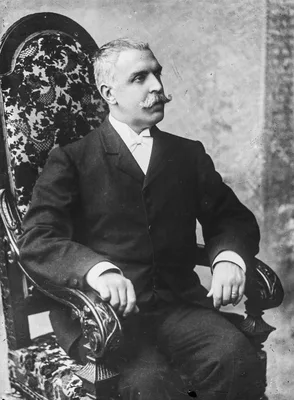
Manuel González Prada was the son of a noble and conservative Lima family, and his early beliefs are disputed: deist verses in 1871, a "resolute atheist" by his own late account. The lost War of the Pacific made him a public unbeliever, and he attacked the Church as a pillar of the order that had ruined Peru. He then told freethinkers that hating priests was not a philosophy, and moved on to anarchism. At the end he admitted doubts about his own disbelief, without returning to faith.
W. K. Clifford
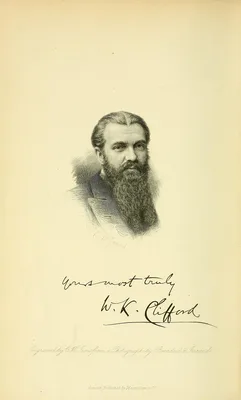
W. K. Clifford was an ardent High Churchman at Trinity who tried to defend dogma with science. He gave up that faith in the late 1860s, under Darwin and Spencer, after a struggle his friend Pollock could not date. In "The Ethics of Belief" (1876–77) he turned his loss into a rule: it is wrong for anyone to believe on insufficient evidence. He never called himself an atheist in print, grieved openly for "the Great Companion", revered the believers he knew, and died at thirty-three without fear or retraction.
Ambrose Bierce
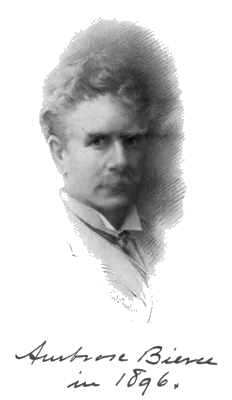
Ambrose Bierce was raised in a revivalist settlement whose religion he and his brother resented. He was wounded at Kennesaw, and his San Francisco colleagues remembered him as an author of atheistic tracts. He turned his unbelief into satire in The Devil's Dictionary (1881–1906), called himself an "infidel" who wished he were not one, and defended Ingersoll. In his last years, "not a Christian" but admiring Jesus next to Buddha, he asked a believing friend to pray for him before he vanished in Mexico at the end of 1913.
Annie Besant
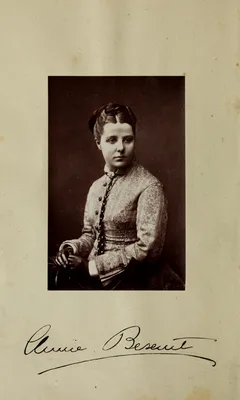
Annie Besant left Christianity because she could not call good a God who let her baby suffer. She paid for her atheism with her marriage and her daughter. In 1889 she left atheism for Theosophy, because atheism gave her no motive strong enough to make people serve one another. She never unsaid her case against the supernatural.