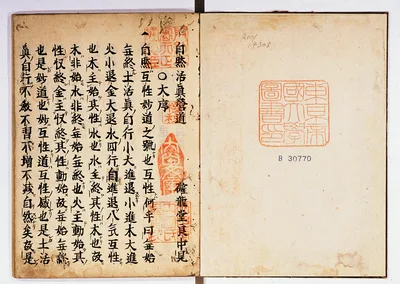
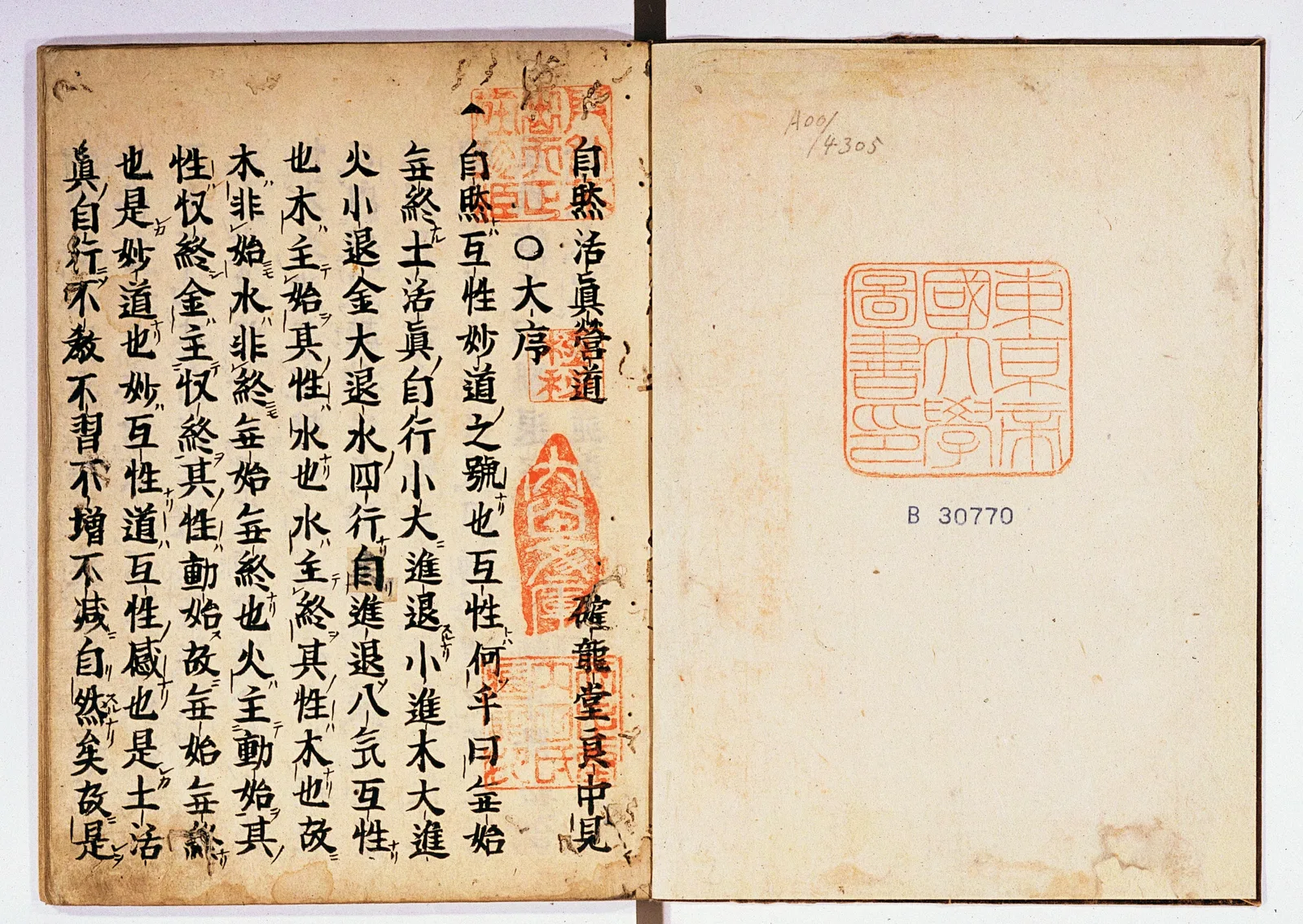
Andō Shōeki was a country physician in Hachinohe who watched farmers starve while those who did not till ate their grain. He came to hold that the world is only self-moving nature, with no god or Buddha above it and no reward or punishment from beyond, and that sages and creeds were inventions of those who lived off the farmers. He judged this too dangerous to print in full. He published a softened version and left the rest for readers a hundred years later, who nearly lost it to fire.
The belief timeline
- Faith (c. 1720s (lead, unverified)) — Entry into a Zen temple at Kyoto in youth (ja-wp and zh-wp only; the museum instead dates Kyoto medical training to 1732 and says nothing of Zen); no pre-1931 text shows his early belief [18][44]
- Doubt (undated) — Wikipedia (ja, zh): he "doubted the teaching of Buddhism" and turned to medicine. Kanō reconstructs a long, "painstaking" path from outrage at the farmers' lot to the conclusion that the teachings and governments themselves were the cause. The museum suggests the famines in Hachinohe (1749, 1755) moved him from physician of bodies to thinker about society, offered as a conjecture. No dated event in any source [18][19][20][21][49]
- Declaration (1753–54) — The three-volume printed *Shizen shin'eidō* is issued in March 1753 and halted, reissued revised in July 1754 (museum); the 1754 booklist lists it with *Kōshi isseiben-ki* (Kanō); Kanō believes the printed book a restrained abridgement [2][10][33][50]
- Secret (1755) — Preface to the full manuscript: written for readers "a hundred years" later; the Ieyasu section is covered over with paste-on slips (by someone unnamed in Kanō) [5][10][23][51]
- Disclosure (c. 1899) — Kanō buys the manuscript; 1908 first article; 1923 earthquake destroys most of it; 1928 first scholarly essay [4][7][37][58][59]
Notes to the timeline (18)
- [18] In youth he went to Kyoto, entered the Zen temple Myōshin-ji, studied at Kitano Tenmangū, then doubted Buddhism and studied medicine under Aji'oka Sanpaku (ja-wp; zh-wp repeats it). The museum instead dates his Kyoto medical training to 1732, age 30, and mentions no Zen — ja.wikipedia.org 安藤昌益 (via API, saved as
research/texts/wikipedia-ja-map.txt). Gives the Niida birthplace, Zen training at Myōshin-ji, teacher Aji'oka Sanpaku, Hachinohe 1744 diary, 1745 Koyomi taii, 1753 printing, 1756–58 return, 1762 death and Onsen-ji grave, 1935 Narahon find, later finds. None of these could be confirmed in an accessible pre-1931 source. Its own sources are modern (Inaba 2002, Terao 1996, Miyake 1983, Zenshū 1983–87, Zenshū supplement 2005); zh.wikipedia.org 安藤昌益, revision 66481250 of 2021-07-08T06:50:47Z, saved asresearch/texts/wikipedia-zh-wikitext.txt. Tier 4; cites Nakamura Hajime (1992) for the pantheist reading; contradicted in part by Museum chron 1732. Accounts differ; see the disputed points. - [44] He began medical training in Kyoto in 1732, age 30, under the third-generation Aji'oka Sanpaku; the second generation had died in 1726 — same site, "関連年表" (https://shoeki.org/ ... 関連年表/, retrieved 2026-10-15), saved as
research/texts/shoeki-org-nenpyo.txt. Tier 3: a year-by-year table of his life and the world; gives the dates cited as "museum". Names no sources, so every row counts as secondhand until checked against the Zenshū or Inaba (2002), 1726, 1732. Reported at second hand; the original has not been seen. - [19] Kanō's account of what moved him: indignation at the irrational shape of society, then a long weighing before acting; Kanō illustrates with peasant uprisings (Kiuchi Sōgo, Sakura, Shōho era; the fall of Kanamori Yorikane of Hachiman in Hōreki) and the proverb "rice is the parent of life". The examples are Kanō's, not shown to be Shōeki's — Kanō Kōkichi 狩野亨吉, 「安藤昌益」, in Iwanami kōza Sekai shichō 岩波講座世界思潮, vol. 3 (Iwanami Shoten, May 1928), pp. 325–350 (page range from the NDL record). Kanō died 1942, so the text is in the public domain. Source text: Aozora Bunko card 2653,, §2.
- [20] Kanō's summary of the argument: the farmer feeds himself by direct tilling (直耕) and is the model, yet is kept at the bottom and poor; those who do not till eat what others grow (不耕貪食の徒) and sit above, in every country; so the "teachings and governments" aimed at ruling and saving the world must be wrong. He therefore berated Confucius, "the representative of ruling the state", and Śākyamuni, "the representative of salvation" — 狩野亨吉, Iwanami kōza Sekai shichō, §2.
- [21] Kanō's reconstruction: Shōeki traced society back past the age of the emperors and past the age of the gods to a primitive time, and found there force (腕力), intellect and money, from which came class, division of labour, politics, law, religion and learning; he decided to abandon the "world of law" (法世) altogether, including teaching, government, writing and speech, and was left with nature (自然) — 狩野亨吉, Iwanami kōza Sekai shichō, §2.
- [49] Famines in the domain: the "boar famine" of 1749 (about 3,000 dead) and the crop failure of 1755 (4,000–5,000 dead); in 1751 Zengen-ji raised a prayer tower "to drive off the boars". The museum's bio suggests the famine, with the farmers dying and the samurai spared, turned him from a town doctor into a thinker about society; that is the museum's conjecture, not a statement of his — "関連年表", 1749, 1751, 1755; 安藤昌益資料館 (Andō Shōeki Museum, Hachinohe; run by the 資料館を育てる会), "安藤昌益とは" (https://shoeki.org/, retrieved 2026-10-15), saved as
research/texts/shoeki-org-bio.txt(tags stripped). Tier 3: a local museum's introductory page; no sources named. Says he lived at Hachinohe from about 42 for about 15 years, that the 101-volume, 93-book manuscript was written there, and quotes the printed Daijo preface. - [2] The 1754 *Shinzō shoseki mokuroku* (新増書籍目録), vol. 2, lists his books *Kōshi isseiben-ki* (孔子一世辨記, 2 vols) and *Shizen shin'eidō* (自然眞營道, 3 vols). Kanō had not seen either; he believed this the first and last mention of the name before his own find — 狩野亨吉, Iwanami kōza Sekai shichō, §1 (booklist itself not seen).
- [10] Kanō says Shōeki wrote the full text "expecting a hundred years later", while publishing a three-book abridgement; the reason Kanō gives is peace: a printed full text would have put him straight into conflict with the authorities. Kanō's "conjecture", not Shōeki's stated reason — 狩野亨吉, Iwanami kōza Sekai shichō, §1, §3.
- [33] The three-volume *Shizen shin'eidō* was printed in 1753 (the booklist is 1754); a preface by Kamiyama Sen'an shows the school's anxiety about public reaction (ja-wp, citing Maruyama). The museum: first issued March 1753 then halted, reissued revised July 1754, which reconciles the two dates — Koyomi taii; "関連年表", 1752–54; fr.wikipedia.org "Andō Shōeki", revision 205417857 of 2023-06-23T15:21:56Z, saved as
research/texts/wikipedia-fr-wikitext.txt. Tier 4; the page carries "travail inédit" and "à sourcer" banners; it paraphrases the scholarship of Jacques Joly (1996, 2002, 2014). - [50] In 1752 he began writing *Tōdō shinden* and the large manuscript; Sen'an wrote the preface to the printed *Shizen shin'eidō*; it was issued in March 1753 (publishers Matsuba Seibei, Edo, and Ogawa Genbei, Kyoto) and halted; in July 1754 a revised printing came out from Ogawa Genbei alone — "関連年表", 1752–54; "Andō Shōeki", (1753, two publishers).
- [5] Each volume carries the signature of Kakuryūdō Ryōchū; the self-preface is dated Hōreki 5 (1755); a seal read as "Tsuruma Ryōryū" misled Kanō into a wrong guess at the real name — 狩野亨吉, Iwanami kōza Sekai shichō, §1.
- [23] The 23 or so books of "Haja no maki" criticise thought, language, literature, politics, religion and the great men of history; the Ieyasu passages cover book 23 and are so violent that someone (Kanō does not say who) pasted four or five slips over Ieyasu's name — 狩野亨吉, Iwanami kōza Sekai shichō, §2, §3.
- [51] In February 1755 the first part of the manuscript was finished; the museum says the 101-volume, 93-book manuscript was written at Hachinohe — "関連年表", 1755; Daijo.
- [4] About 1899 (明治三十二年の頃) Kanō obtained a manuscript titled *Shizen shin'eidō*: it should have 100 volumes in 92 books, with the two books of "Shōji no maki" missing; books 1–23 are "Haja no maki" (破邪之卷), book 24 "Hōsei no maki" (法世之卷), book 25 "Shindō tetsuron", and 27 onward "Kenshō no maki" — 狩野亨吉, Iwanami kōza Sekai shichō, §1.
- [7] The manuscript was bought by Tokyo Imperial University in spring Taishō 12 (1923) and burned in that year's great earthquake; neither Kanō nor the friends who borrowed it had copied it — 狩野亨吉, Iwanami kōza Sekai shichō, §1; Andō Shōeki, 稿本『自然真営道』, one surviving manuscript volume, "第一 私制字書巻一" (Shishi jisho, vol. 1; 62 images), University of Tokyo General Library, scanned on the Internet Archive as
utokyo-71952(uploaded 2020). Reuse terms:, description. - [37] Kanō's essay was printed in *Iwanami kōza Sekai shichō* vol. 3, May 1928, pp. 325–350, and reprinted in *Kanō Kōkichi ibunshū* (1958) — National Diet Library Search record, "安藤昌益 狩野亨吉著(岩波講座世界思潮3 P325–350)昭和3年(1928)", via, record; Aozora card 2653.
- [58] In 1899 Kanō, principal of the First Higher School, obtained the manuscript — "関連年表", 1899; 狩野亨吉, Iwanami kōza Sekai shichō, §1 ("around Meiji 32").
- [59] In January 1908 Kanō published "大思想家あり" in the magazine *Naigai kyōiku hyōron*, introducing Andō; this is earlier than the 1928 essay and answers the open question about an early notice. The article was not found (Aozora lists only five Kanō works, none this one) — "関連年表", 1908.
Only Nature
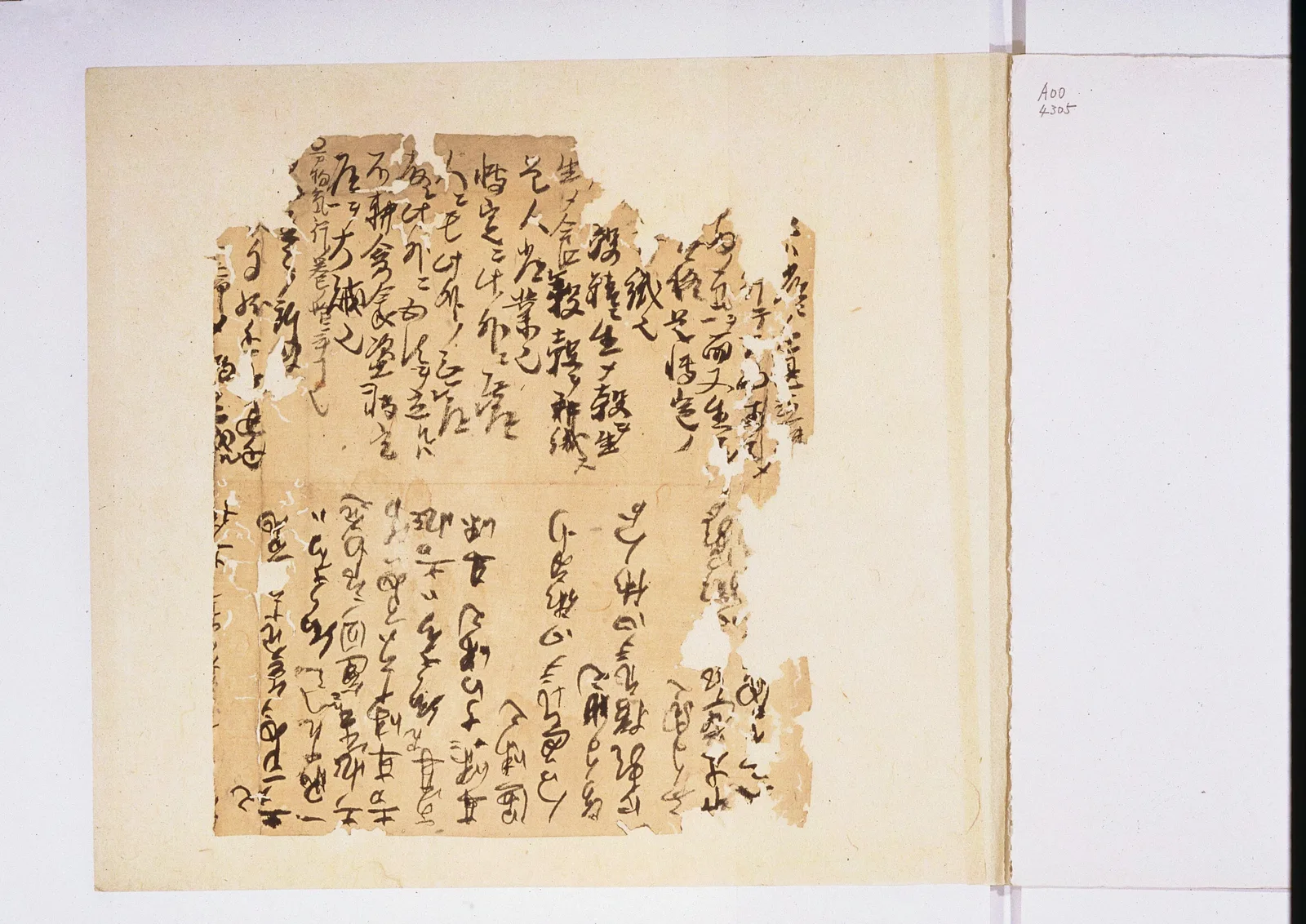
In the 1750s a physician in Hachinohe, a castle town on the cold northern coast of Japan, wrote a book of about a hundred volumes and left it, in Kanō's words, "for a hundred years later."123 Its author signed himself Kakuryūdō Ryōchū. He published only a short version in his lifetime, and that was forgotten. The full manuscript passed quietly from hand to hand until about 1899, when the scholar Kanō Kōkichi bought it, peeled apart its paper covers, found scraps of letters inside, and worked out from them the author's real name: Andō Shōeki.456
What Kanō read astonished him. The book attacked Confucius, the Buddha and the founders of Japanese Buddhism, and said that the world moves of itself, with no gods or Buddhas needed to move it. In Kanō's words, Andō "believed neither in gods, nor in Buddha, nor in sages."78 This chapter asks how a country doctor came to that view, and why he hid most of it.
A doctor in the north
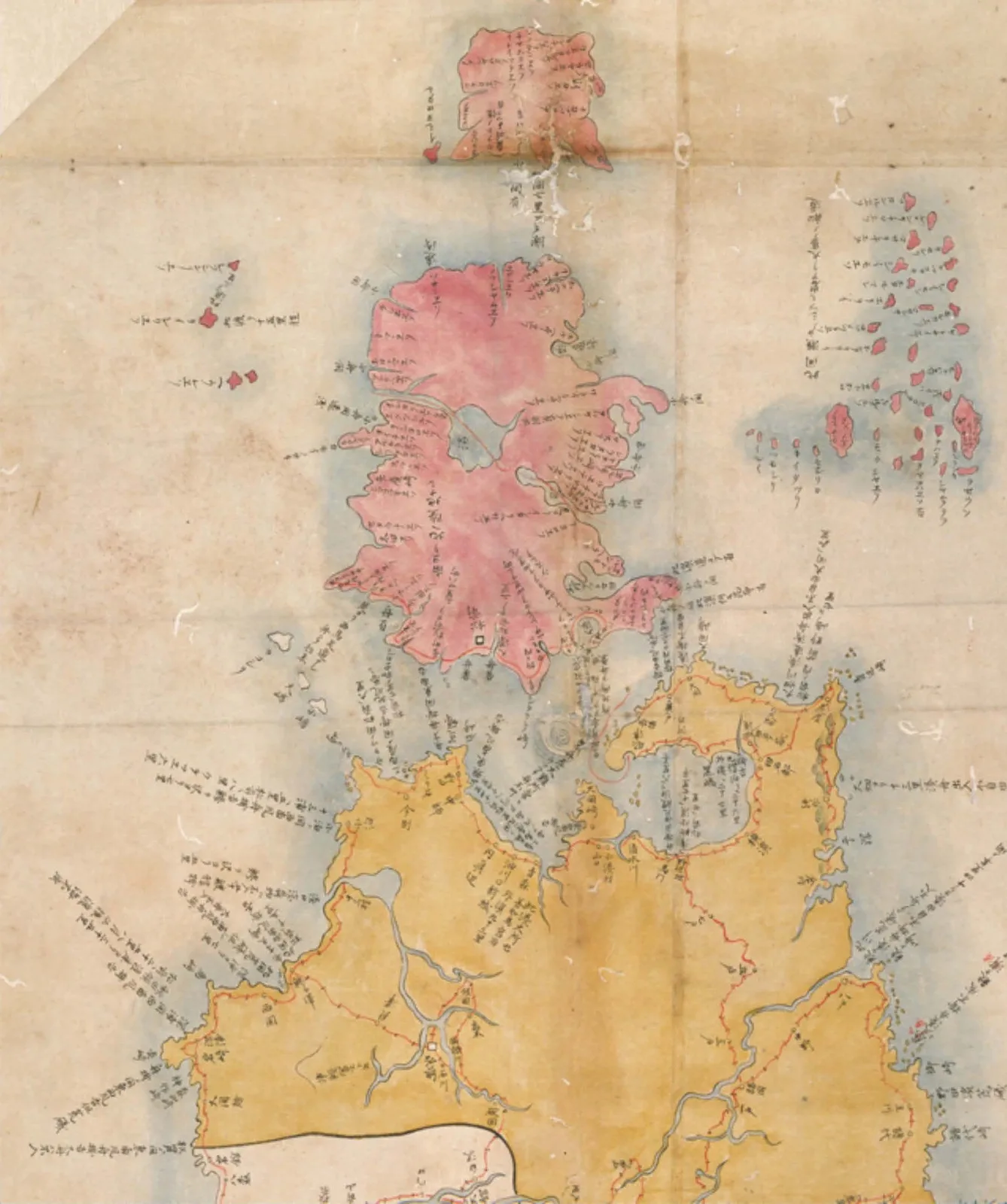
He was born in 1703 into a farming family in the north of the Akita domain; modern accounts give the village as Niida, now part of Ōdate, though Kanō, who had not researched the life, wrote Kubota.910 Later accounts say he went to Kyoto as a young man, entered a Zen temple, doubted the teaching of Buddhism and turned to medicine; the Andō Shōeki Museum in Hachinohe says instead that he began medical training in Kyoto in 1732, at about thirty, and says nothing of Zen.1112 No source records the doubt itself, or dates it. On the belief timeline, that is where his doubt belongs, and it is a gap.
By 1744, at about forty-two, he was practising in Hachinohe. The domain's records, as the museum and Wikipedia report them, show him treating archers who had come for a festival and, the next year, a senior retainer of the domain; in December 1744 he lectured at the temple Tenshō-ji, and the abbot and others, the museum says, were moved.131415 His household of five appears in the domain's register of 1746.16
The farmers' famine
In 1749 the Hachinohe domain suffered what was called the "boar famine", and about three thousand people starved; in 1751 a Buddhist temple in the town raised a prayer tower to drive the boars away; in 1755 another crop failure killed four or five thousand.17 The museum suggests that watching the farmers die while the samurai were spared turned him from a doctor of bodies into a thinker about society; it offers this as a conjecture, and no word of his confirms it.17
Kanō, who read the whole manuscript before it burned, summarised the argument. The farmer who tills the land and feeds himself is the model of a human being, yet everywhere he sits at the bottom, poor, while those who do not till and eat what others grow sit above him. So the teachings and governments that claim to rule and save the world must be wrong at the root. That is why Andō berated Confucius, "the representative of ruling the state", and the Buddha, "the representative of salvation".181920 He went back, Kanō says, past the age of emperors and the age of the gods, to find where class, law, religion and learning came from, and decided to abandon that whole "world of law" and keep only nature.21
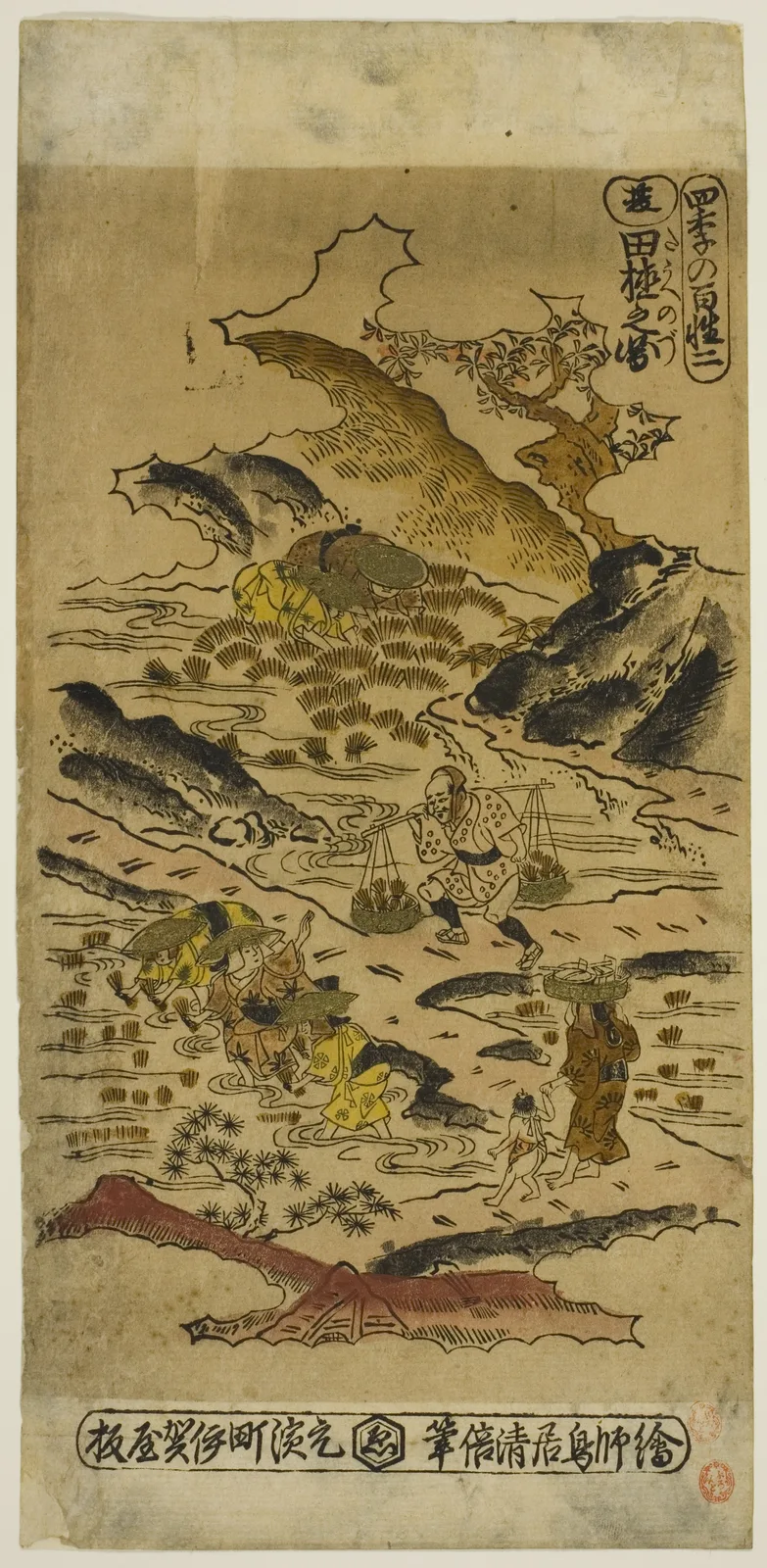
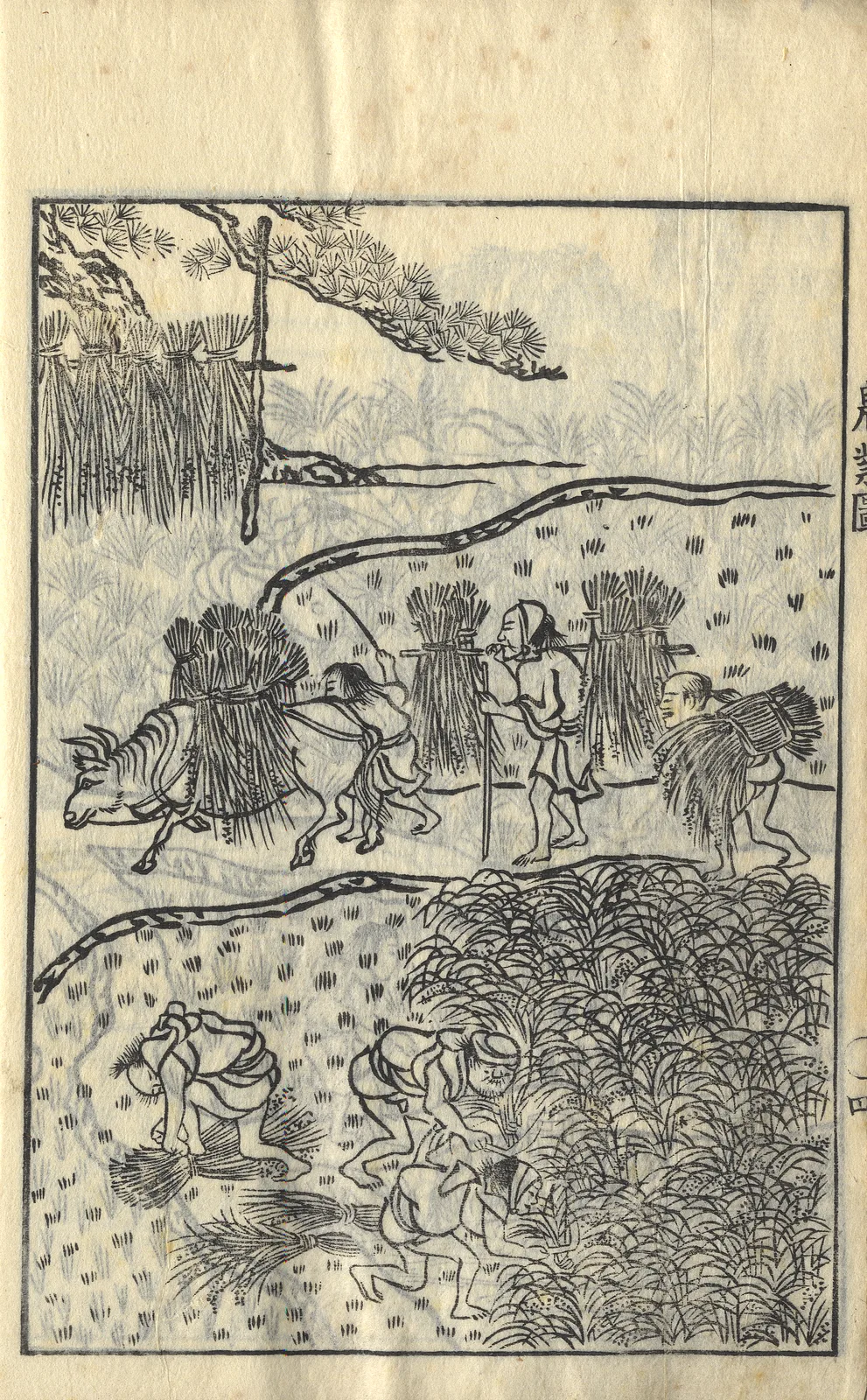
Only nature
In his own words, as Kanō printed them from a disciple's copy, the book opens: "Nature has no beginning and no end. It moves of itself and waits on no other."22 Kanō glosses the passage: all natural events arise from nature working alone, "never by waiting for something like gods and Buddhas."23 Heaven and earth, Andō wrote, have "no above, no below, no noble, no base ... It is only nature."24 The doctrine of "reward good, punish evil" he called "a grave private error", born of not knowing the wonder of nature.25 And of the sages who arranged heaven and earth into ranks, he said they did it "in order to benefit themselves".26 No god who rules, judges or rewards appears anywhere in what survives of his writing.
The volume he called "Life and Death" was lost before Kanō saw it. Kanō argued that it cannot have taught hell and paradise, since everything else in the manuscript explains the world naturally; that is Kanō's inference, not a page anyone read.2728 Life and death, in a passage that does survive, are "one way".29
There are signs pointing the other way, and Kanō reported them. Andō spoke for Japan as a "divine country" and blamed earlier Japanese teachers for their love of foreign thought.7 One modern reference says he still honoured the Shinto gods as embodiments of nature, a kind of pantheism; that rests on a book not checked here.30 And he was buried at a Buddhist temple under a Buddhist name, which says nothing about his own wish.31 On the evidence that survives, his nature had no person in it who hears or answers; whether he would have called that atheism, nobody can say.
The book he hid
He published a three-volume version of Shizen shin'eidō in 1753, halted it and reissued it in 1754, and a booklist of that year names him as its author.3233 Kanō believed it was a restrained abridgement, and that the full text was held back to keep the peace, since printing it would have brought him straight into conflict with the authorities; that is Kanō's reasoning.2 The full manuscript's first part was finished in 1755.34 Its attack on Tokugawa Ieyasu, founder of the ruling shogunate, was so violent that someone later pasted slips of paper over the name.35 On the timeline, this is his declaration, and it was made in a printed book that hid most of what he meant.
He seems to have been a peaceful man. "My way has no strife; I do not speak of arms; I do not fight," was a saying Kanō says he used constantly.36 He said he did not mind being called dung, and was ashamed to be called a sage.37
The other side
No contemporary reply to Andō is on record; almost nobody read him. The position he attacked had been stated two thousand years earlier by Mencius, the second sage of Confucianism, answering a school that wanted rulers to plough beside their people: "Those who work with their minds govern others; those who work with their strength are governed by others ... This is the universal rule under heaven."38 The popular Buddhism of his Japan rested on a trust Andō refused: Shinran's assurance that whoever trusts Amida's vow will be taken into the Pure Land, and "even if I am deceived by Hōnen and fall into hell for saying the nenbutsu, I will have no regret at all."3940 And the first scholar to read him, Kanō himself, judged his philosophy flawed: "He took nature only as paired opposites and did not know to take it as cause and effect."41
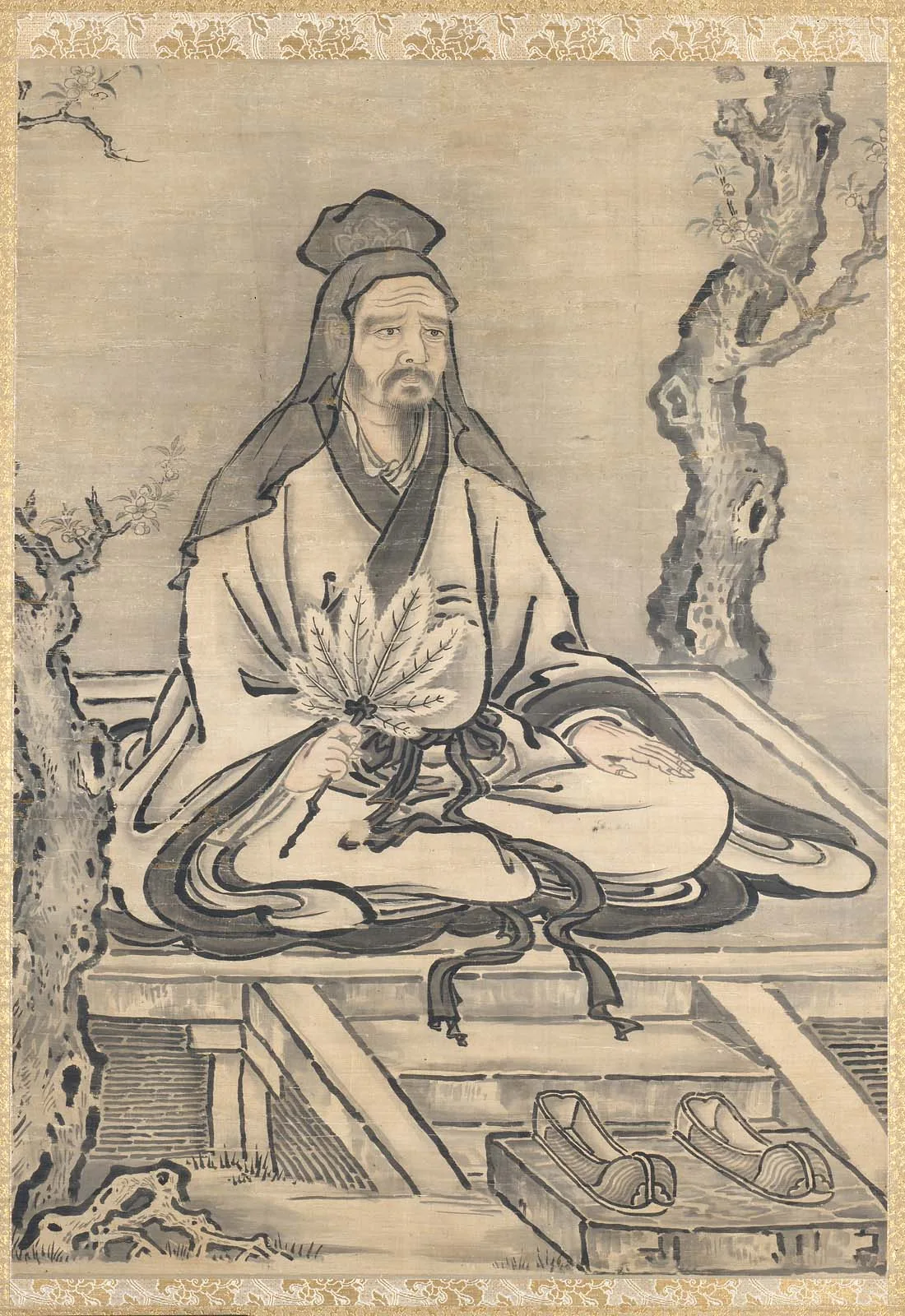
Home and after
In 1758, after a gathering of his disciples at Tenshō-ji, he went back alone to his home village, leaving his wife and son in Hachinohe; his son, Shūhaku, carried on as a physician there.424344 He died in Niida on 29 November 1762, at about sixty.45 Two years later, the museum's chronology says, his disciples set up a stone at his grave inscribed "Great god who protects the farmers"; a dispute with religious figures followed, the stone was destroyed, there was a lawsuit, and in 1765 his heir was banished from the village and a disciple ordered out.46 Who destroyed the stone, the record does not say.
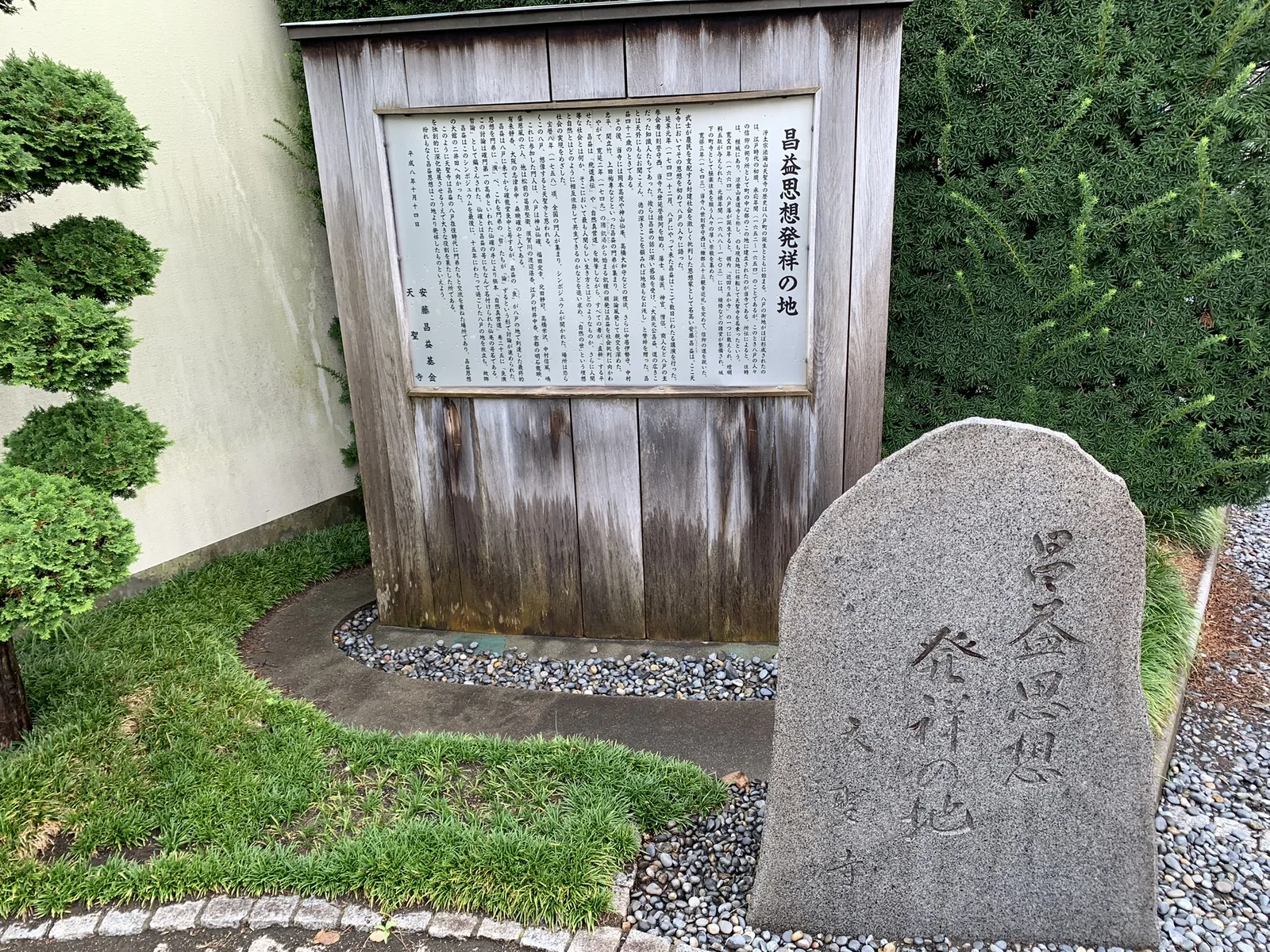
Kanō acquired the manuscript about 1899 and wrote about him in 1908; Tokyo Imperial University bought it in the spring of 1923, and later that year the great earthquake and fire destroyed it, before anyone had copied it. Only the twelve volumes out on loan survived.474849 Kanō's essay of 1928 is the first study of him, and the Canadian diplomat and historian E. H. Norman's book of 1949, translated into Japanese in 1950, made him widely known in Japan.505152
Did his unbelief change shape?
As far as the record shows, it did not; it went underground. A doctor who saw farmers starve wrote that the world moves of itself, that rank and reward are human inventions, and that no god or Buddha is needed to explain anything; he printed a softened version, hid the rest for a hundred years, and was nearly lost twice, once to neglect and once to fire. What survives is a nature with no one above it.
Yamagata Bantō, the Osaka rice broker who wrote, a generation after Andō's death, that there are no gods, Buddhas or ghosts, has his own chapter in this book.
Footnotes
-
Kanō Kōkichi 狩野亨吉, 「安藤昌益」, in Iwanami kōza Sekai shichō 岩波講座世界思潮, vol. 3 (Iwanami Shoten, May 1928), pp. 325–350 (page range from the NDL record). Kanō died 1942, so the text is in the public domain. Source text: Aozora Bunko card 2653,, §1. ↩
-
Kanō, describing Shōeki's purpose: 狩野亨吉, Iwanami kōza Sekai shichō, §1. Not checked against the original (n/a (Kanō's words)). ↩
-
狩野亨吉, Iwanami kōza Sekai shichō, §1. ↩
-
狩野亨吉, Iwanami kōza Sekai shichō, §1. ↩
-
狩野亨吉, Iwanami kōza Sekai shichō, §1. ↩
-
Kanō on Andō: 狩野亨吉, Iwanami kōza Sekai shichō, §3. Not checked against the original (n/a (Kanō's words)). ↩
-
same site, "関連年表" (https://shoeki.org/ ... 関連年表/, retrieved 2026-10-15), saved as
research/texts/shoeki-org-nenpyo.txt. Tier 3: a year-by-year table of his life and the world; gives the dates cited as "museum". Names no sources, so every row counts as secondhand until checked against the Zenshū or Inaba (2002), 1703; ja.wikipedia.org 安藤昌益 (via API, saved asresearch/texts/wikipedia-ja-map.txt). Gives the Niida birthplace, Zen training at Myōshin-ji, teacher Aji'oka Sanpaku, Hachinohe 1744 diary, 1745 Koyomi taii, 1753 printing, 1756–58 return, 1762 death and Onsen-ji grave, 1935 Narahon find, later finds. None of these could be confirmed in an accessible pre-1931 source. Its own sources are modern (Inaba 2002, Terao 1996, Miyake 1983, Zenshū 1983–87, Zenshū supplement 2005), lead and "生涯"; fr.wikipedia.org "Andō Shōeki", revision 205417857 of 2023-06-23T15:21:56Z, saved asresearch/texts/wikipedia-fr-wikitext.txt. Tier 4; the page carries "travail inédit" and "à sourcer" banners; it paraphrases the scholarship of Jacques Joly (1996, 2002, 2014), lead. Reported at second hand; the original has not been seen. ↩ -
狩野亨吉, Iwanami kōza Sekai shichō, §3. Accounts differ; see the disputed points. ↩
-
Koyomi taii; zh.wikipedia.org 安藤昌益, revision 66481250 of 2021-07-08T06:50:47Z, saved as
research/texts/wikipedia-zh-wikitext.txt. Tier 4; cites Nakamura Hajime (1992) for the pantheist reading; contradicted in part by Museum chron 1732. ↩ -
"関連年表", 1726, 1732. ↩
-
Koyomi taii; "関連年表", 1744. ↩
-
"関連年表", 1744; 安藤昌益資料館 (Andō Shōeki Museum, Hachinohe; run by the 資料館を育てる会), "安藤昌益とは" (https://shoeki.org/, retrieved 2026-10-15), saved as
research/texts/shoeki-org-bio.txt(tags stripped). Tier 3: a local museum's introductory page; no sources named. Says he lived at Hachinohe from about 42 for about 15 years, that the 101-volume, 93-book manuscript was written there, and quotes the printed Daijo preface, ("about 42, about 15 years"). ↩ -
"関連年表", 1745. ↩
-
"関連年表", 1746. ↩
-
狩野亨吉, Iwanami kōza Sekai shichō, §2. ↩
-
Kanō's paraphrase of Shōeki's argument: 狩野亨吉, Iwanami kōza Sekai shichō, §2. Not checked against the original (n/a (Kanō's paraphrase)). ↩
-
Kanō's paraphrase: 狩野亨吉, Iwanami kōza Sekai shichō, §2. Not checked against the original (n/a (Kanō's paraphrase)). ↩
-
狩野亨吉, Iwanami kōza Sekai shichō, §2. ↩
-
Andō Shōeki, Tōdō shinden, opening section "聖人自然の眞道を失る論" ("On the sages' loss of the true way of nature"): 狩野亨吉, Iwanami kōza Sekai shichō, §4 (quoting the disciple's copy). Not checked against the original (no (as printed by Kanō; manuscript not seen)). ↩
-
Kanō's gloss on the opening of Tōdō shinden (Q1): 狩野亨吉, Iwanami kōza Sekai shichō, §4. Not checked against the original (n/a (Kanō's words)). ↩
-
Andō Shōeki, Tōdō shinden, opening section: 狩野亨吉, Iwanami kōza Sekai shichō, §4. Not checked against the original (no (as printed by Kanō; manuscript not seen)). ↩
-
Andō Shōeki, same passage as Q2: 狩野亨吉, Iwanami kōza Sekai shichō, §6. Not checked against the original (no (as printed by Kanō)). ↩
-
Andō Shōeki, same: 狩野亨吉, Iwanami kōza Sekai shichō, §4. Not checked against the original (no (as printed by Kanō)). ↩
-
狩野亨吉, Iwanami kōza Sekai shichō, §1 (missing books), §6 (argument). ↩
-
Kanō (not Andō) on the missing "Life and Death" volume: 狩野亨吉, Iwanami kōza Sekai shichō, §6. Not checked against the original (n/a (Kanō's words)). ↩
-
Andō Shōeki, Tōdō shinden, in a discussion of knowledge: 狩野亨吉, Iwanami kōza Sekai shichō, §5. Not checked against the original (no (as printed by Kanō)). ↩
-
zh-wp. Not verified. ↩
-
"関連年表", 1762. ↩
-
"関連年表", 1752–54; "Andō Shōeki", (1753, two publishers). ↩
-
狩野亨吉, Iwanami kōza Sekai shichō, §1 (booklist itself not seen). ↩
-
"関連年表", 1755; Daijo. ↩
-
狩野亨吉, Iwanami kōza Sekai shichō, §2, §3. ↩
-
Andō Shōeki (a "saying he constantly uses" per Kanō): 狩野亨吉, Iwanami kōza Sekai shichō, §1. Not checked against the original (no (Kanō's report of a habitual phrase)). ↩
-
狩野亨吉, Iwanami kōza Sekai shichō, §6. ↩
-
Mencius (4th–3rd c. BCE), the second sage of Confucianism, answering the Xu Xing school who held that a ruler should plough alongside his people. Series translation: "Those who work with their minds govern others; those who work with their strength are governed by others. Those governed by others feed them; those who govern others are fed by them. This is the universal rule under heaven.": 《孟子·滕文公上》, chapter 4 (the debate with the followers of Xu Xing), Chinese Wikisource transcription (https://zh.wikisource.org/wiki/孟子/滕文公上), saved as
research/texts/mencius-3a.txt. The standard Confucian text of the thought that "those who work with their minds rule" and "the ruled feed the rulers". Edo-period readers read Mencius in Japanese in every domain school; this is the position Shōeki's jikikō ("direct cultivation") argument reverses, (zh.wikisource; saved texts/mencius-3a.txt). ↩ -
Shinran, as recorded in the Tannishō (13th c.); the Pure Land (Jōdo Shinshū) position, the largest popular Buddhist faith in Edo Japan. The 1923 Honpa Hongwanji rendering: "When you believe that you will be born in the Pure Land, helped by the vow of Amida, and the wish to say the name arises, you receive the benefit of being taken in and never abandoned.": 『歎異抄』 (13th-century record of Shinran's sayings), Honpa Hongwanji, Iyaku seiten 意訳聖典 (1923), Japanese Wikisource transcription of this modern rendering, ruby stripped (
research/texts/tannisho-1923.txt; raw with ruby inresearch/notes/). The Pure Land school was the popular Buddhism of Shōeki's day; this states its position in its own words. It is a 1923 rendering, not an Edo-period text, ch. 1 (ja.wikisource). ↩ -
Shinran, same: "Even if I am deceived by Hōnen and fall into hell for saying the nenbutsu, I will have no regret at all." The believer's reason for trusting a teaching without proof: Iyaku seiten (1923), ch. 2. ↩
-
Kanō Kōkichi (1928), the man who found him, on a flaw in his philosophy: "He took nature only as paired opposites and did not know to take it as cause and effect." Kanō also says the plan is built on "important defects": 狩野亨吉, Iwanami kōza Sekai shichō, §6. ↩
-
"関連年表", 1758; Koyomi taii. ↩
-
Koyomi taii; "関連年表", 1758. ↩
-
"関連年表", 1735; Koyomi taii, (marriage and child before Hachinohe). ↩
-
"関連年表", 1703 and 1762; Koyomi taii; en.wikipedia.org Andō Shōeki (saved as
research/texts/wikipedia-en-map.txt): gives the "Right Man" and the "World of Law" in English; its bibliography points to Yasunaga 1992 and Animal Court (1992 translation), both in copyright; "Andō Shōeki". ↩ -
"関連年表", 1764, 1765. ↩
-
"関連年表", 1908. ↩
-
狩野亨吉, Iwanami kōza Sekai shichō, §1; Andō Shōeki, 稿本『自然真営道』, one surviving manuscript volume, "第一 私制字書巻一" (Shishi jisho, vol. 1; 62 images), University of Tokyo General Library, scanned on the Internet Archive as
utokyo-71952(uploaded 2020). Reuse terms:, description. ↩ -
Shōeki, Shishi jisho, description (research/notes). ↩
-
National Diet Library Search record, "安藤昌益 狩野亨吉著(岩波講座世界思潮3 P325–350)昭和3年(1928)", via, record; Aozora card 2653. ↩
-
"関連年表", 1950; Koyomi taii; "Andō Shōeki"; E. H. Norman, "Andō Shōeki and the Anatomy of Japanese Feudalism", Transactions of the Asiatic Society of Japan, 3rd series, vol. 2 (1949); Japanese translation 『忘れられた思想家』, Ōkubo Genji, Iwanami Shinsho (1950). In copyright; a lead only, not read, (not read). ↩
-
"関連年表", 1950; Koyomi taii; "Andō Shōeki". ↩
research/texts/shoeki-org-nenpyo.txt. Tier 3: a year-by-year table of his life and the world; gives the dates cited as "museum". Names no sources, so every row counts as secondhand until checked against the Zenshū or Inaba (2002).; ja.wikipedia.org 安藤昌益 (via API, saved as research/texts/wikipedia-ja-map.txt). Gives the Niida birthplace, Zen training at Myōshin-ji, teacher Aji'oka Sanpaku, Hachinohe 1744 diary, 1745 Koyomi taii, 1753 printing, 1756–58 return, 1762 death and Onsen-ji grave, 1935 Narahon find, later finds. None of these could be confirmed in an accessible pre-1931 source. Its own sources are modern (Inaba 2002, Terao 1996, Miyake 1983, Zenshū 1983–87, Zenshū supplement 2005).; fr.wikipedia.org "Andō Shōeki", revision 205417857 of 2023-06-23T15:21:56Z, saved as research/texts/wikipedia-fr-wikitext.txt. Tier 4; the page carries "travail inédit" and "à sourcer" banners; it paraphrases the scholarship of Jacques Joly (1996, 2002, 2014).; zh.wikipedia.org 安藤昌益, revision 66481250 of 2021-07-08T06:50:47Z, saved as research/texts/wikipedia-zh-wikitext.txt. Tier 4; cites Nakamura Hajime (1992) for the pantheist reading.; 安藤昌益資料館 (Andō Shōeki Museum, Hachinohe; run by the 資料館を育てる会), "安藤昌益とは" (https://shoeki.org/, retrieved 2026-10-15), saved as research/texts/shoeki-org-bio.txt (tags stripped). Tier 3: a local museum's introductory page; no sources named. Says he lived at Hachinohe from about 42 for about 15 years, that the 101-volume, 93-book manuscript was written there, and quotes the printed Daijo preface.; 《孟子·滕文公上》, chapter 4 (the debate with the followers of Xu Xing), Chinese Wikisource transcription (https://zh.wikisource.org/wiki/孟子/滕文公上), saved as research/texts/mencius-3a.txt. The standard Confucian text of the thought that "those who work with their minds rule" and "the ruled feed the rulers". Edo-period readers read Mencius in Japanese in every domain school; this is the position Shōeki's jikikō ("direct cultivation") argument reverses.; 『歎異抄』 (13th-century record of Shinran's sayings), Honpa Hongwanji, Iyaku seiten 意訳聖典 (1923), Japanese Wikisource transcription of this modern rendering, ruby stripped (research/texts/tannisho-1923.txt; raw with ruby in research/notes/). The Pure Land school was the popular Buddhism of Shōeki's day; this states its position in its own words. It is a 1923 rendering, not an Edo-period text.; en.wikipedia.org Andō Shōeki (saved as research/texts/wikipedia-en-map.txt): gives the "Right Man" and the "World of Law" in English; its bibliography points to Yasunaga 1992 and Animal Court (1992 translation), both in copyright.; Andō Shōeki, 稿本『自然真営道』, one surviving manuscript volume, "第一 私制字書巻一" (Shishi jisho, vol. 1; 62 images), University of Tokyo General Library, scanned on the Internet Archive as utokyo-71952 (uploaded 2020). Reuse terms:.; National Diet Library Search record, "安藤昌益 狩野亨吉著(岩波講座世界思潮3 P325–350)昭和3年(1928)", via.; E. H. Norman, "Andō Shōeki and the Anatomy of Japanese Feudalism", Transactions of the Asiatic Society of Japan, 3rd series, vol. 2 (1949); Japanese translation 『忘れられた思想家』, Ōkubo Genji, Iwanami Shinsho (1950). In copyright; a lead only, not read.In their own words
夫れ自然は始も無く終りも無し。自り感き他を俟つに非ず、自ら推して至るに非ず。
常に自り感くに小進して温暖發生の氣行あり。大進して熱烈盛育の氣行あり。小退して涼燥實收の氣行あり。大退して冷寒枯藏の氣行あり。
是れ惡を去れば善もなし。善を去れば惡もなし。
左の手は善右の手は惡、右の手を切れば則ち左の手のみにて用を達し難し
眞道は自然の進退にして一眞道なり。則ち轉定にして一體、日月にして一神、五穀にして一穀、男女にして一人、牝牡にして一疋、雌雄にして一番、善惡にして一物、邪正にして一事、是非にして一理、表裡にして一般、生死にして一道、苦樂にして一心、喜怒にして一情
自然の妙を知らざる故に勸善懲惡と云ひ、或は衆善奉行諸惡莫作と云ふは甚だ私の失りなり。
是れ己れ衆の上に立たんが爲め、私法を以て轉下に道を失る根源なり矣。
然るに己れを利せんが爲めに之を失り之を盜み、轉定に先後を附し、先を以て大極と爲し、後を以て天地と爲し、二つの位と爲す。
我道には爭ひなし、吾は兵を語らず、吾は戰はず
爭ふ者は必ず斃れる。斃れて何の益があらう。故に我道には爭ひなし。我は兵を語らず。我戰はず。
吾は無學である、吾に師なし、吾生れながらにして知る
百年の後を期して書殘す
自ら直に耕して食ひ
不耕貪食の徒は常に農民の上に位し
冷靜に世間を觀察すれば、僞善にして蟲の良い輩ら、不公平にして横暴を振舞ふ族ら等、もし神佛が在ましたら早くどうかして貰ひ度いものが頗る多いことが明白になつて來る。
彼は神を信ぜず佛を信ぜず又聖人を信ぜず
其現象は皆自然が獨りで働いて起すのであつて、決して他に神佛のごとき者を俟つて起るのでないと主張するのである
轉定は自然の進退退進にして無始無終、無上無下、無尊無賤、無二にして進退一體なり。故に轉定先後ある者に非ざるなり。唯自然なり。
私が見ることを得なかつた生死之卷に地獄極樂の存在を主張してゐるなど想ふことは子から親が生れると考へる位覺束ない話であり
釋迦や基督の救世は心や靈の上に在つたが、安藤は之を肉體に及ぼし何から何まで救ふと云ふのである
又或所では自分は糞と呼ばるるも意とせず、却て聖人と呼ばるるを恥づと云ふのである
非命にして死せる者のためにこれを記す
民苦しみ穀種絶つときは、則ち国亡ぶ。国亡ぶる則は、国主自ら減却ぞ。罰恥百世に殆す者也
The other side
勞心者治人,勞力者治於人。治於人者食人,治人者食於人──天下之通義也。
賢者與民并耕而食,饔飧而治。
彌陀如來の御誓ひにたすけられて淨土に生れさせて頂くのだと信じて念佛申さうと云ふ心持になつたとき攝め取て捨てないと云ふ利益にあづからして下さるのであります。
たとひ法然上人にだまされ、念佛したによつて地獄におちたからとて、更に後悔はいたしませぬ。
彼は自然を互性とのみ取り、因果と取ることを知らない
Where accounts differ
| Point | One account | Another | How the page handles it |
|---|---|---|---|
| Birthplace | Kubota (Akita city), Dewa (Kanō 1928 §3) | Niida village (下村), Akita district, now Ōdate, a farm family (ja-wp, Tier 4; the brief's "Nikita" is probably this "Niida" misread) | "Accounts differ"; say "northern Akita" until a pre-1931 or scholarly source for Niida is read |
| Size of the manuscript | 100 volumes in 92 books (Kanō §1) | 101 volumes in 93 books (UTokyo catalogue) | Say "about a hundred volumes" |
| Whether *Tōdō shinden* was printed in 1752 | Brief's lead: printed 1752 | Kanō: it is a disciple's manuscript copy of five books; the printed work is the three-book *Shizen shin'eidō*, listed in 1754 (Kanō §1) | Do not say *Tōdō shinden* was printed; drop 1752 |
| Whether he called himself the "true man"/saviour | Kanō §2: he calls himself "true man and saviour" in the prefaces | en-wp (Tier 4): he did not consider himself the "Right Man"; waited for one | Not for the script until the prefaces are read in a modern edition |
| Whether Shinto was a target | Brief and roster: condemned Buddhism, Confucianism and Shinto | Kanō §3: he appealed to Japan as a "divine country"; his charges are against Chinese sages and Buddhist founders | Say Confucianism and Buddhism, and that on Shinto the record is unclear |
| "Rediscovery 1899" | Kanō bought the manuscript c. 1899 (Kanō §1) | A modern reference says Kanō "rediscovered" it in 1899 | Say "Kanō acquired it around 1899"; no 1899 announcement is known |
| Occupation | Kanō only guesses a physician from the animal chapters (Kanō §3) | The roster, ja-wp and the museum chronology: physician at Hachinohe (treating archers in 1744, retainers in 1745; the museum's 1746 sect register lists his household) | Safe to say "practised as a physician in Hachinohe" with the museum and ja-wp as sources; the 1744 diary and 1746 register themselves are unseen |
| Birthplace (update) | Kanō: Kubota (Akita city) | Museum, ja-wp, fr-wp: Niida (Hinai, now Ōdate) | Take Niida; mention that Kanō 1928 had Kubota (probably his own guess, since he says he had not researched the life) |
| Where he trained, and in what | ja-wp and zh-wp: youth in Kyoto, Zen at Myōshin-ji, Kitano Tenmangū, then doubted Buddhism and turned to medicine under Aji'oka Sanpaku | Museum chron: medical training in Kyoto from 1732, age 30, under the third-generation Sanpaku; no mention of Zen | Do not state the Zen years as fact; say "later accounts say"; do not date his break with Buddhism |
| Street of his Hachinohe practice | ja-wp: Yagura Yokochō | Museum chron: Jūsan-nichi-machi (1744 and the 1746 register) | Name the town only |
| Date of the first Tenshō-ji lecture and the symposium | ja-wp: lecture 1745; symposium 1757 (and a national gathering c. 1760) | Museum chron: lecture December 1744; symposium 1758 | "In the mid-1740s" and "in the late 1750s" |
| 1753 or 1754 for the printed book | ja-wp, fr-wp: printed 1753 | Kanō: listed in the 1754 booklist; museum: issued March 1753, halted, reissued July 1754 | Say "printed in 1753, reissued in 1754 (museum), listed in 1754 (Kanō)" or "early 1750s" |
| Whether he honoured Shinto gods | Kanō §3: "divine country", appeals to Japan; no gods believed in | zh-wp (via Nakamura 1992): honoured the Shinto gods as nature's embodiments, a pantheist tendency | Say that Kanō and one reference book disagree in emphasis, and neither shows a god who answers prayer; do not call him a pantheist or an atheist in narration |
| "Rediscovered 1899" and the first notice | ja-wp (and zh-wp, ru-wp): rediscovered in 1899 | Kanō: acquired it "around Meiji 32"; museum: Kanō's first article on him is January 1908 ("大思想家あり"), the 1928 essay is a later full study | "Kanō acquired the manuscript around 1899 and first wrote about him publicly in 1908 (museum); his full essay came in 1928" |
| Name of the chief disciple | Kanō: 神山仙庵 (Kamiyama Sen'an) | Museum chron, ja-wp: 神山仙確 | Use "Sen'an" and note the variant if the disciple is named |
| Size of the Zenshū | ja-wp: 21 volumes plus 1 (1983–87) plus supplement 2005 | fr-wp: 22 volumes, 1982–2004 | Not for the script; matters only in a source note |
| Who destroyed the stone at his grave (the roster's "priests") | Roster brief: local priests | Museum chron: a dispute with "religious people", then destruction of the stone, a lawsuit, banishment of the heir | Say "after a dispute with religious figures the stone was destroyed" only if the museum's row is kept as a source; do not say "priests destroyed" |
List of illustrations
This page uses only public-domain and Creative Commons images; each is credited with its source and licence.
- Shizen shin'eidō manuscript, Daijo (Great Preface), first page, signed Kakuryūdō Ryōchū — Andō Shōeki (Kakuryūdō Ryōchū), c. 1752–1755 · Andō Shōeki, Shizen shin'eidō manuscript (稿本「自然真営道」), University of Tokyo General Library (東京大学総合図書館所蔵), via Internet Archive; manuscript is in the public domain, library reuse terms equivalent to CC BY · Public domain. University of Tokyo General Library reuse terms (lib.u-tokyo.ac.jp/ja/library/contents/archives-top/reuse): 「この利用条件は、クリエイティブ・コモンズ・ライセンスの「CC BY」(表示 4.0 国際ライセンス)相当の条件です」; commercial reuse OK, name the holding institution; 「公開されている画像データ等は、特に断りがない限り著作権保護期間が満了したもの」(copyright term expired). Work of c.1752-55, public domain.
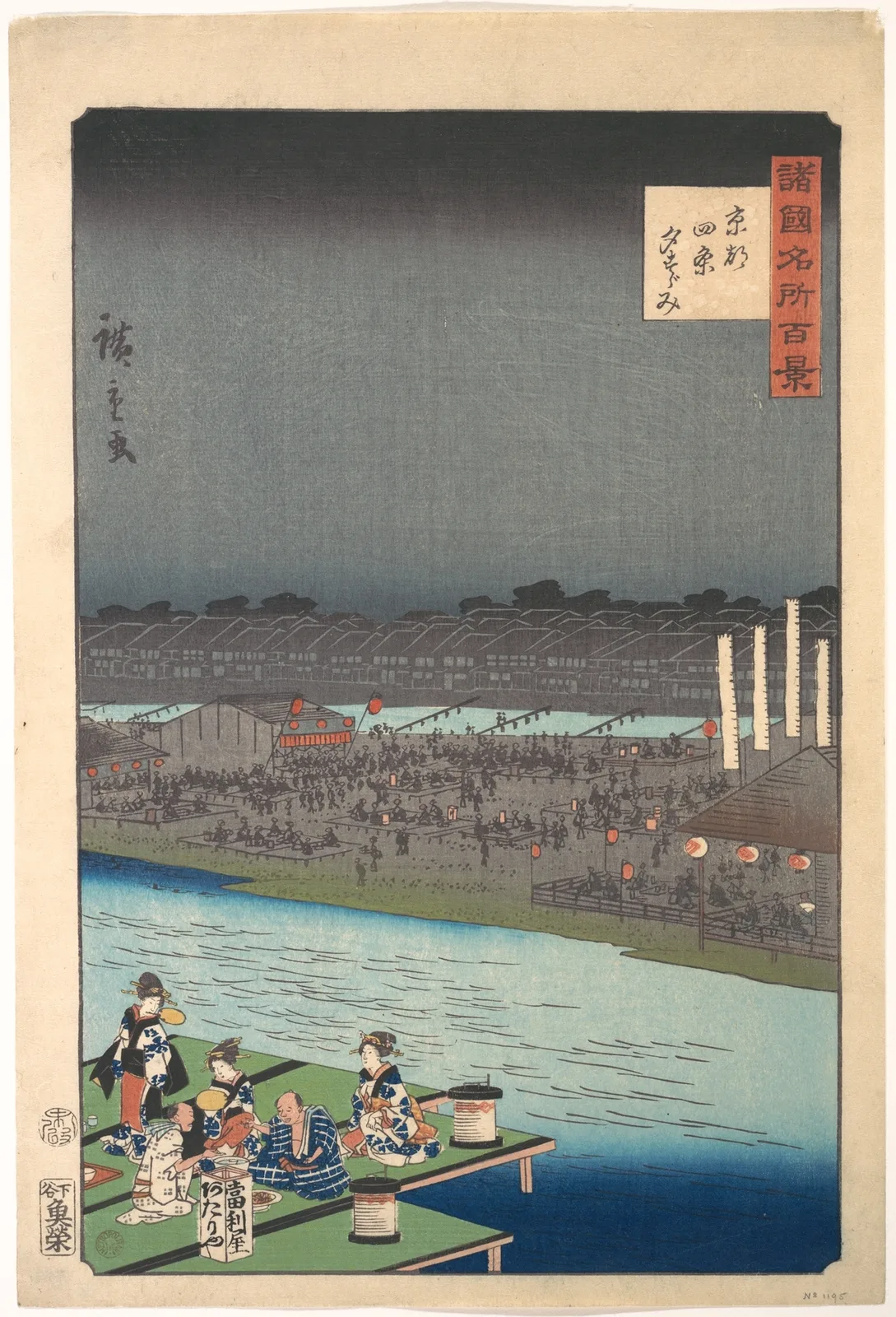
- Cooling Off at the Kamo River near Shijō in Kyoto (Kyoto Shijō yūsuzumi) — Utagawa Hiroshige II, c. 1860 · The Metropolitan Museum of Art, Open Access (CC0), via Wikimedia Commons · CC0
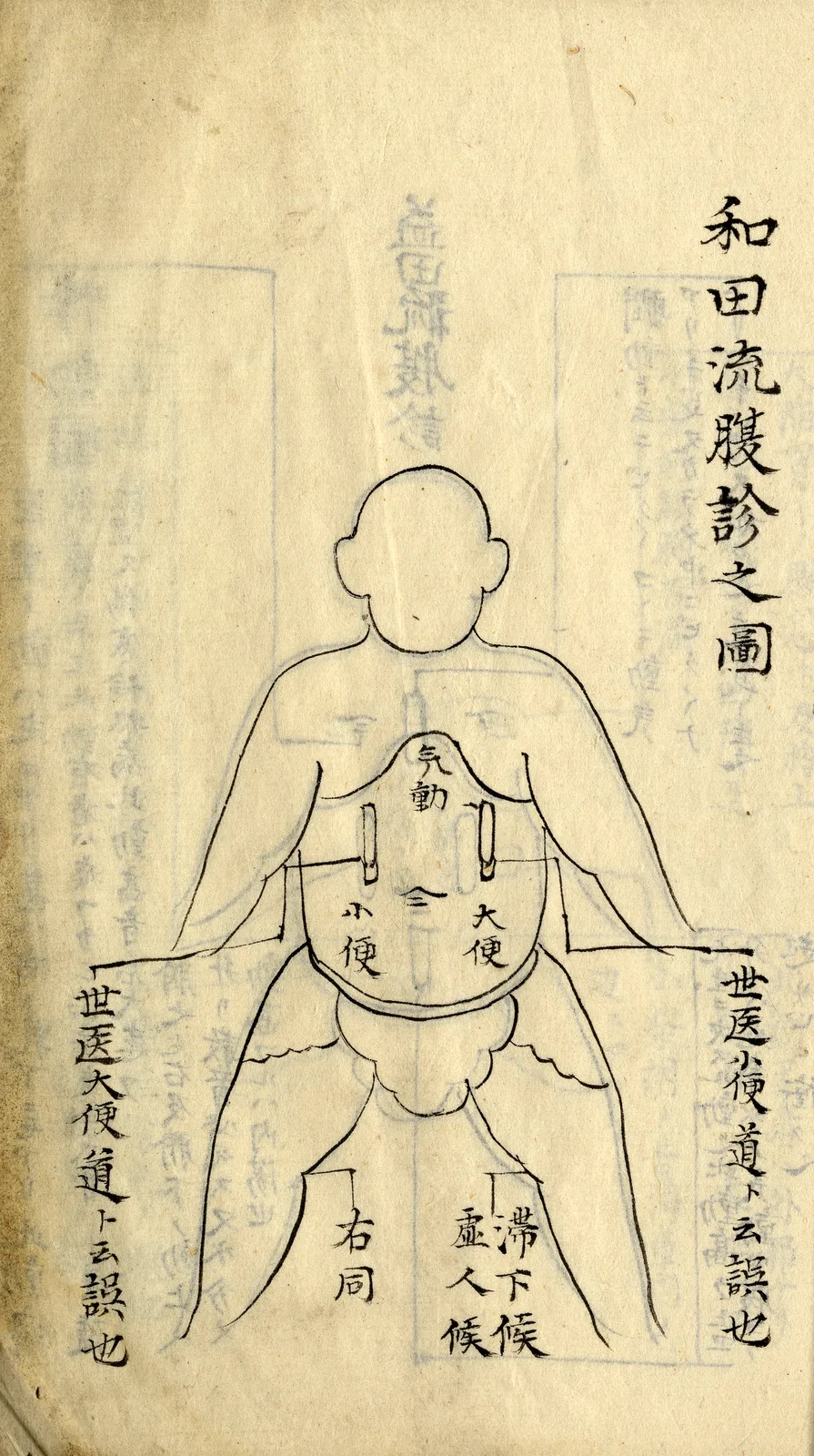
- Wada-style palpation diagnosis, illustration in the Edo-period manuscript Genshinkan shichisoku kai — Unknown Edo-period copyist; photograph Wolfgang Michel, Edo period (undated) · Wikimedia Commons, Wolfgang Michel collection (CC0), Edo-period manuscript copy · CC0
- Summer: Planting Rice (Natsu: taue no zu), No. 2 from the series The Four Seasons of Farmers (Shiki no hyakusho) — Torii Kiyomasu II, c. 1730s · Art Institute of Chicago, Japanese Print Purchase Fund (public domain, CC0) · CC0 (public domain)
- Rice harvest, in Miyazaki Yasusada's Nōgyō zensho (Compendium on agriculture), vol. 1, second edition 1782 — Miyazaki Yasusada (book first published 1697); photograph by Wolfgang Michel, 1782 (2nd edition of 1697 work); photographed 2012 · Wikimedia Commons, photograph by Wolfgang Michel (CC0), of Nōgyō zensho (Edo-period book) · CC0
- Draft fragment (残巻 断簡) found inside the manuscript's covers, in Andō's running hand — Andō Shōeki, 1750s (undated) · Andō Shōeki, draft fragment from the Shizen shin'eidō manuscript (残巻 断簡), University of Tokyo General Library (東京大学総合図書館所蔵), via Internet Archive; manuscript is in the public domain, library reuse terms equivalent to CC BY · Public domain. University of Tokyo General Library reuse terms (lib.u-tokyo.ac.jp/ja/library/contents/archives-top/reuse): 「この利用条件は、クリエイティブ・コモンズ・ライセンスの「CC BY」(表示 4.0 国際ライセンス)相当の条件です」; commercial reuse OK, name the holding institution; 「公開されている画像データ等は、特に断りがない限り著作権保護期間が満了したもの」(copyright term expired). Work of c.1752-55, public domain.
- Shōhō Nihon zu (Shōhō map of Japan), detail of northern Honshū (yellow) and Ezo (pink) — Edo-period cartographer (anonymous), c. 1644 · Shōhō Nihon zu, National Museum of Japanese History, Sakura (public domain via Wikimedia Commons) · Public domain
- Confucius at the Apricot Altar (from Confucius and His Disciples Yanzi and Huizi at the Apricot Altar) — Kanō Tan'yū, Mid-17th century · Museum of Fine Arts, Boston, via Wikimedia Commons (public domain) · Public domain
- Monument to the birthplace of Andō Shōeki's thought, Tenshō-ji temple, Hachinohe — River-run, 2023-09-09 · Wikimedia Commons, photograph by River-run (CC0) · CC0
Sources
Tier 1 — the subject's own words (writings, letters, diaries, trial records)
- [UTokyo-71952] Andō Shōeki, 稿本『自然真営道』, one surviving manuscript volume, "第一 私制字書巻一" (Shishi jisho, vol. 1; 62 images), University of Tokyo General Library, scanned on the Internet Archive as
utokyo-71952(uploaded 2020). Reuse terms: https://www.lib.u-tokyo.ac.jp/ja/library/contents/archives-top/reuse (not yet checked; the gatherer must read them). Catalogue description saved inresearch/notes/utokyo-71952-description.txt. The IA OCR (research/texts/shishi-jisho-1.txt) is unreadable noise (a cursive manuscript); it cannot support any quotation. Useful as a picture source and as proof of the survivor count. - No other text by Shōeki was found openly available. Not on Aozora Bunko, Japanese Wikisource, Internet Archive search (only the one item above) or NDL search results (modern editions only). All his words below are therefore quoted through Kanō.
Tier 2 — scholarly biographies and encyclopedias
- [Kanō] Kanō Kōkichi 狩野亨吉, 「安藤昌益」, in Iwanami kōza Sekai shichō 岩波講座世界思潮, vol. 3 (Iwanami Shoten, May 1928), pp. 325–350 (page range from the NDL record). Kanō died 1942, so the text is in the public domain. Source text: Aozora Bunko card 2653, https://www.aozora.gr.jp/cards/000866/card2653.html, a volunteer transcription (old kana and kanji) of Kanō Kōkichi ibunshū (Iwanami, 1958), saved as
research/texts/kano-ando-shoeki.txt. The Aozora file has no printed page numbers, so I cite by Kanō's six sections: §1 (一 the man and his book), §2 (二 the path of his thought), §3 (三 the man himself), §4 (四 the right view of nature), §5 (五 mutual nature, gosei kasshin), §6 (六 his view of salvation). Kanō says he had not studied Shōeki's life and gives only a list of miscellaneous facts [§3]. I have not seen a scan of the 1928 print; a comparison with it is still needed. - [NDL] National Diet Library Search record, "安藤昌益 狩野亨吉著(岩波講座世界思潮3 P325–350)昭和3年(1928)", via https://ndlsearch.ndl.go.jp/api/opensearch?title=安藤昌益 (retrieved 2026-10-13). Confirms the 1928 publication and page range. NDL also lists about 1,094 modern items (e.g. 若尾政希, 三宅正彦, 稲葉克夫), none of them pre-1931 and none used.
- [Norman 1949] E. H. Norman, "Andō Shōeki and the Anatomy of Japanese Feudalism", Transactions of the Asiatic Society of Japan, 3rd series, vol. 2 (1949); Japanese translation 『忘れられた思想家』, Ōkubo Genji, Iwanami Shinsho (1950). In copyright; a lead only, not read.
Tier 3 — popular biographies and journalism
- None used.
Tier 4 — maps to other sources only (Wikipedia and similar). Never cited in the script.
- [ja-wp] ja.wikipedia.org 安藤昌益 (via API, saved as
research/texts/wikipedia-ja-map.txt). Gives the Niida birthplace, Zen training at Myōshin-ji, teacher Aji'oka Sanpaku, Hachinohe 1744 diary, 1745 Koyomi taii, 1753 printing, 1756–58 return, 1762 death and Onsen-ji grave, 1935 Narahon find, later finds. None of these could be confirmed in an accessible pre-1931 source. Its own sources are modern (Inaba 2002, Terao 1996, Miyake 1983, Zenshū 1983–87, Zenshū supplement 2005). - [en-wp] en.wikipedia.org Andō Shōeki (saved as
research/texts/wikipedia-en-map.txt): gives the "Right Man" and the "World of Law" in English; its bibliography points to Yasunaga 1992 and Animal Court (1992 translation), both in copyright. - [Museum bio] 安藤昌益資料館 (Andō Shōeki Museum, Hachinohe; run by the 資料館を育てる会), "安藤昌益とは" (https://shoeki.org/, retrieved 2026-10-15), saved as
research/texts/shoeki-org-bio.txt(tags stripped). Tier 3: a local museum's introductory page; no sources named. Says he lived at Hachinohe from about 42 for about 15 years, that the 101-volume, 93-book manuscript was written there, and quotes the printed Daijo preface. - [Museum chron] same site, "関連年表" (https://shoeki.org/ ... 関連年表/, retrieved 2026-10-15), saved as
research/texts/shoeki-org-nenpyo.txt. Tier 3: a year-by-year table of his life and the world; gives the dates cited as "museum". Names no sources, so every row counts as secondhand until checked against the Zenshū or Inaba (2002). - [Museum gloss] same site, "用語集" (glossary of his terms; retrieved 2026-10-15), saved as
research/texts/shoeki-org-glossary.txt. Tier 3, for the definitions of chokkō, fukō donshoku, hōsei, shizensei, tenchi, kasshin, tōdō. - [ja-wp] (updated) ja.wikipedia.org 安藤昌益, revision 111001449 of 2026-09-13T03:53:37Z, wikitext saved as
research/texts/wikipedia-ja-wikitext.txt(the earlier extractwikipedia-ja-map.txtis superseded). Tier 4; cited footnotes: Wakao (2004), Maruyama, Naramoto, Miyake; flagged by the page itself as short of footnotes. - [en-wp] (updated) en.wikipedia.org "Andō Shōeki", revision 1378789000 of 2026-10-06T04:08:26Z, wikitext saved as
research/texts/wikipedia-en-wikitext.txt. Tier 4; rests on Yasunaga (1992) and Marandjian (2000). - [fr-wp] fr.wikipedia.org "Andō Shōeki", revision 205417857 of 2023-06-23T15:21:56Z, saved as
research/texts/wikipedia-fr-wikitext.txt. Tier 4; the page carries "travail inédit" and "à sourcer" banners; it paraphrases the scholarship of Jacques Joly (1996, 2002, 2014). - [zh-wp] zh.wikipedia.org 安藤昌益, revision 66481250 of 2021-07-08T06:50:47Z, saved as
research/texts/wikipedia-zh-wikitext.txt. Tier 4; cites Nakamura Hajime (1992) for the pantheist reading. - [ru-wp] ru.wikipedia.org "Андо Сёэки", revision 138866748 of 2024-07-11T15:46:31Z, saved as
research/texts/wikipedia-ru-wikitext.txt. Tier 4; useful only for its bibliography (Nagata 1936). - Not reached: Norman (1949), Yasunaga (1992), Joly (1996), Wakao (2004), Inaba (2002), the Andō Shōeki zenshū. Britannica returned 403; no Andō text is on Japanese Wikisource; Google Books and the Internet Archive search returned nothing useful. The two museum YouTube videos have no caption track.
Opposition sources — contemporary critics and religious responses
- [Mencius 3A4] 《孟子·滕文公上》, chapter 4 (the debate with the followers of Xu Xing), Chinese Wikisource transcription (https://zh.wikisource.org/wiki/孟子/滕文公上), saved as
research/texts/mencius-3a.txt. The standard Confucian text of the thought that "those who work with their minds rule" and "the ruled feed the rulers". Edo-period readers read Mencius in Japanese in every domain school; this is the position Shōeki's jikikō ("direct cultivation") argument reverses. - [Tannishō 1923] 『歎異抄』 (13th-century record of Shinran's sayings), Honpa Hongwanji, Iyaku seiten 意訳聖典 (1923), Japanese Wikisource transcription of this modern rendering, ruby stripped (
research/texts/tannisho-1923.txt; raw with ruby inresearch/notes/). The Pure Land school was the popular Buddhism of Shōeki's day; this states its position in its own words. It is a 1923 rendering, not an Edo-period text. - No contemporary reply to Shōeki is known. Kanō says his books drew no response at all [3]. No local priest or Confucian is on record as answering him in any source I could reach. The nearest thing to a religious response is the 1764–65 dispute over the stone at his grave (museum chronology, claim 54): the participants' own words are not preserved in anything I reached, so it can be reported as an event and not quoted.
Related lives
Suggest Yamagata Bantō (1748–1821, roster), the next Edo-period Japanese writer who said in print that there are no gods or ghosts, working in Osaka thirty years after Shōeki's death; or Fan Zhen (also an East Asian unbeliever overlooked in his own time). Expensive model to settle; the close must not say "Next:".
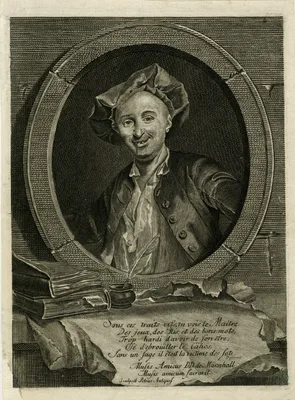
Julien Offray de La Mettrie
Julien Offray de La Mettrie was destined for the Church and was briefly a Jansenist. He became a physician for money and learned the body under Boerhaave. As Frederick the Great told it, in his own fever at Freiburg in 1744 he saw that thought depends on the machine of the body. He said so veiled in 1745 and plainly in Man a Machine (1747–48), and lost his post, his country and his Dutch refuge for it. At Frederick's court he held to his materialism while declining to call himself an atheist, and refused the priest at his death in 1751.
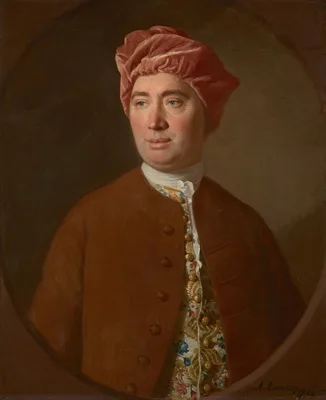
David Hume
David Hume lost the faith of his devout mother before he was twenty, gradually and, by his own account, against his will. He then spent fifty years deciding how much of his doubt to print: he cut the miracles essay from his first book, lost two professorships to the charge of atheism, withdrew his essays on suicide and immortality, and held back the Dialogues until after his death. He called himself only a sceptic. He died so calmly that his calm became the believers' argument.
Denis Diderot
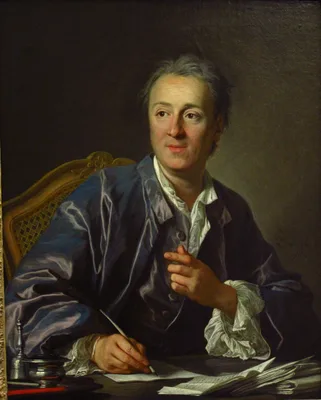
Denis Diderot was a tonsured Jesuit pupil who briefly wore a hair shirt. He argued for God as a deist in 1746, then in 1749 handed that argument to a blind man to destroy, while telling Voltaire that belief hardly mattered. Prison at Vincennes taught him to keep his boldest thoughts out of print, and he wrote his materialism into dialogues he would not publish. On his deathbed he refused a retraction as an impudent lie, saying that the first step towards philosophy is incredulity.
Claude Adrien Helvétius
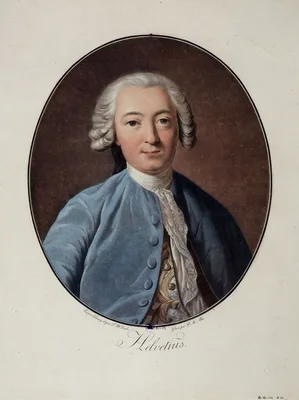
Claude Adrien Helvétius was schooled by Jesuits and turned by Locke into an empiricist. As a tax farmer he published in 1758 a licensed book that explained mind by the senses and morals by self-interest, without ever denying God. King, archbishop, Parlement, Pope and Sorbonne condemned him as a materialist friend of atheists, and he signed three retractions to protect his mother, his post and his censor. He kept his plainest words on priests, the soul and honest atheists for a manuscript book and private notes, printed after his death.