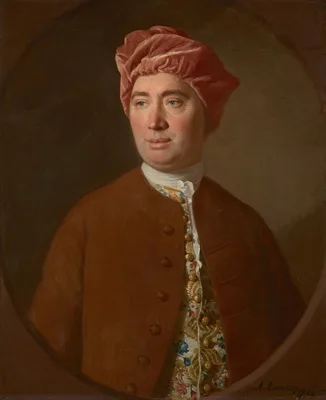
David Hume lost the faith of his devout mother before he was twenty, gradually and, by his own account, against his will. He then spent fifty years deciding how much of his doubt to print: he cut the miracles essay from his first book, lost two professorships to the charge of atheism, withdrew his essays on suicide and immortality, and held back the Dialogues until after his death. He called himself only a sceptic. He died so calmly that his calm became the believers' argument.
The belief timeline
- Faith (1711 to an unknown date) — Raised by a devout widowed mother; the earliest surviving letter (1727, age 16) shows a Stoic and classical ideal, not a religious one [3][6]
- Doubt (before c. 1731) — At about eighteen to twenty he writes down, page after page, an anxious search for arguments to confirm "the common opinion" and the doubts that "stole in"; he burns the manuscript before 1751 [11][12]
- Restraint (1737) — He removes the miracles essay and calls it "castrating my work"; later withdraws the essays on suicide and immortality and keeps the Dialogues in a drawer [19][20][36][53]
- Declaration (1748 to 1757) — Of Miracles appears in 1748; the Natural History of Religion in 1757 under his own name, when a church committee says he has "publicly" avowed his authorship [29][33][40]
- Last word (1776) — Arranges for the Dialogues to appear after his death, with "a Sceptic" whose case he says will give "Umbrage"; dies cheerfully [56][57][63]
Notes to the timeline (14)
- [3] His mother was devoutly Christian: in Dr Alexander Carlyle's manuscript memoirs the Hon. Mr Boyle calls her "the best of mothers but the most pious of Christians." She died about 1749 ("for my mother was now dead" when he went down to Ninewells in 1749); Burton could not find the date. — John Hill Burton, Life and Correspondence of David Hume, 2 vols (Edinburgh: William Tait, 1846), printing letters from the papers left to the Royal Society of Edinburgh. Vol. I, vol. I pp. 293–94 (Carlyle MS via Quarterly Review xvi. 279); David Hume, "My Own Life" (dated 18 April 1776; first printed 1777 as *The Life of David Hume, Esq, p. 3. Reported at second hand; the original has not been seen.
- [6] The earliest surviving letter, to Michael Ramsay, 4 July 1727 (Hume aged sixteen), expresses a Ciceronian and Virgilian ideal of "peace of mind" and independence from fortune and does not mention religion. Grose says it was written "shortly after his seventeenth birthday," which does not fit the 1711 birth date. — T. H. Grose, "History of the Editions," in Green and Grose, Essays, vol. I, pp. 15–83 (quotes Hume's letters and Burton at length; cited by the page of that essay), pp. 15–17 (Burton I p. 12).
- [11] On 10 March 1751 Hume told Elliot that "not long ago" he had burned a manuscript book written before he was twenty, which recorded "page after page, the gradual progress of my thoughts on that head": an anxious search for arguments to confirm the common opinion, then doubts that stole in, were dissipated, and returned. He also wrote that any propensity to "the other side" had "crept in upon me against my will," and that "the worst speculative sceptic" he knew was a better man than "the best superstitious devotee and bigot." — Burton, Life and Correspondence of David Hume, vol. I pp. 331–32.
- [12] Inference from claim 11: the private doubt began before about April 1731 (Hume's twentieth year). The letter names no book, person or event that caused it, and Grose's gloss that he was "cross-examining the English metaphysicians" in these years is Grose's, not Hume's. — Burton, Life and Correspondence of David Hume, vol. I p. 332; Grose, Essays, p. 18.
- [19] On 2 December 1737, writing from London to Henry Home, Hume enclosed "Reasonings concerning Miracles," which he "once thought of publishing with the rest" but feared would give "too much offence"; he asked Home to show it to nobody and "read it, and burnt it." Burton notes the reasonings appeared in a form "more consonant with the author's later views" in the Philosophical Essays of 1748. — Burton, Life and Correspondence of David Hume, vol. I pp. 61–64.
- [20] In the same letter he said he was "castrating my work, that is, cutting off its nobler parts," so as to give "as little offence as possible" before showing it to Dr Butler, calling it "a piece of cowardice." On 4 March 1738 he wrote of his opinion that "sometimes it elevates me above the clouds; at other times, it depresses me with doubts and fears." — Burton, Life and Correspondence of David Hume, vol. I pp. 64–65.
- [36] Hume intended four dissertations (the Natural History of Religion, on the Passions, on Tragedy, and a geometry essay); at Lord Stanhope's urging he dropped the last and sent Millar "two, which I had never intended to have published," on suicide and immortality; they were printed, he repented "no sooner" than they were done, and he and Millar agreed to suppress them, Of the Standard of Taste replacing them. He wrote this to Strahan on 25 January 1772, saying he had suppressed them "from my abundant Prudence." — G. Birkbeck Hill (ed.), Letters of David Hume to William Strahan (Oxford: Clarendon Press, 1888), with Hill's notes, pp. 230–31.
- [53] Burton (quoted by Grose) says Elliot was opposed to publishing the Dialogues and that "Blair pleaded strongly for its suppression." — Grose, Essays, p. 77 (Burton II pp. 489 ff.).
- [29] The Enquiry concerning Human Understanding, with the essay on miracles, appeared while Hume was at Turin (1748) under the title Philosophical Essays; it "was at first little more successful than the Treatise." On his return England was "in a ferment" over Dr Middleton's Free Enquiry. — Hume, "My Own Life", p. 3; Burton, Life and Correspondence of David Hume, vol. I p. 63 note 1.
- [33] On 28 May 1756 a committee moved an overture saying "one person styling himself David Hume" had "publicly" avowed himself the author of books with "the most rude and open attacks upon the glorious gospel of Christ... if not establishing direct atheism," and proposing a committee to call him. — Burton, Life and Correspondence of David Hume, vol. I p. 430 (Scots Magazine 1756, pp. 248, 280).
- [40] The Four Dissertations, including the Natural History of Religion, were dedicated to John Home (dedication dated Edinburgh, 3 January 1757) and published in early 1757 ("In this interval, I published at London my Natural History of Religion"). — Grose, Essays, pp. 65–67; Hume, "My Own Life", p. 5.
- [56] On 8 June 1776 from Bath he told Strahan of "a small Volume in Twelves" called Dialogues on natural Religion, "the best thing I ever wrote" in the view of some friends, held back because he wanted "to live quietly," in which "I there introduce a Sceptic, who is indeed refuted, and at last gives up the Argument," though before then he "advances several Topics, which will give Umbrage"; he proposed an edition of 500. — Hill, Letters of David Hume to…, pp. 329–30.
- [57] On 12 June 1776 he wrote to Strahan that he had "this same day made a Codicil" making him master of the manuscripts, and that "It is an idle thing in us to be concerned about any thing that shall happen after our Death." Hill dates the codicil that gave the Dialogues to Strahan to 7 August 1776: "I desire that my Dialogues concerning Natural Religion may be printed and published any time within two years after my death"; failing that the property returns to his nephew David. — Hill, Letters of David Hume to…, p. 337; pp. 335–36. Accounts differ; see the disputed points.
- [63] Hume died in Edinburgh on Sunday 25 August 1776, "about four o'clock afternoon"; Dr Joseph Black wrote that "he died in such a happy composure of mind, that nothing could exceed it" and "never dropped the smallest expression of impatience." — Adam Smith to William Strahan, Kirkcaldy, 9 November 1776, in Green and Grose, Essays, vol. I, pp. 9–14 (first printed with the Life, 1777), p. 13 (Black to Smith, 26 August 1776).
Doubts Stole In
On 28 May 1756 a committee of the General Assembly of the Church of Scotland moved that the Assembly look into "one person styling himself David Hume, Esq. who hath arrived at such a degree of boldness as publicly to avow himself the author of books containing the most rude and open attacks upon the glorious gospel of Christ, and principles evidently subversive even of natural religion, and the foundations of morality, if not establishing direct atheism."12 The Assembly threw the motion out by fifty votes to seventeen, and Hume, his biographer says, was "very little" disturbed; he asked a friend only whether it would matter if he were excommunicated.3
He was forty-five, and the librarian of the Faculty of Advocates in Edinburgh. He had been called an atheist for twelve years, and he never once called himself one. His own word was "sceptic." He had lost the faith he was raised in before he was twenty, and he spent the rest of his life deciding how much of his doubt to print, cutting and withdrawing and holding back his boldest work until he was dead. This chapter follows that long negotiation between a sceptic and his country, and asks why a man so calm about his unbelief was so careful about publishing it.
Ninewells
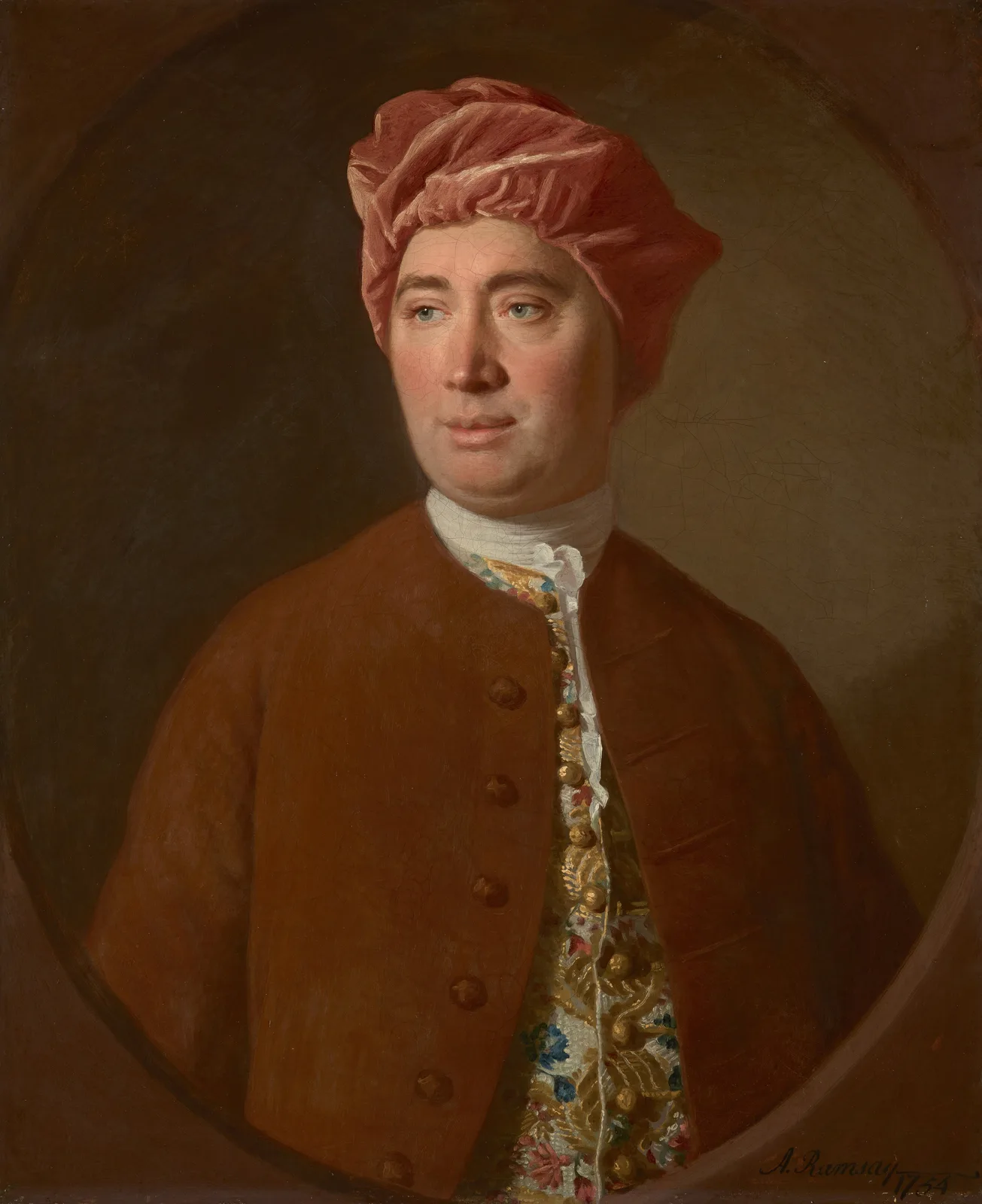
He was born in Edinburgh on 26 April 1711, the second son of Joseph Home of Ninewells, a small estate in the parish of Chirnside in Berwickshire.4 His father died when he was a baby, and his mother, "a woman of singular merit," brought up the three children.5 She was devout; one contemporary called her "the best of mothers but the most pious of Christians."6 A story told years later by an American traveller, that Hume destroyed her faith and ignored her dying letter, is false: the dates do not fit, and a memoir of the time has him in tears in London when he heard she had died.7
A David Home enrolled at the college of Edinburgh in February 1723, not yet twelve, in the Greek class.8 His earliest surviving letter, written at sixteen, says nothing at all about religion. Its ideal is classical: Cicero's wise man and Virgil's farmer, "peace of mind" and independence from fortune.9
A manuscript burned
What happened to his faith we know almost entirely from one letter, written when he was nearly forty to a friend who was a believer. Any leaning he had toward "the other side," he told Gilbert Elliot in 1751, "crept in upon me against my will; and 'tis not long ago that I burned an old manuscript book, wrote before I was twenty, which contained, page after page, the gradual progress of my thoughts on that head. It began with an anxious search after arguments, to confirm the common opinion; doubts stole in, dissipated, returned; were again dissipated, returned again; and it was a perpetual struggle of a restless imagination against inclination, perhaps against reason."1011
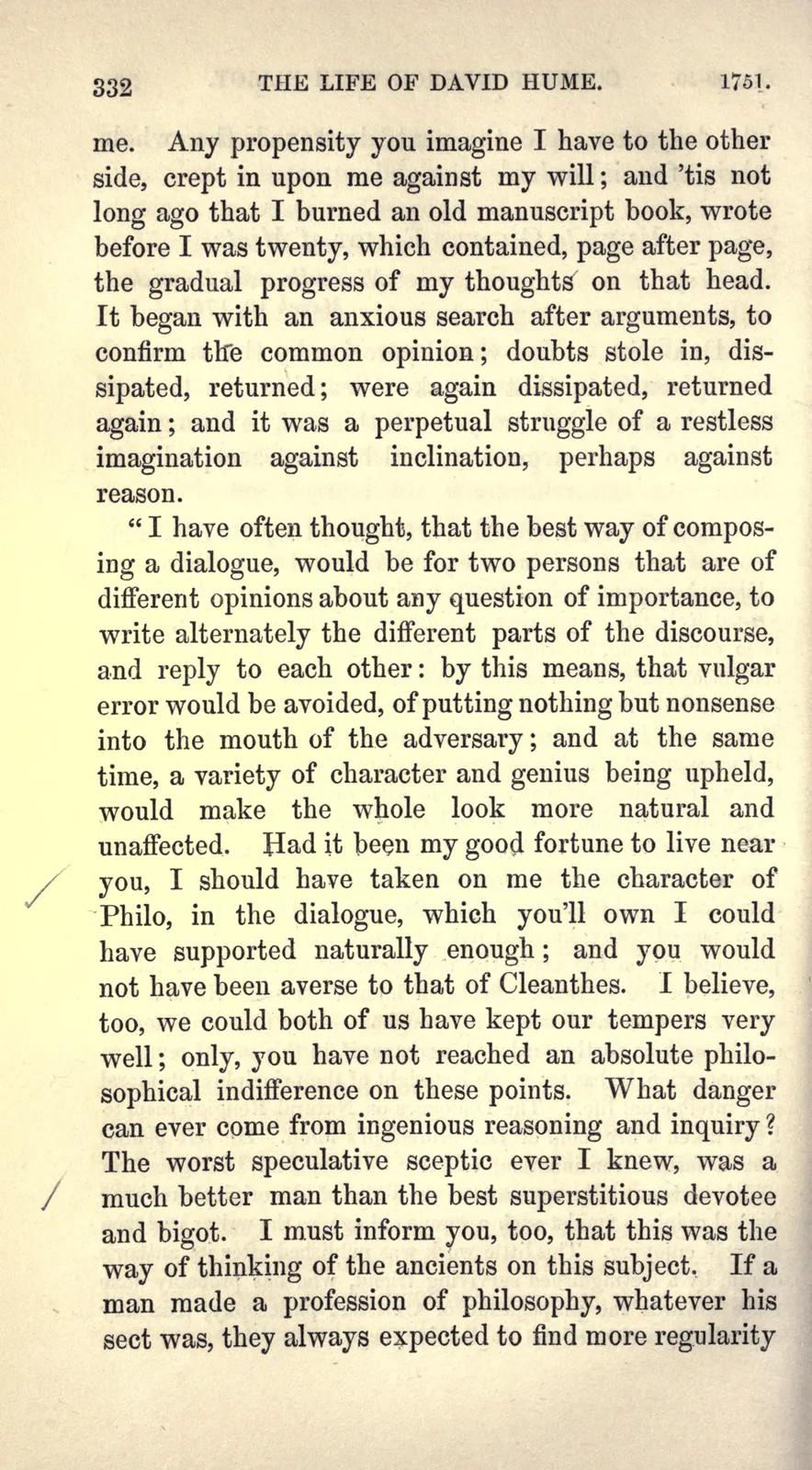
So the doubt began before he was twenty, about 1731, and it began as an attempt to prove what he had been taught. The letter names no book, no teacher and no event that set it off.12 A story often repeated, that he lost his faith reading Locke and Clarke, appears in none of the lawful early sources; this chapter leaves it out.13
He did describe the temper that went with it. Writing in 1734 to a physician, in a letter he never sent, he said that reading the philosophers he found "a certain boldness of temper growing in me, which was not inclined to submit to any authority in these subjects, but led me to seek out some new medium, by which truth might be established."1415 At about eighteen "a new scene of thought" opened to him; in September 1729 his enthusiasm suddenly failed and he fell ill. He blamed it partly on the effort to toughen his mind with Cicero, Seneca and Plutarch against "death, and poverty, and shame, and pain."16 He compared his low spirits to the "coldness and desertion of the spirit" described by the French mystics, a religious comparison, not a loss of faith.17
La Flèche
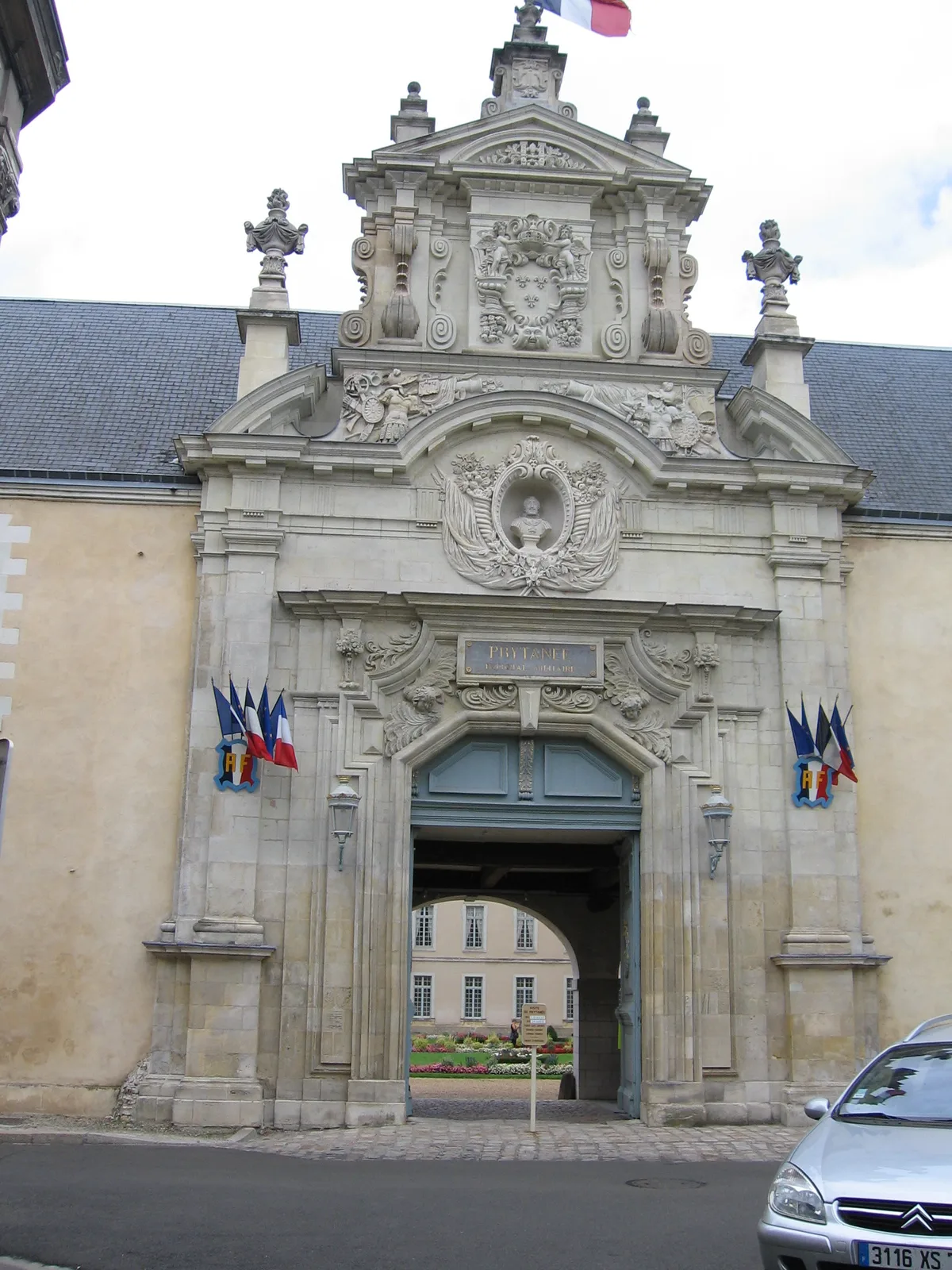
In 1734 he spent a few months as a merchant's clerk in Bristol, found it "totally unsuitable," and went to France, "first at Reims, but chiefly at La Flèche, in Anjou," where he wrote his first book.18 La Flèche had a Jesuit college. Nearly thirty years later he told a clergyman how his argument against miracles was born there: "I was walking in the Cloisters of the Jesuits' College of La Fleche, (a town in which I passed two years of my youth), and was engaged in conversation with a Jesuit of some parts and learning, who was relating to me, and urging some nonsensical miracle performed lately in their Convent — when I was tempted to dispute against him; and as my head was full of the topics of my Treatise of Human Nature, which I was at that time composing, this argument immediately occurred to me, and I thought it very much gravelled my companion." The Jesuit answered that the argument would work just as well against the miracles of the Gospels, "which observation I thought proper to admit as a sufficient answer."1920 (His autobiography says three years in France, the letter two; accounts differ.)21
The nobler parts
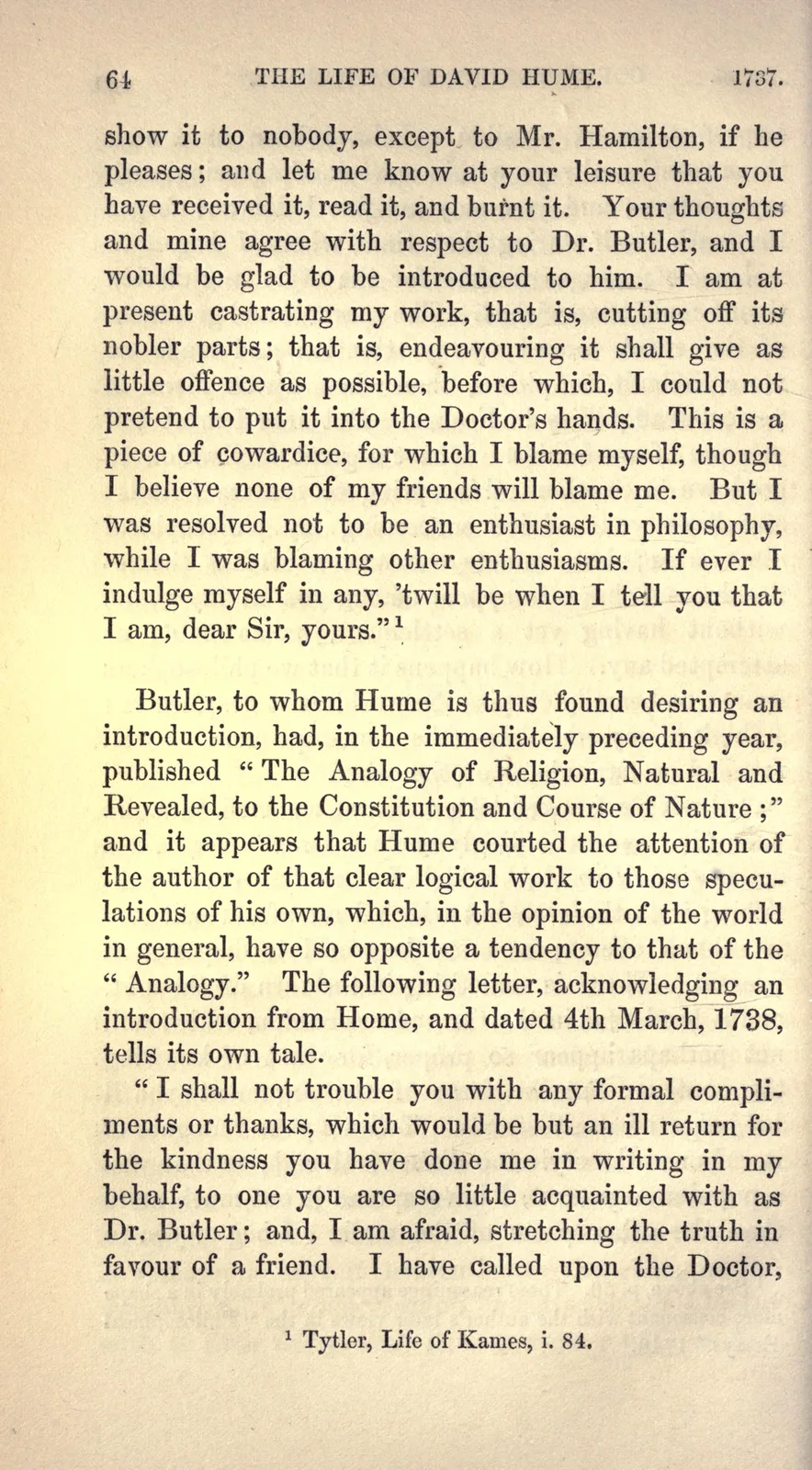
He came back to London in 1737 with the Treatise in manuscript and a hope of showing it to Joseph Butler, the author of The Analogy of Religion (1736). On 2 December he sent his kinsman Henry Home the essay on miracles, "which I once thought of publishing with the rest, but which I am afraid will give too much offence."2223 "I am at present castrating my work," he wrote, "that is, cutting off its nobler parts; that is, endeavouring it shall give as little offence as possible, before which, I could not pretend to put it into the Doctor's hands. This is a piece of cowardice, for which I blame myself, though I believe none of my friends will blame me."2425
The Treatise came out in 1739 and 1740 and, he said, "fell dead-born from the press, without reaching such distinction, as even to excite a murmur among the zealots."26 It still held one line that became famous: "Generally speaking, the errors in religion are dangerous; those in philosophy only ridiculous."2728 When Francis Hutcheson, the Glasgow moralist, warned him that parts were imprudent, Hume promised to soften them, and explained why he cared: "Except a man be in orders, or be immediately concerned in the instruction of youth, I do not think his character depends upon his philosophical speculations, as the world is now modelled."2930 He also told Hutcheson that he took his catalogue of virtues "from 'Cicero's Offices,' not from 'The Whole Duty of Man.'"31
The cost
But he did want to instruct youth. In 1744 he stood for the Edinburgh chair of ethics and pneumatic philosophy, and the old charge came out against him. "The accusation of heresy, deism, scepticism, atheism, &c. &c. &c, was started against me; but never took, being bore down by the contrary authority of all the good company in town."3233 It took enough. He heard that Hutcheson himself and the clergyman William Leechman opposed him, and in June 1745 the town council gave the chair to someone else; Hume's name is not even in the minutes.3234 In 1752 he failed again, for the chair of logic at Glasgow.35 Later that year he was elected keeper of the Advocates' Library, over "the violent cry of deism, atheism, and scepticism," with help, he said, from the ladies.36
Of Miracles
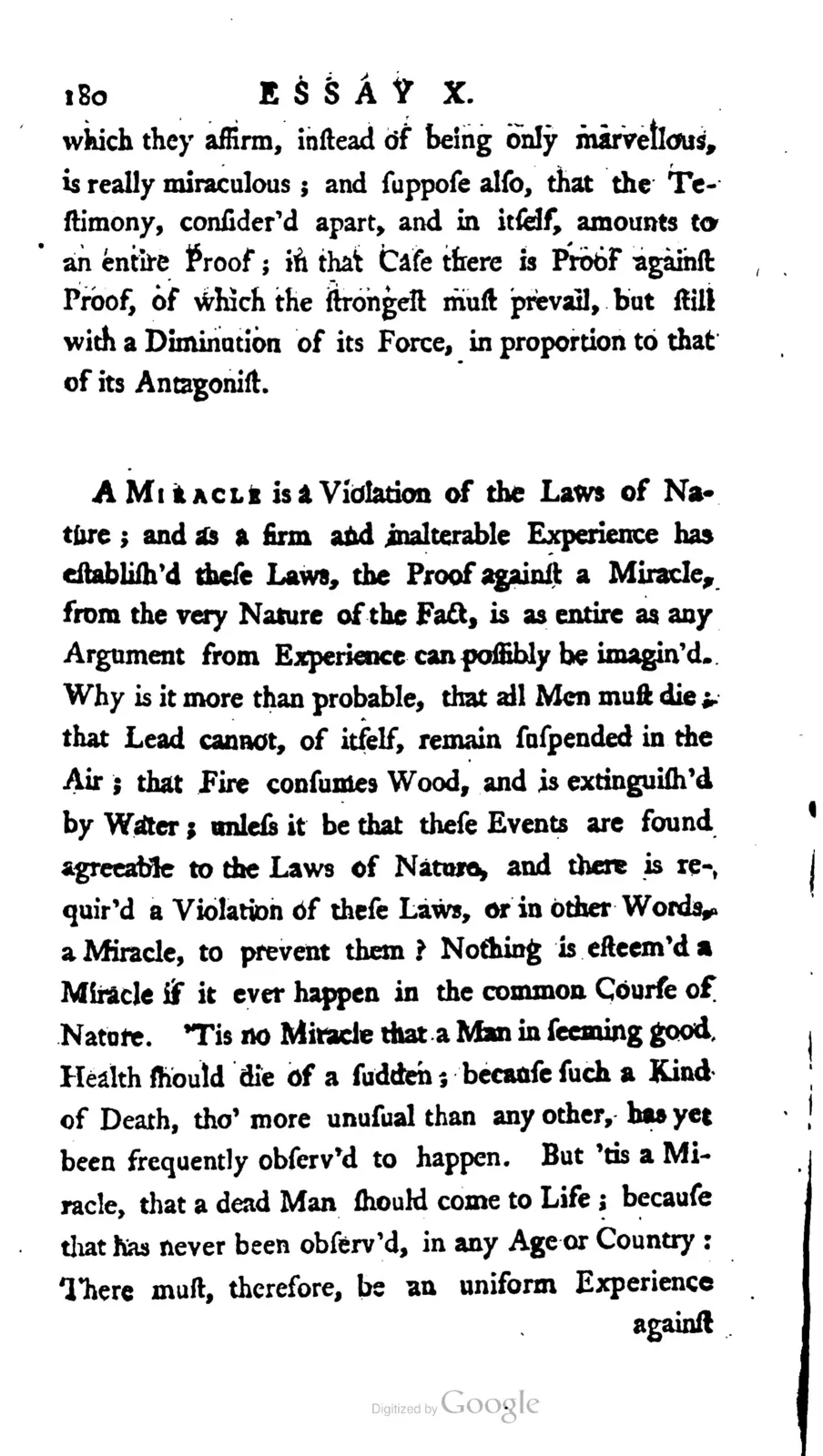
In between he went abroad as a secretary and aide-de-camp to General St Clair, to the coast of France and then to Vienna and Turin.37 While he was in Turin in 1748 his Philosophical Essays concerning Human Understanding appeared, with the essay he had cut from the Treatise.38 "A miracle is a violation of the laws of nature," it argued, "and as a firm and unalterable experience has established these laws, the proof against a miracle, from the very nature of the fact, is as entire as any argument from experience can possibly be imagined." The rule that followed was simple: "no testimony is sufficient to establish a miracle, unless the testimony be of such a kind, that its falsehood would be more miraculous, than the fact, which it endeavours to establish."3940 The essay ended with a sentence that could be read two ways: "Our most holy religion is founded on Faith, not on reason," and whoever believes "is conscious of a continued miracle in his own person, which subverts all the principles of his understanding."4142
The answer came from Aberdeen. George Campbell, a minister and later Principal of Marischal College, wrote in 1762: "The Essay on Miracles deserves to be considered as one of the most dangerous attacks that have been made on our religion. The danger results not solely from the merit of the piece; it results much more from that of the author."43 Hume answered him courteously, and it was in that reply that he told the story of the Jesuit.19
A sceptic's creed
To Gilbert Elliot in 1751 he gave the nearest thing to a statement of his own position. Thinking about the old quarrel between Catholics and Protestants, he said no sensible man could hold any religion except on the principle "that as the truth in these subjects is beyond human capacity, and that as for one's own ease he must adopt some tenets, there is most satisfaction and convenience in holding to the Catholicism we have been first taught. Now this I have nothing to say against." It was, he added, "the most universal and determined scepticism, joined to a little indolence; for more curiosity and research gives a direct opposite turn from the same principles."4445 In the same letter he wrote: "The worst speculative sceptic ever I knew, was a much better man than the best superstitious devotee and bigot."1046
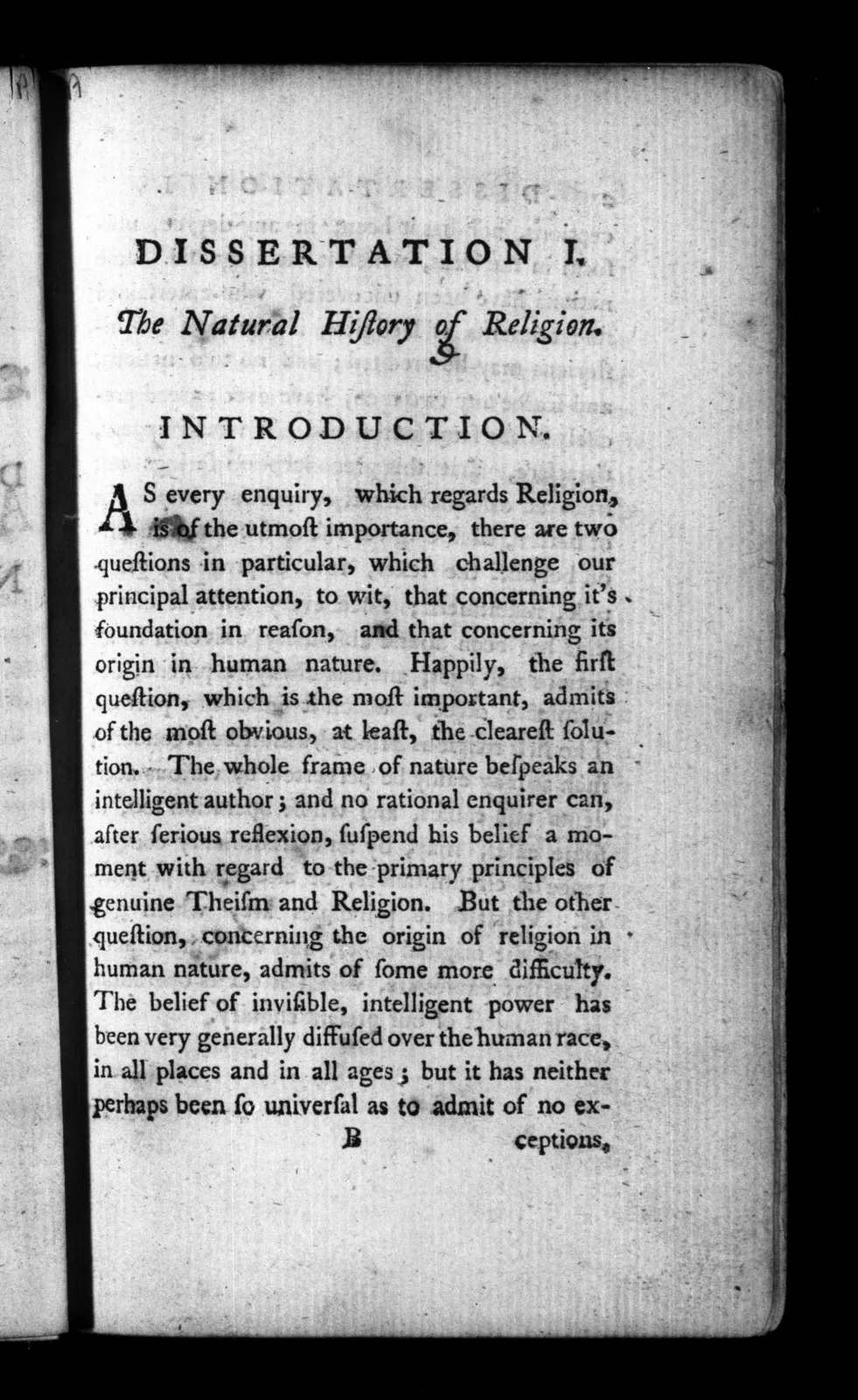
In 1757 he published The Natural History of Religion, which asked not whether religion is true but where it comes from in human nature. The first religions, he argued, arose "not from a contemplation of the works of nature, but from a concern with regard to the events of life, and from the incessant hopes and fears which actuate the human mind."4748 He opened the book by granting that "the whole frame of nature bespeaks an intelligent author," and closed it by saying that "the whole is a riddle, an enigma, an inexplicable mystery. Doubt, uncertainty, suspense of judgment appear the only result of our most accurate scrutiny, concerning this subject."49505152 He used the word "atheist" himself only of others, calling the polytheists "a kind of superstitious Atheists."5354 William Warburton, later Bishop of Gloucester, read the book before it came out and wrote to its publisher that its design was "to establish naturalism, a species of atheism, instead of religion."5556
Abundant prudence
The same volume was meant to carry two more essays, on suicide and on the immortality of the soul. "By the mere light of reason it seems difficult to prove the Immortality of the Soul," the second began.57 They were printed; then Hume and his publisher pulled them, and another essay took their place.58 He explained it to the printer William Strahan fifteen years later: they were "two Essays of mine, one on Suicide another on the Immortality of the Soul, which were printed by Andrew Millar about seventeen Years ago, and which from my abundant Prudence I suppress'd and woud not now wish to have revivd."5859 Accounts differ on exactly when the suppression happened, but it was in the mid-1750s, before the volume appeared in 1757.60
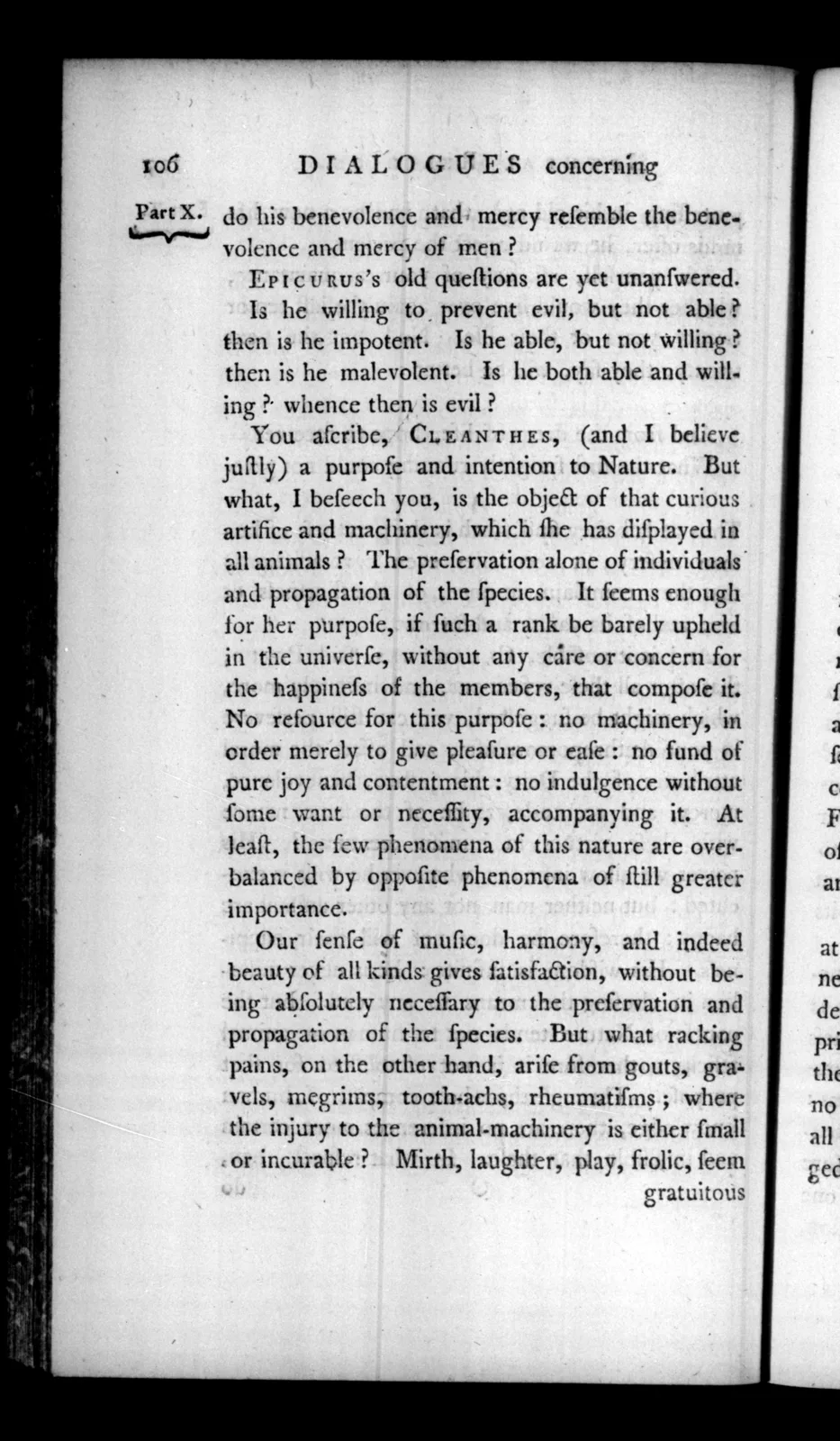
The boldest book of all was already written. The Dialogues concerning Natural Religion were begun before 1751, and he went on revising them for a quarter of a century.61 Three friends argue about whether the order of nature proves a designer: Cleanthes, who believes it does, the pious Demea, and the sceptic Philo. Hume told Elliot that he made Cleanthes "the hero," but that if Elliot had lived nearby he would have taken "the character of Philo" himself.61 It is Philo who repeats "Epicurus's old questions," which "are yet unanswered. Is he willing to prevent evil, but not able? then is he impotent. Is he able, but not willing? then is he malevolent. Is he both able and willing? whence then is evil?"6263
His friends would not let him publish. "Is it not hard and tyrannical in you," he wrote to Elliot in 1763, "more hard and tyrannical than any act of the Stuarts, not to allow me to publish my Dialogues?"64 Hugh Blair, the minister, pleaded strongly for their suppression.65
Paris
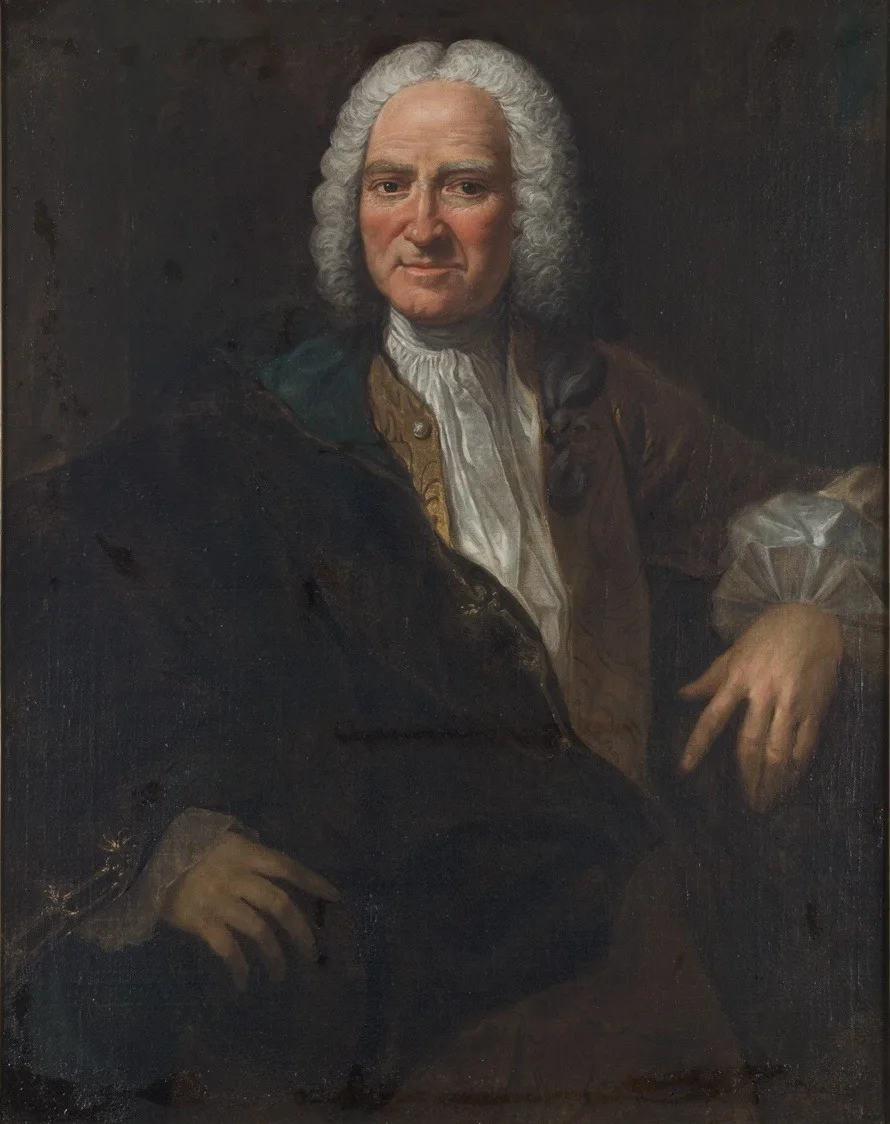
From 1763 to 1766 he lived in Paris, first with the British ambassador, Lord Hertford, then as secretary to the embassy, and was welcomed by "men and women of all ranks and stations."66 There, as Diderot told the story in a letter of October 1765, Hume sat down to dinner beside his host and remarked that "he did not believe in atheists," and had never seen one. The host told him to count the company. There were eighteen at table; fifteen, the host said, could be counted at once, and "the other three do not know what to think."6768 In a later version of the story, Samuel Romilly's, the host was Baron d'Holbach, and Hume was told he was sitting with seventeen.6970
A speedy dissolution
In the spring of 1775 he fell ill with a disorder of the bowels. On 18 April 1776 he wrote his short autobiography, My Own Life, which says almost nothing about his religion; there he said: "I now reckon upon a speedy dissolution."7172 Now he made sure of the Dialogues. His will left his manuscripts to Adam Smith and asked him to publish them; when Smith hesitated, Hume called his scruples "groundless."7374 He offered the book to Strahan, describing it frankly: "I there introduce a Sceptic, who is indeed refuted, and at last gives up the Argument, nay confesses that he was only amusing himself by all his Cavils; yet before he is silenced, he advances several Topics, which will give Umbrage, and will be deemed very bold and free, as well as much out of the common Road."7576 In the last months of his life he changed his will so that if the book was not published within two years, the manuscript would go to his nephew.77
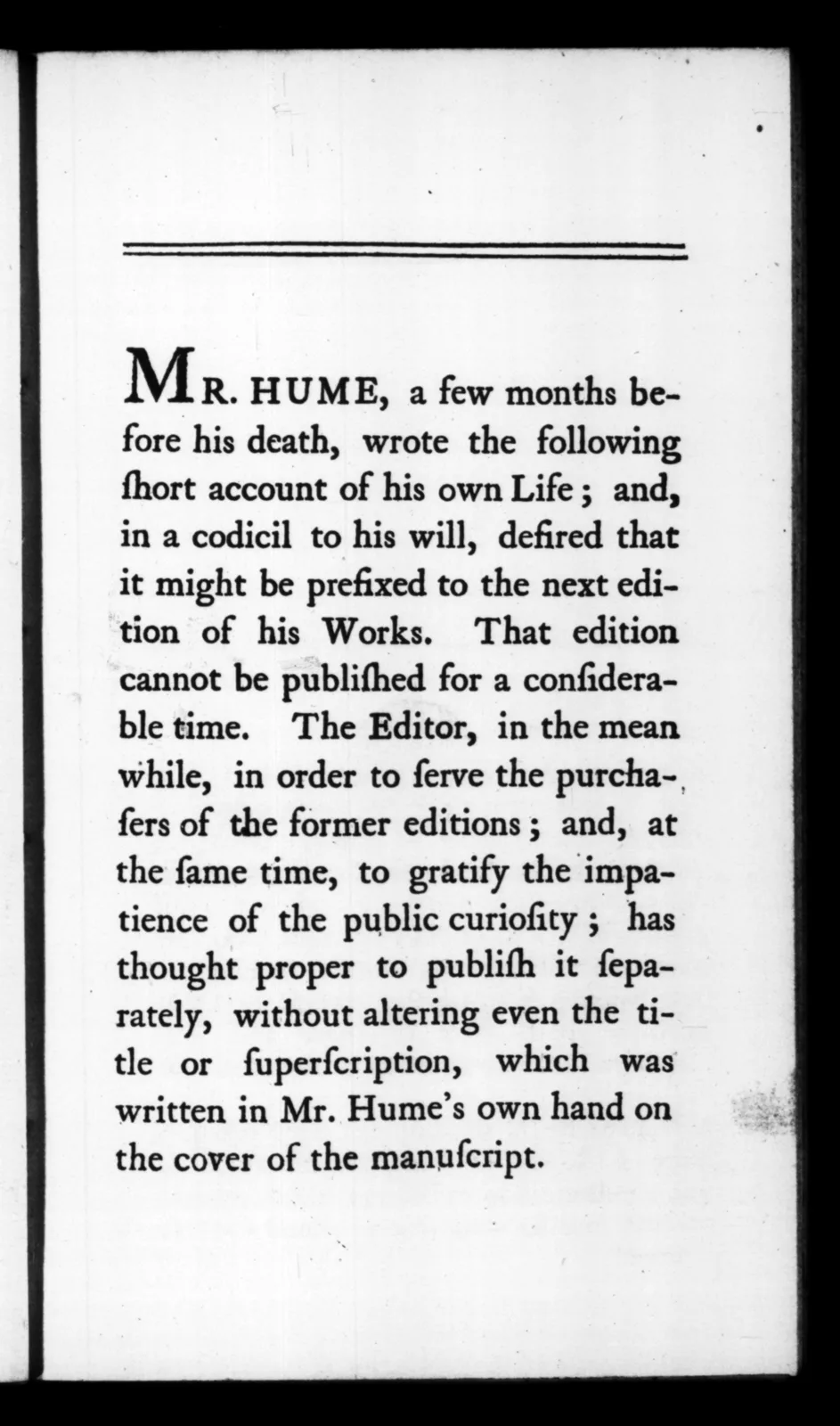
Adam Smith watched him die and wrote it down. Hume said he was "dying as fast as my enemies, if I have any, could wish, and as easily and cheerfully as my best friends could desire." After reading Lucian's Dialogues of the Dead he joked about what excuses he might give Charon, the ferryman of the dead, for a little more time: "Have a little patience, good Charon; I have been endeavouring to open the eyes of the Public. If I live a few years longer, I may have the satisfaction of seeing the downfall of some of the prevailing systems of superstition."7879 He died in Edinburgh about four in the afternoon of 25 August 1776; his doctor, Joseph Black, wrote that "he died in such a happy composure of mind, that nothing could exceed it."80 Smith's verdict was that he had come "as nearly to the idea of a perfectly wise and virtuous man, as perhaps the nature of human frailty will permit."8182
The believers' answer
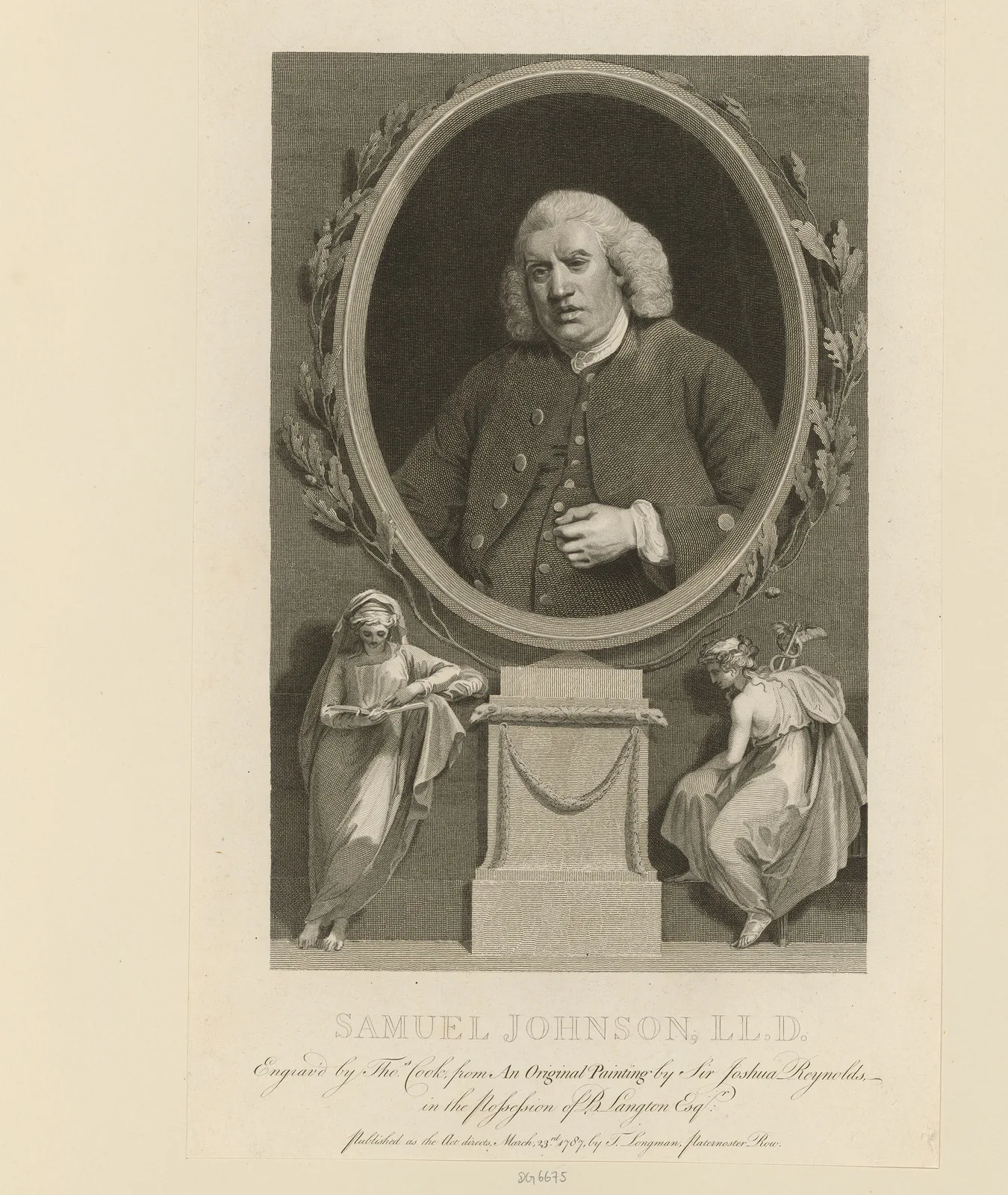
The calm itself became the argument. James Boswell told Samuel Johnson in 1777 that Hume's "persisting in his infidelity" when dying had shocked him. Johnson would have none of it: "Why should it shock you, Sir? Hume owned he had never read the New Testament with attention. Here then was a man, who had been at no pains to inquire into the truth of religion, and had continually turned his mind the other way." Johnson added that Hume "had a vanity in being thought easy."8384 George Horne, an Oxford divine, mocked Smith's praise in a pamphlet, imagining the friends of Hume crowning his virtues by publishing "a treatise designed to prove the Soul's Mortality, and another to justify and recommend Self-Murder."8586
The Dialogues appeared in 1779, published by his nephew.87 Their last speech belongs to Philo, who reduces all of natural theology to one modest proposition, "that the cause or causes of order in the universe probably bear some remote analogy to human intelligence," and ends with a sentence readers still argue over: "To be a philosophical Sceptic is, in a man of letters, the first and most essential step towards being a sound, believing Christian."888990
What he left
Hume's unbelief barely changed shape across his life; what changed was how much of it he let out. His doubt came before he was twenty, gradually, against his own wish to believe; he cut it from his first book, put it into his essays one argument at a time, pulled the two most dangerous back from the press, and saved the fullest statement for a book that would appear only after he could no longer be hurt by it. He never called himself an atheist, and in Paris he doubted that atheists existed. A century later Thomas Henry Huxley called him the "protagonist" of the way of thinking that Huxley himself had named "agnosticism," and Leslie Stephen admired that he argued about God "as though he were discussing a metaphysical puzzle."91 The materialists at d'Holbach's table, who did not share his doubt about atheists, were his opposite. Baron d'Holbach has his own chapter in this book.
Footnotes
-
John Hill Burton, Life and Correspondence of David Hume, 2 vols (Edinburgh: William Tait, 1846), printing letters from the papers left to the Royal Society of Edinburgh. Vol. I, vol. I p. 430 (Scots Magazine 1756, pp. 248, 280). ↩
-
Overture moved in a committee of the General Assembly of the Church of Scotland, 28 May 1756; rejected in the Assembly by 50 votes to 17: Burton, Life and Correspondence of David Hume, vol. I p. 430 (Scots Magazine 1756). ↩
-
Burton, Life and Correspondence of David Hume, vol. I pp. 430–32. ↩
-
David Hume, "My Own Life" (dated 18 April 1776; first printed 1777 as *The Life of David Hume, Esq, p. 1; Burton, Life and Correspondence of David Hume, vol. I pp. 1–2. ↩
-
Hume, "My Own Life", p. 1; Burton, Life and Correspondence of David Hume, vol. I p. 10. ↩
-
Burton, Life and Correspondence of David Hume, vol. I pp. 293–94 (Carlyle MS via Quarterly Review xvi. 279); Hume, "My Own Life", p. 3. Reported at second hand; the original has not been seen. ↩
-
Burton, Life and Correspondence of David Hume, vol. I pp. 291–94. ↩
-
Burton, Life and Correspondence of David Hume, vol. I pp. 10–11; Hume, "My Own Life", p. 1. ↩
-
T. H. Grose, "History of the Editions," in Green and Grose, Essays, vol. I, pp. 15–83 (quotes Hume's letters and Burton at length; cited by the page of that essay), pp. 15–17 (Burton I p. 12). ↩
-
Burton, Life and Correspondence of David Hume, vol. I pp. 331–32. ↩ ↩2
-
David Hume to Gilbert Elliot of Minto, Ninewells, 10 March 1751: Burton, Life and Correspondence of David Hume, vol. I p. 332 (also quoted in part, Editions p. 18). ↩
-
Burton, Life and Correspondence of David Hume, vol. I p. 332; Grose, Essays, p. 18. ↩
-
Burton, Life and Correspondence of David Hume, I; Grose, Essays; G. Birkbeck Hill (ed.), Letters of David Hume to William Strahan (Oxford: Clarendon Press, 1888), with Hill's notes; searched. Not verified. ↩
-
Grose, Essays, p. 15; Burton, Life and Correspondence of David Hume, vol. I p. 31. ↩
-
David Hume (letter to a physician, 1734): Burton, Life and Correspondence of David Hume, vol. I p. 31. ↩
-
Burton, Life and Correspondence of David Hume, vol. I pp. 31–33. ↩
-
Burton, Life and Correspondence of David Hume, vol. I pp. 36–37; Grose, Essays, p. 18. ↩
-
Hume, "My Own Life", p. 2. ↩
-
George Campbell, A Dissertation on Miracles (Edinburgh, 1762; scan used is the 1834 London reprint "with a correspondence on the subject by Mr Hume, Dr Campbell and Dr Blair"), including Hume's letter of 7 June 1762 in the Preface, (1834 ed.), Preface; David Hume, Enquiries concerning the Human Understanding and concerning the Principles of Morals, ed. L. A. Selby-Bigge (Oxford, 1902); Section X, Of Miracles, pp. 109–131 (first printed as Philosophical Essays concerning Human Understanding, 1748), p. 124. ↩ ↩2
-
David Hume to George Campbell, Edinburgh, 7 June 1762: Campbell, Dissertation on Miracles, (1834 ed.), Preface. ↩
-
Campbell, Dissertation on Miracles, (1834 ed.), Preface (Hume's letter of 7 June 1762); Hume, "My Own Life", p. 2. Accounts differ; see the disputed points. ↩
-
Burton, Life and Correspondence of David Hume, vol. I pp. 61–64. ↩
-
David Hume to Henry Home, London, 2 December 1737: Burton, Life and Correspondence of David Hume, vol. I p. 63. ↩
-
Burton, Life and Correspondence of David Hume, vol. I pp. 64–65. ↩
-
David Hume to Henry Home, 2 December 1737: Burton, Life and Correspondence of David Hume, vol. I p. 64. ↩
-
Hume, "My Own Life", p. 2 and note; Burton, Life and Correspondence of David Hume, vol. I pp. 108–10. ↩
-
David Hume, A Treatise of Human Nature (1739–40), ed. L. A. Selby-Bigge (Oxford, 1896), pp. 269 and 272. ↩
-
David Hume, Treatise of Human Nature, Book I, Part IV, Sect. VII: Hume, Treatise of Human Nature, p. 272 (Selby-Bigge 1896). ↩
-
Burton, Life and Correspondence of David Hume, vol. I p. 114. ↩
-
David Hume to Francis Hutcheson, September 1739: Burton, Life and Correspondence of David Hume, vol. I p. 114. ↩
-
Burton, Life and Correspondence of David Hume, vol. I pp. 113–14. ↩
-
Burton, Life and Correspondence of David Hume, vol. I pp. 165–68; T. H. Huxley, Hume (English Men of Letters, London: Macmillan, 1879), p. 25. ↩ ↩2
-
David Hume to William Mure of Caldwell, Edinburgh, 4 August 1744: Burton, Life and Correspondence of David Hume, vol. I p. 167. ↩
-
Burton, Life and Correspondence of David Hume, vol. I pp. 169–70. ↩
-
Burton, Life and Correspondence of David Hume, vol. I pp. 350–51. ↩
-
Hume, "My Own Life", p. 4; Burton, Life and Correspondence of David Hume, vol. I pp. 370–71; Huxley, Hume, p. 33. ↩
-
Hume, "My Own Life", pp. 2–3. ↩
-
Hume, "My Own Life", p. 3; Burton, Life and Correspondence of David Hume, vol. I p. 63 note 1. ↩
-
David Hume, Enquiry concerning Human Understanding, Section X: Hume, Enquiries concerning the Human Understanding…, p. 114 (Selby-Bigge 1902). ↩
-
David Hume, Enquiry, Section X, Part I: Hume, Enquiries concerning the Human Understanding…, pp. 115–16. ↩
-
David Hume, Enquiry, Section X, Part II: Hume, Enquiries concerning the Human Understanding…, p. 130. ↩
-
David Hume, Enquiry, end of Section X: Hume, Enquiries concerning the Human Understanding…, p. 131. ↩
-
George Campbell, minister and Principal of Marischal College, Aberdeen, Dissertation on Miracles (1762), Advertisement: Campbell, Dissertation on Miracles, (1834 ed.), Advertisement; 1762 ed. pp. v–vi. ↩
-
Burton, Life and Correspondence of David Hume, vol. I pp. 325–27. ↩
-
David Hume to Gilbert Elliot, Ninewells, 19 February 1751: Burton, Life and Correspondence of David Hume, vol. I p. 326. ↩
-
David Hume to Gilbert Elliot, 10 March 1751: Burton, Life and Correspondence of David Hume, vol. I p. 332. ↩
-
David Hume, The Natural History of Religion (1757), in the edition with an introduction by John M. Robertson (London: A. and H. Bradlaugh Bonner, 1889), as put online by the Online Library of Liberty, Sect. II. ↩
-
David Hume, Natural History of Religion, Section II: Hume, Natural History of Religion, Sect. II (1889 Bradlaugh Bonner ed.). ↩
-
Hume, Natural History of Religion, Introduction. ↩
-
Hume, Natural History of Religion, Sect. XV. ↩
-
David Hume, Natural History of Religion, Introduction: Hume, Natural History of Religion, Introduction. ↩
-
David Hume, Natural History of Religion, Section XV: Hume, Natural History of Religion, Sect. XV. ↩
-
Hume, Natural History of Religion, Sect. IV; Huxley, Hume, pp. 159–60. ↩
-
David Hume, Natural History of Religion, Section IV: Hume, Natural History of Religion, Sect. IV; discussed Huxley pp. 159–60. ↩
-
Grose, Essays, p. 61 (Warburton's Unpublished Papers p. 309). ↩
-
William Warburton, divine (later Bishop of Gloucester), to the publisher Andrew Millar, 7 February 1757, before the Natural History appeared: Grose, Essays, p. 61 (Warburton's Unpublished Papers p. 309). ↩
-
David Hume, "Of the Immortality of the Soul" and "Of Suicide," suppressed in 1756–57 and first printed 1777 and 1783, in Green and Grose, Essays, vol. II, pp. 399–406 and from p. 406, pp. 399 and 406. ↩
-
David Hume to William Strahan, Edinburgh, 25 January 1772: Hill, Letters of David Hume to…, p. 230. ↩
-
Hill, Letters of David Hume to…, pp. 230–31 and p. xlii; Grose, Essays, pp. 65–67. ↩
-
Burton, Life and Correspondence of David Hume, vol. I pp. 327–32. ↩ ↩2
-
David Hume, Dialogues concerning Natural Religion (first published 1779), reprinted with an introduction by Bruce M'Ewen (Edinburgh: Blackwood, 1907), pp. 1–191, p. 134. ↩
-
Philo, in Hume's Dialogues concerning Natural Religion, Part X: Hume, Dialogues concerning Natural Religion, p. 134 (M'Ewen 1907). ↩
-
Grose, Essays, p. 51. ↩
-
Grose, Essays, p. 77 (Burton II pp. 489 ff.). ↩
-
Hume, "My Own Life", pp. 6–7. ↩
-
Denis Diderot, Lettres à Mademoiselle Volland, in Oeuvres complètes, ed. J. Assézat and M. Tourneux, vol. XVIII (Paris: Garnier, 1876), letter XCIII, 6 October 1765, with the editors' note [170] citing Samuel Romilly's Memoirs. Project Gutenberg #50605,, letter XCIII. ↩
-
Denis Diderot to Sophie Volland, 6 October 1765: Diderot, Lettres à Mademoiselle Volland, Lettres à Mademoiselle Volland, letter XCIII (Assézat-Tourneux, vol. XVIII). ↩
-
Diderot, Lettres à Mademoiselle Volland, letter XCIII, note [170. ↩
-
David Hume, as told by Romilly (French as given by the editors of Diderot): Diderot, Lettres à Mademoiselle Volland, letter XCIII, note [170] (Assézat-Tourneux 1876), citing Samuel Romilly, Memoirs. Not checked against the original (no). ↩
-
Hume, "My Own Life", pp. 7–8; Grose, Essays, p. 80. ↩
-
Hume, "My Own Life", pp. 2, 4, 8. ↩
-
Grose, Essays, p. 77; Hill, Letters of David Hume to…, p. 335 note 14. ↩
-
Grose, Essays, p. 78; Hill, Letters of David Hume to…, pp. 335–36 note 15. ↩
-
Hill, Letters of David Hume to…, pp. 329–30. ↩
-
David Hume to William Strahan, Bath, 8 June 1776: Hill, Letters of David Hume to…, p. 330. ↩
-
Hill, Letters of David Hume to…, p. 337; pp. 335–36. ↩
-
Adam Smith to William Strahan, Kirkcaldy, 9 November 1776, in Green and Grose, Essays, vol. I, pp. 9–14 (first printed with the Life, 1777), pp. 10–11. ↩
-
David Hume, in jest, to Adam Smith (as reported by Smith): Strahan, Essays, p. 11. ↩
-
Strahan, Essays, p. 13 (Black to Smith, 26 August 1776). ↩
-
Strahan, Essays, pp. 13–14. ↩
-
Adam Smith to William Strahan, 9 November 1776: Strahan, Essays, p. 14. ↩
-
James Boswell, Life of Johnson, ed. G. Birkbeck Hill (Oxford, 1887), vol. III, vol. III p. 153 (Hill's edition). ↩
-
Samuel Johnson, to James Boswell, 16 September 1777 (Boswell, a believer troubled by Hume's calm, had said it "shocked me much"): Boswell, Life of Johnson (Hill), vol. III p. 153. ↩
-
Grose, Essays, p. 68; James Beattie, An Essay on the Nature and Immutability of Truth, in Opposition to Sophistry and Scepticism (Edinburgh; scan dated 1805, Denham and Dick), p. 313 note. ↩
-
George Horne (printed "Dr. Home"), Oxford divine, A Letter to Adam Smith (1777), sarcastic: Grose, Essays, p. 68 (quoted by Grose; original not seen). Not checked against the original (no). ↩
-
Hume, Dialogues concerning Natural Religion, M'Ewen Introduction; 1779 ed. title page; Grose, Essays, pp. 77–78. ↩
-
Hume, Dialogues concerning Natural Religion, pp. 189–91. ↩
-
Philo, Dialogues, Part XII: Hume, Dialogues concerning Natural Religion, pp. 189–90. ↩
-
Philo, Dialogues, Part XII (last speech): Hume, Dialogues concerning Natural Religion, p. 191. ↩
-
Huxley, Hume, p. 60; Leslie Stephen, History of English Thought in the Eighteenth Century (London, 1876), vol. I, ch. on Hume, vol. I pp. 311–12. ↩
In their own words
I found a certain boldness of temper growing in me, which was not inclined to submit to any authority in these subjects, but led me to seek out some new medium, by which truth might be established.
Any propensity you imagine I have to the other side, crept in upon me against my will; and 'tis not long ago that I burned an old manuscript book, wrote before I was twenty, which contained, page after page, the gradual progress of my thoughts on that head. It began with an anxious search after arguments, to confirm the common opinion; doubts stole in, dissipated, returned; were again dissipated, returned again; and it was a perpetual struggle of a restless imagination against inclination, perhaps against reason.
The worst speculative sceptic ever I knew, was a much better man than the best superstitious devotee and bigot.
no sensible man can implicitly assent to any of them, but from the general principle, that as the truth in these subjects is beyond human capacity, and that as for one's own ease he must adopt some tenets, there is most satisfaction and convenience in holding to the Catholicism we have been first taught. Now this I have nothing to say against. I have only to observe, that such a conduct is founded on the most universal and determined scepticism, joined to a little indolence; for more curiosity and research gives a direct opposite turn from the same principles.
Having a franked letter, I was resolved to make use of it; and accordingly enclose some 'Reasonings concerning Miracles,' which I once thought of publishing with the rest, but which I am afraid will give too much offence, even as the world is disposed at present.
I am at present castrating my work, that is, cutting off its nobler parts; that is, endeavouring it shall give as little offence as possible, before which, I could not pretend to put it into the Doctor's hands. This is a piece of cowardice, for which I blame myself, though I believe none of my friends will blame me.
I cannot agree to your sense of natural. 'Tis founded on final causes, which is a consideration that appears to me pretty uncertain and unphilosophical. For, pray, what is the end of man? Is he created for happiness, or for virtue? for this life, or for the next? for himself, or for his Maker?
Except a man be in orders, or be immediately concerned in the instruction of youth, I do not think his character depends upon his philosophical speculations, as the world is now modelled; and a little liberty seems requisite to bring into the public notice a book that is calculated for few readers.
Generally speaking, the errors in religion are dangerous; those in philosophy only ridiculous.
A miracle is a violation of the laws of nature; and as a firm and unalterable experience has established these laws, the proof against a miracle, from the very nature of the fact, is as entire as any argument from experience can possibly be imagined.
no testimony is sufficient to establish a miracle, unless the testimony be of such a kind, that its falsehood would be more miraculous, than the fact, which it endeavours to establish
Our most holy religion is founded on Faith, not on reason; and it is a sure method of exposing it to put it to such a trial as it is, by no means, fitted to endure.
whoever is moved by Faith to assent to it, is conscious of a continued miracle in his own person, which subverts all the principles of his understanding, and gives him a determination to believe what is most contrary to custom and experience.
I was walking in the Cloisters of the Jesuits' College of La Fleche, (a town in which I passed two years of my youth), and was engaged in conversation with a Jesuit of some parts and learning, who was relating to me, and urging some nonsensical miracle performed lately in their Convent — when I was tempted to dispute against him; and as my head was full of the topics of my Treatise of Human Nature, which I was at that time composing, this argument immediately occurred to me, and I thought it very much gravelled my companion.
We may conclude, therefore, that in all nations which have embraced polytheism, the first ideas of religion arose, not from a contemplation of the works of nature, but from a concern with regard to the events of life, and from the incessant hopes and fears which actuate the human mind.
The whole frame of nature bespeaks an intelligent author; and no rational enquirer can, after serious reflexion, suspend his belief a moment with regard to the primary principles of genuine Theism and Religion.
The whole is a riddle, an enigma, an inexplicable mystery. Doubt, uncertainty, suspense of judgment appear the only result of our most accurate scrutiny, concerning this subject.
These pretended religionists are really a kind of superstitious Atheists, and acknowledge no being that corresponds to our idea of a deity.
Epicurus's old questions are yet unanswered. Is he willing to prevent evil, but not able? then is he impotent. Is he able, but not willing? then is he malevolent. Is he both able and willing? whence then is evil?
A purpose, an intention, a design strikes every where the most careless, the most stupid thinker; and no man can be so hardened in absurd systems, as at all times to reject it.
If the whole of Natural Theology, as some people seem to maintain, resolves itself into one simple, though somewhat ambiguous, at least undefined proposition, That the cause or causes of order in the universe probably bear some remote analogy to human intelligence: ... what can the most inquisitive, contemplative, and religious man do more than give a plain, philosophical assent to the proposition, as often as it occurs; and believe that the arguments, on which it is established, exceed the objections, which lie against it?
To be a philosophical Sceptic is, in a man of letters, the first and most essential step towards being a sound, believing Christian
upon a serious review of the whole, I cannot but think that PHILO'S principles are more probable than DEMEA'S; but that those of CLEANTHES approach still nearer to the truth.
I there introduce a Sceptic, who is indeed refuted, and at last gives up the Argument, nay confesses that he was only amusing himself by all his Cavils; yet before he is silenced, he advances several Topics, which will give Umbrage, and will be deemed very bold and free, as well as much out of the common Road.
These I suppose are two Essays of mine, one on Suicide another on the Immortality of the Soul, which were printed by Andrew Millar about seventeen Years ago, and which from my abundant Prudence I suppress'd and woud not now wish to have revivd.
The accusation of heresy, deism, scepticism, atheism, &c. &c. &c, was started against me; but never took, being bore down by the contrary authority of all the good company in town.
Have a little patience, good Charon; I have been endeavouring to open the eyes of the Public. If I live a few years longer, I may have the satisfaction of seeing the downfall of some of the prevailing systems of superstition.
Upon the whole, I have always considered him, both in his lifetime and since his death, as approaching as nearly to the idea of a perfectly wise and virtuous man, as perhaps the nature of human frailty will permit.
La première fois que M. Hume se trouva à la table de M de ...., il était assis à côté de lui. Je ne sais à quel propos le philosophe anglais s'avisa de dire à M. de .... qu'il ne croyait pas aux athées
Pour les athées, dit Hume, je ne crois pas qu'il en existe, je n'en ai jamais vu.--Vous avez été un peu malheureux, répondit l'autre, vous voici à table avec dix-sept à la fois.
The other side
there is one person styling himself David Hume, Esq. who hath arrived at such a degree of boldness as publicly to avow himself the author of books containing the most rude and open attacks upon the glorious gospel of Christ, and principles evidently subversive even of natural religion, and the foundations of morality, if not establishing direct atheism
The design of the first essay is the very same with all Lord Bolingbroke's, to establish naturalism, a species of atheism, instead of religion; and he employs one of Bolingbroke's capital arguments for it.
The Essay on Miracles deserves to be considered as one of the most dangerous attacks that have been made on our religion. The danger results not solely from the merit of the piece; it results much more from that of the author.
His apology for Atheism he delivers by the mouth of a friend, in the way of conference
Why should it shock you, Sir? Hume owned he had never read the New Testament with attention. Here then was a man, who had been at no pains to inquire into the truth of religion, and had continually turned his mind the other way. It was not to be expected that the prospect of death would alter his way of thinking, unless GOD should send an angel to set him right.
when the great work of benevolence and charity, of wisdom and virtue, shall be crowned by the publication of a treatise designed to prove the Soul's Mortality, and another to justify and recommend Self-Murder
Where accounts differ
| Point | One account | Another | How the page handles it |
|---|---|---|---|
| When and how he lost his faith | Roster and later tradition: "lost his faith in his teens reading Locke and Clarke" (not in any source reached; apparently from Boswell's 1776 account) | Hume himself (10 March 1751): a manuscript written before he was twenty traced "the gradual progress of my thoughts," from an anxious search for arguments to confirm belief to doubts that "stole in" (Burton I p. 332); no book is named | Say what Hume says: before twenty, gradually, against his inclination; do not name Locke and Clarke |
| Did he call himself an atheist? | Opponents: "infidel", "atheism" (overture [33]; Warburton [45]; Beattie [69]) | Hume: "sceptic" and "philosophical Sceptic" ([11] [56] [61]); "the whole frame of nature bespeaks an intelligent author" [42]; said he had never seen an atheist [48] [49]; used "atheist" of polytheists [44] | Label him a sceptic throughout; give both the charge and his own words; never say he was an atheist |
| Recipient of the 1734 letter | Burton: first Arbuthnot, then Cheyne, on the evidence of Cheyne's English Malady (Burton I pp. 42–43) | Grose: addressed to "a physician", never despatched (Editions p. 18) | "a letter to an unnamed physician that he never sent" |
| Years in France | My Own Life: "three years" (1734–37, OwnLife p. 2) | 1762 letter: "two years of my youth" at La Flèche (Campbell Preface) | "about three years in France, most at La Flèche" |
| When the Treatise appeared | My Own Life: "the end of 1738" | Editor's note: vols I and II in 1739, vol. III in 1740 (OwnLife p. 2 note) | "1739" |
| Date of suppressing the two essays | Hume 1772: printed "about seventeen Years ago" (c. 1755); Hill's table: 1755 | The volume of Dissertations carries a dedication of 3 January 1757 and was published in 1757 (Editions pp. 65–67) | "in the mid-1750s, before the volume came out in 1757" |
| Were the suppressed essays ever published in his lifetime? | Gentleman's Magazine 1777 and 1784: printed, advertised, then called in (Editions pp. 68–69) | Hume's letters and Grose: printed but withdrawn before publication; first published 1777 and 1783 (Strahan p. 230; Editions p. 71) | "printed, then withdrawn at the last moment" |
| Date of the codicil on the Dialogues | Letter of 12 June 1776: "this same day made a Codicil" (Strahan p. 337) | Hill: codicil dated 7 August 1776 (Strahan p. 335) | Avoid a day: "in the last months of his life he changed his will" |
| Host and number at the Paris table | Diderot: host "M. de ....", eighteen at table, "fifteen" counted at once (Diderot XCIII) | Romilly (via Assézat-Tourneux): at d'Holbach's, seventeen (note [170]) | "a dinner in Paris at which, as Diderot tells it, he was sitting among atheists", unnamed host; or name d'Holbach as Romilly's version |
| Authorship of the Remarks of 1757 | Hume: Hurd wrote the pamphlet (OwnLife p. 5) | Hurd's own account: Warburton's marginal remarks edited by Hurd, a joint work (Editions p. 62) | "Warburton and Hurd" |
| Age at the earliest letter | Grose: "shortly after his seventeenth birthday" | Dated 4 July 1727: Hume was sixteen | "at sixteen" |
| Did Hume undermine his mother's faith? | Silliman via the Quarterly Review: yes, and ignored her dying letter | Burton, from Carlyle's memoir: false by dates; Hume was in tears (Burton I pp. 291–94) | Leave out, or say the story is told and is false |
| Hume's mood at the end | Smith and Black: perfect cheerfulness and composure (SmithLtr pp. 10–13) | Johnson: "He had a vanity in being thought easy" (Boswell Life III p. 153) | Give both, with Smith as eyewitness and Johnson as second-hand |
List of illustrations
This page uses only public-domain and Creative Commons images; each is credited with its source and licence.
- Allan Ramsay - David Hume, 1711 - 1776. Historian and philosopher - PG 3521 - National Galleries of Scotland.jpg — Allan Ramsay, 1754 · National Galleries Scotland (Wikimedia Commons) · Public domain (Wikimedia Commons file page)
- Chirnside parish church - geograph.org.uk - 3535008.jpg — John Lord, 2013-06-29 · John Lord, CC BY-SA 2.0, via Wikimedia Commons · CC BY-SA 2.0 (Wikimedia Commons file page)
- Burton, Life and Correspondence of David Hume, vol. I (1846), p. 332, letter to Gilbert Elliot, 10 March 1751 — John Hill Burton (1846), printing Hume's letter of 10 March 1751, 1846 (letter of 1751) · Internet Archive, item lifeandcorrespon00burtuoft · Public domain (published 1846; Internet Archive scan)
- La Flèche, Collège jésuite (portail).JPG — Grentidez, 2008-08 · Own work (Wikimedia Commons) · Public domain (Wikimedia Commons file page)
- Burton, Life and Correspondence of David Hume, vol. I (1846), p. 64, letter to Henry Home — John Hill Burton (1846), printing Hume's letter of 2 December 1737, 1846 (letter of 1737) · Internet Archive, item lifeandcorrespon00burtuoft · Public domain (published 1846; Internet Archive scan)
- Hutcheson, Francis (NYPL b11868620-5378536).jpg — Scan by NYPL, 1773 · https://digitalcollections.nypl.org/items/c7882d50-5bf8-0133-04d4-00505686d14e (Wikimedia Commons) · Public domain (Wikimedia Commons file page)
- Philosophical Essays (1748), Essay X Of Miracles, p. 180 — David Hume, 1748 · Internet Archive, item humehumanunderstanding · Public domain (published 1748; Internet Archive scan)
- Hugh Blair, D.D. (1718–1800) MET DP-13721-008.jpg — James Tassie, late 18th century · This file was donated to Wikimedia Commons as part of a project by the Metropolitan Museum of Art. See the Image and Dat (Wikimedia Commons) · CC0 (Wikimedia Commons file page)
- Four Dissertations (1757), Natural History of Religion, Introduction — David Hume, 1757 · Internet Archive, item bim_eighteenth-century_four-dissertations-i-t_hume-david_1757 · Public domain (published 1757; Internet Archive scan)
- Dialogues concerning Natural Religion (1779), Part X, p. 106 — David Hume, 1779 · Internet Archive, item bim_eighteenth-century_dialogues-concerning-nat_1779 · Public domain (published 1779; Internet Archive scan)
- Paul Heinrich Dietrich Baron d'Holbach Roslin.jpg — Alexander Roslin, 1785 · Hartmut Harthausen, Hans Mercker, Hans Schröter: Paul Thiry von Holbach: Philosoph der Aufklärung, 1723–1789. Pfälzische (Wikimedia Commons) · Public domain (Wikimedia Commons file page)
- The Life of David Hume, Esq. Written by Himself (1777), editor's note and opening — David Hume (London: W. Strahan and T. Cadell, 1777), 1777 · Internet Archive, item bim_eighteenth-century_the-life-of-david-hume-_hume-david_1777 · Public domain (published 1777; Internet Archive scan)
- Dr. Samuel Johnson; Samuel Johnson, LL.D. (Albertina) — Unknown (see Albertina record), 18th century · Albertina, Vienna, via Europeana · Public Domain Mark 1.0 (Europeana record, Albertina)
Sources
Tier 1 — the subject's own words (writings, letters, diaries, trial records)
- [OwnLife] David Hume, "My Own Life" (dated 18 April 1776; first printed 1777 as The Life of David Hume, Esq. Written by Himself), as reprinted in Essays, Moral, Political, and Literary, ed. T. H. Green and T. H. Grose (London: Longmans, 1889 impression), vol. I, pp. 1–8. https://archive.org/details/essaysmoralpolit01humeuoft . Text in research/texts/essays1.txt. The running head reads "Vol. III" (stereotyped from the Philosophical Works).
- [Burton] John Hill Burton, Life and Correspondence of David Hume, 2 vols (Edinburgh: William Tait, 1846), printing letters from the papers left to the Royal Society of Edinburgh. Vol. I https://archive.org/details/lifeandcorrespon00burtuoft ; vol. II https://archive.org/details/lifecorresponden02burtiala (OCR poor). Texts in research/texts/burton1.txt and burton2.txt. Cited "Burton I p. N". Burton is Tier 2 as narrative and Tier 1 as the printer of Hume's letters.
- [Strahan] G. Birkbeck Hill (ed.), Letters of David Hume to William Strahan (Oxford: Clarendon Press, 1888), with Hill's notes. https://archive.org/details/lettersofdavidhu00humeuoft . Text in research/texts/strahan.txt.
- [Treatise] David Hume, A Treatise of Human Nature (1739–40), ed. L. A. Selby-Bigge (Oxford, 1896). https://archive.org/details/treatiseofhumann00hume_0
- [Enquiry] David Hume, Enquiries concerning the Human Understanding and concerning the Principles of Morals, ed. L. A. Selby-Bigge (Oxford, 1902); Section X, Of Miracles, pp. 109–131 (first printed as Philosophical Essays concerning Human Understanding, 1748). https://archive.org/details/enquiriesconcern00humeuoft
- [Dialogues] David Hume, Dialogues concerning Natural Religion (first published 1779), reprinted with an introduction by Bruce M'Ewen (Edinburgh: Blackwood, 1907), pp. 1–191. https://archive.org/details/dialoguesnatural00humeuoft . The 1779 edition is at https://archive.org/details/dialoguesreligio00humeuoft (long-s OCR, used only for the title page). Page numbers are those of the 1907 reprint.
- [NHR] David Hume, The Natural History of Religion (1757), in the edition with an introduction by John M. Robertson (London: A. and H. Bradlaugh Bonner, 1889), as put online by the Online Library of Liberty. Text in research/texts/nhr-modern.txt (sections, no page numbers). The 1757 original (Four Dissertations) is research/texts/fourdiss1757.txt, long-s OCR.
- [Unpub] David Hume, "Of the Immortality of the Soul" and "Of Suicide," suppressed in 1756–57 and first printed 1777 and 1783, in Green and Grose, Essays, vol. II, pp. 399–406 and from p. 406. https://archive.org/details/essaysmoralpolit02humeuoft . Text in research/texts/essays2.txt.
- [SmithLtr] Adam Smith to William Strahan, Kirkcaldy, 9 November 1776, in Green and Grose, Essays, vol. I, pp. 9–14 (first printed with the Life, 1777). Same text as [OwnLife].
- [Campbell] George Campbell, A Dissertation on Miracles (Edinburgh, 1762; scan used is the 1834 London reprint "with a correspondence on the subject by Mr Hume, Dr Campbell and Dr Blair"), including Hume's letter of 7 June 1762 in the Preface. https://archive.org/details/dissertationonmi1834camp . Text in research/texts/campbell1834.txt. The 1762 original (long-s OCR) is research/texts/campbell.txt.
Tier 2 — scholarly biographies and encyclopedias
- [Editions] T. H. Grose, "History of the Editions," in Green and Grose, Essays, vol. I, pp. 15–83 (quotes Hume's letters and Burton at length; cited by the page of that essay). Same text as [OwnLife]. Grose's biographical account is Tier 2.
- [Huxley] T. H. Huxley, Hume (English Men of Letters, London: Macmillan, 1879). https://archive.org/details/humethom00huxl . Text in research/texts/huxley-hume.txt. Page numbers from the even running heads; odd pages unmarked. (Huxley is a later subject in the series.)
- [Stephen] Leslie Stephen, History of English Thought in the Eighteenth Century (London, 1876), vol. I, ch. on Hume. https://archive.org/details/historyofenglish01stepiala . Text in research/texts/stephen1.txt.
- [Boswell Life] James Boswell, Life of Johnson, ed. G. Birkbeck Hill (Oxford, 1887), vol. III. https://archive.org/details/lifeofjohnsoninc03boswuoft . Text in research/texts/boswell-johnson3.txt.
Tier 3 — popular biographies and journalism
- [Diderot] Denis Diderot, Lettres à Mademoiselle Volland, in Oeuvres complètes, ed. J. Assézat and M. Tourneux, vol. XVIII (Paris: Garnier, 1876), letter XCIII, 6 October 1765, with the editors' note [170] citing Samuel Romilly's Memoirs. Project Gutenberg #50605, https://archive.org/details/lettresmademoise50605gut . Text in research/texts/diderot-volland.txt (no page numbers). Diderot is a contemporary witness, not a biographer.
Tier 4 — maps to other sources only (Wikipedia and similar). Never cited in the script.
- Wikipedia, "David Hume"; "Hume's Dialogues concerning Natural Religion"; "Of Miracles". Not cited.
Opposition sources — contemporary critics and religious responses
- [Overture 1756] The overture to the General Assembly of 28 May 1756, quoted in [Burton] I pp. 429–30, citing Scots Magazine 1756, pp. 248, 280.
- [Warburton to Millar] William Warburton to Andrew Millar, 7 February 1757, quoted in [Editions] p. 61 from Warburton's Unpublished Papers p. 309.
- [Remarks 1757] [Richard Hurd and William Warburton], Remarks on Mr. David Hume's Essay on the Natural History of Religion (London, 1757). Scan at https://archive.org/details/bim_eighteenth-century_remarks-on-mr-david-hum_warburton-william_1757 (long-s OCR; research/texts/warburton-remarks1757.txt). Not quoted; the authorship is from [Editions] p. 62.
- [Campbell] as above.
- [Beattie] James Beattie, An Essay on the Nature and Immutability of Truth, in Opposition to Sophistry and Scepticism (Edinburgh; scan dated 1805, Denham and Dick). https://archive.org/details/essayonimmutabil00beatuoft . Text in research/texts/beattie.txt. The footnote quoted is on p. 313 of this printing; its presence and wording in the first edition of 1770 are not checked.
- [Horne 1777] George Horne (printed "Dr. Home" in the sources), A Letter to Adam Smith, LL.D. on the Life, Death, and Philosophy of his Friend David Hume, Esq. By One of the People called Christians (1777), quoted in [Editions] p. 68 and named in Hill's note to [Strahan]. Original not seen.
Related lives
Baron d'Holbach (episode 16): in Romilly's version of the Paris story, Hume said at d'Holbach's table that he had never met an atheist and was told he was sitting with seventeen; Diderot's own letter leaves the host unnamed. The contrast is the series' point: the sceptic of Edinburgh among the avowed materialists of Paris.
Julien Offray de La Mettrie
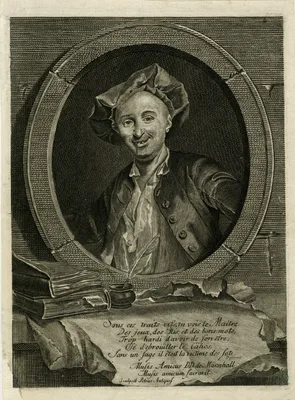
Julien Offray de La Mettrie was destined for the Church and was briefly a Jansenist. He became a physician for money and learned the body under Boerhaave. As Frederick the Great told it, in his own fever at Freiburg in 1744 he saw that thought depends on the machine of the body. He said so veiled in 1745 and plainly in Man a Machine (1747–48), and lost his post, his country and his Dutch refuge for it. At Frederick's court he held to his materialism while declining to call himself an atheist, and refused the priest at his death in 1751.
Denis Diderot
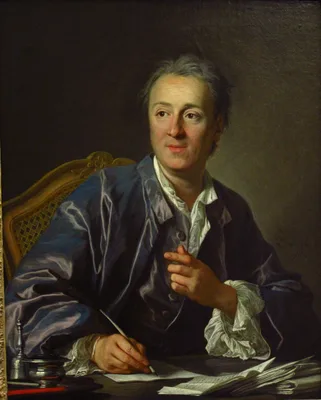
Denis Diderot was a tonsured Jesuit pupil who briefly wore a hair shirt. He argued for God as a deist in 1746, then in 1749 handed that argument to a blind man to destroy, while telling Voltaire that belief hardly mattered. Prison at Vincennes taught him to keep his boldest thoughts out of print, and he wrote his materialism into dialogues he would not publish. On his deathbed he refused a retraction as an impudent lie, saying that the first step towards philosophy is incredulity.
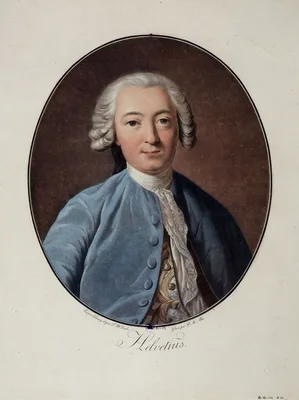
Claude Adrien Helvétius
Claude Adrien Helvétius was schooled by Jesuits and turned by Locke into an empiricist. As a tax farmer he published in 1758 a licensed book that explained mind by the senses and morals by self-interest, without ever denying God. King, archbishop, Parlement, Pope and Sorbonne condemned him as a materialist friend of atheists, and he signed three retractions to protect his mother, his post and his censor. He kept his plainest words on priests, the soul and honest atheists for a manuscript book and private notes, printed after his death.
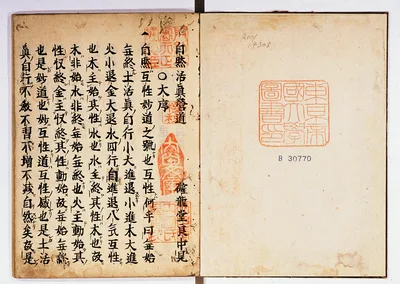
Andō Shōeki
Andō Shōeki was a country physician in Hachinohe who watched farmers starve while those who did not till ate their grain. He came to hold that the world is only self-moving nature, with no god or Buddha above it and no reward or punishment from beyond, and that sages and creeds were inventions of those who lived off the farmers. He judged this too dangerous to print in full. He published a softened version and left the rest for readers a hundred years later, who nearly lost it to fire.