The Enlightenment
This part of the book includes a village priest who served Mass for forty years while writing a secret testament against it, a salon host who published the most notorious book in Paris without his name on it, and a traveller who laid the world's religions side by side and asked how anyone could choose. In the eighteenth century unbelief was written down, and hidden, and then printed.
The lives
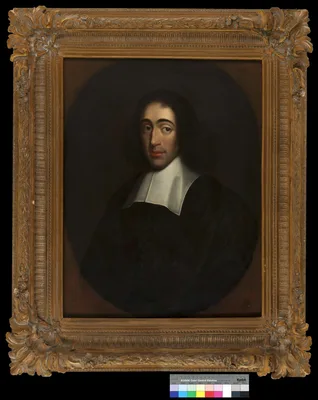
Baruch Spinoza
Baruch Spinoza was a promising Talmud pupil who came to think the rabbis rested only on their own authority. At twenty-three he was cast out of Amsterdam's Portuguese synagogue for heresies no one wrote down. He spent his life arguing that the Bible is a human book, that God acts only through the laws of nature, and that a free state lets people think what they like. He rejected the word atheist and never said there was no God, but his "God or Nature" sounded to nearly everyone like no God at all.
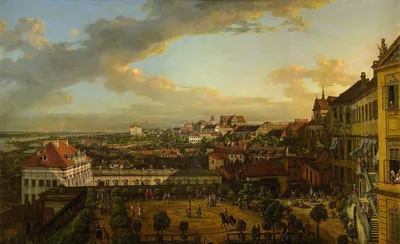
Kazimierz Łyszczyński
Kazimierz Łyszczyński was a Brest nobleman who had spent eight years with the Jesuits. In private he wrote a manuscript arguing that man created God and that religion is a fraud of the powerful on the simple. Denounced by a debtor, he said it was a disputation meant to be refuted, and recanted on the church's script. He was beheaded and burned in Warsaw in 1689, so his unbelief survives only in the words of those who condemned him.
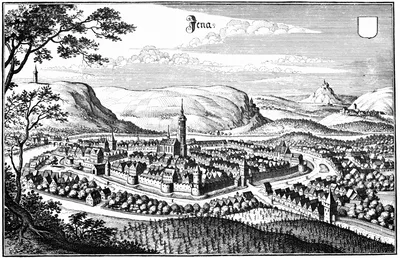
Matthias Knutzen
Matthias Knutzen was an orphaned organist's son from Holstein who trained in theology and preached until his superiors silenced him in 1673. He left no account of why he lost his faith. In September 1674 he scattered at Jena, Coburg and Altdorf a signed Latin letter denying God, magistrate, temples and priests, and putting conscience in their place, on behalf of a "sect" no one could find. He provoked a generation of refutations, and then vanished from the record without recanting.
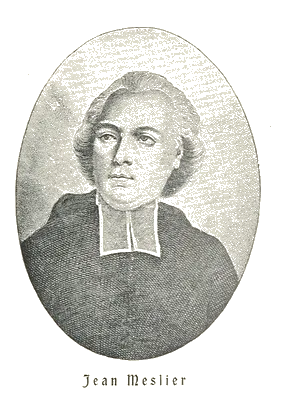
Jean Meslier
Jean Meslier was ordained to please his parents and, by his own account, was never a believer. He served a village parish for thirty-seven years while writing a Testament against all gods, kings and priests, for his parishioners to read after his death. His unbelief never changed, but after 1729 others remade it: Voltaire into a penitent deist's prayer, and d'Holbach's publishers into a name on another man's book.
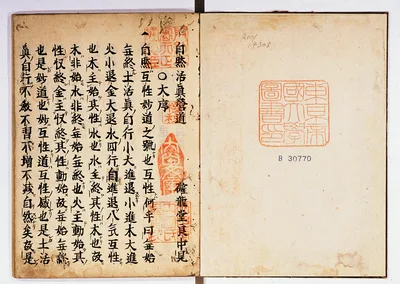
Andō Shōeki
Andō Shōeki was a country physician in Hachinohe who watched farmers starve while those who did not till ate their grain. He came to hold that the world is only self-moving nature, with no god or Buddha above it and no reward or punishment from beyond, and that sages and creeds were inventions of those who lived off the farmers. He judged this too dangerous to print in full. He published a softened version and left the rest for readers a hundred years later, who nearly lost it to fire.
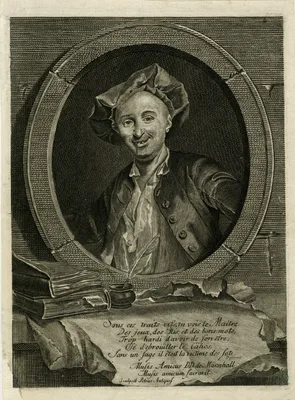
Julien Offray de La Mettrie
Julien Offray de La Mettrie was destined for the Church and was briefly a Jansenist. He became a physician for money and learned the body under Boerhaave. As Frederick the Great told it, in his own fever at Freiburg in 1744 he saw that thought depends on the machine of the body. He said so veiled in 1745 and plainly in Man a Machine (1747–48), and lost his post, his country and his Dutch refuge for it. At Frederick's court he held to his materialism while declining to call himself an atheist, and refused the priest at his death in 1751.
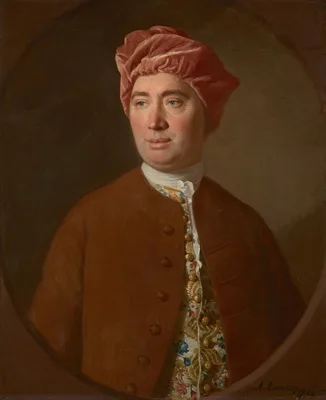
David Hume
David Hume lost the faith of his devout mother before he was twenty, gradually and, by his own account, against his will. He then spent fifty years deciding how much of his doubt to print: he cut the miracles essay from his first book, lost two professorships to the charge of atheism, withdrew his essays on suicide and immortality, and held back the Dialogues until after his death. He called himself only a sceptic. He died so calmly that his calm became the believers' argument.
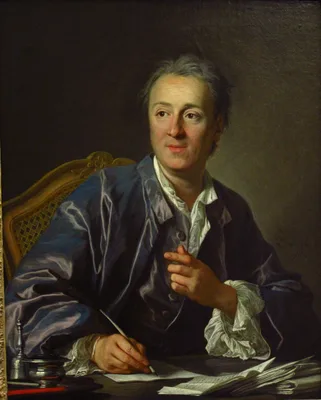
Denis Diderot
Denis Diderot was a tonsured Jesuit pupil who briefly wore a hair shirt. He argued for God as a deist in 1746, then in 1749 handed that argument to a blind man to destroy, while telling Voltaire that belief hardly mattered. Prison at Vincennes taught him to keep his boldest thoughts out of print, and he wrote his materialism into dialogues he would not publish. On his deathbed he refused a retraction as an impudent lie, saying that the first step towards philosophy is incredulity.
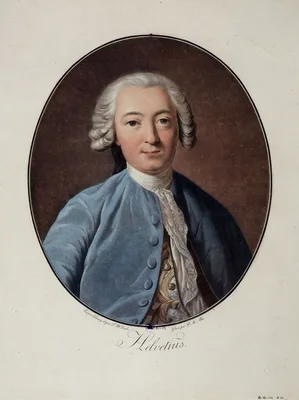
Claude Adrien Helvétius
Claude Adrien Helvétius was schooled by Jesuits and turned by Locke into an empiricist. As a tax farmer he published in 1758 a licensed book that explained mind by the senses and morals by self-interest, without ever denying God. King, archbishop, Parlement, Pope and Sorbonne condemned him as a materialist friend of atheists, and he signed three retractions to protect his mother, his post and his censor. He kept his plainest words on priests, the soul and honest atheists for a manuscript book and private notes, printed after his death.
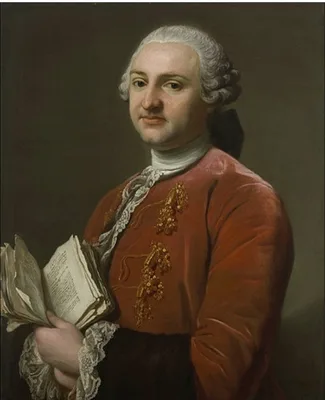
Baron d'Holbach
The Baron d'Holbach was raised a Catholic, and his translations of earth science first set the evidence against Genesis. He taught atheism openly at his own table and published it only under dead men's names, from Christianity Unveiled in 1761 to the System of Nature in 1770, while the pedlars who sold his books were flogged and branded. Late in life he turned from destroying belief to building a secular morals and politics. He was named as the author only after his death.
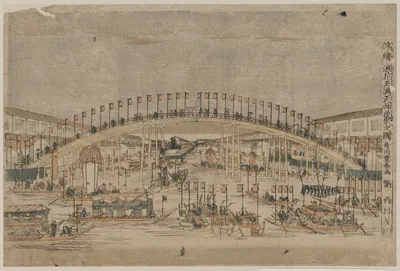
Yamagata Bantō
Yamagata Bantō was an Osaka merchant's clerk, schooled in the rational Confucianism of the Kaitokudō and in European astronomy learned through Dutch books. He had no creed to lose. In a private book begun at fifty-four and finished blind, he set down that there are no gods, buddhas or ghosts, because a teaching should say plainly what exists, and the measured globe held no paradise. He kept that conclusion to his death verses.
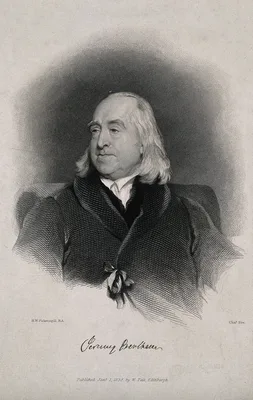
Jeremy Bentham
Jeremy Bentham was a Church of England child who "believed as hard as I could". At Oxford he signed the Thirty-nine Articles against his conscience, and never forgot it. He kept his doubts to private notes for decades. In his seventies he attacked the Church under his own name (1818), and natural religion and St Paul under invented ones (1822–23), never calling himself an atheist. He arranged his death so that his body served science, and his preserved figure stood in place of a religious rite.
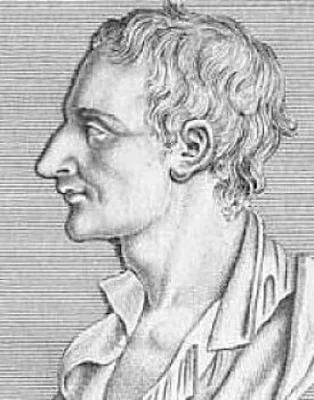
Sylvain Maréchal
Sylvain Maréchal had no recorded faith to lose. The Paris poet declared himself "a peaceful atheist" in verse by 1781, and paid for a calendar without saints with a burned book and a cell in Saint-Lazare in 1788. He carried the same unbelief through the Revolution and Babeuf's conspiracy. In 1800 he made it into a list, the Dictionary of Atheists, whose preface defined the true atheist as one who says "I can be wise without a God". He never revised it, only narrowed it to "the virtuous man", and died at Montrouge without recanting.
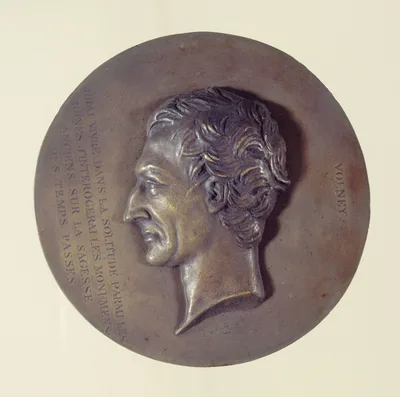
Constantin-François Volney
Constantin-François Volney was schooled by priests and met d'Holbach's circle in Paris. In 1782 he went east to see where the opinions that govern us were born, and came back to set the world's religions side by side in The Ruins of 1791, speaking only as a meditating traveller. He kept God as the name of nature's order. In 1797 he refused Priestley's demand for a creed, on the ground that no one had the right to ask it, and in old age he regretted provocation more than doubt.
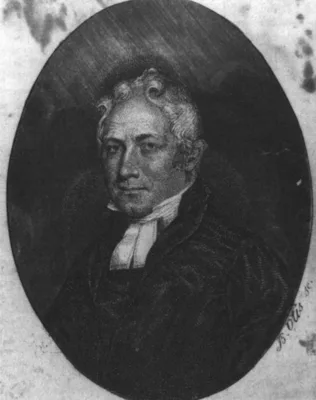
Abner Kneeland
Abner Kneeland was a Baptist lay preacher turned Universalist minister. He put his first doubts about the Bible to Hosea Ballou in 1814 and was reassured. Through Priestley, Owen and his own reading he lost his faith in a future life and a personal God, and the Universalists suspended him in 1829. In 1833 he declared himself "not an Atheist, but a Pantheist". He spent four years in the courts and sixty days in a Boston jail (1838) for a letter saying the Universalists' god was a chimera, never recanted, and ended his life in a freethinkers' colony in Iowa.