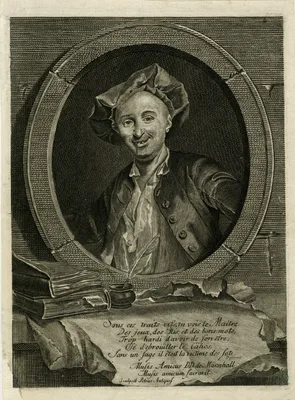
Julien Offray de La Mettrie was destined for the Church and was briefly a Jansenist. He became a physician for money and learned the body under Boerhaave. As Frederick the Great told it, in his own fever at Freiburg in 1744 he saw that thought depends on the machine of the body. He said so veiled in 1745 and plainly in Man a Machine (1747–48), and lost his post, his country and his Dutch refuge for it. At Frederick's court he held to his materialism while declining to call himself an atheist, and refused the priest at his death in 1751.
The belief timeline
- Faith (c. 1724) — A Catholic schoolboy, destined for the priesthood by his father, studies under a Jansenist teacher, becomes a Jansenist himself and writes a work for the party. The faith was a teenager's enthusiasm; Poritzky calls it "eine vorübergehende Wallung". [3][4][5]
- Doubt (autumn 1744) — The real turning point is the Freiburg fever, not the earlier change of career. In 1725 he leaves theology for medicine on a cost calculation (remedies pay better than absolutions), which is a change of trade, not of mind. Twenty years of practice, translation and Boerhaave's school follow. The conviction that thought depends on the body comes, in Frederick's account, from watching his own mind in fever. [7][9][13][43]
- Declaration (1745 (veiled), end of 1747 (open)) — *Histoire naturelle de l'âme* (1745, anonymous, Scholastic cover) draws the outcry that ends his army career; *L'Homme machine* states the conclusion in its opening paragraphs and ends "Voilà mon système, ou plutôt la vérité" (Leiden, imprint 1748). [14][15][21][36]
- Revision (1751) — Not a retraction: the 1751 preface writes "Je ne prétends pas favoriser l'athéisme" and calls himself a disinterested physicist; in Berlin he turns from metaphysics to an ethic of pleasure and to a late Epicureanism ("la farce est jouée"); Voltaire reports him homesick for France; at his death he refuses the priest. Mark is "narrowing and consolidation", disputed. [27][28][31][39][41]
Notes to the timeline (16)
- [3] His father, thinking an ecclesiastic would earn more than a poet, destined him for the Church. — MM1912 p. 3; Lange p. 54; Poritzky pp. 8–9.
- [4] At the Collège du Plessis he studied logic under M. Cordier, "more a Jansenist than a logician", became a Jansenist and wrote a work with a vogue in that party. — MM1912 p. 3; Lange p. 54; Poritzky p. 9 (at fifteen, "angeblich").
- [5] The Jansenism did not last: Poritzky calls it "eine vorübergehende Wallung" (quoting an unnamed source); Lange infers it "cannot have lasted... for any considerable time". — Poritzky p. 9; Lange p. 55. Reported at second hand; the original has not been seen.
- [7] Hunault, a Saint-Malo physician, advised him to take up medicine; his father was persuaded "that a mediocre physician would be better paid for his remedies than a good priest for absolutions". — MM1912 p. 4; Lange p. 55; Poritzky p. 10.
- [9] In 1733 he went to Leiden to study under Boerhaave, who had himself begun in theology; Lange says Boerhaave left it over his adherence to Spinoza's philosophy and that his whole influence "cannot but have favoured the spread of materialistic views among his pupils". — MM1912 p. 5; Lange p. 55; Poritzky pp. 10–11.
- [13] During the Freiburg campaign he had a violent fever; "For a philosopher an illness is a school of physiology": he believed he saw that thought is a consequence of the organization of the machine and that the disturbance of the springs affects what metaphysicians call the soul. — MM1912 p. 6; Oeuvres1796 vol. I pp. iii–iv; Lange p. 56; Poritzky p. 14.
- [43] An English translation of 1749 ("Man a Machine. Translated from the French of the Marquiss d'Argens") attributed the book to d'Argens. — Lange p. 77; IA
bim_eighteenth-century_homme-machine-english...1749(title record). - [14] He printed his "philosophic conjectures" as *Histoire naturelle de l'âme* (1745, title page La Haye); Lange says its materialism is "covered only by a very transparent veil" and that *L'Homme machine* is already contained in it in principle. — MM1912 p. 6 and bibliography pp. 203–205; Lange pp. 52–53, 57–62, 72 n..
- [15] The regimental chaplain "sounded the tocsin", the devout cried out, priests said a doctor accused of heresy could not cure the French Guards, and he lost his post. — MM1912 pp. 6–7; Lange p. 56; Poritzky p. 14.
- [21] *L'Homme machine* appeared at Leiden from Elie Luzac's press at the end of 1747 (imprint 1748), anonymous; the first edition gave 1747 (end), and Querard 1748. — Poritzky p. 17; Lange p. 57 n. 63 and p. 70; MM1912 p. 11 (title-page facsimile).
- [36] Lange: the Natural History is cautious and cunningly arranged, the *Homme machine* states its conclusion at the outset; La Mettrie "may be called the Aristippos of modern Materialism"; his reputation as bugbear owes much to his attack on Christian morality; Lange judges him "a nobler nature than Voltaire and Rousseau". — Lange pp. 53–54, 63–64.
- [27] Voltaire to Richelieu in 1750: La Mettrie "demande s'il peut revenir en France, s'il peut y passer une année sans être recherché". — Voltaire37 p. 170.
- [28] Voltaire to Mme Denis, 2 Sept 1751: La Mettrie "burns to return to France", weeps in secret, would go back on foot (Poritzky's German rendering). — Poritzky pp. 35–36.
- [31] At the deathbed Fr. Macmahon pressed him; when he cried "Jésus, Marie!" the priest said he had returned to the consoling names, and La Mettrie answered it was "only a phrase" (Poritzky) / "Bother you" (Carlyle's paraphrase of Nicolai); to Maupertuis: "What would people say if I got well?"; Poritzky rejects Sabatier de Castres's claim that he asked for religion. — Poritzky pp. 37–38; Carlyle (Nicolai).
- [39] The collected *Œuvres* (1751) open with a *Discours préliminaire*: "une société d'athées philosophes se soutiendroit très-bien... Je ne prétends pas favoriser l'athéisme, à Dieu ne plaise !", writing as "physicien désintéressé". — Oeuvres1796 vol. I p. 32; Lange pp. 77–78 (the preface principle); MM1912 pp. 203–205 (1751 edition). Seen in the biographer's reprint, not the original letter.
- [41] In Berlin he turned to the ethics of pleasure (*Discours sur le bonheur*, 1748, "L'Anti-Sénèque") and a theory that remorse is an unhelpful product of upbringing; Lange defends it, Wikipedia says it appalled Voltaire, Diderot and d'Holbach. — Lange pp. 79–81; Wikipedia "Journey to Prussia".
Man a Machine
In the autumn of 1744, at the siege of Freiburg, the physician to the French Guards fell ill with a violent fever. Watching his own mind fail and recover, he thought he could see something. "For a philosopher an illness is a school of physiology," Frederick the Great wrote of him later; "he believed that he could clearly see that thought is but a consequence of the organization of the machine, and that the disturbance of the springs has considerable influence on that part of us which the metaphysicians call soul."12 The physician was Julien Offray de La Mettrie. Three years later he published the book whose title said it all: L'Homme machine, Man a Machine.
It cost him his post, then his country, then his refuge in Holland. He ended at the court of Frederick of Prussia, and died there at forty-one, in a way his enemies made into a moral fable.34567 This chapter asks how a boy meant for the priesthood became one of the plainest materialists of his century, and why he still would not say, in so many words, that there is no God. The story of the fever is Frederick's; no account in La Mettrie's own hand has been found, and other influences counted too.1
The priest who became a doctor
He was born at Saint-Malo in Brittany in the winter of 1709; Frederick's eulogy gives Christmas Day.8 He did well at school, won the prizes for eloquence at Caen, and loved poetry.9 His father, thinking a churchman would earn more than a poet, destined him for the Church, and at the Collège du Plessis in Paris he studied logic under a teacher "more a Jansenist than a logician". In Frederick's words, "he became a Jansenist, and wrote a work which had great vogue in that party."101112 The work has never been identified, and the enthusiasm did not last.13 On the belief timeline, his faith is that youthful Jansenism, a strict Catholic movement.
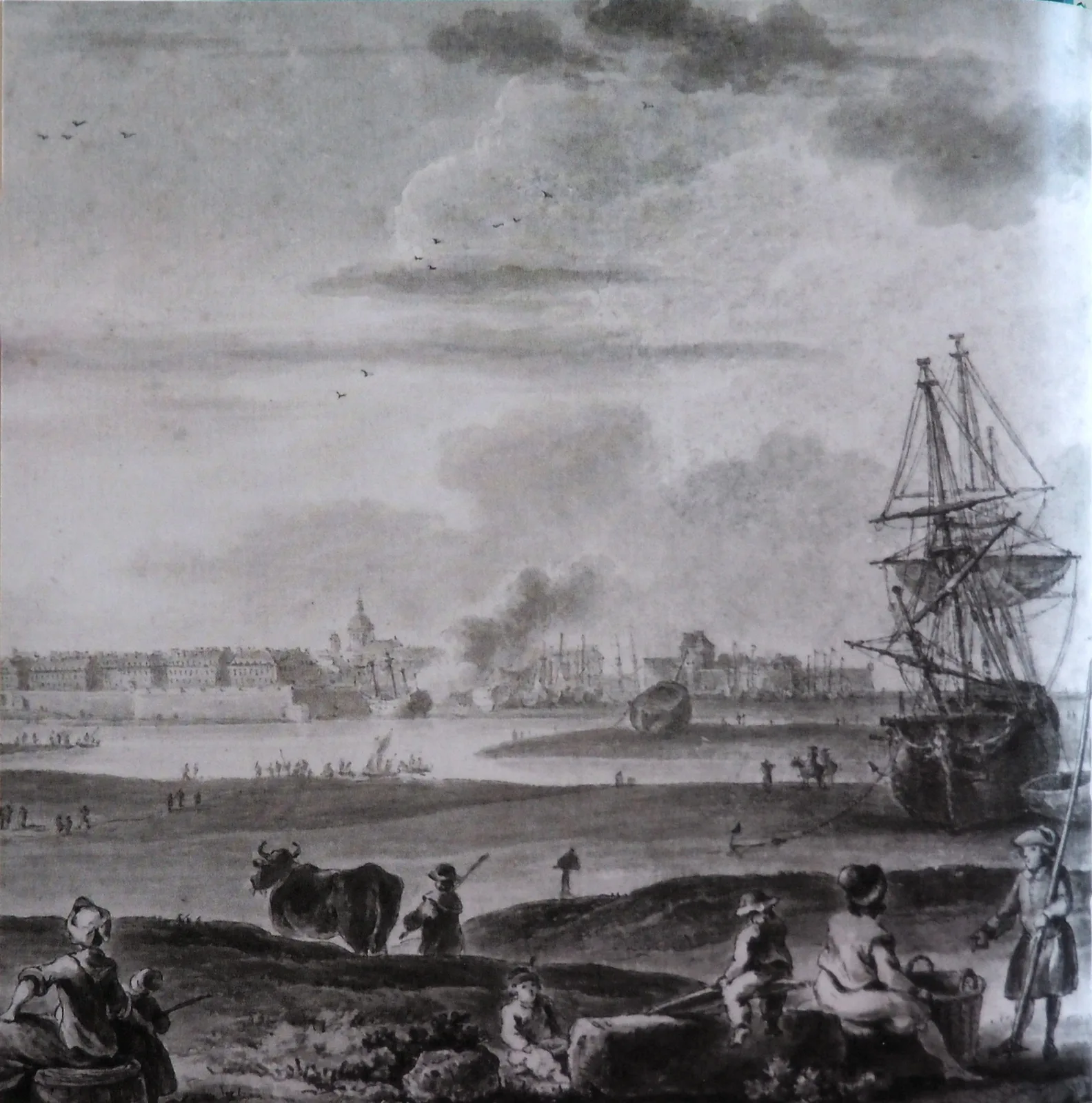
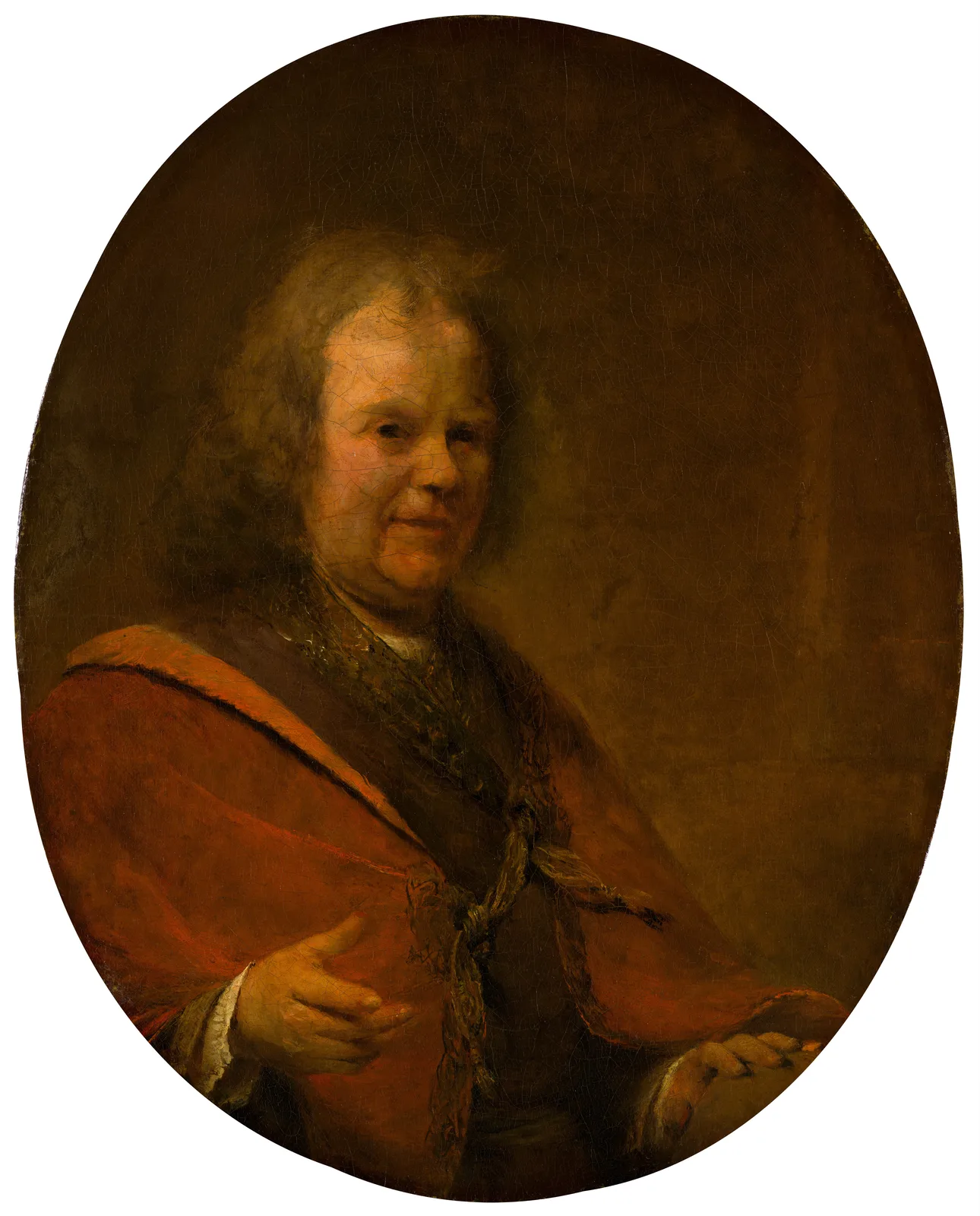
The change of course in 1725 was not a loss of faith but a change of trade. A Saint-Malo physician persuaded his father that "a mediocre physician would be better paid for his remedies than a good priest for absolutions", and the young man turned to medicine. He took his doctorate at Reims by the late 1720s.141516 In 1733 he went to Leiden to study under the great Herman Boerhaave, whose teaching, the historian F. A. Lange thought, "cannot but have favoured the spread of materialistic views among his pupils".17 For years he practised at Saint-Malo and translated Boerhaave; in 1742 he went to Paris and became physician to the Duke of Gramont and the French Guards, and followed the army to Dettingen, Freiburg and Fontenoy.181920
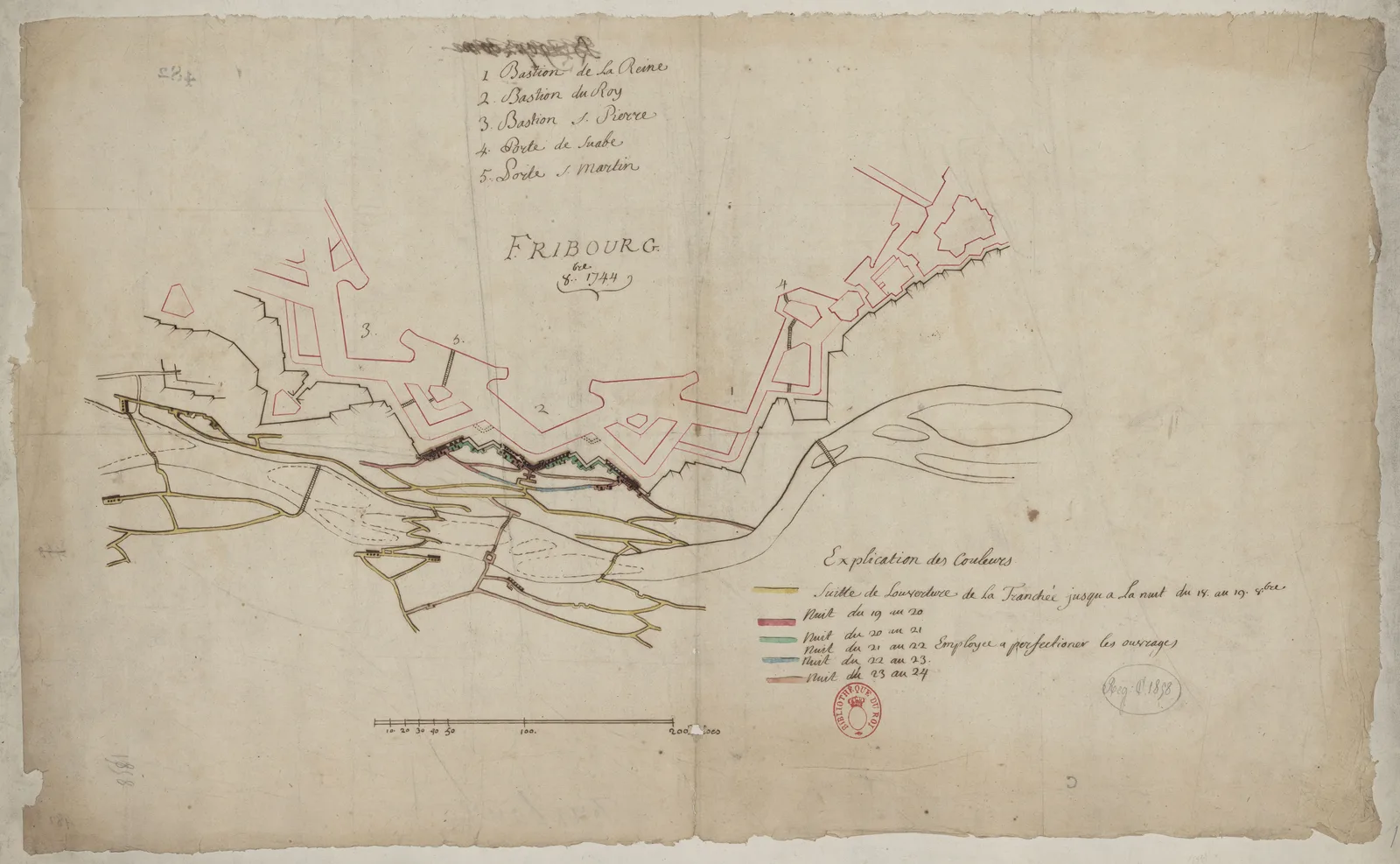
The fever and the soul
That is why the timeline places his doubt at Freiburg in 1744 and not at the change of career: the conviction that thought depends on the body is dated there, in Frederick's account, and it is that conviction he spent the rest of his life writing out.1 Lange pointed to other sources as well, Boerhaave's school above all, and La Mettrie himself later wrote of the "thousands of soldiers" he had watched die in the military hospitals of Flanders.172122
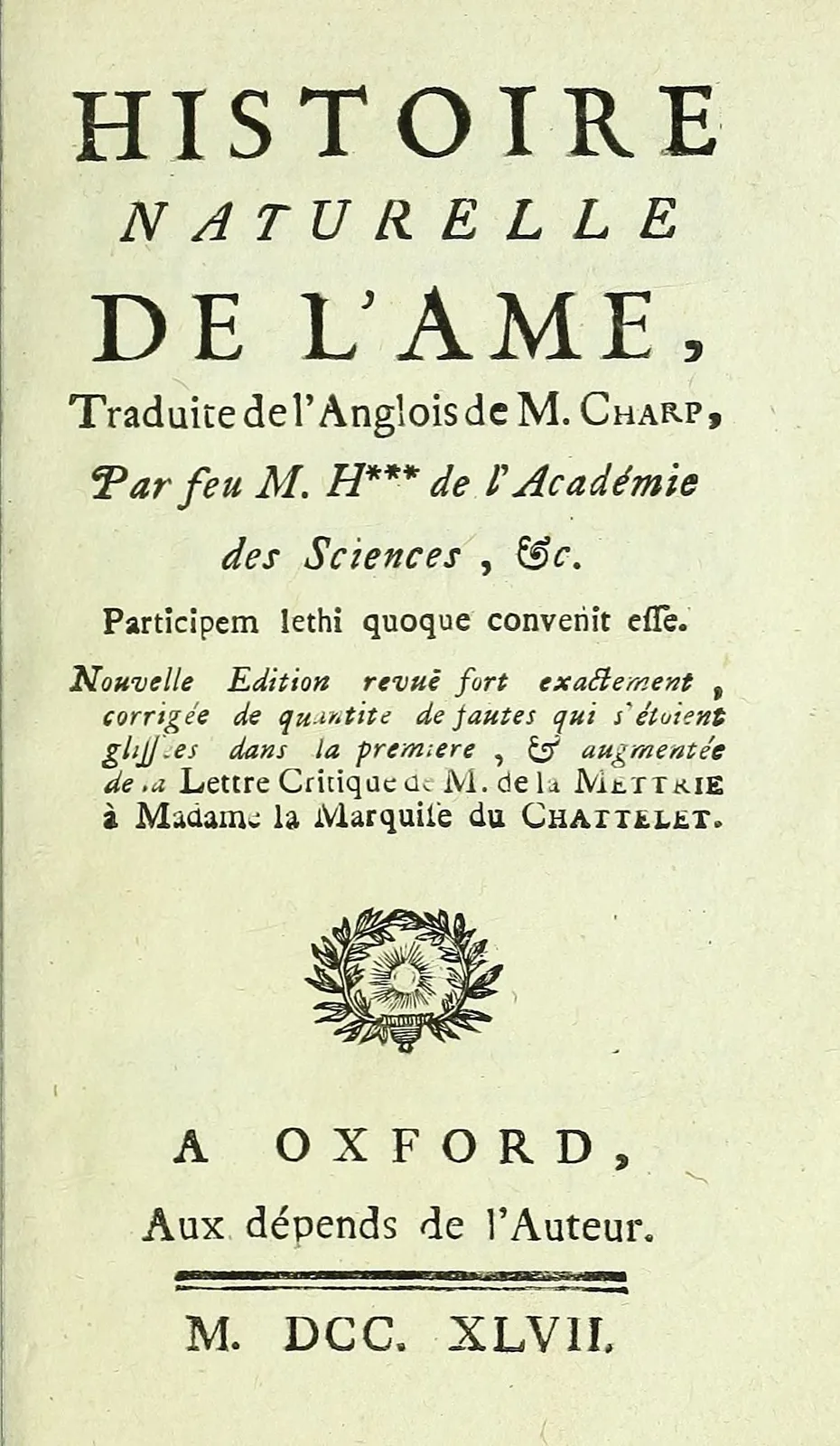
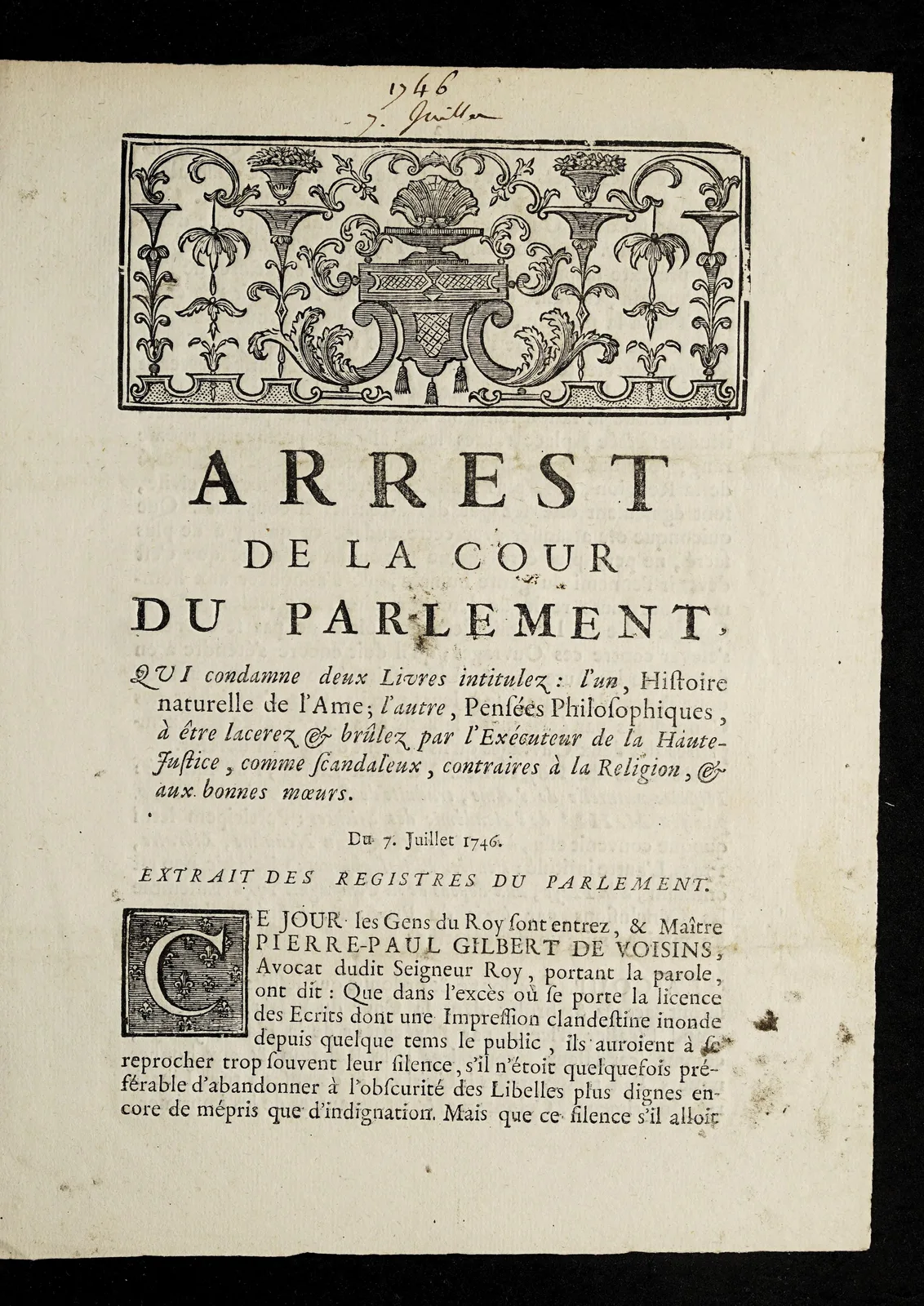
In 1745 he published, anonymously, a Natural History of the Soul, dressed in the vocabulary of the schools. Lange said its materialism was "covered only by a very transparent veil". Its conclusion was that the soul "depends essentially upon the organs of the body, with which it is formed, grows, decreases".2324 The regimental chaplain "sounded the tocsin", the devout cried out that a doctor accused of heresy could not treat the French Guards, and he lost his post.3 Satires he wrote against the Paris physicians made him a second set of enemies.25 In July 1746, on the account of his German biographer Poritzky, his writings were burned in Paris two days after Diderot's Philosophical Thoughts, and he left France under the threat of arrest.264
Man a Machine
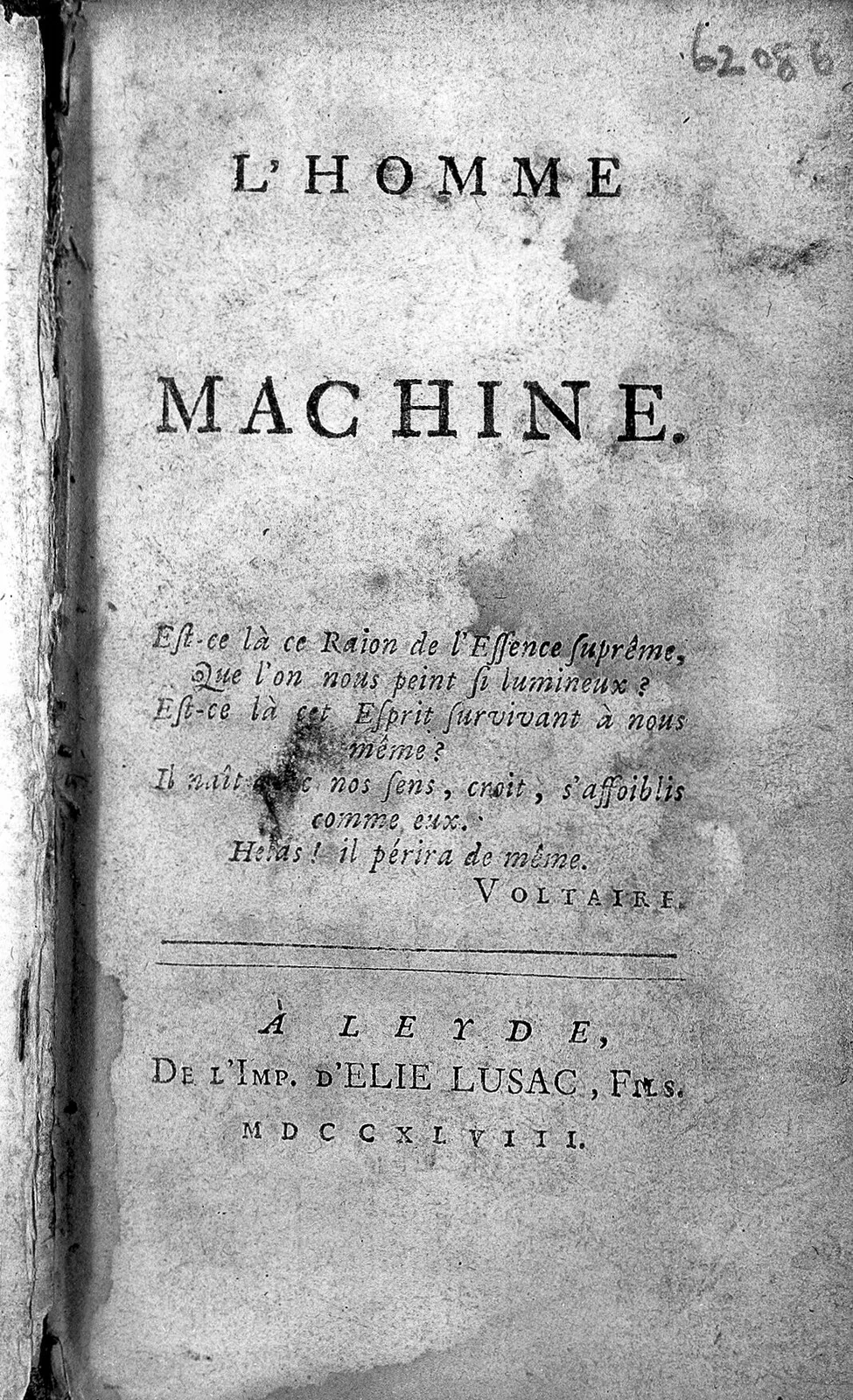
In Leiden, at the end of 1747, the publisher Elie Luzac printed, anonymously and with an imprint of 1748, the book that made him notorious.27 Where the Natural History had hidden its conclusion, Man a Machine put it at the front. "It is not enough for a wise man to study nature and truth; he should dare state truth for the benefit of the few who are willing and able to think."2829 "The human body is a machine which winds its own springs. It is the living image of perpetual movement."30 And at the end: "Let us then conclude boldly that man is a machine, and that in the whole universe there is but a single substance differently modified." "Such is my system, or rather the truth, unless I am much deceived. It is short and simple. Dispute it now who will."3132 On the timeline, this is where he declares himself.
On God the book is careful in a way its enemies ignored. "I do not mean to call in question the existence of a supreme being; on the contrary it seems to me that the greatest degree of probability is in favor of this belief." But since that existence does not prove the need of worship, "it is a theoretic truth with very little practical value."3334 Religion does not guarantee honesty, so "atheism does not exclude it".35 For peace of mind it does not matter "whether there be or be not a God. How foolish to torment ourselves so much about things which we can not know."36 On the argument from design he writes, "I do not take either side," and hands the bolder conclusion to an unnamed friend, "a Frenchman, as frank a Pyrronian as I", who says that "the universe will never be happy, unless it is atheistic."37383940 Lange read the friend as La Mettrie in disguise.28
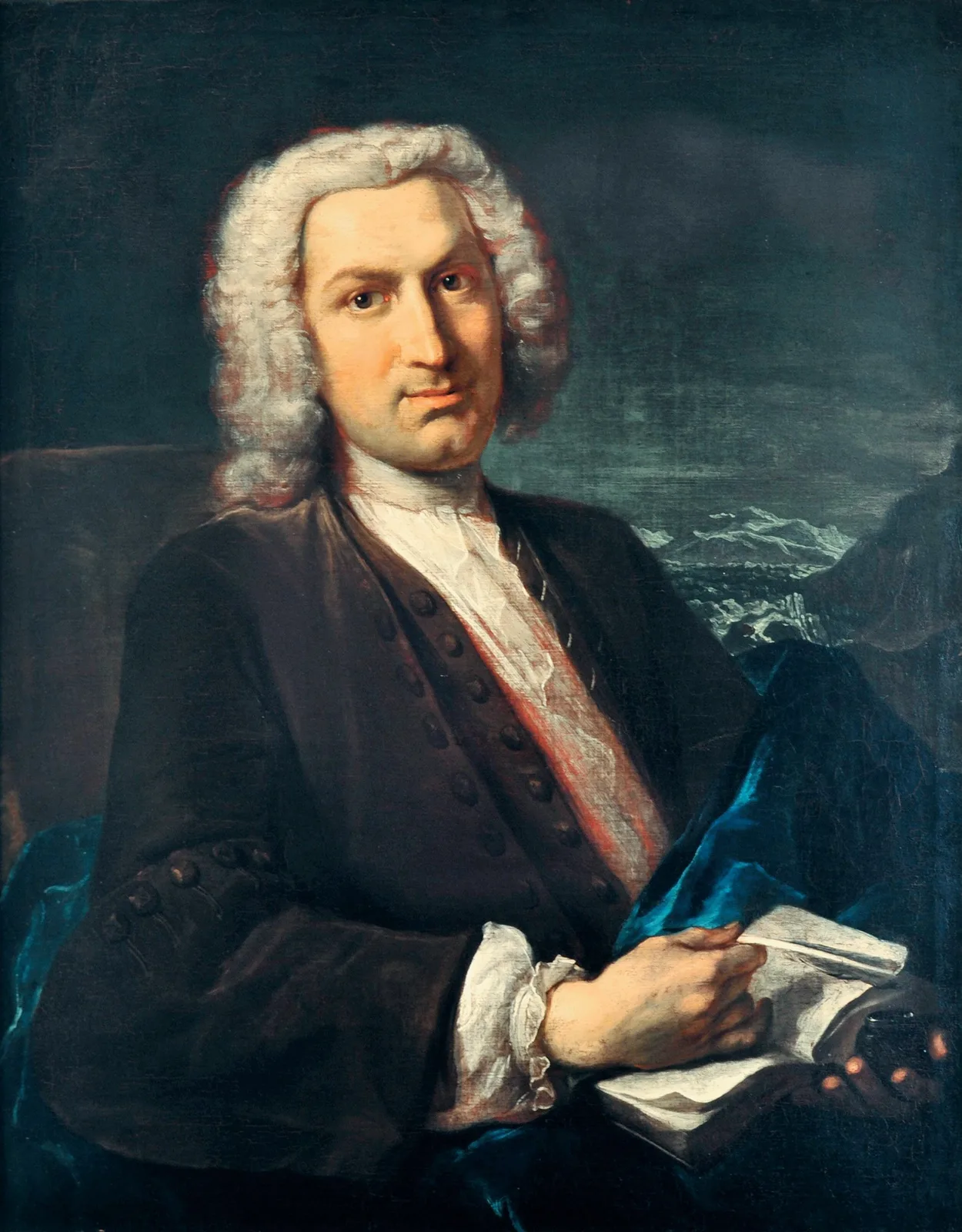
He dedicated the book to the Swiss physiologist Albrecht von Haller, a devout Protestant he did not know. Haller declared in print that the book was wholly against his views and the dedication "the cruellest of all insults".4142 Even the publisher Luzac brought out a reply, arguing that the soul cannot be material and so must be immaterial.4344 In Frederick's words, the book "roused all the priests of Leyden", Calvinists, Catholics and Lutherans together, "to persecute a philosopher who had the additional misfortune of being French".545 He left Holland.
Potsdam
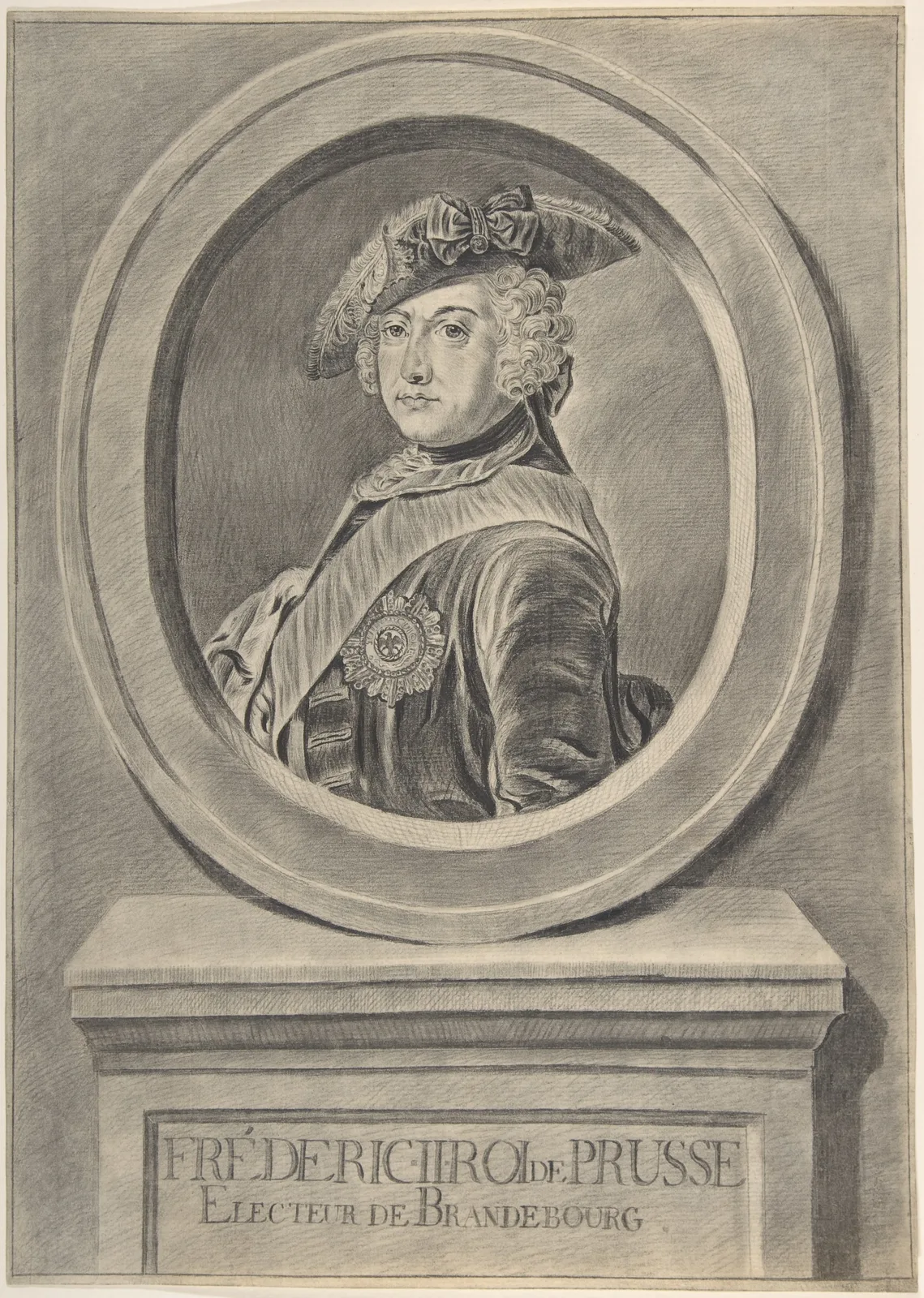
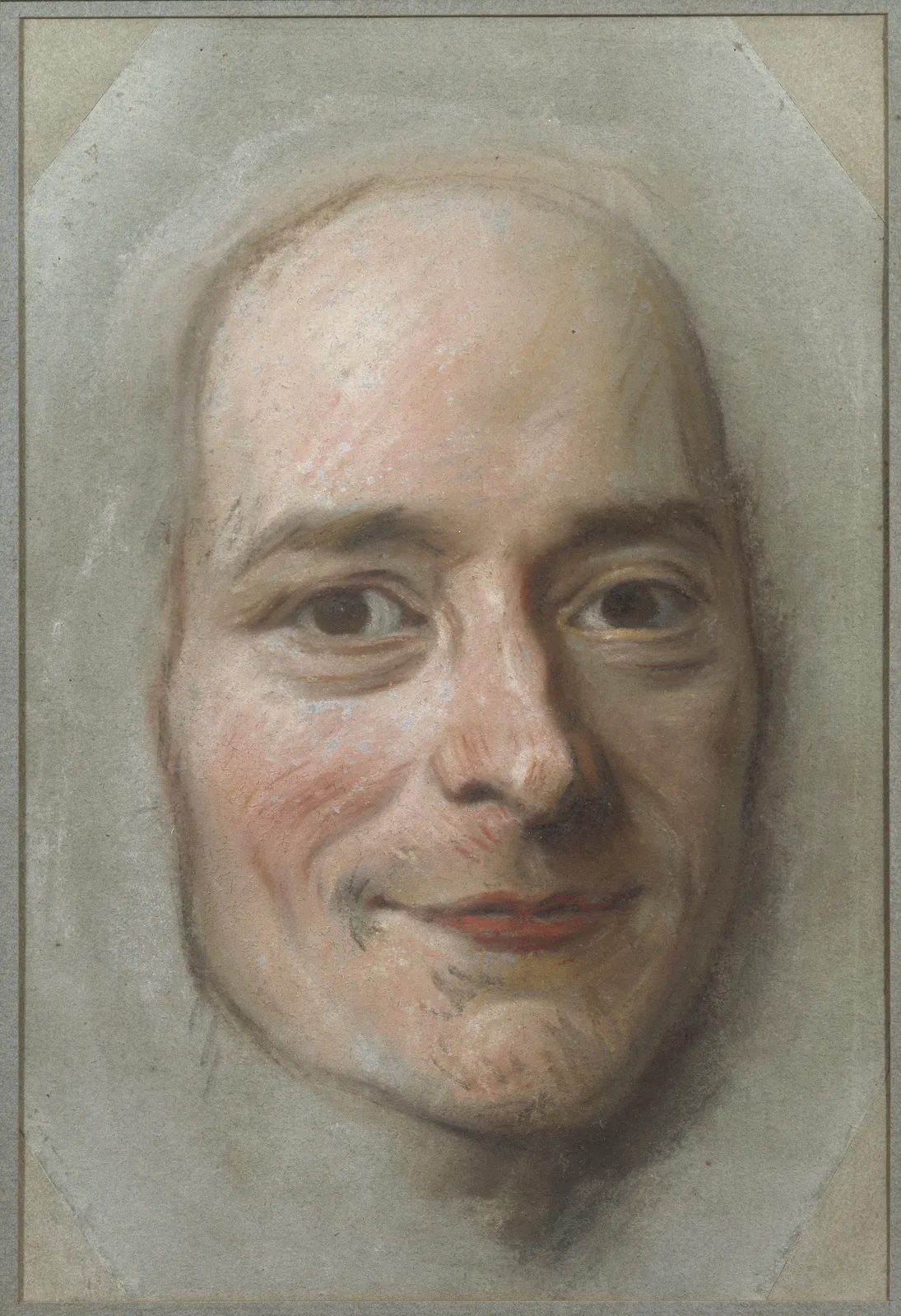
In February 1748 he arrived in Berlin with a pension from Frederick, a seat in the Academy of Sciences, and the post of court reader.6 He wrote on medicine and on happiness, defending pleasure and arguing that remorse was a useless product of upbringing; Lange called him "the Aristippos of modern Materialism".462847 Voltaire, at Potsdam in 1750, found him "un homme trop gai", a man too merry, whose ideas were "a firework always in rockets", and whose latest book had "a thousand flashes of fire, and not half a page of reason".484950 He also reported that La Mettrie wanted to know whether he could go back to France.5152
When his works were collected in 1751 he opened them with a preliminary discourse. "Not only do I think that a society of philosophical atheists would hold together very well," he wrote, "I do not claim to favour atheism, God forbid!" A society of atheists, he added, would hold together more easily than a society of the devout.5354 In the System of Epicurus he wrote of death as "an abyss, an eternal nothing": "la farce est jouée", the farce is played out.5556 That preface is the nearest thing to a revision on his timeline, and it is not a retraction: it narrows his claim to what a physician could defend, and keeps the conclusion.
The pie
In November 1751 he ate a pie at the house of Lord Tyrconnel in Berlin, fell into a fever, and died there in the early hours of 11 November, at forty-one.7 What was in the pie became a joke: "a whole pheasant-pie", Frederick wrote; "eagle disguised as pheasant", said Voltaire, with "plenty of bad lard, pork-hash and ginger". The eulogy said only a high fever with violent delirium, and accounts differ on the cause.5758 Every report has him refusing the priest. When he cried out "Jesus, Mary!" and the priest said he had come back to the consoling names, he answered, on one account, that it was "only a phrase".5960 Frederick wrote his eulogy, read to the Academy: "All those who are not imposed upon by the pious insults of the theologians mourn in La Mettrie a good man and a wise physician."6162 To his sister he was more candid: La Mettrie had been a good doctor and "very bad Author".63
The harshest verdict came from a fellow materialist. Denis Diderot called him "an author without judgement", "dissolute, impudent, a buffoon, a flatterer, made for the life of courts", who "died as he ought to die, a victim of his intemperance and his folly".6465 La Mettrie's reputation stayed a bugbear until Lange, in 1866, judged him "a nobler nature than Voltaire and Rousseau".2866 Diderot, whose own book was burned two days before his and whom the public at first took La Mettrie to be, has his own chapter in this book.67
Footnotes
-
MM1912 p. 6; Oeuvres1796 vol. I pp. iii–iv; Lange p. 56; Poritzky p. 14. ↩ ↩2 ↩3
-
Frederick II, reporting La Mettrie (Éloge, 1752): MM1912 p. 6 (Bussey/Calkins translation). ↩
-
MM1912 pp. 7–8; Lange p. 56; Poritzky p. 16. The saz episode poritzky is the only source for this, as for the other details in this chapter cited to that source alone. ↩ ↩2
-
MM1912 p. 8; Poritzky p. 17. Reported at second hand; the original has not been seen. ↩ ↩2
-
MM1912 pp. 8–9; EB1911 p. 130; Lange p. 56 (Éloge date). ↩ ↩2
-
MM1912 p. 3 (Éloge); Oeuvres1796 vol. I, Éloge p. i; Lange p. 54; Poritzky p. 8; EB1911 p. 129. Accounts differ; see the disputed points. ↩
-
MM1912 p. 3; Poritzky pp. 8–9. ↩
-
MM1912 p. 3; Lange p. 54; Poritzky pp. 8–9. ↩
-
MM1912 p. 3; Lange p. 54; Poritzky p. 9 (at fifteen, "angeblich"). ↩
-
Frederick II on La Mettrie's youth: MM1912 p. 3. ↩
-
Poritzky p. 9; Lange p. 55. ↩
-
MM1912 p. 4; Lange p. 55; Poritzky p. 10. ↩
-
MM1912 p. 4; Oeuvres1796 vol. I, Éloge pp. i–iv (leaves unnumbered in the OCR); Eloge1752 p. 5; Poritzky p. 10. ↩
-
Frederick II, giving the argument used on La Mettrie's father: MM1912 p. 4. ↩
-
MM1912 p. 5; Poritzky p. 11. ↩
-
MM1912 pp. 5–6; Poritzky pp. 12–13; Lange p. 56. ↩
-
MM1912 pp. 5–6 (names); Poritzky p. 13 (dates). ↩
-
Oeuvres1796 vol. II p. 35. ↩
-
La Mettrie, Système d'Épicure (§LXX): Oeuvres1796 vol. II p. 35. ↩
-
MM1912 p. 6 and bibliography pp. 203–205; Lange pp. 52–53, 57–62, 72 n.. ↩
-
La Mettrie, Histoire naturelle de l'âme (1745), conclusion, in Lange's English: Lange p. 63. ↩
-
MM1912 p. 7; Lange p. 56; Poritzky p. 15. ↩
-
Poritzky pp. 16, 125. ↩
-
Poritzky p. 17; Lange p. 57 n. 63 and p. 70; MM1912 p. 11 (title-page facsimile). ↩
-
La Mettrie, L'Homme machine (opening): MM1912 p. 85 (Bussey). ↩
-
La Mettrie, L'Homme machine: MM1912 p. 93. French: "Le corps humain est une machine qui monte elle-même ses ressorts; vivante image du mouvement perpétuel." Often quoted without the second sentence. ↩
-
La Mettrie, L'Homme machine: MM1912 p. 148. ↩
-
La Mettrie, L'Homme machine (last lines): MM1912 p. 149. ↩
-
MM1912 pp. 121–127 (esp. 122); Lange p. 71. ↩
-
La Mettrie, L'Homme machine: MM1912 p. 122. ↩
-
La Mettrie, L'Homme machine: MM1912 p. 122. ↩
-
La Mettrie, L'Homme machine: MM1912 p. 122. ↩
-
MM1912 pp. 126–127. ↩
-
La Mettrie, L'Homme machine, closing the pro-and-con on design: MM1912 p. 126. ↩
-
La Mettrie, L'Homme machine, introducing the friend: MM1912 pp. 126–127. ↩
-
La Mettrie's Pyrrhonian friend, reported by La Mettrie: MM1912 p. 127. ↩
-
Poritzky pp. 18–19; Lange p. 64. ↩
-
Albrecht von Haller, Göttingen physiologist and devout Protestant, whom La Mettrie had dedicated the book to; Journal des Savants, May 1749: Poritzky p. 19 (German rendering). ↩
-
MM1912 pp. 176–177, 203–205; Lange p. 77 n. 74. ↩
-
Elie Luzac the younger, Leiden publisher of L'Homme machine and author of the reply L'Homme plus que machine (1748); quoted in the 1750 English translation: MM1912 p. 177 (Bussey's note 1). ↩
-
Frederick II, Éloge: MM1912 p. 8. ↩
-
MM1912 p. 9 and bibliography pp. 203–205. ↩
-
Lange pp. 79–81; Wikipedia "Journey to Prussia". ↩
-
Voltaire37 pp. 192–193. ↩
-
Voltaire, Potsdam, 6 Nov 1750, to Mme Denis: Voltaire37 p. 192 (letter 2143). ↩
-
Voltaire, same letter, on a book La Mettrie had just had printed at Potsdam: Voltaire37 p. 193. ↩
-
Voltaire37 p. 170. ↩
-
Poritzky pp. 35–36. ↩
-
Oeuvres1796 vol. I p. 32; Lange pp. 77–78 (the preface principle); MM1912 pp. 203–205 (1751 edition). Seen in the biographer's reprint, not the original letter. ↩
-
La Mettrie, Discours préliminaire: Oeuvres1796 vol. I p. 32 (Berlin/Paris: Tutot, 1796; preface of the collected edition of 1751). ↩
-
EB1911 p. 129; Oeuvres1796 vol. II p. 36. ↩
-
La Mettrie, Système d'Épicure (§LXXII): Oeuvres1796 vol. II p. 36. ↩
-
Carlyle (Book XVI ch. IX); Poritzky pp. 36–39 (notes 70, 72); Lange p. 53. ↩
-
Voltaire to Mme Denis, 24 Dec 1751, in Carlyle's translation: Carlyle (Book XVI ch. IX); French in Poritzky p. 36 n. 70: "Un pâté d'aigle déguisé en faisan, qu'on avait envoyé du Nord, tout farci de mauvais lard, de hachis de porc, et de gingembre". ↩
-
Poritzky pp. 37–38; Carlyle (Nicolai). ↩
-
La Mettrie at his deathbed to Fr. Macmahon, as reported by Nicolai: Poritzky p. 37 (German rendering). ↩
-
MM1912 p. 176; Carlyle (ch. IX). ↩
-
Frederick II, Éloge: MM1912 pp. 9–10. ↩
-
Frederick II, private letter to his sister Wilhelmine, 21 Nov 1751, in Carlyle's translation: Carlyle (Book XVI ch. IX, quoting Frederick's Œuvres xxvii. i. 203). ↩
-
Diderot3 pp. 217–218. ↩
-
Denis Diderot, fellow materialist, in his Essai sur les règnes de Claude et de Néron (the 1782 text; composition date not checked): Diderot3 p. 217. ↩
-
Lange pp. 52–55, 76–81; Wikipedia "Ethics" (Wellman). ↩
-
Diderot3 pp. 218–219 (editors' note). ↩
In their own words
For a philosopher an illness is a school of physiology; he believed that he could clearly see that thought is but a consequence of the organization of the machine, and that the disturbance of the springs has considerable influence on that part of us which the metaphysicians call soul.
he became a Jansenist, and wrote a work which had great vogue in that party.
a mediocre physician would be better paid for his remedies than a good priest for absolutions
It is not enough for a wise man to study nature and truth; he should dare state truth for the benefit of the few who are willing and able to think.
The human body is a machine which winds its own springs. It is the living image of perpetual movement.
I do not mean to call in question the existence of a supreme being; on the contrary it seems to me that the greatest degree of probability is in favor of this belief. But since the existence of this being goes no further than that of any other toward proving the need of worship, it is a theoretic truth with very little practical value.
Therefore, since we may say, after such long experience, that religion does not imply exact honesty, we are authorized by the same reasons to think that atheism does not exclude it.
it does not matter for our peace of mind, whether matter be eternal or have been created, whether there be or be not a God. How foolish to torment ourselves so much about things which we can not know, and which would not make us any happier even were we to gain knowledge about them!
I do not take either side.
a Frenchman, as frank a Pyrronian as I, a man of much merit, and worthy of a better fate.
"However," he continued, "the universe will never be happy, unless it is atheistic."
Let us then conclude boldly that man is a machine, and that in the whole universe there is but a single substance differently modified.
Such is my system, or rather the truth, unless I am much deceived. It is short and simple. Dispute it now who will.
The soul, then, depends essentially upon the organs of the body, with which it is formed, grows, decreases
Non-seulement je pense qu'une société d'athées philosophes se soutiendroit très-bien ... Je ne prétends pas favoriser l'athéisme, à Dieu ne plaise !
J'ai vu mourir, triste spectacle ! des milliers de soldats, dans ces grands hôpitaux militaires, qui m'ont été confiés en Flandres durant la dernière guerre.
La mort est la fin de tout ; après elle, je le répète, un abîme, un néant éternel ; tout est dit, tout est fait ; la somme des biens, & la somme des maux est égale : plus de soins, plus d'embarras, plus de personnage à représenter ; la farce est jouée
das war nur so eine Phrase!
Was würde man von mir sagen, wenn ich wieder gesund würde!
All those who are not imposed upon by the pious insults of the theologians mourn in La Mettrie a good man and a wise physician.
they all united again to persecute a philosopher who had the additional misfortune of being French, at a time when that monarchy was waging a successful war against their High Powers.
The other side
the soul can not be material: so that it must be immaterial, and, for the same reason, God could not have given the faculty of thinking to matter, since He can not perform contradictions.
ich erkläre dieses Buch als gänzlich meinen Gesinnungen widerstrebend; ich betrachte die Widmung als den grausamsten aller Schimpfe
La Mettrie est un auteur sans jugement, qui a parlé de la doctrine de Sénèque sans la connaître
Il y a ici, en récompense, un homme trop gai : c'est La Mettrie. Ses idées sont un feu d'artifice toujours en fusées volantes.
Il y a dans son ouvrage mille traits de feu, et pas une demi-page de raison; ce sont des éclairs dans une nuit.
He was gay; BON DIABLE, good Doctor, and very bad Author: by avoiding to read his Books, one could manage to be well content with himself.
they bring him a pie, of eagle disguised as pheasant, which had arrived from the North, plenty of bad lard, pork-hash and ginger in it; my gentleman eats the whole pie, and dies next day
Where accounts differ
| Point | One account | Another | How the page handles it |
|---|---|---|---|
| Birth date | 25 December 1709 (Frederick's Éloge, MM1912 p. 3; Lange p. 54; Poritzky p. 8; EB1911 p. 129) | 23 November 1709 (Wikipedia, citing Christensen 1996 p. 245 n. 2; the infobox shows 19 December) | Say "born at Saint-Malo in the winter of 1709, on Frederick's account on Christmas Day" or use "1709". |
| Doctorate at Reims | 1728 (Eloge1752 p. 5; Poritzky p. 10; Wikipedia "probably ... around 1728") | 1725 (Oeuvres1796 vol. I, Éloge pp. i–iv (leaves unnumbered in the OCR); MM1912 p. 4), which collides with the 1725 Harcourt year | Say "by the late 1720s". |
| Age at death | "43" (Éloge, both printings after the first; MM1912 p. 9) | 41 by the dates (25 Dec 1709 to 11 Nov 1751; Bussey, MM1912 p. 176); "kaum 42" (Poritzky p. 38) | Say forty-one; no need to mention. |
| Place of death | Berlin: in Lord Tyrconnel's house, after he came over from Potsdam on 8 Nov (Poritzky pp. 36–38; Wikipedia) | The roster brief says Potsdam; Voltaire's letters are dated Potsdam; the Éloge names only "the house of Milord Tirconnel" | Say Berlin. |
| Cause of death | Indigestion from the pie, then fever (Frederick to Wilhelmine; Voltaire) | The Éloge says only "fièvre chaude avec un délire violent"; Poritzky p. 40: the cause "noch keineswegs ergründet", perhaps already ill; du Bois-Reymond suggests the lard could have been poisonous (Poritzky n. 71, not checked) | "Accounts differ"; the pâté story was told by enemies and by Frederick in jest. |
| Burning of his books | Paris, 9 July 1746, by order of the Parlement, two days after Diderot's *Pensées* (Poritzky pp. 16, 125) | Carlyle: the Leiden magistrates burned *L'Homme machine* by the hangman (no source) | Use Paris 1746 only, marked secondhand; do not use the Leiden burning. |
| The fever as the origin of the materialism | Frederick (Éloge, MM1912 p. 6) places the insight at Freiburg in 1744, the *Histoire naturelle* following | Lange (pp. 53, 55–56, 72 n.) shows the Natural History already materialist in principle and notes Boerhaave's school; La Mettrie's own first-person account of the fever is not in any scanned text | Present the fever as "Frederick tells us", and give Boerhaave and the military hospitals as other contributing factors. |
| Marriage | 1746, to Louise-Charlotte Dréano, one daughter (Poritzky p. 16; Éloge) | 1739, two children, unhappy (Wikipedia, citing Vartanian p. 2–12; not seen) | Skip unless the family matters; if so, use the Éloge (daughter of five). |
| Deathbed words to the priest | "Mein Vater, das war nur so eine Phrase!" (Poritzky p. 37, from Nicolai) | "Bother you!" (Carlyle's paraphrase of Nicolai) | If used, "accounts differ"; stress the point that every report has him refusing the priest. |
| Route of the 1746 flight | Frederick: advised to leave, went to Leiden (MM1912 pp. 7–8) | Poritzky p. 16: first to Saz near Ghent, expelled as a spy; La Mettrie: "Je n'ai même pas été exilé; je me suis expatrié" (quoted by Poritzky from his own defence) | Say he left France in 1746 under threat of arrest. |
| Date of *L'Homme machine* | Written 1747, printed at the end of 1747 (Poritzky p. 17; Lange p. 70) | Title page: Leiden, 1748 (MM1912 title facsimile); Wikipedia and the roster say 1747 | "Printed at Leiden at the turn of 1747–48". |
| Which book Voltaire called bad | Moland's note: *L'Homme machine* (Voltaire37 p. 193 n.) | Content fits the *Discours sur le bonheur* / *L'Art de jouir* printed at Potsdam | Quote Voltaire without naming the book. |
List of illustrations
This page uses only public-domain and Creative Commons images; each is credited with its source and licence.
- Julien Offray de La Mettrie, engraved portrait — Georg Friedrich Schmidt, c. 1750 (Commons: 18th century) · Digitaler Portraitindex, via Wikimedia Commons · Public domain (licence stated on the Wikimedia Commons file page; work published or painted before 1931)
- Saint-Malo in the late 18th century (view with shipping) — Unknown author, 18th century · Unknown 18th-century artist, reproduced in Alain Roman, Robert Surcouf (2018) via Wikimedia Commons · Public domain (licence stated on the Wikimedia Commons file page; work published or painted before 1931)
- Portrait of Herman Boerhaave (1668-1738) — Arent de Gelder, c. 1722 · Mauritshuis, The Hague (757), via Wikimedia Commons · Public domain (licence stated on the Wikimedia Commons file page; work published or painted before 1931)
- Fribourg, 8bre 1744: Bastion de la Reine, Bastion du Roy, Bastion S. Pierre, Porte de Suabe, Porte S. Martin (siege view) — Unknown (Bibliothèque nationale de France btv1b84926734), 1744 · Bibliothèque nationale de France (Gallica btv1b84926734), via Wikimedia Commons · Public domain (licence stated on the Wikimedia Commons file page; work published or painted before 1931)
- Histoire naturelle de l'ame (Oxford [Paris?], aux dépends de l'auteur, 1747), title page — Julien Offray de La Mettrie, 1747 (the first edition is 1745; this is the 'nouvelle édition') · Internet Archive (histoirenaturell00lame) · Public domain (published 1747; the Internet Archive item states no rights)
- Arrest de la Cour du Parlement, qui condamne deux livres intitulez: l'un, Histoire naturelle de l'ame; l'autre, Pensées philosophiques (Paris, Simon, 7 July 1746), first page — Parlement de Paris, 1746 · Internet Archive (arrestdelacour00fran_2) · Public domain (published 1746; the Internet Archive item states no rights)
- L'homme machine (Leyde, de l'Imprimerie d'Elie Luzac fils, 1748), title page — Julien Offray de La Mettrie, 1748 · Wellcome Collection (L0015753), Public Domain Mark · Public Domain Mark (Wellcome Collection)
- Albrecht von Haller — Johann Rudolf Huber, 1736 · Burgerbibliothek Bern, via Wikimedia Commons · Public domain (licence stated on the Wikimedia Commons file page; work published or painted before 1931)
- Portrait of Frederick II of Prussia, engraving after Antoine Pesne (MET DP804186) — Johann Georg Wille after Antoine Pesne, between 1730 and 1808 · The Metropolitan Museum of Art (DP804186), Open Access, via Wikimedia Commons, CC0 · CC0 (licence stated on the Wikimedia Commons file page)
- Portrait of Voltaire (pastel), Nationalmuseum NMB 25891 — Maurice Quentin de La Tour, c. 1735 · Nationalmuseum, Stockholm (NMB 25891; Public Domain Mark on Europeana), via Wikimedia Commons · Public domain (licence stated on the Wikimedia Commons file page; work published or painted before 1931)
- Oeuvres philosophiques de Mr. de la Mettrie, nouvelle édition corrigée et augmentée, tome premier (Berlin, 1774), title page — Julien Offray de La Mettrie, 1774 (the IA metadata says 1734, which is wrong; the title page reads M.DCC.LXXIV) · Internet Archive, University of Toronto, Jason A. Hannah Collection copy (oeuvresphilosop01lame) · Public domain (published 1774; the Internet Archive item states no rights)
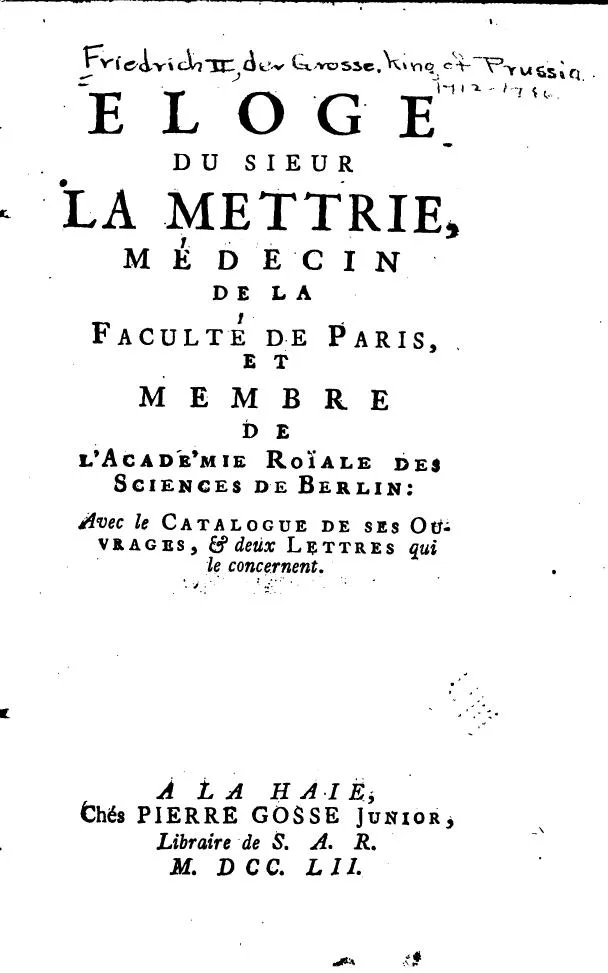
- Éloge du sieur La Mettrie, médecin de la Faculté de Paris, et membre de l'Académie royale des sciences de Berlin (La Haye, Pierre Gosse junior, 1752), title page — Frederick II of Prussia (Éloge); Pierre Gosse junior, publisher, 1752 · Internet Archive, Google Books scan (elogedusieurlam00maupgoog) · Public domain (published 1752; the Internet Archive item states no rights)
Sources
Tier 1 — the subject's own words (writings, letters, diaries, trial records)
- MM1912 La Mettrie, Man a Machine, French-English, with Frederick the Great's "Eulogy" and extracts from The Natural History of the Soul, notes by Gertrude Carman Bussey, translation revised by Mary Whiton Calkins (Chicago: Open Court, 1912). IA
manmachine00lame(page-numbered OCR, saved asmanmachine-1912-ia.txt; page numbers below are the printed ones, read from the running heads) and Project Gutenberg #52090 (proofread text, no page numbers, saved asmanmachine-1912.txt). Contains: Frederick's Éloge in English, pp. 3–10; the French text of the Leyden 1748 L'Homme machine, pp. 11–82; Bussey's English, pp. 85–149; extracts from the Natural History, pp. 151–162; Bussey's outlines and notes, pp. 165ff. Translation of La Mettrie into English is Bussey's/Calkins's throughout. - Oeuvres1796 La Mettrie, Œuvres philosophiques, nouvelle édition précédée de l'Éloge par Frédéric II (Berlin; Paris: Charles Tutot, 1796), vols. I–III. IA
oeuvresphilosoph01lameuoft(vol. I: Éloge pp. i–xii, Discours préliminaire pp. 1–64, Traité de l'âme pp. 65–229, Abrégé des systèmes pp. 231ff.),oeuvresphilosop02mettgoog(vol. II: Système d'Épicure, L'Homme plante, Les animaux plus que machines),oeuvresphilosoph03lameuoft(vol. III: Discours sur le bonheur and others). OCR reads long-s as "f", so French quotations are checked withresearch/notes/longs-check.txt. - Eloge1752 Frederick II, Éloge de M. Julien Offroy de la Mettrie (Berlin, 1752), IA
BIUSante_90945x21x03; the first printing (poor OCR); it carries the doctorate date 1728 where the 1796 edition prints 1725. Frederick is a contemporary primary source, not La Mettrie's own voice. - Voltaire37 Voltaire, Œuvres complètes, ed. Moland, vol. 37, Correspondance, vol. V (Paris: Garnier, 1877), IA
oeuvrescomplte37voltuoft: letter 2143 to Mme Denis, Potsdam, 6 Nov 1750, pp. 192–193 (running heads in the OCR are garbled; pages inferred); P.S. of a letter to the maréchal de Richelieu, 1750, p. 170. - Diderot3 Diderot, Œuvres complètes, ed. Assézat and Tourneux, vol. III (Paris: Garnier, 1875), IA
oeuvrescomplte0304dide: Essai sur les règnes de Claude et de Néron, pp. 217–219 (with editors' footnotes).
Tier 2 — scholarly biographies and encyclopedias
- Lange Friedrich Albert Lange, The History of Materialism, trans. Ernest Chester Thomas, vol. II (Boston: Osgood, 1877 per the IA record; Thomas's vol. II is dated 1880 in the EB and Wikipedia), IA
historyofmateria02lang(saved aslange-vol2.txt); the La Mettrie chapter is pp. 52–81. Vol. I (historyofmateria00lang) was only partly downloaded; its pp. 246–247 on Descartes are read from the vol. I search hits. - Poritzky Jakob Elias Poritzky, Julien Offray de LaMettrie: Sein Leben und seine Werke (1900), IA
julienoffraydel00mettgoog(German; printed page numbers read from the "— N —" markers). The fullest free biography; sources La Mettrie's own letters and the contemporary press; German renderings of French originals are Poritzky's. - EB1911 "Lamettrie, Julien Offray de", Encyclopaedia Britannica, 11th ed., vol. 16, pp. 129–130 (Wikisource transcription, fetched 2026-10-14).
- Not obtained (to borrow): Aram Vartanian, La Mettrie's L'Homme machine (Princeton, 1960); Kathleen Wellman, La Mettrie: Medicine, Philosophy, and Enlightenment (Duke, 1992); Ann Thomson, Machine Man and Other Writings (Cambridge, 1996). IA
lamettrieslhomme0000aram(Vartanian) is borrow-only.
Tier 3 — popular biographies and journalism
- Carlyle Thomas Carlyle, History of Friedrich II. of Prussia, Book XVI, chapter IX, "Second Act of the Voltaire Visit" (Project Gutenberg #2116; no page numbers). Prints, in Carlyle's own translation, Frederick's letter to Wilhelmine of 21 Nov 1751, Voltaire's letter to Mme Denis of 24 Dec 1751, and Nicolai's priest anecdote. Carlyle's sources are Frederick's Œuvres xxvii. i. 203, Voltaire's Œuvres lxxiv. 439, 450, and Nicolai's Anekdoten i. 20 n. (none opened here).
Tier 4 — Wikipedia and similar reference sites (citable; give the article and revision date; prefer a higher tier where one exists)
- Wikipedia "Julien Offray de La Mettrie", current revision as retrieved 2026-10-14 (raw wikitext saved in
research/notes/wikipedia-lamettrie.wikitext; revision id not recorded). Used as a map: birth-date discrepancy, marriage, Maupertuis, bibliography.
Opposition sources — contemporary critics and religious responses
- Luzac Elie Luzac, L'Homme plus que machine (1748), in the 1750 English translation, as quoted in MM1912 pp. 177–179 (Bussey's notes). Not read in full.
- Haller Albrecht von Haller's declaration in the Journal des Savants, May 1749, and his letter to Maupertuis of 10 Nov 1751, as given in German by Poritzky pp. 19, 23–25. Originals not seen.
- Tralles Balthasar Ludwig Tralles, De machina et anima humana ... commentatio (Breslau, 1749), IA
b30498776_0002(Latin; located, not downloaded or read).
Related lives
Denis Diderot (roster 15) — his *Pensées philosophiques* were burned in Paris two days before La Mettrie's books, the public at first attributed them to La Mettrie, and Diderot wrote the harshest verdict on him. (Alternative: Baron d'Holbach, who said openly what La Mettrie hedged.)
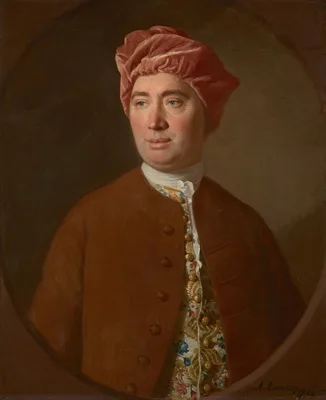
David Hume
David Hume lost the faith of his devout mother before he was twenty, gradually and, by his own account, against his will. He then spent fifty years deciding how much of his doubt to print: he cut the miracles essay from his first book, lost two professorships to the charge of atheism, withdrew his essays on suicide and immortality, and held back the Dialogues until after his death. He called himself only a sceptic. He died so calmly that his calm became the believers' argument.
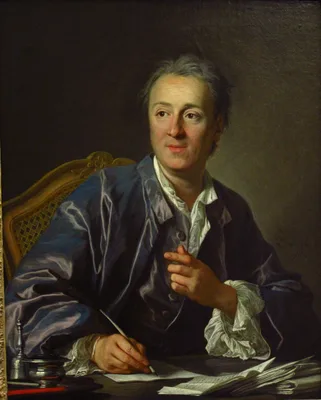
Denis Diderot
Denis Diderot was a tonsured Jesuit pupil who briefly wore a hair shirt. He argued for God as a deist in 1746, then in 1749 handed that argument to a blind man to destroy, while telling Voltaire that belief hardly mattered. Prison at Vincennes taught him to keep his boldest thoughts out of print, and he wrote his materialism into dialogues he would not publish. On his deathbed he refused a retraction as an impudent lie, saying that the first step towards philosophy is incredulity.
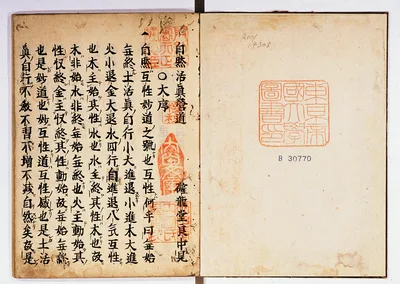
Andō Shōeki
Andō Shōeki was a country physician in Hachinohe who watched farmers starve while those who did not till ate their grain. He came to hold that the world is only self-moving nature, with no god or Buddha above it and no reward or punishment from beyond, and that sages and creeds were inventions of those who lived off the farmers. He judged this too dangerous to print in full. He published a softened version and left the rest for readers a hundred years later, who nearly lost it to fire.
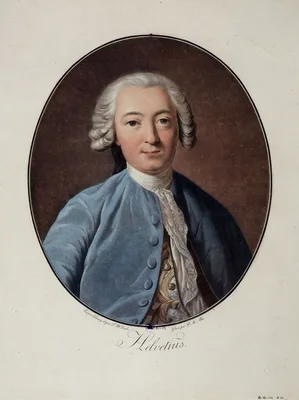
Claude Adrien Helvétius
Claude Adrien Helvétius was schooled by Jesuits and turned by Locke into an empiricist. As a tax farmer he published in 1758 a licensed book that explained mind by the senses and morals by self-interest, without ever denying God. King, archbishop, Parlement, Pope and Sorbonne condemned him as a materialist friend of atheists, and he signed three retractions to protect his mother, his post and his censor. He kept his plainest words on priests, the soul and honest atheists for a manuscript book and private notes, printed after his death.