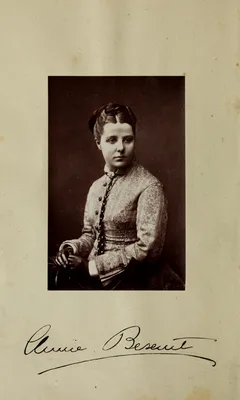
Annie Besant left Christianity because she could not call good a God who let her baby suffer. She paid for her atheism with her marriage and her daughter. In 1889 she left atheism for Theosophy, because atheism gave her no motive strong enough to make people serve one another. She never unsaid her case against the supernatural.
The belief timeline
- Faith (1855–1866) — An Evangelical child, then a High-Church girl: "I was mystical and imaginative religious to the very finger-tips"; fasted, flagellated herself, thought of becoming a Sister of Mercy, and married a clergyman because she idealised the priesthood [5][6][7][10]
- Doubt (1871–1872) — Mabel's illness and her own unhappiness turn a Gospel discrepancy into the problem of suffering; "I did not yet dream of denial, but I would no longer kneel"; by autumn 1872 the Deity of Christ is gone and she tells Pusey she "will not believe till I am sure" [14][17][22][23]
- Declaration (1874–1875) — Bradlaugh: "You have thought yourself into Atheism without knowing it"; she joins the NSS (2 Aug 1874) and, in January 1875, declares herself an Atheist under her own name; price paid: Mabel (1878) [34][36][44]
- Fork (1885) — Socialism: "with a heavy heart I made up my mind to profess Socialism openly"; Bradlaugh "never again felt the same confidence in my judgment" [48][51]
- Reversal (1889) — "Ever more and more had been growing on me the feeling that something more than I had was needed"; The Secret Doctrine; joins the Theosophical Society 10 May 1889: "I passed from Christianity into Atheism. After fifteen years, I have passed into Pantheism" [56][57][58][61]
- Late position (1895–1933) — Benares, India, the Home Rule League, the Congress chair (1917), the Theosophical presidency (1907) and the "World Teacher"; "she would never call herself a Hindu" yet "lived the Hindu life"; dies at Adyar, 20 September 1933 [67][68][69][71][74][75]
Notes to the timeline (23)
- [5] From eight she was educated at Charmouth under Miss Ellen Marryat, "of the strictest sect of the Evangelicals": Bible and hymns, Sunday school, prayer meetings; she "could never look back to an hour of conversion" and wondered if she were "saved" — Annie Besant, Annie Besant: An Autobiography (London: T. Fisher Unwin, 1893, second edition; preface dated August 1893), pp. 34–39, 43–44.
- [6] A mystical, imaginative child who read Pilgrim's Progress and Paradise Lost, and "passionately regretted I was born so late when no suffering for religion was practicable"; dreamed of martyrdom and of preaching "some great new faith to a vast crowd" — Besant, Annie Besant, pp. 41–43.
- [7] At Paris, spring 1862, she was confirmed; moved from "colder, cruder Evangelicalism" to High Church: Keble's Christian Year, the Fathers, Pusey, Liddon; fasted, "occasionally flagellated myself," took weekly Communion, and "my thoughts began to turn towards some kind of 'religious life'" — Besant, Annie Besant, pp. 51–57.
- [10] She married because the clergyman's wife's role "seems second only to that of the nun": betrothed in summer 1866 when "our knowledge of each other" was "an almost negligeable quantity"; tried once to break the engagement, her mother's pride refused; married in December 1867 at twenty with "no more idea of the marriage relation than if I had been four years old" — Besant, Annie Besant, pp. 67–71, 80.
- [14] "The struggle which transformed me from a Christian into an Atheist" lasted "three years and two months" and began after Mabel's recovery; the "first stunning blow at my belief in God" was the weeks of her baby's suffering joined to her own unhappiness, her mother's debts and the poor she visited; in 1885 she wrote of "a feeling of angry resentment against the God who had been for weeks, as I thought, torturing my helpless baby" — Besant, Annie Besant, pp. 88–91; Annie Besant, Autobiographical Sketches (London: Freethought Publishing Company, 1885), p. 50.
- [17] She resolved "to take Christianity as it had been taught in the Churches, and carefully and thoroughly examine its dogmas one by one": four problems, eternal punishment; the meaning of God's "goodness" and "love"; the Atonement; Inspiration; her first rebellion was "of the moral nature rather than of the intellectual" — Besant, Annie Besant, pp. 98–100.
- [22] With eternal punishment, the Atonement and Inspiration gone, only the Deity of Christ was unexamined; she shrank from it because "to break with the Deity of Jesus was to break with music, with painting, with literature," and because as "a clergyman's wife" it meant "outer warfare"; "the struggle was keen but short" and the belief "followed the others"; what helped her was the Broad Church stress on Christ's manhood, the idea of Eastern avatars, and Voysey, Theodore Parker, Channing and Scott's English Life of Jesus — Besant, Annie Besant, pp. 107–109; Annie Besant, My Path to Atheism, third edition (London: Freethought Publishing Company, 1885); essays written 1873–77; preface to the first edition dated 1878, pp. vii–viii.
- [23] A last attempt to avoid the break: she wrote to Dr Pusey and on his invitation visited him at Oxford (autumn 1872); he refused to argue ("You are speaking of your Judge"), told her "you have read too much already. You must pray," held that it was her duty "to accept and believe the truth as laid down by the Church," and forbade her to speak of her disbelief; she left "knowing that my last chance of escape had failed me" — Besant, Annie Besant, pp. 109–112.
- [34] At 29 Turner Street, a few days later, Bradlaugh read her God essay and said "You have thought yourself into Atheism without knowing it"; she changed only the passage making clear that the Atheist does not say "there is no God" — Besant, Annie Besant, p. 139.
- [36] January 1875: first lecture under her own name at South Place Chapel (announced in the National Reformer of 17 January); at the Liberal Social Union she "promptly declared that I was an Atheist" when a member threatened to leave if avowed Atheists were admitted; the Dialectical Society was locked out of its room on 17 February 1875 when she was to read "The Existence of God"; from 1875 she was a vice-president of the National Secular Society — Besant, Annie Besant, pp. 189–191, 202.
- [44] Custody: an attempt to hide Mabel in August 1875; notice January 1878; petition filed April 1878 (she received it at Mabel's bedside during scarlet fever); heard 10 May 1878 by Sir George Jessel, who called secular education "not only reprehensible, but detestable" and held that "this child ought not to remain another day under the care of her mother"; Mabel was carried away "shrieking and struggling" — Besant, Annie Besant, pp. 213–218; Geoffrey West [pseudonym of Geoffrey H. Wells], The Life of Annie Besant (London: Gerald Howe, 1929), pp. 96–97.
- [48] Socialism: first called to it in 1883 (Louise Michel's lecture); the Bradlaugh–Hyndman debate of 17 April 1884 "roused me to a serious study"; in January 1885 came the first attack on her "Socialistic tendencies"; "with a heavy heart I made up my mind to profess Socialism openly" because of "the cry of starving children" and "an evil system"; "Socialism in its splendid ideal appealed to my heart, while the economic soundness of its basis convinced my head" — Besant, Annie Besant, pp. 299–306.
- [51] Bradlaugh "was as tolerant as he was strong" and the friendship held, "but he never again felt the same confidence in my judgment"; Hypatia Bonner: "Socialism was, as it were, the fork in the Y of their lives" — Besant, Annie Besant, p. 306; Hypatia Bradlaugh Bonner, Charles Bradlaugh: A Record of His Life and Work, vol. 2 (T. Fisher Unwin, 1902 ed.), p. 15.
- [56] "Ever more and more had been growing on me the feeling that something more than I had was needed for the cure of social ills... where to gain the inspiration, the motive, which should lead to the realisation of the Brotherhood of Man?" — Besant, Annie Besant, p. 338.
- [57] In early spring 1889 Stead handed her the two volumes of Blavatsky's The Secret Doctrine (the Internet Archive scans are dated 1888): "Can you review these? My young men all fight shy of them"; she wrote the review (Pall Mall Gazette, 25 April 1889 per West's footnote) and "knew that the weary search was over and the very Truth was found"; her National Reformer review followed on 23 June 1889; West: her review admitted "a constant feeling of unsatisfied desire for evidence" — Besant, Annie Besant, pp. 340, 346; Life of Annie Besant, pp. 148–150. Accounts differ; see the disputed points.
- [58] She and Herbert Burrows called on Blavatsky at 17 Lansdowne Road; "a fierce rebellion, a fierce withdrawal"; she read the Society for Psychical Research's report against Blavatsky (the Coulombs' evidence), found it unconvincing, signed an application for the Theosophical Society, and on 10 May 1889 asked Blavatsky to accept her as pupil — Besant, Annie Besant, pp. 341–344.
- [61] Lectures "Why I became a Theosophist" at the Hall of Science on 4 and 11 August 1889; "Like Mr. Foote and most of the rest of us, I passed from Christianity into Atheism. After fifteen years, I have passed into Pantheism"; her reason: Materialism "unable to answer the question... What is Life? what is Thought?" — Besant, Annie Besant, pp. 354–356; Annie Besant, Why I Became a Theosophist (Freethought Publishing Co., 1889; the August 1889 Hall of Science lectures), pp. 6–7.
- [67] She made her home in Benares in 1895, wore Indian dress, ate and prayed as a Hindu, helped compile the Sanatana Dharma textbooks, and founded the Central Hindu College in 1898; Arundale: "she would never call herself a Hindu, though she lived the Hindu life" — George S. Arundale, "A general survey of the life of Dr. Besant" (Book I), and the compiled "Biographical Notes 1889–1933" (Book III), in Annie Besant: An Autobiography, Adyar edition (Madras: Theosophical Publishing House, 1939), pp. 26–27; Life of Annie Besant, p. 211.
- [68] Colonel Olcott died on 17 February 1907 having nominated her; she was elected President of the Theosophical Society by a large majority in July 1907; West notes unconstitutional "manifestations" of the Masters in her favour and the Leadbeater dispute — Arundale, Annie Besant, p. 33; Life of Annie Besant, p. 187.
- [69] In February 1909 Leadbeater noticed the boy Krishnamurti at Adyar; "initiation" 11 January 1910; Besant adopted the brothers in March 1910; the Order of the Star in the East (1911) with Krishnamurti as head and Besant as protector; West: she claimed "her certainty rests not on belief but on knowledge"; West p. 23: in 1927 Krishnamurti "renounced all organized and dogmatic religion" — Life of Annie Besant, pp. 3–4, 23, 197–199; Arundale, Annie Besant, p. 52.
- [71] After the war began she launched the Home Rule League in September 1916; the Governor of Madras interned her on 16 June 1917; she was released on 17 September 1917 and presided at the Indian National Congress in Calcutta in December 1917 — Life of Annie Besant, pp. 235–239; Arundale, Annie Besant, p. 72; Annie Besant, The Case for India, presidential address to the 32nd Indian National Congress, Calcutta, 26 December 1917, (title).
- [74] She died at Adyar at four in the afternoon on 20 September 1933 and was cremated at 9 a.m. on 21 September; the Garden of Remembrance tablet reads "President of The Theosophical Society 1907–1933" — Arundale, Annie Besant, pp. 96–97.
- [75] West's judgment on the reversal: it was "a step backward rather than forward, a step from Protestantism to Catholicism," because "to believe upon the promise of forthcoming proof is quite another matter"; and in Bombay she told a Hindu who had become an atheist under her earlier influence that he must pray, and when he asked "Pray to whom?" urged him toward faith — Life of Annie Besant, pp. 150–152.
She Tried to Follow Truth
On 10 May 1878 a mother of thirty stood in the Rolls Court in London and heard the Master of the Rolls, Sir George Jessel, decide that her seven-year-old daughter could not stay with her for another day. The father was a Lincolnshire vicar, and his petition had been paid for by subscriptions from the Bishop of Lincoln and the clergy of his diocese.1 The mother had committed no crime that the court was asked to judge. She was an atheist, she had written a pamphlet called The Gospel of Atheism, and she would not give the child religious instruction. Jessel called the education she proposed "not only reprehensible, but detestable, and likely to work utter ruin to the child."2 Mabel Besant was carried out of her mother's care, by her mother's account "shrieking and struggling."3
Eleven years later the same woman stood on the platform of the Hall of Science in Old Street, the headquarters of English atheism, and told the people who had defended her through all of it that she had become a Theosophist. "Like Mr. Foote and most of the rest of us," she said, "I passed from Christianity into Atheism. After fifteen years, I have passed into Pantheism."4 This chapter is about both of those moments: why Annie Besant gave up her faith at such a cost, and why, having paid it, she gave up her unbelief too.
Religious to the finger-tips
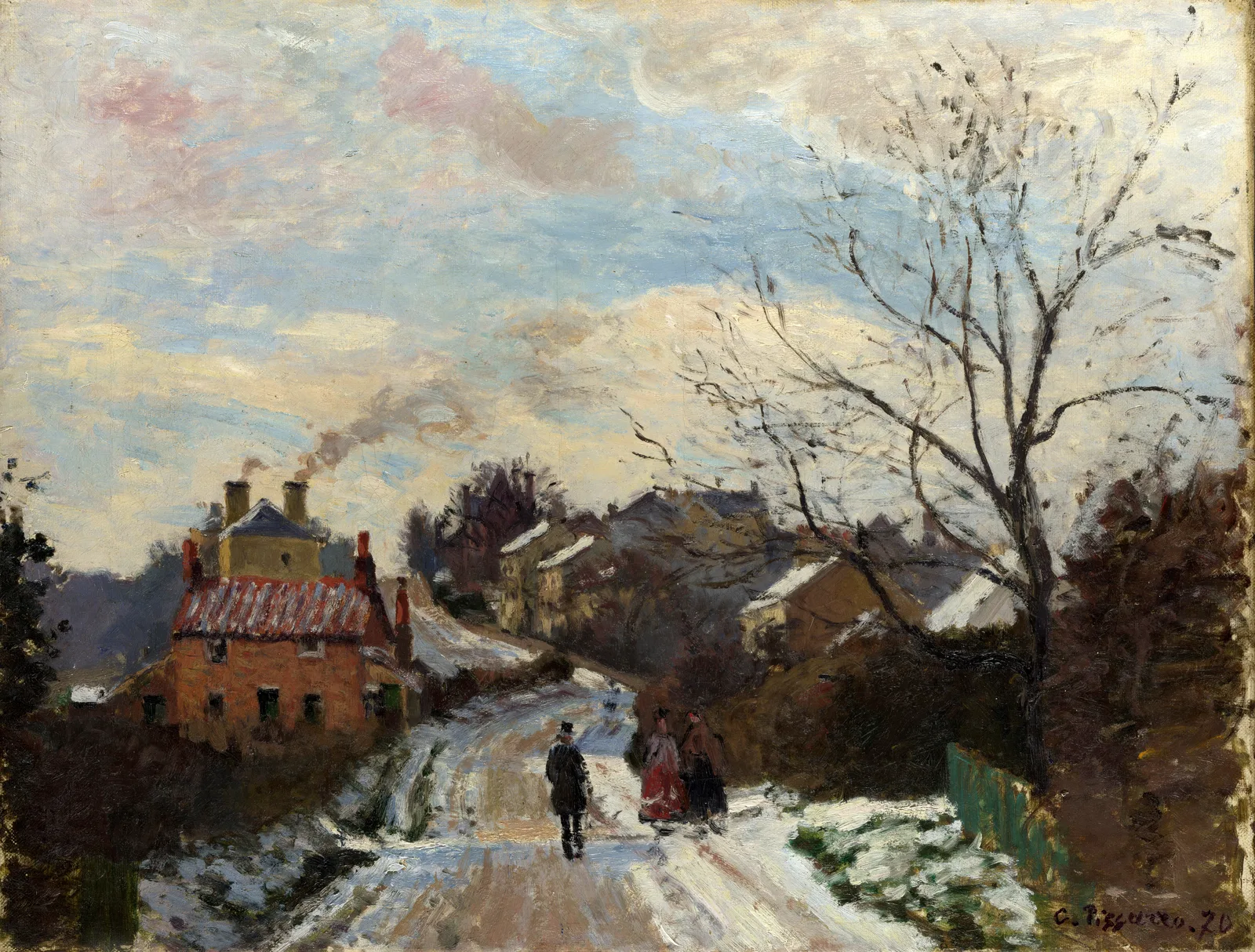
She was born Annie Wood on 1 October 1847 in London, "within the sound of Bow Bells," to a family she always described as Irish at heart.5 Her father, William Wood, had trained as a doctor, and he was, she was told, "deeply and steadily sceptical," a man who laughed at Christian doctrine. He died of consumption when she was five. His Catholic mother and sister forced a priest into the sickroom, and the priest was put out again.6 So the first religious event of her life was a quarrel over a dying unbeliever, and the parent who survived was the devout one. Her mother, Emily, had a broad and gentle faith of her own. She had quietly put aside eternal punishment and the infallibility of the Bible, she admired the liberal churchmen of the day, and Westminster Abbey was her favourite church. But she also held that "women ought to be religious," whatever men might think.7
The widow moved to Harrow to pay for her son's schooling by taking in boys, and at eight Annie was sent to be educated by Miss Ellen Marryat at Charmouth in Dorset, a teacher "of the strictest sect of the Evangelicals." There was Bible and hymn learning, Sunday school and prayer meetings, and a constant sense of sin, and the girl worried that she could never point to the hour of her conversion and so might not be saved.8 She read Pilgrim's Progress and Paradise Lost, and she was sorry, she wrote later, to have been born too late to suffer for religion. She dreamed of martyrdom, and of preaching "some great new faith to a vast crowd."9
At fourteen she was confirmed in Paris, and her religion changed its colour without losing any of its heat. She moved from what she called "colder, cruder Evangelicalism" to the High Church: Keble's Christian Year, the early Fathers, the sermons of Edward Pusey. She fasted, took Communion every week, "occasionally flagellated" herself, and began to think of entering some kind of religious life.10 Pusey taught her to hate heresy, and she obeyed him so completely that she refused to read Dean Stanley, whom her own mother admired, because Pusey called him "unsound."11
A harmony that would not agree
The first crack came out of devotion. At Easter 1866, when she was eighteen, she set herself to write out the last chapters of the four Gospels side by side in parallel columns, as a harmony for prayerful reading. "Discrepancies leaped at me from my four columns," she remembered; "the uneasiness grew as the contradictions increased, until I saw with a shock of horror that my 'harmony' was a discord, and a doubt of the veracity of the story sprang up like a serpent hissing in my face. It was struck down in a moment, for to me to doubt was sin."12 She punished herself with an extra fast and repeated Tertullian's saying that he believed because it was impossible.11 Writing as an atheist twelve years later, she called the harmony "the tiny seed, which was slowly to germinate and to grow up, later, into the full-blown flower of Atheism."13 It is worth noticing that Charles Bradlaugh, the man who would later stand beside her in court, had come to his first doubt in almost the same way, by laying two of the Church's own texts beside each other and finding that they did not agree.
That same Easter she met the Reverend Frank Besant, a young Cambridge deacon at a mission church in Clapham. She married him in December 1867, at twenty. Her reasons, as she gave them later, were religious rather than romantic. The life of a clergyman's wife seemed to her "second only to that of the nun," and she had, she said, "no more idea of the marriage relation than if I had been four years old."14 It was an ill-matched marriage from the start. He believed in being master in his own house, and in law the stories she began to sell to magazines earned money that belonged to him.15 A son, Digby, was born in January 1869 and a daughter, Mabel, in August 1870.16
The baby in the steam tent
In the spring of 1871, at Cheltenham, where her husband was a curate, both children caught whooping cough, and Mabel, who had been born early and was delicate, developed bronchitis and congestion of the lungs. For weeks she was "in hourly peril." Her mother sat with her day and night inside a tent filled with steam, and the doctor used chloroform to ease the fits of coughing.17 The child lived. The mother's faith did not. "It was the long months of suffering through which I had been passing," she wrote, "with the seemingly purposeless torturing of my little one as a climax, that struck the first stunning blow at my belief in God as a merciful Father of men."18 In 1885, while she was still an atheist and nearer to the event, she put it more harshly: she had felt "angry resentment against the God who had been for weeks, as I thought, torturing my helpless baby."19
This is the motive at the centre of her life, and she always insisted on it. Her unbelief did not start with an argument from science or a book of criticism. "It was not a desire for moral licence which gave me the impulse that finally landed me in Atheism," she wrote; "it was the sense of outraged justice and insulted right."20 Her first rebellion, she said, was "of the moral nature rather than of the intellectual."21 She dated the struggle that followed precisely. It "lasted for three years and two months, and nearly cost me my life, the struggle which transformed me from a Christian into an Atheist."22
The words about her life are not a figure of speech. That summer, after a bitter quarrel with her husband, she lifted a bottle of chloroform to her lips and then put it down, hearing in her own head the words "O coward, coward, who used to dream of martyrdom." She says the thought came back only once more.23
A clergyman friend at Cheltenham, whom she calls only "Mr D.," argued with her patiently through letters that she kept and later printed. Pain, he told her, was part of God's education of mankind, and he hoped her doubt would ferment into "clear spiritual wine, and not (as too often) vinegar."24 She did not yet deny anything. "I did not yet dream of denial," she wrote, "but I would no longer kneel."25 Instead she made a plan. She would take Christianity as the Churches taught it and examine its doctrines one by one: eternal punishment, what it could mean to call God good or loving, the Atonement, and the inspiration of the Bible.21
The vicar's wife at Sibsey
In the autumn of 1871 Frank Besant was given the Crown living of Sibsey, a Lincolnshire village near Boston, worth £410 a year with a vicarage. He stayed there for the rest of his life.26 In the vicarage she read the liberal theologians of the day, and the old question would not leave her alone: "If He can prevent it and does not, He is not good; if He wishes to prevent it and cannot, He is not almighty."27 It is the oldest argument in this book, the one later writers attributed to Epicurus, though she did not know it by that name. At this stage, she was careful to say, she still had no doubt that God existed.28
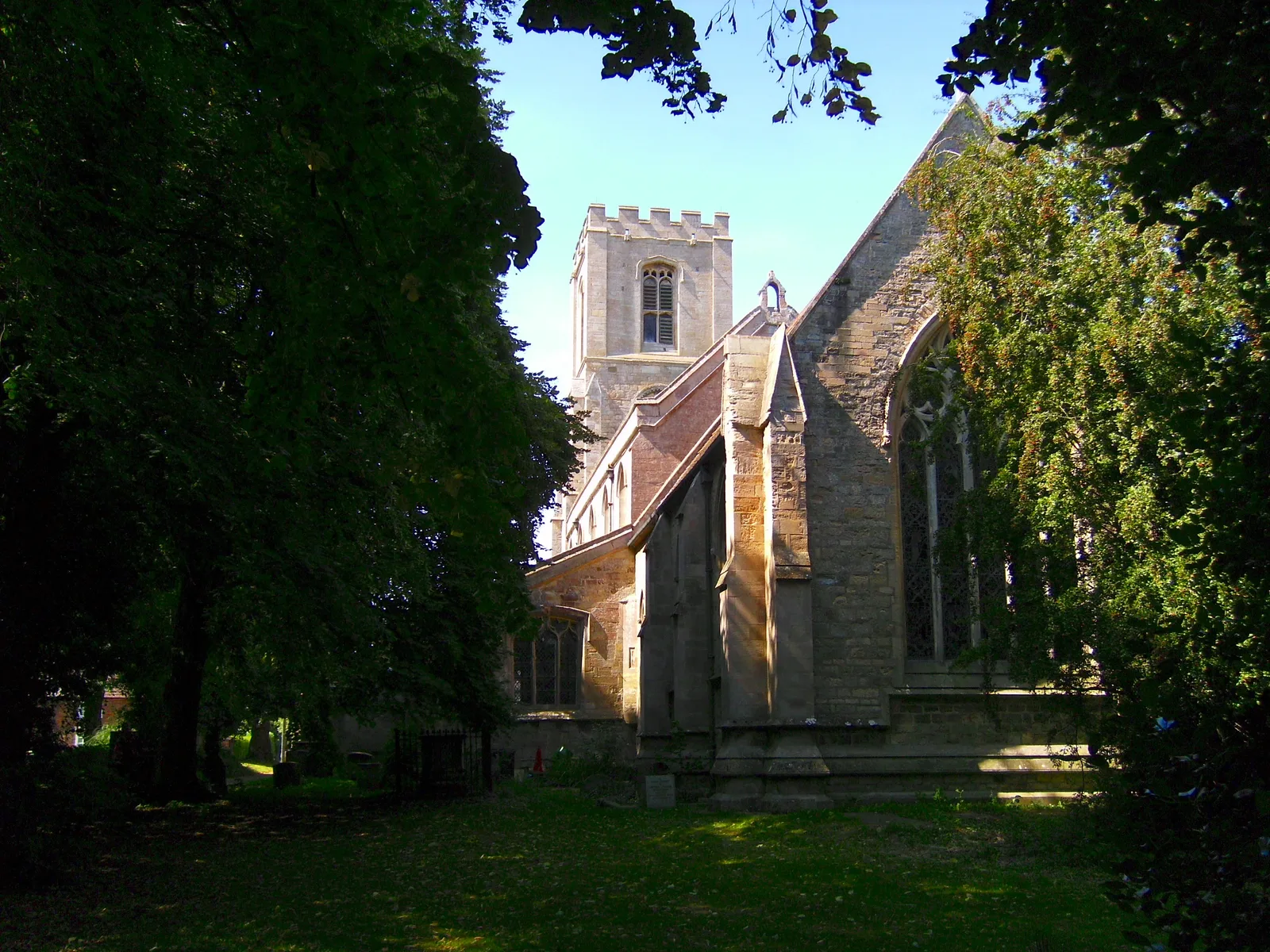
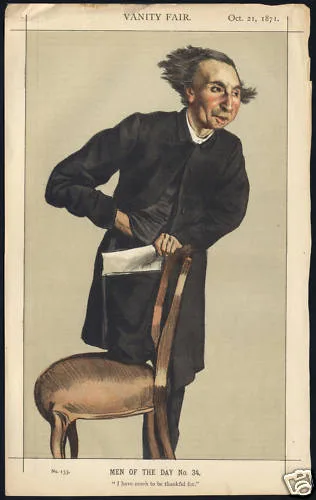
What helped her through were people who had already crossed the ground. In the early autumn of 1872, staying in London with her mother, she went to hear the Reverend Charles Voysey, a clergyman who had been tried for heresy and now preached a plain Theism at St George's Hall in Langham Place. There she found "people who had passed through my own difficulties." She read Theodore Parker and Frances Power Cobbe, and she let go of hell and the Atonement while still believing in God.29 Only the divinity of Christ was left, and she shrank from examining it, because "to break with the Deity of Jesus was to break with music, with painting, with literature," and because for a clergyman's wife it meant open war. "The struggle was keen but short," and that belief went the way of the others.30
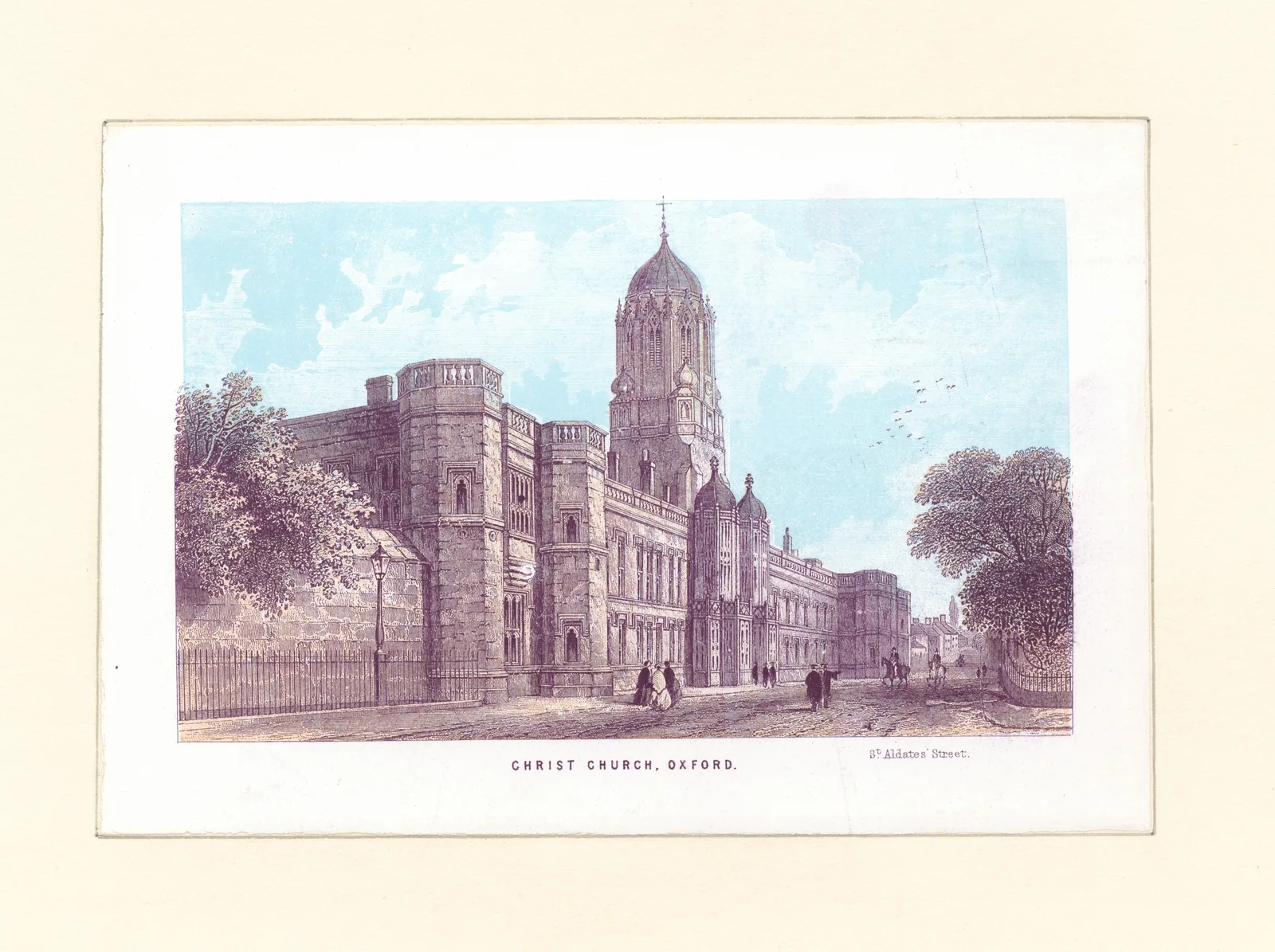
She made one last attempt to save her faith, and she made it at the top. She wrote to Pusey, and he invited her to Oxford. He would not argue. When she pressed her questions he said "You are speaking of your Judge," told her she had "read too much already" and must pray, and laid down the duty of a Christian as she remembered it: "It is not your duty to ascertain the truth. It is your duty to accept and believe the truth as laid down by the Church. At your peril you reject it."31 He forbade her to speak of her doubts to anyone. Her answer, as she recalled it, was "Lost or not, I must and will try to find out what is true, and I will not believe till I am sure."32 She left Oxford "knowing that my last chance of escape had failed me."33 Pusey's own account of the meeting has not been found, so his words come to us only as she remembered them.
Hypocrisy or expulsion
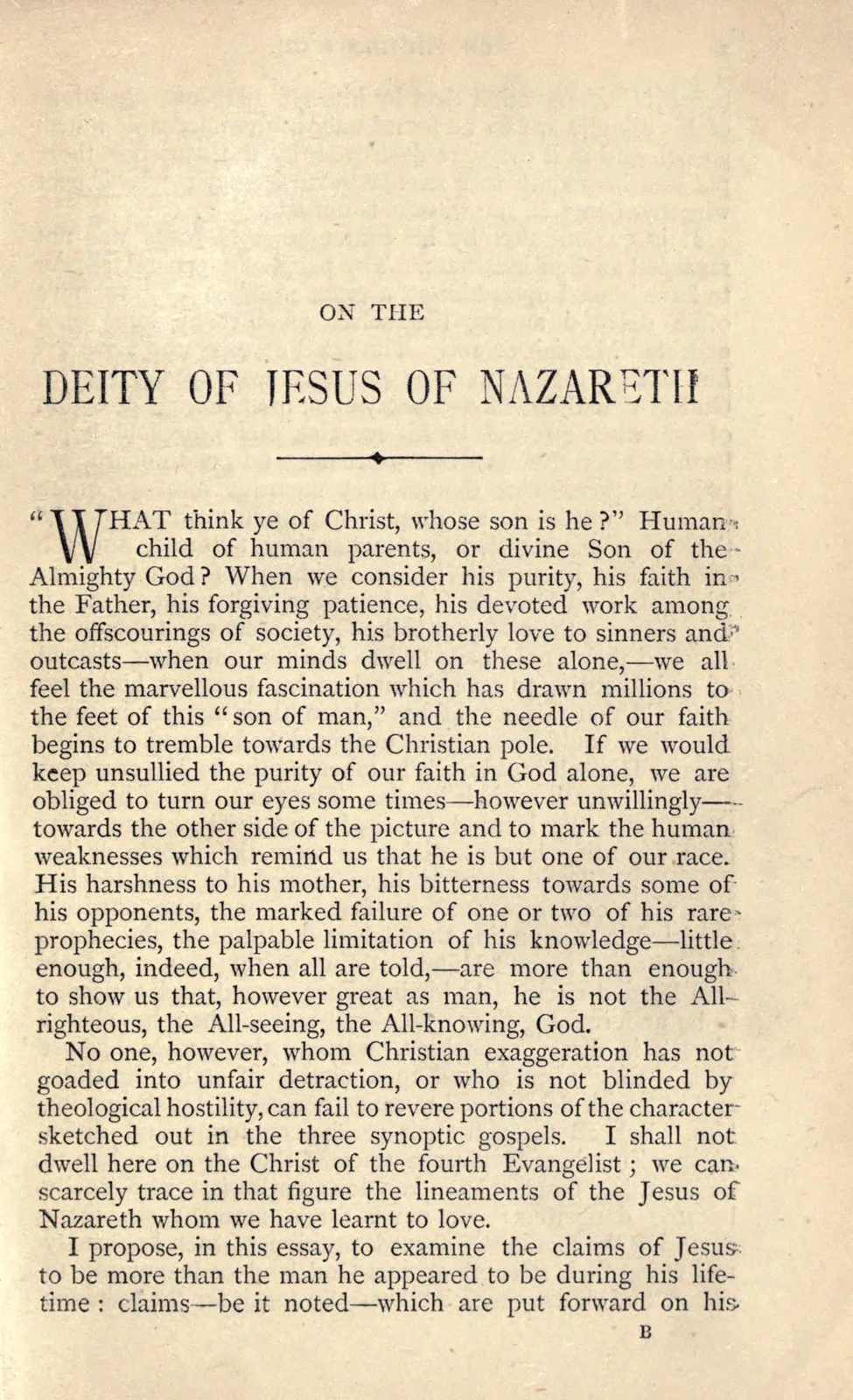
That autumn Voysey introduced her to Thomas Scott of Ramsgate, who published a monthly series of heretical tracts and kept what she called "a veritable heretical salon." For him she wrote her first freethought essay, On the Deity of Jesus of Nazareth, signed only "by the wife of a beneficed clergyman," because, she said, her name "was not mine to use."34 It was published in March 1873.35
Back at Sibsey in November 1872 she told her husband the truth as it then stood. She was still a Theist. She would go to church and join in any prayer addressed to God himself, but she could not take Communion without hypocrisy, and on the next Sacrament Sunday she walked out of the church before it.36 That winter she nursed the village through an epidemic of typhoid.36 In the spring of 1873, alone in the empty church, she climbed into the pulpit and gave a lecture on the inspiration of the Bible to the pews, and found that she had the gift of public speech.37
In the summer of 1873 the marriage ended. A relative of her husband's warned of the scandal in the parish, and she was told to conform and take Communion or leave the house. "Hypocrisy or expulsion," she wrote. "I chose the latter."38 Her mother knelt and wept and begged her to give in. "To live a lie? Not even for her was that shame possible."39 A legal separation gave her the guardianship of Mabel and an income she called "sufficient for respectable starvation."38 Accounts of the breakdown differ, and only hers survives in full. At the custody hearing in 1878 Frank Besant said that he had never consented to her publishing, and that she had promised to keep her pamphlets anonymous. She, for her part, hinted that there had been cruelty she would not describe. His own words have not been found, and this chapter does not try to judge between them.38
She lived that winter as a governess and then in a small house at Upper Norwood, writing tracts for Scott and spending her days in the reading room of the British Museum.40 Her mother was dying, and would not take Communion unless her daughter took it with her. Two clergymen refused to give the sacrament to an unbeliever. Dean Stanley of Westminster agreed, came to the bedside, and told the daughter that "the honest search for truth can never be displeasing in His eyes." She took Communion with her mother for the last time, and her mother died on 10 May 1874.41
"You have thought yourself into Atheism"
Scott asked her for a tract on the existence of God, and just before she wrote it she read two pamphlets by Charles Bradlaugh, A Plea for Atheism and Is There a God?42 In July 1874 she bought a copy of his paper, the National Reformer, at a shop in High Holborn, and wrote to ask whether she would have to call herself an atheist to join his National Secular Society. She was told she would not. On 2 August 1874, at the Hall of Science in Old Street, she heard Bradlaugh lecture for the first time and took her membership card from his hand.43 A few days later she read him her essay on God in his two rooms in Turner Street. He listened and said, "You have thought yourself into Atheism without knowing it."44 She changed only one passage, to make clear that an atheist does not assert that there is no God.45
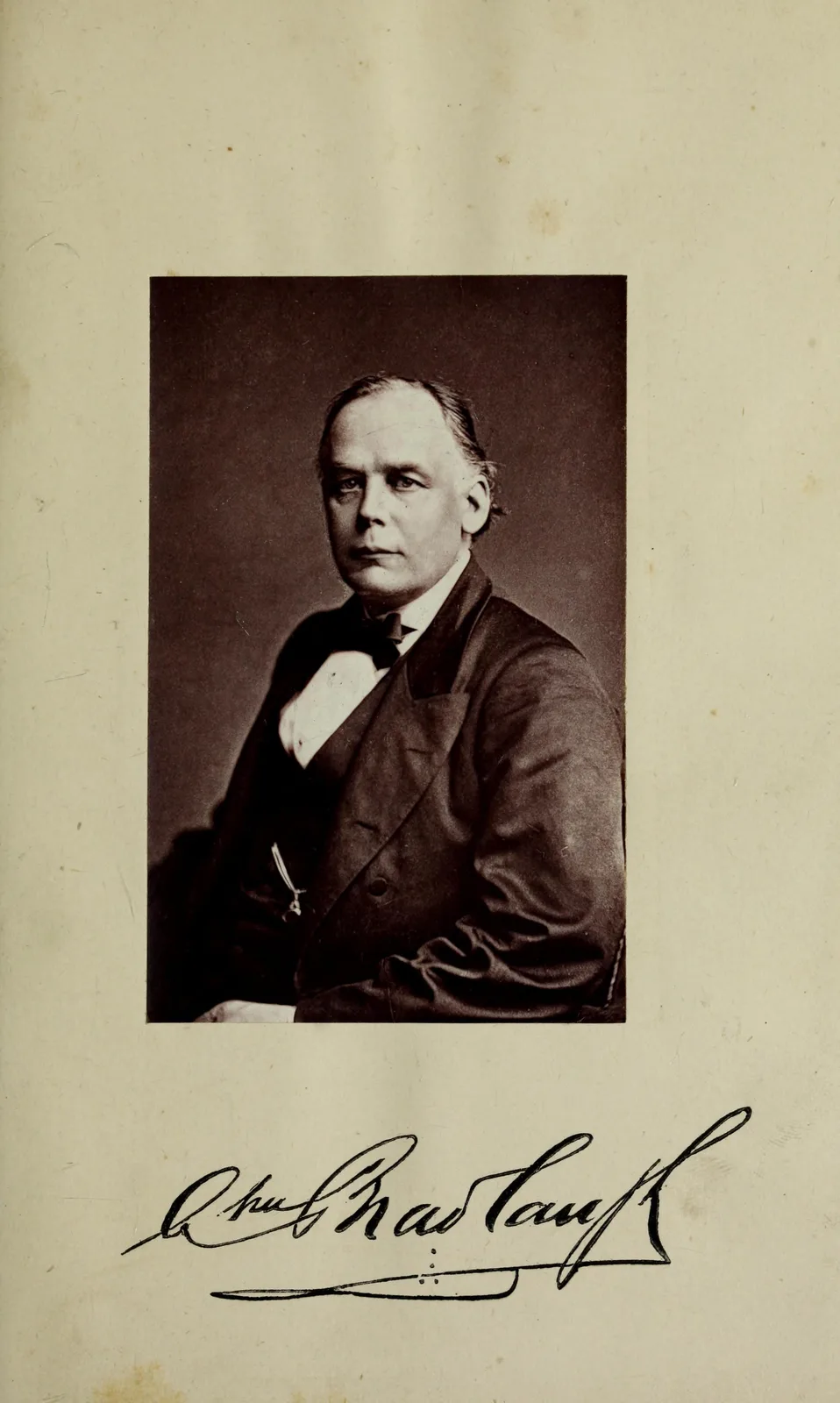
The distinction mattered to both of them. The definition she used for the rest of her atheist years was Bradlaugh's, and she quoted it in The Gospel of Atheism: "The Atheist does not say 'There is no God,' but he says, 'I know not what you mean by God; I am without idea of God.'"46 Atheism, she wrote, "is without God. It does not assert no God."47 She was positive about it, too: "Atheist is one of the grandest titles a man can wear; it is the Order of Merit of the world's heroes."48 And she never stopped insisting that it rested on morality. She called herself "the most religious of Atheists," meaning a person whose ethics were touched with feeling, and she grounded them in what helped human beings rather than in any command from above.49
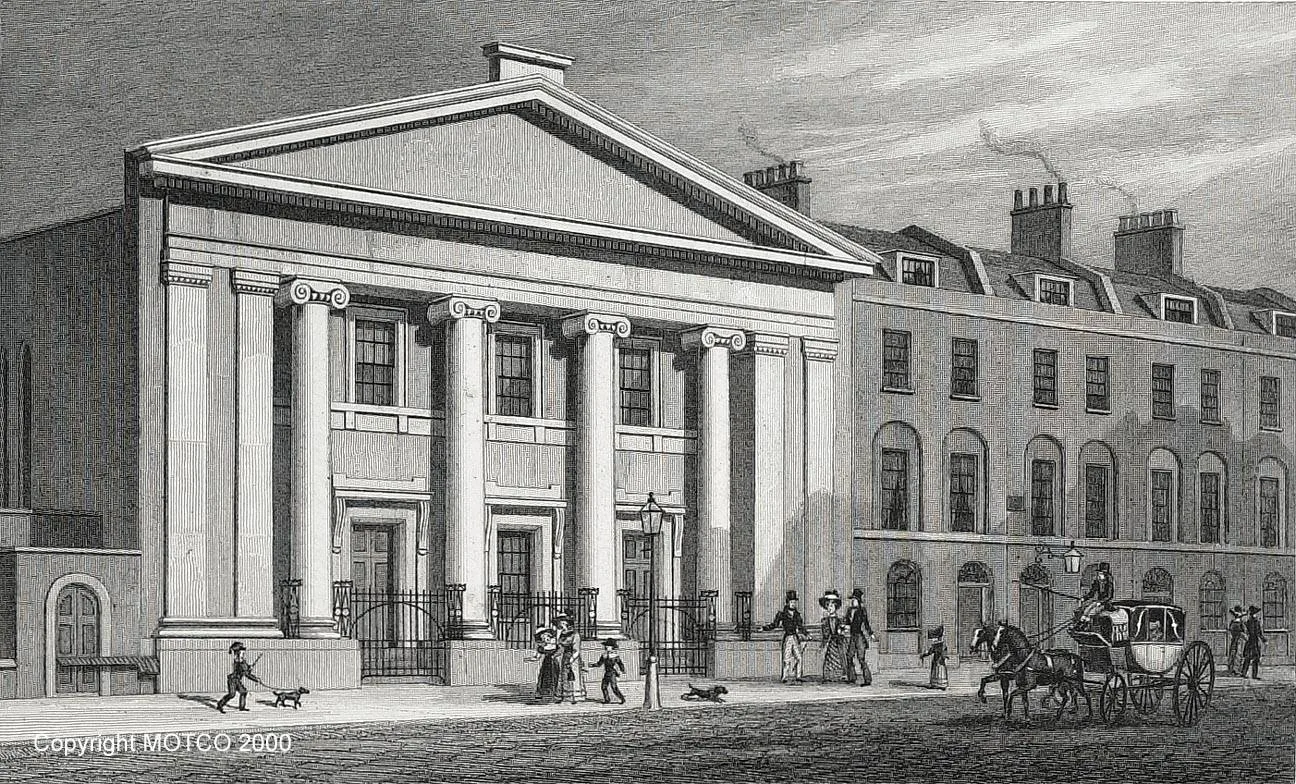
Bradlaugh offered her a guinea a week to write for the National Reformer, and her first article appeared on 30 August 1874 under the name "Ajax." She gave her first public lecture that same week, on the political status of women.50 In January 1875 she lectured for the first time under her own name, at Moncure Conway's South Place Chapel in Finsbury. At a meeting of the Liberal Social Union, when a member threatened to leave if avowed atheists were admitted, she "promptly declared that I was an Atheist." A month later the Dialectical Society found its meeting room locked against it on the evening she was to read a paper on the existence of God.51 By 1875 she was a vice-president of the National Secular Society.51 The three years and two months were over. Looking back, she dated her declaration to that year.
The price
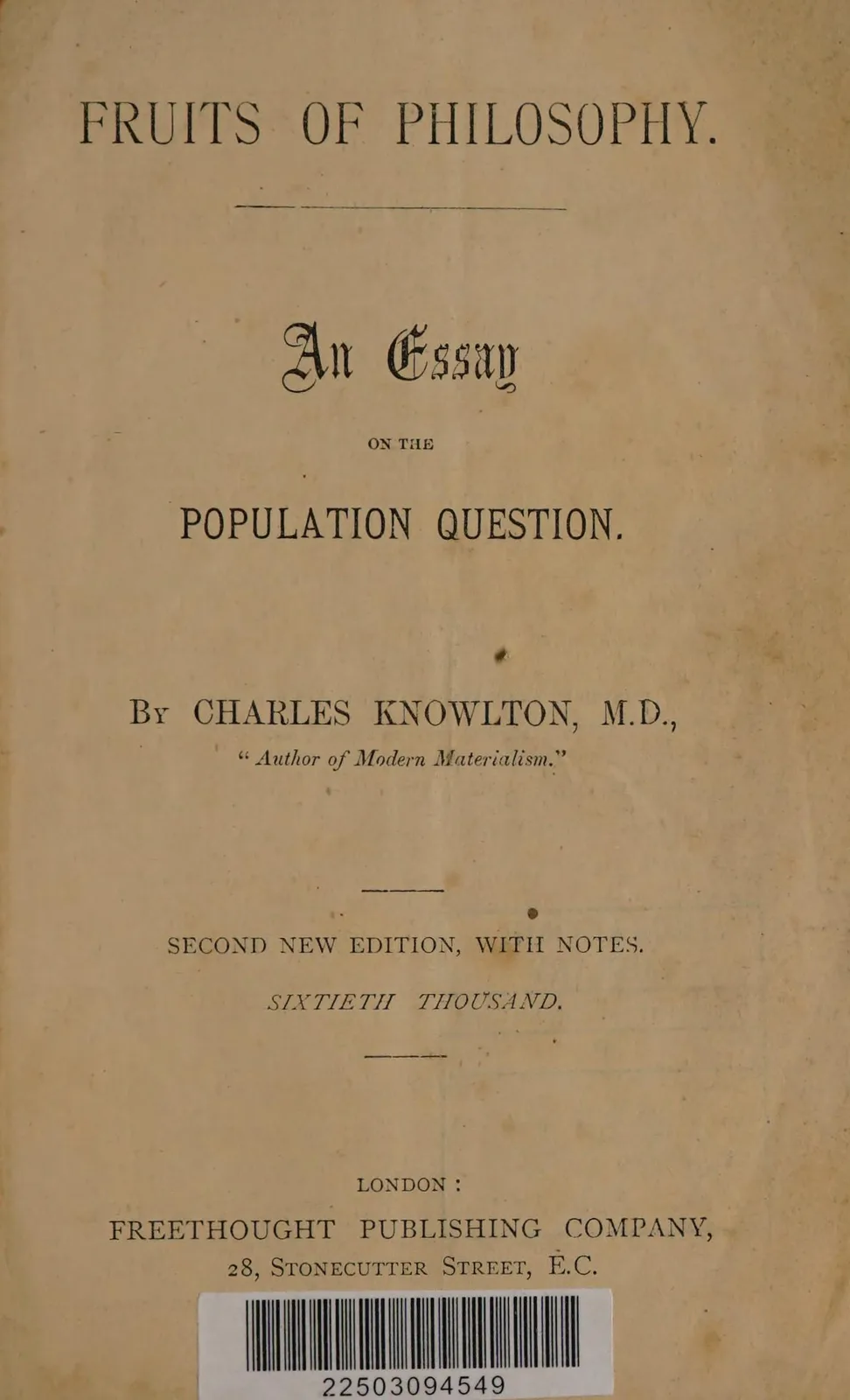
The cost came quickly and from two directions. Early in 1877 the publisher who had been selling Fruits of Philosophy, an old American pamphlet by Charles Knowlton that gave plain information about birth control, was prosecuted for it and pleaded guilty. Bradlaugh and Besant decided to test the right to publish it. They reprinted it, told the City police and the Guildhall when and where they would sell it, and sold it themselves at their shop in Stonecutter Street on 24 March 1877. They were arrested on 6 April.52 Their preface stated the principle: "since progress can only be made through discussion, and no discussion is possible where differing opinions are suppressed, we claim the right to publish all opinions."53
The trial opened on 18 June 1877 before the Lord Chief Justice, Sir Alexander Cockburn, with the Solicitor-General, Sir Hardinge Giffard, prosecuting for the Crown. Giffard told the jury that the book described practices "of the most filthy and disgusting and unnatural description it is possible to imagine."54 Besant defended herself. "It is not as defendant that I plead to you to-day," she told the jury, "but I speak as counsel for hundreds of the poor, and it is they for whom I defend this case."55 Cockburn's summing-up was unusual. He called the prosecution "a more ill-advised and more injudicious proceeding" than any he could remember, and the defendants "two enthusiasts, who have been actuated by the desire to do good."56 The jury found that the book was "calculated to deprave public morals" but cleared them of any corrupt motive. Because they would not promise to stop selling it, Cockburn sentenced each of them to six months in prison and a fine of £200. The verdict was then quashed on appeal, on a point of law.57 Besant wrote a pamphlet of her own on the subject, The Law of Population, to replace Knowlton's, and became secretary of the new Malthusian League.58 Long afterwards, when she had changed her mind about many things, she judged the episode this way: "though I know now that I was wrong intellectually, and blundered in the remedy, I was right morally in the will to sacrifice all to help the poor."59
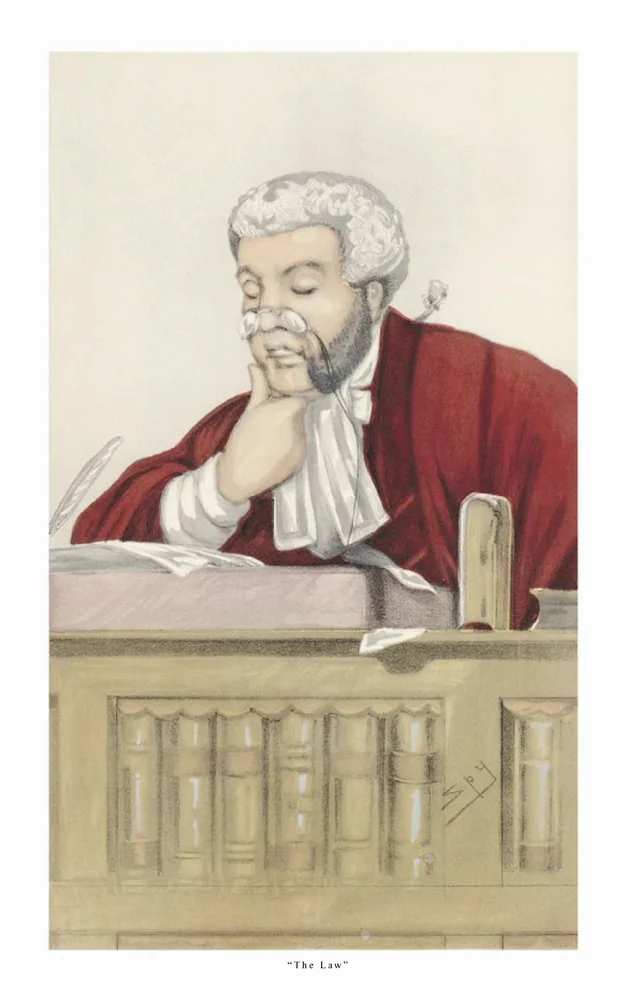
The second blow was the one this chapter began with. Frank Besant had tried once to take Mabel in 1875. In April 1878 he petitioned the Court of Chancery, and the papers reached her at Mabel's bedside while the child had scarlet fever.3 The petition said that she was an atheist, that she had published The Gospel of Atheism, that she was associated with "an infidel lecturer and author named Charles Bradlaugh," and that Mabel was receiving no religious instruction at school.1 Jessel agreed, and held "that this child ought not to remain another day under the care of her mother."3 The Court of Appeal upheld him in April 1879. After a few painful visits she decided not to see or write to the children until they were old enough to choose, so that they would not be torn between their parents. "Resolutely I turned my back on them that I might spare them trouble," she wrote, "and determined that, robbed of my own, I would be a mother to all helpless children I could aid."60 Both children came back to her when they were grown.61
The fork in the road
For ten years she was the most famous woman in English freethought. She helped edit the National Reformer, edited a monthly of her own, Our Corner, and lectured all over the country.62 She described what she met on the road: Christian Evidence speakers who spread stories about her morals, an opponent in Leicester who called her a teacher of free love, and Cardinal Manning, who described freethinkers as "cattle."63 In 1887 she wrote the clearest statement of what she believed: "I do not believe in God. My mind finds no grounds on which to build up a reasonable faith. My heart revolts against the spectre of an Almighty Indifference to the pain of sentient beings. My conscience rebels against the injustice, the cruelty, the inequality, which surround me on every side. But I believe in Man."64
That last sentence carried her on. She heard the Socialist H. M. Hyndman debate Bradlaugh in April 1884, and it "roused me to a serious study." Bradlaugh was a radical individualist who distrusted Socialism, and she knew what joining it would cost between them. In 1885, "with a heavy heart I made up my mind to profess Socialism openly and work for it with all my energy."65 She joined the Fabian Society, whose members included Bernard Shaw and Sidney Webb; Shaw called her "a sort of expeditionary force, always to the front when there was trouble."66 Bradlaugh stayed her friend, she wrote, "but he never again felt the same confidence in my judgment." His daughter Hypatia put it more simply: Socialism was "the fork in the Y of their lives."67
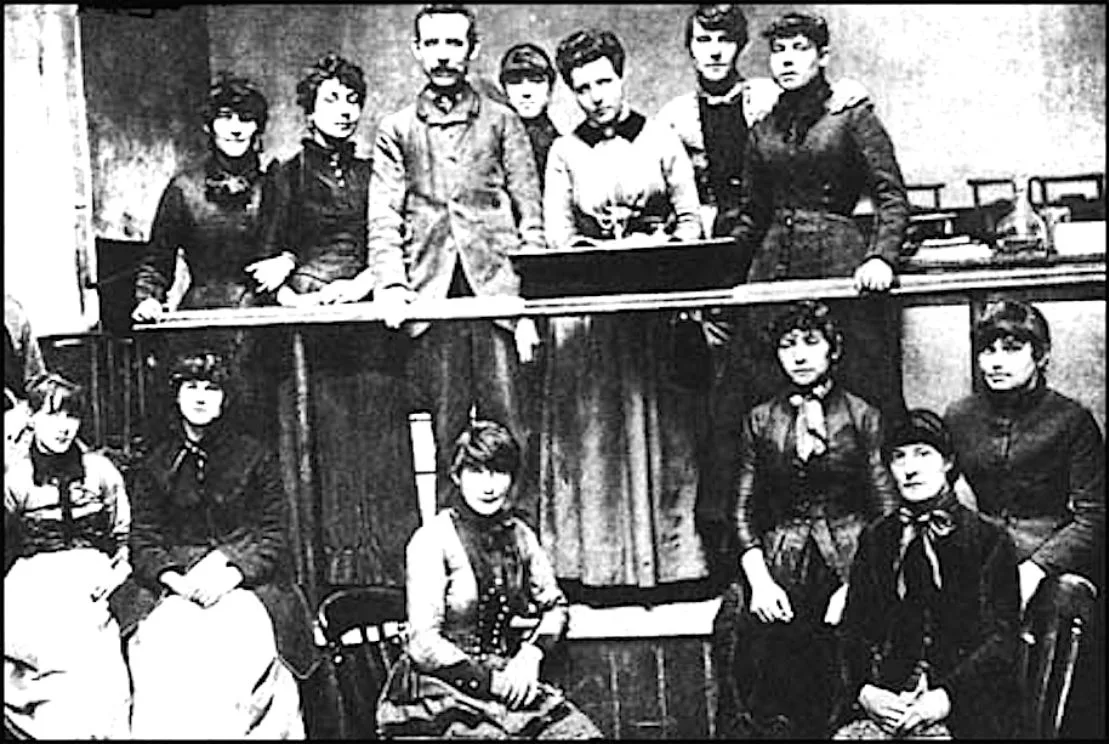
In June 1888 she published "White Slavery in London" in a halfpenny weekly she had started with the journalist W. T. Stead, describing wages, fines and conditions at Bryant and May's match factory in Bow. In early July the women there came out on strike, some fourteen hundred of them, and after about a fortnight the firm gave way and a Matchmakers' Union was formed with Besant as its secretary.68 Her own account and her early biographer put her at the centre of it. Later historians have argued that the women organised the strike themselves and that her part was publicity and support, and this chapter does not claim more for her than that. That autumn she stood for the London School Board in Tower Hamlets and came top of the poll.69
Something more than I had
She was restless underneath all this, and she said so. "Since 1886," she wrote, "there had been slowly growing up a conviction that my philosophy was not sufficient; that life and mind were other than, more than, I had dreamed."70 She read about hypnotism, divided personality, dreams and hallucinations; she experimented privately with Spiritualism, and found the phenomena real and the explanations incredible.71 The deeper reason was the same moral one that had taken her out of Christianity. "Ever more and more had been growing on me the feeling that something more than I had was needed for the cure of social ills. The Socialist position sufficed on the economic side, but where to gain the inspiration, the motive, which should lead to the realisation of the Brotherhood of Man?"72 She and Stead, "he Christian, I Atheist," had already talked of founding a new church dedicated to the service of man.73
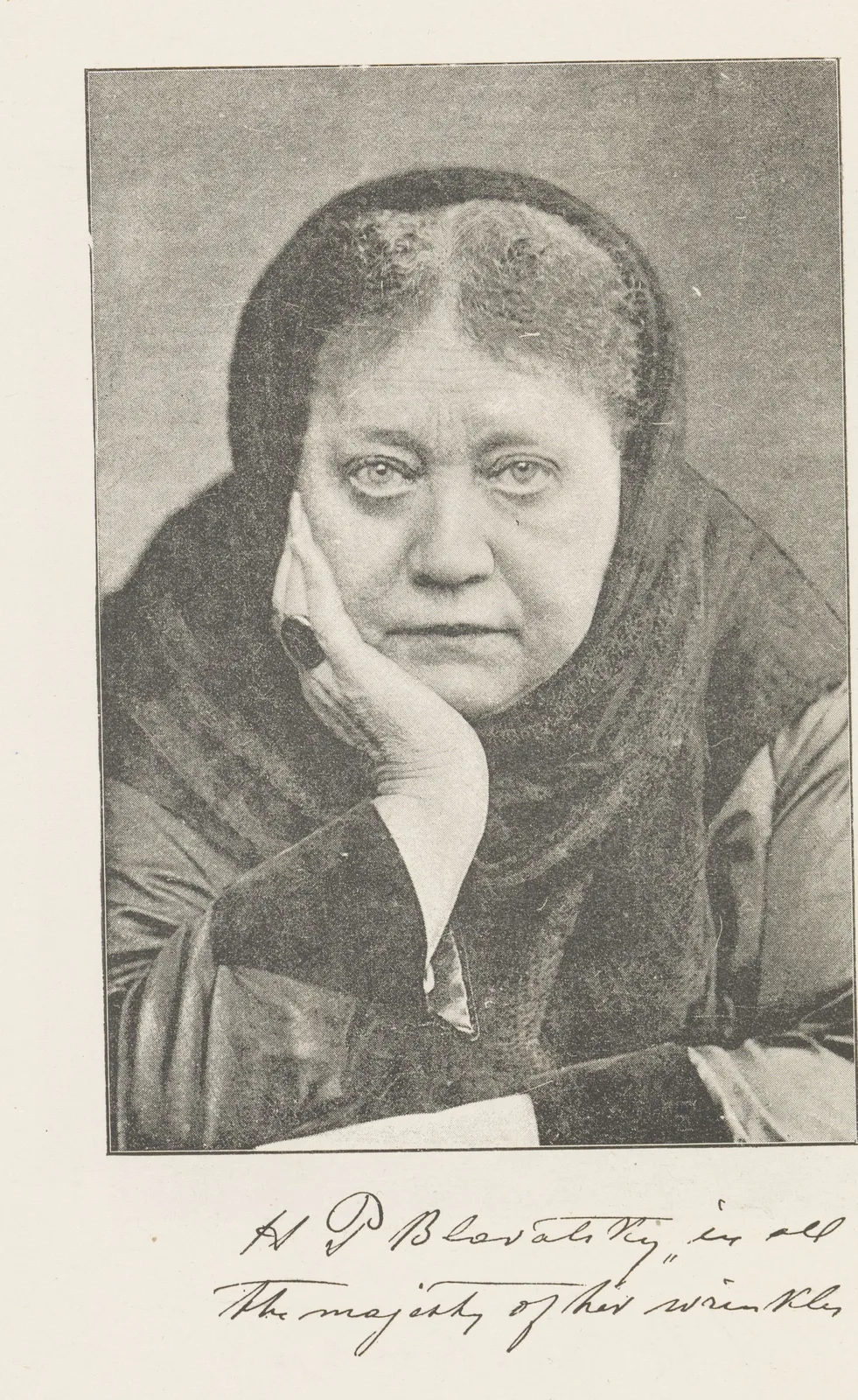
In the early spring of 1889 Stead handed her the two volumes of Helena Blavatsky's The Secret Doctrine. "Can you review these?" he asked. "My young men all fight shy of them, but you are quite mad enough on these subjects to make something of them."74 She read them and "knew that the weary search was over and the very Truth was found."75 The sequence of dates is not quite certain. Her biographer gives 25 April for her review in the Pall Mall Gazette, and her review in the National Reformer came later, in June. But within weeks she had gone with a fellow Socialist to meet Blavatsky in Notting Hill, read the Society for Psychical Research's damning report on Blavatsky's alleged marvels, found it unconvincing, and on 10 May 1889 joined the Theosophical Society and asked Blavatsky to take her as a pupil.7677 "I have been told that I plunged headlong into Theosophy and let my enthusiasm carry me away," she wrote. "I think the charge is true, in so far as the decision was swiftly taken; but it had been long led up to."78
She knew what it would cost. It meant confessing in public that she had been wrong, leaving the movement that had fought for her, and facing one man. "What would be the look in Charles Bradlaugh's eyes when I told him that I had become a Theosophist?"79 On 30 June 1889 he answered in his own paper. "An Atheist certainly cannot be a Theosophist," he wrote, and he regretted deeply that his colleague had "with somewhat of suddenness, and without any interchange of ideas with myself, adopted as facts matters which seem to me to be as unreal as it is possible for any fiction to be."80 But he did not withdraw his friendship, and he did not ask her to stop writing for the paper.81 G. W. Foote, another freethought leader, was harder; he warned that she would lead freethinkers astray, and remarked that "amidst all her changes Mrs. Besant remains quite positive."82
In August 1889 she gave her reasons from the platform of the Hall of Science, in two lectures called "Why I Became a Theosophist." Materialism, she said, could not answer the questions "What is Life? what is Thought?"83 But she did not take back what she had argued as an atheist. "In all I have written and said, as Atheist, against supernaturalism, I have nothing to regret, nothing to unsay. On the negative side Atheism seems to me to be unanswerable."84 She asked for one epitaph: "SHE TRIED TO FOLLOW TRUTH."85 The next year she resigned her office in the National Secular Society, feeling that it was so identified with materialism that it had no longer any place for her.86 Bradlaugh died on 30 January 1891, and Blavatsky on 8 May.8788
The best judgment on the change comes from her first biographer, Geoffrey West, who admired her and wrote while she was still alive. Her conversion, he thought, "must be looked upon as a step backward rather than forward, a step from Protestantism to Catholicism," because she had stopped asking for evidence and begun to accept a promise that evidence would come.89 A Christian critic, the missionary John Murdoch, made a different point. Her old argument from her daughter's suffering was, he wrote, like that of a man who said that because his watch sometimes went badly it could not have had a maker.90 Both of them saw what she herself admitted: the decision was swift, and it rested on what she called intuition. What neither quite allowed was the continuity she claimed. The woman who left the Church because she could not reconcile love with suffering left atheism because it gave her no motive strong enough to make people serve one another.
India
When she published her Autobiography in 1893 she ended it in peace. "Quiet confidence has taken the place of doubt; a strong security the place of anxious dread."91 The book shows how much her mind had changed. Episodes that her 1885 memoir had called natural dreams were now signs that consciousness could leave the body, or memories "brought over from a previous life."92 That December she spoke at the Theosophical Society's convention at Adyar, near Madras, and India became her home.93
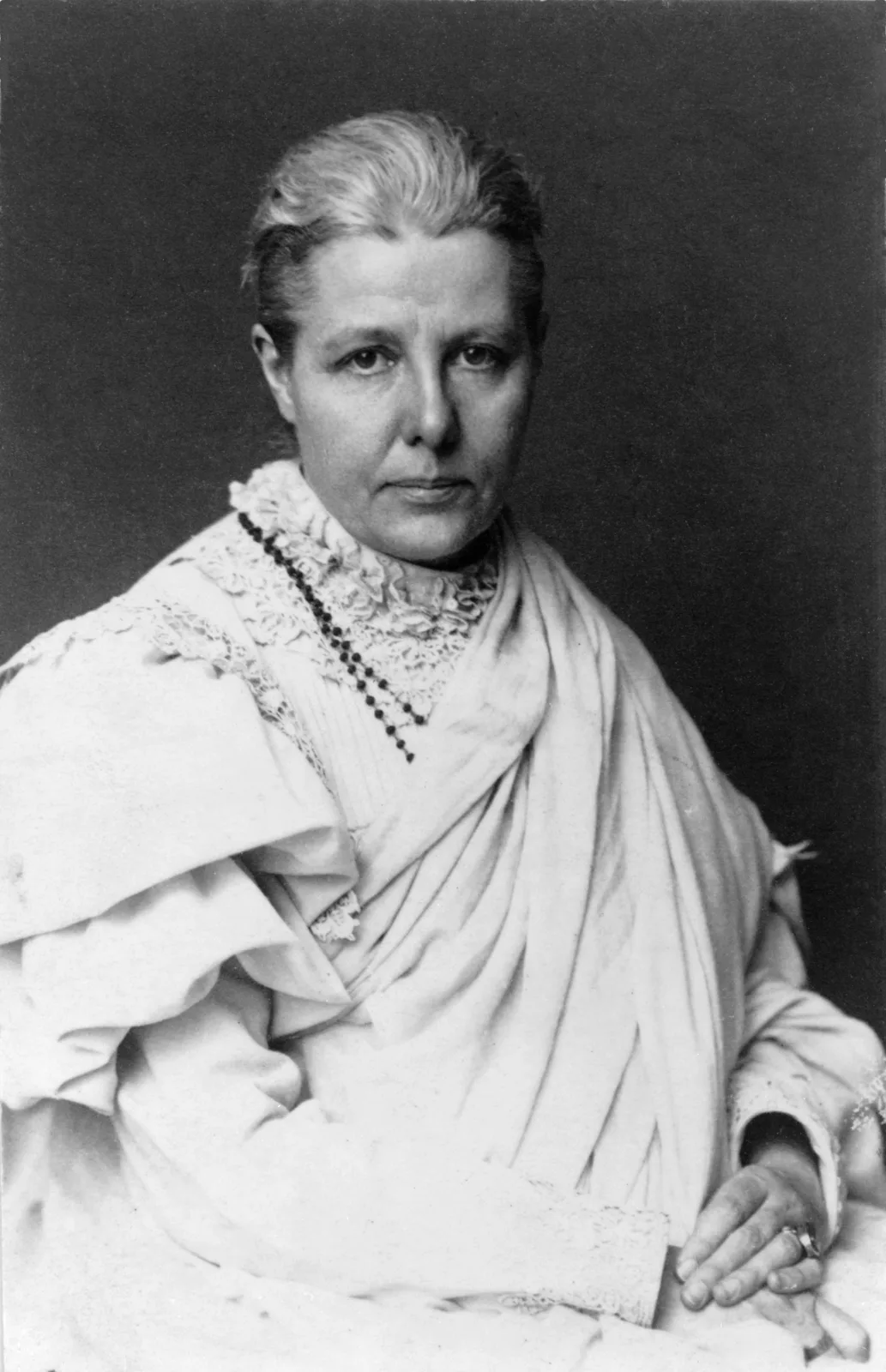
She settled in Benares in 1895, wore Indian dress, lived as a Hindu in her daily habits, helped compile textbooks of the Hindu religion, and founded the Central Hindu College in 1898. Her successor wrote that "she would never call herself a Hindu, though she lived the Hindu life."94 In 1907 she was elected President of the Theosophical Society.95 Two years later her colleague C. W. Leadbeater noticed a boy named Krishnamurti at Adyar, and in 1911 a new Order of the Star in the East was founded with the boy at its head, to prepare for a coming World Teacher. Besant adopted him and his brother, and she spoke of her certainty as resting "not on belief but on knowledge."96 In April 1913 the Madras High Court gave the boys' father the guardianship she had held.97 Once, she had lost a child because she had no religion. Now she was in court because of the religion she had found. In 1927 Krishnamurti himself renounced all organised and dogmatic religion.96
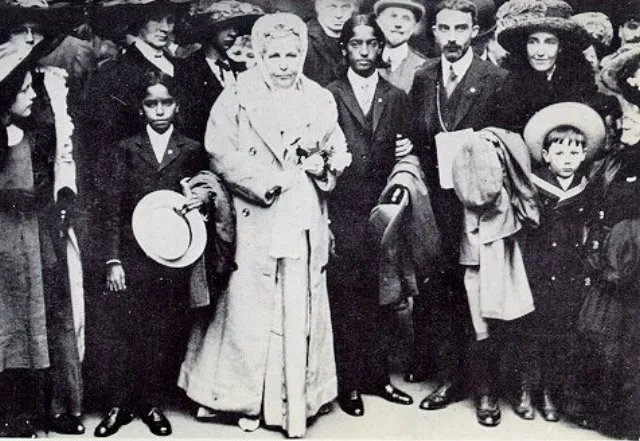
She also turned to politics again, this time for India. In September 1916 she founded the Home Rule League; the Governor of Madras interned her in June 1917, and released her in September; and in December 1917 she presided over the Indian National Congress at Calcutta.98 In her presidential address the old critic of Christianity used her old argument for a new cause. The war, she said, had shown Asia that Europe's "vaunted civilisation is seen to be but a thin veneer, and its religion a matter of form rather than of life."99 Within two years her own League rejected her in favour of Gandhi, whose campaign of non-cooperation she opposed, and she was howled down in a Bombay theatre.100
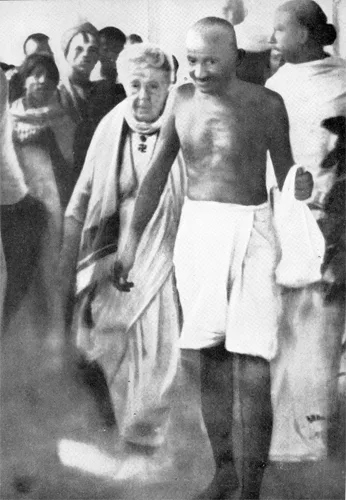
Annie Besant died at Adyar at four in the afternoon on 20 September 1933, aged eighty-five, and was cremated there the next morning. The tablet in the Garden of Remembrance gives her the title she held last: "President of The Theosophical Society 1907–1933."101
Did her unbelief change shape?
Her life has two conversions in it, and she was honest about both. She left Christianity for a moral reason, because a God who allowed a baby to suffer could not be called good, and she paid for that decision with her marriage and her daughter. She left atheism for a moral reason too, because she wanted a faith strong enough to make people treat one another as brothers. She never said that her arguments against the Christian God had been wrong. What changed was her belief about what lay beyond the reach of those arguments. In 1874 she agreed with Bradlaugh that she had no idea what the word God meant. By 1893 she was certain she knew. The question her life leaves is whether the second certainty was the end of a search or the end of the questioning, and she would have said, as she asked to have written on her tomb, that she tried to follow truth.
The man who first told her that she had thought herself into atheism has his own chapter in this book, and so does every other life her story touches.
Footnotes
-
Geoffrey West [pseudonym of Geoffrey H. Wells], The Life of Annie Besant (London: Gerald Howe, 1929), pp. 96–97; Annie Besant, Annie Besant: An Autobiography (London: T. Fisher Unwin, 1893, second edition; preface dated August 1893), pp. 213–214. ↩ ↩2
-
Sir George Jessel, Master of the Rolls, on secular education, 10 May 1878: Life of Annie Besant, p. 97; Besant, Annie Besant, p. 217. ↩
-
Besant, Annie Besant, pp. 213–218; Life of Annie Besant, pp. 96–97. ↩ ↩2 ↩3
-
Annie Besant, Why I Became a Theosophist (Freethought Publishing Co., 1889; the August 1889 Hall of Science lectures), p. 6. ↩
-
Besant, Annie Besant, pp. 11–16, 20; Annie Besant, Autobiographical Sketches (London: Freethought Publishing Company, 1885), pp. 3–4; John Murdoch, The Theosophic Craze: Its History; the Great Mahatma Hoax; How Mrs. Besant Was Befooled and Deposed (Madras: Christian Literature Society, 1894), p. 37. ↩
-
Besant, Annie Besant, pp. 20–22. ↩
-
Besant, Annie Besant, pp. 22–24. ↩
-
Besant, Annie Besant, pp. 34–39, 43–44. ↩
-
Besant, Annie Besant, pp. 41–43. ↩
-
Besant, Annie Besant, pp. 51–57. ↩
-
Besant, Annie Besant, pp. 61–62. ↩
-
Annie Besant, My Path to Atheism, third edition (London: Freethought Publishing Company, 1885); essays written 1873–77; preface to the first edition dated 1878, p. vi. ↩
-
Besant, Annie Besant, pp. 67–71, 80. ↩
-
Besant, Annie Besant, pp. 81, 85–86. ↩
-
Besant, Annie Besant, pp. 85–86. ↩
-
Besant, Annie Besant, pp. 86–88. ↩
-
Besant, Annie Besant, p. 90. ↩
-
Besant, Annie Besant, pp. 88–91; Besant, Autobiographical Sketches, p. 50. ↩
-
Besant, Annie Besant, p. 100. ↩
-
Besant, Annie Besant, p. 88. ↩
-
Besant, Annie Besant, pp. 93–94. ↩
-
Besant, Annie Besant, pp. 91–96, 102–104. ↩
-
Besant, Annie Besant, p. 91. ↩
-
Life of Annie Besant, p. 48; Besant, Annie Besant, p. 101. ↩
-
Besant, Annie Besant, p. 102. ↩
-
Besant, Annie Besant, pp. 101–102; Besant, My Path to Atheism, pp. vi–vii. ↩
-
Besant, Annie Besant, pp. 106–107; Life of Annie Besant, p. 52. ↩
-
Besant, Annie Besant, pp. 107–109; Besant, My Path to Atheism, pp. vii–viii. ↩
-
Edward Pusey, leader of the High-Church party, as Besant recalls his words at Oxford in autumn 1872: Besant, Annie Besant, p. 110. ↩
-
Besant, Annie Besant, p. 111. ↩
-
Besant, Annie Besant, pp. 109–112. ↩
-
Besant, Annie Besant, pp. 112–114; Life of Annie Besant, pp. 52–55. ↩
-
Life of Annie Besant, pp. 55–57. ↩
-
Besant, Annie Besant, pp. 114–115; Life of Annie Besant, p. 55. ↩ ↩2
-
Besant, Annie Besant, pp. 115–116; Life of Annie Besant, p. 57. ↩
-
Besant, Annie Besant, pp. 117–119, 219; Life of Annie Besant, p. 58. Accounts differ; see the disputed points. ↩ ↩2 ↩3
-
Besant, Annie Besant, pp. 118–119; Life of Annie Besant, p. 58. ↩
-
Besant, Annie Besant, pp. 120–128. ↩
-
Besant, Annie Besant, pp. 122–125. ↩
-
Besant, Annie Besant, p. 133; Besant, My Path to Atheism, p. viii; Besant, Annie Besant, p. 143. ↩
-
Besant, Annie Besant, pp. 133–136. ↩
-
Bradlaugh to Besant, August 1874 (as she recalls it): Besant, Annie Besant, p. 139. ↩
-
Besant, Annie Besant, p. 139. ↩
-
Bradlaugh (Freethinker's Text-book p. 118), quoted by Besant in "The Gospel of Atheism," 1876: Besant, Annie Besant, p. 144. ↩
-
Besant, Annie Besant, pp. 141–152, 169. ↩
-
Besant, Annie Besant, p. 151. ↩
-
Besant, Annie Besant, pp. 100, 153–157. ↩
-
Besant, Annie Besant, pp. 180–183; Hypatia Bradlaugh Bonner, Charles Bradlaugh: A Record of His Life and Work, vol. 2 (T. Fisher Unwin, 1902 ed.), p. 15. ↩
-
Besant, Annie Besant, pp. 205–209; The Queen v. Charles Bradlaugh and Annie Besant (specially reported; London: Freethought Publishing Co., 1877), the verbatim trial of 18–28 June 1877, pp. 23–24 (witnesses of the 24 March sale). ↩
-
Besant, Annie Besant, p. 207. ↩
-
Sir Hardinge Giffard, Solicitor-General, opening for the Crown, June 1877: Queen v. Charles Bradlaugh and…, p. 13. ↩
-
Queen v. Charles Bradlaugh and…, p. 28. ↩
-
Lord Chief Justice Cockburn, summing up: Queen v. Charles Bradlaugh and…, pp. 255, 257. Cockburn still directed a guilty verdict if the book was obscene; the two sentences are about four pages apart in the summing-up, hence the ellipsis. ↩
-
Queen v. Charles Bradlaugh and…, pp. 255, 257, 267; Besant, Annie Besant, pp. 210–212; sentence date from 02-bradlaugh fact sheet [39. ↩
-
Besant, Annie Besant, pp. 212, 229. ↩
-
Besant, Annie Besant, p. 208. ↩
-
Besant, Annie Besant, p. 220. ↩
-
Besant, Annie Besant, pp. 219–220; Life of Annie Besant, p. 100. ↩
-
Besant, Annie Besant, pp. 180, 286. ↩
-
Besant, Annie Besant, pp. 170–172. ↩
-
Besant, Annie Besant, p. 146. ↩
-
Besant, Annie Besant, p. 306. ↩
-
Besant, Annie Besant, p. 311; Life of Annie Besant, pp. 3, 114–115. ↩
-
Besant, Annie Besant, p. 306; Bonner, Charles Bradlaugh, vol. II, p. 15. ↩
-
Life of Annie Besant, pp. 130–132; Besant, Annie Besant, pp. 334–336. ↩
-
Besant, Annie Besant, p. 338. ↩
-
Besant, Annie Besant, p. 339. ↩
-
Besant, Annie Besant, p. 339. ↩
-
Besant, Annie Besant, p. 338. ↩
-
Besant, Annie Besant, pp. 329–332. ↩
-
W. T. Stead to Besant, spring 1889 (as she recalls it): Besant, Annie Besant, p. 340. ↩
-
Besant, Annie Besant, p. 340. ↩
-
Besant, Annie Besant, pp. 340, 346; Life of Annie Besant, pp. 148–150. ↩
-
Besant, Annie Besant, pp. 341–344. ↩
-
Besant, Annie Besant, p. 345. ↩
-
Besant, Annie Besant, p. 343. ↩
-
Charles Bradlaugh, her mentor, National Reformer, 30 June 1889: Besant, Annie Besant, p. 351. ↩
-
Besant, Annie Besant, pp. 342–343, 350–351; Bonner, Charles Bradlaugh, vol. II, p. 383. ↩
-
G. W. Foote, Freethought leader, 1889 (quoted by Besant): Besant, Why I Became a Theosophist, p. 6. ↩
-
Besant, Annie Besant, pp. 354–356; Besant, Why I Became a Theosophist, pp. 6–7. ↩
-
Besant, Why I Became a Theosophist, pp. 6–7. ↩
-
Besant, Annie Besant, p. 358. ↩
-
Besant, Annie Besant, p. 357 (footnote). ↩
-
Besant, Annie Besant, pp. 358–359, 364; see 02-bradlaugh fact sheet [57] [60. ↩
-
Besant, Annie Besant, p. 344; George S. Arundale, "A general survey of the life of Dr. Besant" (Book I), and the compiled "Biographical Notes 1889–1933" (Book III), in Annie Besant: An Autobiography, Adyar edition (Madras: Theosophical Publishing House, 1939), p. 18. ↩
-
Geoffrey West, her biographer, 1929 (sympathetic but critical): Life of Annie Besant, p. 150. ↩
-
John Murdoch, Scottish missionary publicist of the Christian Literature Society for India, 1894: Murdoch, Theosophic Craze, p. 40. ↩
-
Besant, Annie Besant, p. 364. ↩
-
Besant, Annie Besant, pp. 25–27, 57–58, 364; Life of Annie Besant, p. 24 (footnote). ↩
-
Arundale, Annie Besant, p. 42; IA catalogue record of "The Building of the Kosmos" (1894). ↩
-
Arundale, Annie Besant, pp. 26–27; Life of Annie Besant, p. 211. ↩
-
Arundale, Annie Besant, p. 33; Life of Annie Besant, p. 187. ↩
-
Life of Annie Besant, pp. 3–4, 23, 197–199; Arundale, Annie Besant, p. 52. ↩ ↩2
-
"Veritas," Mrs. Besant and the Alcyone Case (Madras, 1913), a partisan pamphlet that prints the trial of Narayaniah v. Besant and Justice Bakewell's judgment, pp. 3, 90, 248. Not verified. ↩
-
Life of Annie Besant, pp. 235–239; Arundale, Annie Besant, p. 72; Annie Besant, The Case for India, presidential address to the 32nd Indian National Congress, Calcutta, 26 December 1917, (title). ↩
-
Besant, Case for India, p. 29. ↩
-
Life of Annie Besant, pp. 240–242, 246. ↩
-
Arundale, Annie Besant, pp. 96–97. ↩
In their own words
"I went out into the darkness alone, not because religion was too good for me, but because it was not good enough; it was too meagre, too commonplace, too little exacting, too bound up with earthly interests, too calculating in its accommodations to social conventionalities."
"It was the careful compilation of a harmony of the last chapters of the four Gospels — a harmony intended for devotional use — that gave the first blow to my own faith; although I put the doubt away and refused even to look at the question again, yet the effect remained — the tiny seed, which was slowly to germinate and to grow up, later, into the full-blown flower of Atheism."
"I became uneasy as I proceeded with my task, for discrepancies leaped at me from my four columns; the uneasiness grew as the contradictions increased, until I saw with a shock of horror that my 'harmony' was a discord, and a doubt of the veracity of the story sprang up like a serpent hissing in my face. It was struck down in a moment, for to me to doubt was sin."
"then rose to face a struggle which lasted for three years and two months, and nearly cost me my life, the struggle which transformed me from a Christian into an Atheist."
"It was the long months of suffering through which I had been passing, with the seemingly purposeless torturing of my little one as a climax, that struck the first stunning blow at my belief in God as a merciful Father of men."
"I did not yet dream of denial, but I would no longer kneel."
"The old dilemma faced me incessantly: 'If He can prevent it and does not, He is not good; if He wishes to prevent it and cannot, He is not almighty.' I racked my brains for an answer."
"It was not a desire for moral licence which gave me the impulse that finally landed me in Atheism; it was the sense of outraged justice and insulted right."
"Lost or not, I must and will try to find out what is true, and I will not believe till I am sure."
"You have thought yourself into Atheism without knowing it"
"The Atheist does not say 'There is no God,' but he says, 'I know not what you mean by God; I am without idea of God; the word God is to me a sound conveying no clear or distinct affirmation. I do not deny God, because I cannot deny that of which I have no conception, and the conception of which, by its affirmer, is so imperfect that he is unable to define it to me.'"
"I do not believe in God. My mind finds no grounds on which to build up a reasonable faith. My heart revolts against the spectre of an Almighty Indifference to the pain of sentient beings. My conscience rebels against the injustice, the cruelty, the inequality, which surround me on every side. But I believe in Man. In man's redeeming power; in man's remoulding energy; in man's approaching triumph, through knowledge, love, and work."
"Atheist is one of the grandest titles a man can wear; it is the Order of Merit of the world's heroes."
"since progress can only be made through discussion, and no discussion is possible where differing opinions are suppressed, we claim the right to publish all opinions, so that the public, enabled to see all sides of a question, may have the materials for forming a sound judgment."
"though I know now that I was wrong intellectually, and blundered in the remedy, I was right morally in the will to sacrifice all to help the poor"
"It is not as defendant that I plead to you to-day — not simply as defending myself do I stand here — but I speak as counsel for hundreds of the poor, and it is they for whom I defend this case."
"A more ill-advised and more injudicious proceeding in the way of a prosecution was probably never brought into a court of justice." ... "here, in this instance, are two enthusiasts, who have been actuated by the desire to do good in a particular department of society"
"Resolutely I turned my back on them that I might spare them trouble, and determined that, robbed of my own, I would be a mother to all helpless children I could aid, and cure the pain at my own heart by soothing the pain of others."
"with a heavy heart I made up my mind to profess Socialism openly and work for it with all my energy."
"Ever more and more had been growing on me the feeling that something more than I had was needed for the cure of social ills. The Socialist position sufficed on the economic side, but where to gain the inspiration, the motive, which should lead to the realisation of the Brotherhood of Man?"
"Not only so; but since 1886 there had been slowly growing up a conviction that my philosophy was not sufficient; that life and mind were other than, more than, I had dreamed."
"Can you review these? My young men all fight shy of them, but you are quite mad enough on these subjects to make something of them."
"I knew that the weary search was over and the very Truth was found."
"What would be the look in Charles Bradlaugh's eyes when I told him that I had become a Theosophist?"
"I have been told that I plunged headlong into Theosophy and let my enthusiasm carry me away. I think the charge is true, in so far as the decision was swiftly taken; but it had been long led up to"
"Like Mr. Foote and most of the rest of us, I passed from Christianity into Atheism. After fifteen years, I have passed into Pantheism."
"in all I have written and said, as Atheist, against supernaturalism, I have nothing to regret, nothing to unsay. On the negative side Atheism seems to me to be unanswerable"
"I ask no other epitaph on my tomb but 'SHE TRIED TO FOLLOW TRUTH.'"
"Quiet confidence has taken the place of doubt; a strong security the place of anxious dread."
"Its vaunted civilisation is seen to be but a thin veneer, and its religion a matter of form rather than of life."
The other side
"It is not your duty to ascertain the truth. It is your duty to accept and believe the truth as laid down by the Church. At your peril you reject it. The responsibility is not yours so long as you dutifully accept that which the Church has laid down for your acceptance."
"Mrs. Besant thought there could not be a God, because her child suffered so much pain. The argument is like that of a man who should say, my watch sometimes goes badly; therefore it cannot have had a maker."
"not only reprehensible, but detestable, and likely to work utter ruin to the child"
"each involving some impure practice, some of them of the most filthy and disgusting and unnatural description it is possible to imagine."
"I very deeply regret indeed that my colleague and co-worker has, with somewhat of suddenness, and without any interchange of ideas with myself, adopted as facts matters which seem to me to be as unreal as it is possible for any fiction to be."
"her conversion to Theosophy must be looked upon as a step backward rather than forward, a step from Protestantism to Catholicism."
"amidst all her changes Mrs. Besant remains quite positive"
Where accounts differ
| Point | One account | Another | How the page handles it |
|---|---|---|---|
| Date of "The Gospel of Atheism" | 1876: Besant's footnotes and text, "In 1876 this position was clearly reaffirmed" (Auto pp. 144–145, 168); an advertisement in the 1877 trial report lists the pamphlet (Queen v., advertisements) | 1877: the date in the brief for this episode; 1873 appears in the OCR of the 1939 Adyar reprint's footnote (Arundale Book II), almost certainly an OCR error for 1876 | Say "in the mid-1870s" or "1876" with the Autobiography as source; look for the pamphlet itself |
| Date of "My Path to Atheism" | First-edition preface dated 1878 (MPA p. ix); individual essays 1873–77 | An advertisement in the 1877 trial report volume calls it "Just out" (price 4s.) | Call it "her collected essays, published in 1877–78" or cite individual essays by year |
| Why the marriage broke | Besant: she was told to conform or leave, "hypocrisy or expulsion," and chose to leave (Auto p. 117); she also says facts "I need not touch on here" gave her brother grounds for a legal separation and that her doctor would have testified to cruelty (Auto pp. 88, 119) | Frank Besant, in the 1878 hearing: he had never consented to the pamphlets' publication, had seen the manuscripts and disapproved, and she had pledged anonymity (West p. 56); a relative pressed him over the scandal in the parish (West p. 58) | Present her account as hers, name his side, and do not decide on cruelty; his own words not found |
| When she left Christianity for Theism and then Atheism | In Nov 1872 she told her husband she was "still a Theist" (West p. 55); in 1874 her God essay still called a deity "possible" and said "to deny His existence is to overstep the boundaries of our thought-power" (Auto p. 143) | Bradlaugh in Aug 1874: "You have thought yourself into Atheism without knowing it" (Auto p. 139); Besant dates her declaration to 1875 (Auto p. 190) and says the struggle that made her "an Atheist" lasted three years and two months from spring 1871 (Auto p. 88) | The timeline mark for Declaration is 1874–75; the narration should say she was a Theist who denied Christianity from 1872 and an avowed Atheist from 1875 |
| The Secret Doctrine review and conversion: order of dates | Joined the TS on 10 May 1889 (Auto p. 344); Pall Mall Gazette review 25 April 1889 (West p. 150 n.) | National Reformer review dated "June 23rd" (Auto p. 346); Besant says Stead gave her the books "a fortnight" after she heard "a Voice" in early spring 1889 (Auto p. 340) | Say "in the spring of 1889 she reviewed The Secret Doctrine and, within weeks, joined the Theosophical Society"; the NR review of 23 June was a second review |
| Whether she is telling early events straight | Sketches (1885): the mother's graveside dream is "a curious psychological problem"; her baby brother's death foretold is "a most natural dream" (West p. 24 n.) | Autobiography (1893): the same episodes are proof "the consciousness can leave the body" and sensitiveness "brought over from a previous life" (Auto pp. 25–27, 57–58) | Use the 1885 Sketches for her states of mind before 1889; use the 1893 book for what she thought afterwards, and say the second re-reads the first |
| The match-girls' strike | Her account: Besant and Burrows "worked for the next fortnight," the strike started when the girls "came to me to ask what to do next" (Auto p. 335); West: the girls "turned naturally to their champion" (p. 131) | Later labour historians (not in the freely scanned set) argue the women organised themselves and Besant's part was publicity and relief — to check | Say Besant publicised the conditions and helped the strikers; do not say she "led" it until a modern source is read |
| The Hall of Science "watch" challenge | Murdoch (p. 41) quotes a "gentleman in Ceylon" that Besant stood with a watch and said "If there be a God, let Him strike me dead in five minutes" | No source in the primary texts; the story is told of Bradlaugh elsewhere | Do not use; unverified |
| Pusey's words | Besant's report of the Oxford interview (Auto pp. 109–112) | Pusey's own account not found | Narrate as "she recalled" |
List of illustrations
This page uses only public-domain and Creative Commons images; each is credited with its source and licence.
- Annie Besant, photographic frontispiece with facsimile signature, from The Queen v. Bradlaugh and Besant (1877) — Unknown photographer; Freethought Publishing Company, 1877 · Internet Archive (queenvcharlesbra00brad), public domain · Public domain (published before 1931; Internet Archive scan)
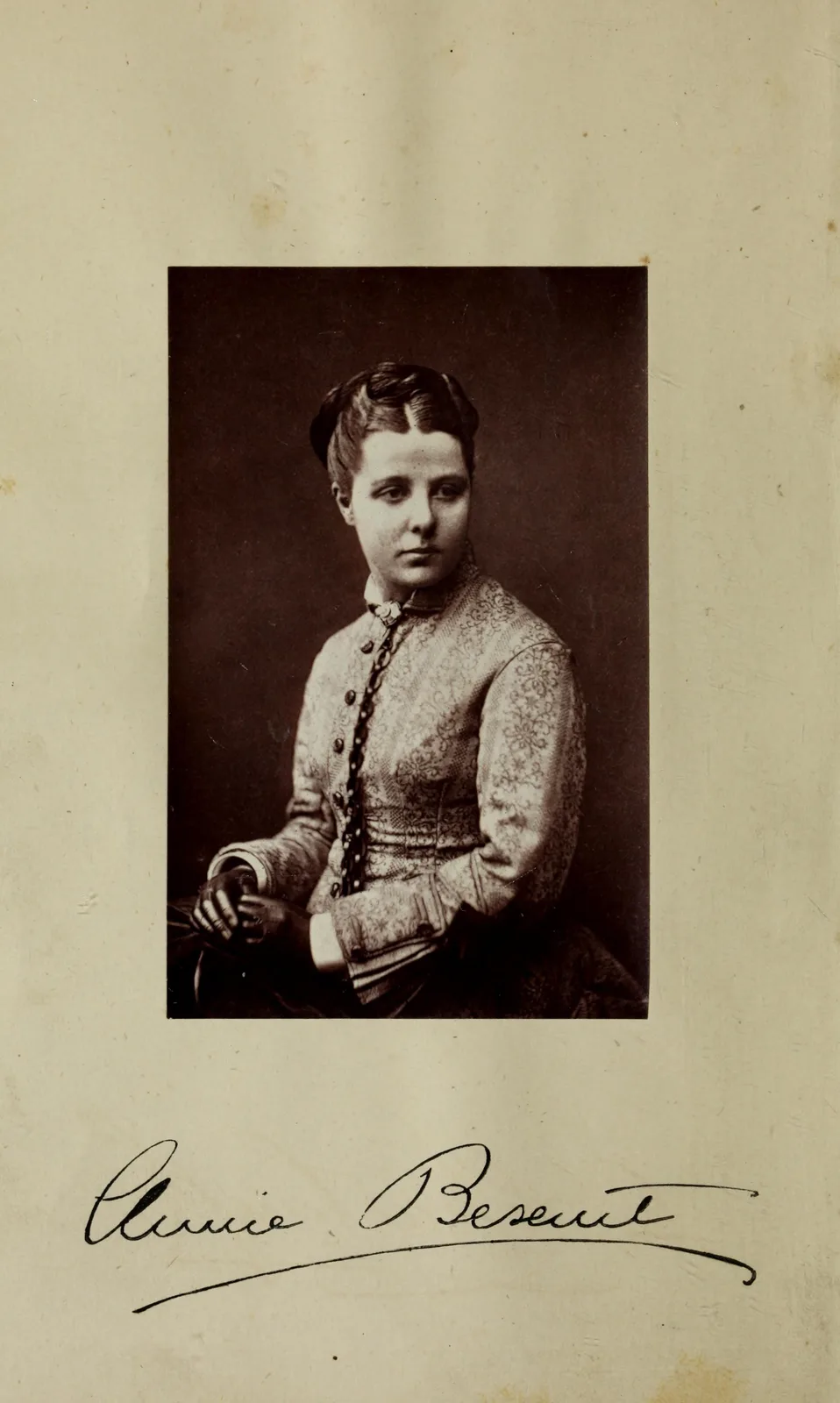
- 2-24 Promenade, Cheltenham - geograph.org.uk - 7015985 — Stephen Richards, 2015-05-20 · Stephen Richards, via Wikimedia Commons, CC BY-SA 2.0 · CC BY-SA 2.0 (Wikimedia Commons)
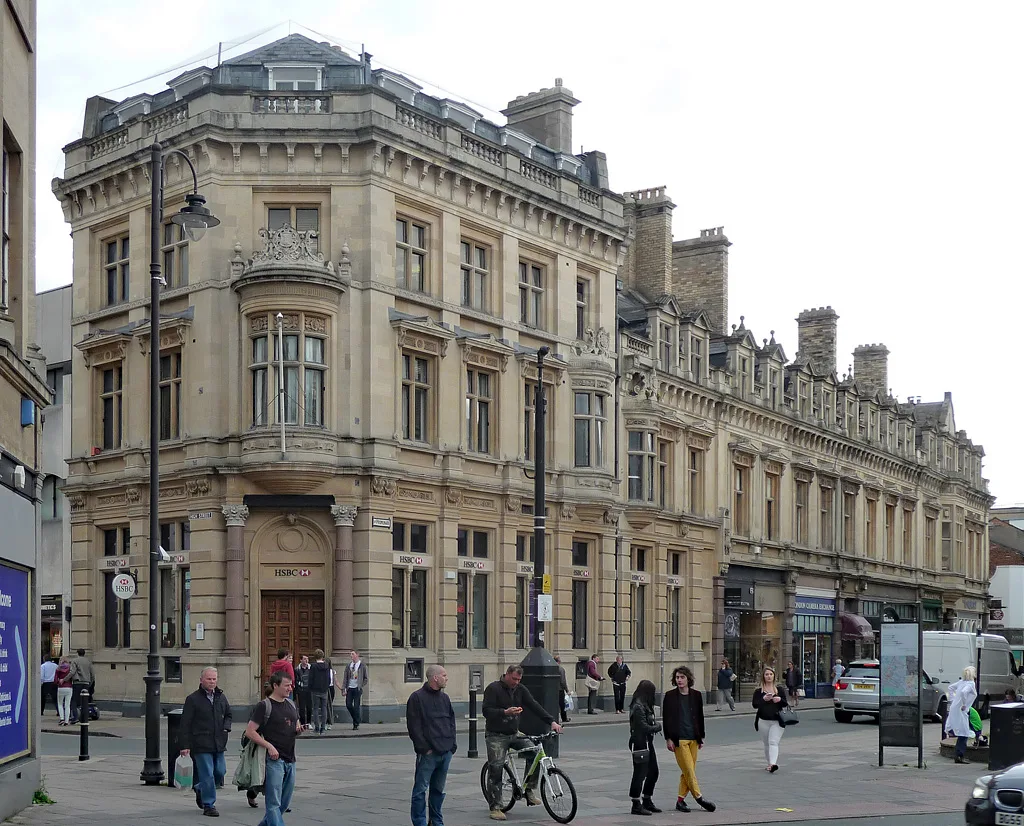
- Edward Bouverie Pusey, Vanity Fair, 1875-01-02 — Carlo Pellegrini, 1875-01-02 · Carlo Pellegrini, via Wikimedia Commons, Public domain · Public domain (Wikimedia Commons)
- Sibsey church east — Sjwells53, 2009-08-19 · Sjwells53, via Wikimedia Commons, CC BY-SA 3.0 · CC BY-SA 3.0 (Wikimedia Commons)
- Charles Voysey Vanity Fair 21 October 1871 — James Tissot, 1871 · James Tissot, via Wikimedia Commons, Public domain · Public domain (Wikimedia Commons)
- Christ Church, Oxford (NYPL b13075513-422214) — Scan by NYPL, 1759-ca. 1870 · Scan by NYPL, via Wikimedia Commons, Public domain · Public domain (Wikimedia Commons)
- My path to atheism (leaf 13) — Besant, Annie Wood, 1847-1933, 1885 · My path to atheism, Besant, Annie Wood, 1847-1933, Internet Archive (mypathtoatheism00besarich) · Public domain (published 1885, before 1931)
- Camille Pissarro - Fox Hill, Upper Norwood (1870) — Camille Pissarro, 1870date QS:P571,+1870-00-00T00:00:00Z/9 · Camille Pissarro, via Wikimedia Commons, Public domain · Public domain (Wikimedia Commons)
- Charles Bradlaugh, photographic frontispiece with facsimile signature, from The Queen v. Bradlaugh and Besant (1877) — Unknown photographer; Freethought Publishing Company, 1877 · Internet Archive (queenvcharlesbra00brad), public domain · Public domain (published before 1931; Internet Archive scan)
- J. F. Havell - The Unitarian Chapel, Finsbury — Thomas H. Shepherd, J.F. Havell, published in 1828 · Thomas H. Shepherd, J.F. Havell, via Wikimedia Commons, Public domain · Public domain (Wikimedia Commons)
- Fruits of Philosophy (Freethought Publishing Company, 1877), title page — Charles Knowlton; Freethought Publishing Company, 1877 · Wellcome Collection via Internet Archive (b33921192), Public Domain Mark · Public Domain Mark (Wellcome Collection scan on Internet Archive)
- George Jessel Vanity Fair 1 March 1879 — Leslie Ward, 1879 · Leslie Ward, via Wikimedia Commons, Public domain · Public domain (Wikimedia Commons)
- Match girls en 1988 — Unknown, 1888 · Unknown, via Wikimedia Commons, Public domain · Public domain (Wikimedia Commons)
- Helena Blavatsky, photograph with inscription, cropped to the image (from portrait-c1881-91_helena-blavatsky-rijksmuseum_commons-CC0.jpg) — Anonymous, c. 1881 - 1891 (Rijksmuseum dating) · Rijksmuseum, Amsterdam (RP-F-2001-7-67-105), CC0, via Wikimedia Commons · CC0 (Rijksmuseum)
- Why I became a theosophist (leaf 3) — Besant, Annie, 1847-1933, 1889 · Why I became a theosophist, Besant, Annie, 1847-1933, Internet Archive (b30480188) · Public Domain Mark 1.0 (Internet Archive item rights statement)
- Annie Besant, LoC — Unknown authorUnknown author, circa 1897date QS:P,+1897-00-00T00:00:00 · Unknown author, via Wikimedia Commons, Public domain · Public domain (Wikimedia Commons)
- Annie-Besant-J-Krishnamurti-Ernest-Wood — Unknown authorUnknown author, 1911-05 · Unknown author, via Wikimedia Commons, Public domain · Public domain (Wikimedia Commons)
- Gandhi besant madras1921 — Unknown authorUnknown author, 1921-09-21 · Unknown author, via Wikimedia Commons, Public domain · Public domain (Wikimedia Commons)
Sources
Tier 1 — the subject's own words (writings, speeches, trial records)
- [Auto] Annie Besant, Annie Besant: An Autobiography (London: T. Fisher Unwin, 1893, second edition; preface dated August 1893). https://archive.org/details/anniebesantautob00besaiala . Text in research/texts/besant-1893-autobiography.txt. Written after her conversion to Theosophy, so it re-reads early events (see Disputed points); where it quotes her own earlier pamphlets and National Reformer articles the year is given in her footnotes.
- [Sketches] Annie Besant, Autobiographical Sketches (London: Freethought Publishing Company, 1885). https://archive.org/details/b28977245 . Text in research/texts/besant-1885-autobiographical-sketches.txt. Written when she was still an Atheist and a Socialist, four years before Theosophy; the base of Auto's first chapters. Prefer it for her state of mind before 1889.
- [MPA] Annie Besant, My Path to Atheism, third edition (London: Freethought Publishing Company, 1885); essays written 1873–77; preface to the first edition dated 1878. https://archive.org/details/mypathtoatheism00besarich . Text in research/texts/besant-1877-my-path-to-atheism.txt (file name uses the date of the earliest essays).
- [WITB] Annie Besant, Why I Became a Theosophist (Freethought Publishing Co., 1889; the August 1889 Hall of Science lectures). https://archive.org/details/b30480188 . Text in research/texts/besant-1889-why-i-became-a-theosophist.txt.
- [Socialist] Annie Besant, Why I Am a Socialist (1886). https://archive.org/details/whyiamsocialist441besa . Text in research/texts/besant-1886-why-i-am-a-socialist.txt.
- [Queen v.] The Queen v. Charles Bradlaugh and Annie Besant (specially reported; London: Freethought Publishing Co., 1877), the verbatim trial of 18–28 June 1877. https://archive.org/details/queenvcharlesbra00brad . Text in research/texts/queen-v-bradlaugh-and-besant-1877.txt (copied from 02-bradlaugh). Page numbers are running heads at the top of the page.
- [Case for India] Annie Besant, The Case for India, presidential address to the 32nd Indian National Congress, Calcutta, 26 December 1917. https://archive.org/details/caseforindiapres00besauoft . Text in research/texts/besant-1917-case-for-india.txt. Page numbers are at the foot of each page.
- [Law of Population] Annie Besant, The Law of Population (1877). https://archive.org/details/lawofpopulationi00besarich . Downloaded; not yet read for quotation.
- [Besant 1891] Annie Besant, Charles Bradlaugh: A Sketch of His Life and Work (1891). https://archive.org/details/charlesbradlaugh00besarich . Downloaded; not yet used.
Tier 2 — biographies and reference
- [West] Geoffrey West [pseudonym of Geoffrey H. Wells], The Life of Annie Besant (London: Gerald Howe, 1929). https://archive.org/details/in.ernet.dli.2015.172464 . Text in research/texts/west-1929-life.txt. A literate, sympathetic but sceptical life; writes before her death. Page numbers are running heads at the top of the page (even pages "NNN TITLE", odd pages "TITLE NNN").
- [Bonner II] Hypatia Bradlaugh Bonner, Charles Bradlaugh: A Record of His Life and Work, vol. 2 (T. Fisher Unwin, 1902 ed.). https://archive.org/details/charlesbradlaugh02bonnuoft . Text in research/texts/bonner-1902-record-vol2.txt (copied from 02-bradlaugh); Bradlaugh's daughter on Besant (chapter "Mrs Besant," pp. 15 ff.; p. 383).
- [Arundale] George S. Arundale, "A general survey of the life of Dr. Besant" (Book I), and the compiled "Biographical Notes 1889–1933" (Book III), in Annie Besant: An Autobiography, Adyar edition (Madras: Theosophical Publishing House, 1939). https://archive.org/details/in.ernet.dli.2015.476345 . Text in research/texts/arundale-1939-autobiography-with-epilogue.txt. A devoted Theosophist and her successor; Books I and III are numbered at the top of the page, Book II (the Autobiography) at the foot. Cite pages from Book I unless stated.
Tier 3 — popular biographies and journalism
- [Veritas 1913] "Veritas," Mrs. Besant and the Alcyone Case (Madras, 1913), a partisan pamphlet that prints the trial of Narayaniah v. Besant and Justice Bakewell's judgment. https://archive.org/details/mrsbesantalcyone00veririch . Text in research/texts/veritas-1913-alcyone-case.txt. Treat the narrative as partisan; the court record and judgment as the document.
Tier 4 — maps to other sources only (Wikipedia and similar). Never cited in the script.
- Wikipedia, "Annie Besant"; "Bryant and May match girls' strike"; "Besant v. Wood." Not read for this sheet.
Opposition sources — contemporary critics and religious responses
- [Murdoch] John Murdoch, The Theosophic Craze: Its History; the Great Mahatma Hoax; How Mrs. Besant Was Befooled and Deposed (Madras: Christian Literature Society, 1894). https://archive.org/details/theosophiccraze00murdgoog . Text in research/texts/murdoch-1894-theosophic-craze.txt. A Scottish missionary-publicist; hostile; quotes The Times and Besant's own words. Page numbers are running heads (some misread by the OCR: p. 40 confirmed by eye).
- [Justice 1918] The Editor of Justice (Madras), Evolution of Mrs. Besant: Being the Life and Public Activities of Mrs. Annie Besant, Secularist, Socialist, Theosophist and Politician (1918). https://archive.org/details/evolutionbesant00anonuoft . Text in research/texts/justice-1918-evolution-of-mrs-besant.txt. Satire from the non-Brahmin party press of Madras; page numbers at the foot.
- [Anon 1893] Theosophy Exposed: or, Mrs. Besant and Her Guru (1893). https://archive.org/details/1893AnonymousTheosophyExposedBesantAndHerGuru . Downloaded; not yet read.
- [Fullerton 1904] Alexander Fullerton, "Mrs. Annie Besant and the Theosophical Society" (1904). https://archive.org/details/jstor-27899550 . Downloaded; not yet read.
- [Auto, reported voices] Pusey (Auto pp. 109–112), "Mr D." (Auto pp. 91–96, 102–104), Sir George Jessel (Auto pp. 214–218; confirmed by West p. 97), Bradlaugh (Auto pp. 350–351), all as reported by Besant; the Crown's case in [Queen v.]; G. W. Foote as quoted in [WITB].
Related lives
Charles Bradlaugh (episode 02), her mentor, co-defendant and the man whose look she dreaded when she told him of Theosophy; or Ayaan Hirsi Ali, the roster's other reversal. (Per lessons: never "next"; the close only says each life has its own episode.)
Thomas Edison
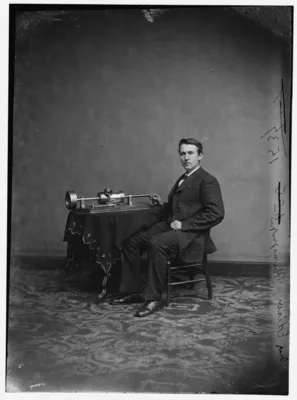
Thomas Edison was raised by a Baptist minister's daughter and set loose at thirteen on his father's shelf of Paine. He never lost a faith he is known to have held. In 1910 he told the New York Times that there were no gods of the religions, no soul and no use for a future life, while speaking in the same year of an Intelligence behind nature. In 1920 he revised the denial into a laboratory theory of indestructible "life entities" and an apparatus to test survival. He ended as Paine's defender and, like Paine, no atheist by his own word.
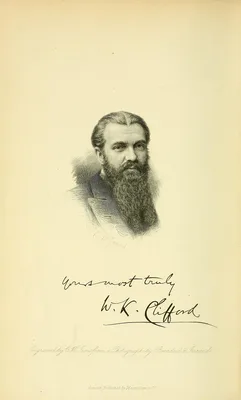
W. K. Clifford
W. K. Clifford was an ardent High Churchman at Trinity who tried to defend dogma with science. He gave up that faith in the late 1860s, under Darwin and Spencer, after a struggle his friend Pollock could not date. In "The Ethics of Belief" (1876–77) he turned his loss into a rule: it is wrong for anyone to believe on insufficient evidence. He never called himself an atheist in print, grieved openly for "the Great Companion", revered the believers he knew, and died at thirty-three without fear or retraction.
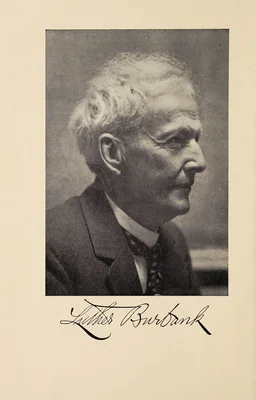
Luther Burbank
Luther Burbank was raised in a stern New England Baptist church. In his youth, as a friend told it, he lost its God of hell and judgement, and found in Darwin a new world. He spoke against "misleading theology" for forty years while keeping a reverence for nature he called God. In January 1926 he declared himself "an infidel" in the dictionary's sense, "a doubter, a questioner, a skeptic" who still recognised "a great universal power", and restated it from a pulpit. He died eleven weeks later without recanting.
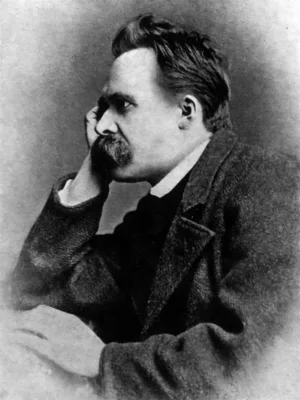
Friedrich Nietzsche
Nietzsche was a pastor's son who chose truth over peace at twenty. In 1882 he announced the death of God as a catastrophe Europe had not yet understood. He came to see his own unbelief not as the opposite of the faith he was raised in but as its last consequence: a Christian love of truth turned on Christianity itself.