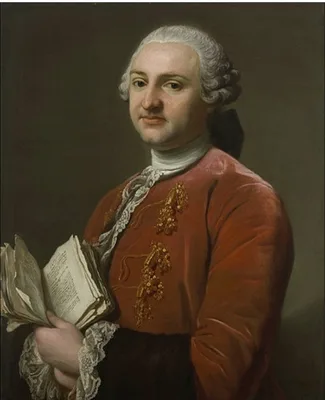
The Baron d'Holbach was raised a Catholic, and his translations of earth science first set the evidence against Genesis. He taught atheism openly at his own table and published it only under dead men's names, from Christianity Unveiled in 1761 to the System of Nature in 1770, while the pedlars who sold his books were flogged and branded. Late in life he turned from destroying belief to building a secular morals and politics. He was named as the author only after his death.
The belief timeline
- Faith (c. 1735–1750) — Raised in Catholic Paris; no document of his own belief survives ("nothing is known" of his youth) [2]
- Doubt (1752–1759) — As a translator of German mineralogy he reads the earth against Genesis; the Lehmann preface (1759) applies the Flood's own text ironically [13][14]
- Secret (1761) — Le Christianisme dévoilé printed at Nancy; later credited to the dead Boulanger [25][26]
- Declaration (1770) — Système de la nature under Mirabaud's name; burned by the Parlement on 18 August [39][43]
- Disclosure (1789 (March)) — Two months after his death Meister names him as the author [54]
Notes to the timeline (8)
- [2] Of his parentage and youth nothing is known; his father, "a rich parvenu" per Rousseau, brought him to Paris at twelve — Max Pearson Cushing, Baron d'Holbach: A Study of Eighteenth Century Radicalism in France (New York: Columbia University Press, 1914), p. 5; The Confessions of J. J. Rousseau (London: Aldus Society, 1903), Gutenberg #3913, bk VIII. Accounts differ; see the disputed points.
- [13] His preface to Lehmann's treatise (1759) opens by accepting the Genesis Flood as infallible, then argues it cannot explain the strata; Cushing notes the irony escaped the censor — Cushing, Baron d'Holbach, pp. 28–29. Reported at second hand; the original has not been seen.
- [14] Cushing, following Tourneux, argues his science led him to see the disparity between traditional cosmology and the earth, and so to doubt the sacred records elsewhere — Cushing, Baron d'Holbach, pp. 65–66.
- [25] His first anti-Christian book, Le Christianisme dévoilé, was printed at Nancy in 1761 (no copy dated so), through Saint-Lambert, per Naigeon via Barbier — Cushing, Baron d'Holbach, pp. 31, 38–39.
- [26] It was attributed to "Boulanger" (d. 1759) to set persecution on the wrong track; Voltaire blamed Damilaville — Cushing, Baron d'Holbach, pp. 36–39.
- [39] Système de la nature appeared early 1770 as by Mirabaud, "Secrétaire perpétuel de l'Académie française", imprint "Londres (Amsterdam)"; its preface speaks as a dying old man — Cushing, Baron d'Holbach, pp. 54–55; Holbach, The System of Nature (published 1770 as by Mirabaud), tr. H. D. Robinson (Boston: J. P. Mendum, 1868), p. x.
- [43] The Parlement of Paris condemned the Système on 18 Aug 1770 to be burned, with Voltaire's Dieu et les hommes and other works — Cushing, Baron d'Holbach, p. 55.
- [54] Meister, March 1789: it is no longer indiscreet to say he wrote the Système; Diderot wrote many of its pages; Meister does not like the doctrine — Meister's notice of Holbach in Grimm's Correspondance littéraire, March 1789, vol. XV of the Tourneux edition (Paris: Garnier, 1877–82), pp. 415–419, pp. 416–417.
The Author Who Was Not There
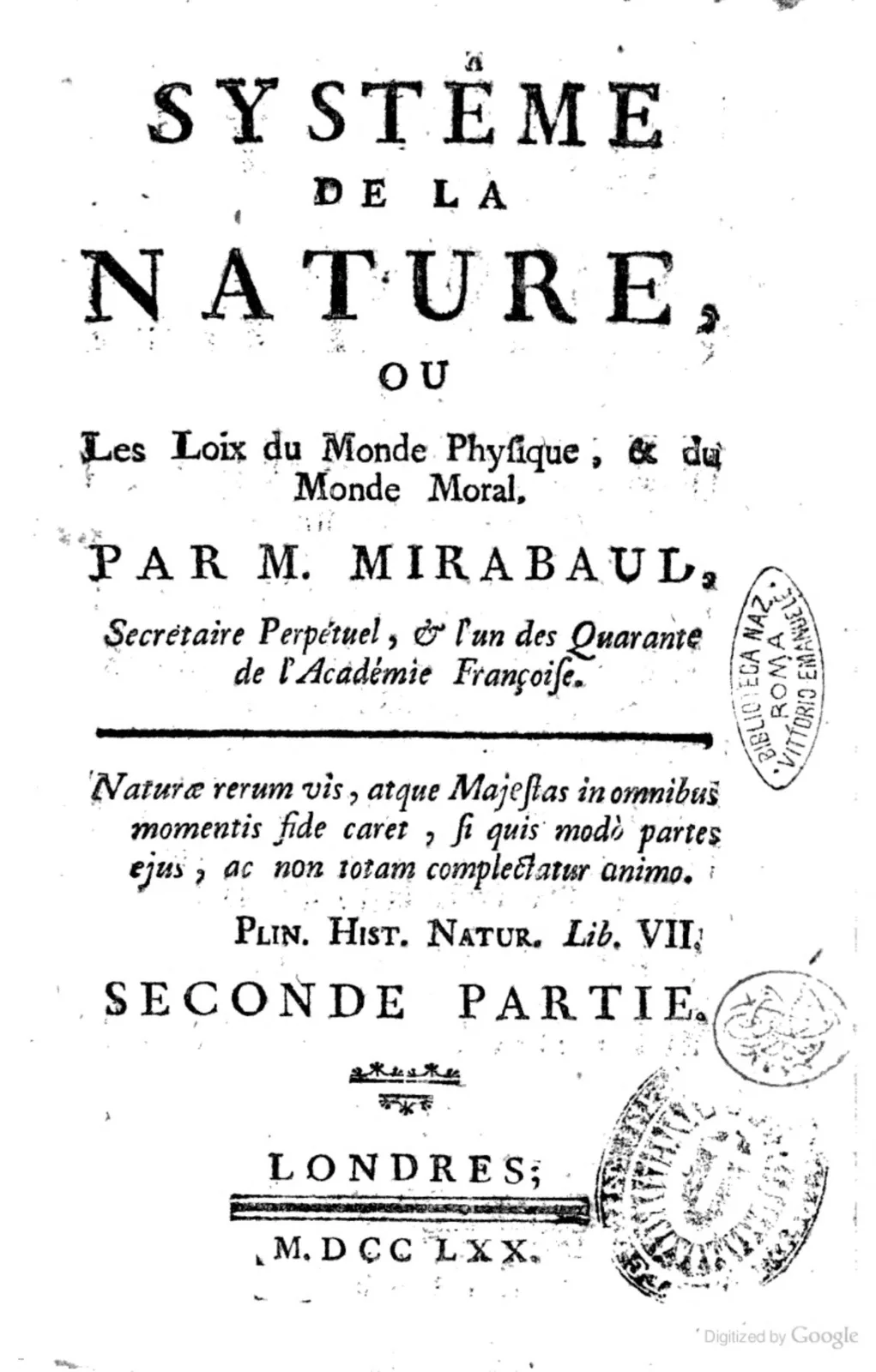
On 18 August 1770 the Parlement of Paris condemned a book to be burned by the hangman. Its title page said that it was Système de la nature, by the late M. Mirabaud, perpetual secretary of the French Academy, printed in London.12 Nearly every word of that was false. Mirabaud had not written it; the book was printed in Amsterdam; and its author was alive, well and living in Paris, where twice a week he gave dinners to many of the best-known writers in Europe. A week after the condemnation he wrote from his country house to the Abbé Galiani: "I am glad you have read Mirabaud's book, which is making a dreadful noise in this country. Our lords of the Parlement have just answered it with bundles of firewood."345
He was the Baron d'Holbach, and by the account of a believing guest at his table he taught "absolute atheism." Outside his circle almost nobody knew he had written the book until two months after he died. This chapter asks how a rich, kind, sociable man came to write the century's plainest case against God, and why he spent his life hiding behind other men's names to make it.
A German boy in Paris
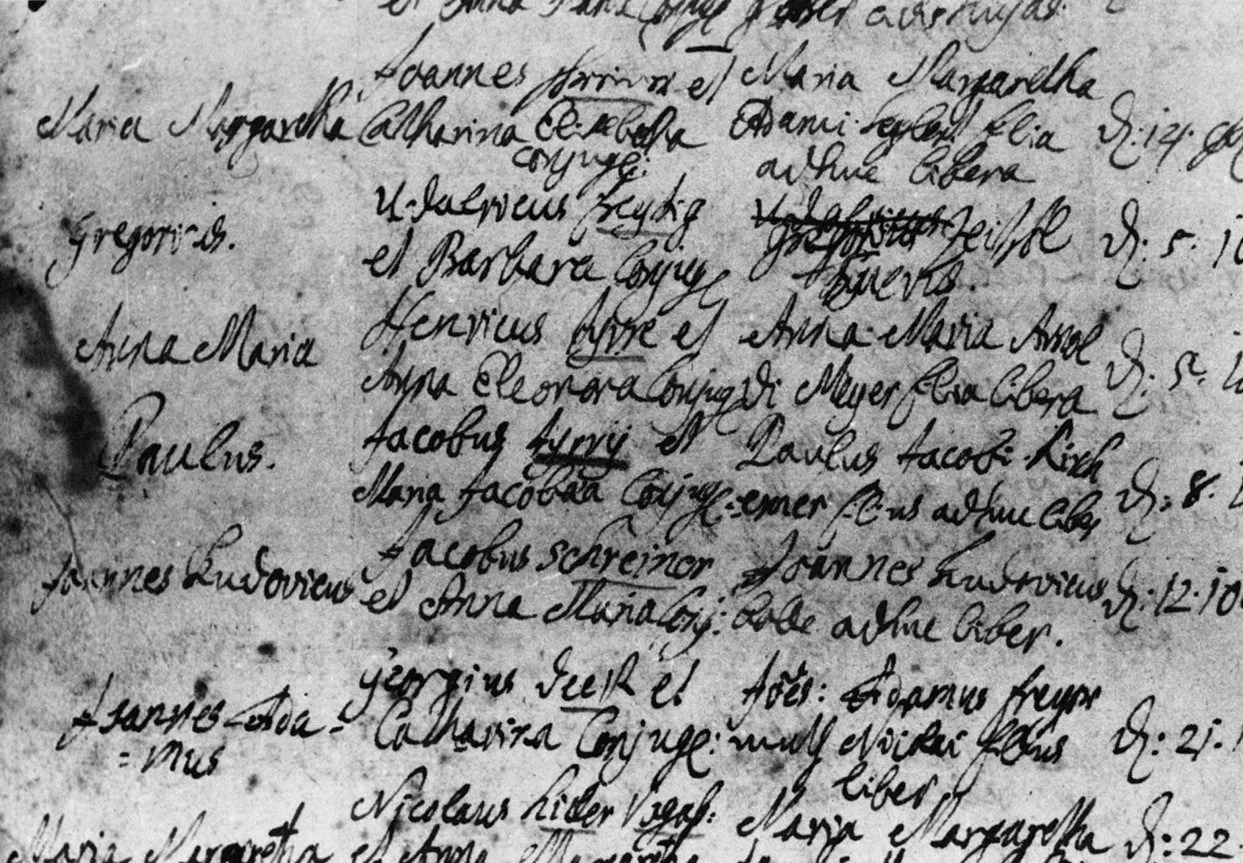
He was born Paul Heinrich Dietrich in the Palatinate early in 1723; his first biographers name Heidelsheim, others Edesheim, and the question is not settled.6 "Of his parentage and youth," his first English biographer wrote, "nothing is known." Rousseau, who knew him well and came to dislike him, said that his father was "a rich parvenu" who brought him to Paris at twelve; others say it was his uncle, François-Adam, baron d'Holbach, a rich man who lived in Paris and was buried at the church of Saint-Roch in 1753.78 He grew up, at any rate, a Catholic Parisian with German roots and, in time, a large fortune. Nothing he wrote and nothing written about him records what he believed as a boy.
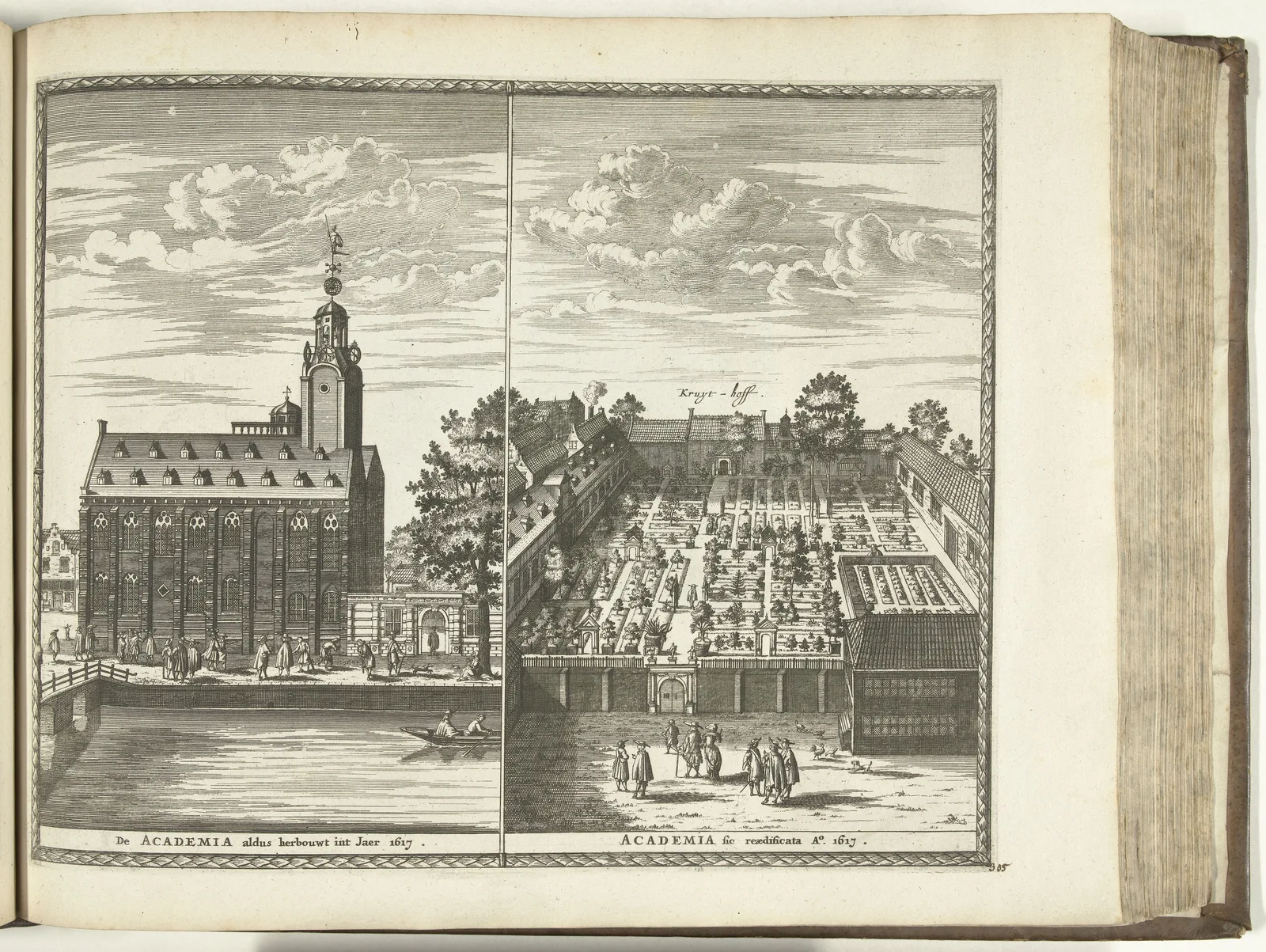
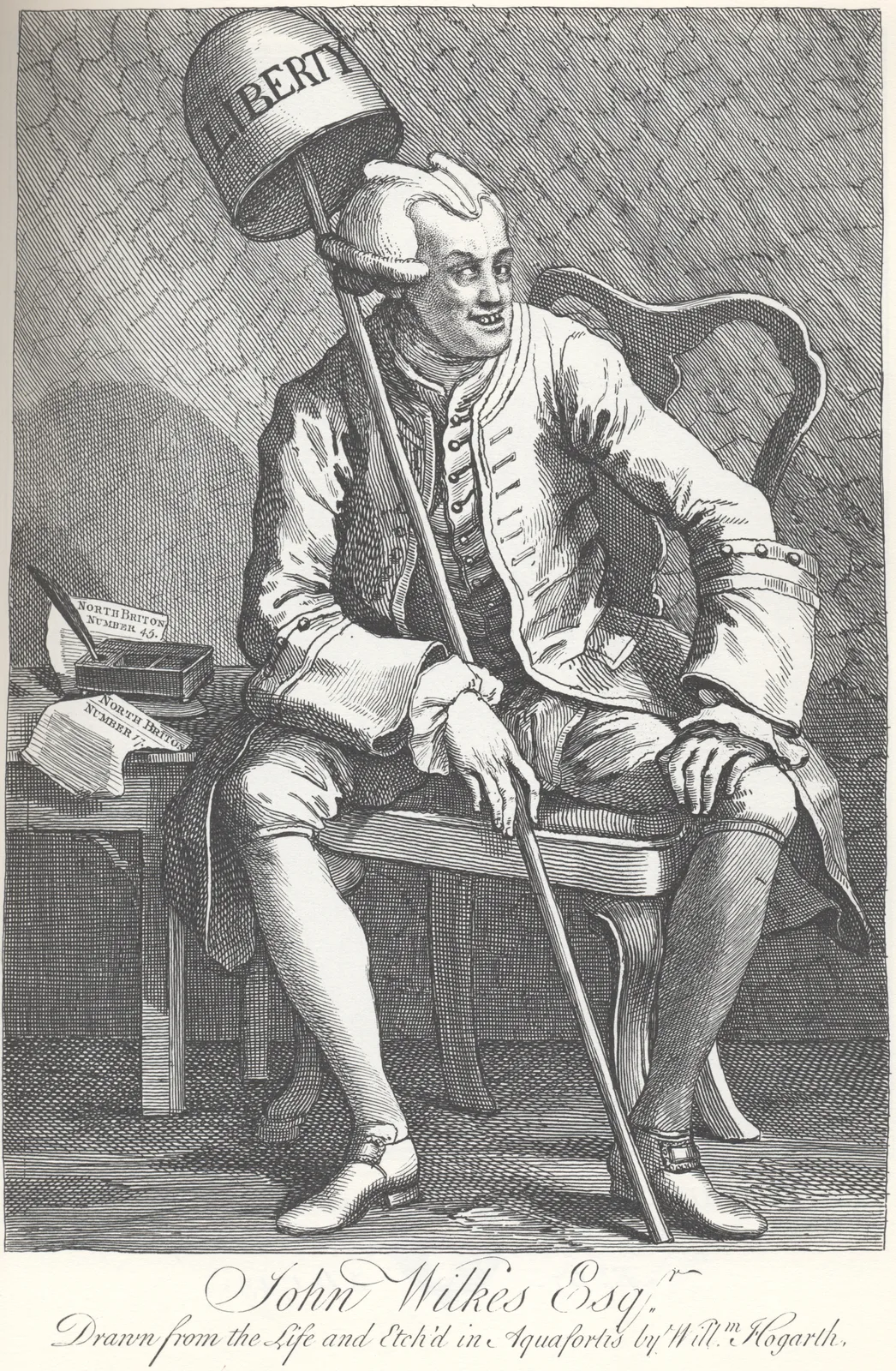
In the mid-1740s he studied at the University of Leiden, where some twenty-five young Englishmen formed a club, and there he made a lifelong friend of the future radical John Wilkes.910 His letters to Wilkes from 1746 are written in a cheerful, misspelled English. "As to me, Idleness renders me every day more philosopher," he wrote from his uncle's estate in Brabant. "I took a whim to study a little Physic accordingly I purchased several books in that Way."1112
Stones and the Flood
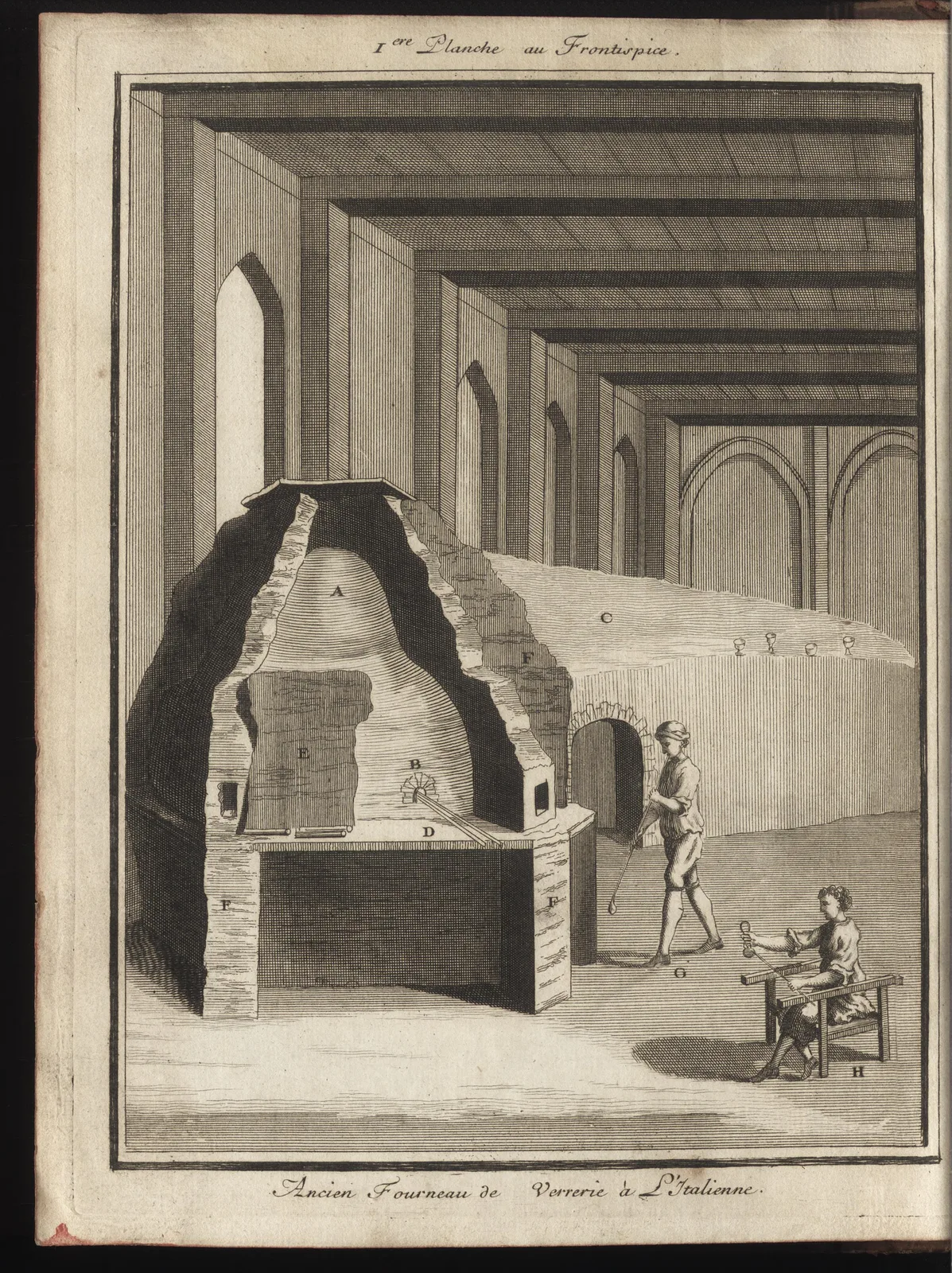
By about 1750 he was settled in Paris, and he spent the next decade as a translator of science. He translated works on glass-making, mineralogy, chemistry and mining into French, and in 1754 the Berlin Academy made him a foreign associate.1314 "The wish to be useful, which every citizen should feel," he wrote in the first of them, "made me undertake the work I present to the public."15
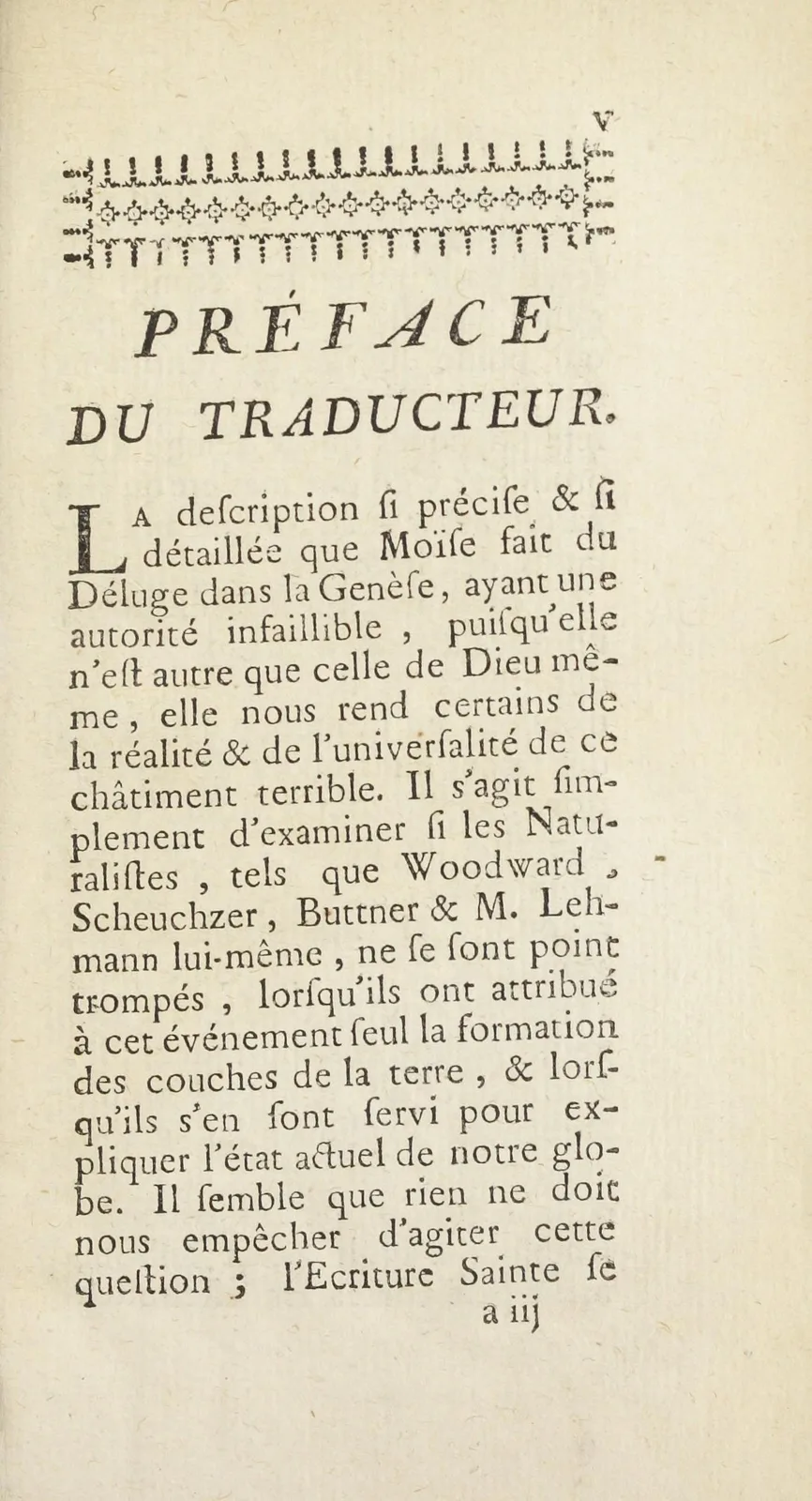
This was the work that seems to have changed his mind. In 1759 he translated a German treatise on the layers of the earth, and wrote a preface to it. It opens with perfect orthodoxy: Moses's account of the Flood, "so precise and detailed," has "infallible authority, since it is God's own." Then it argues, page after page, that the Flood cannot explain the strata, and that "the simplest causes can, over the centuries, produce the greatest effects, above all when they act without pause."161718 His biographer thought the irony was lost on the censor, and argued that his science had shown him how far the earth departed from the traditional account, and so led him to doubt the sacred records elsewhere.1619 That is a scholar's inference; no letter of d'Holbach's says so. But the timeline places his doubt here, because it is the first place in his writing where the Bible and the evidence part company.
In those same years his life broke and mended. In 1753 he married Basile-Geneviève d'Aine; she died the next summer, and he was so stricken that his friend Grimm took him travelling through the provinces. Rousseau heard the news from Diderot: "His grief affected my heart."202122 In 1755, with a papal dispensation, he married her sister Charlotte-Suzanne, and they had four children.23 No source says that the loss touched his belief, and this chapter does not claim it.
The baron's table
The dinners began in the late 1740s and lasted for forty years. Twice a week, on Sundays and Thursdays, ten, twelve or twenty guests sat down at two o'clock in his house near the church of Saint-Roch and stayed until seven or eight.1324 His income was some 60,000 livres a year, and he spent much of it on them.25 The guest list reads like an index of the age: Diderot, Grimm, Helvétius, Rousseau before the quarrel, and among the foreigners Hume, Sterne, Garrick, Wilkes, Beccaria, Franklin and Priestley.2627 The Abbé Morellet, a believer who came for years, described the rule of the house. The talk was free, "when I say free, I mean in philosophy, religion and government, for off-colour jokes were banned."28
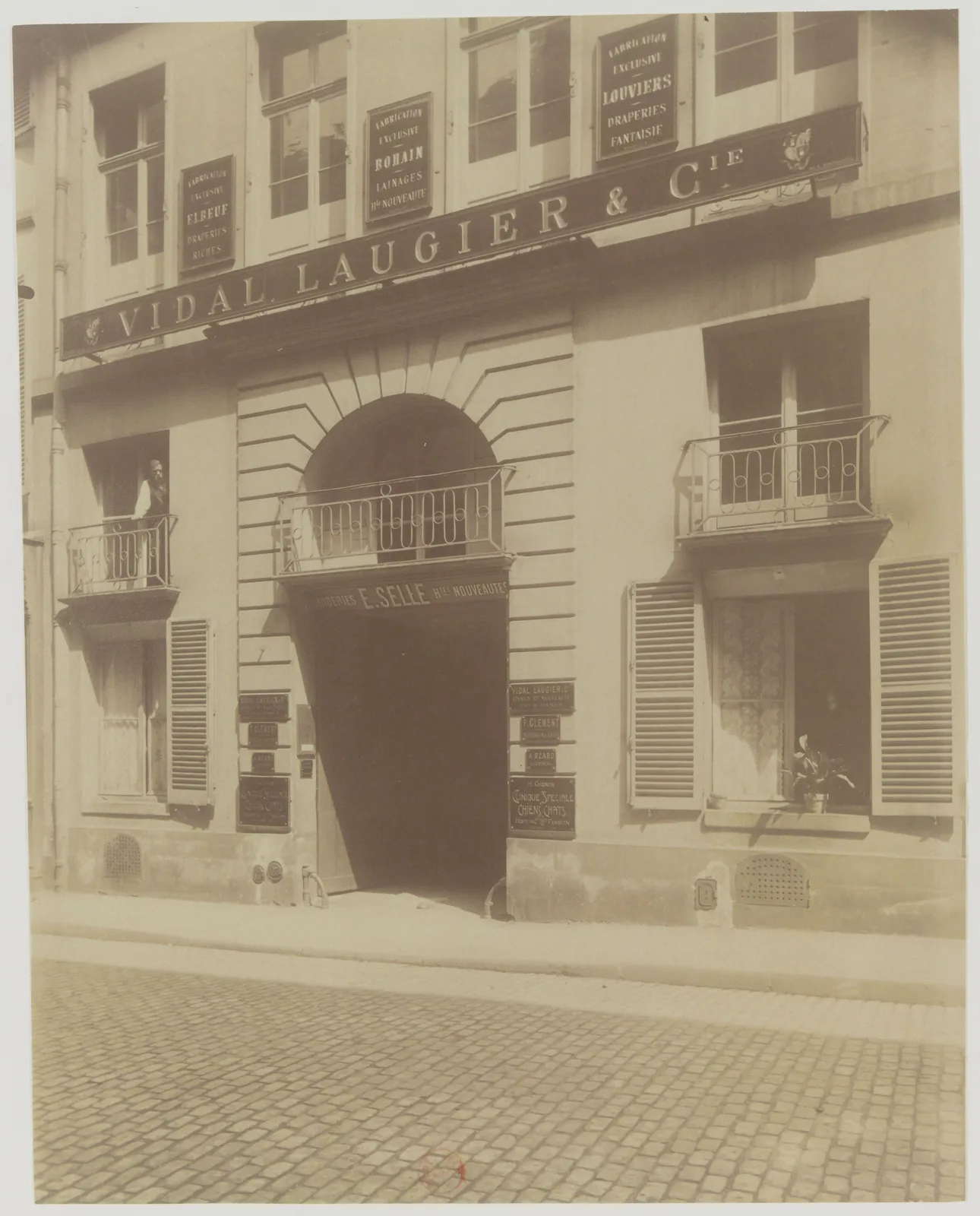
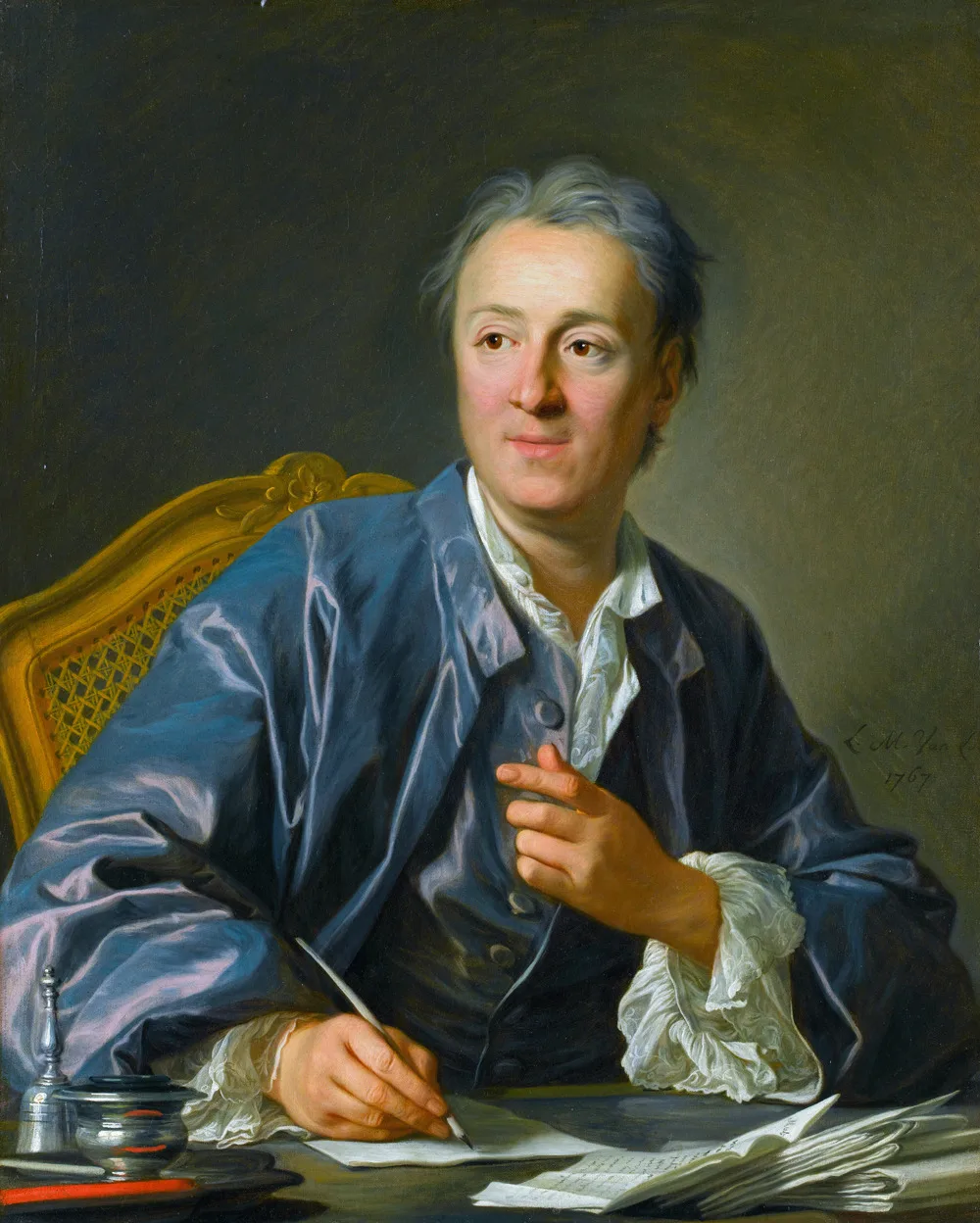
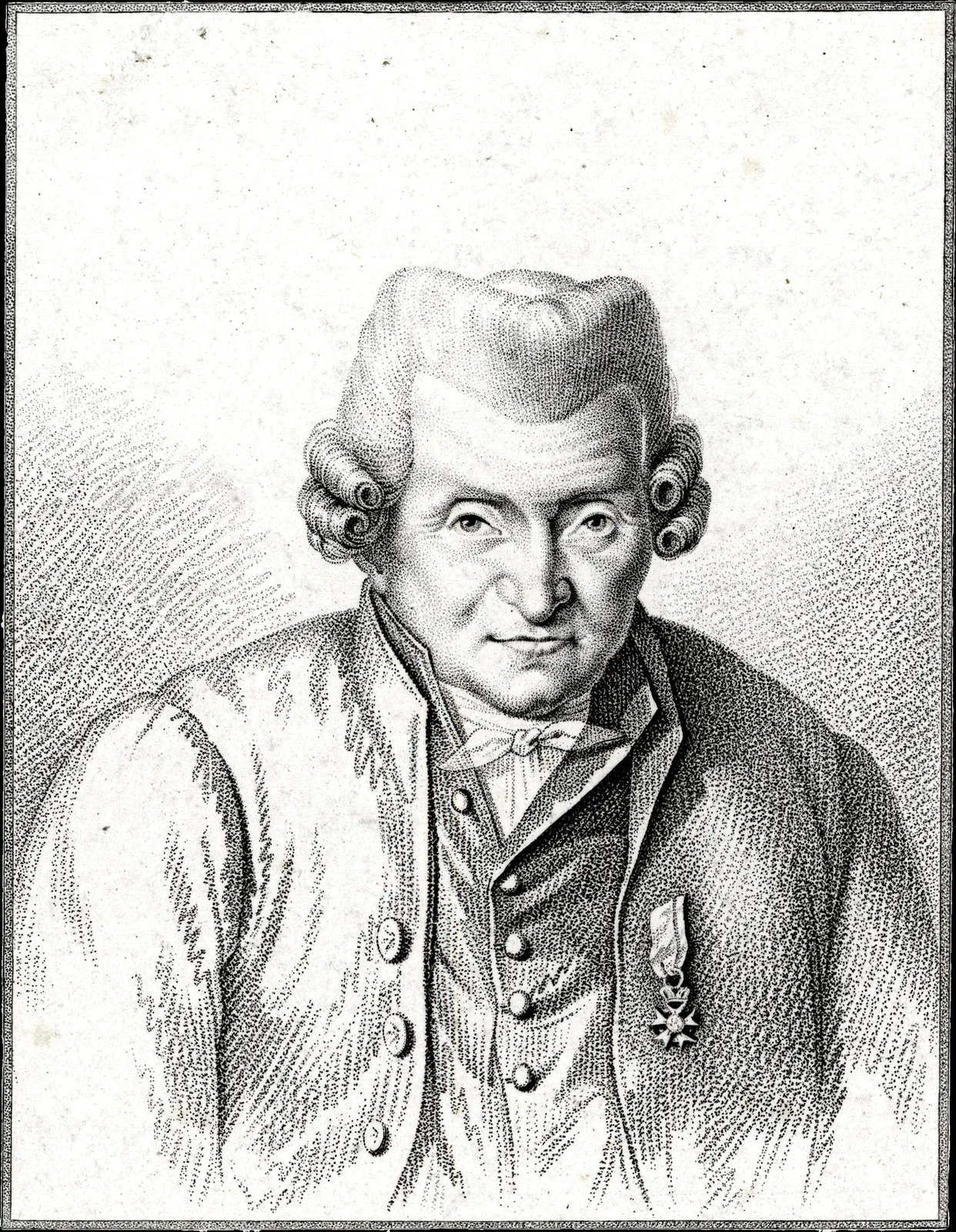
Morellet was frank about what was taught there. "It was there, too, that Diderot, Dr Roux and the good baron himself laid down absolute atheism, that of the Système de la nature, with an edifying conviction, good faith and probity, even to those of us who, like me, did not believe their teaching." But he added: "We were a good number of theists there, and not ashamed, who defended ourselves vigorously, but always loving atheists of such good company."293031 The best answer to the atheists came from the Neapolitan diplomat the Abbé Galiani, who began a speech at the table: "If I were pope, I would have you put to the Inquisition, and if I were king of France, in the Bastille; but since I have the good fortune to be neither, I shall come back to dinner next Thursday, and you will hear me as I have had the patience to hear you."3233
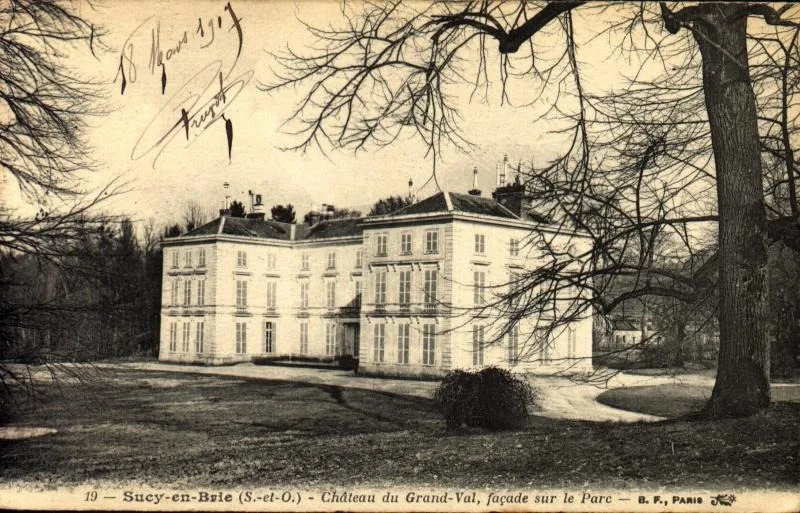
In the late summer and autumn the household moved to the country house at Grandval, east of Paris. Diderot's letters to Sophie Volland describe the days: reading until one, dinner, a walk with the baron. "On the way we talk of history, or politics, or chemistry, or literature, or physics, or morals."3435 One evening a lady scolded the philosophers as "vilains athées," wicked atheists.36 Diderot gave the best portrait of his host: "Imagine a gay, sharp, indecent, nervy satyr in a group of chaste, soft, delicate figures; that is how he was among us."37
It was in 1765, by Diderot's account, that David Hume sat beside a Parisian host and said that he did not believe in atheists; he had never seen one. "Count how many we are here," said the host. They were eighteen. "It is not bad to be able to count you fifteen at the first try; the other three don't know what to think." Diderot did not name the host. An English visitor's memoirs place the story at d'Holbach's table, with seventeen atheists, and it is usually told of him.3839
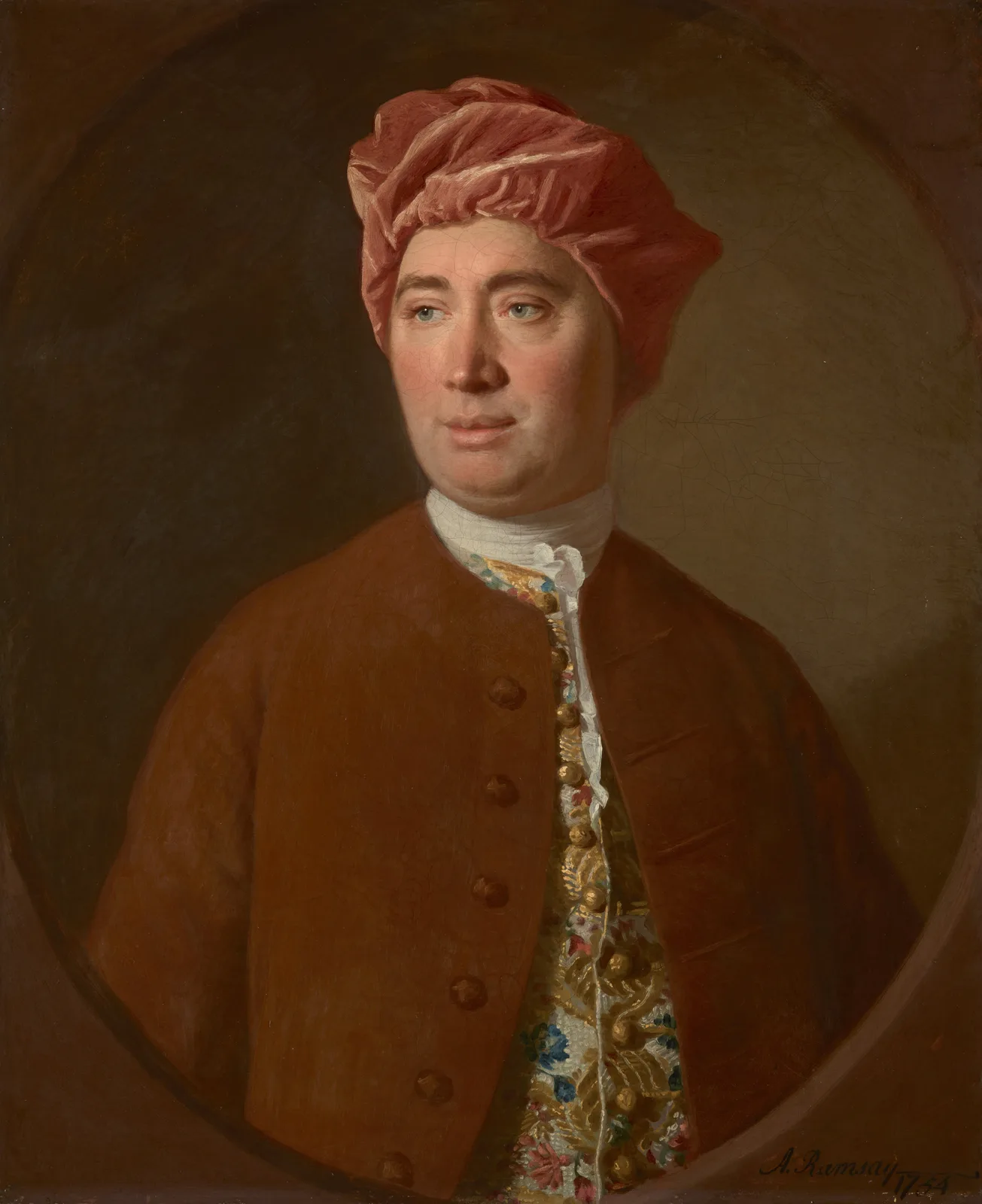
Under other men's names
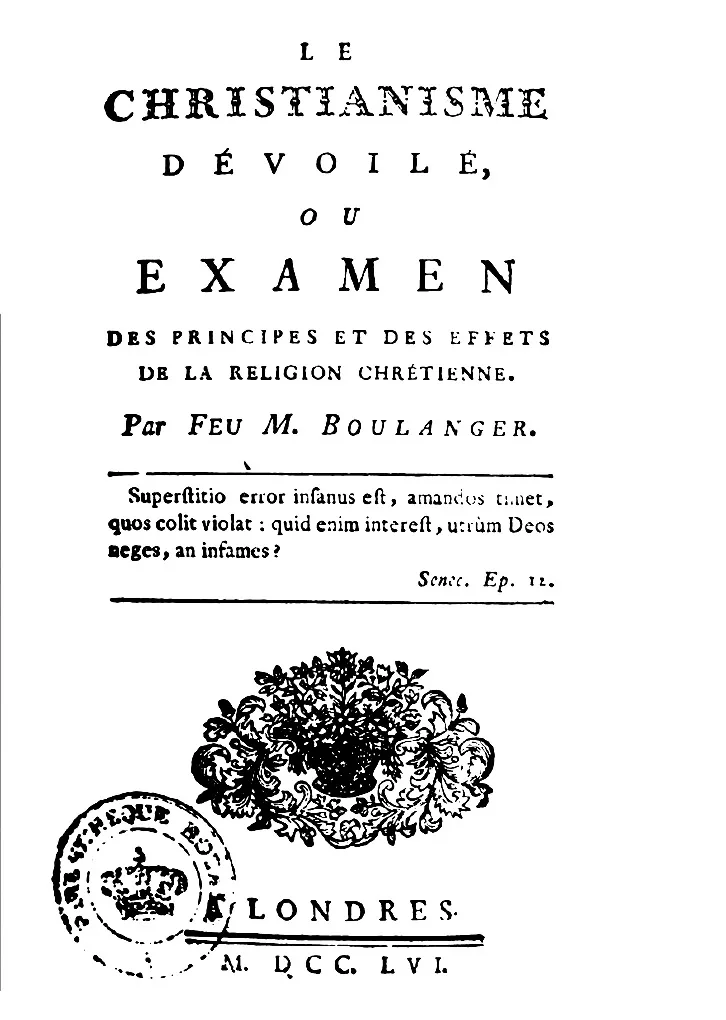
His first book against Christianity, Le Christianisme dévoilé (Christianity Unveiled), was printed about 1761 and put out under the name of his friend Nicolas-Antoine Boulanger, an engineer who had died in 1759, so as to send any persecution down the wrong path.404142 Its opening letter answers a friend who feared that the people need religion: "You are not, Sir, of the number of pusillanimous thinkers, who believe that truth is capable of doing harm. It does harm to those only who deceive mankind."43 Voltaire, who was himself suspected of writing it, disliked it: "This book leads to the atheism I detest. I have always regarded atheism as the greatest aberration of reason, because it is as ridiculous to say that the arrangement of the world does not prove a supreme craftsman as it would be impertinent to say that a clock does not prove a clockmaker."4445
From 1767 he poured out books. His literary agent and editor Jacques-André Naigeon had the manuscripts copied; they went through a postmaster at Sedan and a woman at Liège to the printer Marc-Michel Rey in Amsterdam, and came back to be sold under the cloak.4647 In two years he delivered more than twenty volumes.48 One of them, La Contagion sacrée, grew out of letters he had written to a Catholic woman whose confessor had warned her against the Holbachs.49 "It is raining bombs on the house of the Lord," Diderot wrote.47 It was not a game. In October 1768 Diderot reported that a pedlar and his wife had been put in the pillory, flogged and branded, and an apprentice sent to the galleys for nine years, for selling Le Christianisme dévoilé.50
The author, meanwhile, wrote to his friends as if he were a reader. In December 1767 he asked Wilkes to bring him "a couple of french books call'd Militaire philosophe and Theologie portative," which could not be had in Paris; he had a hand in the second.51 In March 1770 he recommended to Wilkes "two very strange works lately publish'd," one of them "le Systeme de la Nature par Mirabaud."5253
The System of Nature
The Système de la nature appeared early in 1770. Its preface is written in the voice of the dead Mirabaud: "Warned by old age and weak limbs that death is fast approaching, the author protests most solemnly that, in his labours, his sole object has been to promote the happiness of his fellow creatures." D'Holbach was forty-seven.154 The book begins with its whole argument: "The source of man's unhappiness is his ignorance of Nature."55 Its argument is that the gods were made by men who did not understand nature. "From ignorance of natural causes, man has created Gods; imposture rendered these Gods terrible to him." "The first theology of man was grounded on fear, modelled by ignorance." And so: "If the ignorance of nature gave birth to the Gods, the knowledge of nature is calculated to destroy them."565758
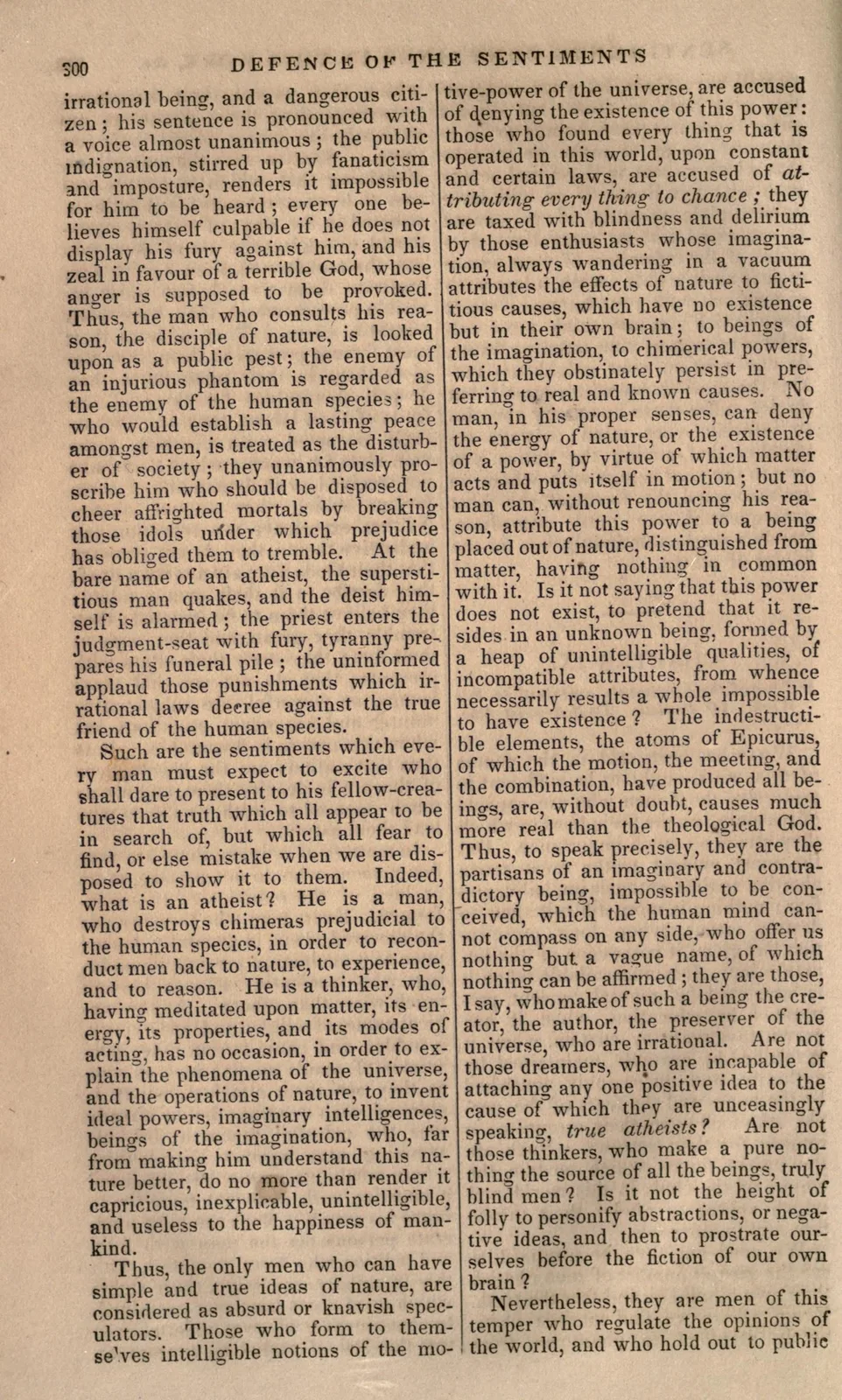
It used the word atheist without apology. "Indeed, what is an atheist? He is a man, who destroys chimeras prejudicial to the human species, in order to reconduct men back to nature, to experience, and to reason."59 In a chapter on what leads men to atheism it named the persecutions, the ministers of God and the bloody disputes of religion as reasons enough, and rejected the believers' claim that only a wicked heart makes an atheist. "Must not every mind in which humanity is not extinguished, irritate itself against a phantom, who, in every country, is made to speak only like a capricious, inhuman, and irrational tyrant?"6061 And it ended, for the reader afraid of death, with consolation: "Live then in peace, for the season that nature permits thee; and if thy mind be enlightened by reason, thou wilt die without terrour!"62
The answers
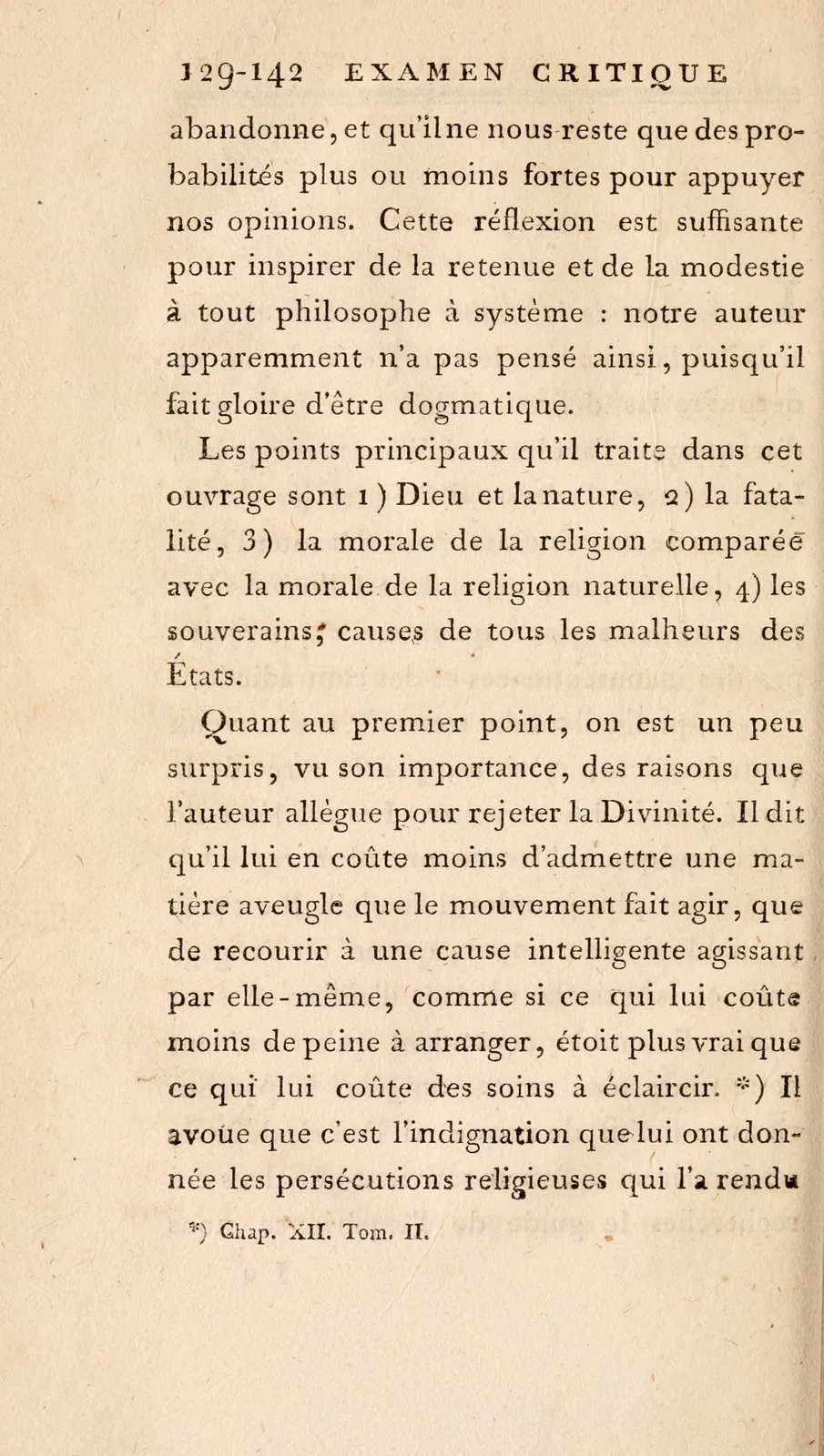
The Parlement's lawyer, Antoine-Louis Séguier, denounced "an impious and audacious sect" that had "decorated its false wisdom with the name of Philosophy," and said that the author "declares openly and with the most decided assertion that there is no God, and that there cannot be one." His speech was so weak, the story goes, that the Parlement would not publish it and the King had it printed; Grimm thought it seemed designed to inform the ignorant.636465 The more serious answers came from the friends of reason. Voltaire, after saying he no longer read such books, wrote a short reply in God's favour: "Everything announces a supreme Being to us; nothing tells us what he is."6667 Frederick the Great of Prussia wrote a critique and did not publish it; he thought the author "admits that it is the indignation religious persecutions gave him that made him an atheist," and asked whether laziness and passion were reasons to settle a philosopher's opinions.6869 Galiani wrote that the book stood on the line where sad, dry truth ends and the gaiety of fiction begins.70 The young Goethe and his friends at Strasbourg found it "so grey, so Cimmerian, so deathlike, that we could hardly bear its presence."7172
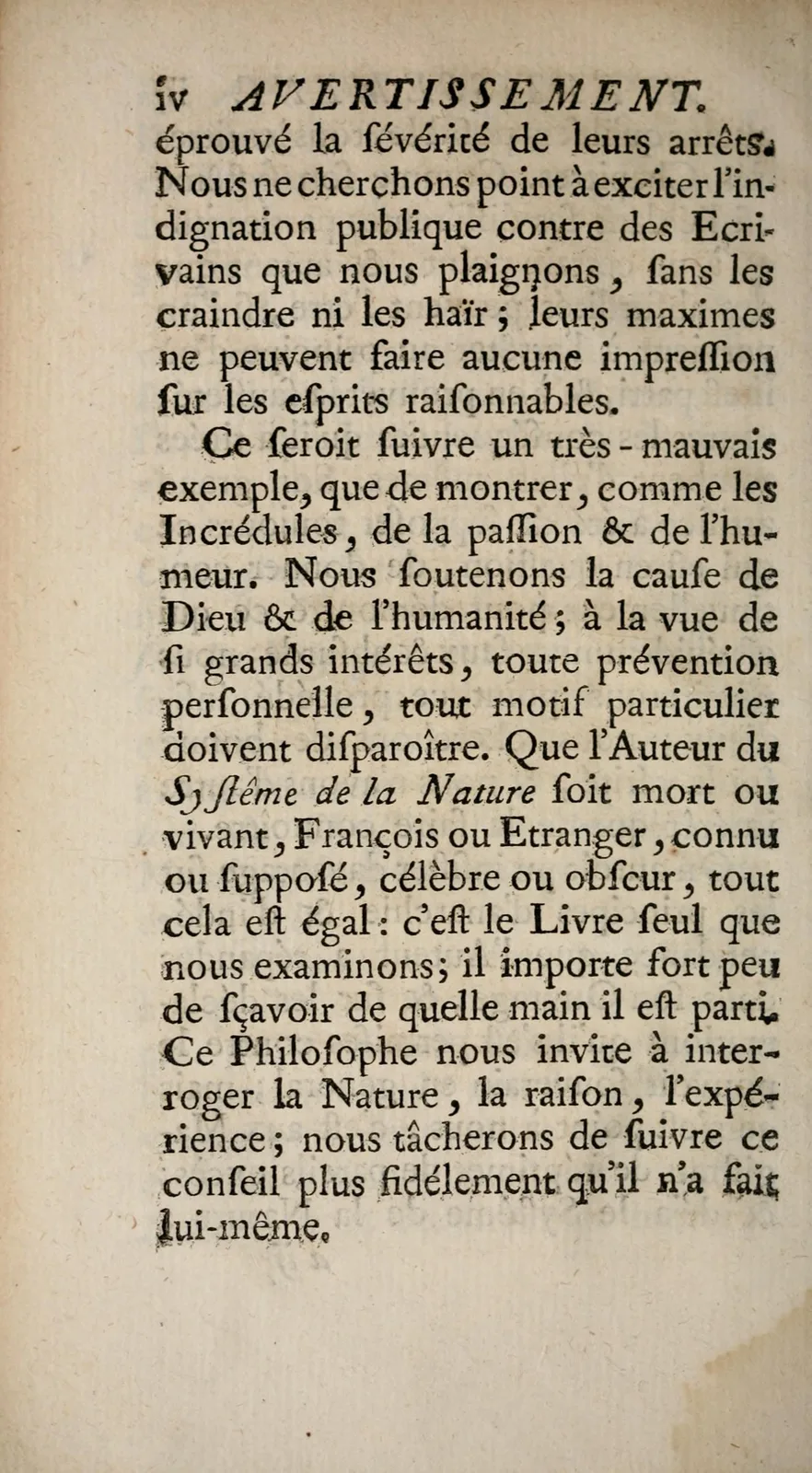
The fairest of them was a priest, the Abbé Nicolas-Sylvestre Bergier, whose Examen du matérialisme came out in 1771. He refused to play the game of the mask: "Whether the author of the Système de la nature is dead or alive, French or foreign, known or supposed, famous or obscure, it is all the same: it is the book alone that we are examining." Its great trick, he said, was "always to assume what is in question."737475 Bergier also noticed that the same hand had written La Contagion sacrée; he had seen through the mask without needing to lift it.73
After the System
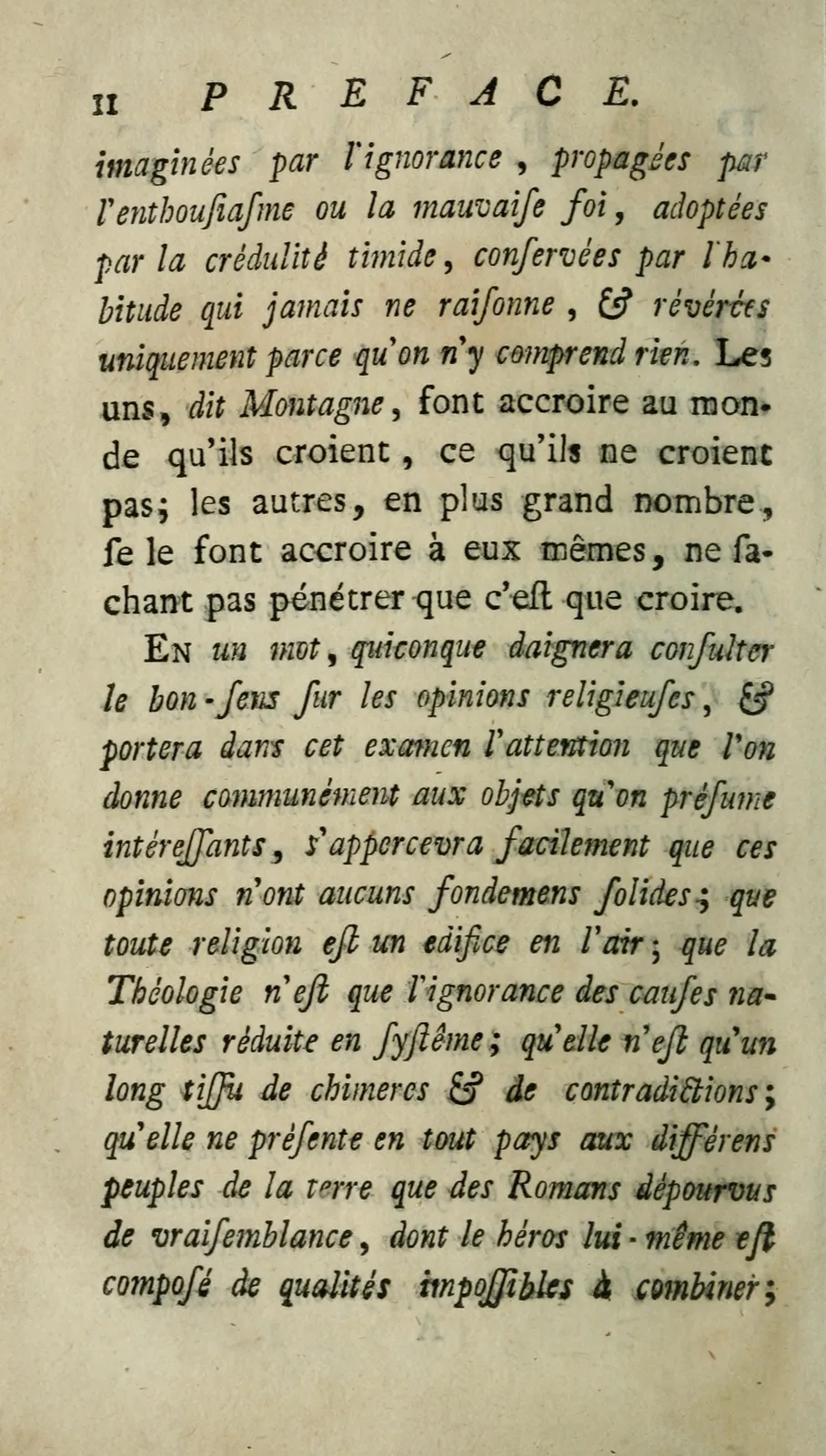
He did not stop. In 1772 came Le Bon sens, the system cut down for the general reader: "Religion is a mere castle in the air. Theology is but the ignorance of natural causes reduced to a system."767778 Voltaire and d'Alembert thought it more dangerous than the big book.76 But his later works turned from tearing down to building. In 1773 he published a politics and a social system, and in 1776 an Ethocratie, a government founded on morals, dedicated to the young Louis XVI.79 On the timeline, that is his revision: the destroyer of chimeras became a writer of moral and political advice, still anonymous.
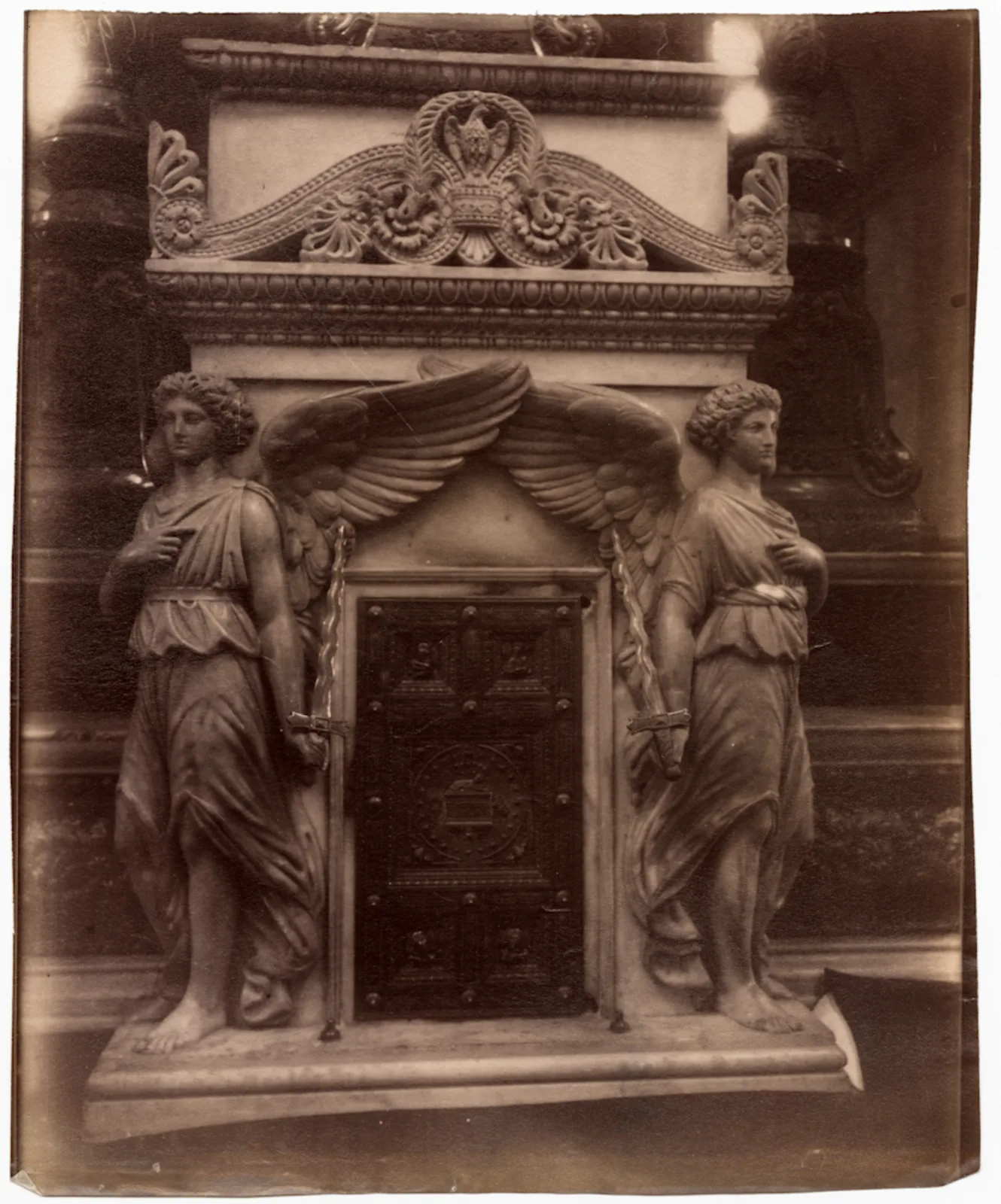
He died in Paris on 21 January 1789, six months before the fall of the Bastille, and was buried in the church of Saint-Roch beside Diderot, in an unmarked grave in the crypt of the Virgin's chapel.80 In March the journalist Meister wrote in Grimm's newsletter that "it is no longer indiscreet to say he is the author of the famous Système de la nature," and that Diderot had written many of its pages.8182 Meister did not share the doctrine, but he described the man: it was "not without effort that he hid his natural horror of priests," and "it seemed that all the credulity he had refused to news of the other world he had kept entire for the gazette and the cafés."838485 His editor Naigeon remembered "a good husband, a good father and a good friend," who once paid to free a peasant from the army and begged him to tell no one.86
Did his unbelief change shape?
The belief itself seems hardly to have moved once it was formed; what changed was its use. It appears first as irony in a scientific preface, then as an argument passed under dead men's names, then as a complete system, and at last as a basis for morals and government. What did not change was the mask. He was a generous host who argued for atheism openly at his own table and would not put his name to it in print, while the people who sold his books were flogged and branded for it. Frederick thought anger at persecution had made him an atheist, and his own book half says so. Meister thought his anger at priests was something he had to work to keep down. The baron himself left only the book, and a sentence in it that explains the hiding as well as the writing: truth "does harm to those only who deceive mankind."
Denis Diderot, who sat at his table for decades and lies beside him at Saint-Roch, has his own chapter in this book.
Footnotes
-
Max Pearson Cushing, Baron d'Holbach: A Study of Eighteenth Century Radicalism in France (New York: Columbia University Press, 1914), pp. 54–55; Holbach, The System of Nature (published 1770 as by Mirabaud), tr. H. D. Robinson (Boston: J. P. Mendum, 1868), p. x. ↩ ↩2
-
Cushing, Baron d'Holbach, p. 55. Reported at second hand; the original has not been seen. ↩
-
Holbach's letters to Hume (1763), Garrick (1766), Wilkes (1746–75) and Galiani (1770), as printed in the Appendix of [Cushing] pp. 70–83, (Cushing p. 82). ↩
-
Holbach to Galiani, Grandval, 25 Aug 1770: Cushing, Baron d'Holbach, p. 82 (Critica, 1903). Not checked against the original (no (printed text)). ↩
-
Holbach to Galiani, 25 Aug 1770: Cushing, Baron d'Holbach, p. 82. Not checked against the original (no (printed text)). ↩
-
Cushing, Baron d'Holbach, p. 5; Charles Avezac-Lavigne, Diderot et la société du baron d'Holbach (Paris: Leroux, 1875), p. 75. Accounts differ; see the disputed points. ↩
-
Cushing, Baron d'Holbach, p. 5; The Confessions of J. J. Rousseau (London: Aldus Society, 1903), Gutenberg #3913, bk VIII. ↩
-
Cushing, Baron d'Holbach, p. 5 n. 6. ↩
-
Cushing, Baron d'Holbach, pp. 5–6. ↩
-
Cushing, Baron d'Holbach, pp. 6, 19. ↩
-
Letters, (Cushing pp. 6–11). ↩
-
Holbach to Wilkes, Heeze, 9 Aug 1746: Cushing, Baron d'Holbach, p. 8 (from British Museum MS 30867). Not checked against the original (no (printed text seen, manuscript not)). ↩
-
Cushing, Baron d'Holbach, pp. 12, 26–30. ↩
-
Holbach, preface to Neri, 1752: Cushing, Baron d'Holbach, p. 27. Not checked against the original (no (quoted at second hand)). ↩
-
Holbach, preface to Lehmann, 1759: Cushing, Baron d'Holbach, p. 28. Not checked against the original (no (quoted at second hand)). ↩
-
Holbach, same preface: Cushing, Baron d'Holbach, p. 29. Not checked against the original (no (quoted at second hand)). ↩
-
Cushing, Baron d'Holbach, pp. 65–66. ↩
-
Cushing, Baron d'Holbach, pp. 12–13; Avezac-Lavigne, Diderot et la société du…, p. 43; Confessions of J. J. Rousseau, bk VIII. ↩
-
Confessions of J. J. Rousseau, bk VIII. ↩
-
Rousseau on Holbach's wife's death, 1754: Confessions of J. J. Rousseau, Confessions, Aldus 1903, bk VIII. ↩
-
Cushing, Baron d'Holbach, p. 13. ↩
-
Abbé Morellet, Mémoires sur le dix-huitième siècle et sur la Révolution, vol. I (Paris: Ladvocat, 1821), vol. I pp. 128–129. ↩
-
Cushing, Baron d'Holbach, p. 21; Avezac-Lavigne, Diderot et la société du…, p. 76; Meister's notice of Holbach in Grimm's Correspondance littéraire, March 1789, vol. XV of the Tourneux edition (Paris: Garnier, 1877–82), pp. 415–419, p. 419 n.. ↩
-
Memoirs of Marmontel, vol. I (Philadelphia: Brisban and Brannan, 1807), vol. I pp. 170–171. ↩
-
Morellet, Mémoires sur le dix-huitième siècle…, vol. I pp. 127–128. ↩
-
Morellet on the dinners: Morellet, Mémoires sur le dix-huitième siècle…, vol. I p. 129. ↩
-
Morellet, Mémoires sur le dix-huitième siècle…, vol. I pp. 129–130. ↩
-
Morellet: Morellet, Mémoires sur le dix-huitième siècle…, vol. I p. 130. ↩
-
Abbé Morellet, a theist guest: Morellet, Mémoires sur le dix-huitième siècle…, vol. I p. 130. ↩
-
Morellet, Mémoires sur le dix-huitième siècle…, vol. I pp. 131–132. ↩
-
Abbé Galiani, Neapolitan diplomat and friend, at Holbach's table, as told by Morellet: Morellet, Mémoires sur le dix-huitième siècle…, vol. I p. 131. ↩
-
Diderot, Lettres à Mademoiselle Volland, Œuvres complètes, ed. Assézat and Tourneux, vols. XVIII–XIX (Paris: Garnier, 1876); cited by letter number and date. Project Gutenberg #50605, XVII (5 Oct 1759). ↩
-
Diderot on his walks with Holbach at Grandval: Diderot, Lettres à Mademoiselle Volland, XVII, Grandval, 5 Oct 1759. ↩
-
Diderot, Lettres à Mademoiselle Volland, XXIV. ↩
-
Diderot on "notre Baron", to Sophie Volland: Diderot, Lettres à Mademoiselle Volland, vol. I, Paris, 10 May 1759. ↩
-
Diderot, Lettres à Mademoiselle Volland, XCIII. ↩
-
Diderot to Sophie Volland: Diderot, Lettres à Mademoiselle Volland, XCIII, Paris, 6 Oct 1765. ↩
-
Cushing, Baron d'Holbach, pp. 31, 38–39. ↩
-
Cushing, Baron d'Holbach, pp. 36–39. ↩
-
Cushing, Baron d'Holbach, pp. 36–37. ↩
-
Le Christianisme dévoilé, "Letter from the Author to a Friend": Holbach (as "Boulanger"), Christianity Unveiled, tr. W. M. Johnson (New York, 1835), Letter, pp. 7–16. ↩
-
Voltaire's letters and Dieu, réponse au Système de la nature as quoted in [Cushing] pp. 40–62; original not located, in Cushing pp. 40–41. ↩
-
Voltaire, letter of 15 Dec 1766 on Le Christianisme dévoilé; a deist who was himself suspected of the book: Cushing, Baron d'Holbach, p. 41. ↩
-
Cushing, Baron d'Holbach, pp. 39–40. ↩
-
Avezac-Lavigne, Diderot et la société du…, p. 160. ↩
-
Cushing, Baron d'Holbach, pp. 46–47. ↩
-
Diderot, Lettres à Mademoiselle Volland, CXIV; Avezac-Lavigne, Diderot et la société du…, p. 161. ↩
-
Holbach to Wilkes, Paris, 10 Dec 1767: Cushing, Baron d'Holbach, p. 78 (British Museum MS 30869). Not checked against the original (no (printed text)). ↩
-
Letters, (Cushing p. 80). ↩
-
Holbach to Wilkes, Paris, 19 Mar 1770: Cushing, Baron d'Holbach, p. 80. Not checked against the original (no (printed text)). ↩
-
Système de la nature, Preface: Holbach, System of Nature, p. x. ↩
-
Système de la nature, Author's Preface: Holbach, System of Nature, p. viii. ↩
-
Système de la nature: Holbach, System of Nature, p. 151. ↩
-
Système de la nature: Holbach, System of Nature, p. 170. ↩
-
Système de la nature: Holbach, System of Nature, p. 174. ↩
-
Système de la nature: Holbach, System of Nature, p. 300. ↩
-
Holbach, System of Nature, pp. 313–315. ↩
-
Système de la nature, "Of the Motives which lead to Atheism": Holbach, System of Nature, p. 315. ↩
-
Système de la nature: Holbach, System of Nature, p. 121. ↩
-
Cushing, Baron d'Holbach, p. 55; Réquisitoire of the avocat général, as printed in [Systeme] part II, pp. 455–498. ↩
-
Séguier: Système de la nature, 1771 edition, part II, with the réquisitoire printed at the end (no place or printer), 1771 part II p. 456. ↩
-
Séguier, avocat général, réquisitoire before the Parlement of Paris, Aug 1770: Séguier, in Systeme 1771 part II p. 490. ↩
-
and, Dieu, in Cushing pp. 56–59. ↩
-
Voltaire, Dieu, réponse au Système de la nature, 1770: Cushing, Baron d'Holbach, p. 62 (quotation of Voltaire). ↩
-
Frederick II, Examen critique du Système de la nature, Œuvres posthumes, vol. VI (Berlin, 1788), pp. 139ff, pp. 142–143; Cushing, Baron d'Holbach, pp. 57, 61. ↩
-
Frederick II of Prussia, Examen critique du Système de la nature, written 1770: II, Examen critique du Système de…, pp. 142–143. ↩
-
Galiani to Holbach, 21 July 1770, as printed in [Cushing] pp. 81–82, in Cushing p. 81. ↩
-
Goethe, Dichtung und Wahrheit book 11, as quoted in [Cushing] p. 58 n. 14, in Cushing p. 58 n. 14. ↩
-
Goethe on reading the Système as a student at Strasbourg: Cushing, Baron d'Holbach, p. 58 n. 14 (Dichtung und Wahrheit, bk 11). ↩
-
Nicolas-Sylvestre Bergier, Examen du matérialisme, vol. I (Paris: Humblot, 1771), vol. I Avertissement p. ii; Cushing, Baron d'Holbach, p. 63. ↩ ↩2
-
Abbé Bergier, canon of Notre-Dame, Examen du matérialisme, 1771: Bergier, Examen du matérialisme, vol. I, Avertissement p. iv. ↩
-
Abbé Bergier: Bergier, Examen du matérialisme, vol. I, Avertissement p. iii. ↩
-
Holbach, Good Sense; or Natural Ideas opposed to Supernatural, tr. H. D. Robinson (Boston: J. P. Mendum, 1856), Preface. ↩
-
Le Bon sens (Good Sense), Preface: Holbach, Good Sense; or Natural Ideas…, Preface (page number not read from OCR). ↩
-
Cushing, Baron d'Holbach, pp. 52–53, 55 n. 2. ↩
-
Cushing, Baron d'Holbach, pp. 16, 21. ↩
-
Correspondance littéraire, pp. 416–417. ↩
-
Meister: Correspondance littéraire, p. 416. ↩
-
Correspondance littéraire, p. 418. ↩
-
Meister: Correspondance littéraire, p. 418. ↩
-
Meister on Holbach, March 1789: Correspondance littéraire, p. 418. ↩
-
Cushing, Baron d'Holbach, pp. 23–25. ↩
In their own words
As to me, Idleness renders me every day more philosopher every passion is languishing within me, I retain but one in a warm degree, viz, friendship in which you share no small part. I took a whim to study a little Physic accordingly I purchased several books in that Way.
L'envie de me rendre utile, dont tout citoyen doit être animé, m'a fait entreprendre l'ouvrage que je présente au Public.
La description si précise et si détaillée que Moïse fait du Déluge dans la Genèse, ayant une autorité infaillible, puisqu'elle n'est autre que celle de Dieu même, nous rend certains de la réalité et de l'universalité de ce châtiment terrible.
Les causes les plus simples sont capables de produire au bout des siècles les effets les plus grands, surtout lorsqu'elles agissent incessament; et nous voyons toutes ces causes réunies agir perpétuellement sous nos yeux.
Diderot, when he communicated to me these melancholy events, spoke of the deep affliction of the husband. His grief affected my heart.
Imaginez un satyre gai, piquant, indécent et nerveux, au milieu d'un groupe de figures chastes, molles et délicates; tel il était entre nous.
Chemin faisant, nous parlons ou d'histoire, ou de politique, ou de chimie, ou de littérature, ou de physique, ou de morale.
quand je dis libre, j'entends en matière de philosophie, de religion, de gouvernement, car les plaisanteries libres dans un autre genre en étaient bannies.
C'est là aussi, puisqu'il faut le dire, que Diderot, le docteur Roux et le bon baron lui-même établissaient dogmatiquement l'athéisme absolu, celui du Système de la nature, avec une persuasion, une bonne foi, une probité édifiante, même pour ceux d'entre nous qui, comme moi, ne croyaient pas à leur enseignement.
I believe it will be relished by the friends of truth, who like to see vulgar errors struck at the root.
La première fois que M. Hume se trouva à la table de M. de ...., il était assis à côté de lui. Je ne sais à quel propos le philosophe anglais s'avisa de dire à M. de .... qu'il ne croyait pas aux athées, qu'il n'en avait jamais vu. M. de .... lui dit: «Comptez combien nous sommes ici.» Nous étions dix-huit. M. de .... ajouta: «Il n'est pas malheureux de pouvoir vous en compter quinze du premier coup: les trois autres ne savent qu'en penser.»
If there is some good new romance I'll be oblig'd to bring it over along with you as well as a couple of french books call'd Militaire philosophe and Theologie portative in case you may easily find them in London, for we cannot get them here.
If the hurry of affairs whould leave you any moments to read curious books I would advise you to peruse two very strange works lately publish'd viz Recherches philosophiques sur les americains le Systeme de la Nature par Mirabaud.
Je suis bien aise que vous ayez lu le livre de Mirabaud qui fait un bruit affreux dans ce pays.
nos seigneurs du Parlement y viennent d'y répondre par des fagots, ainsi qu'à quelques autres ouvrages de même trempe.
THE source of man's unhappiness is his ignorance of Nature. The pertinacity with which he clings to blind opinions imbibed in his infancy, which interweave themselves with his existence, the consequent prejudice that warps his mind, that prevents its expansion, that renders him the slave of fiction, appears to doom him to continual errour.
In conclusion: — Warned by old age and weak limbs that death is fast approaching, the author protests most solemnly that, in his labours, his sole object has been to promote the happiness of his fellow creatures
From ignorance of natural causes, man has created Gods; imposture rendered these Gods terrible to him
If the ignorance of nature gave birth to the Gods, the knowledge of nature is calculated to destroy them.
The first theology of man was grounded on fear, modelled by ignorance
Must not every mind in which humanity is not extinguished, irritate itself against a phantom, who, in every country, is made to speak only like a capricious, inhuman, and irrational tyrant?
Indeed, what is an atheist? He is a man, who destroys chimeras prejudicial to the human species, in order to reconduct men back to nature, to experience, and to reason.
Live then in peace, for the season that nature permits thee; and if thy mind be enlightened by reason, thou wilt die without terrour!
Religion is a mere castle in the air. Theology is but the ignorance of natural causes reduced to a system; a long tissue of fallacies and contradictions.
You are not, Sir, of the number of pusillanimous thinkers, who believe that truth is capable of doing harm. It does harm to those only who deceive mankind, and to the rest of the human species it will always be useful.
Il semblait véritablement que toute la crédulité qu'il avait refusée aux nouvelles de l'autre monde, il l'eût réservée tout entière pour celles de la gazette et des cafés.
Il n'y a plus d'indiscrétion à dire qu'il est l'auteur du livre qui fit tant de bruit en Europe, il y a dix-huit ou vingt ans, du fameux Système de la nature.
ce n'était pas sans effort qu'il dissimulait son horreur naturelle pour les prêtres, pour tous les suppôts du despotisme et de la superstition; en parlant d'eux, sa douceur s'irritait malgré lui, sa bonhomie devenait souvent amère et provocante.
Je suis riche, mais je ne vois dans la fortune qu'un instrument de plus pour opérer le bien plus promptement et plus efficacement.
The other side
Ce livre conduit à l'athéisme que je déteste. J'ai toujours regardé l'athéisme comme le plus grand égarement de la raison, parce qu'il est aussi ridicule de dire que l'arrangement du monde ne prouve pas un artisan suprême qu'il serait impertinent de dire qu'une horloge ne prouve pas un horloger.
Tout nous annonce un Être suprême, rien ne nous dit ce qu'il est.
Il avoue que c'est l'indignation que lui ont donnée les persécutions religieuses qui l'a rendu athée. Sont-ce des raisons pour fixer les opinions d'un philosophe, que la paresse et les passions?
Que l'Auteur du Système de la Nature soit mort ou vivant, François ou Étranger, connu ou supposé, célèbre ou obscur, tout cela est égal: c'est le Livre seul que nous examinons
Son grand artifice a été de supposer toujours ce qui est en question, de donner continuellement pour démontré ce qui est évidemment faux et absurde
L'auteur du Système de la Nature déclare ouvertement et avec l'assertion la plus décidée, qu'il n'y a point de Dieu, et qu'il ne saurait y en avoir.
Il s'est élevé au milieu de nous une secte impie et audacieuse; elle a décoré sa fausse sagesse du nom de Philosophie
Je commence par vous dire que, si j'étais pape, je vous ferais mettre à l'inquisition, et, si j'étais roi de France, à la Bastille; mais, comme j'ai le bonheur de n'être ni l'un ni l'autre, je reviendrai dîner jeudi prochain, et vous m'entendrez comme j'ai eu la patience de vous entendre.
Nous étions là bon nombre de théistes, et point honteux, qui nous défendions vigoureusement, mais en aimant toujours des athées de si bonne compagnie.
Es kam uns so grau, so cimmerisch, so totenhaft vor, dass wir Mühe hatten, seine Gegenwart auszuhalten
Where accounts differ
| Point | One account | Another | How the page handles it |
|---|---|---|---|
| Birthplace and date | Heidelsheim, early 1723 (Cushing p. 5; Avezac p. 75) | Edesheim (the roster; later scholarship, not in my texts); a December 1723 baptism is also said, unverified | Say "born in the Palatinate in 1723"; settle the town with a modern Tier 2 source |
| Who raised him | His father, a self-made rich man, brought him to Paris at twelve; father died when he was young (Cushing p. 5, citing Rousseau) | His uncle François-Adam, ennobled and wealthy, raised him (roster; uncle's existence and 1753 death are in Cushing p. 5 n. 6, but not that he raised the boy) | "He grew up in Paris; accounts differ on whether his father or his uncle brought him" |
| Years at Leiden | Student there in 1746 (Cushing p. 5) | 1744 to 1748 (roster, unverified) | "Studied at Leiden in the mid-1740s" |
| The Hume dinner | Eighteen at table, fifteen atheists, host unnamed (Diderot-V XCIII, 1765) | Seventeen atheists, at d'Holbach's (Romilly's Memoirs, in the editors' note) | Quote Diderot; say "Diderot tells it of a dinner commonly placed at the baron's table" |
| When Hume reached Paris | 1764, called on Holbach at once (Cushing p. 18) | Holbach wrote to him in Aug 1763 and Diderot places the anecdote in 1765 (Cushing p. 71) | Avoid a date for his arrival |
| Who owned Grandval | Estate of Mme d'Aine (Cushing p. 14) | Bought by Holbach from a M. Charon and restored (Avezac pp. 77–78) | "The family's country house at Grandval" |
| Serpent or viper | Hume told he would "warm a serpent" (Morellet I p. 105) | "vipère" (Avezac, citing Marmontel) | Use Morellet's "serpent" |
| Date of the Parlement's first condemnation | Arrêt of 24 Sept 1769 for Christianisme dévoilé, then 18 Aug 1770 for the Système (Cushing p. 55, wording ambiguous) | — | Give only 18 Aug 1770 |
List of illustrations
This page uses only public-domain and Creative Commons images; each is credited with its source and licence.
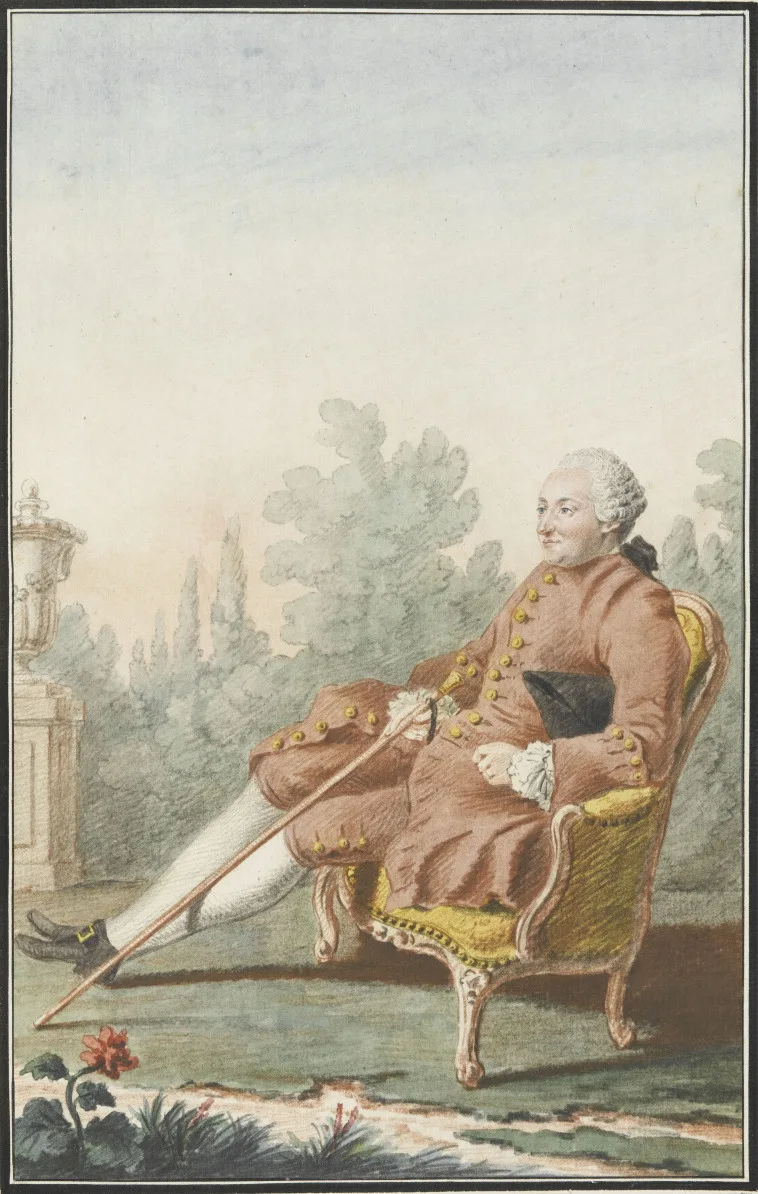
- Baron d'Holbach (drawing) — Louis Carrogis Carmontelle, c. 1766 · Baron d'Holbach (drawing), Louis Carrogis Carmontelle, via Wikimedia Commons · Public domain (Wikimedia Commons file page)
- Baptism certificate of Paul Heinrich Dietrich (Holbach) — Unknown author, 1723 · Baptism certificate of Paul Heinrich Dietrich (Holbach), Unknown author, via Wikimedia Commons · Public domain (Wikimedia Commons file page)
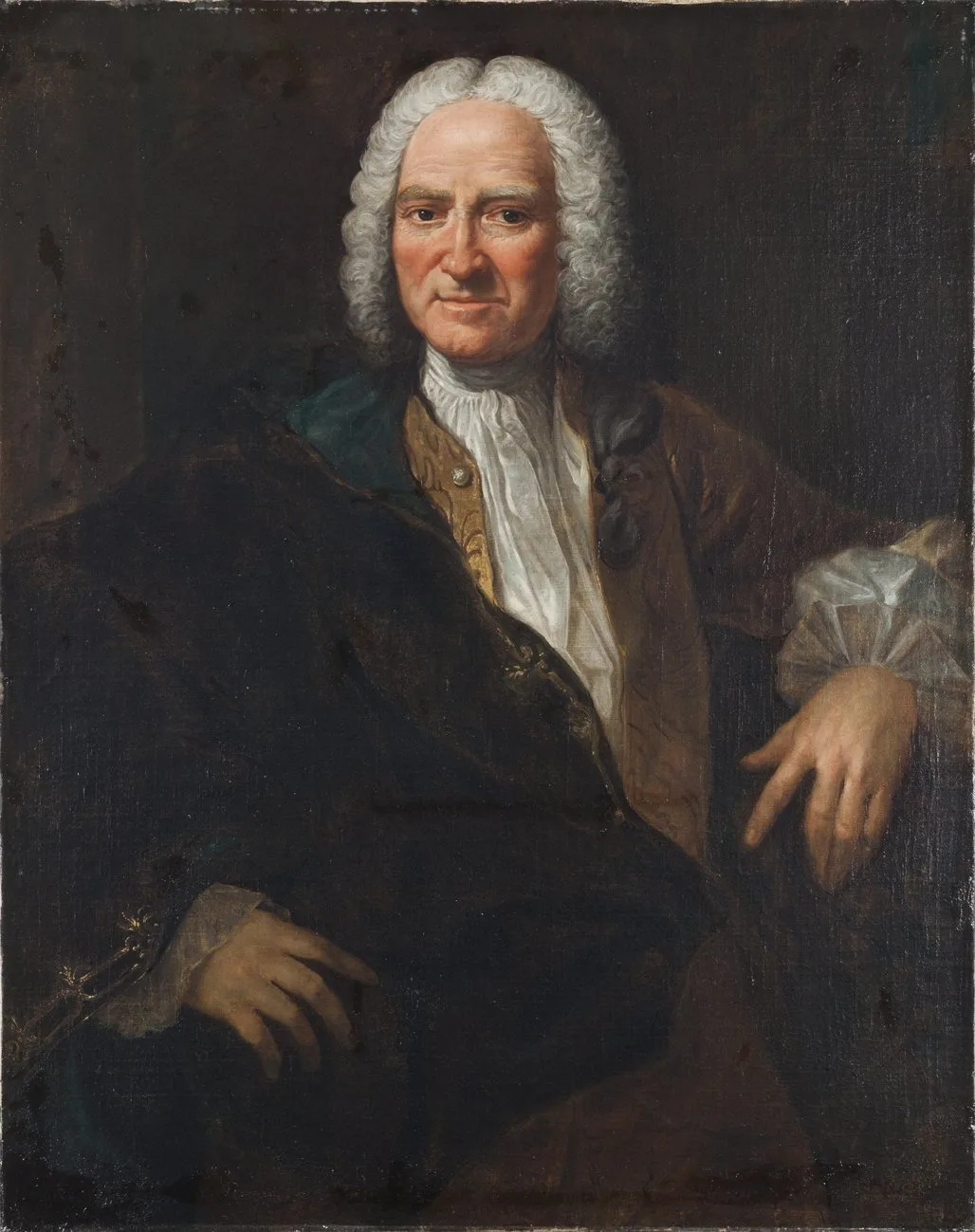
- Baron Franz Adam von Holbach (1675-1753), probably François-Adam d'Holbach (oil on canvas) — Unknown; attributed to Alexander Roslin (museum notes the attribution is open), c. 1753 · Historisches Museum der Pfalz, Speyer / Ehrenamtsgruppe HMP Speyer, inv. HMP_2014_0039 (CC BY 4.0), via Europeana · CC BY 4.0 (Historisches Museum der Pfalz, Speyer, via Europeana and museum-digital; image rights CC BY)
- Gezicht op het Academiegebouw te Leiden, 1726 — Rijksmuseum, 1726 · Gezicht op het Academiegebouw te Leiden, 1726, Rijksmuseum, Rijksmuseum, via Wikimedia Commons · CC0 (Wikimedia Commons file page)
- John Wilkes, Esq. (Hogarth, 1763) — After William Hogarth, 1763 · John Wilkes, Esq. (Hogarth, 1763), After William Hogarth, via Wikimedia Commons · Public domain (Wikimedia Commons file page)
- Art de la verrerie (1752), frontispiece: an ancient glass furnace — Neri, Antonio, -1614, 1752 · Art de la verrerie (1752), frontispiece: an ancient glass furnace, frontispiece, Paris : Chez Durand ... , Chez Pissot ..., 1752; scan via the Internet Archive · Public domain (published 1752; Internet Archive scan)
- Lehmann, Traités de physique, d'histoire naturelle, de minéralogie et de métallurgie, tome III (1759): Holbach's Préface du traducteur on the Flood — Lehmann, Johann Gottlob, 1759 · Lehmann, Traités de physique, d'histoire naturelle, de minéralogie et de métallurgie, tome III (1759): Holbach's Préface du traducteur on the Flood, tome III, Préface du traducteur, A Paris, chez Jean-Thomas Hérissant, rue S. Jacques, à S. Paul & à S. Hilaire., 1759; scan via the Internet Archive · Public domain (published 1759; Internet Archive scan; rights field: Licence ouverte / Open licence Etalab)
- Ancien Hôtel d'Holbach, 8 rue des Moulins (Atget, c. 1900) — Atget, Eugène (1857-1927). Photographe, c. 1900 · Ancien Hôtel d'Holbach, 8 rue des Moulins (Atget, c. 1900), Atget, Eugène (1857-1927). Photographe, Bibliothèque nationale de France, via Wikimedia Commons · Public domain (Wikimedia Commons file page)
- Denis Diderot by Louis-Michel van Loo — Unknown author, 1767 · Denis Diderot by Louis-Michel van Loo, Unknown author, via Wikimedia Commons · Public domain (Wikimedia Commons file page)
- André Morellet (Massol, engraver) — A. B. Massol (17..-1831). Graveur, 18th c. · André Morellet (Massol, engraver), A. B. Massol (17..-1831). Graveur, via Wikimedia Commons · Public domain (Wikimedia Commons file page)
- Sucy-en-Brie, Château du Grand-Val, façade sur le parc — B.F. Paris, early 20th c. · Sucy-en-Brie, Château du Grand-Val, façade sur le parc, B.F. Paris, via Wikimedia Commons · Public domain (Wikimedia Commons file page)
- David Hume by Allan Ramsay (National Galleries of Scotland PG 3521) — Allan Ramsay, 1766 · David Hume by Allan Ramsay (National Galleries of Scotland PG 3521), Allan Ramsay, National Galleries of Scotland, via Wikimedia Commons · Public domain (Wikimedia Commons file page)
- Le Christianisme dévoilé, title page — Baron d'Holbach, 1761 (title page, 'Londres' imprint) · Le Christianisme dévoilé, title page, Baron d'Holbach, via Wikimedia Commons · Public domain (Wikimedia Commons file page)
- Système de la nature, title page, 'par M. Mirabaud, Secrétaire perpétuel' (Londres, 1770) — Paul Henri : Dietrich Holbach (baron d'), 1770 · Système de la nature, title page, 'par M. Mirabaud, Secrétaire perpétuel' (Londres, 1770), title page, 1770; scan via the Internet Archive · Public domain (published 1770; Internet Archive scan)
- The System of Nature (1868), p. 300 — Holbach, Paul Henri Thiry, baron d', 1723-1789; Diderot, Denis, 1713-1784; Robinson, H. D, 1868 · The System of Nature (1868), p. 300, p. 300, Boston : J.P. Mendum, 1868; scan via the Internet Archive · Public domain (published 1868; Internet Archive scan)
- Frédéric II, Examen critique du Système de la nature (Oeuvres posthumes, 1788), p. 142 — Frederick II, King of Prussia, 1712-1786; John Adams Library (Boston Public Library) BRL; Alembert, Jean Le Rond d', 1717-1783; Voltaire, 1694-1778; Argens, Jean-Baptiste de Boyer, marquis d', 1704-1771; Adams, John, 1735-1826, former owner, 1788 · Frédéric II, Examen critique du Système de la nature (Oeuvres posthumes, 1788), p. 142, p. 142, Berlin : Chez voss et fils ..., 1788; scan via the Internet Archive · Public domain (published 1788; Internet Archive scan)
- Bergier, Examen du matérialisme (1771), Avertissement p. iv: 'soit mort ou vivant' — Bergier, M. (Nicolas-Sylvestre), 1718-1790, 1771 · Bergier, Examen du matérialisme (1771), Avertissement p. iv: 'soit mort ou vivant', Avertissement, p. iv, Paris : Humblot, 1771; scan via the Internet Archive · Public domain (published 1771; Internet Archive scan)
- Le Bon-Sens (1772), Préface p. ii: 'la Théologie n'est que l'ignorance des causes naturelles' — [Holbach, Paul Henri Thiry, baron d'] 1723-1789; Meslier, Jean, 1664-1729, 1772 · Le Bon-Sens (1772), Préface p. ii: 'la Théologie n'est que l'ignorance des causes naturelles', Préface, p. ii, Londres, 1772; scan via the Internet Archive · Public domain (published 1772; Internet Archive scan)
- Église Saint-Roch, maître-autel (Atget) — Eugène Atget, c. 1900 · Église Saint-Roch, maître-autel (Atget), Eugène Atget, International Center of Photography, via Wikimedia Commons · Public domain (Wikimedia Commons file page)
Sources
Tier 1 — the subject's own words (writings, letters, diaries, trial records)
- [Syst] Holbach, The System of Nature (published 1770 as by Mirabaud), tr. H. D. Robinson (Boston: J. P. Mendum, 1868). https://archive.org/details/systemofnatureor68holb . Text in research/texts/system-1868.txt. Page numbers as printed.
- [Systeme] Système de la nature, 1771 edition, part II, with the réquisitoire printed at the end (no place or printer). https://archive.org/details/bub_gb_I6GE01i-A0IC_3 . Text in research/texts/systeme-1771-vol2.txt. Long-s OCR. Part I (1770) in systeme-1770-vol1.txt.
- [Good Sense] Holbach, Good Sense; or Natural Ideas opposed to Supernatural, tr. H. D. Robinson (Boston: J. P. Mendum, 1856). https://archive.org/details/in.ernet.dli.2015.158347 . Text in research/texts/goodsense-1856.txt.
- [CU] Holbach (as "Boulanger"), Christianity Unveiled, tr. W. M. Johnson (New York, 1835). https://archive.org/details/bub_gb_TEIAAAAAYAAJ . Text in research/texts/christianity-unveiled-1835.txt.
- [Letters] Holbach's letters to Hume (1763), Garrick (1766), Wilkes (1746–75) and Galiani (1770), as printed in the Appendix of [Cushing] pp. 70–83.
- [Diderot-V] Diderot, Lettres à Mademoiselle Volland, Œuvres complètes, ed. Assézat and Tourneux, vols. XVIII–XIX (Paris: Garnier, 1876); cited by letter number and date. Project Gutenberg #50605. Text in research/texts/diderot-volland.txt.
- [Morellet] Abbé Morellet, Mémoires sur le dix-huitième siècle et sur la Révolution, vol. I (Paris: Ladvocat, 1821). https://archive.org/details/mmoiresdelabb01more . Text in research/texts/morellet-1821-vol1.txt.
- [Marmontel] Memoirs of Marmontel, vol. I (Philadelphia: Brisban and Brannan, 1807). https://archive.org/details/memoirsmarmonte01marmgoog
- [Rousseau] The Confessions of J. J. Rousseau (London: Aldus Society, 1903), Gutenberg #3913. Text in research/texts/rousseau-confessions.txt. Cited by book.
- [Meister] Meister's notice of Holbach in Grimm's Correspondance littéraire, March 1789, vol. XV of the Tourneux edition (Paris: Garnier, 1877–82), pp. 415–419. https://archive.org/details/correspondanceli15grimuoft . Text in research/texts/grimm-corr-15.txt.
Tier 2 — scholarly biographies and encyclopedias
- [Cushing] Max Pearson Cushing, Baron d'Holbach: A Study of Eighteenth Century Radicalism in France (New York: Columbia University Press, 1914). https://archive.org/details/barondholbach00cushuoft . Text in research/texts/cushing-1914.txt. Quotes many letters and works at second hand.
- [Avezac] Charles Avezac-Lavigne, Diderot et la société du baron d'Holbach (Paris: Leroux, 1875). https://archive.org/details/diderotetlasoci00avezuoft . Text in research/texts/avezac-1875.txt.
Tier 3 — popular biographies and journalism
- None used.
Tier 4 — maps to other sources only (Wikipedia and similar). Never cited in the script.
- Wikipedia entry on d'Holbach: used only to suggest Edesheim and Leiden 1744 for the expensive model to check. Not cited.
Opposition sources — contemporary critics and religious responses
- [Frederick] Frederick II, Examen critique du Système de la nature, Œuvres posthumes, vol. VI (Berlin, 1788), pp. 139ff. https://archive.org/details/oeuvresposthumes06fred . Text in research/texts/frederick-oeuvres-posth-vol6.txt. Written 1770, unpublished in his lifetime.
- [Bergier] Nicolas-Sylvestre Bergier, Examen du matérialisme, vol. I (Paris: Humblot, 1771). https://archive.org/details/examendumatria01berg . Text in research/texts/bergier-1771-vol1.txt. Long-s OCR.
- [Séguier] Réquisitoire of the avocat général, as printed in [Systeme] part II, pp. 455–498.
- [Voltaire-C] Voltaire's letters and Dieu, réponse au Système de la nature as quoted in [Cushing] pp. 40–62; original not located.
- [Galiani-C] Galiani to Holbach, 21 July 1770, as printed in [Cushing] pp. 81–82.
- [Goethe-C] Goethe, Dichtung und Wahrheit book 11, as quoted in [Cushing] p. 58 n. 14.
Related lives
Denis Diderot — Holbach's closest friend, co-author of pages of the Système, jailed at Vincennes; the two were buried side by side in Saint-Roch. (Alternative: Jean Meslier, the other hidden unbeliever; Bon sens was later reissued under his name.)
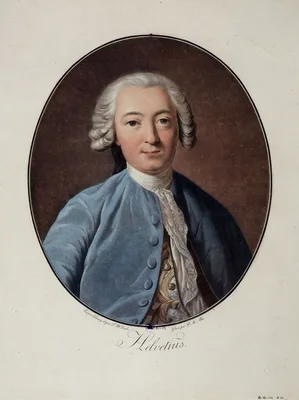
Claude Adrien Helvétius
Claude Adrien Helvétius was schooled by Jesuits and turned by Locke into an empiricist. As a tax farmer he published in 1758 a licensed book that explained mind by the senses and morals by self-interest, without ever denying God. King, archbishop, Parlement, Pope and Sorbonne condemned him as a materialist friend of atheists, and he signed three retractions to protect his mother, his post and his censor. He kept his plainest words on priests, the soul and honest atheists for a manuscript book and private notes, printed after his death.
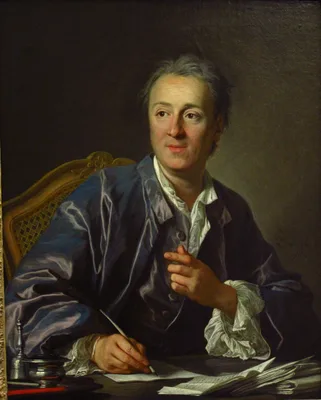
Denis Diderot
Denis Diderot was a tonsured Jesuit pupil who briefly wore a hair shirt. He argued for God as a deist in 1746, then in 1749 handed that argument to a blind man to destroy, while telling Voltaire that belief hardly mattered. Prison at Vincennes taught him to keep his boldest thoughts out of print, and he wrote his materialism into dialogues he would not publish. On his deathbed he refused a retraction as an impudent lie, saying that the first step towards philosophy is incredulity.
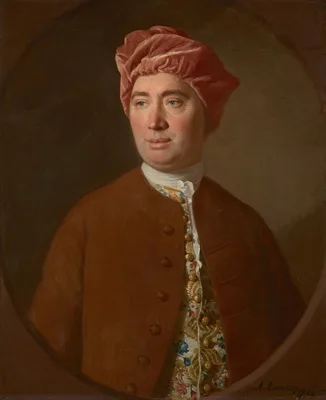
David Hume
David Hume lost the faith of his devout mother before he was twenty, gradually and, by his own account, against his will. He then spent fifty years deciding how much of his doubt to print: he cut the miracles essay from his first book, lost two professorships to the charge of atheism, withdrew his essays on suicide and immortality, and held back the Dialogues until after his death. He called himself only a sceptic. He died so calmly that his calm became the believers' argument.
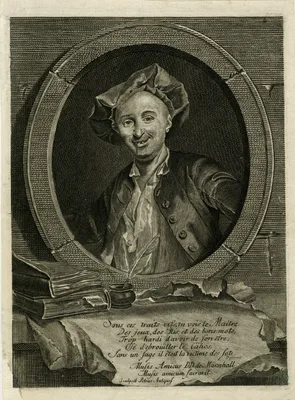
Julien Offray de La Mettrie
Julien Offray de La Mettrie was destined for the Church and was briefly a Jansenist. He became a physician for money and learned the body under Boerhaave. As Frederick the Great told it, in his own fever at Freiburg in 1744 he saw that thought depends on the machine of the body. He said so veiled in 1745 and plainly in Man a Machine (1747–48), and lost his post, his country and his Dutch refuge for it. At Frederick's court he held to his materialism while declining to call himself an atheist, and refused the priest at his death in 1751.