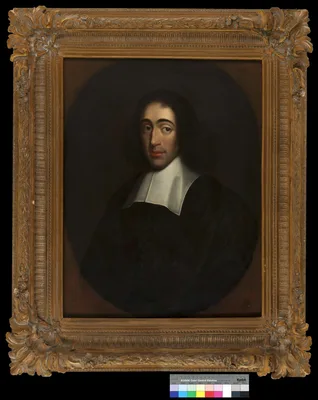
Baruch Spinoza was a promising Talmud pupil who came to think the rabbis rested only on their own authority. At twenty-three he was cast out of Amsterdam's Portuguese synagogue for heresies no one wrote down. He spent his life arguing that the Bible is a human book, that God acts only through the laws of nature, and that a free state lets people think what they like. He rejected the word atheist and never said there was no God, but his "God or Nature" sounded to nearly everyone like no God at all.
The belief timeline
- Faith (c. 1647 (age fifteen)) — A promising pupil of Rabbi Morteira in the Amsterdam synagogue school, studying Talmud, Maimonides and Ibn Ezra [4][5]
- Doubt (before 1656 (exact date not recorded; Lucas puts the first difficulties before fifteen, Colerus after he read Descartes)) — Reads the Bible and Descartes for himself, concludes that the "Rabbins" rest on their own authority, stops attending the synagogue regularly [4][7][8][10]
- Declaration (1656-07-27 (the synagogue's act), 1670 (his own, anonymous)) — The herem expels him; in 1670 the Treatise argues that the Bible is not philosophy and that the state should let everyone "think what he likes, and say what he thinks" [14][28]
- Revision (1675 (late)) — He does not retract; he restates. God is "the cause immanent"; he is not "the unity of God and Nature (meaning... corporeal matter)"; the Ethics is withdrawn from the press; and the name, he asks, must not go on the book [37][38][47]
Notes to the timeline (10)
- [4] At fifteen he "had gone so far in the study of the Talmud as to be one of Rabbi Morteira's most promising pupils"; Lucas says that "not yet fifteen" he raised difficulties his teachers "found it hard to solve" and pretended to be satisfied. — Frederick Pollock, Spinoza, His Life and Philosophy (Kegan Paul, London, 1880). Internet Archive id spinozahislife00polluoft, p. 11; A. Wolf (ed. and tr.), The Oldest Biography of Spinoza (Allen & Unwin, London, 1927), the life by J. M. Lucas with Colerus's variants and notes. Internet Archive id in.ernet.dli.2015.77040, p. 42.
- [5] He read Maimonides and Ibn Ezra in the advanced classes, and found in their "hints and questionings... much more than his teachers expected". — Pollock, Spinoza, p. 11.
- [7] Reading Descartes, he said "he had all his Philosophical Knowledge from him" and concluded that "the ridiculous Doctrine and Principles of the Rabbins" could not be admitted by a man of sense, because they rest only on the authority of the rabbis. — Johannes Colerus, The Life of Benedict de Spinosa (done out of French, London, 1706; Dutch/French originals 1705). Internet Archive id lifebenedictdes00colegoog, pp. 7–8.
- [8] After that he "began to be very much reserved amongst the Jewish Doctors", seldom went to the synagogue, "whither he went only perfunctorily", and the rabbis expected him to turn Christian; he did not. — Colerus, Life of Benedict de Spinosa, p. 8.
- [10] Lucas's story of two friends who pressed him on God, angels and the soul and later denounced him to the judges of the synagogue, quoting him as saying the Law was made by "a man who was forsooth better versed... in the matter of Politics". Pollock gives it "just so much credit as it appears on the face of it to deserve". — (ed, Oldest Biography of Spinoza, pp. 44–49; Pollock, Spinoza, pp. 15–16 and note 1. Accounts differ; see the disputed points.
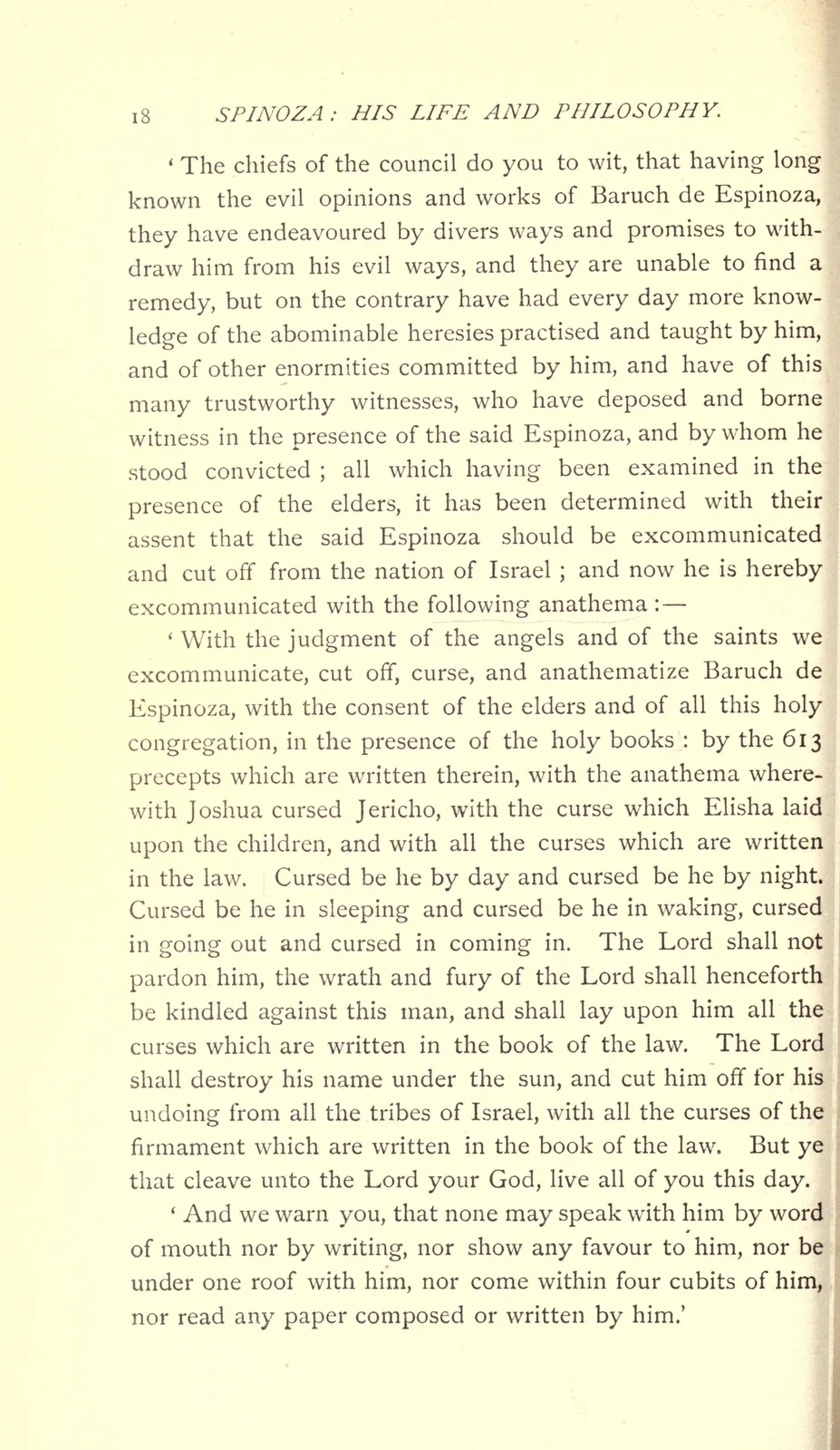
- [14] The herem text, in Portuguese, charges "horrendas heregias que praticava e ensinava" and "ynormes obras que obrava", witnessed by "muitas testimunhas fidedignas" in his presence, and proceeds to the curse. — J. van Vloten (ed.), Ad Benedicti de Spinoza opera quae supersunt omnia supplementum (Amsterdam, 1862). Internet Archive id adbenedictidesp00spingoog, pp. 290–292 (Portuguese with Latin); Pollock, Spinoza, pp. 17–18 (English).
- [28] The Tractatus Theologico-Politicus appeared in 1670 without the author's name and with the name of a fictitious printer at Hamburg; Colerus says it was printed at Amsterdam, by Christopher Conrad. — Pollock, Spinoza, pp. 31–32; Colerus, Life of Benedict de Spinosa, pp. 55–56.
- [37] In summer 1675 he went to Amsterdam to publish the Ethics; "a rumour gained currency that I had in the press a book concerning God, wherein I endeavoured to show that there is no God"; theologians complained to the prince and magistrates, the Cartesians abused him to clear themselves, and he put off publication. — R. H. M. Elwes (tr.), The Chief Works of Benedict de Spinoza, vol. 2 (On the Improvement of the Understanding, the Ethics, Select Letters; revised ed., Bell, London, 1891). Internet Archive id chiefworksofbene02spin, Letter XIX (LXVIII) p. 296; Pollock, Spinoza, p. 38.
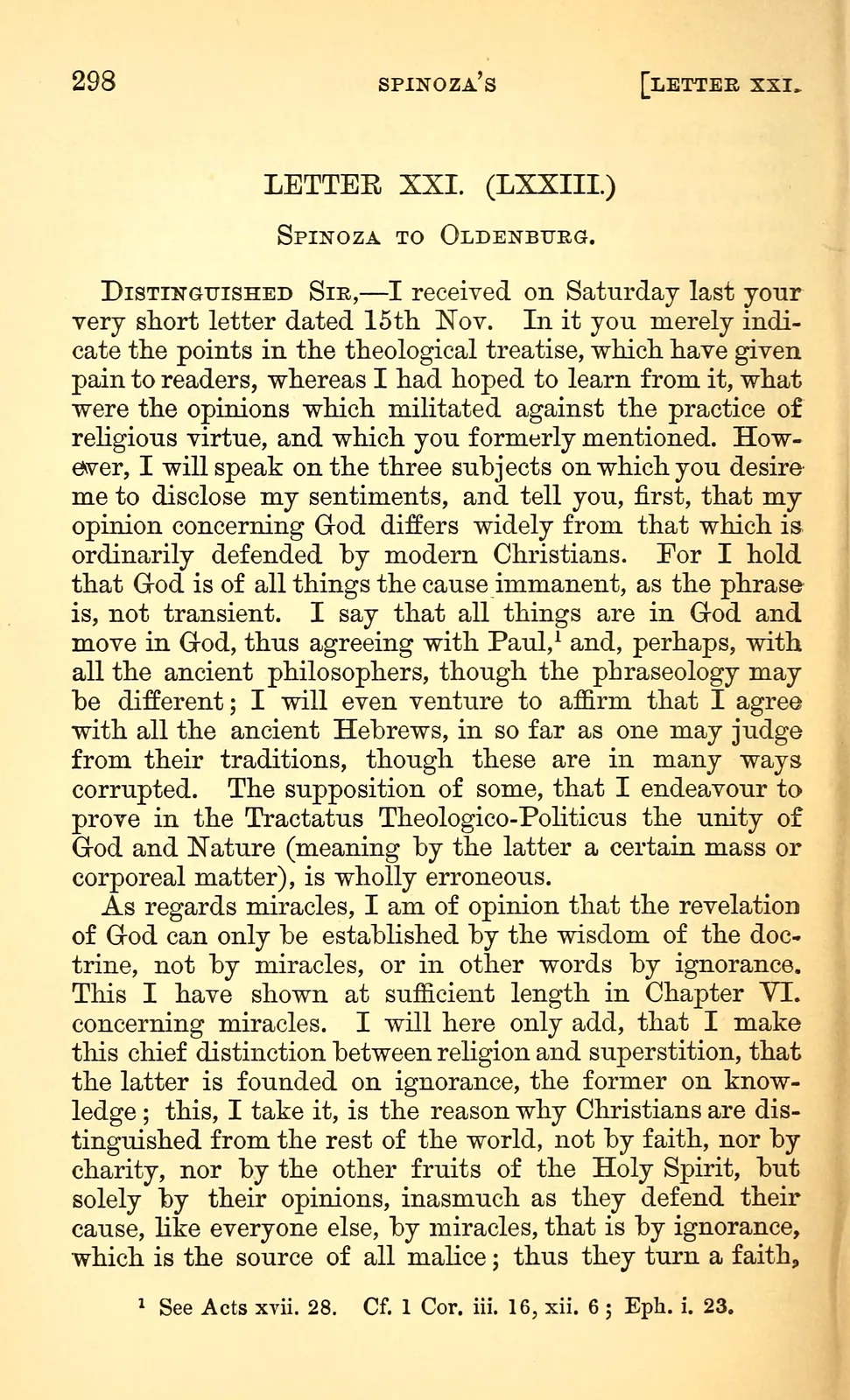
- [38] Oldenburg, 15 November 1675, warned him of "ambiguities in your treatment of God and Nature", the doubt about miracles and the silence on Christ; Spinoza answered that God is "the cause immanent, as the phrase is, not transient", that "all things are in God and move in God", that he agrees "with Paul, and, perhaps, with all the ancient philosophers" and "all the ancient Hebrews", and that the "unity of God and Nature (meaning by the latter a certain mass or corporeal matter)" is "wholly erroneous". — (tr.), Chief Works of Benedict de Spinoza, Letters XX–XXI (LXXII–LXXIII) pp. 297–299.
- [47] The desk with his letters and manuscripts was sent to Jan Rieuwertsz in Amsterdam; the Opera Posthuma appeared the same year without his full name (initials B.D.S.), which the editors say he had asked for before his death, so that his doctrine should not be called after him. — Pollock, Spinoza, p. 40; Colerus, Life of Benedict de Spinosa, pp. 63–65.
God or Nature
On 27 July 1656 the elders of the Portuguese synagogue in Amsterdam pronounced a ban of excommunication on a young man of twenty-three, a former pupil of its school. They charged him, in Portuguese, with "the abominable heresies practised and taught by him, and of other enormities committed by him," and they cursed him: "Cursed be he by day and cursed be he by night. Cursed be he in sleeping and cursed be he in waking, cursed in going out and cursed in coming in." No one was to speak to him, write to him, live under his roof, come within four cubits of him, "nor read any paper composed or written by him."12345
The document does not name a single one of his heresies. The young man, Baruch de Spinoza, is said to have answered: "This compels me to nothing which I should not otherwise have done."6 He went on to write two of the most dangerous books of his century, one published anonymously and one after his death, and nearly everyone who read them called him an atheist. He denied it. This chapter follows him from the synagogue school to a rented room in The Hague, and asks what he meant when he wrote "God or Nature," and why his enemies heard it as "no God at all."
The synagogue school
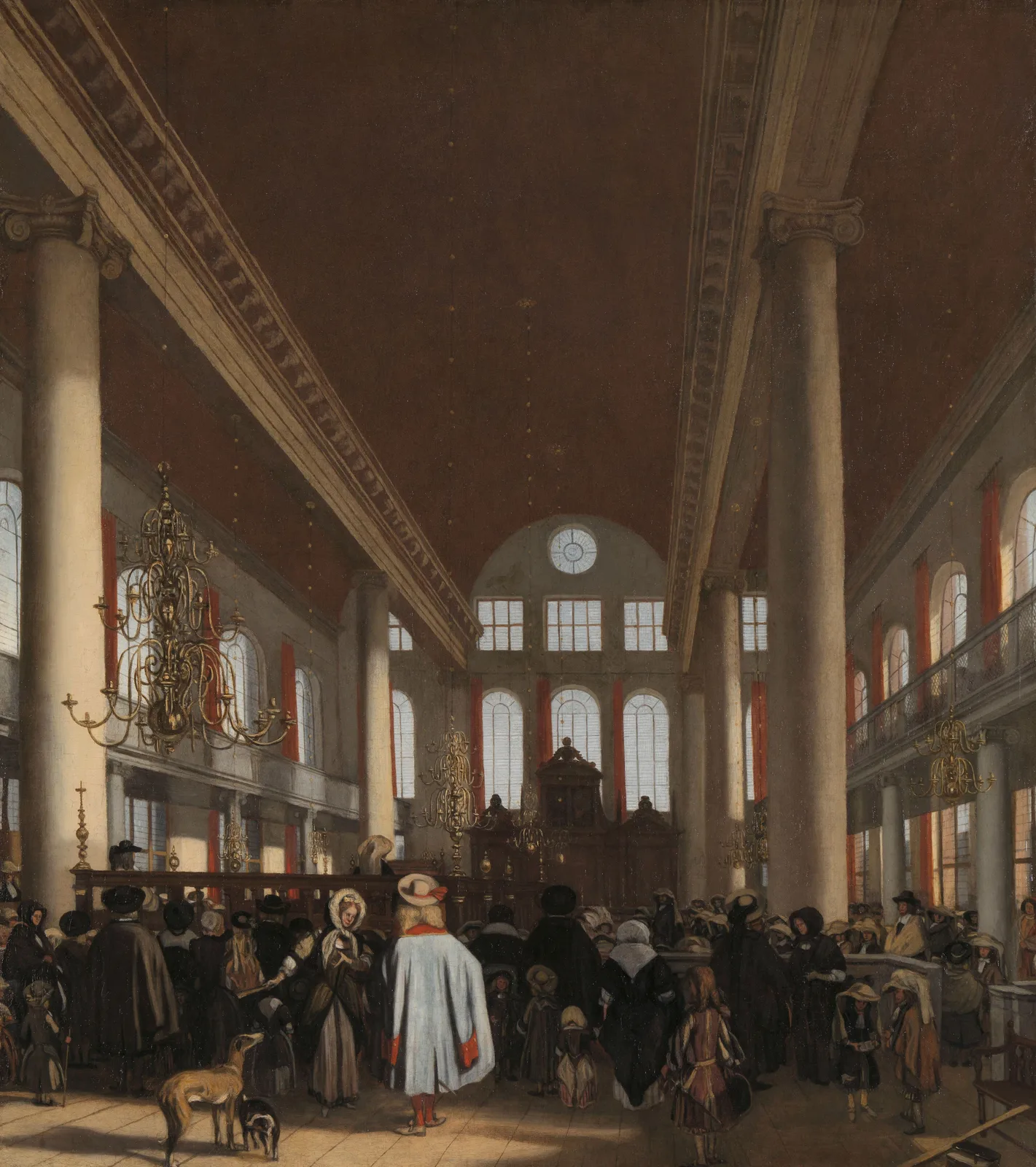
He was born in Amsterdam on 24 November 1632 into a family of Portuguese Jewish merchants.78 The community was made up of the descendants of Spanish and Portuguese "New Christians." Its leading rabbis were Saul Levi Morteira, said to have been his teacher, and Isaac Aboab de Fonseca.9
He was a brilliant pupil. At fifteen, his Victorian biographer Frederick Pollock wrote, he "had gone so far in the study of the Talmud as to be one of Rabbi Morteira's most promising pupils." His friend and first biographer, Jean Maximilien Lucas, said that before he was fifteen he raised difficulties his teachers "found it hard to solve," and that he pretended to be satisfied with their answers.10 In the advanced classes he read the medieval Jewish philosophers Maimonides and Ibn Ezra, and Pollock thought he found in their "hints and questionings ... much more than his teachers expected."11
A precedent hung over the community. Uriel da Costa, a New Christian from Oporto who had come to Amsterdam to be a Jew, had been excommunicated twice by the same synagogue for attacking its rabbinic law and denying the immortality of the soul. He had submitted to a humiliating public penance, lying across the threshold so the congregation stepped over him, and then shot himself.12 Pollock thought Da Costa's case "may have served as a precedent in Spinoza's case."12
Latin and Descartes
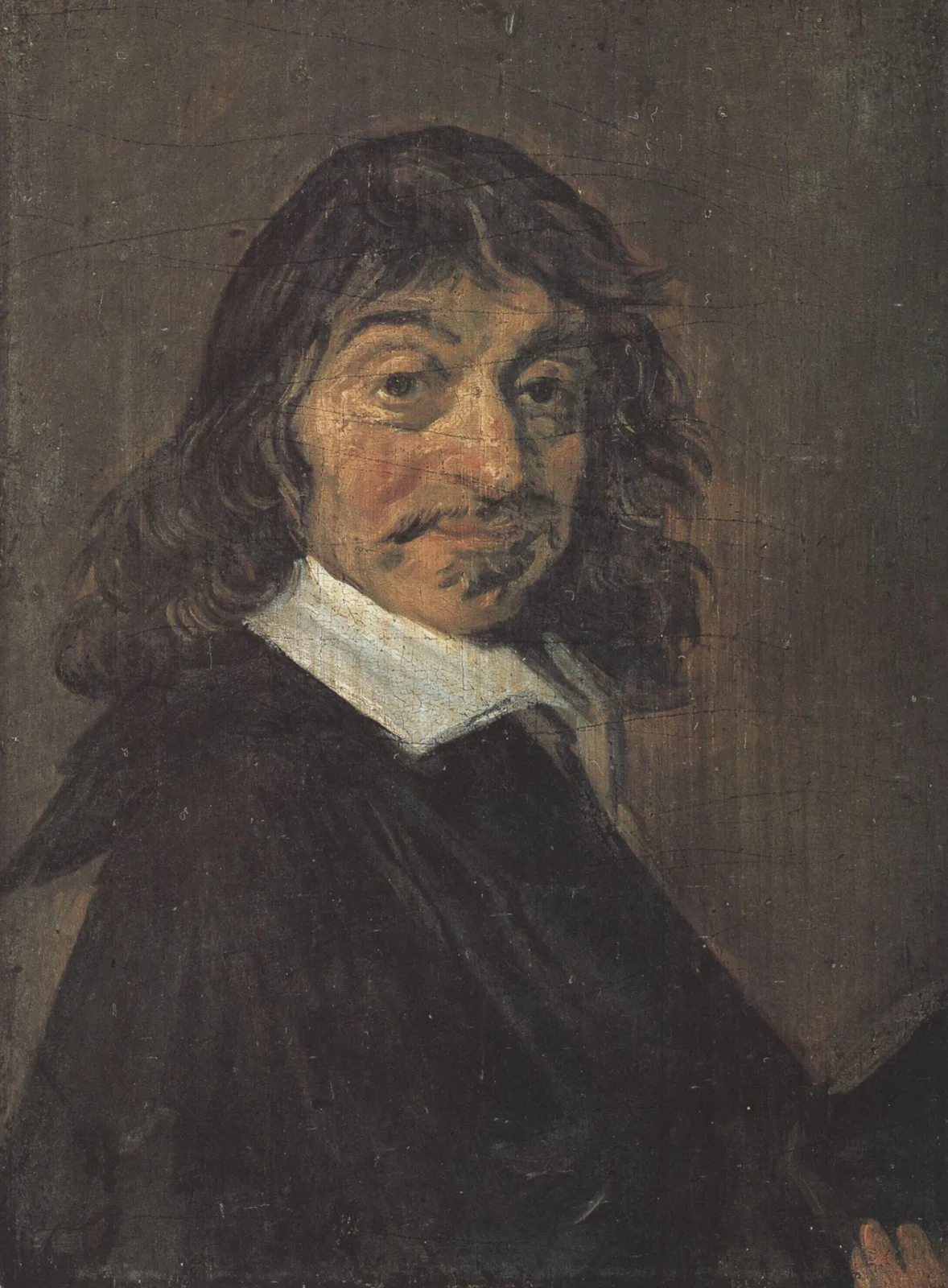
Somewhere in these years he learned Latin, first from a German master and then from Franciscus van den Enden, a physician with a name, Pollock says, for teaching "freethinking as well as Latin." The Lutheran pastor Johannes Colerus, who wrote a life of Spinoza in 1705, said Van den Enden "sowed the first Seeds of Atheism" in his pupils; accounts differ on whether the lessons came before or after the break.13 Latin opened the new philosophy of René Descartes. Colerus heard that Spinoza said he "had all his Philosophical Knowledge from him," and that he came to think the doctrines of the rabbis could not be admitted by a man of sense, because they rested only on the rabbis' own authority.14 After that he grew "very much reserved" among them and went to the synagogue seldom and "only perfunctorily."15
How the break came is not certain. "We have no trustworthy or distinct account of the events that led to Spinoza's rupture with the congregation," Pollock wrote.16 Lucas told a story of two friends who drew him out on God, angels and the soul and then denounced him, quoting him as saying "there is nothing objectionable in believing that God is a body"; Pollock gave the tale "just so much credit as it appears on the face of it to deserve."1718 Colerus, who had it from Spinoza's landlord, said the synagogue offered him a pension of a thousand florins a year to conform outwardly, and that he refused, "because he was not a Hypocrite, and minded nothing but Truth."1920 His landlord also told of a man who struck at him with a dagger as he left the synagogue; the blade only pierced his coat.21
The ban
Then came the herem of July 1656.1 It names no doctrine. Pollock read "heresies practised and taught" as pointing to "some active attempt to spread his opinions," and the "enormities" as probably breaches of the ceremonial law.22 Spinoza wrote a defence of his leaving in Spanish and sent it to the elders; it has never been found.23 He left Amsterdam for a friend's house on the road to Ouderkerk, and he stopped using his Hebrew name, Baruch, signing himself by its Latin equivalent, Benedictus.2425 Lucas reported his answer to the ban in a fuller form: "All the better; they do not force me to do anything that I would not have done of my own accord if I did not dread scandal."26
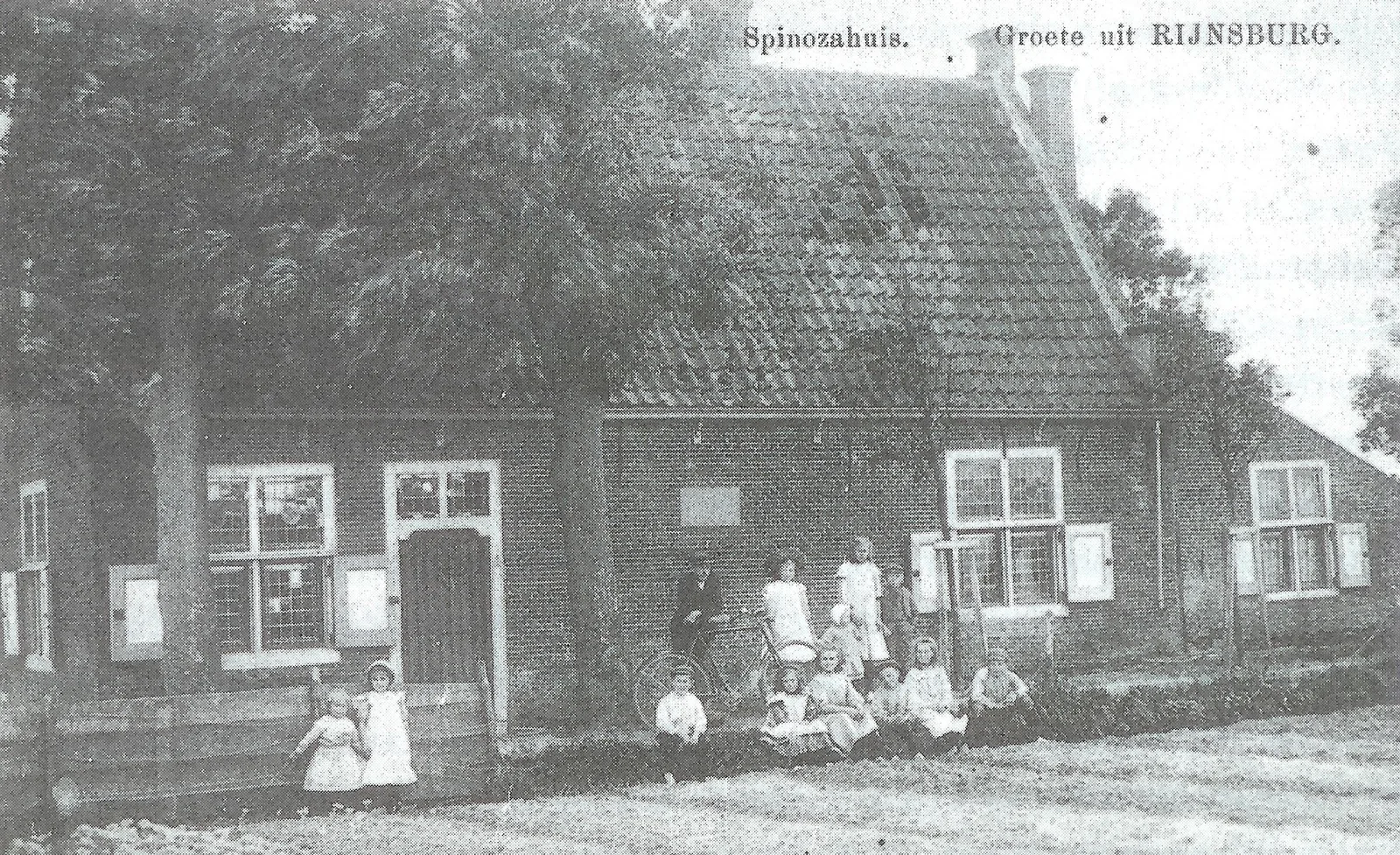
He did not become a Christian. "To speak the truth," Colerus wrote, "he never embraced Christianity, nor received the Holy Baptism."27 He lived among the Collegiants, a small Protestant fellowship with no clergy, first near Amsterdam and from about 1660 at Rijnsburg near Leiden, and he earned part of his living grinding lenses, a craft he had learned in youth.2428
Rijnsburg and Voorburg
Visitors found him there. Henry Oldenburg, secretary of the new Royal Society in London, came to Rijnsburg and urged him to publish "the ripe fruits of your learning in philosophy and theology."29 Young friends in Amsterdam read his manuscripts aloud in a club and sent him questions.30 In 1663 he published the only book that ever carried his name, an exposition of Descartes's philosophy in geometrical form.31 He moved to Voorburg in 1664 and to The Hague in 1670.32 When his father's estate was disputed by his sisters he went to law, won, and gave them everything except "one bed."33
The Treatise
In 1670 a book appeared with no author's name and the imprint of a printer in Hamburg who did not exist: the Tractatus Theologico-Politicus.34 Its method was simple and explosive. "I determined to examine the Bible afresh in a careful, impartial, and unfettered spirit, making no assumptions concerning it, and attributing to it no doctrines, which I do not find clearly therein set down."35 Read that way, he concluded, the Bible "leaves reason absolutely free, that it has nothing in common with philosophy, in fact, that Revelation and Philosophy stand on totally different footings."36 Miracles were nothing outside nature, since "the efficacy and power of nature, are the very efficacy and power of God, and ... the laws and rules of nature are the decrees of God."37 And the political conclusion was that a free state should allow "every man to think what he likes, and say what he thinks," because "the true aim of government is liberty."383940
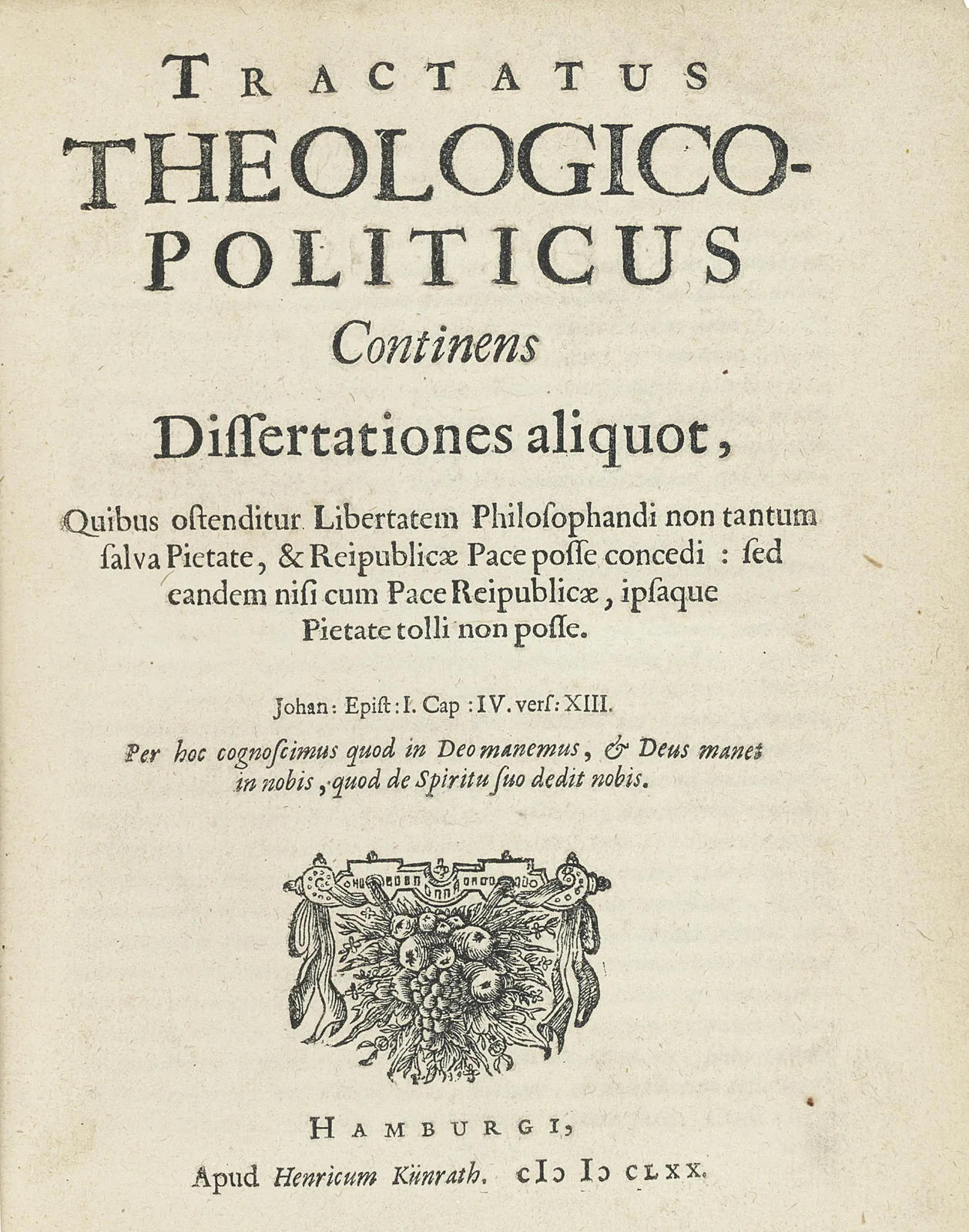
The answer was swift. In 1671 the Dutch synods asked the States-General to act against "Socinian and blasphemous books," naming Hobbes's Leviathan and the Treatise; in 1674 it was formally banned.4142 Spinoza himself begged a friend to stop a Dutch translation, knowing it would be prohibited.43 A Utrecht physician, Lambert van Velthuysen, wrote that the author, "in order to shun the reproach of superstition, ... seems to me to have thrown off all religion," and that he taught "atheism with covert and glazing arguments."4445 Spinoza replied that if Velthuysen had known him, "he would not so easily have persuaded himself that I teach Atheism. For Atheists are wont greedily to covet rank and riches, which I have always despised, as all who know me are aware."4647
The Hague
In The Hague he lodged with a painter, Hendrik van der Spyck, on the Paviljoensgracht.32 In 1672 a mob murdered the Dutch statesmen Johan and Cornelis de Witt; Johan had been Spinoza's friend and had given him a small pension. According to a note by Leibniz, Spinoza wanted to post a placard reading "ultimi barbarorum," the lowest of barbarians, and his landlord locked the door to keep him in.4849 In 1673 the Elector Palatine offered him a chair of philosophy at Heidelberg, with "the most ample freedom in philosophical teaching," so long as he did not "disturb the religion publicly established." Spinoza declined: "I do not know the limits, within which the freedom of my philosophical teaching would be confined, if I am to avoid all appearance of disturbing the publicly established religion."505152
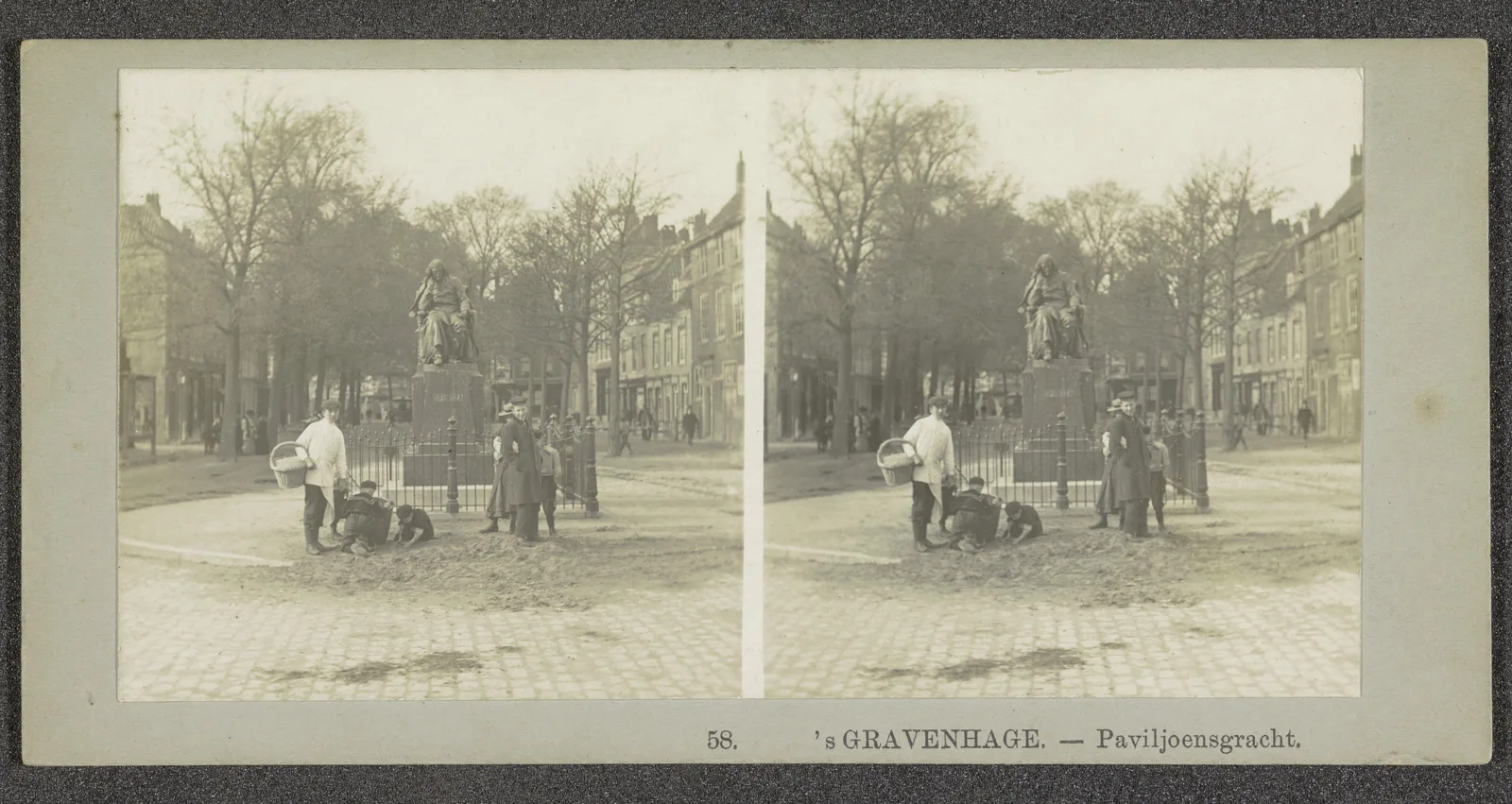
The people of his house remembered a gentle man. When his landlady asked whether she could be saved in her own religion, he told her: "Your Religion is a good one, you need not look for another, nor doubt that you may be saved in it; provided, whilst you apply your self to Piety, you live at the same time a peaceable and quiet Life."53 Pierre Bayle, who thought him "a systematical Atheist," admitted that everyone who knew him said "he was a sociable, affable, honest, friendly, and a good moral man."5455
God or Nature
His great book, the Ethics, was finished by 1675. In the summer he went to Amsterdam to print it, and "a rumour gained currency that I had in the press a book concerning God, wherein I endeavoured to show that there is no God." Theologians complained to the authorities, and he put it off.5657 Oldenburg, still a friend, wrote that November to warn him of "the ambiguities in your treatment of God and Nature: a great many people think you have confused the one with the other."5859
Spinoza's answer is his clearest account of himself. "My opinion concerning God differs widely from that which is ordinarily defended by modern Christians. For I hold that God is of all things the cause immanent, as the phrase is, not transient. I say that all things are in God and move in God, thus agreeing with Paul." And he rejected the crude reading: "The supposition of some, that I endeavour to prove ... the unity of God and Nature (meaning by the latter a certain mass or corporeal matter), is wholly erroneous."586061
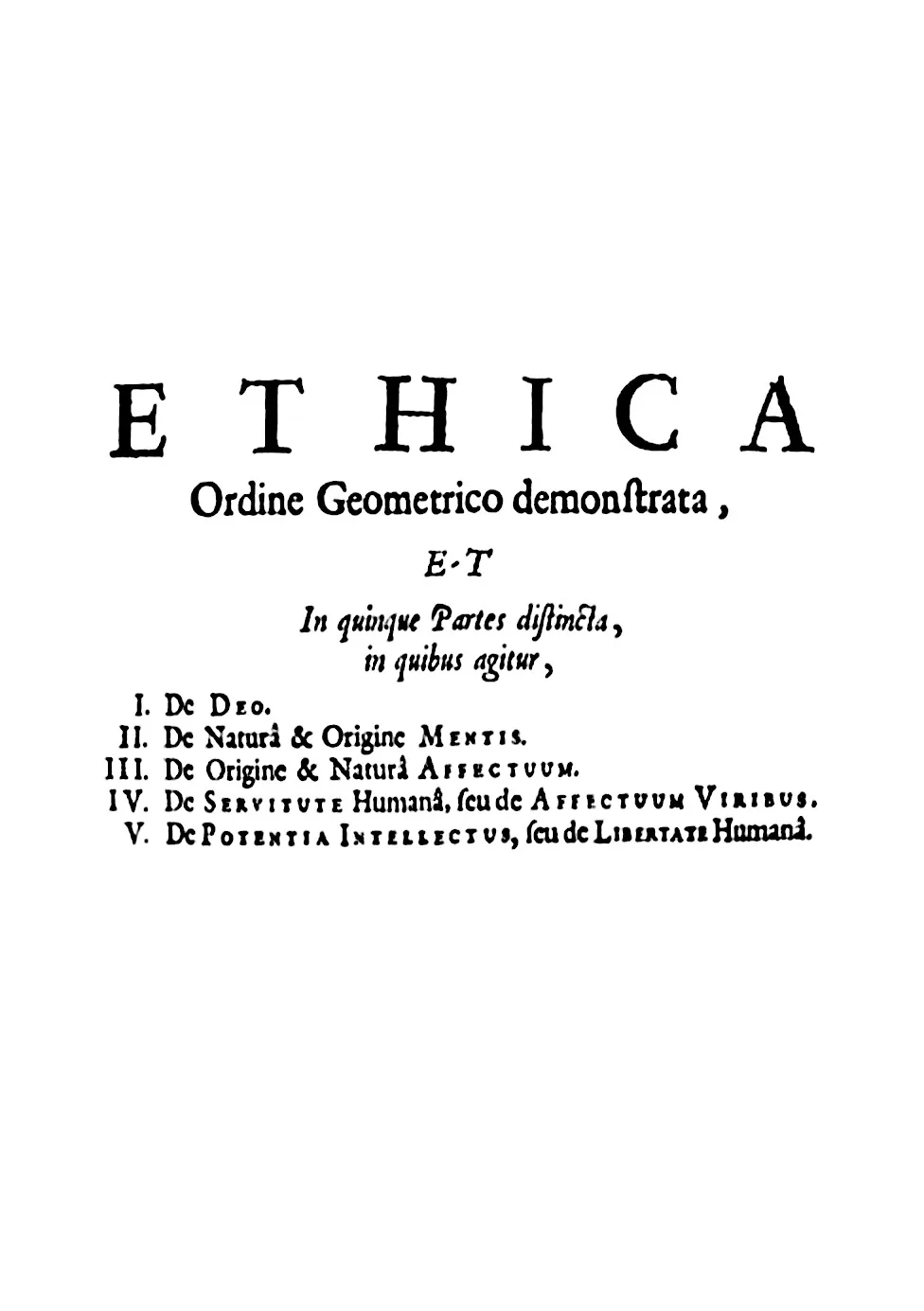
The Ethics itself says it in the language of geometry: "Besides God no substance can be granted or conceived," and "Whatsoever is, is in God, and without God nothing can be, or be conceived." Later, almost in passing, it speaks of "the eternal and infinite Being, which we call God or Nature."62636465 It is a God that, as Leibniz later put it, "has neither understanding nor will," and that works no miracles outside the laws of nature.66 To Spinoza that was the only God reason could find. To nearly everyone else it sounded like no God at all.
A former pupil, Albert Burgh, wrote from Florence that year that he had become a Catholic, and pleaded: "As for all your philosophy, what is it but a mere illusion and chimera? ... acknowledge your pestilent heresy, reflect on the perverseness of your nature, and be reconciled with the Church."676869 Spinoza answered: "I do not presume that I have found the best philosophy, I know that I understand the true philosophy."70
Death and the books
He died at The Hague on Sunday 21 February 1677, aged forty-four, of a consumption he had had for more than twenty years, with his friend Dr Lodewijk Meyer beside him.71 Stories soon spread of a deathbed terror; the landlord and landlady, asked about them, said they "knew nothing of it," and Colerus called the stories "meer Lies."72 He was buried in the New Church on the Spui.73 His desk of manuscripts went to his publisher in Amsterdam, and the Opera Posthuma, with the Ethics, appeared that year under his initials only, B.D.S., as he had asked.74 In June 1678 the States of Holland banned it as "profane, atheistic, and blasphemous."7576
The critics did not stop. Colerus, the Lutheran pastor, called his God "a meer Phantom, an imaginary God, who is nothing less than God."77 Leibniz, who had visited him, judged his proofs "contemptible or unintelligible."7879
What he left
Spinoza's unbelief is really a different belief, and the words used for it have never fitted. He began as a promising Talmud student who found the rabbis resting on their own authority, and he was cast out at twenty-three for heresies no one wrote down. He spent the rest of his life arguing that the Bible is a human book, that God acts only through the laws of nature, and that a free state should let people think what they like. He never said there was no God; he said God and Nature are one, and denied that this meant matter. Pollock, two centuries later, put the misunderstanding in a sentence: "After all God has not been reduced to Nature, but Nature exalted to God."80 David Hume, another philosopher who refused the word atheist and held back his boldest book until after his death, has his own chapter in this book.
Footnotes
-
Frederick Pollock, Spinoza, His Life and Philosophy (Kegan Paul, London, 1880). Internet Archive id spinozahislife00polluoft, p. 17; J. van Vloten (ed.), Ad Benedicti de Spinoza opera quae supersunt omnia supplementum (Amsterdam, 1862). Internet Archive id adbenedictidesp00spingoog, p. 290. ↩ ↩2
-
Vloten, Ad Benedicti de Spinoza opera…, pp. 290–292 (Portuguese with Latin); Pollock, Spinoza, pp. 17–18 (English). ↩
-
the herem, in Pollock's English: Pollock, Spinoza, p. 18. ↩
-
the herem: Pollock, Spinoza, p. 18. ↩
-
the herem: Pollock, Spinoza, p. 18. ↩
-
Pollock, Spinoza, p. 19 (no source given). ↩
-
Pollock, Spinoza, p. 1; Johannes Colerus, The Life of Benedict de Spinosa (done out of French, London, 1706; Dutch/French originals 1705). Internet Archive id lifebenedictdes00colegoog, (first page, in Pollock's reprint of the English 1706 text). ↩
-
Colerus, Life of Benedict de Spinosa, (first page, in Pollock's reprint; also Colerus p. 3 for the sister Miriam and heirs); Lucas says "very modest origin", Wolf p. 42. Accounts differ; see the disputed points. ↩
-
Pollock, Spinoza, pp. 2–6. ↩
-
Pollock, Spinoza, p. 11; A. Wolf (ed. and tr.), The Oldest Biography of Spinoza (Allen & Unwin, London, 1927), the life by J. M. Lucas with Colerus's variants and notes. Internet Archive id in.ernet.dli.2015.77040, p. 42. ↩
-
Pollock, Spinoza, p. 11. ↩
-
Pollock, Spinoza, pp. 8–10. Reported at second hand; the original has not been seen. ↩ ↩2
-
Pollock, Spinoza, pp. 11–12; Colerus, Life of Benedict de Spinosa, p. 3. ↩
-
Colerus, Life of Benedict de Spinosa, pp. 7–8. ↩
-
Colerus, Life of Benedict de Spinosa, p. 8. ↩
-
Pollock, Spinoza, pp. 16–17. ↩
-
(ed, Oldest Biography of Spinoza, pp. 44–49; Pollock, Spinoza, pp. 15–16 and note 1. ↩
-
(ed, Oldest Biography of Spinoza, p. 45. ↩
-
Colerus, Life of Benedict de Spinosa, pp. 8–9; Pollock, Spinoza, p. 17. ↩
-
Colerus, Life of Benedict de Spinosa, p. 9. ↩
-
Pollock, Spinoza, p. 17 and note 1–2; Colerus, Life of Benedict de Spinosa, pp. 9–10. ↩
-
Council of the Amsterdam Portuguese synagogue (the herem): Vloten, Ad Benedicti de Spinoza opera…, p. 291 (Portuguese text; Latin facing). ↩
-
Pollock, Spinoza, pp. 19–20 and note 1; Colerus, Life of Benedict de Spinosa, p. 52 and p. 31 (garbled number). ↩
-
Pollock, Spinoza, pp. 17, 22; Colerus, Life of Benedict de Spinosa, pp. 34–35 (garbled numbers); (ed, Oldest Biography of Spinoza, p. 56. ↩ ↩2
-
Pollock, Spinoza, p. 20; Colerus, Life of Benedict de Spinosa, (first page, in Pollock's reprint). ↩
-
(ed, Oldest Biography of Spinoza, p. 51 (Lucas's Life, English by Wolf). ↩
-
Colerus, Life of Benedict de Spinosa, p. 8; Pollock, Spinoza, p. 22. ↩
-
Pollock, Spinoza, p. 21; Colerus, Life of Benedict de Spinosa, pp. 31–33 (garbled numbers). ↩
-
Pollock, Spinoza, pp. 25–27. ↩
-
Pollock, Spinoza, pp. 22–24. ↩
-
Pollock, Spinoza, pp. 29–30; Colerus, Life of Benedict de Spinosa, p. 52. ↩
-
Pollock, Spinoza, p. 23; Colerus, Life of Benedict de Spinosa, pp. 35–37 (garbled numbers). ↩ ↩2
-
Pollock, Spinoza, pp. 20–21; Colerus, Life of Benedict de Spinosa, p. 44. ↩
-
Pollock, Spinoza, pp. 31–32; Colerus, Life of Benedict de Spinosa, pp. 55–56. ↩
-
R. H. M. Elwes (tr.), The Chief Works of Benedict de Spinoza, vol. 1 (Theologico-Political Treatise and Political Treatise; revised ed., Bell, London, 1891). Internet Archive id chiefworksofbene01spin, p. 8. ↩
-
(tr.), Chief Works of Benedict de Spinoza, p. 9. ↩
-
(tr.), Chief Works of Benedict de Spinoza, p. 83. ↩
-
Pollock, Spinoza, pp. 31–33; (tr.), Chief Works of Benedict de Spinoza, pp. 8–11, 259. ↩
-
(tr.), Chief Works of Benedict de Spinoza, p. 11 (1891 ed.). ↩
-
(tr.), Chief Works of Benedict de Spinoza, p. 259. ↩
-
Pollock, Spinoza, p. 34 and Appendix B (the ordinance text; not read). ↩
-
The Dutch synods, complaint to the States-General, spring 1671 (as Pollock translates it): Pollock, Spinoza, p. 34. ↩
-
Pollock, Spinoza, pp. 33–34. ↩
-
R. H. M. Elwes (tr.), The Chief Works of Benedict de Spinoza, vol. 2 (On the Improvement of the Understanding, the Ethics, Select Letters; revised ed., Bell, London, 1891). Internet Archive id chiefworksofbene02spin, Letter XLVIII headnote p. 364; Pollock, Spinoza, pp. 65–68. ↩
-
Lambert van Velthuysen, Utrecht physician, in a letter of 24 Jan. 1671, as Spinoza quotes it: (tr.), Chief Works of Benedict de Spinoza, Letter XLIX p. 365. ↩
-
(tr.), Chief Works of Benedict de Spinoza, Letter XLIX pp. 364–365. ↩
-
(tr.), Chief Works of Benedict de Spinoza, Letter XLIX pp. 364–365. ↩
-
Pollock, Spinoza, p. 36 and note 2 (quoting Leibniz MS via Foucher de Careil). ↩
-
Pollock, Spinoza, p. 36. ↩
-
(tr.), Chief Works of Benedict de Spinoza, Letters LIII–LIV pp. 373–375; Colerus, Life of Benedict de Spinosa, pp. 49–51; Pollock, Spinoza, pp. 34–35. ↩
-
(tr.), Chief Works of Benedict de Spinoza, Letter LIV p. 374. ↩
-
(tr.), Chief Works of Benedict de Spinoza, Letter LIV p. 375. ↩
-
Colerus, Life of Benedict de Spinosa, p. 41. ↩
-
Pierre Bayle, Dictionary (1697; English 1734), article Spinosa, opening and remark A: Pierre Bayle, The Dictionary Historical and Critical, 2nd English ed. (London, 1734–38), vol. 5, article "Spinosa (Benedictus de)". Internet Archive id bim_eighteenth-century_the-dictionary-historica_bayle-pierre_1734_5, vol. 5, art. Spinosa, text and rem. A. ↩
-
Pierre Bayle, same article, remark on the people who knew him and the villagers where he lived: Bayle, Dictionary Historical and Critical, vol. 5, art. Spinosa, text. ↩
-
(tr.), Chief Works of Benedict de Spinoza, Letter XIX (LXVIII) p. 296; Pollock, Spinoza, p. 38. ↩
-
(tr.), Chief Works of Benedict de Spinoza, Letter XIX (LXVIII) p. 296. ↩
-
(tr.), Chief Works of Benedict de Spinoza, Letters XX–XXI (LXXII–LXXIII) pp. 297–299. ↩ ↩2
-
Henry Oldenburg, secretary of the Royal Society and a friend, 15 Nov. 1675: (tr.), Chief Works of Benedict de Spinoza, Letter XX (LXXI) p. 297. ↩
-
(tr.), Chief Works of Benedict de Spinoza, Letter XXI (LXXIII) p. 298. ↩
-
(tr.), Chief Works of Benedict de Spinoza, Letter XXI (LXXIII) p. 298. ↩
-
(tr.), Chief Works of Benedict de Spinoza, (1884) p. 188; (tr.), Chief Works of Benedict de Spinoza, (1891) pp. 54–55. ↩
-
(tr.), Chief Works of Benedict de Spinoza, (1891) p. 54. ↩
-
(tr.), Chief Works of Benedict de Spinoza, (1891) p. 55. ↩
-
(tr.), Chief Works of Benedict de Spinoza, (1884) p. 188. Elwes's English; the Latin form often quoted, "Deus sive Natura", was not found in the scans read. ↩
-
G. W. Leibniz, "On the Philosophy of Descartes", 1679–80: G. M. Duncan (tr.), The Philosophical Works of Leibnitz (Tuttle, Morehouse & Taylor, New Haven, 1890). Internet Archive id philosophicalwor00leibuoft, early pages of the essay (page header not read off the OCR). ↩
-
(tr.), Chief Works of Benedict de Spinoza, Letters LXXIII–LXXIV pp. 410–419. ↩
-
Albert Burgh, Spinoza's former pupil, newly a Catholic, Florence, 3 Sept. 1675: (tr.), Chief Works of Benedict de Spinoza, Letter LXXIII p. 411. ↩
-
Albert Burgh, same letter: (tr.), Chief Works of Benedict de Spinoza, Letter LXXIII p. 412. ↩
-
(tr.), Chief Works of Benedict de Spinoza, Letter LXXIV p. 416. Often quoted shorn of its context, the answer to Burgh's "how do you know that your philosophy is the best". ↩
-
Pollock, Spinoza, p. 39; Colerus, Life of Benedict de Spinosa, pp. 91–93, 99. ↩
-
Colerus, Life of Benedict de Spinosa, pp. 93–96; Pollock, Spinoza, p. 39–40 and note 1; Bayle, Dictionary Historical and Critical, (art. Spinosa, remark S). ↩
-
Colerus, Life of Benedict de Spinosa, pp. 98–99 (the OCR day reads "a5th", and the last line confirms "the 25th"). ↩
-
Pollock, Spinoza, p. 40; Colerus, Life of Benedict de Spinosa, pp. 63–65. ↩
-
Pollock, Spinoza, p. 41 and note 1 (Groot Placaet Boek, 3rd part, p. 525). ↩
-
States of Holland and West Friesland, 25 June 1678, prohibiting the Opera Posthuma (Pollock's summary words): Pollock, Spinoza, p. 41. ↩
-
Johannes Colerus, Lutheran pastor at The Hague, his last landlord's pastor: Colerus, Life of Benedict de Spinosa, p. 66. ↩
-
Pollock, Spinoza, pp. 21, 36 note 2, 71–72. ↩
-
G. W. Leibniz, 1702, "Considerations on the Doctrine of a Universal Spirit": (tr.), Philosophical Works of Leibnitz, p. 141. ↩
-
Pollock, Spinoza, pp. 355–356. ↩
In their own words
das horrendas heregias que praticava e ensinava, e ynormes obras que obrava
the abominable heresies practised and taught by him, and of other enormities committed by him
Cursed be he by day and cursed be he by night. Cursed be he in sleeping and cursed be he in waking, cursed in going out and cursed in coming in.
none may speak with him by word of mouth nor by writing, nor show any favour to him, nor be under one roof with him, nor come within four cubits of him, nor read any paper composed or written by him
This compels me to nothing which I should not otherwise have done.
All the better; they do not force me to do anything that I would not have done of my own accord if I did not dread scandal; but, since they want it that way, I enter gladly on the path that is opened to me
because he was not a Hypocrite, and minded nothing but Truth
there is nothing objectionable in believing that God is a body
allowing every man to think what he likes, and say what he thinks
I determined to examine the Bible afresh in a careful, impartial, and unfettered spirit, making no assumptions concerning it, and attributing to it no doctrines, which I do not find clearly therein set down
the Bible leaves reason absolutely free, that it has nothing in common with philosophy, in fact, that Revelation and Philosophy stand on totally different footings
as the efficacy and power of nature, are the very efficacy and power of God, and as the laws and rules of nature are the decrees of God
In fact, the true aim of government is liberty.
Besides God no substance can be granted or conceived.
Whatsoever is, is in God, and without God nothing can be, or be conceived.
the eternal and infinite Being, which we call God or Nature, acts by the same necessity as that whereby it exists
my opinion concerning God differs widely from that which is ordinarily defended by modern Christians. For I hold that God is of all things the cause immanent, as the phrase is, not transient. I say that all things are in God and move in God, thus agreeing with Paul
The supposition of some, that I endeavour to prove in the Tractatus Theologico-Politicus the unity of God and Nature (meaning by the latter a certain mass or corporeal matter), is wholly erroneous.
had known, he would not so easily have persuaded himself that I teach Atheism. For Atheists are wont greedily to covet rank and riches, which I have always despised, as all who know me are aware.
a rumour gained currency that I had in the press a book concerning God, wherein I endeavoured to show that there is no God. This report was believed by many.
since it has never been my wish to teach in public, I have been unable to induce myself to accept this splendid opportunity
I do not know the limits, within which the freedom of my philosophical teaching would be confined, if I am to avoid all appearance of disturbing the publicly established religion
I do not presume that I have found the best philosophy, I know that I understand the true philosophy.
Your Religion is a good one, you need not look for another, nor doubt that you may be saved in it; provided, whilst you apply your self to Piety, you live at the same time a peaceable and quiet Life.
I am a good Republican, and I always aimed at the Glory and Welfare of the State.
the true aim of government is liberty
The other side
see above (Q1 to Q4: the herem itself)
In order to shun the reproach of superstition, he seems to me to have thrown off all religion.
As for all your philosophy, what is it but a mere illusion and chimera?
Wherefore, if you believe in Christ crucified, acknowledge your pestilent heresy, reflect on the perverseness of your nature, and be reconciled with the Church.
First I would call attention to the ambiguities in your treatment of God and Nature: a great many people think you have confused the one with the other.
was a systematical Atheist, and brought his Atheism into a new method, tho' the ground of his doctrine was the same with that of several antient and modern Philosophers, both in Europe and the eastern countries
do all say that he was a sociable, affable, honest, friendly, and a good moral man
the God of Spinofa is a meer Phantom, an imaginary God, who is nothing lefs than God
It is a Book, fays he, full of curious, but abominable difcoveries, the Learning and inquiries whereof muft needs have been fetched from Hell.
My opinion is, that that Treatife ought to be buried for ever in an eternal oblivion
Spinoza has pretended to prove that there is only one substance in the world, but these proofs are contemptible or unintelligible.
it will be necessary to conceive God, after the manner of Spinoza, as a being who has neither understanding nor will
Socinian and blasphemous books, to wit, the books called Bibliotheca Patrum Polonorum quos unitarios vocant, the famous book of Hobbes called Leviathan, and moreover the book entitled Philosophia Sacrae Scripturae interpres, as well as that called Tractatus Theologico-Politicus
profane, atheistic, and blasphemous
Where accounts differ
| Point | One account | Another | How the page handles it |
|---|---|---|---|
| Family wealth | Father "in very good Circumstances" (Colerus, first page, in Pollock's reprint) | "Very modest origin"; his father could not set him up in business (Lucas, Wolf p. 42); Pollock p. 1: "nothing certain is known" | Say only that the family was Portuguese Jewish merchants; leave wealth out |
| Who taught him Latin and when | Van den Enden before the break; he "sowed the first Seeds of Atheism" (Colerus p. 3; Pollock p. 11 follows Colerus) | Van den Enden offered help after the herem (Lucas, Wolf p. 52) | Say that accounts differ on whether the lessons came before or after the break; Latin opened Descartes and Bruno either way |
| Order and cause of the break | Colerus: Descartes first led him to doubt the rabbis; then reserve; then the herem (Colerus pp. 7–10) | Lucas: he raised doubts before fifteen, was denounced by two false friends, tried by the judges, and challenged Morteira (Wolf pp. 42–51); Pollock: "no trustworthy or distinct account" (p. 16) | Say that the sources agree on the date and on the verdict, not on the order of events; use his own two statements of his reaction (Q5, Q6) and say that the wording differs |
| Who pronounced the herem | Aboab, "Chacham Abuabh" (Colerus p. 11) | Morteira, as chief (Lucas, Wolf pp. 50–52) | Say "the elders of the synagogue", name no one |
| Whether blasphemy was charged | The herem text names "heresies practised and taught" and "enormities" (Van Vloten Supp. p. 291; Pollock p. 19) | Lucas: only "want of respect for Moses and for the Law", with the blasphemy ritual omitted (Wolf p. 53); Colerus prints the long general form (Colerus pp. 20–30, page numbers partly garbled) | Quote the herem text as printed; do not describe the ceremony in detail |
| The dagger | Man with a dagger at the synagogue door; coat pierced (Colerus's landlord, Colerus pp. 9–10; Pollock p. 17 follows it) | Bayle: a Jew wounded his face with a knife as he left the playhouse (reported by Colerus p. 9); Pollock note: "difficulties have been raised" | Mention only if needed; say "according to his landlord's account" |
| What Spinoza said on hearing the sentence | "This compels me to nothing which I should not otherwise have done." (Pollock p. 19, no source) | "All the better; they do not force me to do anything that I would not have done of my own accord if I did not dread scandal" (Lucas, Wolf p. 51) | Give one, say "in one account" |
| Year he left for Rijnsburg | End of 1660 or early 1661 (Pollock p. 22) | 1664 (Colerus p. 35, number garbled) | Use Pollock's date, with "about" |
| Year of the Descartes book | 1663 (Pollock p. 29–30) | 1664 (Colerus p. 52) | Use 1663 |
| Clara Maria van den Enden | Colerus: Spinoza loved her and lost her to Kerkering for a pearl necklace (Colerus pp. 4–5) | The marriage was in 1671 and she was 27, so eleven or twelve in 1656 (Van Vloten Supp. p. 290; Pollock pp. 13–14) | Leave the romance out; say it is a story that the records refute |
| The Utrecht journey | Condé was away; Spinoza never met him (Colerus p. 47, from the landlord) | Halma and Bayle say he did meet Condé or Stouppe (Colerus pp. 47–48; Bayle remark G, which says he learned the Prince was back before Spinoza left and that they did talk) | Say only that he went with a safe-conduct and was accused of spying at his return |
| Day of death | Saturday "22d of February" (Colerus p. 91, OCR) | Sunday 21 February (Pollock p. 39; Colerus p. 99) and the calendar (21 February 1677 was a Sunday) | Use 21 February 1677 |
| Meyer's conduct at his death | Took the money and a silver-handled knife (Colerus p. 93) | "grossly improbable" (Pollock p. 39) | Leave out |
| Deathbed | Prayers, mandrake, "no minister" (the stories Colerus rejects, pp. 93–96); Bayle's version of precautions (remark S) | The landlord and landlady "knew nothing of it"; "meer Lies" (Colerus p. 95) | State that the people in the house denied every story of a deathbed fear |
| Pantheist, atheist, or neither | "teach atheism with covert and glazing arguments" (Velthuysen as Spinoza reports it, Pollock p. 68); "systematical Atheist" (Bayle) | He calls atheists those who "covet rank and riches" (Elwes 2 p. 365) and denies identifying God with "corporeal matter" (Elwes 2 p. 298); Pollock says "pantheism" is "so vague a term" (p. 355) | Say that he rejected the word atheist, that his enemies used it, and that "pantheist" is a later label |
List of illustrations
This page uses only public-domain and Creative Commons images; each is credited with its source and licence.
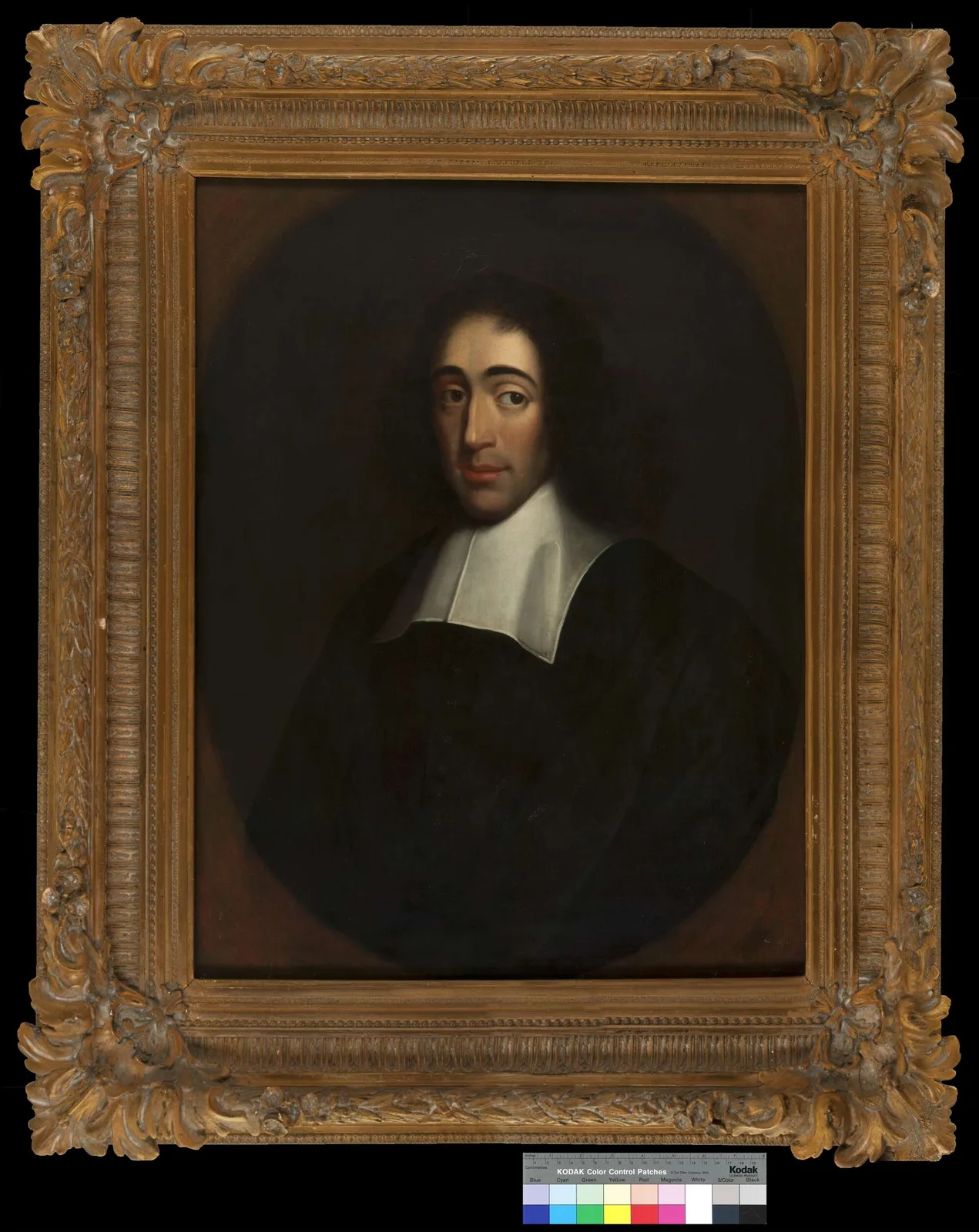
- Baruch Spinoza portrait HAB original — anonymous, 1665 · Herzog August Bibliothek, Wolfenbuettel (via Wikimedia Commons) · Public domain (as stated on the Wikimedia Commons file page)
- Interieur van de Portugese synagoge te Amsterdam, SK-A-3738 — Emanuel de Witte, 1680 · Rijksmuseum, Amsterdam (SK-A-3738) (via Wikimedia Commons) · CC0 (as stated on the Wikimedia Commons file page)
- Frans Hals, Portrait of René Descartes — Frans Hals, 1649 · Wikimedia Commons (after Frans Hals) (via Wikimedia Commons) · Public domain (as stated on the Wikimedia Commons file page)
- Pollock, Spinoza, His Life and Philosophy (1880), p. 18 — Frederick Pollock, London: Kegan Paul, 1880, 1880 · Internet Archive, item spinozahislife00polluoft · Public domain (published 1880; Internet Archive scan)
- Spinoza's residence in Rijnsburg between 1661-1663, around 1900 — Unknown authorUnknown author, 1900 · Wikimedia Commons (photograph c. 1900) (via Wikimedia Commons) · Public domain (as stated on the Wikimedia Commons file page)
- Benedictus de Spinoza - Tractatus theologico-politicus continens dissertationes aliquot, Hamburg, Henricus Künrath, 1670 — Benedictus de Spinoza, 1670 · Wikimedia Commons (title page, 1670 edition) (via Wikimedia Commons) · Public domain (as stated on the Wikimedia Commons file page)
- Gezicht op de Paviljoensgracht in Den Haag 's Gravenhage.- Paviljoensgracht (titel op object), RP-F-F12171 — Rijksmuseum, 1900 · Rijksmuseum, Amsterdam (via Wikimedia Commons) · CC0 (as stated on the Wikimedia Commons file page)
- Spinoza to Oldenburg, Letter XXI (LXXIII), p. 298 (Elwes tr., 1891) — Benedict de Spinoza, tr. R. H. M. Elwes, London: Bell, 1891, 1891 · Internet Archive, item chiefworksofbene02spin · Public domain (published 1891; Internet Archive scan)
- Spinoza Ethica — Unknown, 1677 · Wikimedia Commons (Ethica, 1677) (via Wikimedia Commons) · Public domain (as stated on the Wikimedia Commons file page)
Sources
Tier 1 — the subject's own words (writings, letters, diaries, trial records)
- [Elwes 1] R. H. M. Elwes (tr.), The Chief Works of Benedict de Spinoza, vol. 1 (Theologico-Political Treatise and Political Treatise; revised ed., Bell, London, 1891). Internet Archive id chiefworksofbene01spin. OCR saved as research/texts/elwes-vol1.txt. The translation of 1883.
- [Elwes 2] R. H. M. Elwes (tr.), The Chief Works of Benedict de Spinoza, vol. 2 (On the Improvement of the Understanding, the Ethics, Select Letters; revised ed., Bell, London, 1891). Internet Archive id chiefworksofbene02spin. OCR saved as research/texts/elwes-vol2b.txt. Letter numbers are Elwes's own, with Opera Posthuma numbers in brackets where he gives them; the Ethics quotation of Part IV was checked in the first edition (1884), Internet Archive id in.ernet.dli.2015.47604, saved as research/texts/elwes-vol2.txt (cited [Elwes 2 (1884)]).
- [Willis] Robert Willis (tr.), Benedict de Spinoza: Tractatus Theologico-Politicus (Trübner, London, 1862). Internet Archive id tractatustheolog00elweuoft. OCR saved as research/texts/willis-ttp.txt. Searched but not quoted (Elwes's wording is used).
- [Van Vloten Supp.] J. van Vloten (ed.), Ad Benedicti de Spinoza opera quae supersunt omnia supplementum (Amsterdam, 1862). Internet Archive id adbenedictidesp00spingoog. OCR saved as research/texts/vanvloten-supplementum1862.txt. Prints the Portuguese text of the herem (first publication), pp. 290–292, with a Latin version, and the Amsterdam marriage record of Clara Maria van den Enden.
- [VV-Land 1882/1895] J. van Vloten and J. P. N. Land (eds.), Benedicti de Spinoza opera quotquot reperta sunt (2nd ed., The Hague, 1895; vol. 1 and vol. 2 from the 1882 edition). Internet Archive ids benedictidespin01landgoog and benedictidespin02landgoog. Saved as research/texts/vanvloten-land-1895-v1.txt and vanvloten-land-1882-v2.txt. Latin originals of the Treatise and letters; searched for "Deus sive Natura" and not found in these two volumes (the Ethics volume was not reached; see Open questions).
Tier 2 — scholarly biographies and encyclopedias
- [Pollock] Frederick Pollock, Spinoza, His Life and Philosophy (Kegan Paul, London, 1880). Internet Archive id spinozahislife00polluoft. OCR saved as research/texts/pollock1880.txt. Page numbers are the running heads of the book. Pollock's Life reprints Colerus's life (English 1706) in an appendix.
- [Wolf] A. Wolf (ed. and tr.), The Oldest Biography of Spinoza (Allen & Unwin, London, 1927), the life by J. M. Lucas with Colerus's variants and notes. Internet Archive id in.ernet.dli.2015.77040. OCR saved as research/texts/wolf1927.txt. Page numbers are the running heads of the English translation. 1927 imprint, public domain in the United States.
- [Freudenthal] J. Freudenthal, Die Lebensgeschichte Spinoza's in Quellenschriften, Urkunden und nichtamtlichen Nachrichten (Leipzig, 1899). Internet Archive id dielebensgeschic00freu. OCR saved as research/texts/freudenthal1899.txt. The OCR of this Fraktur book is too poor to quote; used only as a pointer (a search for "Prado" found nothing readable).
Tier 3 — popular biographies and journalism
- [Colerus] Johannes Colerus, The Life of Benedict de Spinosa (done out of French, London, 1706; Dutch/French originals 1705). Internet Archive id lifebenedictdes00colegoog. OCR saved as research/texts/colerus1706.txt. The scan begins at the second page; the first page (birth date) is read in Pollock's reprint of the same English text. Page numbers are those printed at the top of each page; where the OCR of the number is garbled (pp. 29–36) the citation says so. Long-s misreadings ("f" for "s") are normal in this OCR.
Tier 4 — maps to other sources only (Wikipedia and similar). Never cited in the script.
- None used. Used the Internet Archive search and the scans above only.
Opposition sources — contemporary critics and religious responses
- [Elwes 2, letters] Letters of Oldenburg, Velthuysen (through Spinoza's reply) and Albert Burgh, in Elwes vol. 2, see above.
- [Bayle] Pierre Bayle, The Dictionary Historical and Critical, 2nd English ed. (London, 1734–38), vol. 5, article "Spinosa (Benedictus de)". Internet Archive id bim_eighteenth-century_the-dictionary-historica_bayle-pierre_1734_5. OCR saved as research/texts/bayle-1734-v5.txt (long s converted to s). The article was first published in 1697; page numbers were not read off this OCR, so cited by article, remark letter and the "Rem." in the margin.
- [Leibniz (Duncan)] G. M. Duncan (tr.), The Philosophical Works of Leibnitz (Tuttle, Morehouse & Taylor, New Haven, 1890). Internet Archive id philosophicalwor00leibuoft. OCR saved as research/texts/leibniz-duncan.txt. Page numbers are the book's own.
- [Colerus, opposition] Colerus's own criticism and his quotations of Spitzelius, Mansveld, Blyenbergh and Burmannus, same scan as above.
- Henry More: not found in any downloaded text (see Open questions).
Related lives
Hume (1711–1776), also called an atheist by his enemies and also a writer who held back his boldest book (the Dialogues) until after his death; or Uriel da Costa, if he is made an episode, as Spinoza's precedent in the same synagogue. (suggestion only; the script's close says "has their own episode in this series")
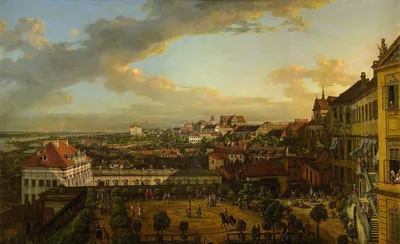
Kazimierz Łyszczyński
Kazimierz Łyszczyński was a Brest nobleman who had spent eight years with the Jesuits. In private he wrote a manuscript arguing that man created God and that religion is a fraud of the powerful on the simple. Denounced by a debtor, he said it was a disputation meant to be refuted, and recanted on the church's script. He was beheaded and burned in Warsaw in 1689, so his unbelief survives only in the words of those who condemned him.
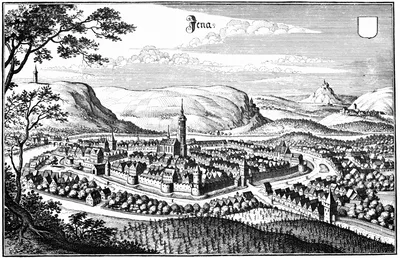
Matthias Knutzen
Matthias Knutzen was an orphaned organist's son from Holstein who trained in theology and preached until his superiors silenced him in 1673. He left no account of why he lost his faith. In September 1674 he scattered at Jena, Coburg and Altdorf a signed Latin letter denying God, magistrate, temples and priests, and putting conscience in their place, on behalf of a "sect" no one could find. He provoked a generation of refutations, and then vanished from the record without recanting.
Jean Meslier
Jean Meslier was ordained to please his parents and, by his own account, was never a believer. He served a village parish for thirty-seven years while writing a Testament against all gods, kings and priests, for his parishioners to read after his death. His unbelief never changed, but after 1729 others remade it: Voltaire into a penitent deist's prayer, and d'Holbach's publishers into a name on another man's book.
Andō Shōeki
Andō Shōeki was a country physician in Hachinohe who watched farmers starve while those who did not till ate their grain. He came to hold that the world is only self-moving nature, with no god or Buddha above it and no reward or punishment from beyond, and that sages and creeds were inventions of those who lived off the farmers. He judged this too dangerous to print in full. He published a softened version and left the rest for readers a hundred years later, who nearly lost it to fire.