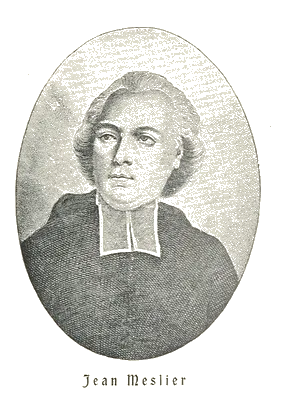
Jean Meslier was ordained to please his parents and, by his own account, was never a believer. He served a village parish for thirty-seven years while writing a Testament against all gods, kings and priests, for his parishioners to read after his death. His unbelief never changed, but after 1729 others remade it: Voltaire into a penitent deist's prayer, and d'Holbach's publishers into a name on another man's book.
The belief timeline
- Obedience (1688) — Ordained to please his parents, by his own account [4][6]
- Doubt (undated (youth; deepened in solitude after 1692)) — "Dès ma plus tendre jeunesse j'ai entrevû les erreurs"; reading Montaigne, the Bible, the Fathers, Descartes [8][9]
- Secret (1692–1729) — Serves as curé while writing the Testament [17][19]
- Disclosure (1729 (copies lodged); 1762 (Extrait)) — Copies left to parishioners, authorities and the court registry; Voltaire prints an extract [18][31]
- Revision (posthumous) (1762–1791) — Voltaire turns the atheist into a penitent deist; d'Holbach's book is sold under his name [34][37][39]
Notes to the timeline (11)
- [4] Ordained in 1688, aged 24 — J. B. J. Boulliot, Biographie ardennaise, vol. 2 (Paris, 1830), article "Mesliers", pp. 206–12, vol. 2, p. 206; Rudolf Charles, preface to the same edition, vol. 1, pp. i–lxiv (Roman numerals), including a biography (pp. xxxv–xlvi) and Voltaire's letters on Meslier (pp. liii–lxiv). Same scan as [Test.] vol. 1, p. xxxv.
- [6] He says he let himself be led into the priesthood "pour complaire à mes parens", who thought it a gentler, more honourable life, and that no temporal advantage made him love the profession — Jean Meslier, Mémoires des pensées et des sentimens de J. M. ... curé d'Estrep. et de But, ed. Rudolf Charles, Le Testament de Jean Meslier (Amsterdam, R. C. Meijer, 1864), 3 vols. Vol. 1 IA bub_gb_dN0CAAAAQAAJ; vol. 2 bub_gb_bng-AAAAcAAJ (title page says "décédé en 1733"); vol. 3 bub_gb_O6IOAAAAIAAJ, vol. 1, p. 21 [Q5.
- [8] He says he was never "de légère croïance" nor inclined to superstition and never made any account of the "mistérieuses folies de la religion" — Meslier, Mémoires des pensées et des…, vol. 1, p. 21 [Q6.
- [9] He says he glimpsed the errors and abuses "dès ma plus tendre jeunesse" and saw more as he aged; he does not date any crisis — Meslier, Mémoires des pensées et des…, vol. 1, pp. 4–5 [Q4.
- [17] Three autograph copies, 366 leaves each, signed, titled "Mon Testament", addressed to his parishioners and to M. Leroux, procureur at Mézières — Charles, p. xxxviii–xxxix; Voltaire (attrib.; Beuchot's note says "Ce morceau est de Voltaire"), "Abrégé de la vie de Jean Meslier", in Oeuvres complètes de Voltaire, ed. Moland, vol. 24 (Paris, Garnier, 1879), pp. 293–95, p. 294–95; Boulliot, Biographie ardennaise, vol. 2, p. 210.
- [19] The Testament cites a periodical of January 1710 and a Journal historique of March 1708, and calls Louis XIV "ce dernier Roi"; so it was written after 1715 (inference) — Meslier, Mémoires des pensées et des…, vol. 2, p. 232 and p. 247 [Q12; vol. 3, p. c. 305.
- [18] One copy was lodged at the greffe of Sainte-Menehould in his lifetime; two were found at his house, one taken by the grand vicar of Reims (Lebègue), one sent to the Keeper of the Seals Chauvelin — Charles, p. xxxviii–xxxix; says, Oeuvres complètes de Voltaire, p. 295 and notes 4–5.
- [31] The Extrait appeared at the start of 1762 with the date 15 March 1742; the first edition omitted the Avant-propos, the second added it; Voltaire sent copies from 4 Feb and the second edition on 31 May — Moland vol. 24, p. 293 (Beuchot's note); Voltaire and d'Alembert correspondence, Moland vols. 33 (letter of 1735), 42 and 43 (1762–64), vol. 42, p. 38 and p. 124.
- [34] The Extrait ends with a prayer to God to recall us to natural religion and a line that a dying priest "demande pardon à Dieu"; neither is in the Testament as Charles prints it (searched: no "supplier Dieu", "religion naturelle", "daigner"; the only "pardon" passages are theological arguments); the Testament's own ending is "bientôt je ne serai rien" — Voltaire, Extrait des sentiments de Jean Meslier (1762), Moland vol. 24, pp. 296–336. Same scan, p. 336 [Q23; Meslier, Mémoires des pensées et des…, vol. 3, p. 398 [Q16.
- [37] Naigeon printed the Extrait in the Encyclopédie méthodique (1791); it was also in the Évangile de la raison (1766) — Charles, p. xliii; A.-A. Barbier, Dictionnaire des ouvrages anonymes et pseudonymes, 2nd ed. (Paris, 1822), entries 1807 and 6107, no. 6107; Boulliot, Biographie ardennaise, vol. 2, p. 211.
- [39] Barbier (1822): "Le Bon Sens... (par le baron d'Holbach)... 1772. Autre édition sous le nom de feu M. Meslier, curé d'Étrépigny. Rome [Paris], 1791"; Boulliot (1830): same, and "en 1792 avec le Précis de son testament" — Barbier, Dictionnaire des ouvrages anonymes et pseudonymes, no. 1807; Boulliot, Biographie ardennaise, vol. 2, pp. 211–12 [Q: see OQ3.
Soon I Shall Be Nothing
In the summer of 1729 the parish of Étrépigny, a village in the Ardennes, lost its priest. Jean Meslier had served it for thirty-seven years. The last entry he signed in the parish register is dated 7 May; the first signed by his successor is dated 27 August; the register records no death and no burial.1 Among his few belongings were two copies of a long manuscript in his own hand, and a third had already been lodged with the court clerk at Sainte-Menehould. On the grey paper wrapping the copy he left for his parishioners he had written a note. "I have seen and recognised the errors, abuses, vanities, follies and wickedness of men; I have hated and detested them; I did not dare say so during my life, but I will say it at least while dying and after my death."2345
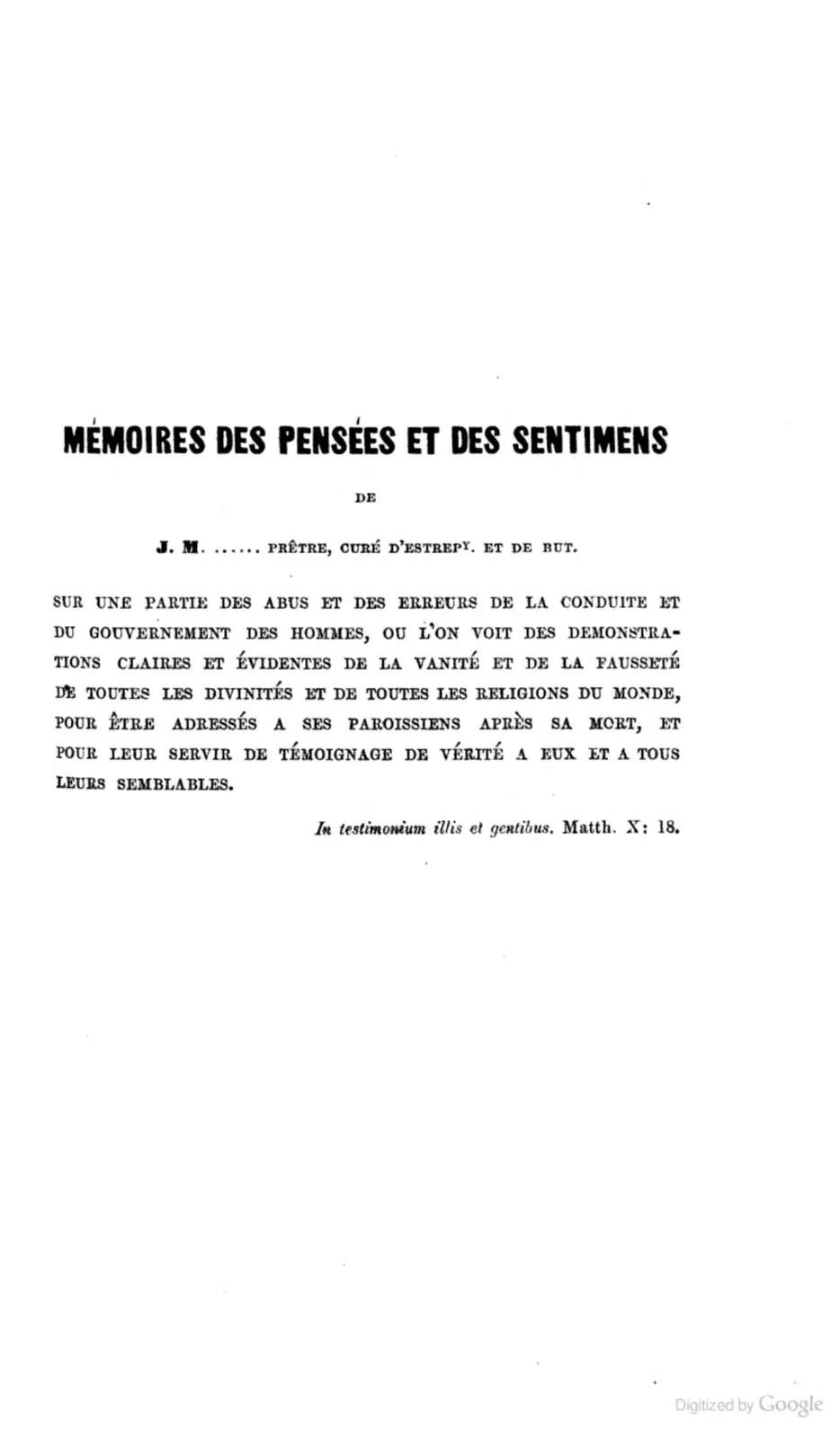
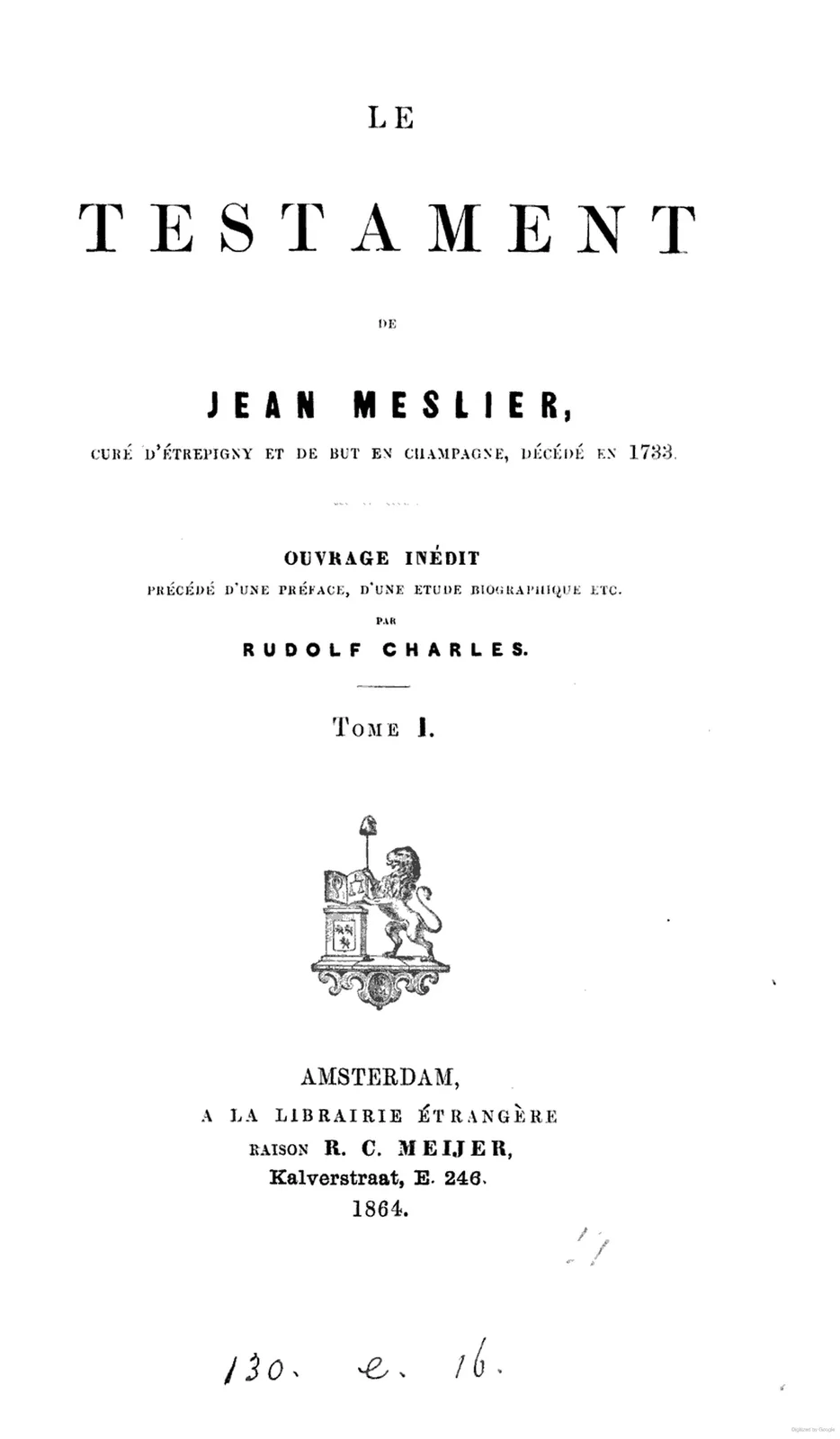
The manuscript runs to 366 leaves in each copy. Its title calls it a demonstration "of the vanity and falsity of all the divinities and all the religions of the world," to be "addressed to his parishioners after his death."67 It was written by a parish priest who went on serving his parish while he wrote it. This chapter asks how a man came to live that double life, and what became of his book once other men got hold of it.
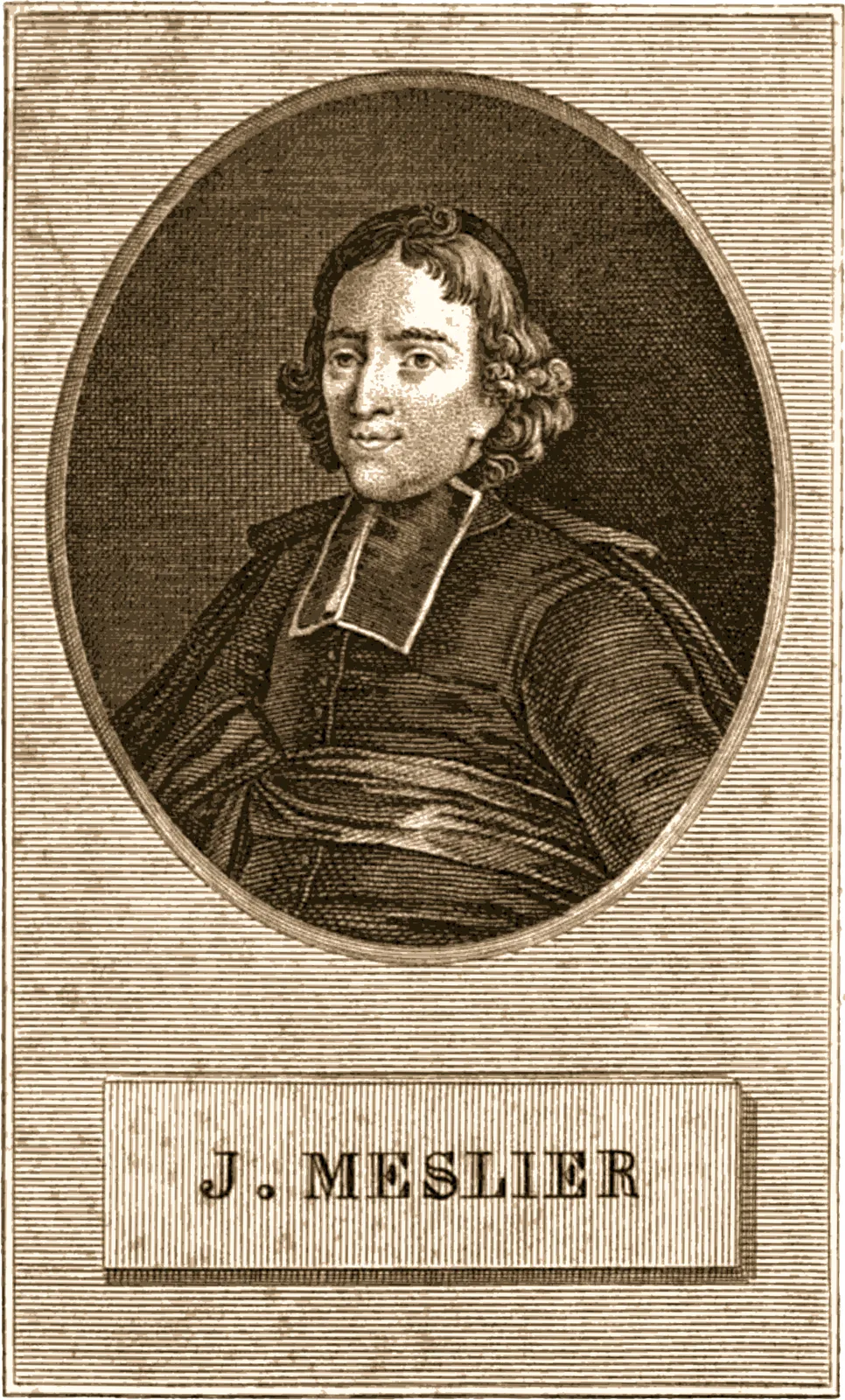
To please his parents
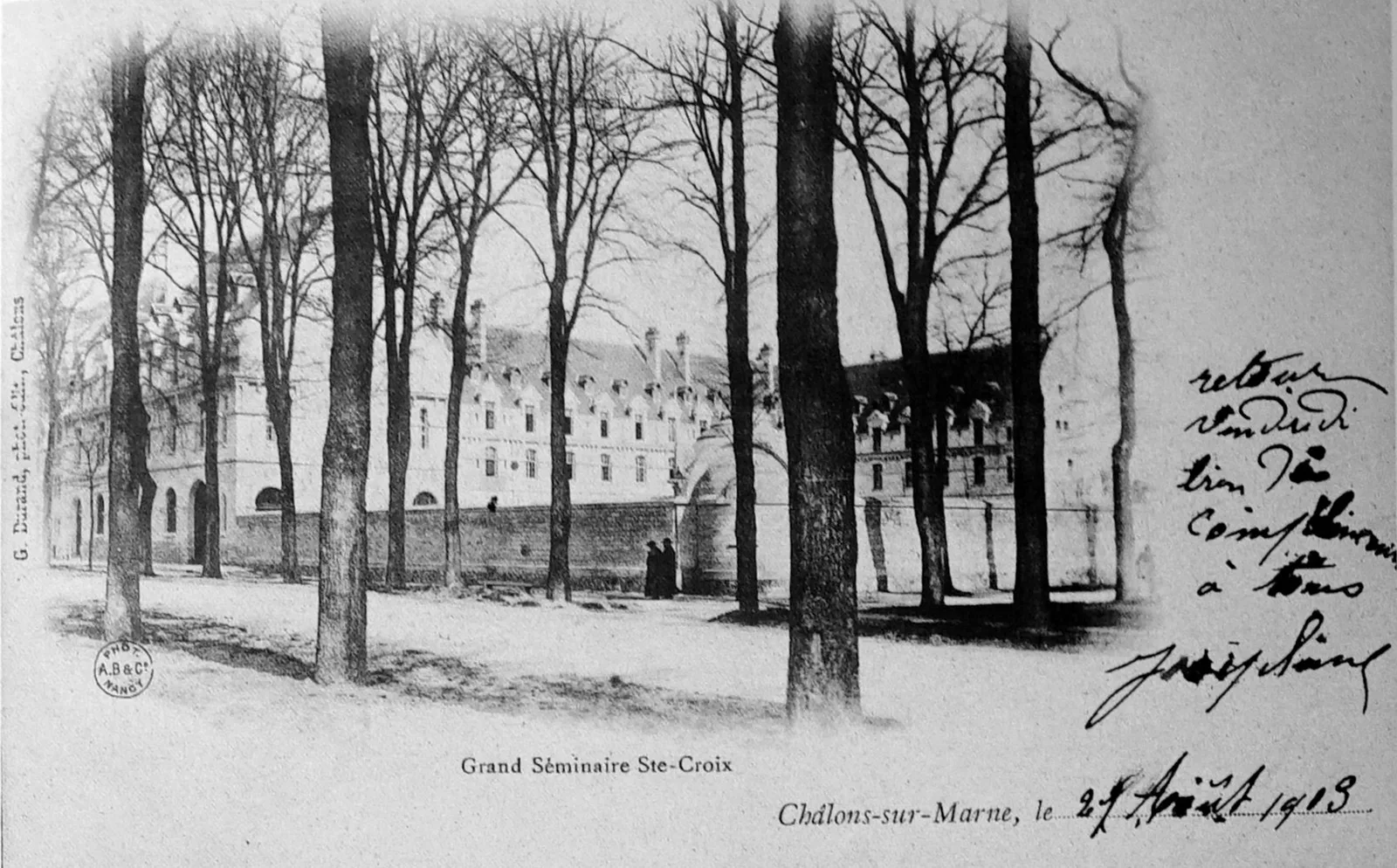
He was born at Mazerny, in the Champagne country of the Ardennes, on 15 June 1664, the son of a wool merchant or wool worker; the parish register spells the name Mellier, and he signed Meslier.8 A neighbouring priest taught him the humanities, and he went on to the seminary at Châlons-sur-Marne, where he lived, his first biographer says, "with great regularity" and attached himself to the philosophy of Descartes.9 He was ordained in 1688, at twenty-four, and in January 1692 he was given the parish of Étrépigny with its chapel at Balaives.1011
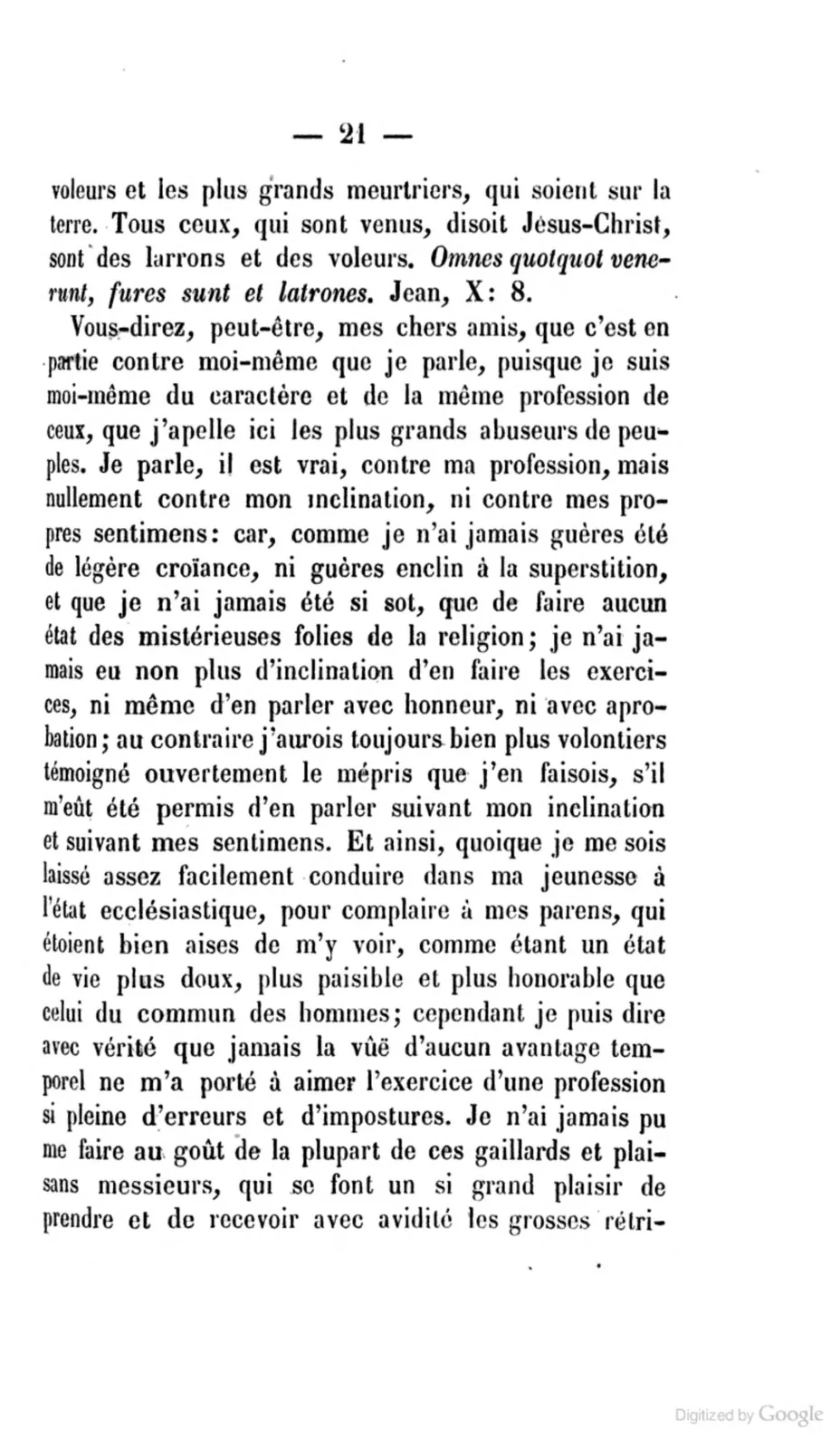
He later explained why he had become a priest, and it was not faith. "Although I let myself be led rather easily in my youth into the ecclesiastical state, to please my parents, who were glad to see me in it as a gentler, more peaceful and more honourable way of life than that of common men, I can truly say that no view of any temporal advantage ever made me love the exercise of a profession so full of errors and impostures."1213 Nor did he claim ever to have believed much. "I speak, it is true, against my profession, but not at all against my inclination or my own feelings: for as I was never of light belief, nor much inclined to superstition, and was never so foolish as to make anything of the mysterious follies of religion, I never had any inclination to perform its exercises either."1415 When did he begin to doubt? He gives no date. "From my earliest youth I glimpsed the errors and abuses that cause so many great evils in the world. The further I advanced in age and knowledge, the more I recognised the blindness and wickedness of men, the vanity of their superstitions, and the injustice of their government."1617
So the timeline begins not with faith but with obedience, and his doubt cannot be dated: by his own account it was there from the beginning and grew with every year.
The village priest
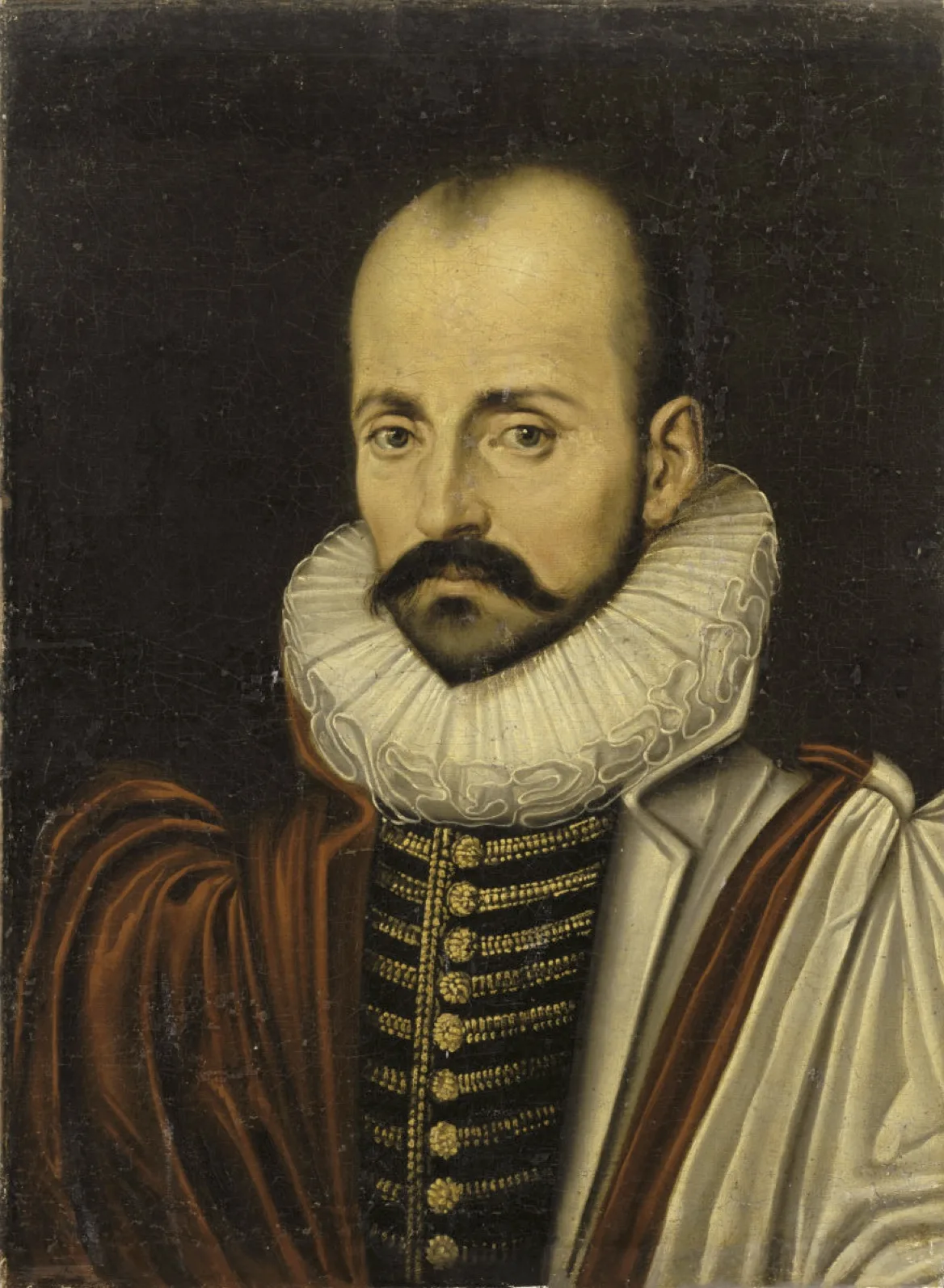
For thirty-seven years he lived the life his parish expected. His first biographers describe an austere, charitable, almost solitary man who gave nearly all his income in alms. His only company was two neighbouring priests who were also his confessors.18 His books, Voltaire said, were the Bible, a historical dictionary, Montaigne's Essays and some of the Church Fathers.19 He served the office, he wrote later, with repugnance and negligence, and he thought his parishioners might have noticed that he was on their side.20
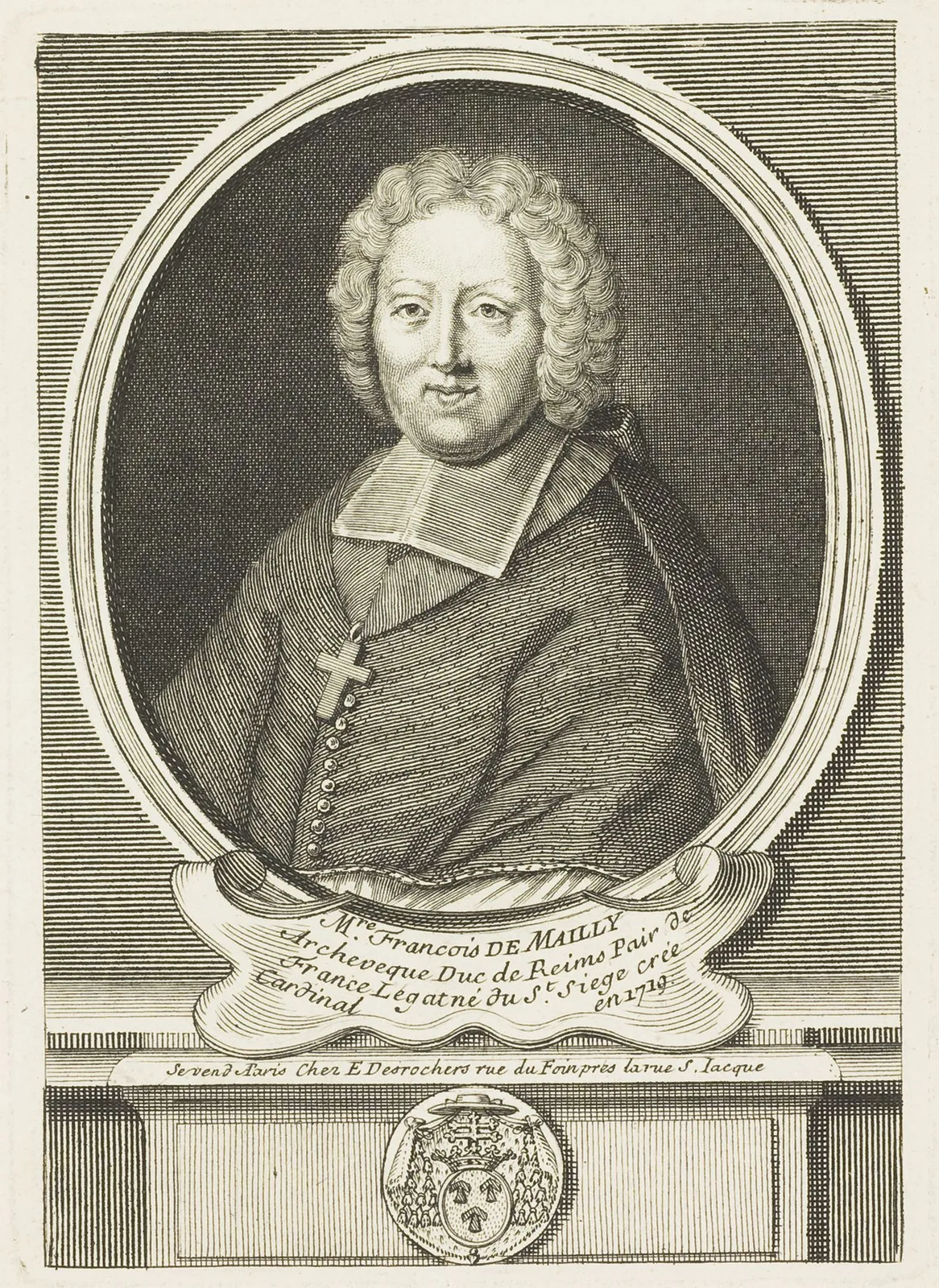
Once, the story goes, he showed his hand. Before 1723 he quarrelled with the local lord, who in Voltaire's account mistreated the peasants. Meslier refused to name the lord in the prayers from the pulpit; the archbishop of Reims ordered him to do it. The next Sunday, as Voltaire tells it, Meslier said: "Here is the ordinary fate of poor country priests: the archbishops, who are great lords, despise them and do not listen to them. Let us therefore commend the lord of this place. We shall pray God for Antoine de Touilly, that He may convert him, and give him the grace not to mistreat the poor and despoil the orphan." The archbishop summoned him and, Voltaire says, berated him. Local tradition tells a different version, with a different lord and a different archbishop, and accounts of the quarrel differ in nearly every detail but its outcome.21222324
The Testament
Some time after 1718, by the evidence of the books it cites and its reference to Louis XIV as "this last king," he wrote the work now called his Testament, and copied it out three times.2252627 It begins as a letter. "My very dear friends, since it would not have been permitted to me, and it would have been of too dangerous and too grievous a consequence, to say openly during my life what I thought of the conduct and government of men, of their religions and their morals, I have resolved to tell you after my death."28 He explains why clever men keep silent: "it is not surprising if wise and enlightened people conform to the general laws of the state, however unjust they may be, or conform, at least in appearance, to the usage and policy of a religion they find established, although they know its errors and its vanity well enough."2930 He was describing himself.
The argument is long and relentless. He answers Archbishop Fénelon's famous argument from design, "I cannot open my eyes without admiring the art that shines in all nature," by calling the hand that Fénelon saw invisible and imaginary.3132 He argues that the order of nature proves nothing, that matter has its own motion, and that "the evils, miseries, vices and wickedness of men show plainly that there is no sovereign being, infinitely good and infinitely wise, who could prevent them."3334 Atheism, he says, "is not so strange an opinion, nor so monstrous and unnatural, as our superstitious god-worshippers make out."35 He is harsh about Jesus in terms that still offend; his own nineteenth-century publisher deplored those pages while defending the man.36
The book is as much about injustice as about God. He wanted his parishioners to hold their goods in common, "in each parish," and to unite against princes and priests.3738 It contains the most famous sentence ever attributed to him, the wish that all the great and noble of the earth should be hanged and strangled with the guts of priests. But the Testament does not make it his own wish. He reports it as the saying of "a man who had neither learning nor study," and calls it rude and coarse, though frank. His own wish, a line later, is for "the arms and strength of a Hercules to purge the world of all vice and iniquity."3940 He insisted that he wrote from no private grudge, but only from "the zeal I have for justice and for truth."41
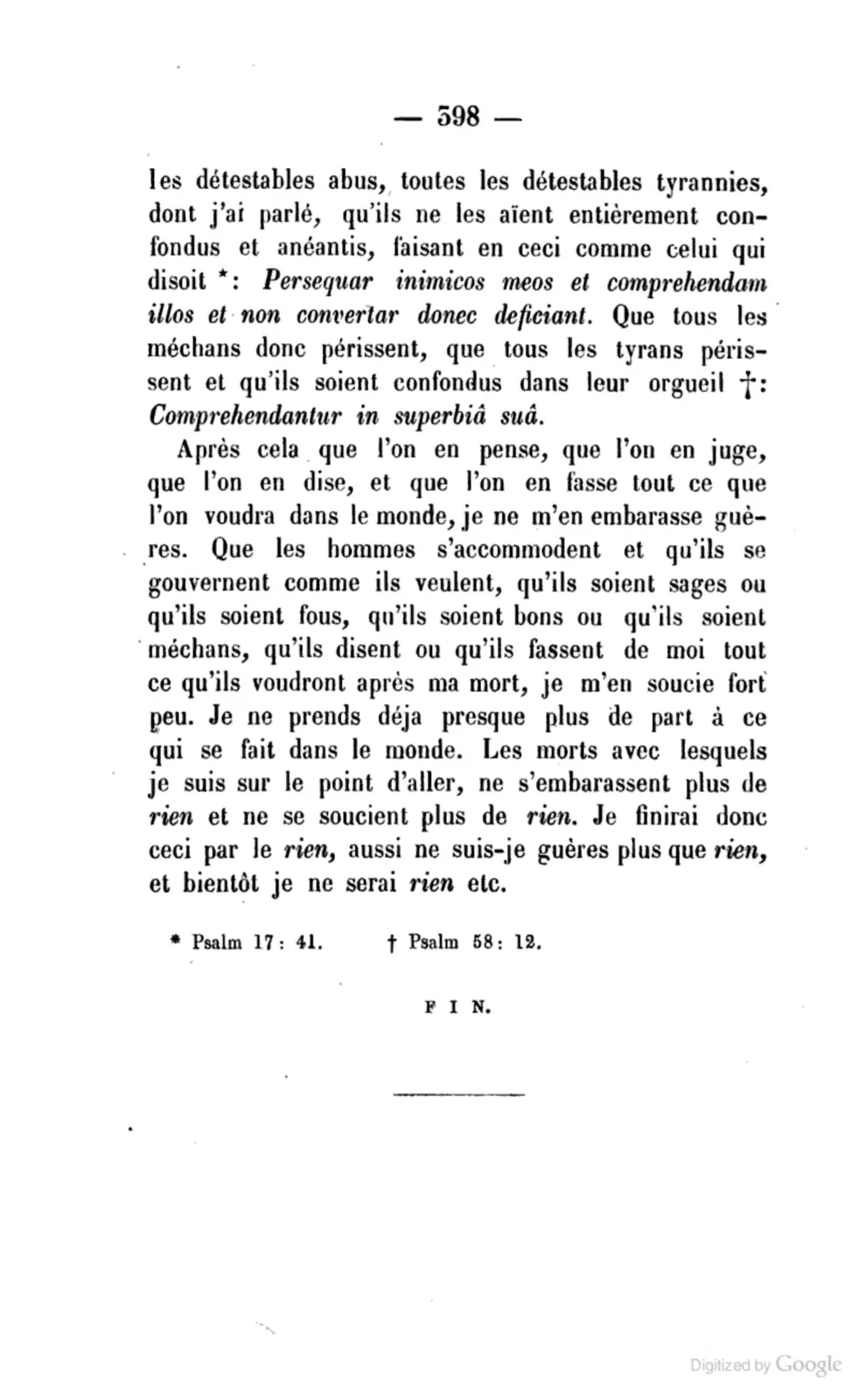
Near the end he writes as a man expecting to be reviled. He protests in advance against any abuse of his memory, declares that he has "never committed any crime," and says he has followed "only the natural light of reason."42434445 And then he closes. "The dead, whom I am about to join, no longer trouble themselves about anything and no longer care for anything. I shall end this, then, with nothing; and indeed I am scarcely more than nothing, and soon I shall be nothing."46
He died in 1729, at about sixty-five. Voltaire said that it was believed he had refused food, and local tradition said he let himself die of hunger; one account buries him in his garden, the other in the sacristy, and accounts differ on both.4748 He left what little he had to his parishioners.49 The archbishop's vicar general took one copy of the manuscript; another went to the Keeper of the Seals in Paris.3
Voltaire's Meslier
The authorities could not stop the copying. Within a few years manuscript copies were selling in Paris for several louis each, and Voltaire said there were "more than a hundred" in the city.50 In 1735 he wrote to a friend: "Who then is this village priest you tell me of? ... A priest, and a Frenchman, as much a philosopher as Locke?"5152 In 1762 he published an Extrait des sentiments de Jean Meslier, which he said had been made by "a good Swiss," and sent copies to his friends.5354
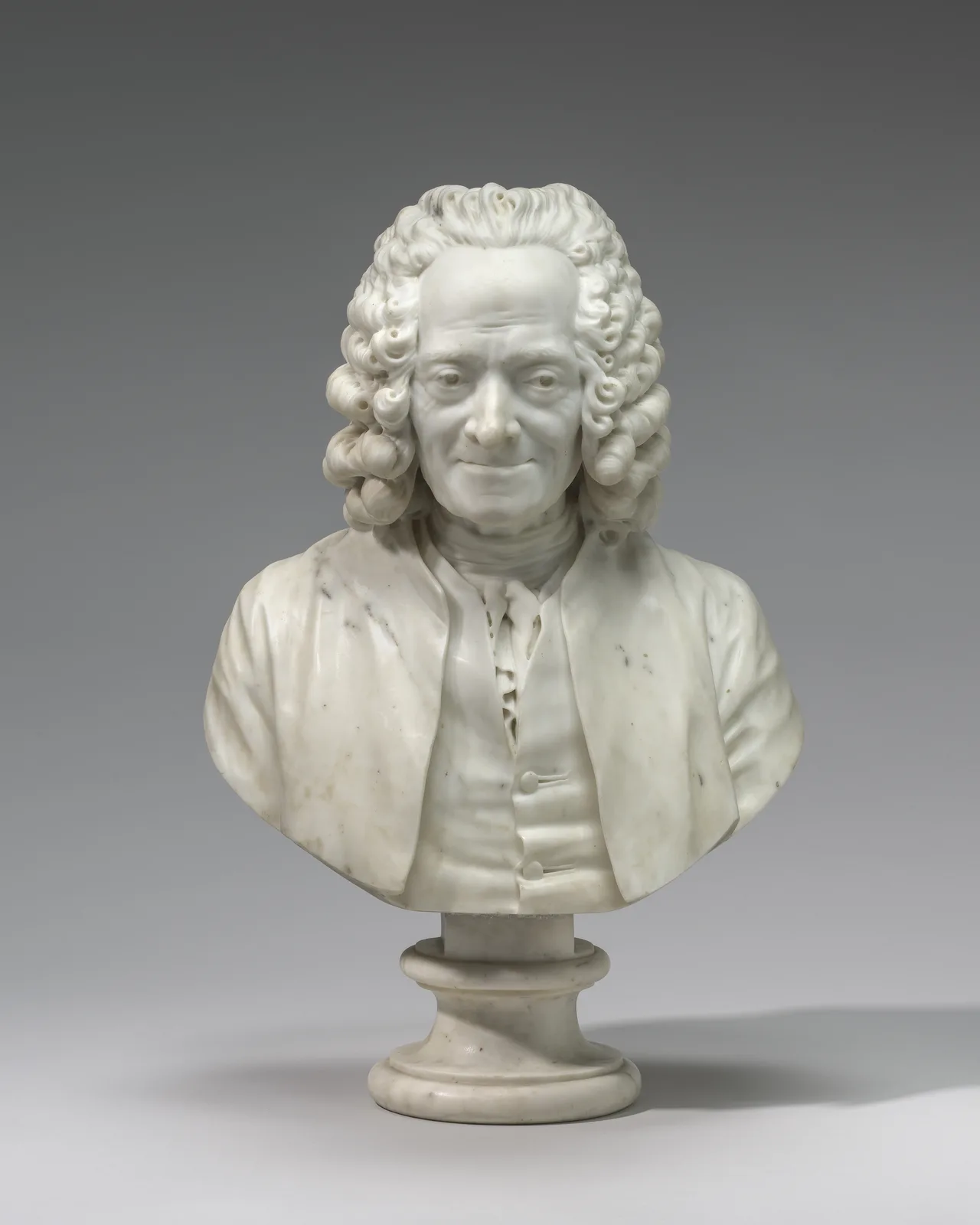
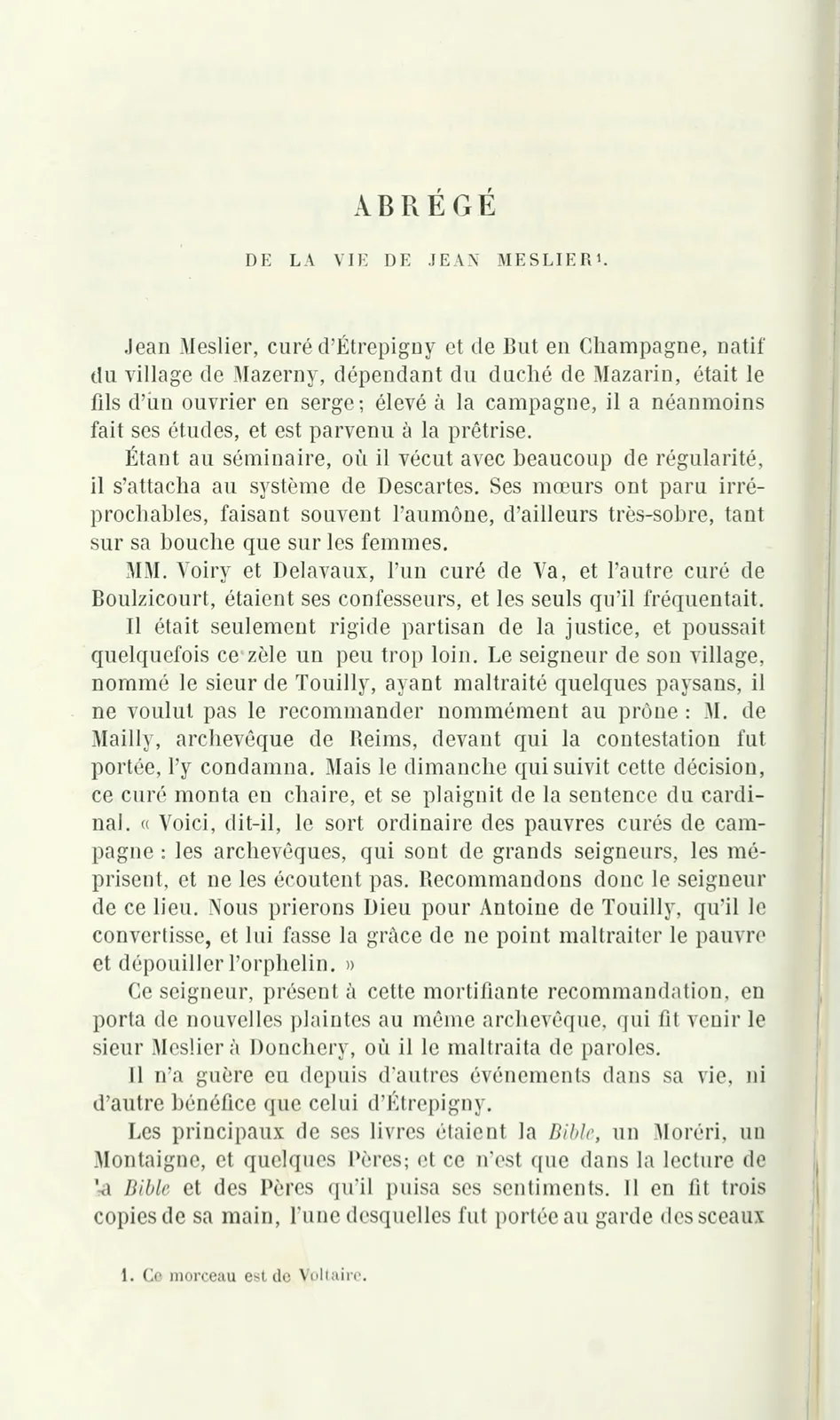
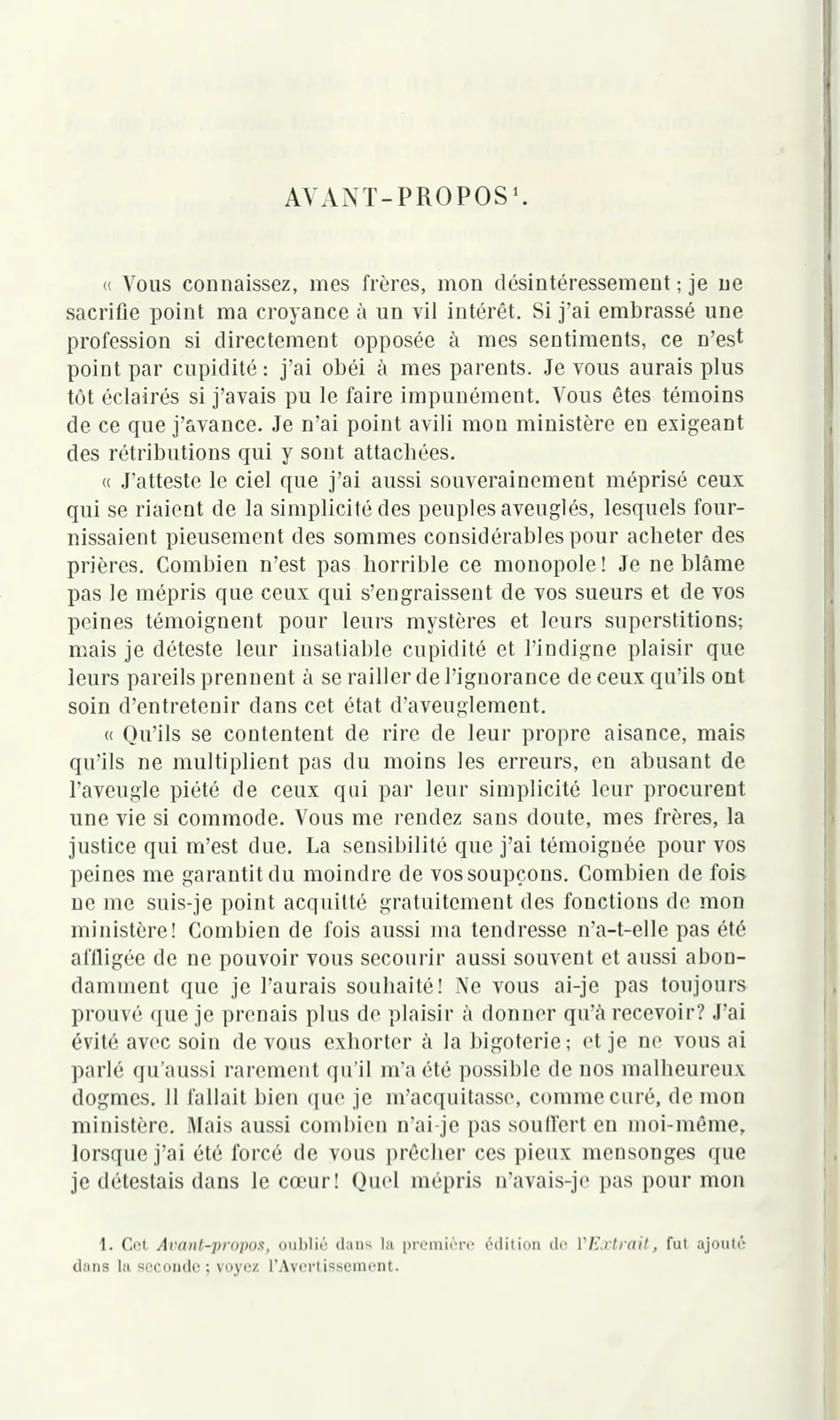
Voltaire's Meslier was not the Meslier of the manuscript. The Extrait gave only the first part of the work, the attack on revealed religion, and left out the argument against God.55 It added an opening in which "Meslier" says he obeyed his parents and that "a thousand times, on the point of bursting out publicly," fear had held him back.5657 And it ended with a prayer: "I shall end by begging God, so outraged by this sect, to deign to recall us to natural religion, of which Christianity is the declared enemy," followed by Voltaire's own comment on "the testimony of a dying priest who asks God's pardon."5859 None of that is in the Testament. Its last words are not a prayer but "soon I shall be nothing."58 In his letters Voltaire said the same thing again and again: "I do not believe anything could ever have more effect than the testament of a priest who asks God's pardon, as he dies, for having deceived men." He found the original "too long, too boring and even too revolting," and he had "shuddered with horror" reading it.606162 D'Alembert joked that the priest's tomb should say he had asked God's pardon for being a Christian.63
The fair word on Voltaire's version comes from his friend. When Voltaire urged that the whole Testament be printed in thousands of copies, d'Alembert declined: the cause "would lose nothing, or little, by it, and we would be treated as madmen by the very people we had converted."64 The believers' answers came later and were simpler. A Catholic biographer of the Ardennes wrote in 1830 that "men of sense will never class him among the philosophers," and the anti-revolutionary Abbé Barruel doubted that Meslier had written the book at all, suspecting that the philosophes had forged it after his death.6566
The name on other men's books
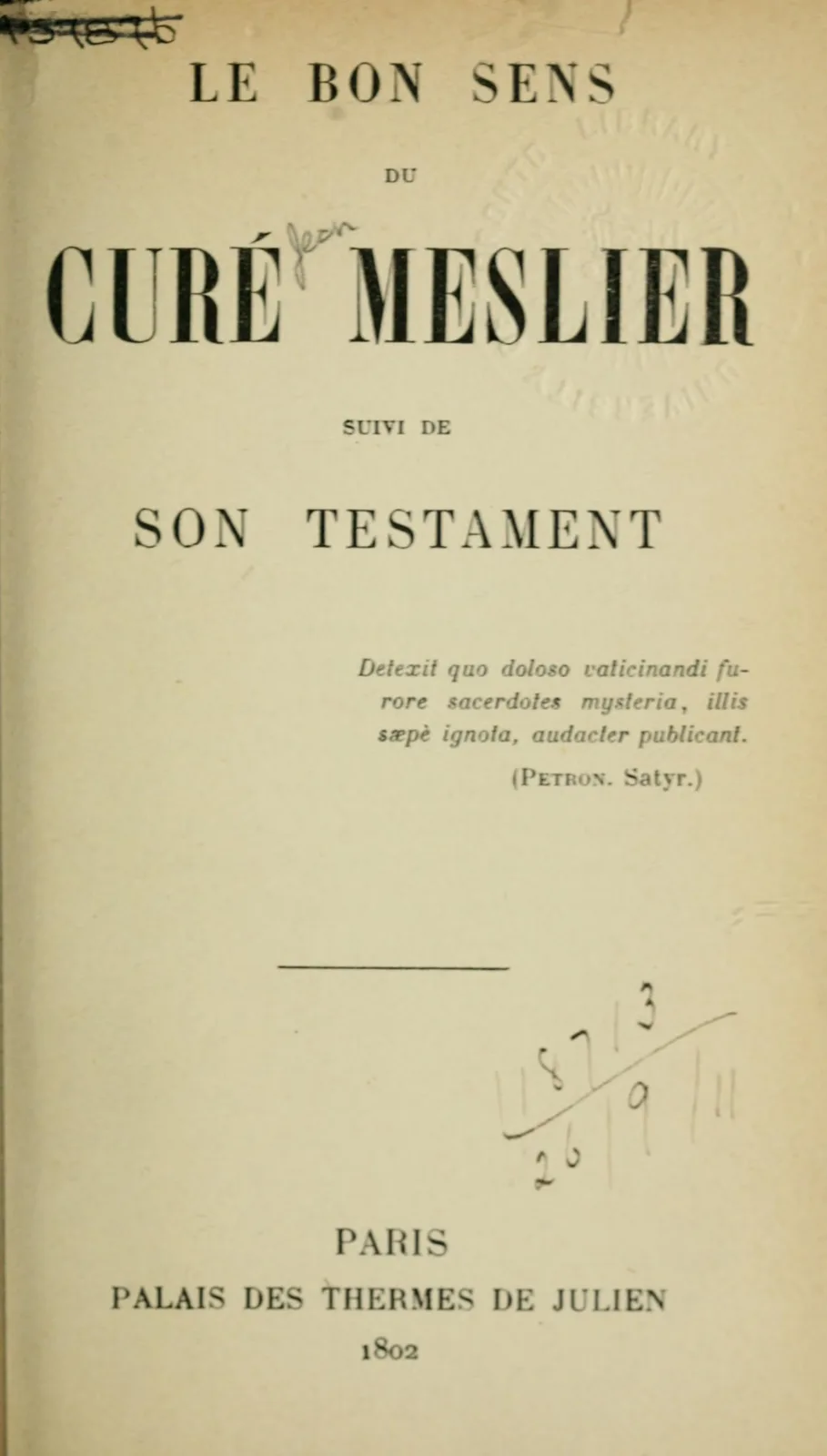
The Parlement of Paris ordered the Extrait burned, and Rome put it on the Index.67 Then Meslier's name was borrowed. In 1772 the Baron d'Holbach published Le Bon-Sens anonymously; it never mentions Meslier and never uses his vocabulary.68 In 1791, during the Revolution, it was reissued "under the name of the late M. Meslier, curé of Étrépigny," and for two centuries it was sold, translated and prosecuted as his.6970 French courts ordered Le Bon Sens du curé Meslier destroyed four times between 1824 and 1838; in America it was translated in 1878 as Superstition in All Ages, "by Jean Meslier."7172
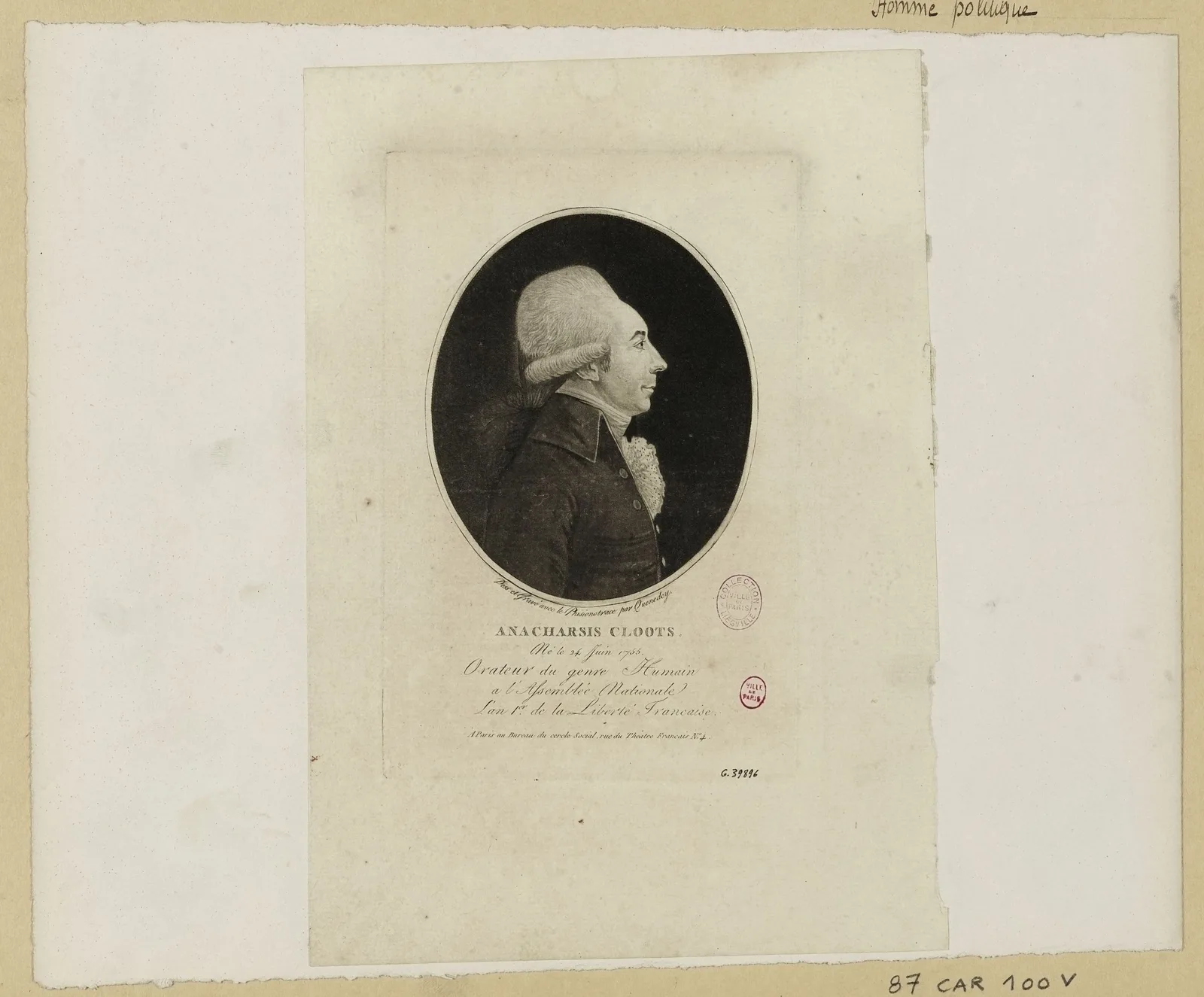
On 17 November 1793 the National Convention sent to its education committee a proposal to raise a statue to "Jean Meslier, curé of Étrépigny in Champagne, the first priest who had the courage and good faith to abjure religious errors." The proposer, by one account, was Anacharsis Cloots. Nothing came of it.7374 The Testament itself was not printed in full until 1864, when a Dutch freethinker, Rudolf Charles, found a manuscript copy at an antiquarian's in Holland.75
Did his unbelief change shape?
In his own life, as far as the record shows, it did not. By his own account Meslier never believed much, saw the errors "from my earliest youth," became a priest to please his parents, and spent thirty-seven years doing outwardly what he condemned inwardly, until he could say it from the grave. The motives he gives are reading, solitude and a long view of injustice. He was a village priest with, as far as anyone knows, no circle and no patron. What changed was what others made of him after he died. Voltaire turned him into a penitent deist who asked God's pardon, d'Holbach's book went out under his name, and the Revolution wanted to give him a statue. For most of two centuries readers knew him through men who agreed with him only in part. The man in the manuscript ended differently from all of them, with no prayer and no pardon: "soon I shall be nothing."
The Baron d'Holbach, whose Le Bon-Sens was sold for two centuries under Meslier's name, has his own chapter in this book.
Footnotes
-
J. B. J. Boulliot, Biographie ardennaise, vol. 2 (Paris, 1830), article "Mesliers", pp. 206–12, vol. 2, p. 208; Rudolf Charles, preface to the same edition, vol. 1, pp. i–lxiv (Roman numerals), including a biography (pp. xxxv–xlvi) and Voltaire's letters on Meslier (pp. liii–lxiv). Same scan as [Test.] vol. 1, p. xxxviii. ↩
-
Charles, p. xxxviii–xxxix; Voltaire (attrib.; Beuchot's note says "Ce morceau est de Voltaire"), "Abrégé de la vie de Jean Meslier", in Oeuvres complètes de Voltaire, ed. Moland, vol. 24 (Paris, Garnier, 1879), pp. 293–95, p. 294–95; Boulliot, Biographie ardennaise, vol. 2, p. 210. ↩ ↩2
-
Charles, p. xxxviii–xxxix; says, Oeuvres complètes de Voltaire, p. 295 and notes 4–5. ↩ ↩2
-
Charles, p. xxxix; says, Oeuvres complètes de Voltaire, p. 295 [Q2. ↩
-
Charles, p. xxxix; says, Oeuvres complètes de Voltaire, p. 295. ↩
-
Jean Meslier, Mémoires des pensées et des sentimens de J. M. ... curé d'Estrep. et de But, ed. Rudolf Charles, Le Testament de Jean Meslier (Amsterdam, R. C. Meijer, 1864), 3 vols. Vol. 1 IA bub_gb_dN0CAAAAQAAJ; vol. 2 bub_gb_bng-AAAAcAAJ (title page says "décédé en 1733"); vol. 3 bub_gb_O6IOAAAAIAAJ, vol. 1, title page [Q1. ↩
-
Meslier, Mémoires des pensées et des…, vol. 1, title page. Not checked against the original (located; OCR of the title page is garbled (verify-quotes LOW 64%), wording checked by eye against t1 line 3078). ↩
-
Boulliot, Biographie ardennaise, vol. 2, p. 206 and note 1; Charles, p. xxxv; says, Oeuvres complètes de Voltaire, p. 293. ↩
-
Boulliot, Biographie ardennaise, vol. 2, p. 206; Charles, p. xxxv; says, Oeuvres complètes de Voltaire, p. 293 (seminary and Descartes, no town). ↩
-
Boulliot, Biographie ardennaise, vol. 2, p. 206; Charles, p. xxxv. ↩
-
Boulliot, Biographie ardennaise, vol. 2, p. 206 and note 2; Charles, p. xxxvi. ↩
-
Meslier, Mémoires des pensées et des…, vol. 1, p. 21 [Q5. ↩
-
Meslier, Mémoires des pensées et des…, vol. 1, pp. 21–22. ↩
-
Meslier, Mémoires des pensées et des…, vol. 1, p. 21 [Q6. ↩
-
Meslier, Mémoires des pensées et des…, vol. 1, p. 21. ↩
-
Meslier, Mémoires des pensées et des…, vol. 1, pp. 4–5 [Q4. ↩
-
Meslier, Mémoires des pensées et des…, vol. 1, pp. 4–5. ↩
-
Charles, p. xxxvi; says, Oeuvres complètes de Voltaire, p. 293. ↩
-
says, Oeuvres complètes de Voltaire, p. 294; Charles, p. xxxvi; Boulliot, Biographie ardennaise, vol. 2, p. 207. Reported at second hand; the original has not been seen. ↩
-
Meslier, Mémoires des pensées et des…, vol. 1, pp. 3–4 and 23. ↩
-
says, Oeuvres complètes de Voltaire, p. 293–94 [Q15; Charles, p. xxxvii. ↩
-
Boulliot, Biographie ardennaise, vol. 2, pp. 207–08; Charles, pp. xxxvii–xxxviii. ↩
-
Boulliot, Biographie ardennaise, vol. 2, p. 208 note 1. Not verified. ↩
-
says, Oeuvres complètes de Voltaire, p. 293–94; Boulliot, Biographie ardennaise, vol. 2, p. 208 note 1 (with "M. de Clairy"). ↩
-
Meslier, Mémoires des pensées et des…, vol. 2, p. 232 and p. 247 [Q12; vol. 3, p. c. 305. ↩
-
Charles, pp. xxxix–xl; says, Oeuvres complètes de Voltaire, p. 295; Boulliot, Biographie ardennaise, vol. 2, p. 211. ↩
-
Meslier, Mémoires des pensées et des…, vol. 2, p. 247. ↩
-
Meslier, Mémoires des pensées et des…, vol. 1, p. 3. ↩
-
Meslier, Mémoires des pensées et des…, vol. 1, pp. 6, 10–11 [Q10, Q11. ↩
-
Meslier, Mémoires des pensées et des…, vol. 1, p. 10. ↩
-
Meslier, Mémoires des pensées et des…, vol. 2, pp. 305–06 [OQ1. ↩
-
Fénelon, Archbishop of Cambrai (d. 1715), believer; quoted and answered by Meslier, who annotated Fénelon's book: Meslier, Mémoires des pensées et des…, vol. 2, p. 305 (quoting Fénelon, Démonstration de l'existence de Dieu, 1718, §1). Not checked against the original (located; OCR garbled (verify-quotes LOW 76%), read by eye at t2 lines 12726–12734; Fénelon's own text not checked. Effect: Meslier replies that this "main" is "imaginaire" (p. 306)). ↩
-
Meslier, Mémoires des pensées et des…, vol. 2, pp. 297–98 [Q14; vol. 3, table of contents (chs. LXXVI, LXXVII) [Q21. ↩
-
Meslier, Mémoires des pensées et des…, vol. 3, table of contents (text of the chapter at p. 43 not read). ↩
-
Meslier, Mémoires des pensées et des…, vol. 2, pp. 297–98. ↩
-
Charles, pp. xlix–lii. ↩
-
Meslier, Mémoires des pensées et des…, vol. 3, p. 387 [Q20. ↩
-
Meslier, Mémoires des pensées et des…, vol. 3, p. 387. ↩
-
Meslier, Mémoires des pensées et des…, vol. 1, p. 19. ↩
-
Meslier, Mémoires des pensées et des…, vol. 1, p. 19. ↩
-
Meslier, Mémoires des pensées et des…, vol. 1, p. 19. ↩
-
Meslier, Mémoires des pensées et des…, vol. 3, pp. 395–96 [Q18, Q19. ↩
-
Meslier, Mémoires des pensées et des…, vol. 3, p. 395. ↩
-
Meslier, Mémoires des pensées et des…, vol. 3, p. 396. ↩
-
Meslier, Mémoires des pensées et des…, vol. 3, p. 396. ↩
-
Meslier, Mémoires des pensées et des…, vol. 3, p. 398 (last page; OCR page mark "598"). ↩
-
says, Oeuvres complètes de Voltaire, p. 295; Boulliot, Biographie ardennaise, vol. 2, p. 208. Accounts differ; see the disputed points. ↩
-
Boulliot, Biographie ardennaise, vol. 2, p. 208; says, Oeuvres complètes de Voltaire, p. 295. ↩
-
says, Oeuvres complètes de Voltaire, p. 295; Charles, p. xxxviii. ↩
-
Voltaire and d'Alembert correspondence, Moland vols. 33 (letter of 1735), 42 and 43 (1762–64), vol. 42, pp. 39–40 (letter 4834); Charles, p. xxxix; Boulliot, Biographie ardennaise, vol. 2, p. 210. ↩
-
Corr., vol. 33, p. 553; Charles, p. liii. ↩
-
Voltaire to Thieriot, 30 Nov 1735: Corr., vol. 33, p. 553; Charles, p. liii. ↩
-
Moland vol. 24, p. 293 (Beuchot's note); Corr., vol. 42, p. 38 and p. 124. ↩
-
Corr., vol. 42, pp. 39–40 and p. 44; Moland vol. 24, p. 293; A.-A. Barbier, Dictionnaire des ouvrages anonymes et pseudonymes, 2nd ed. (Paris, 1822), entries 1807 and 6107, no. 6107; Boulliot, Biographie ardennaise, vol. 2, p. 211. ↩
-
Charles, p. xliii; Boulliot, Biographie ardennaise, vol. 2, p. 211. ↩
-
Voltaire, writing as Meslier (Avant-propos, 2nd ed.): Voltaire, Extrait des sentiments de Jean Meslier (1762), Moland vol. 24, pp. 296–336. Same scan, p. 296. ↩
-
Voltaire, writing as Meslier: Voltaire, Extrait des sentiments de Jean Meslier, p. 297. ↩
-
Voltaire, Extrait des sentiments de Jean Meslier, p. 336 [Q23; Meslier, Mémoires des pensées et des…, vol. 3, p. 398 [Q16. ↩ ↩2
-
Voltaire (closing of the Extrait): Voltaire, Extrait des sentiments de Jean Meslier, p. 336. ↩
-
Corr., vol. 42, pp. 43, 259, 464; Charles, pp. liv, lix, lxi. ↩
-
Voltaire to Damilaville, early Oct 1762: Corr., vol. 42, p. 259; Charles, p. lix. ↩
-
Voltaire to d'Alembert, February 1762: Corr., vol. 42, p. 43 (letter 4840); Charles, p. liv. ↩
-
d'Alembert to Voltaire, 31 March 1762: Corr., vol. 42, p. 80 (letter 4873); Charles, p. lv (dated 30 March). ↩
-
d'Alembert to Voltaire, 31 July 1762: a friend declining to publish, "la crainte des fagots est très-rafraîchissante": Corr., vol. 42, p. 191 (letter 4986); Charles, p. lviii. ↩
-
J. B. J. Boulliot, Ardennes biographer, Catholic in tone; he also charges the "prétendus philosophes" with padding copies and lending Meslier "une horrible saillie contre les prêtres et les rois": Boulliot, Biographie ardennaise, vol. 2, p. 209 (padding charge p. 210–11). ↩
-
Abbé Barruel, anti-Revolution Jesuit historian (1797–98): Abbé Barruel, Mémoires pour servir à l'histoire du Jacobinisme, vol. 1 (1803 reprint, IA mmoirespours01barr); English tr. R. Clifford (1799, IA memoirsillustrat01barr); abridged Histoire du Jacobinisme (1911, IA mmoirespourser00barr), abridged Histoire du Jacobinisme (1911 ed.), p. 65; wording not yet checked in the 1797 Mémoires. ↩
-
Charles, p. xliv; Moland vol. 24, p. 293. ↩
-
Le Bon-Sens, ou Idées naturelles opposées aux idées surnaturelles (London [Amsterdam], 1772), title page and preface; Barbier, Dictionnaire des ouvrages anonymes et pseudonymes, no. 1807; counts from the OCR. ↩
-
Barbier, Dictionnaire des ouvrages anonymes et pseudonymes, no. 1807; Boulliot, Biographie ardennaise, vol. 2, pp. 211–12 [Q: see OQ3. ↩
-
Charles, p. xliii; Le Bon Sens du curé Meslier, suivi de son testament (Paris, title page reads 1803; IA metadata 1802), title page; Ce que sont les prêtres, précédé du Testament de J. Meslier (Paris, Librairie anti-cléricale, 1881), title page and advertisement; Anna Knoop, tr., Superstition in All Ages ... by Jean Meslier (New York, Peter Eckler, 1920 printing; copyright 1878; publisher's preface dated 1889), title page. ↩
-
Charles, p. xliv. ↩
-
Knoop, Superstition in All Ages ...…, title page, pp. iii–vi, 27–32. ↩
-
Charles, pp. xlii and lxiv (decree text) [Q22; Boulliot, Biographie ardennaise, vol. 2, p. 210. ↩
-
Convention nationale, 27 brumaire an II: Charles, p. lxiv (decree text). ↩
-
Charles, pp. xliv–xlvii. ↩
In their own words
Mémoires des pensées et des sentimens de J. M. prêtre, curé d'Estrep. et de But, sur une partie des abus et des erreurs de la conduite et du gouvernement des hommes, où l'on voit des démonstrations claires et évidentes de la vanité et de la fausseté de toutes les divinités et de toutes les religions du monde, pour être adressés à ses paroissiens après sa mort, et pour leur servir de témoignage de vérité à eux et à tous leurs semblables.
J'ai vu et reconnu les erreurs, les abus, les vanités, les folies et les méchancetés des hommes; je les ai haïs et détestés; je ne l'ai osé dire pendant ma vie, mais je le dirai au moins en mourant et après ma mort; et c'est afin qu'on le sache que je fais et écris le présent mémoire, afin qu'il puisse servir de témoignage de vérité à tous ceux qui le verront et qui le liront, si bon leur semble.
Mes très-chers amis, comme il ne m'auroit pas été permis, et qu'il auroit été d'une trop dangereuse et trop fâcheuse conséquence de dire ouvertement, pendant ma vie, ce que je pensois de la conduite et du gouvernement des hommes, de leurs religions et de leurs mœurs; j'ai résolu de vous le dire après ma mort.
Dès ma plus tendre jeunesse, j'ai entrevû les erreurs et les abus, qui causent tant de si grands maux dans le monde. Plus j'ai avancé en âge et en connoissance, plus j'ai reconnu l'aveuglement et la méchanceté des hommes; plus j'ai reconnu la vanité de leurs superstitions, et l'injustice de leur gouvernement.
quoique je me sois laissé assez facilement conduire dans ma jeunesse à l'état ecclésiastique, pour complaire à mes parons, qui étoient bien aises de m'y voir, comme étant un état de vie plus doux, plus paisible et plus honorable que celui du commun des hommes; cependant je puis dire avec vérité que jamais la vûë d'aucun avantage temporel ne m'a porté à aimer l'exercice d'une profession si pleine d'erreurs et d'impostures.
Je parle, il est vrai, contre ma profession, mais nullement contre mon inclination, ni contre mes propres sentimens: car, comme je n'ai jamais guères été de légère croïance, ni guères enclin à la superstition, et que je n'ai jamais été si sot, que de faire aucun état des mistérieuses folies de la religion; je n'ai jamais eu non plus d'inclination d'en faire les exercices, ni même d'en parler avec honneur, ni avec aprobation
Il souhaitoit, disoit-il, par raport au sujet dont je parle, que tous les grands de la terre et que tous les nobles fussent pendus et étranglés avec les boïaux des prêtres. Cette expression ne doit point manquer de paroître assez rude et grossière, mais il faut avouer qu'elle est franche et naïve.
je souhaiterais d'avoir les bras et la force d'un Hercule pour purger le monde de tout vice et de toute iniquité, et pour avoir le plaisir d'assommer tous ces monstres d'erreurs et d'iniquité, qui font gémir si pitoïablement tous les peuples de la terre.
Ne pensez pas, mes chers amis, que je sois poussé ici par aucun désir particulier de vengeance, ni par aucun motif d'animosité ou d'intérêt particulier; non, mes chers amis, ce n'est point du tout la passion, qui m'inspire ces senlimens-là, ni qui me fait parler et écrire ainsi: ce n'est véritablement que le zèle que j'ai pour la justice et pour la vérité
Le silence de tant de personnes sages et même d'un rang et d'un caractère distingués, qui dévoient, ce me sembloit-il, s'oposer au torrent des vices et des superstitions, ou qui dévoient au moins tâcher d'aporter quelques remèdes à tant de maux, me paroissoit avec étonnement une espèce d'aprobation
il ne faut pas s'étonner, si les personnes sages et éclairées se conforment aux loix générales de l'état, si injustes qu'elles puissent être, ou s'ils se conforment, au moins en aparence, à l'usage et à la politique d'une religion qu'ils trouvent établie, quoiqu'ils en reconnoissent suffisamment les erreurs et la vanité
ce dernier Roi Louis XIV, surnommé le Grand, non véritablement pour les grandes et louables actions qu'il ait fait, puisqu'il n'en a point fait, qui soient véritablement dignes de ce nom
ce Jésus-Christ, qu'ils vous font adorer comme un Dieu fait homme, n'étoit, suivant même le portrait que nous en font les Evangélistes et ses disciples, qu'un misérable fanatique et un malheureux pendart
l'Athéisme n'est pas une opinion si étrange, ni si monstrueuse et si dénaturée que nos superstitieux Déicoles le font entendre
Voici, dit-il, le sort ordinaire des pauvres curés de campagne : les archevêques, qui sont de grands seigneurs, les méprisent, et ne les écoutent pas. Recommandons donc le seigneur de ce lieu. Nous prierons Dieu pour Antoine de Touilly, qu'il le convertisse, et lui fasse la grâce de ne point maltraiter le pauvre et dépouiller l'orphelin.
Les morts avec lesquels je suis sur le point d'aller, ne s'embarassent plus de rien et ne se soucient plus de rien. Je finirai donc ceci par le rien, aussi ne suis-je guères plus que rien, et bientôt je ne serai rien
Au reste je vous déclare, mes chers Amis, que dans tout ce que j'en ai dit ou écrit ici, je n'ai prétendu suivre que les seules lumières naturelles de la raison
je déclare déjà par avance que je proteste contre toutes les procédures injurieuses, qu'ils pouront alors faire injustement contre moi au sujèt de cet écrit
Je n'ai jamais fait aucun crime, ni aucune méchante ou mauvaise action
vous serez misérables et malheureux, vous et vos descendans, tant que vous voudrez, au préjudice du bien commun, vous aproprier chacun en particulier tout ce que vous pouvez avoir les uns et les autres, et que vous ne voudrez pas tout mettre en commun dans chaque paroisse pour jouir tous en commun des biens de la terre et des fruits de vos travaux
Les maux, les misères, les vices et les méchancetés des hommes font évidemment voir, qu'il n'y a point d'être souverain infiniment bon, infiniment sage qui puisse les empêcher.
La Convention nationale renvoie à son Comité d'instruction publique la proposition faite par l'un de ses membres, d'ériger une statue à Jean Meslier, Curé d'Étrépigny en Champagne, le premier prêtre qui ait eu le courage et la bonne foi d'abjurer les erreurs religieuses.
Je finirai par supplier Dieu, si outragé par cette secte, de daigner nous rappeler à la religion naturelle, dont le christianisme est l'ennemi déclaré ... Voilà le précis exact du Testament in-fol. de Jean Meslier. Qu'on juge de quel poids est le témoignage d'un prêtre mourant qui demande pardon à Dieu.
Si j'ai embrassé une profession si directement opposée à mes sentiments, ce n'est point par cupidité : j'ai obéi à mes parents.
Mille fois sur le point d'éclater publiquement, j'allais dessiller vos yeux; mais une crainte supérieure à mes forces me contenait soudain, et m'a forcé au silence jusqu'à ma mort.
On a imprimé en Hollande le Testament de Jean Meslier; ce n'est qu'un très petit extrait du Testament de ce curé. J'ai frémi d'horreur à la lecture.
Je ne crois pas que rien puisse jamais faire plus d'effet que le testament d'un prêtre qui demande pardon à Dieu, en mourant, d'avoir trompé les hommes. Son écrit est trop long, trop ennuyeux, et même trop révoltant; mais l'Extrait est court, et contient tout ce qui mérite d'être lu dans l'original.
Il me semble qu'on pourrait mettre sur la tombe de ce curé: « Ci-gît un fort honnête prêtre, curé de village, en Champagne, qui, en mourant, a demandé pardon à Dieu d'avoir été chrétien, et qui a prouvé par là que quatre-vingt-dix-neuf moutons et un Champenois ne font pas cent bêtes. »
Quoi! Meslier, en mourant, aura dit ce qu'il pense de Jésus
Comment! un curé, et un Français, aussi philosophe que Locke?
il est vrai que cela est écrit du style d'un cheval de carosse; mais qu'il rue bien à propos!
The other side
Je ne puis ouvrir les yeux, sans admirer l'art qui éclate dans toute la nature. Le moindre coup-d'oeil suffit pour apercevoir la main qui fait tout
c'est dans toute sa hideuse sécheresse le matérialisme lourd, diffus, inintelligible de cette coterie d'Holbach, une des plus nulles en talent, et des plus pernicieuses en doctrines
les hommes de sens ne le classeront jamais parmi les philosophes, les vrais amateurs de la sagesse
On pourrait y joindre ce Meslier, curé d'Etrepigny, s'il était bien constant que les sophistes n'avaient pas forgé eux-mêmes le testament qu'ils lui attribuèrent après sa mort.
Vous voudriez que nous fissions imprimer le Testament de Jean Meslier, et que nous en distribuassions quatre ou cinq mille exemplaires; l'infâme, puisque infâme y a, n'y perdrait rien ou peu de chose, et nous serions traités de fous par ceux mêmes que nous aurions convertis.
M. de Mailly, archevêque de Reims, devant qui la contestation fut portée, l'y condamna.
Where accounts differ
| Point | One account | Another | How the page handles it |
|---|---|---|---|
| Birth year | 15 June 1664 (Boulliot, from the register; Charles) | c. 1678, from "died 1733 aged 55" (Voltaire) | Say 1664, the register date; Voltaire's age figures are wrong |
| Death year | 1729: last signed act 7 May, successor 27 Aug (Boulliot, Charles) | 1733 (Voltaire; Charles's title page) | Say 1729; mention Voltaire's 1733 only if needed |
| Cause of death | Let himself die of hunger (tradition via Boulliot) | "On a cru" he refused food (Voltaire) | "accounts differ"; no motive is documented |
| Burial | Sacristy, no register entry (Boulliot, from l'Écuy) | His garden, at his request (Voltaire) | "accounts differ" |
| Archbishop and seigneur | Cardinal de Mailly; Antoine de Touilly (Voltaire) | Rohan-Guéméné; M. de Clairy (local tradition) | Name neither archbishop confidently; "the archbishop of Reims" |
| Seminary | Châlons-sur-Marne (Boulliot, Charles) | "séminaire" without a town (Voltaire); roster says Reims | Châlons, with Boulliot cited |
| Start at Étrépigny | January 1692 (register, Boulliot) | 1689 (roster; no source read) | 1692 from the register; check Dommanget |
| Price of a manuscript copy | 8 louis d'or (Voltaire) | 10 louis (Charles); 240 francs (Boulliot) | "several louis" |
| Date of Voltaire's first letter | 30 Nov 1735 (Moland vol. 33; Charles) | 30 Nov 1733 (Beuchot's note, Moland vol. 24) | 1735 |
| Roman Index | 8 Feb 1763 (Beuchot) | 8 Feb 1775 (Charles) | Omit the date or check the Index lists |
| Who made the Extrait | "On ne sait qui"; "un bon Suisse" (Voltaire's letters) | Voltaire (Beuchot, Barbier, Boulliot) | Voltaire |
| Author of Le Bon Sens | Baron d'Holbach, 1772 (Barbier, Boulliot, the 1772 title page and text) | An extract of Meslier's Testament by d'Holbach (Charles 1864); Meslier's own work (1802/3, 1881, Knoop titles) | Not Meslier's; Meslier's name was attached in 1791 |
| "Demande pardon à Dieu" | Voltaire and d'Alembert say Meslier asked God's pardon | The Testament as Charles prints it has no such plea and ends "je ne serai rien" | Explain it as Voltaire's gloss |
| Strangling kings with priests' entrails | Attributed to Meslier as his wish | He reports it of an unlettered man (Test. vol. 1, p. 19) | Say what the text says |
| Date of composition | Unknown | Internal evidence: after 1710, after 1715, probably after 1718 | Say it is undated |
| Date printed on the Extrait | "15 mars 1742" | Printed in 1762; Beuchot thinks the date is a fiction | Say 1762 |
List of illustrations
This page uses only public-domain and Creative Commons images; each is credited with its source and licence.
- Jean Meslier, engraved portrait (1802) — Unknown engraver, 1802 · Unknown engraver, 1802, via Wikimedia Commons, via Wikimedia Commons, Public domain · Public domain (Wikimedia Commons: Public domain)
- Châlons grand séminaire, 1903 photograph — G. Durand, 1903 · G. Durand, 1903, via Wikimedia Commons, via Wikimedia Commons, Public domain · Public domain (Wikimedia Commons: Public domain)
- Portrait of Michel de Montaigne — Unknown, 16th century (as filed) · Wikimedia Commons, via Wikimedia Commons, Public domain · Public domain (Wikimedia Commons: Public domain)
- François de Mailly, archbishop of Reims (PA01552) — Étienne Jehandier Desrochers, 18th century · Étienne Jehandier Desrochers, via Wikimedia Commons, via Wikimedia Commons, Public domain · Public domain (Wikimedia Commons: Public domain)
- Mémoires des pensées et des sentimens de J. M., prêtre, curé d'Estrépigny et de Balaives (opening title of the Testament, vol. 1, 1864) — Jean Meslier; ed. Rudolf Charles, 1864 · Rudolf Charles, ed., Le Testament de Jean Meslier (Amsterdam, R. C. Meijer, 1864); Internet Archive (digitized by Google), Public Domain Mark 1.0 · Public domain (published before 1931; Internet Archive rights: Public Domain Mark 1.0)
- Le Testament de Jean Meslier, vol. 1, p. 21 (1864 edition) — Jean Meslier; ed. Rudolf Charles, 1864 · Rudolf Charles, ed., Le Testament de Jean Meslier (Amsterdam, R. C. Meijer, 1864); Internet Archive (digitized by Google), Public Domain Mark 1.0 · Public domain (published before 1931; Internet Archive rights: Public Domain Mark 1.0)
- Le Testament de Jean Meslier, vol. 3, p. 398 (printed page mark reads 598 in the OCR), the last page of the Testament (1864) — Jean Meslier; ed. Rudolf Charles, 1864 · Rudolf Charles, ed., Le Testament de Jean Meslier, vol. 3 (Amsterdam, R. C. Meijer, 1864); Internet Archive (digitized by Google), Public Domain Mark 1.0 · Public domain (published before 1931; Internet Archive rights: Public Domain Mark 1.0)
- Voltaire, bust by Jean-Antoine Houdon, 1778 (National Gallery of Art) — Jean-Antoine Houdon, 1778 · Jean-Antoine Houdon, 1778; National Gallery of Art, Washington, CC0, via Wikimedia Commons, via Wikimedia Commons, CC0 · CC0 (Wikimedia Commons: CC0)
- Abrégé de la vie de Jean Meslier (Voltaire; Moland vol. 24, p. 293) — Voltaire (attrib.); ed. Louis Moland, 1879 · Voltaire, Oeuvres complètes, ed. Moland (Paris: Garnier, 1879-1880); Internet Archive, University of Toronto copy · Public domain (published before 1931; Internet Archive rights: Public Domain Mark 1.0)
- Extrait des sentiments de Jean Meslier, opening with the Avant-propos (Voltaire; Moland vol. 24, p. 296) — Voltaire; ed. Louis Moland, 1879 · Voltaire, Oeuvres complètes, ed. Moland (Paris: Garnier, 1879-1880); Internet Archive, University of Toronto copy · Public domain (published before 1931; Internet Archive rights: Public Domain Mark 1.0)
- Le bon sens du curé Meslier, suivi de son testament (title page, dated 1802) — Baron d'Holbach (published under Meslier's name), 1802 · Le bon sens du curé Meslier, suivi de son testament (Paris, "Palais des Thermes de Julien", 1802); Internet Archive, public domain (date: library acquisition stamp 1911 shows printed before 1911) · Public domain (published before 1931; Internet Archive rights: Public Domain Mark 1.0)
- Anacharsis Cloots, Né le 24 juin 1755, Orateur du genre humain à l'Assemblée Nationale (G.39896) — Edmé Quenedey, engraver, c. 1792 · Edmé Quenedey; Paris Musées (Carnavalet), CC0, via Wikimedia Commons, via Wikimedia Commons, CC0 · CC0 (Wikimedia Commons: CC0)
- Le Testament de Jean Meslier, vol. 1, title page (1864) — Jean Meslier; ed. Rudolf Charles, 1864 · Rudolf Charles, ed., Le Testament de Jean Meslier (Amsterdam, R. C. Meijer, 1864); Internet Archive (digitized by Google), Public Domain Mark 1.0 · Public domain (published before 1931; Internet Archive rights: Public Domain Mark 1.0)
Sources
Tier 1 — the subject's own words
- [Test.] Jean Meslier, Mémoires des pensées et des sentimens de J. M. ... curé d'Estrep. et de But, ed. Rudolf Charles, Le Testament de Jean Meslier (Amsterdam, R. C. Meijer, 1864), 3 vols. Vol. 1 IA bub_gb_dN0CAAAAQAAJ; vol. 2 bub_gb_bng-AAAAcAAJ (title page says "décédé en 1733"); vol. 3 bub_gb_O6IOAAAAIAAJ. Text in research/texts/charles-t1.txt, -t2, -t3. The Testament's page numbers run separately in each volume; the Google OCR drops some page marks (noted as "c.").
- [Charles] Rudolf Charles, preface to the same edition, vol. 1, pp. i–lxiv (Roman numerals), including a biography (pp. xxxv–xlvi) and Voltaire's letters on Meslier (pp. liii–lxiv). Same scan as [Test.] vol. 1.
- [Abr.] Voltaire (attrib.; Beuchot's note says "Ce morceau est de Voltaire"), "Abrégé de la vie de Jean Meslier", in Oeuvres complètes de Voltaire, ed. Moland, vol. 24 (Paris, Garnier, 1879), pp. 293–95. IA oeuvrescomplte24voltuoft; moland-24.txt.
- [Extrait] Voltaire, Extrait des sentiments de Jean Meslier (1762), Moland vol. 24, pp. 296–336. Same scan.
- [Corr.] Voltaire and d'Alembert correspondence, Moland vols. 33 (letter of 1735), 42 and 43 (1762–64). IA oeuvrescomplte33voltuoft, 42, 43. Also reprinted by Charles pp. liii–lxiv.
Tier 2 — scholarly biographies and reference works
- [Boulliot] J. B. J. Boulliot, Biographie ardennaise, vol. 2 (Paris, 1830), article "Mesliers", pp. 206–12. IA bub_gb_e4FSAAAAcAAJ. Cites parish registers via the abbé l'Écuy. Hostile in tone.
- [Barbier] A.-A. Barbier, Dictionnaire des ouvrages anonymes et pseudonymes, 2nd ed. (Paris, 1822), entries 1807 and 6107. IA dictionnairedeso01barb.
- [Bon-Sens 1772] Le Bon-Sens, ou Idées naturelles opposées aux idées surnaturelles (London [Amsterdam], 1772). IA lebonsensouide00holb.
- [Bon-Sens 1802] Le Bon Sens du curé Meslier, suivi de son testament (Paris, title page reads 1803; IA metadata 1802). IA lebonsensducur00mesl.
- [Prêtres 1881] Ce que sont les prêtres, précédé du Testament de J. Meslier (Paris, Librairie anti-cléricale, 1881). IA MN41388ucmf_8.
- [Knoop] Anna Knoop, tr., Superstition in All Ages ... by Jean Meslier (New York, Peter Eckler, 1920 printing; copyright 1878; publisher's preface dated 1889). IA superstitionalla00holb.
Tier 3 — popular
- Not used. Leads only, not consulted (copyrighted): Maurice Dommanget, Le curé Meslier (1965; IA lecuremeslier0000domm, borrow only); Études sur le curé Meslier (colloque d'Aix, 1964); Wade, The Clandestine Organization and Diffusion of Philosophic Ideas in France from 1700 to 1750 (1938).
Tier 4 — maps only
- Wikipedia coordinate data used for place coordinates only.
Opposition sources
- [Barruel] Abbé Barruel, Mémoires pour servir à l'histoire du Jacobinisme, vol. 1 (1803 reprint, IA mmoirespours01barr); English tr. R. Clifford (1799, IA memoirsillustrat01barr); abridged Histoire du Jacobinisme (1911, IA mmoirespourser00barr).
- [Nodier] Charles Nodier, Mélanges tirés d'une petite bibliothèque (1829), pp. 178–82, as quoted in [Charles] p. xl.
- [Fénelon] Fénelon, Démonstration de l'existence de Dieu (Paris, 1718), as quoted by Meslier in [Test.] vol. 2, p. 305. Not checked against Fénelon's own text.
Related lives
Baron d'Holbach — his Le Bon Sens was sold for two centuries under Meslier's name.
Matthias Knutzen
Matthias Knutzen was an orphaned organist's son from Holstein who trained in theology and preached until his superiors silenced him in 1673. He left no account of why he lost his faith. In September 1674 he scattered at Jena, Coburg and Altdorf a signed Latin letter denying God, magistrate, temples and priests, and putting conscience in their place, on behalf of a "sect" no one could find. He provoked a generation of refutations, and then vanished from the record without recanting.
Kazimierz Łyszczyński
Kazimierz Łyszczyński was a Brest nobleman who had spent eight years with the Jesuits. In private he wrote a manuscript arguing that man created God and that religion is a fraud of the powerful on the simple. Denounced by a debtor, he said it was a disputation meant to be refuted, and recanted on the church's script. He was beheaded and burned in Warsaw in 1689, so his unbelief survives only in the words of those who condemned him.
Baruch Spinoza
Baruch Spinoza was a promising Talmud pupil who came to think the rabbis rested only on their own authority. At twenty-three he was cast out of Amsterdam's Portuguese synagogue for heresies no one wrote down. He spent his life arguing that the Bible is a human book, that God acts only through the laws of nature, and that a free state lets people think what they like. He rejected the word atheist and never said there was no God, but his "God or Nature" sounded to nearly everyone like no God at all.
Andō Shōeki
Andō Shōeki was a country physician in Hachinohe who watched farmers starve while those who did not till ate their grain. He came to hold that the world is only self-moving nature, with no god or Buddha above it and no reward or punishment from beyond, and that sages and creeds were inventions of those who lived off the farmers. He judged this too dangerous to print in full. He published a softened version and left the rest for readers a hundred years later, who nearly lost it to fire.