Kazimierz Łyszczyński was a Brest nobleman who had spent eight years with the Jesuits. In private he wrote a manuscript arguing that man created God and that religion is a fraud of the powerful on the simple. Denounced by a debtor, he said it was a disputation meant to be refuted, and recanted on the church's script. He was beheaded and burned in Warsaw in 1689, so his unbelief survives only in the words of those who condemned him.
The belief timeline
- Faith (1658) — Catholic noble boy enters the Jesuit novitiate and studies there for about eight years [5][6]
- Doubt (undated (manuscript "many years" old by 1688)) — The notes and glosses on Alsted and the arguments gathered into 15 sexterns; no source dates the first doubt [15][17][51]
- Disclosure (1688) — The manuscript is taken by his debtor and denounced; arrested at the Grodno sejm [14][20][21]
- Recantation (1689-03-10) — Public recantation before the king and Sejm, twenty days before the execution [43]
Notes to the timeline (9)
- [5] The prosecution says that, after a childhood of Christian upbringing and "school education," he "entered the Society of Jesus," taught in its schools, "took clerical consecration," then "broke away like a fierce boar from the holy cloister" — Szymon Kurowicz Zabistowski, "Mowa ... przy sprawie ateisty Kazimierza Łyszczyńskiego podsędka brzeskiego na sejmie warszawskim miana, dnia 15 lutego, 1689 roku," in Zrzódła do dziejów polskich, vol. II, ed. A. Przeździecki, M. Malinowski, A. Zawadzki (Wilno: Józef Zawadzki, 1844), pp. 433–449 (the Grodno manuscript, which embeds Brzoska's manifest). Transcription:, p. 440; Jan Kazimierz Brzoska (ghost-written?), "Manifest przeciwko ateuszowi, 1689," Teka Naruszewicza no. 184, docs 176 (pp. 781–784) and 182 (pp. 819–826); text in research/texts/teka-manifest.txt. The same manifest is embedded in [Kurowicz-1844], scan p. 63–64.
- [6] Nowicki gives: novitiate in Kraków from 7 Dec 1658; Kalisz 1660–64 (rhetoric, logic, physics, metaphysics); theology at Lwów; left the order in the first half of 1666; an Italian resident wrote on 16 Feb 1689 that he had "been a Jesuit for eight years" — Andrzej Nowicki, Kazimierz Łyszczyński 1634–1689 (Łódź: Towarzystwo Krzewienia Kultury Świeckiej, 1989). The Commons scan file page states CC BY-SA 4.0 (credit: wolnomularstwo.pl); read on Polish Wikisource, notes in research/notes/nowicki-I.txt to -IV.txt. The leading modern study and the only one that used the Roman Jesuit archive and the Gdańsk diary of the sejm; written by an atheist-movement scholar who romanticizes his subject (criticized in Pomian-Srzednicki 1982, pp. 103–4). Used here for archival facts that no public-domain source gives, each marked secondhand because the archive documents were not seen. Licence to be confirmed (see Open questions), vol. I pp. 9–13. Reported at second hand; the original has not been seen.
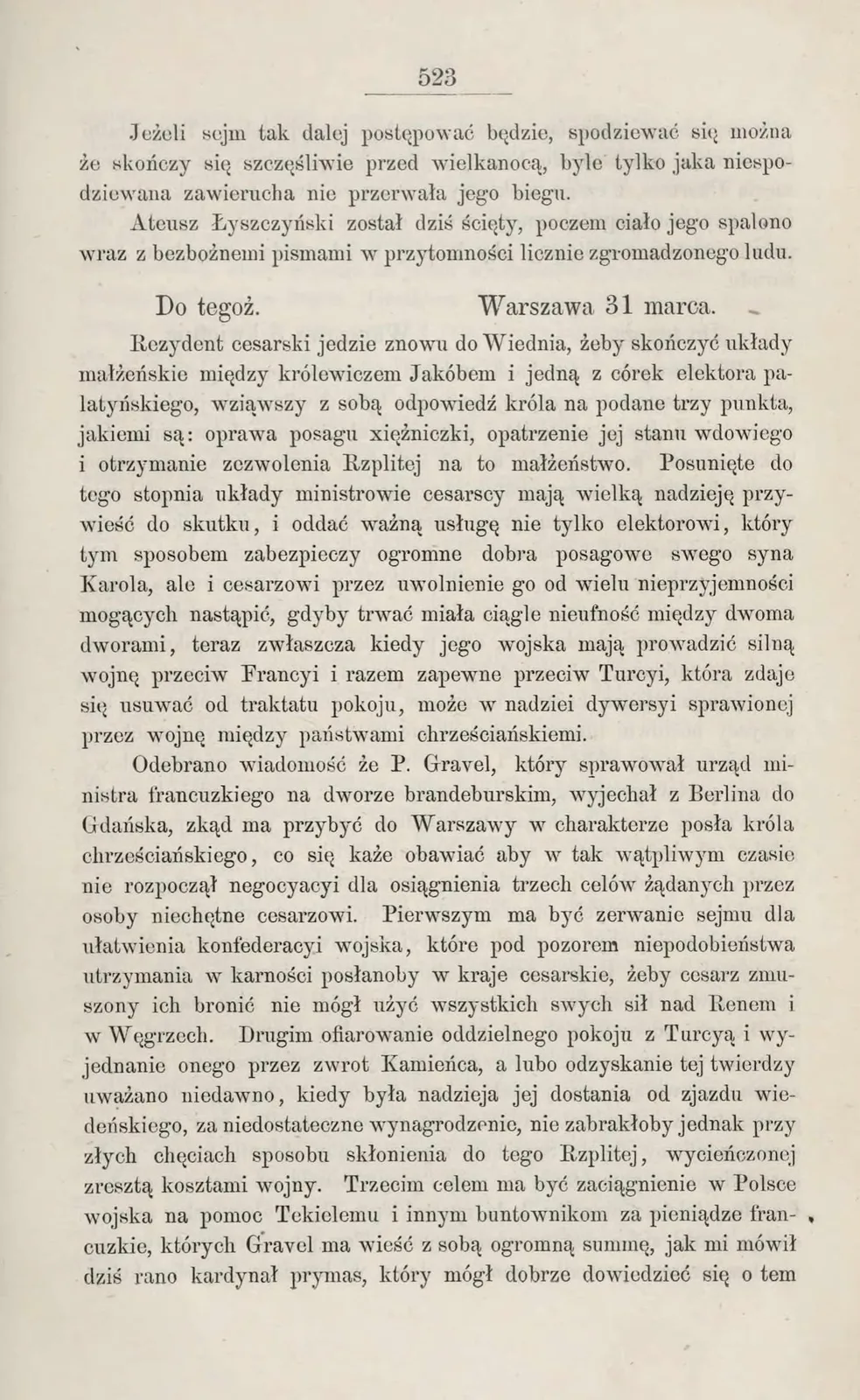
- [15] His marginal notes in Alsted's Theologia naturalis ended "Ergo non est Deus"; the nuncio reports a "printed book against atheism by the heretical author Aldstedius" with his handwritten notes in the margin — Giacomo Cantelmi, nuncio, letters to Cardinal Cybo, Warsaw 2 March 1689 and 30 March 1689, in Relacye nuncyuszów apostolskich i innych osób o Polsce od roku 1548 do 1690, ed. E. Rykaczewski, vol. 2 (Berlin–Poznań, 1864), pp. 507–508 and 523 (Polish translation of the Italian). Internet Archive id relacye-nuncjuszow-apostolskich...-t.-2-1864, p. 507; Valerian Krasinski, Historical Sketch of the Rise, Progress, and Decline of the Reformation in Poland, vol. II (London, 1838–40), pp. 412–415 with notes. Internet Archive id historicalsketch02krasuoft, p. 413; Ernest Łuniński, Na stos. Karta historyczna z czasów Jana III (St Petersburg: K. Grendyszyński; Kraków: W. L. Anczyc, 1901). Transcription with scan pages on Polish Wikisource, cited by the "[n]" page markers; footnotes cite Rykaczewski, Załuski, Tripplin, Ammon, Seyler and archive manuscripts, pp. 34–36; "J. J." (Józef Jerzmanowski), "Łyszczyński Kazimierz," Przyjaciel Ludu 10, no. 37 (Leszno, 9 March 1844), cited by scan page [2]–[11]; prints a Polish translation of the German Relation of 1689 and a long extract from Załuski's vote, pp. 2–3.
- [17] The manuscript was said to have 265 leaves (Kurowicz), about fifteen sexterns (Brzoska, who got only fifteen sexterns while most of it remained with the accused), "15 sheets" (German Relation), 13 sheets (Gdańsk diary, via Nowicki) — Zabistowski, Zrzódła do dziejów polskich, pp. 437, 444; Anonymous, "Historische und ausführliche Relation von dem Gefängnis und Tode Casimiri Liszynski Podsedeck Brzeski" (German pamphlet, 1689), as copied in Polish in Teka Naruszewicza no. 184 (copies), document no. 96, pp. 513–524, on Polish Wikisource ("Relacya o więzieniu i śmierci Kazimierza Łyszczyńskiego Podsędka Brzeskiego. 15. Lut. 1689"); cited by PDF page (32–42). A second, independent Polish translation is printed in [Jerzmanowski], p. 33; Nowicki, Kazimierz Łyszczyński 1634–1689, vol. III p. 33. Accounts differ; see the disputed points.
- [51] The defence said he had attended mass and sermons, given alms, planned a chapel, written devotional notes, and that the whole voivodeship gave him a good report; the prosecution answered that good works prove nothing and that the devotional papers were not found — Anonymous, Teka Naruszewicza, pp. 36–37; Łuniński, Na stos. Karta historyczna z…, pp. 58–60.
- [14] Brzoska had been his friend; he was a debtor; the defence and later writers say he denounced to avoid repaying, and the informer stood to receive half the confiscated estate; no document of the loan was found — Przyjaciel Ludu, p. 8; Krasinski, Historical Sketch of the Rise, p. 413; Łuniński, Na stos. Karta historyczna z…, pp. 12–13; Nowicki, Kazimierz Łyszczyński 1634–1689, vol. I pp. 16–17.
- [20] Brzoska's complaint was brought "quickly" to the Bishop of Vilnius, Konstanty Brzostowski, and the instigator filed a "manifestation" in the denouncer's name — Zabistowski, Zrzódła do dziejów polskich, p. 438.
- [21] He was arrested at the Grodno sejm (27 Jan–5 Mar 1688), "during the break-up of the sejm," on the decision of "all the bishops," and put in the custody of the Bishop of Vilnius; Sapieha's troopers did the seizing — Cantelmi, Relacye nuncyuszów apostolskich i innych…, p. 507–508; Nowicki, Kazimierz Łyszczyński 1634–1689, vol. III p. 33; Łuniński, Na stos. Karta historyczna z…, pp. 20–21.
- [43] On 10 March, in the collegiate church of St John in Warsaw, he lay on a raised platform; Bp Popławski preached; he repeated the recantation; he was absolved and given a "very mild" penalty (flagellation per Jerzmanowski, twelve strokes per Łuniński); then spoke to the king, Senate and Republic — Anonymous, Teka Naruszewicza, p. 40; Jakub Kazimierz Rubinkowski, "Ateista Łyszczeński," in Miscellanea historyczno-literackie, BN Rps 3099 III, ff. 184v–187v (before 1749); prints the Latin sentence, the recantation text and the epitaph, pp. 4–5; The same speech in a different manuscript, "Silva rerum" BK 967, ff. 20r–24v (Biblioteka Kórnicka), transcribed on Polish Wikisource as "Mowa przy sprawie Atheisty Kazimierza Łyszczenskiego Podsędka Brzeskiego na Seymie Warszawskim miana" (the page header there names the author "Piotr Kurowicz Zabistowski"; the printed 1844 text and Nowicki give Szymon). Cited by transcription page. This version quotes the five Latin passages from the manuscript, p. 10; Przyjaciel Ludu, p. 11; Łuniński, Na stos. Karta historyczna z…, pp. 71–74.
Ergo Non Est Deus
Before noon on 30 March 1689, on the Old Town market square in Warsaw, a Lithuanian nobleman of fifty-five was made to burn his own papers on the scaffold. Then he was beheaded. His body was carried out of the city and burned, and, according to a German pamphlet printed that year, his ashes were loaded into a cannon and fired toward the Tatars.12 The papal nuncio wrote to Rome that day: "the atheist Łyszczyński was beheaded today and his body burned together with the impious writings."1
Kazimierz Łyszczyński had been condemned for a manuscript he never published, which a man who owed him money took from his house. No page of it survives. What we know of it comes from the speech of the prosecutor who wanted him dead, from a petition he wrote in prison, and from the church's account of his recantation. This chapter tries to tell his story honestly from that record, and to ask a question it cannot fully answer: what made a Catholic nobleman, trained by the Jesuits, write "Ergo non est Deus," therefore there is no God?
A noble of Brest
He was born in 1634 into a noble family of the Korczak arms, whose estate, Łyszczyce, lay near Brest in what is now Belarus. His father was a judge of the Brest courts.345 As a young man he served in the wars of the 1650s, when Swedish, Muscovite and Hungarian armies invaded the Commonwealth of Poland-Lithuania.6
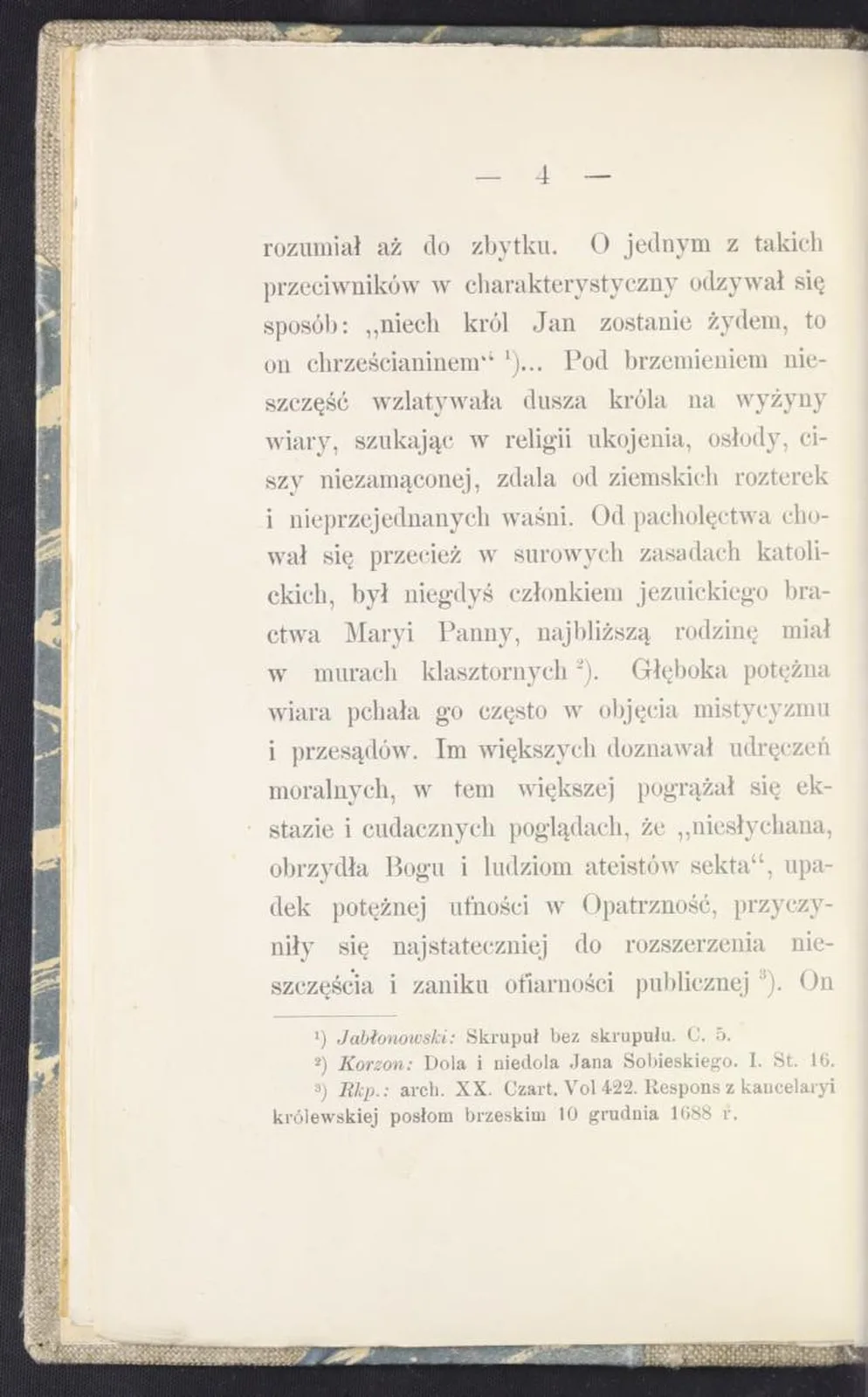
Then he joined the Jesuits. According to the modern historian Andrzej Nowicki, who used the order's Roman archive, he began his novitiate in Kraków in December 1658, studied rhetoric and philosophy at Kalisz and theology at Lwów, and left in 1666.7 Accounts differ on how he left: of his own will, or dismissed for reasons "not known," or for "the excesses of youth."8 The prosecutor at his trial put it most colourfully: he had "broken away like a fierce boar from the holy cloister."9 That year, Nowicki says, he married Jadwiga Żelichowska.10
Back in the world he did well. He held minor offices, voted in the royal elections of 1669 and 1674, and by the early 1680s was deputy judge of the courts of Brest, appointed by King Jan III Sobieski.11 In 1682 he sat on a commission that ordered the Jesuits of Brest to return two gardens they had seized.12
The marriage and the manuscript
Trouble came first through his family. In 1686 his daughter married a man so closely related to her that German reports called him her uncle. The diocese of Łuck excommunicated Łyszczyński and declared the marriage void, and he is said to have answered that church bans did not matter, because marriage was "a civil contract."1314
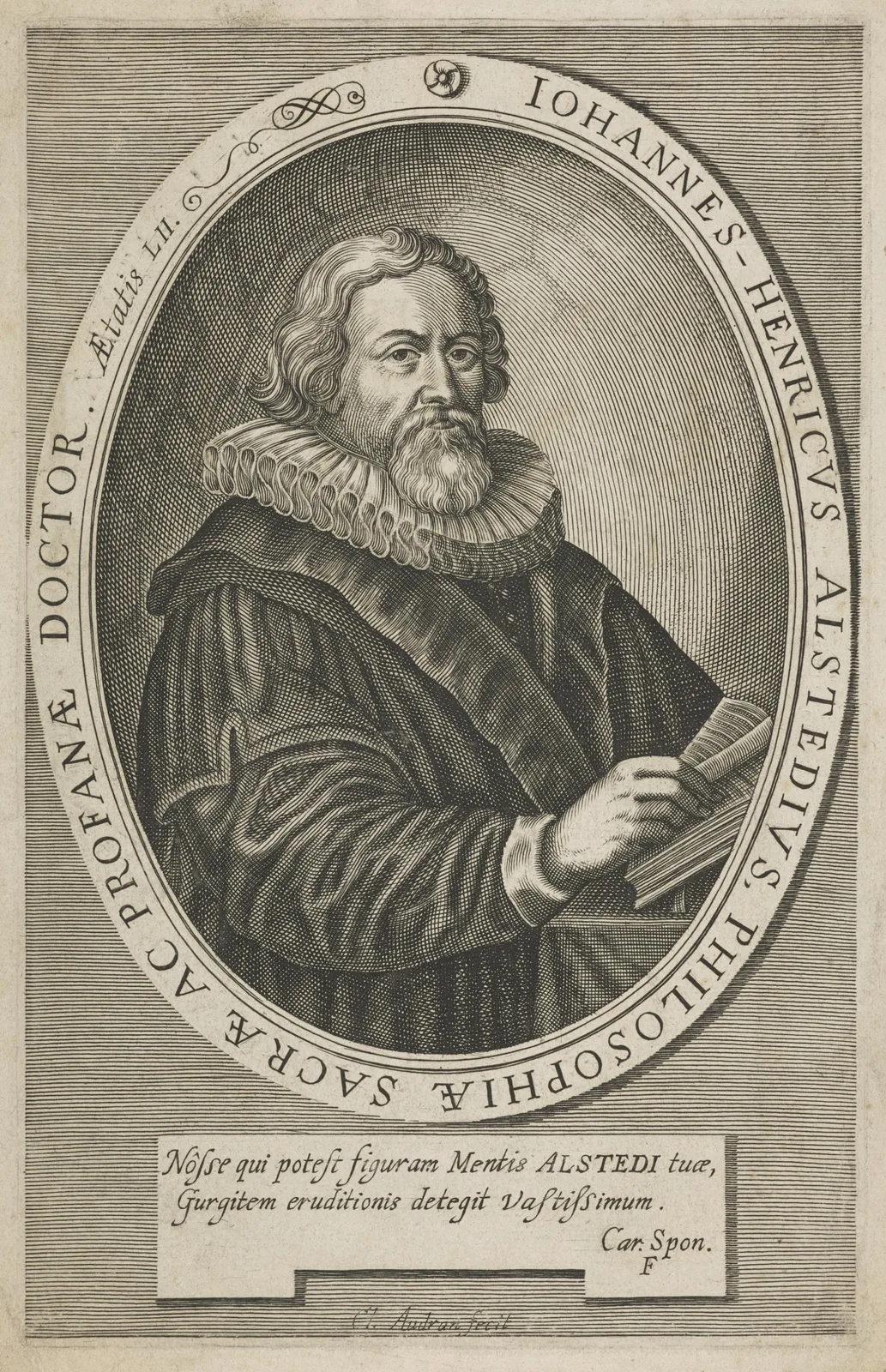
Meanwhile, at some point that no source dates, he had been writing. The work was a long manuscript, said by the prosecutor to run to 265 leaves, partly notes and arguments of his own and partly glosses in the margins of a printed book, the Theologia naturalis of the Calvinist professor Johann Heinrich Alsted.151617 By the defence's account the title was to be A Disputation in Which an Atheist Is Introduced, to Be Refuted by a Faithful Catholic.18
The denunciation
His neighbour Jan Kazimierz Brzoska had been his friend, and owed him money. Brzoska took fifteen gatherings of the manuscript and the annotated Alsted and denounced him as an atheist to the Bishop of Vilnius.191720 The defence argued, then and later, that Brzoska did it to escape his debt; under the law the informer stood to receive half of the condemned man's estate. No record of the loan survives.19
He was arrested in the spring of 1688, during the Sejm at Grodno, on the decision of the bishops, and handed to the custody of the Bishop of Vilnius.21 The nobles of Brest protested that the law forbade jailing a nobleman before conviction.22 The king's chancery said he had heard of the arrest only on the road to his palace at Wilanów and approved nothing arbitrary.23 The Jesuit academy at Vilnius read the manuscript and judged it atheistic, and a church court found him guilty and handed him to the secular power. The lay senators would not accept a church verdict on a nobleman, so the case began again before the Sejm in Warsaw.2425
From prison he wrote to the king. It is the only text in his own voice that survives. "I wrote not directly against God but about God," he said, "which the ill-disposed, interpreting it for the worse and in many things transforming it, took for atheism." His notes, "which I wrote for myself and for putting privately to some theologian, were neither rules, nor principles, nor any profession of belief, but only simple disputations."262728
The trial
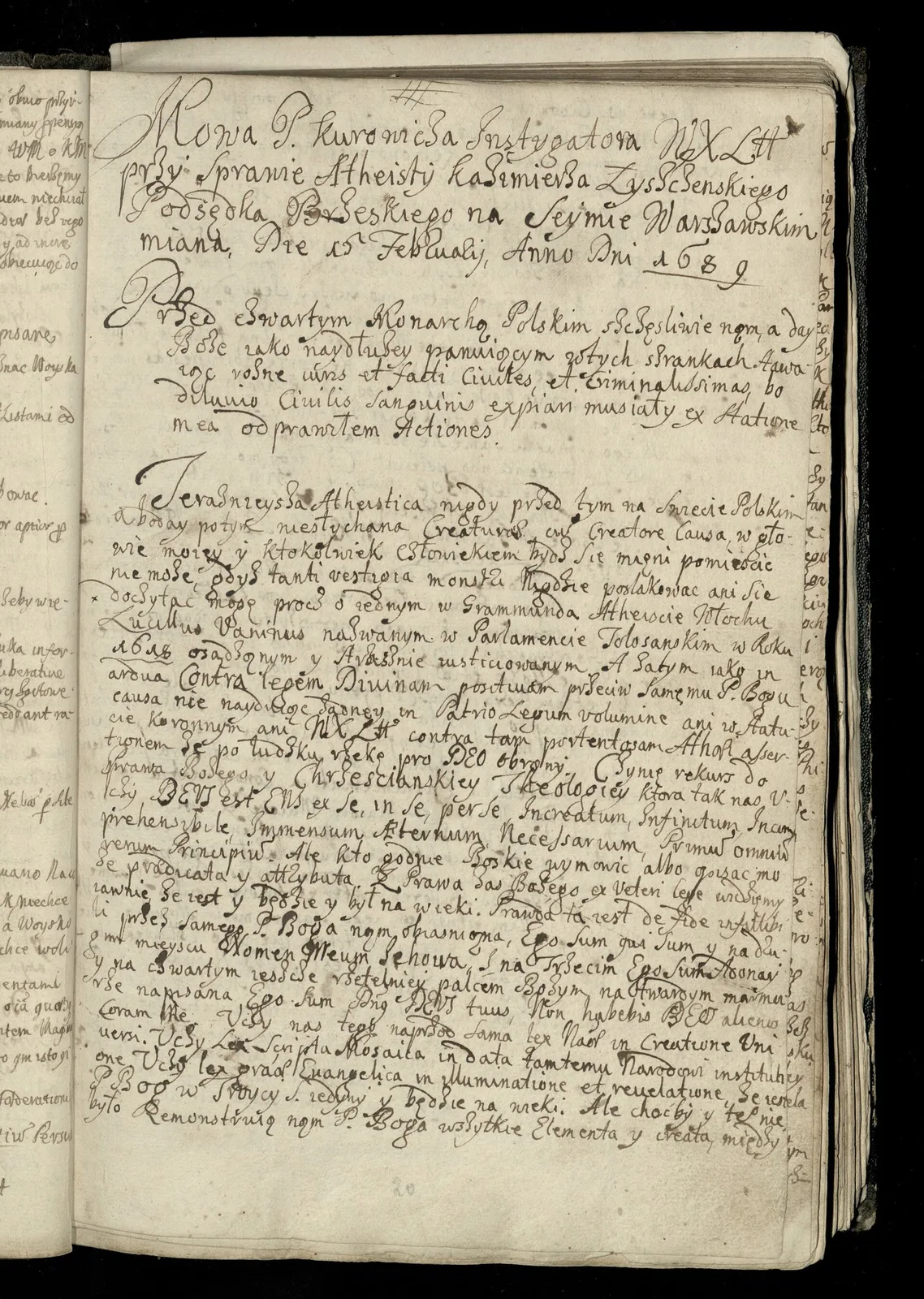
The trial opened on 15 February 1689. The public prosecutor of Lithuania, Szymon Kurowicz Zabistowski, said he could find only one precedent, "the Italian Lucilius Vaninus," condemned at Toulouse.2930 Then he read from the manuscript.
The passages he quoted, in Latin, are all that is left of the book. "Man is the creator of God, and God is the creature and made thing of man," one said. "God is not a real being but a being of reason, and indeed a chimerical one; for God and a chimera are the same."3132 Another described religion as a fraud of the powerful: "Religion was founded by men without religion ... the fear of the Lord was instilled by those who did not fear, so that they might be feared. The faith that is called divine is a human story."33 A third said that "the simple people are deceived by the wiser with a fiction of faith about God, to their own oppression," and guard that fiction so fiercely that anyone who tried to free them with the truth "would be crushed by the people."34 The phrase "we atheists thus demonstrate that there is no God," the prosecutor said, appeared "often."3135 And in the margin of Alsted he had written: "therefore there is no God."1536 (The translations here are this book's own, from a hard-to-read manuscript copy.)
The charges went further: that he denied the Trinity, the Incarnation and the resurrection, called hell and purgatory scarecrows for the common people, and lived by the "swine's pleasures" of Epicurus.3738 The prosecutor read an epitaph said to be in Łyszczyński's hand: "Hey, traveller! ... You will learn the truth from stones: that men, even those who know that it is the truth, teach that it is false. The doctrine of the wise is a prudent lie."3940 And he gave the court its logic in one line: "And I say: there is a God! So let the atheist die!"41 Anyone who wronged God, he argued, endangered everyone.42
Łyszczyński's answer was the one he had given the king. He admitted writing the papers, but said they were a disputation in which he had "staged" a doubter; the words "we atheists" belonged to that character, and a second part would have refuted it. "I believe that God exists," he was reported as saying, "and I put all this together, not to give such teachings out of myself, but only because I wanted all that others had written, and that I gathered here, to be demolished in the second part."2643 He even offered a proof of God: in every kind of thing there is a most perfect one, the sun among the stars, man among the animals, and God among minds.44 The prosecution answered that nothing in the papers refuted anything, and that "we atheists" plainly included the writer.45
Not everyone thought he was an atheist then, and not everyone does now. His defence said he went to mass, gave alms and planned a chapel.46 The historian Ernest Łuniński concluded in 1901 that the historian "cannot say today how guilty or innocent he was."47
The verdict
The papal nuncio, Giacomo Cantelmi, told the bishops "several times" that under the rules of the Holy Inquisition "it is absolutely necessary to put the accused to torture, so that he may confess the rest of the truth and his accomplices." The Polish bishops refused, afraid that torture of a nobleman would cause an uproar in the Sejm and set him free.4849 The nuncio also reported a confession: that Łyszczyński had denied God "to stifle the voice of conscience and to rid himself of fear of punishment," had clung to what he wrote, but "for some years had begun to regret his errors."5051 It is the only motive on record, and it comes from an adversary.
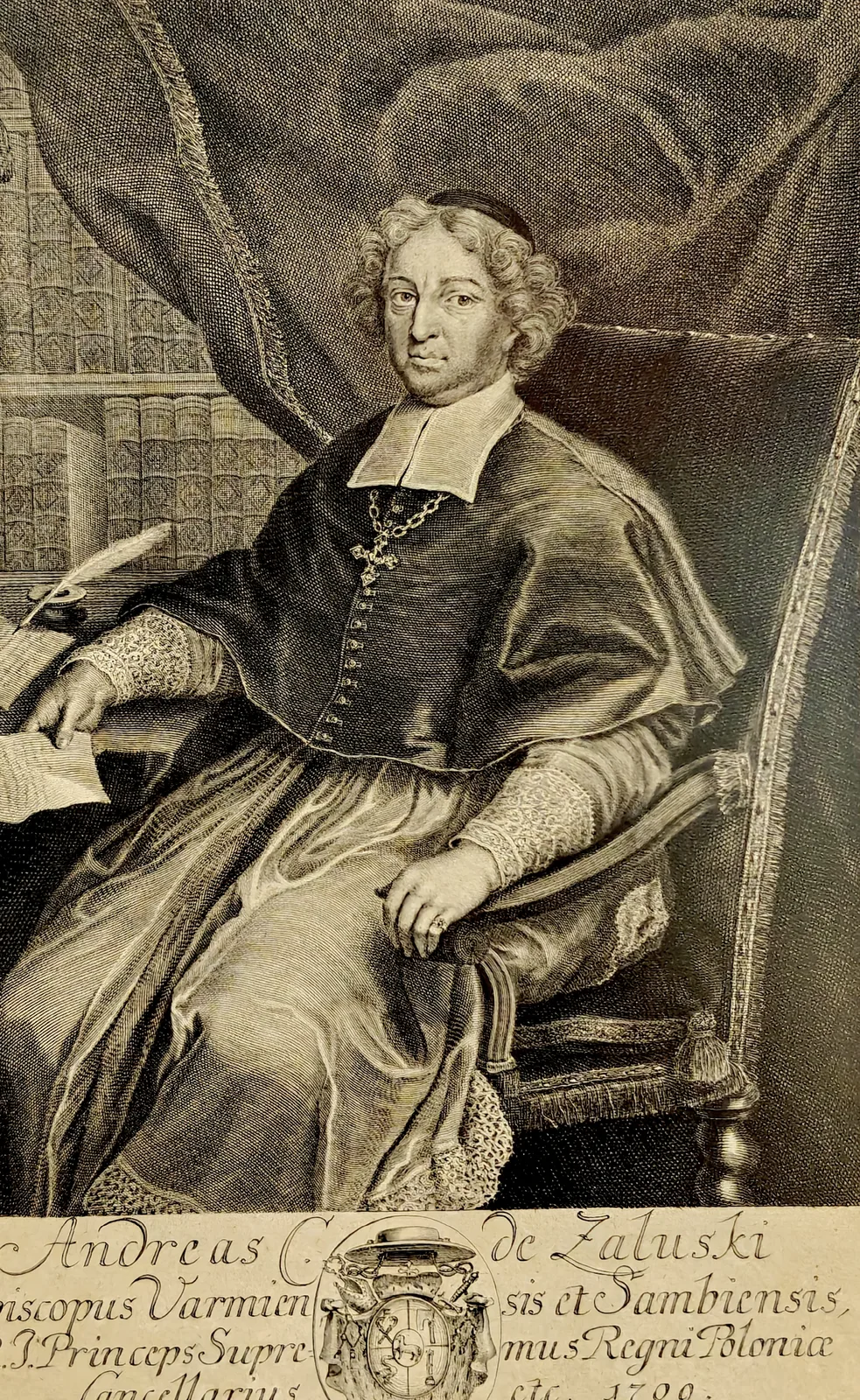
On 26 February the bishops voted. The Cardinal-Primate Michał Radziejowski voted for burning; Bishop Załuski wanted the writing hand burned first, and feared the man would "return to his vomit" if he lived; one bishop asked for beheading to shorten the pain. The lay senators followed: nearly all for burning, a few for prison, one for sending the case to Rome.5253 An anonymous senator put the crime in a sentence: "Cursed curiosity of a mad wit, to ask about God not to believe but to know."54
On 10 March, in the collegiate church of St John in Warsaw, Łyszczyński lay on a raised platform while a bishop preached, and read a recantation. "I, Kazimierz Łyszczyński, until recently the unhappiest of men," it began, "who surpassed that madman who says in his heart, There is no God, ... dared first to doubt, then to affirm, and finally to write against the being of God." He had done it, the text said, "that, sinning the more safely, I might hand my conscience over to great iniquity, having done away with God the judge."555657 The words were the church's, prepared for him; he was absolved and given a light penance.55
It did not save him. On 28 March the sentence was published: his writings to be burned in his own hand, himself to be burned alive outside the city, his goods confiscated, half to the treasury and half to the informer, and his house razed.58 He fell on his knees and asked to be beheaded first, saying that burning slowly might shake his faith, and the king allowed it.59 Accounts differ on the execution itself: the nuncio and the German pamphlet say beheading and then burning, while Bishop Załuski's own letter described the executioner tearing his tongue with a hot iron first.60 A Jesuit priest went with him to the scaffold.61
Afterwards
The story of the king's horror and of a papal rebuke grew in the retelling. Some later writers said Sobieski tried to save him and that Pope Innocent XI condemned the bishops; Łuniński showed that the king had himself spoken in 1688 of "the unheard-of sect of atheists, hateful to God and men," and that Rome's own envoy had asked for torture.626364 Within a year the case was reported in German and French, and through the eighteenth century his name was repeated beside Vanini's as an atheist executed for his beliefs.65 The Latin fragments were published in 1957.66
What he left
Łyszczyński's unbelief is the hardest in this book to tell, because the only voices that report it belong to the men who killed him and to his own, which he used to plead for his life. The fragments the prosecutor read show a mind that had argued its way, through Alsted's natural theology and a Jesuit training in philosophy, to the view that God is a human creation and religion a tool of the powerful. Whether he believed it, or staged it to be answered, we cannot know; he said the second, under arrest, and the church said the first, in a recantation it gave him to read aloud. The manuscript and the hand that wrote it were burned together. The prosecutor's one precedent was Giulio Cesare Vanini, burned at Toulouse seventy years earlier. Matthias Knutzen, who circulated openly atheist pamphlets in Germany fifteen years before Łyszczyński's trial, has his own chapter in this book.
Footnotes
-
Anonymous, "Historische und ausführliche Relation von dem Gefängnis und Tode Casimiri Liszynski Podsedeck Brzeski" (German pamphlet, 1689), as copied in Polish in Teka Naruszewicza no. 184 (copies), document no. 96, pp. 513–524, on Polish Wikisource ("Relacya o więzieniu i śmierci Kazimierza Łyszczyńskiego Podsędka Brzeskiego. 15. Lut. 1689"); cited by PDF page (32–42). A second, independent Polish translation is printed in [Jerzmanowski], pp. 40–41; Giacomo Cantelmi, nuncio, letters to Cardinal Cybo, Warsaw 2 March 1689 and 30 March 1689, in Relacye nuncyuszów apostolskich i innych osób o Polsce od roku 1548 do 1690, ed. E. Rykaczewski, vol. 2 (Berlin–Poznań, 1864), pp. 507–508 and 523 (Polish translation of the Italian). Internet Archive id relacye-nuncjuszow-apostolskich...-t.-2-1864, p. 523; Ernest Łuniński, Na stos. Karta historyczna z czasów Jana III (St Petersburg: K. Grendyszyński; Kraków: W. L. Anczyc, 1901). Transcription with scan pages on Polish Wikisource, cited by the "[n]" page markers; footnotes cite Rykaczewski, Załuski, Tripplin, Ammon, Seyler and archive manuscripts, pp. 78–79. ↩ ↩2
-
Łuniński, Na stos. Karta historyczna z…, pp. 67–68; Anonymous, Teka Naruszewicza, p. 41. ↩
-
Łuniński, Na stos. Karta historyczna z…, p. 5. Reported at second hand; the original has not been seen. ↩
-
Andrzej Nowicki, Kazimierz Łyszczyński 1634–1689 (Łódź: Towarzystwo Krzewienia Kultury Świeckiej, 1989). The Commons scan file page states CC BY-SA 4.0 (credit: wolnomularstwo.pl); read on Polish Wikisource, notes in research/notes/nowicki-I.txt to -IV.txt. The leading modern study and the only one that used the Roman Jesuit archive and the Gdańsk diary of the sejm; written by an atheist-movement scholar who romanticizes his subject (criticized in Pomian-Srzednicki 1982, pp. 103–4). Used here for archival facts that no public-domain source gives, each marked secondhand because the archive documents were not seen. Licence to be confirmed (see Open questions), vol. I pp. 8–9. ↩
-
Łuniński, Na stos. Karta historyczna z…, p. 5; "J. J." (Józef Jerzmanowski), "Łyszczyński Kazimierz," Przyjaciel Ludu 10, no. 37 (Leszno, 9 March 1844), cited by scan page [2]–[11]; prints a Polish translation of the German Relation of 1689 and a long extract from Załuski's vote, p. 2. ↩
-
Nowicki, Kazimierz Łyszczyński 1634–1689, vol. I pp. 9–10. ↩
-
Nowicki, Kazimierz Łyszczyński 1634–1689, vol. I pp. 9–13. ↩
-
Łuniński, Na stos. Karta historyczna z…, pp. 5–9, 85 n. 9; Stanisław Załęski, S.J., Jezuici w Polsce w skróceniu, 5 tomów w jednym (Kraków: W. L. Anczyc, 1908), the passage "Spalenie Łyszczyńskiego" (transcription page marker [143]–[144]; the book's own index lists pp. 118, 121, so the page numbers do not match: recheck). A Jesuit historian defending the order, [143; Przyjaciel Ludu, p. 2. Accounts differ; see the disputed points. ↩
-
Szymon Kurowicz Zabistowski, "Mowa ... przy sprawie ateisty Kazimierza Łyszczyńskiego podsędka brzeskiego na sejmie warszawskim miana, dnia 15 lutego, 1689 roku," in Zrzódła do dziejów polskich, vol. II, ed. A. Przeździecki, M. Malinowski, A. Zawadzki (Wilno: Józef Zawadzki, 1844), pp. 433–449 (the Grodno manuscript, which embeds Brzoska's manifest). Transcription:, p. 440; Jan Kazimierz Brzoska (ghost-written?), "Manifest przeciwko ateuszowi, 1689," Teka Naruszewicza no. 184, docs 176 (pp. 781–784) and 182 (pp. 819–826); text in research/texts/teka-manifest.txt. The same manifest is embedded in [Kurowicz-1844], scan p. 63–64. ↩
-
Nowicki, Kazimierz Łyszczyński 1634–1689, vol. I p. 8. ↩
-
Zabistowski, Zrzódła do dziejów polskich, p. 443; Łuniński, Na stos. Karta historyczna z…, p. 10; Nowicki, Kazimierz Łyszczyński 1634–1689, vol. I pp. 13–14. ↩
-
Nowicki, Kazimierz Łyszczyński 1634–1689, vol. I p. 14. ↩
-
The same speech in a different manuscript, "Silva rerum" BK 967, ff. 20r–24v (Biblioteka Kórnicka), transcribed on Polish Wikisource as "Mowa przy sprawie Atheisty Kazimierza Łyszczenskiego Podsędka Brzeskiego na Seymie Warszawskim miana" (the page header there names the author "Piotr Kurowicz Zabistowski"; the printed 1844 text and Nowicki give Szymon). Cited by transcription page. This version quotes the five Latin passages from the manuscript, p. 9; Nowicki, Kazimierz Łyszczyński 1634–1689, vol. I pp. 8, 15–16. ↩
-
Kurowicz-Kórnik, p. 9; Nowicki, Kazimierz Łyszczyński 1634–1689, vol. I p. 16. ↩
-
Cantelmi, Relacye nuncyuszów apostolskich i innych…, p. 507; Valerian Krasinski, Historical Sketch of the Rise, Progress, and Decline of the Reformation in Poland, vol. II (London, 1838–40), pp. 412–415 with notes. Internet Archive id historicalsketch02krasuoft, p. 413; Łuniński, Na stos. Karta historyczna z…, pp. 34–36; Przyjaciel Ludu, pp. 2–3. ↩ ↩2
-
Łuniński, Na stos. Karta historyczna z…, pp. 35–36, 86 n.; Przyjaciel Ludu, p. 2. ↩
-
Zabistowski, Zrzódła do dziejów polskich, pp. 437, 444; Anonymous, Teka Naruszewicza, p. 33; Nowicki, Kazimierz Łyszczyński 1634–1689, vol. III p. 33. ↩ ↩2
-
Kurowicz-Kórnik, p. 8; Nowicki, Kazimierz Łyszczyński 1634–1689, vol. III p. 41. ↩
-
Przyjaciel Ludu, p. 8; Krasinski, Historical Sketch of the Rise, p. 413; Łuniński, Na stos. Karta historyczna z…, pp. 12–13; Nowicki, Kazimierz Łyszczyński 1634–1689, vol. I pp. 16–17. ↩ ↩2
-
Zabistowski, Zrzódła do dziejów polskich, p. 438. ↩
-
Cantelmi, Relacye nuncyuszów apostolskich i innych…, p. 507–508; Nowicki, Kazimierz Łyszczyński 1634–1689, vol. III p. 33; Łuniński, Na stos. Karta historyczna z…, pp. 20–21. ↩
-
Anonymous, Teka Naruszewicza, p. 32; Nowicki, Kazimierz Łyszczyński 1634–1689, vol. III pp. 33–34; Łuniński, Na stos. Karta historyczna z…, pp. 21–23. ↩
-
Łuniński, Na stos. Karta historyczna z…, pp. 24–26 (Czartoryski archive, vol. 422). ↩
-
Załęski, Jezuici w Polsce w skróceniu, [143; Łuniński, Na stos. Karta historyczna z…, p. 27. ↩
-
Cantelmi, Relacye nuncyuszów apostolskich i innych…, p. 508; Anonymous, Teka Naruszewicza, p. 33; Łuniński, Na stos. Karta historyczna z…, pp. 28, 39–40, 44. ↩
-
Łyszczyński, "Supplika ... pisana do króla j. m. z więzienia z Wilna 1688," Zrzódła do dziejów polskich, vol. II (Wilno, 1844), pp. 449–452, pp. 449–452; Anonymous, Teka Naruszewicza, pp. 34–36. ↩ ↩2
-
Zrzódła do dziejów polskich, p. 450. ↩
-
Zrzódła do dziejów polskich, p. 450. ↩
-
Zabistowski, Zrzódła do dziejów polskich, p. 433 title; Anonymous, Teka Naruszewicza, p. 33. ↩
-
Zabistowski, Zrzódła do dziejów polskich, p. 433 and n.; Nowicki, Kazimierz Łyszczyński 1634–1689, vol. III p. 38. ↩
-
Kurowicz-Kórnik, p. 8. ↩
-
Kurowicz-Kórnik, p. 8. ↩
-
Kurowicz-Kórnik, p. 8. ↩
-
Kurowicz-Kórnik, p. 7. ↩
-
Zabistowski, Zrzódła do dziejów polskich, p. 438. ↩
-
Zabistowski, Zrzódła do dziejów polskich, pp. 437–445; Anonymous, Teka Naruszewicza, p. 33. ↩
-
Zabistowski, Zrzódła do dziejów polskich, pp. 441–442. ↩
-
Kurowicz-Kórnik, p. 9; Anonymous, Teka Naruszewicza, pp. 38, 41; Jakub Kazimierz Rubinkowski, "Ateista Łyszczeński," in Miscellanea historyczno-literackie, BN Rps 3099 III, ff. 184v–187v (before 1749); prints the Latin sentence, the recantation text and the epitaph, p. 6. ↩
-
Attributed to Łyszczyński (his own epitaph): Anonymous, Teka Naruszewicza, p. 41. ↩
-
Szymon Kurowicz Zabistowski, instigator of the Grand Duchy of Lithuania, a lawyer of over forty years' practice, reading Brzoska's manifest (15 Feb 1689). Latin note: "Est Deus, ergo non vivat athaeus.": Zabistowski, Zrzódła do dziejów polskich, p. 438. ↩
-
Kurowicz, the prosecutor's reason: a society that tolerates an insult to God draws God's anger on the nation. Latin note: "Qui iniuriam Deo facit omnibus minatur.": Zabistowski, Zrzódła do dziejów polskich, p. 447. ↩
-
Anonymous, Teka Naruszewicza, p. 34. ↩
-
Anonymous, Teka Naruszewicza, p. 35; Przyjaciel Ludu, p. 7. ↩
-
Anonymous, Teka Naruszewicza, p. 37; Przyjaciel Ludu, p. 9. ↩
-
Anonymous, Teka Naruszewicza, pp. 36–37; Łuniński, Na stos. Karta historyczna z…, pp. 58–60. ↩
-
Łuniński, Na stos. Karta historyczna z…, pp. 80, 86; Adam Krechowiecki, "Czy Łyszczyński był ateuszem?", Życie i Sztuka (supplement to Kraj), no. 50, 23 Dec 1904 (Wikisource). A historical novelist answering a critic; it lists the early printed sources (Lacroze, Coyer, Dalerac, Ammon, Seyler, the German Relation). research/texts/czy-ateusz.txt, p. 4. ↩
-
Cantelmi, Relacye nuncyuszów apostolskich i innych…, p. 508. ↩
-
Giacomo Cantelmi, papal nuncio, to Cardinal Cybo, 2 March 1689: his own report of what he told the bishops "several times." The bishops refused, for fear of the nobles.: Cantelmi, Relacye nuncyuszów apostolskich i innych…, p. 508 (OCR: "podlug wszelkiego prawa i praktyki przepisanej przez trybunal &. inkwizycyi, poirzeba koniecznie wziaé oskarzonego na tortury, Zeby wyznal reszte prawdy i spólników"). ↩
-
Cantelmi, Relacye nuncyuszów apostolskich i innych…, p. 508; Łuniński, Na stos. Karta historyczna z…, p. 63. ↩
-
Reported by the nuncio Cantelmi (Polish translation of his Italian letter of 2 March 1689): Cantelmi, Relacye nuncyuszów apostolskich i innych…, p. 508 (OCR: "Ze cheac przez zaprzeczenie bytno*ei Boga przytlumió w sobie glos sumienia..."). ↩
-
Anonymous, Teka Naruszewicza, p. 39; Łuniński, Na stos. Karta historyczna z…, pp. 63–69; Nowicki, Kazimierz Łyszczyński 1634–1689, vol. III pp. 44–45. ↩
-
Andrzej Chryzostom Załuski, Bishop of Kiev and Grand Chancellor of the Crown, vote in the Senate, 26 Feb 1689 (as printed in 1844 from his Mowy sejmowe; original not seen). His reasons: fear of divine punishment, and fear that the man would "return to his vomit" and ruin himself and others.: Przyjaciel Ludu, pp. 3–4. ↩
-
Anonymous senator speaking in the Senate on 28 Feb 1689 (speaker unknown; copy ascribed to the manuscripts of King Stanisław August). The reasoning: it is the unbelieving curiosity itself that is the crime. "Cursed curiosity of a mad wit, to ask about God not to believe but to know.": Anonymous speech in the Senate, 28 Feb 1689, Teka Naruszewicza no. 184, doc. 99, pp. 531–532 (fragment), p. 531. ↩
-
Anonymous, Teka Naruszewicza, p. 40; Rubinkowski, "Ateista Łyszczeński,", pp. 4–5; Kurowicz-Kórnik, p. 10; Przyjaciel Ludu, p. 11; Łuniński, Na stos. Karta historyczna z…, pp. 71–74. ↩ ↩2
-
Rubinkowski, "Ateista Łyszczeński,", pp. 4–5; Kurowicz-Kórnik, p. 10. ↩
-
Rubinkowski, "Ateista Łyszczeński,", p. 5. ↩
-
Anonymous, Teka Naruszewicza, p. 40; Rubinkowski, "Ateista Łyszczeński,", pp. 3–4; Łuniński, Na stos. Karta historyczna z…, pp. 77–78. ↩
-
Anonymous, Teka Naruszewicza, p. 40; Przyjaciel Ludu, p. 11; Łuniński, Na stos. Karta historyczna z…, p. 78. ↩
-
Krasinski, Historical Sketch of the Rise, p. 415 n. (from Salvandy); Nowicki, Kazimierz Łyszczyński 1634–1689, vol. III pp. 55–56; Cantelmi, Relacye nuncyuszów apostolskich i innych…, p. 508 n.; Załęski, Jezuici w Polsce w skróceniu, [143. ↩
-
Łuniński, Na stos. Karta historyczna z…, p. 79; Załęski, Jezuici w Polsce w skróceniu, [143. ↩
-
Krasinski, Historical Sketch of the Rise, pp. 414–415; Przyjaciel Ludu, p. 4; Łuniński, Na stos. Karta historyczna z…, pp. 4, 24–26, 92. ↩
-
Krasinski, Historical Sketch of the Rise, p. 415; Zrzódła II p. 452 n.; Łuniński, Na stos. Karta historyczna z…, pp. 81–83; Cantelmi, Relacye nuncyuszów apostolskich i innych…, p. 508. ↩
-
Łuniński, Na stos. Karta historyczna z…, pp. 4, 24 (Czartoryski archive, vol. 430). ↩
-
Łuniński, Na stos. Karta historyczna z…, pp. 81–84 and notes; Nowicki, Kazimierz Łyszczyński 1634–1689, vol. II (first section, page not pinned), III pp. 51–54; Krasinski, Historical Sketch of the Rise, p. 413 n.. ↩
-
Nowicki, Kazimierz Łyszczyński 1634–1689, vol. II pp. 17–19. ↩
In their own words
Admiramus vos o Theologi, q̄ Deum Vestrum an n̄ his exstinguitis lumen rationis an n̄ tollitis solem de mundo an n̄ detrahitis de Cælo DEUM Vestrū, dum īpoſsibilia Deo attribuitis, attributa et p̄dicata de eo otradictoria.
Homo est Creator DEI atqui DEUS est creatura et factura Hominis. Homines hic sunt Creatores et Factores DEI, neq̄ DEUS est Ens Reale sed Rationis et qu[i]dem Chimericū, at DEUS et Chimera idem sunt
Religio fundata ab Hominibus sine Religione, ut si velut sine DEO colant̄ pietas in DEUM inducta ab impijs Timor Domini incu[s]sus a n̄ Timentibus, ut tumexint. Fides quæ dicit̄ Divina ē Huma[na] historya. Doctrina sine Logica sine Philosophica, quæ se iactat de DEO docere vera, est Falsa.
Populus simplex a sapientioribus figmento fidei de DEO decipit̄ in oppreſsione sui et tamen hanc sui oppinione ita oseruant, Ut si sapientes velint illos veritate ab hac opressi[o]ne liberare a Populo opprimerent̄.
Atqui nos experimur in nobis ipsis, nec in alijs hoc dictamen, Rationis Certificans nos de DEI reuelatione, si em in nobis ēet oēs aſsentirent̄ nec dubitaren[t] nec contraduerent Moysi Scripturæ et Euangelio
Nos athæi ita Demonstramus ze n̄ ē DEUS
tymi słowy ręką swą pisanemi konkludował: a więc niema Boga.
Deus non est creator hominis, sed homo est creator Dei quia Deum sibi finxit ex nihilo.
Heus Viator! Lapides istos, cave, prætereas: Nihil ad hos offendes: ni veritate offendaris. Disces a Saxis Verum: Quod homines, etiam qui sciunt, idesse verum, docent esse falsum. Doctrina Sapientum prudens est mendacium.
pisałem nie już wprost przeciw Bogu ale o Bogu; co niechętni na gorsze interpretując i w wielu rzeczach transformując, za ateizm poczytali.
moje notata, którem dla siebie i dla proponowania któremu teologowi prywatnie pisał, niebyły ani prawidła, ani zasady, ani wyznanie żadne, ale tylko proste disputacje
Prawda, że szalony rzekł w sercu swojem: nie ma Boga! ale to chyba powątpiewając
Wierzę iz Bog iest, ito wszytko compisał, nie dla tego, abym sam odsiebie takie miał dawać nauki, pisałem; lecz tylko chciałem, aby to wszytko co odinnych napisano było, i com tu zebrał, wdrugiey części, ktorą ułożyć umysliłem, pozbiiał, i nowe prawdziwey wiary Boskiey dowody przydał.
In omni genere entium datur ens perfectiſſimum, Exempli gr[atia] in Genere aſtrorum quod est sol:, in genere animalium datur ens perfectiſſimum quod est homo: in genere entium intellectualium datur ens perfectiſſimum, quod est Deus.
Ja Kazimierz Łyszczynski naynieszczesliwszy nie dawno z ludzi, y szalonego onego mowiącego w Sercu swoim: Niemasz Boga, niesłychaną lekkomyslnoscią y Zaslepieniem umysłu przewyzszywszy powazyłem się, naprzod powątpiwac, potym twierdzic, a na ostatek y pisac przeciwko Jestestwu Boga
a to niedlaczego innego czyniłem, tylko abym tym bezpieczniey grzesząc, na wielką nieprawosc wydał Sumnienie, zniozszy Sedziego Boga.
że chcąc przez zaprzeczenie bytności Boga przytłumić w sobie głos sumienia i pozbyć się bojaźni kary, żeby tym swobodniej wylał się na wszelkie nieprawości, przylgnął był całem sercem do tego co napisał, lecz że od kilku lat zaczął żałować swych błędów
The other side
A ja zaś powiadam: jest Bóg! a więc niech umrze ateista!
bo kto Bogu krzywdę wyrządza, wszystkim zagraża
Bojąc się tedy téj słusznéj kary, bojąc się, żeby ten zapamiętały człowiek nie wrócił od vomitium; żeby do tego, czego się teraz z bojaźni kary zapiera, nie wrócił się, tém bardziéj sam nie zginął, inszych nie zgubił, należy dwiema konkludować słowy: Prawa wykonywać, surowość rozciągać.
Przeklęta szalonego dowcipu ciekawość! tak się o Bogu pytać aby onim nie wierzyć ale wiedzieć
podług wszelkiego prawa i praktyki przepisanej przez trybunał św. inkwizycyi, potrzeba koniecznie wziąć oskarżonego na tortury, żeby wyznał resztę prawdy i spólników
Where accounts differ
| Point | One account | Another | How the page handles it |
|---|---|---|---|
| D1 Where he studied with the Jesuits and how he left | Novitiate in Kraków from 7 Dec 1658, Kalisz and Lwów, left in 1666 on his own (Nowicki, citing the Roman archive; Łuniński says he left of his own will) | Pupil at Brest, novice at Vilnius, expelled for reasons "not known" (Załęski); "freed" for "the excesses of youth" (Jerzmanowski); "broke away" (Brzoska's manifest) | Say he studied for years with the Jesuits and left before ordination or its consequences; "accounts differ on whether he left or was dismissed." |
| D2 Year of appointment as podsędek | 1682 (royal privilege of 23 March 1682, via Nowicki) | 1680 (Łuniński p. 10) | Say "by the early 1680s." |
| D3 When and where he was arrested | During the Grodno sejm, 27 Jan–5 Mar 1688, on the decision of all bishops (Cantelmi; the Gdańsk diary via Nowicki) | "end of 1687" (Nowicki I); "30 or 31 Oct 1688 in Warsaw" (German Relation, Jerzmanowski) | Use "in the spring of 1688." |
| D4 When he reached Warsaw | End of January or early February 1689 (Łuniński; Brzostowski's assurance of 3 Jan) | December 1688 (Bem) | Say "in the first weeks of 1689"; trial 15 Feb is certain. |
| D5 Date of excommunication | 30 Aug 1686 (Kurowicz-Kórnik; consistent with the daughter's marriage in 1686) | 30 Aug 1668 (Nowicki I, as typed on Wikisource, probably a misprint) | Use 1686 and flag. |
| D6 Size of the manuscript | 265 leaves, "fifteen sexterns" taken by Brzoska (Kurowicz-1844) | 15 sheets (Relation), 13 sheets (Gdańsk diary, via Nowicki) | Say "a manuscript of some hundreds of pages." |
| D7 Brzoska's title | stolnik of Braslaw (Kurowicz-1844, Relation) | cześnik of Braslaw (Rubinkowski); łowczy of Brest (Nowicki's sources); "nuncio of Brest" (Krasiński) | Use "his neighbour and debtor, Jan Kazimierz Brzoska." |
| D8 Mode of execution | Beheaded first, then the body burned (Relation, nuncio, Jerzmanowski, Łuniński, Załęski) | The tongue and mouth torn with hot iron, the hand burned, then burned (Załuski, as quoted via Krasiński and Nowicki) | Say "beheaded and burned"; note that Załuski's own account is harsher; "accounts differ." |
| D9 The king's part | Sobieski tried to save him and was horrified (Krasiński, Jerzmanowski, Coyer via Łuniński) | He spoke of "the atheists' sect" as a plague, did not condemn the arrest, and allowed only the mercy of beheading (Łuniński) | Say he allowed beheading, nothing more. |
| D10 Pope and Church | Innocent XI rebuked the bishops in letters to the king and nuncio; Witwicki was after a cardinal's hat (Dalerac 1699, Lacroze, Krasiński, Przeździecki's note) | The nuncio demanded torture and Inquisition procedure; the "cardinal's hat" story is unfounded (Łuniński pp. 81–83; Cantelmi p. 508; Nowicki IV says the church court was a papal inquisition under Popławski) | Do not say the Pope condemned the sentence; say the nuncio asked for torture and the bishops declined. |
| D11 Was he an atheist? | He wrote a text that concluded "Ergo non est Deus" and spoke as "we atheists," and he said later that he had clung to it (prosecution; Cantelmi p. 508; Witwicki's report) | He wrote a disputation to be refuted in a second part and returned to the church (Supplika; Łuniński pp. 84–87; Krechowiecki) | The script should state both and note that no page of his survives; the series's question (what made him stop believing) cannot be answered from his own testimony. |
| D12 His birthplace region | Brest-Litovsk voivodeship (Nowicki, Kurowicz, Łuniński) | "Brześć-Kujawski voivodeship" (Jerzmanowski, probably a confusion) | Use Brest. |
| D13 Who judged him | The Sejm commission after the lay senators rejected the church verdict (Relation, Łuniński) | A papal inquisitor, Bp Popławski, throughout (Nowicki III p. 44) | Say church court, then Sejm commission. |
List of illustrations
This page uses only public-domain and Creative Commons images; each is credited with its source and licence.
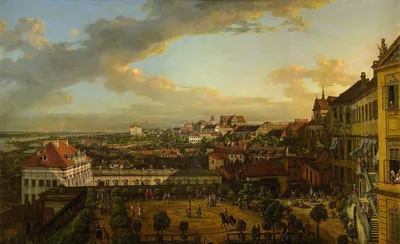
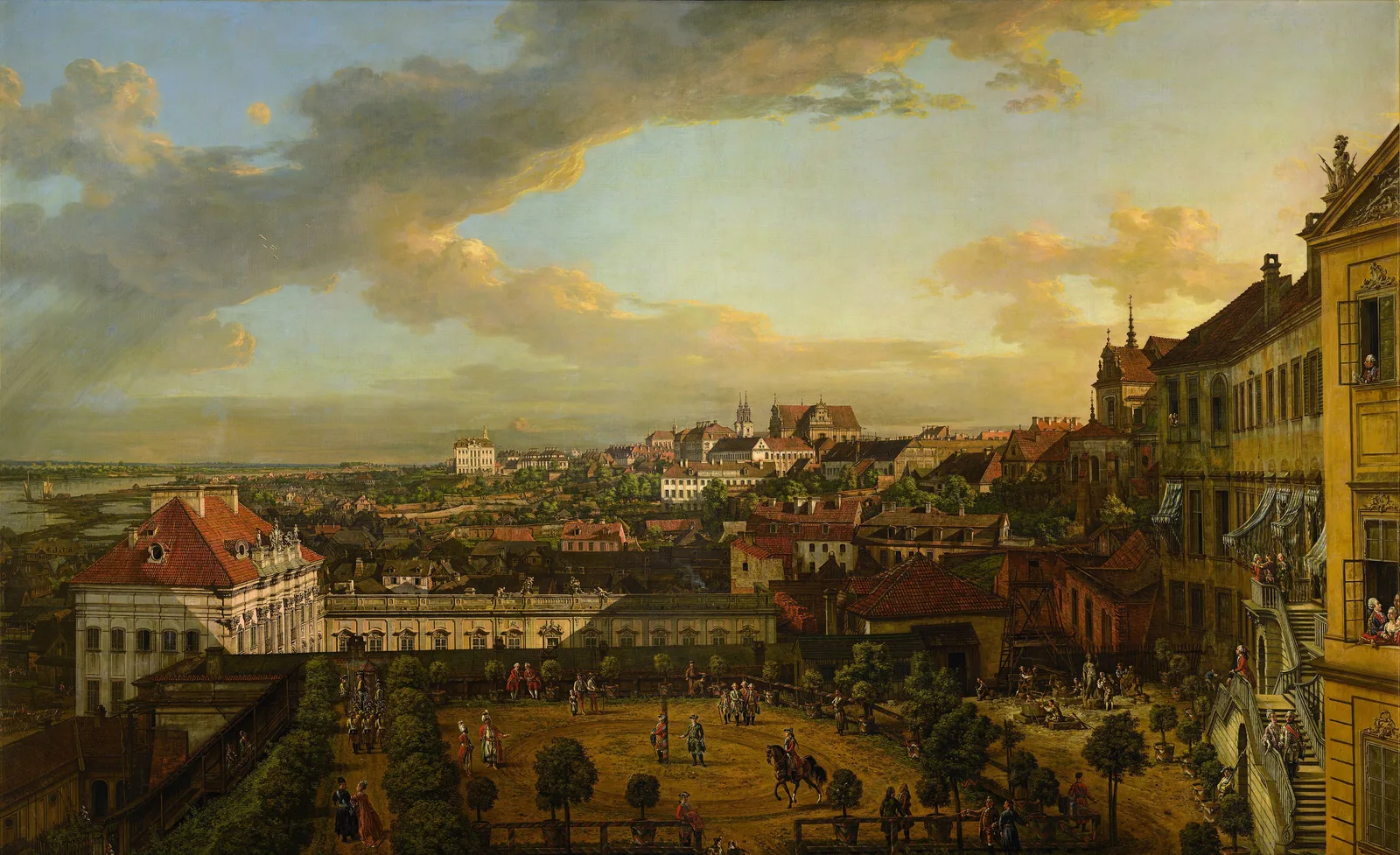
- View of Warsaw from the Royal Castle — Bernardo Bellotto, 1773 · Royal Castle in Warsaw (via Google Arts & Culture), through Wikimedia Commons · Public domain (Wikimedia Commons licence box)
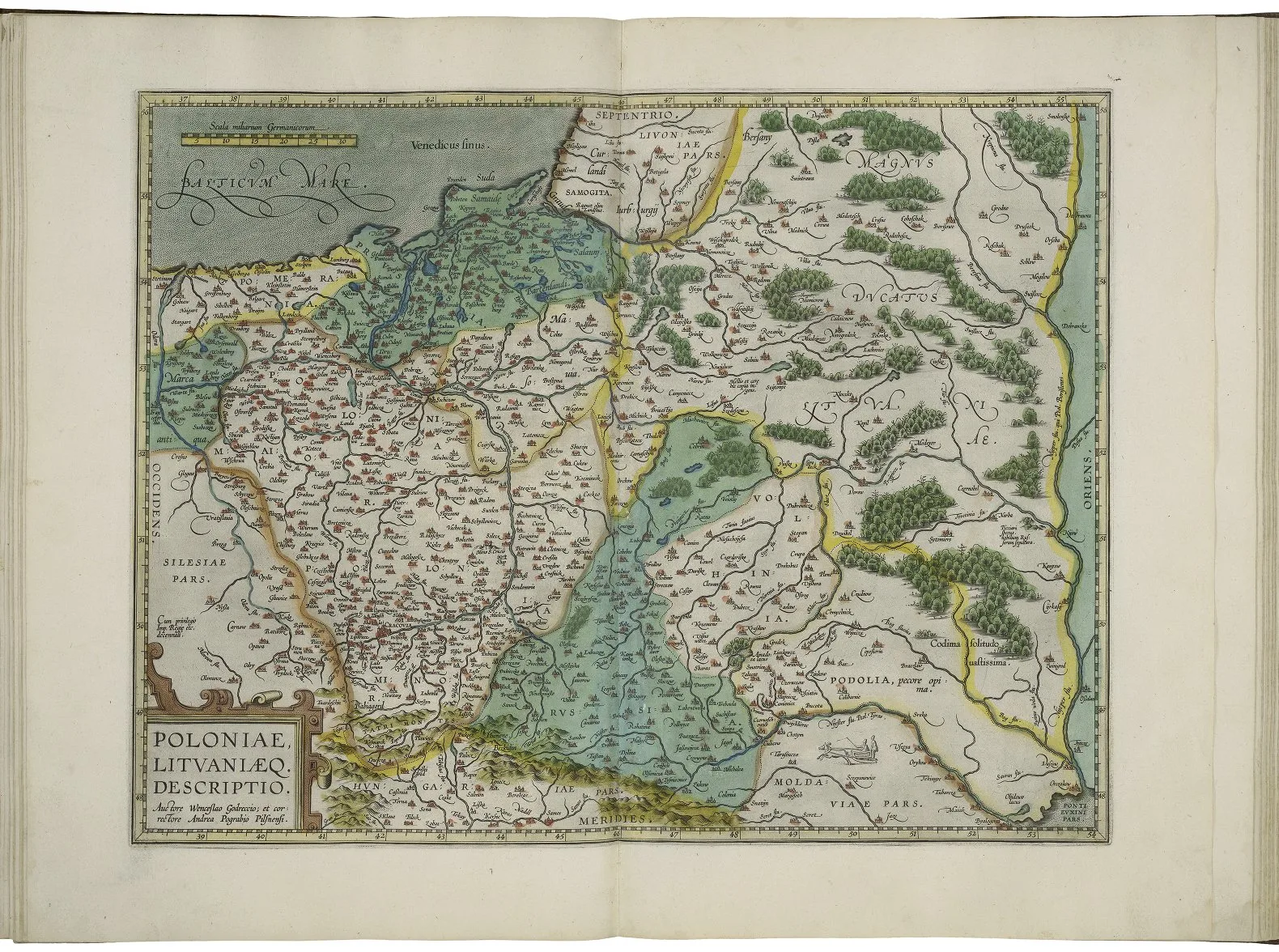
- Map of Poland and Lithuania, Theatrum Orbis Terrarum, plate 98 — Abraham Ortelius, circa 1608 · Folger Shakespeare Library, via Wikimedia Commons · Public domain (Wikimedia Commons licence box)
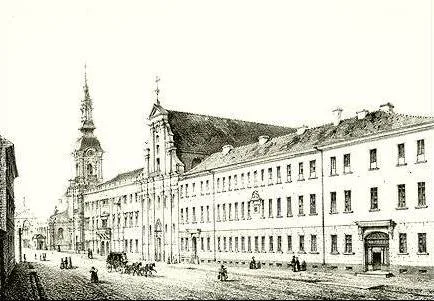
- Kalisz, Kolegium Jezuickie, Korpus Kadetów — Stanisław Barcikowski, 1858 · Wikimedia Commons · Public domain (Wikimedia Commons licence box)
- Johann Heinrich Alsted (engraving by Audran) — C. F. Audran, undated · National Galleries of Scotland, via Wikimedia Commons · Public domain (Wikimedia Commons licence box)
- Łuniński, Na stos (1901), p. 4 (Sobieski's words on the 'sect of atheists'; Sobieski never a Jesuit sodality member) — Ernest Łuniński, 1901 · Polona (National Library of Poland), via Wikimedia Commons · Public domain (Wikimedia Commons licence box); credit polona
- Speech of the instigator against the atheist Kazimierz Łyszczyński, Warsaw Sejm, 15 Feb 1689 (manuscript copy), first page — Szymon Kurowicz Zabistowski, 1689 (manuscript copy) · Wielkopolska Digital Library (WBC Poznań), via Wikimedia Commons · Public domain (Wikimedia Commons licence box); credit WBC Poznań
- Portrait of Bishop Andrzej Chryzostom Załuski (Martin Bernigeroth, 1709) — Martin Bernigeroth (engraver); photograph by Aliaksei Lastouski, 1709 · Regional Museum in Pułtusk, photographed by Aliaksei Lastouski, via Wikimedia Commons · CC0 1.0 (photograph; Wikimedia Commons licence box); engraving public domain by age
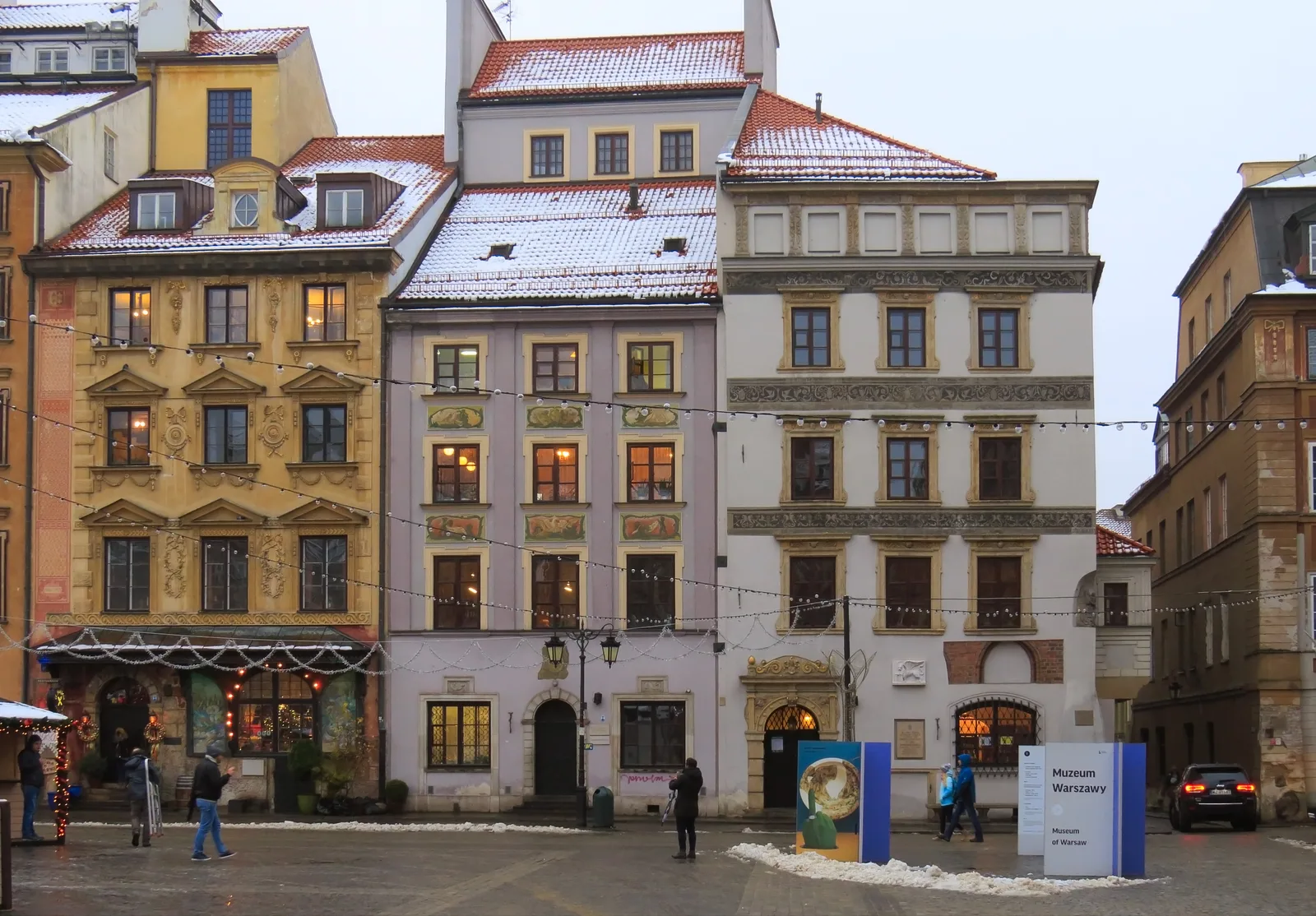
- 27-31 Old Town Market Square, Warsaw — Аимаина хикари, 2017-12-01 · Аимаина хикари, via Wikimedia Commons · CC0 1.0 (Wikimedia Commons licence box)
- Relacye nuncyuszów apostolskich ... t. 2, p. 523 (letter of 30 March 1689) — Giacomo Cantelmi; ed. E. Rykaczewski, 1864 (letter of 1689) · Internet Archive · Public Domain Mark 1.0 (as stated on the Internet Archive item)
Sources
Tier 1 — the subject's own words and the trial record (writings, petitions, trial speeches, contemporary letters)
- [Kurowicz-1844] Szymon Kurowicz Zabistowski, "Mowa ... przy sprawie ateisty Kazimierza Łyszczyńskiego podsędka brzeskiego na sejmie warszawskim miana, dnia 15 lutego, 1689 roku," in Zrzódła do dziejów polskich, vol. II, ed. A. Przeździecki, M. Malinowski, A. Zawadzki (Wilno: Józef Zawadzki, 1844), pp. 433–449 (the Grodno manuscript, which embeds Brzoska's manifest). Transcription: https://pl.wikisource.org/wiki/Oskar%C5%BCenie_na_sejmie_%C5%81yszczy%C5%84skiego_o_ateizm_(1689). Text in research/texts/zrodla-oskarzenie.txt. Latin marginal notes are in the footnotes of the transcription.
- [Kurowicz-Kórnik] The same speech in a different manuscript, "Silva rerum" BK 967, ff. 20r–24v (Biblioteka Kórnicka), transcribed on Polish Wikisource as "Mowa przy sprawie Atheisty Kazimierza Łyszczenskiego Podsędka Brzeskiego na Seymie Warszawskim miana" (the page header there names the author "Piotr Kurowicz Zabistowski"; the printed 1844 text and Nowicki give Szymon). Cited by transcription page. This version quotes the five Latin passages from the manuscript. https://pl.wikisource.org/wiki/Mowa_przy_sprawie_Atheisty_Kazimierza_%C5%81yszczenskiego_Pods%C4%99dka_Brzeskiego_na_Seymie_Warszawskim_miana. Text in research/texts/teka-mowa.txt. Abbreviations (n̄ for non, q̄ for que, etc.) are the manuscript's.
- [Supplika] Łyszczyński, "Supplika ... pisana do króla j. m. z więzienia z Wilna 1688," Zrzódła do dziejów polskich, vol. II (Wilno, 1844), pp. 449–452. https://pl.wikisource.org/wiki/Pro%C5%9Bba_Kazimierza_%C5%81yszczy%C5%84skiego_do_kr%C3%B3la_pisana_z_wi%C4%99zienia_wile%C5%84skiego_(1688). Text in research/texts/zrodla-prosba.txt. The only text in his own voice (found by A. Przeździecki).
- [Relation] Anonymous, "Historische und ausführliche Relation von dem Gefängnis und Tode Casimiri Liszynski Podsedeck Brzeski" (German pamphlet, 1689), as copied in Polish in Teka Naruszewicza no. 184 (copies), document no. 96, pp. 513–524, on Polish Wikisource ("Relacya o więzieniu i śmierci Kazimierza Łyszczyńskiego Podsędka Brzeskiego. 15. Lut. 1689"); cited by PDF page (32–42). A second, independent Polish translation is printed in [Jerzmanowski]. https://pl.wikisource.org/wiki/Relacya_o_wi%C4%99zieniu_i_%C5%9Bmierci_Kazimierza_%C5%81yszczy%C5%84skiego_Pods%C4%99dka_Brzeskiego._15._Lut._1689. Text in research/texts/teka-relacya.txt.
- [Cantelmi] Giacomo Cantelmi, nuncio, letters to Cardinal Cybo, Warsaw 2 March 1689 and 30 March 1689, in Relacye nuncyuszów apostolskich i innych osób o Polsce od roku 1548 do 1690, ed. E. Rykaczewski, vol. 2 (Berlin–Poznań, 1864), pp. 507–508 and 523 (Polish translation of the Italian). Internet Archive id relacye-nuncjuszow-apostolskich...-t.-2-1864. OCR in research/texts/rykaczewski2.txt (diacritics lost in the OCR).
- [Rubinkowski] Jakub Kazimierz Rubinkowski, "Ateista Łyszczeński," in Miscellanea historyczno-literackie, BN Rps 3099 III, ff. 184v–187v (before 1749); prints the Latin sentence, the recantation text and the epitaph. https://pl.wikisource.org/wiki/Ateista_%C5%81yszcze%C5%84ski. Text in research/texts/rubinkowski.txt. Derivative of earlier accounts; secondhand for the documents.
- [Senate] Anonymous speech in the Senate, 28 Feb 1689, Teka Naruszewicza no. 184, doc. 99, pp. 531–532 (fragment). Text in research/texts/teka-senat.txt.
Tier 2 — scholarly or near-scholarly treatments
- [Łuniński] Ernest Łuniński, Na stos. Karta historyczna z czasów Jana III (St Petersburg: K. Grendyszyński; Kraków: W. L. Anczyc, 1901). Transcription with scan pages on Polish Wikisource, cited by the "[n]" page markers; footnotes cite Rykaczewski, Załuski, Tripplin, Ammon, Seyler and archive manuscripts. https://pl.wikisource.org/wiki/Na_stos. Text in research/texts/na-stos.txt. Carefully argued but with a thesis (that he was a lapsed Catholic who returned) and a defence of the Polish bishops.
- [Krasiński] Valerian Krasinski, Historical Sketch of the Rise, Progress, and Decline of the Reformation in Poland, vol. II (London, 1838–40), pp. 412–415 with notes. Internet Archive id historicalsketch02krasuoft. Text in research/texts/krasinski2.txt. Summarizes Salvandy and Mosheim; secondhand for the facts.
- [Nowicki] Andrzej Nowicki, Kazimierz Łyszczyński 1634–1689 (Łódź: Towarzystwo Krzewienia Kultury Świeckiej, 1989). The Commons scan file page states CC BY-SA 4.0 (credit: wolnomularstwo.pl); read on Polish Wikisource, notes in research/notes/nowicki-I.txt to -IV.txt. The leading modern study and the only one that used the Roman Jesuit archive and the Gdańsk diary of the sejm; written by an atheist-movement scholar who romanticizes his subject (criticized in Pomian-Srzednicki 1982, pp. 103–4). Used here for archival facts that no public-domain source gives, each marked secondhand because the archive documents were not seen. Licence to be confirmed (see Open questions).
- [Tarnowski] Stanisław Tarnowski, "Tajemnica roku 1688" (first printed in Rocznik Zarządu Akademii Umiejętności, 1882, per Łuniński; the Wikisource scan is the edition of [1889]), cited by its page markers; context for the Sejm politics only. research/texts/tajemnica.txt.
Tier 3 — popular histories and journalism
- [Załęski] Stanisław Załęski, S.J., Jezuici w Polsce w skróceniu, 5 tomów w jednym (Kraków: W. L. Anczyc, 1908), the passage "Spalenie Łyszczyńskiego" (transcription page marker [143]–[144]; the book's own index lists pp. 118, 121, so the page numbers do not match: recheck). A Jesuit historian defending the order. https://pl.wikisource.org/wiki/Jezuici_w_Polsce_(1908)/ca%C5%82o%C5%9B%C4%87. research/texts/zaleski-jezuici.txt.
- [Jerzmanowski] "J. J." (Józef Jerzmanowski), "Łyszczyński Kazimierz," Przyjaciel Ludu 10, no. 37 (Leszno, 9 March 1844), cited by scan page [2]–[11]; prints a Polish translation of the German Relation of 1689 and a long extract from Załuski's vote. https://pl.wikisource.org/wiki/%C5%81yszczy%C5%84ski_Kazimierz_(Jerzmanowski%2C_1844). research/texts/jerzmanowski.txt.
- [Bem] Antoni Gustaw Bem, "Kartka z dziejów fanatyzmu i bezrządu," Prawda 10, nos. 28–30 (12, 19, 26 July 1890), a review of Kraushar's book on Unrug with an essay on Łyszczyński; research/texts/kartka.txt. Not cited for facts.
- [Krechowiecki] Adam Krechowiecki, "Czy Łyszczyński był ateuszem?", Życie i Sztuka (supplement to Kraj), no. 50, 23 Dec 1904 (Wikisource). A historical novelist answering a critic; it lists the early printed sources (Lacroze, Coyer, Dalerac, Ammon, Seyler, the German Relation). research/texts/czy-ateusz.txt.
Tier 4 — maps to other sources only (Wikipedia and similar). Never cited in the script.
- Polish and English Wikipedia, "Kazimierz Łyszczyński" (read 2026-10-13): used to find the Źródła volume, the Nowicki bibliography and the Kórnik manuscript. Their statements that he began the treatise in 1674 and that the Sejm opened on 17 Nov 1688 are not supported by anything I found (see Open questions).
- Commons category and Wikisource "Kazimierz Łyszczyński" disambiguation page (leads to the 1844 essay and to Abramowicz's 1911 encyclopedia entry, not read).
Opposition sources — contemporary critics and religious responses
- [Manifest] Jan Kazimierz Brzoska (ghost-written?), "Manifest przeciwko ateuszowi, 1689," Teka Naruszewicza no. 184, docs 176 (pp. 781–784) and 182 (pp. 819–826); text in research/texts/teka-manifest.txt. The same manifest is embedded in [Kurowicz-1844].
- [Kurowicz-1844], [Kurowicz-Kórnik] (the prosecutor's speech, above).
- [Załuski] Andrzej Chryzostom Załuski, Epistolae historico-familiares (1709–11), vol. I part 2, pp. 1106–1148, and his vote in Mowy sejmowe (Kalisz, 1734). NOT SEEN: Google Books was down and no scan was found on the Internet Archive. Used only through [Krasiński], [Jerzmanowski], [Łuniński] and [Nowicki].
- [Cantelmi] (above), the nuncio's own report of the torture request and of what the prisoner said.
Related lives
Giulio Cesare Vanini (1585–1619) — the prosecutor's speech names him as the only precedent (Toulouse, 1619); same charge, same century, same fate by fire. (Internal note only; no "Next:" pointer in any script.)
Baruch Spinoza
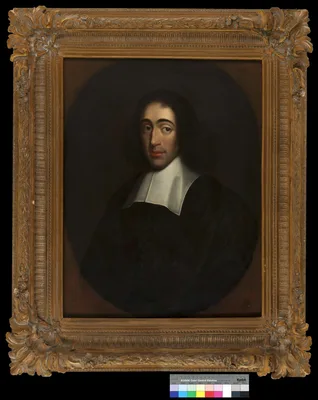
Baruch Spinoza was a promising Talmud pupil who came to think the rabbis rested only on their own authority. At twenty-three he was cast out of Amsterdam's Portuguese synagogue for heresies no one wrote down. He spent his life arguing that the Bible is a human book, that God acts only through the laws of nature, and that a free state lets people think what they like. He rejected the word atheist and never said there was no God, but his "God or Nature" sounded to nearly everyone like no God at all.
Matthias Knutzen
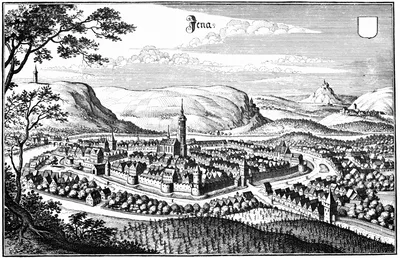
Matthias Knutzen was an orphaned organist's son from Holstein who trained in theology and preached until his superiors silenced him in 1673. He left no account of why he lost his faith. In September 1674 he scattered at Jena, Coburg and Altdorf a signed Latin letter denying God, magistrate, temples and priests, and putting conscience in their place, on behalf of a "sect" no one could find. He provoked a generation of refutations, and then vanished from the record without recanting.
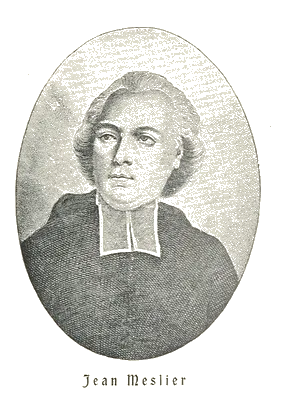
Jean Meslier
Jean Meslier was ordained to please his parents and, by his own account, was never a believer. He served a village parish for thirty-seven years while writing a Testament against all gods, kings and priests, for his parishioners to read after his death. His unbelief never changed, but after 1729 others remade it: Voltaire into a penitent deist's prayer, and d'Holbach's publishers into a name on another man's book.
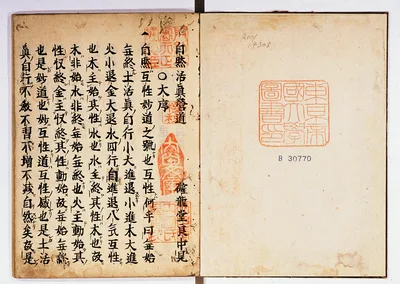
Andō Shōeki
Andō Shōeki was a country physician in Hachinohe who watched farmers starve while those who did not till ate their grain. He came to hold that the world is only self-moving nature, with no god or Buddha above it and no reward or punishment from beyond, and that sages and creeds were inventions of those who lived off the farmers. He judged this too dangerous to print in full. He published a softened version and left the rest for readers a hundred years later, who nearly lost it to fire.