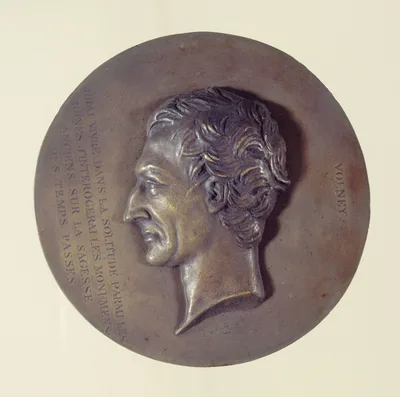
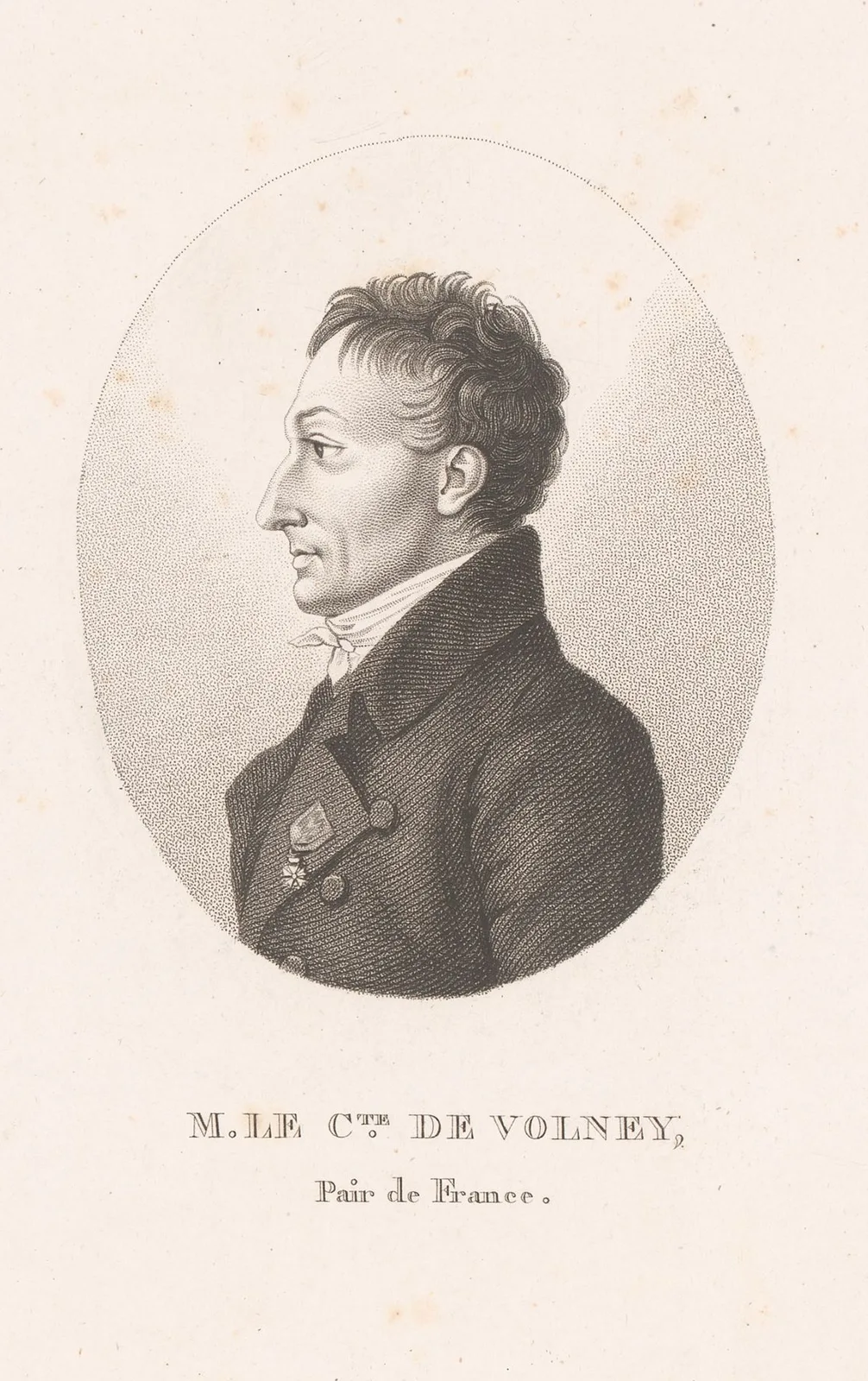
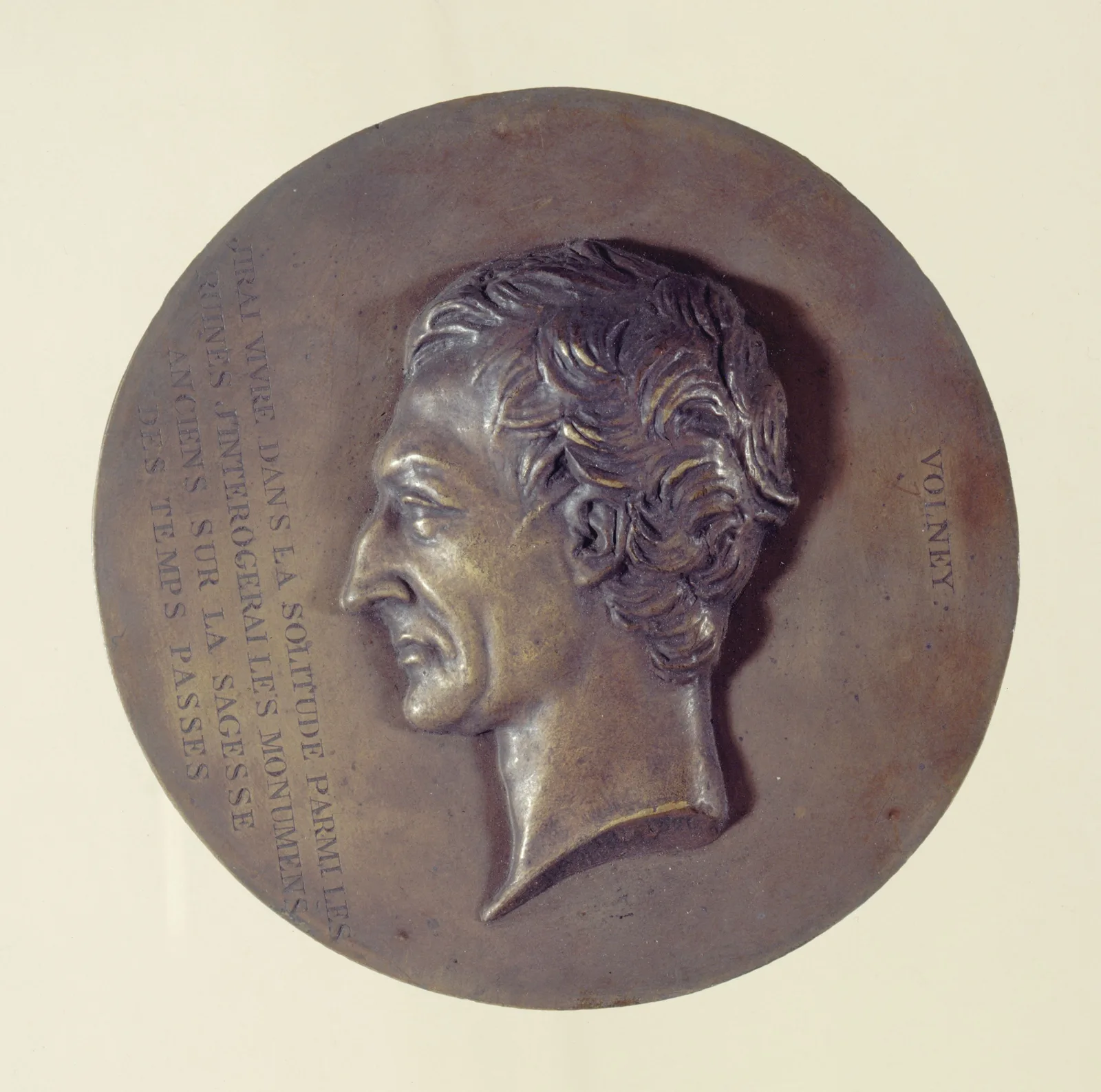
Constantin-François Volney was schooled by priests and met d'Holbach's circle in Paris. In 1782 he went east to see where the opinions that govern us were born, and came back to set the world's religions side by side in The Ruins of 1791, speaking only as a meditating traveller. He kept God as the name of nature's order. In 1797 he refused Priestley's demand for a creed, on the ground that no one had the right to ask it, and in old age he regretted provocation more than doubt.
The belief timeline
- Faith (c. 1764–74) — Priest-run colleges at Ancenis and Angers; terrors of ghosts from the servants; no source describes his own devotion [3][4][6]
- Doubt (before 1782; the East 1783–85) — By late 1782 he plans a journey to the lands where "religious ideas took their rise", after the d'Holbach circle; by the Ruins he is troubled by "twenty different systems of religion", each claiming the truth [10][13][24][2][5]
- Declaration (1791) — *Les Ruines* lays the world's faiths side by side; he speaks as a "traveller", never in the first person as unbeliever [24][25][31]
- Revision (1797–1804) — Refuses to profess a creed (1797), keeps "the resource of a conversion on some future day"; admits "je m'en suis repenti" about his provocation of kings; resigns against the Empire (1804) [37][44][16][22]
Notes to the timeline (14)
- [3] Left in the hands of a country servant and an old relative who "stuffed his mind with prejudices of every kind and above all the terror of ghosts"; at eleven he dared not stay alone at night — Adolphe Bossange, "Notice sur la vie et les écrits de C.-F. Volney", in [Ruines 1821] t. I pp. i–xlix, built partly from Volney's pencilled notes begun a few days before he died (passages in guillemets). Hagiographic; the only full life in the texts. oeuvres-1821-t1.txt, pp. iv–v (Volney's pencilled notes).
- [4] At seven his father put him in a small college at Ancenis run by a Breton priest, famed for Latinists — Bossange, "Notice sur la vie et les…", p. v.
- [6] His maternal uncle had him moved to the college of Angers at twelve; he stayed five years and was remembered there — Bossange, "Notice sur la vie et les…", p. vi.
- [10] Baron d'Holbach took him up and introduced him to Franklin, who presented him to Mme Helvétius — Bossange, "Notice sur la vie et les…", p. viii.
- [13] His reason for choosing Egypt and Syria (preface, Oct. 1786): "In these countries most of the opinions that govern us were born; from there came the religious ideas that have influenced our morals and laws" — Volney, Voyage en Syrie et en Égypte, 4th ed., t. I (Paris: Courcier, 1807); the preface is dated October 1786, Préface pp. vi–vii; Travels through Syria and Egypt (London: Robinson, 1788), vol. I with preface (travels-1788-eng-v1.txt; IA bim_eighteenth-century_voyage-en-syrie-et-en-e_volney-constantin-fran_1788_1; long-s normalised to s) and vol. II (travels-1788-eng.txt, bub_gb_Kz0NAAAAYAAJ). Also travels-1798-eng.txt (travelsthrougheg00voln), vol. I pp. vi–vii.
- [24] *Les Ruines, ou Méditation sur les révolutions des empires* was published in 1791 — Bossange, "Notice sur la vie et les…", p. xxv n.; Count Daru, "The Life of Volney", in [Ruins 1840] pp. 13–19 (English; the French original not located). A second, shorter notice; it differs from Bossange on several details. ruins-1840-daru.txt, p. 20.
- [2] His father Jacques-René Chassebœuf, a barrister at the Craon tribunal, was widowed two years after the birth — Bossange, "Notice sur la vie et les…", p. iv.
- [5] At Ancenis he became sad and wild, was beaten, came last; the director was "a brutal man who spoke only in scolding and scolded only by striking"; his father never visited; the child's melancholy "perhaps contributed to directing his mind toward meditation" — Bossange, "Notice sur la vie et les…", pp. v–vi.
- [25] Bossange says Volney decided that "reason alone could overthrow military and religious despotism": in his travels he had seen peoples more ignorant the more religious, tyranny grow with ignorance, and so conceived the plan of the *Ruines* — Bossange, "Notice sur la vie et les…", pp. xxiv–xxv. Reported at second hand; the original has not been seen.
- [31] In his reply to Priestley he says the part that belongs to him in the *Ruines* is "that of a traveller, resting upon the ruins and meditating on the causes of the misfortunes of the human race"; the opinions are delivered by "different persons" — Volney's Ruins (Boston: Gaylord, 1840), "translated under the immediate inspection of the author from the 6th Paris ed.", with the Law of Nature, Daru's Life, and the Priestley controversy (Volney's letter of 10 March 1797 from the Anti-Jacobin Review, March 1799), p. 211.
- [37] Volney answered in a public letter dated Philadelphia, 10 March 1797, refusing to profess his opinions — Volney's Ruins (1840), p. 216.
- [44] At the proclamation of the Empire he sent his resignation to the Senate; Bonaparte answered "Qu'avez-vous fait, Volney?"; the Senate refused all resignations; he was made count and retired — Bossange, "Notice sur la vie et les…", pp. xlii–xliv.
- [16] He left Cairo on 26 September 1783 — Volney, Voyage en Syrie et en Égypte (1807), t. I, between pp. 346 and 349 (climate chapter).
- [22] Catherine II sent a gold medal (January 1788, through Grimm); Volney sent it back on 4 December 1791 because of her support for French emigrés; he later told a friend "je m'en suis repenti" — Bossange, "Notice sur la vie et les…", pp. xvii–xix, xlviii; Daru, "The Life of Volney", p. 15.
Twenty Systems of Religion
In 1797 an English chemist and Unitarian minister living in exile in Pennsylvania sent a pamphlet to a French visitor in Philadelphia and asked him to answer it in public. Joseph Priestley had written Observations on the Increase of Infidelity, and its title page singled out one book above all: "the Ruins of Mr. Volney."1 Priestley thought that book denied that Jesus had ever lived, and he wrote that arguing with its author was as useless as arguing "with a Chinese, or even a Hottentot."23
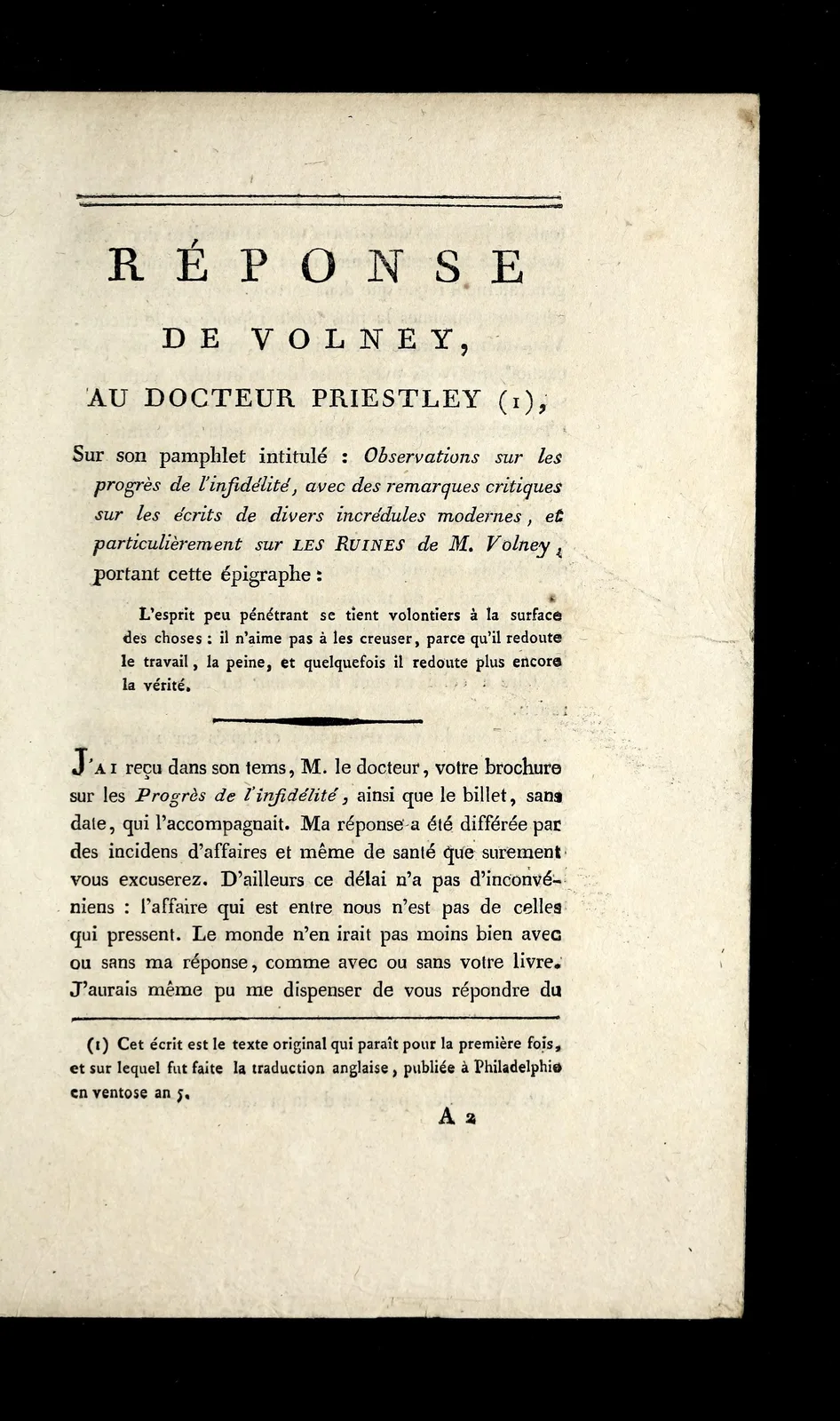
Volney answered on 10 March 1797, and his answer is the clearest thing he ever said about his own beliefs, because it refused to say what they were. "No one has a right to ask of me an account of my religious opinions: every inquisition of this kind is a pretension to sovereignty, a first step towards persecution."45 This chapter follows the man who wrote that sentence from a frightened boyhood in Anjou to the ruins of Palmyra, and asks why a traveller came home treating all religions as things made by human beings.
Ghosts and a Breton priest
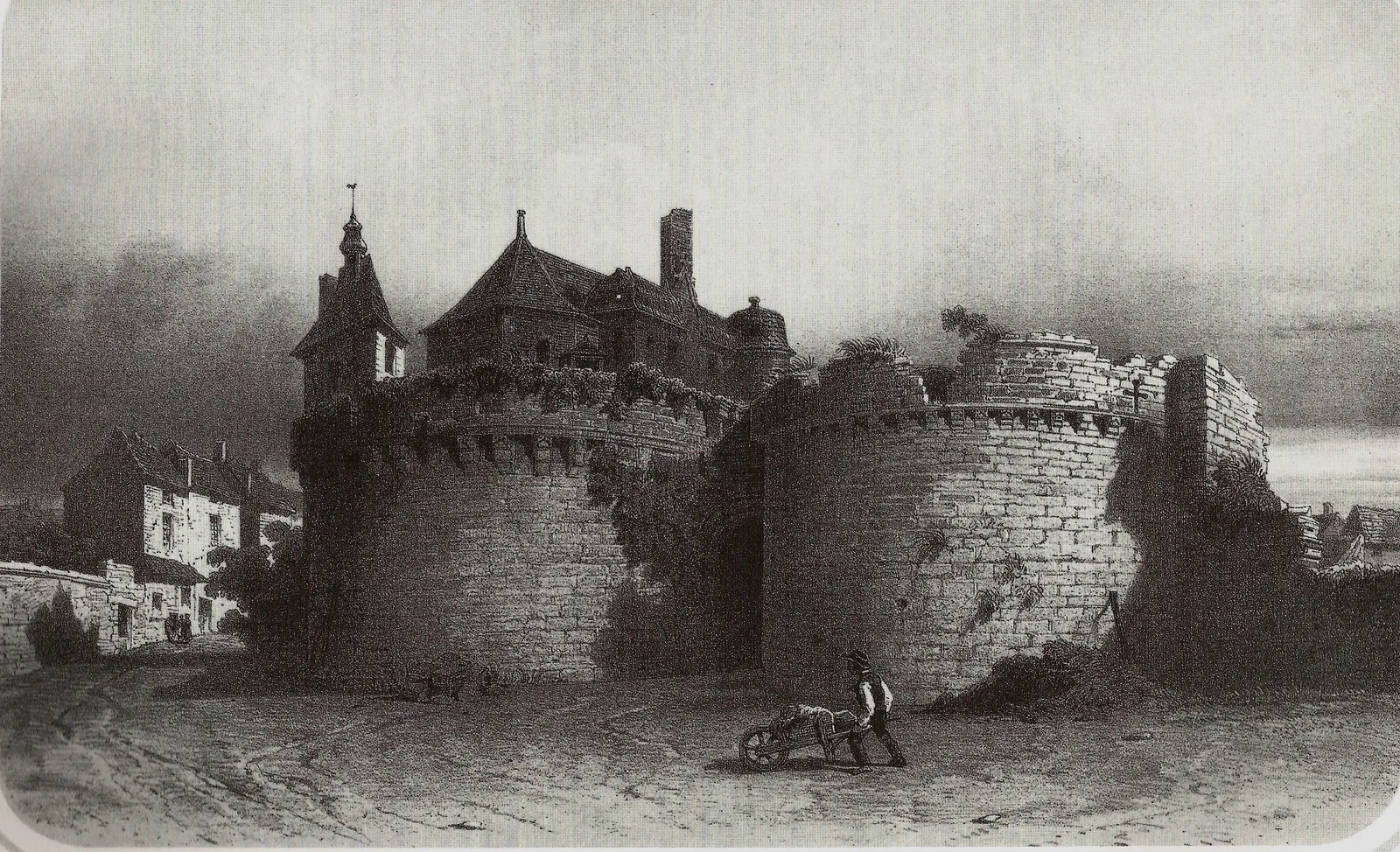
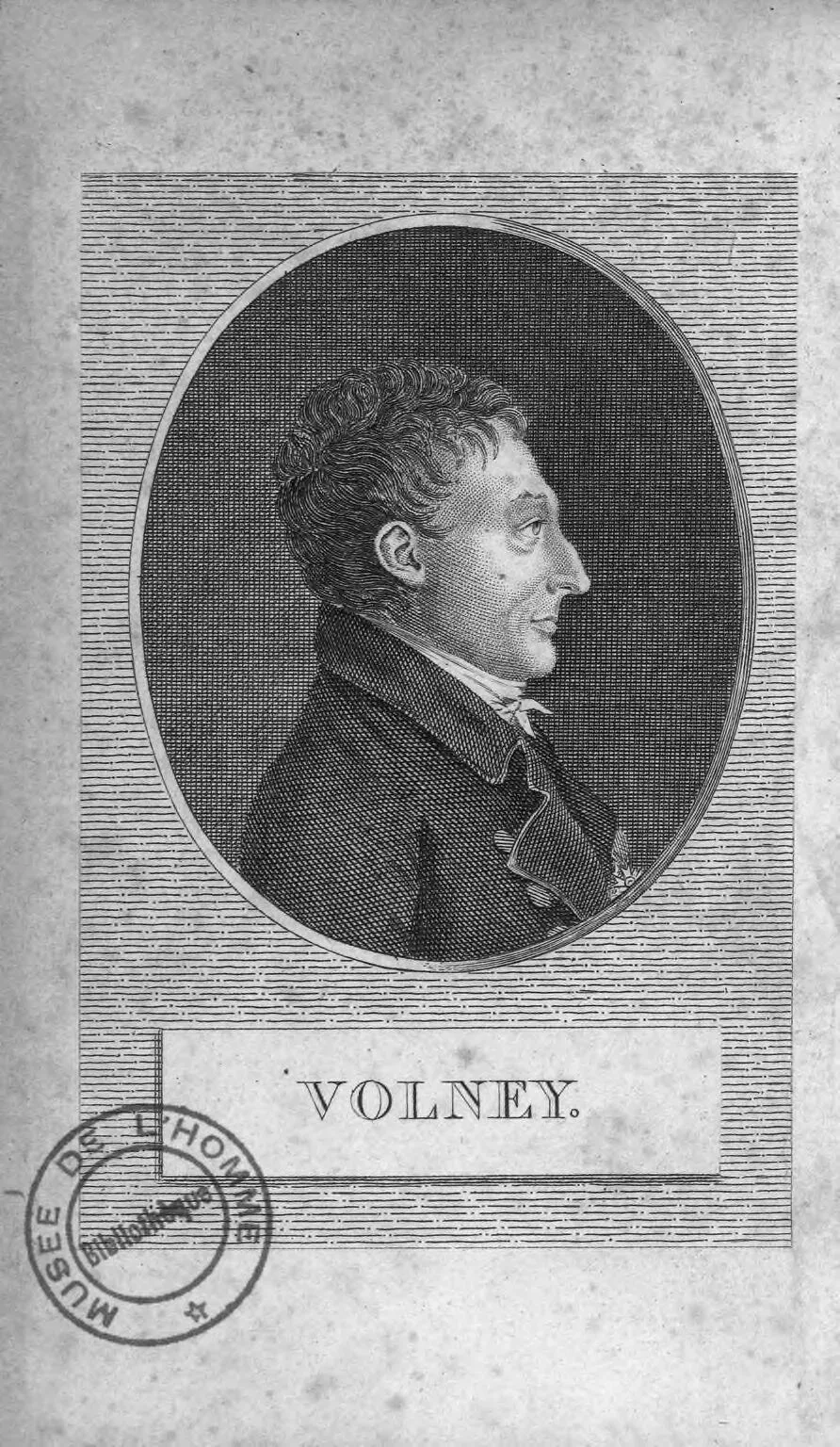
He was born Constantin-François Chassebœuf at Craon, in Anjou, on 3 February 1757, the son of a barrister at the town's court.67 His mother died two years later, and the child was left to a country servant and an old relative who, in the notes he pencilled at the end of his life, "stuffed his mind with prejudices of every kind and above all the terror of ghosts"; at eleven he still did not dare to stay alone at night.78 At seven his father sent him to a small college at Ancenis kept by a Breton priest. He was beaten there, grew sad and wild, came last in his class, and his father never came to see him. His first biographer thought that the child's melancholy "perhaps contributed to directing his mind toward meditation."910 At twelve an uncle on his mother's side had him moved to the college at Angers, where he stayed five years.11 His father disliked the family name, which had brought him "a thousand annoyances," and it was the uncle who proposed the name the boy took for himself: Volney.12
That is almost all the sources say about his childhood religion. They describe priests as schoolmasters and servants who frightened him with ghosts; they do not describe him praying, and no letter of his early years has been found that tells us what he believed. On the belief timeline, that schooling stands for his faith, and no more.
The baron's table
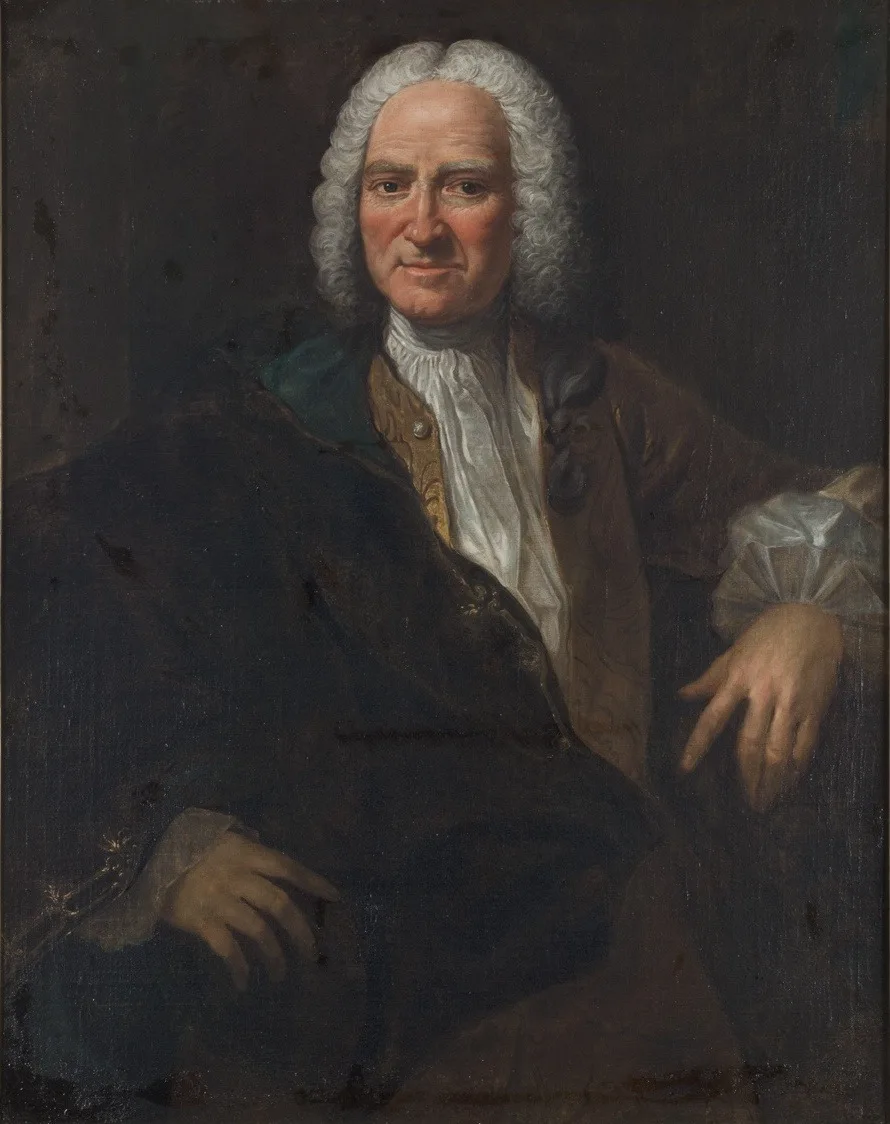
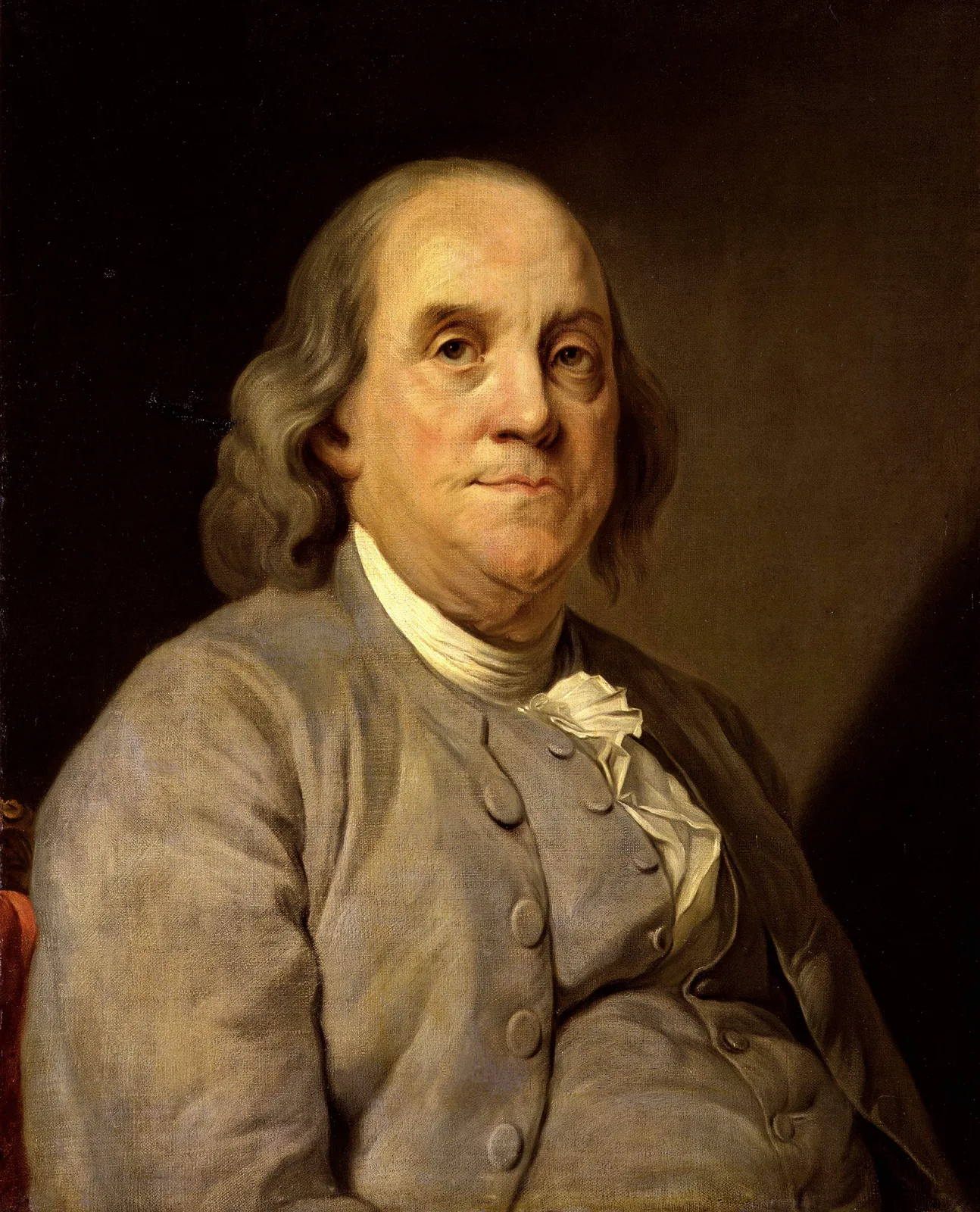
At about seventeen his father emancipated him, handed over the accounts of his mother's estate and an income of 1,100 livres, and he went to Paris.13 He read the ancient authors in the libraries, studied history, philosophy and medicine, and as a young man wrote a memoir on the chronology of Herodotus that a professor of Greek attacked bitterly.1415 The memoir brought him to the notice of the Baron d'Holbach, whose salon was a meeting place of the materialists, and d'Holbach introduced him to Benjamin Franklin; Franklin presented him in turn to Madame Helvétius, whose house gathered men of letters and distinguished scholars.1617
The sources do not say what he heard at d'Holbach's table, and they do not name a book that changed his mind. But they do record what he decided to do next. A small inheritance came to him, and in his own words "the difficulty was how to employ it." He chose to go east, and he gave his reason in a preface dated October 1786: "Those are the countries ... in which the greater part of the opinions that govern us at this day have had their origin"; it was from there, he wrote in the French, that "the religious ideas" had come which shaped "our morals and laws."18192021
The East
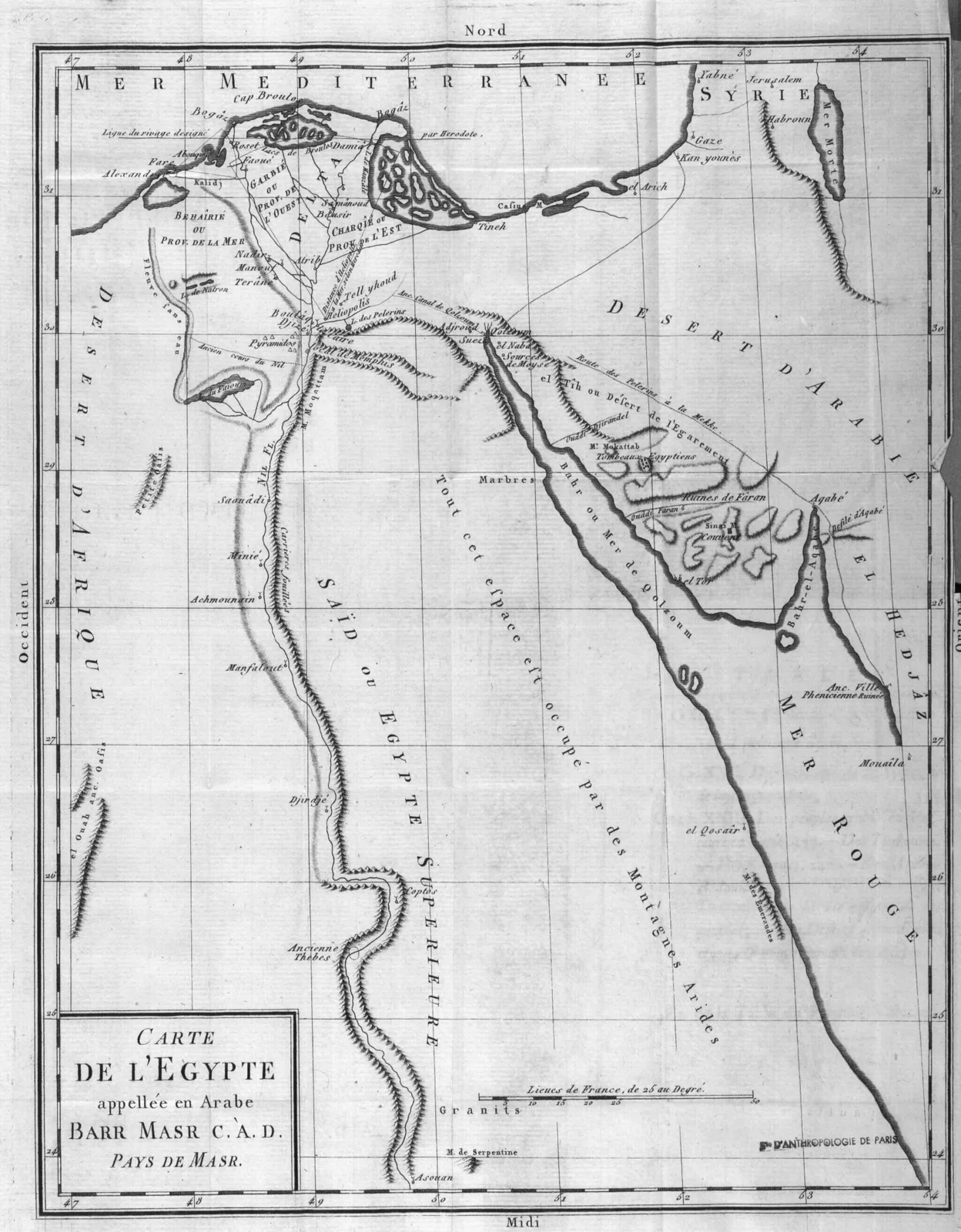
He left France toward the end of 1782, hiding the plan from his father but telling the uncle, who tried to talk him out of it.22 He spent seven months in Cairo, then went on to Syria for want of teachers and access.23 To learn Arabic he lived for eight months among the Druze of Mount Lebanon, in the Greek-Catholic monastery of Mar Hanna, and then travelled the length of Syria; one later account says he learned his Arabic in a convent of Copts, but his own note names the Greek-Catholic monks.2425 He came home after "nearly three years."26 His Voyage en Syrie et en Égypte appeared in 1787 and made him famous across Europe; Catherine the Great sent him a gold medal.272829 He claimed, in its preface, a traveller's impartiality: he had perhaps been able to see the peoples of the East as they were, "since I received from them neither favours nor insults."30
The Ruins
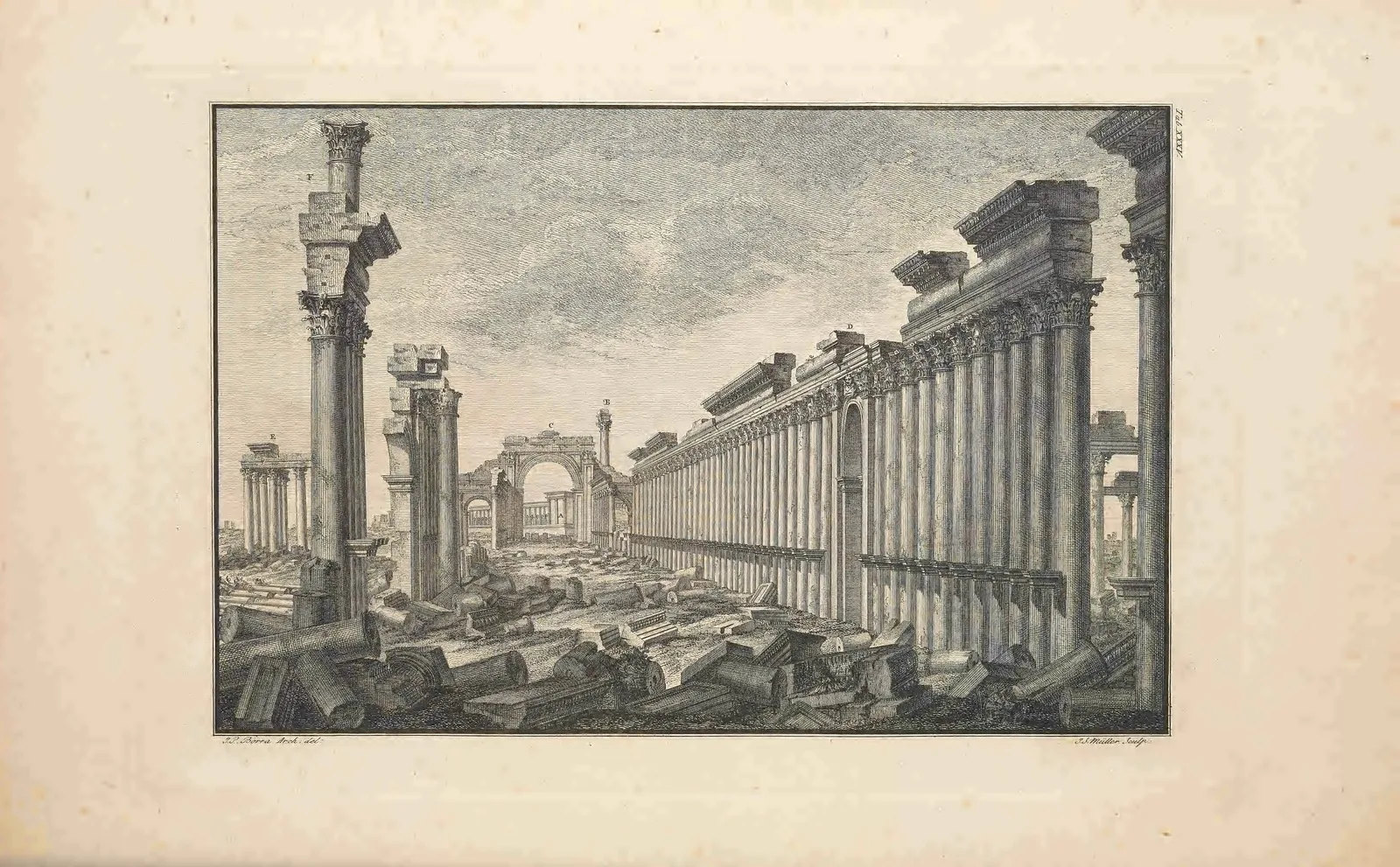
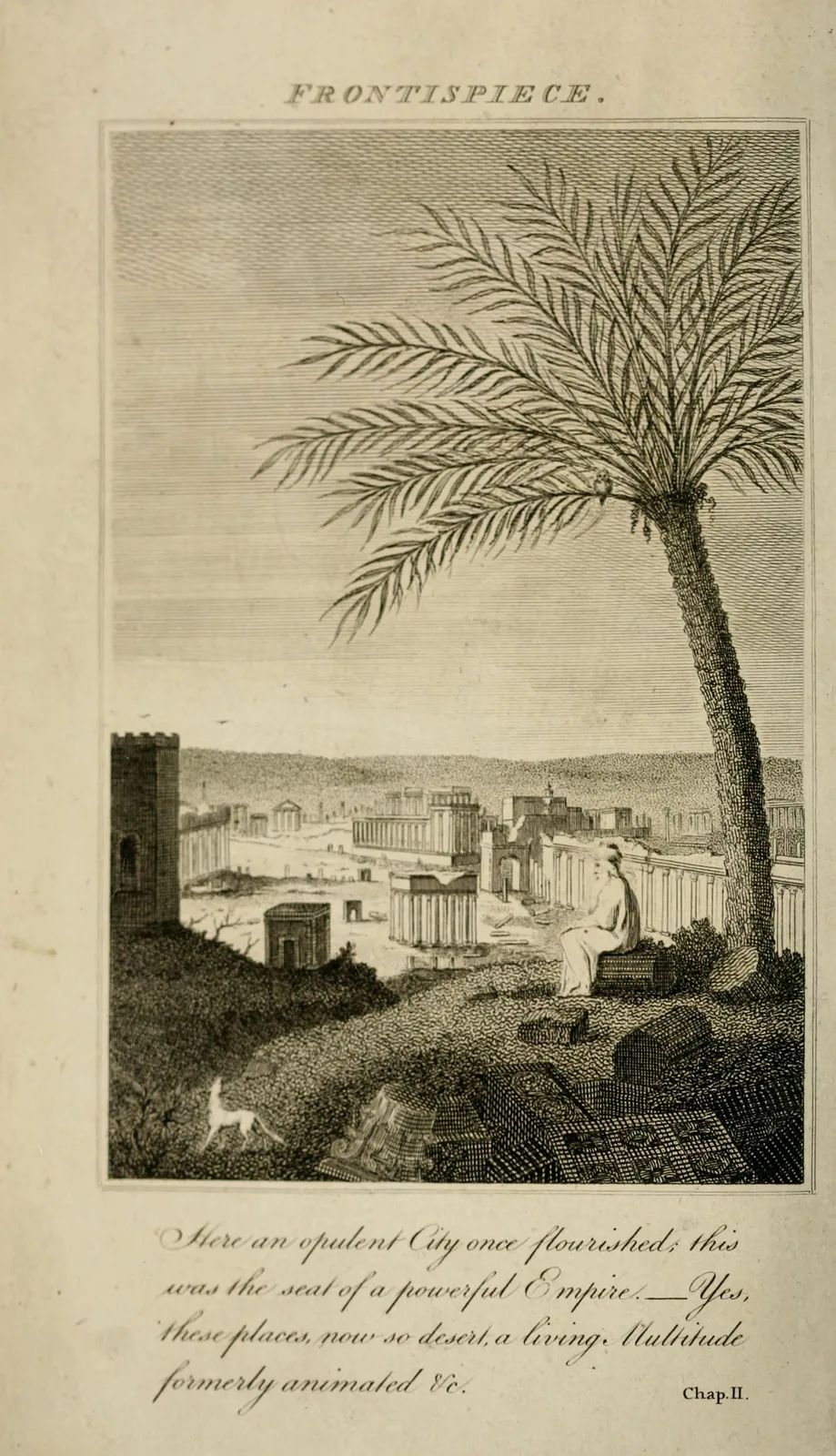
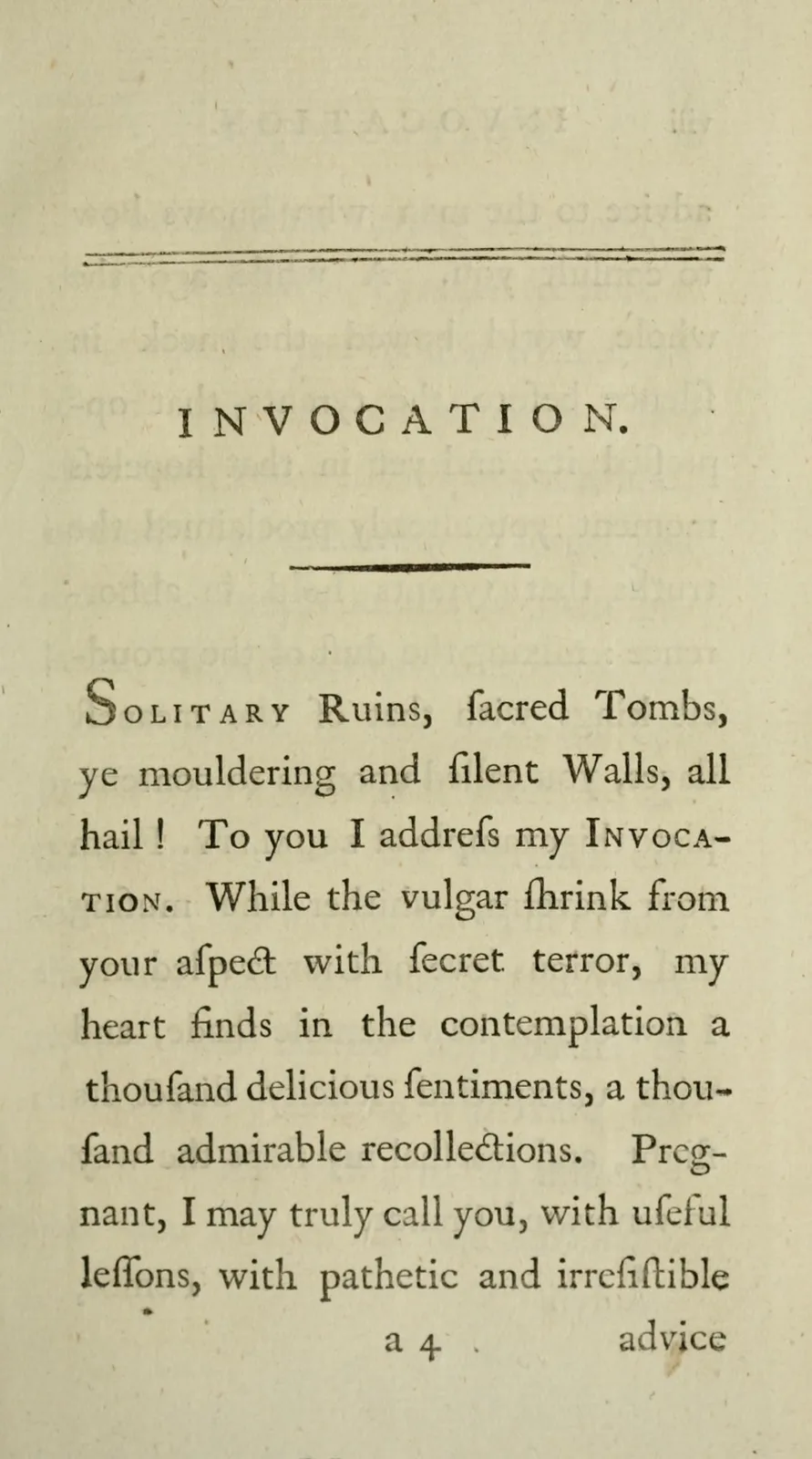
In 1789 he was elected to the States-General for Anjou, and in the Assembly he proposed that France renounce wars of conquest.31 In 1791 he published the book for which he is remembered: Les Ruines, ou Méditation sur les révolutions des empires.32 It opens among the ruined columns of Palmyra, where a traveller sits and asks why great empires fall. A Genius appears and shows him the world. And the traveller names the thing that troubles him most. "One obstacle above all has profoundly struck my mind. On looking over the world, I have seen it divided into twenty different systems of religion"; each nation, he says, believes itself alone in the truth and all the others in error.3334 And he says what all of them have in common: "the absolute proscription of doubt, the interdiction of examination, and the rejection of our own judgment."35
The heart of the book is a vision. The nations of the earth gather in one assembly, and each party points at the others: "You are in error ... we alone are in possession of reason and truth."3637 A Lawgiver proposes that every system prove itself before all, and calls on mankind to form "one society, one great family," with one law, "that of nature," one code, "that of reason," one throne, "that of justice," and one altar, "that of union."3638 Later chapters set out the religions as a genealogy, each issuing from the one before, and in a note Volney wrote that no one had yet demonstrated "the real existence of the personage" at the origin of Christianity. The next sentence, which his critics usually left out, says that without that existence it would be hard to explain how the system appeared when it did.3940
His first biographer gave a simple reason for the book: in the East Volney had seen peoples grow more ignorant as they grew more religious, and tyranny grow with ignorance, and he concluded that reason alone could overthrow "military and religious despotism."41 That is the biographer's inference, not Volney's words. Volney himself was careful to say that he did not speak in the book in his own person. When Priestley attacked him, he answered that his part in it was "that of a traveller, resting upon the ruins and meditating on the causes of the misfortunes of the human race"; the opinions were spoken by "different persons."42
The religion of nature
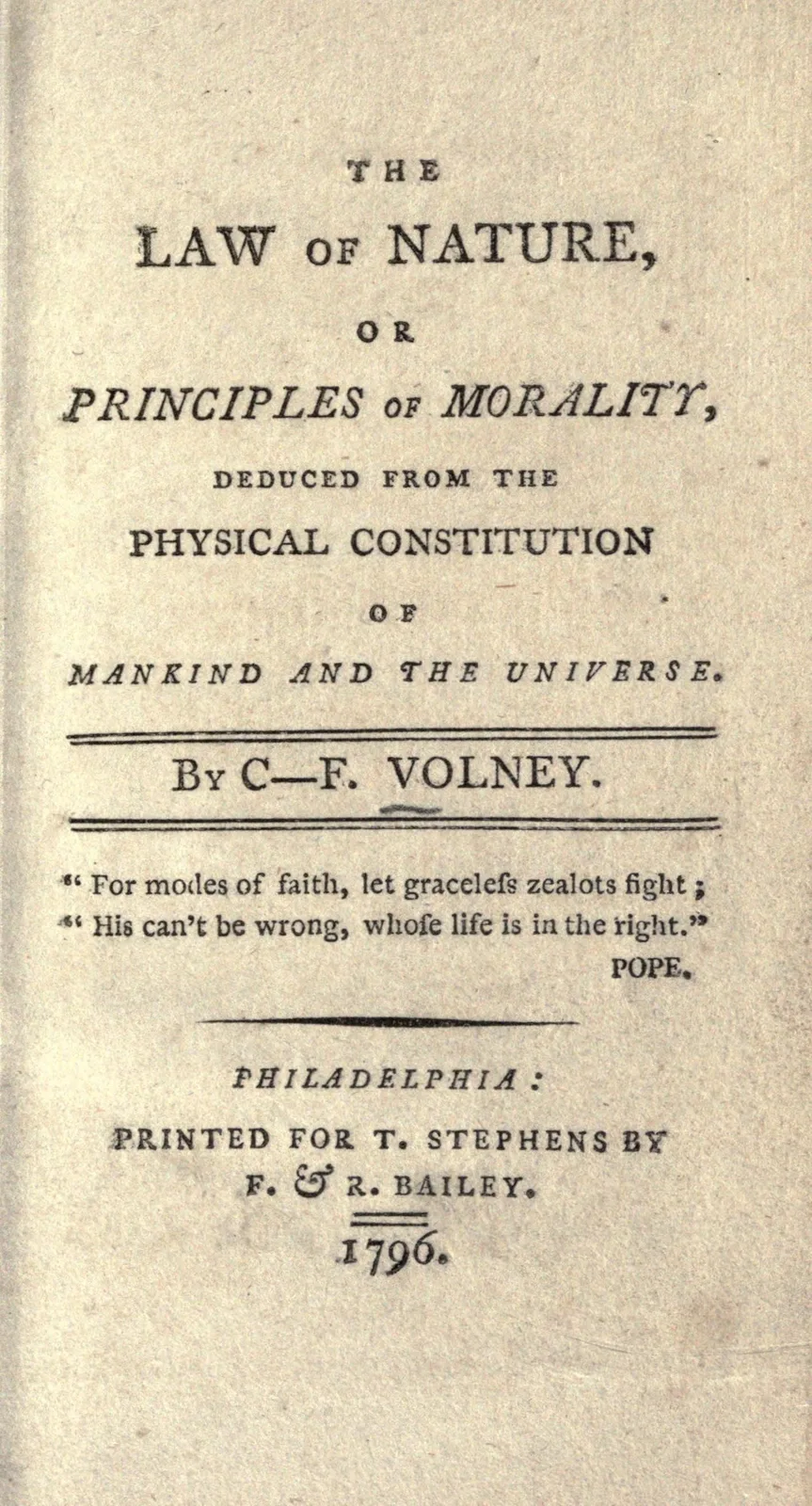
He did not stop at doubt. In the early 1790s he wrote a short catechism of morals, La Loi naturelle, which in his own note was first printed in 1790 as the Catéchisme du citoyen français; another early account dates it to 1793.4344 It opens by defining the natural law as "the regular and constant order of facts by which God governs the universe."4546 Its preface claims that morals are "a physical and geometrical science" and predicts that "sooner or later the eternal religion of nature will overthrow the passing religions of the human mind."4748 Volney's unbelief, in other words, was not an absence of God from his vocabulary. It was a refusal to let any revealed religion speak for God.
Prison and America
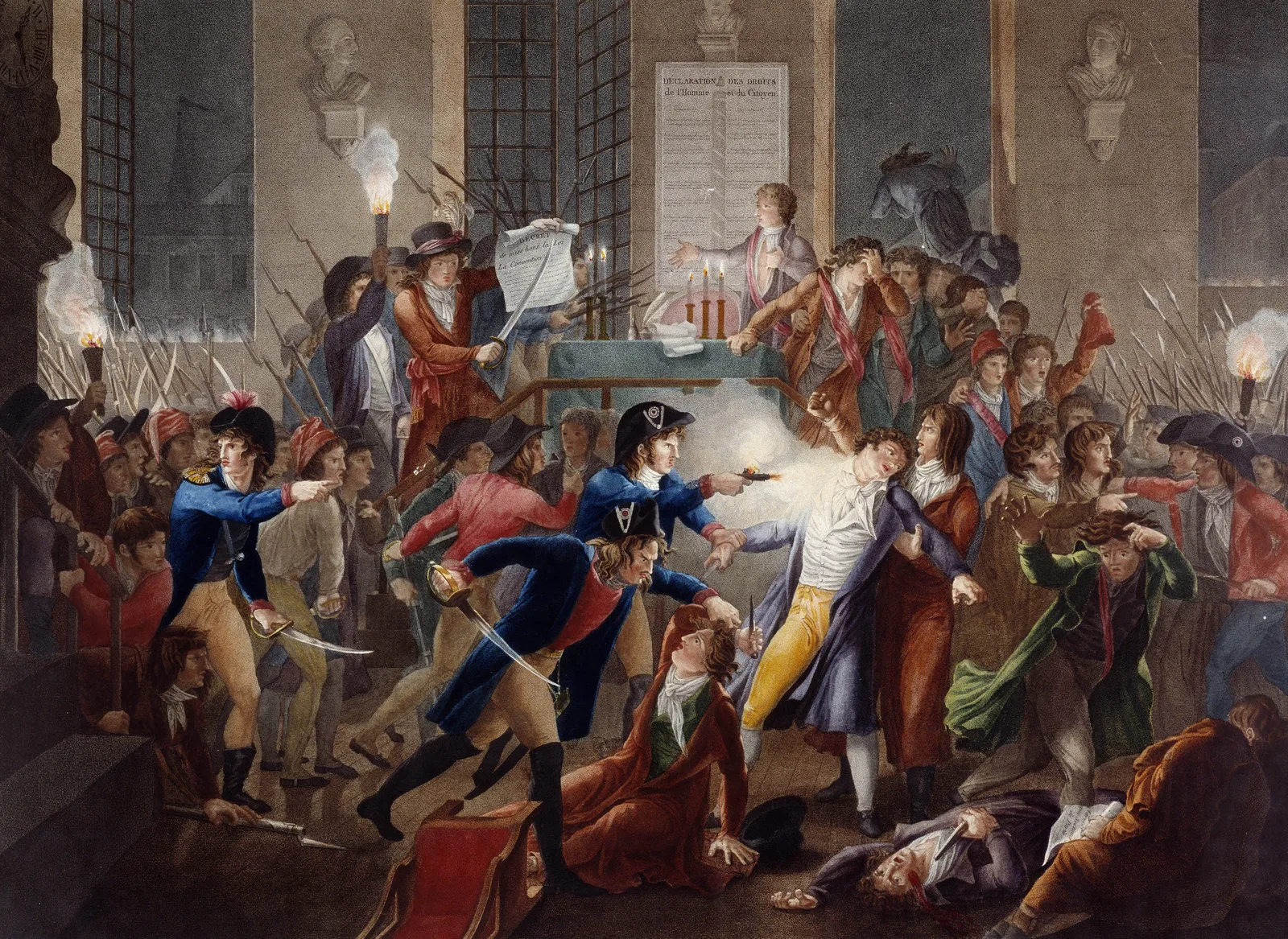
The Revolution turned on him as it turned on so many. In Corsica, where he bought an estate in 1792 and met the young artillery officer Napoleon Bonaparte, his enemies accused him of heresy.4950 In Paris he was denounced as a royalist, put in irons and held for ten months, and he was freed only by the fall of Robespierre on 9 Thermidor.51 He taught history for a short time at the new École normale.52 Then he left. "In the year 1795, I embarked at Havre for America, with all the dreary feelings that flow from the observation and experience of persecution and injustice."5354
In America he travelled almost everywhere. In June 1796 Thomas Jefferson wrote from Monticello that "Volney is with me at present. He is on his way to the Illinois."55 Years later Jefferson remembered "intimate & very friendly intercourse" with him in France.56 It was in Philadelphia, the next spring, that Priestley's pamphlet arrived.1
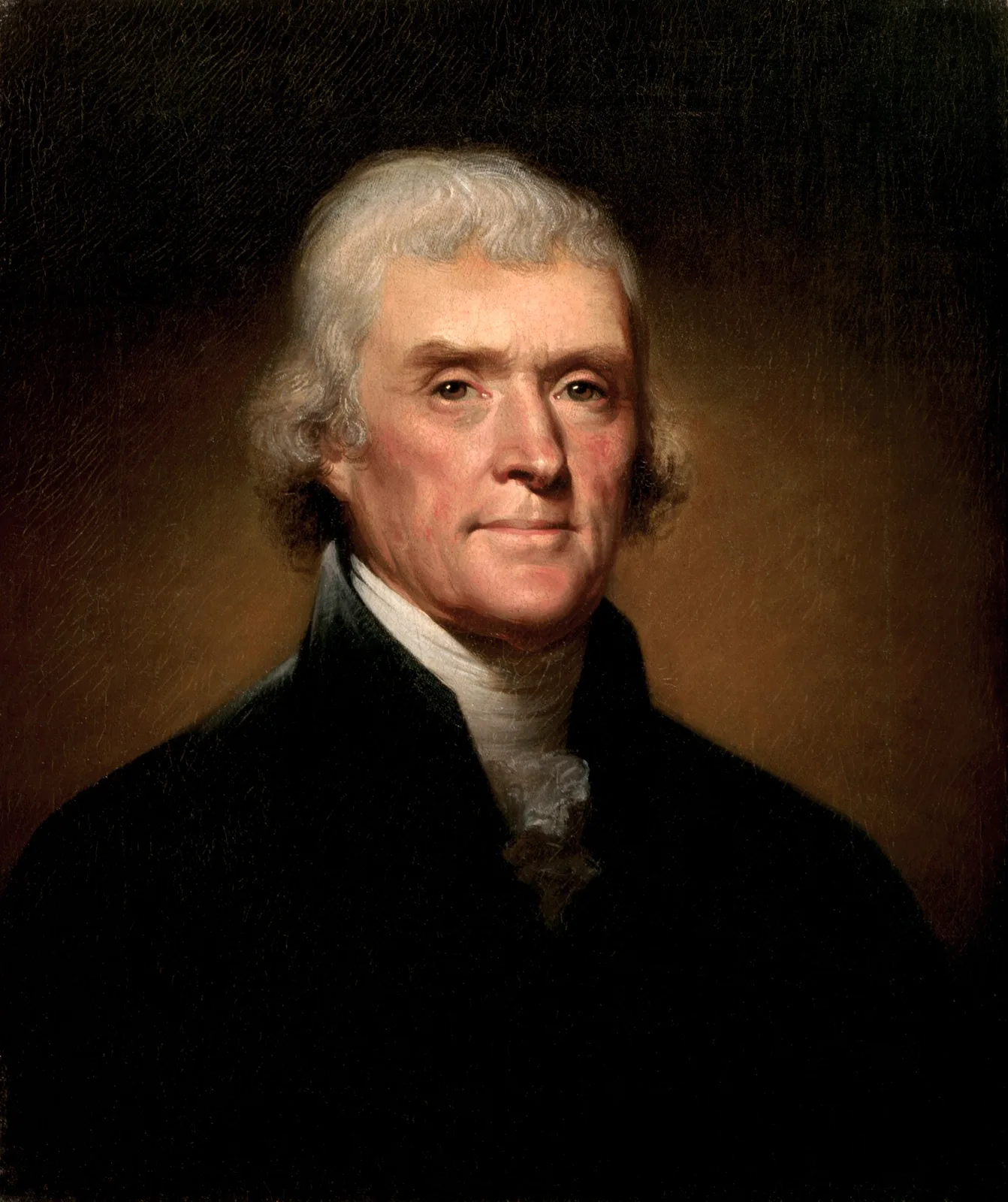
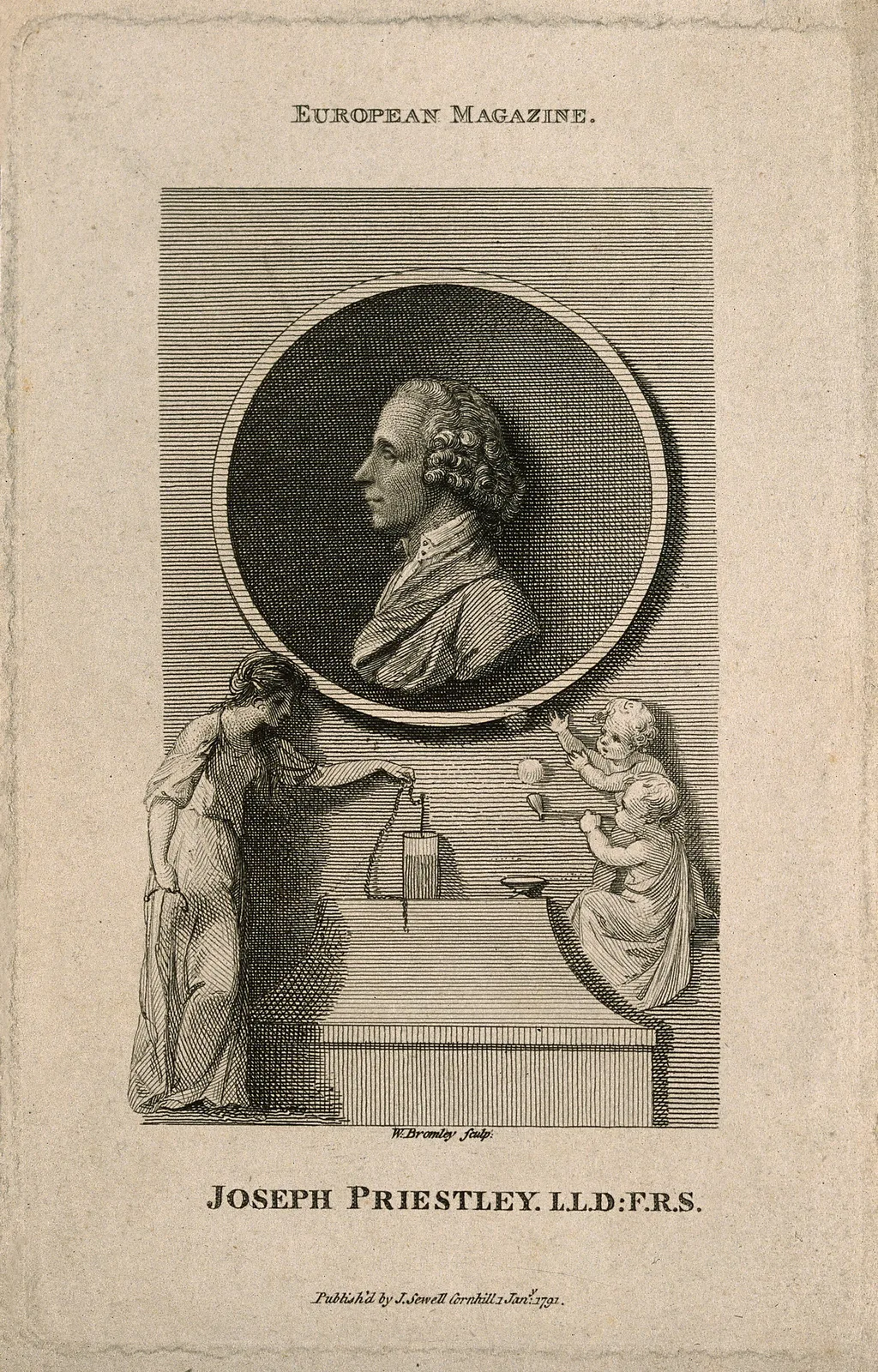
Priestley
Priestley wrote as a believing Christian and a man of science, and he was not dismissive of his opponent's gifts. He granted the abilities of Voltaire, d'Alembert and Volney, but he held that their opinions "on any subject relating to religion, and especially revelation," were "of little value."57 He defended the early Christians against Volney's attack on priests: "indiscriminate invectives on whole classes of men are never just."58 And he put the question plainly: what mattered to readers was "whether there be a God, a providence, or a future state. All these I believe, and you deny."59
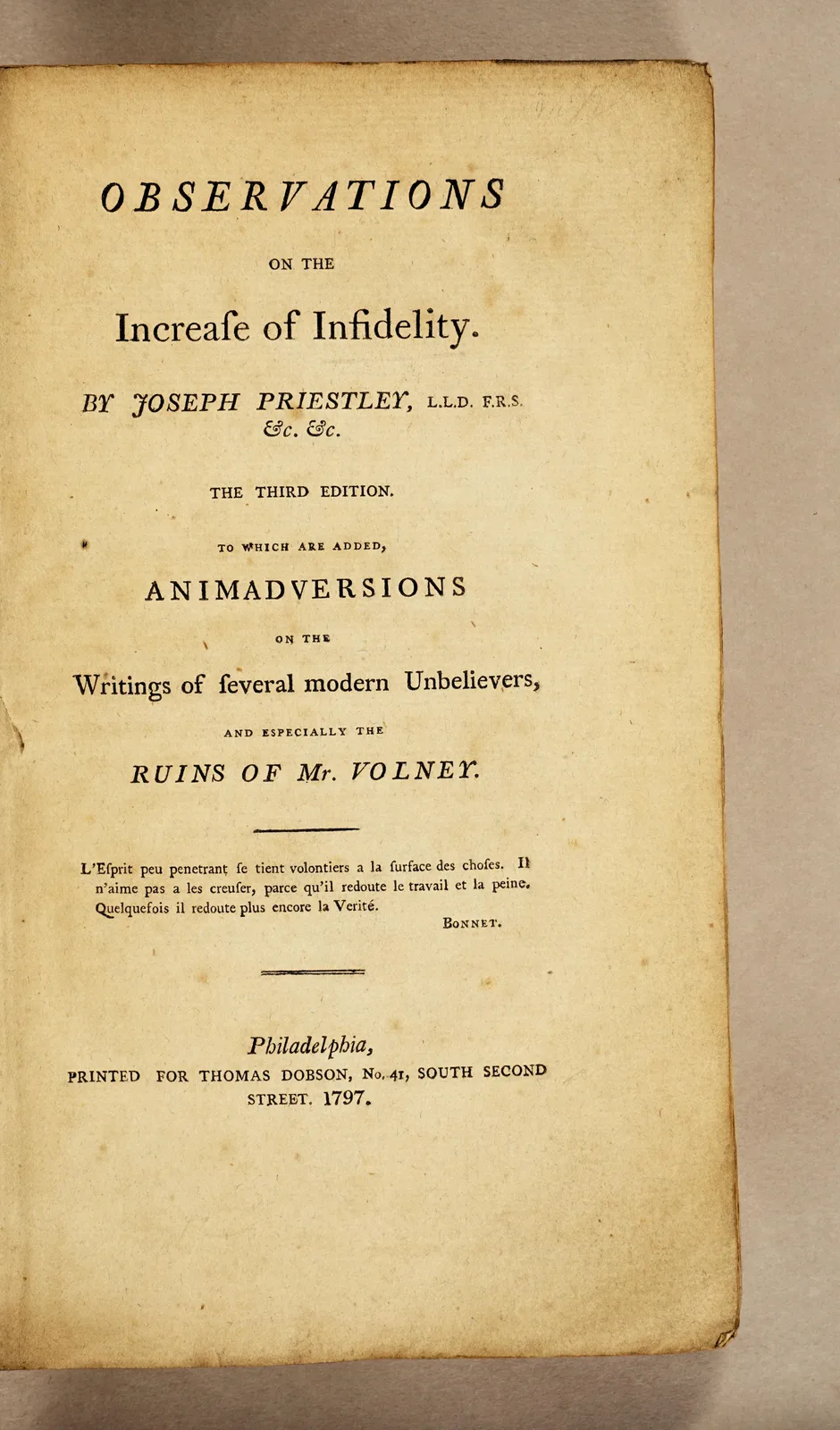
Volney would not accept the terms. He found in Priestley's book "not ... a single new argument, but the mere repetition of what is told over and over in thousands of volumes."60 He would not say what he believed, and he kept a door open: "supposing I do hold the opinions you attribute to me, I wish not to engage my vanity so as never to retract, nor to deprive myself of the resource of a conversion on some future day after more ample information."61 He said instead what he valued: "the spirit of doubt is friendly to all ideas of liberty, truth, or genius, while a spirit of confidence is connected with the ideas of tyranny, servility, and ignorance." His whole book, he said, breathed "that spirit of doubt."6263 Living among men of many persuasions whose conduct was much alike had taught him, he wrote, that "there are but two great systems of religion in the world, that of good sense and beneficence, and that of malice and hypocrisy."64 Priestley replied that Volney had "openly avowed" his opinions and now shrank from defending them.65
The quarrel did him harm. In the spring of 1798, as American hostility to France grew violent, Volney was "stigmatized as the emissary of a government, whose axe was continually falling on the necks of those whose conduct and opinions resembled mine." Jefferson wrote to Madison that a motion in the Senate to send away suspected aliens "is understood to be meant for Volney & Collot," and early in June, "Volney is gone."66676869
The senator
Back in France he supported Bonaparte's coup of 1799 but refused the Ministry of the Interior, saying, as his biographer tells it, that the First Consul was far too good a coachman for him to be harnessed to his carriage.7071 The two men drew apart. It was commonly said that the cause was Bonaparte's plan to restore the Church's influence, the Concordat; his biographer says Volney only urged extreme caution on that, and that the sharper quarrel was over the expedition to Saint-Domingue.72 When Bonaparte made himself emperor in 1804, Volney sent the Senate his resignation; it was refused, and he was later made a count.73 In retirement he studied Oriental languages.74
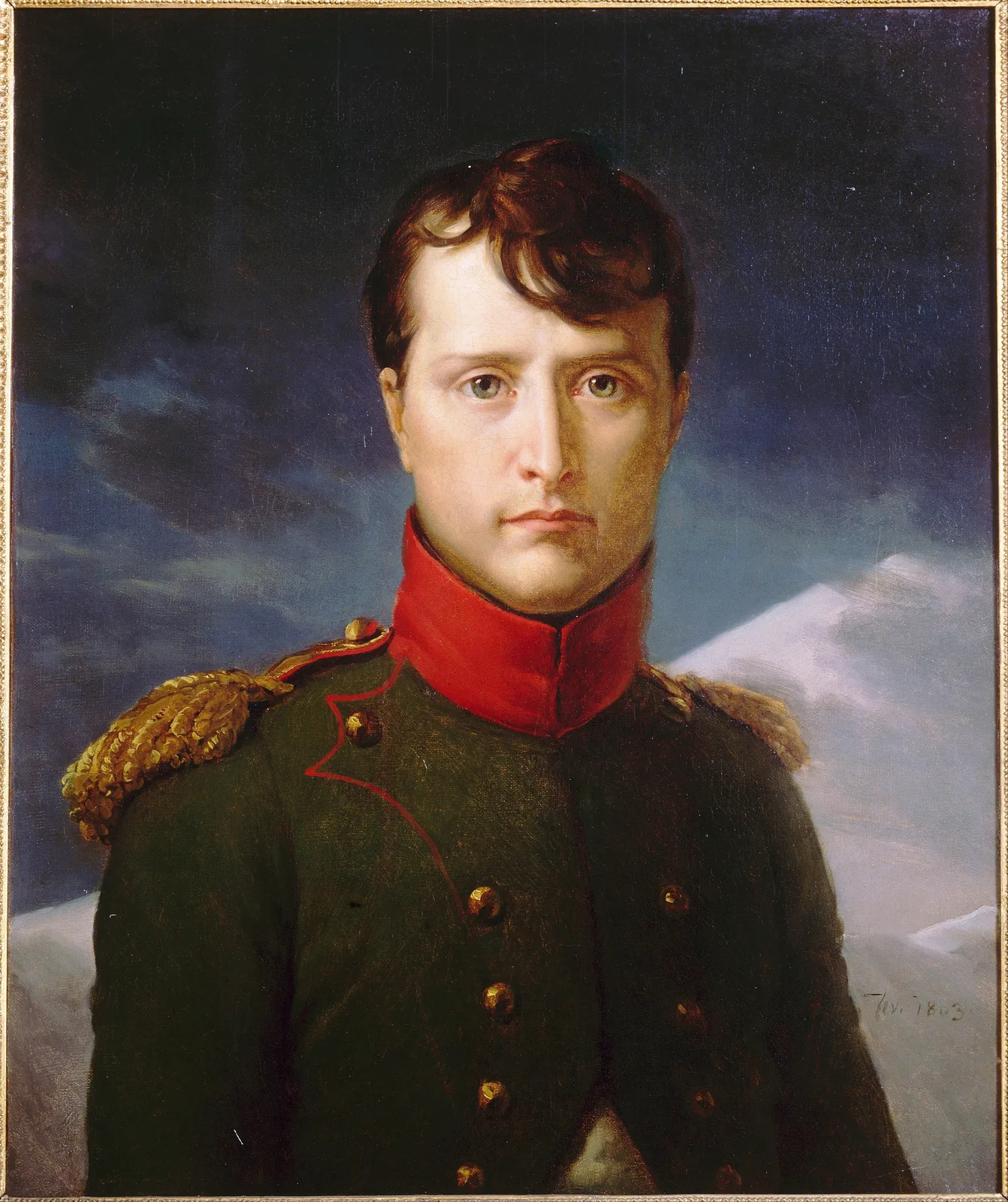
Late in life he admitted one regret. In 1791 he had sent Catherine the Great's medal back to her, in protest at her support for the emigrés. "Je m'en suis repenti," he told a friend: if the friends of liberty had kept the goodwill of the kings who favoured philosophy, instead of provoking them, freedom would have met fewer obstacles "and cost less blood."2975 Three days before he died he told his doctor, "I am not afraid of death. Tell me frankly what you think of my state, because I have arrangements to make," and he left money for a prize in the philosophical study of languages.7677 He died in Paris in April 1820; the two early accounts give the 25th and the 20th.76
Did his unbelief change shape?
It is hard to say, because Volney took care never to state it. He went east with a question about where religions came from, and he came back with an answer that he put into the mouths of characters: that every faith claims the whole truth, forbids doubt, and descends from the ones before it. He kept the word God for the order of nature and hoped that a religion of nature would outlast the religions of revelation. When a minister demanded his creed he refused it on principle, and he even kept, with some irony, "the resource of a conversion." What changed over his life was not his doubt but his estimate of what it should cost. The young deputy who returned an empress's medal came to think that provocation had cost liberty dear, and the old senator chose resignation and silence over defiance.
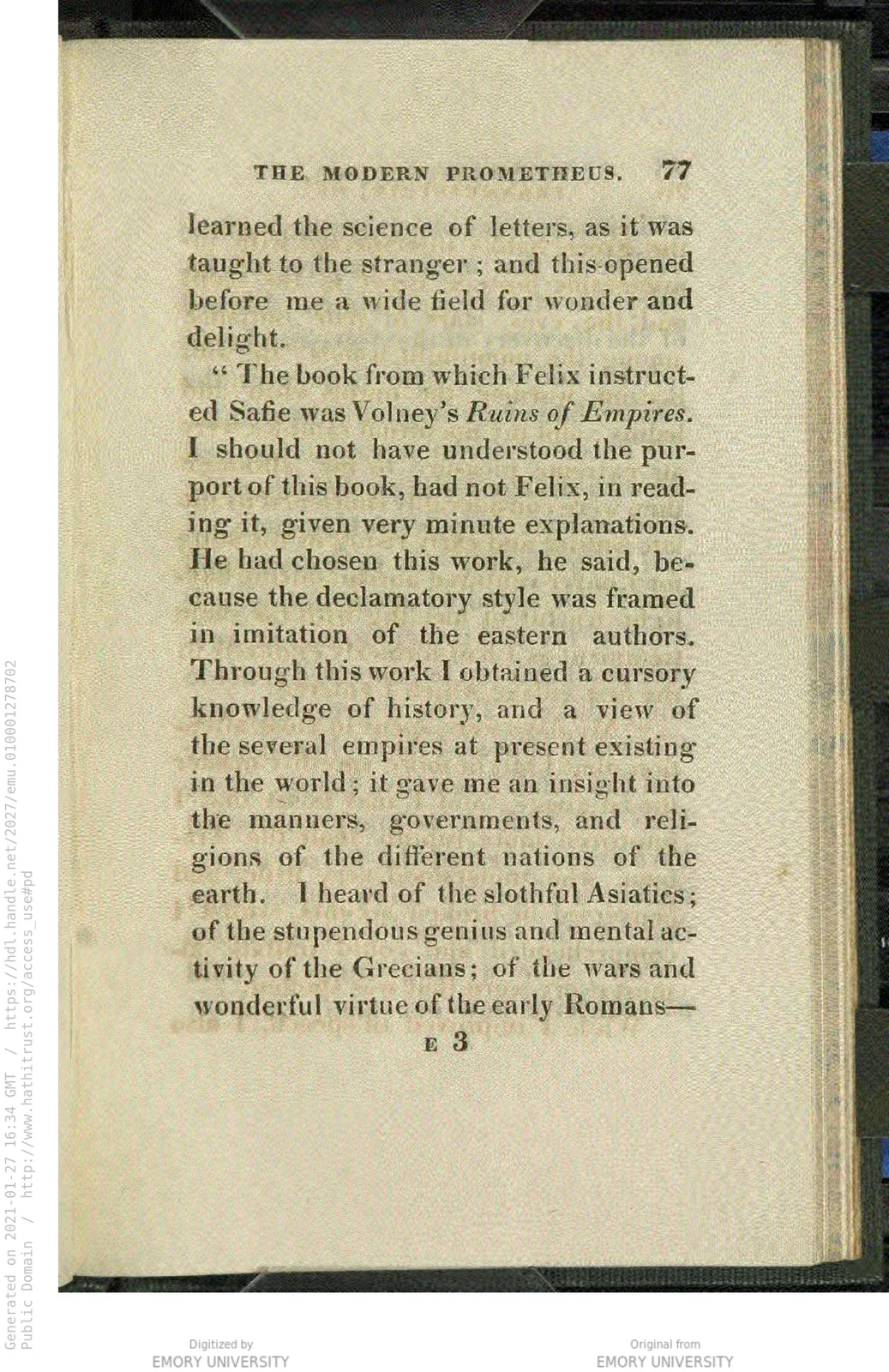
His book went on travelling without him. In Mary Shelley's Frankenstein (1818) the creature learns the history and religions of the world by overhearing a reading of "Volney's Ruins of Empires."7879 In Illinois in the 1850s a young man named Robert Ingersoll read it "by some accident," and it was one of the books that turned him.80 He has his own chapter in this book, and so does Volney's host at the baron's table, d'Holbach.
Footnotes
-
Joseph Priestley, Observations on the Increase of Infidelity ... and especially the Ruins of Mr. Volney (Philadelphia: Thomas Dobson, 1797), title page; Volney's Ruins (Boston: Gaylord, 1840), "translated under the immediate inspection of the author from the 6th Paris ed.", with the Law of Nature, Daru's Life, and the Priestley controversy (Volney's letter of 10 March 1797 from the Anti-Jacobin Review, March 1799), pp. 208–09. ↩ ↩2
-
Priestley, Observations on the Increase of…, p. 38. ↩
-
Joseph Priestley, chemist and Unitarian minister, 1797 (said of Volney's supposed denial that Jesus existed): Priestley, Observations on the Increase of…, p. 38; reprinted by Volney, Ruins 1840 p. 210. ↩
-
Volney's Ruins (1840), p. 216. ↩
-
Volney's Ruins (1840), p. 212. ↩
-
Adolphe Bossange, "Notice sur la vie et les écrits de C.-F. Volney", in [Ruines 1821] t. I pp. i–xlix, built partly from Volney's pencilled notes begun a few days before he died (passages in guillemets). Hagiographic; the only full life in the texts. oeuvres-1821-t1.txt, p. iv; Count Daru, "The Life of Volney", in [Ruins 1840] pp. 13–19 (English; the French original not located). A second, shorter notice; it differs from Bossange on several details. ruins-1840-daru.txt, p. 13 (year). ↩
-
Bossange, "Notice sur la vie et les…", pp. iv–v (Volney's pencilled notes). ↩
-
Bossange, "Notice sur la vie et les…", p. v. ↩
-
Bossange, "Notice sur la vie et les…", pp. v–vi. ↩
-
Bossange, "Notice sur la vie et les…", p. vi. ↩
-
Bossange, "Notice sur la vie et les…", pp. iv, xi. ↩
-
Bossange, "Notice sur la vie et les…", p. vi–vii. ↩
-
Bossange, "Notice sur la vie et les…", p. vii–viii. ↩
-
Bossange, "Notice sur la vie et les…", p. viii, p. xlvi (1781); Daru, "The Life of Volney", p. 13 ("at the age of twenty"). Accounts differ; see the disputed points. ↩
-
Bossange, "Notice sur la vie et les…", p. viii. ↩
-
Bossange, "Notice sur la vie et les…", p. viii. ↩
-
Bossange, "Notice sur la vie et les…", p. ix; Volney, Voyage en Syrie et en Égypte, 4th ed., t. I (Paris: Courcier, 1807); the preface is dated October 1786, Préface p. v. ↩
-
Volney, Voyage en Syrie et en Égypte (1807), Préface pp. vi–vii; Travels through Syria and Egypt (London: Robinson, 1788), vol. I with preface (travels-1788-eng-v1.txt; IA bim_eighteenth-century_voyage-en-syrie-et-en-e_volney-constantin-fran_1788_1; long-s normalised to s) and vol. II (travels-1788-eng.txt, bub_gb_Kz0NAAAAYAAJ). Also travels-1798-eng.txt (travelsthrougheg00voln), vol. I pp. vi–vii. ↩
-
Volney, Voyage en Syrie et en Égypte (1807), t. I, Préface p. v (dated Octobre 1786). ↩
-
Volney, Voyage en Syrie et en Égypte (1807), t. I, Préface pp. vi–vii. ↩
-
Volney, Voyage en Syrie et en Égypte (1807), Préface p. vii; Bossange, "Notice sur la vie et les…", p. x. ↩
-
Volney, Voyage en Syrie et en Égypte (1807), Préface pp. vii–viii. ↩
-
Volney, Voyage en Syrie et en Égypte (1807), Préface p. viii; t. I p. 315 and note (2). ↩
-
Daru, "The Life of Volney", pp. 13–14. ↩
-
Volney, Voyage en Syrie et en Égypte (1807), Préface p. viii; Bossange, "Notice sur la vie et les…", p. xvi. ↩
-
Volney, Voyage en Syrie et en Égypte (1807), Préface p. v; Daru, "The Life of Volney", p. 19 (list of works). ↩
-
Bossange, "Notice sur la vie et les…", pp. xvii, xix–xx. ↩
-
Bossange, "Notice sur la vie et les…", pp. xvii–xix, xlviii; Daru, "The Life of Volney", p. 15. ↩ ↩2
-
Volney, Voyage en Syrie et en Égypte (1807), t. I, Préface p. x. ↩
-
Bossange, "Notice sur la vie et les…", pp. xx–xxiv; Daru, "The Life of Volney", pp. 15–16. ↩
-
Bossange, "Notice sur la vie et les…", p. xxv n.; Daru, "The Life of Volney", p. 20. ↩
-
Volney, Les Ruines, ou Méditation sur les révolutions des empires, in Œuvres complètes de C.-F. Volney, mises en ordre et précédées de la vie de l'auteur, t. I (Paris: Bossange frères, 1821). French original; the Notes and La Loi naturelle are in the same volume, t. I pp. 90–91; A new translation of Volney's Ruins (Paris: Levrault, 1802), "made under the inspection of the author"; Vol. I = chapters I–XX, Vol. II from XXI, vol. I pp. 141–42. ↩
-
Volney, Les Ruines (1821), t. I, ch. XIV, pp. 90–91. ↩
-
Volney, Les Ruines (1821), t. I, ch. XIV, p. 91. ↩
-
Volney, Les Ruines (1821), t. I pp. 113–14; new translation of Volney's Ruins (1802), vol. I pp. 169–79. ↩ ↩2
-
The assembled nations: Volney, Les Ruines (1821), t. I, ch. XIX, p. 114. ↩
-
The Lawgiver in the vision: Volney, Les Ruines (1821), t. I, ch. XIX, p. 113. ↩
-
Volney, Les Ruines (1821), t. I pp. 163–64, Notes p. 347; new translation of Volney's Ruins (1802), vol. II pp. 62–63. ↩
-
Volney, Les Ruines (1821), t. I, Notes p. 347. ↩
-
Bossange, "Notice sur la vie et les…", pp. xxiv–xxv. Reported at second hand; the original has not been seen. ↩
-
Volney's Ruins (1840), p. 211. ↩
-
Volney, Les Ruines (1821), t. I p. 200. ↩
-
Daru, "The Life of Volney", p. 20. ↩
-
Volney, Les Ruines (1821), t. I p. 251. ↩
-
Volney, Les Ruines (1821), t. I, La Loi naturelle ch. I, p. 251. ↩
-
Volney, Les Ruines (1821), t. I pp. 199–200. ↩
-
Volney, Les Ruines (1821), t. I, p. 200. ↩
-
Bossange, "Notice sur la vie et les…", pp. xxvii–xxviii; Daru, "The Life of Volney", p. 15–16. ↩
-
Daru, "The Life of Volney", p. 16. ↩
-
Bossange, "Notice sur la vie et les…", p. xxviii; Daru, "The Life of Volney", p. 16. Not verified. ↩
-
Bossange, "Notice sur la vie et les…", pp. xxix–xxx; Daru, "The Life of Volney", p. 17. ↩
-
Volney, A View of the Soil and Climate of the United States (Philadelphia: Conrad, 1804; trans. C. B. Brown), author's preface pp. v–viii, preface pp. v–vi; Bossange, "Notice sur la vie et les…", pp. xxx–xxxi. ↩
-
Volney, View of the Soil and… (1804), (Philadelphia), preface p. v. ↩
-
Paul Leicester Ford, ed., The Works of Thomas Jefferson (Federal Edition, 1904–05), vol. VIII (1793–98) and vol. X (1803–07). Not downloaded into texts/ (the scans are large; searched in the scratchpad): IA worksthomasjeff02jeffgoog (vol. VIII), worksthomasjeff07fordgoog (vol. X). Cited by volume and page; page numbers read from the running heads of the OCR, vol. VIII p. 245 (Jefferson to Monroe). ↩
-
Ford, Works of Thomas Jefferson, vol. X p. 60. ↩
-
Priestley: Priestley, Observations on the Increase of…, p. 142. ↩
-
Priestley, answering Volney's chapter on priests ("Ruins" p. 291): Priestley, Observations on the Increase of…, p. 123. ↩
-
Priestley, Letters to Mr. Volney, 1797: Priestley, Letters to Mr. Volney, occasioned by a work of his entitled Ruins, and by his letter to the author (Philadelphia: Dobson, 1797), introductory pages (page not legible in OCR). ↩
-
Volney's Ruins (1840), p. 213. ↩
-
Volney's Ruins (1840), p. 212. ↩
-
Volney's Ruins (1840), p. 215. ↩
-
Volney's Ruins (1840), pp. 213, 215. ↩
-
Volney's Ruins (1840), p. 216. ↩
-
Priestley, Letters to Mr. Volney, (page uncertain). ↩
-
Volney, View of the Soil and… (1804), pp. vi–viii; Bossange, "Notice sur la vie et les…", pp. xxxii–xxxiv. ↩
-
Volney, View of the Soil and… (1804), preface p. vii. ↩
-
Ford, Works of Thomas Jefferson, vol. VIII p. 413 (to Madison). ↩
-
Ford, Works of Thomas Jefferson, vol. VIII pp. 428, 434. ↩
-
Bossange, "Notice sur la vie et les…", p. xl. ↩
-
Bossange, "Notice sur la vie et les…", p. xl. ↩
-
Bossange, "Notice sur la vie et les…", pp. xli–xlii. ↩
-
Bossange, "Notice sur la vie et les…", pp. xlii–xliv. ↩
-
Bossange, "Notice sur la vie et les…", pp. xliv–xlvi. ↩
-
Bossange, "Notice sur la vie et les…", p. xlviii. ↩
-
Bossange, "Notice sur la vie et les…", p. xlvii; Daru, "The Life of Volney", p. 19. ↩ ↩2
-
Bossange, "Notice sur la vie et les…", p. xlvii. ↩
-
Shelley, Frankenstein (1818 text, Gutenberg #84, ch. 13). ↩
-
The creature, in Mary Shelley's novel: Shelley, Frankenstein (1818 text), ch. 13. ↩
-
Ingersoll, Works IV p. 40 (as verified in 01-ingersoll fact sheet, claim 8). ↩
In their own words
Il y a cinq ans qu'étant assez jeune encore, l'événement d'une petite succession me rendit maître d'une somme d'argent : l'embarras fut de l'employer.
C'est en ces contrées, me dis-je, que sont nées la plupart des opinions qui nous gouvernent; c'est de là que sont sorties ces idées religieuses qui ont influé si puissamment sur notre morale publique et particulière, sur nos lois, sur tout notre état social.
huit mois de résidence chez les Druzes, dans un couvent Arabe, m'ont rendu la langue familière
j'ai peut-être été propre à les voir tels qu'ils sont, puisque je n'ai reçu d'eux ni bienfaits ni outrages
Un obstacle surtout, ô Génie! a profondément frappé ma pensée: en portant mes regards sur le globe, je l'ai vu partagé en vingt systèmes de cultes différens; chaque nation a reçu ou s'est fait des opinions religieuses opposées; et chacune, s'attribuant exclusivement la vérité, veut croire toute autre en erreur.
le premier article de chaque croyance, le premier dogme de toute religion, est la proscription absolue du doute, l'interdiction de l'examen, l'abnégation de son propre jugement
ne formons plus qu'une même société, qu'une grande famille; et puisque le genre humain n'a qu'une même constitution, qu'il n'existe plus pour lui qu'une loi, celle de la nature; qu'un même code, celui de la raison; qu'un même trône, celui de la justice; qu'un même autel, celui de l'union.
Vous êtes dans l'erreur, se disaient les partis en se montrant du doigt les uns les autres; nous seuls possédons la vérité et la raison
D'abord, remarquant la diversité et l'opposition des croyances qui partagent les nations, il s'enhardit contre l'infaillibilité que toutes s'arrogent
personne n'a encore mis en évidence le fait radical, c'est-à-dire l'existence réelle du personnage qui a occasioné le système. Sans cette existence néanmoins, il serait difficile de concevoir l'apparition du système à son époque connue
j'aimerai les hommes sur des souvenirs; je m'occuperai de leur bonheur, et le mien se composera de l'idée de l'avoir hâté
tôt ou tard l'éternelle religion de la nature renversera les religions passagères de l'esprit humain
C'est l'ordre régulier et constant des faits, par lequel Dieu régit l'univers ; ordre que sa sagesse présente aux sens et à la raison des hommes
whether under a political or a religious aspect, the spirit of doubt is friendly to all ideas of liberty, truth, or genius, while a spirit of confidence is connected with the ideas of tyranny, servility, and ignorance
no one has a right to ask of me an account of my religious opinions: every inquisition of this kind is a pretension to sovereignty, a first step towards persecution
supposing I do hold the opinions you attribute to me, I wish not to engage my vanity so as never to retract, nor to deprive myself of the resource of a conversion on some future day after more ample information
I have concluded that there are but two great systems of religion in the world, that of good sense and beneficence, and that of malice and hypocrisy
I have not found in your book a single new argument, but the mere repetition of what is told over and over in thousands of volumes
In the year 1795, I embarked at Havre for America, with all the dreary feelings that flow from the observation and experience of persecution and injustice.
I was stigmatized as the emissary of a government, whose axe was continually falling on the necks of those whose conduct and opinions resembled mine.
Dites au premier consul qu'il est beaucoup trop bon cocher pour que je puisse m'atteler à son char.
si, au lieu d'irriter ceux des rois qui avaient montré des dispositions favorables à la philosophie, nous eussions maintenu ces dispositions par une politique plus sage, et une conduite plus modérée, la liberté n'eût pas éprouvé tant d'obstacles, ni coûté tant de sang
Je ne crains pas la mort. Dites-moi franchement ce que vous pensez de mon état, parce que j'ai des dispositions à faire.
Pour peu que les circonstances le secondent, ce sera la tête de César sur les épaules d'Alexandre.
This is understood to be meant for Volney & Collot.
With Volney, Dupont, Cabanis, Cepede, I had intimate & very friendly intercourse in France
The book from which Felix instructed Safie was Volney's Ruins of Empires.
The other side
It is as much in vain to argue with such a person as this, as with a Chinese, or even a Hottentot.
indiscriminate invectives on whole classes of men are never just. Certainly this character does not apply to Jesus, the apostles, or the preachers of christianity for three hundred years
As to Voltaire, D'Alembert, Mr Volney ... I cannot help considering their opinions on any subject relating to religion, and especially revelation, as of little value, how highly soever I may think, (and I am disposed to think very highly) of their abilities in other respects.
Le livre dont nous entreprenons une réfutation abrégée, est une des plus dangereuses productions de l'impiété.
il a dû nier que l'homme ait d'abord connu la divinité, et soutenir que cette connaissance tardive s'est développée par degrés dans son esprit. C'est ce qu'il n'a pas manqué de faire, en dépit de toutes les traditions connues des peuples les plus anciens, et de ce consentement unanime qui est comme le cri de la nature rendant hommage à la vérité.
But the things that are truly interesting to our readers, and to all men, are whether there be any truth in the Gospel history, whether there be a God, a providence, or a future state. All these I believe, and you deny
Where accounts differ
| Point | One account | Another | How the page handles it |
|---|---|---|---|
| Date of death | 25 April 1820 (Bossange p. xlvii) | 20 April 1820 (Daru, English text, p. 19 n.) | Use 25 April, flag; check an independent register |
| Where he learned Arabic | Greek-Catholic monastery of Mar Hanna among the Druze, eight months (Volney's own preface, Voyage 1807 pp. viii, 315) | "a convent of Copts" (Daru pp. 13–14) | Follow Volney |
| When he left | "vers la fin de 1782" (Voyage préface p. vii); title says 1783–85 | "en 1785 il était parti de Marseille" in Bossange's quote of Volney's notes (p. xxx); USA preface says "In the year 1783, I embarked at Marseilles" | Say late 1782 and cite the preface; the others are slips or different counts |
| The Herodotus memoir | Submitted to the Academy "at the age of twenty" (c. 1777) (Daru p. 13) | "Dès 1781" (Bossange p. xlvi) | Say "as a young man"; no year |
| Mme Helvétius's house | Passy (Bossange p. viii) | Auteuil (roster; widely stated; no source in texts) | Say "Mme Helvétius's circle"; place only if a source is found |
| Law of Nature's first publication | 1790, as the Catéchisme du citoyen français (Volney's own note, Ruines 1821 t. I p. 200) | 1793 (Daru p. 20, and after the Corsican "heresy" charge p. 16) | Say "in the early 1790s" |
| The name Volney | The uncle proposed it after the father's name had brought him "a thousand annoyances" (Bossange pp. iv, xi) | A contraction of Voltaire and Ferney (popular account; not found in any text read) | Give Bossange's account; do not repeat the Voltaire etymology unless a primary source is found |
| Jefferson and the translation | Jefferson translated chapters I–XX, Barlow the rest (IA catalogue note only) | Barlow alone, "at the author's suggestion, and under his supervision" (Todd pp. 152–53) | Say Barlow's translation under Volney's supervision; mention Jefferson's part only if Princeton's *Papers* (or Chinard) confirms it |
| Cause of the break with Bonaparte | The Concordat/clergy policy ("on a cru généralement", Bossange p. xli) | Saint-Domingue, then the Empire (Bossange pp. xli–xlii) | Say the Empire ended it; report the Concordat as the common account |
| École normale year | 1794 (Daru p. 17) | An III, i.e. 1795 (Daru's own list, p. 20, "year 3") | Say 1795 |
List of illustrations
This page uses only public-domain and Creative Commons images; each is credited with its source and licence.
- Volney, stipple engraving by Tardieu, cropped to the oval and its printed caption (crop of people-1820_volney-stipple-tardieu-rijksmuseum_commons-CC0.jpg) — Ambroise Tardieu (engraver), Paris, 1820-1821 · Rijksmuseum, Amsterdam (RP-P-1910-6139), via Wikimedia Commons, CC0 · CC0 (Rijksmuseum, RP-P-1910-6139)
- Château d'Ancenis (Thomas Drake) — Thomas Drake (1818-1895), 1860 · Thomas Drake (1818-1895), via Wikimedia Commons, Public domain · Public domain
- Paul Heinrich Dietrich Baron d'Holbach Roslin — Alexander Roslin, 1785 · Alexander Roslin, via Wikimedia Commons, Public domain · Public domain
- BenFranklinDuplessis — After Joseph-Siffred Duplessis, c. 1778-1783 · After Joseph-Siffred Duplessis, via Wikimedia Commons, Public domain · Public domain
- Illustrations de Voyage en Syrie et en Egypte pendant les années 1783, 1784 et 1785 - Gaitte, grav. ; C. F. Volney, aut. du texte - btv1b2300102r (1 of 5) — Gaitte, Antoine Joseph (1753-1835). Graveur Volney, Constantin-François de Chasseboeuf de (1757-1820). Auteur du texte, 1787 · Bibliothèque nationale de France (btv1b2300102r), via Wikimedia Commons, Public domain · Public domain
- The great colonnade of Palmyra, Wood (1753), IA leaf 139 — Robert Wood; Giovanni Battista Borra, 1753 · Wood, The Ruins of Palmyra (1753), via Internet Archive · Public domain (published 1753)
- Frontispiece (palm and ruins), Volney, The Ruins, 2nd ed. (London: J. Johnson, 1795) — C.-F. Volney (author); engraver unnamed, 1795 · Volney, The Ruins (1795), Duke University Libraries via Internet Archive · Public domain (published 1795)
- 'Invocation' page, Volney, The Ruins, 2nd ed. (London, 1795), p. v — C.-F. Volney, 1795 · Volney, The Ruins (1795), Duke University Libraries via Internet Archive · Public domain (published 1795)
- Illustrations de Les ruines ou méditation sur les révolutions des empires - Pierre Tardieu, grav. ; C.F. Volney, aut. du texte - btv1b2300618b (1 of 3) — Tardieu, Pierre François (1711-1771). Graveur, 18th century · Bibliothèque nationale de France (btv1b2300618b), via Wikimedia Commons, Public domain · Public domain
- Title page, The Law of Nature, or Principles of Morality (Philadelphia: T. Stephens, 1796) — C.-F. Volney, 1796 · Volney, The Law of Nature (1796), via Internet Archive · Public domain (published 1796)
- Jean-Joseph-François Tassaert - La Nuit du 9 au 10 thermidor an II — After Fulchran-Jean Harriet, c. 1796 · After Fulchran-Jean Harriet, via Wikimedia Commons, Public domain · Public domain
- Thomas Jefferson by Rembrandt Peale, 1800 — Rembrandt Peale, 1800 · Rembrandt Peale, via Wikimedia Commons, Public domain · Public domain
- Joseph Priestley. Line engraving by W. Bromley, 1791 — William Bromley (engraver), 1791 · Wellcome Collection (work amat6gxp), Public Domain Mark · Public Domain Mark
- Title page, Priestley, Observations on the Increase of Infidelity, 3rd ed. (Philadelphia, 1797) — Joseph Priestley, 1797 · Priestley, Observations on the Increase of Infidelity (1797), via Internet Archive · Public domain (published 1797)
- Réponse de Volney au docteur Priestley, opening page (1797) — C.-F. Volney, 1797 · Réponse de Volney au docteur Priestley (1797), via Internet Archive · Public domain (published 1797)
- François Gérard - Napoléon Bonaparte Premier Consul - Google Art Project — François Gérard, 1803 · François Gérard, via Wikimedia Commons, Public domain · Public domain
- Portrait de Constantin-François de Chassebœuf, comte de Volney (1757-1820), bronze medallion — Pierre-Jean David d'Angers (sculptor); Louis Richard (founder), 1826 · Musée Carnavalet - Histoire de Paris, Paris Musées (S373), via Wikimedia Commons, CC0 · CC0 (Paris Musées, Musée Carnavalet S373)
- Mary Shelley, Frankenstein (1818), vol. II, p. 77: 'the book from which Felix instructed Safie was Volney's Ruins of Empires' — Mary Wollstonecraft Shelley, 1818 · Shelley, Frankenstein, 1st ed., vol. II (1818), Emory University (Woodruff Library) via Internet Archive · Public domain (published 1818)
Sources
Tier 1 — the subject's own words (writings, letters, diaries, trial records)
- [Ruines 1821] Volney, Les Ruines, ou Méditation sur les révolutions des empires, in Œuvres complètes de C.-F. Volney, mises en ordre et précédées de la vie de l'auteur, t. I (Paris: Bossange frères, 1821). French original; the Notes and La Loi naturelle are in the same volume. https://archive.org/details/oeuvrescomplte00voln (second scan: oeuvrescompltes01volngoog). Text in research/texts/oeuvres-1821-t1.txt.
- [Ruins 1795] The Ruins: or, A survey of the revolutions of empires (London: J. Johnson, 1795; IA dates it 1796), the early English translation Volney found unsatisfactory (Todd). https://archive.org/details/ruinsorsurveyofr01voln . ruins-1796-eng.txt.
- [Ruins 1802] A new translation of Volney's Ruins (Paris: Levrault, 1802), "made under the inspection of the author"; Vol. I = chapters I–XX, Vol. II from XXI. IA catalogues Thomas Jefferson as translator on the strength of an emailed note (see Disputed). https://archive.org/details/newtranslationof00voln . ruins-1802-jefferson.txt.
- [Ruins 1840] Volney's Ruins (Boston: Gaylord, 1840), "translated under the immediate inspection of the author from the 6th Paris ed.", with the Law of Nature, Daru's Life, and the Priestley controversy (Volney's letter of 10 March 1797 from the Anti-Jacobin Review, March 1799). https://archive.org/details/volneysruinsorme00voln . ruins-1840-daru.txt. Its wording of some passages differs from [Ruins 1802].
- [Voyage 1807] Volney, Voyage en Syrie et en Égypte, 4th ed., t. I (Paris: Courcier, 1807); the preface is dated October 1786. https://archive.org/details/voyageensyrieete01voln . voyage-fr-1807-t1.txt. Also the 1787 first edition t. II (voyage-fr-1787.txt, voyageensyrieet02volngoog).
- [Travels 1788] Travels through Syria and Egypt (London: Robinson, 1788), vol. I with preface (travels-1788-eng-v1.txt; IA bim_eighteenth-century_voyage-en-syrie-et-en-e_volney-constantin-fran_1788_1; long-s normalised to s) and vol. II (travels-1788-eng.txt, bub_gb_Kz0NAAAAYAAJ). Also travels-1798-eng.txt (travelsthrougheg00voln).
- [USA 1804] Volney, A View of the Soil and Climate of the United States (Philadelphia: Conrad, 1804; trans. C. B. Brown), author's preface pp. v–viii. https://archive.org/details/viewofsoilclimat00involn . usa-1804.txt.
- [Priestley letter] Volney's reply to Priestley, Philadelphia, 10 March 1797, as printed in [Ruins 1840] pp. 209–216; French text of the controversy in [Ruines 1821] t. I p. 569 ff.; also IA reponse00unse_61 (volney-reponse-1797.txt).
- [Ford] Paul Leicester Ford, ed., The Works of Thomas Jefferson (Federal Edition, 1904–05), vol. VIII (1793–98) and vol. X (1803–07). Not downloaded into texts/ (the scans are large; searched in the scratchpad): IA worksthomasjeff02jeffgoog (vol. VIII), worksthomasjeff07fordgoog (vol. X). Cited by volume and page; page numbers read from the running heads of the OCR.
Tier 2 — scholarly biographies and encyclopedias
- [Bossange] Adolphe Bossange, "Notice sur la vie et les écrits de C.-F. Volney", in [Ruines 1821] t. I pp. i–xlix, built partly from Volney's pencilled notes begun a few days before he died (passages in guillemets). Hagiographic; the only full life in the texts. oeuvres-1821-t1.txt.
- [Daru] Count Daru, "The Life of Volney", in [Ruins 1840] pp. 13–19 (English; the French original not located). A second, shorter notice; it differs from Bossange on several details. ruins-1840-daru.txt.
- [Todd] Charles Burr Todd, Life and Letters of Joel Barlow (New York: Putnam, 1886), pp. 152–53 on the translations of the Ruins. https://archive.org/details/lifelettersofjoe00todd (not in texts/; read in the scratchpad).
Tier 3 — popular biographies and journalism
- None used. Jean Gaulmier, L'Idéologue Volney (1951; copyrighted) is a lead only and was not read.
Tier 4 — maps to other sources only (Wikipedia and similar). Never cited in the script.
- The "Volney = Voltaire + Ferney" etymology, and Père Lachaise burial, are widely repeated and were not found in any text read here (see Disputed points and Open questions).
Opposition sources — contemporary critics and religious responses
- [Priestley Obs] Joseph Priestley, Observations on the Increase of Infidelity ... and especially the Ruins of Mr. Volney (Philadelphia: Thomas Dobson, 1797). https://archive.org/details/observationsonin00prie . priestley-observations-1797.txt (OCR uses long-s as "f", so the verify tool finds only some passages; page numbers confirmed by eye in the OCR).
- [Priestley Letters] Priestley, Letters to Mr. Volney, occasioned by a work of his entitled Ruins, and by his letter to the author (Philadelphia: Dobson, 1797). IA bim_eighteenth-century_letters-to-mr-volney-o_priestley-joseph-lld_1797. priestley-letters-1797.txt (page numbers not legible in the OCR).
- [Martin] [François] Martin de Noirlieu, Études d'un jeune philosophe chrétien ... suivies d'une réfutation abrégée du livre des Ruines de Volney (Paris, 1823; posthumous, after Volney's death). https://archive.org/details/etudesdunjeuneph00mart . martin-noirlieu-1823.txt. The "Réfutation" is paginated from 313.
- [Evanson] Edward Evanson, A Letter to Dr. Priestley's Young Man (1794), answering Simpson and Volney's Ruins; only mentioned (evanson-1794.txt); not quoted.
Related lives
Robert G. Ingersoll (episode 01), who first read Volney in the 1850s and named him among the books that turned him; or Percy Bysshe Shelley, whose creature in *Frankenstein* learns the world's religions from the *Ruins*.
Sylvain Maréchal
Sylvain Maréchal had no recorded faith to lose. The Paris poet declared himself "a peaceful atheist" in verse by 1781, and paid for a calendar without saints with a burned book and a cell in Saint-Lazare in 1788. He carried the same unbelief through the Revolution and Babeuf's conspiracy. In 1800 he made it into a list, the Dictionary of Atheists, whose preface defined the true atheist as one who says "I can be wise without a God". He never revised it, only narrowed it to "the virtuous man", and died at Montrouge without recanting.
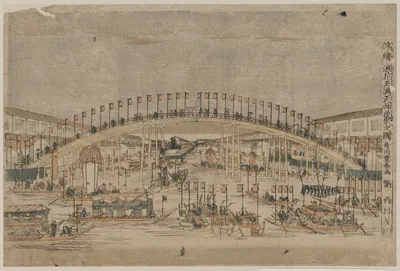
Yamagata Bantō
Yamagata Bantō was an Osaka merchant's clerk, schooled in the rational Confucianism of the Kaitokudō and in European astronomy learned through Dutch books. He had no creed to lose. In a private book begun at fifty-four and finished blind, he set down that there are no gods, buddhas or ghosts, because a teaching should say plainly what exists, and the measured globe held no paradise. He kept that conclusion to his death verses.
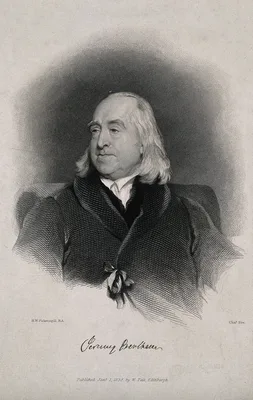
Jeremy Bentham
Jeremy Bentham was a Church of England child who "believed as hard as I could". At Oxford he signed the Thirty-nine Articles against his conscience, and never forgot it. He kept his doubts to private notes for decades. In his seventies he attacked the Church under his own name (1818), and natural religion and St Paul under invented ones (1822–23), never calling himself an atheist. He arranged his death so that his body served science, and his preserved figure stood in place of a religious rite.
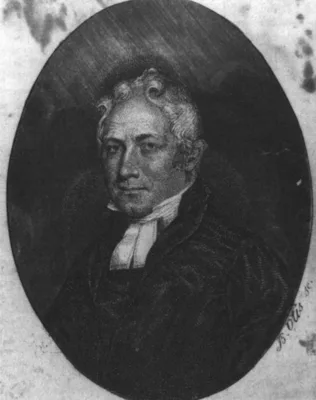
Abner Kneeland
Abner Kneeland was a Baptist lay preacher turned Universalist minister. He put his first doubts about the Bible to Hosea Ballou in 1814 and was reassured. Through Priestley, Owen and his own reading he lost his faith in a future life and a personal God, and the Universalists suspended him in 1829. In 1833 he declared himself "not an Atheist, but a Pantheist". He spent four years in the courts and sixty days in a Boston jail (1838) for a letter saying the Universalists' god was a chimera, never recanted, and ended his life in a freethinkers' colony in Iowa.