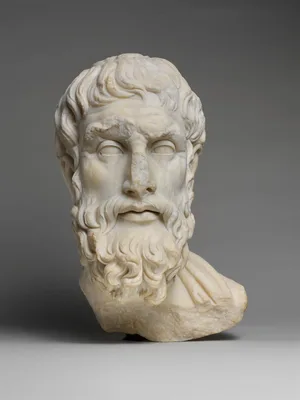
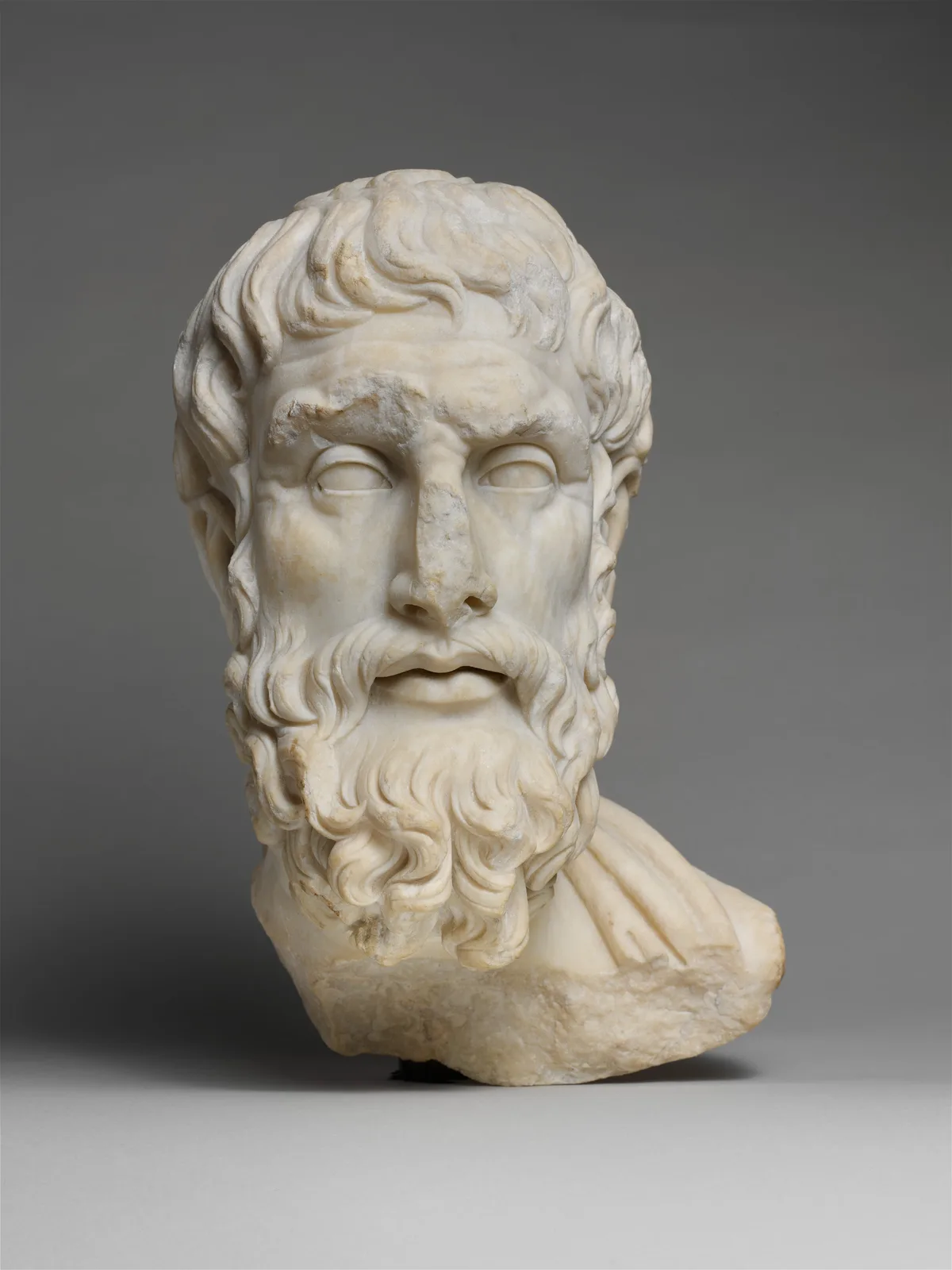
Epicurus was a Samian schoolboy who, by his own account, turned to philosophy at fourteen. In his Garden he taught that the gods exist, blessed and far away, and neither punish nor reward, so that the two great fears, of the sky and of death, could be cured by understanding nature. He never revised it. His critics, from Cicero to the Christians, called it atheism in polite words.
The belief timeline
- Faith (c. 341–327 BCE) — Boyhood on Samos in ordinary Greek religion; hostile sources say his mother performed purifications [4]
- Doubt (c. 327 BCE (age 14)) — By his own account he turned to philosophy at fourteen; the Chaos question to his teacher [5][6]
- Declaration (c. 311–306 BCE) — Teaches in public at Mytilene and Lampsacus, then founds the Garden; the letters state that gods are blessed and indifferent and death is nothing [16][18][29][32]
- Last day (270 BCE) — The letter to Idomeneus: joy at the memory of conversation, with pain at its worst [48]
Notes to the timeline (8)
- [4] A hostile report (Nicolaus, Sotion, Dionysius of Halicarnassus): he went round houses with his mother reading out the purification prayers — Diogenes Laertius, Lives of Eminent Philosophers Book X (Epicurus), cited by section (X.n). English: Bailey's translation of X.1–34, and C. D. Yonge, The Lives and Opinions of Eminent Philosophers (London: Bohn, 1853), Internet Archive livesandopinions00dioguoft, research/texts/yonge-dl.txt. Hicks's Loeb (1925) is on the Internet Archive for Books 1–5 only; the volume with Book X was not found, X.4 (Bailey p. 143). Accounts differ; see the disputed points.
- [5] By his own statement he first made acquaintance with philosophy at fourteen — Laertius, Lives of Eminent Philosophers, X.2 (Bailey p. 141).
- [6] Apollodorus the Epicurean: he took to philosophy because the teachers of literature could not explain to him the passage about Chaos in Hesiod; Wallace cites Sextus Empiricus, Adv. Math. X.19, for the same story — Laertius, Lives of Eminent Philosophers, X.2 (Bailey p. 141); R. D. Hicks, Stoic and Epicurean (New York: Scribner, 1910), chapter V "Epicurus and Hedonism". Internet Archive stoicandepicurea00colluoft, research/texts/hicks-stoic.txt, p. 155; William Wallace, Epicureanism (London: SPCK, 1880). Internet Archive epicureanism00wall, research/texts/wallace.txt, p. 29. Reported at second hand; the original has not been seen.
- [16] At thirty-two he started his school, first for five years at Mytilene and Lampsacus, then moved to Athens — Laertius, Lives of Eminent Philosophers, X.15 (Bailey p. 151); Hicks, Stoic and Epicurean, p. 155 (310 BCE at Mytilene).
- [18] He moved to Athens about 306 and never left it except for short visits to Asia Minor — Hicks, Stoic and Epicurean, p. 156; Laertius, Lives of Eminent Philosophers, X.2 (archonship of Anaxicrates).
- [29] The impious man is the one who attaches the many's beliefs to the gods, not the one who denies the gods of the many — Cyril Bailey, Epicurus: The Extant Remains (Oxford: Clarendon Press, 1926). Greek text, translation and commentary of the Life (DL X.1–34), the Letters to Herodotus, Pythocles and Menoeceus, the Principal Doctrines (Kyriai Doxai, KD), the Vatican Sayings and the fragments. Internet Archive item BaileyEpicurusTheExtantRemainsCyrilBailey; OCR at research/texts/bailey.txt. Page numbers are read from the OCR and the English pages face the Greek, so English pages are the odd numbers in the Life and Letters; verify against the scan before they go on screen. US public domain (published 1926), Menoeceus §123, pp. 83–85.
- [32] Death is nothing to us: all good and evil is in sensation, and death is its loss — Bailey, Epicurus, Menoeceus §124–125, p. 85; KD II, p. 95.
- [48] The last letter to Idomeneus: pain at its full severity against joy at the memory of their conversations; care for Metrodorus's children — Laertius, Lives of Eminent Philosophers, X.22 (Bailey p. 155); Hicks, Stoic and Epicurean, p. 159.
Death Is Nothing to Us
In the year 270 BCE an old man in Athens, dying in great pain from a stone in the bladder, wrote a letter to a friend. "On this truly happy day of my life, as I am at the point of death, I write this to you. The disease in my bladder and stomach are pursuing their course, lacking nothing of their natural severity: but against all this is the joy in my heart at the recollection of my conversations with you." He asked his friend to look after the children of a disciple who had died.123 Then, by one account, he got into a warm bath, asked for a cup of unmixed wine, drank it, told his friends to remember his teaching, and died.456
Epicurus had spent his life teaching that there was nothing to fear in that moment. He did not deny the gods. He said they existed, perfect and happy, far away, and that they had nothing to do with us. His enemies said that this was atheism with good manners. This chapter asks how a schoolboy on a Greek island came to believe that the gods could be left out of human life, and why so many people found that more dangerous than denying them.
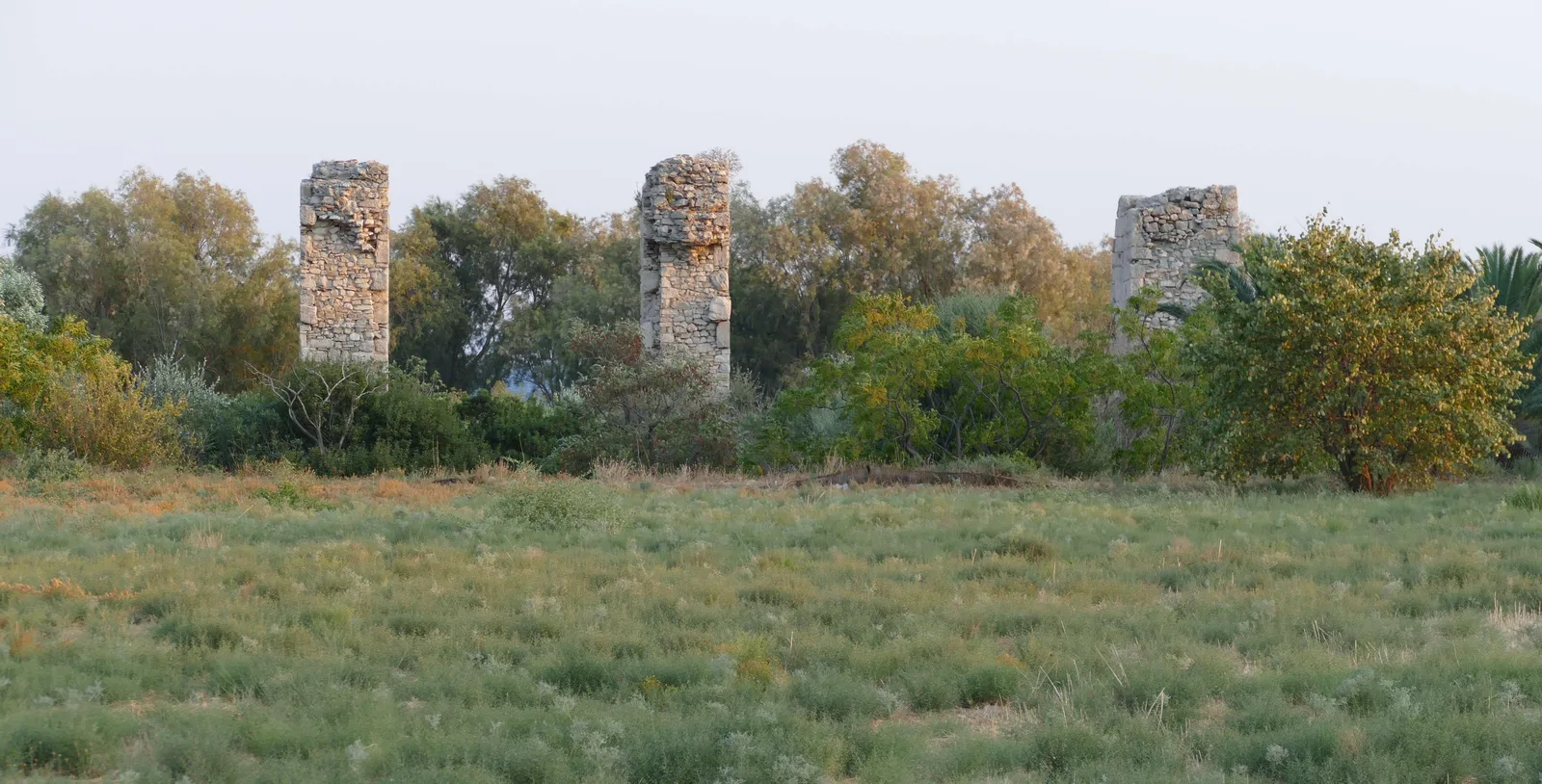
A boy on Samos
He was born in the winter of 341 BCE, by the ancient reckoning in the month of Gamelion, to Neocles and Chaerestrate, Athenian settlers on the island of Samos.78 Almost everything we know about his early life comes from Diogenes Laertius, a biographer writing some five hundred years later, who copied both admirers and enemies. The enemies said that the boy helped his father teach the alphabet for a pittance, and went from house to house with his mother reading out the prayers of purification. These are hostile stories, meant to make him look low-born and superstitious, and nothing confirms them.910 If they were true, they would mean that his first experience of religion was as a trade in fear.
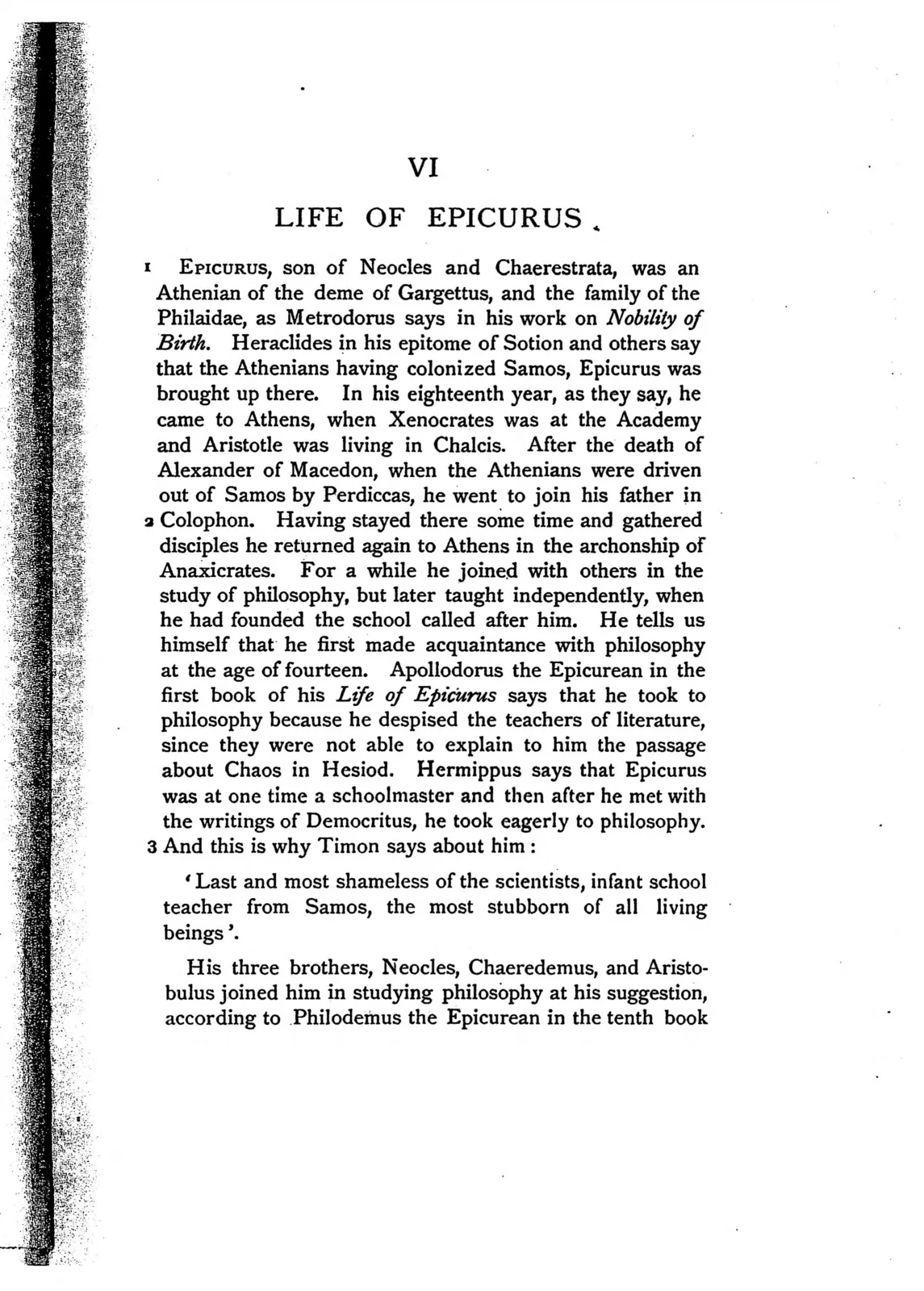
What we have from Epicurus himself is one fact: "He tells us himself that he first made acquaintance with philosophy at the age of fourteen."1112 One of his own followers told the story of how. When his schoolmaster read him the passage about Chaos in Hesiod's account of the beginning of the world, the boy asked where Chaos came from, and the teacher could not say.13 Another early writer said instead that he was a schoolmaster who took to philosophy when he read the works of Democritus, the philosopher of atoms.14 Accounts differ, and the Chaos story may be a legend. But on the belief timeline it is what marks his doubt, at about fourteen: a question the religion of the poets could not answer.
Tradition gives him two teachers, a Platonist on Samos and Nausiphanes, a follower of Democritus, at Teos; Epicurus himself denied having any teacher and said he was self-taught, and he called Nausiphanes "the mollusc."1516171819 At eighteen he went to Athens.20 Within a year Alexander the Great was dead, the Athenian settlers were driven off Samos, and Epicurus joined his father as a refugee at Colophon on the coast of Asia Minor. Of the next dozen years almost nothing is known.2122
The Garden
At thirty-two he began to teach, first at Mytilene on Lesbos and then at Lampsacus on the Hellespont, where he won the friends who stayed with him for life: Hermarchus, Metrodorus, Idomeneus, Polyaenus.2324 About 306 BCE he settled in Athens and bought a house and a garden for eighty minae.2526 There he lived with his friends on bread and water and a little wine; asked once for a treat, he wrote to a friend, "Send me some preserved cheese, that when I like I may have a feast."272829 The school was known simply as the Garden. A later writer, Seneca, reports its motto: "Stranger, here you will do well to tarry; here our highest good is pleasure."30 Its members included women, among them Leontion, and a slave, Mys, whom Epicurus freed in his will.3132 "Nor were women excluded," a modern historian writes, "and even slaves were numbered among his pupils."31
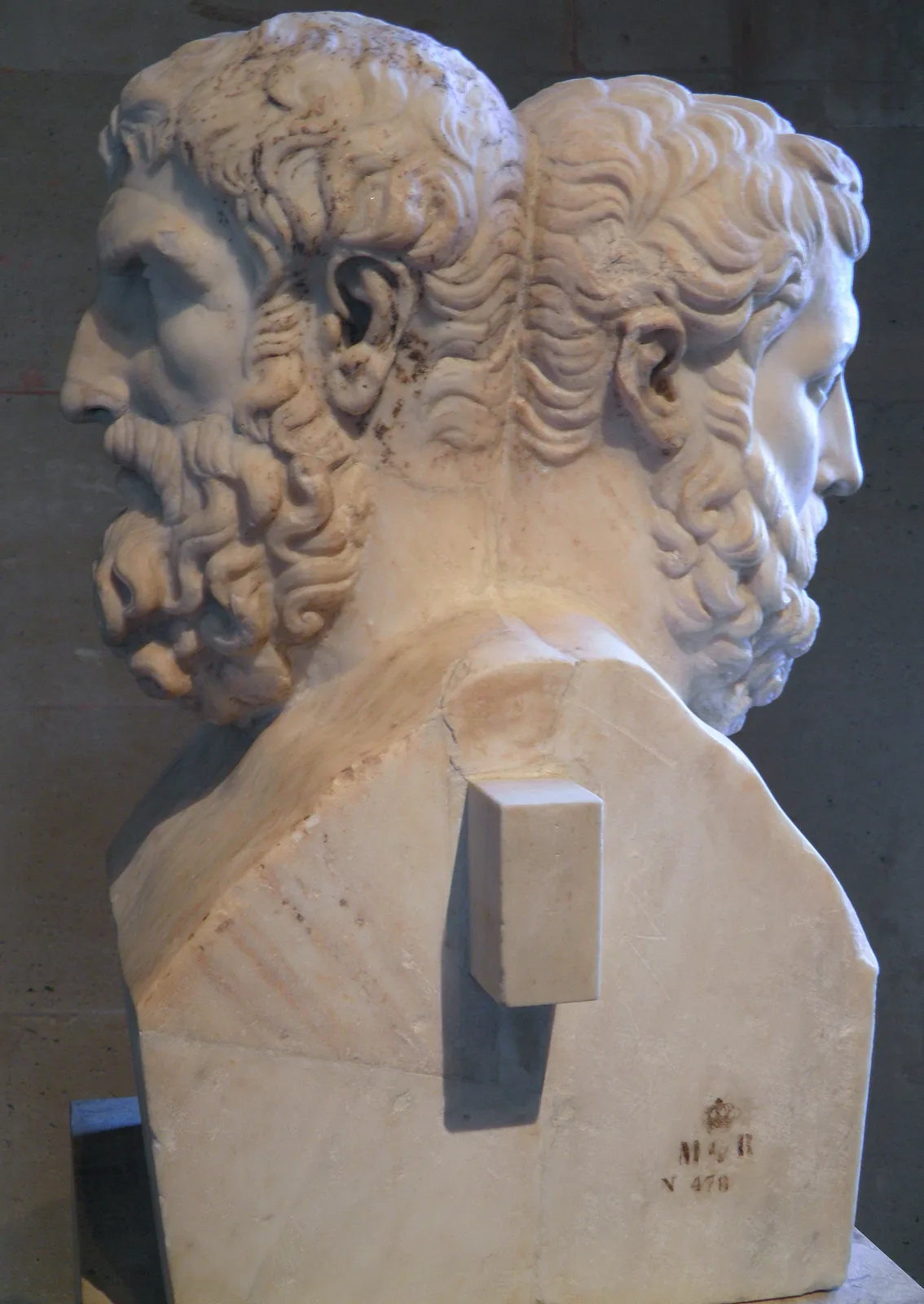
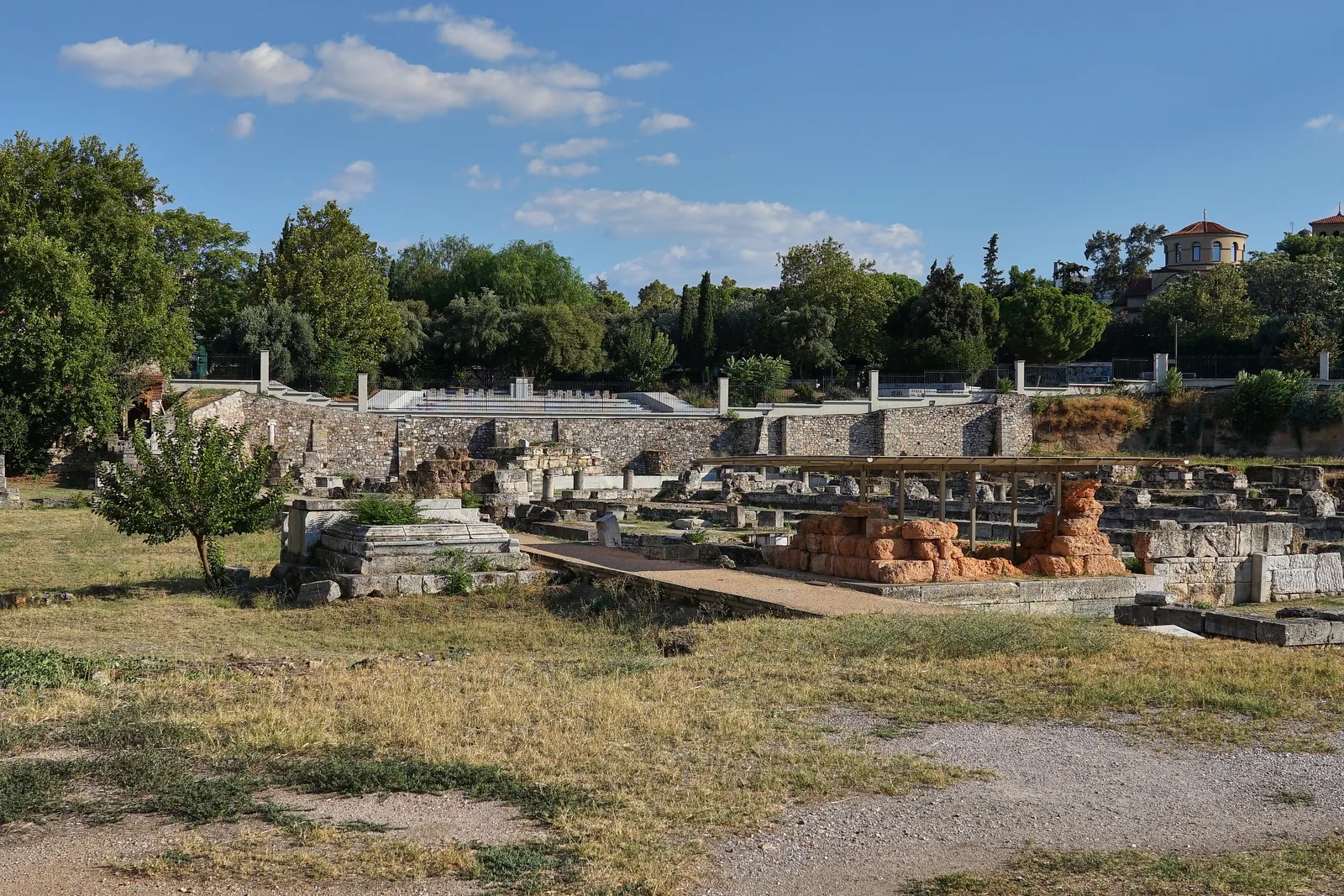
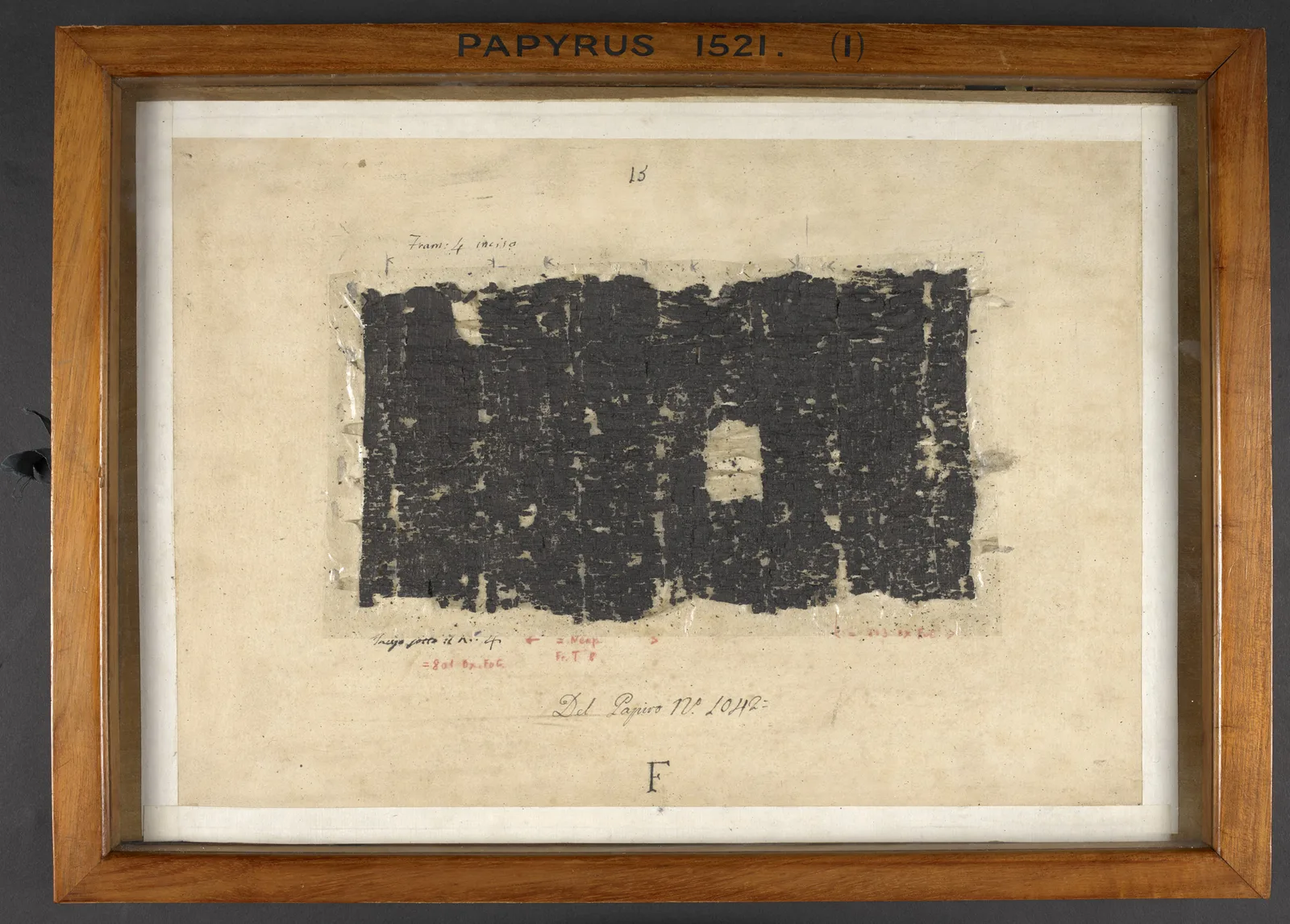
He wrote, the biographer says, some three hundred rolls, including thirty-seven books On Nature.33 Almost all of it is lost. What survives are three letters and a set of maxims copied into Diogenes Laertius, a collection of sayings found in a Vatican manuscript, and charred fragments of his books from a library buried by Vesuvius at Herculaneum.3435
The gods who do not care
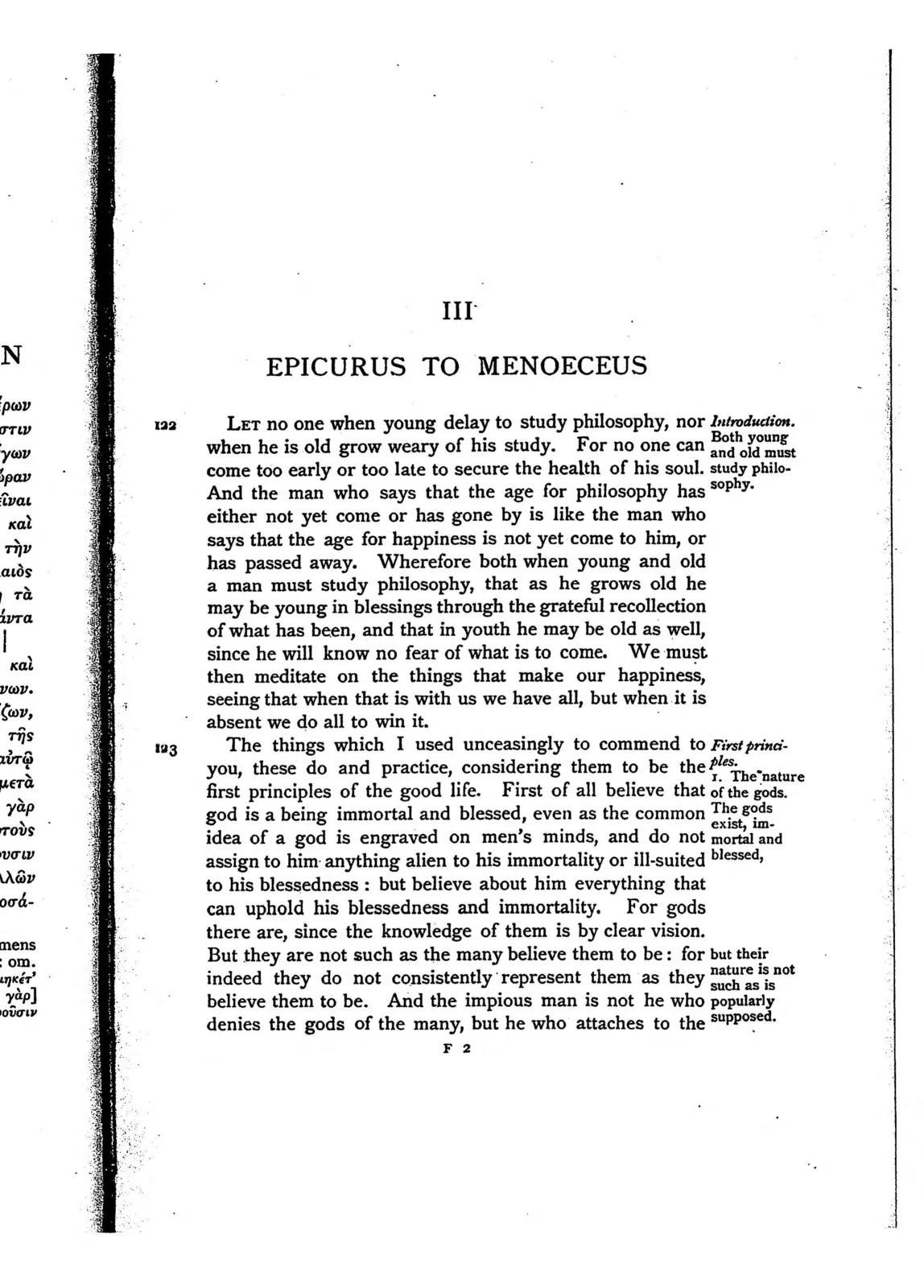
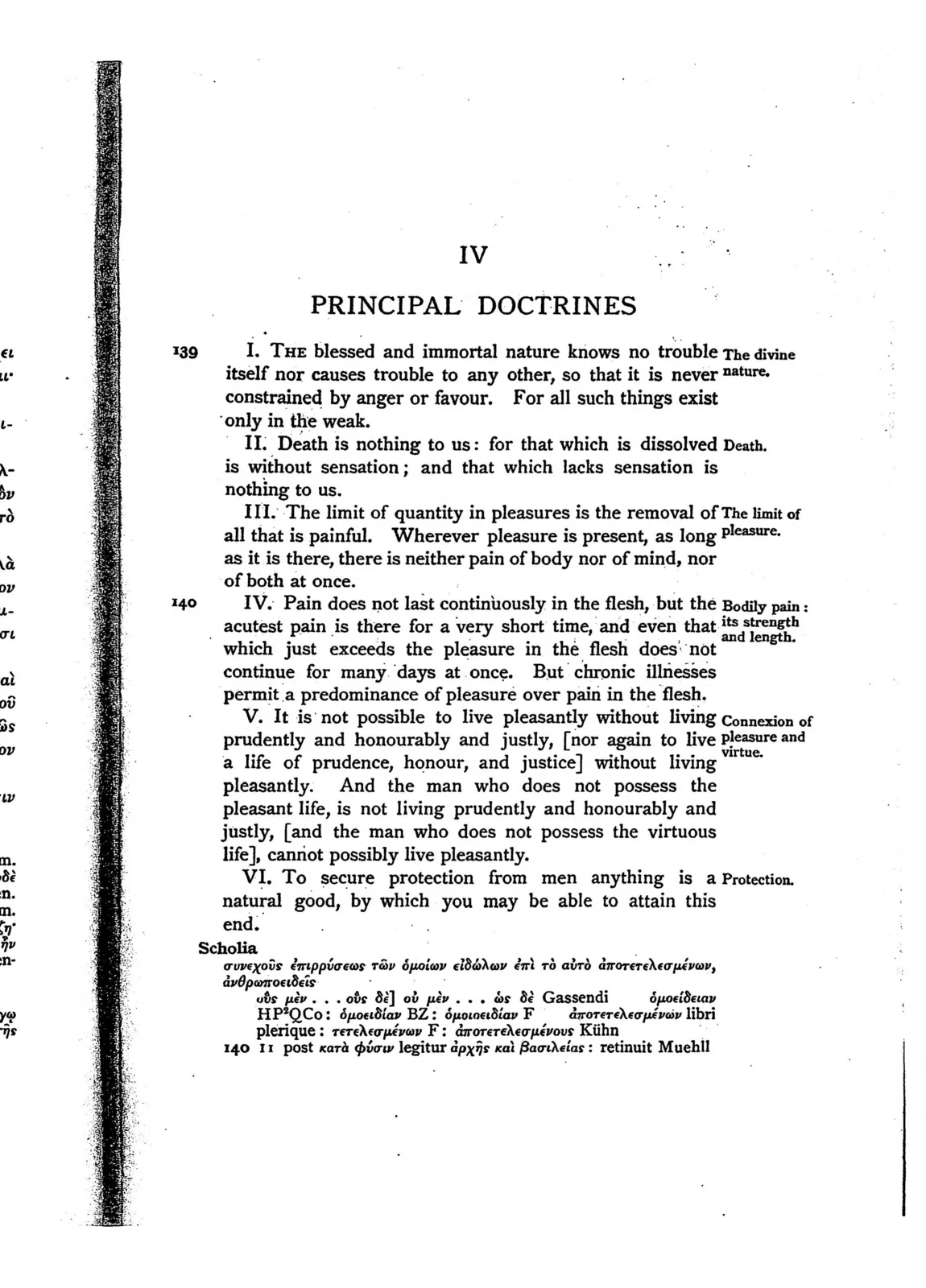
The plainest statement of what he taught about the gods is in his Letter to Menoeceus. It begins: "First of all believe that god is a being immortal and blessed, even as the common idea of a god is engraved on men's minds." Then: "For gods there are, since the knowledge of them is by clear vision." That sentence is what keeps him from atheism. The next turns it against the believers: "And the impious man is not he who denies the gods of the many, but he who attaches to the gods the beliefs of the many."3637383940 What the many believe, he says, is that the gods send the greatest harms to the wicked and the greatest blessings to the good. That is false. "The blessed and immortal nature knows no trouble itself nor causes trouble to any other, so that it is never constrained by anger or favour. For all such things exist only in the weak."414243
He gave a reason for studying the world that is as much medicine as science. "If we were not troubled by our suspicions of the phenomena of the sky and about death, fearing that it concerns us, ... we should have no need of natural science." "A man cannot dispel his fear about the most important matters if he does not know what is the nature of the universe but suspects the truth of some mythical story."444546 Thunder and eclipses were not messages, and once you understood how nature worked, you were free of the fear.
Death is nothing
The second great fear was death, and his answer to it is the most famous thing he wrote. "Become accustomed to the belief that death is nothing to us. For all good and evil consists in sensation, but death is deprivation of sensation." "So death, the most terrifying of ills, is nothing to us, since so long as we exist, death is not with us; but when death comes, then we do not exist."474849 "There is nothing terrible in life for the man who has truly comprehended that there is nothing terrible in not living."50 He was not cheerful about it in a shallow way. "Against all else it is possible to provide security, but as against death all of us mortals alike dwell in an unfortified city."51
What he offered in place of the fear was a quiet life. Pleasure, he said, is "the beginning and end of the blessed life," but he meant something his enemies never forgave him for leaving out: "we do not mean the pleasures of profligates and those that consist in sensuality ... but freedom from pain in the body and from trouble in the mind." It is "not continuous drinkings and revellings ... which produce a pleasant life, but sober reasoning."52535455 "Of all the things which wisdom acquires to produce the blessedness of the complete life, far the greatest is the possession of friendship."5657 He told his followers to keep out of public life: "Live unknown."58 And he kept a sense of humour: "We must laugh and philosophize at the same time."59
He even preferred the old myths to one kind of philosophy. "It were better to follow the myths about the gods than to become a slave to the destiny of the natural philosophers: for the former suggests a hope of placating the gods by worship, whereas the latter involves a necessity which knows no placation."6061 His quarrel was with fear, not with comfort, and the iron necessity of the natural philosophers frightened him more than the gods of the poets.
The critics
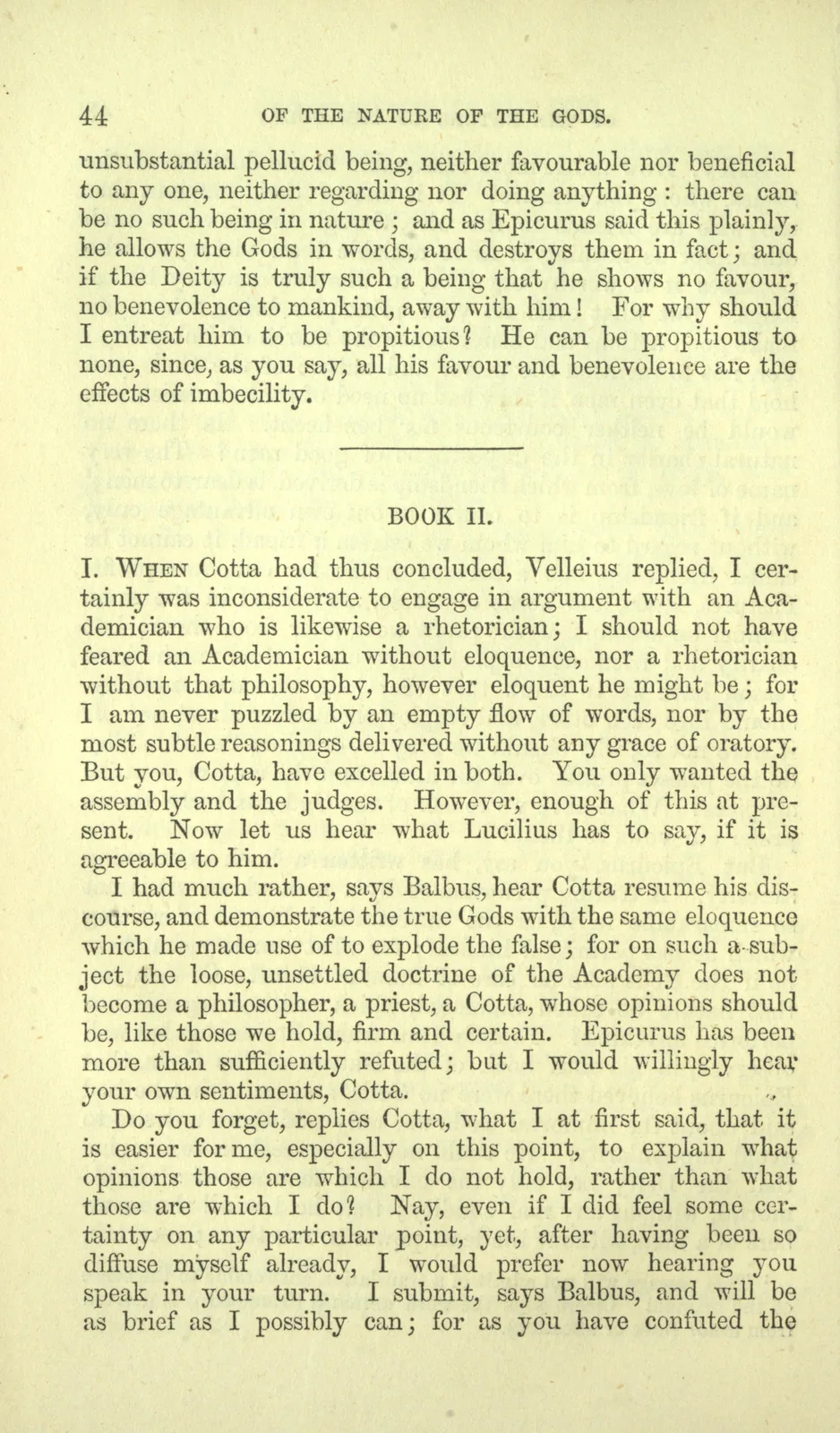
His contemporaries slandered him freely. The satirist Timon called him the "infant school teacher from Samos, the most stubborn of all living beings"; a disciple who left the school, Timocrates, said he vomited twice a day from overeating; his biographer dismissed the slanderers as "all mad."62636465 The serious charge came later and was about the gods. Two centuries after his death, in Cicero's dialogue On the Nature of the Gods, the speaker Cotta reported the view that Epicurus, "through fear of offending against the Athenian laws, has allowed a Deity in words and destroyed him in fact," and cited the Stoic Posidonius, who said that "Epicurus believed there were no Gods." Cotta's own verdict was blunt: "if the Deity is truly such a being that he shows no favour, no benevolence to mankind, away with him!"66676869
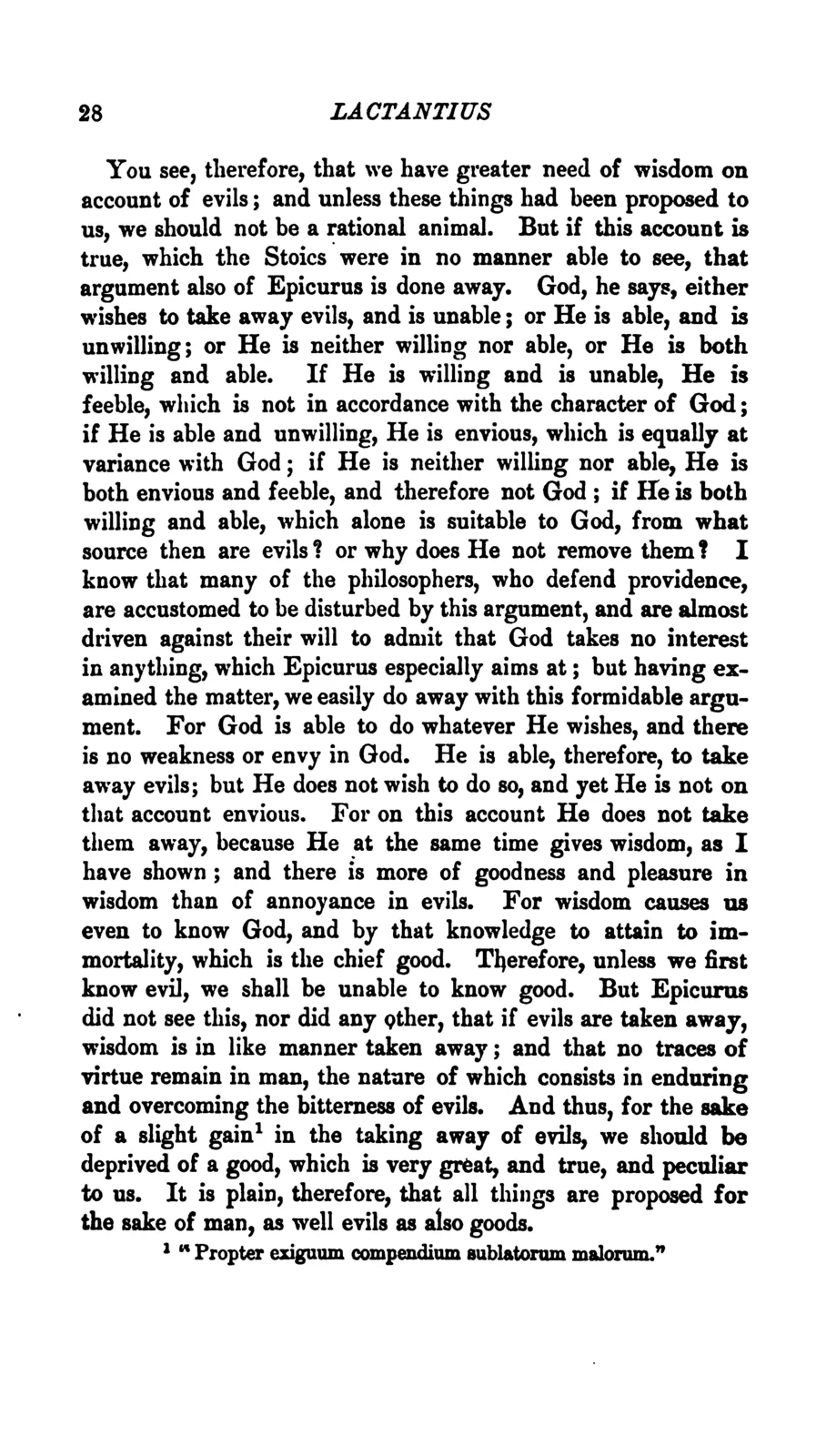
Plutarch, a priest at Delphi, made the political case: "there was never seen nor shall be seen by man any city without temples and Gods," and "a city might sooner be built without any ground to fix it on, than a commonweal be constituted altogether void of any religion and opinion of the Gods."707172 The Stoic Epictetus mocked the Epicureans who ate bread every day "and yet are shameless enough to say, We do not know if there is a Ceres."7374 And the Christian writer Lactantius, five hundred years later, put into Epicurus's mouth the most famous argument against a good God: "God either wishes to take away evils, and is unable; or He is able, and is unwilling ... from what source then are evils?" Lactantius gave the argument in order to answer it. It appears nowhere in Epicurus's surviving writings, and whether he ever made it is not known.7576
The last day
He died in 270 BCE, aged seventy-two, after a fortnight's illness.774 His will left the Garden to Hermarchus and his successors, freed four slaves, provided for the children of Metrodorus, and set aside money for offerings in memory of his father, mother and brothers and for a feast on his birthday every year.32 His biographer praised his "reverence towards the gods."78 The same biographer boasted that his school outlasted the others, and two centuries later a Roman poet, Lucretius, put his teaching into verse and praised "a man of Greece" who "ventured first to lift up his mortal eyes" against religion and "first to withstand her to her face." "A god he was, a god," Lucretius wrote.798081
Did his unbelief change shape?
As far as the record shows, it did not, and Epicurus would not have called it unbelief at all. The boy who asked where Chaos came from grew into a man who said that gods exist, that they are happy, and that they leave us alone. He never revised that view; his last letter, written in agony, says the same thing his whole life had said, that the mind can hold joy against pain and need not fear what comes after. What changed was the name others gave it. His critics heard in "gods who do not care" the same thing as "no gods," and Cicero, Plutarch and the Christians called it impiety, while Lucretius called it deliverance. For a thinker who has no faith-to-doubt story of his own, Epicurus's motive is unusually clear in his own words: he wanted people to stop being afraid.
Lucretius, the Roman poet who called him a god for freeing human life from religion, has his own chapter in this book.
Footnotes
-
Diogenes Laertius, Lives of Eminent Philosophers Book X (Epicurus), cited by section (X.n). English: Bailey's translation of X.1–34, and C. D. Yonge, The Lives and Opinions of Eminent Philosophers (London: Bohn, 1853), Internet Archive livesandopinions00dioguoft, research/texts/yonge-dl.txt. Hicks's Loeb (1925) is on the Internet Archive for Books 1–5 only; the volume with Book X was not found, X.22 (Bailey p. 155); R. D. Hicks, Stoic and Epicurean (New York: Scribner, 1910), chapter V "Epicurus and Hedonism". Internet Archive stoicandepicurea00colluoft, research/texts/hicks-stoic.txt, p. 159. ↩
-
Laertius, Lives of Eminent Philosophers, X.22; Cyril Bailey, Epicurus: The Extant Remains (Oxford: Clarendon Press, 1926). Greek text, translation and commentary of the Life (DL X.1–34), the Letters to Herodotus, Pythocles and Menoeceus, the Principal Doctrines (Kyriai Doxai, KD), the Vatican Sayings and the fragments. Internet Archive item BaileyEpicurusTheExtantRemainsCyrilBailey; OCR at research/texts/bailey.txt. Page numbers are read from the OCR and the English pages face the Greek, so English pages are the odd numbers in the Life and Letters; verify against the scan before they go on screen. US public domain (published 1926), p. 155. ↩
-
Laertius, Lives of Eminent Philosophers, X.22; Bailey, Epicurus, p. 155. ↩
-
Laertius, Lives of Eminent Philosophers, X.15 (Yonge p. 428); Hicks, Stoic and Epicurean, p. 158 (renal calculus). ↩ ↩2
-
Laertius, Lives of Eminent Philosophers, X.16 (Bailey p. 151; Yonge p. 428). Reported at second hand; the original has not been seen. ↩
-
Diogenes Laertius on Epicurus's death: Laertius, Lives of Eminent Philosophers, X.16; Bailey, Epicurus, p. 151. ↩
-
Laertius, Lives of Eminent Philosophers, X.14 (Bailey p. 151); Hicks, Stoic and Epicurean, pp. 153–154. ↩
-
Laertius, Lives of Eminent Philosophers, X.1 (Bailey p. 141); Hicks, Stoic and Epicurean, pp. 153–154. ↩
-
Laertius, Lives of Eminent Philosophers, X.2, X.4 (Bailey pp. 141, 143). Accounts differ; see the disputed points. ↩
-
Laertius, Lives of Eminent Philosophers, X.4 (Bailey p. 143). ↩
-
Laertius, Lives of Eminent Philosophers, X.2 (Bailey p. 141). ↩
-
Diogenes Laertius, reporting Epicurus: Laertius, Lives of Eminent Philosophers, X.2; Bailey, Epicurus, p. 141. ↩
-
Laertius, Lives of Eminent Philosophers, X.2 (Bailey p. 141); Hicks, Stoic and Epicurean, p. 155; William Wallace, Epicureanism (London: SPCK, 1880). Internet Archive epicureanism00wall, research/texts/wallace.txt, p. 29. ↩
-
Laertius, Lives of Eminent Philosophers, X.2 (Bailey p. 141). ↩
-
Laertius, Lives of Eminent Philosophers, X.13–14 (Bailey p. 151). ↩
-
Wallace, Epicureanism, p. 29; Laertius, Lives of Eminent Philosophers, X.13–14. ↩
-
Laertius, Lives of Eminent Philosophers, X.13 (Bailey p. 151); Hicks, Stoic and Epicurean, p. 155; Wallace, Epicureanism, pp. 29–30. ↩
-
Laertius, Lives of Eminent Philosophers, X.8 (Bailey pp. 145–147); Hicks, Stoic and Epicurean, p. 155. ↩
-
Diogenes Laertius, reporting Epicurus: Laertius, Lives of Eminent Philosophers, X.13; Bailey, Epicurus, p. 151. ↩
-
Laertius, Lives of Eminent Philosophers, X.1 (Bailey p. 141). ↩
-
Laertius, Lives of Eminent Philosophers, X.1 (Bailey p. 141); Hicks, Stoic and Epicurean, pp. 154–155. ↩
-
Laertius, Lives of Eminent Philosophers, X.1; Hicks, Stoic and Epicurean, p. 155. ↩
-
Laertius, Lives of Eminent Philosophers, X.15 (Bailey p. 151); Hicks, Stoic and Epicurean, p. 155 (310 BCE at Mytilene). ↩
-
Hicks, Stoic and Epicurean, pp. 155–156; Laertius, Lives of Eminent Philosophers, X.22–23. ↩
-
Hicks, Stoic and Epicurean, p. 156; Laertius, Lives of Eminent Philosophers, X.2 (archonship of Anaxicrates). ↩
-
Laertius, Lives of Eminent Philosophers, X.10 (Bailey p. 147); Hicks, Stoic and Epicurean, p. 157. ↩
-
Laertius, Lives of Eminent Philosophers, X.10–11 (Bailey pp. 147–149). ↩
-
Bailey, Epicurus, Menoeceus §130–131, p. 89; Laertius, Lives of Eminent Philosophers, X.11, p. 149. ↩
-
Laertius, Lives of Eminent Philosophers, X.11; Bailey, Epicurus, p. 149. ↩
-
The motto of the Garden, as reported by Seneca: Seneca, Epistulae morales, trans. R. M. Gummere, vol. I (Loeb, 1917), Internet Archive adluciliumepistu01seneuoft, research/texts/gummere-seneca1.txt. Seneca quotes Epicurus; these are reports, not first-hand texts, Ep. 21.10, Gummere vol. I, p. 146. ↩
-
Laertius, Lives of Eminent Philosophers, X.3–7, X.9–10, X.21 (Bailey pp. 143–149, 153–155); Hicks, Stoic and Epicurean, p. 157. ↩ ↩2
-
Laertius, Lives of Eminent Philosophers, X.16–21 (Bailey pp. 151–155). ↩ ↩2
-
Laertius, Lives of Eminent Philosophers, X.26–27 (Bailey p. 159); Hicks, Stoic and Epicurean, p. 157. ↩
-
Laertius, Lives of Eminent Philosophers, X.29 (Bailey p. 161). ↩
-
Wallace, Epicureanism, p. 81. ↩
-
Bailey, Epicurus, Letter to Menoeceus §123–124, p. 83–85. ↩
-
Bailey, Epicurus, Menoeceus §123, pp. 83–85. ↩
-
Bailey, Epicurus, p. 83. ↩
-
Bailey, Epicurus, p. 83. ↩
-
Bailey, Epicurus, pp. 83–85. ↩
-
Bailey, Epicurus, Menoeceus §124, p. 85. ↩
-
Bailey, Epicurus, KD I (DL X.139), p. 95. ↩
-
Bailey, Epicurus, p. 95. ↩
-
Bailey, Epicurus, KD XI–XII, p. 97; Letter to Pythocles §85. ↩
-
Bailey, Epicurus, p. 97. ↩
-
Bailey, Epicurus, p. 97. ↩
-
Bailey, Epicurus, Menoeceus §124–125, p. 85; KD II, p. 95. ↩
-
Bailey, Epicurus, p. 85. ↩
-
Bailey, Epicurus, p. 85. ↩
-
Bailey, Epicurus, p. 85. ↩
-
Bailey, Epicurus, (Vatican Sayings; page not pinned). ↩
-
Bailey, Epicurus, Menoeceus §128–132, pp. 87–89. ↩
-
Bailey, Epicurus, p. 87. ↩
-
Bailey, Epicurus, p. 89. ↩
-
Bailey, Epicurus, p. 89. ↩
-
Bailey, Epicurus, KD XXVII (DL X.148). ↩
-
Bailey, Epicurus, (KD XXVII; page not pinned). ↩
-
Bailey, Epicurus, Fragments 86–87, p. 139. ↩
-
Bailey, Epicurus, (Vatican Sayings; page not pinned). ↩
-
Bailey, Epicurus, Menoeceus §134, p. 91. ↩
-
Bailey, Epicurus, p. 91. ↩
-
Laertius, Lives of Eminent Philosophers, X.3–6 (Bailey pp. 141–145). ↩
-
Laertius, Lives of Eminent Philosophers, X.6–7 (Bailey p. 145). ↩
-
Timon of Phlius, Sceptic satirist, a contemporary (as quoted by DL): Laertius, Lives of Eminent Philosophers, X.3; Bailey, Epicurus, p. 141. ↩
-
Timocrates, former disciple, as quoted by DL; DL calls the slanderers "all mad": Laertius, Lives of Eminent Philosophers, X.6; Bailey, Epicurus, p. 145. ↩
-
Cicero, On the Nature of the Gods, in The Treatises of M. T. Cicero, trans. C. D. Yonge (London: Bohn, 1853), Internet Archive treatisescicero00ciceuoft, research/texts/yonge-cicero.txt. Book I: Cotta answers the Epicurean Velleius, Yonge, Bk I ch. XXX p. 31; ch. XLIV pp. 43–44. ↩
-
Cotta, the Academic speaker in Cicero's dialogue (Cicero, 45 BCE); Cotta reports this as the opinion of "some": Cicero, On the Nature of the Gods, Yonge 1853, Bk I ch. XXX, p. 31. ↩
-
Cotta, citing the Stoic Posidonius: Cicero, On the Nature of the Gods, Yonge 1853, Bk I ch. XLIV, pp. 43–44. ↩
-
Cotta in his own voice: Cicero, On the Nature of the Gods, Yonge 1853, Bk I ch. XLIV, p. 44. ↩
-
Plutarch, Morals, ed. W. W. Goodwin (Boston, 1874–78), vol. V, "Against Colotes the Epicurean", Internet Archive plutarchsmorals51883plut, research/texts/goodwin-plutarch5.txt. (Plutarch's "That Epicurus makes a pleasant life impossible" was not found in Goodwin vols III–V as downloaded; to retry.), vol. V, p. 380. ↩
-
Plutarch (c. 46–120 CE), Platonist and priest at Delphi, in "Against Colotes": Plutarch, Morals, vol. V, p. 380. ↩
-
Plutarch, same passage: Plutarch, Morals, vol. V, p. 380. ↩
-
Hicks, Stoic and Epicurean, pp. 133–134 (Epictetus, Arrian III.20.32). ↩
-
Epictetus (Stoic, c. 50–135 CE), in Hicks's translation; aimed at the Epicureans and Sceptics: Hicks, Stoic and Epicurean, p. 134. ↩
-
Lactantius, On the Anger of God, in Ante-Nicene Christian Library vol. XXII (Edinburgh: T. and T. Clark, 1871), Internet Archive antenicenechris23donagoog, research/texts/ante-nicene-lactantius.txt, De ira Dei ch. XIII, ANF XXII p. 28. ↩
-
Lactantius (c. 250–325 CE), Christian apologist, who then answers it: Lactantius, On the Anger of God, De ira Dei ch. XIII, ANF XXII p. 28. ↩
-
Laertius, Lives of Eminent Philosophers, X.15 (Bailey p. 151); Hicks, Stoic and Epicurean, p. 158. ↩
-
Laertius, Lives of Eminent Philosophers, X.10 (Bailey p. 147); X.18 (Bailey p. 153). ↩
-
Lucretius, De rerum natura, translation by H. A. J. Munro (4th ed., Cambridge, 1900), Internet Archive lucreticariderer03lucruoft, research/texts/munro-lucretius-trans.txt. A follower's tribute, not Epicurus's words, Munro, Bk I 62–79 and Bk V 8–13. ↩
-
Lucretius, on Epicurus: Lucretius, De rerum natura, Munro 4th ed. 1900, Bk I 62–67. ↩
-
Lucretius, on Epicurus: Lucretius, De rerum natura, Munro 4th ed. 1900, Bk V 8–10. ↩
In their own words
Let no one when young delay to study philosophy, nor when he is old grow weary of his study.
First of all believe that god is a being immortal and blessed, even as the common idea of a god is engraved on men's minds, and do not assign to him anything alien to his immortality or ill-suited to his blessedness.
For gods there are, since the knowledge of them is by clear vision.
And the impious man is not he who denies the gods of the many, but he who attaches to the gods the beliefs of the many.
Become accustomed to the belief that death is nothing to us. For all good and evil consists in sensation, but death is deprivation of sensation.
So death, the most terrifying of ills, is nothing to us, since so long as we exist, death is not with us; but when death comes, then we do not exist.
For there is nothing terrible in life for the man who has truly comprehended that there is nothing terrible in not living.
so he seeks to enjoy not the longest period of time, but the most pleasant.
And for this cause we call pleasure the beginning and end of the blessed life.
When, therefore, we maintain that pleasure is the end, we do not mean the pleasures of profligates and those that consist in sensuality, as is supposed by some who are either ignorant or disagree with us or do not understand, but freedom from pain in the body and from trouble in the mind.
For it is not continuous drinkings and revellings, nor the satisfaction of lusts, nor the enjoyment of fish and other luxuries of the wealthy table, which produce a pleasant life, but sober reasoning, searching out the motives for all choice and avoidance, and banishing mere opinions, to which are due the greatest disturbance of the spirit.
For, indeed, it were better to follow the myths about the gods than to become a slave to the destiny of the natural philosophers: for the former suggests a hope of placating the gods by worship, whereas the latter involves a necessity which knows no placation.
and never shall you be disturbed waking or asleep, but you shall live like a god among men. For a man who lives among immortal blessings is not like to a mortal being.
The blessed and immortal nature knows no trouble itself nor causes trouble to any other, so that it is never constrained by anger or favour. For all such things exist only in the weak.
Death is nothing to us: for that which is dissolved is without sensation; and that which lacks sensation is nothing to us.
If we were not troubled by our suspicions of the phenomena of the sky and about death, fearing that it concerns us, and also by our failure to grasp the limits of pains and desires, we should have no need of natural science.
A man cannot dispel his fear about the most important matters if he does not know what is the nature of the universe but suspects the truth of some mythical story.
Of all the things which wisdom acquires to produce the blessedness of the complete life, far the greatest is the possession of friendship.
Against all else it is possible to provide security, but as against death all of us mortals alike dwell in an unfortified city.
We must laugh and philosophize at the same time and do our household duties and employ our other faculties, and never cease proclaiming the sayings of the true philosophy.
First of all then we must not suppose that any other object is to be gained from the knowledge of the phenomena of the sky, whether they are dealt with in connexion with other doctrines or independently, than peace of mind and a sure confidence, just as in all other branches of study.
On this truly happy day of my life, as I am at the point of death, I write this to you. The disease in my bladder and stomach are pursuing their course, lacking nothing of their natural severity : but against all this is the joy in my heart at the recollection of my conversations with you.
Do you, as I might expect from your devotion from boyhood to me and to philosophy, take good care of the children of Metrodorus.
Then having adjured his friends to remember his teaching he expired.
Send me, he says, some preserved cheese, that when I like I may have a feast.
For you know quite well, my pet, that I and all the others love you very much, because you are obedient to them in everything.
Epicurus himself denies this in his letter to Eurylochus and says he was his own teacher.
He tells us himself that he first made acquaintance with philosophy at the age of fourteen.
Stranger, here you will do well to tarry; here our highest good is pleasure.
Do everything as if Epicurus were watching you.
When human life to view lay foully prostrate upon earth crushed down under the weight of religion, who shewed her head from the quarters of heaven with hideous aspect lowering upon mortals, a man of Greece ventured first to lift up his mortal eyes to her face and first to withstand her to her face.
a god he was, a god, most noble Memmius, who first found out that plan of life which is now termed wisdom
The other side
I have known Epicureans who reverence even the least images of the Gods, though I perceive it to be the opinion of some that Epicurus, through fear of offending against the Athenian laws, has allowed a Deity in words and destroyed him in fact
Therefore our friend Posidonius has well observed, in his fifth book of the Nature of the Gods, that Epicurus believed there were no Gods, and that what he had said about the immortal Gods was only said from a desire to avoid unpopularity.
as Epicurus said this plainly, he allows the Gods in words, and destroys them in fact; and if the Deity is truly such a being that he shows no favour, no benevolence to mankind, away with him!
there was never seen nor shall be seen by man any city without temples and Gods, or without making use of prayers, oaths, divinations, and sacrifices for the obtaining of blessings and benefits, and the averting of curses and calamities.
a city might sooner be built without any ground to fix it on, than a commonweal be constituted altogether void of any religion and opinion of the Gods
Grateful, indeed, and modest are men who, if they do nothing else, are daily eating bread, and yet are shameless enough to say, We do not know if there is a Ceres or her daughter Proserpine or a Pluto.
God, he says, either wishes to take away evils, and is unable; or He is able, and is unwilling; or He is neither willing nor able, or He is both willing and able. If He is willing and is unable, He is feeble, which is not in accordance with the character of God; if He is able and unwilling, He is envious, which is equally at variance with God; if He is neither willing nor able, He is both envious and feeble, and therefore not God ; if He is both willing and able, which alone is suitable to God, from what source then are evils? or why does He not remove them?
that as there is no anger in God, so indeed there is no kindness.
Last and most shameless of the scientists, infant school teacher from Samos, the most stubborn of all living beings
that Epicurus used to vomit twice a day owing to his luxurious living
Where accounts differ
| Point | One account | Another | How the page handles it |
|---|---|---|---|
| Whether he had teachers | Nausiphanes the Democritean and Pamphilus the Platonist (DL X.13–14, Wallace p. 29) | He denied it in a letter to Eurylochus and said he was his own teacher (DL X.13); Wallace says he admitted attending the "mollusc's" lectures | "Accounts differ": tradition names two teachers; he claimed none. |
| Age he began philosophy | Fourteen, by his own statement (DL X.2) | Twelve (Ariston, DL X.14) | Use fourteen as his own claim, attributed. |
| What made him turn | The Hesiod Chaos question (Apollodorus, DL X.2; Wallace p. 29) | He was a schoolmaster who met Democritus (Hermippus, DL X.2) | Tell the Chaos story as "the story goes", with Hermippus's version beside it. |
| Mother's purification rites and father's teaching | Hostile report (DL X.4) | Not confirmed anywhere; DL's own list of slanderers | Say it comes from hostile writers and is unconfirmed. Do not present as fact. |
| Death cause and last bath | Stone (Hermarchus), then a bronze warm bath and wine (Hermippus) (DL X.15–16) | Hicks p. 158 "renal calculus" | Cite the stone from Hermarchus; the bath from Hermippus. |
| Whether the "problem of evil" dilemma is his | Lactantius, De ira Dei XIII, attributes it to Epicurus | No such passage survives in Bailey's extant remains (searched; none found); Lactantius's context is a Christian rebuttal | Say Lactantius gives it to Epicurus, centuries later; it appears nowhere in the surviving letters. Check modern scholarship (not in corpus). |
| Atheist or believer | Epicurus: gods exist (Q2, Q3) | Posidonius via Cotta: he believed there were none and spoke from fear (OQ2) | Give both: his words against the charge. |
| Date of arriving at Athens | About 306 (Hicks p. 156) | Return in the archonship of Anaxicrates (DL X.2; the conversion is not in my corpus) | "About 306". |
List of illustrations
This page uses only public-domain and Creative Commons images; each is credited with its source and licence.
- Marble head of Epikouros (Epicurus), Roman, 2nd c. CE — Roman sculptor (copy after a Hellenistic original); photograph The Metropolitan Museum of Art, 2nd century CE · The Metropolitan Museum of Art, Open Access (CC0), via Wikimedia Commons · CC0 (Wikimedia Commons)
- Pythagoreio, Samos, Greece (view 1) — Bukvoed, 2019 · Photograph by Bukvoed, CC BY 4.0, via Wikimedia Commons · CC BY 4.0 (Wikimedia Commons)
- Life of Epicurus, English page (Bailey p. 141, DL X.1-4) — Cyril Bailey, 1926 · Cyril Bailey, Epicurus: The Extant Remains (Oxford: Clarendon Press, 1926), Internet Archive (BaileyEpicurusTheExtantRemainsCyrilBailey), scan leaf 139 · Public domain (published 1926)
- Double herm of Metrodorus and Epicurus, Roman Imperial, discovered in Rome (Louvre) — Carole Raddato, 2011 (photograph); herm 2nd half of 2nd c. CE · Photograph by Carole Raddato, CC BY-SA 2.0, via Wikimedia Commons; Musee du Louvre · CC BY-SA 2.0 (Wikimedia Commons)
- Remains of the Dipylon Gate, Kerameikos Cemetery, Athens — George E. Koronaios, 2020 · Photograph by George E. Koronaios, CC0, via Wikimedia Commons · CC0 (Wikimedia Commons)
- Letter to Menoeceus, English page (Bailey p. 83, par. 122-123) — Cyril Bailey, 1926 · Cyril Bailey, Epicurus: The Extant Remains (Oxford: Clarendon Press, 1926), Internet Archive (BaileyEpicurusTheExtantRemainsCyrilBailey), scan leaf 81 · Public domain (published 1926)
- Principal Doctrines I and II, English page (Bailey p. 95) — Cyril Bailey, 1926 · Cyril Bailey, Epicurus: The Extant Remains (Oxford: Clarendon Press, 1926), Internet Archive (BaileyEpicurusTheExtantRemainsCyrilBailey), scan leaf 93 · Public domain (published 1926)
- Cicero, On the Nature of the Gods, Book I (Yonge p. 44) — Cicero, trans. C. D. Yonge, 1853 · Cicero, trans. C. D. Yonge, The Treatises of M. T. Cicero (London: Bohn, 1853), Internet Archive (treatisescicero00ciceuoft), scan leaf 54 · Public domain (published 1853)
- Lactantius, On the Anger of God, ch. XIII (ANF XXII p. 28) — Lactantius, trans. in Ante-Nicene Christian Library, 1871 · Lactantius, trans. in Ante-Nicene Christian Library, Ante-Nicene Christian Library, vol. XXII (Edinburgh: T. and T. Clark, 1871), Internet Archive (antenicenechris23donagoog), scan leaf 47 · Public domain (published 1871)
- Herculaneum Papyrus 1521, f.1r, charred scroll fragments (British Library) — unknown ancient scribe; fragments recovered in Piaggio's workshop, before 79 CE (scroll); fragments published 18th c. · British Library, Herculaneum Papyrus 1521, via Wikimedia Commons, public domain · Public domain (Wikimedia Commons licence box: "Public domain"; ancient manuscript; photograph by the British Library)
Sources
Tier 1 — the subject's own words (preserved by later writers)
- [Bailey] Cyril Bailey, Epicurus: The Extant Remains (Oxford: Clarendon Press, 1926). Greek text, translation and commentary of the Life (DL X.1–34), the Letters to Herodotus, Pythocles and Menoeceus, the Principal Doctrines (Kyriai Doxai, KD), the Vatican Sayings and the fragments. Internet Archive item BaileyEpicurusTheExtantRemainsCyrilBailey; OCR at research/texts/bailey.txt. Page numbers are read from the OCR and the English pages face the Greek, so English pages are the odd numbers in the Life and Letters; verify against the scan before they go on screen. US public domain (published 1926).
- [DL] Diogenes Laertius, Lives of Eminent Philosophers Book X (Epicurus), cited by section (X.n). English: Bailey's translation of X.1–34, and C. D. Yonge, The Lives and Opinions of Eminent Philosophers (London: Bohn, 1853), Internet Archive livesandopinions00dioguoft, research/texts/yonge-dl.txt. Hicks's Loeb (1925) is on the Internet Archive for Books 1–5 only; the volume with Book X was not found.
- [Seneca] Seneca, Epistulae morales, trans. R. M. Gummere, vol. I (Loeb, 1917), Internet Archive adluciliumepistu01seneuoft, research/texts/gummere-seneca1.txt. Seneca quotes Epicurus; these are reports, not first-hand texts.
- [Lucretius] Lucretius, De rerum natura, translation by H. A. J. Munro (4th ed., Cambridge, 1900), Internet Archive lucreticariderer03lucruoft, research/texts/munro-lucretius-trans.txt. A follower's tribute, not Epicurus's words.
Tier 2 — scholarly biographies and encyclopedias
- [Hicks] R. D. Hicks, Stoic and Epicurean (New York: Scribner, 1910), chapter V "Epicurus and Hedonism". Internet Archive stoicandepicurea00colluoft, research/texts/hicks-stoic.txt.
- [Wallace] William Wallace, Epicureanism (London: SPCK, 1880). Internet Archive epicureanism00wall, research/texts/wallace.txt.
- Taylor (1911) and Britannica 1911: not downloaded.
Tier 3 — popular biographies and journalism
- None used.
Tier 4 — maps to other sources only (Wikipedia and similar). Never cited in the script.
- Not used.
Opposition sources — contemporary critics and religious responses
- [Cicero-ND] Cicero, On the Nature of the Gods, in The Treatises of M. T. Cicero, trans. C. D. Yonge (London: Bohn, 1853), Internet Archive treatisescicero00ciceuoft, research/texts/yonge-cicero.txt. Book I: Cotta answers the Epicurean Velleius.
- [Goodwin-Plut] Plutarch, Morals, ed. W. W. Goodwin (Boston, 1874–78), vol. V, "Against Colotes the Epicurean", Internet Archive plutarchsmorals51883plut, research/texts/goodwin-plutarch5.txt. (Plutarch's "That Epicurus makes a pleasant life impossible" was not found in Goodwin vols III–V as downloaded; to retry.)
- [Lact] Lactantius, On the Anger of God, in Ante-Nicene Christian Library vol. XXII (Edinburgh: T. and T. Clark, 1871), Internet Archive antenicenechris23donagoog, research/texts/ante-nicene-lactantius.txt.
- [Hicks] (above) for Epictetus's attack, p. 134.
Related lives
Lucretius (c. 99–55 BCE) — the Roman poet who put Epicurus into verse and called him a god for freeing human life from religion. (Close wording "has their own episode in this series"; no "Next:" pointer.)
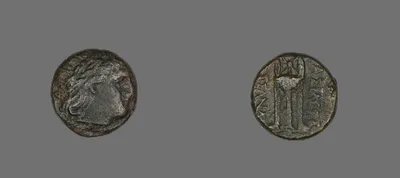
Theodorus the Atheist
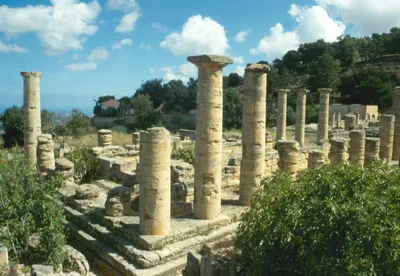
Theodorus of Cyrene was trained in the Cyrenaic school of pleasure and in the art of argument. He was remembered as the ancient world's plainest denier of the city's gods, and was driven out of Athens and of Cyrene for it. Nothing he wrote survives, and no source records why he stopped believing. "Atheist" meant something different to each of the writers who called him one.
Euhemerus
Euhemerus, a friend of King Cassander, wrote a Sacred Record claiming that the gods had been early kings, whose deeds were found on a golden pillar on an island no one else ever reached. The book is lost, and nothing records what he himself believed. He survives only as each later reader needed him: a liar to the Greek geographers, an atheist to Plutarch and Theophilus, and to the Christian apologists the best witness that the pagan gods had been men.
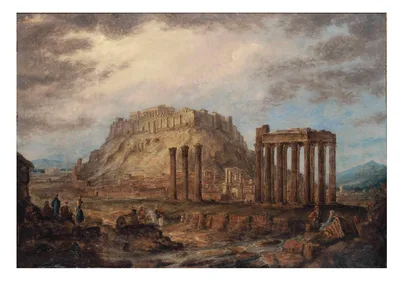
Critias
Critias was Plato's aristocratic kinsman and the hardest of the Thirty who ruled Athens in blood in 404–403 BCE. He left no word about his own belief. His name as an unbeliever rests on one verse speech, quoted by Sextus Empiricus six centuries later, in which the trickster Sisyphus says a clever man invented the fear of gods to police secret crimes. Ancient and modern readers give that speech either to Critias or to Euripides, so his unbelief is an attribution, not a confession.
Prodicus of Ceos
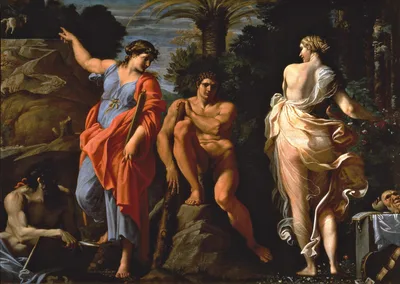
Prodicus of Ceos was the fee-taking sophist famous for fine distinctions and for the fable of the Choice of Heracles. He left no surviving word on the gods. Later writers report that he explained them as the ancients' names for what fed and helped them: bread as Demeter, wine as Dionysus, the Nile as a god. From the third century BCE they listed him among the "so-called atheists". His unbelief is a reported theory and a label others fixed on him, not a declaration of his own.