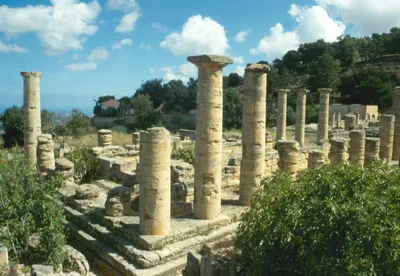
Theodorus of Cyrene was trained in the Cyrenaic school of pleasure and in the art of argument. He was remembered as the ancient world's plainest denier of the city's gods, and was driven out of Athens and of Cyrene for it. Nothing he wrote survives, and no source records why he stopped believing. "Atheist" meant something different to each of the writers who called him one.
The belief timeline
- Doubt (undated) — Trained in the Cyrenaic school and in dialectic; no source says when or why he stopped believing in the gods [2][3][15]
- Declaration (undated (before the Athens trouble)) — Teaches, and writes "Of the Gods", that the gods do not exist as the city believes; called "the Atheist" [4][5][21]
- Consequence (undated (c. 317–307 BCE if Demetrius's rescue is right) (outside)) — Banished from Athens; the Areopagus, the hemlock or the rescue; later banished from Cyrene [11][12][13][16]
Notes to the timeline (10)
- [2] Aristippus "the mother-taught" (taught by his mother Arete) had a pupil Theodorus "known as the atheist, subsequently as god" — Diogenes Laertius, Lives of Eminent Philosophers, vol. I (books I–V), translated by R. D. Hicks (Loeb Classical Library, Heinemann and Putnam, London and New York, 1925), II.86 (about p. 216); Diogenes Laertius, The Lives and Opinions of Eminent Philosophers, translated by C. D. Yonge (Bohn's Classical Library, London, 1853), Aristippus § VII, p. 89.
- [3] His teachers were Anniceris and Dionysius the Dialectician, on the authority of Antisthenes's Successions of Philosophers — Hicks-DL, II.98 (about p. 227); Yonge-DL, Aristippus § XII, p. 93.
- [15] Bion of Borysthenes "went over to Theodorean views" after hearing Theodorus the Atheist, "who used every kind of sophistical argument" — Hicks-DL, IV.52 (about p. 430); Yonge-DL, Bion § IV, p. 173 ("disciple of Theodorus the Atheist, who was used to employ every kind of reasoning").
- [4] Diogenes writes that Theodorus "utterly rejected the current belief in the gods" and that "I have come across a book of his entitled Of the Gods which is not contemptible" — Hicks-DL, II.97 (about p. 226–7); Yonge-DL, Aristippus § XII, p. 93.
- [5] "From that book, they say, Epicurus borrowed most of what he wrote on the subject": hearsay, not Diogenes's own judgment — Hicks-DL, II.97; Yonge-DL, § XII, p. 93. Accounts differ; see the disputed points.
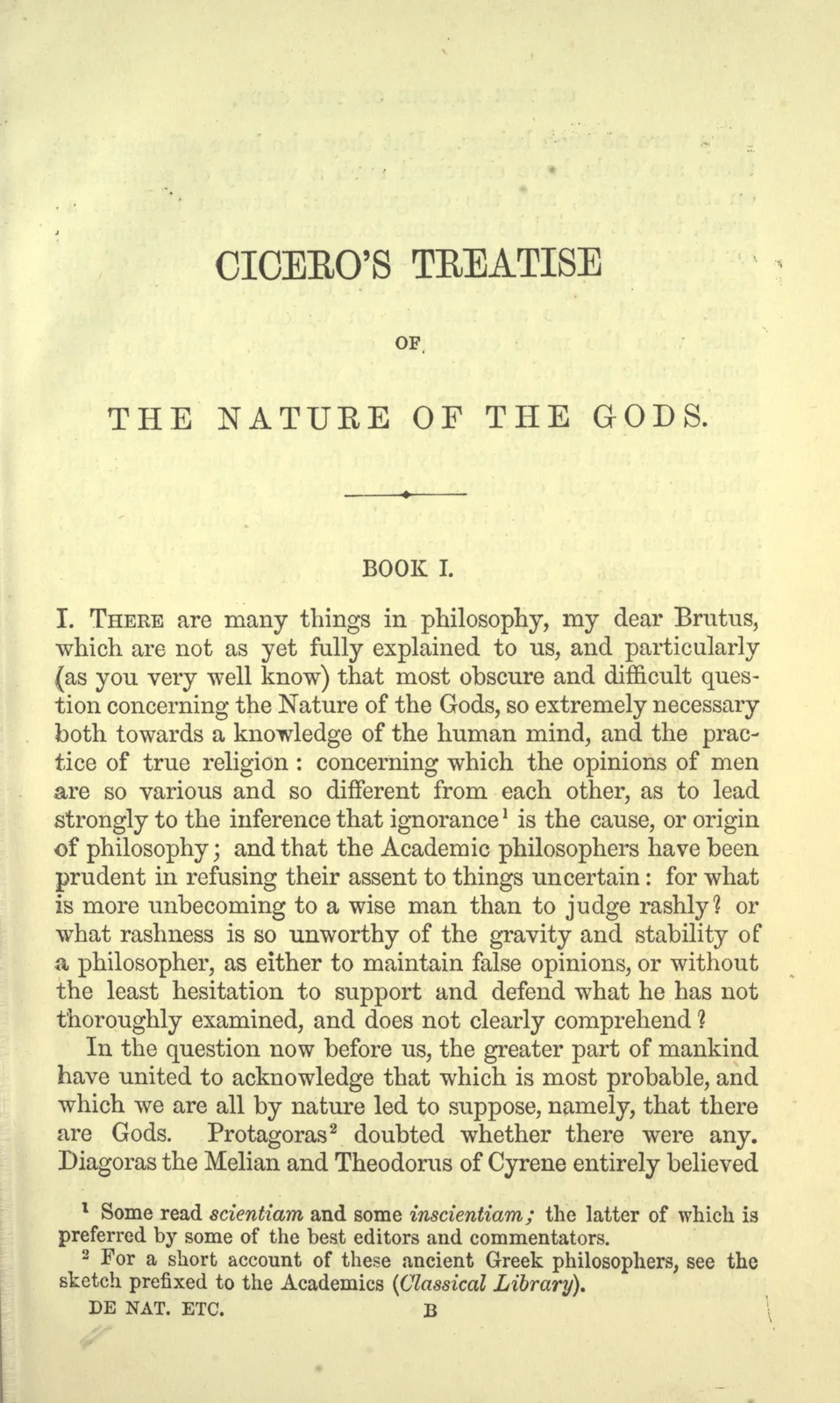
- [21] Cicero in De natura deorum groups Protagoras (who doubted), Diagoras of Melos and Theodorus of Cyrene (who "entirely believed there were no such beings") — Cicero, On the Nature of the Gods, in The Treatises of M. T. Cicero, translated chiefly by C. D. Yonge (Bohn's Classical Library, London, 1853), I.2, Yonge p. 1.
- [11] He "would hardly have escaped from being brought before the Areopagus if Demetrius of Phalerum had not rescued him" (Yonge: "very near being brought before the Areopagus") — Hicks-DL, II.101; Yonge-DL, § XV, p. 94.
- [12] Amphicrates (On Illustrious Men) says he was condemned to drink hemlock — Hicks-DL, II.101; Yonge-DL, § XV, p. 94.
- [13] At Ptolemy's court he was sent as ambassador to Lysimachus, who asked if he was not the Theodorus banished from Athens; he replied that Athens could not bear him as Semele could not bear Dionysus; when Lysimachus told him not to come again he said "unless Ptolemy sends me"; when Mythras the steward said he ignored both gods and kings, he replied he could hardly ignore gods when he regarded Mythras as hateful to the gods — Hicks-DL, II.102; Yonge-DL, § XVI, pp. 94–5.
- [16] At last he went to Cyrene and lived with Magas "and continued to be held in high honour"; "the first time that he was expelled from Cyrene" he said, "Many thanks, men of Cyrene, for driving me from Libya into Greece" (Yonge: "You do wrong... driving me from Africa to Greece") — Hicks-DL, II.103 (about p. 230–1); Yonge-DL, § XVIII, p. 95.
Hateful to the Gods
Some time in the generation after Alexander the Great, a philosopher arrived as an ambassador at the court of Lysimachus, one of the generals who had divided Alexander's empire. The king knew who he was. "Tell me, are you not the Theodorus who was banished from Athens?" The ambassador agreed that he was: "Your information is correct, for, when Athens could not bear me any more than Semele could Dionysus, she cast me out."123 A courtier added that this man seemed able to ignore "not only gods but kings as well." Theodorus answered: "How can you say that I ignore the gods when I regard you as hateful to the gods?"45
He was known in antiquity as Theodorus the Atheist, and he is the plainest denier of the gods the ancient world remembered. Yet nothing he wrote survives, no source gives the year he was born or died, and in the one story where he answers the charge, he turns it into a joke. This chapter asks what can be known about why he was called an atheist, and what the word meant to the people who called him one.
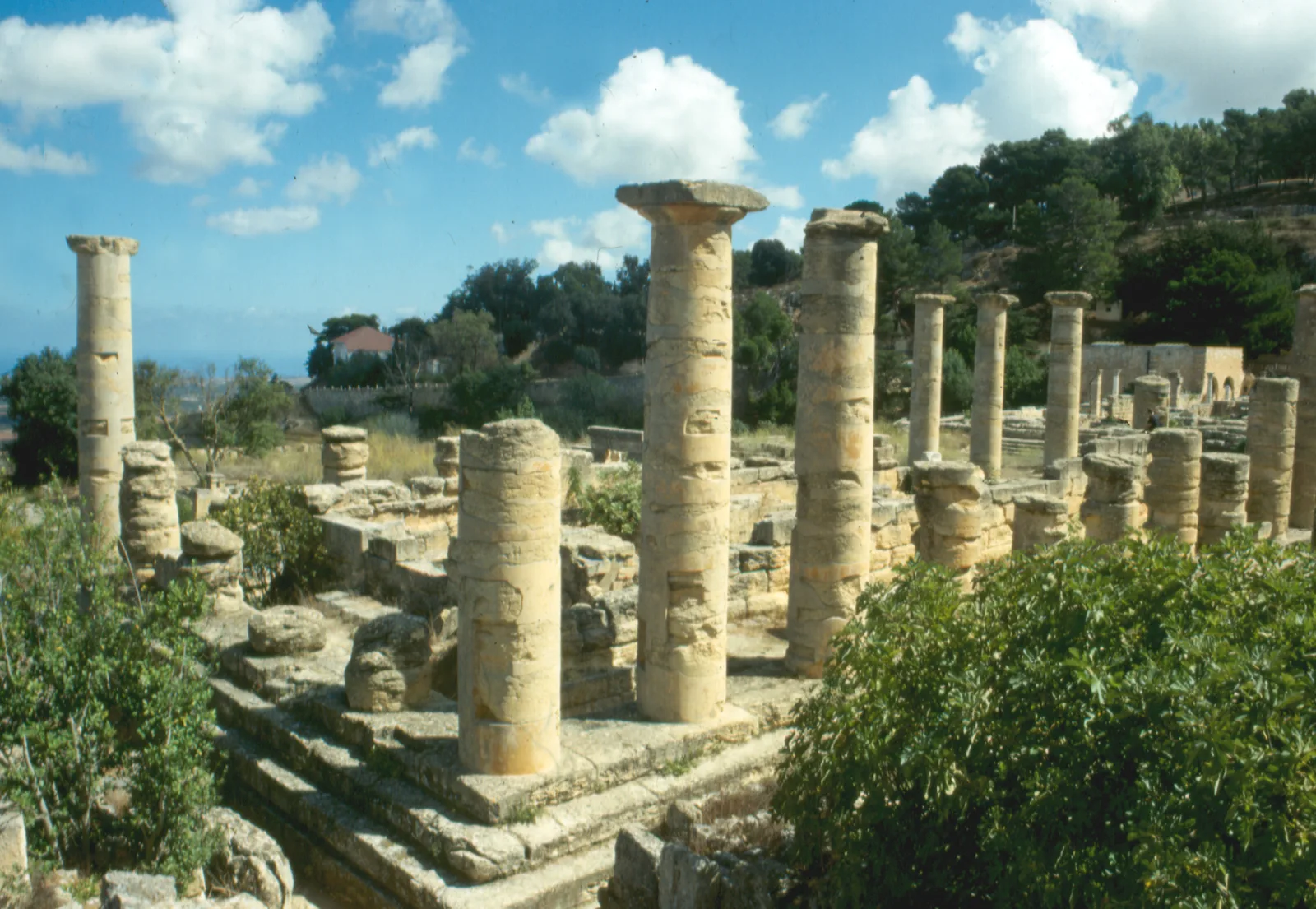
A Cyrenaic
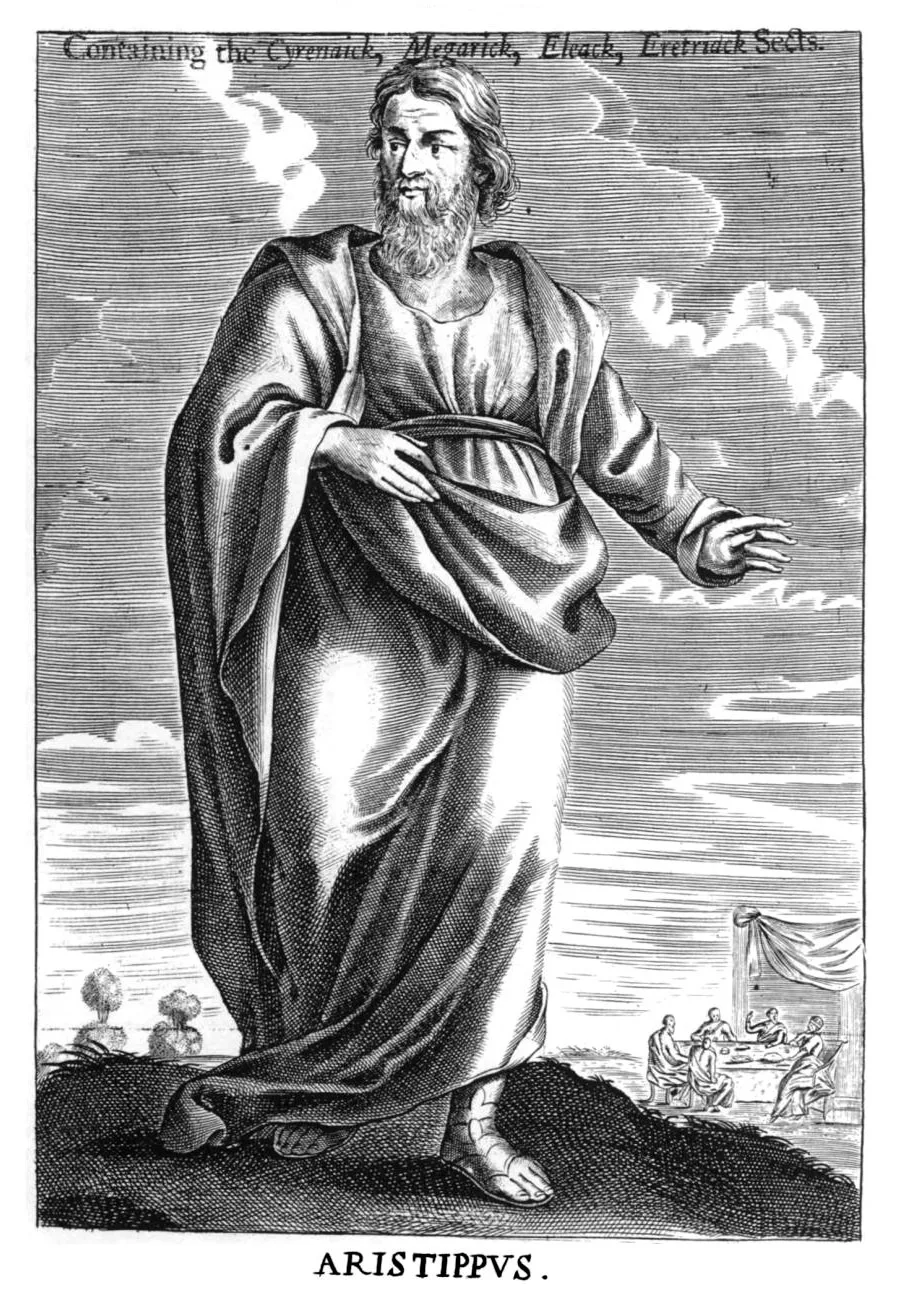
He came from Cyrene, the Greek city on the coast of North Africa; Cicero calls him "Theodorus of Cyrene."6 Cyrene had given its name to a school of philosophy, the Cyrenaics, who taught that pleasure was the good. Theodorus learned it from Aristippus "the mother-taught," grandson of the school's founder, and from Anniceris and Dionysius the Dialectician, a teacher of argument.78 Diogenes Laertius, the third-century writer who preserved most of what is known about him, records that he was "known as the atheist, subsequently as 'god'."9
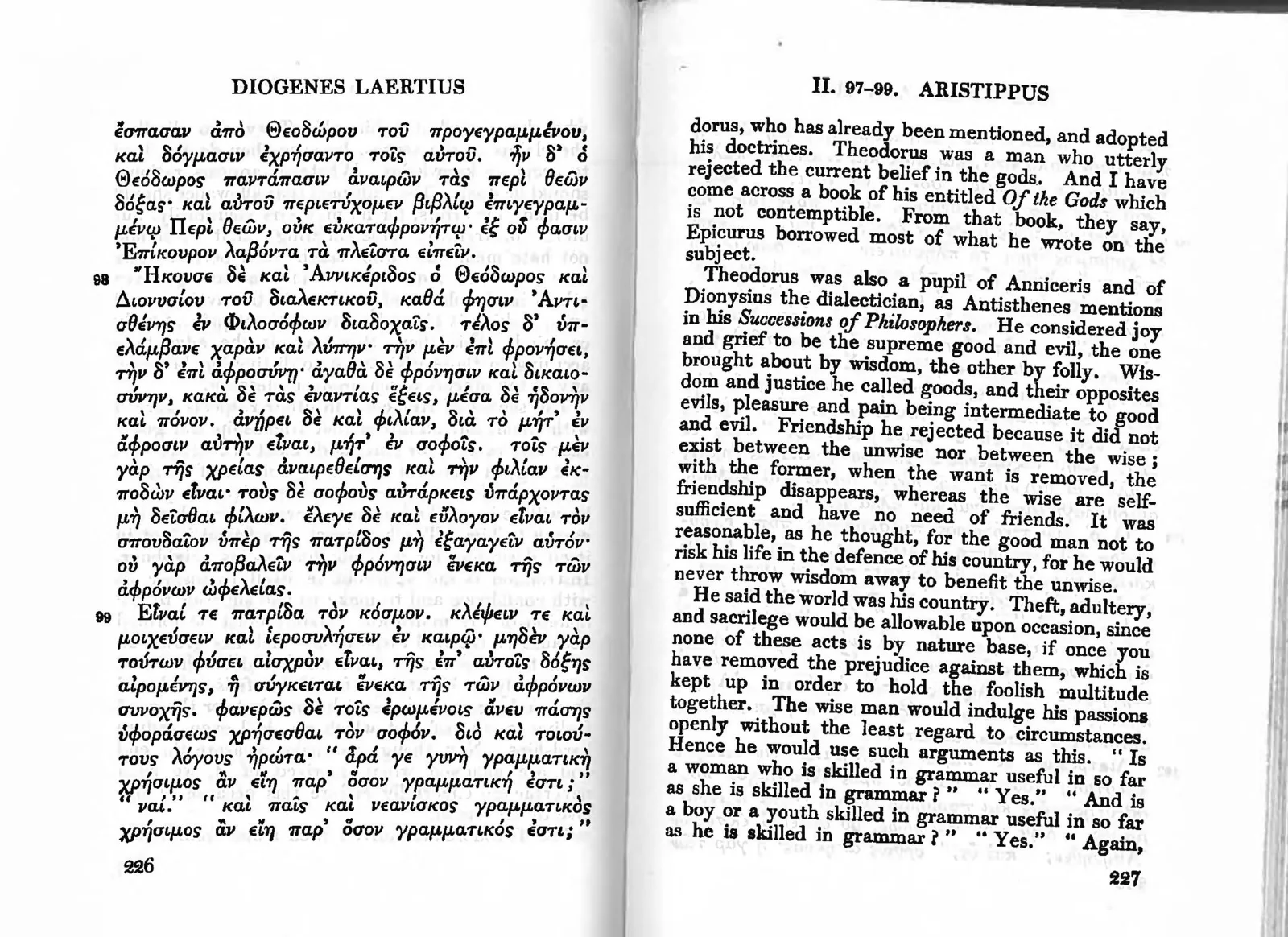
What he made of the school was his own. His followers were called Theodoreans, after him.10 By Diogenes's hostile account he taught that joy and grief, from wisdom and folly, were the real good and evil; that a wise man had no need of friends and need not die for his country; that "the world was his country"; and that theft, adultery and sacrilege "would be allowable upon occasion," since the ban on them was a prejudice "kept up in order to hold the foolish multitude together."111213 We have this only from a writer who disapproved of him, centuries later.
No source records a faith he lost or tells why he came to deny the gods. The sources give only his training in a school of pleasure and in the art of argument, and his love of argument; one later writer said he "used every kind of sophistical argument."1415 On the belief timeline, his doubt carries no date.
The book and the name
"Theodorus was a man who utterly rejected the current belief in the gods," Diogenes writes. "And I have come across a book of his entitled Of the Gods which is not contemptible."16 Some said that Epicurus borrowed most of what he wrote about the gods from it, though Diogenes reports this only as hearsay, and elsewhere he includes Theodorus among those said to have written nothing at all.171819 The book, if it existed, is lost. On the timeline, his declaration stands for the book and for his teaching, both undated.
His second nickname came from a joke. The philosopher Stilpo of Megara asked him, "Are you, Theodorus, what you declare yourself to be?" and, when he agreed, asked whether he said he was a god, theos. Theodorus said yes. "But, you rascal," said Stilpo, "at this rate you would allow yourself to be a jackdaw and ten thousand other things."202122 Theodorus gave as good as he got. When Stilpo was ordered out of Athens for saying that Phidias's statue of Athena was not a god, Theodorus asked, with a pun on the masculine Greek word, "Whence did Stilpo learn this? and how could he tell whether she was a god or a goddess?" "In truth," Diogenes adds, "Theodorus was most impudent, and Stilpo most ingenious."232425 He mocked the priests too. He asked the hierophant of the Eleusinian Mysteries who it was that profaned the mysteries. "Those who disclose them to the uninitiated," the priest said. "Then you violate them," said Theodorus, "when you explain them to the uninitiated."2627
Athens could not bear him
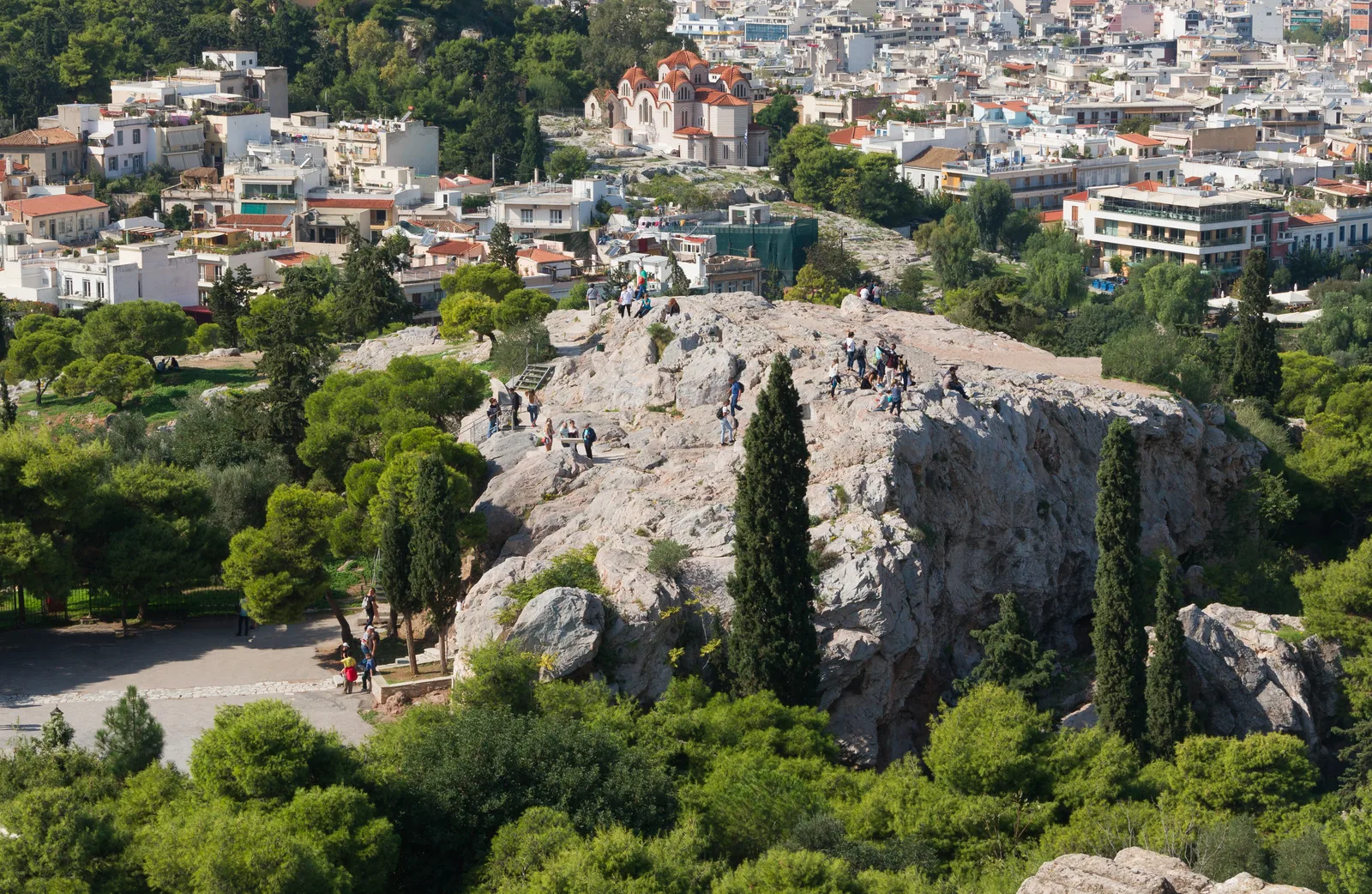
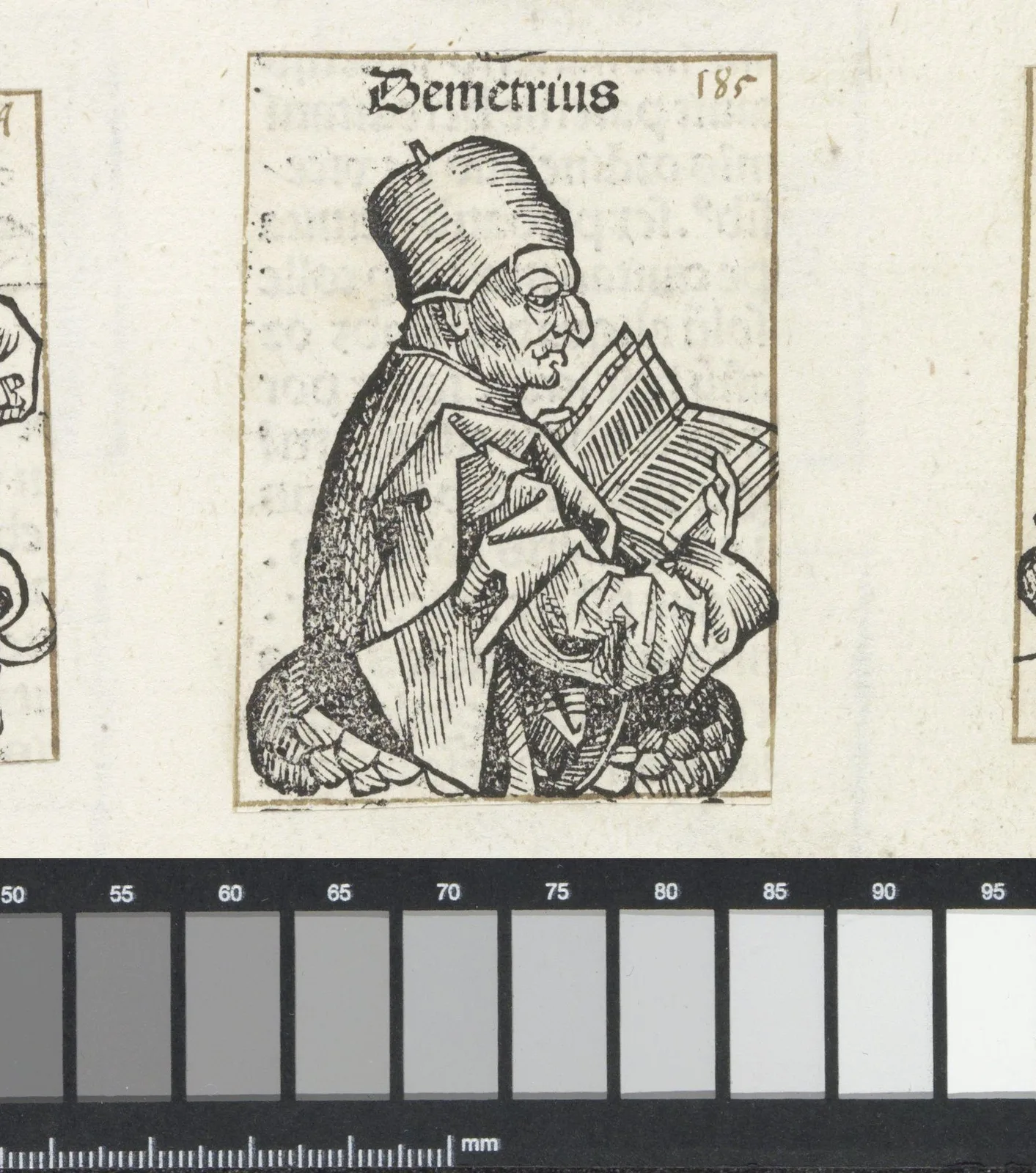
Athens had a long memory for impiety. Cicero records that the Athenians banished Protagoras and burned his books for doubting the gods, and that the example "restrained many from professing their disbelief."28 Theodorus came close to the same court. Diogenes says he "would hardly have escaped from being brought before the Areopagus if Demetrius of Phalerum had not rescued him," Demetrius being an Athenian statesman; but he adds that another writer, Amphicrates, said he was "condemned to drink the hemlock."293031 Philo of Alexandria, writing in the first century, says he was expelled "because he had been condemned for atheism and for corrupting the youth," the charge once brought against Socrates.3233 Accounts differ, between a rescue and a death sentence, and no source describes the proceedings. All that is agreed is that Athens sent him away.
At the courts of kings
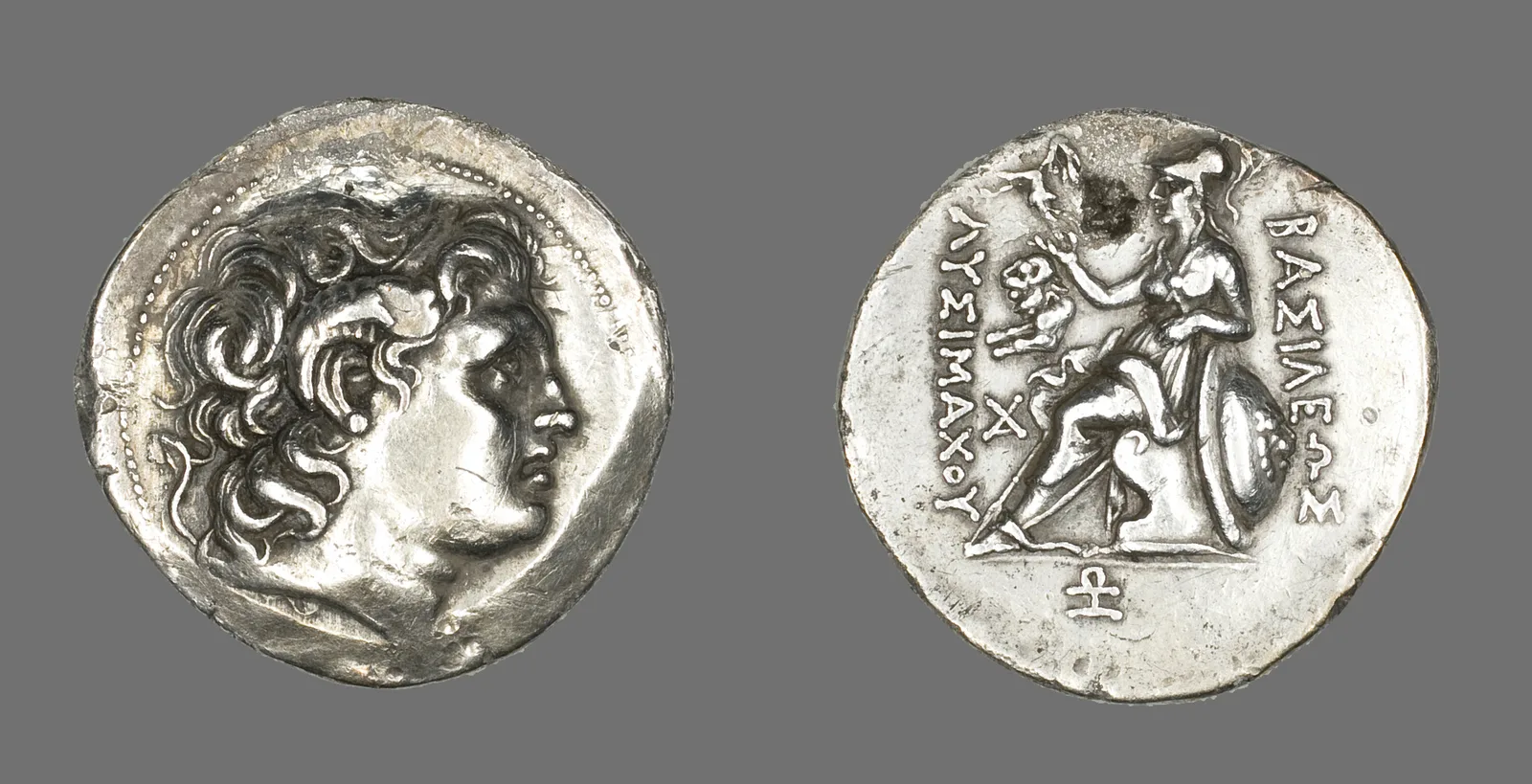
He found a patron in Ptolemy son of Lagus, the general who ruled Egypt, and Ptolemy sent him as ambassador to Lysimachus.3 The meeting was remembered for centuries, in different forms. In Diogenes's version, Lysimachus told him not to come again, and Theodorus replied, "Not unless Ptolemy sends me."3 In Cicero's, Lysimachus threatened to crucify him, and Theodorus told him to keep such threats for his courtiers: "To Theodorus it makes no difference whether he rot in the air or underground."3435 In a second version by Cicero he mocked the king's power to kill as "the power of a Spanish fly," an insect that could kill as easily.3637 Plutarch adds that Lysimachus showed him a man mutilated and kept in an iron cage, saying, "So I deal with those that injure me," and that Theodorus "was not abashed."3839 The story was told in several ways; in every one of them he refuses to give way.
He taught at Corinth with many pupils, and when a Cynic washing vegetables told him he would not need so many pupils if he washed vegetables, he answered that the Cynic would not need vegetables if he knew how to deal with men.4041 At a supper the Cynic philosopher Hipparchia beat him with his own kind of argument, and he made no reply.4243 Among those who heard him was the young Bion of Borysthenes, who "went over to Theodorean views."15
Home, and out again
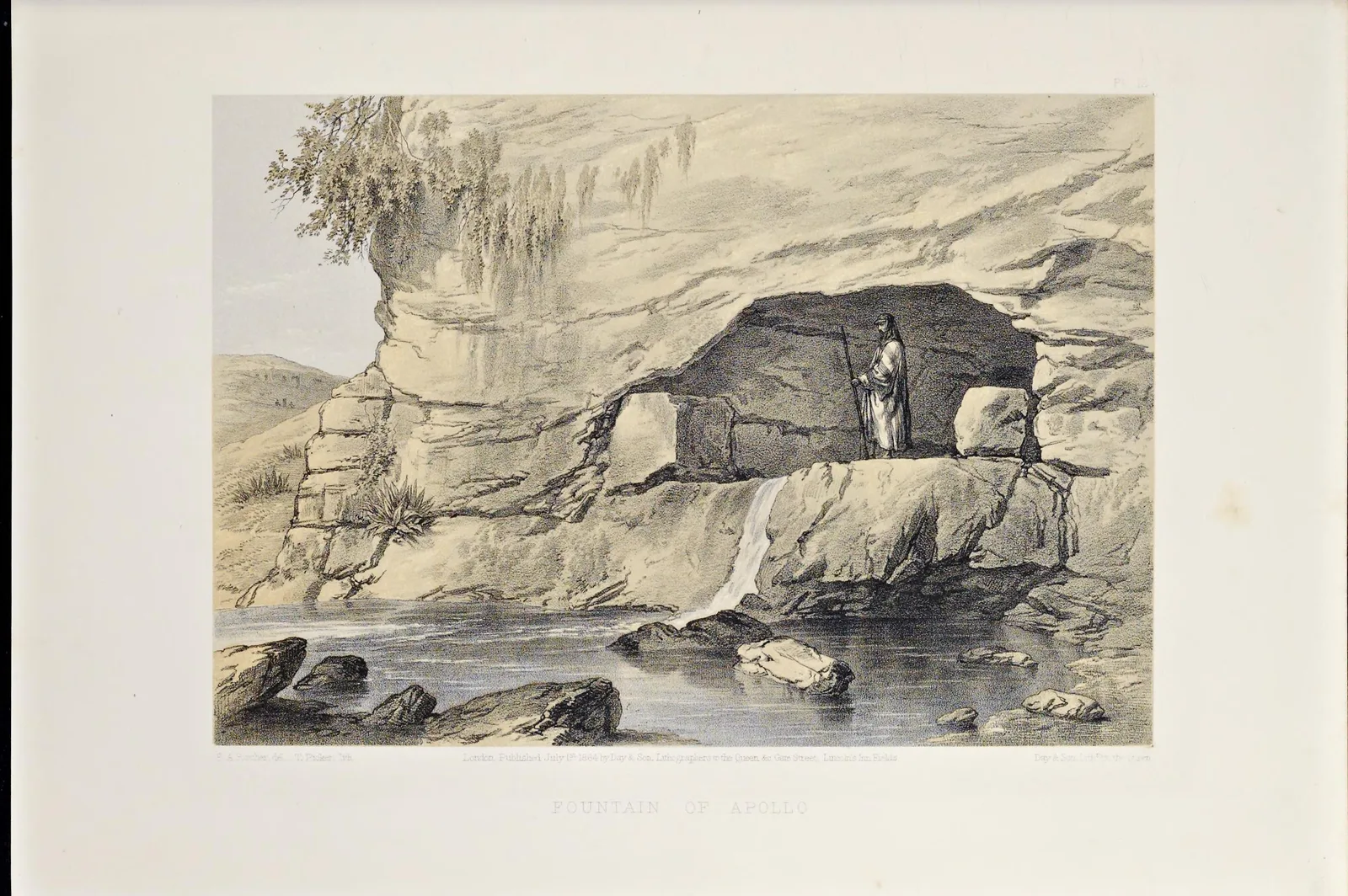
At last he went back to Cyrene, where he lived with its ruler Magas "and continued to be held in high honour." But Cyrene, too, expelled him, and the first time it did so he said: "Many thanks, men of Cyrene, for driving me from Libya into Greece."4445 "The first time" implies another. No source records it, or how or where he died.46
On the timeline, the consequence stands for these banishments. There is no revision, because no source records a change of mind.
What "atheist" meant
Every writer who called him an atheist meant something a little different. Cicero, two centuries later, put him beside Diagoras of Melos as men who "entirely believed there were no such beings."4748 In Cicero's dialogue on the gods the Academic Cotta asks, "What think you of Diagoras, who was called the atheist; and of Theodorus, after him? Did not they plainly deny the very essence of a Deity?" Cotta's point is that such men destroyed "not only superstition" but "religion also, which consists in a pious adoration" of the gods.4950 Plutarch was more careful: the so-called atheists "durst not say that the Divinity is corruptible, but they did not believe that there is any thing incorruptible."5152 And Clement of Alexandria, a Christian writing around the year 200, wondered how such men, "who lived a sober life, and had a clearer insight than the rest of the world into the prevailing error respecting those gods, were called Atheists."5354 To Clement, an atheist was a man who had seen through the gods of Greece.
Theodorus himself, in the only answer the sources give him, said he could not be ignoring the gods if he thought a courtier hateful to them.5 It was a joke, and it told his accusers nothing. Whatever he put in place of the gods of the city is lost with his book. What survives is the name his enemies gave him, and the stories of a man who would not be frightened by a king.
Diagoras of Melos, the other man the ancients always named beside him, has his own chapter in this book.
Footnotes
-
Lysimachus: Diogenes Laertius, Lives of Eminent Philosophers, vol. I (books I–V), translated by R. D. Hicks (Loeb Classical Library, Heinemann and Putnam, London and New York, 1925), II.102. ↩
-
Theodorus: Hicks-DL, II.102. ↩
-
Hicks-DL, II.102; Diogenes Laertius, The Lives and Opinions of Eminent Philosophers, translated by C. D. Yonge (Bohn's Classical Library, London, 1853), § XVI, pp. 94–5. ↩ ↩2 ↩3
-
Mythras, steward to Lysimachus: Hicks-DL, II.102. ↩
-
Cicero, On the Nature of the Gods, in The Treatises of M. T. Cicero, translated chiefly by C. D. Yonge (Bohn's Classical Library, London, 1853), I.2, Yonge p. 1; Cicero, Tusculan Disputations, translated by C. D. Yonge, in Cicero's Tusculan Disputations, also Treatises On the Nature of the Gods and On the Commonwealth (Bohn's Classical Library, London, 1888 reprint of Yonge's translation of 1853), I.102, p. 55; Yonge-DL, Aristippus § XVIII, p. 95. ↩
-
Hicks-DL, II.86 (about p. 216); Yonge-DL, Aristippus § VII, p. 89. ↩
-
Hicks-DL, II.98 (about p. 227); Yonge-DL, Aristippus § XII, p. 93. ↩
-
Diogenes Laertius: Hicks-DL, II.86. ↩
-
Hicks-DL, II.97 (opening sentence of the section); Yonge-DL, § XI, p. 93. ↩
-
Hicks-DL, II.98–99; Yonge-DL, § XIII, pp. 93–4. ↩
-
Diogenes Laertius: Hicks-DL, II.98. ↩
-
Diogenes Laertius, reporting Theodorus's teaching: Hicks-DL, II.98. ↩
-
Diogenes Laertius, in the life of Bion: Hicks-DL, IV.52. ↩
-
Hicks-DL, IV.52 (about p. 430); Yonge-DL, Bion § IV, p. 173 ("disciple of Theodorus the Atheist, who was used to employ every kind of reasoning"). ↩ ↩2
-
Diogenes Laertius, on Theodorus: Hicks-DL, II.97 (about pp. 226–7). ↩
-
Diogenes Laertius: Hicks-DL, II.97. ↩
-
Hicks-DL, II.97; Yonge-DL, § XII, p. 93. Accounts differ; see the disputed points. ↩
-
Hicks-DL, I.16 (about p. 13); Yonge-DL, Preface (the list of authors who wrote nothing). ↩
-
Stilpo: Hicks-DL, II.100. ↩
-
Stilpo: Hicks-DL, II.100. ↩
-
Hicks-DL, II.100; Yonge-DL, § XIV, p. 94. ↩
-
Hicks-DL, II.116; Yonge-DL, Stilpo § V, p. 101. ↩
-
Theodorus: Hicks-DL, II.116. ↩
-
Diogenes Laertius, a doxographer of the 3rd century CE, not a believer or unbeliever on the record: Hicks-DL, II.116. ↩
-
Theodorus: Hicks-DL, II.100. ↩
-
Hicks-DL, II.100; Yonge-DL, § XIV, p. 94. ↩
-
Cicero-ND, I.63 (Yonge ch. XXIII), p. 22. ↩
-
Diogenes Laertius: Hicks-DL, II.101. ↩
-
Hicks-DL, II.101; Yonge-DL, § XV, p. 94. ↩
-
Hicks-DL, II.101; Yonge-DL, § XV, p. 94. ↩
-
Philo, "That Every Good Man Is Free": The Works of Philo Judaeus, translated by C. D. Yonge, vol. III (Bohn's Ecclesiastical Library, London, 1854), vol. III, pp. 534–5. ↩
-
Yonge-Philo, "That Every Good Man Is Free", ch. XVIII, pp. 534–5. ↩
-
Cicero's report of Theodorus to Lysimachus: Cicero-Tusc, I.102, Yonge p. 55. ↩
-
Cicero-Tusc, I.102 (Yonge ch. XLII), p. 55. ↩
-
Theodorus to Lysimachus: Cicero-Tusc, V.117, Yonge p. 206. ↩
-
Cicero-Tusc, V.117 (Yonge ch. XL), p. 206 (page number inferred from the next page head). ↩
-
Lysimachus, showing Telesphorus in a cage: Plutarch's Morals, translated from the Greek by several hands, corrected and revised by William W. Goodwin, 5 vols. (Boston, Little, Brown, 1874), vol. III, p. 31. ↩
-
Goodwin-Plut, vol. III, "Of Banishment, or Flying One's Country", p. 31 (corrected from p. 81 by the gatherer, 2026-10-13: the OCR header misread 31 as 81; p. 81 is in the Pythia essay). ↩
-
Hicks-DL, II.102; Yonge-DL, § XVII, p. 95. ↩
-
Metrocles the Cynic, Diogenes's disciple who lived by Cynic poverty: Hicks-DL, II.102. ↩
-
Yonge-DL, Hipparchia § III, p. 255 (D.L. VI.97; Hicks vol. II not downloaded). ↩
-
Diogenes Laertius (Yonge), of Hipparchia: Yonge-DL, Hipparchia § III, p. 255. ↩
-
Hicks-DL, II.103 (about p. 230–1); Yonge-DL, § XVIII, p. 95. ↩
-
Theodorus: Hicks-DL, II.103. ↩
-
Hicks-DL, II.103; Yonge-DL, § XVIII; negative claim after reading all downloaded testimonies. ↩
-
Cicero: Cicero-ND, I.2, Yonge 1853 p. 1. ↩
-
Cicero-ND, I.2, Yonge p. 1. ↩
-
Cotta, the Academic speaker in Cicero's dialogue, arguing against the Epicurean view of the gods: Cicero-ND, I.63, Yonge p. 22. ↩
-
Cotta: Cicero-ND, I.117, Yonge p. 41. ↩
-
Plutarch, Common Conceptions: Goodwin-Plut, vol. IV, p. 405. ↩
-
Goodwin-Plut, vol. IV, "Of Common Conceptions, Against the Stoics", p. 405. ↩
-
Clement of Alexandria: Clement of Alexandria, Exhortation to the Heathen, in The Ante-Nicene Fathers, vol. II (Buffalo, 1885; Christian Literature Publishing Co.), p. 177. ↩
-
ANF-Clem, Exhortation to the Heathen, p. 177. ↩
In their own words
Theodorus was a man who utterly rejected the current belief in the gods. And I have come across a book of his entitled Of the Gods which is not contemptible.
From that book, they say, Epicurus borrowed most of what he wrote on the subject.
Theft, adultery, and sacrilege would be allowable upon occasion, since none of these acts is by nature base, if once you have removed the prejudice against them, which is kept up in order to hold the foolish multitude together.
He said the world was his country.
Are you, Theodorus, what you declare yourself to be?
But, you rascal, at this rate you would allow yourself to be a jackdaw and ten thousand other things.
Tell me, Euryclides, who they are who violate the mysteries?
Yet he would hardly have escaped from being brought before the Areopagus if Demetrius of Phalerum had not rescued him. And Amphicrates in his book Upon Illustrious Men says he was condemned to drink the hemlock.
Tell me, are you not the Theodorus who was banished from Athens?
Your information is correct, for, when Athens could not bear me any more than Semele could Dionysus, she cast me out.
How can you say that I ignore the gods when I regard you as hateful to the gods?
Many thanks, men of Cyrene, for driving me from Libya into Greece.
Diagoras the Melian and Theodorus of Cyrene entirely believed there were no such beings.
To Theodorus it makes no difference whether he rot in the air or underground.
It is a great matter, indeed, for you to have acquired the power of a Spanish fly!
It is said that Theodorus, who was surnamed the Atheist, when he was banished from Athens, and had come to the court of Lysimachus, when one of those in power there reproached him with his banishment, mentioning the cause of it too, namely, that he had been expelled because he had been condemned for atheism and for corrupting the youth, replied, "I have not been banished, but the same thing has befallen me which befell Hercules, the son of Jupiter"
Yes, not being able to bear me; just as Semele cast out Bacchus, when she could bear him no longer.
So I deal with those that injure me
Certainly, those who were called Atheists, like Theodorus, Diagoras, and Hippo, durst not say that the Divinity is corruptible, but they did not believe that there is any thing incorruptible
Now what cares Theodorus, whether it is above or under ground that he putrefies?
Some of the philosophers, such as Diagoras the Melian, Theodorus the Cyrenean, and Euemerus the Tegeatan, did unanimously deny there were any Gods
Theodorus the Atheist, who used every kind of sophistical argument
But in truth Theodorus was most impudent, and Stilpo most ingenious.
his pupil was Theodorus, known as the atheist, subsequently as "god."
Whence did Stilpo learn this? and how could he tell whether she was a god or a goddess?
I cannot help wondering how Euhemerus of Agrigentum, and Nicanor of Cyprus, and Diagoras, and Hippo of Melos, and besides these, that Cyrenian of the name of Theodorus, and numbers of others, who lived a sober life, and had a clearer insight than the rest of the world into the prevailing error respecting those gods, were called Atheists
And once when she went to sup with Lysimachus, she attacked Theodorus, who was surnamed the Atheist
The other side
What think you of Diagoras, who was called the atheist; and of Theodorus, after him? Did not they plainly deny the very essence of a Deity?
Unless, indeed, you imagine that Diagoras or Theodorus, who absolutely denied the being of the Gods, could possibly be superstitious.
The opinions of these philosophers are not only destructive of superstition, which arises from a vain fear of the Gods, but of religion also, which consists in a pious adoration of them.
You, sophist that you are, would not have wanted all these pupils if you had washed vegetables.
It seems that you can ignore not only gods but kings as well.
But in truth Theodorus was most impudent, and Stilpo most ingenious.
It is wonderful indeed if Theodorus had no freedom of this kind
Where accounts differ
| Point | One account | Another | How the page handles it |
|---|---|---|---|
| 1. Was he tried at Athens? | He "would hardly have escaped from being brought before the Areopagus if Demetrius of Phalerum had not rescued him": a trial averted (Hicks-DL II.101) | Amphicrates says he was condemned to drink the hemlock (Hicks-DL II.101); Philo says he was "condemned for atheism and for corrupting the youth" (Yonge-Philo p. 534). Plutarch and Cicero say only that Lysimachus threatened him | "Accounts differ": say that Diogenes cannot decide between a rescue and a hemlock sentence and that one source quotes Lysimachus's own jibe that he had been banished. Never say he was tried. |
| 2. Why was he banished and what did he say? | Athens "could not bear me any more than Semele could Dionysus" (Hicks-DL II.102; Goodwin-Plut vol. III p. 31) | Philo makes him say Hercules was put off the ship because he was too heavy, and that Athens could not hold the greatness of his mind (Yonge-Philo p. 534) | Quote Diogenes's Semele version; mention Philo's Hercules only as a later elaboration. |
| 3. Lysimachus's threat | Crucifixion; Theodorus said it was all one to him whether he rotted in the air or underground (Cicero-Tusc I.102) | Death in general; the "Spanish fly" retort (Cicero-Tusc V.117); an iron cage and a mutilated Telesphorus shown to him (Goodwin-Plut vol. III p. 31) | The same author, Cicero, tells it two ways: say "the story was told in several ways" and use one. |
| 4. Did he write a book? | Diogenes found "a book of his entitled Of the Gods" (Hicks-DL II.97) | Diogenes's general preface lists Theodorus among those who "wrote nothing at all" "according to some authorities" (Hicks-DL I.16); it may mean another Theodorus | Say a book is reported, not that it survives. |
| 5. The nickname "Theos" | Because of Stilpo's quibble with Theodorus himself (Hicks-DL II.100) | In the Athena story the nickname is already given as a mocking name, and Hicks II.86 says "known as the atheist, subsequently as god" (Hicks-DL II.116, II.86) | Treat "Theos" as an old joke; do not explain the Greek pun more than once. |
| 6. Who was brought before the Areopagus over the gods? | Theodorus (Hicks-DL II.101, almost) | Stilpo, over the Athena of Phidias, who was exiled; Theodorus only mocked him (Hicks-DL II.116) | Keep the two men apart; the Phidias argument is Stilpo's. |
| 7. Did Epicurus borrow from his book? | "They say" he did (Hicks-DL II.97) | Epicurus believed in gods who ignore us; Theodorus is called the one who rejected them. The report is a doxographer's guess and no one else confirms it | Mention at most as "one ancient report says". |
| 8. What exactly did he deny? | Cicero: "absolutely denied the being of the Gods" and "entirely believed there were no such beings" (Cicero-ND I.2, I.117); Diogenes: "utterly rejected the current belief in the gods" (Hicks-DL II.97) | Plutarch: they refused to call the Divinity corruptible and would not admit anything incorruptible (Goodwin-Plut vol. IV p. 405); Clement: they "suspected the error of the common opinion" (ANF-Clem p. 177); Theodorus's own retort that he does not "ignore the gods" (Hicks-DL II.102) | The heart of the episode: "atheist" meant different things to Cicero, Plutarch, Clement and a Greek court. Say he is recorded as denying the city's gods and that what he put in their place is unknown. |
| 9. What does "atheos" mean here? | A person who rejects the gods of the city (the legal sense, as with Diagoras and Protagoras in Cicero-ND I.63) | A person who denies divine nature as such (Cicero's rhetoric) | Define "atheist" once, plainly, as the ancient charge; do not read modern atheism back. |
| 10. Date of his life and chronology | The roster: c. 340–250 BCE | No ancient source gives dates; anchors depend on Demetrius, Ptolemy, Lysimachus, Magas (outside the downloaded sources) | Say "in the generation after Alexander"; no birth or death year in the script. |
| 11. The Plutarch "right hand, left hand" saying | A saying of the Cyrenaic Theodorus (Goodwin-Plut vol. IV p. 125) | Plutarch gives no surname; there are about twenty Theodoruses (Hicks-DL II.103) | Do not use. |
| 12. Expulsions from Cyrene | He was expelled "the first time" (Hicks-DL II.103) | Nothing says when or whether a second occurred | Say the sources report one expulsion and imply another. |
List of illustrations
This page uses only public-domain and Creative Commons images; each is credited with its source and licence.
- Libia, Cirene (sito archeologico), Tempio di Apollo — MM, 1999 · MM, via Wikimedia Commons (Public domain) · Public domain (Wikimedia Commons)
- Aristippus of Cyrene, ancient Greek philosopher. From Thomas Stanley, (1655), The history of philosophy: containing the lives, opinions, actions and D — Unknown authorUnknown author, circa 1655date QS:P,+1655-00-0 · Unknown author, via Wikimedia Commons (Public domain) · Public domain (Wikimedia Commons)
- Diogenes Laertius, Lives of Eminent Philosophers, vol. I, pp. 226-227 (Theodorus, II.97-100) (Hicks, Loeb, 1925) — Diogenes Laertius, tr. R. D. Hicks, 1925 · Diogenes Laertius, Lives of Eminent Philosophers, tr. R. D. Hicks, vol. I (Loeb Classical Library, 1925), Internet Archive (DiogenesLaertius01LivesOfEminentPhilosophers15), scan leaf 115 · Public domain (published 1925; the Internet Archive item states the Public Domain Mark)
- The Areopagus Hill, as seen from the Acropolis, Athens, Greece. — Jebulon, 2015-10-26 12:30:39 · Jebulon, via Wikimedia Commons (CC0) · CC0 (Wikimedia Commons)
- IdentificatieTitel(s): Demetrius van Phalerum. Demetrius (titel op object). Liber Chronicarum (serietitel)Objecttype: prent boekillustratie albumblad — Rijksmuseum, 1493 · Rijksmuseum, via Wikimedia Commons (CC0) · CC0 (Wikimedia Commons)
- Tetradrachm (Coin) Portraying Alexander the Great, Greek, Thrace, 297-281 BCE, issued by King Lysimachus of Thrace — Greek (ancient mint), via Art Institute of Chicago, 297-281 BCE · Tetradrachm (Coin) Portraying Alexander the Great, Greek, Thrace, 297-281 BCE, issued by King Lysimachus of Thrace, Art Institute of Chicago (CC0) · CC0 (public domain)
- Plate 12, Fountain of Apollo, Cyrene (Smith and Porcher, 1864) — R. Murdoch Smith and Edwin A. Porcher, Day & Son, lithographers to the Queen, 1864 · R. Murdoch Smith and Edwin A. Porcher, History of the Recent Discoveries at Cyrene (London: Day & Son, 1864), Internet Archive (gri_33125010873798), scan leaf 72 · Public domain (published 1864)
- Cicero, On the Nature of the Gods, Book I, Yonge p. 1 — C. D. Yonge, 1853 · C. D. Yonge (trans.), The Treatises of M. T. Cicero (London: Bohn, 1853), Internet Archive (treatisescicero00ciceuoft), scan leaf 11 · Public domain (published 1853)
Sources
Tier 1 — the subject's own words (writings, letters, diaries, trial records)
- [None] Nothing by Theodorus survives, not even a fragment in direct quotation. The only title is "On Gods" (Peri theon), known from Diogenes Laertius [4]. Everything in the quotations table is a later report of what he said.
Tier 2 — scholarly biographies and encyclopedias (ancient testimonies, in pre-1931 English translations)
- [Hicks-DL] Diogenes Laertius, Lives of Eminent Philosophers, vol. I (books I–V), translated by R. D. Hicks (Loeb Classical Library, Heinemann and Putnam, London and New York, 1925). IA identifier DiogenesLaertius01LivesOfEminentPhilosophers15. Text saved in research/texts/hicks-dl1.txt. Notes. Cited by the book and section (II.97–103 is the Theodorus passage, in the life of Aristippus) with the Loeb page; the OCR of this volume prints Greek and English pages in sequence and the page numbers in the OCR are not fully reliable (II.97–99 falls about pp. 226–7, II.99–103 about pp. 228–31, Stilpo II.116 about p. 244–5, Bion IV.52 about p. 430), so check each page against the scan before it goes on screen. Hicks's footnote to II.103 offers the alternative reading "It is unkind of you" for Lysimachus's rebuke.
- [Yonge-DL] Diogenes Laertius, The Lives and Opinions of Eminent Philosophers, translated by C. D. Yonge (Bohn's Classical Library, London, 1853). IA identifier livesandopinions00dioguoft. Text saved in research/texts/yonge-dl.txt. Notes. Cited by section number of Yonge's own numbering within each life (the Theodorus passage is Aristippus §§ XI–XIX, pp. 93–95; Stilpo § V, pp. 101–2). Yonge gives Greek words in the text and the OCR garbles them.
- [Cicero-ND] Cicero, On the Nature of the Gods, in The Treatises of M. T. Cicero, translated chiefly by C. D. Yonge (Bohn's Classical Library, London, 1853). IA identifier treatisescicero00ciceuoft (text in research/texts/yonge-cicero.txt; a second Google scan of the same edition, treatisesmtcice00cicegoog, is saved as yonge-cicero-b.txt and is a duplicate). Notes. Cited by Latin book and section (I.2, I.63, I.117) and by Yonge's page. The Latin sections are given by Cicero's modern numbering, which Yonge's text marks with its own Roman numerals (the I.63 passage is Yonge's chapter XXIII, the I.117 passage chapter XLII).
- [Cicero-Tusc] Cicero, Tusculan Disputations, translated by C. D. Yonge, in Cicero's Tusculan Disputations, also Treatises On the Nature of the Gods and On the Commonwealth (Bohn's Classical Library, London, 1888 reprint of Yonge's translation of 1853). IA identifier cicerostusculand00ciceuoft. Text saved in research/texts/yonge-tusc.txt. Notes. Cited by Latin book and section (I.102, V.117) and by page.
- [Goodwin-Plut] Plutarch's Morals, translated from the Greek by several hands, corrected and revised by William W. Goodwin, 5 vols. (Boston, Little, Brown, 1874). IA identifiers plutarchsmoralst03plutuoft (vol. III) and plutarchsmoralst04plutuoft (vol. IV); texts saved as plutarch-v3.txt and plutarch-v4.txt. Notes. The five volumes are all downloaded; only vols. III and IV contain the passages. The "Opinions of the Philosophers" (Placita) in vol. III is not by Plutarch; it is a doxographical epitome of unknown authorship, drawn from the tradition usually linked to Aëtius (our knowledge, not checked in the downloaded text).
- [Yonge-Philo] The Works of Philo Judaeus, translated by C. D. Yonge, vol. III (Bohn's Ecclesiastical Library, London, 1854). IA identifier worksphilojudaeu03philuoft. Text saved as philo-yonge-v3.txt. Notes. The passage is in the treatise "That Every Good Man Is Free" (Yonge's chapter XVIII, pp. 534–5); the other three volumes were downloaded and contain no mention of Theodorus.
- [ANF-Clem] Clement of Alexandria, Exhortation to the Heathen, in The Ante-Nicene Fathers, vol. II (Buffalo, 1885; Christian Literature Publishing Co.). IA identifier antenicenefather02robeuoft. Text saved as anf-vol2.txt. Notes. The passage is on p. 177 of the volume, in the early chapters on the Greek mysteries; the chapter number was not read from the scan.
Tier 3 — popular biographies and journalism
- None used. No modern biography or article was consulted.
Tier 4 — maps to other sources only (Wikipedia and similar). Never cited in the script.
- Not consulted. The Suda lexicon entry on Theodorus (Theta) is the one testimony in the brief that I could not check: no pre-1931 English translation exists and the Suda On Line's translation is a modern copyrighted work. Sextus Empiricus (Against the Physicists, Against the Logicians, which lists atheists) is likewise unchecked: the English translation in print is R. G. Bury's Loeb (1933–49), after the 1931 cutoff, and the Greek in the Bekker scan (sextusempiricus01bekkgoog, downloaded as sextus-bekker-greek.txt) did not OCR into searchable Greek. Both remain open; neither is used in a claim.
Opposition sources — contemporary critics and religious responses
- [Cicero-ND] The Academic Cotta, in Cicero's dialogue, argues against Epicurean piety by naming Theodorus; and Cicero in his own preface lists him as a case of total denial [22] [23].
- [Hicks-DL] and [Yonge-DL]: Diogenes Laertius's own comment, "most impudent", the Cynic Metrocles's gibe, and the courtier Mythras's charge [13] [14] [19].
- [Goodwin-Plut] Plutarch, who uses the "atheists" as a foil to argue that the Stoics are worse [28].
- [ANF-Clem] Clement of Alexandria, a Christian polemicist who nevertheless defends the sobriety of the "atheists" [32].
Related lives
Diagoras of Melos (5th c. BCE), who is always named beside him by Cicero, Plutarch and Clement and whose condemnation by Athens belongs to the same story; or Euhemerus (c. 300 BCE), named in the same lists and a near contemporary, a writer at the Macedonian court per the roster. (Both are on the roster; the script says only "has their own episode in this series".)
Epicurus
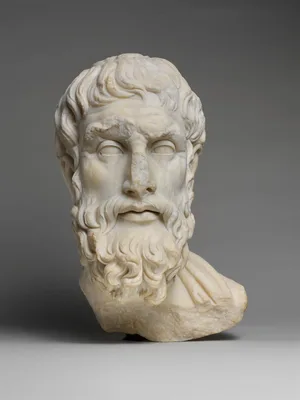
Epicurus was a Samian schoolboy who, by his own account, turned to philosophy at fourteen. In his Garden he taught that the gods exist, blessed and far away, and neither punish nor reward, so that the two great fears, of the sky and of death, could be cured by understanding nature. He never revised it. His critics, from Cicero to the Christians, called it atheism in polite words.
Euhemerus
Euhemerus, a friend of King Cassander, wrote a Sacred Record claiming that the gods had been early kings, whose deeds were found on a golden pillar on an island no one else ever reached. The book is lost, and nothing records what he himself believed. He survives only as each later reader needed him: a liar to the Greek geographers, an atheist to Plutarch and Theophilus, and to the Christian apologists the best witness that the pagan gods had been men.
Critias
Critias was Plato's aristocratic kinsman and the hardest of the Thirty who ruled Athens in blood in 404–403 BCE. He left no word about his own belief. His name as an unbeliever rests on one verse speech, quoted by Sextus Empiricus six centuries later, in which the trickster Sisyphus says a clever man invented the fear of gods to police secret crimes. Ancient and modern readers give that speech either to Critias or to Euripides, so his unbelief is an attribution, not a confession.
Prodicus of Ceos
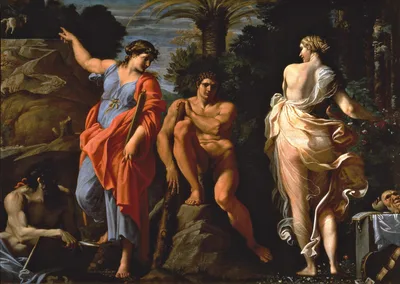
Prodicus of Ceos was the fee-taking sophist famous for fine distinctions and for the fable of the Choice of Heracles. He left no surviving word on the gods. Later writers report that he explained them as the ancients' names for what fed and helped them: bread as Demeter, wine as Dionysus, the Nile as a god. From the third century BCE they listed him among the "so-called atheists". His unbelief is a reported theory and a label others fixed on him, not a declaration of his own.