The ancient world
Before there was a word for it, there were people who said the gods were made in our image, or that nothing could be known about them, or that they existed but took no interest in us, or that nothing of us survives death. Athens punished some of them; a Buddhist sutra preserved an Indian materialist's teaching in order to refute it; a Han scholar argued that ghosts do not exist; and one Roman poem carried the argument through a thousand years of silence.
The lives
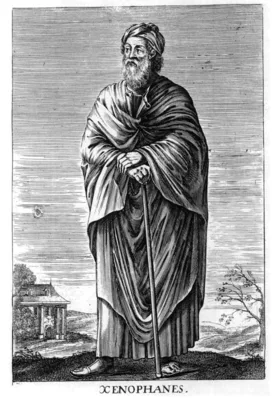
Xenophanes
Xenophanes was exiled from Colophon at twenty-five, for reasons no source gives, and spent sixty-seven years as a wandering poet. He mocked the gods of Homer and Hesiod as thieves and adulterers, said that every people paints its gods in its own likeness, and proposed instead one god, unlike mortals in body or in thought. He never denied that gods exist, but he said no one could know the truth about them: his was the first critique of the gods, not yet atheism.
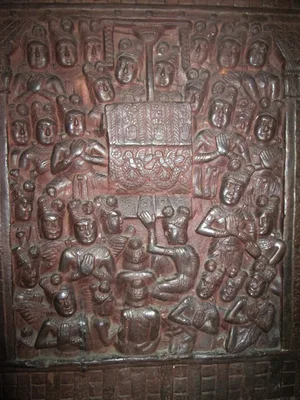
Ajita Kesakambali
Ajita Kesakambali was a wandering teacher of the Ganges valley around 500 BCE. He taught that a person is four elements and nothing more, that gifts and sacrifices earn nothing, and that the wise and the foolish alike are annihilated at death. No motive, life or writing of his survives. We know the doctrine only because the Buddhist and Jain schools that wanted to refute it wrote it down; the later Cārvāka school, often made his heir, was in large part described by its enemies too.

Protagoras
Protagoras, the first professed sophist and a friend of Pericles, opened his book On the Gods by saying he could not know whether they exist, because the question is obscure and life is short. He doubted rather than denied. Late writers say Athens burned the book and drove him to his death at sea; Plato's Socrates says he kept his good name to the end. The sources cannot settle it.
Diagoras of Melos
Diagoras of Melos was a poet whose lost hymns were thought pious. By 423 BCE he was the Athenian stage's byword for godlessness. In 415, in a city panicked by the mutilation of the herms, a year after it had crushed his island, he was condemned with a bounty on his head for profaning the Mysteries. No word of his own survives, and the sources leave open whether he denied the gods, mocked their rites, or was punished for being a Melian.
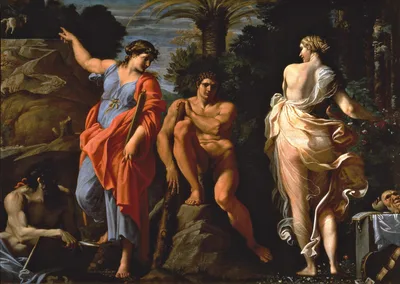
Prodicus of Ceos
Prodicus of Ceos was the fee-taking sophist famous for fine distinctions and for the fable of the Choice of Heracles. He left no surviving word on the gods. Later writers report that he explained them as the ancients' names for what fed and helped them: bread as Demeter, wine as Dionysus, the Nile as a god. From the third century BCE they listed him among the "so-called atheists". His unbelief is a reported theory and a label others fixed on him, not a declaration of his own.
Critias
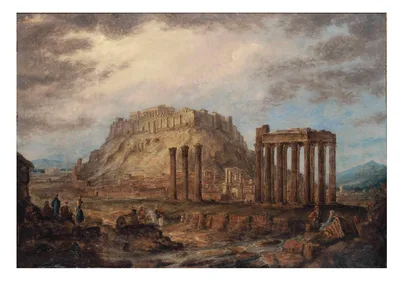
Critias was Plato's aristocratic kinsman and the hardest of the Thirty who ruled Athens in blood in 404–403 BCE. He left no word about his own belief. His name as an unbeliever rests on one verse speech, quoted by Sextus Empiricus six centuries later, in which the trickster Sisyphus says a clever man invented the fear of gods to police secret crimes. Ancient and modern readers give that speech either to Critias or to Euripides, so his unbelief is an attribution, not a confession.
Epicurus
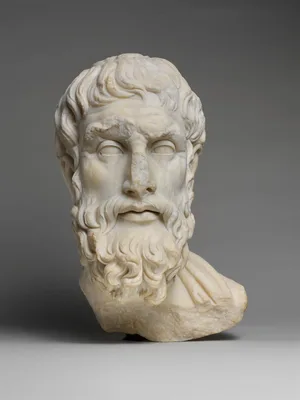
Epicurus was a Samian schoolboy who, by his own account, turned to philosophy at fourteen. In his Garden he taught that the gods exist, blessed and far away, and neither punish nor reward, so that the two great fears, of the sky and of death, could be cured by understanding nature. He never revised it. His critics, from Cicero to the Christians, called it atheism in polite words.
Theodorus the Atheist
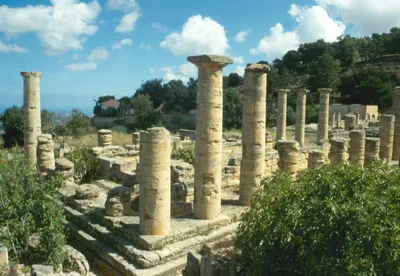
Theodorus of Cyrene was trained in the Cyrenaic school of pleasure and in the art of argument. He was remembered as the ancient world's plainest denier of the city's gods, and was driven out of Athens and of Cyrene for it. Nothing he wrote survives, and no source records why he stopped believing. "Atheist" meant something different to each of the writers who called him one.
Euhemerus
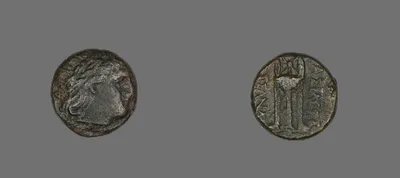
Euhemerus, a friend of King Cassander, wrote a Sacred Record claiming that the gods had been early kings, whose deeds were found on a golden pillar on an island no one else ever reached. The book is lost, and nothing records what he himself believed. He survives only as each later reader needed him: a liar to the Greek geographers, an atheist to Plutarch and Theophilus, and to the Christian apologists the best witness that the pagan gods had been men.
Lucretius
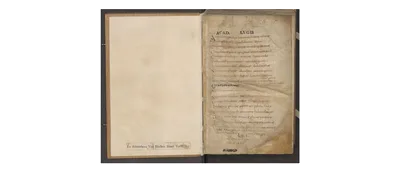
Almost nothing is known of Lucretius. He took Epicurus as his master for reasons no source records, and wrote a single unfinished poem to free its reader from religio, the fear of the gods and of death, keeping the gods only as remote and indifferent. His view never changes in the poem. His life was replaced by a Christian legend of madness, his text survived in one monastery copy, and it came back in 1417 to be read, imitated and answered as the oracle of atheists.
Wang Chong
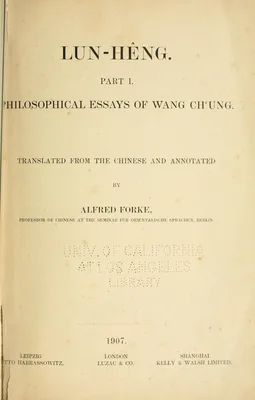
Wang Chong was a poor Confucian scholar of Kuaiji who read his way through the Luoyang bookstalls and could not accept what he found. He wrote the Lunheng to weigh the orthodox claims of his age against observation: Heaven has no mouth to rebuke rulers, thunder is a clash of natural forces, and the dead do not become conscious ghosts. He kept fate and omens as natural signs, and wrote partly to stop ruinous funerals. He never recanted, and ended his life accepting that people, like animals, live a while and die.
Lucian of Samosata
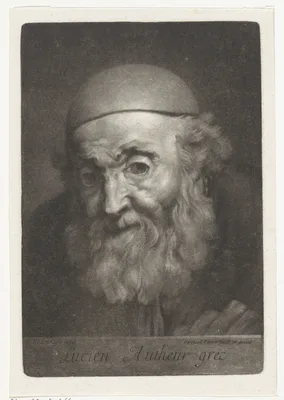
Lucian was a Syrian who escaped a sculptor's workshop for rhetoric, and then gave up on philosophy. In his forties he laughed at the gods of Olympus, their oracles, their sacrifices and their prophets, through comic characters whose masks he never removed. Only late in life did he declare for Epicurus. He never called himself an atheist, and what the surviving texts show is less a denial of the gods than a refusal to be frightened by them.