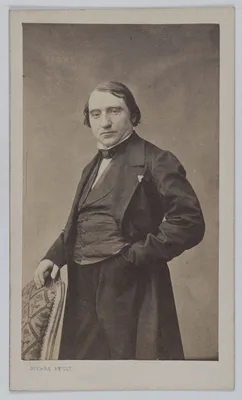
Ernest Renan was a Breton boy who never doubted his priests. He lost his faith not to a woman or to politics but to Hebrew philology at Saint-Sulpice, and walked out of the seminary in 1845 because he could not become a priest without hypocrisy. He told the life of Jesus as the life of an incomparable man (1863), and lost his chair for it. He ended neither believer nor atheist, writing that atheism is logical in this universe but that we may be atheists for not seeing far enough, and addressing "a hidden God".
The belief timeline
- Faith (1829–1843) — Taught by the Tréguier priests; "I never thought to doubt anything they told me"; chorister at Saint-Nicolas; tonsure Christmas 1843 [5][6][9][13]
- Doubt (1843–45 (first crack 1838)) — Childhood crack: Paris Catholicism against the priests of Tréguier (1838, Robinson's reading, not Renan's). The real doubt: Hebrew philology at Saint-Sulpice, Isaiah, Daniel, the Pentateuch; "a stitch in the tissue of my faith" broken each day. Why the later date: the first was a boy's puzzlement; the second a case against the whole book [9][16][17]
- Break (Autumn 1845) — Refuses the subdiaconate, leaves Saint-Sulpice; private, practical act, not a public declaration [18][19][20][21]
- Declaration (1862–63) — "An incomparable man" lecture (Feb. 1862); Life of Jesus (June 1863): no miracle proved, Jesus a man [34][35][36]
- Revision (1875–92) — Souvenirs; "Prayer on the Acropolis"; Feuilles: atheism "logical and fatal" but perhaps from not seeing far; "a hidden God"; disavows deathbed blasphemies [39][42][45][46]
Notes to the timeline (17)
- [5] His mother led him to the shrine of St Yves and put him under the saint's care — Renan, Recollections of My Youth, tr. C. B. Pitman (1883; reprint 1897). Project Gutenberg #12748 (proofread, no page numbers; cited by chapter and part; texts/recollections-gutenberg.txt). Page-numbered scan: IA recollectionsofm00renarich (1883), texts/recollections-1883.txt (OCR too noisy to give reliable pages), The Flax-crusher, Part I; A. Mary F. Robinson (Madame James Darmesteter), The Life of Ernest Renan (London: Methuen, 1897), pp. 22–23.
- [6] The priests of Tréguier were his first masters; "I never thought to doubt anything they told me until I was sixteen" (he was about fifteen and a half) — Renan, Recollections of My Youth, Flax-crusher I (Q1); Life of Ernest Renan, p. 29.
- [9] At Saint-Nicolas he found "such a person as a serious and learned layman" and contemporary literature; devout there (chorister, hymn-writer); Robinson reads the contrast of the two Catholicisms as his first crack: "If the one were true, the other must be false" — Renan, Recollections of My Youth, Chardonnet III (Q5); Life of Ernest Renan, pp. 31–33.
- [13] Accepted the tonsure at Christmas 1843 (his director took the responsibility); minor orders 5 June 1844 — William Barry, Renan (London: Hodder, 1905), p. 39; Lewis Freeman Mott, Ernest Renan (New York: Appleton, 1921), p. 2, pp. 25–26.
- [16] The Bible read as any ancient book: Isaiah's second part, Daniel (169–170 BC), the Pentateuch; one proved error ruins inspiration; a subtle answer for ten thousand points is no answer — Renan, Recollections of My Youth, St Sulpice II (Q7), III (Q8, Q9); Life of Ernest Renan, pp. 48–49.
- [17] His directors told him to ignore the doubts and go on; some thought they would pass with ordination — Renan, Recollections of My Youth, St Sulpice IV (OQ11).
- [18] Letters of 26 March 1844 and 22 March 1845 to François Liart: doubts "in an increasingly rapid rate"; resolved not to take the subdiaconate — Renan, Recollections of My Youth, St Sulpice IV.
- [19] Summer 1845 at Tréguier: stopped taking the sacraments; two months "Protestant"; read Herder; "I was Christian after the fashion of a professor of theology at Halle or Tübingen" — Renan, Recollections of My Youth, St Sulpice V (Q13, Q14); Life of Ernest Renan, pp. 51–53.
- [20] 14 Aug and 6 Sept 1845 letters: "it is not in human power to believe or not to believe at will"; "I could not become a priest without being guilty of hypocrisy"; fear of his mother — Renan, Recollections of My Youth, St Sulpice V and Appendix (Q15–Q17).
- [21] Left Saint-Sulpice in October 1845 (6th per Renan; 9th per Mott and Robinson's letters) — Renan, Recollections of My Youth, St Sulpice V (Q19); M. E. Grant Duff, Ernest Renan (London: Macmillan, 1893), p. 19; Mott, Ernest Renan, p. 2; Life of Ernest Renan, p. 54, 59. Accounts differ; see the disputed points.
- [34] Inaugural lecture (21 or 22 Feb. 1862): "an incomparable man..."; riot; course suspended by decree of 26 Feb. — Mott, Ernest Renan, pp. 205, 217–18; Life of Ernest Renan, pp. 154–56; Barry, Renan, pp. 89–90.
- [35] Life of Jesus published 23/24 June 1863; 60,000 copies by November; editions of 5,000 sold in eight or ten days — Life of Ernest Renan, p. 157; Mott, Ernest Renan, pp. 231, 235.
- [36] Its stated principle: miracles banished "in the name of universal experience", not by philosophy — Renan, The Life of Jesus (anonymous London translation, 1864; Modern Library reprint, introduction omitted). Gutenberg #16581 (no page numbers; cited by section). Also IA thelifeofjesus00renauoft (Wilbour tr., 1891; OCR noisy; not quoted), Introduction (Q25, Q26); Renan, Vie de Jésus, 9th ed. (Michel Lévy, 1863). Gutenberg #15113, Introduction.
- [39] At Athens in 1865 he wrote the "Prayer on the Acropolis", published in the Souvenirs — Renan, Recollections of My Youth, Prayer on the Acropolis (Q39).
- [42] Began recalling his childhood at Ischia 20 Sept. 1875; serialised in the Revue des deux mondes from 1876; volume 1883 — Life of Ernest Renan, pp. 223, 230; Mott, Ernest Renan, p. 280.
- [45] Feuilles détachées (1892): "Examen de conscience philosophique"; preface ends "tu es vraiment un Dieu caché" — Renan, Feuilles détachées, faisant suite aux Souvenirs d'enfance et de jeunesse (Calmann Lévy, 1892), pp. 410, XXIX (Q34, Q35).
- [46] In the Souvenirs he protested in advance against any weakness of his last hour — Renan, Recollections of My Youth, First Steps V (Q37, Q38).
The Task of Honesty
On 6 October 1845, by his own later account, a twenty-two-year-old seminarian named Ernest Renan walked down the steps of the seminary of Saint-Sulpice in Paris, "never again to remount them in priestly dress." He had already taken the tonsure and minor orders. He had come within a step of the priesthood and turned back, not, he insisted, because of a woman or of politics, but because of Hebrew. "My reasons were entirely of a philological and critical order; not in the least of a metaphysical, political, or moral kind."1234
Eighteen years later he published the Life of Jesus, a book that told the story of Jesus as the life of a man and sold sixty thousand copies in five months. This chapter asks how a boy who never thought to doubt his priests came to that book, and why, after it, he refused to call himself an atheist.
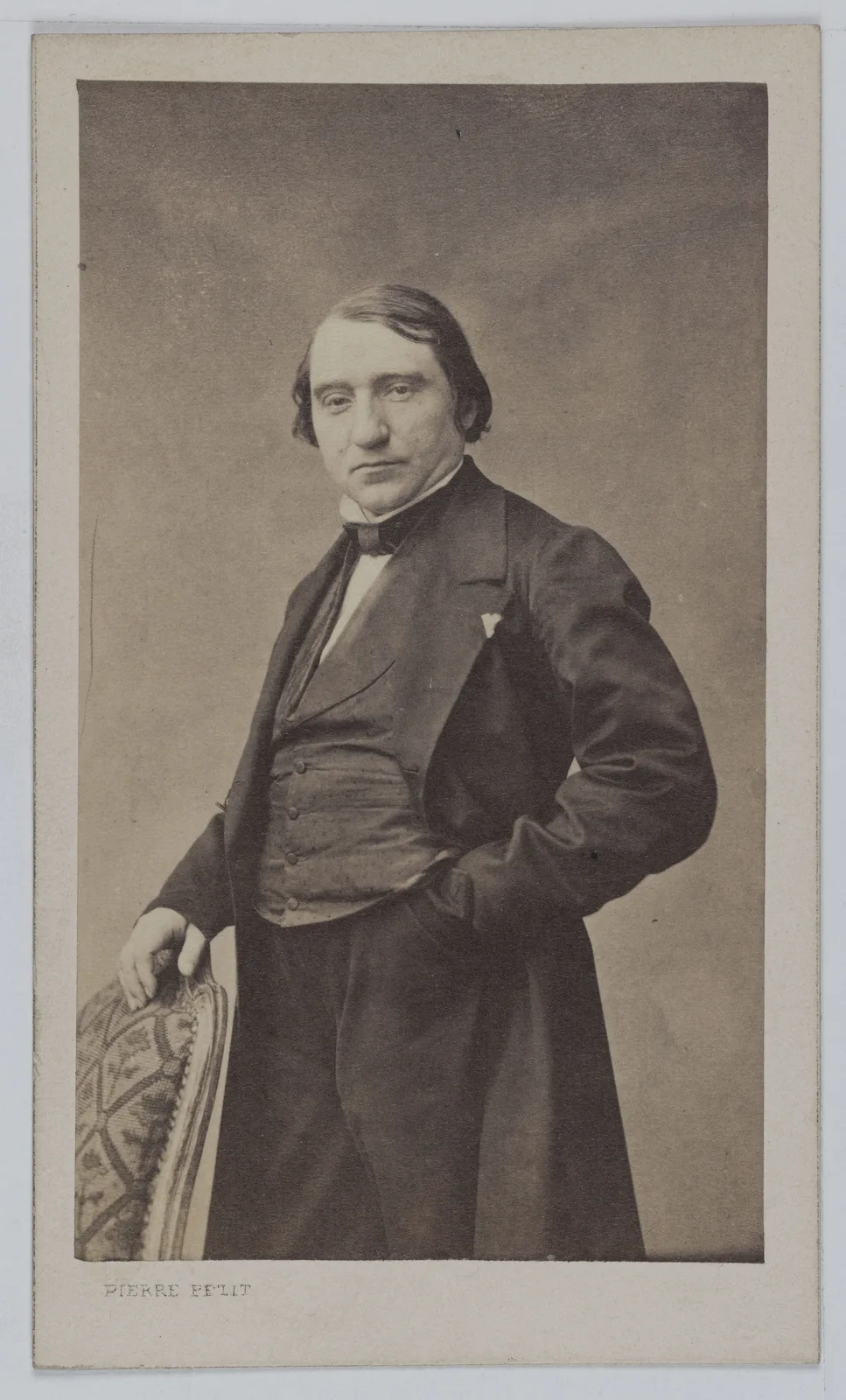
A town of priests
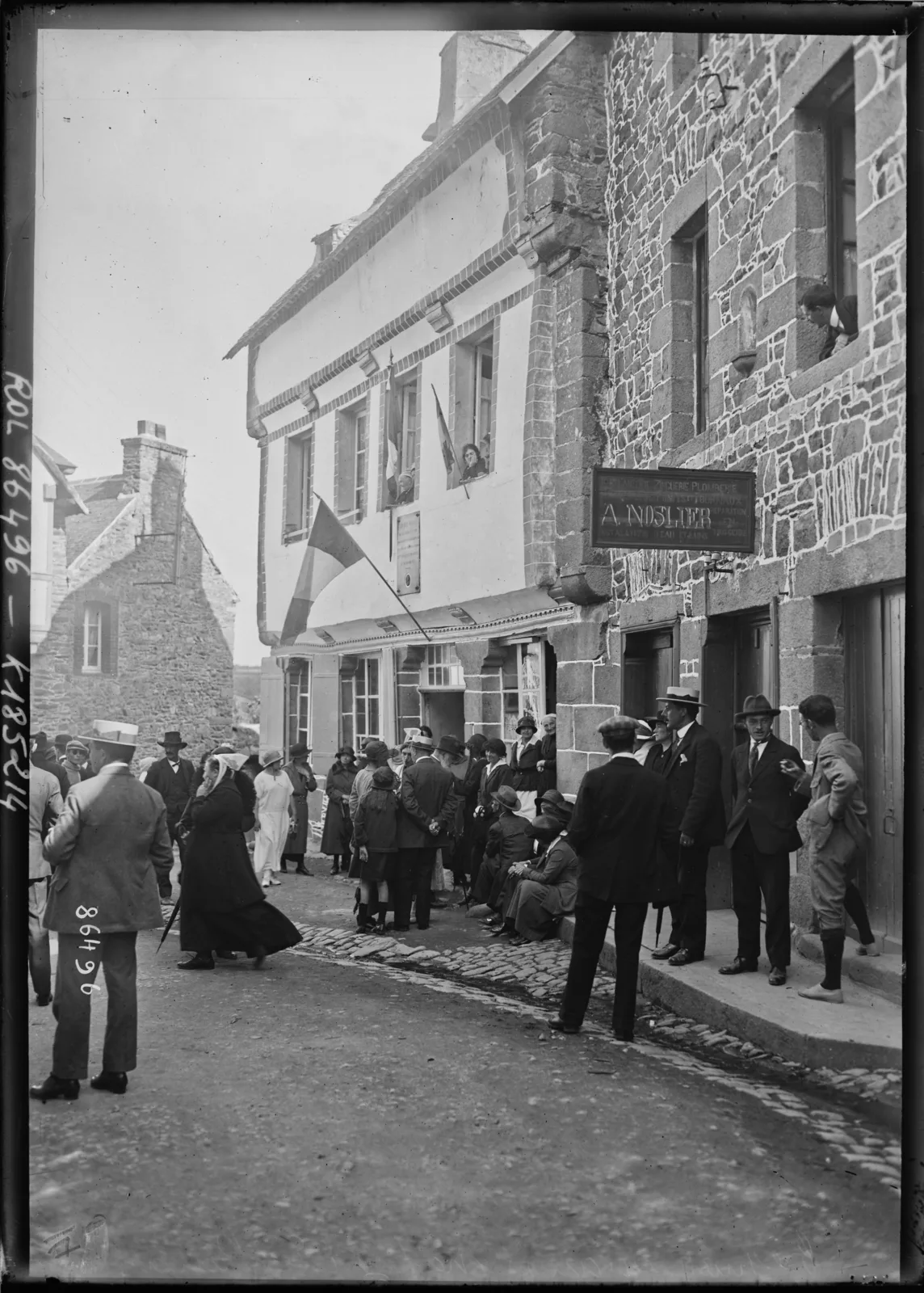
He was born at Tréguier in Brittany at the end of February 1823; accounts differ on whether it was the 27th or the 28th.5 His father, a sailor, was lost in 1828, when his ship came into Tréguier harbour without him, and left the family in debt.67 His mother put him under the care of the town's saint, St Yves, and the priests of Tréguier's college became his first masters. "Their every word was my law, and I had so much respect for them that I never thought to doubt anything they told me until I was sixteen years of age, when I came to Paris."8910 They taught him, he wrote, to love truth, to respect reason, and to see the serious side of life, the only part of him that never changed.11 His sister Henriette, twelve years older, gave up the convent to pay the family's debts and pay for his schooling, and in 1835 went to Paris as a governess.1213
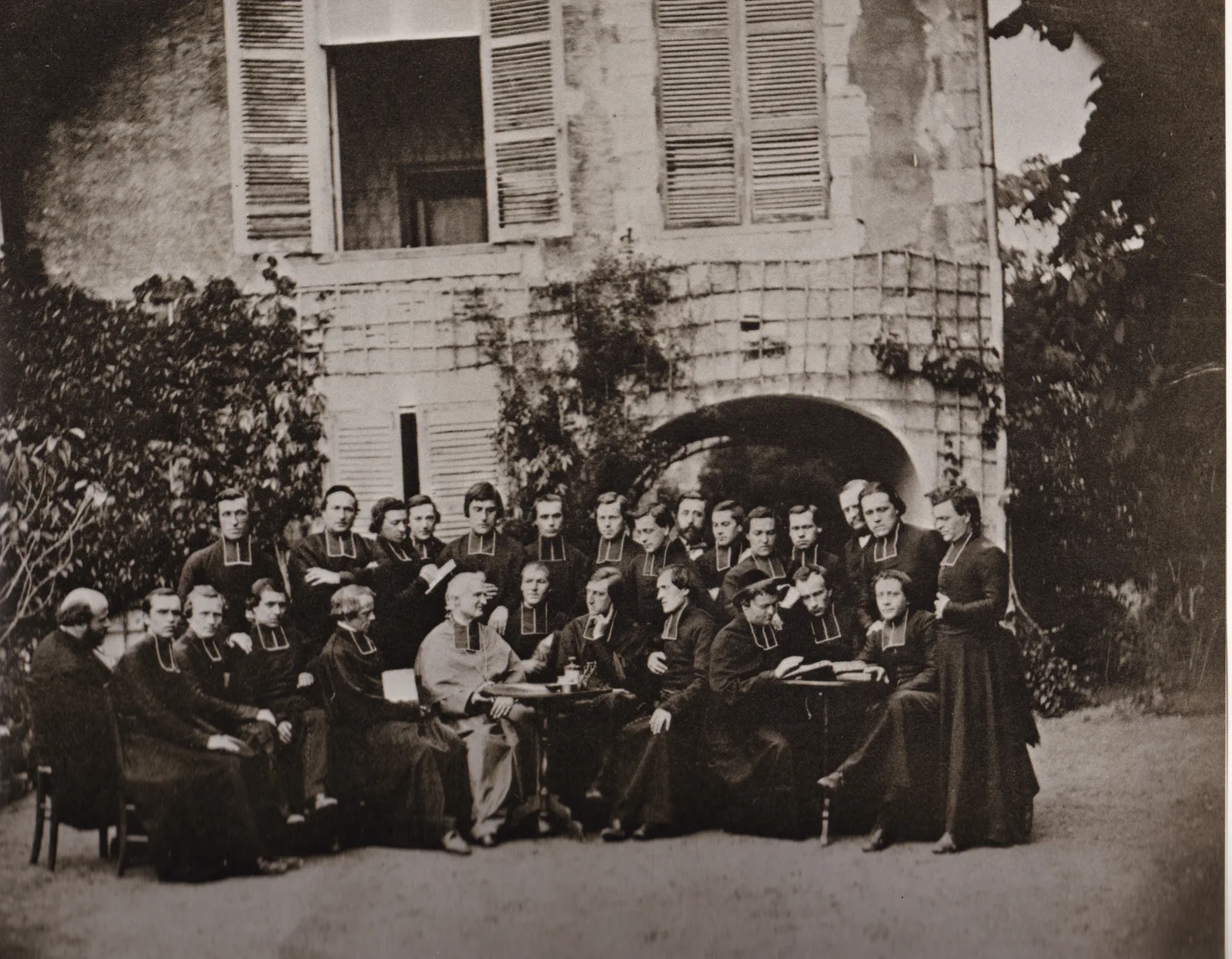
In September 1838, at fifteen, a prize-winning pupil, he was recruited by Félix Dupanloup, the head of the seminary of Saint-Nicolas du Chardonnet, and brought to Paris.1 There he was a devout chorister and writer of hymns, but he also discovered, to his surprise, "that there was such a person as a serious and learned layman," and that contemporary literature was worth reading. His biographer reads the contrast between the Catholicism of Paris and the faith of Tréguier as his first crack; Renan himself does not put it that way.1415 At Issy, the philosophy house of Saint-Sulpice, he read Kant and Herder, and kept his faith.16 On the belief timeline, his faith is his childhood in Tréguier and his first seminary years.
Hebrew
He entered Saint-Sulpice proper on 13 October 1843 and took the tonsure that Christmas.1718 There the Abbé Le Hir taught him Hebrew and Syriac and the German method of reading texts, and by 1844 he was teaching Hebrew grammar to his fellow students.19 He began to read the Bible as he would read any ancient book: the second part of Isaiah, the late date of the Book of Daniel, the authorship of the Pentateuch. "My doubts did not arise from one train of reasoning but from ten thousand." A book claimed as inspired, he reasoned, had only to be wrong once for the whole theory of its inspiration to fall.202122 "Each day a stitch in the tissue of my faith was broken."23 When he took his troubles to his director, he was told to pay them no heed and keep straight on.2425 The belief timeline places his doubt in these years, 1843 to 1845, and not at the first Paris crack, because the first was a boy's puzzlement and the second was a scholar's case against the whole book.
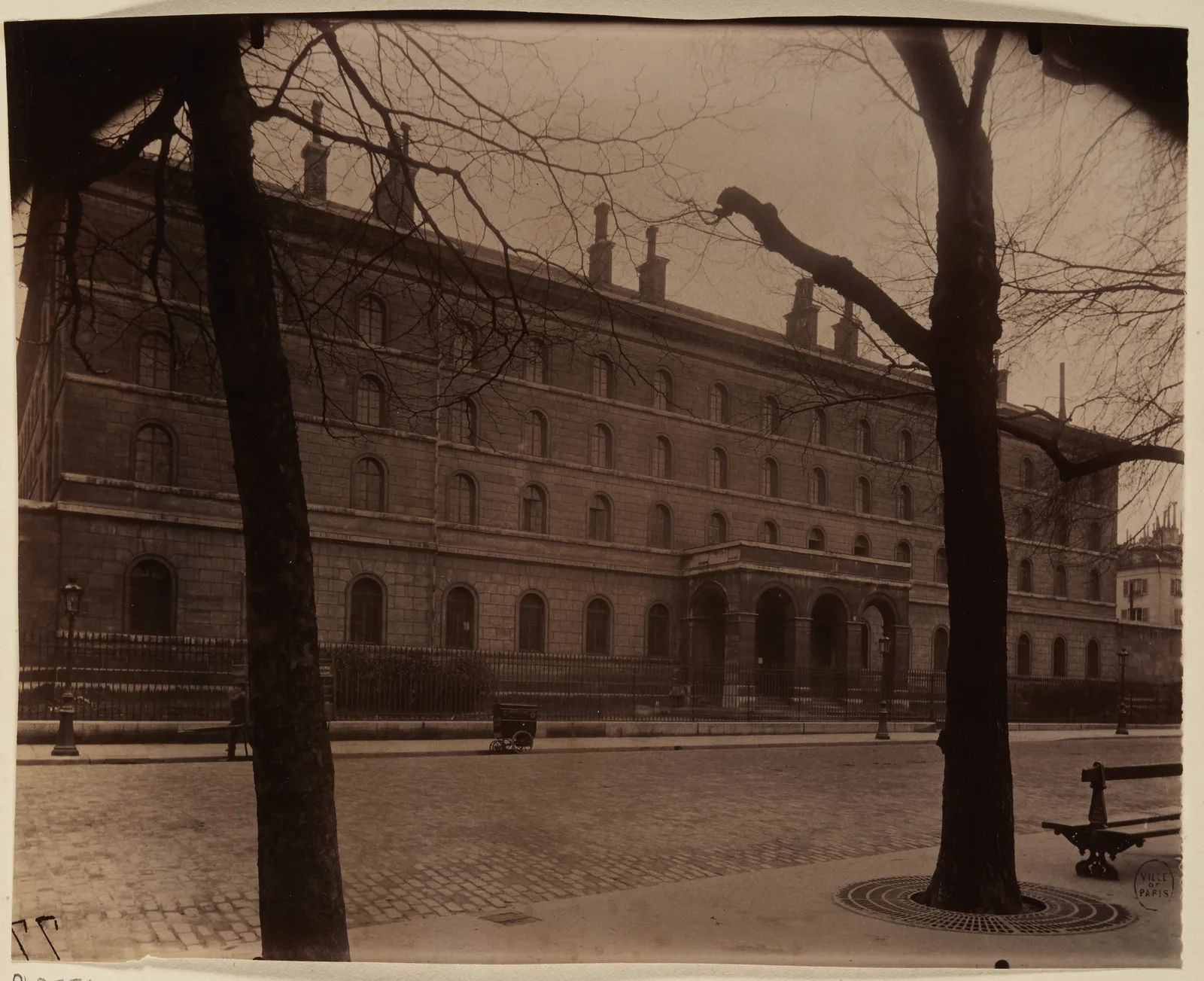
In March 1845 he resolved not to take the subdiaconate, the next step to the priesthood.26 That summer at Tréguier he stopped taking the sacraments, and for nearly two months, he wrote, he was a Protestant, "Christian after the fashion of a professor of theology at Halle or Tübingen."2728 An inner voice told him: "Thou art no longer Catholic; thy robe is a lie; cast it off."29 He wrote to a friend that it was not in human power to believe or not believe at will, and to his director that he "could not become a priest without being guilty of hypocrisy."303132 The hardest part was his mother. "The task of logic was done; that of honesty was about to begin."3033
The break
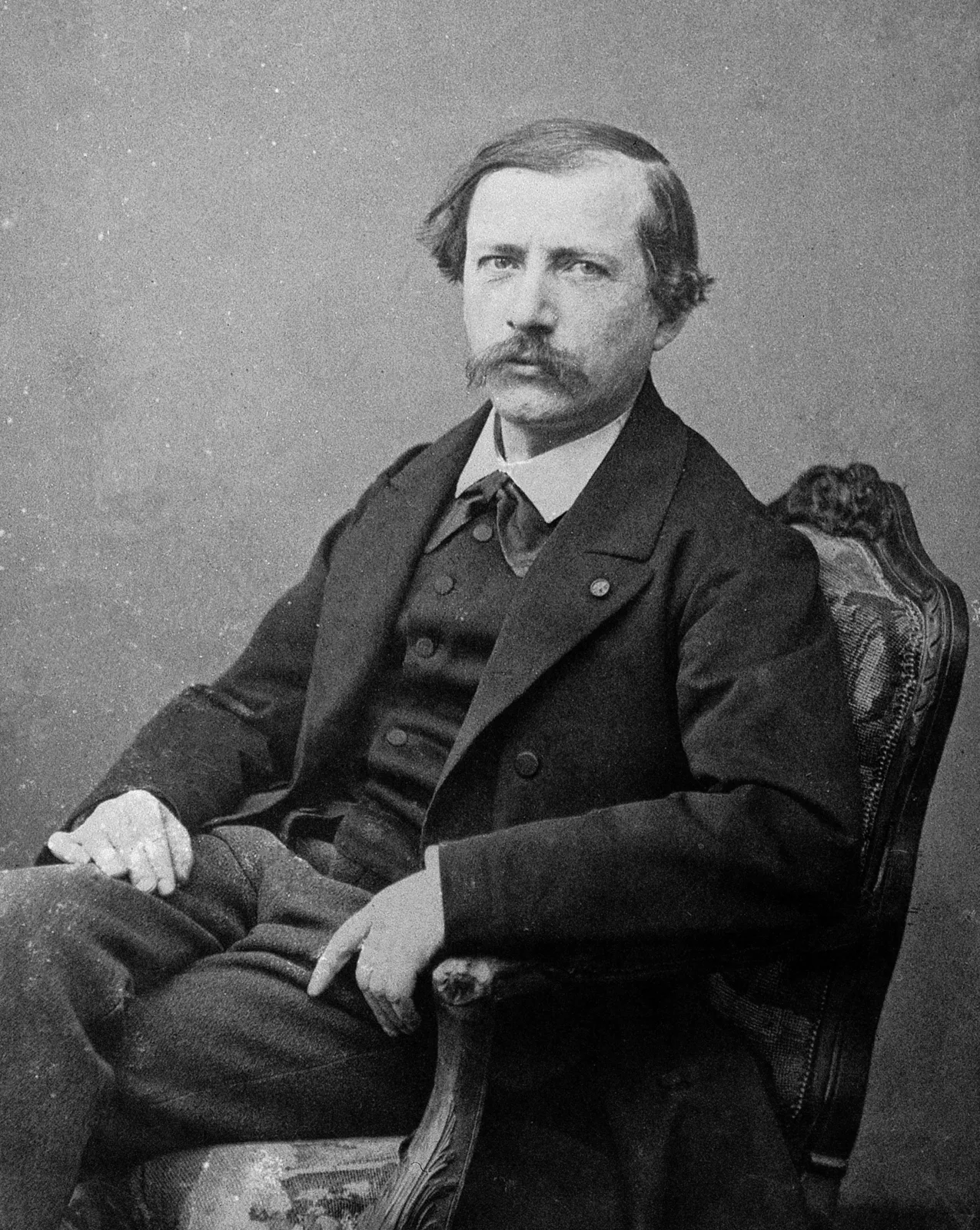
He left in October 1845; his own memoir says the 6th, his letters of the time the 9th.2 Henriette sent him money from Poland, about twelve hundred francs by his account, which he scarcely touched but which he called "the foundation of the independence and of the dignity of my whole life."3435 Dupanloup, his old superior, offered his purse.3436 For a while he went each evening to the church of Saint-Sulpice. "There I did my best to believe, but it was of no use."3738 That autumn he met the young chemist Marcellin Berthelot, who taught him what the seminary had not, while Renan taught him theology and Hebrew.3940 The timeline gives the departure of 1845 a mark of its own: a private, practical break, not yet a public declaration.
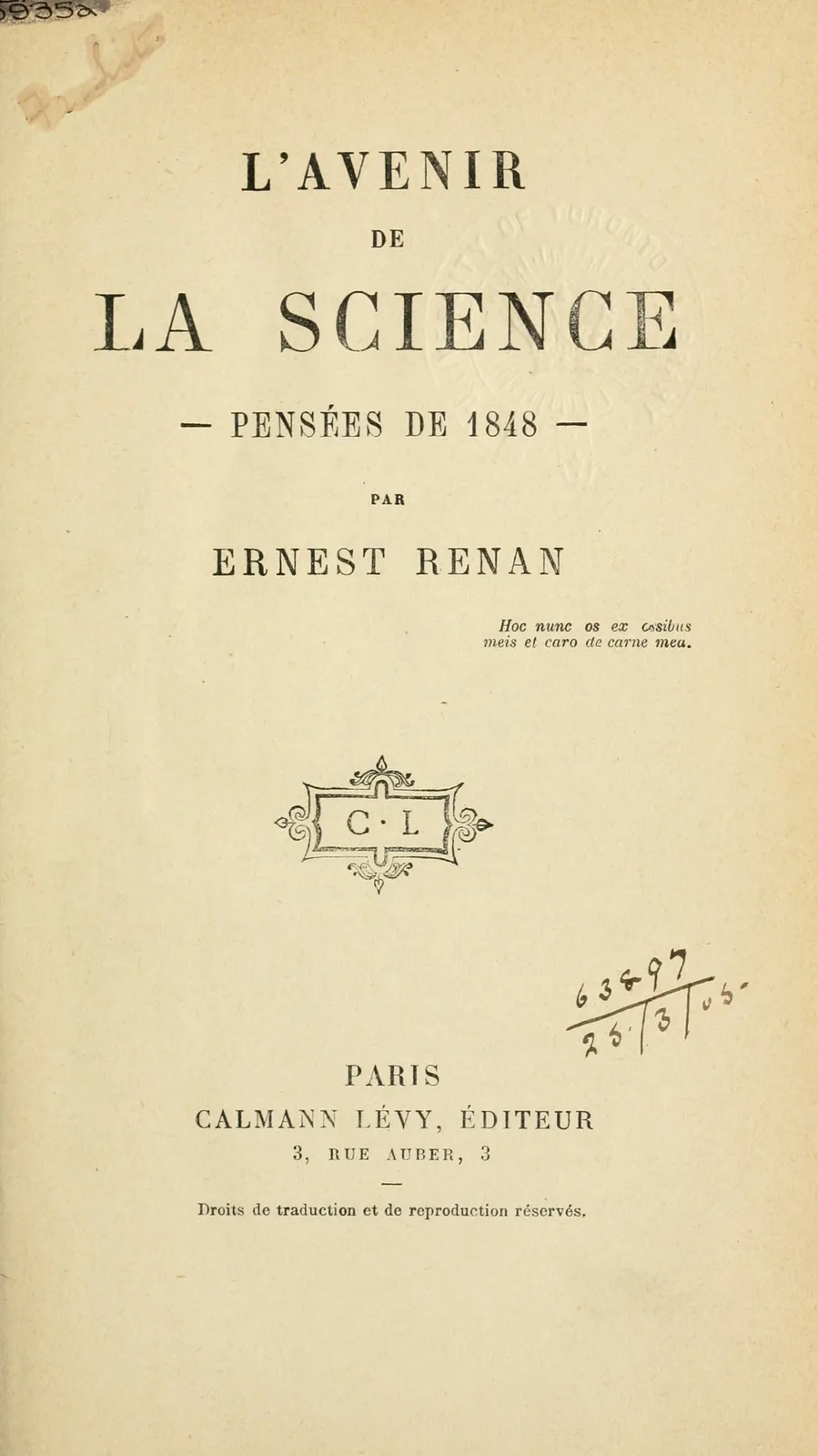
In 1848, the year of revolution, he wrote The Future of Science, published only in 1890. His religion, he would say in its preface, was always "le progrès de la raison, c'est-à-dire de la science," the progress of reason, that is to say of science.4142 The atheist, he wrote then, was the indifferent man, "l'homme superficiel et léger," the frivolous man; and he expected the best believing souls to think him impious and damned, as their faith required.43444546
Ghazir and Amchit
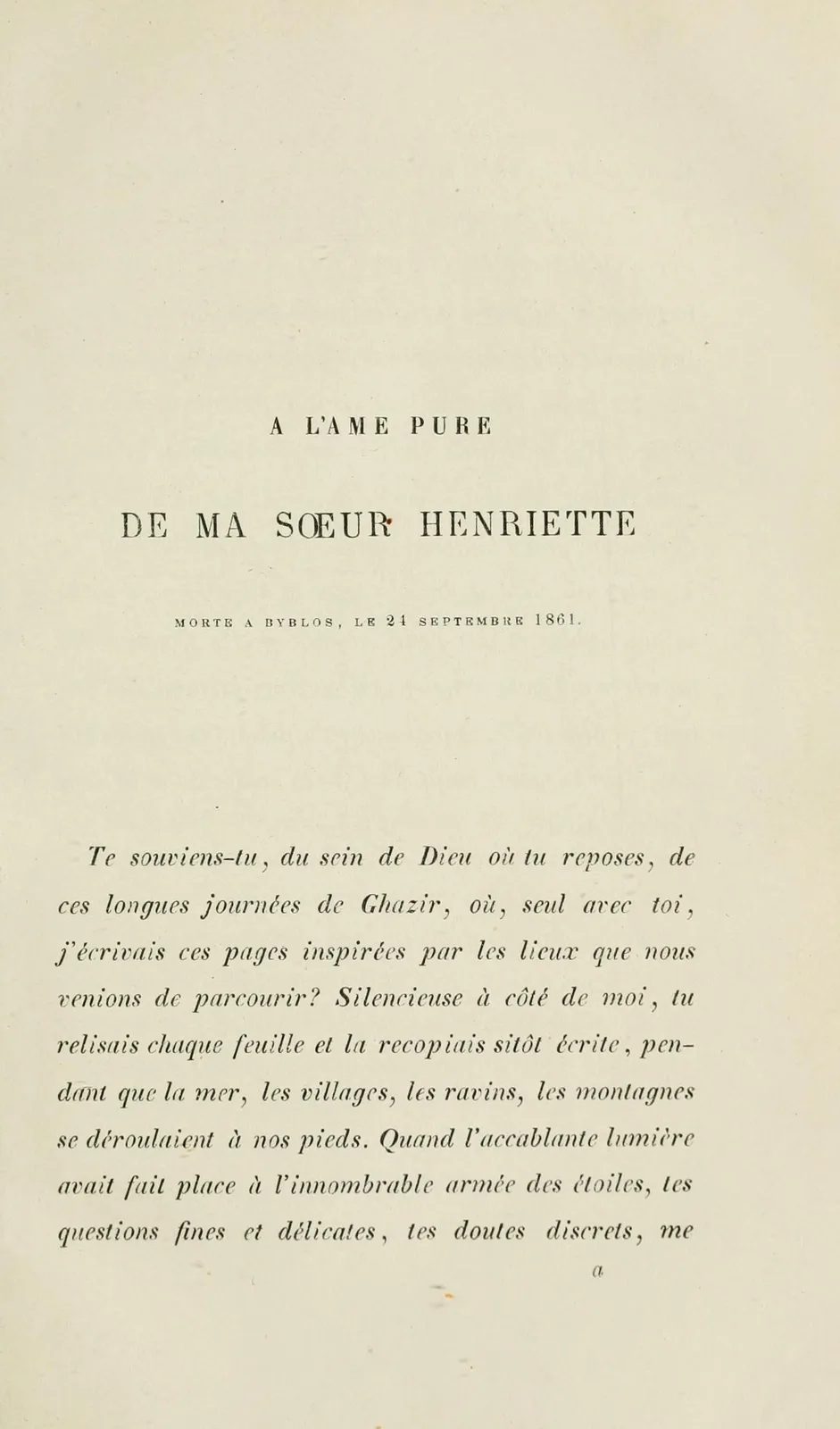
He became a scholar of Semitic languages, married Cornélie Scheffer in 1856, and in 1860 the Emperor sent him on an archaeological mission to Phoenicia, in Lebanon. Henriette went with him.4748 In 1861, at Ghazir, he began the Life of Jesus, and she copied each page as he wrote it. That September both fell ill with fever at Amchit, near Byblos; Renan lay unconscious while Henriette died on 24 September. He dedicated the book to her: "Dost thou recall, from the bosom of God where thou reposest, those long days at Ghazir, in which, alone with thee, I wrote these pages?"495051
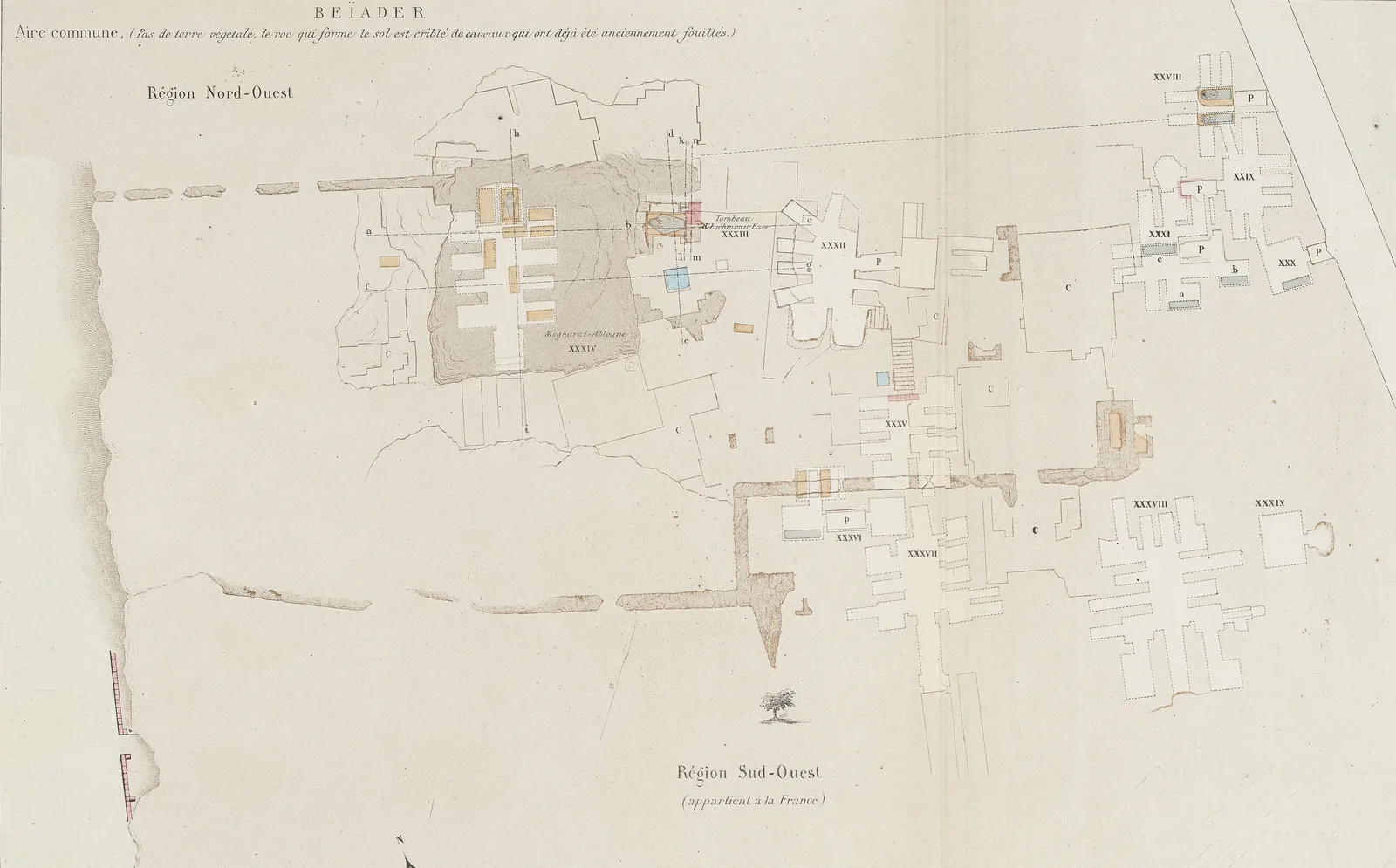
The Life of Jesus
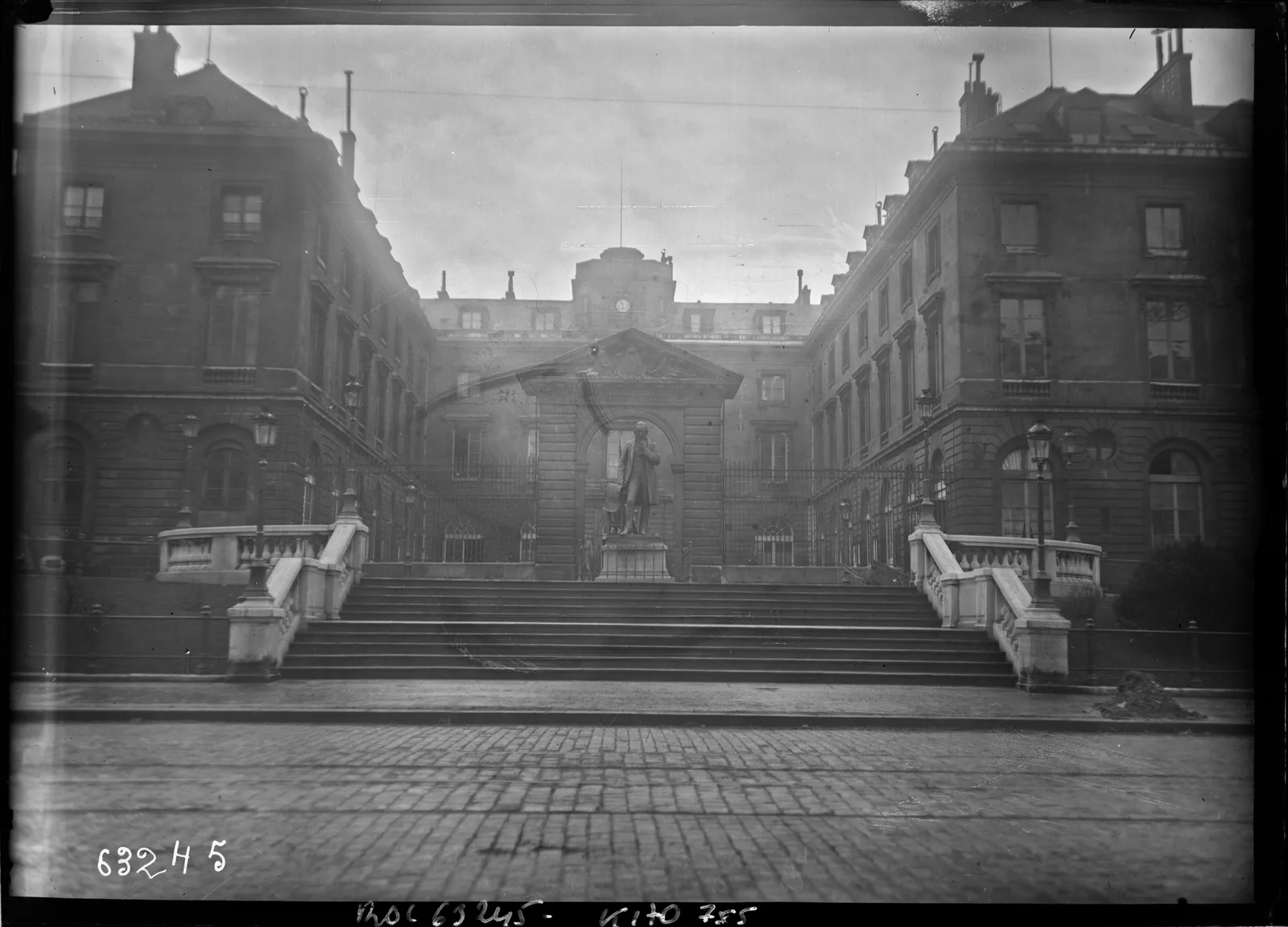
In January 1862 he was appointed professor of Hebrew at the Collège de France. In his opening lecture that February he called Jesus "an incomparable man," so great that he would not contradict those who called him God. The words caused a riot, and four days later the government suspended his course.525354
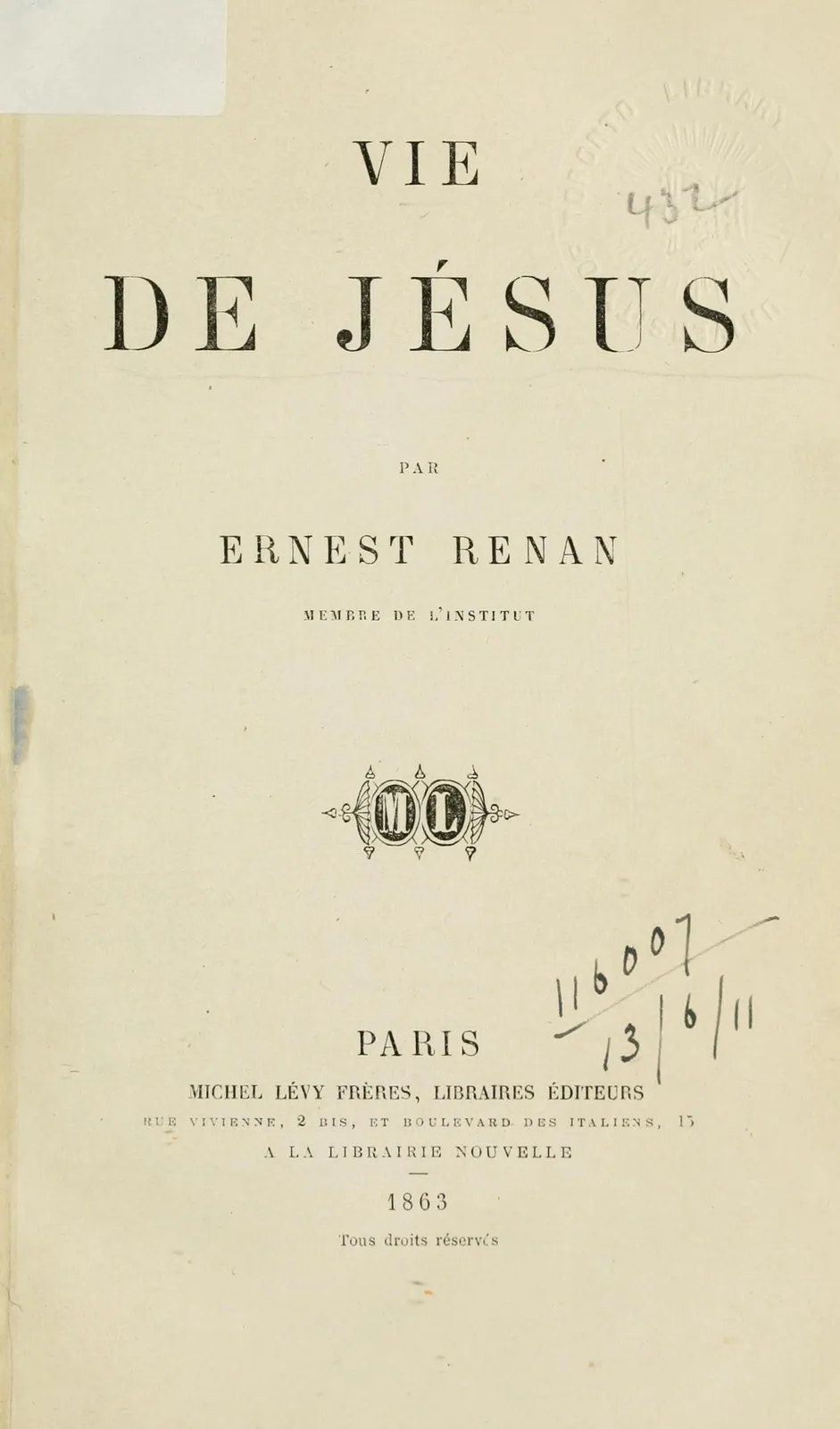
The Life of Jesus appeared in June 1863. "We do not say, 'Miracles are impossible.' We say, 'Up to this time a miracle has never been proved.'" Miracles were banished from history "not, then, in the name of this or that philosophy, but in the name of universal experience."55565758 Yet the book ended in reverence: "Whatever may be the unexpected phenomena of the future, Jesus will not be surpassed."59 On the timeline, the lecture and the book of 1862–63 together are his declaration.
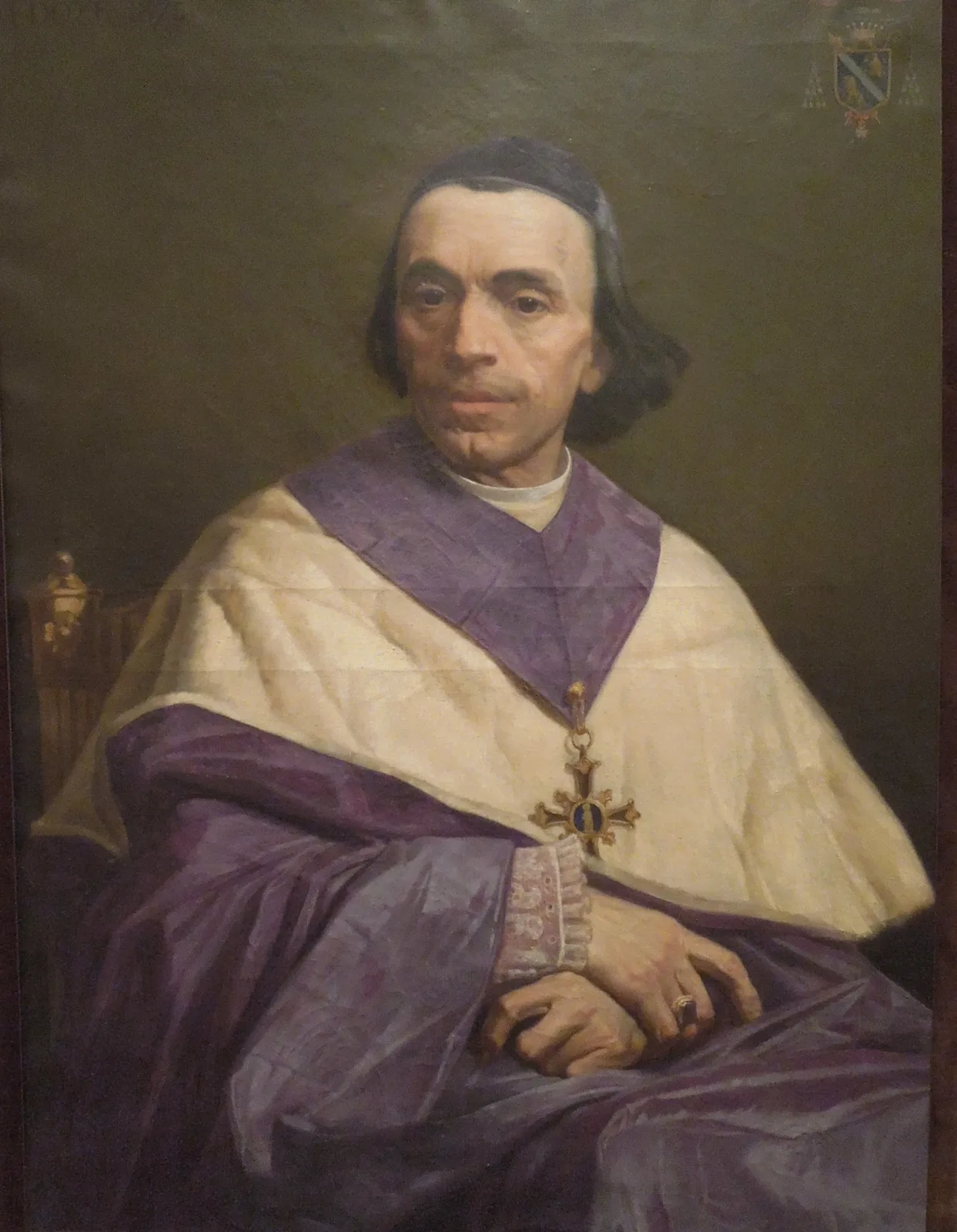
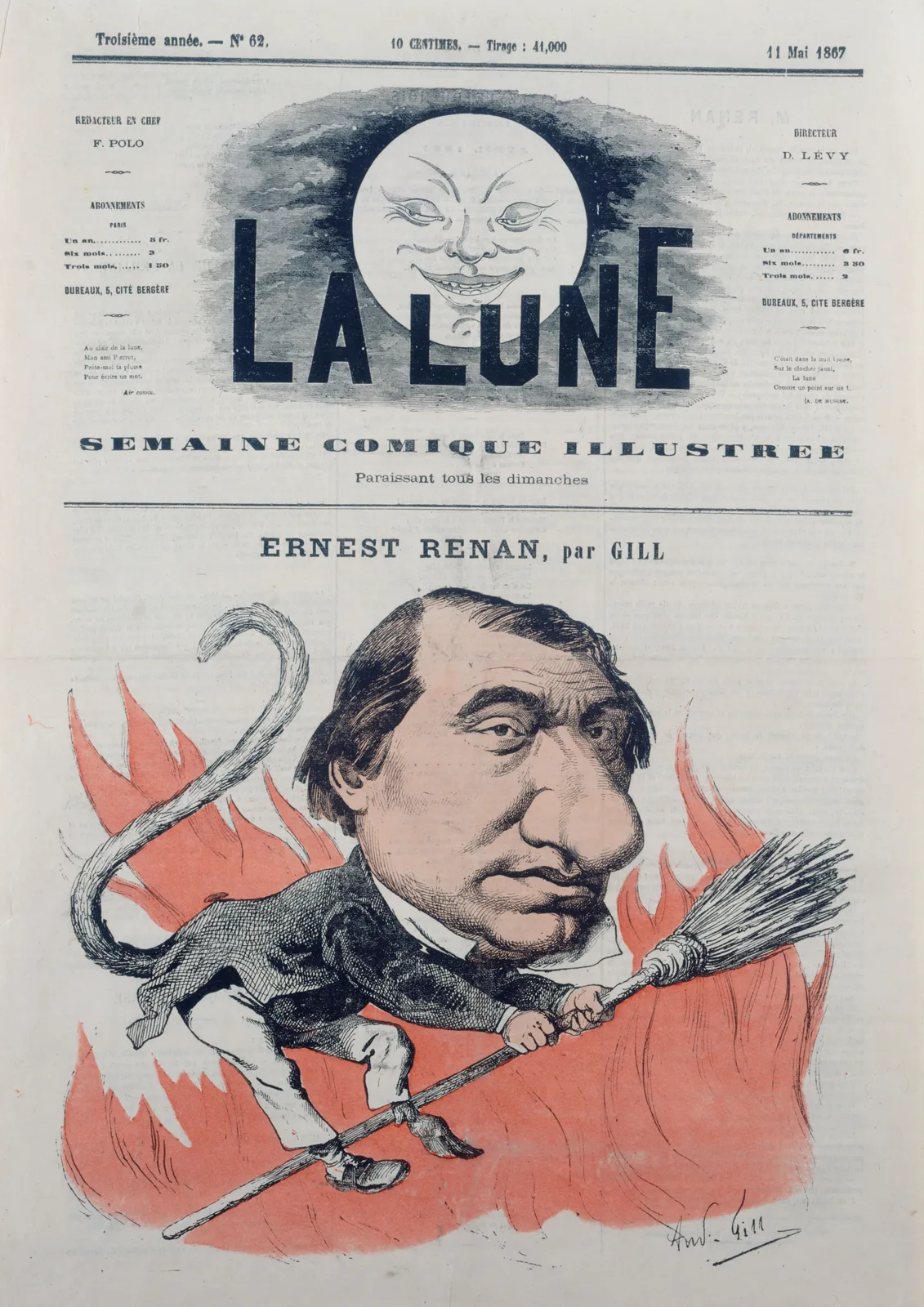
The answers came at once. Bishop Plantier of Nîmes, in a pastoral letter, turned Renan's own words against him: if he did not say miracles were impossible, then they were possible, and belief in them might be legitimate.6061 The Sorbonne professor Charles Freppel complained that Renan had written a novel in place of scholarship.62 The liberal Catholic Montalembert asked a friend to imagine what he would feel if his own father were publicly treated as a charming impostor.63 A Jansenist reviewer wrote that he believed in the Gospels of Matthew, Mark, Luke and John, but not in the Gospel of M. Renan.64 Dupanloup, now Bishop of Orléans, challenged Renan and his friends either to say they believed in God and the soul or to accept the name of atheists and materialists.6566 In June 1864 the government removed him from his chair. Offered a library post instead, he refused it: "Pecunia tua tecum sit," keep your money.67
A hidden God
He was restored to his chair in 1870, elected to the French Academy in 1878, and made Administrator of the Collège de France in 1883.686970 At Athens in 1865 he had written his "Prayer on the Acropolis," a farewell to the faith of his youth: our obligations to it are discharged, he wrote, when we have wrapped it in the purple shroud "within the folds of which slumber the Gods that are dead."7172 In the Recollections of My Youth (1883) he wrote that his life was still governed by a faith he no longer had, "for one of the peculiarities of faith is that its action does not cease with its disappearance."7374 He protested in advance against any weakness of his last hours: it was the sane Renan, not the one "half destroyed by death," whom he wished to be believed, and he disavowed any blasphemy he might utter at the end "against the Almighty."7576
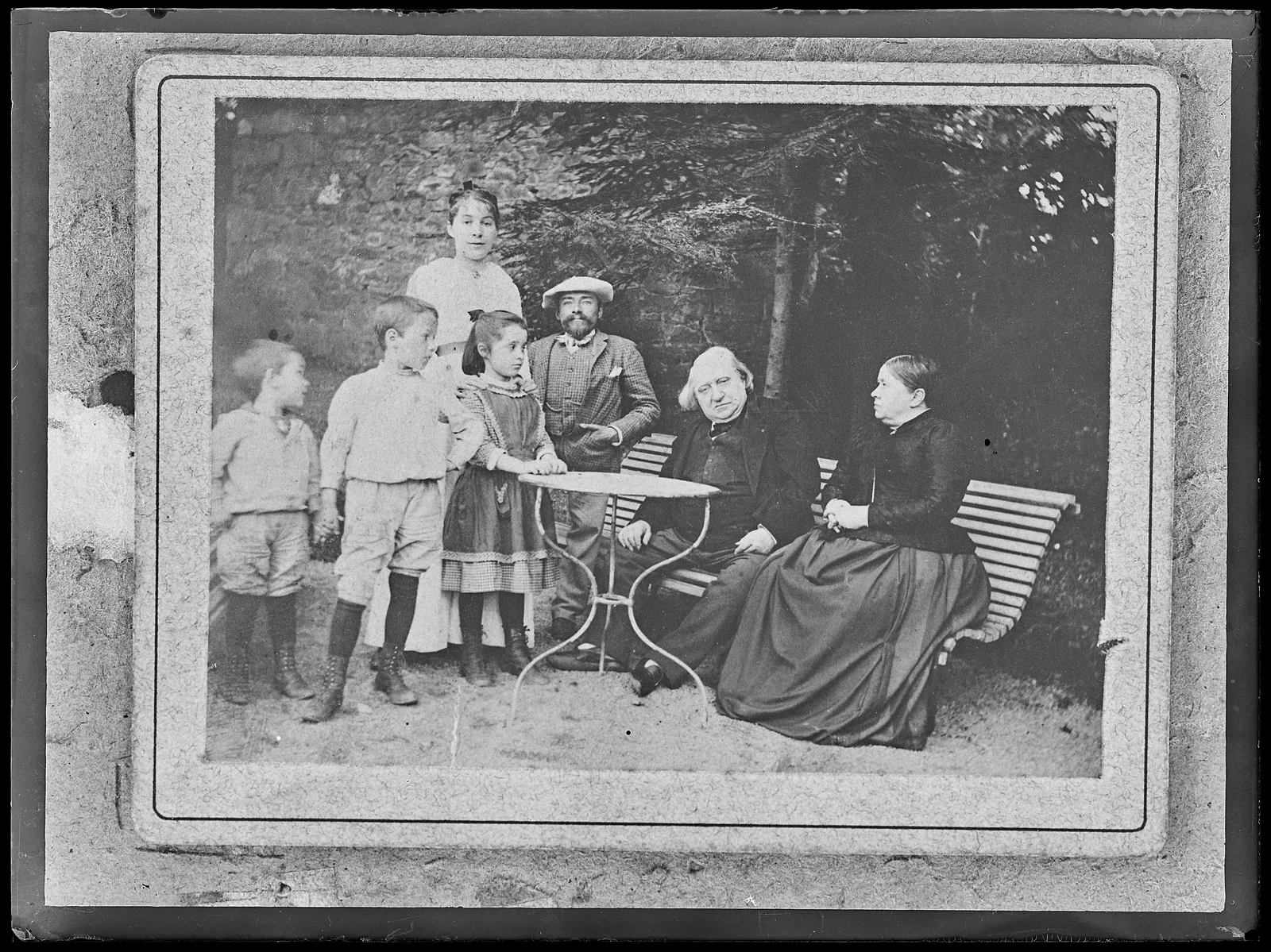
In 1892, in a last book of essays, he set down his final position on God. We do not see God in this universe, he wrote; "l'athéisme y est logique et fatal," atheism is logical and unavoidable here; but this universe is perhaps subordinate, and "on est peut-être athée pour ne pas voir assez loin," perhaps we are atheists for not seeing far enough. And to the God no one answers: "O Dieu, que nous adorons malgré nous, que nous prions vingt fois par jour sans le savoir, tu es vraiment un Dieu caché!" O God, whom we adore in spite of ourselves, whom we pray to twenty times a day without knowing it, you are truly a hidden God.777879 On the timeline, these late writings, from 1875 to 1892, are his revision: not a return to the Church, but a refusal to close the question.
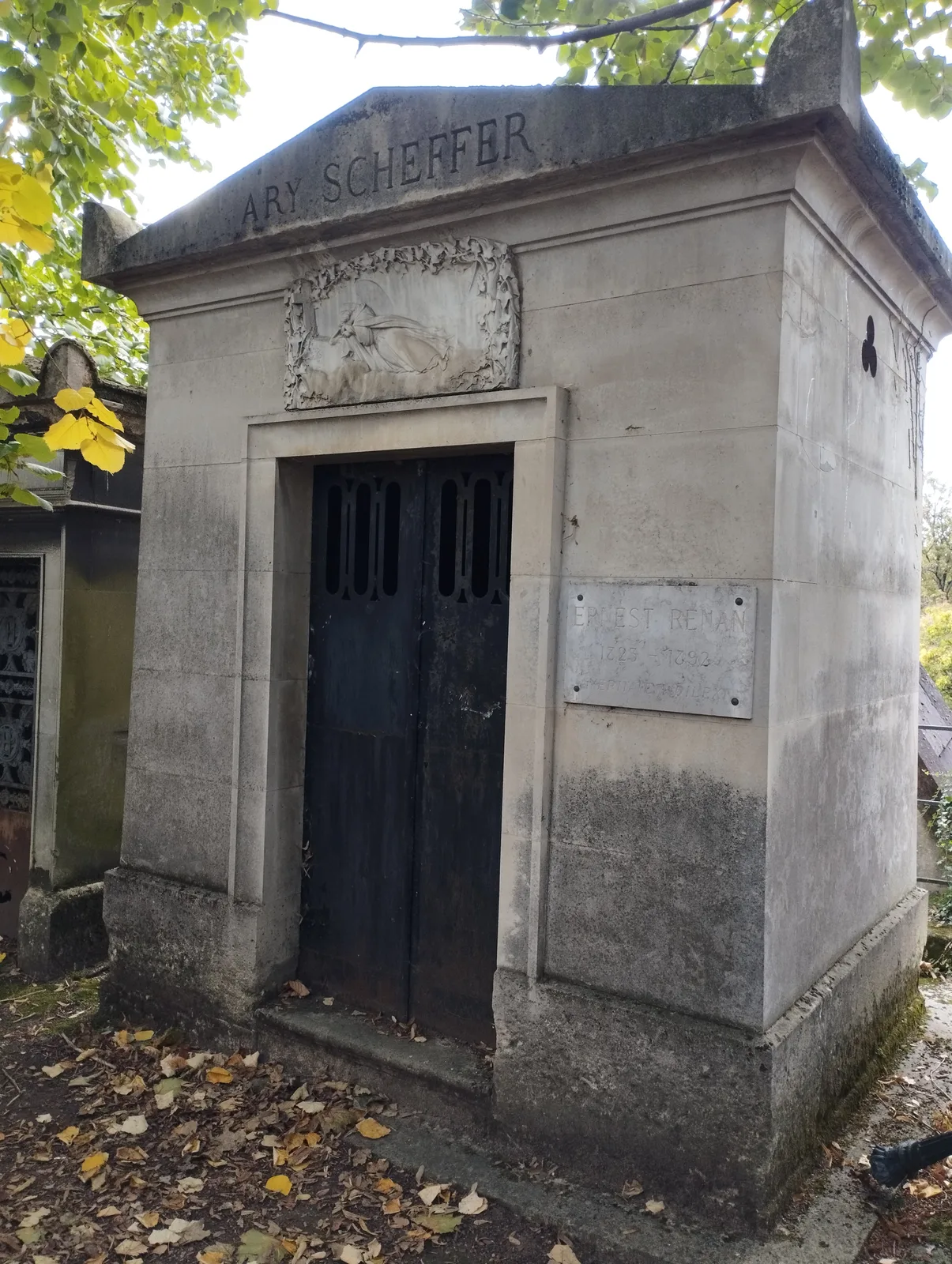
He died at the Collège de France on 2 October 1892; accounts differ on the day by a little.80 He was given a state funeral. Burial in the Panthéon was considered and set aside, and he was buried in his wife's family vault at Montmartre.81 In 1884 he had chosen his epitaph: "Veritatem dilexi," I have loved the truth.82
George Eliot, who in the same decade that Renan left Saint-Sulpice translated Strauss's Life of Jesus and kept a moral seriousness without the creed, has her own chapter in this book.
Footnotes
-
William Barry, Renan (London: Hodder, 1905), p. 15; A. Mary F. Robinson (Madame James Darmesteter), The Life of Ernest Renan (London: Methuen, 1897), pp. 28–30. ↩ ↩2
-
Renan, Recollections of My Youth, tr. C. B. Pitman (1883; reprint 1897). Project Gutenberg #12748 (proofread, no page numbers; cited by chapter and part; texts/recollections-gutenberg.txt). Page-numbered scan: IA recollectionsofm00renarich (1883), texts/recollections-1883.txt (OCR too noisy to give reliable pages), St Sulpice V (Q19); M. E. Grant Duff, Ernest Renan (London: Macmillan, 1893), p. 19; Lewis Freeman Mott, Ernest Renan (New York: Appleton, 1921), p. 2; Life of Ernest Renan, p. 54, 59. Accounts differ; see the disputed points. ↩ ↩2
-
Renan, Recollections of My Youth, St Sulpice, Part III. ↩
-
Renan, Recollections of My Youth, St Sulpice, Part V. ↩
-
Life of Ernest Renan, p. 3; Mott, Ernest Renan, p. 1 (fn.); "Ernest Renan", English Wikipedia, revision 1379803753 (12 Oct 2026); saved in research/notes/wikipedia-renan-rev1379803753.wikitext. Infobox 28 Feb 1823 – 2 Oct 1892; the lead says 27 Feb. Cites EB1911 (Duclaux, i.e. Robinson), infobox. ↩
-
Mott, Ernest Renan, p. 1; Life of Ernest Renan, pp. 9–10. ↩
-
Renan, My Sister Henrietta, tr. (Portland, Maine: Mosher, 1900), with Robinson's appendix, p. ~9 (est.); Life of Ernest Renan, p. 16. ↩
-
Renan, Recollections of My Youth, The Flax-crusher, Part I; Life of Ernest Renan, pp. 22–23. ↩
-
Renan, Recollections of My Youth, Flax-crusher I (Q1); Life of Ernest Renan, p. 29. ↩
-
Renan, Recollections of My Youth, The Flax-crusher, Part I. ↩
-
Renan, Recollections of My Youth, Petty Seminary, Part I. ↩
-
Renan, My Sister Henrietta, p. ~4 (est.); Life of Ernest Renan, p. 13. ↩
-
Life of Ernest Renan, pp. 19–20; Barry, Renan, pp. 13–14. ↩
-
Renan, Recollections of My Youth, Chardonnet III (Q5); Life of Ernest Renan, pp. 31–33. ↩
-
Renan, Recollections of My Youth, Petty Seminary of St Nicholas, Part III. ↩
-
Life of Ernest Renan, pp. 37–41; Renan, Recollections of My Youth, Issy. ↩
-
Barry, Renan, p. 39; Mott, Ernest Renan, p. 2, pp. 25–26. ↩
-
Barry, Renan, p. 35. ↩
-
Renan, Recollections of My Youth, St Sulpice III; Life of Ernest Renan, pp. 48–49. ↩
-
Renan, Recollections of My Youth, St Sulpice II (Q7), III (Q8, Q9); Life of Ernest Renan, pp. 48–49. ↩
-
Renan, Recollections of My Youth, St Sulpice, Part II. ↩
-
Renan, Recollections of My Youth, St Sulpice, Part III. ↩
-
Renan, Recollections of My Youth, St Sulpice, Part IV. ↩
-
Renan, Recollections of My Youth, St Sulpice IV (OQ11). ↩
-
Renan, Recollections of My Youth, St Sulpice, Part IV. ↩
-
Renan, Recollections of My Youth, St Sulpice IV. ↩
-
Renan, Recollections of My Youth, St Sulpice V (Q13, Q14); Life of Ernest Renan, pp. 51–53. ↩
-
Renan, Recollections of My Youth, St Sulpice, Part V. ↩
-
Renan, Recollections of My Youth, St Sulpice, Part V. ↩
-
Renan, Recollections of My Youth, St Sulpice V and Appendix (Q15–Q17). ↩ ↩2
-
Renan, Recollections of My Youth, Appendix. ↩
-
Renan, Recollections of My Youth, St Sulpice, Part V. ↩
-
Renan, Recollections of My Youth, St Sulpice, Part V. ↩
-
Renan, Recollections of My Youth, St Sulpice V (Q20, OQ8); Barry, Renan, p. 53; Life of Ernest Renan, p. 64. ↩ ↩2
-
Renan, Recollections of My Youth, St Sulpice, Part V. ↩
-
Dupanloup to Renan, October 1845: Renan, Recollections of My Youth, St Sulpice, Part V. ↩
-
Renan, Recollections of My Youth, Appendix (Q21). ↩
-
Renan, Recollections of My Youth, Appendix. ↩
-
Renan, Recollections of My Youth, First Steps I–II (Q23); Life of Ernest Renan, pp. 54–55, 66, 71–74; Mott, Ernest Renan, pp. 30–35. ↩
-
Renan, Recollections of My Youth, First Steps outside St. Sulpice, Part II. ↩
-
Life of Ernest Renan, pp. 81–91; Renan, L'Avenir de la science: pensées de 1848 (Calmann Lévy, 1890), préface. ↩
-
Renan, L'Avenir de la science, p. vii. ↩
-
Renan, L'Avenir de la science, pp. 78, 489–91 (Q30–Q33). ↩
-
Renan, L'Avenir de la science, p. 78 (preceded by "L'athée, c'est l'indifférent,"). ↩
-
Renan, L'Avenir de la science, p. 491. ↩
-
Renan, L'Avenir de la science, pp. 489–90. ↩
-
Mott, Ernest Renan, p. 164. ↩
-
Life of Ernest Renan, p. 131; Mott, Ernest Renan, p. 205. ↩
-
Life of Ernest Renan, pp. 136, 139–40; Renan, The Life of Jesus (anonymous London translation, 1864; Modern Library reprint, introduction omitted). Gutenberg #16581 (no page numbers; cited by section). Also IA thelifeofjesus00renauoft (Wilbour tr., 1891; OCR noisy; not quoted), Dedication (Q24). ↩
-
Renan, Life of Jesus, Dedication; Life of Ernest Renan, pp. 141–43; Mott, Ernest Renan, p. 205. ↩
-
Renan, Life of Jesus, Dedication (anonymous 1864 tr.). ↩
-
Life of Ernest Renan, p. 151; Mott, Ernest Renan, p. 205. ↩
-
Mott, Ernest Renan, pp. 205, 217–18; Life of Ernest Renan, pp. 154–56; Barry, Renan, pp. 89–90. ↩
-
Mott, Ernest Renan, p. 218 (Mott's translation). Not checked against the original (no (original lecture not seen; Barry p. 89 and Robinson p. 154 translate it differently)). ↩
-
Life of Ernest Renan, p. 157; Mott, Ernest Renan, pp. 231, 235. ↩
-
Renan, Life of Jesus, Introduction (Q25, Q26); Renan, Vie de Jésus, 9th ed. (Michel Lévy, 1863). Gutenberg #15113, Introduction. ↩
-
Renan, Life of Jesus, Introduction. ↩
-
Renan, Life of Jesus, Introduction. ↩
-
Renan, Life of Jesus, closing paragraph. ↩
-
Claude-Henri-Augustin Plantier, Bishop of Nîmes, Instruction pastorale ... contre un ouvrage intitulé Vie de Jésus (Nîmes, 1863), p. 16; Abbé Charles Freppel, professor of sacred eloquence at the Sorbonne, Examen critique de la Vie de Jésus de M. Renan (Paris, 1863), pp. 2–3; Mott, Ernest Renan, pp. 232, 234. ↩
-
Mgr Plantier, Bishop of Nîmes, 1863 (argues against Q25): Plantier, Instruction pastorale ... contre un…, p. 16. ↩
-
Abbé Freppel, Sorbonne professor, 1863 (his complaint: a novel in place of scholarship, unlike Strauss): Freppel, Examen critique de la Vie…, p. 2. ↩
-
Count de Montalembert, Catholic liberal, letter to Bersot, 1863 (date queried by Mott): Mott, Ernest Renan, p. 234 (Mott's translation). Not checked against the original (secondhand). ↩
-
de Sacy, liberal Jansenist, Journal des Débats, 1863: Mott, Ernest Renan, p. 232. Not checked against the original (secondhand). ↩
-
Mott, Ernest Renan, pp. 232, 234; Duff, Ernest Renan, p. 314. ↩
-
Dupanloup, Bishop of Orléans, Avertissement, 1863 (p. 9), on Renan, Taine, Littré, Maury: Mott, Ernest Renan, p. 232. Not checked against the original (secondhand). ↩
-
Life of Ernest Renan, p. 156; Barry, Renan, p. 112. 11 june from robinson is the only source for this, as for the other details in this chapter cited to that source alone. ↩
-
Mott, Ernest Renan, p. 280. ↩
-
Mott, Ernest Renan, p. 280. ↩
-
Mott, Ernest Renan, p. 328. ↩
-
Renan, Recollections of My Youth, Prayer on the Acropolis (Q39). ↩
-
Renan, Recollections of My Youth, Prayer on the Acropolis. ↩
-
Life of Ernest Renan, pp. 223, 230; Mott, Ernest Renan, p. 280. ↩
-
Renan, Recollections of My Youth, Flax-crusher I. ↩
-
Renan, Recollections of My Youth, First Steps V (Q37, Q38). ↩
-
Renan, Recollections of My Youth, First Steps, Part V (final paragraphs). ↩
-
Renan, Feuilles détachées, faisant suite aux Souvenirs d'enfance et de jeunesse (Calmann Lévy, 1892), pp. 410, XXIX (Q34, Q35). ↩
-
Renan, Feuilles détachées, p. 410 (Examen de conscience philosophique; Gutenberg #79437). ↩
-
Renan, Feuilles détachées, p. XXIX. ↩
-
Mott, Ernest Renan, p. 324; Barry, Renan, pp. 221–22; "Ernest Renan". ↩
-
Barry, Renan, p. 222; Life of Ernest Renan, pp. 278–79. ↩
-
Barry, Renan, p. 223; Life of Ernest Renan, p. 279. ↩
In their own words
Their every word was my law, and I had so much respect for them that I never thought to doubt anything they told me until I was sixteen years of age, when I came to Paris.
I feel that in reality my existence is still governed by a faith which I no longer possess, for one of the peculiarities of faith is that its action does not cease with its disappearance.
It took me six years of meditation and hard study to discover that my teachers were not infallible.
The commonplace interrogation, "Where is the woman?" in which laymen invariably look for an explanation of all such cases cannot but seem a paltry attempt at humour to those who see things as they really are.
It was a great surprise for me when I found that there was such a person as a serious and learned layman. I discovered that antiquity and the Church are not everything in this world, and especially that contemporary literature was well worthy of attention.
My tutors taught me something which was infinitely more valuable than criticism or philosophic wisdom; they taught me to love truth, to respect reason, and to see the serious side of life. This is the only part in me which has never changed.
My doubts did not arise from one train of reasoning but from ten thousand.
My reasons were entirely of a philological and critical order; not in the least of a metaphysical, political, or moral kind.
it has only to be wrong once for all the theory as to its inspiration to be reduced to nothing.
This Catholicism I loved, and I still respect it; having found it inadmissible, I separated myself from it.
each day a stitch in the tissue of my faith was broken; the immense amount of work which I had in hand prevented me from drawing the conclusion.
The task of logic was done; that of honesty was about to begin.
For nearly two months I was Protestant; I could not make up my mind to abandon altogether the great religious tradition which had hitherto been part of my life
An inward voice told me: "Thou art no longer Catholic; thy robe is a lie; cast it off."
Many a time I have endeavoured to deceive myself, but it is not in human power to believe or not to believe at will.
Christianity satisfies all my faculties except one, which is the most exacting of them all, because it is by right judge over all the others.
I could not become a priest without being guilty of hypocrisy.
Belief in the eminent personality of Jesus--which is the spirit of that book--had been my mainstay in my struggle against theology.
Thus, on the 6th of October, 1845, I went down, never again to remount them in priestly dress, the steps of the St. Sulpice seminary.
my sister Henriette had sent me twelve hundred francs to tide over this crisis. I scarcely touched this sum, but nevertheless, by relieving me of any immediate apprehension for the morrow, it was the foundation of the independence and of the dignity of my whole life.
I passed some time each evening in the church of St. Sulpice, and there I did my best to believe, but it was of no use.
The person who had the greatest influence on my life, my sister Henriette, is scarcely mentioned in it.
Berthelot taught me what was not to be learnt in the seminary, while I taught him theology and Hebrew.
Dost thou recall, from the bosom of God where thou reposest, those long days at Ghazir, in which, alone with thee, I wrote these pages, inspired by the places we had visited together?
We do not say, "Miracles are impossible." We say, "Up to this time a miracle has never been proved."
It is not, then, in the name of this or that philosophy, but in the name of universal experience, that we banish miracle from history.
An incomparable man — so great that, although in this place everything must be judged from the standpoint of positive science, I would not contradict those who, struck by the exceptional character of his work, call him God
In this sense we are Christians, even when we separate ourselves on almost all points from the Christian tradition which has preceded us.
But whatever may be the unexpected phenomena of the future, Jesus will not be surpassed.
c'est l'homme superficiel et léger, celui qui n'a d'autre culte que l'intérêt et la jouissance.
L'athée, c'est l'homme frivole ; les impies, les païens, ce sont les profanes, les égoïstes
Ma religion, c'est toujours le progrès de la raison, c'est-à-dire de la science.
doivent me considérer comme un impie, un méchant, un damné, le doivent, remarquez bien, par la nécessité même de leur foi.
Nous ne voyons pas Dieu en cet univers; l'athéisme y est logique et fatal; mais cet univers est peut-être subordonné; on est peut-être athée pour ne pas voir assez loin.
Quand Nemrod lançait ses flèches contre le ciel, elles lui revenaient ensanglantées. Nous autres, nous n'obtenons aucune réponse. O Dieu, que nous adorons malgré nous, que nous prions vingt fois par jour sans le savoir, tu es vraiment un Dieu caché !
J'ai été élevé par des femmes et par des prêtres; l'explication de mes qualités et de mes défauts est toute là.
It is the Renan, sane in body and in mind, as I am now--not the Renan half destroyed by death and no longer himself, as I shall be if my decomposition is gradual--whom I wish to be believed and listened to. I disavow the blasphemies to which in my last hour I might give way against the Almighty.
The existence which was given me without my having asked for it has been a beneficent one for me. Were it offered to me, I would gladly accept it over again.
The faith which we have felt should never be a chain, and our obligations to it are fully discharged when we have carefully enveloped it in the purple shroud within the folds of which slumber the Gods that are dead.
It is the most natural thing in the world to die: let us accept the Laws of the Universe
Yes, I have loved the truth, sought It, followed whither it called me
The other side
Vous prétendez ne pas dire que le miracle est impossible ; c'est dire qu'il est possible ; s'il est possible , la disposition à y croire peut être elle-même légitime, pourvu qu'elle soit discrète, et si elle est légitime , qu'a t-elle d'incompatible avec les conditions scientifiques réclamées par M. Renan?
M. Renan n'est aujourd'hui que le dernier anneau d'une immense chaîne de conspirateurs
c'est ne savoir respecter ni ceux auxquels on s'adresse, ni le sujet que l'on traite.
It must be easy for you to fancy what a Christian has to suffer in reading the Life of Jesus. Imagine what you yourself would feel if your father were treated publicly as a charming impostor.
I believe in the Gospels of Matthew, Mark, Luke, and John; I do not believe in the Gospel of M. Renan.
I wish to place them under the necessity of either denying my charges by affirming that they believe in God, the soul, immortality and religion, or of accepting publicly the title of atheists and materialists from which they shrink.
Sais-tu que c'est beaucoup, mon fils? C'est beaucoup
Do you want any money? This would be natural enough in your position. My humble purse is at your service.
Renan stated, though he could not resolve, the problem of Scripture-criticism.
mistook indecision for sincerity
Inroads upon your faith! Pay no heed to that; keep straight on your way.
Where accounts differ
| Point | One account | Another | How the page handles it |
|---|---|---|---|
| D1 Birth date | 28 Feb 1823 (civil record per Mott p. 1; Robinson p. 3; WP infobox) | 27 Feb (Renan's own statement per Mott fn.; WP lead) | Say "late February 1823" or 28 Feb with "the record says" |
| D2 Death date | 2 Oct 1892 (Mott p. 324; Barry p. 222; WP) | 1 Oct (GrantDuff p. 313); 12 Oct (Robinson p. 277; Henrietta appendix, same author) | Use 2 October; Robinson's 12th is probably a slip; confirm in a French newspaper (loc.gov was down) |
| D3 Inaugural lecture | 22 Feb 1862 (Mott p. 217 with Revue archéologique) | 21 Feb (Robinson p. 154; the printed Mélanges) | Say "February 1862" |
| D4 Life of Jesus date | 24 June 1863 (Mott pp. 209, 231, citing the Débats notice of that date) | 23 June (Robinson p. 157) | Say "June 1863" |
| D5 Leaving Saint-Sulpice | 6 Oct 1845 (Recoll, written 1870s; GrantDuff p. 19) | 9 Oct (Mott p. 2; Robinson pp. 54, 59: the letter says he reached Paris on the 9th, and his 12 Nov letter says he left "in one day" on his return) | "In October 1845"; the 1845 letters outrank the later memoir |
| D6 Henriette's money | 1,200 francs (Recoll; Robinson p. 64 gives £48, about 1,200 francs) | a bill for 1,500 francs payable 10 Nov (Barry p. 53) | Say "about twelve hundred francs, in his own account" |
| D7 When Henriette left for Poland | engaged 1840 (Henrietta p. 17; Robinson p. 36) | set out Jan. 1841 (Henrietta p. 17; Barry p. 17) | Not a conflict: engaged 1840, left January 1841 |
| D8 Age on reaching Paris | "sixteen" (Recoll) | fifteen and a half (Robinson p. 29; Barry p. 15) | Quote him, add the true age |
| D9 Father's trade | "Captain" of a fishing smack (Robinson pp. 9–10) | grocery merchant on the birth record, sailor (Mott p. 1) | Say "a Breton sailor" |
List of illustrations
This page uses only public-domain and Creative Commons images; each is credited with its source and licence.
- Portrait d'Ernest Renan (1823-1890), philologue et historien. PH55730 — Petit, Pierre , photographe, between 1860 et 1890 · Paris Musées / Musée Carnavalet, via Wikimedia Commons, CC0 1.0 · CC0 1.0 (Wikimedia Commons: CC0)
- (2-9-23) Tréguier, maison natale d'E(rnest) Renan - btv1b53119019b — Agence Rol, 1923 · Bibliothèque nationale de France (Gallica; Agence Rol / Meurisse / Disdéri), via Wikimedia Commons, public domain · Public domain (Wikimedia Commons: Public domain)
- Henriette Renan, CSRPH101 — Alphonse, photographe, c. 1850s · Paris Musées / Musée de la Vie romantique, via Wikimedia Commons, CC0 1.0 · CC0 1.0 (Wikimedia Commons: CC0)
- Félix Dupanloup et les professeurs du petit séminaire (cliché d'Eugène Disdéri) — Eugène Disderi, 01/01/1860 · Eugène Disderi (Source gallica.bnf.fr / BnF), via Wikimedia Commons, public domain · Public domain (Wikimedia Commons: Public domain)
- Ancien Séminaire, place Saint-Sulpice, 6ème arrondissement, Paris. PH35562 — Atget, Eugène , photographe, En 1910 · Paris Musées / Musée Carnavalet, via Wikimedia Commons, CC0 1.0 · CC0 1.0 (Wikimedia Commons: CC0)
- Marcellin Berthelot — Unknown author, exactly unknow, obviously before 1907 · Unknown author (en wiki: Magnus Manske (89320 bytes) (In the public domain by age), via Wikimedia Commons, public domain · Public domain (Wikimedia Commons: Public domain)
- L'Avenir de la science, pensées de 1848 (title page, Calmann Lévy, 1890) — Ernest Renan, 1890 · Internet Archive, University of Toronto Library copy, public domain · Public domain (published 1890; Internet Archive item states no rights, pre-1931 book)
- Magahret Abloun in the Phoenician Necropolis in Renan's Mission de Phénicie — Ernest Renan, 1864 · Ernest Renan (Mission de Phénicie, Planches), via Wikimedia Commons, public domain · Public domain (Wikimedia Commons: Public domain)
- Vie de Jésus (dedication 'À l'âme pure de ma soeur Henriette') — Ernest Renan, 1863 · Internet Archive, University of Toronto Library copy, public domain · Public domain (published 1863; Internet Archive item states no rights, pre-1931 book)
- Collège de France (vue de la façade) - btv1b53053469t — Agence Rol. Agence photographique, 1921 · Bibliothèque nationale de France (Gallica; Agence Rol / Meurisse / Disdéri), via Wikimedia Commons, public domain · Public domain (Wikimedia Commons: Public domain)
- Vie de Jésus (title page, first edition) — Ernest Renan, 1863 · Internet Archive, University of Toronto Library copy, public domain · Public domain (published 1863; Internet Archive item states no rights, pre-1931 book)
- Mgr Claude-Henri PLANTIER par Melchior Doze vers1855 — Melchior Doze, 1875 · Melchior Doze, via Wikimedia Commons, public domain · Public domain (Wikimedia Commons: Public domain)
- Caricature d'Ernest Renan, 99.4 — André Gill, 11–05–1867 · Paris Musées / Musée de la Vie romantique, via Wikimedia Commons, CC0 1.0 · CC0 1.0 (Wikimedia Commons: CC0)
- Ernest Renan en famille à Rosmapamon, 1892, CSRPH18 — Bouchon-Brandely, Germain, circa 1892 · Paris Musées / Musée de la Vie romantique, via Wikimedia Commons, CC0 1.0 · CC0 1.0 (Wikimedia Commons: CC0)
- Ernest Renan tombe — ManoSolo13241324, 2024-10-04 16:50:54 · ManoSolo13241324, via Wikimedia Commons, CC0 1.0 · CC0 1.0 (Wikimedia Commons: CC0)
Sources
Tier 1 — the subject's own words
- [Recoll] Renan, Recollections of My Youth, tr. C. B. Pitman (1883; reprint 1897). Project Gutenberg #12748 (proofread, no page numbers; cited by chapter and part; texts/recollections-gutenberg.txt). Page-numbered scan: IA recollectionsofm00renarich (1883), texts/recollections-1883.txt (OCR too noisy to give reliable pages).
- [RecollFR] Renan, Souvenirs d'enfance et de jeunesse (1883). Gutenberg #31440 (texts/souvenirs-gutenberg-fr.txt); IA souvenirsdenfa00rena (texts/souvenirs-fr-1883.txt). Cited for comparison; no French quotation is used from it.
- [Life] Renan, The Life of Jesus (anonymous London translation, 1864; Modern Library reprint, introduction omitted). Gutenberg #16581 (no page numbers; cited by section). Also IA thelifeofjesus00renauoft (Wilbour tr., 1891; OCR noisy; not quoted).
- [VdJ] Renan, Vie de Jésus, 9th ed. (Michel Lévy, 1863). Gutenberg #15113.
- [Avenir] Renan, L'Avenir de la science: pensées de 1848 (Calmann Lévy, 1890). IA a605826300renauoft; texts/avenir-science-1890.txt. Written 1848, published 1890 with a preface.
- [Feuilles] Renan, Feuilles détachées, faisant suite aux Souvenirs d'enfance et de jeunesse (Calmann Lévy, 1892). IA feuillesdtach00renauoft. Contains "Examen de conscience philosophique" (also Gutenberg #79437, texts/examen-conscience-gutenberg-fr.txt).
- [Henrietta] Renan, My Sister Henrietta, tr. (Portland, Maine: Mosher, 1900), with Robinson's appendix. IA mysisterhenriett00renarich. Pages estimated from running numbers.
Tier 2 — biographies and reference
- [Robinson] A. Mary F. Robinson (Madame James Darmesteter), The Life of Ernest Renan (London: Methuen, 1897). IA lifeofernestrena00robiuoft. Page numbers from running heads. Written by a friend who knew Madame Renan.
- [Mott] Lewis Freeman Mott, Ernest Renan (New York: Appleton, 1921). IA ernestrenan00mottiala. Pages from running heads (±1 where the head is unclear). Uses the civil birth record and the Journal des Débats.
- [Barry] William Barry, Renan (London: Hodder, 1905). IA ernestrenan00barruoft. Catholic priest and historian; critical but fair. Pages from running heads (several OCR-garbled; ±1).
- [GrantDuff] M. E. Grant Duff, Ernest Renan (London: Macmillan, 1893). IA ErnestRenan. Friend of Renan from 1859. Pages from running heads (±1).
Tier 3 — popular biographies and journalism
- none used.
Tier 4 — Wikipedia
- [WP] "Ernest Renan", English Wikipedia, revision 1379803753 (12 Oct 2026); saved in research/notes/wikipedia-renan-rev1379803753.wikitext. Infobox 28 Feb 1823 – 2 Oct 1892; the lead says 27 Feb. Cites EB1911 (Duclaux, i.e. Robinson). Notes his racial theories of Semites and Aryans.
Opposition sources — contemporary critics and religious responses
- [Plantier] Claude-Henri-Augustin Plantier, Bishop of Nîmes, Instruction pastorale ... contre un ouvrage intitulé Vie de Jésus (Nîmes, 1863). IA instructionpast00plangoog; texts/plantier-1863.txt. (Google-scan page numbers are unreliable; printed page 16 is certain.)
- [Freppel] Abbé Charles Freppel, professor of sacred eloquence at the Sorbonne, Examen critique de la Vie de Jésus de M. Renan (Paris, 1863). IA examencritiquede00frep.
- Montalembert, de Sacy and Dupanloup are quoted through Mott (secondhand).
Related lives
George Eliot — she translated Strauss's Life of Jesus (1846) in the same decade Renan left Saint-Sulpice, and kept a moral seriousness without the creed (alternative: Nietzsche, who attacked Renan's Jesus; or Ingersoll, who wrote "Ernest Renan" in the North American Review, Nov. 1892, not yet read).
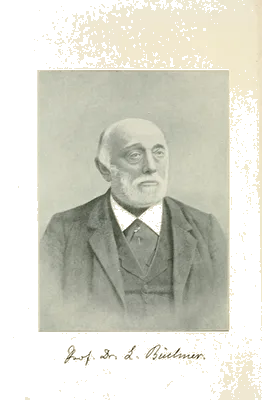
Ludwig Büchner
Ludwig Büchner was marked young by his brother Georg's death in exile, and set on his course by the 1848 thesis that the soul is unthinkable without matter. The Darmstadt physician wrote Force and Matter (1855) in a few weeks after the failed revolution, and lost his Tübingen post for it. He spent forty years defending and renaming his unbelief, from "atheistic" (1869) to "monism" (1891), founding a freethinkers' league and arguing atheism against Darwin's agnosticism. His brother saw a private pessimist who said he had missed his vocation.
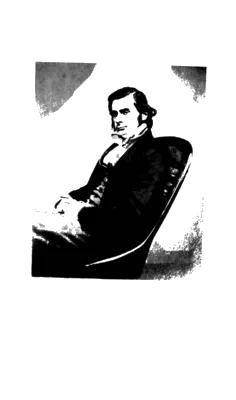
Thomas Henry Huxley
Thomas Henry Huxley was a self-taught boy who learned from Hamilton that some questions have no answers. He never had a creed to lose, but at his son's grave in 1860 he refused to pretend to one. In 1869 he named that refusal "agnostic", and defended the word against the bishops as a method rather than a sect. He ended by holding that morality runs against nature, and never once called himself an atheist.
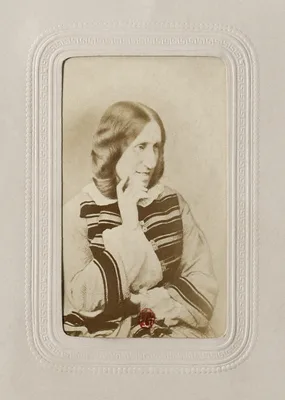
George Eliot
George Eliot was an ultra-Evangelical girl who lost the creed in 1841, reading Hennell among the Brays. She quarrelled with her father over church and regretted it all her life. In 1843 she gave up proselytising as "the quackery of infidelity", and she put her name only to Feuerbach's argument that God is human nature. She ended reverent toward the great religions, holding the idea of God to be "the ideal of a goodness entirely human" and unbelief to be the discipline of doing without opium.
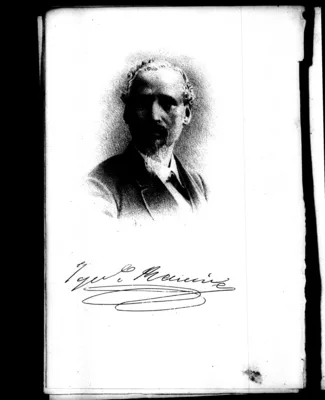
Ignacio Ramírez
Ignacio Ramírez was the son of a liberal family driven out by a clerical government. He read his way through the friars' and the cathedral's forbidden books, and at eighteen read a paper headed "No hay Dios" to the Academia de Letrán. He never retreated from it, but turned it from provocation into law: he fought "divine right" in the 1856 Congress and closed the convents as Juárez's minister. He held that a government should be neither Catholic nor atheist, and belief left to each conscience.