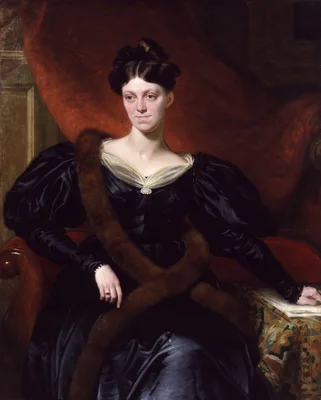
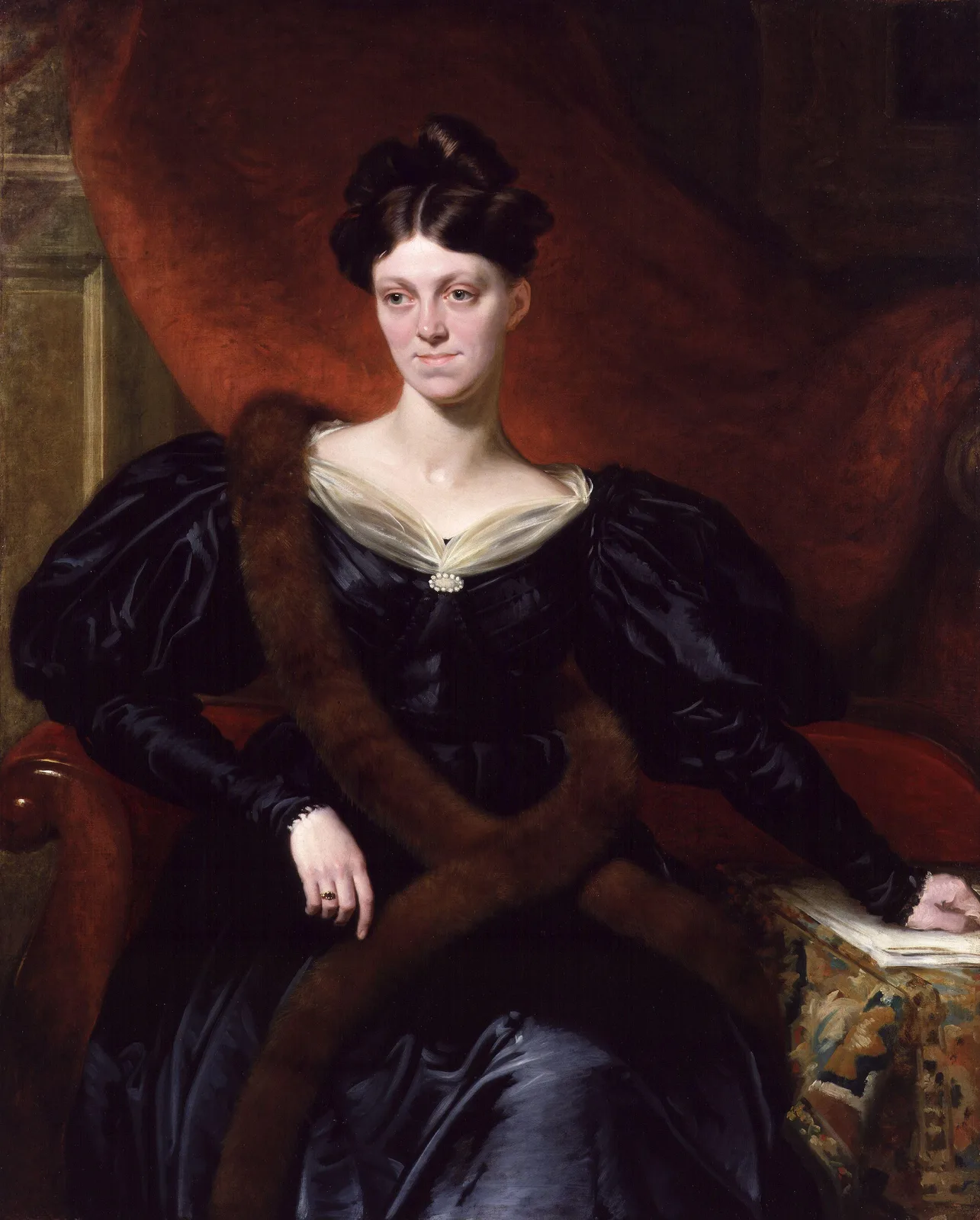
Harriet Martineau was a devout Unitarian child. At twenty she took the doctrine of Necessity from her brother James, and watched it wear her faith away over many years. She let go of the last of it in five years of illness and bereavement at Tynemouth, and on her Eastern journey of 1846–47 she saw every religion as human history. In 1851 she said in print that she knew nothing whatever about God, an atheist only "in the vulgar sense", at the cost of her brother's lasting enmity and with no dread of the annihilation she expected.
The belief timeline
- Faith (c. 1809 to 1823) — A devout Unitarian child; first book Devotional Exercises in 1823 [3][15]
- Doubt (1840–44) — Five years on the sofa at Tynemouth: death after death presses on her ideas of divine government and a future life [21][23][24]
- Break (1846–47) — The journey to Egypt and Palestine: religions seen as historical growths; severance from Unitarianism "complete and necessarily final" [34][39]
- Declaration (January 1851) — Letters on the Laws of Man's Nature and Development, published under her responsibility [42][43]
- Revision (1855–76) — Death without dread or hope: "no objection to such an extinction" [57][59]
Notes to the timeline (11)
- [3] At about seven she was "a remarkably religious child"; after a summer at Newcastle, Ann Turner's training made her piety practical — Harriet Martineau, Harriet Martineau's Autobiography, with Memorials by Maria Weston Chapman, 3 vols (London: Smith, Elder, 1877). Vols I–II are her own text written from March 1855 and printed by her about twenty years before 1877, vol. I, p. 18.
- [15] Her first book, Devotional Exercises, appeared anonymously in autumn 1823 and was "thoroughly Unitarian" — Florence Fenwick Miller, Harriet Martineau (Eminent Women Series, London, 1884), (ch. on earliest writings, page not captured); Vol. III of the same, the Memorials by M. W. Chapman, which includes Martineau's own third-person memoir for the Daily News (vol. III pp. 459–471; the editor's note on p. 459 says it "was from her own pen"). Cited "Mem p. N", p. 460; Martineau, Harriet Martineau's Autobiography, vol. I, p. 120.
- [21] Deerbrook came out April 1839; she was brought home from Venice in June; the Autobiography says she lay down at Tynemouth on 16 March 1840 and stayed almost five years — Mem, p. 465; Martineau, Harriet Martineau's Autobiography, vol. II, p. 153. Accounts differ; see the disputed points.
- [23] Deaths of friends (Follen, Carpenter, her grandmother, aunt, Lord Durham and others) "compelled me to reduce my vague and fanciful speculations" on divine government — Martineau, Harriet Martineau's Autobiography, vol. II, pp. 182–184.
- [24] By 1844 she saw that humans might not understand the universe, that the New Testament's future life was the Millennium, and that immortality of the soul and resurrection of the body cannot both be true — Martineau, Harriet Martineau's Autobiography, vol. II, pp. 185–187.
- [34] The journey gave her "clearness as to the historical nature and moral value of all theology whatever"; passage through the faiths is "as natural" as fetishism to infant nations — Martineau, Harriet Martineau's Autobiography, vol. II, pp. 279–280.
- [39] She wrote that her severance from Unitarian faith "was complete and necessarily final when I wrote Eastern Life" — Martineau, Harriet Martineau's Autobiography, vol. I, p. 159.
- [42] The publication of the Letters was her doing; Preface dated November 1850; manuscript tied up 19 November 1850; published January 1851 — Martineau, Harriet Martineau's Autobiography, vol. II, pp. 329, 336, 348; H. G. Atkinson and Harriet Martineau, Letters on the Laws of Man's Nature and Development (London: John Chapman, 1851), Preface; Miller, Harriet Martineau, p. 162.
- [43] She knew she risked excommunication from literature but felt "no choice about making known" her views, and a life of hypocrisy was impracticable — Martineau, Harriet Martineau's Autobiography, vol. II, pp. 343–344; Atkinson, Letters on the Laws of…, Preface p. v.
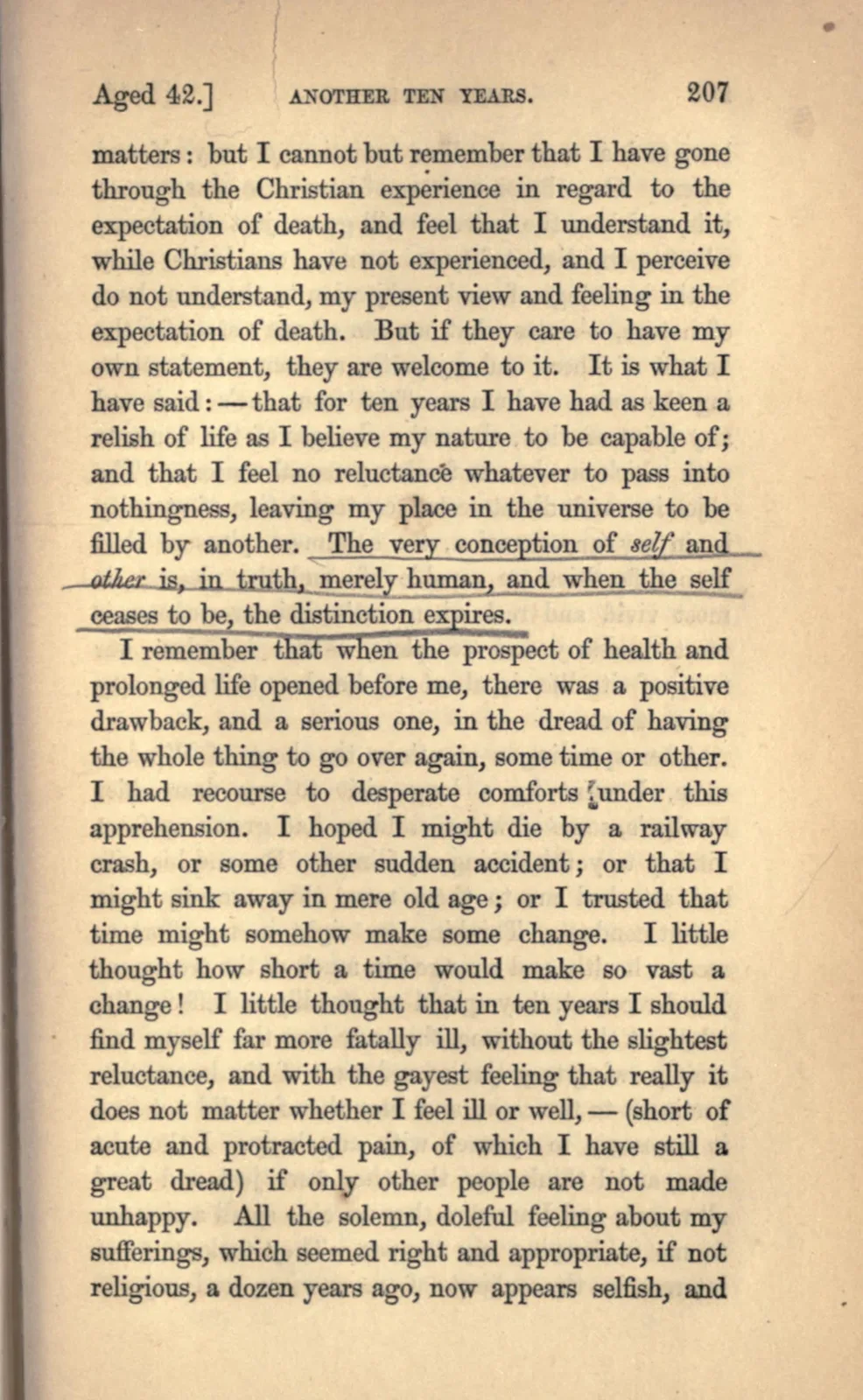
- [57] She wrote that she had no personal expectation of any kind after death, no dread of it, and "no reluctance whatever to pass into nothingness" — Martineau, Harriet Martineau's Autobiography, vol. II, pp. 206–207.
- [59] Last letter to Atkinson, 19 May 1876: she can think of no future "except the annihilation," has "no objection to such an extinction," and wants to escape "making God after man's own image" — Miller, Harriet Martineau, pp. 218–220.
A Free Rover on the Common of the Universe
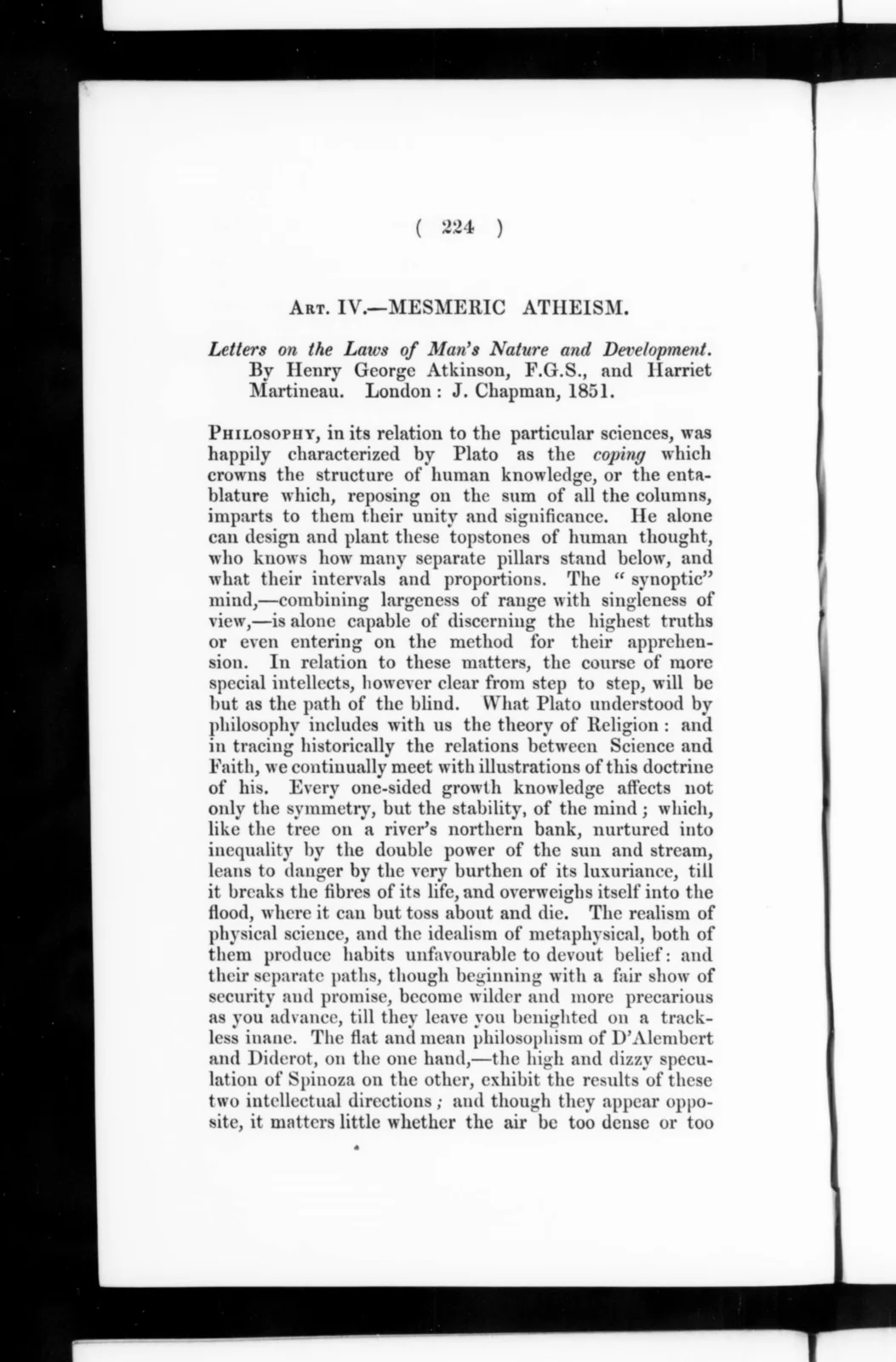
In January 1851 one of the best-known women writers in Britain published a book of letters between herself and a mesmerist named Henry George Atkinson, and her own brother destroyed it in print. James Martineau, a Unitarian minister and philosopher, reviewed Letters on the Laws of Man's Nature and Development under the heading "Mesmeric Atheism." "With grief we must say that we remember nothing in literary history more melancholy," he wrote, "than that Harriet Martineau should be prostrated at the feet of such a master, should lay down at his bidding her early faith in moral obligation, in the living God, in the immortal sanctities."12 Brother and sister never met or wrote to each other again.3
Harriet Martineau had known exactly what she was risking. Her Illustrations of Political Economy had made her famous, and the Unitarians had once chosen her as their champion. "A life of hypocrisy was wholly impracticable to me," she wrote, "if it had been endurable in idea."45 This chapter follows her from a pious Norwich childhood to that book, and asks how a woman who began by writing prize essays for her church ended by saying, calmly and in print, that she knew nothing whatever about God.
A religious child
She was born on 12 June 1802 in Magdalen Street, Norwich, the sixth of eight children of a manufacturer, Thomas Martineau, in a family descended from Huguenot refugees whose faith had drifted from Calvinism to Unitarianism.67 She was, she wrote, "a remarkably religious child," and because she was an unhappy one she found her refuge in religion: "While I was afraid of everybody I saw, I was not in the least afraid of God."89 She even planned, as a little girl, to kill herself in order to get to heaven sooner, sure that God would not be angry.10 At seven she found Paradise Lost one Sunday, and it shaped her mind for the next seven years.11 She began to go deaf at about twelve, and by her twenties she needed an ear-trumpet, which she used for the rest of her life.12
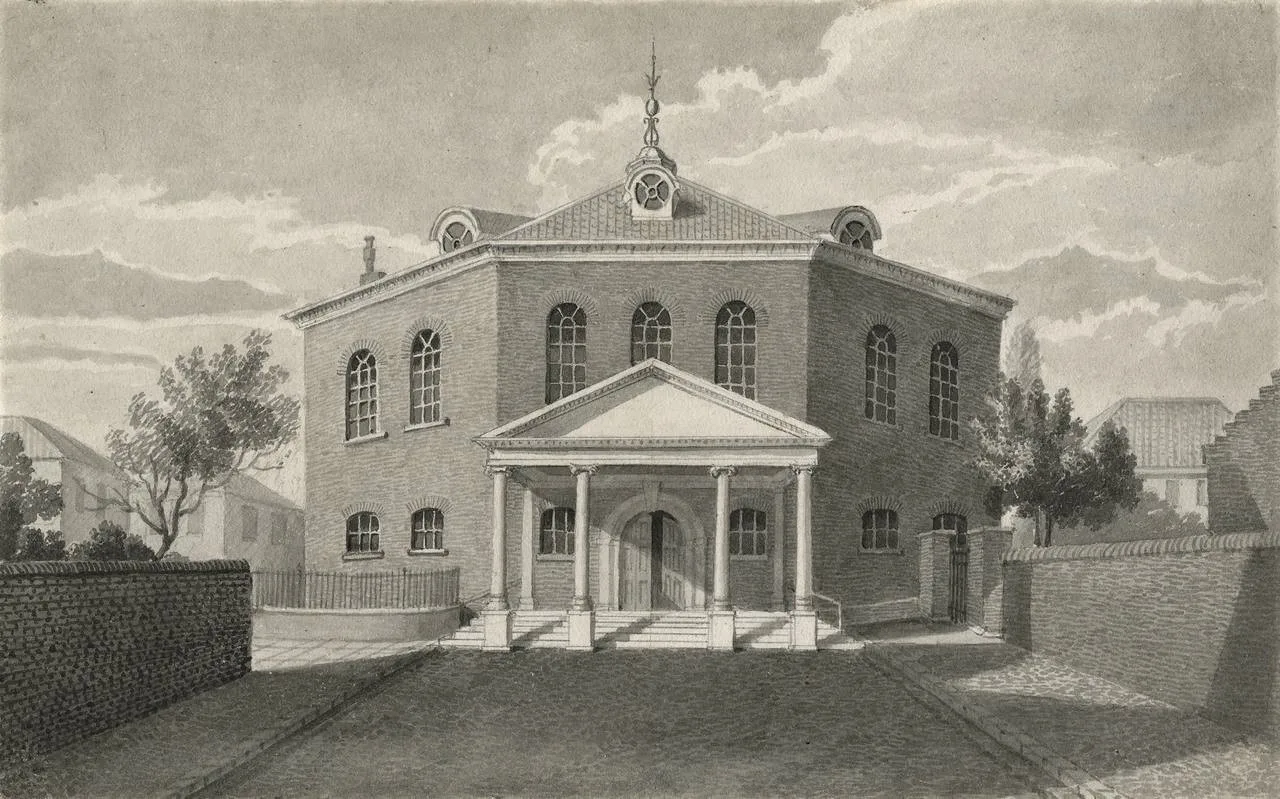
Two questions came early and stayed. Her family's minister showed the children, with three wine-glasses, that the Trinity was "mere nonsense"; and at eleven she asked her eldest brother "how, if God foreknew every thing, we could be blamed or rewarded for our conduct, which was thus absolutely settled for us beforehand." He told her she was too young to understand, and his refusal, she said, "helped to fix the question."13141516
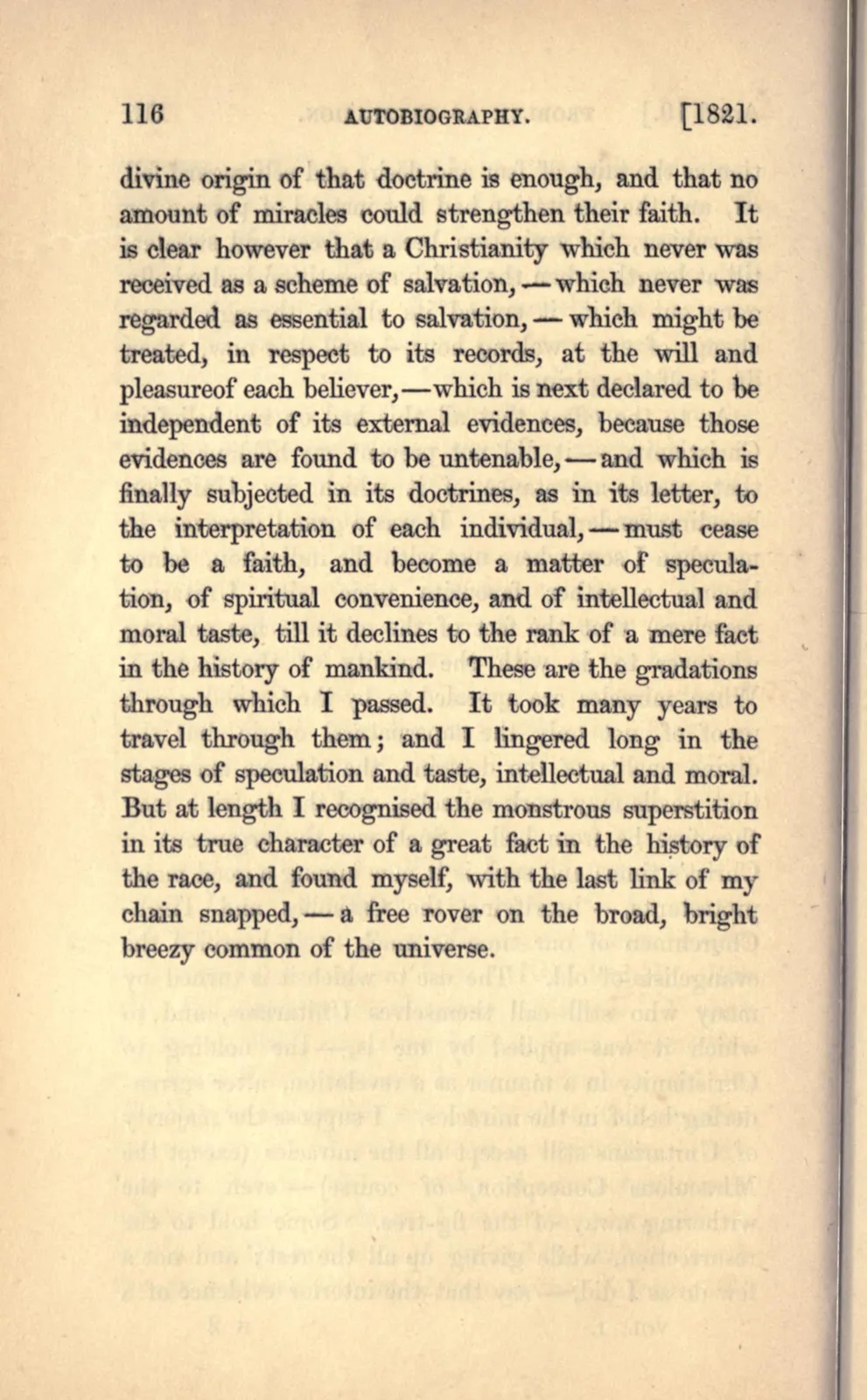
At twenty she found an answer that kept her faith for a while. Her brother James, home from the Unitarian college, mentioned the doctrine of Necessity, that everything follows from fixed laws, and she worked it out alone and felt "like a new creature." "As for me, I seized upon the necessarian element with eagerness, as enabling me to hold to my cherished faith."171819 So the brother who would denounce her in 1851 was the one who had first given her the idea that, by her own account, slowly took her faith apart. It took "many years." She gave up praying for things, then lost her belief in revelation by "gradations," until, as she put it looking back, "I recognised the monstrous superstition in its true character of a great fact in the history of the race, and found myself, with the last link of my chain snapped, a free rover on the broad, bright breezy common of the universe."1820
Fame
Her first book, Devotional Exercises, published anonymously in 1823, was "thoroughly Unitarian."21 Then disaster came in a rush: her eldest brother died in 1824, her father in 1826, her fiancé went mad and died, and in 1829 she and her sisters lost their money.22 She wrote to live. In 1830–31 she won all three of the Unitarian Association's prize essays, addressed to Catholics, Muslims and Jews.23 In 1832 her Illustrations of Political Economy made her famous within a fortnight; they reached a circulation of about ten thousand, and she moved to London.24 She travelled in the United States from 1834 to 1836.25 Looking back from 1855, she said that by the time of the prize essays she had "already ceased to be an Unitarian in the technical sense."2627
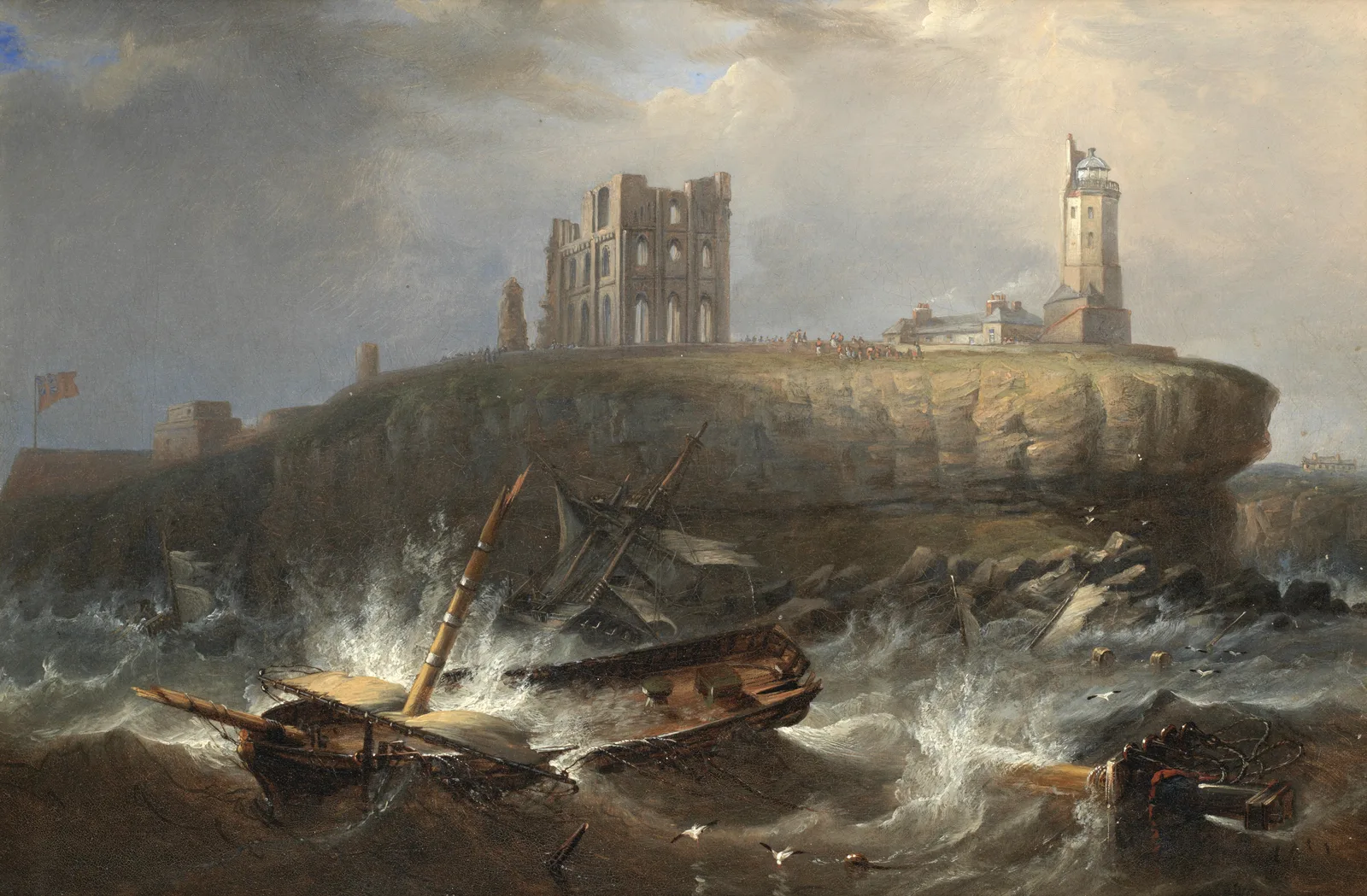
Tynemouth
In 1839 she fell ill abroad and was brought home, and for nearly five years she lay on a sofa at Tynemouth; the doctors thought the illness incurable.2829 On the belief timeline, those years are where her doubt begins. The childhood question and the Necessity of 1822 she had resolved inside her faith; at Tynemouth, by her own account, she began to let go of what was left. Friend after friend died, among them her old teacher Lant Carpenter, and "the departure of these and many more kept the subject of death vividly before me, and compelled me to reduce my vague and fanciful speculations on 'the divine government' and human destiny to a greater precision and accuracy."3031 She came to see that "we, with our mere human faculty, are not in the least likely to understand it, any more than the minnow in the creek ... can comprehend the perturbations caused in his world of existence by the tides."3233 She told a friend that "the best state of mind was to be found, however it might be accounted for, in those who were called philosophical atheists."3435 Her book Life in the Sick-Room (1844) still spoke as a believer; later she said she "was not, even then, dealing truly with my own mind."36
In 1844 she tried mesmerism, against her family's dread of it, and recovered.3738 Through it, in 1845, she met Henry George Atkinson, a phrenologist and mesmerist who, she said, found her "searching after" a scientific basis for wisdom and "put me in clear possession" of it.3940 She settled at Ambleside in the Lake District and built a house there, The Knoll.41
The East
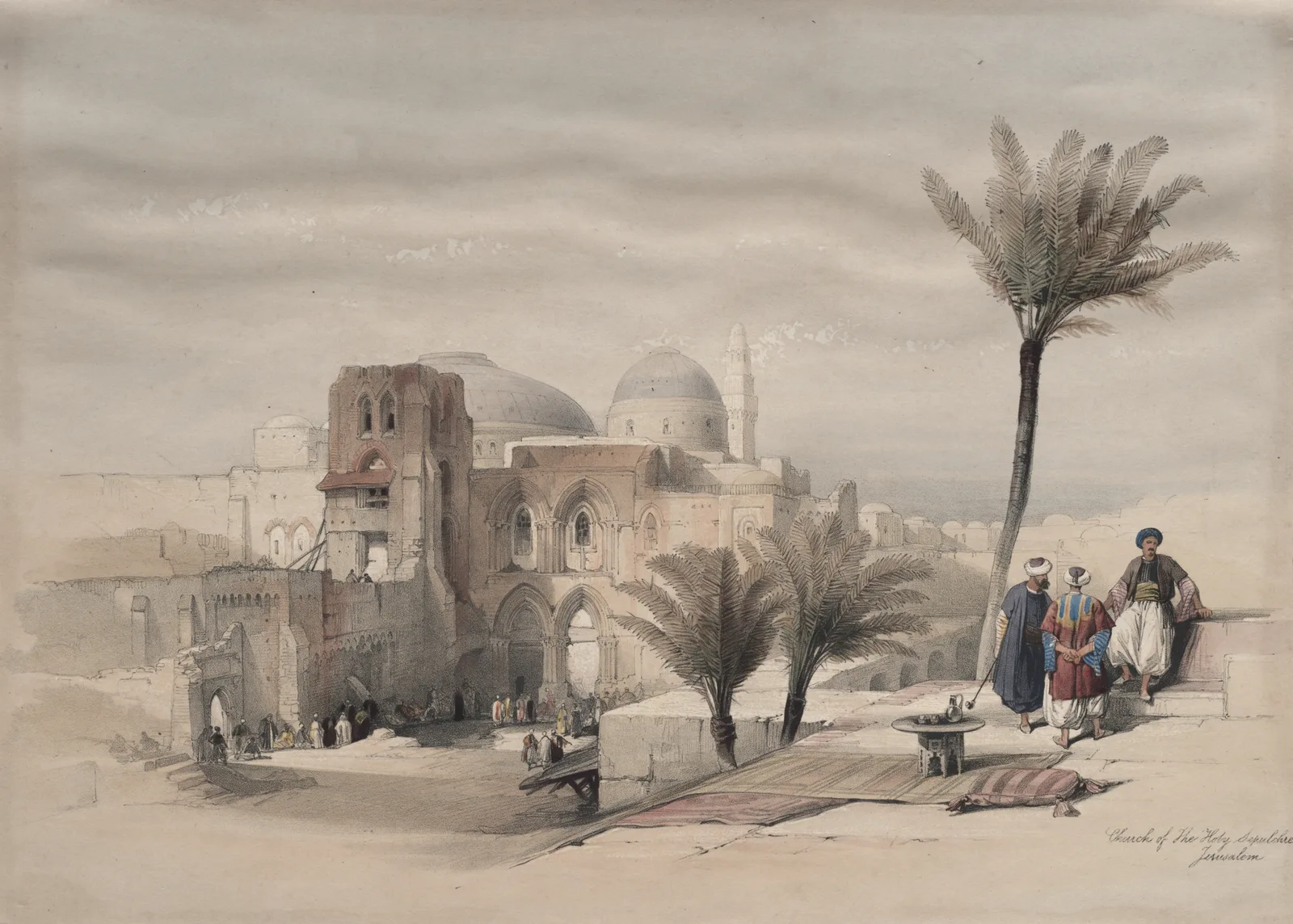
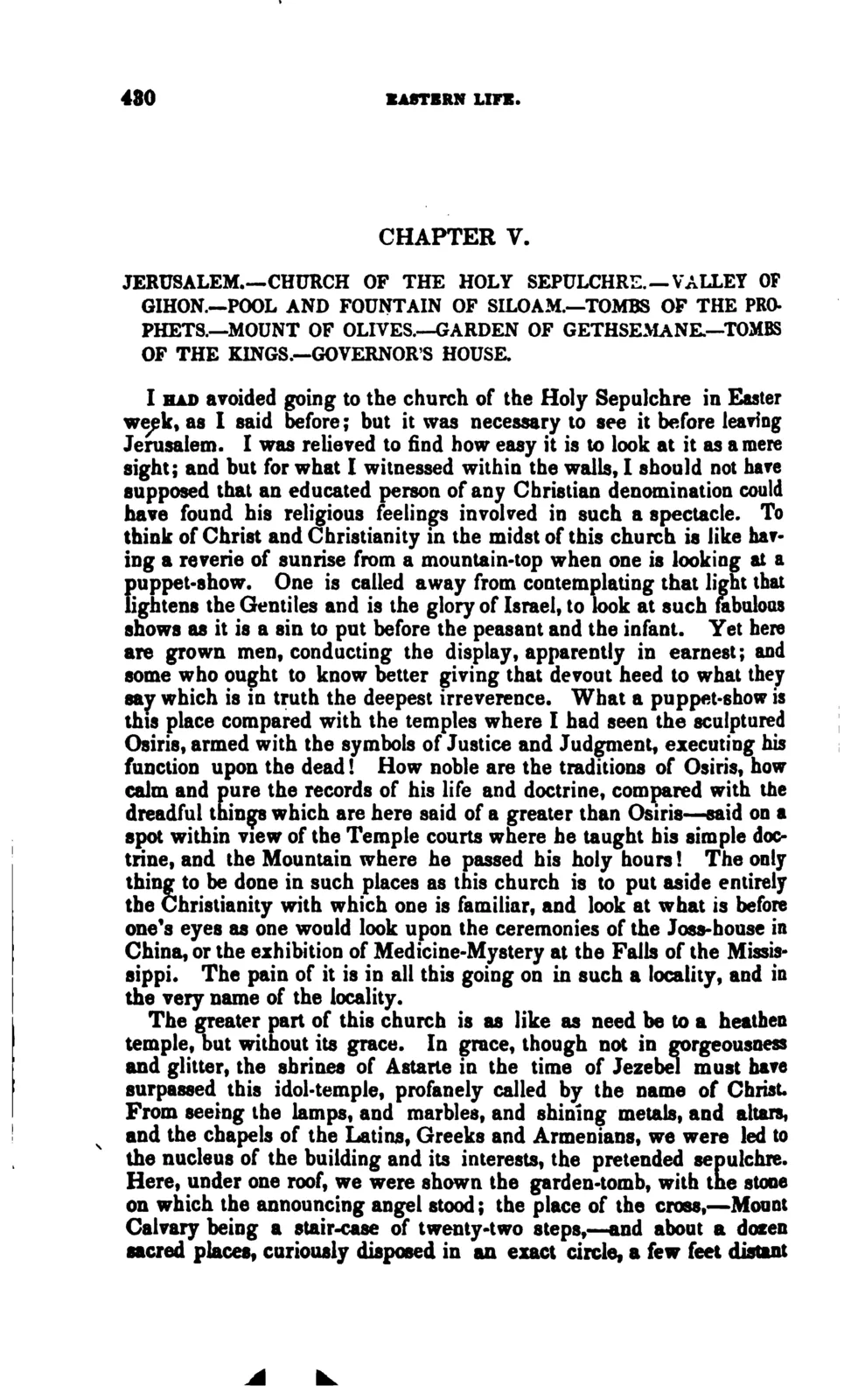
In the autumn of 1846 she set out on an eight-month journey through Egypt, Sinai, Petra, Jerusalem and Damascus.42 It finished what Tynemouth had begun. Crossing the desert between Petra and Hebron she conceived a book that would trace the genealogy of four faiths, Egyptian, Hebrew, Christian and Muslim, and she came home with "clearness as to the historical nature and moral value of all theology whatever."434445 Passing through such faiths, she decided, was "as natural to men, and was as necessary in those former periods of human progress, as fetishism is to the infant nations ... without the notion being more true in the one case than in the other."46 She wrote fairly of the old priests of Egypt: "The experiment of spiritual government failed; but we are not to deal with the priests for it as if they had had our thousands of years of added experience."47 She was less gentle in Jerusalem. At the Church of the Holy Sepulchre in Holy Week, "To think of Christ and Christianity in the midst of this church is like having a reverie of sunrise from a mountain-top when one is looking at a puppet-show."4849
That journey is where the timeline places her break with belief. She wrote to Atkinson that she felt "sadly lonely," and that "I never could believe on any ground of reasoning what I once took for granted in prejudice."5051 Eastern Life, published in 1848, was "the greatest effort of courage I ever made." "Then, I believed in a Protector who ordered me to do that work, and would sustain me under it ... and have none of that sort now." But she would not go back: "I would not exchange my freedom from old superstition, if I were to be burned at the stake next month, for all the peace and quiet of orthodoxy."525354 Her severance from the Unitarian faith, she wrote, "was complete and necessarily final when I wrote 'Eastern Life.'"5556
The Letters
The Letters on the Laws of Man's Nature and Development was her doing; she wrote the preface and sent it to press.57 "Among the few things of which we can pronounce ourselves certain," it begins, "is the obligation of inquirers after truth to communicate what they obtain."58 In her own letters she wrote: "There is no theory of a God, of an author of Nature, of an origin of the universe, which is not utterly repugnant to my faculties." "How far happier it is to see how much wiser to admit that we know nothing whatever about the matter!" "What an emancipation it is, to have escaped from the little enclosure of dogma, and to stand, far indeed from being wise, but free to learn!"596061 The book's plainest avowal, "then am I an Atheist," was Atkinson's, not hers; her own letters suspend judgment.6263
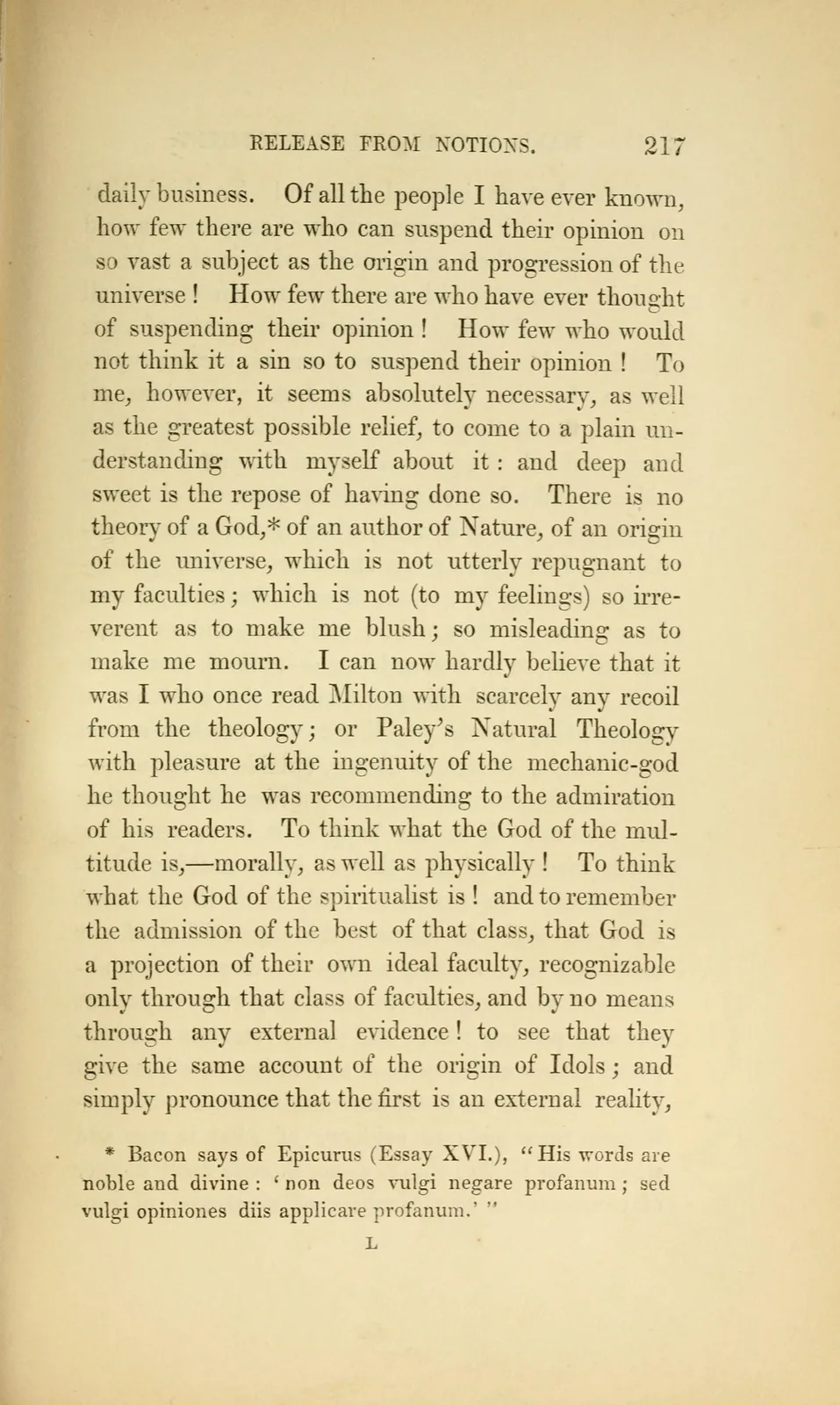
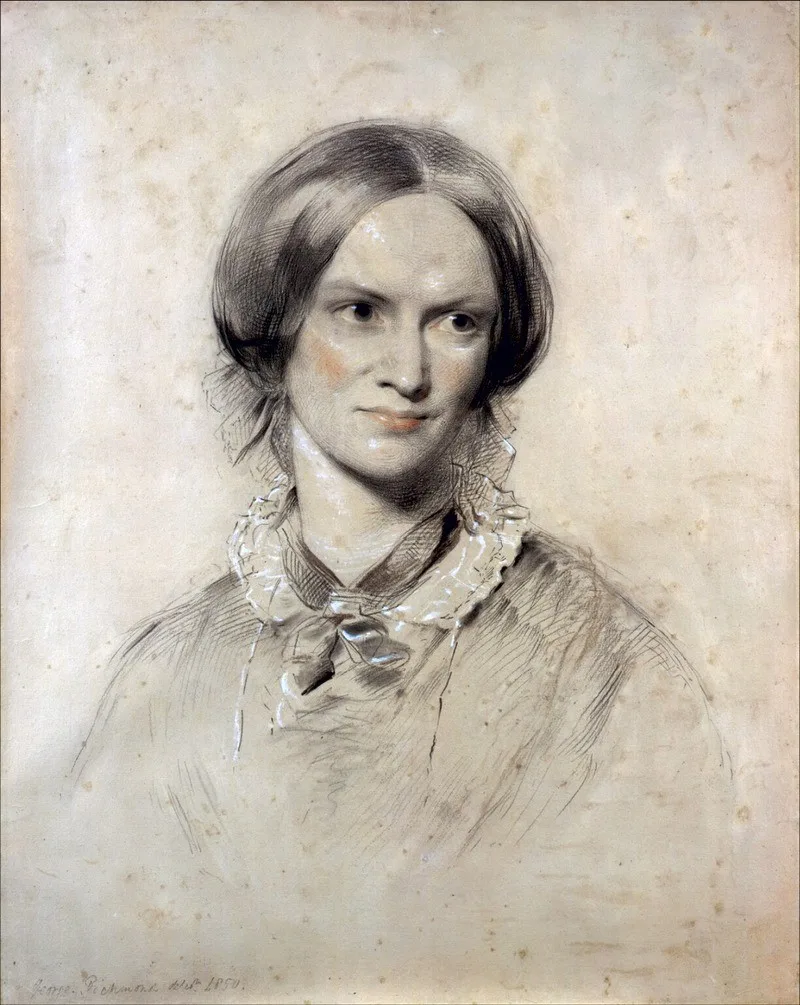
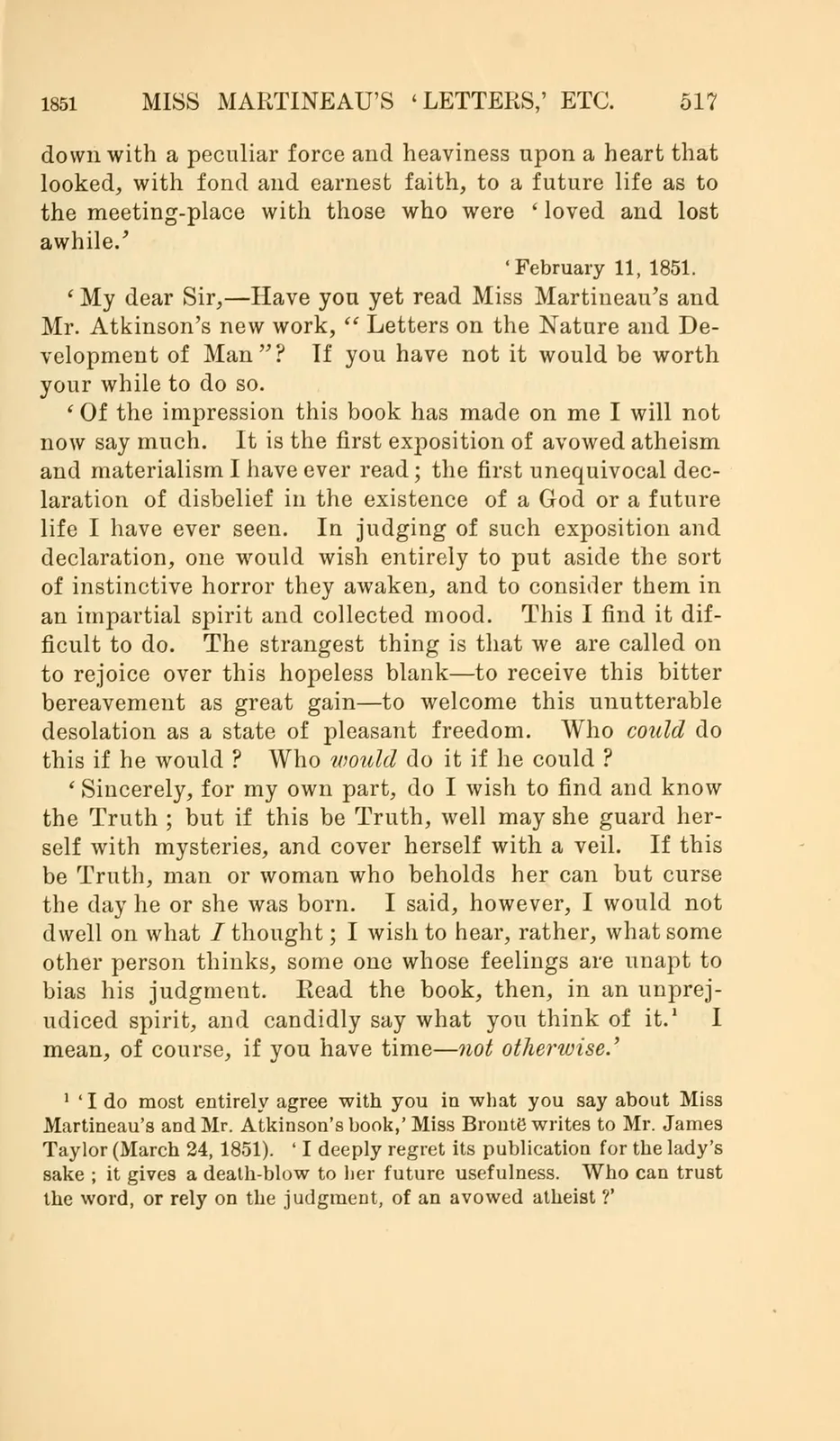
Charlotte Brontë was staying with her at Ambleside while the book was in proof. She admired its "calm power" but found the doctrine "vinegar mingled with gall."64 In a letter she wrote: "It is the first exposition of avowed atheism and materialism I have ever read; the first unequivocal declaration of disbelief in the existence of a God or a future life I have ever seen."65 Yet she wrote to Martineau herself: "You are tender of others: — you are serious, reverent and gentle. Who can be angry?"66 Martineau answered the charge exactly: she was "an atheist in the vulgar sense, that of rejecting the popular theology, but not in the philosophical sense, of denying a First Cause."6768 The actor William Macready heard about the book at a dinner before he had read it: "alas! alas! as they at table reported it, a direct and positive declaration and avowal of atheistical opinions!"69
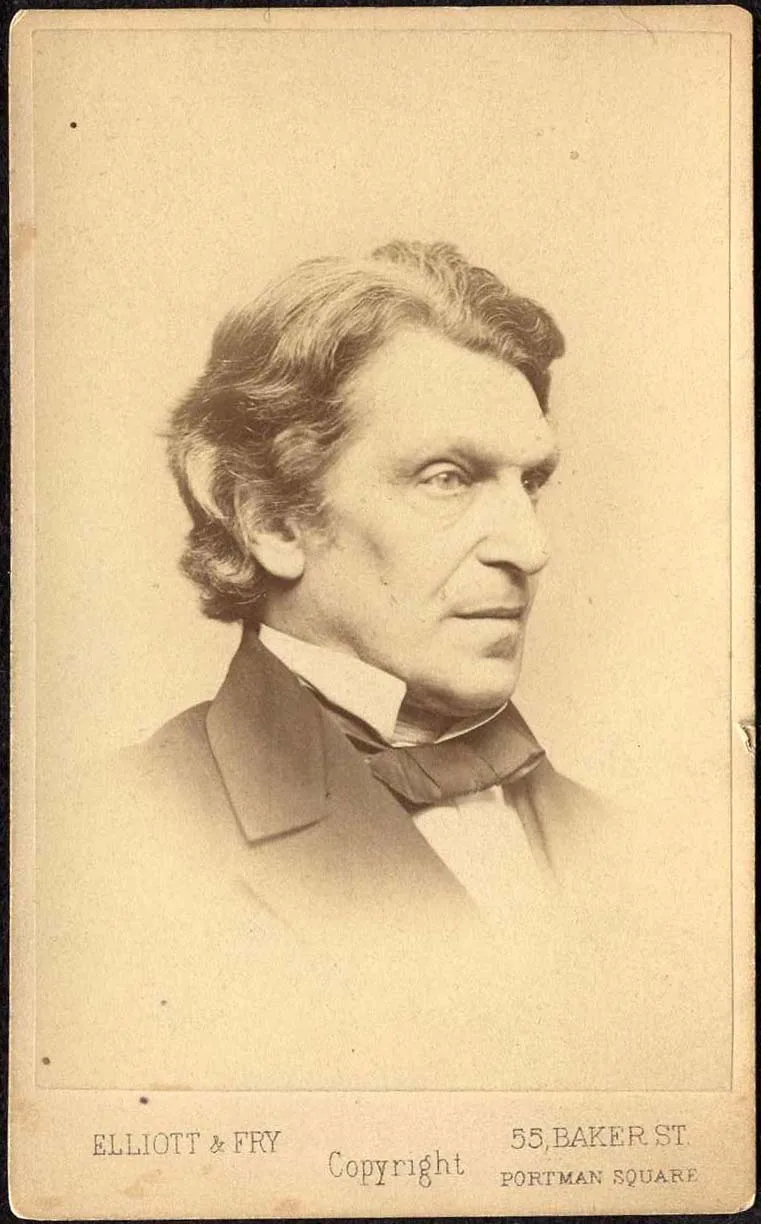
The brother
Then came James's review. Its argument, put at its strongest, was that "Whoever begins with necessity and makes thought derivative, is an atheist: whoever begins with thought and thence evolves necessity as its adopted law, is a theist."70 She said only, in print, that she had been insulted by "one of my nearest relations."71 Asked who wrote it, she is reported to have said: "It is my brother James; and you must not believe it, for it is not so."72 She asked her friend and editor Maria Chapman to be "as gentle as you can" about him.73 She did not think the book had cost her much. It had been "an inestimable blessing to me by dissolving all false relations, and confirming all true ones."7475
Without dread
She went on to translate and condense the Positive Philosophy of Auguste Comte, finished in 1853.76 In 1855 two doctors told her she had a mortal disease, and she began her autobiography.77 "I have no expectation of that kind, nor personal expectation of any kind after death," she wrote; "I feel no reluctance whatever to pass into nothingness, leaving my place in the universe to be filled by another."787980 She lived twenty-one more years; a post-mortem, one biographer says, found not heart disease but a cyst.81 In her last letter to Atkinson, in May 1876, she wrote: "I cannot think of any future as at all probable, except the 'annihilation' from which some people recoil with so much horror."8283 She died at The Knoll on 27 June 1876 and was buried with her family in the old cemetery at Birmingham.8184 The memoir she had written for the newspapers said that her "latest opinions were, in her own view, the most religious."8586 Florence Nightingale, a believer and a friend, wrote that "She served the Right, that is, God, all her life."87
Did her unbelief change shape?
It grew by stages over thirty years and never turned back. A child who feared people but not God worked a philosophical doctrine into her faith at twenty, found it eating the faith away over "many years," lost the last of it in five years of illness and grief at Tynemouth, and saw on a journey through the lands of four religions that all of them were human history. She said it in print at forty-eight and paid with her brother. What changed in her last decades was only how calm she became. The woman who in 1848 had felt she had "no Protector" spent her old age, by her own account, without dread, and called her last opinions the most religious she had held. She was careful with the word "atheist" to the end. She rejected the popular God, would not deny a First Cause, and preferred to say that she knew nothing whatever about the matter.
George Eliot, who also lost her faith among the freethinkers of the 1840s and also came to Comte and to calm, has her own chapter in this book.
Footnotes
-
Vol. III of the same, the Memorials by M. W. Chapman, which includes Martineau's own third-person memoir for the Daily News (vol. III pp. 459–471; the editor's note on p. 459 says it "was from her own pen"). Cited "Mem p. N", pp. 313–315; Florence Fenwick Miller, Harriet Martineau (Eminent Women Series, London, 1884), pp. 162–163; [James Martineau], "Mesmeric Atheism," review of the Letters, Prospective Review, vol. VII, no. XXVI (1851), Art. IV, pp. 224–251 and on, p. 224. ↩
-
James Martineau, her brother, Unitarian minister and philosopher, reviewing as co-editor of the Prospective Review: Prospective Review, p. 234 (OCR reads "pity"; Chapman's Mem p. 315 prints "piety" and omits "humiliating" later in the passage). ↩
-
Miller, Harriet Martineau, pp. 162–163. Reported at second hand; the original has not been seen. ↩
-
Harriet Martineau, Harriet Martineau's Autobiography, with Memorials by Maria Weston Chapman, 3 vols (London: Smith, Elder, 1877). Vols I–II are her own text written from March 1855 and printed by her about twenty years before 1877, vol. II, pp. 343–344; H. G. Atkinson and Harriet Martineau, Letters on the Laws of Man's Nature and Development (London: John Chapman, 1851), Preface p. v. ↩
-
Harriet Martineau: Martineau, Harriet Martineau's Autobiography, vol. II, p. 344. ↩
-
Martineau, Harriet Martineau's Autobiography, vol. I, p. 8; Mem, pp. 459, 472 (gravestone); Miller, Harriet Martineau, p. 2. ↩
-
Martineau, Harriet Martineau's Autobiography, vol. I, pp. 36–37; Mem, p. 459. ↩
-
Martineau, Harriet Martineau's Autobiography, vol. I, p. 18. ↩
-
Harriet Martineau: Martineau, Harriet Martineau's Autobiography, vol. I, p. 18. ↩
-
Martineau, Harriet Martineau's Autobiography, vol. I, pp. 18–19. ↩
-
Martineau, Harriet Martineau's Autobiography, vol. I, p. 42. ↩
-
Martineau, Harriet Martineau's Autobiography, vol. I, pp. 72, 124; Mem, p. 460. ↩
-
Martineau, Harriet Martineau's Autobiography, vol. I, pp. 37–38. ↩
-
Martineau, Harriet Martineau's Autobiography, vol. I, pp. 43–44. ↩
-
Rev. Thomas Madge, as remembered by Martineau: Martineau, Harriet Martineau's Autobiography, vol. I, p. 37. ↩
-
Harriet Martineau: Martineau, Harriet Martineau's Autobiography, vol. I, p. 44. ↩
-
Martineau, Harriet Martineau's Autobiography, vol. I, pp. 108–110. ↩
-
Martineau, Harriet Martineau's Autobiography, vol. I, pp. 112–116. ↩ ↩2
-
Harriet Martineau: Martineau, Harriet Martineau's Autobiography, vol. I, p. 112. ↩
-
Harriet Martineau: Martineau, Harriet Martineau's Autobiography, vol. I, p. 116. ↩
-
Miller, Harriet Martineau, (ch. on earliest writings, page not captured); Mem, p. 460; Martineau, Harriet Martineau's Autobiography, vol. I, p. 120. ↩
-
Martineau, Harriet Martineau's Autobiography, vol. I, pp. 125, 127–131; Mem, p. 461 (1829). ↩
-
Martineau, Harriet Martineau's Autobiography, vol. I, pp. 151–156. ↩
-
Mem, pp. 461–462. ↩
-
Mem, pp. 463–464. ↩
-
Martineau, Harriet Martineau's Autobiography, vol. I, pp. 156–159. ↩
-
Harriet Martineau: Martineau, Harriet Martineau's Autobiography, vol. I, p. 158. ↩
-
Mem, p. 465; Martineau, Harriet Martineau's Autobiography, vol. II, p. 153. Accounts differ; see the disputed points. ↩
-
Martineau, Harriet Martineau's Autobiography, vol. II, pp. 191–192. ↩
-
Martineau, Harriet Martineau's Autobiography, vol. II, pp. 182–184. ↩
-
Harriet Martineau: Martineau, Harriet Martineau's Autobiography, vol. II, p. 184. ↩
-
Martineau, Harriet Martineau's Autobiography, vol. II, pp. 185–187. ↩
-
Harriet Martineau: Martineau, Harriet Martineau's Autobiography, vol. II, p. 185. ↩
-
Martineau, Harriet Martineau's Autobiography, vol. II, pp. 188–190. ↩
-
Harriet Martineau: Martineau, Harriet Martineau's Autobiography, vol. II, p. 188. ↩
-
Life in the Sick-Room: Essays by an Invalid, 2nd ed. (London: Edward Moxon, 1844), pp. 7–8; Martineau, Harriet Martineau's Autobiography, vol. II, p. 187. ↩
-
Martineau, Harriet Martineau's Autobiography, vol. II, pp. 192–193. ↩
-
Martineau, Harriet Martineau's Autobiography, vol. II, pp. 192, 214. ↩
-
Martineau, Harriet Martineau's Autobiography, vol. II, pp. 213–214. ↩
-
Martineau, Harriet Martineau's Autobiography, vol. II, pp. 332–334. ↩
-
Martineau, Harriet Martineau's Autobiography, vol. II, pp. 219–229, 284; Mem, p. 467. ↩
-
Eastern Life, Present and Past (Philadelphia: Lea and Blanchard, 1848, one volume; preface dated Ambleside, 25 March 1848), preface p. iii; Martineau, Harriet Martineau's Autobiography, vol. II, p. 281; Mem, p. 468. ↩
-
Martineau, Harriet Martineau's Autobiography, vol. II, p. 279. ↩
-
Martineau, Harriet Martineau's Autobiography, vol. II, pp. 279–280. ↩
-
Harriet Martineau: Martineau, Harriet Martineau's Autobiography, vol. II, p. 279. ↩
-
Harriet Martineau: Martineau, Harriet Martineau's Autobiography, vol. II, p. 280. ↩
-
Harriet Martineau: Eastern Life, p. 172. ↩
-
Eastern Life, p. 480. ↩
-
Harriet Martineau: Eastern Life, p. 480. ↩
-
Martineau, Harriet Martineau's Autobiography, vol. II, pp. 281–284. ↩
-
Harriet Martineau, letter to Atkinson, 7 Nov 1847: Martineau, Harriet Martineau's Autobiography, vol. II, p. 283. ↩
-
Eastern Life, preface; Martineau, Harriet Martineau's Autobiography, vol. II, p. 345. ↩
-
Harriet Martineau, letter to Atkinson, Feb 1848: Martineau, Harriet Martineau's Autobiography, vol. II, p. 345. ↩
-
Harriet Martineau, letter to Atkinson, Feb 1848: Martineau, Harriet Martineau's Autobiography, vol. II, pp. 345–346. ↩
-
Martineau, Harriet Martineau's Autobiography, vol. I, p. 159. ↩
-
Harriet Martineau: Martineau, Harriet Martineau's Autobiography, vol. I, p. 159. ↩
-
Martineau, Harriet Martineau's Autobiography, vol. II, pp. 329, 336, 348; Atkinson, Letters on the Laws of…, Preface; Miller, Harriet Martineau, p. 162. ↩
-
Harriet Martineau, Preface: Atkinson, Letters on the Laws of…, p. v. ↩
-
Harriet Martineau, Letter XIX: Atkinson, Letters on the Laws of…, p. 217. ↩
-
Harriet Martineau, Letter XIX: Atkinson, Letters on the Laws of…, p. 218. ↩
-
Harriet Martineau, Letter XXIII: Atkinson, Letters on the Laws of…, p. 282. ↩
-
Atkinson, Letters on the Laws of…, pp. 216–219, 241. ↩
-
H. G. Atkinson, Letter XX: Atkinson, Letters on the Laws of…, p. 241. ↩
-
Martineau, Harriet Martineau's Autobiography, vol. II, pp. 349–351. ↩
-
Charlotte Brontë, novelist and Martineau's friend, letter of 11 Feb 1851 (recipient not named in Gaskell): Elizabeth Gaskell, The Life of Charlotte Brontë, Haworth Edition, ed. C. K. Shorter, vol. VII (New York: Harper, 1900; first published 1857), p. 517. ↩
-
Charlotte Brontë, letter to Martineau, as reproduced by Martineau: Martineau, Harriet Martineau's Autobiography, vol. II, p. 351. ↩
-
Martineau, Harriet Martineau's Autobiography, vol. II, p. 351. ↩
-
Harriet Martineau, on Brontë: Martineau, Harriet Martineau's Autobiography, vol. II, p. 351. ↩
-
William Charles Macready, actor, diary 2 Feb 1851, writing before reading it: The Diaries of William Charles Macready, 1833–1851, ed. William Toynbee (London, 1912), vol. II, vol. II, p. 491 (page from running heads). ↩
-
James Martineau, same review: his argument in its best form: Prospective Review, p. 251. ↩
-
Martineau, Harriet Martineau's Autobiography, vol. II, pp. 354–355. ↩
-
Mem, p. 317. ↩
-
Mem, p. 322. ↩
-
Martineau, Harriet Martineau's Autobiography, vol. II, p. 357; Mem, p. 320. ↩
-
Harriet Martineau: Martineau, Harriet Martineau's Autobiography, vol. II, p. 357. ↩
-
Martineau, Harriet Martineau's Autobiography, vol. II, pp. 371–372, 389–390; Mem, p. 469. ↩
-
Martineau, Harriet Martineau's Autobiography, vol. I, pp. 1–3. ↩
-
Martineau, Harriet Martineau's Autobiography, vol. II, pp. 206–207. ↩
-
Harriet Martineau: Martineau, Harriet Martineau's Autobiography, vol. II, p. 206. ↩
-
Harriet Martineau: Martineau, Harriet Martineau's Autobiography, vol. II, p. 207. ↩
-
Miller, Harriet Martineau, pp. 218–220. ↩
-
Harriet Martineau, letter to Atkinson, 19 May 1876: Miller, Harriet Martineau, p. 219. ↩
-
Mem, pp. 471–472; Miller, Harriet Martineau, p. 221. ↩
-
Mem, p. 460. ↩
-
Harriet Martineau, memoir in third person: Mem, p. 460. ↩
-
Florence Nightingale, believer and friend, letter of 20 June 1876: Mem, p. 475. ↩
In their own words
While I was afraid of everybody I saw, I was not in the least afraid of God.
do you mean to tell me that those three glasses can be in any case one? 'Tis mere nonsense.
there was throughout a haunting sense of unreality which made me uneasy
how, if God foreknew every thing, we could be blamed or rewarded for our conduct, which was thus absolutely settled for us beforehand.
I fairly laid hold of the conception of general laws, while still far from being prepared to let go the notion of a special Providence.
As for me, I seized upon the necessarian element with eagerness, as enabling me to hold to my cherished faith
it was better to take the chance of being damned than be always quacking one's self in the fear of it.
at length I recognised the monstrous superstition in its true character of a great fact in the history of the race, and found myself, with the last link of my chain snapped, a free rover on the broad, bright breezy common of the universe.
I had already ceased to be an Unitarian in the technical sense.
my severance from their faith was complete and necessarily final when I wrote "Eastern Life,"
A large portion of the transition from religious inconsistency and irrationality to free-thinking strength and liberty was gone over during that period.
The departure of these and many more kept the subject of death vividly before me, and compelled me to reduce my vague and fanciful speculations on "the divine government" and human destiny to a greater precision and accuracy.
I began to see that we, with our mere human faculty, are not in the least likely to understand it, any more than the minnow in the creek, as Carlyle has it, can comprehend the perturbations caused in his world of existence by the tides.
the best state of mind was to be found, however it might be accounted for, in those who were called philosophical atheists.
a passage through these latter faiths is as natural to men, and was as necessary in those former periods of human progress, as fetishism is to the infant nations and individuals, without the notion being more true in the one case than in the other.
I obtained clearness as to the historical nature and moral value of all theology whatever
Now, all such longings are out of the question; for I feel that I never could believe on any ground of reasoning what I once took for granted in prejudice.
Then, I believed in a Protector who ordered me to do that work, and would sustain me under it: and, however I may now despise that sort of support, I had it then, and have none of that sort now.
I would not exchange my freedom from old superstition, if I were to be burned at the stake next month, for all the peace and quiet of orthodoxy, if I must take the orthodoxy with the peace and quiet.
A life of hypocrisy was wholly impracticable to me, if it had been endurable in idea
Among the few things of which we can pronounce ourselves certain, is the obligation of inquirers after truth to communicate what they obtain
There is no theory of a God, of an author of Nature, of an origin of the universe, which is not utterly repugnant to my faculties; which is not (to my feelings) so irreverent as to make me blush; so misleading as to make me mourn.
How far happier it is to see how much wiser to admit that we know nothing whatever about the matter!
What an emancipation it is, to have escaped from the little enclosure of dogma, and to stand, far indeed from being wise, but free to learn!
The fresh dawn of science has for some time been brightening upon the nightmare period of theology; and the full and perfect day is the surest prophecy afloat in the universe.
If to have this conception of things is to be an Atheist, then am I an Atheist.
my explanation that I was an atheist in the vulgar sense, that of rejecting the popular theology, but not in the philosophical sense, of denying a First Cause.
this book has been an inestimable blessing to me by dissolving all false relations, and confirming all true ones.
I have no expectation of that kind, nor personal expectation of any kind after death; and I have a particularly keen relish of life, all the keener for being late
I feel no reluctance whatever to pass into nothingness, leaving my place in the universe to be filled by another.
brought upon its writers, as was inevitable, the imputation of atheism from the multitude who cannot distinguish between the popular and the philosophical sense of the word
Her latest opinions were, in her own view, the most religious
I cannot think of any future as at all probable, except the "annihilation" from which some people recoil with so much horror.
To think of Christ and Christianity in the midst of this church is like having a reverie of sunrise from a mountain-top when one is looking at a puppet-show.
The experiment of spiritual government failed; but we are not to deal with the priests for it as if they had had our thousands of years of added experience.
The other side
With grief we must say that we remember nothing in literary history more melancholy than that Harriet Martineau should be prostrated at the feet of such a master, should lay down at his bidding her early faith in moral obligation, in the living God, in the immortal sanctities; should glory in the infection of his blind arrogance and scorn, mistaking them for wisdom and pity; and meekly undertake to teach him grammar in return.
Whoever begins with necessity and makes thought derivative, is an atheist: whoever begins with thought and thence evolves necessity as its adopted law, is a theist.
We submit that this is precisely the step which is not achieved; that while many particular "knowledges" have made progress, there is no established definition or theory of knowledge in itself and its ultimate grounds
It is the first exposition of avowed atheism and materialism I have ever read; the first unequivocal declaration of disbelief in the existence of a God or a future life I have ever seen.
Heard of Miss Martineau's book — alas! alas! as they at table reported it, a direct and positive declaration and avowal of atheistical opinions!
Having read your book, I cannot now think it will create any outcry. You are tender of others:—you are serious, reverent and gentle. Who can be angry?
She served the Right, that is, God, all her life.
Where accounts differ
| Point | One account | Another | How the page handles it |
|---|---|---|---|
| Date and signature of her first printed article | 1821, signed "V" (Auto vol. I, pp. 117–119, hedged "I think") | October 1822, signed "Discipulus" (Fenwick pp. 38–40) | Say "in her early twenties" or follow Fenwick; do not state the signature |
| When Tynemouth began | Lay down 16 March 1840 (Auto vol. II, p. 153) | Autumn 1839, Front Street (Fenwick, page not captured); brought from Venice June 1839 (Mem p. 465) | "From 1839 or 1840 for nearly five years; accounts differ" |
| What killed her | Heart disease, diagnosed January 1855 (Mem p. 470; Auto intro p. 2) | A tumour found at post-mortem; she never knew (Fenwick p. 220) | Say doctors told her it was her heart; post-mortem found otherwise |
| Whether the book cost her friends | Brontë: "a death-blow to her future usefulness" (Gaskell p. 517) | Martineau: "I am not aware of having lost any friends whatever by that book" (Gaskell note p. 613); but she records a few losses (Auto vol. II, pp. 189–190, 355) and one family | Report both; say a few, not many |
| Whether her book declared atheism | Brontë and James Martineau call it atheism (OQ4, OQ1) | She says atheist only "in the vulgar sense" (Q27); the plainest avowal is Atkinson's (Q26); in her own letters she suspends judgment (Q23) | Explain the two senses; attribute lines to the right author |
| James's review: who agreed | Chapman: co-editors refused to disclaim it (Mem p. 318) | Thom and Tayler said they were "aghast" (Mem p. 318 footnote) | Quote James only; attribute the editors' stance to no one |
| Review text as Chapman quotes it | "wisdom and piety" and no "humiliating" (Mem p. 315) | OCR of the review: "wisdom and pity", "humiliating inversion" (ProsRev p. 234) | Use the original; check the scan |
List of illustrations
This page uses only public-domain and Creative Commons images; each is credited with its source and licence.
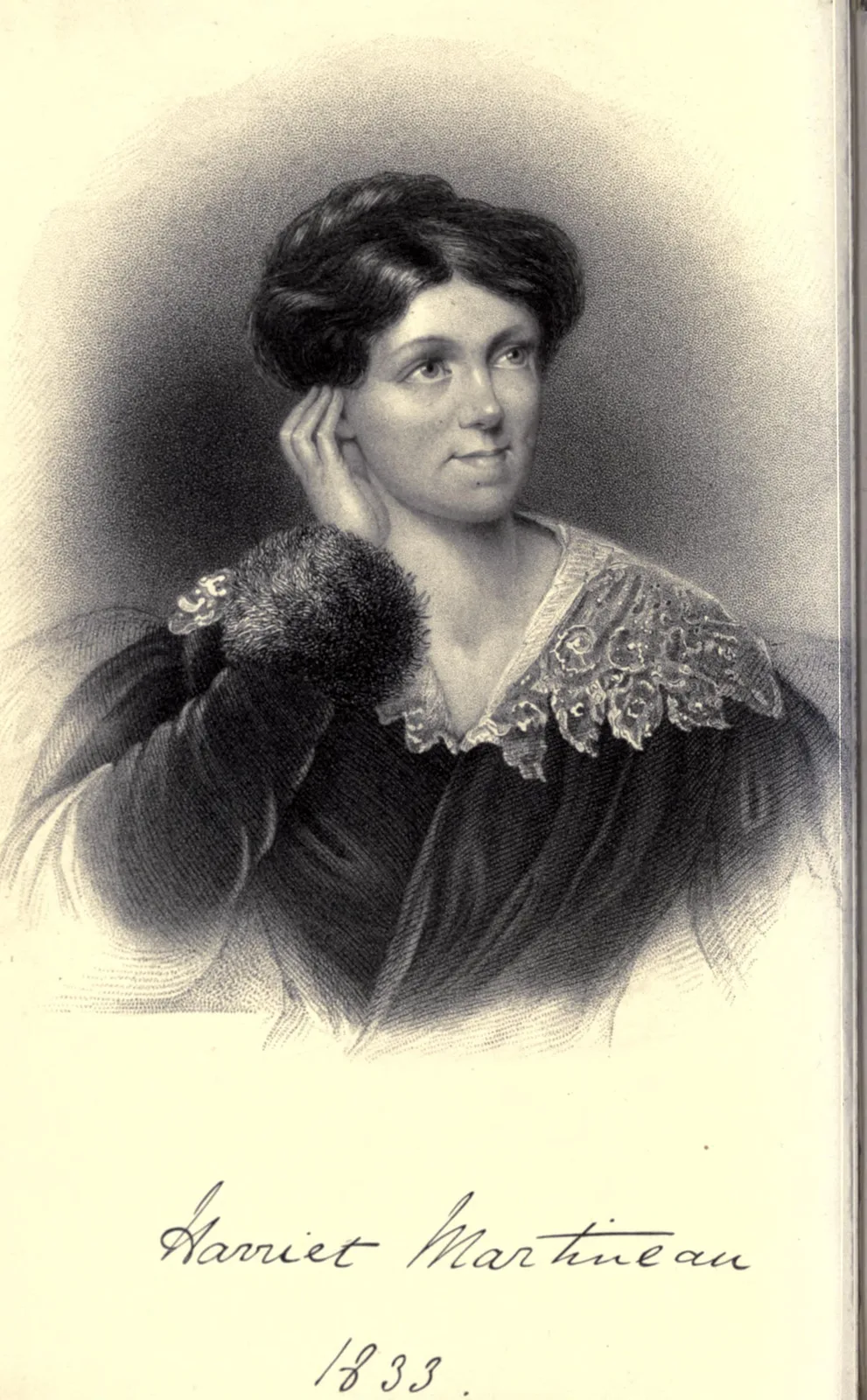
- Harriet Martineau by Richard Evans — Richard Evans, c. 1834 · Richard Evans (one or more third parties have made copyright claims against Wikimedia Commons i), via Wikimedia Commons, public domain · Public domain (Wikimedia Commons: Public domain)
- Sillett - The Octagon Chapel, Norwich — James Sillett, early 19th c. · James Sillett (link to Norfolk Museums Collections record), via Wikimedia Commons, public domain · Public domain (Wikimedia Commons: Public domain)
- Autobiography, vol. I, p. 116 — Harriet Martineau, 1877 · Smith, Elder, London; University of Toronto copy, via Internet Archive, public domain · Public domain (published 1877; Internet Archive states no rights restriction)
- Harriet Martineau, 1833 (frontispiece, Autobiography vol. I) — Engraving after a portrait of 1833, 1833 · Smith, Elder, London; University of Toronto copy, via Internet Archive, public domain · Public domain (published 1877; Internet Archive states no rights restriction)
- John Carmichael - Off Tynemouth — James Wilson Carmichael, 19th c. · James Wilson Carmichael (https://www.bonhams.com/auctions/23966/lot/69/), via Wikimedia Commons, public domain · Public domain (Wikimedia Commons: Public domain)
- David Roberts - Church of the Holy Sepulchre, Jerusalem - 1927.103 - Cleveland Museum of Art — David Roberts, 1839 · Cleveland Museum of Art, CC0, via Wikimedia Commons · CC0 (Wikimedia Commons: CC0)
- Eastern Life (Philadelphia ed.), p. 432 (the Church of the Holy Sepulchre) — Harriet Martineau, 1848 · Lea and Blanchard, Philadelphia; Harvard Divinity School copy, digitised by Google, via Internet Archive, public domain · Public domain (published 1848; Internet Archive states no rights restriction)
- Letters on the Laws of Man's Nature and Development, p. 217 (Letter XIX, H. M. to H. G. A.) — Harriet Martineau, 1851 · John Chapman, London; University of California (Reese Library) copy, via Internet Archive, public domain · Public domain (published 1851; Internet Archive states no rights restriction)
- Charlotte Bronte by George Richmond — George Richmond, 1850 · George Richmond (https://www.annebronte.org/2021/06/13/four-portraits-of-charlotte-bronte/), via Wikimedia Commons, public domain · Public domain (Wikimedia Commons: Public domain)
- Gaskell, The Life of Charlotte Bronte (Haworth ed.), p. 517 (Bronte on Martineau's Letters) — Elizabeth Gaskell, 1900 · Harper, New York (Haworth Edition); Internet Archive copy, via Internet Archive, public domain · Public domain (published 1900; Internet Archive states no rights restriction)
- James Martineau by Elliott & Fry, c1860s — Elliott & Fry, c. 1860s · Elliott & Fry (jcosmas), via Wikimedia Commons, public domain · Public domain (Wikimedia Commons: Public domain)
- Prospective Review, vol. VII no. XXVI, p. 224 (opening of 'Mesmeric Atheism') — [James Martineau], 1851 · Prospective Review (Internet Archive periodical scan), via Internet Archive, public domain · Public domain (published 1851; Internet Archive states no rights restriction)
- Autobiography, vol. II, p. 207 — Harriet Martineau, 1877 · Smith, Elder, London; University of Toronto copy, via Internet Archive, public domain · Public domain (published 1877; Internet Archive states no rights restriction)
Sources
Tier 1 — the subject's own words (writings, letters, diaries, trial records)
- [Auto] Harriet Martineau, Harriet Martineau's Autobiography, with Memorials by Maria Weston Chapman, 3 vols (London: Smith, Elder, 1877). Vols I–II are her own text written from March 1855 and printed by her about twenty years before 1877. IA autobiographywit01martuoft, autobiographywit02martuoft, autobiographywit03martuoft. Texts: research/texts/auto1.txt, auto2.txt, auto3.txt. Cited "Auto vol. I, p. N". Page numbers read from OCR running heads.
- [Mem] Vol. III of the same, the Memorials by M. W. Chapman, which includes Martineau's own third-person memoir for the Daily News (vol. III pp. 459–471; the editor's note on p. 459 says it "was from her own pen"). Cited "Mem p. N".
- [Letters] H. G. Atkinson and Harriet Martineau, Letters on the Laws of Man's Nature and Development (London: John Chapman, 1851). IA lettersonlawsofm00atkirich. Text: research/texts/letters.txt. Martineau wrote the Preface (Ambleside, Nov. 1850) and the odd-numbered letters (I, XIX, XXI, XXIII); Atkinson the even-numbered (XX, XXIV). Attribution by the "H. M. TO H. G. A." headings.
- [Eastern] Eastern Life, Present and Past (Philadelphia: Lea and Blanchard, 1848, one volume; preface dated Ambleside, 25 March 1848). IA easternlifepres02martgoog. Text: research/texts/eastern3.txt. Page numbers from OCR running heads. London (Moxon, 1848, 3 vols) also downloaded as eastern1.txt, eastern2.txt (vols I–II).
- [Sick] Life in the Sick-Room: Essays by an Invalid, 2nd ed. (London: Edward Moxon, 1844). IA lifeinsickroome01martgoog. Text: sickroom.txt.
- [Macready] The Diaries of William Charles Macready, 1833–1851, ed. William Toynbee (London, 1912), vol. II. IA diariesofwilliam02macriala. Text: macready2.txt.
Tier 2 — scholarly biographies and encyclopedias
- [Fenwick] Florence Fenwick Miller, Harriet Martineau (Eminent Women Series, London, 1884). IA harrietmartinea02millgoog. Text: fenwick.txt. Page numbers from OCR running heads where given.
- [Bosanquet] Theodora Bosanquet, Harriet Martineau: an essay in comprehension (London, 1927). IA harrietmartineau0000theo (lending-library scan). OCR text kept only in research/notes/bosanquet.txt, used to cross-check; not quoted (UK copyright runs to 2031). Flagged for the expensive model.
Tier 3 — popular biographies and journalism
- [Gaskell] Elizabeth Gaskell, The Life of Charlotte Brontë, Haworth Edition, ed. C. K. Shorter, vol. VII (New York: Harper, 1900; first published 1857). IA lifeofcharlotteb00gask. Text: gaskell.txt.
Tier 4 — maps to other sources only (Wikipedia and similar). Never cited in the script.
- Octagon Chapel, Gurney's Court, Key Hill Cemetery and all coordinates are from general knowledge; not in the primary texts. Bosanquet (Tier 2) supports the Octagon Chapel and Magdalen Street.
Opposition sources — contemporary critics and religious responses
- [ProsRev] [James Martineau], "Mesmeric Atheism," review of the Letters, Prospective Review, vol. VII, no. XXVI (1851), Art. IV, pp. 224–251 and on. IA sim_prospective-review-a-quarterly-journal-of-theology_1851_7_26. Text: prospective26.txt. Unsigned; authorship by James Martineau is stated in Auto vol. II p. 355 (an unnamed near relation, "in print"), Mem pp. 315 and 317, and Fenwick pp. 162–63. Bosanquet names the four editors (Thom, Tayler, James Martineau, Wicksteed).
- [Gaskell] (above) for Charlotte Brontë's letters of 11 Feb and 24 Mar 1851.
- [Macready] (above) for the diary entry of 2 Feb 1851.
Related lives
(for the expensive model to choose) George Eliot (ep. 31) or George Jacob Holyoake (ep. 32): contemporaries in the same Comte and free-thought circle; or Annie Besant, another woman who said it in print. No pointer to be baked into the script.
Ludwig Feuerbach
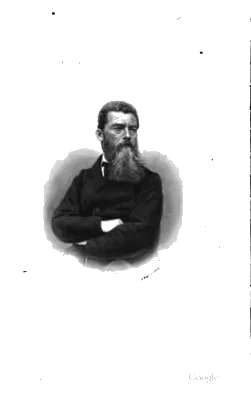
Ludwig Feuerbach left theology for Hegel's philosophy at twenty, and lost his academic career to an anonymous book against immortality. In The Essence of Christianity he argued that God is humanity's own nature, projected and worshipped. He meant that unbelief as a translation of religion into plain speech. Love of man later pushed it toward materialism.
Max Stirner
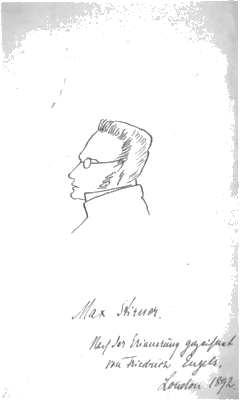
Max Stirner was a Bayreuth Lutheran with a theology student's training and no recorded crisis of faith. He moved among Bauer's Berlin radicals until, in The Ego and Its Own (1844), he rejected not only God but the "Man" that Feuerbach and the humanist atheists had put in God's place. He refused the name atheist, because he counted those atheists among the pious. He restated the position once against his critics in 1845, and then fell silent into translation, debt and an early death.
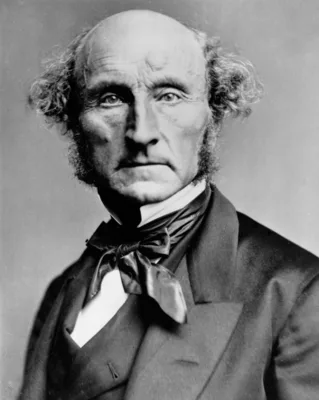
John Stuart Mill
John Stuart Mill was raised by his father without any religion, and "never had" a faith to lose. His crisis of 1826 was one of feeling, not belief, but it opened him to religion's emotional side. In 1834 he told Carlyle privately that he had only "a merely probable God". He kept public silence on religion by his father's rule, even as an MP, then defended the atheist Bradlaugh and lost his seat for it. In his last essay he stated the same probable God as a hope he called "legitimate and philosophically defensible", but never belief.
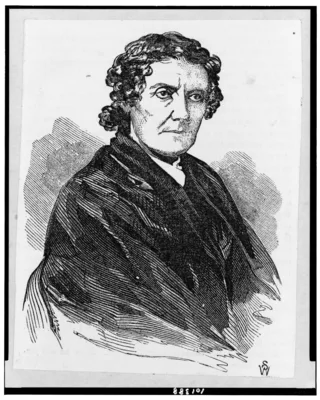
Frances Wright
Frances Wright was an orphan who lost a devout childhood faith to the libraries around her and to Epicurus. She kept her unbelief private for fifteen years while she worked for liberty and against slavery. She went public in 1828 because she believed the American churches were reaching for political power through women's minds. In middle age she took back the word "religion" for a human bond of union, while still declining to speak of God.