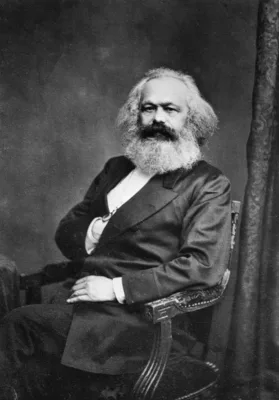
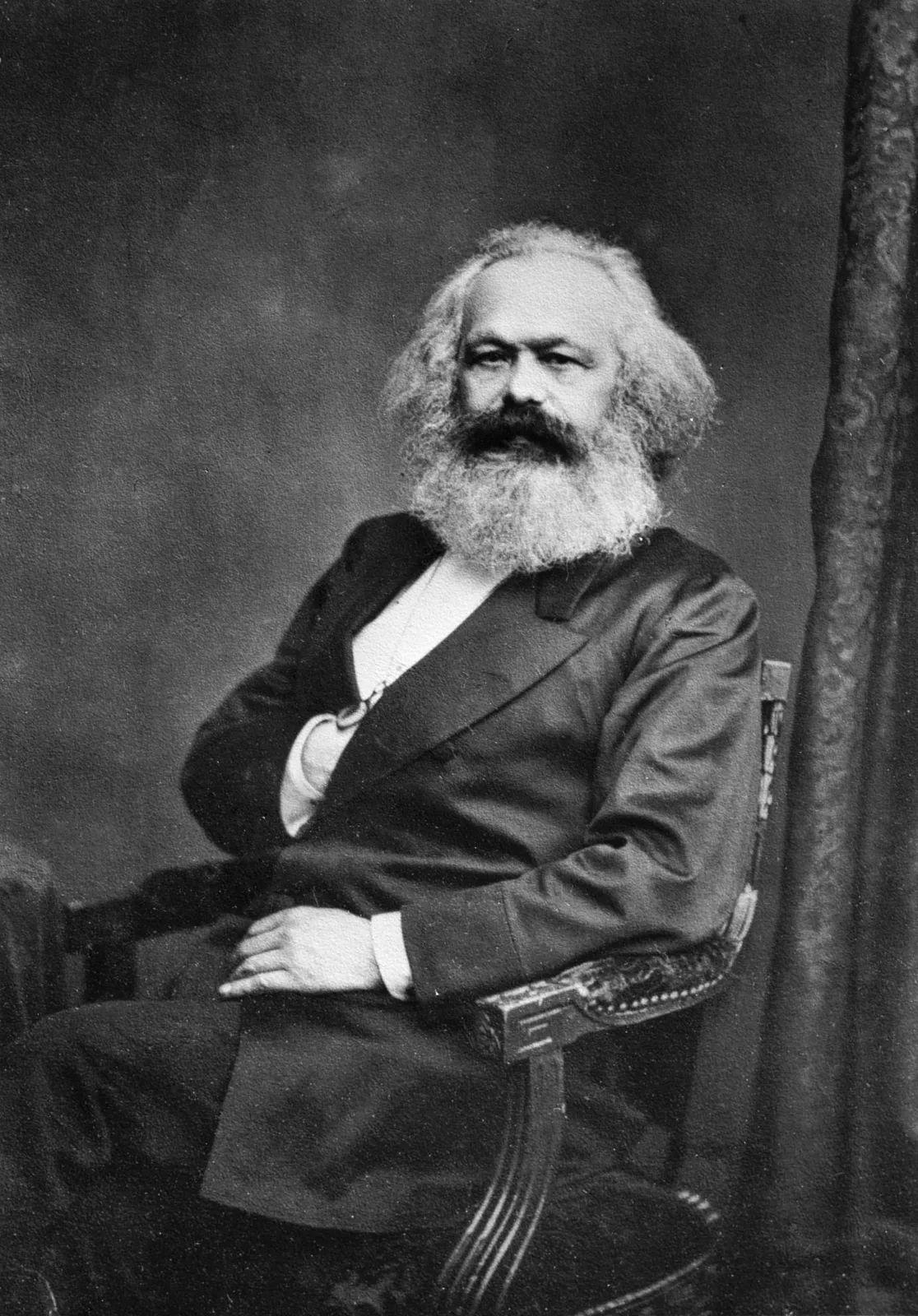
Karl Marx, the grandson of rabbis, was baptised a Lutheran at six into his father's Enlightenment deism. He lost his idealist "gods" at nineteen and took Prometheus for his motto at twenty-three. By twenty-five, after Feuerbach, he held the criticism of religion finished: religion was the sigh of the oppressed and the heart of a heartless world, a symptom that would fade only when the world stopped needing it. So he spent his life on economics, and had little time for atheist campaigners.
The belief timeline
- Faith (1824–1835) — Baptised a Lutheran at six into a house of Enlightenment deism; the school essay on religion (1835) not seen [3][8][10][16]
- Doubt (1837-11) — At nineteen he tells his father that a curtain had fallen, his sanctuary was torn, and new gods had to be set in it; he turns to Hegel [19][20][21]
- Declaration (1841-03) — The dissertation preface: the Prometheus line, "I hate all the gods", as philosophy's own confession [27][29]
- Settled (1844-02) — "For Germany the criticism of religion is essentially finished"; religion described as the sigh of the oppressed creature, and criticism turns to earth, law and politics [37][38][39]
Notes to the timeline (12)
- [3] In 1824 Heinrich Marx went over with his family from Judaism to Protestantism; Engels says so on the evidence of the son's baptismal certificate (Karl was six). The certificate itself was not seen — Franz Mehring (ed.), Aus dem literarischen Nachlass von Karl Marx, Friedrich Engels und Ferdinand Lassalle, vol. I, Gesammelte Schriften von Karl Marx und Friedrich Engels, 1841 bis 1850, first volume (March 1841 to March 1844), 2nd ed. (Stuttgart: J. H. W. Dietz Nachf., 1913; 1st ed. 1902), pp. 3–4; John Spargo, Karl Marx: His Life and Work (New York: B. W. Huebsch, 1910), p. 19.
- [8] In a letter to his son Heinrich Marx professed his "pure faith in God", as Newton, Locke and Leibniz had done — Mehring, Aus dem literarischen Nachlass von…, p. 5; Spargo, Karl Marx, p. 23. Reported at second hand; the original has not been seen.
- [10] Heinrich Marx was steeped in the French Enlightenment ideas about religion (Eleanor Marx: "thoroughly imbued"); he read Voltaire and Racine to the boy; Spargo calls him "a disciple of Voltaire" — Wilhelm Liebknecht, Karl Marx: Biographical Memoirs, translated by Ernest Untermann (Chicago: Charles H. Kerr & Co., 1901), p. 14; Spargo, Karl Marx, p. 19.
- [16] The school essay on religion of 1835 ("Die Vereinigung der Gläubigen mit Christo nach Joh. 15, 1–14") is not in any text read; it was first printed in MEGA I/1 (1927) — none read. Not verified.
- [19] On 10 November 1837 he wrote his father a long letter, published by Eleanor Marx in Neue Zeit XVI, 1 (1897); his father's reply of 17 November 1837 complains of his "Zerrissenheit" — Mehring, Aus dem literarischen Nachlass von…, p. 15.
- [20] In that letter he describes the collapse of his idealism: "A curtain had fallen, my holy of holies was torn, and new gods had to be set in it", and the move to look for the idea in reality itself — Mehring, Aus dem literarischen Nachlass von…, pp. 18–19 (quoting the letter).
- [21] He wrote a dialogue, "Kleanthes", of about 24 sheets, a "philosophical-dialectical development of the Godhead" as concept, religion, nature and history, whose last sentence was the beginning of Hegel's system; that work, he says, "carries me like a false siren into the enemy's arms" — Mehring, Aus dem literarischen Nachlass von…, p. 19.
- [27] Marx's doctoral dissertation on the difference between the Democritean and Epicurean philosophy of nature was submitted at Jena (the degree dated 1841); the submitted manuscript is lost, and a copy revised by Marx for printing survives; its preface is dated "Berlin, im März 1841" — Mehring, Aus dem literarischen Nachlass von…, pp. 3, 62, 68; Spargo, Karl Marx, pp. 36, 59.
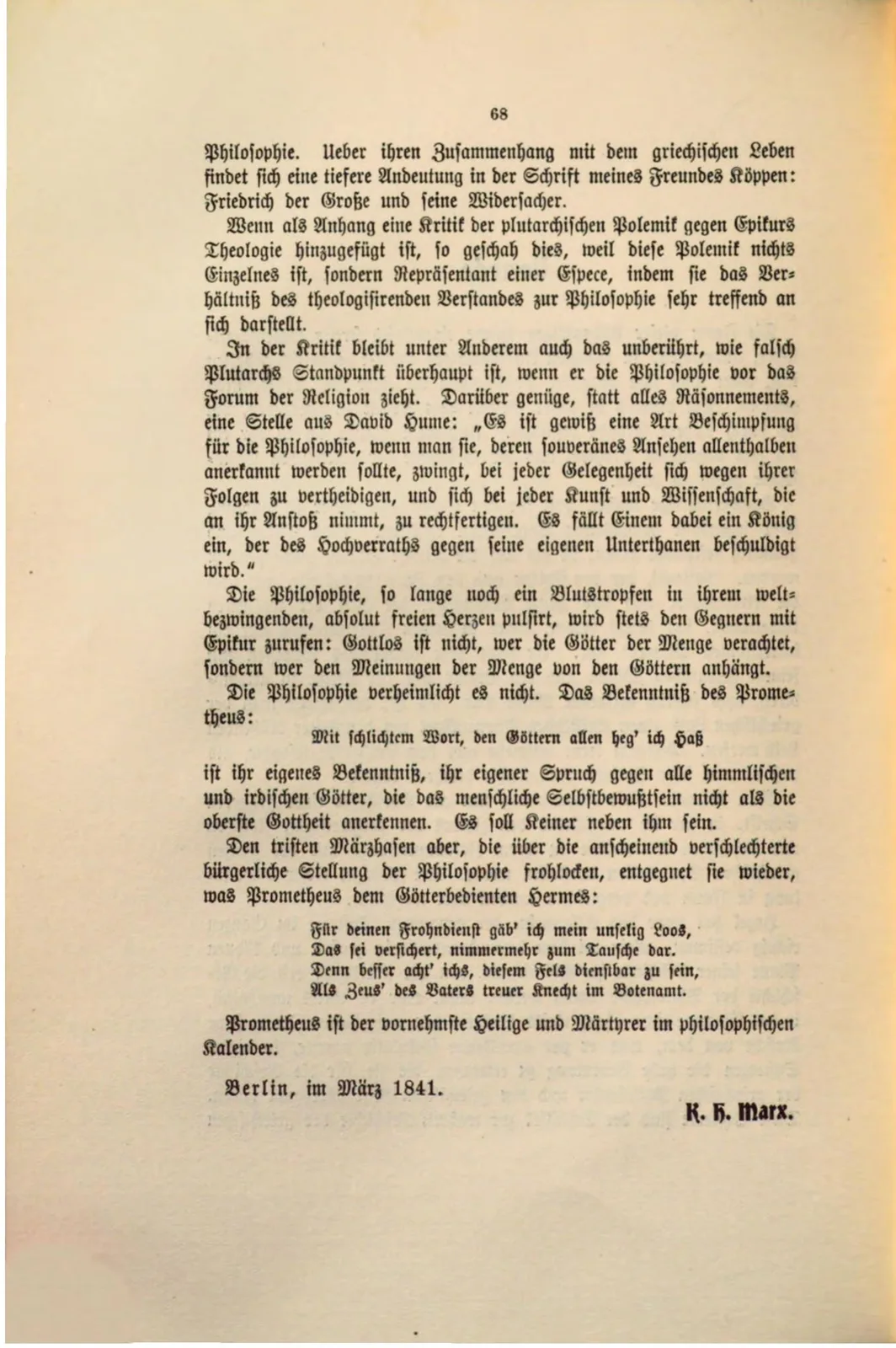
- [29] The preface sets the Prometheus line "Mit schlichtem Wort, den Göttern allen heg' ich Haß" (Aeschylus) as philosophy's own confession against "all heavenly and earthly gods who do not recognise human self-consciousness as the highest divinity"; the line is Aeschylus's, adopted by Marx — Mehring, Aus dem literarischen Nachlass von…, p. 68.
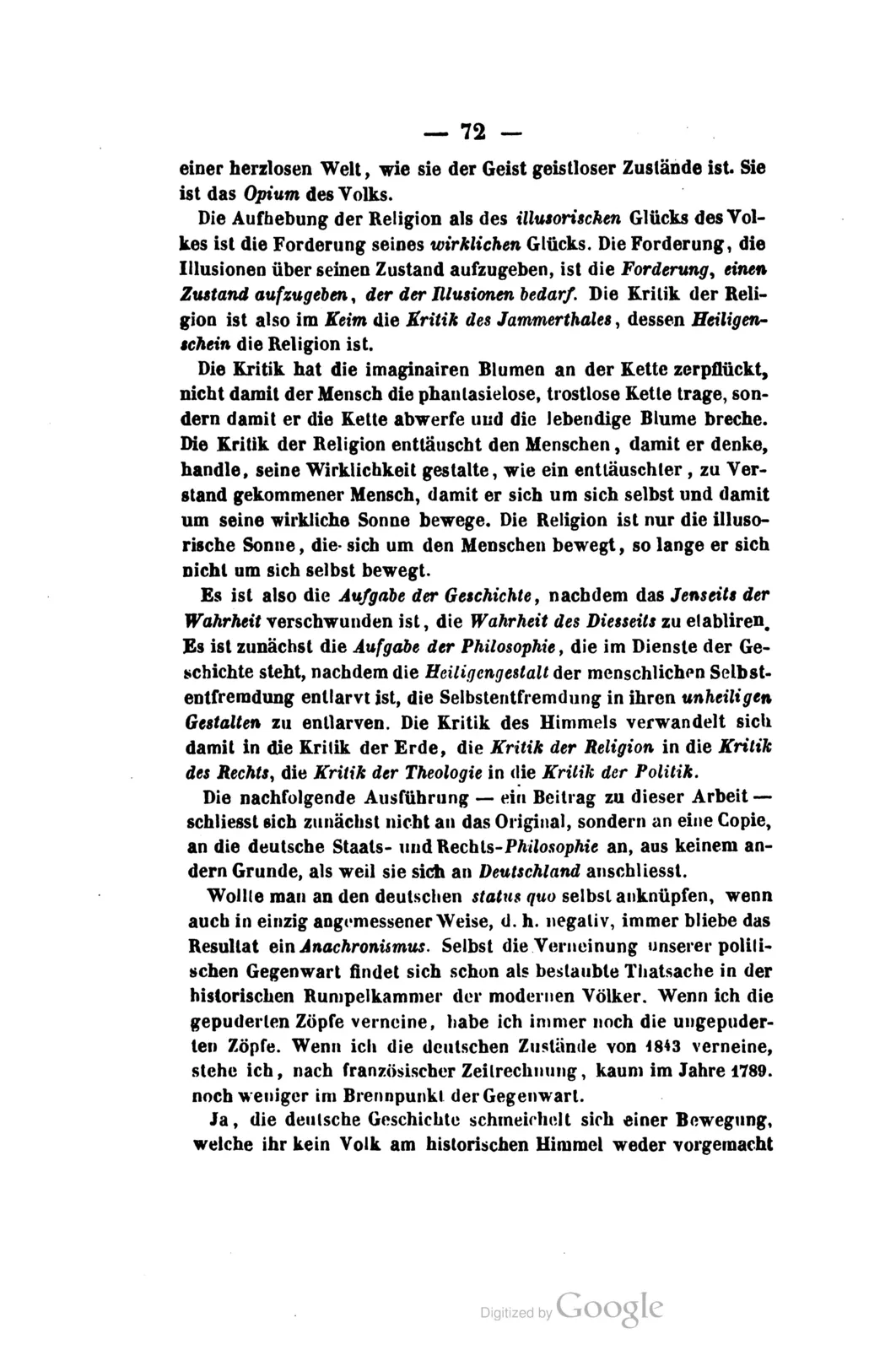
- [37] Marx writes there: "Man makes religion, religion does not make man", and that religion is the self-consciousness of a man who has either not found himself or lost himself again — Karl Marx, "Zur Kritik der Hegel'schen Rechts-Philosophie. Einleitung" (pp. 71–85) and "Zur Judenfrage" (pp. 182–214), in Deutsch-Französische Jahrbücher, ed. Arnold Ruge and Karl Marx (Paris, 1844), pp. 71–72; Karl Marx, Selected Essays, translated by H. J. Stenning (London: Leonard Parsons, 1926; reprinted Books for Libraries Press, 1968). Project Gutenberg EBook #21565, IA selectedessays21565gut.
- [38] The "sigh" passage: religious misery is at once the expression of real misery and a protest against it; religion is "the sigh of the oppressed creature, the heart (Gemüth) of a heartless world, the spirit of spiritless conditions. It is the opium of the people." The slogan is the last sentence of a longer passage that grants religion a real consolation — Marx, Deutsch-Französische Jahrbücher, p. 72; Mehring, Aus dem literarischen Nachlass von…, pp. 384–85; Marx, Selected Essays, (Introduction).
- [39] He then draws the conclusion that criticism of religion must become criticism of the "vale of tears", of law and of politics: "Thus the criticism of heaven transforms itself into the criticism of earth" — Marx, Deutsch-Französische Jahrbücher, p. 72; Marx, Selected Essays.
The Heart of a Heartless World
In February 1844 a radical journal published in Paris printed an essay by a German exile of twenty-five. Its most famous sentence has been quoted ever since, usually alone: religion "is the opium of the people." The sentences before it are rarely quoted. "Religious misery is at once the expression of real misery and a protest against real misery. Religion is the sigh of the oppressed creature, the heart of a heartless world, as it is the spirit of spiritless conditions. It is the opium of the people."12
Karl Marx wrote it as a man for whom the argument about God was already over. "For Germany," the essay began, "the criticism of religion is essentially finished, and the criticism of religion is the premise of all criticism."34 He spent the rest of his life on economics, not theology. This chapter follows him from a family that had left one religion for another, through the German philosophers who taught him to read God as a human creation, to the moment he decided that religion would not be argued away but would fade when the world that needed it changed. (Quotations from his German are this book's own translations unless another translator is named.)
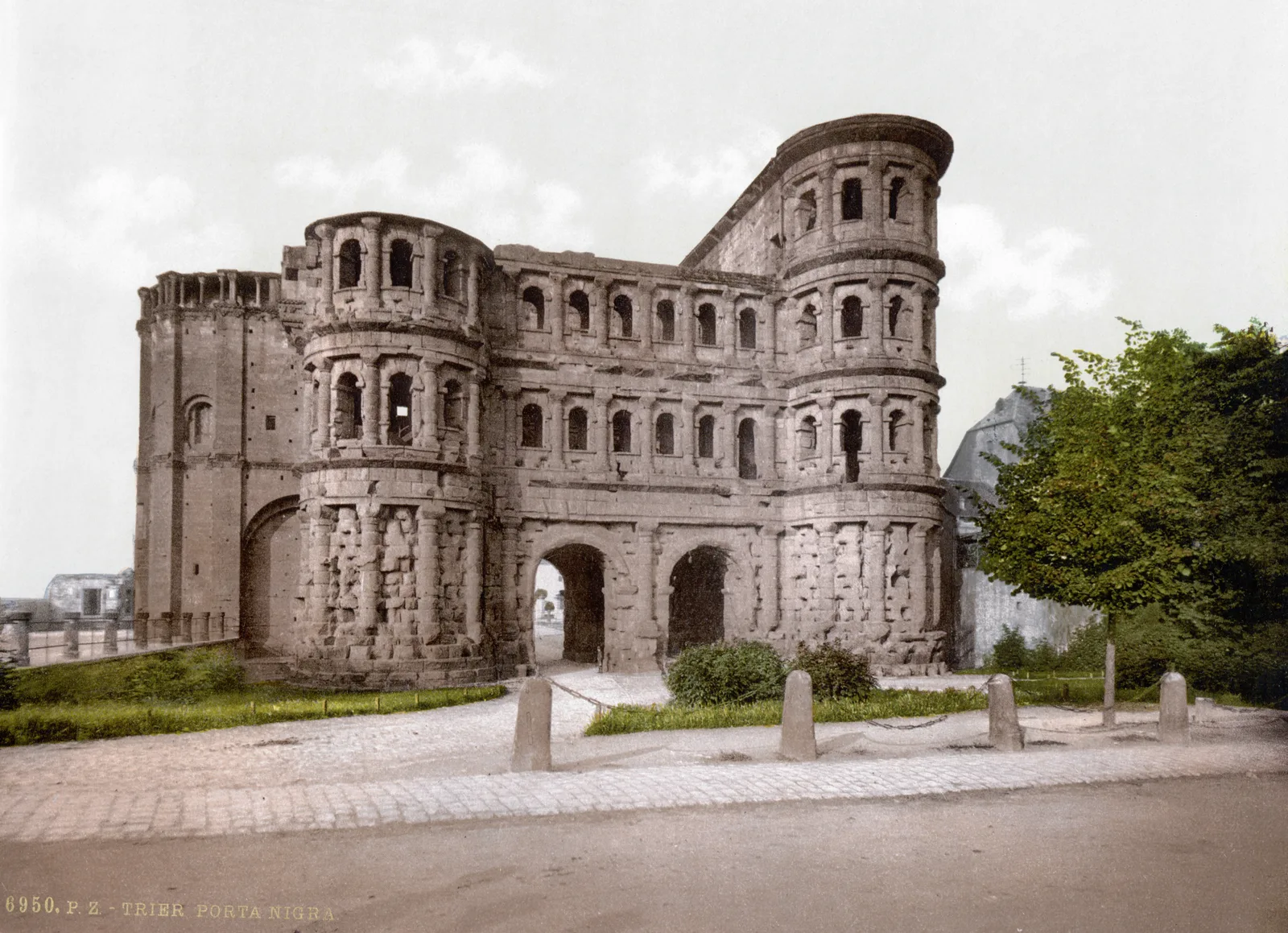
Trier
He was born in Trier, in the Prussian Rhineland, on 5 May 1818, into a Jewish family. His father, Heinrich, was a lawyer.56 Both sides of the family had rabbis among their ancestors; his mother, Henriette, was a Dutch Jew from a family whose men had been rabbis for generations.78 In 1824, when Karl was six, Heinrich Marx took his family over from Judaism to Protestantism.9
Accounts differ on why he did it. Wilhelm Liebknecht, a friend of Marx's later years, told a story, backed by Marx's daughter Eleanor, that a Prussian edict had forced Jews to be baptised or lose their posts.1011 Marx's later biographers Franz Mehring and John Spargo said no such edict existed and that the change was the father's own choice, though Mehring allowed that rising hostility to Jews may have pushed him.12 Heinrich Marx was a man of the Enlightenment, "thoroughly imbued with the French ideas of the eighteenth century concerning religion, science and art," as Eleanor put it, who read Voltaire to his son and professed in a letter his "pure faith in God."13141516 His wife's faith was more personal; teased by sceptical friends, she said she "believed in God, not for God's sake, but for her own."1718
A curtain fell
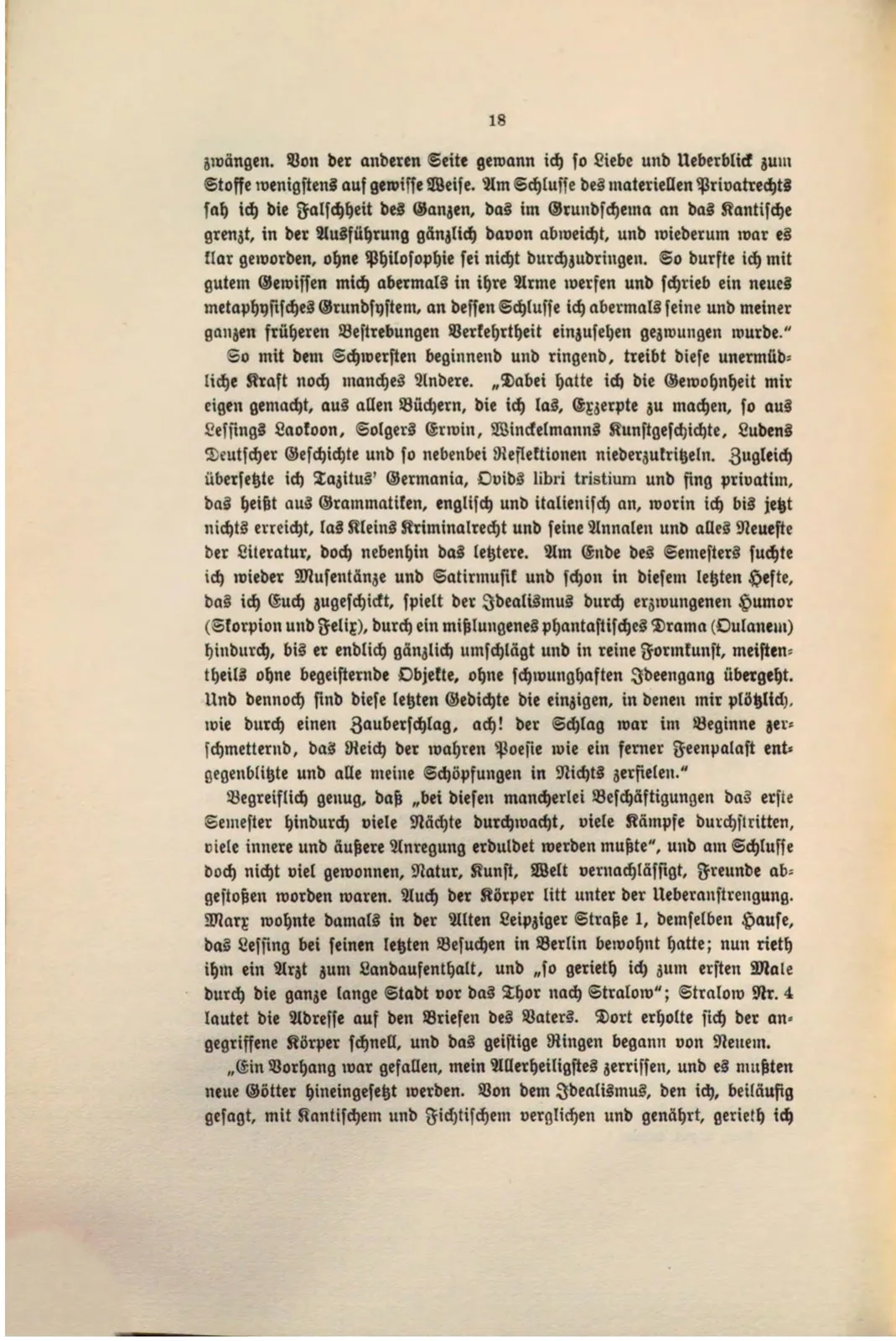
At seventeen he left the Trier gymnasium, studied law for a year at Bonn, became secretly engaged to Jenny von Westphalen, and went to Berlin.192021 There, in November 1837, at nineteen, he wrote his father a long letter about the collapse of everything he had believed. He was not writing about God in the ordinary sense; he was writing about the idealist philosophy he had held. "A curtain had fallen, my holy of holies was torn apart, and new gods had to be set in its place."222324 He had tried to write a philosophy of "the Godhead," and found that it led him straight into the system of Hegel, the philosopher he had hoped to avoid. "If the gods had once lived above the earth, they had now become its centre."2526 Ill, he read Hegel "from beginning to end" and joined a club of young Hegelians, among them the theologian Bruno Bauer.27
His father died the next spring.28 In 1841 Bauer's critical study of the Gospels set off a crisis in Prussia's theology faculties, and Bauer lost his post at Bonn.29
Prometheus
That year Marx finished a doctoral dissertation on the ancient atomists Democritus and Epicurus, and took his degree at Jena.30 Bauer feared its preface would cost him the degree, and wished he would drop the motto.31 Marx kept it. It was a line from Aeschylus's Prometheus: "In plain words, I hate all the gods." That, Marx wrote, was philosophy's "own confession, its own verdict against all gods of heaven and earth who do not recognise human self-consciousness as the highest divinity."323334 "Prometheus," he added, "is the most eminent saint and martyr in the philosophical calendar."35 He quoted Epicurus too: "Godless is not he who despises the gods of the crowd, but he who attaches to the crowd's opinions of the gods."3637 The line about hating the gods is Aeschylus's, not Marx's own; what Marx hated was any god set above human reason.32
Feuerbach
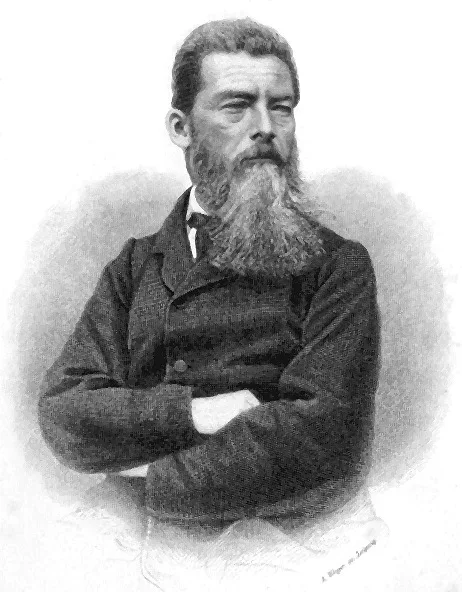
The book that freed his generation was Ludwig Feuerbach's The Essence of Christianity, which argued that God was humanity's own nature projected into heaven. Friedrich Engels remembered its effect: "we were all, for the moment, Feuerbachians," and Marx greeted it with enthusiasm.3839 Feuerbach's idea, as Engels put it, was that "the higher beings which our religious fantasy created are only the fantastic reflection of our own being."40
In 1842 Marx became editor of the Rheinische Zeitung in Cologne and wrote that philosophy "does not stand outside the world, any more than the brain stands outside man because it does not lie in the stomach."414243 In September 1843, planning a new journal in Paris, he wrote to his partner Arnold Ruge that it must take on "the theoretical existence of man, and so make religion and science the object of our criticism," since "religion is the table of contents of mankind's theoretical struggles."444546
The opium of the people
The journal, the Deutsch-Französische Jahrbücher, appeared once, as a double number, in Paris in 1844.47 Marx's essay in it was meant as a full stop. "Man makes religion, religion does not make man," he wrote; religion is the self-consciousness of a man who has not yet found himself or has lost himself again.4849 It was a real comfort for a real misery, and that was the trouble. "The abolition of religion, as the illusory happiness of the people, is the demand for their real happiness."50 "Criticism has plucked the imaginary flowers which adorned the chain, not that man should wear his fetters denuded of fanciful embellishment, but that he should throw off the chain, and break the living flower."51 So the argument had to move: "Thus the criticism of heaven transforms itself into the criticism of earth."52 The criticism of religion ends, he wrote, "with the doctrine that man is the supreme being for mankind."53
In the same issue, answering Bauer on whether Jews could be emancipated without giving up Judaism, he argued that "the emancipation of the State from religion is not the emancipation of the real individual from religion," and that the completed state was "the atheistic State, the democratic State."54555657 The second half of that essay identified Judaism with money-making in passages that are the ground of the later charge that Marx was antisemitic.58
Beyond Feuerbach
In Brussels in 1845 he jotted down eleven theses against Feuerbach that Engels printed forty years later. Feuerbach, he wrote, "resolves the religious essence into the human essence," but the human essence "is the ensemble of the social relations," and "the 'religious sentiment' is itself a social product."596061 The last thesis is the most famous: "The philosophers have only interpreted the world differently; the point is to change it."62
The Communist Manifesto of 1848, written with Engels, dismissed religious objections to communism as "not deserving of serious examination," and treated religions as products of their age: "When the ancient world was in its last throes, the ancient religions were overcome by Christianity."636465 It mocked the left's believers too: "Christian Socialism is but the Holy Water with which the priest consecrates the heart-burnings of the aristocrat."6667 The Christian communist tailor Wilhelm Weitling, whom Marx clashed with in Brussels, had written that "Christianity is the religion of freedom, moderation and enjoyment, not of submission, extravagance and privation," and that "Christ is a prophet of freedom."68697071
Capital
In London, where he spent the rest of his life, religion became a figure of speech for economics. In Capital (1867) the strange power of commodities needed an analogy: "we must have recourse to the mist-enveloped regions of the religious world."7273 He thought "the religious world is but the reflex of the real world," and that it "can, in any case, only then finally vanish, when the practical relations of everyday life offer to man none but perfectly intelligible and reasonable relations with regard to his fellowmen and to nature."747576 And in the preface he made a bitter joke: the Church of England "will more readily pardon an attack on 38 of its 39 articles than on 1/39 of its income. Now-a-days atheism itself is culpa levis," a slight fault, "as compared with criticism of existing property relations."7778
Against atheism as a dogma
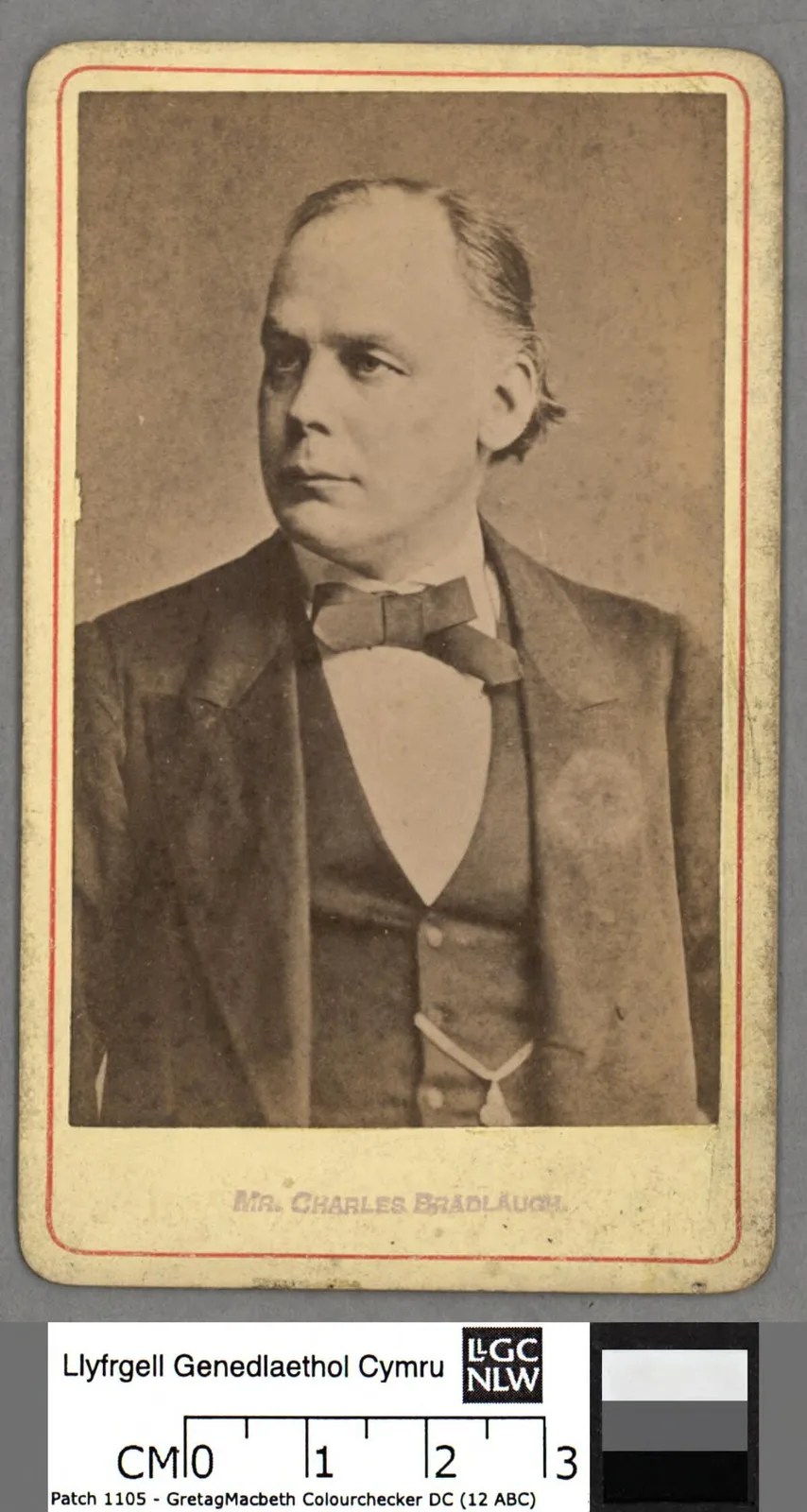
He did not like professional atheists. According to Spargo, his sympathetic American biographer, Marx went to some of Charles Bradlaugh's Sunday lectures in London and called him, with "a good deal of aversion," the "Bishop of Atheism."79 When Mikhail Bakunin's Alliance declared itself atheist, Marx opposed it, and in 1871 he condemned, in Spargo's quotation, "atheism dictated to its members as a dogma."80 At the Highgate funeral of an old Chartist friend he sat through the chapel service; such services meant nothing to him, Spargo reports, but he would take part to please his friends.81 Spargo summed him up as "personally an atheist" who was "most tolerant of the religious beliefs of others."82 Spargo also exposed one of the most quoted lines against him, "The idea of God must be destroyed," as a free translation from another man's book.83
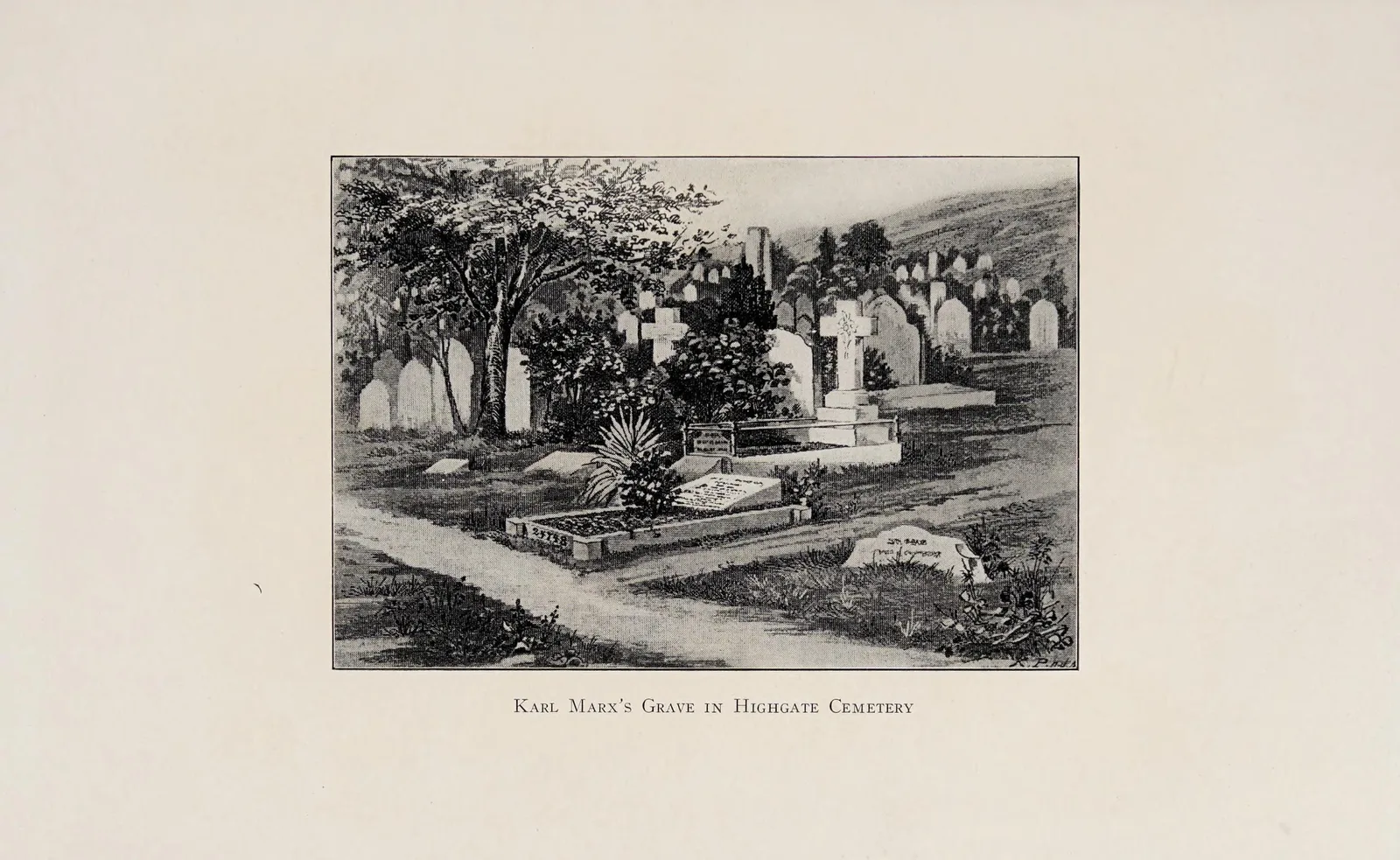
He died in his armchair in London on 14 March 1883 and was buried at Highgate in his wife's grave, with Engels speaking.84 Eight years later Pope Leo XIII answered the socialists in the encyclical Rerum Novarum: "no practical solution of this question will ever be found without the assistance of Religion and of the Church."8586
What he left
Marx's unbelief had no crisis of faith in it. He grew up in a house where his father's religion was an Enlightenment deism under a Lutheran name, lost his idealist "gods" at nineteen, and by twenty-five considered the question of God settled by Feuerbach. What he added was the claim that religion is a symptom, the heart of a heartless world, and that it would vanish only when the world stopped needing a heart from elsewhere. That is why he had little time for atheist campaigners, and why his name is linked forever with a phrase he meant as a diagnosis rather than an insult. The anarchist whose atheist Alliance he opposed, Mikhail Bakunin, has his own chapter in this book.
Footnotes
-
Karl Marx, "Zur Kritik der Hegel'schen Rechts-Philosophie. Einleitung" (pp. 71–85) and "Zur Judenfrage" (pp. 182–214), in Deutsch-Französische Jahrbücher, ed. Arnold Ruge and Karl Marx (Paris, 1844), p. 72; Franz Mehring (ed.), Aus dem literarischen Nachlass von Karl Marx, Friedrich Engels und Ferdinand Lassalle, vol. I, Gesammelte Schriften von Karl Marx und Friedrich Engels, 1841 bis 1850, first volume (March 1841 to March 1844), 2nd ed. (Stuttgart: J. H. W. Dietz Nachf., 1913; 1st ed. 1902), pp. 384–85; Karl Marx, Selected Essays, translated by H. J. Stenning (London: Leonard Parsons, 1926; reprinted Books for Libraries Press, 1968). Project Gutenberg EBook #21565, IA selectedessays21565gut, (Introduction). ↩
-
Karl Marx, Introduction, 1844: Marx, Deutsch-Französische Jahrbücher, p. 72 (the OCR breaks the page-number line into the sentence; Mehring, Aus dem literarischen Nachlass von…, pp. 384–85 reads it clean). The German "Seufzer" is "sigh"; Stenning has "moan" and "sentiment" for "Gemüth", which also means heart or soul. Common misquotation: the slogan alone, "religion is the opium of the people", without the sentences before it; and "opium of the masses", which is a later rendering. Marx's word is "des Volks". ↩
-
Marx, Deutsch-Französische Jahrbücher, p. 71; Mehring, Aus dem literarischen Nachlass von…, p. 383; Marx, Selected Essays, (Introduction, first paragraph). ↩
-
Karl Marx, Introduction, Deutsch-Französische Jahrbücher, 1844: Marx, Deutsch-Französische Jahrbücher, p. 71. ↩
-
Mehring, Aus dem literarischen Nachlass von…, p. 3; Wilhelm Liebknecht, Karl Marx: Biographical Memoirs, translated by Ernest Untermann (Chicago: Charles H. Kerr & Co., 1901), p. 13. ↩
-
Mehring, Aus dem literarischen Nachlass von…, p. 3. ↩
-
Mehring, Aus dem literarischen Nachlass von…, p. 6; John Spargo, Karl Marx: His Life and Work (New York: B. W. Huebsch, 1910), p. 26. Reported at second hand; the original has not been seen. ↩
-
Spargo, Karl Marx, pp. 25–26. ↩
-
Mehring, Aus dem literarischen Nachlass von…, pp. 3–4; Spargo, Karl Marx, p. 19. ↩
-
Liebknecht, Karl Marx, pp. 13–14. Accounts differ; see the disputed points. ↩
-
Spargo, Karl Marx, p. 19 (citing Liebknecht p. 164). ↩
-
Mehring, Aus dem literarischen Nachlass von…, pp. 4–5; Spargo, Karl Marx, pp. 20, 23. ↩
-
Mehring, Aus dem literarischen Nachlass von…, p. 5; Spargo, Karl Marx, p. 23. ↩
-
Liebknecht, Karl Marx, p. 14; Spargo, Karl Marx, p. 19. ↩
-
Eleanor Marx, quoted by Liebknecht: Liebknecht, Karl Marx, p. 14. ↩
-
Heinrich Marx, the father, in a letter to Karl (Mehring's quoted phrase): Mehring, Aus dem literarischen Nachlass von…, p. 5. ↩
-
Spargo, Karl Marx, p. 26. ↩
-
Henriette Marx, the mother (Spargo from a 1907 letter of her granddaughter): Spargo, Karl Marx, p. 26. ↩
-
Mehring, Aus dem literarischen Nachlass von…, p. 6; Spargo, Karl Marx, p. 30. ↩
-
Mehring, Aus dem literarischen Nachlass von…, pp. 6–8; Spargo, Karl Marx, pp. 32–33. ↩
-
Mehring, Aus dem literarischen Nachlass von…, p. 8. ↩
-
Mehring, Aus dem literarischen Nachlass von…, p. 15. ↩
-
Mehring, Aus dem literarischen Nachlass von…, pp. 18–19 (quoting the letter). ↩
-
Karl Marx, letter to his father, 10 Nov 1837: Mehring, Aus dem literarischen Nachlass von…, p. 18 (quoting the letter). ↩
-
Mehring, Aus dem literarischen Nachlass von…, p. 19. ↩
-
Karl Marx, letter to his father, 10 Nov 1837: Mehring, Aus dem literarischen Nachlass von…, p. 19. ↩
-
Mehring, Aus dem literarischen Nachlass von…, p. 20; Spargo, Karl Marx, pp. 45, 51. ↩
-
Spargo, Karl Marx, p. 49. ↩
-
Mehring, Aus dem literarischen Nachlass von…, p. 62; Spargo, Karl Marx, p. 51; Liebknecht, Karl Marx, p. 15. ↩
-
Mehring, Aus dem literarischen Nachlass von…, pp. 3, 62, 68; Spargo, Karl Marx, pp. 36, 59. ↩
-
Mehring, Aus dem literarischen Nachlass von…, p. 62; Spargo, Karl Marx, p. 59. ↩
-
Prometheus (Aeschylus), as set by Marx at the head of his dissertation: Mehring, Aus dem literarischen Nachlass von…, p. 68 (Marx's preface, Berlin, March 1841). ↩
-
Karl Marx, dissertation preface, March 1841: Mehring, Aus dem literarischen Nachlass von…, p. 68. ↩
-
Karl Marx, dissertation preface, March 1841: Mehring, Aus dem literarischen Nachlass von…, p. 68. ↩
-
Mehring, Aus dem literarischen Nachlass von…, pp. 67–68. ↩
-
Karl Marx quoting Epicurus, dissertation preface: Mehring, Aus dem literarischen Nachlass von…, p. 68. ↩
-
Friedrich Engels, Ludwig Feuerbach und der Ausgang der klassischen deutschen Philosophie. Mit Anhang: Karl Marx über Feuerbach vom Jahre 1845 (Stuttgart: J. H. W. Dietz, 1888), p. 13 (page as read in 11-feuerbach claim 43; not re-read here). ↩
-
Friedrich Engels, 1888: Engels, Ludwig Feuerbach und der Ausgang…, p. 13. ↩
-
Engels, Ludwig Feuerbach und der Ausgang…, (section 2). ↩
-
Mehring, Aus dem literarischen Nachlass von…, pp. 258–59. ↩
-
Liebknecht, Karl Marx, p. 15. ↩
-
Karl Marx, article on philosophy and religion in the press, 1842: Mehring, Aus dem literarischen Nachlass von…, p. 258. ↩
-
Mehring, Aus dem literarischen Nachlass von…, pp. 379–82. ↩
-
Karl Marx to Arnold Ruge, Kreuznach, September 1843: Mehring, Aus dem literarischen Nachlass von…, p. 381. ↩
-
Karl Marx to Ruge, September 1843: Mehring, Aus dem literarischen Nachlass von…, p. 382. ↩
-
Marx, Deutsch-Französische Jahrbücher, (contents); Marx, Selected Essays, preface; Spargo, Karl Marx, p. 70. ↩
-
Marx, Deutsch-Französische Jahrbücher, pp. 71–72; Marx, Selected Essays. ↩
-
Karl Marx, Introduction, 1844: Marx, Deutsch-Französische Jahrbücher, pp. 71–72. ↩
-
Karl Marx, Introduction, 1844: Marx, Deutsch-Französische Jahrbücher, p. 72. ↩
-
Karl Marx, Introduction, 1844: Marx, Selected Essays, "A Criticism of the Hegelian Philosophy of Right". ↩
-
Marx, Deutsch-Französische Jahrbücher, p. 72; Marx, Selected Essays. ↩
-
Karl Marx, Introduction, 1844: Marx, Selected Essays, "A Criticism of the Hegelian Philosophy of Right". ↩
-
Marx, Selected Essays, ("The Jewish Question"); Spargo, Karl Marx, pp. 70–71. ↩
-
Marx, Selected Essays, ("The Jewish Question"). ↩
-
Karl Marx, "On the Jewish Question", 1844: Marx, Selected Essays, "The Jewish Question"; German in Jahrb pp. 182–214. ↩
-
Karl Marx, "On the Jewish Question", 1844: Marx, Selected Essays, "The Jewish Question". ↩
-
Marx, Selected Essays, ("The Jewish Question"); Marx, Deutsch-Französische Jahrbücher, pp. 182–214; Mehring, Aus dem literarischen Nachlass von…, p. 4. ↩
-
Engels, Ludwig Feuerbach und der Ausgang…, (preface and Anhang). ↩
-
Karl Marx, Theses on Feuerbach, no. 6, 1845: Engels, Ludwig Feuerbach und der Ausgang…, Anhang (printed 1888). ↩
-
Karl Marx, Theses on Feuerbach, no. 7, 1845: Engels, Ludwig Feuerbach und der Ausgang…, Anhang. ↩
-
Karl Marx, Theses on Feuerbach, no. 11, 1845: Engels, Ludwig Feuerbach und der Ausgang…, Anhang. ↩
-
Karl Marx and Friedrich Engels, Manifesto of the Communist Party, authorised English translation (by Samuel Moore, revised by Engels, 1888), edited and annotated by Frederick Engels (Chicago: Charles H. Kerr & Co., 1906), pp. 42–44. ↩
-
Marx, Manifesto of the Communist Party, p. 42. ↩
-
Marx, Manifesto of the Communist Party, p. 43. ↩
-
Marx, Manifesto of the Communist Party, p. 49. ↩
-
Marx, Manifesto of the Communist Party, p. 49. ↩
-
Wilhelm Weitling, Das Evangelium des armen Sünders (Bern: Jenni, Sohn, 1845), p. 17. ↩
-
Spargo, Karl Marx, pp. 89–91. ↩
-
Wilhelm Weitling, tailor and communist, Das Evangelium des armen Sünders (1845); the Christian left that Marx attacked as "Weitlingism" (not, on Spargo's account, over religion): Weitling, Das Evangelium des armen Sünders, p. 17. ↩
-
Wilhelm Weitling, 1845: Weitling, Das Evangelium des armen Sünders, p. 17. ↩
-
Karl Marx, Capital: A Critique of Political Economy, vol. I, The Process of Capitalist Production, translated from the third German edition by Samuel Moore and Edward Aveling, edited by Frederick Engels (Chicago: Charles H. Kerr & Co., 1906; the 1887 English text), p. 83. ↩
-
Karl Marx, Capital I, on commodity fetishism: Marx, Capital, p. 83. ↩
-
Marx, Capital, pp. 91–92. ↩
-
Karl Marx, Capital I, 1867 (Moore and Aveling): Marx, Capital, p. 91. ↩
-
Karl Marx, Capital I: Marx, Capital, pp. 91–92. ↩
-
Marx, Capital, p. 15. ↩
-
Karl Marx, Capital I, Preface to the first edition: Marx, Capital, p. 15. ↩
-
Spargo, Karl Marx, p. 199. ↩
-
Spargo, Karl Marx, pp. 273–74. ↩
-
Spargo, Karl Marx, pp. 274–75. ↩
-
Spargo, Karl Marx, pp. 273–75. ↩
-
Spargo, Karl Marx, pp. 237–38. ↩
-
Spargo, Karl Marx, pp. 320–21. ↩
-
Leo XIII, Rerum Novarum (encyclical, 15 May 1891), "On the Condition of Labor" (English, 1891 printing). ↩
-
Leo XIII, Pope, Rerum Novarum, 15 May 1891 (eight years after Marx's death; the Catholic answer to socialism): XIII, Rerum Novarum, (no page numbers in this OCR). ↩
In their own words
Ein Vorhang war gefallen, mein Allerheiligstes zerrissen, und es mußten neue Götter hineingesetzt werden.
Hatten die Götter früher über der Erde gewohnt, so waren sie jetzt das Zentrum derselben geworden.
Mit schlichtem Wort, den Göttern allen heg' ich Haß
ist ihr eigenes Bekenntniß, ihr eigener Spruch gegen alle himmlischen und irdischen Götter, die das menschliche Selbstbewußtsein nicht als die oberste Gottheit anerkennen. Es soll Keiner neben ihm sein.
Prometheus ist der vornehmste Heilige und Märtyrer im philosophischen Kalender.
Gottlos ist nicht, wer die Götter der Menge verachtet, sondern wer den Meinungen der Menge von den Göttern anhängt.
The gods of Greece, once tragically wounded to death in the chained Prometheus of Aeschylus, were fated to die a comic death in Lucian's dialogues.
Wir haben uns eben so wohl um die andre Seite, um die theoretische Existenz des Menschen zu kümmern, also Religion, Wissenschaft etc. zum Gegenstande unserer Kritik zu machen.
Wie die Religion das Inhaltsverzeichniß von den theoretischen Kämpfen der Menschheit, so ist es der politische Staat von ihren praktischen.
Für Deutschland ist die Kritik der Religion im Wesentlichen beendigt, und die Kritik der Religion ist die Voraussetzung aller Kritik.
Der Mensch macht die Religion, die Religion macht nicht den Menschen.
Das religiöse Elend ist in einem der Ausdruck des wirklichen Elendes und in einem die Protestation gegen das wirkliche Elend. Die Religion ist der Seufzer der bedrängten Kreatur, das Gemüth einer herzlosen Welt, wie sie der Geist geistloser Zustände ist. Sie ist das Opium des Volks.
Religious misery is in one mouth the expression of real misery, and in another is a protestation against real misery. Religion is the moan of the oppressed creature, the sentiment of a heartless world, as it is the spirit of spiritless conditions. It is the opium of the people.
Die Aufhebung der Religion als des illusorischen Glücks des Volkes ist die Forderung seines wirklichen Glücks.
Criticism has plucked the imaginary flowers which adorned the chain, not that man should wear his fetters denuded of fanciful embellishment, but that he should throw off the chain, and break the living flower.
The criticism of religion ends with the doctrine that man is the supreme being for mankind
He emancipated the body from chains, because he laid chains upon the heart.
The emancipation of the State from religion is not the emancipation of the real individual from religion.
The latter is rather the atheistic State, the democratic State, the State which consigns religion among the other elements of bourgeois society.
Money is the jealous God of Israel, by the side of which no other god may exist.
Feuerbach löst das religiöse Wesen in das menschliche Wesen auf. Aber das menschliche Wesen ist kein, dem einzelnen Individuum innewohnendes Abstraktum. In seiner Wirklichkeit ist es das Ensemble der gesellschaftlichen Verhältnisse.
Feuerbach sieht daher nicht, dass das „religiöse Gemüth“ selbst ein gesellschaftliches Produkt ist
Die Philosophen haben die Welt nur verschieden interpretirt; es kommt aber darauf an, sie zu verändern.
wir waren alle momentan Feuerbachianer
The charges against Communism made from a religious, a philosophical, and generally, from an ideological standpoint, are not deserving of serious examination.
When the ancient world was in its last throes, the ancient religions were overcome by Christianity.
Christian Socialism is but the Holy Water with which the priest consecrates the heart-burnings of the aristocrat.
In one word, for exploitation, veiled by religious and political illusions, it has substituted naked, shameless, direct, brutal exploitation.
The religious world is but the reflex of the real world.
The religious reflex of the real world can, in any case, only then finally vanish, when the practical relations of everyday life offer to man none but perfectly intelligible and reasonable relations with regard to his fellowmen and to nature.
Now-a-days atheism itself is culpa levis, as compared with criticism of existing property relations.
The English Established Church, e.g., will more readily pardon an attack on 38 of its 39 articles than on
we must have recourse to the mist-enveloped regions of the religious world.
Protestantism, by changing almost all the traditional holidays into workdays, plays an important part in the genesis of capital.
Die Philosophie steht nicht außer der Welt, so wenig das Gehirn außer dem Menschen steht, weil es nicht im Magen liegt
Marx's father was a man of great talent, and thoroughly imbued with the French ideas of the eighteenth century concerning religion, science and art
The other side
For no practical solution of this question will ever be found without the assistance of Religion and of the Church.
Thus Religion teaches the laboring man and the workman to carry out honestly and well all equitable agreements freely made; never to injure capital, or to outrage the person of an employer
To remedy these evils the Socialists, working on the poor man's envy of the rich, endeavor to destroy private property
Das Christenthum ist die Religion der Freiheit, der Mäßigkeit und des Genusses, und nicht die der Unterwerfung, der Verschwendung und Entbehrung.
Christus ist ein Prophet der Freiheit, seine Lehre die der Freiheit und Liebe
Their mistake was that they assumed the Christian State to be the only real State, and did not subject it to the same criticism that they applied to Judaism
reinen Glauben an Gott
believed in God, not for God's sake, but for her own
Where accounts differ
| Point | One account | Another | How the page handles it |
|---|---|---|---|
| Why and when the Marx family went over to Protestantism | Liebknecht (with Eleanor Marx): shortly after Karl's birth an edict forced Jews to be baptised or lose their posts; the father yielded; Karl's life was "the revenge" (Liebknecht pp. 13–14) | Mehring and Spargo: no such edict; the father's own free choice, in 1824, from Enlightenment conviction and a wish to leave Judaism formally (Mehring pp. 4–5; Spargo pp. 19–23). Mehring allows a possible outer push | Say accounts differ and that the edict story has been disproved; the brief for this episode gave "c. 1817, children baptised 1824, to keep his post", which none of the sources read supports: 1824 for the whole family is Engels's date. Settle with a modern scholarly source |
| What the Prometheus line is | Marx's own declaration of hatred of the gods (the popular reading) | Aeschylus's verse, adopted by Marx as "philosophy's confession" against gods that do not recognise human self-consciousness as the highest divinity (Mehring p. 68) | Quote the line as Aeschylus's and give Marx's gloss; do not present it as Marx saying "I hate all the gods" in his own voice |
| Whether the 1844 passage is an attack on religion | Slogan reading: religion is a drug fed to the people | The full passage: religion is also protest against real misery and the "heart of a heartless world"; its abolition is the demand for real happiness (Jahrb p. 72) | Read the whole passage, in that order |
| Marx's stance on atheist campaigning | Howell (1878): Marx brought the religion quarrel into the International (as reported by Spargo p. 272) | Spargo: the question came from a French delegate; Marx opposed "atheism dictated as a dogma" and snubbed "professional atheists" (Spargo pp. 272–74). Secondhand, from a sympathetic biographer | Say the evidence is one friendly biographer quoting Marx's letters; verify against the 1871 letter and the Secular Chronicle piece before relying on it |
| The "idea of God must be destroyed" quotation | Anti-socialist pamphlets attribute it to Marx | It is a free translation of a passage in Wilhelm Marr's book (Spargo pp. 237–38) | Mention as a false attribution only if the Marr text is found; otherwise leave it out |
| Page numbers in this sheet | Printed page numbers read from the OCR | Some OCR lines drop the page number, so a "pp." range may be one page out | The script stage should open the scan page before putting a page number on screen |
List of illustrations
This page uses only public-domain and Creative Commons images; each is credited with its source and licence.
- Karl Marx 001 — John Jabez Edwin Mayall, 1875 · John Jabez Edwin Mayall; Public domain; via Wikimedia Commons · Public domain
- Porta Nigra um 1900 — Unknown authorUnknown author, 1900 · Unknown author; Public domain; via Wikimedia Commons · Public domain
- Marx, letter to his father, 10 Nov. 1837, extract as printed in Mehring, Nachlass I, p. 18 — Karl Marx (ed. Franz Mehring), 1837 · Internet Archive, item mehring-nachlass-1 · Public domain (published 1902/1913; Internet Archive scan)
- Marx, preface to the doctoral dissertation (Berlin, March 1841), as printed in Mehring, Nachlass I, p. 68 — Karl Marx (ed. Franz Mehring), 1841 · Internet Archive, item mehring-nachlass-1 · Public domain (published 1902/1913; Internet Archive scan)
- Feuerbach Ludwig retouched — August Weger, 1860s · August Weger; Public domain; via Wikimedia Commons · Public domain
- Marx, 'Zur Kritik der Hegel'schen Rechts-Philosophie. Einleitung', Deutsch-Französische Jahrbücher (1844), p. 72 — Karl Marx, 1844 · Internet Archive, item deutsch-franzosische-jahrbucher-marx-and-ruge · Public domain (published 1844; scan of a 1965 facsimile reprint; Internet Archive scan)
- Manifesto of the Communist Party, authorised English translation ed. Engels (Chicago: Kerr, 1906), title page — Karl Marx and Friedrich Engels (Chicago: Charles H. Kerr, 1906; translation 1888), 1906 · Internet Archive, item manifestocommun00engegoog · Public domain (published 1906; Internet Archive scan)
- Portrait of Charles Bradlaugh (4674315) — Unknown authorUnknown author, 1880s · Unknown author; Public domain; via Wikimedia Commons · Public domain
- Karl Marx’s Grave in Highgate Cemetery (plate, Spargo 1910) — Unknown (plate in John Spargo, Karl Marx: His Life and Work (New York: B. W. Huebsch, 1910)), 1910 · Internet Archive, item karlmarxhislifew0000spar · Public domain (published 1910; Internet Archive scan)
Sources
Tier 1 — the subject's own words (writings, letters, diaries, trial records)
- [Jahrb] Karl Marx, "Zur Kritik der Hegel'schen Rechts-Philosophie. Einleitung" (pp. 71–85) and "Zur Judenfrage" (pp. 182–214), in Deutsch-Französische Jahrbücher, ed. Arnold Ruge and Karl Marx (Paris, 1844). IA deutsch-franzosische-jahrbucher-marx-and-ruge. https://archive.org/details/deutsch-franzosische-jahrbucher-marx-and-ruge. OCR saved as research/texts/jahrbucher1844.txt (noisy; page numbers mostly lost; the page ranges come from the volume's contents list and from Mehring's reprint). The German original of the 1844 text.
- [Stenning] Karl Marx, Selected Essays, translated by H. J. Stenning (London: Leonard Parsons, 1926; reprinted Books for Libraries Press, 1968). Project Gutenberg EBook #21565, IA selectedessays21565gut. https://archive.org/details/selectedessays21565gut. OCR saved as research/texts/stenning.txt. Contains "A Criticism of the Hegelian Philosophy of Right" (Introduction) and "The Jewish Question" in English. Published 1926, the English translation is the translator's copyright from 1926 and needs a rights check before it is quoted on screen (see Open questions); the Gutenberg text carries no page numbers, so Stenning quotations are cited by essay and section.
- [Mehring] Franz Mehring (ed.), Aus dem literarischen Nachlass von Karl Marx, Friedrich Engels und Ferdinand Lassalle, vol. I, Gesammelte Schriften von Karl Marx und Friedrich Engels, 1841 bis 1850, first volume (March 1841 to March 1844), 2nd ed. (Stuttgart: J. H. W. Dietz Nachf., 1913; 1st ed. 1902). IA mehring-nachlass-1 (same text as nachlass-1). https://archive.org/details/mehring-nachlass-1. OCR saved as research/texts/mehring-nachlass-1.txt (the long s "ſ" was converted to "s" in the saved copy so the quotation checker can read it). Mixed tier: Mehring's introduction (pp. 1–70) is Tier 2 and quotes Marx's letters of 1836–38; the reprinted texts (dissertation preface, 1842 newspaper article, Kreuznach letter of 1843, Introduction of 1844) are Tier 1 as reprinted. Reprints may modernise 1844 spelling ("beendet" for "beendigt").
- [Manifesto] Karl Marx and Friedrich Engels, Manifesto of the Communist Party, authorised English translation (by Samuel Moore, revised by Engels, 1888), edited and annotated by Frederick Engels (Chicago: Charles H. Kerr & Co., 1906). IA manifestocommun00engegoog. https://archive.org/details/manifestocommun00engegoog. OCR saved as research/texts/manifesto.txt. Page numbers read from running heads.
- [Capital] Karl Marx, Capital: A Critique of Political Economy, vol. I, The Process of Capitalist Production, translated from the third German edition by Samuel Moore and Edward Aveling, edited by Frederick Engels (Chicago: Charles H. Kerr & Co., 1906; the 1887 English text). IA capitalcritiqueo01marx. https://archive.org/details/capitalcritiqueo01marx. OCR saved as research/texts/capital1.txt. First German edition 1867 (the Preface to the first edition is dated 25 July 1867; date not read in the scan).
- [Engels] Friedrich Engels, Ludwig Feuerbach und der Ausgang der klassischen deutschen Philosophie. Mit Anhang: Karl Marx über Feuerbach vom Jahre 1845 (Stuttgart: J. H. W. Dietz, 1888). IA 11570862bsb. https://archive.org/details/11570862bsb. OCR copied from 11-feuerbach/research/texts/engels-1888.txt to research/texts/engels1888.txt (not edited there). Engels is Tier 2 as historian and an interested party; the Theses (Anhang) are Tier 1 in German; page numbers in this OCR are unreliable, so the Theses are cited by thesis number.
- [Weitling] Wilhelm Weitling, Das Evangelium des armen Sünders (Bern: Jenni, Sohn, 1845). IA 11751947bsb. https://archive.org/details/11751947bsb. OCR saved as research/texts/weitling-evangelium.txt (long s converted to "s"). Page numbers read from the OCR (printed at the top of the page).
Tier 2 — scholarly biographies and encyclopedias
- [Liebknecht] Wilhelm Liebknecht, Karl Marx: Biographical Memoirs, translated by Ernest Untermann (Chicago: Charles H. Kerr & Co., 1901). IA karlmarxbiograp00liebgoog. https://archive.org/details/karlmarxbiograp00liebgoog. OCR saved as research/texts/liebknecht.txt. A friend's memoir: Tier 2 with Tier 3 reliability (Spargo calls it "charmingly tender, but often inaccurate"). Page numbers from running heads.
- [Spargo] John Spargo, Karl Marx: His Life and Work (New York: B. W. Huebsch, 1910). IA karlmarxhislifew0000spar. https://archive.org/details/karlmarxhislifew0000spar. OCR saved as research/texts/spargo.txt. A sympathetic socialist biographer (US Socialist Party); uses Mehring and family letters. Page numbers read from the OCR; chapter-opening pages and a few others may be one page out.
Tier 3 — popular biographies and journalism
- (none used)
Tier 4 — maps to other sources only (Wikipedia and similar). Never cited in the script.
- None consulted. Leads to chase, none of them downloaded: Mehring, Karl Marx: Geschichte seines Lebens (1918; a German full text was not found on the Internet Archive; the English Karl Marx: The Story of His Life, 1935/1936, is in copyright and was not used); Paul Lafargue's and Eleanor Marx's reminiscences (Neue Zeit, 1890s; the 1957 Moscow collection is in copyright); the MEGA I/1 (1927) volume with the 1835 school essay.
Opposition sources — contemporary critics and religious responses
- [Rerum] Leo XIII, Rerum Novarum (encyclical, 15 May 1891), "On the Condition of Labor" (English, 1891 printing). IA onconditionoflab00leox. https://archive.org/details/onconditionoflab00leox. OCR saved as research/texts/rerum-novarum.txt. No paragraph numbers in this OCR; quotations are located by phrase.
- [Weitling] (as above) the Christian-communist answer from the left.
- [Bauer] Bruno Bauer, Die Judenfrage (1843), quoted and answered by Marx in [Stenning] ("The Jewish Question"); Bauer's own book was not read.
- [Mehring] and [Spargo] for Heinrich Marx's and Henriette Marx's own faith, quoted from their letters at second hand.
Related lives
Mikhail Bakunin (folder 40-bakunin is scaffolded) — Marx opposed the atheist plank of Bakunin's Alliance in 1869–71; alternatives: Charles Bradlaugh, whom Marx called the "Bishop of Atheism", or Ludwig Feuerbach (11-feuerbach), the source of the break.
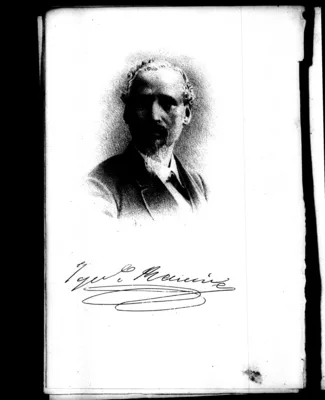
Ignacio Ramírez
Ignacio Ramírez was the son of a liberal family driven out by a clerical government. He read his way through the friars' and the cathedral's forbidden books, and at eighteen read a paper headed "No hay Dios" to the Academia de Letrán. He never retreated from it, but turned it from provocation into law: he fought "divine right" in the 1856 Congress and closed the convents as Juárez's minister. He held that a government should be neither Catholic nor atheist, and belief left to each conscience.
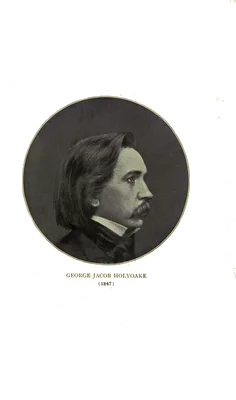
George Holyoake
George Jacob Holyoake was a devout Birmingham Sunday-school teacher whose sister died over a church-rate. He lost his belief in God when his friend Southwell was jailed for blasphemy in 1842, and went to prison himself that year professing "disbelief" rather than denial. He then spent sixty years renaming the absence, from atheism to Secularism in 1851 to agnosticism, so that unbelief would be judged by the good it did rather than by the quarrel over God.
George Eliot
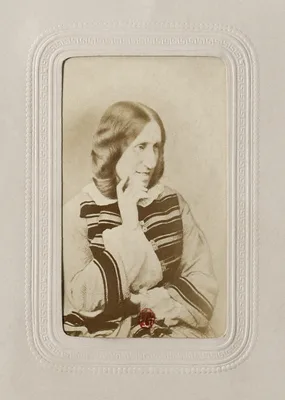
George Eliot was an ultra-Evangelical girl who lost the creed in 1841, reading Hennell among the Brays. She quarrelled with her father over church and regretted it all her life. In 1843 she gave up proselytising as "the quackery of infidelity", and she put her name only to Feuerbach's argument that God is human nature. She ended reverent toward the great religions, holding the idea of God to be "the ideal of a goodness entirely human" and unbelief to be the discipline of doing without opium.
Mikhail Bakunin
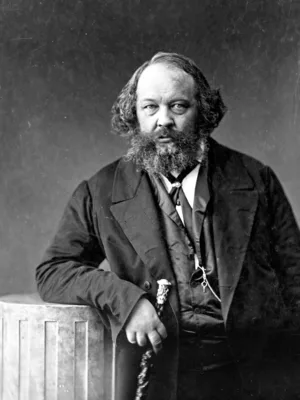
Mikhail Bakunin's Orthodox boyhood cooled at cadet school, and his early philosophy was a religion he used to defend the state. He became a revolutionary in Dresden in 1842 while still speaking of "a new religion", and believed in a personal God into his late forties. He turned to open atheism only in the 1860s, in his fight with Mazzini's religious republicanism. After that, God, the state and every master stood or fell together for him.