Narendra Dabholkar was a Satara doctor who had long since stopped believing in God. In 1982 he gave up medicine to fight superstition, and built a movement that, against his first wish, stayed neutral on God and attacked only fraud and exploitation. He defended that compromise as right for the cause. He was shot dead in Pune in 2013, and the law he fought for, which protects worship and never mentions God, was issued within days of his death.
The belief timeline
- Faith (undated (childhood)) — Born into a Brahmin, progressive Hindu household; his mother told him folk stories; he says he remains a Hindu by birth. No account of belief or of a crack [38][39][61][62]
- Doubt (undated; before the early 1990s) — "I had long lost my belief in god"; for a time he debated earnestly that god does not exist [41]
- Declaration (1982 to 1983; 1989) — Closes his clinics in 1982 and goes full-time; joins Adhav 1983; founds ANiS in 1989 [37][27][50]
- Revision (early 1990s; 2010) — Accepts the Samiti's neutral line on God against his own view; by 2010 calls the position "appropriate, scientific and in line with our cause" [42][44]
Notes to the timeline (10)
- [38] His own statement: "I am brahmin by birth"; some friendly-in-theory critics accused ANiS of a Brahminical plot to deceive common people — Narendra Dabholkar, The Case for Reason, Volume One: Understanding the Anti-Superstition Movement, tr. Suman Oak (Chennai: Context, an imprint of Westland, 2018; first published in Marathi as Timiratuni Tejakade, Rajhans Prakashan, 2010), Prologue.
- [39] His own account (2010): he "acquired the religion" of his parents and has not given it up or converted; so he remains a Hindu by birth and inherits the teachings of the saints and social reformers of that religion; Hinduism is flexible enough to embrace "a person like me" who refutes the existence of god and the validity of the Vedas — Narendra Dabholkar, The Case for Reason, Volume II: A Scientific Enquiry into Belief, tr. Suman Oak (Context, 2019; Marathi, Rajhans, 2010), ch. 4, "My Understanding of Spirituality".
- [61] His own childhood and student recollections (the only ones found): his mother used to tell him a story of a Nandi statue near a river that inched forward a grain of rice by day and back a grain of wheat by night, which he later used as an image of how slowly reform moves; a Vitthal song was "popular when I was a child"; as a medical student at the mission hospital (Miraj) he saw a young bride with sudden paralysis whose cause the psychiatrist Dr Debasikdar on the faculty traced to a mental conflict, which became his template for explaining "miracle cures" — Narendra Dabholkar, Please Think: Practical Lessons in Developing a Scientific Temper, tr. Jai Vipra (Context, 2019; Marathi Vichar Tar Karal?, Rajhans, 1994), (end of the chapter before "A hungry crow will eat rice!"; "God's godliness"; "At least pay attention to me now!").
- [62] Press: father Achyut Dabholkar a well-known lawyer; mother Tarabai "a rationalist"; eldest brother Dr Devdatta Dabholkar, Gandhian and Pune University vice-chancellor; Shripad, pioneer of organic farming; Dr Dattaprasad, scientist; "a family of progressive thinkers"; brother Dattaprasad says Dabholkar took the threat calls lightly — Thought & Action (Maharashtra ANiS journal), Special Issue on Dr Narendra Dabholkar, Aug 2013 (items to mid-Sept 2013), ed. P. K. Nanawati and Suman Oak, p. 17 (TOI).
- [41] His own account: by the time he was asked to interview the actor Shreeram Lagoo about how he had become a rationalist (for the book Timirbhed), he "had long lost" his belief in god; there was a time in his life, too, when he would debate "very earnestly" that god does not exist. No year, no cause, no first doubt is given — Dabholkar, Case for Reason, ch. 26, "The Vivek Jagar Debates".
- [37] His own account: MBBS in 1970; ran a hospital and two clinics until 1982; in 1982 closed both and became a full-time activist of the movement. People asked whether giving up a successful practice was necessary; his answer was yes, because darkness retreats only in the measure that light enters and it does not happen by education alone — Dr Narendra Dabholkar, Scientific Temper (English tr. Dr Vivek Monteiro, AIPSN; Maharashtra ANiS), a lecture text, 45 pp, p. 1.
- [27] Born into a socialist or progressive family in Satara district; qualified as a doctor; practised for over a decade (12 years in several press items); joined movements for social justice with Baba Adhav ("One Village, One Well", 1983); founded MANS 1989 aimed at exploitative godmen, "miracle cures" and regressive religious practices — Priyanka Kakodkar, "He was not against God but fought exploitation", The Hindu, 20 Aug 2013; Thought & Action, p. 17 (12 years; Adhav), p. 54 (Adhav in 1983; 12-year practice), p. 44 (Adhav, "in the seventies"). Accounts differ; see the disputed points.
- [50] His own account: ANiS was founded in 1989 "in this vacuum": for nearly thirty years after the deaths of Ambedkar and Gadge Baba and the silence of the magazine Kirloskar, nobody organised against superstition; it was hoped modernisation would reduce it — Dabholkar, Case for Reason, ch. 29 and note 5.
- [42] His own account: "later" ANiS resolved to adopt a neutral stand on god and religion; he did not agree at that time but conceded to the majority, while making clear he would try to convince the others democratically and change the resolution; he says this was all in the early years of the organisation — Dabholkar, Case for Reason, ch. 26.
- [44] His own account (2010): the Samiti dismisses "do you believe in god?" as irrelevant, because it lacks a definition of "god". On the creator hypothesis the Samiti's stand is agnostic (science has not yet answered); it rejects a god who controls the world (injustice, atrocities, the omnipotence and omniscience contradiction) and a god who performs miracles and accepts bribes; has nothing to say on a formless god without attributes; respects those who see god in ethical thought and action and would like to talk with them; but "does not find it necessary to perceive god even in this form"; moral conduct comes from one's own reason. He calls this position "appropriate, scientific and in line with our cause" — Dabholkar, Case for Reason, ch. 1, "The Concept of God".
A Law Against Fraud, Not Against God
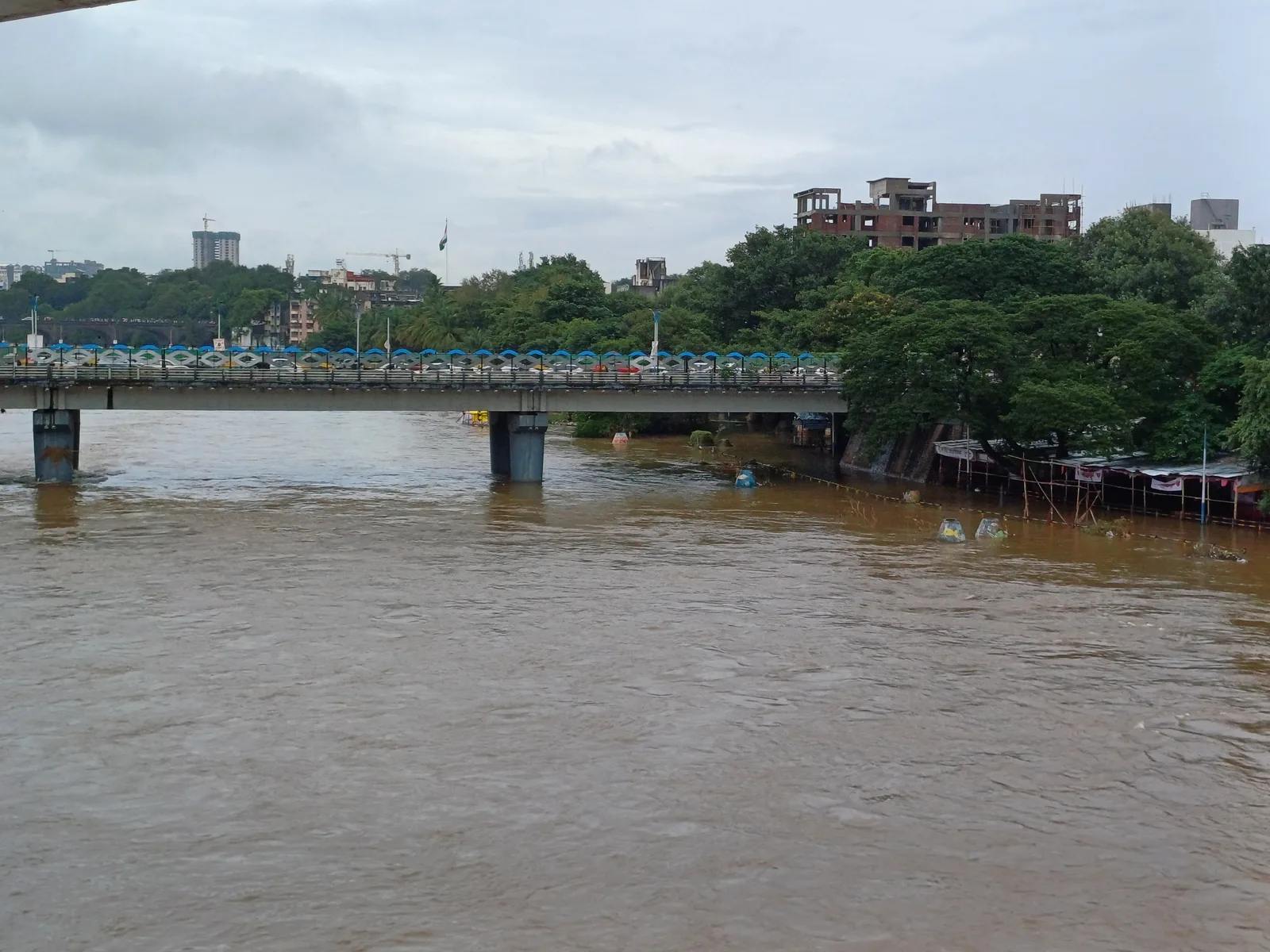
At about twenty past seven on the morning of 20 August 2013, a sixty-seven-year-old doctor was walking across the Omkareshwar bridge in Pune when two men on a motorcycle shot him in the head and chest and rode away.12 He was Narendra Dabholkar, who had spent thirty years campaigning against black magic, fake miracle cures and the holy men who profited from them. Within days the government of Maharashtra issued the anti-superstition law he had been pressing on it for years.3
That law does not contain the word "God."4 This chapter asks how a man who had privately stopped believing in God built a movement that refused to fight about God, and what that choice cost him.
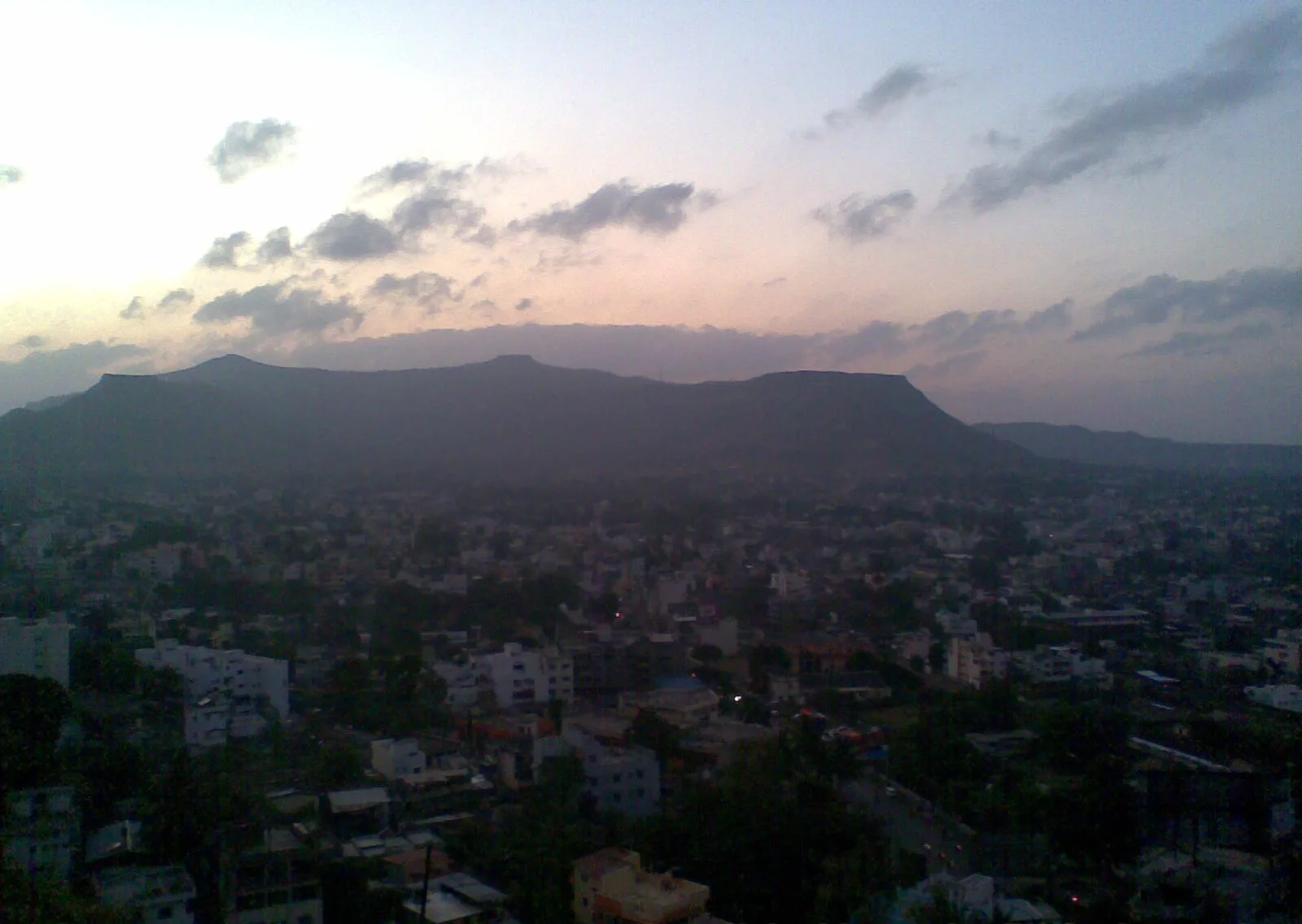
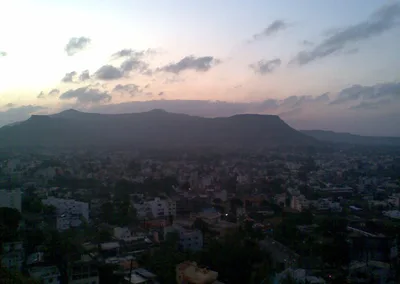
A doctor from Satara
He was born on 1 November 1945 in Satara, in western Maharashtra, the youngest of ten children of a lawyer, Achyut Dabholkar, in a household the press later called a family of progressive thinkers.56 He was a Brahmin by birth, as he said himself, and he said he had never given up or exchanged the religion of his parents; he remained a Hindu by birth, in a tradition flexible enough, he thought, to hold even a man who rejected God and the authority of the Vedas.78 As a young man he was a fine kabaddi player, captain of his university team.9
He took his medical degree at Miraj in 1970.105 As a student at the mission hospital there, he watched a psychiatrist trace a young bride's sudden paralysis to a conflict in her mind rather than to any curse or spirit, and he later used the case to explain how "miracle cures" work.11 No source records a childhood faith or a moment when he stopped believing. On the belief timeline, his faith is only the religion he was born into.
A man who had long stopped believing
When he was asked, years later, to interview the actor and rationalist Shreeram Lagoo about how Lagoo had come to reject religion, Dabholkar wrote that he himself had long since lost his belief in God, and that there had been a time when he too would argue earnestly that God does not exist.12 He gives no year and no cause. For that reason the timeline gives his doubt no date.
In 1982 he closed the hospital and two clinics he ran in Satara and became a full-time activist. People asked him whether it was necessary to give up a good practice. His answer was yes: darkness retreats only as light comes in, and education alone would not do it.10 In 1983 he joined the social reformer Baba Adhav's campaign for one shared village well for all castes, and in 1989 he founded the Maharashtra Andhashraddha Nirmoolan Samiti, the Maharashtra Committee for the Eradication of Blind Faith.1314 There had been no organised campaign against superstition in the state, he wrote, for thirty years.14 On his timeline, the declaration falls at 1982 and 1989.
The neutral stand
In its early years the Samiti resolved to take no position on God or religion. Dabholkar disagreed. He accepted the majority's decision and said he would try to change it by persuasion.15 On public platforms the difference showed. He and Lagoo toured Maharashtra with a series of debates: Lagoo argued that belief in God was the first superstition and that humanism was what people needed; Dabholkar, speaking for the Samiti, argued that faith and superstition were different things, that the Samiti was neutral on God, and that what mattered was action against exploitation.16
By 2010 he had come round. In The Case for Reason he explained that the Samiti would not answer the question "Do you believe in God?" without a definition of God. It was agnostic about a creator; it rejected a God who ran the world unjustly or took bribes for miracles; and it respected those who found God in ethical action, while needing no God for its own morality. He called that position right for the cause.17 In the same book he called atheism his own personal choice, and said that most of the Samiti's activists believed in neither God nor religion.1819 Rationalists elsewhere accused him of capitulating; believing opponents said the neutrality was a mask for atheist propaganda.20 On his timeline, the revision is this compromise, first resisted, then defended.
Exploitation, not worship
The campaign went after concrete harms: holy men who claimed to cure blindness, exorcists who beat the "possessed," and the practice of branding women as witches.2122 He offered a cash prize to anyone who could demonstrate a supernatural power under fair conditions; press accounts differ on the sum and the feats.23 He refused a state award for one of his books because the Chief Minister had accepted a gold chain "conjured" by the godman Sathya Sai Baba and had had the Samiti's activists detained beforehand.24 He would not perform rites he rejected, and accepted being called a stubborn heretic for it; he described the Samiti as a family of lonely hearts, because the work strained ties with relatives and friends.25
The opposition was fierce. He and Lagoo were attacked at Aurangabad after one of their debates; at Jalgaon in 2008 chairs were thrown at him after pamphlets denounced the Samiti as an atheist organisation; a Hindu organisation's paper called him an infidel.262728 One godman told his followers to break his limbs; Dabholkar said his answer was to ask that man's god to forgive him.29 The Sanatan Sanstha brought many lawsuits against him; he was advised to carry a pistol, and refused, because it would betray the movement.30 The believers' fairest argument came after his death, from an Arya Samaj leader and a Christian college principal: that in an age of unbelief people flee God for godmen, and that true faith, not unbelief, is the cure for blind faith.31
He always insisted the law was not an attack on religion. In 2011 he told a news agency that the bill did not contain a single word about God or religion, and that the constitution protected freedom of worship.32 Shiv Sena, the BJP and religious organisations nonetheless opposed it as against Hindu religion.3334
The law
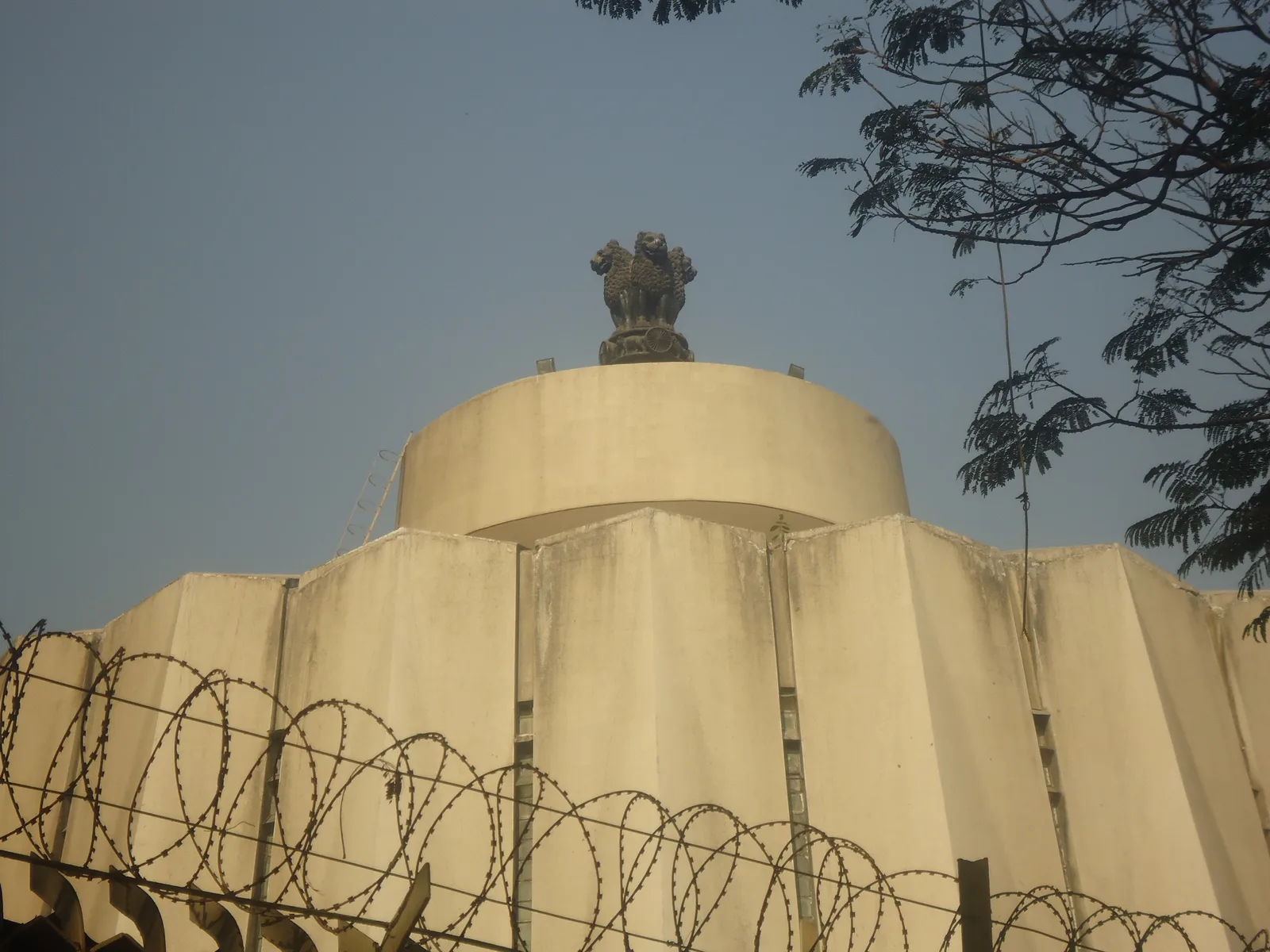
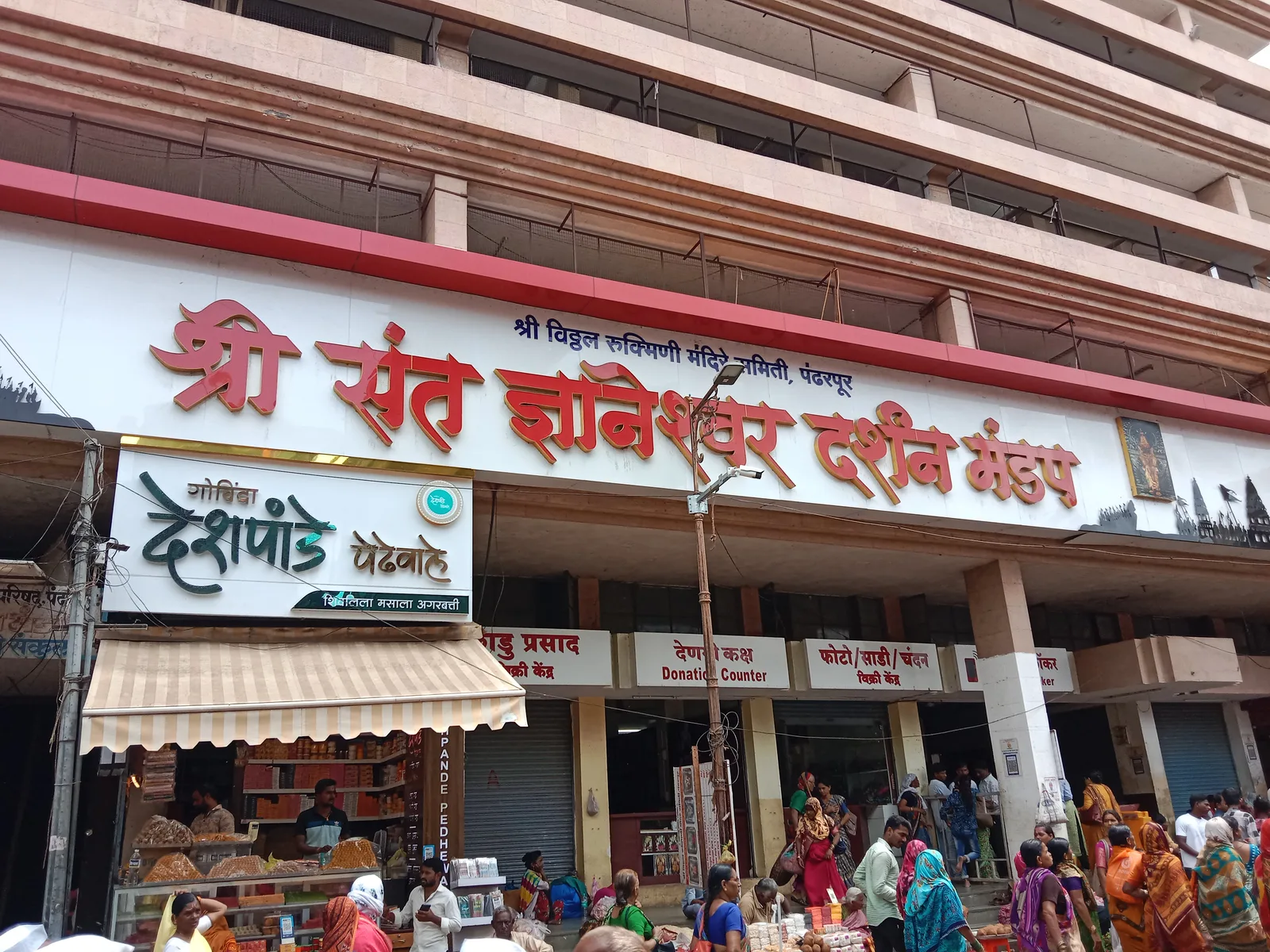
The Act that the government issued within a week of his killing, and that became law in December 2013, was meant, in its own words, "to protect the common people in the society against the evil and sinister practices thriving on ignorance."353 It made criminal such things as the "Display of so-called miracles by a person and thereby earning money," and keeping a bitten person from medical care in favour of charms.3637 And it expressly protected worship: "The performance of prayers, Upasana, and all religious rites at the places such as home, temple, dargah, gurudwara, pagoda, church or other religious places which do not cause physical injury or financial loss."3839
The verdict
The case went to the Central Bureau of Investigation in 2014.40 On 10 May 2024 a court in Pune found that two men, Sachin Andure and Sharad Kalaskar, had shot him, and sentenced each to life imprisonment; three others were acquitted, and the court held that no conspiracy had been proved against anyone.4142 "Admittedly, except ideological differences with deceased Dr. Narendra Dabholkar," the judge wrote, the two "were not having any personal enmity or rivalry" against him. "The main master mind behind the crime is someone else. Pune police as well as CBI has failed to unearth those master minds."4344 He called the defence's attempt to justify the killing by labelling the victim anti-Hindu "very strange and condemnable."4546
His son told a reporter that his father never expected sudden breakthroughs, and saw the fight as one that began with Copernicus and would be measured in generations.47
Bhagat Singh, who wrote in prison why he had become an atheist, has his own chapter in this book.
Footnotes
-
Designated Court of Sessions Judge, Pune (Prabhakar P. Jadhav, Additional Sessions Judge): State of Maharashtra v. Dr. Virendrasinh Sharadchandra Tawde and others, Sessions Case No. 706/2016, judgment and sentence, 10 May 2024, 171 pages (the court's own certificate on p. 171 says the PDF is word for word the original). Local copy
research/texts/judgment-2024.pdfand textjudgment-2024.txt(pdftotext). Obtained from the copy at, p. 21 (para 3) and pp. 69 to 71 (PW3 Rangat). ↩ -
Judgment, pp. 66 to 67 (Exh. 357), p. 164 (para 105). ↩
-
Maharashtra Prevention and Eradication of Human Sacrifice and other Inhuman, Evil and Aghori Practices and Black Magic Act, 2013 (Mah. Act No. XXX of 2013), English translation published under Art. 348(3) in the Maharashtra Government Gazette, Extraordinary, 20 Dec 2013. Text from Wikisource (Page namespace, "Maharashtra Anti-Superstition and Black Magic Act.pdf", pages 1 to 7, tagged PD-INGov). Local copy
research/texts/act2013.txt(wiki markup stripped). Page cites below are to the gazette's seven pages, gazette p. 1 (heading), p. 2 (recitals, s. 1). ↩ ↩2 -
Act, (text searched: 0 hits for "God"). ↩
-
Thought & Action (Maharashtra ANiS journal), Special Issue on Dr Narendra Dabholkar, Aug 2013 (items to mid-Sept 2013), ed. P. K. Nanawati and Suman Oak, p. 1 (dates 1 Nov 1945 to 20 Aug 2013), p. 54 (birth, schools, MBBS), p. 17 (youngest of ten; six brothers and three sisters); "Narendra Dabholkar" (en). Used only as a map: birth date, family, schooling, kabaddi, Padma Shri, cremation, "He was an atheist", later investigation steps, (map only). ↩ ↩2
-
Thought & Action, p. 17 (TOI). ↩
-
Narendra Dabholkar, The Case for Reason, Volume One: Understanding the Anti-Superstition Movement, tr. Suman Oak (Chennai: Context, an imprint of Westland, 2018; first published in Marathi as Timiratuni Tejakade, Rajhans Prakashan, 2010), Prologue. ↩
-
Narendra Dabholkar, The Case for Reason, Volume II: A Scientific Enquiry into Belief, tr. Suman Oak (Context, 2019; Marathi, Rajhans, 2010), ch. 4, "My Understanding of Spirituality". ↩
-
Priyanka Kakodkar, "He was not against God but fought exploitation", The Hindu, 20 Aug 2013, (paraphrase); Thought & Action, p. 54, p. 17, p. 10 (Economist: "star player of kabaddi in his youth"). ↩
-
Dr Narendra Dabholkar, Scientific Temper (English tr. Dr Vivek Monteiro, AIPSN; Maharashtra ANiS), a lecture text, 45 pp, p. 1. ↩ ↩2
-
Narendra Dabholkar, Please Think: Practical Lessons in Developing a Scientific Temper, tr. Jai Vipra (Context, 2019; Marathi Vichar Tar Karal?, Rajhans, 1994), (end of the chapter before "A hungry crow will eat rice!"; "God's godliness"; "At least pay attention to me now!"). ↩
-
Dabholkar, Case for Reason, ch. 26, "The Vivek Jagar Debates". ↩
-
Kakodkar, "He was not against God but fought exploitation"; Thought & Action, p. 17 (12 years; Adhav), p. 54 (Adhav in 1983; 12-year practice), p. 44 (Adhav, "in the seventies"). Accounts differ; see the disputed points. ↩
-
Dabholkar, Case for Reason, ch. 26. ↩
-
Dabholkar, Case for Reason, ch. 26. ↩
-
Dabholkar, Case for Reason, ch. 1, "The Concept of God". ↩
-
Dabholkar, Case for Reason, ch. 4. ↩
-
Dabholkar, Case for Reason, ch. 7, "Secularism". ↩
-
Dabholkar, Case for Reason, ch. 1. ↩
-
Kakodkar, "He was not against God but fought exploitation"; Thought & Action, p. 18 (Nirmala Devi's supporters poured kerosene on him, per his brother); Dabholkar, Case for Reason, ch. 14 (Gurav brothers' eye treatment), ch. 16 (Narendra Maharaj), ch. 28 (Nirmala Devi). ↩
-
Act, gazette pp. 6 to 7 (Schedule 1 to 12). ↩
-
Thought & Action, p. 11 (Guardian), p. 9 (Economist). ↩
-
Dabholkar, Case for Reason, ch. 18; Dabholkar, Scientific Temper, pp. 3 to 4. ↩
-
Dabholkar, Case for Reason, ch. 29. ↩
-
Dabholkar, Case for Reason, ch. 26. ↩
-
Dabholkar, Case for Reason, ch. 27. ↩
-
Dabholkar, Case for Reason, ch. 27. ↩
-
Dabholkar, Case for Reason, ch. 27. ↩
-
Dabholkar, Case for Reason, Prologue, ch. 27. ↩
-
Thought & Action, pp. 59 to 60 (TOI); p. 25 (Gokhale and Palekar, The Hindu). ↩
-
Thought & Action, p. 13 (AFP, reprinted in full), also BBC2013. ↩
-
Judgment, pp. 19 to 20 (para 2), p. 46 (para 21), p. 47 (para 22). ↩
-
PW8 Prashant Potdar (a MANS activist), as summarised by the judge; so a supporter's account of their reason: Judgment, p. 46 (para 21). ↩
-
Maharashtra Legislature (Act, long title): Act, gazette p. 1. ↩
-
Maharashtra Legislature (Act, Schedule item 2): Act, gazette p. 6. ↩
-
Maharashtra Legislature (Act, Schedule item 9): Act, gazette p. 6. ↩
-
Maharashtra Legislature (Act s. 12(1)(4)): Act, gazette p. 5. ↩
-
Act, gazette p. 5 (s. 12(1)(1) to (8)). ↩
-
Judgment, p. 22 (para 4), p. 1. ↩
-
Judgment, p. 163 (para 104), p. 168 (Order 1). ↩
-
Judgment, pp. 163 to 164 (paras 104, 105), pp. 168 to 169 (Order 2, 3). ↩
-
Additional Sessions Judge P. P. Jadhav: Judgment, p. 166 (para 108). ↩
-
Additional Sessions Judge P. P. Jadhav: Judgment, p. 166 (para 108). ↩
-
Additional Sessions Judge P. P. Jadhav: Judgment, p. 166 (para 108). ↩
-
Judgment, pp. 166 to 167 (para 108). ↩
-
Thought & Action, p. 3. ↩
research/texts/judgment-2024.pdf and text judgment-2024.txt (pdftotext). Obtained from the copy at.; Maharashtra Prevention and Eradication of Human Sacrifice and other Inhuman, Evil and Aghori Practices and Black Magic Act, 2013 (Mah. Act No. XXX of 2013), English translation published under Art. 348(3) in the Maharashtra Government Gazette, Extraordinary, 20 Dec 2013. Text from Wikisource (Page namespace, "Maharashtra Anti-Superstition and Black Magic Act.pdf", pages 1 to 7, tagged PD-INGov). Local copy research/texts/act2013.txt (wiki markup stripped). Page cites below are to the gazette's seven pages.; Thought & Action (Maharashtra ANiS journal), Special Issue on Dr Narendra Dabholkar, Aug 2013 (items to mid-Sept 2013), ed. P. K. Nanawati and Suman Oak.; "Narendra Dabholkar" (en). Used only as a map: birth date, family, schooling, kabaddi, Padma Shri, cremation, "He was an atheist", later investigation steps.; Narendra Dabholkar, The Case for Reason, Volume One: Understanding the Anti-Superstition Movement, tr. Suman Oak (Chennai: Context, an imprint of Westland, 2018; first published in Marathi as Timiratuni Tejakade, Rajhans Prakashan, 2010); Narendra Dabholkar, The Case for Reason, Volume II: A Scientific Enquiry into Belief, tr. Suman Oak (Context, 2019; Marathi, Rajhans, 2010); Priyanka Kakodkar, "He was not against God but fought exploitation", The Hindu, 20 Aug 2013.; Dr Narendra Dabholkar, Scientific Temper (English tr. Dr Vivek Monteiro, AIPSN; Maharashtra ANiS), a lecture text, 45 pp.; Narendra Dabholkar, Please Think: Practical Lessons in Developing a Scientific Temper, tr. Jai Vipra (Context, 2019; Marathi Vichar Tar Karal?, Rajhans, 1994)In their own words
The performance of prayers, Upasana, and all religious rites at the places such as home, temple, dargah, gurudwara, pagoda, church or other religious places which do not cause physical injury or financial loss.
Haripath, Kirtan, Pravachan, Bhajan, teaching of ancient and traditional learnings and arts, practice, propagation, circulation thereof.
The advice in regard to vastushastra, advice by Joshi-Jyotishi, Nandibailwale Jyotishi and other astrologers and in regard to source of groundwater.
Display of so-called miracles by a person and thereby earning money; and to deceive, defraud and terrorize people by propagation and circulation of so-called miracles.
Prohibiting and preventing a person from taking medical treatment in case of dog, snake or scorpion bite and instead giving him treatment like mantra-tantra, ganda-dora or such other things.
to protect the common people in the society against the evil and sinister practices thriving on ignorance
were threatening to damage the very social fibre and the beliefs of the common people in the authentic and scientific medical remedies and cures
Admittedly, except ideological differences with deceased Dr. Narendra Dabholkar, the accused Nos. 2 and 3 were not having any personal enmity or rivalry against Dr. Narendra Dabholkar.
The main master mind behind the crime is someone else. Pune police as well as CBI has failed to unearth those master minds.
the approach of the defence was to justify the killing of the deceased Dr. Narendra Dabholkar, by labelling him as anti Hindu.
it is proved beyond reasonable doubt that, the accused No.2. Sachin Andure and accused No.3. Sharad Kalaskar committed murder of Dr. Narendra Dabholkar by firing bullets from firearms.
offence of conspiracy is not at all proved against any of the accused.
deceased Dr. Narendra Dabholkar was fully devoted to the social work.
his father Dr. Narendra Dabholkar was working for Andhashradha Nirmulan (against superstitions)
The other side
Sanatan Sanstha was considering Dr. Narendra Dabholkar and his organisation as anti Hindu.
The Sanatan Sanstha and other organisations as well as political parties Shivsena and BJP were opposing the said bill saying that it was against Hindu religion.
The deceased was also facing opposition from Warkari Sampraday. The said Warkari Sampraday was also against passing anti superstition bill.
Where accounts differ
| Point | One account | Another | How the page handles it |
|---|---|---|---|
| Date of the Ordinance | Promulgated 26 Aug 2013 (Act's recital, gazette p. 2) | Bill "passed ... on 24.08.2013 through ordinance" (Judgment p. 20); BBC 21 Aug 2013 says "one day after" the killing; TOI (T&A p. 54) says "a day after his death"; NYT says the Governor signed "on Saturday" (24 Aug) (T&A p. 3) | Use the Act's date, 26 Aug 2013, and say the government acted within days of his death |
| His age at death | 67 (born 1 Nov 1945 per T&A pp. 1 and 54; NYT, Guardian, Economist all say 67) | BBC/AFP "71"; The Hindu "65"; judgment's prosecution case "69" | Say 67: born 1 Nov 1945, died 20 Aug 2013, two independent press sources agree; mention nothing about the others |
| Whether the Act contains "a word about God or religion" | He said of the bill there was "not a single word about God or religion" (AFP 2011; T&A p. 13) | The enacted Act has no "God" but s. 12 names religious rites and places (claims 12, 13) | Say he stressed the bill was about fraud; point to s. 12 as what the final law did to protect worship |
| Who was behind the killing | Prosecution case: conspiracy led by Tawde, with Punalekar and Bhave | Court: conspiracy not proved against anyone; the two shooters convicted; masterminds not unmasked (Judgment pp. 163 to 164, 166) | Say only what the court found; name the shooters as "convicted by the Pune court on 10 May 2024" and the others as "acquitted" if named at all |
| Start of the bill | Judgment: "Andhashradha Nirmulan Bill-2005" | Press: campaigning "14 years" (NYT, TOI) or "18 years" (Economist p. 7, Guardian p. 11, T&A p. 54), draft "in the late 1990s" (T&A p. 30); Wikipedia: first attempts in 2010 | Say the bill was before the legislature for years and that press counts of his campaign range from 14 to 18 years; name no year until the legislature's own record is found |
| When he closed his clinic and turned to the cause | His own account: closed both clinics and the hospital in 1982 (ST p. 1); a press item: ran a clinic till 1982 (T&A p. 40) | Press: joined Adhav's campaign in 1983 (T&A p. 54), began anti-superstition work in 1983 (IHEU, T&A p. 46), "threats since 1983" (TOI); "in the seventies" Adhav (T&A p. 44); "quit practicing medicine at 40" (NYT, T&A p. 3) which does not fit 1982 | Use his own year, 1982, for leaving practice and "1982 to 1983" for the calling; do not say "at 40" |
| Founding of MANS | 1989 (his own account, CfR1 ch. 29 and note 5; judgment p. 19; T&A p. 24) | 1996 (T&A p. 44, a press item) | Use 1989 |
| Where and when he was attacked with Lagoo | His book: Aurangabad (undated); the judgment p. 50: Aurangabad, "Hindu organisation and Shivsena" | TOI activist: sticks at Sangli in 1991; Tasgaon with weapons in 1994 (T&A p. 14) | Say "he and Lagoo were attacked more than once, in Aurangabad by his own account"; date none |
| The reward offered for a demonstrated miracle | Guardian: Rs 5 lakh to summon spirits (T&A p. 11) | Economist: 21 lakh for four feats (T&A p. 9) | Say "a cash prize" or give both and say press accounts differ |
| Branches of the Samiti | 230 (court, PW8) | 180 (Economist, 2013); 200 (his own book, 2010) | Say "about two hundred branches" |
| Length of his editorship of Sadhana | "for two decades" (T&A p. 54) | "15 years" (p. 25); "13 years" (p. 44) | Say "edited Sadhana for years" |
| Date he joined Baba Adhav's campaign | 1983 (T&A p. 54) | "in the seventies" (T&A p. 44) | Say "in the early 1980s" until a better source |
List of illustrations
This page uses only public-domain and Creative Commons images; each is credited with its source and licence.
- Satara city at sunset, seen from Charbhinti — Amitrc7th, 2010-12-11 · Amitrc7th, public domain, via Wikimedia Commons · Public domain (Commons: Public domain, released by the author)
- Vitthal Ramji Shinde Bridge, Pune, over the Mutha River — DesiBoy101, 25 August 2024 · DesiBoy101, CC BY 4.0, via Wikimedia Commons · CC BY 4.0
- Vidhan Bhavan (Maharashtra Legislature building), Mumbai — Prashant Nadar, 2012-01-28 · Prashant Nadar, CC BY-SA 3.0, via Wikimedia Commons · CC BY-SA 3.0
- Pandurang Vitthal Temple, Pandharpur, Maharashtra — A.Murali, 2024-02-28 · A.Murali, CC0, via Wikimedia Commons · CC0
Sources
Tier 1 — the subject's own words (writings, letters, diaries, trial records)
- [Act] Maharashtra Prevention and Eradication of Human Sacrifice and other Inhuman, Evil and Aghori Practices and Black Magic Act, 2013 (Mah. Act No. XXX of 2013), English translation published under Art. 348(3) in the Maharashtra Government Gazette, Extraordinary, 20 Dec 2013. Text from Wikisource (Page namespace, "Maharashtra Anti-Superstition and Black Magic Act.pdf", pages 1 to 7, tagged PD-INGov). Local copy
research/texts/act2013.txt(wiki markup stripped). Page cites below are to the gazette's seven pages. - [CfR1] Narendra Dabholkar, The Case for Reason, Volume One: Understanding the Anti-Superstition Movement, tr. Suman Oak (Chennai: Context, an imprint of Westland, 2018; first published in Marathi as Timiratuni Tejakade, Rajhans Prakashan, 2010). IA identifier
the-case-for-reason-volume-one-understanding-the-anti-superstition-movement-dabholkar-narendra; localresearch/texts/case-for-reason-1.txt. Cited by chapter (1 to 29 and the Prologue). - [CfR2] Narendra Dabholkar, The Case for Reason, Volume II: A Scientific Enquiry into Belief, tr. Suman Oak (Context, 2019; Marathi, Rajhans, 2010). IA identifier
the-case-for-reason-volume-two-a-scientific-enquiry-into-belief-dabholkar-narendra; localresearch/texts/case-for-reason-2.txt. Chapters: Introduction; 1 The Concept of God; 2 Religion; 3 Faith and Superstition; 4 My Understanding of Spirituality; 5 Women; 6 Social Reformers; 7 Secularism; 8 Rationalism. - [PT] Narendra Dabholkar, Please Think: Practical Lessons in Developing a Scientific Temper, tr. Jai Vipra (Context, 2019; Marathi Vichar Tar Karal?, Rajhans, 1994). IA identifier
please-think-practical-lessons-in-developing-a-scientific-temper-dabholkar-narendra-vipra-jai; localresearch/texts/please-think.txt. Cited by section title. - [ST] Dr Narendra Dabholkar, Scientific Temper (English tr. Dr Vivek Monteiro, AIPSN; Maharashtra ANiS), a lecture text, 45 pp. IA identifier
SCIENTIFICTEMPERENGLISH; localresearch/texts/scientific-temper-en.txt. Pages counted from the OCR's page-end numerals. - [VAS] Vigyan ani Samaj (Marathi), IA
VIGYANANISAMAJMARATHI; localresearch/texts/vidnyan-ani-samaj-mr.txt. A book introduction and two lectures on scientific outlook; read in Marathi OCR; no autobiographical material found; not cited in claims.
Tier 2 — scholarly biographies and encyclopedias
- None found that are lawfully readable. Johannes Quack, Disenchanting India (Oxford, 2012) is named in the press as the main study of ANiS; no full text was found (IA search returned nothing; Google Books was down).
Tier 3 — popular biographies and journalism
- [T&A] Thought & Action (Maharashtra ANiS journal), Special Issue on Dr Narendra Dabholkar, Aug 2013 (items to mid-Sept 2013), ed. P. K. Nanawati and Suman Oak. IA identifier
TA20135; localresearch/texts/thought-and-action-2013-5.txt. A compilation of 68 pages of reprinted press reports, obituaries and tributes. Page cites are to this issue's own pages (counted from the page-end numerals). Item sources named where known: NYT (Ellen Barry, 24 Aug 2013), The Economist (obituary, 14 Sept 2013), Guardian, AFP, TOI, Indian Express and others. - [Hindu2013] Priyanka Kakodkar, "He was not against God but fought exploitation", The Hindu, 20 Aug 2013. https://www.thehindu.com/news/national/he-was-not-against-god-but-fought-exploitation/article5042507.ece (not re-read in this pass)
- [BBC2013] "Narendra Dabholkar: India's Maharashtra state bans black magic after killing", BBC News, 21 Aug 2013 (not re-read; the AFP text it relies on is in T&A p. 13)
- [Guardian2013] Maseeh Rahman, "Indian anti-superstition activist Narendra Dabholkar shot dead", The Guardian, 20 Aug 2013 (reprinted in T&A pp. 10 to 11)
- [HinduOpEd] Sandhya Gokhale and Amol Palekar, "Sorry doctor, we didn't deserve you", The Hindu (op-ed, 2013), reprinted in T&A pp. 24 to 25
Tier 1 (court record) — government and judicial records
- [Judgment] Designated Court of Sessions Judge, Pune (Prabhakar P. Jadhav, Additional Sessions Judge): State of Maharashtra v. Dr. Virendrasinh Sharadchandra Tawde and others, Sessions Case No. 706/2016, judgment and sentence, 10 May 2024, 171 pages (the court's own certificate on p. 171 says the PDF is word for word the original). Local copy
research/texts/judgment-2024.pdfand textjudgment-2024.txt(pdftotext). Obtained from the copy at https://sabrangindia.in/wp-content/uploads/2024/05/Dabholkar-matter-Judgement-1.pdf, a third-party host; a judgment is a public court record, but confirm against the Pune court or eCourts copy before publication. Page cites are the judgment's own page numbers.
Tier 4 — maps to other sources only (Wikipedia and similar). Never cited in the script.
- [Wikipedia] "Narendra Dabholkar" (en). Used only as a map: birth date, family, schooling, kabaddi, Padma Shri, cremation, "He was an atheist", later investigation steps.
Opposition sources — contemporary critics and religious responses
- The court's own record of the opposition (Judgment paras 2, 19 to 27).
- The opposition as reported in Dabholkar's own books (CfR1 chs. 27 and 28): the Jalgaon pamphlet, the Hindu Janajagruti Samiti press note, the Sanatan Prabhat headline, Narendra Maharaj's interview, the BAMCEF charge. Each is in copyright and passes through Dabholkar's hands; paraphrase only, and say that Dabholkar is the reporter.
- A believers' reply in T&A (Swami Agnivesh and Valson Thampu, TOI, 5 Sept 2013, T&A pp. 59 to 60) and Sanatan Prabhat's own editorial as reported in the NYT (T&A p. 3) and in a T&A tribute (p. 30).
- No openly licensed text by Sanatan Sanstha, Hindu Janjagruti Samiti or the Warkari bodies was found.
Related lives
Bhagat Singh or Periyar (unbelief as social reform in India), or Abraham Kovoor / Gora (public experiment against miracle claims) — choose when those episodes exist; no "Next:" pointer in narration. Kovoor is the named influence in the press record (claim 70); Premanand is named as the inspiration in an IHEU summary (claim 64).
Salman Rushdie
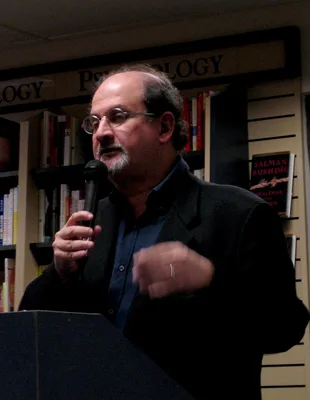
Salman Rushdie was raised in a secular Muslim family with an atheist father. He left no record of a crisis of faith, only an undated drift from childhood belief in the stories. He made his unbelief public through The Satanic Verses (1988), a novel about revelation "from the point of view of an unbeliever", which brought the 1989 fatwa. Under that threat he signed the Muslim creed in December 1990 and disowned it by 1992. After that his unbelief hardened, through "hard-line atheist" in 2006 to a stabbing in 2022 that brought, he said, no revelation.
Daniel Dennett
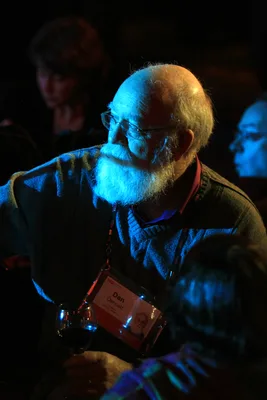
Daniel Dennett was raised in a mild New England Christianity and stopped believing as a teenager, without any crisis. Only in 2003, alarmed by theocratic talk after 11 September, did he declare himself a "bright" in public. He then turned from arguing against God to studying religion, and the unbelieving clergy who serve it, as natural phenomena. He met his own brush with death in 2006 by thanking goodness, not God.
Stephen Hawking
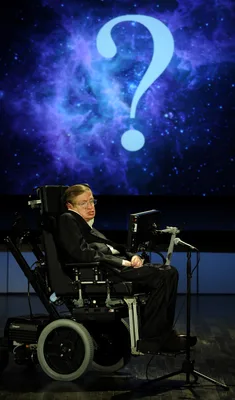
Stephen Hawking was never a believer. He watched his schoolfriends' Christian enthusiasm with amused detachment, and asked from boyhood whether the universe needed a God to start it. For decades he kept "God" as a figure of speech for the laws of physics, the "mind of God" of 1988. From 2010 to 2011 he said plainly that God was unnecessary and heaven a fairy story, and in 2014 he called himself an atheist. In his posthumous book he still kept the word "God" as an impersonal name for the laws of nature.
Richard Dawkins
Richard Dawkins was a devout Anglican schoolboy, confirmed at thirteen. He first doubted at nine, on hearing that religions contradict one another. He gave up the Church at fourteen or fifteen, and at about sixteen gave up the creator he had kept for the design of living things, when a friend showed him the full force of Darwin's idea. The God Delusion (2006) made that biology-based unbelief public. His later talk of being a "cultural Anglican" renamed a loyalty to the Church's music and language that was already in print in 2006.