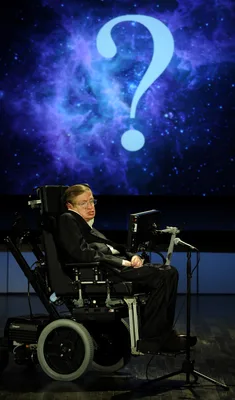
Stephen Hawking was never a believer. He watched his schoolfriends' Christian enthusiasm with amused detachment, and asked from boyhood whether the universe needed a God to start it. For decades he kept "God" as a figure of speech for the laws of physics, the "mind of God" of 1988. From 2010 to 2011 he said plainly that God was unnecessary and heaven a fairy story, and in 2014 he called himself an atheist. In his posthumous book he still kept the word "God" as an impersonal name for the laws of nature.
The belief timeline
- Faith (1954) — Spectator to his schoolfriends' Christian craze; wins the divinity prize, but "amused detachment" (his contemporaries' words) [9][10][11]
- Doubt (c. 1955-59) — School arguments about whether the universe "had required a God to create it and set it going"; the question is physical from the start [8][13]
- Declaration (2010-09 to 2011) — The Grand Design: "not necessary to invoke God"; Guardian 2011: heaven a "fairy story"; Discovery 2011: "there is no God" [38][43][45]
- Revision (2014 and 2018) — 2014: "mind of God" glossed as knowledge of what God would know "if there were a God, which there isn't. I'm an atheist"; 2018: Brief Answers restates "no God" yet keeps "God" as an impersonal word for the laws of nature [46][47][48]
Notes to the timeline (11)
- [9] Towards the end of 1954 a boy on the edge of the group, Graham Dow, "got religion in a very big way" after Billy Graham's British tour, converted Roger Ferneyhaugh, and the group spent most of that year in intense talk about faith and God. WG says Hawking's attitude is "open to debate" but "most likely" one of "amused detachment", the view of his contemporaries; he "wanted to be involved... but the rationalist in him would not, even then, allow his emotions to compromise his intellect." — Michael White and John Gribbin, Stephen Hawking: A Life in Science (1992; the printed page numbers in the OCR run to about 300), pp. 14-15.
- [10] Michael Church recalled Hawking encouraging him to "make a fool of myself" while "watching me as though from a great height" in a talk about the meaning of life (WG cites Church's Independent article, 6 June 1988). — White, Stephen Hawking, p. 14-15 (endnote: Church, Independent, 6 June 1988). Reported at second hand; the original has not been seen.
- [11] "At the end of the third year, at the height of the craze, Stephen won the school divinity prize." — White, Stephen Hawking, p. 15.
- [8] In his school group of "six or seven close friends" they had "long discussions and arguments about everything from radio-controlled models to religion and from parapsychology to physics"; one topic was the origin of the universe and "whether it had required a God to create it and set it going." — Stephen Hawking, My Brief History (Bantam, 2013), ch. 1 "Childhood", ch. 2 "St. Albans", ch. 3 "Oxford", ch. 4 "Cambridge", ch. 8 "Caltech", ch. 2.
- [13] He says physics and astronomy "offered the hope of understanding where we came from and why we are here"; he "wanted to fathom the depths of the universe." — Hawking, My Brief History, ch. 2.
- [38] The Grand Design (Bantam, Sept 2010; US publication 7 Sept per Wikipedia): M-theory predicts "a great many universes were created out of nothing. Their creation does not require the intervention of some supernatural being or god." And ch. 8: "Spontaneous creation is the reason there is something rather than nothing... It is not necessary to invoke God to light the blue touch paper and set the universe going." GD also notes that "if the answer is God, then the question has merely been deflected to that of who created God." — Stephen Hawking and Leonard Mlodinow, The Grand Design (Bantam, 2010), ch. 1 and ch. 8 (the "first-cause argument" passage and the final section).
- [43] Guardian, 15 May 2011: "I have lived with the prospect of an early death for the last 49 years. I'm not afraid of death, but I'm in no hurry to die. I have so much I want to do first." And: "I regard the brain as a computer which will stop working when its components fail. There is no heaven or afterlife for broken down computers; that is a fairy story for people afraid of the dark." The Guardian says this "goes beyond" The Grand Design, and that his remarks "draw a stark line between the use of God as a metaphor and the belief in an omniscient creator". — Ian Sample, "Stephen Hawking: 'There is no heaven; it's a fairy story'", The Guardian, 15 May 2011.
- [45] Narrating the first episode of the Discovery series Curiosity (2011), he said: "We are each free to believe what we want and it is my view that the simplest explanation is there is no God. No one created the universe and no one directs our fate. This leads me to a profound realisation. There is probably no heaven, and no afterlife either. We have this one life to appreciate the grand design of the universe, and for that, I am extremely grateful." Humanists UK reproduces the same passage. The Discovery programme itself was not seen. — Wikipedia, "Stephen Hawking", revision 1380128933 of 2026-10-13 (
research/texts/wp-hawking.txt); Humanists UK, "Humanists UK mourns death of Stephen Hawking", 14 March 2018. - [46] El Mundo (Pablo Jáuregui), published around 23 Sept 2014 around the Starmus festival, asked about the "mind of God" and "God no longer necessary" passages; Hawking answered: "What I meant by 'we would know the mind of God' is, we would know everything that God would know, if there were a God, which there isn't. I'm an atheist." NBC (23 Sept 2014) and TIME (14 Mar 2018) both quote it; the Spanish original was not seen. — Alan Boyle, "'I'm an Atheist': Stephen Hawking on God and Space Travel", NBC News, 23 Sept 2014, quoting El Mundo (Pablo Jáuregui); Jamie Ducharme, TIME, 14 March 2018, on Hawking's thoughts on death, the afterlife and God; Wikipedia, "Stephen Hawking".
- [47] Brief Answers to the Big Questions, published October 2018, ch. 1 "Is There a God?": "Do I have faith? We are each free to believe what we want, and it's my view that the simplest explanation is that there is no God. No one created the universe and no one directs our fate. This leads me to a profound realisation: there is probably no heaven and afterlife either. I think belief in an afterlife is just wishful thinking." The sentence is almost word for word the 2011 Curiosity narration. The book is compiled from his archive and finished after his death [BA Publisher's Note], so its date of composition is not fixed. — Stephen Hawking, Brief Answers to the Big Questions (Bantam, 2018), ch. 1; Wikipedia, "Stephen Hawking", (October 2018).
- [48] In the same chapter: "I use the word 'God' in an impersonal sense, like Einstein did, for the laws of nature, so knowing the mind of God is knowing the laws of nature. My prediction is that we will know the mind of God by the end of this century." This is the figure-of-speech use, in a text published after the 2014 gloss; the two sit side by side. — Hawking, Brief Answers to the Big Questions, ch. 1.
The Mind of God, If There Were a God
In September 2014 a Spanish journalist reminded Stephen Hawking of the most famous sentence he had ever written. A Brief History of Time had ended, in 1988, with the hope that a complete theory of physics would let us know the mind of God, and millions of readers had taken the line to mean that the world's best-known physicist was a believer of some kind. Hawking's answer was short. He had meant, he said, that we would know everything God would know, if there were a God, which there was not. He was, he said, an atheist.1
It was the first time, in anything found for this chapter, that he used the word of himself. He was seventy-two. This chapter asks why a man who never seems to have had a faith to lose took so long to say so, and why he went on using the word "God" even after he had.
A boy who asked where the universe came from
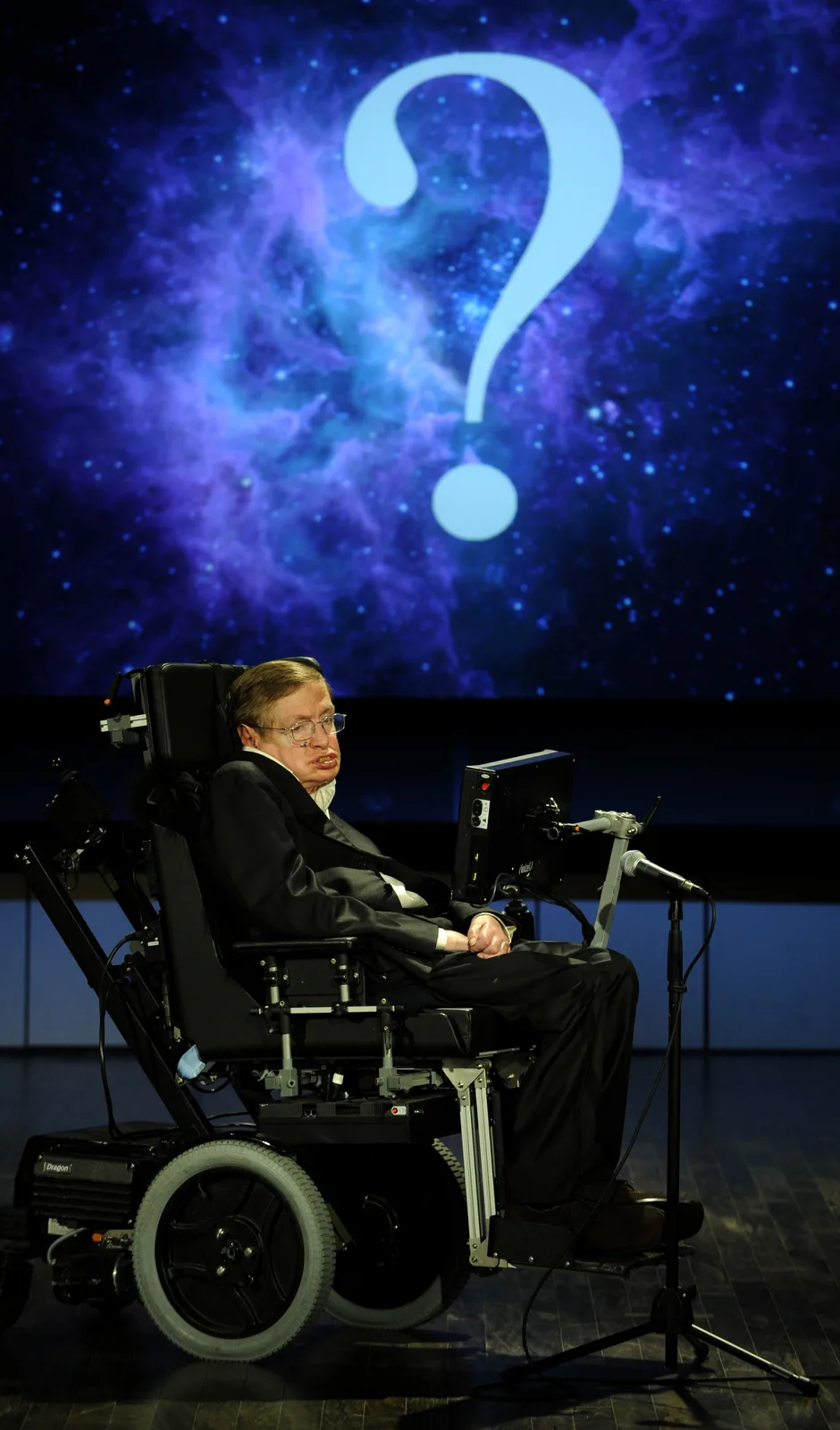
He was born in Oxford on 8 January 1942, three hundred years to the day after the death of Galileo, a coincidence he liked to point out.2 His father, Frank, was a researcher in tropical medicine; his mother, Isobel, had also studied at Oxford. He wrote that they brought him up to be endlessly curious and, like his father, to try to answer the questions science asks.34 No source found for this chapter says what religion, if any, his parents practised, and this chapter does not guess.5
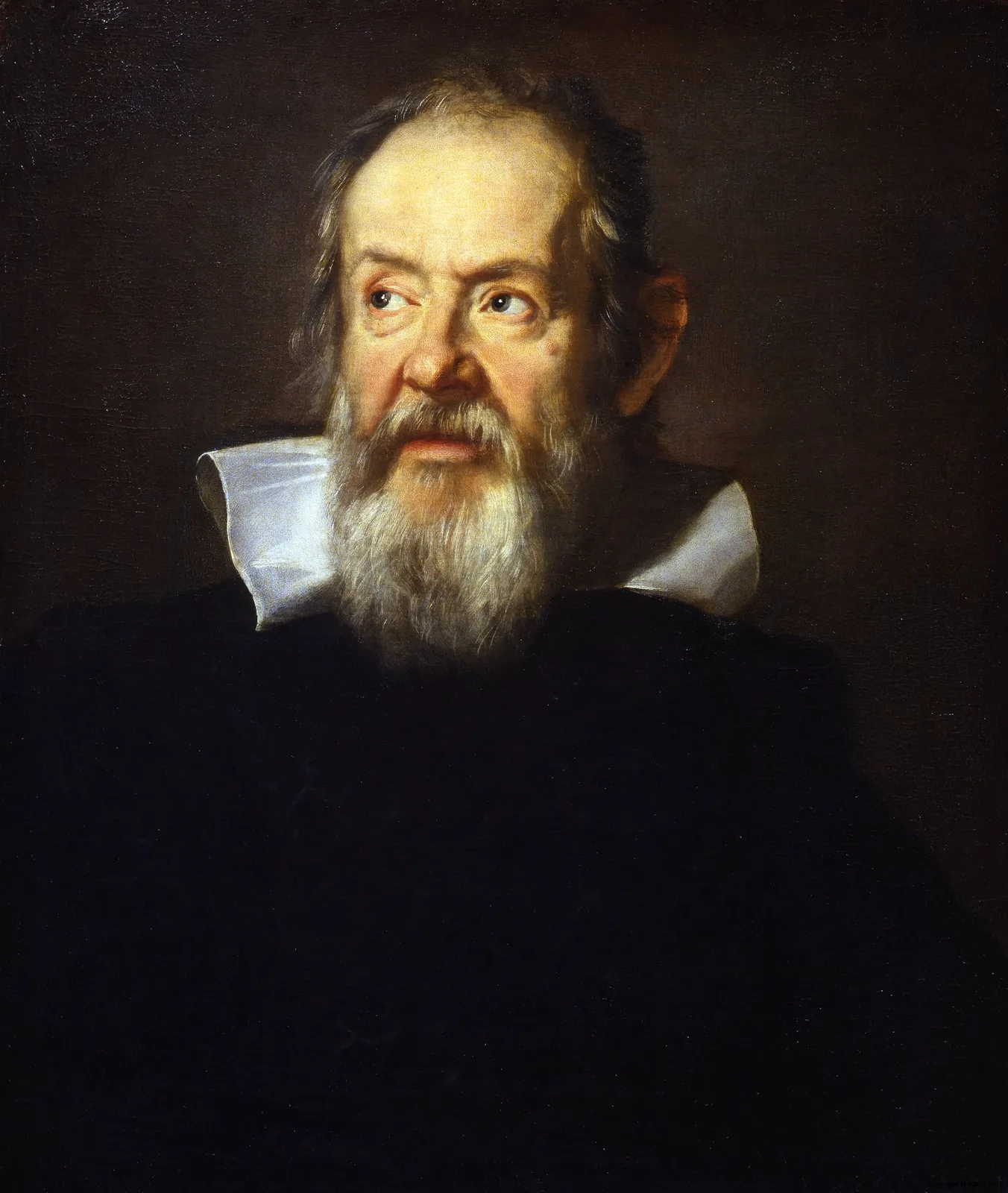
In 1950 the family moved to St Albans, a cathedral town built around the shrine of a Roman martyr, when his father's laboratory moved to the new National Institute for Medical Research.6 His school, St Albans School, stood beside the abbey in its old gatehouse.7 With a group of six or seven close friends he argued about everything from radio-controlled models to religion, and one of their subjects, he remembered, was whether the universe had needed a God to create it and set it going.8 For him the question was a physical one from the start: physics and astronomy offered the hope of understanding where we came from and why we are here.9
Towards the end of 1954, after Billy Graham's preaching tour of Britain, one boy in the circle took up Christianity with great enthusiasm and converted another, and the group spent most of a year talking about God. His biographers, Michael White and John Gribbin, write that his own attitude is open to debate but was most likely one of amused detachment, the view of the friends who were there.10 One of them remembered him watching, as if from a great height. That year, at the height of the enthusiasm, Hawking won the school's divinity prize.1112 The group then turned to experiments in telepathy with dice. A lecture on how such results came from badly designed experiments, by the biographers' account, turned his interest into contempt.13
Hawking never had a faith to lose, so his timeline has no ordinary mark for faith. The first mark is the schoolboy watching his friends' faith from outside in 1954. The second, where the timeline places his doubt, is less a doubt than a question: the school arguments of the later 1950s about whether the universe needed a God at all.
Oxford, Cambridge and the diagnosis
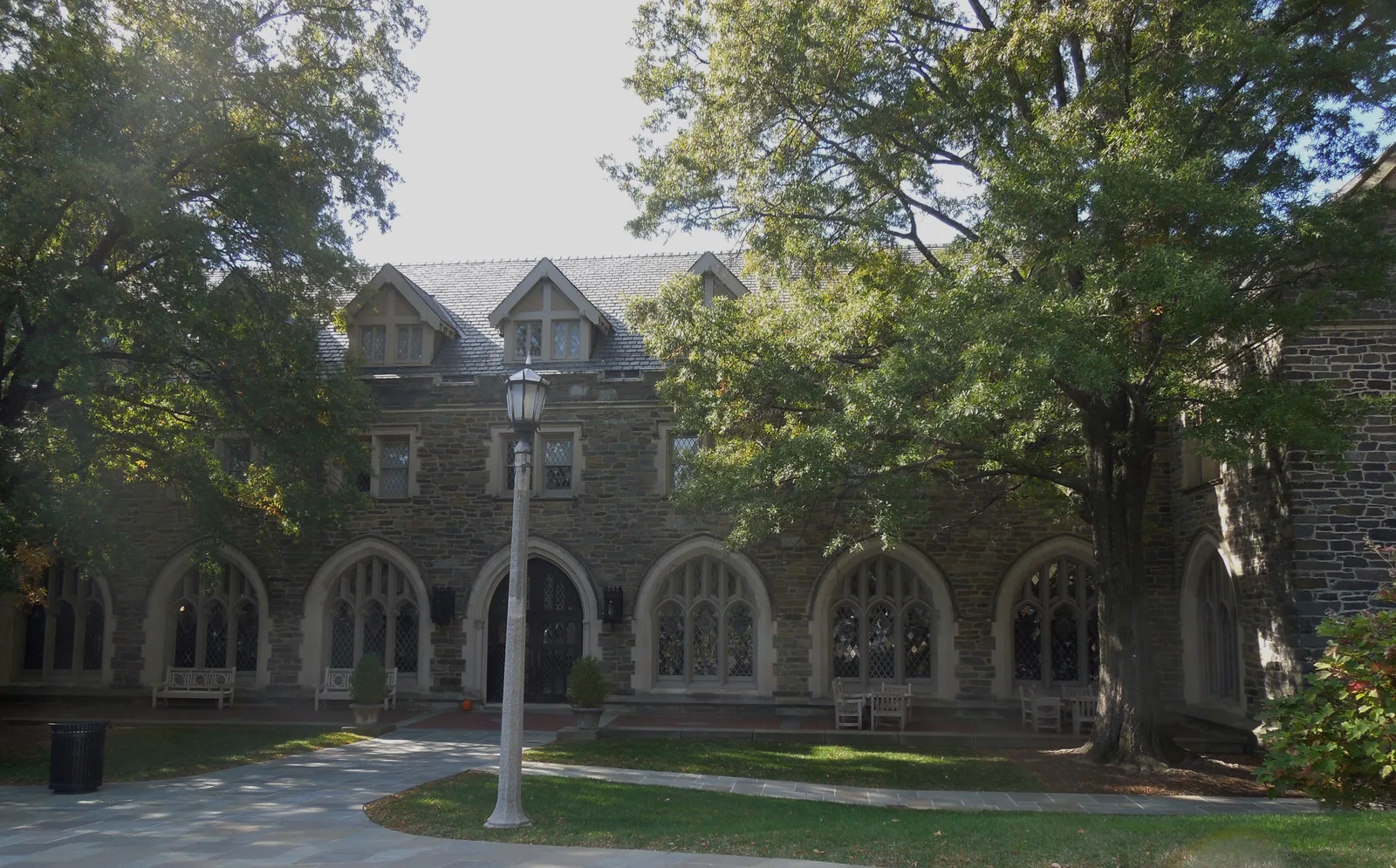
He went up to University College, Oxford, in 1959, and joined the Oxford University Humanist Group.14 In 1962 he began research in cosmology at Cambridge, and in 1963, at twenty-one, he was told he had motor neurone disease. He fell into depression. White and Gribbin wrote that he had never been drawn to religion or to any idea of an afterlife, so there was no comfort to be found there.15
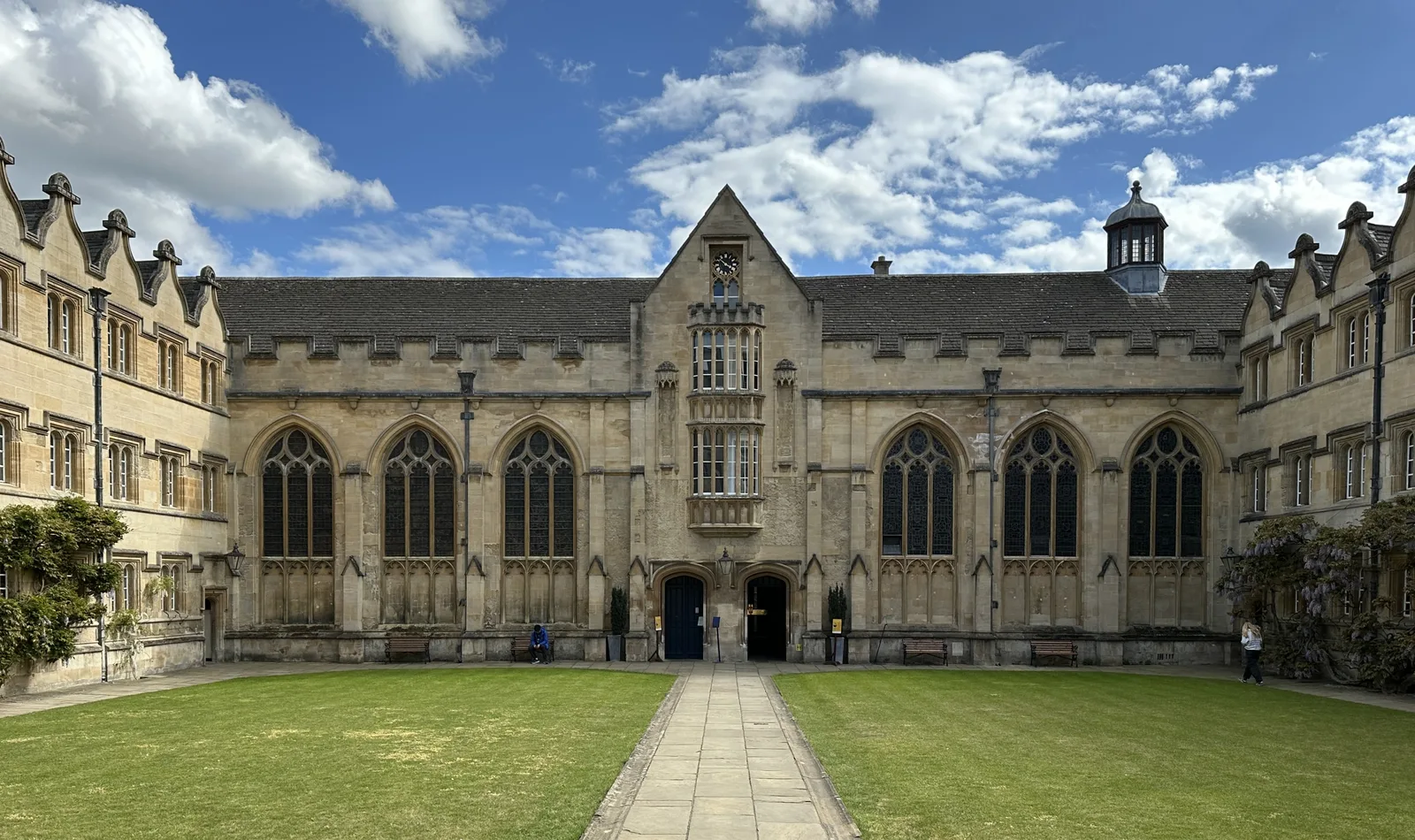
On New Year's Eve 1962, at a party in St Albans, he had met Jane Wilde. Their engagement, he wrote, gave him something to live for, and they married in July 1965 in the chapel of Trinity Hall.1617 Jane was a Christian. She told an interviewer that without her faith in God she could not have married Stephen in the first place or carried on with the life they shared.181920 Their different views on religion were a strain on the marriage from early on, and by the 1970s, the biographers report, she found it more and more upsetting that he seemed to reduce everything to a mathematical formula, as though that must be the whole truth.212223 They separated in 1990 and divorced in 1995.24
The Vatican and the question of a beginning
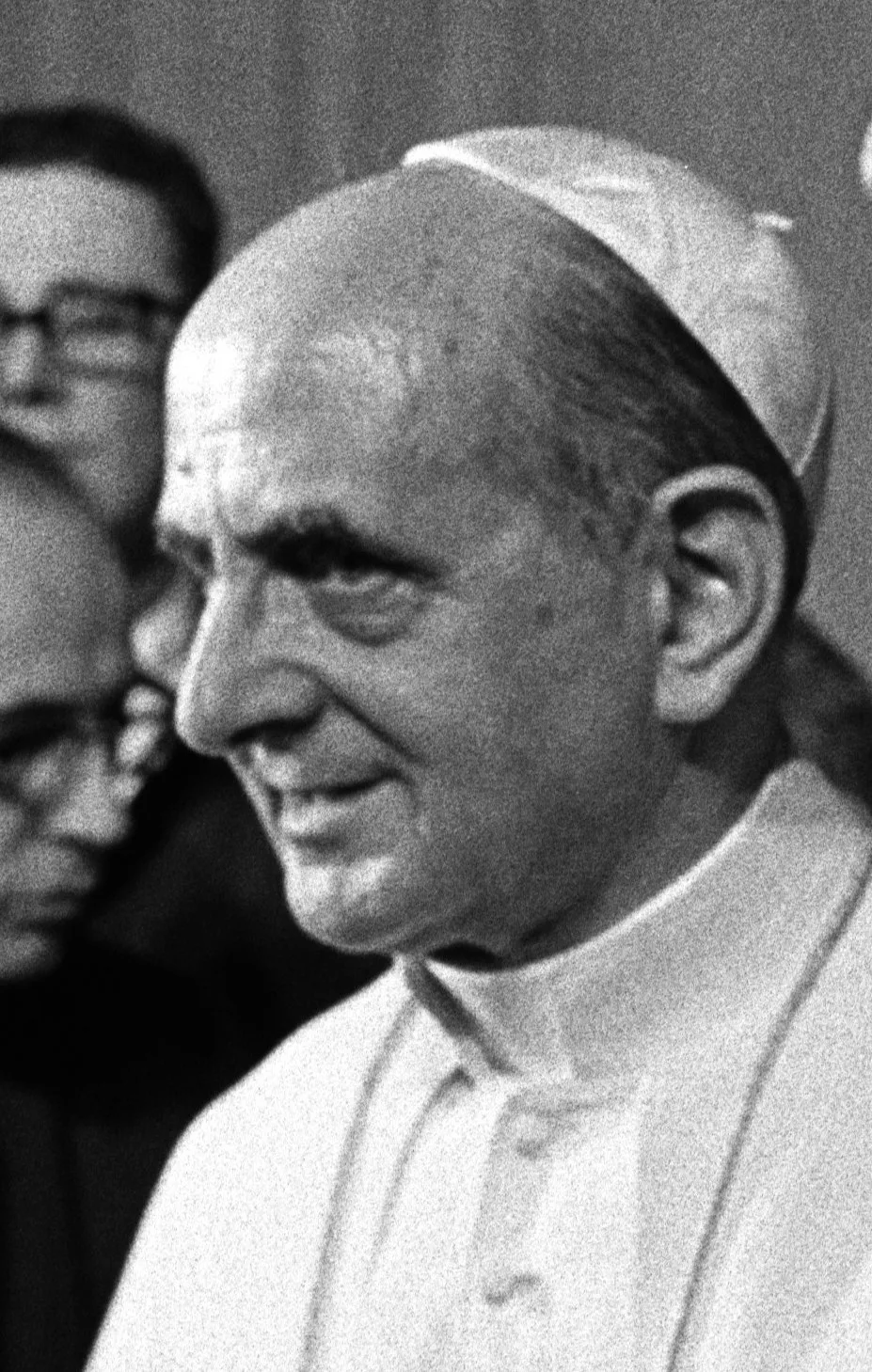
In 1975 he heard at Caltech that the Pontifical Academy of Sciences had awarded him its Pius XI Medal. His first impulse, he wrote, was to refuse it indignantly, but then he had to admit that the Vatican had eventually changed its mind about Galileo. In Rome he asked to see the record of Galileo's trial, and at the ceremony, he remembered, Pope Paul VI came down from his throne and knelt beside his wheelchair.25
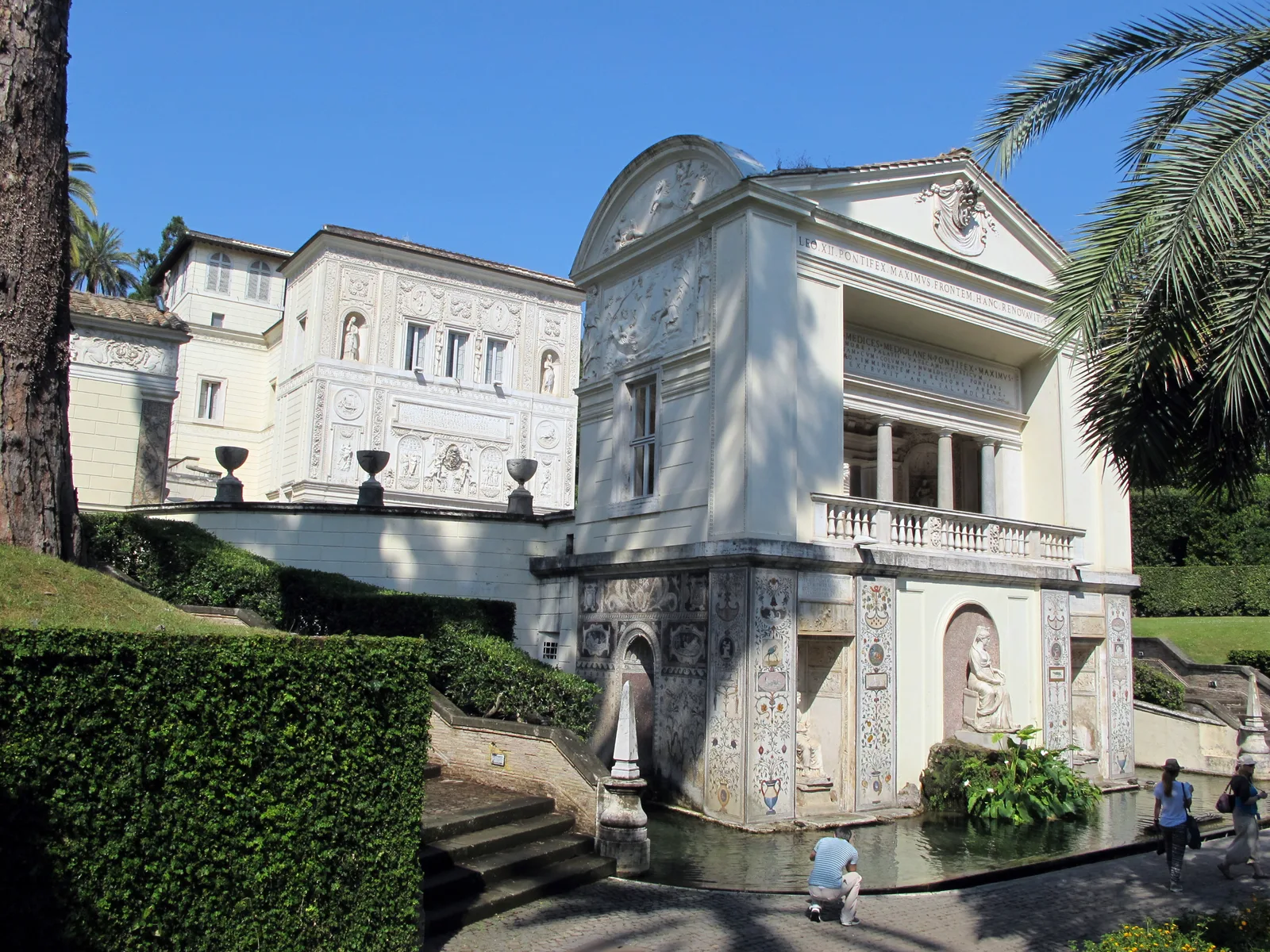
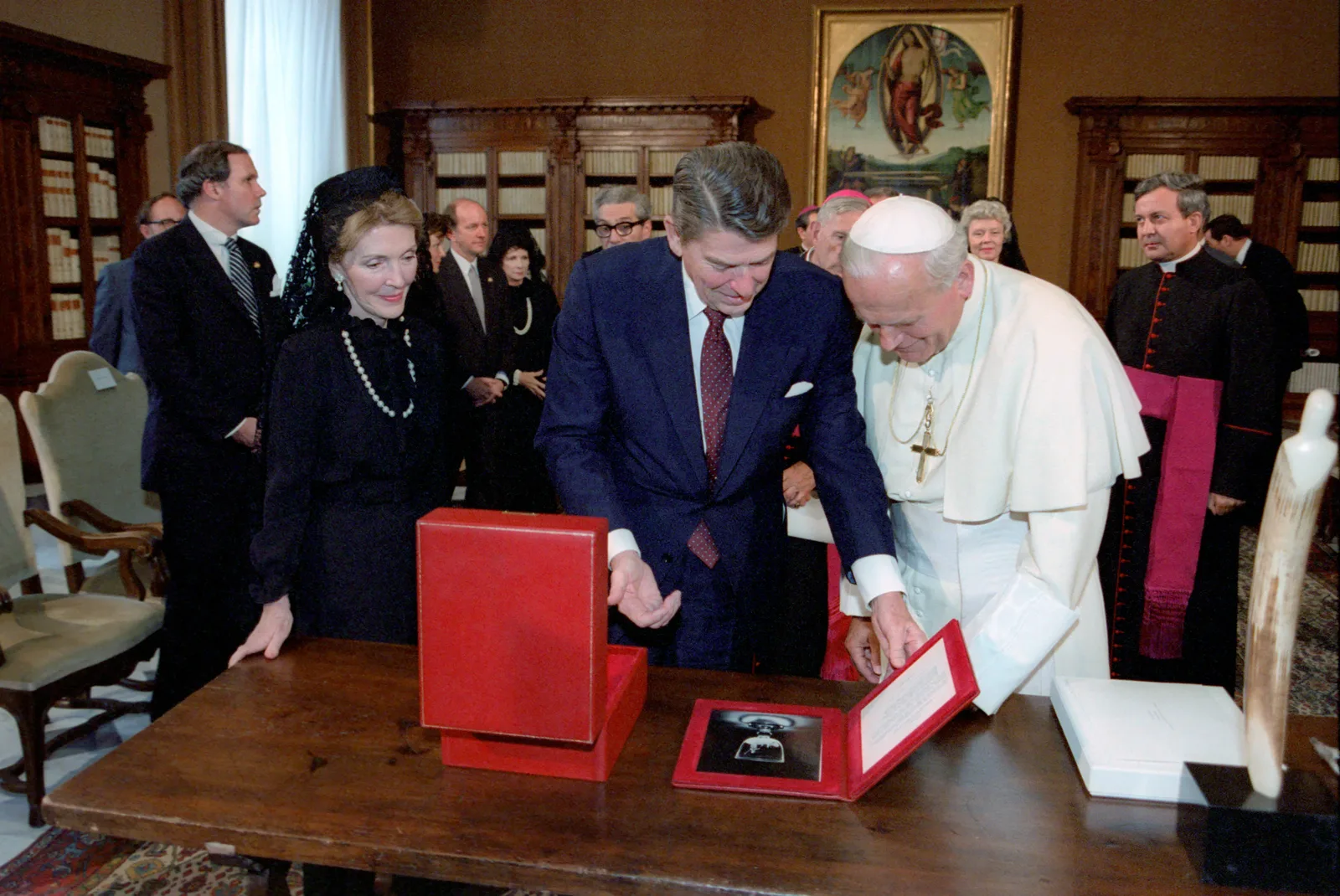
In 1981 he went back for a Vatican conference on cosmology, which he said reawakened his interest in the origin of the universe. Pope John Paul II told the physicists that science could not settle the question of the universe's beginning by itself, and that it needed metaphysics and, above all, the knowledge that comes from God's revelation.26272829 At an audience at the end of the conference, as Hawking told it, the Pope said it was fine to study how the universe evolved after the big bang, but not the big bang itself, because that was the moment of creation and the work of God. Hawking was glad the Pope did not know what he had just proposed: that space and time together might have no boundary, and so no beginning and no moment of creation. He added that he had no wish to share Galileo's fate.3031 His biographers tell a story of the Pope kneeling by his wheelchair at this audience too; Hawking's own account of 1981 does not mention it, and his memoir puts the kneeling in 1975 with a different pope. Accounts differ.2527
He worked the idea out that summer with Jim Hartle in California.32 In A Brief History of Time (1988) it became the book's turning point. If the universe had a beginning, he wrote, one could suppose it had a creator; but if it had no boundary or edge, it would simply be, and what place, then, would there be for a creator?33 The book ended with the line about the mind of God.34 White and Gribbin, writing in 1992, said he was not an atheist but someone who could not fit faith into his picture of the universe, and later in the same book that he left his colleagues in no doubt he was at the very least an agnostic. By limiting the need for God, they wrote, he had stopped short of denying God's existence.35 His friend and collaborator Don Page, a cosmologist and a born-again Christian, answered from the other side that in the Jewish and Christian view God creates and sustains the whole universe, not just its beginning. The two men, the biographers write, agreed not to discuss a personal God.3637
Saying it plainly
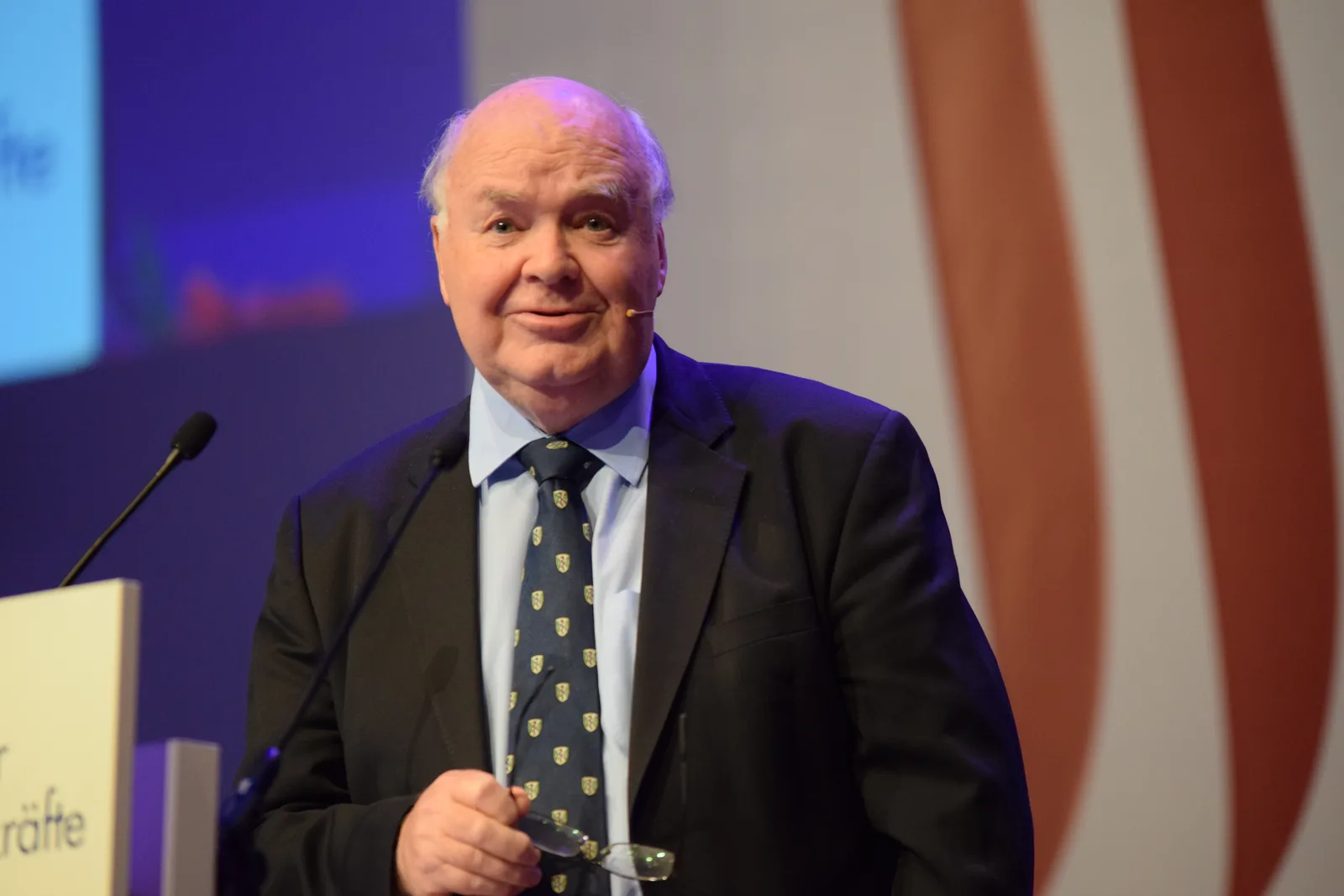
The position hardened in public in his late sixties. In The Grand Design (2010), written with Leonard Mlodinow, the two men argued that the law of gravity allows a universe to create itself from nothing, so that it was not necessary to invoke God to set it going, and opened the book by declaring philosophy dead.3839 The Times put the story on its front page as Hawking's verdict that God did not create the universe. The Chief Rabbi, Jonathan Sacks, accused him of an elementary fallacy of logic; the Oxford mathematician and Christian apologist John Lennox wrote that nonsense remains nonsense even when spoken by world-famous scientists.40414243 Hawking told TIME that God was the name people gave to the reason we are here, but that the reason was the laws of physics, an impersonal God, not someone with whom one could have a personal relationship.44
In May 2011, answering written questions from the Guardian, he said he had lived with the prospect of an early death for forty-nine years and was not afraid of it. He thought of the brain as a computer that stops when its parts fail; there was no heaven or afterlife for broken-down computers, he said, and that was a fairy story for people afraid of the dark.4546 The same year, narrating a Discovery documentary, he said that in his view the simplest explanation was that there is no God, that no one created the universe or directs our fate, and that there was probably no heaven and no afterlife.47 On his timeline, these years, 2010 and 2011, are the declaration.
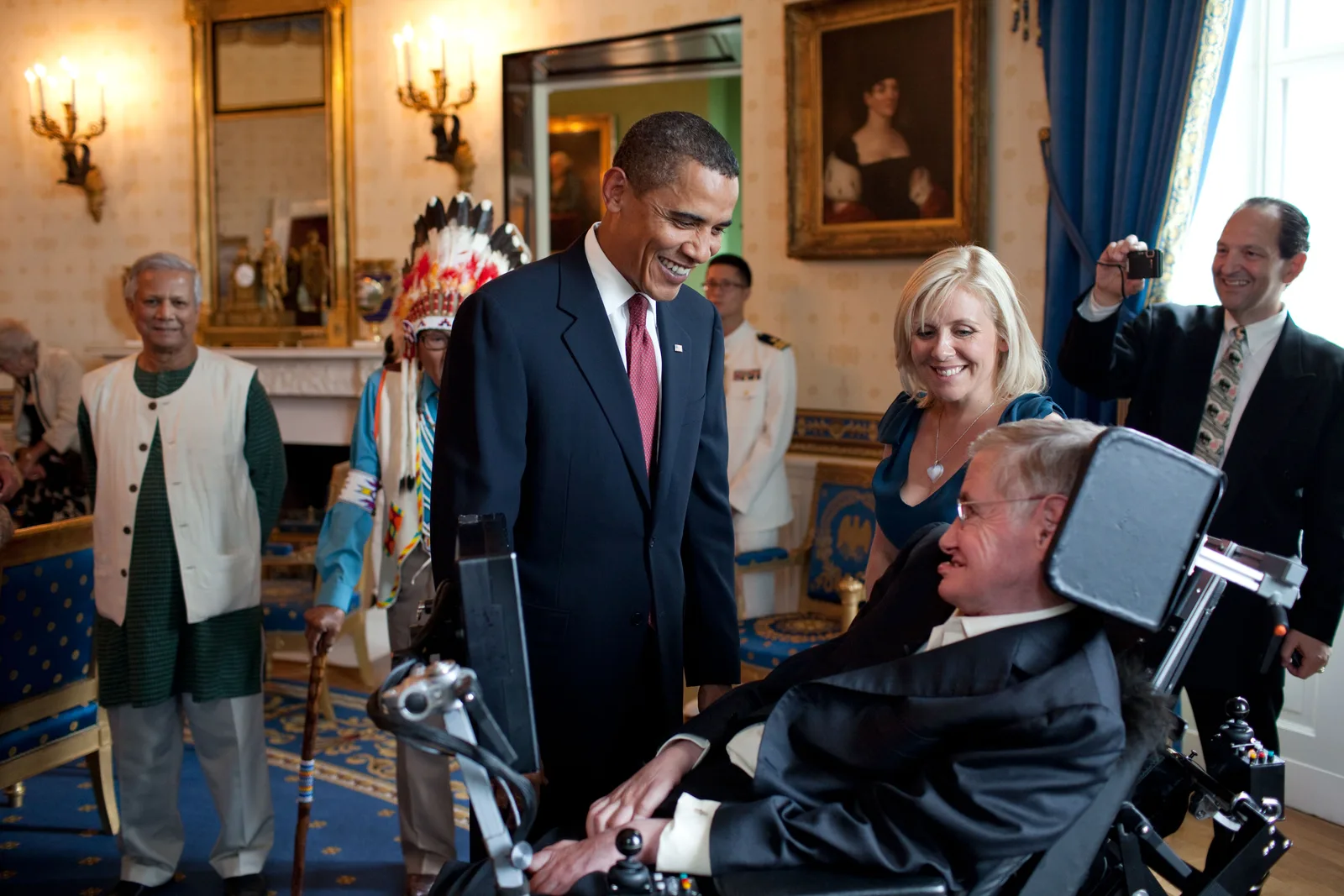
Keeping the word
On the timeline, the revision comes in 2014 and after, and it is a revision of language rather than of belief. In the El Mundo interview he took the word "atheist" for himself and explained the mind of God away.1 Yet in Brief Answers to the Big Questions, the book assembled from his speeches and essays and published seven months after his death, the chapter "Is There a God?" both repeats the 2011 words, that the simplest explanation is that there is no God, and keeps the old figure of speech: he used "God," he wrote, in an impersonal sense, as Einstein had, for the laws of nature, and predicted that we would know the mind of God by the end of the century.484950 He said in the same book that he bore no grudge against God and did not want his work to be read as a campaign to prove or disprove God's existence.41
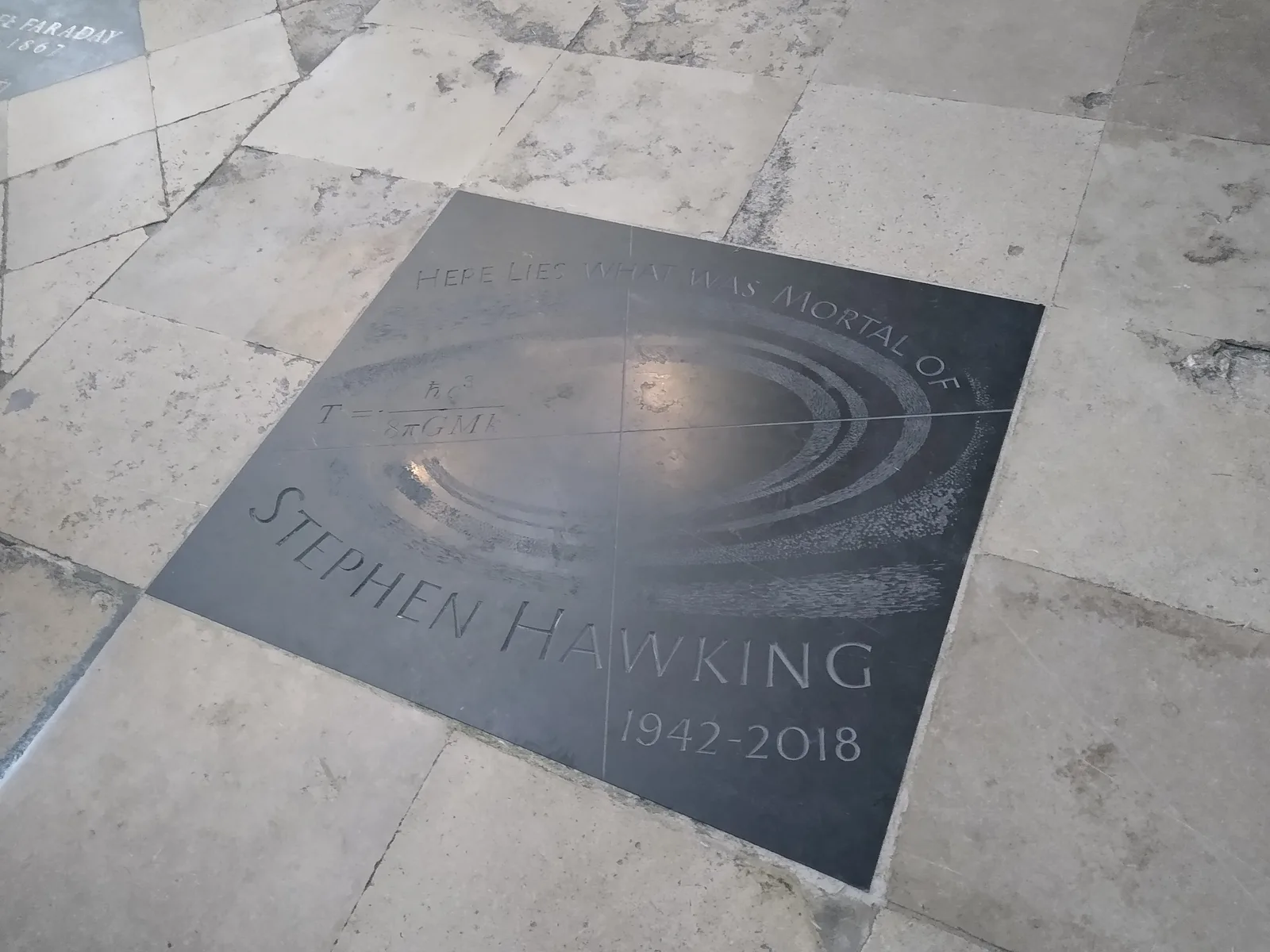
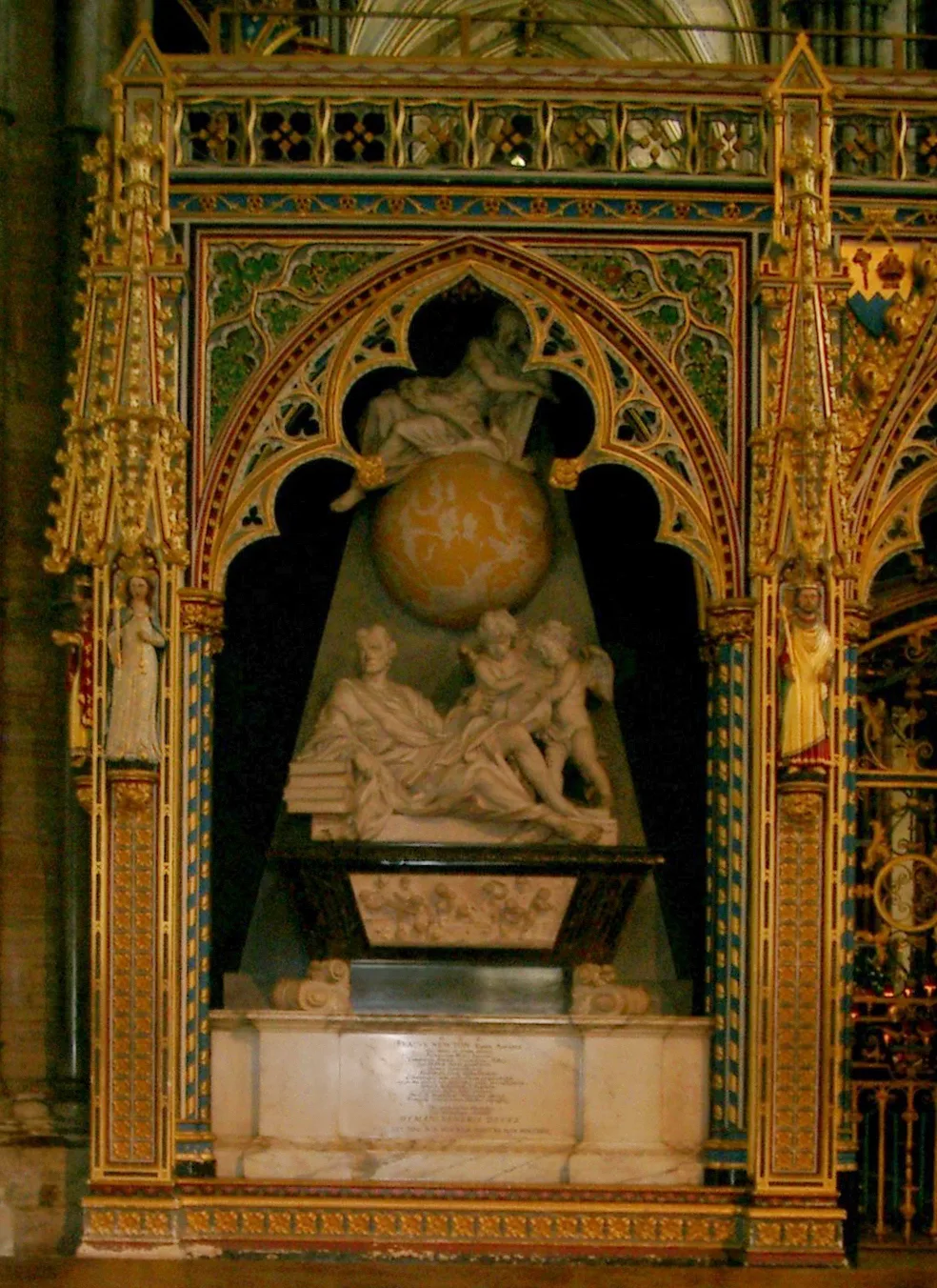
He died in Cambridge on 14 March 2018, at seventy-six. His funeral was held privately at Great St Mary's, the university church, and in June his ashes were buried in Westminster Abbey, between the graves of Isaac Newton and Charles Darwin.51
Richard Dawkins, who welcomed The Grand Design and came to the same conclusion by way of biology rather than cosmology, has his own chapter in this book.
Footnotes
-
Alan Boyle, "'I'm an Atheist': Stephen Hawking on God and Space Travel", NBC News, 23 Sept 2014, quoting El Mundo (Pablo Jáuregui); Jamie Ducharme, TIME, 14 March 2018, on Hawking's thoughts on death, the afterlife and God; Wikipedia, "Stephen Hawking", revision 1380128933 of 2026-10-13 (
research/texts/wp-hawking.txt). Reported at second hand; the original has not been seen. ↩ ↩2 -
Stephen Hawking, My Brief History (Bantam, 2013), ch. 1 "Childhood", ch. 2 "St. Albans", ch. 3 "Oxford", ch. 4 "Cambridge", ch. 8 "Caltech", ch. 1; Stephen Hawking, Brief Answers to the Big Questions (Bantam, 2018), "Why We Must Ask"; Wikipedia, "Stephen Hawking". ↩
-
Hawking, My Brief History, ch. 1. ↩
-
Hawking, Brief Answers to the Big Questions, "Why We Must Ask the Big Questions". ↩
-
(none). Not verified. ↩
-
Hawking, My Brief History, ch. 2; Michael White and John Gribbin, Stephen Hawking: A Life in Science (1992; the printed page numbers in the OCR run to about 300), pp. 7-8. ↩
-
Hawking, My Brief History, ch. 2. ↩
-
Hawking, My Brief History, ch. 2. ↩
-
Hawking, My Brief History, ch. 2. ↩
-
White, Stephen Hawking, pp. 14-15. ↩
-
White, Stephen Hawking, p. 14-15 (endnote: Church, Independent, 6 June 1988). ↩
-
White, Stephen Hawking, p. 15. ↩
-
White, Stephen Hawking, p. 16. ↩
-
Humanists UK, "Humanists UK mourns death of Stephen Hawking", 14 March 2018; also WP-SH "Religion and atheism". ↩
-
White, Stephen Hawking, ch. 4 (page not captured; near p. 65); Hawking, My Brief History, ch. 4. ↩
-
White, Stephen Hawking, p. 60; Hawking, My Brief History, ch. 4; Wikipedia, "Stephen Hawking". Engagement month wikipedia is the only source for this, as for the other details in this chapter cited to that source alone. ↩
-
White, Stephen Hawking, p. 91; Hawking, My Brief History, ch. 4. ↩
-
White, Stephen Hawking, p. 165; Wikipedia, "Jane Hawking", revision 1375541866 of 2026-09-18 (
research/texts/wp-jane.json). Accounts differ; see the disputed points. ↩ -
White, Stephen Hawking, p. 165-6 (interview source not named). ↩
-
Jane Hawking, first wife, a Christian; to an unnamed interviewer, quoted in WG (1992): White, Stephen Hawking, p. 166. ↩
-
Wikipedia, "Stephen Hawking", "Marriages"; White, Stephen Hawking, p. 165-6. ↩
-
White, Stephen Hawking, pp. 167-8. ↩
-
Jane Hawking: White, Stephen Hawking, p. 168. ↩
-
Wikipedia, "Stephen Hawking", "Marriages". ↩
-
Hawking, My Brief History, ch. 8; White, Stephen Hawking, p. 163 (the medal). ↩ ↩2
-
Stephen Hawking, A Brief History of Time (Bantam, 2017 reissue of the 1988 text), IA upload
hawking-stephen-a-brief-history-of-time-bantam-2017(research/texts/bhot-bantam.txt). Cited by chapter: ch. 8 "The Origin and Fate of the Universe" (Vatican anecdote; "What place, then, for a creator?"), ch. 12 "Conclusion" (the last paragraph). Wording of the final sentence differs between printings ("would know" in this edition, "should know" in the Guardian and Wikipedia quotations); the first 1988 printing was not seen. In copyright, ch. 8; White, Stephen Hawking, pp. 180, 200-1. ↩ -
Hawking, Brief History of Time, ch. 8. ↩
-
Pope John Paul II, address to the 1981 Vatican cosmology conference: White, Stephen Hawking, p. 201 (the Vatican text itself not seen). ↩
-
Hawking, Brief History of Time, ch. 8. ↩
-
Hawking, Brief History of Time, ch. 8 (the no-boundary section). ↩
-
Hawking, Brief History of Time, ch. 8. ↩
-
Hawking, Brief History of Time, ch. 8 (end); White, Stephen Hawking, p. 183 quotes it. ↩
-
Hawking, Brief History of Time, ch. 12; White, Stephen Hawking, p. 167; Ian Sample, "Stephen Hawking: 'There is no heaven; it's a fairy story'", The Guardian, 15 May 2011. ↩
-
White, Stephen Hawking, pp. 166, 169, 183. ↩
-
White, Stephen Hawking, pp. 168-9. ↩
-
Don Page, cosmologist, Hawking's friend and collaborator, a born-again Christian: White, Stephen Hawking, pp. 168-9. ↩
-
Stephen Hawking and Leonard Mlodinow, The Grand Design (Bantam, 2010), ch. 1 and ch. 8 (the "first-cause argument" passage and the final section). ↩
-
Hawking, Grand Design, ch. 1. ↩
-
Sample, "Stephen Hawking: 'There is no heaven;…"; Wikipedia, "The Grand Design (book)", revision 1341362168 of 2026-03-02 (
research/texts/wp-grand-design.txt). ↩ -
Lord Sacks, Chief Rabbi (the Guardian's paraphrase; only "elementary fallacy" is a quotation): Sample, "Stephen Hawking: 'There is no heaven;…". ↩
-
John Lennox, Professor of Mathematics at Oxford and Christian apologist, on The Grand Design: Wikipedia, "The Grand Design (book)", "Critical reactions" (Wikipedia only). ↩
-
TIME-2018, (quoting a TIME interview of 2010; not seen). ↩
-
Sample, "Stephen Hawking: 'There is no heaven;…". ↩
-
Sample, "Stephen Hawking: 'There is no heaven;…". ↩
-
Wikipedia, "Stephen Hawking"; UK, "Humanists UK mourns death of Stephen Hawking". ↩
-
Hawking, Brief Answers to the Big Questions, ch. 1; Wikipedia, "Stephen Hawking", (October 2018). ↩
-
Hawking, Brief Answers to the Big Questions, ch. 1. ↩
-
Hawking, Brief Answers to the Big Questions, front matter. ↩
-
TIME-2018, (death); Wikipedia, "Stephen Hawking", (funeral, Abbey). ↩
research/texts/wp-hawking.txt).; Stephen Hawking, My Brief History (Bantam, 2013), ch. 1 "Childhood", ch. 2 "St. Albans", ch. 3 "Oxford", ch. 4 "Cambridge", ch. 8 "Caltech".; Stephen Hawking, Brief Answers to the Big Questions (Bantam, 2018); Michael White and John Gribbin, Stephen Hawking: A Life in Science (1992; the printed page numbers in the OCR run to about 300); Humanists UK, "Humanists UK mourns death of Stephen Hawking", 14 March 2018.; Wikipedia, "Jane Hawking", revision 1375541866 of 2026-09-18 (research/texts/wp-jane.json).; Stephen Hawking, A Brief History of Time (Bantam, 2017 reissue of the 1988 text), IA upload hawking-stephen-a-brief-history-of-time-bantam-2017 (research/texts/bhot-bantam.txt). Cited by chapter: ch. 8 "The Origin and Fate of the Universe" (Vatican anecdote; "What place, then, for a creator?"), ch. 12 "Conclusion" (the last paragraph). Wording of the final sentence differs between printings ("would know" in this edition, "should know" in the Guardian and Wikipedia quotations); the first 1988 printing was not seen. In copyright.; Ian Sample, "Stephen Hawking: 'There is no heaven; it's a fairy story'", The Guardian, 15 May 2011.; Stephen Hawking and Leonard Mlodinow, The Grand Design (Bantam, 2010); Wikipedia, "The Grand Design (book)", revision 1341362168 of 2026-03-02 (research/texts/wp-grand-design.txt).In their own words
If we find the answer to that, it would be the ultimate triumph of human reason—for then we would know the mind of God.
So long as the universe had a beginning, we could suppose it had a creator. But if the universe is really completely self-contained, having no boundary or edge, it would have neither beginning nor end: it would simply be. What place, then, for a creator?
At the end of the conference the participants were granted an audience with the Pope. He told us that it was all right to study the evolution of the universe after the big bang, but we should not inquire into the big bang itself because that was the moment of Creation and therefore the work of God.
I was glad then that he did not know the subject of the talk I had just given at the conference—the possibility that space-time was finite but had no boundary, which means that it had no beginning, no moment of Creation.
My paper was rather mathematical, however, so its implications for the role of God in the creation of the universe were not generally recognized at the time (just as well for me).
Because there is a law like gravity, the universe can and will create itself from nothing in the manner described in Chapter 6. Spontaneous creation is the reason there is something rather than nothing, why the universe exists, why we exist. It is not necessary to invoke God to light the blue touch paper and set the universe going.
Their creation does not require the intervention of some supernatural being or god.
Traditionally these are questions for philosophy, but philosophy is dead.
I regard the brain as a computer which will stop working when its components fail. There is no heaven or afterlife for broken down computers; that is a fairy story for people afraid of the dark.
Before we understand science, it is natural to believe that God created the universe. But now science offers a more convincing explanation. What I meant by 'we would know the mind of God' is, we would know everything that God would know, if there were a God, which there isn't. I'm an atheist.
Do I have faith? We are each free to believe what we want, and it's my view that the simplest explanation is that there is no God. No one created the universe and no one directs our fate.
I use the word "God" in an impersonal sense, like Einstein did, for the laws of nature, so knowing the mind of God is knowing the laws of nature. My prediction is that we will know the mind of God by the end of this century.
I think belief in an afterlife is just wishful thinking.
One of the things we talked about was the origin of the universe and whether it had required a God to create it and set it going.
But I don't have a grudge against God. I do not want to give the impression that my work is about proving or disproving the existence of God.
If you like, you can say the laws are the work of God, but that is more a definition of God than a proof of his existence.
At first I felt like indignantly refusing it, but then I had to admit that the Vatican had ultimately changed its mind about Galileo.
It is difficult to discuss the beginning of the Universe without mentioning the concept of God. My work on the origin of the Universe is on the borderline between science and religion, but I try to stay on the scientific side of the border. It is quite possible that God acts in ways that cannot be described by scientific laws. But in that case one would just have to go by personal belief.
We are such insignificant creatures on a minor planet of a very average star in the outer suburbs of one of a hundred thousand million galaxies. So it is difficult to believe in a God that would care about us or even notice our existence.
The Catholic Church had made a bad mistake with Galileo when it tried to lay down the law on a question of science, declaring that the sun went round the earth. Now, centuries later, it had decided to invite a number of experts to advise it on cosmology.
God is the name people give to the reason we are here. But I think that reason is the laws of physics rather than someone with whom one can have a personal relationship. An impersonal God.
I was brought up by my parents to have an unwavering curiosity and, like my father, to research and try to answer the many questions that science asks us.
The other side
Without my faith in God, I wouldn't have been able to live in this situation. I wouldn't have been able to marry Stephen in the first place, because I wouldn't have had the optimism to carry me through, and I wouldn't be able to carry on with it.
There's one aspect of his thought that I find increasingly upsetting and difficult to live with. It's the feeling that, because everything is reduced to a rational, mathematical formula, that must be the truth.
Any scientific hypothesis on the origin of the world, such as that of the primeval atom from which the whole of the physical world derived, leaves open the problem concerning the beginning of the Universe. Science cannot by itself resolve such a question; what is needed is that human knowledge that rises above physics and astrophysics which is called metaphysics; it needs above all the knowledge that comes from the revelation of God.
The book provoked a backlash from some religious leaders, including the chief rabbi, Lord Sacks, who accused Hawking of committing an "elementary fallacy" of logic.
nonsense remains nonsense, even when talked by world-famous scientists.
a creator God provides a reasonable and credible explanation of why there is a universe, and it is somewhat more likely that there is a God than that there is not. That view is not undermined by what Hawking has said.
In the Judaeo-Christian view, God creates and sustains the entire Universe rather than just the beginning.
Where accounts differ
| Point | One account | Another | How the page handles it |
|---|---|---|---|
| When "no God" arrived | Roster line: a last-book (2018) statement | The same words are the 2011 Curiosity narration [45]; "I'm an atheist" is 2014 [46]; The Grand Design (2010) already says God is unnecessary [38]; the 2018 book is compiled from his archive [59], so the date of its passage is unknown | Say the plain wording is on record by 2011, and that the 2018 book repeats it; do not say 2018 was the arrival. |
| Whether he called himself an atheist before 2014 | WG 1992: "is not an atheist" (p. 166), later "at the very least, an agnostic" (p. 183) | El Mundo 2014: "I'm an atheist" [46]; Humanists UK: "explicit about his atheist and humanist approach" throughout his career [51] | Quote the two biographers as the 1992 position and Hawking's own words for 2014; do not backdate the label. |
| What "the mind of God" meant | Brief History 1988: the "ultimate triumph of human reason" [33]; Brief Answers 2018: God as an impersonal name for the laws of nature [48]; WG 1992 reads it as ambiguous [33] | El Mundo 2014: it meant knowing what God would know "if there were a God, which there isn't" [46] | Present both glosses and the 2018 repetition; this is the clearest case of "how he said he meant it". |
| Wording of the Brief History's last sentence | "we would know the mind of God" (Bantam 2017 text; WG p. 167) | "we should know the mind of God" (Guardian 2011 and Wikipedia) | Check the first-edition text before quoting on screen; both versions exist in print. |
| Which pope knelt | Hawking's own memoir: at the 1975 Pius XI Medal ceremony "Pope Paul VI got down from his throne and knelt by my side" [26] | WG pp. 202-3: at the 1981 audience at Castel Gandolfo John Paul II "left his seat and knelt down" in front of Hawking's wheelchair and talked with him longer than with the other guests [28]; Hawking's own account of 1981 says nothing about kneeling [29] | Treat the kneeling as unverified for 1981 and tell only Hawking's own version (Q3, Q4); flag the possibility that the stories have been run together. |
| Who ran the 1981 conference | Hawking: "organized by the Jesuits in the Vatican" [27] | WG: a conference arranged through the Pontifical Academy of Sciences [27] | Use "a Vatican conference on cosmology" and, if a body is named, say Hawking's own phrase. |
| How strong Jane's faith was | WG 1992: "very strong religious views" [17] | Wikipedia: "less than active Christian" [17] (uncited) | Use her own words (OQ1) and WG's description; do not use "less than active". |
| Date of Travelling to Infinity | WP-JH: Alma 2007, republished 2009 | IA catalogue records show editions of 2008 and 2014 and Jane's postlude is dated by Wikipedia to 2007 | Cite as "her revised memoir"; fix the year against a copy. |
List of illustrations
This page uses only public-domain and Creative Commons images; each is credited with its source and licence.
- Stephen Hawking delivers 'Why we should go into space', NASA 50th anniversary lecture, George Washington University — NASA / Paul E. Alers, 2008-04-21 · NASA/Paul E. Alers, public domain (NASA), via Wikimedia Commons · Public domain
- Portrait of Galileo Galilei — Justus Sustermans, 1635 · Public domain (1635 painting, Uffizi), via Wikimedia Commons · Public domain
- Abbey Church of St Alban, St Albans — Tilman2007, 2023-08-26 · Tilman2007, CC BY-SA 4.0, via Wikimedia Commons · CC BY-SA 4.0
- St. Albans School — Cosal, 2016-10-26 · Cosal, CC BY-SA 4.0, via Wikimedia Commons · CC BY-SA 4.0
- University College, Oxford - Main Quad — APK, 2026-05-11 · APK, CC BY 4.0, via Wikimedia Commons · CC BY 4.0
- Pope Paul VI during the visit of President Lyndon B. Johnson, 23 December 1967 — Yoichi Okamoto (White House), 1967-12-23 · Yoichi Okamoto, White House Photo Office (US federal government, NARA ARC 192507), public domain, via Wikimedia Commons · Public domain
- Casina Pio IV, seat of the Pontifical Academy of Sciences, Vatican — Sailko, 2014-06-12 · Sailko, CC BY 3.0, via Wikimedia Commons · CC BY 3.0
- President Reagan and Nancy Reagan meeting Pope John Paul II in the Papal Library, Vatican, 7 June 1982 — White House Photographic Office (Reagan), 1982-06-07 · White House Photographic Office, Ronald Reagan Presidential Library (US federal government), public domain, via Wikimedia Commons / DPLA · Public domain
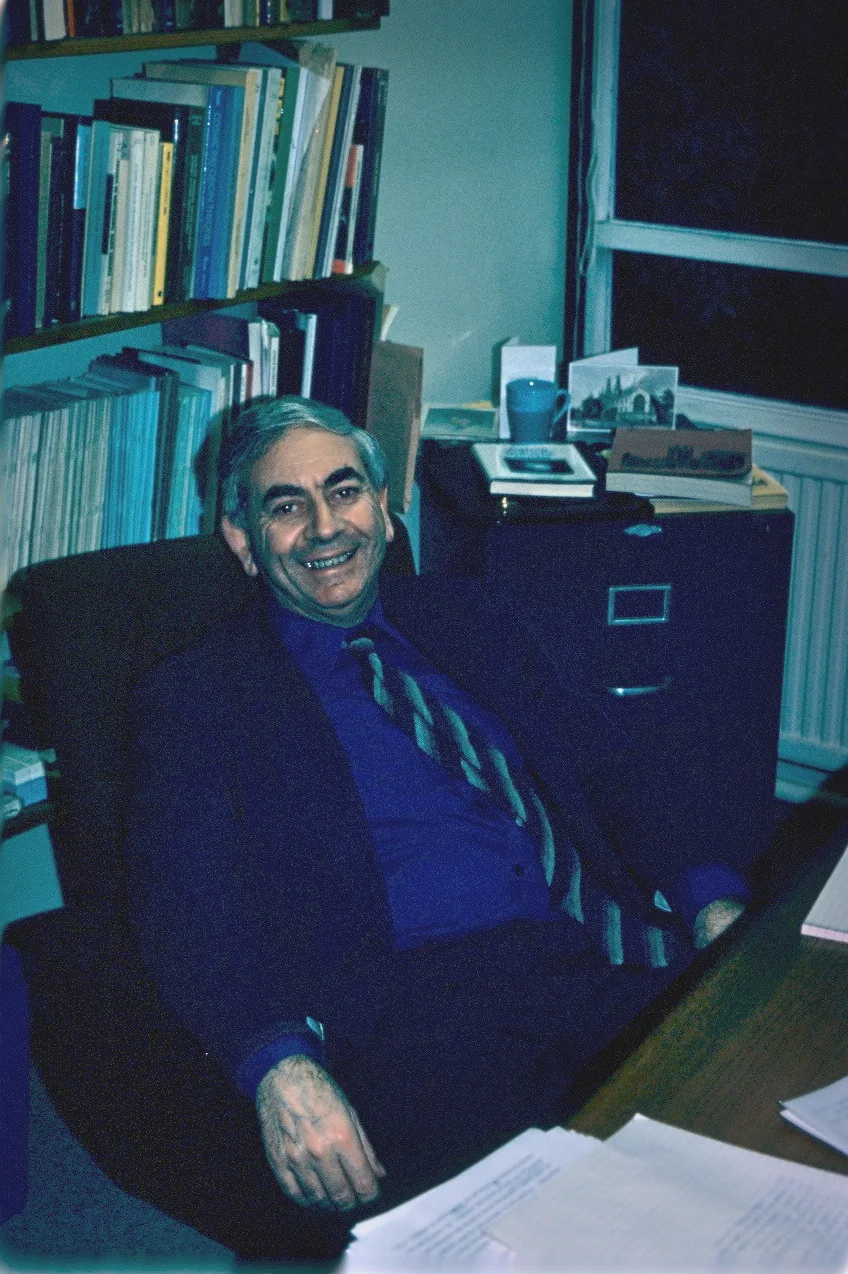
- Dennis W. Sciama, February 1981 — Woodruff T. Sullivan III, NRAO/AUI Archives, Sullivan Collection, 1981-02 · Rights NRAO/AUI/NSF, Photographer Woodruff T. Sullivan III, Photo Credit NRAO/AUI Archives, Sullivan Collection, CC BY 4.0, via Wikimedia Commons · CC BY 4.0
- John Lennox, 28 February 2015 — Christliches Medienmagazin pro, 2015-02-28 · Christliches Medienmagazin pro, CC BY-SA 2.0, via Wikimedia Commons · CC BY-SA 2.0
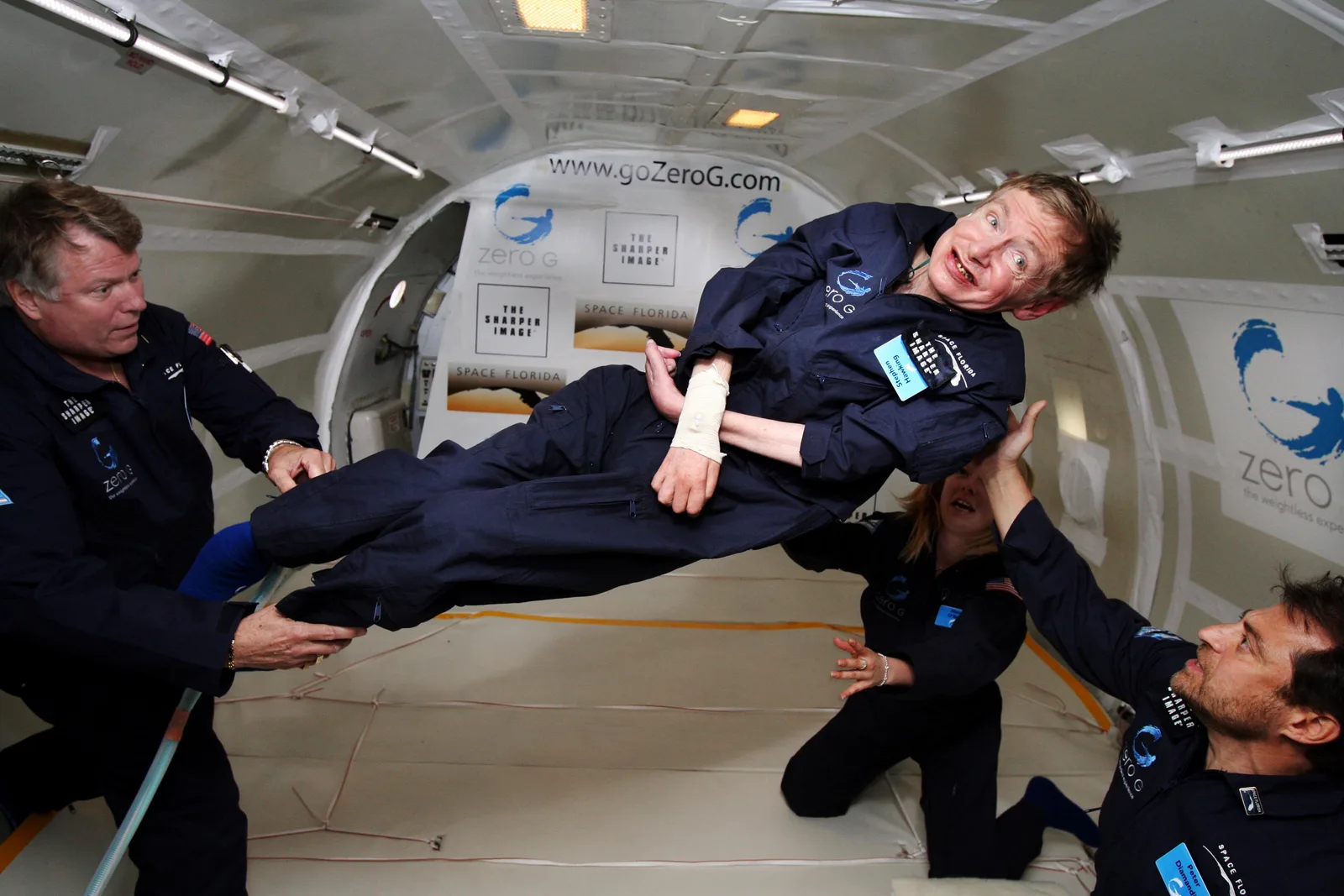
- Physicist Stephen Hawking in zero gravity aboard Zero Gravity Corp's Boeing 727 — Jim Campbell / Aero-News Network (NASA media archive), 2007-04-26 · Jim Campbell/Aero-News Network, CC BY 3.0, via Wikimedia Commons · CC BY 3.0
- Barack Obama talks with Stephen Hawking before the Presidential Medal of Freedom ceremony, 12 August 2009 — Pete Souza (White House), 2009-08-12 · Official White House Photo by Pete Souza, public domain (US federal government), via Wikimedia Commons · Public domain
- Stephen Hawking's resting place at Westminster Abbey — Mx. Granger, 2022-01-29 · Mx. Granger, CC0, via Wikimedia Commons · CC0
- Monument to Isaac Newton over his tomb, Westminster Abbey — Klaus-Dieter Keller, 2006-04-17 · Public domain (released by the photographer Klaus-Dieter Keller), via Wikimedia Commons · Public domain
Sources
Tier 1 — the subject's own words (writings, letters, diaries, trial records)
- [MyBH] Stephen Hawking, My Brief History (Bantam, 2013), ch. 1 "Childhood", ch. 2 "St. Albans", ch. 3 "Oxford", ch. 4 "Cambridge", ch. 8 "Caltech". IA upload
my-brief-history(text saved asresearch/texts/my-brief-history.txt). In copyright. - [BHOT] Stephen Hawking, A Brief History of Time (Bantam, 2017 reissue of the 1988 text), IA upload
hawking-stephen-a-brief-history-of-time-bantam-2017(research/texts/bhot-bantam.txt). Cited by chapter: ch. 8 "The Origin and Fate of the Universe" (Vatican anecdote; "What place, then, for a creator?"), ch. 12 "Conclusion" (the last paragraph). Wording of the final sentence differs between printings ("would know" in this edition, "should know" in the Guardian and Wikipedia quotations); the first 1988 printing was not seen. In copyright. - [GD] Stephen Hawking and Leonard Mlodinow, The Grand Design (Bantam, 2010). IA upload
The_Grand_Design(research/texts/grand-design.txt; the OCR has footnote digits and "o @ @ @" ornaments). Cited by chapter: ch. 1 "The Mystery of Being", ch. 8 "The Grand Design". In copyright. - [BA] Stephen Hawking, Brief Answers to the Big Questions (Bantam, 2018). IA upload
hawking-stephen-brief-answers-to-the-big-questions-bantam-2018(research/texts/brief-answers.txt). Cited by chapter: ch. 1 "Is There a God?"; "Why We Must Ask the Big Questions"; ch. 10. The Publisher's Note says the book "draws from this personal archive" of speeches, interviews and essays and was completed with colleagues, family and the Estate; the individual passages are therefore of uncertain date. In copyright. - [Guardian-2011] Ian Sample, "Stephen Hawking: 'There is no heaven; it's a fairy story'", The Guardian, 15 May 2011. https://www.theguardian.com/science/2011/may/15/stephen-hawking-interview-there-is-no-heaven (
research/texts/guardian-2011.txt). Hawking's answers were written replies to questions from the Guardian and a reader. - [NBC-2014] Alan Boyle, "'I'm an Atheist': Stephen Hawking on God and Space Travel", NBC News, 23 Sept 2014, quoting El Mundo (Pablo Jáuregui). http://www.nbcnews.com/science/space/im-atheist-stephen-hawking-god-space-travel-n210076 (
research/texts/nbc-2014.txt). The original El Mundo interview was not seen (secondhand). - [TIME-2018] Jamie Ducharme, TIME, 14 March 2018, on Hawking's thoughts on death, the afterlife and God. https://time.com/5199149/stephen-hawking-death-god-atheist/ (
research/texts/time-2018.txt). Quotes the Guardian 2011, GD, El Mundo and a TIME interview of 2010 (not seen).
Tier 2 — scholarly biographies and encyclopedias
- [WG] Michael White and John Gribbin, Stephen Hawking: A Life in Science (1992; the printed page numbers in the OCR run to about 300). IA upload
stephen-hawking-a-life-in-science-michael-white-john-gribbin(research/texts/white-gribbin.txt). Edition and publisher not stated in the OCR front matter I read; check before citing in print. Quotations from Jane Hawking and Hawking in it are cited in endnotes to interviews and the Independent, so they are secondhand here. In copyright. - [Jane-Music] Jane Hawking, Music to Move the Stars: A Life with Stephen (Macmillan, 1999), and Travelling to Infinity: My Life with Stephen (Alma, 2007; IA copies are borrow-only). NOT READ: the IA text endpoint returned 401 for
musictomovestars0000hawkandtravellingtoinfi0000hawk_f0h0. Jane's faith is documented here only through WG, Wikipedia and Wikipedia's account of her 2004 interview. A borrowed copy is needed (see Open questions).
Tier 3 — popular biographies and journalism
- [HUK-2018] Humanists UK, "Humanists UK mourns death of Stephen Hawking", 14 March 2018. https://humanism.org.uk/2018/03/14/humanists-uk-mourns-death-of-stephen-hawking/ (
research/texts/humanists-uk-2018.txt). A partisan source (it claims him as a humanist), used for the Oxford Humanist Group membership and for quotations it reproduces.
Tier 4 — Wikipedia and similar reference sites (citable; give the article and revision date; prefer a higher tier where one exists)
- [WP-SH] Wikipedia, "Stephen Hawking", revision 1380128933 of 2026-10-13 (
research/texts/wp-hawking.txt). - [WP-GD] Wikipedia, "The Grand Design (book)", revision 1341362168 of 2026-03-02 (
research/texts/wp-grand-design.txt). - [WP-JH] Wikipedia, "Jane Hawking", revision 1375541866 of 2026-09-18 (
research/texts/wp-jane.json).
Opposition sources — contemporary critics and religious responses
- [Sacks] Lord Sacks, then Chief Rabbi, as reported in Guardian-2011 ("elementary fallacy"). His own statement (2010) was not retrieved.
- [Lennox] John Lennox, as quoted in WP-GD; original article not retrieved.
- [Watts] Rev. Dr Fraser Watts, as quoted in WP-GD; original not retrieved.
- [Pope-1981] Pope John Paul II's address to the 1981 conference, as quoted in WG pp. 200-1; the Vatican text was not retrieved.
- [Jane] Jane Hawking's remarks to interviewers, as quoted in WG pp. 165-8.
Related lives
Richard Dawkins — he welcomed The Grand Design ("Hawking is now administering the coup de grace", Wikipedia, unverified at source) and took the same road from biology that Hawking took from cosmology; or Carl Sagan, the other scientist for whom the universe stood in for religion. (Choice for the expensive model.)
Daniel Dennett
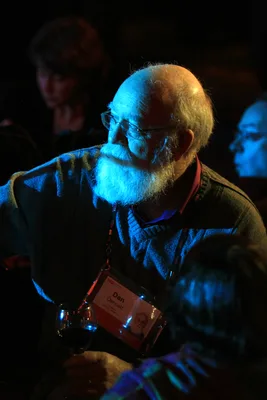
Daniel Dennett was raised in a mild New England Christianity and stopped believing as a teenager, without any crisis. Only in 2003, alarmed by theocratic talk after 11 September, did he declare himself a "bright" in public. He then turned from arguing against God to studying religion, and the unbelieving clergy who serve it, as natural phenomena. He met his own brush with death in 2006 by thanking goodness, not God.
Richard Dawkins
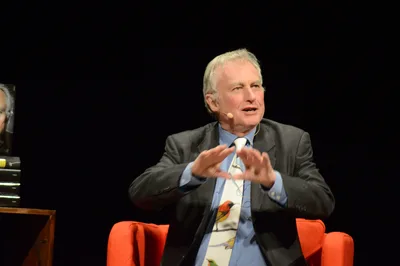
Richard Dawkins was a devout Anglican schoolboy, confirmed at thirteen. He first doubted at nine, on hearing that religions contradict one another. He gave up the Church at fourteen or fifteen, and at about sixteen gave up the creator he had kept for the design of living things, when a friend showed him the full force of Darwin's idea. The God Delusion (2006) made that biology-based unbelief public. His later talk of being a "cultural Anglican" renamed a loyalty to the Church's music and language that was already in print in 2006.
Narendra Dabholkar
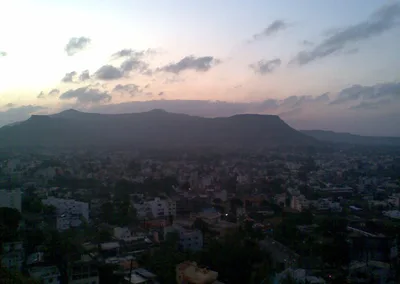
Narendra Dabholkar was a Satara doctor who had long since stopped believing in God. In 1982 he gave up medicine to fight superstition, and built a movement that, against his first wish, stayed neutral on God and attacked only fraud and exploitation. He defended that compromise as right for the cause. He was shot dead in Pune in 2013, and the law he fought for, which protects worship and never mentions God, was issued within days of his death.
Salman Rushdie
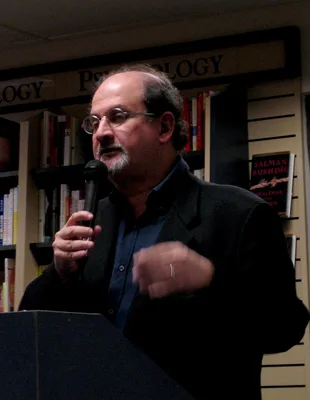
Salman Rushdie was raised in a secular Muslim family with an atheist father. He left no record of a crisis of faith, only an undated drift from childhood belief in the stories. He made his unbelief public through The Satanic Verses (1988), a novel about revelation "from the point of view of an unbeliever", which brought the 1989 fatwa. Under that threat he signed the Muslim creed in December 1990 and disowned it by 1992. After that his unbelief hardened, through "hard-line atheist" in 2006 to a stabbing in 2022 that brought, he said, no revelation.