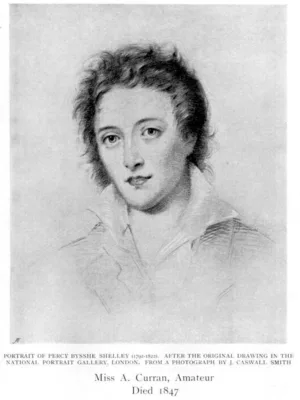
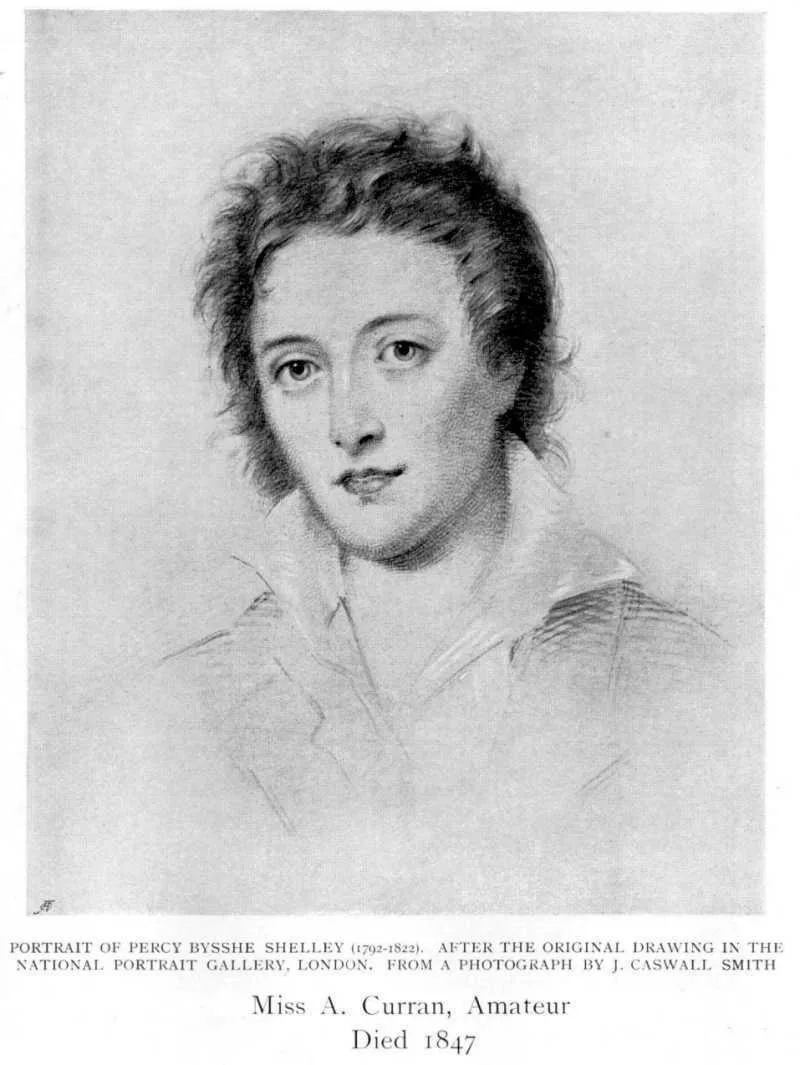
Shelley hated the cruelty of believers before he doubted their God. He reasoned his way from Hume and Locke to The Necessity of Atheism at eighteen, was expelled from Oxford for it, and later lost his children partly on the same ground. In his last years he turned the word atheist from a creed into a gauntlet thrown down against superstition and oppression.
The belief timeline
- Faith (1792–1804) — Baptised at Warnham, taught by the parson, a boy credulous of apparitions; no record of devotion or of a religious crisis at home [2][4]
- Doubt (Oct 1810–Jan 1811) — The crack came earlier (Eton: Pliny's chapter on God, Lucretius, the persecution of "Mad Shelley", Dr Lind), but the adult doubt is Oxford: Hume and Locke with Hogg; by 20 Dec 1810 his father has heard of his "sceptical principles"; on 3 Jan 1811 he is still a theist of "some vast intellect"; the loss of Harriet Grove turns doubt into anger at "Intolerance" [8][9][17][19][20][21][22]
- Declaration (Feb–Mar 1811) — The Necessity of Atheism signed "Thro' deficiency of proof, AN ATHEIST"; on 25 March he refuses to disavow it and is expelled at 18 [24][30]
- Verse (1812–13) — After Eaton's sentence he writes the argument into a poem with notes because "a poem is safe"; Queen Mab: "There is no God", qualified in Note VII [43][44][46][47][48]
- The price (1817) — Westbrook v. Shelley: Queen Mab is Exhibit A; Lord Eldon refuses him the custody of Ianthe and Charles [53][57][58]
- Revision (1821–22) — Calls Queen Mab "crude and immature" but himself "a devoted enemy to religious... oppression"; Adonais ("The One remains"), Hellas and its note on the "sublime human character of Jesus Christ"; the label "atheist" now something others call him [63][65][66][68]
Notes to the timeline (23)
- [2] Shelley was baptised at Warnham church (register date 7 September, year not given in the note) and at six was sent to learn Latin from the Rev. Mr Edwards, the Welsh parson of Warnham ("a good old man, but, says Medwin, 'of very limited intellects'"). The family was conventionally Anglican; nothing in the sources records his own devotion as a child. — Edward Dowden, The Life of Percy Bysshe Shelley, 2 vols (London: Kegan Paul, Trench, 1886). Vol. I IA lifeofpercybyssh01dowduoft (dowden1.txt); vol. II IA lifepercybysshe02dowdgoog (dowden2.txt). The standard Victorian life; prints college records, the Chancery papers and Eldon's judgment, vol. I p. 8 n.; Dowden, Life of Percy Bysshe Shelley, vol. I p. 13.
- [4] As a boy he "had faith in apparitions and the evocation of the dead; his sleep was afflicted by frightful dreams"; he read haunted-castle romances. This is the only boyhood "faith" the sources describe. — Dowden, Life of Percy Bysshe Shelley, vol. I p. 17.
- [8] At Eton his most important studies "were those of his own choice": Lucretius ("held him as with a potent spell"), Franklin, Godwin's Political Justice, Condorcet; he translated several books of Pliny's Natural History, "especially impressed by the chapter 'De Deo'" which censures anthropomorphic gods. — Dowden, Life of Percy Bysshe Shelley, vol. I pp. 28–29.
- [9] Medwin says Pliny's chapter "De Deo" "was the first germ of his ideas respecting the Nature of God", and that Dr Lind was the man he consulted about the translation. — Thomas Medwin, The Life of Percy Bysshe Shelley, new ed., ed. H. Buxton Forman (Oxford: OUP, 1913), p. 37. Reported at second hand; the original has not been seen.
- [17] At Oxford he and Hogg read Locke's Essay and Hume's Essays together; "Hume's 'Essays' were a favourite book with Shelley" and they made "a very careful analysis" of both; Medwin: "He at that time thought the sceptical mode of reasoning unanswerable". — Thomas Jefferson Hogg, The Life of Percy Bysshe Shelley, vols I and II (London: Moxon, 1858). Vol. I IA lifeofpercybyssh01hoggiala (hogg1.txt); vol. II IA lifeofpercybyssh02hogguoft (hogg2.txt). An eyewitness to Oxford and the expulsion, but Dowden and Ingpen show him embellishing; his own text is a Tier 1 witness for what he saw and Tier 3 for what he reports from Shelley, vol. I pp. 98–99, 270; Medwin, Life of Percy Bysshe Shelley, p. 92.
- [19] On 20 Dec 1810 Shelley wrote Hogg that his father, told by Stockdale of his "sceptical principles", was attacking him: "They attack me for my detestable principles; I am reckoned an outcast; yet I defy them." His father also wrote to thank Stockdale on 23 Dec 1810. — Letters of Percy Bysshe Shelley, ed. Roger Ingpen (London: Pitman, 1909; 2 vols, continuous pagination). Vol. I (to 1814) IA letterscollected01sheluoft, text in research/texts/letters1.txt; vol. II (1814–22) is the 1914 printing, IA letterscontainin02sheluoft, text in research/texts/letters2.txt. Cited "Ing I no. N, p. N" or "Ing II", vol. I no. 15, p. 18 and n..
- [20] Harriet Grove, his cousin and betrothed, ended the engagement; her brother wrote in 1857 that she "became uneasy at the tone of his letters on speculative subjects", consulted her mother and father, and the engagement dissolved. Shelley: "she abhors me as a sceptic, as what she was before!" — Hogg, Life of Percy Bysshe Shelley, vol. II pp. 550–551 (Rev. C. H. Grove); Letters of Percy Bysshe Shelley, vol. I p. 22 n.; Letters of Percy Bysshe Shelley, vol. I no. 20, p. 30.
- [21] Shelley wrote to Hogg on 6 Jan 1811: "I will crush Intolerance. I will, at least, attempt it." Dowden says he came back to Oxford after Christmas "envenomed against what he termed 'intolerance' and 'bigotry,' by the loss of his cousin's love, and of the confidence of his own household". Trelawny later asked why he called himself an atheist; Shelley answered that it was "a good word of abuse to stop discussion... I took up the word as a knight takes up a gauntlet in defiance of injustice" (Trelawny's report, c. 1821–22). — Letters of Percy Bysshe Shelley, vol. I no. 21, p. 32; Hogg, Life of Percy Bysshe Shelley, vol. I pp. 159–160; Dowden, Life of Percy Bysshe Shelley, vol. I pp. 116–117 (quoting Trelawny, Records, II p. 92).
- [22] On 3 Jan 1811, six weeks before the pamphlet was advertised, he still wrote that the word God "implies the soul of the universe", that "some vast intellect animates infinity", and that the immoral soul's future punishment is what he "can most easily believe in". — Letters of Percy Bysshe Shelley, vol. I no. 20, pp. 29–30.
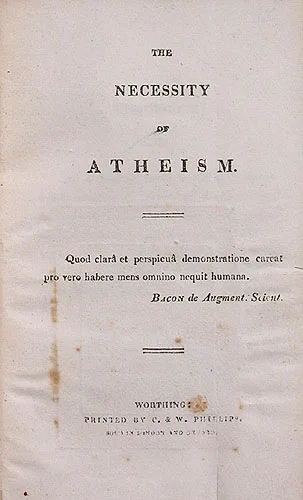
- [24] The title page has Bacon's motto ("Quod clara et perspicua demonstratione careat pro vero habere mens omnino nequit humana"), no author's name, and an "Advertisement" asking readers to send proofs "as briefly, as methodically, as plainly" as he has, signed "Thro' deficiency of proof, AN ATHEIST". The notice was attributed at the time to Hogg. — The Prose Works of Percy Bysshe Shelley, ed. H. Buxton Forman, vol. I (London: Reeves and Turner, 1880), vol. I pp. 303–305; Dowden, Life of Percy Bysshe Shelley, vol. I p. 117; Dowden, Life of Percy Bysshe Shelley, vol. I p. 123 (Ridley).
- [30] On Lady-day, 25 March 1811, the Master and Fellows expelled Hogg and Shelley, in the college's words, "for contumaciously refusing to answer questions proposed to them, and for also repeatedly declining to disavow a publication entituled 'The Necessity of Atheism'". Hogg, who watched Shelley return "terribly agitated", reports him saying "I am expelled". Medwin says Shelley woke him at 4 a.m. two days later with "I am expelled, for Atheism". — Dowden, Life of Percy Bysshe Shelley, vol. I p. 124 (college book); Hogg, Life of Percy Bysshe Shelley, vol. I pp. 278–283; Medwin, Life of Percy Bysshe Shelley, p. 88.
- [43] Daniel Isaac Eaton, prosecuted March 1812 for publishing Part III of Paine's Age of Reason, was sentenced to eighteen months in prison and an hour in the pillory; Shelley's Letter to Lord Ellenborough (printed at Barnstaple, June 1812) answers the judge; the printer destroyed most copies and 75 reached Hookham; one survives in the Bodleian; a revised portion became a note to Queen Mab. — Selected Prose Works of Shelley, ed. H. S. Salt (London: Watts, 1915), p. 13 n.; Letters of Percy Bysshe Shelley, vol. I pp. 323–324 n..
- [44] 18 Aug 1812, Shelley to Hookham: he sends fifty copies of the Letter and a little poem begun in England: "Indeed, a poem is safe: the iron-souled Attorney-General would scarcely dare to attack [it]." — Letters of Percy Bysshe Shelley, vol. I no. 155, pp. 357–358.
- [46] 16 Jan 1813: "The notes to 'Q. M.' will be long and philosophical; I shall take that opportunity which I judge to be a safe one, of propagating my principles, which I decline to do syllogistically in poem. A poem very didactic is, I think, very stupid." — Letters of Percy Bysshe Shelley, vol. I no. 165, pp. 378–379.
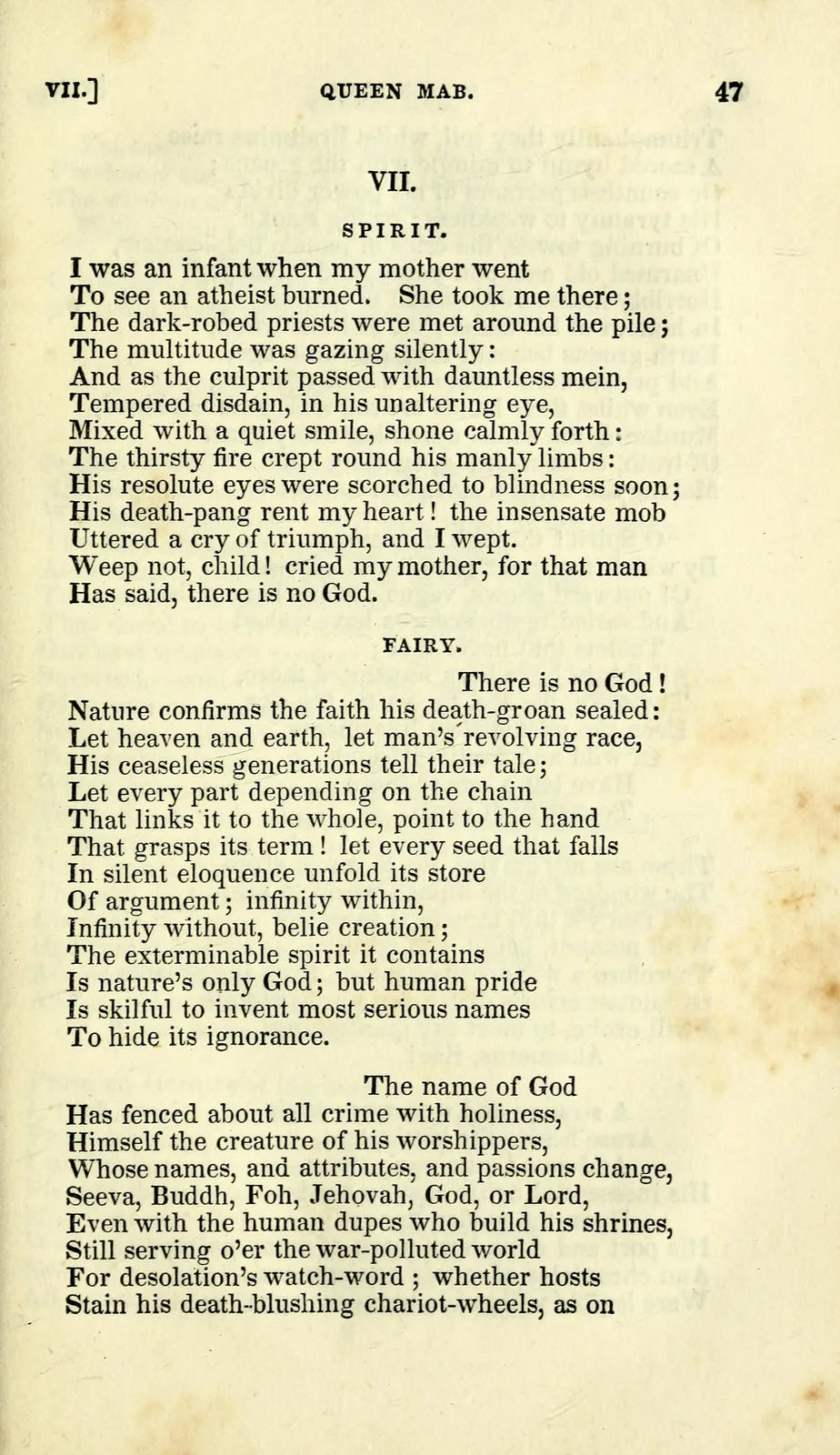
- [47] In the poem, the Fairy shows the soul a martyred atheist burned at the stake, and says: "There is no God! Nature confirms the faith his death-groan sealed." Jehovah is "the omnipotent fiend" who "Planted the tree of evil". — Shelley, Queen Mab: with Notes, "Second Edition" (the Duke University copy; IA gives 1831; the text is that of the 1813 original with its notes), pp. 47, 59.
- [48] Note VII to "There is no God!": "This negation must be understood solely to affect a creative Deity. The hypothesis of a pervading Spirit, co-eternal with the universe, remains unshaken", followed by the pamphlet's argument with additions ("We must prove design before we can infer a designer"). — Shelley, Queen Mab, pp. 96–98; Selected Prose Works of Shelley, p. 143 (note: revised version of the 1811 pamphlet).
- [53] The children, Ianthe Eliza and Charles Bysshe, sued through the Westbrooks (Chancery, Jan 1817). Shelley told Mary: "They have filed a bill to say that I published 'Queen Mab,' that I avow myself to be an Atheist and a republican." Eliza Westbrook swore that Queen Mab and the Letter to Lord Ellenborough were written and published by Shelley. — Letters of Percy Bysshe Shelley, vol. II no. 250, p. 537; Dowden, Life of Percy Bysshe Shelley, vol. II pp. 77–78.
- [57] Judgment, 27 Mar 1817: Eldon would not say the father should lose the children, but the children must not be placed in his exclusive care; "conduct, which I cannot but consider as highly immoral"; "nothing in evidence... sufficient to authorize me in thinking that this gentleman has changed, before he arrived at the age of twenty-five, the principles he avowed at nineteen"; an injunction kept Shelley from the children. Dowden: not atheism alone, nor conduct alone, but "opinions leading to conduct". — Dowden, Life of Percy Bysshe Shelley, vol. II pp. 89–91; Letters of Percy Bysshe Shelley, vol. II p. 539 n..
- [58] Guardians: the Master reported on 28 Apr 1818 for Dr and Mrs Hume of Hanwell (confirmed by the Chancellor 25 July 1818), who would keep the girl from books "that might tend to shake her faith in any of the great points of the established religion" and give the children daily prayer. Shelley left England on 11 March 1818. — Dowden, Life of Percy Bysshe Shelley, vol. II pp. 92–94, 187.
- [63] In June 1821 Clark published a pirated Queen Mab. To Ollier, 11 June: "It is villainous trash; and I dare say much better fitted to injure than to serve the cause which it advocates." To the Examiner, 22 June: written "at the age of eighteen, I dare say in a sufficiently intemperate spirit", "still more crude and immature", but "I am a devoted enemy to religious, political, and domestic oppression". — Letters of Percy Bysshe Shelley, vol. II no. 410, pp. 875–876; no. 413, p. 881.
- [65] Adonais (June 1821): "The One remains, the many change and pass". Shelley to Ollier: "'Adonais' is finished... perhaps the least imperfect of my compositions." — The Works of Percy Bysshe Shelley in Verse and Prose, ed. H. Buxton Forman, vols I–IV (poetry) (London: Reeves and Turner, 1880), vol. III p. 28; Letters of Percy Bysshe Shelley, vol. II no. 410, p. 876.
- [66] In Hellas (1821–22) the final chorus promises Saturn and Love, "more bright and good Than all who fell, than One who rose, Than many unsubdued"; his own note says "the One who rose, or Jesus Christ" and "The sublime human character of Jesus Christ was deformed by an imputed identification with a power, who tempted, betrayed, and punished the innocent beings who were called into existence by his sole will". Forman: the lines were "too much for Mr. Ollier's peace of mind". — Works of Percy Bysshe Shelley…, vol. III pp. 93, 97–98.
- [68] 18 June 1822, from Lerici, three weeks before his death: "Tell me a little of what they say of me besides my being an atheist." — Letters of Percy Bysshe Shelley, vol. II no. 466, p. 976.
Through Deficiency of Proof
On the morning of 25 March 1811, a Monday and Lady Day, an eighteen-year-old undergraduate was called before the Master and Fellows of University College, Oxford. On the table was a pamphlet of seven pages. It had no author's name on it, only a notice asking any reader who disagreed to send proofs, signed "Thro' deficiency of proof, AN ATHEIST."1 Its title was The Necessity of Atheism. The young man refused to say whether he had written it, and refused to disavow it. The college's record of that day reads: "it was determined that Thomas Jefferson Hogg and Percy Bysshe Shelley, commoners, be publicly expelled for contumaciously refusing to answer questions proposed to them, and for also repeatedly declining to disavow a publication entituled 'The Necessity of Atheism.'"2 The next morning the two friends took the eight o'clock coach to London.3
Shelley lived eleven more years and became one of the great poets of the English language. He was never allowed to forget that pamphlet, and six years later a court used his opinions to take his children from him. This chapter is about why a boy of eighteen wrote it, what it cost him, and how the word he chose changed its meaning for him as he grew up.
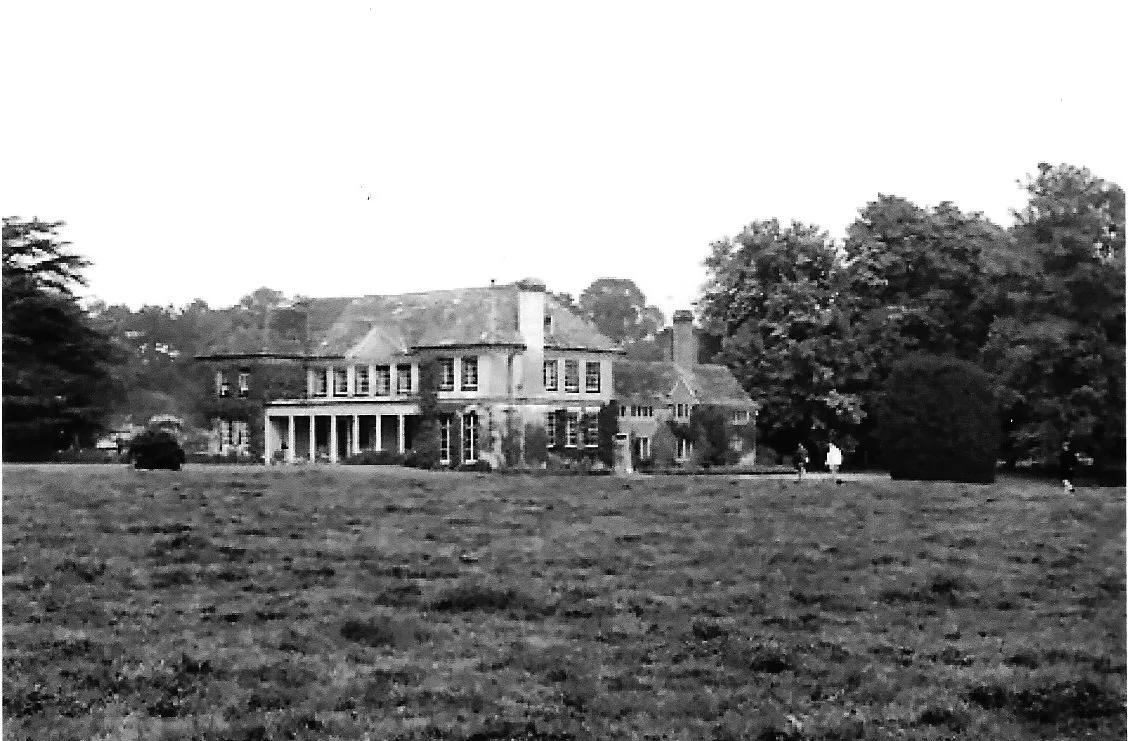
Field Place and Eton
He was born on 4 August 1792 at Field Place, near Horsham in Sussex, the eldest son of Timothy Shelley, a member of Parliament.4 He was baptised at Warnham church, and at six he was sent to learn Latin from the village parson. The family was conventionally Anglican, and nothing in the sources records any particular devotion in the boy; what they record is a child who believed in ghosts and suffered frightful dreams.56
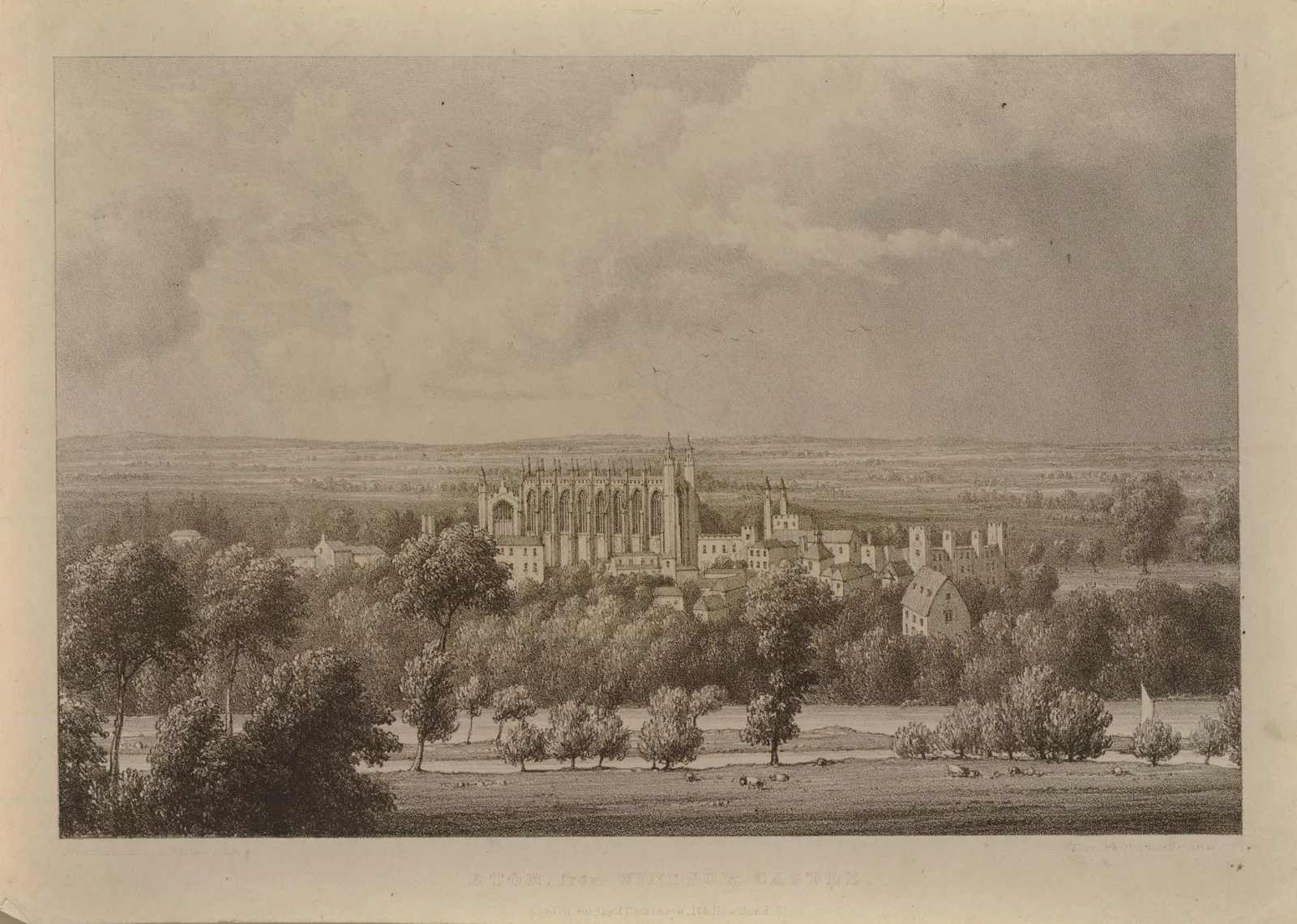
At twelve he went to Eton, and Eton made him a rebel. He refused to fag for an older boy, "proclaiming war against the fagging system, which seemed to him an organized tyranny," and the school answered by baiting him; they called him "Mad Shelley."7 His widow Mary, writing years later, thought that the cruelty he met "at school and at college led him to dissent in all things from those whose arguments were blows, whose faith appeared to engender blame and execration."8 He read what he chose: Lucretius, the Roman poet who argued that the gods had nothing to do with the world, "held him as with a potent spell"; he translated several books of Pliny's Natural History, and was "especially impressed by the chapter 'De Deo,'" in which Pliny mocks gods made in human shape.9 He was enchanted by science, by electricity and chemistry and balloons.10 And he loved an old physician at Windsor, Dr James Lind, of whom he said, "This man is exactly what an old man ought to be."11
These were the first cracks: a boy who hated tyranny, who read a Roman poet who made the gods idle and a Roman encyclopedist who laughed at them, and who loved science. But they were not yet doubt about God. He would later say that he read William Godwin's Political Justice at Eton, and that it made him "a wiser and a better man," though there is evidence he did not get a copy until he was at Oxford.1213
Oxford
He went up to University College in the autumn of 1810, and at dinner one day at the end of October he sat next to Thomas Jefferson Hogg, who became his inseparable friend.1415 Together they read Locke's Essay Concerning Human Understanding and Hume's essays and made careful analyses of both. Hume's essays were a favourite book of Shelley's, and a cousin remembered that he "thought the sceptical mode of reasoning unanswerable."16 Locke taught that all knowledge comes through the senses; Hume showed how little the senses can prove about causes and creators. This is where his doubt began in earnest, which is why the belief timeline places it here rather than at Eton. The schoolboy had hated the tyranny of the believers. The undergraduate found an argument.
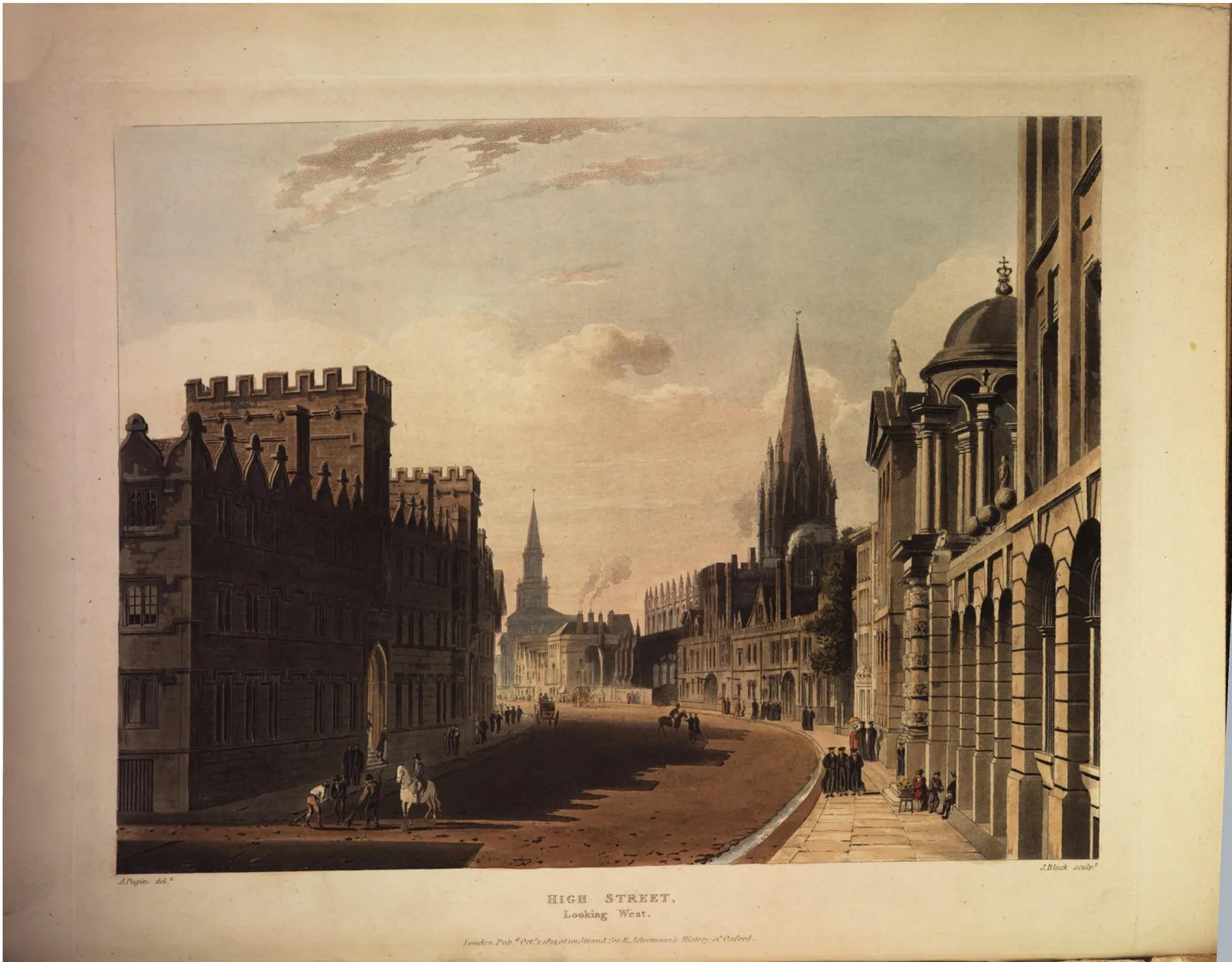
It was not yet atheism, and his own letters show it. On 3 January 1811, six weeks before the pamphlet was advertised, he wrote to Hogg that the word God "has been, and will continue to be, the source of numberless errors," but also that "the leaf of a tree, the meanest insect on which we trample, are, in themselves, arguments more conclusive than any which can be advanced, that some vast intellect animates infinity."1718
What pushed him over was people. That December his father, told by a London bookseller of his son's "sceptical principles," attacked him at home. "They attack me for my detestable principles," Shelley wrote; "I am reckoned an outcast; yet I defy them, and laugh at their ineffectual efforts."19 And his cousin Harriet Grove, to whom he considered himself engaged, ended it. Her brother explained long afterwards that "she became uneasy at the tone of his letters on speculative subjects," and consulted her parents.20 Shelley wrote, "She is no longer mine! she abhors me as a sceptic, as what she was before!"21 Three days later: "I will crush Intolerance. I will, at least, attempt it."22 His biographer Edward Dowden thought he came back to Oxford after Christmas "envenomed against what he termed 'intolerance' and 'bigotry,' by the loss of his cousin's love, and of the confidence of his own household."23
The Necessity of Atheism
The pamphlet was printed at Worthing and advertised in the Oxford Herald on 9 February 1811.24 It opened with a motto from Bacon and set out an argument in a few pages. Belief, it said, is not an act of will but a passion of the mind, compelled by evidence; therefore those who punish disbelief "have attached a degree of criminality to disbelief of which in its nature it is incapable."25 All proof must come from the senses, from reason, or from the testimony of others, and none of the three proves the existence of a God. It ended, like a geometry exercise, "Every reflecting mind must allow that there is no proof of the existence of a Deity. Q.E.D."26
Why did he publish it? Three answers survive, and they point different ways. Hogg said it was a device for starting arguments by post: Shelley had been sending letters of doubt under false names to clergymen and scholars, and the printed "syllabus," he said, "was a small pill, but it worked powerfully" in getting strangers to answer.2728 Dowden linked it to the loss of Harriet and the anger at "intolerance." And Shelley himself, three months after his expulsion, gave the most direct reason, in a letter to a schoolmistress he was trying to talk out of her faith: "My wish to convince you of his non-existence is twofold: first, on the score of truth; secondly, because I conceive it to be the most summary way of eradicating Christianity."29 Accounts differ, and probably all three are part of the truth.
According to one account, he left copies on the counter of an Oxford bookshop, where they lay on sale for twenty minutes until a Fellow of New College had them burned; Hogg said it was never offered for sale at all.30 Shelley sent copies to bishops and heads of colleges. A don at Oriel showed one to the Master and Fellows of University College, "and I was sent for," Shelley wrote.31 What happened in the room is also disputed. Shelley said later that he was told no more would be said if he denied writing it, and that "I refused, and was expelled"; Hogg said that no such offer was made and that Shelley dreamed it.32 A Fellow who was present remembered that Shelley gave no direct reply, and that Hogg came forward unasked to say that he was equally implicated.33 At the last moment word came that if Shelley asked the Master's permission to stay a little longer it would probably be granted. He was too angry to ask.3
His father was furious and demanded that he go back and apologise to the Master. "No, of course!" Shelley wrote, and his allowance was withdrawn.34
"I, an Atheist"
For a year after Oxford he used the word of himself in private. He argued Elizabeth Hitchener, the schoolmistress, toward it: "Atheism appears a terrific monster at a distance. Dare to examine it, look at its companions, it loses half its terrors."35 When he married Harriet Westbrook at Edinburgh in August 1811, he explained to her "how I, an Atheist, chose to subject myself to the ceremony of marriage": to protect his wife's reputation and his own political rights.3637
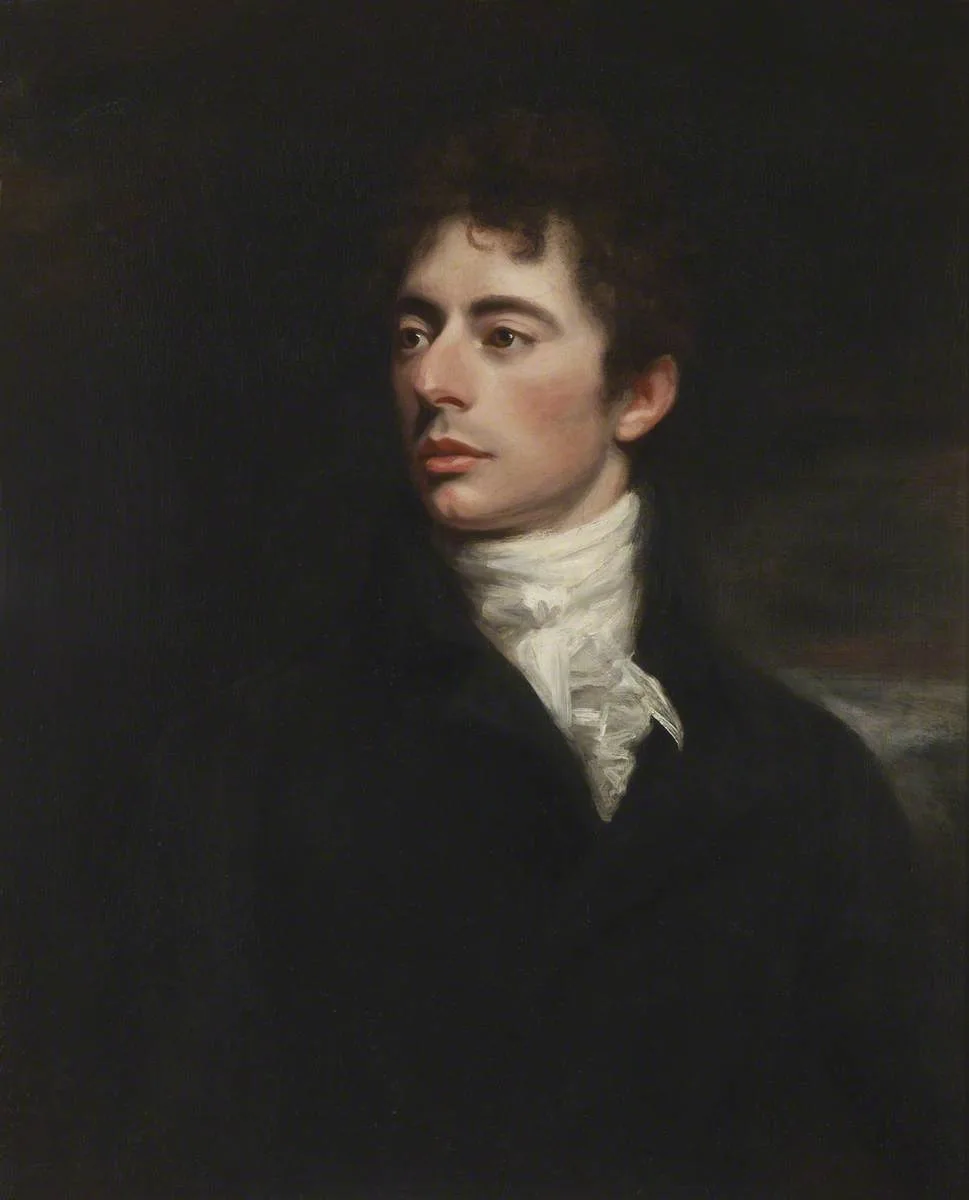
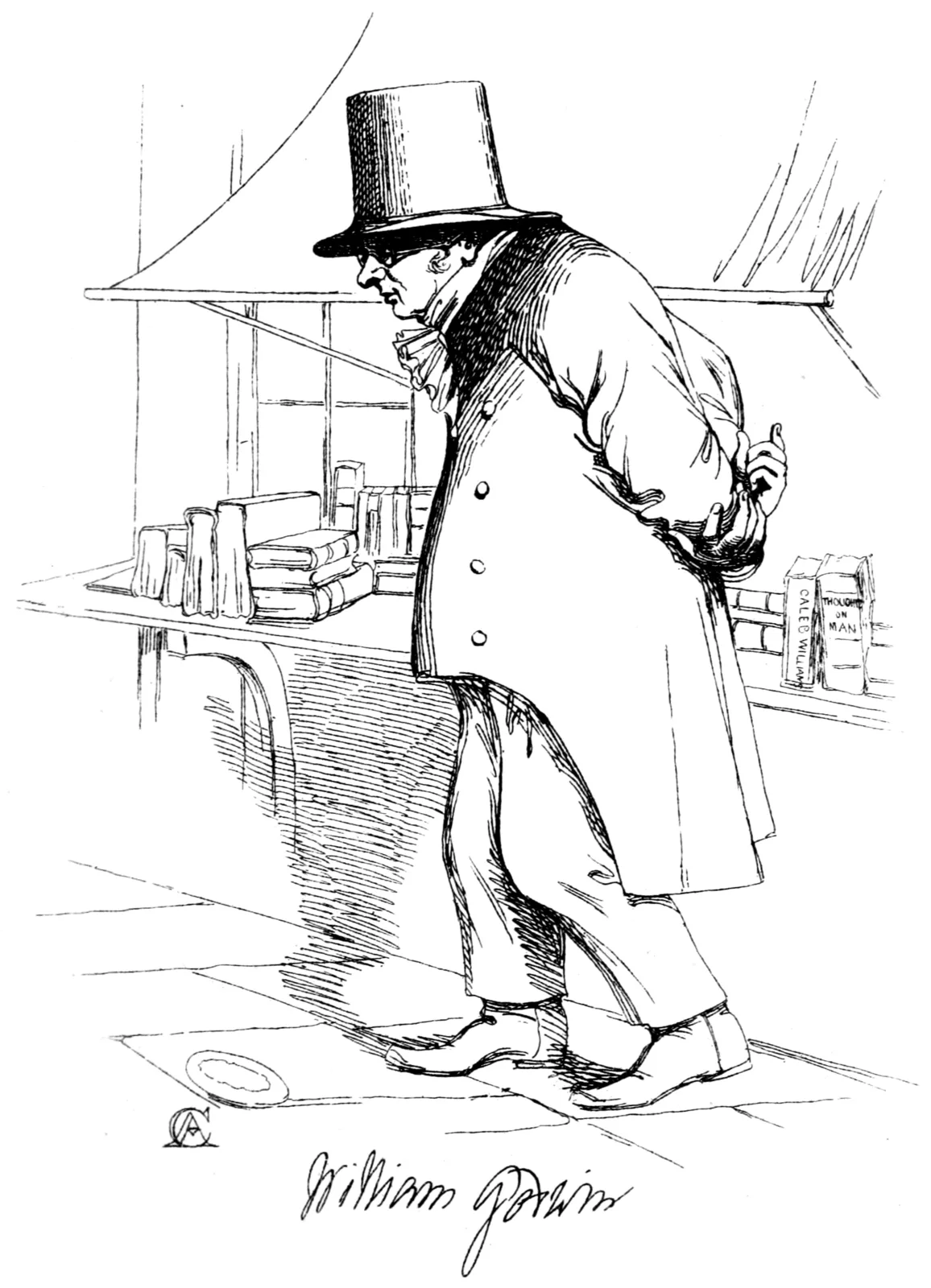
In Keswick that winter he met the poet Robert Southey, who had been a young radical himself and saw in Shelley "my own ghost. He is just what I was in 1794."38 Southey told him he was not really an atheist at all, but a pantheist, and Shelley half agreed: "He says I ought not to call myself an atheist, since in reality I believe that the universe is God. I tell him I believe that God is another signification for the Universe."39 In January 1812 he wrote to William Godwin, the author of Political Justice, giving an account of himself: "I became, in the popular sense of the word 'God,' an Atheist. I printed a pamphlet, avowing my opinion, and its occasion."40 Godwin replied kindly and sternly, warning him against anger and impatience; Shelley quoted his advice back to him, "Being yet a scholar, I ought to have no intolerable itch to become a teacher," and promised, "I will not again crudely obtrude the question of atheism on the world."4142
A poem is safe
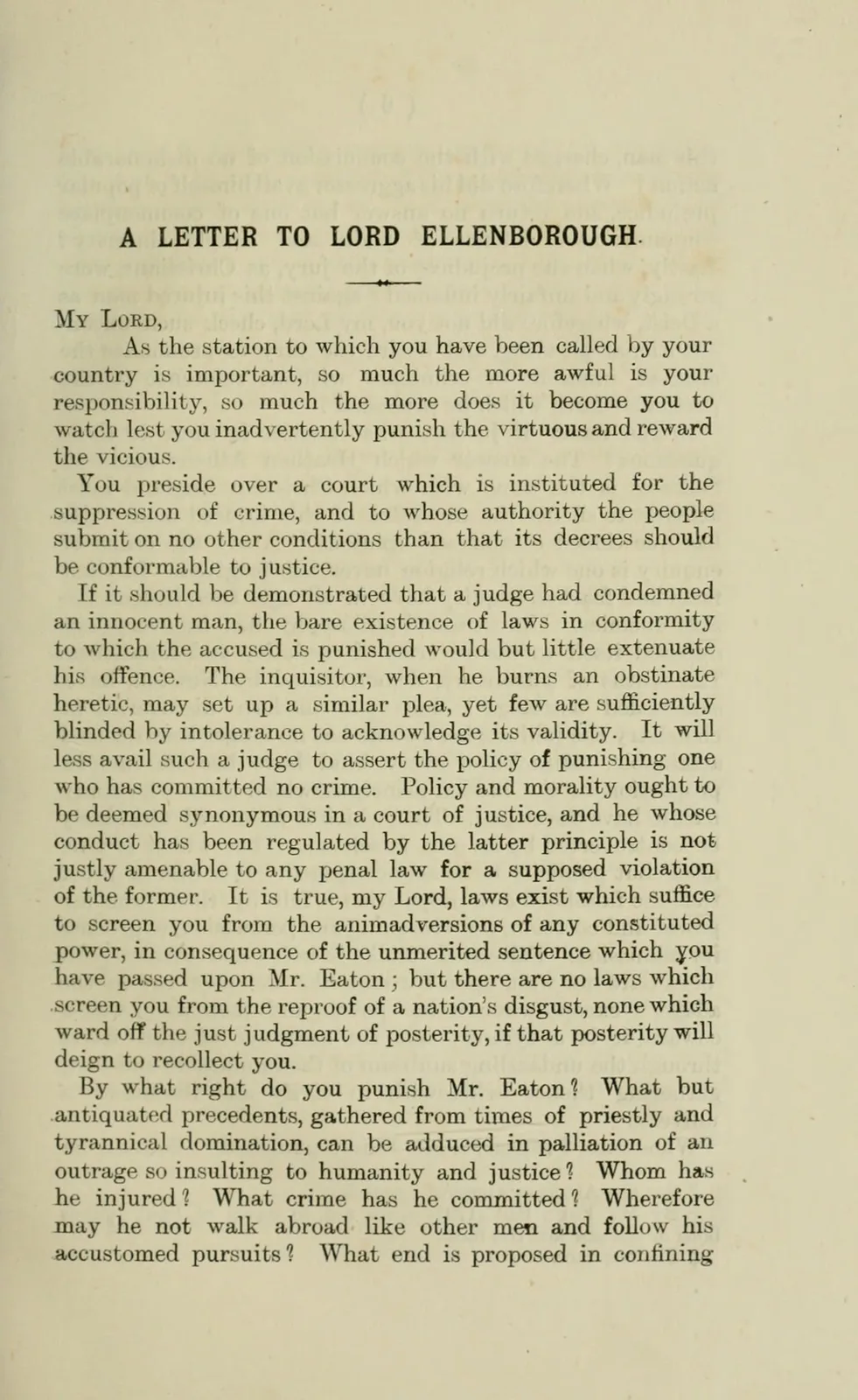
That promise did not last long, but his method changed. In March 1812 a London bookseller, Daniel Isaac Eaton, was sentenced to eighteen months in prison and an hour in the pillory for publishing Thomas Paine's Age of Reason. Shelley wrote a Letter to Lord Ellenborough, the judge, defending the right to publish; the printer destroyed most of the copies.43 Then he found a safer form. "Indeed, a poem is safe," he wrote to his publisher that August: "the iron-souled Attorney-General would scarcely dare to attack [it]."44 The poem became Queen Mab, and the arguments went into its notes: "I shall take that opportunity which I judge to be a safe one, of propagating my principles, which I decline to do syllogistically in poem."45
Queen Mab was printed privately in 1813, with Voltaire's motto "Écrasez l'infâme" on the title page.46 In it a fairy shows a human soul an atheist being burned at the stake, and says: "There is no God! Nature confirms the faith his death-groan sealed."47 But the note on those three words already shows him thinking further. "This negation must be understood solely to affect a creative Deity. The hypothesis of a pervading Spirit, co-eternal with the universe, remains unshaken."48 The rest of the note reprinted, with improvements, the argument of The Necessity of Atheism. A year later, in a dialogue called A Refutation of Deism, he argued that there was "no alternative between Atheism and Christianity," that a reasoning person could not stop at a God of nature.49
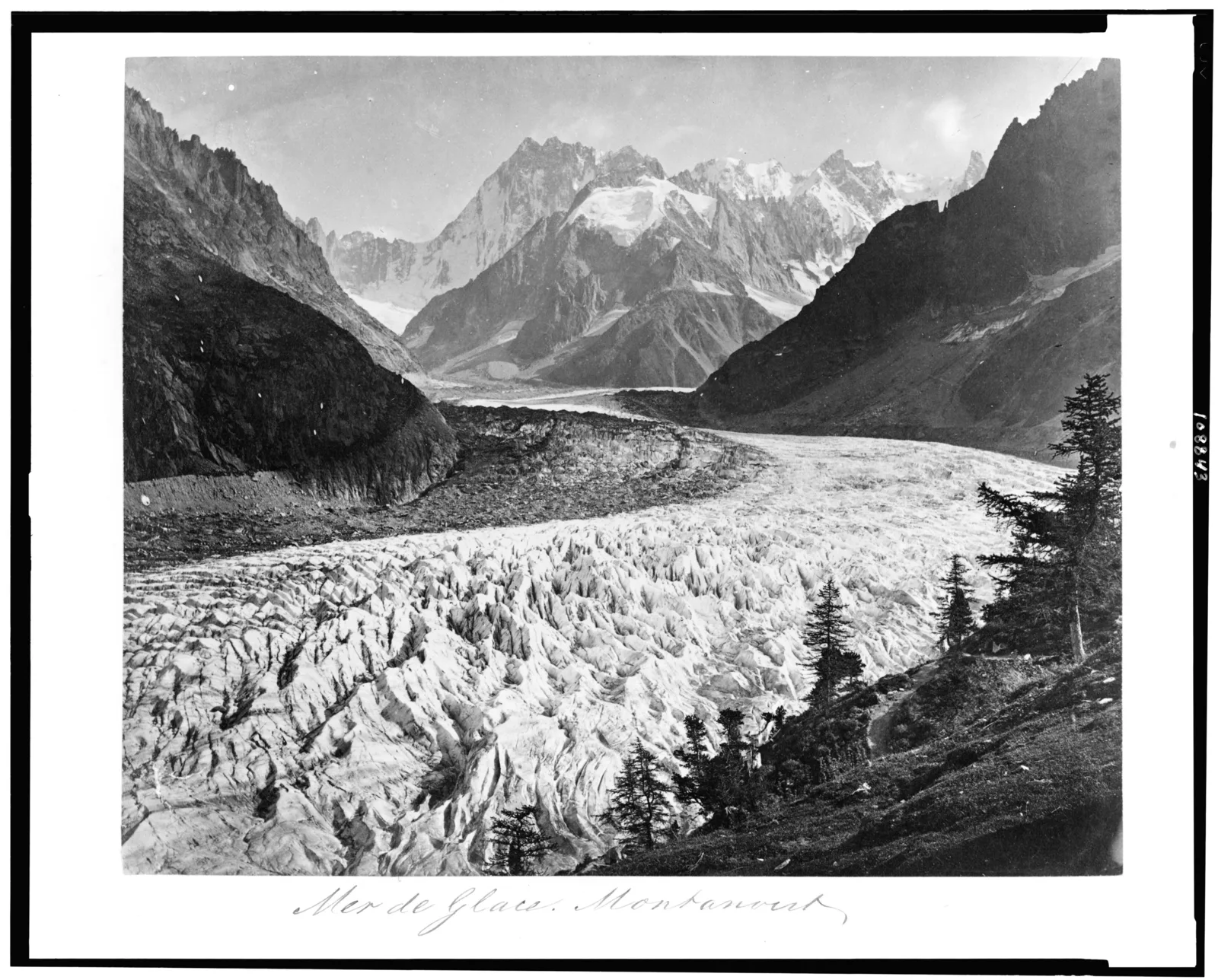
In the Alps in the summer of 1816, with Mary Godwin, whom he would soon marry, and Lord Byron, he wrote "Mont Blanc" and the "Hymn to Intellectual Beauty." The way they speak of God is new: "Power dwells apart in its tranquillity," and "The awful shadow of some unseen Power."50 At the inn at Montanvert, above the Mer de Glace, an entry in the visitors' book in Greek, calling him a "philanthropist, democrat, and atheist," is attributed to him, and Byron is said to have scratched it out; Dowden could not say whether it was genuine.51
The price
In December 1816 his first wife, Harriet, from whom he had separated, was found drowned in the Serpentine in Hyde Park. Three weeks later Shelley married Mary Godwin.52 Harriet's family went to the Court of Chancery to keep his two children, Ianthe and Charles, from him. "They have filed a bill to say that I published 'Queen Mab,'" he wrote to Mary, "that I avow myself to be an Atheist and a republican, with some other imputations of an infamous nature."53 Harriet's sister swore that he had written and published Queen Mab.54
The case was heard in January 1817 before the Lord Chancellor, Lord Eldon. Counsel for the family laid stress on Shelley's religious opinions as set out in the poem; Shelley's own counsel could say only that "little ... can be said in defence of 'Queen Mab,'" except that he had written it as a boy and that hardly any copies had ever got abroad.5556 Shelley drafted a statement for the court: "If I have attacked religion, it is agreed that I am punishable, but not by the loss of my children."57
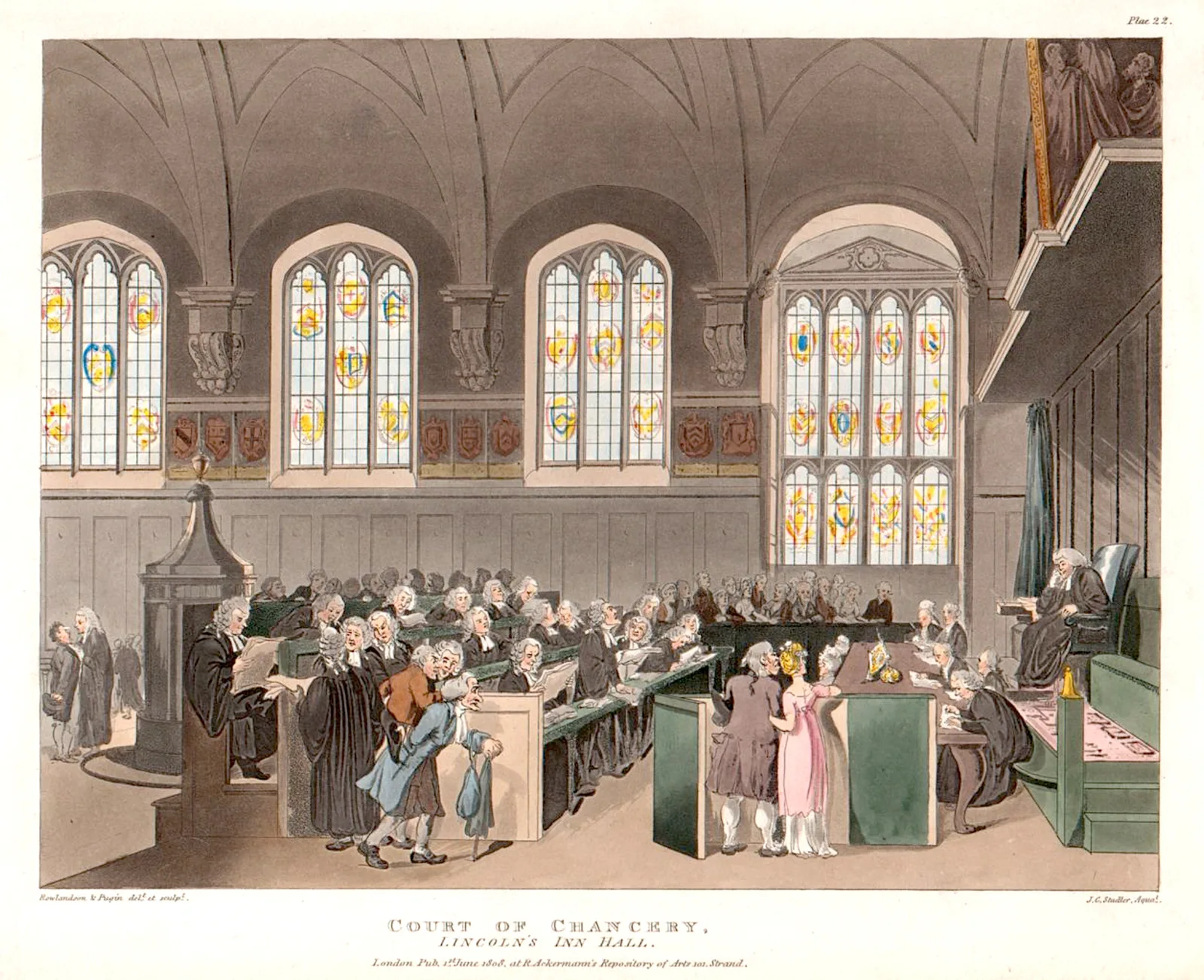
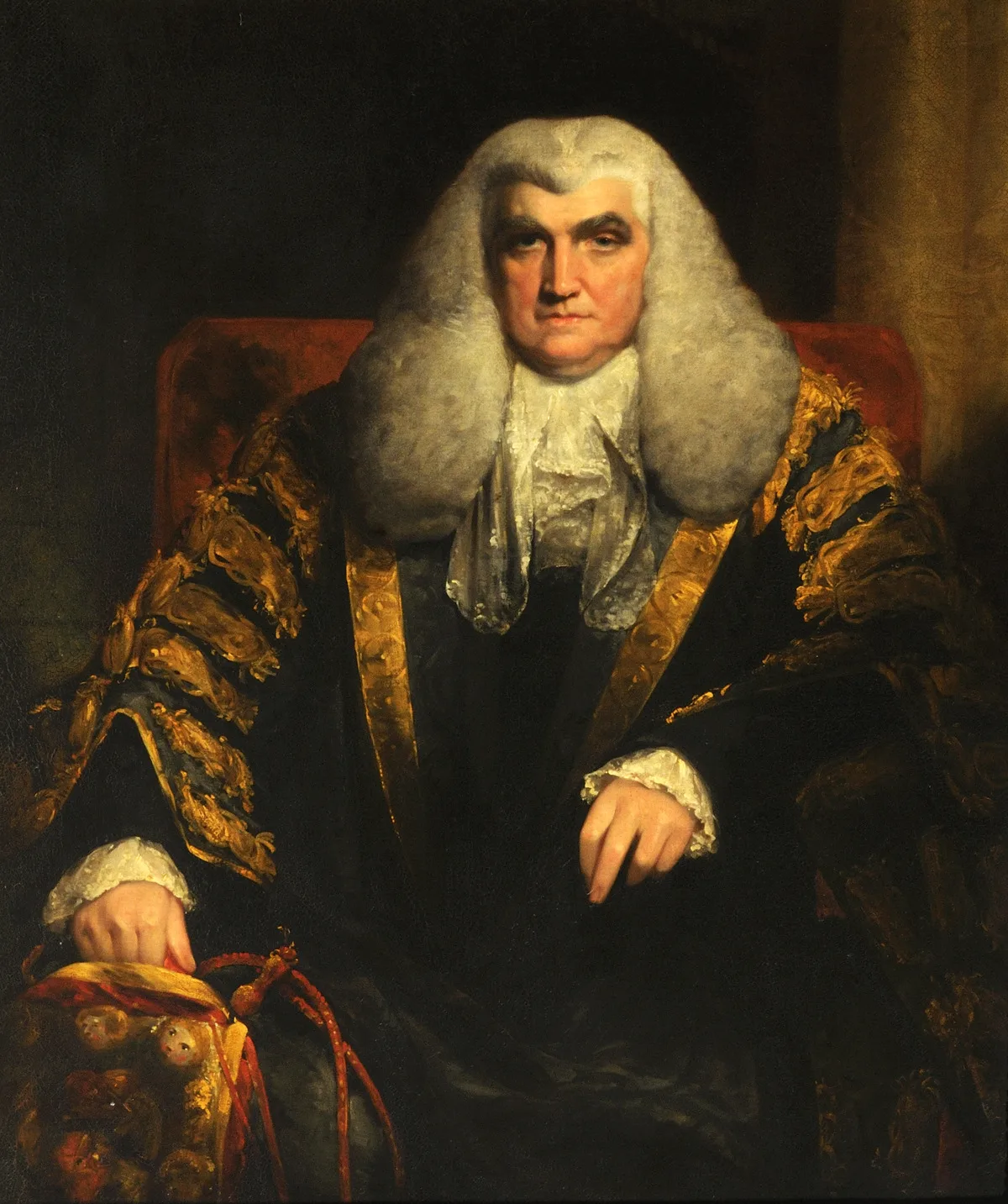
Lord Eldon gave judgment on 27 March 1817. He did not say that a father must lose his children for his religion. He said that the children could not be left in Shelley's exclusive care, because of "conduct, which I cannot but consider as highly immoral," conduct "established as the effect of those principles."5859 The principles, he said, were the ones avowed at nineteen, and there was nothing to show they had changed.59 Dowden judged that it was not atheism alone that decided the case, nor conduct alone, but "opinions leading to conduct": his views on marriage, and the way he had lived by them. Queen Mab was how those views were proved.59 The children were given to guardians who promised to keep the girl from any books that "might tend to shake her faith." Shelley left England for good in March 1818.60
Italy
In Italy the word followed him. In April 1819 the Quarterly Review, in an article by a former Eton schoolfellow, attacked The Revolt of Islam and its author's "blasphemous execrations," and said that a young man like Shelley could "cheat himself with the imagined loftiness and independence of his theory."6162 "I am regarded by all who know or hear of me," Shelley wrote from Rome, "except, I think, on the whole five individuals, as a rare prodigy of crime and pollution, whose look even might infect."63 When the radical publisher Richard Carlile was convicted that autumn for printing Paine, Shelley wrote to his friend Leigh Hunt in his defence, setting out the charges and answering each: "For impugning the Divinity of Jesus Christ? I impugn it. For denying that the whole mass of ancient Hebrew literature is of divine authority? I deny it."64
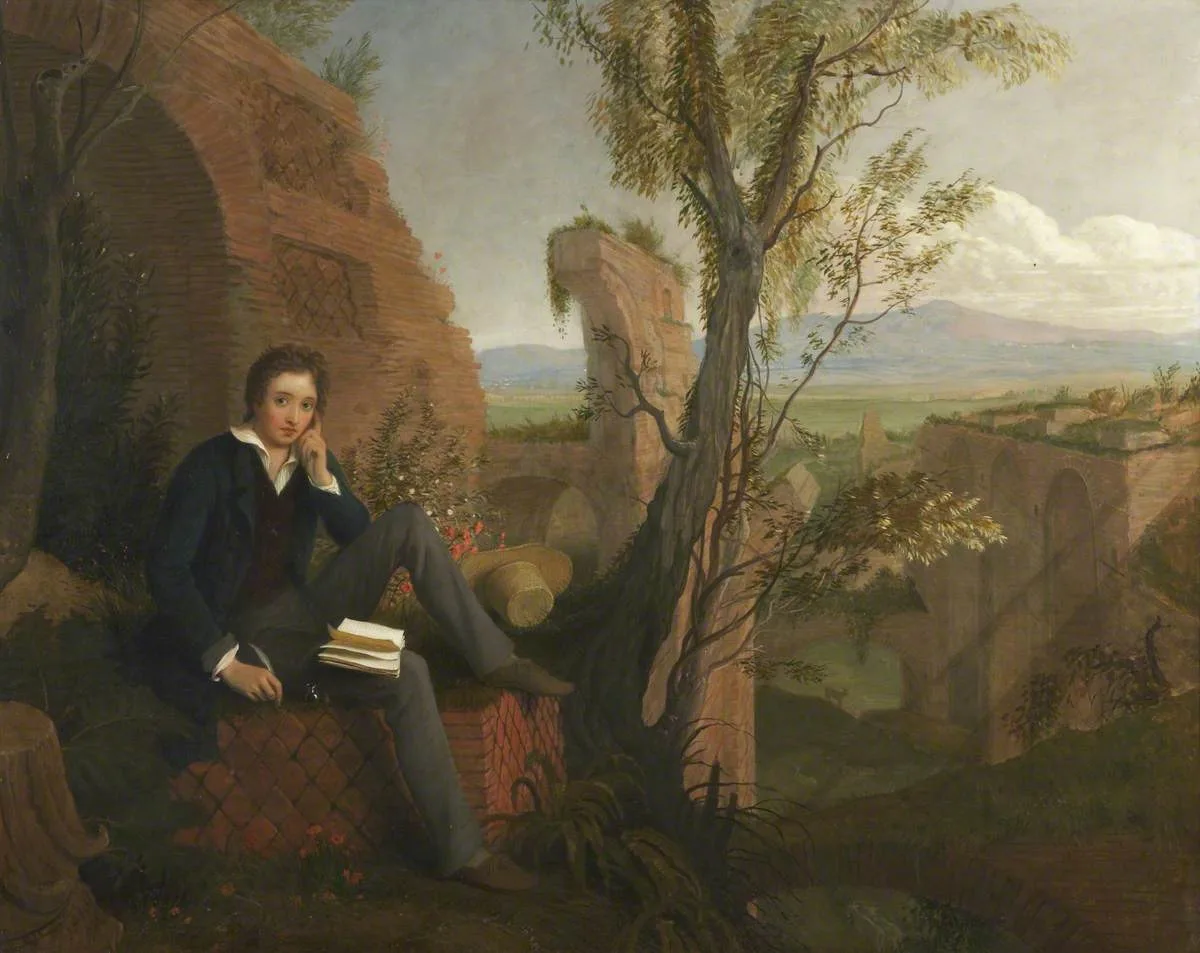
In June 1821 a London publisher pirated Queen Mab. Shelley disowned it, but not its cause. "It is villainous trash," he told his own publisher; and to a newspaper he wrote that the poem was "crude and immature," the work of a boy writing "in a sufficiently intemperate spirit," but that he remained "a devoted enemy to religious, political, and domestic oppression."6566 The poems of these years speak of a power he would not call God. In Adonais, his elegy for Keats, he wrote: "The One remains, the many change and pass; Heaven's light forever shines, Earth's shadows fly."67 In a note to his drama Hellas he wrote of "the sublime human character of Jesus Christ," deformed, he said, by being identified with a power "who tempted, betrayed, and punished the innocent beings who were called into existence by his sole will."68
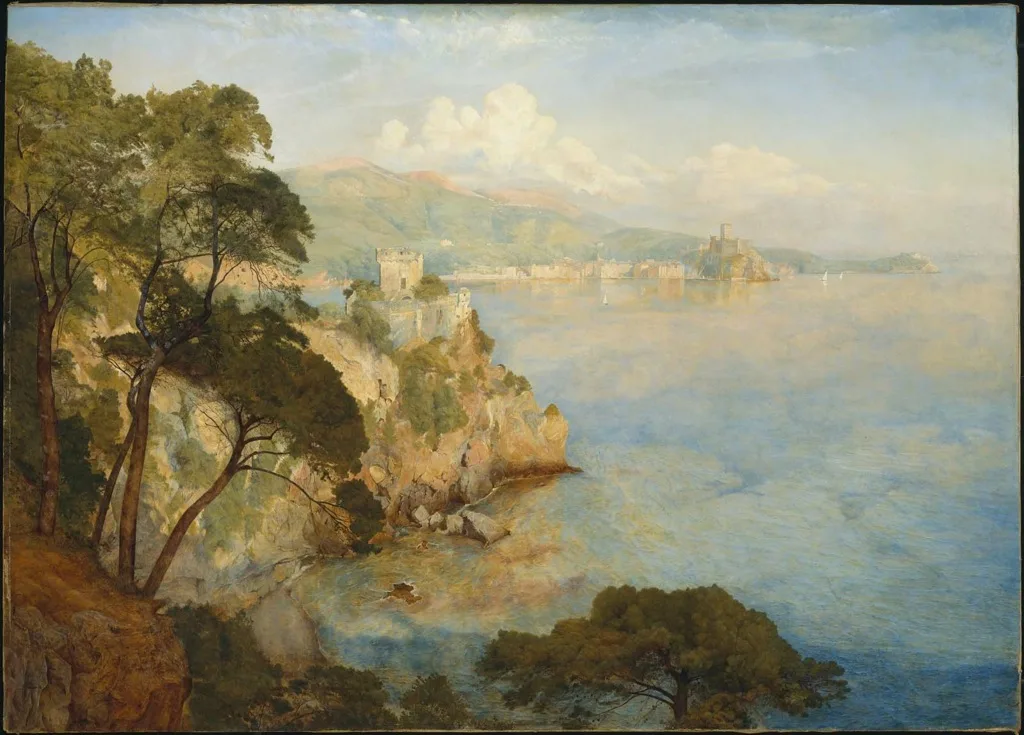
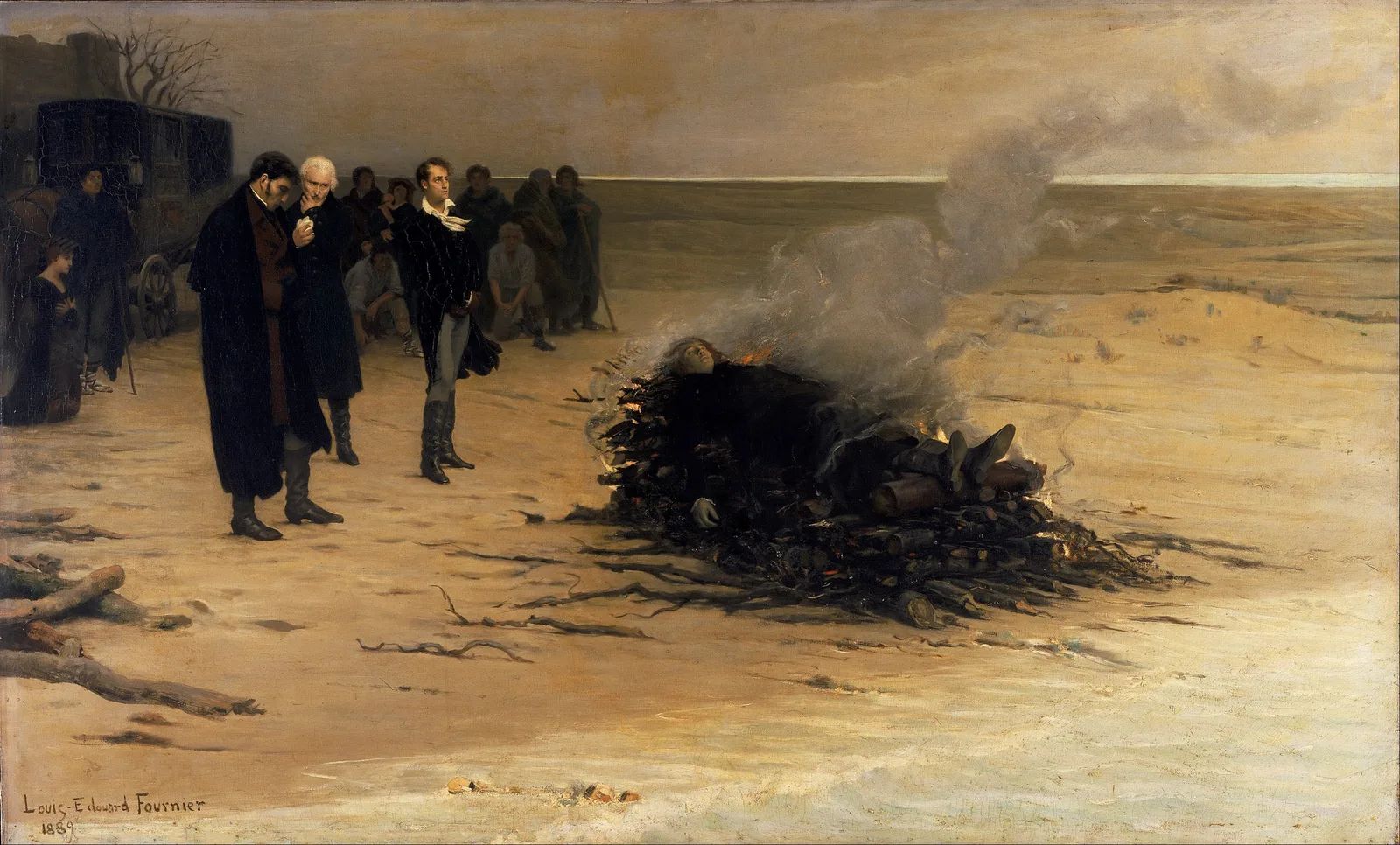
Near the end of his life his friend Edward Trelawny asked him why he called himself an atheist. As Trelawny reported it fifty-five years later, Shelley answered: "It is a good word of abuse to stop discussion, a painted devil to frighten the foolish, a threat to intimidate the wise and good. I used it to express my abhorrence of superstition. I took up the word as a knight takes up a gauntlet in defiance of injustice."69 Trelawny is not always reliable, and these words come to us only through him. But they fit what Shelley wrote three weeks before he died, from his last house on the Gulf of Spezia: "Tell me a little of what they say of me besides my being an atheist."70 By then it was only a name that other people called him.
On 8 July 1822 he drowned when his small boat, the Ariel, went down off Viareggio, with his friend Edward Williams and a sailor boy.71 His body was burned on the beach, and his ashes were buried in the Protestant Cemetery in Rome under the inscription "Cor Cordium," heart of hearts.72
Did his unbelief change shape?
It changed more than once in eleven years, and the word changed with it. At eighteen, reading Hume, he still believed a vast intellect animated the universe; six weeks later he signed himself an atheist "through deficiency of proof." At nineteen he half accepted that he was a pantheist. At twenty he wrote "There is no God!" and in the same book explained that he meant only a creating God, not a spirit pervading everything. In his last years he wrote of the One and of a Power, and of Jesus as a man of sublime character whom the churches had deformed, and he called his own boyish poem crude.
What did not change was the motive. He hated cruelty that called itself faith, at Eton, at Oxford, in Lord Ellenborough's court and in Lord Eldon's. "Atheist," in the end, was the gauntlet he had picked up against that cruelty, and he never put it down, even when he no longer meant by it what the pamphlet meant. His widow, editing his poems in 1839, wrote that he "never doubted the truth or utility of his opinions," though he would have changed many of them.73
The publisher whose prosecution he defended in 1819, Richard Carlile, has his own chapter in this book.
Footnotes
-
The notice signed on the pamphlet's title-page matter: The Prose Works of Percy Bysshe Shelley, ed. H. Buxton Forman, vol. I (London: Reeves and Turner, 1880), vol. I pp. 303–305; Edward Dowden, The Life of Percy Bysshe Shelley, 2 vols (London: Kegan Paul, Trench, 1886). Vol. I IA lifeofpercybyssh01dowduoft (dowden1.txt); vol. II IA lifepercybysshe02dowdgoog (dowden2.txt). The standard Victorian life; prints college records, the Chancery papers and Eldon's judgment, vol. I p. 117. ↩
-
The Master and Fellows of University College, Oxford, 25 March 1811: Dowden, Life of Percy Bysshe Shelley, vol. I p. 124 (college book, transcript by the then Master). ↩
-
Dowden, Life of Percy Bysshe Shelley, vol. I p. 123 (citing Hogg I p. 287). ↩ ↩2
-
Dowden, Life of Percy Bysshe Shelley, vol. I p. 7 n. (inscription "born in this chamber, August 4, 1792"); Dowden, Life of Percy Bysshe Shelley, vol. II p. 537 (tomb: "NATUS IV AUG. MDCCXCII"); Letters of Percy Bysshe Shelley, ed. Roger Ingpen (London: Pitman, 1909; 2 vols, continuous pagination). Vol. I (to 1814) IA letterscollected01sheluoft, text in research/texts/letters1.txt; vol. II (1814–22) is the 1914 printing, IA letterscontainin02sheluoft, text in research/texts/letters2.txt. Cited "Ing I no. N, p. N" or "Ing II", vol. I p. 220 n.; Dowden, Life of Percy Bysshe Shelley, vol. I p. 211 (Southey: "son to the member for Shoreham"). ↩
-
Dowden, Life of Percy Bysshe Shelley, vol. I p. 8 n.; Dowden, Life of Percy Bysshe Shelley, vol. I p. 13. ↩
-
Dowden, Life of Percy Bysshe Shelley, vol. I p. 17. ↩
-
Dowden, Life of Percy Bysshe Shelley, vol. I pp. 23–24 and n.. ↩
-
Mary Shelley, Note on Queen Mab, 1839: The Poetical Works of Percy Bysshe Shelley, ed. Mrs. Shelley (London: Moxon, 1839), vol. I (IA poeticalworksofp01shelrich, mary1839-v1.txt) and vol. IV (poeticalworksofp04shelrich, mary1839-v4.txt). Mary Shelley's Note on Queen Mab, vol. I pp. 96–99. A wife's retrospective, not an eyewitness to the boyhood, vol. I p. 98. ↩
-
Dowden, Life of Percy Bysshe Shelley, vol. I pp. 28–29. ↩
-
Dowden, Life of Percy Bysshe Shelley, vol. I pp. 17–18, 29–31 and n.. ↩
-
Roger Ingpen, Shelley in England (London: Kegan Paul, 1917), pp. 66–68 (first name, age); Thomas Jefferson Hogg, The Life of Percy Bysshe Shelley, vols I and II (London: Moxon, 1858). Vol. I IA lifeofpercybyssh01hoggiala (hogg1.txt); vol. II IA lifeofpercybyssh02hogguoft (hogg2.txt). An eyewitness to Oxford and the expulsion, but Dowden and Ingpen show him embellishing; his own text is a Tier 1 witness for what he saw and Tier 3 for what he reports from Shelley, vol. I p. 31 (Shelley's words); Dowden, Life of Percy Bysshe Shelley, vol. I pp. 32–33. ↩
-
Letters of Percy Bysshe Shelley, vol. I no. 114, p. 219. ↩
-
Letters of Percy Bysshe Shelley, vol. I no. 114, pp. 219–220 and n.; Hogg, Life of Percy Bysshe Shelley, vol. II pp. 69–70; Dowden, Life of Percy Bysshe Shelley, vol. I p. 28. Accounts differ; see the disputed points. ↩
-
Dowden, Life of Percy Bysshe Shelley, vol. I p. 54. ↩
-
Dowden, Life of Percy Bysshe Shelley, vol. I p. 60 (quoting Hogg); Hogg, Life of Percy Bysshe Shelley, vol. II p. 551. ↩
-
Hogg, Life of Percy Bysshe Shelley, vol. I pp. 98–99, 270; Thomas Medwin, The Life of Percy Bysshe Shelley, new ed., ed. H. Buxton Forman (Oxford: OUP, 1913), p. 92. ↩
-
Letters of Percy Bysshe Shelley, vol. I no. 20, p. 29. ↩
-
Letters of Percy Bysshe Shelley, vol. I no. 20, p. 29. ↩
-
Letters of Percy Bysshe Shelley, vol. I no. 15, p. 18. ↩
-
The Rev. Charles Henry Grove, 1857, Harriet Grove's brother, explaining why the engagement ended: Hogg, Life of Percy Bysshe Shelley, vol. II p. 551. ↩
-
Letters of Percy Bysshe Shelley, vol. I no. 20, p. 30. ↩
-
Letters of Percy Bysshe Shelley, vol. I no. 21, p. 32; Hogg, Life of Percy Bysshe Shelley, vol. I pp. 159–160. ↩
-
Letters of Percy Bysshe Shelley, vol. I no. 21, p. 32; Hogg, Life of Percy Bysshe Shelley, vol. I pp. 159–160; Dowden, Life of Percy Bysshe Shelley, vol. I pp. 116–117 (quoting Trelawny, Records, II p. 92). Reported at second hand; the original has not been seen. ↩
-
Dowden, Life of Percy Bysshe Shelley, vol. I p. 117 and n.; Letters of Percy Bysshe Shelley, vol. I p. 48 n.; Medwin, Life of Percy Bysshe Shelley, p. 83 n. (Forman). ↩
-
Shelley, The Necessity of Atheism (Worthing: Phillips, 1811; the printer's initials are given as C. and W. by Ingpen and E. and W. by Forman). Text as transcribed at IA thenecessityofatheismbyperceybyssheshelley (text in research/texts/necessity.txt); the scholarly reprint with the title-page notice is [ProseF] vol. I, pp. 303–311; Prose Works of Percy Bysshe Shelley, vol. I p. 305. ↩
-
Shelley, Necessity of Atheism; Prose Works of Percy Bysshe Shelley, vol. I pp. 305–311. ↩
-
Hogg, Life of Shelley, 1858: Hogg, Life of Percy Bysshe Shelley, vol. I p. 272. ↩
-
Hogg, Life of Percy Bysshe Shelley, vol. I pp. 270–274; Dowden, Life of Percy Bysshe Shelley, vol. I pp. 115–116. ↩
-
Letters from Percy Bysshe Shelley to Elizabeth Hitchener (London: Sidgwick and Jackson, 1908; Ingpen's volume prints the same letters under the name "Kitchener" in places), Letter II, p. 8. ↩
-
Dowden, Life of Percy Bysshe Shelley, vol. I pp. 118–119 (following Forman and Montgomery's Oxford); Letters of Percy Bysshe Shelley, vol. I p. 49 n.. ↩
-
Letters of Percy Bysshe Shelley, vol. I no. 114, p. 220; Dowden, Life of Percy Bysshe Shelley, vol. I p. 126. ↩
-
Letters of Percy Bysshe Shelley, vol. I no. 114, p. 220. ↩
-
Dowden, Life of Percy Bysshe Shelley, vol. I pp. 123–124. ↩
-
Letters of Percy Bysshe Shelley, vol. I no. 38, p. 58; no. 41, pp. 66–67; no. 114, p. 220. Not verified. ↩
-
Letters from Percy Bysshe Shelley…, Letter IV, p. 26. ↩
-
Letters from Percy Bysshe Shelley…, Letter IX, p. 47. ↩
-
Dowden, Life of Percy Bysshe Shelley, vol. I p. 175; Letters from Percy Bysshe Shelley…, Letter IX, pp. 46–48. ↩
-
Robert Southey, poet, to G. C. Bedford, 4 Jan 1812: a kind critic who had himself been a young radical: Dowden, Life of Percy Bysshe Shelley, vol. I p. 211 (Southey, Life and Correspondence, III pp. 325–326). ↩
-
Letters of Percy Bysshe Shelley, vol. I no. 111, p. 205. ↩
-
Letters of Percy Bysshe Shelley, vol. I no. 114, p. 220. ↩
-
William Godwin, philosopher, to Shelley, January 1812 (as Shelley quotes him back): Letters of Percy Bysshe Shelley, vol. I no. 115, p. 223. ↩
-
Letters of Percy Bysshe Shelley, vol. I no. 115, p. 223. ↩
-
Selected Prose Works of Shelley, ed. H. S. Salt (London: Watts, 1915), p. 13 n.; Letters of Percy Bysshe Shelley, vol. I pp. 323–324 n.. ↩
-
Letters of Percy Bysshe Shelley, vol. I no. 155, p. 358. ↩
-
Letters of Percy Bysshe Shelley, vol. I no. 165, pp. 378–379. ↩
-
Letters of Percy Bysshe Shelley, vol. I p. 358 n.; Letters of Percy Bysshe Shelley, vol. I p. xxvii. ↩
-
The Fairy, Queen Mab, 1813: Shelley, Queen Mab: with Notes, "Second Edition" (the Duke University copy; IA gives 1831; the text is that of the 1813 original with its notes), p. 47. ↩
-
Shelley, Queen Mab, p. 96. ↩
-
The Works of Percy Bysshe Shelley from the original editions, Fourth Series, ed. R. H. Shepherd (London: Chatto and Windus, 1875): Refutation of Deism (1814), Irish pamphlets, Six Weeks' Tour, Refutation of Deism, Preface. ↩
-
The Works of Percy Bysshe Shelley in Verse and Prose, ed. H. Buxton Forman, vols I–IV (poetry) (London: Reeves and Turner, 1880), vol. I pp. 76, 371; Dowden, Life of Percy Bysshe Shelley, vol. II pp. 29–31. ↩
-
Dowden, Life of Percy Bysshe Shelley, vol. II pp. 29–30 and n.. ↩
-
Dowden, Life of Percy Bysshe Shelley, vol. II pp. 64, 72. ↩
-
Letters of Percy Bysshe Shelley, vol. II no. 250, p. 537. ↩
-
Letters of Percy Bysshe Shelley, vol. II no. 250, p. 537; Dowden, Life of Percy Bysshe Shelley, vol. II pp. 77–78. ↩
-
Dowden, Life of Percy Bysshe Shelley, vol. II pp. 80–85. ↩
-
Dowden, Life of Percy Bysshe Shelley, vol. II pp. 81–84. ↩
-
Dowden, Life of Percy Bysshe Shelley, vol. II p. 86. ↩
-
Lord Eldon, Lord Chancellor, judgment of 27 March 1817: Dowden, Life of Percy Bysshe Shelley, vol. II p. 90. ↩
-
Dowden, Life of Percy Bysshe Shelley, vol. II pp. 89–91; Letters of Percy Bysshe Shelley, vol. II p. 539 n.. ↩ ↩2 ↩3
-
Dowden, Life of Percy Bysshe Shelley, vol. II pp. 92–94, 187. ↩
-
Quarterly Review, April 1819, by John Taylor Coleridge (Shelley's Eton schoolfellow), on The Revolt of Islam: Letters of Percy Bysshe Shelley, vol. II p. 728 n.. ↩
-
Letters of Percy Bysshe Shelley, vol. II p. 728 n.; Letters of Percy Bysshe Shelley, vol. II no. 370, pp. 787–788; Letters of Percy Bysshe Shelley, vol. II p. 876. ↩
-
Letters of Percy Bysshe Shelley, vol. II no. 316; Dowden, Life of Percy Bysshe Shelley, vol. II p. 265. ↩
-
Letters of Percy Bysshe Shelley, vol. II no. 341, p. 737. ↩
-
Letters of Percy Bysshe Shelley, vol. II no. 410, p. 876. ↩
-
Letters of Percy Bysshe Shelley, vol. II no. 413, p. 881. ↩
-
Works of Percy Bysshe Shelley…, vol. III p. 28. ↩
-
Works of Percy Bysshe Shelley…, vol. III pp. 97–98. ↩
-
Dowden, Life of Percy Bysshe Shelley, vol. I pp. 116–117 (quoting Trelawny, Records, II p. 92). ↩
-
Letters of Percy Bysshe Shelley, vol. II no. 466, p. 976. ↩
-
Dowden, Life of Percy Bysshe Shelley, vol. II pp. 520–522, 534–535. ↩
-
Dowden, Life of Percy Bysshe Shelley, vol. II pp. 531, 536–538. ↩
-
Poetical Works of Percy Bysshe Shelley, vol. I pp. 96–97. ↩
In their own words
Every reflecting mind must allow that there is no proof of the existence of a Deity. Q.E.D.
pursuing, continuing this mistake they have attached a degree of criminality to disbelief of which in its nature it is incapable; it is equally so of merit.
Thro' deficiency of proof, AN ATHEIST.
The word "God," a vague word, has been, and will continue to be, the source of numberless errors, until it is erased from the nomenclature of philosophy.
I think that the leaf of a tree, the meanest insect on which we trample, are, in themselves, arguments more conclusive than any which can be advanced, that some vast intellect animates infinity.
She is no longer mine! she abhors me as a sceptic, as what she was before!
I will crush Intolerance. I will, at least, attempt it. To fail even in so useful an attempt were glorious!
They attack me for my detestable principles; I am reckoned an outcast; yet I defy them, and laugh at their ineffectual efforts.
My wish to convince you of his non-existence is twofold: first, on the score of truth; secondly, because I conceive it to be the most summary way of eradicating Christianity.
Atheism appears a terrific monster at a distance. Dare to examine it, look at its companions, — it loses half its terrors.
You will enquire how I, an Atheist, chose to subject myself to the ceremony of marriage, — how my conscience could consent to it.
He says I ought not to call myself an atheist, since in reality I believe that the universe is God. I tell him I believe that God is another signification for the Universe.
it opened to my mind fresh and more extensive views; it materially influenced my character, and I rose from its perusal a wiser and a better man.
In the meantime I became, in the popular sense of the word "God," an Atheist. I printed a pamphlet, avowing my opinion, and its occasion.
I was informed, that in case I denied the publication, no more would be said. I refused, and was expelled.
I will not again crudely obtrude the question of atheism on the world.
Indeed, a poem is safe: the iron-souled Attorney-General would scarcely dare to attack [it].
This negation must be understood solely to affect a creative Deity. The hypothesis of a pervading Spirit, co-eternal with the universe, remains unshaken.
There is no God! Nature confirms the faith his death-groan sealed
It is attempted to shew that there is no alternative between Atheism and Christianity
They have filed a bill to say that I published "Queen Mab," that I avow myself to be an Atheist and a republican, with some other imputations of an infamous nature.
If I have attacked religion, it is agreed that I am punishable, but not by the loss of my children
For impugning the Divinity of Jesus Christ? I impugn it. — For denying that the whole mass of ancient Hebrew literature is of divine authority? I deny it.
It is villainous trash; and I dare say much better fitted to injure than to serve the cause which it advocates.
I am a devoted enemy to religious, political, and domestic oppression; and I regret this publication, not so much from literary vanity, as because I fear it is better fitted to injure than to serve the cause of freedom.
The sublime human character of Jesus Christ was deformed by an imputed identification with a power, who tempted, betrayed, and punished the innocent beings who were called into existence by his sole will
Saturn and Love their long repose Shall burst, more bright and good Than all who fell, than One who rose, Than many unsubdued
The One remains, the many change and pass; Heaven's light forever shines, Earth's shadows fly
Tell me a little of what they say of me besides my being an atheist.
It is a good word of abuse to stop discussion, a painted devil to frighten the foolish, a threat to intimidate the wise and good. I used it to express my abhorrence of superstition. I took up the word as a knight takes up a gauntlet in defiance of injustice.
led him to dissent in all things from those whose arguments were blows, whose faith appeared to engender blame and execration.
It was a small pill, but it worked powerfully
The other side
At a meeting of the Master and Fellows held this day it was determined that Thomas Jefferson Hogg and Percy Bysshe Shelley, commoners, be publicly expelled for contumaciously refusing to answer questions proposed to them, and for also repeatedly declining to disavow a publication entituled 'The Necessity of Atheism.'
Here is a man at Keswick who acts upon me as my own ghost would do. He is just what I was in 1794.
she became uneasy at the tone of his letters on speculative subjects, at first consulting my mother, and subsequently my father also on the subject.
This is a case in which, as the matter appears to me, the father's principles cannot be misunderstood; in which his conduct, which I cannot but consider as highly immoral, has been established in proof, and established as the effect of those principles
In the enthusiasm of youth, indeed, a man like Mr. Shelley may cheat himself with the imagined loftiness and independence of his theory, and it is easy to invent a thousand sophisms to reconcile his conscience to the impurity of his practice
Being yet a scholar, I ought to have no intolerable itch to become a teacher.
Where accounts differ
| Point | One account | Another | How the page handles it |
|---|---|---|---|
| Was The Necessity of Atheism put on sale? | "Never offered for sale"; sent only to metaphysicians (Hogg I p. 274; Med p. 82) | Advertised in the Oxford Herald, 9 Feb 1811, and on sale at Munday and Slatter's, Oxford, "at least for twenty minutes" (Dowd I pp. 118–119, from Forman and Montgomery; Med p. 83 n.) | Say it was advertised and, by one account, put on a bookseller's counter for twenty minutes |
| What happened in the college room, and was Shelley offered a way out? | Hogg: Shelley refused to answer a rude, angry Master and was expelled at once (Hogg I pp. 279–280); word came later that he could ask leave to stay a while (Dowd I p. 123) | Shelley to Godwin: told that if he denied the publication "no more would be said" (Ing I p. 220); Hogg: "no such offer was made" and Shelley "dreamed" it (Hogg II p. 69); Ridley: no direct reply either way (Dowd I p. 123) | Quote the college book (OQ1); say the sources differ on whether he was offered a way out |
| Who wrote the pamphlet? | Shelley, with Hogg's help in the joint analyses and, "it has always been supposed", Hogg's notice (Dowd I p. 123; Hogg I p. 270) | Shelley alone (Shelley to Godwin, Ing I p. 220; the college expelled both) | Treat it as Shelley's, written out of their joint reading, with Hogg expelled alongside |
| Where and when did he first read Political Justice? | At Eton, over two years before Jan 1812 (Shelley, Ing I p. 219; Dowd I p. 28); lent by Dr Lind (Hogg II p. 69) | He asked Stockdale for a copy on 19 Nov 1810 from Oxford (Ing I p. 219 n.); Hogg: "he was never expelled; not twice, not once" at Eton (Hogg II p. 69) against Shelley's "twice expelled" | Say "he later said he read it at Eton" and never use "twice expelled" |
| Was he called "the Atheist" at Eton? | Hogg: the school's name for the boldest rebel (Dowd I p. 29) | Dowden: no trace; a four-year schoolfellow remembered "Mad Shelley, who went without a hat" (Dowd I p. 29 n.) | Do not use |
| Dr Lind and the madhouse | Shelley's story, told by Hogg and Mary: Lind "dared my father to execute his purpose" (Hogg I p. 32) | Hogg: "the recollections of a person not quite recovered from a fever" (Hogg I p. 33); the story that Lind taught him to curse the King was denied in a manuscript note (Dowd I p. 32 n.) | Mention Lind's friendship; do not tell the madhouse story as fact |
| How old was Shelley when he wrote Queen Mab, and was it meant for publication? | Shelley (1821): "written by me at the age of eighteen", "not intended for publication", a few copies for friends (Ing II p. 881); Mary: "eighteen ... he never published it" (MaryN I p. 96); counsel: "nineteen" (Dowd II p. 81) | Finished by Feb 1813, when he was twenty (Ing I p. 358 n.); in March 1813 he wanted it "printed and published immediately" (Ing I p. xxvii); he distributed it privately | Say "written between the ages of nineteen and twenty and printed privately"; note that he later called it the work of a boy |
| Was atheism the ground of the Chancery decision? | Roster: "partly on those grounds"; Queen Mab was the Westbrooks' lead exhibit (Dowd II pp. 78, 83) | Dowden: "It was not because Shelley held atheistical opinions that the Chancellor so decided"; it was "opinions leading to conduct" (Dowd II p. 89); Eldon: conduct "highly immoral" as the effect of principles (Dowd II p. 90) | "Partly" is right; say the court acted on his views on marriage and his conduct, and that Queen Mab was how they were proved |
| Date of Eldon's judgment | 27 March 1817 (Dowd II p. 89; Ing II p. 539 n.) | 17 March in Jacob's Reports, probably a misprint (Dowd II p. 89 n.) | 27 March |
| Is the Montanvert entry genuine? | Dowden prints the Greek and the story that Byron scratched out "atheist" (Dowd II p. 30) | Dowden: "Whether it was genuine or a forgery I cannot say" (Dowd II p. 30 n.); Medwin calls it "a momentary foolish freak" (Med p. 426) | Say "an entry in the Chamonix album is attributed to him" |
| Did the manuscript of the Defence read "Atheists"? | Medwin: Shelley showed him a manuscript where poets "may often ... be Atheists" (Med p. 272) | The printed Defence has "have little apparent correspondence with that spirit of good" (Sel p. 118) | Do not use Medwin's variant |
| Outcome of the 1841 Moxon prosecution | Ingpen: "decided in favour of the publisher" (IngEng p. 621) | Not checked against any other source | Do not state an outcome until checked |
List of illustrations
This page uses only public-domain and Creative Commons images; each is credited with its source and licence.
- Percy Bysshe Shelley, 1905 print after Amelia Curran's 1819 portrait — After Amelia Curran; reproduced in W. S. Sparrow, Women Painters of the World (Hodder & Stoughton, 1905), 1905 print of 1819 original · After Amelia Curran (1819); print in Sparrow, Women Painters of the World (1905), Project Gutenberg #39000, via Wikimedia Commons, public domain · Public domain (Wikimedia Commons licence label)
- Field Place, near Horsham (Shelley's birthplace) — Peter Jeffery, photographed 1961 · Peter Jeffery, geograph.org.uk, CC BY-SA 2.0, via Wikimedia Commons · CC BY-SA 2.0 (Wikimedia Commons licence label; https://creativecommons.org/licenses/by-sa/2.0)
- Eton from Windsor Castle (print) — Unknown (British Museum 1977,0611.89), 19th century (check BM record) · The British Museum (1977,0611.89), via Wikimedia Commons, public domain · Public domain (Wikimedia Commons licence label); held by The British Museum
- High Street, Looking West (A. Pugin del., J. Bluck sculp.), plate in Ackermann's History of the University of Oxford, vol. I — Augustus Pugin (draughtsman); John Bluck (engraver); published by R. Ackermann, 1814 (plate dated Oct 1814) · Pugin and Bluck, High Street, Looking West, in R. Ackermann, A History of the University of Oxford (London, 1814), vol. I; Bayerische Staatsbibliothek copy via the Internet Archive (10678579bsb) · Public domain (published 1814, before 1931; Internet Archive rights field: not stated; scan of the Bayerische Staatsbibliothek copy)
- The Necessity of Atheism, title page (Worthing: C. and W. Phillips, 1811) — Percy Bysshe Shelley (with Thomas Jefferson Hogg per contemporary attribution), 1811 · The Necessity of Atheism (1811), self-scanned copy, via Wikimedia Commons, public domain · Public domain (Wikimedia Commons licence label)
- Robert Southey (1774-1843), aged 31 — John Opie, c. 1805 · John Opie, Keswick Museum and Art Gallery (Art UK), via Wikimedia Commons, public domain · Public domain (Wikimedia Commons licence label); held by Keswick Museum and Art Gallery
- William Godwin, 'Author of Thoughts on Man' (Maclise Portrait Gallery) — Daniel Maclise (illustrator); William Bates (author), 1883 book edition of the 1830s Fraser's Magazine portraits · Daniel Maclise, from The Maclise Portrait-Gallery (1883), via Wikimedia Commons / Wikisource, public domain · Public domain (Wikimedia Commons licence label)
- A Letter to Lord Ellenborough, first page of text (1894 reprint) — Percy Bysshe Shelley, 1894 reprint of the 1812 pamphlet · Shelley, A Letter to Lord Ellenborough (reprint, R. Forder, 1894), Internet Archive (lettertolordelle00shel) · Public domain (published 1894 reprint of the 1812 pamphlet, before 1931; Internet Archive rights field: not stated; scan from University of California Libraries)
- Queen Mab, p. 47 (the poem's 'There is no God') — Percy Bysshe Shelley, 1831 · Shelley, Queen Mab: with Notes (New York: Wright & Owen, 1831), p. 47; Duke University Libraries via the Internet Archive · Public domain (published 1831, before 1931; Internet Archive rights field: not stated; scan from Duke University Libraries)
- Tan-y-Ralt, North Wales: the seat of W. A. Madocks Esq. M.P., with Tremadog — John Nixon (draughtsman); Samuel Rawle (engraver), 1808 · Nixon and Rawle, 1808, National Library of Wales, via Wikimedia Commons, public domain · Public domain (Wikimedia Commons licence label); held by National Library of Wales
- Mer de Glace, Montanvert (albumen print) — Unknown photographer (Library of Congress), c. 1860 · Library of Congress, Prints and Photographs Division (LCCN 94513949), via Wikimedia Commons, public domain · Public domain (Wikimedia Commons licence label); held by Library of Congress
- Court of Chancery, Lincoln's Inn Hall (Microcosm of London) — Augustus Charles Pugin and Thomas Rowlandson, published by Rudolph Ackermann, 1 June 1808 · Pugin and Rowlandson for Ackermann, 1808, Yale Center for British Art (Paul Mellon Collection), via Wikimedia Commons, public domain · Public domain (Wikimedia Commons licence label); held by Yale Center for British Art
- John Scott, 1st Earl of Eldon, Lord High Chancellor, by William Cowen — William Cowen, before 1812 · William Cowen (Art UK), via Wikimedia Commons, public domain · Public domain (Wikimedia Commons licence label)
- Shelley Composing 'Prometheus Unbound' in the Baths of Caracalla — Joseph Severn, 1845 · Joseph Severn, 1845, Wordsworth Trust, Dove Cottage (Art UK), via Wikimedia Commons, public domain · Public domain (Wikimedia Commons licence label); held by The Wordsworth Trust, Dove Cottage (Art UK)
- Gulf of Spezia — Henry Roderick Newman, 1884 · Henry Roderick Newman, 1884, Museum of Fine Arts, Boston (25.155), via Wikimedia Commons, public domain · Public domain (Wikimedia Commons licence label); held by Museum of Fine Arts, Boston
- The Funeral of Shelley (Viareggio, 1822) — Louis Edouard Fournier, 1889 · Louis Edouard Fournier, The Funeral of Shelley (1889), Walker Art Gallery, Liverpool, via Google Art Project / Wikimedia Commons, public domain · Public domain (Wikimedia Commons licence label)
Sources
Tier 1 — the subject's own words (writings, letters, diaries, trial records)
- [Nec] Shelley, The Necessity of Atheism (Worthing: Phillips, 1811; the printer's initials are given as C. and W. by Ingpen and E. and W. by Forman). Text as transcribed at IA thenecessityofatheismbyperceybyssheshelley (text in research/texts/necessity.txt); the scholarly reprint with the title-page notice is [ProseF] vol. I, pp. 303–311. Same text as Note VII of [QM] with changes.
- [ProseF] The Prose Works of Percy Bysshe Shelley, ed. H. Buxton Forman, vol. I (London: Reeves and Turner, 1880). IA proseworksedited01sheluoft. Text in research/texts/prose1.txt. Prints the pamphlet with the "Advertisement" signed AN ATHEIST.
- [QM] Shelley, Queen Mab: with Notes, "Second Edition" (the Duke University copy; IA gives 1831; the text is that of the 1813 original with its notes). IA queenmabwithnote00shel. Text in research/texts/queenmab.txt. Poem p. 47; Note VII pp. 96–98.
- [Ing] Letters of Percy Bysshe Shelley, ed. Roger Ingpen (London: Pitman, 1909; 2 vols, continuous pagination). Vol. I (to 1814) IA letterscollected01sheluoft, text in research/texts/letters1.txt; vol. II (1814–22) is the 1914 printing, IA letterscontainin02sheluoft, text in research/texts/letters2.txt. Cited "Ing I no. N, p. N" or "Ing II".
- [Hitch] Letters from Percy Bysshe Shelley to Elizabeth Hitchener (London: Sidgwick and Jackson, 1908; Ingpen's volume prints the same letters under the name "Kitchener" in places). IA lettersfrompercy00sheluoft. Text in research/texts/hitchener.txt. Cited by letter number and page.
- [ShepIV] The Works of Percy Bysshe Shelley from the original editions, Fourth Series, ed. R. H. Shepherd (London: Chatto and Windus, 1875): Refutation of Deism (1814), Irish pamphlets, Six Weeks' Tour. IA poeticalworksofp00shelrich (the identifier is misleading; the volume is the Fourth Series). Text in research/texts/poetical-shepherd.txt. The Refutation of Deism begins p. 289.
- [Sel] Selected Prose Works of Shelley, ed. H. S. Salt (London: Watts, 1915). IA selectedprosewor00shelrich. Text in research/texts/selprose.txt. Defence of Poetry, On Life, Essay on Christianity, Letter to Lord Ellenborough, Salt's foreword.
- [FormP] The Works of Percy Bysshe Shelley in Verse and Prose, ed. H. Buxton Forman, vols I–IV (poetry) (London: Reeves and Turner, 1880). IA worksinversepros01sheluoft to worksinversepros04sheluoft. Texts forman-v1 to forman-v4. Mont Blanc and the Hymn in vol. I; Adonais and Hellas with Shelley's notes in vol. III.
- [MaryN] The Poetical Works of Percy Bysshe Shelley, ed. Mrs. Shelley (London: Moxon, 1839), vol. I (IA poeticalworksofp01shelrich, mary1839-v1.txt) and vol. IV (poeticalworksofp04shelrich, mary1839-v4.txt). Mary Shelley's Note on Queen Mab, vol. I pp. 96–99. A wife's retrospective, not an eyewitness to the boyhood.
Tier 2 — scholarly biographies and encyclopedias
- [Dowd] Edward Dowden, The Life of Percy Bysshe Shelley, 2 vols (London: Kegan Paul, Trench, 1886). Vol. I IA lifeofpercybyssh01dowduoft (dowden1.txt); vol. II IA lifepercybysshe02dowdgoog (dowden2.txt). The standard Victorian life; prints college records, the Chancery papers and Eldon's judgment.
- [Hogg] Thomas Jefferson Hogg, The Life of Percy Bysshe Shelley, vols I and II (London: Moxon, 1858). Vol. I IA lifeofpercybyssh01hoggiala (hogg1.txt); vol. II IA lifeofpercybyssh02hogguoft (hogg2.txt). An eyewitness to Oxford and the expulsion, but Dowden and Ingpen show him embellishing; his own text is a Tier 1 witness for what he saw and Tier 3 for what he reports from Shelley.
- [Med] Thomas Medwin, The Life of Percy Bysshe Shelley, new ed., ed. H. Buxton Forman (Oxford: OUP, 1913). IA lifeofpercybyssh00medwuoft (medwin.txt). Cousin and later companion; Forman's notes correct him freely.
- [IngEng] Roger Ingpen, Shelley in England (London: Kegan Paul, 1917). IA shelleyinengland00ingpuoft (ingpen-england.txt). Prints Mary Shelley's 1838–39 letters and diary on the Queen Mab edition.
Tier 3 — popular biographies and journalism
- Not used. (Trelawny's Records of Shelley, Byron, and the Author (1878) is quoted only through [Dowd] I p. 116–117; the original is not in the texts folder.)
Tier 4 — maps to other sources only (Wikipedia and similar). Never cited in the script.
- Wikipedia (Percy Bysshe Shelley; Queen Mab (poem); Moxon blasphemy trial) was not consulted in this pass; use it only as a map to the Tier 2 sources for the Queen Mab piracy and 1841 trial, which the scans above cover only thinly.
Opposition sources — contemporary critics and religious responses
- [OxfCol] The University College books (entry of 25 March 1811) and the junior Fellow Ridley's account, as printed by [Dowd] I pp. 123–124 from transcripts supplied by the then Master, the Rev. J. F. Bright.
- [Eldon] Lord Eldon's judgment of 27 March 1817 in Westbrook v. Shelley, as printed by [Dowd] II pp. 89–91 (the report in Jacob's Reports, cited by Dowden, was not seen).
- [QR] Quarterly Review, April 1819, review of The Revolt of Islam by John Taylor Coleridge, quoted in [Ing] II p. 728 n. (the review itself was not seen).
- [SouthL] Robert Southey to G. C. Bedford, 4 Jan 1812, quoted by [Dowd] I p. 211 (from Southey's Life and Correspondence, vol. III, pp. 325–326, not seen).
- [Grove] The Rev. Charles Henry Grove (1857), Harriet Grove's brother, printed in [Hogg] II pp. 550–551 and summarised in [Ing] I p. 22 n.
- [GodwL] William Godwin's reply to Shelley, Jan 1812, as quoted back by Shelley in [Ing] I no. 115 and summarised by [Dowd] I p. 222 (Godwin's letter itself was not seen).
Related lives
Robert Taylor (05), the clergyman-turned-deist twice jailed for blasphemy (1828, 1831): the prosecutions of Eaton (1812) and Carlile (1819) that Shelley wrote about are the world Taylor was jailed in. Suggestion only; the link between Shelley and Taylor is not in the sources read. (Never "next" in the script.)
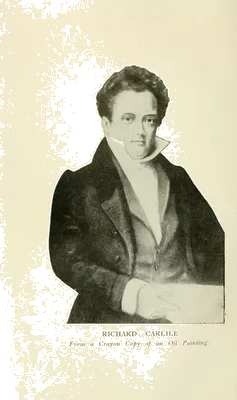
Richard Carlile
Richard Carlile was a Devon tinman who burned Paine in effigy as a boy. He turned to radical publishing in the hunger of 1816–17. The prosecutions he courted, and six years of study in Dorchester gaol, made him a Deist and then an atheist. After 1833 he recast his unbelief as an allegorical Christianity, while insisting he had not recanted a sentence.
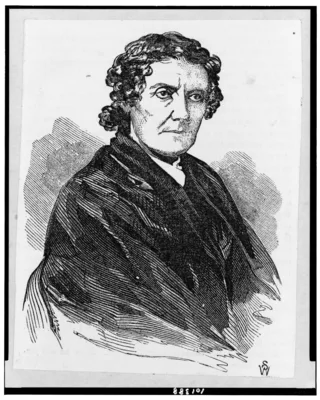
Frances Wright
Frances Wright was an orphan who lost a devout childhood faith to the libraries around her and to Epicurus. She kept her unbelief private for fifteen years while she worked for liberty and against slavery. She went public in 1828 because she believed the American churches were reaching for political power through women's minds. In middle age she took back the word "religion" for a human bond of union, while still declining to speak of God.
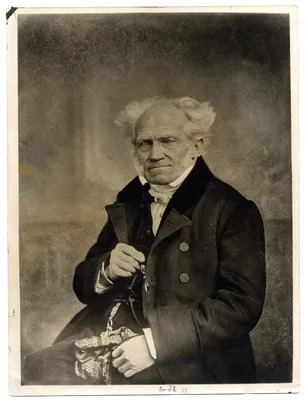
Arthur Schopenhauer
Arthur Schopenhauer was baptised and confirmed in a Danzig church by a family for whom religion was a formality. At fifteen he wrote against English bigotry, and at twenty-three that no one who really philosophizes is religious. From Kant and the Upanishads he built a philosophy with no creator in it (1818). He refused the name "atheist" as absurd and malicious, and proposed "Non-Judaism" in its place. In old age he made a truce with religion as a necessary evil, pleased that his irreligious teaching served some readers as a religion.
Harriet Martineau
Harriet Martineau was a devout Unitarian child. At twenty she took the doctrine of Necessity from her brother James, and watched it wear her faith away over many years. She let go of the last of it in five years of illness and bereavement at Tynemouth, and on her Eastern journey of 1846–47 she saw every religion as human history. In 1851 she said in print that she knew nothing whatever about God, an atheist only "in the vulgar sense", at the cost of her brother's lasting enmity and with no dread of the annihilation she expected.