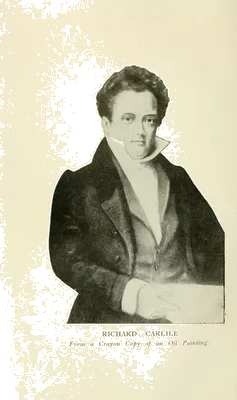
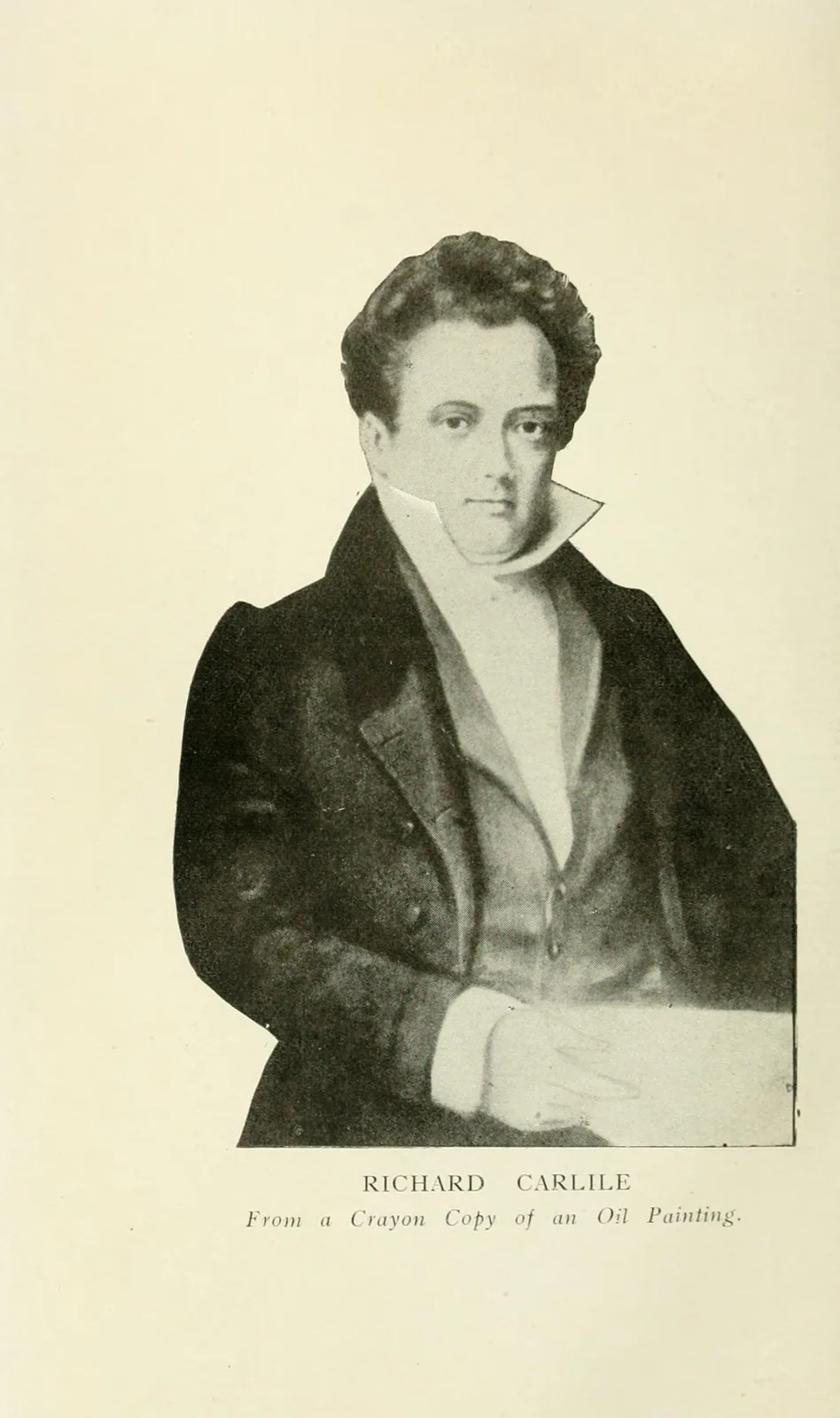
Richard Carlile was a Devon tinman who burned Paine in effigy as a boy. He turned to radical publishing in the hunger of 1816–17. The prosecutions he courted, and six years of study in Dorchester gaol, made him a Deist and then an atheist. After 1833 he recast his unbelief as an allegorical Christianity, while insisting he had not recanted a sentence.
The belief timeline
- Faith (c. 1790–1817) — Anglican schooling at Ashburton; he says he read and revered the Bible "more than twenty years" while the boy burned Paine in effigy [2][3][20]
- Doubt (1817–18) — The Hone prosecution shows him blasphemy used against "ridiculous publications"; he reads *The Deist* and the *Age of Reason* "with courage" [11][12][20]
- Declaration (1818–19) — Publishes the *Age of Reason* (16 Dec. 1818) and defends it in court in October 1819 as a Deist [13][18][19]
- Atheism (1821–24) — "A seceder from all mythologies" (1821); "I confess myself an Atheist" (1823); "no such a God" (1824) [26][28][29]
- Revision (1833–43) — "Altogether a Christian" with the Bible as allegory; "not recanted a sentence" [50][51][55][57]
Notes to the timeline (15)
- [2] He learned the alphabet from a dame, wrote and ciphered, learned Latin at the Lawrence Lane chapel school aged nine to twelve, and attended the Ashburton free schools — Theophila Carlile Campbell, The Battle of the Press, as Told in the Story of the Life of Richard Carlile (London: Bonner, 1899), by his daughter, pp. 8–11 (letter to Eliza, 7 Dec. 1842).
- [3] As a boy he gathered faggots every 5 November "to burn the effigy of old Tom Paine, my now venerated political father" — Campbell, Battle of the Press, p. 9; G. J. Holyoake, Life and Character of Richard Carlile (1849), Project Gutenberg #39123, ch. I; G. J. Holyoake, "Carlile, Richard," Dictionary of National Biography, vol. 9 (1887), pp. 106–109. Wikisource transcription, texts/dnb1887.txt (with transcription errors).
- [20] He told the public in 1819 that he had read and revered the Bible "more than twenty years" until he "had the courage to read 'The Deist' and Paine's 'Age of Reason'" — The Debate in the House of Commons ... March 26, 1823, on Mr. Hume's presenting a petition from Mary Ann Carlile (T. Moses, 1823), p. 11 (read in the House by Acland from Republican vol. 1 no. 9); original not seen. Reported at second hand; the original has not been seen.
- [11] He reprinted Hone's suppressed Parodies on 7 Aug. 1817, was arrested 14 Aug. and held eighteen weeks until Hone's acquittals (20 Dec.) — Guy A. Aldred, Richard Carlile, Agitator: His Life and Times (1923), pp. 65–66 (Carlile's own account); Campbell, Battle of the Press, pp. 30–31; Holyoake, Dictionary of National Biography.
- [12] The blasphemy charge against the Parodies "disgusted" him and made him resolve "to put the question to an issue" (the Doubt turn) — Aldred, Richard Carlile, pp. 66–67 (quoting the Republican, 1825; original vol. 11 not seen).
- [13] He first published Paine's *Theological Works* on 16 Dec. 1818 at half a guinea; first edition 1,000 copies, then 3,000 more — The Report of the Proceedings of the Court of King's Bench ... 12th, 13th, 14th, and 15th days of October ... the Mock Trials of Richard Carlile (R. Carlile, 1822), pp. iii–iv (Introduction).
- [18] The 1819 trial was before Lord Chief Justice Abbott (later Lord Tenterden) and special juries; Gifford, Attorney-General, prosecuted; Carlile defended himself and read the whole *Age of Reason* — Report of the Proceedings of…, title page, pp. 6, 36–38; Aldred, Richard Carlile, p. 32.
- [19] Hone helped prepare the third day's defence; Carlile sold daily reports ("Mock Trials") in twopenny sheets; the Tsar banned the report — Campbell, Battle of the Press, pp. 43–44, 49–52; Holyoake, Life and Character of Richard Carlile, ch. II.
- [26] In 1821 he wrote that "Atheist" means "a seceder from all mythologies" — An Address to Men of Science (R. Carlile, 1821), p. 10.
- [28] 11 July 1823: "Atheism expresses nothing more than a doubt or disbelief of the existence of such a God, as those preach"; 19 Dec. 1823 footnote "I confess myself an Atheist" — The Republican, vol. 8 (July–Dec. 1823), pp. 15–16, 742–43 (no. 24).
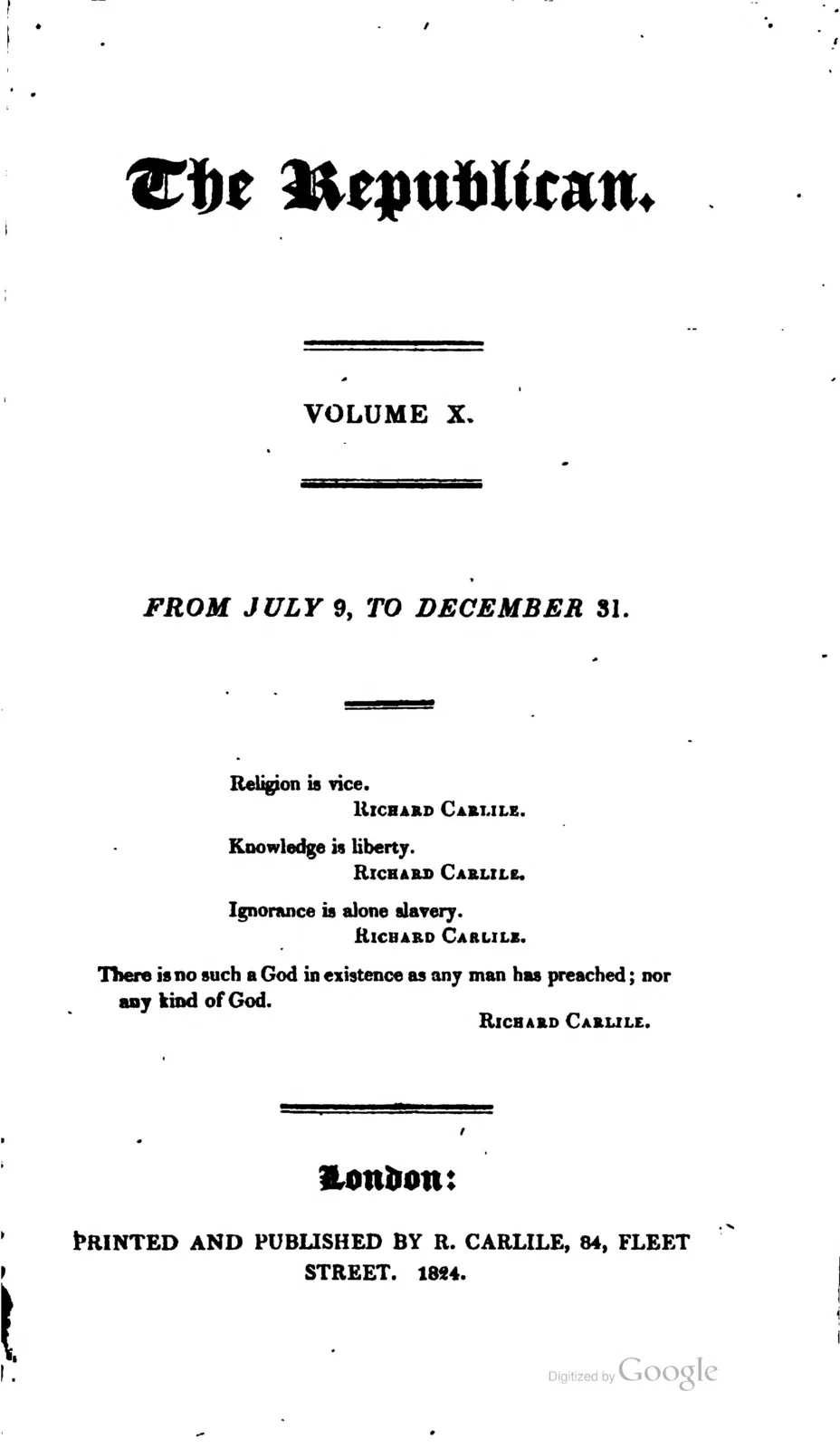
- [29] Vol. X of the *Republican* (1824) carries on its title page "There is no such a God in existence as any man has preached; nor any kind of God" and the dedication to the Vice Society repeats it as the result of "five years' study in this Gaol" — The Republican, vol. 10 (July–Dec. 1824), title page, Dedication p. iv.
- [50] 18 Nov. 1833 he writes to the Bishop of London: "I am one of your Lordship's scattered sheep... the fold of a good shepherd (which is Christ Jesus)" and "I am altogether a Christian; save the mark at which superstition has been planted upon Christianity" — Church Reform: the only means to that end, stated in a letter to Sir Robert Peel (R. Carlile, 1835), with the 1833 correspondence with the Bishop of London, p. iii.
- [51] 24 Nov. 1833: he rejects the literal reading, reads Old and New Testament as "political and moral instruction veiled in allegory", the persons as "personifications of principles", and proposes the Church as "a school for the people"; the later letter to Peel (1835) repeats the plan — Church Reform, pp. v–viii.
- [55] 13 Oct. 1840: "I had not recanted a sentence I ever published, but had only gone on another tack in my warfare with superstition"; Feb. 1840: "The cessation of prosecution was my political death" — Campbell, Battle of the Press, pp. 220, 217.
- [57] Holyoake judges the late turn "a virtual recantation", an "error of judgment, not an alteration of conviction"; "From being a Material Atheist, he became a Christian Atheist" — Holyoake, Life and Character of Richard Carlile, ch. III.
A Seceder from All Mythologies
In October 1819 a London bookseller of twenty-eight stood before the Lord Chief Justice and a special jury in the Guildhall, charged with publishing Thomas Paine's Age of Reason. The Attorney-General, Sir Robert Gifford, put the case in a sentence that would be quoted against freethinkers for the rest of the century: "Christianity is part and parcel of the law."12 The bookseller had no counsel. He defended himself, and over the days of the trial he read the whole of the Age of Reason into the record of the court.1 "My only reason for publishing the works of Mr. Paine," he told the jury, "has been an anxious and sincere desire to promote the cause of truth and free discussion."3
He was convicted, fined £1,500 and sentenced to three years, and because he would not or could not pay the fines he served three more.45 His name was Richard Carlile, and he had been a tinman's apprentice. As a boy he had helped burn Paine in effigy; in prison he became an avowed atheist; and fourteen years after the trial he wrote to the Bishop of London that he was "altogether a Christian." This chapter asks how one man travelled that road, and whether, as he insisted at the end, he had really stood still.
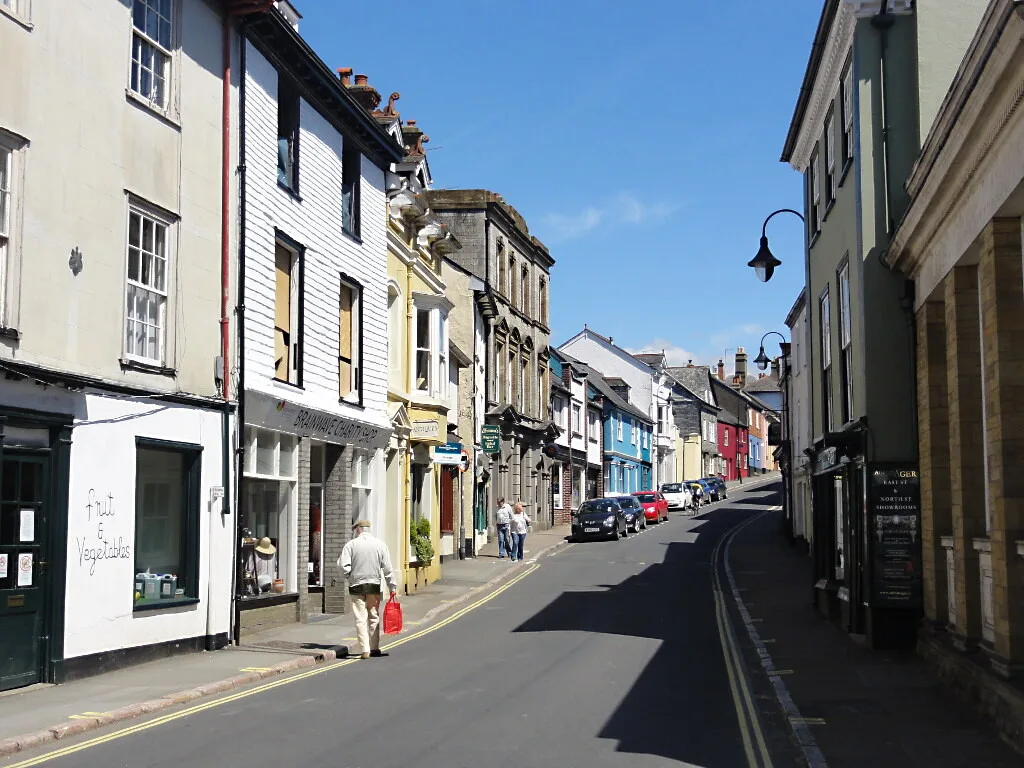
Ashburton
He was born at Ashburton in Devon on 8 December 1790. His father had been a shoemaker, an exciseman and a schoolmaster before he enlisted as a soldier, and he died at thirty-four, when Richard was about four.6 The boy learned his letters from a dame, went to the Ashburton free schools, and from nine to twelve learned some Latin at a chapel school in Lawrence Lane.7 Every fifth of November, he remembered in a letter written the year before he died, he went out "to gather a faggot wherewith to burn the effigy of 'old Tom Paine', my now venerated political father."89
He was, by his own account, a believer. "I was in my youthful days taught to read the Bible," he wrote in 1819, "and I continued to read and reverence it more than twenty years; and was as tenacious of it and the Christian religion as any one could be."1011
At twelve he spent four months with a chemist in Exeter, and then he was apprenticed to a tinman there for seven years, working fifteen or sixteen hours a day.12 In Exeter he met some young bookbinders who were Deists and admirers of Paine, but, his daughter wrote, he "received no impression" from them.13 He married a woman of thirty after a courtship of two months at Gosport; the marriage did not last, and a separation was agreed in 1819.14
Into the front of the battle
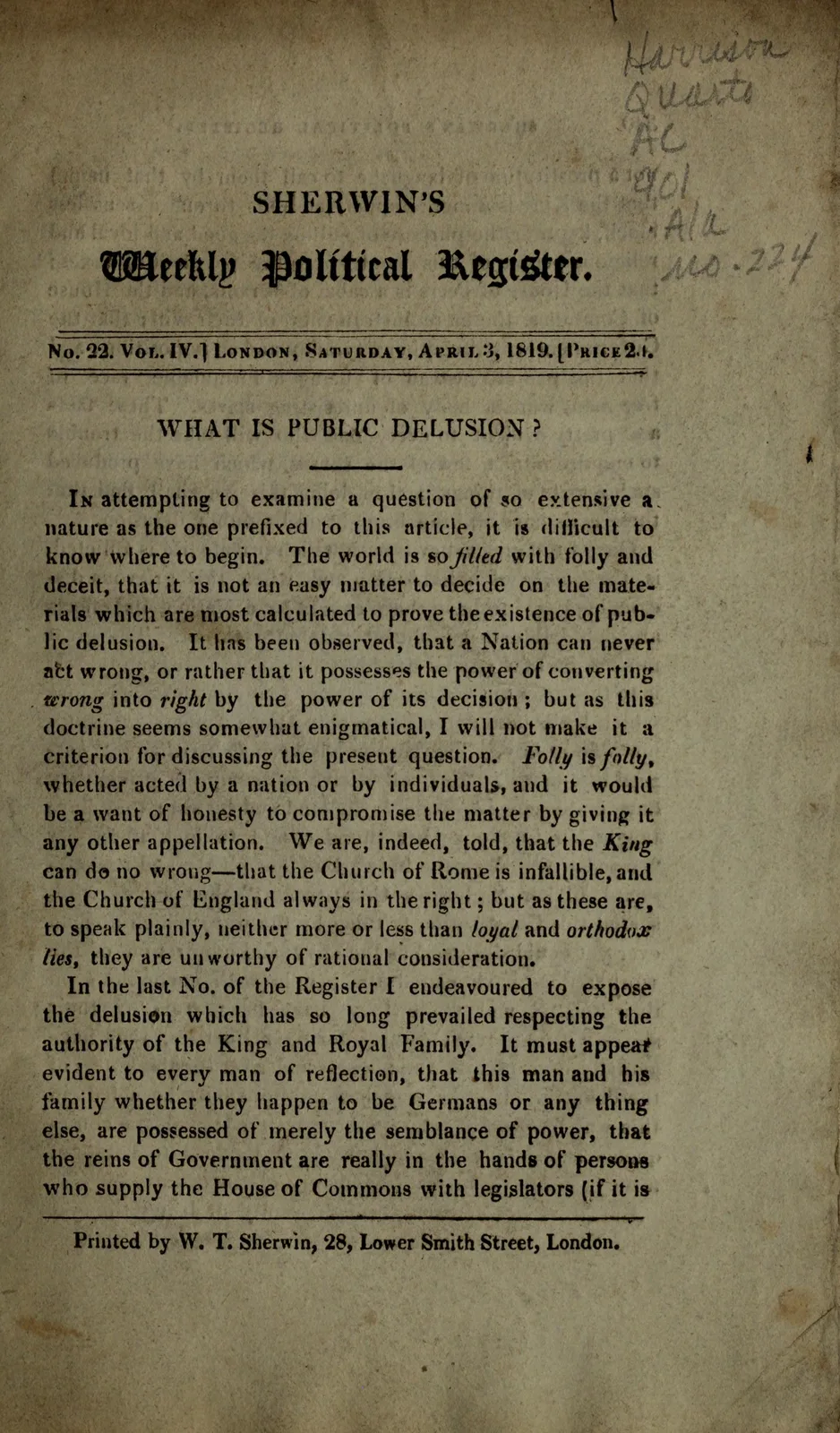
What changed him first was not religion but hunger. The year 1816 brought hard times and short work, and the half-employed tinman began to read the radical papers and to write letters to them. The only notice he ever got, he said, was a line in the answers to correspondents: "A Half-employed Mechanic is too violent."15 Accounts differ on when he first read Paine, whether in Exeter in 1810 or in London in 1816.16 What is certain is the step he took in the spring of 1817, when the government suspended Habeas Corpus and the radical publishers of London lost their nerve. He began selling Wooler's Black Dwarf in March and in April took over William Sherwin's shop at 183 Fleet Street. "I then resolved," he wrote, "to get into the front of the battle and to set the best possible example."171819
That summer William Hone was prosecuted for blasphemy for three parodies of the Prayer Book. Carlile reprinted them, was arrested in August 1817, and spent eighteen weeks in the King's Bench prison, until Hone was acquitted in December.20 The charge shocked him more than the prison did. "I felt disgusted to see the charge of blasphemy brought against such simple, such ridiculous publications," he wrote later, "and I soon resolved to put the question to an issue."2122 Somewhere in these months, too, his religion gave way. "Priestcraft," he wrote in 1819, "had carefully provided a sufficiently powerful enemy to defeat the efforts of the divine light of nature, until I had the courage to read The Deist and Paine's Age of Reason."1023
Paine, Peterloo and the Guildhall
On 16 December 1818 he published Paine's Theological Works, the Age of Reason among them, at half a guinea. The first thousand copies sold and he printed three thousand more.24 In January 1819 the Society for the Suppression of Vice had a bill of indictment found against him; the Attorney-General filed an information of his own, and in February Carlile was arrested again.25
In August he went to Manchester, and on 16 August he was on the hustings with Henry Hunt at St Peter's Field when the yeomanry charged the crowd. He got away under the platform and came back to London without his hat.2627 Within days he was in print with an open letter on "the atrocious Murders committed by the Yeomanry Cavalry, at the instigation of the Magistrates of Manchester, on the bodies of the inhabitants of that town, assembled in a legal and peaceable meeting."2829 His daughter later argued that it was these letters, more than Paine, that made the government press the prosecution.28 Sherwin gave up his paper after Peterloo, and Carlile renamed it The Republican.30
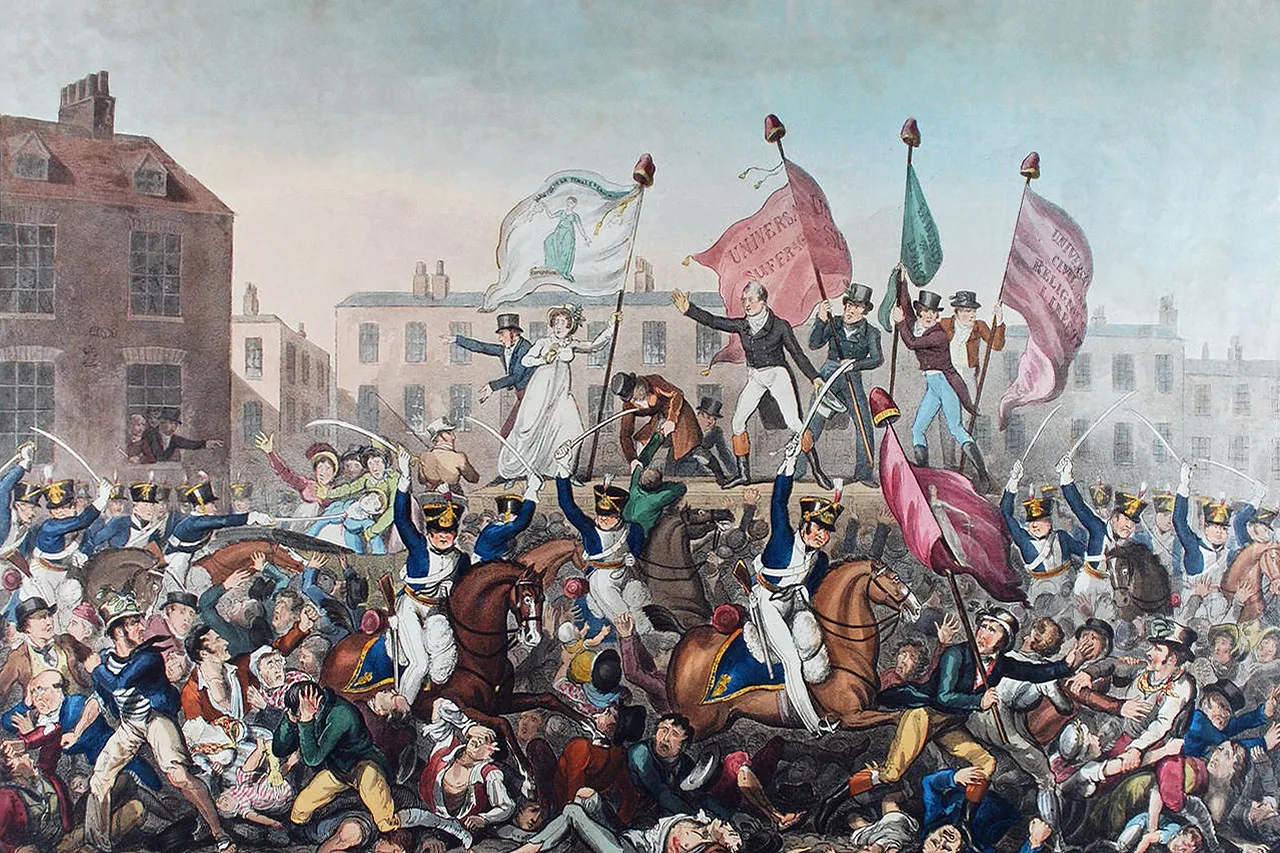
At the trial in October he was still a Deist; a sympathiser wrote to him that month of "a poor plain, upright Deist" hunted by the newspapers, and he did not object to the description.31 Hone helped him prepare his defence, and he sold the daily reports of what he called his "Mock Trials" in twopenny sheets.32 He told the jury that Paine's works "tend to exalt our notions of the Deity."3
Not every Christian thought he should be in the dock. That same month the Unitarian minister W. J. Fox preached a sermon on what Christians owed to Deists: "If Deists will listen to you, persuade them; if they will reason, argue with them; if they write and publish, reply to them; if they misrepresent, expose them; but in the name of Christ, do not persecute them."3334 The court took the other view. Passing sentence on 16 November, Mr Justice Bayley said that the courts could not interfere with doctrines a man kept to himself or discussed "with calmness and reason; but he could not be permitted rashly to unsettle the faith of others."35 That night Carlile was handcuffed and taken to Dorchester gaol, and his shop was seized.4

Six years in Dorchester
His mother died in March 1820, and he wrote from prison that she "fell calmly asleep, untortured by priests."36 He kept to his room for two and a half years rather than be shown to the visitors who came to look at him.36 He went on editing the Republican from his cell, fourteen volumes of it in all, and he spent the years studying religion.37
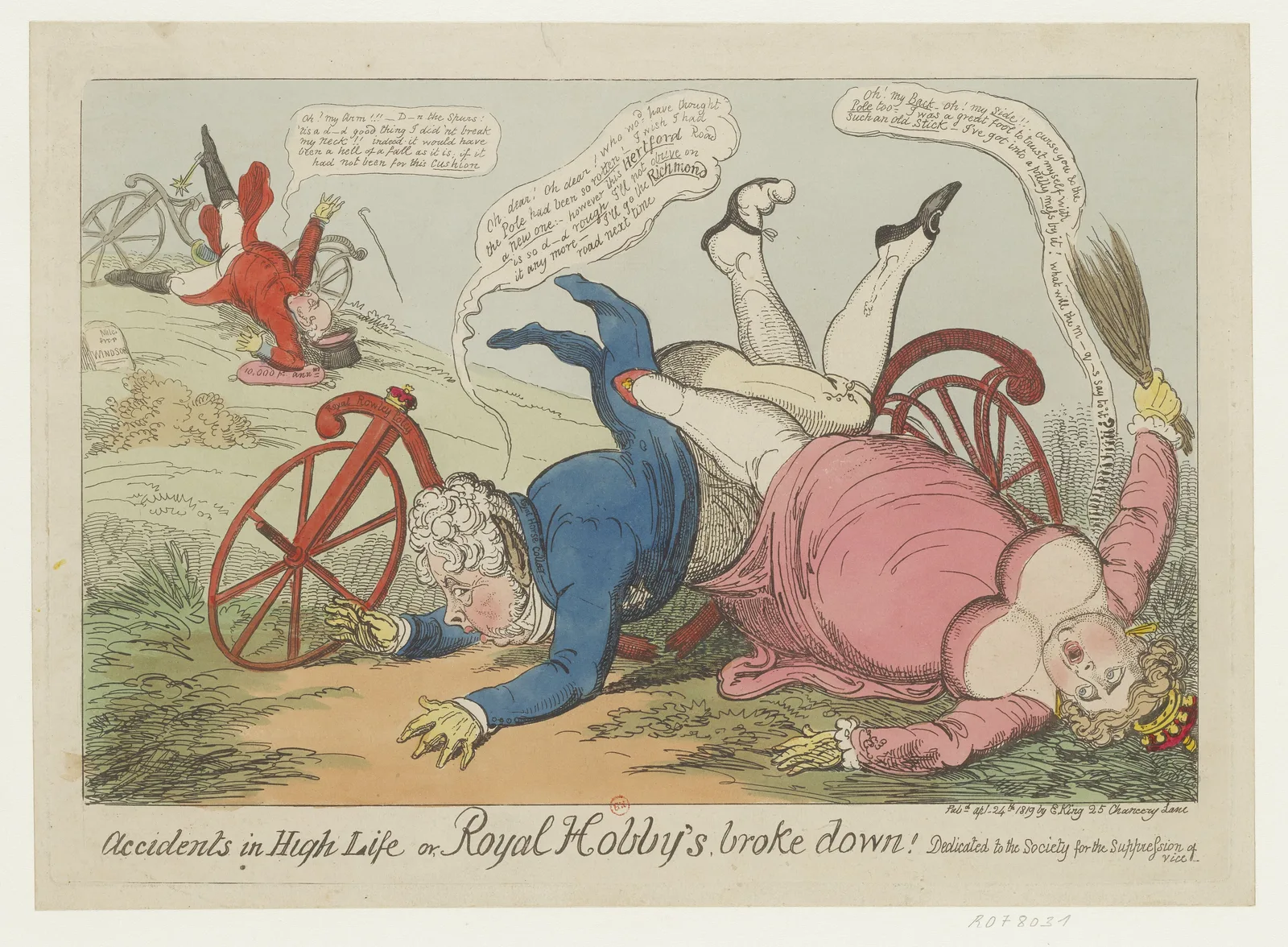
The Vice Society advertised for funds against "that most audacious offender, Carlile, who, notwithstanding repeated indictments found against him, still persisted in selling works of the foulest sedition and the most horrible blasphemy that ever disgraced a free press."38 He answered them in an open letter: "It is your province to war with obscenity, mine with idolatry."39 The prosecutions reached his family. His wife Jane was sentenced in January 1821 to two years in Dorchester, and his sister Mary-Anne followed her there after a trial brought by the new Constitutional Association, a society whose subscription list Wellington's name headed.404142 One after another, more than twenty shop assistants who kept the Fleet Street counter open went to prison, for terms of six months to three years.43
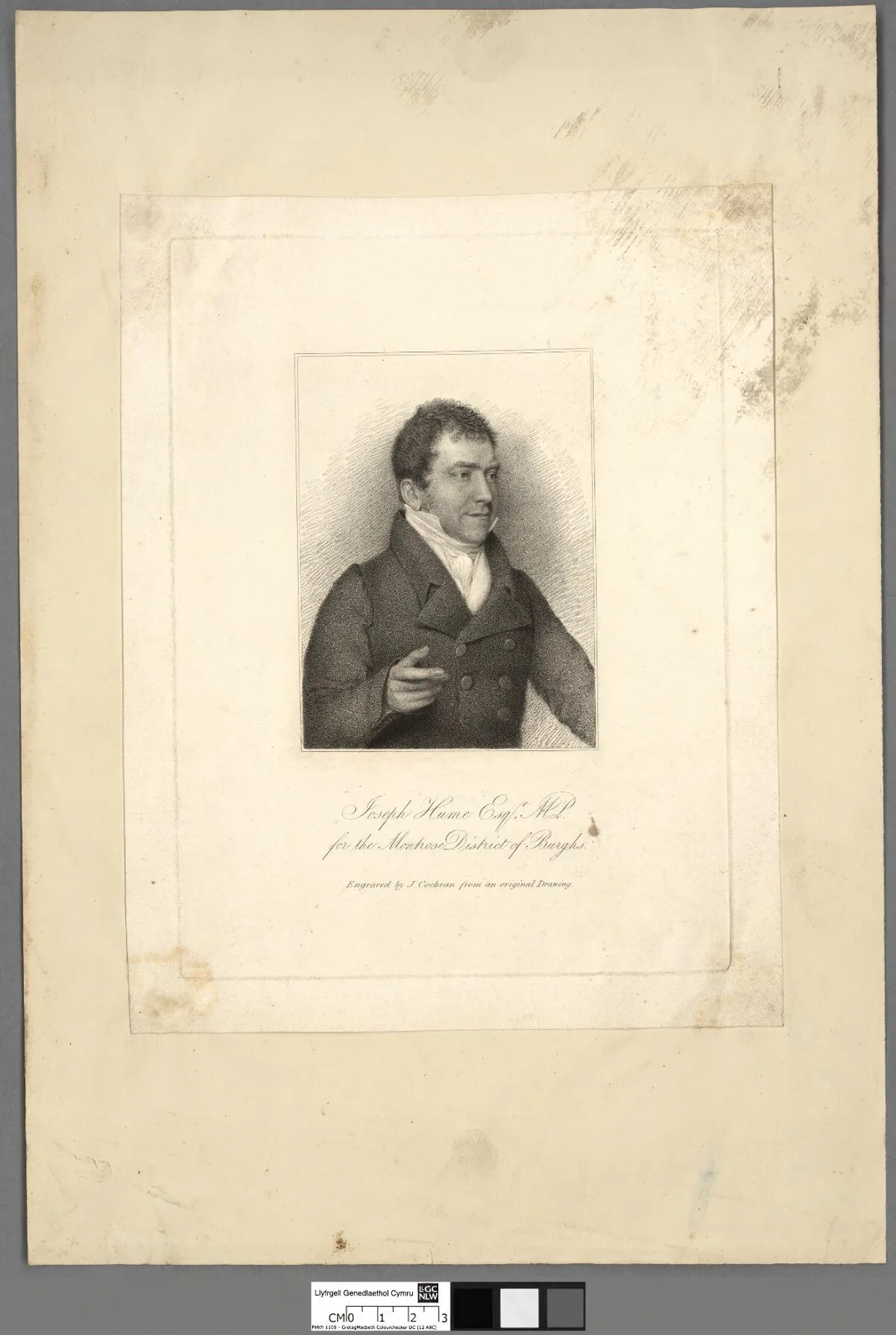
In March 1823 Joseph Hume presented Mary-Anne's petition to the House of Commons. Sir Thomas Acland read out Carlile's own lines about his boyhood Bible and called it "dreadful to think of this man, who thus artfully referred back to the time when he worshipped his God as a child in simplicity of heart."4445 William Wilberforce, who would not have chosen Carlile's company, nonetheless said that he "would rely on the Christian religion triumphing over all its opponents, without any thing like persecution."4446
It was in Dorchester that the Deist became an atheist. His friend and biographer George Jacob Holyoake wrote that "through several volumes of the Republican he was a Deist only."47 In 1821, in An Address to Men of Science, Carlile took up the word his enemies used and defined it: it had "no other meaning than a seceder from all mythologies, although the ignorant and interested make so much ridiculous clamour and fuss about it."4849 By July 1823 he was explaining that "atheism expresses nothing more than a doubt or disbelief of the existence of such a God, as those preach, who confess that they do preach what they know nothing at all about," and that December he wrote of himself, in a footnote, "I confess myself an Atheist."505152
The next year he put his conclusion on the title page of the Republican and dedicated the volume to the Vice Society: "I can now maintain against all the learning that Oxford or Cambridge has produced, that there is no such a God in existence as any man has preached, and, consequently, that all religion, without an exception, is idolatry. This is the result of my five years' study in this Gaol."5354 In the same dedication he claimed to have shown "that no such person as Jesus Christ existed."55
In June 1825 Henry Brougham presented his petition to Parliament and called the sentence "unexampled." Brougham was no unbeliever; he said he would look on an atheist, "if there were any such, with pity, not with blame."5657 Carlile was released in late 1825, after six years, and his friends held a dinner for him on Paine's birthday.5
The trade of freethought
Out of prison, he made unbelief a business and a public meeting. In 1826 he published Every Woman's Book, a frank tract on preventing conception that he had learned to think necessary from Francis Place; "it is better to prevent than to cure," it argued, "and here, prevention is most simply practicable, a means within the reach of all." By the 1828 edition, the preface said, ten thousand copies had been sold.5859
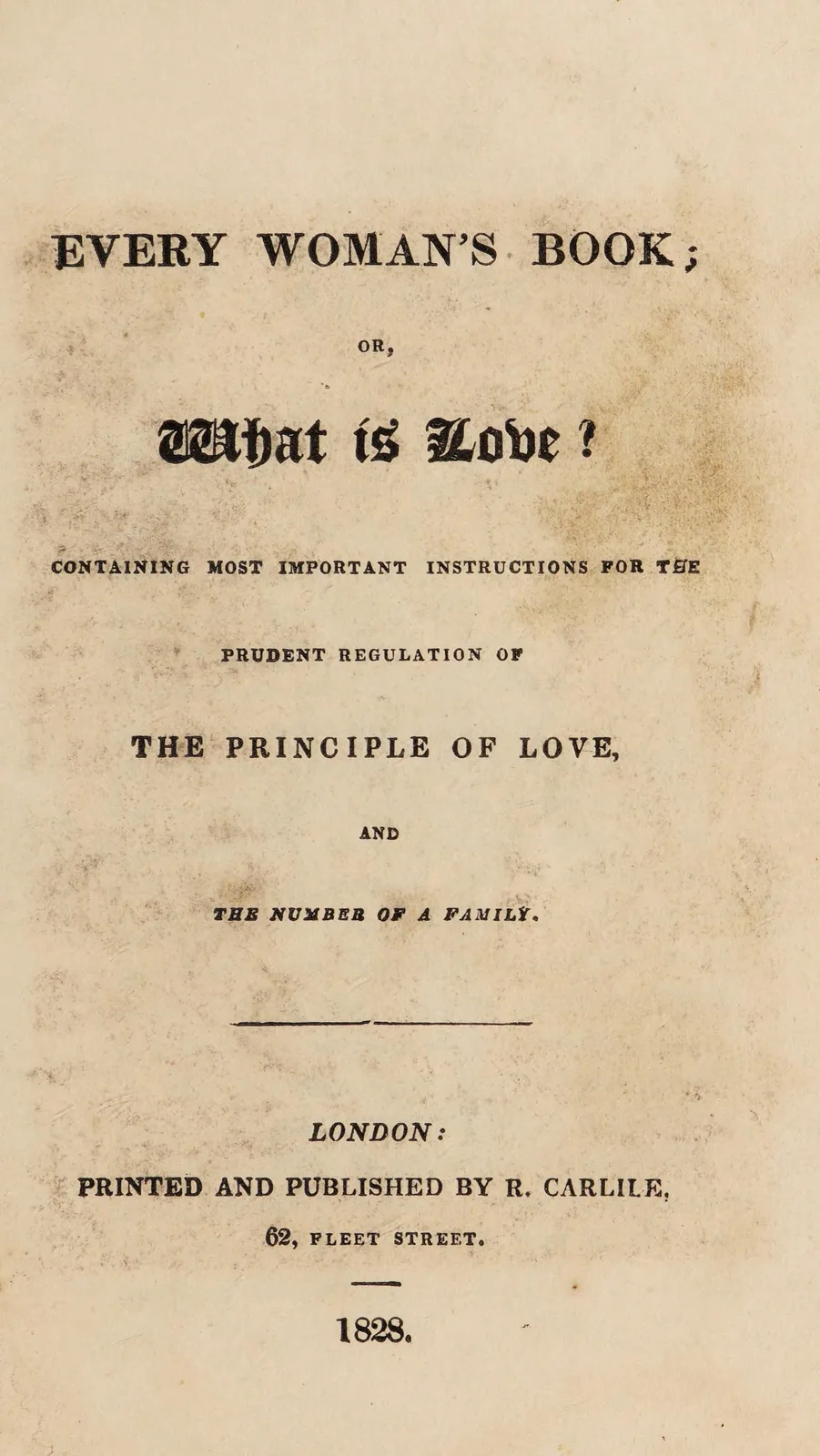
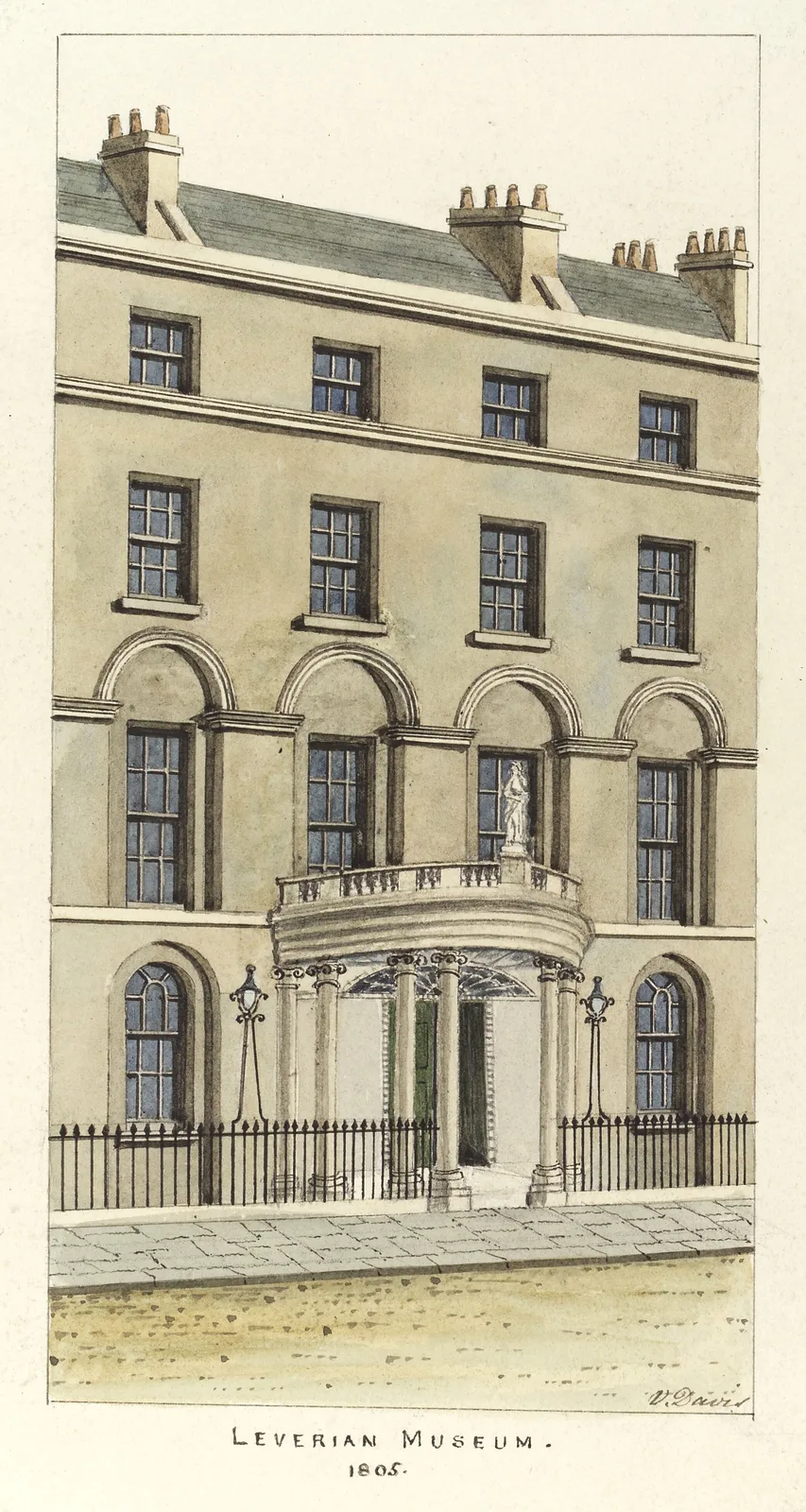
In 1828 he started a new weekly, The Lion, while the Reverend Robert Taylor, a clergyman who had preached himself out of the Church, was in prison at Oakham. When Taylor came out the two men toured the country in 1829 as "Infidel Missionaries," Taylor to deal with the origins of Christianity and Carlile with the idea of God.6061 "We have truth on our side," Carlile wrote in The Lion, "and that is what the Catholic never had."62 On 30 May 1830 he opened the Rotunda on Blackfriars Road as a hall for freethought, where Taylor gave the astronomical sermons that were printed as The Devil's Pulpit.63
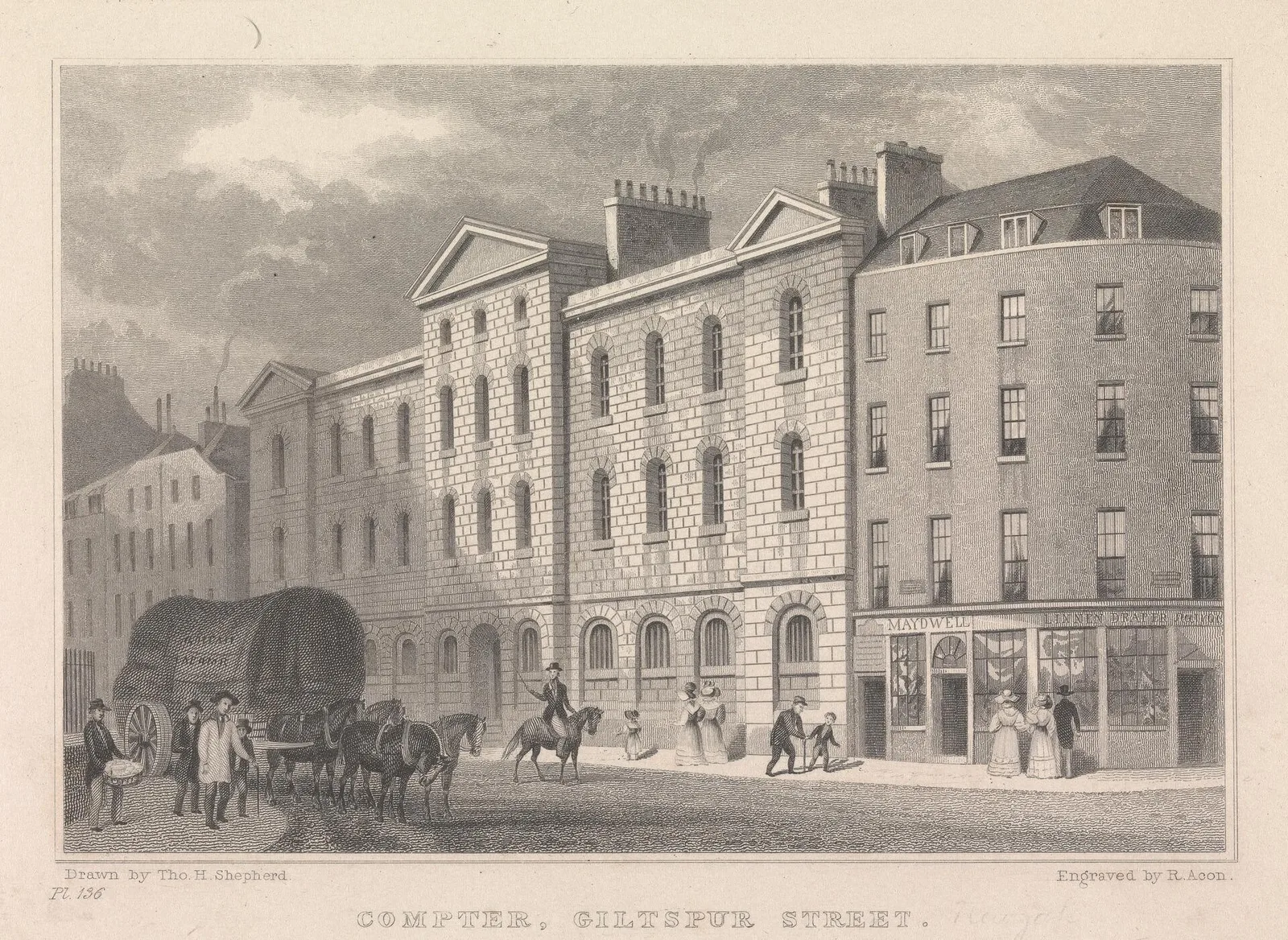
In November 1830 he began The Prompter, and within two months he was convicted of seditious libel for two of its articles, one of them addressed to the agricultural labourers.6465 Accounts of the sentence differ, from two years to thirty-two months to three.65 He served it in the Giltspur Street Compter, turned his cell into a shop and a library, and sold books through a hole in the wall by a dial that hid the seller from the buyer.66 "In the course of our great political struggle I like a gaol," he wrote in 1831, "and am more happy here than I can possibly be anywhere else."67 When release came with conditions attached he refused it, three times, and he walked out in 1833 "without yielding a single point."68
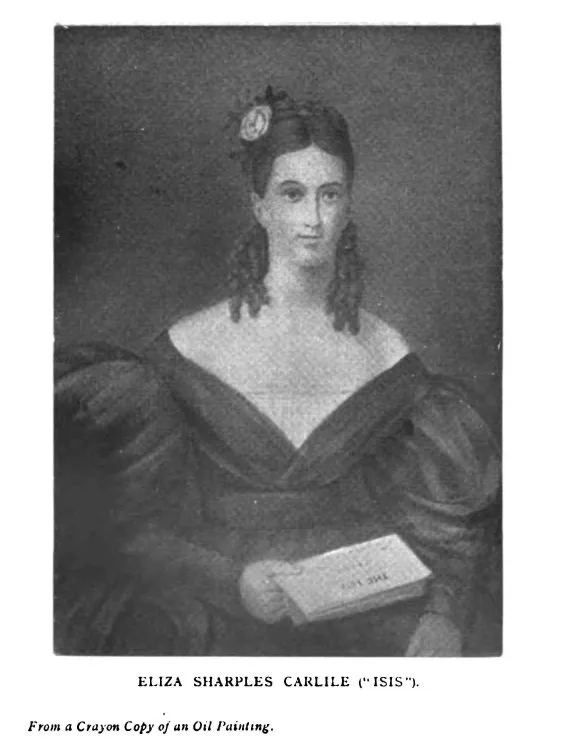
While he was there, in December 1831, a young woman from Bolton wrote to him. Eliza Sharples had been an evangelical who "prayed myself into the grave, almost," and she was now, she said, "convinced that all religion is vice."69 Carlile answered before he had met her: "I swear eternal fealty to her before I see her."70 She came to London in January 1832, lectured at the Rotunda as "the Lady of the Rotunda," and edited a weekly of her own, Isis.71 They lived as husband and wife, "unlicensed by the priest," and had several children.7273
Altogether a Christian
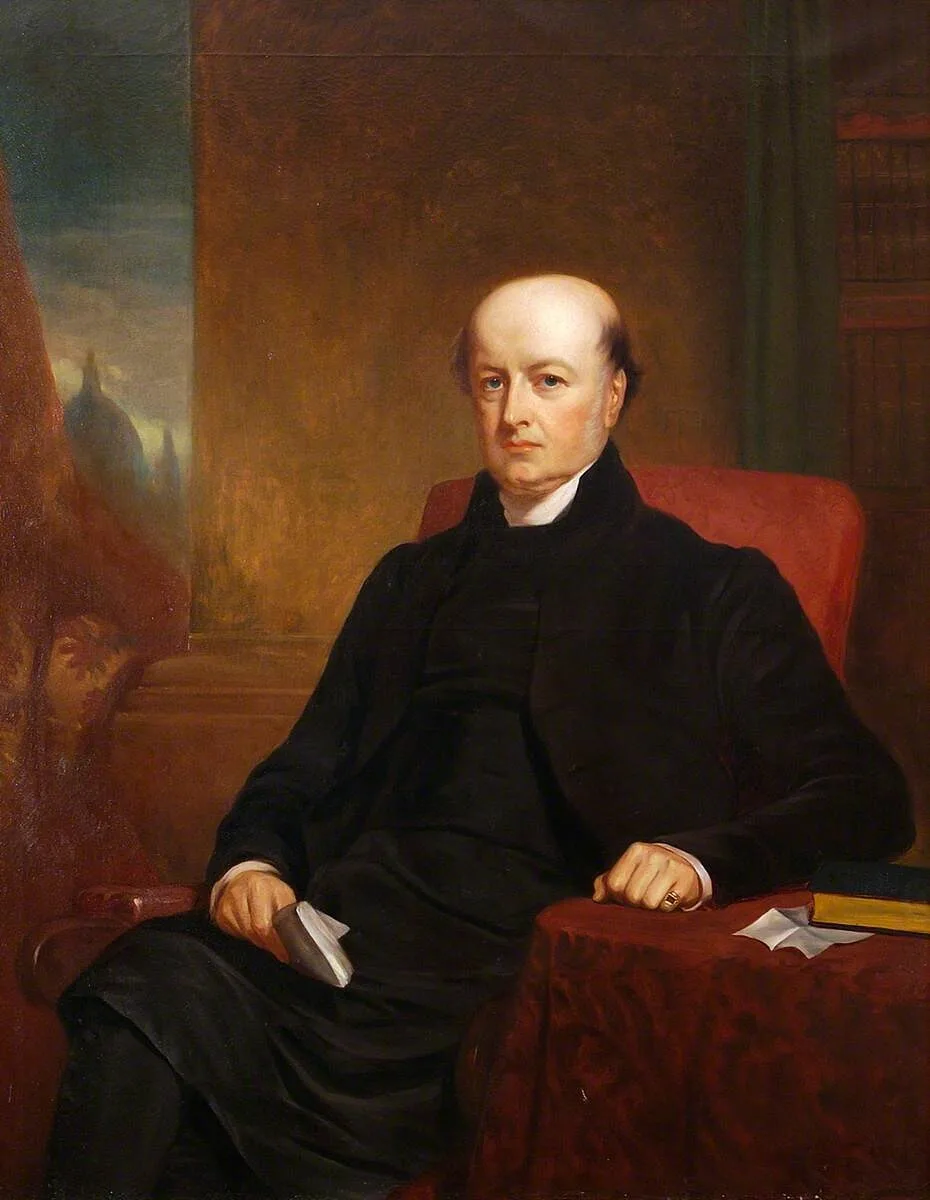
In November 1833, a few months out of the Compter, the atheist wrote to the Bishop of London. "I am one of your Lordship's scattered sheep," he began, "wishing for the fold of a good shepherd," and he went on: "I am altogether a Christian; save the mark at which superstition has been planted upon Christianity."747576 He did not mean that he had come to believe the creed. In a second letter he explained that he rejected the literal reading of the Bible: "it claims to be local and temporal history, and is not." He read both Testaments "as political and moral instruction veiled in allegory," its persons as personifications of principles, and he proposed "that the Church, in short, be made a school for the people."77787980 He printed the correspondence two years later with a letter to Sir Robert Peel on church reform.77
Where the turn came from is not clear. Guy Aldred, an admirer writing in 1923, traced a taste for mysticism back to 1825, to the long years in prison, to Carlile's studies of Freemasonry, and to Taylor's way of reading the Bible as astronomy.81 But by September 1833 Carlile was writing that Taylor's interpretation "leaves no room for discussion, and he does not like discussion," and the next year he said that the two had quarrelled.8283 Nothing in the surviving letters ties the change to Eliza Sharples, who had come to him as the woman who thought all religion a vice.69
He kept fighting the Church in the old way too. When he refused to pay church rates and his goods were seized, he put effigies of a bishop and a devil in his shop window in Fleet Street, was indicted for a nuisance, and went back to the Compter; accounts of that term differ, as they do of the total, which comes to nine and a half years in prison, more or less.84 In the later 1830s he lectured in northern towns on the application of science to "the revelation of mystery" and lived with Eliza and the children at Enfield.85 To a friend, Thomas Turton, he wrote in 1836: "Many of my friends cannot follow me in the pure mythological description of Christianity; I hope you can; I am sure it is the best point in Infidelity yet reached."86 In 1837 he said he treated the scriptures "in reverence, seriousness, and solemnity, without any sacrifice of old materialistic principles," and in 1839 that he pitied "the solidity of the materialists who cannot see my present course to be the most useful and spiritual."87888990 In October 1840 he put it plainly: "I had not recanted a sentence I ever published, but had only gone on another tack in my warfare with superstition."9192 The same year he gave a sadder reason for the change of tone: "The cessation of prosecution was my political death."91
His old allies were not persuaded. Francis Place called him "the most obstinately superstitious fellow alive."9394 Holyoake, who loved him, judged that "the adoption of Swedenborgian terminology was a virtual recantation, and Carlile lost caste by it." But he thought it "an error of judgment, not an alteration of conviction," and summed it up in a phrase: "From being a Material Atheist, he became a Christian Atheist."9596 Carlile, for his part, wrote to the young Holyoake in 1842 that the atheists of the day were "now where I once was, resting upon the mere flippant vulgarisms of what you and the world consent to call Atheistic infidelity."97
The last tack
A stroke in March 1841 weakened his speech.98 His last paper, which Holyoake calls The Christian Warrior, said that "science thrown into the church as a substitute for superstition in the education of the people, begins at once to regenerate the people, the parliament, the institutions, and the throne"; the Dictionary of National Biography gives the title as Christian Mirror, and no copy has been found to settle it.99100 His last printed words, by Holyoake's account, were still a soldier's: "The enemy with whom I have to grapple is one with whom no peace can be made. Idolatry will not parley. Superstition will not treat or covenant."101
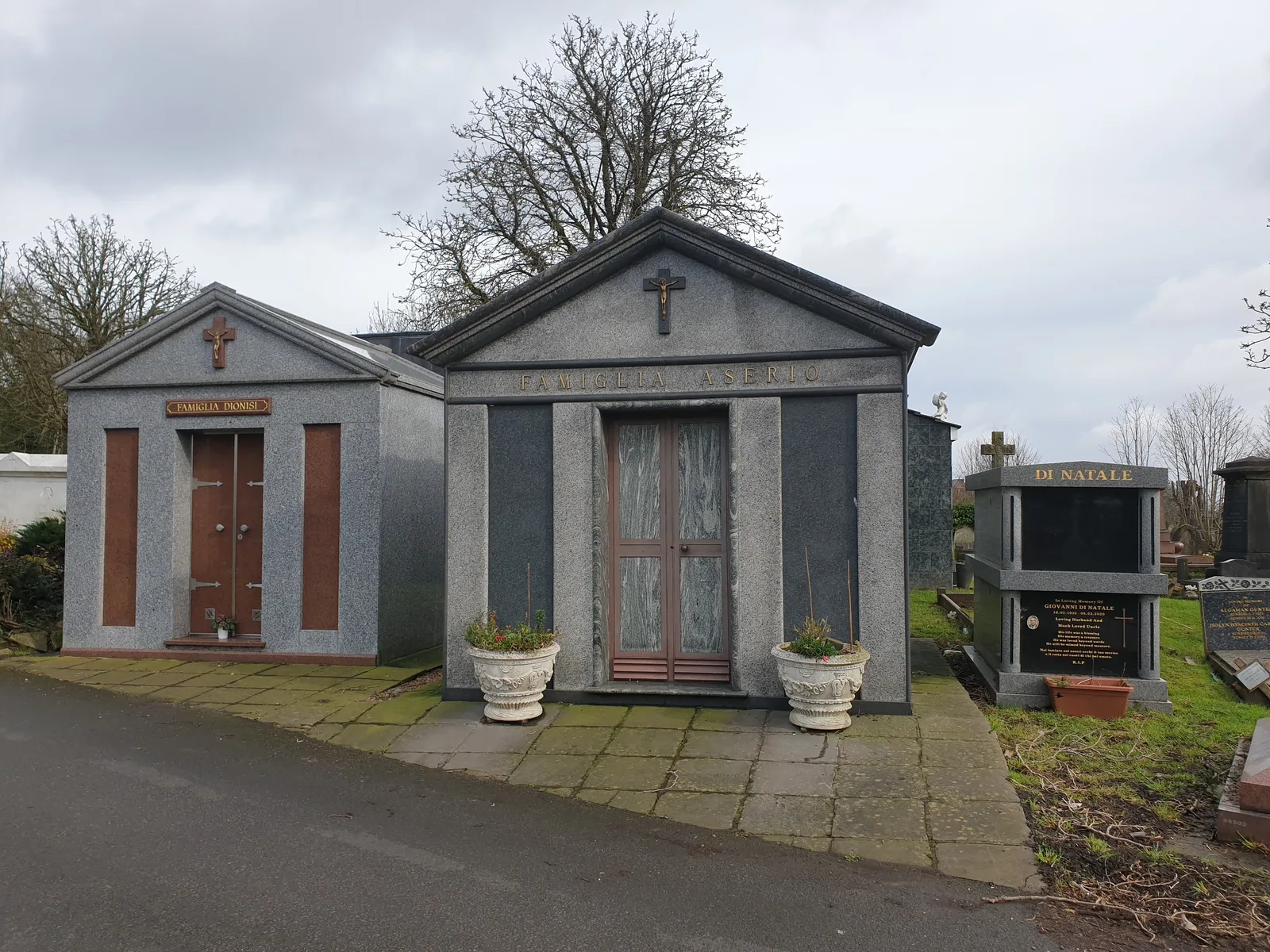
He died on 10 February 1843, aged fifty-two, at 1 Bouverie Street, a few steps from Fleet Street, where he had moved back from Enfield. His daughter recorded his last words: "I am the same man I have always been, I have gone neither to the right nor to the left. My aim has been to accomplish one great purpose."102103 As he had wished, his body was opened at St Thomas's Hospital before friends and medical men, and the report appeared in The Lancet.104
According to Holyoake, who is the only source for it, a clergyman at the burial in Kensal Green read the Church service over the family's protest, saying that Carlile had died "in the sure and certain hope of a glorious resurrection," and Carlile's son objected and the family left the grave.105106 Stories that Carlile had recanted on his deathbed went round for years; Holyoake answered that he had lost his speech long before, and that a preacher who had told him in Gloucester gaol that Carlile died recanting had been talking of a man still alive.107
What he left
"He avowed himself an Atheist when no one else did," Holyoake wrote.108 Carlile's own summary was about the press, not God: "I have accomplished the liberty of the press in England, and oral discussion is now free."109 Neither was quite true, but both were nearly so. His nine and a half years in prison, and the years his wife, his sister and his shopmen served, made the sale of unbelieving books in London something the government found it could not stop.
The shape of his unbelief changed more than he admitted and less than his enemies hoped. He began as a Deist defending Paine's God against Paine's prosecutors, became in prison an atheist who said there was no God "as any man has preached," and ended a materialist who used the words of Christianity as allegory for science and reform. What did not change was the trade: he printed what he thought, sold it over the counter, and went to prison for it. The boy who burned Paine in effigy in Ashburton lived to be his publisher, and some years after his death Eliza Sharples Carlile took into her home a sixteen-year-old named Charles Bradlaugh and, according to Aldred, helped to make him a freethinker.110 Bradlaugh has his own chapter in this book.
Footnotes
-
The Report of the Proceedings of the Court of King's Bench ... 12th, 13th, 14th, and 15th days of October ... the Mock Trials of Richard Carlile (R. Carlile, 1822), title page, pp. 6, 36–38; Guy A. Aldred, Richard Carlile, Agitator: His Life and Times (1923), p. 32. ↩ ↩2
-
Sir Robert Gifford, Attorney-General, 1819: Report of the Proceedings of…, p. 6. ↩
-
Aldred, Richard Carlile, pp. 96–97; G. J. Holyoake, Life and Character of Richard Carlile (1849), Project Gutenberg #39123, ch. II; Theophila Carlile Campbell, The Battle of the Press, as Told in the Story of the Life of Richard Carlile (London: Bonner, 1899), by his daughter, p. 53; G. J. Holyoake, "Carlile, Richard," Dictionary of National Biography, vol. 9 (1887), pp. 106–109. Wikisource transcription, texts/dnb1887.txt (with transcription errors). ↩ ↩2
-
Holyoake, Dictionary of National Biography; Holyoake, Life and Character of Richard Carlile, ch. II; Campbell, Battle of the Press, p. 227. Accounts differ; see the disputed points. ↩ ↩2
-
Campbell, Battle of the Press, pp. 7–8; Holyoake, Life and Character of Richard Carlile, ch. I; Holyoake, Dictionary of National Biography. ↩
-
Campbell, Battle of the Press, pp. 8–11 (letter to Eliza, 7 Dec. 1842). ↩
-
Campbell, Battle of the Press, p. 9; Holyoake, Life and Character of Richard Carlile, ch. I; Holyoake, Dictionary of National Biography. ↩
-
Campbell, Battle of the Press, p. 9 (letter to Eliza, 7 Dec. 1842). ↩
-
The Debate in the House of Commons ... March 26, 1823, on Mr. Hume's presenting a petition from Mary Ann Carlile (T. Moses, 1823), p. 11 (read in the House by Acland from Republican vol. 1 no. 9); original not seen. Reported at second hand; the original has not been seen. ↩ ↩2
-
Debate in the House of… (1823), p. 11 (read by Acland). Not checked against the original (secondhand). ↩
-
Campbell, Battle of the Press, pp. 11–12; Holyoake, Life and Character of Richard Carlile, ch. I; Holyoake, Dictionary of National Biography. ↩
-
Campbell, Battle of the Press, p. 12. ↩
-
Campbell, Battle of the Press, pp. 15–18; Holyoake, Life and Character of Richard Carlile, ch. I; Holyoake, Dictionary of National Biography. ↩
-
Campbell, Battle of the Press, pp. 12–13; Holyoake, Life and Character of Richard Carlile, ch. II; Holyoake, Dictionary of National Biography. ↩
-
Holyoake, Life and Character of Richard Carlile, ch. I–II; Holyoake, Dictionary of National Biography. ↩
-
Campbell, Battle of the Press, pp. 13–14; Aldred, Richard Carlile, pp. 63–64; Holyoake, Life and Character of Richard Carlile, ch. II. ↩
-
Campbell, Battle of the Press, p. 13. ↩
-
Campbell, Battle of the Press, p. 13 (from the Republican, col. 1825). Not checked against the original (secondhand). ↩
-
Aldred, Richard Carlile, pp. 65–66 (Carlile's own account); Campbell, Battle of the Press, pp. 30–31; Holyoake, Dictionary of National Biography. ↩
-
Aldred, Richard Carlile, pp. 66–67 (quoting the Republican, 1825; original vol. 11 not seen). ↩
-
Aldred, Richard Carlile, pp. 66–67. Not checked against the original (secondhand). ↩
-
Debate in the House of… (1823), p. 11. Not checked against the original (secondhand). ↩
-
Report of the Proceedings of…, pp. iii–iv (Introduction). ↩
-
Report of the Proceedings of…, pp. iv–v; Campbell, Battle of the Press, pp. 30–31. ↩
-
Campbell, Battle of the Press, pp. 21–25; Holyoake, Life and Character of Richard Carlile, ch. II; Aldred, Richard Carlile, pp. 74–75. ↩
-
Campbell, Battle of the Press, p. 21; The Republican, vol. 1 no. 2, 3 Sept. 1819 (open letter to the Prince Regent on Peterloo); Aldred, Richard Carlile, p. 74. ↩
-
Republican; Campbell, Battle of the Press, pp. 27, 31–33; Aldred, Richard Carlile, p. 76. ↩ ↩2
-
Republican, (3 Sept. 1819). ↩
-
Campbell, Battle of the Press, pp. 14–15. ↩
-
Campbell, Battle of the Press, pp. 47–48. ↩
-
Campbell, Battle of the Press, pp. 43–44, 49–52; Holyoake, Life and Character of Richard Carlile, ch. II. ↩
-
W. J. Fox, The Duties of Christians towards Deists (1819), a Unitarian sermon on the prosecution, pp. iii–iv. ↩
-
W. J. Fox, Unitarian minister, 1819: Fox, Duties of Christians towards Deists, pp. iii–iv. ↩
-
Mr Justice Bayley, sentencing, 16 Nov. 1819: Aldred, Richard Carlile, p. 96 (reported speech). Not checked against the original (secondhand). ↩
-
Campbell, Battle of the Press, pp. 54–57; Holyoake, Life and Character of Richard Carlile, ch. II. ↩ ↩2
-
Campbell, Battle of the Press, pp. 57–58; Holyoake, Life and Character of Richard Carlile, ch. III. ↩
-
Society for the Suppression of Vice, advertisement, Jan. 1820: Campbell, Battle of the Press, p. 69. Not checked against the original (secondhand). ↩
-
Campbell, Battle of the Press, p. 70 (letter to the Vice Society, 20 Feb. 1820). Not checked against the original (secondhand). ↩
-
Holyoake, Life and Character of Richard Carlile, ch. II; Holyoake, Dictionary of National Biography. ↩
-
Bridge-Street Banditti versus the Press (1821), trial of Mary-Anne Carlile, title page; Holyoake, Life and Character of Richard Carlile, ch. II; Holyoake, Dictionary of National Biography. ↩
-
Holyoake, Life and Character of Richard Carlile, ch. II; Holyoake, Dictionary of National Biography. ↩
-
Holyoake, Life and Character of Richard Carlile, ch. II; Holyoake, Dictionary of National Biography. ↩
-
Sir T. D. Acland MP, 26 Mar. 1823: Debate in the House of… (1823), p. 11. ↩
-
William Wilberforce MP, 26 Mar. 1823: Debate in the House of… (1823), p. 20. ↩
-
Holyoake, Life and Character of Richard Carlile, ch. III. ↩
-
An Address to Men of Science (R. Carlile, 1821), p. 10. ↩
-
Address to Men of Science, p. 10. ↩
-
The Republican, vol. 8 (July–Dec. 1823), pp. 15–16, 742–43 (no. 24). ↩
-
Republican, vol. VIII, no. 1 (11 July 1823) pp. 15–16. ↩
-
Republican, vol. VIII, no. 24 pp. 742–43 (footnote, signed R. Carlile). ↩
-
The Republican, vol. 10 (July–Dec. 1824), title page, Dedication p. iv. ↩
-
Republican, vol. X, Dedication, p. iv. ↩
-
Republican, vol. X, Dedication, pp. v–vi (page header illegible). ↩
-
The Republican, vol. 12 (July–Dec. 1825), pp. 62–64. ↩
-
Henry Brougham MP presenting his petition, 30 June 1825 (sympathetic but not agreeing): Republican, p. 63. ↩
-
Every Woman's Book; or, What is Love? (R. Carlile, 62 Fleet Street, 1828 ed.), pp. iv, 22–25; Holyoake, Life and Character of Richard Carlile, ch. III. ↩
-
Every Woman's Book; or, p. 24. ↩
-
Holyoake, Dictionary of National Biography; Holyoake, Life and Character of Richard Carlile, ch. II; Campbell, Battle of the Press, pp. 116–17. ↩
-
Campbell, Battle of the Press, pp. 117–18; Holyoake, Life and Character of Richard Carlile, ch. II; The Lion, vols. 1–3 (1828–29), vol. 3 no. 11 (13 Mar. 1829). ↩
-
Lion, vol. 3 no. 14 (3 Apr. 1829) p. 425. ↩
-
Aldred, Richard Carlile, pp. 146–47; Campbell, Battle of the Press, pp. 119–21. ↩
-
Campbell, Battle of the Press, pp. 119–24; Aldred, Richard Carlile, p. 148. ↩
-
Aldred, Richard Carlile, p. 148; Holyoake, Life and Character of Richard Carlile, ch. II; Campbell, Battle of the Press, pp. 124–26, 134–35. ↩ ↩2
-
Holyoake, Life and Character of Richard Carlile, ch. II; Holyoake, Dictionary of National Biography. ↩
-
Campbell, Battle of the Press, pp. 126–27. ↩
-
Campbell, Battle of the Press, pp. 134–35; Aldred, Richard Carlile, p. 150. ↩
-
Campbell, Battle of the Press, p. 151. ↩
-
Campbell, Battle of the Press, pp. 158–59; Aldred, Richard Carlile, p. 153. ↩
-
Campbell, Battle of the Press, pp. 194–95, 225; Aldred, Richard Carlile, pp. 153–56. ↩
-
Holyoake, Life and Character of Richard Carlile, ch. IV; Aldred, Richard Carlile, p. 164. ↩
-
Church Reform: the only means to that end, stated in a letter to Sir Robert Peel (R. Carlile, 1835), with the 1833 correspondence with the Bishop of London, p. iii. ↩
-
Church Reform, p. iii. ↩
-
Church Reform, p. iii. ↩
-
Church Reform, p. v. ↩
-
Church Reform, p. vi. ↩
-
Church Reform, p. vii. ↩
-
Aldred, Richard Carlile, p. 162; Republican, no. 1 (8 July 1825). ↩
-
Campbell, Battle of the Press, pp. 201, 197. ↩
-
Campbell, Battle of the Press, p. 201. ↩
-
Holyoake, Life and Character of Richard Carlile, ch. II; Holyoake, Dictionary of National Biography; Campbell, Battle of the Press, pp. 192–94; Aldred, Richard Carlile, pp. 150–51. ↩
-
Campbell, Battle of the Press, pp. 204–05. ↩
-
Campbell, Battle of the Press, p. 204. ↩
-
Campbell, Battle of the Press, p. 208. ↩
-
Campbell, Battle of the Press, pp. 212, 211. ↩
-
Campbell, Battle of the Press, p. 208. ↩
-
Campbell, Battle of the Press, p. 211. ↩
-
Campbell, Battle of the Press, p. 220. ↩
-
Holyoake, Life and Character of Richard Carlile, ch. III. ↩
-
Francis Place, friend and teacher, as quoted by Holyoake: Holyoake, Life and Character of Richard Carlile, ch. III. Not checked against the original (secondhand). ↩
-
Holyoake, Life and Character of Richard Carlile, ch. III. ↩
-
G. J. Holyoake, admirer and biographer: Holyoake, Life and Character of Richard Carlile, ch. III. ↩
-
Holyoake, Life and Character of Richard Carlile, ch. III (citing Oracle of Reason vol. 1 p. 366). Not checked against the original (secondhand). ↩
-
Holyoake, Life and Character of Richard Carlile, ch. III; Campbell, Battle of the Press, p. 221. ↩
-
Holyoake, Life and Character of Richard Carlile, ch. III; Aldred, Richard Carlile, pp. 159–61. ↩
-
Holyoake, Life and Character of Richard Carlile, ch. III. Not checked against the original (secondhand). ↩
-
Holyoake, Life and Character of Richard Carlile, ch. IV. Not checked against the original (secondhand). ↩
-
Campbell, Battle of the Press, pp. 228–30; Holyoake, Life and Character of Richard Carlile, ch. IV; Holyoake, Dictionary of National Biography; Aldred, Richard Carlile, p. 163. ↩
-
Campbell, Battle of the Press, p. 230; Aldred, Richard Carlile, p. 163. Not checked against the original (secondhand). ↩
-
Holyoake, Life and Character of Richard Carlile, appendix; Aldred, Richard Carlile, pp. 163–64. ↩
-
Holyoake, Life and Character of Richard Carlile, ch. IV; Aldred, Richard Carlile, p. 164 (same wording as Holyoake). ↩
-
The clergyman at Kensal Green, 1843: Holyoake, Life and Character of Richard Carlile, ch. IV; Aldred, Richard Carlile, p. 164. Not checked against the original (secondhand). ↩
-
Holyoake, Life and Character of Richard Carlile, ch. IV. ↩
-
Holyoake, Life and Character of Richard Carlile, ch. IV. ↩
-
Holyoake, Life and Character of Richard Carlile, ch. I (his last periodical). Not checked against the original (secondhand). ↩
-
Aldred, Richard Carlile, p. 165. ↩
In their own words
to gather a faggot wherewith to burn the effigy of 'old Tom Paine', my now venerated political father
I then resolved to get into the front of the battle and to set the best possible example.
I felt disgusted to see the charge of blasphemy brought against such simple, such ridiculous publications, and I soon resolved to put the question to an issue
I was in my youthful days taught to read the Bible, and I continued to read and reverence it more than twenty years; and was as tenacious of it and the Christian religion as any one could be
priestcraft had carefully provided a sufficiently powerful enemy to defeat the efforts of the divine light of nature, until I had the courage to read The Deist and Paine's Age of Reason
I published the works of Paine for a good and useful purpose, and I trust I shall shew you.
my only reason for publishing the works of Mr. Paine has been an anxious and sincere desire to promote the cause of truth and free discussion. I am convinced in my own mind, that they are calculated to improve morality by promoting inquiry; that they tend to exalt our notions of the Deity
atrocious Murders committed by the Yeomanry Cavalry, at the instigation of the Magistrates of Manchester, on the bodies of the inhabitants of that town, assembled in a legal and peaceable meeting
It is your province to war with obscenity, mine with idolatry.
which word has no other meaning than a seceder from all mythologies, although the ignorant and interested make so much ridiculous clamour and fuss about it
Atheism expresses nothing more than a doubt or disbelief of the existence of such a God, as those preach, who confess that they do preach what they know nothing at all about.
But I want no God as a cloak for that ignorance.
I detest religion, because it has no other foundation, and is evidently idolatrous; and I will cherish my chains if I cannot hold mental freedom upon any other tenure.
Towards such a theism I confess myself an Atheist, which would not be the case if J. E. C. would exhibit his supreme or superior intellectual beings to man.
I can now maintain against all the learning that Oxford or Cambridge has produced, that there is no such a God in existence as any man has preached, and, consequently, that all religion, without an exception, is idolatry. This is the result of my five years' study in this Gaol
That no such person as Jesus Christ existed. 2d. That the Jews or Israelites were not a nation in Syria or Palestine, before the Babylonian Captivity. And 3d. That there is no such a God in existence as any man has preached.
The Christian Religion, I have so far annihilated, as to shew, that no such a person as Jesus Christ ever existed
We have truth on our side, and that is what the Catholic never had. We must, because we will, succeed, with boldly and honestly wielding such a weapon.
his peculiar astronomical interpretation of the Bible leaves no room for discussion, and he does not like discussion
I am one of your Lordship's scattered sheep, wishing for the fold of a good shepherd
I am altogether a Christian; save the mark at which superstition has been planted upon Christianity.
I impugn the literal as an erroneous reading: it claims to be local and temporal history, and is not.
I read it as political and moral instruction veiled in allegory
that the Church, in short, be made a school for the people
Many of my friends cannot follow me in the pure mythological description of Christianity; I hope you can; I am sure it is the best point in Infidelity yet reached.
I treat them all in reverence, seriousness, and solemnity, without any sacrifice of old materialistic principles
I pity the solidity of the materialists who cannot see my present course to be the most useful and spiritual.
I had not recanted a sentence I ever published, but had only gone on another tack in my warfare with superstition.
are now where I once was, resting upon the mere flippant vulgarisms of what you and the world consent to call Atheistic infidelity, regulating your amount of wisdom by a critical contrast with other people's folly.
science thrown into the church as a substitute for superstition in the education of the people, begins at once to regenerate the people, the parliament, the institutions, and the throne.
The enemy with whom I have to grapple is one with whom no peace can be made. Idolatry will not parley. Superstition will not treat or covenant. They must be uprooted for public and individual safety.
I am the same man I have always been, I have gone neither to the right nor to the left. My aim has been to accomplish one great purpose.
it is better to prevent than to cure, and here, prevention is most simply practicable, a means within the reach of all
The object of the Publisher is to war with that sort of prudery which is tantamount to hypocrisy.
in the course of our great political struggle I like a gaol, and am more happy here than I can possibly be anywhere else
I swear eternal fealty to her before I see her.
I have accomplished the liberty of the press in England, and oral discussion is now free.
The other side
Christianity is part and parcel of the law.
The Courts of Justice could not interfere with any doctrines which he confined to his own breast, or the truth of which he discussed with calmness and reason; but he could not be permitted rashly to unsettle the faith of others.
that most audacious offender, Carlile, who, notwithstanding repeated indictments found against him, still persisted in selling works of the foulest sedition and the most horrible blasphemy that ever disgraced a free press
He would rely on the Christian religion triumphing over all its opponents, without any thing like persecution, he would let them republish Voltaire, Hume, Mirabaud, and all the other sceptics, and still Christianity would triumph
In his opinion the thanks of the country were rather due to those gentlemen who stepped forward and conducted those prosecutions.
It was dreadful to think of this man, who thus artfully referred back to the time when he worshipped his God as a child in simplicity of heart.
If Deists will listen to you, persuade them; if they will reason, argue with them; if they write and publish, reply to them; if they misrepresent, expose them; but in the name of Christ, do not persecute them
a more criminal and atrocious libel never met my observation
the most obstinately superstitious fellow alive
the adoption of Swedenborgian terminology was a virtual recantation, and Carlile lost caste by it
had died in the sure and certain hope of a glorious resurrection
He should look upon an Atheist or an Infidel, if there were any such, with pity, not with blame
Where accounts differ
| Point | One account | Another | How the page handles it |
|---|---|---|---|
| When he first read Paine | 1810, *Rights of Man* in Exeter (Holy ch. I) | 1816, in London (Holy ch. II; DNB); his own account makes 1816–17 the political start | Say he grew up burning Paine in effigy and became his publisher in 1817 and 1818; avoid a "first read" date |
| Sentence of 1819 | £1,500 and three years (Camp p. 53; Holy; DNB) | £1,000 and two years plus £500 and one year, then three more years for the fines (Aldred p. 97; DNB "in lieu of fines"); a postscript in Mock p. xviii says £1,600 | Say fines of £1,500 and three years, with three more in lieu of the fines, six in all |
| Peterloo date | 16 Aug. (Camp p. 21) | "Monday, August 15" (Aldred p. 74) | 16 August; Aldred is in error |
| Date of release from Dorchester | Nov. 1825 (DNB, six years) | 1826 (Holy ch. II); dinner on Paine's birthday, Jan. 1826 (Camp p. 227) | "late 1825" |
| 1831 sentence | thirty-two months (Aldred p. 148; Holy ch. II) | two years (Camp p. 135); three years (Camp p. 124) | "more than two years"; he left in 1833 on his own terms |
| Church-rate term and total | ten weeks; total nine years four months (Holy ch. II; DNB) | four months; nine years seven months (Camp p. 194; Aldred p. 151) | "nine and a half years, more or less" |
| Why the late turn | Error of judgment: a "Christian Atheist", still a materialist (Holy ch. III) | Not a trick: he says "I had not recanted" (Q28); Aldred p. 162 says his preacher's declaration was a legal formality and the mysticism began in 1825 from Masonry and Taylor | Present both; the sources do not tie Eliza Sharples to the turn (in Dec. 1831 she wrote that all religion is vice) |
| Name of last periodical | *The Christian Warrior* (Holy; Aldred) | *Christian Mirror* "begun just before his death" (DNB) | Use Holyoake; confirm if a copy is found |
| Gifford identity | Campbell's note p. 11 treats William Gifford (Quarterly Review editor, Ashburton free school) as the Attorney-General | Sir Robert Gifford, Attorney-General from 1819 (DNB: brother of the Exeter merchants who bought from Carlile's mother) | They are different men; do not repeat Campbell's note |
| Eliza Sharples's death | Lived until 1861 (Aldred p. 165) | c. 1852 (given in the 02-bradlaugh fact sheet from another source) | Not needed; check before stating |
List of illustrations
This page uses only public-domain and Creative Commons images; each is credited with its source and licence.
- Richard Carlile, frontispiece 'from a crayon copy of an oil painting' in The Battle of the Press (1899) — Unknown artist; book by Theophila Carlile Campbell, published 1899 · Internet Archive (battleofpressast00camp), public domain · Public domain (published 1899; Internet Archive scan)
- East Street, Ashburton, Devon — Tony Atkin, 2012-05-13 · Tony Atkin, Tony Atkin / geograph.org.uk, via Wikimedia Commons, CC BY-SA 2.0 · CC BY-SA 2.0 (Wikimedia Commons)
- Sherwin's Weekly Political Register, first text page — W. T. Sherwin, 1817 (volume date to be confirmed from the item record) · W. T. Sherwin; scan from the Internet Archive (sherwinsweeklypo224sher) · Public domain (published before 1931)
- To Henry Hunt, Esq., as chairman of the meeting assembled in St. Peter's Field, Manchester, sixteenth day of August, 1819, and to the female — Richard Carlile, 1819-10-01 · Richard Carlile; Manchester Libraries, via Wikimedia Commons, public domain · Public domain (Wikimedia Commons: Public domain)
- Report of the Proceedings in the Court of King's Bench ... the Mock Trials of Richard Carlile (title page) — Richard Carlile, 1822 · Richard Carlile; scan from the Internet Archive (cu31924029088651) · Public domain (published before 1931)
- Accidents in High Life, or Royal Hobby's Broke Down (dedicated to the Society for the Suppression of Vice; George Cruikshank, 1819) — Cruikshank, George (1792-1878). Graveur, 1819 · Cruikshank, George (1792-1878). Graveur, Bibliotheque nationale de France (Gallica), via Wikimedia Commons, Public domain · Public domain (Wikimedia Commons)
- A portrait from the Welsh Portrait Collection at the National Library of Wales. Depicted person: Joseph Hume – Scottish surgeon and Radical — John Cochran, circa 1820 · John Cochran; This image is available from the National Library of Wales You can view this ima, via Wikimedia Commons, public domain · Public domain (Wikimedia Commons: Public domain)
- The Republican, vol. X (July-Dec 1824), title page — Richard Carlile, 1824 · Richard Carlile; scan from the Internet Archive (republican02unkngoog) · Public domain (published before 1931)
- Every Woman's Book; or, What is Love? (title page), printed and published by R. Carlile — Richard Carlile, 1828 (edition per fact sheet; title page date to be checked) · Richard Carlile; scan from the Internet Archive (b30347397) · Public domain (published before 1931)
- Frontage of the Leverian Museum (later the Surrey Rotunda), Blackfriars Road, London, 1805 — Unknown, 1805 · Wellcome Collection (L0039143), Public Domain Mark · Public Domain Mark (Wellcome Collection)
- Compter, Giltspur Street (Robert Acon) — Robert Acon, c. 1830 · Robert Acon, Yale Center for British Art, Paul Mellon Collection, via Wikimedia Commons, CC0 · CC0 (Wikimedia Commons)
- Eliza Sharples Carlile — Unknown authorUnknown author, published 1899 · Unknown author (https://archive.org/details/thebattleofthepr38370gut), via Wikimedia Commons, public domain · Public domain (Wikimedia Commons: Public domain)
- Charles James Blomfield, Bishop of London (follower of Thomas Lawrence) — Follower of Thomas Lawrence, 19th century · Follower of Thomas Lawrence, via Wikimedia Commons, Public domain · Public domain (Wikimedia Commons)
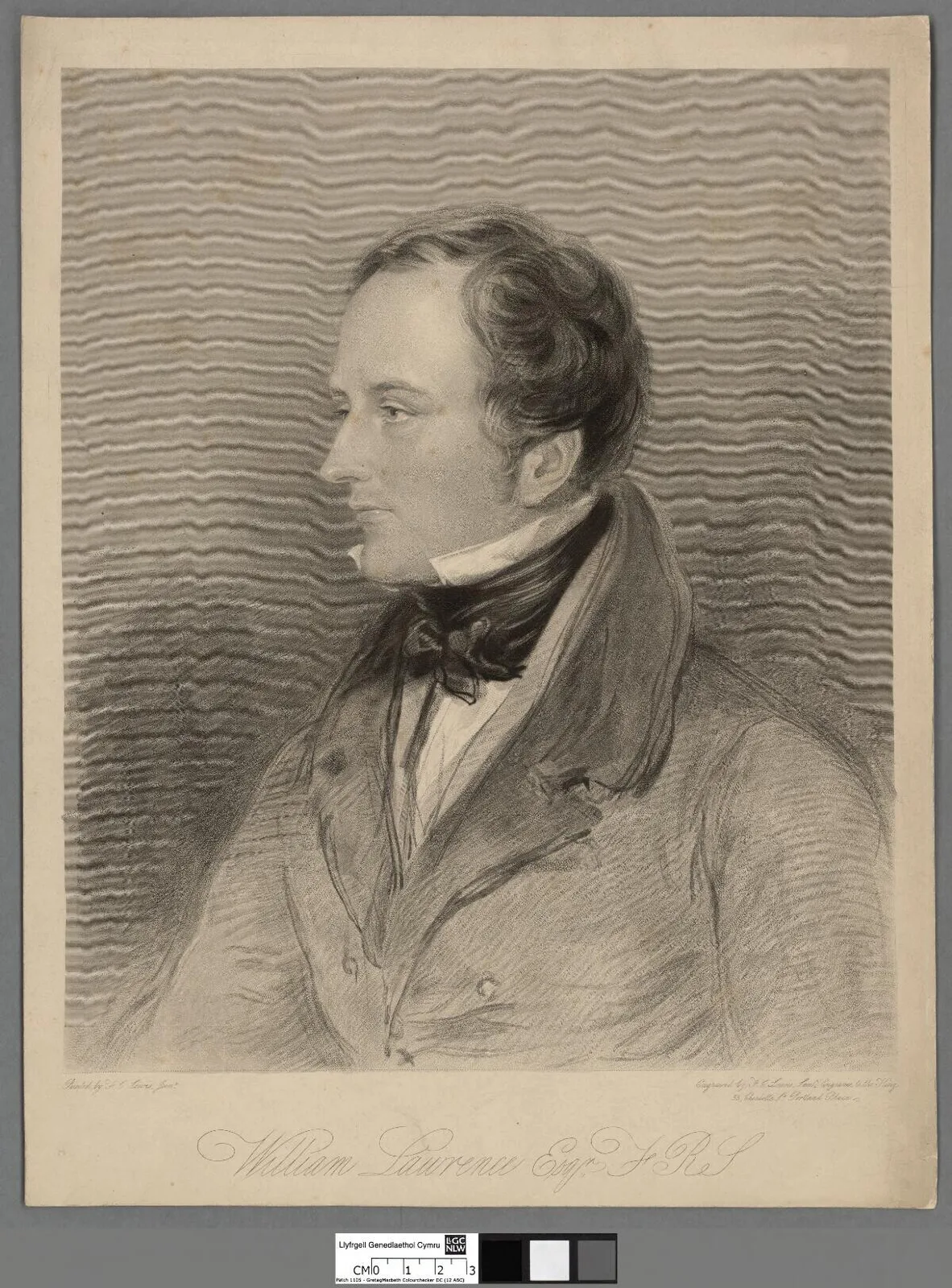
- William Lawrence, F.R.S., surgeon (Frederick Christian Lewis, 1835) — Frederick Christian Lewis, 1835 · Frederick Christian Lewis, National Library of Wales, via Wikimedia Commons, Public domain · Public domain (Wikimedia Commons)
- Kensal Green Cemetery, London — Rc1959, 2025-02-22 · Rc1959, Rc1959, via Wikimedia Commons, CC0 · CC0 (Wikimedia Commons)
Sources
Tier 1: the subject's own words
- [Mock] The Report of the Proceedings of the Court of King's Bench ... 12th, 13th, 14th, and 15th days of October ... the Mock Trials of Richard Carlile (R. Carlile, 1822). https://archive.org/details/cu31924029088651 . research/texts/mocktrials1822.txt.
- [Rep I.2] The Republican, vol. 1 no. 2, 3 Sept. 1819 (open letter to the Prince Regent on Peterloo). https://archive.org/details/republican00carl . research/texts/republican-00.txt (no page numbers in the scan).
- [Rep VIII] The Republican, vol. 8 (July–Dec. 1823). https://archive.org/details/republican03unkngoog . texts/republican-v3.txt.
- [Rep X] The Republican, vol. 10 (July–Dec. 1824). https://archive.org/details/republican02unkngoog . texts/republican-v2.txt.
- [Rep XII] The Republican, vol. 12 (July–Dec. 1825). https://archive.org/details/republican01unkngoog . texts/republican-v1.txt.
- [Men of Science] An Address to Men of Science (R. Carlile, 1821). https://archive.org/details/anaddresstomens00carlgoog . texts/menofscience1821.txt (starts at p. 4 in this scan).
- [EWB] Every Woman's Book; or, What is Love? (R. Carlile, 62 Fleet Street, 1828 ed.). https://archive.org/details/b30347397 . texts/everywoman.txt.
- [Lion] The Lion, vols. 1–3 (1828–29). https://archive.org/details/lion00unkngoog , lion01unkngoog, lion02unkngoog . texts/lion-00, -01, -02.txt.
- [Church Reform] Church Reform: the only means to that end, stated in a letter to Sir Robert Peel (R. Carlile, 1835), with the 1833 correspondence with the Bishop of London. https://archive.org/details/churchreformonly00carl . texts/churchreform1835.txt.
- [Bridge St] Bridge-Street Banditti versus the Press (1821), trial of Mary-Anne Carlile. https://archive.org/details/bridgestreetban00coopgoog . texts/bridgestreet1821.txt.
- [Commons 1823] The Debate in the House of Commons ... March 26, 1823, on Mr. Hume's presenting a petition from Mary Ann Carlile (T. Moses, 1823). https://archive.org/details/debateinhouseofc00greaiala . texts/commons1823.txt. The official Hansard version has not been found.
- Not yet mined, downloaded: Address to ... Reformers (1839, address1839), The Moralist (moralist), Mary-Anne's Suppressed Defence (1821), Principles of Nature (Palmer, mocktrials-principles), a volume bound with d'Holbach (deist.txt, mislabelled). Not found on the Internet Archive: The Prompter, The Gauntlet, The Christian Warrior, Every Man's Book (1826); quotations from them are secondhand via Holyoake or Campbell.
Tier 2: biographies and encyclopedias
- [Camp] Theophila Carlile Campbell, The Battle of the Press, as Told in the Story of the Life of Richard Carlile (London: Bonner, 1899), by his daughter. https://archive.org/details/battleofpressast00camp . texts/battle-of-press.txt. Partisan; prints many letters; some errors (see Disputed).
- [Holy] G. J. Holyoake, Life and Character of Richard Carlile (1849), Project Gutenberg #39123. https://archive.org/details/lifeandcharacter39123gut . texts/holyoake.txt; cited by chapter (I–IV and appendix) because the Gutenberg text has no pages; his footnotes give the Republican volume and page.
- [DNB] G. J. Holyoake, "Carlile, Richard," Dictionary of National Biography, vol. 9 (1887), pp. 106–109. Wikisource transcription, texts/dnb1887.txt (with transcription errors).
- [Aldred] Guy A. Aldred, Richard Carlile, Agitator: His Life and Times (1923). https://archive.org/details/MN40086ucmf_3 . texts/aldred1923.txt. Modern, sympathetic; draws on Holyoake.
Tier 3
- None used.
Tier 4: maps only, never cited
- Wikipedia on Carlile, Peterloo, the Rotunda.
Opposition sources
- [Fox] W. J. Fox, The Duties of Christians towards Deists (1819), a Unitarian sermon on the prosecution. https://archive.org/details/dutiesofchristia00foxwrich . texts/fox-duties.txt.
- Opposition speeches are cited from [Mock], [Commons 1823], [Bridge St], [Aldred] and [Camp]; the Vice Society advertisement is quoted in [Camp] only.
Related lives
Charles Bradlaugh: the boy Bradlaugh was sheltered by Eliza Sharples Carlile in 1849–50 and counted himself Carlile's heir; or Annie Besant, for the birth-control line that runs from *Every Woman's Book* to the Knowlton trial of 1877. Choose one; do not name it as "next".
Arthur Schopenhauer
Arthur Schopenhauer was baptised and confirmed in a Danzig church by a family for whom religion was a formality. At fifteen he wrote against English bigotry, and at twenty-three that no one who really philosophizes is religious. From Kant and the Upanishads he built a philosophy with no creator in it (1818). He refused the name "atheist" as absurd and malicious, and proposed "Non-Judaism" in its place. In old age he made a truce with religion as a necessary evil, pleased that his irreligious teaching served some readers as a religion.
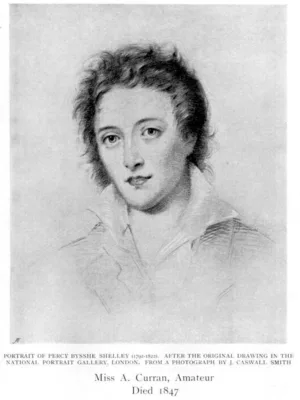
Percy Bysshe Shelley
Shelley hated the cruelty of believers before he doubted their God. He reasoned his way from Hume and Locke to The Necessity of Atheism at eighteen, was expelled from Oxford for it, and later lost his children partly on the same ground. In his last years he turned the word atheist from a creed into a gauntlet thrown down against superstition and oppression.
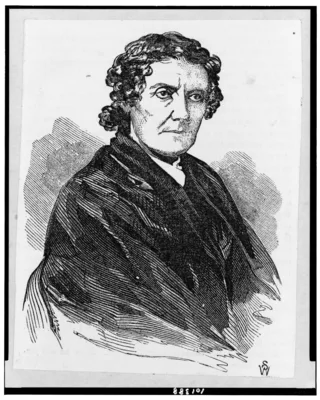
Frances Wright
Frances Wright was an orphan who lost a devout childhood faith to the libraries around her and to Epicurus. She kept her unbelief private for fifteen years while she worked for liberty and against slavery. She went public in 1828 because she believed the American churches were reaching for political power through women's minds. In middle age she took back the word "religion" for a human bond of union, while still declining to speak of God.
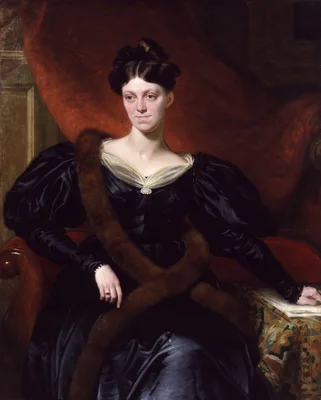
Harriet Martineau
Harriet Martineau was a devout Unitarian child. At twenty she took the doctrine of Necessity from her brother James, and watched it wear her faith away over many years. She let go of the last of it in five years of illness and bereavement at Tynemouth, and on her Eastern journey of 1846–47 she saw every religion as human history. In 1851 she said in print that she knew nothing whatever about God, an atheist only "in the vulgar sense", at the cost of her brother's lasting enmity and with no dread of the annihilation she expected.